World of Hurt from Climate Policies-Part 4

CO2 and COPs

Leave it in the Ground Means Perpetual Poverty


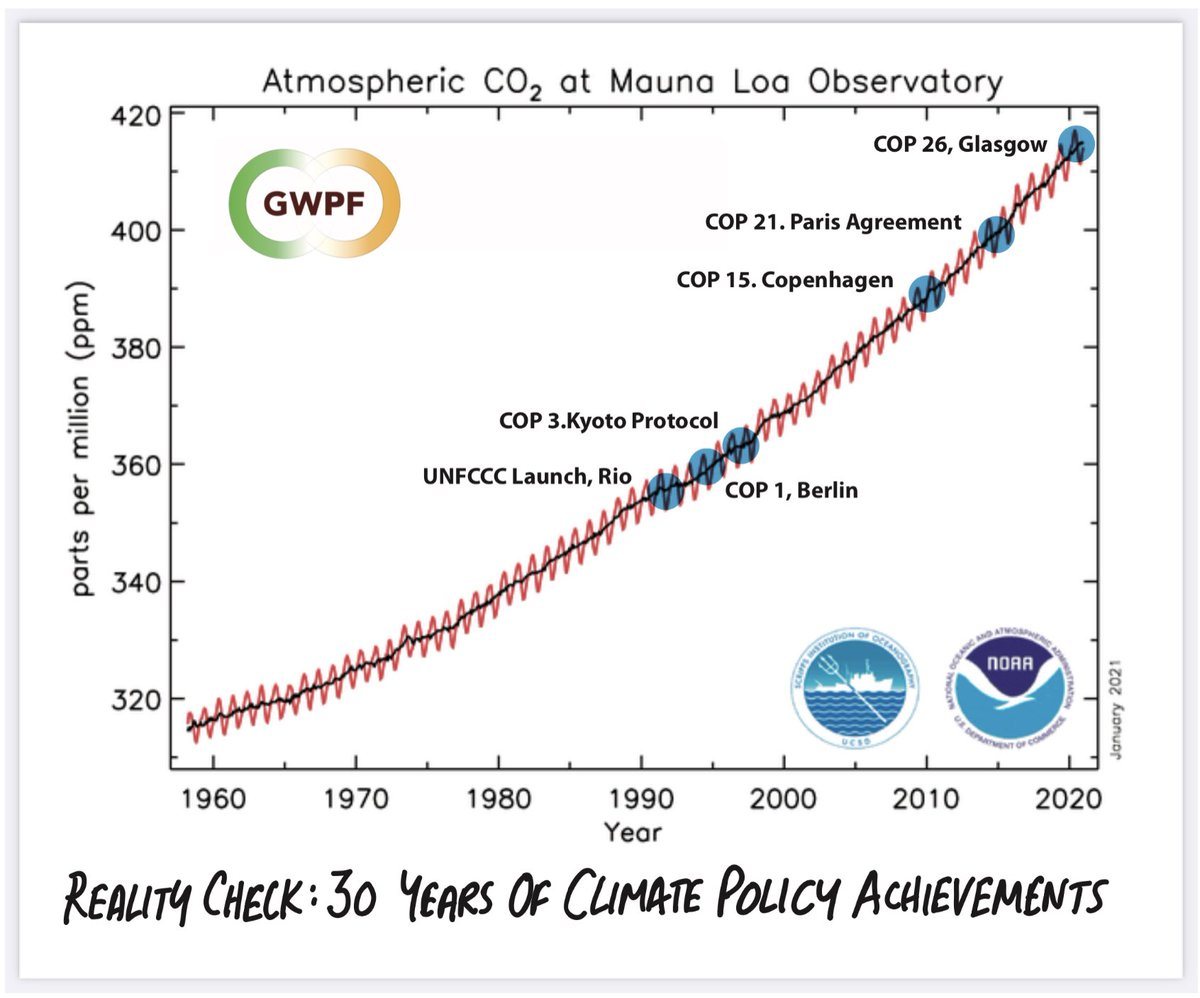
This is a fourth post toward infographics exposing the damaging effects of Climate Policies upon the lives of ordinary people.  (See World of Hurt Part 1Part 2, and Part 3 )  And all of the pain is for naught in fighting against global warming/climate change, as shown clearly in the image above.  This post presents graphics to illustrate the fourth of four themes:

  • Zero Carbon Means Killing Real Jobs with Promises of Green Jobs
  • Reducing Carbon Emissions Means High Cost Energy Imports and Social Degradation
  • 100% Renewable Energy Means Sourcing Rare Metals Off-Planet
  • Leave it in the Ground Means Perpetual Poverty
The War Against Carbon Emissions Diminishes Efforts to Lift People Out of Poverty

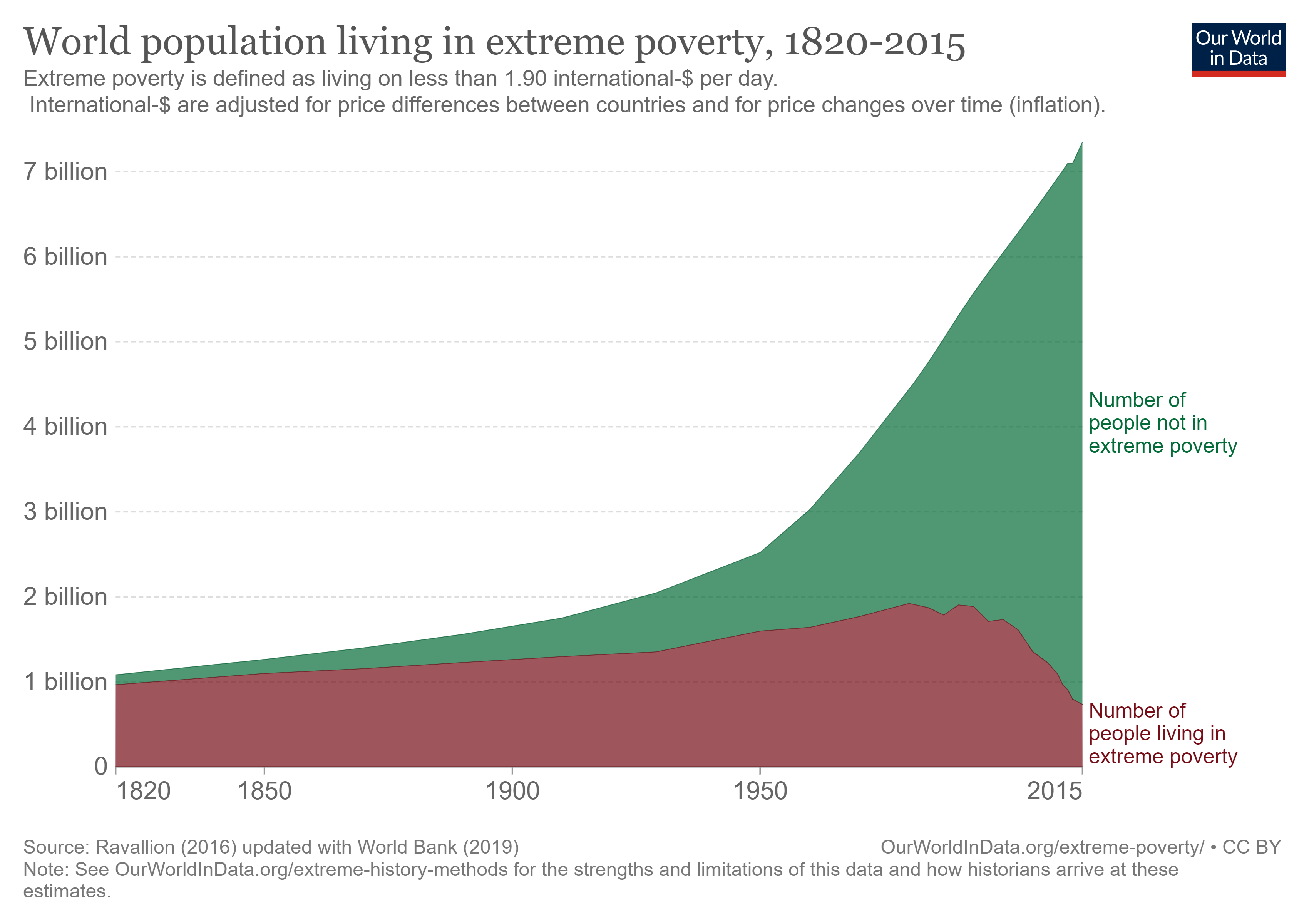
world-population-in-extreme-poverty-absolute
The OurWorldinData graph shows how half a billion people have risen out of extreme poverty in recent decades.  While much needs to be done, it is clear that the world knows the poverty factors to be overcome.

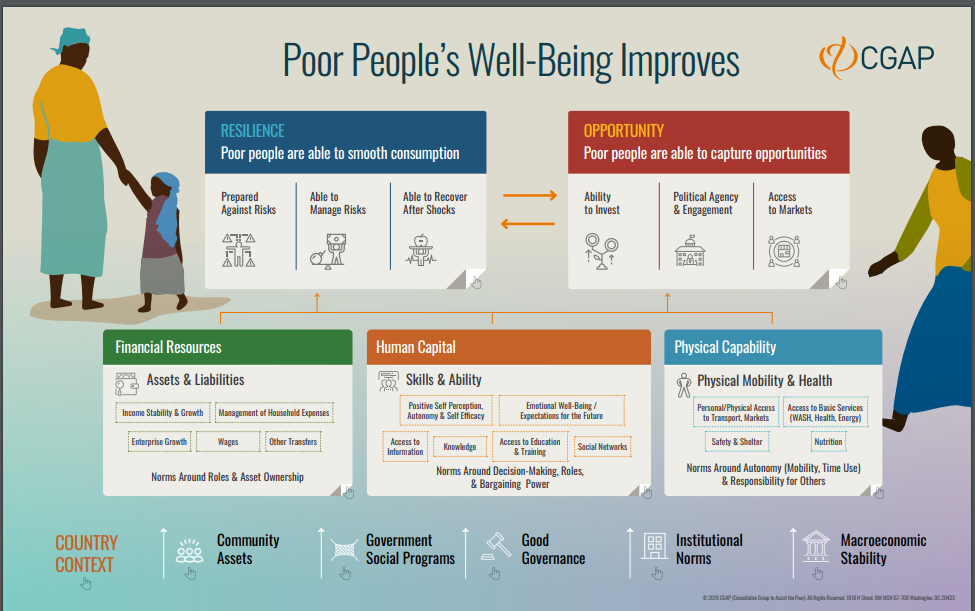
wellbeing improves

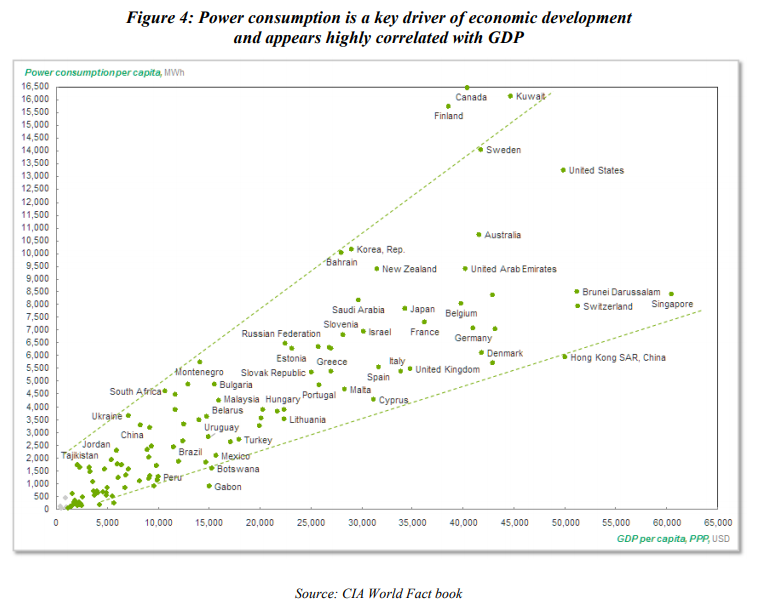
That comprehensive diagram from CGAP shows numerous elements that contribute to rising health and prosperity, but there is one resource underlying and enabling everything:  Access to affordable, reliable energy.  From Global Energy Assessment: 

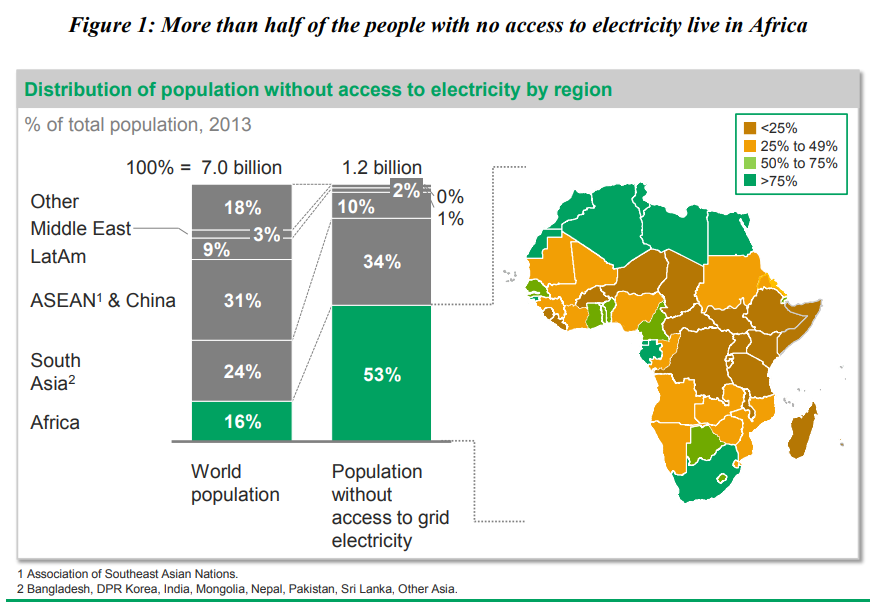
“Access to cleaner and affordable energy options is essential for improving the livelihoods of the poor in developing countries. The link between energy and poverty is demonstrated by the fact that the poor in developing countries constitute the bulk of an estimated 2.7 billion people relying on traditional biomass for cooking and the overwhelming majority of the 1.4 billion without access to grid electricity. Most of the people still reliant on traditional biomass live in Africa and South Asia.

The relationship is, in many respects, a vicious cycle in which people who lack access to cleaner and affordable energy are often trapped in a re-enforcing cycle of deprivation, lower incomes and the means to improve their living conditions while at the same time using significant amounts of their very limited income on expensive and unhealthy forms of energy that provide poor and/or unsafe services.”

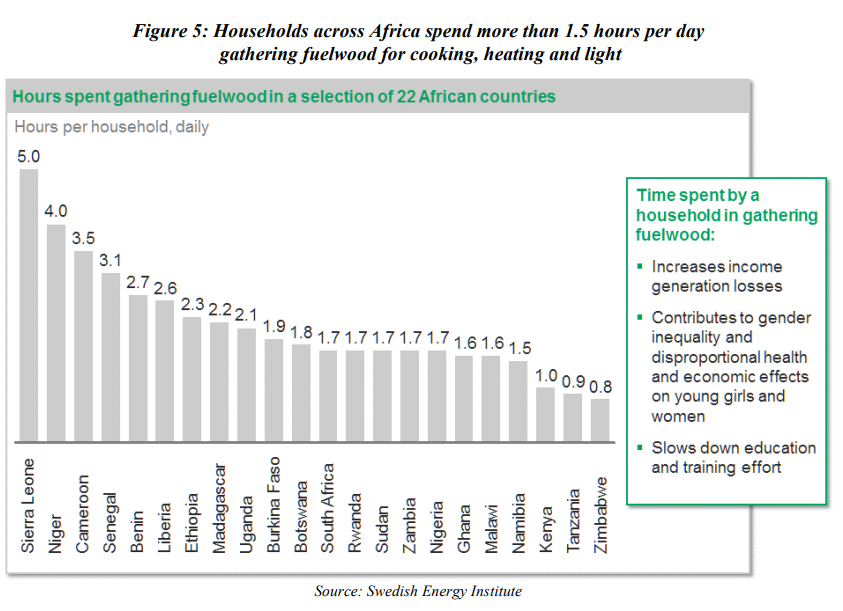
The moral of this is very clear. Where energy is scarce and expensive, people’s labor is cheap and they live in poverty. Where energy is reliable and cheap, people are paid well to work and they have a better life.

adb fig.1
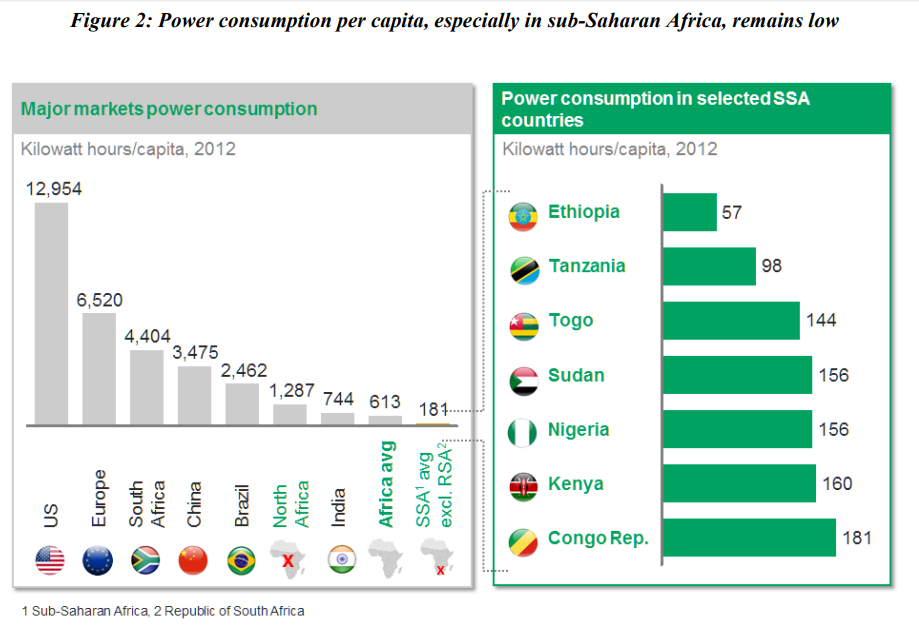
adb fig.2
adb fig.3
adb fig.4
adb fig.5
adb fig.7

How Climate Policies Keep People Poor

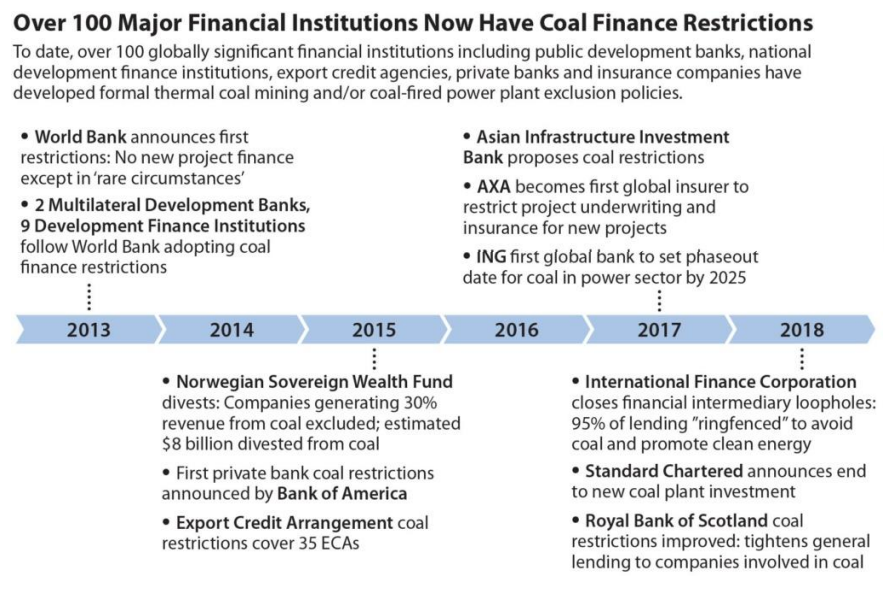
Note that the vision for 100% access to electric power was put forward by the African Development Bank in 2016.  (Above slides come from The Bank Group’s Strategy for The New Deal on Energy for Africa 2016 – 2025).  Instead of making finances available for such a plan, an International Cabal organized to deny any support for coal, the most available and inexpensive way to electrify Africa.
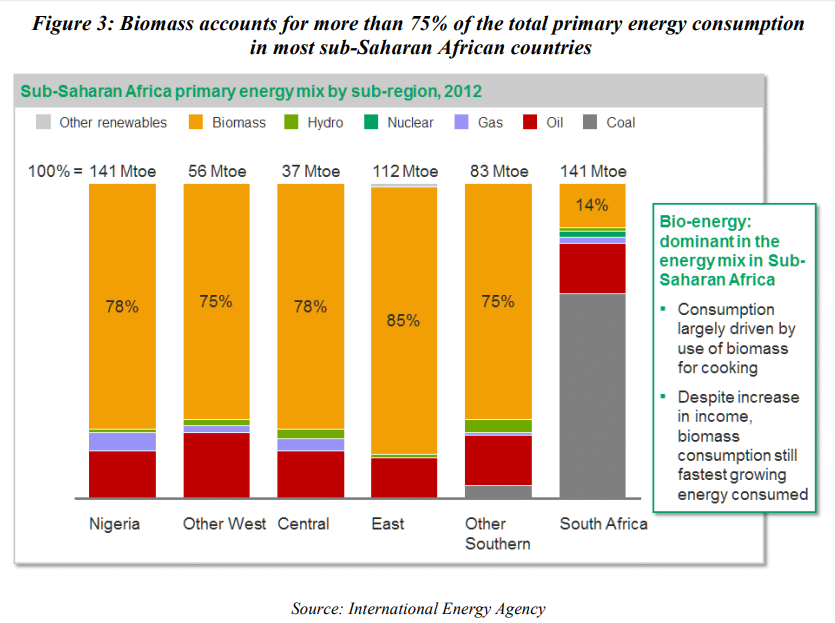
ieefa coal restrictionsThis is an organized campaign to deny coal-fired power anywhere in the world, despite coal being the starting point in the development pathway for every modern society, and currently the success model for Asia, and China in particular.  [Note in Figure 3 above that South Africa, the most advanced of African nations gets the majority of its power from coal.] The chart above comes from IEEFA 2019 report Over 100 Global Financial Institutions Are Exiting Coal, With More to Come.  Their pride in virtue-signaling is expressed in the subtitle:
Every Two Weeks a Bank, Insurer or Lender Announces New Restrictions on Coal.

How Climate Policies Waste Resources that could Improve Peoples’ Lives

The Climate Crisis Industry costs over 2 Trillion US dollars every year, and is estimated to redirect 30% of all foreign aid meant for developing countries into climate projects like carbon offsets and off-grid wind and solar. 

A much better plan is put forward by the Copenhagen Consensus Center.  A panel of social and economic development experts did cost/benefit analyses of all the Millenium Goals listed by the UN working groups, including climate mitigation and adaption goals along with all the other objectives deemed desirable. They addressed the question: 

What are the best ways of advancing global welfare, and particularly the welfare of developing  countries, illustrated by supposing that an additional $75 billion of resources were at their disposal  over a 4‐year initial period?

These challenges were examined:

  1. Armed Conflict
  2. Biodiversity
  3. Chronic Disease
  4. Climate Change
  5. Education
  6. Hunger and Malnutrition
  7. Infectious Disease
  8. Natural Disasters
  9. Population Growth
  10. Water and Sanitation

CCC budget

Imagine how much good could be done by diverting some of the trillions wasted trying to bend the curve at the top of the page?


World of Hurt from Climate Policies-Part 3

CO2 and COPs

100% Renewable Energy Means Sourcing Rare Metals Off-Planet


This is a third post toward infographics exposing the damaging effects of Climate Policies upon the lives of ordinary people.  (See World of Hurt Part 1 and Part 2)  And all of the pain is for naught in fighting against global warming/climate change, as shown clearly in the image above.  This post presents graphics to illustrate the third of four themes:

  • Zero Carbon Means Killing Real Jobs with Promises of Green Jobs
  • Reducing Carbon Emissions Means High Cost Energy Imports and Social Degradation
  • 100% Renewable Energy Means Sourcing Rare Metals Off-Planet
  • Leave it in the Ground Means Perpetual Poverty
Part 3:  Wind and Solar Infrastructure Consumes Rare Metals Far Beyond World Supplies

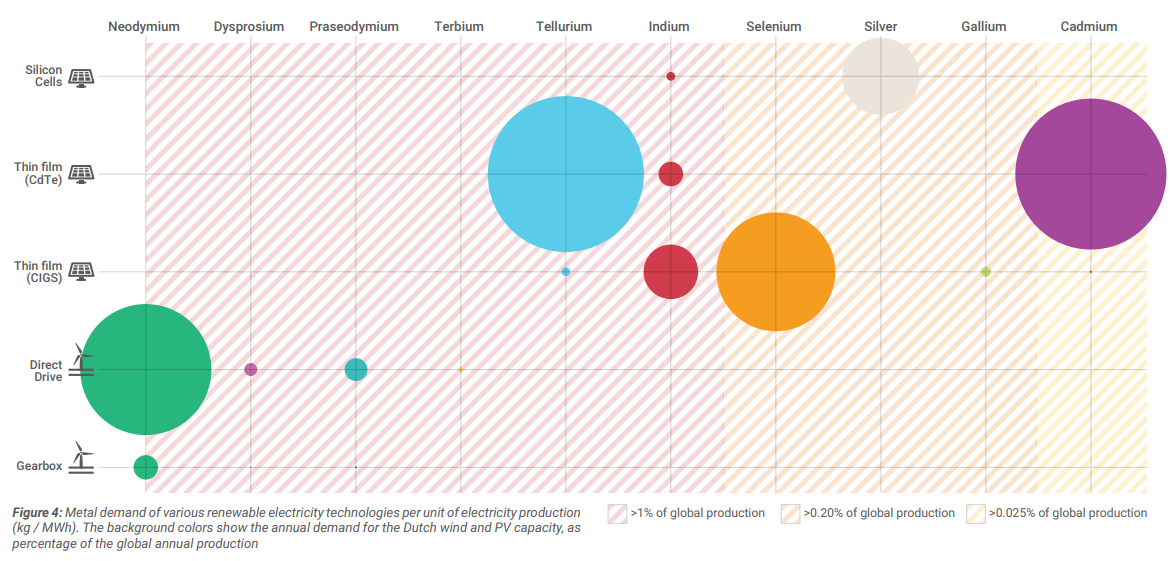
WHCP3 Rare Metals Demand by techMetal demand per technology

There are various technologies available for the production of electricity through wind and solar. Each technology requires different amounts of critical metals. This figure shows the metal demand for the five most common technologies.

Conclusions
• Newer technologies are often more efficient and cheaper, however, they rely on the properties of critical metals to achieve this.
• Thin film cadmium-tellurium solar PV cells have the best performance in terms of CO2 -emissions and energy payback times. They do however require large quantities of tellurium and cadmium, and tellurium is one of the rarest metalloids.
Direct-drive wind turbines use neodymium-dysprosium based permanent magnets. They are more expensive to produce, but cheaper in their exploitation phase. Gearbox turbines require less critical metals, but are generally understood to have higher maintenance costs because they have more moving parts. Gearbox turbines also have a shorter energy payback time.

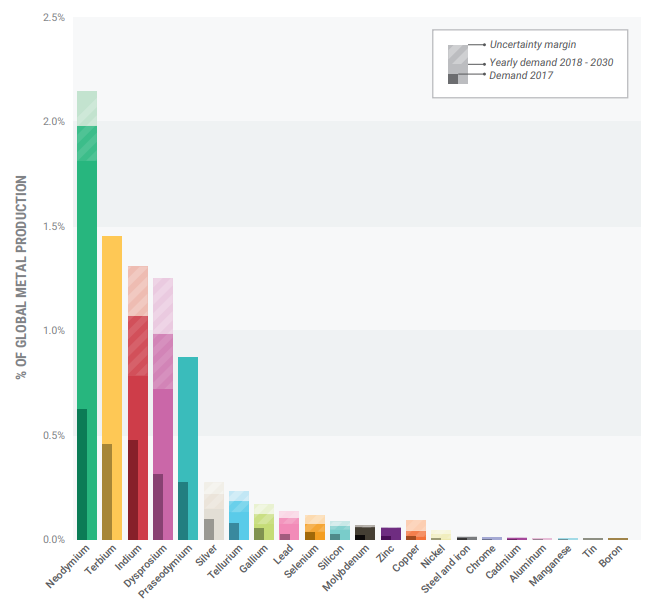
Method The average metal demand per unit of electricity is calculated based on load hours in the Netherlands.7–9 The entire lifespan of the specific technologies has been taken into account.WHCP3 Rare Metals Dutch DemandMetal demand for Dutch renewable electricity production

This chart shows the average annual metal demand (for 22 metals) required for the installation of new solar panels and wind turbines. This assumes a linear installation of capacity.

The annual metal demand is compared to the annual global production of these specific metals, resulting in an indicator for the share of Dutch demands for renewables in global production.

Conclusions
• For five of the metals, the required demand for renewable electricity production capacity is significant: neodymium, terbium, indium, dysprosium, and praseodymium.
• If the rest of the world would develop renewable electricity capacity at a comparable pace with the Netherlands, a considerable shortage will arise.
• When other applications (such as electric vehicles) are also taken into consideration, the required amount of certain metals would further increase.

Method The renewable electricity targets for 2030 serve as the starting point for the calculations. Based on these targets, the annual installed capacity is calculated. The metals required for this capacity are shown as a percentage of the annual global production.
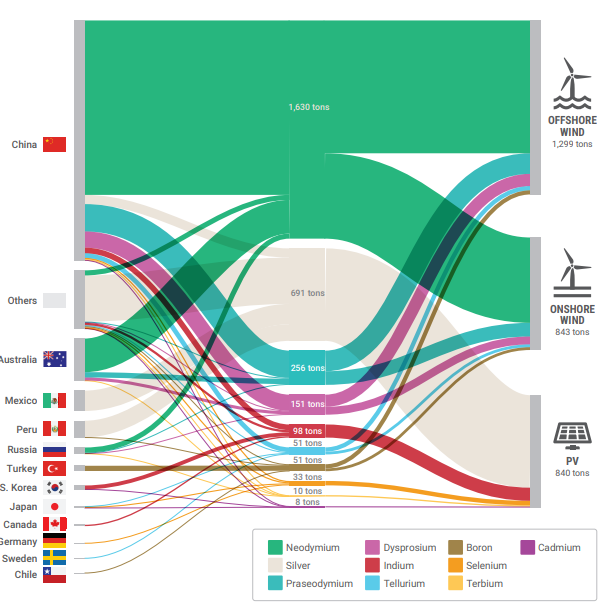
WHCP3 Rare Metals FlowsOrigin of critical metals

This diagram shows the origin of the metals required for meeting the 2030 goals. The left side of the diagram shows the origin, based on today’s global production of metals. The right side shows the cumulative metal demand for wind and solar technologies until 2030.

Conclusions
• The Netherlands is entirely dependent on countries outside of Europe – and mainly on China – for its critical metals.
• Not only is the main share of current production located in China, the country also hosts refinery facilities for many metals.
• Australia and Turkey are also important countries for the extraction of specific metals, particularly neodymium (Australia) and boron (Turkey).

Method The renewable electricity capacity required is calculated from the goals in the Climate Agreement outlines. This capacity is then translated to a metal demand. The ratio of world production is based on the annual production statistics of 2017.
WHCP3 Rare Metals Supply DemandGlobal critical metal demand for wind and PV 

When considering a global perspective, the critical metal demand for our future renewable electricity production is significant. This graph shows the annual metal demand for the six most critical metals, compared to the annual production. The dotted line represents present-day annual production.  

Conclusions
Future annual critical metal demands of the energy transition surpass the total annual critical metal production.
• An exponential growth in renewable energy production capacity is not possible with present-day technologies and annual metal production. As an illustration: in 2050, the annual need for Indium (only for solar panel application) will exceed the present-day annual global production twelvefold.
• To be able to realize a renewable energy system, there is a need to both dematerialize renewable electricity production technologies and increase global annual production.

Source: Metal Demand for Renewable Electricity Generation in the Netherlands.

[Note:  The US consumes 30 times more energy than the Netherlands.]

And there is another precious resource required for wind and solar power plants:  Land in proximity to human settlements

Wind Farms Area for LondonThe gray area would be required for a wind farm large enough to power London UK.  The yellow area would be required for solar panels.

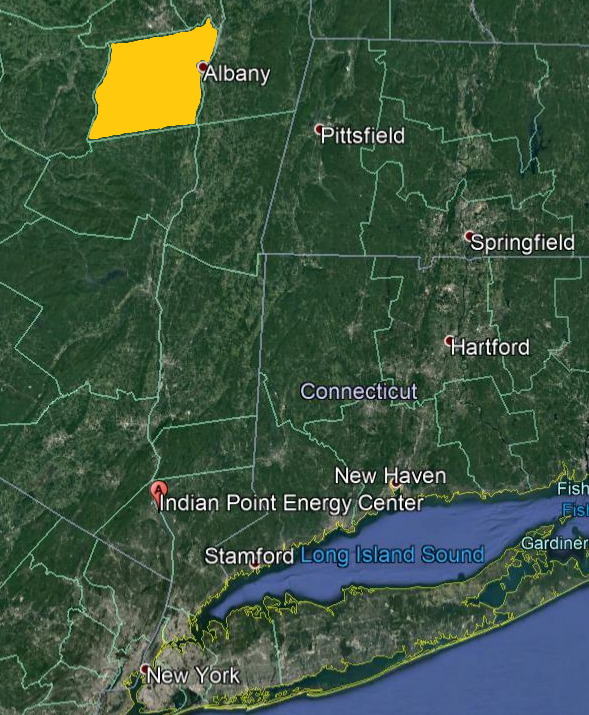
Albany and Indian Point2

Just to replace the now closed Indian Point nuclear plant will require a wind farm the size of Albany County New York.


World of Hurt from Climate Policies-Part 2

CO2 and COPs

Reducing Carbon Emissions Means High Cost Energy Imports and Social Degradation

This is a second post toward infographics exposing the damaging effects of Climate Policies upon the lives of ordinary people.  (See World of Hurt Part 1)  And all of the pain is for naught in fighting against global warming/climate change, as shown clearly in the image above.  This post presents graphics to illustrate the second of four themes:

  • Zero Carbon Means Killing Real Jobs with Promises of Green Jobs
  • Reducing Carbon Emissions Means High Cost Energy Imports and Social Degradation
  • 100% Renewable Energy Means Sourcing Rare Metals Off-Planet
  • Leave it in the Ground Means Perpetual Poverty

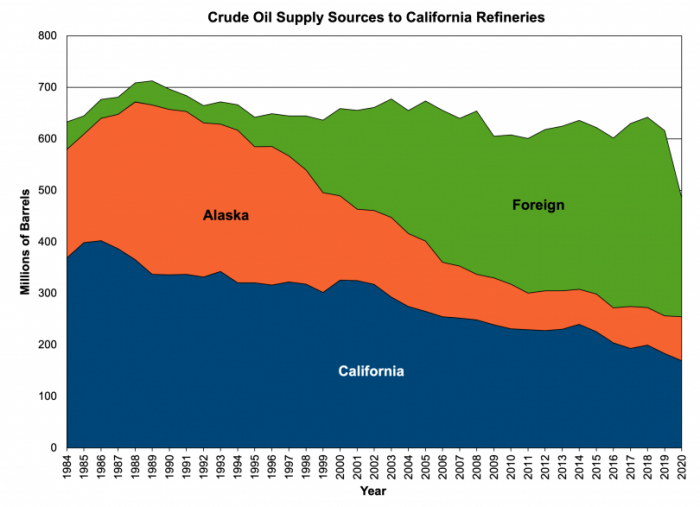
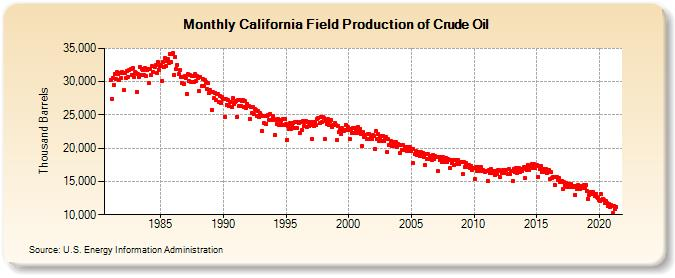
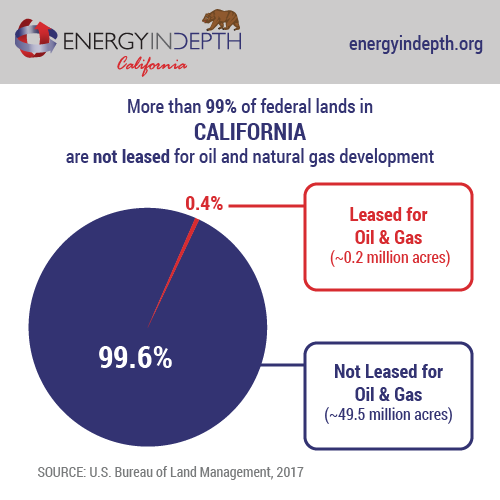
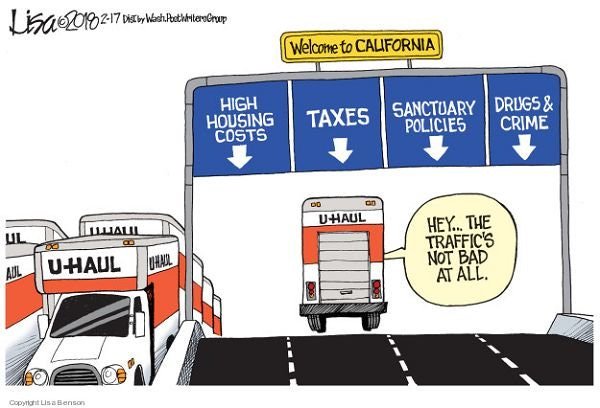
Part 2:  California Exemplifies Ruination from Self-imposed Climate Policiesca-oil-supplies-source-700x507-1For the past 25 years the amount of oil supplied to California’s refineries has essentially held steady at around 660 million barrels per year, but the source of the supply has changed drastically. In 1995, nearly all of that oil came from within California’s borders and Alaska. Today, the majority of the oil comes from foreign imports as data from the state’s Energy Commission shows.WHCP2 Cal oil productionWHCP2 Cal oil leasesBy blocking domestic production through permit denials, California is playing a shell game with emissions. Overall use of petroleum products has held steady but shifted from energy produced within the state – where the industry is subject to U.S. environmental regulations and supports local workers and companies – to overseas.

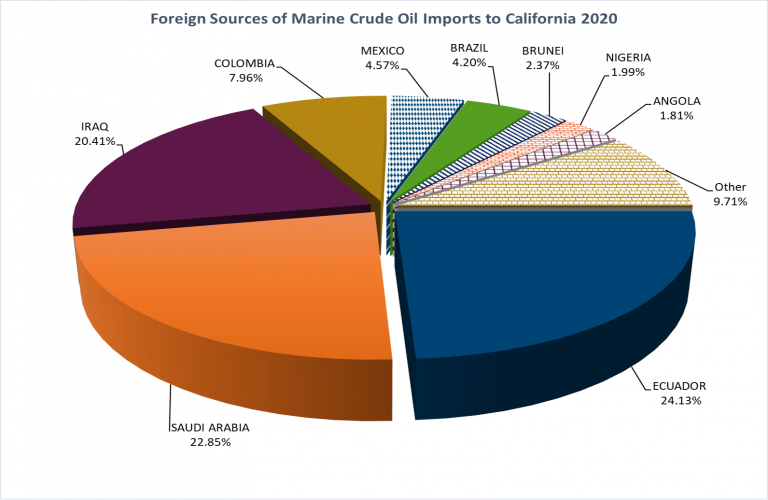
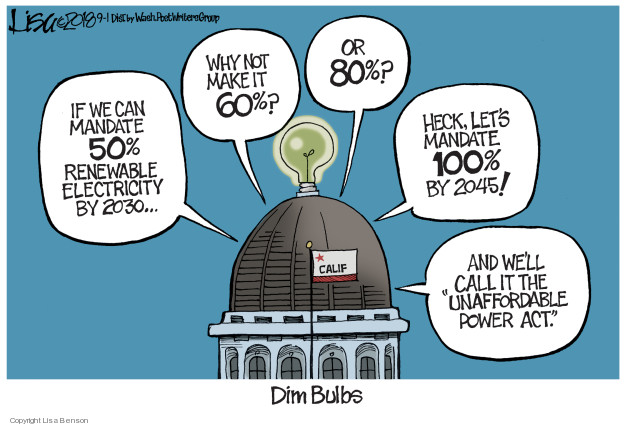
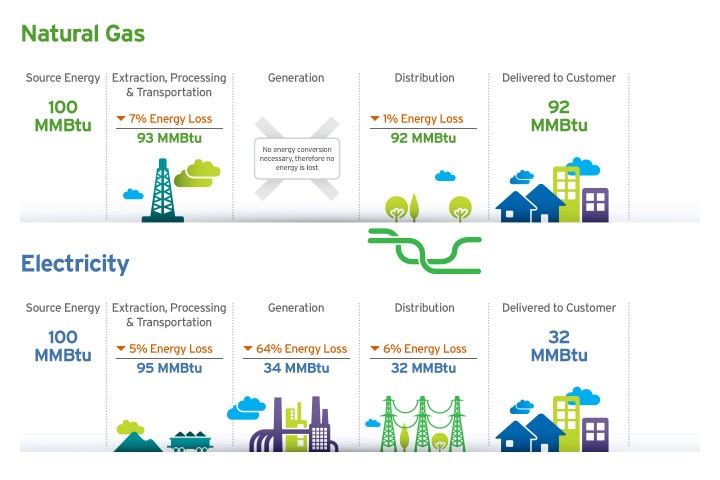
California isn’t reducing its dependence on oil; it’s just adding a higher carbon footprint to get it.ca-oil-foreign-source-768x500-1Californians pay one of the highest electricity rates in the United States. In 2015, the average resident spent 2.7 percent of their salary on electricity and paid approximately $1,700 annually to keep their lights on. This percentage has been increasing since 2008 Prices have climbed 30 percent over the last decade as successive governors have mandated that an increasing share of electricity is sourced from renewables.cg5b8ded55e8c77aga-energy-transferDespite natural gas rates being at their lowest levels since 1999, several municipalities across California have proposed or implemented bans on the use of the resource in homes and businesses. 

As individuals leave the gas grid, the poor will face higher prices on the grid and higher electricity prices when they switch. They will be threatened with a higher cost of living that could force them from their homes. Lower income individuals are priced out of neighborhoods where they could build equity because of higher electric costs. Middle class and wealthy individuals pay four times more for electricity, diminishing disposable income, while still paying for a gas grid they are unable to connect to through municipal law.

The result of California’s efforts? A reduction of global emissions by less than half of one percent.5db36b3ee25b2.image_Sources:  EnergyInDepth:  California

See also:  California on the Road to Ruin


World of Hurt from Climate Policies-Part 1

CO2 and COPs

This is a beginning post toward infographics exposing the damaging effects of Climate Policies upon the lives of ordinary people.  And all of the pain is for naught in fighting against global warming/climate change, as shown clearly in the image above.  This post presents graphics to illustrate the first of four themes:

Part 1:  Zero Carbon will Decimate US Workforce

WHCP fig1r

WHCP fig1ar

WHCP fig2ar

WHCP fig3a

WHCP fig3

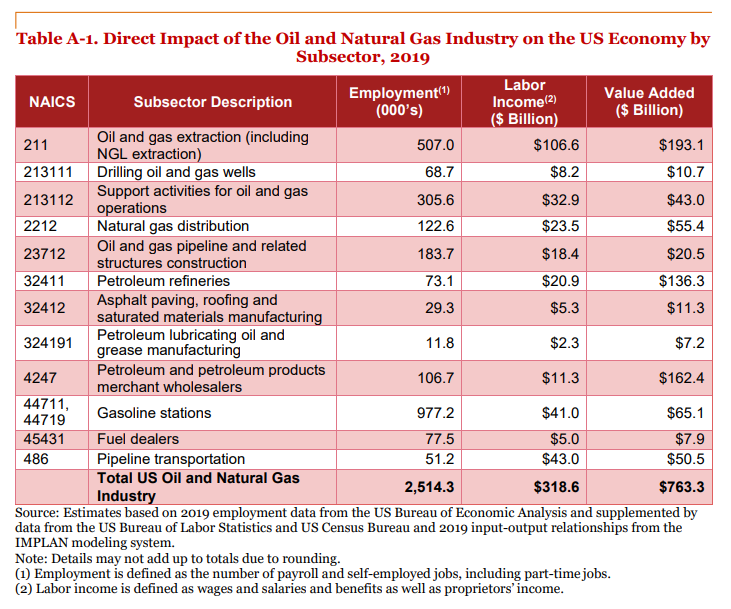
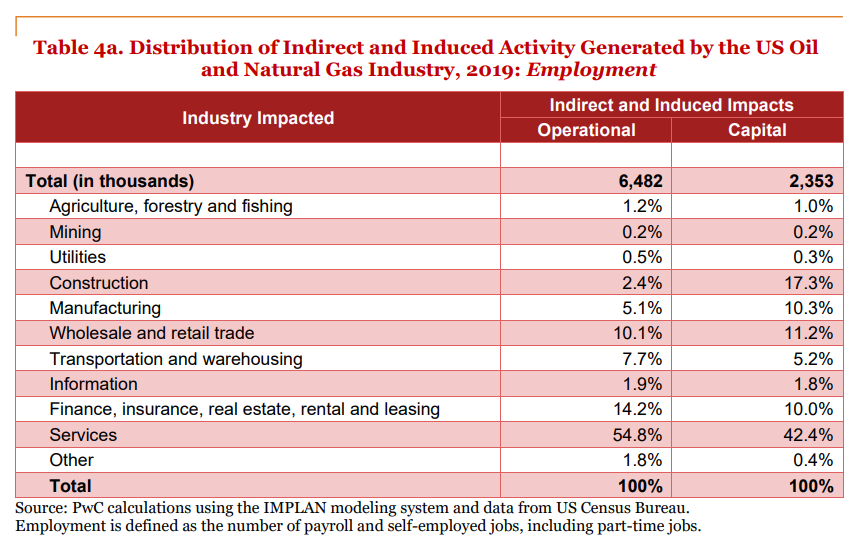
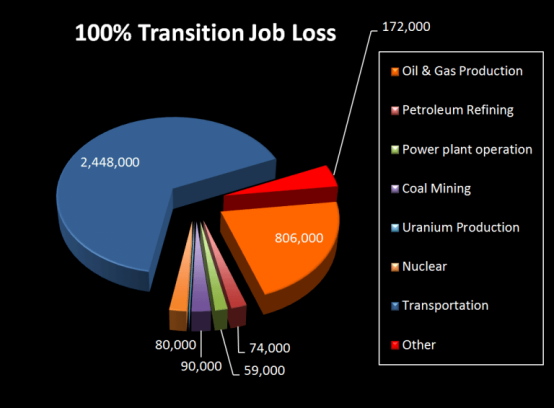
Tables of Oil and Natural Gas Employment and Economic Impact come from API Price Waterhouse Cooper  Impacts of the Oil and Natural Gas Industry on the US Economy in 2019    As for Coal, EIA estimates the industry lost 75% of its workforce down to 53,000 employees (2019) working in coal mines, and the number has stabilized with exports offsetting declines in domestic consumption.  The losses of jobs in oil and gas come from EID (Energy in Depth) CLIMATE ACTIVISTS PUSH STUDY SHOWING 3.8 MILLION LOST JOBS FROM RENEWABLE ENERGY TRANSITION.

“While many experts dispute the feasibility of Jacobson’s plan for a renewables-only energy grid, the severe job losses are far more difficult to dispute, given that they come directly from Jacobson’s research. Those job losses would undoubtedly be devastating for millions of American families.”

cb020621dapc20210206014624

And about Those Promised Green Jobs to replace the lost ones:  

In February 2009, the last time Democrats controlled the White House and both chambers of Congress, President Barack Obama and Vice President Joe Biden flew to Colorado to sign their $787 billion stimulus package into law.

The plan was to invest $150 billion over 10 years that would advance a “clean energy” economy built around biofuels, hybrid cars, low-emission coal plants, and renewable sources such as solar and wind. Obama and Biden promised to create five million green jobs that would specifically benefit low-income earners, claiming that the stimulus package included “help for those hit hardest by our economic crisis.”

mrz041312dapr20120413044622

A decade later, we now know that the 2009 green jobs program was a complete failure. The Department of Labor (DoL) and the Bureau of Labor Statistics (BLS) issued several reports on the green jobs program. Each report was an indictment on the program, as job placement met only 10 percent of the targeted level, and many of those who were hired remained employed for less than six months.

Even the new, redefined green jobs did not reach the five million promised in February 2009. According to a study by the Brookings Institution, the Obama–Biden administration identified nearly 2.7 million green jobs, but most were bus drivers, sewage workers, and other types of work that do not match the “green jobs of the future” that the administration promised. Most of them were preexisting jobs, which were simply re-characterized by the government, apparently in an effort to boost the numbers.  Source: If at First You Don’t Succeed, Try ‘Green Jobs’ Again

See also Green Energy Failures Redux

picture-9

o

Don’t Assume Global Warming Blunts Economic Growth

sun0623

In recent years, a strand of economic literature has argued that warming
not only negatively affects the level of economic activity,
but also the rate of income growth. PHOTO BY BLOOMBERG

Ross McKitrick explains in his Financial Post article Why climate change won’t hurt growth.  Excerpts in italics with my bolds.

There is no robust evidence that even the worst-case warming scenarios would cause overall economic losses

It has long been observed that global poverty tends to be concentrated in hot, tropical regions. But persistent poverty in African and South American countries has political and historical roots, especially their embrace of Soviet-backed communism in the 20th century. In places where economic reforms were adopted, like South Asia, growth took off and they quickly converged with the West, despite having tropical climates. So the connection to climate may be coincidental.

But in recent years, a strand of economic literature has argued that warming not only negatively affects the level of economic activity, but also the rate of income growth. This matters because when conducting an analysis over a 100-year time span, small changes in the growth rate can compound over a century and result in large total changes.

A 2012 study led by Melissa Dell of Harvard University presented evidence that warming had insignificant effects on income growth in rich countries, but in poor countries the effect was negative and statistically significant. Another team used this result in a policy model to argue that the “social cost of carbon” was at least 10 times higher than previously thought.

scc-working-group

This was followed up by several studies led by economists Marshall Burke of Stanford and Solomon Hsiang of Berkeley, who reported evidence that warming had significant negative effects on wealthy and poor countries alike. Suddenly a picture emerged that warming is much more harmful than we thought, so it should be full steam ahead on aggressive climate policy. Global policymakers have embraced this belief, in part at the urging of the United Nations Intergovernmental Panel on Climate Change’s (IPCC) 2018 special report on global warming of 1.5 C, which highlighted this research.

But other research tells a different story. One of the challenges in climate economics is that climate data are collected on a grid cell basis (organized in latitude-longitude boxes), while economic data is collected at the national level. To match them up, Dell’s group averaged the climate data up to the national level. There are different ways of doing the averaging, however, and the results are sensitive to the chosen method.

Other teams have begun trying to build economic data sets at the local and regional level so the averaging step can be omitted. One group from Northern Arizona University used grid cell-level economic data from around the world and found, like Dell, that warming temperatures has no effect on growth in rich countries, but they found it has a positive effect in poor countries up to an average temperature of about 17.5 C, which is above the sample average temperature of 14.4 C.

Then a team from Germany developed a regional economic database that lets them account for what economists call “country fixed effects,” namely, unobservable historical and institutional factors specific to each country that are unrelated to, in this case, the climate variables.

When they apply this method, the climate effects on growth and output vanish for rich and poor countries alike.

More recently, a group led by Richard Newell of Resources for the Future raised the issue that the econometric modelling can be done many different ways. Given the same data set, there are lots of decisions to make, such as how many lagged effects to include, whether to use linear or nonlinear equations and whether to use time trends. Altogether, they counted 800 different ways the same data could be analyzed.

In order to determine whether the results depend on the choice of models, they obtained the data set used by the Burke team and used the same country-level averaging method employed by Dell’s team. Then they ran a meta-analysis in which they ran all the possible models and evaluated at how well each one fit the data, in order to identify the best-performing models to reach their conclusions.

Dozens of different models all fit the data about equally well, and they could not rule out that the best ones do not include any role for temperature in economic growth. There was some evidence that warming is good for growth up to 13.4 C, but the positive and negative effects were not statistically significant.

Across the entire range of temperatures in the sample there was no significant influence of climate on either output or growth.

Under the highest-warming scenario, the Burke team had projected a 49 per cent global GDP loss from climate change by 2100, but Newell found the model variant that fits their data best implied a slight global GDP gain. The best growth models as a group project an effect on GDP by 2100 ranging from -84 per cent to +359 per cent, with the central estimates very close to zero. In other words, the effects are too imprecise to say much of anything for certain.

Now we come up against the challenge that policymakers seem to find it easier to deal with gloomy certainty than optimistic uncertainty. In the blink of an eye, a handful of studies in a new research area had become the canonical truth, on which governments swung into a much more aggressive climate policy stance.

But as time has advanced, new data sets, and even reanalysis of the old data sets, has called those results into question and has shown that temperature (and precipitation) changes likely have insignificant effects on GDP and growth, and the effects are as likely to be positive as they are to be negative. This does not mean there aren’t specific regions and specific industries where there are potential losses, especially if the countries don’t adapt. But for the world as a whole, there is no robust evidence that even the worst-case warming scenarios would cause overall economic losses.

It now falls to advisory groups like the IPCC to tell this to world leaders, before they enact any more disastrous climate policies that will do all the harm (and more) that the evidence says climate change itself will not do.

gv020921dapr20210209064505

Footnote:  There are also economists pushing the notion of direct costs from global warming/climate change due to supposed increasing health and prosperity impacts from extreme weather.  This is contrary to IPCC approved studies by economist William Nordhaus.  See IPCC Freakonomics

maxresdefault

Supremes Asked to Rule on EPA Energy Authorities

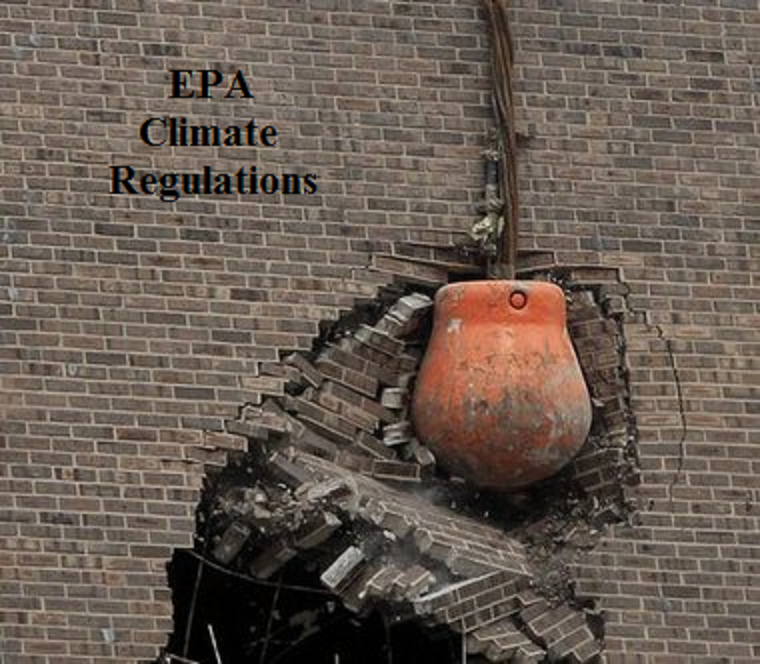
wrecking_ball_destroyEPABackground from Reed Smith lawyers The fall of Trump’s Affordable Clean Energy Rule and the strengthened EPA authority to regulate greenhouse gases.  Excerpts in italics with my bolds

The Affordable Clean Energy Rule

The EPA promulgated the ACE Rule in 2019 under the CAA, replacing the Obama administration’s 2015 Clean Power Plan (CPP). Both rules sought to reduce GHG emissions from the power sector; but where the CPP implemented broader industry-wide mechanisms, the ACE Rule limited reduction efforts to the actual source power plants.

The 2015 CPP offered “beyond the fenceline” tools for states to reduce emissions by replacing fossil fuels with renewable energy sources and participating in emissions credit-trading programs; however, in February 2016 the U.S. Supreme Court stayed the implementation of the CPP pending litigation in the D.C. Circuit. During the stay and subsequent freeze of litigation, the Trump administration rescinded the CPP and promulgated the ACE Rule.

In promulgating the ACE Rule, the Trump EPA took an alternative view of the CAA than the Obama EPA and reasoned that the CAA expressly limited the EPA’s power to only “at the source” emissions reduction options, such as heat rate improvement technologies. As a result, the Trump administration removed all of the CPP’s “beyond the fenceline” options and limited emissions restrictions to those applied directly to power plants.

DC Circuit Court of Appeal Ruling January 19, 2021

Judges Millett and Pillard of the D.C. Circuit Court disagreed with the (Trump) EPA’s interpretation. In the majority opinion, the Court concluded that there is “no bases—grammatical, contextual, or otherwise—for the EPA’s assertion” that its authority was limited to “at the source” controls. In the end, the Court vacated the ACE Rule and remanded it back to the EPA just in time for the Biden administration to take over.  The Court’s decision appears to clear the way for the Biden administration to regulate GHG emissions from the power sector.

In his first week in office, President Biden has taken a number of actions to undo many of the Trump administration’s environmental policy decisions, including rejoining the Paris Climate Accord. The new Biden EPA has also requested that the Department of Justice have all Trump-era litigation seeking judicial review of any EPA regulation promulgated between January 20, 2017 and January 20, 2021. Based on the Court’s show of support and the Biden Administration’s actions within the first week, we may see some of the Obama-era or similar regulation brought back to life in the coming months.

Petitions to Supreme Court April 29 and 30, 2021

The May Update at Columbia Climate Law Blog reports the latest development bringing the issue to Supreme Court attention:  States and Coal Company Sought Review of D.C. Circuit Decision Vacating Affordable Clean Energy Rule  Excerpts in italics with my bolds.

Two petitions for writ of certiorari were filed in the U.S. Supreme Court seeking review of the D.C. Circuit’s January opinion vacating EPA’s repeal and replacement of the Obama administration’s Clean Power Plan regulations for controlling carbon emissions from existing power plants. The first petition was filed by West Virginia and 18 other states that had intervened to defend the repeal and replacement rule, known as the Affordable Clean Energy rule. The states’ petition presented the question of whether Section 111(d) of the Clean Air Act constitutionally authorizes EPA “to issue significant rules—including those capable of reshaping the nation’s electricity grids and unilaterally decarbonizing virtually any sector of the economy—without any limits on what the agency can require so long as it considers cost, nonair impacts, and energy requirements.” They argued that Congress had not clearly authorized EPA to exercise such “expansive” powers and that the D.C. Circuit majority opinion’s interpretation was foreclosed by the statute and violated separation of powers. The states argued that the Supreme Court’s stay of the Clean Power Plan while it was under review by the D.C. Circuit in 2016 signaled that the legal framework for the Clean Power Plan “hinges on important issues of federal that EPA then—and the court below now—got so wrong this Court was likely to grant review.” The states contended that further delay in the Court’s resolution of these “weighty issues” would have “serious and far-reaching costs.”

The second petition was filed by a coal mining company. The coal company’s petition presented the question of whether Section 111(d) “grants the EPA authority not only to impose standards based on technology and methods that can be applied at and achieved by that existing source, but also allows the agency to develop industry-wide systems like cap-and-trade regimes.” The company argued that the D.C. Circuit erred by “untethering” Section 111(d) standards from the existing source being regulated. Like the states, the company contended that Supreme Court had already recognized the critical importance of this question when it stayed the Clean Power Plan.

The company argued that debates regarding climate change and policies to address climate change “will not be resolved anytime soon” but that “what must be resolved as soon as possible is who has the authority to decide those issues on an industry-wide scale—Congress or the EPA.”

EPA’s response to the petitions is due June 3, 2021. West Virginia v. EPA, No. 20-1530 (U.S. Apr. 29, 2021); North American Coal Corp. v. EPA, No. 20-1531 (U.S. Apr. 30, 2021).

Comment:  The question of decision authority seems especially urgent since no one knows who is the actual decider for the Executive Branch.


Biden’s Bogus Climate Report

scc-working-group

The latest criticism comes from James Broughel writing at Real Clear Politics Biden’s Climate Report Is Based on Personal Values, Not Science. Excerpts in italics with my bolds.

Late last month, the Biden administration quietly released an update of the government’s “social cost of carbon” (SCC) estimate, a metric used to value the benefits of global warming policies, especially regulations. The update hasn’t received much attention yet, but it will be important in justifying the administration’s climate agenda in the months ahead.

There are numerous shortcomings with the Biden team’s calculations. Some may be due to the report being rushed, but others reflect misunderstanding of economic principles, and, more simply, poor judgment.

Biden’s People Get the Units Wrong

First, numerous tables in the document released by the administration are mislabeled. The interagency working group that produced the update claims its primary estimate of the SCC is 51 dollars per ton. But the models the working group uses calculate the figure in terms of social welfare — not dollars. Thus, 51 is a measure of the amount that the current generation’s “welfare” is reduced by carbon pollution. Even assuming that number is credible (and measuring welfare is no easy task), the administration doesn’t get the units right.,

This is a big deal because the numbers in the new report shouldn’t be used in cost-benefit analysis unless further adjustments are made. Cost-benefit analysis is supposed to measure impacts in dollars, not the Biden administration’s social welfare units. So any analysis that tries to compare these numbers to financial costs will be nonsensical. These problems with units extend to estimates of the social cost of methane and of nitrous oxide, which also appear in last month’s report.

Misleading Social Discount Rate

There are other misleading parts of the document. For example, there is extensive discussion about the correct “social discount rate” to use in cost-benefit analysis. The social discount rate describes how much less a future benefit from a policy should count relative to a present benefit. For example, many economists generally assume a life saved in 100 years is far less valuable than a life saved today — which is, of course, controversial and has implications beyond economics.

The report makes a number of dubious claims about the social discount rate, but here are just a few worth highlighting.

First, Biden’s team argues that risk-free market interest rates have declined in recent years, and that this provides a basis for using a lower social discount rate. However, claims like this reflect a misunderstanding of the discounting concept.

The decision of how much to weight future health, wellbeing, and lives saved is an ethical choice. One cannot find the correct social discount rate by opening up the Wall Street Journal and turning to the page on interest rates. Ultimately, we need some philosophical compass to guide our choice. Yes, one could choose to base an ethical decision on market criteria, but one could just as easily choose an alternative paradigm, like introspection. Nor should this issue be conflated with the rate of return on capital, which is a separate issue that is sometimes confused with social discounting.

In fact, it would be just as legitimate to pick any plausible number out of a hat (you might laugh, but some approaches do draw a discount rate from a distribution of rates based on surveys of economists). Whatever method is chosen, the choice of the social discount rate is inevitably a value judgment.

Similarly, the report tries to justify lower discount rates in the future by pointing to “Ramsey discounting,” a method named after the early 20th century mathematician Frank Ramsey. Under this approach, analysts assume a benevolent dictator — a proxy for our whole generation’s social welfare — centrally plans the economy. Economists have concocted various mathematical schemes to estimate how the dictator discounts the future.

Again, because the choice is an ethical one, there is no particular reason to believe this Ramsey discounting approach is wrong. But there’s no reason to believe it’s right, either.

Personal Preferences, Not Science

The problem with the government’s report is that it presents these various approaches as somehow scientific. In fact, they conceal what is fundamentally a question about values and make it appear as though the answer can come from technical measurement.

Perhaps most concerning is that the administration is already violating its own principles of social justice. In a memo signed by President Biden on his first day in office, he identified promoting the interests of future generations as a top priority, which is a noble goal, to be sure.

But the SCC is calculated using a version of the Ramsey model. In it, the present generation functions as the dictator whose welfare is measured, while the welfare of future generations counts for basically nothing. Present citizens may display some empathy for future generations — for example, the administration’s climate policy is probably motivated by their concern for the future — but the analysis doesn’t consider the welfare of future generations in a direct way.

The new social cost of carbon report comes across like an attempt by experts to ram through a political agenda, while trying to pass off their efforts as scientific. But the public should not be fooled. What’s behind the updated numbers is the administration’s personal values, for better or worse, not science.

Background from Previous Post Biden’s Arbitrary Social Cost of Carbon: What You Need to Know

The news on Friday was Biden signing another order, this one restoring the so-called “Social Cost of Carbon” to Obama’s $51 a ton, along with threats to raise it up to $125 a ton.  The whole notion is an exercise in imagination for the sake of adding regulatory costs to everything involving energy,  that is to everything.  A background post below describes the history of how this ruse started and the manipulations and arbitrary assumptions to gin up a number high enough to hobble the economy.

Background from 2018 post: US House Votes Down Social Cost of Carbon

The House GOP on Friday took a step forward in reining in the Obama administration’s method of assessing the cost of carbon dioxide pollution when developing regulations.

The House voted 212-201, along party lines, to include a rider blocking the use of the climate change cost metric to an energy and water spending bill.

The amendment offered by Texas Republican Rep. Louie Gohmert bars any and all funds from being used under the bill to “prepare, propose, or promulgate any regulation that relies on the Social Carbon analysis” devised under the Obama administration on how to value the cost of carbon. (Source Washington Examiner, here)

To clarify: the amendment in question defunds any regulation or guidance from the federal government concerning the social costs of carbon.

Background: 
The Obama administration created and increased its estimates of the “Social Cost of Carbon,” invented by Michael Greenstone, who commented on the EPA Proposed Repeal of CO2 emissions regulations.  A Washington Post article, October 11, 2017, included this:

“My read is that the political decision to repeal the Clean Power Plan was made and then they did whatever was necessary to make the numbers work,” added Michael Greenstone, a professor of economics at the University of Chicago who worked on climate policy during the Obama years.

Activists are frightened about the Clean Power Plan under serious attack along three lines:
1. No federal law governs CO2 emissions.
2. EPA regulates sites, not the Energy Sector.
3. CPP costs are huge, while benefits are marginal.

Complete discussion at CPP has Three Fatal Flaws.

Read below how Greenstone and a colleague did exactly what he now complains about.

Social Cost of Carbon: Origins and Prospects

The Obama administration has been fighting climate change with a rogue wave of regulations whose legality comes from a very small base: The Social Cost of Carbon.

The purpose of the “social cost of carbon” (SCC) estimates presented here is to allow agencies to incorporate the social benefits of reducing carbon dioxide (CO2) emissions into cost-benefit analyses of regulatory actions that impact cumulative global emissions. The SCC is an estimate of the monetized damages associated with an incremental increase in carbon emissions in a given year. It is intended to include (but is not limited to) changes in net agricultural productivity, human health, property damages from increased flood risk, and the value of ecosystem services due to climate change. From the Technical Support Document: -Technical Update of the Social Cost of Carbon for Regulatory Impact Analysis -Under Executive Order 12866

A recent Bloomberg article informs on how the SCC notion was invented, its importance and how it might change under the Trump administration.
How Climate Rules Might Fade Away; Obama used an arcane number to craft his regulations. Trump could use it to undo them. (here). Excerpts below with my bolds.

In February 2009, a month after Barack Obama took office, two academics sat across from each other in the White House mess hall. Over a club sandwich, Michael Greenstone, a White House economist, and Cass Sunstein, Obama’s top regulatory officer, decided that the executive branch needed to figure out how to estimate the economic damage from climate change. With the recession in full swing, they were rightly skeptical about the chances that Congress would pass a nationwide cap-and-trade bill. Greenstone and Sunstein knew they needed a Plan B: a way to regulate carbon emissions without going through Congress.

Over the next year, a team of economists, scientists, and lawyers from across the federal government convened to come up with a dollar amount for the economic cost of carbon emissions. Whatever value they hit upon would be used to determine the scope of regulations aimed at reducing the damage from climate change. The bigger the estimate, the more costly the rules meant to address it could be. After a year of modeling different scenarios, the team came up with a central estimate of $21 per metric ton, which is to say that by their calculations, every ton of carbon emitted into the atmosphere imposed $21 of economic cost. It has since been raised to around $40 a ton.

Trump can’t undo the SCC by fiat. There is established case law requiring the government to account for the impact of carbon, and if he just repealed it, environmentalists would almost certainly sue.

There are other ways for Trump to undercut the SCC. By tweaking some of the assumptions and calculations that are baked into its model, the Trump administration could pretty much render it irrelevant, or even skew it to the point that carbon emissions come out as a benefit instead of a cost.

The SCC models rely on a “discount rate” to state the harm from global warming in today’s dollars. The higher the discount rate, the lower the estimate of harm. That’s because the costs incurred by burning carbon lie mostly in the distant future, while the benefits (heat, electricity, etc.) are enjoyed today. A high discount rate shrinks the estimates of future costs but doesn’t affect present-day benefits. The team put together by Greenstone and Sunstein used a discount rate of 3 percent to come up with its central estimate of $21 a ton for damage inflicted by carbon. But changing that discount just slightly produces big swings in the overall cost of carbon, turning a number that’s pushing broad changes in everything from appliances to coal leasing decisions into one that would have little or no impact on policy.

According to a 2013 government update on the SCC, by applying a discount rate of 5 percent, the cost of carbon in 2020 comes out to $12 a ton; using a 2.5 percent rate, it’s $65. A 7 percent discount rate, which has been used by the EPA for other regulatory analysis, could actually lead to a negative carbon cost, which would seem to imply that carbon emissions are beneficial. “Once you start to dig into how the numbers are constructed, I cannot fathom how anyone could think it has any basis in reality,” says Daniel Simmons, vice president for policy at the American Energy Alliance and a member of the Trump transition team focusing on the Energy Department.

David Kreutzer, a senior research fellow in energy economics and climate change at Heritage and a member of Trump’s EPA transition team, laid out one of the primary arguments against the SCC. “Believe it or not, these models look out to the year 2300. That’s like effectively asking, ‘If you turn your light switch on today, how much damage will that do in 2300?’ That’s way beyond when any macroeconomic model can be trusted.”

Another issue for those who question the Obama administration’s SCC: It estimates the global costs and benefits of carbon emissions, rather than just focusing on the impact to the U.S. Critics argue that this pushes the cost of carbon much higher and that the calculation should instead be limited to the U.S.; that would lower the cost by more than 70 percent, says the CEI’s Mario Lewis.

Still, by narrowing the calculation to the U.S., Trump could certainly produce a lower cost of carbon. Asked in an e-mail whether the new administration would raise the discount rate or narrow the scope of the SCC to the U.S., one person shaping Trump energy and environmental policy replied, “What prevents us from doing both?”

See Also:

Six Reasons to Rescind Social Cost of Carbon

SBC: Social Benefits of Carbon

drain-the-swamp

Biden’s Arbitrary Social Cost of Carbon: What You Need to Know

The news on Friday was Biden signing another order, this one restoring the so-called “Social Cost of Carbon” to Obama’s $51 a ton, along with threats to raise it up to $125 a ton.  The whole notion is an exercise in imagination for the sake of adding regulatory costs to everything involving energy,  that is to everything.  A background post below describes the history of how this ruse started and the manipulations and arbitrary assumptions to gin up a number high enough to hobble the economy.

Background from 2018 post: US House Votes Down Social Cost of Carbon

The House GOP on Friday took a step forward in reining in the Obama administration’s method of assessing the cost of carbon dioxide pollution when developing regulations.

The House voted 212-201, along party lines, to include a rider blocking the use of the climate change cost metric to an energy and water spending bill.

The amendment offered by Texas Republican Rep. Louie Gohmert bars any and all funds from being used under the bill to “prepare, propose, or promulgate any regulation that relies on the Social Carbon analysis” devised under the Obama administration on how to value the cost of carbon. (Source Washington Examiner, here)

To clarify: the amendment in question defunds any regulation or guidance from the federal government concerning the social costs of carbon.

Background: 
The Obama administration created and increased its estimates of the “Social Cost of Carbon,” invented by Michael Greenstone, who commented on the EPA Proposed Repeal of CO2 emissions regulations.  A Washington Post article, October 11, 2017, included this:

“My read is that the political decision to repeal the Clean Power Plan was made and then they did whatever was necessary to make the numbers work,” added Michael Greenstone, a professor of economics at the University of Chicago who worked on climate policy during the Obama years.

Activists are frightened about the Clean Power Plan under serious attack along three lines:
1. No federal law governs CO2 emissions.
2. EPA regulates sites, not the Energy Sector.
3. CPP costs are huge, while benefits are marginal.

Complete discussion at CPP has Three Fatal Flaws.

Read below how Greenstone and a colleague did exactly what he now complains about.

Social Cost of Carbon: Origins and Prospects

The Obama administration has been fighting climate change with a rogue wave of regulations whose legality comes from a very small base: The Social Cost of Carbon.

The purpose of the “social cost of carbon” (SCC) estimates presented here is to allow agencies to incorporate the social benefits of reducing carbon dioxide (CO2) emissions into cost-benefit analyses of regulatory actions that impact cumulative global emissions. The SCC is an estimate of the monetized damages associated with an incremental increase in carbon emissions in a given year. It is intended to include (but is not limited to) changes in net agricultural productivity, human health, property damages from increased flood risk, and the value of ecosystem services due to climate change. From the Technical Support Document: -Technical Update of the Social Cost of Carbon for Regulatory Impact Analysis -Under Executive Order 12866

A recent Bloomberg article informs on how the SCC notion was invented, its importance and how it might change under the Trump administration.
How Climate Rules Might Fade Away; Obama used an arcane number to craft his regulations. Trump could use it to undo them. (here). Excerpts below with my bolds.

scc-working-group

In February 2009, a month after Barack Obama took office, two academics sat across from each other in the White House mess hall. Over a club sandwich, Michael Greenstone, a White House economist, and Cass Sunstein, Obama’s top regulatory officer, decided that the executive branch needed to figure out how to estimate the economic damage from climate change. With the recession in full swing, they were rightly skeptical about the chances that Congress would pass a nationwide cap-and-trade bill. Greenstone and Sunstein knew they needed a Plan B: a way to regulate carbon emissions without going through Congress.

Over the next year, a team of economists, scientists, and lawyers from across the federal government convened to come up with a dollar amount for the economic cost of carbon emissions. Whatever value they hit upon would be used to determine the scope of regulations aimed at reducing the damage from climate change. The bigger the estimate, the more costly the rules meant to address it could be. After a year of modeling different scenarios, the team came up with a central estimate of $21 per metric ton, which is to say that by their calculations, every ton of carbon emitted into the atmosphere imposed $21 of economic cost. It has since been raised to around $40 a ton.

Trump can’t undo the SCC by fiat. There is established case law requiring the government to account for the impact of carbon, and if he just repealed it, environmentalists would almost certainly sue.

There are other ways for Trump to undercut the SCC. By tweaking some of the assumptions and calculations that are baked into its model, the Trump administration could pretty much render it irrelevant, or even skew it to the point that carbon emissions come out as a benefit instead of a cost.

The SCC models rely on a “discount rate” to state the harm from global warming in today’s dollars. The higher the discount rate, the lower the estimate of harm. That’s because the costs incurred by burning carbon lie mostly in the distant future, while the benefits (heat, electricity, etc.) are enjoyed today. A high discount rate shrinks the estimates of future costs but doesn’t affect present-day benefits. The team put together by Greenstone and Sunstein used a discount rate of 3 percent to come up with its central estimate of $21 a ton for damage inflicted by carbon. But changing that discount just slightly produces big swings in the overall cost of carbon, turning a number that’s pushing broad changes in everything from appliances to coal leasing decisions into one that would have little or no impact on policy.

According to a 2013 government update on the SCC, by applying a discount rate of 5 percent, the cost of carbon in 2020 comes out to $12 a ton; using a 2.5 percent rate, it’s $65. A 7 percent discount rate, which has been used by the EPA for other regulatory analysis, could actually lead to a negative carbon cost, which would seem to imply that carbon emissions are beneficial. “Once you start to dig into how the numbers are constructed, I cannot fathom how anyone could think it has any basis in reality,” says Daniel Simmons, vice president for policy at the American Energy Alliance and a member of the Trump transition team focusing on the Energy Department.

David Kreutzer, a senior research fellow in energy economics and climate change at Heritage and a member of Trump’s EPA transition team, laid out one of the primary arguments against the SCC. “Believe it or not, these models look out to the year 2300. That’s like effectively asking, ‘If you turn your light switch on today, how much damage will that do in 2300?’ That’s way beyond when any macroeconomic model can be trusted.”

Another issue for those who question the Obama administration’s SCC: It estimates the global costs and benefits of carbon emissions, rather than just focusing on the impact to the U.S. Critics argue that this pushes the cost of carbon much higher and that the calculation should instead be limited to the U.S.; that would lower the cost by more than 70 percent, says the CEI’s Mario Lewis.

Still, by narrowing the calculation to the U.S., Trump could certainly produce a lower cost of carbon. Asked in an e-mail whether the new administration would raise the discount rate or narrow the scope of the SCC to the U.S., one person shaping Trump energy and environmental policy replied, “What prevents us from doing both?”

See Also:

Six Reasons to Rescind Social Cost of Carbon

SBC: Social Benefits of Carbon
drain-the-swamp

Biden’s Bizarre Climate Charade

David Krayden explains in his Human Events article Joe Biden Thinks He’s Tackling Climate Change, but He’s Really Sacking the U.S. Economy.  Excerpt in italics with my bolds and images.

The Paris Accords and cancelling Keystone is just the beginning of life under the new climate regime.

President Biden’s vision is to “lead a clean energy revolution” that will free the United States from the “pollution” of carbon dioxide by 2035 and have “net-zero emissions” by 2050.

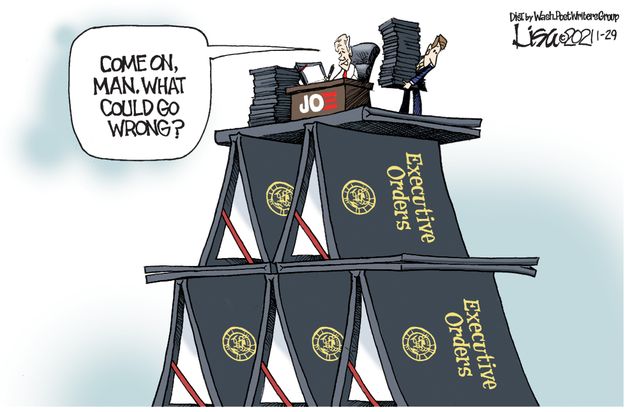
Of course, the President himself will likely not be around to see if the United States achieves either target, even if his insane plan survives successive administration. Instead, he sits in his chair like a languorous old man assiduously reading his speaking notes from his desk, looking like he is under house arrest. Still, he is governing—or at least, appearing to do so—by executive order, and the sheer mass of those dictates is not just staggering but terrifying.

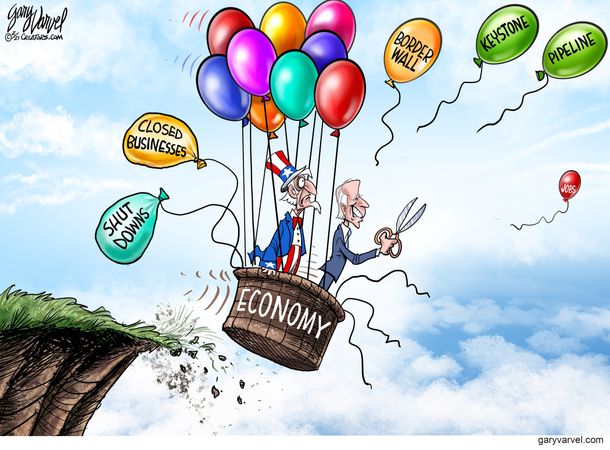
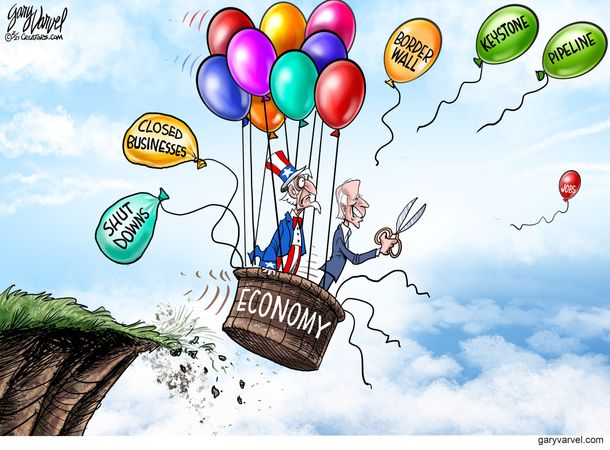
The new President had barely warmed his Oval Office seat when he announced that the U.S. would return to the Paris climate accord—a job-destroying bit of global authoritarianism that is not worth the diplomatic paper it is printed on, let alone the lavish parties staged while it was being negotiated. Then, he quickly produced an executive order to cancel the XL pipeline. With the flash of another one of those pens that Biden runs through on a daily basis, he canceled 10,000 jobs in the U.S., along with another 3,000 in Canada. And this in the midst of a pandemic that even Biden has called our “dark winter!” Even uber-environmentalist Canadian Prime Minister Justin Trudeau supports the XL pipeline, and promptly said so.

Has President Biden discovered the miracle fuel that is going to make petroleum obsolescent and put the oil industry out of business—even before his administration decides to do it for them? Is that what he was up to during all those months when he cowered in his basement instead of campaigning for the presidency? Clearly, the Biden administration has not thought this through beyond the talking points.

Whether the President chooses to acknowledge it or not, oil will continue to be the principal source of energy for American consumers for quite some time to come—at least until perpetual motion is discovered. That oil that the XL pipeline was supposed to transport from America’s closest ally—Canada—will now have to be brought in by rail, a potentially more dangerous and far less environmentally friendly method than a pipeline.

Fossil fuels remain the overwhelming source of all of America’s energy needs: petroleum and natural gas account for 69% of energy usage, coal 11%, and nuclear power 8%. Renewable energy accounts for 11%, and that includes the wood you burn in the fireplace or woodstove every winter. Solar and wind power account for only a fraction of that 11%.

So clearly, with all his activist policy around climate change, President Biden has America on track for a return trip to the Middle Ages.

And like they did in the Middle Ages, the President expects Americans to have blind faith in the climate change priests who will be integral to his administration. If you don’t think the climate change movement is a religion or at least a passable cult, just listen to how its adherents talk about environmental policy. When Democrats were trying to convince us that the California wildfires were somehow the result of climate change, and not just bad forestry management, House Speaker Nancy Pelosi, sounding more like a pagan devotee than the good Catholic she claims to be, exploded: “Mother earth is angry, she is telling us. Whether she’s telling us with hurricanes in the Gulf Coast, fires in the West, whatever it is, the climate crisis is real.”

So if climate change is the culprit for every Act of God, will President Biden’s plan for Americans to live in caves and shut off the heat actually work? Not without China’s cooperation, where 29% of greenhouse gasses are emitted. Without addressing that reality, we’ll continue to spend untold trillions, lose the energy independence that we gained under former President Donald Trump, and sit in the dark, while China continues to play by its own rules—just as it has throughout the coronavirus pandemic.

What is so undemocratic about President Biden’s climate change plan is that it has been served up as an executive order, without debate, and without Congressional approval. What is so ominous about it is not its specificity—which sounds relatively harmless—but its vagueness and political potential. It’s a veritable environmental Enabling Act that can be used to justify any economic dictate, any security violation, or any foreign policy entanglement. Senate Majority Leader Chuck Schumer (D-NY) publicity advised Biden to “call a climate emergency … He can do many, many things under the emergency powers… that he could do without legislation.”

Even the President’s promise to replace the federal government’s gas-operating vehicles with electrical-powered versions is contained in another executive order to “buy American.”

The Biden administration is lying about the economic opportunities embedded in green energy, and its decision to “tackle” climate change is a blatant attempt to appease the left-wing Democrats who see Biden as their puppet. In the process, as he is doing with so many of these executive orders,

President Biden is destroying the American economy and naively trusting that brutal dictatorships like China will surrender before a bourgeois fetish like a greenhouse gas reduction target.

So much will be lost for nothing except America’s further prostration to China.

Biden’s Hostile Takeover Triggers Poison Pills

Poison Pill is a defensive mechanism technique prevalent in the corporate world to thwart a hostile takeover. It is a strategy used by the Target Company to avoid the hostile takeovers completely or at least slow down the acquiring process.(Source: financemanagement.com)

Rupert Darwall explains the traps and pitfalls in the way of the Biden agenda in his Epoch Times article Fettering Biden’s Administrative State.  Excerpts in italics with my bolds.

Trump-era rules will constrain the new president’s activism

The administrative state will get a new lease on life under President Joe Biden, but America’s administrative state is far more constrained than that of many other countries. Britain, for example, wrote its net-zero climate target into law after only a 90-minute debate in the House of Commons, without any examination of what the cost might be. Arguably the European Union is an administrative state, where the unelected European Commission proposes legislation, enforces it, and even levies billion-euro fines on companies without so much as a court hearing.

By contrast, executive-agency rulemaking in the United States is more circumscribed. Agencies must show cause, respect precedent, and demonstrate that their rulemaking is properly grounded in the relevant statute and in a factual record sufficiently compelling to refute any suggestion that their action was “arbitrary or capricious.” They should expect controversial rules to be able to withstand challenges in the courts.

In 2016, the Supreme Court stayed the Environmental Protection Agency’s Clean Power Plan promulgated by the Obama administration to decarbonize the electrical grid. On the last full day of the Trump administration, the U.S. Court of Appeals for the District of Columbia vacated the Obama plan’s successor, the Affordable Clean Energy plan, in a 2-1 opinion. The majority ruled that the EPA’s interpretation of the Clean Air Act had been too narrow; the dissenting judge—a Trump appointee—opined that both plans relied erroneously on the wrong provision of the Act to regulate greenhouse-gas emissions. These rulings illustrate just how difficult the EPA will find crafting a new rule to fulfill Biden’s promise to decarbonize the grid by 2035.[See post: Latest Court Ruling re EPA and CO2]

The new administration is constrained not only by the courts but also by the late-term rulemaking of its predecessor. It could use the 1996 Congressional Review Act to nullify recently finalized federal regulations with a simple majority vote in each house of Congress. But Republicans can inflict a political price. Last October, the Department of Labor finalized a financial factors rule. It requires managers of corporate pension plans to justify incorporation of environmental, social, and corporate governance (ESG) factors solely on the grounds of boosting risk-adjusted investment returns by reference to generally accepted investment theories.

Wall Street hated it when the rule was first proposed, but all it does is operationalize the requirement of the Employee Retirement Income Security Act (ERISA) of 1974 that plan managers perform their duties for the exclusive purpose of providing benefits to plan beneficiaries and defraying reasonable plan expenses. In reality, opponents of the rule oppose the exclusivity hardwired into ERISA that pension savings be invested with “eye single” to the interests of plan beneficiaries. A vote to nullify the rule would be a vote in favor of socializing retirees’ savings and deploy them for wider societal ends. For Republicans, it would be a debate worth having.

Similarly, congressional Republicans can gain politically by taking a stand opposing nullification of the EPA’s Jan. 3, 2021 transparency-in-science rule. This rule broadens and strengthens the agency’s 2018 transparency rule and aims to ensure that regulatory decisions are taken on the basis of robust, verifiable scientific studies. Polling shows that voters are more motivated to support environmental regulations when presented as protecting public health. This creates a market for studies linking pollution to public-health harms, however flimsy they might be. Environmental regulations mandating national standards on ozone and PM2.5 targeting fossil-fuel combustion are often based on epidemiological studies drawing on undisclosed data that can’t be re-analyzed to check for errors and sensitivity to assumptions.

A justification often made for this anti-scientific practice is safeguarding patient anonymity in such studies, lsomething for which the new rule provides. Covering up is never a good look, however, and the spectacle of the self-proclaimed party of science arguing for secret science and against transparency would demonstrate how deeply politicized the science used to justify environmental regulation has become.

The Trump administration left the best till last. With just one week to go, on Jan. 13, the Federal Register published an EPA regulation that quickly became known as the banana peel rule. Section 111(b) of the Clean Air Act states that the EPA Administrator shall include a category of sources that “causes, or contributes significantly” to pollution anticipated to endanger public health or welfare. The new rule defines the level deemed “significant.” At the rule’s chosen level of 3 percent of U.S. stationary-source greenhouse-gas emissions, the only category deemed significant is electrical power generation—a category that accounts for 43 percent of such emissions.

Should the Biden administration ditch the 3 percent threshold and use the Clean Air Act to enmesh more sectors in greenhouse-gas targets, it will be compelled to develop an objective rationale for doing so. This is far from straightforward, hence the “banana peel” epithet. As the Trump rule notes, greenhouse gases “do not have the local, near-term ramifications found with other pollutants;” their impact is based on “cumulative global loading.” Directly or by inference, significance must therefore be linked to global emissions (U.S. power station emissions account for 3.6 percent of global emissions) and how effectively they are regulated at a global level. It would be irrational to regulate domestic emissions if there were little prospect of global emissions falling, too.

As the Obama administration realized after the collapse of the Copenhagen climate conference in 2009, when China—along with India, South Africa, and Brazil—vetoed a global climate treaty, Beijing holds the key to a credible global greenhouse-gas regime. The 2014 U.S.-China climate accord negotiated by Presidents Obama and Xi paved the way for the Paris Agreement on climate the following year. Xi’s statement at the U.N. last September that China would aim for “carbon neutrality” before 2060 is widely seen as a climate gamechanger.

Writing in a January 2021 Foreign Policy essay, Ted Nordhaus and Seaver Wang argue that China’s climate diplomacy is part of a bigger geopolitical play—Beijing’s desire to “counterbalance rising Western concerns about China’s belligerent posture in the South China Sea, its saber-rattling toward Taiwan, its human-rights crackdown in Hong Kong, its genocidal assault on the Uyghur minority in northwestern China, and much more.” It would be naïve not to recognize the geostrategic and political trade-offs in elevating China as climate savior. In a break with the routine formulation of climate change as existential threat trumping all else, Nordhaus and Wang warn that “a world that succeeds in addressing climate change will not necessarily be a more equitable, inclusive, or humane one.”

On his last full day as Secretary of State, Mike Pompeo declared China’s persecution of the Uyghurs a crime against humanity. His successor agrees. During his confirmation hearing, Tony Blinken said that he supported Pompeo’s genocide finding, and that China poses “the most significant challenge” of any nation-state to the United States. China is playing for higher stakes than the climate. This reality confronts the new administration with its greatest dilemma: “saving the planet” requires appeasing Beijing. How the dilemma is resolved could well come to define Joe Biden’s presidency.