Due This Week: EPA Plan for GHG Endangerment Finding

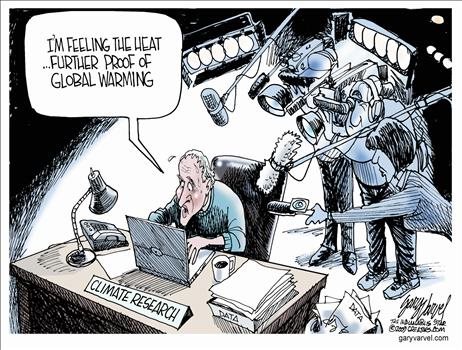
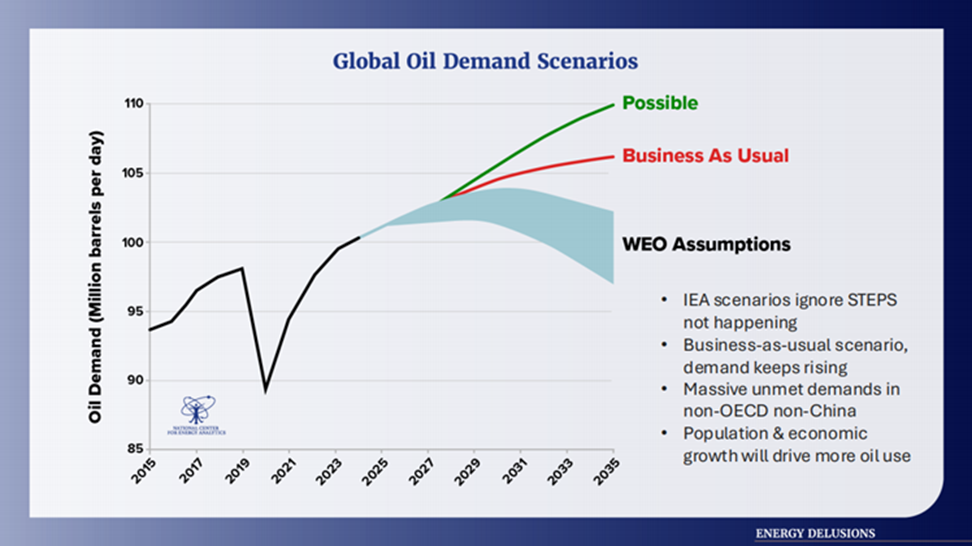
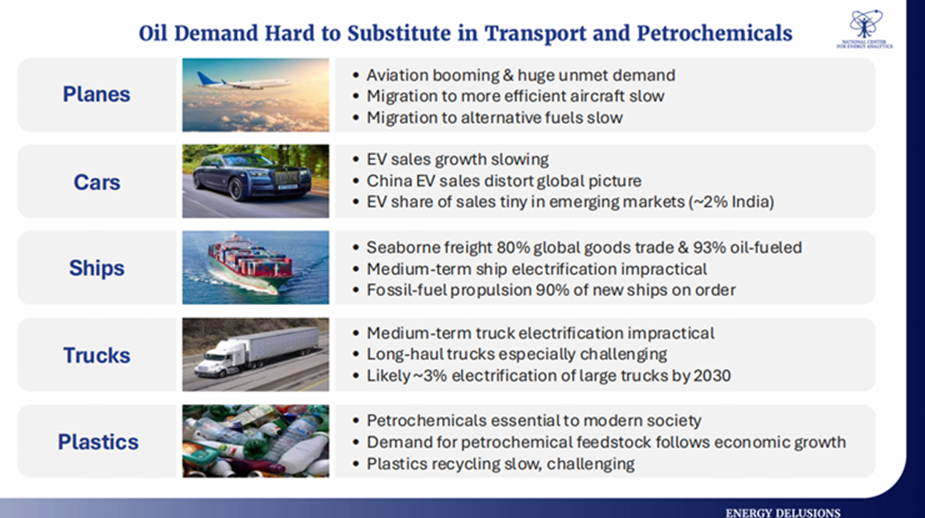
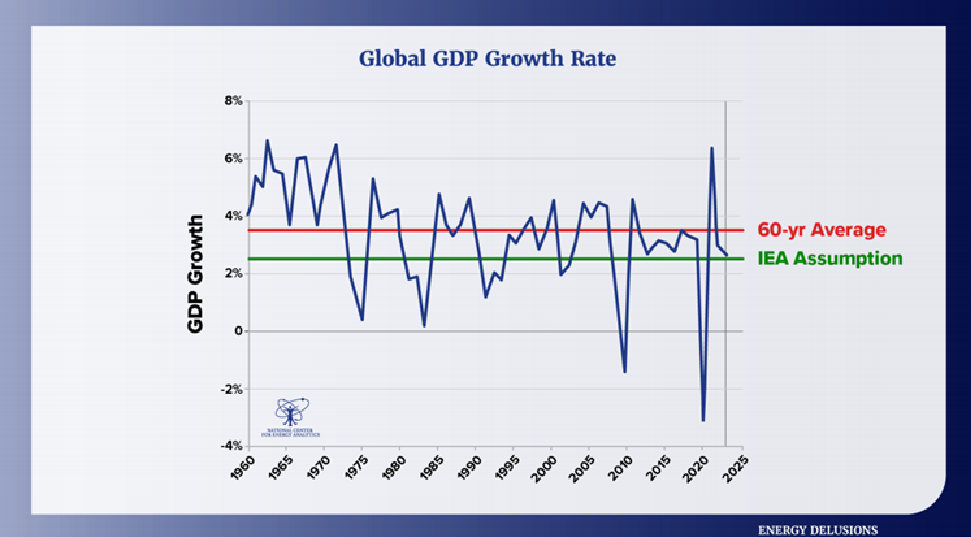
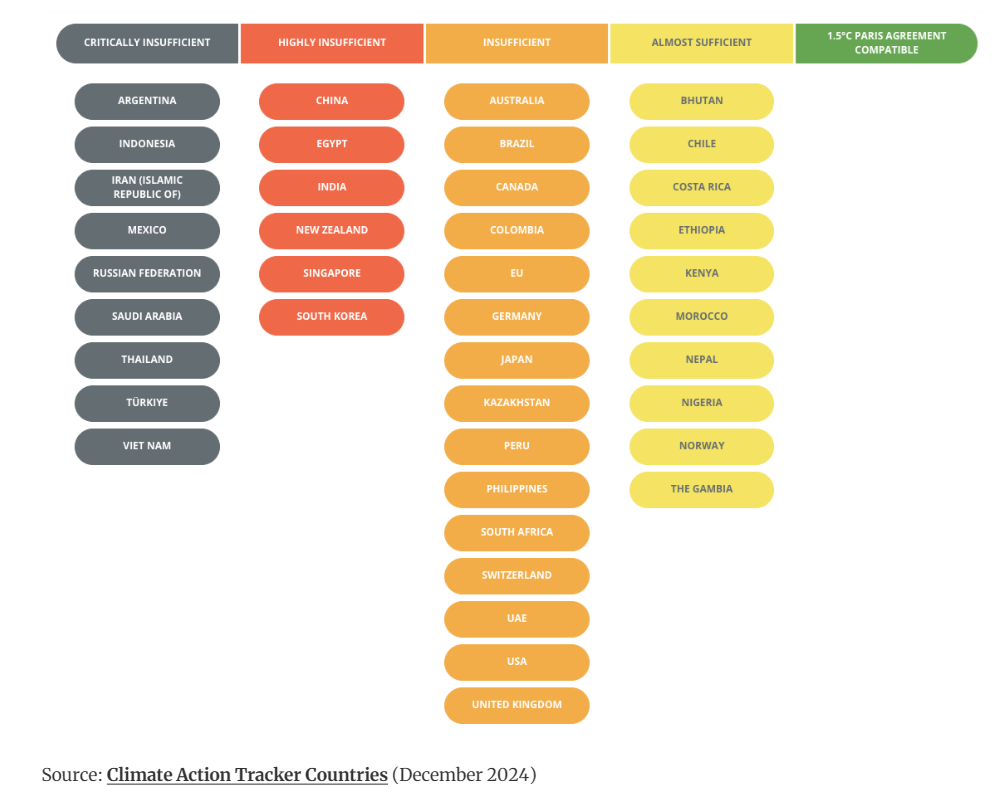
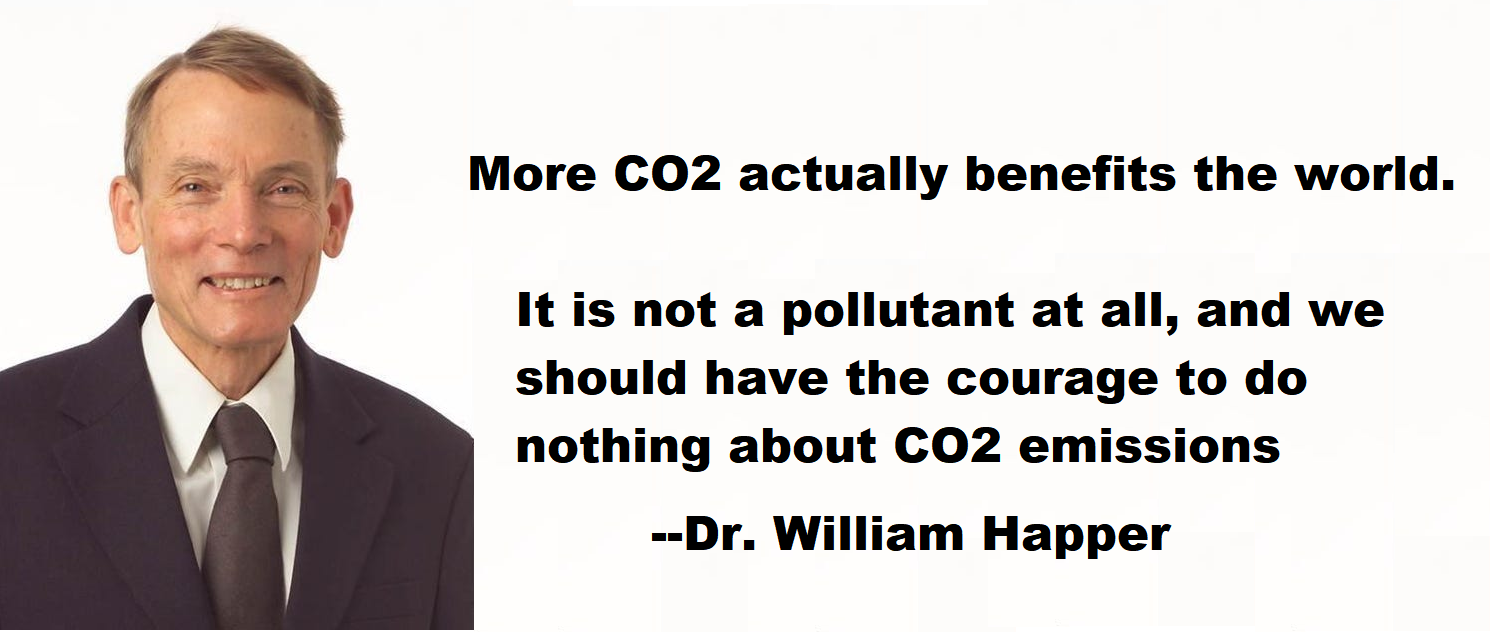
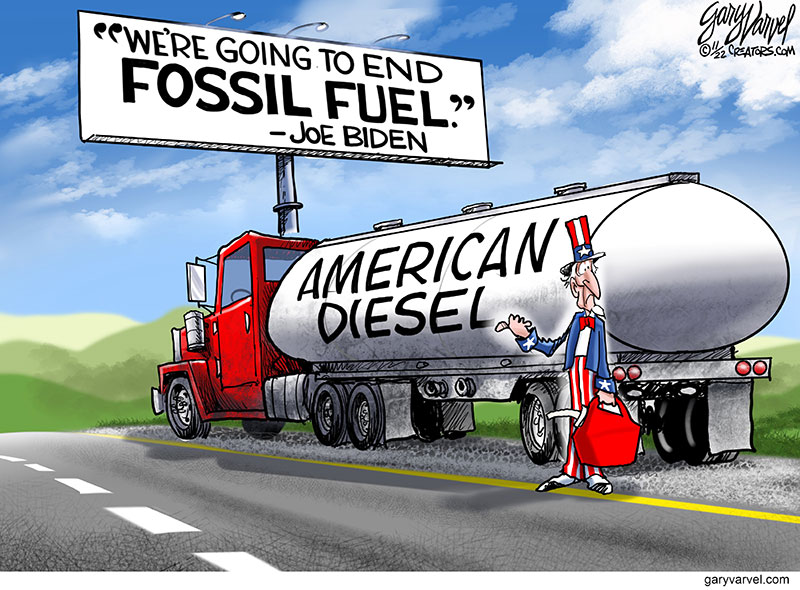
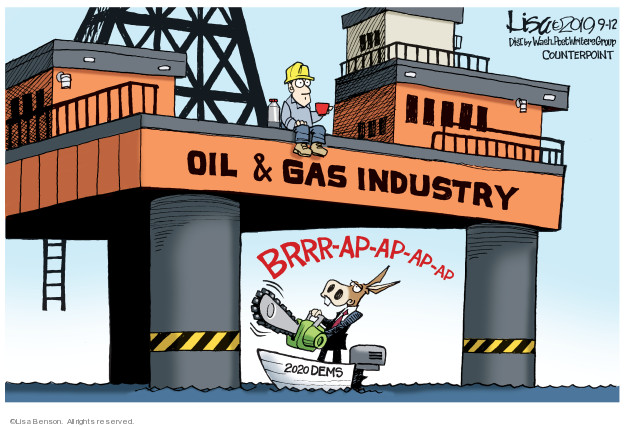
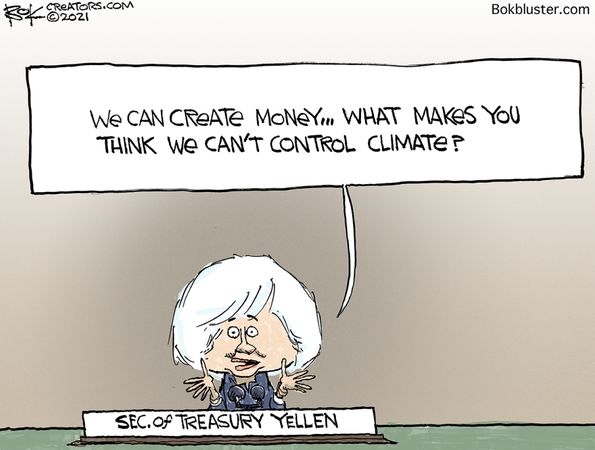
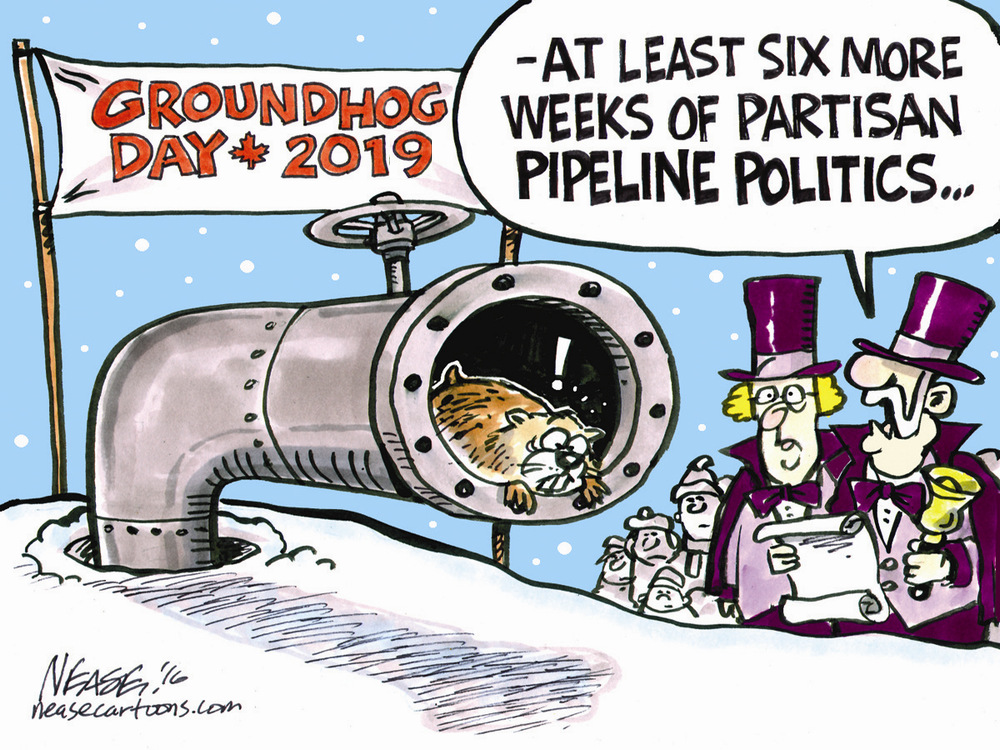
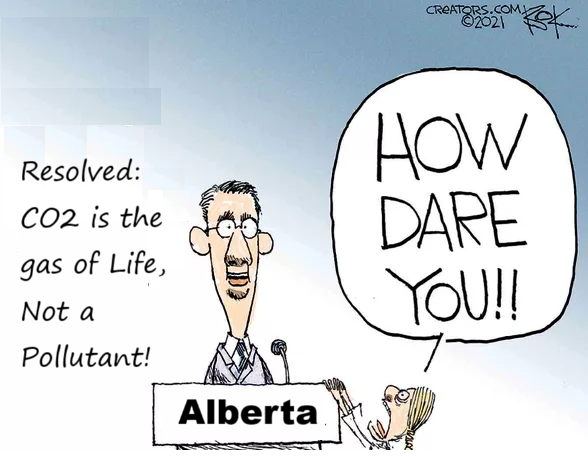
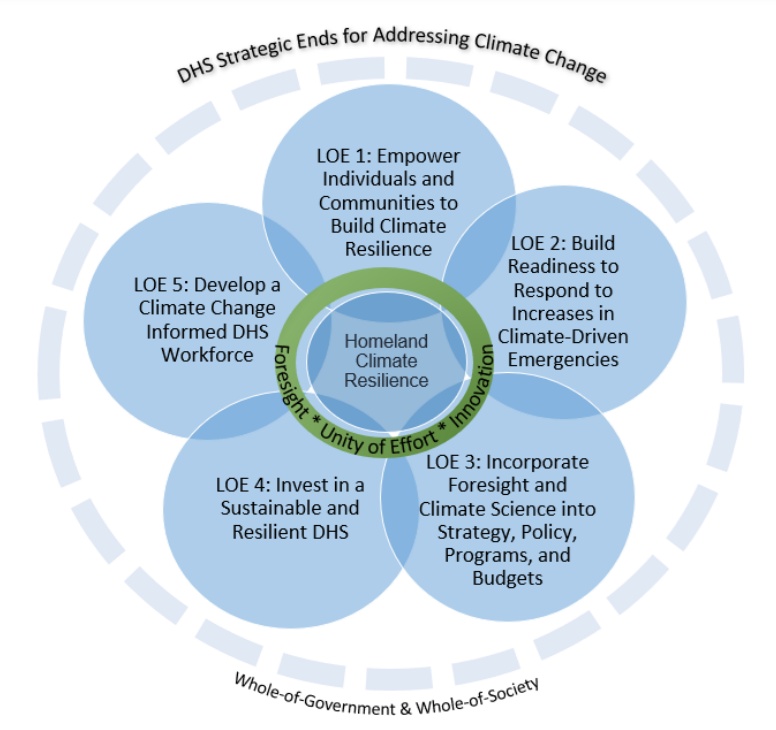
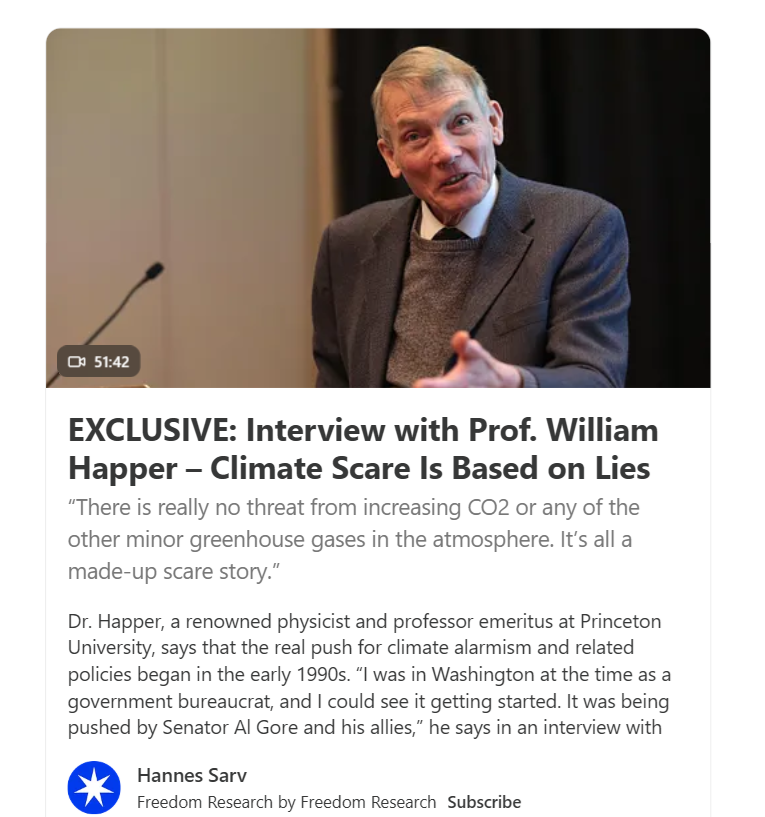
As promised, Trump on day 1 (January 20, 2025) issued an Executive Order challenging the presumption  “greenhouse gases” (GHGs) endanger public health and safety.  The pertinent text is in Section 6 reprinted below with my bolds and added images.

Executive Order 14154 of January 20, 2025 Unleashing American Energy

Sec. 6 . Prioritizing Accuracy in Environmental Analyses. (a) In all Federal permitting adjudications or regulatory processes, all agencies shall adhere to only the relevant legislated requirements for environmental considerations and any considerations beyond these requirements are eliminated. In fulfilling all such requirements, agencies shall strictly use the most robust methodologies of assessment at their disposal and shall not use methodologies that are arbitrary or ideologically motivated.

(b) The Interagency Working Group on the Social Cost of Greenhouse Gases (IWG), which was established pursuant to Executive Order 13990, is hereby disbanded, and any guidance, instruction, recommendation, or document issued by the IWG is withdrawn as no longer representative of governmental policy including:

(i) the Presidential Memorandum of January 27, 2021 (Restoring Trust in Government Through Scientific Integrity and Evidence-Based Policymaking);

(ii) the Report of the Greenhouse Gas Monitoring and Measurement Interagency Working Group of November 2023 (National Strategy to Advance an Integrated U.S. Greenhouse Gas Measurement, Monitoring, and Information System);

(iii) the Technical Support Document of February 2021 (Social Cost of Carbon, Methane, and Nitrous Oxide Interim Estimates under Executive Order 13990); and

(iv) estimates of the social cost of greenhouse gases, including the estimates for the social cost of carbon, the social cost of methane, or the social cost of nitrous oxide based, in whole or in part, on the IWG’s work or guidance.

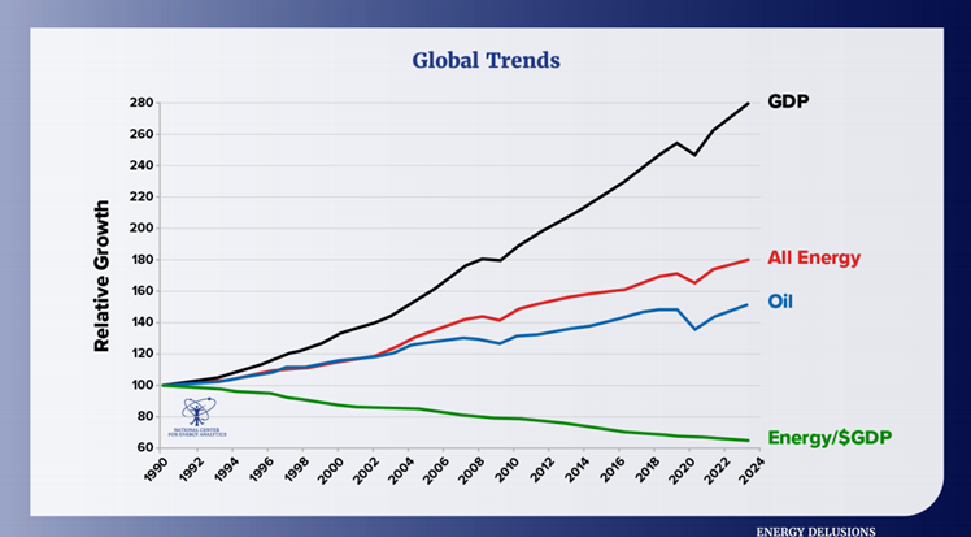
(c) The calculation of the “social cost of carbon” is marked by logical deficiencies, a poor basis in empirical science, politicization, and the absence of a foundation in legislation. Its abuse arbitrarily slows regulatory decisions and, by rendering the United States economy internationally uncompetitive, encourages a greater human impact on the environment by affording less efficient foreign energy producers a greater share of the global energy and natural resource market. Consequently, within 60 days of the date of this order, the Administrator of the EPA shall issue guidance to address these harmful and detrimental inadequacies, including consideration of eliminating the “social cost of carbon” calculation from any Federal permitting or regulatory decision.

(d) Prior to the guidance issued pursuant to subsection (c) of this section, agencies shall ensure estimates to assess the value of changes in greenhouse gas emissions resulting from agency actions, including with respect to the consideration of domestic versus international effects and evaluating appropriate discount rates, are, to the extent permitted by law, consistent with the guidance contained in OMB Circular A-4 of September 17, 2003 (Regulatory Analysis).

(e) Furthermore, the head of each agency shall, as appropriate and consistent with applicable law, initiate a process to make such changes to any rule, regulation, policy or action as may be necessary to ensure consistency with the Regulatory Analysis.

(f) Within 30 days of the date of this order, the Administrator of the EPA, in collaboration with the heads of any other relevant agencies, shall submit joint recommendations to the Director of OMB on the legality and continuing applicability of the Administrator’s findings, “Endangerment and Cause or Contribute Findings for Greenhouse Gases Under Section 202(a) of the Clean Air Act,” Final Rule, 74 FR 66496 (December 15, 2009).

What Might Happen Next

Source E&E News : Trump set a deadline on the endangerment finding. Here’s what might happen.

The finding, issued during President Barack Obama’s first term, holds that greenhouse gas emissions “may reasonably be anticipated to endanger public health or welfare.” It’s the prerequisite for Clean Air Act rules targeting heat-trapping pollutants such as carbon dioxide and methane. The finding originally pertained to climate pollution from vehicles, but it opened the door for regulations on power plants and oil and gas infrastructure. And it could support future regulation on additional sources of climate pollution, such as landfills, refineries and industrial plants.

Getting rid of the finding would make scrapping EPA climate rules a matter of routine paperwork, an expert said. Regulations could be undone through simple, swift rulemakings. No replacement rules would be needed.

“Taking away the 2009 endangerment finding would really make it almost a virtual formality to take down all the greenhouse rules for CO2 and methane,” said Joe Goffman, EPA’s air chief under Biden.

EPA would still need to strip out sector-specific findings from rules written under a key section of the Clean Air Act — known as Section 111 — he said. But when the dust settled, EPA could regulate oil and gas facilities for ozone-forming pollutants alone, and not for methane — greatly reducing requirements for industry. And power plants that burn fossil fuels wouldn’t be regulated for carbon.

Daren Bakst, director of the energy and environment program at the conservative Competitive Enterprise Institute, a think tank that has long advocated getting rid of the endangerment finding, agreed that it would “present legal challenges.”  But he said the risk was worth taking.

“If the EPA finds there is no endangerment, and this survives in court, it would have the important effect of stopping the EPA from regulating greenhouse gases,” he said.

Regarding next week’s deadline, he said Zeldin might submit only preliminary recommendations to the Office of Management and Budget, rather than a full-blown decision to challenge the finding, or pass on it.

“Green” Agenda is Anything But

Steve Milloy explains the deceptive “Green Agenda” label in his Real Clear Wire article There Is Nothing Green About the ‘Green’ Agenda.  Excerpts in italics with my bolds and added images.

Now that the Democrats have lost their lock grip on power, what’s a green activist to do? It’s almost comical how the climate left is trying to cloak their agenda in terms they think will melt in Republicans’ ears. For example, Jennifer Granholm, energy secretary in the Biden administration recently penned an opinion piece arguing that President Trump is playing right into Communist China’s evil hands by killing off America’s green economy. 

Translation: The left is furious that Trump has halted the flow of billions of taxpayers’ dollars to subsidize electric vehicles that nobody wants and only the well-off can afford. The new president is killing the “green economy,” as Granholm puts it.

There is nothing green about the climate left’s solutions. 

If the climate movement was truly sincere and intellectually honest in its desire to stop actions contributing to global environmental degradation, it would stand fast against solar panels and electric vehicles. There is nothing green about the climate left’s solutions.

There is nothing environmentally friendly about using enslaved children in the Congo to mine cobalt for lithium-ion rechargeable batteries used in EVs. They labor with crude tools and bare hands, breathing in cobalt’s toxic dust in cramped pits. Runoff infused with cobalt and other chemicals contaminate the water supply. Meanwhile, on the other side of the world, green activists sit blithely unaware or unconcerned in the comfort of their own homes. They are saving the world, they smugly assure themselves, while children suffer in an environmental hellhole.

Far removed from U.S. environmental standards, Indonesia is the center of mining and refining nickel, an essential component in EV batteries. Pea soup-thick brown emissions shroud nickel smelting operations in the Indonesian island of Sulawesi as well as the coal-fired plants that fuel them. Processing waste and chemicals potentially leach into the ground. Dust residue from both ubiquitously blanket nearby communities, while waterways tainted by mining operations have red cast.

Whatever else climate activists may try to tell us,
there is nothing green going on here.

In Brazil, near the mouth of the Amazon River, a factory refines bauxite into what eventually becomes aluminum. It had been the source of aluminum in the Ford F-150 Lightening, the company’s now cancelled all-electric pickup truck. A lawsuit alleges that toxic elements, including aluminum and other heavy metals emanating from the refinery, have been responsible for cancer, birth defects, neurological dysfunction, digestive disorders, skin conditions, and increased mortality. How can an EV be called green or good for the environment when it’s making thousands of Brazilians sick?

Elsewhere in Brazil this past Christmas season, Brazilian authorities shuttered construction of an EV factory when it was discovered that its builders were working under “slavery”-like conditions. How is that a green virtue? Perhaps green dogma holds that human worth and dignity are small sacrifices that must be made for the common good.

Solar energy, long the prize pig of the climate crowd, isn’t green either.

The fact that destroying forest land for solar arrays is bad for the environment should be obvious. Studies have found “the loss of carbon-dioxide gobbling forests for solar installations results in a net increase in greenhouse gas emissions.” Nor should wind farms be considered remotely green when wildlife is being killed and habitats are being disrupted. The same is true offshore, with a number of whale deaths associated with mammoth wind operations.

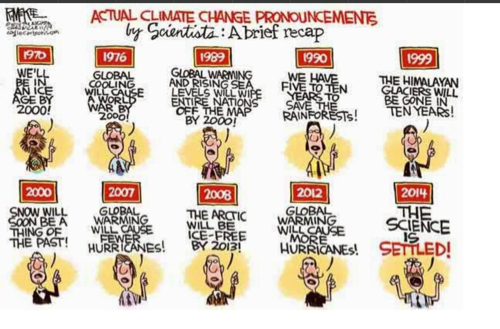
The same folks pushing “green” have been disingenuous from the start. In 1970, they assured us that human activity would cause an ice age by the 21st century and that we’d be under food rationing by 1980. Acid rain was a crisis until it wasn’t. Then global warming became the crisis, with much of New York City to be underwater by 2019. In 2008, Al Gore prophesized that the North polar cap would be gone in five years. It wasn’t. In 2009, UK Prime Minister Gordon Brown proclaimed,” We have fewer than 50 days to save our planet from catastrophe. Spoiler alert: We’re still here and thriving.

Their seemingly endless lies have been accompanied by Orwellian word games, moving from “global warming” to “change.” Now the Newspeak has shifted to “extreme weather and “overheating.

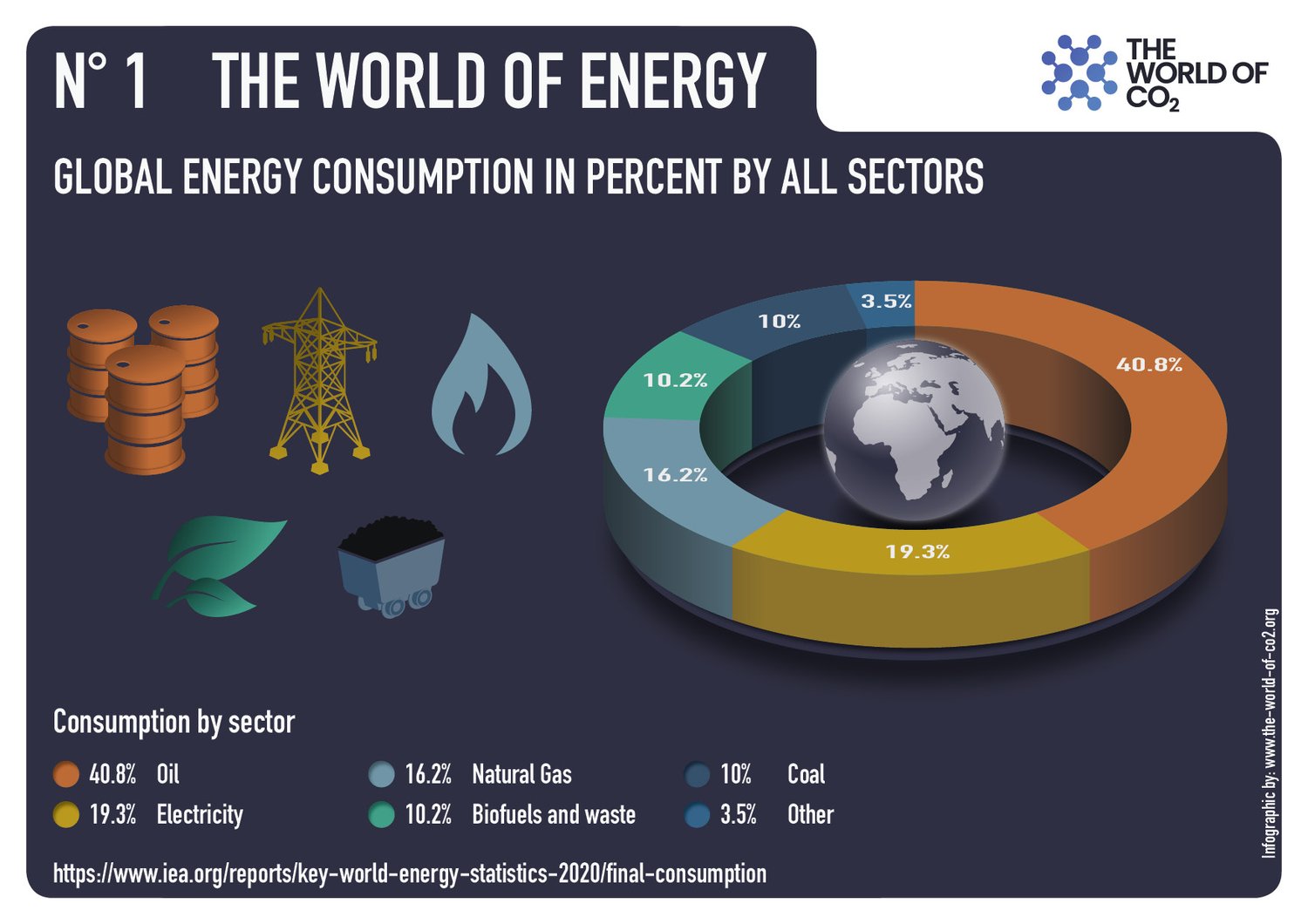
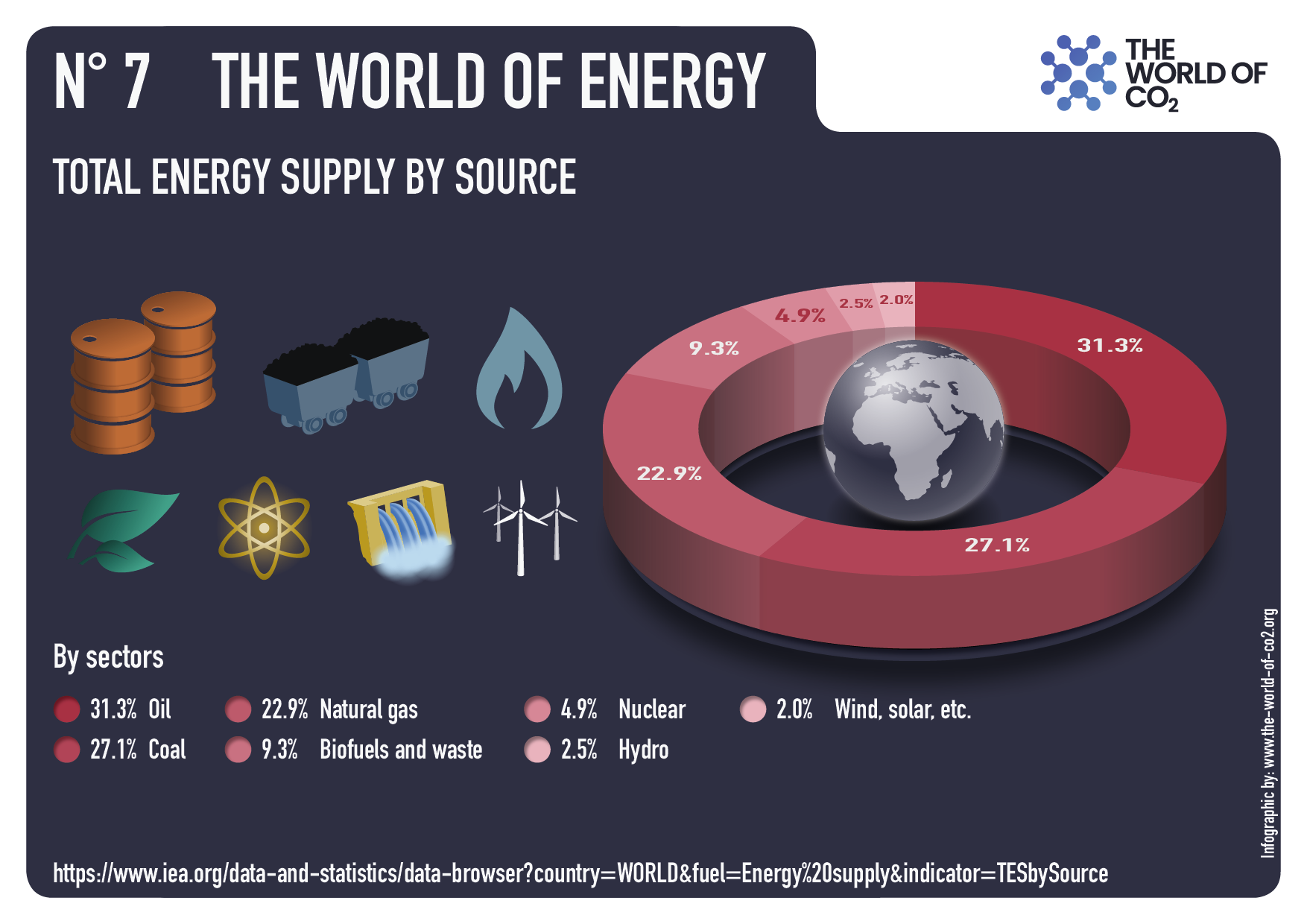
The truth is there is no green energy. No energy is clean. No energy is dirty. There are only challenges, solutions and tradeoffs. At the time of already high energy costs, choosing reliable, fossil fuel-backed energy is of paramount importance. Word sophistry from our friends on the left won’t change that.


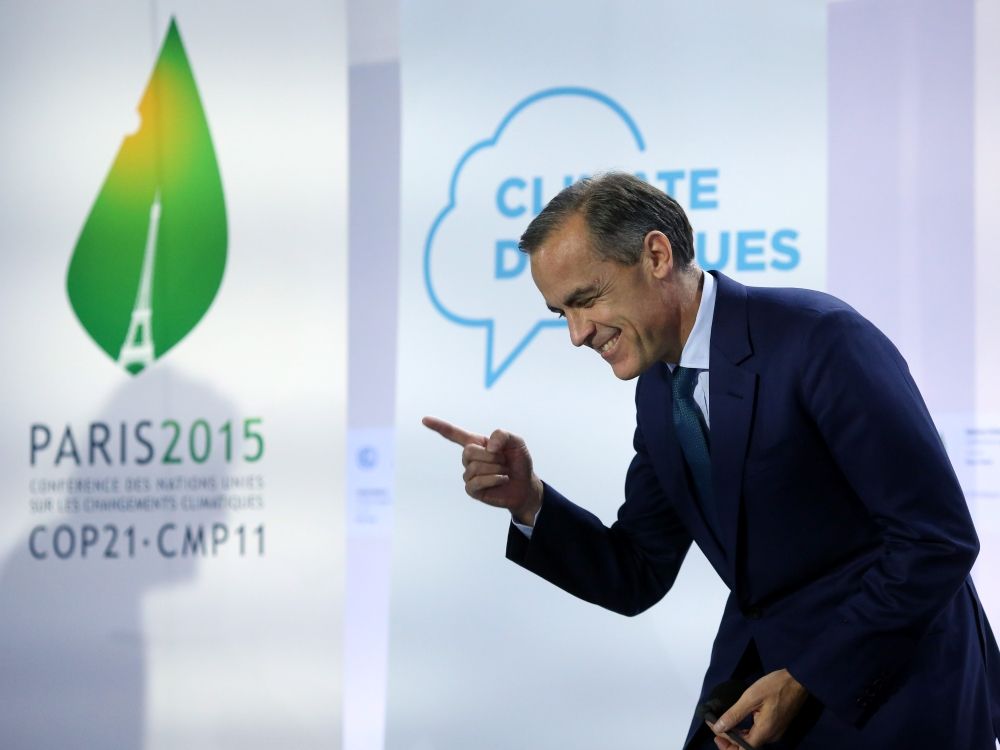
It’s Better to be Outside Paris Accord

Chris Johnson writes at Real Clear Energy to explain Trump’s Withdrawal From the Paris Agreement Won’t Hurt the Climate.  Excerpts in italics with my bolds and added images.

President Donald Trump withdrew from the Paris Agreement. Cue the leftwing meltdown. Though everyone knew the withdrawal was coming, the left and the “international community” are still decrying America’s alleged abdication of leadership on climate.
But toothless agreements window dressed with international
summits and photo ops are not the same as leadership.
The truth is America has led the world in reducing emissions for years not because of the Paris Agreement, but because innovation and the free market facilitate the deployment of cheaper and cleaner energy.  Let’s review the record.
In recent decades, America has achieved unprecedented — and unexpected — energy production thanks to fracking and horizontal drilling. Since the early 2000s when these twin technologies began to be deployed much more expansively, U.S. natural gas production has more than doubled. By 2016, hydraulically fractured gas wells accessed through horizontal drilling accounted for nearly 70% of all oil and natural gas wells.
While the left may clutch its pearls at the increased production of a fossil fuel like natural gas, this clean energy source has been a main driver of U.S. emissions reductions. Over the past 15 years when America has massively increased natural gas output, the U.S. reduced carbon emissions more than any other country. We can see this year by year.
For example, from 2022 to 2023, America offset dirtier coal energy generation with natural gas. As coal declined by 121.9 terawatt hours of electric generation over that time, natural gas increased by 118.9 terawatt hours. At the same time, U.S. greenhouse gas emissions declined 1.9%. Notably, 80% of the U.S. carbon emissions reductions were driven by the electric power sector — precisely where natural gas has an outsized impact.
Notice what didn’t cause those emissions reductions? The Paris Agreement.
The American energy sector — powered by innovation and good-old-fashioned free market economics — has been driving down carbon emissions cheaply and effectively before the Paris Agreement was a twinkle in climate activists’ eyes. And it will continue to reduce carbon emissions long after President Trump’s decision to withdraw.
The Paris Agreement is far from the panacea some activists claim it is.
It isn’t even a particularly effective tool to
rally nations toward greater climate success.
In the middle of the allegedly climate-conscious Biden administration, none of the world’s biggest emitters — America included — had reduced their emissions in accordance with the Paris goals. Apparently, the $1 trillion regulatory and subsidy regime erected by President Biden’s Inflation Reduction Act had little bang for the buck.
What Agreement supporters forget is that no number of high-profile international accords can make command-control tactics work — or instill other nations with the ambition to fulfill their empty promises.

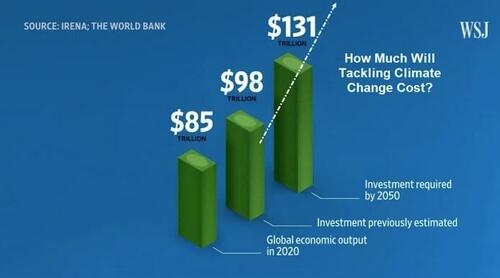
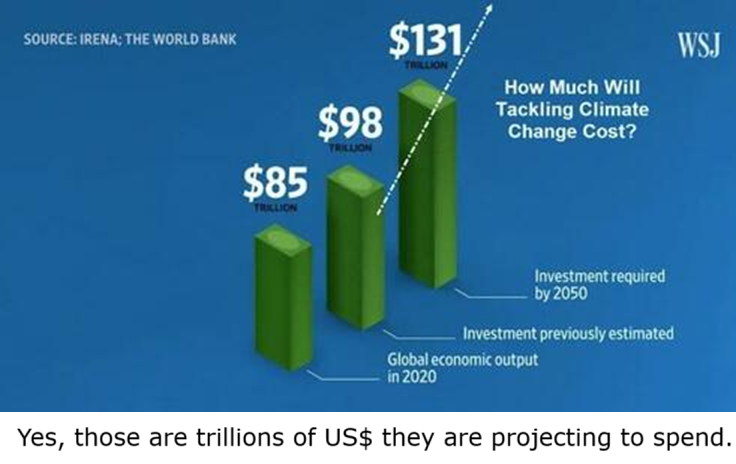
Yes, those are trillions of dollars they are projecting to spend.

The Paris Agreement is the definition of bureaucratic failure, conflating meetings, busyness, and lofty goals as success. Its only achievement is to make climate ideologues and green jetsetters feel good about themselves as they fly to international conferences.
It’s no wonder President Trump withdrew. Talk is cheap. What matters is success. On that metric, the Trump administration is set to actually achieve what Paris Agreement signatories only write on paper.
Trump entered office promising to deregulate the fossil fuel industry, increase permitting for natural gas extraction, approve the construction of energy facilities like natural gas export terminals, and re-establish American energy dominance.
By leaning into America’s carbon advantage and exporting clean American energy abroad, he will boost the U.S. economy, supplant dirty energy from nations like Russia and Venezuela with a clean American alternative, and lower emissions both at home and abroad, all without the jaw-dropping price tag of the failed Biden-era green agenda. We should combine these steps with efforts to actually hold the biggest polluters accountable (which are being discussed by President Trump’s cabinet). This approach would be the antithesis of the Paris Accords’ America-last strategy.
Of course, some are urging President Trump to go further and not just withdraw from the Paris Agreement, but also back out of the UN Framework Convention on Climate Change (UNFCCC). This may seem like an easy choice, seeing as the UNFCCC, like so many UN bodies, acts contrary to American interests. But that’s exactly why America must remain in the UNFCCC.
Climate treaties will be formed whether or not the U.S. is involved, and the UNFCCC will continue to operate as a forum for those negotiations. Staying in the UNFCCC costs America nothing while allowing Trump and his appointees to keep a seat at the table, hold the UN accountable, and counter any deal that would put America at a disadvantage. While the UNFCCC can be harmful, it’s only the Paris Agreement that’s impotent.
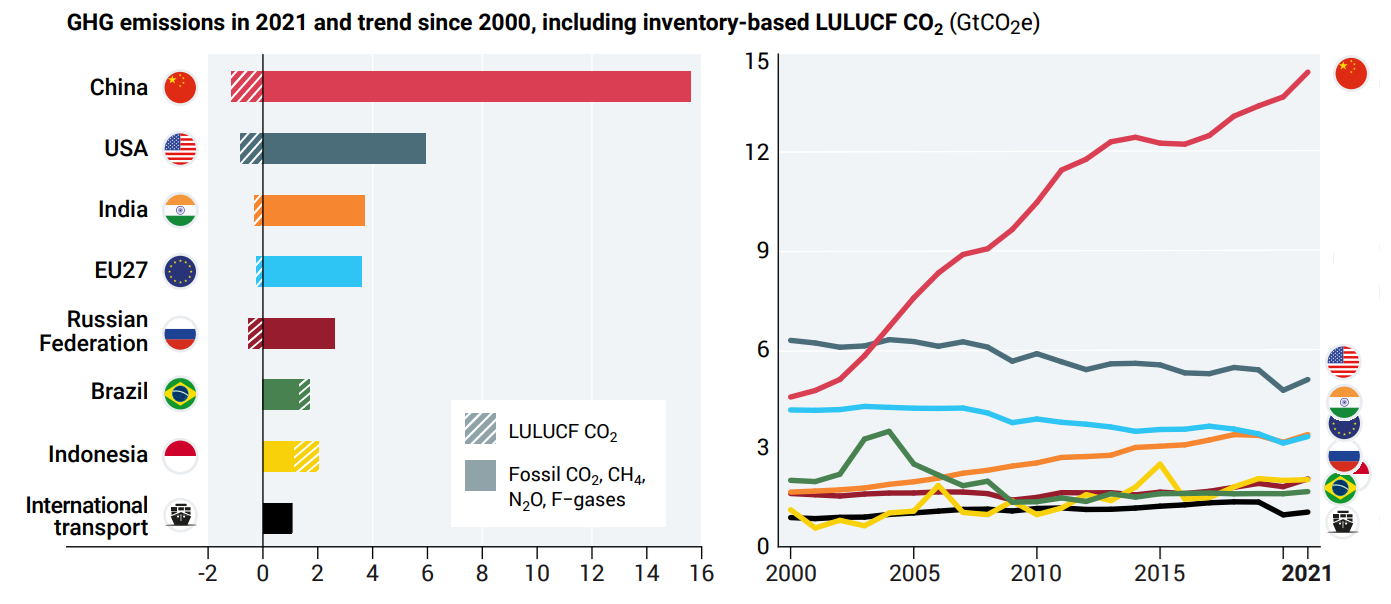
The breathless alarm over the withdrawal from the Paris Agreement is overwrought. When President Trump withdrew from the Paris Climate Accord during his first administration, America went on to cut carbon emissions to the lowest level in 25 years. Re-embracing the power of natural gas in his second term, he’ll do it again.
So instead of the UN and international climate activists judging the U.S., we should remind everyone that if you want to put climate first, you should actually put America first.
Chris Johnson is a GOP strategist who organizes the next generation of conservative leaders. He also serves as a senior advisor to the National Federation of College Republicans, focusing on energy issues.


Left Coast Climate Delusion Ends in Flames

Satellite images of wildfires burning in Southern California By NBC Staff • Published January 11, 2025

Holman W. Jenkins, Jr. writes in Wall Street Journal End of a Climate Delusion.  Excerpts in italics with my bolds and added images.

Amid California’s fires, voters wake up from the dream that green pork is a solution.

CO2 emitted into the atmosphere is rapidly and, for all practical purposes, uniformly distributed around the planet.

I may be stating the obvious but it needs to be pointed out. Voters and even political leaders are surprisingly poorly informed on this point. Emissions cuts in California don’t have any significant effect on California’s climate. They also have no global effect. California’s cuts are too small relative to the global whole; they also are largely illusory.

Emitting industries leave the state. They don’t stop emitting. If California imports Canadian hydro to charge its electric vehicles, consumers elsewhere have to burn more coal and gas. If Californians drive EVs, more gasoline is free to be burned by others, releasing more CO2 that influences climate change in California and everywhere else.

Green-energy subsidies do not reduce emissions. This will be news to millions of California voters. It contradicts a central tenet of state policy. It isn’t news to the actual enactors of these subsidies. A National Research Council study sponsored by congressional Democrats in 2008 concluded that such handouts were a “poor tool for reducing greenhouse gases” and called for carbon taxes instead.

Unfortunately, the incoming Obama administration quickly discovered it favored climate taxes only when Republicans were in charge. Backers would later engage in flagrant lying to promote Joe Biden’s Inflation Reduction Act, knowingly citing bogus predictions that its trillion-dollar spending profusion would reduce emissions.

A 2019 University of Oregon study had already revealed the empirical truth: Green energy doesn’t replace fossil fuels, it enables more energy consumption overall. That same year the EPA calculated that the potential emissions savings from subsidizing electric vehicles had been offset five times over by the pickup truck and SUV boom Team Obama facilitated to assure the success of its auto bailout.

American Association for the Advancement of Science study finds that of 1,500 “climate” policies announced around the world, a mere 63, or 4%, produce any reduction in emissions.

Last year, the premier journal Science put a nail in the question: 96% of policies supported worldwide as “reducing” emissions failed to do so, consisting mostly of handouts to green-energy interests.

And yet certain Journal readers still assail me with the epithet “denier.” They confuse my criticism of Democratic hypocrisy with my imagined views on climate science. As I’ve written back to many, “Don’t think politicians haven’t figured this out about you. That’s why they can give us unsustainable corporate welfare boondoggles and call it climate policy.”

A CNN moderator Saturday urged viewers to vote in an online poll on whether the California disaster should be blamed on climate change or poor leadership. Notice the non sequitur: as if climate change is an excuse for not acting against fire risk.

By all means, let politicians proclaim a “climate crisis” or any other rhetorical flourish if it helps mobilize support for public actions that actually serve a useful purpose. But a prerevolutionary situation has been building in California for two decades, starting with the Third World blackouts in late 2000 not because of any shortage of power but because of large helpings of political cowardice.

A decision in 2019 authorized yet more Third World blackouts instead of reasonably shielding utilities from lawsuit risk over fires their power lines might be accused of contributing to. One result, predictably, has been a proliferation of backyard generators, which increase fire risk.

Californians are stuck adapting in the ways left open to them. Since 2017, half a million have fled Los Angeles County.

Two social technologies might help but the state has been intent on denying itself their advantages. One is a functioning insurance market. If you can’t afford the insurance, you can’t afford the house. Get ready, instead, for a torrent of federal and state money to help residents, some of them wealthy, rebuild in high-risk fire zones.

The other is a functioning market in water. Five gallons to produce a walnut probably isn’t tenable under any realistic system of water pricing. If water were properly valued, municipalities would also rapidly discover the logic of building aquifers to capture seasonal runoff. A thousand things would change if water were priced to flow to its most highly valued uses.

Here’s another concept: Climate change can exist and yet be an insignificant variable.

In Southern California’s Mediterranean climate, anytime 100-mile-an-hour winds start blowing embers toward densely packed housing developments, a conflagration is certain. The only answer then is to have the manpower and resources ready to put fires out as quickly as they start.

I’ve written repeatedly about climate and energy policies in the Western world being a colossal example of “sophisticated state failure,” in which attempts to address complex problems yield only a succession of boondoggles and economic crises. If California voters don’t wise up now, they never will.


Wyoming: Make Carbon Dioxide Great Again–No Net Zero

A bill is progressing through the Wyoming State Legislature, as described by the author in her op-ed Rethinking Carbon Dioxide – Wyoming’s Bold Move.  Excerpts in italics with my bolds and added images.

Torrington, WY (State Senator Cheri Steinmetz) January 7th, 2025 — The people of Wyoming have always believed in the value of questioning conventional wisdom, looking at the bigger picture and finding solutions that are possible and actually work. That’s the purpose of the bill titled “Make Carbon Dioxide Great Again”. This legislation is not about denying science, it is about applying science, thoroughly reevaluating the ‘climate change’ scientific assumptions and advocating for policies grounded in practicality, reality, and achievability – common sense.

Carbon dioxide (CO2) is vital to life on Earth.

Without it, plants could not grow, and without plants, no life would survive. Scientists and farmers alike recognize that higher CO2 levels improve agricultural productivity. Plants thrive with more CO2 – they grow faster, use water more efficiently, and are more resilient to drought. NASA’s own research shows that rising CO2 has contributed to a global “greening” effect, expanding vegetation and helping ecosystems flourish. CO2 is plant food!

Yet, despite its essential role in sustaining life,
CO2 has been demonized as a pollutant.

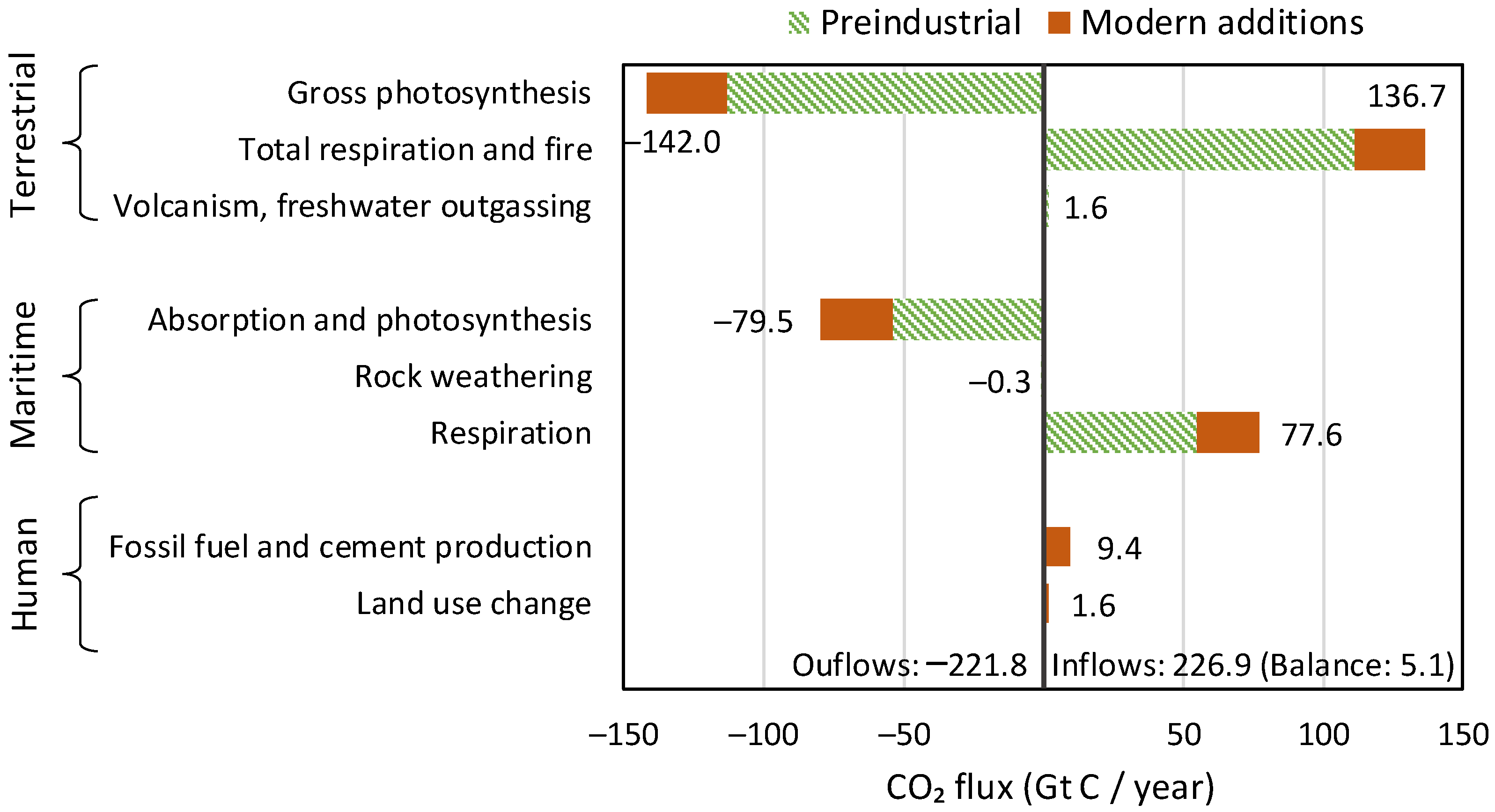
But what impact are human driven CO2 emissions actually capable of? We are contributing a very small part of the natural carbon cycle. Current CO2 levels are among the lowest Earth has seen over its long history. There were times in the past when ecosystems flourished under much higher CO2 concentrations. Instead of vilifying this essential gas, we should be acknowledging its role in our ecosystems and industries and protect the benefits it has in our lives.

Wyoming is uniquely positioned to lead this conversation.

Our state is vital to energy production, agriculture and food industries, transportation and energy reliability and stability. We understand the real-world importance of CO2. And we understand the benefits of CO2 used directly. Our industries already use it to enhance oil recovery, making energy production more efficient. This technology exemplifies what we are capable of when we treat CO2 as a resource rather than a liability.

The bill Make Carbon Dioxide Great Again shifts how we think about CO2.

It proposes that we stop treating the essential gas as a pollutant or contaminant. It requires a clear-eyed look at how policies aimed at eliminating CO2 emissions, such as decarbonizing the West, making Wyoming carbon negative or popular “net-zero” mandates. They may sound good on paper but often come with high economic costs and questionable environmental benefits, and clearly negative effects on our people and our industries.

Wyoming must refuse to jeopardize our economy and energy security
for initiatives that will yield – at best – questionable results.

Critics of “net-zero” strategies have highlighted the risks of pursuing policy goals without fully considering their consequences. These frequently require massive investments, disruption of reliable energy systems, and the forced undue burdens on families and businesses. Instead, Wyoming advocates for a balanced approach – one that evaluates the risks and possible rewards of any CO2 management plans that will safeguard our economic stability and way of life.

This approach challenges the status quo, and that is precisely the point. Now is the time to rethink how we talk about CO2 and climate change. This bill is not about ignoring environmental concerns; it is about addressing them with clear-eyed pragmatism and truth.

Wyoming is taking a bold step forward to lead a balanced, science-based dialogue. We all stand to benefit from this. Our energy sector, agriculture, transportation and all other industries, and even the broader environment, will gain when we use CO2 wisely.

This conversation is just beginning and must spark
a national debate about the fundamental role of CO2.

It is a debate we need to have – not just in Wyoming, with our own Governor and citizens – but across the nation and with all the organizations leading the charge to “net zero.” Let us challenge the assumptions, ask the hard questions, and make sure our policies truly serve the people, industry and the environment. After all, that is the Wyoming way.

Text of Wyoming Bill     SF0092  Make carbon dioxide great again-no net zero.

AN   ACT   relating to   environmental quality;   providing legislative findings;
specifying that carbon dioxide is not a pollutant and is a beneficial substance;
providing policy statements of the state associated with carbon dioxide;
repealing low-carbon energy standard requirements; repealing conflicting provisions;
making conforming amendments;  specifying applicability;
requiring reimbursement to utility customers as specified;
requiring rulemaking; and providing for an effective date.

Be It Enacted by the Legislature of the State of Wyoming:

Section 1.    W.S. 35-11-215 is created to read:

1             SF0092

35-11-215.     Carbon dioxide;   beneficial treatment; state policy.

(a)   The legislature finds that:

  (i)    Carbon dioxide is  a foundational nutrient necessary for all life on earth. Plants need carbon dioxide along with sunlight, water and nutrients to prosper. The more carbon dioxide available for this, the better life can  flourish;

  (ii)    The carbon cycle, where carbon dioxide is reused and transferred between the atmosphere and organisms on earth, is a biological necessity for life on earth;

  (iii)    Agricultural production worldwide is outpacing population growth and breaking production records primarily due to increasing atmospheric carbon dioxide;

  (iv)    More carbon dioxide allows plants to better resist drought by using water more efficiently;

  (v)     The national aeronautics and space administration has confirmed that global vegetation is increasing from the near-polar regions to the equator. The largest contributor to this greening of  the earth is increasing carbon dioxide;

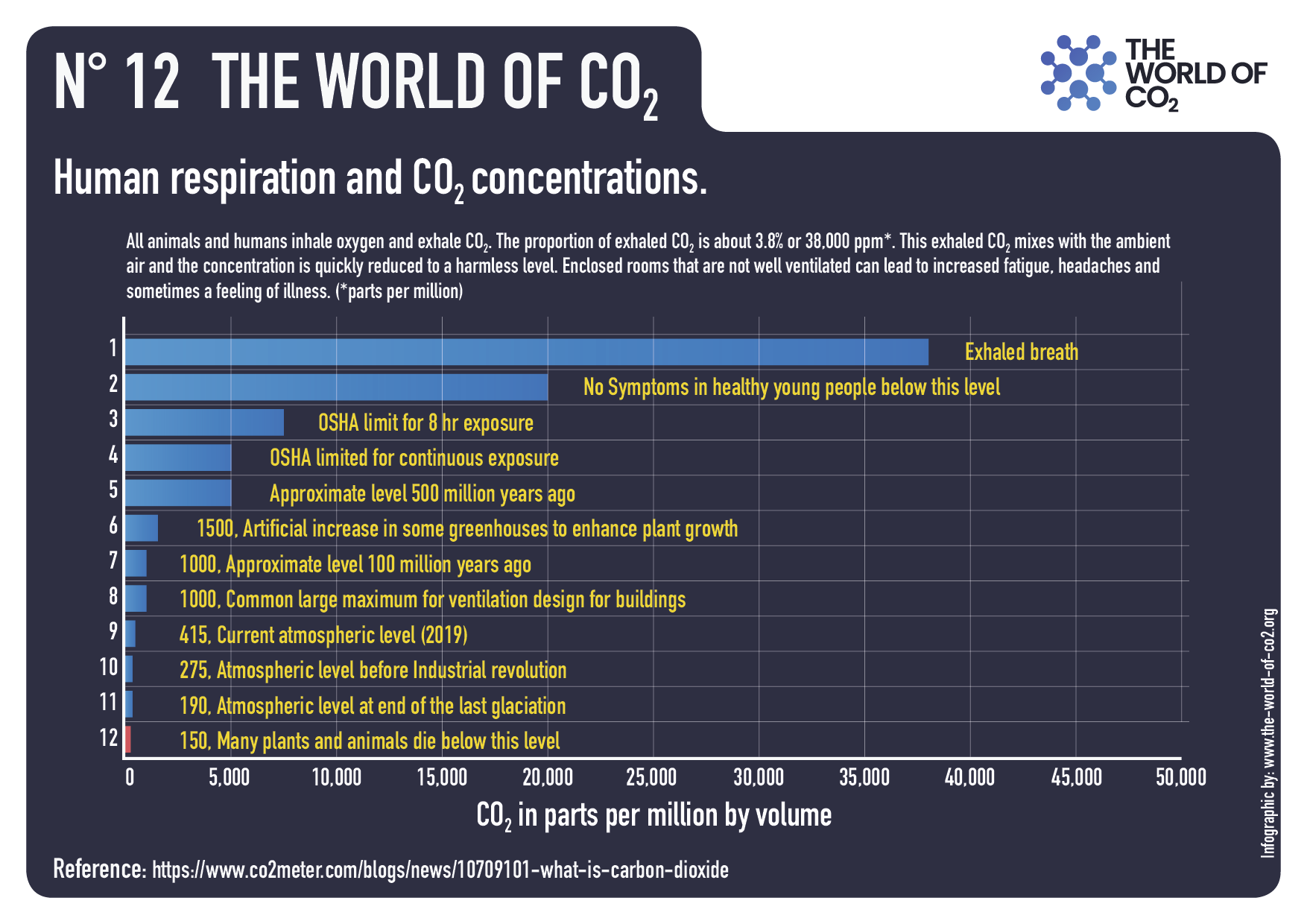
  (vi)     Carbon dioxide levels are currently at approximately four hundred twenty (420) parts per million, which is  at near-historically low concentrations.   The current carbon dioxide levels are one-sixth (1/6) of the average of  two thousand six hundred  (2,600)  parts per million over geologic time;

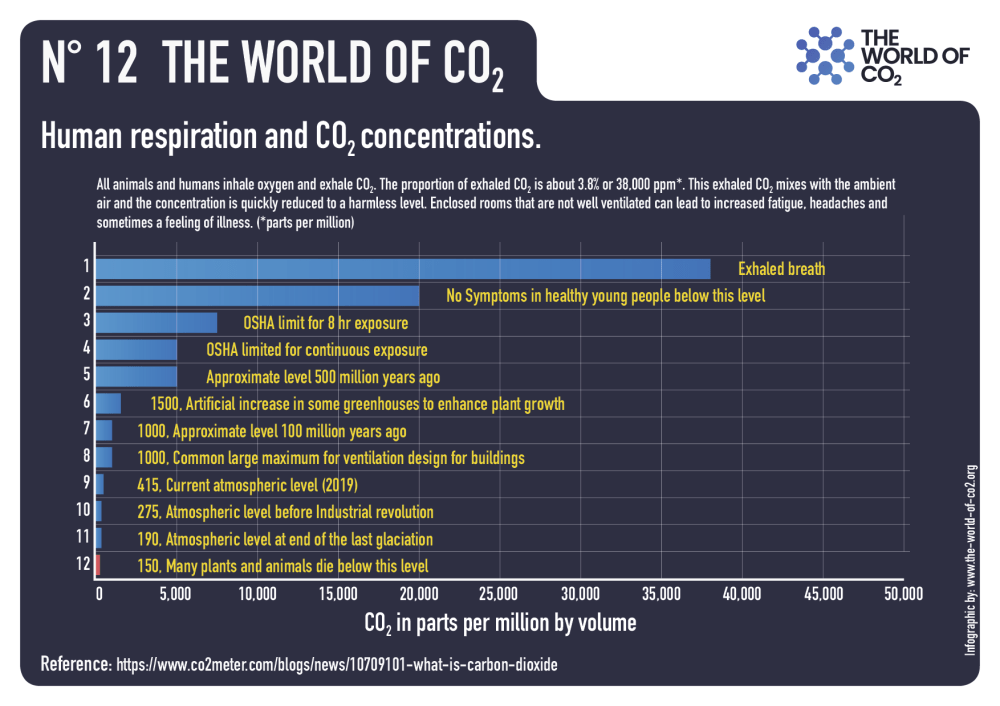
  (vii)     It is estimated that carbon dioxide levels  need to exceed one hundred fifty (150) parts per million to ensure the survival of plant life on earth;

  (viii)     The earth needs carbon dioxide to support  life and to  increase plant yields,  both of     which will contribute to  the health and prosperity of  all Wyoming citizens.

   (b)     It is the policy of the state of Wyoming that:

(i)       Carbon dioxide is a foundational nutrient necessary for life on earth;

(ii)       Carbon dioxide shall not be designated or treated as a pollutant or contaminant;

(iii)       The state of Wyoming shall not pursue any targets or measures that support the reduction or elimination of  carbon dioxide,  including any  “net-zero”  targets.

          Section 2.        W.S. 37-1-101(a)(intro) and 37-2-134(a)(i)  and (iv) are amended to read:

37-1-101.       Definitions.

(a)   As used in chapters 1, 2, 3, 12, and 17 and 18 of  this title:

37-2-134.       Electric generation facility closures; presumption; commission review

(a)    As used in this section:

(i)     “Dispatchable” means as defined in W.S. 37-18-101(a)(ii) a source of electricity that is available for use on demand and that can be dispatched upon request of a power grid operator or that can have its power output adjusted, according to  market needs and includes dispatchability;

(iv)    “Reliable” means as  defined in W.S. 37-18-101(a)(iv) generated electricity that is not subject to intermittent availability.

        Section    3.    W.S.    37-1-101(a)(vi)(N), 37-18-101 and  37-18-102 are repealed.

Section    4.   Not later than sixty (60) days after the effective date of this act each public utility that recovered rates from customers under W.S. 37-18-102(c)(i) or (iii),  as repealed by section 3 of this act, shall refund those rates to customers who paid them, provided that the utility shall not be  required to refund rates recovered under W.S. 37-18-102(c)(i) and (iii) that the utility had expended for carbon capture, utilization and storage technology before the effective date of this act. Refunds required under this section shall be in a form and manner specified by the public service commission

Section    5.  The public service commission shall promulgate all rules necessary to implement this act.

Section    6.  This act is effective immediately upon completion of all acts necessary for a bill to become law as provided by Article 4, Section 8 of the Wyoming Constitution.

 (END)

German Death Wish On Display

Tilak Doshi describes the self-inflicted German downfall in his Daily Sceptic article Germany’s Economic and Political Suicide. Excerpts in italics with my bolds and added images.

It’s that festive time of the year when interesting tales get told around a fireplace. So here goes (minus the fireplace).

Once upon a time there lived a country that was the envy of the world. It was among the world’s pre-eminent producers of manufactured goods. From chemicals and pharmaceuticals to precision engineering and the brewing of beer, it was second to none. Its people’s work skills, industriousness and discipline became the national hallmark of civilisational success. The country gained fame and fortune in bringing the luxuries of fine automobiles to the world’s rich and aspiring middle classes.

Alas, a blight visited that once great country not more than a score of years ago, though its destructive seed had been planted earlier. It was not some external force or act of God. Rather it was a sickness of the mind, a debilitating disease of the soul, that vexed that country’s ruling class. In restless search for virtue, the country’s rulers paid obeisance to the Goddess Gaia and promised the nation’s blood and treasure to satiate her inviolable sovereignty over her earthly domains.

This, then, is a tale of woe and misery. This Christmas shall not have been one of unalloyed merry times and good cheer. And while beer will have been drunk and dinners eaten in many a hearth and eating place, the lifeblood of that nation shall be constricted and its breathing blocked by a cursed phlegm as normal life resumes in the New Year.

Within the fateful score of years of becoming afflicted by the primordial cult of Gaia, the world’s envy has now become a sad basket case. Its economy has been tarnished as “the sick man of Europe”.

The beginning of the end of the German miracle

While the travails of Germany along with the economic stagnation of Europe as a whole have been apparent for some years now, the spate of dire headlines have gathered pace in recent weeks as the coalition government collapsed.

“Behind Germany’s Political Turmoil, a Stagnating Economy” — New York Times (December 17th)

“Germany Is Unraveling Just When Europe Needs It Most” – Bloomberg (December 15th)

“Europe’s Economic Apocalypse Is Now” – Politico (December 19th):

If Europe – and its economic powerhouse Germany – remains on its current trajectory, its future, Politico says, “will also be Italian: that of a decaying, if beautiful, debt-ridden, open-air museum for American and Chinese tourists”.

The economic rot induced by the adoption of Energiewende policies for the “energy transition” in 2010 resulted ultimately in the recession of the German economy in the last two years. Among the manifestations of this rot are the growth of corporate bankruptcies in double digits, soaring layoffs as the Federal Employment Agency said that the unemployment figure could exceed the three million mark for the first time in 10 years at the beginning of 2025, and the crown jewel of German industry, its automative sector, announcing massive job cuts.

According to a recent poll, 40% of industrial companies are currently considering reducing their production in Germany or relocating it abroad due to the energy situation; among industrial companies with more than 500 employees, more than half are now considering this. High labour costs, caused by the myriad regulations of a hyperactive administrative state, and among the world’s highest energy prices brought about by its Energiewende folly, have led to the nation’s de-industrialisation.

Germany’s governing coalition collapsed after Chancellor Olaf Scholz fired Finance Minister Christian Lindner, plunging Europe’s largest economy into political chaos. This occurred barely hours after Donald Trump’s U.S. election victory triggered existential questions about the future of the Continent’s economy and its energy security. Mr. Trump – a climate sceptic who has promised to bring the U.S. out of the UN’s Paris Agreement and its financial commitments for large scale transfers of funds to developing countries – will pull the rug out from under the EU’s famed if quixotic climate leadership.

Europe’s economic implosion is self-induced. Its ruling elites over-tax and over-regulate the private sector and obsess with promoting unreliable renewable energy to replace fossil and nuclear fuels in its crusade to ‘save the planet’ from an alleged impending climate apocalypse. Its attempt to blame Russia’s President Putin for high energy prices is hollow and self-serving.

Perhaps most revealing of Europe’s regulatory hubris is the Qatari Energy Minister’s recent statement that “I am not bluffing”. He warned that Qatar, one of the world’s largest natural gas suppliers, would cease gas exports to the EU if the bloc’s countries imposed penalties under recently adopted legislation on “sustainability due diligence”. For Europe to tell the world that it would punish foreign countries that did not buy into their “sustainability” beliefs might seem to most non-European observers as the height of arrogance. But such is the delusionary might of the Gaia cult.

The EU’s “Corporate Sustainability Due Diligence Directive”, which entered into force in July, allows for fines of up to 5% of a company’s annual global revenue “if the management fails to address adverse human rights or environmental impacts”. Bumptious Brussels bureaucrats seem to believe that their ideas of “sustainability” command universal acceptance. This, in a world where China, India, Indonesia, Vietnam and other populous developing countries, accounting for most of the world’s population, are busy expanding their capacity to mine coal and other fossil fuels so as to afford their citizens access to affordable and reliable energy.


Back to barbarism

“Little else is requisite to carry a state to the highest degree of opulence from the lowest barbarism but peace, easy taxes, and a tolerable administration of justice: all the rest being brought about by the natural course of things.”

So said Adam Smith, the great sage of political economy, over 250 years ago. Germany has shown that the converse may also be true. To go from opulence to poverty and potential barbarism is but a short road, assured by the burden of high taxes in service of an alleged climate crisis, and an intolerable administration of “climate justice” that demands suffocating regulations on the private sector.

UK Labour Caught in Own Net-Zero Trap

Rupert Darwall explains how UK Labour ensnared itself in his Spectator article  Labour has walked into a net-zero trap of its own making. Excerpts in italics with my bolds and added images.

The government’s net-zero noose draws tighter. At energy questions in the House of Commons on Tuesday, the Conservative MP Charlie Dewhirst asked the Energy Security and Net Zero Secretary Ed Miliband if the recent report by the National Energy System Operator (Neso) projected higher or lower bills under his policies. Miliband replied that Neso forecast lower overall costs. ‘It is completely logical to say that that will lead to a reduction in bills,’ he said.

Logic and historic data point in the opposite direction. Between 2009 and 2020, the average price of electricity sold by the Big Six energy companies rose by 67 per cent from 10.71p per kilowatt hour (kWh) to 17.92p per kWh. This wasn’t caused by any increase in the cost of natural gas. In fact, the average price paid by major power generators fell by 15 per cent over the period. There was, however, a spectacular explosion in the amount of wind and solar on the grid which rose from 4.5 gigawatts (GW) in 2009 to 37.95 GW in 2020.

Source: efficientbuildingsolutions.co.uk

The upward pressure on prices will only increase as Miliband pushes for more offshore wind. Earlier this week, the Financial Times reported a senior energy investment banker commenting on the hubris of the offshore wind industry, which has been hit by higher interest rates and supply chain inflation. Renewable energy projects require enormous upfront investment costs. The pay-off, its advocates argue, is that renewables have no fuel input costs. But it would be a mistake to assume they have minimal ongoing costs.
The North Sea is a harsh environment for wind turbines; fixing a defective wind turbine in the middle of the ocean is no easy matter. A 2020 forensic analysis of wind company accounts by Edinburgh University’s Professor Gordon Hughes found that Year 1 operating costs for deepwater wind projects averaged £44 per megawatt hour (MWh), rising to £82 per MWh in Year 12. Moreover, the output efficiency of wind turbines degrades at a rate of around 4.5 per cent a year. When plotted against the market price obtained for wind output, Hughes concluded:

 ‘a significant portion of wind output is expensive to produce and of no value in terms of its contribution to national wellbeing’.

Renewable subsidies are awarded in allocation rounds. The fifth allocation round (AR5), conducted under the previous government, was a dud because of rising project costs caused by higher interest rates and supply chain inflation. Coming into office, Miliband was determined to make a big splash with AR6. He threw bill payers’ money at it with a record-breaking £1.555 billion subsidy pot. The government accepted bids totalling 9.6 GW, which includes 5.34 GW of offshore wind and 3.29 GW of solar, capacity which is useless when it’s likely to be most needed to meet peak electricity demand on winter evenings.

The government gives successful bidders guaranteed prices, irrespective of how much – or, more often, how little – the market values their output. Consumers are then forced to make up the difference between the market price and the set strike price they bid for. The average strike price for AR6 was very nearly £80 per MWh. Based on Professor Hughes’s analysis of load factor decay and rising maintenance costs, there is a high risk that offshore wind becomes lossmaking well before Year 12. Floating offshore wind, which Miliband says ‘is at the heart of the government’s mission to make Britain a clean energy superpower’, was awarded an eye-watering strike price of £176 per MWh.

Larger subsidies and floating offshore wind are hardly conducive to cutting bills.

Until mid-October, the wholesale price of electricity in 2024 averaged £78.70 per MWh. The more wind and solar added at strike prices above wholesale prices mathematically drives up the amount of subsidy consumers must pay. But the cost of renewables doesn’t stop there. Because wind farms are mostly located hundreds of miles from where electricity is used, when grid connections get congested, wind farms are paid constraint payments not to generate electricity.

Decongesting all the wind power on the grid doesn’t come cheap either. Miliband’s Clean Power 2030 Action Plan, published earlier this month, envisages building twice as much new transmission infrastructure in the next five years as was built in the past decade. The faster the planned build-out, the higher the cost. It means that renewable strike prices are a floor on which constraint payments and higher network costs are added.
That’s not all. There’s a second net-zero factor driving up energy costs. Net-zero policies have been forcing conventional power stations off the grid. Britain’s dispatchable generating capacity (principally coal, gas and nuclear) peaked in 2010, by 2020 declining by 25.1 GW and shrinking dispatchable capacity by 28.5 per cent. This was mostly because 18.3 GW of coal-fired capacity was retired as Britain demonstrated its green virtue to the world by powering past coal. The problem comes when there’s insufficient wind to power the grid. That’s what happened this autumn. Unseasonably windless conditions saw wholesale electricity prices rise through October and November with a huge spike at the beginning of December.
The latest renewable lobbyist talking point is that gas sets the wholesale electricity price. The implication is that gas prices are driving up the cost of electricity. However, gas prices this year have been lower than they were in 2023. The culprit behind the surging electricity prices is not the price of gas, but politicians kicking coal off the grid and Britain not having sufficient gas-powered generating capacity to meet demand when there’s not enough wind. Vladimir Putin and Qatari gas sheikhs are not to blame for home-grown net zero policies that have left Britain with dangerously inadequate non-weather dependent generating capacity.

In this, Britain is not alone. As other countries are finding out, having more renewables on the grid destabilises the electricity market. Sweden has also had soaring electricity prices, says Ebba Busch, Sweden’s deputy prime minister and energy minister. Like Britain, Sweden has an extremely weather-dependant energy system which makes prices highly volatile, worsened by its German neighbour on the other side of Baltic. The need, Busch argues, is for ‘more dispatchable power production’.

This is politically impossible for the Starmer government. Labour is trapped by net zero and decarbonising the grid constitutes its overriding mission. So far, neither the Conservatives or Reform have stepped up. Tory leader Kemi Badenoch calls herself a net-zero sceptic and Reform’s Nigel Farage wants more nuclear. Whatever the merits of nuclear, there is no way in which new nuclear power stations can be built and commissioned fast enough to offset the retirement of Britain’s old ones, let alone substantially increasing the amount of nuclear power. They should be thinking and talking like Ebba Busch: Britain needs an emergency programme to build 20 GW of new gas-fired power stations. If that means suspending net zero, they should make the case that keeping the lights on and electricity bills down is a price worth paying.


Danish Fart Tax No Laughing Matter

Paul Schwennesen explains the nefarious intent behind this latest government hostile takeover in his Daily Economy article.  Excerpts in italics with my bolds and added images.

Cow farts are a distraction, and the joke’s on us. The Danish tax is a
significant step toward state ownership of the means of production.

Denmark, according to The New York Times, is going ahead with its livestock “Burp Tax.” Though hotly contested, the Danish government has nevertheless finally settled on levying farmers 300 kroners (~$43) per ton for carbon dioxide emissions, ramping to $106 per ton by 2035. As is the case with many of these farm-targeted green interventions, the action is ludicrously ineffectual at addressing the trumped-up problem, while remarkably effective at further cementing state controls over economic production.

Part of the reason farms (and especially cows) are such fat targets for this kind of statist intervention is that, politically speaking, they are the perfect scapegoat. It all seems so harmless, after all — so silly even — that serious-minded folk risk looking ridiculous if they object. Is it really so very draconian, goes the argument, to ask farmers to reduce their cow flatulence? The ever-so-reasonable request (enforceable by law, to be sure) glides under the radar in a scree of giggle-inducing copy that distracts readers to what is really afoot.

The Times plays its part in this façade, relishing the chance to print “poop, farts, and burps” in the business section so that the regulation seems plucked from an impish children’s story rather than what it is: a deadly serious infringement on economic liberty.

Defenders of the scheme insist it is necessary to address the pressing issue of climate change. But even if we were to accept the lobby’s poorly understood climate science at face value, the claims would be dubious. Cows stand accused of emitting 5.6 metric tons in annual “CO2 equivalent” emissions. All this politically motivated tabulating and assessing completely ignores the other side of the ledger, the growing recognition that grazing livestock have a complex, largely offsetting (and quite probably net-positive) impact on overall carbon emissions. Nature, after all, doesn’t work in simple equations and we are woefully under-informed about the rich and inherently unmodelable world of stochastic ecology.

Give Daisy a Break.

The New York Times, by way of perspective, accounts for 16,979 metric tons of its own, meaning that it, as a single company, has the footprint of ten Danish dairies. What would readers of “All the News That’s Fit to Print” have to say about an annual tax of $730,000 a year, ramping to $1.8 million, being added to the newspaper stand price? Advocates of a free press might well ask why the government was using state power to make the newspaper of record less competitive.

But in any case, climate science and cow farts aren’t really the issue here.
The issue is essentially about control, and who gets to occupy the
commanding heights of a centrally managed economy.

“A tax on pollution has the aim to change behavior,” says Jeppe Bruss, the Danish “green transition” minister in an unguardedly candid moment. Government programs to change behavior are much easier to introduce slowly, and against somewhat laughable minority sectors like farming than against, say, the population at large. They do not seem eager, for instance, to levy additional burdens on average people’s heating and transport emissions, which combined dwarf the agricultural sector’s. The Times says that livestock emissions are “becoming” the largest share of Denmark’s share of climate pollution which is another way of saying that it isn’t the largest share.

If beef and milk production indeed posed such an existential climate risk, then why not simply tax the consumers of beef and milk who, after all, are the real source of the production signal? The answer, of course, is obvious: no politician wants to be pegged as the one who raised the price of butter for average Danish grandmothers. Politically, it is far easier to go after the farmers, knowing full well that any cost burdens on farm production will be passed along to consumers anyway — only then it will be the farmers’ fault, not the government’s.

It’s an old trick, a kind of regulatory-impact laundering scheme.

The success of the Danish strategy remains to be seen. If examples from the Netherlands and New Zealand are any indication, the plan may well backfire, with frustrated farmers taking to the street and even grabbing back the reins of power. It is a useful warning:

allowing government the power to surgically tax and thereby “change behavior”
of producers is the same as granting them economic planning privileges.

The Danish “Burp Tax” is a significant step toward the state ownership of the means of production, and as the history of centrally managed economies shows, it’s not likely to end well.


Holes in IPCC Science Revealed

Graeme Weber reports from Australia on the history revealing multiple holes in IPCC claimed “settled science.” His paper is  IPCC – Miss/Diss information? shared with me by email.  Graeme is an earth scientist, retired consulting geologist and advocate for nuclear energy. His text is in italics with my bolds and added images.

Several years ago, the cry from the IPCC (International Panel on Climate Change) was ‘the science is settled’. This should have been a ‘red flag’ to any scientists who know that science is never settled. This is especially so in such a complex system, as Mother Earth’s climate. It is now 32 years since the first IPCC Report was issued. Many claims in this and later IPCC reports have since been debunked especially the ‘Hockey Stick’ graph of Mann, Bradley and Hughes (1999) where Mann was finally taken to court to reveal his calculations that subsequently led to him losing a court case and the IPCC getting embarrassed, as monumental errors and manipulation of data was exposed.

Professor Tim Ball, who was sued by Michael Mann for defamation regarding comments he made about the integrity of the Hockey Stick Graph, succeeded in having the case thrown out and Mann ordered to pay costs. Mann had failed to comply with a court order that he produce his Hockey Stick Data! Supreme Court of British Columbia 2019

Another erroneous claim by the IPCC was that 97% of Scientists believed in Global Warming. How did they make this claim? It was based on a study  in the Proceedings of the National Academy of Sciences of the United States of America (2010) who reviewed publication and citation data for 1,372 climate researchers, 908 of whom had authored 20 or more publications on climate, and found that 97–98% of the climate researchers (the 908) most actively publishing in the field support the tenets of ACC (Anthropogenic Climate Change) outlined by the IPCC, and the relative climate expertise and scientific prominence of the researchers unconvinced of ACC are substantially below that of the convinced researchers. Well, how strange people who research in this field and rely on financial support believe in Global Warming!

A Consensus You Can Trust!

Another study by Dr Soon and Dr Michael Connolly and His son Dr. Ronan Connolly released in 2023 was on Rural and Urban temperature records in the Northern Hemisphere. This study is similar to articles reported by JoNova and Jennifer Marohasy in Australia on temperature measurement equipment and stations in Australia with encroaching buildings, air conditioners, changes to recording gear and BOM changing temperature records by outright manipulation and homogenisation. The most obvious one is changing from reading manually by a person at a set time each day to continuous recording machines every minute or so, so increasing the likelihood of higher daily temperatures. In many cases BOM (Australian Bureau of Meteorology) claimed significant warming trends by starting at a cool point rather than a warm point.

The BOM never mentions the extreme temperatures recorded throughout Australia in January 1896 nor the elevated temperature during the 1930’s decade culminating in 1939 Black Friday. In the days preceding these fires, the Victorian state capital, Melbourne, experienced some of its hottest temperatures on record at the time: 43.8 °C (110.8 °F) on 8 January and 44.7 °C (112.5 °F) on 10 January. On 13 January, the day of the fires, temperatures reached 45.6 °C (114.1 °F), which stood as the hottest day officially recorded in Melbourne for the next 70 years. Now BOM issue weather alerts when the temperature reaches 30 degrees!

The study by Soon et al clearly shows that temperature measuring stations are increasingly being influenced by solar radiation being absorbed by bitumen and concrete and released through the night. One of the most remarkable illustrations of this effect was an aerial thematic view of the City of Rome at 8.30am in the morning. Vapour trails of early aircraft take-offs are clearly visible. The airport is hot (usually site of temperature gauges) surrounding country is relatively cold

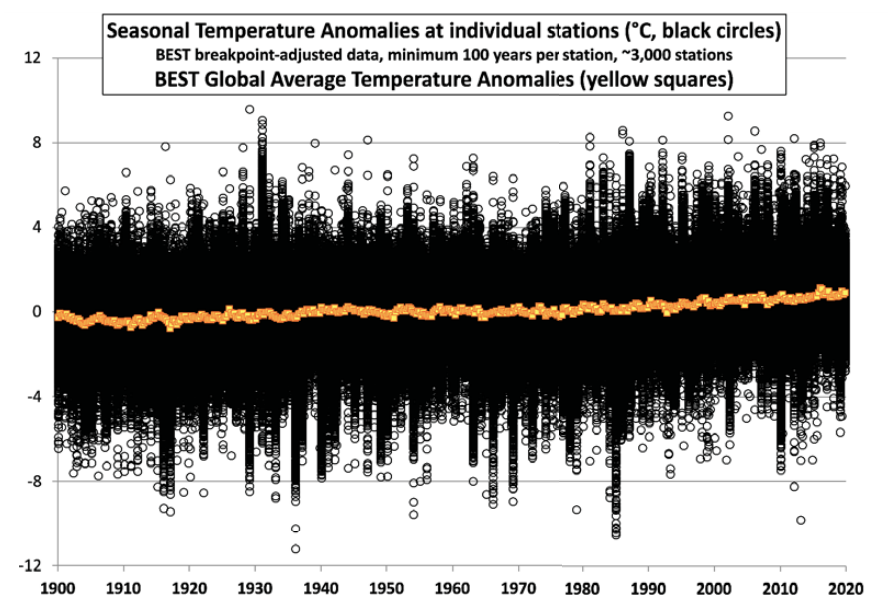
Another reveal over the last 30 years is the number of Land Temperature stations (LTS).  Total LTS in the Northern Hemisphere has declined from 5,000 to 2,000 stations but rural stations have declined from 500 to 200. This has been particularly relevant in the Northern Hemisphere where the most remote Artic stations (northern and coldest) have been closed. The product of this is the average temperature of these remote areas has risen. Mathematics 101. Soon et al have examined 4,500 temperature stations in China, USA the Artic and Ireland that show a warming trend of 0.89º C per Century in Urban areas whereas Rural Stations only show 0.55ºC per Century. This is a significant difference.

Another factor producing higher biased temperatures is the IPCC technique of ‘homogenisation’ where a particular area has all the temperature readings added together then divided by the number of stations. As is expected the number of urban stations read higher than rural ones thus increasing the overall temperature average. Taking the overall rural average the warming trend results in an increase of 0.9ºC since 1850.

So, Antonio Guterres the UN Secretary General prognosis that the ‘World is boiling’ is wrong, stupid and farcical. Soon et al believe the warming is more likely due to Total Solar Radiance whereas the IPCC believe it is due to a trace gas CO2 a plant food. It is interesting to note that commercial greenhouses use about 1,000–1,300 ppm under ideal circumstances. A lower level (800–1,000 ppm) is recommended for raising seedlings (tomatoes, cucumbers and peppers) as well as for lettuce production. Currently the world CO2 sits at 423ppm.

Al Gore (former USA Vice Presidential candidate) has made numerous predictions in his film ‘Inconvenient Truth’ most if not all have proved false. His biggest claim was the Arctic Ocean will be ice free by 2013 or was that 2014 or even 2015! When this did not happen, the argument was that overall, the ice was drastically thinning. Last month October 2024 icebreakers were madly trying to extract ships in the northern passages some two weeks before expected, from Arctic ice closing in.

At the other end of our world in Antarctica numerous IPCC papers claimed that the West Antarctic Ice Sheet was about to, or already collapsing because of warmer waters were circulating caused by Climate change. However, a new study in 2017 found 91 new volcanic vents to add to the 47 volcanoes already known to exist under this ice sheet. As volcanic activity waxes and wanes ice melt will continue in this hot volcanic zone. Whether this ice sheet melts or not it is certainly more probable the effects are more controlled by volcanic activity rather than circulating waters. The IPPC reports also failed to acknowledge that ice buildup was occurring at other points in Antarctica.

Source: volcano foundation with glacier locations added

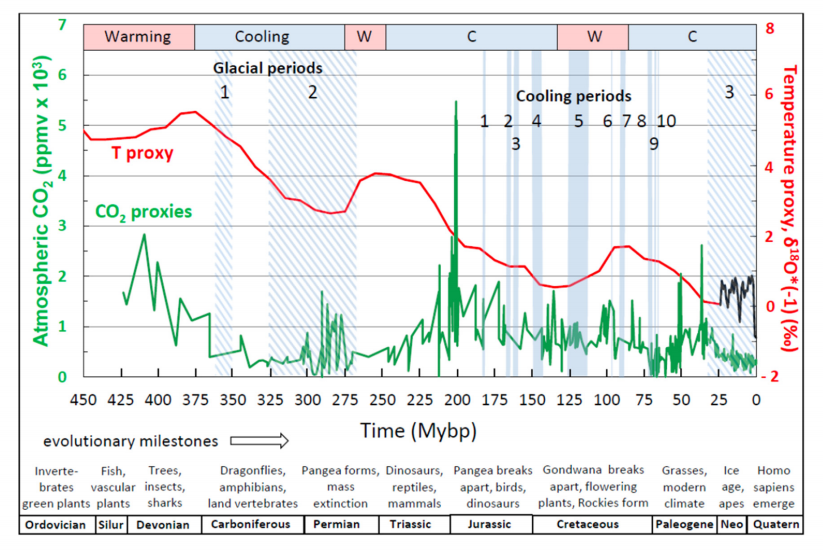
Is CO2 bad? One remarkable and observable thing is that trees and plants take in carbon dioxide through stomata in their leaves. Since plants first invaded continents (perhaps chasing higher concentrations of carbon dioxide) science has a very good record of the CO2 gas concentrations in the atmosphere. The larger the Stomata the lower the CO2 concentration.

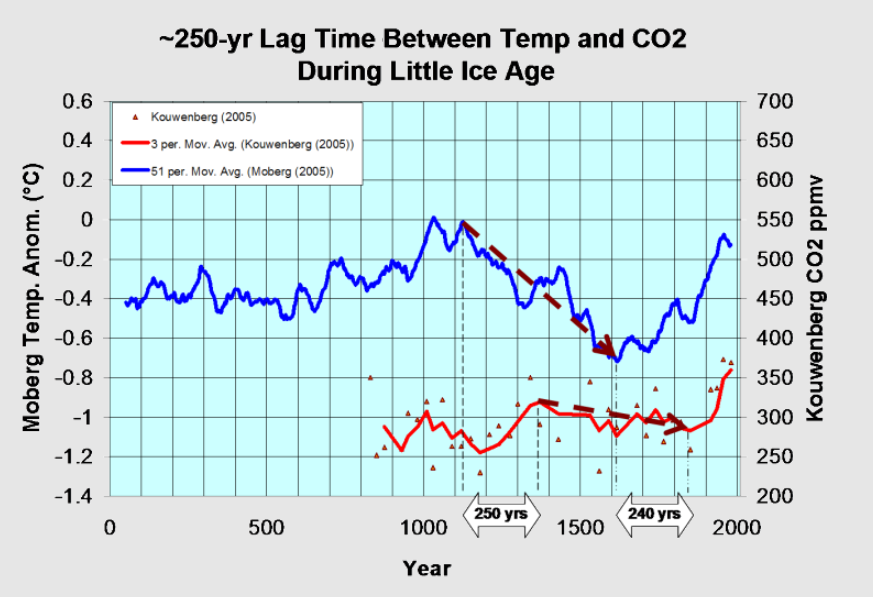
Approximately 580 Ma years ago the concentration was just under 3000ppm. This was soon after a major ice age around 750Ma years ago. The concentration has been steadily falling, since apart from two very low CO2 events occurred around 430Ma and 280Ma and if at any stage the CO2 concentration had dropped below 150ppm then we would not be here as all plants would have died. Other scientific studies show there is a lag between periods when the Earth’s temperature increases and CO2 concentrations rise. Maybe just maybe, the Industrial Revolution saved the planet!

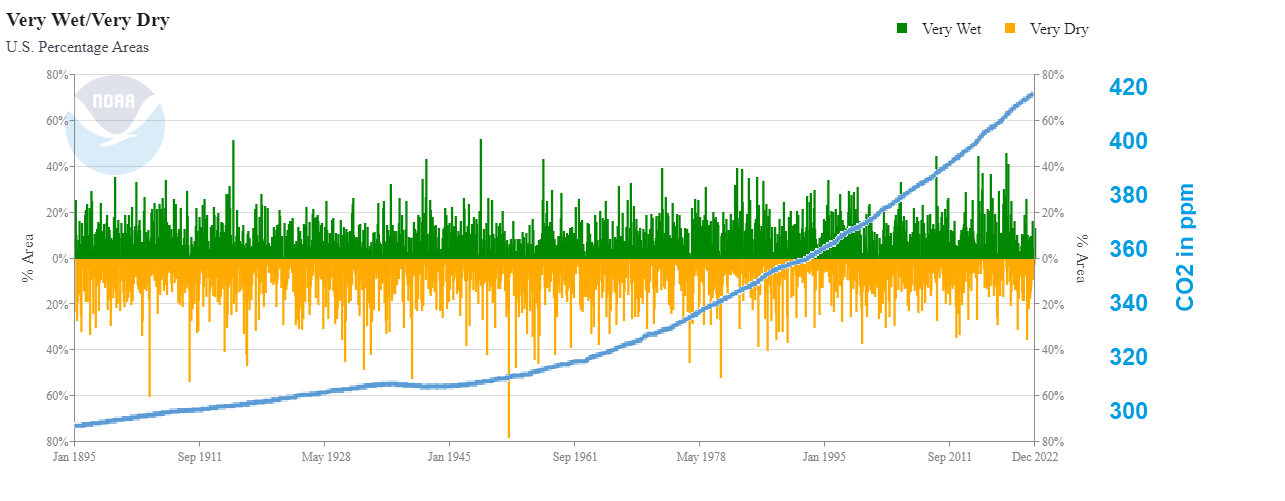
Other scientific papers are showing that the world climate has a natural buffering system. As temperatures rise evaporation increases over the oceans that cover 71% of the earth’s surface. Increased precipitation has a marked cooling effect and together with increased CO2 will lead to greater vegetation growth to feed the worlds increasing population. Desertification will likely decrease. Maybe Central Australia will bloom and make the central Australian Aboriginal communities wealthy.

A paper provided to the Court of Appeals, The Hague November 2023 by Richard Lindzen Professor of Earth, Atmospheric, and Planetary Sciences, Emeritus Massachusetts Institute of Technology, William Harper Professor of Physics, Emeritus Princeton University and Steven Koonin University Professor, New York University, Senior Fellow at the Hoover Institute wrote:

‘We are career physicists who have specialized in radiation physics, dynamic heat transfer and computer modelling for decades, subjects directly relevant to the global warming debate. Each of us has published over 200 peer-reviewed papers, many on the science of climate or closely related subjects. In our opinion, the District Court of The Hague findings that “dangerous” climate change and extreme weather are caused by CO2 emissions from fossil fuels are contradicted by the scientific method and only supported by the unscientific methods of government opinions, consensus, peer review, and cherry-picked or falsified data. Science demonstrates fossil fuels, and CO2 will not cause dangerous climate change. Rather, there will be disastrous consequences for people worldwide if fossil fuels and CO2 emissions are reduced to “net zero,” including mass starvation’.

What if the Net Zero fossil fuels and CO2 policy was in effect in 1750 and CO2 did not rise from 280 ppm to 420 ppm? There would be 21% less food worldwide. Therefore it can be concluded that the Earth’s surface temperature is rising but not at the rate the IPCC would have you believe. As Bjorg Lomborg is saying it is much better to prepare for this eventuality something we cannot change than try to reduce a trace gas that is essential for life.

I fear for those who have trusted governments like they did the Covid science. The false claims of Government about an approaching Armageddon causing an induced psychosis resulting in stunts paralysing normal economic industry. These stunts such as hanging from pylons or gluing to windows, throwing paint, disrupting parliament. Where will it all end? The destruction of our civilisation?


Straight Talk on Climate Science and Net Zero

Michael Simpson of Sheffield University did the literature review and tells it like it is in his recent paper The Scientific Case Against Net Zero: Falsifying the Greenhouse Gas Hypothesis published at Journal of Sustainable Development (2024).  Excerpts in italics with my bolds and added images.

Abstract

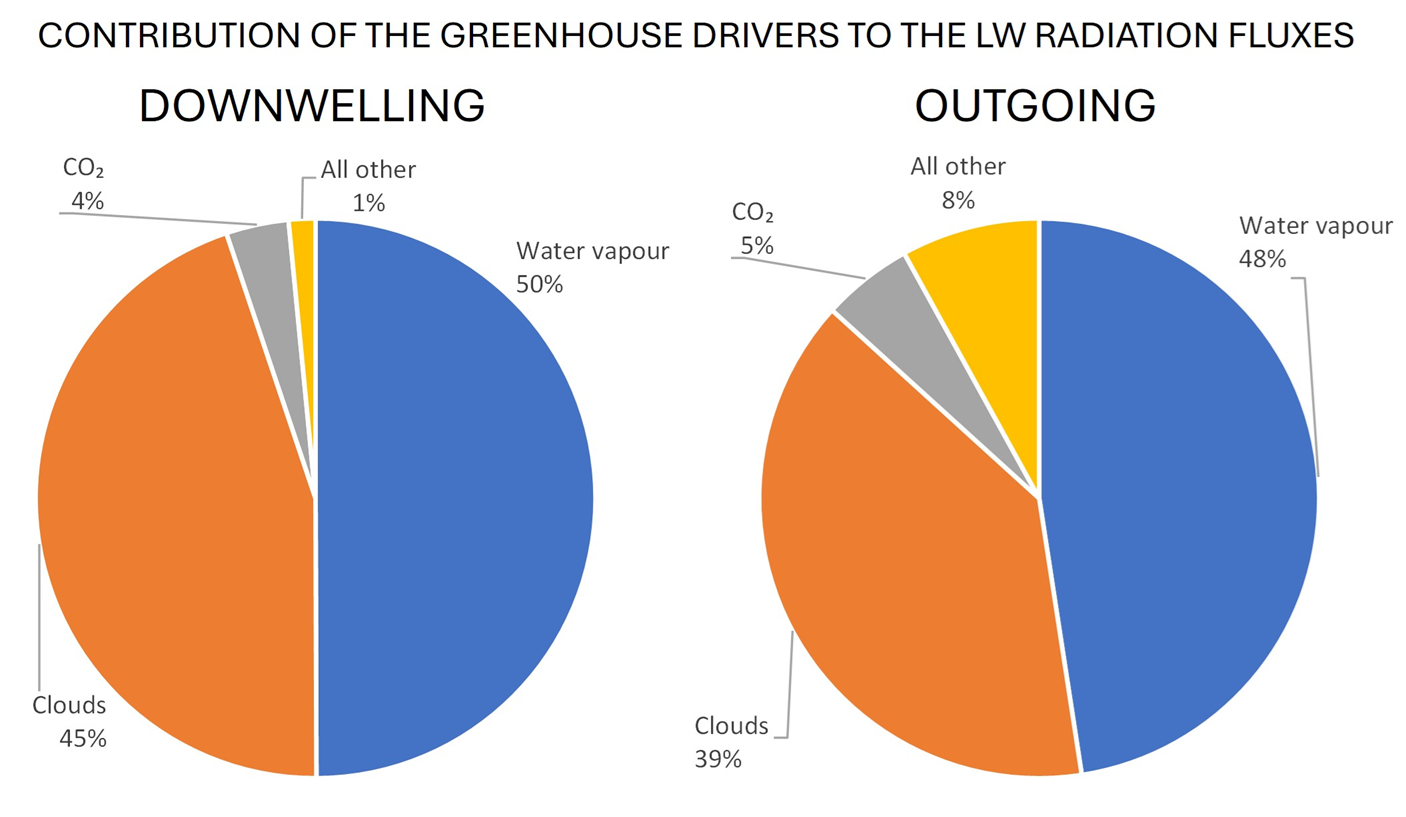
The UK Net Zero by 2050 Policy was undemocratically adopted by the UK government in 2019. Yet the science of so-called ‘greenhouse gases’ is well known and there is no reason to reduce emissions of carbon dioxide (CO2), methane (CH4), or nitrous oxide (N2O) because absorption of radiation is logarithmic. Adding to or removing these naturally occurring gases from the atmosphere will make little difference to the temperature or the climate. Water vapor (H2O) is claimed to be a much stronger ‘greenhouse gas’ than CO2, CH4 or N2O but cannot be regulated because it occurs naturally in vast quantities.

This work explores the established science and recent developments in scientific knowledge around Net Zero with a view to making a rational recommendation for policy makers. There is little scientific evidence to support the case for Net Zero and that greenhouse gases are unlikely to contribute to a ‘climate emergency’ at current or any likely future higher concentrations. There is a case against the adoption of Net Zero given the enormous costs associated with implementing the policy, and the fact it is unlikely to achieve reductions in average near surface global air temperature, regardless of whether Net Zero is fully implemented and adopted worldwide. Therefore, Net Zero does not pass the cost-benefit test. The recommended policy is to abandon Net Zero and do nothing about so-called ‘greenhouse gases’. [Topics are shown below with excerpted contents.]

1. Introduction

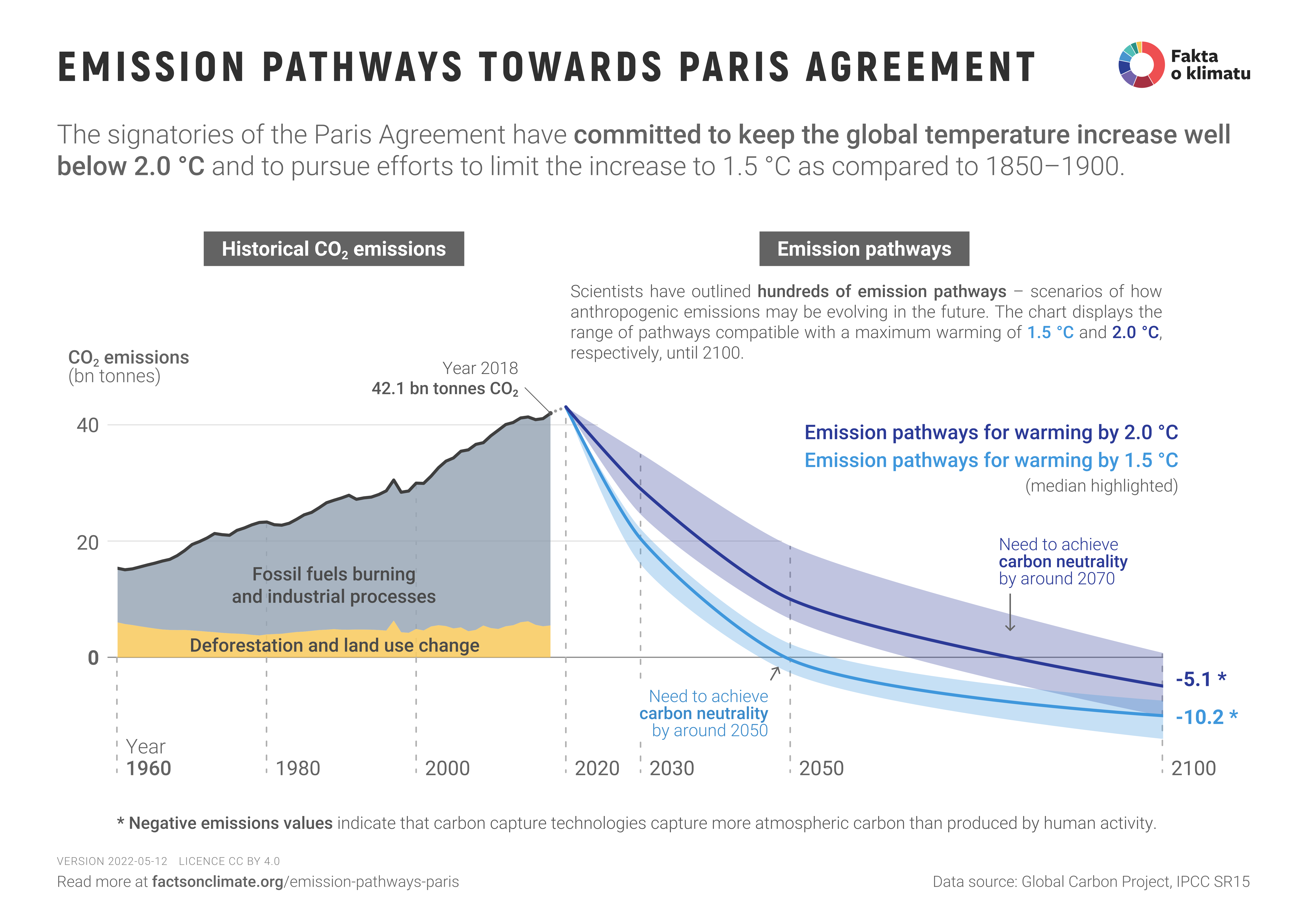
The argument for Net Zero is that the concentration of CO2 in air is increasing, some small portion of which may be due to human activities and that Net Zero will address this supposed ‘problem’. The underpinning consensus hypothesis is that the human emission of so-called ‘greenhouse gases’ will increase concentrations of these gases in the atmosphere and thereby increase the global near surface atmospheric temperature by absorbance of infrared radiation leading to catastrophic changes in the weather. This leads to the idea that global temperatures should be limited to 2°C and preferably 1.5°C to avoid catastrophic climate change (Paris Climate Agreement, 2015).

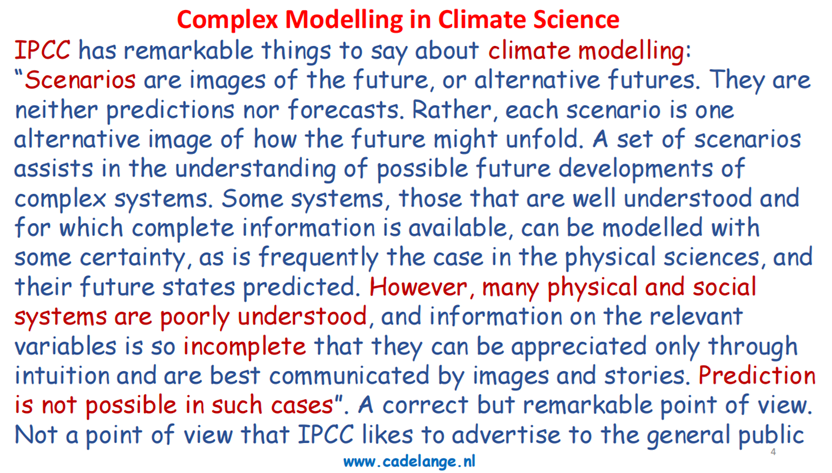
A further hypothesis is that there are tipping points in the climate system which will result in positive feedback and a runaway heating of the planet’s atmosphere may occur (Schellnhuber & Turner, 2009; Washington et al., 2009; Levermann et al., 2009; Notz & Schellnhuber, 2009; Lenton et al., 2008; Dakos et al., 2009; Archer et al., 2009). Some of these tipping point assumptions are built into faulty climate models, the outputs of which are interpreted as facts or evidence by activists and politicians. However, output from computer models is not data, evidence or fact and is controversial (Jaworowski, 2007; Bastardi, 2018; Innis, 2008: p.30; Smith, 2021; Nieboer, 2021; Craig, 2021). Only empirical scientifically established facts should be considered so that cause and effect are clear.

From the point of view of physics, the atmosphere is an almost perfect example of a stable system (Coe, et al., 2021). The climate operates with negative feedback (Le Chatelier’s Principle) as do most natural systems with many degrees of freedom (Kärner, 2007; Lindzen et al., 2001 & 2022). The ocean acts as a heat sink, effectively controlling the air temperature. Recent global average surface temperatures remain relatively stable (Easterbrook, 2016; Moran, 2015; Morano, 2021; Marohasy, 2017; Ridley, 2010) or warming very slightly from other causes (Sangster, 2018) and the increase in temperature from 1880 through 2000 is statistically indistinguishable from 0°K (Frank, 2010; Statistics Norway, 2023) and is less than predicted by climate models (Fyfe, 2013). This shows the difference between the consensus view and established facts.

The results imply that the effect of man-made CO2 emissions does not appear to be sufficiently strong to cause systematic changes in the pattern of the temperature fluctuations. In other words, our analysis indicates that with the current level of knowledge, it seems impossible to determine how much of the temperature increase is due to emissions of CO2. Dagsvik et al. 2024

The IPCC has produced six major assessment reports (AR1 to 6) and several special reports which report on a great deal of good science (Noting that the IPCC does not do any science itself but merely compiles literature reviews). The Summaries for Policy Makers (SPM) are followed by most politicians. Yet the SPM do not agree in large part with the scientific assessment by the IPCC reports and appear to exaggerate the role of CO2 and other ‘greenhouse gases’ in climate change. It appears that the SPM is written by governments and activists before  the scientific assessment is reached which is a questionable practice (Ball 2011, 2014 and 2016; Smith 2021).

Other organizations have produced reports of a similar nature and using a similar literature (e.g. Science and Public Policy Institute; The Heartland Institute; The Centre for the Study of CO2; CO2 Science; Global Warming Policy Foundation; Net Zero Watch; The Fraser Institute; CO2 Coalition) and arrived at completely different conclusions to the IPCC and the SPM (Idso et al., 2013a; Idso et al., 2013b; Idso et al., 2014; Idso et al., 2015a, 2015b; Happer, et al., 2022). There are also some web pages (e.g. Popular Technology) which list over a thousand mainstream journal papers casting doubt on the role of CO2 and other greenhouse gases as a source of climate change. For example, a recent report by the CO2 Coalition (2023) states clearly Net Zero regulations and actions are scientifically invalid because they:

  • “Fabricate data or omit data that contradict their conclusions.
  • Rely on computer models that do not work.
  • Rely on findings of the Intergovernmental Panel on Climate Change (IPCC) that are government opinions, not science.
  • Omit the extraordinary social benefits of CO2 and fossil fuels.
  • Omit the disastrous consequences of reducing fossil fuels and CO2 emissions to Net Zero.
  • Reject the science that demonstrates there is no risk of catastrophic global warming caused by fossil fuels and CO2.

Net Zero, then, violates the tenets of the scientific method that for more than 300 years has underpinned the advancement of western civilization.” (CO2 Coalition, 2023; p. 1)

With such a strong scientific conviction the entire Net Zero agenda needs investigating. This paper reviews some of the important science which supports and undermines the Net Zero agenda.

2. Material Studied

A literature review was carried out on various topics related to greenhouse gases, climate change and the relevant scientific literature from the last 20 years in the areas of physics, chemistry, biology, paleoclimatology, geology etc. The method used was an evidence-based approach where several issues were critically evaluated based on fundamental knowledge of the science, emerging areas of scientific investigation and developments in scientific methods. The evidence-based approach is widely used (Green & Britten, 1998; Odom et al., 2005; Easterbrook, 2016; Pielke, 2014; IPCC, 2007a; IPCC 2007b; Field, 2012; IPCC 2014; McMillan & Shumacher, 2013).

Evidence-based research uses data to establish cause and effect relationships which are known to work and allows interventions which are therefore expected to be effective.

3. Greenhouse Gas Theory

The historical development of the greenhouse effect, early discussions and controversies are presented by Mudge (2012) and Strangeways (2011). The explanation of the greenhouse effect or greenhouse gas theory of climate change is given in the IPCC Fourth Assessment Report Working Group 1, The Physical Science Basis (IPCC, 2007, p. 946):

“Greenhouse gases effectively absorb thermal infrared radiation emitted by the Earth’s surface, by the atmosphere itself due to some gases, and by clouds. Atmospheric radiation is emitted to all sides, including downward to the Earth’s surface. Thus, greenhouse gases trap heat within the surface-troposphere system. This is called the greenhouse effect.”

This is plausible but does not necessarily lead to global warming as radiation will be emitted at longer wavelengths in other areas of the electromagnetic spectrum where greenhouse gases do not absorb radiation potentially leading to an energy balance without increase in temperature. To further complicate matters the definition continues with the explanation:

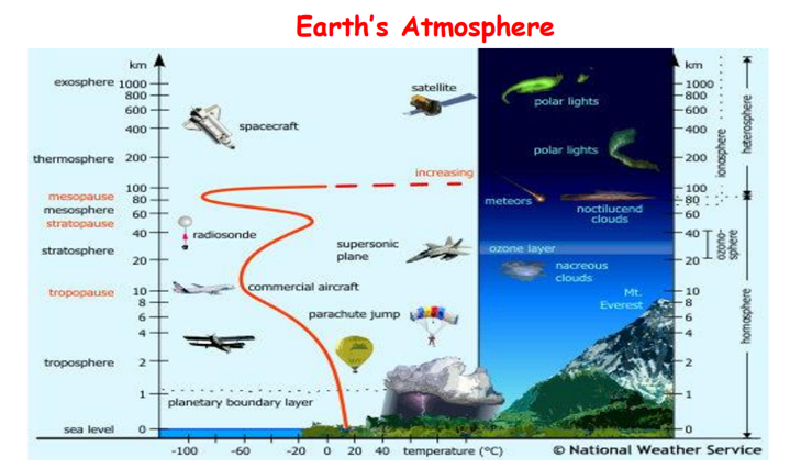
“Thermal infrared radiation in the troposphere is strongly coupled to the temperature of the atmosphere at the altitude at which it is emitted. In the troposphere, the temperature generally decreases with height. Effectively, infrared radiation emitted to space originates from an altitude with a temperature of, on average, -19°C in balance with the net incoming solar radiation, whereas the Earth’s surface is kept at a much higher temperature of, on average, +14°C. An increase in the concentration of greenhouse gases leads to an increased infrared opacity of the atmosphere, and therefore to an effective radiation into space from a higher altitude at a lower temperature. This causes a radiative forcing that leads to an enhancement of the greenhouse effect, the so-called enhanced greenhouse effect.”

This sort of statement is not comprehensible to the average person, makes no sense scientifically and is immediately falsified by recent research (Seim and Olsen, 2020; Coe etal., 2021; Lange et al., 2022, Wijngaarden & Happer, 2019, 2020, 2021(a), 2021(b), 2022, Sheahen, 2021; Gerlich & Tscheuschner, 2009; Zhong & Haigh, 2013). It also contradicts the work of Gray (2015 and 2019) and others and has been heavily criticized (Plimer, 2009; Plimer, 2017; Carter, 2010).

3.1 The Falsifications of the Greenhouse Effect

There are numerous falsifications of the greenhouse gas theory (sometimes called ‘trace gas heating theory’, see Siddons in Ball, 2011, p.19), of global warming and/or climate change (Ball, 2011; Ball, 2014; Ball, 2016; Gerlich & Tscheuschner, 2009; Hertzberg et al, 2017; Allmendinger, 2017; Blaauw, 2017; Nikolov and Zeller, 2017).

Fundamental empirically derived physical laws place limits on any changes in the atmospheric temperature unless there is some strong external force (e.g. increased or decreased solar radiation). For example, the Ideal Gas Law, the Beer-Lambert Law, heat capacities, heat conduction etc., (Atkins & de Paula, 2014; Barrow, 1973; Daniels & Alberty, 1966) all place physical limits on the amount of warming or cooling one might see in the climate system given any changes to heat from the sun or other sources.

3.1.1 The Ideal Gas Law

PV = nRT (1)

The average near-surface temperature for planetary bodies with an atmosphere calculated from the Ideal Gas Law is in excellent agreement with measured values suggesting that the greenhouse effect is very small or non-existent (Table 1). It is thought that the residual temperature difference of 33K between the Stephan-Boltzmann black body effective temperature (255K) on Earth and the measured near-surface temperature (288K) is caused by adiabatic auto-compression (Allmendinger, 2017; Robert, 2018; Holmes 2017, 2018 and 2019). An alternative view of this is given by Lindzen (2022). There is no need for the ‘greenhouse effect’ to explain the near surface atmospheric temperature of planetary bodies with atmospheric pressures above 10kPa (Holmes, 2017). The ideal gas law is robust and works for all gases.

3.1.2 Measurement of Infrared Absorption of the Earth’s Atmosphere

It is now possible to calculate the effect of ‘greenhouse gases’ on the surface atmospheric temperature by (a) using laboratory experimental methods; (b) using the Hitran database (https://hitran.org/); (c) using satellite observations of outgoing radiation compared to Stephan-Boltzmann effective black body radiation and calculated values of temperature.

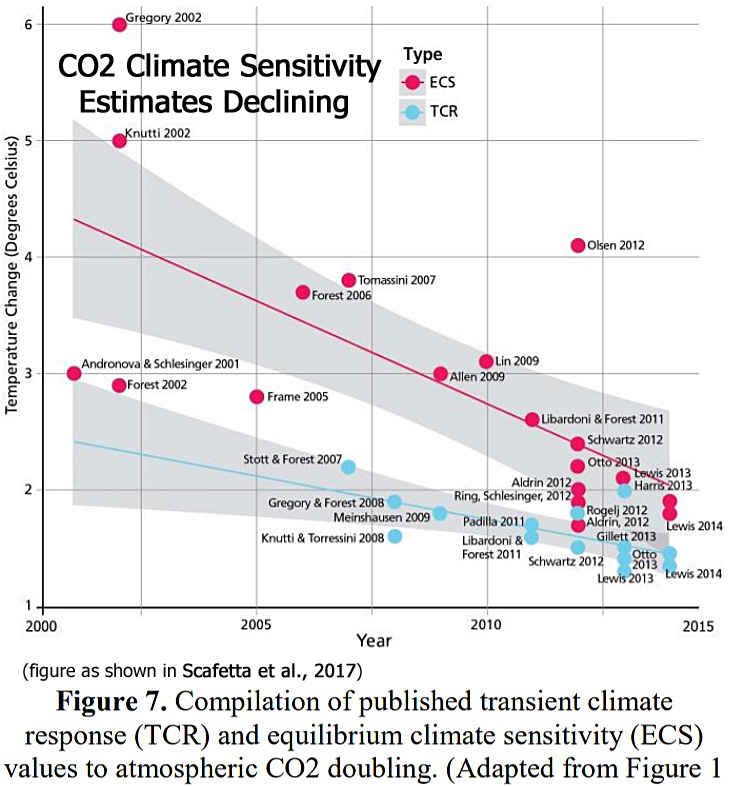
The near surface temperature and change in surface temperature can be calculated. The result is that climate sensitivity to doubling concentration of CO2 is (0.5°C) including 0.06°C from CH4 and 0.08°C from N2O which is so small as to be undetectable. Most of the temperature change has already occurred and increasing CO2, CH4, N2O concentrations will not lead to significant changes in air temperatures because absorption is logarithmic (Beer-Lambert Law of attenuation) – a law of diminishing returns.

Figure 1. Delta T vs CO2 concentration

The important point here is that the Ideal Gas Law, the logarithmic absorption of radiation and the theoretical calculations by Wijngaarden & Happer (2020 and 2021), Coe et al., (2021) based on the Beer-Lambert Law and the Stephan-Boltzmann Law show that there is an upper limit to the temperature change which can occur by adding ‘greenhouse gases’ to the atmosphere if the main source of incoming radiation (the Sun) does not change over time. The upper limit is ~0.81°C.

3.1.3 Other Falsifications

Many climatologists ignore the well-established ideas of the Ideal Gas Law, Kinetic Theory of Gases and Collision Theory which explain the interaction of gases in the atmosphere (Atkins & de Paula, 2014; Salby, 2012; Tec science). For example, it is difficult for CO2 to retain heat energy (by vibration, rotation, and translation) as there are 1034 collisions between air molecules per second per cubic meter of gas at a pressure of 1 atmosphere (~101.3kPa) and on each collision, energy is exchanged leading to a Maxwell-Boltzmann distribution (similar to a normal distribution) of molecular energies across all molecules in air (Tec science). The Maxwell-Boltzmann distribution has been experimentally determined (Atkins & de Paula, 2014). Thus, the major components of air (nitrogen and oxygen) retain most of the energy, cause evaporation of water vapor by heat transfer (mainly by conduction and convection) and emit radiation at longer wavelengths. The small concentration of CO2 in air (circa 420ppmv) cannot account for large changes in the climate system which have occurred in the past (Wrightstone, 2017 and 2023; Ball, 2014). Plimer (2009 and 2017) presents a great deal of geological scientific evidence which covers paleoclimatology concluding that:

“There is no such thing as the greenhouse effect. The atmosphere behaves neither as a greenhouse nor as an insulating blanket preventing heat escaping from the Earth. Competing forces of evaporation, convection, precipitation, and radiation create an energy balance in the atmosphere.” (Plimer 2009: p.364).

Ball (2014) summarizes a great deal of the geological science:

“The most fundamental assumption in the theory that human CO2 is causing global warming and climate change is that an increase in CO2 will cause an increase in temperature. The problem is that every record of any duration for any period in the history of the Earth exactly the opposite relationship occurs temperature increase precedes CO2 increase. Despite that a massive deception has developed and continues.” Ball (2014: p. 1).

This statement agrees with many other scientists working in geology, earth sciences, physics and physical chemistry as can be seen in cited references in books (Easterbrook, 2016; Wrightstone 2017 and 2023; Plimer, 2009; Plimer 2017; Ball, 2014; Ball,2011; Ball, 2016; Carter, 2010; Koutsoyiannis et al, 2023 & 2024; Hodzic, and Kennedy, 2019). Easterbrook (2016) uses the evidence-based approach to climate science and concludes that:

“Because of the absence of any physical evidence that CO2 causes global warming, the main argument for CO2 as the cause of warming rests largely on computer modelling.”  Easterbrook (2016: p.5).

The results of the models are projected far into the future (circa 80 to 100years) where uncertainties are large, but projections can be used to demonstrate unrealistic but scary scenarios (Idso et al., 2015b). The literature that is used for the IPCC reports appears to be ‘cherry picked’ to agree with their paradigms that increasing CO2 concentrations leads to warming. They ignore the vast literature in climatology, atmospheric physics, solar physics, physics, physical chemistry, geology, biology and palaeoclimatology much of which contradicts the IPCC’s assessment in the summary for policymakers (SPM).

The objective of the IPCC was to find the human causes of climate change – not to look at all the causes of climate change which would be the sensible thing to do if the science were to be used to inform policy decisions. However, there is no experimental evidence for a significant anthropogenic component to climate change (Kaupinnen and Malmi, 2019) which leaves genuine scientists and citizens concerned about the role of the IPCC.

3.1.4 Anthropogenic CO2 and the Residence time of Carbon Dioxide in Air

There is a suggestion (IPCC) that the residence time of CO2 in the atmosphere is different for anthropogenic CO2 and naturally occurring CO2. This breaks a fundamental scientific principle, the Principle of Equivalence. That is: if there is equivalence between two things, they have the same use, function, size, or value (Collins English Dictionary, online). Thus, CO2 is CO2 no matter where it comes from, and each molecule will behave physically and react chemically in the same way.

The figures above illustrate how exaggerated claims are made for CO2 based on the false assumption that CO2 resides in the atmosphere for long periods and can affect the climate. These results are enough to falsify the ideas of anthropogenic global warming caused by CO2 and shows how little human activity contributes to CO2 emissions and concentrations in air. The argument is clear, that if the fictitious greenhouse effect were real for CO2 the human contribution would have no measurable effect upon the climate in terms of global average surface temperature.

The residence time of CO2 in the atmosphere is between 3.0 and 4.1 years using the IPCC’s own data and not the supposed 100 years or 1000 years for anthropogenic CO2 suggested by the IPCC summaries for policy makers (Harde, 2017) which contravenes the Equivalence Principle (Berry, 2019).

“These results indicate that almost all of the observed change of CO2 during the industrial era followed, not from anthropogenic emission, but from changes of natural emission. The results are consistent with the observed lag of CO2 changes behind temperature changes (Humlum et al., 2013; Salby, 2013), a signature of cause and effect.” (Harde, 2017a: 25).

It is well-known that the residence time of CO2 in the atmosphere is approximately 5 years (Boehmer-Christiansen, 2007: 1124; 1137; Kikuchi, 2010). Skrable et al., (2022), show that accumulated human CO2 is 11% of CO2 in air or ~46.84ppmv based on modelling studies. Berry (2020, 2021) uses the Principle of  Equivalence (which the IPCC violates by assuming different timescales for the uptake of natural and human CO2) and agrees with Harde (2017a) that human CO2 adds about 18ppmv to the concentration in air. These are physically extremely small concentrations of CO2 which suggest most CO2 arises from natural sources. It can be concluded that the IPCC models are wrong and human CO2 will have little effect on the temperature.

4. Conclusions

Like many other researchers it was assumed there was robust science behind the greenhouse gas theory and that Net Zero was essential to achieve, but after investigation it now appears that the greenhouse gas theory is questionable and has been successfully challenged for at least 100 years (Gerlich and Tscheuschner, 2009). Much better explanations for planetary near surface atmospheric temperatures are available based on robust, empirically derived scientific laws such as the Ideal Gas law.

Better assessments of the potential increase in temperature with doubling CO2 concentrations are available and the calculated increase is small ~0.5°C (Coe et al., 2021; van Wijngaarden & Happer, 2019, 2020 and 2021; Sheahen, 2021; Schildknecht, 2020) and will remain very small with increased CO2 concentration because the infrared CO2 absorption bands are almost saturated and absorption follows the logarithmic Beer-Lambert law (Figure 1). Much of the work using the Hitran database has been tested against satellite measurements of the outgoing radiation from the Earth’s atmosphere and the calculations are in almost perfect agreement (Sheahen, 2021).

This suggests that the physicists are correct in their assessment of the likely very small increase in atmospheric temperature and therefore there is a strong case against Net Zero as it will have no discernible effect on temperature and the cost of Net Zero is huge. Therefore, the Net Zero project does not pass the cost-benefit test (Montford, 2024b; NESO, 2024). That is the costs are disproportionately high for little or no benefit. Thus, the correct response to a non-problem is to do nothing. The monies being wasted on Net Zero should be spent for the benefit of citizens (e.g. education, health care, public health, water infrastructure, waste processing, economic prosperity etc.). There are many other pressing public health problems from burning fossil fuels which should be addressed (e.g. air pollution especially particulates and carbon monoxide).

Better calculations of the human contribution to atmospheric CO2 concentrations are available and it is small ~18ppmv (Skrable et al., 2022; Berry, 2020; Harde 2017a & 2017b; Harde, 2019; Harde 2014). The phase relation between temperature and CO2 concentration changes are now clearly understood; temperature increases are followed by increases in CO2 likely from outgassing from the ocean and increased biological activity (Davis , 2017; Hodzic and Kennedy, 2019; Humlum, 2013; Salby, 2012; Koutsoyiannis et al, 2023 & 2024).

“In conclusion on the basis of observational data, the climate crisis that, according to many sources, we are experiencing today, is not evident yet.” Alimonti etal. 2022: 111.

Many researchers are addressing the ‘CO2 and climate change problem’ by suggesting decarbonization and other approaches such as Net Zero. CO2 is more than likely not the temperature control and has a very minor to negligible role in global warming (The Bruges Group, 2021; De Lange and Berkhout, 2024; Manheimer, 2022; Statistics Norway 2023; Lindzen and Happer, 2024; Lindzen, et al., 2024).

The scientific literature was examined and found to provide several alternative views concerning CO2 and the need for Net Zero. The objectives of this paper have been achieved and the conclusions can be briefly summarized:

  1. CO2 is a harmless highly beneficial rare trace gas essential for all life on Earth due to photosynthesis which produces simple sugars and carbohydrates in plants and a bi-product Oxygen (O2). CO2is therefore the basis of the entire food supply chain (see Biology or Botany textbooks or House, 2013). CO2 is close to an all-time low geologically (Wrightstone, 2017 and 2023) and controls on CO2 emissions and concentrations in air should be considered as very dangerous and expensive policy indeed. Net Zero is not necessary and should be abandoned.
  2. The greenhouse gas theory has been falsified (i.e. proven wrong) from several disciplines including paleoclimatology, geology, physics, and physical chemistry. CO2 cannot affect the climate in such small concentrations (~420ppmv or ~0.04%) and basing government policy on output from faulty climate models will prove to be very expensive and achieve nothing for the environment, public health, or the climate.

“There is no atmospheric greenhouse effect, in particular CO2 greenhouse effect, in theoretical physics and engineering thermodynamics. Thus, it is illegitimate to deduce predictions which provide a consulting solution for economics and intergovernmental policy.” (Gerlich & Tscheuschner, 2009: 354).

  1. The oceans contain approximately 50 times as much CO2 as is currently present in the air (Easterbrook, 2016; Wrightstone, 2017 and 2023) and as such Henry’s Law will work to maintain the dynamic equilibrium concentration in air over the longer term as the ocean will absorb and outgas CO2(Atkins & de Paula, 2014). Net Zero will, therefore, achieve nothing for the concentration of CO2 in the atmosphere. If the volcanic sources of CO2 are as Kamis (2021), the IPCC and others suggest many times the human contribution, then Net Zero will have no measurable effect on atmospheric CO2 concentrations. Net Zero should, therefore, be abandoned.
  2. The contribution to greenhouse gases, especially CO2, attributable to humans is extremely small, almost negligible (~4.3% or ~18ppmv total accumulation) and half is absorbed by the ocean and biomass. Other naturally occurring so-called greenhouse gases are present in very small/negligible quantities (e.g. CH4, N2O). The systematic attempts to eliminate these trace gases from the atmosphere by reducing industrial output, reducing farming, eliminating fossil fuel use, and changing the way human civilization lives is totally unnecessary – again the ‘do-nothing strategy’ is strongly recommended.
  3. The sciences have been largely ignored by politicians and activists. There have been numerous failings of governments to take notice of scientific findings and they have succumbed to unnecessary pressure from activist groups (including the United Nations and the IPCC). Net Zero is just one example where costly efforts by governments will achieve nothing and not address the real problems of air pollution, public health, or economic well-being of citizens.

“There is not a single fact, figure or observation that leads us to conclude that the world’s climate is in any way disturbed.” (Société de Calcul Mathématique SA, 2015:3).

  1. Circular reasoning is used by the climate modelers. That is, the fictitious greenhouse effect is built into the models such that when the parameter of CO2concentration is increased then the temperature output of the models increases, producing models which run relatively hot compared to natural variability. This reduces the so-called greenhouse effect to little more than a ‘fudge factor’ or ‘parameter’ within models which essentially gives you the answer that you set out to prove. This circular reasoning is hardly scientific enquiry and with data ‘homogenization’ and infilling of missing data begins to look rather peculiar. Climatologists need to recognize these issues, address the real reasons for climate change and offer genuine solutions to any real problems.
  2. The claim of consensus is completely unscientific in its approach (Idso et al, 2015a). Noting that 31,000 US scientists and engineers signed the petition protest (Robinson et al., 2007), recently 90 Italian scientists wrote an open letter to the Italian government (Crescenti et al., 2019), and 500 climatologists and scientists signed an open letter to the UN Secretary General (Berkhout, 2019). All explaining that CO2 is not the cause of climate change. There are thousands of academic papers and books questioning anthropogenic climate change with good data.

Many other concerned individuals have looked at the evidence for anthropogenic climate change based on CO2 and found it wanting (e.g. Davison, 2018; Rofe, 2018).

“If in fact ‘the science is settled’, it seems to be much more settled in the fact that there is no particular correlation between CO2 level and the earth’s temperature.” (Manheimer, 2022).

and

“If you assume the Intergovernmental Panel on Climate Change are right about everything and use only their numbers in the calculation, you will arrive at the conclusion that we should do nothing about climate change!” (Field, 2013).

The academic literature in science offers numerous and far better explanations for climate change than the fictitious greenhouse effect. Researchers should recognize this fact and start to look at dealing with the real causes of climate change. Net Zero is an enormously expensive solution to a non-problem and has no obvious redeeming features. The Net Zero policy is not financially sustainable and should be abandoned.