COP28 Mind-Boggling Numbers

The Green Mirage recedes as you approach it.

Robert Lyman exposes the freakish math swirling around Dubai COP this fortnight in his Financial Post article COP28 by the (very big) numbers.  Excerpts in italics with my bolds and added images.

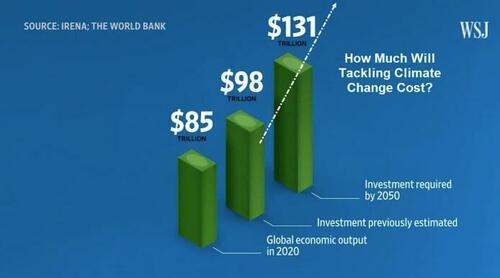
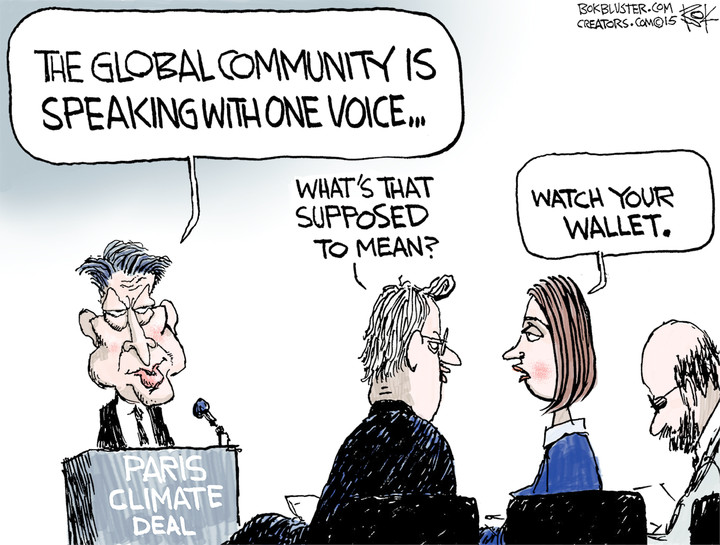
This weekend’s climate meeting will discuss trillions of dollars.
No one will mention its chance of success is zero.

Neuroscience tells us the human brain is very bad at interpreting large numbers. Most people know that million, billion and trillion are all big numbers but can’t really understand what the difference between them is. Answer: it’s big. A million seconds is 12 days. A billion seconds is 31 years. A trillion seconds is 31,688 years, which is a lot more than 12 days.

Our cognitive difficulties with large numbers will be a problem when reading the news from the COP28 climate conference that convenes in Dubai on Thursday.

The conference has a wide-ranging agenda. It also will be attended by a large number of people — over 70,000 at last count. There’s the first large-number problem for COP28. How does a group of 70,000 people possibly discuss anything in a coherent way?

The organizers have identified five themes on which they would like to see agreement among the almost 190 governments that will be represented. When you’re talking governments, 190 is yet another brain-challenging number.

To oversimplify, there are four main themes:

♦  how to accelerate all countries’ efforts to reduce greenhouse gas emissions so as to meet a proposed 2050 “net-zero” target (zero not being a large number);
♦  how to induce wealthier countries to give much more money to poorer countries to help them both mitigate and adapt to climate change;
♦  how to persuade all countries to phase out production of fossil fuels by 2050; and, finally,
♦  how to increase the UN’s role as central coordinator and global regulator of climate efforts.

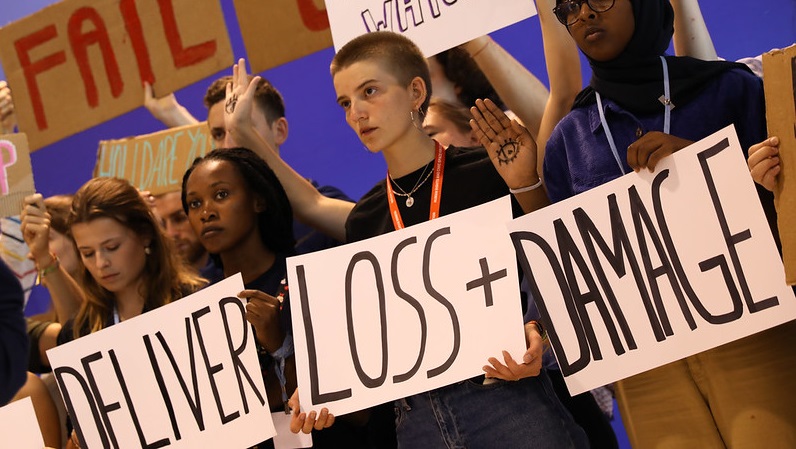
Most discussions behind closed doors will be about money. Rich countries are now paying about US$70 billion in climate aid, mostly to help finance GHG emissions reduction. The developing countries want this raised to at least US$1.4 trillion per year by 2026, 20 times higher. Twenty is not actually that large a number, except when talking about multiplying already very big dollar amounts by it. Developing countries have also demanded that funding for adaptation rise to at least US$600 billion per year. At last year’s COP27 in Egypt, they got agreement in principle for a new fund to pay for the “loss and damages” they will incur from adverse weather events they attribute to the historic GHG emissions of the industrialized countries, though no dollar amounts were agreed to. Finally, developing countries are pushing for a new Global Biodiversity Fund, to which developed countries would donate a mere US$20 billion per year.

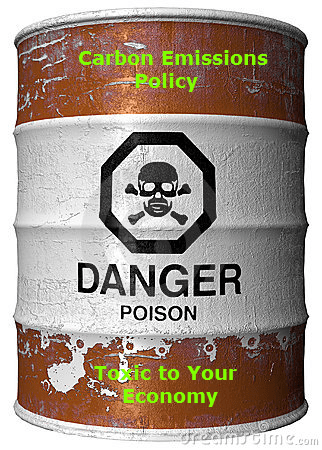
Round numbers: rich countries would be on the hook for US$2 trillion per year. If allocations were based on GDP, Canada would owe three per cent of the total — or US$60 billion per year. In Canadian dollars, that’s roughly 78 billion CAN$. There are about 16 million households in Canada so (do the math) each household would owe $4,875. Per year. That’s a number the average person can easily understand. He or she can also understand there is absolutely no way the Canadian public or voters in any other OECD country would ever agree to such a thing. Not even if they didn’t know (but they do) that China, producer of 30 per cent of the world’s GHG emissions, not only would not be contributing but might well qualify as a recipient.

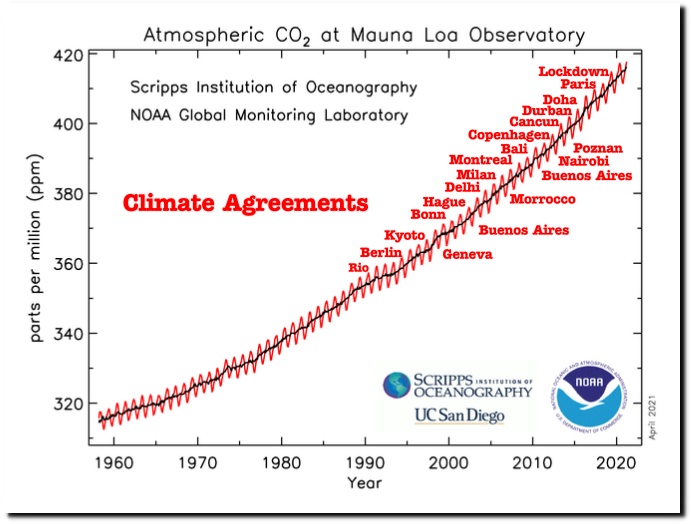
The previous 27 COPs (for Conference of the Parties) have all promoted ever-more ambitious emissions reductions. But since the first COP global emissions have risen 60 per cent, driven by developing countries’ relentless efforts to achieve more economic development for their burgeoning populations. There is no evidence that trend will change. China, India, Russia, Saudi Arabia, Iran, Iraq and others all see fossil fuel production as key to their economic development and energy security. They are unlikely to commit to production declines even if a few OECD countries do.

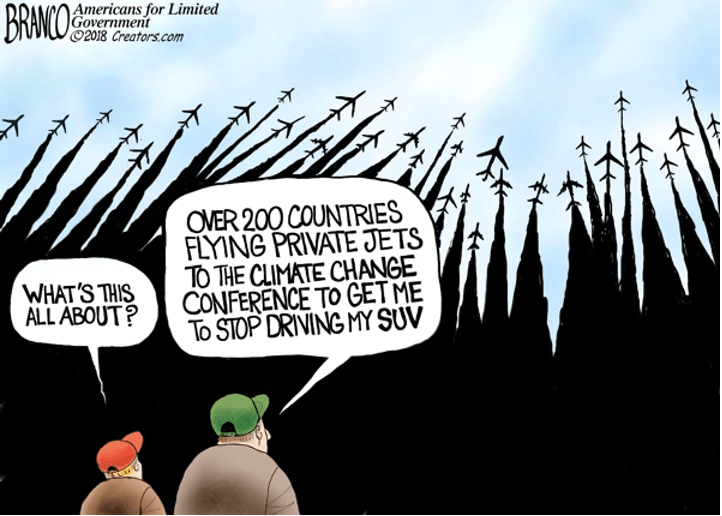
The United Nations secretariat will lobby hard at COP28 to expand the role of existing institutions, including even more climate summits to place even more political pressure on leaders, and they may succeed in this (though many of us feel just one a year is already more than enough). How difficult can it be to convince tens of thousands of climate stakeholders to travel to exotic conference locales each year? Especially if the general public cannot grasp the numbers they’re playing with.

Yes, those are trillions of dollars in the projection.

This weekend the media in general will report in glowing terms on the energy and enthusiasm of conference participants, especially those representing environmental NGOs. The communiqué will note every new commitment made yet entirely ignore that the probability the entire process will meet its objectives is a very, very small number not significantly different from zero.


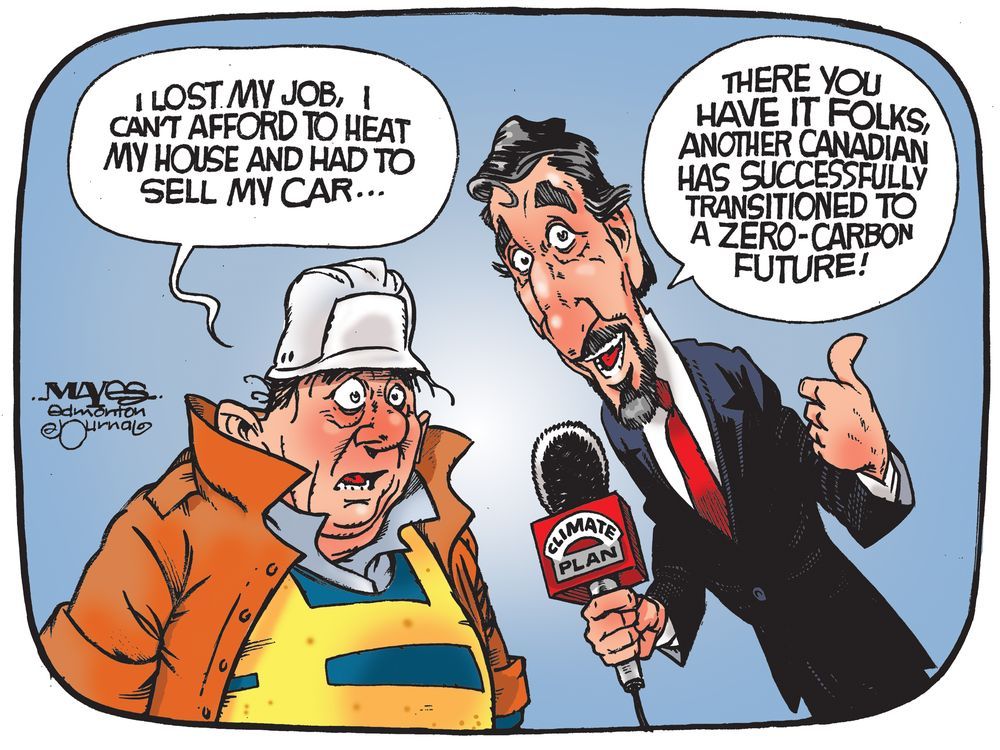
Trudeau Climate Crusade Hits Alberta Wall

Tyler Durden has the story at zerohedge Alberta Premier Defies Trudeau Carbon Agenda – Invokes Sovereignty Act.  Excerpts in italics with my bolds and added images.

It is an action which multiple red states in the US undertaken: Blocking carbon controls ingrained in “green power” initiatives conjured by the federal government.

Now it appears the momentum has spread to Canada through Alberta’s conservative leadership as Premier Danielle Smith defies the Trudeau regime by invoking the province’s recently drafted Sovereignty Act.

The Sovereignty Act is designed to give Alberta’s legislative assembly the power to identify any federal programs or actions that violate Alberta’s constitution, the government would then refuse to implement those programs.  The implementation of the act means that finally, an open dialogue on the existential threat of the UN’s “sustainable development goals” and Agenda 2030 has begun in Canada.  

The reasons for opposition to “Net Zero” objectives have been repeated over and over again by political critics, economic critics and scientific critics alike. 

1.  Net zero as the UN defines it is impossible using existing green technologies with inefficient and costly power generation.

2.  Net zero proponents refuse in most cases to acknowledge the usefulness of nuclear power as a means to reduce reliance on oil and gas.

3.  Net zero would require perpetual authoritarian oversight of individual carbon emissions and probably population reduction in the near term.

4.  None of the above even matters because there’s no concrete evidence whatsoever man-made carbon causes global warming.

In other words, the supposed crisis is a fraud and there’s no reason
for any nation, province or state to sacrifice their power grids.

Beyond the big con, stagflation has made carbon controls economically impossible. Aggressive price spikes since 2020 make gas, oil and coal more important than ever in maintaining basic services for the populace along with the needs of industry. Reducing available supply in the face of desperate demand would only fuel the fires of inflation further. Even Europe has been reverting back to “villainous” energy sources like coal to keep things running.

When people face the possibility of freezing or starving there is little chance they are going to listen to unfounded claims of climate doomsday from a bunch of ultra-rich yacht sailing private jet-setting carbon-spewing hypocrite elites.

See Also Hydrocarbons Are the Greenest Fuels


Assessing Risk and Climate Science (Quora Discussion)

Excerpted below is a Quora discussion with illuminating commentary from  Aaron Brown, former asset risk manager. AB responds to Topic Question and related comments, text in italics with my bolds and added images.

Quora? What will make conservatives accept climate change as real science?

AB: There are scientists who study cloud formation, ocean currents, rainfall patterns and other aspects of climate. Some are good, some not so much. Most people, liberal or conservative, accept that much of this is science.

Then there are scientists who build climate models and make predictions about things like global average temperature from 2081 to 2100 under different assumptions about human emissions and other factors. The people doing this work are considered scientists, but the conclusions are not science in the sense of empirically verifiable facts or consensus theories with strong empirical confirmation.

It’s a semantic game whether you call the conclusions “science” or not, but either way they are not as certain as scientific laws about gravity or momentum. People who like the predictions will embrace them, people who don’t like the predictions will resist them.

Liberals tend to be open to new ideas, conservatives tend to be more skeptical. That means many liberals are more willing to take strong action based on model predictions than are most conservatives. Skeptics tend to accept models if they make useful, non-obvious predictions that turn out to be true. Unfortunately it will take at least a century to gather that kind of evidence for climate models.

One possible breakthrough would be improvements in forecasting weather. You can prove a weather model in months rather than decades or centuries. But the fundamental claim of climate science is that it’s easier to predict global decadal averages in fifty years than next month’s weather in New York’s Central Park. That kind of claim—”I can’t predict the stuff you can check but trust me on stuff you can’t check”—makes skeptics skeptical.

A more likely breakthrough would be the the people making climate predictions proving their modeling ability by making useful, non-obvious predictions in other fields that can be validated. So far we have not seen this—successful modelers in other fields moving to climate science, or climate modelers proving success in other fields. This is a major point of skepticism for skeptics.

Finally, many conservatives are skeptical due to the big money involved in climate change combined with intense government interest and possibilities for vast wealth from subsidies and other programs. This is called Big Science and it’s often been dead wrong in the past, not to mention occasionally threatening all life on Earth. There are some successes of Big Science as well but skeptics will note the temptation to skew climate science for money or to push policies the advocates wanted before any climate support showed up.

None of this is relevant for policy decisions. If we somehow knew for certain today what the global mean temperature would be from 2081 – 2100, it wouldn’t tell us whether it was a good idea to ban coal or impose a carbon tax today. Conservatives are apt to assume any legislation will be written by lobbyists paid by cronies and empire-building bureaucrats rather than any kind of scientist. The laws will have unintended consequences, and send the economy and technology down unpredictable novel paths. We can’t estimate the effect on the human environmental footprint, we have only limited ability to relate the human environmental footprint to climate, and even less to relate climate to human welfare.

In such circumstances, the conservative inclination is to wait until you’re sure you’re helping things before spending a lot of money and writing a bunch of rules. The liberal tendency is to use your best judgement today, and expand the stuff that works tomorrow, while fixing or abandoning the stuff that doesn’t. This choice has nothing to do with climate science.

Comment: A model is just a theory put into numbers.

AB: Agreed, but the problem is lack of data. You can’t check 80 year in the future predictions with 30 years of data; and the global climate is so complex you need far more data even than we have with current measurements.

The data from more than 150 years or so is local data averaged over centuries or longer, useless for predicting global shorter-term data. Prior to 1990 we have very noisy data that is broader and available daily or sometimes even more often, but only since 1990 do we have anything like reliable, consistent global data.

People do calibrate their models to be consistent with the past, sometimes with more success than others. But there are so many parameters to global climate that this is not a useful check.

Comment: The required accuracy of your data and models grows exponentially with the amount of time you are predicting. It’s practically impossible to improve weather models beyond a certain point, so it’s not fair to consider this a failing of climate science.

AB: This is the central claim of climate science, but it remains unproven. Chaotic systems are not inherently unpredictable—for example the multibody solar system—and three or more bodies under gravity are chaotic—appears to have remained stable and pretty easy to predict for billions of years.

Attempts to predict weather in the most straightforward way, breaking the atmosphere down into small parts and applying rules of physics, have not succeeded in precise or long-range predictions—but there clearly are weather patterns that repeat often enough they must have some explanation. Modern weather prediction relies mainly on observed regularities without firm theoretic explanations.

You may be right that weather prediction will always be intractable, but perhaps some out-of-the-box idea will change that. If it did, we’d probably understand a lot more about climate.

It’s not obvious that long-term averages are more stable and predictable than shorter-term ones. In the stock market, for example, prices are pretty close to a random walk and uncertainty increases pretty steadily with the square root of time interval.

If you look at actual temperature measurements over local areas or global, over time scales from days to millions of years, uncertainty seems to increase with time, but slower than the square root. The unit of most certainty seems to be a year—predicting the average temperature over the next year has less uncertainty than predicting tomorrow’s temperature, but also less uncertainty than predicting the average temperature over the next decade or century.

Trajectories of a double pendulum. The simple predictable behavior of a pendulum appears chaotic when a second pendulum is attached. How many factors interact in our climate system?

This is a pure statistical observation, ignoring all climate science. The claim of climate science is models that incorporate things like solar variation, volcanoes, human emissions and so forth can make long-range averages less uncertain than annual averages. But we’ll need a lot of examples of long-range predictions—centuries of data—to confirm that directly, without resorting to climate theory; meaning that’s unlikely to convince skeptics in this century.

Of course you’re right that there seem to be physical limits that cause climate to move in cycles rather than drifting off to entirely new regimes—but regimes do change, and on planets other than Earth perhaps to extremes like losing the atmosphere.

Long exposure of double pendulum exhibiting chaotic motion (tracked with an LED)

But conservation of energy, for example, does not necessarily impose a constraint. There are many ways for energy to be removed from or added to global temperatures. It’s not necessarily true that, say, reducing incoming solar radiation cools the planet. In a simple system, reducing heat input lowers temperature. But in a complex system you could touch off any number of positive and negative feedback effects that could lead to any outcome.

Comment: I think this group is under valuing the large amount of research that has been predicting increases in global temperatures and the effects it will cause. There is ample data on the rate of increase in green house gases [CO2 and Methane] caused by humans lately.

AB: Are you saying that the predictions will convince skeptics? I disagree for several reasons.

1. There have been many predictions, many of which were spectacularly wrong, none of which were spectacularly right. The more catastrophic the prediction, the more often it turned out to be spectacularly wrong. Now you can go back after-the-fact and say the people making the worst predictions were nuts and other people made predictions that were not spectacularly wrong, but skeptics will find this unconvincing—like someone sifting through horoscope predictions to find some that seemed to come true.

2. The more sober predictions have merely been extrapolations of the recent past, too obvious to convince skeptics. Every time anything happens lots of people claim to have predicted it, and that it will continue in the future until disaster. Skeptics think that if temperatures started falling tomorrow, the predictions would quickly shift to predicting global cooling.

3.  Yes, atmospheric CO2 levels have gone up, and those could cause temperature increases, and humans are emitting CO2, and there’s no other obvious explanation for the increases in CO2. But those are simple observations. To convince skeptics of your explanations and predictions, you have to do more. If temperature increases tracked CO2 increases—rather than CO2 going up steadily and temperature bouncing up and down with more down months than up months—but an overall increase, the connection is not obvious.

4. Videos like the one you posted that tell us what things will be like decades in the future, something we cannot check, will not convince skeptics.

I think I outlined the main things likely to convince skeptics in my answer.

Comment: Many of the inter related factors determining climate have non linear relationships so modeling is extremely challenging and in order to produce sensible sounding outputs, tuning software is used to produce an answer deemed politically correct. If funding agencies would ban the use of tuning software the model funding would soon stop because of the self evident garbage answers.

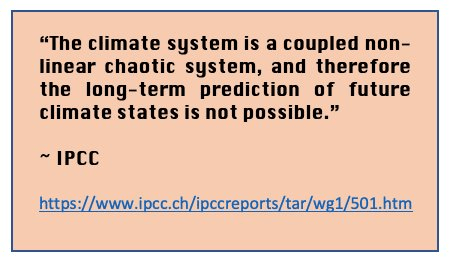
AB: I agree and would go even further. I think climate is chaotic, and cannot be usefully modeled.

Everyone agrees that weather is chaotic, so only tentative short-term predictions are useful. But the defining claim of climate science is that if you average parameters like temperature over the entire globe over 20-year periods, it becomes predictable.

But if you check that assumption by comparing the standard deviation of temperature changes over larger regions and longer periods, you see it hits a minimum at single locations over one year. You can predict the average temperature in Central Park over the next year more accurately than tomorrow’s average temperature over New York State, or 20-years’ average temperature in Central Park.

It’s possible that casual models driven entirely by physics could surmount that issue, but so far these have been entirely unsuccessful without statistical tuning—tuning that does not improve ability for future predictions. Moreover you would expect such a model to predict weather better than climate, and no models can do that—they can only claim successful predictions over periods too long for practical testing.

That doesn’t mean climate models are worthless, but they are less reliable than weather reports, not more reliable.

Comment: In the case of climate, it’s the case that a large chunk of conservatives are still conservationists, who don’t get counted as environmentalists because of the heavy left (Marxist, even) bent of the green movement over the last several decades. Why not appeal to this perspective?

AB: I think you’re focusing on the wrong issue. You don’t have to convince anyone that protecting the environment is important, you have to convince them you have a plan that will do more good than harm.

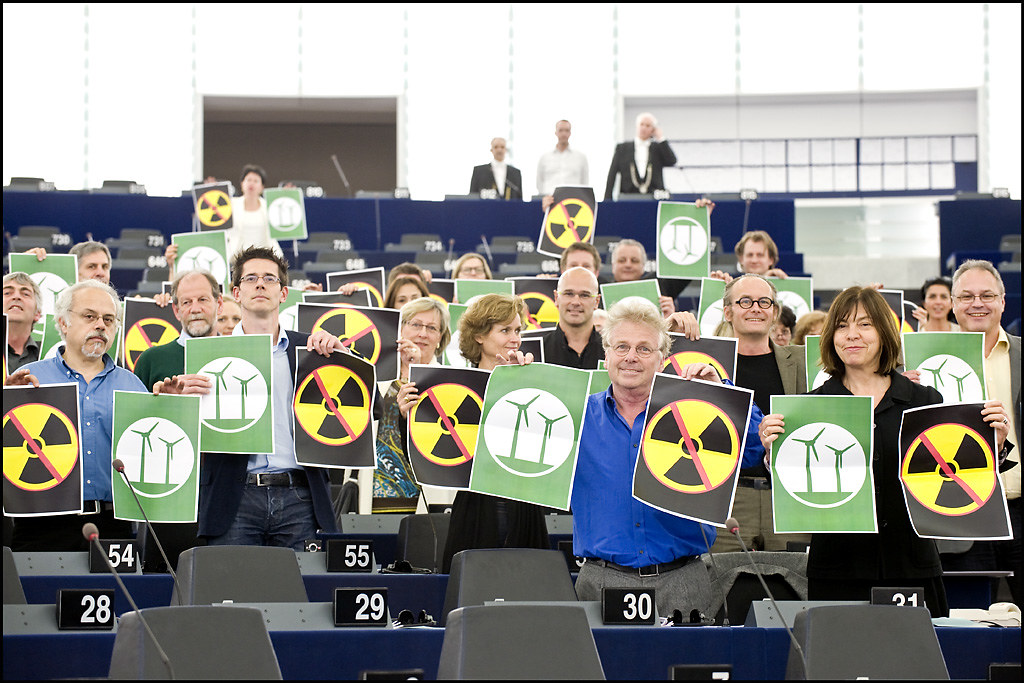
Nuclear power is a great example. It reduces CO2, but also other forms of pollution. It doesn’t require decades and trillions of dollars to build a new power-grid infrastructure, it’s plug-and-play with the existing system (almost, anyway). The technology is well-understood, safe and efficient. You won’t find opposition from conservatives, only from some liberals.

Several MEPs (mainly Greens) hold up anti-nuclear posters at the debate.

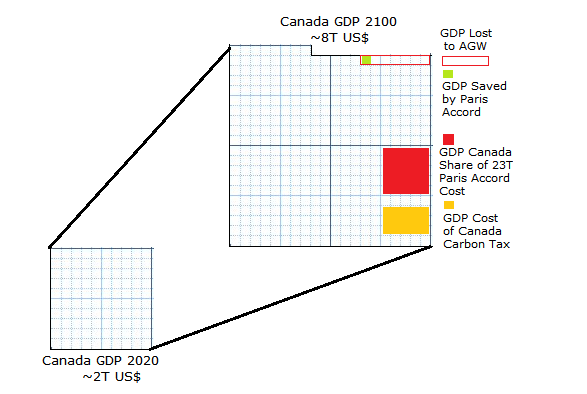
But other tactics will require more argument. A carbon tax, for example, would send technology and the economy down an entirely new path, with entirely unpredictable consequences. It would seem to increase uncertainty about future climate rather than decrease it. It has other issues as well. To gain support for one from skeptics, you’ll have to convince them that you can predict the effects of such a tax on human welfare in 2100 well enough to make it a good bet.

Geoengineering is the cheapest and surest way to reduce global temperatures, but it controversial on both left and right for its possible unintended consequences. Here you have to convince people the gain is worth the risk.

The single best no-brainer solution is to work for world peace and cooperation. War is the biggest threat to the environment and climate. Solutions to climate change and dozens of equally consequential global issues will require cooperation—or at least less conflict—among nations. Redirecting military spending to climate research and mitigation would do tremendous good. Best of all, world peace and global cooperation have many direct advantages, not just vastly improving our ability to respond rationally to issues like climate change.

Self Imposed Energy Poverty Coming to Canada

Jock Finlayson describes how climate change policies are depleting Canadians’ financial means in his article Millions of Canadians May Face ‘Energy Poverty’.  Excerpts in italics with my bolds and added images.

The term “energy poverty” is not yet part of day-to-day political debate in Canada, but that’s likely to change in the next few years. In Europe, the high and rising cost of energy has become a political lightning rod in several countries including Britain and France. Something similar may be in store for Canada.

The Trudeau government and some of the provinces are
aggressively pursuing the holy grail of decarbonization.

To achieve this, they’re engineering dramatic increases in carbon and other taxes on fossil fuels and promising to pour vast sums of money into building new electricity generation and transmission infrastructure to help reduce reliance on oil, refined petroleum products, natural gas and coal. Both strategies point to higher energy costs.

Tax advocates say it is a small % of GDP. But it is still $10 Billion extracted from Canadian households

The Trudeau government has legislated a national minimum carbon tax set to reach $170 per tonne of emissions by 2030, up from $50 in 2022 and $65 currently. Ottawa has also imposed a “clean fuel standard” that will further raise the cost of fuel. These policies are driven by concerns over climate change, which is a risk, to be sure, but so is the prospect of rapidly escalating energy prices for Canadian households and businesses.

Energy poverty arises when households and families must devote a significant fraction of their after-tax income to cover the cost of energy used for transportation, home heating and cooking, and the provision of electricity. In 2022, the United Kingdom government estimated that 13.4 percent of households were in energy poverty, which it defined as needing to spend more than 10 percent of income to cover the cost of directly consumed energy.

There’s no single agreed methodology for assessing the prevalence of energy poverty. A recent Canadian study reports that in 2017, between 6 percent and 19 percent of Canadian households experienced some form of energy poverty, with an above-average incidence in rural areas, Atlantic Canada and among people living in older single-family homes. If accurate, this finding suggests that many more Canadians will soon become acquainted with the term as taxes on fossil fuels climb and governments impose new regulations affecting the energy efficiency of buildings, vehicles, industrial equipment, appliances and agricultural operations.

Canada is blessed with plentiful and diverse supplies of energy. Over time, we have become an important global producer and exporter of energy, with oil, natural gas and electricity together expected to account for one-quarter of Canada’s merchandise exports in 2023. Canada is also an intensive consumer of energy, in part because of our cold climate, dispersed population and relatively high living standards.

80% of the Other Renewables is solid biomass (wood), which leaves at most 1% of Canadian total energy supply coming from wind and solar.

End-use energy demand in Canada is around 13,000 petajoules. Of this, industry is responsible for about half, followed by transportation, residential buildings, commercial buildings and agriculture. Refined petroleum products—all based on oil—are the largest fuel type consumed in Canada (around 40 percent of the total), followed by natural gas (36 percent) and electricity (16 percent). Biofuels and other smaller sources comprise the rest. These data underscore Canadians’ overwhelming dependence on fossil fuels to meet their energy needs.

Politicians in a hurry to slash greenhouse gas emissions via higher taxes
and more regulations must be alert to the risk that millions of Canadians
could find themselves in energy poverty by the end of the decade.

Jock Finlayson is a Senior Fellow at the Fraser Institute.

See Also Canada Budget Officer Quashes Climate Alarm


Kansas Shows the Way to Energy Freedom

Posted at Master Resource is a most encouraging development by the Kansas legislature.  The article is Kansas Energy Freedom Now! The whole story is uplifting and I will only repeat here comments on what Kansas resolved and how nearly unanimous support was achieved. Excerpts in italics with my bolds and added images.

Carrie Barth (R-Kansas, District 5) and Dennis Hedke, unapologetic supporter of the U.S. Constitution, acclaimed author of The Audacity of Freedom (2011), geophysicist, and former member Kansas House of Representatives (former Chair of the House Energy Committee), have drafted a clean and accurate Resolution for the Republican Party. This passed with overwhelming support. It appears to acknowledge that wind is not a good corporate citizen.

Representative Barth in an email:

Our Constitution of the United States gives the power to the people and states, not a dictator movement to control people. The “Green Agenda” is a joke. What they call green energy of wind and solar is anything but green other than it takes a lot of money to mine, build and construct, maintenance for the units, along with remediation when blades break off and the turbines catch on fire. It takes more green money from there to then build transmission lines that take people’s green land when eminent domain is used. Then people see transmission line tariffs on their energy bills. Oh, and wait, your rates never go down even though the energy industry tells you how cost effective it is.

I would refer to wind and solar as “brown or black energy”. They are unreliable and cause brownouts and blackouts. This hurts people, it hurts businesses, and even the ground under them turns brown.

Excerpts from the Resolution follow:

  • CO2 is not a dangerous gas, nor a pollutant, to be avoided and scare mongered.
  • The Kansas Republican Party Platform opposes efforts to force communities to engage in sustainable development guidance from the federal government or the United Nations, which are actively attacking our local communities in an effort to implement the Paris Climate Agreement
  • Kansas is not to be victimized by lobbyists guiding KS into blackouts and profiteering from subsidies, and alliances with the UN Global Agenda
  • Kansas (Republican Party) supports alternative energy, while continuing to support oil and gas reserves within the State
  • Kansas will prefer reliable and affordable energy above all
  • Kansas (Republican Party)  will reject the “UN Agenda 2030 “Sustainable Development Goals” to guide their investments in Kansas, even rewarding executives and directors with additional bonuses and stock options for implementing the global climate plan”
  • Kansas (Republican Party) will reject energy projects that are obvious land grabs, funding foreign companies with taxpayer-funded grants and tying up valuable Kansas farmland for decades with projects that no company is ultimately held responsible for decommissioning at the end of their useful lives, even violating property rights of farmers affected by the projects
  • Kansas (Republican Party) opposes so called Cap and Trade schemes

The resolution concludes:

Whereas irrefutable evidence demonstrates that ill-health effects to mankind and the environment are occurring due to the side effects of industrial scale wind installations. These occurrences are widespread, wherever these installations have been constructed;

Therefore, be it resolved, the Republican Party of Kansas, in view of the preponderance of evidence, will support candidates and legislative intent regarding energy policy that will serve to provide protection to our citizens security, physical health, financial health, access to reliable energy and property rights across all Kansas counties.

Master Resource Comment

This is the first time we have seen a legislative body, organize, and nearly 100% agree, that climate change, which it always does and has done, should not be a driver for energy policy. It is the first time we have seen in such a document, a clear rejection of industrial wind and solar profiteers, and references to the irrefutable evidence of harm to the environment, people, and a clear intention to go forward with reliable, responsible, and cost-effective energy policy, while respecting property rights.

Question:

A lot of readers will be wondering how you and Rep Barth achieved a 180-1 vote for this very clear resolution. Given that KS has a pro wind record of placing wind factories in the State, even with a Republican House and Senate, is there a catalyst for this resolution at this time and at this place? Was a lot of lobbying needed, or was this more evolutionary, organic in nature due to the fast paced media pieces on changing perspectives of “renewables and climate”?

Answer: Former Chair, Dennis Hedke:

I perceive much of the reason for the success was due to the fact that the Committee reviewing the Resolution is heavily conservative. They had to present it to the Republican Party Delegates, which are probably also more conservative leaning.

The Legislators, Carrie excluded, are a lot more squishy, caring more about holding on to their seats, than acting with resolve and principle.  There may be some renewed pressure on Legislators to resist the absolutely ridiculous reasons for being ‘green’. That remains to be seen. Many of them simply forget that “The Truth Will Set You Free”.

I forgot to answer your question about cost of electricity. My bills range from about .13/kwh to .14/kwh. Prices have increased by about 55% since wind power has been replacing coal and natural gas, commencing around 2011.

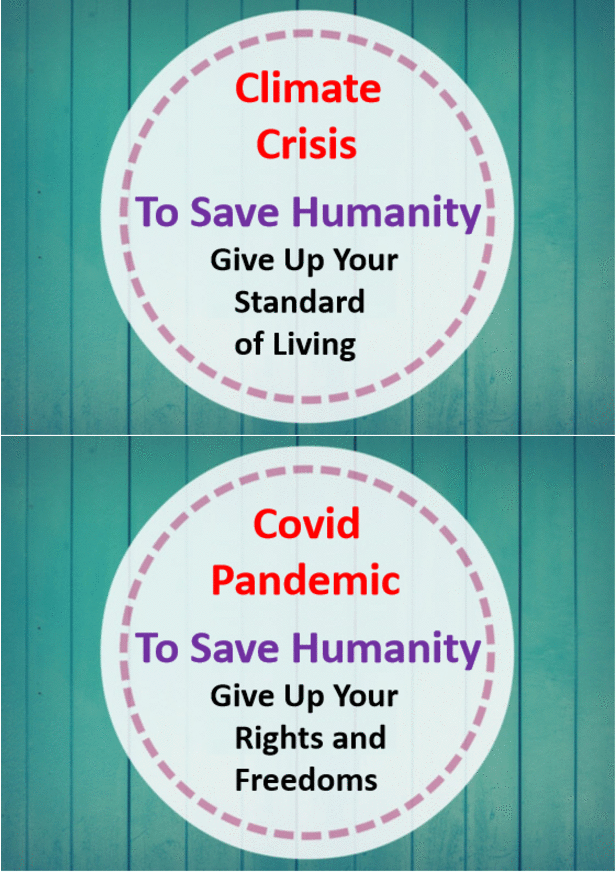
Climate Health Crisis Meme Goes Viral

The comingling of climate and covid fears and policies is currently ramping up to warp speed across all propaganda platforms.  Kit Knightly explains the shock and awe agenda by media and governments to corral the public into submission.  His Off-Guardian article is Why are the globalists calling “Climate Change” a “Public Health Crisis”? Excerpts in italics with my bolds and added images.  H/T Tyler Durden

The answer is all to do with the pandemic treaty and climate lockdowns.

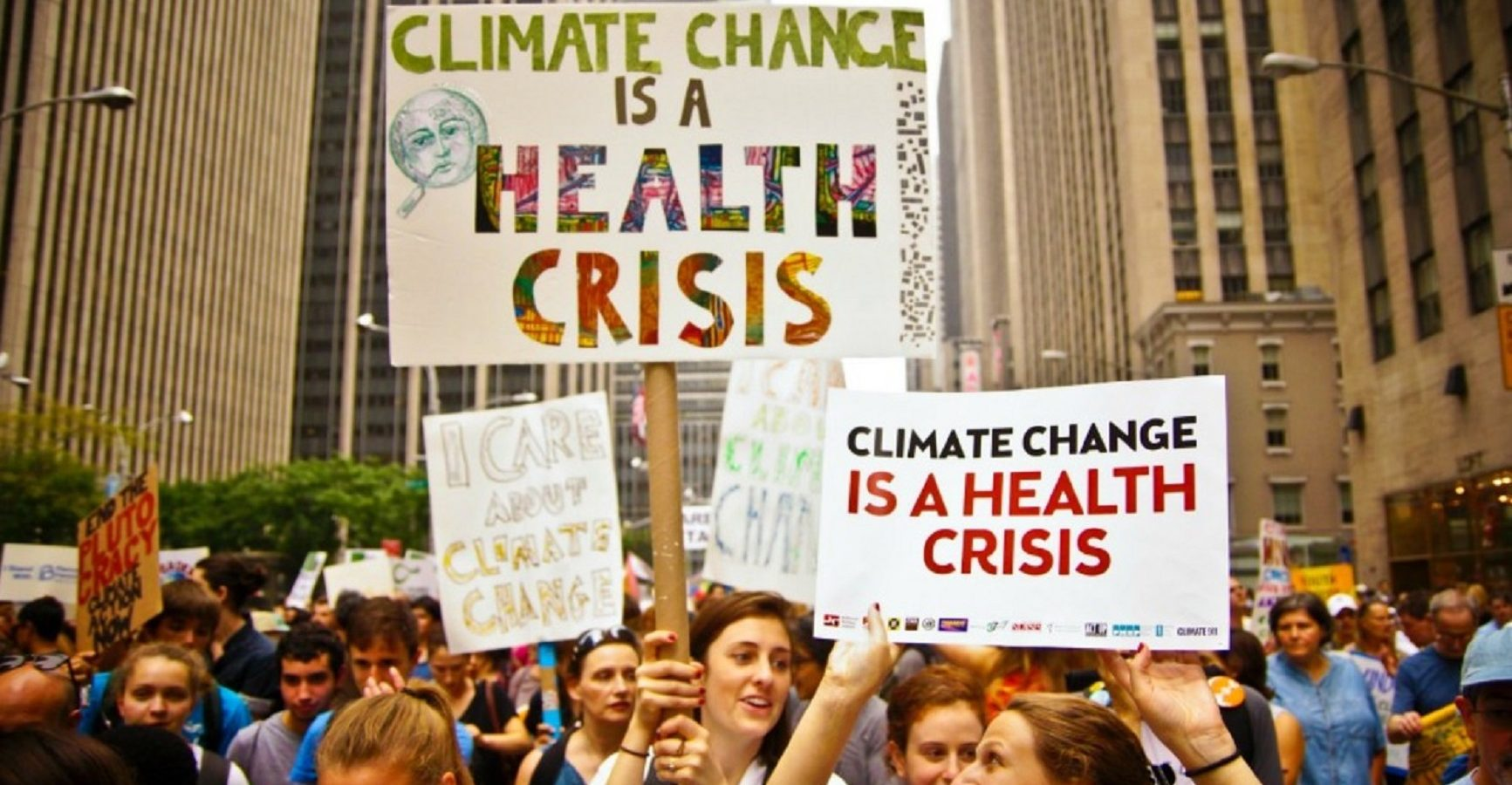
The global elite plan to introduce a near-permanent “global state of emergency” by re-branding climate change as a “public health crisis” that is “worse than covid”.  This is not news. But the ongoing campaign has been accelerating in recent weeks.
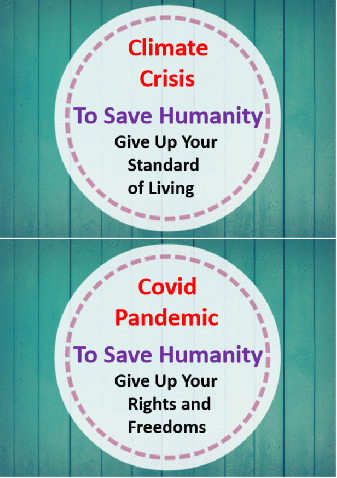
Two Sides of the Same Coin

I have written about this a lot over the last few years – see here and here and here. It started almost as soon as Covid started, and has been steadily progressing ever since, with some reports calling climate change “worse than covid”.

But if they keep talking about it, I’ll keep writing. And hopefully the awareness will spread.

Anyway, there’s a renewed push on the “climate = public health crisis” front. It started, as so many things do, with Bill Gates, stating in an interview with MSNBC in late September:

We have to put it all together; it’s not just climate’s over here and health is over here, the two are interacting

Since then there’s been a LOT of “climate change is a public health crisis” in the papers, likely part of the build-up to the UN’s COP28 summit later this year.

Following Gate’s lead, what was once a slow-burn propaganda drive has become a dash for the finish line, with that phrase repeated in articles all over the world as a feverish catechism.

It was an editorial in the October edition of the British Medical Journal that got the ball rolling, claiming to speak for over 200 medical journals, it declares it’s…

Time to treat the climate and nature crisis as one indivisible global health emergency”

Everyone from the Guardian to the CBC to the Weather Channel picked up this ball and ran with it.  Other publications get more specific, but the message is the same. Climate change is bad for the health of women, and children, and poor people, and Kenyans, and workers and…you get the idea.

And that’s all from just the last few days. It’s not only the press, but governments and NGOs too. The “One Earth” non-profit reported, two days ago:

Why climate change is a public health issue

Again, based entirely on that letter to the BMJ. The UN’s “climate champions” are naturally all over it,alongside the UK’s “Health Alliance on Climate Change”, whoever they are. [Note:  An overview of the climate medicine bureaucracy is here: https://rclutz.com/2021/09/07/here-comes-the-climate-medical-complex/%5D

Both the Red Cross and Doctors Without Borders have published (or updated) articles on their website in the last few days using variations on the phrase “The climate crisis is a health crisis.”  Local public health officials from as far apart as Western Australia and Arkansas are busy “discussing the health effects of climate change”

Tellingly, the Wikipedia article on “effects of climate change on human health” has received more edits in the last 3 weeks than the previous 3 months combined.

All of this is, of course, presided over by the World Health Organization.

On October 12th the WHO updated its climate change fact sheet, making it much longer than the previous version and including some telling new claims:

“WHO data indicates 2 billion people lack safe drinking water and 600 million suffer from foodborne illnesses annually, with children under 5 bearing 30% of foodborne fatalities. Climate stressors heighten waterborne and foodborne disease risks. In 2020, 770 million faced hunger, predominantly in Africa and Asia. Climate change affects food availability, quality and diversity, exacerbating food and nutrition crises.

Temperature and precipitation changes enhance the spread of vector-borne diseases. Without preventive actions, deaths from such diseases, currently over 700,000 annually, may rise. Climate change induces both immediate mental health issues, like anxiety and post-traumatic stress, and long-term disorders due to factors like displacement and disrupted social cohesion.”

They are tying “climate change” to anyone who is malnourished, has intestinal parasites or contaminated drinking water. As well as anyone who dies from heat, cold, fire or flood. Even mental health disorders.

We’ve already seen the world’s first “diagnosis of climate change”.
With parameters set this wide, we will see more in no time.

Just as a “Covid death” was anybody who died “of any cause after testing positive for Covid”, they are putting language in place that can redefine almost any illness or accident as a “climate change-related health issue”.

Two days ago, the Director General of the World Health Organization, the UN’s Special Envoy for Climate Change and Health and COP28 President co-authored an opinion piece for the Telegraph, headlined:

Climate change is one of our biggest health threats – humanity faces a staggering toll unless we act

The WHO Director went on to repeat the claim almost word for word on Twitter yesterday:

At the same time, the Pandemic Treaty is busily working its way through the bureaucratic maze, destined to become law sometime in the next year or so.

We’ve written about that a lot too.

    • Consider, the WHO is the only body on Earth empowered to declare a “pandemic”.
    • Consider, the official term is not “pandemic”, but rather “Public Health Emergency of International Concern”.
    • Consider, a “public health emergency of international concern”, does not necessarily mean a disease.
    • It could mean, and I’m just spit-balling here, oh, I don’t know – maybe… climate change?

Consider, finally, that one clause in the proposed “Pandemic Treaty” would empower the WHO to declare a PHEIC on “precautionary principle” [my emphasis]:

Future declarations of a PHEIC by the WHO Director-General should be based on the precautionary principle where warranted

Essentially, once the new legislation is in place, the plan writes itself:

    • Put new laws in place enabling global “emergency measures” in the event of a future “public health emergency”
    • Declare climate change a public health emergency, or maybe a “potential public health emergency”
    • Activate emergency measures – like climate lockdowns – until climate change is “fixed”

See the end game here? It’s just that simple.

Oh, and we won’t be able to complain, because “climate denial” is going to be illegal. At least, if prominent climate activists like this one get their way.  That’s only a whisper in the background right now, but it will get louder after COP28, just wait.

Until then, like I said, I’m stuck here writing forever.

Background:  Nine Elements Shared by Climate and Covid

Ramesh Thakur writes at Brownstone Institute Beware Catastrophizing Climate Models and Activists.  Excerpts in italics with my bolds and added images.

All true believers of The Science™ of climate change have taken careful note of the lessons offered by the coronavirus pandemic during 2020–22 for managing the ‘climate emergency.’ The two agendas share nine items in common that should leave us worried, very worried.

1. Elites’ Hypocrisy

The first is the revolting spectacle of the hypocrisy of the exalted elites who preach to the deplorables the proper etiquette of abstinence to deal with the emergency, and their own insouciant exemption from a restrictive lifestyle. Most recently we witnessed the surreal spectacle of Britain’s Parliament interrogating disgraced former Prime Minister Boris Johnson on allegations that he serially broke the lockdown rules he had imposed on everyone else—but not questioning the anti-scientific stupidity of the rules themselves. Possibly the most notorious American example was California Governor Gavin Newsom and his cronies dining maskless in the appropriately named French Laundry restaurant at a time when this was verboten, being served by fully masked staff.

Similarly, Prince Harry, Meghan Markle, Al Gore, and John Kerry have all been widely mocked for jetting around the world to warn people about global warming. I wonder if anyone has done a calculation of the total carbon footprint of each annual Davos gathering where CEOs, prime ministers and presidents, and celebrities fly in on private jets, are driven around in gas-guzzling limousines and preach to us on the critical urgency of reducing emissions? I understand the hookers do quite well during that week, so perhaps there is a silver lining.

2. Data Challenged Models

A second common element between Covid and climate change is the mismatch between models that inform policy and data that contradict the models. The long track record of abysmally wrong catastrophist predictions on infectious diseases from the Pied Piper of Pandemic Porn, Professor Neil Ferguson, is if anything exceeded by the failures of climate change alarmist predictions. The most recent example of the drum roll of “The end is nigh and this is absolutely your last chance to avert the end of the world from climate collapse” is yet another Chicken Little Sixth Assessment Report from the indefatigable Intergovernmental Panel on Climate Change (IPCC).

At some point the IPCC morphed from a team of scientists into activists.

“There is a rapidly closing window of opportunity to secure a liveable and sustainable future for all,” the report warns us. UN Secretary-General Antonio Guterres called it a “survival guide for humanity.” But a one-time climate action journalist-turned-sceptic, Michael Shellenberger, described the UN as a “Climate Disinformation Threat Actor.”
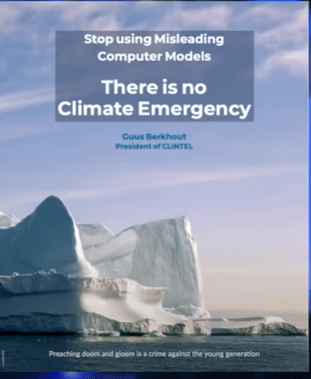
Calls for urgent climate action based on the language of “edging towards ‘tipping points” have been made over many years. Atmospheric scientists and former IPCC members Richard McNider and John Christy note that climate modeling forecasts have “always overstated the degree to which the Earth is warming compared with what we see in the real climate.” A few examples:

♦  In 1982, UNEP Executive Director Mostafa Tolba warned of an irreversible environmental catastrophe by 2000 without immediate urgent action.
♦  In 2004, a Pentagon report warned that by 2020, major European cities would be submerged by rising seas, Britain would be facing a Siberian climate and the world would be caught up in mega-droughts, famine and widespread rioting.
♦  In 2007, IPCC chair Rajendra Pachauri declared: “If there’s no action before 2012, that’s too late.”
♦  Most hilariously, in Montana the Glacier National Park installed “Goodbye to the glaciers” plaques, warning: “Computer models indicate the glaciers will all be gone by the year 2020.” Come 2020, all 29 glaciers were still there but the signs were gone, taken down by embarrassed park authorities.
3. No Dissent Allowed

Third, the rapidly consolidating Censorship Industrial Complex covered both agendas until Elon Musk began releasing the Twitter Files to expose what was happening. This refers to the extraordinary censorship and suppression of dissenting voices, with extensive and possibly illegal collusion between governments and Big Tech—and, in the case of the pandemic, also Big Pharma and academia.

Even truth was no defence, for example with accounts of vaccine injuries, if their effect was to promote narrative scepticism. The social media Big Tech censored, suppressed, shadow banned and slapped labels of “false,” “misleading,” “lacking context” etc. to content at variance with the single source ministries of truth. “Fact-checking” was weaponized using fresh young graduates—with no training, skills or capacity to sift between authentic and junk science—to put such judgmental stamps on pronouncements from world-leading experts in their field.

4. We Want You to Panic

Fourth, an important explanation for the spread of Covid and climate catastrophism is the promotion of fear and panic in the population as a means to spur drastic political action. Both agendas have been astonishingly successful.

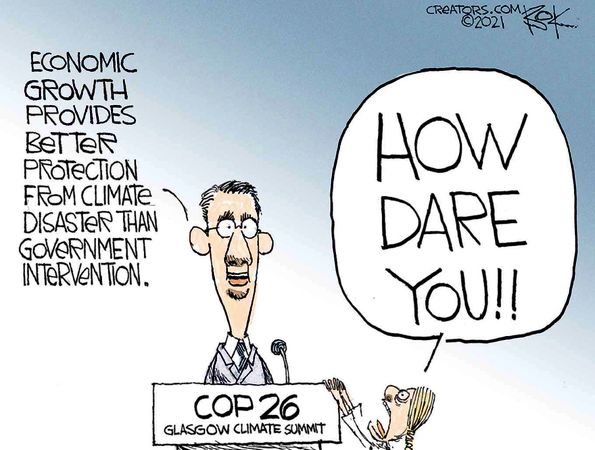
Polls have consistently shown the hugely exaggerated beliefs about the scale of the Covid threat. On climate change, the gap between the stringent actions required, the commitments made and the actual record thus far is used to create panic. The notion that we are already doomed promotes a culture of hopelessness and despair best epitomized by Greta Thunberg’s anguished cry: “How dare you” steal my dreams and childhood with empty words.”
5. Only Trust Science Authorities

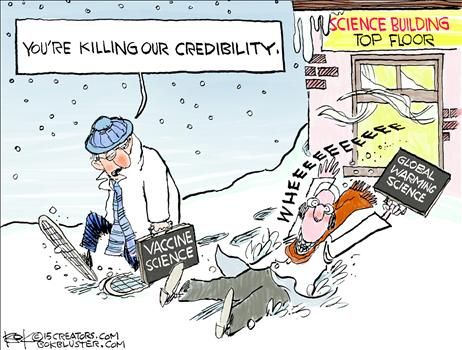
A fifth common theme is the appeal to scientific authority. For this to work, scientific consensus is crucial. Yet, driven by intellectual curiosity, questioning existing knowledge is the very essence of the scientific enterprise. For the claim to scientific consensus to be broadly accepted, therefore, supporting evidence must be exaggerated, contrary evidence discredited, sceptical voices stilled and dissenters ridiculed and marginalized. This has happened in both agendas: just ask Jay Bhattacharya on one and Bjorn Lomborg on the other.
6. Government Empowers Itself

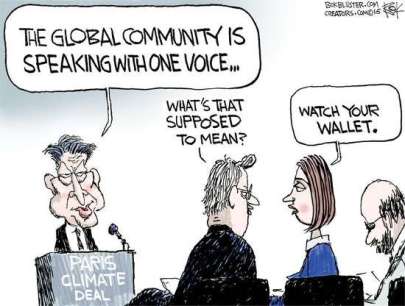
A sixth shared element is the enormous expansion of powers for the nanny state that bosses citizens and businesses because governments know best and can pick winners and losers. Growing state control over private activities is justified by being framed as minor and temporary inconveniences in the moral crusade to save Granny and the world.
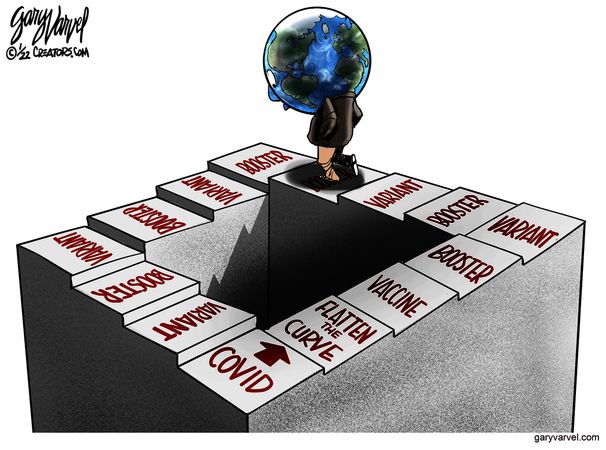
Yet in both agendas, policy interventions have over-promised and under-delivered. The beneficial effects of interventions are exaggerated, optimistic forecasts are made and potential costs and downsides are discounted. Lockdowns were supposedly required for only 2-3 weeks to flatten the curve and vaccines, we were promised, would help us return to pre-Covid normalcy without being mandatory. Similarly, for decades we have been promised that renewables are getting less expensive and energy will get cheaper and more plentiful.

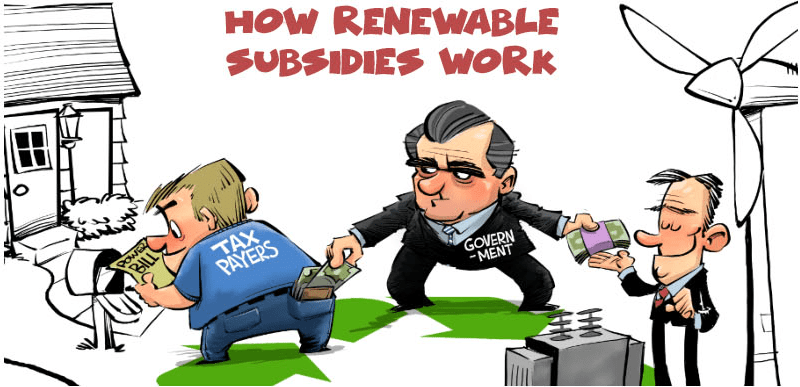
Yet increased subsidies are still needed, energy prices keep rising,
and energy supply gets less reliable and more intermittent.
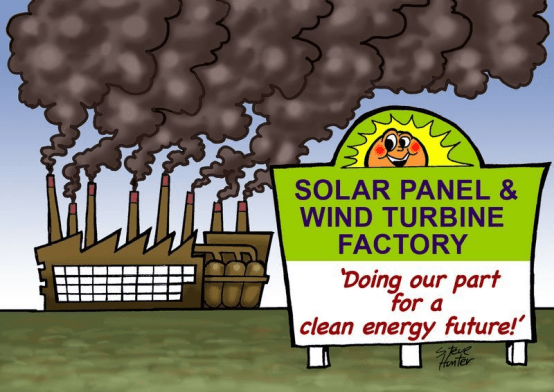
7. Self-Inflicted Damage

Seventh, the moral framing has also been used to discount massive economic self-harm. Alongside the substantial and lasting economic damage caused by savage lockdowns to businesses and the long-term consequences of a massive printing of money, the obstinate persistence of excess deaths is painful proof of collective public health self-harm.

Similarly, the world has never been healthier, wealthier, better educated, and more connected than today. Energy intensity played a critical role in driving agricultural and industrial production that underpin the health infrastructure and comfortable living standards for large numbers of people worldwide. High income countries enjoy incomparably better health standards and outcomes because of their national wealth.

8. Elites Thrive at Others’ Expense

Eighth, government policies in both agendas have served to greatly widen economic inequalities within and among nations with fat profits for Big Pharma and rent-seeking Green Energy. A lot of money was said to be required to keep Mahatma Gandhi in the style of poverty he demanded. Similarly, a lot of money is required to support Covid and climate policy magical thinking where governments can solve all problems by throwing more money that must neither be earned nor repaid.

In the triumph of luxury politics, the costs of the rich suffused in the golden glow of virtue are borne by the poor. Should a billion more Chinese and Indians have stayed poor and destitute over the last four decades, so Westerners could feel virtuous-green? Alternatively, for post-industrial societies, climate action will require cutbacks to living standards as subsidies rise, power prices go up, reliability comes down and jobs are lost.

Attempts to assess the balance of costs and benefits of Covid and climate policies are shouted down as immoral and evil, putting profits before lives. But neither health nor climate policy can dictate economic, development, energy and other policies. All governments work to balance multiple competing policy priorities. What is the sweet spot that ensures reliable, affordable and clean energy security without big job losses? Or the sweet spot of affordable, accessible and efficient public health delivery that does not compromise the nation’s ability to educate its young, look after the elderly and vulnerable and ensure decent jobs and life opportunities for families?
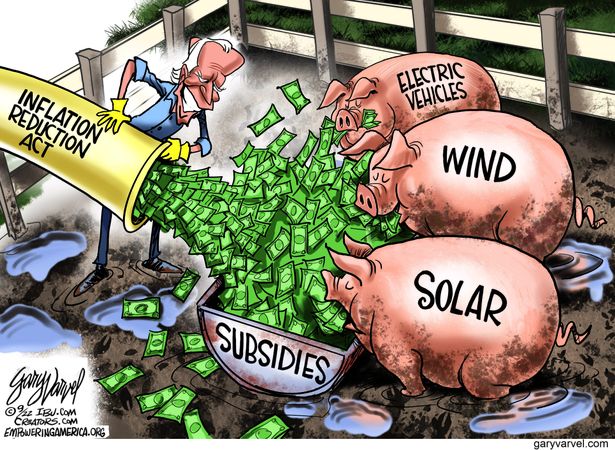
9. Global Bureaucrats Gut National Sovereignty

The final common element is the subordination of state-based decision-making to international technocrats. This is best exemplified in the proliferation of the global climate change bureaucracies and the promise—threat?—of a new global pandemic treaty whose custodian will be a mighty World Health Organisation.

In both cases, the dedicated international bureaucracy will have a powerful
vested interest in ongoing climate crises and serially repeating pandemics.
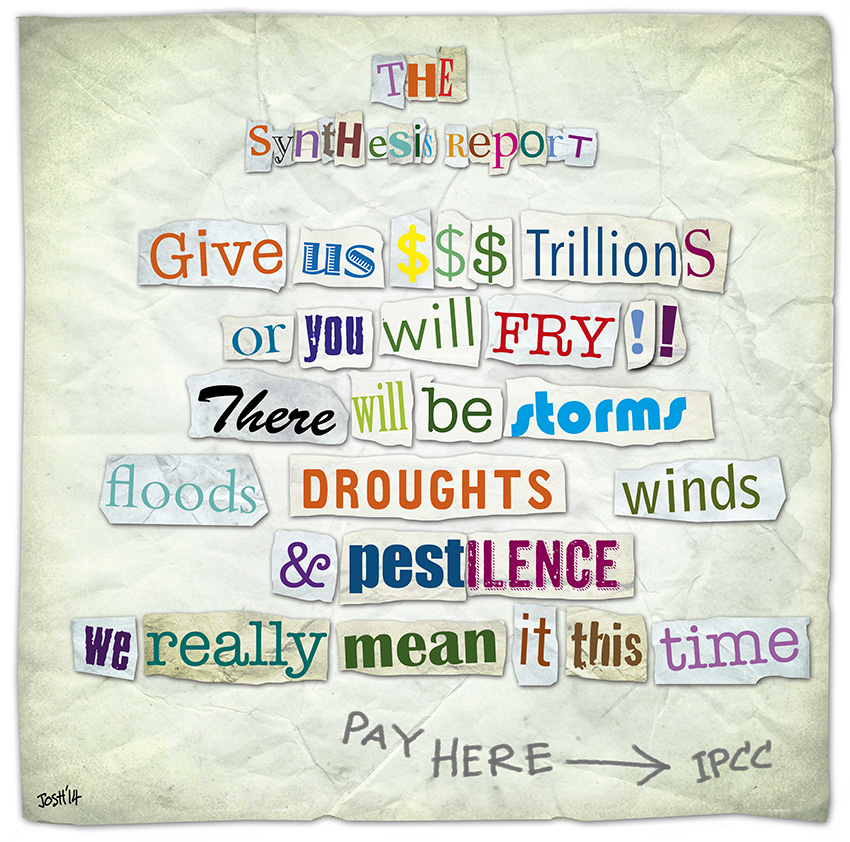
Climate Loss and Damage Fails Again

The big news this week is the  breakdown of Climate “Loss and Damge” talks in preparation for the Dubai COP to start end of November.  The news report is repeated widely with the same headline and content. Example from Jakarta Post, Oct. 21, 2023:  Climate ‘loss and damage’ talks end in failure

A crucial meeting on climate “loss and damages” ahead of COP28 ended in failure Saturday, with countries from the global north and south unable to reach an agreement, according to sources involved in the talks. The agreement to set up a dedicated fund to help vulnerable countries cope with climate “loss and damage” was a flagship achievement of last year’s COP27 talks in Egypt.

But countries left the details to be worked out later. A series of talks held this year have tried to tease out consensus on fundamentals like the structure, beneficiaries and contributors — a key issue for richer nations who want China to pay into the fund.

The failure “is a clear indication of the deep chasm between rich and poor nations”, Harjeet Singh, head of global political strategy for Climate Action Network International, said in a statement to AFP on Saturday. “Developed countries must be held accountable for their shameless attempts to push the World Bank as the host of the fund, their refusal to discuss the necessary scale of finance, and their blatant disregard for their responsibilities” under the terms of already established international climate agreements, he said.

More in depth reporting comes from Climate Home News article World Bank controversy sends loss and damage talks into overtime
At Cop27 in Sharm el-Sheikh, governments tasked the committee with working out what a new loss and damage fund for climate victims should look like and present their proposals to Cop28 in November.

The fund is supposed to channel money to people who have suffered
loss and damage caused by climate change. This could mean rebuilding homes
after a hurricane or supporting farmers displaced by recurrent drought.
Failure to reach consensus risks delaying support to those in need.

But developing countries were incensed by a proposal to host the fund at the World Bank, painting it as a US power grab. And rich-poor divides persisted on how to define the “vulnerable” groups eligible for funds and who gets to control spending.

Pedro Luis Pedroso Cuesta is a Cuban diplomat and chair of the G77+China bloc, which represents all the developing countries.

Speaking from Aswan, he told reporters on Thursday: “At this late hour, a small group of nations responsible for the most significant proportion of the stock of greenhouse gases have tried to bargain potential support for a Fund on one side with eligibility and administrative arrangements.”

Developing nations have argued that the World bank is too slow, inefficient,
unaccountable and lacks the organisational culture to tackle climate change.

He said that consultations with the Washington-DC based bank had “displayed clearly” that it was “not fit for purpose in relation to what we’re looking for” and the fund should be set up as part of the United Nations instead.

Who benefits?

The second main division is over which countries are prioritised for funding. Developed countries want the funds to be allocated “based on vulnerability”.

There is no clear definition of vulnerability and Cuesta said this criteria would impede the fund’s ability to respond to recent climate-related floods in middle-income countries like Pakistan and Libya.

Developing countries fear that in practice “vulnerability” criteria mean funds will be restricted to just the world’s least developed countries (LDCs) and small islands developing states (Sids).

The 46 LDCS are mostly in Africa and parts of Asia. Major nations like
China, India, Brazil, Nigeria and South Africa are neither LDCs or Sids.

Further splits include developing nations wanting a target of $100 billion of funding a year by 2030 to be included and developed countries wanting to earmark budgets for slow onset events, recovery and reconstruction and small countries.

Negotiators have almost agreed one thorny issue though. The US had pushed for the fund’s board to include seats for nations that paid into the fund, sparking accusations that they were trying to rig the board in rich nations’ favour.

Friday morning’s draft said there would be 12 board members from developed countries and 14 from developing ones. There could also be non-voting members representing indigenous peoples and climate-induced migrants, although negotiators have yet to agree that.

Climate Loss and Damage is a Legal and Moral House of Cards

Mike Hulme explained the house of cards underlying the claims for compensation from extreme weather loss and damage.  He addressed this directly in his 2016 article Can (and Should) “Loss and Damage” be Attributed to Climate Change?.  Excerpts in italics with my bolds and added images.
One of the outcomes of the eighteenth negotiating session of the Conference of the Parties (COP18) to the UN Framework Convention on Climate Change, held in Doha last December, was the agreement to establish institutional arrangements to “address loss and damage associated with the impacts of climate change.” This opens up new possibilities for allocating international climate adaptation finance to developing countries. A meeting this week in Bonn (25–27 February), co-organized by the UN University Institute for Environmental and Human Security and the Loss and Damage in Vulnerable Countries Initiative, is bringing together various scholars and policymakers to consider how this decision might be implemented, possibly by as early as 2015.

At the heart of the loss and damage (L&D) agenda is the idea of attribution—that specific losses and damages in developing countries can be “associated with the impacts of climate change,” where “climate change” means human-caused alterations to climate. It is therefore not just any L&D that qualify for financial assistance under the Convention; it is L&D attributable to or “associated with” a very specific causal pathway.

Developing countries face some serious difficulties—at best, ambiguities—
with this approach to directing climate adaptation finance.

This is particularly so given the argument that the new science of weather attribution opens the possibility for a framework of legal liability for L&D, which has recently gained prominence (see here and here). Weather attribution science seeks to generate model-based estimates of the likelihood that human influence on the climate caused specific weather extremes.

Weather attribution should not, however, be used to make the funding of climate adaptation in developing countries dependent on proving liability for weather extremes.

There are four specific problems with using the post-Doha negotiations on L&D to advance the legal liability paradigm for climate adaptation. First, with what level of confidence can it be shown that specific weather or climate hazards in particular places are caused by anthropogenic climate change, as opposed to a naturally varying climate? Weather attribution scientists claim that such knowledge is achievable, but this knowledge will be partial, probabilistic, and open to contestation in the courts.

Second, even if such scientific claims were defendable, how will we define “anthropogenic?” Weather attribution science—if it is to be used to support a legal liability paradigm—needs to be capable of distinguishing between the meteorological effects of carbon dioxide emissions from fossil fuels and those from land use change, and between the effects of carbon dioxide and other greenhouse gases, black carbon (soot), and aerosol emissions. Each of these sources and types of climate-altering agents implicates different social and political actors and interests, so to establish liability in the courts, any given weather or climate hazard would need to be broken down into a profile of multiple fractional attributions. This adds a further layer of complexity and contestation to the approach.

Third, L&D may often be as much—or more—a function of levels of social and infrastructural development as it is a function of weather or climate hazard. Whether or not an atmospheric hazard is (partially) attributable to a liable human actor or institution is hardly the determining factor on the extent of the L&D. A legal liability framework based on attribution science promotes a “pollutionist approach” to climate adaptation and human welfare rather than a “developmentalist approach.” Under a pollutionist approach, adaptation is primarily about avoiding the dangers of human-induced climate change rather than building human resilience to a range of weather risks irrespective of cause. This approach has very specific political ramifications, serving some interests rather than others (e.g., technocratic and centralized control of adaptation funding over values-centered and decentralized control).

Finally, if such a legal framework were to be adopted, then what account should be taken of “gains and benefits” that might accrue to developing countries as a result of the impacts of climate change? Not all changes in weather and climate hazard as a result of human influence are detrimental to human welfare, and the principle of symmetry would demand that a full cost-benefit analysis lie at the heart of such a legal framework. This introduces another tier of complexity and contestation.

Following Doha and the COP18, the loss and damage agenda now has institutional force, and the coming months and years will see rounds of technical and political negotiation about how it may be put into operation. This agenda, however, should not place climate adaptation funding into the framework of legal liability backed by the new science of weather attribution.

Hulme goes more deeply into the Loss and Damage difficulties in his 2014 paper Attributing Weather Extremes to ‘Climate Change’: a Review.  Excerpts in italics with my bolds.

In this third and final review I survey the nascent science of extreme weather event attribution. The article proceeds by examining the field in four stages: motivations for extreme weather attribution, methods of attribution, some example case studies and the politics of weather event Attribution.

Hulme concludes by discussing the political hunger for scientific proof in support of policy actions.

But Hulme et al. (2011) show why such ambitious claims are unlikely to be realised. Investment in climate adaptation, they claim, is most needed “… where vulnerability to meteorological hazard is high, not where meteorological hazards are most attributable to human influence” (p.765). Extreme weather attribution says nothing about how damages are attributable to meteorological hazard as opposed to exposure to risk; it says nothing about the complex political, social and economic structures which mediate physical hazards.

And separating weather into two categories — ‘human-caused’ weather
and ‘tough-luck’ weather – raises practical and ethical concerns about
any subsequent investment allocation guidelines which excluded
the victims of ‘tough-luck weather’ from benefiting from adaptation funds.

Synopsis of this paper is at X-Weathermen are Back!

Integrated Storm Activity Annually over the Continental U.S. (ISAAC)

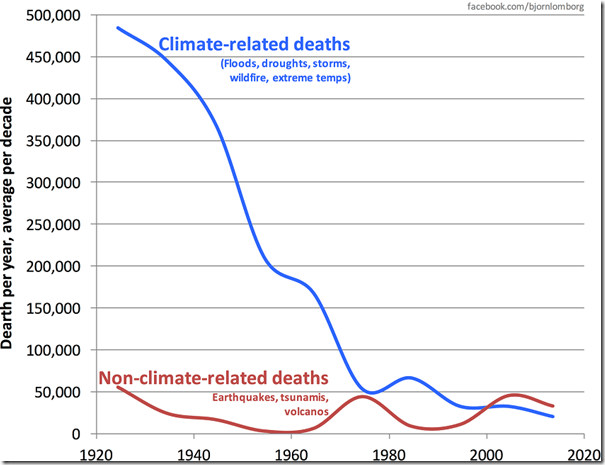
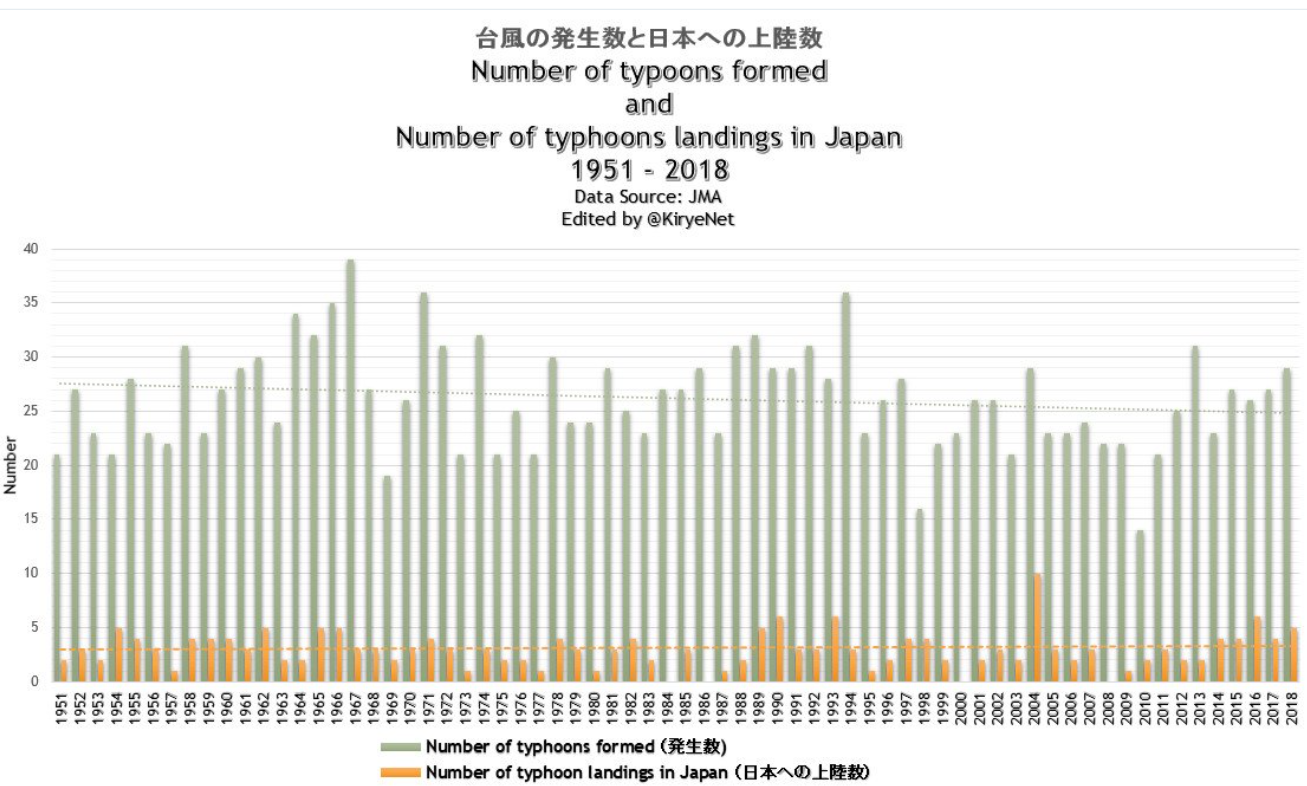
See also Data vs. Models #3: Disasters


Little Tin Gods


The audio track is a song for our times: Little Tin Gods by Don Henley from his album End of the Innocence.

“A new age is dawning
On fewer than expected
Business is usual”
That’s how the headline read
Some shaky modern saviors
Have now been resurrected
In all this excitement
You may have been misled

People want a miracle
They say “Oh Lord, can’t you see us?
We’re tryin’ to make a livin’ down here
And keep the children fed”
But, from little dark motel rooms
to “Six Flags Over Jesus”
“How are the mighty fallen”
So the Bible said

You don’t have to pray to a little tin god
Step out of the way for a little tin god
You might fear the reaper, you might fear the rod
But you never have to get down on your knees
You don’t have to holler, “please, please”
No, you never have to get down on your knees
For a little tin god

The cowboy’s name was “Jingo”
And he knew that there was trouble
So in a blaze of glory
He rode out of the west
No one was ever certain
What it was that he was sayin’
But they loved it when he told them
They were better than the rest

But you don’t have to pray for a little tin god
Step out of the way for a little tin god
You might hate the system, hate the job
But you never have to get down on your knees
You don’t have to holler, “please, please”
No, you never have to get down on your knees
For a little tin god

Throw down a rope from heaven
And lead the flock to water
The man in the middle would have you think
That you have no other choice
But to wander in the wilderness
Of all the upturned faces
If you stop and listen long enough
You will hear your own small voice

But you don’t have to pray to a little tin god
Step out of the way for a little tin god
You might fear the reaper, fear the rod
But you never have to get down on your knees
You don’t have to holler, “please, please”
No, you never have to get down on your knees
You don’t have to holler, “please, please”
You never have to get down on your knees
For a little tin god


Don’t Buy “Planetary Boundaries” Hype

Latest diagram from Stockholm Resilience Centre

The usual suspects are beating on their “planetary boundaries” drum to scare up submission to Zero Carbon restrictions.  Remember these are the same climate justice warriors pushing the notion of a new geological era named “Anthropocene”.  For example, cue the following:

Six of nine planetary boundaries now exceeded–Phys.org

Humans Have Crossed 6 of 9 ‘Planetary Boundaries’–Scientific American

Earth is now outside most of the “planetary boundaries” under which human civilization emerged–TechSpot

Six out of 9 planetary boundaries breached, Earth increasingly becoming uninhabitable for humans–MSN.com

Humanity deep in the danger zone of planetary boundaries: study–YAHOO!News

Etc., Etc. Etc.

Background

In 2009, a group of 29 scholars published an article in Nature, advancing an approach to define a “safe operating space for humanity” (1). The group argued that we can identify a set of nine “planetary boundaries” that humanity must not cross at the cost of its own peril. Since this 2009 publication, the concept of planetary boundaries has been highly influential in generating academic debate and in shaping research projects and policy recommendations worldwide. At the same time, the concept has come under heavy scrutiny as well, and many critics have taken the floor contesting the broader framework as well as its implementation and interpretation. Partially because of this critique, the original proposition of nine planetary boundaries has undergone various reformulations and updates by their proponents and an emerging network of scholars specializing in planetary boundary research.

The original 2009 paper in Nature suggested nine boundary conditions in the earth system that could, if crossed, result in a major disruption in (parts of) the system and a transition to a different state, which is likely to be hostile to human prosperity. The proposed planetary boundaries included:

♦  climate change,
♦  biodiversity loss,
♦  the nitrogen cycle,
♦  the phosphorus cycle,
♦  stratospheric ozone depletion,
♦  ocean acidification,
♦  global freshwater use,
♦  land use change,
♦  atmospheric aerosol loading, and
♦  chemical pollution.

For each of these planetary boundaries, one or more control variables were identified (e.g., atmospheric carbon dioxide concentration), which in turn were assigned with numerical boundary values at a “safe” distance from dangerous levels, or where applicable, “tipping points” in earth system processes (1).

Eventually, the framework should allow for quantification of threshold parameters, as a guide also for political responses. For some planetary boundaries, the group in 2009 suggested that the current state of knowledge was too uncertain to allow for quantification. Yet, for other earth system processes, the group felt confident enough to suggest a specific boundary value. In this endeavor, they erred on the side of caution and a strict interpretation of the precautionary principle: Where they saw remaining uncertainties, the group suggested the lower values for the boundary that they identified.

They concluded that three planetary boundaries had been crossed already.

On climate change, for instance, the boundary value proposed was 350 ppm, which had been passed long ago in the second half of the twentieth century. Regarding biodiversity, the current extinction rate is more than 100 extinct species per million species per year, whereas the suggested boundary was 10 extinctions. As for the nitrogen cycle, humans remove today approximately 121 million tons of nitrogen per year from the atmosphere, whereas a safe rate would be a maximum of 35 million tons. In these three areas, therefore, this analysis suggested that humankind had pushed the earth system past planetary boundaries and possibly dangerous levels, into a new—and unknown—world.  Source: The Boundaries of the Planetary Boundary Framework: A Critical Appraisal of Approaches to Define a “Safe Operating Space” for Humanity.  Annual Review of Environment and Resources October 2020

We don’t know how long we can keep transgressing these key boundaries before combined pressures lead to irreversible change and harm.–Johan Rockström, co-author and Centre researcher

Critics of the Planetary Boundaries Framework

Leaving aside those who want the boundaries to be tighter and harder than presented, let’s hear from critics challenging the whole enterprise. Shortly after the invention of “planetary boundaries,” Breakthrough Institute published a thorough critique of the notion and the framework.  Planetary Boundaries: A Review of the Evidence.  Linus Blomqvist (2012)

The planetary boundaries hypothesis – embraced by United Nations bodies and leading nongovernmental organizations like Oxfam and WWF – has serious scientific flaws and is a misleading guide to global environmental management, according to a new report by the Breakthrough Institute. The hypothesis, which will be debated this month at the UN Earth Summit in Brazil, posits that there are nine global biophysical limits to human development. But after an extensive literature review and informal peer review by leading experts, the Breakthrough Institute has found the concept of “planetary boundaries” to be a poor basis for policy and for understanding local and global environmental challenges.

KEY FINDINGS

♦   Six of the “planetary boundaries” — land-use change, biodiversity loss, nitrogen levels, freshwater use, aerosol loading, and chemical pollution — do not have planetary biophysical boundaries in themselves.

♦   Aside from their impacts on the global climate, these non-threshold “boundaries” operate on local and regional, not global, levels.

♦   There is little evidence to support the claim that transgressing any of the six non-threshold boundaries would have a net negative effect on human material welfare.  The full report is linked below:

A new report from the Breakthrough Institute highlights scientific flaws
of the “planetary boundaries” hypothesis

Planetary Boundaries as Power Grab–Giving Political Decisions a Scientific Sheen–Roger Pielke Jr. (2013)

When the cover of the Economist famously announced Welcome to the anthropocene’ a couple of years ago, was it welcoming us to a new geological epoch, or a dangerous new world of undisputed scientific authority and anti-democratic politics?

The basis for the power grab by the experts – really old wine in new bottles – is the fashionable idea of planetary boundaries which holds that there are hard and fast ecological limits within which human activity must be constrained. The concept is much contested scientifically — such as in this excellent review by my colleagues at The Breakthrough Institute.

A real-world example of the implications of the planetary boundaries political philosophy is vividly seen through the issue of global energy access. Future global development, at least in the short term, necessarily will involve trade offs between expanded use of carbon-emitting fossil fuels and the expansion of energy access to the world’s poorest. The planetary boundaries advocates, consist with their hierarchical values framework, call for “universal clean energy” and recommend development targets focused not on measuring expanded energy access, but rather carbon dioxide emissions (here in PDF).

In other words, expanded energy access to the world’s poorest is deemed acceptable
only if it first satisfies the demands of planetary boundaries – in other words,
the political demands of the scientists couched in the inviolable authority of science.

An major recent critique was: Planetary Boundaries for Biodiversity:  Implausible Science, Pernicious Policies  by Montoya, Donohue and Pimm. Trends in Ecology and Evolution (2018)

The notion of a ‘safe operating space for biodiversity’ is vague and encourages harmful policies. Attempts to fix it strip it of all meaningful content. Ecology is rapidly gaining insights into the connections between biodiversity and ecosystem stability. We have no option but to understand ecological complexity and act accordingly.

How best should environmental science articulate its concerns, set research agendas, and advise policies?One solution embraces the notion of planetary boundaries [1] arguing that global environmental processes very generally have ‘tipping points’. These are catastrophes involving thresholds beyond which there will be rapid transitions to new states that are very much less favorable to human existence than current states. The associated notion is that humanity’s ‘business as usual’ can only continue so long as it remains within some ‘safe operating space’.

We show that notions of planetary boundaries add no insight into our understanding
of the threats to biodiversity and ecosystem functioning, have no evidence to support them,
are too vague for use by those who manage biodiversity, and promote pernicious policies.

Fatally, the boundaries framework lacks clear definitions, or it has too many conflicting definitions, does not specify units, and fails to define terms operationally, thus prohibiting application by those who set policy or manage natural resources. Moreover, recent reviews indicate that tipping points occur only rarely in
natural systems [6], while policies related to boundaries are unlikely to be evidence based. A need for operational definitions to aid managers is self-evident [7].

At the heart of the problem are terms such as ‘planetary boundaries’, but also ‘sustainability’, ‘health’, ‘harmony’, and others, that are emotionally appealing but rarely, if ever, defined. They all speak to the urgent need to understand how human impacts change ecosystems, when at best we aspire to protect only
half of it. We must set policies and establish management for the vast tracts of land and sea that we do not protect. Fatally, those who do so often use language that does not borrow from the existing knowledge about ecosystem processes, nor readily translates its aspirations to those who study them [7].

See Also:

Planetary Boundaries as Millenarian Prophesies  Malthusian Echoes

The identification of the planetary boundaries is dependent on the normative assumptions made, for example, concerning the value of biodiversity and the desirability of the Holocene. Rather than non-negotiables, humanity faces a system of trade-offs – not only economic, but moral and aesthetic as well. Deciding how to balance these trade-offs is a matter of political contestation (Blomqvist et al, 2012:37). What counts as “unacceptable environmental change” is not a matter of scientific fact, but involves judgments concerning the value of the things to be affected by the potential changes. The framing of planetary boundaries as being scientifically derived non-negotiable limits, obscures the inherent normativity of deciding how to react to environmental change. Presenting human values as facts of nature is an effective political strategy to shut down debate.

Beyond Planetary Boundaries by Michael Shellenberger, Ted Nordhaus, and Linus Blomqvist (2012)

There are useful implications for environmental change science that can be drawn from where planetary boundaries went wrong. First, any pragmatic framework on environmental change must look at benefits and costs. Some of the hypothesis’s authors have said that their motivation was to provide a useful framework for helping global leaders manage environmental change. We applaud and support this motivation. But for any environmental change framework to be useful, it must seek to understand not only the costs of change but also its benefits.

One of the implications of this is that simply measuring variance from Holocene baselines is a highly misleading metric of human sustainability. Since so much variance from the Holocene has been good for humans, future environmental change cannot be assumed, as planetary boundaries does, to be negative for our welfare.