James E. Hanley provides a roundup of failed Green expensive ventures in his Real Clear Policy article Green Projects Hit Iron Wall. Excerpts in italics with my bolds and added images.
Developers looking to build thousands of wind turbines off the Mid-Atlantic and New England coast are coming up against a force even more relentless than the Atlantic winds: the Iron Law of Megaprojects, offering a warning of the trouble ahead for green-energy projects.
The Iron Law, coined by Oxford Professor Bent Flyvbjerg, says that “megaprojects” — which cost billions of dollars, take years to complete, and are socially transformative — reliably come in over budget, over time, over and over.
From Boston’s Big Dig to California’s high-speed rail to
New York’s 12 years-overdue and 300% over-budget East Side Access rail project,
big boondoggles routinely demonstrate the validity of the rule.
Offshore wind projects are not immune to the Iron Law, regularly experiencing vast cost overruns before a single watt is generated.
The New York state government, looking to replace oil- and gas-fired powerplants with hundreds of wind towers off Long Island, set out in 2019 to create an offshore wind supply chain from scratch, beginning with a massive state-funded turbine fabrication facility about 100 miles north of New York City on the Hudson River.
Port of Albany factory’s fate at stake as leaders race for a solution The $700 million-plus project is expected to create work for generations, but hopes are dwindling that more funding will become available
Ground still hasn’t even been broken, but the budget certainly has: The price of that Port of Albany facility has already doubledfrom $350 million to $700 million. An additional $100 million may be needed for equipment costs, raising the final price tag to $800 million.
It’s been billed the future hub for wind power infrastructure. So far, though, the only thing that continues to get billed over and over in recent years is the Connecticut taxpayer.
A similar situation is playing out in New London, Connecticut, where a state-funded pier facility being built to support that state’s offshore wind buildout has more than doubledin price from an original estimate of $95 million to $250 million.
Commonwealth Wind Declares that the largest offshore wind farm in the state’s pipeline “cannot be financed and built” under existing contracts,
And in Massachusetts, developer Commonwealth Wind has askedthe state to scrap its power purchase guarantees and rebid the project, arguing that inflation and supply chain problems mean the project is not financially viable under its current contracts.
Big projects tend to exceed their cost projections for many reasons. One is the unanticipated, and sometimes unprecedented, complexity of these projects. Further uncertainties and costs arise from the challenge of navigating the red tape of the modern regulatory state. In addition, there is the risk of inflation for projects that take years, sometimes decades, to develop.
Underlying all these is often a failure to spend enough time on careful planning
that treats reality as a fundamental constraint.
But sometimes project sponsors may simply worry that accurate cost projections could scare away public support at the outset, and choose to employ what Prof. Flyvbjerg politely calls “strategic misrepresentation.”
As former San Francisco Mayor Willie Brown said, “If people knew the real cost from the start, nothing would ever be approved. . . . Start digging a hole and make it so big, there’s no alternative to coming up with the money to fill it in.”
If that sounds too cynical, note that the current Chair of the Connecticut Port Authority has admitted that when officials first proposed the pier facility, they already knew it would cost more than they were claiming.
Ironically, the New York and Connecticut projects aren’t even big enough to be considered megaprojects, and yet even they have run into the Iron Law of being over budget and behind schedule. The challenges won’t diminish with bigger and more ambitious green energy projects.
In New York, the state’s huge Climate Leadership and Community Protection Act — of which the Port of Albany project is the first substantial investment — is projected to cost between $270 and $290 billion. At that price it is a gigaproject composed of numerous individual megaprojects.
The benefits, mostly in the form of greenhouse gas reductions, are supposed to be up to $415 billion. But if the overall cost of the policy climbs by merely 55 percent, which is in the normal range for megaprojects (and much less than the Port of Albany cost overrun), the costs will exceed the benefits, creating a net loss for New Yorkers.
If costs balloon to twice the initial estimates, which is not uncommon, the state stands to spend more than more than a hundred billion dollars more than gained in benefits That would be a loss of over $30,000 per New York household by 2050.
And that’s assuming the benefits are as good as promised. It gets even worse if,
as is common, the benefits have been overstated.
The tale of megaprojects is a cautionary one for the whole country as we attempt to transition away from fossil fuels. Cost estimates for a nationwide transition span from $4.7 trillion to over $60 trillion – almost three times U.S. GDP. Such uncertainty should give us pause for thought before jumping wildly into the financial unknown.
If we’re not careful, we may be digging Willie Brown-style holes, and politically and financially we may find ourselves in too deep to ever get ourselves out.
Edward Ring writes at American Greatness The Corruption of Climate Science. Excerpts in italics with my bolds.
Instead of fighting anti-civilization lunacy, corporations are taking their money off the table, along with their life-affirming affordable fuel.
We need to criticize the people who got us here,” says Alex Epstein, founder of the Center for Industrial Progress and author of Fossil Future. “We can’t keep treating these designated experts as real experts. They are not real experts, they are destroyers. They are anti-energy, non-experts. And that needs to be made clear.”
Epstein is right, and his advice has never been more urgent—or as difficult to make people understand. It is no exaggeration that every major institution in America has now committed itself to the elimination of affordable and abundant energy. If it isn’t stopped, this commitment, motivated by misguided concern for the planet but also by a lust for power and money and enabled by moral cowardice and intellectual negligence, will destroy Western civilization.
For over 50 years, with increasing frequency, corrupted, careerist scientists have produced biased studies that, amplified by agenda-driven corporate and political special interests, constitute a “consensus” that is supposedly “beyond debate.” We are in a “climate crisis.” To cope with this climate emergency, all measures are justifiable. This is overblown, one-sided, distorted, and manipulative propaganda.
It is the language of authoritarians and corporatists bent on achieving
even more centralized political power and economic wealth.
It is a scam, perhaps the most audacious, all-encompassing fraud in human history. It is a scam that explicitly targets and crushes the middle class in developed nations and the entire aspiring populations in developing nations, at the same time as its messaging is designed to secure their fervent acquiescence.
What is actually beyond debate is not that we are in a climate crisis but that if we don’t stop destroying our conventional energy economy, we are going to be in a civilizational crisis.
Energy is the foundation of everything—prosperity, freedom, upward mobility, national wealth, individual economic independence, functional water and transportation infrastructure, commercial-scale agriculture, mining, and industry. Without energy, it all goes dark. And “renewables” are not even remotely capable of replacing oil, gas, coal, nuclear, and hydroelectric power. It’s impossible.
The only people who think renewables are capable of replacing conventional energy
are either uninformed, innumerate, or corrupt. Period.
But to cope with the apocalyptic messaging of climate catastrophists, it isn’t enough to debunk the potential of renewables. It is also necessary to challenge the underlying climate “science.” The biased, corrupt, unceasing avalanche of expert “studies” serving up paid-for ideas to special interests that use them as bludgeons to beat into the desired shape every relevant public policy and popular narrative. So here goes.
Biased, Flawed Studies
A new study, released May 16, deserves far more criticism than it’s going to get. Authored by seven ridiculously credentialed experts and primarily affiliated with the leftist Union of Concerned Scientists, this study has the rather innocuous title: “Quantifying the contribution of major carbon producers to increases in vapor pressure deficit and burned area in western US and southwestern Canadian forests.” Bursting with charts and equations, and too many links to corroborating sources to count, the study has all the accouterments of intimidating credibility. But serious questions may be raised as to its logic as well as its objectivity.
For starters, this study doesn’t restrict itself to “Quantifying the contribution of major carbon producers to increases in vapor pressure deficit.” The authors can’t resist attacking these “major carbon producers.” In this revealing paragraph, the study’s true intent becomes apparent: it is fodder for litigation.
To explain what the authors got wrong, it is first necessary to summarize what they did. In plain English, the authors claim that hotter summers in recent years have caused more severe forest fires in the western United States, and fossil fuel emissions are causing the hotter summers. That’s it.
But what if it isn’t just heat, but dry heat, that is unprecedented today? What if the “vapor pressure deficit” is worse today than it has been at any time in 20 million years? That is a huge assumption, probably impossible to verify. Even if it’s true, it doesn’t make up for the study’s other flaw, which is the density of forests in California today, which is truly unprecedented. The study’s authors acknowledge they don’t take this variable into account.
In California, wildlife biologists and forest ecologists who spend their lives studying and managing these timberlands unanimously agree that tree density has increased, thanks to “non-climatic factors such as the prohibition of Indigenous burning, and legacies of fire suppression.” The increase is not subtle. Without small, naturally occurring fires that clear underbrush and smaller trees, forests become overgrown. Controlled burns and responsible logging are absolutely necessary to maintain forest health.
This is not an isolated finding. Observations of excessive tree density are corroborated by numerous studies, testimony, and journalistic investigations. Unlike the subjectively defined algorithms plugged into a climate model, excessive tree density is an objective fact, verified repeatedly by people on the ground. To imply by omission that more than tripling the density of trees across millions of acres of forest would not leave them stressed and starved for soil nutrients, sunlight, and water from rain and atmospheric moisture is scientific malpractice.
Without taking these additional factors into account, it is deceptive
to indict fossil fuel emissions for causing wildfires.
Perhaps some indirect connection can be established of debatable relevance, but for this study to assign specific percentages and acreages suggests a premeditated purpose: creating material for expert testimony for litigation against oil companies.
The monolithic alignment of the scientific and journalistic community in support of an authoritarian, utterly impractical “climate” agenda reveals a misunderstanding if not outright betrayal of scientific and journalistic core values. Both disciplines are founded on the bedrock of skepticism and debate. Without nurturing those values, the integrity of these disciplines is undermined. When it comes to issues of climate and energy policy in America, science and journalism are compromised.
Carbon Fuel Industry Fails to Step Up
The real crime, if you want to call it that, isn’t that oil and gas companies
questioned climate change theories back in the 1960s or ’70s.
It’s that they’re accepting them now.
Oil and gas companies today are not willing to challenge the climate crisis orthodoxy, or the myth of cost-effective renewables at scale. They aren’t willing to devote their substantial financial resources to debunking this agenda-driven madness that is on the verge of taking down our entire civilization. The fact that America’s oil and gas companies have adopted a strategy of appeasement is a crime against humanity. The fact that these companies are failing to make long-term investments to develop new oil and gas fields, and instead are reaping windfall profits as they sell existing production at politically inflated prices, that, too, is a crime against civilization.
Ultimately, the Union of Concerned Scientists and the major oil companies
are complicit in the destruction of America’s energy economy.
Because rather than declaring total war on these paid-for, flawed scientific studies and the special interests that fund them, oil companies will engage in theatrical litigation, knowing that the cost of settlements won’t even come close to the short-term profits to be had by slowly asset stripping their companies while selling diminishing quantities of fuel at punitive rates.
Epstein is right that we must criticize the “experts” that want to destroy human civilization with climate alarmism. But we must also recognize and criticize the institutions targeted for destruction. Instead of fighting this lunacy, they are taking their money off the table, along with their life-affirming affordable fuel, and heading for the hills.
Jimmy Dore reports in the above video on collusion between UN and Google to control public access to climate information . Below is a transcript from the closed captions. JD is the host with some asides from Kurt Metzger (KM) The UN spokesperson is Melissa Fleming (MF), United Nations Under-Secretary-General for Global Communications. Text in italics with my bolds and added images.
JD: It turns out Google is the richest company in the history of humanity–did you know that Google gets more money than Exxon, more money than Apple. They have more money than Tesla, they have a lot of money. “Google teams up with the UN for verified climate information.” So this is an article from the United Nations, This is from April 22nd of last year.
KM: Well I hope they fight nitrogen deniers.
JD: So I don’t know if we covered this, which is why I want to cover it now. Did you know that if you Google climate change, Google has now rigged it. It’s not just, well whatever the most popular websites are that talk about climate change come up; the order of the 10 most popular articles.
That’s not what they’re doing. They’re making sure that the popular articles don’t show up and they’re trying to control the narrative. They only want certain ones, only articles the United Nations approves of. That’s what Google’s doing.
KM Look, millions of people around the world go to Google to get information about climate change and sustainability. Nobody is going: What about sustainability? What about that word you just invented a couple years ago? Sustainability, sustainability.
JD: In addition to organic search results, Google is surfacing short and easy to understand information panels and visuals on the causes and effects of climate change as well as individual actions that people can take to help tackle the climate crisis
KM Should I glue my head to a painting?
JD: So here is the under Secretary General for Global Communications at the UN; ready.
MF: Served with Google for example. If you Google climate change, at the top of your search you will get all kinds of UN resources. We started this partnership when we were shocked to see that when we googled , climate change we were getting incredibly distorted information right at the top.
JD: So when she Googled climate change, she was getting a lot of articles that she didn’t agree with. They would come up because what Google is supposedly doing is just showing you what’s the most popular articles, without an editorial input. She’s saying we didn’t like that people were getting to see those articles that were popular that we disagree with. So we went to Google and we told them artificially manufacture your Google results when people Google climate change. And have these special articles that we like come up, those that push a specific agenda about climate change. And they say it right out in public, she’s saying it on camera.
KM I’m relieved. It was about time they started doing this, so I was happy to hear it
MF: So we’re becoming much more proactive. You know, we own the science and we think that the world should know.
JD: Like the Vatican, we own the science. You mean like Tony fauci did. And then he had to admit that he was lying constantly during covid because he was. We Own the science, we own the science: Nobody owns the science, science doesn’t work like that, there’s no such thing. It’s always: Question science. Science always needs to be questioned and tested, always. That’s why Einstein didn’t trust what Newton said about gravity, he had his own ideas. And now we know about E equals m c squared.
MF: And the platforms themselves also do, but again it’s a huge, huge challenge, that I think all sectors of society need to be very active in. We need total control.
JD: We own the science sounds about right. So if you thought when you Google something you’re getting organic natural results, no you’re getting propaganda selected by people like her, articles they want you to have. They want to control your thoughts, and they are. And that’s what propaganda is. They’re all propaganda and they just brag about doing propaganda right in the open.
KM: I’ve heard we own the Sciences, the second time I heard it that sounds like a catchphrase or something.
JD: Someone says we own the science, we own the science. No what you own is the Google results on the science. So that means you own the conversation and the narrative in the culture. But you don’t own the science. Own the science, what kind of a thing is that to say I don’t know.
Once trusted faces on the news, meteorologists now brave threats, insults and slander online from conspiracy theorists and climate change deniers who accuse them of faking or even fixing the weather.
Users on Twitter and other social media falsely accused Spain’s weather agency of engineering a drought, Australia’s of doctoring its thermometers and France’s of exaggerating global warming through misplaced weather stations.
“The coronavirus is no longer a trend. Conspiracy theorists and deniers who used to talk about that are now spreading disinformation about climate change,” Alexandre Lopez-Borrull, lecturer in Information and Communication Sciences at the Open University of Catalonia, told AFP.
“These scientific bodies are seen as part of the establishment, so anything they say may get disputed on social networks.
“They are providing evidence against what the climate deniers claim, so the latter try to discredit them.”
In a case investigated by AFP Fact Check, conservative media and Facebook users shared unfounded claims that Australia’s Bureau of Meteorology (BOM) doctored its temperature readings.
In an analysis of data obtained via a freedom of information request, prominent climate skeptic Jennifer Marohasy said BOM’s electronic probes returned readings up to 0.7 degrees Celsius warmer than those of its older mercury thermometers.
Experts who analyzed the data said the claims were inaccurate.
Monash University emeritus environment professor Neville Nicholls said the difference between most readings on the electronic probes and the mercury thermometers was negligible—between zero and 0.1C (0.18 degrees Fahrenheit).
The World Meteorological Organization told AFP that the BOM’s measurements were in line with its standards, contrary to Marohasy’s allegation.
Marohasy makes her case in video below.
Several examples in the article shows they are relying on fact checking by AFP (Agence France Presse). So the AFP Fact Check follows the usual procedure: get quotes from establishment supporters in order to isolate and cancel a finding contrary to “consensus” climate science.
However seven of the signatories to the declaration were identified on the list as having worked for Shell and eight others as having worked in the oil industry. Crok confirmed to AFP that Berkhout himself worked for the firm “about 40 years ago.” Besides these, there were 13 petroleum engineers and petroleum geologists, plus several mining specialists.
Several signatories had links, either mentioned on the list or documented elsewhere, to US climate-skeptic free-market groups with ties to the oil industry: the Heartland Institute, the Competitive Enterprise Institute and the Cato Institute.
These groups each received money from oil giant ExxonMobil, according to donor and tax documents published by Greenpeace (here, here and here). The company has been accused of undermining science to protect its fossil fuel business — a charge it denies.
Second Attack: Only Some Signatories are Climatologists
According to an AFP count of the declaration’s signatories, about 10 explicitly described themselves as climatologists or climate scientists, fewer than one percent of the total. A few others described themselves as specialists in paleoclimatology and atmospheric sciences.
There were approximately 40 geophysicists, 130 geologists and 200 engineers of various kinds, plus several mathematicians, medical doctors and agricultural scientists.
Thirdly: IPCC is the Final Authority
Documents accrediting the mainstream scientific view on climate change are more comprehensive than the World Climate Declaration. The Intergovernmental Panel on Climate Change invited 721 experts from 90 countries to be authors and editors of its three-part Sixth Assessment Report, released between August 2021 and April 2022.
The report constitutes the most comprehensive assessment of scientific knowledge on climate change. Each part was some 3,000 pages long. The authors reviewed hundreds of studies that were listed in the reference sections. It says there is “unequivocal” evidence that humans are warming the climate by burning fossil fuels.
Finally, Refer to Insider Supporters to Refute Claims
Examples in the AFP fact check include Carbon Brief and World Weather Attribution.
Why Should We Believe A Bunch of Journalists like AFP?
Well, because they pass the media bias test;
Who is behind Media Bias Fact Checks and what is their POV?
Today, PSI has issued Media Bias/Fact Check (MBFC) site owner, Dave Van Zandt with a pre-action legal notice to take down the defamatory and false smear.
Ironically, the self-styled ‘MEDIA BIAS/FACT CHECK‘ (MB/FC) which negatively fact-checked PSI admits it relies on the subjective bias to decide how biased others are. In other words, MB/FC is a pseudoscientific fact checker!
Apart from unlawfully smearing PSI, Mr. Van Zandt has smeared other websites that publish scientific articles critical of man-made global warming claims. Among the unfairly smeared are:
Climate Change Dispatch
CFACT
WUWT
Below we help readers to fact-check the pseudo-fact-checker. We put Dave Van Zandt the faceless fact-checker under the microscope and discovered the following:
♦ Van Zandt Cites No Scientific Qualifications At All ♦ Van Zandt Was Exposed By WND As A Fraud And A Liar ♦ Van Zandt’s Website (MBFC) Does Not Apply Any Objective Scientific Method ♦ MBFC Relies On Unverifiable Subjectivity (Own Bias) To Make Judgments
Climate Enforcers Appeal to Membership in IFCN
Both AFP and MBFC stake their credibility on belonging to the International Fact-Checking Network (IFCN). Who’s behind that authority? WND discussed them in their article The 9 fakest fake-news checkers. Excerpts in italics with my bolds.
In the past Facebook announced it would use the International Fact-Checking Network, or IFCN, to check on the legitimacy of news articles posted to the social media site.
IFCN is hosted by the Poynter Institute for Media Studies and funded, in part, by Google and foundations of leftist billionaires George Soros and Bill Gates. Soros donated $25 million to Hillary Clinton’s presidential campaign. The Daily Mail reported that Clinton super-donor and eBay founder Pierre Omidyar is also backing the project.
The website reveals: “Poynter’s IFCN has received funding from the Arthur M. Blank Family Foundation, the Duke Reporters’ Lab, the Bill & Melinda Gates Foundation, Google, the National Endowment for Democracy, the Omidyar Network, the Open Society Foundations and the Park Foundation.”
Summary:
There’s a well-funded industry dedicated to curating the news for the sake of “right-thinking” public opinion. It’s a closed loop of self-appointed authorities who validate each other, and excommunicate unbelievers. Woe to those who outsource their critical intelligence to such.
For a hypothesis to reach the status of being a legit theory, it requires withstanding the onslaught of observed empirical evidence. The CAGW hypothesis is no such animal.
Known by its more contemporary aliases, such as ”climate crisis,” “climate emergency,” “climate collapse,” or “existential threat,” the CAGW has zero empirical evidence to support it.
Unlike the related hypothesis regarding greenhouse gases (GHG) and global warming, at least the GHG hypothesis has warming global temperature data that somewhat coincides with increasing atmospheric CO2 levels, putting aside the growing possibility that the purported cause-and-effect direction is probably the reverse. [Note: See Temps Cause CO2 Changes, Not the Reverse. 2023 Update]
In order to reach a CAGW climate disaster, global warming temperatures must change rapidly in an accelerating manner that will initiate a ‘tipping point’ for the climate.
The rapid acceleration would present its occurrence in a continuous increasing of the slope, i.e., trend, of temperatures, such as monthly temperatures. Each subsequent month would represent a greater temperature magnitude increase than the month before, hypothetically.
To enlarge open image in new tab.
But those tipping point precursors are not occurring in the real-world climate.
For example, it is agreed by all climate scientists that oceans play a very major role in the world’s climate and its global temperatures due to their being both the world’s largest carbon sink and its largest heat content storage.
However, despite these characteristics, in totality, the global oceans HAVE NOT warmed since the year 2014. And certainly, there is no empirical evidence that oceans exhibit constant temperature increases of magnitude.
Quite the contrary, combined oceans exhibit a regular pattern of temperature decreases and increases, as the adjacent plot of NOAA’s monthly ocean data indicates.
Specifically, this is a plot (dark blue) of moving 5-year temperature changes ending each month of the 60-year period from March 1963 through March 2023.
[Explanation: the first data point is the temperature change for the 60 months ending on March 30, 1963; and the chart’s last temperature change data point is for the five 5 years (i.e. 60 months) ending on March 2023.]
The chart also includes a plot (green) of the moving 60-month CO2 level changes over the same sixty year period, plus a linear trend for both CO2 changes and ocean temperature changes.
The trend of the 60-month CO2 changes significantly exceeds the
slight positive trend of ocean temperature changes by a factor of 117x.
This huge differential undercuts the belief that global warming is primarily the result of GHGs. Which is confirmed by the paltry R^2 of +0.06 – an almost non-existent relationship between 5-year atmospheric CO2 changes and 5-year changes in ocean temperature.
Not only are the large increases in CO2 levels not causing a concerning uptick of temperature change magnitude, it also has not lead to any type of acceleration, per the linear trend since 1963.
Specifically, with a trend of a tiny +0.0001°C, that would project out 20 years to be an increase of 5-year temperature changes to an insignificant amount of +0.024 – definitely not an existential threat of ‘runaway warming’ or a CAGW ‘climate crisis’ as portrayed by bureaucrats, politicians and Hollywood celebrities.
So, if 5 years of increasing amounts of CO2 in the atmosphere barely influence 5-year changes in temperature over a 60-year span, either in magnitude or acceleration rate, then it is highly unlikely that this trace gas would cause a catastrophic climate disaster or an extinction event.
Thus, it is fair to state that for all those scientists pushing a narrative of an imminent climate change catastrophe from CO2 without the requisite empirical evidence, this has become the real climate science crisis facing society.
Notes: Temperature and CO2 data sources.Excel used to calculate 60-mth (5-yr) temperature and CO2 changes; used to calculate the respective trends; used to calculate correlation and r-squared; used to plot the chart.
Edward Ring explains the importance of dispelling CO2 hysteria in his American Greatness article Challenging the Premise of Our Destruction. Excerpts in italics with my bolds and added images.
Claiming that anthropogenic CO2 will not cause catastrophic climate change is a
credible, necessary point of view backed up by scientific evidence.
The most powerful and destructive perception in the world today is that using fossil fuels will cause catastrophic climate change. This belief, marketed by every major government and corporate institution in the Western world, is the foundational premise underlying a policy agenda of stunning indifference to the aspirations of ordinary people.
The war on fossil fuel is a war on freedom, prosperity, pluralism, independence, national sovereignty, world peace, domestic tranquility, and, most ironically, the environment itself. It is a war of rich against poor, the privileged against the disadvantaged, corporate monopolies against competitive upstarts, Malthusians against optimists, regulators against innovators, and authoritarians against freedom-loving people everywhere.
But this war cannot be won unless the perception is maintained. If fossil fuel is allowed to compete against other energy alternatives for customers as a vital and growing part of an all-of-the-above energy strategy, this authoritarian political agenda falls apart.
It is reasonable to question the assertion that eliminating fossil fuels will inevitably result in an impoverished society subject to punitive restrictions on individual behavior. But the numbers are compelling and can be distilled to two indisputable facts: First, fossil fuel continues to provide over 80 percent of all energy consumed worldwide. Second, if every person living on planet Earth were to consume half as much energyper year as the average American currently consumes, global energy production would need to double.
Several inescapable conclusions derive from these two facts, if one assumes that energy is the driver of prosperity. Just in case that is not obvious, imagine Americans living with half as much energy as they use today. Where would the cuts occur? Would they drive their cars half as much? Heat their homes half as much? Operate manufacturing, farming, and mining equipment half as much? They would need to do all those things and more. The economy would collapse.
These consequences don’t escape the intelligentsia who promote “net zero” policies. These consequences explain the policies they advocate. The recent promotion of “15-minute cities” that will inform rezoning and redevelopment to put all essential services within a 15-minute walk of every residence. The rise of “congestion pricing” to charge automobiles special tolls if they drive into an expanding footprint of urban neighborhoods. “Smart growth.” “Infill.” “Urban Service Boundaries.” Bike lanes. “Smart buildings,” “smart meters,” and “smart cities.”
These innovations, all in progress, only begin to describe what is coming.
By restricting new development and systematically reducing the use of fossil fuels, the global middle class will shrink instead of grow. The wealthiest elites will buy their way out of the smart slums. Everyone else will be locked down. This is how energy poverty will play out in the modern era. It cannot be emphasized enough: If energy production is restricted, this will happen. It’s algebra. It is objective fact.
Hardly less speculative is the reaction outside the Western world. What are our elites thinking? Do they intend to start World War III? Perhaps they do. Because nothing short of war is going to stop the Chinese, Indians, Indonesians, Pakistanis, Brazilians, Nigerians, or Bangladeshis from developing every source of energy they possibly can. Just those seven nations account for half the world’s population. That’s 4 billion people. Will they stop developing energy until they at least achieve half the per capita energy consumption that Americans currently enjoy? Not a chance.
Will they get there by relying exclusively on wind and solar? Dream on.
Fossil Fuel Will Not Cause a Climate Catastrophe
If you only believe half of the preceding arguments, you must realize that Americans have been backed into a corner. If anyone calls for abundant energy—or abundant anything, since energy, and fossil fuel in particular, is the prerequisite for virtually all goods and services—they are shouted down as “climate deniers.” And the way to upset the entire edifice is not to merely argue that fossil fuel is essential to the survival of civilization. Because the counterargument is that eliminating fossil fuel is essential to the survival of the planet.
That is an unwinnable argument. It is not possible to reason with an opponent of fossil fuel if you concede their fundamental premise: that burning fossil fuel will cause catastrophic climate change. You either become a “denier,” or you submit to energy poverty.
This is the tough decision facing Americans.
And it’s accurate to also say it is a decision facing Republicans since literally every prominent, mainstream, housebroken, accommodating establishment Republican will not challenge the assertion that we’re experiencing a “climate crisis,” even though most of them know better. But this should be a bipartisan issue. For Republicans, this is an opportunity to show some backbone by rejecting the most destructive and fraudulent premise of our time. In so doing, they would unify their party, attract independent voters, and realign the nation.
The irony is stupefying. Without fossil fuel, America will enter a dark age, and the only way to control a restive population that’s seen its standard of living plummet will be through the establishment of a technology-driven police state. They are the fascists. The so-called climate deniers are fighting for prosperity and freedom.
If you want to save civilization, be a denier.
Say it loud and without reservations, and say it every chance you get. Demand that politicians publicly refute climate alarmism. It isn’t necessary to claim that the powers behind the climate cult want to enslave the world. We don’t know what motivates them. Some just want to get rich on renewables. Some want to use climate change to advance American global hegemony. But all of them rely on a fundamental moral justification: By eliminating fossil fuel, we are saving the planet from certain destruction. Focusing on the possible ulterior motives of climate alarmist leaders without first challenging their core moral argument is a fool’s errand.
There are plenty of environmental challenges. Being an environmentalist is a good thing. But there has to be balance, and there has to be debate. Claiming that anthropogenic CO2 will not cause catastrophic climate change is a credible, necessary point of view backed up by scientific evidence. If more people make that claim, the climate cult can be broken, and civilization can be rescued from oblivion.
The foundation upon which the case for so-called “common good capitalism” rests is rickety at best. As I explained in my previous column, the empirical claims used to justify this ill-defined version of capitalism range from questionable to downright false, while much of the economic reasoning deployed by “common good capitalists” is a nest of confusion. These flaws alone are enough to fully discredit the case for “common good capitalism.”
Yet “common good capitalism” is marred by an even deeper problem: it rejects the liberalism from which true capitalism springs, the absence of which makes impossible the operation of a dynamic market order that maximizes the prospects of individuals to achieve as many as possible of their goals.
“Common good capitalists” have in mind an economic system profoundly different from that which is championed today by liberal scholars. What each “common good capitalist” wants is an economic system engineered to serve his or her preferred set of concrete ends. Gone would be the liberal freedom of individuals to choose and pursue their own ends. Under “common good capitalism,” everyone would be conscripted to produce and consume in ways meant to promote only the ends favored by “common good capitalists.”
Note the irony. The economic system that, say, Oren Cass claims to advocate as a means of promoting the common good is, in reality, a means of promoting only the good as conceived by Oren Cass (which, for him, consists largely of an economy with more manufacturing jobs and a smaller financial sector). The hubris here is undeniable. “Common good capitalists” not only presume to have divined which concrete ends are best to guide the actions of hundreds of millions of individuals, nearly all of whom are strangers to them, but also are so confident in their divinations that they advocate pursuing these with the use of force.
The liberal doesn’t object to attempts to persuade others to adopt different and, hopefully, better ends. By all peaceful means, do your best to persuade me to embrace, as the lodestar for my choice of concrete ends, Catholic Social Teaching, economic nationalism, Marxism, veganism, or whatever other teaching or -ism you believe best defines the common good. But do not presume that your sincere embrace of a specific system of concrete values provides sufficient warrant for you to compel me and others to behave as if we share your particular values.
To the extent that the state intrudes into market processes in order to redirect
these toward the achievement of particular ends, it replaces market
competition and cooperation with command-economy dirigisme.
Income earners are not allowed to use the fruits of their creativity and efforts as they choose. Instead, consumption ‘decisions’ will be directed by government officials. The result will be a reallocation of resources achieved through the use, mostly, of tariffs and subsidies. And by so redirecting consumption expenditures, the pattern of production will obviously also be changed from what would prevail in a free market. (In fact, the specific goal of most “common good capitalists” seems to be the achievement of a particular manner of production — for example, more factory jobs — than would arise with markets left free.)
The capitalist economy, by its very nature, is not and cannot be
a tool for achieving particular concrete outcomes.
The capitalist economy, instead, is the name that we give to that ongoing, ever-evolving, organic order of production and exchange that arises spontaneously whenever individuals are free to pursue diverse peaceful ends of their own choosing and to do so in whatever peaceful ways they think best. That the results serve the common good is clear, if by “common good” we mean the highest possible chance of as many individuals as possible to achieve as many as possible of their own individually chosen goals. But let the state attempt to constrain and contort economic activity in the pursuit of a particular set of “common” concrete ends that everyone is compelled to serve, and capitalism disappears. It is replaced by what is more accurately called “[fill in the blank]’s-particular-notion-of-the-good statism,” with the blank filled by the name of whichever “common good capitalist” happens currently to be in power.
A Case In Point: Murphy’s Law Applies to Electric Cars and Trucks
If electric vehicles are so wonderful, why are consumers and businesses being forced to buy them?
The US Environmental Protection Agency’s (EPA) new emissions standards for vehicles, released earlier this month, require manufacturers to increase overall fuel efficiency by over 25% by 2026,effectively mandating that EV’s make up two thirds of car sales. The EPA claims this will provide a total of over $1 trillion in benefits by 2055, reduce crude oil imports by 20 billion barrels, and reduce CO2 emissions by 10 billion tons.
What’s not to like? Just about everything.
Ruinous Economic Impacts
Let’s start with the economic impacts, which will be ruinous. First, the price of EVs will increase; that’s basic economics. The new rules will require that about two-thirds of the vehicles manufacturers sell are EVs. Given that most consumers do not purchase EVs, the best way to do that is to raise prices on internal combustion (ICE) vehicles until they are more costly than EVs. (Today, the reverse is true, with the average EV costing around $65,000, while the average ICE vehicle costs around $48,000.) Increasing provides an umbrella under which EV prices can be raised, too. So, if a consumer or business wants to purchase a new vehicle, they effectively will be forced to buy a more costly EV.
Battery Demand Over the Top
Second, increasing the demand for EVs will increase the demand for the materials to manufacture batteries, which are the single largest cost of an EV.Prices for rare earths, for example, have increased between 60% and 400% since 2020. Prices for lithium, the basic ingredient in most EV batteries, have increased by about 400%. Moreover, the US continues to prevent development of new mines to supply those materials. Instead, China has a stranglehold on them, and lax environmental rules to boot.
Electric Power Mostly Carbon
Then there is the electricity needed to charge those EVs, along with the charging stations in homes, apartment buildings, and on highways. Claims that this electricity will actually reduce emissions are based on huge predicted increases in wind and solar energy development. Yet, the US Energy Information Administration projects that, by 2050, wind and solar will provide only about 40% of electricity supplies. Consequently, much of the electricity needed to charge those millions of EVs will be provided by natural gas and even coal.
So, while the EPA may limit tailpipe emissions,
it will transfer many of those emissions to power plants.
Inflated Electricity Bills
Electricity costs will also increase, negating the anticipated savings from “refuelling” those EVs. That’s why the federal government has provided subsidies for wind and solar energy development for 45 years and why so many statesimplemented green energy mandates: developers of wind and solar could not, and still cannot, compete on price alone, despite proponents’ claims.
No Measurable Impact on Climate
But let’s suppose those hurdles magically are overcome. The environmental justification for the EPA rule is nonetheless absurd. The claimed reductions in CO2 emissions will have no measurable impact on world climate. Reducing CO2 emissions by 10 billion tons between 2027 and 2055 sounds like a lot. But world CO2 emissions were 34 billion metric tons in 2021 alone. So, over 28 years, the EPA’s proposed rule will reduce CO2 emissions by the equivalent of about four months of world CO2 emissions. And world emissions continue to increase because developing nations, especially China and India, have no intentions to restrict their economies.
Why Impose EVs?
The basic economic impacts, along with the negligible climate benefits, raise a simple question: why is the Biden Administration pursuing this EV windmill-tilting exercise? By effectively forcing consumers and businesses to purchase vehicles they do not want, the Administration will impose yet more damage on American’s standard of living, reducing mobility and raise costs.
That can’t possibly be their goal, right?
If only arm-twisting were prohibited beyond the ring.
The ‘sustainability’ regime is impoverishing the world.
In recent years, the overused word ‘sustainability’ has fostered a narrative in which human needs and aspirations have taken a back seat to the green austerity of Net Zero and ‘degrowth’. The ruling classes of a fading West are determined to save the planet by immiserating their fellow citizens. Their agenda is expected to cost the world $6 trillion per year for the next 30 years.
Meanwhile, they will get to harvest massive green subsidies
and live like Renaissance potentates.
In Enemies of Progress, author Austin Williams suggests that ‘the mantra of sustainability’ starts with the assumption that humanity is ‘the biggest problem of the planet’, rather than the ‘creators of a better future’. Indeed, many climate scientists and green activists see having fewer people on the planet as a key priority. Their programme calls not only for fewer people and fewer families, but also for lower consumption among the masses. They expect us to live in ever smaller dwelling units, to have less mobility, and to endure more costly home heating and air-conditioning. These priorities are reflected in a regulatory bureaucracy that, if it does not claim justification from God, acts as the right hand of Gaia and of sanctified science.
The question we need to ask is: sustainability for whom?
US Treasury secretary Janet Yellen recently suggested that her department sees climate change as ‘the greatest economic opportunity of our time’. To be sure, there is lots of gold in green for the same Wall Street investors, tech oligarchs and inheritors who fund the campaigns of climate activists. They increasingly control the media, too. The Rockefellers, heirs to the Standard Oil fortune, and other ultra-wealthy greens are currently funding climate reporters at organs like the Associated Press and National Public Radio.
Under the new sustainability regime, the ultra-rich profit, but the rest of us not so much. The most egregious example may be the forced take-up of electric vehicles (EVs), which has already helped to make Elon Musk, CEO of Tesla, the world’s second-richest man. Although improvements are being made to low-emissions vehicles, consumers are essentially being frogmarched into adopting a technology that has clear technical problems, remains far more expensive than the internal-combustion engine and depends primarily on an electric grid already on the brink of blackouts. Green activists, it turns out, do not expect EVs to replace the cars of hoi polloi. No, ordinary people will be dragooned to use public transport, or to walk or bike to get around. [BMW will come to mean “Bike, Metro, and Walking.”]
The shift to electric cars is certainly no win for the West’s working and middle classes. But it is an enormous boon to China, which enjoys a huge lead in the production of batteries and rare-earth elements needed to make EVs, and which also figure prominently in wind turbines and solar panels. China’s BYD, which is backed by Warren Buffett, has emerged as the world’s top EV manufacturer, with big export ambitions. Meanwhile, American EV firms struggle with production and supply-chain issues, in part due to green resistance to domestic mining for rare-earth minerals. Even Tesla expects much of its future growth to come from its Chinese factories.
Building cars from primarily Chinese components will have consequences for autoworkers across the West. Germany was once a car-manufacturing giant, but it is expected to lose an estimated 400,000 car-factory jobs by 2030. According to McKinsey, the US’s manufacturing workforce could be cut by up to 30 per cent. After all, when the key components are made elsewhere, far less labour is needed from US and European workers. It’s no surprise that some European politicians, worried about a popular backlash, have moved to slow down the EV juggernaut.
This dynamic is found across the entire sustainability agenda. The soaring energy costs in the West have helped China expand its market share in manufactured exports to roughly equal that of the US, Germany and Japan combined. American manufacturing has dropped recently to its lowest point since the pandemic. The West’s crusade against carbon emissions makes it likely that jobs, ‘green’ or otherwise, will move to China, which already emits more greenhouse gases than the rest of the high-income world.
Meanwhile, the Chinese leadership is looking to adapt to changes in the climate, instead of undermining economic growth chasing implausible Net Zero targets.
There are clear class implications here. California’s regulators recently admitted that the state’s strict climate laws aid the affluent, but hurt the poor. These laws also have a disproportionate impact on ethnic-minority citizens, creating what attorney Jennifer Hernandez has labelled the ‘green Jim Crow’. As China’s increasingly sophisticated tech and industrial growth is being joyously funded by US venture capitalists and Wall Street, living standards among the Western middle class are in decline. Europe has endured a decade of stagnation, while Americans’ life expectancy has recently fallen for the first time in peacetime. Deutsche Bank’s Eric Heymann suggests that the only way to achieve Net Zero emissions by 2050 is by squelching all future growth, which could have catastrophic effects on working-class and middle-class living standards.
Rather than the upward mobility most have come to expect, much of the West’s workforce now faces the prospect of either living on the dole or working at low wages. Today, nearly half of all American workers receive low wages and the future looks worse. Almost two-thirds of all new jobs in recent months were in low-paying service industries. This is also true in Britain. Over recent decades, many jobs that might have once supported whole families have disappeared. According to one UK account, self-employment and gig work do not provide sustenance for anything like a comfortable lifestyle. Rates of poverty and food shortages are already on the rise.
As a result, most parents in the US and elsewhere doubt their children
will do better than their generation,
while trust in our institutions is at historic lows.
The fabulists at places like the New York Times have convinced themselves that climate change is the biggest threat to prosperity. But many ordinary folk are far more worried about the immediate effects of climate policy than the prospect of an overheated planet in the medium or long term. This opposition to the Net Zero agenda was first expressed by the gilet jaunes movement in France in 2018, whose weekly protests were initially sparked by green taxes. This has been followed by protests by Dutch and other European farmers in recent years, who are angry at restrictions on fertilisers that will cut their yields. The pushback has sparked the rise of populism in a host of countries, notably Italy, Sweden and France. Even in ultra-with-it Berlin, a referendum on tighter-emissions targets recently failed to win over enough voters.
This is class warfare obscured by green rhetoric.
It pits elites in finance, tech and the nonprofit world against
a more numerous, but less connected, group of ordinary citizens.
Many of these folk make their living from producing food and basic necessities, or from hauling these things around. Factory workers, truck drivers and farmers, all slated for massive green regulatory onslaughts, see sustainability very differently than the urban corporate elites and their woke employees. As the French gilets jaunes protesters put it bluntly: ‘The elites worry about the end of the world. We worry about the end of the month.’
This disconnect also exists in the United States, according to long-time Democratic analyst Ruy Teixeira. Attempts to wipe out fossil fuels may thrill people in San Francisco, but are regarded very differently in Bakersfield, the centre of the California oil industry, and in Texas, where as many as a million generally good-paying jobs could be lost. Overall, according to a Chamber of Commerce report, a full national ban on fracking, widely supported by greens, would cost 14 million jobs – far more than the eight million jobs lost in the Great Recession of 2007-09.
No surprise then that blue-collar workers are not so enthusiastic
about the green agenda.
Just one per cent, according to a new Monmouth poll, consider climate as their main concern. A new Gallup poll shows that just two per cent of working-class respondents say they currently own an electric vehicle and a mere nine per cent say they are ‘seriously considering’ purchasing one.
These Western concerns are nothing compared to how the sustainability agenda could impact the developing world. Developing countries are home to roughly 3.5 billion people with no reliable access to electricity. They are far more vulnerable to high energy and food prices than we are. For places like Sub-Saharan Africa, green admonitions against new agricultural technologies, fossil fuels and nuclear power undermine any hope of creating desperately needed new wealth and jobs. It’s no wonder that these countries increasingly ignore the West and are looking to China instead, which is helping the developing world to build new fossil-fuel plants, as well as hydroelectric and nuclear facilities. All of this is anathema to many Western greens.
To make matters worse, the EU is already considering carbon taxes on imports,
which could cut the developing world off from what remains of global markets.
More critical still could be the impact of the sustainability mantra on food production, particularly for Sub-Saharan Africa, which will be home to most of the world’s population growth over the next three decades, according to United Nations projections. These countries need more food production, either domestically or from rich countries like the US, the Netherlands, Canada, Australia and France. And they are acutely aware of what happened when Sri Lanka adopted the sustainability agenda. This led to the breakdown of Sri Lanka’s agricultural sector and, eventually, to the violent overthrow of its government.
We need to rethink the sustainability agenda. Protecting the environment cannot come at the cost of jobs and growth. We should also assist developing countries in achieving a more prosperous future. This means financing workable technologies – gas, nuclear, hydro – that can provide the reliable energy so critical for economic development. It does no good to suggest a programme that will keep the poor impoverished.
Unless people’s concerns about the green agenda are addressed, they will almost certainly seek to disrupt the best-laid plans of our supposedly enlightened elites. In the end, as Protagoras said, human beings are still the ultimate ‘measure’ of what happens in the world – whether the cognoscenti like it or not.
The United State Supreme Court on Monday declined to take up a lawsuit Boulder and two other local governments filed against oil refiners Suncor Energy and ExxonMobil and deemed similar climate change-related lawsuits matters for state courts.
The nation’s highest court issued orders Monday rejecting oil companies’ request to take up the Boulder case and similar lawsuits filed against other oil industry giants such as BP, Sunoco and Shell by the governments of Baltimore, Maryland; San Mateo County, California; and Honolulu, Hawaii.
Boulder city and county governments and San Miguel County, home to Telluride, joined together in 2018 and sued Calgary-based Suncor Energy and Irving, Texas-based ExxonMobil. The plaintiffs argued the communities face at least $100 million in costs over 30 years “to deal with the impacts of climate change caused by the use of fossil fuel products like those made and sold by Suncor and Exxon.”
Oil companies and local governments bringing similar legal cases have been jostling over whether state courts or the federal bench should have jurisdiction. Monday’s denial by the Supreme Court settles the jurisdictional matter, but doesn’t end the cases.
“We will continue to fight these suits, which are a waste of time and resources and do nothing to address climate change,” said Todd Spitler, a spokesperson for ExxonMobil. “Today’s decision does not impact our intention to invest billions of dollars to lead the way in a thoughtful energy transition that takes the world to net zero carbon emissions.“
Justice Samuel Alito took no part in the consideration and decision, while Justice Brett Kavanaugh would’ve taken up Boulder’s case at the Supreme Court, the order noted.
Suncor owns the three oil refineries in Commerce City, the only refineries in Colorado. A jurisdictional fight arose about which level of court — state or federal — is appropriate for such cases.
Local governments and the U.S. Department of Justice argued the cases belonged in state courts. Oil companies asked the U.S. Supreme Court to take up the Boulder case and settle issues the companies said are common among more than a dozen lawsuits working their way through lower courts.
Allies of the oil and gas industry expressed disappointment at the Supreme Court’s decision. Having state courts handle the cases could lead to a patchwork approach to policy questions that are inherently federal or international in scope, said Phil Goldberg, special counsel for the Manufacturers’ Accountability Project, in a statement issued Monday.
The good news is that state courts likely will, after the substance of the liability claims is heard, dismiss them like a New York City lawsuit against Exxon was two years ago, he said.
“The challenge of our time is developing technologies and public policies so that the world can produce and use energy in ways that are affordable for people and sustainable for the planet,” Goldberg said.
“It should not be figuring out how to creatively plead lawsuits that seek
to monetize climate change and provide no solutions.”
The Boulder and San Miguel County case was called a stunt by the state oil and gas industry when it was first filed. Companies shouldn’t face legal liability for “doing nothing more than engaging in the act of commerce while adhering to our already stringent state and federal laws,” said Dan Haley, president and CEO of the Colorado Oil and Gas Association, at the time.
But supporters of community claims point to evidence that’s shown oil companies understood but did not publicly disclose the potential ramifications of carbon dioxide pollution in the atmosphere. [There is again the lie of labelling the harmless trace gas plant food as “pollution.”]
They argue that climate-change-inducing emissions are at the root of incidents like the unusual, deadly deluges of September 2013, and out-of-season wildfires, like those that destroyed over 1,000 Superior and Louisville-area homes on New Year’s Eve, 2021, and have forced communities to bear the costs of responding to such disasters .[Yet in the UN report they say there is virtually no evidence of a relationship between extreme events and climate change.]
Q: Why These Lawsuits? A: Deep Pockets
Background Previous Post: Supremes Will Soon Rule on Deadbeat Cities’ Climate Lawsuits
On one hand, cities are suing oil and gas companies for alleged climate-related damages.
On the other, the same cities write in their municipal-bond disclosures
they cannot attest to the effects of climate change.
This makes Friday’s Supreme Court conference on Suncor v. Boulder critical. The nation’s highest court will decide if it will take up the case to rule on whether these climate suits should be heard in state or federal court.
No matter where they proceed, these cases not only lack merit but deserve greater scrutiny given the plaintiffs’ companion bond disclosures. Municipalities like Boulder, San Francisco and Baltimore, among others, have been filing claims against oil and gas companies, seeking damages they allege are directly attributable to the firms’ actions.
But holders of these cities’ bonds could be forgiven for being surprised by these lawsuits. Because the ambiguous claims these cities made to their bondholders belie the specific nature of the claims they later made to courts.
In their bond disclosures, these cities all acknowledge they’re unable to forecast
with any degree of certainty climate change’s adverse effects
and the science underlying their assumptions is evolving.
Fair enough. But contrast this with the incredibly specific claims in these cities’ lawsuits. In 2017, San Francisco’s city attorney, Dennis Herrera, filed a lawsuit in state court against five energy companies, alleging they are responsible for very specific effects of climate change and should pay for infrastructure such as sea walls to deal with its ongoing and future consequences.
The lawsuit’s claim about predicting the effects of climate change comes into serious question when the city attorney’s bond-issuing employer has stated it cannot accurately determine the extent of climate change for its investors.
In a 2018 petition in Texas state court, Exxon alleged the “stark and irreconcilable conflict” between the municipalities’ allegations in the lawsuits and their disclosures in bond offerings indicated the suits were brought “not because of a bona fide belief in any tortious conduct by the defendants or actual damage to their jurisdictions, but instead to coerce ExxonMobil and others operating in the Texas energy sector to adopt policies aligned with those favored by local politicians in California.”
Its petition was denied, but the concern about the “stark and irreconcilable conflict”
has quietly simmered ever since — and for good reason.
Disclosures in other areas have been a source of angst for muni bondholders. In 2016, the Securities and Exchange Commission issued a cease and desist order against the City of Boulder for misstating that it had complied with prior agreements to provide continuing disclosure to its investors.
What prompted renewed interest in this issue was not just the reexamination of bond risks after Credit Suisse’s failure but also the solicitor general’s recent recommendation to the Supreme Court, urging the justices to reject ExxonMobil and Suncor’s petition for their case to be heard in federal rather than state court.
Credit Suisse’s AT1 investors have reason to be upset but not necessarily all that surprised. After all, those bonds were yielding 9.75%, suggesting the risks were high. For comparison, the average yield on ostensibly much safer 10-year muni bonds is about 2.49%.
But what if, in addition to the risks laid out in disclosure documents, Credit Suisse had been aware of other material risks it had failed to disclose to its bondholders? Well, that would be securities fraud.
Might the same hold true for these municipalities doing the bidding
of trial lawyers pushing an extreme climate agenda?
To the extent that these cities have a much greater degree of certainty about the risks they face, have those risks been adequately described to all audiences, investors and the courts alike?
The question remains. And while these lawsuits seem meritless, one hopes the Supreme Court concludes at least that they ought to remain in federal court — where they belong.
BizNews interviewed veteran climate expert Dr Richard Lindzen, the pioneering atmospheric physicist and former emeritus professor of meteorology at MIT. He recounted events that occurred in the 1980s, which gave birth to the all-consuming climate change narrative that prevails today. Having begun his research on climate change in the mid-70s, motivated by a sincere interest in understanding the Earth’s climate regimes, Lindzen offers a remarkably sensible assessment of the various elements parading as scientific evidence of an impending climate catastrophe. Particularly revealing from his recollection of events is how complicit the media and politicians have been in forcing the disastrous climate change narrative upon an unsuspecting and trusting public from the very beginning.
This recent interview by Richard Lindzen provides a brief and compelling overview sorting out facts and fictions regarding global warming/climate change. For those who prefer reading, below is a lightly edited transcript from the closed captions in italics with my bolds and added images. BN is Biz News and RL is Richard Lindzen.
BN: Joining me is one of the world’s leading voices on climate change, atmospheric physicist Dr Richard Lindzen. Dr lindsden I really appreciate your time; you’ve been an expert on climate change for over four decades now having started your research in the mid 70s. Briefly walk me through your career and what it was about climate change that captured your attention.
RL: It’s a peculiar question. I mean, do you think things only become interesting once they’re political? With the general circulation of the atmosphere, you want to know why you have the current climate. You have dozens of regimes throughout the Earth, so when you speak about the climate of the earth what the hell are you talking about?
South Africa is a very different climate from New England. The Pacific has many climate regimes, and you have the monsoon regimes in India. So there are a lot of things to understand. And it had nothing to do with the environmentalism; it was to understand how nature is on carbon dioxide and the greenhouse effect.
BN: You’ve claimed that believing that increased carbon dioxide is the largest driver of climate change is akin to believing in magic. What evidence supports this argument and what are the actual effects of increased carbon dioxide in the atmosphere?
RL: Well, you’re asking a complex question. Carbon dioxide is a relatively minor greenhouse gas. But the question arises when you speak about what controls climate, and you’re speaking about dozens of different climate regimes.
Saying there is one knob that controls the whole works makes no sense,
and that is belief in magic.
But you know greenhouse effect is useful for one climatic index namely: Why is the Earth different from Venus or Mars or Mercury? Those are huge differences. They depend on basically the mean radiative picture; which includes the greenhouse, the distance from the Sun, the amount of radiation you get and so on. So within a given planet, in particular the Earth our primary concern, we refer to the differences in climate that like the Ice Ages and the very warm period 50 million years ago. These are really pretty tiny compared to the differences between the planets. And those “tiny” differences that we obsess on for good reason are not due to the greenhouse effect.
They’re due to the transport of heat between the tropics and the high latitudes.
And they are part of the Dynamics of the system
which depends on a number of factors
So primarily, what what does carry the heat? Well the ocean carries some heat but in many respects the most important thing is the so-called highs and lows. If you look at a weather map, it’s a little bit different in the southern hemisphere, but here you have the highs and lows going from west to east carrying weather. When you have the wind blowing from the north it’s cold, from South it’s warm. And this oscillates and gives work to your weathermen. In any event those same things carry heat to the pole. And many things determine them, but mainly it’s the differential heating between the tropics and the pole.
ERBE measurements of radiative imbalance.
So you have a system which has these features, and all of a sudden you obsess on the greenhouse effect. You end up having people saying really stupid things. So we’ve increased the temperature one degree or 1.1 in the last 100 years 120 years 150 years. And it’s been accompanied by the greatest improvement in human welfare in the history of the Earth, while some claim one-half degree more will be curtains. Only a politician could come up with something quite that absurd. But on the other hand when you get to the U.N and other things. it’s politicians that run it. And they’ve enabled this hysteria, frightening children their lives are going to be finished in short order. The UN IPCC has a working group that deals with science (Working Group 1). Even there in a thousand pages they don’t speak about an existential threat.
So you have other reports from the U.N that are not scientific that say: Oh yes it’s coming to the end of the world. And politicians say, well this is what we have to go by. I don’t know what you do, but it’s an evil movement, and it’s causing immense damage. It is trying to condemn people in Africa in the developing world to perpetual poverty. And yet I have to ask: Why would this be a goal? I don’t know.
BN: One of the cornerstones of this, let’s call it an agenda, is the constant bombardment to the public of reports on the rise of extreme weather events is this are these reports patently false or are they due to climate change?
RL: Well, you’re pointing to something very important. Even if it were occurring how do you relate it to this one number? But it’s not even true. Again going back to the IPCC, in the UN report they say there is virtually no evidence of a relationship between extreme events and climate change. Now they say that, but that doesn’t fit the politics, so they say something else. If you know of the American comic of years ago, Groucho Marx; he said, “I have my principles. If you don’t like them I have others.”
BN: That’s actually a good description on the politicization of climate change and the significant human progress enabled by the fossil fuel industry. Under this politicization, what do you think the end goal could possibly be for the manipulation of data given by the IPCC and the dismissal of data that contradicts it?
RL: Well, the energy sector is vital, it is the harnessing of fossil fuels that has led to the massive development of the western world. You know the progress since the invention of the steam engine has been the major feature in world history. On the other hand, because it’s such a large sector there are opportunities to make fortunes, even if your only activity is destroying the system. So for example in the U.S our current budget is showing trillions of dollars for climate change. Whether or not you think it makes sense doesn’t matter; somebody’s going to get those trillions of dollars and they have a real interest.
BN: I presume that the predominant funding would go to Renewables; pretty much anything that’s not nuclear or fossil fuel.
RL: What about the tools that extract energy from this, they’re not renewable. |They involve slave labor and that sounds pretty good doesn’t it. Now you have material usage, you have destruction of Landscapes. It’s almost as though the environmental movement has decided to commit suicide and go all in for things that destroy the environment. What you’re doing with the solar pedals and windmills and so on, you’re killing birds you’re destroying the environment. These have lifetimes of 10, 20 years, and you don’t know how to dispose of them. So this has nothing to do with the environment, it’s a power play.
BN: I had an interview with Professor William Harper and he said that the climate change activism movement is a joke and comparable to a coalition or organized crime unit of religious fanatics. And you’ve expressed the same sentiment. To what extent do you think that this is a result of people having pure intentions, but not being properly informed, not just trying to spin the situation far away from what the actual reality is.
RL: It’s hard to assess motivations. You’re certainly taking the public and making them feel that getting rid of carbon dioxide, they’re doing something virtuous. As I’ve occasionally pointed out let’s imagine somebody came up with a good device that could get rid of about 60, 70 percent of the carbon dioxide in the atmosphere. What would be the result? The result would be: we’d all be dead. That’s a very peculiar pollutant. One that we can’t live without.
Though I think it’s based a lot on ignorance. You have economists talking about tipping points, and the geologists know that through most of the Earth’s history we’ve had far greater amounts of CO2. There’s never been any evidence of a Tipping Point. This is a very implausible thing but it sounds scary. It’s pretty clear going back on the history of the issue, when it got started in the early 80s, that it was already a governmental aim. You had these meetings at Villach, Austria and Bellagio, and there would be people interested in climate attending these, usually about a hundred. Those from the government were all in favor of this, while the others were scratching their heads and asking what’s this about. Somewhere along the way, somebody must have decided this is the way to go and they started pushing for it. Global cooling wasn’t panning out.
I think from the beginning of Earth Day, it was obvious you wanted to control the energy sector. At first it was sort of amateurish, you know acid rain, global cooling. Then someone realized, no matter how clean you made energy it would still produce CO2. So let’s go after that–you’ll never get rid of CO2 without getting rid of fossil fuels. There’s no evidence whatever that this is well-intentioned.
BN: But we still have a measured consensus of between 90 and 100 per cent of climate scientists that agree that it’s anthropogenic climate change. How is this the standing reality?
RL: Look, in 1988 when Jim Hansen first testified before the U.S Senate, Newsweek ran a cover issue showing the Earth on fire with the claim underneath, all scientists agree. No scientists were asked. This is the way you convince the public, which is pretty illiterate when it comes to science. I don’t think the public feels comfortable about that, which is often ignored. So you immediately assure them: the scientists all agree, you don’t have to worry about it. And they knew that whether the scientists agree or not.
BN: Dr John Christie said that it’s actually a completely falsified number.
RL: Oh yeah as the record shows, there was a reduction from 1988 saying all scientists Agree. Now it was only 97%. It’s a fake number, it’s just designed to tell people they don’t have to understand the science, just go along
BN: But then my question is if it is in fact such a small percentage of scientists that don’t agree . . .
RL: But we have to ask what they agreed to. You can frame the issue so that it was a hundred percent, for instance if you asked whether increasing CO2 increases or decreases temperature. Well I should say it probably increases it slightly. And then that’s listed as agreeing that the end of the world is coming if we increase CO2. They’re two different questions.
BN: So why do you think more climate scientists haven’t actually been vocal about the complete inaccuracy of these consensus figures?
RL: it’s a good question. One of the things that has changed is perfectly obvious. This was a small area in the 1980s. When you had a meeting, if you got a hundred people that was pretty substantial. And very few of them thought there was anything significant going on that would be called existential. So what happened? If you look at funding in the U.S for climate science between 1989 and 1996 when Clinton/Gore Administration came in, funding increased by about a factor of 15. You literally created a whole new field, and you knew that the people who were brought in, knew that the reason for the funding was this issue. Indeed if you didn’t go along with it you lost your funding, So you know my funding ended as soon as I went public with my position.
BN: One of the common criticisms against you, your credibility and your views on climate science, is that you have ties to the fossil fuel industry. Is this true?
RL: No. Remember that everyone in this following that 15-fold increase came in it for the money.They assume anyone opposed must have gotten money from someone else. At MIT ExxonMobil does support some work, only on the part of people who support the alarm. The funniest was when they attacked me for writing an article in 1991 for Cato’s regulation magazine. And their argument was 10 years prior to that, Cato had received 10% of its funding from ExxonMobil. Now for this article I was paid 200 dollars, so presumably two dollars of that was from ExxonMobil 10 years prior to convince me to change my view.
BN: I just try to balance the scales, to get two sides of the story. I had an interview with Professor Guy McPherson, and he says with a very deep conviction that we are in the midst of abrupt climate change and that the methane released predominantly by the Arctic ocean will be the end of humanity by 2026. What’s your take on this?
RL: Well, he’s entitled to any science fiction he wishes to produce, but there’s no scientific evidence of that.
I think once people realize that the public is amenable
to scare stories, they get carried away
BN: What in your view is the political, economic and environmental implications of this move towards net zero and an abandonment of the fossil fuel industry?
RL: Pure malice. . . Plus profits for a few. Quite obviously you have people like Gore and Kerry and so on making hundreds of millions of dollars flying around the world ignoring all the things that they would prohibit Ordinary People. I suppose for these people it’s a return to feudalism where where us peasants should know our place and they should have their privilege.
BN: In 2001 you proposed the iris hypothesis on climate change. What was the premise of this?
RL: Well that was a question in some respects I think less important now. But since they were making a big fuss over changes of one degree, two degrees, so the question is why CO2 doesn’t do much. And it turns out that they had assumed assumed feedbacks that instead of trying to preserve a situation would act to make whatever we do worse. And there were plenty of problems with these feedbacks they they were improperly implemented.
So with the cooperation of NASA at the time, we looked if there were any obvious things occurring that were negative feedbacks. And it did look as though essentially upper level clouds in the tropics were acting in such a manner as to oppose the greenhouse effect. That seemed like an important feedback and it’s one which I think still likely plays a very important role in an important phenomenon that was called the early faint Sun paradox.
I don’t know if you’ve ever heard about this, but the sun’s output is increasing with time. If you go back two and a half billion years, the solar output was appreciably less than it is today.Yet the evidence is the earth did not freeze over; the Earth maintained a temperature that was very similar to today. The question is: How could it do that with a 20, 30 percent reduction in radiation. And it turns out that this Iris feedback is entirely capable of balancing that change. And so I think that remains a fairly substantial argument for the system being stable.
BN: What are the epistemological issues around climate change research
RL: OK. You have to remember a couple of things: One this was a small field. Two it was concerned with the problem: Why do you have different climate regimes; things that dealt with the Here and Now. So when you increase the funding by a factor of 15 the talent wasn’t available. So new topics were introduced, and one of them was climate impacts. Now this had nothing to do with understanding the physics of climate. If you were working on cockroaches, and you said my grant is to study the role of climate on cockroaches you got funded.
So you have all these impacts: climate and obesity, climate and diabetes, and so on. They wanted a piece of the action and they all became “climate scientists.” It’s worth remembering for instance, in 1990 my department at MIT no one called themselves a climate scientist. There were good reasons for that: climate was a very comprehensive thing. I was working on Dynamic meteorology, colleagues were working on oceanography, there were Marine geochemists. None of us pretended to comprehensive knowledge of everything about climate.
But all of a sudden you have people who know nothing about the physics
who are climate scientists because they got a grant
to find out whether diabetes was related to climate.
BN: You say that climate variability is actually the thing that we should be looking at to understand what is changing our climate and not human activity. Can you summarize the difference between anthropogenic climate change and climate variability, and why it is that you believe it’s climate variability that we should be looking at and not human activity
RL: Oh I’m not saying you shouldn’t look at things. People should be free to look at what they want. But we do know that long before there were even people, climate was changing markedly. Even before the Industrial Revolution there was alittle ice age. It had all sorts of documents, for instance villages in the Alps saying the ice is overtaking our village. You had the ice ages every hundred thousand years in which you had massive glaciation.
And you know this had nothing to do with people,
so you would need to understand those differences.
There was progress with the ice ages. A man called Milankovitch noticed that ice ages bore a relationship to orbital variations. It took a while but there were there was a climate program trying to find out how this worked. And we have a pretty good idea at this point of why that worked and Milankovitch was pretty much right. He said it would depend very much on the solar radiation in summer at high latitudes. And that was a well-known feature of glaciology: whether a glacier grows or not doesn’t depend so much on winter which are always cold in the northern hemisphere. But in summer if the snow that accumulated in Winter melts, you don’t build a glacier.
If the summer is cool and the glacier snow doesn’t fully melt,
then you build up each year.
You have thousands of years to build up your glacier.
Well you know it turns out for instance that CO2 follows temperature in the ice ages and it changes enough to change the flux about a watt per square meter. On the other hand when you look at the Milankovitch parameter, the incoming solar radiation over the course of this Ice Age cycle varies on the order of a hundred watts per square meter. That’s much more significant.
But then you have people say: “Well yeah I know that since CO2 is following that you can’t say CO2 caused it. But it must be CO2 amplification that was important.” But I mean it makes no sense: one watt versus a hundred.
BN: When I spoke to Dr Judith Curry, her story was just a very unfortunate reflection of what happened to dissenting voices. And she said that she’s essentially unhirable and so she had to leave for the private sector. What have you had to face as a result of going against the grain and the consensus for so many decades?
RL: Well you know Judith at first was a strong supporter of global warming and attacking anyone who questioned it. It’s interesting that she changed. I don’t know what to say. There are a couple of things that happened. First of all I’m older, so I had a senior position. I was doing research in a lot of areas and the National Science Foundation was funding my research in fluid mechanics. That continued a while so I sort of did climb on the side. The department of energy at first tried to fund people on all sides subjectively, but by the 90s they were told to quit that. And so the research manager there did me a favor. I had not fully expended my funding and she let me keep it past the due date without adding anything to it so that allowed things to continue a bit longer.
With publication again I was well known in the field and so I published some papers in the American Meteorological society’s monthly Bulletin and they got through. They were reviewed but the editors were all fired immediately after publication. And the paper was never rejected but I immediately invited people to criticize it. When the criticisms were published, we were not permitted to answer for six months, which was very unusual.
BN: That’s the manipulation of the justice system. How the situation is rigged to support the narrative and the complicity of politicians and scientists.
RL: Yes the situation was rigged, it was very much a March through the institutions. And that’s a problem for professional societies. Whether you are a member of the American physical Society or American Meteorological Society, or for that matter the American musicological society, you’re a member of a group of people who have a professional interest. And they elect a president and an executive manager to take care of the public relations so on
I think the people pushing this issue realized all you had to do is turn an official, the executive manager or something, and he ends up speaking for the whole group, never having actually sampled the people. And so you take over the American Meteorological Society, the National Academy, the American Academy, all of them are top-down organizations with managers. And they’ve done a terrific job of that
So you have some naive hypothesis that something as complex as climate is controlled by a single control knob of a minor gas that controls a couple of watts per meter squared out of hundreds. You can only promote this if you have a public, including political officials, who are totally illiterate or enumerate versus science.
You mentioned to all these people who are getting support. You find that scientists only have to say something like they think CO2 increasing will give some warming and they leave it to the politicians to say this means the end of the world is coming. And their backup position is: I never said that.
BN: Are there any anthropogenic elements that humans could increase or continue with, like fossil fuel consumption, that will possibly have catastrophic consequences?
RL: You know a nuclear war could do that but driving your SUV? I guess it appeals to certain people’s vanity that we are all powerful.
BN: Just to close off: What would you recommend as a way out of this situation that feels a little bit like a trap?
RL: It’s a very serious question. When you co-opt the institutional structure, then you have people like the world economic Forum, the EU full of bureaucrats who are just infatuated with the power they might have. It’s got to be very difficult to break out, either there are political parties that are opposed to this. One hopes maybe they’ll gain power and just trash this. Time will of course play a role but I hope we don’t have to wait to see the destruction of modern society and realize it had nothing to do with climate. I’d like to think we can get out of this before then.
BN: As it stands are we at risk or in any way getting close to a climate catastrophe?
RL: I suppose it depends on how you define it. If you define a catastrophe as having three inches of extra rain one year, then we’re all in their catastrophe. If you really mean an existential threat, the answer is: No, we’re nowhere near that. It just makes no sense. These are scare stories you especially want to give to kindergarten kids because they have no defense mechanism.
You know there may be some hope that the developing world, I mean clearly China, India, Russia are ignoring this. They know it’s nonsense so they’re sitting by and watching the West self-destruct while wondering about what divine good luck they have. You know they’re not going to do anything about it. If you’re really worried about CO2 you know we’ve spent trillions of dollars trying to reduce it and get to Net Zero. And you look at CO2 versus time and it continues to increase.without any change So we’ve had no impact upon that. So you’d ask yourself:
If we have no impact, and we’re worried about it,
why aren’t we building resilience?
Do we want to make ourselves more vulnerable
so we’ll be properly punished? That’s nuts.
BN: It does sound like you’re reading the message between the lines of the environmentalists.
RL: Yeah, it seems as though they hate Humanity, they want Power and they don’t give a damn about the environment. And they certainly give no attention to feeding starving people, when that is in fact a real problem.
Addendum:
In a previous publication Lindzen sets the record straight about the “March through Institutions” with names and maneuvers which have crippled efforts to answer questions about the functioning of earth’s climate system.
When an issue becomes a vital part of a political agenda, as is the case with climate, then the politically desired position becomes a goal rather than a consequence of scientific research. This paper deals with the origin of the cultural changes and with specific examples of the operation and interaction of these factors. In particular, we will show how political bodies act to control scientific institutions, how scientists adjust both data and even theory to accommodate politically correct positions, and how opposition to these positions is disposed of.
By taking a few minutes to read his text (link in red above), you can learn from Lindzen some important truths:
♦ How science was perverted from a successful mode of enquiry into a source of authority;
♦ What are the consequences when fear is perceived to be the basis for scientific support rather than from gratitude and the trust associated with it;
♦ How incentives are skewed in favor of perpetuating problems rather than solving them;
♦ Why simulation and large programs replaced theory and observation as the basis of scientific investigation;
♦ How specific institutions and scientific societies were infiltrated and overtaken by political activists;
♦ Specific examples where data and analyses have been manipulated to achieve desired conclusions;
♦ Specific cases of concealing such truths as may call into question global warming alarmism;
♦ Examples of the remarkable process of “discreditation” by which attack papers are quickly solicited and published against an undesirable finding;
♦ Cases of Global Warming Revisionism, by which skeptical positions of prominent people are altered after they are dead;
♦ Dangers to societies and populations from governments, NGOs and corporations exploiting climate change.
Summary: Thanks to Richard Lindzen and others for putting on the record how broken is the field of climate science. It is dangerous in itself, and it also extends into other domains, threatening the scientific basis of modern civilization. Fixing such scientific perversions will be difficult and lengthy, but it can only start with acknowledging how bad it is. It truly is worse than we thought.
 James E. Hanley provides a roundup of failed Green expensive ventures in his Real Clear Policy article Green Projects Hit Iron Wall. Excerpts in italics with my bolds and added images.




 Edward Ring writes at American Greatness The Corruption of Climate Science. Excerpts in italics with my bolds.


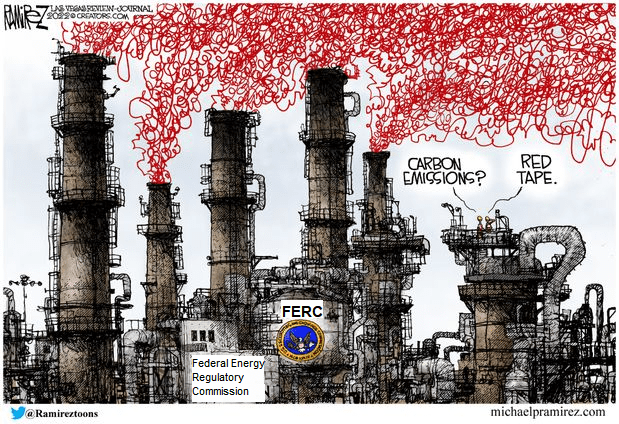

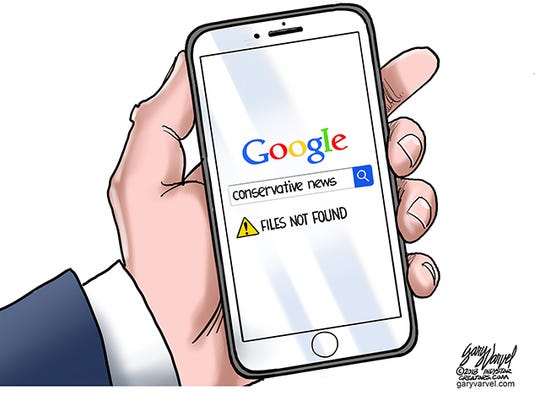
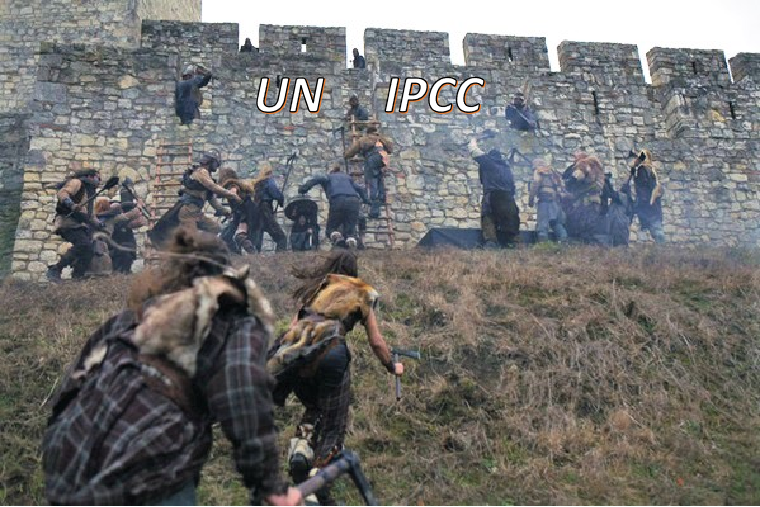

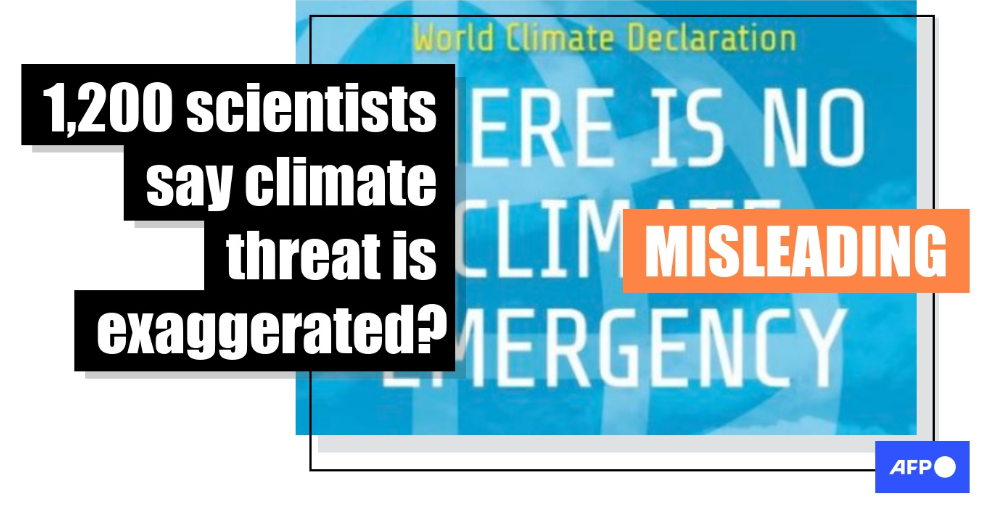


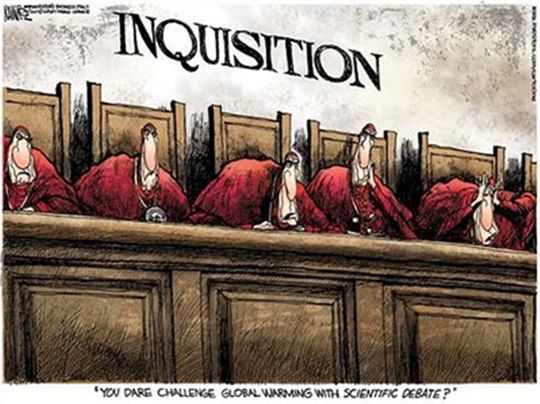

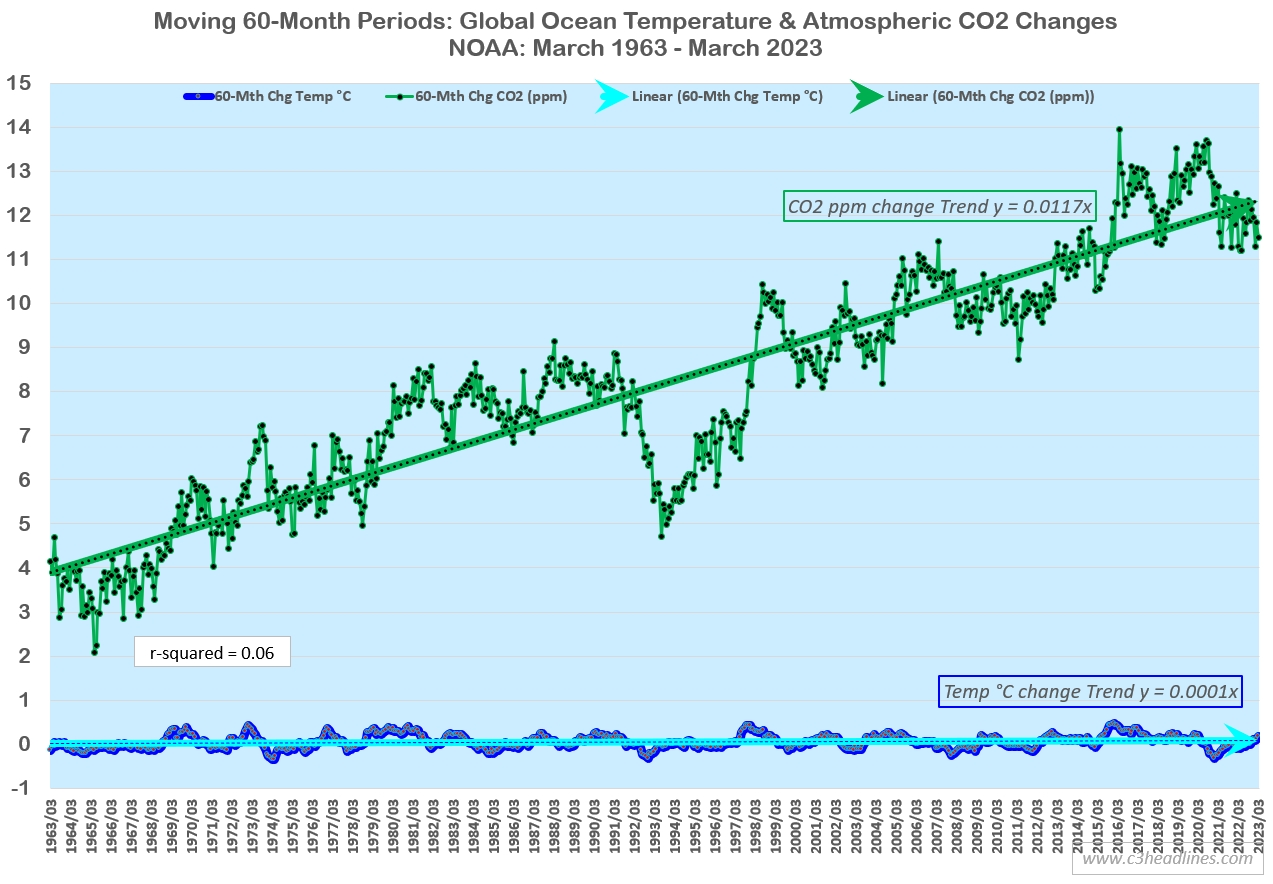


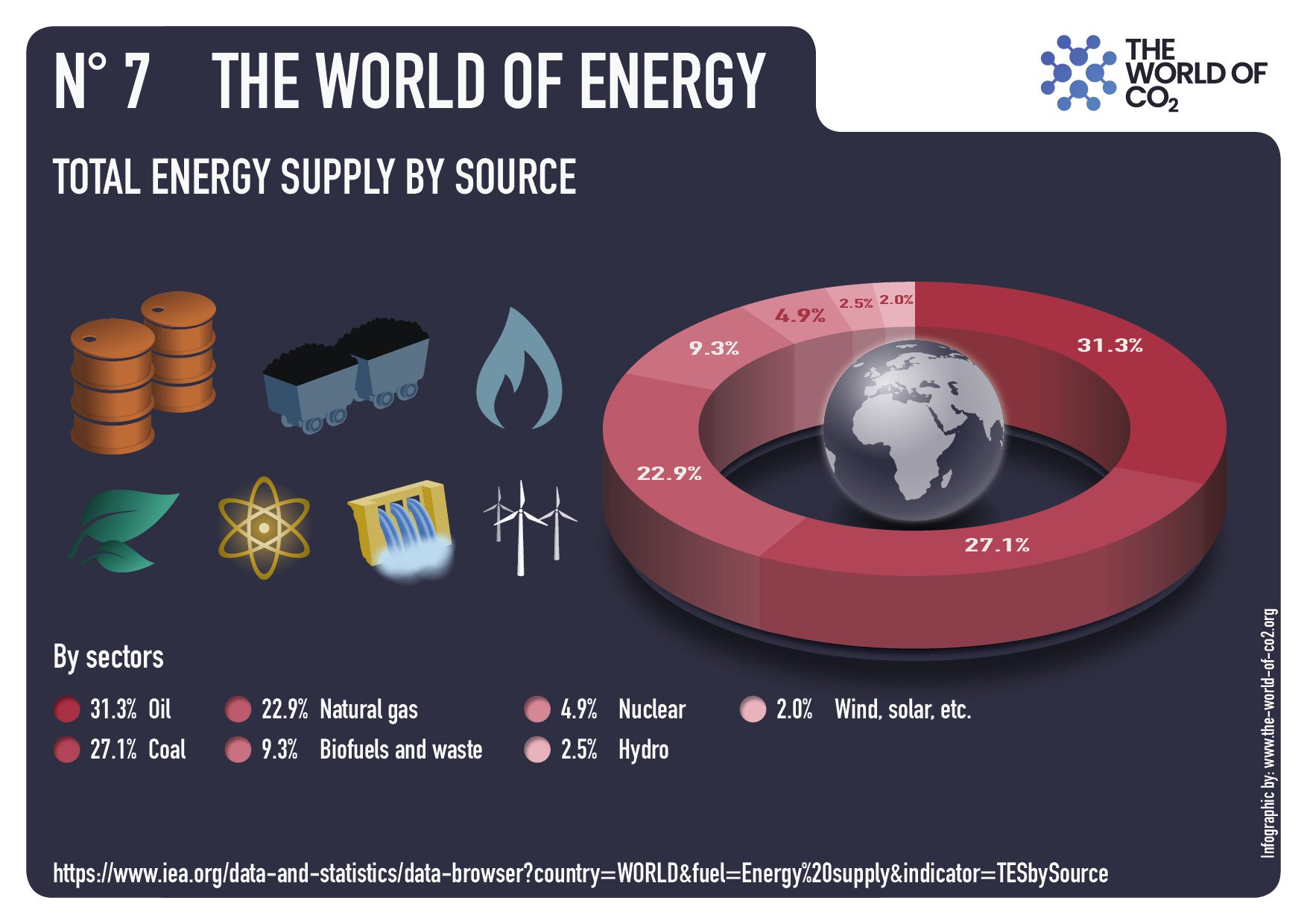

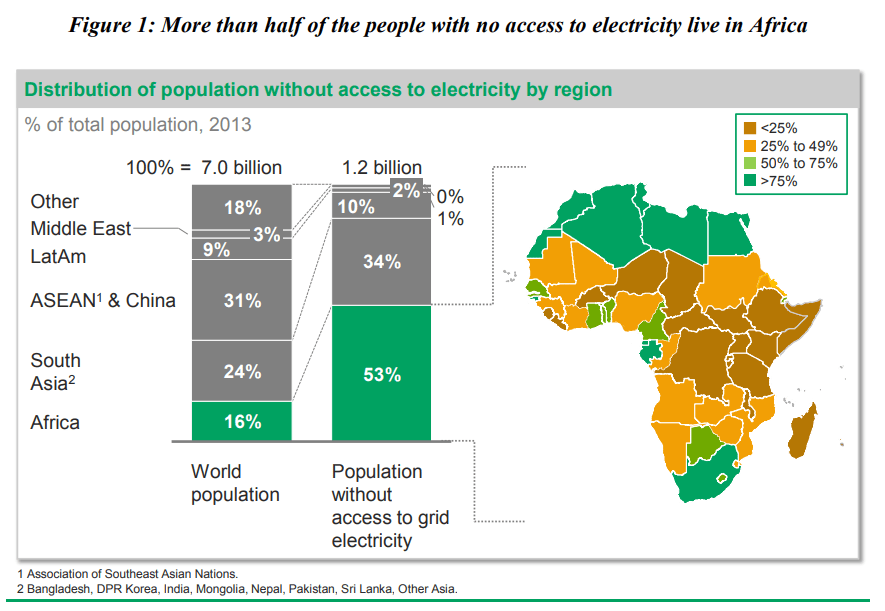
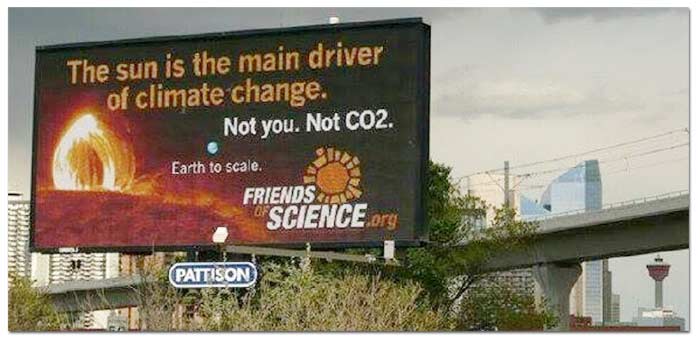


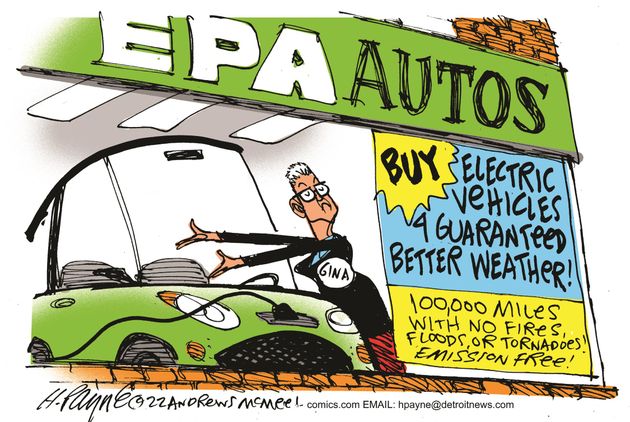
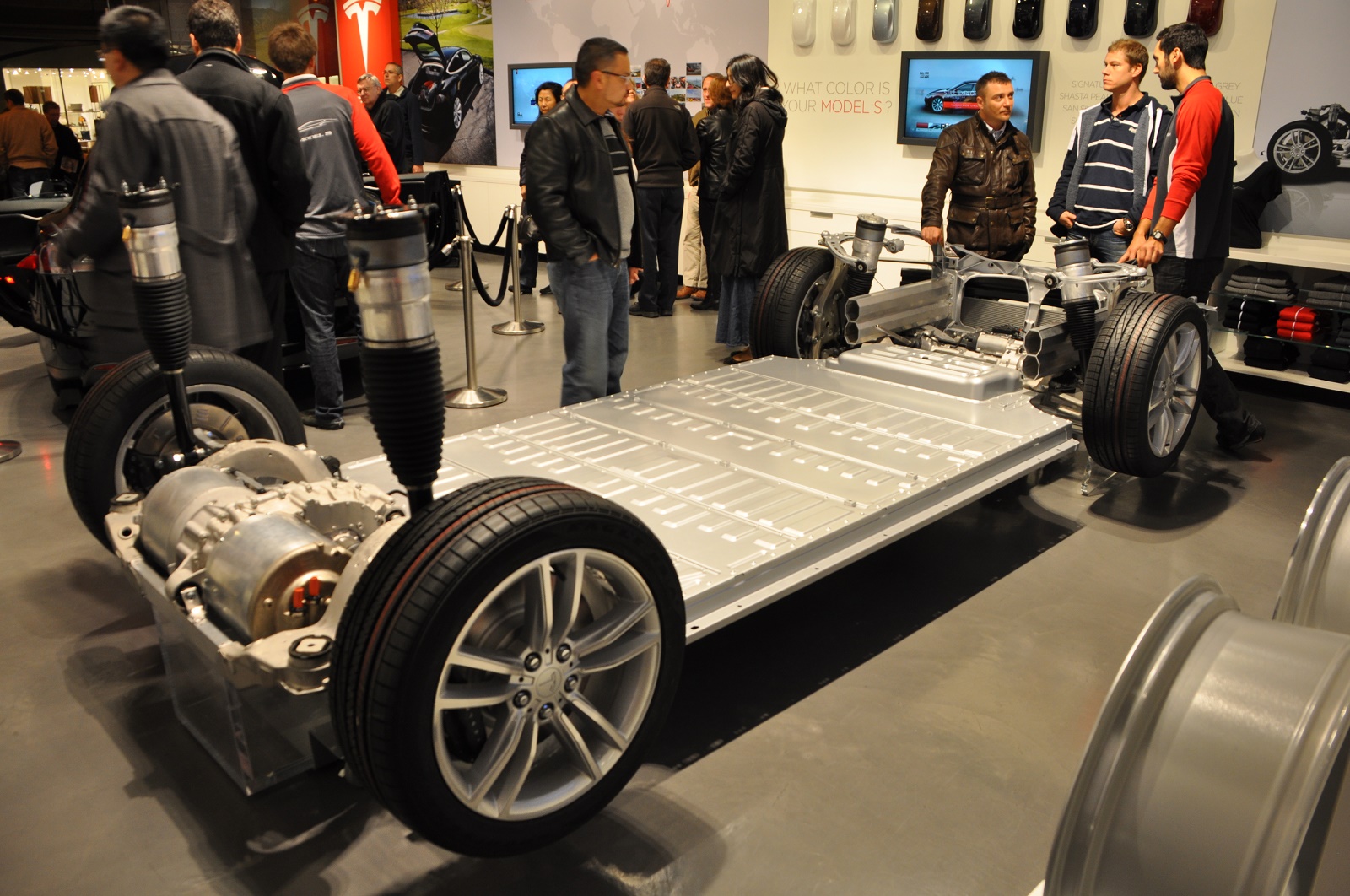

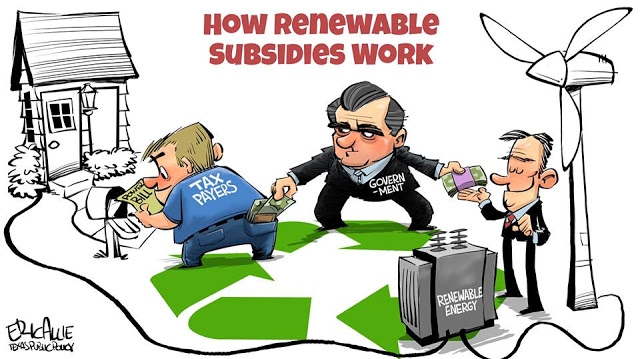


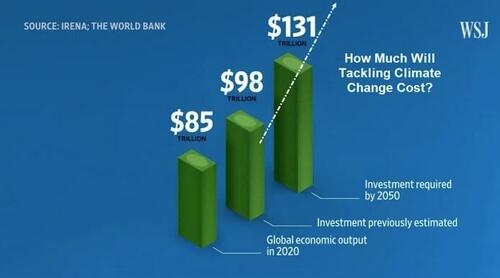



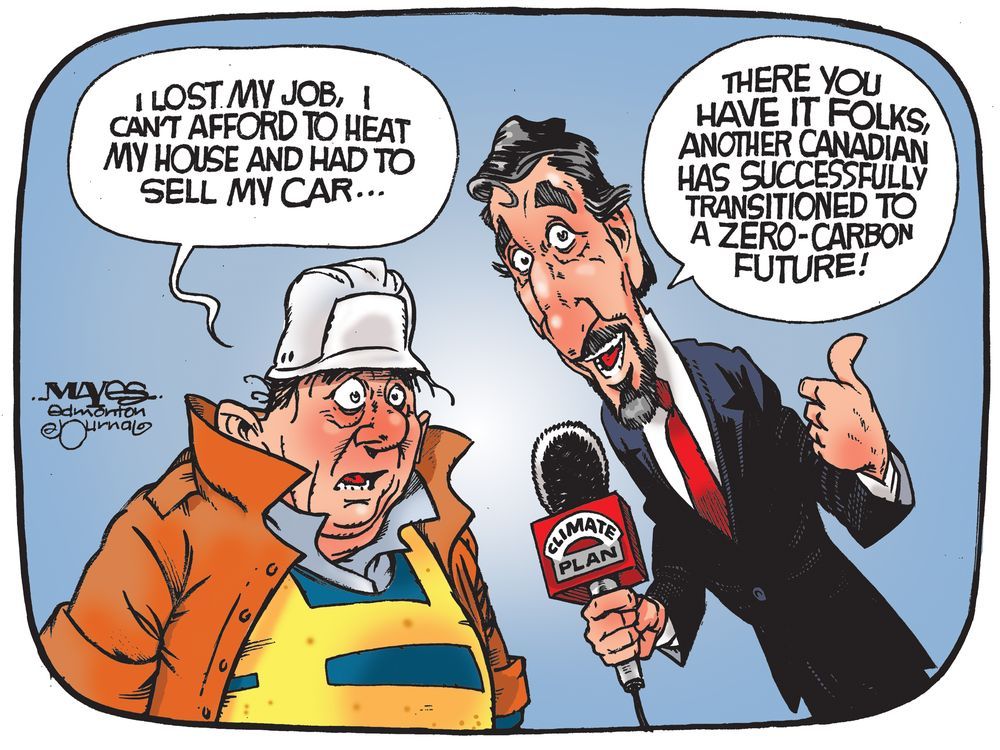








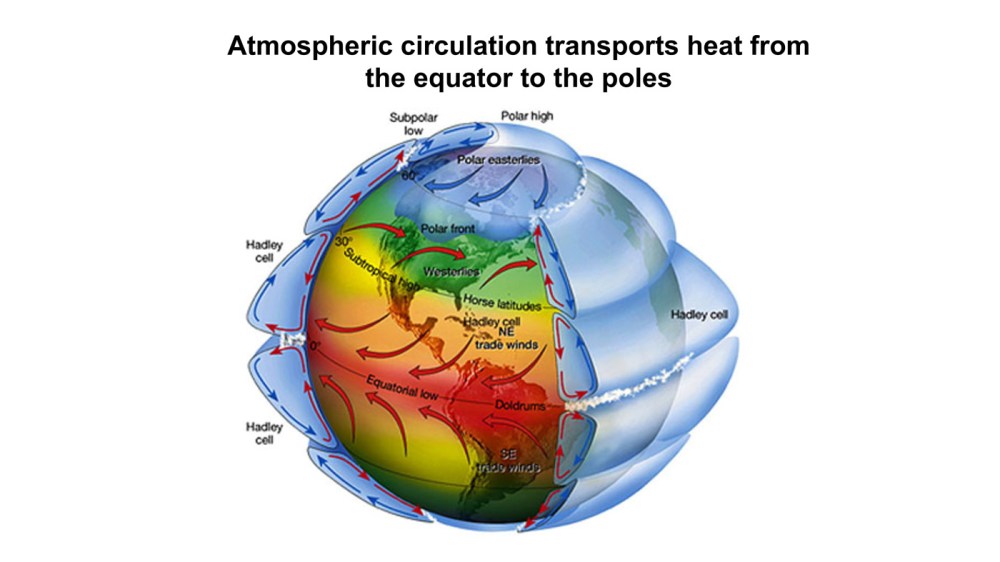
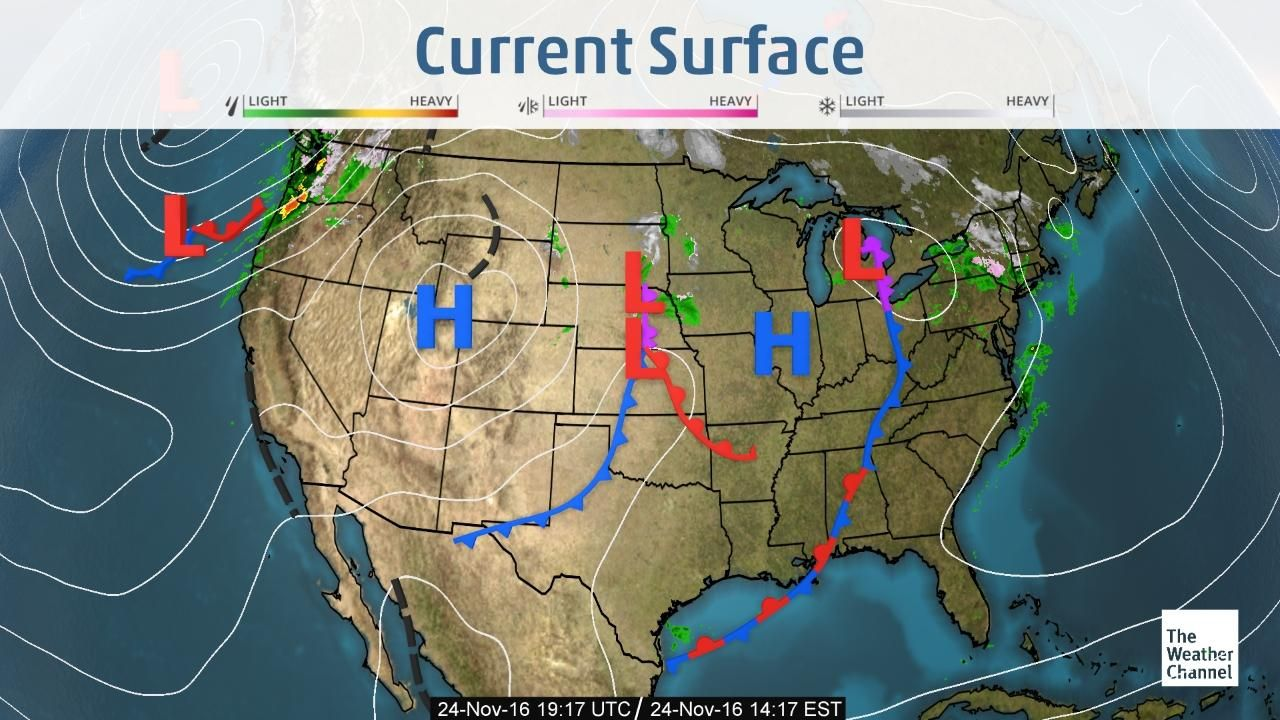

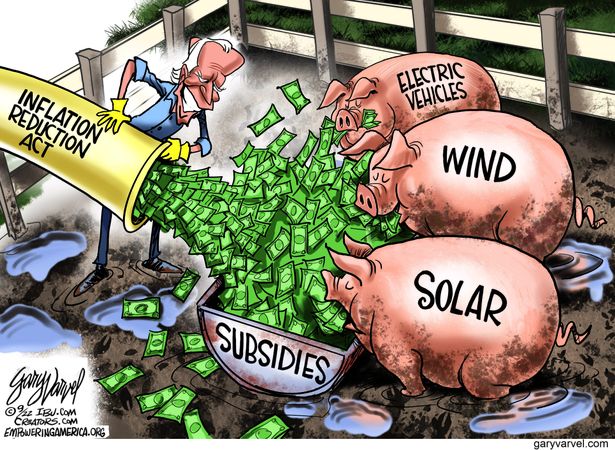
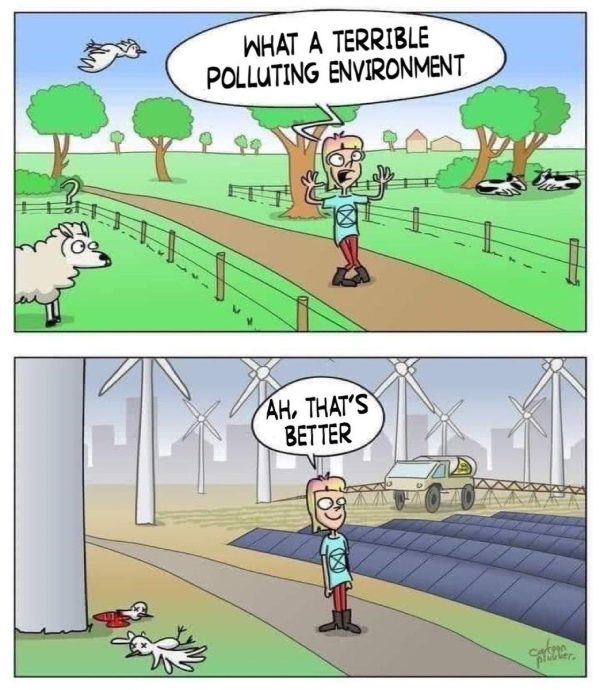
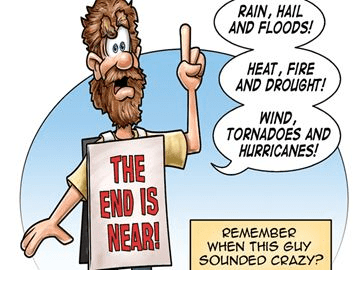
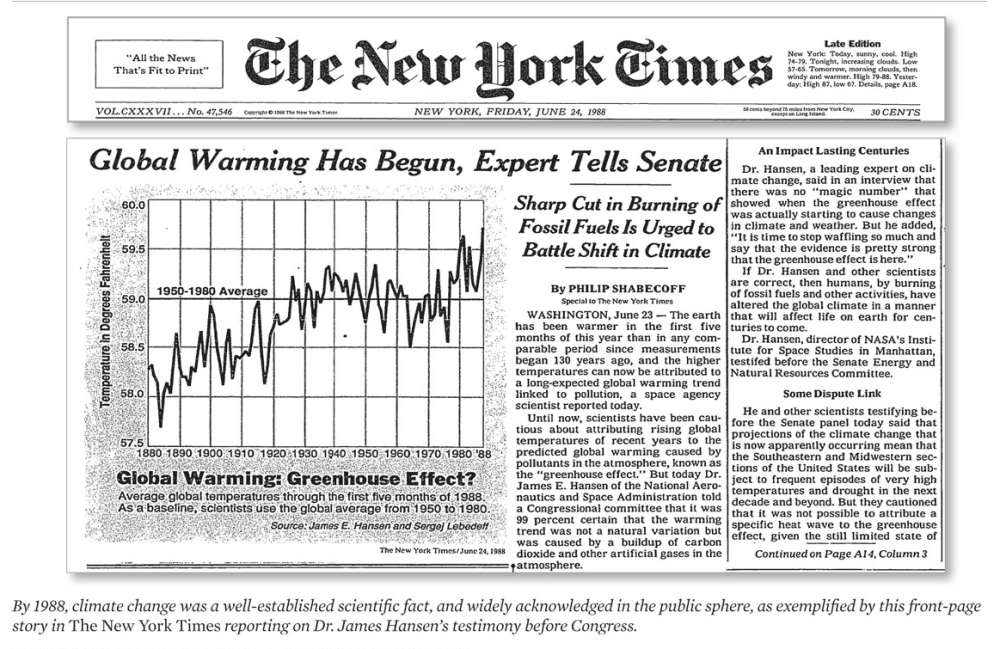
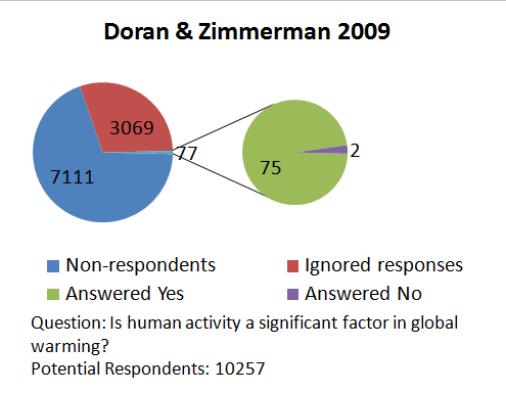
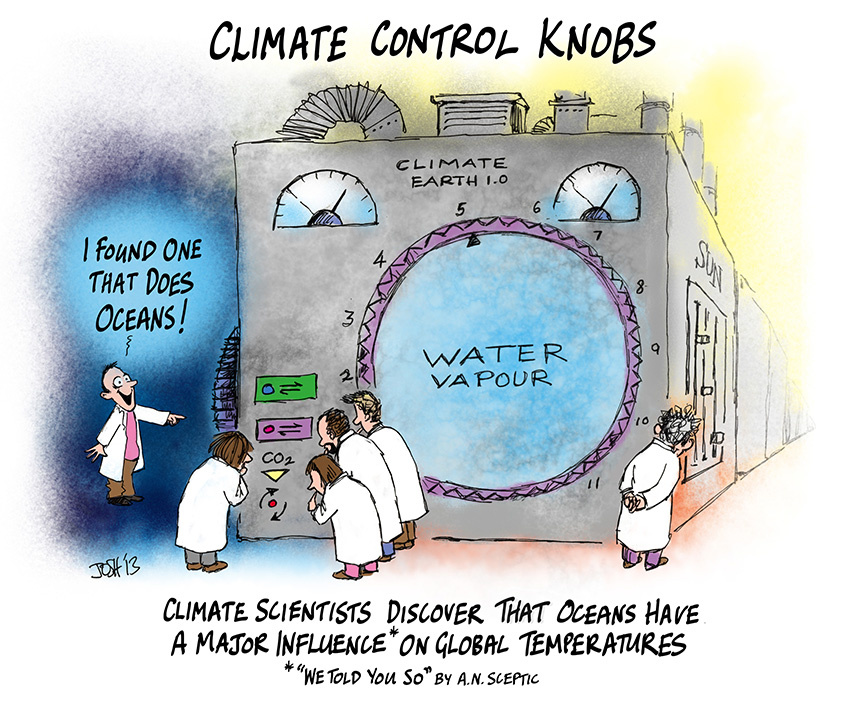
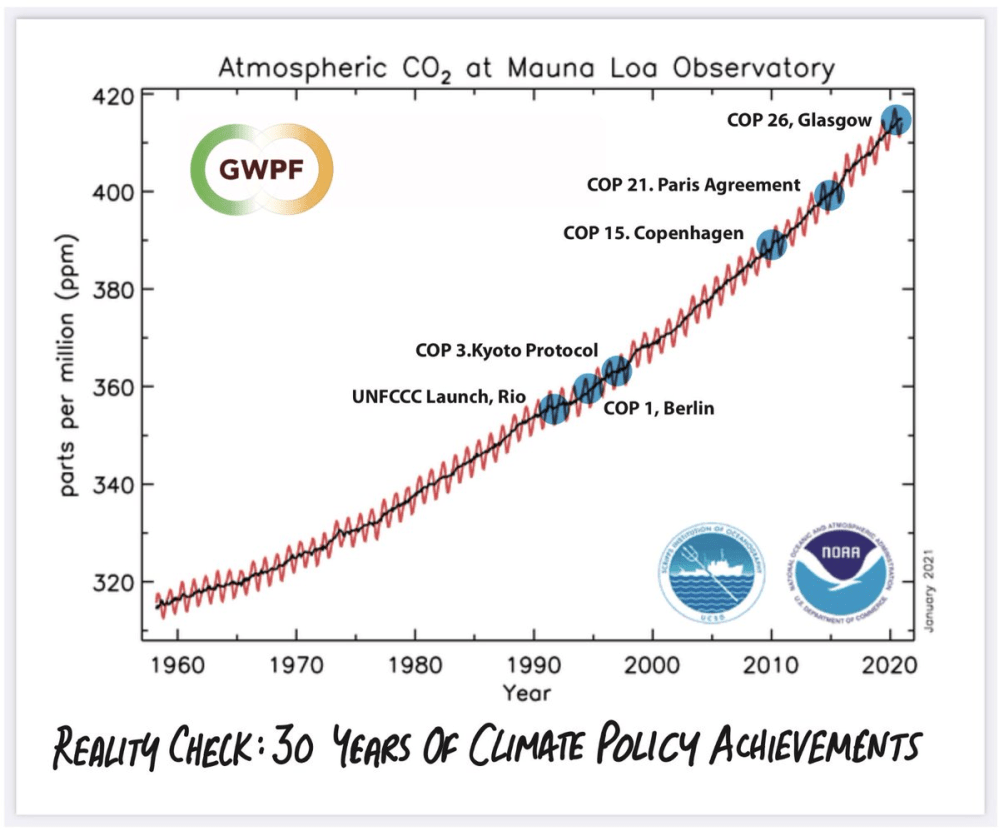

 Science Matters