California Browning from Electricity Policies
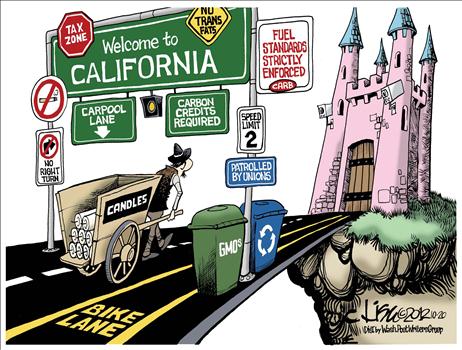
Ronald Stein explains the devastation in his Heartland article The Golden State of California Is Turning Brown Without Continuous Electricity.  Excerpts in italics with my bolds and added images.

As a resident of California for more than six decades, I am aware that the availability of continuously generated electricity in California is deteriorating and will get worse!
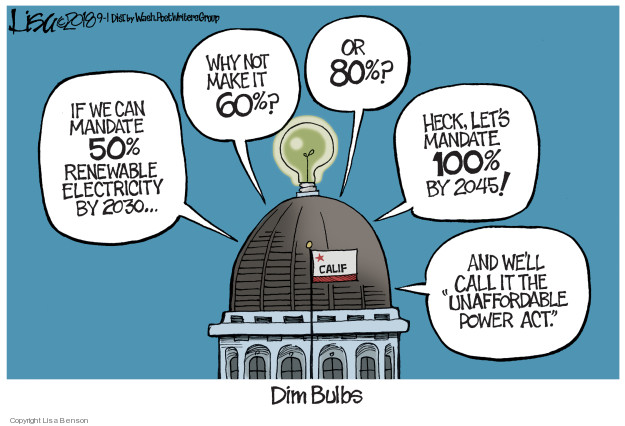
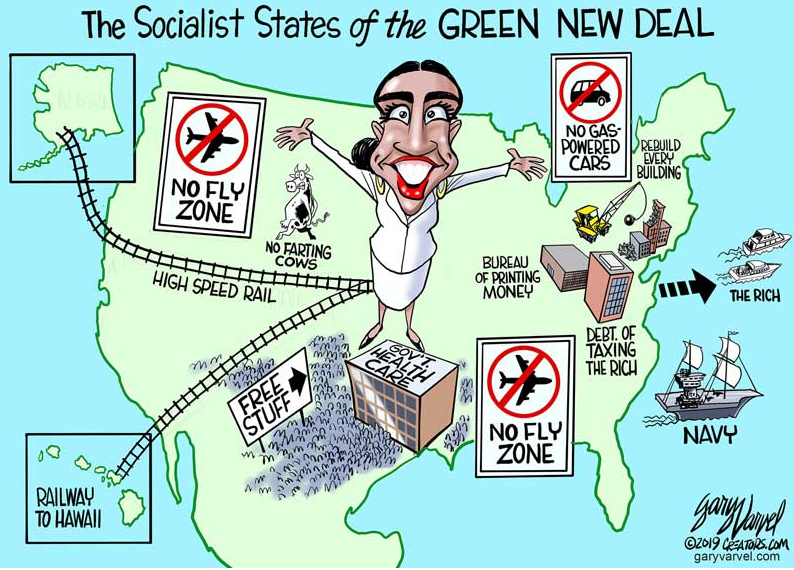
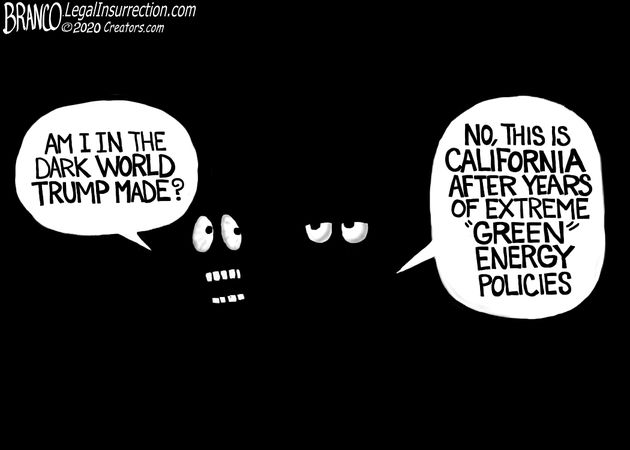
The “Green New Deal” and “Net Zero” policies in California that are supported by Governor Newsom and the Democratic Presidential candidate Kamala Harris have led to the state’s most expensive electricity and fuel prices in America and increasingly high cost of living, housing, and transportation, coupled with an increase in crime, smash-and-grab robberies, homelessness, pollution, and congestion that has caused many tax-paying residents and companies to exodus California to more affordable cities and states.
California’s net move-out number of residents in 2022 alone was more than 343,000 people that left California — the highest exodus of any state in the U.S.

The California Policy Institute counted more than 237 businesses that have left the state since 2005. Among these businesses were eleven Fortune 1000 companies, including AT&T, Hewlett Packard Enterprise, Exxon Mobil, and Chevron.

The U.S. Department of Energy recently made a startling admission: U.S. electricity demand will double by 2050, and meeting that soaring demand will require the equivalent of building 300 Hoover Dams.

The last California Nuclear Power Plant at Diablo Canyon, a 2.2 GW plant generating continuous uninterruptable electricity, is projected to close soon. In nameplate only, it would take 1,000 2.2MW wind turbines to generate 2.2 GW, but then, it’s only intermittent electricity vs. the continuous uninterruptable electricity from Diablo demanded by the California economy!
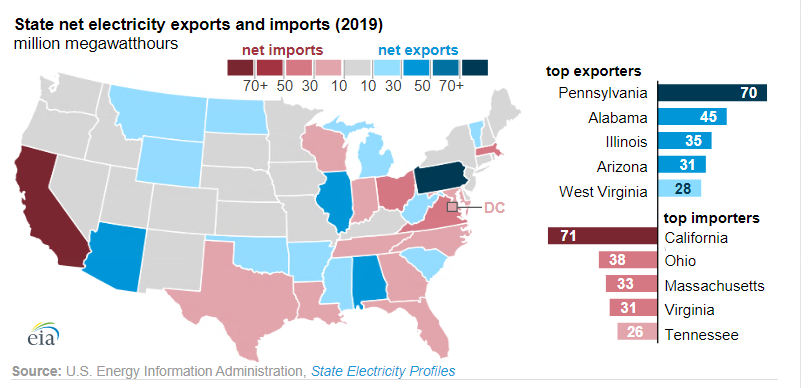
As a result of the “Green New Deal” and “Net Zero” policies and renewables of wind and solar stations built at the expense of taxpayer dollars, California now imports more electric power than any other US state, more than twice the amount in Virginia, the USA’s second-largest importer of electric power. California typically receives between one-fifth and one-third of its electricity supply from outside of the state.

Power prices are rocketing into the stratosphere and, even before winter drives up demand, are being deprived of continuous electricity in a way that was unthinkable barely a decade ago. But such is life when you attempt to run the economy on sunshine and breezes.
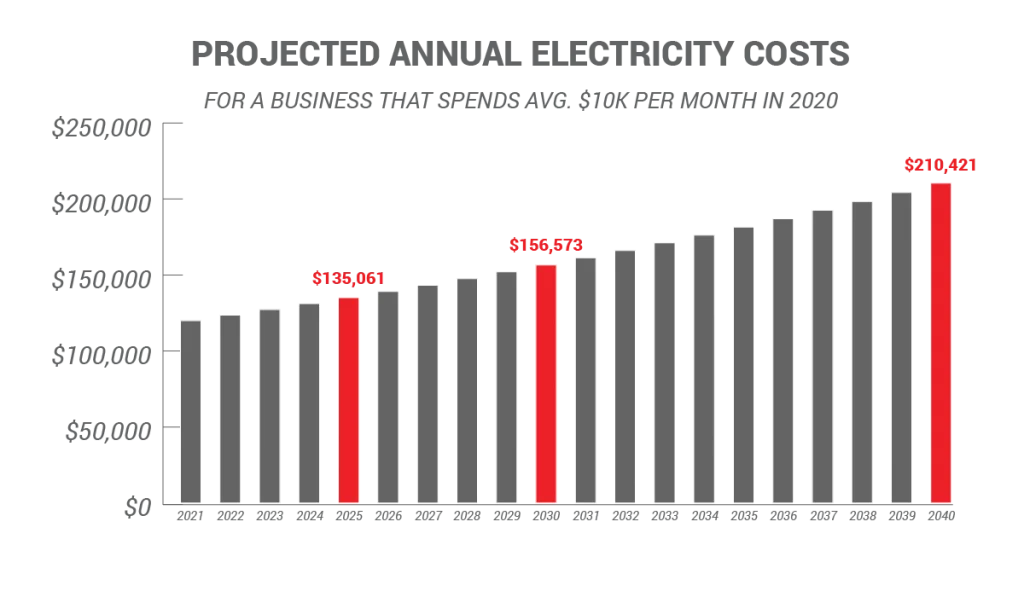
Projected electricity costs for California Businesses

Further, these so-called “green” electricity sources of wind and solar are not clean, green, renewable or sustainable. They also endanger wildlife.

California’s economy depends on affordable, reliable, and ever-cleaner electricity and fuels. Unfortunately, policymakers are driving up California’s electric and gas prices, and California now has the highest electricity and fuel prices in the nation. Those high energy prices are contributing to the pessimistic business sentiment. California’s emission mandates have done an excellent job of increasing the cost of electricity, products, and fuels to its citizens.
It’s becoming increasingly obvious that these supposed “green” alternative methods of generating electricity won’t work — especially as electricity demand is projected to double by 2050 due to AI, charging of EVs and data centers, government-mandated electric heating and cooking, and charging grid-backup batteries. Intermittent electricity from wind and solar cannot power modern nations.

These “green” wind and solar projects primarily exist because they are financed with taxpayer money, i.e., disguised by taxpayers as “Government Subsidies.”

“GREEN” policymakers are oblivious to humanity’s addiction to the products and fuels from fossil fuels, as they are to these two basic facts:

(1)  No one uses crude oil in its raw form. “Big Oil” only exists because of humanity’s addiction to the products and fuels made from oil!

(2)  “Renewables” like wind and solar only exist to generate intermittent electricity; they CANNOT make products or fuels!

To rid the world of crude oil usage, there is no need to over-regulate or over-tax the oil industry; just STOP using the products and fuels made from crude oil!

Simplistically:

STOP making cars, trucks, aircraft, boats, ships, farming equipment, medical equipment and supplies, communications equipment, military equipment, etc., that demand crude oil for their supply chain of products.
STOPPING the demands of society for the products and fuels made from oil will eliminate the need for crude oil.

The primary growth in electric power usage is coming from new data centers housing AI technologies. It is expected that over the next few decades, 50% of additional electric power will be needed just for AI, but data centers CANNOT run on occasional electricity from wind and solar.

Cal matters raises concerns about state policy to phase out ICE vehicles in favor of EVs.

How will the occasionally generated electricity from wind and solar support the following:

  • America’s military fleet of vehicles, ships, and aircraft?
  • America’s commercial and private aircraft?
  • America’s hospitals?
  • America’s space exploration?

Despite Governor Newsom’s and Democratic presidential candidate Kamala Harris’s support for the “Green New Deal” and “Net Zero” policies in California, it’s time to stimulate conversations about the generation of continuously generated electricity to meet the demands of America’s end users.


Good News: SEC’s ESG Plans Thwarted with Biden Term Ending

The news comes from Bloomberg Law article SEC’s Gensler Sees ESG Plans Thwarted as Biden’s Term Nears End. Excerpts in italics with my bolds and added images.

SEC Chair Gary Gensler started out with big plans on ESG.

  • Gensler seeks board diversity, workforce, ESG fund disclosures
  • Agency unlikely to finalize ESG regulations before January

The Democrat arrived at the Securities and Exchange Commission in 2021, after George Floyd’s murder in 2020 and President Joe Biden’s election that year fueled interest in environmental, social and governance investing. Gensler wanted public companies to report details about their climate change risks, workforce management and board members’ diversity.

He also sought new rules to fight greenwashing and other misleading ESG claims by investment funds.

Almost four years later, most of those major ESG regulations are unfinished, and they’ll likely remain so in the less than five months Gensler may have left as chair. A conservative-led backlash against ESG and federal agency authority has fueled challenges in and out of court to corporate greenhouse gas emissions reporting rules and other SEC actions, helping blunt the commission’s power.

The climate rules—Gensler’s marquee ESG initiative—were watered down following intense industry pushback, then paused altogether after business groups, Republican attorneys general and others sued.

“It’s clear the commission leadership is exhausted and feeling buffeted by the courts, Congress and industry complaints,” said Tyler Gellasch, who was a counsel to former Democratic SEC Commissioner Kara Stein and is president and CEO of investor advocacy group Healthy Markets Association.

The SEC has finalized more than 40 rules since 2021, “making our capital markets more efficient, transparent, and resilient,” an agency spokesperson said in a statement to Bloomberg Law.

The spokesperson declined to comment on the status of the agency’s pending ESG rules, beyond pointing to the commission’s most recent regulatory agenda.

Long-standing plans to require human capital and board diversity disclosures from companies have yet to yield formal proposals. Final rules concerning ESG-focused funds still are pending, and even if the SEC adopts them before January as the agenda suggests, a Republican-controlled Congress and White House may have the power to quickly scrap them under the Congressional Review Act.

Unlike the workforce and board diversity rules that have yet to be proposed, investment fund regulations concerning ESG have already been drafted and are targeted for completion in October, according to the SEC’s latest agenda. ESG funds would have to disclose their portfolio companies’ emissions and report on their ESG strategies.

The SEC proposed the regulations in May 2022, along with rules intended to ensure ESG funds’ names align with their investments. The commission issued final fund name rules in September 2023.

The SEC’s investment fund proposal has raised objections from both funds and environmental and investor advocates.

The proposal would require environmentally-focused funds to disclose their carbon footprints, if emissions are part of their investment strategies. But it wouldn’t require funds that look at emissions to disclose other metrics that play a significant role in how they invest and the methodology they use to calculate those measures. The Natural Resources Defense Council, Interfaith Center on Corporate Responsibility, and other environmental and investor groups pushed for those requirements in an April letter to the SEC.

The Investment Company Institute, which represents funds, has raised concerns its members would have to report on their carbon footprints before public companies must disclose their emissions under SEC rules. The group in April called on the SEC to keep fund emissions reporting requirements on ice until the litigation challenging the agency’s public company climate rules is resolved. That litigation is at the US Court of Appeals for the Eighth Circuit, which is unlikely to rule this year.

The fund rules have received no Republican support at the SEC, with only Gensler and his fellow Democratic commissioners voting in favor of proposing them.

“If it’s a Republican Congress and Trump administration, you could imagine they would be willing to disapprove those,” said Susan Dudley, a George Washington University professor who oversaw the White House regulatory policy office under President George W. Bush.


Climate Policies Fail in Fact and in Theory

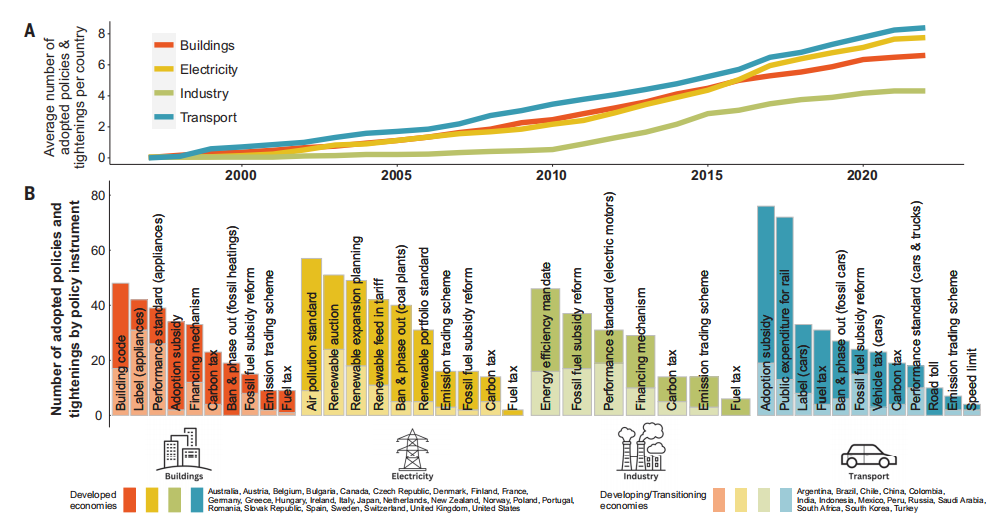
A recent international analysis of 1500 climate policies around the world concluded that 63 or 4% of them were successful in reducing emissions.  The paper is Climate policies that achieved major emission reductions: Global evidence from two decades published at Science.org.  Excerpts in italics with my bolds.

Abstract

Meeting the Paris Agreement’s climate targets necessitates better knowledge about which climate policies work in reducing emissions at the necessary scale. We provide a global, systematic ex post evaluation to identify policy combinations that have led to large emission reductions out of 1500 climate policies implemented between 1998 and 2022 across 41 countries from six continents. Our approachintegrates a comprehensive climate policy database with a machine learning–based extension ofthe common difference-in-differences approach. We identified 63 successful policy interventions with total emission reductions between 0.6 billion and 1.8 billion metric tonnes CO2 . Our insights on effective but rarely studied policy combinations highlight the important role of price-based instruments in well-designed policy mixes and the policy efforts necessary for closing the emissions gap.

Context

(1). Although the [Paris] agreement seeks to limit global average temperature increase to “well below 2°C above pre-industrial levels and pursuing efforts to limit the temperature increase to 1.5°C,” its success critically hinges on the implementation of effective climate policies at the national level.  However, scenarios from global integrated assessment models suggest that the aggregated mitigation efforts communicated through nationally determined contributions (NDCs) fall short of the required emission reductions.

(2)The United Nations (UN) estimates quantify a median emission gap of 23 billion metric tonnes(Gt) carbon dioxide equivalent (CO2-eq) by 2030

(3). The persistence of this emissions gap is not only caused by an ambition gap but also a gap in the outcomes that adopted policies achieve in terms of emission reductions.

(4). This raises the fundamental question as to which types of policy measures are successfully causing meaningful emission reductions. Despite more than two decades of experience with thousands of diverse climate policy measures gained around the world, there is consensus in neither science nor policy on this question.

The exhibit above shows the scope and complexity of the analysis.  But the bottom line is that 96% of the effort and trillions of $$$ were spent to no avail. It is estimated that on the order of 1.2 Billion tonnes of CO2 were prevented over the last 20 years, with an additional 23 Billion tonnes to be erased by 2030. 

Any enterprise with that performance would be liquidated. 
That is an epic failure in fact. 

And recommending mixing of policies including subsidies and regulations along with pricing goes against economic theory and fails in practice. Ross McKitrick explains the dangers of making climate policies willy-nilly in his Financial Post article Economists’ letter misses the point about the carbon tax revolt.  Excerpts in italics with my bolds and added images.

Yes, the carbon tax works great in a ‘first-best’ world where it’s the
only carbon policy. In the real world, carbon policies are piled high.

An open letter is circulating online among my economist colleagues aiming to promote sound thinking on carbon taxes. It makes some valid points and will probably get waved around in the House of Commons before long. But it’s conspicuously selective in its focus, to the point of ignoring the main problems with Canadian climate policy as a whole.

EV charging sign Electric-vehicle mandates and subsidies are among the mountain of climate policies that have been piled on top of Canada’s carbon tax. PHOTO BY JOSHUA A. BICKEL/THE ASSOCIATED PRESS

There’s a massive pile of boulders blocking the road to efficient policy, including:

    • clean fuel regulations,
    • the oil-and-gas-sector emissions cap,
    • the electricity sector coal phase-out,
    • strict energy efficiency rules for new and existing buildings,
    • new performance mandates for natural gas-fired generation plants,
    • the regulatory blockade against liquified natural gas export facilities,
    • new motor vehicle fuel economy standards,
    • caps on fertilizer use on farms,
    • provincial ethanol production subsidies,
    • electric vehicle mandates and subsidies,
    • provincial renewable electricity mandates,
    • grid-scale battery storage experiments,
    • the Green Infrastructure Fund,
    • carbon capture and underground storage mandates, 
    • subsidies for electric buses and emergency vehicles in Canadian cities,
    • new aviation and rail sector emission limits,
      and many more.

Not one of these occasioned a letter of protest from Canadian economists.

Beside that mountain of boulders there’s a twig labelled “overstated objections to carbon pricing.” At the sight of it, hundreds of economists have rushed forward to sweep it off the road. What a help!

To my well-meaning colleagues I say: the pile of regulatory boulders
long ago made the economic case for carbon pricing irrelevant.

Layering a carbon tax on top of current and planned command-and-control regulations does not yield an efficient outcome, it just raises the overall cost to consumers. Which is why I can’t get excited about and certainly won’t sign the carbon-pricing letter. That’s not where the heavy lifting is needed.

My colleagues object to exaggerated claims about the cost of carbon taxes. Fair enough. But far worse are exaggerated claims about both the benefits of reducing carbon dioxide emissions and the economic opportunities associated with the so-called “energy transition.” Exaggeration about the benefits of emission reduction is traceable to poor-quality academic research, such as continued use of climate models known to have large, persistent warming biases and of the RCP8.5 emissions scenario, long since shown in the academic literature to be grossly exaggerated.

But a lot of it is simply groundless rhetoric. Climate activists, politicians and journalists have spent years blaming Canadians’ fossil fuel use for every bad weather event that comes along and shutting down rational debate with polemical cudgels such as “climate emergency” declarations. Again, none of this occasioned a cautionary letter from economists.

There’s another big issue on which the letter was silent. Suppose we did clear all the regulatory boulders along with the carbon-pricing-costs-too-much twig. How high should the carbon tax be? A few of the letter’s signatories are former students of mine so I expect they remember the formula for an optimal emissions tax in the presence of an existing tax system. If not, they can take their copy of Economic Analysis of Environmental Policy by Prof. McKitrick off the shelf, blow off the thick layer of dust and look it up. Or they can consult any of the half-dozen or so journal articles published since the 1970s that derive it. But I suspect most of the other signatories have never seen the formula and don’t even know it exists.

To be technical for a moment, the optimal carbon tax rate varies inversely with the marginal cost of the overall tax system. The higher the tax burden — and with our heavy reliance on income taxes our burden is high — the costlier it is at the margin to provide any public good, including emissions reductions. Economists call this a “second-best problem”: inefficiencies in one place, like the tax system, cause inefficiencies in other policy areas, yielding in this case a higher optimal level of emissions and a lower optimal carbon tax rate.

Based on reasonable estimates of the social cost of carbon and the marginal costs of our tax system, our carbon price is already high enough. In fact, it may well be too high. I say this as one of the only Canadian economists who has published on all aspects of the question. Believing in mainstream climate science and economics, as I do, does not oblige you to dismiss public complaints that the carbon tax is too costly.

Which raises my final point: the age of mass academic letter-writing has long since passed. Academia has become too politically one-sided. Universities don’t get to spend years filling their ranks with staff drawn from one side of the political spectrum and then expect to be viewed as neutral arbiters of public policy issues. The more signatories there are on a letter like this, the less impact it will have. People nowadays will make up their own minds, thank you very much, and a well-argued essay by an individual willing to stand alone may even carry more weight.

Online conversations today are about rising living costs, stagnant real wages and deindustrialization. Even if carbon pricing isn’t the main cause of all this, climate policy is playing a growing role and people can be excused for lumping it all together. The public would welcome insight from economists about how to deal with these challenges. A mass letter enthusing about carbon taxes doesn’t provide it.

Postscript:  All the Pain for No Gain is Unnecessary


There is no charge for content on this site, nor for subscribers to receive email notifications of postings.

This Summer Celebrate Our Warm Climate

Legacy and social media keep up a constant drumbeat of warnings about a degree or two of planetary warming without any historical context for considering the significance of the alternative.  A poem of Robert Frost comes to mind as some applicable wisdom:

The diagram at the top shows how grateful we should be for living in today’s climate instead of a glacial icehouse. (H/T Raymond Inauen)  For most of its history Earth has been frozen rather than the mostly green place it is today.  And the reference is to the extent of the North American ice sheet during the Last Glacial Maximum (LGM).

For further context consider that geologists refer to our time as a “Severe Icehouse World”, among the various conditions in earth’s history, as diagramed by paleo climatologist Christopher Scotese. Referring to the Global Mean Temperatures, it appears after many decades, we are slowly rising to “Icehouse World”, which would seem to be a good thing.

Instead of fear mongering over a bit of warming, we should celebrate our good fortune, and do our best for humanity and the biosphere.  Matthew Ridley takes it from there in a previous post. Excerpts in italics with my bolds and added images.

Background from previous post The Goodness of Global Warming

LAI refers to Leaf Area Index.

As noted in other posts here, warming comes and goes and a cooling period may now be ensuing. See No Global Warming, Chilly January Land and Sea.  Matt Ridley provides a concise and clear argument to celebrate any warming that comes to our world in his Spiked article Why global warming is good for us.  Excerpts in italics with my bolds and added images.

Climate change is creating a greener, safer planet.

Global warming is real. It is also – so far – mostly beneficial. This startling fact is kept from the public by a determined effort on the part of alarmists and their media allies who are determined to use the language of crisis and emergency. The goal of Net Zero emissions in the UK by 2050 is controversial enough as a policy because of the pain it is causing. But what if that pain is all to prevent something that is not doing net harm?

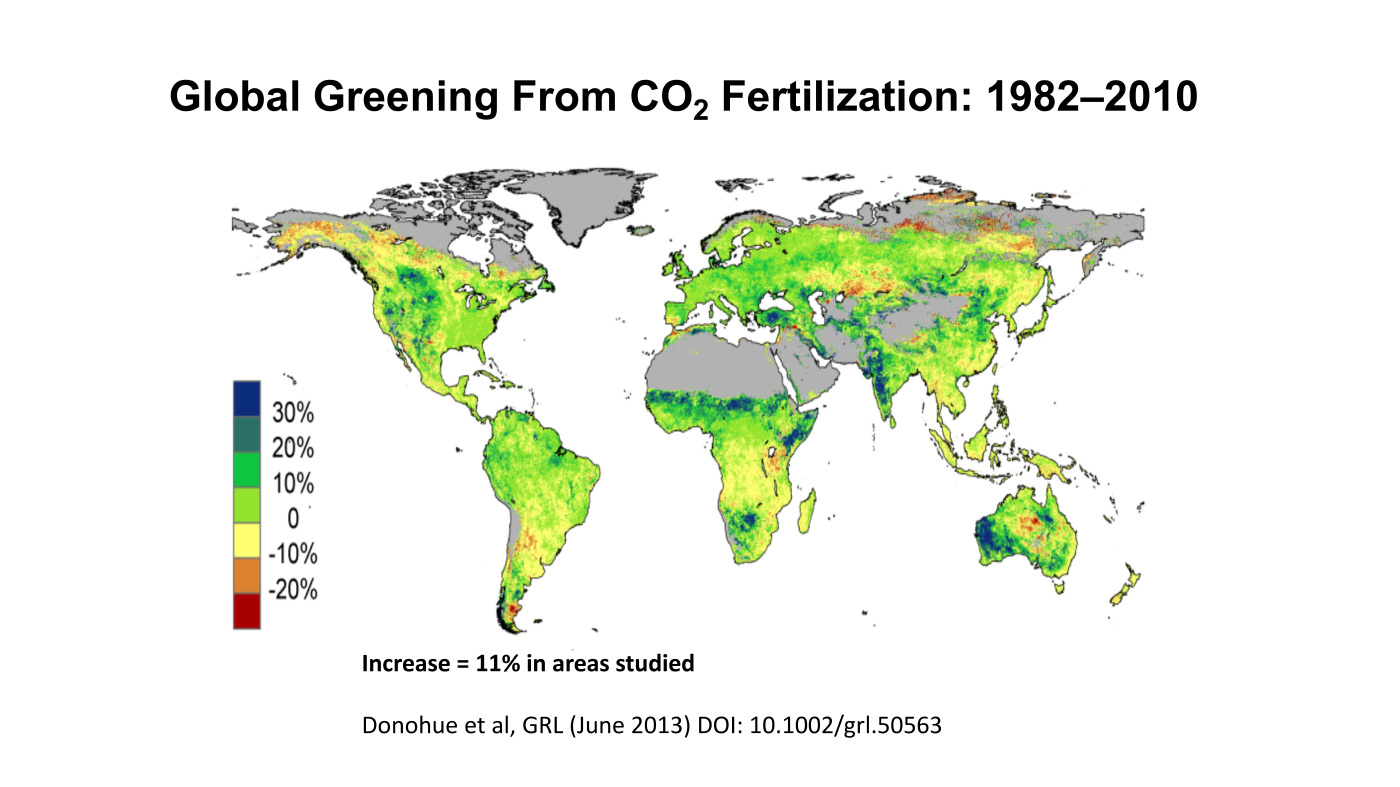
The biggest benefit of emissions is global greening, the increase year after year of green vegetation on the land surface of the planet. Forests grow more thickly, grasslands more richly and scrub more rapidly. This has been measured using satellites and on-the-ground recording of plant-growth rates. It is happening in all habitats, from tundra to rainforest. In the four decades since 1982, as Bjorn Lomborg points out, NASA data show that global greening has added 618,000 square kilometres of extra green leaves each year, equivalent to three Great Britains. You read that right: every year there’s more greenery on the planet to the extent of three Britains. I bet Greta Thunberg did not tell you that.

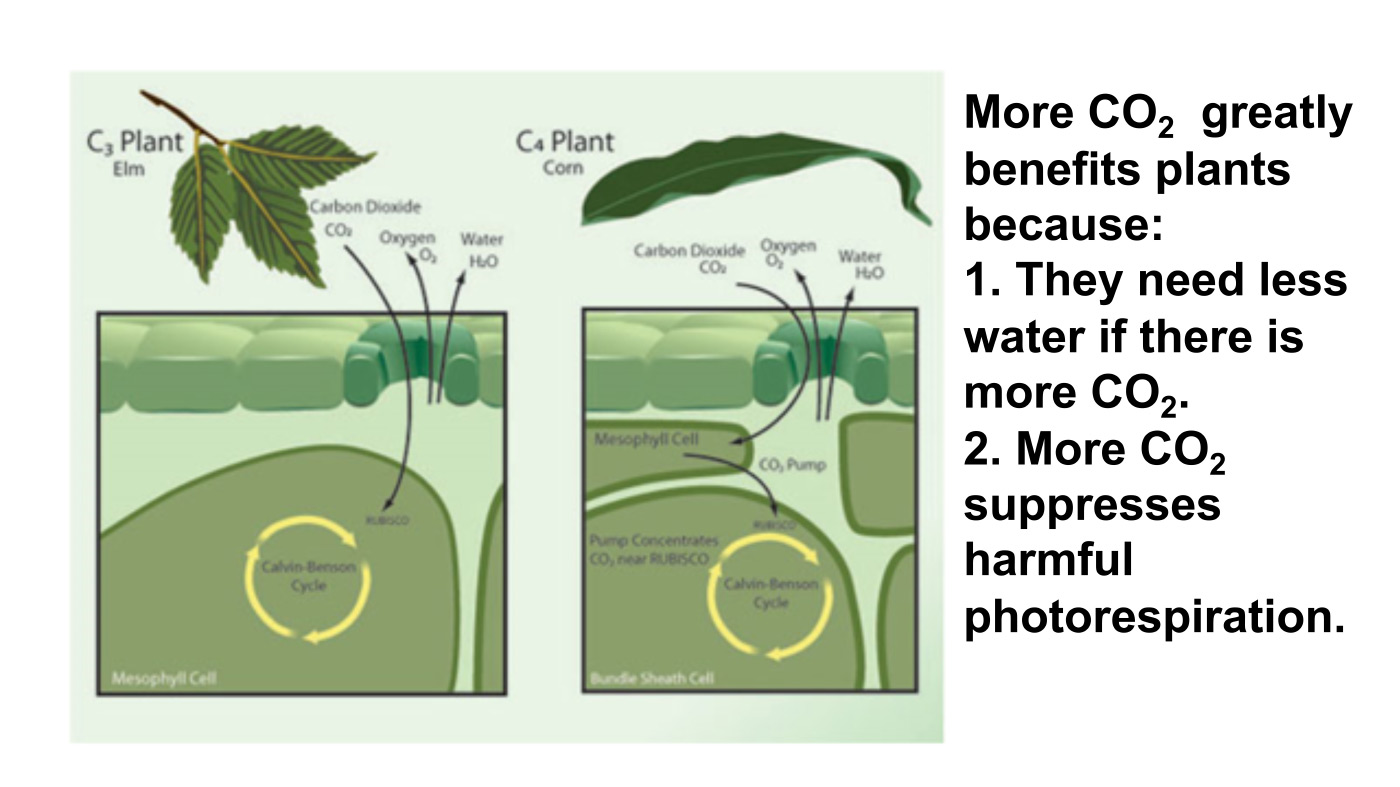
The cause of this greening? Although tree planting, natural reforestation, slightly longer growing seasons and a bit more rain all contribute, the big cause is something else. All studies agree that by far the largest contributor to global greening – responsible for roughly half the effect – is the extra carbon dioxide in the air. In 40 years, the proportion of the atmosphere that is CO2 has gone from 0.034 per cent to 0.041 per cent. That may seem a small change but, with more ‘food’ in the air, plants don’t need to lose as much water through their pores (‘stomata’) to acquire a given amount of carbon. So dry areas, like the Sahel region of Africa, are seeing some of the biggest improvements in greenery. Since this is one of the poorest places on the planet, it is good news that there is more food for people, goats and wildlife.

But because good news is no news, green pressure groups and environmental correspondents in the media prefer to ignore global greening. Astonishingly, it merited no mentions on the BBC’s recent Green Planet series, despite the name. Or, if it is mentioned, the media point to studies suggesting greening may soon cease. These studies are based on questionable models, not data (because data show the effect continuing at the same pace). On the very few occasions when the BBC has mentioned global greening it is always accompanied by a health warning in case any viewer might glimpse a silver lining to climate change – for example, ‘extra foliage helps slow climate change, but researchers warn this will be offset by rising temperatures’.

Another bit of good news is on deaths. We’re against them, right? A recent study shows that rising temperatures have resulted in half a million fewer deaths in Britain over the past two decades. That is because cold weather kills about ’20 times as many people as hot weather’, according to the study, which analyses ‘over 74million deaths in 384 locations across 13 countries’. This is especially true in a temperate place like Britain, where summer days are rarely hot enough to kill. So global warming and the unrelated phenomenon of urban warming relative to rural areas, caused by the retention of heat by buildings plus energy use, are both preventing premature deaths on a huge scale.

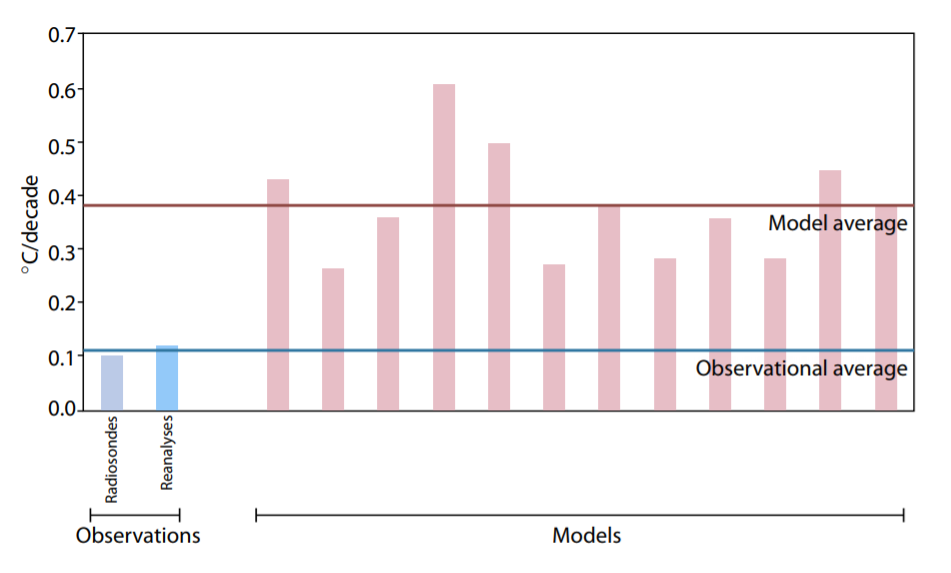
Figure 8: Warming in the tropical troposphere according to the CMIP6 models.
Trends 1979–2014 (except the rightmost model, which is to 2007), for 20°N–20°S, 300–200 hPa.  Source John Christy


Summer temperatures in the US are changing at half the rate of winter temperatures and daytimes are warming 20 per cent slower than nighttimes. A similar pattern is seen in most countries. Tropical nations are mostly experiencing very slow, almost undetectable daytime warming (outside cities), while Arctic nations are seeing quite rapid change, especially in winter and at night. Alarmists love to talk about polar amplification of average climate change, but they usually omit its inevitable flip side: that tropical temperatures (where most poor people live) are changing more slowly than the average.

My Mind is Made Up, Don’t Confuse Me with the Facts. H/T Bjorn Lomborg, WUWT

But are we not told to expect more volatile weather as a result of climate change? It is certainly assumed that we should. Yet there’s no evidence to suggest weather volatility is increasing and no good theory to suggest it will. The decreasing temperature differential between the tropics and the Arctic may actually diminish the volatility of weather a little.


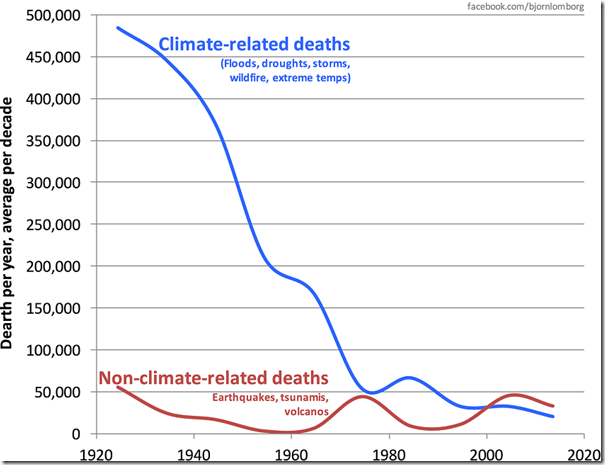
Indeed, as the Intergovernmental Panel on Climate Change (IPCC) repeatedly confirms, there is no clear pattern of storms growing in either frequency or ferocity, droughts are decreasing slightly and floods are getting worse only where land-use changes (like deforestation or building houses on flood plains) create a problem. Globally, deaths from droughts, floods and storms are down by about 98 per cent over the past 100 years – not because weather is less dangerous but because shelter, transport and communication (which are mostly the products of the fossil-fuel economy) have dramatically improved people’s ability to survive such natural disasters.

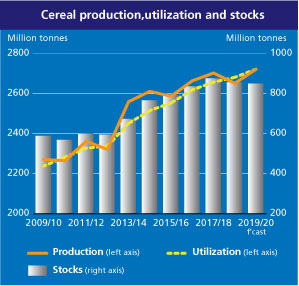
The effect of today’s warming (and greening) on farming is, on average, positive: crops can be grown farther north and for longer seasons and rainfall is slightly heavier in dry regions. We are feeding over seven billion people today much more easily than we fed three billion in the 1960s, and from a similar acreage of farmland. Global cereal production is on course to break its record this year, for the sixth time in 10 years.


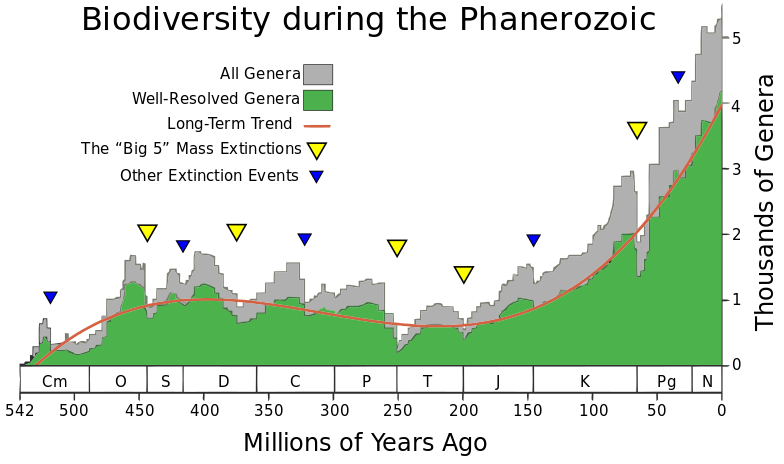
Nature, too, will do generally better in a warming world. There are more species in warmer climates, so more new birds and insects are arriving to breed in southern England than are disappearing from northern Scotland. Warmer means wetter, too: 9,000 years ago, when the climate was warmer than today, the Sahara was green. Alarmists like to imply that concern about climate change goes hand in hand with concern about nature generally. But this is belied by the evidence. Climate policies often harm wildlife: biofuels compete for land with agriculture, eroding the benefits of improved agricultural productivity and increasing pressure on wild land; wind farms kill birds and bats; and the reckless planting of alien sitka spruce trees turns diverse moorland into dark monoculture.

Meanwhile, real environmental issues are ignored or neglected because of the obsession with climate. With the help of local volunteers I have been fighting to protect the red squirrel in Northumberland for years. The government does literally nothing to help us, while it pours money into grants for studying the most far-fetched and minuscule possible climate-change impacts. Invasive alien species are the main cause of species extinction worldwide (like grey squirrels driving the red to the margins), whereas climate change has yet to be shown to have caused a single species to die out altogether anywhere.

Source: Phanerozoic_Biodiversity.png Author: SVG version by Albert Mestre

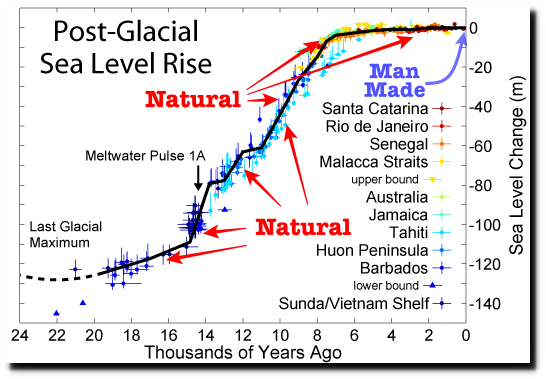
Of course, climate change does and will bring problems as well as benefits. Rapid sea-level rise could be catastrophic. But whereas the sea level shot up between 10,000 and 8,000 years ago, rising by about 60 metres in two millennia, or roughly three metres per century, today the change is nine times slower: three millimetres a year, or a foot per century, and with not much sign of acceleration. Countries like the Netherlands and Vietnam show that it is possible to gain land from the sea even in a world where sea levels are rising. The land area of the planet is actually increasing, not shrinking, thanks to siltation and reclamation.

Environmentalists don’t get donations or invitations to appear on the telly if they say moderate things. To stand up and pronounce that ‘climate change is real and needs to be tackled, but it’s not happening very fast and other environmental issues are more urgent’ would be about as popular as an MP in Oliver Cromwell’s parliament declaring, ‘The evidence for God is looking a bit weak, and I’m not so very sure that fornication really is a sin’. And I speak as someone who has made several speeches on climate in parliament.

No wonder we don’t hear about the good news on climate change.


Put Climate Insanity Behind Us

Conrad Black writes at National Post Time for the climate insanity to stop.  Excerpts in italics with my bolds and added images.

We have been racing to destroy our standard of living
to avert a crisis that never materialized

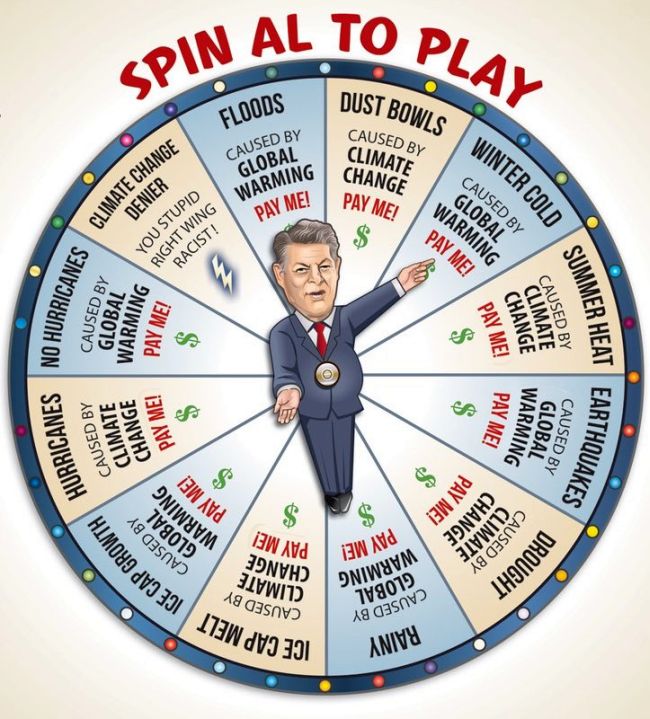
We must by now be getting reasonably close the point where there is a consensus for re-examining the issue of climate change and related subjects. For decades, those of us who had our doubts were effectively shut down by the endless deafening repetition, as if from the massed choir of an operatic catechism school, of the alleged truism: “98 per cent of scientists agree …” (that the world is coming to an end in a few years if we don’t abolish the combustion engine). Decades have gone by in which the polar bears were supposed to become extinct because of the vanishing polar ice cap, the glaciers were supposed to have melted in the rising heat and the impact of melting ice would raise ocean levels to the point that Pacific islands, such as former U.S. vice-president Al Gore’s oratorical dreamworld, the Pacific island state of Tuvalu, would only be accessible to snorkelers. There has been no progress toward any of this. Ocean levels have not risen appreciably, nothing has been submerged and the polar bear population has risen substantially.

A large part of the problem has been the fanaticism of the alarmist forces. This has not been one of those issues where people may equably disagree. There was a spontaneous campaign to denigrate those of us who were opposed to taking drastic and extremely expensive economic steps to reduce carbon emissions on the basis of existing evidence: we could not be tolerated as potentially sensible doubters; we were labelled “deniers,” a reference to Holocaust-deniers who would sweep evidence of horrible atrocities under the rug. For our own corrupt or perverse motives, we were promoting the destruction of the world and unimaginable human misery. There has been climate hysteria like other panics in history, such as those recounted in Charles MacKay’s “Extraordinary Popular Delusions and the Madness of Crowds,” particularly the 1630’s tulip mania, in which a single tulip bulb briefly sold for the current equivalent of $25,000.

In western Europe, and particularly in the United States, where the full panic of climate change prevailed, the agrarian and working echelons of society have rebelled against the onerous financial penalties of the war on carbon emissions. There have been movements in some countries to suppress the population of cows because of the impact of their flatulence on the composition of the atmosphere. This has created an alliance of convenience between the environmental extremists and the dietary authoritarians as they take dead aim at the joint targets of carbon emissions and obesity. Germany, which should be the most powerful and exemplary of Europe’s nations, has blundered headlong into the climate crisis by conceding political power to militant Greens. It has shut down its advanced and completely safe nuclear power program, the ultimate efficient fuel, and has flirted with abolishing leisure automobile drives on the weekends.

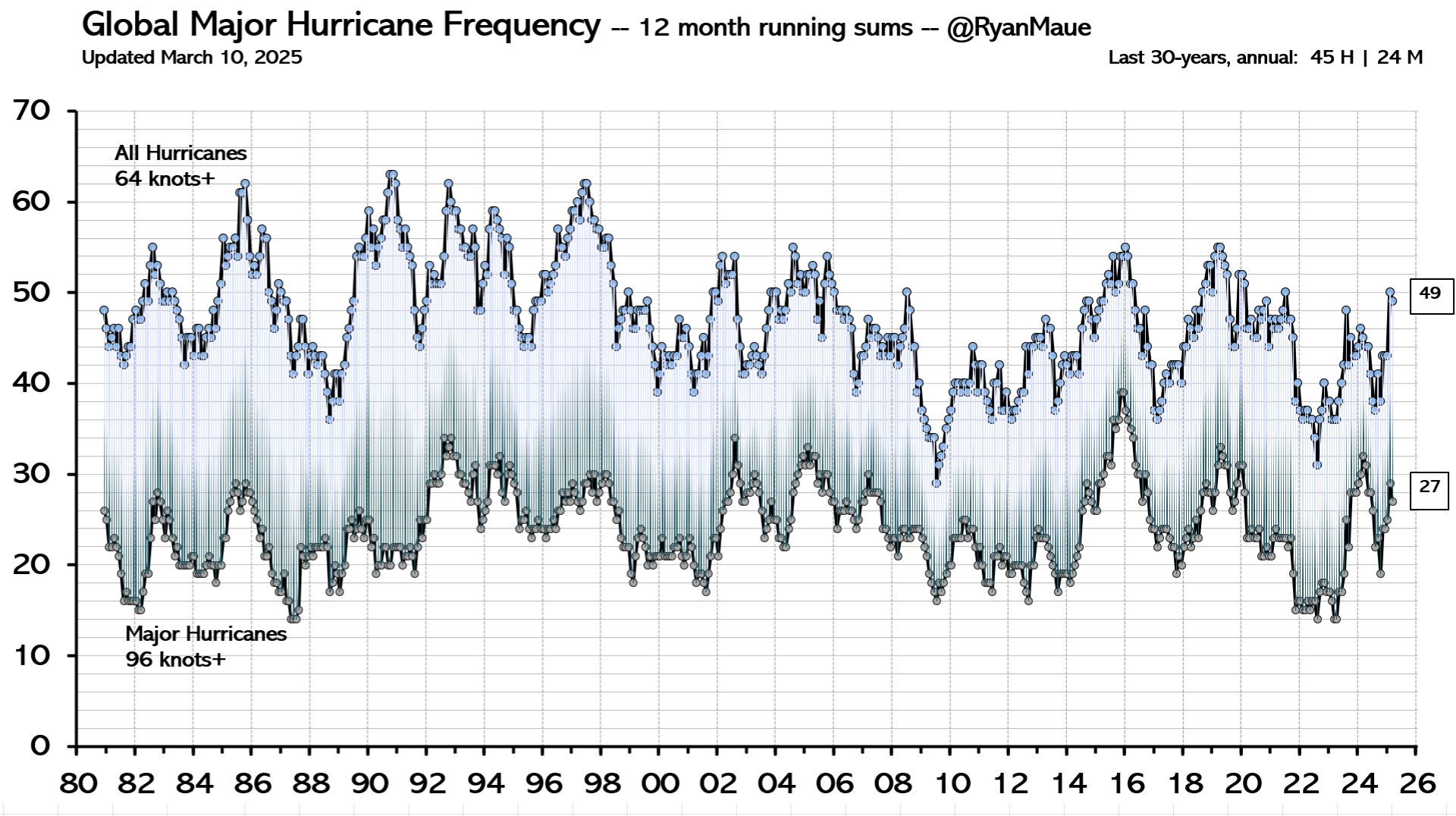
Claims that tropical storms have become more frequent are rebutted by meticulously recorded statistics. Claims that forest fires are more frequent and extensive have also been shown not to be true. My own analysis, which is based on observations and makes no pretense to scientific research, as I have had occasion to express here before, is that the honourable, if often tiresome, conservation movement, the zealots of Greenpeace and the Sierra Club, were suddenly displaced as organizers and leaders of the environmental movement by the international left, which was routed in the Cold War. Their western sympathizers demonstrated a genius for improvisation that none of us who knew them in the Cold War would have imagined that they possessed, and they took over the environmental bandwagon and converted it into a battering ram against capitalism in the name of saving the planet.

Everyone dislikes pollution and wants the cleanest air and water possible. All conscientious people want the cleanest environment that’s economically feasible. We should also aspire to the highest attainable level of accurate information before we embark on, or go any further with, drastic and hideously expensive methods of replacing fossil fuels. Large-scale disruptions to our ways of life at immense cost to consumers and taxpayers, mainly borne by those who can least easily afford it, are a mistake. We can all excuse zeal in a sincerely embraced cause, but it is time to de-escalate this discussion from its long intemperate nature of hurling thunderbolts back and forth, and instead focus on serious research that will furnish a genuine consensus. I think this was essentially what former prime minister Stephen Harper and former environment minister John Baird were advocating in what they called a ”Canadian solution” to the climate question. Since then, our policy has been fabricated by fanatics, including the prime minister, who do not wish to be confused by the facts. The inconvenient truth is now the truth that inconveniences them.

Western Europe has effectively abandoned its net-zero carbon emission goals; the world is not deteriorating remotely as quickly as Al Gore, King Charles, Tony Blair and the Liberal Party of Canada predicted. Some of the largest polluters — China, India and Russia — do not seem to care about any of this. Canada should lead the world toward a rational consensus with intensified research aiming at finding an appropriate response to the challenge. What we have had is faddishness and public frenzy. Historians will wonder why the West made war on its own standard of living in pursuit of a wild fantasy, and no immediate chance of accomplishing anything useful. We have been cheered on by the under-developed world because they seek reparations from the advanced countries, although some of them are among the worst climate offenders. It is insane. Canada should help lead the patient back to sanity.

Postscript:

So to be more constructive, let’s consider what should be proposed by political leaders regarding climate, energy and the environment.  IMO these should be the pillars:

♦  Climate change is real, but not an emergency.

♦  We must use our time to adapt to future climate extremes.

♦  We must transition to a diversified energy platform.

♦  We must safeguard our air and water from industrial pollutants.

A Rational Climate Policy

This is your brain on climate alarm. Just say N0!

Biden Climate Policies the Greatest Financial Risk

Will Hild writes at Real Clear Policy The Biden Administration Proves Itself Wrong on ‘Climate Risk’.  The report shows how the feds’ own numbers prove their net zero policies pose a far greater financial risk than the climate itself. Excerpts in italics with my bolds and added images.

Environmental activists and left-leaning political bodies have long argued that climate risk is a form of financial risk, constantly pressuring blue states and the Biden Administration to make the issue a central part of their agendas. Recently, a group of those states has started suing oil and gas companies directly in their state courts. California, for example, claims that oil companies have colluded for decades to keep clean energy unavailable. Such lawsuits are ludicrous, and my organization, Consumers’ Research, filed an amicus brief at the Supreme Court supporting an effort to stop this litigation abuse that drives up consumer costs.

These harmful suits are driven in part by the idea that climate risks are inherently financial risks. However, evidence from the Biden Administration’s own study on climate risk shows that these risks are grossly exaggerated and immaterial. In an attempt to justify its radical and onerous climate policies, the Administration inadvertently exposed the fraud behind the environmental movement.

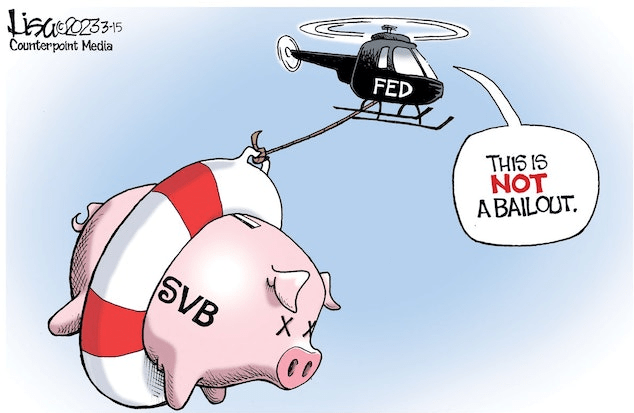
Soon after taking office, President Biden issued an executive order asking executive agencies to assess “the climate-related financial risk, including both physical and transition risks, to … the stability of the U.S. financial system.” Agency officials quickly responded to the order. Treasury Secretary Yellen announced that “climate change is an emerging and increasing threat to U.S. financial stability.” The FDIC declared that climate risk endangered the banking system. The SEC issued controversial climate risk disclosure rules, which impose massive regulatory burdens on Americans.

The problem with these new rules is that the Administration lacked
sufficient evidence to show that “climate-related financial risk” existed.

The SEC and Secretary Yellen relied on a Biden Administration report issued in 2021 by the Financial Stability Oversight Council. However, the report itself admitted that there were “gaps” in the evidence needed to support its speculative assertion that climate change would “likely” present shocks to the financial system. 

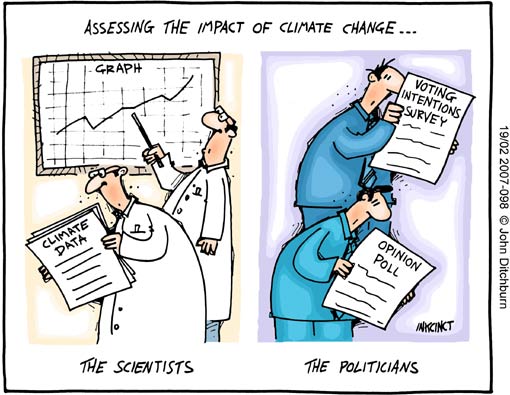
John H. Cochrane, a respected Stanford professor, slammed the Biden Administration’s “climate-related financial risk” assertions and highlighted that the Administration has not shown any serious threat to the financial system. “Financial regulators may only act if they think financial stability is at risk,” but “there is absolutely nothing in even the most extreme scientific speculations” to support the type of risk that would allow financial regulators to intervene. [See my synopsis Financial Systems Have Little Risk from Climate]

In response to criticism, the Biden Administration came up with an idea to manufacture its own evidence.  If the Federal Reserve created scenarios in which banks must simulate extreme “physical” and “transition” climate risks, these custom-designed scenarios could show a large impact to the financial system just like federal “stress tests” for banks.

To ensure that the “stresses” were sufficiently severe,
the Biden Administration manipulated the scenarios
to ensure as much stress as possible. 

For example, for “physical risk,” major banks had to simulate the effect of a storm-of-two-centuries-sized hurricane smashing into the heavily populated Northeast United States with no insurance coverage available to pay for the damage.  For “transition risk,” the government demanded a simulation in which “stringent climate policies are introduced immediately,” without any chance for banks to prepare for such policies, along with rapidly rising carbon prices. 

Despite these attempts to make the climate risk as extreme as possible, the tests utterly failed to demonstrate any significant effect.  The Administration’s study demonstrated that even under some of the most extreme climate scenarios imaginable, the probability of default on loans only increased by half a percentage point or less.   In contrast, federal bank stress tests involving true financial stresses, such as a severe recession, have resulted in probabilities of default jumping by 20 to 40 times that amount or more, leading to hundreds of billions in losses. 

The climate analyses also revealed the expected costs
of the Biden Administration’s quixotic net zero quest. 

The Biden Administration employed scenarios from the Network of Central Banks and Supervisors for Greening the Financial System (NGFS). Those climate scenarios envision the cost of carbon emissions steadily rising and reaching over $400 per ton by 2050.  Given that the average American emits about 16 tons of carbon a year, the Biden Administration’s hand-picked climate scenarios would cost the average American around $125k between now and 2050 in government mandated carbon fees.

Thus, the Biden Administration’s own bank stress test proved that climate risk is not a material financial risk, and that the biggest financial risk at issue is that the Administration’s net-zero policies would result in massive financial losses for everyday Americans. The Biden Administration should stop using lies to support their burdensome policies, and blue states should drop their punitive lawsuits against oil and gas companies.  Otherwise, the result of both efforts will be to inflict high costs on everyday Americans without any benefit.


Roots of Climate Change Distortions

Roger Pielke Jr. explains at his blog Why Climate Misinformation Persists.  Excerpts in italics with my bolds and added images. H/T John Ray

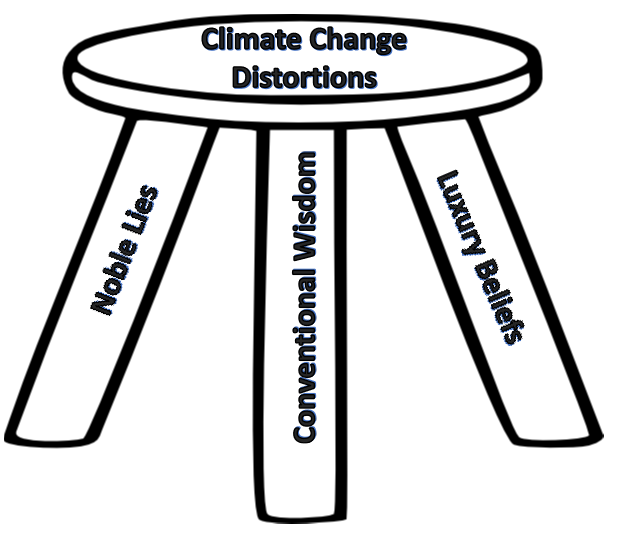
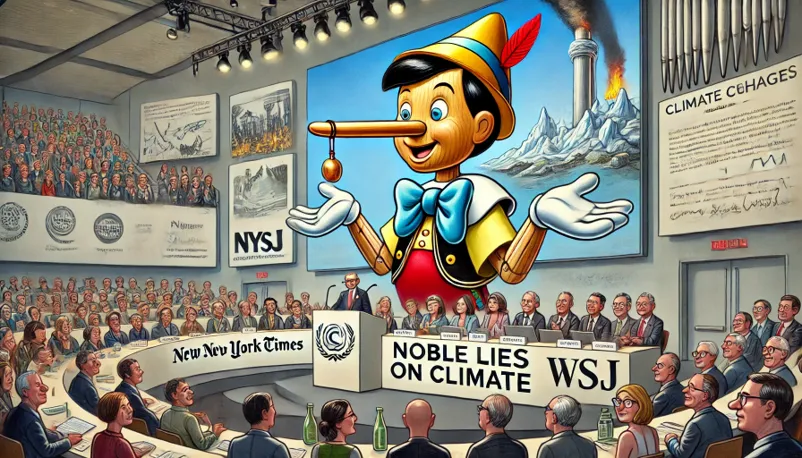
Noble Lies, Conventional Wisdom, and Luxury Beliefs

In 2001, I participated in a roundtable discussion hosted at the headquarters of the National Academy of Sciences (NAS) with a group of U.S. Senators, the Secretary of Treasury, and about a half-dozen other researchers. The event was organized by Idaho Senator Larry Craig (R-ID) following the release of a short NAS report on climate to help the then-new administration of George W. Bush get up to speed on climate change.

At the time I was a 32 year-old fresh-faced researcher about to leave the National Center for Atmospheric Research for a faculty position across town at the University of Colorado. I had never testified before Congress or really had any high-level policy engagement.

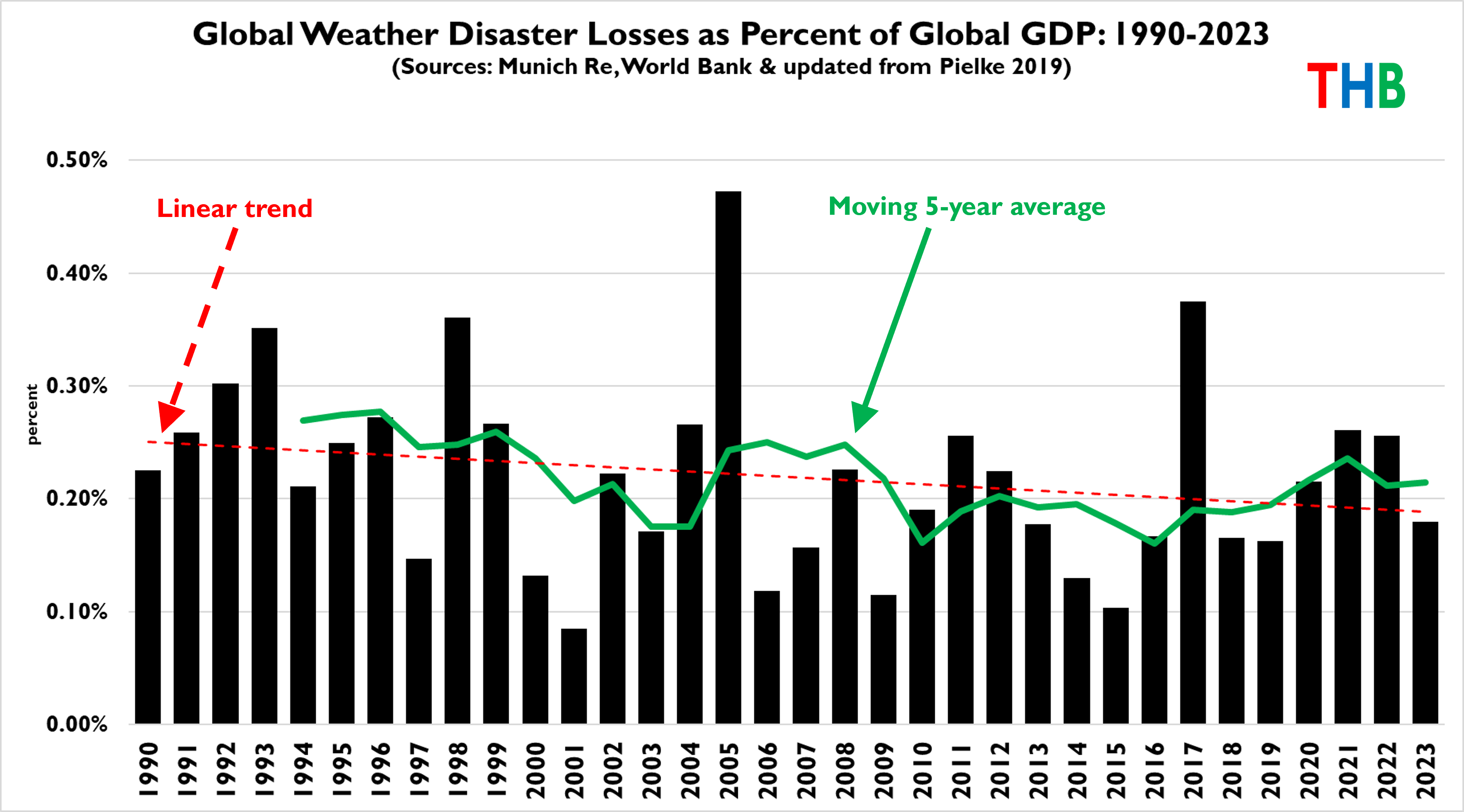
When the roundtable was announced, I experienced something completely new in my professional career — several of my much more senior colleagues contacted me to lobby me to downplay or even to misrepresent my research on the roles of climate and society in the economic impacts of extreme weather. I had become fairly well known in the atmospheric sciences research community back then for our work showing that increasing U.S. hurricane damage could be explained entirely by more people and more wealth.

One colleague explained to me that my research, even though scientifically accurate, might distract from efforts to advocate for emissions reductions:

“I think we have a professional (or moral?) obligation to be very careful what we say and how we say it when the stakes are so high.”

At the time, I wrote that the message I heard was that the “ ends justify means or, in other words, doing the “right thing” for the wrong reasons is OK” — even if that meant downplaying or even misrepresenting my own research.

I have thought about that experience over the past few weeks as I have received many comments on the first four installments of the THB series Climate Fueled Extreme Weather (Part 1Part 2Part 3Part 4). One of the most common questions I’ve received asks why it is that the scientific assessments of the Intergovernmental Panel on Climate Change (IPCC) are so different than what is reported in the media, proclaimed in policy, and promoted by the most public-facing climate experts. And, why can’t that gap be closed?

Over the past 23 years, I have wondered a lot myself about this question — not just how misinformation arises in policy discourse (we know a lot about that), but why it is that the expert climate community has been unable or unwilling to correct rampant misinformation about extreme weather, with some even promoting that misinformation.

Obviously, I don’t have good answers, but I will propose three inter-related explanations that help me to make sense of these dynamics — the noble lie, conventional wisdom, and luxury beliefs.

The Noble Lie

The most important explanation is that many in the climate community — like my senior colleague back in 2001 — appear to believe that achieving emissions reductions is so very important that its attainment trumps scientific integrity. The ends justify the means. They also believe that by hyping extreme weather, they will make emissions reductions more likely (I disagree, but that is a subject for another post).

I explained this as a “fear factor” in The Climate Fix:

Typically, the battle over climate-change science focused on convincing (or, rather, defeating) those skeptical has meant advocacy focused on increasing alarm. As one Australian academic put it at a conference at Oxford University in the fall of 2009: “The situation is so serious that, although people are afraid, they are not fearful enough given the science. Personally I cannot see any alternative to ramping up the fear factor.” Similarly, when asked how to motivate action on climate change, economist Thomas Schelling replied, “It’s a tough sell. And probably you have to find ways to exaggerate the threat. . . [P]art of me sympathizes with the case for disingenuousness. . . I sometimes wish that we could have, over the next five or ten years, a lot of horrid things happening—you know, like tornadoes in the Midwest and so forth—that would get people very concerned about climate change. But I don’t think that’s going to happen.” From the opening ceremony of the Copenhagen climate negotiations to Al Gore’s documentary, An Inconvenient Truth, to public comments from leading climate scientists, to the echo-chambers of the blogosphere, fear and alarm have been central to advocacy for action on climate change.

It’s just a short path from climate fueled extreme weather
to the noble lie at the heart of fear-based campaigns.

Conventional Wisdom

The phrase was popularized by John Kenneth Galbraith in his 1958 book, The Affluent Society, where he explained:

It will be convenient to have a name for the ideas which are esteemed at any time for their acceptability, and it should be a term that emphasizes this predictability. I shall refer to these ideas henceforth as the conventional wisdom.

The key point here is “acceptability” regardless of an idea’s conformance with truth. Conventional wisdom is that which everyone knows to be true whether actually true or not. Examples of beliefs that at one time or another were/are conventional wisdom include — Covid-19 did not come from a lab, Sudafed helps with hay fever, spinach is high in iron, and climate change is fueling extreme weather.

As the noble lie of climate fueled extreme weather has taken hold as conventional wisdom, few have been willing to offer correctives — Though there are important exceptions out in plain sight, like the IPCC Working Group 1 and the NOAA GFDL Hurricanes and Global Warming page.

Actively challenging conventional wisdom has professional and social costs. For instance, those who suggested that Covid-19 may have had a research-related origin were labeled conspiracy theorists and racists, those who suggested that President Biden was too old to serve another term were called Trump enablers, and those who accurately represent the science of climate and extreme weather are tarred as climate deniers and worse.

A few years ago I wrote an op-ed for a U.S. national newspaper and included a line about how hurricane landfalls had not increased in the U.S. in frequency or in their intensity since at least 1900. The editor removed the sentence and told me that while the statement was correct, most readers wouldn’t believe it and that would compromise the whole piece.

When noble lies become conventional wisdom,
they become harder to correct.

Luxury Beliefs

Yascha Mounk offers a useful definition:

Luxury beliefs are ideas professed by people who would be much less likely to hold them if they were not insulated from, and had therefore failed seriously to consider, their negative effects.

After all, what is the real harm if people believe in climate fueled extreme weather? If people believe that the extreme weather outside their window or on their feeds make aggressive climate policies more compelling, then that’s a good thing, right?

Surely there can only be positive outcomes that result from promoting misunderstandings of climate and extreme weather at odds with evidence and scientific assessments?

Well, no.

Last year I attended a forum at Lloyd’s of London — the event was held under the Chatham House rule, and in the event, later reported by the Financial Times, the company made a surprising admission contrary to the conventional wisdom (emphasis added):

Lloyd’s of London has warned insurers that the full impact of climate change has yet to translate into claims data despite annual natural catastrophe losses borne by the sector topping $100bn.

Insurance prices are surging as companies look to repair their margins after years of significant losses from severe weather to insured properties, exacerbated by inflation in rebuild costs. A warming planet has been identified by insurance experts and campaigners alike as a key factor.

But at a private event last month, one executive at the corporation that oversees the market told underwriters that it has not yet seen clear evidence that a warming climate is a major driver in claims costs.

It turns out that misunderstandings of the science of climate and extreme weather actually lead to unnecessary costs for people whose jobs involve making decisions about climate and extreme weather. Those unnecessary costs often trickle down to ordinary people. Kudos to Lloyd’s for calling things straight, even if only in a private forum — That is of course their professional responsibility.

Conclusion

In a classic paper in 2012, the late Steve Rayner explained that some forms of social ignorance are created and maintained on purpose:

To make sense of the complexity of the world so that they can act, individuals and institutions need to develop simplified, self-consistent versions of that world. The process of doing so means that much of what is known about the world needs to be excluded from those versions, and in particular that knowledge which is in tension or outright contradiction with those versions must be expunged. This is ‘uncomfortable knowledge’.

Climate fueled extreme weather is perhaps the canonical example
of dysfunctional socially constructed ignorance.  It may be
uncorrectable — a falsehood that persists permanently.

Here at THB, I am an optimist that science and policy are self-correcting, even if that takes a while. That means that the series on climate fueled extreme weather will keep going — Have a great weekend!


Fantasies of Clever Climate Policies

Chris Kenny writes at The Australian Facts at a premium in blustery climate debate. Excerpts in italics from text provided by John Ray at his blog, Greenie Watch.  My bolds and added images.

Collective Idiocy From Intellectual Vanity

We think we are so clever. The conceit of contemporary humankind is often unbearable.  Yet this modern self-regard has generated a collective idiocy, an inane confusion between feelings and facts, and an inability to distinguish between noble aims and hard reality.

This preference for virtue signalling over practical action can be explained only by intellectual vanity, a smugness that over-estimates humankind’s ability to shape the world it inhabits.

As a result we have a tendency to believe we are masters of the universe, that we can control the climate and regulate natural disasters. Too lazy or spoiled to weigh facts and think things through, we are more susceptible than ever to mass delusion.

We have seen this tendency play out in deeply worrying ways, such as the irrational belief in the communal benefits of Covid vaccination despite the distinct lack of scientific evidence. Too many people just wanted to believe the vaccine had this thing beaten.

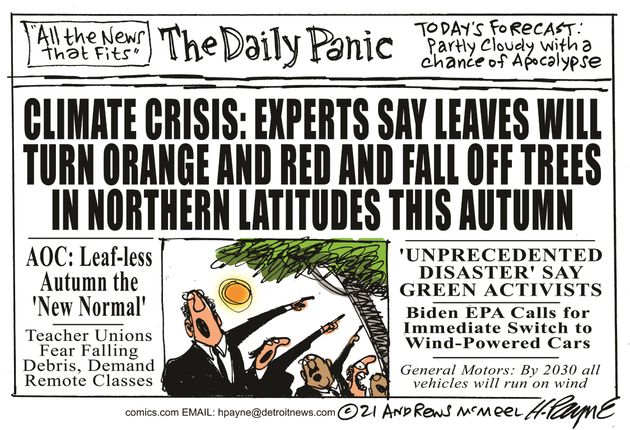
Still, there is no area of public debate where rational thought is more readily cast aside than in the climate and energy debate. This is where alarmists demand that people “follow the science” while they deploy rhetoric, scare campaigns and policies that turn reality and science on their heads.

This nonsense is so widespread and amplified by so many authoritative figures that we have become inured to it. Teachers and children break from school to draw attention to what the UN calls a “climate emergency” as the world lives through its most populous and prosperous period in history, when people are shielded from the ill-effects of weather events better than they ever have been previously.

Politicians tell us in the same breath that producing clean energy is the most urgent and important task for the planet and reject nuclear energy, the only reliable form of emissions-free energy. The activists argue that reducing emissions is so imperative it is worth lowering living standards, alienating farmland, scarring forests and destroying industries, but it is not worth the challenge of boiling water to create energy-generating steam by using the tried and tested technology of nuclear fission.

Our acceptance of idiocy, unchecked and unchallenged, struck me in one interview this week given by teal MP Zali Steggall. In many ways it was an unexceptional interview; there are politicians and activists saying this sort of thing every day somewhere, usually unchallenged.

Steggall was preoccupied with Australia’s emissions reduction targets. “If we are going to be aligned to a science-based target and keep temperatures as close to 1.5 degrees as we can, we must have a minimum reduction of 75 per cent by 2035 as an interim target,” she said.

Steggall then patronised her audience by comparing meeting emissions targets to paying down a mortgage. The claim about controlling global temperatures is hard to take seriously, but to be fair it is merely aping the lines of the UN, which argues the increase in global average temperatures can be held to 1.5 degrees with emissions reductions of that size – globally.

We could talk all day about the imprecise nature of these calculations, the contested scientific debate about the role of other natural variabilities in climate, and the presumption that humankind, through policy imposed by a supranational authority, can control global climate as if with a thermostat. The simplistic relaying of this agenda as central to Australian policy decisions was not the worst aspect of Steggall’s presentation.

“The Coalition has no policy, so let’s be really clear, they are taking Australia out of the Paris Agreement if they fail to nominate an improvement with a 2035 target,” Steggall lectured, disingenuously.

This was Steggall promulgating the central lie of the national climate debatethat Australia’s emissions reduction policies can alter the climate. It is a fallacy embraced and advocated by Labor, the Greens and the teals, and which the Coalition is loath to challenge for fear of being tagged into a “climate denialism” argument.

It is arrant nonsense to suggest our policies can have any discernible effect on the climate or “climate risk”. Any politician suggesting so, directly or by implication, is part of a contemporary, fake-news-driven dumbing down of the public square, and injecting an urgency into our policy considerations that is hurting citizens already with high electricity prices, diminished reliability and a damaged economy.

Steggall went on to claim we were feeling the consequences of global warming already. “And for people wondering ‘How does that affect me?’, just look at your insurance premiums, our insurance premiums around Australia are going through the roof,” she extrapolated, claiming insurance costs were keeping people out of home ownership. “This is not a problem for the future,” Steggall stressed, “it is problem for now.”

It is a problem all right – it is unmitigated garbage masquerading as a policy debate. Taking it to its logical conclusion, Steggall claims if Australia reduced its emissions further we would lower the risk of natural disasters, leading to lower insurance premiums and improved housing affordability – it is surprising that world peace did not get a mention.

Mind you, these activists do like to talk about global warming as a security issue. They will say anything that heightens fears, escalates the problem and supports their push for more radical deindustrialisation.

Our national contribution to global emissions
is now just over 1 per cent and shrinking.

Australia’s annual emissions total less than 400 megatonnes while China’s are rising by more than that total each year and are now at 10,700Mt or about 30 times Australia’s. While our emissions reduce, global emissions are increasing. We could shut down our country, eliminating our emissions completely, and China’s increase would replace ours in less than a year.

So, whatever we are doing, it is not changing and cannot change the global climate. Our national chief scientist, Alan Finkel, clearly admitted this point in 2018, even though he was embarrassed by its implications in the political debate. Yet the pretence continues.

And before critics suggest I am arguing for inaction, I am not. But clearly, the logical and sensible baseline for our policy consideration should be a recognition that our national actions cannot change the weather. Therefore we should carefully consider adaptation to measured and verified climate change, while we involve ourselves as a responsible nation in global negotiations and action.

Obviously, we should not be leading that action but acting cautiously to protect our own interests and prosperity.

It is madness for us to undermine our cheap energy advantage to embark on a renewables-plus-storage experiment that no other country has dared to even try, when we know it cannot shift the global climate one iota. It is all pain for no gain.

Yet that is what this nation has done. So my question today is what has happened to our media, academia, political class and wider population so that it allows this debate and policy response to occur in a manner that is so divorced from reality?

Are we so complacent and overindulged that we accept post-rational debate to address our post-material concerns? Even when it is delivering material hardship to so many Australians and jeopardising our long-term economic security?

Should public debate accept absurd baseline propositions such as the idea that our energy transition sacrifice will improve the weather and reduce natural disasters, simply because they are being argued by major political groupings or the UN? Or should we not try to impose a dose of reality and stick to the facts?

This feebleness of our public debate has telling ramifications – there is no way this country could have embarked on the risky, expensive and doomed renewables-plus-storage experiment if policies and prognostications had been subject to proper scrutiny and debate.

Our media is now so polarised that the climate activists of Labor, the Greens and the teals are able to ensure their nonsensical advocacy is never challenged, and the green-left media, led by the publicly funded ABC, leads the charge in spreading misinformation.

Clearly, we are not as clever as we think. Our children need us to wise up.

Nine July Days Break Wind Power Bubble

Parker Gallant reports at his blog  Nine July Days Clearly Demonstrate Industrial Wind Turbines Intermittent Uselessness.  Excerpts in italics with my bolds and added image. H/T John Ray

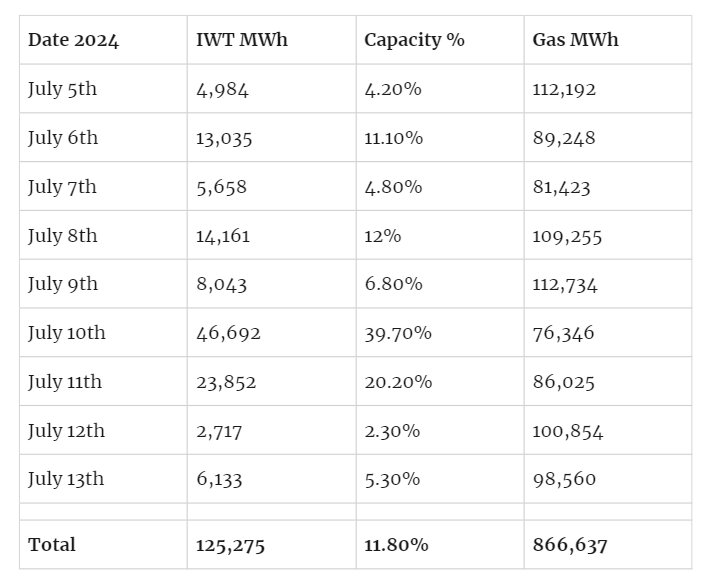
The chart below uses IESO data for nine (9) July days and clearly demonstrates the vagaries of those IWT (Industrial Wind Turbines) which on their highest generation day operated at 39.7% of their capacity and on their lowest at 2.3%!  As the chart also notes, our natural gas plants were available to ramp up or down to ensure we had a stable supply of energy but rest assured IESO would have been busy either selling or buying power from our neighbours to ensure the system didn’t crash. [Independent Electricity System Operator for Ontario, Canada]

The only good news coming out of the review was that IESO did not curtail any wind generation as demand was atypical of Ontario’s summer days with much higher demand then those winter ones.

Days Gone By:         

Back and shortly after the McGuinty led Ontario Liberal Party had directed IESO to contract IWT as a generation source; theirAnnual Planning Outlook would suggest/guess those IWT would generate an average of 15% of their capacity during our warmer months (summer) and 45% of their capacity during our colder months (winter). For the full year they would be projecting an average generation of 30% of their capacity and presumably that assumption was based on average annual Ontario winds!

The contracts for those IWT offered the owners $135/MWh so over the nine days contained in the chart below those 125,275 MWh generated revenue for the owners of $16,912,125 even though they only generated an average of 11.8% of their capacity.  They are paid despite missing the suggested target IESO used because they rank ahead of most of Ontario’s other generation capacity with the exception of nuclear power due to the “first-to-the-grid” rights contained in their contracts at the expense of us ratepayers/taxpayers!

Should one bother to do the math as to the annual costs based on the 15% summer and 45% winter IESO previously used it would mean annual generation from those IWT in the summer would be about 3.9 TWh and 11.7 TWh in the winter with an annual cost of just over $2.1 billion for serving up frequently unneeded generation which is either sold off at a loss or curtailed!

Replacing Natural Gas Plants with BESS:

Anyone who has followed the perceived solution of ridding the electricity grid of fossil fuels such as natural gas will recognize ENGO [Environmental Non-Governmental Organizations] have convinced politicians that battery energy storage systems are the solution!  Well is it, and how much would Ontario have needed over those nine charted July days? One good example is July 9th and 10th and combining the energy generated by natural gas from the chart over those two days is the place to start. To replace that generation of 221,989 MW with BESS units the math is simple as those BESS units are reputed to store four (4) times their rated capacity. Dividing the MWh generated by Ontario’s natural gas generators by four over those two days therefore would mean we would need approximately 55,500 MW of BESS to replace what those natural gas plants generated.  That 55,500 MW of BESS storage is over 27 times what IESO have already contracted for and add huge costs to electricity generation in the province driving up the costs for all ratepaying classes. The BESS 2034 MW IESO already contracted are estimated to cost ratepayers $341 million annually meaning 55,500 MW of BESS to the grid would add over $9 billion annually to our costs to hopefully avoid blackouts!

The other interesting question is how would those 55,500 MW be able to recharge to be ready for future high demand days perhaps driven by EV recharging or those heating and cooling pumps operating?  The wind would have to be blowing strong and the sun would need to be shining but, as we know, both are frequently missing so bring us blackouts seems to be the theme proposed by those ENGO and our out of touch politicians and bureaucrats!

Just one simple example as to where we seem to be headed
based on the insane push to reach that “net-zero” emissions target!

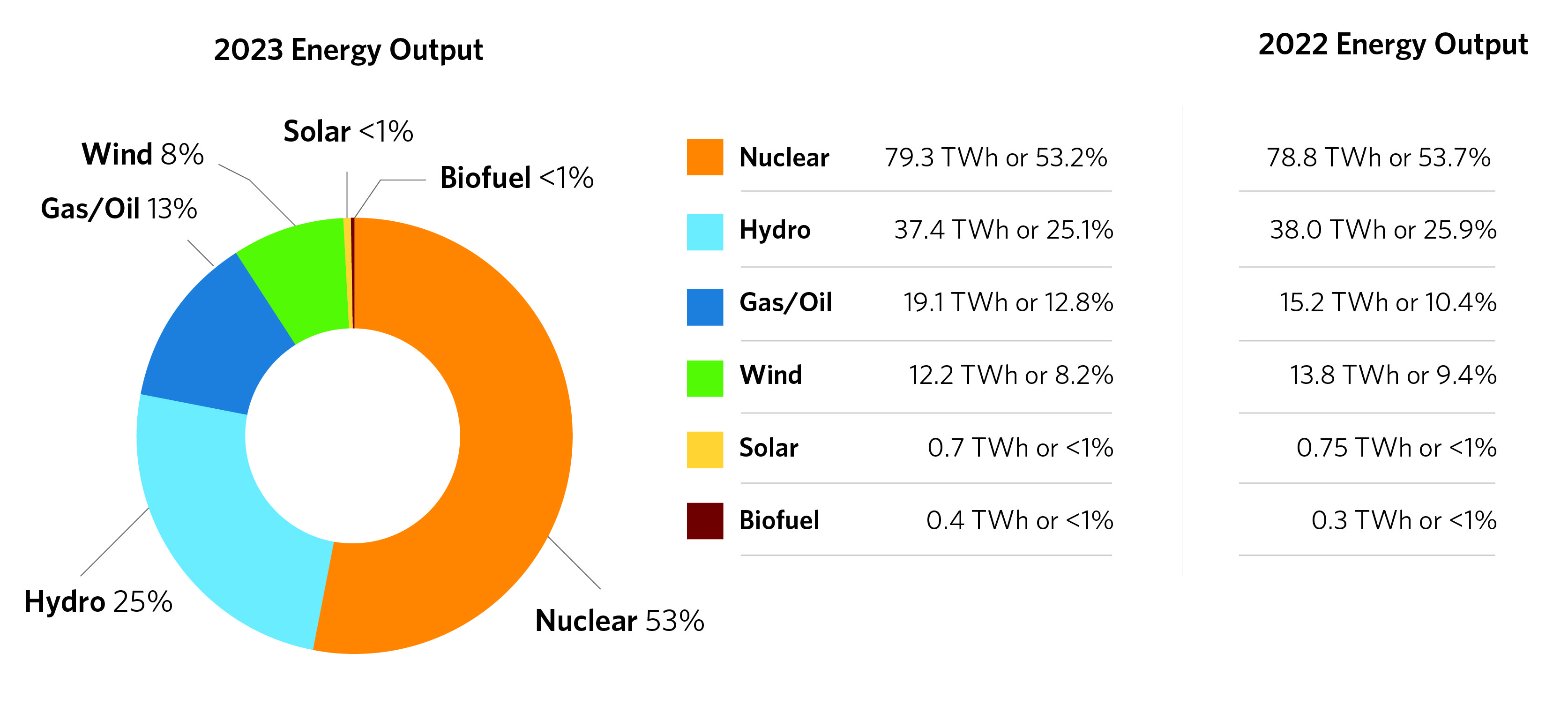
IESO Ontario Electrical Energy Output by Source in 2023

Extreme Examples of Missing IWT generation:

What the chart doesn’t contain, or highlight is how those 4,900 MW of IWT capacity are undoubtedly consuming more power than they are generating on many occasions and the IESO data for those nine days contained some clear examples but less than a dozen are highlighted here!

To wit:

  • July 5th at Hour 11 they managed to deliver only 47 MWh!
  • July 7th at Hours 8, 9, and 10 they respectively generated 17 MWh, 3 MWh and 18 MWh! 
  • July 9th at Hour 9 they delivered 52 MWh!
  • July 12th at Hours 8, 9, 10 and 11 they respectively generated 33 MWh, 13 MWh, 13 MWh and 35 MWh. 
  • July 13th at Hours 9 and 10 they managed to generate 19 MWh and 39 MWh respectively! 

Conclusion:

Why politicians and bureaucrats around the world have been gobsmacked by those peddling the reputed concept of IWT generating cheap, reliable electricity is mind-blowing as the Chart coupled with the facts, clearly shows for just nine days and only looking at Ontario!

Much like the first electric car invented in 1839, by a Scottish inventor named Robert Davidson, the first electricity generated by a wind turbine came from another Scottish inventor, Sir James Blyth who in 1887 did exactly that. Neither of those old “inventions” garnered much global acceptance until those ENGO like Michael Mann and Greta arrived on the scene pontificating about “global warming” being caused by mankind’s use of fossil fuels!

As recent events have demonstrated both EV and IWT are not the panacea to save the world from either “global warming” or “climate change” even though both have “risen from the dead” due to the “net-zero” push by ENGO.

The time has come for our politicians to wake up and recognize they are supporting more then century old technology focused to try and rid the world of CO 2 emissions.  They fail to see without CO 2 mankind will be setback to a time when we had trouble surviving!

Stop the push and stop using ratepayer and taxpayer dollars for the fiction created by those pushing the “net-zero” initiative. That initiative is actually generating more CO 2 such as the 250 tons of concrete used for just one 2 MW IWT installation!   Reality Bites!

Over the Top Guterres Claims Oil and Gas Ads Cause Global Warming

A recent post below highlights the many colorful falsehoods perpetrated by UN Chief Guterres.  Now he takes his nonsensical word salads to a new level, referring to traditional energy companies as “Godfathers of Climate Chaos,”  a label better suited to himself.  After all, those companies are only filling the demand by billions of people who depend on affordable reliable energy.  What economic demand is Guterres filling?

His lecture was reported many places, including an article at Al Jazeera ‘Godfathers of climate chaos’: UN chief calls for ban on fossil fuel ads.  Excerpts in italics with my bolds and added images.

Antonio Guterres urges a 30 percent cut in global fossil fuel
production and use by 2030 amid record high temperatures.

“The godfathers of climate chaos – the fossil fuel industry – rake in record profits and feast off trillions in taxpayer-funded subsidies,” he said.

Drawing a comparison with many governments’ restrictions on advertising for harmful substances like tobacco, he said, “I urge every country to ban advertising from fossil fuel companies, and I urge news media and tech companies to stop taking fossil fuel advertising.”

Carbon dioxide emissions from burning fossil fuels – the main cause wrongly claimed to cause climate change – hit a record high last year despite global agreements designed to curb their release and a rapid expansion in renewable energy. [My edit: see 2024 Update: Fossil Fuels ≠ Global Warming. ]

Coal, oil and gas still provide more than three-quarters of the world’s energy, with global oil demand remaining strong.

Of course Guterres can urge all he wants, without any accountability for his words, since the UN has no authority to decide who agencies take on as advertising clients. It is all bluff and bluster, threatening as though a mafia boss lacking enforcers. Even so, the evidence does not support hydrocarbon fuel emissions as causing temperature changes.  Moreover, there’s no reason to believe banning advertising of such products will reduce the demand, which comes from real people purchasing with their own money in free markets.

Background Post UN Chief Wins Junk Science Award

At Financial Post’s Junk Science Week, Terence Corcoran highlights the hysterical alarmist statements by the UN chief promoting IPCC agenda, the article being The UN emperor has no science.  Excerpts in italics with my bolds and added images.H/T John Ray.

Guterres Mangles Metaphors To Pitch Extreme Climate Alarmism

UN secretary General Antonio Guterres addresses the media during a visit to the UN office in Nairobi, Kenya, May 3, 2023. © Provided by Financial Post

History will record that the United Nations has established itself as the greatest organizational perpetrator of junk science in modern times, if not of all time, with current UN Secretary-General Antonio Guterres destined to be singled out for his personal contribution to the distorted UN climate alarmism.

Since his appointment in 2019, Guterres and the UN have lived up to our standard formal definition of junk science. It occurs when:

    • scientific facts are distorted,
    • risk is exaggerated (or underplayed), and
    • “the science” adapted and warped by politics and ideology to serve another agenda.

That definition encompasses a wide range of activities among scientists, NGOs, politicians, journalists, media outlets, cranks and quacks who manipulate science for political, environmental, economic and social purposes. It also nicely captures the entire United Nations’ climate crusade and the work of its institutional creation, the Intergovernmental Panel on Climate Change (IPCC).

But no single official can top Guterres as a purveyor of IPCC hype and doom, a living embodiment of Hans Christian Andersen’s  fabled emperor who believes he is fully, stylishly dressed but in fact has no clothes.

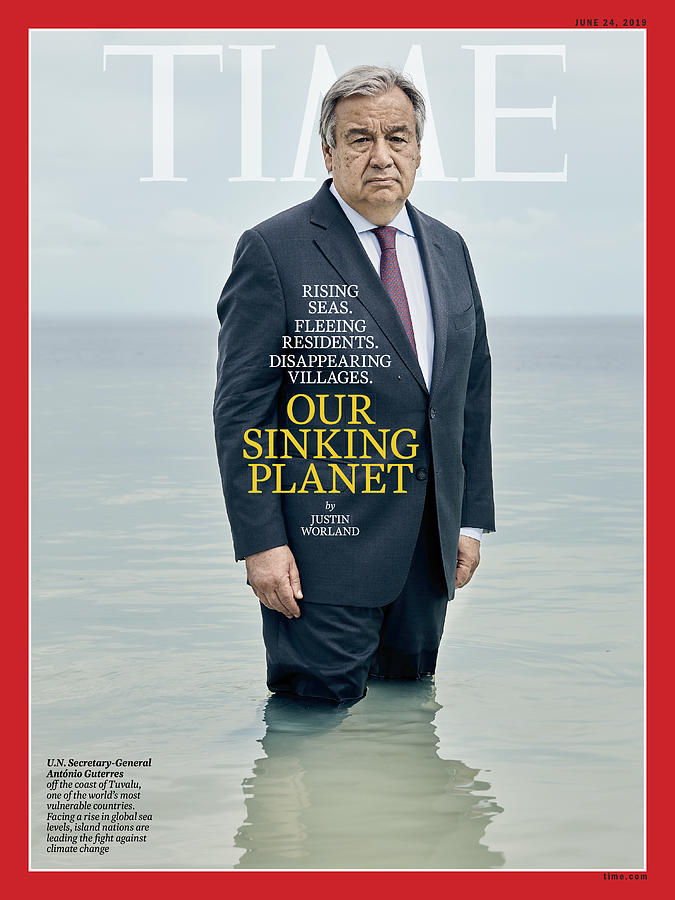
Our Sinking Planet – Antonio Guterres is a photograph by Photograph by Christopher Gregory for TIME which was uploaded on July 21st, 2020.

Guterres, a former Socialist Party prime minister of Portugal (1995-2002) and president of the Socialist International (1999-2005), was in typically ridiculous form on June 5th when he  delivered a speech  at the Museum of Natural History in Manhattan, at an event billed as “A Moment of Truth” and a “special address on climate action.” Guterres talked about a planet on a “highway to climate hell,”  rehashing a line he used in 2022 in Egypt at the COP27 climate conference: “We are on a highway to climate hell with our foot still on the accelerator.”

Guterres also has no qualms about mixing and mangling metaphors. He simultaneously told the Manhattan audience that humans are “like the meteor that wiped out the dinosaurs, we’re having an outsized impact. In the case of climate, we are not the dinosaurs. We are the meteor. We are not only in danger. We are the danger.”

The longer Guterres rambles on, the more confusing, contradictory and senseless the metaphors become:

“We are playing Russian roulette with our planet.  We need an exit ramp off the highway to climate hell. And the truth is … we have control of the wheel.”

Other Guterres’ climate spins include: “Humanity has opened the gates of hell” and “become a weapon of mass extinction.” And: “We must go into emergency mode and put out this five-alarm fire.”

Is Guterres describing reality — or the content of a new AI computer game in which some crazed teenaged human monster drives a flaming meteor through the ozone layer, knocking off dinosaurs before crashing onto a highway and plowing into a Russian Museum of Political Roulette just outside the Gates of Hell?

As UN Secretary-General, Guterres sits atop a hierarchy of agencies such as the IPCC climate science megaplex, which was created  in 1988 by two other UN agencies, the World Meteorological Organization (WMO) and the United Nations Environment Program (UNEP). UNEP was cobbled together in 1972 as the  brainchild of Maurice Strong , the late Canadian global environmental schemer, who famously mused about a fictional environmental crisis that leads a group of global insiders to decide the only hope for the planet is “that the industrialized civilizations collapse.” The current “de-growth” movement is a version of deindustrialization that reflects Guterres’ off-ramp from the highway to hell. In fact, the word “de-growth”  appears  28 times in the IPCC’s sixth and latest Assessment Report .

With these UN agencies as his guide, Guterres’ verbal jumble of science statements is no better than his mixed metaphors. His abuse of climate and environmental facts has often been commented upon, including in a YouTube video titled “Who is Antonio Guterres?,” posted earlier this year by Ottawa journalist John Robson on his Climate Discussion Nexus site. Robson reviews and highlights  some of the garbled inaccuracies and misrepresentations Guterres routinely cranks out.

For instance: “Climate-related natural disasters are becoming more frequent, more deadly, more destructive with growing human and financial cost.”  Not true . And: “The number of weather, climate and water-related disasters has increased by a factor of five over the past 50 years.”  Also not true .

When it comes to policies to deal with his fantastic vision of planetary destruction, Guterres aligns with Maurice Strong’s de-growth agenda. In his Manhattan speech, he repeated the UN call for a “fossil-fuel phase-out” since “economic logic makes the end of the fossil fuel age inevitable.” He urged financial institutions to “stop bankrolling” fossil fuel industries. “Fossil fuels are not only poisoning our planet,” he told bankers, “they’re toxic for your brand.”

The planet would be much better off if national governments stopped bankrolling Guterres and the United Nations and their constant poisoning of our science, economics and politics.