Snappy Answers to Energy Questions

Snappy answers to energy questions

This election season candidates are getting lots of energy-related questions. Here are pro-freedom, pro-human answers to some of the most popular ones. Alex Epstein

♦  What’s your policy on energy, environment, and climate?

I believe in energy freedom: the freedom to use all forms of energy, with laws against emissions and practices that are significantly harmful and reasonably preventable.

5 key energy freedom policies are:

1. Liberate responsible development
2. End preferences for unreliable electricity
3. Reform air and water emissions standards to incorporate cost-benefit analysis
4. Reduce long-term CO2 emissions via liberating innovation
5. Decriminalize nuclear¹

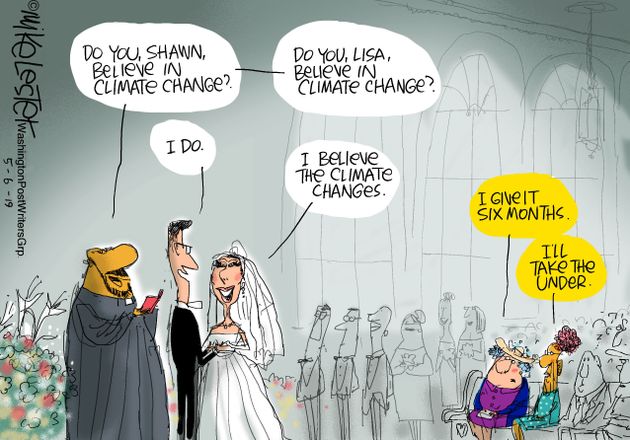
♦  Do you believe in climate change?

I believe in climate change, not climate catastrophe.

The world has warmed ~1° C in the last 170 years. Humans have some influence. But because we are so good at mastering climate, climate disaster deaths fell 98% over the last century.²

♦  Are you a “climate denier”?

I’m a climate thinker.

I recognize that climate is ever-changing, that humans have some influence, and that humans with plentiful energy can master virtually any climate. That’s why, as CO2 levels have gone up, climate disaster deaths have plummeted.

♦  What’s your plan to deal with CO2 emissions?

My plan is:
1. Recognize that CO2 emissions reduction can only be achieved humanely and practically a) long-term and b) through developing globally cost-competitive alternatives.
2. Liberate nuclear and other promising alternatives.

♦  Why did gasoline prices get so high this year?

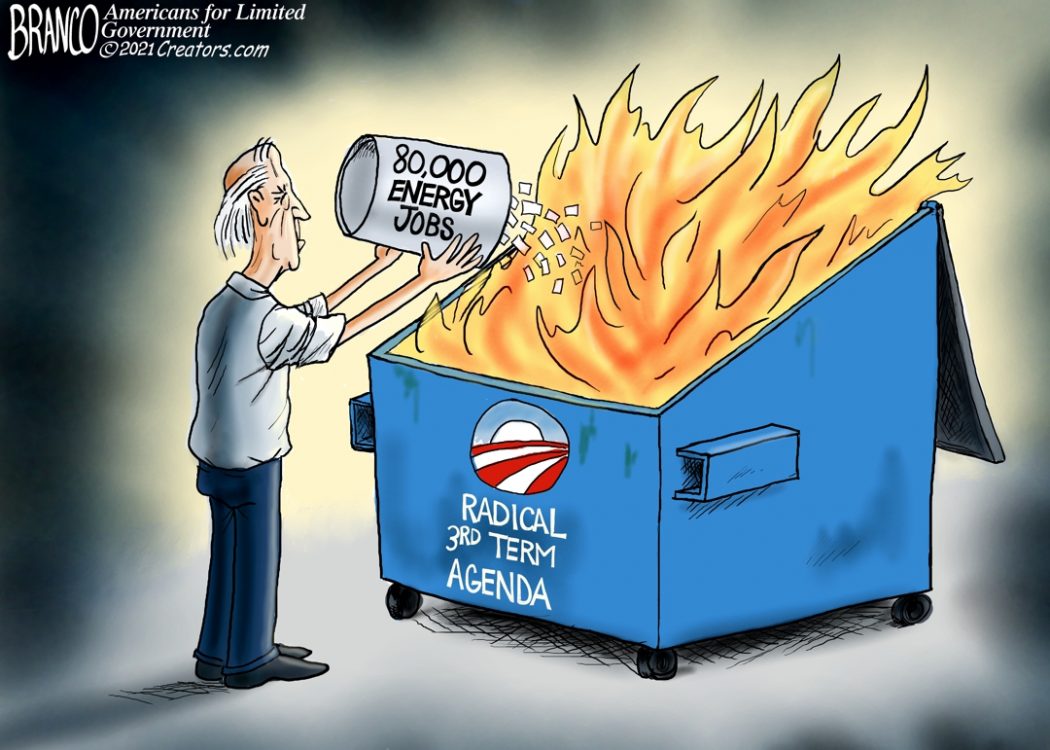
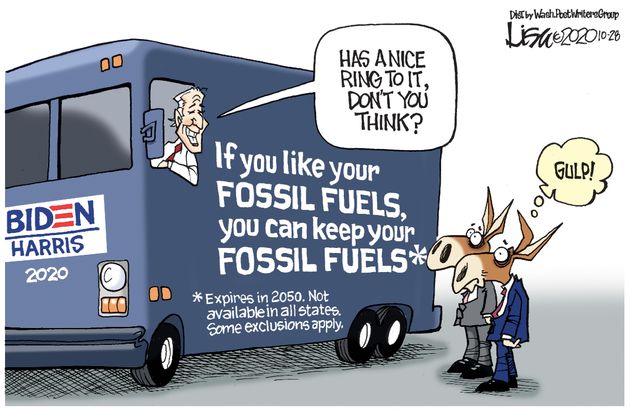
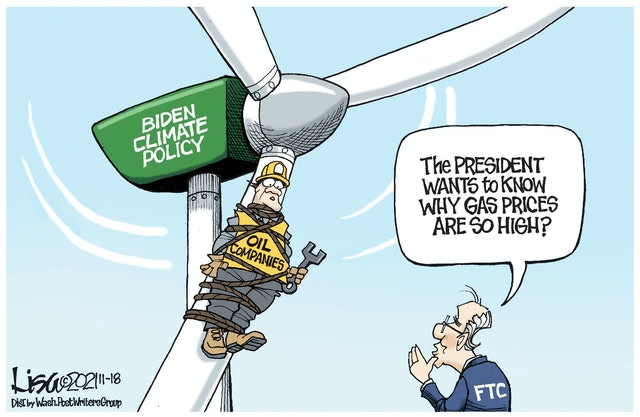
While multiple factors, including the Russian invasion of Ukraine, played a role, the fundamental cause is US and international anti-oil policies that prevent supply from rapidly increasing to meet demand.³

♦  Why don’t oil and gas companies drill more despite record profits?

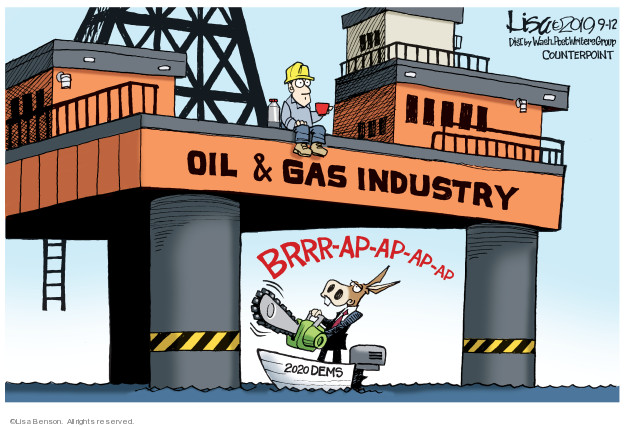
Oil and gas would like to profit much more from currently high prices but it is difficult to increase drilling short-term under the present regulatory regime and investors are scared about more government punishment.⁴

♦  Why is Europe in a far worse energy crisis than we are?

Europe has taken anti-fossil-fuel policies further. For example, while we have allowed fracking to produce abundant energy Europe has largely banned it.

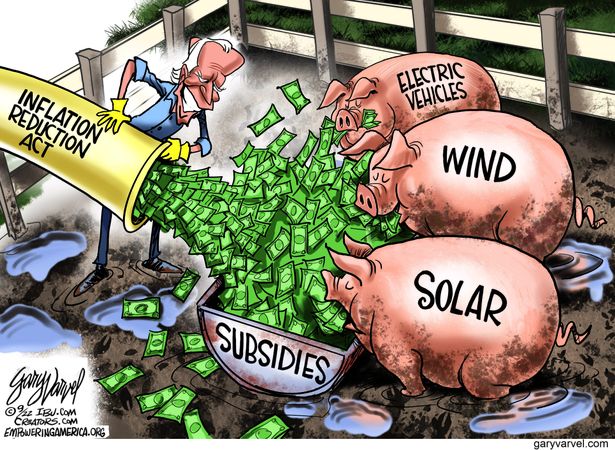
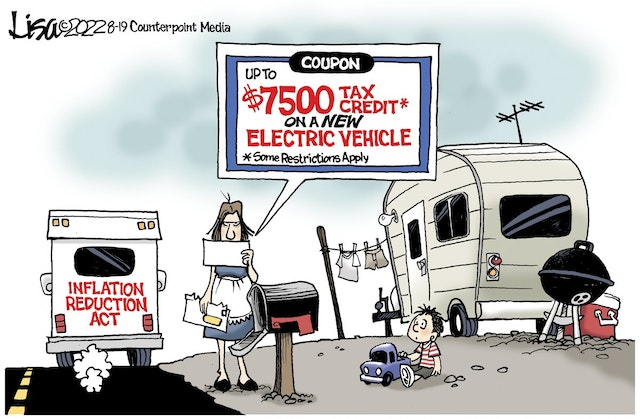
With the “Inflation Reduction Act” we are getting closer to Europe.⁵

♦  Do you believe in “all of the above?”

No, I believe in “always the best.”

We should always use the best form of energy for the job. E.g., we don’t use animal dung for energy in the US, even though it’s “one of the above.”

The best source of energy in any situation is what business and consumers choose as best on a free market with reasonable anti-pollution laws.

If something can’t compete on these terms then we shouldn’t use it—whether it’s animal dung, solar, or wind.

♦  What’s your position on solar and wind?

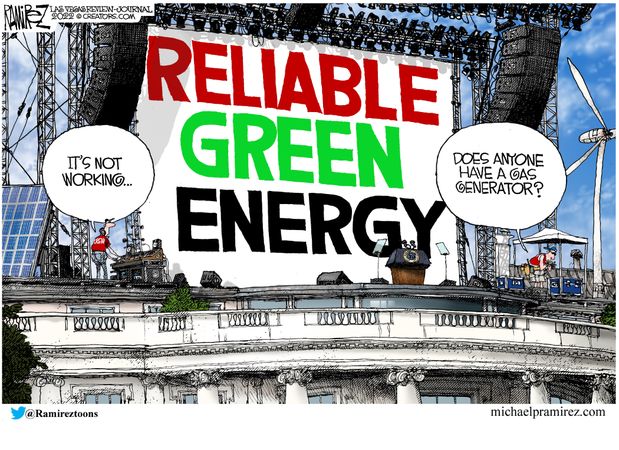
Solar and wind should be required to compete on a real market. In the context of electricity that means generators using solar and wind should be held to the same reliability standards as everyone else. Currently they’re not—which is disastrous.⁶

The root cause of our grid’s reliability problems is simple: America is shutting down too many reliable power plants—plants that can be controlled to produce electricity when needed in the exact quantity needed. And it is attempting to replace them with unreliable solar and wind.

♦  What’s your position on nuclear power?

Nuclear power is an extremely promising technology that is uniquely safe and clean, and has the potential to be cost-effective.

Tragically, nuclear has been nearly criminalized by governments. We need radical reform to decriminalize it.⁷

♦  What’s your position on electric vehicles?

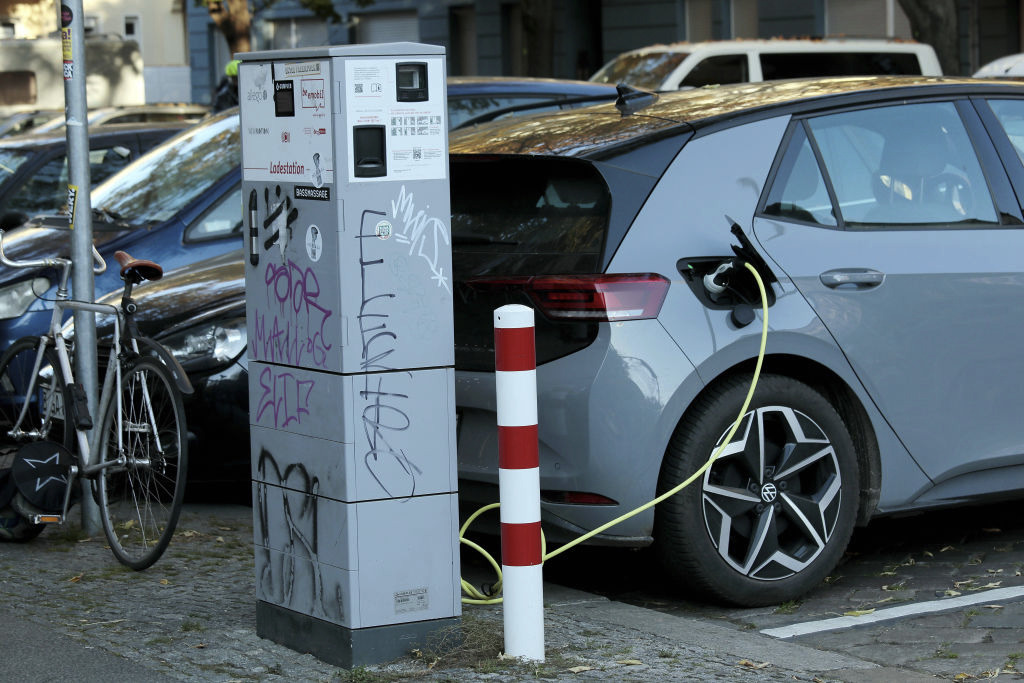
Electric vehicles are a valuable product for certain people but not yet cost-effective for the vast majority of us. Let electric vehicles compete on a free market; don’t in any way pressure anyone to use them before 1) they can afford them and 2) the grid can handle them.⁸

♦  What’s your position on the “Inflation Reduction Act”?

It’s a 4-step recipe for ruining US energy:

1. Make us more dependent on unreliable electricity
2. Impose new oil and gas taxes during an energy crisis
3. Give EPA more power to restrict fossil fuels
4. Give more power to anti-fossil-fuel activists⁹

♦  How does the Inflation Reduction Act affect my state?

The Inflation Reduction Act got passed in large part by offering various payoffs to various states. Whatever benefit you get from those payoffs pales in comparison to higher energy costs, an unreliable grid, and a worse economy.¹⁰

♦  Do you believe in taking money from fossil fuel companies?

I believe candidates should proudly take money from fossil fuel companies if they and the company support energy freedom policies.

Fossil fuel companies are essential to the survival of 8 billion people for the foreseeable future.

For More on this from Alex Epstein

Bye Bye Bourgeois Environmentalists

Getty images.

Brendan O’Neill writes at Spectator The trouble with ‘bourgeois’ environmentalism Excerpts in italics with my bolds and added images. H\T John Ray

The left needs to shake off its ‘bourgeois environmentalism’. It needs to distance itself from the ‘bourgeois environmental lobby’ and make the case for fracking and the building of new nuclear power stations.

Who do you think said this? Some contrarian commentator? A right-winger irritated by eco-loons? Nope, it was Gary Smith, the general secretary of the GMB trade union.

In an explosive intervention in left-wing discourse, Smith has accused Labour of a ‘lack of honesty’ and of ‘not facing reality’ on the energy question. We are living through a severe energy crisis and yet still Labour is sniffy about fracking and down on nuclear power, he says. All because it is in thrall to bourgeois greens who just don’t like industry and modernity very much.

Yes, climate change is a problem, he says, but we need energy. ‘We import a huge amount of fracked gas’ from America, he points out, so why don’t we just frack our own? We should get serious about developing nuclear power too, says Smith.

The GMB represents 460,000 working people, including the majority of workers at the UK’s nuclear-power stations. So it is logical – and good – that Smith would defend the nuclear industry. But his broader point is even more important.

‘(The) question’, he says, ‘is where is the electricity going to come from? We cannot do it by renewables and we cannot rely on energy imports.’ In short, we should get cracking – and fracking – on generating our own abundant sources of energy.

His killer comments concern the aloof, elitist tendencies of green activists. The renewables industry – ‘and many of those who espouse it in politics’ – have ‘no interest in jobs for working-class communities’, he says. He continues:

‘(We) should stop pretending that we’re in alliance with them.

The big winners from renewables have been the wealthy and big corporate interests. Invariably the only jobs that are created when wind farms get put up, particularly onshore wind, have been jobs in public relations and jobs for lawyers.’

This is really important stuff. Smith has laid down a gauntlet to the modern left – are you on the side of working-class communities who benefit from well-paid jobs in the energy sector and from the domestic production of energy, or are you on the side of ‘bourgeois’ greens who are offended by any kind of human intervention in nature, whether that’s digging down for gas or unleashing the awesome power contained in uranium?

For far too long, Labour and left-wingers more broadly have been embracing the ideology of environmentalism. This has always struck me as utterly bizarre, because it seems pretty clear that green politics run entirely counter to the interests of working-class communities.

It is not a coincidence that environmentalism is the favoured political pursuit of the upper middle classes, posh influencers, privately educated columnists and even our new King (God save him). Because this anti-industrial worldview, this ideology that looks with such horror upon our mass consumer society, and the masses who partake in it, is the perfect vehicle for the expression of an older aristocratic disdain for modernity.

Environmentalism is a modern manifestation of the 19th-century Romantic reaction against the Industrial Revolution. Only back then it was more honest – it was all puffy-collared rich folk shocked that the serfs who once worked their lands were now headed into teeming new cities to work in factories. Today, the misanthropic scorn for modernity tends to be more deceitfully dressed up. It’s less ‘Who will toil my farmland now?!’ and more ‘What will happen to the air I breathe if millions of gammon are driving to Aldi every day?’.

Smith, who made these comments in an interview with the New Statesman, is dead right: ‘bourgeois’ is exactly the right word for modern environmentalism. It is alarming that the left has bought into all this middle-class green nonsense. I trust Spectator readers will forgive me for quoting Trotsky, but he did say that the task of left-wing revolutionaries was to bring about the increase of ‘the power of man over nature and the abolition of the power of man over man’. The modern left does the precise opposite of this. It seeks to shrink man’s power over nature and to boost man’s power over man, via new forms of authoritarianism and censorship. Please, right-wingers, I implore you: stop calling modern leftists ‘Trots’.

Gary Smith has done something incredibly important. He hasn’t only put pressure on Labour to think seriously about fracking and nuclear. He has also forced the left to ask itself why it has lost touch with working-class concerns and found itself so beholden to posh pursuits like ‘saving the planet’. A left that represents bourgeois interests is of no use to anyone. Except, of course, the bourgeoisie.

Energy Options: From All the Above Down to One

Mark Krebs writes at Master Resource Environmentalists Petition EPA to Ban Natural Gas Use in Buildings.  Excerpts in italics with my bolds.

It never ends…. In the wake of the 725-page “Inflation Reduction Act” (IRA), consumer choice for energy could be intentionally restricted to electricity by the U.S. Environmental Protection Agency (EPA). Or at least that seems to be the plan. According to a petition submitted by environmentalists, EPA should regulate carbon dioxide (CO2) emissions resulting from using natural gas in homes and businesses.

The eco-lobby has been emboldened by their “win” with the passage of the IRA. Never satisfied, their petition is one of the first attempts to expand it.

An article by Patrick Parenteau, Professor of Law, Vermont Law School, originally published on August 24th in the academic law journal The Conversation (original article) claimed the IRA empowers EPA regulation of GHGs (greenhouse gases):

The Inflation Reduction Act amends the Clean Air Act to add seven specific new programs to reduce greenhouse gases and provide funding to the states to develop their own plans. Taken together, these provisions go a long way to address Roberts’ concern that Congress has not spoken plainly enough about EPA’s authority to tackle climate change.

But it falls short of granting EPA the authority to revive the generation shifting approach of the Clean Power Plan.

To get the bill through the sharply divided Congress, the Senate’s Democratic majority used a process called budget reconciliation. That process allows for legislation to pass with only a simple majority of the vote. But legislation passed that way must be closely tied to spending, revenue and the federal debt limit – it cannot set broad national policy.

Mark Krebs provides relevant quotes from the IRA:

Having been pointed to Title VI of the IRA, Secs. 60107 and 60113, I started reading. Sec. 60107 starts on page 668 and Sec. 60113 starts on page 678. Among other things, Sec. 60107 modifies the CAA to promote:

“(1) activities of the Environmental Protection Agency for the purposes of providing financial and technical assistance to reduce methane and other greenhouse gas emissions…..” and

‘‘(E) mitigating health effects of methane and other greenhouse gas emissions, and legacy air pollution from petroleum and natural gas systems…”

Under Sec. 60113, starting at the top of page 681, a carbon fee per metric ton is authorized:

‘‘(c) WASTE EMISSIONS CHARGE.—The Administrator shall impose and collect a charge on methane emissions that exceed an applicable waste emissions threshold under subsection (f) from an owner or operator of an applicable facility that reports more than 25,000 metric tons of carbon dioxide equivalent of greenhouse gases emitted per year pursuant to subpart W of part 98 of title 40…”

I venture to guess the fee may be the “Social Cost of Carbon” (SCC), which now stands at $51 per metric ton under the Biden administration (up from $1 per ton under Trump). However, the fees for methane emissions are explicitly stated on page 682:

2024: $900
2025: $1,200
2026 and thereafter: $1,500

Devils in the Details

At a minimum, these provisions provide an opening for EPA to regulate carbon and methane emissions. How wide of an opening is at least debatable and probably will be litigated (as Professor Parenteau anticipates).

This could result in CO2 and methane emissions regulated at the point of use (“point source”) as additional “criteria pollutants,” regulated because they are deemed harmful to human life.

What the environmentalists seem to be trying to do via their petition to the EPA is to make homes and businesses point sources for future regulation of carbon emissions. So why didn’t the environmentalists petition EPA to also target electric utilities? After all, electric utilities consume significantly more natural gas and emit more resultant CO2 than residential and commercial gas customers combined.

The answer is: That would not be consistent with the partnership that has developed between the electric utility industry and environmentalists to achieve their utopian goal of all-renewables-all-the-time.

An Unholy Alliance

I discussed this connection in my MasterResource article last month titled All-Electric Forcing in the “Inflation Reduction Act” (up to $14,000 per home). In that article, I referenced another article about a 2018 pact between the Edison Electric Institute (EEI) and the Natural Resource Defense Council (NRDC) titled Warring Against Natural Gas: Joint EEI/NRDC Statement to NARUC (crony environmentalism at work).[See my synopsis Perils of Everything Electrified]

On September 2, 2022, Politico, published an article that (unintentionally) revealed the close working relationship between EEI and Biden’s Climate chief (ex-NRDC’s) Gina McCarthy in crafting the Inflation Reduction Act. Mission complete, she is leaving the White House, and John Podesta is replacing her. The article is titled “Climate chief Gina McCarthy leaving White House as John Podesta returns.”

Other sources of the electric utilities’ motivation include:

1.  The lure for electric utility CEOs to double sales through political means (and the bonuses they engender none-the-less) without really having to earn it through competition.
2.  The prospect for electric utilities to control gas markets and put an end to their supply curtailments when residential gas consumers traditionally get top priority during periods of limited supply due to extreme cold. (No more residential consumers, no more curtailments.)
3. It is at least plausible that electric utilities don’t really believe that the best form of backing-up renewables is with batteries because they want to keep their product from getting priced out of the market. Gas-fueled power plants would economically serve peaking requirements, but not if their fuel is curtailed. Also note that at least some types of batteries have a hard time during very cold weather.

EPA also has some perverse motivations. One of these is claiming regulatory efficiency by eliminating all the small point sources (gas consumers) with a relatively few large point sources left (e.g., electric utility power plants).

Overloading Electricity

Regardless of the rationale, transferring the energy requirements presently served by fossil fuels for both transportation and heating (etc.) on an already teetering electric grid is a recipe for failure. We can already see it starting in Europe and now in California:  

Vehicle electrification alone could double electricity generation requirements. Building electrification could more than double electricity peak generation requirements considering extreme cold weather events presently dominated by the direct use of gaseous fuels and fuel oil. Some of my colleagues have estimated it would take as much as 7 times present peak generation to handle “polar vortex” events.

How much battery storage you need depends on the maximum length of outage you’re planning for. “Wind droughts” have lasted 7 days. Typical batteries can produce their rated (fair weather) output for 4 hours. And what happens when it’s too bitterly cold and snowy for wind, solar and batteries to deliver?

Do the math considering the worst-case scenario because people’s lives depend on it. Basically, it becomes apparent that all renewables (with batteries) isn’t going to happen.” But you might die from them trying.

One way or another, you will pay for their folly. In fact, you already are.

Cost Analytics

If reducing carbon emissions is really the primary objective, then why not mandate that consumers replace all electric resistance appliances with natural gas-fueled equivalents? At least in the Midwest, it is relatively straight-forward to show how such fuel switching from electricity to natural gas is a very cost-effective strategy for reducing the atmospheric release of carbon emissions. In fact, the American Public Gas Association did so in 2017  (summaryfull report).

A second phase of this study estimated typical costs per household state-by-state. The full report, and its customizable data spreadsheet, is available on the Energy & Environment Legal Institute’s (E&E Legal) website. According to the report, electrifying the entire nation, with a goal of eliminating the direct consumption of fuel to reduce carbon emissions, would conservatively cost between $18 trillion and $29 trillion in first costs.

At least conceivably, total costs could be double these estimates. Going all-renewable all the time will force costs much higher than these estimates. Also, constructing and implementing an “all-electric” energy monoculture will include other significant costs such as stranded assets and deadweight losses.

Summary & Conclusions

The environmentalists petition to the EPA is just the opening salvo following passage of the Inflation Reduction Act (a.k.a., Green New Deal Lite). The overall mission is forcing increased social control by eliminating free markets. Reducing carbon is a secondary objective and a front. Hyperbole? Take it from socialism.com: The Green(ish) New Deal

This next salvo might be targeting industrial electrification: It’s explained in the (just released ) DOE Industrial Decarbonization Roadmap.  Along with the Biden Administration’s “electrify everything” mentality, expect more electricity shortages. Consequently, expect more taxpayer derived “emergency” funding directed to the electric utility industry.

“Manufacture a crisis and then don’t let it go to waste.” Maybe that is the plan. A better plan would be for electric utility CEOs to start listening to their engineers responsible for keeping the lights on, affordably if possible, and stop pandering to socialistic environmentalism.

In truth, natural gas utilities and electric utilities need each other. Consumers need energy diversity and utility regulators need to return to their roles as impartial referees and honest brokers safeguarding consumers best interests.

——————————————-

Mark Krebs, a mechanical engineer and energy policy analyst, has been involved with energy efficiency design and program evaluation for more than 30 years. He has served as an expert witness in dozens of State energy efficiency proceedings, has been an advisor to DOE and has submitted scores of Federal energy-efficiency filings.

Perils of Everything Electrified

Mark Krebs exposes the unreality of the current drive to electrify everything, including vehicles and home heating. His Master Resource article is All-Electric Forcing in the “Inflation Reduction Act” (up to $14,000 per home).  Excerpts in italics with my bolds and added images.

Basics of Peak Demand: Electric vs. Gas

Traditionally, both electric utilities and gas utilities designed peak capacity for worst-case scenarios plus a safety margin of around 10 percent. Electric utilities were summer-peaking due to cooling demand, while gas utilities were winter peaking due to heating demand.

In terms of maximum Btu demand, winter peaks tend to be much higher than summer peaks. The reason is largely a matter of inside to outside temperature differences between summer peaks and winter peaks. For example, assuming a winter design temperature of -10 deg F. and an interior thermostat setpoint of 75 deg. F, the difference is 85 deg. F. Assuming a summer design temperature of 110 deg. F. and the same interior thermostat setpoint of 75 deg. F, the difference is less than half the winter difference.

Without gas utilities to serve heating demand,
electric utilities will become winter peaking,
requiring massive investments of generating capacity and/or battery storage.

The worst-case scenario would then be a prolonged “polar vortex” with no wind (a.k.a., “wind drought”) coupled with snow covered photovoltaics. During such periods, all the heat from a typical electric heat pump will be in the form of electric resistance that is built into it; that’s just how typical heat pumps work.

If your local electric utility has “transitioned’ to all renewables, they will need several days’ worth of battery storage. Also, battery capacity drops sharply in extreme cold. That’s just how batteries work. Altogether, this equates to astronomical costs that get passed on to consumers. In short, if you are “all-electric,” you will need to fend for yourself and should at least consider investing in your own emergency generator system, assuming you can afford it.

Shame on Electric Utility Industry Who Know Better

The electric utility industry deserves much of the blame for these travesties. Leading electric utility industry trade associations support HR 5376. This was documented by an S&P Capital IQ on July 28th in an article (behind a paywall) titled “US climate package contains ‘robust’ clean energy tax incentives.”

What the article inadvertently documented is that the electric utility industry doesn’t like how they too may see income tax increases, and they aren’t holding back their disapproval of such provisions. But, on the other hand, the Federal government is essentially transferring the energy delivered by gas utilities over to electric utilities, and they will be collecting more revenue from increasingly captive consumers as their size at least doubles.

The electric utilities are not complaining about that. Maybe that will change in time as electric utilities realize their product is no longer reliable or affordable. But that may not matter since they became “the only game in town.”

Some of us saw this coming. Electric utility interests have been aligned with those of “all renewables all the time” advocates for several years. This alliance was announced in 2018 at a national conference of utility regulators, which I wrote about: Warring Against Natural Gas: Joint EEI/NRDC Statement to NARUC (crony environmentalism at work). Their efforts are largely being augmented by the Federal government subsidies and DOE’s “national labs,” since the Biden (mis)Administration took control or the lack thereof).

Let Consumers Freeze in the Dark

Politicians and pundits from both parties appear reluctant to question obvious restraint of trade issues and reduced consumer choice impacts. Why?

♦  For politicians, it’s because their interests lie elsewhere, like using “other peoples money” to trade with vested interests in return for campaign donations and insider information. It’s also because they don’t want to risk a reduction in generous campaign contributions from electric utility interests. [1]

♦  For pundits, it’s because most of them cater to environmental interests that are “in on it.” They even have their own trade association: The Society of Environmental Journalism. The one thing they do best is to “stick to the script.”

But who wrote the script? Globalists and global warming activists along with electric utility-oriented organizations like the “nonprofit” Rewiring America boast about their role in drafting these provisions. This is further evidenced by the following yahoo finance article: Inflation Reduction Act would lead to $1,800 in savings for average household, analysis finds.

We have recently begun to witness how Green New Deal variants are failing within the EU. We are also witnessing how the inherent intermittency of renewables put lives at risk. Now “reimagine” the combination of “all renewables all the time” and a major cold weather emergency event (a.k.a., “polar vortex”) like what happened in Texas last year. Further “reimagine” being without coal or natural gas for electric generation as well as natural gas and propane for home heating.

People will die at a far great pace than the 247 that died in Texas last year from Winter Storm Uri. This vicious cycle will just get worse the more reliant our society becomes upon on supposedly “clean” (but unreliable) energy sources. And yet, most politicians are reluctant allow for an opportunity for healthy/democratic debate. Instead, most House and Senate hearings have become infomercials for monied interests.

Renewables Forcing: How Much, How Far

The following EIA based graphic from a recent Washington Post article portrays the magnitude of transforming (perhaps unwittingly) the present energy generation mix to renewables. But be reminded, they are also planning to transfer the energy requirements presently served by the direct use of natural gas over to electricity. This could easily double or triple electric generation requirements. That effect isn’t shown in the following chart.

Another observation to be made from the above chart is that there is still a lot of black (coal) and orange (natural gas) in them. Basically, this means that switching to all-electric may have little if any carbon reduction benefits in such states. It is likely that in at least some states, fuel switching to electricity will increase carbon emissions. So “buyer beware” (in terms of both carbon savings and utility bill savings).

Clearly, the electric utility industry stands to profit from doubling (or more) in size and rate-basing much more expensive renewable technologies, all with the increased cost of “monopoly rents.” The environmentalists also get what they’ve craved: economic control.

Together, they can achieve social control; awarding energy compliance and
punishing energy disobedience; like how the system presently works in China.

Summary & Conclusions

For whatever reason, the gas utility industry has not been very effective in countering these threats. I really don’t have an explanation why, but most gas utilities are owned by electric utilities. This fact is also reflected within gas utility trade associations.

All I know for sure is complacency kills and gas utilities will either capitulate or litigate. I also know that the “Inflation Reduction Act” will cause $billions in stranded gas utility assets.

My advice to gas utilities:

♦  Assuming there is still “fight in the dog,” it’s time to start fighting like your livelihoods (and those of your customers) depend on it, because they do.

♦  Also study up on the takings clause in the constitution and find a way to live with the long-term liability of safeguarding our country’s abandoned gas pipes.

My advice to consumers:

♦  Be prepared to fend for yourself by investing in a natural gas or propane-fueled emergency generator system (if you can afford one). But note that if you have an electric heat pump, you’re going to need a much larger generator than if you didn’t.

I also have some closing advice to regulators: Do your job. Integrated Resource Planning (IRP) should not be Institutionalized Revenue Plundering and Demand-Side Management (DSM) should not be Deceptive/Strategic Marketing. Instead, reconsider Least-Cost Planning that was the standard before it was hijacked by corrupted IRP and DSM.


No Stopping Wind and Solar in Cal and NY States

Hecate Energy, a developer, owner and operator of renewable power projects and energy storage solutions, has received state approval of its siting application for the 500 MW Cider Solar Farm in New York.

Wondering where will be spent hundreds of billions of US$ from the climate bill?  Two states have the inside track by abolishing citizens’ rights regarding siting of renewables projects. Matthew Eisenson explains at the Columbia Climate Law Blog New California Law Allows State to Bypass Local Restrictions in Siting Large-Scale Renewables.  Excerpts in italics with my bolds.

On June 30, 2022, the State of California joined the State of New York in adopting legislation that allows state authorities to bypass local laws in permitting large-scale renewable energy projects.

California’s new law, AB 205, gives the California Energy Commission (the “commission”) exclusive authority to issue a certificate for any:

(a) photovoltaic solar facility, on-shore wind facility, or thermal energy facility not powered by fossil fuels or nuclear fuels, with a generating capacity of at least 50 megawatts (MW);
(b) energy storage system with a storage capacity of least 200 megawatt hours;
(c) electric transmission line from any such generating or storage facility to an interconnected transmission system; and
(d) facility that manufactures, produces, or assembles wind, solar, or storage systems, with a capital investment of at least $250,000,000 over a period of 5 years. See California Public Resources Code § 25545(b).

AB 205 explicitly supersedes local permitting and local ordinances.

Specifically, it provides that the commission’s issuance of a certificate shall:

“be in lieu of any permit, certificate, or similar document required by any state, local, or regional agency,” id. § 25545.1(b)(1) (emphasis added); and
“supersede any applicable statute, ordinance, or regulation of any state, local, or regional agency,” id. (emphasis added).

The law further requires that applications be decided expeditiously, providing that:

“[w]ithin 30 days of the submission of the application, the commission shall review the application and make a determination of completeness,” id. § 25545.4(a) (emphasis added); and
“no later than 270 days after the application is deemed complete, or as soon as practicable thereafter, the commission shall determine whether to certify the environmental impact report and to issue a certificate” unless an exception applies, id. § 25545.4(e)(1) 

July 26, 2022 Cider Solar Farm is to be built on nearly 3,000 acres across the towns of Elba and Oakfield. Hecate Energy anticipates starting construction on the solar farm by 2023.

In New York State likewise the Accelerated Renewable Energy Growth and Community Benefit Act of 2020, as codified at New York Executive Law § 94-c, charges the Office of Renewable Energy Siting (ORES) with responsibility for permitting “major renewable energy facilities,” which include: (a) renewable energy facilities of at least 25 MW; (b) co-located energy storage systems; and (c) associated electric transmission systems less than 10 miles in length. See Exec. Law § 94-c(2)(h). Developers of renewable energy facilities of at least 20 MW but less than 25 MW may also submit applications to ORES. Id. § 94-c(4)(g).

While those applying for a permit to construct a major renewable energy facility in New York must “consult[] with the municipality or political subdivision where the project is proposed to be located . . . [concerning] the procedural and substantive requirements of local law,” ORES is authorized to set aside local laws on a case by case basis when deciding whether or not to grant a permit. Specifically, the law provides that ORES:

“may elect not to apply, in whole or in part, any local law or ordinance which would otherwise be applicable if it makes a finding that, as applied to the proposed major renewable energy facility, it is unreasonably burdensome in view of the CLCPA targets and the environmental benefits of the proposed major renewable energy facility.”

Id. § 94-c(5)(e) (emphasis added).

In addition, New York’s siting law, like California’s new siting law, requires that applications for large-scale renewables be decided expeditiously. In particular, ORES must:

determine within 60 days whether the application is complete, id. § 94-c(5)(b); and
make a final determination on a siting permit within one year of determining that an application is complete or within six months if the project is to be sited on an existing or abandoned commercial use, id. § 94-c(5)(f).

Notwithstanding these two laws, local restrictions remain a major impediment
to siting renewable energy projects in the United States.

As of March 2022, the Sabin Center had identified 121 local ordinances across the country to block or restrict renewable energy facilities. These policies range from outright bans to temporary moratoria to zoning restrictions so severe that they effectively preclude renewable energy projects. State authorities in California and New York now have the power to bypass such restrictions. However, in most states, there is no legislation allowing state authorities to do so.

Replacing the now closed Indian point nuclear power plant with wind turbines would require land the size of Albany county NY. (320,000 acres)


Climate Cult Set to Spike Victims of Climate Policy

The quote is updated with one additional word. Unfortunately, we have today no statesman who is so truthful.

Tyler Durden explains at his zerohedge article The Climate Cult is Eager to Take Advantage of Europe’s Energy Crisis.  Excerpts in italics with my bolds and added images.

The climate cult never sleeps, and when they see nations in crisis they are always quick to try to exploit the situation by misrepresenting the root problem.  

A heat wave is currently hitting Europe along with wild fires and the mainstream media is beating the global warming drum hard.  This is nothing new; every time the weather gets hot they cry “climate change!”  Every time the weather is extra cold they once again cry “climate change!”  The evidence?  What about the “record heat” in parts of UK, Spain and Portugal?  This is surely proof that the weather is being ruined by that terrible menace known as man-made carbon?

Of course, what they don’t tell you is that the official record for weather and temperatures used by climate scientists only goes back about 140 years (it started in the 1880s). So, millions upon millions of years of Earth weather, and they only count 140 years of it to determine “record temps?” They tend to ignore ice core and tree ring data from centuries ago that indicate much hotter warming periods in our planet’s history (none of which were caused by man-made carbon emissions). In comparison, today’s temperatures are rather tame.

The Earth’s overall temperatures have only risen by 1° Celsius in the past century; this was actually the peak and currently temps have evened out to an increase of 0.8°C. This is the great climate doomsday we are all supposed to be terrified of. This is the looming threat we are supposed to sacrifice all fossil fuel based energy production for – Less than a single degree of heat.

Global warming theory claims added CO2 systematically raises surface temperatures. On the contrary all of the recent warming is episodic, associated with oceanic El Nino events.

It’s important to put the frantic climate change narrative into concrete perspective because the vast majority of climate science is paid for by governments and special interest organizations like the UN, the World Economic Forum and many other globalist groups with an agenda in mind. On average, these governments and institutions spend around $632 billion per year on climate research funding and climate policy initiatives (which they call “meager”). Their goal is to increase this cash flow to $4 trillion by the year 2030. The incentives to jump on the man-made climate change train are MASSIVE; there is almost no monetary incentive for scientists that want to study other potential causes for climate events.

The notion of the stalwart and incorruptible scientist that seeks objective truth rather than cash and notoriety is long dead. Honest scientists are few and far between these days (especially in the medical and climate science fields), and perhaps it has always been that way. The “experts” cannot be blindly trusted because they are just as susceptible to bias and corruption as anyone else.

Climate change hysteria is a nothing burger, but it is being actively promoted by the media to obscure very real threats that the public faces in the near term.

One of those threats is energy shortages, and climate regulations have put a stranglehold on many nations and their ability to adapt. The EU is now implementing carbon policies that call for a 55% reduction of emissions by 2030. Meaning, no new fossil fuel sources are supposed to be utilized. Only reductions are allowed.

Climate scientists and global elitists claim that climate change is the paramount issue of the century and must be dealt with immediately and by any means necessary. They haven’t presented a single shred of hard evidence to support this assertion, but they dictate the policies of most western governments so they don’t really need to. They just initiate restrictions without public input.

In reality, perhaps the greatest threat since WWII is about to land like a hydrogen bomb
in the laps of the European public.

Panic is beginning to take shape as Russia cuts natural gas supplies to the EU down to 20% of their original capacity and alternative sources simply do not exist on a scale that can take up the slack. A large portion of oil exports have also been shut down, and European governments are NOT informing the citizenry of the true gravity of the situation.

At current energy import rates, at least 40% of Europe
will not be able to heat their homes in the winter.

EU plans to replace Russian energy sources in the near term have also been deemed “wildly optimistic.” In other words, the EU public is screwed, and many of them still don’t realize it yet because the government won’t admit it. A disaster of epic proportions is about to strike and this isn’t even counting the enormous price hikes that are coming for the other 60% of people that will still have gas supplies available.

But the climate cult is not letting this visceral reality get in their way. To them, the crisis is an opportunity. A new narrative is rising among intergovernmental bodies, the media and among climate activists; they say this impending disaster is actually “good for Europe” in the long run, because it forces citizens to accept energy reduction policies and carbon controls which climate scientists and globalists have been demanding for years. Inflation in prices means shrinking demand and cuts in the supply chain mean resources are quashed even if demand remains high. Energy is being suffocated slowly leaving room for a “Green New Deal” of sorts.

So, it’s good for the globalists and their agenda, but not really good for anyone else that has to live through harsh winter months with no heat and limited electricity.

If the current trend continues without a dramatic change in the way Europe throttles fossil fuel energy, then there is the very real potential for mass deaths this winter. This is not hyperbole, this is a mathematical certainty. The continued push for even more climate restrictions at this time is making the situation much worse.

There is no impending threat due to climate change, but there is an impending threat due to energy shortages. Europeans need to ask themselves – Why are their governments setting them up for calamity over a non-existent climate bogeyman? Without increased fossil fuel energy from numerous sources including coal and oil the EU is on the path to a historic tragedy this winter.


Huge: EPA Loses–America Wins

Democrat Rep. Alexandria Ocasio-Cortez on Thursday called for the Supreme Court to be abolished after the High Court reined in the EPA’s power to regulated greenhouse gases.

Scotusblog reports on this latest return to sanity by the US Supreme Court. Supreme Court curtails EPA’s authority to fight climate change  Once again the court refuses to legislate an issue that belongs to Congressional deliberation. Excerpts in italics with my bolds.

In a 6-3 decision that may limit agency power across the federal government, the court held that Congress did not clearly authorize the EPA to adopt broad rules to lower carbon emissions from power plants.

The Supreme Court on Thursday truncated the Environmental Protection Agency’s power to regulate greenhouse gases. The ruling may hamper President Joe Biden’s plan to fight climate change and could limit the authority of federal agencies across the executive branch.

By a vote of 6-3, the court agreed with Republican-led states and coal companies that the U.S. Court of Appeals for the District of Columbia Circuit was wrong when it interpreted the Clean Air Act to give the EPA expansive power over carbon emissions. The decision, written by Chief Justice John Roberts, was handed down on the final opinion day of the 2021-22 term.

Two different and conflicting sets of regulations – neither of which is currently in effect – were at issue in the case, known as West Virginia v. EPA. In 2015, the Obama administration adopted the Clean Power Plan, which sought to combat climate change by reducing carbon pollution from power plants – for example, by shifting electricity production to natural-gas plants or wind farms. The CPP set individual goals for each state to cut power-plant emissions by 2030. But in 2016, the Supreme Court put the CPP on hold in response to a challenge by several states and private parties.

In 2019, the Trump administration repealed the CPP and replaced it with the Affordable Clean Energy Rule, which gave states discretion to set standards and gave power plants flexibility in complying with those standards. The Trump administration argued that it was required to end the CPP because it exceeded the EPA’s authority under Section 7411 of the Clean Air Act, which gives the EPA the power to determine the “best system of emission reduction” for buildings that emit air pollutants. That provision, the Trump administration contended, only allows the EPA to implement measures that apply to the physical premises of a power plant, rather than the kind of industry-wide measures included in the CPP.

Last year the D.C. Circuit vacated both the Trump administration’s repeal of the CPP and the ACE Rule, and sent the case back to the EPA for additional proceedings. Section 7411, the court of appeals explained, does not require the more limited view of the EPA’s authority that the Trump administration adopted.

The Supreme Court on Thursday reversed the D.C. Circuit’s ruling. Roberts’ 31-page opinion began by considering whether the Republican-led states and coal companies challenging the D.C. Circuit’s decision had a right to seek review in the Supreme Court now. Because the Biden administration plans to issue a new rule on carbon emissions from power plants, rather than reinstating the CPP, the administration had argued that the case did not present a live controversy for the justices to decide. But a decision by the government to stop the conduct at the center of a case does not end the case, Roberts emphasized, “unless it is ‘absolutely clear that the allegedly wrongful behavior could not reasonably be expected to recur.’” And in this case, Roberts stressed, because the Biden administration “vigorously defends” the approach that the Obama EPA took with the CPP, the Supreme Court can weigh in.

Turning to the merits of the case, Roberts wrote that the EPA’s effort to regulate greenhouse gases by making industry-wide changes violated the “major-questions” doctrine – the idea that if Congress wants to give an administrative agency the power to make “decisions of vast economic and political significance,” it must say so clearly.

Section 7411 of the Clean Air Act, Roberts reasoned, had been “designed as a gap filler and had rarely been used in the preceding decades.” But with the CPP, Roberts observed, the EPA sought to rely on Section 7411 to exercise “unprecedented power over American industry.” “There is little reason to think Congress assigned such decisions to” the EPA, Roberts concluded, especially when Congress had previously rejected efforts to enact the kind of program that the EPA wanted to implement with the CPP.

“Capping carbon dioxide emissions at a level that will force a nationwide transition away from the use of coal to generate electricity may be a sensible ‘solution to the crisis of the day,’” Roberts wrote. But only Congress, or an agency with express authority from Congress, can adopt a “decision of such magnitude and consequence.”

Roberts’ full-throated embrace of the major-questions doctrine – a judicially created approach to statutory interpretation in challenges to agency authority – likely will have ripple effects far beyond the EPA. His reasoning applies to any major policymaking effort by federal agencies.

In a concurring opinion that was joined by Justice Samuel Alito, Justice Neil Gorsuch emphasized that the dispute before the court involved “basic questions about self-government, equality, fair notice, federalism, and the separation of powers.” The major-questions doctrine, Gorsuch wrote, “seeks to protect against ‘unintentional, oblique, or otherwise unlikely’ intrusions on these interests” by requiring federal agencies to have “clear congressional authorization” when they address important issues. Whether coal- and gas-fired power plants “should be allowed to operate is a question on which people today may disagree, but it is a question everyone can agree is vitally important.”

The Ruling WEST VIRGINIA v. EPA

Background  Supremes to Review EPA Authority Over GHGs

Footnote from CO2 Coalition

EPA loses – America Wins

Victory for citizens and businesses alike

In what is likely the most damaging setback ever dealt to those advocating for overzealous enforcement actions against greenhouse gas emissions, the Supreme Court of the United States ruled in favor of constitutional limitations on unelected regulators.

This morning SCOTUS ruled in favor of the plaintiff states in WV v. EPA. This was an important “separation of powers” case. Over 20 states allege EPA improperly used very narrow statutory language as the basis for a national CO2 cap-and-trade program.

The constitutional principle of separation of powers requires that only Congress—through legislation—is authorized to decide major policy issues, not federal agencies. The related legal “Major Question Doctrine” holds that federal agencies must have a clear authorization from Congress before exercising new and significant regulatory power.

According to the ruling written by Chief Justice John Roberts: “But the only interpretive question before us, and the only one we answer, is more narrow: whether the “best system of emission reduction” identified by EPA in the Clean Power Plan was within the authority granted to the Agency in Section 111(d) of the Clean Air Act. For the reasons given, the answer is no.”

This is why we fight.

Statement on the ruling by CO2 Coalition Chair William Happer:

“The decision is a very welcome reaffirmation of the Constitutional rights of citizens of the United States. Untouched is the question of whether the Constitution allows Congress to make scientifically incorrect decisions by majority vote, for example: that carbon dioxide, a beneficial gas that is essential to life on Earth, is a pollutant.”

2022 Update: Fossil Fuels ≠ Global Warming

gas in hands

Previous posts addressed the claim that fossil fuels are driving global warming. This post updates that analysis with the latest (2021) numbers from BP Statistics and compares World Fossil Fuel Consumption (WFFC) with three estimates of Global Mean Temperature (GMT). More on both these variables below.

WFFC

2021 statistics are now available from BP for international consumption of Primary Energy sources. 2022 Statistical Review of World Energy. 

The reporting categories are:
Oil
Natural Gas
Coal
Nuclear
Hydro
Renewables (other than hydro)

Note:  British Petroleum (BP) now uses Exajoules to replace MToe (Million Tonnes of oil equivalents.) It is logical to use an energy metric which is independent of the fuel source. OTOH renewable advocates have no doubt pressured BP to stop using oil as the baseline since their dream is a world without fossil fuel energy.

From BP conversion table 1 exajoule (EJ) = 1 quintillion joules (1 x 10^18). Oil products vary from 41.6 to 49.4 tonnes per gigajoule (10^9 joules).  Comparing this annual report with previous years shows that global Primary Energy (PE) in MToe is roughly 24 times the same amount in Exajoules.  The conversion factor at the macro level varies from year to year depending on the fuel mix. The graphs below use the new metric.

This analysis combines the first three, Oil, Gas, and Coal for total fossil fuel consumption world wide (WFFC).  The chart below shows the patterns for WFFC compared to world consumption of Primary Energy from 1965 through 2021.

The graph shows that global Primary Energy (PE) consumption from all sources has grown continuously over 5 decades. Since 1965  oil, gas and coal (FF, sometimes termed “Thermal”) averaged 88% of PE consumed, ranging from 93% in 1965 to 82% in 2021.  Note that in 2020, PE dropped 23 EJ (4%) below 2019 consumption, then increased 31 EJ in 2021.  WFFC for 2020 dropped 26 EJ (5%), then in 2021 gained back 26% to match 2019 WFFC consumption. For the 56 year period, the net changes were:

Oil 184%
Gas 540%
Coal 176%
WFFC 236%
PE 282%
Global Mean Temperatures

Everyone acknowledges that GMT is a fiction since temperature is an intrinsic property of objects, and varies dramatically over time and over the surface of the earth. No place on earth determines “average” temperature for the globe. Yet for the purpose of detecting change in temperature, major climate data sets estimate GMT and report anomalies from it.

UAH record consists of satellite era global temperature estimates for the lower troposphere, a layer of air from 0 to 4km above the surface. HadSST estimates sea surface temperatures from oceans covering 71% of the planet. HADCRUT combines HadSST estimates with records from land stations whose elevations range up to 6km above sea level.

Both GISS LOTI (land and ocean) and HADCRUT4 (land and ocean) use 14.0 Celsius as the climate normal, so I will add that number back into the anomalies. This is done not claiming any validity other than to achieve a reasonable measure of magnitude regarding the observed fluctuations.

No doubt global sea surface temperatures are typically higher than 14C, more like 17 or 18C, and of course warmer in the tropics and colder at higher latitudes. Likewise, the lapse rate in the atmosphere means that air temperatures both from satellites and elevated land stations will range colder than 14C. Still, that climate normal is a generally accepted indicator of GMT.

Correlations of GMT and WFFC

The next graph compares WFFC to GMT estimates over the five decades from 1965 to 2021 from HADCRUT4, which includes HadSST4.

Since 1965 the increase in fossil fuel consumption is dramatic and monotonic, steadily increasing by 236% from 146 to 490 exajoules.  Meanwhile the GMT record from Hadcrut shows multiple ups and downs with an accumulated rise of 0.8C over 56 years, 6% of the starting value.

The graph below compares WFFC to GMT estimates from UAH6, and HadSST4 for the satellite era from 1980 to 2021, a period of 41 years.

In the satellite era WFFC has increased at a compounded rate of nearly 2% per year, for a total increase of 90% since 1979. At the same time, SST warming amounted to 0.49C, or 3.4% of the starting value.  UAH warming was 0.48C, or 3.5% up from 1979.  The temperature compounded rate of change is 0.1% per year, an order of magnitude less than WFFC.  Even more obvious is the 1998 El Nino peak and flat GMT since.

Summary

The climate alarmist/activist claim is straight forward: Burning fossil fuels makes measured temperatures warmer. The Paris Accord further asserts that by reducing human use of fossil fuels, further warming can be prevented.  Those claims do not bear up under scrutiny.

It is enough for simple minds to see that two time series are both rising and to think that one must be causing the other. But both scientific and legal methods assert causation only when the two variables are both strongly and consistently aligned. The above shows a weak and inconsistent linkage between WFFC and GMT.

Going further back in history shows even weaker correlation between fossil fuels consumption and global temperature estimates:

wfc-vs-sat

Figure 5.1. Comparative dynamics of the World Fuel Consumption (WFC) and Global Surface Air Temperature Anomaly (ΔT), 1861-2000. The thin dashed line represents annual ΔT, the bold line—its 13-year smoothing, and the line constructed from rectangles—WFC (in millions of tons of nominal fuel) (Klyashtorin and Lyubushin, 2003). Source: Frolov et al. 2009

In legal terms, as long as there is another equally or more likely explanation for the set of facts, the claimed causation is unproven. The more likely explanation is that global temperatures vary due to oceanic and solar cycles. The proof is clearly and thoroughly set forward in the post Quantifying Natural Climate Change.

Footnote: CO2 Concentrations Compared to WFFC

Contrary to claims that rising atmospheric CO2 consists of fossil fuel emissions, consider the Mauna Loa CO2 observations in recent years.

Despite the drop in 2020 WFFC, atmospheric CO2 continued to rise steadily, demonstrating that natural sources and sinks drive the amount of CO2 in the air.

See also: Nature Erases Pulses of Human CO2 Emissions

Temps Cause CO2 Changes, Not the Reverse

Hard Facts Puncture Anti-Fossil Fuel Fantasies

Gwyn Morgan explains at Financial Post Hard facts puncture anti-fossil fuel fantasies.  Excerpts in italics with my bolds and added images.

The belief that 84% of global energy supplied by oil and gas can be replaced by so-called ‘green energy’ is a fantasy

The marvelous Christmas movie Polar Express, starring the inimitable Tom Hanks, ends with the words “anything is possible, if you only believe.” Except, as adults understand, many things aren’t possible, not even if some people do believe them. An obvious example is the fantasy that the 84 per cent of global energy supplied by oil and gas can be replaced by so-called “green energy.”

Since the first UN COP (“Conference of the Parties”) meeting in 1995, world oil demand has increased from 64 to 100 million barrels per day. But even as demand increased, the “environmental, social and governance” (ESG) movement encouraged investors to unload their oil industry holdings. Faced with share valuations reflecting their perceived status as a “sunset Industry,” the rational course for oil company leaders was to pay out large dividends rather than reinvest in production growth. As demand grew, supply therefore stagnated. The Ukraine crisis revealed just how narrow the supply margin has become. Regrettably, most of that margin is in the hands of Vladimir Putin, leaving European countries that depend on Russian oil no choice but to continue to provide the funds with which he ravages the Ukrainian people.

This is the tragedy sanctimonious ESG zealots have wrought.

Meanwhile, back in the world capital of “if you only believe” fantasies, the prime minister of a country endowed with one of the world’s largest reserves of oil has presided over a seven-year long anti-oil industry scourge, thwarting multiple proposed export pipelines that could now have been supplying those captive market countries.

Sharing his anti-oil zealotry seems to be a necessary qualification for Mr. Trudeau’s cabinet. Alberta Premier Jason Kenney recently went to Washington to present the Senate Energy Committee with plans to increase Canadian oil exports, thereby freeing-up more U.S. oil to help Europe reduce Russian oil purchases. The idea received a warm reception. Unfortunately, Kenney’s message was promptly contradicted by Federal Resources Minister Jonathan Wilkinson, who told the same committee that shifting to renewables and hydrogen “will provide true energy and national security to Europe.” In other words, don’t count on Canada to help de-fund Putin’s murderous war unless it lasts five or ten more years.

It’s incomprehensible that during a global oil and gas shortage brought on by the wanton destruction of a civilized democracy, our prime minister thinks all will be well if only Canada rids itself of fossil-fueled vehicles. Deep in delusion, he considers this a perfect time to announce a plan to have 60 per cent of new cars and light duty trucks be “zero emission” by 2030.

When you live in a perennial state of fantasy, facts don’t matter. But here are facts that do matter to Canadians forced to face the real-world impact.

Fact 1: High cost. The federal budget promises a $5000/vehicle rebate. There are 24 million gasoline and diesel-powered vehicles in Canada. Subsidizing replacement of just one million would cost $5 billion. The budget also contains $900 million for new charging stations. That’s helpful in urban centres but providing a charging station network necessary to allow e-vehicles to travel interurban highways would cost tens of billions more.

Fact 2: Revenue needs. The Trudeau government’s longer-term plan is to get rid of all fossil-fueled vehicles. Federal and provincial fuel taxes now total a stunning $22 billion each and every year. These revenues fund the cost of building and maintaining urban streets and highways. How long can it be before governments are forced to regain those revenues from electrical vehicle charging levies?

Fact 3: Grid stress. The average Canadian motorist drives 15,000 km per year and the average electric passenger vehicle uses 19 kw/hr per 100 km. That works out to 2,850 kw/hr per year, more than 25 per cent of current Canadian household consumption. Many of the country’s electrical generation and distribution grids are already near capacity. Electric vehicle advocates say the problem will be mitigated by mandating low amperage during off-peak, late-night hours. But most highway drivers travel during the day when the grid is near capacity. And they will need high-amperage DC quick-chargers during these already supply-tight hours.

Fact 4: Land demand. Refueling with gasoline or diesel takes around five minutes. But even rapid chargers need 30 minutes. That means six times more land occupied by charging stations. How much of that land will be taken from agricultural production?

Fact 5: More emissions, not fewer. Canada’s 24 million fossil-fueled cars and pickup trucks emit 14 per cent of the country’s 1.5 per cent share of global emissions. If all 24 million were converted to battery power, global emissions would be reduced by just two-tenths of one per cent. Emissions growth from China’s coal-fired power plants would offset that in just a few days. And that two-tenths of a per cent doesn’t count emissions produced from mining and transporting the materials that go into all those batteries. Nor does it consider that 20 per cent of Canada’s electricity is generated with fossil fuels.

Those factors clearly wipe out any benefit, unless we include the benefit that living a fantasy allows people, our leader included, not to have to think about all those Ukrainians we could have saved by helping Europe say “no” to Russia’s oil — if only our oil industry hadn’t been hamstrung.


The Looming Energy Catastrophe

Ron Stein provides a briefing from California on the energy debacle imposed by clueless political leaders on ordinary Americans.  Excerpts in italics with my bolds H/T CFACT

The Looming Energy Catastrophe

Please enjoy and share this educational energy literacy briefing, a 5-minute video by Costa Mesa Brief at a California Chevron gas station. The video talks about the outrageous gas prices and tells us what is behind the increases, where it is heading and what, if anything, we can do about it. I think you will find his no-nonsense approach and perspective unique, sobering and very informative.

The video explains the impact on fuel prices from California government-imposed reductions in the supply chain of crude oil has increased imported crude oil from foreign countries from 5% in 1992 to more than 60% today of total consumption. Biden’s pledge stating, “we are going to get rid of fossil fuels,” is impacting fuel prices.

At today’s price of crude oil well above $100 per barrel, the imported crude oil costs California more than $150 million dollars a day, yes, everyday, being paid to oil-rich foreign countries, depriving Californians of jobs and business opportunities, and forcing drivers to pay premium prices for fuel.

Californians are consuming more than 50 million gallons of fuel daily for its 35 million vehicles, which is slightly more than one gallon per day per vehicle.

Californians continue to pay more than $1.00 more per gallon of fuel than the rest of the country primarily for the State, Federal and Local taxes, and the Government environmental compliance programs such as the Low Carbon Fuel Standard (LCFS), Cap and Trade, Renewable Fuel Standard (RFS), and the Underground Storage Tax. Those costs ‘dumped” onto the posted price at the pump are not transparent to the public.

The demand for fuels to move the heavy-weight and long-range needs of more than 50,000 jets for the military, commercial, private and the President’s Air Force One, and the more than 50,000 merchant ships that move products throughout the world are also manufactured from the supply of crude oil.

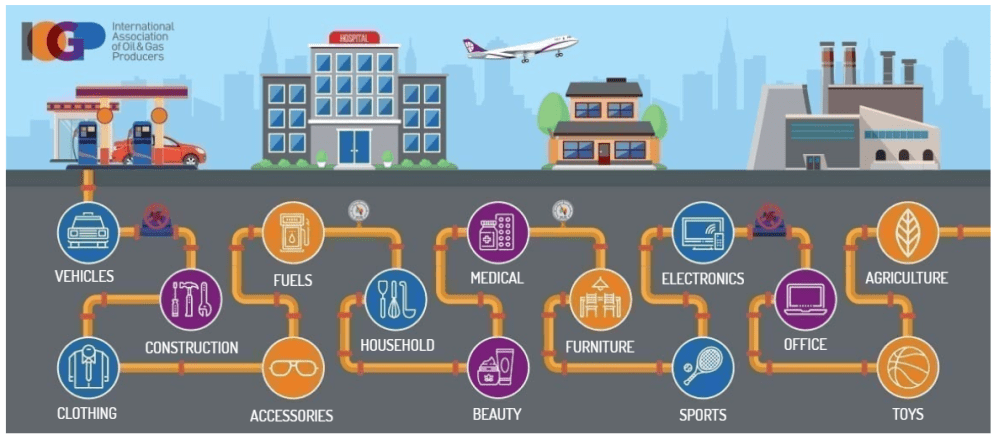
Life Without Oil is NOT AS SIMPLE AS YOU MAY THINK as renewable energy is only intermittent electricity from breezes and sunshine as NEITHER wind turbines nor solar panels can manufacture anything for society. Climate change may impact humanity, but being mandated to live without the more than 6,000 products and the various fuels manufactured from crude oil will necessitate lifestyles being mandated back to the horse and buggy days of the 1800’s.

When the public continues to demand increasing needs for the transportation fuels and the products made from crude oil, limiting its supply by governments and the Environmental, Social and Governance (ESG) movement to manufacture those items is a guarantee for today’s shortages and inflation.

Life without crude oil could be the greatest threat to civilization’s eight billion residents, resulting in billions of fatalities from diseases, malnutrition, and weather-related deaths.