Activists Attack Energy Companies, State-owned Producers Benefit
20141206_ldp001_0-1

A previous post reprinted at the bottom warned that the ESG movement is a threat to the free world, as well as endangering supply of cost-effective energy.  Part of the issue is the way private sector energy companies are being undermined by regulations and ESG priorities, and shaming, which shifts market advantage to national producers like Russia and Saudi Arabia, among others.  Tyler Durden explains in his zerohedge article Fossil Fuels Aren’t Dying, They’re Shifting To National And State Backed Companies.  Excerpts in italics with my bolds.

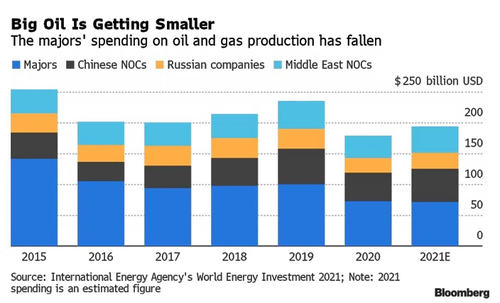
Despite the activist shareholder battles, calls for ESG changes and just outright negative press about fossil fuels, it looks like rumors of oil’s death have been greatly exaggerated. Fossil fuels aren’t dying – rather, their output is just being shifted to national and state owned companies.

Even as the supermajor oil companies shrink in size and adhere to incessant criticism, fossil-fuel demand holds strong, according to Yahoo Finance. Activists have been the busiest they have been in years…

Recent weeks saw Exxon and Chevron rebuked by their own shareholders over climate concerns, while Shell lost a lawsuit in the Hague over the pace of its shift away from oil and gas. . . .and this has been a tailwind for national oil companies (NOCs) and state owned players who aren’t under the same pressure to play ball with activists. The report notes that “Saudi Aramco and Abu Dhabi National Oil Co. are spending billions to boost their respective output capacities”, as is Qatar Petroleum.

NOC’s share of global oil output is expected to rise to 65%, from about 50% today, by 2050. Companies like Exxon and Chevron are keeping output at lows and curtailing future investment in traditional oil and gas infrastructure.

Patrick Heller, an adviser at the Natural Resource Governance Institute, told Yahoo Finance: “We hear government officials and NOC officials say, ‘We look at the divestment of international oil companies from some projects as an opportunity for us to grow. And I do think that’s potentially really risky.”
ffoss

Jason Bordoff, director of the Center on Global Energy Policy at Columbia University’s School of International and Public Affairs, thinks that the shift to government owners could wind up doing just the opposite of what activists are intending on doing.

“A shift in production to major nationally owned companies — such as in Latin America or the Gulf or Russia — carries geopolitical supply risks, while smaller independents have often demonstrated poorer safety and environmental practices,” he said.

Amrita Sen from consultancy Energy Aspects said: “Oil and gas demand is far from peaking and supplies will be needed, but international oil companies will not be allowed to invest in this environment, meaning national oil companies have to step in.”

The Saudis, meanwhile, don’t seem quite as alarmed by the issue of climate change. When The International Energy Agency issued guidance last month to scrap all new oil and gas developments, Saudi Energy Minister Prince Abdulaziz bin Salman responded by stating:

“It (the IEA report) is a sequel of the La La Land movie. Why should I take it seriously? We (Saudi Arabia) are … producing oil and gas at low cost and producing renewables. I urge the world to accept this as a reality: that we’re going to be winners of all of these activities.”

A spokesperson from Gazprom jabbed: “It looks like the West will have to rely more on what it calls ‘hostile regimes’ for its supply”.

“Western oil majors like Shell have dramatically expanded in the last 50 years” as a result of the West trying to cut reliance on Middle Eastern and Russian oil, Reuters notes. Now these producers must balance a growing chorus of criticisms about climate change with continued output.

Nick Stansbury at Legal & General, which manages $1.8 trillion, said: “It is vital that the global oil industry aligns its production to the Paris goals. But that must be done in step with policy, changes to the demand side, and the rebuilding of the world’s energy system. Forcing one company to do so in the courts may (if it is effective at all) only result in higher prices and foregone profits.”

While Saudi Arabia claims to have targets to cut carbon emissions, it isn’t beholden to U.N.-backed targets or activist investors like Western companies are. Gazprom has indicated a shift to natural gas to try and manage its carbon emissions.

Western names account for about 15% of all output globally, while Russia and OPEC make up about 40%. At the same time, global oil consumption has risen to 100 million barrels per day from 65 million barrels per day in 1990.

“The same oil and gas will still be produced. Just with lower ESG standards,” one Middle Eastern oil executive concluded.

Background from Previous Post ESG Movement Threatens Us All

ESG smoke and mirrors

Alex Epstein puts out a stern warning in a twitter thread reprinted below with my headers.

What ESG Really Means

Over the last 5-10 years, “ESG”–standing for Environmental Social Governance–has gone from an acronym that virtually no one knew or cared about, to a cultishly-embraced top priority of financial regulators, markets, and institutions around the world.

The preposterous financial pretense of “ESG investing” is that the promoters of it have so accurately identified universal norms of long-term value creation–Environmental norms, Social norms, and Governance norms–that imposing those norms on every company is justified.

In reality, ESG was a movement cooked up at the UN–not exactly a leading expert in profitable investment–to impose moral and political agendas, largely left-wing ones, on institutions that would not adopt them if left to their own devices.

The number one practical meaning of ESG today is: divest from fossil fuels in every way possible, and associate yourself with “renewable” solar and wind in every way possible. That’s why I call it the “ESG divestment movement.”

Modern ESG’s obsession with unreliable “renewable” solar and wind, reflects its political nature. Any serious concern about CO2 emissions means embracing the only proven, reliable, globally scalable source of non-carbon energy: nuclear. But most ESG does not embrace nuclear.

Divesting from Fossil Fuels is Immoral

Divesting from fossil fuels is immoral because:
1. The world needs much more energy.
2. Fossil fuels are the only way to provide most of that energy for the foreseeable future.
3. Any problems associated with CO2 pale in comparison to problems of energy deprivation.

The world needs much more energy

Low-cost, reliable energy enables billions of people to enjoy the miracle of modern machines that make us productive and prosperous. Yet 800M people have no electricity and 2.6B people are still using wood or dung for heating and cooking.

Fossil fuels are indispensable

Only fossil fuels provide low-cost, reliable, versatile, global-scale energy.
Unreliable solar and wind can’t come close. That’s why fossil fuels continue to grow in the developing world; China and India have 100s of coal plants in development.

CO2 levels matter much less than energy availability.

CO2 emissions have contributed to the warming of the last 170 years, but that warming has been minor and manageable—1 degree C, mostly in cold parts of the world. And life on Earth thrived when CO2 levels were >5X today’s.

Fossil fuels have made climate far safer by powering a highly resilient civilization. That’s why climate disaster deaths—from extreme temps, droughts, wildfires, storms, and floods—have decreased 98% over the last century.

ESG Perpetuates Poverty by Denying Capital for Cost-effective Energy Projects

A moral financial movement would do everything it could to increase capital for all cost-effective energy, including fossil fuels. And including nuclear, which is by far the most promising form of low-carbon energy. Instead, ESG is starving cost-effective energy of capital.

By starving cost-effective energy of capital, the ESG movement is engaging in a fundamental act of mass destruction. Energy is the industry that powers every other industry. By making energy more expensive, ESG makes everything more expensive–hurting the poorest people most.

The most egregious immorality of the ESG movement, led by Larry Fink’s Blackrock, is its effort to destroy vital fossil fuel projects in poor places that desperately need them. This effort is guaranteed to perpetuate poverty.

Example of ESG poverty perpetuation: South Korea canceled new coal plants in South Africa and the Philippines after “Global investors including Blackrock…warned the South Korean utility to drop coal power projects.”

Another example of ESG poverty perpetuation: “International investors are increasingly restricting support to companies involved in extracting or consuming coal, yet nearly 70% of India’s electricity comes from coal plants, and demand for power is set to rise…”

ESG poverty perpetuation is getting worse as activist “investors” with increasing influence on large financial institutions try to stop all fossil fuel projects in poor places.
E.g., HSBC was attacked when it decided to fund 6 new coal power plants in Indonesia and Vietnam.

ESG defunding fossil fuel projects in the poorest parts of the world will mean: more babies die for lack of incubators and other medical equipment, more deaths from lack of water treatment plants and modern sanitation, more deaths from lack of heating and air-conditioning.

Every leading ESG institution should be called out for their genocidal policies toward the poorest parts of the world. They should be shamed for placing their own virtue-signaling above billions of actual human lives. They should lose all moral authority in the realm of energy.

ESG Movement Threatens Free World Security

The ESG movement is also an enormous threat to the security of the free world, because by depriving free countries and poor countries of low-cost, reliable energy, it furthers Communist China’s ambitions to become the world’s superpower using low-cost, reliable fossil fuels.

China has a clear strategy of running its economy on fossil fuels, while encouraging others to run on inferior, unreliable solar and wind — that is made using Chinese fossil fuels, which produce 85% of Chinese energy. China has 247 GW of coal plants (3 TX’s worth) in development.

China dominates the mining and processing of “renewable” materials to a staggering degree. The US does little mining or processing of the needed materials, largely because of “green” regulations. Our dependence on China for “renewables” dwarfs past Mideast oil dependence.

Energy security is national security. When hostile foreign powers can meaningfully cut off our access to energy they can manipulate us politically. Examples: US appeasement of Saudi Arabia and European appeasement of Russia.

Energy security is national security, above all in wartime. War requires continuous high-energy manufacturing and continuous fueling of high-energy mobile machines such as planes and aircraft carriers. Both world wars were won by the side with the most oil, the fuel of mobility.

What does the modern ESG movement do about the danger of an energy-dominant China? Deny reality and serve as “useful idiots.”

Example: Larry Fink’s sole mention of China in his influential letter to CEOs was to praise China’s “historic commitments to achieve net zero emissions”!

Renounce ESG and Commit to Long Term Cost-effective Energy

The ESG divestment movement should be publicly shamed as a virtue-signaling, financially idiotic, and most importantly immoral movement that perpetuates poverty and threatens freedom. All legal pressures to adopt it should be eliminated. ESG should be boycotted wherever possible.

The anti-energy, anti-freedom ESG movement should be replaced with a voluntary *long-term value creation movement*. Creating sustained value for companies’ owners requires a long-term perspective. But a long-term perspective means valuing cost-effective energy, not destroying it

 

ESG Movement Threatens Us All

ESG smoke and mirrors

Alex Epstein puts out a stern warning in a twitter thread reprinted below with my headers.

What ESG Really Means

Over the last 5-10 years, “ESG”–standing for Environmental Social Governance–has gone from an acronym that virtually no one knew or cared about, to a cultishly-embraced top priority of financial regulators, markets, and institutions around the world.

The preposterous financial pretense of “ESG investing” is that the promoters of it have so accurately identified universal norms of long-term value creation–Environmental norms, Social norms, and Governance norms–that imposing those norms on every company is justified.

In reality, ESG was a movement cooked up at the UN–not exactly a leading expert in profitable investment–to impose moral and political agendas, largely left-wing ones, on institutions that would not adopt them if left to their own devices.

The number one practical meaning of ESG today is: divest from fossil fuels in every way possible, and associate yourself with “renewable” solar and wind in every way possible. That’s why I call it the “ESG divestment movement.”

Modern ESG’s obsession with unreliable “renewable” solar and wind, reflects its political nature. Any serious concern about CO2 emissions means embracing the only proven, reliable, globally scalable source of non-carbon energy: nuclear. But most ESG does not embrace nuclear.

Divesting from Fossil Fuels is Immoral

Divesting from fossil fuels is immoral because:
1. The world needs much more energy.
2. Fossil fuels are the only way to provide most of that energy for the foreseeable future.
3. Any problems associated with CO2 pale in comparison to problems of energy deprivation.

The world needs much more energy

Low-cost, reliable energy enables billions of people to enjoy the miracle of modern machines that make us productive and prosperous. Yet 800M people have no electricity and 2.6B people are still using wood or dung for heating and cooking.

Fossil fuels are indispensable

Only fossil fuels provide low-cost, reliable, versatile, global-scale energy.
Unreliable solar and wind can’t come close. That’s why fossil fuels continue to grow in the developing world; China and India have 100s of coal plants in development.

CO2 levels matter much less than energy availability.

CO2 emissions have contributed to the warming of the last 170 years, but that warming has been minor and manageable—1 degree C, mostly in cold parts of the world. And life on Earth thrived when CO2 levels were >5X today’s.

Fossil fuels have made climate far safer by powering a highly resilient civilization. That’s why climate disaster deaths—from extreme temps, droughts, wildfires, storms, and floods—have decreased 98% over the last century.

ESG Perpetuates Poverty by Denying Capital for Cost-effective Energy Projects

A moral financial movement would do everything it could to increase capital for all cost-effective energy, including fossil fuels. And including nuclear, which is by far the most promising form of low-carbon energy. Instead, ESG is starving cost-effective energy of capital.

By starving cost-effective energy of capital, the ESG movement is engaging in a fundamental act of mass destruction. Energy is the industry that powers every other industry. By making energy more expensive, ESG makes everything more expensive–hurting the poorest people most.

The most egregious immorality of the ESG movement, led by Larry Fink’s Blackrock, is its effort to destroy vital fossil fuel projects in poor places that desperately need them. This effort is guaranteed to perpetuate poverty.

Example of ESG poverty perpetuation: South Korea canceled new coal plants in South Africa and the Philippines after “Global investors including Blackrock…warned the South Korean utility to drop coal power projects.”

Another example of ESG poverty perpetuation: “International investors are increasingly restricting support to companies involved in extracting or consuming coal, yet nearly 70% of India’s electricity comes from coal plants, and demand for power is set to rise…”

ESG poverty perpetuation is getting worse as activist “investors” with increasing influence on large financial institutions try to stop all fossil fuel projects in poor places.
E.g., HSBC was attacked when it decided to fund 6 new coal power plants in Indonesia and Vietnam.

ESG defunding fossil fuel projects in the poorest parts of the world will mean: more babies die for lack of incubators and other medical equipment, more deaths from lack of water treatment plants and modern sanitation, more deaths from lack of heating and air-conditioning.

Every leading ESG institution should be called out for their genocidal policies toward the poorest parts of the world. They should be shamed for placing their own virtue-signaling above billions of actual human lives. They should lose all moral authority in the realm of energy.

ESG Movement Threatens Free World Security

The ESG movement is also an enormous threat to the security of the free world, because by depriving free countries and poor countries of low-cost, reliable energy, it furthers Communist China’s ambitions to become the world’s superpower using low-cost, reliable fossil fuels.

China has a clear strategy of running its economy on fossil fuels, while encouraging others to run on inferior, unreliable solar and wind — that is made using Chinese fossil fuels, which produce 85% of Chinese energy. China has 247 GW of coal plants (3 TX’s worth) in development.

China dominates the mining and processing of “renewable” materials to a staggering degree. The US does little mining or processing of the needed materials, largely because of “green” regulations. Our dependence on China for “renewables” dwarfs past Mideast oil dependence.

Energy security is national security. When hostile foreign powers can meaningfully cut off our access to energy they can manipulate us politically. Examples: US appeasement of Saudi Arabia and European appeasement of Russia.

Energy security is national security, above all in wartime. War requires continuous high-energy manufacturing and continuous fueling of high-energy mobile machines such as planes and aircraft carriers. Both world wars were won by the side with the most oil, the fuel of mobility.

What does the modern ESG movement do about the danger of an energy-dominant China? Deny reality and serve as “useful idiots.”

Example: Larry Fink’s sole mention of China in his influential letter to CEOs was to praise China’s “historic commitments to achieve net zero emissions”!

Renounce ESG and Commit to Long Term Cost-effective Energy

The ESG divestment movement should be publicly shamed as a virtue-signaling, financially idiotic, and most importantly immoral movement that perpetuates poverty and threatens freedom. All legal pressures to adopt it should be eliminated. ESG should be boycotted wherever possible.

The anti-energy, anti-freedom ESG movement should be replaced with a voluntary *long-term value creation movement*. Creating sustained value for companies’ owners requires a long-term perspective. But a long-term perspective means valuing cost-effective energy, not destroying it
 

OPEC Bullish on Oil Industry

wp1832719

Tyler Durden writes a zerohedge, Russia & OPEC Ministers Blast IEA’s ‘Net Zero By 2050’ Plan As “La-La-Land”  Excerpts in italics with my bolds.

After in recent months crude oil prices have clearly recovered from their COVID-19 slump on steadily increasing demand, Russian Deputy Prime Minister Alexander Novak addressed the much anticipated decision-making at the upcoming OPEC+ conference set for August and the expectation that it will decide to raise output significantly beyond the current pandemic-induced strategy of gradually releasing more barrels into a strengthening oil market.

Novak said in his Thursday remarks at the St Petersburg International Economic Forum that while it remains “premature” to talk about output decisions for August, he affirmed “The current oil price is good enough for Russia,” adding: “Oil prices reflect the balance of supply and demand,” and noted it’s expected the seasonal oil demand will increase in the third quarter of the year. On Wednesday Brent crude futures touched their highest price since September 2019 at $71.99, with the international benchmark gaining 1.6%, following the day prior the benchmark seeing a rise of almost 3%.

Novak confirmed the upcoming OPEC+ conference will address and finalize oil output for August and other months, while stressing that oil prices shooting too high “may force users to switch to other energy sources.”

On that front in particular, he blasted current IEA proposals and a “road map” being pushed which in the end could lead to $200 a barrel oil(!):

If the world were to follow the International Energy Agency’s controversial road map, which said investment in new fields would have to stop immediately to achieve net-zero carbon emissions by 2050, “the price for oil will go to, what, $200? Gas prices will skyrocket,” Novak said.

20141206_ldp001_0

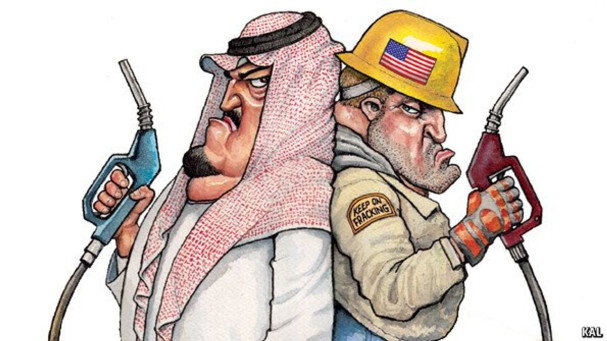
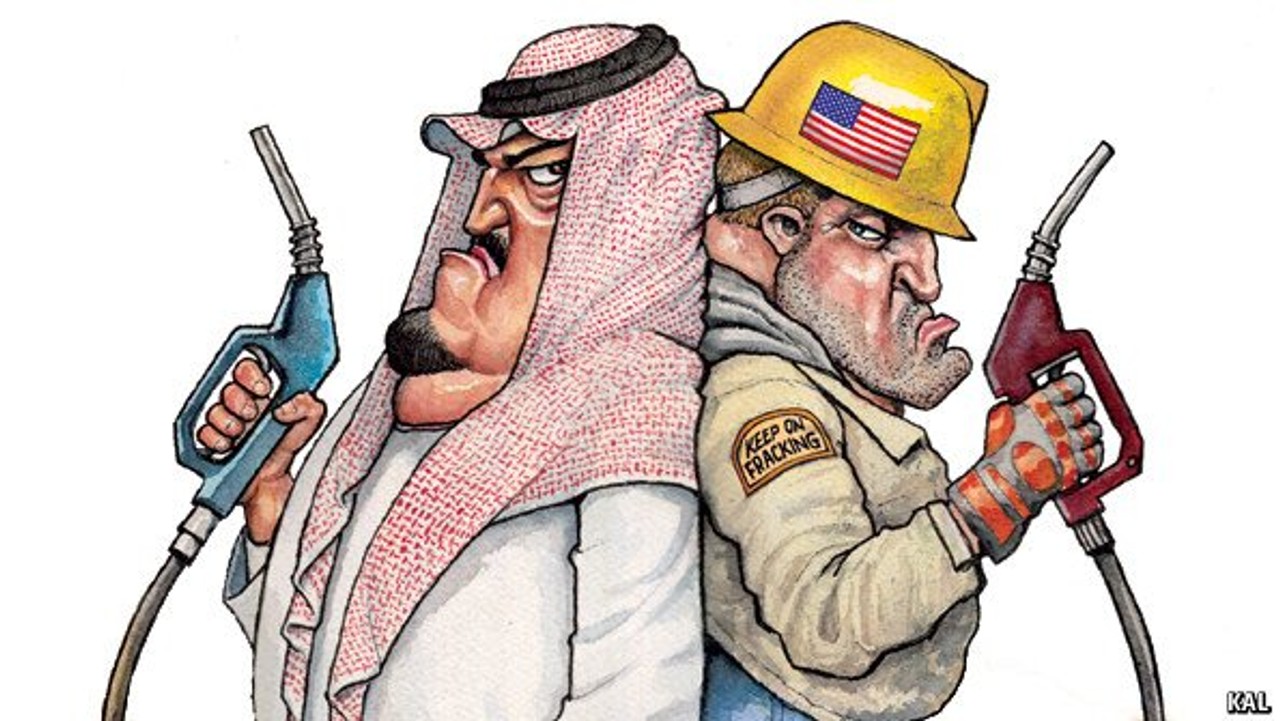
Sheikhs vs. Shale

And naturally Qatar and Saudi Arabia seconded that dire assessment, vowing to continue expanding their oil and gas facilities while pointing the finger at the climate activists for seeking to starve industry cash. Bloomberg presents the Gulf statements Thursday as follows:

The “euphoria” around the transition to clean energy is “dangerous,” Qatar’s Energy Minister Saad Sherida Al Kaabi said at the St Petersburg International Economic Forum in Russia on Thursday.

“When you deprive the business from additional investments, you have big spikes” in prices, he stressed further.

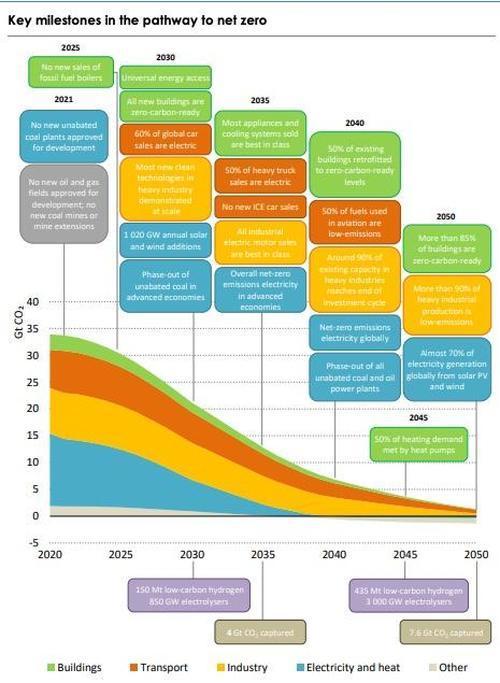
As a reminder, IEA’s roadmap set out in the Paris Accords for achieving net zero carbon emissions by 2050 requires reducing emissions as much as possible then offsetting the rest with “carbon removal” plans financed by carbon credits.

iea

However as we’ve detailed before, with economists expecting global growth to expand at even faster rates thanks to the infusion of stimulus inspired by the pandemic, it follows that energy demand will also increase more quickly. Despite this, many economists and scientists expect that improvements in energy efficiency and the shift to renewables means that global energy demand will be around 8% smaller than it is today in 2050, even though the global economy will be more than twice as large as it is today.

With this in mind, it was perhaps the recent Saudi comments from St. Petersburg which put it best, dismissing the “la-la-land” scenario in an earlier statement…

“Saudi Energy Minister Prince Abdulaziz bin Salman has already dismissed the IEA road map, which would limit the average increase in global temperatures to 1.5 Celsius, calling it a la-la-land scenario,” he said according to Bloomberg. “When asked on Thursday if oil is dead, he responded by saying the kingdom is increasing its production capacity.”

kn121419dapc20191213114523

Energy Industry Fights Off Biden Hostile Takeover

Samuel Allegri explains in his Epoch Times article 15 State Treasurers Warn They Will Pull Assets From Banks That Obstruct the Fossil Fuel Industry.  Excerpts in italics with my bolds.  H/T John Ray.
Fifteen Republican State Treasurers sent a warning that they will pull assets from financial institutions if they give in to Federal pressure to de-carbonize and “refuse to lend to or invest in” the fossil fuel and coal industry.

The letter (pdf), led by West Virginia Treasurer Riley Moore, is directed at Special Presidential Envoy for Climate John Kerry. It expresses concerns over reports that Kerry and other members of the Biden administration have been “privately pressuring” U.S. banks to stifle the fossil fuel industry.

“We are writing today to express our deep concern with recent reports that you, and other members of the Biden Administration, are privately pressuring U.S. banks and financial institutions to refuse to lend to or invest in coal, oil, and natural gas companies, as part of a misguided strategy to eliminate the fossil fuel industry in our country,” the letter reads.

The State Treasurers sent a plain message to financial institutions, telling them not to submit to the present administration’s coercion to deny investment and lending for the natural resources.

Furthermore, they assert that the approaches will “discriminate against law-abiding U.S. energy companies and their employees, impede economic growth, and drive up consumer costs,” adding that the strategy in question would make the free market submit to the will of politicians.

The signees of the letter are representing collectively more than $600 billion in assets, according to Axios.

They are backing some of the largest fossil fuel producers in the country.

“As a collective, we strongly oppose command-and-control economic policies that attempt to bend the free market to the political will of government officials,” they write. “It is simply antithetical to our nation’s position as a democracy and a capitalist economy for the Executive Branch to bully corporations into curtailing legal activities. The Biden Administration’s top-down tactics of picking economic winners and losers deprives the real determinate group in our society—the people—of essential choice and agency.

We refuse to allow the federal government to pick our critical industries as losers, based purely on President Biden’s own radical political preferences and ideologies.

The Obama administration’s previous conflict with American coal and natural gas industries is mentioned as an attack on jobs, tax revenue, and health insurance provided to families across the country, specifically hard-working middle-class families.

“As the chief financial officers of our respective states, we entrust banks and financial institutions with billions of our taxpayers’ dollars. It is only logical that we will give significant weight to the fact that an institution engaged in tactics that will harm the people whose money they are handling before entering into or extending any contract,” they warned.

The Epoch Times reached out to the White House for comment.

Dumb and Dumber Energy Advice from NYT

news-these-days
Benjamin Zycher at Real Clear Markets takes the NYT to task for its stupid article about fossil fuel infrastructure, awarding it The Dumbest New York Times Op-Ed of 2021.  Of course there are many months left for NYT to publish even worse inanities this year.  Excerpts in italics with my bolds. I have reorganized the content to juxtapose the wild claims with sober facts.

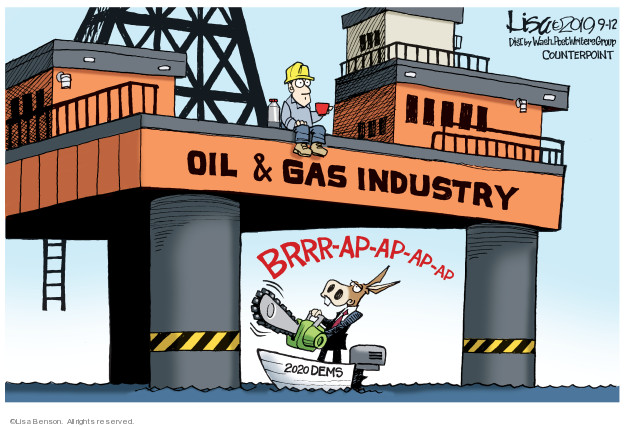
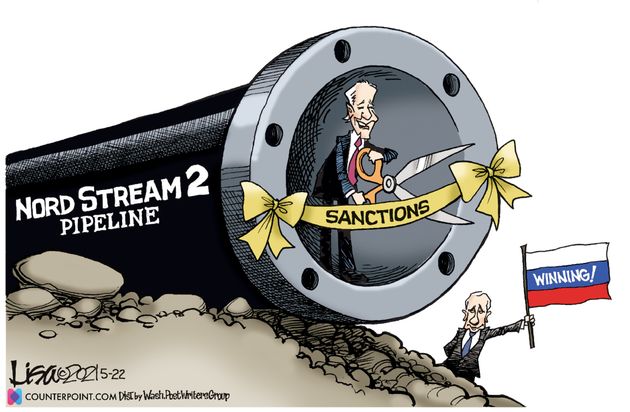
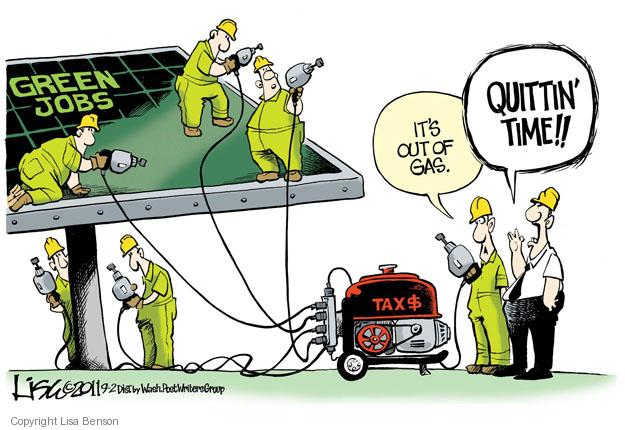
Lisa Benson cartoon

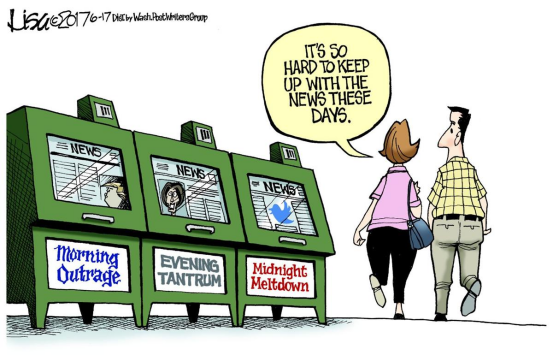
Summer still is weeks away, but already we have a winner in the fierce competition for the coveted title of “Dumbest New York Times opinion column of 2021.” The envelope please… and the winner is “Why Charles Koch Wins When Our Energy System Breaks Down,” by someone named Christopher Leonard. One really does have to read this column to grasp — actually, to marvel at — the inanity of Leonard’s argument, which can be summarized as follows.

Claim:
Our fossil-fuel infrastructure — pipelines in particular, and refineries as well — is “increasingly unreliable” and “dominated by a very small group of very profitable companies.”

Fact:  
Leonard does not tell us what he means in his assertion that U.S. pipelines are “increasingly unreliable” — it is easy to infer that he has no idea — but if we define “reliability” as the annual number of adverse pipeline incidents, there has been no trend since 2002, even as pipeline mileage increased almost 63 percent between 2004 and 2019.

Claim:
The Colonial Pipeline shut down in 2016, and again this month due to a cyberattack, but the five companies that own Colonial “profit handsomely off its operations and earn outsize profits in the face of the bottlenecks and supply squeezes caused by shutdowns.”

Fact:  
That is absurd: The pipeline generates revenue only when it is moving product; if it is not operational it is not generating revenue.

cb051921dapr20210518114504

Claim:
The 2016 shutdown “didn’t seem to hurt the owners’ earnings” in that afterward “Colonial boosted its annual dividends — at least in part because of the Trump administration’s 2017 tax cuts.”  The growth in Colonial’s investments in updating and protecting the pipeline have been “modest, while dividend payments have risen sharply.”

Fact:  
Apart from Leonard’s confusion about whether it is due to the 2016 shutdown or to the 2017 tax cut, he apparently has no concept of the factors addressed by corporate managers as they determine the appropriate dividend. In particular, a dividend change is driven by the evaluation of the after-tax return to shareholders from retaining more financial capital within the firm compared with that from distributing more to the shareholders. An increase in the dividend suggests that the latter has increased relative to the former, presumably in this case because of the nuances of the 2017 tax bill. Were the Kochs responsible for that?

Claim:
Charles Koch “has profited for years off similar energy bottlenecks in the upper Midwest” because of such infrastructure investments as the Pine Bend refinery, which “owes its profitability to its location in the middle of a broken fuel market.” Koch “buys cheap crude” in a market “oversupplied” with Canadian crude oil, after which “Koch then sells its finished fuel into an undersupplied gasoline market in the upper Midwest.”

Fact:  
And about that “oversupplied” (whatever that means) midwestern market for Canadian crude oil: The midwestern refinery market would be far less “oversupplied” had the Keystone XL pipeline been approved at long last, delivering heavy Canadian crude oil to the Gulf coast refineries designed to refine it. Did Charles Koch urge the Biden administration to reject the pipeline? Has Leonard criticized that decision? I can find no record of any such stance on his part.

And then there is Leonard’s assertion that the gasoline market in the upper Midwest is “undersupplied” (whatever that means). The Energy Information Administration divides the U.S. gasoline market into five regions (“PADDs”). As of May 24, Gulf Coast gasoline prices were the lowest, followed by the Midwest, and then (in ascending order) the East Coast, the Rocky Mountain states, and the West Coast, the last of which had the highest prices even excluding California. What is Leonard talking about?

Claim:
Regulatory hurdles have paved the way for these profits for decades.” “The Clean Air Act… made it nearly impossible for competitors to open a refinery near Pine  Bend” to increase competitive pressures.

Fact:  

The comedy highlight of Leonard’s column is the assertion that it is the Clean Air Act, regulatory obstacles to new pipeline investment, and general “regulatory stasis and dysfunction” that have yielded the “outsize profits” enjoyed by the Kochs. Leonard seems actually to believe this: “Just by letting the broken market limp along, Koch Industries reaps extraordinary profits from a broken system.” So the Kochs are vastly more powerful than anyone could imagine, responsible for the regulatory morass, for the ideological leftist political opposition to fossil infrastructure, for NIMBYism, and for allowing the “broken market” to “limp along.” Just as the pipeline owners win whether the pipelines are operating or not, Leonard clearly believes that they earn “outsize profits” whether the regulatory environment is light or dysfunctional. Who knew?

Claim: 
Regulatory fights benefit big refiners that can afford expensive legal experts and lobbyists: “Koch benefits from regulatory stasis and dysfunction.”

Fact:  

The utter stupidity of Leonard’s argument is illustrated by his assertion toward the end of the column that “new wind farms or solar installations could open up a whole new energy market.” Somehow, I was led to believe that Leonard’s argument was about pipelines and refineries and gasoline prices, and the ability of the Kochs to earn large profits no matter what. But no: An endorsement of unconventional electricity, expensive and environmentally destructive, just had to be shoehorned in as an exercise in virtue-signaling par excellence despite the reality that it has nothing to do with Leonard’s silly central argument. Or does he want to argue that more wind farms will reduce gasoline prices in the Midwest?

Conclusion

And so we arrive at the larger reality illustrated by the Leonard column. Misguided, illogical, and at odds with the facts, it is of a piece with the broad opposition of the environmental left to energy infrastructure generally, and pipeline investments in particular. Utter incoherence is the inevitable result of that ideological opposition to fossil fuels, one impervious to facts and analytic rigor, and dependent upon arguments fundamentally inconsistent. That opposition is anti-human at its core because it implies opposition to investment in human capital — education, training, health care, etc. — and the improved human well being that has the effect of increasing the demand for energy and its infrastructure. Forget the Kochs; they are a bogeyman and red herring the mere mention of which is intended to elicit a Pavlovian reaction from the enlightened invitees to the right cocktail parties.

The real bogeymen are the New York Times opinion editors who found such drivel fit to print, a measure of the intellectual depths to which they have sunk.

lb210522c20210521055437

See Also Shellenberger to NYT: Isn’t a correction merited?

Shellenberger to NYT: Isn’t a correction merited?

This exchange became interesting to me since Google somehow blocked my access to the twitchy.com page where the tweet thread was published.  This, even though I was using DuckDuckGo in Dissenter browser, supposedly independent of Google.  TorBrowser saved the day, and here are Shellenberger’s tweets offered to NYT for them to salvage an embarrassing badly warped article.

The Green Mirage

Mirage (2)

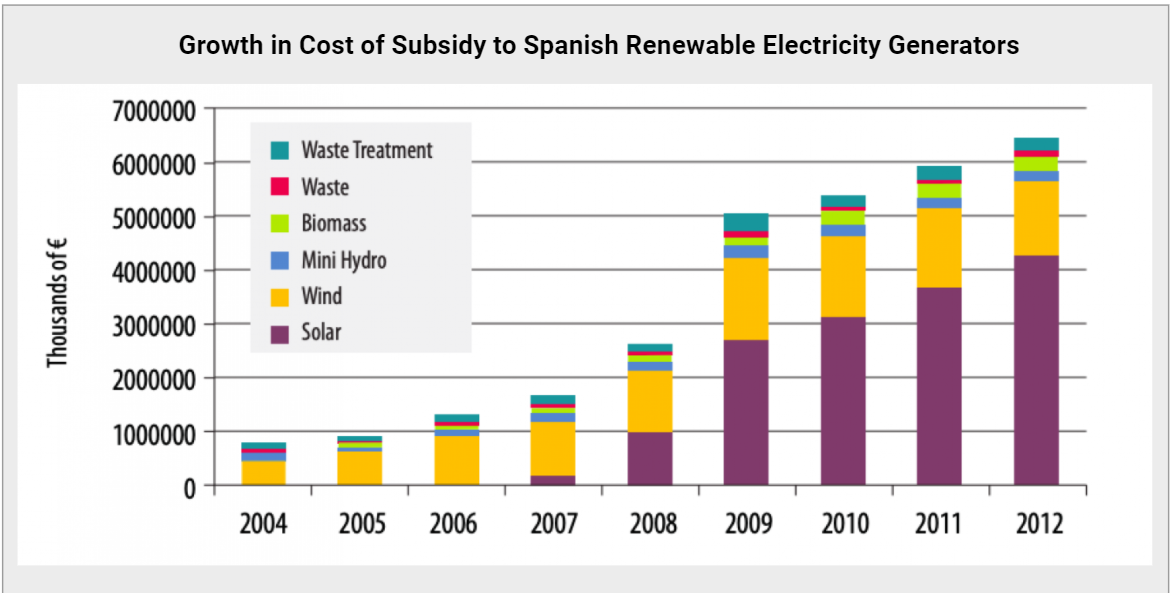
John Constable writes at Civitas The Green Mirage: Why a Low-Carbon Economy May be Further Off Than We Think.  Excerpts in italics with my bolds and images.  h/t Real Clear Public Affairs

Spain renewables

Findings:

  • The prospects for a sustainable, low-carbon economy as the result of current UK national and EU-wide policies are poor.
  • Empirical experience in Spain and Germany shows that the costs of supporting renewable energy generation are too high.
  • Rising employment in the renewable energy sector compared to the wider UK economy stems from unsustainably high subsidies.
  • Renewables are naturally less productive, so as they are relentlessly pursued, a painful rebalancing of the economy will occur, with fewer jobs and less economic growth.

green-and-environment

Bottom Line: The current prospects for a sustainable low-carbon economy are poor in both the UK and across the European Union (EU). Germany and Spain have already clearly shown what happens when state coercion forces such a dramatic shift to less reliable and more costly renewable energy systems: unsustainably high subsidies, fewer jobs, and reduced economic growth.

Whatever the longer-term potential for a viable and prosperous global economy with a low-emissions profile, the present study demonstrates that the prospects for a self-sustaining low-carbon economy as the result of current UK national and EU-wide policies are poor.

The problem is that these policies for such a shift to renewable energy systems demand high levels of state coercion. This has the risk of stagnating economic growth and leading to lower levels of invention and innovation, thus appearing to be a weak preparation for reduced usage of fossil fuels.

In addition, empirical experience in Spain and Germany shows that the costs of supporting renewable energy generation is overly high, compared to low-carbon alternatives, and almost certainly has, over time, net economic effects that are negative both in terms of gross domestic product and employment.

An age of subsistence energy generation appears to be dawning. Overly high subsidies to force renewable energy into the system erode jobs in other sectors of the economy.

Finally, analysis for the EU suggests that the net effects of such policies would only be marginally positive if the EU retains a high share of the world export market in renewable energy technologies – something that appears rather unlikely.

Read the full study here.

Footnote:  Excerpt from the full study:

In an interview with an environmental journalist for Ecoseed in early 2011, a spokesman for the industry body ASIF (Asociación de la Industria Fotovoltaica) remarked ‘The government cheated the solar investors by changing the law after it has lured them to invest their money in PV power plants… If you know that the government would change the law, you will never have invested in that technology and never have put your money in that market’.22 This implicitly concedes that the sector was from the outset likely to be a long-term client of the state, unable to survive without support, and should serve as a warning to other governments hoping to create independent renewables industries through subsidy.

green-octopus-10270


Just One Number Keeps the Lights On

windmill20scam

David Wojick explains how maintaining electricity supply is simple in his CFACT article It takes big energy to back up wind and solar.  Excerpts in italics with my bolds. (H/T John Ray)

Power system design can be extremely complex but there is one simple number that is painfully obvious. At least it is painful to the advocates of wind and solar power, which may be why we never hear about it. It is a big, bad number.

To my knowledge this big number has no name, but it should. Let’s call it the “minimum backup requirement” for wind and solar, or MBR. The minimum backup requirement is how much generating capacity a system must have to reliably produce power when wind and solar don’t.

For most places the magnitude of MBR is very simple. It is all of the juice needed on the hottest or coldest low wind night. It is night so there is no solar. Sustained wind is less than eight miles per hour, so there is no wind power. It is very hot or cold so the need for power is very high.

In many places MBR will be close to the maximum power the system ever needs, because heat waves and cold spells are often low wind events. In heat waves it may be a bit hotter during the day but not that much. In cold spells it is often coldest at night.

Thus what is called “peak demand” is a good approximation for the maximum backup requirement. In other words, there has to be enough reliable generating capacity to provide all of the maximum power the system will ever need. For any public power system that is a very big number, as big as it gets in fact.

Actually it gets a bit bigger, because there also has to be margin of safety or what is called “reserve capacity”. This is to allow for something not working as it should. Fifteen percent is a typical reserve in American systems. This makes MBR something like 115% of peak demand.

We often read about wind and solar being cheaper than coal, gas and nuclear power, but that does not include the MBR for wind and solar.

What is relatively cheap for wind and solar is the cost to produce a unit of electricity. This is often called LCOE or the “levelized cost of energy”. But adding the reliable backup required to give people the power they need makes wind and solar very expensive.

In short the true cost of wind and solar is LCOE + MBR. This is the big cost you never hear about. But if every state goes to wind and solar then each one will have to have MBR for roughly its entire peak demand. That is an enormous amount of generating capacity.

Of course the cost of MBR depends on the generating technology. Storage is out because the cost is astronomical. Gas fired generation might be best but it is fossil fueled, as is coal. If one insists on zero fossil fuel then nuclear is probably the only option. Operating nuclear plants as intermittent backup is stupid and expensive, but so is no fossil fuel generation.

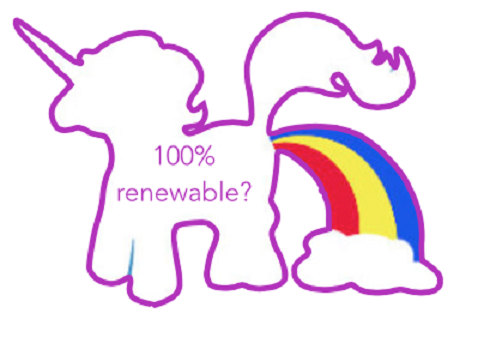
What is clearly ruled out is 100% renewables, because there would frequently be no electricity at all. That is unless geothermal could be made to work on an enormous scale, which would take many decades to develop.

unicorn

It is clear that the Biden Administration’s goal of zero fossil fueled electricity by 2035 (without nuclear) is economically impossible because of the minimum backup requirements for wind and solar. You can’t get there from here.

One wonders why we have never heard of this obvious huge cost with wind and solar. The utilities I have looked at avoid it with a trick.

Dominion Energy, which supplies most of Virginia’s juice, is a good example. The Virginia Legislature passed a law saying that Dominion’s power generation had to be zero fossil fueled by 2045. Dominion developed a Plan saying how they would do this. Tucked away in passing on page 119 they say they will expand their capacity for importing power purchased from other utilities. This increase happens to be to an amount equal to their peak demand.

The plan is to buy all the MBR juice from the neighbors! But if everyone is going wind and solar then no one will have juice to sell. In fact they will all be buying, which does not work. Note that the high pressure systems which cause low wind can be huge, covering a dozen or more states. For that matter, no one has that kind of excess generating capacity today.

To summarize, for every utility there will be times when there is zero wind and solar power combined with near peak demand. Meeting this huge need is the minimum backup requirement. The huge cost of meeting this requirement is part of the cost of wind and solar power. MBR makes wind and solar extremely expensive.

The simple question to ask the Biden Administration, the States and their power utilities is this: How will you provide power on hot or cold low wind nights?

Background information on grid stability is at Beware Deep Electrification Policies

More Technical discussion is On Stable Electric Power: What You Need to Know

cg4bbc1c620f5bf0

Data Show Wind Power Messed Up Texas

Yes, with hindsight you can blame Texas for not winter weather proofing fossil fuel supplies as places do in more northern latitudes.  But it was over-reliance on wind power that caused the problem and made it intractable.  John Peterson explains in his TalkMarkets article How Wind Power Caused The Great Texas Blackout Of 2021.  Excerpts in italics with my bolds.

  • The State of Texas is suffering from a catastrophic power grid failure that’s left 4.3 million homes without electricity, including 1.3 million homes in Houston, the country’s fourth-largest city.
  • While talking heads, politicians, and the press are blaming fossil fuels and claiming that more renewables are the solution, hard data from the Energy Information Administration paints a very different picture.
  • The generation failures that led to The Great Texas Blackout of 2021 began at 6 pm on Sunday. Wind power fell from 36% of nameplate capacity to 22% before midnight and plummeted to 3% of nameplate capacity by 8 pm on Monday.
  • While power producers quickly ramped production to almost 90% of dedicated natural gas capacity, a combination of factors including shutdowns for scheduled maintenance and a statewide increase in natural gas demand began to overload safety systems and set-off a cascade of shutdowns.
  • While similar overload-induced shutdowns followed suit in coal and nuclear plants, the domino effect began with ERCOT’s reckless reliance on unreliable wind power.

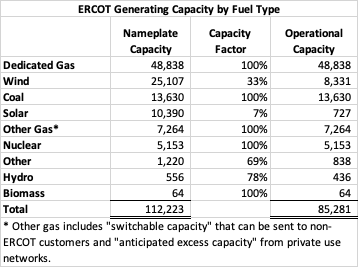
The ERCOT grid has 85,281 MW of operational generating capacity if no plants are offline for scheduled maintenance. Under the “Winter Fuel Types” tab of its Capacity, Demand and Reserves Report dated December 16, 2020, ERCOT described its operational generating capacity by fuel source as follows:

Since power producers frequently take gas-fired plants offline for scheduled maintenance in February and March when power demand is typically low, ERCOT’s systemwide generating capacity was less than 85 GW and its total power load was 59.6 GW at 9:00 am on Valentines Day. By 8:00 pm, power demand has surged to 68 GW (14%). Then hell froze over. Over the next 24 hours, statewide power production collapsed to 43.5 GW (36%) and millions of households were plunged into darkness in freezing weather conditions.

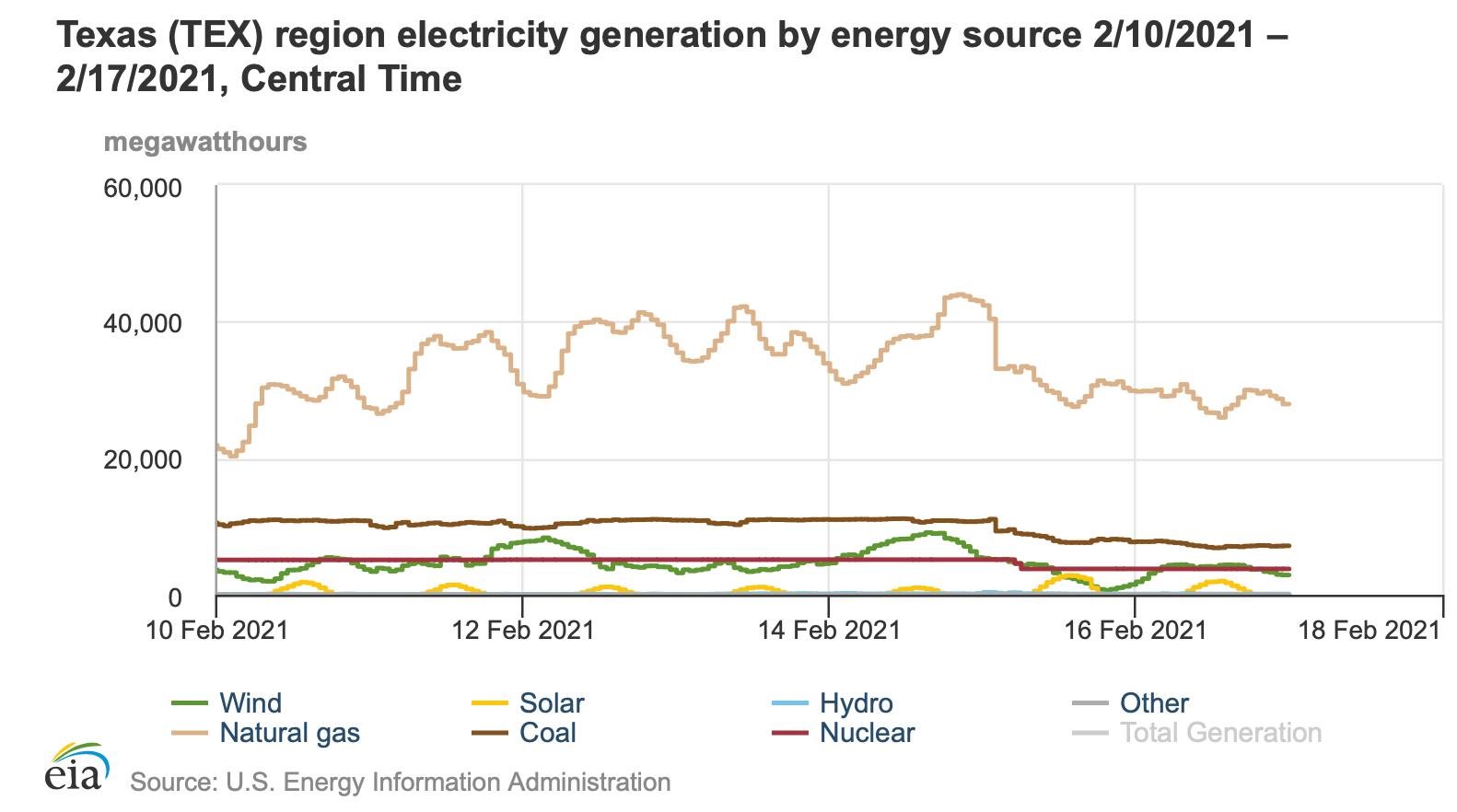
I went to the US Energy Information Administration’s website and searched for hourly data on electricity production by fuel source in the State of Texas. The first treasure I found was this line graph that shows electricity generation by fuel source from 12:01 am on February 10th through 11:59 pm on February 16th.

The second and more important treasure was a downloadable spreadsheet file that contained the hourly data used to build the graph. An analysis of the hourly data shows:

  • Wind power collapsing from 9 GW to 5.45 GW between 6 pm and 11:59 pm on the 14th with natural gas ramping from 41 GW to 43 GW during the same period.
  • Wind power falling from 5.45 GW to 0.65 GW between 12:01 am and 8:00 pm on the 15th with natural gas spiking down from 40.4 GW to 33 GW between 2 am and 3 am as excess demand caused a cascade of safety events that took gas-fired plants offline.
  • Coal power falling from 11.1 GW to 7.65 GW between 2:00 am and 3:00 pm on the 15th as storm-related demand overwhelmed generating capacity.
  • Nuclear power falling from 5.1 GW to 3.8 GW at 7:00 am on the 15th as storm-related demand overwhelmed generating capacity.

The following table summarizes the capacity losses of each class of generating assets.

The Great Texas Blackout of 2021 was a classic domino-effect chain reaction where unreliable wind power experienced a 40% failure before gas-fired power plants began to buckle under the strain of an unprecedented winter storm. There were plenty of failures by the time the dust settled, but ERCOT’s reckless reliance on unreliable wind power set up the chain of dominoes that brought untold suffering and death to Texas residents.

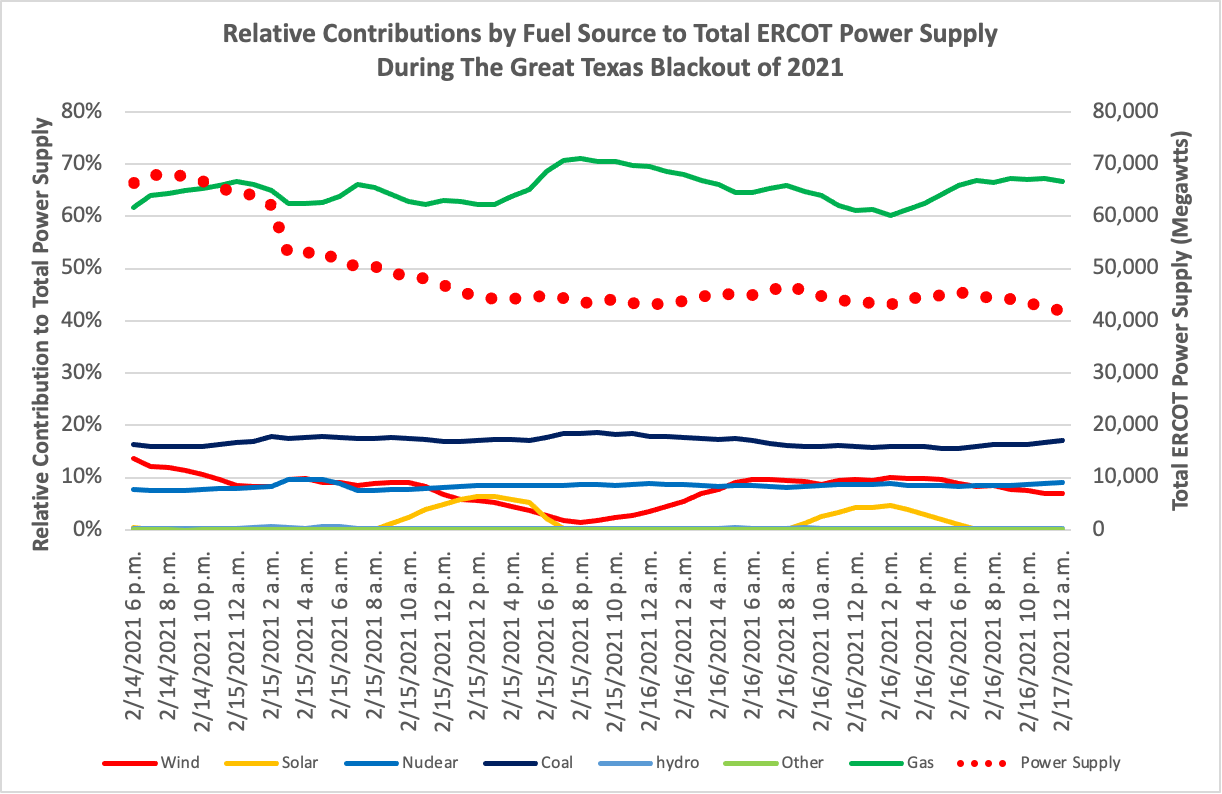
The graph clearly shows that during their worst-performing hours:

  • Natural gas power plants produced at least 60.2% of the power available to Texas consumers, or 97% of their relative contribution to power supplies at 6:00 pm on Valentine’s day;
  • Coal-fired power plants produced at least 15.6% of the power available to Texas consumers, or 95% of their relative contribution to power supplies at 6:00 pm on Valentine’s day;
  • Nuclear power plants produced at least 7.5% of the power available to Texas consumers, or 97% of their relative contribution to power supplies at 6:00 pm on Valentine’s day; and
  • Wind power plants produced 1.5% of the power available to Texas consumers, or 11% of their relative contribution to power supplies at 6:00 pm on Valentine’s day; and
  • Solar power plants did what solar power plants do and had no meaningful impact.

Conclusion

Now that temperatures have moderated, things are getting back to normal, and The Great Texas Blackout of 2021 is little more than an unpleasant memory. While some Texas consumers are up in arms over blackout-related injuries, the State has rebounded, and many of us believe a few days of inconvenience is a fair price to pay for decades of cheap electric power. I think the inevitable investigations and public hearings will be immensely entertaining. I hope they lead to modest reforms of the free-wheeling ERCOT market that prevent irresponsible action from low-cost but wildly unreliable electricity producers from wind turbines.

Over the last year, wind stocks like Vestas Wind Systems (VWDRY) TPI Composites (TPIC) Northland Power (NPIFF), American Superconductor (AMSC), and NextEra Energy (NEE) have soared on market expectations of unlimited future growth. As formal investigations into the root cause of The Great Texas Blackout of 2021 proceed to an inescapable conclusion that unreliable wind power is not suitable for use in advanced economies, I think market expectations are likely to turn and turn quickly. I won’t be surprised if the blowback from The Great Texas Blackout of 2021 rapidly bleeds over to other overvalued sectors that rely on renewables as the heart of their raison d’etre, including vehicle electrification.

Ending Wind and Solar Parasites

What’s the Problem with Electricity Rates?

This new Prager video explains (H/T Mark Krebs)

Background from Previous Post:

Norman Rogers writes at American Thinker What It Will Take for the Wind and Solar Industries to Collapse. Excerpts in italics with my bolds.

The solar electricity industry is dependent on federal government subsidies for building new capacity. The subsidy consists of a 30% tax credit and the use of a tax scheme called tax equity finance. These subsidies are delivered during the first five years.

For wind, there is subsidy during the first five to ten years resulting from tax equity finance. There is also a production subsidy that lasts for the first ten years.

The other subsidy for wind and solar, not often characterized as a subsidy, is state renewable portfolio laws, or quotas, that require that an increasing portion of a state’s electricity come from renewable sources. Those state mandates result in wind and solar electricity being sold via profitable 25-year power purchase contracts. The buyer is generally a utility with good credit. The utilities are forced to offer these terms in order to cause sufficient supply to emerge to satisfy the renewable energy quotas.

The rate of return from a wind or solar investment can be low and credit terms favorable because the investors see the 25-year contract by a creditworthy utility as a guarantee of a low risk of default. If the risk were to be perceived as higher, then a higher rate of return and a higher interest rate on loans would be demanded. That in turn would increase the price of the electricity generated.

The bankruptcy of PG&E, the largest California utility, has created some cracks in the façade. A bankruptcy judge has ruled that cancellation of up to $40 billion in long-term energy contracts is a possibility. These contracts are not essential or needed to preserve the supply of electricity because they are mostly for wind or solar electricity supply that varies with the weather and can’t be counted on. As a consequence, there has to exist and does exist the necessary infrastructure to supply the electricity needs without the wind or solar energy.

Probably the judge will be overruled for political reasons, or the state will step in with a bailout. Utilities have to keep operating, no matter what. Ditching wind and solar contracts would make California politicians look foolish because they have long touted wind and solar as the future of energy.

PG&E is in bankruptcy because California applies strict liability for damages from forest fires started by electric lines, no matter who is really at fault. Almost certainly the government is at fault for not anticipating the danger of massive fires and for not enforcing strict fire prevention and protection. Massive fire damage should be protected by insurance, not by the utility, even if the fire was started by a power line. The fire in question could just as well have been started by lightning or a homeless person. PG&E previously filed bankruptcy in 2001, also a consequence of abuse of the utility by the state government.

By far the most important subsidy is the renewable portfolio laws. Even if the federal subsidies are reduced, the quota for renewable energy will force price increases to keep the renewable energy industry in business, because it has to stay in business to supply energy to meet the quota. Other plausible methods of meeting the quota have been outlawed by the industry’s friends in the state governments. Nuclear and hydro, neither of which generates CO2 emissions, are not allowed. Hydro is not strictly prohibited — only hydro that involves dams and diversions. That is very close to all hydro. Another reason hydro is banned is that environmental groups don’t like dams.

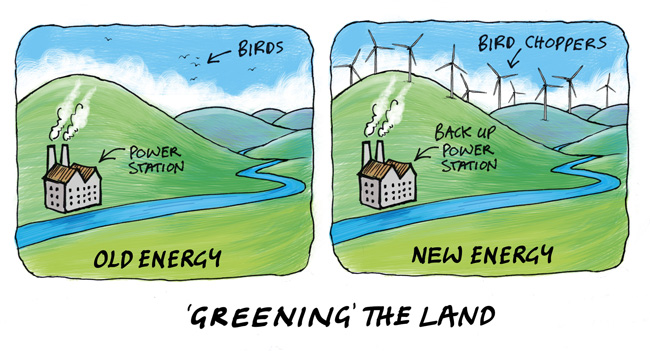
For technical reasons, an electrical grid cannot run on wind or solar much more than 50% of the time. The fleet of backup plants must be online to provide adjustable output to compensate for erratic variations in wind or solar. Output has to be ramped up to meet early-evening peaks. Wind suffers from a cube power law, meaning that if the wind drops by 10%, the electricity drops by 30%. Solar suffers from too much generation in the middle of the day and not enough generation to meet early evening peaks in consumption.

When a “too much generation” situation happens, the wind or solar has to be curtailed. That means that the operators are told to stop delivering electricity. In many cases, they are not paid for the electricity they could have delivered. Some contracts require that they be paid according to a model that figures out how much they could have generated according to the recorded weather conditions. The more wind and solar, the more curtailments as the amount of erratic electricity approaches the allowable limits. Curtailment is an increasing threat, as quotas increase, to the financial health of wind and solar.

There is a movement to include batteries with solar installations to move excessive middle-of-the-day generation to the early evening. This is a palliative to extend the time before solar runs into the curtailment wall. The batteries are extremely expensive and wear out every five years.

Neither wind nor solar is competitive without subsidies. If the subsidies and quotas were taken away, no wind or solar operation outside very special situations would be built. Further, the existing installations would continue only as long as their contracts are honored and they are cash flow–positive. In order to be competitive, without subsidies, wind or solar would have to supply electricity for less than $20 per megawatt-hour, the marginal cost of generating the electricity with gas or coal. Only the marginal cost counts, because the fossil fuel plants have to be there whether or not there is wind or solar. Without the subsidies, quotas, and 25-year contracts, wind or solar would have to get about $100 per megawatt-hour for its electricity. That gap, between $100 and $20, is a wide chasm only bridged by subsidies and mandates.

The cost of using wind and solar for reducing CO2 emissions is very high. The most authoritative and sincere promoters of global warming loudly advocate using nuclear, a source that is not erratic, does not emit CO2 or pollution, and uses the cheapest fuel. One can buy carbon offsets for 10 or 20 times less than the cost of reducing CO2 emissions with wind or solar. A carbon offset is a scheme where the buyer pays the seller to reduce world emissions of CO2. This is done in a variety of ways by the sellers.

The special situations where wind and solar can be competitive are remote locations using imported oil to generate electricity. In those situations, the marginal cost of the electricity may be $200 per megawatt-hour or more. Newfoundland comes to mind — for wind, not solar.

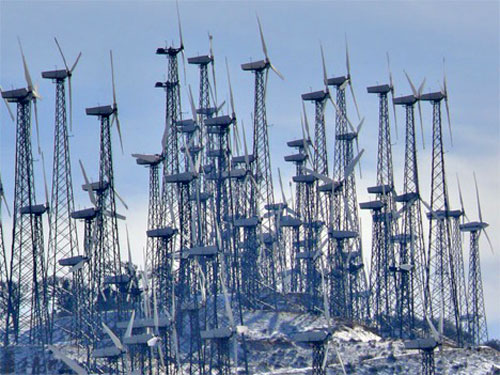
Maintenance costs for solar are low. For wind, maintenance costs are high, and major components, such as propeller blades and gearboxes, may fail, especially as the turbines age. These heavy and awkward objects are located hundreds of feet above ground. There exists a danger that wind farms will fail once the inflation-protected subsidy of $24 per megawatt-hour runs out after ten years. At that point, turbines that need expensive repairs may be abandoned. Wind turbine graveyards from the first wind fad in the 1970s can be seen near Palm Springs, California. Wind farms can’t receive the production subsidy unless they can sell the electricity. That has resulted paying customers to “buy” the electricity.

Tehachapi’s dead turbines.

A significant financial risk is that the global warming narrative may collapse. If belief in the reality of the global warming threat collapses, then the major intellectual support for renewable energy will collapse. It is ironic that the promoters of global warming are campaigning to require companies to take into account the threat of global warming in their financial projections. If the companies do this in an honest manner, they also have to take into account the possibility that the threat will evaporate. My own best guess, after considerable technical study, is that it is near a sure thing that the threat of global warming is imaginary and largely invented by the people who benefit. Adding CO2 to the atmosphere has well understood positive effects for the growth of crops and the greening of deserts.

The conservative investors who make long-term investments in wind or solar may be underestimating the risks involved. For example, an article in Chief Investment Officer magazine stated that CalPERS, the giant California public employees retirement fund, is planning to expand investments in renewable energy, characterized as “stable cash flowing assets.” That article was written before the bankruptcy of PG&E. The article also stated that competition among institutional investors for top yielding investments in the alternative energy space is fierce.

Wind and solar are not competitive and never will be. They have been pumped up into supposedly solid investments by means of ill advised subsidies and mandates. At some point, the governments will wake up to the waste and foolishness involved. At that point, the value of these investments will collapse. It won’t be the first time that investment experts made bad investments because they don’t really understand what is going on.

Footnote:  There is also a report from GWPF on environmental degradation from industrial scale wind and solar: