Woke Antidote

Some good news about education materials to inoculate children against brainwashing by woke teachers and social media messaging.  H/T Tom Woods for an alert to these timely resources for today’s families. From Tuttle Twins website.

Dear Parent,

If you’re like me, you’re worried about the “new normal” society is trying to cram down our throats.

In the wake of Covid-19, the government has asserted its power, printed a ton of new money, and restricted our rights.

Our kids have had to adjust, too — and many of us struggle to know how to help them understand what’s happening in the world.

To make matters worse, the public school system, the mainstream media, and the entertainment industry aren’t helping. They are openly pushing socialism and woke-ism
into the minds of our kids every day.

Just recently, an elementary school in my community plastered the wall with the ABCs of socialist activism — teaching kids terms such as “W is for woke,” “S is for social justice,” and “A is for activist.”

These radical messages work their way into school curriculum, movies, advertising, and social media platforms to persuade our impressionable children.

Parents like you struggle to find educational material that doesn’t lie about our nation’s history or teach that the government is the solution to our problems.

You want to help your children learn about true history, sound money, personal freedom and responsibility, entrepreneurship, individual rights, and more.

The Tuttle Twins are the only books that help children develop critical thinking skills about real-world concepts—sharing ideas with kids that most adults don’t even know!

Let’s be honest, most children’s books teach very basic ideas, if any at all—they’re full of fluff and silly stories. And while these can be good to develop reading skills and phonetics, they typically don’t teach children important ideas that they can apply in their life.

Our books recognize that the world is full of companies, people, and politicians who want to expose your children to ideas you do not support.

This includes school teachers who see their job as “activism” to spread leftist ideas and encourage children to think like they do.

The Tuttle Twins empower parents like you to make sure your children have a foundation of freedom—to understand the ideas of a free society that socialists are trying to hard to undermine.

With our books, your children will learn things like:

  • Why a free market economy is the greatest way to lift people out of poverty and allow people to trade with one another.
  • How property rights allows us to decide what’s best for us, and make decisions for our family.
  • Why the world is a better place because of entrepreneurs who create businesses to help serve us and improve our lives.
  • What socialism is and why it is so destructive to our freedoms and well being.
  • How the Golden Rule is so important to people getting along with one another, no matter where we live, what we look like, or what we believe.
  • Why education is so important, and why children should be allowed to learn things they are interested in.
  • What true laws are, and why the government should protect our rights.
  • …and so much more!
Footnote: Woke Pressure on Authors of Books for Children

Dr. Seuss  books were the best sellers

Until In recent years they have been targeted for imagery deemed stereotypical or out-of-date. A 2014 scholarly work asserted that The Cat in the Hat is an elaborate mockery of black people. In 2017, when then-First Lady Melania Trump gifted a collection of Dr. Seuss to a Massachusetts school, the books were returned by librarian Liz Phipps Soeiro with a note that the literature was “steeped in racist propaganda, caricatures, and harmful stereotypes.”

In 2019 a full on witch hunt was triggered when researchers Katie Ishizuka and Ramón Stephens published a study in the journal “Research on Diversity in Youth Literature” entitled “The Cat Is Out of the Bag: Orientalism, AntiBlackness, and White Supremacy in Dr. Seuss’s Children’s Books,” deeming them vehicles of “white supremacy.”  To appease outraged woke parents (activists?)  Dr. Seuss school events were canceled and six popular books selected to go out of print.

After canceling six Dr. Seuss books on spurious charges of racism, the massive German publishing giant and the secretive company that owns the rights to the deceased author’s work announced that they would be unveiling new “inclusive” Seuss books by diverse writers.

Seuss, or Theodor Geisel, an old dead white man is insufficiently diverse for his publishers.

While the names of the new stable of “inclusive” writers haven’t been made public, Penguin Random House, a subsidiary of the German Berteslman giant, also publishes or distributes prominent racists like Ibram X. Kendi, Robin DiAngelo, and Ta-Nehisi Coates.

Remember the Magic School Bus?

The Magic School Bus is back in the new Netflix series The Magic School Bus Rides Again! Overall, it’s still a nice, fun 13-episode series like we remember from when we were kids, but with some left turns. There is a pretty predictable take on climate change propaganda for little kids, but that wasn’t the worst. That dubious honor goes to the episode that teaches kids that a monster will eat them if they don’t use alternative clean energy sources.

Episode 12, “Monster Power,” teaches kids that a monster will eat them if they don’t use alternative clean energy sources. Albert, one of the students, has seen a movie in which the evil monster loves pollution and is “coming for us next for what we’ve done to this planet!” With the class camping in the woods, Miss Frizzle and the other students help him come up with clean energy alternatives (wind, water, etc) so they won’t be eaten. Instead, Miss Frizzle could tell him that monsters aren’t real, but I guess that didn’t occur to her.

Babylon Bee Chimes in with their list of dangerous children’s books

You Think Dr. Seuss Is Bad? Here Are 12 More Children’s Books That Should Be Canceled IMMEDIATELY

Your child’s bookshelves are crawling with racism and toxic problematicness.

But don’t worry — it’s nothing we can’t fix with a little good, old-fashioned book burning.

There are hundreds of children’s books that could use a good canceling. But let’s just start with these for now:

1. Horton Hears a Who — This Seuss book hasn’t been canceled yet, but it sure needs to be. The book claims a person is a person no matter how small, showing that Seuss hates women’s rights and wants to control their bodies.

2. Chicka Chicka Boom Boom — Prominently features the letter “Q.”

3. Every Berenstain Bears book — These books perpetuate the idea of a nuclear family with traditional values. They also appropriated furry culture.

4. Clifford the Big Red Dog — He’s literally a dog whistle for far-right neo-Nazi extremists and their affinity to the color red.

5. Charlie and the Chocolate Factory — Teaches kids there should be consequences for bad behavior without even considering the child’s race, ethnicity, or history of being oppressed.

6. The Very Hungry Caterpillar — This book encourages kids to consume and consume, destroying the environment for their own personal gain.

7. Goodnight Moon — Honestly, it’s probably not racist, but if we have to read this book to our kids one more time we’re gonna die.

8. The Jungle Book — Insensitive and stereotypical of Indian culture. Mowgli is called “man-cub,” and don’t even get us started on that loaded term. How has this not been canceled already?

9. If You Give A Mouse A Cookie — Teaches kids about cause and effect– which, as we all know from corporate anti-racism training, is an aspect of white culture not shared by other people groups.

10. The Tuttle Twins — Free markets? Individual responsibility? American history? Are you kidding? Where do we even start? We literally can’t even with this one.

11. The Little Engine That Could — Implies that hard work and effort can help you overcome challenges, which is pretty tone-deaf considering oppressed groups aren’t able to benefit from hard work.

12. Genderqueer Marxist Baby — Actually this one seems fine.

Get out the kerosene if you love your children. (satire/off)

Postscript from FEE 

CNN Slams Libertarian Children’s Books—Causing Sales to Surge

In April, CNN published an opinion piece arguing that the “right-wing children’s entertainment complex is upon us.” Prominently featured as a case in point were the Tuttle Twins children’s books, created by Connor Boyack to offset the progressive propaganda that many children now confront in classrooms across the country.

The books, which have sold more than 3.5 million copies, weave in libertarian themes related to individual freedom, limited government, free markets, and entrepreneurship, and frequently highlight the work of great thinkers such as Frederic Bastiat, F.A. Hayek, Ludwig von Mises, and FEE founder, Leonard Read.

“The goal is to seal conservatives’ children off from a broader culture, to protect them from supposed liberal indoctrination by getting a head start on conservative indoctrination,” wrote Nicole Hemmer, a researcher at Columbia University with the Obama Presidency Oral History Project, in her CNN article.

Boyack laughed when he read that. “I find it humorous that those in the left-dominated media are wringing their hands about a few of us doing what they have long been doing,” he told me this week. “The progressive mob has long been infiltrating and leveraging pop culture, the school system, and entertainment outlets—and suddenly they’re outraged when we’re providing a counter message to their myopic, woke worldview? They’re clearly crocodile tears—faux outrage over something the ‘left’ has long been up to.”

But Boyack welcomes more criticism from left-leaning media sites because it boosts his sales. Parents, it turns out, are clamoring for learning materials that offer different viewpoints and perspectives than what their children receive in their schools and throughout the broader culture.

Briggs Schools Justice Kagan on Expertocracy

William Briggs writes at his blog Elena Kagan’s Blind Love Of The Expertocracy: SCOTUS Slaps The EPA.  Excerpts in italics with my bolds and added images.

SCOTUS ruled 6-3 that, in effect, without Congressional authorization, the EPA does not have the power to regulate carbon dioxide. Justice Elena Kagan dissented.

Kagan opened her dissent thus (whole opinion; with my paragraphification for screen readability):

Climate change’s causes and dangers are no longer subject to serious doubt. Modern science is “unequivocal that human influence”—in particular, the emission of greenhouse gases like carbon dioxide—“has warmed the atmosphere, ocean and land.” [Cites IPCC] … The rise in temperatures brings with it “increases in heat-related deaths,” “coastal inundation and erosion,” “more frequent and intense hurricanes, floods, and other extreme weather events,” “drought,” “destruction of ecosystems,” and “potentially significant disruptions of food production.” [Cites, of all things, a case in which this was quoted.]

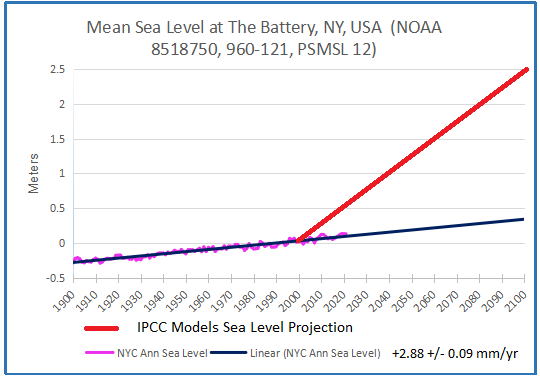
If the current rate of emissions continues, children born this year could live to see parts of the Eastern seaboard swallowed by the ocean. See Brief for Climate Scientists as Amici Curiae 6. Rising waters, scorching heat, and other severe weather conditions could force “mass migration events[,] political crises, civil unrest,” and “even state failure.”

So Kagan has bought and believes, seemingly sincerely, the failed predictions of global warming, which she calls “climate change”. This is her adopted opinion, provided her by climate Experts, who claim there is no “serious doubt” about their theories.

We have seen many times that her (or her Experts’) quoted predictions of doom are false. There have not been an increase, but a decrease, in floods. Same for drought. There is no “destruction of ecosystems.” And just last week a paper appeared—a peer-reviewed paper in the regime-approved journal Nature, going by the name “Declining tropical cyclone frequency under global warming“—which shows the number of tropical cyclones have been decreasing, not increasing.

Here’s a picture from that paper (ignore the straight and red lines, which are models and not the data):
So Kagan’s suppositions about the dooms of global warming are false, and known to be false with only a little investigation. Which she did not make. Nor did Wise Latina, and nor did the other guy who’s now retired and will be quickly forgotten. Both signed Kagan’s dissent.

Their non-curiosity and blind acceptance of the Expert Consensus is point one. And really is our only point, as we’ll see.

Under the Clean Air Act, as Kagan writes, Congress gave power to the “EPA to regulate stationary sources of any substance that ’causes, or contributes significantly to, air pollution’ and that “may reasonably be anticipated to endanger public health or welfare.’”

As we know, EPA called carbon dioxide, the basis of almost all life on earth, the very stuff of your breath, the food of plants, “pollution”. And started to regulate it. Scientifically, this is like the American Medical Association saying “not all women have cervixes”, and allowing the AMA to regulate the English language.

Do people forget, or maybe they never knew, that CO2 is plant food? And not only plant food, but the plant flood. Back in olden days, they used to teach photosynthesis. No longer? Remove CO2 and plants die. Then you die.

So what the EPA did in trying to regulate CO2 was ridiculous—unless you really do believe global warming, a.k.a. “climate change”, is an “existential crisis.” As Kagan, Wise Latina, and Gone Guy believe, or say they do. But which all observations show is not so.

Models, on the other hand, show the “existential crisis” is true. And all models only say what they are told to say. So models are told to say that “climate change” is an “existential crisis.” Experts told models to say this.

Experts, therefore, value models over observation. The Deadly Sin of Reification.

The real problem, then, is letting Experts make decisions based on models which are beautiful, to Experts, but which make lousy predictions. Experts are trusted too much.

Even if you think not, and still believe the models, nothing follows from them. That is, no policy is suggested, implied, or necessary because of the models. Not one. It is separately true that all policies, suggested from any source, have consequences, which may be known to greater or lesser extent—their uncertainty in them also are models.

It is scientism, a fallacy, to say Experts who wrote climate models also know what is best to do about the weather. Scientifically, it is like saying the CDC knows what is the best rate to pay for rent during a disease outbreak. Which they did say. And were rebuked for saying. A rebuke which they ignored. Which may happen here with the EPA, too.

Therefore, even if you believe the models, which stink, a fact that requires only minor effort to check, it does not follow the Experts who created those models, including agents in the EPA, know what is best to do about model predictions.

That power should fall to Congress, and to state and local governments, who have that mandate.

In other words, the Expertocracy, which was in part struck down and which Kagan dissented against, is based on two false assumptions. The first is that Expert models have skill. They do not. And the second, which is independent, is scientism, which is that scientists with expertise in one are are equipped with greater senses of good and evil on all subjects, which is absurd.

Kagan, though, embraces the Expertocracy. She said (her emphasis):

Members of Congress often don’t know enough—and know they don’t know enough—to regulate sensibly on an issue. Of course, Members can and do provide overall direction. But then they rely, as all of us rely in our daily lives, on people with greater expertise and experience. Those people are found in agencies. Congress looks to them to make specific judgments about how to achieve its more general objectives. And it does so especially, though by no means exclusively, when an issue has a scientific or technical dimension. Why wouldn’t Congress instruct EPA to select “the best system of emission reduction,” rather than try to choose that system itself?

Second and relatedly, Members of Congress often can’t know enough—and again, know they can’t—to keep regulatory schemes working across time. Congress usually can’t predict the future—can’t anticipate changing circumstances and the way they will affect varied regulatory techniques. Nor can Congress (realistically) keep track of and respond to fast-flowing developments as they occur.

Kagan is quite wrong. For all the reasons we discussed. Congress (as sick as that institution is) does know enough, and it knows vastly more than weather Experts about law. Because it knows, or is supposed to, what laws are, and what laws should do, and what the consequence of laws are. Climate or weather Experts do not. Congress can consult with Experts: “If we pass this law, what are the bounds of uncertainty on this particular weather-effected thing?” That is sensible. But it is rank foolishness to trust weather Experts to decide what laws are best, even if you by subterfuge call those laws “regulations”. And it even more dangerous to trust people who have something to gain, as Experts do, to decide what is “best” to do.

The impetus for the Expertocracy, and the faith in it, is there in Kagan’s words. She reasons, in effect, that Experts know more than anybody else on their subjects of expertise, therefore we have no right to interfere with their decisions on any subject.

It is a bad argument because Experts don’t always know best about their own subjects, as we see now everywhere. And even if Experts do know best about their subjects, they don’t know what is best to do about them.

Democratic Socialists Party Platform

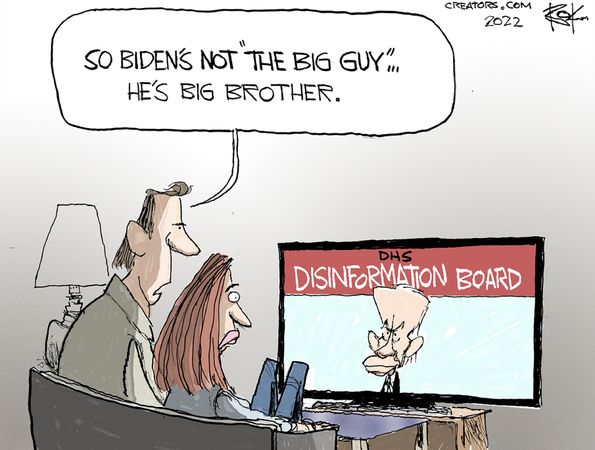
Everyone can see that a kind of Star Chamber hides in Biden’s shadow and dictates what he says and signs. Over the last year and a half, the game plan has been revealed by the exercise of authority assumed by federal and state Democratic Socialistic party.  The platform below summarizes what we have witnessed from these political operatives.

Establish Wokeism as the new state religion.

Under the guise of “Diversity-Inclusion-Equity, the doctrine is to eliminate pluralism from American Life. Critical Race and Gender Theories, among others, are to be asserted as secular truths, and all other beliefs are to be banned from the public square in the name of separation of church and state.

In the cult of Woke, adherents have a “critical consciousness” and are able to see the “problematics” in everything. This includes in speech, writing, institutions, thoughts, people, systems, knowledge, history, one’s past, and society itself. Society is broken into different groups or classes (social group identity) that are oppressive on one side, oppressed on the other, and in conflict over this. That is, conflict theory is the belief that different social groups in society are always in conflict with one another for power and dominance.  And rather than working together in complex, dynamical ways that can be mutually beneficial, they are at war.

Any criticism or questioning of Woke Doctrine is: racist, homophobic, transphobic, xenophobic, imperialistic, hateful, bigoted, unjust, evil, ignorant, wrong, and a crime against humanity.

Purge Public and Private Institutions of customs and symbols adverse to Wokeism.

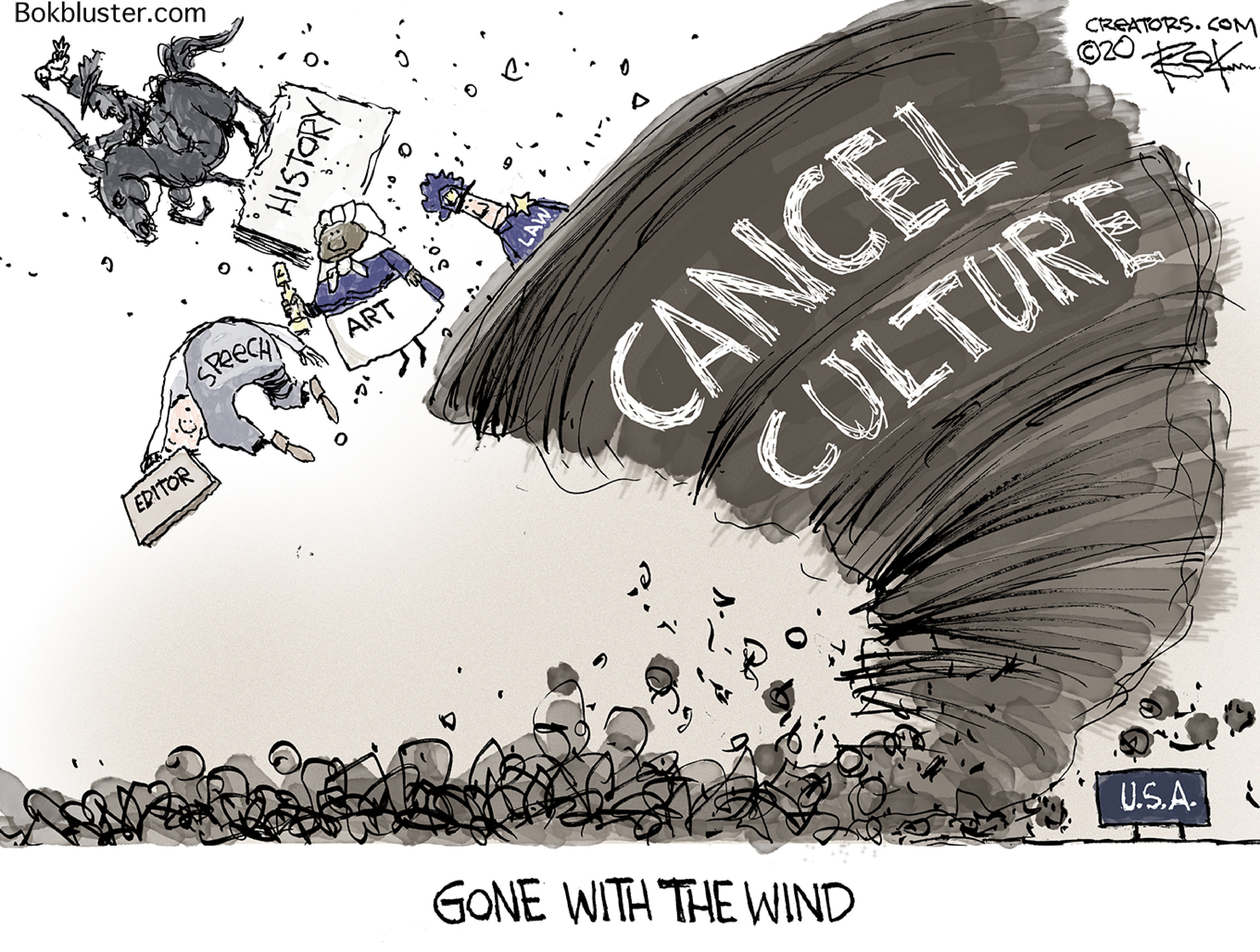
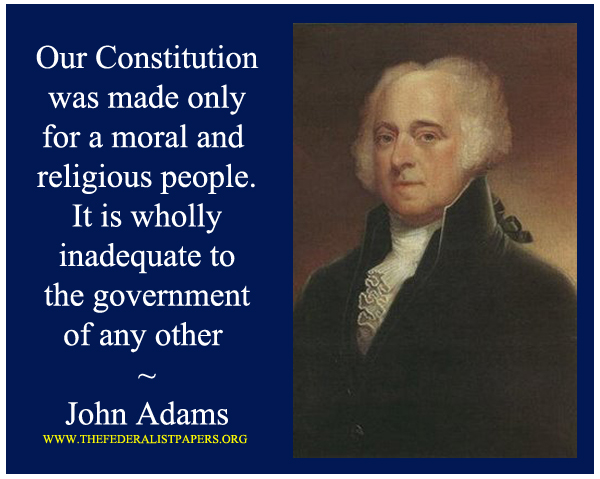
To facilitate the dominance of Woke doctrine, the heritage of previous widely adopted beliefs must be purged. Thus monuments of past American heroes must be destroyed, and doubt must be cast over the documents and writings of the founders of the American Republic. Rituals like the Pledge of Allegiance or prayers at public events must be replaced with pride rainbows or kneeling to BLM flags.

Persecute and prosecute individuals whose speech and/or actions are contrary to Wokeism, or who are less than enthusiastic.

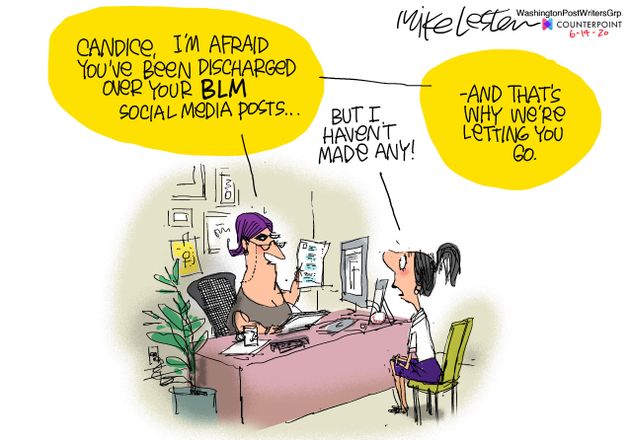
To achieve Woke totalitarian dominance, dissenters must be reviled as heretics. And if unrepentent, they must be incarcerated or otherwise excommunicated by removing their reputations and employment. Any spokespersons for alternative opinions to Woke views of history and identity politics must be driven out of public awareness and discourse.

Expand the administrative bureaucracy to extend social and economic control and to deepen dependency upon the state.

By declaring states of emergency, a la Covid or Climate, Executive agencies will create more rules regulating enterprises, indeed all employees public and private, constraining personal choices to align with Woke doctrines. Expanding the regulatory authorities will greatly increase numbers on the public payroll, and shift financial power away from the private sector.

Strip the citizenry of firearms to prevent resistance to the force of governmental edicts.

To complete the state’s monopoly of coercion force over the populace, citizens’ right to self-defense must be rendered mute by confiscating guns and ammunition.

Rig the election process so that the Woke party is always returned to power.

In line with Marxist theory, Woke doctrine includes believing that only one political party is legitimate; that is the one representing the victims of oppression. All others are illegitimate, and cannot be allowed to form the government by means of a free and fair election. The illusion of voters choosing will be maintained, but political communication will be slanted to heavily favor the Woke appointed candidates. Also the collecting and counting of ballots will be coordinated to ensure the right outcome.

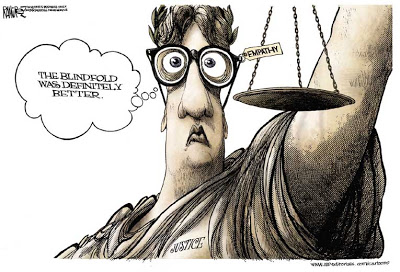
Neutralize Congress and Supreme Court as checks upon Executive authority.

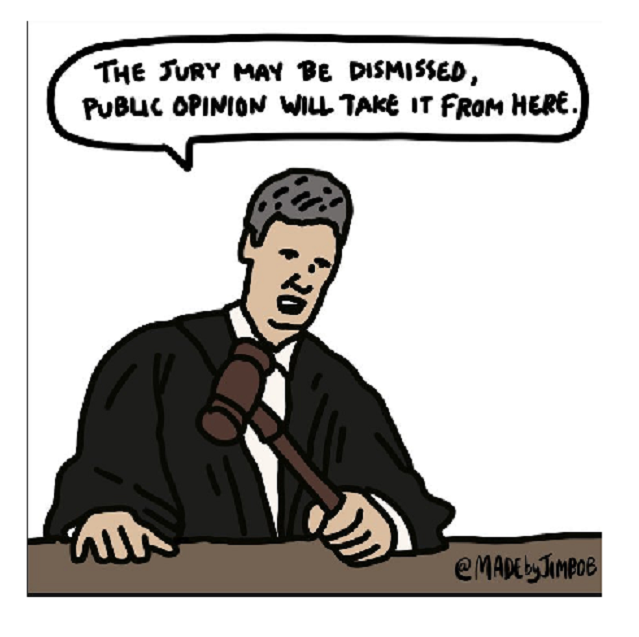
With the centralizing of governance in the Executive branch. Congress and the Courts must be relegated to advisory roles. Deliberation will occur in the agencies with Executive oversight, while congressional discussions will give the appearance of representation for the electors. The courts will limit themselves to reaffirming Woke doctrine against heresies arising from time to time.

Postscript

I have used satirical images to poke holes in this mistaken political movement, but this is a serious moment in the struggle for the soul and future of the American Republic.  For example, note these statements excerpted from a recent fundraising email from Ron DeSantis, addressing these same points in resolute language. The Appeal of Ron DeSantis

Our country is currently facing a great threat. A new enemy has emerged from the shadows that seeks to destroy and intimidate their way to a transformed state, and country, that you and I would hardly recognize.

This enemy is the radical vigilante woke mob that will steamroll anything and anyone in their way. Their blatant attacks on the American way of life are clear and intensifying: stifling dissent, public shaming, rampant violence, and a perverted version of history.

A group that will, literally, tear down monuments and buildings but — perhaps in an even more sinister way — tear down the American spirit itself.

To destroy America, they go after the family unit, parental rights, traditional moral values, the church, and fact-based education.

Over the past few years, we’ve watched horrified as this group has attempted to brainwash our children into thinking we live in an evil, racist, irredeemable country.

With regard to Covid, we listened to them deny science and data to exert political theater all the while trampling over personal liberties enshrined in the Constitution.

We saw them take to the streets for an entire summer like outlaws burning, looting, and destroying everything in sight while being told they were “mostly peaceful” and “passionate.”

We watched Big Tech moguls in Silicon Valley be the arbiters of truth – deciding who gets to speak and who gets silenced through the digital public square.

We The People still have a say. We know the truth, you and I, about America and the country she is and can be. We must fight to defeat these false pretenses and predetermined narratives.

I am choosing to counter this enemy with faith, with reason, and with freedom. As Governor of the Free State of Florida, I have chosen to lead with a vision that builds America up rather than tears it down.

Together we can ensure that our children are raised to know they live in the greatest state in the nation, the greatest country in the world and that they have an opportunity to continue making them even greater.

Am I embarrassed to speak for a less than perfect democracy? Not one bit. Find me a better one. Do I suppose there are societies which are free of sin? No, I don’t. Do I think ours is, on balance, incomparably the most hopeful set of human relations the world has? Yes, I do.

Why The Protests Over Abortion and Guns?

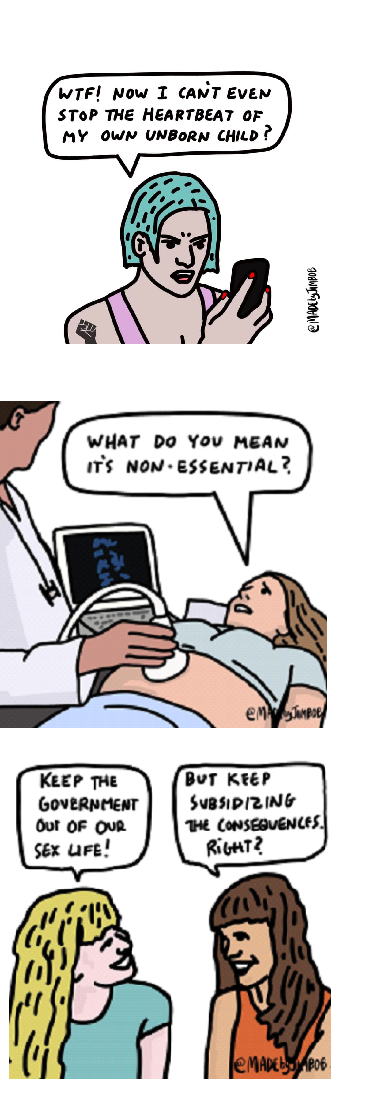
As Jimbob notes in this cartoon, the people in the streets are nearly always leftists appealing to the state to take away someone else’s freedom.  This latest round is triggered by Supreme Court decisions confirming American constitutional rights, contradicting the left’s agenda.  They respond with outbursts of emotion and rage, rather than  by reading and understanding what they have gotten wrong.

Bruce Pardy explained the dynamics in his National Post article Meet the new ‘human rights’ — where you are forced by law to use ‘reasonable’ pronouns.  Excepts in italics with my bolds.

Human rights were conceived to liberate. They protected people from an oppressive state. Their purpose was to prevent arbitrary arrest and detention, torture, and censorship, by placing restraints on government. The state’s capacity to accommodate these “negative rights” was unlimited, since they required only that people be left alone.

If only arm twisting were prohibited beyond the ring.

But freedom from interference is so 20th century. Modern human rights entitle. We are in the middle of a culture war, and human rights have become a weapon to normalize social justice values and to delegitimize competing beliefs. These rights are applied against other people to limit their liberties.

Freedom of expression is a traditional, negative human right. When the state manages expression, it threatens to control what we think. Forced speech is the most extreme infringement of free speech. It puts words in the mouths of citizens and threatens to punish them if they do not comply. When speech is merely restricted, you can at least keep your thoughts to yourself. Compelled speech makes people say things with which they disagree.

Traditional negative human rights give people the freedom to portray themselves as they wish without fearing violence or retribution from others. Everyone can exercise such rights without limiting the rights of others. Not so the new human rights. Did you expect to decide your own words and attitudes? If so, human rights are not your friend.

Then, some comments about the abortion street theater from Rajan Laad’s American Thinker article Decoding the Democrat protestors after Roe.  Excerpts in italics with my bolds.

The recent ruling from the Supreme Court that overturned Roe v. Wade launched a thousand protests, which the Democrats called “The Night of Rage.”

In Washington D.C., hundreds of pro-abortion ‘activists’ marched, shouted slogans, and held signs outside the Supreme Court building and beyond.

Crowds ‘demonstrated’ before the federal building in downtown Chicago. The cacophony of ‘protests’ was also witnessed at the Georgia Capitol in Atlanta, the Wisconsin Capitol in Madison, and in Flint, Michigan.

There were ‘marches’ in downtown Seattle, Philadelphia, Boston, and Los Angeles.

There were ‘demonstrations’ in Richmond, Virginia; Jacksonville, Florida; Columbia, South Carolina; Raleigh, North Carolina, and Topeka, Kansas.

In Phoenix, ‘protesters’ managed to break the doors of the Arizona Senate building.

Some of these ‘demonstrations’ involved road blockades while obscenities were shouted elsewhere.

Enraged ‘protesters’ also descended before the homes of the six conservative Supreme Court justices.

Also, this week the Senate passed a gun control bill, that among other things, enables the confiscation of guns on the basis of suspicion. But conservatives didn’t hit the streets demonstrating that their rights were encroached upon.

For decades, since the beginning of the Nixon era, the Democrats have been the party of “demonstrations.” The operation has become so smooth now that they can muster raucous nationwide protests for any issue in a matter of hours. It is almost as if they have a sleeper cell that can be activated on command.

Democrats use these groups like disposable commodities. They will be cheered as a group but overlooked as individuals. They will always be part of the crowds. but never be allowed on stage. The stage is reserved for the Hollywood star or the pop singer or the politician. If they secure a victory, the Democrat ‘elites’ will enjoy the fruits of power and receive invites to galas. The activist will always be out on the streets.

Comment:

The protests are about purifying the population of the “wrong thinkers”.  It means cancelling any woman (yes, they do know what one is) concerned about ending the life of her unborn child.  It means forcing doctors and caregivers to act against their principles to do procedures to abort an embryonic human life because someone couldn’t manage their sexual practices to prevent it.

The guns thing is even more obvious.  Responsible gun owners are to have their self-defense removed so that outlaws can roam freely without fear of lethal confrontation.  Urban snowflakes want rural folks disarmed so they can feel safer in their crime ridden neighborhoods, even though they aren’t.

And on it goes.  Anyone who has a longer and higher quality life because of fossil fuel products must be deprived of it to “save the planet.”  Anyone thinking otherwise is to be silenced and ostracized.  There is only one right way to think; all others must be cast aside.


One More Time: Shooters Are Disordered Personalities

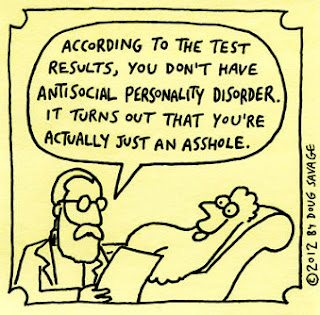
One more time:  These shooters assaulting their fellow citizens are disordered personalities, not people suffering from emotional problems who can be helped by counseling therapy.

John Dale Dunn, M.D. explains in his American Thinker article Don’t assume school shooters are mentally ill.  Excerpts in italics below with my bolds.

There is a lot of mumbo jumbo psych talk circulating around the dead bodies in Uvalde, a town I knew pretty well because I consulted frequently with their hospital administrator.

I want to remind readers of the problem of personality disorders (PD) and distinguish PD from mental illness.

PD is pattern of anti-social or dysfunctional behavior that is not caused by mental illness but by bad manners and bad social adaptation. There are 3 groups of personality disorders. In the Emergency Medicine part of my life,

I taught residents that PDs are the weird, the wild, and the withdrawn.

The killers and criminals are usually in the wild group, who are the most anti-social and disruptive.

Here is a typical listing available from a search at: https://psychone.net/list-of-personality-disorders.php

Class A (The Weird)

Odd or eccentric disorders

·         Paranoid personality disorder 

Characterized by suspiciousness and a deep mistrust of people, paranoid personalities often think of others as manipulative, cunning or dishonest. This kind of a person may appear guarded, secretive, and excessively critical. More..

·         Schizoid personality disorder 

People with schizoid personalities are emotionally distant and tend to prefer to be alone. They are generally immersed in their own thoughts and have little interest in bonding and intimacy with others. More..

·         Schizotypal personality disorder 

This disorder is characterized by odd and unusual “magical” beliefs. These individuals may have an eccentric way of behaving or dressing. They also tend to display outlandish beliefs such as believing that they can see the future or travel to other dimensions.

People with this condition often have difficulty connecting with others and establishing long term relationships. Overtime, they may develop a fear of social gatherings. More..

Class B (The Wild)

Dramatic, emotional or erratic disorders (wild) 

·         Antisocial/psychopath personality disorder

Individuals with this disorder are known to be manipulative, irresponsible, and have a history of legal difficulties. They show little respect for the rights of others and feel no remorse for their actions. They also leave a trail of unfulfilled promises and broken hearts.

Antisocial personalities are also at high risk for drug abuse (e.g., alcoholism; meth) since many are rush seekers. While they seldom suffer from depression or anxiety, they often use drugs to relieve boredom and irritability. More..  (Dunn note–this PD is male dominant) 

·         Borderline personality disorder

Borderline personalities are impulsive and have extreme views of people as either all good or bad.

These people are unstable in relationships and have a strong fear of abandonment. They may form an intense personal attachment with someone they barely know and end it without no apparent reason. They might also engage in a pull and push behavior that usually ends with their partner leaving permanently.

Self-mutilation, suicidal gestures or attention-seeking destructive behaviors are not uncommon. Borderline personalities are three times more likely to be female. More..

·         Histrionic personality disorder

People with this condition engage in persistent attention-seeking behaviors that include innapropriate sexual behavior and exaggerated emotions. They can be oversensitive about themselves and constantly seek reasurrance or approval from others.

Excessive need to be the center of attention, low tolerance for frustration, blaming others for failures are also characteristics of the histrionic personality. More..

·         Narcissistic personality disorder 

Narcissistic personalities have a blown up perception of themselves and an excessive desire for attention and admiration. Individuals with this disorder have a false sense of entitlement and little respect for other people’s feelings. They are oversensitive to criticism and often blame others for their failures.

Prone to outbursts of anger and irritability, the narcissistic personality tends to be manipulative in interpersonal relationships. But deep beneath the surface lies a vulnerable self-esteem, susceptible to depression and feelings of inferiority. More..

Class C (The Withdrawn)

Anxious or fearful disorders 

·         Avoidant personality disorder 

This disorder is described by chronic social withdrawal, feelings of inferiority, over-sensitivity and social withdrawal.

People with avoidant personality disorder are constantly fearful of rejection and ridicule. They form relationships only with people that they trust. The pain of rejection is so strong that these individuals prefer to isolate rather than risk disappointment. More..

·         Dependent personality disorder 

Individuals with this condition have an abnormal desire to be nurtured that leads to submissive and clinging behavior. Dependent personalities have difficulty making their own decisions and seek others to take over most important areas in their lives.

They will often go to great length to obtain nurturance from others, have separation anxiety when alone and desperately seek another partner when a close relationship ends. More..

·         Obsessive-compulsive personality disorder (OCPD)

Not to be confused with OCD. People with OCPD are perceived as strict and demanding by others. They have a persistent preoccupation with perfectionism, orderliness, and efficiency, at the expense of interpersonal relationships. They also show an excessive devotion to work, productivity and exhibit rigidness and stubbornness.

People with OCPD usually have a negative view of life and often become withdrawn and depressed.

I was a corrections physician for almost 30 years as a contribution to our hometown and local law enforcement/incarceration services. I know a little about criminals. Here are three essays, two short, one long, on the issue of criminality and mental disorders.

https://www.americanthinker.com/blog/2018/02/mental_illness_and_misconduct.html

https://www.americanthinker.com/blog/2018/03/personality_disorders_and_mass_murder.html

https://www.americanthinker.com/articles/2016/02/senator_cornyn_and_the_inmates.html

Consider my warning: PDs are not a mental illness, they are a culturally dysfunctional behavior problem. PD individuals are not psychotic or out of touch with reality — they just have a bad set of behavior and social controls. They got messed up on the way to adulthood and functional good behavior.


My Comment:

Dr. Dunn puts analytic rigor to confirm a suspicion many of us have, that these violent acts by individuals demonstrate the breakdown of socialization in our societies.  Current political initiatives aim to denigrate and defund law enforcement, and to not prosecute criminal behavior.  Educators are proudly replacing family values with ego-centric pleasure gratification.  How can this be anything but a concerted effort to infect free societies with more and more mal-adjusted, disordered personalities?  And social media adds fuel to the fire.

The wokeness destruction of our institutions must be reversed, and families must function to raise children to care about and respect others.  Otherwise, when the social bonds are completely dissolved, the jack boots will come in.

See also Hey Groomers, Leave Those Kids Alone!


Where Leftist Media Saturation Leads

Tyler Durden writes insightfully on the current cultural war in his zerohedge article Why Are Twitter Employees So Afraid Of Free Speech? It’s About Market Saturation.  Excerpts in italics with my bolds.

When a franchise sets out to compete with other companies that have a superior market or branding presence, they will sometimes exploit a strategy called “market saturation” in order to undermine their opponent’s visibility. An example of this is Starbucks, which sought to co-opt and then destroy the concept of the neighborhood hipster coffee shop by flooding every city and town with their own stores. After several years, there was at least four Starbucks within a mile of every other Starbucks store and often these franchises would sit right across the road from each other.

Every coffee house was now a Starbucks coffee house.

You might ask – What the hell does this have to do with Twitter? Well, remember this analogy for later because it’s important, but it has a lot to do with the manner in which the political left operates and how social justice warriors and trans activists take control of the narrative. And guess who has been running Twitter until recently? That’s right, extreme leftists based out of the social justice Mecca – San Francisco.

Twitter is supposedly one of the largest social media companies in the world (though this has come under question recently as it has yet to be determined how many users on the platform are actually fake), and basing this massive communications hub out of one of the most communistic/collectivist cities in the US already set the stage for unprecedented political bias.

When your company is headquartered in such a place, the vast majority of people you hire will be part of the social justice hive mind. It’s saturated.

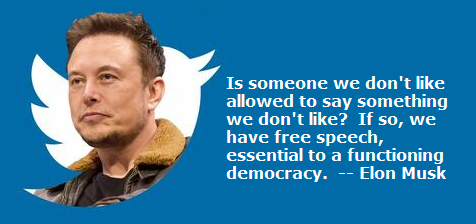
Why is this a problem? Leftists don’t believe in work, they believe in activism, and they even believe that their activism is so important to the world that they should be paid for it as if it is the same as work. This is not an exaggeration; they really are that crazy. That’s why when it became apparent that billionaire Elon Musk, a self described proponent of meritocracy, was going to take over the platform, the employees freaked out. Not because they thought they were going to lose their jobs (though that was a concern), but more so because they were horrified at the notion that Twitter as a communications platform would be “forced” by Musk to allow free speech. Meaning, Twitter employees have spent most of their careers trying to erase one side of the political discussion (conservatives), and the prospect of all that censorship disappearing has them frothing at the mouth like rabid dogs.

Again, it’s about saturation.

Though leftists often greatly overestimate their influence within the overall culture, they don’t really care so much about convincing the public of the legitimacy of their ideology. Rather, what they are obsessed with is their beliefs becoming the ONLY beliefs that are perpetuated in the mainstream. No other franchises can be allowed a foothold in media, in popular culture or on Big Tech platforms. They see the public as a blank canvas, a lump of clay that can and should be molded, and they think that if the public is bombarded daily with the social justice cult message then this will eventually translate to a manufactured majority that serves their interests.

A perfect example is the concept of “pride month.”

Since when does 2%-3% of the global population need an entire month to celebrate their obscure sexual habits? Since when does almost every major corporation need to brand their products with pride propaganda during June? Because saturation works, to a point. In the US, where there has been a constant bombardment of LGBT propaganda in media, the number of people identifying as gay and trans rose from around 2.5% in 2008 to over 5% in 2016, and it’s still climbing today. Remember, the gay lobby has long argued that homosexuality is inborn. So, somehow, the rate of people born gay doubled in the span of 8 years, and only in the US and certain parts of Europe. How is this possible?

It’s not possible. Not statistically or scientifically. There was no stigma in 2008 in terms of identifying as gay; there wasn’t really any stigma as far back as the 1990’s. On top of that, survey methods are generally anonymous anyway. So stigma can’t be used as an excuse for the abnormality in stats. Furthermore, the rise in gay identification is almost entirely among Gen Z teens and young adults (an easily manipulated subsection of society). Again, there is no stigma in any age group today. In fact, it’s quite the opposite. The LGBT movement has become a political movement and a pop culture movement driven by corporate saturation. It is considered trendy among young people to be gay or trans, and so the percentage rises according to the trend.

Leftists have long understood a concept which most of their political opponents have not, and that is the power of cultural gatekeeping.

They understand that by forcefully injecting their ideology into every aspect of a culture through key sources of entertainment and information distribution as well as public schools, they can create the illusion that they are the majority. And by creating the illusion of a majority, you can one day turn that illusion into a reality as millions of people start to assume that there is only one way to see the world – The leftist way.

In a recent meeting with Elon Musk to discuss the future of the company, Twitter employees were particularly grieved by the notion that the business would be run on meritocracy and that Musk argued in favor of people being able to say whatever they want within the bounds of the law (no death threats). Twitter is a platform that has been declining for years, but it is true that there is no alternative in existence yet with the same level of cultural reach. Employees have been enjoying an incredible level of power – the power to omit, to bury and to erase any messages, facts or people that contradict the greater hive mind.

They see this as their job and the thing that brings meaning to their lives.
Now, that power is about to be taken away.

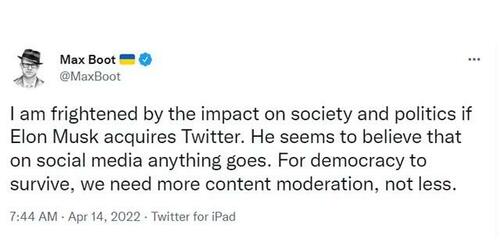
Not surprisingly, many globalists also share the same sentiments as Twitter workers. Max Boot, a long time member of the Council on Foreign Relations, had this to say about the potential for free speech on Twitter:

Note the level of hypocrisy: For “democracy” to survive, we need MORE censorship?

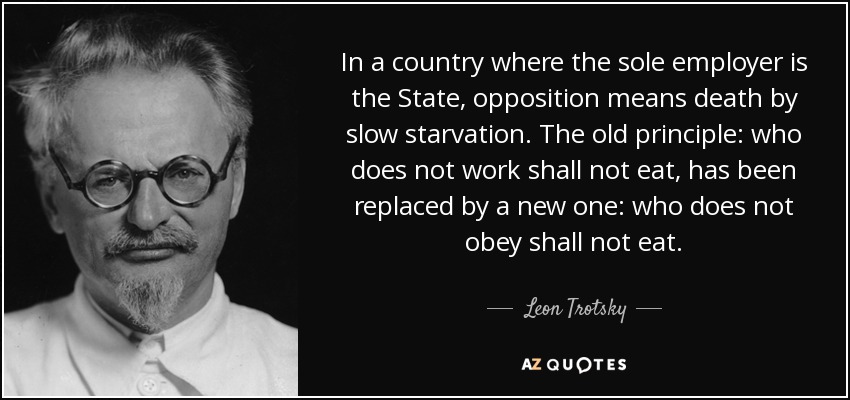
There is something very wrong with the existence of only a few major communications networks becoming integral to social and economic cohesion within a society. It’s not just about a handful of corporations working together to form a technically legal monopoly, it’s also about the ability of those companies to digitally shun entire groups from the wider discourse. As Big Tech platforms become more integrated into our financial life, those same companies could even block entire groups of people from economic access.  They could literally starve people to death if they disagree with the collectivist narrative.

This is the power that leftists really want; the power to silence
and to destroy all other ideals besides their own.
And they get to that goal by first achieving market saturation.

On the bright side, companies like Starbucks got the saturation they wanted and it’s killing them. With so many franchises everywhere, they are now competing with each other and cannibalizing each other. You’ll find that this is also a common theme among leftist movements. With so many different professional victims battling over an ever shrinking piece of the pie, it’s only a matter of time before these people eat each other alive.

Unfortunately, they may destroy our country well before our society
gets a chance to wake up from the madness and rebalance the scales.

USA Today Outed for Fictional Fact Checking

Paul Joseph Watson writes at Summit News Top ‘Fact Checker’ USA Today Forced to Delete Articles Over Fabricated Sources.  Excerpts in italics with my bolds.  H/T Tyler Durden

USA Today, which is used as a ‘fact checker’ by social media platforms, was forced to delete 23 articles from its website after an investigation found one of its reporters had fabricated sources.

Well, this is awkward

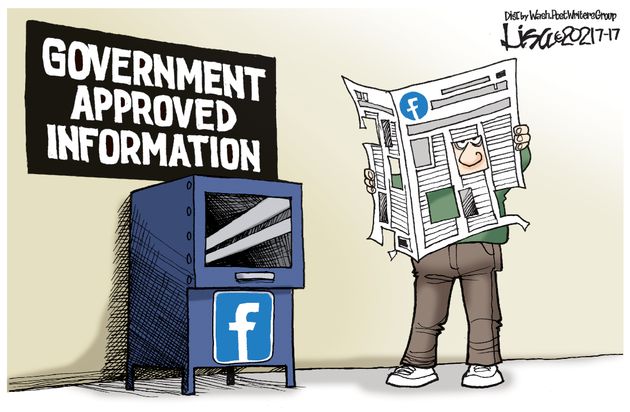
The news outlet has an entire section of its website dedicated to ‘fact checking’ and is used by Facebook to ‘fact check’ stories published by other outlets, downranking them in algorithms in a form of soft censorship.

However, it appears as though USA Today should have devoted more resources to fact checking itself before publishing articles by its own staff.

“USA Today’s breaking news reporter Gabriela Miranda fabricated sources and misappropriated quotes for stories, the news outlet confirmed on Thursday. The outlet conducted an internal audit after receiving an “external correction request” on one of its published stories,” reports Breitbart.

The 23 articles which were removed for not meeting the paper’s “editorial standards” included pieces on the Texas abortion ban, anti-vaxxer content and Russia’s invasion of Ukraine.

Miranda, who has now resigned from her position, “took steps to deceive investigators by producing false evidence of her news gathering, including recordings of interviews,” according to the New York Times.

“After receiving an external correction request, USA TODAY audited the reporting work of Gabriela Miranda. The audit revealed that some individuals quoted were not affiliated with the organizations claimed and appeared to be fabricated. The existence of other individuals quoted could not be independently verified. In addition, some stories included quotes that should have been credited to others.”

As we previously highlighted, USA Today was also forced to hastily delete a series of tweets which critics said were tantamount to the normalization of pedophilia after the newspaper cited “science” to assert that pedophilia was “determined in the womb.”

The newspaper was also lambasted by critics after it ‘fact checked’ as “true” claims that an official Trump 2020 t-shirt features a ‘Nazi symbol’.

In February last year, the news outlet published an op-ed which denounced Tom Brady for refusing to walk back his previous support for Donald Trump and for being “white.”

The newspaper also had to fire their ‘race and inclusion’ editor Hemal Jhaveri after she falsely blamed the Boulder supermarket shooting on white people.

In summary, USA Today has a severe bias problem and shouldn’t be used as a non-partisan ‘fact checker’.


How to FLICC Off Climate Alarms

John Ridgway has provided an excellent framework for skeptics to examine and respond to claims from believers in global warming/climate change.  His essay at Climate Scepticism is Deconstructing Scepticism: The True FLICC.  Excerpts in italics with my bolds and added comments.

Overview

I have modified slightly the FLICC components to serve as a list of actions making up a skeptical approach to an alarmist claim.  IOW this is a checklist for applying critical intelligence to alarmist discourse in the public arena. The Summary can be stated thusly:

♦  Follow the Data
Find and follow the data and facts to where they lead

♦  Look for full risk profile
Look for a complete assessment of risks and costs from proposed policies

♦  Interrogate causal claims
Inquire into claimed cause-effect relationships

♦  Compile contrary explanations
Construct an organized view of contradictory evidence to the theory

♦  Confront cultural bias
Challenge attempts to promote consensus story with flimsy coincidence

A Case In Point

John Ridgway illustrates how this method works in a comment:

No sooner have I’ve pressed the publish button, and the BBC comes out with the perfect example of what I have been writing about:  Climate change: Rising sea levels threaten 200,000 England properties

It tells of a group of experts theorizing that 200,000 coastal properties are soon to be lost due to climate change. Indeed, it “is already happening” as far as Happisburg on the Norfolk coast is concerned. Coastal erosion is indeed a problem there.

But did the experts take into account that the data shows no acceleration of erosion over the last 2000 years? No.

Have they acknowledge the fact that erosion on the East coast is a legacy of glaciation? No.

[For the US example of this claim, see my post Sea Level Scare Machine]

The FLICC Framework

Below is Ridgway’s text regarding this thought process, followed by a synopsis of his discussion of the five elements. Text is in italics with my bolds.

As part of the anthropogenic climate change debate, and when discussing the proposed plans for transition to Net Zero, efforts have been made to analyse the thinking that underpins the typical sceptic’s position. These analyses have universally presupposed that such scepticism stubbornly persists in the face of overwhelming evidence, as reflected in the widespread use of the term ‘denier’. Consequently, they are based upon taxonomies of flawed reasoning and methods of deception and misinformation.1 

However, by taking such a prejudicial approach, the analyses have invariably failed to acknowledge the ideological, philosophical and psychological bases for sceptical thinking. The following taxonomy redresses that failing and, as a result, offers a more pertinent analysis that avoids the worst excesses of opinionated philippic. The taxonomy identifies a basic set of ideologies and attitudes that feature prominently in the typical climate change sceptic’s case. For my taxonomy I have chosen the acronym FLICC:2

  • Follow data but distrust judgement and speculation

     i.e. value empirical evidence over theory and conjecture.

  • Look for the full risk profile

      i.e. when considering the management of risks and uncertainties, demand that those associated        with mitigating and preventative measures are also taken into account.

  • Interrogate causal arguments

      i.e. demand that both necessity and sufficiency form the basis of a causal analysis.

  • Contrariness

      i.e. distrust consensus as an indicator of epistemological value.

  • Cultural awareness

       i.e. never underestimate the extent to which a society can fabricate a truth for its own purposes.

All of the above have a long and legitimate history outside the field of climate science. The suggestion that they are not being applied in good faith by climate change sceptics falls beyond the remit of taxonomical analysis and strays into the territory of propaganda and ad hominem.

The five ideologies and attitudes of climate change scepticism introduced above are now discussed in greater detail.

Following the data

Above all else, the sceptical approach is characterized by a reluctance to draw conclusions from a given body of evidence. When it comes to evidence supporting the idea of a ‘climate crisis’, such reluctance is judged by many to be pathological and indicative of motivated reasoning. Cognitive scientists use the term ‘conservative belief revision’ to refer to an undue reluctance to update beliefs in accordance with a new body of evidence. More precisely, when the individual retains the view that events have a random pattern, thereby downplaying the possibility of a causative factor, the term used is ‘slothful induction’. Either way, the presupposition is that the individual is committing a logical fallacy resulting from cognitive bias.

However, far from being a pathology of thinking, such reluctance has its legitimate foundations in Pyrrhonian philosophy and, when properly understood, it can be seen as an important thinking strategy.3 Conservative belief revision and slothful induction can indeed lead to false conclusions but, more importantly, the error most commonly encountered when making decisions under uncertainty (and the one with the greatest potential for damage) is to downplay unknown and possibly random factors and instead construct a narrative that overstates and prejudges causation. This tendency is central to the human condition and it lies at the heart of our failure to foresee the unexpected – this is the truly important cognitive bias that the sceptic seeks to avoid.

The empirical sceptic is cognisant of evidence and allows the formulation of theories but treats them with considerable caution due to the many ways in which such theories often entail unwarranted presupposition.

The drivers behind this problem are the propensity of the human mind to seek patterns, to construct narratives that hide complexities, to over-emphasise the causative role played by human agents and to under-emphasise the role played by external and possibly random factors. Ultimately, it is a problem regarding the comprehension of uncertainty — we comprehend in a manner that has served us well in evolutionary terms but has left us vulnerable to unprecedented, high consequence events.

It is often said that a true sceptic is one who is prepared to accept the prevailing theory once the evidence is ‘overwhelming’. The climate change sceptic’s reluctance to do so is taken as an indication that he or she is not a true sceptic. However, we see here that true scepticism lies in the willingness to challenge the idea that the evidence is overwhelming – it only seems overwhelming to those who fail to recognise the ‘theorizing disease’ and lack the resolve to resist it. Secondly, there cannot be a climate change sceptic alive who is not painfully aware of the humiliation handed out to those who resist the theorizing.

In practice, the theorizing and the narratives that trouble the empirical sceptic take many forms. It can be seen in:

♦  over-dependence upon mathematical models for which the tuning owes more to art than science.

♦  readiness to treat the output of such models as data resulting from experiment, rather than the hypotheses they are.

♦  lack of regard for ontological uncertainty (i.e. the unknown unknowns which, due to their very nature, the models do not address).

♦  emergence of story-telling as a primary weapon in the armoury of extreme weather event attribution.

♦  willingness to commit trillions of pounds to courses of action that are predicated upon Representative Concentration Pathways and economic models that are the ‘theorizing disease’ writ large.

♦  contributions of the myriad of activists who seek to portray the issues in a narrative form laden with social justice and other ethical considerations.

♦  imaginative but simplistic portrayals of climate change sceptics and their motives; portrayals that are drawing categorical conclusions that cannot possibly be justified given the ‘evidence’ offered. And;

♦  any narrative that turns out to be unfounded when one follows the data.

Climate change may have its basis in science and data, but this basis has long since been overtaken by a plethora of theorizing and causal narrative that sometimes appears to have taken on a life of its own. Is this what settled science is supposed to look like?

Looking for the full risk profile

Almost as fundamental as the sceptic’s resistance to theorizing and narrative is his or her appreciation that the management of anthropogenic warming (particularly the transition to Net Zero) is an undertaking beset with risk and uncertainty. This concern reflects a fundamental principle of risk management: proposed actions to tackle a risk are often in themselves problematic and so a full risk analysis is not complete until it can be confirmed that the net risk will decrease following the actions proposed.7

Firstly, the narrative of existential risk is rejected on the grounds of empirical scepticism (the evidence for an existential threat is not overwhelming, it is underwhelming).

Secondly, even if the narrative is accepted, it has not been reliably demonstrated that the proposal for Net Zero transition is free from existential or extreme risks.

Indeed, given the dominant role played by the ‘theorizing disease’ and how it lies behind our inability to envisage the unprecedented high consequence event, there is every reason to believe that the proposals for Net Zero transition should be equally subject to the precautionary principle. The fact that they are not is indicative of a double standard being applied. The argument seems to run as follows: There is no uncertainty regarding the physical risk posed by climate change, but if there were it would only add to the imperative for action. There is also no uncertainty regarding the transition risk, but if there were it could be ignored because one can only apply the precautionary principle once!

This is precisely the sort of inconsistency one encounters when uncertainties are rationalised away in order to support the favoured narrative.

The upshot of this double standard is that the activists appear to be proceeding with two very different risk management frameworks depending upon whether physical or transition risk is being considered. As a result, risks associated with renewable energy security, the environmental damage associated with proposals to reduce carbon emissions and the potentially catastrophic effects of the inevitable global economic shock are all played down or explained away.

Looking for the full risk profile is a basic of risk management practice. The fact that it is seen as a ploy used only by those wishing to oppose the management of anthropogenic climate change is both odd and worrying. It is indeed important to the sceptic, but it should be important to everyone.

Interrogating causal arguments

For many years we have been told that anthropogenic climate change will make bad things happen. These dire predictions were supposed to galvanize the world into action but that didn’t happen, no doubt partly due to the extent to which such predictions repeatedly failed to come true (as, for example, with the predictions of the disappearance of Arctic sea ice).  .  .This is one good reason for the empirical sceptic to distrust the narrative,8 but an even better one lies in the very concept of causation.

A major purpose of narrative is to reduce complexity so that the ‘truth’ can shine through. This is particularly the case with causal narratives. We all want executive summaries and sound bites such as ‘Y happened because of X’. But very few of us are interested in examining exactly what we mean by such statements – very few except, of course, for the empirical sceptics. In a messy world in which many factors may be at play, the more pertinent questions are:

♦  To what extent was X necessary for Y to happen?
♦  To what extent was X sufficient for Y to happen?

The vast majority of the extreme weather event attribution narrative is focused upon the first question and very little attention is paid to the second; at least not in the many press bulletins issued. Basically, we are told that the event was virtually impossible without climate change, but very little is said regarding whether climate change on its own was enough.

This problem of oversimplification is even more worrying once one starts to examine consequential damages whilst failing to take into account man-made failings such as those that exacerbate the impacts of floods and forest fires.9   The oversimplification of causal narrative is not restricted to weather-related events, of course. Climate change, we are told, is wreaking havoc with the flora and fauna and many species are dying out as a result. However, when such claims are examined more closely,10 it is invariably the case that climate change has been lumped in with a number of other factors that are destroying habitat.

When climate change sceptics point this out they are, of course, accused of cherry-picking. The truth, however, is that their insistence that the extended causal narrative of necessity and sufficiency should be respected is nothing more than the consequence of following the data and looking for the full risk profile.

Contrariness

The climate change debate is all about making decisions under uncertainty, so it is little surprise that gaining consensus is seen as centrally important. Uncertainty is reduced when the evidence is overwhelming and it is tempting to believe that the high level of consensus amongst climate scientists surely points towards there being overwhelming evidence. If one accepts this logic then the sceptic’s refusal to accept the consensus is just another manifestation of his or her denial.

Except, of course, an empirical sceptic would not accept this logic. Consensus does not result from a simple examination of concordant evidence, it is instead the fruit of the tendentious theorizing and simplifying narrative that the empirical sceptic intuitively distrusts. As explained above, there are a number of drivers that cause such theories and narratives to entail unwarranted presupposition, and it is naïve to believe that scientists are immune to such drivers.

However, the fact remains that consensus on beliefs is neither a sufficient nor a necessary condition for presuming that these beliefs constitute shared knowledge. It is only when a consensus on beliefs is uncoerced, uniquely heterogeneous and large, that a shared knowledge provides the best explanation of a given consensus.11 The notion that a scientific consensus can be trusted because scientists are permanently seeking to challenge accepted views is simplistic at best.

It is actually far from obvious that in climate science the conditions have been met for consensus to be a reliable indicator of shared knowledge.

Contrariness simply comes with the territory of being an empirical sceptic. The evidence of consensus is there to be seen, but the amount of theorizing and narrative required for its genesis, together with the social dimension to consensus generation, are enough for the empirical sceptic to treat the whole matter of consensus with a great deal of caution.

Cultural awareness

There has been a great deal said already regarding the culture wars surrounding issues such as the threat posed by anthropogenic climate change. Most of the concerns are directed at the sceptic, who for reasons never properly explained is deemed to be the instigator of the conflict. However, it is the sceptic who chooses to point out that the value-laden arguments offered by climate activists are best understood as part of a wider cultural movement in which rationality is subordinate to in-group versus outgroup dynamics.

Psychological, ethical and spiritual needs lie at the heart of the development of culture and so the adoption of the climate change phenomenon in service of these needs has to be seen as essentially a cultural power play. The dangers of uncritically accepting the fruits of theorizing and narrative are only the beginning of the empirical sceptic’s concerns. Beyond that is the concern that the direction the debate is taking is not even a matter of empiricism – data analysis has little to offer when so much depends upon whether the phenomenon is subsequently to be described as warming or heating. It is for this reason that much of the sceptic’s attention is directed towards the manner in which the science features in our culture rather than the science itself. Such are our psychological, ethical and spiritual needs, that we must not underestimate the extent to which ostensibly scientific output can be moulded in their service.

Conclusions

Taxonomies of thinking should not be treated too seriously. Whilst I hope that I have offered here a welcome antidote to the diatribe that often masquerades as a scholarly appraisal of climate change scepticism, it remains the case that the form that scepticism takes will be unique to the individual. I could not hope to cover all aspects of climate change scepticism in the limited space available to me, but it remains my belief that there are unifying principles that can be identified.

Central to these is the concept of the empirical sceptic and the need to understand that there are sound reasons to treat theorizing and simplifying narratives with extreme caution. The empirical sceptic resists the temptation to theorize, preferring instead to keep an open mind on the interpretation of the evidence. This is far from being self-serving denialism; it is instead a self-denying servitude to the data.

That said, I cannot believe that there would be any activist who, upon reading this account, would see a reason to modify their opinions regarding the bad faith and irrationality that lies behind scepticism. This, unfortunately, is only to be expected given that such opinions are themselves the result of theorizing and simplifying narrative.

Footnote:

While the above focuses on climate alarmism, there are many other social and political initiatives that are theory-driven, suffering from inadequate attention to analysis by empirical sceptics.  One has only to note corporate and governmental programs based on Critical Race or Gender theories.  In addition, COVID policies in advanced nations ignored the required full risk profiling, as well as overturning decades of epidemiological knowledge in favor of models and experimental gene therapies proposed by Big Pharma.


How to Make Climatists Happy

There are many places where people are worried about erratic and destructive behavior by those inflamed with fear of global warming/climate change. In the past they have been known to vandalize pipelines delivering natural gas or oil critical for energy needs.  These days climatists are more and more frantic, and for example, given to slashing tires on SUVs, thinking them to be “Axles of Evil.”

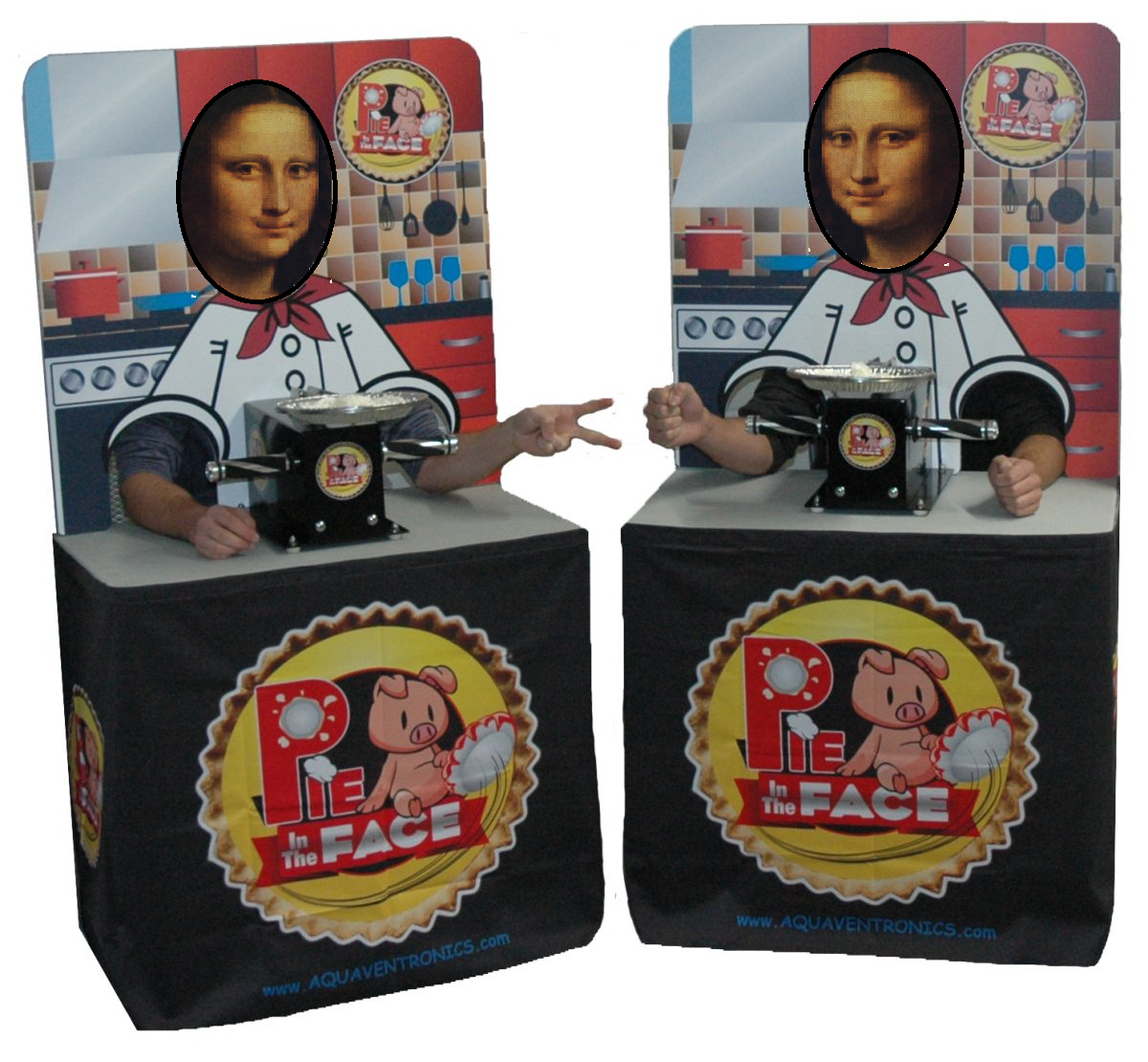
Fortunately, we have news from Paris that there may be a way for these fevered persons to vent their fears, thereby feeling better, and leaving the rest of us alone.  I refer to the reported action by one of these poor souls attacking the image of Mona Lisa in the Louvre with a cream pie in order to save the planet from climate change.  Of course the painting is behind bulletproof glass, so it was not damaged.  But the release of passion was cathartic, followed by the climatist being taken away for admission to the Paris Home for the Bewildered.

The good news is that from now on there could be at local carnivals or at county fairs booths like those above where other such inflamed activists could act out their passion against images of Mona Lisa, and thus, perhaps regain reason and common sense.  Let us all hope for the best for these tortured souls.

A Climate Activist Smeared Cake On The Mona Lisa
“Think about the Earth. There are people who are in the process of destroying the Earth. Think about them!”

Don’t Assume School Shooters are Mentally Ill

John Dale Dunn, M.D. explains in his American Thinker article Don’t assume school shooters are mentally ill.  Excerpts in italics below with my bolds.

There is a lot of mumbo jumbo psych talk circulating around the dead bodies in Uvalde, a town I knew pretty well because I consulted frequently with their hospital administrator.

I want to remind readers of the problem of personality disorders (PD) and distinguish PD from mental illness.

PD is pattern of anti-social or dysfunctional behavior that is not caused by mental illness but by bad manners and bad social adaptation. There are 3 groups of personality disorders. In the Emergency Medicine part of my life,

I taught residents that PDs are the weird, the wild, and the withdrawn.

The killers and criminals are usually in the wild group, who are the most anti-social and disruptive.

Here is a typical listing available from a search at: https://psychone.net/list-of-personality-disorders.php

Class A (The Weird)

Odd or eccentric disorders

·         Paranoid personality disorder 

Characterized by suspiciousness and a deep mistrust of people, paranoid personalities often think of others as manipulative, cunning or dishonest. This kind of a person may appear guarded, secretive, and excessively critical. More..

·         Schizoid personality disorder 

People with schizoid personalities are emotionally distant and tend to prefer to be alone. They are generally immersed in their own thoughts and have little interest in bonding and intimacy with others. More..

·         Schizotypal personality disorder 

This disorder is characterized by odd and unusual “magical” beliefs. These individuals may have an eccentric way of behaving or dressing. They also tend to display outlandish beliefs such as believing that they can see the future or travel to other dimensions.

People with this condition often have difficulty connecting with others and establishing long term relationships. Overtime, they may develop a fear of social gatherings. More..

Class B (The Wild)

Dramatic, emotional or erratic disorders (wild) 

·         Antisocial/psychopath personality disorder

Individuals with this disorder are known to be manipulative, irresponsible, and have a history of legal difficulties. They show little respect for the rights of others and feel no remorse for their actions. They also leave a trail of unfulfilled promises and broken hearts.

Antisocial personalities are also at high risk for drug abuse (e.g., alcoholism; meth) since many are rush seekers. While they seldom suffer from depression or anxiety, they often use drugs to relieve boredom and irritability. More..  (Dunn note–this PD is male dominant) 

·         Borderline personality disorder

Borderline personalities are impulsive and have extreme views of people as either all good or bad.

These people are unstable in relationships and have a strong fear of abandonment. They may form an intense personal attachment with someone they barely know and end it without no apparent reason. They might also engage in a pull and push behavior that usually ends with their partner leaving permanently.

Self-mutilation, suicidal gestures or attention-seeking destructive behaviors are not uncommon. Borderline personalities are three times more likely to be female. More..

·         Histrionic personality disorder

People with this condition engage in persistent attention-seeking behaviors that include innapropriate sexual behavior and exaggerated emotions. They can be oversensitive about themselves and constantly seek reasurrance or approval from others.

Excessive need to be the center of attention, low tolerance for frustration, blaming others for failures are also characteristics of the histrionic personality. More..

·         Narcissistic personality disorder 

Narcissistic personalities have a blown up perception of themselves and an excessive desire for attention and admiration. Individuals with this disorder have a false sense of entitlement and little respect for other people’s feelings. They are oversensitive to criticism and often blame others for their failures.

Prone to outbursts of anger and irritability, the narcissistic personality tends to be manipulative in interspersonal relationships. But deep beneath the surface lies a vulnerable self-esteem, susceptible to depression and feelings of inferiority. More..

Class C (The Withdrawn)

Anxious or fearful disorders 

·         Avoidant personality disorder 

This disorder is described by chronic social withdrawal, feelings of inferiority, over-sensitivity and social withdrawal.

People with avoidant personality disorder are constantly fearful of rejection and ridicule. They form relationships only with people that they trust. The pain of rejection is so strong that these individuals prefer to isolate rather than risk disappointment. More..

·         Dependent personality disorder 

Individuals with this condition have an abnormal desire to be nurtured that leads to submissive and clinging behavior. Dependent personalities have difficulty making their own decisions and seek others to take over most important areas in their lives.

They will often go to great length to obtain nurturance from others, have separation anxiety when alone and desperately seek another partner when a close relationship ends. More..

·         Obsessive-compulsive personality disorder (OCPD)

Not to be confused with OCD. People with OCPD are perceived as strict and demanding by others. They have a persistent preoccupation with perfectionism, orderliness, and efficiency, at the expense of interpersonal relationships. They also show an excessive devotion to work, productivity and exhibit rigidness and stubbornness.

People with OCPD usually have a negative view of life and often become withdrawn and depressed.

I was a corrections physician for almost 30 years as a contribution to our hometown and local law enforcement/incarceration services. I know a little about criminals. Here are three essays, two short, one long, on the issue of criminality and mental disorders.

https://www.americanthinker.com/blog/2018/02/mental_illness_and_misconduct.html

https://www.americanthinker.com/blog/2018/03/personality_disorders_and_mass_murder.html

https://www.americanthinker.com/articles/2016/02/senator_cornyn_and_the_inmates.html

Consider my warning: PDs are not a mental illness, they are a culturally dysfunctional behavior problem. PD individuals are not psychotic or out of touch with reality — they just have a bad set of behavior and social controls. They got messed up on the way to adulthood and functional good behavior.

My Comment:

Dr. Dunn puts analytic rigor to confirm a suspicion many of us have, that these violent acts by individuals demonstrate the breakdown of socialization in our societies.  Current political initiatives aim to denigrate and defund law enforcement, and to not prosecute criminal behavior.  Educators are proudly replacing family values with ego-centric pleasure gratification.  How can this be anything but a concerted effort to infect free societies with more and more mal-adjusted, disordered personalities?  And social media adds fuel to the fire.

The wokeness destruction of our institutions must be reversed, and families must function to raise children to care about and respect others.  Otherwise, when the social bonds are completely dissolved, the jack boots will come in.

See also Hey Groomers, Leave Those Kids Alone!