The diversity business originated in 1984, when R. Roosevelt Thomas, a Harvard business school graduate, founded the American Institute for Managing Diversity at Morehouse College. Corporations had been practicing affirmative action for years, but the women and minorities whom employers had hired to meet equal-opportunity obligations weren’t advancing up the career ladder in acceptable numbers. Thomas came up with a novel explanation. The problem wasn’t that preferentially admitted recruits were underqualified; the problem was that their supervisors didn’t know how to “manage diversity.” It was those supervisors who needed remedial training—lots of it—not the affirmative-action beneficiaries themselves.
Managerial expectations about merit and performance often reflected cultural prejudices, Thomas and the consultants who followed him insisted. “‘Qualifications’ is a code word in the business world with very negative connotations,” a consultant with the professional-services firm of Towers Perrin (as it was then called) said in 1993. If minorities don’t meet existing employment criteria, then corporations need to expand their definition of what it means to be employable, said Alan Richter, creator of the 1991 board game, The Diversity Game. Promptness, precision, and a cogent communications style were among the attributes that diversity advisors deemed likely expendable.
A lucrative new consulting practice was born, its growth driven by a constant churn in terminology. “Valuing diversity” was different from “managing diversity.” Each newly spawned phrase came with a cadre of high-priced tutors. Lewis Griggs currently offers video trainings in such subjects as “Communicating Across Differences,” “Supervising and Managing Differences,” and “Creating, Managing, Valuing, and Leveraging Diversity,” with each video purporting to contain specialized content appropriate for different parts of an organization.
“Diversity” was eventually joined by “inclusion.” “Equity” was then added, thus yielding today’s DEI (Diversity, Equity, and Inclusion) triumvirate (sometimes also going as “EDI”). The most cutting-edge organizations have lately appended a “B” (for Belonging), as at the Juilliard School in New York City. Distinguishing these terms is a core function of diversity training—and now, at Bentley, of diversity scholarship. The university’s new DEI major, the Chronicle of Higher Education reports, will help graduates understand the “nuances of and differences between diversity, equity, inclusion, and justice.”
Even by 1993, half of Fortune 500 companies had a designated diversity officer, and 40 percent of American companies had instituted diversity training. Diversity conferences were occurring regularly, attracting government and business attendees. And yet many reporters, academics, corporate consultants, and activists still insist that managers not only fail to “value diversity,” but remain complicit in creating a dangerous environment for women and racial minorities.
Example: Levi Strauss & Co., which was recognized on Forbes’s list of “Best Employers for Diversity” in 2019. The company itself boasts: “In the 1960s, we integrated our factories a decade before it was required by law. In the early 1980s, we joined the fight against HIV/AIDS early on. Furthermore, our president and CEO, Chip Bergh, was one of the first company leaders to join the CEO Action for Diversity & Inclusion™ [in 2017], and has been on the front lines of efforts to protect Dreamers knowing that diversity and inclusivity makes our company better and our country stronger (after all, Levi Strauss himself was an immigrant).”
And yet the situation for minority employees at Levi Strauss is still so dire that the company has been hosting racially segregated healing sessions with professional mental health experts. As the Washington Free Beacon recently reported, its chief executive for DEI is trying to provide a “safe space for employees to express themselves” without feeling “triggered.”
Bentley University itself has yet to yield dividends from its longstanding diversity efforts. The school has been “working for decades on issues, challenges, and opportunities” pertaining to diversity, according to its Office of Diversity and Inclusion. Over 900 faculty and administrators have attended two-day diversity retreats; numerous committees, departments, and offices have focused on improving the school’s “diversity climate.” Bentley even has its own diversity consulting outfit, the Center for Women and Business, which advises employees and managers on such diversity pitfalls as being a mere “performative ally” of oppressed colleagues (as opposed to an active ally).
And yet, despite this effort, a Bentley Racial Justice Task Force recently found that the campus still did not understand how “race and racism” operate at the university. So difficult is it to be a diverse member of Bentley that the task force, formed in July 2020, began with a moment of “restoration,” providing to all “those who had been traumatized” at the school a “time to heal” and a time to “process the pain of racial injustice.”
One of Bentley’s biggest failings, according to the task force, has been its “false confidence” in “objectivity and meritocracy.” These are the norms of a “historically and predominantly white institution (HWI/PWI),” per the task force members. Typical of HWIs/PWIs, Bentley does not pay sufficient attention to the “systemic inequality” that such white norms engender. Equally dismaying, many students and professors apparently would rather study subjects other than racism, the task force lamented, thereby betraying their “lack of understanding about why the study of race is critical to the creation of a full academic experience.”
Diversity industry proponents would argue that white supremacy is simply too ingrained in America’s institutions to be rooted out within a mere three to four decades of diversity work.
But another possible reason why diversity training has not met its stated goals is that the field is intellectually bankrupt: Its practitioners peddle empty verbiage to fix a problem that is largely imaginary. I asked Bentley’s press office what the difference is between “diversity, equity, and inclusion.” The answer was a dodge: “Rather than give students one particular view of diversity, equity, inclusion and justice, Bentley’s DEI major encourages students to compare and contrast approaches to diversity, equity, inclusion and justice from across disciplines and perspectives and show how they intersect with one another.” Other questions—how the school defines a “real discipline,” what are the core texts of this new discipline, and why Bentley’s decades of diversity work have not lessened the school’s purported racism—were ignored entirely.
Bentley sociologist Gary David says that “more and more studies have shown” that diversity training and DEI perspectives make “good business sense.” But this oft-asserted claim rests on a few studies of dubious experimental design, lacking control groups. The one thing diversity trainees reliably learn is how to answer post-training survey questions “in the way the training said they ‘should,’” reports sociologist Musa al-Gharbi. As for actually changing behaviors in a diversity-approved direction, the training is not only ineffective, it is often counterproductive, according to al-Gharbi.
Far from being institutionally racist, Bentley University, like virtually every other American college today, is filled with well-meaning adults who want all their students to succeed. Corporations, law firms, Big Tech, and government agencies are bending over backwards to hire and promote as many underrepresented minorities (i.e., blacks and Hispanics) as possible. If the number of those minorities in a college or business organization is not proportional to their population share, that underrepresentation is due first and foremost to the academic skills gap. Mention of the skills gap is taboo in diversity circles, but it is real—repeatedly documented by the National Assessment of Educational Progress exams, the SAT, the LSAT, the GREs, the GMAT, and the MCAT—and it is consequential.
Hiring based on any extraneous selection criterion inevitably lowers the average qualifications of the resulting employee group. Hiring based on race entails a particularly significant deviation from a meritocratic ideal, since the only reason why color-conscious hiring is implemented in the first place is that merit hiring often fails to produce a critical mass of black and Hispanic employees. In essence, the diversity conceit is a perpetual motion machine: If underqualified diversity hires are promoted out of diversity pressure, resentment and obfuscation follow. If they hit a glass ceiling, accusations of bias are inevitable. In either situation, a diversity consultant is waiting in the wings to teach managers that their expectations and standards are racist.
The increasing power of college diversity bureaucrats over academic affairs since the 1990s has been stunning. Diversity vice-chancellors oversee faculty hiring searches, mandate quotas regarding whom search committees may interview, and sometimes even mandate quotas regarding whom they must hire. Chief inclusion officers track departmental race and sex demographics, pressuring department chairs to correct diversity deficits. Associate provosts for diversity coordinate campaigns for required courses on identity and grievance within the curriculum. Deans of inclusion teach students to recognize their place on the great totem pole of victimization. Vice presidents for equity monitor campus speech, on the lookout for punishable microaggressions. Senior advisors on race and community lead crusades against faculty who have allegedly threatened the safety of campus victim groups through non-orthodox statements regarding race and sex.
Now that the fictions underpinning this enterprise are being enshrined as an academic discipline, the possibility that the university will return to its status as an institution dedicated to the unfettered search for knowledge—and even, dare one say it, objectivity and meritocracy—will grow yet more remote.
Leftists hate money and the conversion of things to money. Why is it so? In the old times, the leftists were the losers who didn’t have much money. The decision based on the “maximization of money” was a decision usually made by “some other people, e.g. the capitalists”, and those may have had different interests than the Marxist losers, and that’s why the Marxist losers generally didn’t like the decisions based on the maximization of the financial benefits. They had a low influence on the society’s decision making (because they were broke) and the interests of the capitalists weren’t always the same as the interests of the Marxist losers. (In reality, what was in the interest in the capitalists was ultimately good for the Marxist losers as well but the latter just didn’t understand it.)
That is the likely reason why the leftists always wanted to switch to some “more objective” measures of well-being. They saw all “subjective” (i.e. money-based) decisions to be dominated by evil people, the class of enemies. Where did this leftist strategy go?
Well, during the 40 years of communism in Czechoslovakia,
the communist party often mindlessly wanted to maximize the production of coal and steel in tons.
Steel and coal are just two major examples that were used to “objectively measure the well-being”. You may see that within a limited context, there was a grain of truth in it. The more machines we make, the more hard work they may replace, and we need steel and coal for all those good things. But the range of validity of this reasoning was unavoidably very limited. They could have used the U.S. dollars (e.g. the total GDP, or in sustainable salaries) to measure the well-being (that should be maximized by the communist plans) but that would already be bad according to their ideology. Needless to say, it was a road to hell because in the long run, there is no reason why “tons of steel or coal” should be the same thing as “well-being” or “happiness”. And it’s not. We kept on producing lots of steel and coal that was already obsolete, that was helping to preserve technologies and industries that were no longer needed, helpful, or competitive, and the production of coal and steel substantially decreased after communism fell in 1989. We found out that we could get richer despite producing less steel and coal!
In 1989, communism was defeated and humiliated but almost all the communist rats survived. This collective trash has largely moved to the environmentalist movement that became a global warehouse for the Bolshevik human feces, also known as the watermelons. They are green on the surface but red (Bolsheviks) inside. They were willing to modify some details of their ideology or behavior but not the actual core substance. The detail that they modified was to “largely switch the sign” and consider the coal and steel to be evil.
Instead of maximizing steel and coal, the goal became to minimize the CO2 emissions.
The obsession with the CO2 emissions (which now carry the opposite sign: CO2 emissions are claimed to be bad!) is similar to the obsession of the Leninists and Stalinists with the maximization of the steel and coal production except that the current watermelons, the gr@tins of the world, are far more fanatical and unhinged than the Leninists and Stalinists have ever been. And one more thing has changed: these new, green Marxists promote these “objective measures of well-being” because it reduces the freedom, wealth, and power of everyone else. In that sense, they are still Marxists. However, they don’t protest against some people’s getting very rich as long as it is them. By this not so subtle change, we are facing a new class of Marxists who are still Marxists (more fanatical than the old ones) but who are often very rich, too. It is an extremely risky combination when such creatures become both powerful and rich.
Needless to say, the CO2 emissions aren’t the same thing as “evil”, the reduction of the CO2 emissions is in no way the same thing as “well-being”. Instead, if you are at least a little bit rational, you know damn too well that the CO2 emissions are totally obviously positively correlated with the well-being. The more CO2, the better. CO2 is the gas we call life. Its increase by 50% since 1750 AD has allowed the plants to have fewer pores (through which they suck CO2 from the air) which is why they are losing less water and they are better at water management (and at withstanding possible drought). Just the higher CO2 has increased the agricultural yields per squared kilometer by some 20% (greater increases were added by genetic engineering, fight against pests etc.). And the man-made CO2 has freed us from back-breaking labor etc.
The obsession to minimize the CO2 emissions is completely irrational and insane, more insane than the maximization of steel and coal has ever been – but its advocates are more fanatical than the steel and coal comrades used to be. On top of that, most of the projects proposed to lower the CO2 emissions don’t even achieve that because there are always some neglected sources or sinks of CO2 (and lots of cheating everywhere, contrived public “causes” are the ideal environment for corruption, too). Also, the price of one ton of CO2 emissions is as volatile as the Bitcoin and depends on the caps that may be basically arbitrarily chosen by the rogue politicians.
Tons of CO2 are a different quantity to be extremized than tons of coal or steel. But the obsession to “mindlessly minimize or maximize these quantites” is exactly the same and builds on the leftists’ infinite hatred (often just pretended hatred, however) to money as an invention. The hatred towards money is equivalent to the hatred towards the “subjective conversion of costs and benefits to the same unit”. Leftists hate the subjective considerations like that (which are equivalent to counting the costs and benefits in the Czech crowns) because they hate the “subjective thinking” in general. Well, they hate it because the subjective thinking is the thinking of the free people – i.e. people who aren’t politically obedient in general. They prefer “objective thinking”, i.e. an imbecile or a clique of imbeciles who are in charge, have the total power over everybody, and tell everybody “what they should want and do”! When whole nations behave as herds of obedient sheep or other useless animals, the leftists are happy.
Such a general scheme is bound to lead to a decline of the society,
regardless of the detailed choice of the quantity that is worshiped
as the “objective measure of the human well-being”.
In 2020, the epoch of Covidism, if I use the term of the Czech ex-president Václav Klaus, began. The most characteristic yet crazy quantity that the new leftist masters want to minimize (in this case, like the CO2 emissions, it “should be” minimized) are the “cases” of Covid-19, i.e. the number of positive PCR tests (or sometimes all tests, including Ag tests). From the beginning, it’s been insane because most people who are PCR tested positive for Covid-19 aren’t seriously sick. A fraction is completely asymptomatic, a great majority suffers through a very mild disease. On top of that, the number of positive tests depends on the number of people who are tested (because most positive people are unavoidably overlooked unless everyone is tested at least once a week); on the number of “magnifying” cycles in the PCR process; on the strategy to pick the candidates for testing, and lots of other things.
These are the reasons why it has been insane to be focused on the number of “cases” from 2020. But when the methodology to pick the people is constant, when the percentage of the positive tests is roughly kept constant, and when the virus doesn’t change, it becomes fair to use the number of “cases” as a measure of the total proliferation of the disease, Covid-19, in a nation or a population. However, there’s an even deeper problem, one that is related to the main topic of this essay:
Even when the testing frequency and techniques (including the selection) are constant, the number of cases may in no way be considered a measure of the well-being.
The reason is that “being PCR positive” is just a condition that increases the probability that one becomes sick; or one dies. And the number of deaths from Covid-19 is clearly a more important measure of the Covid-related losses than the number of cases – the filthy Coronazis love to obscure even elementary statements such as this one, however. The conversion factor e.g. from the “cases” to “deaths” is the case fatality rate (CFR) and that is not a universal constant. This is particularly important in the case of the Indian “delta” variant of the virus because it also belongs among the common cold viruses. It is a coronaviruses that causes a runny nose. This makes the disease much more contagious, like any common cold, and (in a totally non-immune, normally behaving urban, population). On the other hand, the nose cleans the breathing organs rather efficiently and the disease is unlikely to seriously invade the lungs where it really hurts. In fact, the runny nose indicates that this variant of the virus “likes” to play with the cosmetic problems such as the runny nose, it is not even attracted to the lungs. The same comments apply to any of the hundreds of rhinoviruses, coronaviruses… that cause common cold!
You may check the U.K. Covid graphs to see that despite the growing number of “cases” in recent weeks, the deaths are still near zero. The ratio of the two has decreased by more than one order of magnitude. A factor of 5 or so may be explained by the higher vaccination of the risk groups (older people); the remaining factor is due to the intrinsic lower case fatality rate of the delta variant. It is simply much lower than 0.1%, as every common cold virus is. That is much smaller than some 0.4% which is the expected fraction of the people in a civilized nation that die of Covid-19 (to make these estimates, I mainly use the Czech data which seem clean and I understand them extremely well: some 80% of Czechs have gone through Covid-19 and 0.3% of the population has died, so the case fatality rate must be around 0.4%).
So the conversion factor from a “case” to a “death” may have dropped by a factor of 30 or more in the U.K., relatively to the peak of the disease (the more classical variants of Covid-19). So it is just plain insane to pretend that “one case” is the same problem or “reduction of well-being” as “one case” half a year ago. The disease has turned into a common cold which is nearly harmless. But the society has been totally hijacked by the moronic, self-serving, brutally evil leftists who have simply become powerful assuming that they socially preserve the (totally false) idea that “the number of cases is an important quantity that must be minimized for the society’s well-being”. It is not important at all. The number of cases means absolutely nothing today because almost all the U.K. cases are just examples of a common cold that just happens to pass as a “Covid” through a test because this is how the test was idiotically designed. Everyone who tries to minimize the number of cases as we know them today is a dangerous deluded psychopath and must be treated on par with the war criminals, otherwise whole nations will be greatly damaged. The damage has already been grave but we face the risk of many years (like 40 years of the Czechoslovak communism) when a similar totally destructive way of thinking preserves itself by illegitimate tools that totally contradict even the most elementary Western values.
“Cases” mean nothing, especially when the character of the disease that is detected by the tests becomes vastly less serious. They mean even less than the “CO2 emissions” and even that favorite quantity of the moronic fanatical leftists hasn’t ever been a good measure of anything we should care about. Stop this insanity and treat the people “fighting to lower the cases” as war criminals right now. Thank you very much.
Technocrats have the most fundamental aspect of reality backwards
Saw this article come across, come across my news alert for “Transhumanism”. In it Dr. David Eagleman talks about how not only can we augment human senses with fantastic new abilities (like to “see” heat and electromagnetic patterns), but how we’ll even be able to build machines that think too.
There is a line in his thinking that one can glean from the article: on one side of the line are enhancements and augmentations to the human experience which are startling and amazing and which will transform our societies: even more radical life extension will be in the cards quite soon (for those who can afford it).
Where Eagleman crosses into technocratic thinking is when he veers into the idea of being able to build thinking machines. The logic is that because we’ll be able to increasingly bioengineer our own living bodies, it means we should also be able to bioengineer a mind into machines using the same principles.
I think this is wrong and it’s the same theoretical mistake that leads directly to technocratically inspired catastrophes.
Yes, we continue to build on technological advancements, but we also commit a lot of unforced errors that inflict incalculable misery on humanity. These errors may manifest as policy blunders, economic crises and worse. Most recently, for example, we seem to have gotten ourselves into a global pandemic because a bunch of technocrats funded some gain-of-function experiments in hopes of preempting the next pandemic. Do you see the dynamic here?
Over the years a lot of thinkers have pointed out that technocratic policy tracks, devised by centralized groups of experts within an elite managerial class, often bring about the very conditions they were impaneled to obviate.
• Raising minimum wages increases unemployment.
• Holding interest rates to zero creates economic instability and increases wealth inequality.
• Forcing green energy initiatives creates systems with lower energy efficiency and higher carbon footprints.
• Banning guns increases gun violence.
• Censoring “hate” speech fosters more hatred and polarization.
It’s almost as if the managerial class has no awareness of second-order effects. When they inexorably come to pass they are often blamed on the very people who were counselling against the initial policy in the first place.
Thus, financial meltdowns are blamed on runaway free markets and capitalism gone wild. Global warming (if it truly plays out along prognosticated lines) is blamed on industries who are most rapidly transitioning toward greener energy anyway (like Bitcoin mining).
Climate change is another theme that exemplifies the technocratic dynamic: As a society we’re going to transition off of fossil fuels no matter what anybody thinks about the environment because we’re already past peak oil, and peak demand will probably flatline around 100M bpd and start coming down from there in a secular downtrend, for a variety of reasons (prolonged economic malaise and the ascent of green energy).
Yet the most viable pathway toward transitioning away from fossil fuels, nuclear (and in this I include Thorium), is currently relegated as problematic by technocrats and ideologues.
It all seems backwards and for a long time I’ve been positing a fundamental root cause of this backwardness. The premise is: We have the mind/matter equation completely backwards in the way we think about how the world works.
Conventional thought is that what we experience as consciousness is something that emanates from the brain. Like steam from a kettle. This is also the core assumption of AI. If we build something that resembles a brain, it’ll think. It’s a kind of Frankenstein approach that Eagleman alludes to in his article.
That won’t work and AI will never be achieved as long as the mechanistic, material reductionist worldview persists. Yet, technocrats put a lot of faith in AI, and they think models derived from AI are or will be superior to anything we can figure out on our own because they were outputted by machines with a bigger/faster/hardware brains.
It is completely… wrong.
I think that what we experience as matter are energy patterns that emanate from an underlying, and conscious sub-strata of reality. This is basic quantum theory. Quantum theory can be problematic because it opens the door to all kinds of New Age Woo Woo, which may not even be entirely wrong at its core, but is prone to deeply flawed implementations (like anything, I guess).
People, and probably most living things, have a sense, an intuitive awareness of this sub-strata of reality. Our mythology and sacred texts are probably the stories of sometimes being more attuned to it and sometimes less so. The late British writer Colin Wilson wrote at length on the consciousness of the Egyptians of the upper kingdom, possibly over 7500 years BC. Their consciousness and language was pictorial not linear. It may even be possible (my extrapolation, not his) that the demarcation point between conscious awareness between individuals was blurred somewhat.
So what happened?
Into this awareness came religions. Organized structures that would begin to dictate the basis on which members of society were to comprehend and approach this Great Sub-Carrier. Priesthoods evolved – the first monopolies. Religions. Hierarchies. Rulers. Subjects.
One of the earliest forms of social deviance was heresy: approaching the Divine Sub-Carrier from a direction outside the religious structure. Can’t have that.
This dynamic is as old as humanity. It could even be argued that historical progress is the story of the public coming to realize that the monopoly thought structure they were in was flawed or obsolete and then society moving on to the next one. The elites of the day would endeavour to halt the progression or when that failed, co-opt whatever came next.
Then new elites would erect a new orthodoxy that placed them directly in the nexus of what was unknowable and what the rabble thought they needed to know in order to perform their primary function of ….servitude.
Today the great sub-carrier is best described by science, not religion. But again, the priesthood is saying that all knowledge of the sub-carrier should come through them. That’s Scientism. That’s Technocracy. Management by Experts.
The last two years of life on earth are a foretaste of a full blown technocracy. Follow The Science™, plebes.
Only our elites can fathom how to approach and extract knowledge from The Great Externality, but this time they’ve made things even worse because they have it exactly backwards. They think the Great Externality doesn’t even exist. It’s for flakes and Bible bangers. The technocratic priesthood holds that material reality is near completely understood and that our minds are side effects of chemical reactions in our brains.
They hold that if only we can crunch enough Big Data and calculate out all the models we’ll be, like God (who doesn’t exist), able to fix everything and eliminate all bad outcomes, for everybody, everywhere. We may even be able to eliminate death, and we could upload our consciousness (which is an illusion) into the cloud and live forever.
Because of this backwardation, we will always be careening from one catastrophe to the next, and most of them will be of our own making. We collectively suffer from an illusion that we are in control.
But we are not in control. We’re a pattern. A dance. A cycle. Waveforms. Vibrations. What we as humans do specifically well, which is our superpower and has led to our technological advancement which could conceivably continue on a trajectory that makes humanity an interstellar phenomenon, is adapt.
What technocrats can’t understand, or admit is that we can’t control what is going to happen. Either on an individual scale of people thinking in ways they’re not supposed to think, or geological, cultural, geopolitical or cosmic scales. We can’t get interest rates right, we can’t get everybody to agree on whether it’s “Gif” or “jif” and somehow we’re going to change the trajectory of the climate? Achieve immortality? Crank out a Singularity?
That is highly unlikely and in trying to preempt theoretical bad outcomes we typically bring about horrible actual outcomes.
The lab leak from the Wuhan Institute of Virology, if it occurred and it is looking increasingly likely that it did, was the result of gain-of-function studies on bat coronaviruses. They didn’t do it as a bioweapon. It’s not a global conspiracy to institute a Great Reset (all that talk is opportunism more than planning).
They were trying to figure out how to plan for a future global pandemic that may catch humanity off guard and cause incalculable damage. What did they accomplish? They unleashed a global pandemic that caught humanity off guard and caused incalculable damage. Soon to be compounded by global, de-facto compulsory inoculations with experimental vaccines that have a distinctly politicized impetus behind them.
That same dynamic is applied to economics (its where the .COM crash and Global Financial Crisis came from), and social policy (the Woke movement), to climate is all the same technocratic mindset that doesn’t understand the order of reality (mind, then matter) but even worse thinks it knows it.
We’re stuck with that for awhile because the technocratic mindset is incapable of introspection or entertaining the possibility of being wrong about anything. The only move it knows is to double-down on failure.
The antidote to all this is massive decentralization on a global scale, which has the added benefit that decentralization by definition, is not something that gets decided from the top (it never is). It just happens, even in spite of the people in the centre of power who may feel something about their gravitas melting away.
That’s what has started to happen. A global opt-out. The Great Reject. As sure as the Reformation gave way to the Enlightenment despite the protestations of the Church, we’re headed into a world of networks and the sunset of nations. All the while the propagandists of the old order shrieking that in this direction lies certain doom.
The Enlightenment arose from an increase in the level of abstraction, structurally the universe changed from the Ptolemaic worldview (the world as the centre of all existence) to the Heliocentric solar system.
Now we’re experiencing a similar shift away from static top-down hierarchical structures as the natural shape of civilization and toward shifting, impermanent, overlapping networks.
Footnote: Another Example of Technocratic Adventurism
A company called Oxitec, based in the U.K., is piloting a program using gene-/information-modified mosquitos to eliminate the invasive female Aedes aegypti mosquitoes in the Florida Keys. The mosquitoes potentially spread diseases such as Dengue fever and Zika.
Dr. Nathan Rose, head regulator of Oxitec, said mosquito-borne diseases are likely to worsen as a result of climate change. According to the CDC, in a ten-year span between 2010 and 2020, there were 71 cases of Dengue fever transmitted in Florida. In essence, the experiment is being conducted for fear of climate change causing a drastic increase in incidence of Dengue fever. In the Fox article, Rose states that Oxitec will first experiment in Florida, collect data, then “go to the U.S. regulatory agencies to actually get a commercial registration to be able to release these mosquitoes more broadly within the United States.”
Don’t think the Florida Keys just opened their arms with a great big bear hug to this experiment. No, there were pushback and questions. In fact, Oxitec had been pushing this experiment to Key Haven and Key West for years, only to be rejected. Many other places have also declined this experiment. When it was conducted in Brazil, it initially seemed to work, but in the end, the mutated mosquitos transferred mutations to the general public. Thankfully, gene drive was not used in the Brazil experiment, for this type of gene manipulation cannot be reversed and can wipe out a species over time.
Evidently, Oxitec has created a second-generation “friendly mosquito” technology, where new male mosquitoes are programmed to kill only female mosquitoes, with males serving and passing on the modified genes to male offspring for generations. Yes, they are programmed to kill. Oxitec CEO Grey Frandsen announced in 2020 that Oxitec looked forward to working with the Florida Keys community to “demonstrate the effectiveness of our safe, sustainable technology in light of the growing challenges controlling this disease-spreading mosquito.”
Let’s hope the Florida mosquitoes experiment is truly a necessity and not some type of climate-change fear-mongering “sustainable” technology based on speculation.
Coincidences are interesting things. They’re considered remarkable because their combined occurrence seems improbable. But sometimes, improbable occurrences really happen. Lightning really has struck the same location twice — on rare occasions.
But when coincidences start to stack up, their probability of jointly occurring becomes exceedingly low. One begins to wonder if they are not coincidences at all. Could they really be linked outcomes from the same underlying root cause?
In the past year and a half, we have witnessed a remarkable string of apparent coincidences.
Dr. Fauci sponsored “gain of function” research at the Wuhan Institute of Virology. Put simply, this work increases a virus’s ability to cause disease. It makes a virus more dangerous. Coincidentally, we’re now learning that COVID-19 originated from the Wuhan Institute of Virology.
The COVID-19 virus spread throughout the world in the early months of 2020. Coincidentally, this was at the same time that Donald Trump was ratcheting up sanctions against China and rallying worldwide support.
The pandemic resulting from COVID-19 was used as the rationale for fundamental changes to our election processes. These changes facilitated the most questionable election outcome in U.S. history. 51% of the population now believes that fraud affected the election outcome – and that number is growing. Coincidentally, the election of 2020 neutralized China’s biggest threat – President Donald J. Trump.
The beneficiary of the compromised election of 2020 is Joe Biden. Coincidentally, old Joe has deep and troubling financial connections to China. His son Hunter accompanied him to China when Joe was the vice president and subsequently made millions of dollars from Chinese-sponsored business ventures. Emails from Hunter’s abandoned laptop indicate that Joe was the recipient of a sizable portion of those proceeds.
In the past week, we learned that the Defense Intelligence Agency (DIA) has a high-level defector from China — whom they’re not sharing with the FBI or CIA. This defector is providing evidence that COVID-19 was not only created in the Wuhan lab but may have been deliberately leaked by the Chinese. This revelation coincidentally came at the same time the FBI was working to discredit scientists claiming the virus was created in a lab.
Representative Matt Gaetz aggressively questioned FBI Director Christopher Wray about the FBI’s behavior relative to COVID-19 scientific whistleblowers. Shortly after this questioning, the press began a series of stories insinuating that Gaetz had inappropriate relationships with underage girls — though no evidence has been presented yet. But I’m sure it’s just a coincidence.
Coincidentally, this is all happening at a time when China is making substantial investments in American property and businesses. After its behavior during the last year, is there any doubt that the NBA is beholden to China? The news media has run cover for China as well, claiming that any attempt to tie them to the pandemic is racism. There are also land purchases. China bought 180,000 acres (280 square miles) in Texas! They say they’re building a wind farm, but the property has a 5,000-foot runway which they’re expanding, and it’s adjacent to a busy U.S. military base. I’m sure the location is just coincidental.
This seems that an unbelievable number of happenstance occurrences have all benefited China. Is it possible that these events are not coincidences at all, but are rather engineered outcomes in support of a higher objective? If so, it raises a number of questions.
Are the FBI and CIA hopelessly compromised? Is it possible that the organizations which supported a coup attempt against an elected President can’t be trusted with national security? They’re certainly no longer the premier law enforcement and intelligence agencies they claim to be. They have too many failures to be a “premier” anything – except maybe a clown show. Are they incompetent, corrupt, or have they been infiltrated? It probably doesn’t matter since incompetence or corruption invites infiltration.
Where does the support for Antifa and BLM originate? They’re both doing their part to destabilize America. BLM is led by self-professed Marxists – making them useful idiots. Antifa seems to believe in nothing but anarchy – making them useful thugs. Whenever members of either group are arrested, there’s plenty of money to bail them out – from somewhere.
How beholden to China is the news and entertainment industry? I notice that those taking a knee for our National Anthem haven’t uttered a word of criticism against China’s use of slavery. News organizations called Trump a “racist” for characterizing COVID as the Chinese virus – even though naming viruses by their point of origin is common practice.
Does China have any inappropriate influence over Joe Biden? We know his family has received millions of dollars from China and there is evidence he has shared in that bounty. Is our President vulnerable to blackmail?
Have we been under attack from China and didn’t know it because our intelligence and political leadership swore to defend the United States, but really had other priorities?
Clearly, we don’t know the answers to these questions. But if China decides to act on its expansionist ambitions, our intelligence community is unlikely to provide any warning. Likewise, our current political leadership is unlikely to take any meaningful action.
But maybe this is all just crazy conspiracy thinking. Perhaps everything we’ve experienced since early last year is just an astronomically unlikely confluence of random events. But isn’t it interesting that these events have left America disengaged at the very time China is expanding its global influence? One final question: If China wanted to neutralize America, could they have done it any better by some other means?
Anna I. Krylov (Department of Chemistry, University of Southern California) writes at the American Chemical Society The Peril of Politicizing Science. Excerpts in italics with my bolds and some added images.
I came of age during a relatively mellow period of the Soviet rule, post-Stalin. Still, the ideology permeated all aspects of life, and survival required strict adherence to the party line and enthusiastic displays of ideologically proper behavior. Not joining a young communist organization (Komsomol) would be career suicide—nonmembers were barred from higher education. Openly practicing religion could lead to more grim consequences, up to imprisonment. So could reading the wrong book (Orwell, Solzhenitsyn, etc.). Even a poetry book that was not on the state-approved list could get one in trouble.
Mere compliance was not sufficient—the ideology committees were constantly on the lookout for individuals whose support of the regime was not sufficiently enthusiastic. It was not uncommon to get disciplined for being too quiet during mandatory political assemblies (politinformation or komsomolskoe sobranie) or for showing up late to mandatory mass-celebrations (such as the May or November demonstrations). Once I got a notice for promoting an imperialistic agenda by showing up in jeans for an informal school event. A friend’s dossier was permanently blemished—making him ineligible for Ph.D. programs—for not fully participating in a trip required of university students: an act of “voluntary” help to comrades in collective farms (Figure 2).
Figure 2. Fourth-year chemistry students from Moscow State University (the author is on the right) enjoying a short break in the potato fields during mandatory farm labor, ca. 1987. The sticks were used as aids for separating potatoes from the mud.
Science was not spared from this strict ideological control.(6) Western influences were considered to be dangerous. Textbooks and scientific papers tirelessly emphasized the priority and pre-eminence of Russian and Soviet science. Entire disciplines were declared ideologically impure, reactionary, and hostile to the cause of working-class dominance and the World Revolution. Notable examples of “bourgeois pseudo-science” included genetics and cybernetics. Quantum mechanics and general relativity were also criticized for insufficient alignment with dialectic materialism.
Most relevant to chemistry was the antiresonance campaign (1949–1951).(7) The theory of resonating structures, which brought Linus Pauling the Nobel prize in 1954, was deemed to be bourgeois pseudoscience. Scientists who attempted to defend the merits of the theory and its utility for understanding chemical structures were accused of “cosmopolitism” (Western sympathy) and servility to Western bourgeois science. Some lost jobs. . . This is a recurring motif in all political campaigns within science in Soviet Russia, Nazi Germany, and McCarthy’s America—those who are “on the right side” of the issue can jump a few rungs and take the place of those who were canceled. By the time I studied quantum chemistry at Moscow State University, resonance theory had been rehabilitated. Yet, the history of the campaign and the injustices it entailed were not discussed in the open—the Party did not welcome conversations about its past mistakes. I remember hearing parts of the story, narrated under someone’s breath at a party after copious amounts of alcohol had loosened a tongue.
Fast forward to 2021—another century. The Cold War is a distant memory and the country shown on my birth certificate and school and university diplomas, the USSR, is no longer on the map. But I find myself experiencing its legacy some thousands of miles to the west, as if I am living in an Orwellian twilight zone. I witness ever-increasing attempts to subject science and education to ideological control and censorship. Just as in Soviet times, the censorship is being justified by the greater good. Whereas in 1950, the greater good was advancing the World Revolution (in the USSR; in the USA the greater good meant fighting Communism), in 2021 the greater good is “Social Justice” (the capitalization is important: “Social Justice” is a specific ideology, with goals that have little in common with what lower-case “social justice” means in plain English).(10−12) As in the USSR, the censorship is enthusiastically imposed also from the bottom, by members of the scientific community, whose motives vary from naive idealism to cynical power-grabbing.
Just as during the time of the Great Terror,(5,13) dangerous conspiracies and plots against the World Revolution were seen everywhere, from illustrations in children’s books to hairstyles and fashions; today we are told that racism, patriarchy, misogyny, and other reprehensible ideas are encoded in scientific terms, names of equations, and in plain English words. We are told that in order to build a better world and to address societal inequalities, we need to purge our literature of the names of people whose personal records are not up to the high standards of the self-anointed bearers of the new truth, the Elect.(11) We are told that we need to rewrite our syllabi and change the way we teach and speak.(14,15)
As an example of political censorship and cancel culture, consider a recent viewpoint(16) discussing the centuries-old tradition of attaching names to scientific concepts and discoveries (Archimede’s Principle, Newton’s Laws of Motion, Schrödinger equation, Curie Law, etc.). The authors call for vigilance in naming discoveries and assert that “basing the name with inclusive priorities may provide a path to a richer, deeper, and more robust understanding of the science and its advancement.” Really? On what empirical grounds is this based?
History teaches us the opposite: the outcomes of the merit-based science of liberal, pluralistic societies are vastly superior to those of the ideologically controlled science of the USSR and other totalitarian regimes.
Conversations about the history of science and the complexity of its social and ethical aspects can enrich our lives and should be a welcome addition to science curricula. The history of science can teach us to appreciate the complexity of the world and humanity. It can also help us to navigate urgent contemporary issues.(25) Censorship and cancellation will not make us smarter, will not lead to better science, and will not help the next generation of scientists to make better choices.
Today’s censorship does not stop at purging the scientific vocabulary of the names of scientists who “crossed the line” or fail the ideological litmus tests of the Elect.(11) In some schools,(33,34)physics classes no longer teach “Newton’s Laws”, but “the three fundamental laws of physics”. Why was Newton canceled? Because he was white, and the new ideology(10,12,15) calls for “decentering whiteness” and “decolonizing” the curriculum. A comment in Nature(35) calls for replacing the accepted technical term “quantum supremacy” by “quantum advantage”. The authors regard the English word “supremacy” as “violent” and equate its usage with promoting racism and colonialism. They also warn us about “damage” inflicted by using such terms as “conquest”. I assume “divide-and-conquer” will have to go too. Remarkably, this Soviet-style ghost-chasing gains traction. In partnership with their Diversity, Equity, and Inclusion taskforce, the Information and Technology Services Department of the University of Michigan set out to purge the language within the university and without (by imposing restrictions on university vendors) from such hurtful and racist terms as “picnic”, “brown bag lunch”, “black-and-white thinking”, “master password”, “dummy variable”, “disabled system”, “grandfathered account”, “strawman argument”, and “long time no see”.(36) “The list is not exhaustive and will continue to grow”, warns the memo. Indeed, new words are canceled every day—I just learned that the word “normal” will no longer be used on Dove soap packaging because “it makes most people feel excluded”(37)
Do words have life and power of their own? Can they really cause injury? Do they carry hidden messages? The ideology claims so and encourages us all to be on the constant lookout for offenses. If you are not sure when you should be offended—check out the list of microagressions—a quick google search can deliver plenty of official documents from serious institutions that, with a few exceptions, sound like a sketch for the next Borat movie.(38) If nothing fits the bill, you can always find malice in the sounds of a foreign language. At the University of Southern California, a professor was recently suspended because students claimed to have been offended by the sounds of Chinese words used to illustrate the concept of filler words in a communications class.(39,40)
Why did I devote a considerable amount of my time to writing this essay? . .The answer is simple: our future is at stake. As a community, we face an important choice. We can succumb to extreme left ideology and spend the rest of our lives ghost-chasing and witch-hunting, rewriting history, politicizing science, redefining elements of language, and turning STEM (science, technology, engineering, and mathematics) education into a farce.(41−44) Or we can uphold a key principle of democratic society—the free and uncensored exchange of ideas—and continue our core mission, the pursuit of truth, focusing attention on solving real, important problems of humankind.
Another school year has come to a close at colleges and universities across the country, but before the class of 2021 turned the tassel to begin their journey as new graduates, they were given some sage – and in some cases, pretty strange – advice by leading politicians, academics, diplomats, and captains of industry. You may have missed most of this year’s most notable commencement addresses, so AMAC Newsline has compiled the highlights–and the lowlights–of this year’s speeches.
“The Biggest Risk Of All Is That We Stop Taking Risks At All”
Former Republican Governor of Indiana Mitch Daniels and current President of Purdue University gave perhaps the best commencement address of the season. Daniels discussed how, during the past year, America had witnessed not only a public health pandemic but also a pandemic of fear that had paralyzed America’s leaders and caused them to flinch in the face of making difficult decisions. Daniels challenged his Boilermakers to have “the courage to act on the conclusions you reach.” Here are some of the best parts of the speech:
“The risk of failure, of a hit to one’s reputation, or just that the gains don’t outweigh the costs, all these can deter or even paralyze a person out of fulfilling the responsibility someone has entrusted to them.”
“This last year, many of your elders failed this fundamental test of leadership. They let their understandable human fear of uncertainty overcome their duty to balance all the interests they were responsible for. They hid behind the advice of experts in one field but ignored the warnings of experts in other realms that they might do harm beyond the good they hoped to accomplish. Sometimes they let what might be termed the mad pursuit of zero, in this case, zero risks of anyone contracting the virus, block out other competing concerns, like the protection of mental health, the educational needs of small children, or the survival of small businesses. Pursuing one goal to the utter exclusion of all others is not to make a choice but to run from it. It’s not leadership; it’s abdication.”
“Maybe the great historian Jacques Barzun summed it up best: ‘The last degree of caution is cowardice.’ Certainty is an illusion. Perfect safety is a mirage. Zero is always unattainable, except in the case of absolute zero where, as you remember, all motion and life itself stop.”
“Your Most Important Titles Will Be Wife, Husband, Mother, Father, Follower Of Christ.”
Former Secretary of State Mike Pompeo gave an inspirational commencement address to students at Regent University in Virginia. What set Pompeo’s speech apart from others was the fact that it challenged the class of 2021 to put faith and family at the center of their career rather than just purely professional accolades and material accomplishments.
“You should all know that life will offer you lots of ways to use your talents, your education, industry, your intelligence to achieve personal success, how you define it, in your chosen life, in your chosen professions. And it will also offer you chances to know a far more lasting happiness by serving someone far greater than yourself or your self-interest – your God.”
“Our country must remember that no one can enjoy the pursuit of happiness if you cannot own the fruits of your own labor. And no society can retain its legitimacy or a virtuous character without religious freedom.”
“We must cherish our freedom, particularly this freedom to practice our faith, not just for the opportunities it provides to each of us, but for the goodness of living a life in accordance with God without oppression that it makes possible. And when government oppresses that freedom, we must stand up. Each of you have that responsibility. It is a big burden.”
“Our Goal Is An Independent Mind, In The Service Of Truth Instead Of Fads Or Groupthink.”
Joe Biden was originally supposed to speak at the University of Notre Dame in South Bend, Indiana. But Biden snubbed the Catholic school, apparently choosing to stay away from Notre Dame after more than 4,400 Notre Dame students and alumni wrote a letter noting that Mr. Biden had embraced “the most pro-abortion and anti-religious liberty public policy program in history.”
Instead, Jimmy Dunne gave the commencement address to Notre Dame graduates. Dunne works for an investment company that was once located on the 104th floor of 2 World Trade Center. Many of the company’s employees died on 9/11, but Dunne has worked tirelessly to help the sons and daughters of his former coworkers get the scholarships they need to attend colleges across the country, including Notre Dame.
In an emotional speech, Dunne showed the moral courage to say the things that every college student needs to hear, but no one would ever hear in a commencement address delivered by Mr. Biden. Dunne asserted that the real purpose of education is to teach about the “permanent things” to build “character, not just knowledge, moral aspiration, not just ambition.” Dunne appeared to call out cancel culture and woke college campuses as “fads” and “groupthink.” Dunne concluded his remarks with a memorable line calling out Joe Biden for not showing up. He said: “It almost makes me feel bad for the President, because he missed this wonderful sight of a graduating class as promising as any in America.”
“The mark of a great university is that you learn more than they’re teaching. Here, we talk about forming ‘the whole person,’ and it’s a true commitment grounded in real things, permanent things. The aim is character, not just knowledge, moral aspiration, not just ambition. You’ve all got degrees in different disciplines, but you have a single major in common – and that is leadership. The fashions that wash over higher education don’t get far at this university. Our goal is an independent mind, in the service of truth instead of fads or groupthink. The great problems and moral obligations of life are not suddenly discovered here. Those obligations have been the core purpose from the start.”
“You are a quiet — you’re a really dull class. I mean, come on, man. Is the sun getting to you?”
Joe Biden gave what was easily the worst commencement address of any U.S. President in recent memory to cadets at the Coast Guard Academy. Biden started the speech by asserting: “[W]e’re going to speak for about four hours” and “I thought I was hot in a blue suit.” Biden mispronounced the name of a distinguished cadet, butchered a reference to a cadet handbook, and quoted a Chinese dictator.
On two occasions, Biden asked that the cadets clap for him. Early on, Biden tried to make a joke by chiding cadets for spending “a little too much time at the Slice,” a local pizza restaurant. But Biden did not get the laughs and applause he wanted, so he instructed the cadets: “You can clap. Come on, man.” On another occasion, Biden again demanded applause: “Congratulations the Bravo Company, by the way, on your victory. You can clap. It’s okay. Even if you’re lost, you gotta clap.”
The worst moment of the speech, though, occurred when Biden tried to tell a joke about the Navy that fell totally flat. Instead of just moving on, the man who is supposed to be America’s commander in chief directly insulted the very people who have pledged to fight and, if necessary, die to keep America safe. The actual White House transcript records Biden as saying: “You are a quiet — you’re a really dull class. I mean, come on, man. Is the sun getting to you? I would think you’d have an opportunity when I say that about the Navy to clap, but — but being here together.”
“Just Ask Any Marine Today, Would She Rather Carry 20 Pounds Of Batteries Or A Rolled Up Solar Panel, and I am positive she will tell you a solar panel, and so would he.”
Kamala Harris followed up Biden’s brutally bad commencement speech with a woke dud of her own. Harris, addressing graduates at the Naval Academy, showed where the Biden administration’s priorities truly are in terms of national defense when she asserted that “climate change” is a “very real threat to our national security.” Harris never once mentioned China, Russia, Iran, North Korea, or any of the other “real threats” to American national security during the course of her remarks. On the topic of climate change, Harris’s comments were laughable but not in the way Harris intended them to be. She told the Navy midshipmen and Marines:
“You are ocean engineers who will help navigate ships through thinning ice. You are mechanical engineers who will help reinforce sinking bases. You are electrical engineers who will soon help convert solar and wind energy into power, convert solar and wind energy into combat power. And just ask any Marine today, would she rather carry 20 pounds of batteries or a rolled up solar panel, and I am positive she will tell you a solar panel, and so would he.”
But, solar panels store energy in batteries. The Marine, regardless of gender, will still have to carry a battery along with the solar panel. That technicality aside, these bizarre remarks were delivered by Harris as part of a commencement address on Memorial Day weekend. The sacrifices that Navy midshipmen have made for this country throughout history were never mentioned during the course of the remarks. Rather, Harris sounded like she had shown up to give a speech at the National Resources Defense Council instead of the U.S. Naval Academy. She used her time to issue veiled threats like, “One country’s carbon emissions can threaten the sustainability of the whole earth.” The likelihood that Navy graduates can actually learn something from such statements that will help them as they defend this country is doubtful at best, which is why this commencement address earns last place for the 2021 season.
Joakim Book is an economist and social observer with a knack for pithy critiques of current governmental foibles. He has pierced the fog of global warming/climate change hysteria in several articles, but his POV is best summarized in his AIER essay Climate Catastrophism and a Sensible Environmentalism. Excerpts in italics with my bolds. If you are familiar or not with his work, enjoy the read and do explore the links
Like many of us, I had an iconic and charismatic high school teacher who left a lasting impression. He used to say something memorable about asking for forgiveness: “Apologize if you’re in the wrong,” he said, “but double down if you’re not.”
As the pro-lockdown media poured its anger over the Great Barrington Declaration and other voices for human freedom and dignity have been silenced or viciously attacked, allow me to heed my high school teacher’s great advice ‒ and double down.
Much of the outrage over AIER’s sponsoring and hosting of the Declaration had nothing to do with what the scientists in it said, or even the topic of societal disagreement that it captures. Conspiratorial writers from Byline Times to The Guardian as well as editors at Wikipedia attacked AIER for a minor, inconsequential connection to the “evil” Koch Foundation, damning the Institute’s efforts in a laughable attempt of guilt-by-association.
As a carte blanche ‒ the ultimate “gotcha” in these unenlightened and confused times ‒ many of these outlets attacked AIER for “downplay[ing] the threats of the environmental crisis,” and linked specifically to a number of my climate change articles.
I don’t see how I have anything to apologize for regarding what’s in those articles ‒ so instead I’ll double down.
How to do environmentalism, and how not to do environmentalism
A tragic dissonance has emerged in most popular climate arguments: a childlike refusal of accepting the lesser of two evils, of trading off one goal for another. The more ardently you push climate policies, it seems, the more strongly you hold romantic and unrealistic beliefs about how we can repent for our environmentalist sins. In impossibly short times, it is believed, we can effortlessly transition to 100% renewable energy; overhaul society completely, but at no cost whatsoever; and our restrictive climate policies will even boost our economies and create jobs!
You must presume that the world is a pretty sinister place if greedy capitalists, supposedly in it for the money, are all leaving these “obvious” opportunities on the table.
Never mind that renewables ‒ or more aptly called “unreliables” ‒ can’t power a modern civilization, that their intermittency problem is light years behind where its proponents assume it to be, that they’re not energy-dense enough to provide us with the energy and electricity we want. Without the amazing help of fossil fuels we couldn’t do half the things we’re currently doing ‒ living, eating, flourishing, helping, traveling (well…), producing.
None of that matters; we need to fix the climate, activists say, and quell CO2 emissions urgently. But while we’re at it we must also ensure equal gender representation on corporate boards, and shut down tax havens, and confiscate the rich’s productive assets. And naturally, end racial inequality, and most certainly regulate who may use a public bathroom carrying this or that gendered sign on it.
A cynic, perhaps reaching for a tin foil hat or the closest religious text to understand how this could possibly make sense, would conclude that catastrophists are not really addressing the problem they say they are. Alternatively, climate change can’t be that bad if the same Green New Deal bill that saves humanity is littered with minimum wage laws and paid maternity leave and a range of other social policies that just happen to align with what the hard-left has long wanted.
But we don’t have to be cynics to derive this conclusion: its proponents freely and openly say so. The British organization ‘Extinction Rebellion,’ whose infamous promoters chain themselves to trains and block London roads for media attention (or sling fake blood at buildings), happily confess that they do things that feel right rather than what would have material impact for their cause.
For years, people like Naomi Klein, the author of This Changes Everything: Capitalism vs. the Climate, have said that their goal is to destroy capitalism ‒ and climate change just happens to be the best tool and best argument she has found. Simon Hannah for OpenDemocracy describes capitalism as having a “’parasitoid’ relationship to the Earth.” Capitalism, he writes, “is simply incompatible with social justice” and the climate change issue offers a vivid illustration of this.
If you’re concerned about these other societal problems ‒ which you could be as they are serious concerns in their own right ‒ then you’re also unavoidably telling me that you don’t think the climate crisis is existential or even that bad. After all, if you think climate change will kill millions or billions of people, why would you bother, for instance, throwing everything and the kitchen sink at a coronavirus the mortality of which is a rounding error compared to the apocalyptic climate future you see? (When faced with claims of mass death, always ask how exactly that’s supposed to happen as we’re safer, richer, better fed, and better protected against the powers of nature than ever before).
The worse and more unavoidable the damages from a changing planet are, the more acute does a rapid transition to nuclear power look, and the greater the merits of geoengineering ‒ for instance, artificially spewing out sulfur into the high atmosphere, mimicking large volcano eruptions of the past.
Michael Shellenberger, a pro-nuclear environmentalist, writes
The problem posed by the existence of nuclear energy was that it proved we didn’t need to radically reorganize society to solve environmental problems. We just needed to build nuclear plants instead of coal-burning ones. And so the New Left environmentalists attacked nuclear energy as somehow bad for the environment.
[S]olar farms require hundreds of times more land, an order of magnitude more mining for materials, and create hundreds of times more waste, than do nuclear plants. And wind farms kill hundreds of thousands of threatened and endangered birds, may make the hoary bat go extinct, and kill more people than nuclear plants.
Nuclear energy should be the environmentalist’s greatest gift: in one fell swoop we could make a serious dent in CO2 emissions. But of course, the more ardent an environmentalist you are, the more fiercely you oppose nuclear, going nuts from just voicing the option (“Nuclear is awful, filthy, unclean, dangerous, and unsafe!”).
It’s like all the previous arguments about how devastating human civilization is for the planet, how desperately urgent it is for us to take action, that we “listen to the scientists” as Greta Thunberg urges us, just go out the window. Well, not those scientists, explaining how modern nuclear plants can safely power our societies. Or how unreliables give us higher electricity prices and more CO2 emissions in our electricity mix. Or how modern engineering can tame the sea. Or how modern information technology, large-scale supply chains, and construction of storm shelters have reduced Bangladeshi deaths from cyclones by 99% in a generation, even though Bangladesh has a much larger population today.
Sensible and Balanced Approach
We should deal with the threats of climate change, but we should do so sensibly and in conjunction with other threats. Because one thing is dangerous and potentially harmful, every other dangerous and harmful thing doesn’t just go away. Do things like the World Health Organization recommends here, things that help against the baseline danger of nature as well as the increased risk from climate change:
The development of a 500 metre coastal mangrove forest zone will further reduce the vulnerability to cyclones, which is especially important given the likelihood of a rise in sea level and an increase in tropical storm frequency and strength due to climate change.
In a special climate issue of the Scientific American from last year, climate scientist Jennifer Francis was accounting for recent extreme weather events. After several long paragraphs outlining how bad the record-setting heat waves of the 2018 summer had been in the U.S., Japan, Scandinavia, and in the Arctic, she wrote, “Worldwide, thousands of people without air-conditioning died.” (emphasis added)
Yes, exactly! Scorching heat waves are bad for people, with or without climate change. A sensible, effective, and direct way to fix that… is ensuring that people have access to air-conditioning! Instead of aiming for some elaborate government-mandated degrowth platform, circular economies, carbon tax, or subsidies for solar and wind ‒ how about just giving people cash for air conditioners? That should be much more effective in preventing deaths from inhospitable elements, even if climate change makes nature a little bit less safe for humans.
Most changes to the climate can’t be rolled back
What’s scary about the climate impact of the CO2 we’ve already emitted into the atmosphere is that it lingers there for hundreds of years. Unless we find a way to remove it from the skies, much of what will happen to the planet over the next century or so is already “baked in.” That also means that we must prepare for those changes rather than muck about with blunt tools like carbon taxes or symbolic bans on plastic bags.
So let’s abandon fanciful and fleetingly ineffective climate policies.
Let’s rapidly transition to the cleanest and most reliable electricity source we have (nuclear).
Let’s build protective dams along vulnerable coastlines, and experiment with ways to raise and reclaim land from the sea.
Most importantly ‒ and globally just ‒ let’s make sure the poorest of the poor can enrich themselves enough so that they too stand a chance against the inevitable changes that we know will come.
Let’s stop torturing ourselves with totalitarian policies against a virus we can’t control.
Let’s stop injuring poor countries with our obstacles to their goods and services, and their migrating people.
Those are climate policies that a sensible, pro-human environmentalist could get behind. Blunt and small-impact carbon taxes, Paris Agreements with next-to-no effect, or symbolic gestures like recycling ‒ not so much.
How’s that for doubling down?
Joakim Book is a writer, researcher and editor on all things money, finance and financial history. He holds a masters degree from the University of Oxford and has been a visiting scholar at the American Institute for Economic Research in 2018 and 2019. His AIER essays are here. As readers can see from the above article, Book creates many provocative capsules. Some examples from his work:
Reshuffling who owns the instruments that finance the physical assets that emit the byproduct CO2 doesn’t change anything about their emissions: the CO2 enters the atmosphere whether you, me, Warren Buffett, or Russian oligarchs own the facilities.
Still, none of the mainstreaming structures we had built over decades turned the tide as much as did an iconic, blonde, white(!) girl with Asperger’s. . . Following her popular success, the most powerful institutions in our fiat world – the central banks – have not resisted the pull of this inane black hole. They “want to become the guardians of the environment as well” begins Simon Clark’s recent article in the Wall Street Journal, identifying an eerie trend of mission creep and central bank activism. They can’t hit their own targets very well, but still wish to dabble in everybody else’s.
Years ago I suggested that climate activists pool their funds and go into the (re)insurance business, specifically to address their concerns about financial climate risk. With a longer time horizon and lower required rate of return, you might even have an edge over financial incumbents.
Politics is a game that shifts the natural and inherent relationship between human beings. Ordinarily, people in their commercial or civic engagements have strong incentives to harmonize, to avoid conflict, streamline, make efficiency gains, and reach workable consensus; they have skin in the game, bear responsibility and costs for the (negative) outcomes of their actions, and often simply want to get on with their lives. Politicians, involved in their sinister games, disrupt this harmony.
We have four centuries of evidence that, over time and on net, the market process that enriches us gradually overtakes the government power that impoverishes us. But during this time, we can have long periods where government power makes life worse, over and above what innovation, growth, and individual ingenuity could marshal.
Media coverage inundates us with a constant flow of catastrophes from one part or the world or another, while overlooking the great non-events of the world. When super cyclones kill 128 people instead of the hundreds of thousands they used to or would have, we don’t even hear about them. When hundreds of thousands of people are lifted out of extreme poverty a day, every day, that’s no longer newsworthy. The result is, Gapminder notes, that “people end up carrying around a sack of outdated facts that you got in school (including knowledge that often was outdated when acquired in school).”
Doctors abide by the “First, do no harm” promise. Maybe journalists should too.
Far from being settled, climate science is tricky: we don’t know well what happens to global temperatures when atmospheric CO2 doubles (“climate sensitivity”); we can’t properly model clouds and cloud formation, crucial for how much of the sun’s incoming heat will be reflected away; the range for best-guesses as to what the global temperature rise over the coming century will be is vast (maybe 1° Celsius – maybe 5° Celsius) – so vast, in fact, that it hardly warrants a quantification.
The sustainability crowd has managed to make this word mean a lot more things than that. So much so that the same Cambridge Dictionary lists a secondary meaning for ‘sustainable:’ “Causing little or no damage to the environment and therefore able to continue for a long time”(emphasis added). The secondary meaning of its opposite, ‘unsustainable,’ is similarly bonkers: “causing damage to the environment by using more of something than can be replaced naturally.” Lots of things are wrong with these seemingly innocent lines, and I’ll focus on three: the environment as a friendly sentient being, the causal chain between environmental damage and sustainability, and the replacement rate of resources.
Human beings are the organism that has been the most successful at removing nature’s obstacles from our path, and protecting ourselves from its damaging forces. Even though there are six billion more of us today than in 1900, fewer people die at the hand of nature’s powers. That’s us impacting the environment and it is cause for celebration. Impact away!
For some reason, Joakim Book reminds me of Jimbob:
Jordan Peterson delves into the reasons why Marxist ideology fails both in theory and in practice. For those like me who prefer to read a text, I have made a transcript of Peterson’s talk, with some light editing to transpose a verbal presentation into a written one. My bolds are added. H/T Chiefio.
Jordan Peterson’s critique of the Communist Manifesto
Since we are talking about Marxism, I tried to reread the Communist Manifesto. The first time I read it I was 18 years old, more than 40 years ago. When you read something, you you don’t just follow the words and follow the meaning, but you take apart the sentences. And you ask yourself:
At this level of phrase and at the level of sentence and at the level of paragraph, is this true? Are there counter arguments that can be put forward that are credible? Is this solid thinking?
And I have to tell you, and I’m not trying to be flippant here, that I have rarely read a tract that made as many errors per sentence, conceptual errors per sentence as the communist manifesto.
It was quite miraculous to re-read it and it was interesting to think about it psychologically as well.
Because I’ve read student papers that were of the same ilk in some sense. Although I’m not suggesting that they were of the same level of glittering literary brilliance and polemic quality. And I also understand that the communist manifesto was a call for revolution and not a standard logical argument.
But that notwithstanding, I have some things to say about the authors psychologically. The first thing is that it doesn’t seem to me that either Marx or Engels grappled with this particular fundamental truth: which is that almost all ideas are wrong. And it doesn’t matter if they’re your ideas or someone else’s ideas, they’re probably wrong. And even if they strike you with the force of brilliance, your job is to assume first of all that they’re probably wrong and then to assault them with everything you have in your arsenal and see if they can survive.
It struck me about the communist manifesto that it was akin to something Jung said about typical thinking, meaning the thinking of people who weren’t trained to think. He said that when the typical thinker has a thought, it appears to them like an object might appear in a room. The thought appears and then they just accept it.
They don’t go the second step which is to think about the thinking, and that’s the real essence of critical thinking. So that’s why you try to teach people in university to read a text and to think about it critically; not to destroy the utility of the text but to separate the wheat from the chaff.
And so when again reading the communist manifesto I tried to separate the wheat from the chaff. And I’m afraid I found, some wheat yes but mostly chaff. And I’m going to explain why in relatively short order. I’m going to outline 10 of the fundamental axioms of the communist manifesto. So these are truths that are basically held as self-evident by the authors. And they’re truths that are presented in some sense as unquestioned. I’m going to question them and tell you why I think they’re unreliable.
Now we should remember that this tract was actually written 170 years ago. That’s a long time ago and we have learned a fair bit since then about human nature, about society, about politics and economics. There’s lots of mysteries left to be solved but we are slightly wiser I presume. So you can forgive the authors to some degree for what they didn’t know. But that doesn’t matter given that the essence of this doctrine is still held as sacrosanct by a large proportion of academics.
The problems start with this one: History is to be viewed primarily as an economic class struggle. Let’s think about that for a minute. First of all there is the proposition that history is primarily to be viewed through an economic lens, which I think is debatable because there are many other motivations than economics that drive human beings. Those have to be taken into account especially that drive people other than economic competition, like economic cooperation for example. So that’s a problem.
An additional problem is that it’s actually not nearly a pessimistic enough description of the actual situation. To give the devil his due: It is absolutely true that one of the driving forces of history is hierarchical struggle. But it’s deeper than history, it’s biology itself, because organisms of all sorts organize themselves into hierarchies. And one of the problems with hierarchies is that they tend to arrange themselves into a winner-take-all situation.
Of course Marx believed that in a capitalist society capital would accumulate in the hands of fewer and fewer people, and that actually is in keeping with the nature of hierarchical organizations. So there’s accuracy in the accusation being an eternal form of motivation for struggle. But it’s an underestimation of the seriousness of the problem because it is attributed to the structure of human societies rather than the deeper reality of the existence of hierarchical structures per se.
Since hierarchies characterize the animal kingdom to a large degree, they are clearly not only human constructions. And the evidence for hierarchical competition among human beings goes back at least to the paleolithic times. So the next problem is: This ancient problem of hierarchical structure is clearly not attributable to capitalism because it existed long in human history before capitalism existed. and then it predated human history itself. So why would you necessarily at least implicitly link the class struggle with capitalism given that it’s a far deeper problem?
You’ve need to understand that this is a deeper problem for people on the left not just for people on the right. It is the case that hierarchical structures dispossess those people who are at the bottom, as it does those animals who are at the bottom in their kingdom. That is a fundamental existential problem.
But the other thing that Marx didn’t seem to take into account is that there there are far more reasons that human beings struggle than their economic class struggle, even if you build the hierarchical idea into that. In a more comprehensive way of thinking about it, human beings struggle with themselves with the malevolence that’s inside themselves, with the evil that they’re capable of doing, with the spiritual and psychological warfare that goes on within them.
And we’re also actually always at odds with nature and this never seems to show up in Marx, and it doesn’t show up in Marxism in general. It’s as if nature doesn’t exist. As far as I’m concerned the primary conflict that human beings engage in is this struggle for life in a cruel and harsh natural world. But that doesn’t exist in the Marxist domain. If human beings have a problem it’s because there’s a class struggle that’s essentially economic. It’s like no human beings have problems because we come into the life starving and lonesome and we have to solve that problem continually. And we make our social arrangements at least in part to ameliorate that.
So there’s also very little understanding in the communist manifesto that any of the hierarchical organizations that human beings have put together might have a positive element. And that’s an absolute catastrophe because hierarchical structures are actually necessary to solve complicated social problems. We have to organize ourselves in some manner and (again giving the devil his due) it is the case that hierarchies dispossess people and that’s a big problem. That’s the fundamental problem of inequality. But it’s also the case that hierarchies happen to be a very efficient way of distributing resources.
And it’s finally the case that human hierarchies are not fundamentally predicated on power. I would say that biological and anthropological data on that are crystal clear. You don’t rise to a position of authority that’s reliable in a human society primarily by exploiting other people. It’s a very unstable means of obtaining power, even though people go about it that way might laugh at the thought.
Another problem that comes up is that Marx also assumes that you can think about history as a binary class struggle with clear divisions between say the proletariat and the bourgeoisie. That’s actually a problem because it’s not so easy to make a firm division between who is exploiter and who is exploitee. Because it’s not obvious, for example, in the case of small shareholders, whether or not they happen to be part of the oppressed or part of the oppressor.
This actually turned out to be a big problem in the Russian revolution, a tremendously big problem because it turned out that you could fragment people into multiple identities. That’s a fairly easy thing to do, and you could usually find some aspect by which they were part of the oppressor class; it might have been a consequence of their education or because of the wealth that they strived to accumulate during their life. Or it might be the fact that they had parents or grandparents who are educated or rich or that they’re a member of the priesthood or that they were socialists, and so on.
Anyways the listing of how it was possible for you to be bourgeois instead of proletariat grew immensely and that was one of the reasons that the red terror claimed all the victims that it did. So that was a huge problem, probably most exemplified by the demolition of the kulaks, who were basically peasant farmers although effective ones in the soviet union. They had managed to raise themselves out of serfdom over a period of about 40 years and to gather some some degree of material security about them. And about 1.8 million of them were exiled, about 400 000 were killed and the net consequence of that was the removal of their private property because of their bourgeois status. There was also the death of six million Ukrainians in the famines of the 1930s showing that the binary class struggle idea led to bad outcomes for many people.
It’s also a very bad idea in another way, and this is a real sleight of hand that Marx pulls off. You have a binary class division–proletariat and bourgeoisie–and you have an implicit idea that all of the good is on the side of the proletariat and all of the evil is on the side of the bourgeoisie. That’s classic group identity thinking and one of the reasons i don’t like identity politics. Because once you divide people into groups and pit them against one another, it’s very easy to assume that all the evil in the world can be attributed to one group–the hypothetical oppressors–and all the good to the other. Well that’s naive beyond comprehension because it’s absolutely foolish to make the presumption that you can identify someone’s moral worth with their economic standing. So that actually turned out to be a real problem as well.
Marx also came up with this idea which is a crazy idea, using the technical term crazy as far as i can tell, and that’s the idea of the dictatorship of the proletariat. I really stumbled over that. Okay so what’s the problem? Well the problem is the capitalists own everything— they own all the means of production and they’re oppressing everyone, that means all the workers. And there’s going to be a race to the bottom of wages for the workers as the capitalists strive to extract more and more value from the labor of the proletariat by competing with other capitalists to drive wages downward. By the way, that didn’t happen partly because wage earners can become scarce and that actually drives their market value upward.
But the fact that that you assume a priori that all the evil can be attributed to the capitalists and the bourgeoisie and that all the good could be attributed to the proletariat meant that you could hypothesize that a dictatorship of the proletariat could come about, and that was the first stage in the communist revolution. And remember this is a call for revolution, and not just revolution, but bloody violent revolution and the overthrow of all existing social structures.
So you see the problem is because all the evil isn’t divided so easily up into oppressor and oppressed you can not establish a pure dictator of the proletariat (to the degree that you can do that which you actually can’t because it’s technically impossible, and an absurd project not least because of the centralization problem.) I mean you have to imagine that you can take away all the property of the capitalists and you can replace the capitalist class with a minority of proletariats. How they’re going to be chosen isn’t exactly clear in the communist manifesto nor is it clear how none of the people who are from the proletariat class are going to be corrupted by that sudden access to power despite their being good by definition.
So then you have the good people who are running the world and you also have them centralized so that they can make decisions which are insanely complicated to make; in fact impossibly complicated to make and so that’s a failure conceptually on both dimensions.
Because firstly all the proletariat aren’t going to be good and then you put those people in the same position as the evil capitalists. Marxists certainly believe that social pressure is one of the determining factors of human character. So why then wouldn’t you assume that the proletariat would immediately become as or more corrupt than the capitalists? Which is of course exactly what happened every time this experiment was run.
And then the next problem comes when you take some system as complicated as as a capitalist free market society and centralize that putting decision-making power in the hands of a few people, without specifying the mechanisms by which you’re going to choose them. What makes you think they’re going to have the wisdom or the ability to do what the capitalists were doing unless you assume as Marx did that all of the evil was with the capitalists and all the good was with the proletariats.
And that nothing that capitalists did constituted valid labor which is another thing that marx assumed. Which is palpably absurd unless you are thinking of people like a dissolute aristocrat from 1830 or earlier and you run a feudal estate and all you do is spend your time gambling and chasing prostitutes. Well then your labor value is zero.
But if you’re running a business and it’s a successful business first of all because you’re not a bloody fool who exploits your workers. Because even if you’re greedy as Sin, you’re not going to extract the maximum amount of labor out of them by doing that. And the notion that you’re adding no productive value as a manager rather than a capitalist is absolutely absurd. All it shows is that you either know nothing whatsoever about how an actual business works or you refuse to know anything about how an actual business works. So that’s also a big problem.
The next problem is the criticism of profit. Well what’s wrong with profit? The problem with profit was that profit was theft from the Marxist perspective. You know profit well can be theft because crooked people can run companies and so sometimes profit is theft. That certainly doesn’t mean that it’s always threat theft, because in part at least if the capitalist is adding value to the corporation then there’s some utility and some fairness in him or her extracting the value of their abstract labor–their thought, their work, their ability to manage the company and to engage in proper competition and product development and efficiency and the proper treatment of the workers. If they can do all of that and then can create a profit, well then they have a little bit of security for times that aren’t so good. And that seems absolutely bloody necessary as far as I’m concerned.
Then the next thing is how can you grow if you don’t have a profit and if you have an enterprise that’s valuable and worthwhile? Some enterprises are valuable and worthwhile then it seems to me that a little bit of profit to help you grow seems to be the right approach. So then the other issue with profit, and you know this if you’ve ever run a business, is it’s really useful constraint. You know it’s not enough to have a good idea, not a good enough to have a good sales and marketing plan and then to implement that and all of, even though that’s bloody difficult in itself. Even with a good idea and plan, it’s not easy to find customers and satisfy them. And so profit constitutes a limitation on what it is that you might reasonably attempt. It provides a good constraint on wasted labor.
Most of the things that I’ve done in my life even psychologically were efforts designed to help people’s psychological health. I tried to run on a for-profit basis and the reason for that, apart from the fact that I’m not averse to making a profit, was partly so my enterprises can grow but was also so that there were forms of stupidity that I couldn’t engage in because I would be punished by the market enough to eradicate the enterprise.
The next issue is a weird one. So Marx and Engels also assume that this dictatorship of the proletariat which involves absurd centralization, the overwhelming probability of corruption, and the impossible task as the proletariat now try to rationally compute the manner in which an entire market economy could run. Which cannot be done because it’s far too complicated for anybody to think through.
The next theory is that somehow the proletariat dictatorship would become magically hyper productive and there’s actually no theory at all about how that’s going to happen. And so i had to infer that the theory seems to be that once you eradicate the bourgeoisie because they’re evil and you get rid of their private property, and you eradicate the profit motive, then all of a sudden magically the small percentage of the proletariat who now run the society determine how they can make their enterprises productive enough so they become hyper productive now.
And they need to become hyper productive for the last error to be logically coherent in relationship to the Marxist theory which is that at some point the dictatorship of the proletariat will become so hyper productive that there’ll be enough material goods for everyone across all dimensions. And when that happens then people will spontaneously engage in meaningful creative labor from which they had been alienated in the capitalist horror show. And the utopia will be magically ushered in.
But there’s no indication about how that hyper productivity is going to come about and there’s no understanding that the utopia isn’t going to suit everyone because there are great differences between people. And some people are going to find what they want in love, and some are going to find it in social being, and some are going to find it in conflict and competition, and some are going to find it in creativity as Marx pointed out. But the notion that that that will necessarily be the end goal for the utopian state is preposterous.
And then there’s the Dostoyevsky observation, which is one not to be taken lightly. What sort of shallow conception of people do you have that makes you think that if you gave people enough bread and cake, and nothing else to do except busy themselves with the continued continuity of the species that they would all of a sudden become peaceful and heavenly? Dostoyevsky’s idea was that we were built for trouble, and if we were ever handed everything we needed on a silver platter the first thing we would do is engage in some form of creative destruction just so something unexpected could happen; just so we could have the adventure of our lives. I think there’s something honest and true in that.
Then there’s the last error, although by no means was this all of them, and this is one of the strangest parts of the communist manifesto. Marx and Engels admit repeatedly in the communist manifesto that there has never been a system of production in the history of the world that was as effective at producing material commodities in excess than capitalism. That’s extensively documented in the communist manifesto.
So if your proposition is to get as much material security for everyone as as possible as fast as we can, and capitalism already seems to be doing that at a rate unparalleled in human history, wouldn’t the logical thing be just to let the damn system play itself out? Unless you’re assuming that the evil capitalists are just going to take all of the flat screen televisions and put them in one big room and not let anyone else have one. The logical assumption is that you’re already on a road that’s supposed to produce the needed material productivity.
So that’s ten reasons as far as I can tell that what I saw in the communist manifesto is seriously flawed in virtually every way it could possibly be wrong. And also it is evidence that Marx was the kind of narcissistic thinker who could think he was he was very intelligent person, and so was Engels. He thought that what he thought was correct, but he never went to the second stage, which is to ponder: How could all of this go terribly wrong?
And if you’re a thinker, especially a sociological thinker and on the broad scale a social scientist for example. One of your moral obligations is to consider seriously how you might be wrong about one of your fundamental axioms or two or three or ten of them. As a consequence you have the moral obligation to walk through the damn system and question: What if I’m completely wrong here,and things invert and go exactly the opposite way?
For the life of me, I just can’t understand how anybody could come up with an idea like the dictatorship of the proletariat, especially after advocating its implementation by violent means which is a direct part of the communist manifesto. How could they call for that if they knew anything about human beings and the proclivity for malevolence that’s part and parcel of the individual human being. How could they not know that it could only lead to a special form of hell, which is precisely what did happen.
I’m going to close with a bit of evidence that Marx also thought that what would happen inevitably as a consequence of capitalism is that rich would get richer and the poor would get poorer so there would be inequality. Firstly, we do not know how to set up a human system of economics without inequality. No one has ever managed it, including the communists, and the form of inequality changed and it’s not obvious by any stretch of imagination that the free market economies of the west have more inequality than the less free economies in the rest of the world.
And the one thing you can say about capitalism is that although it produces inequality, which it absolutely does, it also produces wealth while all the other systems just produce inequality. So here’s here’s a few stats. From 1800 to 2017 in free market societies income growth adjusted for inflation grew by 40 times by for production workers and 16 times for unskilled labor. GDP rose by a factor of about 0.5 from 180 a.d. to 1800 a.d. So the increase was almost flat for 1600 years, and then all of a sudden in the last 217 years there’s been this unbelievably upward movement of wealth.
And it doesn’t only characterize the tiny percentage of people at the top who admittedly do have most of the wealth. The question is not only what’s the inequality, but also what’s happening to the absolutely poor at the bottom? And the answer to that is they’re getting richer faster now than they ever have in the history of the world. And we’re eradicating poverty in countries that have adopted moderate free market policies at a rate that’s unparalleled.
For example one of the U.N. Millennial goals was to reduce the the rate of absolute poverty in the world by 50% between 2000 and 2015. And they defined that as $1.90 a day; pretty low you know but you have to start somewhere. We hit that at 2012, three years ahead of schedule. Well, you might be cynical about that and say that it’s an arbitrary number, but the curves are exactly the same $3.80 cents a day and $7.60 a day. Not as many people have hit that but the rate of increase towards that is the same. The bloody U.N. thinks that we’ll be out of poverty defined by a dollar ninety a day by the year 2030. The progress is unparalleled because as rich are getting richer the poor are getting richer too.
Under capitalism, the poor are not getting poorer, but getting richer by a large margin. For example, in Africa the child mortality rate is now the same as the child mortality rate was in Europe in 1952. That happened within the span of one lifetime. So if you’re for the poor, if you’re actually concerned that the poorest people in the world rise above their starvation levels, then all the evidence suggests that the best way to do that is to implement something approximating a free marke economy.
Footnote: Why Marxism is Incompatible with Democracy
The Marxist endgame and democracy’s end
The most basic thing one needs to know about a democratic regime, then, is this: You need to have at least two legitimate political parties for democracy to work. By a legitimate political party, I mean one that is recognized by its rivals as having a right to rule if it wins an election. For example, a liberal party may grant legitimacy to a conservative party (even though they don’t like them much), and in return this conservative party may grant legitimacy to a liberal party (even though they don’t like them much). Indeed, this is the way most modern democratic nations have been governed.
But legitimacy is one of those traditional political concepts that Marxist criticism is now on the verge of destroying.
From the Marxist point of view, our inherited concept of legitimacy is nothing more than an instrument the ruling classes use to perpetuate injustice and oppression. The word legitimacy takes on its true meaning only with reference to the oppressed classes or groups that the Marxist sees as the sole legitimate rulers of the nation. In other words, Marxist political theory confers legitimacy on only one political party—the party of the oppressed, whose aim is the revolutionary reconstitution of society. And this means that the Marxist political framework cannot co-exist with democratic government. Indeed, the entire purpose of democratic government, with its plurality of legitimate parties, is to avoid the violent reconstitution of society that Marxist political theory regards as the only reasonable aim of politics.
Simply put, the Marxist framework and democratic political theory are opposed to one another in principle.
An old woman asks her granddaughter: “Granddaughter, please explain Communism to me. How will people live under it? They probably teach you all about it in school.”
“Of course they do, Granny. When we reach Communism, the shops will be full–there’ll be butter, and meat, and sausage. You’ll be able to go and buy anything you want…”
“Ah!” exclaimed the old woman joyfully. “Just like it was under the Tsar!”
Q: What’s the difference between a capitalist fairy tale and a Marxist fairy tale?
A: A capitalist fairy tale begins, “Once upon a time, there was….”. A Marxist fairy tale begins, “Some day, there will be….”
A Soviet history professor addressed his university students: “Regarding the final exam, I have good news and bad news. The good news: All the questions are the same as last year. The bad news: Some of the answers are different.”
An interesting opinion appeared at Washington Post, of all places. Despite their slogan being “Democracy Dies in Darkness”, this article is the rare bit of brightness at that news organ given their bent of shining light only on all things progressive, and casting conservative concerns into the outer darkness. The essay by Henry Olsen is So you want to tax the rich? Okay, let’s start with Harvard. I am sympathetic to his argument because it is universities and foundations culpable above all in spending to spread so much poison into western civilization, including (among others) critical race theory and climate hysteria. But would the government do anything different with the money from imposing comparable taxes? Excerpts in italics with my bolds.
President Biden and congressional Democrats seem determined to raise taxes on the rich, especially the rate paid on capital gains. If they’re really serious about this, there’s one sector of American wealth that is undertaxed even by today’s standards: universities and foundations.
The amount of wealth held by major colleges and large grant-making foundations is astounding. The National Association of College and University Business Officers’ annual study found that 107 institutions held endowments of $1 billion or more as of June 30, 2019. Together, these institutions of higher learning held $494 billion in assets, or roughly a tenth of the total net worth of all individual billionaires in the United States combined. The university figure is surely much higher today.
Charitable foundations hold even more wealth. One estimate found they held more than $1 trillion in assets in 2017, with the richest five alone holding nearly $100 billion between them. Given that the stock market has risen more than 50 percent since then, their portfolios should be hundreds of billions of dollars richer. That means America’s charitable foundations and billionaire universities hold at least $1.5 trillion in assets. That’s far more wealth than that of Jeff Bezos, Bill Gates, Mark Zuckerberg, Elon Musk and the founders of Google and Oracle combined.
Democrats often criticize these billionaires for not paying their fair shares, but they pay a lot more than these wealthy institutions. Rich universities and grant-making foundations pay a mere 1.4 percent in federal taxes on their net investment income, a fraction of the 23.8 percent rich people pay on their capital gains. To put this in perspective, if Gates made $100 million in trading Microsoft stock, he would pay $23.8 million in federal capital gains tax, plus any state income taxes he might owe. If the Bill and Melinda Gates Foundation made the same $100 million trading the same stock, it would pay Uncle Sam a mere $1.4 million.
There’s no reason these billionaire institutions should continue to be exempt from paying normal capital gains rates on their income if the public’s need is so great. Harvard may cry that paying higher taxes on the gains from its nearly $40 billion endowment would force it to crimp spending on student aid or faculty research, but wealthy individuals can make the same argument: Higher taxes would reduce the amount of money they can invest in tech start-ups or other economically productive ventures. Plus, both the wealthy institution and the rich individual have more than enough money to make do and adjust to the higher tax rates, especially if the public spending their taxes would finance is so essential.
Even taxing rich institutions at lower rates would raise considerable revenue for the federal government. Sen. Elizabeth Warren (D-Mass.) recently introduced her Ultra-Millionaire Tax Act, which would levy an annual 3 percent wealth tax on individuals with assets of $1 billion or more. Perhaps not coincidentally, it does not apply to institutions such as the former law professor’s old employer, Harvard University. Had Warren applied the same wealth tax on universities, good old Harvard, which had a $39.4 billion endowment as of 2019, would pay nearly $120 million annually under Warren’s proposal, more than twice the $49.8 million it paid on its net investment income in 2019.
Applying Warren’s tax to the combined fortunes of ultra-rich colleges and foundations would easily raise more than $30 billion a year. That’s not chump change.
Democrats would never take up this charge, especially given how much these institutions skew to the left. Only 3 percent of Harvard’s faculty members, for example, are conservatives compared with almost 78 percent who say they are “liberal” or “very liberal.” Harvard isn’t much of an outlier; a recent study found that registered Democrats at 32 elite colleges and universities outnumber registered Republicans by more than 10 to 1. Foundations also tilt heavily to the left, with clearly left-wing foundations possessing more than 10 times the assets of clearly right-wing institutions. Treating institutional wealth the same as Democrats propose treating individual wealth clearly would harm their friends much more than it would harm their enemies.
That shouldn’t matter, however. Wealth is wealth, and massive accumulations of it should be taxed regardless of the source if the federal government needs the money. If Democrats won’t do that, it shows they care more about professors and foundation fat cats than they do about entrepreneurs. I doubt average Americans agree.
Sven and Beatrix von Storch among others are sounding the alarm about the elitist plot to install a “new world order” using the so-called “climate emergency” as the pretext. Sven recently put out a video, and Beatrix explained what is the plan and why it must be resisted by reasonable and freedom-loving people in her article The Tyranny of Davos: What is the Agenda of the Great Reset? Excerpts below in italics with my bolds. And later on a backgrounder describing this new brand of class warfare.
Every year, the captains of industry, finance and politics meet at Davos: This year, World Economic Forum head Klaus Schwab wrote a book entitled “COVID-19: The Great Reset”, laying out a comprehensive agenda for an “accelerated system change“ under cover of the COVID crisis.
Without a doubt, his point of view reflects World Economic Forum debates and goals shared by large parts of the political and financial elite. These ideas are a grave danger to our liberty and democracy. That’s why I have summed them up in this article. Every citizen should know about them.
The Totalitarian Vision of Davos
Let’s summarize what is meant by the Great Reset:
The primary goal is a global economic regime under the motto of “global governance” to replace national democracies. The market economy will be replaced by a managed economy.
Companies will no longer obey their shareholders, instead being forced to comply with climate and gender policy requirements, due to pressure from the finance industry and aggressive far-left activists. Companies that do not follow suit will be destroyed.
This cabal between high finance and far-left activists serves to intimidate political opponents and companies that refuse to show “good will”. Distance rules and “social distancing” are to continue even after the crisis. This will spell the destruction of the middle class, catering, retail and the entertainment industry. Big Tech and e-commerce will take their place.
With the new means of digital surveillance and under the guise of public health, workers will be monitored and their behavior recorded.
The breakdown in consumer demand in large sections of the population due to the lockdown will be continued, and expanded in order to achieve global climate goals.
This agenda is a grave threat to our civil rights, democracy and the free market economy. It is inherently totalitarian and hostile to freedom. We have to alert all our citizens to this danger, and use all democratic means to stop it.
Background from previous post 2021 Class Warfare: The Elite vs. The Middle
Feudalism is a viable alternative to tolerating a middle class, especially lucrative to the multinational corporations and globalist billionaires that hide this agenda behind a moral masquerade.
It doesn’t require a conspiracy theorist to suggest these wholesale shifts in American culture are not happening by accident. Nor are they solely the result of nefarious intent, at least not among everyone occupying the highest rungs of power and influence in America. What motivates members of the American elite, billionaires and corporate boards alike, to approve of these radical changes?
Unsustainable Prosperity for Me, But Not for Thee?
One answer comes down to this: They believe the lifestyle of the American middle class is not sustainable, because the planet does not have the carrying capacity to extend an American level of consumption to everyone in the world. By dividing and confusing the American people,while wielding the moral bludgeons of saving the planet and eliminating racism, policies can be implemented that will break the American middle class and habituate them to expect less.
In the name of saving the planet, for example, new suburbs will become almost impossible to construct. Single-family detached homes with yards will be stigmatized as both unsustainable and racist, and to mitigate these evils, subsidized apartments will replace homes, with rent subsidized occupants. As America’s population grows via mass immigration, the footprint of cities will remain fixed. The politically engineered housing shortage will force increasing numbers of Americans into subsidized housing.
All of this is already happening, but it’s just getting started. Similar cramdowns will occur with respect to all social amenities that consume resources.
Land is just the primary example, but water, energy, and transportation will all be affected. This new political economy will also depopulate rural areas—through corporate consolidation of farmland as regulations and resource costs drive small operations under and through punitive regulations and insurance burdens driving people out of the “urban-wildland interface.” Outside of major cities, for the most part, the only people left will be extremely wealthy landowners and corporate employees.
Joel Kotkin, who has studied and written about demographics and migrations for years, recently authored The Coming of Neo Feudalism: A Warning to the Global Middle Class. Of all the shorthand descriptions for the political economy that is coming, feudalism may be the best fit. As Kotkin puts it:
The new class structure resembles that of Medieval times. At the apex of the new order are two classes―a reborn clerical elite, the clerisy, which dominates the upper part of the professional ranks, universities, media and culture, and a new aristocracy led by tech oligarchs with unprecedented wealth and growing control of information. These two classes correspond to the old French First and Second Estates.
Below these two classes lies what was once called the Third Estate. This includes the yeomanry, which is made up largely of small businesspeople, minor property owners, skilled workers and private-sector-oriented professionals. Ascendant for much of modern history, this class is in decline while those below them, the new Serfs, grow in numbers―a vast, expanding property-less population.
Both Kotkin and Hanson assert that the trend towards feudalism can be reversed if people understand what is occurring and react effectively. To that end, it is necessary to understand that behind the obvious benefit these new rules have in service of the elites and their interests, there is a moral pretext. How solid is that pretext, that America’s middle class is not sustainable?
It All Comes Down to Energy
Energy is the prerequisite for economic growth. If you have abundant energy, you can have abundant water, transportation, communications, light, heat, mechanized agriculture, refrigerated medicines; everything. And the cold fact confronting America’s elites is this: For everyone on earth to consume half as much energy as Americans consume, total energy production worldwide would have to more than double.
Can America’s middle class sustain its current lifestyle while consuming half as much energy as it does today? Or is it feasible for energy production in the world not merely to double, but quadruple? And if that can be done, is it possible without paying too high a price in terms of environmental impact? And if it cannot be done, can the American experience, which is to enjoy a lifestyle many times greater than that enjoyed by most of the rest of the people on earth, be justified? And if so, why?
These are tough questions. Unequivocal, simple answers to these questions do not exist. But the conventional answer that motivates America’s elites must nonetheless be challenged, because until it is, they will cloak their consolidation of power and their elimination of America’s middle class in the moral imperatives of saving the planet and eliminating racism.
It may seem illogical to suppose the “systemic racism” canard is more easily disposed of, but that’s only because racism, by design, is the ongoing obsession in American media and politics. Despite this well-engineered obsession, resolute opposition to “anti-racist” racism is growing because it is an obvious lie. Racism, from all sources, still exists. But systemic racism against nonwhites, from every angle you look at it in modern American society, simply does not exist. Politicians, journalists, and academics need to find the courage to explain the facts and turn the tide. It can be done.
Saving the planet, on the other hand, is a moral imperative with ongoing urgency.
This urgency may be divided into two broad categories. The first is the traditional concerns of environmentalists, to preserve wildlife and wilderness, and reduce or eliminate sources of pollution. While environmentalists, especially in the United States, often go way too far in addressing these traditional concerns, these are genuine moral imperatives that must be balanced against the economic needs of civilization. This is an important but manageable debate.
The second, new concern of environmentalists, however, is the “climate emergency.” Grossly overblown, hyped for reasons that are transparently opportunistic, fraught with potential for tyranny and punitively expensive, the “climate emergency,” more than anything else, is the moral justification for destroying the American middle class.
In the name of saving the climate, federal and certain state authorities are restricting fossil fuel development, despite the fact that fossil fuels—coal, oil, and gas—still produce 85 percent of worldwide energy, with nuclear and hydropower making up another 11 percent. If energy production is going to double, which at a minimum it must, how on earth will that be accomplished without fossil fuel? It is impossible.
And the planners who are suppressing fossil fuel development worldwide know it. By creating shortages and raising prices for everything, they intend to reduce median rates of consumption in America to a fraction of what it is today, and render a middle-class lifestyle completely out of reach to the average American.
In doing so, they’ll amass even more wealth for themselves.
The Better Way Forward
There is another path. By focusing on the most likely predictions instead of the most catastrophic, nations can focus on climate resiliency—something which is a good idea anyway—while continuing to develop clean fossil fuel and also continuing to develop leapfrog technologies such as nuclear fusion. The environmental benefit of this approach is tangible and profound: with energy comes prosperity, with prosperity comes lower birthrates. With energy, inviting urban centers are possible, and urbanization takes pressure off wilderness. In both cases, with abundant energy, people voluntarily choose to limit their family size and move to cities.
A moral case for fossil fuels can outweigh the supposedly moral case against fossil fuel. Americans have to be willing to fight that fight, along with every other tyrannical edict attendant to the “climate emergency,” starting with the restrictions on urban expansion and single-family homes.
With adherence to the principles and culture that made America great—competition, private ownership, rule of law, minimizing corruption, and rewarding innovation—America’s middle class can survive and grow. But feudalism is a viable alternative, especially lucrative to the multinational corporations and globalist billionaires who will never call it by that name, hiding instead behind a moral masquerade.

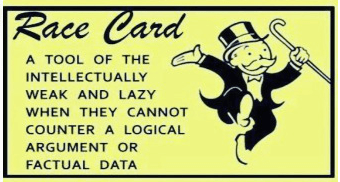
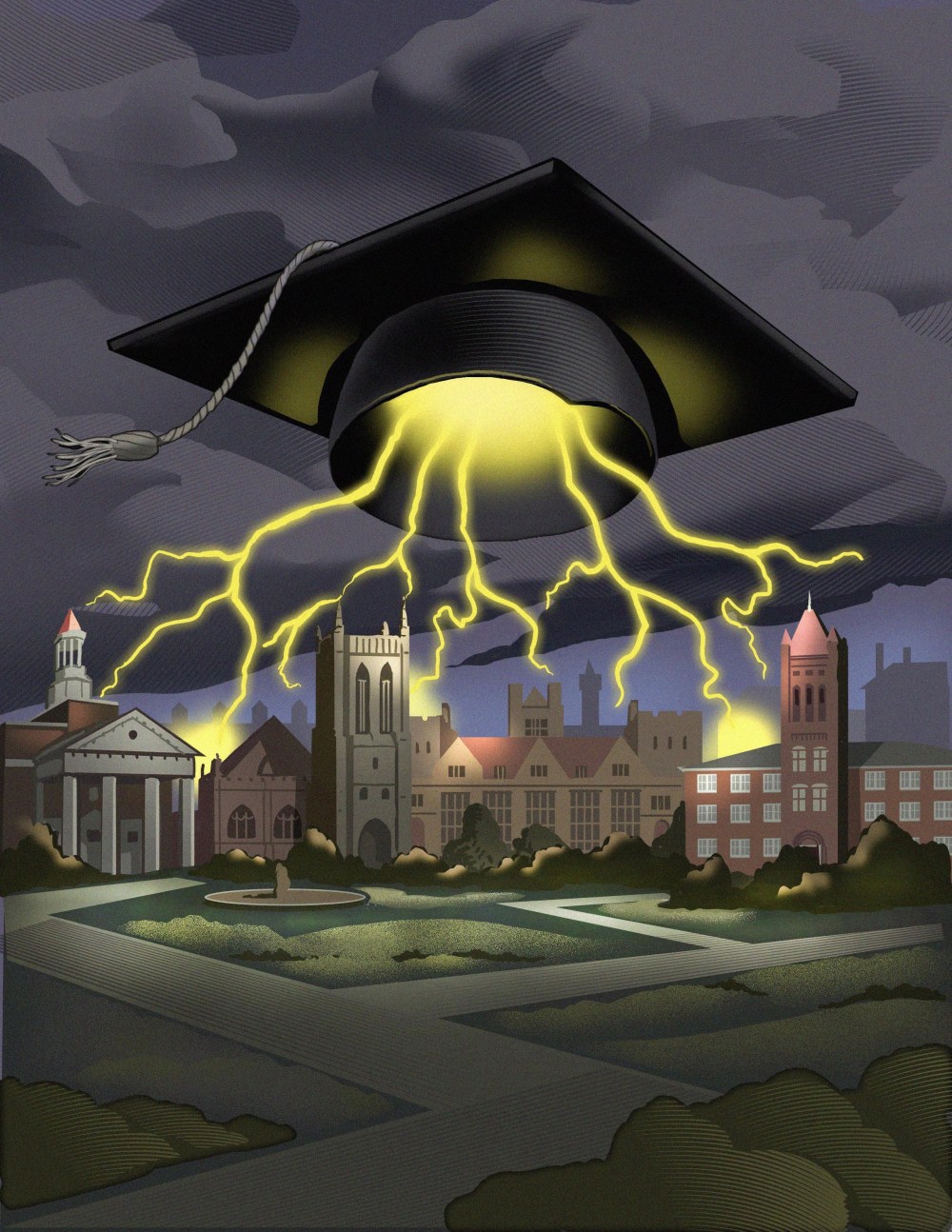


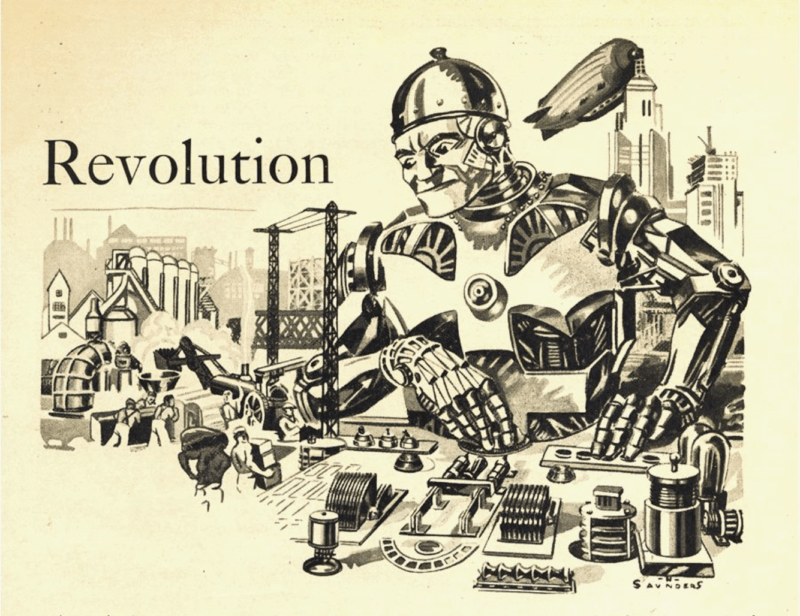


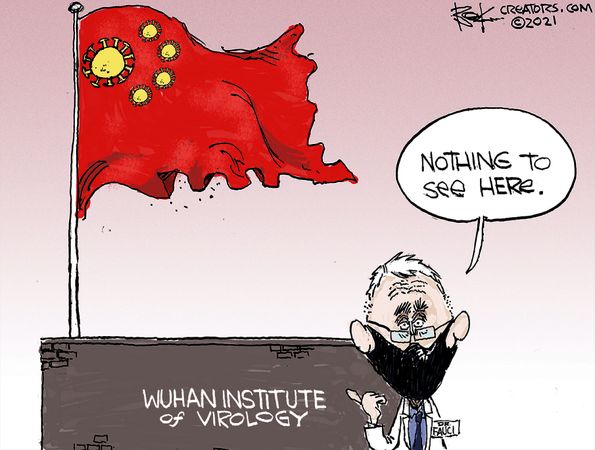
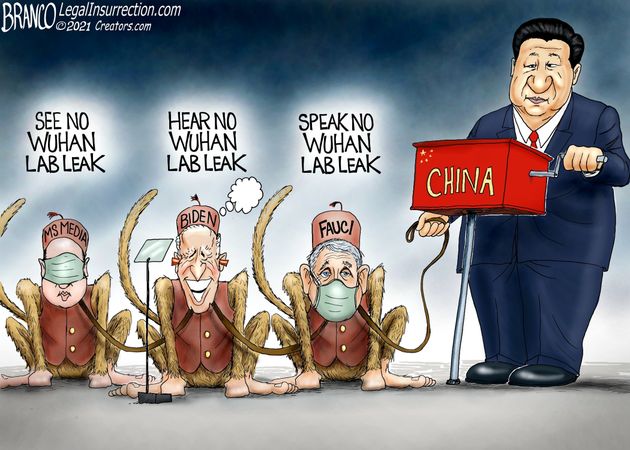


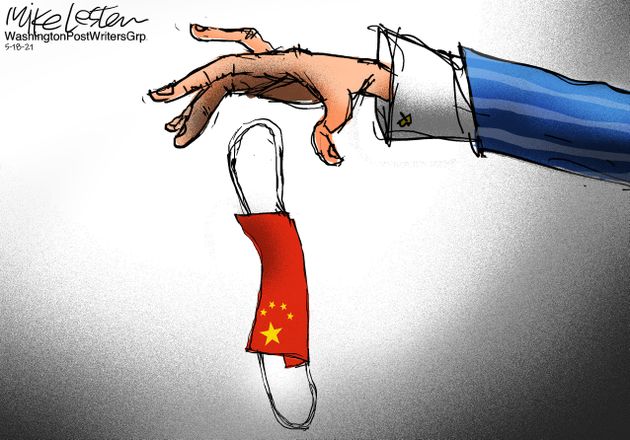
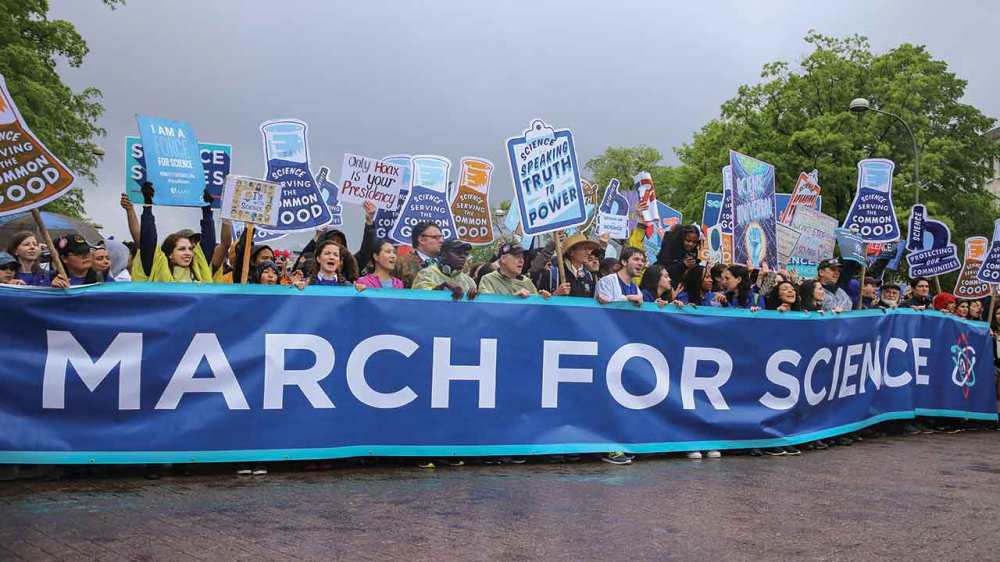


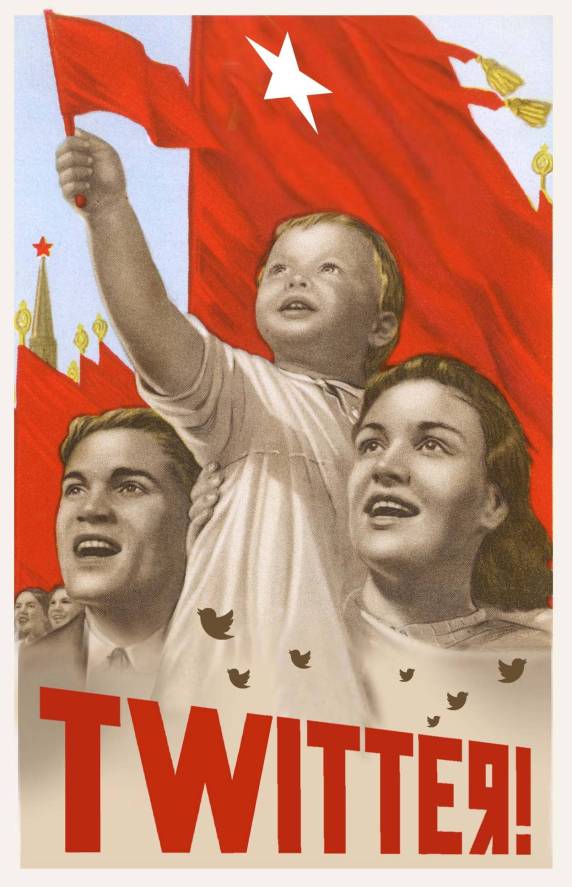




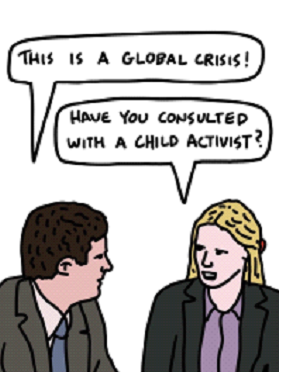

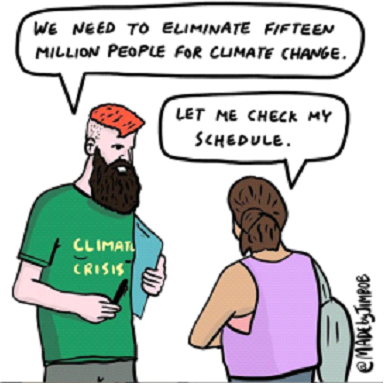
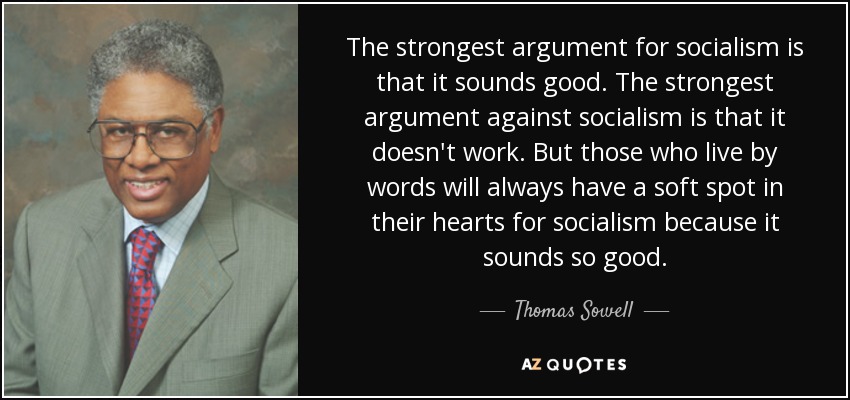
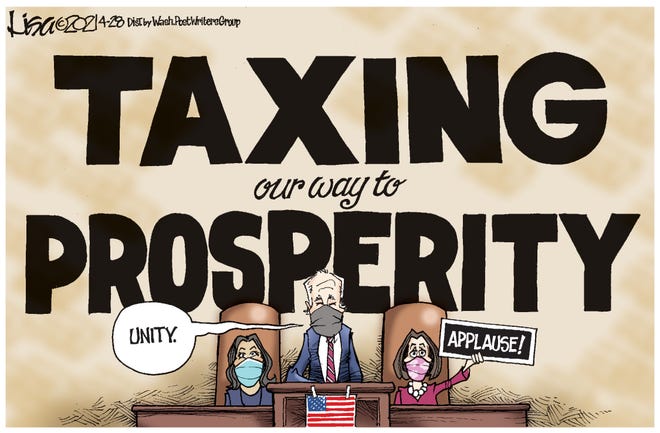
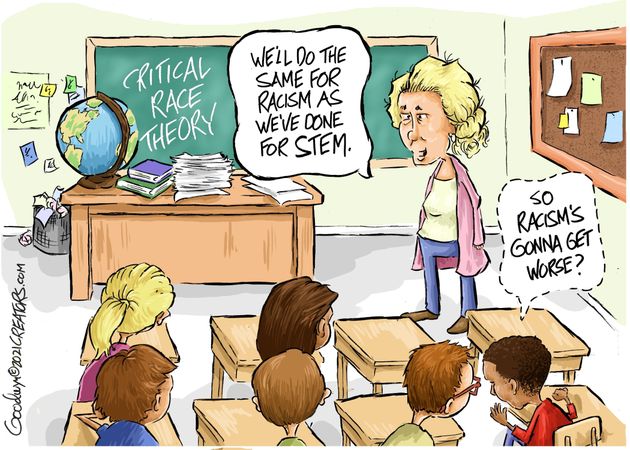
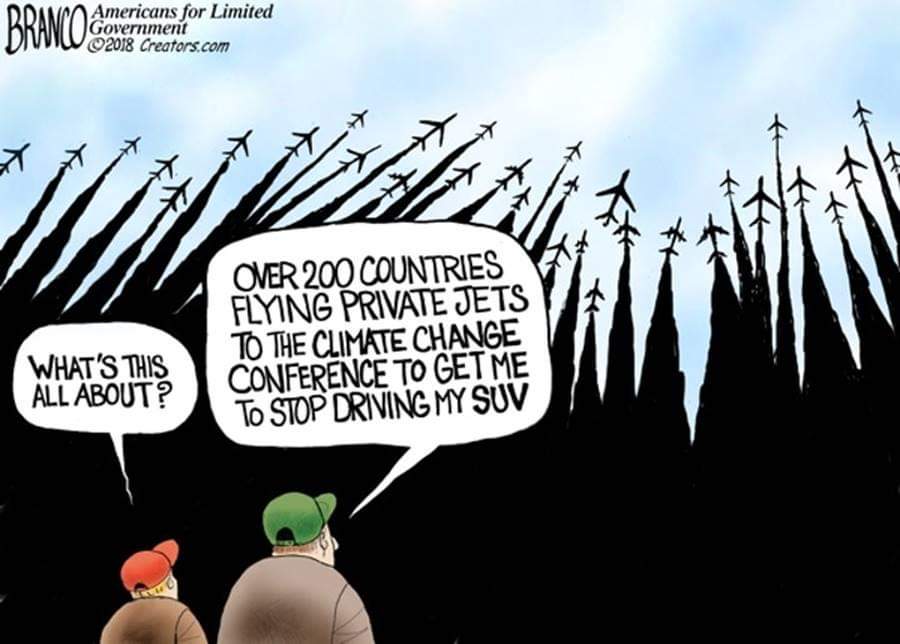
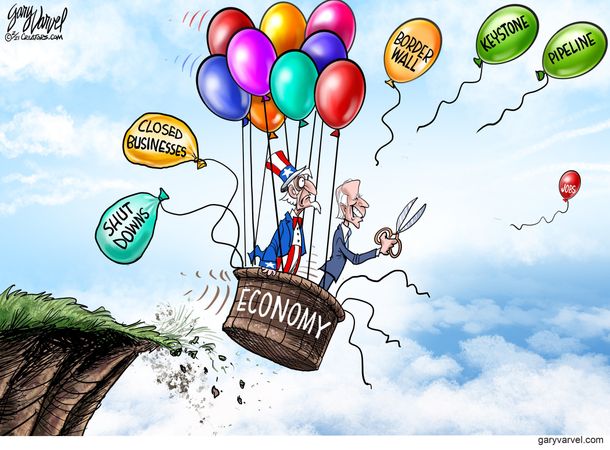
 Science Matters