We’re Richer than Rockefeller

Matthew Kahn has a post up regarding economics for non-economists, which will appear here later on. He provokes discussion in his seminar by exposing students to a fine essay by economist Don Boudreaux You Are Richer than John D. Rockefeller Do read the linked article which is only excerpted below.

Boudreaux asks: How much money would it take for you to agree to live out your life a century ago? Would you do it for a million dollars? What about a billion dollars? When considering this question, he asks that you keep in mind that in 1916, no matter how rich you were, you would not be able to enjoy any of the following:
Radio (do you mind phonograph sound quality?)
Television
Timely transportation
Computers
Air-conditioning
Rock ’n roll
International food (forget Vietnamese Pho or falafels!)
Smart phones
A high likelihood of surviving infancy
Contact lenses
Modern birth control
Antibiotics
Accurate watches
Skype
Effective dental care
The Internet
…and many other things as well. If you’re a woman, or any kind of minority (whether racial, sexual, or religious), then you would also have to sacrifice various freedoms and live in a world of far worse intolerance.

Boudreaux concludes with this observation:

Honestly, I wouldn’t be remotely tempted to quit the 2016 me so that I could be a one-billion-dollar-richer me in 1916. This fact means that, by 1916 standards, I am today more than a billionaire. It means, at least given my preferences, I am today materially richer than was John D. Rockefeller in 1916. And if, as I think is true, my preferences here are not unusual, then nearly every middle-class American today is richer than was America’s richest man a mere 100 years ago.

Matthew Kahn’s post is Teaching Economics Ideas to Non-Economists  Text below with my bolds.

At USC this term, I am teaching a new class on “the limits to growth”. My course is a fair fight between Paul Ehrlich and Julian Simon. My class features 90% non-economics majors and many have never taken a course with an economist before. I sense that they side with Ehrlich. Their consensus is that we are on a path to destroy our planet and that only dramatic changes in politics and lifestyles can save us. It is possible that they are correct. As they make these points in our seminar class, I ask them; “if you know this, why doesn’t the suburban median voter know this?” They eventually sketch out ideas related to free riding and the Tragedy of the Commons.

I sense that a majority of my students are uncomfortable with the claim that free markets are the major source of improvements in all of our well being. We read this piece by Don Boudreaux and it set off quite a good debate.

My students are quite smart and they have figured out that economic models focus on individual choice. I choose to drop out of school. I choose to study rather than to party. I choose to take actions that raise my risk of pregnancy. I choose to walk in risky place at night. When bad things (such as poverty) happen to good people, how much of this outcome is due to their own choice versus bad luck (a health shock, graduating during a recession)? I have shown them James Heckman’s argument that we must expand early education for all because children do not choose their parents.

If outcomes are due to luck, then a risk averse society will engage in more taxation and redistribution than in a society that believes that life outcomes are directly related to costly effort (i.e Lebron James is a great basketball player due to his long hours of practice).

My students also believe that the American Dream of upward mobility is vanishing. But schools such as USC are providing more financial aid and opportunity for first generation students. My students believe that U.S public schools are under-performing in preparing young people for college but they oppose privatization and Milton Friedman style school vouchers. They must implicitly believe that parents are not to be “sophisticated shoppers” in choosing a school.

I sense that many of my students would have voted for Senator Bernie Sanders in 2016. I am learning from my experience teaching non-economists. I hope that my ideas and empirical claims are resonating with them. I sense that some of my students are surprised to be confronted with a University of Chicago trained economist. The market place for economics ideas needs to expand and enter the classrooms of humanities majors (the bulk of my students).

My students reject the perfect competition model. Many voice a dark vision that powerful elites control government and markets and pay such that the “little guy” has few choices and just suffers. I steer discussions back to human capital and skill formation and the possibility to engage in personal investments such that one commands a wage premium. I am learning.

The typical academic economist does not leave the “comfort zone” and teach non-majors.

Bravo Professor Kahn for taking on the task of challenging uninformed (misinformed) societal assumptions.  Your teaching method seems Socratic, and it was Aristotle who recognized that a good life depends upon both good choices and good fortune. And, just to close the circle, John D. Rockefeller became wealthy providing people with petroleum products, which all agreed were the greatest thing since sliced bread.


Coercive PC Discourse Redux

Update January 27, 2018 This post somehow disappeared so I am reposting it. H/T hunter

A previous post described Civil Discourse (here) tactics regarding controversial subjects like global warming/climate change. Another post (here) noted that contemporary leftists advocate through social rather than political persuasion, and have taken over most of the cultural institutions in pursuing their agenda.

A recent BBC interview with Jordan Peterson demonstrates exactly how an opinionated media bully engages in coercive rather than civil discourse. The analysis is provided by Conor Friedersdorf in the Atlantic Why Can’t People Hear What Jordan Peterson Is Saying?  A British broadcaster doggedly tried to put words into the academic’s mouth.

The whole article is revealing and worth reading. Here I provide a few of many examples of attempted social coercion posing as an interview. Excerpts below with my bolds.

My first introduction to Jordan B. Peterson, a University of Toronto clinical psychologist, came by way of an interview that began trending on social media last week. Peterson was pressed by the British journalist Cathy Newman to explain several of his controversial views. But what struck me, far more than any position he took, was the method his interviewer employed. It was the most prominent, striking example I’ve seen yet of an unfortunate trend in modern communication.

First, a person says something. Then, another person restates what they purportedly said so as to make it seem as if their view is as offensive, hostile, or absurd.

Twitter, Facebook, Tumblr, and various Fox News hosts all feature and reward this rhetorical technique. And the Peterson interview has so many moments of this kind that each successive example calls attention to itself until the attentive viewer can’t help but wonder what drives the interviewer to keep inflating the nature of Peterson’s claims, instead of addressing what he actually said.

This isn’t meant as a global condemnation of this interviewer’s quality or past work. As with her subject, I haven’t seen enough of it to render any overall judgment—and it is sometimes useful to respond to an evasive subject with an unusually blunt restatement of their views to draw them out or to force them to clarify their ideas.

Perhaps she has used that tactic to good effect elsewhere. (And the online attacks to which she’s been subjected are abhorrent assaults on decency by people who are perpetrating misbehavior orders of magnitude worse than hers.)

But in the interview, Newman relies on this technique to a remarkable extent, making it a useful illustration of a much broader pernicious trend. Peterson was not evasive or unwilling to be clear about his meaning. And Newman’s exaggerated restatements of his views mostly led viewers astray, not closer to the truth.

Peterson begins the interview by explaining why he tells young men to grow up and take responsibility for getting their lives together and becoming good partners. He notes he isn’t talking exclusively to men, and that he has lots of female fans.

“What’s in it for the women, though?” Newman asks.

“Well, what sort of partner do you want?” Peterson says. “Do you want an overgrown child? Or do you want someone to contend with who is going to help you?”

“So you’re saying,” Newman retorts, “that women have some sort of duty to help fix the crisis of masculinity.” But that’s not what he said. He posited a vested interest, not a duty.

“Women deeply want men who are competent and powerful,” Peterson goes on to assert. “And I don’t mean power in that they can exert tyrannical control over others. That’s not power. That’s just corruption. Power is competence. And why in the world would you not want a competent partner? Well, I know why, actually, you can’t dominate a competent partner. So if you want domination—”

The interviewer interrupts, “So you’re saying women want to dominate, is that what you’re saying?”

After transcriptions covering pay gaps and gender equality, we come to this:

In this next passage Peterson shows more explicit frustration than at any other time in the program with being interviewed by someone who refuses to relay his actual beliefs:

Newman: So you don’t believe in equal pay.

Peterson: No, I’m not saying that at all.

Newman: Because a lot of people listening to you will say, are we going back to the dark ages?

Peterson: That’s because you’re not listening, you’re just projecting.

Newman: I’m listening very carefully, and I’m hearing you basically saying that women need to just accept that they’re never going to make it on equal terms—equal outcomes is how you defined it.

Peterson: No, I didn’t say that.

Newman: If I was a young woman watching that, I would go, well, I might as well go play with my Cindy dolls and give up trying to go school, because I’m not going to get the top job I want, because there’s someone sitting there saying, it’s not possible, it’s going to make you miserable.

Peterson: I said that equal outcomes aren’t desirable. That’s what I said. It’s a bad social goal. I didn’t say that women shouldn’t be striving for the top, or anything like that. Because I don’t believe that for a second.

Newman: Striving for the top, but you’re going to put all those hurdles in their way, as have been in their way for centuries. And that’s fine, you’re saying. That’s fine. The patriarchal system is just fine.

Peterson: No! I really think that’s silly! I do, I think that’s silly.

He thinks it is silly because he never said that “the patriarchal system is just fine” or that he planned to put lots of hurdles in the way of women, or that women shouldn’t strive for the top, or that they might as well drop out of school, because achieving their goals or happiness is simply not going to be possible.

The interviewer put all those words in his mouth.

The conversation moves on to other topics, but the pattern continues. Peterson makes a statement. And then the interviewer interjects, “So you’re saying …” and fills in the rest with something that is less defensible, or less carefully qualified, or more extreme, or just totally unrelated to his point. I think my favorite example comes when they begin to talk about lobsters. Here’s the excerpt:

Peterson: There’s this idea that hierarchical structures are a sociological construct of the Western patriarchy. And that is so untrue that it’s almost unbelievable. I use the lobster as an example: We diverged from lobsters evolutionarily history about 350 million years ago. And lobsters exist in hierarchies. They have a nervous system attuned to the hierarchy. And that nervous system runs on serotonin just like ours. The nervous system of the lobster and the human being is so similar that anti-depressants work on lobsters. And it’s part of my attempt to demonstrate that the idea of hierarchy has absolutely nothing to do with sociocultural construction, which it doesn’t.

Newman: Let me get this straight. You’re saying that we should organize our societies along the lines of the lobsters?

Yes, he proposes that we all live on the sea floor, save some, who shall go to the seafood tanks at restaurants. It’s laughable. But Peterson tries to keep plodding along.

Peterson: I’m saying it is inevitable that there will be continuities in the way that animals and human beings organize their structures. It’s absolutely inevitable, and there is one-third of a billion years of evolutionary history behind that … It’s a long time. You have a mechanism in your brain that runs on serotonin that’s similar to the lobster mechanism that tracks your status—and the higher your status, the better your emotions are regulated. So as your serotonin levels increase you feel more positive emotion and less negative emotion.

Newman: So you’re saying like the lobsters, we’re hard-wired as men and women to do certain things, to sort of run along tram lines, and there’s nothing we can do about it.

Where did she get that extreme “and there’s nothing we can do about it”? Peterson has already said that he’s a clinical psychologist who coaches people to change how they related to institutions and to one another within the constraints of human biology. Of course he believes that there is something that can be done about it.

He brought up the lobsters only in an attempt to argue that “one thing we can’t do is say that hierarchical organization is a consequence of the capitalist patriarchy.”

Actually, one of the most important things this interview illustrates—one reason it is worth noting at length—is how Newman repeatedly poses as if she is holding a controversialist accountable, when in fact, for the duration of the interview, it is she that is “stirring things up” and “whipping people into a state of anger.”

At every turn, she is the one who takes her subject’s words and makes them seem more extreme, or more hostile to women, or more shocking in their implications than Peterson’s remarks themselves support. Almost all of the most inflammatory views that were aired in the interview are ascribed by Newman to Peterson, who then disputes that she has accurately characterized his words.

Update:  A Post interview conversation with Peterson illuminates the dynamics and shows how in the aftermath social justice warriors morph into victims and martyrs.

Summary

Lots of culture-war fights are unavoidable––that is, they are rooted in earnest, strongly felt disagreements over the best values or way forward or method of prioritizing goods. The best we can do is have those fights, with rules against eye-gouging.

But there is a way to reduce needless division over the countless disagreements that are inevitable in a pluralistic democracy: get better at accurately characterizing the views of folks with differing opinions, rather than egging them on to offer more extreme statements in interviews; or even worse, distorting their words so that existing divisions seem more intractable or impossible to tolerate than they are. That sort of exaggeration or hyperbolic misrepresentation is epidemic—and addressing it for everyone’s sake is long overdue.


School Choice Antidote to Indoctrination

This article School Choice Can Protect Kids From Classroom Indoctrination at RealClearEducation caught my attention since climate change dogma has been embedded throughout curricula, not limited to science instruction.

Interestingly, parents are now pushing back against progressive sex education content. Coincidently in the US these days, sexual behavior has become the determining (sole?) qualification for public service. Any misstep decades ago recalled by a woman as insulting is grounds for dismissal without evidence.  Watch out WSWM (Well-off Straight White Males), you are in the cross-hairs:
Some excerpts with my bolds describing this development in the school system.

Progressive educators are launching new offensives in the nation’s culture wars.

Washington State, for example, has put a sex-education curriculum, developed in part by Planned Parenthood, on its approved list, which has caused controversy in places like Spokane. Nevada’s Washoe County School District is currently debating a sex education curriculum that would introduce topics like anal and oral sex starting in 6th grade. In San Diego, the city’s school district adopted a graphic sex-education curriculum, which elicited a 2000-signature petition by parents opposed to the new materials.

The trend underscores the need for school choice policies. If teachers and curricula developers want to impose certain values on students, parents who disagree with those values should be free to educate their children elsewhere.

In 2014, California’s Fremont school district, with the unanimous support of the district’s health teachers, adopted a college-level health education textbook for use by its ninth-grade students, which discussed sex toys and extreme sexual practices.

Even in the liberal San Francisco Bay Area where Fremont is located, parents were incensed by the decision. As Fremont parent Asfia Ahmed told the New York Daily News, “The main problem is that this book treats the kids as adults and the content is adult.” Many parents complained that the textbook failed to reflect their family and cultural values.

The district ultimately abandoned the textbook, but only after a grassroots revolt of district parents who circulated petitions and packed school board meetings.

Transgender policies are yet another example of public schools imposing certain ideologies on students, despite objections from families who affirm traditional values.

In Pennsylvania, four male Boyertown High School students sued the school district in federal court over the district’s policy that allowed biological females who identify as transgendered to undress in the boys locker room. A federal judge ruled against the male students in August, but the students are appealing that decision.

Public school administrators and state curricula developers are growing increasingly intolerant of traditional values held by many parents and their children. Discussing her state’s approved sex-education curricula, Washington state education official Laurie Dils acknowledged that the system is rigged: “People were suggesting that an abstinence-based program would be more in line with the community values. Well, an abstinence-based curriculum is not really legal anymore.” In the face of such government disregard for the public and its values, it’s important to create alternative education options for families who hold such values.

An increasing number of states are implementing programs such as education savings accounts, tuition tax credits and vouchers that allow parents to choose non-public schooling options for their children. These programs need to be expanded in the states that have them and initiated in those that don’t so that all parents and their children can access education alternatives that meet their needs and preferences.

Summary

No child should be forced to go to an indoctrination center masquerading as a public school. School choice policies could ensure that “back to school” season no longer entails an assault on the values of millions of impressionable children.

Make no mistake.  Climate change is an integral part of progressive value-laden education.  Let’s also take action to encourage teaching of science as a mode of inquiry based in rational skepticism, rather than a catechism of eternal truths like global warming doctrine.

Update: Drama in Snowflake Academy


Snowflakes: Overly sensitive persons, incapable of dealing with any opinions differing from their own. Snowflakes are light-weight and suffer meltdown when exposed to the light or heat of complex ideas in conflict. They can often be seen congregating in “safe zones” on college campuses.

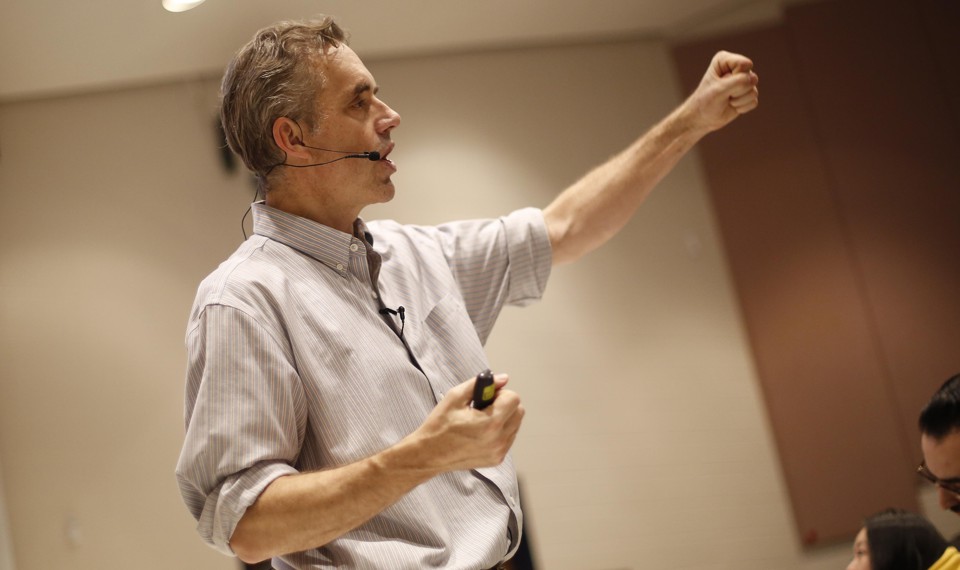
Professor Jordan Peterson is pushing back against embedded social justice warfare in the faculty offerings at University of Toronto.  He is starting a website that will inform students of the words and concepts that will be used in various classes, using the actual language on display.  This is deemed unsuitable and invading of safe spaces by those exposed.

Article is Faculty requests action against Peterson from a campus newspaper, The Medium.  Excerpts with my bolds.

Faculty members from the University of Toronto’s Women and Gender Studies Institute (WGSI) have requested a meeting with the university’s vice-provost to demand that action be taken against professor Jordan Peterson, who has stated his intent to create a website ranking university courses and instructors based on “postmodern neo-Marxian” ideologies included in course content.

“We are writing to express our deep concern about a proposed website being built under the direction of Prof. Jordan Peterson for the purpose of identifying and ranking courses and professors that he advocates should be removed from the university,” read the letter, “This website, if launched, presents a serious case of harassment, fostering unsafe work and study conditions for students, faculty, and staff.”

Peterson has spoken about this digital tool since summer of 2017, recently saying that he hopes to have the site ready by January.

“In public online remarks more broadly, Prof. Peterson regularly describes women and gender studies and what he refers to as ‘racial and ethnic group studies’ as pathological, a cancer, and in other strongly denigrating terms,” the letter also reads, “The launch of this website must be put in this context in order to fully understand it as a platform that will generate harassment.”

Peterson stated his goal to establish the website as a way of “moderating the behavior of the universities.”

“It will tell you the degree to which the description is postmodern and then you can decide for yourself whether you want to take that and become a social justice warrior, if that is what you think your education should be about, or if you should avoid that like the plague that it truly is,” Peterson stated in an interview with Julie Patreon, uploaded on July 3rd of this year, “I would like to knock enrolment in the postmodern disciplines down by 75 per cent over the next five years.”

“I think that what needs to happen is that freshman and second-year university students, and students coming into university from high school, need to be educated about the postmodern cult and they need to be encouraged to not take the courses, to just drop the courses, to just stay the hell away from them,” Peterson stated in a video uploaded on July 9th.

In the same video, Peterson expressed an interest in seeing enrolment in the humanities decline at an increased rate.

The university faculty also expressed concern over the “violence-tinged language to describe the courses he hopes to prevent people from taking” in Peterson’s videos.

On November 10th, the U of T Faculty Association released a statement stating that a meeting with the provost office has been requested.

“Instructors of the potentially targeted courses believe that their autonomy as educators may be under threat. The proposed website has created a climate of fear and intimidation,” the statement reads, “The UTFA Executive has taken the unprecedented step of asking that the entire Executive meet with the Provost’s office to express our deep concern about this threat to our members and to the academic mission of the University.”

As of press time, the provost has not released a statement regarding its intent to meet with faculty from WGSI regarding Peterson, or stated any possible plan to address Peterson’s site.

Peterson has frequently spoken out regarding freedom of speech on the university campuses, has voiced his dislike towards censoring lectures for students, and the current feminism movement.

Peterson has also gained national attention last September after refusing to use gender-neutral pronouns in his lectures. Since then, he has taken to uploading videos through YouTube to discuss his views on current social issues and doing guest speeches at public events.

Background is from previous post Inside the Snowflake Academy

A previous post (Retreat from Reason) provided a look into the mentality of today’s college professors teaching humanities and social sciences. The dominant mindset is termed “postmodern” to distinguish this perspective from the “modern” viewpoint born of the age of reason or enlightenment.

That text came from Professor Jordan Peterson who recommended reading a book by Stephen Hicks called Explaining Postmodernism. This post provides some descriptions (lightly edited) from Hicks regarding the education of today’s students and the liberal arts attitude toward science.

Hicks presents two hypotheses regarding the world-view embraced by postmoderns, which they pass on to their students.

Hypothesis 1: Postmodernism is the first ruthlessly consistent statement of the consequences of rejecting reason, those consequences being necessary given the study of knowledge since Kant.

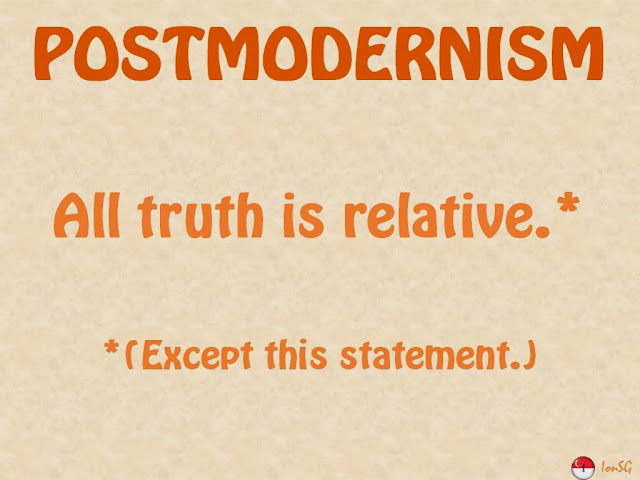
Thomas Kuhn published in 1962 his landmark book, The Structure of Scientific Revolutions, signifying the result of four decades of analytic philosophy and the dead end it had reached. If science’s tools are perception, logic, and language, then science, one of the Enlightenment’s prized children, is merely an evolving, socially objective enterprise with no more claim to objectivity than any other belief system. The idea that science speaks of reality or truth is an illusion. There is no Truth; there are only truths, and truths change.

Consequently, by the 1960s, the pro-objectivity, pro-science spirit had collapsed in the Anglo-American philosophical tradition.

Hypothesis 2: Postmodernism is the academic far Left’s stance in response to the crisis caused by the failures of socialism in theory and practice.

Postmodern thinkers inherit an intellectual tradition that has seen the defeat of all of its major hopes.

While the neo-Enlightenment thinkers have come to terms with the modern world, from the postmodern perspective the universe has been intellectually shattered. We can not turn to God or to nature, and we cannot trust reason or mankind.

The failure of Left politics to achieve the vision of a beautiful collectivist society was merely the last straw. To the postmodern mind, the cruel lessons of the modern world are that reality is inaccessible, that nothing can be known, that human potential is nothing, and that ethical and political ideals have come to nothing. The psychological response to the loss of everything is anger and despair.

But the postmodern thinkers also find themselves surrounded by an Enlightenment world that does not understand. Postmoderns confront a world dominated by liberalism and capitalism, by science and technology, by people who still believe in reality, in reason, and in the greatness of human potential. The world that they said was impossible and destructive has both come to be and is flourishing. The heirs of the Enlightenment are running the world, and they have marginalized the post-modernists to the academy. Resentment is then added on top of anger and despair.

The Enlightenment world is proud, confident, and knows it is the wave of the future. This is unbearable to someone invested totally in an opposed and failed outlook. That pride is what such a person wants to destroy. The best target to attack is the Enlightenment’s sense of its own moral worth. Attack it as sexist and racist, intolerantly dogmatic, and cruelly exploitative. Undermine its confidence in its reason, its science and technology. The words do not even have to be true or consistent to do the necessary damage.

The College as Snowflake Academy

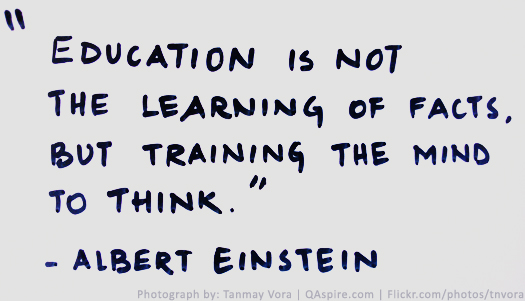
In education, postmodernism rejects the notion that the purpose of education is primarily to train a child’s cognitive capacity for reason in order to produce an adult capable of functioning independently in the world. That view of education is replaced with the view that education is to take an essentially indeterminate being and give it social identity. Education’s method of molding is linguistic, and so the language to be used is that which will create a human being sensitive to its racial, sexual, and class identity.

Our current social context, however, is characterized by oppression that benefits whites, males, and the rich at the expense of everyone else. That oppression in turn leads to an educational system that reflects only or primarily the interests of those in positions of power. To counteract that bias, educational practice must be recast totally. Postmodern education should emphasize works not in the canon; it should focus on the achievements of non-whites, females, and the poor; it should highlight the historical crimes of whites, males, and the rich; and it should teach students that science’s method has no better claim to yielding truth than any other method and, accordingly, that students should be equally receptive to alternative ways of knowing.

Moderns thought science and technology are good for all, extending our knowledge of the universe and making the world healthier, cleaner, and more productive. Postmoderns say science betrays its elitism, sexism and destructiveness by making the speed of light the fastest phenomenon, thereby unfairly privileging it over other speeds–by having chosen the phallic symbol i to represent the square root of negative one–by asserting its desire to “conquer” nature and “penetrate” her secrets–and, having done so, by having its technology consummate the rape by building bigger and longer missiles to blow things up.

And previously it had been generally thought liberalism, free markets, technology, and cosmopolitanism are social achievements that can be enjoyed by all cultures. On the contrary, Postmoderns think non-Western cultures are superior, since they live simply and in harmony with nature. They find the West is arrogantly blind, elitist and imperialistic, and imposes its capitalism, its science and technology, and its ideology upon other cultures and an increasingly fragile ecosystem.

Conclusion

And thus graduates are fully equipped and predetermined to believe in climate change.


Ideological Faultlines


Some interesting comments came in response to a recent post (Inside the Snowflake Academy) on postmodern attitudes regarding science and truth. Geoff Chambers gave some perspectives on European socialism. Caleb provided an interesting analogy to China’s cultural revolution and aftermath. Caleb:

The Evergreen craziness reminds me a lot of China’s “Cultural Revolution.” The Chinese teachers failed to understand that they themselves would be the target, if they taught students to reject “tradition”, for all the knowledge of the past can be seen as a “tradition”, and that makes teachers and textbooks “counter revolutionary.” In the end the madness resulted in not one teacher being made into a scapegoat, but nearly every teacher China had. China was reduced to a state of ignorance and poverty, and the only way back was to copy the west. They “stole our secrets”, but the joke is that most of what they copied was never a secret. It simply was Truth, which they had deemed “counter revolutionary.”

That use of the term “tradition” prompts this post inspired by another insightful article, Evergreen State and the Battle for Modernity By Michael Aaron. After providing samples of the conflict playing out at Evergreen State College, Aaron puts the event in context in the excerpts below.

evergreen-college-777x397


It is this dichotomy between postmodern and modern that is the most important takeaway from this entire affair. In many ways, the old left/right dichotomy no longer applies. Instead we are faced with a three-part distinction between postmodern/modern/traditional. Let’s take a look at each of these in turn, and discuss why they are particularly important today.

Starting with the most right-leaning, the traditionalists. These folks do not like the direction in which modernity is headed, and so are looking to go back to an earlier time when they believe society was better. They may disagree with same-sex marriage, label sexual promiscuity as “deviance,” and feel threatened by racial and demographic changes in Western society. These folks include typical status-quo conservatives, Evangelical Christians as well as more nefarious types such as white nationalists and the “alt right”. Even though there is much furor in the media about the threat that these groups represent, I would argue that they have largely been pushed to the fringes in terms of their social influence, not withstanding the election of Trump who was actually opposed by many traditionalists such as the Never Trumpers.

Indeed, it is between the modernists and postmodernists where the future of society is being fought. Modernists are those who believe in human progress within a classical Western tradition. They believe that the world can continuously be improved through science, technology, and rationality. Unlike traditionalists, they seek progress rather than reversal, but what they share in common is an interest in preserving the basic structures of Western society. Most modernists could be classified as centrists (either left or right-leaning), classical liberals and libertarians.

Postmodernists, on the other hand, eschew any notion of objectivity, perceiving knowledge as a construct of power differentials rather than anything that could possibly be mutually agreed upon. Informed by such thinkers as Foucault and Derrida, science therefore becomes an instrument of Western oppression; indeed, all discourse is a power struggle between oppressors and oppressed. In this scheme, there is no Western civilization to preserve—as the more powerful force in the world, it automatically takes on the role of oppressor and therefore any form of equity must consequently then involve the overthrow of Western “hegemony.” These folks form the current Far Left, including those who would be described as communists, socialists, anarchists, Antifa, as well as social justice warriors (SJWs). These are all very different groups, but they all share a postmodernist ethos.

All of this matters because, whether people are overtly aware of it or not, their beliefs and actions are implicitly guided by one of these three world-views. A person may have never attended an Ivy League gender studies class, but if they belong to and agree with the ideas of a typical urban, liberal, hipster milieu, they are very likely subscribing to a postmodernist ideology, even if they’ve never cracked open Lyotard. (my bold)

Much of the confusion between liberal and centrist groups comes down to this modern/postmodernist distinction. As another example, since modernists believe in science and its utility, they are aware that obese individuals are at higher health risks. For postmodernists, however, the concept of health is just another oppressive force of Western colonial hegemony (since objective truth doesn’t exist and is merely manufactured as a tool of oppression), and so an entire cadre of “fat” activists mobilize themselves on social media, emboldened with postmodern concepts. Modernists recognize that nobody should be shamed or discriminated against for their appearance and believe that everyone has the right to make their own lifestyle choices, but are also concerned that distributing scientifically inaccurate information about health poses considerable risk to those who might believe it.

In the end, the Weinstein/Evergreen State affair poses a significant crossroads to modern society, extending well beyond the conflict occurring on campus. Evergreen State represents the natural culmination of postmodern thought—roving mobs attempting to silence dissenting thought merely based on race, informed by far left theories that weaponize a victim status drawn solely from immutable, innate traits. Unfortunately, I cannot place full blame on the students either, as they have been indoctrinated with these ideas on the very campus that is now serving as the petri dish for applied postmodernism. (my bold)

It is no coincidence that, while society outside the walls of campus looks on with disbelief, administrators to this point have been siding with the students. For if they were to repudiate the actions of the students, they would also need to repudiate the ideology with which they have been brainwashing them. In other words, taking a stand against the students would require administrators and professors to re-evaluate the meaning and value of the entire raison d’etre of their adult professional careers. Holding on to madness is a way of forestalling dealing with the grief that comes with the realization that one’s higher purpose has been a fraud. I am not sure of the final outcome, as this kind of process is long, difficult, and very, very painful. (my bold)

But this internal struggle serves as a microcosm for the larger battle occurring in society between the ideas behind modernism and postmodernism. And the stakes are extremely high. As Weinstein articulated in his Rogan appearance, “Let’s put it this way, I believe at the moment coalitions are unholy alliances between two things. In this case you have the real equity movement, which are people who wish to end oppression, and then you have another movement that wishes to reverse oppression, and they don’t know that they are different because until you reach equity, they are pointing in the same direction.” For the sake of basic humanity and decency, let’s all hope that the Evergreen State affair has finally exposed this vital distinction.

Summary

I appreciate that Aaron acknowledges the third faction of traditionalists that have been shunted to the sidelines. I think he is missing the fact that recently the “silent majority” is finding its voice: Many of them supported Trump (way more than were Never Trumpers, who were mostly apparatchiks); and it was trads voting for Le Pen in France, and making the difference in the Brexit vote. Now that it is no longer taboo to speak of Islamic terrorism, trads will feel even more emboldened.

Aaron is correct that among intellectuals, the battle is between moderns and postmoderns, but I think he needs to look beyond the ivory tower.

Footnote: More on academic ideology from Nicholas Kristoff NYT (here):

In a column a few weeks ago, I offered a “confession of liberal intolerance,” criticizing my fellow progressives for promoting all kinds of diversity on campuses — except ideological. I argued that universities risk becoming liberal echo chambers and hostile environments for conservatives, and especially for evangelical Christians.

As I see it, we are hypocritical: We welcome people who don’t look like us, as long as they think like us.

Inside the Snowflake Academy


Snowflakes: Overly sensitive persons, incapable of dealing with any opinions differing from their own. Snowflakes are light-weight and suffer meltdown when exposed to the light or heat of complex ideas in conflict. They can often be seen congregating in “safe zones” on college campuses.

A previous post (Retreat from Reason) provided a look into the mentality of today’s college professors teaching humanities and social sciences. The dominant mindset is termed “postmodern” to distinguish this perspective from the “modern” viewpoint born of the age of reason or enlightenment.

That text came from Professor Jordan Peterson who recommended reading a book by Stephen Hicks called Explaining Postmodernism. This post provides some descriptions (lightly edited) from Hicks regarding the education of today’s students and the liberal arts attitude toward science.

Hicks presents two hypotheses regarding the world-view embraced by postmoderns, which they pass on to their students.

Hypothesis 1: Postmodernism is the first ruthlessly consistent statement of the consequences of rejecting reason, those consequences being necessary given the study of knowledge since Kant.

Thomas Kuhn published in 1962 his landmark book, The Structure of Scientific Revolutions, signifying the result of four decades of analytic philosophy and the dead end it had reached. If science’s tools are perception, logic, and language, then science, one of the Enlightenment’s prized children, is merely an evolving, socially objective enterprise with no more claim to objectivity than any other belief system. The idea that science speaks of reality or truth is an illusion. There is no Truth; there are only truths, and truths change.

Consequently, by the 1960s, the pro-objectivity, pro-science spirit had collapsed in the Anglo-American philosophical tradition.

Hypothesis 2: Postmodernism is the academic far Left’s stance in response to the crisis caused by the failures of socialism in theory and practice.

Postmodern thinkers inherit an intellectual tradition that has seen the defeat of all of its major hopes.

While the neo-Enlightenment thinkers have come to terms with the modern world, from the postmodern perspective the universe has been intellectually shattered. We can not turn to God or to nature, and we cannot trust reason or mankind.

The failure of Left politics to achieve the vision of a beautiful collectivist society was merely the last straw. To the postmodern mind, the cruel lessons of the modern world are that reality is inaccessible, that nothing can be known, that human potential is nothing, and that ethical and political ideals have come to nothing. The psychological response to the loss of everything is anger and despair.

But the postmodern thinkers also find themselves surrounded by an Enlightenment world that does not understand. Postmoderns confront a world dominated by liberalism and capitalism, by science and technology, by people who still believe in reality, in reason, and in the greatness of human potential. The world that they said was impossible and destructive has both come to be and is flourishing. The heirs of the Enlightenment are running the world, and they have marginalized the post-modernists to the academy. Resentment is then added on top of anger and despair.

The Enlightenment world is proud, confident, and knows it is the wave of the future. This is unbearable to someone invested totally in an opposed and failed outlook. That pride is what such a person wants to destroy. The best target to attack is the Enlightenment’s sense of its own moral worth. Attack it as sexist and racist, intolerantly dogmatic, and cruelly exploitative. Undermine its confidence in its reason, its science and technology. The words do not even have to be true or consistent to do the necessary damage.

The College as Snowflake Academy

In education, postmodernism rejects the notion that the purpose of education is primarily to train a child’s cognitive capacity for reason in order to produce an adult capable of functioning independently in the world. That view of education is replaced with the view that education is to take an essentially indeterminate being and give it social identity. Education’s method of molding is linguistic, and so the language to be used is that which will create a human being sensitive to its racial, sexual, and class identity.

Our current social context, however, is characterized by oppression that benefits whites, males, and the rich at the expense of everyone else. That oppression in turn leads to an educational system that reflects only or primarily the interests of those in positions of power. To counteract that bias, educational practice must be recast totally. Postmodern education should emphasize works not in the canon; it should focus on the achievements of non-whites, females, and the poor; it should highlight the historical crimes of whites, males, and the rich; and it should teach students that science’s method has no better claim to yielding truth than any other method and, accordingly, that students should be equally receptive to alternative ways of knowing.

Moderns thought science and technology are good for all, extending our knowledge of the universe and making the world healthier, cleaner, and more productive. Postmoderns say science betrays its elitism, sexism and destructiveness by making the speed of light the fastest phenomenon, thereby unfairly privileging it over other speeds–by having chosen the phallic symbol i to represent the square root of negative one–by asserting its desire to “conquer” nature and “penetrate” her secrets–and, having done so, by having its technology consummate the rape by building bigger and longer missiles to blow things up.

And previously it had been generally thought liberalism, free markets, technology, and cosmopolitanism are social achievements that can be enjoyed by all cultures. On the contrary, Postmoderns think non-Western cultures are superior, since they live simply and in harmony with nature. They find the West is arrogantly blind, elitist and imperialistic, and imposes its capitalism, its science and technology, and its ideology upon other cultures and an increasingly fragile ecosystem.

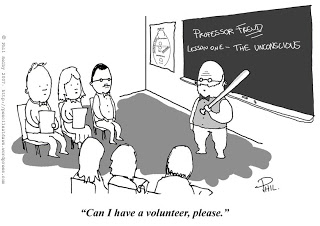
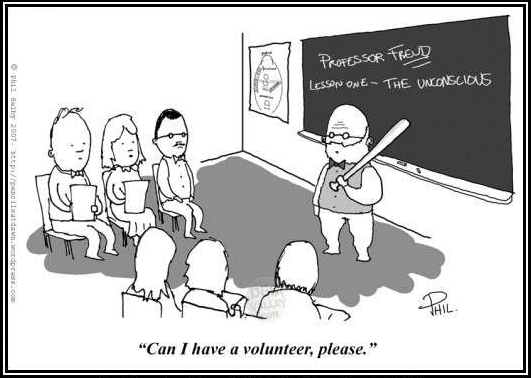
funny-baseball-teacher

Conclusion

And thus graduates are fully equipped and predetermined to believe in climate change.


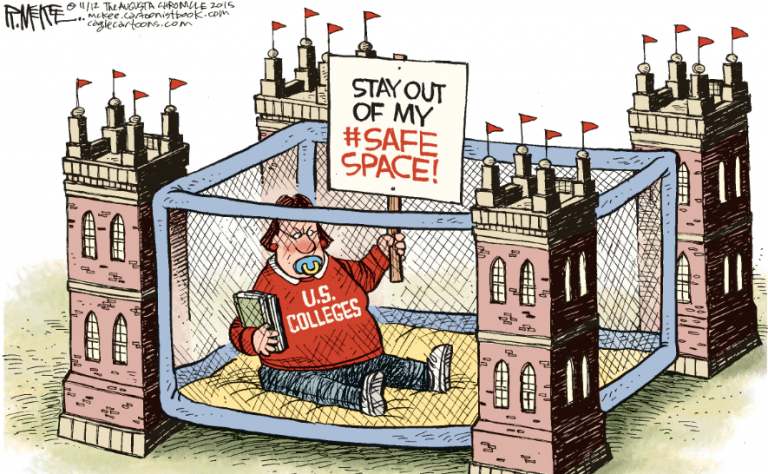
safespace-768x474


Perverse Postmodern Climate: Retreat from Reason

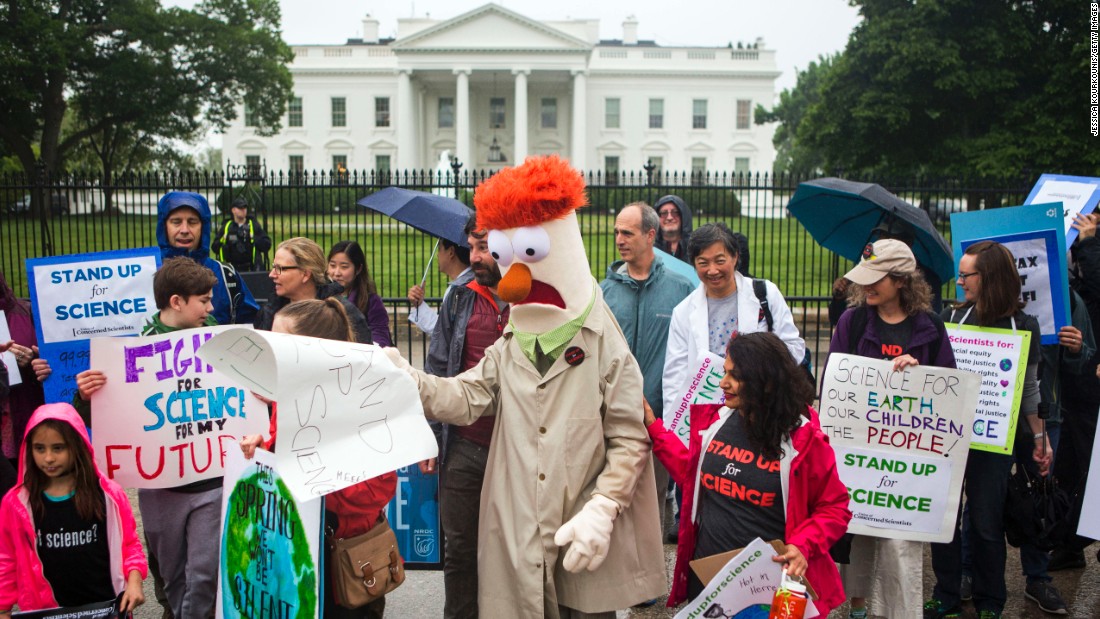
The recent marches for science were an amazing irony: People actually think that science is a matter of protesting in the streets. It was a demonstration all right, a full-throated display of postmodern contempt for reason, especially as embodied in the scientific method.

This virus has already taken over many universities, the most extreme case being Evergreen State College in Eastern Washington. Black students decided there should be a No White day on campus to protest the history of blacks mistreatment. One professor refused and tried to hold his class, arguing that free speech was not a matter of race, creed, gender or anything else. A riot erupted against him and his students, shutting down the class.

evergreen

Afterward, the Evergreen State Faculty Turned on the Professor, Saying He ‘Endangered’ Students

This post is to call attention to a war correspondent issuing a recent report on the state of this cultural conflict. Professor Jordan Peterson of the University of Toronto writes from the front lines where higher education institutions and students are in upheaval.

War Correspondent

Jordan Peterson: Why You Have To Fight Postmodernism
explains why young people need to organize and rise up against nihilistic postmodernism. The full transcript is worth reading, and a video presentation is also available. Some excerpts below present some of his key points.

JORDAN PETERSON: I want to recommend a book first to everyone here: It is called Explaining Postmodernism by Stephen Hicks. You need to understand postmodernism, because that’s what you’re up against. You’re up against it far more than you know or think, and it’s a much more well-developed and pervasive, pernicious, nihilistic, intellectually attractive doctrine than has yet come to public realization. It absolutely dominates the humanities and increasingly the social sciences in the universities.

It’s not like any given person is absolutely possessed by the spirit of postmodernism, because often they’re not educated enough to know all the details about what it is that has them in their grip, but if you get 20 of them together and they’re all 5% influenced by the postmodernist ethos, you basically have the spirit of the mob. It’s a mouthpiece for that particular philosophical doctrine.

See the postmodernists completely reject the structure of Western civilization. And I mean completely, so I can give you an example, in one term — Jacques Derrida. He is head trickster for the postmodernist movement, and he regarded Western culture — let’s call it the patriarchy — as phallogocentric. Phallo comes from phallus, and so that’s the insistence that what you see in Western culture is the consequence of the male-dominated oppressive self-serving society.

So the first thing that you might want to know about Postmodernism is that it doesn’t have a shred of gratitude — and there’s something pathologically wrong with a person that doesn’t have any gratitude, especially when they live in what so far is the best of all possible worlds. So if you’re not grateful, you’re driven by resentment, and resentment is the worst emotion that you can possibly experience, apart from arrogance. Arrogance, resentment, and deceit. There is an evil triad for you.

So you have to educate yourself about postmodernism.

So here’s what the postmodernists believe: They don’t believe in the individual. That’s the logos. Remember, Western culture is Phallogocentric. Logo is logos. That’s partly the Christian word, but is also partly the root word of logic.

They believe that logic is part of the process by which the patriarchal institutions of the West continue to dominate and to justify their dominance. They don’t believe in dialogue. The root word of dialogue is logos — again, they don’t believe that people of good will can come to consensus through the exchange of ideas. They believe that that notion is part of the philosophical substructure and practices of the dominant culture.

So the reason they don’t let people who they don’t agree with speak on campus, is because they don’t agree with letting people speak.

You see it’s not part of the ethos.

They believe that since you don’t have an individual identity, your fundamental identity is group fostered, and that means that you’re basically an exemplar of your race.

And so the postmodernist Marxists just basically pulled a sleight-of-hand, and said, ‘Okay if it’s not the poor against the rich than it’s the oppressed against the oppressor.’ We’ll just re-divide the sub-populations in ways that make our bloodied philosophy continue in its movement forward, and that’s where we are now.

So for the postmodernists, the world is a Hobbesian battleground of identity groups. They do not communicate with one another, because they can’t. All there is, is a struggle for power, and if you’re in the predator group, which means you’re an oppressor, than you better look out, because you’re not exactly welcome. Not exactly welcome, and neither are your ideas. So that’s what you’re up against.

You young people out there who are university students, you need to take over the student unions, you need to take them back, because they are absolute snake pits, and have been since the 1990s.

Our society needs to figure out how to stop shunting public tax money to radical left-wing activists. If we were doing that for the radical right-wing activists, there would be an absolute storm, but it’s happened incrementally since the 1960s and needs to stop.

So that’s what conservatives and also liberals –true liberals in the English sense– are up against. What’s happened also as a consequence of this postmodern neo-Marxist intellectual invasion, is the center keeps moving way to the right now, so if you’re a classical liberal, you’ve become a conservative.

Conclusion

And then finally with regards to talking to young people. You finally have something to sell to them. It is not easy to sell conservatism to young people, because they want to change things. That’s not what conservatives want to do, they want to maintain things. Well now you got something to sell — you can sell them freedom of speech, and you can tell sell them responsibility.

The left is selling them rights, you can sell them responsibility.

I can tell you, because I received many letters of this sort … young people are absolutely starving for someone to provide them with a sense of responsibility, and say look here, here’s something worth living for.

We’ve got this beacon of freedom and wealth in the West, which works, although it doesn’t work perfectly. And one of one of the responsibilities of young people is to find out what’s at the core of that, the great core of that. The paramount importance of the individual, and the divinity of speech. That’s something to sell, its what our whole culture is predicated on.

Footnote:

Tom Wolfe first opened my eyes to this assault on reason.  I posted on his essay along with the obvious connection to climate change/global warming.  See Warmists and Rococo Marxists

Climates Don’t Start Wars, People Do

Once again the media are promoting a link between climate change and human conflicts. It is obvious to anyone in their right mind that wars correlate with environmental destruction. From rioting in Watts, to the wars in Iraq, or the current chaos in Syria, there’s no doubt that fighting degrades the environment big time.

What is strange here is the notion that changes in temperatures and/or rainfall cause the conflicts in the first place. The researchers that advance this claim are few in number and are hotly disputed by many others in the field, but you would not know that from the one-sided coverage in the mass media.

The Claim

Lately the fuss arises from this study: Climate, conflict, and social stability: what does the evidence say?, Hsiang, S.M. & Burke, M. Climatic Change (2014) 123: 39. doi:10.1007/s10584-013-0868-3

Hsiang and Burke (2014) examine 50 quantitative empirical studies and find a “remarkable convergence in findings” (p. 52) and “strong support for a causal association” (p. 42) between climatological changes and conflict at all scales and across all major regions of the world. A companion paper by Hsiang et al. (2013) that attempts to quantify the average effect from these studies indicates that a 1 standard deviation (σ) increase in temperature or rainfall anomaly is associated with an 11.1 % change in the risk of “intergroup conflict”.1 Assuming that future societies respond similarly to climate variability as past populations, they warn that increased rates of human conflict might represent a “large and critical impact” of climate change.

The Bigger Picture

This assertion is disputed by numerous researchers, some 26 of whom joined in a peer-reviewed comment: One effect to rule them all? A comment on climate and conflict, Buhaug, H., Nordkvelle, J., Bernauer, T. et al. Climatic Change (2014) 127: 391. doi:10.1007/s10584-014-1266-1

In contrast to Hsiang and coauthors, we find no evidence of a convergence of findings on climate variability and civil conflict. Recent studies disagree not only on the magnitude of the impact of climate variability but also on the direction of the effect. The aggregate median effect from these studies suggests that a one-standard deviation increase in temperature or loss of rainfall is associated with a 3.5 % increase in conflict risk, although the 95 % highest density area of the distribution of effects cannot exclude the possibility of large negative or positive effects. With all contemporaneous effects, the aggregate point estimate increases somewhat but remains statistically indistinguishable from zero.

To be clear, this commentary should not be taken to imply that climate has no influence on armed conflict. Rather, we argue – in line with recent scientific reviews (Adger et al. 2014; Bernauer et al. 2012; Gleditsch 2012; Klomp and Bulte 2013; Meierding 2013; Scheffran et al. 2012a,b; Theisen et al. 2013; Zografos et al. 2014) – that research to date has failed to converge on a specific and direct association between climate and violent conflict.

The Root of Climate Change Bias

The two sides have continued to publish and the issue is far from settled. Interested observers describe how serious people can disagree so frequently about such findings in climate science.

Modeling and data choices sway conclusions about climate-conflict links, Andrew M. Linke, and Frank D. W. Witmer, Institute of Behavioral Science, University of Colorado, Boulder, CO 80309-0483 here

Conclusions about the climate–conflict relationship are also contingent on the assumptions behind the respective statistical analyses. Although this simple fact is generally understood, we stress the disciplinary preferences in modeling decisions.

However, we believe that the Burke et al. finding is not a “benchmark” in the sense that it is the scientific truth or an objective reality because disciplinary-related modeling decisions, data availability and choices, and coding rules are critical in deriving robust conclusions about temperature and conflict.

After adding additional covariates (models 4 and 6), the significant temperature effect in the Burke et al. (1) model disappears, with sociopolitical variables predicting conflict more effectively than the climate variables. Furthermore, this specification provides additional insights into the between- and within-effects that vary for factors such as political exclusion and prior conflict.

Summary

Sociopolitical variables predict conflict more effectively than climate variables. It is well established that poorer countries, such as those in Africa, are more likely to experience chronic human conflicts. It is also obvious that failing states fall into armed conflicts, being unable to govern effectively due to corruption and illegitimacy.

It boggles the mind that activists promote policies to deny cheap, reliable energy for such countries, perpetuating or increasing their poverty and misery, while claiming such actions reduce the chances of conflicts in the future.

Halvard Buhaug concludes (here):

Vocal actors within policy and practice contend that environmental variability and shocks, such as drought and prolonged heat waves, drive civil wars in Africa. Recently, a widely publicized scientific article appears to substantiate this claim. This paper investigates the empirical foundation for the claimed relationship in detail. Using a host of different model specifications and alternative measures of drought, heat, and civil war, the paper concludes that climate variability is a poor predictor of armed conflict. Instead, African civil wars can be explained by generic structural and contextual conditions: prevalent ethno-political exclusion, poor national economy, and the collapse of the Cold War system.

Footnote:  The Joys of Playing Climate Whack-A-Mole

Dealing with alarmist claims is like playing whack-a-mole. Every time you beat down one bogeyman, another one pops up in another field, and later the first one returns, needing to be confronted again. I have been playing Climate Whack-A-Mole for a while, and if you are interested, there are some hammers supplied below.

The alarmist methodology is repetitive, only the subject changes. First, create a computer model, purporting to be a physical or statistical representation of the real world. Then play with the parameters until fears are supported by the model outputs. Disregard or discount divergences from empirical observations. This pattern is described in more detail at Chameleon Climate Models

This post is the latest in a series here which apply reality filters to attest climate models.  The first was Temperatures According to Climate Models where both hindcasting and forecasting were seen to be flawed.

Others in the Series are:

Sea Level Rise: Just the Facts

Data vs. Models #1: Arctic Warming

Data vs. Models #2: Droughts and Floods

Data vs. Models #3: Disasters

Data vs. Models #4: Climates Changing

Climate Medicine

Beware getting sucked into any model.