Covid Decline in Canada and World June 8

Reported at Just The News Doctors around world say COVID-19 may be losing its potency, becoming less deadly

Doctors in Italy, Israel and U.S. say the coronavirus may be losing its potency and becoming less deadly even as it spreads.

Doctors across the world are offering preliminary but encouraging reports that the coronavirus may be losing steam and becoming less deadly: a behavior observed in at least one respiratory pandemic before, and a welcome sign for a world weary of nonstop COVID-19 fears.

But numerous prominent doctors and scientists in the last few weeks and months have begun to question that narrative, pointing to evidence that suggests the coronavirus may, unexpectedly, be dying out on its own.

Virus appears to behave the same regardless of lockdown measures

Yitzhak Ben Israel, a professor at Tel Aviv University, offered early speculation to that effect when in April he said, based on the observed behavior of the virus across the globe, that the virus appears to function more or less the same no matter what a country does to mitigate it. He said the virus appears to follow a fixed pattern in which there is “a decline in the number of infections even [in countries] without closures” that is “similar to the countries with closures.”  See post on Ben Israel Good Virus News from the Promised Land

Those observations may indicate that the virus is not an unstoppable juggernaut: If it works more or less the same with or without mitigation efforts, then it is likely less of a danger than was initially imagined, insofar as the disease is less hampered by lockdowns than experts thought but also less deadly without them than was initially feared.

Yet apart from the epidemiological path the pandemic might or might not take, there are also signs that the virus itself is weakening, growing less potent, more diffuse and less deadly, meaning that even if a region experiences a significant amount of infections, it may amount to fewer hospitalizations and deaths than medical experts have predicted over the past few months.

That’s the contention of two top Italian doctors, who argued this week that the disease appears to be rapidly declining in potency. The coronavirus “clinically no longer exists in Italy,” San Raffaele Hospital Director Alberto Zangrillo told Reuters, claiming that recent swabs of infected patients have shown “a viral load in quantitative terms that was absolutely infinitesimal compared to the ones carried out a month or two months ago.”

Matteo Bassetti, meanwhile—the head of the infectious diseases clinic at the San Martino hospital in Genoa—said that “the strength the virus had two months ago is not the same strength it has today” and that “it is clear that today the COVID-19 disease is different.”

The Italian government is still cautioning its citizens to continue to treat the virus as highly dangerous.

Covid Decline Evident in Canada

The media and governmental reports focus on total accumulated numbers which are big enough to scare people to do as they are told.  In the absence of contextual comparisons, citizens have difficulty answering the main (perhaps only) question on their minds:  What are my chances of catching Covid19 and dying from it?  The map shows a lot of cases, and the chart looks like an hockey stick, going upward on a straight line. So why do I say canadians are safer than it looks like from such images?

First let’s look at daily numbers to see where we are in this process.  All the statistics come from Canada Public Health Coronavirus disease (COVID-19): Outbreak update.

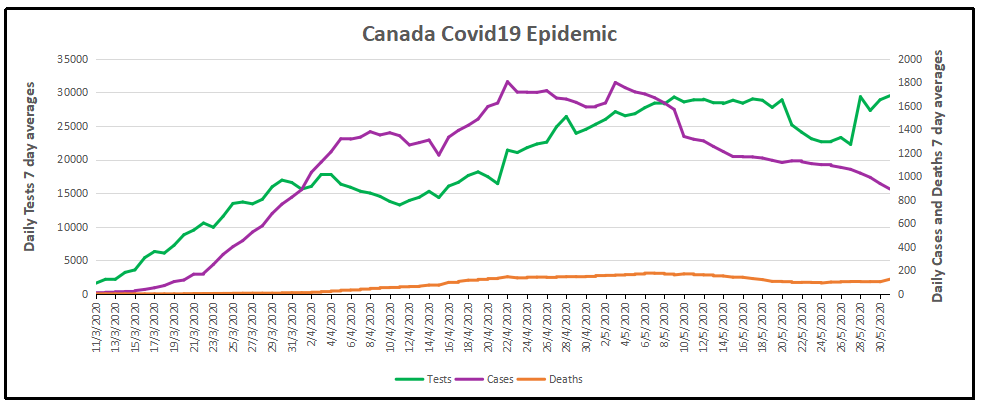
By showing daily tests, new cases and reported deaths, we can see how the outbreak has built up, peaked and declined over the last 3 months.  The green line shows how testing grew to a sustained daily rate of 29,000, then dropped, before rising to a new level. (all numbers are smoothed with 7 day averages ending with the stated date.) Note that the curve is now descending after peaking at 1800 on April 22, now down to 679 new cases per day.  This lower rate of infections is despite the highest rate of testing since the outbreak began. Deaths have also peaked at 177 on May 6, down to 72 June 7. The rate of people testing positive is down to 2.2%, and deaths are 0.22% of the tests administered.

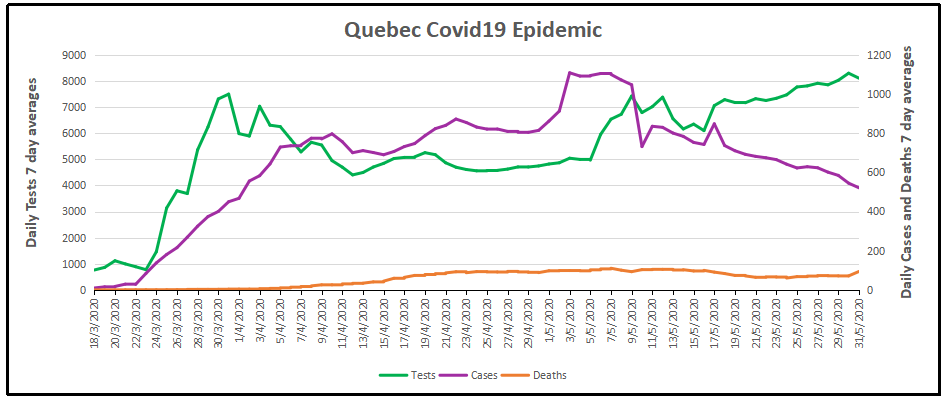
But it matters greatly where in Canada you live. Quebec has been the province leading the nation in both cases and deaths.  Quebec has always celebrated being a distinct society, but not in this way. Below is the same chart for the Quebec epidemic from the same dataset. The province has about 23% of the national population and does about 26% of the tests.  But Quebec contributes 56% of the cases and 64% of the deaths, as of yesterday.  Here how the outbreak has gone in La Belle Province.

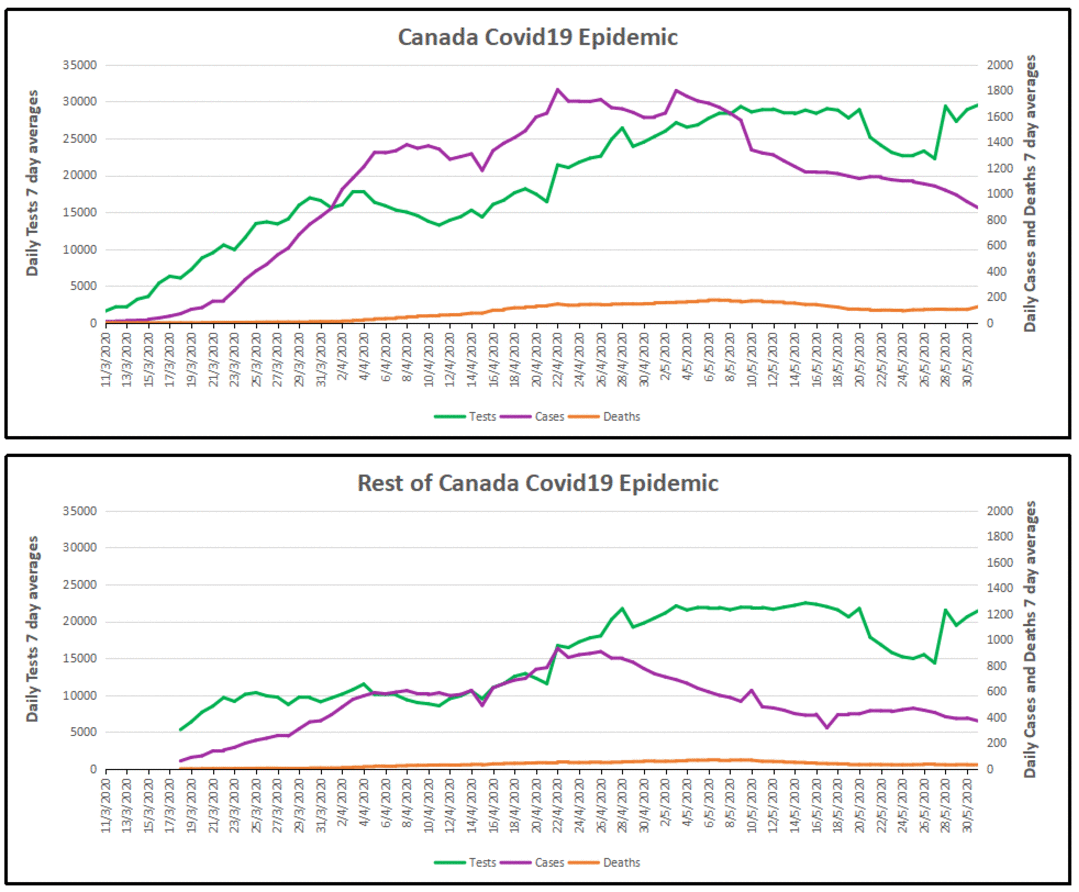
The Quebec graph is more lumpy showing cases peaking May 1-9, including several days inflated by data catchups. Cases have dropped off recently, from 1100 May 7 down to 256 yesterday.  Deaths are also dropped, declining from 110 on May 7 to 48 June 7 (7-day average). The animation below shows the epidemic in Canada with and without Quebec statistics.

But clearly everywhere else in Canada, people are much safer than those living in Quebec.  So what is going on?

To enlarge image, open in new tab.

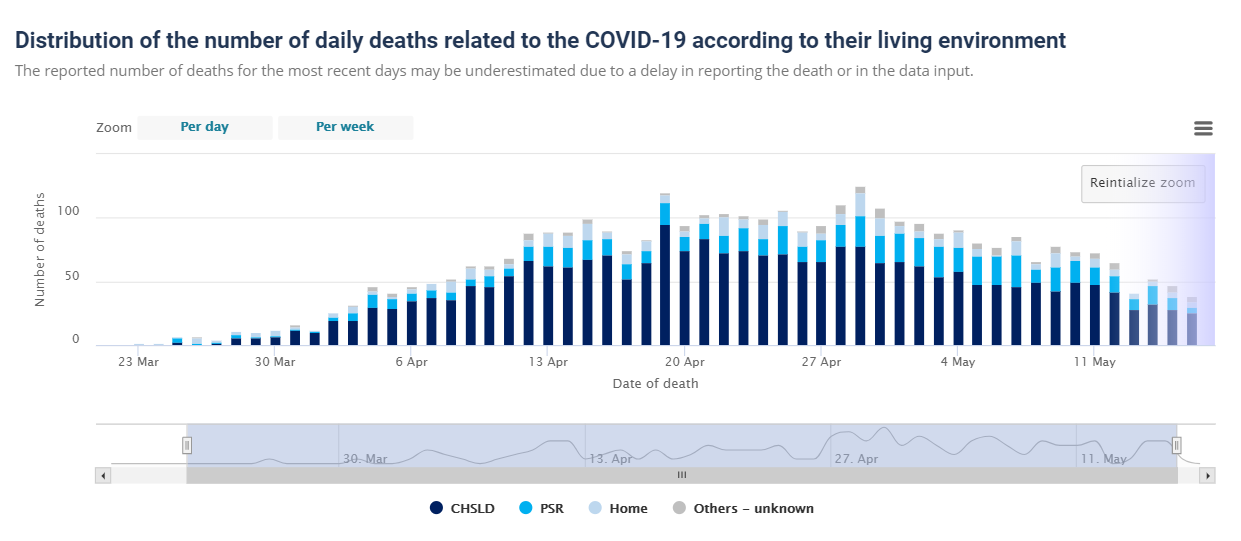
The graph shows that people in Quebec are dying in group homes, the majority in CHSLD (long term medical care facilities) and also in PSR (private seniors’ residences).  The huge majority of Quebecers in other, more typical living arrangements have very little chance of dying from this disease. Not even prisoners are much at risk.


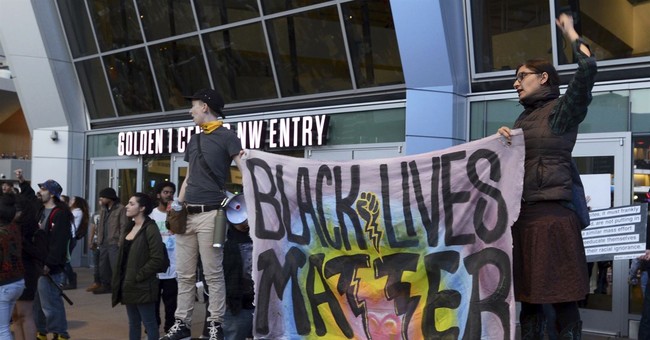
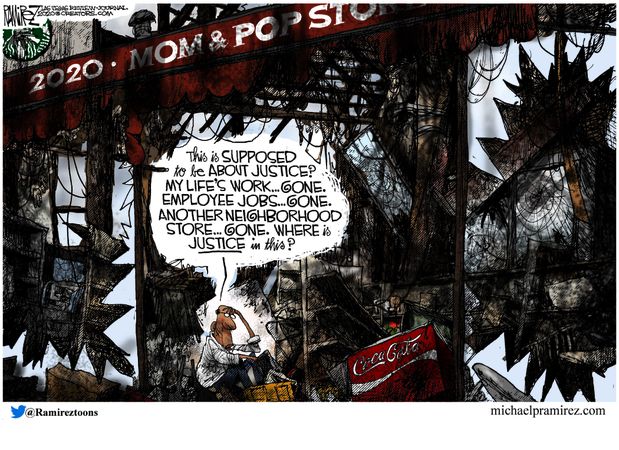
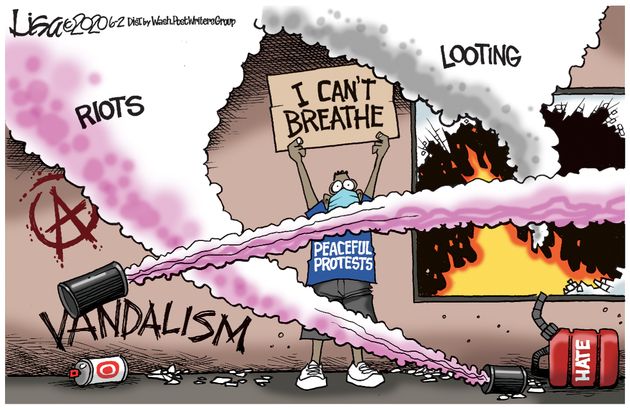
When a Hate Cult Took the Streets

The opportunistic justice warriors creating chaos in city streets are unfortunately themselves vulnerable people who’ve been sucked into a guilt trip.  Ryan Bomberger saw through the activism and bluntly denounced it writing at Town Hall Top 10 Reasons I Won’t Support the #BlackLivesMatter Movement. Excerpts in italics with my bolds.

Every life unjustly killed deserves justice. In the cause to make things right, I will not join a movement that has nearly everything wrong. More innocent lives have now been killed (including cops) since these predominantly violent protests began over George Floyd’s horrific death. What about the black lives killed in this nationwide chaos? Do they matter?

Yes, #BlackLivesMatter. But Truth matters. As a Christian, the Church should be leading on these issues instead of sheepishly following a deceptive movement hostile to the Gospel.

The original BLM founders, the #BlackLivesMatter Foundation (BLMF), created it to radically shift culture. The far-left Ford Foundation, the world’s largest population control organization, vowed in 2016 to raise $100 million for the Movement for Black Lives (MFBL)—a nationwide coalition of BLM groups (including BLMF). MFBL released a shocking manifesto of policy positions that are deeply political and deeply disturbing.

Drawing mostly from those positions, here are the top 10 reasons why I will never support the #BlackLivesMatter movement.

The premise isn’t true.

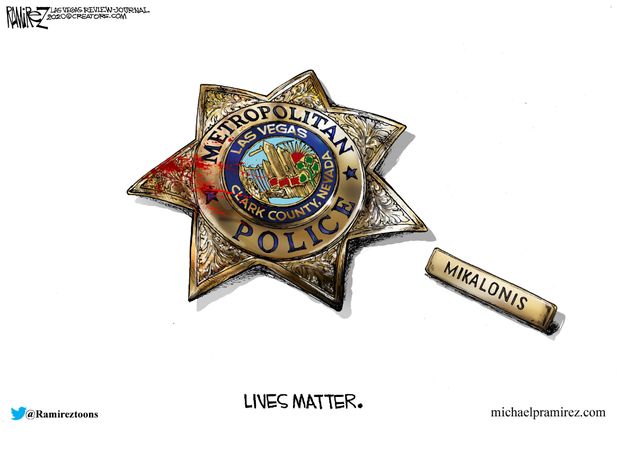
I hate racism. And I hate when it’s used as a political weapon. According to the FBI’s latest homicide statistics, I’m 11 times more likely to be killed by someone of my own brown complexion than a white person. Also, a comprehensive 2019 study concluded: “White officers are not more likely to shoot minority civilians than non-White officers.” Every loss of life is tragic, but Washington Post’s database on police-involved deaths puts things into further context. In 2020, among those killed were (all males): 2 Native Americans, 9 Asians, 46 Hispanics, 76 blacks, 149 unlabeled individuals and 149 whites (whose deaths don’t get reported by national mainstream media). Only nine black individuals were actually unarmed.
There is no goal of forgiveness or reconciliation.

None. It’s never mentioned on their sites. You can’t talk about the sins of the past and expect to move forward if there is no intention of forgiveness. I’m tired of the deeply prejudiced oppressed/oppressor critical race theory paradigm. It’s not Gospel-centered. This should, immediately, be a deal-breaker for Christians.

It’s all about Black Power.

It’s plastered all over the MFBL website. BLMF founders explain their “herstory”: “It became clear that we needed to continue organizing and building Black power across the country.” I don’t promote a colorblind society; I love all of our diverse hues of skin. But I’m so much more than my pigmentation. Martin Luther King promoted “God’s power and human power.” I’m with him.

They heavily promote homosexuality and transgenderism.

“We foster a queer-affirming network. When we gather, we do so with the intention of freeing ourselves from the tight grip of heteronormative thinking.” I’m not embracing confusion. Loving every human being is not the same as loving every human doing.

They completely ignore fatherhood.

From BLMF: “We disrupt the Western-prescribed nuclear family structure requirement by supporting each other as extended families and ‘villages’ that collectively care for one another, especially our children, to the degree that mothers, parents, and children are comfortable.” Well, every “village” that has fatherless families is a village that suffers higher crime rates, higher drug usage, higher abortion rates, higher drop-out rates, higher poverty rates, and so much more. #DadsMatter.

They demand reparations.

Ok. Sooooo, I guess the white half of me will have to pay the black half of me? If progressives want to push reparations, start with the Party of Slavery and Jim Crow—the Democrat Party! Let them ante up. But the #BlackLivesMatter movement bizarrely demands: “Reparations for…full and free access for all Black people (including undocumented and currently and formerly incarcerated people) to lifetime education…retroactive forgiveness of student loans, and support for lifetime learning programs.” Uhhh, good luck with that.

They want to abolish prisons and police forces.

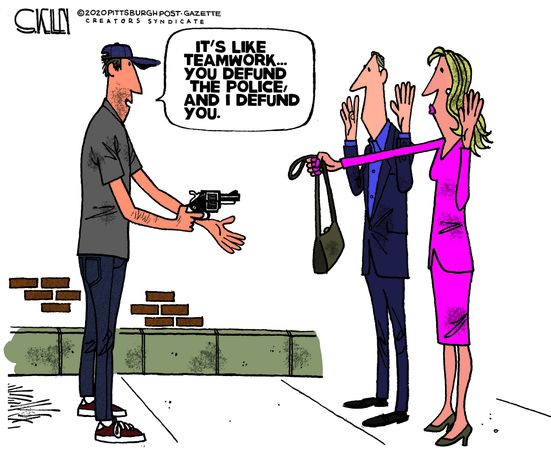
And…cue utter chaos. MFBL asserts: “We believe that prisons, police and all other institutions that inflict violence on Black people must be abolished…” Defund and remove the police have been rallying cries. That would be anarchy in any community. I advocate some needed police reforms and better community/police relations, but this is just foolishness.
They are anti-capitalism.

Oh the irony of this declaration made by a movement that is the result of capitalism: “We are anti-capitalist. We believe and understand that Black people will never achieve liberation under the current global racialized capitalist system.” The videos that make us aware of police brutality are captured on phones that are a result of capitalism. The best way to elevate people out of material poverty? Capitalism. This system is why the United States is the most charitable nation.

Colin Kaepernick supports it.

A “biracial” adoptee, Kaepernick is now obsessed with his “blackness.” He idolizes the late murderous Fidel Castro and Che Guevara and worships Malcolm X (just see his social media feeds). Malcolm X was anti-integration, pro-violence and a member of the virulently racist Nation of Islam (who forced him out). Kaepernick makes millions from Nike—a company whose entire Executive Leadership Team is white (isn’t this white supremacy???)—that makes its shoes in the most murderous regime in the world. Kaepernick, of course, is completely silent on that. But you know, #SocialJusticeWarrior.

Apparently, not all black lives matter.

Pro-abortion BLMF declared: “We deserve and thus we demand reproductive justice [aka abortion] that gives us autonomy over our bodies and our identities while ensuring that our children and families are supported, safe, and able to thrive.” Aborted children don’t thrive. BLM groups announced “solidarity” with “reproductive justice” groups back in February 2015. You cannot simultaneously fight violence while celebrating it.
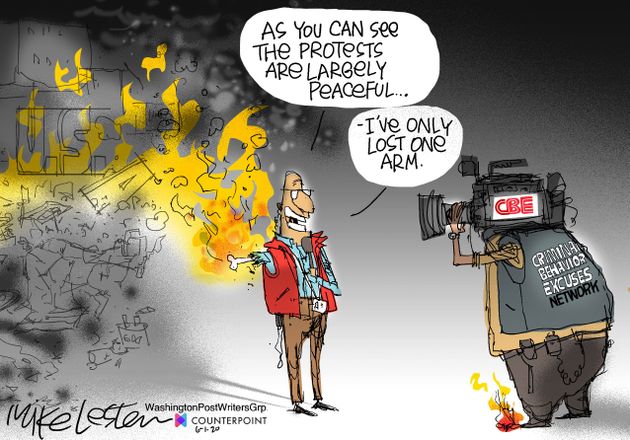
Infected with Hateful Ideology

For those of us who missed seeing the rise of “woke” ideology and its cult-like following, James Lindsay provides a thorough assessment of the racial component of this, writing at New Discourses Do Better than Critical Race Theory. Excerpts in italics with my bolds.

Many of you have noticed that more people than ever are presenting the stock Critical Race Theory ideas. Do not be alarmed. This is correct. Critical Race Theory mainstreamed during the Black Lives Matter protests following a similar incident in Ferguson, Missouri, in 2015. The rapid mainstreaming of Critical Race Theory is actually a problem, but you don’t need to despair. Critical Race Theory is definitely mainstreaming more than ever now, but on the other hand, not only do more people know what it is now than in 2015 and before, more people than ever are also connecting the dots that something in it is leading not to healing but to harm. We have an opportunity to steal the motte and bomb the bailey, as it might be phrased, and hopefully get this conversation and our country back on track.
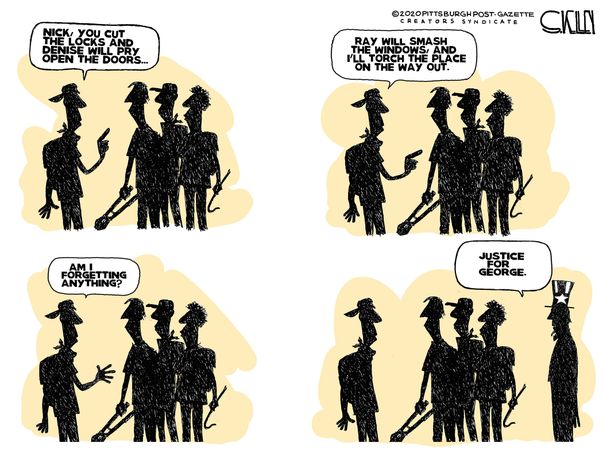
The present circumstances are volatile, and fighting for sense in mayhem like this is like trying to talk sense into a hurricane. This public rage, like all public rage, will not last forever. Thus, right now presents a valuable opportunity to educate ourselves and then others clearly about Critical Race Theory, including its role in the present outrage (some of it quite justified) and mayhem (utterly unjustifiable). We have a chance to learn how and why, while it points to important problems, Critical Race Theory is a bad way to deal with the real problems we are put face-to-face with now and to realize that there are better ways. To be clear, Critical Race Theory points to real problems, but it diagnoses them incorrectly and prescribes poisonous solutions that will only make the problems worse. And there are resources to do this now.

Many of us have seen the very compelling footage of one black man talking down another very angry one and instructing a younger black teenager to find a better way because what people are doing now isn’t working. I watched that video. I heard that man’s pain. I know he’s right. A better way to deal with whatever racism may be is needed, and having read a God-awful lot of it, I can tell you for certain, it isn’t to be found in Critical Race Theory. There are ways, but not that way. Finding that better way is now. The systems we’ve been using clearly aren’t working as well as they could. A different way is needed, for sure, and, equally surely, Critical Race Theory isn’t that way.

I’m not going to tell you we know for sure what the better way is, but we have some clear hints about what it looks like and what it doesn’t look like, and we can set to building it together. Our society, which is built upon liberalism, has the capacity to answer these problems and make good on the promises of a genuinely free society for every individual in it. It works. It has worked. It was working. It can work again, even if we have to use liberalism to make amendments to our society.
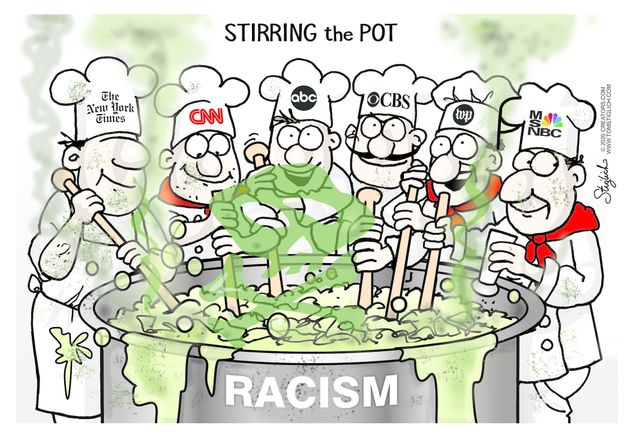
To understand, we need to understand Critical Race Theory. This theoretical, not evidenced, approach proceeds on a number of mostly bad assumptions. First, it insists racism is ordinary in society, sometimes also said to be permanent. If racism is ordinary and permanent, it cannot be fixed. How can such a Theory offer a solution, then? It can’t, and it wouldn’t want to because that would render it useless.

Second, Critical Race Theory accepts a thesis known as “interest convergence.” This idea comes from the forefather of Critical Race Theory, the late Derrick Bell of Harvard Law. Bell, for all his insights and contributions, was remarkably pessimistic and cynical, if not downright paranoid. His interest convergence thesis insists that white people only care about and help other races out of their own self-interest. If you’re white and feel moved by the appeals of Critical Race Theory or the real (and/or narrativized) circumstances we face and want to be an ally, then, you’re only doing it because it makes you a better white person, a “good white” who is ultimately the biggest part of the problem of systemic racism. How are we supposed to build a better world when people aren’t allowed to help?
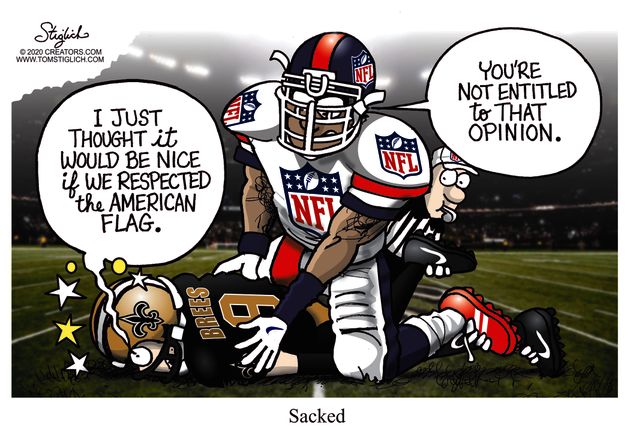
Third, Critical Race Theory believes that liberalism is a force that upholds racism. It allegedly does so by making “minoritized” races believe they’re more enfranchised than they actually are and thus unjustly disinterested in agitating for further radical change. We shouldn’t believe this or that we need radical change when liberal change is and has been working. Liberalism is an unparalleled means of resolving conflicts between citizens and ideas, and it, better than anything else, can resolve the conflicts of racism. That the societies that have called themselves liberal and have espoused liberal principles up until now have not done this perfectly or maybe even satisfactorily doesn’t mean that the method itself needs to be destroyed. They are, in fact, the least racist societies the world has ever seen. For all it’s imperfection, no other method has come close to doing as well as liberalism, and this is for good reasons (which are documented in the book Kindly Inquisitors, which everyone alive should read, twice).
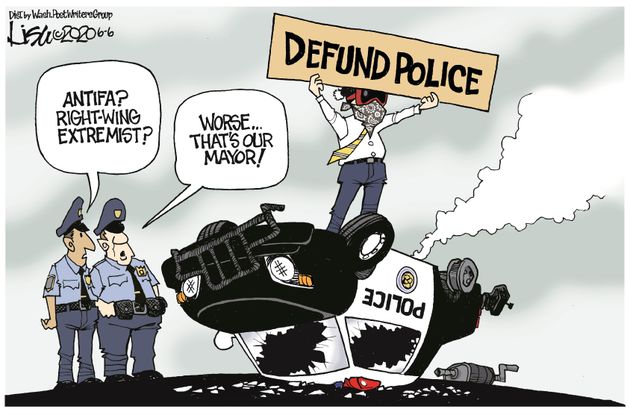
Fourth, Critical Race Theory is actively disinterested in evidence and even reality, which it identifies through a gross (but academically established) reference to slavery that frames rigorous methodologies and civil society (really) as a part of the “master’s” toolkit, which will never dismantle oppression. Instead, it prefers to forward storytelling as a form of knowledge. It calls these, when activist in nature, “counterstories,” and they’re meant to disrupt and deconstruct the “dominant narratives,” which are believed to be white and thus white supremacist. (That’s insanely hyperbolic, but it’s also now standard belief across much of the left half of the political spectrum and a core belief of Critical Race Theory, from which it arose.) If we want to solve our real problems, though, we have to know what those real problems are, in reality. We know this, and we can do better than hot-takes and highly emotional stories. Highly interpretive takes that we know are intentionally biased will not work, and, of course, the people who will get hurt most by getting this wrong are the people Critical Race Theory pretends to speak for, especially black people. Being hostile to science, evidence, reason, and truth will not advance anyone’s interests very far, unless we just meant the short-term political interests of the Theory-masters pushing this garbage.

Instead, Critical Race Theory says that “real” knowledge resides in the lived experience of oppression, but only when this experience is interpreted through, you guessed it, Critical Race Theory.

So, if the statistics don’t support the narrative spun by Critical Race Theory, the statistic were produced by a “white” method that wanted to keep black people down, even if all the researchers aren’t white (they might be “acting white,” or “seeking white approval,” or “white-adjacent”). Worse, if a black person speaks up and says something Critical Race Theory doesn’t agree with, then he’s a “race traitor, or “not politically Black,” or “not Black,” as Ta-Nehisi Coates said about Kanye West. In other words, Critical Race Theory believes that if you aren’t black according to how Critical Race Theory says you have to be black, then you’re not authentically black. There is no individual in Critical Race Theory. You are an emissary of your race, and you have to speak on its behalf the way Critical Race Theory says you have to. How is this supposed to help anybody except the grifters pushing it?

Let this sink in. Critical Race Theory explicitly urges an “identity-first” approach to race, where it defines what that political identity looks like and then demands conformity.

This is captured in the famous injunction that it means something more and more important to be a “Black person” than a “person who happens to be black.” It puts identity first and programs what that means. Thus, Critical Race Theory holds up race as a core feature of one’s identity and then says you have to be that race to know what it is to be that race, and one’s politics must go from that place. But we know that increasing racial salience like this is divisive poison.
Because of these things, Critical Race Theory doesn’t believe progress is possible, that it’s a myth (indeed, one created by white people to keep black people and people of other races down). But if an approach tells us progress is impossible, it by definition cannot lead us to progress. Why should we use it? Because it’s the only voice in the game? It’s not, but to the degree that it’s true, it’s because it destroyed every other voice by calling it a racist until it was silenced. Critical Race Theory is pessimistic, cynical, and paranoid to the core, and it teaches these as though they’re virtues, filling young black people especially with a belief that society is against them. This is utter poison. Learning to see problems is good; dwelling on them isn’t.

What do I mean by intentionally impossible? This, a thousand things just like this, straight out of the Critical Race Theory playbook: If you see race, it’s because you’re a racist; if you don’t, it’s because you’re privileged enough to ignore it and are therefore a racist. In the end, you’re going to get wrecked for how problematic your allyship is (it can’t be done right), for being a “good white.” And people care so much about racism they continually sign up for this, mainstream this, become an ally, and endlessly pledge to do better, like some kind of victim of an abusive marriage. Eventually, they fail, get called racist, and get destroyed for it, and then still pledge to “do better.” Why? Because if you reject Critical Race Theory, you must have done so because of your racism. Critical Race Theory is abusive; there’s no other way to put it.

We can do better than Critical Race Theory. We can do better than a sloppy “theoretical” approach that’s really about pushing divisive grievance politics into our society, one that treats people as props for the narrow politics that primarily, if not solely, benefit the elite grifters who know the Theory. Critical Race Theory advances them at everyone else’s expense. And we already know a lot of how to tackle these problems better than Critical Race Theory can. We already know how to be liberals, apply liberalism, judge by the content of character rather than anything to do with identity or color of skin. And we already know that liberal approaches are open to reform and improvement of the societies that employ them.
Footnote:  James Lindsay describes the cultish aspects of this movement in The Cult Dynamics of Wokeness

Background:  See also Battle of Presidents Park

Heart of the Matter

This song by Don Henley came up on my playlist today.  It brings a message for people full of fear and anger these days. As he said introducing the song, it took 42 years to write and four minutes to sing. Whoever has ears to hear, let them hear. Lyrics below:

I got the call today, I didn’t want to hear
But I knew that it would come
An old, true friend of ours was talkin’ on the phone
She said you found someone
And I thought of all the bad luck
And the struggles we went through
And how I lost me and you lost you
What are those voices outside love’s open door
Make us throw off our contentment
And beg for something more?

Chorus: I’m learning to live without you now
But I miss you sometimes
The more I know, the less I understand,
All the things I thought I knew, I’m learning again
I’ve been tryin’ to get down
To the heart of the matter
But my will gets weak
And my thoughts seem to scatter
But I think it’s about forgiveness
Forgiveness
Even if, even if you don’t love me anymore

These times are so uncertain
There’s a yearning undefined
People filled with rage
We all need a little tenderness
How can love survive in such a graceless age?
Ah, the trust and self-assurance that lead to happiness
They’re the very things we kill, I guess
Oh, pride and competition
Cannot fill these empty arms
And the work I put between us, you know it doesn’t keep me warm

Chorus

There are people in your life
Who’ve come and gone
They let you down
You know they’ve hurt your pride
You better put it all behind you baby
‘Cause life goes on
You keep carryin’ that anger
It’ll eat you up inside baby

I’ve been trying to get down
To the heart of the matter
But my will gets weak
And my thoughts seem to scatter
But I think it’s about forgiveness
Forgiveness
Even if, even if you don’t love me

I’ve been tryin’ to get down
To the heart of the matter
Because the flesh will get weak
And the ashes will scatter
So, I’m thinkin’ about forgiveness
Forgiveness
Even if , even if you don’t love me
Forgiveness, forgiveness, baby
Forgiveness, forgiveness
Even if, even if you don’t love me
Forgiveness, forgiveness

From Terrorism to Climatism to Pandemism

In 2004 BBC aired a 3-part documentary The Power of Nightmares: The Rise of the Politics of Fear. The episodes start with this narration (in italics with my bolds):

In the past, politicians promised to create a better world. They had different ways of achieving this, but their power and authority came from the optimistic visions they offered their people. Those dreams failed and today people have lost faith in ideologies. Increasingly, politicians are seen simply as managers of public life, but now they have discovered a new role that restores their power and authority.

Instead of delivering dreams, politicians now promise to protect us: from nightmares. They say that they will rescue us from dreadful dangers that we cannot see and do not understand.

And the greatest danger of all is international terrorism, a powerful and sinister network with sleeper cells in countries across the world, a threat that needs to be fought by a War on Terror. But much of this threat is a fantasy, which has been exaggerated and distorted by politicians. It’s a dark illusion that has spread unquestioned through governments around the world, the security services and the international media. This is a series of films about how and why that fantasy was created, and who it benefits.

At the heart of the story are two groups: the American neo-conservatives and the radical Islamists. Both were idealists who were born out of the failure of the liberal dream to build a better world, and both had a very similar explanation of what caused that failure. These two groups have changed the world, but not in the way that either intended. Together, they created today’s nightmare vision of a secret organized evil that threatens the world, a fantasy that politicians then found restored their power and authority in a disillusioned age.

And those with the darkest fears became the most powerful.

I was impressed at the time by the writing, imagery and presentation of the premise: Our societies are now warped by the use of fear for political gain. A lot has happened in the last 16 years, including the demise of Osama Bin Laden, disruption of Al-Qaeda, the rise and fall of ISIS. With terrorism increasingly on the back burner, politicians turned to climate fears, emphasized at the 2009 Copenhagen COP, ramped up to the Paris Accord in 2015, and further amped to SR1.5 in 2019 to claim a “climate emergency”, leading to schoolchildren protesting rather than learning, and violence from groups like the “valve turners” and Extinction Rebellion.

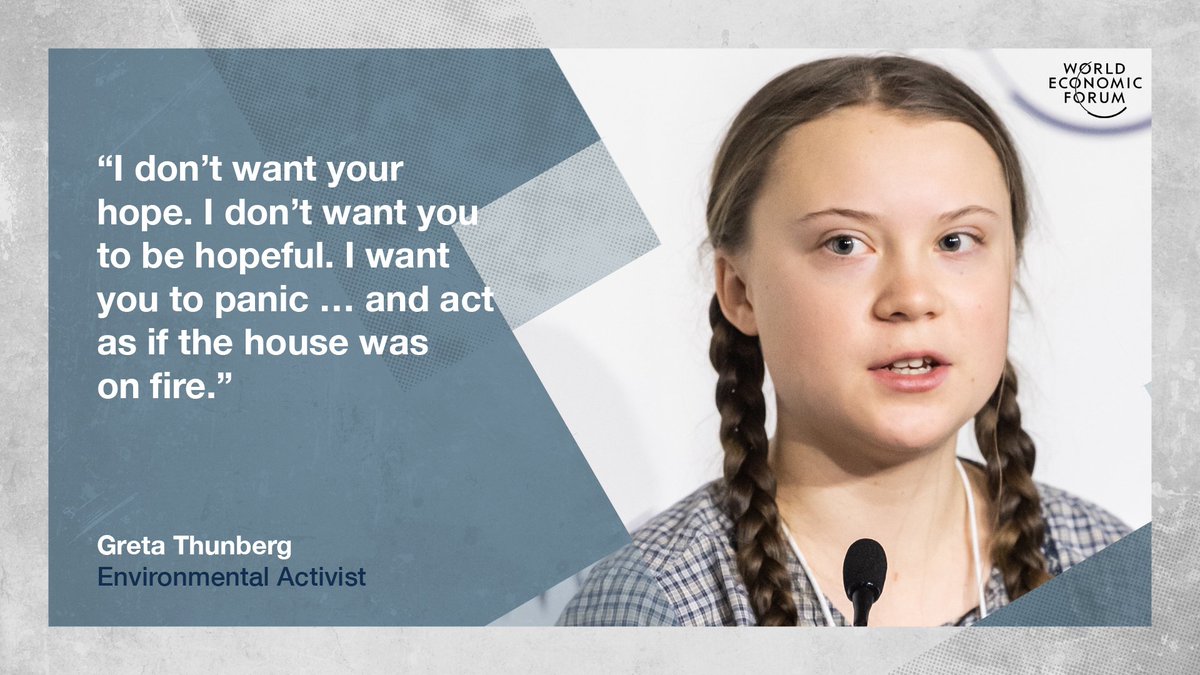
The Power of Nightmares explained the symbiosis between radical revolutionaries and elected officials. Public fear of damage and destruction cedes power and authority to governing politicians.They invited Greta to speak at Davos for the very same reason:  she empowers them. At first the menace was Islamist Terrorists, who did achieve much killing and suffering in places they were able to occupy, or in attacks such as the Twin Towers. Then the media turned to extreme weather events, extinctions, sea level rise, arctic amplification, acid oceans, and fear of everything from Acne to Zika virus. The latter was a prelude to our current obsession with the coronavirus.

In all cases, the fear has been seized upon for outlays of public monies in massive spending, unheard of in normal times. And from the Patriot Act, NSA surveillance, and FISA courts, on to environmental regulations and obstacles, and now to lockdowns and distancing orders, civil liberties are quashed to gain safety from an invisible enemy.

Ironically, the most hated leader is Donald Trump, who broke from the doom and nightmare script, instead offering a promise to “Make America Great Again.” Elected on that hope, Trump was riding high on the theme “The power of Promises Kept.” And then came the pandemic filling the media and stoking public fears. Most recently, the fear mongers are promoting racism as a reason to undo law and order in favor of passion and violence. They are literally playing with fire threatening the roots of civil society in their pursuit of power.

Moderate May for Land and Ocean Air Temps

banner-blog

With apologies to Paul Revere, this post is on the lookout for cooler weather with an eye on both the Land and the Sea.  UAH has updated their tlt (temperatures in lower troposphere) dataset for May 2020.  Previously I have done posts on their reading of ocean air temps as a prelude to updated records from HADSST3. This month also has a separate graph of land air temps because the comparisons and contrasts are interesting as we contemplate possible cooling in coming months and years.

Presently sea surface temperatures (SST) are the best available indicator of heat content gained or lost from earth’s climate system.  Enthalpy is the thermodynamic term for total heat content in a system, and humidity differences in air parcels affect enthalpy.  Measuring water temperature directly avoids distorted impressions from air measurements.  In addition, ocean covers 71% of the planet surface and thus dominates surface temperature estimates.  Eventually we will likely have reliable means of recording water temperatures at depth.

Recently, Dr. Ole Humlum reported from his research that air temperatures lag 2-3 months behind changes in SST.  He also observed that changes in CO2 atmospheric concentrations lag behind SST by 11-12 months.  This latter point is addressed in a previous post Who to Blame for Rising CO2?

HadSST3 results were delayed with February and March updates only appearing together end of April.  For comparison we can look at lower troposphere temperatures (TLT) from UAHv6 which are now posted for May. The temperature record is derived from microwave sounding units (MSU) on board satellites like the one pictured above.

The UAH dataset includes temperature results for air above the oceans, and thus should be most comparable to the SSTs. There is the additional feature that ocean air temps avoid Urban Heat Islands (UHI). In 2015 there was a change in UAH processing of satellite drift corrections, including dropping one platform which can no longer be corrected. The graphs below are taken from the new and current dataset, Version 6.0.

To enlarge, open image in new tab.

The graph above shows monthly anomalies for ocean temps since January 2015. After all regions peaked with the El Nino in early 2016, the ocean air temps dropped back down with all regions showing the same low anomaly August 2018.  Then a warming phase ensued which peaked in February 2020. As was the case in 2015-16, the warming was driven by the Tropics and NH, with SH lagging behind. After the up and down fluxes, oceans temps in May were similar to last June.

Land Air Temperatures Showing a Seesaw Pattern

We sometimes overlook that in climate temperature records, while the oceans are measured directly with SSTs, land temps are measured only indirectly.  The land temperature records at surface stations sample air temps at 2 meters above ground.  UAH gives tlt anomalies for air over land separately from ocean air temps.  The graph updated for May 2020 is below.

Here we have fresh evidence of the greater volatility of the Land temperatures, along with extraordinary departures, first by NH land with SH often offsetting.   The overall pattern is similar to the ocean air temps, but obviously driven by NH with its greater amount of land surface. The Tropics synchronized with NH for the 2016 event, but otherwise follow a contrary rhythm.  SH seems to vary wildly, especially in recent months.  Note the extremely high anomaly last November, cold in March 2020, and then again a spike in April. In May 2020, all land regions converged, erasing the earlier spikes in NH and SH, and showing anomalies comparable to previous Mays since 2017.

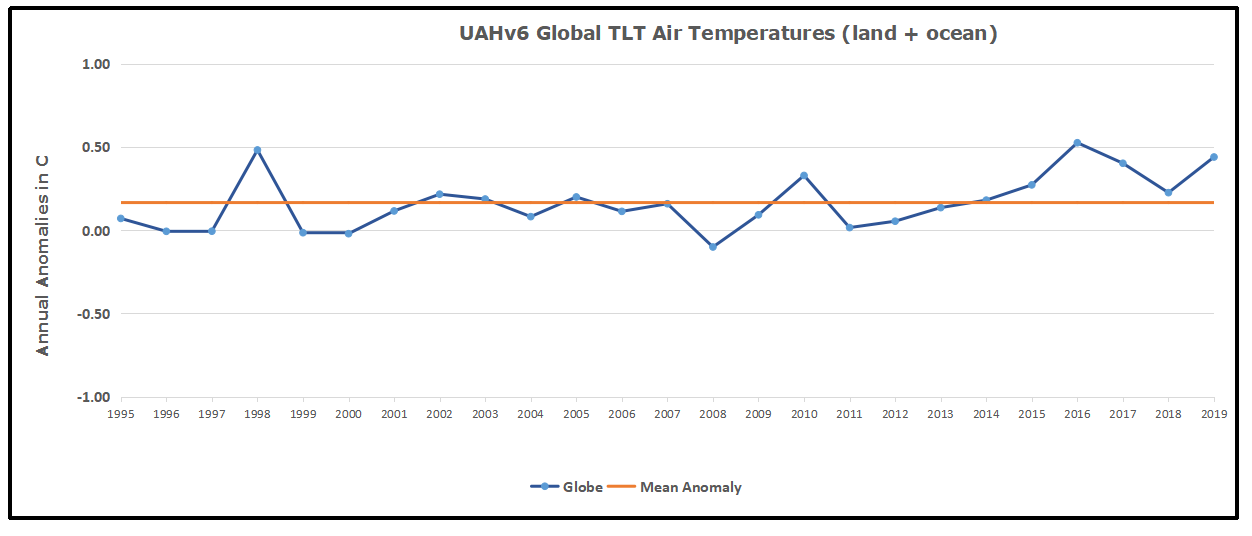
The longer term picture from UAH is a return to the mean for the period starting with 1995.  2019 average rose but currently lacks any El Nino to sustain it.

These charts demonstrate that underneath the averages, warming and cooling is diverse and constantly changing, contrary to the notion of a global climate that can be fixed at some favorable temperature.

TLTs include mixing above the oceans and probably some influence from nearby more volatile land temps.  Clearly NH and Global land temps have been dropping in a seesaw pattern, more than 1C lower than the 2016 peak, prior to these last several months. TLT measures started the recent cooling later than SSTs from HadSST3, but are now showing the same pattern.  It seems obvious that despite the three El Ninos, their warming has not persisted, and without them it would probably have cooled since 1995.  Of course, the future has not yet been written.

Battle of Presidents Park

Rachel Cooper, tripsavvy, What to see in Lafayette Park, Washington D.C.

Lafayette Park, also known as Presidents Park or Lafayette Square, is a seven-acre public park located across from the White House in Washington, D.C. The green space provides an arena for public protests, ranger programs, and special events.

When the park, as Lafayette Square, was first established it was to be used to enhance the grounds of the White House. Through the years it is said it has been used as a race track, a graveyard, a zoo, and a camp for soldiers during the War of 1812.

The park, bounded by Jackson Place on the west, Madison Place on the east, and Pennsylvania Avenue, is now a popular site for those who want to take photographs of the White House. The park is home to five statues, four honoring foreign Revolutionary War heroes and one of President Andrew Jackson.

Battle of Lafayette Park Sunday May 31, 2020

But Lafayette Park was attacked and vandalized Sunday night, as reported by the Washington Blade Damage, looting as D.C. protesters ignore curfew.  Excerpts in italics with my bolds.

Similar to the D.C. protests that unfolded on Friday, May 29, and Saturday, May 30, the Sunday protests joined by about 1,000 people began peacefully at the site of the White House and Lafayette Park earlier in the day.

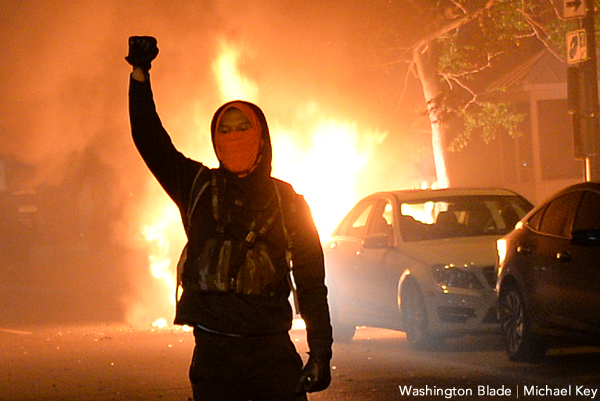
But shortly after nightfall when police blocked access to the White House area the protesters scattered into smaller groups and marched through downtown streets. Some of them wielded metal baseball bats to smash windows and glass doors of stores and office buildings, according to media reports.

Some of those engaging in vandalism, whom D.C. police and Bowser have said appear to be radical agitators who do not share the goals of protesting the death in Minneapolis of George Floyd, set fires inside the buildings they broke into.

Among the buildings partially damaged by fire was the historic St. John’s Episcopal Church located across the street from Lafayette Park near the White House known as the Church of the Presidents. Also set on fire was the lobby of the AFL-CIO building two blocks away at 815 16th Street, N.W.

According to local TV news reports, it took D.C. police and fire department personnel close to an hour to arrive on the scene to clear away protesters and begin putting out the fires at the church and the AFL-CIO building.

In an announcement on Sunday night, D.C. police released the names of 18 people they said police arrested for felony rioting related acts mostly on Saturday, May 30. TV news reporters on the scene of the disturbances on Sunday night reported additional arrests, but police didn’t immediately disclose the number of arrests on Sunday and early Monday morning.

Battle of Lafayette Park Monday June 1, 2020

On the green of Lafayette Park is St. John’s Episcopal Church, a short walk away. Often called the “Church of Presidents,” the building sustained damage in a fire after protests on Saturday night. Every president since Madison has at least visited the church, though the last two who regularly attended services there were George H.W. Bush and Franklin Roosevelt. On the morning of his 2017 inauguration, Trump attended the service at St. John, where a pastor who campaigned for him delivered a sermon centered on how strong leaders don’t get distracted.

Just after 10 p.m. on Sunday, someone set a fire in the basement of the parish hall, which firefighters quickly extinguished, The Washington Post reported. The fire was contained to a nursery room, although there was smoke and water damage to other areas of the basement, according to the Rev. Rob Fisher, the church’s rector.

Fisher told Episcopal News Service that the nursery room is “completely destroyed,” but it could have been much worse. Nobody was hurt and none of the church’s “irreplaceable” historical items were damaged, he said in an interview.

President Donald Trump addressed the nation from the Rose Garden around 6:30 p.m., where he said he was taking “swift and decisive” action and dispatching “thousands and thousands” of military personnel and law enforcement.

As Trump spoke, explosions could be heard in the background.

“What happened in the city last night was a total disgrace,” Trump said, later adding “Our 7 o’clock curfew will be strictly enforced. Those who threaten innocent life and property will be arrested, detained, and prosecuted to the fullest extent of the law.”

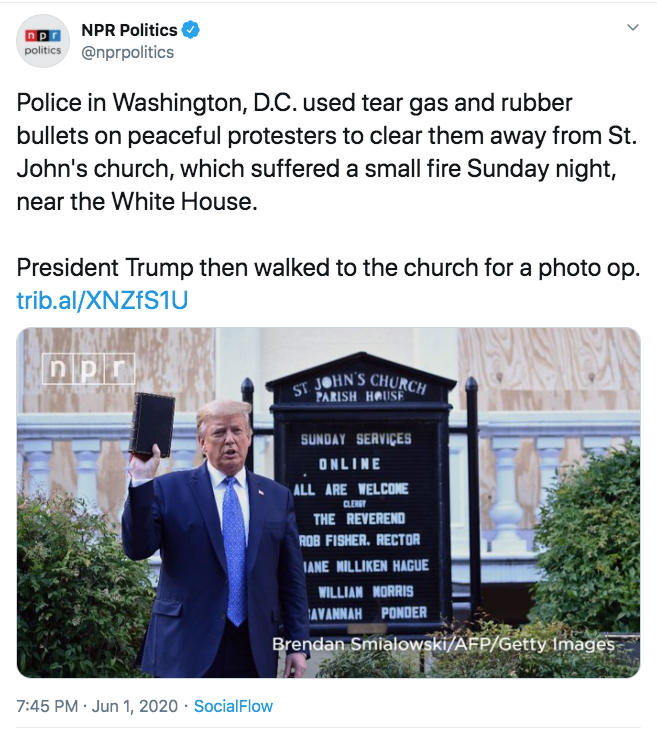
As law enforcement cleared out the area around the White House, Trump walked across the street after his address for a photo op at St. John’s Episcopal Church, which briefly suffered a fire Sunday night. Every president since James Madison has visited the more than 200-year-old church.

Battle of Lafayette Park Tuesday June 2, 2020

D.C. Protests Remain Markedly Peaceful After Days Of Intense Clashes reports DCist. Excerpts in italics with my bolds.

By Tuesday night, nearly every conceivable law enforcement agency was stationed in the District. Images of the National Guard positioned on the steps of the Lincoln Memorial and looming over protesters below seemed destined to become iconic. At the start of the night, people handed out goggles and helmets to fellow protesters.The crowd near the White House appeared to grow to its biggest size in five consecutive nights of large demonstrations in the District.

Yet as the District girded for a fifth night of violent clashes, there was instead overwhelming calm.

Protesters looped throughout the city — walking up to U Street, passing under the Convention Center, marching through Dupont Circle, chanting on K Street, passing long lines of voters at polling stations, returning to the area around the White House — for hours after the District’s 7 p.m. curfew went into effect. Demonstrators were trailed at times by Metropolitan Police Department officers on bicycles, but law enforcement didn’t try to stop the peaceful demonstrations.

What Do We Learn from the Battle of Lafayette Park?

Mollie Hemingway explains at The Federalist Media Falsely Claimed Violent Riots Were Peaceful And That Tear Gas Was Used Against Rioters.  Excerpts in italics with my bolds.

Following days of violent riots and looting in cities across the country, Washington, D.C., announced a 7 p.m. curfew on Monday night. About the same time, President Donald Trump addressed the nation from the Rose Garden. Afterward, he walked through Lafayette Park to St. John’s Episcopal Church, which rioters had set on fire the night before. Standing before the church sign, which reads “All are welcome,” President Trump, who previously said he’d be paying his respects to a very special place, held up a Bible.

The speech announcing the country would return to rule of law and protection of civil liberties, the walk through a park that the night before had been given over to rioters, and the visit to the vandalized historic church where every president has worshiped since James Madison, were reassuring to many in the country.

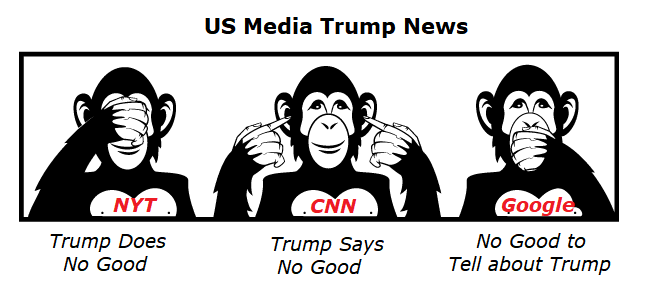
For the media, however, these actions were further proof that Orange Man Bad is literally the worst, restoring rule of law is criminal, and standing in front of a church holding a Bible is an assault on the American conscience. They focused on how the Park Police had cleared the area ahead of the city-wide curfew declared by D.C. Mayor Muriel Bowser.

Protesters sit atop structure in Lafayette Park, facing police defying curfew.

After thousands of false tweets, print stories, and broadcast stories to the contrary, local journalist Neal Augenstein of WTOP reported that a Park Police source said “tear gas was never used — instead smoke canisters were deployed, which don’t have an uncomfortable irritant in them.” Further, the source said the crowd was dispersed because of projectiles being thrown by the “peaceful protesters” at the Park Police and because “peaceful protesters” had climbed on top of a structure in Lafayette Park that had been burned the prior night.  Statement by United States Park Police acting Chief Gregory T. Monahan:

On Monday, June 1, the USPP worked with the United States Secret Service to have temporary fencing installed inside Lafayette Park. At approximately 6:33 pm, violent protestors on H Street NW began throwing projectiles including bricks, frozen water bottles and caustic liquids. The protestors also climbed onto a historic building at the north end of Lafayette Park that was destroyed by arson days prior. Intelligence had revealed calls for violence against the police, and officers found caches of glass bottles, baseball bats and metal poles hidden along the street.

To curtail the violence that was underway, the USPP, following established policy, issued three warnings over a loudspeaker to alert demonstrators on H Street to evacuate the area. Horse mounted patrol, Civil Disturbance Units and additional personnel were used to clear the area. As many of the protestors became more combative, continued to throw projectiles, and attempted to grab officers’ weapons, officers then employed the use of smoke canisters and pepper balls. No tear gas was used by USPP officers or other assisting law enforcement partners to close the area at Lafayette Park. Subsequently, the fence was installed.

Mollie provides numerous examples of media false statements about these events, concluding with this: NPR hit a trifecta by falsely reporting about tear gas, falsely reporting about peaceful protesting, and as a bonus downplaying the arson against the church:

The entire narrative the media glommed onto in lockstep was that Trump was a monster who tear-gassed peaceful protesters to do something meaningless. None of that was true. But it took a day of reporting to get the truth out, long after the lie took hold.

At times it seems as if there is nothing that many in the media won’t lie about to accomplish their political goals.

In related news, despite or perhaps because of the media hysteria, polls show overwhelming majorities of Americans support the use of the National Guard and the military to bring peace to the cities the media claim aren’t being targeted by violent riots.

Comment:  Is anyone confused about the Battle of Lafayette Park?  The tragic death in Minneapolis was only the pretext for taking the “Resistance” to a new level.  After the Mueller Russian Hoax collapse and the stupid House Impeachment farce, the next stage is for social justice warriors to take the public square away from anyone who disagrees.  Make no mistake, this was a militant occupation to deny Trump access to the “Presidents Park” and the “Presidents Church.”  Give leftist control freaks an inch, and they will take miles, which Trump sees clearly, and so should we all.  Meanwhile the media stirs up trouble and remains lost in their bubble.


Doctors Against Borders (Lockdowns)


A person holds a sign during a Reopen New Jersey protest in Point Pleasant, N.J., on May 25, 2020. (Michael Loccisano/Getty Images)

Benjamin Turner, MD, MA, FRCSC, is a general surgeon who writes at Epoch Times  Another Doctor Argues Against Lockdown: It’s Time We Ended This Disastrous Policy.  Excerpts in italics with my bolds.

Add my name to the list of physicians who cannot stay silent any longer. The lockdowns must end. They must end immediately and in earnest, not a slow sinking into a morass of rules so complex, illogical, and destructive of privacy as to make lockdown look enjoyable.

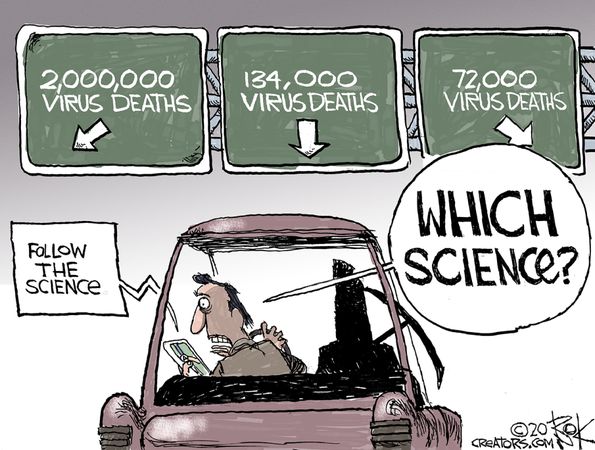
In March, the argument for lockdowns was simple: SARS-CoV-2 is far more deadly and infectious than seasonal influenza. A drastic and legally enforced decrease in socialization will prevent the overwhelming of hospitals. The cost of these measures is not to be compared to the loss of even a single life. We now hear a supplementary argument: The death toll was less than projected, but it would have been catastrophic without lockdowns.

Every one of these claims is either questionable or outright false. But if even one point fails, so does the case for lockdowns.

1. SARS-CoV-2 does not have a higher mortality rate than seasonal influenza

Dr. Tedros Adhanom Ghebreyesus, director-general of the World Health Organization, said 3.4 percent of COVID-19 patients die, and far less than 1 percent of influenza patients. Dr. Anthony Fauci, leading member of the White House Coronavirus Task Force, estimated 1 percent fatality, “ten times more lethal than the seasonal flu.” But both had severely underestimated mild cases.

Early in any epidemic, mortality is estimated as the ratio of deaths to confirmed cases; this is the case fatality ratio (CFR). Later, we can compare deaths to all cases, including those who did not seek medical attention; this is the infection fatality ratio (IFR). Tedros’s 3.4 percent refers to the CFR. The flu’s 0.1 to 0.2 percent is an IFR. The two must not be confused.

Antibody studies invariably show prevalence more than 10 times the early estimates, and IFR lower by the same.

In a systematic review by Dr. John Ioannidis, professor of medicine and co-director of the Meta-Research Innovation Center at Stanford, 9 out of 12 studies gave an IFR of 0.16 percent or less. The highest was only 0.4 percent.

2. SARS-CoV-2 is more contagious than the flu in some countries, but not by much

Prof. Neil Ferguson, director of the MRC Centre for Global Infectious Disease Analysis at Imperial College London, and member of the UK’s Scientific Advisory Group for Emergencies, predicted up to 81 percent transmission of SARS-CoV-2. This has happened nowhere, regardless of lockdown.

The highest prevalence in Ioannidis’s review was 25.9 percent. For perspective, 15 percent of the U.S. population contracted influenza in 2017/18.

3. So far, COVID-19 mortality is similar to that of seasonal influenza

Though this could change, the comparison to influenza is presently valid. COVID-19 has killed many thousands, and severely strained some hospitals. But influenza does the same. Only two years ago, influenza forced hospitals in the United States, England, and Italy to cancel elective surgery and use surge capacity, including in tents.

As of May 29, Italy counted 33,229 COVID-19 deaths, 33 percent above 2016/17 flu deaths (24,981), but still below that year’s deaths from influenza-like illnesses in general (43,336).

At 83,142 (CDC provisional count), the United States is even with the 2017/18 flu season, estimated contemporaneously at 80,000. The UK reports 38,489 deaths, similar to the 2014/15 flu (34,300). Globally, COVID-19 is estimated at 372,000 deaths, and the flu at 291,000 to 646,000 annually.

In worse years, influenza wins, hands down. Both the 1957 and the 1968 flu killed between 1 million and 4 million. The 1968 flu killed 100,000 Americans in a population two thirds the present size, and younger; a modern equivalent would exceed 150,000.

4. Deaths may be badly overestimated

There’s good reason to doubt even the numbers above. Early in the pandemic, Prof. Dr. Sucharit Bhakdi, professor emeritus and former head of the Institute for Medical Microbiology and Hygiene at the Johannes Gutenberg University of Mainz in Germany, pointed out that governments were failing to distinguish between deaths “of” and merely “with” SARS-CoV-2.

Prof. Walter Ricciardi, scientific adviser to the Italian minister of health, reports that only 12 percent of Italian “COVID-19” deaths were directly caused by COVID-19. The CDC encourages logging COVID-19 only on suspicion, without lab evidence. On the day New York started this practice, they added 3,700 deaths, about 50 percent of the previous total. Some of these surely died of COVID-19, but since the clinical picture overlaps with COPD, heart failure, and non-pulmonary sepsis, surely many of them did not.

5. The models triggering lockdown were grossly flawed

Around the world, Prof. Ferguson’s model was the most influential. It forecast as many as 2,200,000 dead in the United States and 510,000 in the UK. It was released without its supporting code, which should have disqualified it immediately. It assumed an IFR of 0.9 percent, more than twice the highest estimate discussed above. The highly modified code was released a month late, and severely criticized by numerous programmers, including a team from the University of Edinburgh.

Pro-lockdown scientists from the Uppsala University ran a Swedish model based on Ferguson’s, and predicted 80,000 to 90,000 deaths by mid-May under the present rules, and 20,000 to 30,000 under lockdown. Without any lockdown, Sweden had 3,800 deaths by mid-May, 20 times fewer than predicted. We didn’t avert Ferguson’s forecast; it was just worthless.

6. There is no evidence that lockdowns saved lives

Even if mortality increases well past a bad flu year, that still won’t make lockdowns the right solution. Oxford University’s Blavatnik School of Government maintains a graph of lockdown stringency and prevalence of COVID-19 in different countries, and there’s no correlation between the two.

Dr. Carl Heneghan, director of the Centre for Evidence-Based Medicine, and researchers at both Switzerland’s ETH Zurich and Germany’s Robert Koch Institute have all separately argued that the transmission rate was already decreasing before lockdowns.

Nobel laureate and Stanford professor of structural biology Dr. Michael Levitt has shown that transmission decays at similar rates regardless of lockdown. No wonder, then, that Sweden reached peak infection at the same speed as other countries, and, as of May 31, has a lower overall death rate per million (435) than the UK (567), France (441), Spain (580), Italy (553), and Belgium (817).

If lockdowns make no difference, much less will the half-lockdowns we’re now told to call “normal.”

7. Lockdowns have probably killed people, but the recession will kill more

The UK reports about 20,000 excess deaths outside hospital, not associated with COVID-19. Emergency treatment for heart attacks is down 40 percent in England, implying that enormous numbers of people are not being treated. But widespread poverty may prove more important yet.

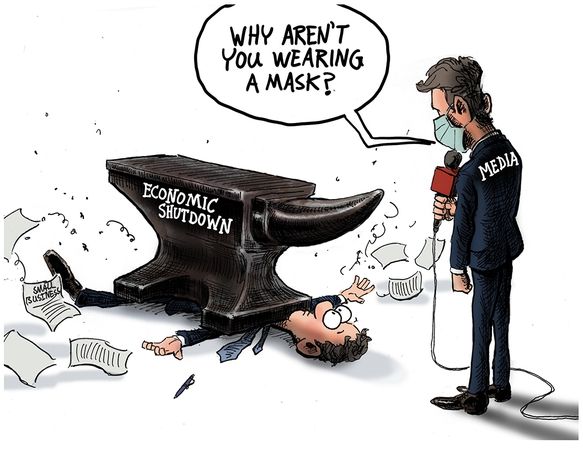
Suicide, drug use, and violence all increase with unemployment. Heart disease is directly related to poverty. One shudders to think of the developing world, where the U.N. World Food Program estimates that 130 million more people will be pushed to the brink of starvation. That’s 300 times the number of COVID-19 deaths worldwide.

It’s time we ended this disastrous policy, so aptly described by Prof. Dr. Bhakdi as “collective suicide.” I beg my colleagues who agree with me to break your own silence. We are already late to do our duty.

Benjamin Turner, MD, MA, FRCSC, is a general surgeon working in Alberta, British Columbia, and the Yukon, Canada.

Canadians Much Safer June 1

Update at May 31, 2020
It took a lot of work, but I was able to produce something akin to the Dutch advice to their citizens.

The media and governmental reports focus on total accumulated numbers which are big enough to scare people to do as they are told.  In the absence of contextual comparisons, citizens have difficulty answering the main (perhaps only) question on their minds:  What are my chances of catching Covid19 and dying from it?  The map shows a lot of cases, and the chart looks like an hockey stick, going upward on a straight line. So why do I say canadians are safer than it looks like from such images?

First let’s look at daily numbers to see where we are in this process.  All the statistics come from Canada Public Health Coronavirus disease (COVID-19): Outbreak update.

By showing daily tests, new cases and reported deaths, we can see how the outbreak has built up, peaked and declined over the last 2.5 months.  The green line shows how testing grew to a sustained daily rate of 29,000, with a recent drop and recovery (all numbers are smoothed with 7 day averages ending with the stated date.) Note that the curve is now descending after peaking at 1800 on April 22, now down to 893 new cases per day.  This lower rate of infections is despite the highest rate of testing since the outbreak began. Deaths have also peaked at 177 on May 6, down to 104 May 30. (Reported deaths bumped upward yesterday due to a data transmission catchup in Quebec, explained below).  The percentage of people testing positive is down to 3%, and deaths are 0.42% of the tests administered.

But it matters greatly where in Canada you live.  In the map at the top, Quebec is the dark blue province leading the nation in both cases and deaths.  Quebec has always celebrated being a distinct society, but not in this way. Below is the same chart for the Quebec epidemic from the same dataset. The province has about 23% of the national population and does about 26% of the tests.  But Quebec contributes 56% of the cases and 64% of the deaths, as of yesterday.  Here how the outbreak has gone in La Belle Province.

The Quebec graph is more lumpy showing cases peaking May 1-9, including several days inflated by data catchups. Cases have dropped off recently, from 1100 May 7 down to 521 yesterday.  Deaths are also slowing, declining from 110 on May 7 to 71 May 30. Yesterday the reported deaths in Quebec jumped to 202 due to 165 previously unrecorded data, while the actual new deaths were 37 . The animation below shows the epidemic in Canada with and without Quebec statistics.

But clearly everywhere else in Canada, people are much safer than those living in Quebec.  So what is going on?

To enlarge image, open in new tab.

The graph shows that people in Quebec are dying in group homes, the majority in CHSLD (long term medical care facilities) and also in PSR (private seniors’ residences).  The huge majority of Quebecers in other, more typical living arrangements have very little chance of dying from this disease. Not even prisoners are much at risk.

Of course the other dimension is years of age, since this disease has punished mostly people suffering from end-of-life frailties.  A previous post reported that the Netherlands parliament was provided with the type of guidance everyone wants to see.

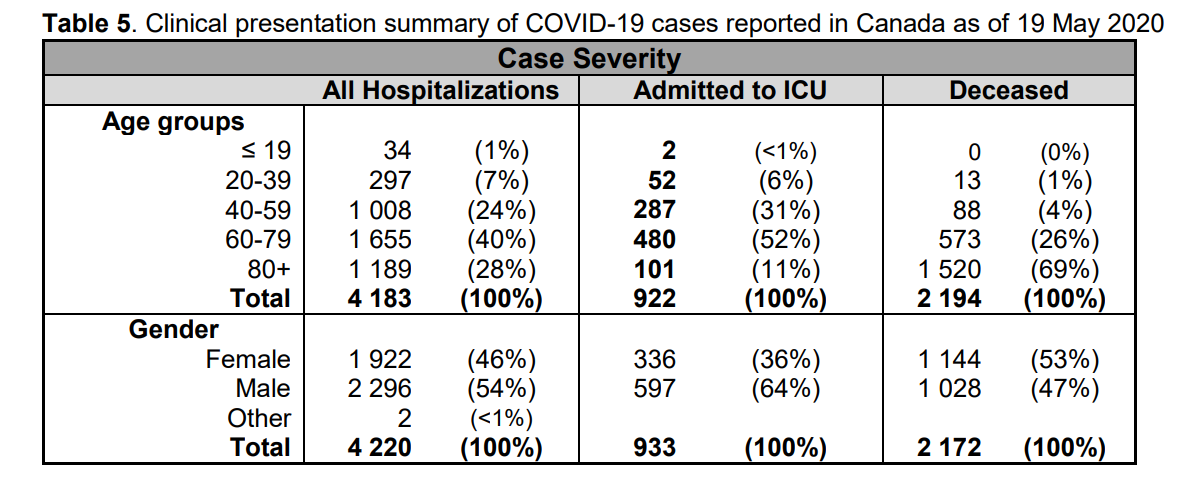
For canadians, the most similar analysis is this one from the Daily Epidemiology Update: :

The table presents only those cases with a full clinical documentation, which included some 2194 deaths compared to the 5842 total reported.  The numbers show that under 60 years old, few adults and almost no children have anything to fear.

Update May 20, 2020

It is really quite difficult to find cases and deaths broken down by age groups.  For Canadian national statistics, I resorted to a report from Ontario to get the age distributions, since that province provides 69% of the cases outside of Quebec and 87% of the deaths.  Applying those proportions across Canada results in this table. For Canada as a whole nation:

Age  Risk of Test +  Risk of Death Population
per 1 CV death
<20 0.05% None NA
20-39 0.20% 0.000% 431817
40-59 0.25% 0.002% 42273
60-79 0.20% 0.020% 4984
80+ 0.76% 0.251% 398

In the worst case, if you are a Canadian aged more than 80 years, you have a 1 in 400 chance of dying from Covid19.  If you are 60 to 80 years old, your odds are 1 in 5000.  Younger than that, it’s only slightly higher than winning (or in this case, losing the lottery).

As noted above Quebec provides the bulk of cases and deaths in Canada, and also reports age distribution more precisely,  The numbers in the table below show risks for Quebecers.

Age  Risk of Test +  Risk of Death Population
per 1 CV death
0-9 yrs 0.13% 0 NA
10-19 yrs 0.21% 0 NA
20-29 yrs 0.50% 0.000% 289,647
30-39 0.51% 0.001% 152,009
40-49 years 0.63% 0.001% 73,342
50-59 years 0.53% 0.005% 21,087
60-69 years 0.37% 0.021% 4,778
70-79 years 0.52% 0.094% 1,069
80-89 1.78% 0.469% 213
90  + 5.19% 1.608% 62

While some of the risk factors are higher in the viral hotspot of Quebec, it is still the case that under 80 years of age, your chances of dying from Covid 19 are better than 1 in 1000, and much better the younger you are.

Mr. Trudeau, Take Down This Wall !