Ahoy! Cooler Ocean Ahead, January 2023
The best context for understanding decadal temperature changes comes from the world’s sea surface temperatures (SST), for several reasons:

  • The ocean covers 71% of the globe and drives average temperatures;
  • SSTs have a constant water content, (unlike air temperatures), so give a better reading of heat content variations;
  • A major El Nino was the dominant climate feature in recent years.

HadSST is generally regarded as the best of the global SST data sets, and so the temperature story here comes from that source. Previously I used HadSST3 for these reports, but Hadley Centre has made HadSST4 the priority, and v.3 will no longer be updated.  HadSST4 is the same as v.3, except that the older data from ship water intake was re-estimated to be generally lower temperatures than shown in v.3.  The effect is that v.4 has lower average anomalies for the baseline period 1961-1990, thereby showing higher current anomalies than v.3. This analysis concerns more recent time periods and depends on very similar differentials as those from v.3 despite higher absolute anomaly values in v.4.  More on what distinguishes HadSST3 and 4 from other SST products at the end. The user guide for HadSST4 is here.

The Current Context

The chart below shows SST monthly anomalies as reported in HadSST4 starting in 2015 through January 2023.  A global cooling pattern is seen clearly in the Tropics since its peak in 2016, joined by NH and SH cycling downward since 2016. 
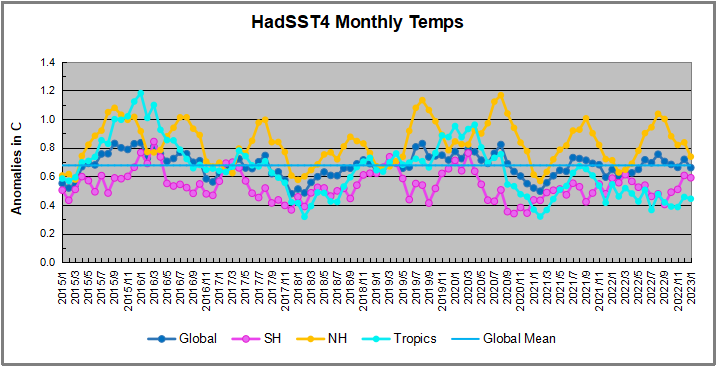
Note that in 2015-2016 the Tropics and SH peaked in between two summer NH spikes.  That pattern repeated in 2019-2020 with a lesser Tropics peak and SH bump, but with higher NH spikes. By end of 2020, cooler SSTs in all regions took the Global anomaly well below the mean for this period.  In 2021 the summer NH summer spike was joined by warming in the Tropics but offset by a drop in SH SSTs, which raised the Global anomaly slightly over the mean.

Then in 2022, another strong NH summer spike peaked in August, but this time both the Tropic and SH were countervailing, resulting in only slight Global warming, later receding to the mean.   Oct./Nov. temps dropped  in NH and the Tropics took the Global anomaly below the average for this period. After an uptick in December, temps in January 2023 dropped everywhere, strongest in NH, with the Global anomaly further below the mean since 2015.

A longer view of SSTs
To enlarge image open in new tab.

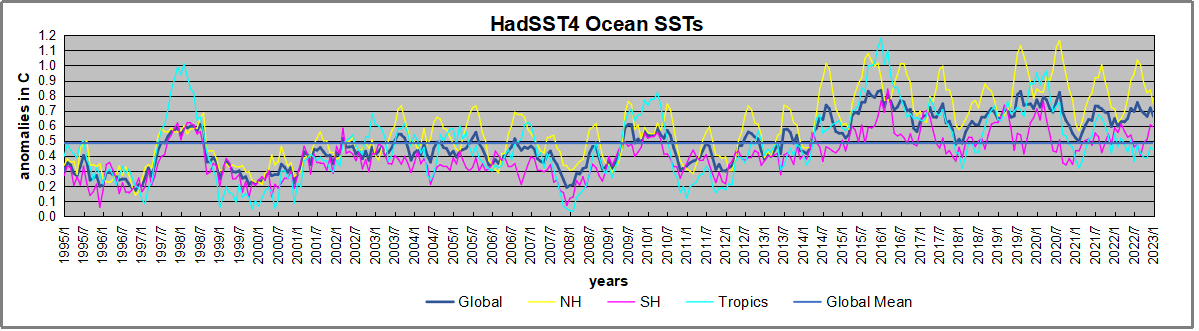
The graph above is noisy, but the density is needed to see the seasonal patterns in the oceanic fluctuations.  Previous posts focused on the rise and fall of the last El Nino starting in 2015.  This post adds a longer view, encompassing the significant 1998 El Nino and since.  The color schemes are retained for Global, Tropics, NH and SH anomalies.  Despite the longer time frame, I have kept the monthly data (rather than yearly averages) because of interesting shifts between January and July.1995 is a reasonable (ENSO neutral) starting point prior to the first El Nino. 

The sharp Tropical rise peaking in 1998 is dominant in the record, starting Jan. ’97 to pull up SSTs uniformly before returning to the same level Jan. ’99. There were strong cool periods before and after the 1998 El Nino event. Then SSTs in all regions returned to the mean in 2001-2. 

SSTS fluctuate around the mean until 2007, when another, smaller ENSO event occurs. There is cooling 2007-8,  a lower peak warming in 2009-10, following by cooling in 2011-12.  Again SSTs are average 2013-14.

Now a different pattern appears.  The Tropics cooled sharply to Jan 11, then rise steadily for 4 years to Jan 15, at which point the most recent major El Nino takes off.  But this time in contrast to ’97-’99, the Northern Hemisphere produces peaks every summer pulling up the Global average.  In fact, these NH peaks appear every July starting in 2003, growing stronger to produce 3 massive highs in 2014, 15 and 16.  NH July 2017 was only slightly lower, and a fifth NH peak still lower in Sept. 2018.

The highest summer NH peaks came in 2019 and 2020, only this time the Tropics and SH were offsetting rather adding to the warming. (Note: these are high anomalies on top of the highest absolute temps in the NH.)  Since 2014 SH has played a moderating role, offsetting the NH warming pulses. After September 2020 temps dropped off down until February 2021.  Now in 2021-22 there are again summer NH spikes, but in 2022 moderated first by cooling Tropics and SH SSTs, then in October to January 2023 by deeper cooling in NH and Tropics.  The graph shows the warming spikes since 2015 lifted the Global anomaly by about 0.2C above the mean since 1995.

What to make of all this? The patterns suggest that in addition to El Ninos in the Pacific driving the Tropic SSTs, something else is going on in the NH.  The obvious culprit is the North Atlantic, since I have seen this sort of pulsing before.  After reading some papers by David Dilley, I confirmed his observation of Atlantic pulses into the Arctic every 8 to 10 years.

But the peaks coming nearly every summer in HadSST require a different picture.  Let’s look at August, the hottest month in the North Atlantic from the Kaplan dataset.
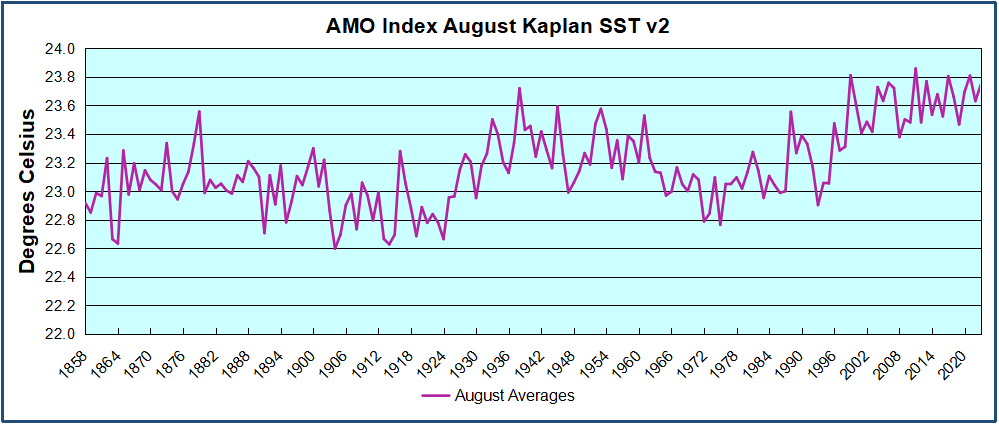
The AMO Index is from from Kaplan SST v2, the unaltered and not detrended dataset. By definition, the data are monthly average SSTs interpolated to a 5×5 grid over the North Atlantic basically 0 to 70N. The graph shows August warming began after 1992 up to 1998, with a series of matching years since, including 2020, dropping down in 2021.  Because the N. Atlantic has partnered with the Pacific ENSO recently, let’s take a closer look at some AMO years in the last 2 decades.
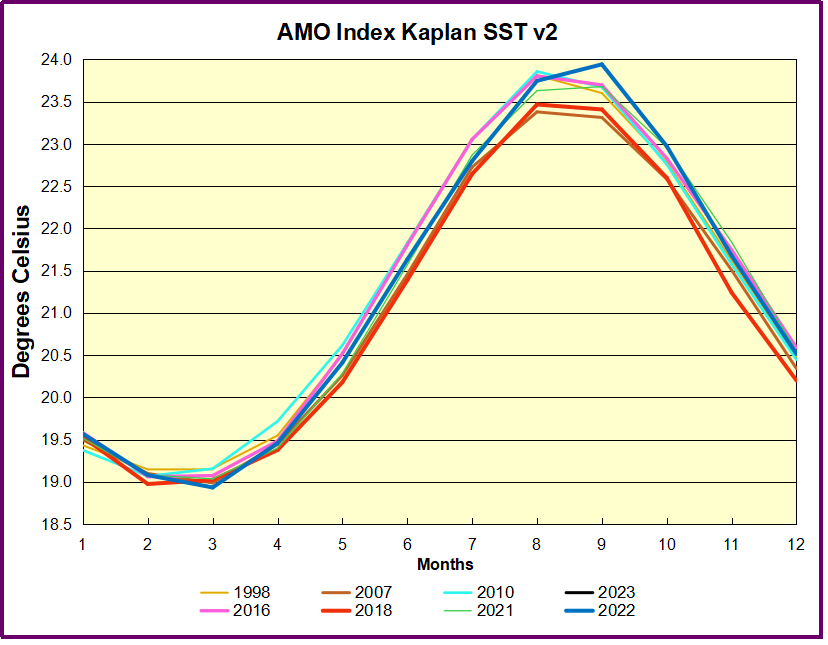
This graph shows monthly AMO temps for some important years. The Peak years were 1998, 2010 and 2016, with the latter emphasized as the most recent. The other years show lesser warming, with 2007 emphasized as the coolest in the last 20 years. Note the red 2018 line is at the bottom of all these tracks. The heavy blue line shows that 2022 started warm, dropped to the bottom and stayed near the lower tracks.  Note the strength of that summer’s warming pulse, in September peaking to nearly 24 Celsius, a new record for this dataset. January 2023 starts similar to 2022.

Summary

The oceans are driving the warming this century.  SSTs took a step up with the 1998 El Nino and have stayed there with help from the North Atlantic, and more recently the Pacific northern “Blob.”  The ocean surfaces are releasing a lot of energy, warming the air, but eventually will have a cooling effect.  The decline after 1937 was rapid by comparison, so one wonders: How long can the oceans keep this up? If the pattern of recent years continues, NH SST anomalies will likely decline in coming months, along with ENSO also weakening will probably determine a cooler outcome.

Footnote: Why Rely on HadSST4

HadSST is distinguished from other SST products because HadCRU (Hadley Climatic Research Unit) does not engage in SST interpolation, i.e. infilling estimated anomalies into grid cells lacking sufficient sampling in a given month. From reading the documentation and from queries to Met Office, this is their procedure.

HadSST4 imports data from gridcells containing ocean, excluding land cells. From past records, they have calculated daily and monthly average readings for each grid cell for the period 1961 to 1990. Those temperatures form the baseline from which anomalies are calculated.

In a given month, each gridcell with sufficient sampling is averaged for the month and then the baseline value for that cell and that month is subtracted, resulting in the monthly anomaly for that cell. All cells with monthly anomalies are averaged to produce global, hemispheric and tropical anomalies for the month, based on the cells in those locations. For example, Tropics averages include ocean grid cells lying between latitudes 20N and 20S.

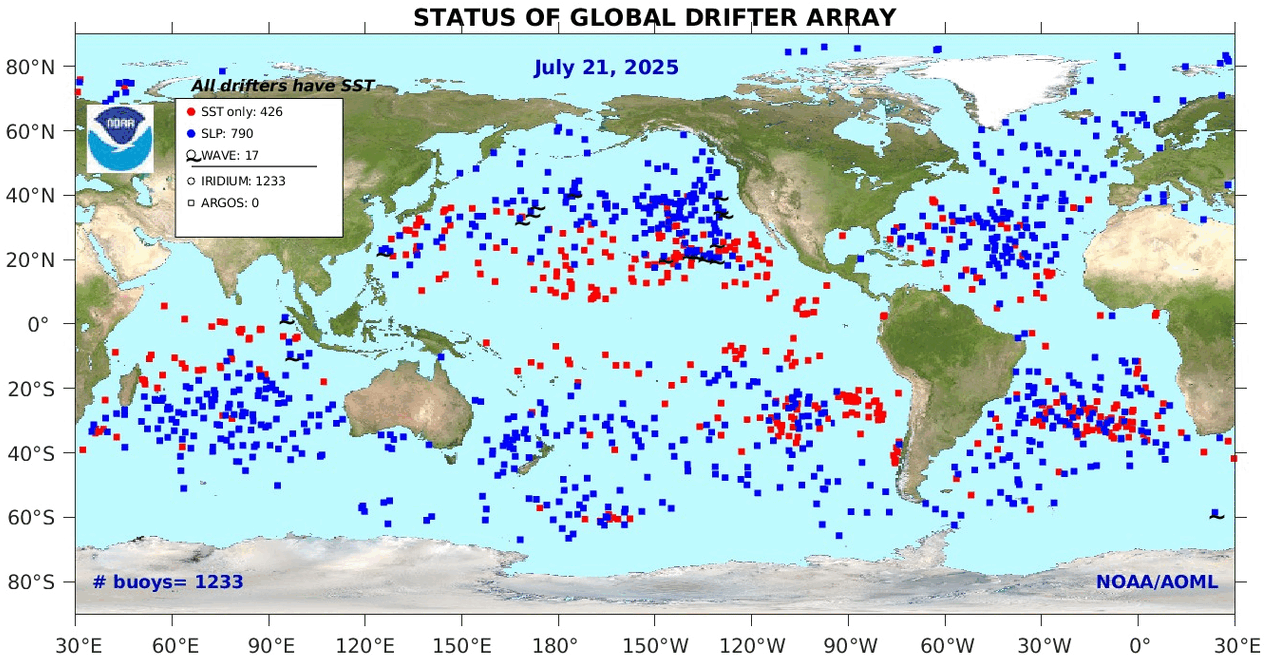
Gridcells lacking sufficient sampling that month are left out of the averaging, and the uncertainty from such missing data is estimated. IMO that is more reasonable than inventing data to infill. And it seems that the Global Drifter Array displayed in the top image is providing more uniform coverage of the oceans than in the past.

uss-pearl-harbor-deploys-global-drifter-buoys-in-pacific-ocean

USS Pearl Harbor deploys Global Drifter Buoys in Pacific Ocean

Footnote Rare Triple Dip La Nina Likely This Winter

Here’s Where a Rare “Triple Dip La Niña” Might Drop the Most Snow This Winter Ski Mag

The unusual weather phenomenon might result in the snowiest season in years for some parts of the country.

The long-range winter forecast could be good news for skiers living in the certain parts of the U.S. and Canada. The National Oceanic and Atmospheric Administration (NOAA) estimates that the chance of a La Niña occurring this fall and early winter is 86 percent, and the main beneficiary is expected to be mountains in the Northwest and Northern Rockies.

If NOAA’s predictions pan out, this will be the third La Niña in a row—a rare phenomenon called a “Triple Dip La Niña.” Between now and 1950, only two Triple Dips have occurred.

Smith also notes that winters on the East Coast are similarly tricky to predict during La Niña years. “In the West, you’re simply looking for above-average precipitation, which typically translates to above-average snowfall, but in the East, you have temperature to worry about as well … that adds another complication.” In other words, increased precip could lead to more rain if the temperatures aren’t cooperative.

The presence of a La Niña doesn’t always translate to higher snowfall in the North, either, as evidenced by last ski season, which saw few powder days.

However, in consecutive La Niña triplets, one winter usually involves above-average snowfall. While this historical pattern isn’t tied to any documented meteorological function, it could mean that the odds of a snowy 2022’-’23 season are higher, given the previous two La Niñas didn’t deliver the goods.




Rising Sea Levels from Climate Change Hit Venice

Gondolas stranded in the canals while tourists gawk in shock!

Tyler Durden reports at zerohedge Gondola Service Halted In Venice As Famous Canals Run Dry.  Excerpts with my bolds.

Part of Venice’s vast network of canals has run dry after unusually low tides and drought conditions. The floating city is built in the middle of the Venetian Lagoon at the head of the Adriatic Sea in Northern Italy. Dried-up smaller canals mean some gondolas and water taxis are stranded.

Venice is usually prone to flooding, but a combination of factors, including lack of rain, a high-pressure system, a full moon, and water currents, have led to dried-up canals, according to Reuters.

Italian rivers and lakes are suffering from severe lack of water, the Legambiente environmental group said on Monday, with attention focused on the north of the country.

The Po, Italy’s longest river which runs from the Alps in the northwest to the Adriatic has 61% less water than normal at this time of year, it added in a statement. –Reuters

Several pictures and videos have been published on Twitter, showing dried-up canals.

Hold on!  Stop the Presses.

Revised headline:  Climate Change Sucks Water Out of Venice Canals!!!!

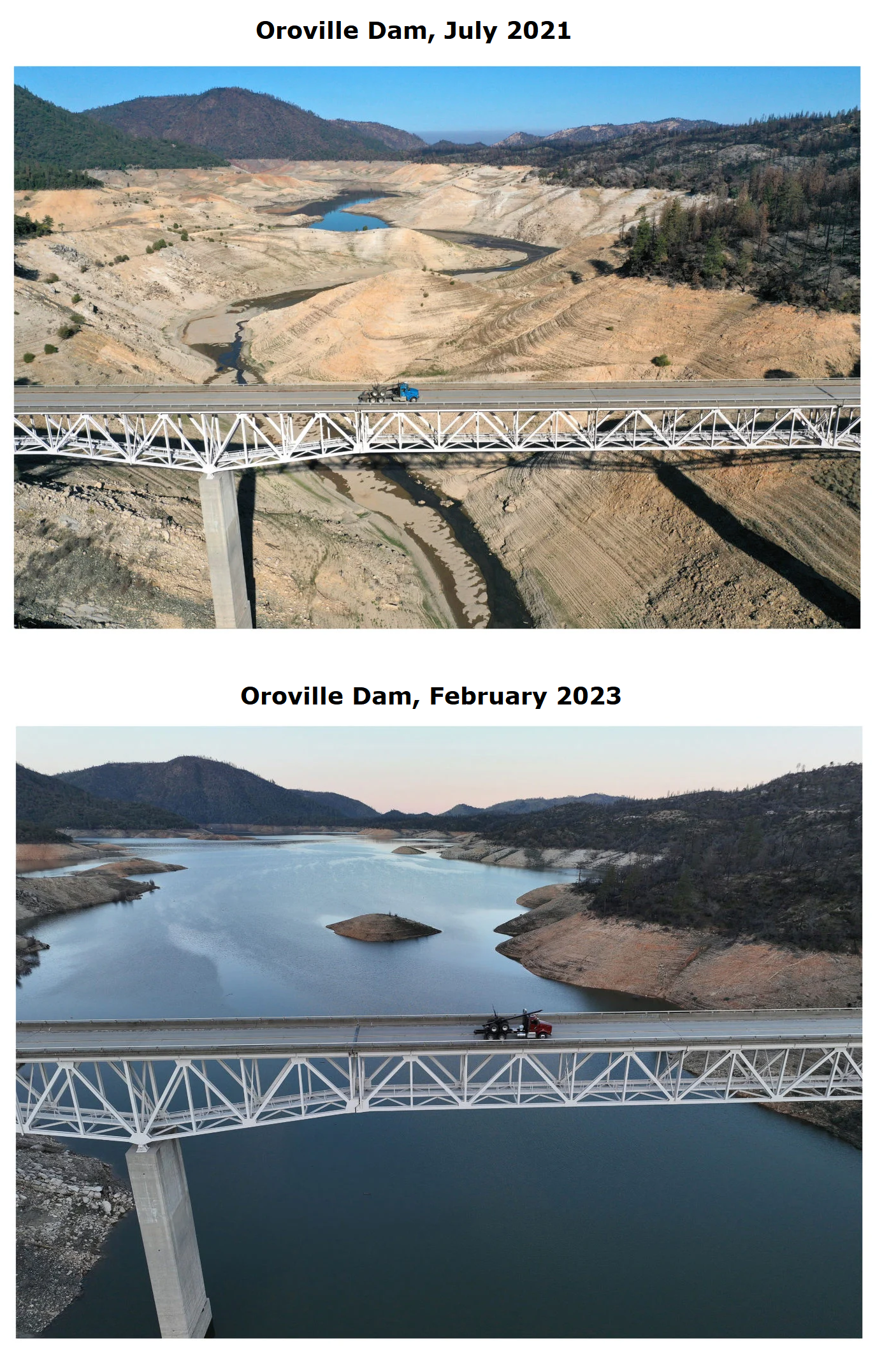
And Where Did the Water Go?

Why, California’s Oroville Dam, of course.


Biden’s All Out War on Disinformation

Matt Taibbi: “Twitter Files” Reveal The Structure Of The Relationship Between Social Media Companies And FBI Requests For Censorship Source Real Clear Politics.

Synopsis:  In the latest edition of Twitter Files, journalist Matt Taibbi has accused US politicians, including Democratic Senator from Maine, Angus King, and Republican Mark Lenzi, a State Department official, of trying to influence Twitter for political gains.

From Matt Taibbi tweets:

Yes, the Maine Senator demanded @ZeroHedge (and 100s more) Twitter accounts, Facebook accounts (and Facebook Groups) be instantly removed for being “suspicious.

The real story emerging in the #TwitterFiles is about a ballooning federal censorship bureaucracy that’s not aimed at either the left or the right per se, but at the whole population of outsiders, who are being systematically defined as threats.

From Taibbi interview with Joe Rogan:

Going into it, I thought that the relationship between these security agencies like the FBI and DHS, and companies like Twitter and Facebook was a little less formal. I thought maybe they had an advisory role. What we find is that it is very formalized.

They have a really intense structure that they’ve worked out over a period of years, where they have regular meetings, they have a system where the DHS handles censorship requests that come up from the states and the FBI handles the international ones, and they all flood all these companies. It is a big bureaucracy. I don’t think we expected to see that.

I think that shows you the mentality. They really, genuinely felt that they were impregnable and they don’t have anyone to answer to. A normal person doesn’t put incriminating things in emails because we all have the expectation that someday it might come out. These folks didn’t act that way.

I was especially shocked by an email from a staffer for Adam Schiff, the [Democratic] California Congressman, where they are just outright saying, “We would like you to suspend the accounts of this journalist and anybody who retweets information about this committee.” This is a member of Congress, right?

None of these people have legal backgrounds, but they’ve got lawyers in the office for sure. This is the House Intelligence Committee. You would think that they would have better operational security.

Another moment that was shocking to me was an email from an FBI agent named Elvis Chan in San Francisco to Twitter, and they’re setting up this Signal group which is going to include all the top, sort of, censorship executives at all the big companies, and it is a word document that has all the phone numbers of all these important executives. And the subject line reads, “Phone numbers” and the Word document is just called “secret phone numbers.” And I’m just thinking, this is how they taught you to do it at Quantico?

And they never said we were misinformed, there never was this crazy collusion between Russia and Donald Trump, and in fact, there was some information that points to Hillary Clinton having involvement with Russia too, and they’ve all had involvement with Russia. This wasn’t some grand conspiracy to elect a Russian puppet as the president of the United States, sorry.

It was a three-and-a-half mass hysteria experiment. This is one of the reasons I got quietly moved out of mainstream journalism. I didn’t have a problem at Rolling Stone, but early on in the Trump years I said, “There is something wrong with this story, I think there are elements that can’t be proven, I don’t think we should be running this stuff.” And then before I knew it, I was working independently.

But with the Twitter Files, we’re finding stuff that now tells you absolutely what actually the truth was during that time. For instance, one of the big early Russiagate stories was in early 2018 when Devin Nunes, the Republican Congressman who was head of the House Intelligence Committee at the time, wrote a memo basically saying, “We think they faked FISA applications, we think the FBI used the Steele dossier to try to get surveillance authority against some Trump people like Carter Page, and we think they lied and cheated to do that.

So he submitted this classified memo and not only was he denounced everywhere as a liar but there was this big story all over the place that this hashtag, #ReleaseTheMemo, had been amplified by Russian bots. You probably don’t remember this, but this story was everywhere in January and February of 2018, that #ReleaseTheMemo was basically a Russian operation and Nunes was benefiting from it.

Well, I’m reading the Twitter Files looking for something else entirely, and suddenly we come across a string of emails internally at Twitter, where the Twitter officials are saying, “You know, we’re not finding any Russians at all behind this hashtag, and we told the members of Congress who asked about this that there are no Russians involved in this,” because Dianne Feinstein, Richard Blumenthal, they all came out with this accusation of it being linked to Russia, “we told them there was nothing there and they went with it anyway.”

There are lots of stories like that now that are kind of falling apart.

Beginning in March, we’ll start using the Twitter Files to tell this larger story about how Americans turned their counterterrorism machinery against themselves, to disastrous effect, through little-known federal agencies like the Global Engagement Center (GEC).


Bypass Contrived Catastrophes

“Nothing so focuses the mind as the sight of the gallows.” wrote Samuel Johnson.  He went on to say,

“Executions are intended to draw spectators. If they don’t draw spectators, they don’t answer their purpose”,  Samuel Johnson (1709-1784)

Terrence Keeley discusses how to resist our current crop of elites who govern by declaring emergencies instead of solving problems. His insights are timely since this week PM Trudeau was given a free pass by a Canada Appeals court judge to repeat his emergency sanctions against protesting truckers should anyone else object to his policies. The article at Real Clear Wire is Navigating Contrived Catastrophes Excerpts in italics with my bolds and added images.

Perhaps this explains why political leaders repeatedly fabricate existential crises in lieu of governing responsibly. Without the sword of Damocles overhead, policymakers just can’t seem to get the adulation they so desperately crave.

Take the fake debt ceiling crisis. The U.S. federal debt cap was first enacted in 1917 when our national debt stood at $5.7 billion. Congress has since raised it more than 90 times with broad bipartisan support. There is ZERO chance they won’t do so again, yet we are told we must quiver and quake until they do. For some reason, a $31.4 trillion limit just isn’t enough to run the greatest country on earth properly.

Or better yet, consider the much-ballyhooed “Net Zero by 2050” time bomb. There was no science behind its selection of the 1.5 degree above pre-industrial temperature target. It was intentionally contrived so politicians and pundits could insist we spend hundreds of trillions of dollars reconfiguring every personal and industrial process to mute it, possibly by a degree or two. Anthropogenic activities are clearly taxing our air, water, and lands. Depending upon tradeoffs like affordability and reliability (and what China, India, and Russia decide to do), less carbon-intensive energy sources may well be preferable, too. Convincing our younger generation they will all die unless the globe urgently reduces its net carbon footprint to zero is another matter altogether. Being more mindful about our consumption patterns while preparing our communities for the probability of more violent weather would be too simple. Better to scare everyone out of their wits so we can get on with doing witless things.

Great societies thrive on consistent policy competence. Failing ones lurch
from crisis to crisis. Contriving catastrophic scenarios all but ensures
hysteria will supplant sober, reasoned analysis.

Some will argue extreme threats are needed to force modest, salutary changes. After all, a handful of U.S. debt ceiling votes brought about useful policy changes, like the Gramm-Rudman-Hollings breakthrough and the Balanced Budget Act of 1997. Similarly, threats of impending climate doom have led many individuals and corporations to examine their energy use, seek cleaner alternatives, and eliminate unnecessary waste.

But have these modest advances been worth the price of the abject delirium
that has accompanied them? And are recurrent, contrived catastrophes
somehow producing better policy outcomes?

Evidently not. Three essential U.S. social programs – Social Security, Medicare, and Medicaid – are barreling along towards insolvency. Just as the retirement age in France must rise to reflect longer life expectancies and taxation tipping points, so too must U.S. retirement programs respect demographic realities. Maintaining peace through strength in an increasingly dangerous world requires that the U.S. spend more on defense, not less. Unless the current debt ceiling crisis leads to an honest rUeckoning about our most urgent tax and spending priorities, heightened hysteria serves no useful end. Worse, all the faux debt ceiling dynamics convince politicians they’ve somehow done their jobs when instead, they’ve abrogated them entirely.

Similarly, we speak about an “energy transition,” but no realistic projection of future fossil fuel consumption shows any meaningful decline in the century to come. Rising populations, improved living standards, reliability needs for the three billion humans who are still energy insecure, and the first order demands of national security reveal oil and gas will remain crucial sources of our energy mix for as far as the eye can see. The most logical response would be to prioritize energy reliability while recalibrating our emissions mitigation spending towards more climate adaptation priorities. Why spend $100 trillion or more on something that has been entirely contrived and is all but certain to fail when you can spend $50 trillion or less on something that would demonstrably save human lives while improving their livelihoods?

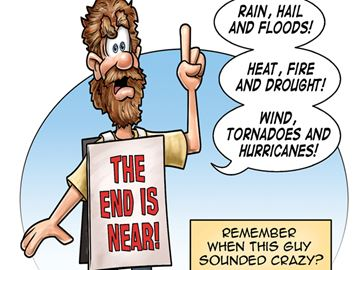
History is festooned with countless ruses about the end of time, some more disruptive than others. They include those of French Bishop Martin of Tours in 375 A.D., and Jim Jones in 1967. Many thousands believed the so-called Y2K cliff would crash every computer, triggering global economic ruin and the rise of the Antichrist. Yet, remarkably, here we all still are, higher in number than ever.

In time, trillions of dollars of investment products now priced against
Net Zero 2050 deadlines will need to be abandoned.

Similarly, the U.S. debt ceiling will be lifted multiple times before responsible members of both parties finally put our tax and spending trajectories into sustainable balance. Panic, like blackmail, compromises sensible thinking. Calm acceptance of measurable risks and their reasonable mitigation are the essence of wise decision-making.

The next time a politician tells you Armageddon is nigh, remind them it’s their only job to make sure it isn’t. If you’ve got the patience for it, you can also show them how easy it would be to avoid.


EU Makes ESG Regs Inescapable

Mish writes at his blog based on a report from South China Morning Post 

The EU Warns “There is No Escape” from its ESG Environment Madness Excerpts in italics with my bolds and added images. H/T Tyler Durden

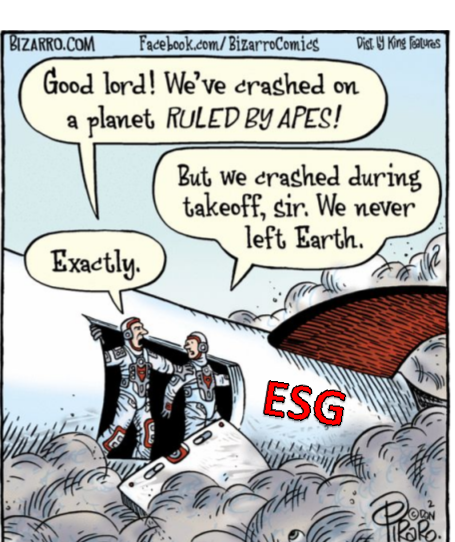
The demand for highly paid ESG nannycrats to enforce nonsensical rules is on the rise. This will cause a rippling impact of higher inflation everywhere.

From South China Morning Report: Please note Impending EU Laws on ESG Disclosures Will Be a Matter of Survival for Asian Suppliers.

Impending regulations in the European Union, which is at the forefront on ESG legislation, will soon require tens of thousands of suppliers across the supply chain in Asia to report their ESG performance, said Amfori president Linda Kromjong.

“If you don’t start preparing now, you will be late if and when
the legislation kicks in,” she told the Post.

The Corporate Sustainability Reporting Directive, due to be rolled out next year, will require companies to disclose how sustainability issues, such as climate change, impact their business and how their operations in turn affect people and the planet.

Some 50,000 companies – all large companies and listed small and medium-sized firms – will have to make such disclosures, up from 11,700 large companies and public entities with more than 500 employees mandated under existing legislation. Auditing of the disclosures will be mandatory.

These companies will in turn require their global suppliers to disclose their sustainability data, such as greenhouse-gas emissions, so that they can calculate their own environmental footprints and social risk exposure.

The European Parliament’s environment committee last Thursday backed tougher legislation that will force firms with over 250 staff and annual worldwide turnover of more than €40 million (US$42.8 million), to check and report whether their suppliers within and outside Europe use slave or child labour, or pollute the environment.

Escape From the Madness

‘There is no escape’ from impending European Union rules requiring sustainability reporting, Amfori president Linda Kromjong warns Asian suppliers

Also note that Brussels-based Amfori provides digital tools and training for suppliers to do self-assessments on ESG performance and compare themselves with industry benchmarks, based on international standards.

And you probably can guess what that means

If not, then please make another note: Hong Kong to pay 30 per cent more for ESG jobs as companies fight for talent to meet sustainability targets.

If you don’t think this madness is hugely inflationary, then you just are not thinking at all. 

My Comment

Indeed, we can see where this is going.  RegulationFare is like LawFare:  The process is the punishment.  Ronald  Reagan’s observation comes to mind:

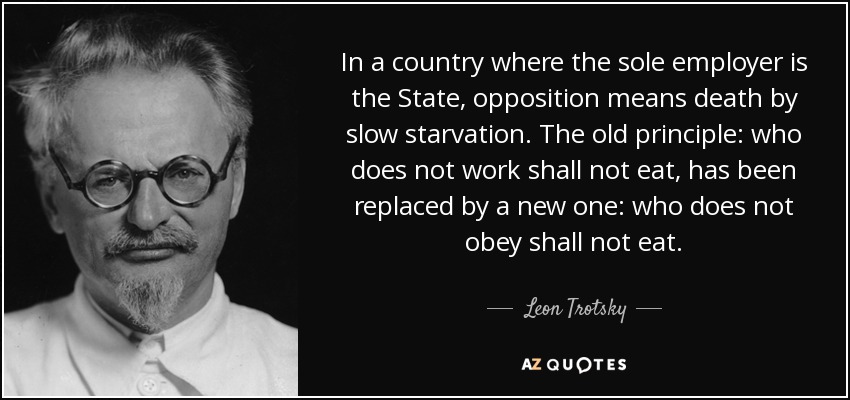
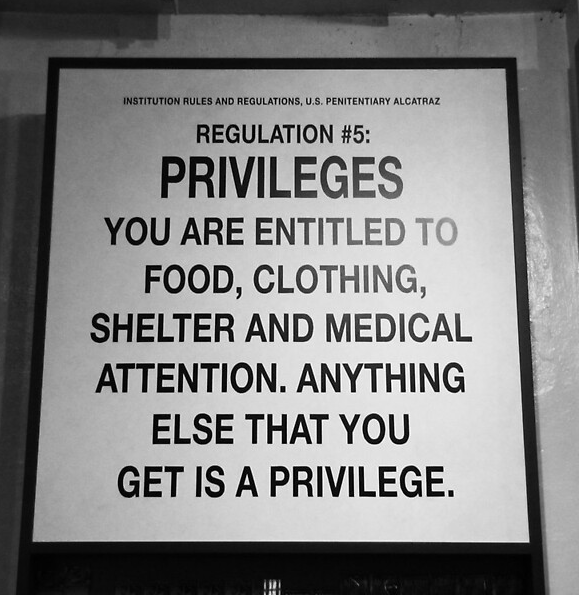
In the end, the state directs business to meet state objectives, either through ownership or through agency rules. That brings in the reality described by Trotsky:


Gas Stove Just a Starter

As explained  below, the move against gas stoves is just an opening into a larger war against methane because of its CO2 emissions.  Coal was bashed as a fuel already long ago, and now activists want to disqualify gas lest it serve as a bridge energy source with much lower CO2 emissions, delaying the desired upheaval.  The current assault on domestic appliances should be seen as the thin edge of a wedge to destroy natural gas supply, in parallel with actions against coal and oil.

Mark Krebs and Tom Tanton explain the ins and outs of this new phase encroaching upon the citizenry where they live.  Their Master Resource article is Gas Stoves: The Beloved Blue Flame is Just Better.  Some excerpts in italics with my bolds and added images and headers.

The Larger Federal Goal:  Transition Away from Natural Gas

The concern should not be about gas stove usage but the public policy of The Biden Administrative State to wean consumers off the direct use of natural gas and propane and on to electric appliances, ASAP. This “transition” includes how to heat your home, heat your water, cook, and drive.

Gas cooking is highly valued by consumers, virtually all of whom have normal taste buds. It is the one gas appliance that consumers see and use daily. The blue flame is part of home life, as is the fireplace run by gas or propane.

In contrast, the furnace and water heater usually tucked away in the basement or equipment closet and operate unseen. Also unseen are the legions of new electric power plants transmission lines and battery storage system to provide ostensibly “clean” juice for these new electric appliances and the serious environmental, strategic, and human rights impacts from mining and processing heavy metals and rare earths.

In fact, no one has done a comparative full fuel cycle analysis to document whether electrification is a good idea or a bad one; at least not a transparent analysis that has been subject to independent technical debate. Neither have the all-electrification busybodies presented a comprehensive plan to produce the millions of batteries necessary for the electrical grid to be able to handle all these new uses, while burdened by intermittent wind and solar.

Govt. Misdirection:  Claims Gas Stoves Hazardous to Indoor Air Quality

The first ploy was to claim gas stoves are unsafe concerning air pollutants.  Several problems with this attempt to regulate away these cooking appliances.

Fear mongering about the “existential threat” from Anthropogenic Global Warming (AGW) hasn’t been working as well as planned. So maybe, they hope, additional fearmongering about how parents are putting their own children at risk due to respiratory ailments, such as asthma from your stove will do the trick.

There are at least three agencies leading the Biden Administration’s whole-of-government fossil-fuel eradication efforts. These are:

  • DOE’s Office of Energy Efficiency & Renewable Energy” (EERE)
  • The Consumer Product Safety Commission (CPSC)
  • The Environmental Protection Agency (EPA)

None of these agencies have Congressional authority to regulate “indoor air pollution.” EERE has been pushing electrification at least since the Obama Administration, and it continued even throughout the Trump Administration. The Biden Administration simply removed the nominal (if any) restraints there may have been under Biden’s “whole of government” executive orders (EOs) to reduce GHG’s: e.g., Executive Order (EO) 13990.

In EERE’s case certain EO obstacles include that they still must act “as appropriate and consistent with applicable law.” The Energy Policy and Conservation Act of 1975 (EPCA) is one such law. EPCA is also supposed to promote regulatory objectivity. Under EPCA, DOE/EERE must also “consider” safety.

The science that the Biden Administration claims to guide such regulatory decisions
is far from conclusive that gas stoves are harmful.

Instead, the Biden Administration and its supporters “cherry pick” data that supports regulatory expansion. In this case, the science comes from the highly partisan Rocky Mountain Institute (RMI). A major activity (and bias) of RMI is its “Electricity Innovation Lab. It reiterates RMI’s mission to achieve a carbon-free electricity monopoly.

According to independent scientific researchers with a deep knowledge of this subject, most of the “indoor air pollution” is emitted from the food itself being cooked. Such pollution is in the form of particulates from cooking food regardless of what form of energy is doing the cooking. Those particulates may be especially harmful to adolescent asthmatics.

More Govt. Hype: Replacements More Efficient than Gas Stoves

Government Orange Gas?

What is it exactly that DOE wants to force on consumers under the guise of “energy efficiency in the case of gas stoves? It appears to be a relatively new type of gas stove burner that glows orange (infrared, a.k.a., “radiant”) instead of the blue flames present in traditional burners that consumers are accustomed to. Infrared burners have been around for a long time, especially for gas BBQ grills but they don’t last long. Infrared burner adoption for consumer kitchen cooking appliances have been limited to a few high-end “prosumer” gas ranges. Costs for such models tend to be in the vicinity of $7,000 to $9,000. One example is Wolf/Sub Zero’s Model # GR364G with a MSRP of $8,760. And only the griddle portion of that model is infrared. According to DOE, there may be one model that is all infrared but good luck finding it.

In comparison, a basic electric range can be purchased for under $500. Granted, if DOE mandates infrared gas burners, mass production could decrease cost premiums. But for cost-conscious consumers, such premiums will likely far exceed those of electric stoves, even induction electric stoves.

Forcibly moving the market via equipment costs is a typical DOE strategy.
And then they say, “let the market decide.

Part of DOE’s bag of tricks for justifying higher gas appliance efficiencies is to minimize maintenance costs and safety concerns.  At a minimum, “worst-case scenario” analyses are needed to determine how infrared burners perform in the “real world” of “messy” stoves. In messy situations, infrared burners may turn into product liabilities. And they may have to be replaced; that can quickly get expensive. It is at least possible that “dirty” infrared burners emit more pollutants than traditional blue flame burners. DOE needs to “consider” safety consequences of its energy efficiency proposals going forward.  It is not evident that they have.

Likewise, DOE tends to minimize its estimations for what the increased prices will be that consumers must bear from increased efficiency.  Taken together with other forms of analytical “trickery,” consumer cost-effectiveness can quickly become negative.

Since pictures are “worth a thousand words, see Shutterstock’s 223 images of infrared gas stoves. Several of these are pictures of infrared burners that have experienced obvious degradation from cooking spills.

There’s also movement on the electrical stove side of all this. That is, electric stoves continue to change and the technology du jour is the induction stove. Induction stoves electro-magnetically couple the stove with the pan, directly heating the pan and not the stove. They are more efficient than tradition hot coil electric resistance stoves but are also more expensive and require magnetic cookware. They too, have associated health risks (Induction stoves may not be safe to use with pacemakers; “People with pacemakers are better off avoiding induction stoves.”)

Perverse Incentives in Inflation reduction Act

The so-called Inflation Reduction Act provides perverse incentives for switching to electricity.  These incentives are summarized as follows:

DOE also needs to consider the safety feature of having a gas stove during extended electric grid blackouts that may make the difference between consumers and their water pipes freezing or not.  This benefit was widely observed in Texas during Winter Storm Uri.

To make a logical scientific argument about consumer safety concerns with gas burners, DOE must clearly and transparently demonstrate a safety issue with conventional “blue flame” burners.  Instead, DOE is proposing a one-way move to infrared burners based upon theoretical economic operating cost advantages of a few percentage points.

Meanwhile, DOE is not mandating a move from electric resistance stoves to higher efficiency  electric induction  stoves that, according to the EPA,  can be “5-10% more efficient than conventional electric resistance units.”  EPA’s verbiage following that quote states: “and about 3 times more efficient than gas.”  That latter verbiage is tantamount to professing a belief that electricity is magically created inside of the house’s electric meter. This is pretty much “par for the course” for the Biden Administration’s “Green New Deal” energy and environmental policies.

Under EPCA’s anti-backsliding provisions, once infrared burners are mandated, there is no going back to traditional (blue flame) gas burners. Thus, if consumers want to regain better cooking maintenance and reliability, they can only switch to electric stoves. We think that’s their plan! Consumers will probably choose electric resistance varieties due to their relatively low initial purchase cost. What this portends, at least for the next few decades, is that energy efficiency when measured over the complete fuel-cycle is massively reduced throughout most of the United States where fossil fuels still dominate electric grid generation. The same goes for emissions when measured along the complete fuel-cycle.

The direct use of natural gas makes the most sense economically and environmentally for consumers. Consumers are losing that choice.

Conclusion–Why The Crusade?

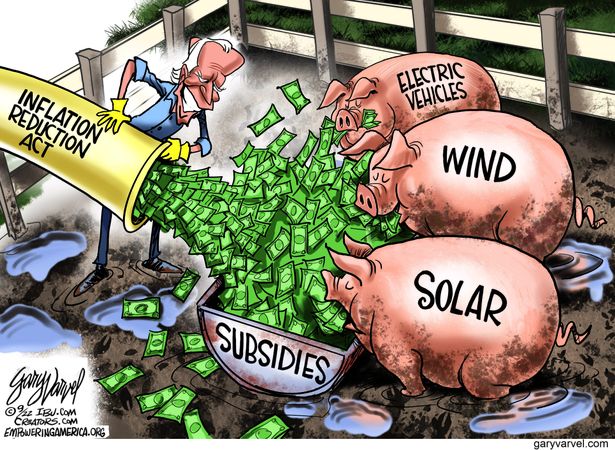
Why is the Biden Administration messing with a piece of Americana. Is it to try the hardest part first? Or because “clean” electrification is where the money is? With passage of the Inflation Reduction Act, it is definitely where the subsidies are. The enormity of these subsidies are like an all-you-can-eat buffet for Green New Deal enrichment.

Phasing out natural gas and propane is not merely for the U.S. to meet its commitments for “deep decarbonization” per the UN’s Paris accords. It’s also about “great reset” social control. With the advent of “smart” electric meters and appliances, it’s relatively easy to centrally control electricity usage.

Coupled with digital currency, it then becomes relatively easy to control behavior, such as remotely changing YOUR living room thermostat or disabling your car. Early dinner? No: you’ll cook when the power is temporarily turned on to your stove.  But if you project the correct attitude of cheerful compliance, you may be awarded with an extra ration of electricity.

DOE needs to stop politicizing energy appliances on unfounded predictions that “clean” renewable electricity will soon dominate the grid. This scenario is not at all probable given the cost and enormity of the quest. Big Brother is already running wild and must be leashed/removed. Given that DOE’s proposed rule calls for yearly energy consumption limits for cooking appliances, rationing might not be totally far-fetched. The time to expose and eradicate is now.

Appendices to Master Resource Article

Appendix A: Call To Action (Next Steps, What You Can Do)

Appendix B: Further Reading

Footnote

Obviously, bans against ICE vehicles will also prohibit those running on LNG (Liquified Natural Gas). See Consumers Report: Tesla Road Trip

As for fertilizer banning,  half of the people on Earth are alive today thanks to nitrogenous fertilizers made of and with natural gas.  So why are governments at home and abroad scrambling to cut off humanity’s natural gas supply?

See Natural Gas – Generated Nitrogenous Fertilizers Prevent Worse World Hunger


Slaves Built This Country? Not.

Brandon Morse writes at Red State No, Slaves Didn’t Build This Country.  Excerpts in italics with my bolds and added images.

Not long ago, Disney ripped off any pretense of being a family company and dove head-first into the social justice muck with an episode of “The Proud Family” that featured a slam poetry segment that echoed the fringe critical race theory claim that “slaves built this country.”

As RedState reported, it soon surfaced that the writer of the show is a very loud and proud social justice radical named Latoya Raveneau, who has a “not-at-all-secret gay agenda” and wants to introduce “queerness” to the shows your kids watch whenever she gets the chance. She also bragged that no one at Disney is trying to stop her.

First things first, we need to torpedo this idea that slaves built this country. While it’d be unrealistic to say they weren’t a part of the nation’s development, putting them as the prime constructors of an entire nation is like saying the guy who crafted the axle at the car factory built your vehicle. He was definitely a part of it, but he hardly gets to take full credit.

So many kinds of people came to the new world and worked their own land, built their own towns, and established their own societies without the help of slaves. For one thing, the Trans-Atlantic slave trade transported well over 12 million slaves, but only a little over 300,000 made their way into the United States. This didn’t happen all at once.

Slavery did officially begin in 1619, but it began with just over 20 slaves.

To think that over the course of time that singular group of people built an entire nation — even a burgeoning one — by themselves is the height of fantasy. Especially as you continue to plug in the numbers.

The slave population would later balloon to around four million by the time the emancipation proclamation was signed in 1863, and while that number is tragically large, it doesn’t mean that there was a slave for every family. The vast majority of slaves were held in the agrarian south and even then, only around 25 percent of the south was wealthy enough to own slaves.

Meanwhile, the slave-free north continued to outpace the south by leaps and bounds, including agriculturally according to Warfare in the Western World:

“But in a longer struggle the North’s advantages were substantial. With a population of 20 million, the Northern states obviously possessed a much larger military manpower base, but their industrial capacity was far greater as well. In 1860 the North had over 110,000 manufacturing establishments, the South just 18,000. The North produced 94 percent of the country’s iron, 97 percent of is coal and – not incidentally – 97 percent of its firearms. It contained 22,000 miles of railroad to the South’s 8,500. The North outperformed the South agriculturally as well. Northerners held 75 percent of the country’s farm acreage, produced 60 percent of its livestock, 67 percent of its corn, and 81 percent of its wheat. All in all, they held 75 percent of the nation’s total wealth.”

These stats immediately wreck the idea that “slaves built this country.” Not only did the north succeed greatly without them, but the majority of the south also didn’t have them.

The idea that white people were sitting in rocking chairs sipping tea while black people did all the work from 1619 to 1863 is, frankly, stupid. It dismisses the blood, sweat, and tears of many different kinds of people, including Mexicans, Germans, Irish, Chinese, and more. It purposely shoves aside the industriousness of an entire country looking to build a new world and make something for itself.

Yes, slavery did play a part, but not nearly enough of one to claim all the credit.
This leads me to the idea that reparations are owed to the black population
of the United States by the taxpayers of this country.

No. No one owes anything to anyone for the atrocity that is slavery. For one, no one alive today was around to commit that sin or have that sin be committed upon them. Whatever guilt there was for it has long since died off. Outside of the church, the idea of original sin is ludicrous. White people alive today are not guilty of what a percentage of white people did long ago. Moreover, the nation that declared slavery illegal and went to war with emancipation being a goal leading to an astounding loss of life is not responsible for reparations either.

This nation’s story is, in part, a struggle against slavery beginning at its very foundations. White supremacy was never the intended goal of those most loyal to the American dream and spirit, despite the claims of race hustlers. Nothing is owed because there is no one around to whom anything would be owed.

Social sin is non-transferable.

Raveneau is, like most radical leftists, incredibly bitter and bigoted herself. Her racism against white people is clearly on display, as is her disdain for a country that sacrificed much to shed itself of the slavery she’s using as a tool to exert social control over innocent people. That Disney is allowing this to happen shows just how lost it is and how it too wishes to damage this great nation’s reputation and cast its people as villains for simply existing in a place where once there was slavery.

The bitter truth that race hustlers need to face is that white people today aren’t guilty of slavery. White supremacy is not the foremost wish of the vast majority of white people in this nation today, and anyone who says differently is trying to sell you something that would be detrimental to everyone for having bought it.

Slavery is evil and it should be left in the past. No one living today should try to bring it back,
not in practice or as a social tool to use as a method of social dictatorship.


Florida to Ban Woke ESG Banking

Amber Jo Cooper reports at Florida’s Voice DeSantis proposes banning social credit scores in banking, targets ESG. Excerpts in italics with my bolds. H/T Tyler Durden

On Monday Gov. Ron DeSantis announced a proposal to target
ESG banking and investment policies 

DeSantis said he aims to enact protections for Floridians against discrimination by big banks and large financial institutions for their religious, political, or social beliefs.

ESG – environmental, social, and governance – is a business framework that determines investment based on political factors such as renewable energy and social justice initiatives.

DeSantis said ESG has developed into a “mechanism to inject political ideology into investment decisions, corporate governance, and really just the the everyday economy.”

“That is not ultimately something that is going to work out well for us here in Florida,” he said.

DeSantis said it violates the fiduciary duty that executives have to the shareholders of publicly traded companies.

Your pension money, your retirement money, is likely invested in some of these funds, and those funds should be done to try to produce the best result for you using the available investment options,” DeSantis said.

“What ESG says is no, we’re not going to do, even if it would do a better return – we’re not going to allow you to invest in certain areas, you’re not allowed to invest in oil and gas, you’re not allowed to invest in disfavored areas,” he explained.

The proposal includes prohibiting the financial sector from considering “social credit
scores” in banking and lending practices that aim to prevent Floridians
from obtaining loans, lines of credit, and bank accounts.

“That is a way to try to change people’s behavior. It’s a way to try to impose politics on what should just be economic decisions,” he said.

“We are also not going to house in either the state or local government level deposits. And we have a lot of deposit, we got a massive budget surplus in Florida, you have deposits all over the place that go in where state and local government use financial institutions, none of those deposits will be permitted to be done in institutions that are pursuing this woke ESG agenda,” he said.

The proposal would also aim to make sure ESG will not “infect decisions” at both the state and local governments, such as investment decisions, procurement and contracting, or bonds.

The Governor’s press release said the legislation would also:

  • Prohibit banks that engage in corporate activism from holding government funds as a Qualified Public Depository (QPD).
  • Prohibit the use of ESG in all investment decisions at the state and local level, ensuring that fund managers only consider financial factors that maximize the highest rate of return.
  • Prohibit all state and local entities, including direct support organizations, from considering, giving preference to, or requesting information about ESG as part of the procurement and contracting process.
  • Prohibit the use of ESG factors by state and local governments when issuing bonds, including a contract prohibition on rating agencies whose ESG ratings negatively impact the issuer’s bond ratings.
  • Direct the Attorney General and Commissioner of Financial Regulation to enforce these provisions to the fullest extent of the law.

Florida Chief Financial Officer Jimmy Patronis praised DeSantis’ proposal to crack down on ESG.

“When it comes to ESG, many of us have been boiled like a frog,” Patronis said. “The Governor is right that over time ESG has wound its way into too many aspects of American society, and pulling it back is going to take work.”

“This proposed legislation puts returns first, it puts the Constitution first, and it puts corporate America on notice that if they play politics with Florida residents, we’ll have the tools to hold them accountable. I look forward to working with the DeSantis Administration, as well as Senate President Passidomo and House Speaker Renner in getting this legislation over the finish line,” Patronis said.

Patronis previously barred ESG funds’ participation in the deferred compensation program and divested around $2 billion from BlackRock due to their utilization of ESG.

House Speaker Paul Renner said Bob Rommel, R-Naples, will introduce the bill in the House.  “The biggest thing that I think ESG represents is a total hijacking of democracy,” said Renner.

“We’re lucky here in the state of Florida, that we’ve got a governor who will stand up to things like ESG, when others will not,” he said.

“This is amazing what he’s doing for our state, our state is just rocketing,” said Senate President Kathleen Passidomo “I look forward to having the governor come back here again and again and again to sign all these bills,” she said.


Politics Deep in the Thrall of Climate Change

Mark Imisides writes at Australia Spectator Politics deep in the thrall of climate change.  Excerpts in italics with my bolds and some added images.

The issue of Climate Change stormed across our TV screens at the recent federal election (Australia). Funded by a renewables investor, the Climate 200 candidates mopped up – taking eight seats from the major parties.

How did something that was considered a slightly oddball theory in the late 80s morph into a multiheaded monster that seems to have every world government, including ours, in its thrall?

By any measure, the Climate Change industry is huge. It’s quite common to hear people use the term ‘big oil’, but given that the Climate Change industry is now, at $1.5 trillion, rapidly catching up to the oil industry ($2.1 trillion), it’s entirely valid to use the term ‘big climate’. Andrew Urban recently pointed this out, with several cases of people that have cashed in big-time from Climate Change alarmism.

How did it get so big? How did it become the colossus that it now is? As it happens, there is a back story that few people outside of the scientific sector are aware of.

From Jo Nova in 2010 US$. In 2015 Climate Change Business Journal reported: “The $1.5 trillion global “climate change industry” grew at between 17 and 24 percent annually from 2005-2008” The $1.5-trillion price tag appears to exclude most of the Big Green environmentalism industry, a $13.4-billion-per-year business in the USA alone.

In simple terms, it was a perfect storm of four factors that all came together in the late 80s. As I was doing my PhD at the time, I got to see this firsthand. Very few people understand this process, largely because those outside the sector don’t know that science is just as prone as any other industry to the shifting sands of zeitgeist – trends that emerge that shape and mould how science is done, funded, and perceived.

These four factors were to revolutionise science, and although not all the changes were bad, their lasting legacy will be the entry of science into political discourse, the grubby touching of research funds by hands soiled by self-interest, greed, and corruption.

Revolutionary Factor 1:  Chernobyl Ended Science’s Golden Age

The first of these factors was the accident at Chernobyl in 1986. What? What on earth does Chernobyl have to do with climate change?

The answer is that there is no direct connection. It was, however, the final nail in the coffin of science’s golden age. Coming out of the second world war, science was seen as having the answers to all the world’s ills. It was seen as having won the war (largely due to the atomic bomb) and was the way of the future. This optimism is expressed beautifully in the film A Beautiful Mind where the incoming students at Princeton in 1948 are given a stirring lecture by the mathematician Hellinger of the future of science in the post-war world.

And so science flourished. Antibiotics became readily available, DNA was characterised, and the contraceptive pill introduced a new era of sexual freedom. The synthetic chemical industry also boomed, as did the nuclear power industry. We had wonder chemicals like DDT that eradicated malaria-carrying mosquitoes, aerosol fly sprays, and cheap reliable power thanks to the power of the atom.

But then, over time, mistakes happened, largely because environmental science, as a discipline, didn’t exist. Or, to put it another way, the world was seen as an infinitely-sized bucket into which chemicals could be poured, and the concept of man-made chemicals exerting any influence on the world in which we live just didn’t exist. It just never occurred to anyone.

But then reality began to impinge on this mindset. Amongst other things, the persistence of nonbiodegradable pesticides like DDT became a problem, CFC propellants threatened the ozone layer, and we had Sellafield and Three Mile Island. Neither of these two incidents actually killed anyone but they gave everyone an awful fright.

But Chernobyl was the last straw. Scientists, it seemed, couldn’t be trusted after all.
It was the China Syndrome for real.

Revolutionary Factor 2:  Global Recession Crashed Research Funding

This mistrust brought with it added scrutiny, and this coincided with the second factor in this list – the worldwide recession in the late 80s (as Paul Keating famously said, the recession we had to have).

The combination of the loss of trust in scientists with the fact that there wasn’t as much money to splash around as before, resulted in a massive change in the emphasis of scientific research. Before this time it was pretty easy to get funding for any pet project that you had, and you didn’t have to you justify it much in terms of its importance or relevance. But after this time, suddenly funds became much more difficult to get. To get funding, you had to prove the relevance of your research. You had to justify why it was important in terms practical outcomes.

In scientific terms, we could say that the emphasis switched
from pure research to applied research.

This change in emphasis had a dramatic effect on university faculties. Prior to this time if you went onto any campus you would find a science faculty that contained four departments – physics, chemistry, geology, and biology. When this change from pure to applied research happened, it hit the physics departments hardest. Of the four classic sciences, physics is the most fundamental, and the least applied. That is, it forms the basis on which knowledge in the other three disciplines are developed, but it is not as directly applicable to the real world.

And so, suddenly, people that were either physics academics or postgraduate students had very bleak career prospects. Consequently, from about this time physics departments began to disappear from university campuses, being subsumed into faculties with titles such as ‘Physical Sciences’ and so on. Suddenly, there were a lot of highly qualified physicists looking for work.

Revolutionary Factor 3:  Warming Replaced the Cooling Trend

The third factor that came into play at about this time was that the world had started warming again. It cooled from about 1940 until 1975, but by the late 80s a warming trend was emerging. And, as it happens, this fed right into Margaret Thatcher’s political agenda – the fourth and final factor in our list.

Revolutionary Factor 4:  Power Struggle Thatcher vs. Coal Unions

Thatcher had an awful problem with coal unions and wanted to break their power. She did this by approaching the Royal Society and essentially saying that she wanted to demonise coal and get people to use nuclear power, and there was money on the table if they could do that.

Thus, the IPCC was born, and every government department around the world
devoted to ‘climate science’ dates from about this time.

But who could they employ – the term ‘climate scientist’ didn’t exist. Well, as it happens, questions of heat transfer fall squarely into the lap of physicists, and, oh look, there are plenty of them looking for work. They had a precious job offer if they would just say the right things.

Thus, the discipline of ‘climate science’ was born, degrees were established, and people began selecting it as a career option from the undergraduate level.

Well, so far so good. When new scientific knowledge is revealed, new career paths, and even new language is established. For example, with the advent of electricity in the early 19th Century largely as a result of the efforts of Volta, the term ‘electrician’ was coined.

Climate Science Discredited Early On

But here is where the similarity between ‘climate science’ and other new technologies like electricity (or quantum mechanics or biogenetics) ends. In each of these latter cases, the science has developed from its infancy into a mature discipline, as research and enquiry revealed further information and deeper understandings.

With ‘climate science’, however, the very opposite happened. It was barely a decade old when it was comprehensively disproved, by two discrete mechanisms. That is, it was proven that the notion of CO2 warming the world had no scientific basis, and the computer models that predicted its influence were wrong.

The first of these was the absence of the ‘tropospheric hotspot’ that was predicted by the computer models. Anthony Watts has a very good, even-handed discussion of it on his website.

The second, and more significant study, resulted from a set of ice-core studies from Vladivostok in 1999, that showed that atmospheric CO2 concentration followed temperature changes, not the other way around.

As an Analytical Chemist, it was this second study that struck a chord with me. From the time I first saw Al Gore’s graph with overlaid temperature and CO2 charts, the first question I asked was, ‘How do they know which one is cause and which one is effect? Haven’t they ever heard of Henry’s Law?’

Henry’s Law, for the layman, relates the concentration of a compound in the aqueous phase to its concentration in the vapour phase above it. In simplest terms, the solubility of a gas in a liquid decreases with temperature. That is, the hotter a liquid gets, the less of the gas that can dissolve in it. So if the ocean was heating, it would release CO2 into the atmosphere, resulting in higher gaseous concentrations.

The question of which one is cause and which one is effect is determined simply by which one leads, and which one lags, and the Vladivostok ice cores showed that CO2 changes lagged behind temperature changes by about 10,000 years. Quod Erat Demonstrandum.

In other words, the Vladivostok ice core data comprehensively disproves the notion that man-made CO2 is heating the planet. A theory was advanced, accepted by many, but then disproven.

This has happened many times in science, and it is the very mechanism by which scientific knowledge is advanced.

Perhaps the most spectacular example of this is luminiferous ether theory. It was a theory that was spawned by a simple observation. It was observed that if an alarm clock was placed in a glass bell, and a vacuum was drawn, then when the alarm went off, no sound was evident, despite the fact that you could see the hammer striking the bells.

They concluded, correctly, that sound requires air to move through, but light didn’t. Why was the clock still visible in the vacuum? Why, the only explanation possible, it seemed, was that there was some other, as yet unknown, medium through which it moved. Thus, the luminiferous ether was proposed.

This was widely accepted, until Michelson and Morley sought to measure it, in 1887. They discovered, in simple terms, that it just wasn’t there. Thus, the theory was overturned, almost overnight. As it happens it took Michelson and Morley some time to realise the implication of their experiment, but when they did, the conclusion was inescapable – there was no luminiferous ether.

This led to further studies into the nature of light, and before long the photoelectric effect was discovered, and the passage of light through a vacuum was elegantly explained. Thus, the luminiferous ether theory has been consigned to the dustbin of history, along with phlogiston theory and a whole lot of other theories that seemed like a good idea at the time.

Anthropogenic Global Warming Escaped Scientific Death

Why hasn’t that happened to the notion of Anthropogenic Global Warming? Why, when it was discovered that CO2 concentration followed temperature, and not the other way around, didn’t people say ‘temperature is the dog, and CO2 is the tail’? Why, in 2023, is the tail wagging the dog?

The simple answer is that science is no longer driving the bus.

What is happening is the type of positive feedback loop that climate scientists talk about, despite the fact that these things are almost unheard of in the physical world. It is alive and well in politics.

It is always in a government’s interest to create a crisis. It is a well-known political phenomenon that people cling the incumbents in a crisis, and the governments go to great lengths to make people think that they are saving people from the crisis. Many people, for example, attribute John Howard’s success in the 2001 election to the Tampa Crisis, and George W Bush’s popularity shot up after 9/11.

The other side of this feedback loop is that if you are employed to investigate ‘climate change’, well, you’d jolly well better find it, or the government money will dry up.

So if the scientists say the right things, they get employment and ‘research’ funding. The greater the crisis they report on, the happier the government is, and the more money they get paid.

This is the reason that these ‘climate scientists’ avoid scrutiny. They don’t have to justify their research to an ARC or CRC committee. They don’t have to produce results for scrutiny, in order to justify their research. It’s already guaranteed, in perpetuity, with a blank cheque.

No scientist is going to say ‘there is no climate crisis’ or he will be out of a job, and no government is going to say ‘there is no climate crisis’ or they’ll be out on their ear.

Energy to be The Sacrificial Lamb Instead

The consequence of this is an energy crisis. People dying from the cold because they cannot pay their bills. Game shows in the UK now offer the payment of energy bills as a lucrative prize, and here in Australia we face the prospect of skyrocketing energy bills because of the comically inept Chris Bowen, and his massive uncosted plan to completely replace our electricity with renewables.

So what do we do about it? I think there is hope for sanity to return, but we have to prosecute the case in the right way.


Curing Radiation Myopia Regarding Climate

E.M. Smith provides an helpful critique of a recent incomplete theory of earth’s climate functioning in his Chiefio blog post So Close–Missing Convection and Homeostasis. Excerpts in italics with my bolds and added images.

It is Soooo easy to get things just a little bit off and miss reality. Especially in complex systems and even more so when folks raking in $Millions are interested in misleading for profit. Sigh.

Sabine Hosenfelder does a wonderful series of videos ‘explaining’ all sorts of interesting things in and about actual science and how the universe works. She is quite smart and generally “knows her stuff”. But… It looks like she has gotten trapped into the Radiative Model of Globull Warming.

The whole mythology of Global Warming depends on having you NOT think about anything but radiative processes and physics. To trap you into the Radiative Model. But the Earth is more complex than that. Much more complex. Then there’s the fact that you DO have some essential Radiative Physics to deal with, so the bait is there.   However…

It is absolutely essential to pay attention to convection in the lower atmosphere
and to the “feedback loops” or homeostasis in the system.

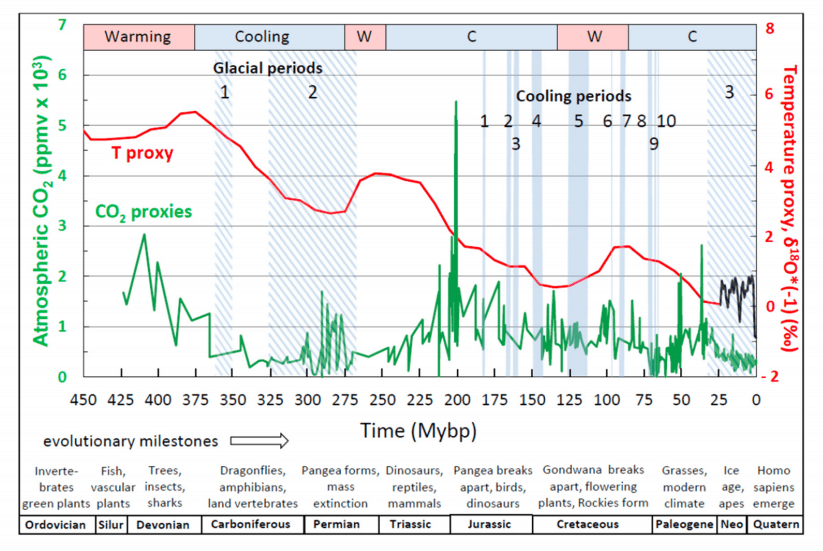
The system acts to restore its original state. There is NO “runaway greenhouse” or we would have never evolved into being since the early earth had astoundingly high levels of CO2 and we would have baked to death before getting out of our slime beds as microbes.

Figure 16. The geological history of CO2 level and temperature proxy for the past 400 million years. CO2 levels now are ~ 400ppm. Source: Davis, W. J. (2017).

OK, I’ll show you her video. It is quite good even with the “swing and a miss” at the end. She does 3 levels of The Greenhouse Gas Mythology so you can see the process evolving from grammar school to high school to college level of mythology. But then she doesn’t quite make it to Post-Doc Reality.

Where’s she wrong? (Well, not really wrong, but lacking…)

I see 2 major issues. First off, she talks about the “lower atmosphere warming”. Well, yes and no. It doesn’t “warm” in the sense of getting hotter, but it does speed up convection to move the added heat flow.

In English “heating” has 2 different meanings. Increasing temperature.
Increasing heat flow at a temperature.

We see this in “warm up the TV dinner in the microwave” meaning to heat it up from frozen to edible; and in the part where the frozen dinner is defrosting at a constant temperature as it absorbs heat but turns it into the heat of fusion of water. So you can “warm it up” by melting at a constant temperature of frozen water (but adding a LOT of thermal energy – “heat”) then later as increasing temperature once the ice is melted. It is very important to keep in mind that there are 2 kinds of “heating”. NOT just “increasing temperature”.

In the lower atmosphere, the CO2 window / Infrared Window is already firmly slammed shut. Sabine “gets that”. Yay! One BIG point for her! No amount of “greenhouse gas” is going to shut that IR window any more. As she points out, you get about 20 meters of transmission and then it is back to molecular vibrations (aka “heat”).

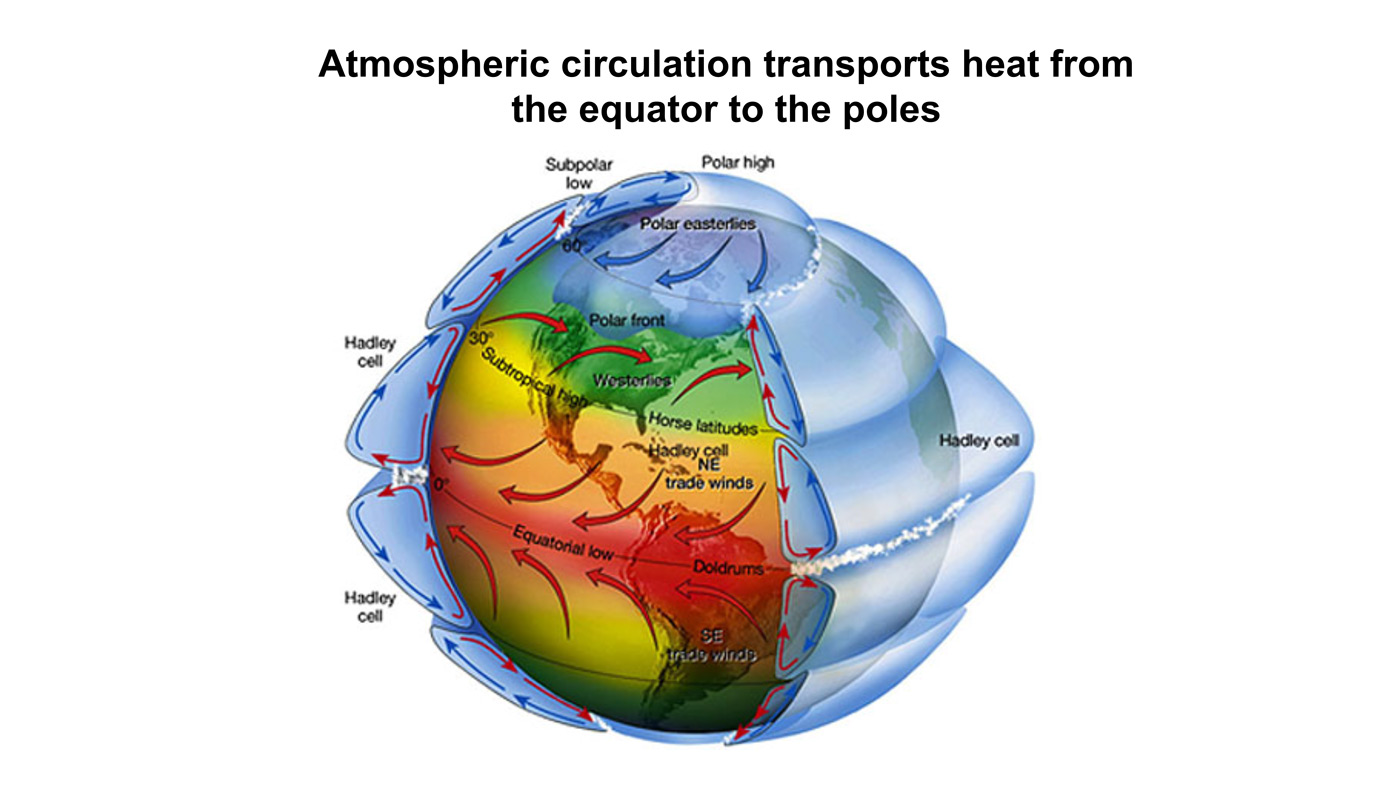
So what’s an atmosphere to do? It has heat to move! Well, it convects. It evaporates water.

Those 2 things dominate by orders of magnitude any sort of Radiative Model Physics. Yes, you have radiation of light bringing energy in, but then it goes into the ocean and into the dirt and the plants and even warms your skin on a sunny day. And it sits there. It does NOT re-radiate to any significant degree. Once “warmed” by absorption, heat trying to leave as IR hits a slammed shut window.

The hydrological cycle. Estimates of the observed main water reservoirs (black numbers in 10^3 km3 ) and the flow of moisture through the system (red numbers, in 10^3 km3 yr À1 ). Adjusted from Trenberth et al. [2007a] for the period 2002-2008 as in Trenberth et al. [2011].

So what does happen? Look around, what do you see? Clouds. Rain. Snow. (sleet hail fog etc. etc.)

Our planet is a Water Planet. It moves that energy (vibrations of atoms, NOT radiation) by having water evaporate into the atmosphere. (Yes, there are a few very dry deserts where you get some radiative effects and can get quite cold at night via radiation through very dry air, but our planet is 70% or so oceans, so those areas are minor side bars on the dominant processes). This water vapor makes the IR window even more closed (less distance to absorption). It isn’t CO2 that matters, it is the global water vapor.

What happens next?

Well, water holds a LOT of heat (vibration of atoms and NOT “temperature”) as the heat of vaporization. About 540 calories per gram (compared to 80 for melting “heat of fusion” and 1 for specific heat of a gram of water). Compare those numbers again. 1 for a gram of water. 80 for melting a gram of ice. 540 for evaporating a gram of water. It’s dramatically the case that evaporation of water matters a lot more than melting ice, and both of them make “warming water” look like an irrelevant thing.

Warming water is 1/80 as important as melting ice, and it is 1/540 th as important as evaporation of the surface of the water. Warming air is another order of magnitude less important to heat content.

So to have clue, one MUST look at the evaporation of water from the oceans as everything else is in the small change.

Look at any photo of the Earth from space. The Blue Marble covered in clouds. Water and clouds. The product of evaporation, convection, and condensation. Physical flows carrying all that heat (“vibration of atoms” and NOT temperature, remember). IF you add more heat energy, you can speed up the flows, but it will not cause a huge increase in temperature (and mostly none at all). It is mass flow that changes. The number of vibrating molecules at a temperature, not the temperature of each.

In the end, a lot of mass flow happens, lofting all that water vapor with all that heat of vaporization way up toward the Stratosphere. This is why we have a troposphere, a tropopause (where it runs out of steam… literally…) and a stratosphere.

What happens when it gets to the stratosphere boundary? Well, along the way that water vapor turns into water liquid very tiny drops (clouds) and eventually condenses to big drops of water (rain) and some of it even freezes (hail, snow, etc.). Now think about that for a minute. That’s 540 calories per gram of heat (molecular vibration NOT temperature, remember) being “dumped” way up high in the top of the troposphere as it condenses, and another 80 / gram if if freezes. 620 total. That’s just huge.

This is WHY we have a globe covered with rain, snow, hail, etc. etc. THAT is all that heat moving. NOT any IR Radiation from the surface. Let that sink in a minute. Fix it in your mind. WATER and ICE and Water Vapor are what moves the heat, not radiation. We ski on it, swim in it, have it water our crops and flood the land. That’s huge and it is ALL evidence of heat flows via heat of vaporization and fusion of water.

It is all those giga-tons of water cycling to snow, ice and rain, then falling back to be lofted again as evaporation in the next cycle. That’s what moves the heat to the stratosphere where CO2 then radiates it to space (after all, radiation toward the surface hits that closed IR window and stops.) At most, more CO2 can let the Stratosphere radiate (and “cool”) better. It can not make the Troposphere any less convective and non-radiative.

Then any more energy “trapped” at the surface would just run the mass transport water cycle faster. It would not increase the temperature.

More molecules would move, but at a limit on temperature. Homeostasis wins. We can see this already in the Sub-Tropics. As the seasons move to fall and winter, water flows slow dramatically. I have to water my Florida lawn and garden. As the seasons move to spring and summer, the mass flow picks up dramatically. Eventually reaching hurricane size. Dumping up to FEET of condensed water (that all started as warm water vapor evaporating from the ocean). It is presently headed for about 72 F today (and no rain). At the peak of hurricane season, we get to about 84 or 85 F ocean surface temperature as the water vapor cycle is running full blast and we get “frog strangler” levels of rain. That’s the difference. Slow water cycle or fast.

IF (and it is only an “if”, not a when) you could manage to increase the heat at the surface of the planet in, say, Alaska: At most you would get a bit more rain in summer, a bit more snow in winter, and MAYBE only a slight possible, of one or two days that are rain which could have been snow or sleet.

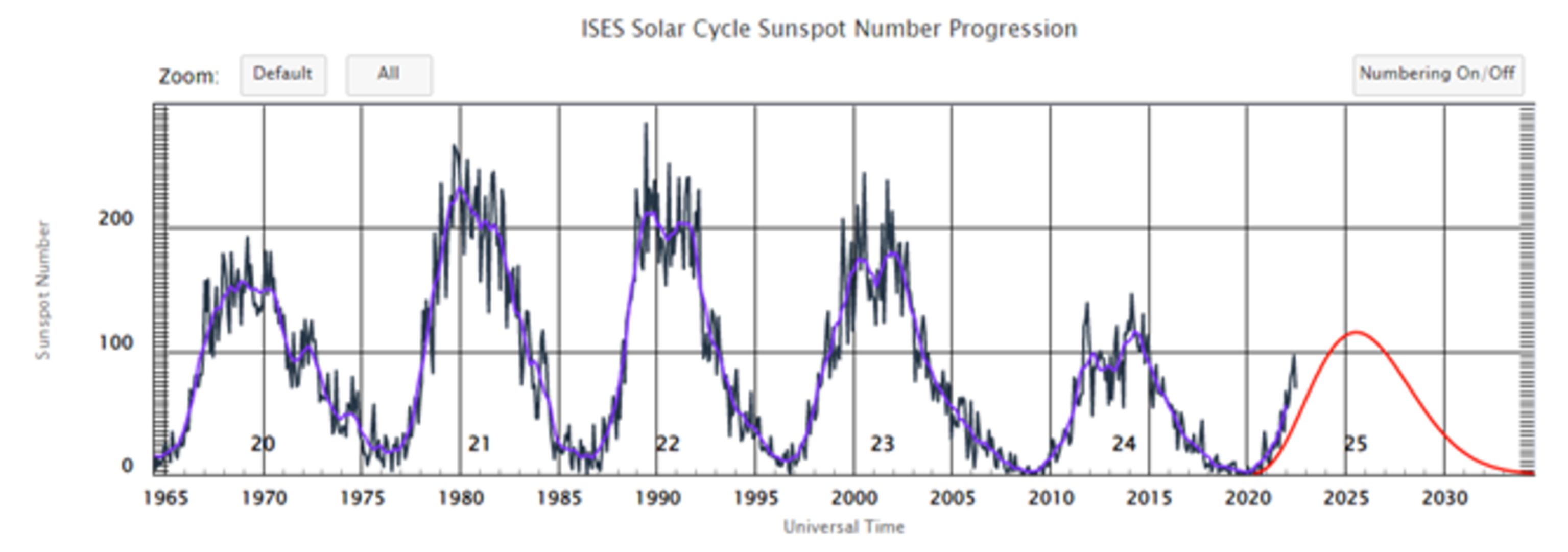
Then there’s the fact that natural cycles swamp all of that CO2 fantasy anyway. The Sun, as just one example, had a large change of IR / UV levels with both the Great Pacific Climate Shift (about 1975) and then back again in about 2000. Planetary tilt, wobble, eccentricity of the orbit and more put us in ice ages (as we ARE right now, but in an “interglacial” in this ice age… a nice period of warmth that WILL end) and pulls us out of them. Glacials and interglacials come and go on various cycles (100,000 years, 40,000 years, and 12,000 year interglacials – ours ending now, but slowly). The simple fact is that Nature Dominates, and we are just not relevant. To think we are is hubris of the highest order.

See Also  Bill Gray: H20 is Climate Control Knob, not CO2

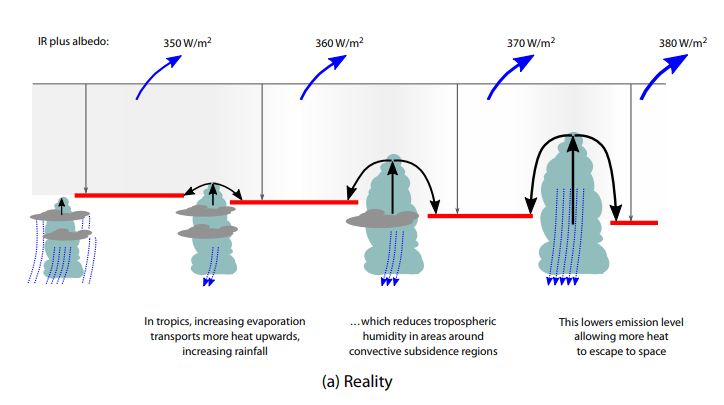
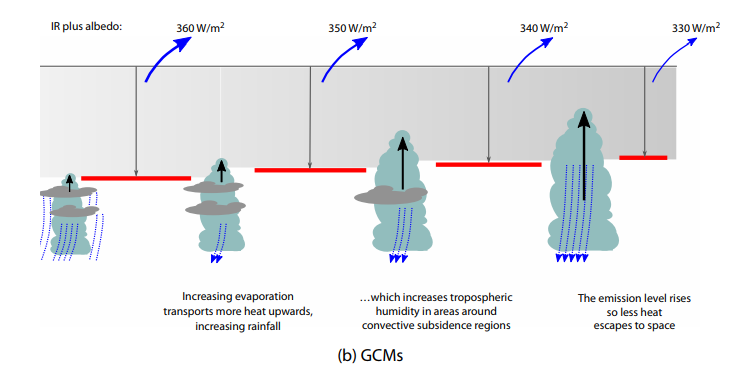
Figure 9: Two contrasting views of the effects of how the continuous intensification of deep cumulus convection would act to alter radiation flux to space. The top (bottom) diagram represents a net increase (decrease) in radiation to space

Footnote

There are two main reasons why investigators are skeptical of AGW (anthropogenic global warming) alarm. This post intends to be an antidote to myopic and lop-sided understandings of our climate system.

  1. CO2 Alarm is Myopic: Claiming CO2 causes dangerous global warming is too simplistic. CO2 is but one factor among many other forces and processes interacting to make weather and climate.

Myopia is a failure of perception by focusing on one near thing to the exclusion of the other realities present, thus missing the big picture. For example: “Not seeing the forest for the trees.”  AKA “tunnel vision.”

2. CO2 Alarm is Lopsided: CO2 forcing is too small to have the overblown effect claimed for it. Other factors are orders of magnitude larger than the potential of CO2 to influence the climate system.

Lopsided

Lop-sided refers to a failure in judging values, whereby someone lacking in sense of proportion, places great weight on a factor which actually has a minor influence compared to other forces. For example: “Making a mountain out of a mole hill.”