An End to Frivolous Climate Lawsuits?

Craig Richardson writes at Real Clear Energy The Supreme Court Is Taking Critical Step Towards Resolving Frivolous Climate Suits. Excerpts in italics with my bolds.

Sometimes the most important Supreme Court decisions are overlooked because of their technical nature. That is the case with the Supreme Court’s choice to hear jurisdictional claims in B.P. P.L.C., et al. v. Mayor and City Council of Baltimore.

The Court’s ruling will either allow cities to pursue superfluous nuisance claims against energy companies in state courts or limit the suits to federal courts that are less prone to accept broad liability claims.

These jurisdictional claims are significant because they set the appropriate scope of appellate review for these suits. Lawsuits predicated on federal laws and involving federal officers’ actions should be decided at the federal level. By agreeing to hear arguments in the Baltimore case, the Supreme Court is taking a crucial step towards setting a consistent legal playing field.

The Supreme Court will not rule on the merits of Baltimore’s claims. Instead, they will decide whether the defendants can appeal a jurisdictional claim after a federal court rejects it.

Under existing law, it is clear the defendant can appeal aspects of the decision, but not whether the whole claim is fair game. A ruling in favor of the defendants would force multiple Circuit Courts to reevaluate their previous rulings and rehear jurisdictional claims by the energy companies.

Even though the justices won’t decide on the merits, the key is the context of Baltimore’s lawsuit. For years, city and state officials have been – in partnership with trial lawyers and leftist environmental groups – twisting the meaning of public nuisance laws to sue energy companies for their alleged contributions to climate change, even though these companies aren’t breaking the law. In recent months, localities have filed even more suits, making it especially important that lower courts know whether these cases should be resolved at the federal or state level.

These suits aren’t about helping the environment but are filed by leftist politicians and their backers hoping to score political points as they desperately attempt to fill their city or state coffers.

A senior Rhode Island official said the state’s climate lawsuit was designed to create a “sustainable funding stream” for Rhode Island. The state is desperate for funding because decades of big-spending policies have left Rhode Island officials with a budget deficit approaching $160 million.

In another instance, San Mateo County filed a lawsuit claiming there was a 93% risk of deadly floods by 2050 while telling municipal investors they had nothing to worry about. The S.E.C. is now investigating the county for fraud, and it is clear its lawsuit is motivated by politics, not science.

Instead of addressing climate change or working to build a sustainable future, leftist officials are trying to profit off energy companies, which would drive up the cost for all Americans. Given the clear political undertones of these cases, and the potential devastating impact on the U.S. economy, they must receive a fair hearing in a neutral venue.

It shouldn’t be surprising that state and city officials are fighting to have the cases heard in the state courts, the most favorable jurisdictions possible for them. Local officials are confident they can find a state judge who will issue a broad ruling against the energy companies, which would be difficult to overturn on appeal, regardless of the merits.

This outcome would be a disaster for energy companies and their customers, who would have to worry about individual state judges’ whims. These judges could create a mishmash of legal rulings that ends up being totally incoherent. It is easy to imagine a scenario where the defendants prevail in most of these frivolous lawsuits but lose a few in unfriendly jurisdictions and all of us will pay the price monetarily.

Additionally, state courts shouldn’t be addressing national political issues, especially on climate change, an issue that in the past the Supreme Court ruled should be handled by Congress and the president, not state courts. If laws need to be changed, Congress should change them, instead of having individual judges legislate from the bench. Some courts have already dismissed similar climate suits for this very reason.

Allowing state courts to decide debates of global importance is a recipe for disaster.

Generally, federal courts “are far less likely, as a whole and with some exceptions, to be willing to entertain expansive theories of liability than state courts,” according to George Mason University law professor Donald Kochan. This means federal courts are unlikely to perform legal gymnastics to try and hold energy companies accountable when it is clear they are operating within the law and have permits from the government.

Covid: The Big Picture in 7 Charts

Thanks to Swiss Policy Research for providing perspective on the coronavirus contagion in a few charts.  Their article is Covid: The Big Picture in 7 Charts, updated to October 10, 2020.  Excerpts in italics with my bolds.

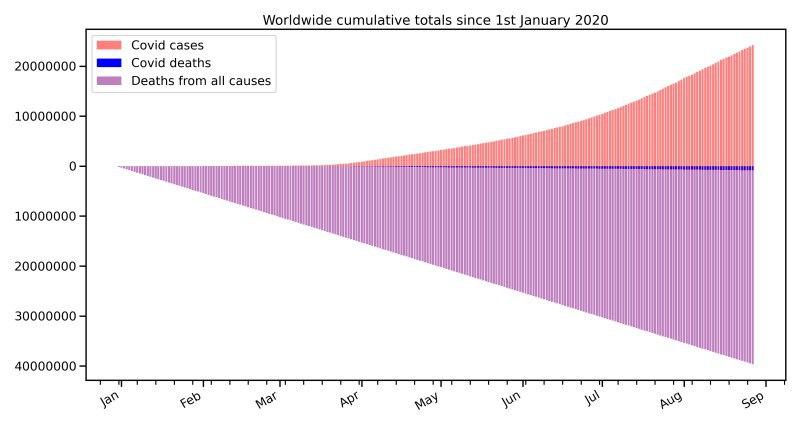
1) Global covid “cases” and deaths vs. all-cause deaths

Chart number one shows global covid deaths by September in blue (about 1 million) versus global all-cause deaths in purple (about 40 million). The chart also shows the cumulative number of global covid “cases” (i.e. positive PCR tests) – the so-called “casedemic” on top of the pandemic.

In contrast, the UN expects that the political reaction to the pandemic may put the livelihood of up to 1.6 billion people at immediate risk and may, by the end of 2020, push an additional 130 million people “to the brink of starvation” and an additional 150 million children into poverty.

Global covid deaths and “cases” vs. all-cause deaths (interpolated data; source: OWD)

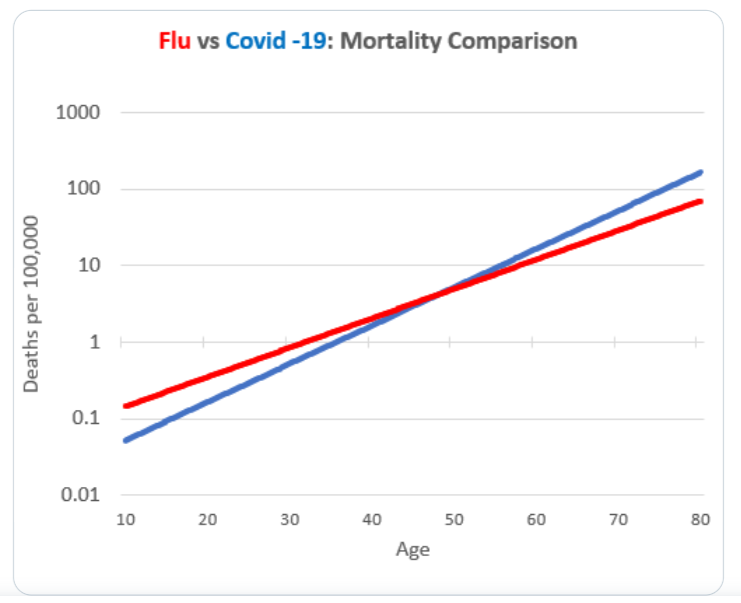
2) Covid mortality vs. flu mortality

Chart number two compares mortality by age for covid and for seasonal influenza (based on US CDC data). Below 50 years, influenza is somewhat deadlier than covid; above 50 years, covid is quickly getting deadlier than seasonal influenza (for which vaccines are available).

This “close to natural” mortality profile explains the very high median age of covid deaths in most Western countries (80 to 85 years in Europe, about 78 years in the US).

Overall, in Western countries a medium pandemic influenza (like 1957 and 1968) remains the best comparison to covid in terms of overall lethality and mortality. In non-Western countries, including Japan and most of Africa, covid mortality appears to be comparable to seasonal influenza.

Flu vs. covid mortality by age (CC/CDC). The chart in log-scale shows that COVID-19 is less lethal than flu up to the age of 48.

3) The role of nursing homes

Chart number three compares covid lethality (IFR) for the entire population (including nursing homes) and the non-nursing home population in Belgium (the hardest hit country in Europe; nevertheless, Belgian peak mortality is comparable to flu waves in the 1950s and 1960s.)

In most Western countries, nursing homes account for about 40% (Germany) to 80% (Canada and some US states) of all covid deaths, but they encompass only about 0.6% of the population; their IFR (ca. 30%) is about 100 times higher than for the general population (ca. 0.3%) and about ten times higher than for people of the same age group (75+) outside of nursing homes (ca. 3%, see below).

When calculating and communicating IFRs, it is therefore crucial to distinguish between the nursing home and the non-nursing home population in order to provide meaningful values. Nursing homes do not require a general lockdown of society, but targeted and humane protection.

Belgium: IFRs in entire population vs. non-nursing home population (Molenberghs)

4) Covid mortality in the USA

Chart number four shows monthly mortality in the USA since 1960. Regarding covid, the US is one of the hardest hit Western countries; nevertheless, its peak monthly mortality (driven by the Northeast region) is comparable to the strong influenza waves of the 1960s.

If covid had hit the US in the 1960s, its impact would have been much lower, due to a younger population, fewer nursing homes (which account for about 50% of US covid deaths), and much lower metabolic disease prevalence (i.e. diabetes, obesity and cardiovascular disease).

However, in much of the US (and Europe), coronavirus antibody prevalence is still below 10% (compared to values between 20 and 50% in global hotspots). It is therefore possible that the new coronavirus will cause additional deaths if high-risk population groups get infected. On the other hand, both intensive and early treatment options have improved in the meantime.

US: Monthly all-cause deaths since 1960 (Whelan/CDC)

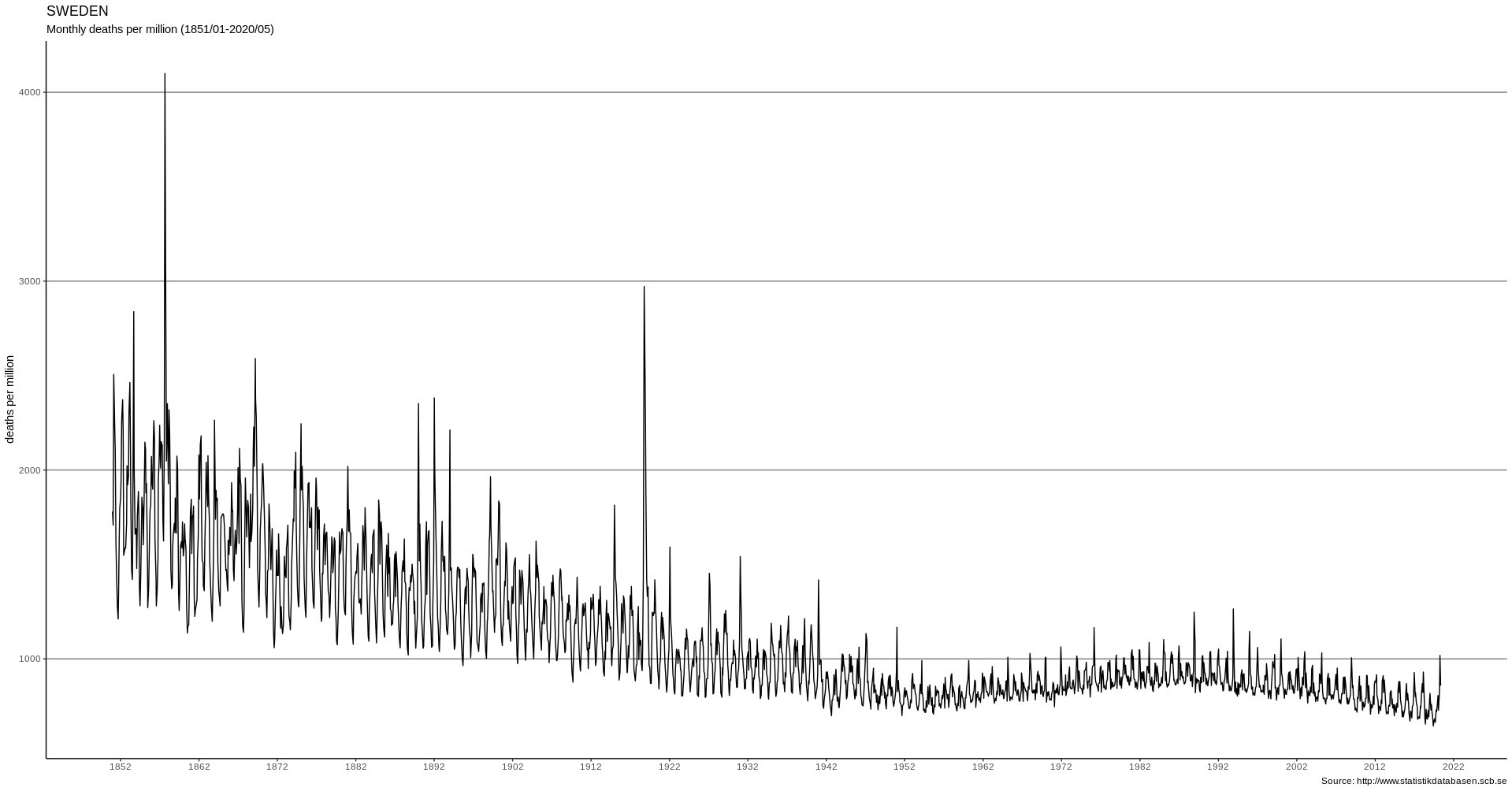
5) Covid mortality in Sweden

Chart number five shows monthly mortality in Sweden since 1851. Sweden did not impose a covid lockdown, did not introduce a face mask mandate, and has one of the lowest intensive care bed capacities in Europe (two times lower than Italy). Nevertheless, its peak mortality is comparable to the strong seasonal flu waves of the 1990s. The chart also shows the k of the 1918 influenza pandemic and the nineteenth century cholera and hunger epidemics.

Sweden: Mortality since 1851 (JH/FOHM)

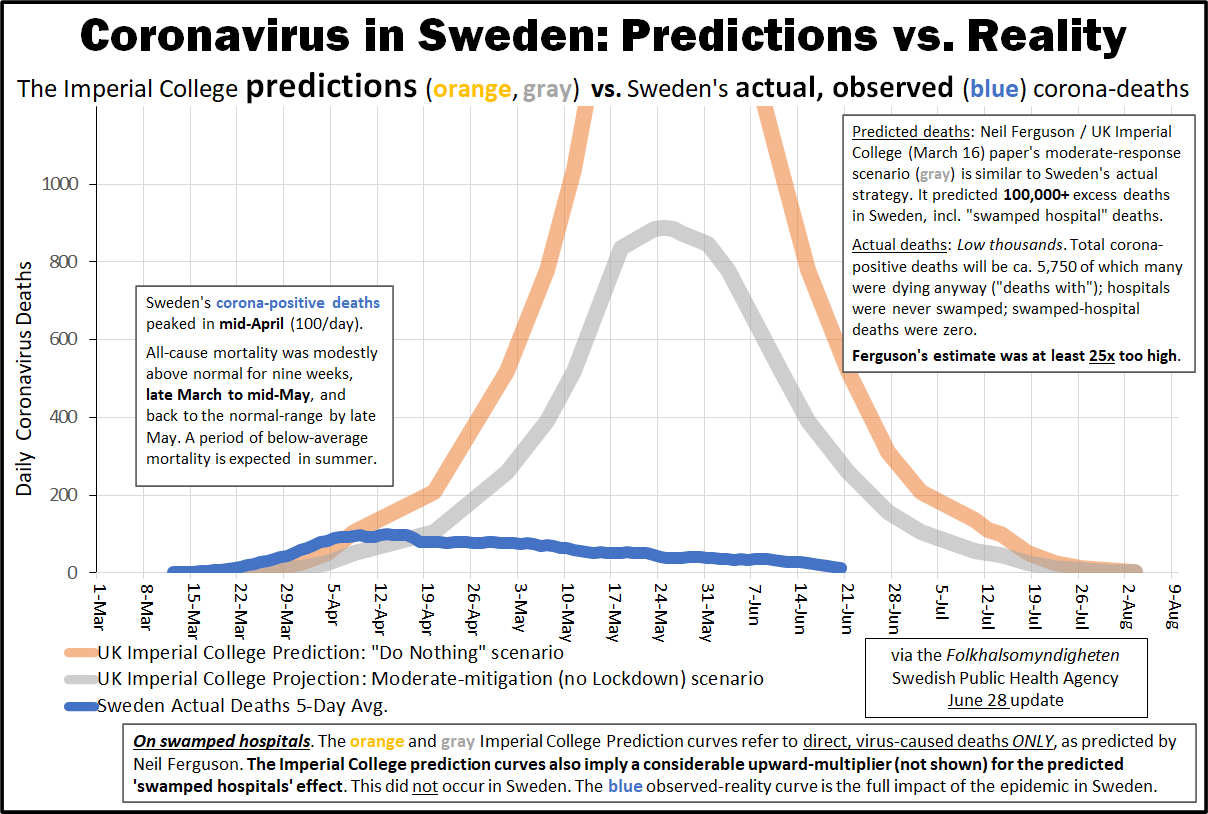
6) Epidemiological models vs. reality

Chart number six shows covid mortality in Sweden predicted by Imperial College London (professor Neil Ferguson) without measures (orange) and with moderate measures (gray), compared to the actual mortality curve (blue). 70% of Swedish deaths occurred in nursing facilities, while mortality in people below 65 remained below the five-year average.

Sweden: Predicted deaths vs. reality (HTY/FOHM)

7) Economic and social impact of political measures

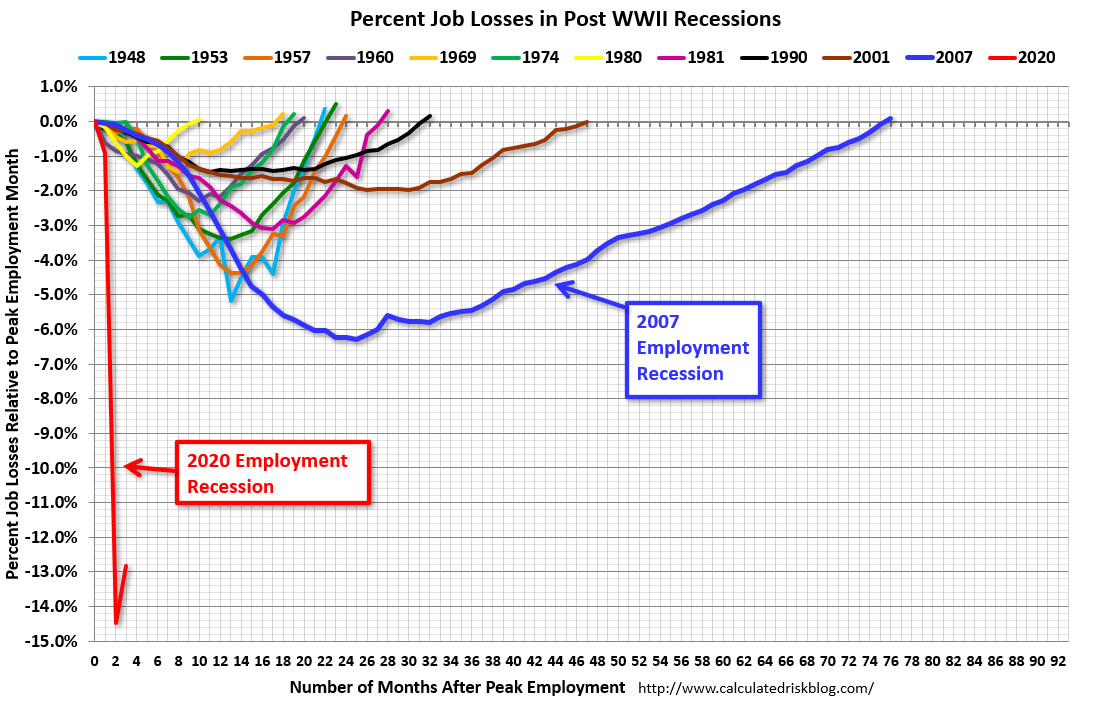
Chart number seven shows US job losses in post-1945 recessions. The political reaction to the new coronavirus, notably lockdowns, has caused the worst employment recession since 1945, putting millions of people out of job and bankrupting tens or hundreds of thousands of businesses.

US recessions in comparison (BLS / CRB)

Conclusions

Covid is a very serious global public health issue, but:

  1. Talking about “cases” as if these were sick people is misguided.
  2. Talking about IFRs (lethality) without distinguishing between the general population and nursing homes, as well as early and late pandemic phase, is misguided.
  3. Saying covid is “worse than the flu”, without saying for whom, is misguided.
  4. Saying the recession is “due to covid”, not the political reaction, is misguided.
  5. Saying epidemiological models have been accurate and helpful, is also misguided.

Why They Trash Talk Sweden

Dan Hannan explains in his Washington Examiner article The better Sweden does on the coronavirus, the angrier they get.  Excerpts in italics with my bolds.

My columns on Sweden’s laissez-faire approach to the coronavirus always provoke an angry response. But it is striking that, the better Sweden does, the angrier its critics become.

Like anti-Trumpers who couldn’t hide their annoyance at the success of the U.S. economy, or British Remainers who longed for a recession so as to be able to say “I told you so” about Brexit, lockdown enthusiasts determinedly screen out the good news.

They trot out three main arguments. First, they say, “You can’t compare us to Sweden. It has a low population density.” Second, they argue that “Sweden hasn’t succeeded; it has had more deaths per capita than neighboring countries.” Third, the claim that “Sweden has taken an economic hit as well — the worst of both worlds.”

I’ll come to these assertions in a moment, but it is worth noting that they are all retrospective. The lockdown was initially sold across the world as the only way to avert calamity. The cost of the closures (in terms of lost liberty, lost livelihoods, and, indeed, lost lives through non-coronavirus health conditions) was so vast that there was no other way to justify it. Lockdown proponents didn’t say, “This might slightly reduce the mortality rate.” They said, “Do it or our hospitals will be overwhelmed!”

Which was, to be fair, what they initially expected to happen in Sweden. “Heading for disaster” was the headline in Britain’s right-wing Sun. “They are leading us to catastrophe,” agreed the left-wing Guardian. Time magazine reported that “Sweden’s relaxed approach to the coronavirus could already be backfiring” and quoted a doctor saying that it would “probably end in a historical massacre.” “We fear that Sweden has picked the worst possible time to experiment with national chauvinism,” chided the Washington Post. President Trump, justifying his own crackdown, bizarrely claimed that Sweden “gave it a shot, and they saw things that were really frightening, and they went immediately to shutting down the country.”

Not one commentator in March or April argued that Sweden might be less at risk than other places. Lockdown enthusiasts have switched very suddenly from “Sweden is heading for a genocide” to “well, we couldn’t do that here because we’re nothing like Sweden.”

What we are seeing is a version of the sunk cost fallacy — a determination to justify the huge losses imposed by the lockdown. It is beyond depressing to see scientists give in to these basic cognitive biases.

So, to the specific criticisms: Yes, Sweden has a low population density if you divide its population by its land area. But Swedes are not evenly spaced out across their country. Most of them live in towns and cities — 85% of the population occupies 2% of its surface area. The idea that Swedes live shyly among the birch trees, plunging into their chilly lakes at the footfall of a stranger, is one of the oddest arguments to have come out of this whole unedifying debate.

It is true that Sweden has had more coronavirus fatalities than other Nordic states. But remember that the lockdown was only intended to buy time. Infection rates are now rising faster in the rest of Scandinavia as things catch up.

In any case, though, so what? The argument for the lockdown was that there was no alternative. For that argument to work, it is not enough for Sweden to lag a bit behind Finland. Sweden would have to stick out like a sore thumb on every graph. It doesn’t.

As for the argument that the Swedish economy has taken as bad a hit as everyone else’s, it is nonsense. Obviously, a medium-sized country will be affected by a global downturn, as well as by its own voluntary distancing measures. But Sweden got off more lightly than most. Its GDP dropped by 8.3% in the second quarter of this year (compared to 2019). In the United States, the drop was 9.5%, in Germany 11.7%, in Canada 13.5%, in Britain 21.7%, and in Spain 22.1%. In 2020 as a whole, according to a new paper by Danske Bank, Sweden is expected to see a 3.3% contraction, compared to 4.3% for the U.S., 5.8% for the United Kingdom, and 8.3% for the eurozone.

The philosopher Karl Popper argued that the defining characteristic of science was that its propositions were falsifiable. But we have somehow reached a place where everything is turned into an argument for more restrictions. If infections rise, we need a tougher lockdown. If they fall, the lockdown is working, so we should keep it.

Yet, there it stands, stolid, sensible, social-democratic Sweden (alongside its U.S. equivalent, South Dakota) silently rebuking the doubters by its success. No wonder they get so angry.

Hurricane Season Overview Oct. 11

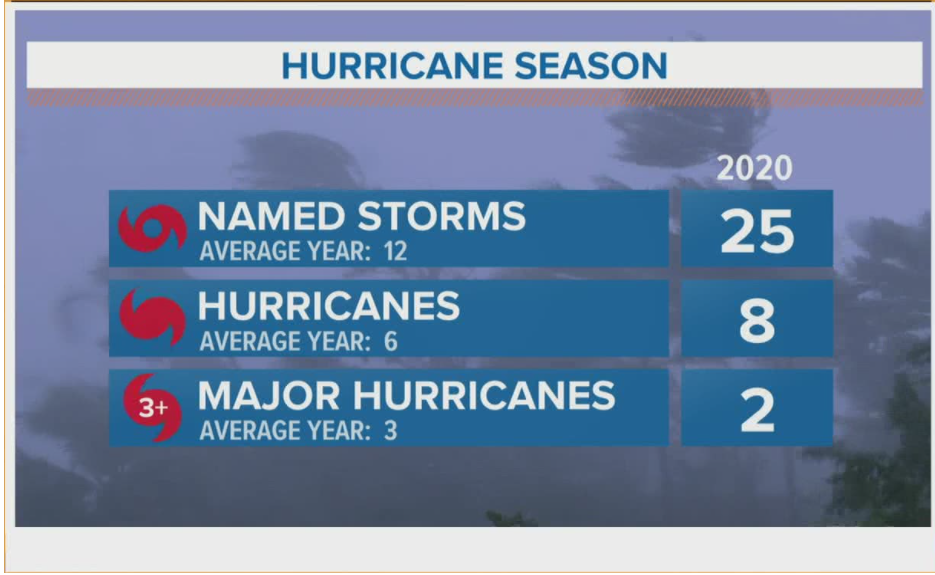
Your weather channel is airing charts like this to show how active is this year’s storm season impacting the Caribbean and US east coast.  So far, there have been many more named storms, two more hurricanes than average, and one less major hurricane at this point in the season.  Dr. Ryan Maue provides (here) a global context for understanding storm activity this year, updated October 11, 2020.

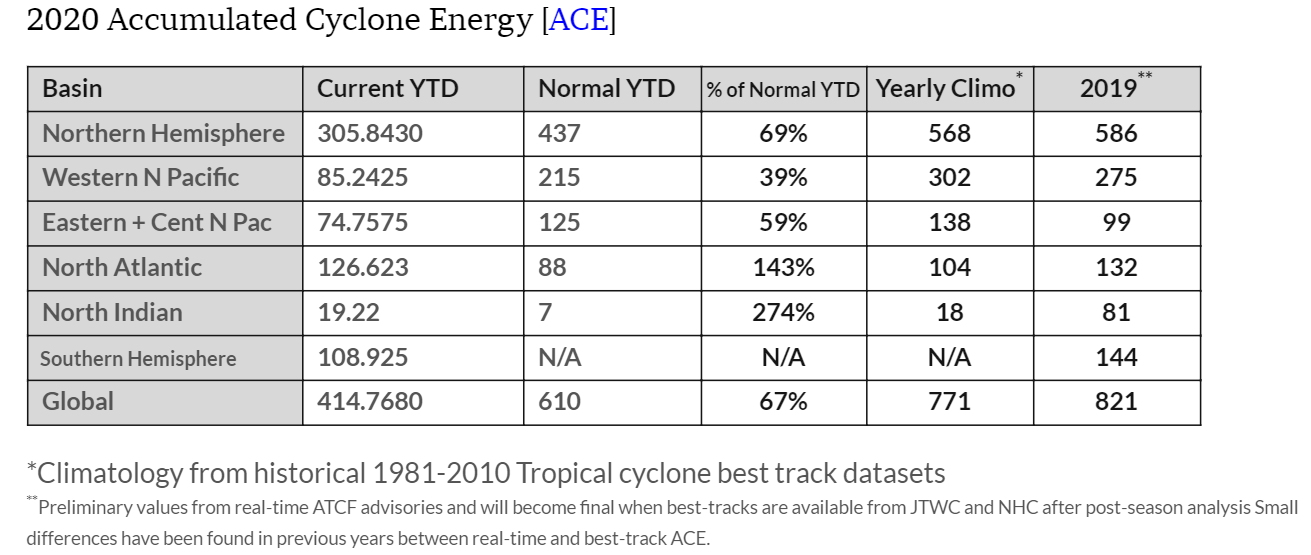
So globally, the ACE (Accumulated Cyclone Energy) is 2/3 of the average 1981-2010 at this point in the season.  ACE compiles the storm strengths as well the the number of storms.  Clearly the North Atlantic is 143% of average, but slightly behind 2019.  This indicates that many of the named storms were not that strong.

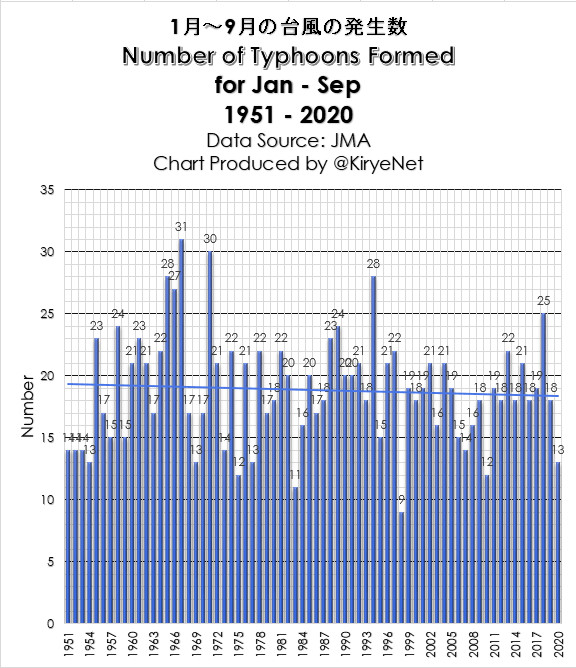
Meanwhile the Northern Hemisphere is running 69% of average and well behind last year.  This is due to North Pacific having a quiet season offsetting North Atlantic activity.  See the graph below from RealClimateScience

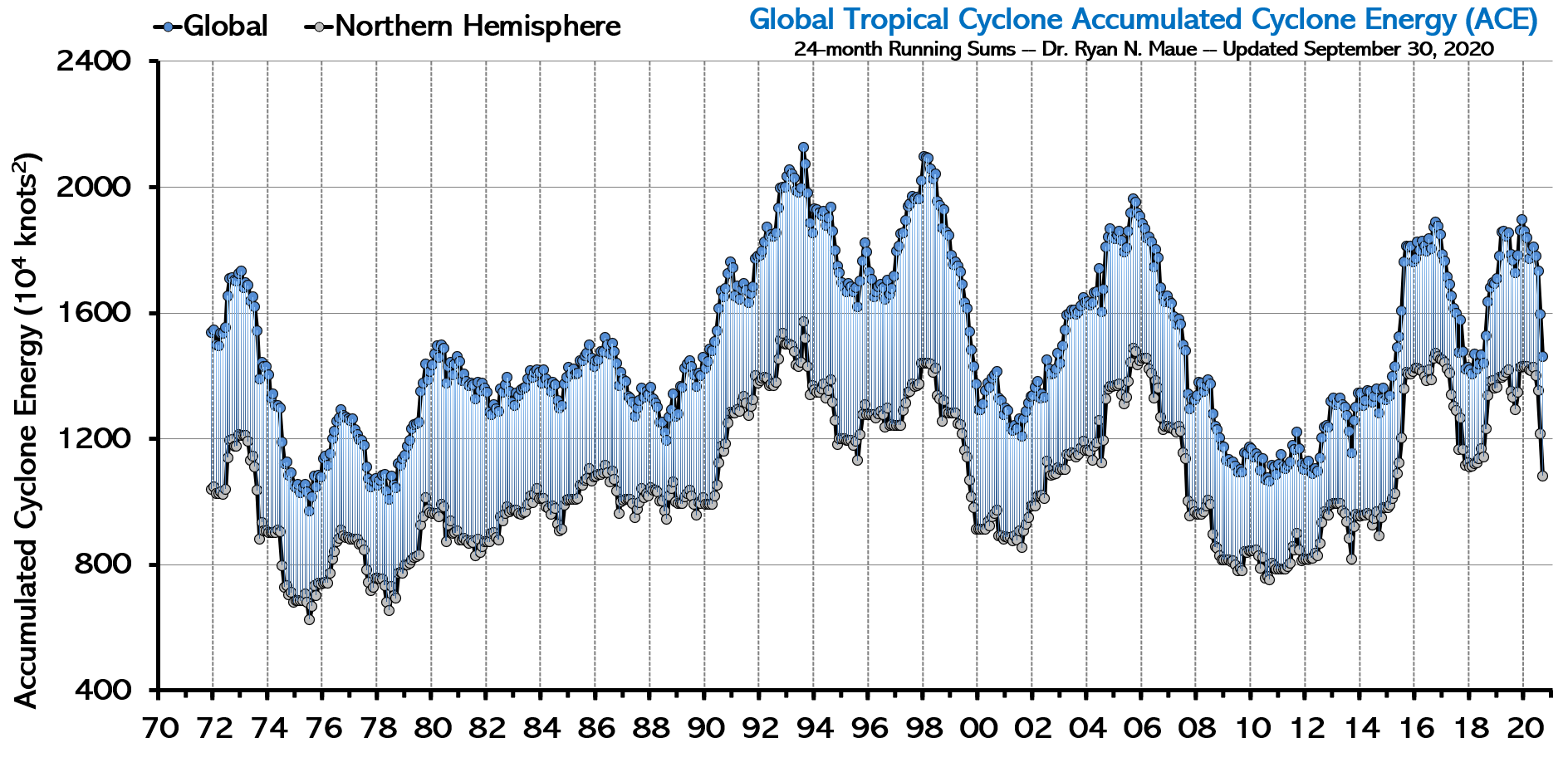
The historical summary of Tropical Hurricane ACE as of September 30, 2020:

Figure: Last 50-years+ of Global and Northern Hemisphere Accumulated Cyclone Energy: 24 month running sums. Note that the year indicated represents the value of ACE through the previous 24-months for the Northern Hemisphere (bottom line/gray boxes) and the entire global (top line/blue boxes). The area in between represents the Southern Hemisphere total ACE.

The hiatus of storms lasted a decade after 2006 (Thanks Global Warming).  Now seasons are more active (Your fault Global Warming), though somewhat less than previous peaks.   Maybe it’s Mother Nature after all.

Herd Immunity: Not If But When

Don’t Fence Us In!

An important statement from Martin Kulldorff, co-author of the Great Barrington Declaration referenced in previous post reprinted below.  Reported in Newsweek, (here)

In an email sent to Newsweek, one of the petitions co-authors, Dr. Martin Kulldorff wrote, “We are very pleased with the reception that the Great Barrington Declaration has received, with over 75,000 co-signers in less than two days, including over 3,000 Medical and Public Health Scientists and over 4,000 Medical Practitioners.”

“We are not advocating a ‘herd immunity strategy.’ Herd immunity is not a strategy, but a scientifically proven phenomena, just like gravity.

And you would not say that an airplane pilot is using a ‘gravity strategy’ to land a plane. No matter what strategy is used, we will reach herd immunity sooner or later, just as an airplane will reach the ground one way or another,” Kulldorff’s email said. “The key is to minimize the number of deaths until we reach herd immunity and that is what the Great Barrington Declaration is about.”

H/T to Reference Frame for a clarifying post on herd immunity drawing on experience in Prague and Czech Republic.  Lubos Motl writes:  Excerpts in italics with my bolds.

At this moment, Czechia is by far the most Covid-active country in the world, a fact that is caused by Czechs’ not being afraid of this disease now, despite the efforts of the prime minister, minister of health, and a few others who would like to reignite the fear. We still had concerts, ice-hockey matches with thousands of fans etc. last night, the life is continuing normally. Culture, sports, and fun will be banned for two weeks from next Monday; after the totally free July and August, we basically added another month of almost complete freedom in which it was already clear that the disease was quickly growing.

If you want to know, the deaths are a bit above 900 now, growing ~30 a day. Hospitalizations are at ~1900, growing ~150 per day. Serious cases are above ~400, growing by 10-50 a day. 800 mild hospitalized patients will be moved to hotels, a smart move, especially because hotels are surely under-utilized now. While only ~400 ICU-like beds are used by Covid patients now, we have some ~800 available – the system is ready for another tripling of the serious Covid cases. Claims about the cracking Czech healthcare system are exaggerated (a euphemism for “complete lies”).

The death-to-cases ratios is much lower than it was in spring, pretty much proving that the disease is comparable to flu in average.

Maybe a less severe variant of the virus has spread; maybe people are getting lower doses now; and maybe it’s because of the treatment. In Czechia, doctors use all kinds of treatments, obviously oxygen, mechanical ventillation, and favipiravir, convalescent plasma, isoprinosine, corticosteroids, and… especially remdesivir.

Czechia will go through another month of this elevated Covid activity. Many of us will be afraid, some of us will have to be saddened. A vaccine may arrive and the minister of health has declared his intention to strip you of the face mask duties if you are vaccinated (it should apply to all other restrictions; and to the immune Covid alumni, too). This is a sensible incentive to get vaccinated. But the current fatality rate due to Covid is so much smaller than in spring (also due to remdesivir) that we should simply go through this unpleasant experience at full speed.

The Czech doctors’ petition against the hysteria and restrictions has over 64,000 signatures now. I am disappointed (and surprised) that our government doesn’t just accept this fact – that the penetration comparable to herd immunity is unavoidable – and doesn’t try to make everyone sure that it can really manage it. 

Background from Previous Post

Medical experts: Lockdowns do more harm than good is a declaration by Martin Kulldorff, Sunetra Gupta and Jay Bhattacharya reported at NY Post.  Excerpts in italics with my bolds.

On Oct. 4, 2020, three preeminent experts — Dr. Martin Kulldorff, professor of medicine at Harvard University; Dr. Sunetra Gupta, an epidemiologist at Oxford University; and Dr. Jay Bhattacharya, a physician and epidemiologist at Stanford University — delivered the following declaration, calling for a different approach to dealing with the novel coronavirus than the lockdown model:

As infectious-disease epidemiologists and public-health scientists, we have grave concerns about the damaging physical and mental-health impacts of the prevailing COVID-19 policies and recommend an approach we call Focused Protection.

Coming from both the left and right, and around the world, we have devoted our careers to protecting people. Current lockdown policies are producing devastating effects on short- and long-term public health.

The results (to name a few) include lower childhood-vaccination rates, worsening cardiovascular-disease outcomes, fewer cancer screenings and deteriorating mental health — leading to greater excess mortality in years to come, with the working class and younger members of society carrying the heaviest burden. Keeping students out of school is a grave injustice.

Keeping these measures in place until a vaccine is available will cause irreparable damage, with the underprivileged disproportionately harmed.

Fortunately, our understanding of the virus is growing. We know that vulnerability to death from COVID-19 is more than a thousand-fold higher in the old and infirm than the young. Indeed, for children, COVID-19 is less dangerous than many other harms, including influenza.

As immunity builds in the population, the risk of infection to all — including the vulnerable — falls. We know that all populations will eventually reach herd immunity — that is, the point at which the rate of new infections is stable — and that this can be assisted by (but is not dependent upon) a vaccine. Our goal should, therefore, be to minimize mortality and social harm until we reach herd immunity.

The most compassionate approach that balances the risks and benefits of reaching herd immunity is to allow those who are at minimal risk of death to live their lives normally to build up immunity to the virus through natural infection, while better protecting those who are at highest risk. This is Focused Protection.

Adopting measures to protect the vulnerable should be the central aim of public-health responses to COVID-19. By way of example, nursing homes should use staff with acquired immunity and perform frequent polymerase-chain-reaction testing of other staff and all visitors. Staff rotation should be minimized.

Retired people living at home should have groceries and other essentials delivered to their homes. When possible, they should meet family members outside, rather than inside. A comprehensive and detailed list of measures, including approaches to multigenerational households, can be implemented and is well within the scope and capability of public-health professionals.

Those who are not vulnerable should immediately be allowed to resume life as normal. Simple hygiene measures, such as handwashing and staying home when sick, should be practiced by everyone to reduce the herd immunity threshold.

Schools and universities should be open for in-person teaching. Extracurricular activities, such as sports, should be resumed. Young, low-risk adults should work normally, rather than from home. Restaurants and other businesses should open. Arts, music, sport and other cultural activities should resume. People who are more at risk may participate if they wish, while society as a whole enjoys the protection conferred upon the vulnerable by those who have built up herd immunity.

Since the declaration was published, more than 2,000 public-health scientists and more than 2,000 medical practitioners have signed it, as have nearly 40,000 members of the general public. You can add your signature to the declaration online at https://gbdeclaration.org.

See Also Herd Immunity Already? summarizing interview with Professor Sunetra Gupta.


Quebec Covid Numbers Don’t Add Up

In recent months, some demonstrators in Quebec have denounced what they consider government fear campaigns over COVID-19. The new measures included a mandatory rule on wearing masks during demonstrations. (Graham Hughes/The Canadian Press)

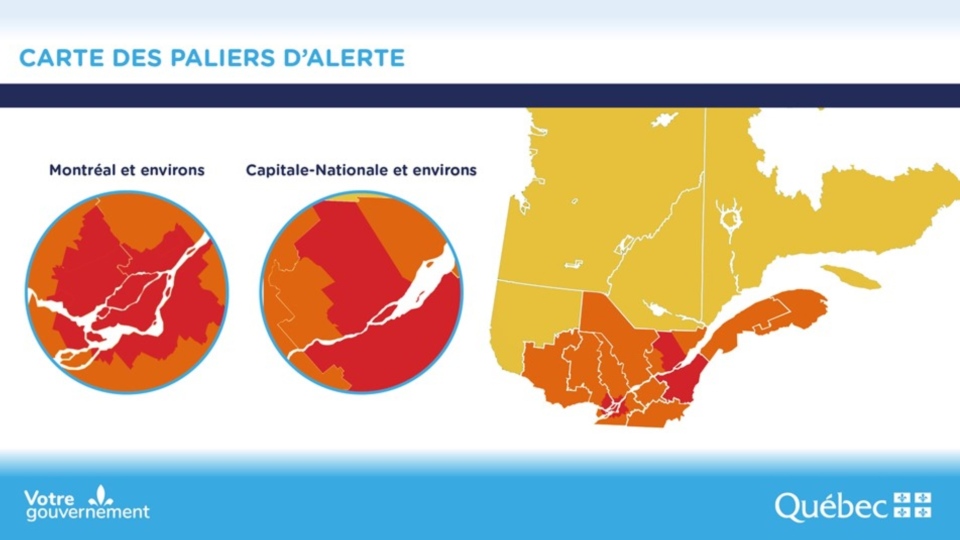
Again Quebec officials report numbers selectively in order to keep the citizenry cowed, and to claim additional restrictions are justified.  From Global News this week Quebec expands red zone designation to more regions as coronavirus cases climb  Excerpts in italics with my bolds.

“We have to make sacrifices in order to, as I said yesterday, to save our health network,” he said.

The province’s caseload has reached 82,992 while the death toll attributed to the virus has reached 5,915. [Labels people as “cases” when they have no symptoms and are not infectious. Ignores recoveries, and hides the currently small rate of deaths after testing positive for the virus.  ]

Health Minister Christian Dubé announced five more Regional Municipal Counties, including Bécancour, Nicolet-Yamaska, Drummond, Trois-Rivières, and Portneuf, are being added to the province’s coronavirus red zones.

Dubé said with the addition of the new regions, most of the St-Lawrence Valley between Quebec City and Montreal has gone red, with a few exceptions.

The recent uptick in cases and growing spread of the virus has also led to more hospitalizations in the last week. The resurgence has also prompted officials to ask Quebecers to stay home to ease pressure on the health-care network.

As of Thursday, Legault said the number of patients jumped by 16 for a total of 425. Of those patients, 68 are in intensive care — an increase of six. [No context was provided for those numbers.  For that see discussion from previous post below.]

Note: As we shall see later on, Quebec covid numbers mislead because officials only do addition; subtraction is not allowed lest fears be undermined.  The media obsesses over cumulative statistics generated months ago, hiding the present facts on the ground.

Previous Post Covid Coercion in Quebec
Update:  Quebec is one example of a world wide problem:  See COVID-19 Is Also a Crisis for Democracy and Human Rights

The coronavirus pandemic began as a global health crisis. It spawned an economic crisis. Now COVID-19 is also fueling a crisis for democracy and human rights.

Leaders around the world are using the virus as cover to reduce transparency, increase surveillance, arrest dissidents, repress marginalized populations, embezzle public resources, restrict media, and undermine fair elections.

Quebec premier clarified the province’s new COVID-19 measures in red zones

With this edict, as of October 1 the government of Quebec has put 60% of the provincial population under strict restrictions, about 4.8 million people.  The article from CBC News provides the details Quebec gives police legal tools to enter homes quickly to stop gatherings during COVID-19 Excerpts in italics with my bolds.
Quebec Premier François Legault says police in the province’s red zones — regions where COVID-19 cases are surging — will be issuing $1,000 fines to those who violate newly strengthened public health rules.

With fees, those fines will top $1,500 and can be issued for gathering in private residences or protesting without a face covering.

Speaking during a late-afternoon news conference on Wednesday just hours before the new rules went into effect, Legault said the negligence of a few has led to the crackdown.

“Lives are at stake. We want to keep our children in schools,” Legault said. “We also want to protect our health network”

Quebec reported 838 new cases of COVID-19 but no new deaths Wednesday. Since the start of the pandemic, there have been 74,288 confirmed cases and 5,834 people have died in the province.

Home gatherings can lead to fines

Beyond the few exceptions, such as for caregivers or romantic relations, house guests are not allowed, Legault said.

Police are authorized to demand proof of residency and if residents refuse entry, officers will be able to obtain warrants faster through a new, virtual system that was established in collaboration with the Crown, the premier said.

“We had to give the police the means to intervene,” said Public Security Minister Geneviève Guilbault.

Protestors to be fined for refusing to wear masks

Quebec made masks mandatory inside public spaces, like bars and shops, on July 18, but there have been several protests since.

Now, anti-maskers will have to cover up if they want to march or police will be issuing fines.

All gatherings prohibited, travel discouraged

Legault said all gatherings will be banned, even outside in public parks — an activity that has grown more popular in places like Montreal during the pandemic.

“Police officers will start by trying to disperse the gatherings, but if people don’t co-operate, fines can be given,” he said.

Legault said people from red zones cannot travel to orange zones to eat in a restaurant or gather in a home. They will face fines if they do.

He said restaurants will not be required to verify residency, but police can issue a ticket if they catch people violating the rules.

People should not travel between regions to pick up groceries or run similar errands, Legault said. People can go to their cottage, for example, as long as they bring their provisions with them.

The new restrictions take effect 12:01 a.m. ET on Thursday and are set to last for 28 days, until Oct. 28, in the red zones. The restrictions are:

  • A ban on home gatherings, with some exceptions, such as a single caregiver, babysitter, tradesperson or technician, allowed per visit.
  • All bars and casinos are closed. Restaurants can offer only takeout.
  • Museums, cinemas and theatres are closed.
  • Being less than two metres apart will be prohibited. Masks will be mandatory during demonstrations.
  • Houses of worship and venues for events, such as funerals and weddings, will have a 25-person limit.
  • Hair salons, hotels and other such businesses will stay open.
  • Schools will remain open.
What is the Emergency Requiring Virtual Quarantine of Healthy People?

Each Friday the Quebec health research institute (INESSS) provides a statistical update of the Covid19 situation with projections regarding the key concern:  Capacity of the system to care for actual Covid cases requiring in-hospital treatment. Here is the latest information.

On the left is the history of Covid hospitalizations in Quebec to end of September.  Note that presently there about 20 people per day are admitted to hospital with Covid19.  As of Oct. 1, Quebec reported 276 people in hospital (including 46 in ICU) out of covid bed capacity of 1750.  If the 20/day new admissions rate since July 1 continued, and assuming an average length of stay of 12 days, the net of covid beds occupied should not increase and more likely would go down.  So the projections on the right side have a wide range, but even with an upward bias, the capacity is not reached.  And as the lower right shows, ICU capacity is even less likely to be overwhelmed.

On September 24, INESSS authorities said (here):

In Quebec, the hospitalization rate for COVID-19 patients has dropped sharply since the beginning of the pandemic. During the first wave, about 13 per cent of cases ended up in hospital. From Aug. 10 to Sept. 6, the rate was just 5 per cent. At a technical briefing on Wednesday, researchers and officials from Quebec’s institute of excellence in health and social services (INESSS) projected that the rate for COVID-19 patients in early September would fall again to 3.8 per cent.

The drop can be explained by the relative youth of Quebeckers contracting the virus in its second wave and their relative lack of comorbidities. By contrast, in the spring, the virus tore through long-term care homes in the province, killing 4,914 elderly residents.

As a result of this shift, Quebec will not exceed its hospital capacity of about 2,000 beds in the next four weeks, according to the INESSS projections. But officials warned that a faster spread of the virus caused by careless behaviour could still put pressure on the health care system.

Above is the outlook for October from INESSS.  For both ICU and covid hospital beds observations are tracking a forecast showing slight increases.  It appears that the precautionary principle is being applied without regard for the costs of locking down: social, economic and personal well-being seem not to be part of the equation.

Quebec Situation Update October 1, 2020

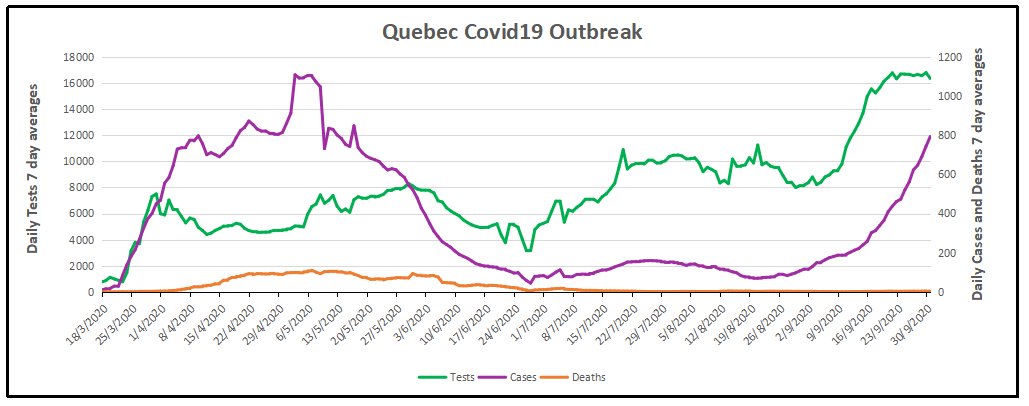
Note that testing has quadrupled since July and the number of new cases followed, especially in the last month.  Meanwhile daily deaths are unchanged at less than five a day, compared to Quebec losing 186 lives every day from all causes..  Recoveries are not reported to the public, perhaps due to the large number of people testing positive but without symptoms or only mild illness and no professional treatment.  The graph below estimates recoveries assuming that people not dying 28 days after a positive test can be counted as cured or in recovery.
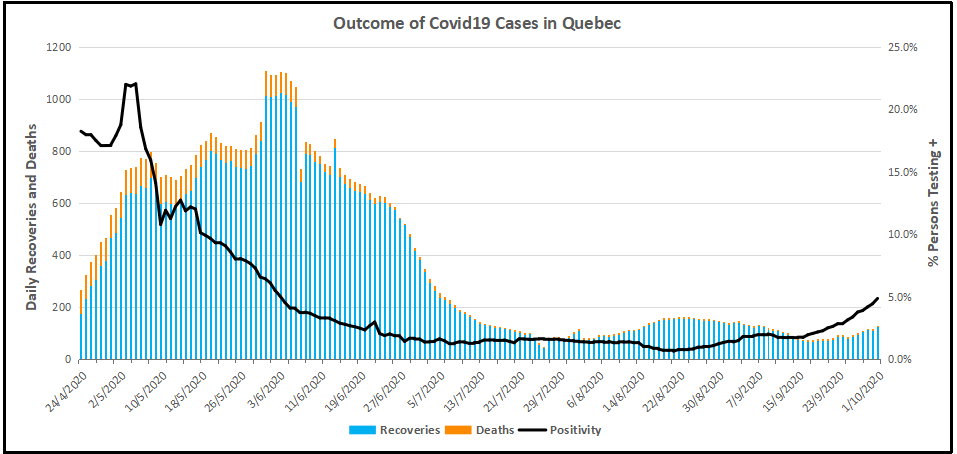
Recoveries are the number of people testing positive (misleadingly termed “cases”) minus deaths 28 days later.  Obviously, the death rate was high early on, and now is barely visible.  Meanwhile the Positivity rate (% of people testing positive out of all subjects) went down to 1% for several months before rising recently.  Since there is a lag of 28 days, we don’t yet see the outcome of the rise in positives along with the increased testing.

Summary

Premier Legault and his medical advisors had done well up to now. The first goal was to prevent deaths, and that has been achieved. 186 Quebecers die every day from all causes, and now about 5 are dying having tested positive for SARS CV2. The other goal was to prevent overwhelming the health care system with Covid cases. This too is under control. On October 1, there were 276 patients hospitalized with covid, including 46 in ICUs. The capacity is 1750 beds and 370 ICU beds. Since July there have been about 20 new admissions daily, offset by recoveries released from hospital.

Unfortunately, now the authorities have spooked themselves and applied a lockdown at the wrong time. Their goal has shifted to stopping new positives, which have increased because testing has quadrupled and positivity rates gone up from 1% to 5%. These are younger people who are not getting sick and certainly not dying from the virus. As many epidemiologists have said, you won’t get rid of this virus, you live with it by getting herd immunity, which leaves too few susceptible people for the virus to spread. If you kill off all the PME businesses and put people out of work, poverty and social decay will kill people, not to mention the interruption of medical treatments which save those with the real deadly diseases: cancers, heart, arteries, lungs, and so on.


Weaponizing Covid Data for Max Panic

This post comes from a Florida newspaper who dig into facts rather than amplify fears.  Fortunately Florida has leadership who have taken a balanced and reasoned approach to the contagion, but there are many in that state and around the world who are freaked out and want others to also be alarmed.  An article by Len Cabrera at the Alachua Chronicle (near Gainesville) provides insight into the twisting of data by fear mongers: Increasing percentage of Florida’s COVID data is questionable.  Excerpts in italics with my bolds.

When government-provided data is used to support increasing government power, we should all question its validity. Because we know that all lab tests have false positives and that PCR tests pick up fragments of the virus that may or may not indicate infection, COVID deaths should be certified by physicians, not matched to names in the list of people who previously had a positive test.

48% of the entries in the Florida Department of Health (FDOH) COVID-19 case line data have “UNKNOWN” or blanks in the fields for emergency department visit or hospitalization, indicating that FDOH has not been able to collect information about them. Thus, we don’t know whether they ever had symptoms, much less whether they were hospitalized and/or died because of COVID. The percentage of FDOH-reported COVID deaths that have “UNKNOWN” or blank entries is increasing, suggesting that these recently-reported deaths (many from months ago) may not be valid COVID-19 deaths.

Cases started inexplicably rising in Florida in early June despite mask mandates, business closures, and capacity limits across the state (driven by county commissions and/or mayors, not state-wide policy). When scientists, reporters, or private citizens questioned the validity of the data, they were told to shut up and trust the judgment of government “experts” that these are valid cases, not just positive tests.

Documented studies (summarized here) show that PCR tests are too sensitive to properly identify cases when they use a cycle threshold over 34, and almost all labs in the United States use at least 37, if not 40. The New York Times reported that these tests can produce 40% to 90% false positive results. (If you don’t have a subscription you can read the summary from Apoorva Mandavilli’s Twitter account.)

The push for more and more testing, especially of asymptomatic people returning to work or school, has driven this artificial casedemic. Don’t read something I’m not saying. This does not mean COVID doesn’t exist or isn’t real but that a good portion of the FDOH “cases” are just people with positive tests, not people actively infected (and infectious) with COVID.

To try to get a handle on these suspicious cases, I looked at the case line data to determine the number of “cases” that have “UNKNOWN” or blank entries for both emergency department visit or hospitalization. Contact tracers attempt to get this data when they interview individuals with positive tests, and they enter “NO” if the person has not visited an emergency room or been hospitalized. (This can be changed later if those events occur.) Sometimes the individual is not cooperative, so there can be cases in which a contact tracer enters “UNKNOWN” after an interview, but most of the time, “UNKNOWN” indicates that contact tracing was not successful (i.e., FDOH was not able to interview the person who tested positive).

The number of records with “UNKNOWN” or missing information in both of these fields allows us to estimate the number of questionable “cases.”

Using the most recent (as I write this) FDOH case line file (10/3), there are 714,591 “cases,” but 305,953 (43%) have “UNKNOWN” or blanks for both emergency room visit or hospitalization. Considering records with either category as unknown or blank increases the suspected bad data to 48%.

Breaking it down by case date, the percentage of records missing data in both fields increased dramatically in June, as asymptomatic testing increased. (The 55% in October is probably not meaningful since it’s only 3 days and interviews may not have been completed, but there’s no reason why July should be 52%.)

However, deaths are often reported months after the date of the positive test, and for people who roll around in the data every day, it’s obvious that the percentage of reported deaths with unknown data is getting worse; the most recent reports are much higher than the 24-25% of the last couple months. The table above is categorized on case date (the date the test result was received by FDOH), but looking at the death data by reporting date suggests that officials are farming death certificates for people who died with a positive COVID test rather than adding deaths that were legitimately caused by COVID.

The graph at the top shows that there is clearly an increasing trend in the percentage of deaths that are probably not true COVID cases because of missing or unknown information. While the overall percentage (by case date) was 20%, the percentage of bad data since August 3 (by report date) was 32%; over the last four weeks, it was 40%.

Remember, health officials assure us that these are actual cases of COVID-19, not simply positive tests. They tell us they’re contacting them and interviewing them to weed out false positives. At the very least, when someone who died a few months ago is matched to a positive COVID test and declared a COVID death, we should expect investigators to determine whether they visited an emergency room, were hospitalized, or were ever treated for any COVID-19 complications. The increasing percentage of bad data does not paint a good picture of the FDOH. It is possible that FDOH is overwhelmed and cannot properly complete the data, but it would be better to report correct data more slowly than to rush exaggerated numbers that fuel public panic and overreactions from elected officials.

If breathing into a paper bag doesn’t help, try this prayer at bedtime.


Sept. Ocean Air Temps Steady, Land Temps Spike

banner-blog
With apologies to Paul Revere, this post is on the lookout for cooler weather with an eye on both the Land and the Sea.  UAH has updated their tlt (temperatures in lower troposphere) dataset for September 2020.  Previously I have done posts on their reading of ocean air temps as a prelude to updated records from HADSST3. This month also has a separate graph of land air temps because the comparisons and contrasts are interesting as we contemplate possible cooling in coming months and years.

Presently sea surface temperatures (SST) are the best available indicator of heat content gained or lost from earth’s climate system.  Enthalpy is the thermodynamic term for total heat content in a system, and humidity differences in air parcels affect enthalpy.  Measuring water temperature directly avoids distorted impressions from air measurements.  In addition, ocean covers 71% of the planet surface and thus dominates surface temperature estimates.  Eventually we will likely have reliable means of recording water temperatures at depth.

Recently, Dr. Ole Humlum reported from his research that air temperatures lag 2-3 months behind changes in SST.  He also observed that changes in CO2 atmospheric concentrations lag behind SST by 11-12 months.  This latter point is addressed in a previous post Who to Blame for Rising CO2?

HadSST3 results were delayed with February and March updates only appearing together end of April.  For comparison we can look at lower troposphere temperatures (TLT) from UAHv6 which are now posted for September. The temperature record is derived from microwave sounding units (MSU) on board satellites like the one pictured above.

The UAH dataset includes temperature results for air above the oceans, and thus should be most comparable to the SSTs. There is the additional feature that ocean air temps avoid Urban Heat Islands (UHI). In 2015 there was a change in UAH processing of satellite drift corrections, including dropping one platform which can no longer be corrected. The graphs below are taken from the latest and current dataset, Version 6.0.

The graph above shows monthly anomalies for ocean temps since January 2015. After all regions peaked with the El Nino in early 2016, the ocean air temps dropped back down with all regions showing the same low anomaly August 2018.  Then a warming phase ensued peaking with NH and Tropics spikes in February, and a lesser rise May 2020. As was the case in 2015-16, the warming was driven by the Tropics and NH, with SH lagging behind. Since the peak in February 2020, all ocean regions have trended downward in a sawtooth pattern, returning to a flat anomaly in the three Summer months, close to the 0.4C average for the period.  A small rise occurred in September, mostly due to SH.

Land Air Temperatures Showing Volatility

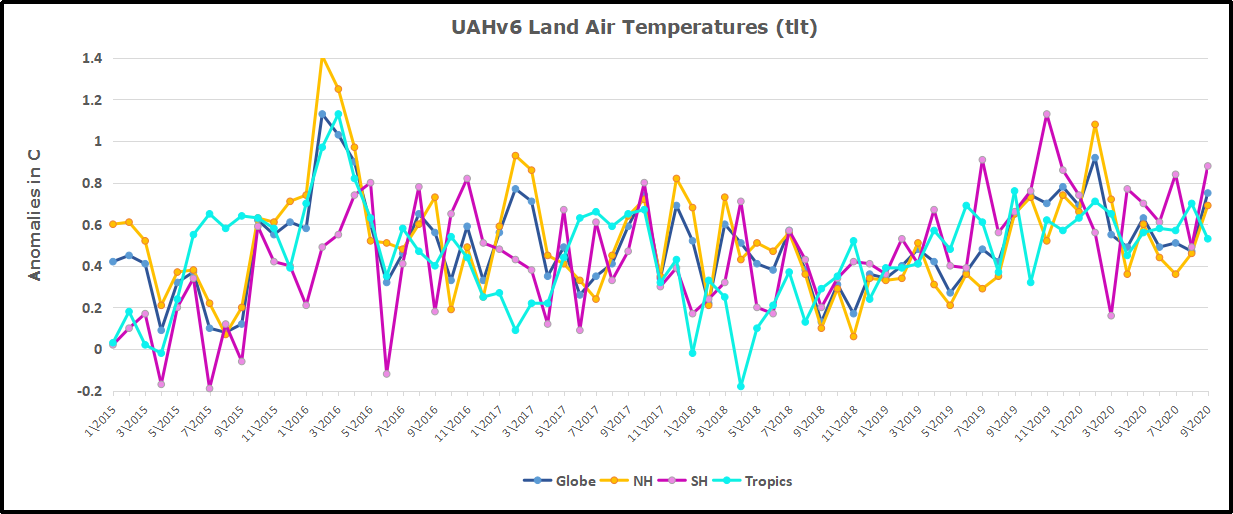
We sometimes overlook that in climate temperature records, while the oceans are measured directly with SSTs, land temps are measured only indirectly.  The land temperature records at surface stations sample air temps at 2 meters above ground.  UAH gives tlt anomalies for air over land separately from ocean air temps.  The graph updated for September 2020 is below.

Here we see the noisy evidence of the greater volatility of the Land temperatures, along with extraordinary departures, first by NH land with SH often offsetting.   The overall pattern is similar to the ocean air temps, but obviously driven by NH with its greater amount of land surface. The Tropics synchronized with NH for the 2016 event, but otherwise follow a contrary rhythm.  SH seems to vary wildly, especially in recent months.

Note the extremely high anomaly last November, cold in March 2020, and then again a spike in April. In June 2020, all land regions converged, erasing the earlier spikes in NH and SH, and showing anomalies comparable to the 0.5C average land anomaly this period.  After a relatively quiet Summer, land air temps rose Globally in September with spikes in both NH and SH.

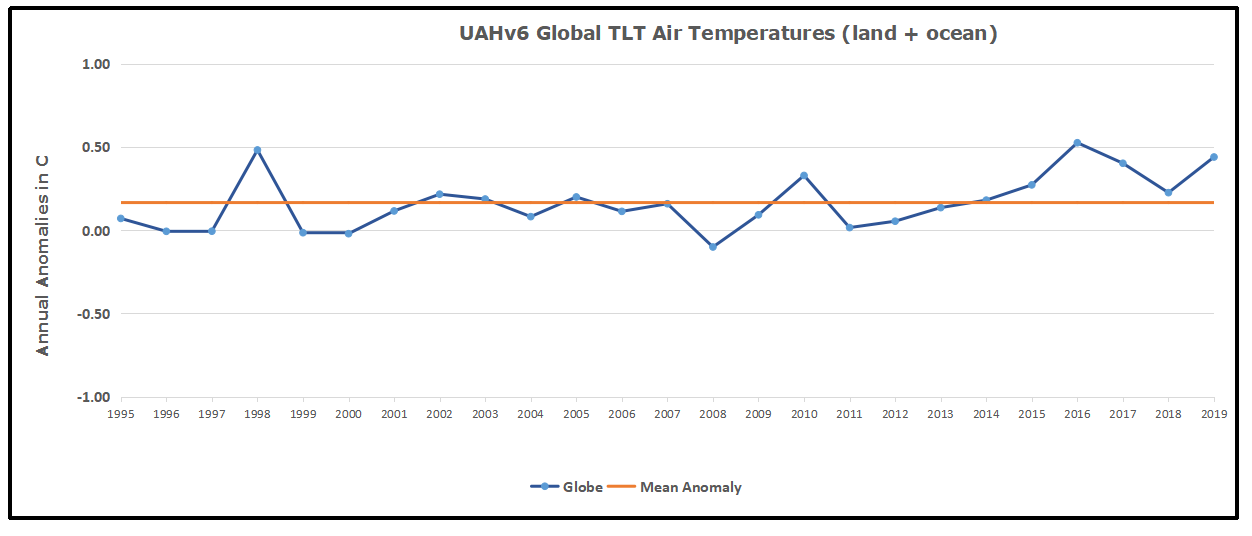
The longer term picture from UAH is a return to the mean for the period starting with 1995.  2019 average rose and caused 2020 to start warmly, but currently lacks any El Nino or NH warm blob to sustain it.

These charts demonstrate that underneath the averages, warming and cooling is diverse and constantly changing, contrary to the notion of a global climate that can be fixed at some favorable temperature.

TLTs include mixing above the oceans and probably some influence from nearby more volatile land temps.  Clearly NH and Global land temps have been dropping in a seesaw pattern, NH in July more than 1C lower than the 2016 peak.  TLT measures started the recent cooling later than SSTs from HadSST3, but are now showing the same pattern.  It seems obvious that despite the three El Ninos, their warming has not persisted, and without them it would probably have cooled since 1995.  Of course, the future has not yet been written.

Medical experts: Lockdowns do more harm than good

Medical experts: Lockdowns do more harm than good is a declaration by Martin Kulldorff, Sunetra Gupta and Jay Bhattacharya reported at NY Post.  Excerpts in italics with my bolds.

On Oct. 4, 2020, three preeminent experts — Dr. Martin Kulldorff, professor of medicine at Harvard University; Dr. Sunetra Gupta, an epidemiologist at Oxford University; and Dr. Jay Bhattacharya, a physician and epidemiologist at Stanford University — delivered the following declaration, calling for a different approach to dealing with the novel coronavirus than the lockdown model:

As infectious-disease epidemiologists and public-health scientists, we have grave concerns about the damaging physical and mental-health impacts of the prevailing COVID-19 policies and recommend an approach we call Focused Protection.

Coming from both the left and right, and around the world, we have devoted our careers to protecting people. Current lockdown policies are producing devastating effects on short- and long-term public health.

The results (to name a few) include lower childhood-vaccination rates, worsening cardiovascular-disease outcomes, fewer cancer screenings and deteriorating mental health — leading to greater excess mortality in years to come, with the working class and younger members of society carrying the heaviest burden. Keeping students out of school is a grave injustice.

Keeping these measures in place until a vaccine is available will cause irreparable damage, with the underprivileged disproportionately harmed.

Fortunately, our understanding of the virus is growing. We know that vulnerability to death from COVID-19 is more than a thousand-fold higher in the old and infirm than the young. Indeed, for children, COVID-19 is less dangerous than many other harms, including influenza.

As immunity builds in the population, the risk of infection to all — including the vulnerable — falls. We know that all populations will eventually reach herd immunity — that is, the point at which the rate of new infections is stable — and that this can be assisted by (but is not dependent upon) a vaccine. Our goal should, therefore, be to minimize mortality and social harm until we reach herd immunity.

The most compassionate approach that balances the risks and benefits of reaching herd immunity is to allow those who are at minimal risk of death to live their lives normally to build up immunity to the virus through natural infection, while better protecting those who are at highest risk. This is Focused Protection.

Adopting measures to protect the vulnerable should be the central aim of public-health responses to COVID-19. By way of example, nursing homes should use staff with acquired immunity and perform frequent polymerase-chain-reaction testing of other staff and all visitors. Staff rotation should be minimized.

Retired people living at home should have groceries and other essentials delivered to their homes. When possible, they should meet family members outside, rather than inside. A comprehensive and detailed list of measures, including approaches to multigenerational households, can be implemented and is well within the scope and capability of public-health professionals.

Those who are not vulnerable should immediately be allowed to resume life as normal. Simple hygiene measures, such as handwashing and staying home when sick, should be practiced by everyone to reduce the herd immunity threshold.

Schools and universities should be open for in-person teaching. Extracurricular activities, such as sports, should be resumed. Young, low-risk adults should work normally, rather than from home. Restaurants and other businesses should open. Arts, music, sport and other cultural activities should resume. People who are more at risk may participate if they wish, while society as a whole enjoys the protection conferred upon the vulnerable by those who have built up herd immunity.

Since the declaration was published, more than 2,000 public-health scientists and more than 2,000 medical practitioners have signed it, as have nearly 40,000 members of the general public. You can add your signature to the declaration online at https://gbdeclaration.org.

See Also Herd Immunity Already? summarizing interview with Professor Sunetra Gupta.

Don’t Fence Me In!


Halloween Cancelled: Things Already Too Scary

Jay Ambrose explains in his article at the Record-Courier (Kent, Ohio) Trump has the virus and Democrats have their faults.  Excerpts in italics with my bolds.

President Donald Trump has been infected by the COVID-19 virus, and no doubt there are thousands out there saying it serves him right, that he has shrugged his shoulders at the pandemic, even refused to wear face masks and has caused thousands of deaths.

I would say something different, that this is still another event marking 2020 as one of the strangest years in American history, one that signals good reasons to shake and shiver, and not only because of a frightful pandemic and an ultra-bizarre president.

Have you noticed principle-shattering leftists, bureaucratic rot, a racial justice movement overtaken by unjust riots, the war on law enforcement, congressional extremism, media degeneration, social media mayhem, and that some of the science deniers about climate change are the totalitarian alarmists?

Yes, Trump has been a helter-skelter messenger on the pandemic, an occasional absurdity promoter and a misleading dueler with a gotcha press. In the early going, he seemed almost as unconcerned as Gov. Andrew Cuomo of New York, Joe Biden and half of everyone else. But the administration was up to all kinds of meaningful, media-neglected actions early on, with some of the goofs actually coming from the CDC.

Trump was definitively instructed by critics that he had no authority over the states. That is correct, and it is the states that have made the mistakes in resolving this deadly medical mystery, not him.

The Washington Free Beacon recently ran a list of Biden’s phony campaign assertions about Trump and the virus, and keep them in mind in assessing how miswrought his own leadership could be. He said Trump silenced a CDC expert when he didn’t, that he called the virus a “hoax” when he was referring to Democratic shenanigans, that he eliminated a pandemic office that had instead been reconstituted, that he put no pressure on China when he did, that he reduced our CDC scientists in China when he didn’t and that he refused virus test kits from the World Health Organization that never said we could have them.

I know, only Trump “lies” are important, but he is not lying when he says it is crucial to get the economy started again. If you think that doesn’t matter as much as virus dangers, look at the white working class in which 150,000 people have long been dying of alcohol, drugs and suicide each year at least partly in reaction to economic shifts taking away jobs. We could have years of struggle if we don’t get started while at least being as careful as Sweden that has handled the virus pretty well without a shutdown.

Trump helped put together an outstanding economy before the virus while Biden wants debt more than Trump does and taxes and more regulations that would in effect be another shutdown that he says he might call for anyway.

Biden also says he might favor packing of the Supreme Court, an extreme leftist position that could lead to parties rearranging the court and thereby destroying it whenever they resumed control of the White House and Senate. This is the Democrats today, the party that worked with the FBI to indulge in a farcical investigation of the Trump campaign coordinating with the Russians in illegal means of winning in 2016. Information is mounting about the connivance in all of this.

It’s no small thing to try to unseat a president illegitimately and intimidate governance for more than two years, and the current treatment of Biden’s conflicts of interest as nothing much shows a morally twisted prejudice.

My point in all of this is that the election-year issues aren’t as straightforward as some pretend, that, while Trump is scary, the other side is in some ways far scarier, that preserving Republican control of the Senate is imperative and that the public should consider varied points of view. Meanwhile, I wish Trump, his wife and other virus victims the best while hoping he may return for another debate with a touch of humility.