Straight Talk on CO2

The video above gives you in 20 minutes the viewpoint of William Happer, a key scientific advisor to the Trump Administration.  H/T Elephant’s Child and Tallbloke.

LEARNING A BIT ABOUT CO² AND MASS HYSTERIA by The Elephant’s Child March 25, 2019,

William Happer is one of our most renowned and esteemed physicists, a professor emeritus from Princeton University. He decidedly does not agree with the current panic about the horrors of “climate change.”He says, and explains why CO², carbon dioxide, doesn’t have much of anything to do with warming, and we really need more of it — not less. CO² is food for plants. The slight increase we have had is greening the earth. You can see it from space.

This conversation with Dr. Happer is completely fascinating and worth your time. Share it with your kids and friends and family.

You have surely heard the current crop of Democrat candidates hoping to run for the presidency against Donald Trump, speaking out on the notion that they will work to save us from the horrors of climate change and only disagreeing on how long we have left before it is all over. Green New Deal, they all signed right on.

Yes, I know that Nancy Pelosi wants sixteen year-olds to vote, but one would expect better from grownups who think they should be president. Yes, in the heat of a campaign and trying to raise money, they should have some responsibility for saying stupid things.

For those who are sure that 400 ppm represents the upper limits of what we can tolerate in the atmosphere, greenhouses pump in extra CO² to reach about 1,000 ppm to help their seedlings grow. The floors of greenhouses are not littered with the corpses of nurserymen.

We are in a CO² famine. We don’t have enough.

New Sheriff Still in Town

Sheriff Trump has survived and prevailed in this gunfight.  After 3 years, two of them under the relentless Mueller, and after spending more than 30 million dollars investigating, the accusation of treason falls for lack of evidence.

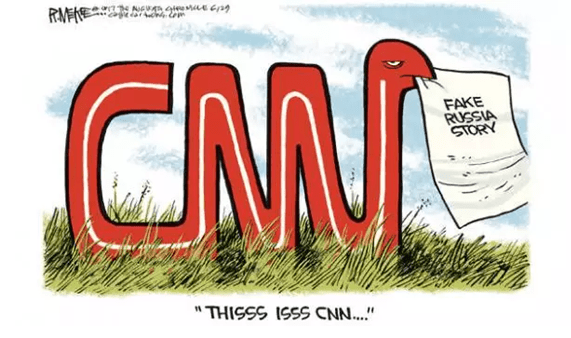
(H/T  Tony Heller for video) But of course, the reporters and newscasters who foisted the fictional rumor upon the public will now double down on their deceit.  They are banking on something Mark Twain said:

Those who are fair-minded will say, “Enough.  Get Real, and get on with the nation’s business.”  Never-Trumpers, unfortunately, will have to find the courage to admit they bought into a lie, or else descend further into unreality by continuing to fool themselves.

no crime

Bering Ice March Madness

In February the media breathlessly told us that Bering Sea ice has melted away, and thus Arctic ice is doomed.  Now we see that reports of the demise were premature.  More surprising than the early retreat, Bering ice roared back in the last two weeks, and continues to grow even after the overall NH ice extent peaked

Two Weeks of Growing Bering Ice: The above image shows the last two weeks of dramatic ice growth in Bering with only minor melting in Okhotsk. Bering Sea on the right more than doubled, adding 250k km2 and effectively sealing off Chukchi inside the Arctic.  Meanwhile on the left Okhotsk ice seesawed, ending up 150k km2 lower, but still at 88% of 2019 maximum.
The graph below shows March progress in ice extent peaking and beginning the melt season. As noted before, the month started with a sharp increase nearly reaching average and 15M km2. After March 12, ice declined steadily as is normal after mid-March.  2019 extent is running lower than the 12 year average, but slightly higher than other recent years.  SII is showing about 100k km2 less ice than MASIE.

The table below shows the distribution of ice in the various Arctic basins.

Region 2019082 Day 082 
Average
2019-Ave. 2018082 2019-2018
 (0) Northern_Hemisphere 14600645 14891081 -290436 14511954 88692
 (1) Beaufort_Sea 1070291 1070115 176 1070445 -154
 (2) Chukchi_Sea 966006 965595 411 966006 0
 (3) East_Siberian_Sea 1087137 1086844 293 1087137 0
 (4) Laptev_Sea 897845 897552 293 897845 0
 (5) Kara_Sea 926462 917591 8871 934807 -8344
 (6) Barents_Sea 681050 653698 27352 720725 -39675
 (7) Greenland_Sea 552178 642867 -90689 539109 13069
 (8) Baffin_Bay_Gulf_of_St._Lawrence 1431122 1509559 -78437 1346761 84361
 (9) Canadian_Archipelago 853337 852881 456 853109 229
 (10) Hudson_Bay 1260903 1255967 4937 1260838 66
 (11) Central_Arctic 3227734 3227309 426 3158495 69240
 (12) Bering_Sea 446151 773234 -327083 345861 100291
 (13) Baltic_Sea 41886 87497 -45611 135848 -93962
 (14) Sea_of_Okhotsk 1150521 933366 217155 1183119 -32598

The table shows how 2019 is 290k km2 or 2% below the 12-year average.  Most basins are matching average extent, including Barents Sea edging slightly ahead of average.  Greenland Sea and Baffin Bay are below average. Despite recent gains, Bering ice is 327k km2 in deficit to average, nearly the difference in overall NH extent.  Meanwhile Okhotsk is 217k km2 surplus to average, partially offsetting Bering.


Going Dutch: How Not to Cut Emissions

Everyone knows the Dutch are serious and determined people.  Their saying: “God created the earth, but the Dutch created the Netherlands.”  A relative of mine had some run-ins with Dutch neighbors, and his saying about them:  “Wooden shoes, wooden heads, wouldn’t listen.”  Well, now the Dutch have another saying:  “Whatever you do, don’t try to cut carbon emissions the way we did.”

You see, being Dutch they took on the challenge of “fighting climate change,” and are now living to regret their actions.  Karel Beckman writes in Natural Gas World  The Flaws in Dutch Climate Policy Mar 20, 2019.  H/T GWPF  Excerpts in italics with my bolds.

Why should the wisdom of Dutch climate policy be of concern to anyone besides Dutch taxpayers? At this moment all developed countries are entering a new phase in their climate policies. They are moving beyond broad reduction targets and temperature goals to the nitty-gritty of real climate measures and tough choices. The debate is not anymore about whether to reduce greenhouse gas emissions, or even by how much, but how.

From this point on there are still many different roads into the future. The Dutch example is instructive because we are talking about a wealthy, urban, industrialised country – a self-proclaimed climate leader within the European Union. A country moreover that has decided to phase out the use of “unabated” natural gas for the sake of the climate. Yet its climate policies for cutting greenhouse gas emissions are full of flaws.

The Climate Accord, the result of months of negotiations between labour unions, non-governmental organisations, business associations, local authorities and other civil society groups, which will serve as the basis for the Dutch National Energy and Climate Plan (NECP) that all EU member states have to submit to the European Commission at the end of this year, contains a large number of more or less concrete proposals to reduce greenhouse gas emissions.

PBL and CPB have analysed the effect these proposals are likely to have on emission reductions and at what likely cost. The PBL report and the CPB report are therefore key inputs in the political decision-making process, turning the Climate Accord into law.

What the two reports show – even though their authors don’t say so explicitly and even if the general media did not notice anything amiss – is that Dutch climate policies are full of contradictions, inefficiencies and question-marks that should serve as a warning to energy policy-makers and stakeholders everywhere.

Here are my own seven Troubling Takeaways from the PBL and CPB reports.

1. The cost of climate policies: anyone’s guess

Robert Koelemeijer, researcher at PBL and one of the authors of the new report, says in a telephone interview: “It has proved to be very difficult to distinguish between the costs of the energy system as such, and the additional costs as a result of past climate and energy policies. But it is a question we get more often and one that we do want to take a look at this year.”

Earlier this year, a group of critics – Theo Wolters, Stijn Santen, Hans Keuken, Evert van der Pol and Marcel Crok – published a report, “De kosten van het Energieakkoord” (“The costs of the Energy Accord”), which attempts to calculate the costs of the measures decided on in an earlier piece of climate legislation, called the Energy Accord, in 2013.

Wolters, one of the authors, tells me it is reasonable to assume that this Energy Accord, which was actually adopted by the government and is being implemented, represents the major part of the “reference scenario” that PBL refers to.

According to Wolters et al., the Energy Accord will cost Dutch society over €100bn, measured over a period of 35 years, to which the costs of the Climate Accord must now be added. Their report has been criticised by various experts. Koelemeijer says: “There are some aspects about it that we don’t agree with. We are planning to analyse it in more detail.”

On the other hand, €100bn, over 35 years, does not seem so incredible. Thus, for example, the Dutch General Accounting Office (“Algemene Rekenkamer”), again an official government institution, calculated in April 2015 that the costs of renewable energy subsidies alone could amount to some €80bn by 2030. (You can find the GAO report by following this link, click on the download, see page 15-16. Again, all in Dutch, I’m afraid.)

Renewable energy subsidies are of course only part of the total costs of climate policy – according to the critics roughly half of the total.

2. The poor will pay

More important perhaps is that CPB concludes that lower income groups (especially lower middle income groups) have to pay relatively more as a result of current climate policies than higher income groups. Welfare recipients and pensioners, says CPB, are hit hardest of all.

On average, households will see their income reduced by 1.3% as a result of all climate measures together, notes CPB, ranging from 0.8% for the highest income groups to 1.8% for the lowest income groups. To this should be added another 0.4% income loss on average as a result of climate policies in other EU countries and of companies charging their climate costs to consumers.

3. The built environment: minimal results

One of the most complex and controversial elements in Dutch climate policy is the goal to disconnect all houses and buildings from the gas grid by 2050. Currently 98% of all buildings are connected to the gas grid. . . Of the more than 7mn buildings that will be affected, 1.5mn should be “off gas” by 2030, according to the Climate Accord. As noted above, CPB does not calculate the costs of this gigantic operation. PBL does this however and concludes (on p. 67) that with the measures in the Climate Accord some 250,000 to 1,070,000 buildings could be made “gas-free” (rather than 1.5mn). The net “national costs” of this operation would only be €75mn to €90mn, according to PB.

Theo Wolters, one of the authors of the critical report, notes that according to a 2018 study of the independent think tank EIB (“Economisch Instituut voor de Bouw” – Economic Institute for the Building Sector), the average cost of going off gas will be €32,638/house. This will save on average €623/yr in gas use. That adds up to much higher national costs.

Troubling me much more, the PBL study shows that the measures taken in the built environment do only very little to reduce CO2 emissions. The Climate Accord is split up into five sectors: electricity generation, industry, transport, agriculture and environment. If it is carried out, PBL calculates, total emissions will go down between 31 and 52 megatons (Mt). Of this total, the electricity sector will contribute 18.3-21.0 Mt, industry between 6 and 13.9 Mt, mobility 4.2-8.0 Mt, agriculture 1.8-4.6 Mt and the built environment a paltry 0.8-3.7 Mt.

In other words, the Netherlands is contemplating a complete overhaul of the existing building stock with only a modest effect on its greenhouse gas emissions.

4. Waterbed effects: cutting carbon emissions in one place means they can rise elsewhere, unless the cap comes down.

Wolters and his co-authors, in their critical report, provide a withering analysis of the waterbed effects of Dutch climate policy. They calculate that of 32 Mt of emission reductions which the Netherlands wants to achieve by 2020, 79% fall under the ETS system. The non-ETS part is almost all based on the use of biomass, a questionable method (see below). Just 0.6 Mt of the 32 Mt falls outside of the ETS and is not related to biomass.

Wolters notes that CPB and the University of Groningen have long ago warned about the waterbed effect of the ETS, with the recommendation to “put off building expensive offshore wind parks in the North Sea” as long as their emission reductions would benefit coal power producers in Poland and elsewhere. “The same ton of CO2 that we don’t emit and which costs us on average €88, can be bought by a coal power producer in eastern Europe for €5 to €25”, they write.The ETS carbon price is now much higher but nowhere near €88/mt.

5. Biomass: what is it good for?

This table shows that biomass is the single most expensive measure – yet as PBL itself notes, its effectiveness is surrounded by “many uncertainties”.

By the way, in the Netherlands burning wood in wood stoves and fireplaces also counts as “renewable energy”. The Netherlands has a 14% renewable energy target for 2020, of which almost 1 percentage point will be reached by people using their wood stoves and fireplaces!

6. Jobs: no effect

Renewable energy is often credited for providing jobs – a questionable defence in itself, since “providing jobs” is not the same thing as “contributing to economic growth”. On the contrary, if switching to renewable energy leads to many more people being employed in energy generation, this is a net economic loss to society, not a gain.

But not to worry: CPB concludes (on p. 11) that climate and energy policy in the Netherlands has “transition effects”, but “in the longer term the net effects on employment are marginal”. The renewable energy job machine simply does not exist.

7. In the end: coming up short

After all is said and done, and ignoring waterbed effects, biomass doubts and the like, what is also striking is that the measures in the Climate Accord don’t even deliver the official target of 48.7 Mt of reductions in 2030. PBL concludes (p. 9) that if all the proposed measures are carried out, emissions will be reduced by between 31 Mt and 52 Mt, adding that “the target of 48.7 Mt will most likely not be met”.

Indeed, there are other “uncertainties” which could even result in emission reductions outside of the 31-52 Mt range, notes PBL, for example, unexpected deviations in “economic growth, energy prices, technology developments and developments in other countries.”

Conclusions

The most important one I think is that climate policy – any climate policy – is not a done deal. On the contrary, the real hard choices have only just arrived on our doorstep. There are many questions, such as, what are the most cost-effective and efficient measures. Not only in the Netherlands – other countries will face the same issues.

Two key issues that need to receive a lot more attention are the effects of EU climate policy, which right now are an afterthought in the Netherlands and in other EU member states, whereas they clearly should be a starting point; and the wisdom of using renewable energy targets alongside CO2-targets. Wolters and the other critics of Dutch climate policy observe that the Dutch government initially wisely focused on CO2-targets, but then enthusiastically endorsed a new renewable energy target agreed upon by the EU of 32% in 2030. This, they say, means that CO2-reduction will be achieved “through relatively expensive options”.

The climate policy debate? It has only just started.

The Dutch also invented a word: Poppycock, (ˈpäpēˌkäk/) informal noun meaning nonsense.
Synonyms: nonsense, rubbish, claptrap, balderdash, blather, moonshine, garbage;
Origin: mid 19th century: from Dutch dialect pappekak, from pap ‘soft’ + kak ‘dung.’

Reprinted below is a previous post Green Electrical Shocks providing a Dutch analysis with a dash of humor.

One year ago, a weekly Sunday news program aired in the Netherlands on the titled subject. H/T Climate Scepticism. The video clip is below with English subtitles. For those who prefer reading, I provide the substantial excerpts from the program with my bolds.

How many of you have Green Electricity? I will estimate 69%
And how much nationally? Oh, 69%!
So we are very average, and in a good way, because the climate is very important.

Let me ask: Green electricity comes from . . .?
Yes, electricity produced from windmills and solar panels.
Nearly 2/3 of the Dutch are using it. That’s the image.

Well I have green news and bad news.
The green news: Well done!
The bad news: It is all one big lie.
Time for the Green Electrical Shocks.

Shock #1: The green electricity from your socket is not green.
When I switched to green electricity I was very proud.
I thought, Yes, well done! The climate is getting warmer, but not any more thanks to me.

Well, that turned out to be untrue.
All producers deliver to one communal grid. Green and grey electricity all mix.
The electricity you use is always a mix of various sources.
OK. It actually makes sense not to have separate green and grey cables for every house.
So it means that of all electricity, 69% is produced in a sustainable way. But then:

Shock #2: Green Electricity is mostly fake.
Most of the green electricity we think we use comes from abroad.
You may think: So what. Green is green.

But that electricity doesn’t come from abroad, it stays abroad.
If you have green electricity at home, it may mean nothing more than that your supplier has bought “green electricity certificates”.

In Europe green electricity gets an official certificate,
Instead of selling on the electricity, they sell on those certificates.
Norway, with its hydro power, has a surplus of certificates.
Dutch suppliers buy them on a massive scale, while the electricity stays in Norway.

The idea was: if countries can sell those certificates, they can make money by producing more green electricity.
But the Norwegians don’t produce more green electricity.
But they do sell certificates.

The Dutch suppliers wave with those certificates, and say Look! Our grey electricity is green.
Only one country has produced green electricity: Norway.
But two countries take the credit.
Norway, because they produce green electricity, and the Netherlands because, on paper, we have green electricity. Get it? That’s a nice deal.

More and more countries sell those certificates. Italy is now the top supplier.
We buy fake green electricity from Italy, like some kind of Karma ham.

Now, let’s look again at the green electricity we all think we use.
So the real picture isn’t 69%. If you cancel the certificates, only 21% of electricity is really green.
Nowadays you can even order it separately if you don’t want to be part of that Norway certificates scam.
You may think: 21% green is still quite a lot. But it is time for:

Shock #3: Not all energy is electricity.
If you talk about the climate, you shouldn’t just consider electricity but all energy.
When you look at all energy, like factories, cars, trains, gas fires, then the share of consumer electricity is virtually nothing.
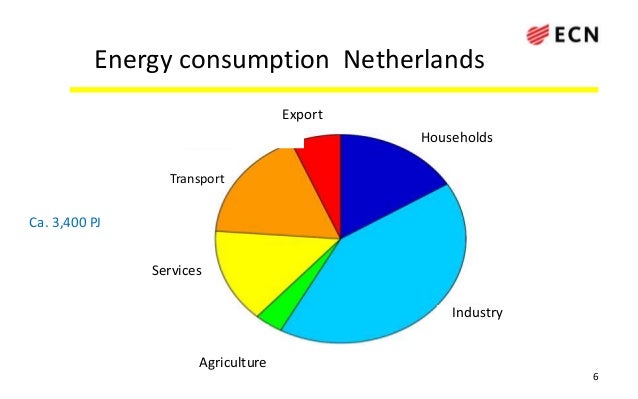
If you include everything in your calculation, it turns out that only 6% of all the energy we use in the Netherlands is green. It is a comedy, but wait:

Trees converted into pellets by means of petroleum powered machinery.

Shock #4: Most green energy doesn’t come from sun or wind, like you might think.
Even the 6%, our last green hope, is fake. According to the CBS we are using more sun and wind energy, but most of the green energy is produced by the burning of biomass.
Ah, more than half of the 6% green energy is biomass.

Ridiculous. What is biomass really? It is organic materials that we encounter every day.
Like the content of a compost heap. How about maize leaves or hay?
The idea behind burning organic materials is that it will grow up again.
So CO2 is released when you burn it, but it will be absorbed again by new trees.

However, there is one problem. The forest grows very slowly and our power plants burn very fast.
This is the fatal flaw in the thinking about biomass. Power plants burn trees too fast, so my solution: slow fire. Disadvantage: it doesn’t exist. So this is our next shock.

Shock#5: Biomass isn’t all that sustainable.
It’s getting worse. There aren’t enough trees in the Netherlands for biomass.
We can’t do it on our own. We don’t have enough wood, so we get it from America.

In the USA forests are cut at a high rate, Trees are shredded and compressed into pellets.
These are shipped to the Netherlands and end up in the ovens of the coal plants.
It’s a disaster for the American forests, according to environmental groups.

So we transport American forests on diesel ships to Europe.
Then throw them in the oven because it officially counts as green energy.
Only because the CO2 released this way doesn’t count for our total emissions.

In reality biomass emits more CO2 than natural gas and coal.
These are laws of nature, no matter what European laws say.
At the bottom line, how much sustainable energy do we really have in the Netherlands?
Well, the only real green energy from windmills, solar panels etc. Is only 2.2%. of all the energy we use.
In Conclusion
So the fact that 2/3 of the audience and of all Dutch people use green electricity means absolutely nothing. It’s only 2.2%, and crazier still, the government says it should be at 14% by 2020.
They promised: to us, to Europe, to planet Earth: 14 instead of 2.2.

Instead of making a serious attempt to save the climate, they are only working on accounting tricks, like buying pieces of paper in Norway and burning American forests.
They are only saving the climate on paper.

Summary Comment

As the stool above shows, the climate change package sits on three premises. The first is the science bit, consisting of an unproven claim that observed warming is caused by humans burning fossil fuels. The second part rests on impact studies from billions of research dollars spent uncovering any and all possible negatives from warming. And the third leg is climate policies showing how governments can “fight climate change.”

It is refreshing to see more and more articles by people reasoning about climate change/global warming and expressing rational positions. Increasingly, analysts are unbundling the package and questioning not only the science, but also pointing out positives from CO2 and warming.  And as the Dutch telecast shows, ineffective government policies are also fair game.

More on flawed climate policies at Reasoning About Climate

Behind the Curtain: Oil Supply and Prices

John Tamny writes March 21, 2019 at Real Clear Energy In His Saudi Arabia Documentary, Fareed Zakaria Omitted How Powerless the Country Is

The 1973 embargo “did not imply that we could reduce imports to the United States…[T]he world is really just one market. So the embargo was more symbolic than anything else.” Those were the words of Saudi oil minister Sheik Yamani, in response to the impact of the 1973 Arab (“Arab” is mentioned because non-Arab countries like Iran did not participate) oil embargo on the United States. The U.S. imported every bit as much (in truth, more) oil after the embargo was announced as before; the only difference being that Americans purchased the “Arab oil” from those not embargoed. It’s a basic economic truth that there’s no accounting for the final destination of any good.

So what happened in 1973? Why did oil prices spike? The better question would be one of why did commodities across the board spike? The simple truth is that there were no “oil shocks” in the early ‘70s as much as President Nixon’s fateful decision to sever the dollar’s historical link to gold resulted in the greenback plummeting in value. Wheat, meat, soybeans, oil, and every other commodity priced in dollars spiked. Notable here is that per Robert Bartley’s brilliant 1992 book, The Seven Fat Years, OPEC officials sent out an early ‘70s communique that signaled their inability to control the price of oil; their implicit point that a change in the value of the dollar would by definition have a profound impact on a commodity once again priced in dollars. In short, the “oil shocks” of the early ‘70s were not. They were dollar shocks. Nothing more, nothing less.

All of this rates mention in consideration of a recent CNN special hosted by Fareed Zakaria, Saudi Arabia: Kingdom of Secrets. Up front, it’s fascinating to look at as the footage unearthed by Zakaria’s production team is more than impressive. Zakaria’s production was spellbinding all the while exasperating for the simple economics of exchange and currency not factoring into his analysis, nor history. What was more than interesting could have been great had Zakaria sourced commentators with a better understanding of trade. Instead, viewers had to suffer Thomas Friedman’s often wrong but never in doubt certitude from the left versus the unserious rants of the 45th president on the alleged right. Neither Friedman nor Trump comprehends what’s simple; that embargoes are utterly toothless in an economic or real world sense.

As a result, Zakaria promoted the mistaken view that the ’73 embargo caused soaring prices, gasoline lines and recession in the United States, and there was no commentary to question what Zakaria must know not to be true. The reality is that the flow of Arab oil didn’t decline, and rising prices were dollar related. The gas lines were a logical effect of price controls imposed by federal officials, while the economic slowdown was the expected result of reduced investment that always rears its head when currencies are losing value. Investment is what powers growth simply because it boosts productivity, yet the falling dollar worked as a tax on investment. The malaise-filled ‘70s were a consequence of U.S. policy error, not what happened in Riyadh.

That’s what was so nauseating about Friedman’s assertion that our relationship with Saudi Arabia amounts to (a slight paraphrase here) “keep the oil flowing, and we’ll avert our eyes to what’s happening out back.” Implicit there is that there’s some kind of scenario whereby the Saudis would cease bringing oil to market. Except that there isn’t, and we know this based on the history presented to us by Zakaria himself. As he points out, in 1938 a rather poor Saudi Arabia (per Zakaria) desperately needed money, and with an eye on enhancing the Kingdom’s finances, the royals allowed in western know-how and investment. Soon enough the country was awash in oil, and the riches that come with being a size exporter of the world’s primary energy source.

All of the above in mind, there’s yet again no reasonable scenario whereby the Saudis would cease pumping out the oil. They need the money. Realistically there would be a revolution in the country absent the constant outflow of oil in consideration of how much the citizenry, the state and an ever-growing royal family rely on the Kingdom’s oil wealth. Here Zakaria noted how very much a decline in oil prices in 2014 forced difficult cutbacks in Saudi, but didn’t tie the previous truth to how ridiculous was Friedman’s oft-repeated point that the U.S.’s only rule is that the country pump its oil. Well, of course it will. No rules needed. No matter what happens, Saudi oil will flow. Friedman’s alleged insight into U.S./Saudi relations is more than empty.

And then there’s President Trump. Zakaria seems to think Trump has a point in justifying his desire to maintain warm relations with the repressive country. As Trump puts it (not directly to Zakaria, but in a video clip sourced by him), “you want $150 oil?” Trump’s equally empty argument, one not corrected by Zakaria, is that Saudi Arabia could cut us off on the way to nosebleed oil prices stateside. Except that it couldn’t.

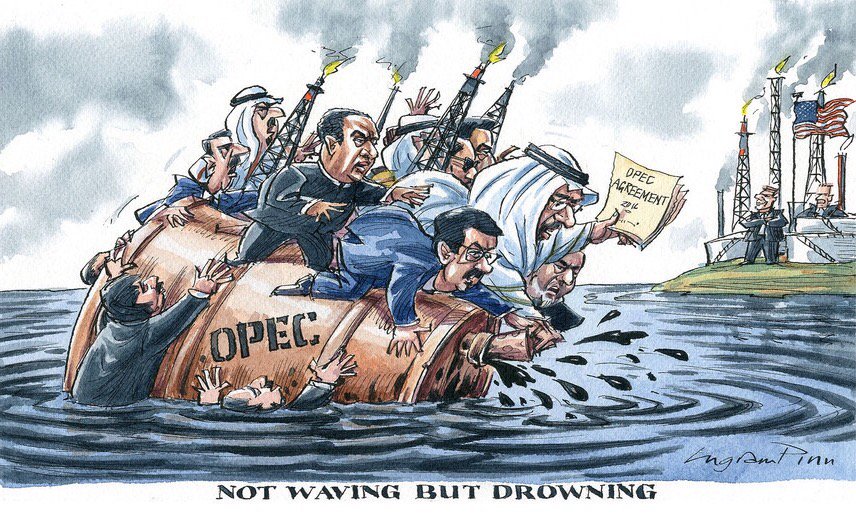
Not only is oil a globally priced commodity, not only is it a certainty that the Saudis will never cease selling what produces abundant dollars for the Kingdom, but the dirty little secret is that neither Saudi Arabia nor OPEC controls the price of oil. Zakaria plainly disagrees, but what’s unfortunate is that he didn’t at least give the opposing viewpoint airtime in a documentary presumably produced with an eye on forcing deep thought and conversation about what is in many ways a mysterious country. Instead, viewers were fed what’s easily disprovable.

Indeed, if the Saudis and OPEC truly control the price of oil as Zakaria attests, why was it so cheap in the 1960s when OPEC formed, but nosebleed expensive in the ’70s? Mood swings? Better yet, if they control the oil price are we to assume the Saudis and OPEC were simply feeling generous in the ‘80s and ‘90s when oil fell as low as $10 barrel? Conversely, were the alleged price setters of a global commodity suddenly overtaken by immense greed in the 21st century such that they jacked up the oil price, only to lower it in 2014 in such a way that Saudi Arabia itself was forced to endure difficult cutbacks? Or is there something else at work?

Very basic logic tells us that something not Saudi and something not OPEC dictate oil’s price. Readers can rest assured that it’s not fracking. Missed by cheerleaders of the latter is that before it was much of a thing, meaning the ‘80s and ‘90s once again, the price of oil was four times lower than it is now. Fracking excites mercantilistic conservatives who don’t understand simple economics.

So what’s the biggest factor when it comes to oil? The answer came up early in this piece. It’s the U.S. dollar. It’s very simple, really. When the dollar is strong and stable as it was during the Reagan and Clinton years, oil is cheap. When the greenback is declining as it was during the Nixon/Carter ‘70s, and the Bush/Obama ‘00s, the price of oil (and other commodities) is soaring. Considering fracking, it’s only economic insofar as the dollar is cheap. Considering Saudi power, it’s most evident when the dollar is cheap.

Frustratingly, none of this came up in Zakaria’s analysis. Fascinating as his attempt to make sense of Saudi Arabia was, it was deprived of greatness by an embrace of all too easy-to-discredit economic fallacy. Contrary to what Zakaria reported, there’s nothing that will stop the flow of Saudi sourced oil, there’s no way the Saudis can keep their oil from being consumed stateside, and their supposed ability to control the price of oil is easily belied by history. None of the previous truths made it into the documentary, and that’s unfortunate.

Fareed Zakaria must know better. And if he doesn’t, he should.


Know-it-alls, Drama Queens & Control Freaks

Progressives are defined by those three deplorable qualities, and they were on full display this week as Cambridge University (UK) publicly withdrew a fellowship it previously offered to Jordan Peterson. They demonstrated once again that “university” is now defined as the opposite of “diversity of thought and expression.”  Toby Young writes at the Spectator Cambridge’s shameful decision to rescind Jordan Peterson’s visiting fellowship Excerpts in italics with my bolds.

The university’s ‘inclusive environment’ means the Canadian philosopher isn’t welcome. But of course…

According to the Equality and Human Rights Commission’s ‘Freedom of Expression’ guide for higher education providers and students’ unions in England and Wales, no speaker has a right to be invited to speak to students on a provider’s premises, but once someone has been invited they should not then be disinvited. It even suggests this may be a breach of Section 43 of the Education (No 2) Act 1986, which places a legal duty on universities to take ‘reasonably practicable’ steps to protect freedom of speech.

Please, God, let Jordan Peterson sue the University of Cambridge for having invited him to take up a visiting fellowship, only to rescind the invitation after a bunch of snowflake undergraduates said they would scweam and scweam until they made themselves sick. OK, they didn’t actually say that, but they might as well have done, the pathetic, passive-aggressive cry-bullies.

In a report in Varsity, the Cambridge student newspaper, which is so craven in its forelock-tugging obeisance to the protesting students it makes Pravda look like the work of John Milton, we learn that Peterson isn’t welcome at Cambridge because it’s – wait for it – an ‘inclusive environment’. (In case you’re not au fait with the current jargon, that means an environment in which everyone looks different but thinks exactly the same.) There then follows a laundry list of Peterson’s unforgivable sins: he believes ‘white privilege’ is a ‘Marxist lie’, that ‘the patriarchy’ is ‘predicated on competence’, that ‘the West has lost faith in masculinity’, that ‘global warming posturing is a masquerade for anti-capitalists to have a go at the Western patriarchy’ and that ‘men are victims of gender oppression’.

In other words, he’s not welcome at Europe’s number one university because he has the temerity to challenge the status quo.

As we know, today’s students cannot cope with being challenged – hence the need for ‘trigger warnings’, ‘safe spaces’ and ‘bias reporting hotlines’. In case you’re in any doubt that this is, in fact, the reason the undergraduates threw up their arms in horror and reached for the smelling salts as soon as Dr Peterson’s name was mentioned, a spokesman from Cambridge University’s Student Union spelt it out in Pravda – I mean, Varsity: ‘His work and views are not representative of the student body and as such we do not see his visit as a valuable contribution to the University, but one that works in opposition to the principles of the University.’

Silly me. There I was thinking the purpose of a university education is to introduce students to ‘work and views’ they might not be familiar with and don’t already hold. In fact, it is to expose them to just those ideas that they are firmly wedded to. An echo chamber, where privately-educated, sanctimonious Titania McGraths are constantly told by their professors that they’re absolutely right about everything.

If this principle had been applied by previous generations, I wonder what fate would have befallen some of Cambridge’s distinguished alumni whose ‘work and views’ were out of step with the prevailing orthodoxy? Presumably, Charles Darwin would have been out on his ear for daring to question the Book of Genesis and John Maynard Keynes would have been no-platformed at the students’ union for casting doubt on neo-classical economics. As for James Watson and Francis Crick, they would have been branded ‘eugenicists’ and hounded off campus.

Honestly, this is a truly shameful episode in the university’s history – up there with the Cambridge spy ring. To think that it had the opportunity to host a series of lectures by the world’s leading public intellectual, a brilliant iconoclast who sells out 5,000-seater venues from New York to Sydney. Undergraduates would have had the opportunity to study with him, to engage in dialogue and discussion. But no. He might have presented them with some thoughtful counter-arguments to their postmodern, Neo-Marxist gobbledygook and we can’t possibly have that. Not at a university, of all places.

I spent two years at Cambridge doing a PhD in Philosophy in the late 1980s, which I subsequently abandoned. Not the university’s fault – it wasn’t the left-wing madrassa it is now. There was genuine viewpoint diversity. I was even thinking of giving my old college some money this year. Not any more. Not until the university’s vice-chancellor – a spineless non-entity called Stephen Toope – flies to Toronto, falls to his knees in front of Dr Peterson and begs for his forgiveness.

Summary

No one knows how this will play out, but IMO Cambridge needs Jordan Peterson more than the other way around.

Footnote:  I recently posted a five-part series on Maps of Meaning.  It begins with Cosmic Dichotomy: Peterson’s Pearls (1)


Listen Up Kids: Bad Drinking Water Bigger Danger Than Global Warming

Clean drinking water a bigger global threat than climate change, EPA’s Wheeler says From CBS News, excerpts in italics with my bolds and images.

Environmental Protection Agency Administrator Andrew Wheeler says that unsafe drinking water — not climate change — poses the greatest and most immediate global threat to the environment.

In his first network interview since his confirmation last month, Wheeler told CBS News chief Washington correspondent Major Garrett that while the administration is addressing climate change, thousands are dying everyday from unclean drinking water. Wheeler is announcing the EPA’s global clean water push in a speech at the Wilson Center in Washington, D.C., Wednesday morning.

“We have 1,000 children die everyday worldwide because they don’t have safe drinking water,” Wheeler told Garrett. “That’s a crisis that I think we can solve. We know what goes into solving a crisis like that. It takes resources, it takes infrastructure and and the United States is working on that. But I really would like to see maybe the United Nations, the World Bank focus more on those problems today to try to save those children. Those thousand children each day, they have names, we know who they are.”

Diseases with the largest absolute burden attributable to modifiable environmental factors included: diarrhoea; lower respiratory infections; ‘other’ unintentional injuries; and malaria.

The U.S., Wheeler said, has a number of clean water financing programs that provide grants and loans. He wants those to be models for international organizations like the United Nations to provide money to third-world countries.

The World Health Organization estimates that at least 2 billion people globally use a drinking water source contaminated with feces. It’s unclear what, if any, new funding the Trump administration might be providing for the clean water push.

Wheeler also insists his EPA is working to combat climate change, a phenomenon to which he says man “certainly contributes.” He said the Trump administration will roll out two major regulations later this year in an effort to reduce CO2 emissions in the U.S. Those measures would replace rules limiting carbon emissions from power plants and clean car standards.

Climate change, Wheeler said, “is an important change we have to be addressing and we are addressing.” But he added that “most of the threats from climate change are 50 to 75 years out,” while unsafe drinking water is killing people right now.

Wheeler noted that the U.S. has already cut CO2 emissions, which are thought to be the primary driver of climate change, by “14 percent since 2005.” He argued that the U.S. is “doing much better than most westernized countries on reducing their CO2 emissions, but what we need to do is make sure that the whole world is focused on the people who are dying today, the thousand children that die everyday from lack of drinking water. That is something where we have the technology, we know what it will take to save those children. And internationally, we need to step up and do something there.”

Asked if he views the EPA’s mission as protecting both the environment and business, Wheeler didn’t mention business.

“Well, the mission of our agency is to protect public health and the environment and that’s what we do and we do that every day. You know, it’s public health and the environment and that is our mission,” Wheeler told Garrett.

Wheeler says that’s why he thinks the Green New Deal, the proposal championed by progressive Democrats like Rep. Alexandria Ocasio-Cortez, is an “aspirational” but unrealistic idea. He claims the proposal could actually jeopardize clean drinking water.

“In fact, on the drinking water side, the Green New Deal does not value — at least nowhere in the documents does it value — having reliable electric grid,” Wheeler said. “A reliable electric grid is absolutely necessary to provide drinking water. You have to have the electricity. When we go, as a first responder, when we go into a community that’s been hit with a hurricane, or some other natural disaster, the first thing we do is try to make sure the electric grid is back up and running in order to provide the drinking water for those communities.”

As the recent crisis in Flint, Michigan, painfully brought to light, clean drinking water isn’t only a global issue. CBS News has reported that lead in America’s water system is a national problem, with warning signs surfacing in cities including Newark, Chicago, Detroit, Baltimore and Milwaukee.

Wheeler said the EPA is looking at what it can do to require regular testing for water in schools and daycares later this year.

“First of all, I want to make sure the American public understands 92 percent of the water everyday meets all the EPA requirements for safe drinking water,” Wheeler said.

“We have the safest drinking water in the world. We are working to update a number of regulations, one of which is our lead and copper rule, which takes a look at the pipes. The lead pipes that we have around the country. As part of that, we’re looking at what we can do to require regular testing for schools and daycares, so that would be part of that regulation when it comes out later this year.”

Wheeler also said that the water in Flint now meets EPA standards.

“Part of the problem with Flint was there was a breakdown in once they got the data, once the city of Flint, the state of Michigan, the Obama EPA – they sat on it,” Wheeler said. “We’re not doing that. As soon as we get information that there’s a problem, we’re stepping in, we’re helping the local community get that water system cleaned up.”

Summary

Septic drinking water is dangerous in every way global warming is not.  It is killing people right now, every day.  It is world wide.  It harms the most vulnerable and impoverished people.  It is a threat multiplier, potentially harming crops and risking violent conflicts over clean water access.  If you want to march for something that is needed, get some of the almost 2 Trillion US$ spent annually on global warming alarm diverted to save lives now.


The Warmist Who Came in from the Cold

Deroy Murdock writes in The American Spectator This Opinion Just In… Baby It’s Cold Outside Excerpts in italics with my bolds and images.

I might be slightly less hostile to the Green New Deal, had I not walked home the other Sunday in a hail storm. Even before the BB-sized bits of ice came shooting down from the heavens that morning, this winter has been brutal, from Gotham to the Golden Gate.

Our Lady of Perpetual Limelight, Saint Alexandria Ocasio-Cortez, demands that America battle so-called “deadly, manmade global warming” as if it were Nazi Germany. Ten-year cost: $93 trillion. But this supposed threat somehow seems less menacing than Adolf Hitler and the Wehrmacht.

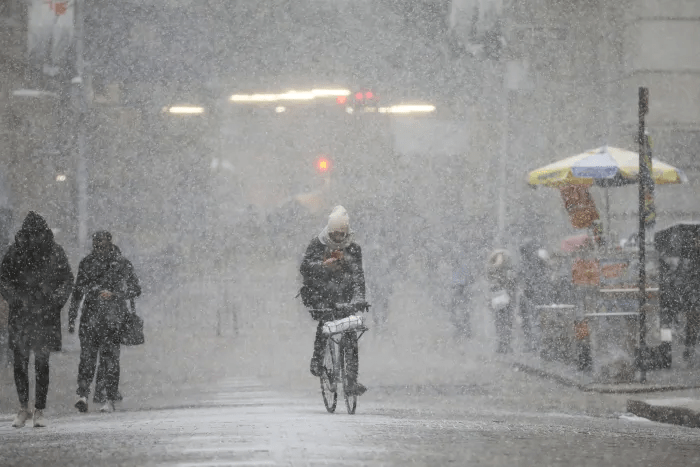
A cyclist rides through the falling snow in the Financial District, January 30th, 2019, in New York City (Photo: Drew Angerer/Getty Images)

Any given winter does not equal “climate.” Still, if mounting concentrations of carbon dioxide are the broth in which we homo sapiens are poaching ourselves like so many salmon cutlets, then we should not be enduring the entirely contrary scenarios that have unfolded so vividly from coast to coast:

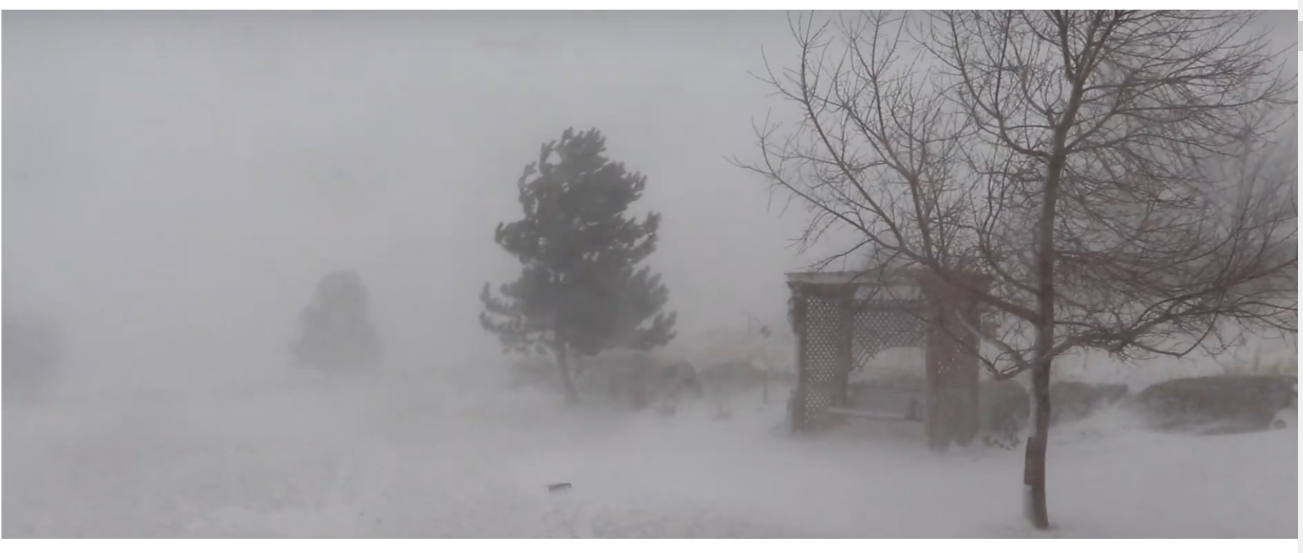
A “bomb cyclone” last week slammed the Rockies and Midwest with hurricane-speed winds and abundant snowfall. As 97-MPH gusts struck Colorado Springs, marooned passengers huddled in horror inside a shuttered Denver International Airport.

• At this point in 2017, Lake Superior was just 7.3 percent covered in ice; 2018’s figure: 49 percent. Lake Superior was 94 percent iced over on March 8. This was the first time in four years that the largest Great Lake’s ice coverage exceeded 90 percent, the Detroit Free Press reported. Not so far away, Lake Erie was 20 percent ice a year ago. Today: 94.1 percent. Overall, the Great Lakes have gone from 27.8 percent ice in 2018 to 74.6 percent in 2019.

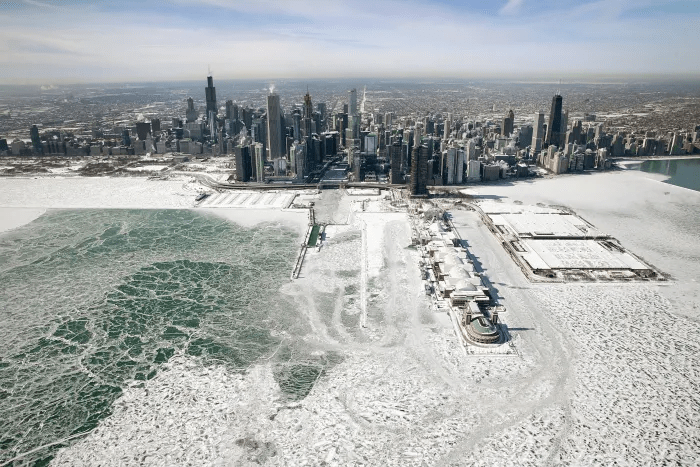
Ice builds up along the shore of Lake Michigan as temperatures dipped to lows around -20 degrees on January 31st, 2019, in Chicago, Illinois. Businesses and schools closed, Amtrak suspended service into the city, more than a thousand flights were canceled, and mail delivery was suspended as the city coped with record-setting low temperatures. (Photo: Scott Olson/Getty Images)

Lake Erie recently experienced a sort of frozen tsunami, as huge chunks of wind-blown ice washed onto the shore at Hamburg,New York. Footage of this phenomenon is fascinating and terrifying, especially as the solid water violates homes, marinas, and other structures in and around the lake.

• Several polar vortexes pumped Arctic air into the Midwest and parked it there for days. This drove air temperatures to 22 degrees below zero in Chicago and minus-28 Fahrenheit in Minneapolis on January 30.

Snow hit Las Vegas on February 17 and 19, with some 5.5 inches of the white stuff fluffing the peaks of Sin City’s western suburbs. Some 100 flights were canceled at McCarran Airport on only the second day in two decades that it received measurable snow.

Drew Johnson, a transplant from Tennessee to Vegas’s western hills, told me: “I moved to Las Vegas specifically to avoid long, dark, cold winters with snow and freezing temperatures. I thought global warming was supposed to mean shorter, warmer winters. Man, have I been ripped off. Instead, we’re getting regular snowstorms in Vegas.” He blames, in part, his former neighbor in Nashville. “It’s tough to take the Al Gores of the world seriously when schools are closed for snow in Las Vegas, and kids are sledding and building snowmen.”

The State of California has been more white than golden lately. “For the first time in at least 132 years, the temperature didn’t hit 70 degrees in downtown Los Angeles in February,” the Wall Street Journal editorialized on March 4. “Snow powdered the hills of West Hollywood and Malibu,” the Journal added. Last month, downtown Los Angeles saw snow for the first time since January 1962. Santa Barbara Airport logged its all-time record low of 33 degrees.

USPS Suspended Service in 11 States Due to Record Low Temperatures.

• The Sierra Nevadas repeatedly have seen avalanches swamp mountain roads. Last year’s early-March snowpack was just 19 percent of normal levels. On Tuesday, the Central Sierra snowpack reached 164 percent of normal.

“Open for skiing through July 7,” Lake Tahoe’s Squaw Valley USA/Alpine Meadows resort announced last week, after February became its snowiest month on record. “Thanks to nearly 600” [50 feet] of snowfall, we are once again going to have Tahoe’s longest spring season. In fact, we’ll be skiing right into July this year. Make your spring and summer skiing plans today.”

Summer skiing? How, exactly, does so-called “global warming” trigger summer skiing?

Temperature gauges aboard space-based satellites have recorded average global temperatures on Earth that peaked in 1997 and then slid or flat-lined from there. A quick, El Niño warming spike broke this “pause” in 2015-2016, followed by declining average readings. This virtual absence of observed warming led Greenpeace’s Steven Guilbeault to explain: “Global warming can mean colder, it can mean drier, it can mean wetter, that’s what we’re dealing with.”

Perhaps suspecting that such authentic frontier gibberish was not — as the Greens say — sustainable, the government-control-hungry Left ditched their “global warming!” battle cry and instead screamed, “Climate change! Climate CHANGE! CLIMATE CHANGE!” This nebulous phrase is magically self-confirming. The absence of global warming disproves global warming. However, the absence of climate change is nothing that should worry the alarmists since the climate always changes. It has done so since the dinosaurs ran this place. So, warming equals climate change. Cooling equals climate change. Droughts equal climate change. Floods equal climate change.
How convenient!

Meanwhile, the giant, deadly Camp Fire that killed some 86 people in and around Paradise, California, last fall “proved” that so-called “global warming” is fueling fatal fires in the West. Um, well, except that downed power lines ignited Camp and other big blazes, so much so that Pacific Gas & Electric filed for bankruptcy protection amid mounting lawsuits.

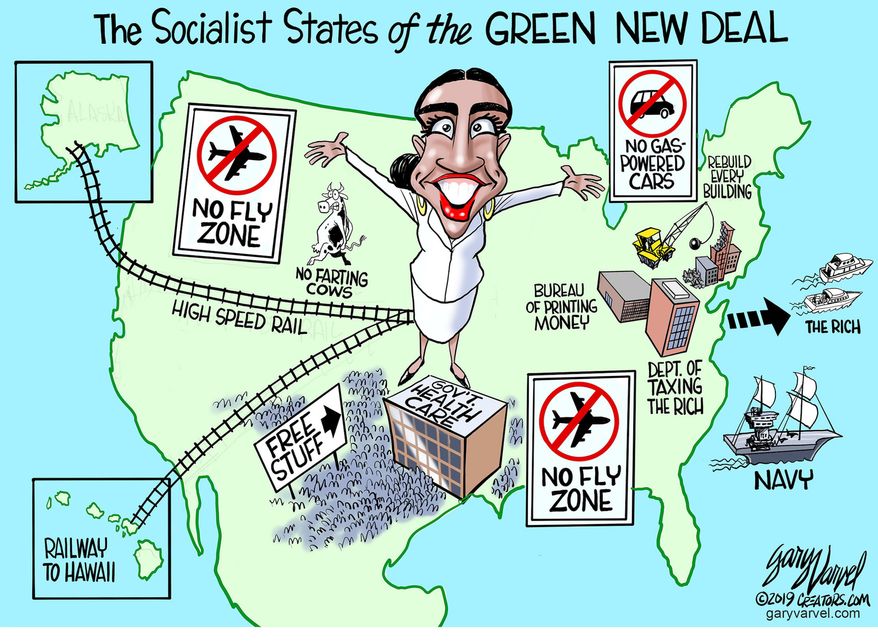
Did dry conditions fuel these blazes? Surely. California was in a drought. And now that’s over, thanks to the state’s snow-choked mountains. Apparently, these conditions can correct themselves, which refutes the Left’s narrative of a steady, speedy, ski run into doom. Anyway, if not for the electric cables dangling from old towers, many of these fires would not have started. And clearing excess brush and some of California’s 129 million dead trees makes much more sense than waiting for President Ocasio-Cortez to install high-speed trains from San Francisco to Honolulu, after she bans jumbo jets in 2025.

But wait. Before Americans surrender our Boeing 787s, New York Strip steaks, national prosperity, and sacred honor, wouldn’t it be nice if some serious scientists determined whether we will boil over or freeze to death?

Fortunately, President Donald J. Trump will decide soon whether or not to proceed with the Presidential Commission on Climate Science. The PCCS’s goal is to take a sober, scientific look at the warmists’ claims. In January, Saint Alexandria prophesied that “the world is gonna end in 12 years if we don’t address climate change.” Catchy slogan, but does science confirm her hypothesis? Why not find out?

Many on the warming-alarmist Left oppose such intellectual inquiry. They attack the PCCS since “the science is settled.” Of course, it’s not settled. Like a lioness in heat, this debate roars on.

Indeed, the PCCS is the ideal venue for the final showdown between the Alarmists and the Deniers. Here is the chance for scientists who are 97 percent confident of Earth’s imminent meltdown to make fools, once and for all, of Sallie Baliunas, John Christy, Paul Driessen, John Droz, James Inhofe, Bjorn Lomborg, Pat Michaels, Lord Monckton of Brenchley, Marc Morano, Fred Singer, Roy Spencer, Mark Steyn, and all the other scientists and policy experts who deny that cataclysm is just around the corner. And yet the Alarmists spurn such a confrontation. Methinks they doth protest too much.

Instead, the Green New Dealers are pushing Trump to ditch the PCCS and embrace “the climate consensus” — complete with swelling subsidies, sweeping regulations, slower growth, and slumping prosperity for (nearly) all, and a stunning bonanza for the fortunate few in the solar and wind sectors.

If this sounds like a raw deal, please call the White House comment line at 202-456-1111 and say so. Send President Trump a message by clicking here. Ask him to preserve and staff the Presidential Commission on Climate Science and order it to decipher this frigid warming.

Deroy Murdock is a Manhattan-based Fox News Contributor, a contributing editor at National Review Online, and a senior fellow with the London Center for Policy Research. Michael Malarkey furnished research for this opinion piece.

See Also: Cold Waves and CO2

No, Cold Doesn’t Disprove Warming, Nothing Can

Stop Fake Science. Approve the PCCS!


Arctic March Heart Beat

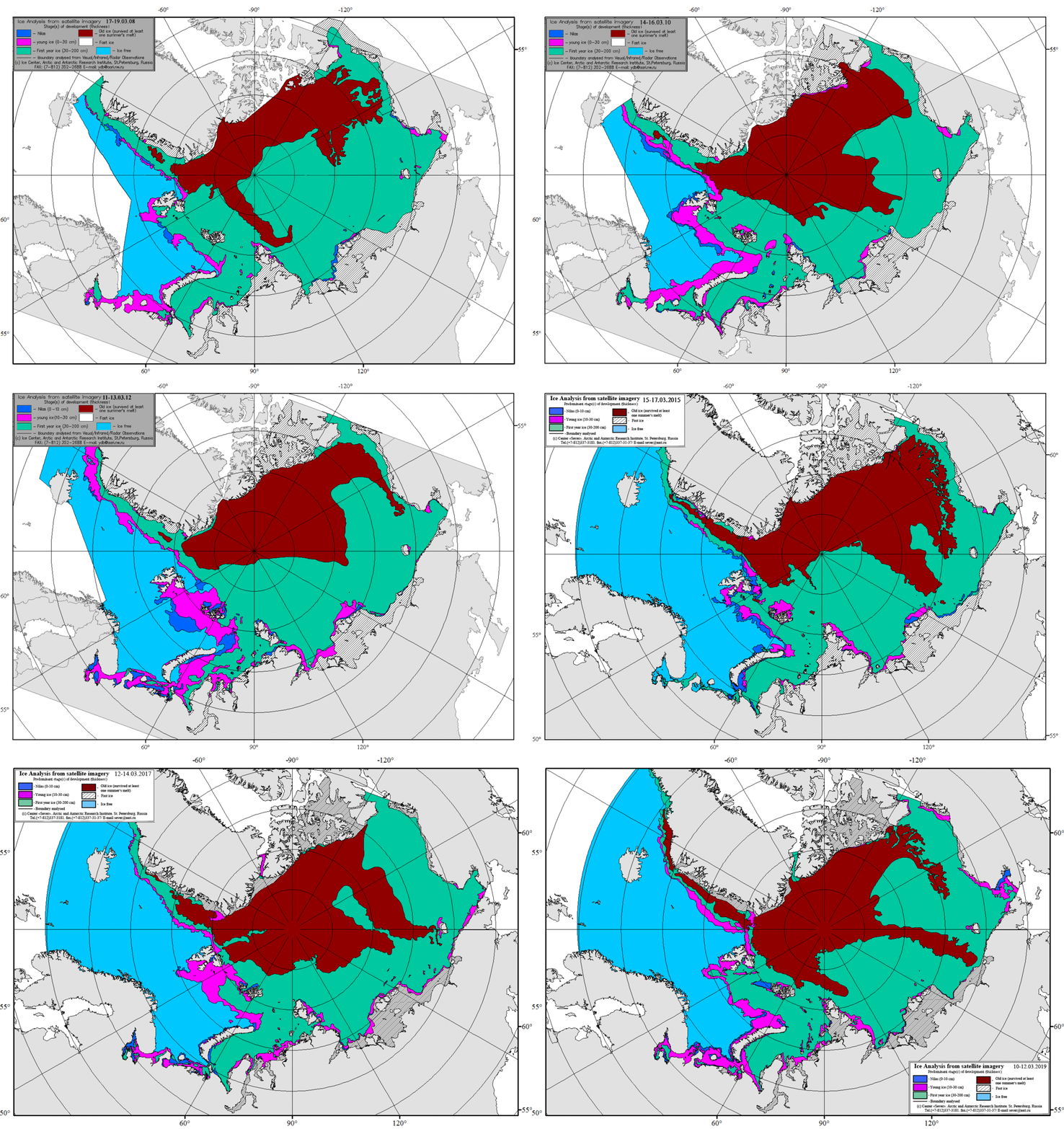
Above are ice charts from AARI, St. Petersburg for the annual maximum weeks in Mid-March, 2008 to 2019 inclusive. The brown color signifies Old Ice that survived at least one summer’s melt season.  The Arctic heart is beating clear and strong. Note differences between diminished years like 2012 and 2013 compared to more robust recent years.

For context, note that the average daily maximum has been ~15M, so on average the extent shrinks to 30% of the March daily high before growing back the following winter.


Climate Kids Spurious Lawsuit Claims

Robert W. Endlich provides the back story on the flimsy complaints from kids suing the US government for the right to a stable climate. He writes at Master Resource Sixty Minutes on the Kiddie Climate Lawsuit: Hypocrisy Squared. Some excerpts in italics wth my bolds to encourage you to go read the whole article.

Plaintiff #1: Kelsey Cascadia Rose Juliana, Oregon

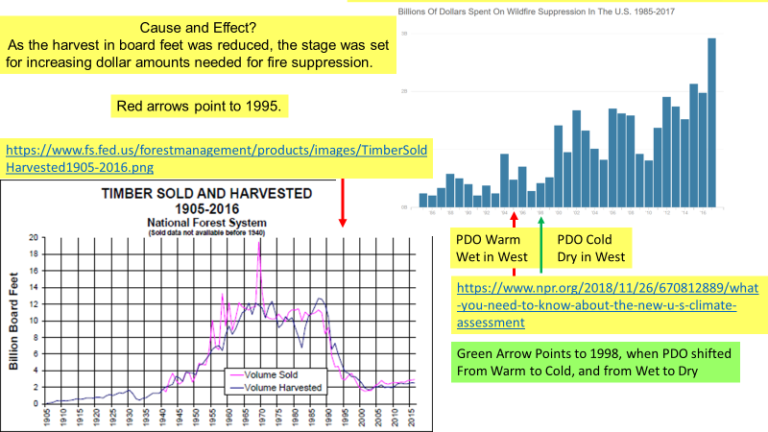
Her activist parents stopped government from managing the forests. Now she blames wildfires on “climate change.”

Figure 1. Left line graph: timber sold and harvested 1905-2016. Right bar graph: dollars spent on firefighting. The red arrows represent the year 1995. The green arrow shows when the Pacific Decadal Oscillation shifted from its warm and wet period in the US West, to its cold and dry period.

Now a college student, Kelsey Cascadia Rose Juliana tells us that the often-severe forest fires that plague the Pacific Northwest are a result of “Climate Change,” because, “that’s what the scientists tell us.” That this might have been a result of the fuel buildups when logging was stopped in the Spotted Owl case has not entered her head; nor the thought processes of Sixty Minutes’ producers; nor the thinking of scientists, teachers, professors and politicians who “taught” her and Sixty Minutes about fires and climate change.

Although many other scientists could have explained the clear link between fuel buildups and massive conflagrations in forests where timber thinning and cutting are prohibited, they were not consulted.

Juliana says, “We have everything to lose if we don’t act on climate change.”

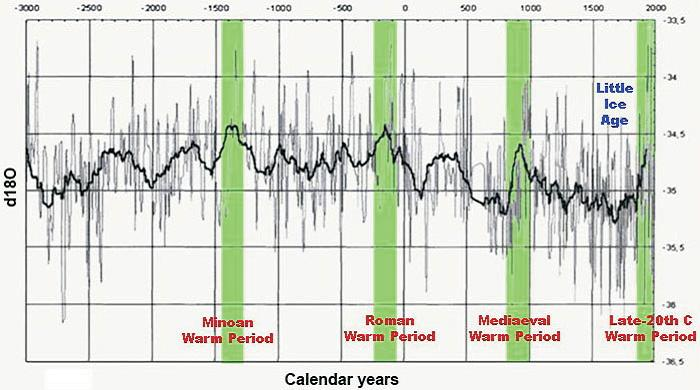
Evidently, no one ever told Juliana it is just as impossible to “stop climate change” as it is to “stop continental drift,” stop the progression of tides, or stop sea level changes and land subsidence. All of these are a result of natural environmental processes that are (or once were) taught in basic Earth Science courses – processes that were carelessly or deliberately left out of the reporting by CBS reporter Steve Croft and CBS Producer Dragon Mihaljevic.

Figure 2. Temperature time series from the GISP2 ice core, showing the past 5,000 years of temperatures with Minoan, Roman, Medieval and Late 20th Century warm periods highlighted [Source]. The likelihood that humans can “stop climate change” that is a natural aspect of Earth’s environment should be obvious.

Plaintiff #2: Levi Draheim, Florida

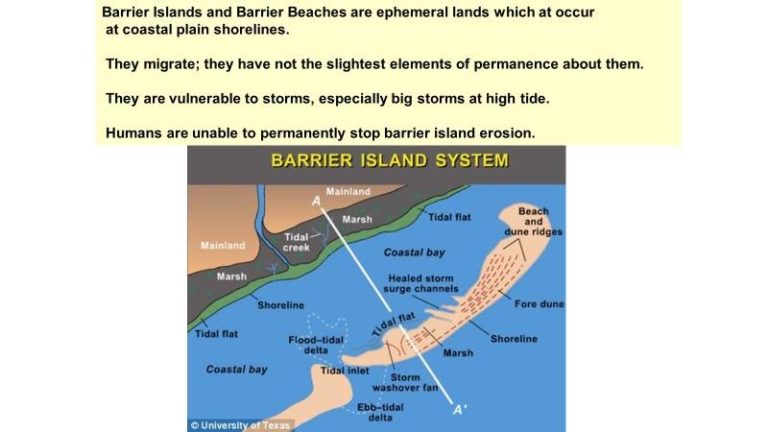
He lives on a barrier island off the hurricane-prone Atlantic coast. The government is supposed to protect him from storms and rising sea level that have always eroded coastal islands.

Figure 4. Graphic showing the features of Barrier Island Systems from the University of Texas showing they are characteristic of flat coastal plains. That Sixty Minutes should not recognize the peril of exposing permanent resident children to life on barrier islands seems studied ignorance of obvious environmental hazards.

Plaintiff #3: Jayden Foytlin, Louisiana

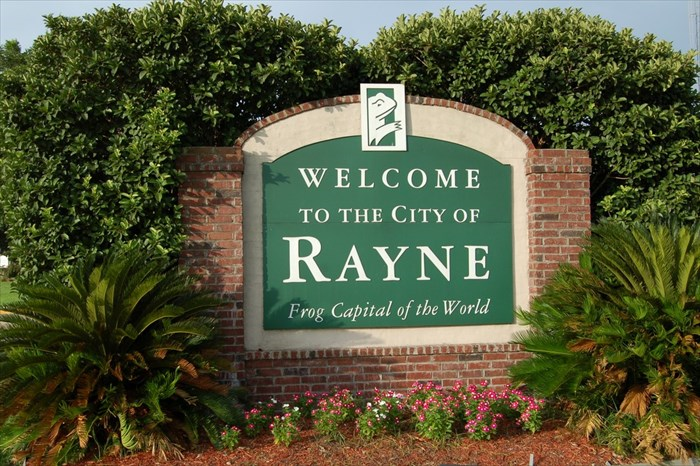
Her home was flooded in Rayne, LA, about 20 miles from the Gulf Coast and a mere 20 feet above sea level. She claims a right against rainstorms, even though her home is called the “Frog Capital of the World,” with numerous houses elevated on blocks.

Climate Kid 15-year-old Jayden Foytlin, from southern Louisiana, found her home flooded in August 2016. Mr. Mihaljevic speaks of flooding rains in southern Louisiana as somehow an unexpected new phenomenon that young Jayden suddenly experienced when she woke up and “put her foot into climate change.” Not into a frequent weather event on the Louisiana Coast, but into “climate change.” It’s not very subtle propaganda, but most viewers must be prepared, or they will miss it.

She lives in Rayne, LA, about 20 miles from the Gulf Coast and a mere 20 feet above sea level. This is very flat outer coastal plain with poor drainage. That she has no clue that flat-lying land adjacent to the Gulf Coast would be subject to flooding when a hurricane strikes and some 16 inches of rain can occur within two days – is an artifact of inadequate education, and lack of self-awareness that might be attributable to her tender years.

That a fifteen-year old student would have no knowledge of even the possibility of flooding during a hurricane (or spring melts after heavy snows in the Upper Mississippi Basin) strains credulity. But perhaps her expectations were shaped by the 12-year absence of any Category 3-5 hurricane making US landfall between Wilma (2005) and Harvey (2017) – virtually her entire perceptive lifetime.

That the Sixty Minutes report makes it seem as if sixteen inches of rain within two days is somehow related to climate change, rather than a result of the climate and weather we have today, and have had for decades and centuries, is yet another willful study in ignorance by the talking heads seen on MSM and CBS.

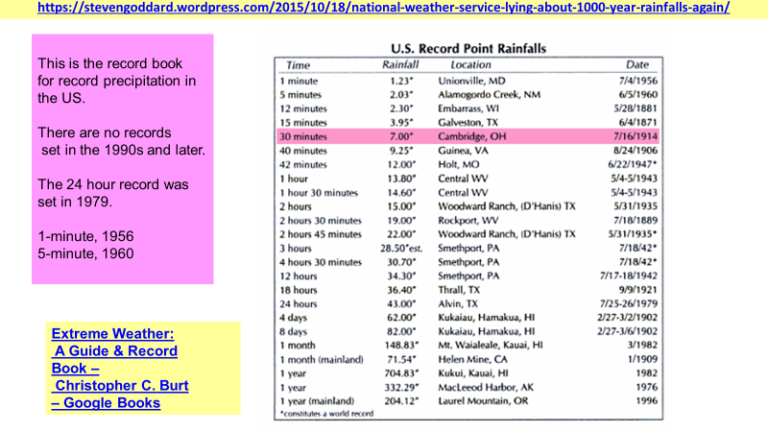
Just a few minutes of internet searching will uncover substantial data on extreme rainfall events in the USA. Some are displayed below in Figure 5.
Ironies of History, Concerns for America’s Future

The irony here is too rich not to discuss. Juliana’s parents and environmentalists, along with politicians and courts teamed up a few decades ago to file lawsuits that blocked timber sales and cutting, thereby causing a gradually enormous buildup of diseased, dying and dead trees, brush and other highly inflammable materials.

Huge, deadly conflagrations inevitably ensued – and now the same parties blame climate change for the infernos, enlist their (indoctrinated) children as sympathetic plaintiffs, focus on the kids’ deep fears, and sue fossil fuel producers for damages. Is there such a thing as criminal hypocrisy?

I have no great hopes that lawyers and courts will come up with the right answer.

We need only look at the results of the Massachusetts vs. EPA lawsuit, which was filed by Massachusetts based on the notion that sea level rise is caused by or accelerated by our use of fossil fuels. For “authority,” the U.S. Supreme Court accepted a political document, the IPCC Working Group I report, which considers only human factors in climate change and now asserts that only humans are causing climate change, with natural factors relegated to the sidelines as essentially irrelevant.

That such ignorance, stupidity and anti-science are now central elements of our legal system is simply breathtaking.

Indeed, had EPA attorneys been competent, and had they presented appropriate sea level data and other real-world evidence during trial and on appeal, the Supreme Court could have examined data like that from National Oceanic and Atmospheric Administration’s (NOAA’s) tide gage in Boston harbor. As Figure 8 illustrates, the rate of sea level rise is essentially unchanged over the past century and longer, even as CO2 levels climbed, then accelerated, in their rate of increase, especially since the 1960s.

Carbon dioxide from burning hydrocarbon fuels and human exhalations is the same colorless, odorless gas that plants use, in combination with energy from sunlight, to create carbohydrates. It is not a pollutant, but the elixir of life. Humans, animals and plant life are all carbon-based life forms.

The Supreme Court was just as wrong in its 2007 Massachusetts vs. EPA decision as it was in its infamous 1857 Dred Scott decision – which held that no “negro whose ancestors were imported into [the United States] and sold as slaves” could be an American citizen, and therefore had no standing to sue in federal court. Dred Scott, it can be argued, eventually led to the Civil War.

I have no great hope that today’s Supreme Court or lower courts can be depended on to arrive at the right answer when it comes to science in this case. I just hope cases like the “climate kids” Juliana vs the USA will not cause such energy, economic, societal and political disruption that our nation becomes embroiled in another civil war over our energy, livelihoods, living standards, and whether courts and bureaucrats will have the right to dictate Americans’ rights and choices in these matters.

Robert W. Endlich served as Weather Officer in the USAF for 21 Years. From 1984 to 1993, he provided toxic corridor and laser propagation support to the High Energy Laser Systems Test Facility at White Sands Missile Range. He has published in the technical literature and worked as software test engineer at New Mexico State University. Endlich was elected to Chi Epsilon Pi, the national Meteorology Honor Society, while an Air Force Basic Meteorology student at Texas A&M University. He has a bachelor’s degree in Geology from Rutgers University and a master’s in Meteorology from the Pennsylvania State University.

Footnote: For more on Pacific Northwest forest fires see Why the Left Coast is Burning

For background on the Kids Lawsuit see Supremes Look at Kids Lawsuit