Update Aug.23 Arctic Ice, Cyclone and Ships

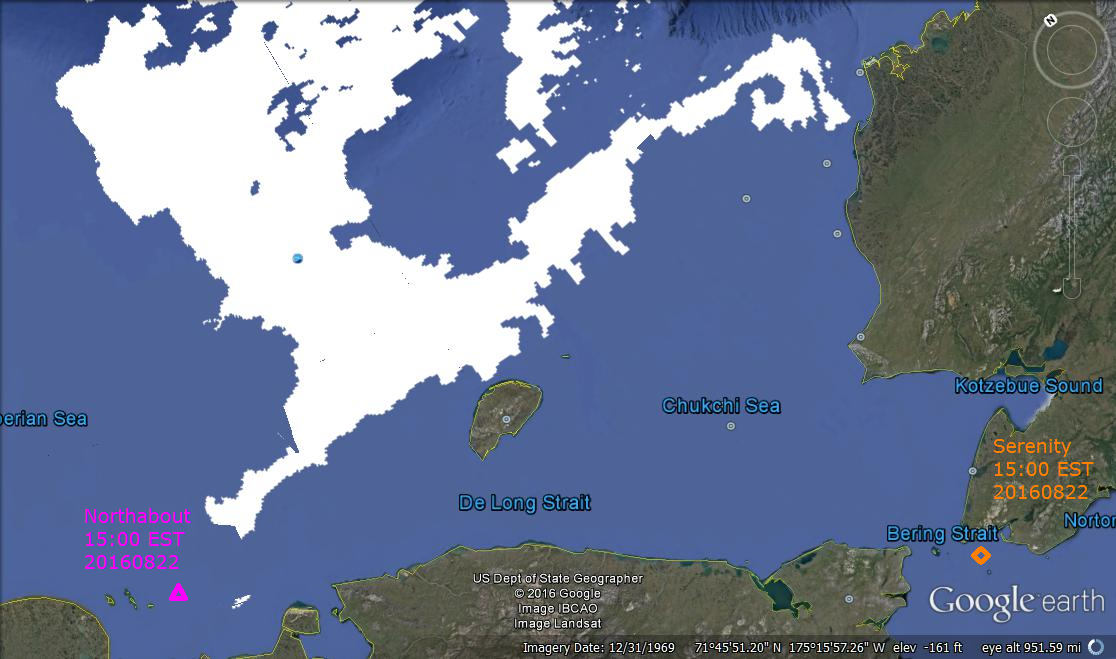
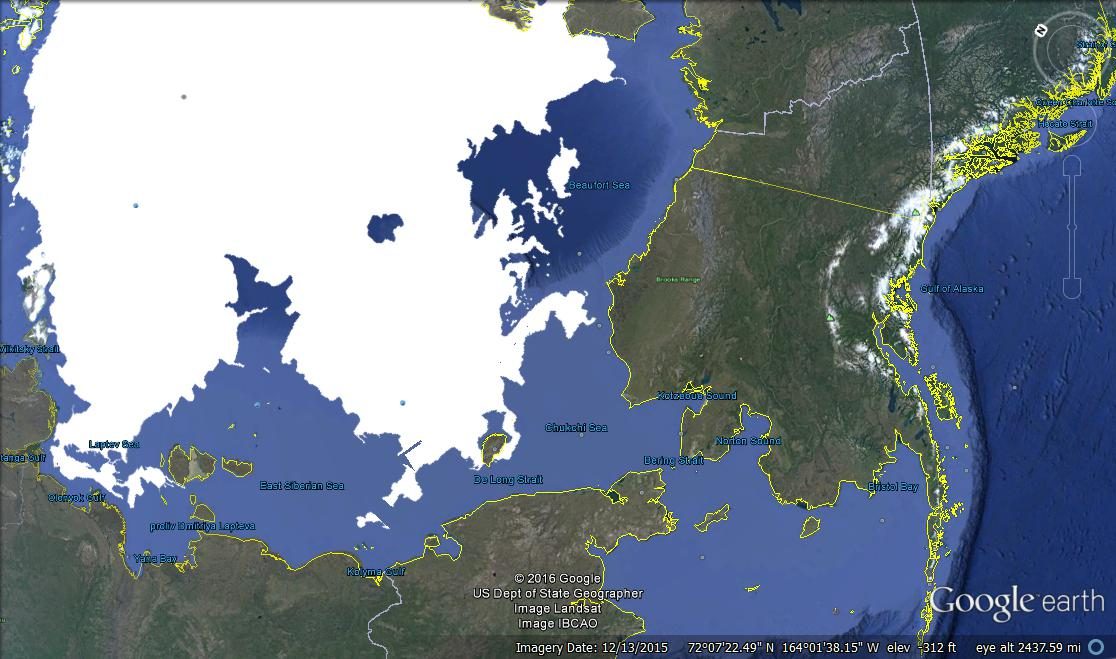
Today’s MASIE ice chart shows some recovery of ice extent, mostly in BCE region (Beaufort, Chukchi, E. Siberian seas).  This happens to be the location of two ships exploring the ice extent: Northabout (Polar Ocean Challenge) and Serenity (Celebrity Cruiseliner).

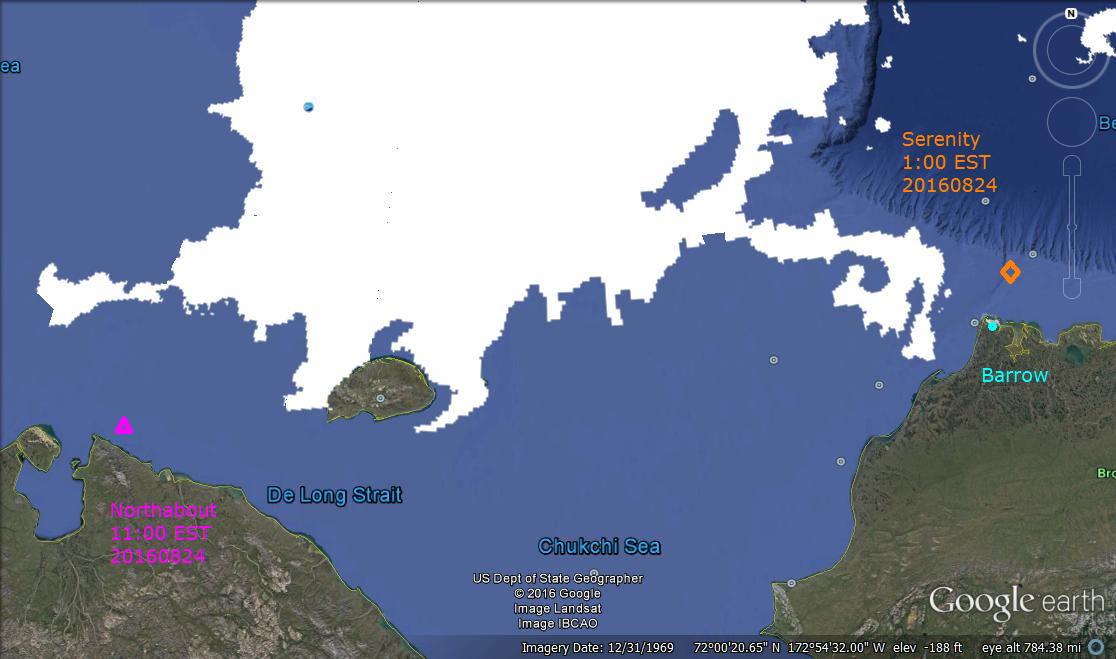
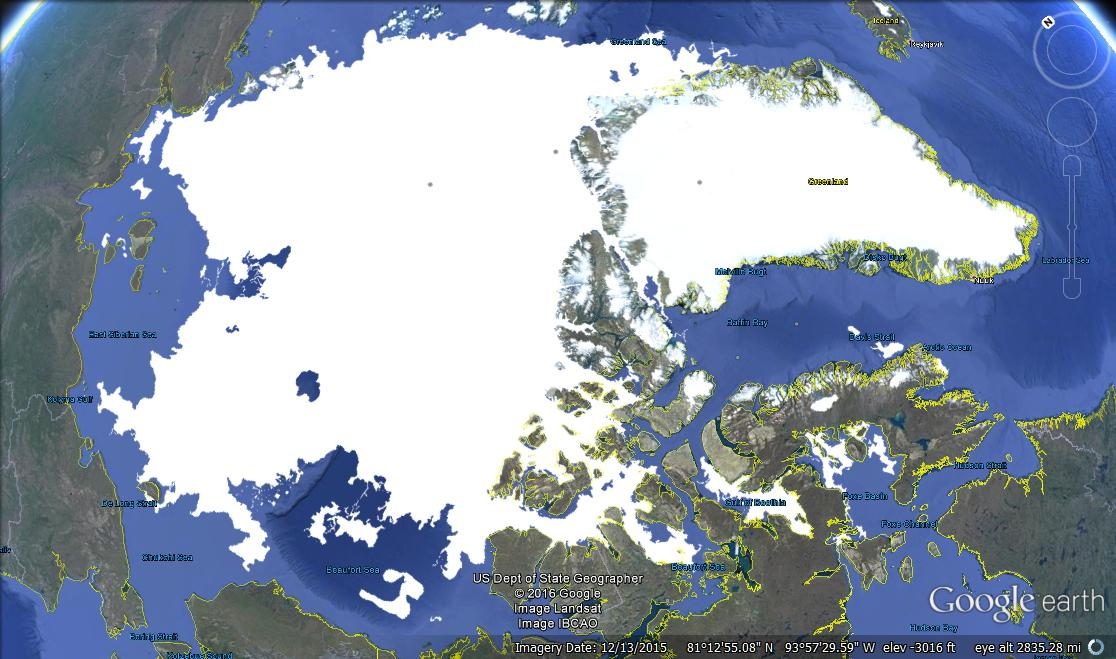
20160823google1

Imagery date refers to Google Earth capture of land forms. Ice edges are August 22, 2016 from MASIE. Click to zoom in.

As the image shows, Northabout has moved close to shore due to a tongue of ice extending south, while Serenity has passed through the Bering Strait, heading towards Barrow, but with some ice ahead.  The pictured ice edges are from yesterday, but show a line of ice that could threaten the Beaufort passage.  That is especially an issue for Northabout, a small sailing boat foregoing any assistance from icebreakers.

The cyclone is winding down, but who knows what and where the ice will be.

Background

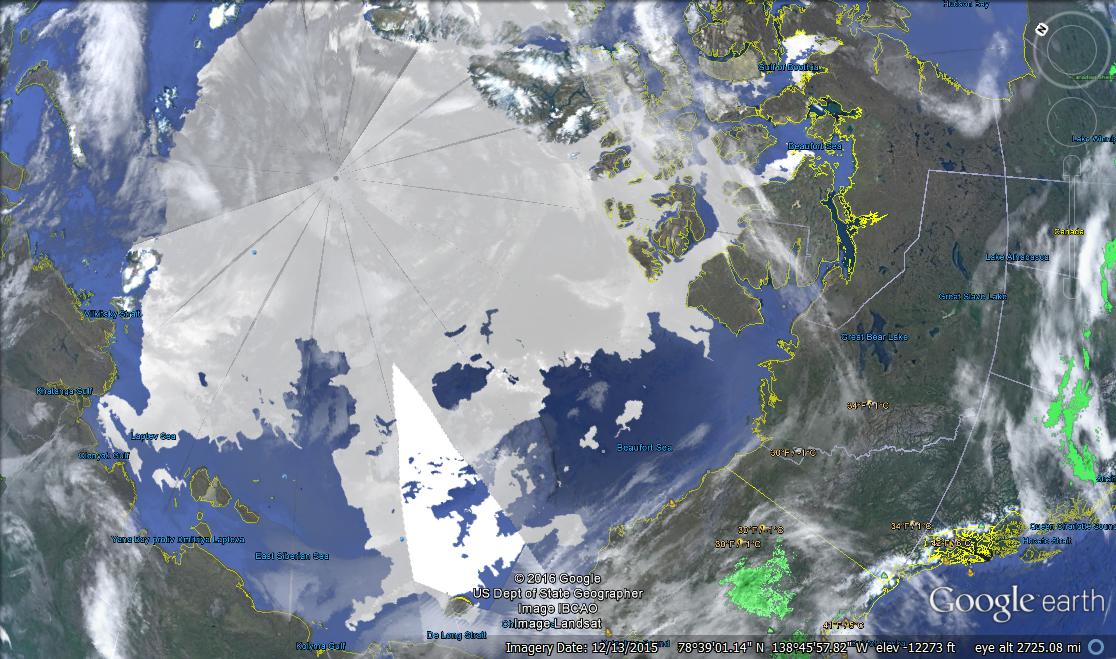
Image from The Great Arctic Cyclone of 2016: After Four Years, a Summer Sequel at Jeff Masters blog.

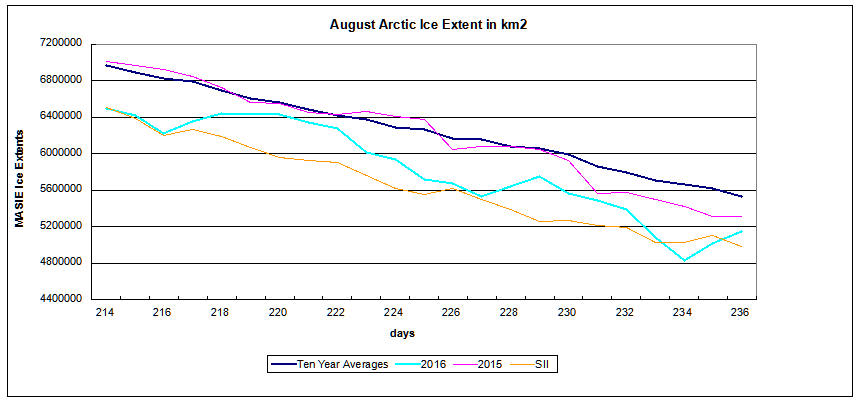
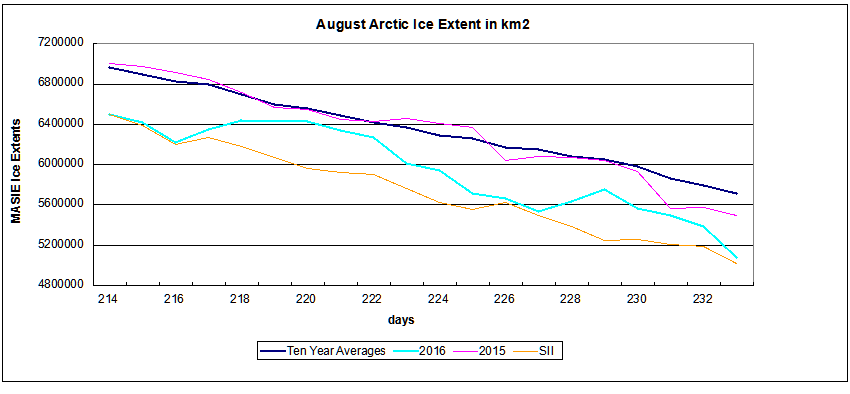
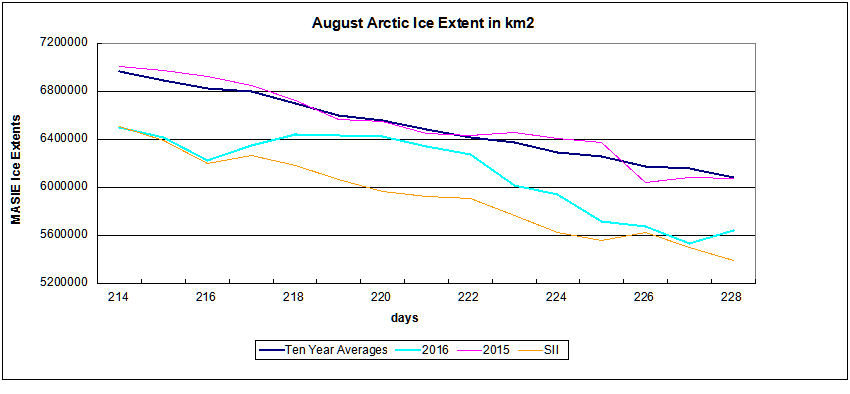
The Arctic Cyclone operating near the north pole has compressed the ice extents, The graph below shows the results: Overall ice extent which had recently stabilized lost 672k km2 in just 4 days. 300k km2 was lost in BCE (Beaufort, Chukchi and East Siberian seas) and another 100k km2 in CAA (Canadian Arctic Archipelago).  SII had been running ~200k km2 below MASIE and they are now close, with both showing an uptick yesterday.

MASIE 2016 day235


That is good news for the Northabout, and also for Serenity, the cruiseship scheduled to use the Northwest Passage. Of course, it will be not so good if they are caught directly in the winds and ice movements.

20160821google2

Imagery date refers to Google Earth capture of land forms. Ice extent is 20160820 from MASIE. Click on image to zoom in.


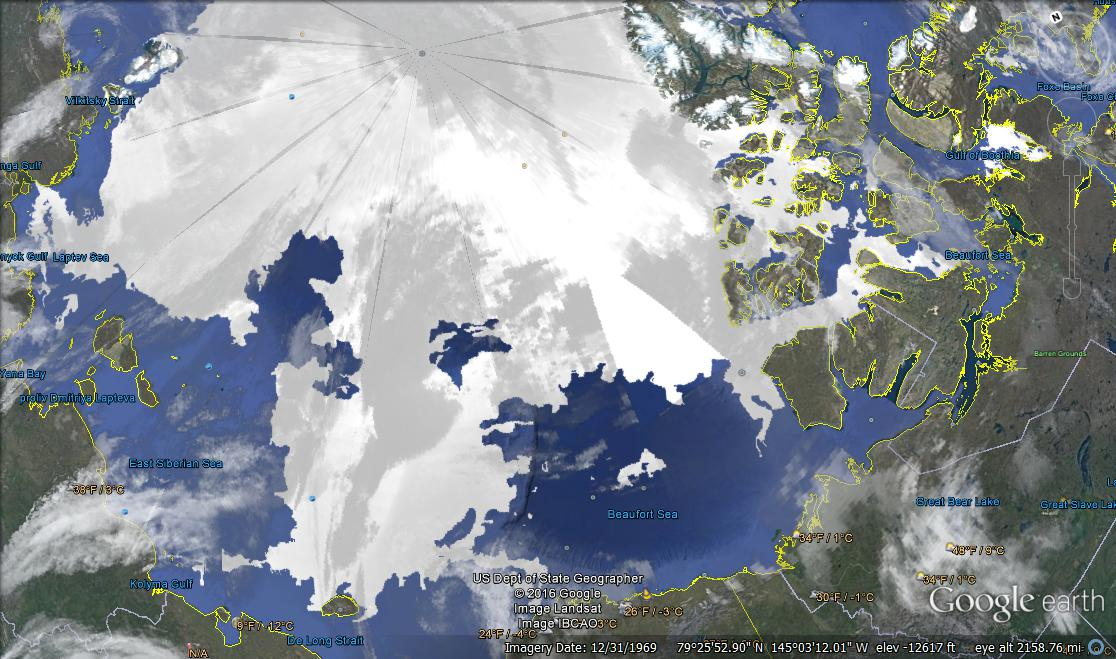
The Big Picture of Arctic land, ocean, ice and clouds.

20160821google3

For more context on Arctic ice extent see Arctic Ice Watch July 31.  For those who wish to browse Arctic ice in Google Earth, the procedure is simple.  Go to MASIE homepage and download the kmz file.  Clicking on the file should open it in Google Earth (presuming it is on your computer.) Then you can browse, zoom in and out, and take images.


Celebrity Serenity

I was once told by a fellow cruise passenger not to call our ship a boat.  He said in the Navy they knew if you were in a boat it meant something awful had happened to your ship.

The Good Ship Northabout


Update Aug.22: Arctic Ice, Cyclone and Ships

Today’s MASIE ice chart shows further compression and also shifting locations of sea ice in the BCE region (Beaufort, Chukchi, E. Siberian seas).  This happens to be the location of two ships exploring the ice extent: Northabout (Polar Ocean Challenge) and Serenity (Celebrity Cruiseliner).

20160822google2

Imagery date refers to Google Earth capture of land forms. Ice edges are for August 21, 2016 from MASIE. Click on image to zoom in.

As the image shows, Northabout is contending with a tongue of ice extending south toward the shoreline, while Serenity in on her way through the Bering Strait.  The pictured ice edges are from yesterday, but show a line of ice that could threaten the Beaufort passage.  That is especially an issue for Northabout, a small sailing boat foregoing any assistance from icebreakers.

The cyclone is expected to weaken later this week, but who knows what and where the ice will be.

Background from August 21

Image from The Great Arctic Cyclone of 2016: After Four Years, a Summer Sequel at Jeff Masters blog.

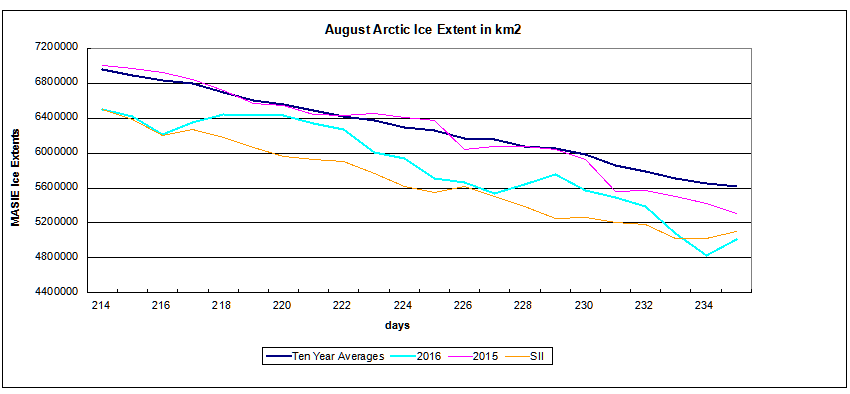
The Arctic Cyclone operating near the north pole is starting to compress the ice extents, The graph below shows the results: Overall ice extent which had recently stabilized lost 672k km2 in just the last 4 days. 300k km2 was lost in BCE (Beaufort, Chukchi and East Siberian seas) and another 100k km2 in CAA (Canadian Arctic Archipelago).  SII had been running ~200k km2 below MASIE and they are now a match.

MASIE 2016 day233

That is good news for the Northabout, and also for Serenity, the cruiseship scheduled to use the Northwest Passage. Of course, it will be not so good if they are caught directly in the winds and ice movements.

20160821google2

Imagery date refers to Google Earth capture of land forms. Ice extent is 20160820 from MASIE. Click on image to zoom in.


The Big Picture of Arctic land, ocean, ice and clouds.

20160821google3

For more context on Arctic ice extent see Arctic Ice Watch July 31.  For those who wish to browse Arctic ice in Google Earth, the procedure is simple.  Go to MASIE homepage and download the kmz file.  Clicking on the file should open it in Google Earth (presuming it is on your computer.) Then you can browse, zoom in and out, and take images.


Arctic Cyclone Clears the Ice


Image from The Great Arctic Cyclone of 2016: After Four Years, a Summer Sequel at Jeff Masters blog.

The Arctic Cyclone operating near the north pole is starting to compress the ice extents, The graph below shows the results: Overall ice extent which had recently stabilized lost 672k km2 in just the last 4 days. 300k km2 was lost in BCE (Beaufort, Chukchi and East Siberian seas) and another 100k km2 in CAA (Canadian Arctic Archipelago).  SII had been running ~200k km2 below MASIE and they are now a match.

MASIE 2016 day233

That is good news for the Northabout, and also for Serenity, the cruiseship scheduled to use the Northwest Passage. Of course, it will be not so good if they are caught directly in the winds and ice movements.

20160821google2

Imagery date refers to Google Earth capture of land forms. Ice extent is 20160820 from MASIE. Click on image to zoom in.


The Big Picture of Arctic land, ocean, ice and clouds.

20160821google3

For more context on Arctic ice extent see Arctic Ice Watch July 31.  For those who wish to browse Arctic ice in Google Earth, the procedure is simple.  Go to MASIE homepage and download the kmz file.  Clicking on the file should open it in Google Earth (presuming it is on your computer.) Then you can browse, zoom in and out, and take images.


Northabout Nears E. Siberian Sea


20160818google2rev

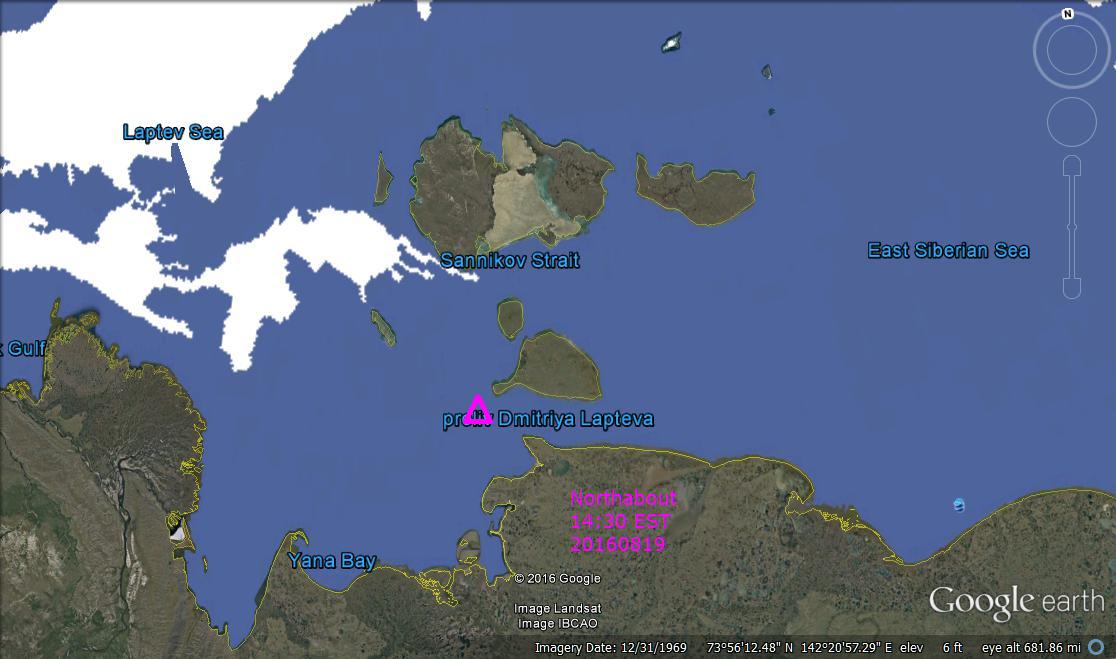
Update August 19 2016

Today’s tracking shows Northabout is approaching the strait leaving Laptev and entering East Siberian Sea.  It appears to be open water all the way to Beaufort Sea.

20160818google5

Imagery date refers to Google Earth capture of land forms. Ice extent is for August 18, 2016 from MASIE. Click on image to zoom in.

Update August 15, 2016

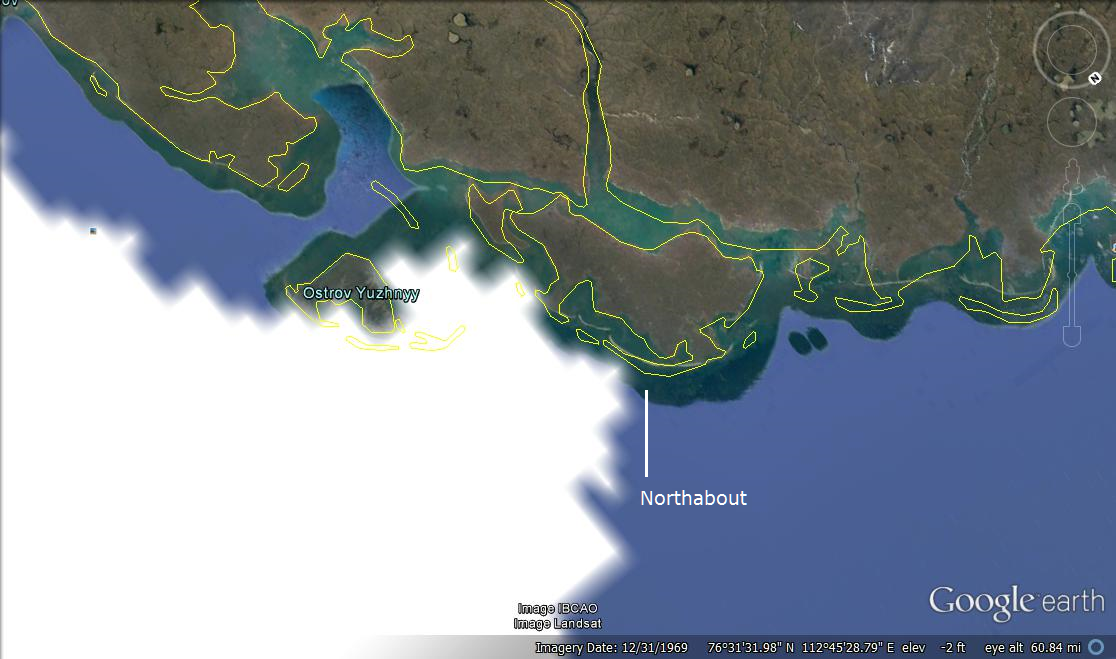
It appears that Northabout, the Polar Ocean Challenge sailboat, is positioning for an end run around the Laptev wall.  The ship location is current, the ice edges are yesterday’s chart from MASIE. (Click on the image to zoom in)

20160814GoogleRev

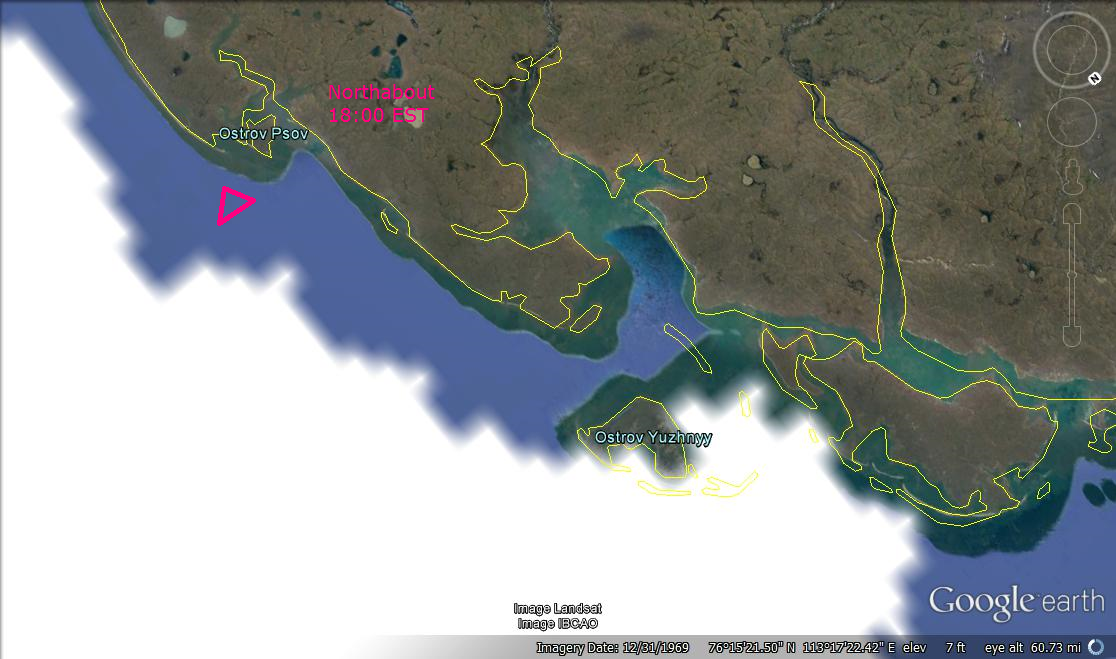
Update 18:00 EST August 15, 2016

It looks like Northabout is sailing free in Laptev.

20160815googlelater


Update August 14, 2016

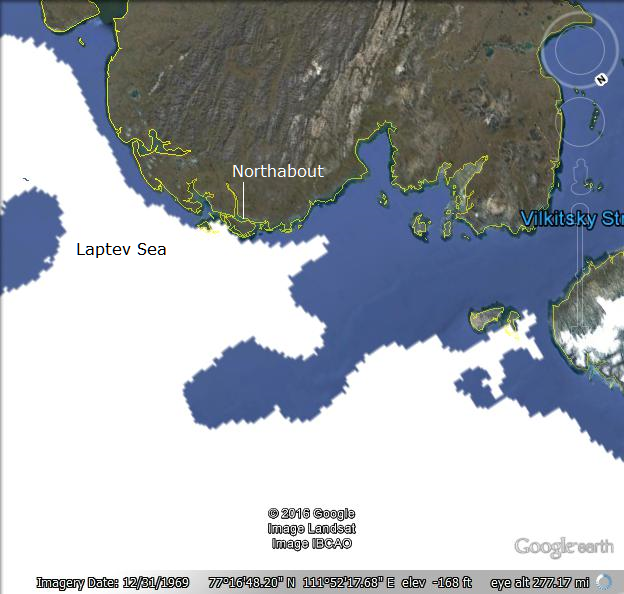
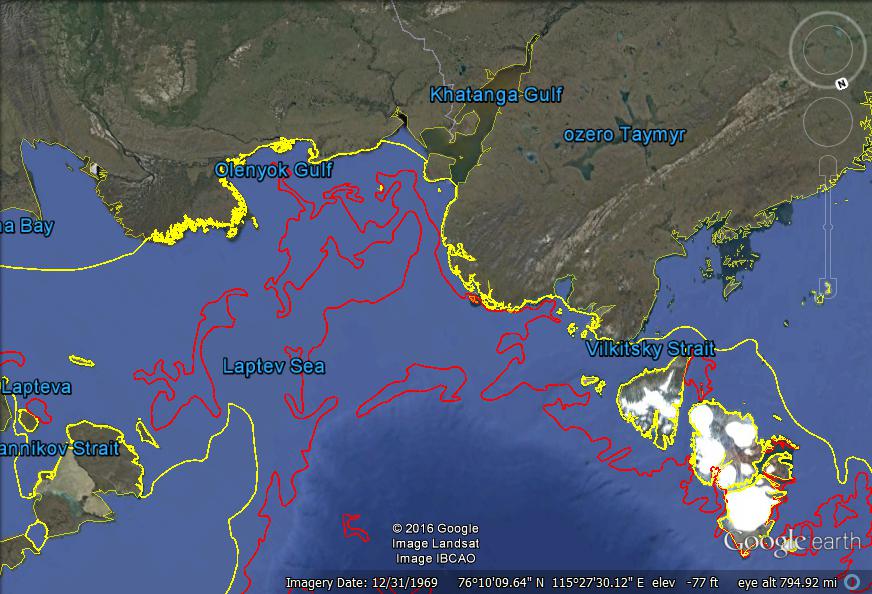
It appears that Northabout is sheltering in a cove, before seeking a way around the Laptev wall. Below the Google Earth image of ice edges from NIC shows how the strait has opened up along with navigable shore lines.

Aug13googleRev

Imagery date refers to Google Earth capture of land forms. Ice edges are provided by MASIE for August 13, 2016.

The Big Picture from August 11, 2016.

masie_August 11rev

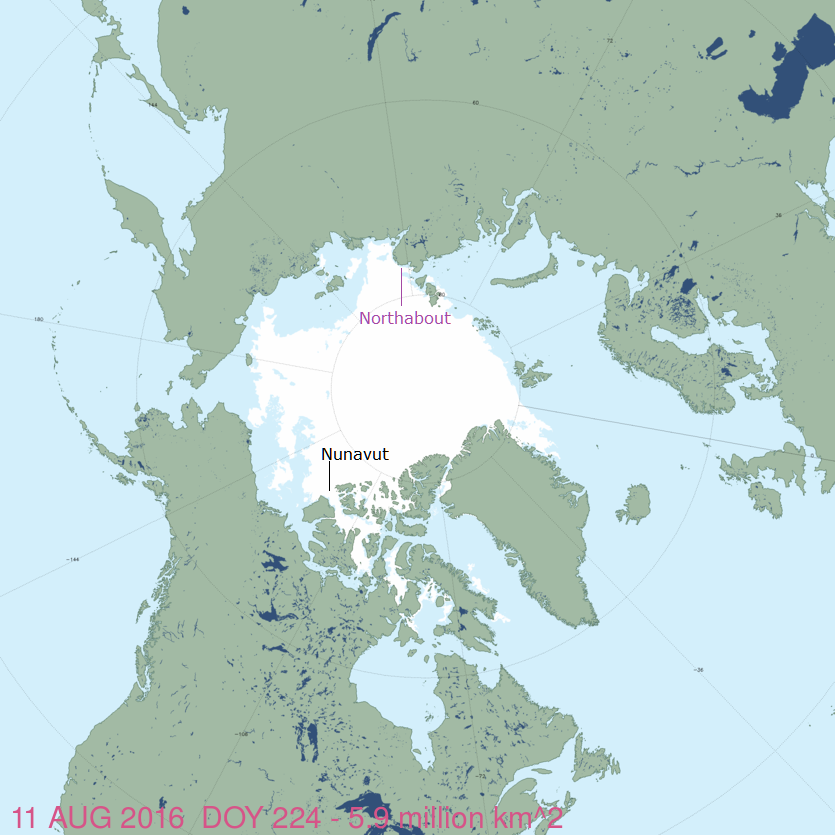
The Polar Ocean Challenge involves the sailing ship Northabout circumnavigating the North Pole counterclockwise starting from Bristol UK. The chart above from MASIE shows the two choke points in the itinerary: The Laptev Wall of ice at the beginning and the Nunavut Gauntlet of ice at the end. The image shows If Northabout can get past Laptev, it is relatively clear sailing all the way to Beaufort where Nunavut awaits.

20160809en

The above chart from AARI shows how Northabout has passed through the strait from Kara into Laptev and is in a holding pattern up against the wall.  Caleb has some great photos (here) of the views from the deck, along with some comments respecting the explorers despite their being misled by global warming theorists.

20160809enBaffin

Above is the latest chart from AARI showing the present ice situation at the other end of the trip, the Nunavut Gauntlet.  The white part is without data since the Russians are focused on their side of the ocean, but it does show heavy ice in Beaufort Sea on the right,  Within Nunavut, Parry Channel is well blocked, but with some water around the edges.  If and when Northabout gets here, no one knows what they will face.  They are counting on the passage opening this year, unlike previous years.

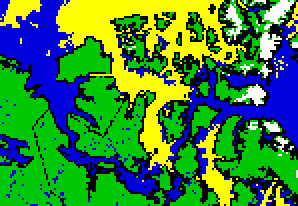
An image of the ice and snow extents from NOAA by way of National Ice Center (NIC)

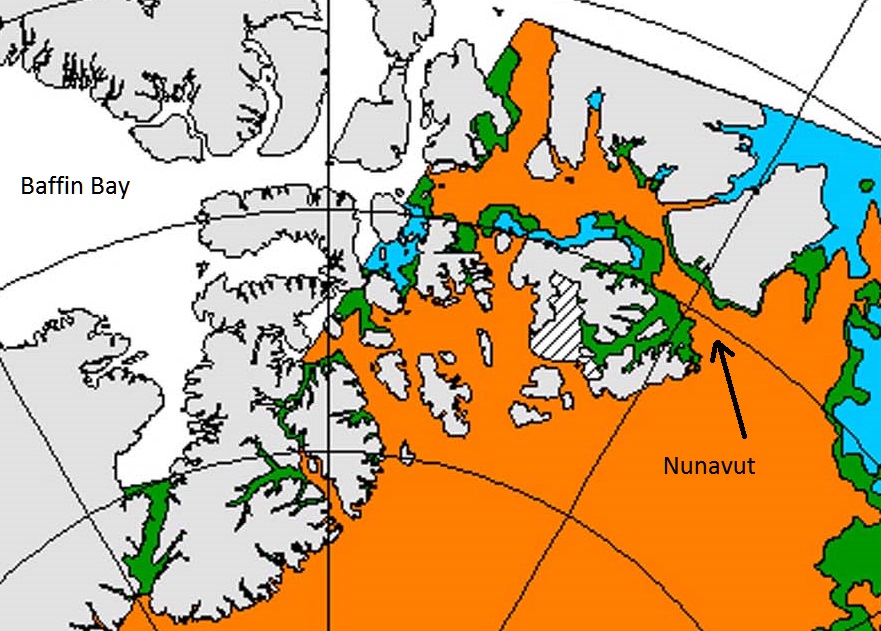
A closeup of Nunavut from that chart shows they have a chance by using the southern route, skipping all but the eastern end of Parry Channel, provided the ice is better not worse than now when they approach.

cursnow_alaskaNOAAnunavut

Footnote:

Another view of the Arctic is available from NIC using Google Earth.  The daily shapefile can be downloaded, and it then opens in Google Earth, which allows you to browse and zoom in on regions of interest.  Here is an image from this source:

20160812google

Note: Imagery date is Google Earth capture of land masses. Ice edges are 20160812 from NIC.


Mediocre Arctic Ice August 15


20160815google3

Imagery date refers to Google Earth capture of land forms. Ice edges are dated August 15, 2016 from MASIE. Click on image to zoom in.

In the chart below MASIE shows 2016 August Arctic ice extent drew near to average and close to 2015, then dropped lower before leveling off a bit yesterday.  Presently mid-August is about 400k less than average and 2015.  With SII back on line, it was reporting similar extents during June (as it has in the past).  This month it is starting to underestimate again, ~200k km2 lower. (SII and MASIE comparison is here.)

MASIE 2016 day228


Looking into the details, some marginal seas are melting earlier than last year, while the central, enduring ice pack is relatively typical for this time of year.

At the present pace of declining ice extents, 2016 is running 3 days ahead of 2015 and 6 days in advance of the ten-year average.

Comparing the Arctic ice extents with their maximums shows the melting is occurring mostly in the marginal seas:   Down the most are Beaufort, E. Siberian and Kara seas, with Laptev higher.  Chukchi and Central Arctic are also slightly higher.

Region 2016228 Day 228 Average 2016-Ave.
 (0) Northern_Hemisphere 5638938 6077428 -438491
 (1) Beaufort_Sea 460422 732896 -272475
 (2) Chukchi_Sea 460556 451013 9543
 (3) East_Siberian_Sea 425918 614576 -188658
 (4) Laptev_Sea 436021 258060 177960
 (5) Kara_Sea 34418 113901 -79483
 (6) Barents_Sea 0 28263 -28263
 (7) Greenland_Sea 210175 250577 -40402
 (8) Baffin_Bay_Gulf_of_St._Lawrence 43329 50525 -7196
 (9) Canadian_Archipelago 394745 402828 -8083
 (10) Hudson_Bay 50896 72085 -21188
 (11) Central_Arctic 3121317 3101598 19719
 (12) Bering_Sea 0 23 -23
 (13) Baltic_Sea 0 2 -2
 (14) Sea_of_Okhotsk 0 29 -29

Presently Arctic Ice extent is down from its March maximum by 62.6%.  The bulk of ice losses are coming from Okhotsk, Barents and Bering Seas (100% melted), along with Kara Sea, Hudson Bay and Baffin Bay-St. Lawrence (96+% melted).  All of them are marginal seas that will go down close to zero by September.

For more context on Arctic ice extent see Arctic Ice Watch July 31.  For those who wish to browse Arctic ice in Google Earth, the procedure is simple.  Go to MASIE homepage and download the kmz file.  Clicking on the file should open it in Google Earth (presuming it is on your computer.) Then you can browse, zoom in and out, and take images.


Northabout On the Verge

Update August 15, 2016

It appears that Northabout, the Polar Ocean Challenge sailboat, is positioning for an end run around the Laptev wall.  The ship location is current, the ice edges are yesterday’s chart from MASIE. (Click on the image to zoom in)

20160814GoogleRev

Update 18:00 EST August 15, 2016

It looks like Northabout is sailing free in Laptev.

20160815googlelater


Update August 14, 2016

It appears that Northabout is sheltering in a cove, before seeking a way around the Laptev wall. Below the Google Earth image of ice edges from NIC shows how the strait has opened up along with navigable shore lines.

Aug13googleRev

Imagery date refers to Google Earth capture of land forms. Ice edges are provided by MASIE for August 13, 2016.

The Big Picture from August 11, 2016.

masie_August 11rev

The Polar Ocean Challenge involves the sailing ship Northabout circumnavigating the North Pole counterclockwise starting from Bristol UK. The chart above from MASIE shows the two choke points in the itinerary: The Laptev Wall of ice at the beginning and the Nunavut Gauntlet of ice at the end. The image shows If Northabout can get past Laptev, it is relatively clear sailing all the way to Beaufort where Nunavut awaits.

20160809en

The above chart from AARI shows how Northabout has passed through the strait from Kara into Laptev and is in a holding pattern up against the wall.  Caleb has some great photos (here) of the views from the deck, along with some comments respecting the explorers despite their being misled by global warming theorists.

20160809enBaffin

Above is the latest chart from AARI showing the present ice situation at the other end of the trip, the Nunavut Gauntlet.  The white part is without data since the Russians are focused on their side of the ocean, but it does show heavy ice in Beaufort Sea on the right,  Within Nunavut, Parry Channel is well blocked, but with some water around the edges.  If and when Northabout gets here, no one knows what they will face.  They are counting on the passage opening this year, unlike previous years.

An image of the ice and snow extents from NOAA by way of National Ice Center (NIC)

A closeup of Nunavut from that chart shows they have a chance by using the southern route, skipping all but the eastern end of Parry Channel, provided the ice is better not worse than now when they approach.

cursnow_alaskaNOAAnunavut

Footnote:

Another view of the Arctic is available from NIC using Google Earth.  The daily shapefile can be downloaded, and it then opens in Google Earth, which allows you to browse and zoom in on regions of interest.  Here is an image from this source:

20160812google

Note: Imagery date is Google Earth capture of land masses. Ice edges are 20160812 from NIC.


Laptev Wall and Nunavut Gauntlet

Update August 14, 2016

It appears that Northabout has found a way around the Laptev wall, and is close to finding open water.  Below the Google Earth image of ice edges from NIC shows how the strait has opened up along with navigable shore lines.

Aug13googleRev

Imagery date refers to Google Earth capture of land forms. Ice edges are provided by MASIE for August 13, 2016.

The Big Picture from August 11, 2016.

masie_August 11rev

The Polar Ocean Challenge involves the sailing ship Northabout circumnavigating the North Pole counterclockwise starting from Bristol UK. The chart above from MASIE shows the two choke points in the itinerary: The Laptev Wall of ice at the beginning and the Nunavut Gauntlet of ice at the end. The image shows If Northabout can get past Laptev, it is relatively clear sailing all the way to Beaufort where Nunavut awaits.

20160809en

The above chart from AARI shows how Northabout has passed through the strait from Kara into Laptev and is in a holding pattern up against the wall.  Caleb has some great photos (here) of the views from the deck, along with some comments respecting the explorers despite their being misled by global warming theorists.

20160809enBaffin

Above is the latest chart from AARI showing the present ice situation at the other end of the trip, the Nunavut Gauntlet.  The white part is without data since the Russians are focused on their side of the ocean, but it does show heavy ice in Beaufort Sea on the right,  Within Nunavut, Parry Channel is well blocked, but with some water around the edges.  If and when Northabout gets here, no one knows what they will face.  They are counting on the passage opening this year, unlike previous years.

An image of the ice and snow extents from NOAA by way of National Ice Center (NIC)

A closeup of Nunavut from that chart shows they have a chance by using the southern route, skipping all but the eastern end of Parry Channel, provided the ice is better not worse than now when they approach.

cursnow_alaskaNOAAnunavut

Footnote:

Another view of the Arctic is available from NIC using Google Earth.  The daily shapefile can be downloaded, and it then opens in Google Earth, which allows you to browse and zoom in on regions of interest.  Here is an image from this source:

20160812google

Note: Imagery date is Google Earth capture of land masses. Ice edges are 20160812 from NIC.


Polar Challenge Meets Laptev Wall


northernsearoute


The plan of the Polar Ocean Challenge is to circumnavigate the North Pole counterclockwise in the ship Northabout, starting from Bristol UK, through the Northern Sea Route (Barents to Chukchi), returning through the Northwest Passage (Beaufort to Baffin Bay).  The challenge part is doing it without icebreakers, which is how commercial ships use the NSR.  That is intended to prove the decline of Arctic ice, which is then attributed to global warming, which is due to burning fossil fuels.  (Connecting dots is hard.)

The image from the group’s website shows they are nearby the Vilkitsky Strait waiting for some open water to proceed.  This delay was unforeseen and unwelcome, since refreeezing occurs mid September and the NSR closes in November.  Whether the Northwest Passage opens or not is another matter.

Laptev Gateway
Here is the current Ice chart of the Laptev Sea, looking very much like a wall of ice. By the way, the Vilkitsky strait connecting Kara and Laptev seas is 104 km long. After that, it is all brown stuff..

ru legend


Arctic Ice Watch July 31

Someone asked how the annual average ice extent was coming along this year, so I crunched the numbers. The table shows 2016 year to date (YTD) compared to the ten-year average YTD (2006 -2015 inclusive).  Results are provided from MASIE as well as SII (Sea Ice Index from NOAA, Multisensor Analyzed Sea Ice Extent from National Ice Center). SII monthly average for September will be the number used by the Sea Ice Prediction Network to compare to forecasted extents.

Monthly 2016 2016 2016 2016-10yr Ave 2016-10yr Ave
Averages MASIE SII SII Deficit MASIE SII
Jan 13.922 13.472 -0.450 0.049 -0.308
Feb 14.804 14.210 -0.593 0.019 -0.422
Mar 14.769 14.405 -0.364 -0.239 -0.481
Apr 13.917 13.694 -0.223 -0.391 -0.613
May 12.086 11.900 -0.186 -0.681 -1.060
June 10.419 10.353 -0.066 -0.533 -0.839
July 8.067 7.920 -0.147 -0.334 -0.501
YTD Ave. 12.569 12.279 -0.290 -0.301 -0.603

MASIE shows 2016 average annual ice extent calculated from the seven monthly averages is 12.6M km2, ~300k km2 below average YTD. SII shows YTD average extent is 12.3M km2, about 300k km2 less than MASIE, and 600k km2 less than SII YTD average of the last ten years. IOW, MASIE YTD is 2.3% below average and SII is 4.7% below average.

The table also shows most of the MASIE ice deficits arose in April, May, and June, offsetting normal January and February measurements.  SII shows all months in 2016 down by much larger amounts.

You may also notice that the monthly loss of extent is increasing, and August will likely be similar to July.  September losses will be smaller since refreezing typically resumes in the last week or so.  Still, there is no cause for alarm, despite what this guy says.

30 August 2012: Cambridge Professor Peter Wadhams predicts Arctic summer sea ice “all gone by 2015”.

MASIE 2016 day213

As the chart below shows, the seas most down from average this year are Beaufort, E. Siberian, Kara, CAA, and Greenland Sea.  Meanwhile higher extents are showing in Chukchi and Laptev, resulting in 2016 ~350k km2 below average for this date.

Region 2016213 Day 213 Average 2016-Ave.
 (0) Northern_Hemisphere 6640969 6988735 -347766
 (1) Beaufort_Sea 669717 793684 -123967
 (2) Chukchi_Sea 582590 540462 42127
 (3) East_Siberian_Sea 661000 784830 -123830
 (4) Laptev_Sea 669258 386981 282277
 (5) Kara_Sea 54858 179795 -124937
 (6) Barents_Sea 144 30868 -30724
 (7) Greenland_Sea 182516 316383 -133866
 (8) Baffin_Bay_Gulf_of_St._Lawrence 126394 122921 3473
 (9) Canadian_Archipelago 482313 545093 -62781
 (10) Hudson_Bay 111666 138699 -27033
 (11) Central_Arctic 3099606 3146919 -47313
 (12) Bering_Sea 0 186 -186
 (13) Baltic_Sea 0 47 -47
 (14) Sea_of_Okhotsk 0 710 -710

2016213 NH Max Loss % Loss Sea Max % Total Loss
 (0) Northern_Hemisphere 8436630 55.95% 100%
 (1) Beaufort_Sea 400728 37.44% 5%
 (2) Chukchi_Sea 383399 39.69% 4%
 (3) East_Siberian_Sea 426120 39.20% 5%
 (4) Laptev_Sea 228552 25.46% 3%
 (5) Kara_Sea 880130 94.13% 10%
 (6) Barents_Sea 599235 99.98% 7%
 (7) Greenland_Sea 477196 72.33% 5%
 (8) Baffin_Bay_Gulf_of_St._Lawrence 1518188 92.31% 17%
 (9) Canadian_Archipelago 370866 43.47% 4%
 (10) Hudson_Bay 1149204 91.14% 13%
 (11) Central_Arctic 147104 4.53% 2%
 (12) Bering_Sea 768232 100.00% 9%
 (13) Baltic_Sea 97582 100.00% 1%
 (14) Sea_of_Okhotsk 1308697 100.00% 15%

It is clear from the above that the bulk of ice losses are coming from Okhotsk, Barents and Bering Seas (100% melted),along with Kara Sea, Hudson Bay and Baffin Bay-St. Lawrence (90+% melted).  All of them are marginal seas that will go down close to zero by September.  Note: Some seas are not at max on the NH max day.  Thus, totals from adding losses will vary from NH daily total.

CPC shows the Arctic Oscillation waffling between positive and negative values, recently positive and forecasted to near neutral. Generally, positive AO signifies lower pressures over Arctic ice, with more cloud, lower insolation and less melting.  The outlook at this point is mixed.

September Minimum Outlook

Historically, where will ice be remaining when Arctic melting stops? Over the last 10 years, on average MASIE shows the annual minimum occurring about day 260. Of course in a given year, the daily minimum varies slightly a few days +/- from that.

For comparison, here are sea ice extents reported from 2007, 2012, 2014 and 2015 for day 260:

Arctic Regions 2007 2012 2014 2015
Central Arctic Sea 2.67 2.64 2.98 2.93
BCE 0.50 0.31 1.38 0.89
Greenland & CAA 0.56 0.41 0.55 0.46
Bits & Pieces 0.32 0.04 0.22 0.15
NH Total 4.05 3.40 5.13 4.44

Notes: Extents are in M km2.  BCE region includes Beaufort, Chukchi and Eastern Siberian seas. Greenland Sea (not the ice sheet). Canadian Arctic Archipelago (CAA).  Locations of the Bits and Pieces vary.

As the table shows, low NH minimums come mainly from ice losses in Central Arctic and BCE.  The great 2012 cyclone hit both in order to set the recent record. The recovery since 2012 shows in 2014, with some dropoff last year, mostly in BCE.

Summary

We are well into the melt season, and the resulting minimum will depend upon the vagaries of weather between now and September.  Early on, 2016 was slightly higher than 2015 in March, lower in May and narrowing the gap late June and late July. Note: 2016 melt season is starting without the Blob, with El Nino over, and a cold blob in the North Atlantic.  The AO has been hovering around neutral, now possibly indicating cloud cover reducing the pace of melting.

Meanwhile we can watch and appreciate the beauty of the changing ice conditions.

Arctic sea ice in summer 2015. This photo was made during an expedition of the German research icebreaker Polarstern into the central Arctic Ocean. Credit: Stefan Hendricks

Footnote:  Regarding the colder than normal water in the North Atlantic

A 2016 article for EOS is entitled Atlantic Sea Ice Could Grow in the Next Decade

Changing ocean circulation in the North Atlantic could lead to winter sea ice coverage remaining steady and even growing in select regions.

The researchers analyzed simulations from the Community Earth System Model, modeling both atmosphere and ocean circulation. They found that decadal-scale trends in Arctic winter sea ice extent are largely explained by changes in ocean circulation rather than by large-scale external factors like anthropogenic warming.

From the Abstract of Yeager et al.

We present evidence that the extreme negative trends in Arctic winter sea-ice extent in the late 1990s were a predictable consequence of the preceding decade of persistent positive winter North Atlantic Oscillation (NAO) conditions and associated spin-up of the thermohaline circulation (THC). Initialized forecasts made with the Community Earth System Model decadal prediction system indicate that relatively low rates of North Atlantic Deep Water formation in recent years will result in a continuation of a THC spin-down that began more than a decade ago. Consequently, projected 10-year trends in winter Arctic winter sea-ice extent seem likely to be much more positive than has recently been observed, with the possibility of actual decadal growth in Atlantic sea-ice in the near future.

Arctic Ice Outlook July 20

For a change, note the Arctic ice chart above from AARI, the Arctic and Antarctic Research Institute, St. Petersburg, Russia.  Based upon such information, they are holding up the Polar Ocean Challenge exploration ship at Murmansk because of too much ice in the Northern Sea Route.  Any excessive delay puts at risk their plan to circumnavigate the North Pole counterclockwise, starting in Bristol, UK.

So what is going on with Arctic ice, and what is the outlook?

Half of the maximum ice extent is gone as of yesterday, and in a typical year, one third will remain when melting stops in September.  Remember that the days are already shortening while the warming momentum will take 2 more months to cease.  So 2016 started with about 15M km2 of ice, is now at 7.5M and is likely to end up about 5M km2.

The Sea Ice Prediction Network (SIPN) gathers forecasts using various methods and in June provided their first of three estimates of the September monthly average Arctic ice extent, as reported by NSIDC Sea Ice Index (produced by NOAA).


The median Outlook value for September 2016 sea ice extent is 4.28 million square kilometers with quartiles of 4.10 and 4.63 million square kilometers (See Figure 1 in the full report, below). Contributions are based on a range of methods: statistical, dynamical models, estimates based on trends, and two informal polls.

The median Outlook value is also down from last year by more than 700,000 square kilometers. This year’s forecast compares to observed values of 4.3 million square kilometers in 2007, 3.6 million square kilometers in 2012, and 4.63 million square kilometers in 2015. Only one forecast suggests a new record low is possible, one ties with 2012, while all others do not forecast a new record low for 2016. (No forecast from Peter Wadhams is included this year.)

In the chart below MASIE shows 2016 Mid-July  Arctic ice extent has slipped below average and 2015. SII is back on line and was reporting similar extents during June (as it has in the past).  But in July SII was showing ~400k km2 less ice most days, but is now aligned with MASIE.  (SII and MASIE comparison is here.)

MASIE 2016 day202

At the present pace of declining ice extents, 2016 is running five days ahead of the ten-year average, and seven days ahead of 2015.  By the end of July, both the average and 2015 ice extents will be about 7M km2, so a loss of 1M or more in the next 10 days.

.

Comparing the Arctic ice extents with their maximums shows the melting is occurring mostly in the marginal seas, now including Kara Sea as expected in July.

2016202 NH Max Loss % Loss Sea Max % Total Loss
 (0) Northern_Hemisphere 7577692 50.26% 100%
 (1) Beaufort_Sea 367069 34.29% 5%
 (2) Chukchi_Sea 311512 32.25% 4%
 (3) East_Siberian_Sea 185840 17.09% 2%
 (4) Laptev_Sea 108421 12.08% 1%
 (5) Kara_Sea 808138 86.43% 10%
 (6) Barents_Sea 599344 99.99% 8%
 (7) Greenland_Sea 440533 66.78% 6%
 (8) Baffin_Bay_Gulf_of_St._Lawrence 1451812 88.28% 18%
 (9) Canadian_Archipelago 246806 28.93% 3%
 (10) Hudson_Bay 1044475 82.84% 13%
 (11) Central_Arctic 158032 4.87% 2%
 (12) Bering_Sea 768232 100.00% 10%
 (13) Baltic_Sea 97582 100.00% 1%
 (14) Sea_of_Okhotsk 1308697 100.00% 17%

It is clear from the above that the bulk of ice losses are coming from Okhotsk, Barents and Bering Seas (100% melted), along with Kara Sea, Hudson Bay and Baffin Bay-St. Lawrence (67+% melted).  All of them are marginal seas that will go down close to zero by September.  Note: Some seas are not at max on the NH max day.  Thus, totals from adding losses will vary from NH daily total.
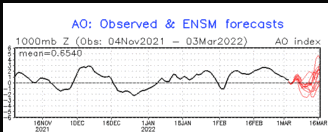
CPC shows the Arctic Oscillation waffling between positive and negative values, recently positive and forecasted to near neutral. Generally, positive AO signifies lower pressures over Arctic ice, with more cloud, lower insolation and less melting.  The outlook at this point is mixed.

September Minimum Outlook

Historically, where will ice be remaining when Arctic melting stops? Over the last 10 years, on average MASIE shows the annual minimum occurring about day 260. Of course in a given year, the daily minimum varies slightly a few days +/- from that.

For comparison, here are sea ice extents reported from 2007, 2012, 2014 and 2015 for day 260:

Arctic Regions 2007 2012 2014 2015
Central Arctic Sea 2.67 2.64 2.98 2.93
BCE 0.50 0.31 1.38 0.89
Greenland & CAA 0.56 0.41 0.55 0.46
Bits & Pieces 0.32 0.04 0.22 0.15
NH Total 4.05 3.40 5.13 4.44

Notes: Extents are in M km2.  BCE region includes Beaufort, Chukchi and Eastern Siberian seas. Greenland Sea (not the ice sheet). Canadian Arctic Archipelago (CAA).  Locations of the Bits and Pieces vary.

As the table shows, low NH minimums come mainly from ice losses in Central Arctic and BCE.  The great 2012 cyclone hit both in order to set the recent record. The recovery since 2012 shows in 2014, with some dropoff last year, mostly in BCE.

Summary

We are well into the melt season, and the resulting minimum will depend upon the vagaries of weather between now and September.  Early on, 2016 was slightly higher than 2015 in March, lower in May and now tracking slightly below the past.  Note: 2016 melt season is starting without the Blob, with El Nino over, and a cold blob in the North Atlantic.  The AO has been hovering around neutral, now possibly indicating cloud cover reducing the pace of melting.

Meanwhile we can watch and appreciate the beauty of the changing ice conditions.


Arctic Reflection: Clouds replace snow and ice as solar reflector NASA photo

Footnote:  Regarding the colder than normal water in the North Atlantic

A 2016 article for EOS is entitled Atlantic Sea Ice Could Grow in the Next Decade

Changing ocean circulation in the North Atlantic could lead to winter sea ice coverage remaining steady and even growing in select regions.

The researchers analyzed simulations from the Community Earth System Model, modeling both atmosphere and ocean circulation. They found that decadal-scale trends in Arctic winter sea ice extent are largely explained by changes in ocean circulation rather than by large-scale external factors like anthropogenic warming.

From the Abstract of Yeager et al.

We present evidence that the extreme negative trends in Arctic winter sea-ice extent in the late 1990s were a predictable consequence of the preceding decade of persistent positive winter North Atlantic Oscillation (NAO) conditions and associated spin-up of the thermohaline circulation (THC). Initialized forecasts made with the Community Earth System Model decadal prediction system indicate that relatively low rates of North Atlantic Deep Water formation in recent years will result in a continuation of a THC spin-down that began more than a decade ago. Consequently, projected 10-year trends in winter Arctic winter sea-ice extent seem likely to be much more positive than has recently been observed, with the possibility of actual decadal growth in Atlantic sea-ice in the near future.