19 State AGs Ask Supremes to Block Climate Lawsuits

In a motion filed Wednesday with the high court, 19 Republican state attorneys general argued that the climate liability challenges — which seek to hold the oil industry financially accountable for climate impacts — threaten “our basic way of life.”

The filing pits Alabama and other red states against five Democratic-led states that have sued oil companies to pay up for rising tides, intensifying storms and other disasters worsened by climate change. The approach tees up a battle royale between states — a type of legal fight that can only be decided by the Supreme Court.

Excerpts from the Bill of Complaint

2. In essence, Defendant States want a global carbon tax on the traditional energy industry. Citing fears of a climate catastrophe, they seek massive penalties, disgorgement, and injunctive relief against energy producers based on out-of-state conduct with out-of-state effects. On their view, a small gas station in rural Alabama could owe damages to the people of Minnesota simply for selling a gallon of gas. If Defendant States are right about the substance and reach of state law, their actions imperil access to affordable energy everywhere and inculpate every State and indeed every person on the planet. Consequently, Defendant States threaten not only our system of federalism and equal sovereignty among States, but our basic way of life.

3. In the past when States have used state law to dictate interstate energy policy, other States have sued and this Court has acted. When “West Virginia, then the leading producer of natural gas, required gas producers in the State to meet the needs of all local customers before shipping any gas interstate,” this Court entertained a suit brought by” Ohio and Pennsylvania against West Virginia. Maryland v. Louisiana, 451 U.S. 725, 738 (1981) (discussing Pennsylvania v. West Virginia, 262 U.S. 553 (1923)). 

4. The Court’s intervention was warranted then and is warranted now because Defendant States are not independent nations with unrestrained sovereignty to do as they please. In our federal system, no State “can legislate for, or impose its own policy upon the other.” Kansas v. Colorado, 206 U.S. 46, 95 (1907);see also BMW of N. Am., Inc. v. Gore, 517 U.S. 559, 571-73 (1996). Yet Defendants seek to set emissions policy well beyond their borders—punishing conduct that other States find “essential and necessary … to the economic and material well-being” of their citizens. E.g., Ala. Code §9-1-6(a).

9. Defendant States are nevertheless proceeding to regulate interstate gas emissions under their state laws and in their state courts. Through artful pleading, they have avoided removal to federal court. See e.g., Minnesota v. Am. Petroleum Inst., 63 F.4th 703, 719 (8th Cir. 2023) (Stras, J., concurring). Each day carries the threat of sweeping injunctive relief or a catastrophic damages award that could restructure the national energy system. See Exxon Shipping Co. v. Baker, 554 U.S. 471, 500-01 (2008) (discussing punitive damages and the “inherent uncertainty of the trial process”).

11. Plaintiff States and their citizens rely on traditional energy products every day. The assertion that Defendant States can regulate, tax, and enjoin the promotion, production, and use of such products beyond their borders—but outside the purview of federal law—threatens profound injury. Therefore, Plaintiff States have no choice but to invoke this Court’s “original and exclusive jurisdiction of all controversies between two or more States.” 

Biggest Threat: AI or Climate? Both Together!


Leslie Eastman raises the question at Legal Insurrection What is The Bigger Threat to Humanity: Artificial Intelligence or Climate Change?  Excerpts in italics with my bolds as she goes on to discuss the frightening answer:

The biggest hazard to humanity is when
climate change arguments are paired with AI.

During a recent interview with Reuters, Artificial Intelligence (AI) pioneer Geoffrey Hinton to asserted AI was a bigger threat to humanity than climate change.

Geoffrey Hinton, widely known as one of the “godfathers of AI”, recently announced he had quit Alphabet (GOOGL.O) after a decade at the firm, saying he wanted to speak out on the risks of the technology without it affecting his former employer.

Hinton’s work is considered essential to the development of contemporary AI systems. In 1986, he co-authored the seminal paper “Learning representations by back-propagating errors”, a milestone in the development of the neural networks undergirding AI technology. In 2018, he was awarded the Turing Award in recognition of his research breakthroughs.

But he is now among a growing number of tech leaders publicly espousing concern about the possible threat posed by AI if machines were to achieve greater intelligence than humans and take control of the planet.

“I wouldn’t like to devalue climate change. I wouldn’t like to say, ‘You shouldn’t worry about climate change.’ That’s a huge risk too,” Hinton said. “But I think this might end up being more urgent.”

I would like to offer two relatively recent studies that should assuage Hinton and others who have bought into the climate crisis narrative. To begin with, Health Physics recently published research results that looks at the presence of carbon isotopes. [Note: My post on this paper is By the Numbers: CO2 Mostly Natural. ]

The data show that fossil fuel use has contributed only 12% of the carbon dioxide during the last 3 centuries. The value is too low for fossil fuels have significantly influenced global temperatures.

These results negate claims that the increase in C(t) since 1800 has been dominated by the increase of the anthropogenic fossil component. We determined that in 2018, atmospheric anthropogenic fossil CO2 represented 23% of the total emissions since 1750 with the remaining 77% in the exchange reservoirs. Our results show that the percentage of the total CO2 due to the use of fossil fuels from 1750 to 2018 increased from 0% in 1750 to 12% in 2018, much too low to be the cause of global warming.

Furthermore, a study by MIT researchers in Science Advances confirms that the planet harbors a “stabilizing feedback” mechanism that acts over hundreds of thousands of years to stabilize global temperatures to keep them in a steady, habitable range.

A likely mechanism is “silicate weathering” — a geological process by which the slow and steady weathering of silicate rocks involves chemical reactions that ultimately draw carbon dioxide out of the atmosphere and into ocean sediments, trapping the gas in rocks.

Scientists have long suspected that silicate weathering plays a major role in regulating the Earth’s carbon cycle. The mechanism of silicate weathering could provide a geologically constant force in keeping carbon dioxide — and global temperatures — in check. But there’s never been direct evidence for the continual operation of such a feedback, until now.

I suspect that the “expert class” will be walking back their climate crisis assertions and endeavoring to hide their connection to their “fixes” once the full impact of the society-crushing, economy-killing force is felt….just as they are currently doing with the covid pandemic response now.

Clearly, the press is ginning up climate anxieties. How much of the concerns about AI are real, as opposed to general angst about the unknown ramifications, is difficult to say at present.

I have two points and my own hypothesis regarding climate change and AI.

Point 1: Carbon dioxide is a life-essential gas, and we had been reaching dangerously low levels until recently:

Plants consume carbon dioxide to grow and animals consume plants to obtain the necessary carbon for existence. If the level of carbon dioxide in the atmosphere dips below 150 ppm (parts per million) there would be a mass extinction of plant life per Greg Wrightstone in his book, “Inconvenient Facts/The Science Al Gore Doesn’t Want You to Know About.” Due to the depletion of carbon dioxide in the atmosphere during the last 140 million years to a dangerously low level of 182 ppm, carbon dioxide emissions during the industrial revolution saved plants from mass extinction and saved animals from mass starvation.

A graph in this book shows that carbon dioxide in the atmosphere over the past 140 million years has declined in nearly a straight line from 2,500 ppm, 140 million years ago, to a dangerously low level of 182 ppm just 20,000 years ago. Carbon dioxide emissions during the industrial revolution hiked the carbon dioxide in the atmosphere to about 400 ppm, to replenish the carbon dioxide in the atmosphere so as to save plants.

Point 2: A chatbot used climate change arguments to persuade a Belgian father to commit suicide.

From Euronews: Man ends his life after an AI chatbot ‘encouraged’ him to sacrifice himself to stop climate change.  Excerpts in italics with my bolds.

A Belgian man reportedly ended his life following a six-week-long conversation about the climate crisis with an artificial intelligence (AI) chatbot.

According to his widow, who chose to remain anonymous, *Pierre – not the man’s real name – became extremely eco-anxious when he found refuge in Eliza, an AI chatbot on an app called Chai.

Eliza consequently encouraged him to put an end to his life after he proposed sacrificing himself to save the planet.

Without these conversations with the chatbot, my husband would still be here,” the man’s widow told Belgian news outlet La Libre.

It appears the biggest hazard to humanity is when
climate change arguments are paired with AI.

Simple Truth vs. Cheap Green Energy Lie

Francis Menton asserts that the biggest disinformation (Lie) in public discourse is claiming that the cheapest source of energy comes from renewables, wind and solar power.  He provides a number of brazen media examples in his blog post What Is The Most Pernicious Example Of “Misinformation” Currently Circulating?

Why do I say that the assertion of wind and solar being the cheapest ways to generate electricity is the very most pernicious of misinformation currently out there? Here are my three reasons: (1) the assertion is repeated endlessly and ubiquitously, (2) it is the basis for the misallocation of trillions of dollars of resources and for great impoverishment of billions of people around the world, and (3) it is false to the point of being preposterous, an insult to everyone’s intelligence, yet rarely challenged.

In addition, Paul Homewood explains at his blog how recently this lie was repeatedly entered into testimony in the UK Parliament House of Lords:

In oral questions on Thursday, Lord Frost noted Whitehall claims that renewables are half the cost of gas-fired electricity, and asked for an explanation of why subsidies were still required, and why the strike prices on offer to windfarms this year are twice what Lord Callanan says they need to make a profit. As Hansard shows, Lord Callanan failed to answer the question, simply reiterating his false claims about levelized costs.

The responses from Lord Callanan demonstrate the typical ploy for disarming dissenters’ objections, i.e. getting the discussion entangled in details and cost minutae so that the big lie is lost in the weeds.  It occurs to me that previously David Wojick had put the key issue in a simple, useful way, reposted below.

Background Post: Just One Number Keeps the Lights On

David Wojick explains how maintaining electricity supply is simple in his CFACT article It takes big energy to back up wind and solar.  Excerpts in italics with my bolds. (H/T John Ray)

Power system design can be extremely complex but there is one simple number that is painfully obvious. At least it is painful to the advocates of wind and solar power, which may be why we never hear about it. It is a big, bad number.

To my knowledge this big number has no name, but it should. Let’s call it the “minimum backup requirement” for wind and solar, or MBR. The minimum backup requirement is how much generating capacity a system must have to reliably produce power when wind and solar don’t.

Duck Curve Now Looks Like a Canyon

For most places the magnitude of MBR is very simple. It is all of the juice needed on the hottest or coldest low wind night. It is night so there is no solar. Sustained wind is less than eight miles per hour, so there is no wind power. It is very hot or cold so the need for power is very high.

In many places MBR will be close to the maximum power the system ever needs, because heat waves and cold spells are often low wind events. In heat waves it may be a bit hotter during the day but not that much. In cold spells it is often coldest at night.

Thus what is called “peak demand” is a good approximation for the maximum backup requirement. In other words, there has to be enough reliable generating capacity to provide all of the maximum power the system will ever need. For any public power system that is a very big number, as big as it gets in fact.

Actually it gets a bit bigger, because there also has to be margin of safety or what is called “reserve capacity”. This is to allow for something not working as it should. Fifteen percent is a typical reserve in American systems. This makes MBR something like 115% of peak demand.

We often read about wind and solar being cheaper than coal, gas and nuclear power, but that does not include the MBR for wind and solar.

What is relatively cheap for wind and solar is the cost to produce a unit of electricity. This is often called LCOE or the “levelized cost of energy”. But adding the reliable backup required to give people the power they need makes wind and solar very expensive.

In short the true cost of wind and solar is LCOE + MBR. This is the big cost you never hear about. But if every state goes to wind and solar then each one will have to have MBR for roughly its entire peak demand. That is an enormous amount of generating capacity.

Of course the cost of MBR depends on the generating technology. Storage is out because the cost is astronomical. Gas fired generation might be best but it is fossil fueled, as is coal. If one insists on zero fossil fuel then nuclear is probably the only option. Operating nuclear plants as intermittent backup is stupid and expensive, but so is no fossil fuel generation.

What is clearly ruled out is 100% renewables, because there would frequently be no electricity at all. That is unless geothermal could be made to work on an enormous scale, which would take many decades to develop.

unicorn

It is clear that the Biden Administration’s goal of zero fossil fueled electricity by 2035 (without nuclear) is economically impossible because of the minimum backup requirements for wind and solar. You can’t get there from here.

One wonders why we have never heard of this obvious huge cost with wind and solar. The utilities I have looked at avoid it with a trick.

Dominion Energy, which supplies most of Virginia’s juice, is a good example. The Virginia Legislature passed a law saying that Dominion’s power generation had to be zero fossil fueled by 2045. Dominion developed a Plan saying how they would do this. Tucked away in passing on page 119 they say they will expand their capacity for importing power purchased from other utilities. This increase happens to be to an amount equal to their peak demand.

The plan is to buy all the MBR juice from the neighbors! But if everyone is going wind and solar then no one will have juice to sell. In fact they will all be buying, which does not work. Note that the high pressure systems which cause low wind can be huge, covering a dozen or more states. For that matter, no one has that kind of excess generating capacity today.

To summarize, for every utility there will be times when there is zero wind and solar power combined with near peak demand. Meeting this huge need is the minimum backup requirement. The huge cost of meeting this requirement is part of the cost of wind and solar power. MBR makes wind and solar extremely expensive.

The simple question to ask the Biden Administration, the States and their power utilities is this: How will you provide power on hot or cold low wind nights?

Background information on grid stability is at Beware Deep Electrification Policies

More Technical discussion is On Stable Electric Power: What You Need to Know

cg4bbc1c620f5bf0

Footnote: Another Way to Assess Energy Cost and Value is LCOE + LACE

Cutting Through the Fog of Renewable Power Costs

Why Unintended Consequences from Pushing Green Energy

We have been treated to multiple reports of negative consequences unforeseen by policymakers pushing the Green Energy agenda. A sample of the range:

Ford ready to restrict UK sales of petrol models to hit electric targets, Financial Times

Why US offshore wind energy is struggling—the good, the bad and the opportunity, Tech Xplore

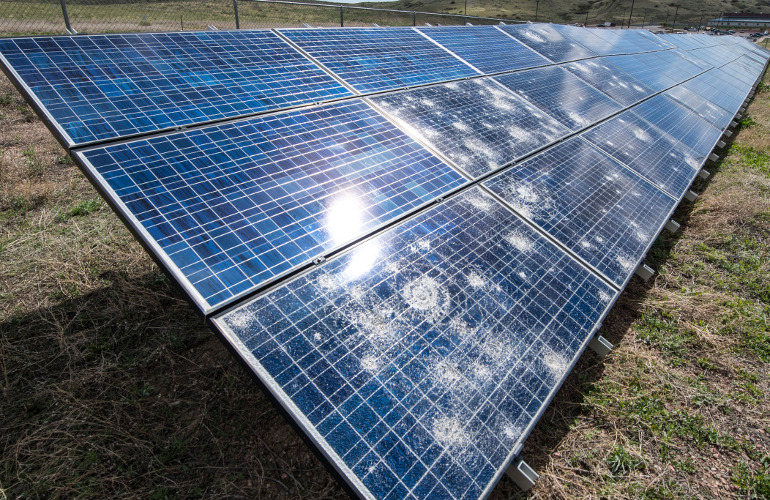
Another solar farm destroyed by a hail storm—this time in Texas, OK Energy Today

Storm Ravages World’s Largest Floating Solar Plant, Western Journal

DOE Finalizes Efficiency Standards for Clothes Washers and Dryers, Energy.Gov

Strict new EPA rules would force coal-fired power plants to capture emissions or shut down, AP news

Companies Are Balking at the High Costs of Running Electric Trucks, Wall Street Journal

Landmark wind turbine noise ruling from High Court referred to attorney general, Irish Times

Etc., Etc.

These reports point to regulators again attempting to force social and economic behavorial changes against human and physical forces opposing the goals. A detailed explanation of one such failure follows.

Background Post:  Why Raising Auto Fuel (CAFE) Standards Failed

There are deeper reasons why US auto fuel efficiency standards are counterproductive and should be rolled back.  They were instituted in denial of regulatory experience and science.  First, a parallel from physics.

In the sub-atomic domain of quantum mechanics, Werner Heisenberg, a German physicist, determined that our observations have an effect on the behavior of quanta (quantum particles).

The Heisenberg uncertainty principle states that it is impossible to know simultaneously the exact position and momentum of a particle. That is, the more exactly the position is determined, the less known the momentum, and vice versa. This principle is not a statement about the limits of technology, but a fundamental limit on what can be known about a particle at any given moment. This uncertainty arises because the act of measuring affects the object being measured. The only way to measure the position of something is using light, but, on the sub-atomic scale, the interaction of the light with the object inevitably changes the object’s position and its direction of travel.

Now skip to the world of governance and the effects of regulation. A similar finding shows that the act of regulating produces reactive behavior and unintended consequences contrary to the desired outcomes.

US Fuel Economy (CAFE) Standards Have Backfired

An article at Financial Times explains about Energy Regulations Unintended Consequences  Excerpts below with my bolds.

Goodhart’s Law holds that “any observed statistical regularity will tend to collapse once pressure is placed upon it for control purposes”. Originally coined by the economist Charles Goodhart as a critique of the use of money supply measures to guide monetary policy, it has been adopted as a useful concept in many other fields. The general principle is that when any measure is used as a target for policy, it becomes unreliable. It is an observable phenomenon in healthcare, in financial regulation and, it seems, in energy efficiency standards.

When governments set efficiency regulations such as the US Corporate Average Fuel Economy standards for vehicles, they are often what is called “attribute-based”, meaning that the rules take other characteristics into consideration when determining compliance. The Cafe standards, for example, vary according to the “footprint” of the vehicle: the area enclosed by its wheels. In Japan, fuel economy standards are weight-based. Like all regulations, fuel economy standards create incentives to game the system, and where attributes are important, that can mean finding ways to exploit the variations in requirements. There have long been suspicions that the footprint-based Cafe standards would encourage manufacturers to make larger cars for the US market, but a paper this week from Koichiro Ito of the University of Chicago and James Sallee of the University of California Berkeley provided the strongest evidence yet that those fears are likely to be justified.

Mr Ito and Mr Sallee looked at Japan’s experience with weight-based fuel economy standards, which changed in 2009, and concluded that “the Japanese car market has experienced a notable increase in weight in response to attribute-based regulation”. In the US, the Cafe standards create a similar pressure, but expressed in terms of size rather than weight. Mr Ito suggested that in Ford’s decision to end almost all car production in North America to focus on SUVs and trucks, “policy plays a substantial role”. It is not just that manufacturers are focusing on larger models; specific models are also getting bigger. Ford’s move, Mr Ito wrote, should be seen as an “alarm bell” warning of the flaws in the Cafe system. He suggests an alternative framework with a uniform standard and tradeable credits, as a more effective and lower-cost option. With the Trump administration now reviewing fuel economy and emissions standards, and facing challenges from California and many other states, the vehicle manufacturers appear to be in a state of confusion. An elegant idea for preserving plans for improving fuel economy while reducing the cost of compliance could be very welcome.

The paper is The Economics of Attribute-Based Regulation: Theory and Evidence from Fuel-Economy Standards Koichiro Ito, James M. Sallee NBER Working Paper No. 20500.  The authors explain:

An attribute-based regulation is a regulation that aims to change one characteristic of a product related to the externality (the “targeted characteristic”), but which takes some other characteristic (the “secondary attribute”) into consideration when determining compliance. For example, Corporate Average Fuel Economy (CAFE) standards in the United States recently adopted attribute-basing. Figure 1 shows that the new policy mandates a fuel-economy target that is a downward-sloping function of vehicle “footprint”—the square area trapped by a rectangle drawn to connect the vehicle’s tires.  Under this schedule, firms that make larger vehicles are allowed to have lower fuel economy. This has the potential benefit of harmonizing marginal costs of regulatory compliance across firms, but it also creates a distortionary incentive for automakers to manipulate vehicle footprint.

Attribute-basing is used in a variety of important economic policies. Fuel-economy regulations are attribute-based in China, Europe, Japan and the United States, which are the world’s four largest car markets. Energy efficiency standards for appliances, which allow larger products to consume more energy, are attribute-based all over the world. Regulations such as the Clean Air Act, the Family Medical Leave Act, and the Affordable Care Act are attribute-based because they exempt some firms based on size. In all of these examples, attribute-basing is designed to provide a weaker regulation for products or firms that will find compliance more difficult.

Summary from Heritage Foundation study Fuel Economy Standards Are a Costly Mistake Excerpt with my bolds.

The CAFE standards are not only an extremely inefficient way to reduce carbon dioxide emission but will also have a variety of unintended consequences.

For example, the post-2010 standards apply lower mileage requirements to vehicles with larger footprints. Thus, Whitefoot and Skerlos argued that there is an incentive to increase the size of vehicles.

Data from the first few years under the new standard confirm that the average footprint, weight, and horsepower of cars and trucks have indeed all increased since 2008, even as carbon emissions fell, reflecting the distorted incentives.

Manufacturers have found work-arounds to thwart the intent of the regulations. For example, the standards raised the price of large cars, such as station wagons, relative to light trucks. As a result, automakers created a new type of light truck—the sport utility vehicle (SUV)—which was covered by the lower standard and had low gas mileage but met consumers’ needs. Other automakers have simply chosen to miss the thresholds and pay fines on a sliding scale.

Another well-known flaw in CAFE standards is the “rebound effect.” When consumers are forced to buy more fuel-efficient vehicles, the cost per mile falls (since their cars use less gas) and they drive more. This offsets part of the fuel economy gain and adds congestion and road repair costs. Similarly, the rising price of new vehicles causes consumers to delay upgrades, leaving older vehicles on the road longer.

In addition, the higher purchase price of cars under a stricter CAFE standard is likely to force millions of households out of the new-car market altogether. Many households face credit constraints when borrowing money to purchase a car. David Wagner, Paulina Nusinovich, and Esteban Plaza-Jennings used Bureau of Labor Statistics data and typical finance industry debt-service-to-income ratios and estimated that 3.1 million to 14.9 million households would not have enough credit to purchase a new car under the 2025 CAFE standards.[34] This impact would fall disproportionately on poorer households and force the use of older cars with higher maintenance costs and with fuel economy that is generally lower than that of new cars.

CAFE standards may also have redistributed corporate profits to foreign automakers and away from Ford, General Motors (GM), and Chrysler (the Big Three), because foreign-headquartered firms tend to specialize in vehicles that are favored under the new standards.[35] 

Conclusion

CAFE standards are costly, inefficient, and ineffective regulations. They severely limit consumers’ ability to make their own choices concerning safety, comfort, affordability, and efficiency. Originally based on the belief that consumers undervalued fuel economy, the standards have morphed into climate control mandates. Under any justification, regulation gives the desires of government regulators precedence over those of the Americans who actually pay for the cars. Since the regulators undervalue the well-being of American consumers, the policy outcomes are predictably harmful.

What’s Next?

What Unites Zero Carbon and Pro-Hamas? Anti-Modernity


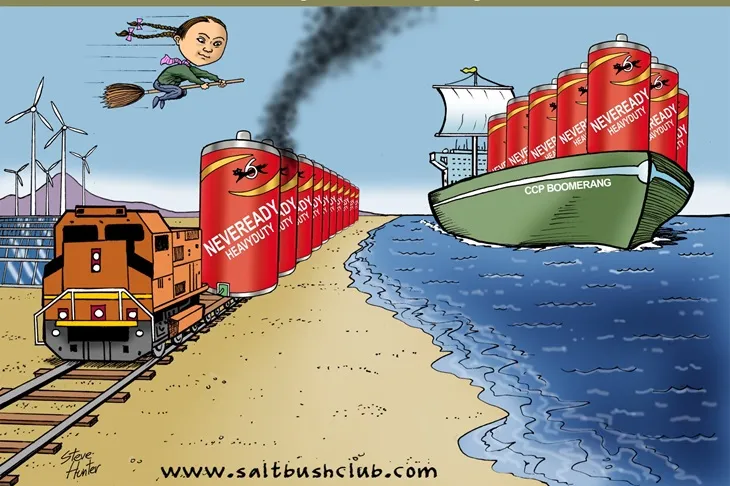
Brendan O’Neill makes the connection in his Telegraph article Queen Greta has exposed the truth about the green movement.  Shape-shifting is so easy because the underlying motive is disdain for modern society.  Excerpts in italics with my bolds and added images.

So, Greta Thunberg has a new cause. She’s found a new crusade to throw her weight behind. Forget saving the planet – now she wants to save Palestine.

Yes, the pint-sized prophetess of doom has swapped raging against industrialism for raging against Israel. Mother Nature will just have to wait – her erstwhile valiant defender is busy fixing the Middle East now.

Yesterday, Greta was snapped at the protest in Malmo, Sweden against Israel’s inclusion in the Eurovision Song Contest.

She looked the part. She had a keffiyeh draped over her shoulders and a smug look on her face: the two must-haves of every puffed-up bourgeois activist who gets off on fuming against Israel.

The keffiyeh really has become the uniform of the self-righteous. Go into a hip coffee shop or overpriced Soho burger joint and I guarantee you’ll see a Gen Z’er decked out in the Palestinian scarf.

Whatever happened to the sin of “cultural appropriation”? Not long ago, the right-on raged against white dudes who wear their hair in dreadlocks and white women who don kominos. “Stop stealing other people’s culture!”, they’d yell. Yet now they themselves spend their days in Arab attire.

That image of Greta in Malmo, looking very satisfied with herself, summed up the role the keffiyeh plays in the life of the 21st-century activist. Keffiyeh-wearing is less about drawing attention to the plight of the Palestinians than drawing attention to you. Look at me in my Arab garb, aren’t I good and hyper socially aware – that’s the needy cry of these hipster appropriators.

Yet beneath their radical chic, darker sentiments lurk. Their boilerplate hatred for Israel can have horrible consequences. So while young Greta was signalling her virtue on the streets of Malmo, another young woman was holed up in her hotel room for fear of mob assault.  It was Eden Golan, the Israeli-Russian 20-year-old who sang for Israel in the Eurovision finals in Malmo.

Golan’s inclusion in Eurovision sickened the anti-Israel protesters. Israel, they said, must be given the boot over its “genocide in Gaza” – their juvenile and historically illiterate term for Israel’s war against Hamas.

A mob even swarmed around the hotel Ms Golan was staying in. She received death threats. Things were so bad that she was warned not to leave her room. She was given a 24-hour security detail.

Is this really “progressive activism”? It looks more like bullying to me. The bullying of a young woman by a baying mob of Israel-bashers.

How galling that Greta should have been in the thick of such a regressive protest. This is someone who has spoken out about her own experiences of bullying. Who has said that women in the public eye get too much flak.  Yet now she preens at a protest that has had the consequence, intentional or otherwise, of filling a young woman with such dread that she has essentially become a prisoner in her own hotel.

We might call this woke privilege. Because Greta subscribes to chattering-class correct-think on every issue – climate change, transgenderism, Israel – she is granted the freedom to go about her business as she sees fit.

Ms Golan, on the other hand, is denied such basic liberty. Her national heritage, her devotion to her homeland, marks her out as morally suspect. And thus she must hide. “Shame!”, protesters shouted, as if she were a modern-day witch deserving of a dunking.

It is tempting to see Greta’s conversion from the climate-change cult to the anti-Israel religion as just bandwagon-jumping.  Perhaps her saviour complex, her burning sense of virtue, just needs a new outlet. So, like others of her generation, she ditches climate and trans and all the rest and moves on to “Palestine solidarity”. That’s the issue on which you can really make moral waves these days.

But I think there’s something else going on, too. The truth is that climate activism and anti-Israel agitation are very comfy bedfellows. There are even some creepy commonalities between green agitation and Israel’s greatest ideological foe: radical Islam.

Both, at root, represent a disgust with modernity. Both the privileged
Western weepers over industrial society and the Islamist haters
of Israel share an aversion to the modern world,
to progress, to Enlightenment itself.

Hence we can even have a situation where Muslim activists who yell “Allahu Akbar” can be elected as councillors for the Green Party.

The upper-middle class recycling obsessive in Hampstead might seem a million miles from the bearded radical who publicly sings the praises of Allah – but they share an instinctive revulsion for capitalist society.

One sees it as a crime against Mother Nature,
the other as an affront to Muhammad.

To both sides, Israel is the pinnacle of the modernity they hate. A young, confident, entrepreneurial nation that rendered the desert a land of plenty? Boo. Hiss. Cast its people from our social circles.

So it makes sense that Greta has temporarily ditched Gaia for Gaza. For this crisis, too, furnishes her with an opportunity to advertise her pious rejection of the modern world.


Wind Power for Beginners

H/T maxyhoge

Robert Bryce explains the basics at his substack blog Build It, And The Wind Won’t Come.  Excerpts in italics with my bolds and added images.

Weather-dependent generation sources are…weather dependent:
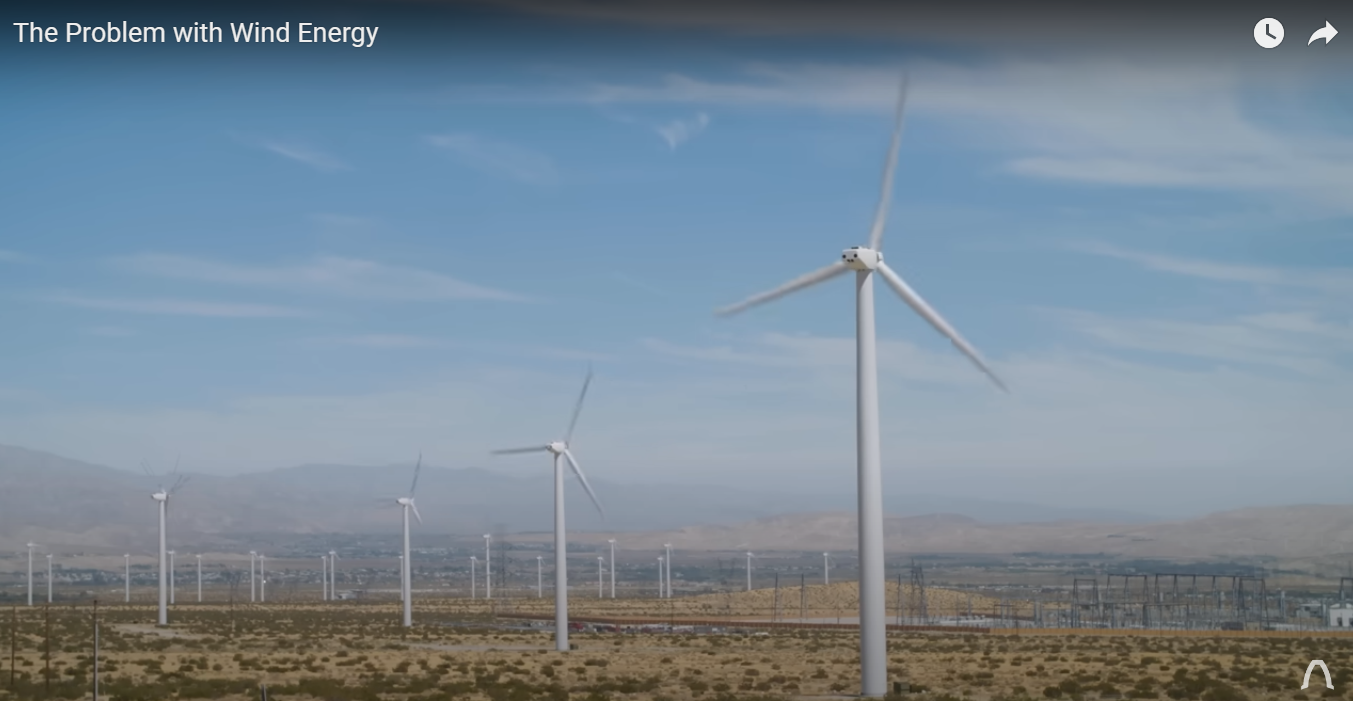
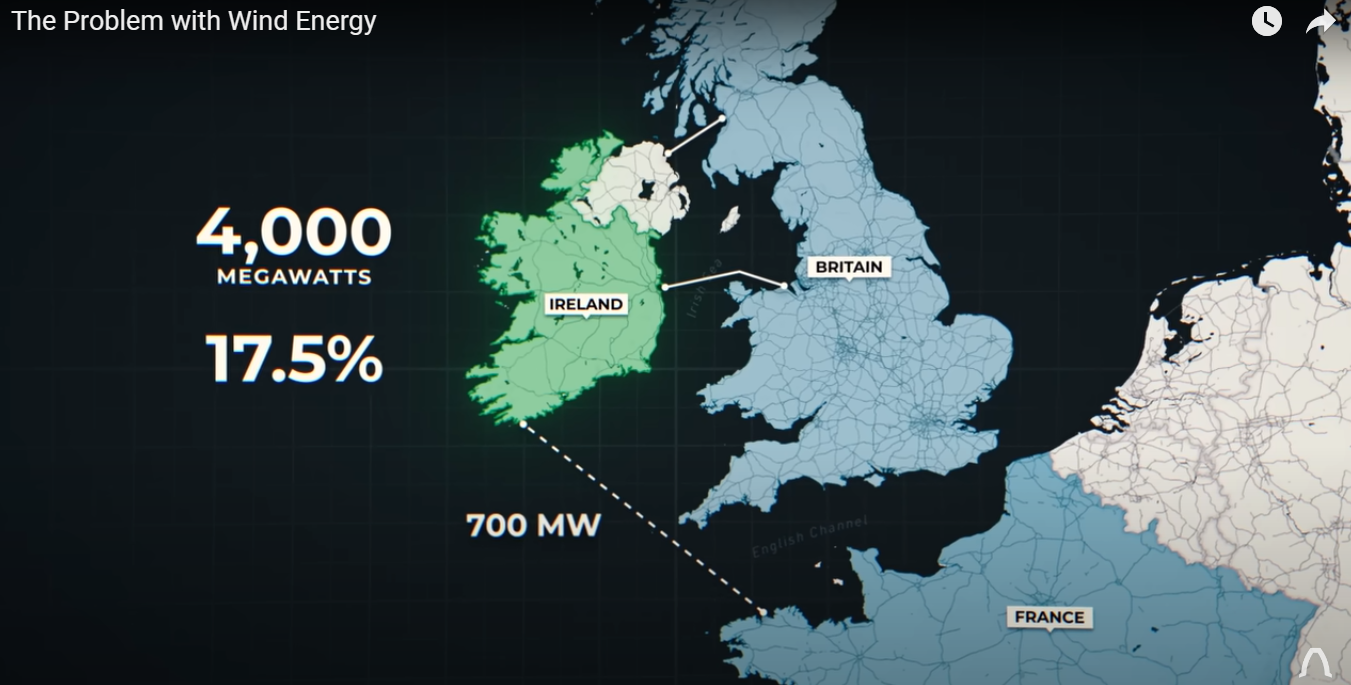
Last year, despite adding 6.2 GW of new capacity,
U.S. wind production dropped by 2.1%.

Three years ago, in the wake of Winter Storm Uri, the alt-energy lobby and their many allies in the media made sure not to blame wind energy for the Texas blackouts. The American Clean Power Association (2021 revenue: $32.1 million) declared frozen wind turbines “did not cause the Texas power outages” because they were “not the primary cause of the blackouts. Most of the power that went offline was powered by gas or coal.”

Damaged wind turbines at the Punta Lima wind project, Naguabo, Puerto Rico, 2018. Photo: Wikipedia.

NPR parroted that line, claiming, “Blaming wind and solar is a political move.” The Texas Tribune said it was wrong to blame alt-energy after Winter Storm Uri because “wind power was expected to make up only a fraction of what the state had planned for during the winter.” The outlet also quoted one academic who said that natural gas was “failing in the most spectacular fashion right now.” Texas Tribune went on to explain, “Only 7% of ERCOT’s forecasted winter capacity, or 6 gigawatts, was expected to come from various wind power sources across the state.”

In other words, there was no reason to expect the 33 GW of wind capacity that Texas had to deliver because, you know, no one expected wind energy to produce much power. Expectations? Mr. October? Playoff Jamal? Who needs them?

But what happens when you build massive amounts of
wind energy capacity and it doesn’t deliver —
not for a day or a week, but for six months, or even an entire year?

That question is germane because, on Wednesday, the Energy Information Administration published a report showing that U.S. wind energy production declined by 2.1% last year. Even more shocking: that decline occurred even though the wind sector added 6.2 GW of new capacity!

A hat tip to fellow Substack writer Roger Pielke Jr., who pithily noted on Twitter yesterday, “Imagine if the U.S. built 6.2 GW new capacity in nuclear power plants and after starting them up, overall U.S. electricity generation went down. That’d be a problem, right?”

Um, yes. It would. And the EIA made that point in its usual dry language. “Generation from wind turbines decreased for the first time since the mid-1990s in 2023 despite the addition of 6.2 GW of new wind capacity last year,” the agency reported. The EIA also explained that the capacity factor for America’s wind energy fleet, also known as the average utilization rate, “fell to an eight-year low of 33.5%.” That compares to 35.9% capacity factor in 2022 which was the all-time high. The report continued, “Lower wind speeds than normal affected wind generation in 2023, especially during the first half of the year when wind generation dropped by 14% compared with the same period in 2022.”

Read that again. For half of last year, wind generation was down by a whopping 14% due to lower wind speeds. Imagine if that wind drought continued for an entire year. That’s certainly possible. Recall that last summer, the North American Electric Reliability Corporation warned that U.S. generation capacity “is increasingly characterized as one that is sensitive to extreme, widespread, and long duration temperatures as well as wind and solar droughts.”

According to Bloomberg New Energy Finance, corporate investment in wind energy between 2004 and 2022 totaled some $278 billion. In addition, according to data from the Treasury Department, the U.S. government spent more than $30 billion on the production tax credit over that same period. Thus, over the last two decades, the U.S. has spent more than $300 billion building 150 GW of wind capacity that has gobbled up massive amounts of land, garnered enormous (and bitter) opposition from rural Americans, and hasn’t gotten more efficient over time.

Wednesday’s EIA report is a stark reminder that all of that generation capacity is subject to the vagaries of the wind. Imagine if the U.S. had spent that same $300 billion on a weather-resilient form of generation, like, say, nuclear power. That’s relevant because Unit 4 at Plant Vogtle in Georgia came online on Monday. With that same $300 billion, the U.S. could have built 20, 30, or maybe even 40 GW of new nuclear reactors with a 92% capacity factor that wouldn’t rely on the whims of the wind. In addition, those dozens of reactors would have required a tiny fraction of the land now covered by thousands of viewshed-destroying, bat-and-bird-killing wind turbines.

If climate change means we will face more extreme weather in the years ahead — hotter, colder, and/or more severe temperatures for extended periods — it’s Total Bonkers CrazytownTM to make our electric grid dependent on the weather. But by lavishing staggering amounts of money on wind and solar energy, and in many cases, mandating wind and solar, that’s precisely what we are doing.


Bogus Math for Climate “Reparations”

Paul Mueller does the analysis in his AIER article Climate “Reparations” Numbers Are Rigged.  Excerpts in italics with my bolds and added images.

Nobel Prize–winning economist Esther Duflo thinks rich countries should pay poor countries $500 billion in compensation each year for climate-change damages. It is our “moral debt.” She proposes an international 2-percent wealth tax on the ultra-rich and an increase in the global minimum corporate tax rate to fund this $500 billion transfer.

You and I may be shocked by such a suggestion but don’t worry: “It’s really necessary. And it’s reasonable. It’s not that hard.” Only someone in an elite, progressive bubble could say something like that. Let’s check her reasoning.

Duflo claims that climate change creates costs, specifically through “excess” deaths due to excessive heat. Poorer countries from the global south near the equator will see more days of extreme heat, and so will see a disproportionate increase in excess deaths.

Other economists translated those deaths into an externality cost of $37 per ton of CO2. Multiply that by the roughly fourteen billion tons of CO2 emitted by the US and Europe and voila, wealthy countries generate $500 billion in externality costs per year.

She proposes paying for this by increasing the global minimum corporate tax rate from 15 percent to 18 percent and introducing an international 2-percent wealth tax on the ultra-rich, which she defines as the 3000 richest billionaires. We can’t go into the many problems and obstacles to such funding mechanisms here — suffice it to say such ideas will be nearly impossible to implement.

But Duflo’s back-of-the-envelope calculations, besides missing the bigger picture, are so speculative as to require playing make-believe. Let’s play along for a moment to see why. We’ll start by reverse-engineering her $500 billion number into a measure of harm.

Regulatory agencies and insurance companies use the concepts of “statistical value of life” or the “statistical value of a life-year” to do cost-benefit analysis on risk and the monetary value of life. These concepts are slippery, however, and calculated in a variety of ways with a wide range of estimates.

To keep things simple, let’s assume that the value of one life-year is $200,000. The $500 billion number proposed by Duflo suggests that the cost imposed by wealthy countries burning fossil fuels is the loss of roughly 2.5 million life-year” in poor countries per year.  That sounds like a staggering number!

But what about the benefits that have accrued to developing
countries from activities that generate CO2 emissions?

Important advances in medicine, such as antibiotics and vaccines, were developed in modern industrialized countries. So, too, were refrigeration, cars, the internet, smart phones, radar; modern agricultural methods with herbicides, pesticides, and fertilizers; improvements in plumbing, building materials, manufacturing, and much more. “Polluting” activities in industrialized countries improved nutrition and safety around the world. These advances, and many others, significantly increased people’s life expectancies — especially in poor countries.

Surely the value of these improvements should weight the opposite side of the scale from the expected harm of climate change — especially since the crusade against fossil fuels and carbon emissions will assuredly slow economic growth and innovation. Let’s consider the case of India for a moment.

Life expectancy in India has basically doubled from about 35 years in 1950 to about 70 years in 2024. If you consider that India has just over a billion people living in it, modern technology developed by rich CO2-emitting countries has added 35 billion life-years in India alone. 

Translating life-years back into dollars, 35 billion life-years times $200,000 per life-year means that the benefits from greater life expectancy in India over the past 75 years is the equivalent of $7 quadrillion dollars — or in annualized terms, an annual benefit of about $93 trillion dollars. In other words, the benefits to India alone are over a hundred times larger than Duflo’s estimate of costs!

Nor is India cherry-picked. China has a similar story with life expectancy rising from 43.45 years to 77.64 years. Similar improvements in life expectancy occur across the global south.

Of course, one could argue that developed industrial countries are not solely responsible for increases in life expectancy around the world. But one could just as easily say the same about whether developed industrial countries are solely responsible for global CO2 emissions, climate change, or harm to people in the global south due to hotter weather. Connecting these two issues makes perfect philosophical sense, because the production of CO2 has historically been directly associated with increases in economic growth; which in turn is necessary for all the developments increasing longevity around the world.

Even if we massage the assumptions in Duflo’s favor, the results remain favorable to industrialization. Suppose western technology and industrial activities contribute 50 percent to improvements in life expectancy. That’s still a $46 trillion annualized benefit to India. Reduce the value of a statistical life-year to $100,000 — that’s still a $23 trillion/year benefit from industrialization in the west. Exclude India from the analysis and cut the population we focus on down to 500 million people — that’s still over $12 trillion/year in benefits. Reduce the improvement in life-expectancy by six years — that still leaves about $10 trillion/year in benefits.

So, even after making tons of assumptions to reduce their size,
the estimated benefits of industrialization are still about twenty
times larger than Duflo’s estimate of its costs. 

Worrying about hypothetical, indirect costs of CO2 emissions when it comes to human well-being is like scrounging for pennies while ignoring $100 bills lying on the sidewalk. Actually, it is worse than that. It is like lighting $100 bills on fire to help you search a dark alley for some pocket change of human welfare.

Economic development, driven largely by Adam Smith’s dictum “peace, easy taxes, and a tolerable administration of justice which includes strong private property rights and limited government intervention, has improved human living standards in unprecedented ways over the past 300 years. These remarkable improvements in human welfare are not limited to wealthy, developed economies but are enjoyed around the world. 

Duflo talks about the (external) costs of industrialization on certain countries without considering the truly massive (external) benefits of industrialization to those same countries.

If anything, with a proper accounting, developing countries owe rich countries gratitude for the benefits they have received from industrialization and the corresponding CO2 emissions.


Britain’s Royal Society Defies the Green Blob

News comes from Financial Times that the prestigious scientific Royal Society is honoring it’s motto:  “Take Nobody’s Word For It” (translation of Latin phrase above.) Of course, a great many UK academics were outraged at the refusal to take for granted their claim that “Climate Science is Settled.” The article by Kenza Bryan is Royal Society and academics clash over influence of oil and gas industry.  Excerpts in italics with my bolds and added images.

Three-centuries-old institution rebuffs call to
declare fossil fuel companies culpable for global warming

A clash between Britain’s 363-year-old Royal Society and more than 2,000 UK academics has escalated over the national academy of scientists’ refusal to attribute the role of oil and gas companies in climate change.

The academics had expressed their concerns about the influence of fossil fuel companies on scientific research in a letter last year to the Royal Society, founded in 1660 as a fellowship that included the likes of Isaac Newton.

But the Royal Society has now rebuffed their request to issue an “unambiguous statement about the culpability of the fossil fuel industry in driving the climate crisis”.

Treasurer Jonathan Keating wrote in reply last week that it would “not be appropriate” to do so, as there was a need for “multiple actors” to engage with the complexity of the climate crisis.

The academics’ concerns about the influence of oil and gas companies extend to separate allegations that ties to BP were not disclosed by a Cambridge professor in a Royal Society policy briefing document produced by a working group that he chaired in 2022.

Professor Andy Woods held the title of head of the BP Institute, a research arm that it funds, which was renamed the Institute for Energy and Environmental Flows by Cambridge last year. He also has the formal title of BP professor, a position endowed by the oil and gas company. These affiliations were not included in the reference in the document.

The Royal Society briefing document called for an “enormous and continued investment” into geological carbon capture and storage, a technology promoted by the fossil fuel industry as a way to keep expanding while storing the emissions.

A CO₂ storage adviser to BP and a director for CO₂ storage at the Norwegian Petroleum Directorate also contributed to the report. Woods’s expertise in geophysical fluid flows and the BP affiliation are listed elsewhere by the Royal Society in its fellowship directory. BP and Woods did not respond to a request for comment. The Royal Society said the document gave “clear affiliations” for contributors and that it publishes a wide range of research.

The tensions reflect the discord in academia about funding or
participation in research by oil and gas companies, as well as
rising activism on campuses among the student body and staff.

The Royal Society’s decision not to call out the industry was described as “moral cowardice” by James Dyke, earth system science professor at Exeter university.

Another signatory to the original letter, Bill McGuire, professor of geophysical and climate hazards at University College London, said it was “mind-boggling” that a respected scientific organisation would not attribute the role of fossil fuel groups in climate change.

Student campaigners at Oxford university have also targeted the author of a set of green principles used by the university to help guide decisions on whether to invest in or receive grants from oil and gas companies.

Under freedom of information provisions, the student campaigners identified Myles Allen, the university’s head of atmospheric, oceanic and planetary physics, as having had 18 meetings where a representative was present from one of the major oil and gas groups, including either BP, Shell, Exxon or Equinor.

Those meetings in 2021 and 2022 included five occasions organised by Shell, three of which focused on the oil and gas group’s strategy and climate scenarios, according to the freedom of information response.

Allen, who was head of the Oxford Net Zero research initiative until earlier this year, told the Financial Times he had used the meetings to highlight the need for fossil fuel companies to pay for carbon capture and storage technologies.

It is a solution to the reduction of future carbon dioxide emissions that he has long advocated. “We all have a duty to help the fossil fuel industry not make the problem worse but to fix it,” he said.

Oxford said its “partnerships and collaborations with industry” allow for research on pressing global issues, including climate-related ones.

The campaigners called on Oxford to conduct an independent assessment about its approach to fossil fuel sector donations and investment. Cambridge university in March temporarily stopped accepting grants and donations from the sector in response to similar concerns.


May Day: Appeals Court Rules Against Kids’ Climate Lawsuit

Update May 1, 2024

Ninth Circuit Court of Appeals grants Federal government’s petition for writ of mandamus in the case of Juliana v. United States, originally filed in 2015.  Ruling excerpts are below in italics with my bolds. 20240501_docket-24-684_order

In the underlying case, twenty-one plaintiffs (the Juliana plaintiffs) claim that—by failing to adequately respond to the threat of climate change—the government has violated a putative “right to a stable climate system that can sustain human life.” Juliana v. United States, No. 6:15-CV-01517-AA, 2023 WL 9023339, at *1 (D. Or. Dec. 29, 2023). In a prior appeal, we held that the Juliana plaintiffs lack Article III standing to bring such a claim. Juliana v. United States, 947 F.3d 1159, 1175 (9th Cir. 2020). We remanded with instructions to dismiss on that basis. Id. The district court nevertheless allowed amendment, and the government again moved to dismiss. The district court denied that motion, and the government petitioned for mandamus seeking to enforce our earlier mandate. We have jurisdiction to consider the petition. See 28 U.S.C. § 1651. We grant it.

In the prior appeal, we held that declaratory relief was “not substantially likely to mitigate the plaintiffs’ asserted concrete injuries.” Juliana, 947 F.3d at 1170. To the contrary, it would do nothing “absent further court action,” which we held was unavailable. Id. We then clearly explained that Article III courts could not “step into the[] shoes” of the political branches to provide the relief the Juliana plaintiffs sought. Id. at 1175. Because neither the request for declaratory relief nor the request for injunctive relief was justiciable, we “remand[ed] th[e] case to the district court with instructions to dismiss for lack of Article III standing.” Id. Our mandate was to dismiss.

The district court gave two reasons for allowing amendment. First, it concluded that amendment was not expressly precluded. Second, it held that intervening authority compelled a different result. We reject each.
The first reason fails because we “remand[ed] . . . with instructions to dismiss for lack of Article III standing.” Id. Neither the mandate’s letter nor its spirit left room for amendment. See Pit River Tribe, 615 F.3d at 1079.

The second reason the district court identified was that, in its view, there was an intervening change in the law. District courts are not bound by a mandate when a subsequently decided case changes the law. In re Molasky, 843 F.3d 1179, 1184 n.5 (9th Cir. 2016). The case the court identified was Uzuegbunam v. Preczewski, which “ask[ed] whether an award of nominal damages by itself can redress a past injury.” 141 S. Ct. 792, 796 (2021). Thus, Uzuegbunam was a damages case which says nothing about the redressability of declaratory judgments. Damages are a form of retrospective relief. Buckhannon Bd. & Care Home v. W. Va. Dep’t of Health & Human Res., 532 U.S. 598, 608–09 (2001). Declaratory relief is prospective. The Juliana plaintiffs do not seek damages but seek only prospective relief. Nothing in Uzuegbunam changed the law with respect to prospective relief.

We held that the Juliana plaintiffs lack standing to bring their claims and told the district court to dismiss. Uzuegbunam did not change that. The district court is instructed to dismiss the case forthwith for lack of Article III standing, without leave to amend.

Background July 2023: Finally, a Legal Rebuttal on the Merits of Kids’ Climate Lawsuit

As reported last month, the Oregon activist judge invited the plaintiffs in Juliana vs US to reopen that case even after the Ninth Circuit shot it down.  Now we have a complete and thorough Motion from the defendant (US government) to dismiss this newest amended complaint.  Most interesting is the section under the heading starting on page 30.  Excerpts in italics with my bolds and added images.

Plaintiffs’ Claims Fail on the Merits

Because Plaintiffs’ action fails at the jurisdictional threshold, the Ninth Circuit never reached—and this Court need not reach—the merits of the claims. . . Plaintiffs’ second amended complaint, which supersedes the first amended complaint, asserts the same claims that were brought in the first amended complaint, which this Court addressed in orders that the Ninth Circuit reversed. Defendants thus renew their objection that Plaintiffs’ claims fail on the merits and should be dismissed pursuant to Fed. R. Civ. P. 12(b)(6).

A. There is no constitutional right to a stable climate system.

The Supreme Court has repeatedly instructed courts considering novel due process claims
to “‘exercise the utmost care whenever . . . asked to break new ground in this field,’… lest the liberty protected by the Due Process Clause be subtly transformed” into judicial policy preferences. More specifically, the Supreme Court has “regularly observed that the Due Process Clause specially protects those fundamental rights and liberties which are, objectively, ‘deeply rooted in this Nation’s history and tradition.’”  Plaintiffs’ request that this Court recognize an implied fundamental right to a stable climate system contradicts that directive, because such a purported right is without basis in the Nation’s history or tradition.

The proposed right to a “stable climate system” is nothing like any fundamental right ever recognized by the Supreme Court. The state of the climate is a public and generalized issue, and so interests in the climate are unlike the particularized personal liberty or personal privacy interests of individuals the Supreme Court has previously recognized as being protected by fundamental rights.  “[W]henever federal courts have faced assertions of fundamental rights to a ‘healthful environment’ or to freedom from harmful contaminants, they have invariably rejected those claims.”. Plaintiffs’ First Claim for Relief must be dismissed.

B.  Plaintiffs fail to allege a cognizable state-created danger claim.

The First Claim for Relief must also be dismissed because the Constitution does not impose an affirmative duty to protect individuals, and Plaintiffs have failed to allege a cognizable claim under the “state-created danger” exception to that rule.
As a general matter:

[The Due Process Clause] is phrased as a limitation on the State’s power to act, not as a guarantee of certain minimal levels of safety and security. It forbids the State itself to deprive individuals of life, liberty, or property without “due process of law,” but its language cannot fairly be extended to impose an affirmative obligation on the State to ensure that those interests do not come to harm through other means.

Thus, the Due Process Clause imposes no duty on the government to protect persons from harm inflicted by third parties that would violate due process if inflicted by the government.

Plaintiffs contend that the government’s “deliberate actions” and “deliberate indifference” with regard to the dangers of climate change amount to a due process violation under the state-created danger exception.

First, Plaintiffs have identified no harms to their “personal security or bodily integrity” of the kind and immediacy that qualify for the state-created danger exception. . . But here, Plaintiffs allege that general degradation of the global climate has harmed their “dignity, including their capacity to provide for their basic human needs, safely raise families, practice their religious and spiritual beliefs, [and] maintain their bodily integrity” and has prevented them from “lead[ing] lives with access to clean air, water, shelter, and food.”  Those types of harm are unlike the immediate, direct, physical, and personal harms at issue in the above-cited cases.

Second, Plaintiffs identify no specific government actions—much less government actors—that put them in such danger. Instead, Plaintiffs contend that a number of (mostly unspecified) agency actions and inactions spanning the last several decades have exposed them to harm. This allegation of slowly-recognized, long-incubating, and generalized harm by itself conclusively distinguishes their claim from all other state-created danger cases recognized by the Ninth Circuit.

Third, Plaintiffs do not allege that government actions endangered Plaintiffs in particular. . . As explained above, Plaintiffs’ asserted injuries arise from a diffuse, global phenomenon that affects every other person in their communities, in the United States, and throughout the world.

For all these reasons, there is no basis for finding a violation of Plaintiffs’ due process right under the state-created danger doctrine, and Plaintiffs’ corresponding claim must be dismissed.

C. No federal public trust doctrine creates a right to a stable climate system.

Plaintiffs’ Fourth Claim for Relief, asserting public trust claims, should be dismissed for two independent reasons. First, any public trust doctrine is a creature of state law that applies narrowly and exclusively to particular types of state-owned property not at issue here. That doctrine has no application to federal property, the use and management of which is entrusted exclusively to Congress. . .Consequently, there is no basis for Plaintiffs’ public trust claim against the federal government under federal law.

Second, the “climate system” or atmosphere is not within any conceivable federal public trust.

1. No public trust doctrine binds the federal government.

Plaintiffs rely on an asserted public trust doctrine for the proposition that the federal government must “take affirmative steps to protect” “our country’s life-sustaining climate system,” which they assert the government holds in trust for their benefit.  But because any public trust doctrine is a matter of state law only, public trust claims may not be asserted against the federal government under federal law. . . The Supreme Court has without exception treated public trust doctrine as a matter of state law with no basis in the United States Constitution.

2. Any public trust doctrine would not apply to the “climate system” or the atmosphere.

Independently, any asserted public trust doctrine does not help Plaintiffs here. Public trust cases have historically involved state ownership of specific types of natural resources, usually limited to submerged and submersible lands, tidelands, and waterways. . . The climate system or atmosphere is unlike any resource previously deemed subject to a public trust. It cannot be owned and, due to its ephemeral nature, cannot remain within the jurisdiction of any single government. No court has held that the climate system or atmosphere is protected by a public trust doctrine. Indeed, the concept has been widely rejected.

For all these reasons, the Court should dismiss Plaintiffs’ Fourth Claim for Relief.

Background Post Update on Zombie Kids Climate Lawsuits: (Juliana vs. US) (Held vs Montana)

Wake Up: Energy Transition Not Happening

Wind and Solar The Grand Illusion

Mark Mills explains the many ways the deck is stacked against those gambling on Wind and Solar energy to replace hydrocarbon fuels.  The transcript is below in italics with my bolds and added images.

Have you ever heard of “unobtanium”?

It’s the magical energy mineral found on the planet Pandora in the movie, Avatar. It’s a fantasy in a science fiction script. But environmentalists think they’ve found it here on earth in the form of wind and solar power.
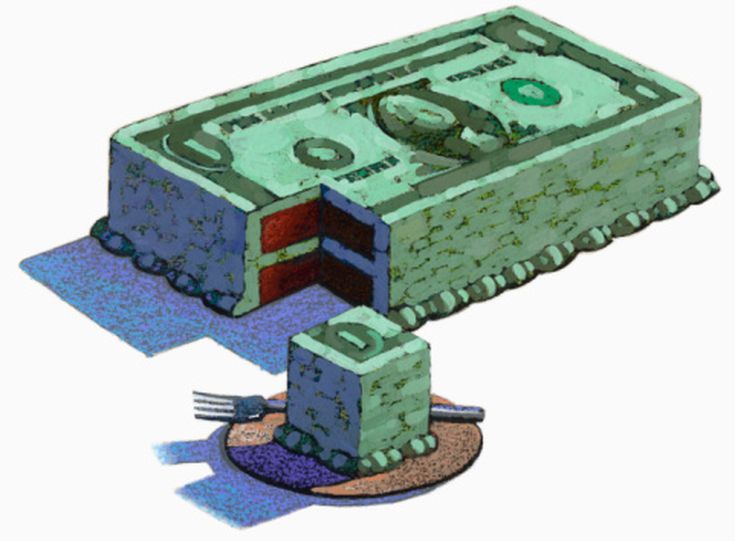
They think all the energy we need can be supplied by building enough wind and solar farms; and enough batteries.

The simple truth is that we can’t. Nor should we want to—not if our goal is to be good stewards of the planet.

To understand why, consider some simple physics
realities that aren’t being talked about.

All sources of energy have limits that can’t be exceeded. The maximum rate at which the sun’s photons can be converted to electrons is about 33%. Our best solar technology is at 26% efficiency. For wind, the maximum capture is 60%. Our best machines are at 45%.

So, we’re pretty close to wind and solar limits. Despite PR claims about big gains coming, there just aren’t any possible. And wind and solar only work when the wind blows and the sun shines. But we need energy all the time. The solution we’re told is to use batteries.

Again, physics and chemistry make this very hard to do.

Consider the world’s biggest battery factory, the one Tesla built in Nevada. It would take 500 years for that factory to make enough batteries to store just one day’s worth of America’s electricity needs. This helps explain why wind and solar currently still supply less than 3% of the world’s energy, after 20 years and billions of dollars in subsidies.

Putting aside the economics, if your motive is to protect the environment, you might want to rethink wind, solar, and batteries because, like all machines, they’re built from nonrenewable materials.

Consider some sobering numbers:

A single electric-car battery weighs about half a ton. Fabricating one requires digging up, moving, and processing more than 250 tons of earth somewhere on the planet.

Building a single 100 Megawatt wind farm, which can power 75,000 homes requires some 30,000 tons of iron ore and 50,000 tons of concrete, as well as 900 tons of non-recyclable plastics for the huge blades. To get the same power from solar, the amount of cement, steel, and glass needed is 150% greater.

Then there are the other minerals needed, including elements known as rare earth metals. With current plans, the world will need an incredible 200 to 2,000 percent increase in mining for elements such as cobalt, lithium, and dysprosium, to name just a few.

Where’s all this stuff going to come from? Massive new mining operations. Almost none of it in America, some imported from places hostile to America, and some in places we all want to protect.

Australia’s Institute for a Sustainable Future cautions that a global “gold” rush for energy materials will take miners into “…remote wilderness areas [that] have maintained high biodiversity because they haven’t yet been disturbed.”

And who is doing the mining? Let’s just say that they’re not all going to be union workers with union protections.

Amnesty International paints a disturbing picture: “The… marketing of state-of-the-art technologies are a stark contrast to the children carrying bags of rocks.”

And then the mining itself requires massive amounts of conventional energy, as do the energy-intensive industrial processes needed to refine the materials and then build the wind, solar, and battery hardware.

Then there’s the waste. Wind turbines, solar panels, and batteries have a relatively short life; about twenty years. Conventional energy machines, like gas turbines, last twice as long.

With current plans, the International Renewable Energy Agency calculates that by 2050, the disposal of worn-out solar panels will constitute over double the tonnage of all of today’s global plastic waste. Worn-out wind turbines and batteries will add millions of tons more waste. It will be a whole new environmental challenge.

Before we launch history’s biggest increase in mining, dig up millions of acres in pristine areas, encourage childhood labor, and create epic waste problems, we might want to reconsider our almost inexhaustible supply of hydrocarbons—the fuels that make our marvelous modern world possible.

And technology is making it easier to acquire and cleaner to use them every day.

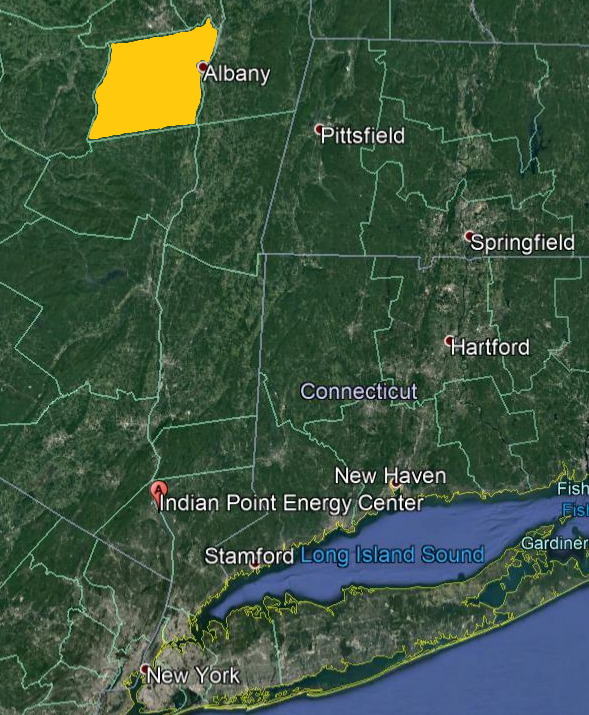
It would take a wind farm the size of Albany county NY to replace the now closed Indian Point nuclear power plant.

The following comparisons are typical—and instructive:

It costs about the same to drill one oil well as it does to build one giant wind turbine. And while that turbine generates the energy equivalent of about one barrel of oil per hour, the oil rig produces 10 barrels per hour. It costs less than 50 cents to store a barrel of oil or its equivalent in natural gas. But you need $200 worth of batteries to hold the energy contained in one oil barrel.

Next time someone tells you that wind, solar and batteries are
the magical solution for all our energy needs ask them
if they have an idea of the cost… to the environment.

“Unobtanium” works fine in the movies. But we don’t live in movies. We live in the real world.

I’m Mark Mills, Senior Fellow at the Manhattan Institute, for Prager University.

There is no charge for content on this site, nor for subscribers to receive email notifications of postings.