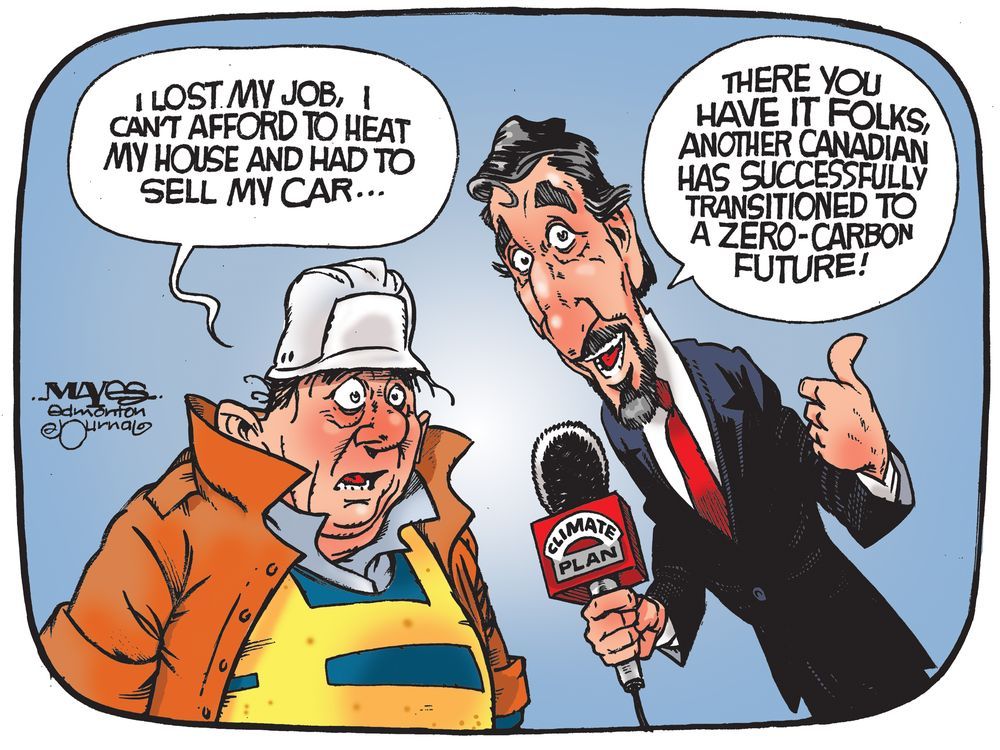
#1 Security Threat: Net Zero Asset Managers

Rupert Darwall writes at Real Clear Energy Woke Investors Threaten the West’s Security.  Excerpts in italics with my bolds and added images.

In an era of rising geopolitical tensions, it is folly
to let Wall Street determine the nation’s energy policy.

As the West grapples with the energy implications of a hostile Sino-Russian alliance, the steering group of the Net-Zero Asset Owner Alliance, whose members manage over $10.4 trillion of assets, issued a statement urging Western governments not to sacrifice climate goals for energy security. “The world is still heading for an excess of fossil fuel-based energy use that will vastly exceed the carbon budget needed to meet the 1.5° Celsius Paris agreement goal. This trend must be halted,” the United Nations-backed alliance said in its April 8 statement, arguing that “the national security argument for accelerating the net-zero transition has strengthened considerably.”

What, one might ask, is the standing of asset managers to opine on national security matters? They have no expertise in this domain. It turns out that their understanding of the economics of energy policy is defective, too.

The Net-Zero Asset Owner Alliance claims that development of new oil and gas reserves will lock in fossil fuel subsidies, exacerbating market distortions. In fact, the International Energy Agency (IEA) in its 2021 net-zero report states that under its net-zero pathway, tax revenues from oil and gas retail sales fall by about 40% over the next twenty years. “Managing this decline will require long-term fiscal planning and budget reforms,” the IEA warns. Similarly, Britain’s Office of Budget Responsibility estimates that net zero policies will result in the loss of tax receipts representing 1.6% of GDP. So much for the fossil fuel subsidy myth.

If fossil fuels were heavily subsidized, eliminating them would mean fossil fuel subsidies disappear. Instead, it’s tax revenues that would melt away to zero.

The net-zero investors cite figures for the decline in solar and wind energy costs. These numbers are based on so-called levelized cost of energy (LCOE), a metric that aims to measure a plant’s lifetime costs. Wind and solar power are intermittent, but LCOE metrics exclude the costs of intermittency, which increase the more wind and solar are put on the grid. Because wind and solar output responds to weather and not to demand, the value of this output declines the more installed wind and solar capacity is available. It was for these reasons that MIT professor of economics Paul Joskow concluded in a foundational 2011 paper that using LCOE metrics to compare intermittent and dispatchable generating technologies, such as coal and natural gas, is a “meaningless exercise.”  [ See proper energy costing here: Cutting Through the Fog of Renewable Power Costs ]

Wind and solar investors don’t need to understand the economics of the grid to make money – they are shielded from the intermittency costs their investments inflict on the rest of the grid, which is one reason why their views on energy policy can be taken with a pinch of salt. Their economic illiteracy does, however, make it easy for them to subscribe to the green fairy tale of 100% renewables. They’re not responsible for keeping the lights on – that depends on traditional power plants staying fueled up and ready to spin, which is what Germany can’t do without Russian gas. Adopt the net-zero alliance’s call for no new fossil-fuel investment, and the cost of energy is bound to spiral. And if the lights go out, politicians – not woke investors – get the blame.

Investors’ opinions on energy and national security would matter less if they didn’t have political power. Bloomberg opinion writer Matt Levine argues that asset managers of giant funds form a parallel system of government that exercises overlapping legislative powers with those of governments. These government-by-asset-managers, as Levine calls them, tell companies to do things they think are good for society as a whole, “making big collective decisions about how society should be run, not just business decisions but also decisions about the environment and workers’ rights and racial inequality and other controversial political topics.”

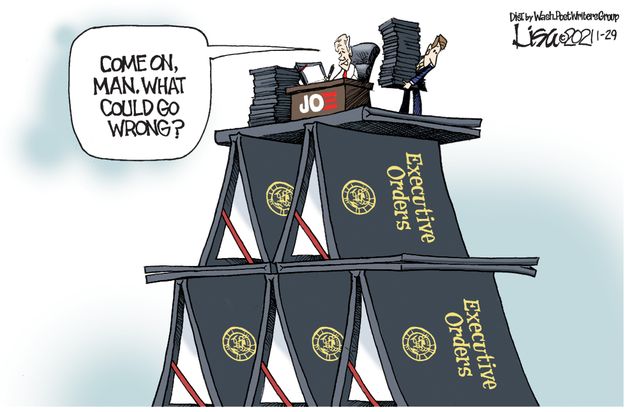
Foremost among these areas is climate policy. Although the Biden administration has set a net-zero goal, Congress has not legislated it, and it lacks the force of law. The absence of legislation passed by democratically accountable legislators, however, presents no barrier to government-by-asset-managers legislating climate policy for the companies in which they invest. “Investors are making net zero commitments for themselves and demanding that companies issue greenhouse gas reduction targets and transition plans for meeting those targets,” says the Reverend Kirsten Snow Spalding of the not-for-profit Ceres Investor Network on Climate Risk and Sustainability.

Neither Spalding nor the Net-Zero Asset Owner Alliance make a case that forcing net-zero targets on companies will boost investor returns, demonstrating that this is not about investors’ traditional concerns – making money – but about pursuing politics by other means. In this, the Securities and Exchange Commission (SEC) is working hand in glove with woke climate investors. Commenting on the SEC’s newly proposed rule on climate-risk disclosure, Spalding says that for investors who have committed zero emissions by 2050, “this draft rule is absolutely critical.”

Unlike elected politicians, woke climate investors are not accountable for the effects of their climate policies: They exercise power without responsibility. This arrangement weakens America’s ability to respond to the geopolitical challenges of a revanchist Russia and an expansionist China. “We are on a war footing – an emergency,” Energy Secretary Jennifer Granholm declared at the CERA energy conference in Houston last month. “We have to responsibly increase short-term supply where we can right now to stabilize the market and to minimize harm to American families.” Addressing oil executives in the audience, Granholm told them: “I hope your investors are saying these words to you as well: In this moment of crisis, we need more supply . . . right now, we need oil and gas production to rise to meet current demand.”

As Granholm suggested, woke investors have been trying to do the opposite. Despite the war in Ukraine, there has been no let-up in investor pressure on oil and gas companies to scale down their operations. Whatever criticisms might be made of the Biden administration’s handling of the war in Ukraine, it is responsible for taking the awesome decisions that war involves. Investors, by contrast, have no responsibility for the nation’s security and America’s ability to lead the West. By helping investors impose their desired energy policies on American oil and gas companies, the SEC is undermining the national security prerogatives of the Biden administration and eroding America’s ability to meet the challenges of a dangerous world. The SEC is playing in a domain that it has no business being in.

Climate-Change ‘Solutions’ Way Worse Than the Problem

Wonder Land: Democrats have wrecked the cities and the border. Why would climate policy be any different? Images: Zuma Press/Getty Images Composite: Mark Kelly  Link to video is below

https://video-api.wsj.com/api-video/player/v3/iframe.html?guid=5D0A20A9-75C5-4506-B1B1-9EC96ABBBEE9

Jason De Sena Trennert writes at WSJ Opinion Climate-Change ‘Solutions’ That Are Worse Than the Problem.  Excerpts in italics with my bolds and added images H/T John Ray (here)

The political assault on fossil fuels comes at the expense
of the poor, peace, and the environment.

If you can afford a Tesla, you probably find it hard to imagine that there are some 3.5 billion people on Earth who have no reasonably reliable access to electricity. Even less obvious may be the way rich countries’ pursuit of carbon neutrality at almost any cost limits economic opportunities for the world’s poor and poses serious geopolitical risks to the West.

Anyone on an investment committee has likely spent untold amounts of time discussing ways to mitigate the impact of climate change, but they’ve likely never heard anyone state one simple and incontrovertible fact: The widespread exploration and production of fossil fuels that started in Titusville, Pa., not quite 170 years ago, has done more to benefit the lives of ordinary people than any other technological advance in history.

Before fossil fuels, people relied on burning biomass, such as timber or manure, which was a far dirtier and much less efficient source of energy. Fossil fuels let people heat their homes in the winter, reducing the risk of death from exposure. Fossil-fuel-based fertilizers greatly increased crop yields, reducing starvation and malnutrition. Before the advent of the automobile, the ability for many people to venture far from their hometown was an unfathomable dream. Oil- and coal-burning transportation opened up access to education, commerce, professional opportunities, and vital services such as medicine. There has been, and remains, a strong correlation between the use of fossil fuels and life expectancy.

Limiting the availability of fossil fuels in the name of climate activism would cut off many of the world’s poor from these benefits. Climate activists worry about a potential “existential crisis” decades down the road, but poor people, really poor people, face an existential crisis every day. Even for those who aren’t among humanity’s most unfortunate, rising energy prices force serious economic trade-offs. Purposely eschewing America and Europe’s own natural resources increases costs to consumers, raises the cost of doing business, and limits economic growth. Viewed with this in mind, the debate over emissions seems like an upper-class problem.

If Chinese belligerence and increasing authoritarianism over the past two years have taught us anything, it is that no amount of trade and international cooperation will instill what are generally considered to be Western values in other civilizations who have no real desire to adopt them. Trusting China to do anything other than what is directly in its own best interests, especially when it comes to the trade-offs between economic development and climate issues, would seem to be in direct conflict with history and common sense—and it poses serious geopolitical risks to the international democratic order. The war in Ukraine has emphasized how leaving European and American fossil fuels in the ground can put the West at the will of dictators, increasing the risk of atrocities, war or even the use of weapons of mass destruction.

An easing of regulations on drilling in the U.S. and easier regulations on liquefied natural gas exports to flood the global market with oil and natural gas would do far more than any sanctions to stop Vladimir Putin’s barbarism.

The climate-change solutions the West is pursuing also pose a danger to the environment. The lodestar of the environmental movement today appears to be electric vehicles. One would be hard-pressed to find a product more dependent on resources from extractive materials. An electric car requires almost four times as much copper as an automobile powered by an internal combustion engine. The widely accepted goal of having 30% of the world’s vehicle sales be electric by 2030 would require enormous investments in mining industries that are decidedly not eco-friendly.

And whatever emission cuts America and Europe manage to make by forcing electric vehicles and other inefficient technology on consumers will be negated by emissions from other nations. Regimes like Russia and China won’t put aside their geopolitical ambitions for climate activism; developing countries like India won’t sacrifice economic development and their peoples’ well-being in the hope it’ll slow global warming.

Sadly, environmentalism has grown into a secular religion
in which reasonable debate is regarded as heresy.

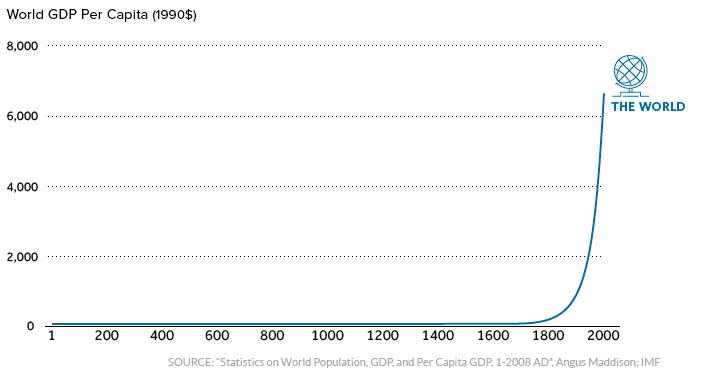
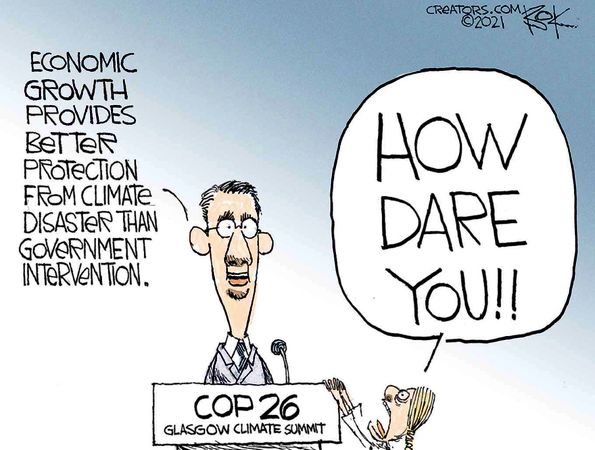
But if politicians and voters can approach climate change with an open mind, they’ll see that economic growth is likely to solve the issue without heavy-handed government intervention. History has shown that free markets produce incredible leaps in human ingenuity. The greater access the world has to all sorts of energy sources, the faster humanity will discover new technologies that are more environmentally friendly. Rationing fossil fuels would only retard the process of decreasing carbon emissions and cost lives in the process.

Resources:  Four Part Series of infographics World of Hurt From Climate Policies


Fuel Efficiency Rule De Facto EV Mandate

Kevin Stone explains at Heartland Daily News. Fuel Producers, States Challenge New EPA Rule Effectively Mandating Electric Vehicles.  Excerpts in italics with my bolds.  H/T John Ray

An unlikely coalition is challenging the U.S. Environmental Protection Agency’s (EPA) revised fuel economy rules.

At issue is a revised fleetwide. corporate average fuel economy (CAFE) standard of 55 miles per gallon in model year 2026. The shortened timeline for the much higher fuel economy forces automakers to reduce their fleets’ carbon dioxide emissions by 22.6 percent more than previous rules required.

Sixteen states, plus groups representing the fossil fuel and ethanol industries in 15 states, are challenging the Biden EPA’s emissions rules. They argue the EPA’s new standards effectively mandate a national transition from internal combustion powered vehicles to electric vehicles starting in 2026.

Farmers, Drillers, Attorneys General

A mix of corn and soybean growers associations from the states of Illinois, Indiana, Iowa, Michigan, Minnesota, North Dakota, Ohio, and South Dakota joined with Diamond Alternative Energy in one of the lawsuits filed to block the EPA’s new rules.

In addition, Texas Attorney General Ken Paxton filed a lawsuit on behalf of Texas, joined by the states of Alabama, Alaska, Arkansas, Indiana, Kentucky, Louisiana, Mississippi, Missouri, Montana, Nebraska, Ohio, Oklahoma, South Carolina, and Utah. Arizona filed a separate lawsuit to block the rules.

The Competitive Enterprise Institute (CEI), along with additional petitioners such as the Domestic Energy Producers Alliance, a nationwide coalition of 39 associations representing the oil and gas industry, also filed a lawsuit to block the new standards.

Essentially an EV Mandate

The lawsuit filed by representatives of various states’ biofuel associations argues the new standard is an unauthorized de facto mandate forcing people to use electric vehicles.

“Through the final rule, EPA seeks to unilaterally alter the transportation mix in the United States, without congressional authorization and without adequately considering the vast greenhouse gas reduction benefits provided by renewable fuels,” the complaint states.

CEI and its co-petitioners make a similar argument in their filing by lead attorney Devin Watkins, saying the rules exceed the agency’s authority.

“EPA is trying to transform the motor vehicle market from gas-powered to electric vehicles by making gas-powered cars more expensive,” Watkins’ petition states.

Ambitious or Unworkable?

The EPA’s new standard and timeline are unrealistic because the mass adoption of electric vehicles and construction of the infrastructure needed to support and power them won’t magically appear overnight, says Paul Driessen, a senior policy advisor with the Committee For A Constructive Tomorrow, which co-publishes Environment & Climate News.

“It’s vital to remember that President Joe Biden, Rep. Alexandria Ocasio-Cortez (D-NY), and other climate-focused activists aren’t talking about just replacing current fossil fuel vehicle use or electricity generation,” said Driessen. “They also want to convert home and office heating, cooking, and water heating to electricity; convert factories from coal and gas to running on wind- and solar-generated electricity; and have massive battery modules as backup power for windless, sunless days.

“That means nearly doubling existing U.S. electricity generation, and doing all of it with intermittent, unreliable, weather-dependent power generation systems,” said Driessen. “It means millions of onshore and offshore wind turbines, billions of solar panels, billions of 1,000-pound battery modules, and thousands of new transformers, covering tens of millions of acres, all powered by wind and sunshine, and all connected via thousands of miles of new transmission lines to power users all across America.”

‘It Is a Pipedream’

Electrifying the transportation system and in fact the entire U.S. economy is a fool’s errand, doomed to fail while placing an unnecessary burden on the public, says Driessen.

“They expect, hope, and fantasize this will somehow work, that a massively stressed power grid never built or tested before will be able to handle huge, sudden electricity surges and cutoffs due to wind and sunlight cooperating with demand only incidentally, failing minutes, hours, or days at a time and crashing repeatedly and catastrophically,” said Driessen.

“It is a pipedream that has failed everywhere it’s been tried on much tinier scales than what they intend to impose on us,” said Driessen. “Think of Texas two winters ago, and South Australia a few years ago, multiplied a thousand times over. We’re going to be asked to accept having electricity for every aspect of our industry, hospitals, and lives, when it’s available instead of when we need it.”

It’s ‘MAGIC’

There is no way the United States can get the needed raw materials and do the infrastructure transformation required by the EPA’s and other agencies’ new rules implementing Biden’s “whole of government approach” to fighting climate change, says Driessen.

“Just getting the metals, minerals, plastics, concrete, and other raw materials to create this system will take mining at scales unprecedented in human history,” said Driessen. “Team Biden seems to think this will just happen, under a government-mandated program you could call Materials Acquisition for Global Industrial Change, abbreviated MAGIC.

“This new, unworkable system would totally bankrupt America,” said Driessen. “Energy analyst David Wojick, Ph.D. calculates that building a battery system to back up just New York City’s current peak electricity needs, not counting new electric cars or future growth, for one week of no wind or sunshine would cost $3 trillion! For all of New York State, it would cost $8 trillion. And that’s just New York.”


Pipe Dreams: How America Is Energized

Kite and Key Media provides a primer on America’s Energy supply in the above video and transcript below in italics with my bolds.

Pipe Dreams: How America Gets Energy.
The Backbone of America’s Energy Infrastructure

In the winter of 2022, the world watched in horror as Russian forces invaded Ukraine.  The question on everyone’s mind: “How did they think they could get away with this?”

One very good answer to that question: Because over 40% of the natural gas Europe relies on to keep itself warm during the winter … comes from Russia.  And standing up to the people who are keeping you from freezing … is a tall order.

Now, if you’re an American, this scenario might seem unthinkable. After all, the U.S. produces more natural gas than any other nation in the world.   We’d never have to rely on a hostile nation to keep ourselves warm.

Or at least that’s what you’d think…
…unless you were there the day that Russian gas pulled into Boston harbor.

Here’s a simple test to determine whether you live in a prosperous society: Do you ever worry about where you’re going to get the necessities of life?

Do you ever pull up to the gas station and worry that the pumps might be empty? Do you ever go to switch on the lights and worry that nothing will happen?

Most of the time, the answer is ‘no’ … which is why it’s so terrifying when the answer is ‘yes.’

Blackouts in Texas in early 2021. Over 10,000 gas stations running dry after a cyberattack only a few months later.   What do those incidents have in common?

They demonstrate what happens when pipelines aren’t working.

If America’s energy supplies are the lifeblood of our economy, then we can think of pipelines as something like the nation’s circulatory system.

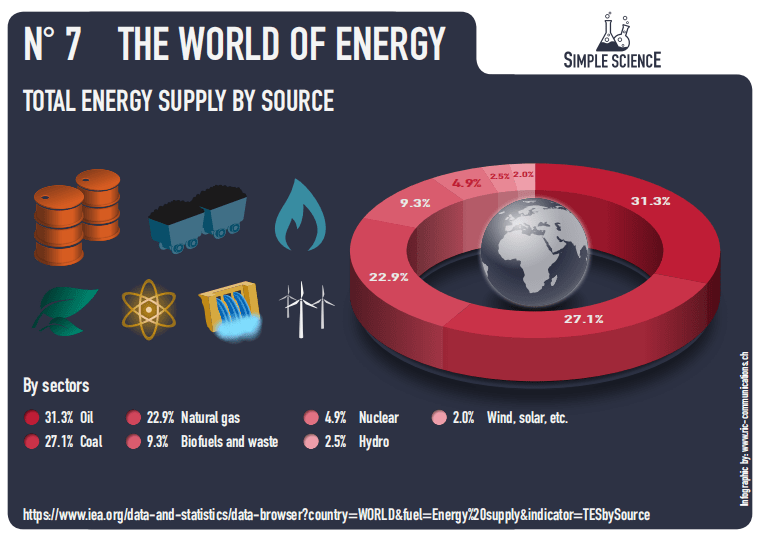
In the U.S., pipelines are used to bring us about 90% of our petroleum and virtually all of our natural gas — which is pretty significant, given that those two power sources alone make up about 70% of the country’s entire energy use.

That’s why America has over 2.6 million miles worth of pipelines. Because without them … the whole country gets very Amish very fast.

But, as you may have noticed … not everyone is thrilled about this. In recent years, legal challenges have led to the cancellation of several major pipelines and delays for many others. From 2009 to 2018, the time it takes to get pipelines approved increased by more than 50%. 

So, what’s happening here? The objections to pipelines rest primarily on two critiques. The first is that they’ll contribute to carbon emissions. The second is that pipeline accidents could lead to oil spills.

And both of those claims … really require context to understand.

When it comes to carbon emissions, it’s important to know that the pipelines themselves aren’t really the issue. They’re just a mode of transportation.

The carbon emissions come from the petroleum and natural gas that flow through the pipelines. But here’s the catch: Getting rid of the pipelines … doesn’t mean getting rid of the emissions.

Cancelling the Keystone XL pipeline, for instance, may have felt like a win for the environment — but it’s not like that oil is gonna stay in the ground as a result. In fact, much of it is likely to be shipped to China — which isn’t exactly a low-emissions trip.

And we can probably expect to see more of that. Current government projections are that, even with a steep increase in the use of renewable fuels, we’ll still be getting about 2/3 of our energy from natural gas and petroleum … 30 years from now.

Refusing to build pipelines won’t change that reality …
but it will make the system we actually have much harder to operate.

Which gets to those concerns about safety. Do accidents occur with pipelines? Yes. It happens. However, accidents occur with all forms of energy transportation. So, the real question is what’s safest among the available options.

And on that front … pipelines do pretty well. Because if you’re not going to move fuel through the ground, you only have three other options: put it on trains, put it on trucks, or put it on boats.

Now, none of those methods is especially dangerous, but pipelines spill a lower percentage of the oil they transport than any method except boats.  And boats have … limited utility on this front. Because they still need fuel in Nebraska … and America’s 26 other land-locked states. 

So, what does a world without pipelines look like?
We already sorta know the answer.

The reason that Boston was getting gas from Russia, for instance, was because the state of Massachusetts refused to allow a pipeline to bring it from Pennsylvania. That’s the same reason, by the way, that, in January of 2022, the citizens of Boston … were paying 400% more for natural gas than those Pennsylvanians only 200 miles away — in the middle of a New England winter.

Here’s the reality: None of us are willing to live in a world where the lights don’t reliably come on or gas doesn’t reliably come out of the pump. We can aspire to a future powered by cleaner energy sources, but until that day comes … we’re going to be relying on fuel sources like petroleum and natural gas.

Which means we either rely on pipelines…

…or rely on places like Moscow…

…or get very comfortable with horses.


Investors Resisting Corporate Climate Activism

Jerry Bowyer writes at Real Clear Markets Return-Focused Investors Are Starting to Notice the Politicization of Corporations.   Excerpts in italics with my bolds and added images.

We monitor and analyze proposals placed before shareholders for annual meetings held by publicly traded companies for funds, financial advisors and individual stockholders. For far too long, investors who are actually focused on returns have thrown annual proxies into the wastebasket while highly organized activist groups motivated chiefly by political considerations have been using shares as a mechanism to promote their own particular brand of social change. Recently, however, return-focused investors have begun to notice the degree to which a small minority has been politicizing corporate life, and a backlash has clearly formed against that.

One of the main issues has been increasing attempts to use shareholder engagement against fossil fuel usage, which came to a head last year when three anti-oil board members were elected to board seats at Exxon, a major oil company (Activist firm Engine No. 1 claims third Exxon board seat (cnbc.com)). A small activist fund received some assists in this campaign from a number of government employee pension funds and Blackrock. There was understandable backlash from public pension plans of energy-producing states, which received media coverage. Blackrock executives have tried to walk back some of the more heated rhetoric from CEO Larry Fink when dealing with energy-friendly clients.

Climatists storming the Exxon Bastion, here seen without their shareholder disguises.

What we are seeing so far in the early phase of this year’s annual shareholder meeting season is a spate of proposals, typically from political activist groups, pushing more aggressive anti-carbon measures. We’re also seeing investors rejecting such proposals. For example, as of this writing, the tentative vote counts for Royal Bank of Canada show shareholders voting down all of the items placed on the ballot by activists, including several having to do with fossil fuels. This is consistent with the pattern we’ve seen so far.

We’ll leave aside self-imposed fossil fuel divestment plans put forward by management under the moniker “Climate Action Plan”, as we’ve dealt with that issue here (How “sustainable investing” emboldens Putin | Analysis News (christianpost.com)). This analysis is focused on activists’ recent attempts to go even further in opposition to fossil fuels. In general, management teams have opposed these types of proposals, but it is arguable that they are somewhat responsible for bringing them about: advocates frequently cite public statements about environmental commitments and statements about the risks of climate change made by the company and argue that they are simply asking the company to live up to its public posturing.

Managers of these companies are beginning to see that public political pronouncements
do not assuage, but rather embolden, activist demands.

Let’s look at some of the proposals which are showing up on proxies this year:

♦  Annual Advisory Vote Policy on the Bank’s Environmental and Climate Change Action Plan and Objectives

Climate action plans in general have not been rigorously shown to be of benefit to shareholders, nor even to reduce GHG emissions (since nothing prevents other banks from financing the fossil fuels companies which would be de-banked by the proposed plan). So adding an extra level of institutional pressure to managers in the form of automatic annual votes is not warranted. If there is adequate support for a vote in any given year, shareholders of even modest scale can place it on the ballot.

♦  Annual Advisory Vote Policy on the Bank’s Environmental and Climate Change Action Plan

The proposal fails to make a rigorous case for shareholder benefit. The proposal is ostensibly modeled on the Paris Accords, but the Paris Accords are a proposal for regulations which governments would impose on industry, not for limitations which industry would impose on itself. When businesses, for example banks, limit customers on some basis other than profitability, that likely subtracts from shareholder value. And the limitation fails to decrease carbon emissions unless there are broad global restrictions on carbon emissions. Such arbitrary (from a revenue point of view) restriction of potential customers for banking services doesn’t shrink emissions, it simply transfers that business opportunity to other companies and countries. 

♦  Set Up a Climate Change and Environment Committee.

The proposal is for the board to set up a standalone committee focusing exclusively on environmental issues. The support statements tend to be thinly argued, doing little more than asserting that climate change is an important issue and navigating it is a matter of some complexity. In some cases boards of directors have argued against such resolutions by pointing out that there are several committees already which deal with environmental issues, including risk committees. To the degree that environmental issues are specifically of shareholder concern and not just general social concern, it is because of the potential risks, therefore environmental concerns seem most properly housed in the risk committee where they typically reside. There, environmental risks can be analyzed in relation to all risks, not elevated above them as a unique concern above all other risks.

♦  Avoid Bank Participation in Pollution-Intensive Asset Privatizations

When we have seen this proposal it has come from a labor union which tends to engage on political issues. This appears to be an anti-privatization measure with an environmental element added perhaps to get broader support. Financing of privatization is a standard banking practice because it is of potential benefit to shareholders. Whether privatization is beneficial or detrimental to society as a whole is a matter of long debate. In addition, in the case we’ve seen, the proponents make no argument to establish that an operation currently operated by government, which produces environmental impact, would become more environmentally harmful if it were transferred to the private sector, and so it provides no environmental reason why banks should not engage in the otherwise profitable business of financing such transfers.

♦  Update the Bank’s Criteria for Sustainable Finance to Preclude Fossil Fuel Activity and Projects Opposing Indigenous Peoples

This resolution was submitted by an activist group, Investors for Paris Compliance, on behalf of two shareholders (this is a common practice in regards to ESG proxy proposals). This proposal strongly overreaches standard climate plans, in that it precludes, rather than just reduces, investment in certain energy sources. In addition, the inclusion of the indigenous peoples element seems tangential to the main issues. Per comments made live at the shareholder’s meeting for Royal Bank of Canada, this is not about situations in which indigenous people actually own the property and therefore can legally block the projects. The rhetoric has instead invoked situations in which indigenous peoples opposed development on land they did not own, and were arrested for protesting on the property of others. It can reasonably be postulated that this is an attempt to bolster the anti-fossil fuels agenda by tapping into the indigenous people’s cause which is currently quite prominent in Canadian politics.

It seems plausible that the politicization of corporate governance in and around climate change may well have gone farther than corporate managers, in this case, Canadian banks, are willing to go in terms of sacrificing profit for the protection of alleged “reputational risk”. Even more interesting is the fact that a largely Canadian investor base also seem unenthusiastic about such proposals.

Jerry Bowyer is the President of Bowyer Research, an economic and financial research and consulting firm.

IPCC World’s Last Chance (Again)

Getty Images

James Macpherson reports on the latest deadline in his Australian Spectator article The IPCC say the world is ending! (Again?) .H/T John Ray.  Excerpts in italics with my bolds.

In the latest ‘now or never!’ since the ‘last now or never!’ the United Nations has warned the world that it is once again ‘now or never!’ to avoid disastrous Climate Change.

Forget Prince Charles’ warning back in July 2009 that we had just 96 months to save the planet.

Ignore former British PM Gordon Brown’s prediction, just three months later, that we had fewer than 50 days to avoid disaster.

And never mind French Foreign Minister Laurent Fabius who, standing beside then American Secretary of State John Kerry, told the world on May 13, 2014, that ‘we have 500 days to avoid climate chaos’.

The irony of that particular Chicken Little routine was that Fabius was scheduled to host the 21st Conference of the Parties on Climate Change on November 30 the following year – 65 days after the world, by his reckoning, would have ended.

I was going to quip that you couldn’t make this stuff up, but it seems like they do.

Anyway, enough joking around. This is it. Seriously. They’re not even kidding this time. Honestly. Like, for real guys. ‘It’s now or never!’

Yes, I know that’s what American defence chiefs were warning back in 2004 when they predicted European cities would sink beneath rising seas, and that Britain would be plunged into ‘a Siberian climate’ by 2020.

But it wasn’t like they got everything wrong.

Their predictions of widespread rioting across the world by 2020 did come to pass. And if you overlook the fact that the rioting was caused by the death of George Floyd and the imposition of compulsory injections – rather than the complete collapse of the ecosystem – you’ll see just how prescient the defence chiefs were.

You can’t expect climate catastrophists to get it right all the time. Or any of the time. It’s not like they’re astrologers.

Doomsday was predicted but failed to happen at midnight.

The important thing to worry about is that things are now a lot more worrying than the last time we were warned to worry, and so there is now good reason to be worried.

We have this week reached a tipping point that is even pointier than every other tipping point so far reached; which is to say we will soon be at a point of no return that is well past the point of no return that we were last warned there was no returning from.

The latest UN climate panic comes in the form of what media outlets called ‘a massive 3,000-page document’ published Monday.

It’s unlikely anyone will read all 3,000 pages, but no one should need to. The sheer size of the document – let me remind you, it’s ‘massive’ – tells you everything you need to know.  Things are bad.

And if the thickness of the report does not convince you that things are dire, environmentalists at the UN can make their next dossier of doom and gloom run twice that length. It’s only trees, after all.

Let me remind you just how massively bad things are.

Back in 1972, the then UN Under General Secretary Maurice Strong warned we had ‘only 10 years to stop the catastrophe’.

In 1982, which was the deadline for stopping the catastrophe, the head of the UN Environment Program Mostafa Tolba told us we had just 18 more years before we would face an environmental catastrophe ‘as irreversible as any nuclear holocaust’.

Just eight years later, he was insisting we needed to fix global warming by 1995 or we would ‘lose the struggle’.

The great climate doomsday of 1995 failed to materialise, as did the climate Armageddon of 2000. But the flurry of final warnings, last chances, and tipping points continued; every prediction more hysterical than the last.

UN Climate Panel chief Rajendra Pachauir, who was no doubt surprised to still be here in 2007, warned that ‘if there is no action before 2012, that’s too late’. He further insisted that ‘what we do in the next two to three years will determine our future’.

Our betters spent the next two or three years jetting around the globe, holding lots of conferences and summits, which must have saved our bacon since not only did we survive the predicted 2012 apocalypse, but we hung on grimly until 2019 at which point the UN informed us we had just 11 years to prevent irreversible damage from climate change.

To emphasise just how serious things were, they invited a Swedish school girl to berate them for robbing her of her dreams, or something. These days she’s performing Rick Astley covers for adoring fans.

Now, just three years into that 11-year do-or-die period,
we are being told that it’s ‘now or never’.

One could be forgiven for thinking that when the world doesn’t end as these activists predict, they simply change the date and call it science.

The UN report, the most comprehensive report since the last most comprehensive report, says emissions must be curbed by 2030 or things will be even worse than the last time we were told they couldn’t possibly be any worse.

The report says that people must change their diets and their lifestyles which, as we already know, means eating bugs and walking.

And if we fail to heed the latest hysterical shrieks from those who warn of rising sea levels while purchasing beachside mansions, we can be sure there will be even shriekier histrionics in the future.

This is it. Our final, cataclysmic warning. Until the next one. And probably the one after that.

When the UN insist that it is ‘now or never’ for climate action, what they really mean is that they want now and never-ending emergencies as a pretext for herding us around the room. First here and then there, but never to an exit.

Supply Chains Doomed by Carbon Accounting

Vince Bielski explains how proposed SEC accounting for CO2 emissions will grind product supply chains to a halt.  His Real Clear Investigations article is The Green U.S. Supply-Chain Rules Set to Unspool and Rattle the Global Economy. Excerpts in italics with my bolds and added images.

Making a box of Cocoa Puffs is a complicated global affair. It could start with cocoa farms in Africa, corn fields in the U.S. or sugar plantations in Latin America. Then thousands of processors, transporters, packagers, distributors, office workers and retailers join the supply chain before a kid in Minnesota, where General Mills is based, pours the cereal into a bowl.

Now imagine the challenge that General Mills faces in counting the greenhouse gas emissions from all of these people, machines, vehicles, buildings and other products involved in this Cocoa Puff supply chain – then multiply that by the 100-plus brands belonging to the food giant.

Thousands of public companies may soon have such a daunting task to comply with a new set of climate rules proposed by the Securities and Exchange Commission.

Hailed by prominent environmental groups as a long sought victory, the sweeping plan released in late March would force companies to grapple with the unpredictable impact of climate change by disclosing reams of new information to investors. What are your company’s climate risks, such as severe weather, and the possible financial impacts? How have the threats affected your business strategies and what’s the plan to avoid the dangers? The most consequential and controversial piece of the SEC’s proposed regulations would require corporations to calculate their total greenhouse gas footprint, including from the supply chain.

The regulations also carry political weight for Democrats in the runup to the midterms in November. The Biden administration and centrist Sen. Joe Manchin of West Virginia are trying once again to breathe life into clean energy legislation that died earlier this year amid a feud between them. If this latest effort at compromise fails – with Manchin reportedly looking for federal support for fossil fuels as well as renewable energy – then much of President Biden’s ambitious climate agenda will be left riding on the SEC proposal.

SEC head Gary Gensler says shareholders are demanding climate risk disclosures to make smarter investment decisions and hold companies accountable for “greenwashing” their operations. The regulations will also provide investors in the Environmental, Social, Governance (ESG) movement more leverage in their ongoing campaigns to pressure companies to reduce their carbon footprints.

While many companies like Walmart and business groups like the Chamber of Commerce generally support the idea of required climate disclosures, they object to what they see as the SEC’s heavy-handedness in standardizing rules across the economy. The Chamber is calling for flexibility so companies can customize their climate disclosures based on what’s relevant to their businesses and investors.

Measuring the global supply chain is a tall order — “mind-boggling and certainly unprecedented.” Pixabay

The biggest beef from companies is the rule that would require them to calculate and disclose supply chain emissions, called Scope 3.

Big companies have thousands of suppliers operating in hundreds of countries, making the task of coming up with a reasonable accounting enormously complicated. First of all, many suppliers of products and services are private companies not under the control of the SEC. They may refuse to cooperate in a count because of the costs and the implications that they might have to change their business practices to reduce emissions, said Professor Gerald Patchell, who has analyzed the problems of supply chain reporting.

Another obstacle is that many smaller suppliers, like General Mills’ cocoa farmers in Africa, don’t have the capacity to measure the emissions from their own fertilizers, tractors and farming practices. So companies will have to rely on broad country or industry averages that likely don’t reflect the actual emissions created by the suppliers, according to researchers.

“The data that companies will be asked to collect from thousands of suppliers is mind-boggling and certainly unprecedented,” said Patchell, who researches environmental policy and business. “It’s an idealized concept of what can actually be done by a company.”

The upshot is that regulations meant to bring clarity to investors on climate risk may end up providing highly unreliable emissions disclosures, leaving them “worse off,” wrote SEC Commissioner Hester Peirce, a Trump appointee who voted against the 500-page proposal. It “forces investors to view companies through the eyes of a vocal set of stakeholders, for whom a company’s climate reputation is of equal or greater importance than a company’s financial performance.”

“Government’s view of the economy could be summed up in a few short phrases: If it moves, tax it. If it keeps moving, regulate it. And if it stops moving, subsidize it.” — Ronald Reagan

Resources

SEC Agency Aims to Legislate US Climate Policy

SEC Warned Off Climate Disclosures Rule


High Cost of Green Wishful Thinking

Rep. Alexandria Ocasio-Cortez (left) admits, “We’re in Trouble,” as President Joe Biden (center) struggles to respond to the worst energy crisis in 50 years, and as California Gov. Gavin Newsom (right) makes homelessness worse.

Michael Shellenberger explains at his substack page Why Wishful Liberal Thinking Led to Disasters in Ukraine, Homelessness, And Climate.  Excerpts in italics with my bolds and some headers. H/T Tyler Durden

The good news is that everything is changing — and fast

In the three decades since the collapse of the Soviet Union, liberals in the West have denounced their political opponents as deniers of climate change, science, and reality in general. Progressives and neoliberals alike argued that they alone could see the shape of the new world being born. It would be increasingly globalized, democratic, and focused on new threats, like climate change.

It’s now clear that all of that was a delusion.

Neither China nor Russia is democratizing and both have become more autocratic and totalitarian. Neither nation views climate change as a major threat. On the contrary. Russia views climate change as an opportunity to expand agriculture and shipping through its newly ice-free waters. Where both Putin and Chinese Premier Xi used to give lip service to climate change, neither even bothered to attend last fall’s United Nations climate talks.

It’s true that the West has imposed sanctions on Russia, and the Ukranian people are battling the Russians fiercely and admirably. A few days ago, Russians retreated from the capital city of Kyiv. Western nations froze bank accounts of Russian oligarchs, hammering the ruble. And European governments are calling on their citizens to reduce energy consumption.

But those are hiccups on the way to a rapidly changed world. Consider that:

♦  China aided Russia’s invasion of Ukraine through a massive cyberattack on Ukraine’s military and nuclear facilities, according to intelligence memos obtained by The Times of London.

♦  Europe continues to import Russian energy while China and India are buying Russian oil at a steep discount. There is little reason to believe conservation measures by Western consumers will make much of a dent in energy consumption.

♦  And Russia’s retreat from Kyiv appears to be temporary and strategic.

Russia’s invasion of Ukraine comes at the very same time as: the collapse of the West’s climate and renewables agenda; an energy crisis triggered by climate activists; and a worsening drug, crime, and homeless crisis in America’s cities.

What do all these events have in common?
They all point to the grave dangers of irrational liberal optimism.

Western Leftists Soft in Defending Civil Freedoms

When it comes to the West’s failure to deter an increasingly totalitarian and violent Russia and China, the growing scarcity and unreliability of energy, and the destruction of America’s cities by open air drug scenes, the fault lies squarely with people on the Left end of the political spectrum.

Western leaders, including President Joe Biden, French President Emanuel Macron, and former German Chancellor Angela Merkel, all denied to themselves, and to others, what was plainly obvious to many analysts for years: Putin intended to invade Ukraine.

Even as Russian forces prepared for war games last fall, Biden’s national security adviser Jake Sullivan wondered “why Russia would take such a military action at that time,” according to a reconstruction of the events leading up to Putin’s invasion by the Wall Street Journal.

Western Leftists Indulged in Renewables Delusion

On climate change, center-Left parties around the world deluded themselves into thinking their high-energy economies could be powered by renewables, which energy historians have known for centuries had to be abandoned for fossil fuels in order for the industrial revolution to happen. And around the world it was liberals not conservatives who fought to shut down nuclear plants and block natural gas pipelines and infrastructure.

Liberals and progressives could have embraced a climate and energy strategy focused on domestically-produced natural gas and nuclear, as I have urged them to do for over a decade, and which Putin did, allowing him to gain a stranglehold over Europe’s energy supplies.

Such a strategy was the only one that ever made any sense from an environmental point of view. Nuclear and natural gas are the two technologies that are most responsible for declining emissions by the US and Europe since the 1970s.

Instead, the Left in Europe opted for importing fossil fuels from Russia and the Left in the US for importing solar panels made by enslaved Muslims in China.

Leftist Cities Governed into Ruin

On crime, liberal cities have gradually reduced consequences for breaking laws, whether from addiction or malevolence, resulting in rising homicides, burglaries, and open air drug scenes. Relatedly, on homelessness, progressives have funneled hundreds of billions into “Housing First,” which gives away apartments to homeless drug addicts without requiring sobriety.

The result is that, today, well over 50 percent of the people on the streets of San Francisco and Los Angeles are from out of town, according to expert insiders, homeless outreach workers, and the homeless themselves.

Why do liberals keep making the same mistake over and over again?

Leftists Projecting Own Mindset, Ignoring Reality

In part, it’s because of what cognitive psychologists call “theory of mind.” Liberals tend to think that other people think like they do. Western liberal leaders thought Putin was one of them, a liberal democrat committed to rule of law, even though he repeatedly said he wanted to reconstruct the Soviet empire.

Similarly, leading liberal leaders think homeless drug addicts are seeking a better life, and just need their own apartment to quit drugs, get a job, and re-connect with family and friends. In truth, many if not most homeless addicts maintain their addiction until they are forced to quit.

On energy and climate change, progressives indulged in the fantasy that we could power the world with energy sources that have no negative consequences. They convinced themselves that renewables were better in every way than either fossil fuels and nuclear, even as they demanded massive subsidies for, and the right to kill endangered species in, their deployment.

And liberals engaged in wishful thinking that high standards of living can be maintained with much lower levels of energy consumption, and that poor and working people will accept low standards of living.

There were financial rewards for such wishful thinking. Politicians like Newsom can raise much more money from homeless housing developers than from homeless shelter providers. Center Left parties take money from renewable energy companies all over the world. And it’s now clear that climate activists in Europe, and perhaps the United States, took, took money from the Russian government to fight fracking and natural gas production.

Stunning Failure of Leftist Governance 

The good news is that the failure of elites to govern at local, national, and international levels points to a coming change of leadership, triggered by covid, but ultimately resulting from the exhaustion of post-Cold War ideologies and institutions.

It will gradually become clear that the West must defend itself more vigorously against resurgent illiberal regimes, particularly Russia and China, which could well invade Taiwan, or even attempt to take a Japanese island, in the coming months or years.

And major political changes are afoot. Republicans will likely take one or more house of Congress, and President Joe Biden is unlikely to run again in 2024. The result will be major changes within both parties. California, long a leader of change, for good or ill, will likely see the recall of district attorneys in San Francisco and Los Angeles, the election of a new attorney general, and the election of a new, more moderate, governor.

In this context, it becomes clear that the claims of reality denial by progressives were a kind of psychological projection. It was progressives who denied the realities of climate change and energy, the intentions of Vladimir Putin, and homelessness. The good news is that people are waking up, and quickly.

The trend toward the dismantling of civilization could soon reverse itself.
But, ultimately, what happens next is up to us.


Why Ocean Keeps Its Cool at 4 Celsius

Water (H2O) has magical properties that make our planet suitable for us.  The video explains why most of the ocean water is about 4 degrees Celsius.  A transcript from another presentation draws the implications. Excerpts in italics with my bolds.

At the surface, ocean water can vary wildly in temperature – the water at the equator is around 30 degrees Celsius and the water at the poles is, well, freezing.  But surface waters are only a small fraction of the total water in the ocean.  Dive a little deeper, and you’ll find that a whopping 75 percent of the ocean’s water is all at the same temperature…and we’re not talking averages or anything – the vast majority of ocean water is 4 degrees Celsius.  And that’s not just a coincidence – it’s because water is weird.

As a liquid cools, its molecules slow down and the liquid generally gets denser and denser.  That’s how molten metals, wax, nacho cheese, and basically everything else behaves – except water.  Water does become denser as it cools though, but only up to a point.  Then it reverses course and actually gets less dense.

This happens because once water molecules slow down enough, intermolecular forces due to the water molecule’s unique shape start pushing the molecules apart until – at zero degrees and below – they form a lattice-like structure.  That’s why ice is less dense than water.

But the magic temperature where water is actually densest is 4 degrees Celsius. This weird maximum density is what causes the vast majority of the ocean to be stuck at the same temperature.

By about 1000 meters down, water has cooled to around four degrees. Any water here, or below, that happens to warm up – say, via heat from a hydrothermal vent or underwater volcano – will get a little less dense and float upwards, as less-dense things tend to do – out of this 4-degree zone.  Strangely, water cooler than 4 degrees will behave the same way; any water that loses a little bit of heat will also become a little less dense and balloon upwards.

As a result, all the ocean water below 1000 meters or so is about 4 degrees. 
Well, almost all the water. 

The very deepest parts of the ocean can get just a tiny bit colder, because of salt.  When salt ions are stuck to water molecules, they weigh them down, making saltier water a little denser than less salty water.  So when polar ice forms, salt gets pushed into the surrounding water, making it super-salty.  This super-salty water is most dense slightly below 4 degrees, in addition to being a little denser than less salty water, so, it has the tendency to plummet straight to the seafloor.

This heavier, colder water makes the deepest depths of the ocean slightly colder and denser than the water above.  Expeditions to the deepest parts of the ocean, like the Challenger Deep of Mariana’s Trench have recorded temperatures of 1 degree.  However, the same rules apply down there as they do in the rest of the water column – any water that warms or cools, even a bit, will become less dense and float away into the higher, less dense layers above.

If these weird water density rules didn’t apply – if water behaved like, say, nacho cheese – ocean water would just solidify from the bottom up as it’s cooled, and we wouldn’t have liquid oceans at all.


Vexing Truths About Energy

Philip Dick’s insight has a corollary:  Reality is also that which doesn’t happen no matter how much you want it to.  Chris Wright explains the contradictions with energy fantasies in his Denver Gazette article Inconvenient truths about energy.  Excerpts in italics with my bolds and added images.

The energy transition is not happening. Or not nearly at the pace that everyone believes or wishes. At current rates the “transition” is set to finish in the mid-2600s. The U.N. Rio Convention and subsequent Kyoto Protocol launched the energy transition drive in 1992. Global energy consumption from hydrocarbons has grown massively since then, with market share only declining by four percentage points over the last 30 years from 87% in 1992 to 83% today. I am not celebrating this fact as I have spent years working on energy transition technologies.

The energy transition isn’t failing for lack of earnest effort. It is failing because energy is hard, and 3 billion people living in energy poverty are desperate for reliable and scalable energy sources. Meanwhile, 1 billion energy-rich people are resistant to diminishing their standard of living with higher cost and an increasingly unreliable energy diet.

There is no “climate crisis” either. If there is a term more at odds with the exhaustive literature surveys of the Intergovernmental Panel on Climate Change (IPCC) than “climate crisis,” I have not heard it.

Climate change is a real global challenge that is extensively studied. Unfortunately, the facts and rational dialogue about the myriad tradeoffs aren’t reaching policy makers, the media, or activist groups. Or are they are simply ignoring these inconvenient truths?

For example, we hear endlessly about the rise in frequency and intensity of extreme weather. This narrative is highly effective at scaring people and driving political action. It is also false. The reality is detailed in countless publications and summarized in the IPCC reports. Deaths from extreme weather have plunged over the last century, reaching new all-time lows last year, an outcome to be celebrated. This is not because extreme weather has declined. In fact, extreme weather shows no meaningful trend at all.

Deaths from extreme weather events have declined because highly energized, wealthier societies are much better prepared to survive nature’s wrath.

My Mind is Made Up, Don’t Confuse Me with the Facts. H/T Bjorn Lomborg, WUWT

Recognizing reality

You are not supposed to say out loud that there is no climate crisis or that the energy transition is proceeding at a glacial pace. These are unfashionable and, to many, offensive facts. But let’s be honest. Energy transition ambitions must recognize reality. Otherwise, poor investment decisions and regulatory frameworks will lead to surging global-energy and food prices. This is exactly what is happening. We are here today in large part because energy transition efforts that previously encompassed solely aggressive support of alternative energy policies, economics be damned, have recently supplemented this strategy with growing efforts to obstruct fossil fuel development.

Fossil fuels make the modern world possible.

The real crisis today is an energy crisis. It began to reveal itself last fall with a severe shortage in globally traded Liquified Natural Gas (LNG). The LNG crisis has not abated and it gives Russia’s Vladimir Putin tremendous leverage over Europe. Without Russian gas, the lights in Europe go out. Amid war, public outrage, and intense sanctions, Russian gas flows to Europe remain unchanged. Russian oil exports have continued with minimal interruption. The world can talk tough about sanctioning Russian energy exports, but those exports are vitally needed; hence they continue. Energy security equals national security.

The world energy system, critical to human wellbeing, requires meaningful spare capacity to handle inevitable bumps in the road. In the electricity sector, which represents only 20% of global energy but 40% in wealthy countries, this is called reserve capacity. In the oil market, spare production capacity today is shrinking and concentrated in OPEC nations like Saudi Arabia and the United Arab Emirates. Also, there is a massive global storage network in both surface tanks and underground caverns. In natural gas markets, there are both extensive underground storage reservoirs and typically spare export capacity through pipelines and large industrial LNG export and import facilities.

The last several years have seen this spare capacity whittled away due partly to lower commodity prices and poor corporate returns shrinking the appetite to invest.

Excess capacity has also shrunk due to regulatory blockage of critical energy infrastructure like pipelines and export terminals. Roadblocks for well permitting and leasing on federal lands, together with a mass public miseducation campaign on energy and climate alarmism, are also stymieing hydrocarbon development. Investment capital is further constrained by a corporate Environment, Social and Governance (ESG) movement, and divestment campaigns. These factors are shrinking hydrocarbon investment below what it otherwise would be in response to price signals and outlook for supply and demand.

The net result is a constrained supply of oil, natural gas, and coal, which means higher prices and greater risk of market dislocations like the one unfolding today.

High energy and food price inflation is the cruelest form of tax on the poor. After a few specific examples, I’ll return to what we should do now to reverse these damaging and deeply inequitable trends.

In denial about demand

Why does the world today suffer from a severe shortage of LNG? Demand for natural gas has been growing strongly for decades. It provides a much cleaner substitute for coal in electricity production, home heating, and a myriad of industrial and petrochemical uses. Rising displacement of coal by natural gas has been the largest source of GHG emission reductions. Unfortunately, the aforementioned factors have prevented supply from keeping pace with rising demand. Energy shortages drive rapid prices rises and have cascading impacts on everything else. Energy is foundational to everything humans do. Everything.

Perhaps the most critical use of natural gas is nitrogen fertilizer production. Roughly a century ago, two German chemists, both subsequently awarded Nobel Prizes, developed a process to produce nitrogen fertilizer on an industrial scale. Before the Haber-Bosch process innovation, nitrogen content in soil was a major constraint on crop productivity. Existing nitrogen sources from bird guano, manure, and rotating cultivation of pea crops were limited. Today, elimination of natural gas-synthesized nitrogen fertilizer would cut global food production in half.

The now six-months-long LNG crisis translates into a worldwide food crisis as skyrocketing fertilizer prices are cascading into much higher food prices. Wheat prices are already at a record high and will likely head higher as spring plantings suffer from under fertilization.

Global LNG markets are tight because rising demand has outrun the growth in LNG export capacity in the United States, now the largest LNG exporter. We have an abundance of natural gas in the United States. Unfortunately, we have a shortage of pipelines to transport this gas and LNG export terminals, preventing us from relieving the energy crisis in Europe and around the world. These pipeline and export terminal shortages are due in large part to regulatory blockage. The result is that natural gas prices in the United States and Canada are five to ten times lower than in Asia and Europe. This deeply disadvantages consumers and factories (like fertilizer factories) in Europe and Asia that rely on LNG imports to fulfill their needs.

Failed energy policies

Russia’s invasion of Ukraine did not cause today’s energy crisis. Quite the reverse. Today’s energy crisis is likely an important factor in why Russia chose to invade Ukraine now. Europe’s energy situation is both tenuous and highly dependent on Russian imports. Russia is the second-largest oil and natural gas producer after the United States. Russia is the largest exporter of natural gas, supplying over 40% of Europe’s total demand. Additionally, Russia is the largest source of imported oil and coal to Europe. Europe put itself in this unenviable position by pursuing unrealistic, politically-driven policies attempting to rapidly transition its energy sources to combat climate change.

Europe’s energy pivot has been a massive failure on all fronts: higher energy costs, grave energy insecurity, and negligible climate impacts.

Germany is the poster child of this failure. In 2000, Germany set out to decarbonize its energy system, spending hundreds of billions of dollars on this effort over the last 20 years. Germany only marginally reduced its dependence on hydrocarbons from 84% in 2000 to 78% today. The United States matched this 6% decline in hydrocarbon market share from 86% in 2000 to 80% today. Unlike in the US, Germany more than doubled its electricity prices — before the recent massive additional price increases — by creating a second electric grid. This second grid is comprised of massive wind and solar electric generating sources that only deliver 20% of nameplate capacity on average, and often less than 5% for days at a time. The sun doesn’t always shine and the wind doesn’t always blow. Hence, Germany could only shrink legacy coal, gas and nuclear capacity by 15%. It now must pay to maintain both grids. The legacy grid must always be flexing up and down in a wildly inefficient manner to keep the lights on, hospitals functioning, homes heated, and factories powered. Outside of the electricity sector, Germany’s energy system is largely unchanged. It has long had high taxes on gasoline and diesel for transportation, and lower energy taxes on industry. Germany subsidizes industrial energy prices attempting to avoid the near-complete deindustrialization that the UK has suffered due to expensive energy policies across the board.

Over the last 20 years, the United States has seen two shale revolutions, first in natural gas and then in oil.

The net result has been the U.S. producing greater total energy than consumed in 2019 and 2020 for the first time since the 1950s. The U.S. went from the largest importer of natural gas to the second-largest exporter in less than fifteen years, all with private capital and innovation. The shale revolution lowered domestic and global energy prices due to surging growth in U.S. production. Surging US propane exports are reducing the cost and raising the availability of clean cooking and heating fuels for those in dire energy poverty still burning wood, dung, and agricultural waste to cook their daily meals. U.S. GHG emissions also plunged to the lowest level on a per capita basis since 1960. Imagine the world’s energy situation today with the American shale revolution.

We are starting to hamstring and squander the enormous benefits of the shale revolution. The same misinformed anti-hydrocarbon crusade that impoverished Europe and made it heavily dependent on Russia is now sweeping the US. California and New England had already adopted European-style energy policies driving up electricity prices, reducing grid reliability, and driving manufacturing and other energy-intensive, blue-collar jobs out of their states. Colorado is not far behind.

California, a state with a plentitude of blessings, managed to create the highest adjusted poverty rate in the nation with an expensive, unstable power grid increasingly reliant on coal-powered electricity imports from Nevada and Utah.

New England’s proximity to Pennsylvania’s clean low-cost natural gas resources was a stroke of luck. But it refused to expand the natural gas pipelines running from Pennsylvania, leaving it chronically short of natural gas, its largest source of electricity and cleanest option for home heating. Instead, it remains heavily reliant on fuel oil for home heating and occasionally imports LNG from Russia to keep the lights on. Last winter New England burned copious amounts of fuel oil to produce electricity which went out of fashion in the 1970s elsewhere in the US.

Texas has not been immune from energy illiteracy and collateral damage. Texas’ poorly designed electric grid, structured to encourage investment in renewables, led to hundreds dying last year in the Uri cold spell. No one would pay the same price for an Uber that showed up whenever convenient for the driver and dropped you off wherever they desired. But that is what Texas does with electricity: paying the same price for reliable electricity that balances the grid as they do for unreliable, unpredictable electricity. No wonder the reliability of the Texas grid has declined and is headed for more trouble.

Misplaced faith

The common thread in these cases is unrealistic beliefs in how rapidly new energy systems can replace demand for hydrocarbons, currently at all-time highs. Political intervention and miscalculation have led to over-investment in unreliable energy sources and, far worse, under-investment in reliable energy sources and infrastructure. The full costs of this colossal malinvestment have been somewhat hidden from view as spare capacity in the global energy network has mostly kept the train on the tracks. Now that excess capacity has shrunk to a critically low level, more impacts are hitting home.

Like the disease itself, the cure takes years to run its course. But that longer time frame is no excuse not to act now in a thoughtful fashion to begin rectifying historical blunders.

Steel, cement, plastics and fertilizer are the four building blocks of the modern world and all are highly reliant on hydrocarbons.

Most critically this means removing the growing myriad obstacles to hydrocarbon development, justified in the name of fighting climate change. This is nonsense. Overly cumbersome hurdles to hydrocarbon development in the U.S. do nothing to change oil and gas demand. They simply displace U.S. production overseas where production practices are less stringent and less ethical. Resulting in increased GHG emissions and other air pollutants, reduced economic opportunities for Americans, and increased geopolitical leverage of Russia and OPEC — see the invasion of Ukraine.

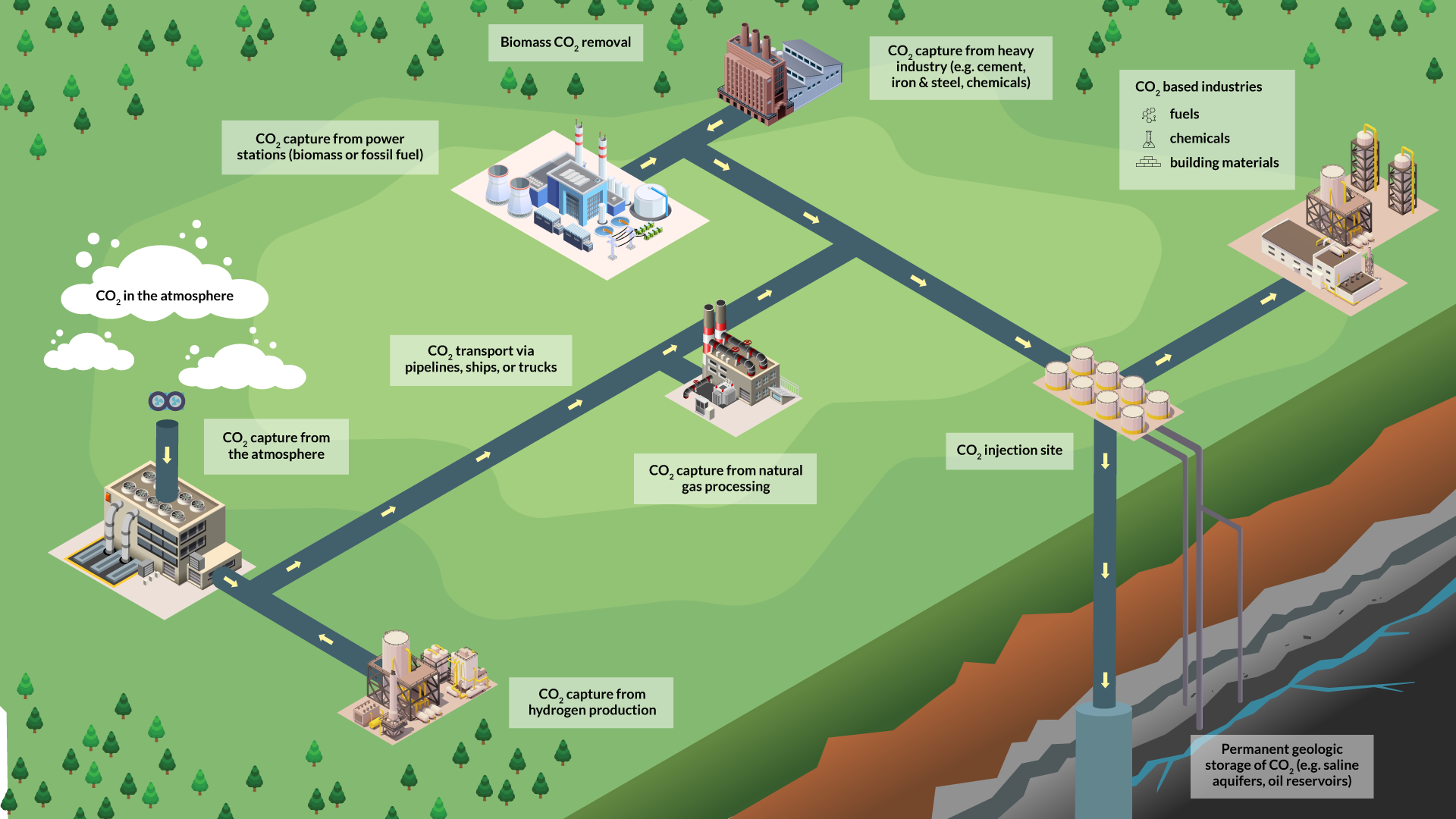
Climate change is a long-term problem best addressed with technologies cost-effective today like natural gas, energy efficiency, and nuclear. The solution requires combining today’s commercial low-carbon energy sources with research and technology development in carbon sequestration, next-generation geothermal, and economical energy storage to make solar and wind more viable.

Today the price mechanism must destroy energy demand to bring it in line with short-term supply. This reduces the quality of living, especially for low-income families. The price mechanism will also incent new supply to the extent possible in the face of growing regulatory hurdles, infrastructure shortages, and capital starvation. A revaluation of all three of these factors is urgently needed.

♦  Is the overarching goal “energy transition” at all costs?
♦  Or is it humane policies that better human lives and expand opportunities for all?

We need to replace the former mindset with the latter.

Chris Wright is chairman and CEO of Liberty Energy, a Denver-based hydraulic fracturing company. Read “Bettering Human Lives”, a report released last year for more information on the above issues.