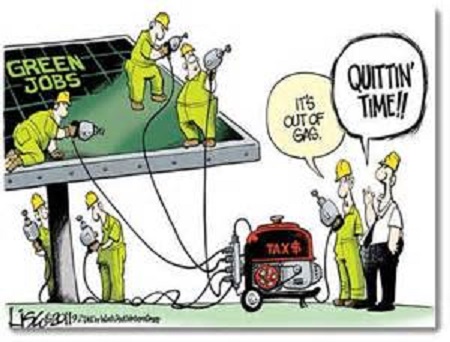
Climate Shell Game

This post updates the guerrilla warfare conducted by anti-fossil fuel activists against corporations by means of shareholder resolutions.

Update Dec. 6 below:  Investor Activism is also Bad for Pensioners

Background

Last year activists took a scalp from Exxon Mobil when a resolution passed requiring the Board to include business risk assessment from global warming/climate change. The cascade of suppositions underlying that proposal reveals the flimsy logic beneath these financial maneuvers. Details are in the post: How Climate Law Relies on Paris

A New Front is Opened

The Exxon success depended on proxy shares voted in large blocks by firms with huge assets, especially BlackRock and Vanguard. This year pressure was applied to wealth funds to pass “2°C Shareholder Resolutions.” This is basically a proposal that corporations subscribe to the Paris accord, and submit themselves to emission reduction targets, not only regarding their own operations, but also emissions arising from the use of their products (Hello petroleum companies!).

Storming Shell Castle

In May this Paris Subscription ploy was soundly defeated at the Shell annual meeting, and activists are disappointed both by the result and the voting by wealth managers.  Reuters reported Shell shareholders reject emissions target proposal.

The flavor of this campaign is in the text of the resolution and management’s recommendation from the Royal Dutch Shell Annual Meeting Shareholder Information:

 2°C Resolution Highlights:

Shareholders support Shell to take leadership in the energy transition to a net-zero-emission energy system. Therefore, shareholders request Shell to set and publish targets for reducing greenhouse gas (GHG) emissions that are aligned with the goal of the Paris Climate Agreement to limit global warming to well below 2°C.

This shareholder resolution is intended to express shareholder support for a course towards a net-zero-emission energy system. The why of a course towards a net-zero-emission energy system is clear: increasing costs of the extraction of fossil fuels, decreasing costs of generating renewable energy, and the global political pledge to stop global warming. The how and the what are up to the management of Shell. It is up to them to set GHG emission reduction targets and to develop activities to attain these targets.

We the shareholders request that the company publish company-wide greenhouse gas (GHG) emission reduction targets according to the following 3 scopes:

Scope 1: direct emissions from the facilities under Shell’s operational control or the equity boundary,
Scope 2: indirect emissions from the facilities of others that provide electricity or heat and steam to Shell’s operations,
Scope 3: emissions that Shell estimates come from the use of Shell’s refinery products and natural gas products.

Shell Management Comments (Excerpts)

Your Directors consider that Resolution 21 is not in the best interests of the Company and its shareholders as a whole and unanimously recommend that you vote against it.

Shell welcomes and strongly supports the Paris Agreement, and supports the aspiration of transitioning towards a net-zero emissions world by 2050. We will work together with governments and stakeholders towards meeting this aspiration and we commit to report on steps taken.

However, this resolution demonstrates fundamental misunderstanding of the necessary solutions to achieving the Paris goals. The resolution is unreasonable with regard to what the Company can be held accountable for and would be ineffective or even counterproductive for the following reasons:

We are convinced we have all the required flexibility to adapt and remain relevant and successful, no matter how the energy transition will play out. We believe that by tying our hands in the early stages of this evolution, this resolution would weaken the Company and limit our flexibility to adapt.

We are already willing and able players in the energy transition in ways that are uniquely suited to our skills, reach and ambition – all with the ultimate objective of maintaining a sustainable business model. We aim to reduce the greenhouse gas intensity of our own operations over time. From this year we are making part of our remuneration conditional on managing greenhouse gasses.

To achieve a net-zero emissions world requires the widespread transformation of the energy system. . .It demands collective action across the energy system. To impose targets on a single supplier in this complex system does not only fail to address the actual challenge (as it will not reduce system emissions overall because customers will simply turn to alternative suppliers); it would also undermine our ability to play an active role in the transition and would hinder long-term value creation for the Company and its shareholders.
The Battle Mounts Against Electricity Companies

The “Blame and Shame” campaign is exemplified in a report today from advocacy enterprise Preventable Surprises, Missing in Action: Missing 55% fail to step up on climate by Casey Aspin, 5 December 2017.  The taste of sour grapes comes through in the summary:

When the world’s two largest money managers, BlackRock and Vanguard, threw their weight behind a successful 2°C scenario resolution at Exxon last spring, the media hailed a shift in attitudes toward climate risk and, more specifically, the risk of assets being stranded by the need for rapid emissions reduction. Preventable Surprises has released a report scoring the ten largest investors in utilities on their proxy voting record in the sector.

It highlights the contradiction between the Exxon vote and those cast in the utility sector, the largest source of greenhouse gas emissions in the US. BlackRock and Vanguard voted against 2°C resolutions at all nine US utilities targeted by shareholders for increased climate risk disclosure. In response to our questions, both asset managers provided statements expressing a preference for private engagement over public proxy votes.

Private engagement lacks accountability, transparency, or metrics. That is why the Task Force on Climate-Related Financial Disclosure (TCFD) recommended this year that all publicly traded companies provide the level of transparency sought in the 2°C scenario resolutions, which ask companies to disclose how they are managing the risks and opportunities that arise from aligning with the Paris Agreement. The TCFD is seeking to reduce systemic risk in financial markets–a goal shared by Preventable Surprises.

It is alarming that the two largest utilities investors could not find a single US utility where climate risk management was weak enough to merit public support for a 2°C resolution. Many coal-dependent US utilities have not only resisted the transition to renewable generation (which is both cleaner and now cheaper in many markets), they also have fought government policy aimed at reducing emissions.

Private engagement does not work in a sector where coal plants are subsidised by ratepayers in highly regulated states, increasing the risk of stranded assets. Fiduciary responsibility dictates that both portfolio risk and planetary risk require more forceful stewardship than the largest investors have shown to date. We hope the owners of the assets managed by Vanguard and BlackRock use this report to discuss with their managers how they are assessing risk in the most fossil fuel-intensive sector in America.

Summary

It is no surprise that energy companies are unwilling to vote themselves out of business, even while espousing belief in global warming/climate change. And it appears that wealth fund managers are down with risk assessments, but not for setting emissions reduction targets. They must know that any such commitments will bring the heavy legal artillery lobbing massive lawsuits in the name of accountability.

Update Dec. 6 :  Investor Activism is also Bad for Pensioners

From article at RealClearMarkets: Pension Funds’ Rush to Go Green Costs Retirees Their Green

For index fund managers and pension fund leaders to push an environmental agenda on the companies they invest in potentially entails more risk and lower returns on the wealth of those whose money they hold. According to a report released this week by the American Council for Capital Formation (ACCF), the California Public Employees Retirement System (CalPERS) — the nation’s largest public pension fund – has ramped up its focus on such ventures. The result: environmentally-driven funds made up four of the nine worst performing funds in the CalPERS portfolio and represented none of the system’s 25 top-performing funds this past year. As this focus on ESG-efforts has increased, CalPERS has moved from a $3 billion pension surplus in 2007 to a reported $138 billion deficit today. Yet those who manage the fund remain unwilling to put their own money on the line; the personal investment portfolios of the fund’s Chief Investment Officer and at least two other senior executives report no ESG-related investments at all. What’s up with that?

The ACCF report also highlights the role that CalPERS plays in convincing (some might say pressuring) other large institutional investors to join alongside it in attacking companies it invests in via the submission of shareholder proposals. BlackRock, which generates many millions in management fees from CalPERS each year, and which is currently vying to run the pension fund’s $26 billion private equity arm, voted alongside CalPERS on putatively ESG-related proposals for the first time in its history this past proxy season. According to Bloomberg, the combined assets of BlackRock and Vanguard alone are set to top $20 trillion by 2025. These two own basically everything in the universe. If activist funds like CalPERS are able to force passive funds like those controlled by BlackRock and Vanguard to join its ESG-masked-as-corporate-governance crusade, we’re in for a heck of a ride. And not in a good way.

It may be tempting to urge public pension managers to take a more proactive role and bet against companies whose products some of us, for whatever reason, disapprove of — or for those managers to use their positions to influence the business decisions of firms in which they have a stake. However, it would be much better for government workers, retirees, and taxpayers today and in the future if the investors managing the money of public pensions prioritized sound financial policy above all else.

Climate Activists storm the bastion of Exxon Mobil, here seen without their shareholder disguises.
 

Climate Adaptation Economics

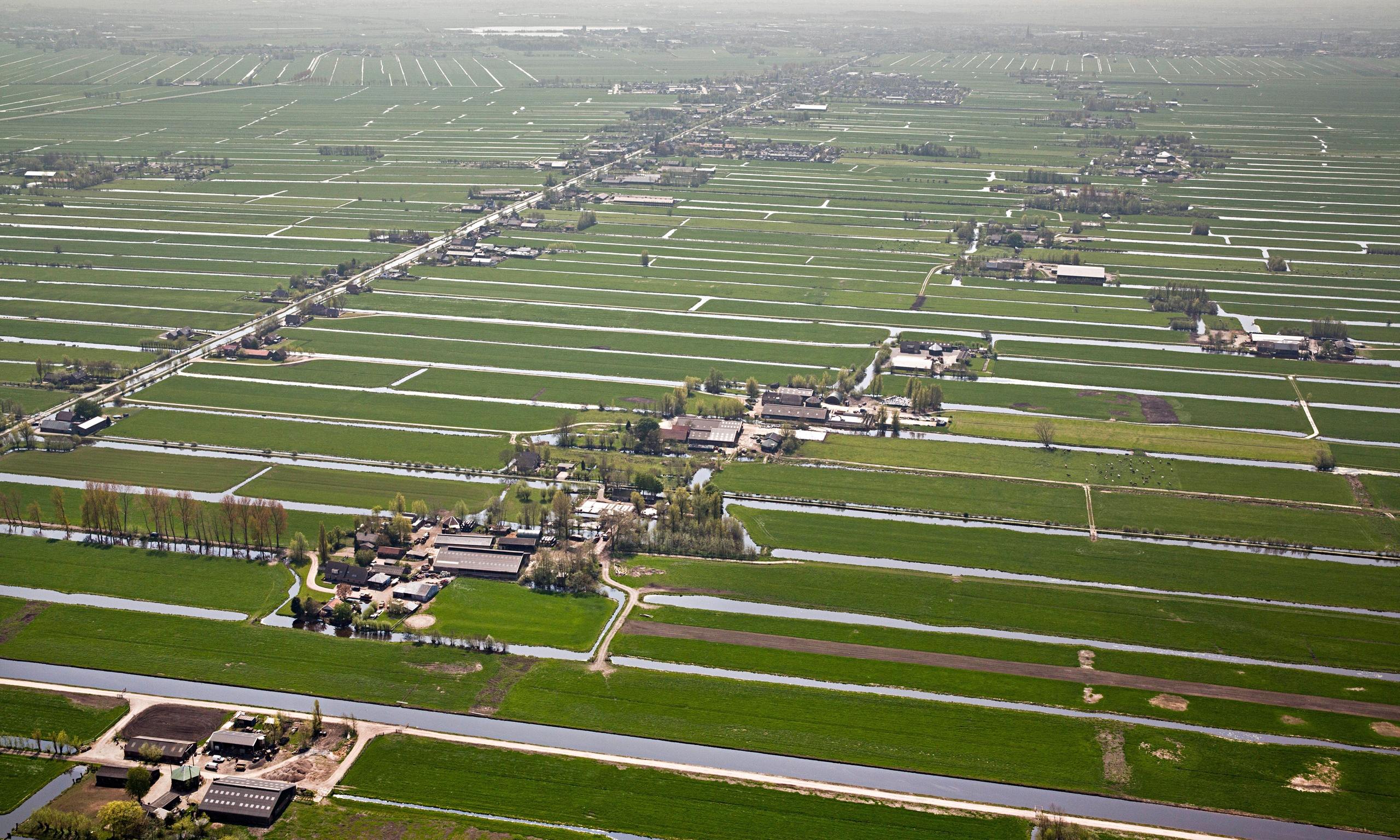
The Dutch solution to floods: live with water, don’t fight it. The same thing applies to climate change.

This post returns to the theme: Adapt, Don’t Fight Climate Change.  Matthew Kahn is Professor of Economics at USC and one of the more interesting thinkers with this POV. While IPCC scientists foresee climate change coming, Kahn and other economists foresee how societies will react to such forecasts by reallocating capital and shifting priorities.

More than once he has warned against listening to climatists when they make economic forecasts because they misunderstand how economic systems work. He is also critical of economists who forecast climate impacts while assuming societies and individuals are static victims, lacking any freedom to shift priorities, investments and locations, in other words to adapt as humans have always done.

Kahn resists any temptation to address the consensus understanding of the climate system, but rather sticks to his forte: The competition for resources under conditions of changing climate expectations. The result is much more hopeful and optimistic than the gloom and doom dished out by climatologists.

His blog is usually worth a visit to read posts like this recent one Austrian Empirical Economics? even when the title seems obscure. Excerpts below with my bolds.

Sherwin Rosen was one of the greatest University of Chicago economists. While he did not win a Nobel Prize (he died at age 62 during the year when he was the President of the American Economic Association), his student Richard Thaler won the Nobel Prize and his student Kevin Murphy has won multiple major economics honors. I was not his best student but he continues to teach me new lessons about economics. I just read his 1997 paper on Austrian Economics. I now see that my Climatopolis work is a type of Austrian Economics.

My 2010 book (see link below) argues that the combination of rising urbanization, human capital and innovation together will allow us to adapt to climate change. Cities compete for the skilled and those cities that successfully adapt to the challenge of climate change will gain in human capital. Home prices (and thus income effects) will fall in areas that fail to adapt. This competition and the potential for migration creates a more overall resilient economy. While I cannot tell you today which cities will win this competition, I am very confident in this “Austrian” vision.

From Kahn’s synopsis of Climatopolis: How will climate change impact urbanites and their cities?

In my new book, Climatopolis: How Our Cities will Thrive in Our Hotter Future (Basic Books 2010), I study how urbanites around the world will cope and adapt as climate change unfolds. The UN predicts that by the year 2030 over 60% of the world’s population will live in cities. While I do not have a crystal ball for predicting exactly how hot Moscow will be in 2012 or how much rainfall Los Angeles will receive in 2030, the basic tools of microeconomics prove to be quite useful for understanding and predicting how diverse households, firms, and governments will respond to the scary and uncertain challenges posed by climate change.

Due to differences in geography, historical circumstances, and national institutions, different cities will face different challenges. At the same time, there are some basic commonalities across cities with regards to common adaptation challenges. Basic incentive theory offers many insights into how adaptation will unfold and the role that capitalism will play in facilitating adaptation.

In the case of climate change, increased risk to a specific city such as San Diego is likely to be a permanent shock. The owners of land in such cities will suffer an income loss but mobile urbanites can protect themselves by moving to another city. This optimistic logic hinges on the assumption that climate change’s impacts on different cities are not perfectly correlated.  A city such as Detroit could enjoy an amenity improvements (warmer winter) at the same time that Phoenix is suffering.

If more of the US population seeks to move to more northern cities such as Seattle then these cities will face increased demand. The recent housing supply literature has highlighted that housing supply regulation and topography determine housing supply (Saiz 2010). In those increasingly desirable cities where housing supply is inelastic, land owners will gain because of climate change induced migration. Within the EU, similar dynamics are likely to play out. Of course, this claim merits further empirical investigation.

My optimism about the role that migration can play in protecting the populace hinges on the assumption that climate change will be gradual. Cities are long-lived durable capital and it takes “time to build” the infrastructure necessary for a city ranging from housing, commercial buildings, transportation infrastructure, sewer systems, electricity generation. We can’t move whole cities over night.

The billions of people who will be affected by climate change create a large market opportunity for entrepreneurs who can serve this market. Acemoglu and Linn (2004) demonstrated that the extent of the market for new drugs triggers endogenous innovation. In the presence of fixed costs to developing new products, the scale of the market is a key determinant. Their logic holds in the case of climate change. If billions of people seek an energy efficient air conditioner to offset hot summers, then there will be sharp incentives to invest in developing such products. Some of these producers will succeed and in a globalised world market, the pay-off to the successful entrepreneur will be huge.

The anticipation that cities will be at risk from climate change encourages innovation. My UCLA colleague Thom Mayne is working with Brad Pitt in New Orleans to design floatable homes that could be sold for less than $200,000. These homes are intended to allow residents to literally float in the midst of the next Hurricane Katrina. Such innovative new products are just the tip of the iceberg. Climate change will create numerous such opportunities for entrepreneurs.

Rotterdam old port protected by dikes for over a century.

In my own past research, I have documented that richer nations suffer fewer deaths from similar natural disasters (Kahn 2005). If climate change increases the frequency and intensity of floods and hurricanes, then poor nations will suffer more deaths from these disasters. Economic development is likely to play a causal role in shielding the population from such risks by providing households and governments with the resources to build higher quality infrastructure, to enforce zoning laws and to provide better ex-post medical care.

In this sense, economic development offers the best strategy for poor cities to cope. A salient example of the role of economic development in protecting the population from public health threats exacerbated by climate change is offered by Thomas Schelling (1997). He contrasts malaria rates in Singapore and Malaysia. Singapore, the richer “geographical twin”, has a much lower malaria rate than Malaysia.

Summary

Researchers seek out “credible research” designs to estimate “b” (impact from climate change). This slope represents the current marginal effect of climate on an economic outcome. This research ignores cross-elasticities. If the climate is bad in Kansas but great in Oklahoma and expected to remain so, the negative shock to Kansas will actually create a boom in Oklahoma. This is a migration (zero sum game) effect. Yes, a migration cost must be paid but this is a 2nd order effect.

Given my read of Sherwin Rosen’s paper, I now see that Austrian Economics focuses on the evolution of the economic system. Entrepreneurs intuit that there is emerging demand for this product (think of Uber) and begin the experimentation to develop it. Some succeed and some fail. The system evolves to economize on scarce resources (signaled by prices) that may becoming increasingly scarce.

My book stresses a fundamental irony. Urban economic growth has caused climate change (think of the billions of people who are achieving the “American Dream”) but it will also help us to adapt to climate change. My optimism about urbanites’ ability to continue to thrive in the face of climate change is based on our ability to migrate and innovate. Free markets play a central role here in determining new investment patterns that will help us to adapt.

More on Climate Adaptation rather than Mitigation:

Adapt, Don’t Fight Climate Change

Adapting Works, Mitigating Fails

Crunching Climate $$$

Climate Policies Gouge the Masses


Suicidal Climatist Narrative

Micheal Walsh published The Suicidal Narrative of the Modern Environmental Left, November 16, 2017.

Walsh presents two recent experiences showing how environmental concerns are embedded everywhere including plane trips and merchandising, then gets into the implications. His text with my bolds and images.

It’s all just advertising, of course, and thus harmless enough. It also goes to reinforcing the narrative: that selfish man is the cause of species endangerment, that primitive societies are superior to developed ones (but then who would buy the locally sourced cocoa beans and moringa leaves?), and that traditional medicine—which is to say, no medicine at all—is somehow superior to what those pill-pushing quacks foist on you before they climb in their BMWs and head out to the links for a round or two of golf. Were that true, the ancient Greeks and Romans might all have lived into their 80s, instead of dying in their 20s and 30s, as unsustainable folks tended to do back then.

Which brings us, ineluctably, to “climate change” and this piece in the Times: “The More Education Republicans Have, the Less They Tend to Believe in Climate Change.” Yes, you read that right:

“Climate change divides Americans, but in an unlikely way: The more education that Democrats and Republicans have, the more their beliefs in climate change diverge.  About one in four Republicans with only a high school education said they worried about climate change a great deal. But among college-educated Republicans, that figure decreases, sharply, to 8 percent.”

The author’s underlying assumption is that the more you know about “man-made climate change,” the more eager you should be to chow down on Endangered Species Chocolate or shovel some women’s-collective moringa into your smoothie before you leave your ant-farm apartment to hop on the mass-transit system on your way to a day job that somehow involves you, personally, saving the planet—not so much by what you do, but by what you don’t do.

But that’s not a future we on the Right want to embrace. I take this poll as a heartening sign that the more you educate yourself about the transparent fraud of “man-made climate change,” the less you’re likely to believe in their genteel fictions of peaceful, happy villages in Liberia or their apocalyptic notions of the End of the World as We Know It, just about any day now. As we’ve learned time and again, mountebanks and charlatans are always promising that the end of days is just around the corner, if only we will repent; find Jesus; join their cult; give away all our possessions; or at least sign up for a lifetime supply of snake oil, delivered by Amazon drones right to our doorsteps.

We’ve seen this movie before, of course. In April, Mark J. Perry of the American Enterprise Institute detailed 18 different instances when “[t]he prophets of doom were not simply wrong, but spectacularly wrong.”

Never mind that the Earth’s climate is always changing; we wouldn’t be here at all if it hadn’t. Never mind that there’s little humans can do to interfere with planetary processes, most of which are beyond our ken. Never mind that we flatter ourselves if we think so. Never mind that to characterize carbon dioxide—which we exhale so that the Amazon rain forest and those West African moringa plants might inhale—as a dangerous “greenhouse gas” is profoundly anti-human.

It’s what you’d expect from a political philosophy that denies God and sees itself as its own worst enemy: a narrative that must end in suicide, and all in the name of the greater good. All we ask our friends on the Left is not to take us with you.

Climate lemmings on the move.

COP23 Warning to Humanity

15000 scientists issue warning to humanity: “Time is running out!.”

Remember:  Fighting Global Warming is Absurd, Costly and Pointless.

  • Absurd because of no reliable evidence that anything unusual is happening in our climate.
  • Costly because trillions of dollars are wasted on immature, inefficient technologies that serve only to make cheap, reliable energy expensive and intermittent.
  • Pointless because we do not control the weather anyway.

Explained in COP23 Briefing for Realists

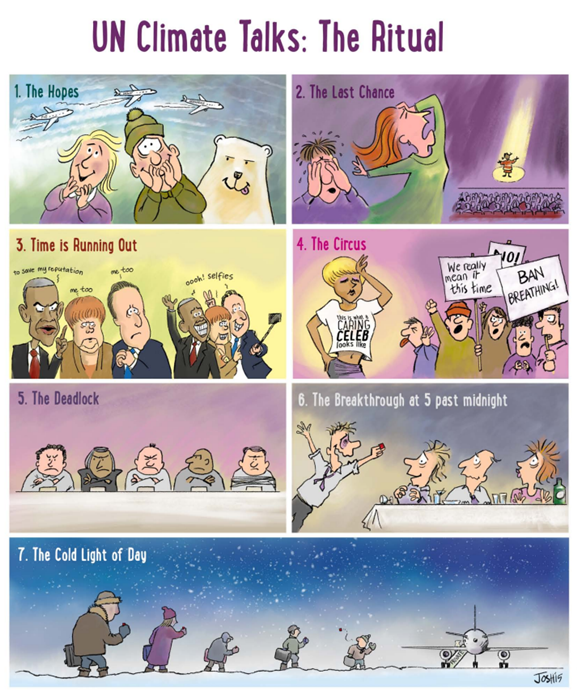
Update:  Media reporting frustration at COP23 over lack of progress on funding for developing countries.  Thus, the warning above indicates the ritual has progressed to stage 3, and now with early indications for stage 5.

Climate Talks Ritual

Astronaut Grinds Climate Axe

Meet Julie Payette, Canada’s next Governor General

One month into her new job as Canada’s Governor General, Julie Payette was the keynote speaker at the ninth annual Canadian Science Policy Convention in Ottawa Nov. 1 where she urged her friends and former colleagues to take responsibility to shut down the misinformation about everything from health and medicine to climate change and even horoscopes that has flourished with the explosion of digital media.

“Can you believe that still today in learned society, in houses of government, unfortunately, we’re still debating and still questioning whether humans have a role in the Earth warming up or whether even the Earth is warming up, period,” she asked, her voice incredulous.

As the photo suggests, Payette has an impressive CV, but she appears not to know the difference between being Governor General and a Liberal cheerleader. I referred to “climate axe” purposely because leftist politicians in both Canada and US have employed global warmism as a wedge issue to split the electorate in their favor by marginalizing the skeptics.

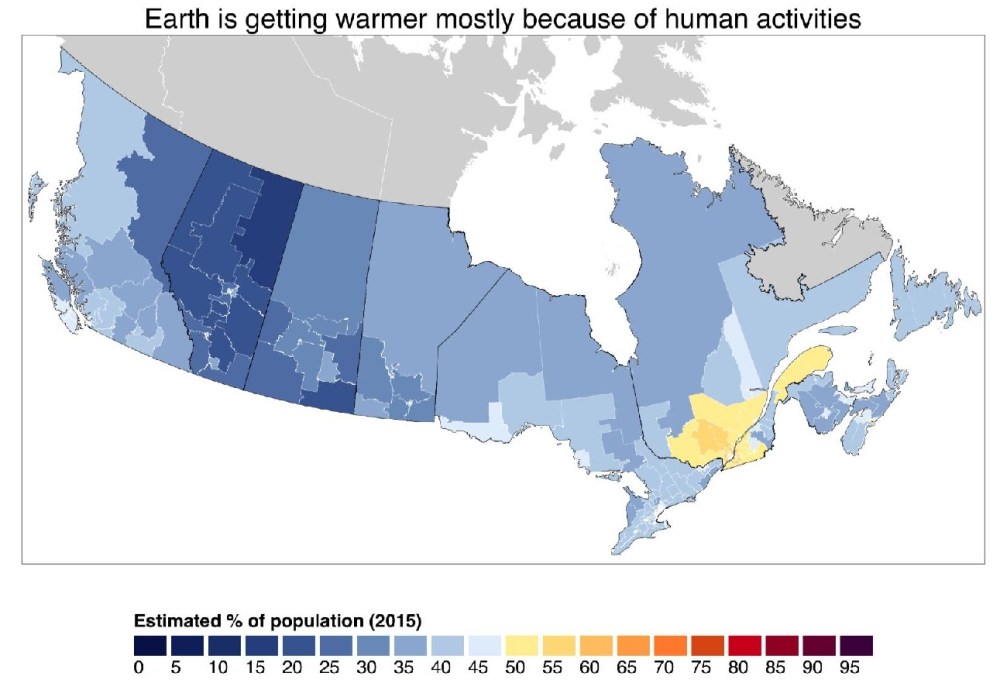
Firstly, her speech shows her ignorance of the people she represents. The most recent survey of Canadian public opinion on global warming gave this result:

Sponsors of the survey and media reporting (eg. CBC) believe 100% in man-made global warming, so were disappointed in the public’s dissent and tried to hide and misconstrue the survey results. But buried in the details is the above finding showing that Payette has thrown under the bus more than half of Canadians.  Even in her home city Montreal, hotbed of climatism, she belittles 40% of the population. Details of the survey are in Uncensored: Canadians View Global Warming

Secondly, pronouncements on scientific issues should be based on personal critical examination of the facts for and against a position. Her space experience was made possible by pioneering NASA scientists who have done their homework and come to the opposite conclusion.  She is also dumping on colleagues who have actually studied the data.

NASA retirees organized TRCS research team in the Spring of 2012 and developed a website that documents our progress into understanding the AGW issue over the last 5 years. http://www.TheRightClimateStuff.com We set as our initial goal: “Determine to what extent unrestricted burning of fossil fuels can cause harmful climate change.” We have concluded that the computer model analyses used in the IPCC reports, estimating global warming increases up to 4.5 degrees C for doubling atmospheric CO2 concentration, are in error because the models do not agree with empirical data as required by the principles of the Scientific Method. Our analysis, based on principles of conservation of energy, uses well-known, measured data and predicts no more than 1.2 degrees C increase in global warming due to burning all currently known world-wide reserves of fossil fuels. Our simple model is validated by the rigor of its derivation and agreement with 167 years of empirical data since 1850. This analysis was completed with the same rigor and attention to detail used in our manned space program, where the lives of astronauts depended on our accuracy.

Excerpt with my bolds from letter to President Donald J Trump by The Right Climate Stuff Research Team. Led by Harold H Doiron, signed by 22 others including Astronauts Walter Cunningham and Charles Duke.

More information and the complete report is at The Right Climate Stuff

Has Payette done her own analysis and written a report, or is she taking someone’s word about global warming theory and its effects? That would be a secondhand opinion, an appeal to authority rather than science.

Thirdly, it is not the Governor General’s role to champion political correctness. Rex Murphy explains it clearly in his National Post article  Governor General appoints herself umpire of questions of faith and science  Excerpts below with my bolds.

In this wonderfully diverse Canada that Ms. Payette now represents, was it her intent to ridicule the religious beliefs of so very many faiths?

Merely as prelude, we should point out that the difference between elected and selected is more than a matter of the letter “s,” and add that being assigned to a state ceremonial office does not confer oracular status on a person. On the first, it must be clearly acknowledged that it is the elected, not the selected, who argue and debate the issues of the day and determine the worth and truth of the policies that emerge from that process. They write the laws: the GG, as ceremonial totem, the stand-in for an absent Regent of a hollowed-out Monarchy, affixes her signature to them.

Secondly, elevation to the GG office, delight and honour that it undoubtedly is, does not come with a certificate of intellectual authority, or the prerogative to delimit the scope of inquiry and debate on any issue the Commons or the citizenry may wish to engage. It is not at all evident that Ms. Payette is clear on these points.

Her speech had a scattering, pinball machine trajectory. In the space of a few sentences it went from climate change, to the origin of life, to newspaper horoscopes; from dicta on the “denialism” sometimes confronting the first, to the religious understandings of the second, and the vacuous absurdity of the third. The problem with this neat triad is that, while a tirade against horoscopy might be perfectly agreeable to most everyone (being a machine gun attack on a whole field of straw men — who reads horoscopes save for feeble amusement?), assertions on life and climate are on another plane entirely.

Conclusion

Naturally, Ms. Payette opined on climate science, and equally naturally placed inquiry and skepticism on what is proclaimed the consensus of that but emergent discipline as denialism – thereby endorsing the ugliest rhetorical term in this entire, explosive issue, which summons the butchery and cruelty of History’s greatest crime as a spurious backdrop to debate on an unresolved public issue. We have a right to expect better from Her Majesty’s representative.

Suppressing Climate

The above video is how I first heard of PragerU.  Now the nonprofit organization is suing Google and Youtube for their ideological bias in suppressing Prager’s videos.

PragerU Sues YouTube For Discriminating Against Conservative Videos
is an article by Ben Weingarten at The Federalist.  Excerpts below with my bolds.

Those blackballed from social media platforms for sharing views dissenting from prevailing progressive Silicon Valley orthodoxy have to date had little recourse against the tech speech police. That is why PragerU’s newly filed suit against Google and Google-owned YouTube alleging unlawful censorship and free speech discrimination based on the educational video purveyor’s conservative political viewpoint has the potential to be groundbreaking.

The lawsuit, filed in federal court in California, details upwards of 50 PragerU educational videos that YouTube has, in PragerU’s view, unjustifiably slapped with “restricted mode” or “demonetization” filters, violating its First Amendment right to free speech. These filters limit or otherwise prevent viewers, based on characteristics like age, from consuming content deemed “inappropriate.”

More arguably provocative videos touch on topics such as Islamic terrorism, campus rape, and gender identity. According the suit, “The videos do not contain any profanity, nudity, or otherwise inappropriate ‘mature’ content. The censored videos fully comply with the letter of YouTube’s Terms of Use and Community Guidelines.” Moreover, PragerU illustrates that comparable videos from non-conservative sources like BuzzFeedVideo, CNN, and “Real Time with Bill Maher” have not been subjected to such filters.

Leaving aside the inherent subjectivity for a moment, if PragerU’s content is “appropriate,” and other publishers are able to upload similar content without being penalized, then what better explanation is there for YouTube’s censorship than viewpoint discrimination? PragerU’s dealings with YouTube over its content restrictions only strengthen the validity of this question.

As PragerU summarizes it:

Google/YouTube seek to justify…[its] animus and bias [towards PragerU’s political identity and viewpoint] not by claiming that PragerU has violated YouTube’s restricted content guidelines or criteria, but by arguing that they retain unfettered discretion to censor any video content that they deem “inappropriate,” no matter how subjective, baseless, or arbitrary that decision is…For over one year, PragerU has worked patiently and cooperatively to try to resolve the censorship issues that comprise this Lawsuit. In response, Google/YouTube have provided vague, misleading, confusing, and often contradictory information that not only has prevented resolution of the issues, but constitutes further evidence and indicia that their restricted mode filtering applied to PragerU is based on Defendants’ [Google/YouTube’s] intentional discrimination and animus

That as unimpeachable a source as the video-producing nonprofit PragerU is challenging YouTube should serve as a powerful signal that conservatives and others whose views social media companies deem unworthy will no longer permit their rights to be trampled upon. This is significant regardless of the case’s outcome.

PragerU’s efforts are essential, and may serve as the vanguard of a successful lawfare effort. But while legal action is necessary, it is by no means a sufficient and sure safeguard of our rights. As we have seen time and time again, judges routinely permit our liberties to erode, and sometimes actively assist. Preserving free speech, like all of our cherished freedoms, requires constant vigilance and persistent defense.

More on biased public and social media:

Media Duping Scandal

Ideological Fault Lines

Yellow Climate Journalism


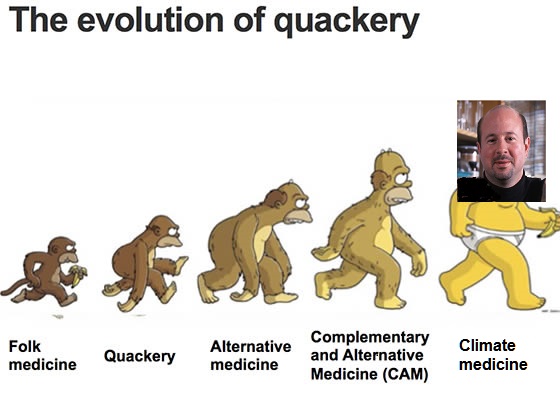
Climate Medicine Bonn Update

Climate Quakery

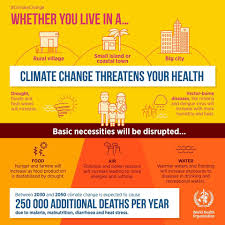
With Bonn COP23 set to start next week, the media is awash with claims that climate change is an international public health crisis.  For example, in just one day from Google news:

Climate change isn’t just hurting the planet – it’s a public health emergency–The Guardian

Climate change’s impact on human health is already here — and is ‘potentially irreversible,’ report says –USA TODAY

Climate Change Is Bad for Your Health–New York Times

From heat stress to malnutr­ition, climate change is already making us sick–The Verge

As Richard Lindzen predicted, everyone wants on the climate bandwagon, because that is where the money is.  Medical scientists are pushing for their share of the pie, as evidenced by the Met office gathering on Assessing the Global Impacts of Climate and Extreme Weather on Health and Well-Being (following Paris COP).  Not coincidentally, the 2nd Global Conference on Health and Climate was held July 7-8, 2016 in Paris.  Now we have the American Public Health Association declaring:

2017 is the Year of Climate Change and Health

“We’re committed to making sure the nation knows about the effects of climate change on health. If anyone doesn’t think this is a severe problem, they are fooling themselves.” — APHA Executive Director Georges Benjamin, in The Washington Post

The new field of Climate Medicine is evidenced by a slew of new organizations and studies.  In addition to numerous agencies set up within WHO and the UN, and governmental entities (such as the Met Office), there are many NGOs, such as:

Health Care Without Harm
Health and Environment Alliance
Health and Climate Foundation
Climate and Health Council
United States National Association of County and City Health Officials
Care International
Global Gender and Climate Alliance / Women’s Environment and   Development Organization
International Federation of Medical Students’ Associations
Climate Change and Human Health Programme, Columbia U.
Center for Health and the Global Environment, Harvard
National Center for Epidemiology and Population Health, ANC Canberra
Centre for Sustainability and the Global Environment, U of Wisconsin
Environmental Change Institute, Oxford
London School of Tropical Medicine and Hygiene, London, UK
International Human Dimensions Programme on Global Environmental Change, US National Academies of Science
US Climate and Health Alliance
Etc, etc., etc.

Of course, they are encouraged and abetted by the IPCC.

climate health threat

From the Fifth Assessment Report:

Until mid-century, projected climate change will impact human health mainly by exacerbating health problems that already exist (very high confidence). Throughout the 21st century, climate change is expected to lead to increases in ill-health in many regions and especially in developing countries with low income, as compared to a baseline without climate change (high confidence). By 2100 for RCP8.5, the combination of high temperature and humidity in some areas for parts of the year is expected to compromise common human activities, including growing food and working outdoors (high confidence). {2.3.2}

In urban areas climate change is projected to increase risks for people, assets, economies and ecosystems, including risks from heat stress, storms and extreme precipitation, inland and coastal flooding, landslides, air pollution, drought, water scarcity, sea level rise and storm surges (very high confidence). These risks are amplified for those lacking essential infrastructure and services or living in exposed areas. {2.3.2}

Feared Climate Health Impacts Are Unsupported by Scientific Research

NIPCC has a compendium of peer-reviewed studies on this issue and provides these findings (here)

Key Findings: Human Health
• Warmer temperatures lead to a decrease in temperature-related mortality, including deaths associated with cardiovascular disease, respiratory disease, and strokes. The evidence of this benefit comes from research conducted in every major country of the world.

• In the United States the average person who died because of cold temperature exposure lost in excess of 10 years of potential life, whereas the average person who died because of hot temperature exposure likely lost no more than a few days or weeks of life.

• In the U.S., some 4,600 deaths are delayed each year as people move from cold northeastern states to warm southwestern states. Between 3 and 7% of the gains in longevity experienced over the past three decades was due simply to people moving to warmer states.

• Cold-related deaths are far more numerous than heat-related deaths in the United States, Europe, and almost all countries outside the tropics. Coronary and cerebral thrombosis account for about half of all cold-related mortality.

• Global warming is reducing the incidence of cardiovascular diseases related to low temperatures and wintry weather by a much greater degree than it increases the incidence of cardiovascular diseases associated with high temperatures and summer heat waves.

• A large body of scientific examination and research contradict the claim that malaria will expand across the globe and intensify as a result of CO2 -induced warming.

• Concerns over large increases in vector-borne diseases such as dengue as a result of rising temperatures are unfounded and unsupported by the scientific literature, as climatic indices are poor predictors for dengue disease.

• While temperature and climate largely determine the geographical distribution of ticks, they are not among the significant factors determining the incidence of tick-borne diseases.

• The ongoing rise in the air’s CO2 content is not only raising the productivity of Earth’s common food plants but also significantly increasing the quantity and potency of the many healthpromoting substances found in their tissues, which are the ultimate sources of sustenance for essentially all animals and humans.

• Atmospheric CO2 enrichment positively impacts the production of numerous health-promoting substances found in medicinal or “health food” plants, and this phenomenon may have contributed to the increase in human life span that has occurred over the past century or so.

• There is little reason to expect any significant CO2 -induced increases in human-health-harming substances produced by plants as atmospheric CO2 levels continue to rise.

Source: Chapter 7. “Human Health,” Climate Change Reconsidered II: Biological Impacts (Chicago, IL: The Heartland Institute, 2014).
Full text of Chapter 7 and references on Human health begins pg. 955 of the full report here

ambulance chasers

Summary

Advances in medical science and public health have  benefited billions of people with longer and higher quality lives.  Yet this crucial social asset has joined the list of those fields corrupted by the dash for climate cash. Increasingly, medical talent and resources are diverted into inventing bogeymen and studying imaginary public health crises.

Economists Francesco Boselloa, Roberto Roson and Richard Tol conducted an exhaustive study called Economy-wide estimates of the implications of climate change: Human health

After reviewing all the research and crunching the numbers, they concluded that achieving one degree of global warming by 2050 will, on balance, save more than 800,000 lives annually.

Not only is the warming not happening, we would be more healthy if it did.

Oh, Dr. Frankenmann, what have you wrought?


Footnote:  More proof against Climate Medicine

From: Gasparrini et al: Mortality risk attributable to high and low ambient temperature: a multicountry observational study. The Lancet, May 2015

Cold weather kills 20 times as many people as hot weather, according to an international study analyzing over 74 million deaths in 384 locations across 13 countries. The findings, published in The Lancet, also reveal that deaths due to moderately hot or cold weather substantially exceed those resulting from extreme heat waves or cold spells.

“It’s often assumed that extreme weather causes the majority of deaths, with most previous research focusing on the effects of extreme heat waves,” says lead author Dr Antonio Gasparrini from the London School of Hygiene & Tropical Medicine in the UK. “Our findings, from an analysis of the largest dataset of temperature-related deaths ever collected, show that the majority of these deaths actually happen on moderately hot and cold days, with most deaths caused by moderately cold temperatures.”

Now in 2017, Lancet sets the facts aside in order to prostrate itself before the global warming altar:

Christiana Figueres, chair of the Lancet Countdown’s high-level advisory board and former executive secretary of the UN Framework Convention on Climate Change, said, “The report lays bare the impact that climate change is having on our health today. It also shows that tackling climate change directly, unequivocally and immediately improves global health. It’s as simple as that.’’

Climate Law Alaska Update


The Alaska Supreme Court hears arguments in the Boney Courthouse in Anchorage .

Our Children’s Trust is at it again. The activist legal organization with deep pockets recruits idealistic teenagers to front for lawsuits so that the courts will order governments to reduce CO2 emissions. The arena is again the Supreme Court of Alaska, a soft target since it is predisposed to hear cases from disgruntled citizens. More on the latest case later on.

And who are the adults involved in  Our Children’s Trust?

Supporting Experts (the usual suspects)

Dr. James Hansen
Dr. Ove Hoegh-Guldberg
Dr. Sivan Kartha
Dr. Pushker Kharecha
Dr. David Lobell
Dr. Arjun Makhijani
Dr. Jonathan Overpeck
Dr. Camille Parmeson
Dr. Stefan Rahmstorf
Dr. Steven Running
Dr. James Gustave Speth
Dr. Kevin Trenberth
Dr. Lise Van Susteren
Dr. Paul Epstein (1943-2011)
Etc

Campaign Partners (Allies whose funding depends on CO2 Hysteria)

Climate Reality Project,
Western Environmental Law Center,
Crag Law Center,
Texas Environmental Law Center,
Cottonwood Environmental Law Center,
WildEarth Guardians,
Clean Air Council,
Global Campaign for Climate Action,
Chasing Ice,
Environmental Law Alliance Worldwide,
TERRA,
Sierra Club,
350.org,
Climate Solutions,
Greenwatch,
Center for International Environmental Law..
Greenpeace
etc.

The Current Legal Skirmish

The October 27 news story is Young Alaskans sue the state, demanding action on climate change

Sixteen young Alaskans are suing the state, demanding Gov. Bill Walker’s administration take action on climate change.

It’s the second such legal action in the last six years. In 2014, the Alaska Supreme Court dismissed a similar lawsuit, Kanuk v Alaska, from six young people asking the state to reduce carbon emissions, among other recommendations. The justices ruled then that it’s not for the courts to set climate policy and that those decisions must be made through the political process, by the Legislature and the governor.

The new lawsuit says, essentially, the state has made its choice, and by encouraging oil development and permitting projects that emit greenhouse gases, Alaska is actively making climate change worse. The plaintiffs argue that violates their constitutional rights to, among other things, “a stable climate system that sustains human life and liberty.”

Alaska Court Not a Pushover

In 2014 the Alaska Supremes expressed respect for the youth while holding firmly to the law. Their reasoning is sound and adds to precedent against these attempts to legislate through the courts. From Alaska Supreme Court Opinion No sp-6953, Kanuk v Alaska (2014). Excerpts below with my bolds.

First Issue:  Do Plaintiffs have Legal Standing?

We recognize two types of standing: interest-injury standing and citizen taxpayer standing. The plaintiffs here claim interest-injury standing, which means they must show a “sufficient personal stake in the outcome of the controversy to ensure the requisite adversity.

Accepting these allegations as true and drawing all reasonable inferences in the plaintiffs’ favor, as courts are required to do on a motion to dismiss, we conclude that the complaint shows direct injury to a range of recognizable interests. Especially in light of our broad interpretation of standing and our policy of promoting citizen access to the courts, the plaintiffs’ allegations are sufficient to establish standing.

Second Issue: Are the Claims “Justiciable”?

Deciding whether a claim is justiciable depends on the answers to several questions. These include;
(1) whether deciding the claim would require us to answer questions that are better directed to the legislative or executive branches of government (the “political question” doctrine), and; 
(2) whether there are other reasons — such as ripeness, mootness, or standing — that persuade us that, though the case is one we are institutionally capable of deciding, prudence counsels that we not do so.

Among the plaintiffs’ claims in this case are requests that the superior court
(1) declare that the State’s obligation to protect the atmosphere be “dictated by best available science and that said science requires carbon dioxide emissions to peak in 2012 and be reduced by at least 6% each year until 2050”;
(2) order the State to reduce  emissions “by at least 6% per year from 2013 through at least 2050”; and
(3) order the State “to prepare a full and accurate accounting of Alaska’s current carbon dioxide emissions and to do so annually thereafter.”

We conclude that these three claims are non-justiciable under several of the Baker factors, most obviously the third: “the impossibility of deciding [them] without an initial policy determination of a kind clearly for nonjudicial discretion.”

While the science of anthropogenic climate change is compelling, government reaction to the problem implicates realms of public policy besides the objectively scientific. The legislature — or an executive agency entrusted with rule-making authority in this area — may decide that employment, resource development, power generation, health, culture, or other economic and social interests militate against implementing what the plaintiffs term the “best available science” in order to combat climate change.

We cannot say that an executive or legislative body that weighs the benefits and detriments to the public and then opts for an approach that differs from the plaintiffs’ proposed “best available science” would be wrong as a matter of law, nor can we hasten the regulatory process by imposing our own judicially created scientific standards. The underlying policy choices are not ours to make in the first instance.

This court, too, “lack[s] the scientific, economic, and technological resources an agency can utilize”; we too “are confined by [the] record” and “may not commission scientific studies or convene groups of experts for advice, or issue rules under notice-and-comment procedures.” The limited institutional role of the judiciary supports a conclusion that the science- and policy-based inquiry here is better reserved for executive branch agencies or the legislature, just as in AEP the inquiry was better reserved for the EPA.

Third Issue: Is a Declaratory Judgment Appropriate?

The remaining issue for us to address, therefore, is whether the plaintiffs’ claims for declaratory judgment — absent the prospect of any concrete relief — still present an “actual controversy” that is appropriate for our determination. We conclude they do not.

Applying these criteria here militates against granting the declaratory relief that the plaintiffs request. First, their request for a judgment that the State “has failed to uphold its fiduciary obligations” with regard to the atmosphere cannot be granted once the court has declined, on political question grounds, to determine precisely what those obligations entail.

As for the remaining claims — that the atmosphere is an asset of the public trust, with the State as trustee and the public as beneficiaries— the plaintiffs do make a good case. The Alaska Legislature has already intimated that the State acts as  trustee with regard to the air just as it does with regard to other natural resources. We note, however, that our past application of public trust principles has been as a restraint on the State’s ability to restrict public access to public resources, not as a theory for compelling regulation of those resources, as the plaintiffs seek to use it here.

Although declaring the atmosphere to be subject to the public trust doctrine could serve to clarify the legal relations at issue, it would certainly not “settle” them. It would have no immediate impact on greenhouse gas emissions in Alaska, it would not compel the State to take any particular action, nor would it protect the plaintiffs from the injuries they allege in their complaint. Declaratory relief would not tell the State what it needs to do in order to satisfy its trust duties and thus avoid future litigation; conversely it would not provide the plaintiffs any certain basis on which to determine in the future whether the State has breached its duties as trustee. In short, the declaratory judgment sought by the plaintiffs would not significantly advance the goals of “terminat[ing] and afford[ing] relief from the uncertainty, insecurity, and controversy giving rise to the proceeding” and would thus fail to serve the principal prudential goals of declaratory relief.

Scales of justice Alaska Commons

Conclusion

The Alaska Supreme Justices seem to be on their game, using their heads rather than succumbing to green threats, fears and prophecies.  But the whole charade is disgusting.

This is as obscene as brainwashing young Muslims to be suicide bombers. Or terrorists hiding among families to deter the drone strikes. The fact that the kids are willing is no excuse.

Think of the children! How will they feel a decade from now when they realize they have been duped and exploited by activists who figured judges would be more sympathetic to young believers?

Footnote for those not aware of Aliases for the Usual Suspects:

James “Death Trains” Hansen
Ove “Reefer Mad” Hoegh-Guldberg
Jonathan “Water Torture” Overpeck
Camille “The Extincter” Parmeson
Stefan “No Tommorow” Rahmstorf
Kevin “Hidden Heat” Trenberth

Bonn COP23 Briefing for Realists


STEPHANE KIEHL POUR “LE MONDE”

French Mathematicians spoke out prior to COP21 in Paris, and their words provide a rational briefing for COP23 beginning in Bonn next month.  In a nutshell:

Fighting Global Warming is Absurd, Costly and Pointless.

  • Absurd because of no reliable evidence that anything unusual is happening in our climate.
  • Costly because trillions of dollars are wasted on immature, inefficient technologies that serve only to make cheap, reliable energy expensive and intermittent.
  • Pointless because we do not control the weather anyway.

The prestigious Société de Calcul Mathématique (Society for Mathematical Calculation) issued a detailed 195-page White Paper that presents a blistering point-by-point critique of the key dogmas of global warming. The synopsis is blunt and extremely well documented.  Here are extracts from the opening statements of the first three chapters of the SCM White Paper with my bolds and images.

Sisyphus at work.

Chapter 1: The crusade is absurd
There is not a single fact, figure or observation that leads us to conclude that the world‘s climate is in any way ‘disturbed.’ It is variable, as it has always been, but rather less so now than during certain periods or geological eras. Modern methods are far from being able to accurately measure the planet‘s global temperature even today, so measurements made 50 or 100 years ago are even less reliable. Concentrations of CO2 vary, as they always have done; the figures that are being released are biased and dishonest. Rising sea levels are a normal phenomenon linked to upthrust buoyancy; they are nothing to do with so-called global warming. As for extreme weather events — they are no more frequent now than they have been in the past. We ourselves have processed the raw data on hurricanes….

Chapter 2: The crusade is costly
Direct aid for industries that are completely unviable (such as photovoltaics and wind turbines) but presented as ‘virtuous’ runs into billions of euros, according to recent reports published by the Cour des Comptes (French Audit Office) in 2013. But the highest cost lies in the principle of ‘energy saving,’ which is presented as especially virtuous. Since no civilization can develop when it is saving energy, ours has stopped developing: France now has more than three million people unemployed — it is the price we have to pay for our virtue….

Chapter 3: The crusade is pointless
Human beings cannot, in any event, change the climate. If we in France were to stop all industrial activity (let’s not talk about our intellectual activity, which ceased long ago), if we were to eradicate all trace of animal life, the composition of the atmosphere would not alter in any measurable, perceptible way. To explain this, let us make a comparison with the rotation of the planet: it is slowing down. To address that, we might be tempted to ask the entire population of China to run in an easterly direction. But, no matter how big China and its population are, this would have no measurable impact on the Earth‘s rotation.

Full text in pdf format is available in English at link below:

The battle against global warming: an absurd, costly and pointless crusade
White Paper drawn up by the Société de Calcul Mathématique SA
(Mathematical Modelling Company, Corp.)

A Second report was published in 2016 entitled: Global Warming and Employment, which analyzes in depth the economic destruction from ill-advised climate change policies.

The two principal themes are that jobs are disappearing and that the destructive forces are embedded in our societies.

Jobs are Disappearing discusses issues such as:

The State is incapable of devising and implementing an industrial policy.

The fundamental absurdity of the concept of sustainable development

Biofuels an especially absurd policy leading to ridiculous taxes and job losses.

EU policy to reduce greenhouse gas emissions by 40% drives jobs elsewhere while being pointless: the planet has never asked for it, is completely unaware of it, and will never notice it!

The War against the Car and Road Maintenance undercuts economic mobility while destroying transportation sector jobs.

Solar and wind energy are weak, diffuse, and inconsistent, inadequate to power modern civilization.

Food production activities are attacked as being “bad for the planet.”

So-called Green jobs are entirely financed by subsidies.

The Brutalizing Whip discusses the damages to public finances and to social wealth and well-being, including these topics:

Taxes have never been so high

The Government is borrowing more and more

Dilapidated infrastructure

Instead of job creation, Relocations and Losses

The wastefulness associated with the new forms of energy

Return to the economy of an underdeveloped country

What is our predicament?
Four Horsemen are bringing down our societies:

  • The Ministry of Ecology (climate and environment);
  • Journalists;
  • Scientists;
  • Corporation Environmentalist Departments.

Steps required to recover from this demise:

  • Go back to the basic rules of research.
  • Go back to the basic rules of law
  • Do not trust international organizations
  • Leave the planet alone
  • Beware of any premature optimism

Conclusion

Climate lemmings

The real question is this: how have policymakers managed to make such absurd decisions, to blinker themselves to such a degree, when so many means of scientific investigation are available? The answer is simple: as soon as something is seen as being green, as being good for the planet, all discussion comes to an end and any scientific analysis becomes pointless or counterproductive. The policymakers will not listen to anyone or anything; they take all sorts of hasty, contradictory, damaging and absurd decisions. When will they finally be held to account?

Footnote:

The above cartoon image of climate talks includes water rising over politicians’ feet.  But actual observations made in Fiji (presiding over these talks in Bonn) show sea levels are stable (link below).

Fear Not For Fiji

Wind Farms Make Climate Change

This just in from Dr. Arnd Bernaerts: Off shore wind farm impact is not natural variability
Article below with my bolds.

Climatology considers ‘natural variability’ as a valuable factor in climate change matters. Ignoring any human role in this respect is irresponsible. The latest big issue is floating off shore wind turbines with a structure about 78 meters submerged and 15 meters in diameters. Although a massive obstacle in a permanent moving marine environment the impact and change in ‘natural variability’ in climate change matters is completely ignored.

The concern has been raised in a recent post: ”Why Europe is warming up faster than elsewhere?” The matter is simple. Off shore installations affect sea temperatures and salinity structure at many locations to about 60 meters below the sea surface. In Europe the number of off shore wind turbines will account 4000 by the end of 2017. The inevitable consequence is at hand: “Northern European winters are getting warmer and warmer at a rate higher than global average” as analyzed in a paper by A. Bernaerts (2016).

(Note: Sections 1 to 4 are profiles at different latitudes of the North Sea, identified in map upper right corner.)

Now the impact on sea level structure increase further. The world’s first floating wind farm opened on 18 October 2017, off the east coast of Scotland. The 6MW turbines rise 175m above sea level, and extend 78m below the surface of the water, tied to the sea bed by cables. The anchors used to stabilize the turbines stand at 16m and weigh 111 tons. (Details) Inevitable huge water masses of different temperature and salinity will change between the various sea levels. As an example see Fig. 2 (Northern North Sea – Section 1-4). The sea surface will warm or cool and either warm or cool the air temperature above the scene.

Any use of the oceans by mankind has an influence on thermo-haline structures within the water column from a few cm to 10m and more. Not even raising and investigating this mechanism is a demonstration that the term “natural variability” is used to hide pseudoscience.

___A. Bernaerts (2016), Offshore Wind-Parks and Northern Europe’s Mild Winters: Contribution from Ships, Fishery, et cetera? Journal of Shipping and Ocean Engineering 6, p. 46-56, PDF HERE