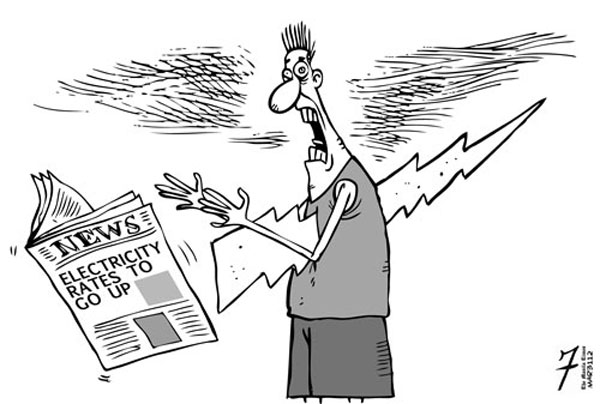
Green economics was on full display this week when the Ontario provincial government decided to cancel contracts for additional electrical power from renewables, such as those previously offered in March 2016.
Definition of Rent-Seeking, noun (economics):
the act or process of using one’s assets and resources to increase one’s share of existing wealth without creating new wealth.
(specifically) the act or process of exploiting the political process or manipulating the economic environment to increase one’s revenue or profits.
Definition of Ratepayer:
a person who pays a regular charge for the use of a public utility, as gas or electricity, usually based on the quantity consumed.
Feed-in tariffs for 20-year renewable power contracts have the ratepayers outraged, as voiced by the opposition (CBC):
“This government has plowed ahead for years signing contracts for energy we simply do not need,” said Opposition Leader Patrick Brown. “The premier has become the best minister of economic development that Pennsylvania and New York has ever seen.”
The Tories used virtually all their time in question period talking about individuals and business owners struggling with soaring electricity rates, and claimed Thibeault’s cancellation announcement was an admission by the Liberals that their green energy policies were misguided.
“It’s bad policy,” said Brown. “I just wish at this point, now that they’ve acknowledged that they’ve made a mistake, that they would apologize. They made a huge mistake on the energy file and everyone in Ontario is paying for it.”
Mr. Thibeault said contracts signed in an earlier green-energy procurement will be honoured. In March, the province reached 16 deals with 11 firms to build wind, solar and hydroelectric projects for a total of 455 megawatts of new capacity. The negotiated prices were much lower than earlier fixed-price contracts for renewables because of the competitive bidding.
Ontario already has more than 4,000 MW of wind capacity and 2,000 of solar power.
The Liberal government has been under pressure from the opposition and rural residents who oppose wind farms to scale back its renewable plans and to find a way to trim increases in electricity prices.
Rent-Seekers Push Back
Renewables lobbyists are defending their interests (Globe and Mail):
But the cancellation was a shock to the renewable-energy industry, which was counting on the new program, which would have awarded contracts for about 1,000 MW of projects in 2018.
John Gorman, president of the Canadian Solar Industries Association, said the decision could hurt manufacturers and installers of solar product in the province just as they are becoming significant global competitors.
Robert Hornung, president of the Canadian Wind Energy Association, said the wind industry is “shocked and extremely disappointed.”
Lobby group Environmental Defence called the cancellation “short-sighted” and said this is “exactly the wrong time to put the brakes on renewable energy.”
Etc., Etc.
Summary
Several rent-seekers as well as the Energy Minister said renewable prices were coming down, but didn’t say they are still several multiples of the $23/MWh Ontario wholesale price. Nor did anyone point out the cancellation is only avoiding a future rate increase, not bringing rates down. The politics have forced the administration into promising an 8% cut in consumer electricity rates, and it can only come from reducing the subsidies. Hence the howling.
Don Quixote ( “don key-ho-tee” ) in Cervantes’ famous novel charged at some windmills claiming they were enemies, and is celebrated in the English language by two idioms:
Tilting at Windmills–meaning attacking imaginary enemies, and
Quixotic (“quick-sottic”)–meaning striving for visionary ideals.
It is clear that climateers are similary engaged in some kind of heroic quest, like modern-day Don Quixotes. The only differences: They imagine a trace gas in the air is the enemy, and that windmills are our saviors.
A previous post (at the end) addresses the unreality of the campaign to abandon fossil fuels in the face of the world’s demand for that energy. Now we have a startling assessment of the imaginary benefits of using windmills to power electrical grids. This conclusion comes from Gail Tverberg, a seasoned analyst of economic effects from resource limits, especially energy. Her blog is called Our Finite World, indicating her viewpoint. So her dismissal of wind power is a serious indictment. A synopsis follows. (Title is link to article)
In fact, I have come to the rather astounding conclusion that even if wind turbines and solar PV could be built at zero cost, it would not make sense to continue to add them to the electric grid in the absence of very much better and cheaper electricity storage than we have today. There are too many costs outside building the devices themselves. It is these secondary costs that are problematic. Also, the presence of intermittent electricity disrupts competitive prices, leading to electricity prices that are far too low for other electricity providers, including those providing electricity using nuclear or natural gas. The tiny contribution of wind and solar to grid electricity cannot make up for the loss of more traditional electricity sources due to low prices.
Let’s look at some of the issues that we are encountering, as we attempt to add intermittent renewable energy to the electric grid.
Issue 1. Grid issues become a problem at low levels of intermittent electricity penetration.
Hawaii consists of a chain of islands, so it cannot import electricity from elsewhere. This is what I mean by “Generation = Consumption.” There is, of course, some transmission line loss with all electrical generation, so generation and consumption are, in fact, slightly different.
The situation is not too different in California. The main difference is that California can import non-intermittent (also called “dispatchable”) electricity from elsewhere. It is really the ratio of intermittent electricity to total electricity that is important, when it comes to balancing. California is running into grid issues at a similar level of intermittent electricity penetration (wind + solar PV) as Hawaii–about 12.3% of electricity consumed in 2015, compared to 12.2% for Hawaii.
Issue 2. The apparent “lid” on intermittent electricity at 10% to 15% of total electricity consumption is caused by limits on operating reserves.
In theory, changes can be made to the system to allow the system to be more flexible. One such change is adding more long distance transmission, so that the variable electricity can be distributed over a wider area. This way the 10% to 15% operational reserve “cap” applies more broadly. Another approach is adding energy storage, so that excess electricity can be stored until needed later. A third approach is using a “smart grid” to make changes, such as turning off all air conditioners and hot water heaters when electricity supply is inadequate. All of these changes tend to be slow to implement and high in cost, relative to the amount of intermittent electricity that can be added because of their implementation.
Issue 3. When there is no other workaround for excess intermittent electricity, it must be curtailed–that is, dumped rather than added to the grid.
Based on the modeling of the company that oversees the California electric grid, electricity curtailment in California is expected to be significant by 2024, if the 40% California Renewable Portfolio Standard (RPS) is followed, and changes are not made to fix the problem.
Issue 4. When all costs are included, including grid costs and indirect costs, such as the need for additional storage, the cost of intermittent renewables tends to be very high.
In Europe, there is at least a reasonable attempt to charge electricity costs back to consumers. In the United States, renewable energy costs are mostly hidden, rather than charged back to consumers. This is easy to do, because their usage is still low.
Euan Mearns finds that in Europe, the greater the proportion of wind and solar electricity included in total generation, the higher electricity prices are for consumers.
Issue 5. The amount that electrical utilities are willing to pay for intermittent electricity is very low.
To sum up, when intermittent electricity is added to the electric grid, the primary savings are fuel savings. At the same time, significant costs of many different types are added, acting to offset these savings. In fact, it is not even clear that when a comparison is made, the benefits of adding intermittent electricity are greater than the costs involved.
Issue 6. When intermittent electricity is sold in competitive electricity markets (as it is in California, Texas, and Europe), it frequently leads to negative wholesale electricity prices. It also shaves the peaks off high prices at times of high demand.
When solar energy is included in the mix of intermittent fuels, it also tends to reduce peak afternoon prices. Of course, these minute-by-minute prices don’t really flow back to the ultimate consumers, so it doesn’t affect their demand. Instead, these low prices simply lead to lower funds available to other electricity producers, most of whom cannot quickly modify electricity generation.
A price of $36 per MWh is way down at the bottom of the chart, between 0 and 50. Pretty much no energy source can be profitable at such a level. Too much investment is required, relative to the amount of energy produced. We reach a situation where nearly every kind of electricity provider needs subsidies. If they cannot receive subsidies, many of them will close, leaving the market with only a small amount of unreliable intermittent electricity, and little back-up capability.
This same problem with falling wholesale prices, and a need for subsidies for other energy producers, has been noted in California and Texas. The Wall Street Journal ran an article earlier this week about low electricity prices in Texas, without realizing that this was a problem caused by wind energy, not a desirable result!
Issue 7. Other parts of the world are also having problems with intermittent electricity.
Needless to say, such high intermittent electricity generation leads to frequent spikes in generation. Germany chose to solve this problem by dumping its excess electricity supply on the European Union electric grid. Poland, Czech Republic, and Netherlands complained to the European Union. As a result, the European Union mandated that from 2017 onward, all European Union countries (not just Germany) can no longer use feed-in tariffs. Doing so provides too much of an advantage to intermittent electricity providers. Instead, EU members must use market-responsive auctioning, known as “feed-in premiums.” Germany legislated changes that went even beyond the minimum changes required by the European Union. Dörte Fouquet, Director of the European Renewable Energy Federation, says that the German adjustments will “decimate the industry.”
Issue 8. The amount of subsidies provided to intermittent electricity is very high.
The US Energy Information Administration prepared an estimate of certain types of subsidies (those provided by the federal government and targeted particularly at energy) for the year 2013. These amounted to a total of $11.3 billion for wind and solar combined. About 183.3 terawatts of wind and solar energy was sold during 2013, at a wholesale price of about 2.8 cents per kWh, leading to a total selling price of $5.1 billion dollars. If we add the wholesale price of $5.1 billion to the subsidy of $11.3 billion, we get a total of $16.4 billion paid to developers or used in special grid expansion programs. This subsidy amounts to 69% of the estimated total cost. Any subsidy from states, or from other government programs, would be in addition to the amount from this calculation.
In a sense, these calculations do not show the full amount of subsidy. If renewables are to replace fossil fuels, they must pay taxes to governments, just as fossil fuel providers do now. Energy providers are supposed to provide “net energy” to the system. The way that they share this net energy with governments is by paying taxes of various kinds–income taxes, property taxes, and special taxes associated with extraction. If intermittent renewables are to replace fossil fuels, they need to provide tax revenue as well. Current subsidy calculations don’t consider the high taxes paid by fossil fuel providers, and the need to replace these taxes, if governments are to have adequate revenue.
Also, the amount and percentage of required subsidy for intermittent renewables can be expected to rise over time, as more areas exceed the limits of their operating reserves, and need to build long distance transmission to spread intermittent electricity over a larger area. This seems to be happening in Europe now.
There is also the problem of the low profit levels for all of the other electricity providers, when intermittent renewables are allowed to sell their electricity whenever it becomes available. One potential solution is huge subsidies for other providers. Another is buying a lot of energy storage, so that energy from peaks can be saved and used when supply is low. A third solution is requiring that renewable energy providers curtail their production when it is not needed. Any of these solutions is likely to require subsidies.
Conclusion
Few people have stopped to realize that intermittent electricity isn’t worth very much. It may even have negative value, when the cost of all of the adjustments needed to make it useful are considered.
Energy products are very different in “quality.” Intermittent electricity is of exceptionally low quality. The costs that intermittent electricity impose on the system need to be paid by someone else. This is a huge problem, especially as penetration levels start exceeding the 10% to 15% level that can be handled by operating reserves, and much more costly adjustments must be made to accommodate this energy. Even if wind turbines and solar panels could be produced for $0, it seems likely that the costs of working around the problems caused by intermittent electricity would be greater than the compensation that can be obtained to fix those problems.
The economy does not perform well when the cost of energy products is very high. The situation with new electricity generation is similar. We need electricity products to be well-behaved (not act like drunk drivers) and low in cost, if they are to be successful in growing the economy. If we continue to add large amounts of intermittent electricity to the electric grid without paying attention to these problems, we run the risk of bringing the whole system down.
Why the Quest to Reduce Fossil Fuel Emissions is Quixotic
Roger Andrews at Energy Matters puts into context the whole mission to reduce carbon emissions. You only have to look at the G20 countries, who have 64% of the global population and use 80% of the world’s energy. The introduction to his essay, Electricity and energy in the G20:
While governments fixate on cutting emissions from the electricity sector, the larger problem of cutting emissions from the non-electricity sector is generally ignored. In this post I present data from the G20 countries, which between them consume 80% of the world’s energy, summarizing the present situation. The results show that the G20 countries obtain only 41.5% of their total energy from electricity and the remaining 58.5% dominantly from oil, coal and gas consumed in the non-electric sector (transportation, industrial processes, heating etc). So even if they eventually succeed in obtaining all their electricity from low-carbon sources they would still be getting more than half their energy from high-carbon sources if no progress is made in decarbonizing their non-electric sectors.
The whole article is enlightening, and shows how much our civilization depends on fossil fuels, even when other sources are employed. The final graph is powerful (thermal refers to burning of fossil fuels):
Figure 12: Figure 9 with Y-scale expanded to 100% and thermal generation included, illustrating the magnitude of the problem the G20 countries still face in decarbonizing their energy sectors.
The requirement is ultimately to replace the red-shaded bars with shades of dark blue, light blue or green – presumably dominantly light blue because nuclear is presently the only practicable solution.
Summary
There is another way. Adaptation means accepting the time-honored wisdom that weather and climates change in ways beyond our control. The future will have periods both cooler and warmer than the present and we must prepare for both contingencies. Colder conditions are the greater threat to human health and prosperity. The key priorities are robust infrastructures and reliable, affordable energy.
Footnote:
This video shows Don Quixote might have more success against modern windmills.
Over 10 million ordinary people have told the UN what matters most to them, and here are the results.
According to this huge UN survey, good education, healthcare and jobs are far and away the top priorities. And way down at the bottom is “Action taken on climate change.” You would think that the UN Secretary-General would have many things on his plate, and even “Phone and Internet Access” comes ahead of climate change.
Yet because Ki-moon is seeking a legacy in bringing the Paris accord into force, that last-place concern is at the top of his agenda.
Summary
In a previous post Hammer and Nail I suggested that climate activists like Ban Ki-Moon are working on their own needs for esteem and self-actualization, while most of the world are struggling with the most basic needs. This survey proves that point, especially when charts show that only in richer, more developed countries does climate change rise a few steps above the bottom.
It could be argued that the Paris accord is not really action on climate change, just symbolism like the Angry Bird, but it is still a focus on the thing that matters least to the masses.
More on misplaced ecological priorities at Daily Maverick
Footnote:
From the Final Episode of Yes Prime Minister (on the subject of climate change)
PM Jim Hunt
“But how can we do something about
something that isn’t happening?”
Sir Humphrey Appleby
“It’s much easier to solve an
imaginary problem than a real one.”
A man had a hen that laid a golden egg for him each and every day. The man was not satisfied with this daily profit, and instead he foolishly grasped for more. Expecting to find a treasure inside, the man slaughtered the hen. When he found that the hen did not have a treasure inside her after all, he remarked to himself, ‘While chasing after hopes of a treasure, I lost the profit I held in my hands!’
The Moral: People often grasp for more than they need and thus lose the little they have.
Energy is the Golden Goose of Modern Society
Poverty and energy scarcity are obviously tied together.
Access to cleaner and affordable energy options is essential for improving the livelihoods of the poor in developing countries. The link between energy and poverty is demonstrated by the fact that the poor in developing countries constitute the bulk of an estimated 2.7 billion people relying on traditional biomass for cooking and the overwhelming majority of the 1.4 billion without access to grid electricity. Most of the people still reliant on traditional biomass live in Africa and South Asia.
The relationship is, in many respects, a vicious cycle in which people who lack access to cleaner and affordable energy are often trapped in a re-enforcing cycle of deprivation, lower incomes and the means to improve their living conditions while at the same time using significant amounts of their very limited income on expensive and unhealthy forms of energy that provide poor and/or unsafe services. Energy, Poverty, and Development
The moral of this modern story is very clear. Where energy is scarce and expensive, people’s labor is cheap and they live in poverty. Where energy is reliable and cheap, people are paid well to work and they have a better life.
Consider that in the near blink of an eye natural gas has overtaken coal as the country’s largest fuel for electricity generation. Coal generated more than 50 percent of U.S. power just a decade ago. Today, it produces just a third of our electricity and is poised to fall further.
Second, our same supply of low-cost gas is leading a manufacturing resurgence. Along the Gulf Coast and in shale fields in Pennsylvania and Ohio huge manufacturing facilities — be they steel or chemical plants — are now either entering production or are under construction. Chemical producers who use natural gas as the building blocks for their products can now make the same products here for a fraction of what they can overseas.
The American Chemistry Council, the trade association for the nation’s chemical companies, now reports that nearly 270 new chemical projects are in play, totaling $170 billion in investment. Roughly 60 percent of that investment is coming directly from overseas. Affordable, abundant natural gas is proving decisively positive for U.S. manufacturing. Jobs and investment that once slipped away are now returning. (my bold)
And last, but not least, we are on the verge of becoming one of the world’s largest natural gas exporters. Just a few years ago, America was poised to become a major natural gas importer. It has been a remarkable turn of events.
The Illusory Treasure of Fighting Climate Change
Meanwhile in jurisdictions grasping for the moral treasure of reducing CO2, governments are starving or poisoning the Energy Goose and the suffering is only beginning. Exhibit A is oil-rich Alberta Canada where provincial policies have halved business investment in just 2 years.
Contrary to what many NDP supporters, and many of my colleagues believe, businesses are more likely to respond to government policies than to set them. One of the responses to egregiously irresponsible policies is to invest elsewhere.
The Birn report did not discuss the scientific premises of anthropogenic climate warming, nor the prudence of attempting to regulate GHG emissions. What matters are the consequences of policy choices by Canadian and U.S. governments for Alberta and Saskatchewan.
Here are some pertinent facts.
The interdependence of North American economies and the familiar 10-to-one ratio between the two countries means that Canada must always adjust its policies to American realities. That ratio applies to global CO2 emissions (16 per cent for the U.S.; 1.7 per cent for Canada, of which the oilsands’ contribution is minuscule) as well as to GDP and much else. Canadian CO2 emissions are comparable to those of Texas. The big difference is how that CO2 is generated.
Coal is the largest source of American CO2, mostly from electricity generation, followed by transportation and industry. In Canada, industry — from fertilizer manufacturing to mining, smelting and pulp production — is the largest emitter, followed by transportation and then electricity generation. The main reason for this difference is that in B.C. and Laurentian Canada, hydroelectricity is the chief source of power. Prairie rivers furnish great fishing opportunities, but few electrons.
Since CO2 from American coal plants alone are double those from the entire Canadian economy, they have been the focus of U.S. policies. Replacing coal-generation with natural gas has been made easier by low natural gas prices, partly the result of innovative shale-gas exploitation.
In Canada, things are different. Because more than 80 per cent of Canadian electricity is generated by non-emitting sources, other sectors must be targeted to achieve levels of emission reductions comparable to the Americans’. The cost, however, is bound to be higher: here, cheap gas hardly matters.
This is what makes carbon taxes so attractive to Canadian governments. They can’t go after coal plants, because there are so few left, so they go after the entire economy. Alberta’s carbon tax and Ontario’s cap-and-trade policy mean that over two-thirds of Canadian emissions will be covered by next year.
Big-government Liberals, socialists and members of the green cult will rejoice that we are saving the planet. However, the costs of the new NEP — the national emissions policy — achieved by carbon-tax harmonization, will introduce more incentives for investment in places where anthropogenic climate change is not an unquestioned public policy dogma.
Because the Prairie petroleum industry competes globally for both capital and markets, parochial Canadian climate policies add to costs and induce investors abroad. And they make no difference at all to global GHG emissions.
That is one reason why energy investment in Alberta is half 2014 levels. No wonder Finance Minister Joe Ceci is sad. The consequences of his own policies are bearing their inevitably poisoned fruit.
Barry Cooper is a professor of political science at the University of Calgary.
Footnote:
Former Canadian PM Stephen Harper (from Alberta) based his climate change policy on the realities mentioned in the article. His administration was committed to matching US energy policies on a sector by sector basis. Since the US went after coal, so did Canada. The US has not done anything about oil and gas, so neither should Canada.
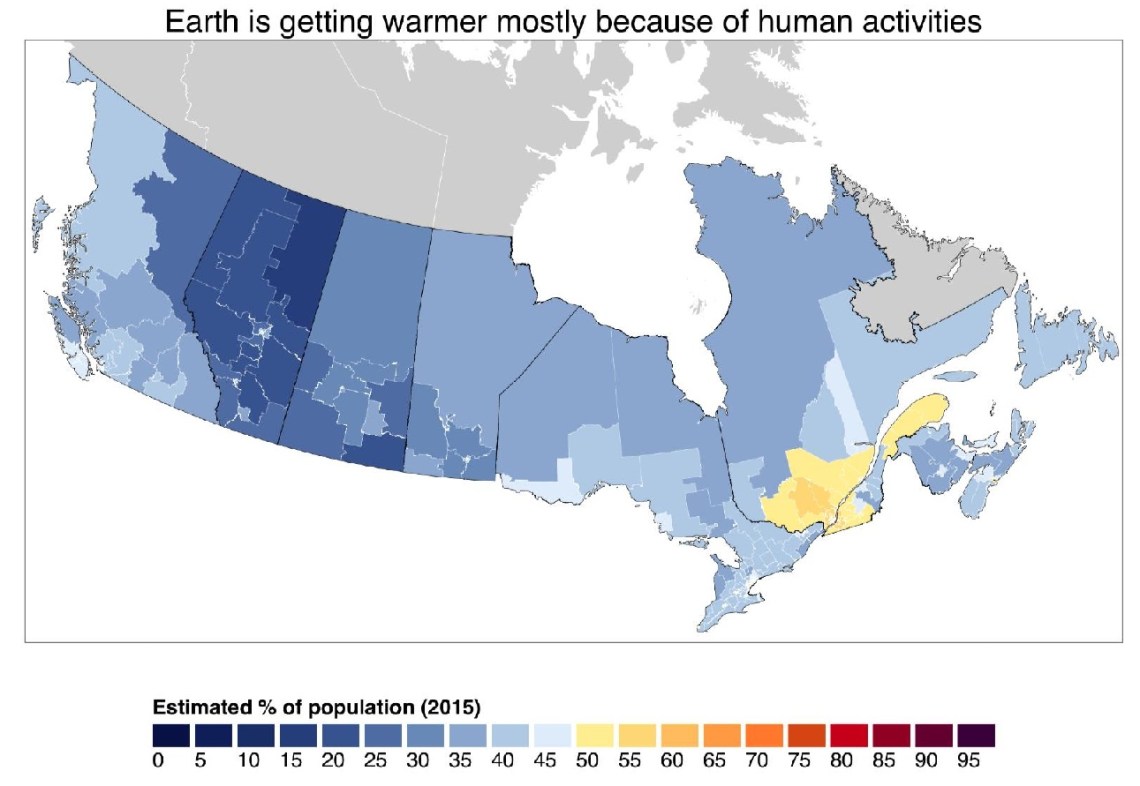
The ruling NDP party are on thin ice because Albertans are mostly skeptical of global warming claims. A recent Canadian survey shows the % of people whose beliefs would support what the administration is doing. That’s right: Alberta is the dark blue province in the map.
Postscript: Alberta is ahead of Ontario in the Golden Goose Killing Race, with electricity rates now among the highest in North America. But Ontario’s rates are rising faster.
There is still no empirical proof from the real world that burning fossil fuels causes temperatures to rise, despite those claiming the “Science is Settled”.
“There is no scientific proof that human emissions of carbon dioxide are the dominant cause of the minor warming of the Earth’s atmosphere over the past 100 years. If there were such a proof it would be written down for all to see. No actual proof, as it is understood in science, exists.”
Patrick Moore, co-founder of Greenpeace, Senate Testimony 2014
Beyond the lack of scientific support for the claims, there is the further problem with the proposed and already enacted climate policies intending to reduce carbon emissions and lower future warming. The policies themselves are ill-advised even if scientific proof existed.
David R. Henderson, public policy economist at the Stanford Hoover Institution, puts the issue this way:
Claims that human-caused global warming will raise average temperatures by 2o C to 5o C over the next 100 years and cause serious harm to society are controversial. However, assuming that global warming will be a big problem, there are two important questions: (1) What should be done about it? and (2) When should it be done?
Hypothetical: Assuming global warming is real and caused by fossil fuel emissions, what should we do about it?
Proposition #1: Put a price on Carbon by taxing it.
Henderson comments: But carbon already has a price, or, more exactly, multiple prices. Natural gas has a price; oil has a price; coal has a price. And their prices are related to the valuable carbon component of those fuels because it’s carbon that makes those fuels valuable. Just as there’s no such thing as a free lunch, carbon is not free.
So why does Professor Gordon claim that taxing carbon means “putting a price on carbon?” I can only speculate because I don’t know him, but here’s what I’m willing to bet dollars to doughnuts on: he calls a tax a price in order to lull the reader into thinking that it’s not a tax. Later in the piece he admits that it’s a tax but in his first mention, which sets the stage, he doesn’t.
Proposition #2: A carbon tax simply replaces complex regulations.
Henderson: If a carbon tax is implemented, it will likely be on top of the extensive regulation Canadians now contend with. Who’s offering to end regulation on carbon usage? Who’s offering to legalize certain kinds of incandescent light bulbs? Who’s offering to end the government’s mandates on energy efficiency in cars, trucks, washers, driers, refrigerators, air conditioners and other appliances? Who’s offering to get rid of expensive, market-distorting subsidies to solar and wind power? Anyone? Anyone?
As economists well know, adding to the price of energy functions as a regressive consumption tax, with greatest impacts on poor families who have the least amount of discretionary income.
Hypothetical: Assuming global warming is real and caused by fossil fuel emissions, when should we do something about it?
Proposition 3#: Acting now is cheaper than delaying.
Here’s where Henderson really shines, dissecting the phoney economics underlying climate policies, and revealing the reverse Robin Hood effect of mitigation proposals. For in fact, economists know that we are richer today than our forefathers, and it is likely future generations will be richer than us. The whole point of using discount rates in cost/benefit studies is to recognize the advantages of building wealth today while delaying spending until later.
Henderson:
The two main approaches are to make major adjustments now or gradually through time to reduce warming or mitigate its effects. Thus, thinking about efforts to combat global warming requires comparing costs today with potential benefits 100 years or more in the future. Immediate Action versus Waiting. Acting now might slow global warming so that major adjustments will not be needed later.
But there are two huge disadvantages. First, actions today will be based on current technology. Because technology will almost certainly improve, solutions implemented in the future are likely to be more efficient — more effective per unit of cost. By comparison, solutions implemented today would use cruder, more expensive technology.
Second, money spent now to offset global warming could instead be invested in ways that would increase national income and wealth, creating more options to deal with any future negative effects of a warmer world. Future generations will likely be wealthier than present generations, just as the people living today are wealthier than past generations. Imposing large costs today to create environmental benefits for future generations would sacrifice current potential consumption for people in the future who will almost certainly have higher living standards.
What is the right Discount Rate for Taxing Carbon
There is much debate about what discount rate to use when comparing environmental costs and benefits. Generally, the more one values today’s dollars over tomorrow’s, the higher is one’s discount rate. At one extreme, an infinitely high discount rate would imply that we place almost no value on future consumption. Conversely, using a discount rate of zero means that benefits today are no more valuable than benefits 100 years from now..
However, the choice of which discount rate to use is not about the weight given to the well-being of future generations but about opportunity costs. Investments people make today are likely to increase the wealth of their descendants, giving future generations greater resources to exercise their preferences regarding environmental protection.
The higher the rate of return that can be earned by investing a dollar today, the more wealth future generations are deprived of if the money is spent now. Thus, Kevin Murphy of the University of Chicago argues that we should use the market interest rate as the discount rate because that is the opportunity cost of climate mitigation. Interestingly, even Stern’s own model assumes that people 200 years from now will have real incomes that are more than 10 times incomes today. This means that if the government taxes people today explicitly or through regulations to reduce climate change 200 years from now, the government will be taxing the poor to help the rich.
How does using the interest rate as the discount rate work in practice? Imagine that the damage from continued use of CO2-emitting fossil fuels is $300 per ton of emissions 100 years from now. In 100 years, a $300 per ton tax on carbon emissions would reflect their social cost. What this tax should be in the intervening years depends upon the interest rate that could be earned if money were invested.
Thus, beginning today, at a 6 percent interest rate, a tax of 88 cents per ton would pay the social costs of one ton of emissions in a century. If the tax were implemented 80 years from now, the rate would be $93.54 per ton. To put these numbers in perspective, a $1.00 tax per ton of carbon translates into a one-third cent per gallon tax on gasoline. On that basis:
A $300 per ton carbon tax 100 years from now would be equivalent to a tax of three-tenths of a cent per gallon today at an interest rate of 6 percent.
It would be two cents per gallon at an interest rate of 4 percent.
Today, the actual federal tax is 18.4 cents per gallon. Thus, if the correct carbon tax 100 years from now is $300, this implies that the gasoline tax today is much higher than the rate required to reflect the social costs of global warming, regardless of whether the right interest rate is 6 percent or 4 percent.
Conclusion.
If the government limits carbon emissions now through taxes or direct caps, it is taxing the poor today to benefit wealthier future generations. Perversely, such limits would also deprive future generations of the additional capital that would accumulate if the money were invested in the market instead of being used to combat climate change.
David R. Henderson is a research fellow with the Hoover Institution (here). He is also an associate professor of economics at the Naval Postgraduate School in Monterey, California.
Henderson’s writing focuses on public policy. His specialty is in making economic issues and analyses clear and interesting to general audiences. Two themes emerge from his writing: (1) that the unintended consequences of government regulation and spending are usually worse than the problems they are supposed to solve and (2) that freedom and free markets work to solve people’s problems.
Quotations from David Henderson come from these sources:
Don Quixote ( “don key-ho-tee” ) in Cervantes’ famous novel charged at some windmills claiming they were enemies, and is celebrated in the English language by two idioms:
Tilting at Windmills–meaning attacking imaginary enemies, and
Quixotic (“quick-sottic”)–meaning striving for visionary ideals.
It is clear that climateers are similary engaged in some kind of heroic quest, like modern-day Don Quixotes. The only differences: They imagine a trace gas in the air is the enemy, and that windmills are our saviours.
Why the Quest to Mitigate Global Warming is Quixotic
Roger Andrews at Energy Matters puts into context the whole mission to reduce carbon emissions. You only have to look at the G20 countries, who have 64% of the global population and use 80% of the world’s energy. The introduction to his essay, Electricity and energy in the G20:
While governments fixate on cutting emissions from the electricity sector, the larger problem of cutting emissions from the non-electricity sector is generally ignored. In this post I present data from the G20 countries, which between them consume 80% of the world’s energy, summarizing the present situation. The results show that the G20 countries obtain only 41.5% of their total energy from electricity and the remaining 58.5% dominantly from oil, coal and gas consumed in the non-electric sector (transportation, industrial processes, heating etc). So even if they eventually succeed in obtaining all their electricity from low-carbon sources they would still be getting more than half their energy from high-carbon sources if no progress is made in decarbonizing their non-electric sectors.
The whole article is enlightening, and shows how much our civilization depends on fossil fuels, even when other sources are employed. The final graph is powerful (thermal refers to burning of fossil fuels):
Figure 12: Figure 9 with Y-scale expanded to 100% and thermal generation included, illustrating the magnitude of the problem the G20 countries still face in decarbonizing their energy sectors.
The requirement is ultimately to replace the red-shaded bars with shades of dark blue, light blue or green – presumably dominantly light blue because nuclear is presently the only practicable solution.
Summary
There is another way. Adaptation means accepting the time-honored wisdom that weather and climates change in ways beyond our control. The future will have periods both cooler and warmer than the present and we must prepare for both contingencies. Colder conditions are the greater threat to human health and prosperity. The key priorities are robust infrastructures and reliable, affordable energy.
Footnote:
This video shows Don Quixote might have more success against modern windmills.
Contrary to what many NDP supporters, and many of my colleagues believe, businesses are more likely to respond to government policies than to set them. One of the responses to egregiously irresponsible policies is to invest elsewhere.
The Birn report did not discuss the scientific premises of anthropogenic climate warming, nor the prudence of attempting to regulate GHG emissions. What matters are the consequences of policy choices by Canadian and U.S. governments for Alberta and Saskatchewan.
Here are some pertinent facts.
The interdependence of North American economies and the familiar 10-to-one ratio between the two countries means that Canada must always adjust its policies to American realities. That ratio applies to global CO2 emissions (16 per cent for the U.S.; 1.7 per cent for Canada, of which the oilsands’ contribution is minuscule) as well as to GDP and much else. Canadian CO2 emissions are comparable to those of Texas. The big difference is how that CO2 is generated.
Coal is the largest source of American CO2, mostly from electricity generation, followed by transportation and industry. In Canada, industry — from fertilizer manufacturing to mining, smelting and pulp production — is the largest emitter, followed by transportation and then electricity generation. The main reason for this difference is that in B.C. and Laurentian Canada, hydroelectricity is the chief source of power. Prairie rivers furnish great fishing opportunities, but few electrons.
Since CO2 from American coal plants alone are double those from the entire Canadian economy, they have been the focus of U.S. policies. Replacing coal-generation with natural gas has been made easier by low natural gas prices, partly the result of innovative shale-gas exploitation.
In Canada, things are different. Because more than 80 per cent of Canadian electricity is generated by non-emitting sources, other sectors must be targeted to achieve levels of emission reductions comparable to the Americans’. The cost, however, is bound to be higher: here, cheap gas hardly matters.
This is what makes carbon taxes so attractive to Canadian governments. They can’t go after coal plants, because there are so few left, so they go after the entire economy. Alberta’s carbon tax and Ontario’s cap-and-trade policy mean that over two-thirds of Canadian emissions will be covered by next year.
Big-government Liberals, socialists and members of the green cult will rejoice that we are saving the planet. However, the costs of the new NEP — the national emissions policy — achieved by carbon-tax harmonization, will introduce more incentives for investment in places where anthropogenic climate change is not an unquestioned public policy dogma.
Because the Prairie petroleum industry competes globally for both capital and markets, parochial Canadian climate policies add to costs and induce investors abroad. And they make no difference at all to global GHG emissions.
That is one reason why energy investment in Alberta is half 2014 levels. No wonder Finance Minister Joe Ceci is sad. The consequences of his own policies are bearing their inevitably poisoned fruit.
Barry Cooper is a professor of political science at the University of Calgary.
Footnote:
Former Canadian PM Stephen Harper (from Alberta) based his climate change policy on the realities mentioned in the article. His administration was committed to matching US energy policies on a sector by sector basis. Since the US went after coal, so did Canada. The US has not done anything about oil and gas, so neither should Canada.
The ruling NDP party are on thin ice because Albertans are mostly skeptical of global warming claims. A recent Canadian survey shows the % of people whose beliefs would support what the administration is doing. That’s right: Alberta is the dark blue province in the map.
Donald Trump was half right when speaking recently in Montana, saying that people should have the say whether to frack or not in their backyard.
“I’m in favor of fracking, but I think that voters should have a big say in it. I mean, there’s some areas, maybe, that don’t want to have fracking, and I think if the voters are voting for it that’s up to them.”
UK Prime Minister has got it all right when she announced that the wealth will be shared with residents receiving checks directly if they choose to go with the extraction. Green and anti-fossil fuel activists are scrambling to denounce her move as “bribery” while ignoring their own undemocratic posture. They worry about losing their power to stop progress when the discourse changes from “Not In My Back Yard” (NIMBY) to “Please In My Back Yard” (PIMBY).
A £1 billion shale wealth fund unveiled by former chancellor George Osborne in November will set aside up to 10 per cent of the tax proceeds from fracking to benefit the communities hosting wells.
But now the Prime Minister is amending the scheme so the money can go direct to residents rather than being given to councils or community trusts to spend, as Mr Osborne planned.
It is expected that the new fund could deliver as much as £10 million to each community where wells are sited.
Speaking ahead of the launch of a consultation on the fund, Mrs May said she wanted to make sure that individuals benefit personally from economic decisions.
She indicated that the model could be applied to other Government programmes, such as the Community Infrastructure Levy charge on property development in England and Wales.
“The Government I lead will always be driven by the interests of the many – ordinary families for whom life is harder than many people in politics realise,” said Mrs May. “As I said on my first night as Prime Minister, when we take the big calls, we’ll think not of the powerful but of you. This announcement is an example of putting those principles into action.”
Source: Fracking payments: Households in line for cash under Government plans Shropshire Star
Summary
Margaret Thatcher and Ronald Reagan don’t get enough credit for leading the free world to out-prosper the socialist block, thereby leading to the iron curtain collapsing, and eventually to economic reforms even in places like China and Cuba.
Today we are facing a growing tyranny of unelected bureaucrats at the EU and the UN whose power and resources are committed to a statist, left-wing agenda, using climate hysteria as justification.
Theresa May looks to be up for the fight. But will the next US President be a willing partner against entrenched special interests, activists and rent-seekers, or will it be someone beholden to them and to the status quo?
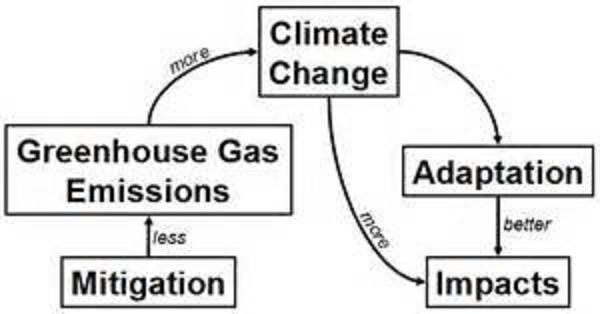
Two schools of thought regarding future climates:
Adaptation: As changes occur, adapt our methods and practices to survive and prosper in new conditions.
Mitigation: Cut down on use of fossil fuels to mitigate or prevent future global warming.
The Paris Agreement and various cap-and-trade schemes intend to Mitigate future warming. Lots of gloom and doom is projected (forecast) by activists claiming mitigation is the only way. But the facts of our experience say otherwise.
What has been human experience with Adapting to climate change?
Feeding ourselves is the most fundamental social need, so we should look at the history of Agriculture and climate change. Here is a data-rich study: Adapting North American wheat production to climatic challenges, 1839–2009, by Alan L. Olmstead and Paul W. Rhodes Accessed at PNAS (here).
Numerous researchers have speculated about how farmers might change cultivars, cropping patterns, and farming methods to mitigate some of the costs of abrupt climatic changes (8). Researchers at the International Maize and Wheat Improvement Center (CIMMYT) anticipate that North American wheat farmers may extend the margin of wheat production roughly 1,000 km north into northern Canada and Alaska, whereas heat and drought will make cultivation untenable in many areas of the southern Great Plains (9). To provide perspective on these and other predictions, this paper asks how farmers responded to past climatic challenges.
The spread of wheat cultivation across North America required that farmers repeatedly adapt to unfamiliar and hostile climatic conditions. The variations in climatic conditions that settlers encountered rivaled the magnitude of the predicted changes at given locations over the next century. We quantify the extent of the geographic variations and decipher how wheat growers learned to produce in new environments. Because of the paucity of Mexican data before 1929, most of our analysis of “North America” refers to Canada and the United States. Inclusion of Mexico in the later part of the 20th century highlights the role of the Green Revolution in pushing production into hotter and drier zones. (my bolds)
Because of climate change, some areas presumably will decrease or cease wheat production, whereas other areas, particularly in northern Canada and Alaska, are expected to enter production. Although the anticipated movement in the wheat frontier is substantial, it is unlikely to be as great as the past geographic shifts in production. The difficulties in extending the transportation infrastructure to facilitate future shifts also appear less imposing than those overcome to open the Plains and Prairies. The challenging problems deal with adapting growing practices and creating improved cultivars. (my bold)
Shift in the North American spring–winter wheat frontier, 1869–1929.
The last two columns of the table, which show the differences between the Columbus baseline and the other four locations, illustrate the wide array of climatic conditions to which wheat has been adapted in North America during the past 170 y. Even with the predicted annual mean temperature by 2100, farmers near Edmonton, AB, and Dickerson, ND, will confront substantially colder conditions than eastern wheat growers faced circa 1839. Even with the anticipated increase in precipitation, the northern farmers will have to make do with about half the precipitation that the earlier generation of eastern farmers received. The predicted changes in Dodge City, KS, and Ciudad Obregón, Sonora, Mexico, suggest both hotter and drier conditions than were common at the center of North American production in 1839 (again, a climate akin to that in Columbus, OH, in the baseline period). Note, however, that the difference in temperature between Columbus and Ciudad Obregón was roughly six times the increase predicted in the latter city by 2100. Wheat production is sensitive to seasonal fluctuations in weather conditions, which probably will become more variable in the future and which are not captured by annual mean data (29). Nevertheless, the historical record of adapting wheat cultivation to areas with widely varying climates is impressive. (my bold)
For the most part, the settlement process required adapting cultivation to colder and more arid regions, not to hotter climates as predicted in the future. Farming with less water is more of a problem if the temperature also is hotter. However, biological innovations also were crucial to the expansion of production in hot-arid areas such as Texas, Oklahoma, central California, and northern Mexico. The currently predicted changes during the next century will, in a sense, reverse the predominant historical path of the past two centuries by creating a warmer and wetter environment in the Plains and Prairies that will partially approach the conditions that existed in the Middle Atlantic region when it constituted the North American wheat belt. (my bold)
The historical record offers insight into the capability of agriculture to adapt to climatic challenges. Using a new county-level dataset on wheat production and climate norms, we show that during the 19th and 20th centuries North American grain farmers pushed wheat production into environments once considered too arid, too variable, and too harsh to cultivate. As summary measures, the median annual precipitation norm of the 2007 distribution of North American wheat production was one-half that of the 1839 distribution, and the median annual temperature norm was 3.7 °C lower. This shift, which occurred mostly before 1929, required new biological technologies. The Green Revolution associated with the pioneering work of Norman Borlaug represented an important advance in this longer process of biological innovation. However, well before the Green Revolution, generations of North American farmers overcame significant climatic challenges. (my bold)
How successful has mitigation been?
A recent report of California’s cap-and-trade concluded:
The problem is that the permits are selling at a slower and slower rate. The surplus of allowances is becoming so large in systems run by Europe, California and Quebec — which together account for more than 90 percent of global trading — that by 2022 it could cover the emissions spewing from every car on Earth for a full year, according to estimates by the London environmental group Sandbag Climate Campaign CIC and Bloomberg New Energy Finance.
In California’s market, all 23 million allowances sold in an auction in 2014. In May 2016, 7.3 million permits found buyers, only 11 percent of what was put up for sale.
ReGGI, the carbon market joined by Northeastern US states is also ineffective but has the potential to threaten affordable electricity there. See my post: Cap and Trade Hype
Unless more money gets directed to poor communities, lawmakers whose votes may be needed to continue the climate change efforts say they’re wary. Assemblyman Jim Cooper (D-Elk Grove), a leader in the business-aligned bloc of his party, said he hasn’t made up his mind, in part, because he’s outraged that people living in a handful of wealthy Bay Area and West Los Angeles communities have received by far the largest shares of state rebates to purchase electric cars.
“It’s welfare for the rich,” Cooper said. “It’s dead wrong in my book. It should be wrong in anybody’s book.”
Inadvertently, they are scraping the lipstick off the Mitigation Pig. They know (but don’t say out loud) this scheme does little to lower fossil fuels, and has even less impact on future climates. But it does create a pot of money, and they want the poor to have their share. If you are going to redistribute wealth, at least transfer it from the rich to the poor, as Robin Hood did. Mitigation is failing in every imaginable way.
Conclusion
Farmers have successfully grown and harvested crops in places formerly deemed too cold or too arid, and most of the new fields were in the North. Remarkably, today’s average climate where wheat is produced is both drier and colder:
“The median annual precipitation norm of the 2007 distribution of North American wheat production was one-half that of the 1839 distribution, and the median annual temperature norm was 3.7 °C lower.”
Agriculture has demonstrated our massive capacity to adapt to changing conditions, whether it becomes warmer or cooler, wetter or drier.
The rational climate change policy has been proven successful: Don’t Fight It, Adapt.
Footnote:
Bumper crops expected
Grain companies predict near-record western harvest
Source: The Western Producer
The 2016 harvest is shaping up to be a whopper, according to Western Canada’s largest elevator companies.
In the comics, it was Archie vs. Reggie, but in the US emissions markets, it is Arnie vs. ReGGI. Arnie Schwarzenegger pushed California cap and trade, now called the Western Climate Initiative, while nine northeastern states make up the Regional Greenhouse Gas Initiative.
The media is touting the “success” of ReGGI, saying it shows how states can comply with the EPA Clean Power Plan (whose implementation was stayed by the Supreme Court but proponents are undeterred.)
Climate Progress Gives the Rosy Outlook
The Regional Greenhouse Gas Initiative, known as RGGI (pronounced: Reggie), is a carbon pricing mechanism that limits emissions and invests in efficiency and low-emission generation. Since it was implemented in 2008, RGGI states have seen a 37 percent decrease in emissions from electricity, while simultaneously decreasing consumer costs. RGGI will also function as a compliance plan for the Clean Power Plan, according to multiple industry sources — if it stays effective.
Right now, RGGI is under review — and businesses, environmental groups, regulators, universities, and private citizens are encouraging the states to double down on the program. They say extending the program to 2030 and lowering the annual limit on emissions will ensure RGGI stays successful.
ReGGI’s Peformance, Warts and All
Actually, emissions came down because of market forces, and the cap was too high to have any effect on reductions. Instead a surplus of allowances drove the price down and investors bought them in lots to hedge against higher future prices. Buried in Acadia Center’s friendly review of ReGGI:
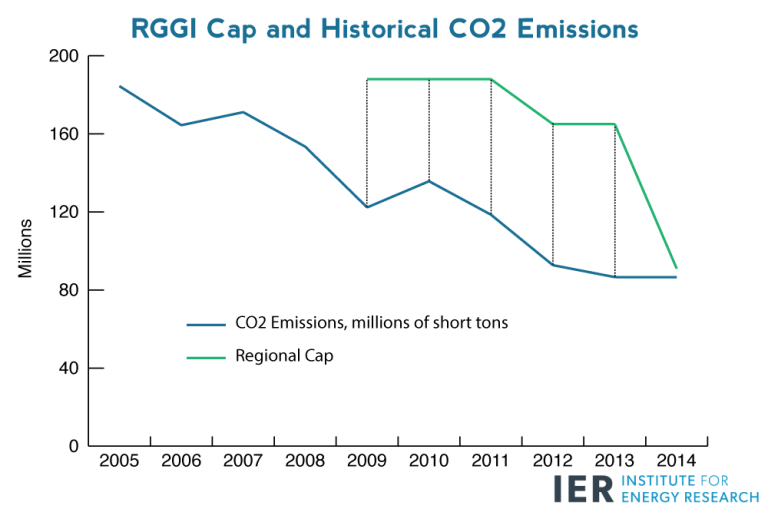
Emissions reductions have outpaced expectations since RGGI’s launch, creating allowance oversupply. Regional CO2 emissions in 2008 were 139 million tons, while the initial cap for the nine currently participating states8 was set at 165 million tons per year from 2009 through 2014. This initial oversupply was a result of a combination of electric sector trends already discussed in this report, conservative emissions projections, and actions taken by compliance entities in anticipation of RGGI implementation.9 With emissions falling significantly below the cap in RGGI’s early years (2008 to 2013) market participants bought tens of millions of low-priced allowances each year to be banked for future use. By the end of 2013, 140 million tons of these surplus allowances had been accrued.xxii This large bank suppressed allowance prices and removed the prospect of market scarcity.
RGGI currently employs price controls to contain allowance prices within predetermined ranges. The price floor represents the minimum price at which allowances can be sold at auctions; beginning at $1.86 in 2009 and rising gradually to $2.10 in 2016. Under the oversupplied cap from 2009 through 2012, the price floor preserved the value of RGGI allowances by preventing additional declines in allowance prices or sales and ensuring that surplus allowances were withheld from the market. As a result, 176 million allowances went unsold during this period.
Benefits Miscredited to ReGGI
ReGGI is also credited with participating states having lower electricity prices and higher economic growth. But depressed oil and gas prices caused the cheap electricity. And the depressed prices of the allowances meant that economic pain has yet to be inflicted. All that is about to change.
The trend of rising prices is only accelerating. In September 2015, prices breached $6 per ton, and in December 2015, clearing prices rose to $7.50—more than $2 above prices last December.[6] The graph below depicts how average clearing prices have risen after the regional cap tightened substantially in 2014. It compares RGGI emissions as a percentage of the cap with the quantity weighted average of auction clearing prices through the third quarter of 2015.[7].
As clearing prices for CO2 allowances become increasingly expensive and states encounter diminishing returns from cutting carbon dioxide emissions, RGGI members will have more difficulty meeting the regional cap. In fact, for the first three quarters of 2015, RGGI states have emitted about 68 million short tons of CO2 and are quickly approaching the 2015 regional cap of 88.7 million short tons.
Since carbon-trading schemes artificially make certain technologies less economical or even uncompetitive, they create conditions that cause existing power plants to prematurely retire and saddle families and businesses with higher energy bills. An IER study found that existing sources generate electricity more affordably than new sources of the same type. Moreover, electricity from existing coal is nearly 3 times more affordable than electricity from new wind turbines and almost half as expensive as electricity from new natural gas plants. This is particularly problematic for RGGI states because their average retail electricity prices are already above the U.S. average.
Summary
ReGGI prices are too low to take credit for reducing emissions, and raising them will show up in higher energy and electricity prices, and eventually, higher prices of everything.
The whole scheme is running along, disconnected from reality, doing no good, but not yet doing much harm. And this is the argument for expanding it and building upon its “success.”
Oh. About Arnie’s California punch bowl, is that going better? Not really.
The problem is that the permits are selling at a slower and slower rate. The surplus of allowances is becoming so large in systems run by Europe, California and Quebec — which together account for more than 90 percent of global trading — that by 2022 it could cover the emissions spewing from every car on Earth for a full year, according to estimates by the London environmental group Sandbag Climate Campaign CIC and Bloomberg New Energy Finance.
In California’s market, all 23 million allowances sold in an auction in 2014. In May 2016, 7.3 million permits found buyers, only 11 percent of what was put up for sale.
Activists wear dark shades when pronouncing future climate catastrophes, but switch for rose-colored glasses when telling others to imitate these failed market experiments.















 Science Matters