With coronavirus sucking all the air out of room globally, I got interested in looking at how the Canadian national flu seasons compare with the new Wuhan virus. The analysis is important since there are many nations at higher latitudes that are in equilibrium relative to infectious diseases, but vulnerable to outbreaks of new viruses. Where I live in Canada, we have winter outbreaks every year, but are protected by a combination of sanitary practices, health care system and annual vaccines, contributing to herd immunity.
For example, 2018-19 was slightly higher than a typical year, with this pattern: The various flu types are noted, all together making a total of 48,818 influenza detections during the 2018-19 season. A total of 946 hospitalizations were reported by CIRN-SOS sentinels that season (age = or >16). Source: Annual Influenza Reports
A total of 137 (14%) ICU admissions and 65 (7%) deaths were reported. The seasonality is obvious, as is the social resilience, when we have the antibodies in place.
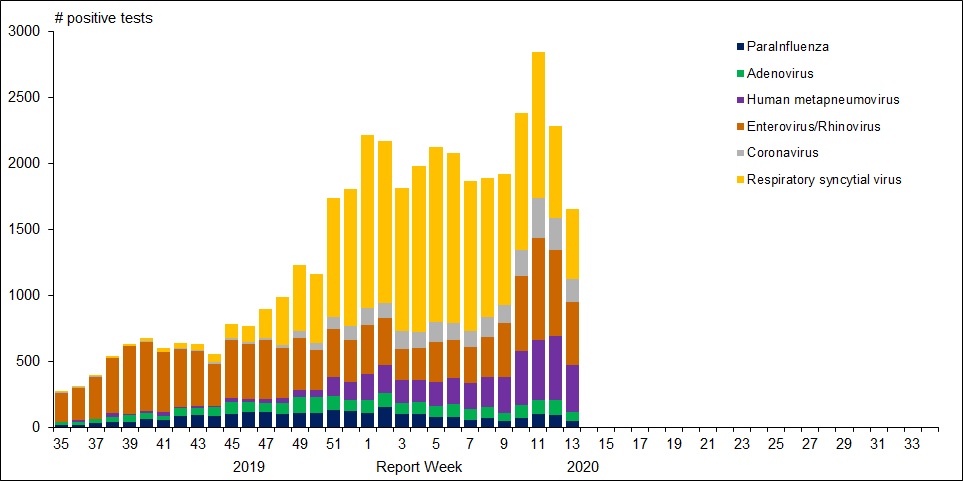
For further background, look at the latest Respiratory Virus Report for week 13 ending March 28, 2020. [In this Respiratory Virus Report, the number of detections of coronavirus reflects only seasonal human coronaviruses, not the novel pandemic coronavirus (SARS-CoV2) that causes COVID-19. More on Kung Flu later on.]
For the period shown in the graph, 320560 flu tests were done, resulting in 32751 type A positives and 22683 type B positives. That is a ratio of 17% of tests confirming conventional flu infection cases. Public Health Canada went on to say in reporting March 22 to 28, 2020 (week 13): The percentage of tests positive for influenza fell below 5% this week. This suggests that Canada is nearing the end of the 2019-2020 influenza season at the national level. [Keep that 5% in mind]
From the underlying data we can see that this covid 19 outbreak started toward the end of the annual flu season. Here are the daily reported tests, cases, and deaths smoothed with 7 day averaging.
The cumulative graph shows how the proportions held during this period.
Out of a total 295,065 tests, 12537 (4.2%) cases were detected, and 187 died(1.5% of cases).
Summary: It’s true that cases and deaths are still rising, and everyone should practice sanitary behaviors and social distancing. But it appears that we are weathering this storm and have the resources to beat it. Let us hope for reasonable governance, Spring weather and a return to economic normalcy.
Today’s coronavirus pandemic puts into some perspective the climate emergency, which has been running for nigh on 32 years. The climate emergency was first announced in June 1988. “Humanity is conducting an unintended, uncontrolled, globally pervasive experiment whose ultimate consequences could be second only to a global nuclear war,” the Toronto climate conference declared that month.
One way of assessing the reliability of a body of science with major policy implications is whether the experts in the field are prone to over-predicting the severity of the problem. Take smoking: In 1953, Richard Doll, one of the pioneer epidemiologists in discovering the link between tobacco smoking and lung cancer, predicted that, in 1973, the number of deaths from lung cancer in Britain would be as high as 25,000. The actual number was 26,000. Doll’s prediction passed a hard test.
By contrast, the Toronto climate conference predicted global temperatures would increase by between 1.5 and 4.5°C (2.7°F and 8.1°F) by the 2030s. Since 1988, average global temperature has risen at a rate of 0.177°C (0.32°F) per decade, less than one-half the 0.36°C (0.65°F) per decade implied by a 1.5°C rise by 2030 and only one-sixth of the rate of a 4.5°C rise. If there’s been a mainstream climate scientist who has under-predicted global warming, he or she must have taken the scientific equivalent of a Trappist vow of silence.
More recently, Myles Allen, an Intergovernmental Panel on Climate Change (IPCC) lead author, admitted that climate computer models are running too hot compared to the actual climate. “We haven’t seen that rapid acceleration in warming after 2000 that we see in the models,” Allen told the London Times in September 2017.
The coronavirus pandemic shows what a genuine crisis looks like. No one has to catastrophize it; the facts speak for themselves. Inducing fear and panic is counter-productive.
Global warming is different. For more than three decades, climate change has been the catastrophe that’s always just over the horizon. It moves with glacial speed; there is plenty of time to prepare for it. Humans – the most adaptive species on the planet – have been adapting to a changing climate ever since they first wore animal skins for warmth. The idea that the generation born since 1988 has experienced anything approaching a global nuclear war is preposterous. Even last year’s destructive Australian wildfires were fueled by green policies that prevented controlled fires.
One thing hasn’t changed and won’t change: Catastrophizing climate change for political ends. At one of the secretive meetings in 1987, limited to only 25 key participants that led to the formation of the IPCC, it was recognized that climate change had to be catastrophized to persuade politicians that they should embark on damaging emissions cuts. Earlier this month, United Nations Secretary-General António Guterres complained about the attention being given to COVID-19: “Whilst the disease is expected to be temporary, climate change has been a phenomenon for many years, and will remain with us for decades and require constant action.”
Congressional Democrats’ failure to hold coronavirus relief legislation hostage in exchange for the Green New Deal shows poor judgment. It’s hard to escape the conclusion that the inability to distinguish between a genuine crisis and an imagined one in the midst of the worst pandemic in a century is a manifestation of a collective psychological disorder.
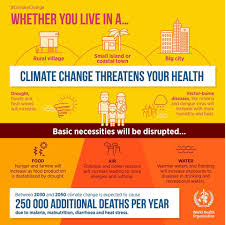
Two lessons can be drawn. The first is the importance of governments and responsible international bodies focusing on genuine threats that can rapidly overwhelm our capacity to handle them. Something has gone very wrong when the World Health Organization, the lead institution coordinating the response to global pandemics, climbed on the climate bandwagon and called the Paris Agreement “potentially the strongest health agreement of this century” and listed climate change as the No. 1 threat to global health.
The second is resilience. Richer societies are better able to handle a pandemic than poorer ones. After the 2003 SARS outbreak, Singapore invested in a purpose-built National Centre for Infectious Diseases. Of larger economies, South Korea’s response has, so far, been the most successful; like Singapore, it can afford preparedness because it has a strong economy, reflected in its soaring greenhouse gas emissions.
Since 1992, Korea’s carbon dioxide emissions have more than doubled and it is planning to grow them under the Paris Agreement.
Unlike House Speaker Nancy Pelosi (D-Calif.) and her colleagues, South Korea has no intention of sacrificing its economy on the altar of climate change. Nor should America.
Rupert Darwall is a senior fellow at RealClear Foundation, a nonprofit affiliate of RealClear Media Group that reports and analyzes public policy and civic issues. He is the author of “Green Tyranny: Exposing the Totalitarian Roots of the Climate Industrial Complex” (2017) and “The Age of Global Warming: A History” (2013). A strategy consultant and policy analyst, he was a special adviser to the United Kingdom’s chancellor of the exchequer under Prime Minister John Major.
Footnote: The recent solar eclipse provided another example that scientific predictions coming to pass prove astronomers’ knowledge of the solar system, while climatists’ failed predictions prove their lack of knowledge. See: Astronomy is Science. Climatology Not.
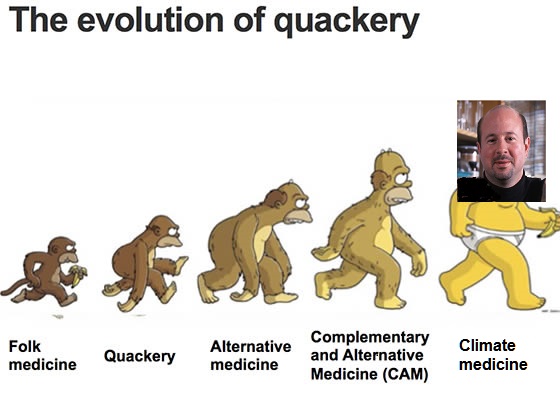
On the perversion of medical science by the dash for climate cash, see: Climate Medicine
Robert Zimmerman provides a reasoned look at how the US health care system has responded to past outbreaks of disease, as an indication of it will endure the new coronavirus challenge. The article is COVID-19 is NOT going to overwhelm our healthcare system. Excerpts in…
Over several decades since 1981 we have learned to distinguish between one virus and the disease it can cause:
HIV: Human Immunodeficiency Virus, and AIDS: Acquired ImmunoDeficiency Syndrome.
And of course over time scientists have identfied two main virus strains: HIV-1 is more virulent, easily transmitted and is the cause of the vast majority of HIV infections globally. HIV-2 is less transmittable and is largely confined to West Africa.
In the rush to inform people during this current pandemic, the terminology for public consumption has glossed over important distinctions between coronavirus, the Wuhan novel virus and the disease fatal to some people.
First characterized in the 1960s, these are a group of related viruses that cause diseases in mammals and birds. In humans, coronaviruses cause respiratory tract infections that can be mild, such as some cases of the common cold (among other possible causes, predominantly rhinoviruses), and others that can be lethal, such as SARS and MERS.
WHO’s International Committee on Taxonomy of Viruses (ICTV)announced “severe acute respiratory syndrome coronavirus 2 (SARS-CoV-2)” as the name of the new virus on 11 February 2020. This name was chosen because the virus is genetically related to the coronavirus responsible for the SARS outbreak of 2003. While related, the two viruses are different.
2019 Coronavirus Disease Pandemic
COVID-19 (COronaVIrus Disease 2019)
WHO announced “COVID-19” as the name of this new disease on 11 February 2020, following guidelines previously developed with the World Organisation for Animal Health (OIE) and the Food and Agriculture Organization of the United Nations (FAO)
Technical accuracy with these terms is important to understand testing and reports of the pandemic progress. A helpful guide is published in Scientific American today Here’s How Coronavirus Tests Work—and Who Offers Them. Excerpts in italics with my bolds.
PCR-based tests are being rolled out in hospitals nationwide, and the Food and Drug Administration is fast-tracking novel approaches as well
Virus Testing
The first step in any coronavirus test is collecting a sample. Doing so involves placing a sterile swab at the back of a patient’s nasal passage, where it connects to the throat via the nasopharynx, for several seconds to absorb secretions. Scott Wesley Long, a clinical microbiologist who directs Houston Methodist Hospital’s diagnostic microbiology lab, says the swab is thin—less than three millimeters in diameter at its tip. “Once you place it in the back of the throat, it’s uncomfortable, but you can still breathe and talk,” he says. “It’s not as bad as it looks.” After a sample is collected, the swab goes into a liquid-filled tube for transport.
To determine whether a nasopharyngeal sample is positive for the coronavirus, biotechnicians use a technique known as reverse transcriptase polymerase chain reaction, or RT-PCR. The World Health Organization’s and CDC’s test kits both use this method, as do all of the kits the latter has approved to date. [This detects signs of the virus’s genetic material.]
Stephanie Caccomo, a spokesperson for the FDA, says the positive predictive value, or likelihood a positive test result correctly reflects that a patient has COVID-19, depends on how widespread the disease is—and that situation is changing quickly. “Based on what is known about the pathophysiology of COVID-19, the data provided and our previous experience with respiratory pathogen tests, the false-positive rate for authorized tests is likely to be very low, and the true-positive rate is likely to be high,” Caccomo says.
Person loads a Mesa Biotech cartridge into a dock for testing. Credit: Mesa Biotech
On Saturday Cepheid, a Silicon Valley–based molecular diagnostics company, said the FDA had granted it authorization for a COVID-19 test that can deliver results in about 45 minutes. And on Tuesday Mesa Biotech in San Diego announced it had received the go-ahead for a handheld test kit that Hong Cai, the company’s CEO, says can deliver results at bedside in about half an hour. Cai says the tests will begin shipping this week to “several hospitals” and that her company has tens of thousands of units ready to go, adding that Mesa is planning to triple its production capacity.
Antibody Testing
Another approach relies on identifying antibodies to the coronavirus (SARS-CoV-2) in a patient’s bloodstream to determine whether that person previously had COVID-19. Florian Krammer, a microbiologist at the Icahn School of Medicine at Mount Sinai, recently developed one of these tests, which is described in a preprint study posted last week on medRxiv. “This is not a test for [ongoing] infections,” he says. “It basically looks for antibodies after the fact, after you had an infection.” Like other serological, or antibody-based, diagnostic assays, it uses an enzyme-linked immunosorbent assay (ELISA), which employs a portion of the target virus to find antibodies. Although serological tests are not useful for quickly identifying whether a patient currently has COVID-19, Krammer says they can help researchers understand how humans produce antibodies to the virus.
Additionally, serological tests can also help determine if a person has been infected whether or not the individual had symptoms—something an RNA test kit cannot do after the fact, because it only looks for the virus itself. That means serological tests could be used to survey a population to determine how widespread infection rates were. It also could allow public health agencies to figure out who is already immune to COVID-19. “So if you would roll this out on a very wide scale, you could potentially identify everybody who is immune and then ask them to go back to their regular life and go back to work,” Krammer says. This approach could be especially useful for health care providers who are working with COVID-19 patients. “They might feel much more comfortable working with those patients, [knowing] that they can’t get sick anymore, knowing that they can’t pass on the virus to others,” he says.
Comment:
In common discourse, we talk about “disease” or “illness”, refering to how we feel, that is our awareness of symptoms. In fact, the entry of a virus (or other pathogen such as bacteria, fungi or parasite) sets up a battle with our immune system even before we know it. When the virus is defeated quickly, we have mild or no symptoms, and at least in the case of seasonal flus, we can be immune to further infection. In some cases, people weakened by fighting other pathogens will need hospital help and may not survive. The subtle point is that presence of the virus and the state of the disease are two different things.
This video is helpful in getting the basics right (published March 9, 2020)
Vir Biotechnology, a San Francisco-based biotechnology firm, said Wednesday that laboratory testing showed two of its antibody drugs appeared to neutralize the coronavirus that causes Covid-19 and that it would pursue testing them in people.
The company said that human tests of the drugs could begin in three to five months, putting it roughly in line with two other efforts to produce anti-coronavirus antibodies. Regeneron, based in Tarrytown, N.Y., has said that its antibodies could enter trials by early summer — and that its treatment, if it proves effective, could be available for some uses in the fall. Eli Lilly, which is developing anti-SARS-CoV-2 antibodies with AbCellera, a Vancouver biotech, has said it hopes to begin human tests in four months.
“Stopping this disease will take a combination of prevention and treatment approaches,” Vir CEO George Scangos said in a statement. “At Vir, we are fortunate that our existing antibody platform gave us a running start against COVID-19, and we have the internal and partnered capabilities to work on multiple approaches.”
Antibodies are a part of the immune system that drug companies have learned to weaponize as treatments for diseases. An antibody drug against SARS-CoV-2 might either treat infection in very sick patients or prevent infection. It is one of many techniques researchers are attempting against Covid-19. For a rundown of approaches, see this story.
Vir is taking a somewhat different approach from Regeneron. While Regeneron is going to choose two antibodies to use together, Vir has picked a single antibody. But Vir is modifying it in two different ways and testing the resulting two experimental drugs in parallel.
The first modification should make the antibodies last longer in the body, and is being done to both candidates. The second, in animal models, leads to long-term production of white blood cells that might lead to long-term immunity, as with a vaccine. If this proves effective, the antibody could be used to prevent infection.
Vir said it has also identified other antibodies that work differently, so that they might be combined with the two it is testing. And it is continuing to search for antibodies in the blood or patients who have survived SARS-CoV-2.
An important study of our experience with the covid19 pandemic shows that warmer, more humid weather works against transmission of the disease. The paper is High Temperature and High Humidity Reduce the Transmission of COVID-19 by Jingyuan Wang, Ke Tang, Kai Feng and Weifeng Lv. Excerpts in italics with my bolds.
Abstract: This paper investigates how air temperature and humidity influence the transmission of COVID-19. After estimating the serial interval of COVID-19 from 105 pairs of the virus carrier and the infected, we calculate the daily effective reproductive number, R, for each of all 100 Chinese cities with more than 40 cases. Using the daily R values from January 21 to 23, 2020 as proxies of non-intervened transmission intensity, we find, under a linear regression framework for 100 Chinese cities, high temperature and high relative humidity significantly reduce the transmission of COVID-19, respectively, even after controlling for population density and GDP per capita of cities. One degree Celsius increase in temperature and one percent increase in relative humidity lower R by 0.0383 and 0.0224, respectively. This result is consistent with the fact that the high temperature and high humidity significantly reduce the transmission of influenza. It indicates that the arrival of summer and rainy season in the northern hemisphere can effectively reduce the transmission of the COVID-19.
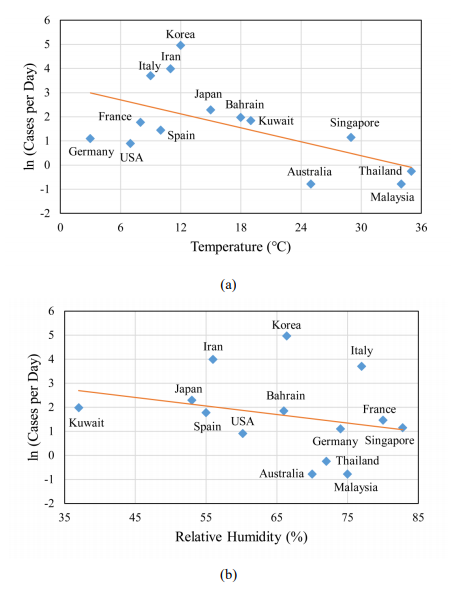
Discussion: Rough observations of outbreaks of COVID-19 outside China show a noteworthy phenomenon. In the early dates of the outbreak, countries with relatively lower air temperature and lower humidity (e.g. Korea, Japan and Iran) see severe outbreaks than warmer and more humid countries (e.g. Singapore, Malaysia and Thailand) do. Considering the natural log of the average number of cases per day from February 8 to 29 as a rough measure of the severity of the COVID-19 outbreaks3 , in Figure 1, we show that the severity is negatively related to temperature and relative humidity using 14 countries with more than 20 new cases during this period.
Figure 1: Severity of COVID-19 outbreaks v.s. temperature and relative humidity for countries outside China.
Inside China, the COVID-19 has spread widely to many cities, and the intensity of transmission and weather conditions in these cities vary largely (shown in Table SI 1), we can, therefore, analyze the determinants of COVID-19 transmission, especially the weather factors. In order to formally quantify the transmission of COVID-19, we first fit 105 samples of serial intervals with the Weibull distribution (a distribution commonly used to fit the serial interval of influenza[8]), then calculate the effective reproductive number, R, a quantity measuring the severity of infectiousness[9] , for each of all 100 Chinese cities with more than 40 cases.
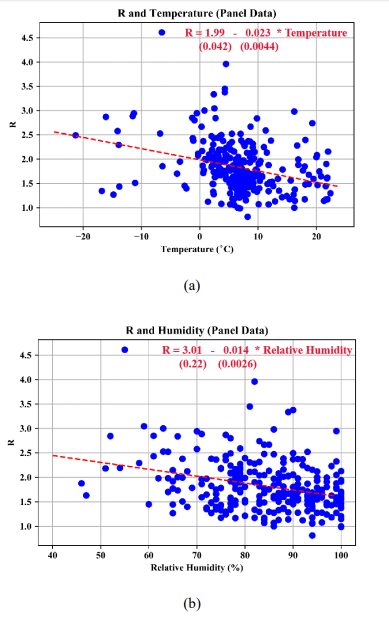
Figure 3: Effective reproductive number R v.s. temperature and relative humidity for 100 Chinese cities
Figure 2 shows the average R values from January 21 to 23 for different Chinese cities geographically. Compared with the southeast coast of China, cities in the northern area of China show relatively larger R values and lower temperatures and relative humidity. The scatter plots in Figure 3 illustrate two negative relations between the daily air temperature and R value and between the daily relative humidity and R value, respectively.
Our finding is consistent with the evidence that high temperature and high humidity reduce the transmission of influenza[10-14] , which can be explained by two possible reasons: First, the influenza virus is more stable in cold temperature, and respiratory droplets, as containers of viruses, remain airborne longer in dry air[15, 16] . Second, cold and dry weather can also weaken the hosts’ immunity and make them more susceptible to the virus[17, 18] . These mechanisms are also likely to apply to the COVID-19 transmission. Our result is also consistent with the evidence that high temperature and high relative humidity reduce the viability of SARS coronavirus[19,20] .
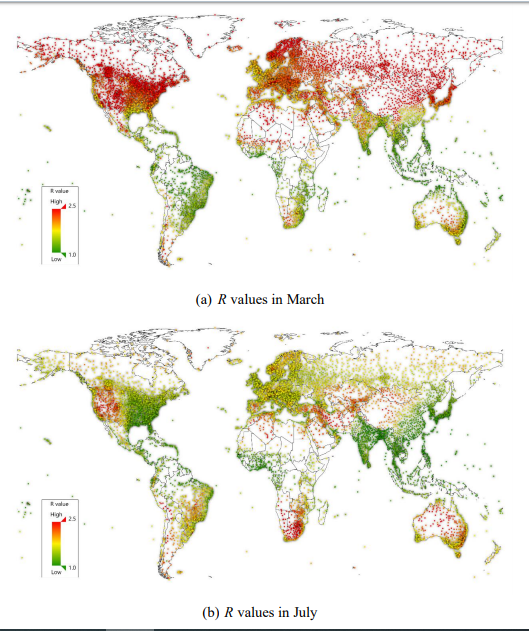
If omitting control variables, 7 the fixed-effects model of Table 2 provides an estimation of the R value for a certain city given its temperature and relative humidity:Assuming that the same relationship of Equation (1) applies to cities outside China and that the temperature and relative humid of 2020 are the same as those in 2019, we can draw a map of R values for worldwide cities in Figure 4 by plugging the average March and July temperatures and relative humidity of 2019 into Equation (1). This figure cautions people of the risk of COVID-19 outbreak worldwide, in March and July of 2020, respectively. As expected, the R values are larger for temperate countries and smaller for tropical countries in March.In July, the arrival of summer and rainy season in the northern hemisphere can effectively reduce the transmission of the COVID-19; however, risks remain in some countries in the southern hemisphere (e.g. Australia and South Africa). If we plug the normal summer temperature and relative humidity of Tokyo (28oC and 85%, respectively) into Equation (1), the transmission of the COVID19 in Tokyo will be seriously reduced between March and the Olympics: the estimated R value decreases from 1.914 to 0.992, a 48% drop!
Postscript: Some Context on US Situation from Conrad Black
The United States is now outdone only by Germany and Canada, amongcountries with sophisticated public-health systems that publish believable numbers, in the small proportion of reported cases who die from the coronavirus. This is 674 people out of 51,542 cases reported, as of late afternoon Tuesday, or 1.25 percent of identified cases, and if those who are immune-challenged are removed from that figure, the percentage descends to less than half of 1 percent of the identified cases. Even though most of the people tested appeared to have possible coronavirus symptoms, only a little more than 15 percent of those tested have tested positively. Because the United States is ramping up its treatment capabilities so quickly, it has an inordinate number of the world’s reported cases, 23 percent of the world’s new cases reported on Monday, though it only has about 4 percent of the world’s population, but the world fatality rate is about 4 percent, more than three times the American rate. The disease is still spreading unavoidably, but if care is taken to insulate the elderly and infirm from contact, the mortality rate descends to a point not greatly above seasonal flu fatality numbers.
Though it is hard to be precise about it, less than 1 percent of the adult population of the U.S. have apparently reported coronavirus-like symptoms; of those, about 20 percent have been tested; of those, about a quarter have tested positive; and of those, apart from clearly vulnerable people, fewer than half of 1 percent have died. In epidemiological terms, this is a very serious penetration of the population by a very nasty virus, but it does not justify continuing the extreme restrictions on the economic life of the country, and specifically this lethal threat to the economic well-being of tens of millions of Americans.
Given the mass media bias for amplifying bad news and speculating about the worst possibilities, it is hard to find news of any positives happening. I just watched a tv anchor interviewing a doctor and displaying a concerted effort to get the expert to say scary things confirming the anchor’s fears. The doc held his ground (No, droplets from sneezes or coughs do not stay in the air; No, surfaces are not infected for some fixed time; many factors affect how long the virus can live. )
There are hopeful things happening, and thanks to Peter Diamandis for posting these good news reports on his Tech blog and Doug for emailing me. All links can be accessed freely without any paywalls.
How about some good news for a change?
There have been A LOT of facts going around regarding COVID-19, and a flurry of “positive news” items to lift our spirits.
Here are a number of major victories from the Pandemic line. I’ve had my team fact-check these wins with links you can follow up on.
(1)Vaccine development: An experimental vaccine developed by Moderna Inc. began the first stage of a clinical trial on Monday, with testing on 45 healthy adults in Seattle. [link]
(2) China’s new cases plummet: China has now closed down its last temporary hospital built to handle COVID-19. Not enough new cases to warrant them. [link]
(3) Drugs that work: Doctors in India have successfully treated two Italian patients with COVID-19, administering a combination of drugs — principally Lopinavir and Ritonavir, alongside Oseltamivir and Chloroquine. Several are now suggesting the same medical treatment, on a case-by-case basis, globally. [link] [link]
(4) Antibodies to the rescue: Researchers at the Erasmus Medical Center claim to have found an antibody that can fend off infection by COVID-19. [link]
(5) 103-year-old recovery: A 103-year-old Chinese woman has made a full recovery from COVID-19 after being treated for 6 days in Wuhan, China, becoming the oldest patient to beat the disease. [link]
(6) Stores re-opening: Apple has reopened all 42 of its Apple retail stores in China. [link]
(7) Test results in 2 hours: Cleveland’s MetroHealth Medical Center has developed a COVID-19 test that can now deliver results in just two hours, rather than in a matter of days. [link]
(8) South Korea’s dramatic drop in new cases: After its peak of 909 newly reported COVID-19 cases on February 29th, South Korea has now seen a dramatic drop in the number of new cases reported daily. [link]
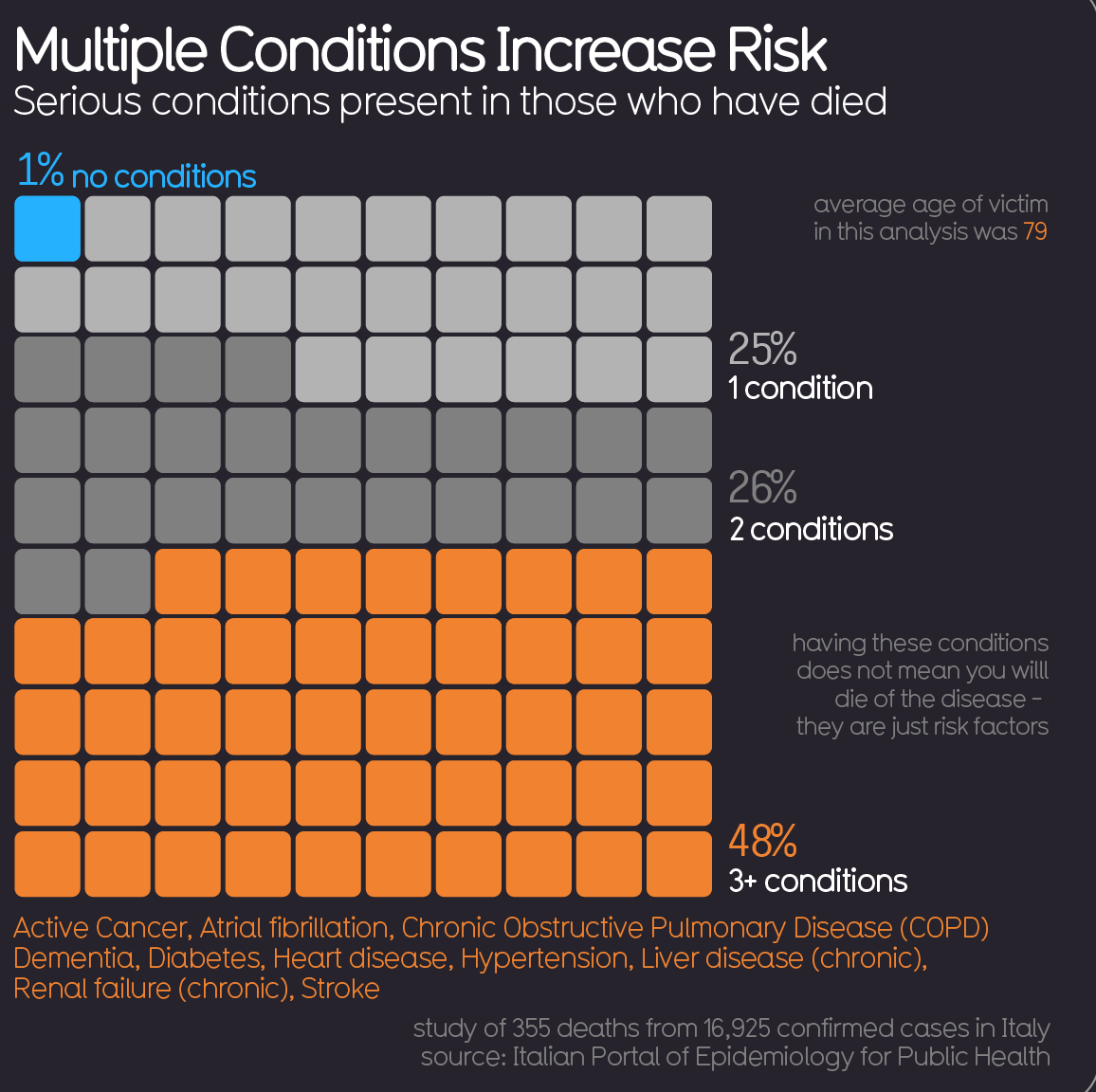
(9) Mortality rates inflated? Experts predict that Italy has seen a higher mortality rate of COVID-19 given its significant aging population, as well as its higher percentage of COVID-19 patients with pre-existing health conditions. This might suggest that COVID-19’s fatality rate may have been slightly more inflated than previously thought for the general population. [link]
(10) Israeli vaccine development: More than 50 scientists in Israel are now working to develop a vaccine and antibody for COVID-19, having reported significant breakthroughs in understanding the biological mechanism and characteristics of the novel coronavirus. [link]
(11) Full recoveries: Three patients in Maryland who tested positive for COVID-19 have now been reported to have “fully recovered.” [link]
(12) Isolated virus: A network of Canadian scientists isolated the COVID-19 virus, which can now be replicated to test diagnostics, treatments, and vaccines. [link]
(13) Yet another vaccine in the works: San Diego biotech company Arcturus Therapeutics is developing a COVID-19 vaccine in collaboration with Duke University and National University of Singapore. [link]
(14) Treatment protocols: Seven patients who were treated for COVID-19 at Jaipur’s Sawai Man Singh (SFS) Hospital and Delhi’s Safdarjung Hospital in India have recovered. The treatment protocol will be widely scaled to other hospitals. [link]
(15) Another treatment: Plasma from newly recovered COVID-19 patients (involving the harvesting of virus-fighting antibodies) holds promise for treating others infected by the virus. [link]
Some of COVID-19’s hardest hit nation victims are already emerging strong after peak infection, and biomedical innovators are tackling the virus at unprecedented speeds.
IMPORTANT TO REMEMBER… While everyone is concerned about the super-high mortality rate of this virus — which is calculated by the “number dead” divided by “the number who have tested positive” (currently ~14,450/388,000) — the denominator, i.e. the number infected is actually VERY hard to know because so few people have been tested.
It may well be that 10x more are infected but subclinical. So is the mortality rate 4% or 0.4%?
We will find out as large scale-testing comes reliably online.
Wishing you the best. Remember that our most important tool during times of panic and crisis is our mindset. -Peter Diamandis
Footnote (Update March 23) Senior vets recover from Covid19:
A home for senior veterans has been the hot spot in Oregon for positive coronavirus diagnoses, with 13 residents and one caretaker coming down with the virus.
However, as time has gone, 12 of the 14 are doing well, with one showing no symptoms anymore. It also looks like the virus isn’t transmitting as easily as we were led to believe, with 137 people who live and work at the facility testing negative.
A global emergency. Wartime mobilization. Calls to “listen to the scientists.” Demands for radical shifts in policy and human behavior. Tradeoffs between sacrifices today and larger suffering in the future. Politicization by all sides.The parallels between the ongoing COVID-19 crisis and climate change are obvious.
But contrary to the received wisdom among many climate analysts and advocates, those parallels mostly reveal just how different the two challenges are.
The COVID-19 pandemic is unfolding rapidly, demanding all of our attention. Climate change unfolds slowly, over decades, often so imperceptibly that we term the conditions of a changing climate as the “new normal.” COVID-19 presents as a frightening but conceptually simple problem: a novel virus that can be contained by quarantine, social distancing and, hopefully, immunization. Climate change presents as a “wicked” problem, which means its causes, impacts, key actors, and optimal levers for change are heavily contested. Responding to COVID-19 through behavioral shifts means putting our lives temporarily on hold for months to a year. Responding to climate change through behavioral shifts means a lifelong if not multi-generational commitment to population-wide lifestyle changes.
Nonetheless, the rapid virus–induced decline in economic activity has turned some climate hawks’ heads. “If weeks of suspended high-carbon economic activity can cut China’s emissions by a quarter,” tweeted climate activist Genevieve Guenther, “I don’t want to hear one fucking word about how decarbonizing quickly enough to maintain a livable planet is ‘unrealistic.’”
Others were more cautious in drawing comparisons. Pandemics and recessions are “hardly formulas activists should cheer, much less try to replicate going forward,” writes Kate Aronoff at the New Republic. “Wishing for a disaster to make the large-scale changes that scientists say are necessary to prevent a planetary collapse is counterproductive,” wrote Eric Holthaus.
This pandemic should then make us interrogate what we envision when we talk about a “climate emergency.” Such frames filter up meaningfully, after all: last summer, six then-presidential candidates joined a Democratic proposal to declare a “climate change emergency” to spur “sweeping reforms” in the United States. What those reforms would entail, though, remains unclear. Holthaus, whose practice is to addend many of his tweets with the warning “We are in a climate emergency,” wrote that we should “learn to treat each other better.” Aronoff used the drop in Chinese emissions to advocate a four-day work week. Guenther suggested that enforced suspension of economic activity for the climate’s sake would, obviously, utilize “smart policy” to be more “equitable” than the Chinese government’s forced quarantine policies.
Propaganda from Grist.
Yet one wonders whether people around the world might actually be less, not more, eager to entertain the idea of sweeping and intrusive responses to climate change thanks to ongoing events.
Perhaps that is because we are witnessing what a global emergency actually looks like. School and commerce are shut down. People are confined to their homes. Trade and travel are suspended. Weddings, social gatherings, and perhaps even the Olympics are canceled. Hourly workers are losing work and many others are losing jobs altogether. Fear and isolation are dominant.
And yet despite such costly personal and collective sacrifices, we are learning that there are disappointing limits to the emissions cuts that are possible under even draconian, government-enforced reductions of demand for goods and services. New economic projections are suggesting that China’s economy may shrink by up to 40% this quarter relative to January–March. The rhythm of daily life has literally ground to a halt for many hundreds of millions of Chinese people, and yet three-quarters of emissions stubbornly remain. Extreme conditions of degrowth and reduced consumption that are near-unanimously considered intolerable in the long-term have failed to mitigate anything close to a majority of greenhouse gas impacts.
And while emissions will surely decline this year, they might rebound strongly in future years, as China and other countries relax environmental regulations on fossil fuels to boost economic recovery. In the meantime, investment in clean technologies is likely to take a significant hit. Degrowth, it turns out, impacts the sectors and technologies we like as well as those we don’t.
But perhaps we might voluntarily consider maintaining some of the shifts in our lifestyles forced upon us by the quarantine? Doesn’t this moment teach us that we can take fewer flights, telecommute, eat out less, and otherwise reduce our consumption and environmental impact? We hesitate to draw too strong a conclusion here. People like traveling, for work and for pleasure, even when they know how carbon-intensive it is. People like eating out at restaurants, even if it is more expensive and tends to waste more food than eating at home. This moment might make us realize how precious, not frivolous, those experiences are.
Besides that, the absolute environmental impact of these lifestyle shifts is questionable. Take flying. For those of us privileged to write about climate change for a living, air travel likely accounts for much of our personal carbon footprint. But less than 20% of the planet has ever stepped foot on an airplane. COVID-19 is unlikely to change projections of tens of millions of new fliers in the coming decades, as consumers in China, India, Nigeria, Indonesia, Bangladesh, and elsewhere take to the skies for the first time. And to be crystal clear, these first journeys by air will open up once-unattainable personal, economic, and educational opportunities for countless lives and are milestones to be celebrated, not dreaded. Ultimately, what matters is not how many people are consuming a product or service but how carbon-intensive the underlying technologies are.
Certainly, the COVID-19 crisis does have important overlaps with the climate crisis. If anything, COVID-19 should motivate researchers and policymakers to act faster on decarbonization and adaptation, since the incidence of diseases and pandemics is likely to rise with global temperatures. Likewise, how we respond to COVID-19 could have significant climate implications. As the nations of the world stimulate and bail their way out of the coming recession, policy and infrastructure decisions can accelerate innovation and decarbonization. And, ultimately, the long-term solution to both climate and global health problems will be scientific and technological in nature: a vaccine or battery of medical treatments in the case of the virus, and affordable, scalable low-carbon technologies in the case of climate change.
But, in both psychological and political terms, we would caution against drawing too strong a connection between the two crises. We do not think the global community will look back on this time fondly. If the emergency response to the COVID-19 pandemic is held up as a model for climate action, we should not be surprised if public support is less than enthusiastic.
Further, in light of rising xenophobia, heightened international tensions, and opportunistic, discriminatory restrictions on movement and migration precipitating out of the current health emergency, we must be wary of a more selective application of the climate “lessons” of the COVID-19 response to serve an eco-facist agenda that promotes nativism and opposes immigration.
It is an understandable impulse to draw lessons from this or that crisis for other pressing global challenges, climate change among them. We share that impulse. However, the useful take-aways from comparing crises that are fundamentally different in nature are often few and disappointing. The climate crisis may feel just as immediate and pressing as an ongoing pandemic to those working in the climate space, but that does little to change the fact that governments and communities will not accept the adaptation of measures intended to fight pandemics on time horizons of months to years towards the decades-long challenge of climate change. Advocacy of such measures will not be viewed kindly, whether in the halls of political decision-making or in the court of public opinion.
The solutions for controlling the COVID-19 outbreak are simple. As decades of debate, advocacy, and politics should have abundantly demonstrated by now, the solutions for climate change are anything but.
Finally, a word about the difference between “from” and “with.” Over the past few weeks, I have been predicting a modest fatality rate from COVID-19. I began by predicting no more than a couple of hundred deaths and then upped my prediction to a 1,000-1,200. As of today, the number of deaths attributed to the virus is just over 2,000. So I was wrong about that.
Or was I? It is one thing to die from the effects of the coronavirus, quite another to die with the virus. Let’s say you are 87 years old, diabetic, with congestive heart failure and emphysema. You are infected with the coronavirus, get sick, and die. Did you die from it, or merely with it?
This is a point that Dr. John Lee, a retired professor of pathology in the United Kingdom, made in Spectator USA. “There is a big difference,” he writes, “between Covid-19 causing death, and Covid-19 being found in someone who died of other causes. . . . Much of the response to Covid-19 seems explained by the fact that we are watching this virus in a way that no virus has been watched before. The scenes from the Italian hospitals have been shocking, and make for grim television. But television is not science.”
“First do no harm.” Dr. Lee is right to warn that the panicked response to this new virus has neglected that age-old medical advice. “Unless,” he notes, “we tighten criteria for recording death due only to the virus (as opposed to it being present in those who died from other conditions), the official figures may show a lot more deaths apparently caused by the virus than [are] actually the case. What then? How do we measure the health consequences of taking people’s lives, jobs, leisure and purpose away from them to protect them from an anticipated threat? Which causes the least harm?”
That is an excellent question. Also excellent is his concluding observation that “The moral debate is not lives vs. money. It is lives vs. lives.”
It didn’t take long for climatists to tie coronavirus to global warming/climate change; IOW, “It’s our fault for using fossil fuels.” And also: “Changes to fight coronavirus also fight climate change.” Activists have a long record of claiming that de-carbonizing is a snake oil curing all of society’s ills. The latest memes give the flavor of the warped thinking.
Coronavirus hits a critical year for nature and climate chinadialogue11:08
The threats facing our planet are interconnected ArabNews10:27
Climate change helped coronavirus spread The Independent10:20
How Science Denial In High Places Accelerates Both COVID-19 and Climate Change Ecosystem Marketplace10:12
The Corona Connection The Nation08:14
Coronavirus and the climate: How we respond to deadly threats The Gazette07:15
The Coronavirus and the Climate Movement The New Yorker07:04
The carbon disruption is here, disguised as a pandemic ImpactAlpha04:10
For pandemics and climate change, voluntary measures aren’t enough Grist Magazine03:58
“In a way, the coronavirus is climate change’s publicist” Why now is the time to focus on our… Vogue India02:43
Liberals See Good from Coronavirus: Less Pollution NewsMax20:22 Tue, 17 Mar
How changes brought on by coronavirus could help tackle the climate crisis Corporate Knights17:19 Tue, 17 Mar
Think Tank Shifts From Climate Science Denial To COVID Denial Talking Points Memo16:11 Tue, 17 Mar
Coronavirus, climate crisis, conflicts: Meme-ing our way through the ‘apocalypse’ The Conversation (Canada)13:58 Tue, 17 Mar
Key readings about climate change and coronavirus Yale Climate Connections14:19
Green Jobs Are the Answer to the Coronavirus Recession The New Republic14:19
How COVID-19 Is Like Climate Change Scientific American11:07 Tue, 17 Mar
Climate change could make the coronavirus seem like the good old days. GreenBiz
Viruses expected to increase with global warming – expert The Times of Israel08:35 Tue, 17 Mar
Social distancing? You might be fighting climate change, too New Zealand Herald20:45 Mon, 16 Mar
Can the changes brought on by coronavirus help tackle climate change? Australian Geographic20:42 Mon, 16 Ma
Climatists have a pattern of blaming every bad thing on CO2 in order to promote their agenda. Thus adding in this virus is an extension of the practice of attributing exteme weather events to global warming/climate change. A previous post provides Mike Hulme’s analysis of the flawed logic, as well as the motivations behind these attempts.
The antidote to such feverish reporting is provided by Mike Hulme in a publication: Attributing Weather Extremes to ‘Climate Change’: a Review (here).
He has an insider’s perspective on this issue, and is certainly among the committed on global warming (color him concerned). Yet here he writes objectively to inform us on X-weather, without advocacy: real science journalism and a public service, really.
Overview
In this third and final review I survey the nascent science of extreme weather event attribution. The article proceeds by examining the field in four stages: motivations for extreme weather attribution, methods of attribution, some example case studies and the politics of weather event Attribution.
The X-Weather Issue
As many climate scientists can attest, following the latest meteorological extreme one of the most frequent questions asked by media journalists and other interested parties is: ‘Was this weather event caused by climate change?’
In recent decades the meaning of climate change in popular western discourse has changed from being a descriptive index of a change in climate (as in ‘evidence that a climatic change has occurred’) to becoming an independent causative agent (as in ‘climate change caused this event to happen’). Rather than being a descriptive outcome of a chain of causal events affecting how weather is generated, climate change has been granted power to change worlds: political and social worlds as much as physical and ecological ones.
To be more precise then, what people mean when they ask the ‘extreme weather blame’ question is: ‘Was this particular weather event caused by greenhouse gases emitted from human activities and/or by other human perturbations to the environment?’ In other words, can this meteorological event be attributed to human agency as opposed to some other form of agency?
The Motivations
Hulme shows what drives scientists to pursue the “extreme weather blame” question, noting four motivational factors.
Why have climate scientists over the last ten years embarked upon research to provide an answer beyond the stock phrase ‘no individual weather event can directly be attributed to greenhouse gas emissions’? There seem to be four possible motives.
1.Curiosity The first is because the question piques the scientific mind; it acts as a spur to develop new rational understanding of physical processes and new analytic methods for studying them.
2.Adaptation A second argument, put forward by some, is that it is important to know whether or not specific instances of extreme weather are human-caused in order to improve the justification, planning and execution of climate adaptation.
3.Liability A third argument for pursuing an answer to the ‘extreme weather blame’ question is inspired by the possibility of pursuing legal liability for damages caused. . . If specific loss and damage from extreme weather can be attributed to greenhouse gas emissions – even if expressed in terms of increased risk rather than deterministically – then lawyers might get interested. The liability motivation for research into weather event attribution also bisects the new international political agenda of ‘loss and damage’ which has emerged in the last two years. . . The basic idea is to give recognition that loss and damage caused by climate change is legitimate ground for less developed countries to gain access to new international climate adaptation funds.
4. Persuasion A final reason for scientists to be investing in this area of climate science – a reason stated explicitly less often than the ones above and yet one which underlies much of the public interest in the ‘extreme weather blame’ question – is frustration with and argument about the invisibility of climate change. . . If this is believed to be true – that only scientists can make climate change visible and real –then there is extra onus on scientists to answer the ‘extreme weather blame’ question as part of an effort to convince citizens of the reality of human-caused climate change.
Attribution Methods
Attributing extreme weather events to human influences requires different approaches, of which four broad categories can be identified.
1. Physical Reasoning The first and most general approach to attributing extreme weather phenomena to rising greenhouse gas concentrations is to use simple physical reasoning.
General physical reasoning can only lead to broad qualitative statements such as ‘this extreme weather is consistent with’ what is known about the human-enhanced greenhouse effect. Such statements offer neither deterministic nor stochastic answers and clearly underdetermine the ‘weather blame question.’ It has given rise to a number of analogies to try to communicate the non-deterministic nature of extreme event attribution. The three most widely used ones concern a loaded die (the chance of rolling a ‘6’ has increased, but no single ‘6’ can be attributed to the biased die), the baseball player on steroids (the number of home runs hit increases, but no single home run can be attributed to the steroids) and the speeding car-driver (the chance of an accident increases in dangerous conditions, but no specific accident can be attributed to the fast-driving).
2. Classical Statistical Analysis A second approach is to use classical statistical analysis of meteorological time series data to determine whether a particular weather (or climatic) extreme falls outside the range of what a ‘normal’ unperturbed climate might have delivered.
All such extreme event analyses of meteorological time series are at best able to detect outliers, but can never be decisive about possible cause(s). A different time series approach therefore combines observational data with model simulations and seeks to determine whether trends in extreme weather predicted by climate models have been observed in meteorological statistics (e.g. Zwiers et al., 2011, for temperature extremes and Min et al., 2011, for precipitation extremes). This approach is able to attribute statistically a trend in extreme weather to human influence, but not a specific weather event. Again, the ‘weather blame question’ remains underdetermined.
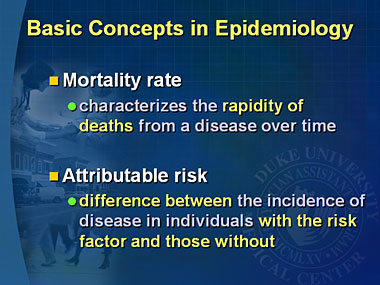
3. Fractional Attributable Risk (FAR) Taking inspiration from the field of epidemiology, this method seeks to establish the Fractional Attributable Risk (FAR) of an extreme weather (or short-term climate) event. It asks the counterfactual question, ‘How might the risk of a weather event be different in the presence of a specific causal agent in the climate system?’
The single observational record available to us, and which is analysed in the statistical methods described above, is inadequate for this task. The solution is to use multiple model simulations of the climate system, first of all without the forcing agent(s) accused of ‘causing’ the weather event and then again with that external forcing introduced into the model.
The credibility of this method of weather attribution can be no greater than the overall credibility of the climate model(s) used – and may be less, depending on the ability of the model in question to simulate accurately the precise weather event under consideration at a given scale (e.g. a heatwave in continental Europe, a rain event in northern Thailand) (see Christidis et al., 2013a).
4. Eco-systems Philosophy A fourth, more philosophical, approach to weather event attribution should also be mentioned. This is the argument that since human influences on the climate system as a whole are now clearly established – through changing atmospheric composition, altered land surface characteristics, and so on – there can no longer be such a thing as a purely natural weather event. All weather — whether it be a raging tempest or a still summer afternoon — is now attributable to human influence, at least to some extent. Weather is the local and momentary expression of a complex system whose functioning as a system is now different to what it would otherwise have been had humans not been active.
Results from Weather Attribution Studies
Hulme provides a table of numerous such studies using various methods, along with his view of the findings.
It is likely that attribution of temperature-related extremes using FAR methods will always be more attainable than for other meteorological extremes such as rainfall and wind, which climate models generally find harder to simulate faithfully at the spatial scales involved. As discussed below, this limitation on which weather events and in which regions attribution studies can be conducted will place important constraints on any operational extreme weather attribution system.
Political Dimensions of Weather Attribution
Hulme concludes by discussing the political hunger for scientific proof in support of policy actions.
But Hulme et al. (2011) show why such ambitious claims are unlikely to be realised. Investment in climate adaptation, they claim, is most needed “… where vulnerability to meteorological hazard is high, not where meteorological hazards are most attributable to human influence” (p.765). Extreme weather attribution says nothing about how damages are attributable to meteorological hazard as opposed to exposure to risk; it says nothing about the complex political, social and economic structures which mediate physical hazards.
And separating weather into two categories — ‘human-caused’ weather and ‘tough-luck’ weather – raises practical and ethical concerns about any subsequent investment allocation guidelines which excluded the victims of ‘tough-luck weather’ from benefiting from adaptation funds.
Contrary to the claims of some weather attribution scientists, the loss and damage agenda of the UNFCCC, as it is currently emerging, makes no distinction between ‘human-caused’ and ‘tough-luck’ weather. “Loss and damage impacts fall along a continuum, ranging from ‘events’ associated with variability around current climatic norms (e.g., weather-related natural hazards) to [slow-onset] ‘processes’ associated with future anticipated changes in climatic norms” (Warner et al., 2012:21). Although definitions and protocols have not yet been formally ratified, it seems unlikely that there will be a role for the sort of forensic science being offered by extreme weather attribution science.
Conclusion
Thank you Mike Hulme for a sane, balanced and expert analysis. It strikes me as being another element in a “Quiet Storm of Lucidity”.
Is that light the end of the tunnel or an oncoming train?
 With coronavirus sucking all the air out of room globally, I got interested in looking at how the Canadian national flu seasons compare with the new Wuhan virus. The analysis is important since there are many nations at higher latitudes that are in equilibrium relative to infectious diseases, but vulnerable to outbreaks of new viruses. Where I live in Canada, we have winter outbreaks every year, but are protected by a combination of sanitary practices, health care system and annual vaccines, contributing to herd immunity.
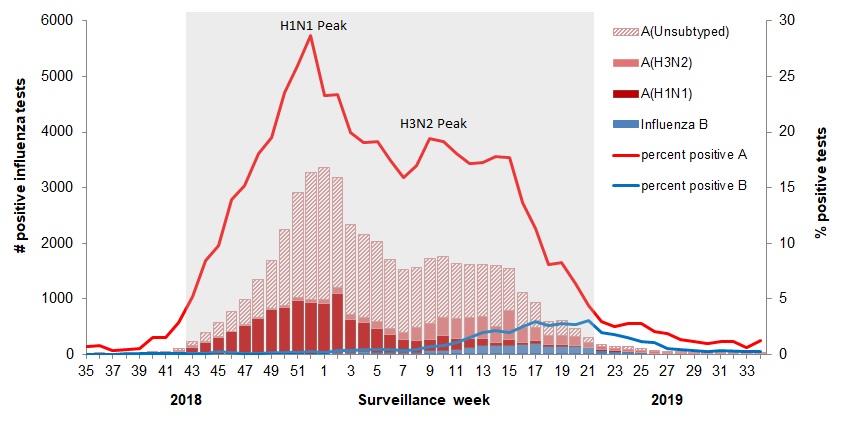 The various flu types are noted, all together making a total of 48,818 influenza detections during the 2018-19 season. A total of 946 hospitalizations were reported by CIRN-SOS sentinels that season (age = or >16). Source: Annual Influenza Reports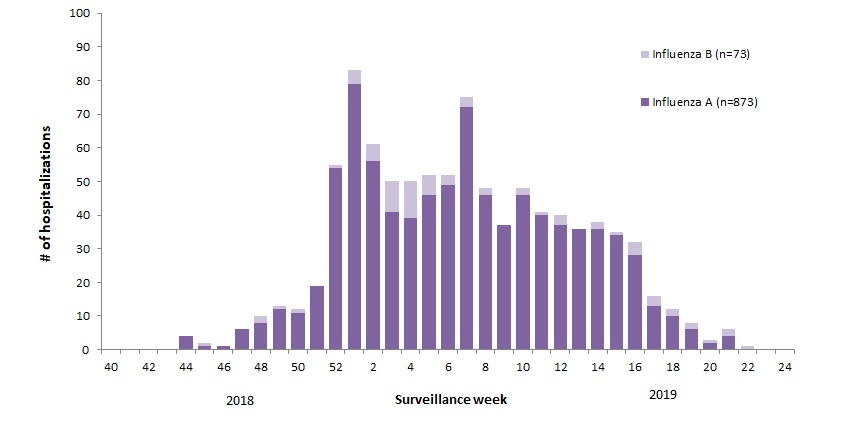










 This pandemic should then make us interrogate what we envision when we talk about a “climate emergency.” Such frames filter up meaningfully, after all: last summer, six then-presidential candidates joined a Democratic proposal to declare a “climate change emergency” to spur “sweeping reforms” in the United States. What those reforms would entail, though, remains unclear. Holthaus, whose practice is to addend many of his tweets with the warning “We are in a climate emergency,” wrote that we should “learn to treat each other better.” Aronoff used the drop in Chinese emissions to advocate a four-day work week. Guenther suggested that enforced suspension of economic activity for the climate’s sake would, obviously, utilize “smart policy” to be more “equitable” than the Chinese government’s forced quarantine policies.





 Science Matters