Everything Americans Know about Science in Brief

NASA scientists at work in the 1960s.

This is a reblog of an article at Popular Science Everything Americans know about science in seven graphs. It is a report on how the country stacked up in a recent National Science Foundation quiz. Text and images below with my bolds.

Every two years, a couple thousand lucky Americans get to take a science quiz. The National Science Foundation surveys the representative sample to see how much they (and, by extension, we) all understand about science and technology. And it’s not just for fun. The NSF has a vested interest in figuring out what Americans know, think, and understand about the scientific world so they can construct policies in line with our collective reasoning. So once it’s collected, this survey data gets compiled and put it into one big report.

Of course, no survey can perfectly capture how well a person understands science. A few questions can’t distill that kind of information; scientific literacy is less about memorizing specific facts than it is understanding how to interpret evidence. But these tests can help us get a snapshot of what Americans do know, and how our understanding is changing.

Here’s how we did:

CLIMATE CHANGE Data from NSF (some totals don’t equal 100% due to rounding) Infographic by Sara Chodosh

More Americans than ever think climate change poses a real threat to the environment, though the proportion who feel it’s not that bad has stayed around 15 percent. It seems to be the undecided who have come around, not the outright deniers. And unfortunately, the survey also found that only 6 in 10 think global warming is caused by humans—though on the bright side, that’s the highest number ever. (Note: Taking the 50% who think climate change is dangerous times 60% blaming humans gives 30% with the CAGW opinion.  The number could be higher if the concerned people also blame humans at a higher rate).

SCIENTIFIC CONCEPTS Data from NSF (some totals don’t equal 100% due to rounding) Infographic by Sara Chodosh

Testing “understanding” of scientific concepts requires some careful finagling. We’ll let you be the judge of how well NSF did. Here are the two-part questions used, which respondents had to get entirely right to receive credit:

Probability A doctor tells a couple that their genetic makeup means that they’ve got one in four chances of having a child with an inherited illness. (1) Does this mean that if their first child has the illness, the next three will not have the illness? and (2) Does this mean that each of the couple’s children will have the same risk of suffering from the illness?

Answer: (1) No (2) Yes

Experiment (1) Two scientists want to know if a certain drug is effective against high blood pressure. The first scientist wants to give the drug to 1,000 people with high blood pressure and see how many of them experience lower blood pressure levels. The second scientist wants to give the drug to 500 people with high blood pressure and not give the drug to another 500 people with high blood pressure, and see how many in both groups experience lower blood pressure levels. Which is the better way to test this drug?

(2) Why is it better to test the drug this way?

Answer: The second way, because a control group is used for comparison.

**Scientific Study **(1) When you read news stories, you see certain sets of words and terms. We are interested in how many people recognize certain kinds of terms. First, some articles refer to the results of a scientific study. When you read or hear the term scientific study, do you have a clear understanding of what it means, a general sense of what it means, or little understanding of what it means? (2) (If “clear understanding” or “general sense” response) In your own words, could you tell me what it means to study something scientifically?
Answer: Formulation of theories/test hypothesis, experiments/control group, or rigorous/systematic comparison.

SCIENTIFIC FACTS Data from NSF (some totals don’t equal 100% due to rounding) Infographic by Sara Chodosh

Despite the wayward influence of Journey to the Center of the Earth, apparently the best-known fact is that the center of the Earth is hot (far too hot to be hospitable, at least). We also seem well-versed in plate tectonics, and about 3 in 4 Americans have figured out that the Earth goes around the Sun. But only 1 in 2 know that it takes a year.

Not included here are the questions about evolution and the big bang. The NSF found a small change in those questions had a huge impact on the answers. Adding “according to the theory of evolution” or “according to astronomers” increased the proportion answering correctly to each question. A 2016 study found a similar phenomenon, but substituting a question asking about elephant evolution rather than human—people seemed to understand elephant origins better than human ones. And that suggests that it’s not that people can’t or don’t grasp the theory of evolution, it’s that sometimes scientific principles conflict with a person’s beliefs—and sometimes the beliefs win out.

Note: Beliefs also pertain to socio-political movements advancing their agenda using science to persuade.  Lysenkoism in the USSR was one example, and the UNIPCC is another. Additional questions in the linked article show such influences, once you understand environmentalism as a quasi-religious construct.

How Dangerous are GMOs?
Concern over genetically modified food is on the rise, despite the fact that 88 percent of National Academies of Science, Engineering, and Medicine members think they’re safe. Other surveys suggest the public isn’t well-informed about the actual technology involved in creating these crops, which means views are shaped by general perception and worldview rather than scientific evidence.

How Dangerous are Nuclear Power Stations to the Environment?
The younger you are, the more you think nuclear power stations harm the environment. Accordingly, fewer and fewer Americans support using nuclear energy, though 30 percent still want to prioritize fossil fuel development over alternative energy. Oddly, Gallup data suggests that the nuclear accident at Fukushima didn’t change perspectives much, which could mean that other factors—like “energy prices and perceived abundance of energy sources”—are a bigger priority than safety.

How Dangerous are Air and Water Pollution?
Education doesn’t have much of an impact on understanding that water and air pollution are dangerous. And really, why would it? The vast majority of people, including adults who dropped out of high school, think that both forms of environmental damage are dangerous (though apparently a graduate degree teaches you to feel it’s more extreme danger).

How Scientific is Astrology?
Americans have been waffling about astrology for as long as the NSF has been asking about it. There is, for the record, no true scientific basis for astrology, though there is plenty of evidence that horoscopes only feel like they’re accurate, even when they aren’t. Seminal research from the ‘70s and ‘80s showed that horoscopes are so general that everyone will identify the same personality description as their own, as long as it’s labeled with their astrological sign. Take away that Libra title at the top, and your previously perfect personality description will suddenly feel alien.

Footnote:

Some time ago the Onion Magazine article New Report Finds Americans Most Interested In Science When Moon Looks Different Than Usual revealed that Americans interest in science is capricious.

ARLINGTON, VA—Explaining that readership of science-related articles and discussion of scientific concepts tends to surge at such times, a report released Thursday by the National Science Foundation confirmed that Americans are most interested in science when the moon looks different than normal. “According to our findings, citizens are never more engaged by scientific disciplines than when the moon does not look like it regularly does—for example, when it becomes big or bright,” read the report in part, which added that while the nation’s interest in science is typically fairly minimal and consistent when the moon is its usual size and color, as soon as these properties of the moon differ in a noticeable way, millions of Americans begin displaying a desire to learn and share scientific knowledge. “The moon is ordinarily white and relatively small, and science is not on most people’s minds. However, when the moon is no longer white and small, and instead happens to be large, reddish, temporarily darkened, or any combination of those things, people generally want to know more about the methodological study of natural phenomena. Of course, once the moon goes back to the way it normally looks, interest in how the universe works drops back to baseline levels.” The report went on to mention that major changes to the Earth appeared not to garner Americans’ interest at all.

For more satirical input from the Onion see US Students Improving Math


Civil Climate Discourse

The issue of global warming/climate change has been used to polarize populations for political leverage. People like myself who are skeptical of alarmist claims find it difficult to engage with others whose minds are made up with or without a factual basis. In a recent email Alex Epstein gives some good advice how to talk about energy and climate. At the end I provide links to other material from Alex supporting his principle message regarding human benefits from using fossil fuels. Text below is his email with my bolds.

Two simple-but-powerful tactics

1. Opinion Stories

Unless I have some specific reason for wanting to have a long conversation I like to keep my conversations short, with the end goal of getting the other person to consume some high-impact resource.

One way to make this even more effective is to offer to email/mail the person a resource. Then you’ll have their contact info and can follow up in a few weeks.

The last paragraph of your message is really important. You’re telling the story of how you came to your opinion. I call this device “the opinion story.”

Here’s how it works.

Imagine you’re trying to persuade someone to read your favorite book. My favorite book is Atlas Shrugged, by Ayn Rand.

I used to say: “Atlas Shrugged is the best book you’ll ever read. You have to read it.”

That’s an opinion statement. If you haven’t read the book I’ll bet that statement makes you resistant. “Oh really? You’re telling me what the best book I’ll ever read is? You’re telling me what I have to read?”

Opinion statements often breed resistance and reflexive counter-arguments. So now I try to persuade people differently.

I might say: “My favorite book is Atlas Shrugged by Ayn Rand. I read it when I was 18 and the way the characters thought and approached life motivated me to pursue a career I love and give it everything I have.”

How do you react to that statement?

Probably better. You’re probably not resistant. You may well be intrigued. And you can’t disagree with me–because I didn’t tell you what to think, I told you my opinion story. I respected your independence.

While statements breed resistance and counter-argument, stories often breed interest and requests for more.

You can use opinion stories for anything, no matter how controversial.

For example, if someone asks me about my book, The Moral Case for Fossil Fuels, I don’t need to say “I prove that we should be using more fossil fuels, not less.” I can just say “I researched the pros and cons of different forms of energy and was surprised to come to the conclusion that we should be using more fossil fuels, not less.”

I like to have an opinion story for every controversial opinion I hold.

2. Introducing Surprising Facts

Reader Comment: “The problem I always run into is that they really believe Germany is a success.”

I’ve had the same experience, too! On many issues.

Often in conversation the phenomenon of conflicting factual claims on an issue—such as the impact of solar and wind on Germany’s economy—leads to an impasse.

One way to deal with this is to focus on establishing an explicit framework, with human flourishing (not minimum impact) as the goal and full context analysis (not bias and sloppiness) as the process. Most disputes stem from conflicting frameworks, not conflicting facts. And if you offer a compelling framework you’ll be more trustworthy on the facts.

That said, here’s a tactic I discovered a few years ago to make certain factual points much more persuasive in the moment..

I’ll start with how I discovered it.

I was walking through the Irvine Spectrum mall with a good friend when we ran into two young women working to promote Greenpeace.

My friend found one of the women attractive and said he wanted to talk to her. I thought, given my experiences with (paid) Greenpeace activists, that this was unlikely to be an edifying experience, and encouraged him to instead record a conversation between me and one of the women. Unfortunately for posterity, I was unpersuasive and what follows was never recorded.

I decided to talk to the other Greenpeace woman. She quickly started “educating” me on how Germany was successfully running on solar and wind.

Me: “Really? I’m curious where you’re getting that because I research energy for a living–and Germany is actually building a lot of new coal plants right now.”

Greenpeace: “No, that can’t be true.”

Me: “Okay, how about this? I’ll email you a news article about Germany building new coal plants. If I do, will you reconsider your position?” [Note: This is an example of the technique I recommended above.]

Greenpeace: Hesitates.

Me: “Actually, wait, we have smartphones. I’m going to Google Germany and coal. Let’s see what comes up.”

Displaying on my iPhone is a recent news story whose headline is something very close to: “Germany to build 12 new coal plants, government announces.”

Me: “So what do you think?”

Greenpeace: “I don’t know,” followed by—very rare for a Greenpeace activist—having nothing to say.

Had this been a normal person I am confident the live confirmation of the surprising fact would have made a lasting impression.

I think this tactic works best for news stories about surprising facts. Vs. an opinion story about some issue of analysis, like what Germany’s GDP is.

Summary

Alex Epstein is among those who demonstrate from public information sources comparisons between societies who use carbon fuels extensively and those who do not. The contrast is remarkable: Societies with fossil fuels have citizens who are healthier, live longer, have higher standards of living, and enjoy cleaner air and drinking water, to boot. Not only do healthier, more mobile people create social wealth and prosperity, carbon-based energy is heavily taxed by every society that uses it. Those added government revenues go (at least some of it) into the social welfare of the citizenry. By almost any measure, carbon-based energy makes the difference between developed and underdeveloped populations.

A previous post Social Benefits of Carbon referenced facts and figures from Alex’s book which can be accessed here

Other Resources:
Two Page Overview of The Moral Case for Fossil Fuels — What it is and why it matters 
main points are:
How to think about our energy future
Fossil fuels & human flourishing: the benefits
Fossil fuels & human flourishing: environmental concerns

11 page Introduction to The Moral Case for Fossil Fuels

Maslow’s hierarchy of human needs updated.

Raw Water: More Post-Modern Insanity

Available from Amazon

Contemporary style-setters display great nostalgia for pre-industrial ways of living, without ever having to subsist in the natural world. Thus they advocate getting energy from burning trees or windmills so that evil fossil fuels can be left in the ground. Now these Luddites want to turn back scientific progress in water purification, claiming that untreated water is superior.

John Robson explains in the National Post article Raw water is proof the comforts of pampered modernity have gone too far   Excerpts below with my bolds.

With the raw-water craze, people are deliberately drinking unhealthy water for their health, writes John Robson.Postmedia News

In case you’re also in hiding from the insanity we call “popular culture,” there’s this new trend where you get healthy by drinking “naturally probiotic” water that hasn’t been treated to remove animal poop. No, I mean to remove essential minerals, ions and, um, animal poop.

The National Post says people aren’t just deliberately drinking unhealthy water for their health, they’re paying nearly $10 per litre for non-vintage Eau de Lac. Yet they would riot if asked to pay such a price for gasoline or, indeed, to drink ditch water from their tap.

Many reputable people have leapt up to condemn this fad as obviously unhealthy. But they are getting the same sani-wiped elbow that common sense, authority and pride in past achievement now routinely receive. (Can I just note here that the Oprah for President boom, which in our fast-paced social-media times lasted roughly 17 hours, foundered partly because she rose to fame and fortune peddling outrageous quackery? Donald Trump did not invent or patent contempt for logic and evidence.)

Raw water is hardly the only fad to gain in strength, the more reputable opinion condemns it. And let’s face it; reputable opinion has dug itself a pretty deep hole with its propensity for disregarding evidence and silencing dissent. I don’t just mean in the bad old days. But there must be some kind of golden mean between believing every news story with “experts say” in the headline and refusing to vaccinate your children or boil your water.

Seriously. Raw water? Doesn’t everybody know if you must drink from a tainted source it is vital to cook the stuff first? Tea wasn’t healthy primarily because of the plant’s alleged medicinal properties. Boiling water to make it meant you killed the bacteria … before they killed you.

My late friend Tom Davey, publisher of Environmental Science & Engineering, was routinely indignant that people could be induced to pay premium prices for bottled water when safe tap water was the single greatest environmental triumph in human history. But today some trendies are willing to pay premium prices to avoid safe tap water, partly on the basis of the same hooey about trace elements that made “mineral” water popular, partly out of paranoia once the purview of anti-fluoridation Red-baiters, and partly out of amazing scientific ignorance including about the presence of vital nutrients in food, especially if you don’t just eat the super-processed kind.

There. I said it. Some of what we ingest is overly processed, relentlessly scientifically improved until it becomes harmful (a problem by no means restricted to food). But some isn’t, including tap water.

I realize safe drinking water was hailed as an achievement back when mainstream environmentalists wanted the planet to be nice for people. Today’s far greater skepticism about whether human and environmental well-being are compatible creates considerable reluctance to make our well-being a significant measure of progress. But I am in the older camp. Without being insensible to the “crowding out” of ecosystems even by flourishing human communities, let alone poor ones, I still believe we can live well in harmony with nature, and only thus.

Some conservative associates think my deep unease with factory farming requires me to line my hat with tin foil. Other people believe my support for conservatism requires me to line my head with it. But I can only fit so much metal into either, and I draw the line at deliberately drinking the kind of water that used to bring us cholera epidemics.

Would it be impolite to cite this trend as proof that modernity has more money than brains, that the more a life of luxury is delivered to us as a birthright rather than being a hard-won and inherently precarious achievement, the less we are able to count our blessings or act prudently?

By all means save the whales. Get plastic out of the oceans. Protect ugly as well as cute species and their ecosystems. Know that man cannot flourish cut off from nature, and weep at Saruman’s conversion of the Shire from bucolic to industrial in the Lord of the Rings. But you can’t do yourself or the Earth any good while dying of dysentery you brought on yourself by pampered stupidity.

Ross Pomeroy adds an essay at RealClearScience ‘Raw’ Water Is Insulting (my bolds)

In 2015, 844 million people lacked access to even a basic drinking water service. These people, almost entirely from developing areas in Africa and Asia, are forced to play roulette by drinking water potentially contaminated with bacteria and viruses that cause diseases like diarrhea, cholera, dysentery, typhoid, and polio, as well as a variety of parasitic infections. Globally, a half million people die each year from diarrhea contracted via contaminated drinking water, many of them children. Another 240 million suffer from schistosomiasis, a parasitic infestation of flatworms originating from snail feces.

Here in the United States, we generally don’t have to worry about waterborne illness. That’s because our tap-water travels through a rigorous system of mechanical filtration and chemical treatment which expunges contaminants, resulting in H2O that’s clean, refreshing, and among the safest in the world.

Raw water is insulting; insulting to the health of those that drink it, to the intelligence of those who consider it, and to the hundreds of millions of people around the world who yearn for treated water free from raw contamination.


Rise and Fall of CAGW


On January 8, 2018 Ross Pomeroy published  at RealClearScience an interesting article The Six Stages of a Failed Psychological Theory

The Pomeroy essay focuses on theories in the field of psychology and describes stages through which they rise, become accepted, challenged and discarded. It has long seemed to me that global warming/climate change theory properly belongs in the field of social studies and thus should demonstrate a similar cycle.

Formerly known as CAGW (catastrophic anthropogenic global warming), the notion of “climate change” is logically a subject of social science rather than physical science. “Climate Change” is a double abstraction: it refers to the derivative (change) in our expectations (patterns) of weather. Thus studies of “Climate Change” are properly a branch of Environmental Sociology.

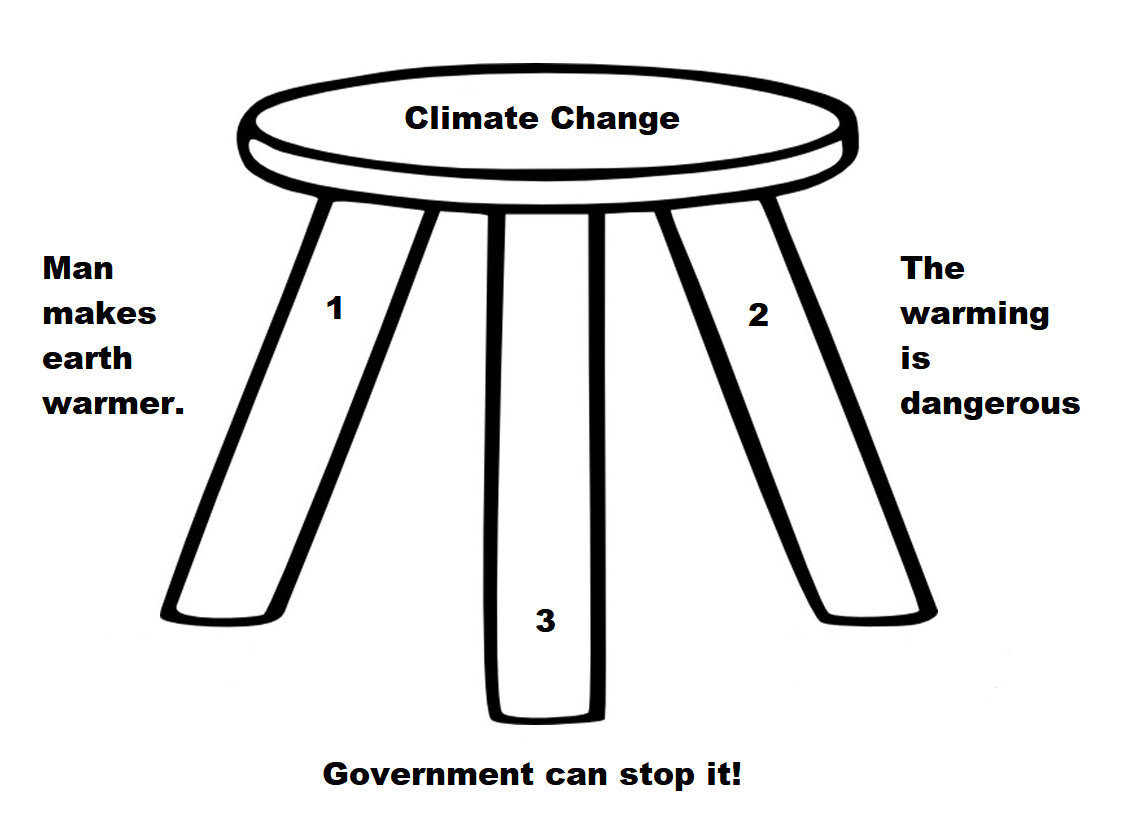
As a social psychology theory, CAGW/climate change bundles together three interdependent assertions.

From the beginning the claimed science, impacts and policies were bundled, which makes CAGW theory unusual. Psychological theories do not typically give rise to activism for changes in social and political policies. Thus the six stages above focus on the rise and fall of a scientific conclusion, with little or no reference to impacts and policies. At the end of this post are links to resources regarding these latter two points.

Examples of Failed Psychology Theories: The “Backfire Effect” and others

Ross Pomeroy (my bolds):
With the publication of his exhaustingly researched and skillfully reported article, “LOL Something Matters,” science writer Daniel Engber convincingly demonstrated that the “backfire effect,” the notion that contradictory evidence only strengthens entrenched beliefs, does not hold up under rigorous scientific scrutiny. Bluntly stated, the “backfire effect” probably isn’t real.

The debunking of this longstanding psychological theory follows similar academic takedowns of ego depletion, social priming, power posing, and a plethora of other famous findings. Indeed, much of what we “know” in psychology seems to be false.

There’s a good reason for this: psychology, as a discipline, is a house made of sand, based on analyzing inherently fickle human behavior, held together with poorly-defined concepts, and explored with often scant methodological rigor. Indeed, there’s a strong case to be made that psychology is barely a science.

How Theories Advance and Collapse

Seeing how disarray defines psychology, it makes perfect sense that the field’s leading theories are vulnerable to collapse. Having watched this process play out a number of times, a clear pattern has emerged. Let’s call it the “Six Stages of a Failed Psychological or Sociological Theory.”

Stage 1: The Flashy Finding. An intriguing report is published with subject matter that lends itself to water cooler conversation, say, for example, that sticking a pen in your mouth to force a smile makes things seem funnier. Media outlets provide gushing coverage.

Stage 1 CAGW Theory

For Climate Change, by many accounts the flashy finding was James Hansen’s famous 1988 testimony in the US Senate. Hansen’s claim to detect global warming was covered by all the main television network news services and it won for him a New York Times front page headline: “Global warming has begun, expert tells Senate.”

While Hansen’s appearance was a PR coup, he actually jumped the gun.  By 1995 IPCC scientists had not yet agreed that humans are causing global warming.  The story of that problem and the subsequent claim of first detection by John Houghton and Ben Santer is described in detail in Bernie Lewin’s fine historical account. (My synopsis is linked at the end.)

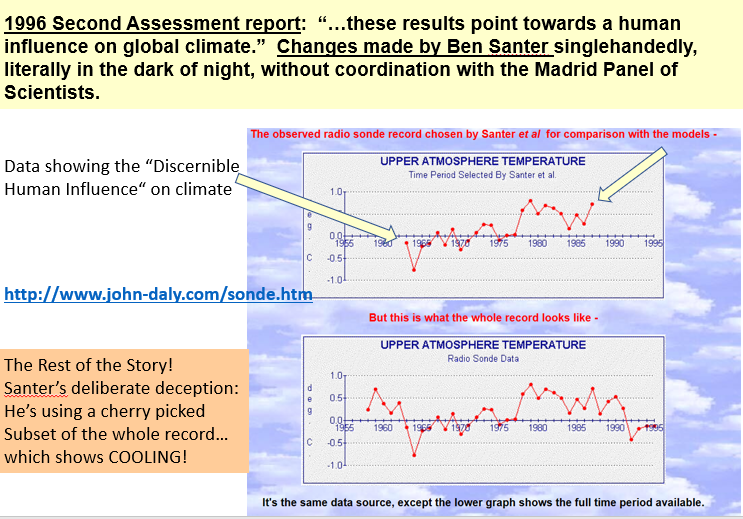
So in this sense, the actual Flashy Finding was published by Santer et al. just before Rio COP in Nature July 1996 entitled: A search for human influences on the thermal structure of the atmosphere
B. D. Santer, K. E. Taylor, T. M. L. Wigley, T. C. Johns, P. D. Jones, D. J. Karoly, J. F. B. Mitchell, A. H. Oort, J. E. Penner, V. Ramaswamy, M. D. Schwarzkopf, R. J. Stouffer & S. Tett  From the abstract:

The observed spatial patterns of temperature change in the free atmosphere from 1963 to 1987 are similar to those predicted by state-of-the-art climate models incorporating various combinations of changes in carbon dioxide, anthropogenic sulphate aerosol and stratospheric ozone concentrations. The degree of pattern similarity between models and observations increases through this period. It is likely that this trend is partially due to human activities, although many uncertainties remain, particularly relating to estimates of natural variability.

An article published the same month in World Climate Report was entitled:“Clearest Evidence” For Human “Fingerprint?” Results clouded if more complete data used  The WCR essay concluded:

We are frankly rather amazed that this paper could have emerged into the refereed literature in its present state; that is not to say that the work is bad, but that there are serious questions—similar to ours—that the reviewers should have asked.

The inescapable conclusions:

1. The vast majority of the “fingerprints” of the greenhouse effect are found way up in the atmosphere, especially in the stratosphere.

2. The “detection” models that were used either don’t predict very much future warming or were run with the wrong greenhouse effect and produce absurd results when the right numbers are put in.

3.And finally, down here in the lower atmosphere, the evidence is much more smudged and is based upon a highly selected set of data that, when viewed in toto, shows something dramatically different than what the paper purports.

The period that Santer et al. studied corresponds precisely with a profound warming trend in this region. But when all of the data (1957 to 1995) are included, there’s no trend whatsoever! We don’t know what to call this, but we believe that at least one of the 13 prestigious authors on this paper must have known this to be the case.

Stage 2: The Fawning Replications. Other psychologists, usually in the early stages of their careers, leap to replicate the finding. Most of their studies corroborate the effect. Those that don’t are not published, perhaps because the researchers don’t want to step on any toes, or because journal editors would prefer not to publish negative findings.

Stage 2 CAGW Theory

Following the human detection claim, the media increasingly filled its time and pages with reports of “multiple lines of evidence” proving CAGW.  Typically these consisted of :

Global temperature rise
Warming oceans
Shrinking ice sheets
Glacial retreat
Decreased snow cover
Sea level rise
Declining Arctic sea ice
Extreme events
Ocean acidification

However, all of these are equivocal, involving signal and noise issues.  And in any case, the fact of any changes does not in itself prove human causation.

Overview of the structure of a state-of-the-art climate model. From the NOAA website.

As suggested by the Santer et al. flashy finding, the claim of human causation was based upon climate models.  And the effort to substantiate that claim was primarily a campaign to construct and experiment with GCMs.  From History of climate modeling by Paul N. Edwards .

Like ripples moving outward from the three pioneering groups (GFDL, UCLA, and NCAR), modelers, dynamical cores, model physics, numerical methods, and GCM computer code soon began to circulate around the world. By the early 1970s, a large number of institutions had established new general circulation modeling programs. In addition to those discussed above, the most active climate modeling centers today include Britain’s Hadley Centre, Germany’s Max Planck Institute, Japan’s Earth Simulator Centre, and the Goddard Institute for Space Studies in the United States..

How many GCMs and climate modeling groups exist worldwide? The exact number can be expanded or contracted under various criteria. About 33 groups submitted GCM output to the Atmospheric Model Intercomparison Project (AMIP) in the 1990s.A few years later, however, only about 25 groups contributed coupled AOGCM outputs to the Coupled Model Intercomparison Project (CMIP)—reflecting the greater complexity and larger computational requirements of coupled models.  Notably, while the AMIP models included entries from Russia, Canada, Taiwan, China, and Korea, all of the CMIP simulations came from modeling groups based in Europe, Japan, Australia, and the USA, the historical leaders in climate modeling.

The difficulties and uncertainties with climate models have been long understood, and have not been overcome  through the decades, as indicated by the failure to reduce the range estimates of climate sensitivity to CO2.  From Modeling climatic effects of anthropogenic carbon dioxide emissions: unknowns and uncertainties Willie Soon et al.

Specifically, we review common deficiencies in general circulation model (GCM) calculations of atmospheric temperature, surface temperature, precipitation and their spatial and temporal variability. These deficiencies arise from complex problems associated with parameterization of multiply interacting climate components, forcings and feedbacks, involving especially clouds and oceans. We also review examples of expected climatic impacts from anthropogenic CO2 forcing.

Given the host of uncertainties and unknowns in the difficult but important task of climate modeling, the unique attribution of observed current climate change to increased atmospheric CO2 concentration, including the relatively well-observed latest 20 yr, is not possible. We further conclude that the incautious use of GCMs to make future climate projections from incomplete or unknown forcing scenarios is antithetical to the intrinsically heuristic value of models. Such uncritical application of climate models has led to the commonly held but erroneous impression that modeling has proven or substantiated the hypothesis that CO2 added to the air has caused or will cause significant global warming.

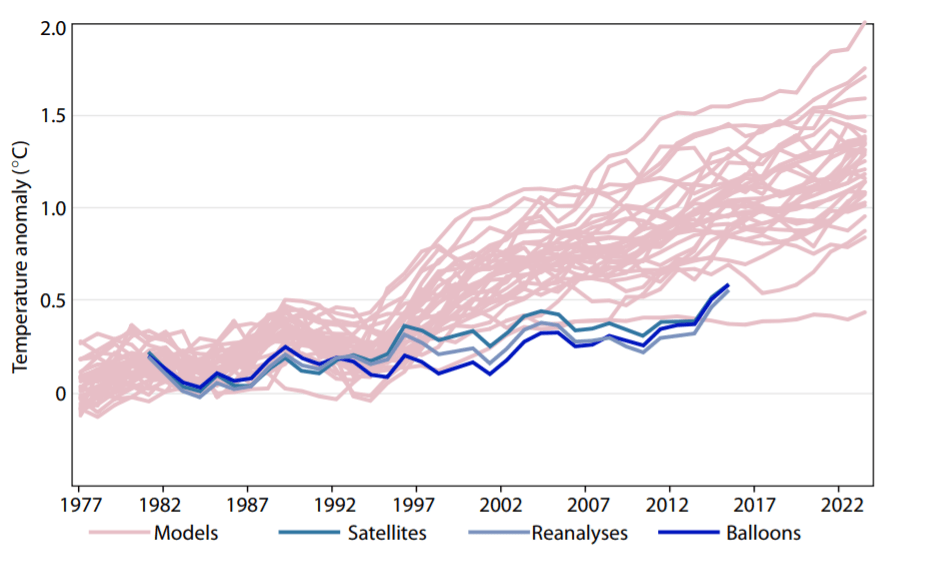
Christy 2019 fig7

Figure 7 (Christy 2019): Tropical mid-tropospheric temperatures, models vs. observations.
Models in pink, against various observational datasets in shades of blue. Five-year averages
1979–2017. Trend lines cross zero at 1979 for all series.

Stage 3: A Consensus Forms. The finding is now taken for granted, regularly appearing in pop psychology stories and books penned by writers like Malcolm Gladwell or Jonah Lehrer. Millions of people read about it and “armchair” explain it to their friends and family.

Stage 3 CAGW Theory  

The Claims of 97% Consensus of scientists on the question of CAGW stem from five papers, conveniently referenced on NASA’s website (though none of them were written by NASA scientists).

The first claim of 97% came from a survey sample of 77 climate scientists who said “Yes” to 2 statements: “It has warmed since 1850.”; “Human activity has contributed to the warming.” That survey questionnaire was deliberately not sent to those known to be skeptical: scientists not employed by government or universities; astronomers; solar scientists; physicists; meteorologists.

Another paper noted by NASA on their website is by W. R. L. Anderegg, at the time a PhD student in the department of Biology at Stanford University. He went on to become a professor at Princeton and Utah Universities in the field of ecology and biological sciences, studying the effects of global warming on forests.

Two papers were produced by John Cook  who has an undergraduate education in physics from the University of Queensland and a post-graduate honors year studying solar physics, worked as a self-employed cartoonist before founding a website pushing climate alarmism. For this he was given the title of the Climate Communication Fellow for the Global Change Institute at the University of Queensland. He is currently completing a PhD in cognitive psychology, researching how people think about climate change.

Finally, a key paper was from Naomi Oreskes who received her PhD degree in the Graduate Special Program in Geological Research and History of Science at Stanford in 1990. Her fields are History of Science and Economic Geology, and she is a prominent activist for IPCC activities.

All five of these papers have been extensively criticized in the peer-reviewed literature for their poor quality. For example:

Regarding Anderegg et al. and climate change credibility, PNAS, Dec. 28, 2010 by Lawrence Bodenstein

The study by Anderegg et al. (1) employed suspect methodology that treated publication metrics as a surrogate for expertise.

In the climate change (CC) controversy, a priori, one expects that the much larger and more “politically correct” side would excel in certain publication metrics. They continue to cite each other’s work in an upward spiral of self-affirmation.

Here, we do not have homogeneous consensus absent a few crackpot dissenters. There is variation among the majority, and a minority, with core competency, who question some underlying premises. It would seem more profitable to critique the scientific evidence than count up scientists, publications, and the like.

Regarding purely scientific questions, it may be justified to discount nonexperts. However, here, dissenters included established climate researchers. The article undermined their expert standing and then, extrapolated expertise to the more personal credibility. Using these methods to portray certain researchers as not credible and, by implication, to be ignored is highly questionable. Tarring them as individuals by group metrics is unwarranted.

Publication of this article as an objective scientific study does a true disservice to scientific discourse. Prominent scientific journals must focus on scientific merit without sway from extracurricular forces. They must remain cautious about lending their imprimatur to works that seem more about agenda and less about science, more about promoting a certain dogma and less about using all of the evidence to better our understanding of the natural world.

A more complete list of published papers refuting these studies is here: All “97% Consensus” Studies Refuted by Peer-Review

More inclusive surveys with more pointed questions show much more diverse opinions. Most scientists agree it has warmed since 1850, the end of the Little Ice Age. Geologists have evidence that the earth was warmer than now during the Medieval Warm Period, more warm during the Roman Warm Period, warmer still in the Minoan period. So the overall trend is a cooling over the last 11,500 years.

Most agree that human land use, such as making dams, farming, building cities, airports and highways, all affect the climate in those locations. The idea that rising CO2 is causing dangerous warming is controversial, with dissenters a large minority.

Stage 4: The Rebuttal. After a few decades, a new generation of researchers look to make a splash by questioning prevailing wisdom. One team produces a more methodologically-sound study that debunks the initial finding. Media outlets blare the “counterintuitive” discovery.

Stage 4 CAGW Theory  

There have been many rebuttals of CAGW theory and in the blogosphere they are proclaimed and shared among skeptics.  But it is still rare for mass media outlets to acknowledge any finding that contradicts the prevailing “consensus” view of CAGW.  On the multiple lines of evidence, the NIPCC series of reports provide references to a trove of peer-reviewed literature that do not support CAGW.  The most recent report is Climate Change Reconsidered II and the list of scientists, authors and reviewers includes people who have objected to CAGW over the years.

An important proof against the CO2 global warming claim was included in John Christy’s testimony 29 March 2017 at the House Committee on Science, Space and Technology. The text below is from that document which can be accessed here.

Figure 5. Simplification of IPCC AR5 shown above in Fig. 4. The colored lines represent the range of results for the models and observations. The trends here represent trends at different levels of the tropical atmosphere from the surface up to 50,000 ft. The gray lines are the bounds for the range of observations, the blue for the range of IPCC model results without extra GHGs and the red for IPCC model results with extra GHGs.The key point displayed is the lack of overlap between the GHG model results (red) and the observations (gray). The nonGHG model runs (blue) overlap the observations almost completely.

Main Point: IPCC Assessment Reports show that the IPCC climate models performed best versus observations when they did not include extra GHGs and this result can be demonstrated with a statistical model as well.

More discussion on this rebuttal is at Warming from CO2 Unlikely

But the mass media is still in thrall of the catastrophic theory (bad news is good for business).

Stage 5: Proper Replications Pour In. Research groups attempt to replicate the initial research with the skepticism and precise methodology that should’ve been used in the first place. As such, the vast majority fail to find any effect.

Stage 5 CAGW Theory

In the case of climate change, the rewards are all skewed in favor of CAGW.  Not only is that bundle of beliefs politically correct, the monopoly of research funding for consensus projects leaves contrarian scientists high and dry.  And to the degree that the case rests on complex and expensive computer climate models, few centers are in a position to challenge the conventional wisdom, and almost none would be rewarded for doing so.

Despite this, every year there are hundreds of new research papers published challenging CAGW.  Kenneth Richard at No Tricks Zone has done yeoman work compiling and summarizing and linking to such studies. His most recent review is  485 Scientific Papers Published In 2017 Support A Skeptical Position On Climate Alarm

The papers are sorted into four categories of views questioning climate alarm.

N(1) Natural mechanisms play well more than a negligible role (as claimed by the IPCC) in the net changes in the climate system, which includes temperature variations, precipitation patterns, weather events, etc., and the influence of increased CO2 concentrations on climatic changes are less pronounced than currently imagined.

N(2) The warming/sea levels/glacier and sea ice retreat/hurricane and drought intensities…experienced during the modern era are neither unprecedented or remarkable, nor do they fall outside the range of natural variability, as clearly shown in the first 150 graphs (from 2017) on this list.

N(3) The computer climate models are not reliable or consistently accurate, and projections of future climate states are little more than speculation as the uncertainty and error ranges are enormous in a non-linear climate system.

N(4) Current emissions-mitigation policies, especially related to the advocacy for renewables, are often ineffective and even harmful to the environment, whereas elevated CO2 and a warmer climate provide unheralded benefits to the biosphere (i.e., a greener planet and enhanced crop yields).

As for climate models, there is a single center (the Russian Institute of Numerical Mathematics), working on GCMs that produce unalarming results.  Out of 33 CMIP5 generation models the INMCM4 appears in the earlier graph above as the only one tracking close to temperature observations.  And reports of the upgrade to INMCM5 appear promising.  For more on this topic:

Climate Model Upgraded: INMCM5 Under the Hood

Stage 6: The Theory Lives On as a Zombie. Despite being debunked, the theory lingers on in published scientific studies, popular books, outdated webpages, and common “wisdom.” Adherents in academia cling on in a state of denial – their egos depend upon it.

Stage 6 CAGW Theory 

Clearly, we are still a long ways from CAGW going to zombie status.  There is still way too much money and fame attached to climate advocacy. But it is fair to say that the position of CAGW has become more precarious.  The presence of a skeptical US President, and the withdrawal of funding and political support for alarmists makes it possible for others to express doubts and explore flaws in the consensus theory.  The collapse of green energy schemes in places like Germany and Australia may also portend the onset of stage six.

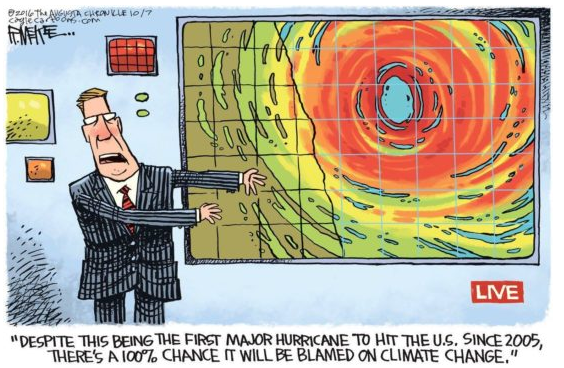
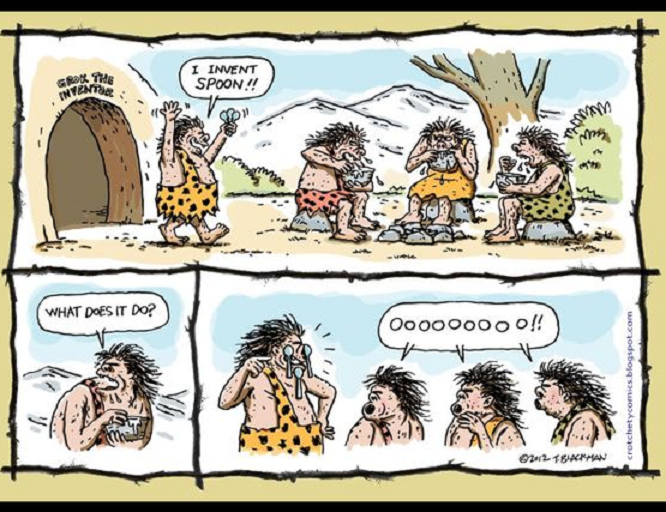
Of course, the only sure sign of a theory’s failure is when it becomes the butt of jokes and ridicule in mainstream media.  For that I do appreciate the work of cartoonist Rick McKee of the Augusta Chronicle:


More humor at Cavemen Climate Comics for Sunday

Background Articles

The Flashy Finding: Progressively Scaring the World (Lewin book synopsis)

The Fawning Replications: Climate Models Explained

A Consensus Forms: Talking ClimateNASA and Climate Dogma

The Rebuttal: Fossil Fuels ≠ Global Warming

Proper Replications: Climate Reductionism

Zombie CAGW:  Climate Policies Failure, the Movie

Postscript: Charles MacKay on Collective Delusions

Of course the classical masterwork in this field is the book Extraordinary Popular Delusions And The Madness Of Crowds By Charles MacKay 1841.  Title is link to full pdf text.  Excerpts below with my bolds.

In the present state of civilization, society has often shown itself very prone to run a career of folly from the last-mentioned cases. This infatuation has seized upon whole nations in a most extraordinary manner. France, with her Mississippi madness, set the first great example, and was very soon imitated by England with her South Sea Bubble. At an earlier period, Holland made herself still more ridiculous in the eyes of the world, by the frenzy which came over her people for the love of Tulips. Melancholy as all these delusions were in their ultimate results, their history is most amusing. A more ludicrous and yet painful spectacle, than that which Holland presented in the years 1635 and 1636, or France in 1719 and 1720, can hardly be imagined.

Some delusions, though notorious to all the world, have subsisted for ages, flourishing as widely among civilized and polished nations as among the early barbarians with whom they originated, — that of duelling, for instance, and the belief in omens and divination of the future, which seem to defy the progress of knowledge to eradicate entirely from the popular mind. Money, again, has often been a cause of the delusion of multitudes. Sober nations have all at once become desperate gamblers, and risked almost their existence upon the turn of a piece of paper. To trace the history of the most prominent of these delusions is the object of the present pages. Men, it has been well said, think in herds; it will be seen that they go mad in herds, while they only recover their senses slowly, and one by one.

MacKay’s study was exhaustive for its time, comprising three volumes;

VOL I. Considered National Delusions, including:
THE MISSISSIPPI SCHEME
THE SOUTH SEA BUBBLE
THE TULIPOMANIA.
RELICS.
MODERN PROPHECIES.
POPULAR ADMIRATION FOR GREAT THIEVES.
INFLUENCE OF POLITICS AND RELIGION ON THE HAIR AND BEARD.
DUELS AND ORDEALS
THE LOVE OF THE MARVELLOUS AND THE DISBELIEF OF THE TRUE.
POPULAR FOLLIES IN GREAT CITIES
THE O.P. MANIA.
THE THUGS, or PHANSIGARS.

VOL. II described Peculiar Follies, including:
THE CRUSADES
THE WITCH MANIA.
THE SLOW POISONERS.
HAUNTED HOUSES.

VOL. III compiled more general popular madnesses under three categories:
BOOK I: Philosophical Delusions, down through history with particular recent attention to Alchemists
BOOK II: Fortune Telling
BOOK III: The Magnetisers, a fad only subsiding when the book was written.

Everybody Knows (The Climate Fix Is In)

Lyrics:

Everybody knows that the dice are loaded
Everybody rolls with their fingers crossed
Everybody knows that the war is over
Everybody knows the good guys lost
Everybody knows the fight was fixed
The poor stay poor, the rich get rich
Thats how it goes
Everybody knows

Everybody knows that the boat is leaking
Everybody knows that the captain lied
Everybody got this broken feeling
Like their father or their dog just died
Everybody talking to their pockets
Everybody wants a box of chocolates
And a long stem rose
Everybody knows

Everybody knows that you love me baby
Everybody knows that you really do
Everybody knows that you’ve been faithful
Ah give or take a night or two
Everybody knows you’ve been discreet
But there were so many people you just had to meet
Without your clothes
And everybody knows

Everybody knows, everybody knows
Thats how it goes
Everybody knows

And everybody knows that its now or never
Everybody knows that its me or you
And everybody knows that you live forever
Ah when you’ve done a line or two
Everybody knows the deal is rotten
Old black joe’s still pickin’ cotton
For your ribbons and bows
And everybody knows

And everybody knows that the plague is coming
Everybody knows that its moving fast
Everybody knows that the naked man and woman
Are just a shining artifact of the past
Everybody knows the scene is dead
But there’s gonna be a meter on your bed
That will disclose
What everybody knows

And everybody knows that you’re in trouble
Everybody knows what you’ve been through
From the bloody cross on top of calvary
To the beach of Malibu
Everybody knows its coming apart
Take one last look at this sacred heart
Before it blows
And everybody knows

Everybody knows, everybody knows
Thats how it goes
Everybody knows

Footnote:

I doubt Leonard Cohen had climate change in mind when he wrote this masterpiece.  But he did have a pertinent poetic insight; namely, that social proof is an unreliable guide to the truth.

Progressively Scaring the World (Lewin book synopsis)


Bernie Lewin has written a thorough history explaining a series of environmental scares building up to the current obsession with global warming/climate change. The story is enlightening to people like me who were not paying attention when much of this activity was going down, prior to Copenhagen COP in my case.  It also provides a rich description of happenings behind the scenes.

As Lewin explains, it is a particularly modern idea to scare the public with science, and thereby advance a policy agenda. The power of this approach is evident these days, but his book traces it back to more humble origins and describes the process bringing us to the present state of full-blown climate fear. It is a cautionary tale.

“Those who don’t know history are doomed to repeat it.”
― Edmund Burke (1729-1797)

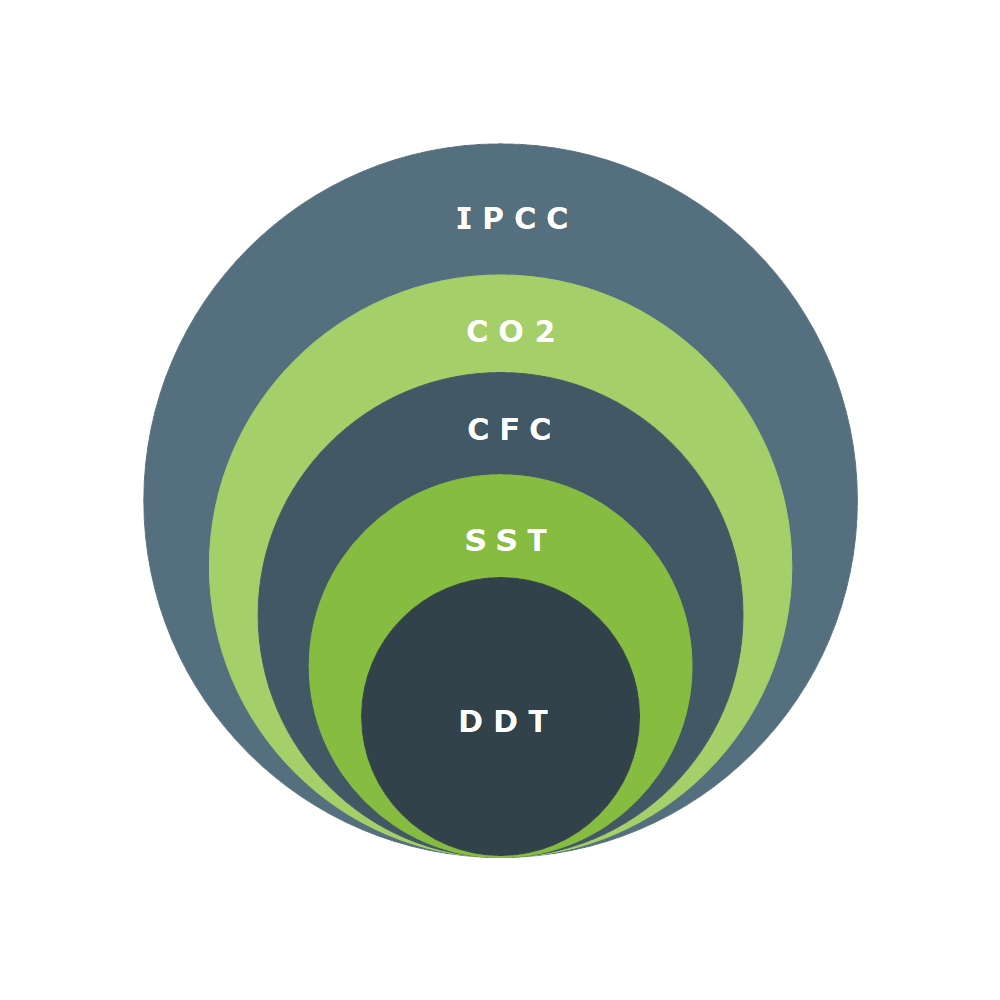
This fearful belief evolved through a series of expanding scares as diagrammed below:This article provides only some highlights while the book exposes the maneuvers and the players, their interests and tactics. Quotes from Lewin appear in italics, with my titles, summaries and bolds.
sfw_ddt-wars-cover


In the Beginning: The DDT Scare

The Context

A new ‘environmentalism’ arose through a broadening of specific campaigns against environmental destruction and pollution. It began to target more generally the industries and technologies deemed inherently damaging. Two campaigns in particular facilitated this transition, as they came to face-up squarely against the dreams of a fantastic future delivered by unfettered sci-tech progress.

One of these challenged the idea that we would all soon be tearing through the sky and crossing vast oceans in just a few hours while riding our new supersonic jets. But even before the ‘Supersonic Transportation Program’ was announced in 1963, another campaign was already gathering unprecedented support. This brought into question the widely promoted idea that a newly invented class of chemicals could safely bring an end to so much disease and destruction—of agriculture, of forests, and of human health—through the elimination of entire populations of insects. Pg.16

When the huge DDT spraying programs began, the Sierra Club’s immediate concern was the impact on nature reserves. But then, as the movement against DDT developed, and as it became increasingly involved, it began to broaden its interest and transform. By the end of the 1960s it and other similar conservation organisations were leading the new environmentalism in a broader campaign against DDT and other technological threats to the environment. Pg.18

The Alarm

This transformation was facilitated by the publication of a single book that served to consolidate the case against the widespread and reckless use of organic pesticides: Silent Spring. The author, Rachel Carson, had published two popular books on ocean ecology and a number of essays on ecological themes before Silent Spring came out in 1962. As with those earlier publications, one of the undoubted contributions of the book was the education of the public in a scientific understanding of nature. Pg.18

We will never know how Carson would have responded to the complete ban on DDT in the USA. She was suffering from cancer while writing Silent Spring and died shortly after publication (leaving the royalties from its sale to the Sierra Club), but the ban was not achieved for another decade. What we do know is that a full ban was never her intention. She supported targeted poisoning programs in place of blanket spraying, and she urged the authorities to look for alternative and ‘integrated control’, along the lines of the ‘Integrated Pest Management’ approach that is common and accepted today. Pg.19

The Exaggeration

Overall, by today’s standards at least, Carson’s policy position was moderate, and so we should be careful not to attribute to her the excesses of her followers. The trouble with Carson was otherwise: it was in her use and abuse of science to invoke in her readers an overwhelming fear. In Silent Spring, scientific claims find dubious grounding in the evidence. Research findings are exaggerated, distorted and then merged with the purely anecdotal and the speculative, to great rhetorical effect. Pg.19

Historically, the most important area of distortion is in linking organic pesticides with human cancers. The scientific case for DDT as a carcinogen has never been strong and it certainly was not strong when Silent Spring was published. Of course, uncertainty remained, but Carson used the authority of science to go beyond uncertainty and present DDT as a dangerous carcinogen. And it was not just DDT; Carson depicts us ‘living in a sea of carcinogens’, mostly of our own making, and for which there is ‘no safe dose’. Pg.19

The Legacy

If we are to understand how the EPA ban came about, it is important to realise that this action succeeded in breaking a policy stalemate that was becoming increasingly hazardous for the increasingly embattled Nixon administration. On one side of this stalemate were the repeated scientific assessments pointing to a moderate position, while on the other side were calls for more and more extreme measures fuelled by more and more outrageous claims. Pg.21

Such sober assessments by scientific panels were futile in the face of the pseudo-scientific catastrophism that was driving the likes of the Audubon Society into a panic over the silencing of the birds. By the early 1970s two things were clear: public anxiety over DDT would not go away, and yet the policy crisis would not be resolved by heeding the recommendations of scientific committees. Instead, resolution came through the EPA, and the special role that it found for itself following the publication of the Sweeney report. Pg.22

Summary

The DDT scare demonstrated an effective method: Claim that a chemical pollutant is a serious public health risk, Cancer being the most alarming of all. The media stoked the fear, and politicians acted to quell anxiety despite the weak scientific case. Also, the precedent was set for a governmental entity (EPA in this case) to make a judgment overruling expert advice in responding to public opinion.

The SST Scare

The Context

The contribution to the demise of the SST of the environmentalists’ campaign is sometimes overstated, but that is of less concern to our story than the perception that this was their victory. While the DDT campaign was struggling to make headway, the SST campaign would be seen as an early symbolic triumph over unfettered technological progressivism. It provided an enormous boost to the new movement and helped to shape it. Back in 1967, the Sierra Club had first come out campaigning against the SST for the sonic shockwaves sweeping the (sparsely populated) wilderness over which it was then set to fly. But as they began to win that argument, tension was developing within the organisation, with some members wishing to take a stronger, more general and ethical stand against new and environmentally damaging technologies such as this. P.27

With popular support for environmental causes already blooming across the country, and with the SST program already in jeopardy, scientists finally gained their own position of prominence in the controversy when they introduced some new pollution concerns. . . If that wasn’t enough, environmental concerns were also raised in the most general and cursory terms about the aircraft’s exhaust emissions. These first expressions of pollution concerns would soon be followed by others, from scientists who were brought into the debate to air speculation about various atmospheric catastrophes that would ensue if these supersonic birds were ever allowed to fly. Pg.27

The Alarm

What did make the front page of the New York Times on 2 August 1970 was concern about another climatic effect highlighted in the executive summary of the report. The headline trumpeted ‘Scientists ask SST delay pending study of pollution’ (see Figure 2.1).  The conference had analysed the effect of emissions from a fleet of 500 aircraft flying in the stratosphere, and concerns were raised that the emission of water vapour (and to a lesser extent other emissions) might absorb sunlight sufficiently to have a local or even global effect on climate. . . The climatic change argument remained in the arsenal of the anti-SST campaigners through to the end, but it was soon outgunned by much more dramatic claims about possible damage to the ozone layer. Pg.30

Throughout the 1970s, scientific speculation drove a series of ozone scares, each attracting significant press attention. These would climax in the mid-1980s, when evidence of ozone-depleting effects of spray-can propellants would be discovered in the most unlikely place. This takes us right up to the start of the global warming scare, presenting along the way many continuities and parallels. Indeed, the push for ozone protection up to the 1980s runs somewhat parallel with the global warming movement until the treaty process to mitigate ozone damage suddenly gained traction and became the very model for the process to mitigate global warming. The ozone story therefore warrants a much closer look. Pg.31

For Harold Johnston of the University of California, the real problem with SST exhaust would not be water vapour but oxides of nitrogen. Working all night, the next morning he presented Xerox copies of handwritten work projecting 10–90% depletion. In high traffic areas, there would be no stopping these voracious catalysts: the ozone layer would all but disappear within a couple of years. Even when Johnston later settled for a quotable reduction by half, there could be no quibbling over the dangers to nature and humanity of such massive environmental destruction. Pg.44

A New York Times reporter contacted Johnston to confirm his claims and although the report he delivered was subdued, the story remained alarming. It would take less than a year of full-fleet operations, Dr Johnston said in a telephone interview, for SSTs to deplete half of the stratospheric ozone that shields the earth from the sun’s ultraviolet radiation. Scientists argued in the SST debate last March that even a 1 percent reduction of ozone would increase radiation enough to cause an additional 10,000 cases of skin cancer a year in the United States. The next day, 19 May 1971, a strong negative vote demolished the funding bill. All but a few stalwarts agreed that one more vote in the House and it was all over for Boeing’s SST. After that final vote, on 30 May, the New York Times followed-up on its initial story with a feature on Johnston’s claims. This was written by their leading science writer, Walter Sullivan, an influential science communicator important to our story. Pg.48

The Exaggeration

It is true that in 1971 the link between skin cancer and sun exposure was fairly well established in various ways, including by epidemiological studies that found fair-skinned communities in low latitudes tended to record higher rates. However, the link to ultraviolet light exposure (specifically, the UV-B band) is strongest among those cancers that are most common but are also rarely lethal. The link with the rarer and most dangerous cancers, the malignant melanomas, is not so strong, especially because they often appear on skin that is not usually exposed to the sun. Pg.43

Thus, sceptics of the fuss over the risk of a few percent thinning of the already variable ozone layer would point out that the anti-SST crowd did not seemed overly worried about the modern preference for sunshine, which was, on the very same evidence, already presenting a risk many orders of magnitude greater: a small depletion in the ozone layer would be the equivalent of moving a few miles south. To the dismay of their environmentalist opponents, the bolder among these sceptics would recommend the same mitigation measures recommended to the lifestyle migrants—sunscreen, sunglasses and sunhats. Pg.43

But in 1971 there was no way to directly measure stratospheric NOx. No one was even sure whether there was any up there. Nor was there any way to confirm the presence—and, if so, the concentration— of many of the other possibly relevant reactive trace gases. This left scientists only guessing at natural concentrations, and for NOx, Johnston and others had done just that. These ‘best guesses’ were then the basis for modelling of the many possible reactions, the reaction rates, and the relative significance of each in the natural chemistry of the cold thin air miles above. All this speculation would then form the basis of further speculations about how the atmosphere might respond to the impacts of aircraft that had not yet flown; indeed none had even been built. Pg.46

The Legacy

But already the message had got through to where it mattered: to the chair of the Senate Committee on Aeronautical and Space Science, Clinton Anderson. The senator accepted Johnston’s theory on the strength of Sullivan’s account, which he summarised in a letter to NASA before concluding that ‘we either need NOx-free engines or a ban on stratospheric flight’.  And so it turned out that directly after the scrapping of the Boeing prototype, the overriding concern about supersonic exhaust pollution switched from water vapour to NOx. Pg.49

As startling as Johnston’s success appears, it is all the more extraordinary to consider how all the effort directed at solving the NOx problem was never distracted by a rising tide of doubt. The more the NOx effect was investigated, the more complex the chemistry seemed to be and the more doubtful became the original scientific foundations of the scare. In cases of serial uncertainty, the multiplying of best-guess estimates of an effect can shift one way and then the other as the science progresses. But this was never the case with NOx, nor with the SST-ozone scare generally. Pg.50

Summary

The SST Scare moved attention to the atmosphere and the notion of trace gases causing environmental damage, again linked to cancer risk. While ozone was the main issue, climate change was also raised along with interest in carbon dioxide emissions. Public policy was moved to withdraw funding for American SST production and later to ban European SSTs from landing in the US. It also demonstrated that fears could be promoted regarding a remote part of nature poorly known or understood. Models were built projecting fearful outcomes from small changes in atmospheric regions where data was mostly lacking.
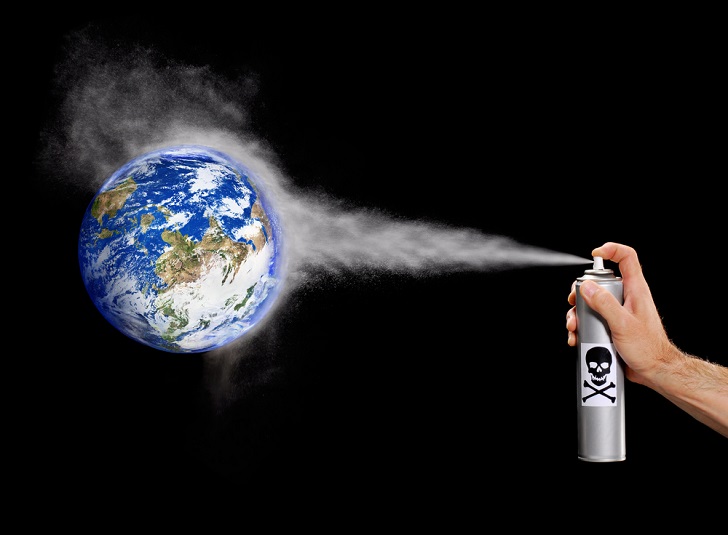
earth_ozone_1


The CFC Scare

The Context

Presumptions about the general state of a system’s stability are inevitable in situations of scant evidence, and they tend to determine positions across the sceptic/alarmist divide. Of course, one could suppose a stable system, in which a relatively minor compensatory adjustment might have an alarming impact on civilisation, like the rapid onset of a few metres of rise in sea level. But it is the use of such phrases as ‘disturbing the delicate balance of nature’ or ‘a threat to life on Earth’ that are giveaways to a supposition of instability. Hence Scorer’s incredulity regarding Johnston’s leap towards his catastrophic conclusion: ‘How could it be alleged seriously that the atmosphere would be upset by introducing a small quantity of the most commonly and easily formed compounds of the two elements which comprise 99% of it?’ Pg.68

Meanwhile, ‘Sherry’ Rowland at the University of California was looking around for a new interest. Since 1956 he had been mostly researching the chemistry of radioactive isotopes under funding from the Atomic Energy Commission. Hearing of Lovelock’s work, he was intrigued by the proposal that nearly all the CFCs ever produced might still be out there. Were there no environmental conditions anywhere that would degrade these chemicals? He handed the problem to his post-doctoral research assistant, Mario Molina. Molina eventually concluded that indeed there were no ‘sinks’ for CFCs anywhere in the ocean, soils or lower atmosphere. Thus we should expect that CFCs would drift around the globe, just as Lovelock had proposed, and that they would do so for decades, even centuries. . . or forever? Could mankind have created an organic compound that is so noble that it is almost immortal? Pg.75

The Alarm

The ozone effect that Molina had stumbled upon was different to those previously proposed from rockets and aeroplanes in one important respect: it would be tremendously delayed. Like a hidden cancer, the CFCs would build up quietly and insidiously in the lower atmosphere until their effect on the ozone miles above was eventually detectable, decades later. But when unequivocal evidence finally arrived to support the theory, it would be too late. By then there would be no stopping the destruction of the thin veil protecting us from the Sun’s carcinogenic rays. What Molina had stumbled upon had, in double-dose, one sure element of a good environmental scare. Pg.77

According to Walter Sullivan, they had calculated that spray-can CFCs have already accumulated sufficiently in the upper air to begin depleting the ozone that protects the earth from lethal ultraviolet radiation.  On current emission trends, 30% of the ozone layer would be destroyed as early as 1994. This was no longer a story about saving the sky for our grandchildren. These scientists had found an effect, already in train, with ‘lethal’ consequences for all living things during the lifetime of most of the New York Times’ massive and influential readership. Pg.82

During 1988, the second wave of global environmentalism would reach its peak in the USA, with CFC pollution its first flagship cause. Mid-March saw the US Congress voting unanimously to ratify the Montreal Protocol. It was only the second country to do so, while resistance remained strong in Europe. The following day, NASA announced the results of a huge two-year study of global ozone trends. Pb.107

The new scientific evidence came from a re-analysis of the ozone record. This found that the protective layer over high-population areas in the midlatitudes of the northern hemisphere had been depleted by between 1.7% and 3% from 1969 to 1986. These trends had been calculated after removing the effect of ‘natural geophysical variables’ so as to better approximate the anthropogenic influence. As such, these losses across just 15 years were at much faster rates than expected by the previous modelling of the CFC effect. Pg.107

The statements of the scientists (at least as quoted) made it clear to the press that this panel of experts had interpreted the empirical evidence as showing that a generalised CFC-driven depletion had already begun, and at a much faster rate than expected from the modelling used to inform the Montreal Protocol.  Pg.109

This linking by scientists of the breakup of the southern vortex with low ozone readings in southern Australia during December 1987 morphed into the idea that the ozone hole itself had moved over southern Australia. All sorts of further exaggerations and extrapolations ensued, including the idea of the hole’s continuing year-round presence. An indication of the strength of this mythology is provided by a small survey in 1999 of first-year students in an atmospheric science course at a university in Melbourne. This found that 80% of them believed the ozone hole to be over Australia, 97% believed it to be present during the summer and nearly 80% blamed ozone depletion for Australia’s high rate of skin cancer. Pg.114

After the London ‘Save the Ozone Layer Conference’, the campaign to save the ozone layer was all but won. It is true that a push for funding to assist poor country compliance did gain some momentum at this conference, and it was thought that this might stymie agreement, but promises of aid were soon extracted, and these opened the way for agreement on a complete global phase-out of CFC production. Pg.119

The Exaggeration

Here we had Harvard scientists suggesting that hairspray destruction of the ozone layer had already begun. Verification of the science behind this claim could not have played any part in the breaking of the scare, for there was nothing to show. It turned out that McElroy and Wofsy had not shown their work to anyone, anywhere. Indeed, the calculations they reported to Sullivan were only submitted for publication a few days after the story ran in the New York Times. By that time already, the science did not matter; when McElroy and Wofsy’s calculations finally appeared in print in February 1975, the response to the scare was in full swing, with spray-can boycotts, with ‘ban the can’ campaigns, and with bills to that effect on the table in Congress. Pg.82

It was on track to deliver its findings by April 1976 when it was hit with the shocking discovery of a new chlorine ‘sink’. On receiving this news, it descended into confusion and conflict and this made impossible the timely delivery of its much-anticipated report. The new ‘sink’ was chlorine nitrate. When chlorine reacts to form chlorine nitrate its attack on ozone is neutralised. It was not that chlorine nitrate had previously been ignored, but that it was previously considered very unstable. However, late in 1975 Rowland concluded it was actually quite stable in the mid-stratosphere, and therefore the two most feared ozone eaters—NOx and CFCs—would neutralise each other: not only could natural NOx moderate the CFC effect, but hairsprays and deodorants could serve to neutralise any damage Concorde might cause. Pg.84

Now, at the height of the spray-can scare, there was a shift back to climate. This was reinforced when others began to point to the greenhouse effect of CFCs. An amazing projection, which would appear prominently in the NAS report, was that CFCs alone would increase global mean temperature by 1°C by the end of the century—and that was only at current rates of emissions! In all this, McElroy was critical of Rowland (and others) for attempting to maintain the momentum of the scare by switching to climatic change as soon as doubts about the cancer scare emerged. It looked like the scientists were searching for a new scientific justification of the same policy outcome. Pg.87

The Legacy

The ban on the non-essential uses of spray-can CFCs that came into force in January 1978 marked a peak in the rolling ozone scares of the 1970s. Efforts to sustain the momentum and extend regulation to ‘essential’ spray cans, to refrigeration, and on to a complete ban, all failed. The tail-end of the SST-ozone scare had also petered out after the Franco-British consortium finally won the right to land their Concorde in New York State in 1977. And generally in the late 1970s, the environmental regulation movement was losing traction, with President Carter’s repeated proclamations of an environmental crisis becoming increasingly shrill (more on that below). Eventually, in 1981, Ronald Reagan’s arrival at the White House gave licence and drive to a backlash against environmental regulation that had been building throughout the 1970s. Long before Reagan’s arrival, it was made clear in various forums that further regulatory action on CFCs could only be premised on two things: international cooperation and empirical evidence. Pg.89

To some extent, the demand for better science had always been resisted. From the beginning, advocates conceded that direct and unequivocal evidence of CFC-caused depletion might be impossible to gain before it is too late.  But concerns over whether the science was adequate went deeper. The predictions were based on simple models of a part of our world that was still remote and largely unknown. Pg.91

Summary.

The CFC scare brought the focus of dangerous behavior down from the stratosphere to spray cans in the hands of ordinary people, along with their use of air conditioners so essential to life in the sunny places people prefer.  Speculation about ozone holes over polar regions were also more down to earth. And for the first time all of this concern produced an international treaty with extraordinary cooperation against CFCs, with UNEP soaring into prominence and gaining much credit for guiding the policy process.

The CO2 Scare

The Context

In the USA during the late 1970s, scientific interest in the potential catastrophic climatic consequences of carbon dioxide emissions came to surpass other climatic concerns. Most importantly, it came to surpass the competing scientific and popular anxiety over global cooling and its exacerbation by aerosol emissions. However, it was only during the late 1980s that the ‘carbon dioxide question’ broke out into the public discourse and transformed into the campaign to mitigate greenhouse warming. For more than a decade before the emergence of this widespread public concern, scientists were working on the question under generous government funding. Pg.122

The proven trigger for the release of funding was to forewarn of catastrophe, to generate public fear and so motivate administrators and politicians to fund investigations targeting the specific issue. The dilemma for the climatic research leadership was that calls for more research to assess the level of danger would fail unless declarations of danger were already spreading fear. Pg.143

The scare that would eventually triumph over all preceding global environmental scares, and the scare that would come to dominate climatic research funding, began with a coordinated, well-funded program of research into potentially catastrophic effects. It did so before there was any particular concern within the meteorological community about these effects, and before there was any significant public or political anxiety to drive it. It began in the midst of a debate over the relative merits of coal and nuclear energy production. Pg 144

The Alarm

In February 1979, at the first ever World Climate Conference, meteorologists would for the first time raise a chorus of warming concern. These meteorologists were not only Americans. Expert interest in the carbon dioxide threat had arisen during the late 1970s in Western Europe and Russia as well. However, there seemed to be nothing in particular that had triggered this interest. There was no new evidence of particular note. Nor was there any global warming to speak of. Global mean temperatures remained subdued, while in 1978 another severe winter descended over vast regions of North America. The policy environment also remained unsympathetic. Pg.184

At last, during the early 1980s, Nature gave some clear signals that it was coming out on the side of the warmers. In the early 1980s it started to become clear that the four-decade general cooling trend was over. Weather station records in the northern mid-latitudes began again to show an upward trend, which was traceable back to a turnaround during the 1970s. James Hansen was early in announcing this shift, and in doing so he also excited a foreboding of manmade warming. Pg.193

Besides, there was a much grander diluvian story that continued to gain currency: the semi-submerged West Antarctic ice sheet might detach and slide into the sea. This was for some an irresistible image of terrible beauty: displacement on a monumental scale, humanity unintentionally applying the lever of industrial emissions to cast off this inconceivably large body of ice. As if imagining some giant icy Archimedes slowly settling into his overflowing bath, Hansen calculated the consequential displacement to give a sea-level rise of 5 or 6 metres within a century. Pg.195

Moreover, it had the imprimatur of the American Association for the Advancement of Science; the AAAS journal, Science, was esteemed in the USA above all others. Thus we can forgive Sullivan his credulity of this string of claims: that the new discovery of ‘clear evidence’ shows that emissions have ‘already warmed the climate’, that this supports a prediction of warming in the next century of ‘almost unprecedented magnitude’, and that this warming might be sufficient to ‘melt and dislodge the ice cover of West Antarctica’. The cooling scare was barely in the grave, but the warmers had been rehearsing in the wings. Now their most daring member jumped out and stole the show. Pg.196

But Hansen went beyond this graph and beyond the conclusion of his published paper to firstly make a strong claim of causation, and then, secondly, to relate this cause to the heat being experienced that year (indeed, the heat being experienced in the hearing room even as he spoke!). He explained that ‘the Earth is warmer in 1988 than at any time in the history of instrumental measurements’. He had calculated that ‘there is only a 1 percent chance of an accidental warming of this magnitude. . . ’ This could only mean that ‘the greenhouse effect has been detected, and it is changing our climate now’. Hansen’s detection claim was covered by all the main television network news services and it won for him another New York Times front page headline: Global warming has begun, expert tells Senate. Pg.224

The Exaggeration

Where SCOPE 29 looked toward the time required for a doubling of the atmospheric concentration of carbon dioxide, at Villach the policy recommendation would be based on new calculations for the equivalent effect when all emitted greenhouse gases were taken into account. The impact of the new calculations was to greatly accelerate the rate of the predicted warming. According to SCOPE 29, on current rates of emissions, doubling of the carbon dioxide concentration would be expected in 2100. At Villach, the equivalent warming effect of all greenhouse gases was expected as early as 2030. Pg.209

This new doubling date slipped under a psychological threshold: the potential lifetime of the younger scientists in the group. Subsequently, these computations were generally rejected and the agreed date for ‘the equivalent of CO2 doubling’ was pushed out at least 20 years; indeed, never again would there be a doubling estimate so proximate with the time in which it was made. Pg.209

Like so many of the consensus statements from this time on, this one is twisted so that it gives the appearance of saying more than it actually does. In this way, those pushing for dramatic effect and those concerned not to overstate the case can come to agreement. In fact, this passage of the statement brings the case for alarm down to the reliability of the modelling, which is pretty much true of SCOPE 29. Pg.210

In other words, the Impact on Climate Change working group concluded that the models are not yet ready to make predictions (however vaguely) about the impact of greenhouse gas emissions on the global climate.  Pg.210

The Legacy

Today, emissions targets dominate discussions of the policy response to global warming, and total emissions rates are tacitly assumed to be locked to a climatic response of one, two or so many degrees of warming. Today’s discussions sits on top of a solid foundation of dogma established across several decades and supposedly supported by a scientific consensus, namely that there is a direct cause–effect temperature response to emissions. Pg.219

One of the main recommendations for mitigating these dire consequences is a comprehensive global treaty to protect the atmosphere. On the specific issue of global warming, the conference statement calls for the stabilisation of atmospheric concentrations of one greenhouse gas, namely carbon dioxide. It estimates that this would require a reduction of current global emissions by more than 50%. However, it suggests an initial goal for nations to reduce their current rates of carbon dioxide emission by 20% by 2005. This rather arbitrary objective would become the headline story: ‘Targets agreed to save climate’. And it stuck. In the emissions-reduction policy debate that followed, this ‘Toronto target’ became the benchmark. For many years to come—indeed, until the Kyoto Protocol of 1997—it would be a key objective of sustainable development’s newly launched flagship. Pg.221

Summary

The framework for international action is established presuming that CO2 emissions directly cause global warming and that all nations must collectively cut their use of fossil fuels. However, the drive for a world treaty is hampered by a lack of proof and scientists’ mixed commitment to the policy goals.
 

The IPCC Scare

The Context

Before winter closed in at the end of 1988, North America was brimming with warming enthusiasm. In the USA, global warming was promised attention no matter who won the presidential election. In Canada, after the overwhelming success of the Toronto conference, the government continued to promote the cause, most enthusiastically through its environment minister Tom McMillan. Elsewhere among world leaders, enthusiasm was also building. The German chancellor, Helmut Kohl, had been a long-time campaigner against fossil fuels. Pg.224

In February 1989, the year got off to a flying start with a conference in Delhi organised by India’s Tata Energy Research Institute and the Woods Hole Research Center, which convened to consider global warming from the perspective of developing countries. The report of the conference produced an early apportionment of blame and a call for reparations. It proclaimed that the global warming problem had been caused by the industrially developed countries and therefore its remediation should be financed by them, including by way of aid to underdeveloped countries. This call was made after presenting the problem in the most alarming terms: Global warming is the greatest crisis ever faced collectively by humankind, unlike other earlier crises, it is global in nature, threatens the very survival of civilisation, and promises to throw up only losers over the entire international socio-economic fabric. The reason for such a potential apocalyptic scenario is simple: climate change of geological proportions are occurring over time-spans as short as a single human lifetime. Pg.226

Throughout 1989, the IPCC working groups conducted a busy schedule of meetings and workshops at venues around the northern hemisphere. Meanwhile, the outpouring of political excitement that had been channelled into the process brought world attention to the IPCC. By the time of its second full session in June 1989, its treaty development mandate had become clearer: the final version of the resolution that had passed at the UN General Assembly the previous December—now called ‘Protection of global climate for present and future generations of mankind’—requested that the IPCC make recommendations on strengthening relevant existing international legal instruments and on ‘elements for inclusion in a possible future international convention on climate.’ pg.242

The Alarm

The general feeling in the research community that the policy process had surged ahead of the science often had a different effect on those scientists engaged with the global warming issue through its expanded funding. For them, the situation was more as President Bush had intimated when promising more funding: the fact that ‘politics and opinion have outpaced the science’ brought the scientists under pressure ‘to bridge the gap’pg.253

This is what became known as the ‘first detection’ program. With funding from DoE and elsewhere, the race was soon on to find ways to achieve early detection of the climate catastrophe signal. More than 10 years later, this search was still ongoing as the framework convention to mitigate the catastrophe was being put in place. It was not so much that the ‘conventional wisdom’ was proved wrong; in other words, that policy action did not in fact require empirical confirmation of the emissions effect. It was more that the policy action was operating on the presumption that this confirmation had already been achieved. Pg.254

The IPCC has warned that if CO2 emissions are not cut by 60 percent immediately, the changes in the next 60 years may be so rapid that nature will be unable to adapt and man incapable of controlling them.  The policy action to meet this threat—the UN Framework Convention on Climate Change—went on to play a leading role as the headline outcome of the entire show. The convention drafted through the INC negotiation over the previous two years would not be legally binding, but it would provide for updates, called ‘protocols’, specifying mandatory emissions limits. Towards the end of the Earth Summit, 154 delegations put their names to the text. Pg.266

The Exaggeration

It may surprise readers that even within the ‘carbon dioxide community’ it was not hard to find the view that the modelling of the carbon dioxide warming was failing validation against historical data and, further upon this admission, the suggestion that their predicted warming effect is wrong. In fact, there was much scepticism of the modelling freely expressed in and around the Carbon Dioxide Program in these days before the climate treaty process began. Those who persisted with the search for validation got stuck on the problem of better identifying background natural variability. There did at least seem to be agreement that any recent warming was well within the bounds of natural variability. Pg.261

During the IPCC review process, Wigley was asked to answer the question that he had avoided in the SCOPE 29: When is detection likely to be achieved? He responded with an addition to the IPCC chapter that explains that we would have to wait until the half-degree of warming that had occurred already during the 20th century is repeated. Only then are we likely to determine just how much of it is human-induced. If the carbon dioxide driven warming is at the high end of the predictions, then this would be early in the 21th century, but if the warming was slow then we may not know until 2050 (see Figure 15.1). In other words, scientific confirmation that carbon dioxide emissions is causing global warming is not likely for decades. Pg.263

These findings of the IPCC Working Group 1 assessment presented a political problem. This was not so much that the working group was giving the wrong answers; it was that it had got stuck on the wrong questions, questions obsolete to the treaty process. The IPCC first assessment was supposed to confirm the scientific rationale for responding to the threat of climate change, the rationale previously provided by the consensus statement coming out of the 1985 Villach conference. After that, it would provide the science to support the process of implementing a coordinated response. But instead of confirming the Villach findings, it presented a gaping hole in the scientific rationale. Pg.263

Scientist-advocates would continue their activism, but political leaders who pledged their support for climate action had invested all scientific authority for this action in the IPCC assessment. What did the IPCC offer in return? It had dished up dubiously validated model projections and the prospect of empirical confirmation perhaps not for decades to come. Far from legitimising a treaty, the scientific assessment of Working Group 1 provided governments with every reason to hesitate before committing to urgent and drastic action. Pg.263

In 1995, the IPCC was stuck between its science and its politics. The only way it could save itself from the real danger of political oblivion would be if its scientific diagnosis could shift in a positive direction and bring it into alignment with policy action. Without a positive shift in the science, it is hard to see how even the most masterful spin on another assessment could serve to support momentum towards real commitment in a binding protocol. With ozone protection, the Antarctic hole had done the trick and brought on agreement in the Montreal Protocol. But there was nothing like that in sight for the climate scare. Without a shift in the science, the IPCC would only cause further embarrassment and so precipitate its further marginalisation. Pg.278

For the second assessment, the final meeting of the 70-odd Working Group 1 lead authors was scheduled for July 1995 in Asheville, North Carolina. This meeting was set to finalise the drafting of the chapters in response to review comments. It was also (and mostly) to finalise the draft Summary for Policymakers, ready for intergovernmental review. The draft Houghton had prepared for the meeting was not so sceptical on the detection science as the main text of the detection chapter drafted by Santer; indeed it contained a weak detection claim. However, it matched the introduction to the detection chapter, where Santer had included the claim that ‘the best evidence to date suggests’. . . .. . a pattern of climate response to human activities is identifiable in observed climate records.

This detection claim appeared incongruous with the scepticism throughout the main text of the chapter and was in direct contradiction with its Concluding Summary. It represented a change of view that Santer had only arrived at recently due to a breakthrough in his own ‘fingerprinting’ investigations. These findings were so new that they were not yet published or otherwise available, and, indeed, Santer’s first opportunity to present them for broader scientific scrutiny was when Houghton asked him to give a special presentation to the Asheville meeting. Pg.279

However, the results were also challenged at Asheville: Santer’s fingerprint finding and the new detection claim were vigorously opposed by several experts in the field. One of the critics, John Christy, recalls challenging Santer on his data selection.  Santer recalls disputing the quality of the datasets used by Christy.  Debates over the scientific basis of the detection claim dominated the meeting, sometimes continuing long after the formal discussions had finished and on into the evening. Pg.280

In September, a draft summary of the entire IPCC second assessment was leaked by the New York Times, the new detection claim revealed on its front page. Pg.281

The UK Independent headlined ‘Global Warming is here, experts agree’ with
the subheading:  ‘Climate of fear: Old caution dropped as UN panel of scientists concur on danger posed by greenhouse gases.‘ The article explains the breakthough: “The panel’s declaration, after three days of torturous negotiation in Madrid, marks a decisive shift in the global-warming debate. Sceptics have claimed there is no sound evidence that climate has been changed by the billions of tonnes of carbon dioxide and other heat-trapping ‘greenhouse gases’ spewed into the atmosphere each year, mostly from the burning of fossil fuels and forests. But the great majority of governments and climate scientists now think otherwise and are now prepared to say so. ‘The balance of evidence suggests a discernible human influence on global climate’, the IPCC’s summary of its 200-page report says. The last such in-depth IPCC report was published five years ago and was far more cautious.” Pg.283

The Legacy

Stories appearing in the major newspapers over the next few days followed a standard pattern. They told how the new findings had resolved the scientific uncertainty and that the politically motivated scepticism that this uncertainty had supported was now untenable. Not only was the recent success of the attribution finding new to this story; also new was the previous failure. Before this announcement of the detection breakthrough, attention had rarely been drawn to the lack of empirical confirmation of the model predictions, but now this earlier failure was used to give a stark backdrop to the recent success, maximising its impact and giving a scientific green light to policy action. Thus, the standard narrative became: success after the previous failure points the way to policy action. Pg.284

With so many political actors using the authority of the IPCC’s detection finding to justify advancing in that direction, it is hard to disagree with his assessment. Another authority might well have been used to carry the treaty politics forward, but the fact that this particular authority was available, and was used, meant that the IPCC was hauled back into the political picture, where it remains the principal authority on the science to this day. Pg.301

What we can see from all this activity by scientists in the close vicinity of the second and third IPCC assessments is the existence of a significant body of opinion that is difficult to square with the IPCC’s message that the detection of the catastrophe signal provides the scientific basis for policy action. Most of these scientists chose not to engage the IPCC in public controversy and so their views did not impact on the public image of the panel. But even where the scientific basis of the detection claims drew repeated and pointed criticism from those prepared to engage in the public controversy, these objections had very little impact on the IPCC’s public image. Pg.310

Today, after five full assessments and with another on the way, the IPCC remains the pre-eminent authority on the science behind every effort to head off a global climate catastrophe. Pg.310

Summary:

Today the IPCC is a testament to the triumph of politics over science, of style and rhetoric over substance and evidence. A “bait and switch” gambit was applied at the right moment to produce the message wanted by the committed. Fooled by the finesse, the media then trumpeted the “idea whose time has come,” and the rest is history, as they say.   And yet, despite IPCC claims to the contrary, the detection question is still not answered for those who demand evidence.

Thank you Bernie Lewin and GWPF for setting the record straight, and for demonstrating how this campaign is sustained by unfounded fears.

A continuing supply of hot air keeps scare balloons inflated.
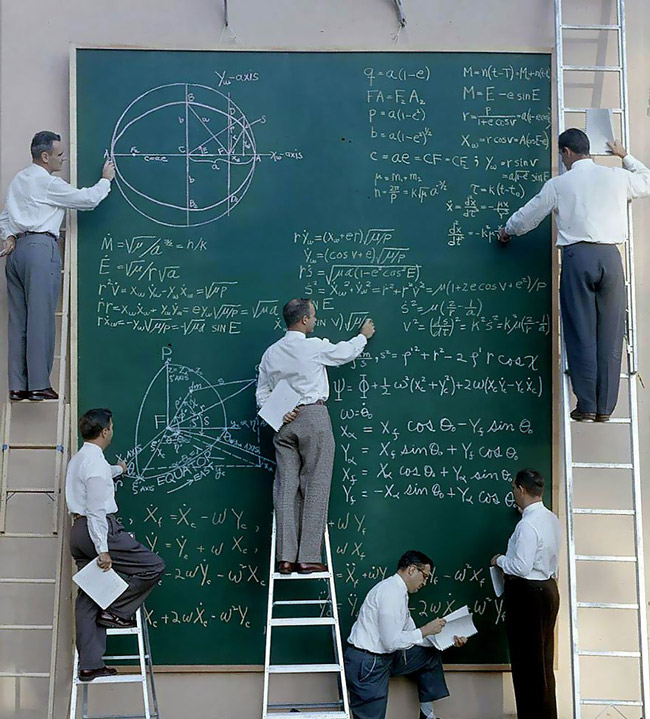
Global Cooling Celebration


Be sure to turn on the sound to appreciate the video.

So the Al Gore Global Cooling effect is muted at the COP23 site in Bonn Germany with temperatures only slightly below normal, but with rain every day.  Elsewhere in North America winter is making an early appearance.  For example in Montreal we woke up this morning with -8C and some snow in the street.

Here is the snow cover map from yesterday showing Siberia fully covered along with Alaska and northern Canada.  As seen in the video above climate realists are dancing over the demise of the warmist fantasy.


Climate Scientist Sues Over Hurt Feelings

Article By Alex Berezow — November 2, 2017 at American Council on Science and Health (ACSH) entitled:

Climate Scientist Mark Jacobson Sues Journal For $10M Over Hurt Feelings  Excerpts below with my bolds.

ACSH has been around since 1978. We have never seen anything like this.

Climate scientist Mark Z. Jacobson of Stanford University has sued the National Academy of Sciences, which publishes the prestigious journal PNAS, for publishing an article that disagreed with him. The lawsuit claims that Dr. Jacobson was libeled and slandered. He is suing to get the journal to retract the article.  For his hurt feelings and bruised ego, he also wants a big bag of money, $10 million to be precise

Let’s set aside the scientific arguments in this debate, which revolve around the feasibility of 100% renewable energy. Smart people can disagree about whether that is a technologically and economically achievable goal. The way smart (and mature) people handle their disagreements is in the pages of a peer-reviewed scientific journal. But, apparently, that’s no longer how things operate in our litigious society.

Dr. Jacobson published a paper in PNAS that other scientists found faulty. So, they published a rebuttal, which concluded that Dr. Jacobson’s analysis “involves errors, inappropriate methods, and implausible assumptions.” While this is considered rather harsh language for the scientific literature, critiquing the work of others occurs as a matter of routine. Indeed, questioning another scientist’s conclusions is a healthy and integral part of the pursuit of knowledge.

The ACSH article goes into the details and statements that suggest Jacobson’s hurt feelings are driving his actions.  But I want to put this dispute in a larger context.  For this is a powerful example of the misuse of scientific models that goes on flagrantly in climate science, but also in other fields.  The only difference here is Jacobson’s extreme measure of going to the courts to defend his model.  For background, consider the notion of Chameleon Models, a term invented by Paul Pfleiderer  (also of Stanford), and see how it applies to this conflict.

Chameleon2

Paul Pfleiderer has done a public service in calling attention to
The Misuse of Theoretical Models in Finance and Economics (here)
h/t to William Briggs for noticing and linking

He coins the term “Chameleon” for the abuse of models, and explains in the abstract of his article:

In this essay I discuss how theoretical models in finance and economics are used in ways that make them “chameleons” and how chameleons devalue the intellectual currency and muddy policy debates. A model becomes a chameleon when it is built on assumptions with dubious connections to the real world but nevertheless has conclusions that are uncritically (or not critically enough) applied to understanding our economy. I discuss how chameleons are created and nurtured by the mistaken notion that one should not judge a model by its assumptions, by the unfounded argument that models should have equal standing until definitive empirical tests are conducted, and by misplaced appeals to “as-if” arguments, mathematical elegance, subtlety, references to assumptions that are “standard in the literature,” and the need for tractability.

Chameleon Climate Models

Pfleiderer is writing about his specialty, financial models, and even more particularly banking systems, and gives several examples of how dysfunctional is the problem. As we shall see below, climate models are an order of magnitude more complicated, and abused in the same way, only more flagrantly.

As the analogy suggests, a chameleon model changes color when it is moved to a different context. When politicians and activists refer to climate models, they assert the model outputs as “Predictions”. The media is rife with examples, but here is one from Climate Concern UK

Some predicted Future Effects of Climate Change

  • Increased average temperatures: the IPCC (International Panel for Climate Change) predict a global rise of between 1.1ºC and 6.4ºC by 2100 depending on some scientific uncertainties and the extent to which the world decreases or increases greenhouse gas emissions.
  • 50% less rainfall in the tropics. Severe water shortages within 25 years – potentially affecting 5 billion people. Widespread crop failures.
  • 50% more river volume by 2100 in northern countries.
  • Desertification and burning down of vast areas of agricultural land and forests.
  • Continuing spread of malaria and other diseases, including from a much increased insect population in UK. Respiratory illnesses due to poor air quality with higher temperatures.
  • Extinction of large numbers of animal and plant species.
  • Sea level rise: due to both warmer water (greater volume) and melting ice. The IPCC predicts between 28cm and 43cm by 2100, with consequent high storm wave heights, threatening to displace up to 200 million people. At worst, if emissions this century were to set in place future melting of both the Greenland and West Antarctic ice caps, sea level would eventually rise approx 12m.

Now that alarming list of predictions is a claim to forecast what will be the future of the actual world as we know it.

Now for the switcheroo. When climate models are referenced by scientists or agencies likely to be held legally accountable for making claims, the model output is transformed into “Projections.” The difference is more than semantics:
Prediction: What will actually happen in the future.
Projection: What will possibly happen in the future.

In other words, the climate model has gone from the bookshelf world (possibilities) to the world of actualities and of policy decision-making.  The step of applying reality filters to the climate models (verification) is skipped in order to score political and public relations points.

The ultimate proof of this is the existence of legal disclaimers exempting the modelers from accountability. One example is from ClimateData.US

Disclaimer NASA NEX-DCP30 Terms of Use

The maps are based on NASA’s NEX-DCP30 dataset that are provided to assist the science community in conducting studies of climate change impacts at local to regional scales, and to enhance public understanding of possible future climate patterns and climate impacts at the scale of individual neighborhoods and communities. The maps presented here are visual representations only and are not to be used for decision-making. The NEX-DCP30 dataset upon which these maps are derived is intended for use in scientific research only, and use of this dataset or visualizations for other purposes, such as commercial applications, and engineering or design studies is not recommended without consultation with a qualified expert. (my bold)

Conclusion:

Whereas some theoretical models can be immensely useful in developing intuitions, in essence a theoretical model is nothing more than an argument that a set of conclusions follows from a given set of assumptions. Being logically correct may earn a place for a theoretical model on the bookshelf, but when a theoretical model is taken off the shelf and applied to the real world, it is important to question whether the model’s assumptions are in accord with what we know about the world. Is the story behind the model one that captures what is important or is it a fiction that has little connection to what we see in practice? Have important factors been omitted? Are economic agents assumed to be doing things that we have serious doubts they are able to do? These questions and others like them allow us to filter out models that are ill suited to give us genuine insights. To be taken seriously models should pass through the real world filter.

Chameleons are models that are offered up as saying something significant about the real world even though they do not pass through the filter. When the assumptions of a chameleon are challenged, various defenses are made (e.g., one shouldn’t judge a model by its assumptions, any model has equal standing with all other models until the proper empirical tests have been run, etc.). In many cases the chameleon will change colors as necessary, taking on the colors of a bookshelf model when challenged, but reverting back to the colors of a model that claims to apply the real world when not challenged.

A model becomes a chameleon when it is built on assumptions with dubious connections to the real world but nevertheless has conclusions that are uncritically (or not critically enough) applied to understanding our economy. Chameleons are not just mischievous they can be harmful − especially when used to inform policy and other decision making − and they devalue the intellectual currency.

Thank you Dr. Pfleiderer for showing us how the sleight-of-hand occurs in economic considerations. The same abuse prevails in the world of climate science.


Paul Pfleiderer, Stanford University Faculty
C.O.G. Miller Distinguished Professor of Finance
Senior Associate Dean for Academic Affairs
Professor of Law (by courtesy), School of Law

Postscript:  Now we have a scientist whose model has been reality tested and found wanting by others. His response is filing a lawsuit to make the criticism go away, and to levy a penalty so heavy that no model would ever again be challenged. Onward into the post-modern abyss.

Footnote:

There are a series of posts here which apply reality filters to attest climate models.  The first was Temperatures According to Climate Models where both hindcasting and forecasting were seen to be flawed.

Others in the Series are:

Sea Level Rise: Just the Facts

Data vs. Models #1: Arctic Warming

Data vs. Models #2: Droughts and Floods

Data vs. Models #3: Disasters

Data vs. Models #4: Climates Changing

Sorry Climate Science

h/t Scottish Skeptic for referring to this article by James Delingpole in the Sun UK

How scientists got their global warming sums wrong — and created a £1TRILLION-a-year green industry that bullied experts who dared to question the figures

The summary puts the point clearly.  The scientists who produce those doomsday reports for the Intergovernmental Panel on Climate Change finally come clean. The planet has stubbornly refused to heat up to predicted levels.  Read the whole thing.  Favorite excerpts below with my bolds.

I’VE just discovered the hardest word in science.

Not pneumonoultramicroscopicsilicovolcanoconiosis (inflammation of the lungs caused by inhalation of silica dust). Nor palmitoyloleoylphosphatidylethanolamine (a lipid bilayer found in nerve tissue).

No, the actual hardest word — which scientists use so rarely it might as well not exist — is “Sorry”.

Which is a shame because right now the scientists owe us an apology so enormous that I doubt even a bunch of two dozen roses every day for the rest of our lives is quite enough to make amends for the damage they’ve done.

Thanks to their bad advice on climate change our gas and electricity bills have rocketed.

So too have our taxes, our car bills and the cost of flying abroad, our kids have been brainwashed into becoming tofu-munching eco-zealots, our old folk have frozen to death in fuel poverty, our countryside has been blighted with ranks of space-age solar panels and bat-chomping, bird-slicing eco-crucifixes, our rubbish collection service hijacked by hectoring bullies, our cities poisoned with diesel fumes . . .

And all because a tiny bunch of ­scientists got their sums wrong and scared the world silly with a story about catastrophic man-made global warming.

This scare story, we now know, was at best an exaggeration, at worst a ­disgraceful fabrication. But while a handful of reviled and derided sceptics have been saying this for years, it’s only this week that those scientists have fessed up to their mistake.

One scientist has described the ­implications of the new Nature Geoscience report as “breathtaking”. He’s right. What it effectively does is scotch probably the most damaging ­scientific myth of our age — the notion that man-made carbon dioxide (CO2) is causing the planet to warm at such dangerous and ­unprecedented speeds that only massive government intervention can save us.

For a quarter of a century now — it all really got going in 1992 when 172 nations signed up to the Rio Earth Summit — our politicians have believed in and acted on this discredited theory.

Doomsday was predicted, but midnight passed without disaster.

In the name of saving the planet, war was declared on carbon dioxide, the benign trace gas which we exhale and which is so good for plant growth it has caused the planet to “green” by an extraordinary 14 per cent in the last 30 years.

This war on CO2 has resulted in a massive global decarbonisation industry worth around $1.5trillion (£1.11trillion) a year. Though it has made a handful of green crony capitalists very rich, it has made most of us much poorer, by forcing us to use expensive “renewables” instead of cheap, abundant fossil fuels.

So if the science behind all this ­nonsense was so dodgy, why did no one complain all these years?

Well, a few of us did. Some — such as Johnny Ball and David Bellamy — were brave TV celebrities, some — Graham Stringer, Peter Lilley, Owen Paterson, Nigel (now Lord) Lawson — were ­outspoken MPs, some were bona fide scientists. But whenever we spoke out, the response was the same — we were bullied, vilified, derided and dismissed as scientifically illiterate loons by a powerful climate alarmist establishment which brooked no dissent.

Unfortunately this alarmist establishment has many powerful media allies. The BBC has a huge roster of eco-activist reporters and science “experts” who believe in man-made global warming, and almost never gives sceptics air time.

It comes as little consolation to those of us who’ve been right all along to say: “I told you so.”

In the name of promoting the global warming myth, free speech has been curtailed, honest science corrupted and vast economic and social damage done. That ­apology is long overdue.

Footnote:

For a short course in how climate science was exploited, Richard Lindzen provides details and names in this post Climate Science Was Broken

Cavemen Climate Comics for Sunday


This storm season is frightening and has climatists freaking out.  Perhaps some comic relief is in order. This post is a collection of cartoons that put modern awarenesses into cavemen conversations. It was inspired by a great cartoon from Rick McKee of the Augusta Chronicle which appears near the end.  H/T  WUWT.

As we shall see, some modern ideas aren’t far removed from stone age thinking.  For example, the cartoon above portrays the invention of environmentalism to repudiate technology advances

Then we have the inevitable social pressure to put down backward people.

Virtue signaling provides a way for the unevolved to fit in.

Eventually, social media overwhelms scientific progress.

Of course climate social discourse depends on magical thinking.

Rick McKee of the Augusta Chronicle H/T  WUWT.

Footnote:

Postmodern social media also have unfortunate side effects.

Postscript

On a more serious note, these events remind me what Michael Crichton wrote in State of Fear (2004).

Our planet is five billion years old, and it has been changing constantly all during that time. […] Our atmosphere is as violent as the land beneath it. At any moment there are one thousand five hundred electrical storms across the planet. Eleven lightning bolts strike the ground each second. A tornado tears across the surface every six hours. And every four days, a giant cyclonic storm, hundreds of miles in diameter, spins over the ocean and wreaks havoc on the land.

The nasty little apes that call themselves human beings can do nothing except run and hide. For these same apes to imagine they can stabilize this atmosphere is arrogant beyond belief. They can’t control the climate.

The reality is, they run from the storms.

More at In Praise of Michael Crichton