Milei Speaks Truth to WEF Elite Power

Argentina’s President Javier Milei had a warning for those attending the annual WEF meeting in Davos, Switzerland; ‘the Western world is in danger’ from ‘collectivist experiments’ such as Diversity, Equity and Inclusion (DEI), and has called on the world to reject socialism and instead embrace “free enterprise capitalism” to end global poverty. H/T zerohedge

“Today, I’m here to tell you that the Western world is in danger,” Milei toild the audience. “And it is in danger because those who are supposed to defend the values of the West are co-opted by a vision of the world that inexorably leads to socialism, and thereby to poverty,” he added.

The self-described “anarcho-capitalist” criticized Davos itself for its “socialist agenda, which will only bring misery to the world,” according to Reuters.

“The main leaders of the Western world have abandoned the model of freedom for different versions of what we call collectivism. We’re here to tell you that collectivist experiments are never the solution to the problems that afflict the citizens of the world — rather they are the root cause,” Milei said, adding “Do believe me, no-one [is] better placed than us Argentines to testify to these two points.”

Below is a lightly edited transcript of Milei’s speech from the closed captions. In the video the talking only begins at 4.25 minutes with Schwab’s introduction. I added some images.

Schwab: Good afternoon ladies and gentlemen it’s for me a great great honor to welcome Javier Milei, as you know is a freely elected president of Argentina. And it’s actually your first trip to a foreign country after being elected. First congratulations for your election and congratulations also to your sister who managed your campaign. Sometimes people would say it was with more radical methods but you introduce a new spirit to Argentina, making Argentina much more related to free enterprise, to entrepreneurial activities, and also to bring Argentina back to the rule of law.

So we have a very extraordinary person among us today and of course we are all all eager to listen to you. Again a very cordial welcome to the World Economic Forum.

Javier Milei: Good afternoon. thank you very much today I’m here to tell you that the Western world is in danger. And it is endangered because those who are supposed to defend the values of the West are co-opted by a vision of the world that inexorably leads to socialism and thereby to poverty. Unfortunately in recent decades, motivated by some well-meaning individuals willing to help others, and others motivated by the wish to belong to a privileged cast, the main leaders of the western world have abandoned the model of freedom for different versions of what we call collectivism.

We’re here to tell you that collectivist experiments are never the solution to the problems that afflict the citizens of the world. Rather they are the root cause. Do believe me; no one is better placed than we Argentines to testify to these two points. When we adopted the model of Freedom back in 1860 in 35 years we became a leading world power. And when we embraced collectivism over the course of the last 100 years, we saw how our citizens started to become systematically impoverished. And we dropped to spot number 140 globally.

But before having that discussion it would first be important for us to take a look at the data that demonstrate why free enterprise capitalism is not just the only possible system to end world poverty, but also that it’s the only morally desirable system to achieve this. If we look at the history of economic progress we can see how between the year Zero and the year 1800 approximately world per capita GDP practically remained constant throughout the whole reference period. If you look at a graph of the evolution of economic growth throughout the history of humanity you would see a hockey stick graph. An exponential function that remained constant for 90% of the time and which was exponentially triggered starting in the 19th century.

The only exception to this history was in the late 15th century with the discovery of the American continent but for this exception throughout the whole period between the year zero and the year 1800 Global per capita GDP stagnated. It’s not just that capitalism brought about an explosion in wealth from the moment it was adopted as an economic system. But also if you look at the data you will see that growth continues to accelerate throughout the whole period. Between the year zero and the year 1800 the per capita GDP growth rate remained stable at around 0.02% annually so almost no growth. Starting in the 19th century with the Industrial Revolution the compound annual growth rate was 66% and at that rate in order to double per capita GDP you would need some 107 years.

Now if you look at the period between the year 1900 and the year 1950 the growth rate accelerated to 1.66% a year so you no longer need 107 years to double per capita GDP but 66. And if you take the period between 1950 and the year 2000 you will see that the growth rate was 2.1%, which would mean then in only 33 years we could double the world’s per capita GDP. Far from stopping, this trend remains well and alive today, For the period between the year 2000 and 2023 the growth rate again accelerated to 3% a year which means that we could double world per capita GDP in just 23 years.

That said when you look at per capita GDP since the year 1800 and until today you will see that after the Industrial Revolution Global per capita GDP multiplied by over 15 times, which meant a boom in growth that lifted 90% of the global population out of poverty. We should remember that by the year 1800 about 95% of the world’s population lived in extreme poverty and that figure dropped to 5% by the year 2020 prior to the pandemic.

The conclusion is obvious. Far from being the cause of our problems free trade capitalism as an economic system is the only instrument we have to end hunger, poverty and extreme poverty. Across our planet the empirical evidence is unquestionable. Therefore since there is no doubt that free enterprise capitalism is Superior in productive terms the leftwing doxer has attacked capitalism alleging matters of morality. The detractors claim that it’s unjust; they say capitalism is evil because it’s individualistic and that collectivism is good because it’s altruistic. Of course with the money of others they advocate for social justice.

But this concept which became fashionable in the developed world in recent times, has been in my country a constant in political discourse for over 80 years. The problem is that social justice is not just and nor does it contribute either to the general well being. Quite on the contrary, it’s an intrinsically unfair idea because it’s violent. It’s unjust because the state is financed through tax and taxes are collected coercively. Can anyone of us say that they voluntarily pay taxes? Which means that the state is financed through coercion and that the higher the tax burden the higher the coercion and the lower the freedom.

Those who promote social justice, the Advocates start with the idea that the whole economy is a pie that can be shared differently. But that pie is not a given. It’s wealth that is generated in what Israel Kirzner for instance calls a market Discovery process. If the goods or services offered by a business are not wanted, the business will fail unless it adapts to what the market is demanding. If they make a good quality product at an attractive price they will do well and produce more. So the market is a discovery process in which the capitalist will find the right path as they move forward.

But if the state punishes capitalists when they’re successful and gets in the way of the discovery process, their incentives are destroyed. And the consequence is that they will produce less, the pie will be smaller and this will harm society as a whole. By inhibiting these Discovery processes and hindering the appropriation of discoveries, Collectivism ends up binding the hands of entrepreneurs and prevents them from offering better goods and services at a better price.

So how come that Academia, International organizations, economic theory and politics demonize an economic system that has not only lifted 90% of the world’s population out of extreme poverty but has continued to do this faster and faster? And this is morally Superior. Just thanks to free trade capitalism, the world is now living its best moment. Never in all of Humanity’s history has there been a time of more Prosperity than today. All the world of today has more freedom, is richer, is more peaceful and prosperous.

And this is particularly true for countries that have more freedom and have economic freedom and respect the property rights of individuals. Countries that have more freedom are 12 times richer than those that are repressed and the lowest decile in terms of distribution in free countries are better off than 90% of the population of repressed countries. And poverty is 25 times lower and extreme poverty is 50 times lower. And citizens in free countries live 25% longer than citizens in repressed countries.
Now what do we mean when we talk about libertarianism? Let me quote the words of the greatest Authority on freedom in Argentina Professor Alberto Benegas Lynch who says that libertarianism is the unrestricted respect for the life project of others based on the principle of non-aggression in defense of the right to life, liberty and property. Its fundamental institutions being private property, markets free from State intervention, free competition.

The division of labor and social cooperation as part of which success is achieved only by serving others with Goods of better quality or at a better price. In other words capitalists, successful business people are social benefactors who, far from appropriating the wealth of others, contribute to the general well-being. Ultimately a successful entrepreneur is a hero and this is the model that we are advocating for the Argentine of the future, a model based on the fundamental principles of libertarianism: the defense of Life, of freedom and of property.

Now if free enterprise capitalism and economic freedom have proven to be extraordinary instruments to end poverty in the world, and we are now at the best time in the history of humanity, why do I say that the West is in danger? I say this precisely because in those countries that should defend the values of the free market private property and the other institutions of libertarianism, sectors of the political and economic establishment, some due to mistakes in their theoretical framework and others due to a Greed for power, are undermining the foundations of libertarianism, opening up the doors to socialism and potentially condemning us to Poverty misery and stagnation.

It should never be forgotten that socialism is always and everywhere an impoverishing phenomenon that has failed in all countries where it’s been tried out. It’s been a failure economically, socially culturally and it also murdered over a 100 million human beings. The essential problem for the West today is not just that we need to come to grips with those who even after the fall of the Berlin wall and the overwhelming empirical evidence continue to advocate for impoverishing socialism. But there’s also our own leaders, thinkers and academics relying on a misguided theoretical framework, who undermine the fundamentals of the system that has given us the greatest expansion of life and prosperity in our history. I refer to the misguided neoclassical economic theory which designs a set of instruments that unwillingly or without intention ends up serving intervention by the state socialism and social degradation.

The problem is neoclassicals fell in love with a model that does not map reality. So they put down their mistakes to supposed market failures, rather than reviewing the premises of the model. On the pretext of a supposed market failure regulations are introduced which only create distortions in the price system, They prevent economic calculus and therefore also prevent saving, investment and growth. This problem lies mainly in the fact that not even supposedly libertarian economists understand what is the market. Because if they did understand, it would quickly be seen that it’s impossible for that to be something along the line of market failures.

The market is not a mere graph describing a curve of supply and demand. The market is a mechanism of social cooperation where you voluntarily exchange ownership rights. Therefore based on this definition, talking about a market failure is an oxymoron. There are no market failures if transactions are voluntary. There can only be a market failure if there is coercion. And generally the only one that is able to coerce is the state which holds a monopoly on violence.

Consequently if someone considers that there is a market failure I suggest they check to see if the state intervention was involved. And if they find that’s not the case, I would suggest that they check again. Because market failures do not exist. An example of so-called market failures described by the neoclassicals are the concentrated structures of the economy. However without increasing returns to scale functions whose counterpart are the concentrated structures of the economy, we couldn’t possibly explain economic growth since the year 1800 until today.

Isn’t this interesting that since the the year 1800 onwards with population multiplying by eight or nine times, per capita GDP grow by over 15 times. So there are growing returns which took extreme poverty from 95% to 5%. However the presence of growing returns um involves concentrated structures, what we would call a monopoly. How come then that something that has generated so much wellbeing the neoclassical theory calls a market failure?

Neoclassical economists, think outside of the box! When the model fails you shouldn’t get angry with reality, but rather with a model and change it. Those with the the neoclassical model face a dilemma. They say that they wish to perfect the functioning of the market by attacking what they consider to be failures, but in doing so they don’t just open up the doors to socialism but also go against economic growth. For example, regulating monopolies, destroying their profits and destroying growing returns automatically would destroy economic growth. In other words whenever you want to correct a supposed market failure as a result of not knowing what is the market, or as a result of having fallen in love with a failed model, you are opening up the doors to socialism and condemning people to Poverty.

However faced with the theoretical demonstration that state intervention is harmful and the empirical evidence that it has failed, the solution to be proposed by collectivists is not greater freedom but rather greater regulation which creates a downward spiral of regulations until we’re all poorer. And all of our lives depend on a bureaucrat sitting in a luxury office.

Given the dismal failure of collectivist models and the undeniable advances in the Free World, socialists were forced to change their agenda. They left behind the class struggle based on the economic system, and replaced this with other supposed social conflicts which are just as harmful to community life and to economic growth. The first of these new battles was the ridiculous and unnatural fight between man and woman. Libertarianism already provides for equality of these sexes. The Cornerstone of our creed says that all humans are created equal, that we all have the same unalienable rights granted by the Creator, including life, freedom and ownership. All that this radical feminism agenda has led to is greater State intervention to Hind the economic process giving a job to bureaucrats who have not contributed anything to society. Examples include ministries of women or International organizations devoted to promoting this agenda.

Another conflict presented by socialists is that of humans against nature, claiming that we human beings damage the planet which should be protected at all costs, even going as far as advocating for population control mechanisms or the bloody abortion agenda. Unfortunately these harmful ideas have taken a strong hold in our society. Neo-Marxists have managed to co-opt the common sense of the western world, and this they have achieved by appropriating the media, culture, universities and also International organizations. The latter case is the most serious one probably, because these are institutions that have enormous influence on political and economic decisions of the countries that make up the multilateral organizations.

Fortunately there’s more and more of us who are daring to make our voices heard because we see that if we don’t truly and decisively fight against these ideas, the only possible fate is for us to have increasing levels of State regulation, socialism, poverty and less freedom. And therefore we will be having worse standards of living. The West has unfortunately already started to go along this path.

To many it may sound ridiculous to suggest that the West has turned to socialism but it’s only ridiculous if you only limit yourself to the traditional economic definition of socialism which says that it’s an economic system where the state owns the means of production. This definition in my view should be updated in the light of current circumstances. Today states don’t need to directly control the means of production to control every aspect of the lives of individuals. With tools such as printing money debt, subsidies controlling the interest rate, price controls and regulations to correct the so-called market failures they can control the lives and fates of millions of individuals.

This is how we come to the point where by using different names or guises a good deal of the generally accepted political officers in most Western countries are collectivist variants, whether they proclaim to be openly communist, fascist, Nazis, socialists, social Democrats, National socialists, Democrat Christians or Christian democrats. Whether Progressive populist nationalists or globalists, at bottom there are no major differences. They all say that the state should steer all aspects of the lives of individuals. they all defend a model contrary to that one which led Humanity to the most spectacular progress in our history.

We have come here today to invite the rest of the countries in the Western World to get back on the path of prosperity, economic freedom, limited government and unlimited respect for private property. These are essential elements for economic growth. Tthe impoverishment produced by collectivism is no fantasy nor is it an inescapable fate, but it’s a reality that we Argentines know very well. We have lived through this; we have been through this ever since we decided to abandon the model of Freedom that had made us rich. We have been caught up in the downward spiral as part of which we are poorer and poorer day by day.

So this is something we have lived through and we are here to warn you about what can happen if the countries in the western world that became Rich through the model of Freedom stay on this path of servitude. The case of Argentina is an empirical demonstration that no matter how rich you may be or how much you may have in terms of Natural Resources or how skilled your population may be or educated or how many bars of gold you may have in the central bank, if measures are adopted that hinder the free functioning of markets, free competition, free Price system, If You Hinder trade if you attack private property, the only possible fate is poverty.

Therefore in concluding I would like to leave a message for all business people here and for those who are not here in person but are following from around the world. Do not be intimidated either by the political cast or by parasites who live off the state. Do not surrender to political class that only wants to stay power and retain its privileges. You are social benefactors, you’re Heroes, you’re the creators of the most extraordinary period of prosperity we’ve ever seen. Let no one tell you that your ambition is immoral. If you make money it’s because you offer a better product at a better price thereby contributing to General well being.

Do not surrender to the advance of the state. The state is not the solution, the state is itself the problem. You are the true protagonists of this story and rest assured that from today on Argentina is your unconditional Ally. Thank you very much and Long Live Freedom.


A Pivotal Year for Canada?

Joe Oliver provides an outlook in his Financial Post article 2024 could be a pivotal year, politically, economically and culturally.  Excerpts in italics with my bolds and added images.

There are signs that cancel culture is in decline and it’s possible
to say things again that everyone knows to be true.

The year just beginning could be a watershed, with turning points in politics, economics and culture, provided common sense and moral clarity prevail both here and abroad.

Two regional wars in Ukraine and Gaza could spread and provoke a direct confrontation between western democracies and Russia, Iran and China. Equivocation or faltering support for embattled allies would weaken the democracies in their struggle with aggressive autocratic foes who harbour malign territorial and ideological/theocratic ambitions. If Vladimir Putin manages to keep Ukrainian land seized by force of arms, he will be less concerned about NATO’s reaction should he invade other countries the Soviet Union once subjugated. Unless Israel destroys Hamas, that group’s genocidal savagery will never end and peace in the Middle East will remain just a dream.

As the world became more dangerous and unstable in 2023,
Canada chose to undermine its own international standing.

To sit at the adult table requires a moral compass, which means opposing anti-Israel votes in the UN and designating Iran’s Revolutionary Guards a terrorist organization, which we failed to do. It also means not being a military free-rider. Our decision to act instead as a “convener” and self- important virtue-signaller irritates allies who must shoulder our share of the burden and third-world countries who see our posturing as post-colonial arrogance.

The American elections in November could be transformative. Canada’s Liberals will face a rude awakening if a triple Republican victory brings to power politicians with whom they have little contact and even less influence. It’s to be hoped they are reaching out discreetly.

On the policy front, the World Economic Forum (WEF) continues to try to influence global governmental, industrial and social agendas. Its “Great Reset” envisages an intrusive public sector in thrall to climate catastrophism that would reduce personal agency through pervasive oversight mechanisms, including central bank digital currencies. Forum chairman Klaus Schwab assured elite Davos attendees that “The future belongs to us” — comforting words for those jealous of their influence and accustomed to ignoring rules that apply to the hoi polloi. Chrystia Freeland and Mark Carney are on the WEF board of trustees and the Justin Trudeau’s Liberal party certainly reflects its centre-left technocratic view.

But European governments are moving away from costly climate initiatives
and support for EVs in response to public opposition. The U.S. will follow suit
if Donald Trump wins back the presidency.

Canadians resent seemingly endless woke policies that defy common sense but only occasionally demonstrate against them, usually saving their outrage for the ballot box. A recent example of ludicrous groupthink was the unanimous decision of Toronto City Council to change the name of Yonge-Dundas Square to Sankofa Square. It cancelled Henry Dundas, a committed British abolitionist, in favour of a Ghanaian name originating with the Akan people, who were themselves slave traders — all this in the name of “racial justice and equality.” In another instance of feel-good inanity, though one that may have harmful consequences, 34 Ontario municipal councils passed resolutions to phase out natural gas power, which is unachievable without electricity blackouts and crushing cost. Subsequently, Windsor city council acknowledged reality and approved plans for two new gas turbines to assure reliable electricity.

On the economic front, Canadians’ personal prosperity, as measured by GDP per capita, is projected to decline this year by more than two per cent. To address affordability and dismal long-term productivity, the federal government needs to shift focus from identity politics and climate obsession to economic growth, fiscal responsibility and raising Canadians’ standard of living. In addition to recommendations I outlined in my last column, we need to pursue academic excellence, colour-blind hiring based on competence and achievement — remember those quaint concepts? — and a return to shareholder capitalism away from stakeholder capitalism, which eats away at free enterprise, the source of our collective prosperity.

Although billions of people around the world would love to settle in the Great White North, progressive elites’ guilt about their own privileged lifestyle does not justify the massive influx of immigrants that is currently disadvantaging hardworking Canadians and exacerbating an already severe housing crisis.

Most Canadians understand that, and in 2023 it became possible
to make such arguments without being cancelled.

Whether antisemitic hate crimes and violence will spread even more in 2024 remains an open question. The late chief rabbi of the U.K., Jonathan Sacks drew on history to tell people that “The hate that begins with the Jews, never ends with the Jews.” This ancient social pathology has broad implications for Canadian society and needs to be dealt with, urgently and decisively, by every level of government. After an initially slow response, there seems to be growing recognition of that.

There were also glimmers of good news on the higher education front. The U.S. Supreme Court declared affirmative action in college admissions unconstitutional. And the resignation of Harvard president Claudine Gay exposed the intellectual rot in American universities. Now, a crucial battle against institutionally entrenched interests has started, aiming to abolish “diversity, equity and inclusion,” a divisive, essentially racist ideology that undermines excellence, integrity and productivity in academia and the workplace. That battle has not really begun yet in Canada.

If these and other issues become constructive turning points,
2024 could be a better year than its dark predecessor.

Climate Weaponized for War on Meat

Robert Malone writes at Brownstone Institute ‘Science’ in Service of the Agenda.  Excerpts in itallics with my bolds.  H/T Tyler Durden

We all know what climate change is. The truth is that the UN, most globalists, and a wide range of world leaders” blame human activities for climate change. Whether or not climate change is real or that human activities are enhancing climate change is not important to this discussion. That is a subject for another day. [That subject is pursued here GHG Theory and the Tests It Fails.]

Most climate change scientists receive funding from the government. So they must comply with the government edict and policy position that human activity-caused climate change is an existential threat to both humankind and global ecosystems. When these “scientists” publish studies supporting the thesis that human activities cause climate change, they are more likely to receive more grant monies and therefore more publications and therefore are more likely to be academically promoted (or at least to survive in the dog-eat-dog world of modern academe).

Those who produce a counternarrative from the government-approved one soon find themselves without funding, tenure, without jobs, unable to publish and unable to procure additional grants and contracts. It is a dead-end career wise. The system has been rigged.

And by the way, this is nothing new. Back in the day, during the war on drugs, if a researcher who had funding by the NIH’s NIDA (National Institute of Drug Addiction) published an article or wrote an annual NIH grant report showing benefits to using recreational drugs, that would be a career-ending move, as funding would not be renewed and new funding would never materialize. . . The administrative state at NIH does that! And anything that went against the war on drugs was considered a war on the government. Funding denied. 

The new wrinkle in what has now happened with corrupted climate change activism/ propaganda/ ”science” is that the manipulation of research is crossing disciplines. No longer satisfied with oppressing climate change scientists, climate change narrative enforcers have moved into the nutritional sciences. This trend of crossing disciplines portends death for the overall independence of any scientific endeavors. A creeping corruption into adjacent disciplines. Because climate change activists, world leaders, research institutions, universities, and governments are distorting another branch of science outside of climate science. They are using the bio-sciences, specifically nutrition science, to support the climate change agenda. It is another whole-of-government response to the crisis, just like with Covid-19.

They are distorting health research to make the case that eating meat is
dangerous to humans. Normal standards for publication have been set aside.
The propaganda is thick and easily spotted.

As the NIH is now funding researchers to find associations between climate change and health, it is pretty clear that those whose research is set up to find such associations will be funded. Hence, once again, the system is rigged to support the climate change narrative.

Some Recent “Peer Reviewed” Academic Publications on Climate Change and Diet:

Enter climate change regulations, laws, and goals – such as those found in UN Agenda 2030. Enter globalists determined to buy up farmland to control prices, agriculture, and eating trends. Enter politics into our food supplies and even the science of nutrition What a mess.

Below are some of the more outlandish claims being made in the name of climate science and nutrition. The United Nations’s World Food Program writes:

The climate crisis is one of the leading causes of the steep rise in global hunger. Climate shocks destroy lives, crops and livelihoods, and undermine people’s ability to feed themselves. Hunger will spiral out of control if the world fails to take immediate climate action. 

Note that “Climate shocks” have always existed and will always exist. The existence of readily observed (and easily propagandized) human tragedies associated with hurricanes, fires, and droughts are embedded throughout the entire archaeological record of human existence. This is nothing new in either written human history or prehistory. This does not equate to a pressing existential human crisis.

In fact, reviewing the evidence of calories and protein available reveals a very different trend. Over time, per capita caloric and protein supplies have increased almost across the board.  Despite clear and compelling evidence that climate change is not impacting on food availability or undernutrition, websites, news stories, and research literature all make tenuous assertions about how the climate change “crisis” is causing starvation.

This is not to say that that the poorest nations in the world don’t have issues with famine; they do. It is an issue, but not a climate change issue. It is a gross distortion of available data and any objective scientific analysis of those data to assert otherwise.

The best way to stop famine is to ensure that countries have adequate energy
and resources to grow their own food supply, and have a domestic
manufacturing base. That means independent energy sources.

If the United Nations and the wealthy globalists at the WEF truly want to help nations with high poverty and famine rates and reduce our immigration pressure, they would help them secure stable energy sources. They would help them develop their natural gas and other hydrocarbon projects. Then they could truly feed themselves. They could attain independence.

Famine is not a climate change issue; it is an energy issue.

Apples and oranges. This is not “scientific.” Rather, it is yet more weaponized fear porn being used as a Trojan horse to advance hidden political and economic objectives and agendas of political movements, large corporations, and non-governmental organizations.  Facts matter.


Free Climate Speech is Freedom Litmus Test

In chemistry, a litmus test is a strip of paper that turns red or blue when dipped into a liquid. Red shows the liquid is acid, while blue shows it is alkaline. The analogy in this context: Being able to openly discuss and challenge climate claims shows how healthy or toxic is the discourse in an institution or social circle.

The difference between toxic and healthy discussion spaces is indicated by this quote from eminent physicist Richard Feynman:.

Dr. Matthew Wielicki shares his personal experiences with these spaces in a brief video. I provide a transcript from the closed captions lightly edited for reading. He explains how being able to freely discuss and debate climate claims signals an air of social freedom, in the absence of which living things die like canaries in coal mines. Text is in italics with my bolds and added images.

[An Aside:  Soviet Humor:
Q: What is the difference between the Constitutions of the US and USSR? Both of them guarantee freedom of speech.
A: Yes, but the USA Constitution also guarantees freedom after the speech. (Passé?)]

Climate change is tricky.There’s a disconnect between what
the science says
and what is the narrative in the mainstream media.

My name is Matthew Wielicki and this is my story. I am a former faculty member in the department of geological Sciences at the University of Alabama. I have a doctorate in Geology and Earth Science and I am the author of Irrational Fear substack. I was born in southern Poland at a time when Poland was under the sphere of influence of the Soviet Union  and a communist government. And my parents made the decision to immigrate to Chicago, like all good Polish people do; that’s the Ellis Island for Polish people of Chicago.

Then eventually I grew up in Fresno California where we received political Asylum and eventually citizenship. I grew up on a college campus Cal State University Fresno. My father was a faculty member there at the school of business, my mother was in information technology and staff. I would ride my scooter around campus after school every day. It was something that I fell in love with. It was a place where there were these Warriors that battled in the playing field of ideas, and then they would go and have dinner together. And they would chat and be friendly, so it was this beautiful place of just intellectual discussion.

So I pretty much decided I was going to be an academic when I was 10 or 12. I was always intrigued by science. My original degrees were biochemistry and cellular biology. I was what was called a geochronologist: Geo being Rock, chronology being kind of the ages. I received my PhD from the Department of Earth Planetary and Space Sciences at UCLA. Then I was offered a 10 year track position at the Department of Geological Sciences at the University of Alabama. Taking that faculty position in Alabama was my dream, and so I was absolutely excited. I was a little nervous moving our family from California to Alabama. That’s a pretty big move but you know we were excited.

It was definitely something I wanted to do but I noticed that the campus that I grew up on and the one that my father and I would talk about was different. College campuses have always been meritocracies, we have GPA, we give grades. Now there was a shift from performance and ability to what I would say are immutable characteristics; meaning what you look like, or maybe your background or your race. And those are things that students don’t have any control over.

And so there was this disconnect from what I remembered, where it was this competition of ideas and everybody was on an equal playing field. And if your idea was better than your competitor’s idea, then your ideas would win. Bnd now it seemed that the ideas didn’t matter as much as characteristics of the students to appease funding agencies or whatever it was. One of the first things was they got rid of the GRE: this is The Graduate Requirement Exam. so in the name of equity they removed an entrance exam, and so I was now left with trying to understand someone’s life story from an essay without having any standardized metric to compare them to.

So I would bring this up in faculty meetings and it was clear
that they were checking a box. There were certain things
that we couldn’t discuss in Academia.

In Earth Sciences if you speak about climate change that is one of these taboo subjects. And climate change is tricky: there’s a disconnect between what the science says and what is the narrative in the mainstream media. What I would call activist scientists have been kind of pushing the narrative in the media which is doing so much damage to mental health. Climate anxiety is probably the number one anxiety issue for the college students that I talk to. And the science does not support that fear.

I think that fear is irrational, climate is a very convenient way for governments and institutions to get involved in nearly every aspect of a citizen’s life. And if you are basing your life decisions, like whether or not to have children, whether or not to raise a family, whether or not to make sacrifices today such that maybe in a decade or so you’re going to be in a better position. If you think that the planet is going to end, you don’t make those sacrifices.

I definitely love the Earth and humans have an influence on the climate and on their environment. And we should minimize that but the notion that our policy changes today will have some dramatic impact on future temperatures or weather in general is untrue. But if you speak out against it, you’re essentially a pariah in this community.

In my introductory geology class, I gave a a two-day lecture about climate realism as what I called it. The students were were were amazingly refreshed to hear that the planet wasn’t going to end in 10 or 12 years but faculty members were a little uncomfortable with it. If you push out scientists that disagree with your narrative, this isn’t an open discussion. This isn’t about finding the truth but rather silencing those that disagree with you, so that you can continue to push your narrative.

I started to publish a little bit more on social media, and the moment that those stories gained any traction, faculty members in the University of Alabama were making posts that I was was committing violence, that I was putting their jobs and their safety in Jeopardy because I was asking questions. So I decided to leave during Covid. It just wasn’t that dream job that I had been thinking about my entire life. It wasn’t this beautiful place of exchanging ideas that I wanted it to be. I don’t think I would have been able to stay if I chose to stay. I doubt that I would have been awarded tenure if I chose to stay because I had been so vocal.

The data is very clear: there is no metric that we can call the current state of the climate a crisis or an emergency or a breakdown. They’re trying to elicit fear. When people are afraid they are most vulnerable to changing their behaviors. I grew up in a household that was very aware of some of the mistakes of a communist type of government: centralized planning and the removal of the free exchange of ideas.

That makes me more vocal because I see that we’re making the same mistakes that my parents always told me we should never go down this road. It’s the lack of tolerance for ideas, what I call illiberalism; the idea that if you question certain aspects of the government or certain ideologies that you are no longer a good citizen. But if you haven’t lived it you don’t know that these are mistakes. Science is supposed to be about the discovery of the truth and the most important aspect of that is the ability to discuss. I want young people to be hopeful for their future. We should realize that there’s going to be challenges; climate will change but that shouldn’t be a reason to think that your future isn’t hopeful.

Messaging to Make Anxious Children (Example by Canada Federal Government)
What are Dissenting Scientists Saying (Clintel example)
Climate Crisis = Big Government (Example by Canada Federal Government)

These short videos from Trudeau Govt. are airing often on all TV channels and paid for by taxpayers.  And yet the last time Canadians were honestly asked about Global Warming, here’s how they responded (buried in the appendices of the survey report).

Yes, the map shows I am living in a hotbed of global warming believers around Montreal; well, it is 55%, as high as it gets in Canada. So Trudeau is not listening to more than half of Canadians, but instead using their money to promote his own WEF inspired agenda to change their minds.

Wielicki is warning about a governmental takeover
that is far advanced in North America.


2024 Culture Bytes from Jimbob

As we venture another year into this strange Brave New World, here’s some observations from a fellow traveler who’s atuned to irony. His cartoons stand on their own, but I added some quips.

Good Tech, Bad Tech?

Performative Art?

Better the devil you know

So, the other side are the demons?

It’s all Artificial Reality now

It’s all relative now

Hey, Influencers gotta make a living too

So much for “Lived Experience.”

Authority or Storyteller?

So there, Madam Chief Justice

Some things are Irreversible

Truth Hurts

Choices, Choices

Whose children are they, anyway

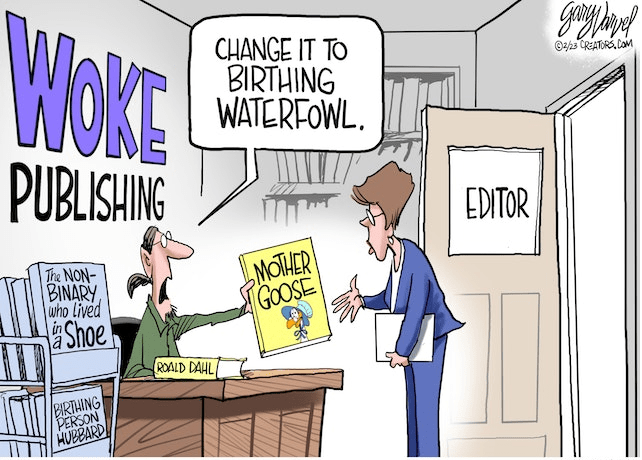
What’s going on in the library?

Identities Have Consequences

Things can go too far

Anything?

How about a pandemic first?

Take nothing for granted

Hmmmm . . .

Big Picture Guy?

Oh, I get it now

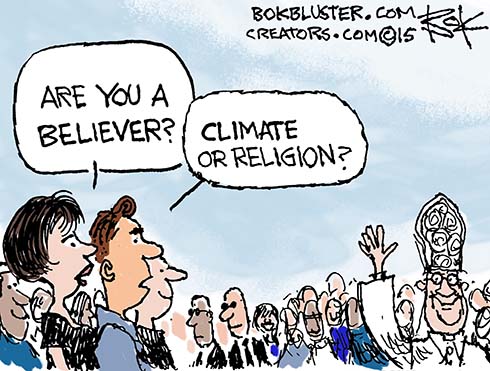
Is believing optional?

See what no standards gets you

Stay Skeptical, Stay Safe

No, NATO Chief, Climates Don’t Start Wars, People do

In his American Thinker article Chris J. Krisinger reports on another distortion proclaimed at COP28  World Leaders’ Terror of Climate Change.  Excerpts in italics with my bolds and added images.

[During his Air Force career, Colonel Krisinger served as military advisor to the assistant secretary of state for European affairs at the Department of State while working from the NATO Policy Office.  He is a graduate of the U.S. Air Force Academy and the Naval War College and was also a National Defense Fellow at Harvard University. ]

Playing to what amounted to a friendly home crowd at the Dubai U.N. Climate Change Conference (COP28), NATO secretary-general Jens Stoltenberg went there to deliver a message touting a relationship between global security and climate change, while emphasizing the necessity of shifting military resources to combat global warming.

In his speech, set against a backdrop of the Ukraine war, he was adamant about the influence of climate change on international security with conflict actually undermining “our capability to combat climate change because resources that we should have used to combat climate change are spent on our protecting our security with our military forces.”  He would even become apologetic about the Alliance’s reliance on fossil fuel–intensive military machinery, telling the audience, “If you look at big battle tanks and the big battleships and fighter jets, they are very advanced and great in many ways, but they’re not very environmentally friendly.  They pollute a lot, so we need to get down the emissions.”

Stoltenberg’s address at COP28 comes not long after President Biden’s September declaration in Vietnam that “the only existential threat humanity faces even more frightening than a nuclear war is global warming.”  Then, just two days after the October 7 attack on Israel, instead of talking about hostages and the U.S. response, National Security Council spokesman John Kirby went in front of TV cameras defending that statement: “the president believes wholeheartedly that climate change is an existential threat to all of human life on the planet.”

But do world events — present or past — justify such inordinate interest by political leaders in climate change shaping the global security environment who go so far as to deem it an “existential threat to humankind”?  Does the still uncertain and arguable science of climate change cross a threshold to influence, even justify, Alliance or national decision-making to link defense and security policy, actions, and investments?  World events reminds us it does not.

The current century’s major conflicts — Iraq, Afghanistan, Assad’s Syria, Ethiopia’s Tigray war, Yemen’s and South Sudan’s civil wars, and more recently Ukraine and Israel’s war against Hamas — have no compelling environmental or climatological links, just as all other international conflicts in the post-WWII era did not.  ISIL, which once controlled large swaths of some of the planet’s most inhospitable desert areas in Syria and Iraq, professed no regard for “climate change” in its worldview, nor has Hamas or Hezbollah today, both of which also inhabit arid, hot desert lands.

Arguably, no conflict in human history, modern or otherwise, has a causal
(or effectual) relationship with climate change, despite the planet
undergoing periods of both warming and cooling.

Today’s foremost security threats — e.g., great power competition, cyber-attacks, piracy, weapons of mass destruction, terrorism, nuclear proliferation, financial crises, dictatorships, nationalism, drug-trafficking, insurgencies, revolutions, Iran, North Korea, etc. — all continue to fester.  None can be persuasively linked to climate change, even as a worsening effect.  Further, climate change does not appear to drive the agendas or motives of global antagonists like Putin, Xi, Al-Shabaab, the Taliban, Kim, Khomeini, Assad, al-Qaeda, cartels, Hezb’allah, Hamas, the Houthis, Boko Haram, or others.

Instead, consider that environmental factors rarely incite
conflict within or between nations.  

In fact, the opposite — international cooperation — is the more likely outcome in concert with the human race’s innate ability to adapt to its environment.  The climate-security link Stoltenberg wants us to accept can be greatly overstated and instead aimed to serve political agendas and economics more than addressing real security threats.  What climate advocates further ignore or overlook is the slow, gradual process over years, decades, even centuries by which environmental phenomena occur, while ignoring empirical evidence of the pace, causes, and drivers of current events.  Climate change is not the catalyst determining whether conflict occurs or its severity.

Of more practical importance is that, should a military response be required,
military forces must be prepared to operate and prevail in
whatever weather extremes are encountered at that moment. 
 

Their equipment and resources must best perform their military function, regardless of environmental sensibilities.  In one telling example, if U.S. or NATO forces had been required to operate in Russia in 2012 along similar routes as the Wehrmacht in 1941 and Napoleon in 1812, they would have encountered worse cold and weather than in either of those campaigns, so infamously ravaged by winter.

In fact, Russia endured its harshest winter in over 70 years and had not experienced such a long cold spell since 1938, with temperatures 10–15 degrees below seasonal norms nationwide.  Like Russia, China’s 2012 winter temperatures were the lowest in almost three decades, cold enough to freeze coastal waters and trap hundreds of ships in ice.  Even today, had the COP28 conference been held at a European location, Stoltenberg may have become snowbound while traveling, with more of the continent under snow cover in December’s first week than in any year for more than a decade.

A Lufthansa aircraft at the snow-covered Munich airport on Saturday, Dec. 2, 2023. Photograph: Karl-Josef Hildenbrand/AP

A NATO alliance currently facing epic regional challenges cannot lose focus on core security and defense priorities or its profound grasp of the true origins, causes, and motives for human conflict.  Both military and political leaders cannot be distracted from true security threats — i.e., antagonists and competitors willfully and purposefully directing adversarial, often military, actions against a member nation with malicious intent — or not be prepared to operate and prevail in whatever weather or climatic conditions are encountered at that time.

With such clarity — absent the narrative, politics, uncertainty, and rhetoric of climate changeNATO, its member nations, and their leaders can then best direct its substantial enterprise towards those more numerous, serious, and pressing security threats facing the Alliance.

Background Food, Conflict and Climate

From data versus models department, a recent study contradicts claims linking human conflict to climate change by means of food shortages. From Dartmouth College March 1, 2018 comes Food Abundance and Violent Conflict in Africa.  by Ore Koren.  American Journal of Agricultural Economics, 2018; Synopsis is from Science Daily (here) with my bolds.

Food abundance driving conflict in Africa, not food scarcity

The study refutes the notion that climate change will increase the frequency of civil war in Africa as a result of food scarcity triggered by rising temperatures and drought. Most troops in Africa are unable to sustain themselves due to limited access to logistics and state support, and must live off locally sourced food. The findings reveal that the actors are often drawn to areas with abundant food resources, whereby, they aim to exert control over such resources.

To examine how the availability of food may have affected armed conflict in Africa, the study relies on PRIO-Grid data from over 10,600 grid cells in Africa from 1998 to 2008, new agricultural yields data from EarthStat and Armed Conflict Location and Event Dataset, which documents incidents of political violence, including those with and without casualties. The data was used to estimate how annual local wheat and maize yields (two staple crops) at a local village/town level may have affected the frequency of conflict. To capture only the effects of agricultural productivity on conflict rather than the opposite, the analysis incorporates the role of droughts using the Standardized Precipitation Index, which aggregates monthly precipitation by cell year.

The study identifies four categories in which conflicts may arise over food resources in Africa, which reflect the interests and motivations of the respective group:

  1. State and military forces that do not receive regular support from the state are likely to gravitate towards areas, where food resources are abundant in order to feed themselves.
  2. Rebel groups and non-state actors opposing the government may be drawn to food rich areas, where they can exploit the resources for profit.
  3. Self-defense militias and civil defense forces representing agricultural communities in rural regions, may protect their communities against raiders and expand their control into other areas with arable land and food resources.
  4. Militias representing pastoralists communities live in mainly arid regions and are highly mobile, following their cattle or other livestock, rather than relying on crops. To replenish herds or obtain food crops, they may raid other agriculturalist communities.

These actors may resort to violence to seek access to food, as the communities that they represent may not have enough food resources or the economic means to purchase livestock or drought-resistant seeds. Although droughts can lead to violence, such as in urban areas; this was found not to be the case for rural areas, where the majority of armed conflicts occurred where food crops were abundant.

Food scarcity can actually have a pacifying effect.“Examining food availability and the competition over such resources, especially where food is abundant, is essential to understanding the frequency of civil war in Africa,” says Ore Koren, a U.S. foreign policy and international security fellow at Dartmouth College and Ph.D. candidate in political science at the University of Minnesota. “Understanding how climate change will affect food productivity and access is vital; yet, predictions of how drought may affect conflict may be overstated in Africa and do not get to the root of the problem. Instead, we should focus on reducing inequality and improving local infrastructure, alongside traditional conflict resolution and peace building initiatives,” explains Koren.

Summary:

In Africa, food abundance may be driving violent conflict rather than food scarcity, according to a new study. The study refutes the notion that climate change will increase the frequency of civil war in Africa as a result of food scarcity triggered by rising temperatures and drought.

Reading the study itself shows considerable rigor in sorting out dependent and independent variables.  It is certain that armed conflicts destroy food resources, while it is claimed that food shortages from climate events like drought cause the conflicts in the first place.  From Koren:

Moreover, in addition to illustrating the validity of this mechanism by the process of elimination—that is, by empirically accounting for a variety of alternative mechanisms— figure 2 further highlights the interactions between economic inequality, food resources, and conflict. Here, nonparametric regression plots—which do not enforce a modeling structure on the data and hence provide a more flexible method of visualizing relationships between different factors—show the correlations of local yields and conflict with respect to economic development as approximated using nighttime light levels. As shown, conflict occurs more frequently in cells with more crop productivity, but relatively low levels of economic development, where—based on anecdotal evidence at least—limitations on food access are more likely (Roncoli, Ingram, and Kirshen 2001).

In Addition

https://rclutz.wordpress.com/2017/07/14/updated-climates-dont-start-wars-people-do/


McKitrick: COP28 Worse Threat Than You Think

A demonstration against fossil fuels at the COP28 United Nations climate summit in Dubai, United Arab Emirates. PHOTO BY PETER DEJONG/AP

Ross McKitrick writes at Financial Post: The only thing wrong with the globalist climate agenda — the people won’t have it  Excerpts in italics with my bolds and added images.

Phasing out fossil fuels is going to cost way more than ordinary people
will accept.  Delegates to COP28 clearly didn’t understand that

It’s tempting to dismiss the outcome of COP28, the recent United Nations climate change conference in the United Arab Emirates, as mere verbiage, especially the “historic” UAE Consensus about transitioning away from fossil fuels. After all, this is the 28th such conference and the previous ones all pretty much came to nothing. On a chart showing the steady rise in global CO2 emissions since 1950 you cannot spot when the 1997 Kyoto Protocol entered into force (2002), with its supposedly historic language binding developed countries to cap their CO2 emissions at five per cent below 1990 levels by 2012, which they didn’t do. The 2015 Paris Agreement also contained “historic” language that bound countries to further deep emission reductions. Yet the COP28 declaration begins with an admission that the parties are not on track for compliance.

Still, we should not overlook the real meaning of the UAE Consensus.

COP agreements used to focus on one thing: targets for reducing greenhouse gases. The UAE Consensus is very different. Across its 196 paragraphs and 10 supplementary declarations it’s a manifesto for global central planning. In their own words, some 90,000 government functionaries aspire to oversee and micromanage agriculture, finance, energy, manufacturing, gender relations, health care, air conditioning, building design and countless other economic and social decisions. It’s all supposedly in the name of fighting climate change, but that’s just the pretext. Take climate away and they’d likely appeal to something else.

Climate change doesn’t necessitate such plans.

Economists have been studying climate change for many decades and have never considered it grounds to phase out fossil fuels, micromanage society, manage gender relations and so on. Mainstream scientific findings, coupled with mainstream economic analysis, prescribe moderate emission-pricing policies that rely much more on adaptation than mitigation.

The fact that the UAE Consensus is currently non-binding is beside the point. What matters is what the COP28 delegates have said they want to achieve. Two facts stand out: the consensus document announced plans that would cause enormous economic harm if implemented, and it was approved unanimously — yes, by everyone in the room.

The first point is best illustrated by the language around eliminating fossil fuels. Climate policy is supposed to be about optimally reducing greenhouse gas (GHG) emissions. As technology gradually allows emissions to be de-coupled from fuel use, there may eventually be no need to cut back on fuels. But activist delegates insisted on abolitionist language anyway, making elimination of fossil fuels an end in itself. Such fuels are of course essential for our economic standard of living, and 30 years of economic analysis has consistently shown that, even taking account of emissions, phasing out fuels would do humanity far more harm than good. The Consensus statement ignores this, even while claiming to be guided by “the science.”

The second point refers to the fact that all representatives of all governments worldwide endorsed policies that will, if implemented, do extraordinary harm to their own people. Where governments have made even small attempts to take these radical steps, the public has rebelled. This calls into question whom the COP28 delegates actually “represent.” A few elected officials did attend, but no one voted for the great majority of attendees. And have no doubt: even if some heads of state, whether courageous or foolhardy, did go to COP intent on opposing the overall agenda, they would almost certainly be browbeaten into signing the final package.

The UAE Consensus is the latest indication that the real fault line in contemporary society is not right versus left, it’s the people versus (for lack of a better word) the globalists. A decade ago this term was only heard on the conspiracy fringe. It has since migrated to the mainstream as the most apt descriptor of a permanent transnational bureaucracy that aspires to run everything, even to the public’s detriment, while insulating themselves from democratic limits.

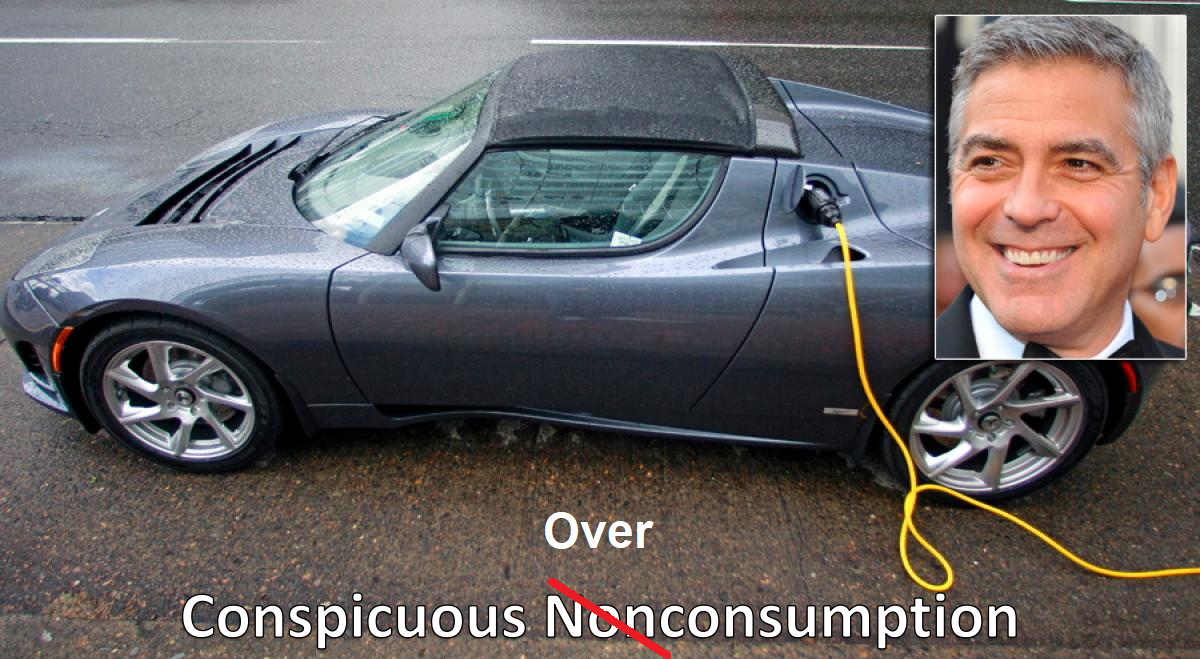
A hallmark of globalists is their credo of “rules for thee but not for me.” Thousands of delegates fly to Davos or to the year’s COP, many on private jets, to be wined and dined as they advise the rest of us to learn to do without.

Two sides of the same coin.

On both COVID-19 and climate change, the same elite has invoked “the science,” not in support of good decision-making, but as a talisman to justify everything they do, including censoring public debate. Complex and uncertain matters are reduced to dogmatic slogans by technocrats who force-feed political leaders a one-sided information stream. Experts outside the process are accorded standing based solely on their obeisance to the preferred narrative, not their knowledge or qualifications. Critics are attacked as purveyors of “misinformation” and “disinformation.” Any opposition to government plans therefore proves the need to suppress free speech.

Eventually, however, the people get the last word. And despite nonstop fear-mongering about an alleged climate crisis, the people tolerate climate policy only insofar as it costs almost nothing.

The climate movement may think that by embedding itself in the globalist elite it can accelerate policy adoption without needing to win elections. In fact, the opposite is happening. Globalists have co-opted the climate issue to try to sell a grotesque central planning agenda that the public has repeatedly rejected. If the UAE Consensus is the future of climate policy, climate policy’s failure is guaranteed.

Looking Into the Middle East Abyss

With the chaos erupting in violent conflict in Gaza, and strong reactions around the world, this opinion from three years ago seems prescient.  Bret Stephens wrote at New York Times January 2020  Every time Palestinians say ‘no,’ they lose.  Text in italics with my bolds.

Regarding President Donald Trump’s peace plan for the Israeli-Palestinian conflict, the instant conventional wisdom is that it’s a geopolitical nonstarter, a gift to Benjamin Netanyahu and an electoral ploy by the president to win Jewish votes in Florida rather than Palestinian hearts in Ramallah.

It may be all of those things. But nobody will benefit less from a curt dismissal of the plan than the Palestinians themselves, whose leaders are again letting history pass them by.  The record of Arab-Israeli peace efforts can be summed up succinctly: Nearly every time the Arab side said no, it wound up with less.

That was true after it rejected the 1947 U.N. Partition Plan, which would have created a Palestinian state on a much larger footprint than the one that was left after Israel’s war of independence. It was true in 1967, after Jordan refused Israel’s entreaties not to attack, which resulted in the end of Jordanian rule in the West Bank.

It was true in 2000, when Syria rejected an Israeli offer to return the Golan Heights, which ultimately led to U.S. recognition of Israeli sovereignty of that territory. It was true later the same year, after Yasser Arafat refused Israel’s offer of a Palestinian state with a capital in East Jerusalem, which led to two decades of terrorism, Palestinian civil war, the collapse of the Israeli peace camp and the situation we have now.

It’s in that pattern that the blunt rejection by Palestinian leaders of the Trump plan — the Palestinian president, Mahmoud Abbas, denounced it as a “conspiracy deal” — should be seen. Refusal today will almost inevitably lead to getting less tomorrow.

That isn’t to say that the plan, as it now stands, can come as anything but a disappointment to most Palestinians. It allows Israel to annex its West Bank settlements and the long Jordan Valley. It concedes full Israeli sovereignty over an undivided Jerusalem. It conditions eventual Palestinian statehood on full demilitarization of a Palestinian state and the disarming of Hamas. It compensates Palestinians for lost territories in the West Bank with remote territories near the Egyptian border. The map of a future Palestine looks less like an ordinary state than it does the MRI of a lung or kidney.

Then again, much of what the plan gives to Israel, Israel already has and will never relinquish — which explains why the plan was hailed not only by Netanyahu but also by his centrist rival Benny Gantz. Critics of Israeli policy often insist that a Palestinian state is necessary to preserve Israel as a Jewish democracy. True enough. But in that case, those critics should respect the painful conclusions Israelis have drawn about just what kind of Palestinian state they can safely accept.

More important, however, is what the plan offers ordinary Palestinians — and what it demands of their leaders. What it offers is a sovereign state, mostly contiguous territory, the return of prisoners, a link to connect Gaza and the West Bank, and $50 billion in economic assistance. What it demands is an end to anti-Jewish bigotry in school curricula, the restoration of legitimate political authority in Gaza and the dismantling of terrorist militias.

Taken together, this would be a historic achievement, not the “scam” that liberal critics of the deal claim. The purpose of a Palestinian state ought to be to deliver dramatically better prospects for the Palestinian people, not tokens of self-importance for their kleptocratic and repressive leaders.

That begins with improving the quality of Palestinian governance,
first of all by replacing leaders whose principal interests
lie in perpetuating their misrule.

If Abbas — now in the 16th year of his elected four-year term of office — really had Palestinian interests at heart, he would step down. So would Hamas’ cruel and cynical leaders in Gaza. That the peace plan insists on the latter isn’t an obstacle to Palestinian statehood. It’s a prerequisite for it.

At the same time, it’s also essential to temper Palestinian expectations. The Jewish state has thrived in part because it has always been prepared to make do with less. The Palestinian tragedy has been the direct result of taking the opposite approach: of insisting on the maximum rather than working toward the plausible. History rarely goes well for those who try to live it backward.

For all the talk about Trump’s plan being dead on arrival, it says something that it has been met with an open mind by some Arab states, including Saudi Arabia and the United Arab Emirates. They know only too well that the Arab world has more important challenges to deal with than Palestinian statehood. They know, too, that decades of relentless hostility toward the Jewish state have been a stupendous mistake. The best thing the Arab world could do for itself is learn from Israel, not demonize it.

That ought to go for the Palestinians as well. The old cliché about Palestinians never missing an opportunity to miss an opportunity has, sadly, more than a bit of truth in it. Nobody ought to condemn them to make the same mistake again.

Bret Stephens is a regular columnist for The New York Times.

Heroic Doctors Still Fighting Covid Tyranny

Larry Kaifesh explains in his American Thinker article One Doctor’s Fight for Covid Justice.  Excerpts it italics with my bolds and added images.

Background

A physician with more than 25 years of experience, Dr. Mary Talley Bowden is board-certified in otolaryngology and sleep medicine.  In 2019, she founded BreatheMD in Houston.  Educated at the University of North Carolina in Chapel Hill, the Medical College of Georgia at Augusta University, and the University of Texas Medical Branch, Dr. Bowden completed her residency at Stanford University.  She is one of the few direct care specialists in the U.S. who does not contract with any health insurance companies and strives to offer affordable care with clear pricing.

Dr. Bowden was targeted after speaking out against prescribed protocols for treating COVID-19 and the experimental COVID vaccine.  She has been a target of the Texas Medical Board, the U.S. Food and Drug Administration, and Houston Methodist Hospital for her early treatment of over 6,000 patients with COVID-19, despite her record including no deaths.

Public Health Descent into Covid Madness

In the beginning of the COVID-19 pandemic, Dr. Bowden started using monoclonal antibodies to treat her patients and had great success.  She explained that whenever she needed more, she could order them, and they would be delivered the next day.  However, the government took over the distribution of the monoclonal antibodies.  When this happened, it became harder and harder for her to get them until the government just stopped shipping them.  Dr. Bowden says this was in order to push the COVID-19 vaccine.

The monoclonal antibodies were effective, and she said patients would turn the corner the next day if they were treated early.  She emphasized that early treatments lead to better outcomes.

When she could not get any more monoclonal antibodies delivered by the government, she worried there would not be anything else as effective.  However, she discovered that ivermectin and hydroxychloroquine worked just as well.

Her results highlight the effectiveness of her protocol in direct contrast to the protocols hospitals were using.  The hospital protocols are using are connected with countless deaths, hospitalizations, and adverse effects, according to the government data found on the Vaccine Adverse Event Reporting System (VAERS).

From early on in the pandemic, Dr. Bowden, and other doctors, were using ivermectin, the Nobel Prize–winning medication, in their extremely effective treatment protocols.  In response, the FDA initiated an aggressive campaign against using ivermectin in treating COVID-19.  The FDA used the famous “horse” message stating, “Why You Should Not Use Ivermectin to Treat or Prevent COVID-19,” emphasizing that it is a horse dewormer and should not be used on people.  This message can still be found on the FDA website.

In 2021, the attacks on ivermectin and hydroxychloroquine increased exponentially.  Dr. Bowden and others believe that the more ivermectin, a generic prescription drug, threatened the lucrative pharmaceutical industry, the more enemies it accumulated.

At present, there are more than 17,000 physicians who support
early treatment and the protocol Dr. Bowden uses.

Covid Tyrants Continue to Oppress Doctors and Patients

Dr. Bowden and two other doctors sued the FDA for overstepping their authority and making suggestions for patient treatments.  Judge Don Willett agreed, declaring in his ruling that the “FDA is not a physician.  It has authority to inform, announce, and apprise — but not to endorse, denounce, or advise.”  Currently, this case is going back to the U.S. District Court in Galveston for further debate.

Dr. Bowden has also sued Houston Methodist for defamation.  Although her case was dismissed, she appealed, and the judge reviewed the case on Dec. 12, 2023.  She does not expect to hear anything back on this case for over a year.

Following Dr. Bowden’s success with her protocols, the Texas Medical Board filed a formal complaint against her for violations of the Texas Medical Practice Act.  Now, after a couple of appeals, her next hearing is scheduled to take place April 29, 2024.

Additionally, Dr. Bowden explained that there is now overwhelming data
showing that the spike proteins in the COVID-19 vaccines are causing
four major domains of disease:
cardiovascular, neurological, blood clots, and immunological abnormalities.

Because of this, her priority is to do everything she can to get the COVID-19 vaccine off the market.  She is working with elected officials and political candidates to pull these dangerous vaccines.  She said she is happy to report that every day, more and more are joining the initiative.

Dr. Bowden is also concerned about and focused on the pediatric vaccine schedule, which currently includes the COVID-19 vaccine.  This is scary, she explained, because most parents trust the government and do what they are told.  However, she is hopeful that more parents will wake up to the dangers of the COVID-19 vaccine.  In Dr. Bowden’s opinion, “there is no reason for children to get these shots. … We have no long-term safety data.”

‘Cures’ Worse than the Disease

Dr. Bowden went on to say when she looked at her new patient appointments, over seven percent are for ongoing chronic debilitating health issues that developed following individuals taking the vaccine.  She went on to say it is very hard to diagnose myocarditis in a nonverbal child.  How can a child communicate that he has chest pain, the primary symptom of myocarditis?  Dr. Bowden fears that these babies will get myocarditis — permanent scarring of the heart — and then one day they will collapse on the soccer field.  This is what we are looking at, she emphasized.

Any other vaccine with this record would have been pulled off
the market a long time ago, according to Dr. Bowden.  

She explained that in the 1976 swine flu outbreak, they stopped giving the vaccine after 25 deaths.  Currently on VAERS, there are more than 36,000 deaths reported, which is believed to be only one percent of the real number due to underreporting.  Yet they are still advertising this vaccine.

There is also significant concern with the protocol the hospitals are using to treat COVID-19 patients.  The CARES Act provides incentives for hospitals to use treatments directed solely by the federal government with the backing of the National Institute of Health.  These incentives are financial and provide payments to the hospitals for the following: a diagnosis of COVID, admission to the hospital, use of Remdesivir (a drug shown to cause kidney failure in 25 percent of the people who take it), a patient being put on a ventilator, and if the patient dies and the cause of death is listed as COVID-19.

These incentives were not designed to treat patients and facilitate their health,
but to aid in their demise, warned Dr. Bowden.

Last week, the FDA warned of a catastrophic drop in life expectancy, and in just the last nine months of this year, more than 158,000 more Americans died unexpectedly than in all of 2019, before the COVID-19 vaccine was introduced.  To put that number in context, that is more casualties than in all wars since Vietnam, combined.

Medical Profession Betrayed by Overlords

Dr. Bowden expressed deep concern about what is happening to the medical industry.  Doctors have lost their autonomy and are now employees taking orders from the government and administrators on how to treat their patients, she explained.  Many are sheep, she said, who sit quietly and do what they are told, rather than what is right by the medical doctrine “first do no harm.”  She sympathized that they have families and mortgages but said they cannot allow themselves to be controlled by nefarious forces.

Footnote: Xmas 2020: Twelve Forgotten Principles of Public Health

Dr. Martin Kulldorff, PhD, is a Professor of Medicine at Harvard Medical School. His research centers on developing new epidemiological and statistical methods for the early detection and monitoring of infectious disease outbreaks and for post-market drug and vaccine safety surveillance. This holiday gift remembrance is collected from Dr. Kulldorff’s twitter thread courtesy of AIER, which also includes links to articles adding depth to the 12 points. Tweets in italics with my bolds.

  1. Public health is about all health outcomes, not just a single disease like Covid-19. It is important to also consider harms from public health measures. More. 
  2. Public health is about the long term rather than the short term. Spring Covid lockdowns simply delayed and postponed the pandemic to the fall. More. 
  3. Public health is about everyone. It should not be used to shift the burden of disease from the affluent to the less affluent, as the lockdowns have done. More. 
  4. Public health is global. Public health scientists need to consider the global impact of their recommendations. More. 
  5. Risks and harms cannot be completely eliminated, but they can be reduced. Elimination and zero-Covid strategies backfire, making things worse. More. 
  6. Public health should focus on high-risk populations. For Covid-19, many standard public health measures were never used to protect high-risk older people, leading to unnecessary deaths. More. 
  7. While contact tracing and isolation are critically important for some infectious diseases, it is futile and counterproductive for common infections such as influenza and Covid-19. More. 
  8. A case is only a case if a person is sick. Mass testing asymptomatic individuals is harmful to public health. More. 
  9. Public health is about trust. To gain the trust of the public, public health officials and the media must be honest and trust the public. Shaming and fear should never be used in a pandemic. More. 
  10. Public health scientists and officials must be honest with what is not known. For example, epidemic models should be run with the whole range of plausible input parameters. More. 
  11. In public health, open civilized debate is profoundly critical. Censoring, silencing and smearing leads to fear of speaking, herd thinking and distrust. More. 
  12. It is important for public health scientists and officials to listen to the public, who are living the public health consequences. This pandemic has proved that many non-epidemiologists understand public health better than some epidemiologists. More.

Dr. Martin Kulldorff


After COP28: What Transition From Hydrocarbons?

How Do You Want Your Energy ‘Transition’?

Mario Loyola wrote at The Wall Street Journal The Impossible Energy ‘Transition’.  Excerpts in italics with my bolds.

After two weeks of negotiation, the United Nations climate conference in Dubai agreed last week to “transition away” from fossil fuels. Left unanswered is whether governments are supposed to do that by reducing supply, reducing demand or both. A lot rides on the answer, but neither would affect the climate much.

In the demand-side scenario, technology saves the day with cost-competitive renewables. This is the vision of the International Energy Agency, according to which the more rapid the transition from fossil fuels, the more precipitous the decline in fossil-fuel prices. In its “Net Zero Emissions” scenario, oil demand drops faster than supply this decade, pushing oil prices below $30 a barrel soon after 2030, which corresponds to $1-a-gallon gasoline.

Yet even with fossil-fuel prices near historic highs, effective renewable substitutes are nowhere near cost-competitive. They’d have to get cheaper still to compete with $30-a-barrel oil. And in developed countries, especially the U.S., it’s impossible to get permits quickly enough for the staggering amount of renewable capacity that would be needed.

In the supply-side approach, governments would slash oil production or impose rationing, hoping to make fossil fuels so expensive that renewables are the only option. This is the dark vision of “Stop Oil” and Greta Thunberg. But as long as renewable substitutes aren’t immediately available and oil and gas remain necessary, a small reduction in supply causes prices to soar. That means windfall profits for energy companies, scarcity for everyone else, and electoral danger for the governments responsible. Ms. Thunberg claims that climate change is a “death sentence” for the poor, but the poor are far more vulnerable to disruptions in energy supply. In the 1970s, an oil boycott aimed at the U.S. caused famines in Africa.

Putting into context the desire to stop consumption of fossil fuels. The graph shows that global Primary Energy (PE) consumption from all sources has grown continuously over nearly 6 decades. Since 1965 oil, gas and coal (FF, sometimes termed “Thermal”) averaged 88% of PE consumed, ranging from 93% in 1965 to 82% in 2022. Note that in 2020, PE dropped 21 EJ (4%) below 2019 consumption, then increased 31 EJ in 2021. WFFC for 2020 dropped 24 EJ (5%), then in 2021 gained back 26 EJ to slightly exceed 2019 WFFC consumption. (Source: Energy Institute)

While the stop-oil view was popular at Dubai, there were enough adults in the room to keep the conference from committing to it. “There is no science out there, or no scenario out there, that says that the phaseout of fossil fuel is what’s going to achieve 1.5 C” (the Paris Agreement’s proposed limit on 21st-century temperature increases), said conference president Ahmed al Jaber, “unless you want to take the world back into caves.” Saudi Energy Minister Abdulaziz bin Salman dared countries to try to choke off the oil supply: “Let them do that themselves. And we will see how much they can deliver.”

Poor countries are clear-eyed about the danger of energy poverty. “We are not going to compromise with the availability of power for growth,” said India’s minister for power, R.K. Singh. China has more coal plants under construction than are in operation in the U.S. Few rich countries have announced plans to stop drilling for oil or gas, and none of those are major producers. Even President Biden ran away from increasing the gasoline tax as soon as prices went above $3 a gallon in the summer of 2021.

The administration’s answer to this conundrum is to defer political consequences via the regulatory state. The Environmental Protection Agency has proposed to require that all coal and natural-gas plants shut down or adopt unproven zero-carbon technologies by 2038. Another EPA proposal would require 62% of all cars sold in America to be fully electric by 2032.

Assuming they survive court challenges and future administrations, they would impose soaring prices and reduced mobility on Americans. They would have almost no impact on global temperatures unless other countries, including China and India, also commit to energy poverty. The question is how much damage these policies will do before they’re abandoned.

Mr. Loyola teaches environmental law at Florida International University and is a senior research fellow at the Heritage Foundation.

Foornote:  Advice from Berkeley Earth