2000 Mules is the Smoking Gun

Now we know why they avert their eyes from watching the film 2000 Mules.  And why the panel investigating the January 6 protest didn’t dare to screen the documentary.  Because it shows beyond reasonable doubt that election theft activities were coordinated and replicated in multiple states, proving a national criminal enterprise rigged the 2020 US Presidential election.  The smoking gun is there for all to see, and even more, it is only part of the pattern of corruption.

Charlie Johnston explains in his American Thinker article D’Souza’s Mules Left Tracks.  Excerpts in italics with my bolds.

Many conservative commentators have noted that Dinesh D’Souza’s documentary, 2000 Mules, offers compelling evidence of large-scale vote fraud. It offers more than this, though. It provides compelling evidence of a massive, centrally coordinated conspiracy to commit vote fraud. Examining several states with different voter laws while focusing on just one form of fraud, the movie found that the method of fraud was executed identically in each of these states.

That is prima facie evidence of central organization and management.

From the moment counting was stopped in the dead of night in five Democrat-run swing states on election night, Democrats and the media have treated anyone who questioned election integrity in 2020 like a mob boss treats anyone who threatens to testify against him: shut up, or we will cancel you.

Democrats and the media routinely smear anyone who questions the election results as a conspiracy theorist.  They routinely pronounce any evidence that emerges as “debunked.”  For the record, “debunked” does not mean “inconvenient to the leftist narrative.”  It means “thoroughly investigated and proven to be false.”  Almost none of the evidence has been debunked; very little has been officially examined.  Leftists treat actual evidence like how a vampire treats a crucifix.  There is no reasoned discourse, just a lot of hissing and snarling.

From well before he took office, Donald Trump faced an ongoing administrative coup attempt. First was the long-running Russian collusion hoax, mounted by Hillary Clinton and the Democratic National Committee and abetted by the FBI and intelligence agencies. Federal employees who were, theoretically, subordinate to Trump gleefully worked to undermine his administration. Two baseless impeachments were mounted against him by Democrats who know nothing other than shrieking partisanship anymore.

The slow-moving coup finally succeeded on the evening of November 3, 2020, when those five states quit counting ballots to give Democrats time to “fortify” the election. The last real hurdle to thwarting election integrity came on December 11, 2020, when the Supreme Court ruled that Texas and 18 other states lacked standing to complain of massive fraud. How states that conduct honest elections lack standing to complain of states that don’t in an election that affects them all is beyond my understanding. It looked like unconditional institutional surrender to massive fraud to me. All hail the barbarians!

D’Souza’s documentary examined only the slice of fraud that involved
organized physical ballot-stuffing.

It did not touch on compromised voting machines and systems or unconstitutional, administrative election law changes. If the single slice that 2000 Mules so effectively biopsied is filled with the cancer of fraud, it is willful ignorance to believe that everything else was clean.

If the election of 2020 had been fundamentally clean, Democrats and the media should have been the loudest advocates for a thorough and bipartisan investigation of the election to put widespread doubts to rest and own the conservatives. (By bipartisan, I do not mean like the J6 committee, where the Democrats unilaterally appointed all members, including a couple of Republican chumps for show.) Instead, the left hisses and snarls at every piece of evidence brought forth, no matter how compelling. A guilty man tries to suppress every bit of evidence at his trial, never knowing which piece will seal his conviction, while an innocent man tries to get every piece into evidence he can, never knowing which piece will exonerate him. To assess credibility on this, look who is trying to suppress evidence and who is trying to get evidence into the public record.

At this stage, it is hard to credit Democratic and media intransigence to anything innocent. If they are not just stupid, they have become co-conspirators in the only actual insurrection America has seen over the last six years. Understand, this coup was not primarily aimed at Trump and conservative Republicans; it is a coup against the very idea of self-government. Alas, many Republicans may disagree with elements of Democratic methods but agree with them that a self-serving elite class should rule the citizen-serfs they think constitute the American people.

The relentless smears, the constant howls, and the shrieking rage of the leftists are not because they are so offended that the right would challenge them. It is because the mud of massive deception is being washed away to reveal the rock of stark fraud the left mounted to steal an American presidential election. That is genuine insurrection. Confession, repentance, and forfeiture of all offices of public honor or trust by the conspirators could begin to establish American honor and liberty anew. That, of course, will never happen. Power is the left’s only god, and pursuit of it by any means its only liturgy.

Republicans will win by unprecedented margins in November. If they hold the left to account for its depredations against the American system of law and systemic attack on the Bill of Rights, we can begin to crawl out of this hole of despotism. If, instead, the Republicans largely choose to let bygones be bygones, as they have done with the Russian collusion conspirators, there is little hope that America can long survive as anything the founders would recognize. Renewal will come. Americans will not forever submit to be ruled by any class of people — and certainly not to this degenerate class of aspiring despots.

However it comes, D’Souza’s documentary is the seminal moment the tide washed away enough mud that, despite their shrieks and howls, the left can no longer hide the ugly truth of what it did.

Massive election fraud in 2020 is a conspiracy, but it is no longer merely a theory.

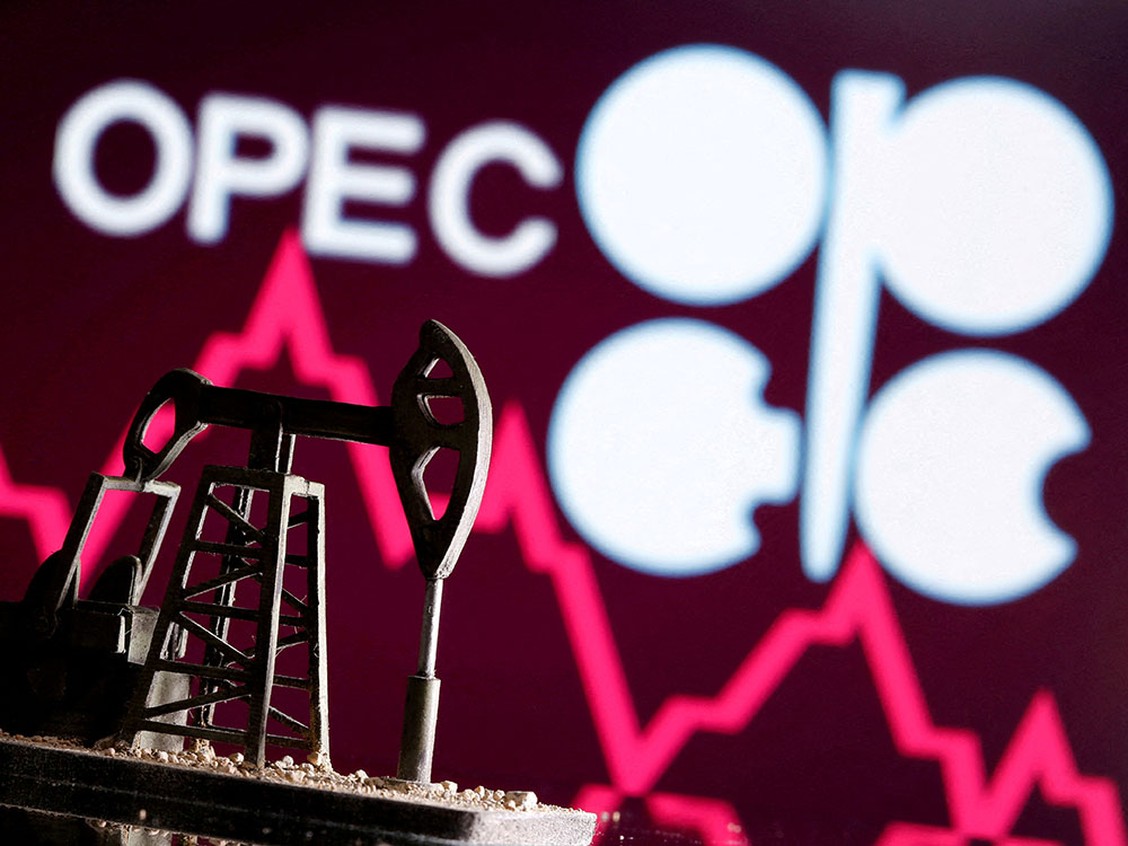
OPEC runs out of spare capacity, makes bullish case for oil

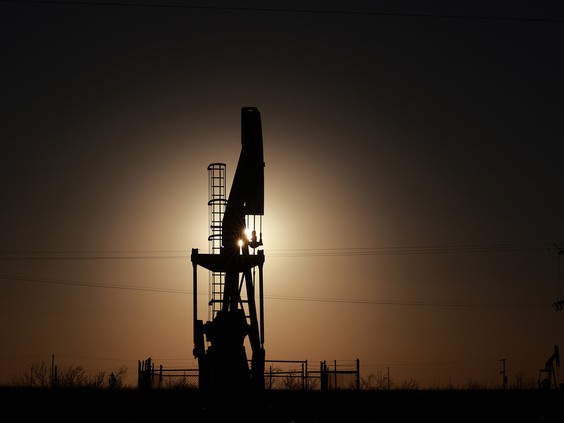
Mohammed Barkindo, the secretary general of OPEC, has warned that “OPEC is running out of capacity,” and that “with the exception of two or three members, all are maxed out.” PHOTO BY REUTERS/DADO RUVIC/ILLUSTRATION/FILE PHOTO

Eric Nuttall explains at Financial Post OPEC running out of spare capacity confirms our multi-year bull case for oil.  Excerpts in italics with my bolds.

Oil companies are going to be pumping high returns to investors
for much longer than people realize

Imagine life without insurance. The constant worry of an unexpected accident, such as your house burning down or car getting stolen, wreaking financial havoc without the economic certainty that everything would be OK in the end. This is where the world is heading in the next several months.

The Organization of the Petroleum Exporting Countries’ (OPEC’s) spare capacity, the oil market equivalent of insurance, has since the 1960s been available to avoid severe price spikes by smoothing out periodic supply disruptions caused by geopolitical events.

Now, owing to too many years of insufficient investment, as the needs of social spending and sovereign revenue dwarfed those of investing in incremental capacity during a multi-year period of low oil prices, OPEC’s spare capacity is set to become exhausted.  This imminent reality will be a watershed event and has enormous implications for the oil market that investors must urgently appreciate.

We have for more than a year argued the world was hurtling into an energy crisis of epic proportions that would result in a multi-year bull market for oil.

Our bullish thesis had four basic tenets:

♦  persistent demand growth for at least the next 10 years;
♦  the end of shale hyper-growth in the United States, defined as shale production growth rates that no longer exceed global demand growth;
♦  stagnant production growth from the global super-majors resulting from eight years of insufficient investment and, finally,
♦  the exhaustion of OPEC’s spare capacity.

The hardest of these four core assumptions to prove by far was the last one. U.S. shale growth rates could be forecasted by talking with oil executives and modelling corporate cash flows. One could easily see that spending by the super-majors had peaked in 2014, falling to half of those levels today, while also being burdened by increasing pressures to decarbonize, so we could predict and model stagnant growth for years to come. And demand growth was boosted in the short term by the emergence from global lockdown, and is supported over the medium-to-long term by the realities that limit alternatives from reaching enough critical mass to meaningfully displace oil in the next several decades.

OPEC’s spare capacity, however, was the tricky one. Monthly data released by several different sources can vary wildly. Given the strategic importance of oil revenue to many Gulf States, hard data on productive capacity has at times been viewed as state secrets and either difficult to get or taken with some skepticism. How then can we be so confident that OPEC’s spare capacity is nearing exhaustion? Because they just told us so.

Last week, the Royal Bank of Canada hosted a spectacular energy conference in New York with the highlight being a keynote speech by Mohammed Barkindo, the secretary general of OPEC. That same night, I had the good fortune to have dinner with him, which to an energy enthusiast was the equivalent of a tech investor getting to hang out with Elon Musk. I found him to be a warm, insightful, soft-spoken and, surprisingly, straight-talking gentleman.

In his keynote speech, Barkindo warned that “OPEC is running out of capacity,” and that “with the exception of two or three members, all are maxed out.” Further, “the world needs to come to terms with this brutal fact” and that it is a “global challenge.”

Why is this so incredibly important? Well, what would happen if the U.S. Federal Reserve ran out of hard currency? It would just simply print more, with fresh bills sent to banks via armoured car the next day.

For oil producers, the cycle time to produce more oil is measured not in days, but in years.

With short-cycle U.S. shale set to grow at a fraction of historical rates, the world is now almost entirely dependent on long-cycle production, yet the global super-majors are entrenched in a multi-year period of stagnation due to too many years of underspending, and now OPEC, out of incremental capacity, is constrained by the very same challenge.

With oil inventories already at multi-year lows, demand back to pre-COVID-19 levels and structural challenges to supply growth, we believe oil prices will have to act as a demand-destroying mechanism, rising to a high enough level that kills discretionary demand, thereby balancing the market, while also staying there long enough to give the super-majors the confidence needed to start adequately spending again.

Given industry cycle times of four to six years, we believe that oil companies are set up to return egregiously high returns to investors for much longer than people realize, leading to a rerating from valuation levels that still imply the end of oil is nigh.

Eric Nuttall is a partner and senior portfolio manager with Ninepoint Partners LP.


USA Today Outed for Fictional Fact Checking

Paul Joseph Watson writes at Summit News Top ‘Fact Checker’ USA Today Forced to Delete Articles Over Fabricated Sources.  Excerpts in italics with my bolds.  H/T Tyler Durden

USA Today, which is used as a ‘fact checker’ by social media platforms, was forced to delete 23 articles from its website after an investigation found one of its reporters had fabricated sources.

Well, this is awkward

The news outlet has an entire section of its website dedicated to ‘fact checking’ and is used by Facebook to ‘fact check’ stories published by other outlets, downranking them in algorithms in a form of soft censorship.

However, it appears as though USA Today should have devoted more resources to fact checking itself before publishing articles by its own staff.

“USA Today’s breaking news reporter Gabriela Miranda fabricated sources and misappropriated quotes for stories, the news outlet confirmed on Thursday. The outlet conducted an internal audit after receiving an “external correction request” on one of its published stories,” reports Breitbart.

The 23 articles which were removed for not meeting the paper’s “editorial standards” included pieces on the Texas abortion ban, anti-vaxxer content and Russia’s invasion of Ukraine.

Miranda, who has now resigned from her position, “took steps to deceive investigators by producing false evidence of her news gathering, including recordings of interviews,” according to the New York Times.

“After receiving an external correction request, USA TODAY audited the reporting work of Gabriela Miranda. The audit revealed that some individuals quoted were not affiliated with the organizations claimed and appeared to be fabricated. The existence of other individuals quoted could not be independently verified. In addition, some stories included quotes that should have been credited to others.”

As we previously highlighted, USA Today was also forced to hastily delete a series of tweets which critics said were tantamount to the normalization of pedophilia after the newspaper cited “science” to assert that pedophilia was “determined in the womb.”

The newspaper was also lambasted by critics after it ‘fact checked’ as “true” claims that an official Trump 2020 t-shirt features a ‘Nazi symbol’.

In February last year, the news outlet published an op-ed which denounced Tom Brady for refusing to walk back his previous support for Donald Trump and for being “white.”

The newspaper also had to fire their ‘race and inclusion’ editor Hemal Jhaveri after she falsely blamed the Boulder supermarket shooting on white people.

In summary, USA Today has a severe bias problem and shouldn’t be used as a non-partisan ‘fact checker’.


How to FLICC Off Climate Alarms

John Ridgway has provided an excellent framework for skeptics to examine and respond to claims from believers in global warming/climate change.  His essay at Climate Scepticism is Deconstructing Scepticism: The True FLICC.  Excerpts in italics with my bolds and added comments.

Overview

I have modified slightly the FLICC components to serve as a list of actions making up a skeptical approach to an alarmist claim.  IOW this is a checklist for applying critical intelligence to alarmist discourse in the public arena. The Summary can be stated thusly:

♦  Follow the Data
Find and follow the data and facts to where they lead

♦  Look for full risk profile
Look for a complete assessment of risks and costs from proposed policies

♦  Interrogate causal claims
Inquire into claimed cause-effect relationships

♦  Compile contrary explanations
Construct an organized view of contradictory evidence to the theory

♦  Confront cultural bias
Challenge attempts to promote consensus story with flimsy coincidence

A Case In Point

John Ridgway illustrates how this method works in a comment:

No sooner have I’ve pressed the publish button, and the BBC comes out with the perfect example of what I have been writing about:  Climate change: Rising sea levels threaten 200,000 England properties

It tells of a group of experts theorizing that 200,000 coastal properties are soon to be lost due to climate change. Indeed, it “is already happening” as far as Happisburg on the Norfolk coast is concerned. Coastal erosion is indeed a problem there.

But did the experts take into account that the data shows no acceleration of erosion over the last 2000 years? No.

Have they acknowledge the fact that erosion on the East coast is a legacy of glaciation? No.

[For the US example of this claim, see my post Sea Level Scare Machine]

The FLICC Framework

Below is Ridgway’s text regarding this thought process, followed by a synopsis of his discussion of the five elements. Text is in italics with my bolds.

As part of the anthropogenic climate change debate, and when discussing the proposed plans for transition to Net Zero, efforts have been made to analyse the thinking that underpins the typical sceptic’s position. These analyses have universally presupposed that such scepticism stubbornly persists in the face of overwhelming evidence, as reflected in the widespread use of the term ‘denier’. Consequently, they are based upon taxonomies of flawed reasoning and methods of deception and misinformation.1 

However, by taking such a prejudicial approach, the analyses have invariably failed to acknowledge the ideological, philosophical and psychological bases for sceptical thinking. The following taxonomy redresses that failing and, as a result, offers a more pertinent analysis that avoids the worst excesses of opinionated philippic. The taxonomy identifies a basic set of ideologies and attitudes that feature prominently in the typical climate change sceptic’s case. For my taxonomy I have chosen the acronym FLICC:2

  • Follow data but distrust judgement and speculation

     i.e. value empirical evidence over theory and conjecture.

  • Look for the full risk profile

      i.e. when considering the management of risks and uncertainties, demand that those associated        with mitigating and preventative measures are also taken into account.

  • Interrogate causal arguments

      i.e. demand that both necessity and sufficiency form the basis of a causal analysis.

  • Contrariness

      i.e. distrust consensus as an indicator of epistemological value.

  • Cultural awareness

       i.e. never underestimate the extent to which a society can fabricate a truth for its own purposes.

All of the above have a long and legitimate history outside the field of climate science. The suggestion that they are not being applied in good faith by climate change sceptics falls beyond the remit of taxonomical analysis and strays into the territory of propaganda and ad hominem.

The five ideologies and attitudes of climate change scepticism introduced above are now discussed in greater detail.

Following the data

Above all else, the sceptical approach is characterized by a reluctance to draw conclusions from a given body of evidence. When it comes to evidence supporting the idea of a ‘climate crisis’, such reluctance is judged by many to be pathological and indicative of motivated reasoning. Cognitive scientists use the term ‘conservative belief revision’ to refer to an undue reluctance to update beliefs in accordance with a new body of evidence. More precisely, when the individual retains the view that events have a random pattern, thereby downplaying the possibility of a causative factor, the term used is ‘slothful induction’. Either way, the presupposition is that the individual is committing a logical fallacy resulting from cognitive bias.

However, far from being a pathology of thinking, such reluctance has its legitimate foundations in Pyrrhonian philosophy and, when properly understood, it can be seen as an important thinking strategy.3 Conservative belief revision and slothful induction can indeed lead to false conclusions but, more importantly, the error most commonly encountered when making decisions under uncertainty (and the one with the greatest potential for damage) is to downplay unknown and possibly random factors and instead construct a narrative that overstates and prejudges causation. This tendency is central to the human condition and it lies at the heart of our failure to foresee the unexpected – this is the truly important cognitive bias that the sceptic seeks to avoid.

The empirical sceptic is cognisant of evidence and allows the formulation of theories but treats them with considerable caution due to the many ways in which such theories often entail unwarranted presupposition.

The drivers behind this problem are the propensity of the human mind to seek patterns, to construct narratives that hide complexities, to over-emphasise the causative role played by human agents and to under-emphasise the role played by external and possibly random factors. Ultimately, it is a problem regarding the comprehension of uncertainty — we comprehend in a manner that has served us well in evolutionary terms but has left us vulnerable to unprecedented, high consequence events.

It is often said that a true sceptic is one who is prepared to accept the prevailing theory once the evidence is ‘overwhelming’. The climate change sceptic’s reluctance to do so is taken as an indication that he or she is not a true sceptic. However, we see here that true scepticism lies in the willingness to challenge the idea that the evidence is overwhelming – it only seems overwhelming to those who fail to recognise the ‘theorizing disease’ and lack the resolve to resist it. Secondly, there cannot be a climate change sceptic alive who is not painfully aware of the humiliation handed out to those who resist the theorizing.

In practice, the theorizing and the narratives that trouble the empirical sceptic take many forms. It can be seen in:

♦  over-dependence upon mathematical models for which the tuning owes more to art than science.

♦  readiness to treat the output of such models as data resulting from experiment, rather than the hypotheses they are.

♦  lack of regard for ontological uncertainty (i.e. the unknown unknowns which, due to their very nature, the models do not address).

♦  emergence of story-telling as a primary weapon in the armoury of extreme weather event attribution.

♦  willingness to commit trillions of pounds to courses of action that are predicated upon Representative Concentration Pathways and economic models that are the ‘theorizing disease’ writ large.

♦  contributions of the myriad of activists who seek to portray the issues in a narrative form laden with social justice and other ethical considerations.

♦  imaginative but simplistic portrayals of climate change sceptics and their motives; portrayals that are drawing categorical conclusions that cannot possibly be justified given the ‘evidence’ offered. And;

♦  any narrative that turns out to be unfounded when one follows the data.

Climate change may have its basis in science and data, but this basis has long since been overtaken by a plethora of theorizing and causal narrative that sometimes appears to have taken on a life of its own. Is this what settled science is supposed to look like?

Looking for the full risk profile

Almost as fundamental as the sceptic’s resistance to theorizing and narrative is his or her appreciation that the management of anthropogenic warming (particularly the transition to Net Zero) is an undertaking beset with risk and uncertainty. This concern reflects a fundamental principle of risk management: proposed actions to tackle a risk are often in themselves problematic and so a full risk analysis is not complete until it can be confirmed that the net risk will decrease following the actions proposed.7

Firstly, the narrative of existential risk is rejected on the grounds of empirical scepticism (the evidence for an existential threat is not overwhelming, it is underwhelming).

Secondly, even if the narrative is accepted, it has not been reliably demonstrated that the proposal for Net Zero transition is free from existential or extreme risks.

Indeed, given the dominant role played by the ‘theorizing disease’ and how it lies behind our inability to envisage the unprecedented high consequence event, there is every reason to believe that the proposals for Net Zero transition should be equally subject to the precautionary principle. The fact that they are not is indicative of a double standard being applied. The argument seems to run as follows: There is no uncertainty regarding the physical risk posed by climate change, but if there were it would only add to the imperative for action. There is also no uncertainty regarding the transition risk, but if there were it could be ignored because one can only apply the precautionary principle once!

This is precisely the sort of inconsistency one encounters when uncertainties are rationalised away in order to support the favoured narrative.

The upshot of this double standard is that the activists appear to be proceeding with two very different risk management frameworks depending upon whether physical or transition risk is being considered. As a result, risks associated with renewable energy security, the environmental damage associated with proposals to reduce carbon emissions and the potentially catastrophic effects of the inevitable global economic shock are all played down or explained away.

Looking for the full risk profile is a basic of risk management practice. The fact that it is seen as a ploy used only by those wishing to oppose the management of anthropogenic climate change is both odd and worrying. It is indeed important to the sceptic, but it should be important to everyone.

Interrogating causal arguments

For many years we have been told that anthropogenic climate change will make bad things happen. These dire predictions were supposed to galvanize the world into action but that didn’t happen, no doubt partly due to the extent to which such predictions repeatedly failed to come true (as, for example, with the predictions of the disappearance of Arctic sea ice).  .  .This is one good reason for the empirical sceptic to distrust the narrative,8 but an even better one lies in the very concept of causation.

A major purpose of narrative is to reduce complexity so that the ‘truth’ can shine through. This is particularly the case with causal narratives. We all want executive summaries and sound bites such as ‘Y happened because of X’. But very few of us are interested in examining exactly what we mean by such statements – very few except, of course, for the empirical sceptics. In a messy world in which many factors may be at play, the more pertinent questions are:

♦  To what extent was X necessary for Y to happen?
♦  To what extent was X sufficient for Y to happen?

The vast majority of the extreme weather event attribution narrative is focused upon the first question and very little attention is paid to the second; at least not in the many press bulletins issued. Basically, we are told that the event was virtually impossible without climate change, but very little is said regarding whether climate change on its own was enough.

This problem of oversimplification is even more worrying once one starts to examine consequential damages whilst failing to take into account man-made failings such as those that exacerbate the impacts of floods and forest fires.9   The oversimplification of causal narrative is not restricted to weather-related events, of course. Climate change, we are told, is wreaking havoc with the flora and fauna and many species are dying out as a result. However, when such claims are examined more closely,10 it is invariably the case that climate change has been lumped in with a number of other factors that are destroying habitat.

When climate change sceptics point this out they are, of course, accused of cherry-picking. The truth, however, is that their insistence that the extended causal narrative of necessity and sufficiency should be respected is nothing more than the consequence of following the data and looking for the full risk profile.

Contrariness

The climate change debate is all about making decisions under uncertainty, so it is little surprise that gaining consensus is seen as centrally important. Uncertainty is reduced when the evidence is overwhelming and it is tempting to believe that the high level of consensus amongst climate scientists surely points towards there being overwhelming evidence. If one accepts this logic then the sceptic’s refusal to accept the consensus is just another manifestation of his or her denial.

Except, of course, an empirical sceptic would not accept this logic. Consensus does not result from a simple examination of concordant evidence, it is instead the fruit of the tendentious theorizing and simplifying narrative that the empirical sceptic intuitively distrusts. As explained above, there are a number of drivers that cause such theories and narratives to entail unwarranted presupposition, and it is naïve to believe that scientists are immune to such drivers.

However, the fact remains that consensus on beliefs is neither a sufficient nor a necessary condition for presuming that these beliefs constitute shared knowledge. It is only when a consensus on beliefs is uncoerced, uniquely heterogeneous and large, that a shared knowledge provides the best explanation of a given consensus.11 The notion that a scientific consensus can be trusted because scientists are permanently seeking to challenge accepted views is simplistic at best.

It is actually far from obvious that in climate science the conditions have been met for consensus to be a reliable indicator of shared knowledge.

Contrariness simply comes with the territory of being an empirical sceptic. The evidence of consensus is there to be seen, but the amount of theorizing and narrative required for its genesis, together with the social dimension to consensus generation, are enough for the empirical sceptic to treat the whole matter of consensus with a great deal of caution.

Cultural awareness

There has been a great deal said already regarding the culture wars surrounding issues such as the threat posed by anthropogenic climate change. Most of the concerns are directed at the sceptic, who for reasons never properly explained is deemed to be the instigator of the conflict. However, it is the sceptic who chooses to point out that the value-laden arguments offered by climate activists are best understood as part of a wider cultural movement in which rationality is subordinate to in-group versus outgroup dynamics.

Psychological, ethical and spiritual needs lie at the heart of the development of culture and so the adoption of the climate change phenomenon in service of these needs has to be seen as essentially a cultural power play. The dangers of uncritically accepting the fruits of theorizing and narrative are only the beginning of the empirical sceptic’s concerns. Beyond that is the concern that the direction the debate is taking is not even a matter of empiricism – data analysis has little to offer when so much depends upon whether the phenomenon is subsequently to be described as warming or heating. It is for this reason that much of the sceptic’s attention is directed towards the manner in which the science features in our culture rather than the science itself. Such are our psychological, ethical and spiritual needs, that we must not underestimate the extent to which ostensibly scientific output can be moulded in their service.

Conclusions

Taxonomies of thinking should not be treated too seriously. Whilst I hope that I have offered here a welcome antidote to the diatribe that often masquerades as a scholarly appraisal of climate change scepticism, it remains the case that the form that scepticism takes will be unique to the individual. I could not hope to cover all aspects of climate change scepticism in the limited space available to me, but it remains my belief that there are unifying principles that can be identified.

Central to these is the concept of the empirical sceptic and the need to understand that there are sound reasons to treat theorizing and simplifying narratives with extreme caution. The empirical sceptic resists the temptation to theorize, preferring instead to keep an open mind on the interpretation of the evidence. This is far from being self-serving denialism; it is instead a self-denying servitude to the data.

That said, I cannot believe that there would be any activist who, upon reading this account, would see a reason to modify their opinions regarding the bad faith and irrationality that lies behind scepticism. This, unfortunately, is only to be expected given that such opinions are themselves the result of theorizing and simplifying narrative.

Footnote:

While the above focuses on climate alarmism, there are many other social and political initiatives that are theory-driven, suffering from inadequate attention to analysis by empirical sceptics.  One has only to note corporate and governmental programs based on Critical Race or Gender theories.  In addition, COVID policies in advanced nations ignored the required full risk profiling, as well as overturning decades of epidemiological knowledge in favor of models and experimental gene therapies proposed by Big Pharma.



Our Childish Leaders

Donald J. Boudreaux writes at AIER Beware the Allure of Simple ‘Solutions’.  H/T Brownstone Institute.  Excerpts in italics with my bolds and added images.

The attitudes and opinions of today’s so-called “elite” – those public-opinion formers who Deirdre McCloskey calls “the clerisy” – are childish. Most journalists and writers working for most premier media and entertainment companies, along with most professors and public intellectuals, think, talk, and write about society with the insight of kindergartners.

This sad truth is masked by the one feature that does distinguish the clerisy from young children: verbal virtuosity. Yet beneath the fine words, beautiful phrases, arresting metaphors, and affected allusions lies a notable immaturity of thought.

Every social and economic problem is believed to have a solution,
and that solution is almost always superficial.

Unlike children, adults understand that living life well begins with accepting the inescapability of trade-offs. Contrary to what you might have heard, you cannot “have it all.” You cannot have more of this thing unless you’re willing to have less of that other thing. And what’s true for you as an individual is true for any group of individuals. We Americans cannot have our government artificially raise the cost of producing and using carbon fuels unless we are willing to pay higher prices at the pump and, thus, have less income to spend on acquiring other goods and services. We cannot use money creation to ease the pain today of COVID lockdowns without enduring the greater pain tomorrow of inflation.

While children stomp their little feet in protest when confronted with the need to make trade-offs, the necessity of trade-offs is accepted as a matter of course by adults.

No less importantly, adults, unlike children, are not beguiled by the superficial.

Pay close attention to how the clerisy (who are mostly, although not exclusively, Progressives) propose to ‘solve’ almost any problem, real or imaginary. You’ll discover that the proposed ‘solution’ is superficial; it’s rooted in the naïve assumption that social reality beyond what is immediately observable either doesn’t exist or is unaffected by attempts to rearrange surface phenomena. In the clerisy’s view, the only reality that matters is the reality that is easily seen and seemingly easily manipulated with coercion.

The clerisy’s proposed ‘solutions,’ therefore, involve simply rearranging,
or attempting to rearrange, surface phenomena.

♦  Do some people use guns to murder other people? Yes, sadly. The clerisy’s superficial ‘solution’ to this real problem is to outlaw guns.

♦  Do some people have substantially higher net financial worths than other people? Yes. The clerisy’s juvenile ‘solution’ to this fake problem is to heavily tax the rich and transfer the proceeds to the less rich.

♦  Are some workers paid wages that are too low to support a family in modern America? Yes. The clerisy’s simplistic ‘solution’ to this fake problem – “fake” because most workers earning such low wages are not heads of households – is to have government prohibit the payment of wages below some stipulated minimum.

♦  Do some people suffer substantial property damage, or even loss of life, because of hurricanes, droughts, and other bouts of severe weather? Yes. The clerisy’s lazy ‘solution’ to this real problem focuses on changing the weather by reducing the emissions of an element, carbon, that is now (too simplistically) believed to heavily determine the weather.

♦  Do prices of many ‘essential’ goods and services rise significantly in the immediate aftermath of natural disasters? Yes. The clerisy’s counterproductive ‘solution’ to this fake problem, “counterproductive” and “fake” because these high prices accurately reflect and signal underlying economic realities, is to prohibit the charging and payment of these high prices.

♦  When inflationary pressures build up because of excessive monetary growth, are these pressures vented in the form of rising prices? Yes indeed. The clerisy’s infantile ‘solution’ to the very real problem of inflation is to blame it on greed while raising taxes on profits.

♦  Is the SARS-CoV-2 virus contagious and potentially dangerous to humans? Yes. The clerisy’s simple-minded ‘solution’ to this real problem is to forcibly prevent people from mingling with each other.

♦  Do many Americans still not receive K-12 schooling of minimum acceptable quality? Yes. The clerisy’s lazy ‘solution’ to this real problem is to give pay raises to teachers and spend more money on school administrators.

♦  Do some American workers lose jobs when American consumers buy more imports? Yes. The clerisy’s ‘solution’ is to obstruct consumers’ ability to buy imports.

♦  Are some people bigoted and beset with irrational dislike or fear of blacks, gays, lesbians, and bisexuals? Yes. The clerisy’s ‘solution’ to this real problem is to outlaw “hate” and to compel bigoted persons to behave as if they aren’t bigoted.

♦  Do many persons who are eligible to vote in political elections refrain from voting? Yes. The ‘solution’ favored by at least some of the clerisy to this fake problem – “fake” because in a free society each person has a right to refrain from participating in politics – is to make voting mandatory.

The above list of simplistic and superficial ‘solutions’ to problems real and imaginary
can easily be expanded.

The clerisy, mistaking words for realities, assumes that success at verbally describing realities more to their liking proves that these imagined realities can be made real by merely rearranging the relevant surface phenomena. Members of the clerisy ignore unintended consequences. And they overlook the fact that many of the social and economic realities that they abhor are the result, not of villainy or of correctible imperfections, but of complex trade-offs made by countless individuals.

Social engineering appears doable only to those persons who, seeing only a relatively few surface phenomena, are blind to the astonishing complexity that is ever-churning beneath the surface to create those surface phenomena. To such persons, social reality appears as it does to a child: simple and easily manipulated to achieve whatever are the desires that motivate the manipulators.

The clerisy’s ranks are filled overwhelmingly with simple-minded people who mistake their felicity with words and their good intentions for serious thinking. They convey to each other, and to the unsuspecting public, the appearance of being deep thinkers while seldom thinking with more sophistication and nuance than is on display daily in every classroom of kindergartners.

Finland’s Self-imposed Climate Lockdown

You’d think that politicians had learned to forego climate virtue-signaling after seeing the lawfare tactics that they will suffer.  And yet, Finland bravely goes where smarter angels fear to tread.  As the Helsinki Times reports New Climate Change Act into force in July.  Excerpts in italics with my bolds.

The Climate Change Act lays the foundation for national work on climate change in Finland. The reformed Act sets emission reductions targets for 2030, 2040 and 2050. Now the target of a carbon-neutral Finland by 2035 has for the first time been laid down by law.

The Government submitted the bill for approval on 9 June. The President of the Republic is to approve the Act on 10 June and it will enter into force on 1 July 2022.

“The new Climate Change Act is vital for Finland. The Climate Change Act ensures that ambitious climate work will continue across government terms. The Act shows the world how we can built a carbon-neutral welfare state by 2035. It is also a strong signal for companies that in Finland clean solutions are well worth investing in,” says Minister of the Environment and Climate Change Maria Ohisalo.

Minister of the Environment and Climate Change Maria Ohisalo at a press event in Helsinki. LEHTIKUVA

The Act lays down provisions on the climate change policy plans. The scope of the Act will be extended to also cover emissions from the land use sector, i.e. land use, forestry and agriculture, and it will for the first time include the objective to strengthen carbon sinks.

“Including land use in the Climate Change Act is a significant improvement. We have a lot of opportunities to reduce emissions and strengthen carbon sinks in the land use sector – in forests, construction and agriculture,” Minister Ohisalo says.

The previous Climate Change Act entered into force in 2015, and it set an emission reduction target only for 2050. The new Climate Change Act will include emission reduction targets for 2030 and 2040 that are based on the recommendations of the Finnish Climate Change Panel, and the target for 2050 will be updated.

The emission reduction targets are -60% by 2030, -80% by 2040 and at least -90% but aiming at -95% by 2050, compared to the levels in 1990.

Finns have lost any room to maneuver, or to walk back ill-advised policies should the future be cooler rather than the warming of which they are so certain.  The lawyers will be all over them to prevent any escape.  To use another metaphor, they are lobsters who put themselves into the pots; there will be no getting out or going free.


See Also Dutch Judges Dictate Energy Policy

See Also Climate Tyranny By Way of Criminal Law


Silence of Conservative Lambs

The 1991 blockbuster movie revolved around meek, silent victims preyed upon by malevolent believers in their warped, twisted view of the world.  A comparison can be drawn between how today’s conservative thinkers and politicians respond to advocates of the pernicious global warming/climate change ideology. Instead of challenging and pushing back against CO2 hysteria, and speaking out with a rational climate perspective, Republicans in the US, and Conservatives in Canada and elsewhere are meek and silent lambs in the face of this energy slaughter.  Worse, when they do speak it is to usually to pander and try to appease offering proposals for things like carbon taxes or other non-remedies for a non-problem, essentially ceding the case to leftists.

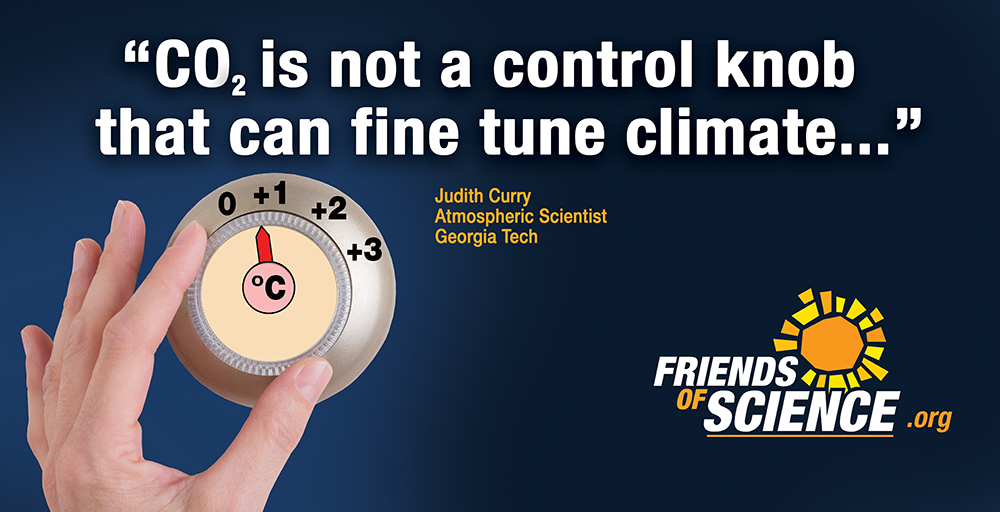
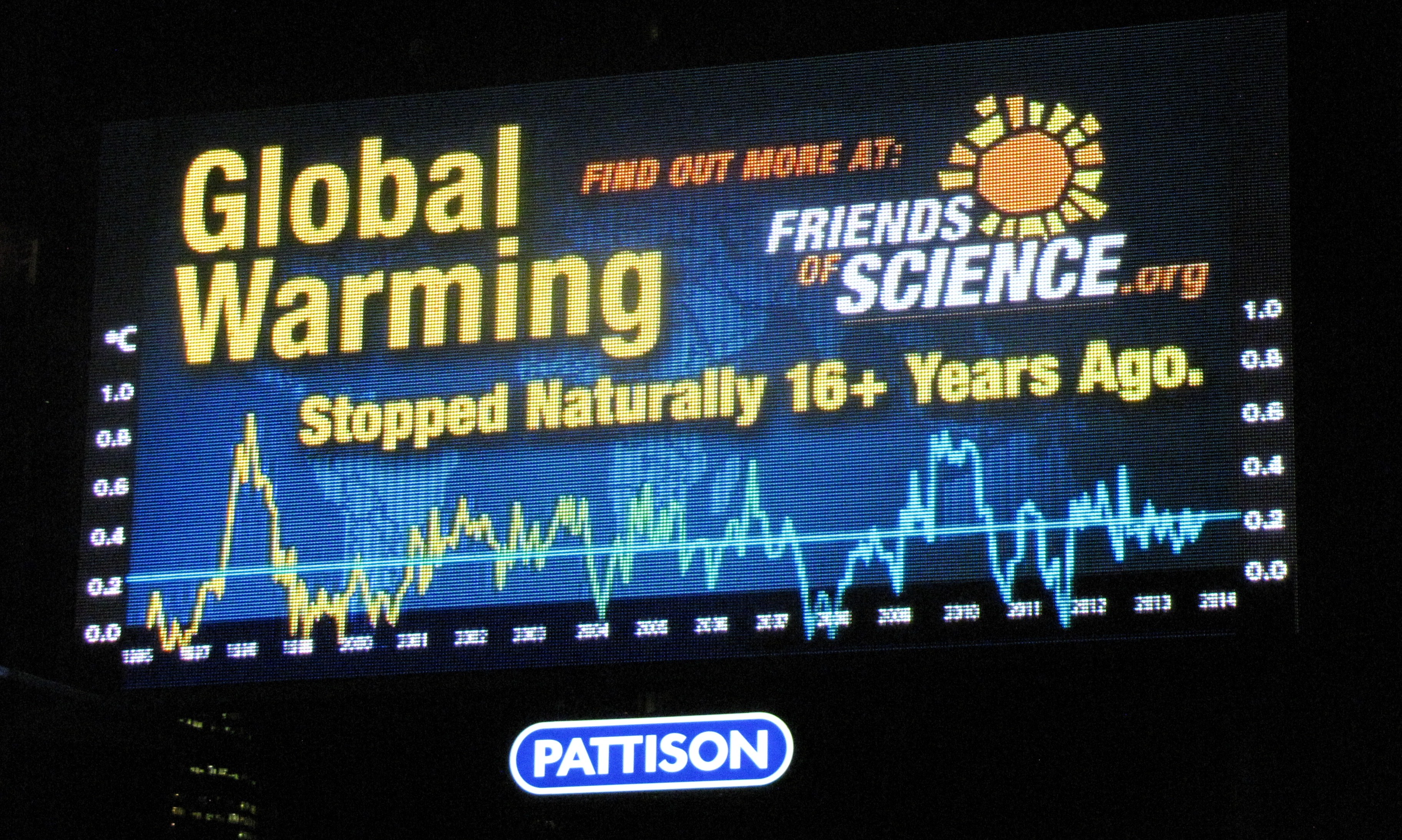
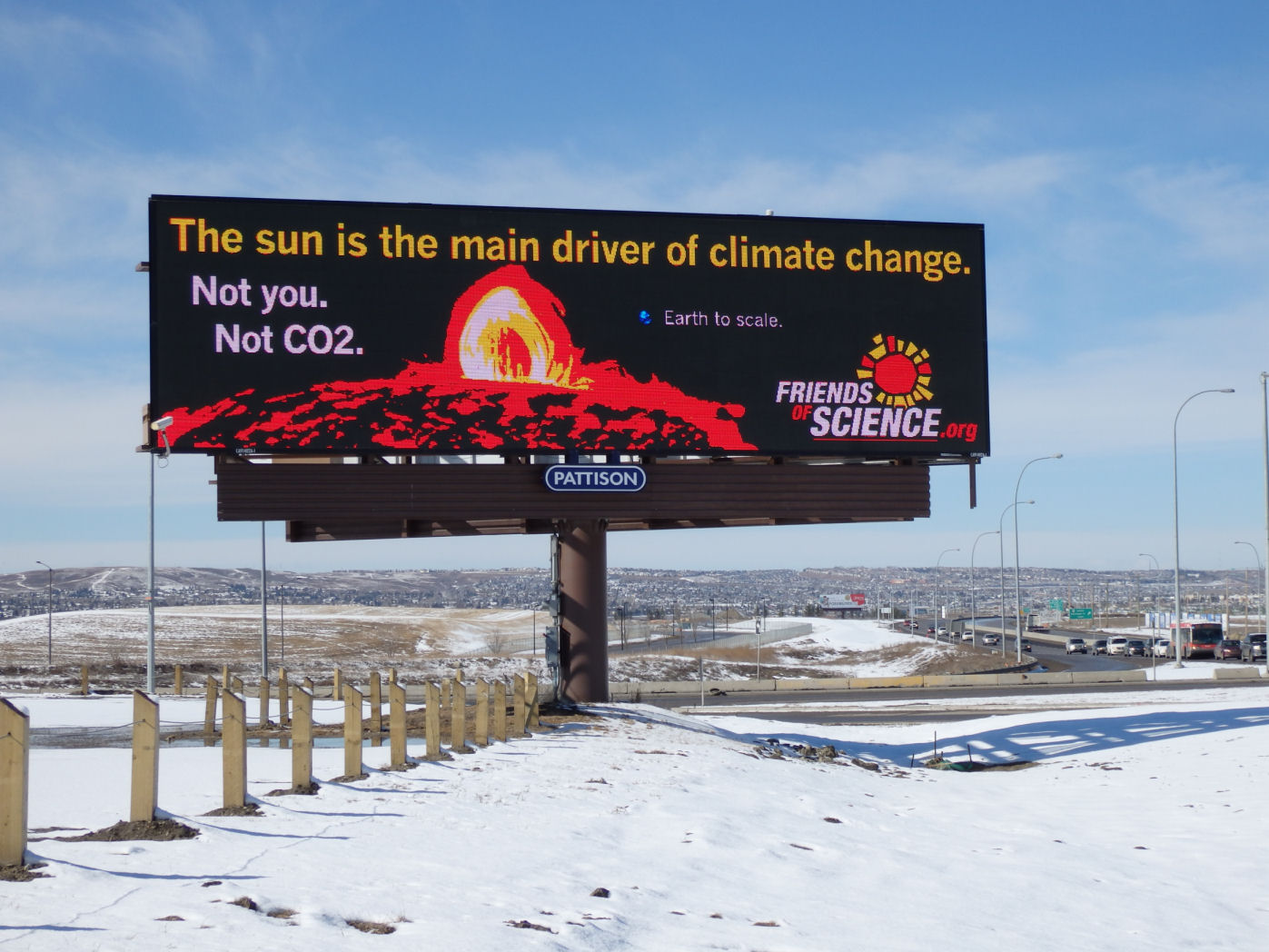
Tom Harris of International Climate Science Coalition – Canada explains in his Financial Post article Tom Harris: The Tories should shape climate opinion, not just respond to it.  Excerpts in italics with my bolds and added images from Friends of Science billboard campaign.

Grassroots conservatives need to ask CPC leadership candidates why, if they really support Canadian energy, they don’t contest climate alarmism

When CPC leadership candidates defend Canadian oil and gas, they either support, acquiesce to, or say nothing about the climate scare. PHOTO BY JOE RAEDLE/GETTY IMAGES

The common wisdom among candidates for leadership of the Conservative Party of Canada (CPC) is that the party must have a credible plan to reduce greenhouse gas emissions if it is to have a fighting chance to form the next government. As former Quebec premier Jean Charest said in the Edmonton debate on May 11, “we will not be elected as a political party if we’re not credible” about putting a price on carbon for large emitters.

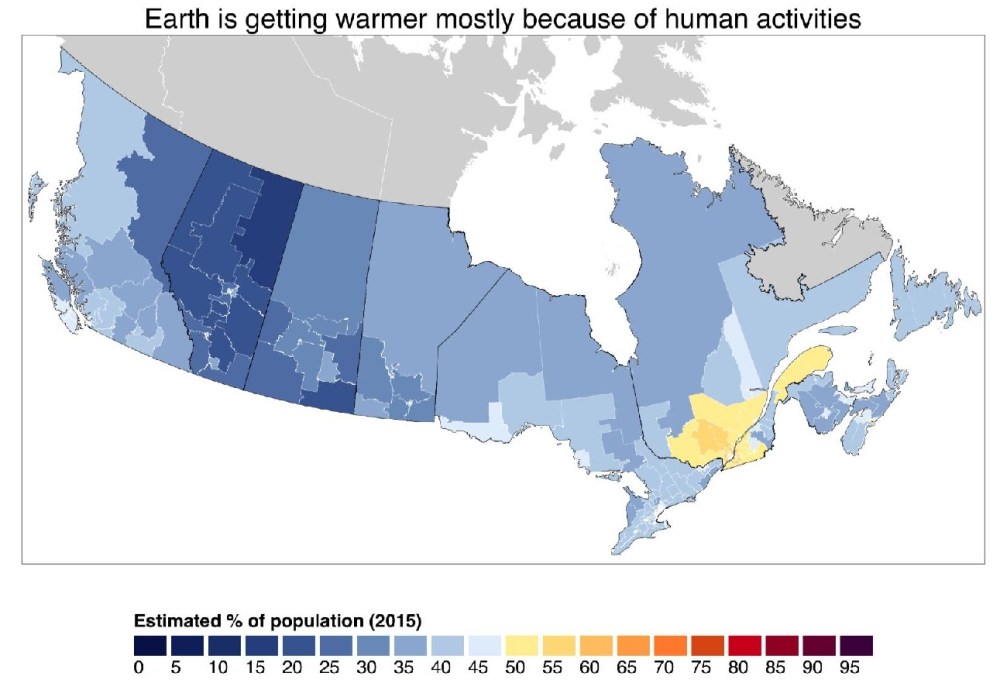
The strategists’ thinking is that, given current public support for reducing emissions to “stop climate change,” the CPC has no choice but to follow along or risk electoral defeat. And public opinion polls, like one from Abacus Data last October, do typically find that a majority of Canadians, in that poll 66 per cent, “would like to see governments in Canada put more emphasis on reducing emissions.”

[For the politics of climate polling see Uncensored: Canadians View Global Warming]

But the strategists are wrong. The candidates are giving up a golden opportunity to win the votes, not just of the many grassroots conservatives who oppose the climate scare,
but of Canadians at large in the next election.

A 2012 paper published in the journal Climatic Change suggests why. Three scholars — Robert J. Brulle of Drexel University, Jason Carmichael of McGill and J. Craig Jenkins of Ohio State — looked at 74 separate surveys over a nine-year period to try to figure out which factors had the greatest influence on public views on climate change. They considered five possibilities: extreme weather events, scientific information, media coverage, advocacy, and what politicians and political parties were saying on the subject. Surprisingly, they found that neither extreme weather events nor the promulgation of scientific information had a significant impact. Media coverage did, but the strongest effect came from the positions of competing politicians and political parties.

When politicians across the political spectrum supported the narrative
of man-made climate change, the public’s demand for action rose.

We see that today in Canada, with all major political parties supporting action on greenhouse gas emissions. On the other hand, when politicians questioned the narrative, as Congressional Republicans frequently did, the public’s demand for action dropped — substantially. The scholars’ analysis supported the 2009 conclusion of Harvard University’s Susan McDonald that: “When elites have consensus, the public follows suit and the issue becomes mainstreamed.

When elites disagree, polarization occurs, citizens rely on other indicators
to make up their minds.”

These findings are consistent with other studies that have demonstrated the leading role politicians and political parties play in shaping public opinion on issues. It’s a little like the tail wagging the dog but public opinion supporting government climate policy seems at least partly due to the lack of coherent opposition to the policy on the part of opinion-makers — especially elected officials.

If that’s true, then instead of citing public opinion polls that support climate policies they may be skeptical of, why don’t politicians and political strategists work to change public opinion? As conservative strategist and former policy aide to Stephen Harper, Joseph Ben-Ami, put it in a 2021 study for ICSC-Canada: “The answer may come down to inexperienced politicians and their advisers not understanding their power to influence public opinion. They look at polls and conclude that they have no hope of getting elected unless they climb onto the current public opinion bandwagon.

They fail to understand that the reason the public believes what it does is largely because they (politicians) aren’t making the opposite case.”

This phenomenon is widespread in Canada, and on many topics, not just climate change. At all levels of government, politicians use language and promote policies they very likely disagree with because they think public opinion leaves them no choice. As Ben-Ami argues, the result is a “feedback loop” where politicians’ “response” to public opinion is in reality the principal driver of the public opinion to which they are supposedly responding. The more obsequious their responses, the more entrenched that public opinion becomes, which then results in even more obsequious responses from even more frightened politicians.

Climate activists don’t pull their punches. They want an end
to all of Canada’s oil and gas development as soon as possible.

And, sadly, they are being helped by many in the press, government and other institutions. But a fast phase-out would be immensely costly. Besides contributing $105 billion to Canada’s GDP in 2020, oil and gas provided $10 billion in average annual revenue to governments between 2017 and 2019. Yet, when CPC leadership candidates defend Canadian oil and gas, they either support, acquiesce to, or say nothing about the climate scare.

Grassroots conservatives need to ask the candidates why, if they really support Canadian energy, they don’t contest climate alarmism, which is by far the greatest threat to that energy.

Tom Harris is executive director of International Climate Science Coalition – Canada.

Footnote: 

The billboards are from a campaign to inform the public by Friends of Science, not to be confused with the predatory Fiends  Friends of the Earth in the UK.

Calgary Climate Change Billboard campaign shows
Five Key Points of Cli-Sci Uncertainty says Friends of Science


Truckers or Trudeau? You Decide, Part 1


Chapter One of Trucking For Freedom is titled; “How We Got Here”. The objective of this episode is to adequately introduce the political and social climate leading up to the truckers’ convoy through the lens of C19 mandates, news footage, government officials, and views from Canadian citizens. A philosophic analysis of freedoms, rights, and responsibilities is also portrayed along with reenactments and dramatizations to convey the story. The chapter ends on a cliffhanger…leaving the viewer on a precipice as interest in the Freedom Convoy surges.

The Looming Energy Catastrophe

Ron Stein provides a briefing from California on the energy debacle imposed by clueless political leaders on ordinary Americans.  Excerpts in italics with my bolds H/T CFACT

The Looming Energy Catastrophe

Please enjoy and share this educational energy literacy briefing, a 5-minute video by Costa Mesa Brief at a California Chevron gas station. The video talks about the outrageous gas prices and tells us what is behind the increases, where it is heading and what, if anything, we can do about it. I think you will find his no-nonsense approach and perspective unique, sobering and very informative.

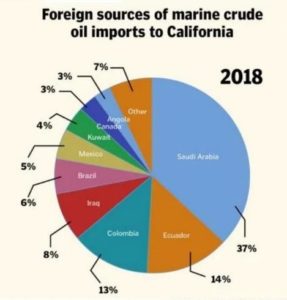
The video explains the impact on fuel prices from California government-imposed reductions in the supply chain of crude oil has increased imported crude oil from foreign countries from 5% in 1992 to more than 60% today of total consumption. Biden’s pledge stating, “we are going to get rid of fossil fuels,” is impacting fuel prices.

At today’s price of crude oil well above $100 per barrel, the imported crude oil costs California more than $150 million dollars a day, yes, everyday, being paid to oil-rich foreign countries, depriving Californians of jobs and business opportunities, and forcing drivers to pay premium prices for fuel.

Californians are consuming more than 50 million gallons of fuel daily for its 35 million vehicles, which is slightly more than one gallon per day per vehicle.

Californians continue to pay more than $1.00 more per gallon of fuel than the rest of the country primarily for the State, Federal and Local taxes, and the Government environmental compliance programs such as the Low Carbon Fuel Standard (LCFS), Cap and Trade, Renewable Fuel Standard (RFS), and the Underground Storage Tax. Those costs ‘dumped” onto the posted price at the pump are not transparent to the public.

The demand for fuels to move the heavy-weight and long-range needs of more than 50,000 jets for the military, commercial, private and the President’s Air Force One, and the more than 50,000 merchant ships that move products throughout the world are also manufactured from the supply of crude oil.

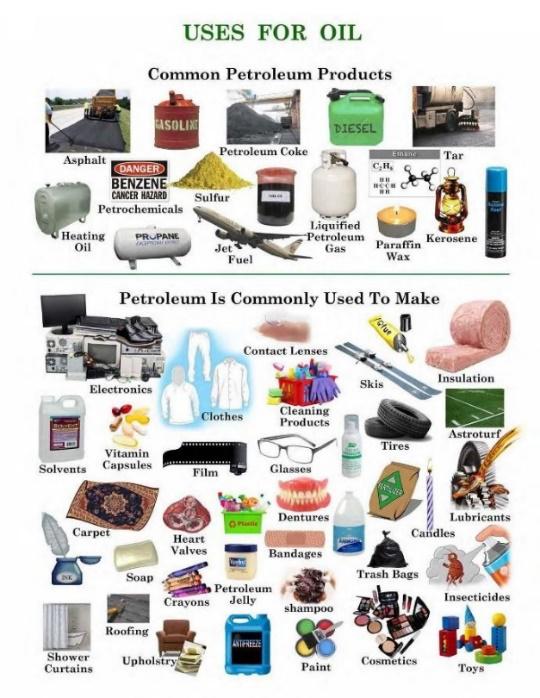
Life Without Oil is NOT AS SIMPLE AS YOU MAY THINK as renewable energy is only intermittent electricity from breezes and sunshine as NEITHER wind turbines nor solar panels can manufacture anything for society. Climate change may impact humanity, but being mandated to live without the more than 6,000 products and the various fuels manufactured from crude oil will necessitate lifestyles being mandated back to the horse and buggy days of the 1800’s.

When the public continues to demand increasing needs for the transportation fuels and the products made from crude oil, limiting its supply by governments and the Environmental, Social and Governance (ESG) movement to manufacture those items is a guarantee for today’s shortages and inflation.

Life without crude oil could be the greatest threat to civilization’s eight billion residents, resulting in billions of fatalities from diseases, malnutrition, and weather-related deaths.

How to Make Climatists Happy

There are many places where people are worried about erratic and destructive behavior by those inflamed with fear of global warming/climate change. In the past they have been known to vandalize pipelines delivering natural gas or oil critical for energy needs.  These days climatists are more and more frantic, and for example, given to slashing tires on SUVs, thinking them to be “Axles of Evil.”

Fortunately, we have news from Paris that there may be a way for these fevered persons to vent their fears, thereby feeling better, and leaving the rest of us alone.  I refer to the reported action by one of these poor souls attacking the image of Mona Lisa in the Louvre with a cream pie in order to save the planet from climate change.  Of course the painting is behind bulletproof glass, so it was not damaged.  But the release of passion was cathartic, followed by the climatist being taken away for admission to the Paris Home for the Bewildered.

The good news is that from now on there could be at local carnivals or at county fairs booths like those above where other such inflamed activists could act out their passion against images of Mona Lisa, and thus, perhaps regain reason and common sense.  Let us all hope for the best for these tortured souls.

A Climate Activist Smeared Cake On The Mona Lisa
“Think about the Earth. There are people who are in the process of destroying the Earth. Think about them!”