The Looming Energy Catastrophe

Ron Stein provides a briefing from California on the energy debacle imposed by clueless political leaders on ordinary Americans.  Excerpts in italics with my bolds H/T CFACT

The Looming Energy Catastrophe

Please enjoy and share this educational energy literacy briefing, a 5-minute video by Costa Mesa Brief at a California Chevron gas station. The video talks about the outrageous gas prices and tells us what is behind the increases, where it is heading and what, if anything, we can do about it. I think you will find his no-nonsense approach and perspective unique, sobering and very informative.

The video explains the impact on fuel prices from California government-imposed reductions in the supply chain of crude oil has increased imported crude oil from foreign countries from 5% in 1992 to more than 60% today of total consumption. Biden’s pledge stating, “we are going to get rid of fossil fuels,” is impacting fuel prices.

At today’s price of crude oil well above $100 per barrel, the imported crude oil costs California more than $150 million dollars a day, yes, everyday, being paid to oil-rich foreign countries, depriving Californians of jobs and business opportunities, and forcing drivers to pay premium prices for fuel.

Californians are consuming more than 50 million gallons of fuel daily for its 35 million vehicles, which is slightly more than one gallon per day per vehicle.

Californians continue to pay more than $1.00 more per gallon of fuel than the rest of the country primarily for the State, Federal and Local taxes, and the Government environmental compliance programs such as the Low Carbon Fuel Standard (LCFS), Cap and Trade, Renewable Fuel Standard (RFS), and the Underground Storage Tax. Those costs ‘dumped” onto the posted price at the pump are not transparent to the public.

The demand for fuels to move the heavy-weight and long-range needs of more than 50,000 jets for the military, commercial, private and the President’s Air Force One, and the more than 50,000 merchant ships that move products throughout the world are also manufactured from the supply of crude oil.

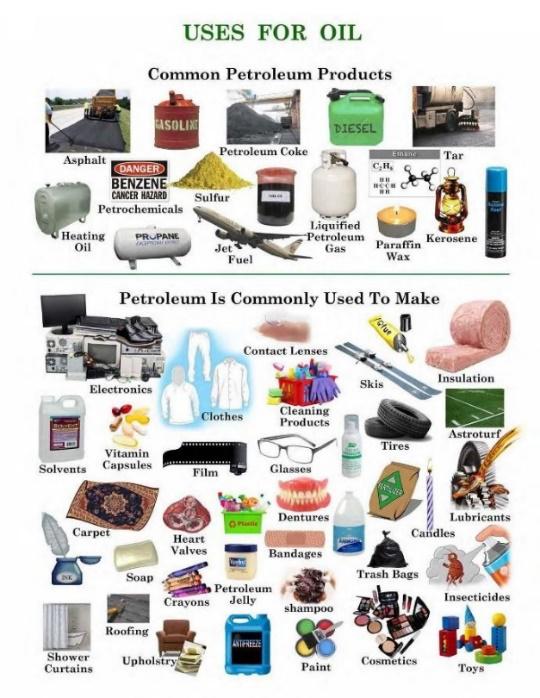
Life Without Oil is NOT AS SIMPLE AS YOU MAY THINK as renewable energy is only intermittent electricity from breezes and sunshine as NEITHER wind turbines nor solar panels can manufacture anything for society. Climate change may impact humanity, but being mandated to live without the more than 6,000 products and the various fuels manufactured from crude oil will necessitate lifestyles being mandated back to the horse and buggy days of the 1800’s.

When the public continues to demand increasing needs for the transportation fuels and the products made from crude oil, limiting its supply by governments and the Environmental, Social and Governance (ESG) movement to manufacture those items is a guarantee for today’s shortages and inflation.

Life without crude oil could be the greatest threat to civilization’s eight billion residents, resulting in billions of fatalities from diseases, malnutrition, and weather-related deaths.

Climate Dissonance: Ocean Warming or Cooling?

Climatists are manifesting cognitive dissonance, or maybe factional conflict.  They simultaneously claim the ocean current warming the North Atlantic is slowing down bringing colder weather, while also claiming the increasing ocean heat content is warming the ocean faster than ever.  The cooling alarm was noted and rebutted in a recent No Tricks Zone article 3 New Studies Show Atlantic Tipping Point Unrealistic…”Muted Response”…”Changes To Be Viewed With Caution”.

My own critique of the alarm was this post: The Cooling Also Not Our Fault

Turning Attention from the Freezing to the Overheating Ocean

The Ocean Heat scare was included in the recent UN Climate report, alongside four other claims I rebutted in the post UN False Alarms from Key Climate Indicators.The Ocean Heat Content is more complex, requiring this post of its own. The key message was this:

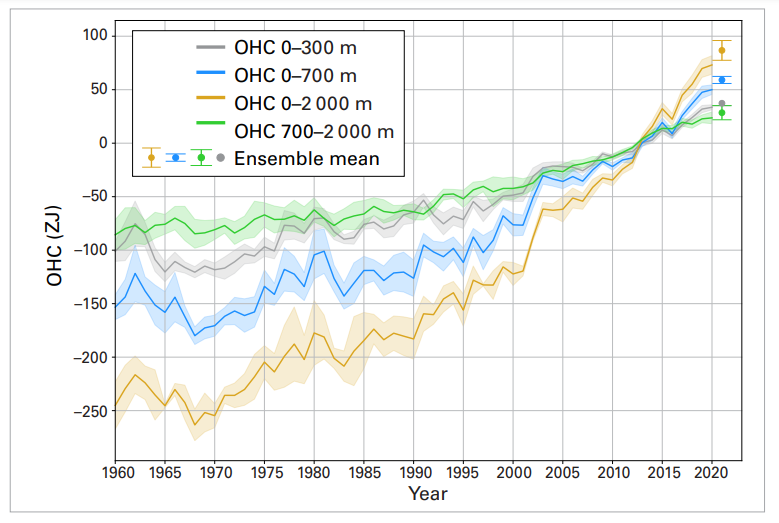
Ocean heat was record high. The upper 2000m depth of the ocean continued to warm in 2021 and it is expected that it will continue to warm in the future – a change which is irreversible on centennial to millennial time scales. All data sets agree that ocean warming rates show a particularly strong increase in the past two decades. The warmth is penetrating to ever deeper levels. Much of the ocean experienced at least one ‘strong’ marine heatwave at some point in 2021.

Figure 4. 1960–2021 ensemble mean time series and ensemble standard deviation (2 standard deviations, shaded) of global OHC anomalies relative to the 2005–2017 average for the 0–300 m (grey), 0–700 m (blue), 0–2 000 m (yellow) and 700–2 000 m (green) depth layers. The ensemble mean is an update of the outcome of a concerted international data and analysis effort.

Context and Background Information

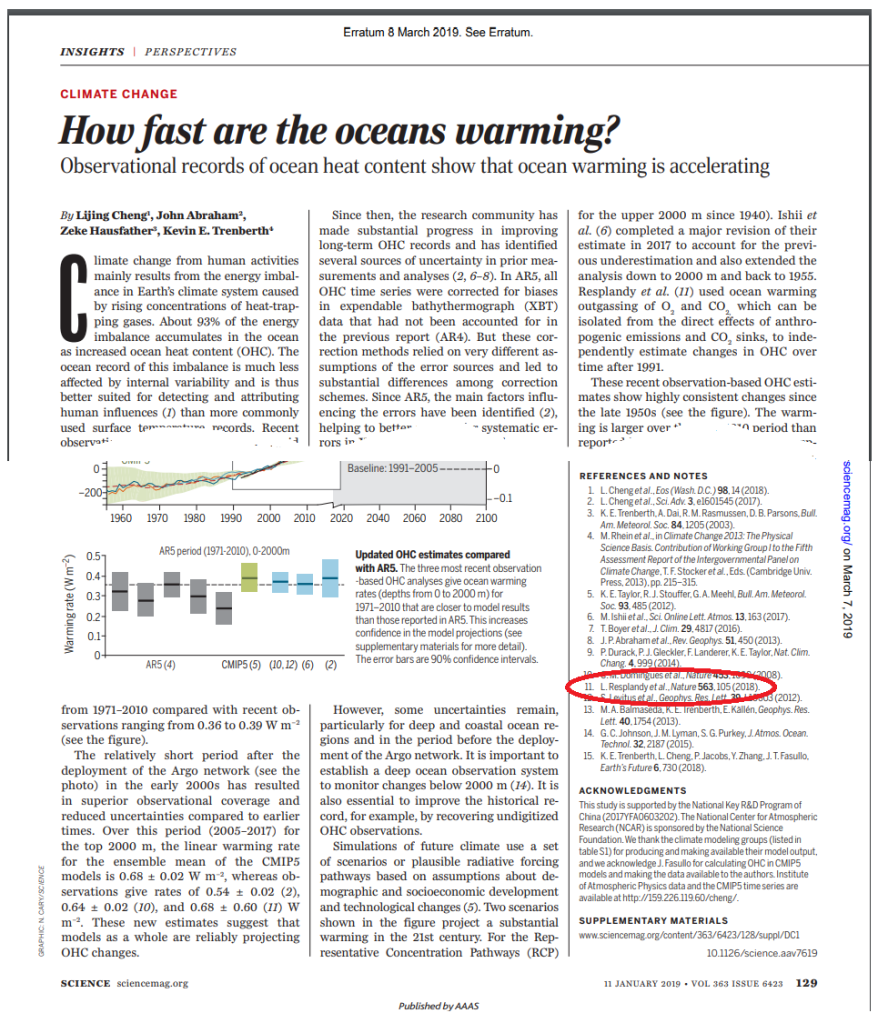
Media alarms are rampant relying mostly on a publication Record-Setting Ocean Warmth Continued in 2019 in Advances in Atmospheric Sciences
Authors: Lijing Cheng, John Abraham, Jiang Zhu, Kevin E. Trenberth, John Fasullo, Tim Boyer, Ricardo Locarnini, Bin Zhang, Fujiang Yu, Liying Wan, Xingrong Chen, Xiangzhou Song, Yulong Liu, Michael E. Mann.

Reasons for doubting the paper and its claims go well beyond the listing of so many names, including several of the usual suspects. No, this publication is tarnished by its implausible provenance. It rests upon and repeats analytical mistakes that have been pointed out, but true believers carry on without batting an eye.

It started with Resplandy et al in 2018 who became an overnight sensation with their paper Quantification of ocean heat uptake from changes in atmospheric O2 and CO2 composition in Nature October 2018, leading to media reports of extreme ocean heating. Nic Lewis published a series of articles at his own site and at Climate Etc. in November 2018, leading to the paper being withdrawn and eventually retracted. Those authors acknowledged the errors and did the honorable thing at the time, resulting the paper’s retraction 25 September 2019.

Then a revised version of the paper was published 27 December 2019 with the same title and stands today.  The 2019 abstract is exactly the same as the 2018 abstract (retracted), except for one sentence.

♦  2018:  We show that the ocean gained 1.33 ± 0.20 × 10^22 joules of heat per year between 1991 and 2016, equivalent to a planetary energy imbalance of 0.83 ± 0.11 watts per square metre of Earth’s surface.

♦  2019:  We show that the ocean gained 1.29 ± 0.79 × 10^22 Joules of heat per year between 1991 and 2016, equivalent to a planetary energy imbalance of 0.80 ± 0.49 W watts per square metre of Earth’s surface.

Figure 1. Argo float operation. There are about 3,500 floats in the ocean, and a total of ~10,000 floats have been used over the period of operation.

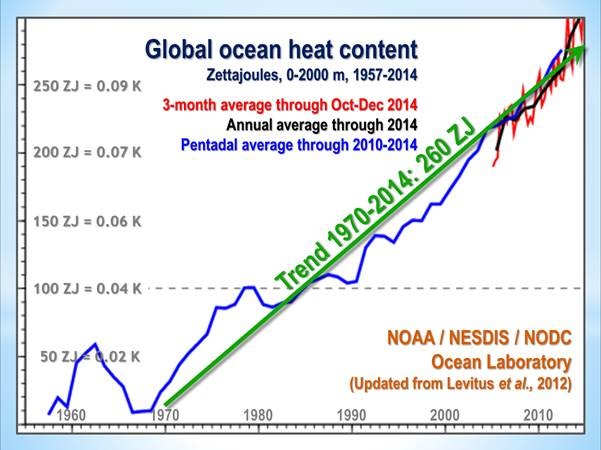
In the discussion and graphs, readers should note that 1 Zettajoule (ZJ) = 1 x 10^21 joules, and that these are energy units, not temperatures. Willis Eschenbach did a fine analysis of this OHC issue, since it depends mostly upon ARGO float measurements. From that essay:

The first thing that I wanted to do was to look at the data using more familiar units. I mean, nobody knows what 10^22 joules means in the top two kilometres of the ocean. So I converted the data from joules to degrees C. The conversion is that it takes 4 joules to heat a gram of seawater by 1°C (or 4 megajoules per tonne per degree). The other information needed is that there are 0.65 billion cubic kilometres of ocean above 2,000 metres of depth, and that seawater weighs about 1.033 tonnes per cubic metre.

The first thing is to note that 3500 floats are sampling 0.65 billion cubic km of the ocean, and the record began in 2005. The next thing is to appreciate the impact of increasing energy upon the ocean temperature.

Yes, those are ocean warming increments of a few 1/100ths of a degree kelvin.  Applying the math to Resplandy et al., we should also note the ranges of uncertainty in these estimates (ocean temps to 1/100 of a degree, really?)

Resplandy 2018: Claim 103 to 153 ZJ/decade, or warming between 0.03 to 0.05 C/decade.

Resplandy 2019:  Claim  50 to 208 ZJ/decade, or warming between 0.02 to 0.07 c/decade

And the Climate Show Goes On

Benny Peiser of GWPF objected in writing to IPCC, saying inter alia:

Your report (SROCC, p. 5-14) concludes that
” The rate of heat uptake in the upper ocean (0-700m) is very likely higher in the 1993-2017 (or .2005-2017) period compared with the 1969-1993 period (see Table 5.1).”

We would like to point out that this conclusion is based to a significant degree on a paper
by Cheng et al. (2019) which itself relies on a flawed estimate by Resplandy et al. (2018).
An authors’ correction to this paper and its ocean heat uptake (OHU) estimate was under
review for nearly a year, but in the end Nature requested that the paper be retracted
(Retraction Note, 2019).

That was not the only objection. Nic Lewis examined Cheng et al. 2019 and found it wanting. That discussion is also at Climate Etc. Is ocean warming accelerating faster than thought? The authors replied to Lewis’ critique but did not refute or correct the identified errors.

Now in 2022 the same people have processed another year of data in the same manner and then proclaim the same result. The only differences are the addition of several high profile alarmists and the subtraction of Resplandy et al. from the References.  It looks like the group is emulating MIchael Mann’s blueprint:  The Show Must Go On.  The Noble cause justifies any and all means.

Show no weaknesses, admit no mistakes, correct nothing, sue if you have to.

Footnote: Q: Is the Ocean Warming or Cooling?  A: Nobody Knows.

To enlarge, open image in new tab.


How We Got to Climate Crisis Hysteria

Background from previous post Rise and Fall of CAGW

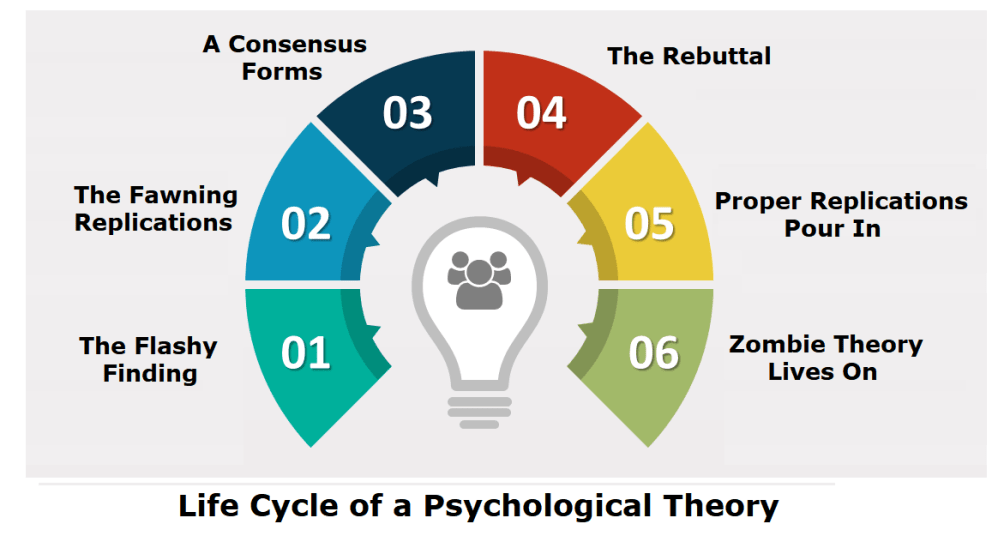
On January 8, 2018 Ross Pomeroy published  at RealClearScience an interesting article The Six Stages of a Failed Psychological Theory

The Pomeroy essay focuses on theories in the field of psychology and describes stages through which they rise, become accepted, challenged and discarded. It has long seemed to me that global warming/climate change theory properly belongs in the field of social studies and thus should demonstrate a similar cycle.

Formerly known as CAGW (catastrophic anthropogenic global warming), the notion of “climate change” is logically a subject of social science rather than physical science. “Climate Change” is a double abstraction: it refers to the derivative (change) in our expectations (patterns) of weather. Thus studies of “Climate Change” are properly a branch of Environmental Sociology.

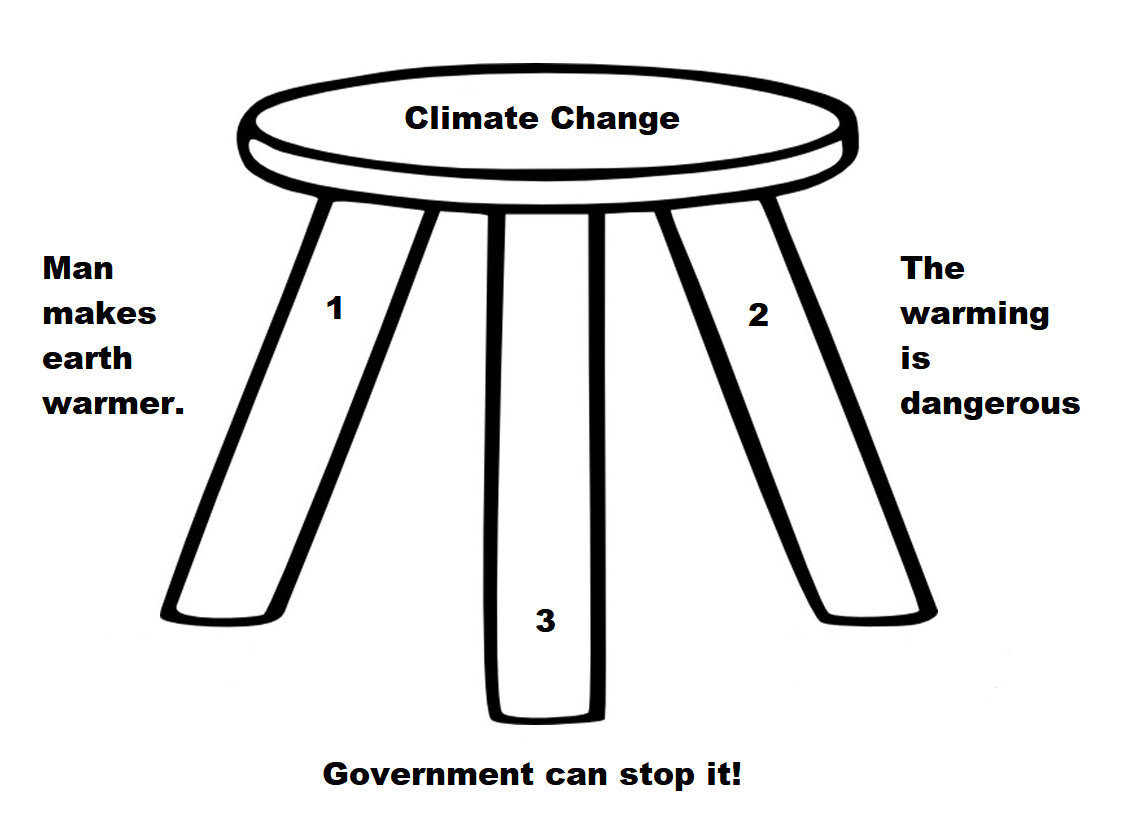
As a social psychology theory, CAGW/climate change bundles together three interdependent assertions.

From the beginning the claimed science, impacts and policies were bundled, which makes CAGW theory unusual. Psychological theories do not typically give rise to activism for changes in social and political policies. Thus the six stages above focus on the rise and fall of a scientific conclusion, with little or no reference to impacts and policies. At the end of this post are links to resources regarding these latter two points.

Examples of Failed Psychology Theories: The “Backfire Effect” and others

Ross Pomeroy (my bolds):
With the publication of his exhaustingly researched and skillfully reported article, “LOL Something Matters,” science writer Daniel Engber convincingly demonstrated that the “backfire effect,” the notion that contradictory evidence only strengthens entrenched beliefs, does not hold up under rigorous scientific scrutiny. Bluntly stated, the “backfire effect” probably isn’t real.

The debunking of this longstanding psychological theory follows similar academic takedowns of ego depletion, social priming, power posing, and a plethora of other famous findings. Indeed, much of what we “know” in psychology seems to be false.

There’s a good reason for this: psychology, as a discipline, is a house made of sand, based on analyzing inherently fickle human behavior, held together with poorly-defined concepts, and explored with often scant methodological rigor. Indeed, there’s a strong case to be made that psychology is barely a science.

How Theories Advance and Collapse

Seeing how disarray defines psychology, it makes perfect sense that the field’s leading theories are vulnerable to collapse. Having watched this process play out a number of times, a clear pattern has emerged. Let’s call it the “Six Stages of a Failed Psychological or Sociological Theory.”

Stage 1: The Flashy Finding. An intriguing report is published with subject matter that lends itself to water cooler conversation, say, for example, that sticking a pen in your mouth to force a smile makes things seem funnier. Media outlets provide gushing coverage.

Stage 1 CAGW Theory

For Climate Change, by many accounts the flashy finding was James Hansen’s famous 1988 testimony in the US Senate. Hansen’s claim to detect global warming was covered by all the main television network news services and it won for him a New York Times front page headline: “Global warming has begun, expert tells Senate.”
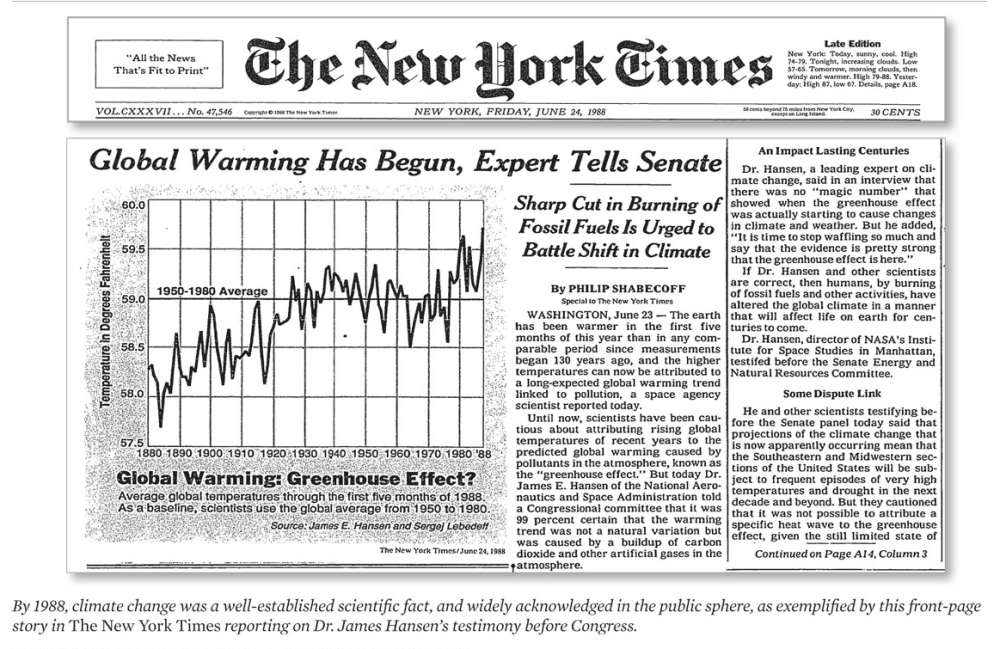
While Hansen’s appearance was a PR coup, he actually jumped the gun.  By 1995 IPCC scientists had not yet agreed that humans are causing global warming.  The story of that problem and the subsequent claim of first detection by John Houghton and Ben Santer is described in detail in Bernie Lewin’s fine historical account. (My synopsis is linked at the end.)

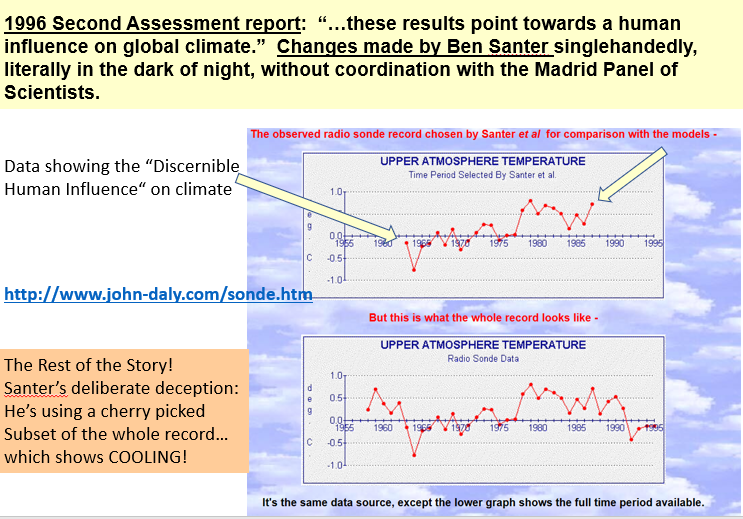
So in this sense, the actual Flashy Finding was published by Santer et al. just before Rio COP in Nature July 1996 entitled: A search for human influences on the thermal structure of the atmosphere
B. D. Santer, K. E. Taylor, T. M. L. Wigley, T. C. Johns, P. D. Jones, D. J. Karoly, J. F. B. Mitchell, A. H. Oort, J. E. Penner, V. Ramaswamy, M. D. Schwarzkopf, R. J. Stouffer & S. Tett  From the abstract:

The observed spatial patterns of temperature change in the free atmosphere from 1963 to 1987 are similar to those predicted by state-of-the-art climate models incorporating various combinations of changes in carbon dioxide, anthropogenic sulphate aerosol and stratospheric ozone concentrations. The degree of pattern similarity between models and observations increases through this period. It is likely that this trend is partially due to human activities, although many uncertainties remain, particularly relating to estimates of natural variability.

An article published the same month in World Climate Report was entitled:“Clearest Evidence” For Human “Fingerprint?” Results clouded if more complete data used  The WCR essay concluded:

We are frankly rather amazed that this paper could have emerged into the refereed literature in its present state; that is not to say that the work is bad, but that there are serious questions—similar to ours—that the reviewers should have asked.

The inescapable conclusions:

1. The vast majority of the “fingerprints” of the greenhouse effect are found way up in the atmosphere, especially in the stratosphere.

2. The “detection” models that were used either don’t predict very much future warming or were run with the wrong greenhouse effect and produce absurd results when the right numbers are put in.

3.And finally, down here in the lower atmosphere, the evidence is much more smudged and is based upon a highly selected set of data that, when viewed in toto, shows something dramatically different than what the paper purports.

The period that Santer et al. studied corresponds precisely with a profound warming trend in this region. But when all of the data (1957 to 1995) are included, there’s no trend whatsoever! We don’t know what to call this, but we believe that at least one of the 13 prestigious authors on this paper must have known this to be the case.
Stage 2: The Fawning Replications. Other psychologists, usually in the early stages of their careers, leap to replicate the finding. Most of their studies corroborate the effect. Those that don’t are not published, perhaps because the researchers don’t want to step on any toes, or because journal editors would prefer not to publish negative findings.

Stage 2 CAGW Theory

Following the human detection claim, the media increasingly filled its time and pages with reports of “multiple lines of evidence” proving CAGW.  Typically these consisted of :

Global temperature rise
Warming oceans
Shrinking ice sheets
Glacial retreat
Decreased snow cover
Sea level rise
Declining Arctic sea ice
Extreme events
Ocean acidification

However, all of these are equivocal, involving signal and noise issues.  And in any case, the fact of any changes does not in itself prove human causation.

Overview of the structure of a state-of-the-art climate model. From the NOAA website.

As suggested by the Santer et al. flashy finding, the claim of human causation was based upon climate models.  And the effort to substantiate that claim was primarily a campaign to construct and experiment with GCMs.  From History of climate modeling by Paul N. Edwards .

Like ripples moving outward from the three pioneering groups (GFDL, UCLA, and NCAR), modelers, dynamical cores, model physics, numerical methods, and GCM computer code soon began to circulate around the world. By the early 1970s, a large number of institutions had established new general circulation modeling programs. In addition to those discussed above, the most active climate modeling centers today include Britain’s Hadley Centre, Germany’s Max Planck Institute, Japan’s Earth Simulator Centre, and the Goddard Institute for Space Studies in the United States..

How many GCMs and climate modeling groups exist worldwide? The exact number can be expanded or contracted under various criteria. About 33 groups submitted GCM output to the Atmospheric Model Intercomparison Project (AMIP) in the 1990s.A few years later, however, only about 25 groups contributed coupled AOGCM outputs to the Coupled Model Intercomparison Project (CMIP)—reflecting the greater complexity and larger computational requirements of coupled models.  Notably, while the AMIP models included entries from Russia, Canada, Taiwan, China, and Korea, all of the CMIP simulations came from modeling groups based in Europe, Japan, Australia, and the USA, the historical leaders in climate modeling.

The difficulties and uncertainties with climate models have been long understood, and have not been overcome  through the decades, as indicated by the failure to reduce the range estimates of climate sensitivity to CO2.  From Modeling climatic effects of anthropogenic carbon dioxide emissions: unknowns and uncertainties Willie Soon et al.

Specifically, we review common deficiencies in general circulation model (GCM) calculations of atmospheric temperature, surface temperature, precipitation and their spatial and temporal variability. These deficiencies arise from complex problems associated with parameterization of multiply interacting climate components, forcings and feedbacks, involving especially clouds and oceans. We also review examples of expected climatic impacts from anthropogenic CO2 forcing.

Given the host of uncertainties and unknowns in the difficult but important task of climate modeling, the unique attribution of observed current climate change to increased atmospheric CO2 concentration, including the relatively well-observed latest 20 yr, is not possible. We further conclude that the incautious use of GCMs to make future climate projections from incomplete or unknown forcing scenarios is antithetical to the intrinsically heuristic value of models. Such uncritical application of climate models has led to the commonly held but erroneous impression that modeling has proven or substantiated the hypothesis that CO2 added to the air has caused or will cause significant global warming.
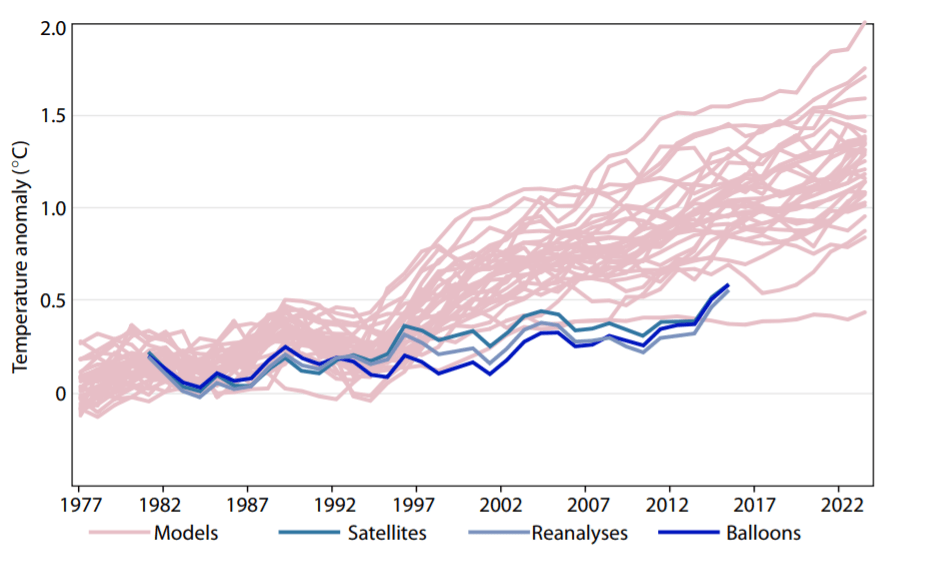
Christy 2019 fig7

Figure 7 (Christy 2019): Tropical mid-tropospheric temperatures, models vs. observations.
Models in pink, against various observational datasets in shades of blue. Five-year averages
1979–2017. Trend lines cross zero at 1979 for all series.

Stage 3: A Consensus Forms. The finding is now taken for granted, regularly appearing in pop psychology stories and books penned by writers like Malcolm Gladwell or Jonah Lehrer. Millions of people read about it and “armchair” explain it to their friends and family.

Stage 3 CAGW Theory  

The Claims of 97% Consensus of scientists on the question of CAGW stem from five papers, conveniently referenced on NASA’s website (though none of them were written by NASA scientists).

The first claim of 97% came from a survey sample of 77 climate scientists who said “Yes” to 2 statements: “It has warmed since 1850.”; “Human activity has contributed to the warming.” That survey questionnaire was deliberately not sent to those known to be skeptical: scientists not employed by government or universities; astronomers; solar scientists; physicists; meteorologists.

Another paper noted by NASA on their website is by W. R. L. Anderegg, at the time a PhD student in the department of Biology at Stanford University. He went on to become a professor at Princeton and Utah Universities in the field of ecology and biological sciences, studying the effects of global warming on forests.

Two papers were produced by John Cook  who has an undergraduate education in physics from the University of Queensland and a post-graduate honors year studying solar physics, worked as a self-employed cartoonist before founding a website pushing climate alarmism. For this he was given the title of the Climate Communication Fellow for the Global Change Institute at the University of Queensland. He is currently completing a PhD in cognitive psychology, researching how people think about climate change.

Finally, a key paper was from Naomi Oreskes who received her PhD degree in the Graduate Special Program in Geological Research and History of Science at Stanford in 1990. Her fields are History of Science and Economic Geology, and she is a prominent activist for IPCC activities.

All five of these papers have been extensively criticized in the peer-reviewed literature for their poor quality. For example:

Regarding Anderegg et al. and climate change credibility, PNAS, Dec. 28, 2010 by Lawrence Bodenstein

The study by Anderegg et al. (1) employed suspect methodology that treated publication metrics as a surrogate for expertise.

In the climate change (CC) controversy, a priori, one expects that the much larger and more “politically correct” side would excel in certain publication metrics. They continue to cite each other’s work in an upward spiral of self-affirmation.

Here, we do not have homogeneous consensus absent a few crackpot dissenters. There is variation among the majority, and a minority, with core competency, who question some underlying premises. It would seem more profitable to critique the scientific evidence than count up scientists, publications, and the like.

Regarding purely scientific questions, it may be justified to discount nonexperts. However, here, dissenters included established climate researchers. The article undermined their expert standing and then, extrapolated expertise to the more personal credibility. Using these methods to portray certain researchers as not credible and, by implication, to be ignored is highly questionable. Tarring them as individuals by group metrics is unwarranted.

Publication of this article as an objective scientific study does a true disservice to scientific discourse. Prominent scientific journals must focus on scientific merit without sway from extracurricular forces. They must remain cautious about lending their imprimatur to works that seem more about agenda and less about science, more about promoting a certain dogma and less about using all of the evidence to better our understanding of the natural world.

A more complete list of published papers refuting these studies is here: All “97% Consensus” Studies Refuted by Peer-Review

More inclusive surveys with more pointed questions show much more diverse opinions. Most scientists agree it has warmed since 1850, the end of the Little Ice Age. Geologists have evidence that the earth was warmer than now during the Medieval Warm Period, more warm during the Roman Warm Period, warmer still in the Minoan period. So the overall trend is a cooling over the last 11,500 years.

Most agree that human land use, such as making dams, farming, building cities, airports and highways, all affect the climate in those locations. The idea that rising CO2 is causing dangerous warming is controversial, with dissenters a large minority.

Stage 4: The Rebuttal. After a few decades, a new generation of researchers look to make a splash by questioning prevailing wisdom. One team produces a more methodologically-sound study that debunks the initial finding. Media outlets blare the “counterintuitive” discovery.

Stage 4 CAGW Theory  

There have been many rebuttals of CAGW theory and in the blogosphere they are proclaimed and shared among skeptics.  But it is still rare for mass media outlets to acknowledge any finding that contradicts the prevailing “consensus” view of CAGW.  On the multiple lines of evidence, the NIPCC series of reports provide references to a trove of peer-reviewed literature that do not support CAGW.  The most recent report is Climate Change Reconsidered II and the list of scientists, authors and reviewers includes people who have objected to CAGW over the years.

An important proof against the CO2 global warming claim was included in John Christy’s testimony 29 March 2017 at the House Committee on Science, Space and Technology. The text below is from that document which can be accessed here.

Figure 5. Simplification of IPCC AR5 shown above in Fig. 4. The colored lines represent the range of results for the models and observations. The trends here represent trends at different levels of the tropical atmosphere from the surface up to 50,000 ft. The gray lines are the bounds for the range of observations, the blue for the range of IPCC model results without extra GHGs and the red for IPCC model results with extra GHGs.The key point displayed is the lack of overlap between the GHG model results (red) and the observations (gray). The nonGHG model runs (blue) overlap the observations almost completely.

Main Point: IPCC Assessment Reports show that the IPCC climate models performed best versus observations when they did not include extra GHGs and this result can be demonstrated with a statistical model as well.

More discussion on this rebuttal is at Warming from CO2 Unlikely

See also Global Warming Theory and the Tests It Fails 

But the mass media is still in thrall of the catastrophic theory (bad news is good for business).

Stage 5: Proper Replications Pour In. Research groups attempt to replicate the initial research with the skepticism and precise methodology that should’ve been used in the first place. As such, the vast majority fail to find any effect.

Stage 5 CAGW Theory

In the case of climate change, the rewards are all skewed in favor of CAGW.  Not only is that bundle of beliefs politically correct, the monopoly of research funding for consensus projects leaves contrarian scientists high and dry.  And to the degree that the case rests on complex and expensive computer climate models, few centers are in a position to challenge the conventional wisdom, and almost none would be rewarded for doing so.

Despite this, every year there are hundreds of new research papers published challenging CAGW.  Kenneth Richard at No Tricks Zone has done yeoman work compiling and summarizing and linking to such studies. His most recent review is Hundreds More Papers Published In 2021 Support A Skeptical Position On Climate Alarm

The papers are sorted into four categories of views questioning climate alarm.

N(1) Natural mechanisms play well more than a negligible role (as claimed by the IPCC) in the net changes in the climate system, which includes temperature variations, precipitation patterns, weather events, etc., and the influence of increased CO2 concentrations on climatic changes are less pronounced than currently imagined.

N(2) The warming/sea levels/glacier and sea ice retreat/hurricane and drought intensities…experienced during the modern era are neither unprecedented or remarkable, nor do they fall outside the range of natural variability, as clearly shown in the first 150 graphs (from 2017) on this list.

N(3) The computer climate models are not reliable or consistently accurate, and projections of future climate states are little more than speculation as the uncertainty and error ranges are enormous in a non-linear climate system.

N(4) Current emissions-mitigation policies, especially related to the advocacy for renewables, are often ineffective and even harmful to the environment, whereas elevated CO2 and a warmer climate provide unheralded benefits to the biosphere (i.e., a greener planet and enhanced crop yields).

As for climate models, there is a single center (the Russian Institute of Numerical Mathematics), working on GCMs that produce unalarming results.  Out of 33 CMIP5 generation models the INMCM4 appears in the earlier graph above as the only one tracking close to temperature observations.  And reports of the upgrade to INMCM5 appear promising.  For more on this topic:

Climate Models: Good, Bad and Ugly

Stage 6: The Theory Lives On as a Zombie. Despite being debunked, the theory lingers on in published scientific studies, popular books, outdated webpages, and common “wisdom.” Adherents in academia cling on in a state of denial – their egos depend upon it.

Stage 6 CAGW Theory 

Clearly, we are still a long ways from CAGW going to zombie status.  There is still way too much money and fame attached to climate advocacy. But it is fair to say that the position of CAGW has become more precarious.  The presence of a skeptical US President, and the withdrawal of funding and political support for alarmists makes it possible for others to express doubts and explore flaws in the consensus theory.  The collapse of green energy schemes in places like Germany and Australia may also portend the onset of stage six.

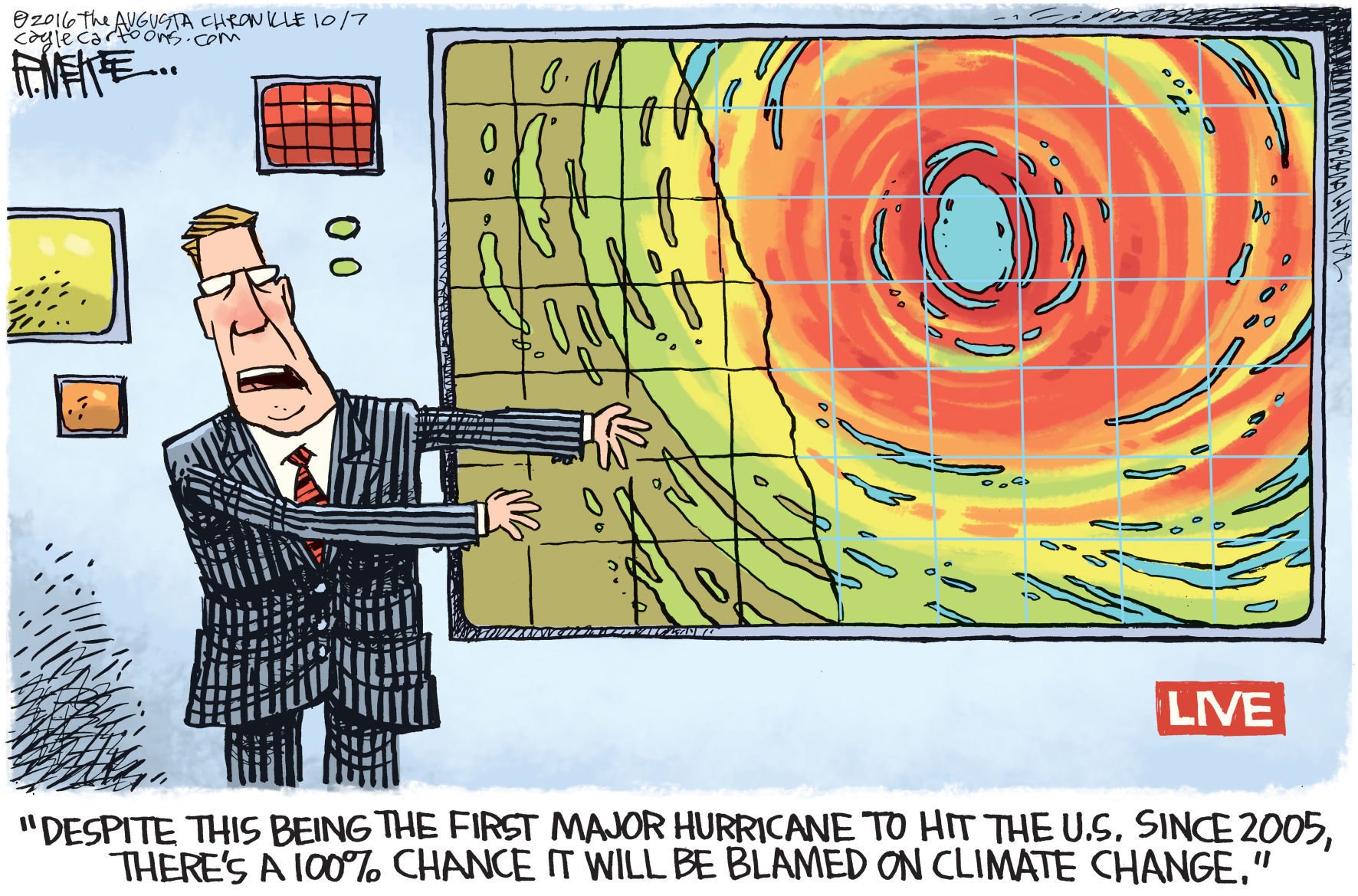
Of course, the only sure sign of a theory’s failure is when it becomes the butt of jokes and ridicule in mainstream media.  For that I do appreciate the work of cartoonist Rick McKee of the Augusta Chronicle:
More humor at Cavemen Climate Comics for Sunday

Background Articles

The Flashy Finding: Progressively Scaring the World (Lewin book synopsis)

The Fawning Replications: Climate Models Explained

A Consensus Forms: Talking ClimateNASA and Climate Dogma

The Rebuttal: Fossil Fuels ≠ Global Warming

Proper Replications: Climate Reductionism

Zombie CAGW:  World of Hurt from Climate Policies

Postscript: Charles MacKay on Collective Delusions

Of course the classical masterwork in this field is the book Extraordinary Popular Delusions And The Madness Of Crowds By Charles MacKay 1841.  Title is link to full pdf text.  Excerpts below with my bolds.

In the present state of civilization, society has often shown itself very prone to run a career of folly from the last-mentioned cases. This infatuation has seized upon whole nations in a most extraordinary manner. France, with her Mississippi madness, set the first great example, and was very soon imitated by England with her South Sea Bubble. At an earlier period, Holland made herself still more ridiculous in the eyes of the world, by the frenzy which came over her people for the love of Tulips. Melancholy as all these delusions were in their ultimate results, their history is most amusing. A more ludicrous and yet painful spectacle, than that which Holland presented in the years 1635 and 1636, or France in 1719 and 1720, can hardly be imagined.

Some delusions, though notorious to all the world, have subsisted for ages, flourishing as widely among civilized and polished nations as among the early barbarians with whom they originated, — that of duelling, for instance, and the belief in omens and divination of the future, which seem to defy the progress of knowledge to eradicate entirely from the popular mind. Money, again, has often been a cause of the delusion of multitudes. Sober nations have all at once become desperate gamblers, and risked almost their existence upon the turn of a piece of paper. To trace the history of the most prominent of these delusions is the object of the present pages. Men, it has been well said, think in herds; it will be seen that they go mad in herds, while they only recover their senses slowly, and one by one.

MacKay’s study was exhaustive for its time, comprising three volumes;

VOL I. Considered National Delusions, including:
THE MISSISSIPPI SCHEME
THE SOUTH SEA BUBBLE
THE TULIPOMANIA.
RELICS.
MODERN PROPHECIES.
POPULAR ADMIRATION FOR GREAT THIEVES.
INFLUENCE OF POLITICS AND RELIGION ON THE HAIR AND BEARD.
DUELS AND ORDEALS
THE LOVE OF THE MARVELLOUS AND THE DISBELIEF OF THE TRUE.
POPULAR FOLLIES IN GREAT CITIES
THE O.P. MANIA.
THE THUGS, or PHANSIGARS.

VOL. II described Peculiar Follies, including:
THE CRUSADES
THE WITCH MANIA.
THE SLOW POISONERS.
HAUNTED HOUSES.

VOL. III compiled more general popular madnesses under three categories:
BOOK I: Philosophical Delusions, down through history with particular recent attention to Alchemists
BOOK II: Fortune Telling
BOOK III: The Magnetisers, a fad only subsiding when the book was written.
The Cooling Also Not Our Fault

With the lack of global warming and the steep decline of surface temperatures the last 6 to 8 months, climatists are pivoting to the notion invented by the infamous M. Mann, AKA Mr. Hockey Stick (aiming to erase the Medieval warming period).  The reasoning is convoluted, as you might expect given the intent to blame cold weather on global warming.  The claim is that burning fossil fuels causes the North Atlantic Current to slow down and bring cold temperatures to the Northern Hemisphere.  The video below is an excellent PR piece promoting this science fiction as though it were fact.


The link below allows you to view it in its natural habitat (USA Today)

https://www.usatoday.com/videos/tech/science/2019/03/20/ocean-conveyor-belt-slowdown-could-lead-major-climate-changes/3223463002/

Science Facts to Counter Science Fiction

Natural variability has dominated Atlantic Meridional Overturning Circulation since 1900
Mojib Latif et al. published April 2022 Nature Climate Change.  Excerpts in italics with my bolds.

Abstract

There is debate about slowing of the Atlantic Meridional Overturning Circulation (AMOC), a key component of the global climate system. Some focus is on the sea surface temperature (SST) slightly cooling in parts of the subpolar North Atlantic despite widespread ocean warming. Atlantic SST is influenced by the AMOC, especially on decadal timescales and beyond. The local cooling could thus reflect AMOC slowing and diminishing heat transport, consistent with climate model responses to rising atmospheric greenhouse gas concentrations.

Here we show from Atlantic SST the prevalence of natural AMOC variability since 1900. This is consistent with historical climate model simulations for 1900–2014 predicting on average AMOC slowing of about 1 Sv at 30° N after 1980, which is within the range of internal multidecadal variability derived from the models’ preindustrial control runs. These results highlight the importance of systematic and sustained in-situ monitoring systems that can detect and attribute with high confidence an anthropogenic AMOC signal.

Main

Global surface warming (global warming hereafter) since the beginning of the twentieth century is unequivocal, and humans are the main cause through the emission of vast amounts of greenhouse gases (GHGs), especially carbon dioxide (CO2)1,2,3. The oceans have stored more than 90% of the heat trapped in the climate system caused by the accumulation of GHGs in the atmosphere, thereby contributing to sea-level rise and leading to more frequent and longer lasting marine heat waves4. Moreover, the oceans have taken up about one third of the total anthropogenic CO2 emissions since the start of industrialization, causing ocean acidification5. Both ocean warming and acidification already have adverse consequences for marine ecosystems6. Some of the global warming impacts, however, unfold slowly in the ocean due to its large thermal and dynamical inertia. Examples are sea-level rise and the response of the Atlantic Meridional Overturning Circulation (AMOC), a three-dimensional system of currents in the Atlantic Ocean with global climatic relevance7,8,9,10.

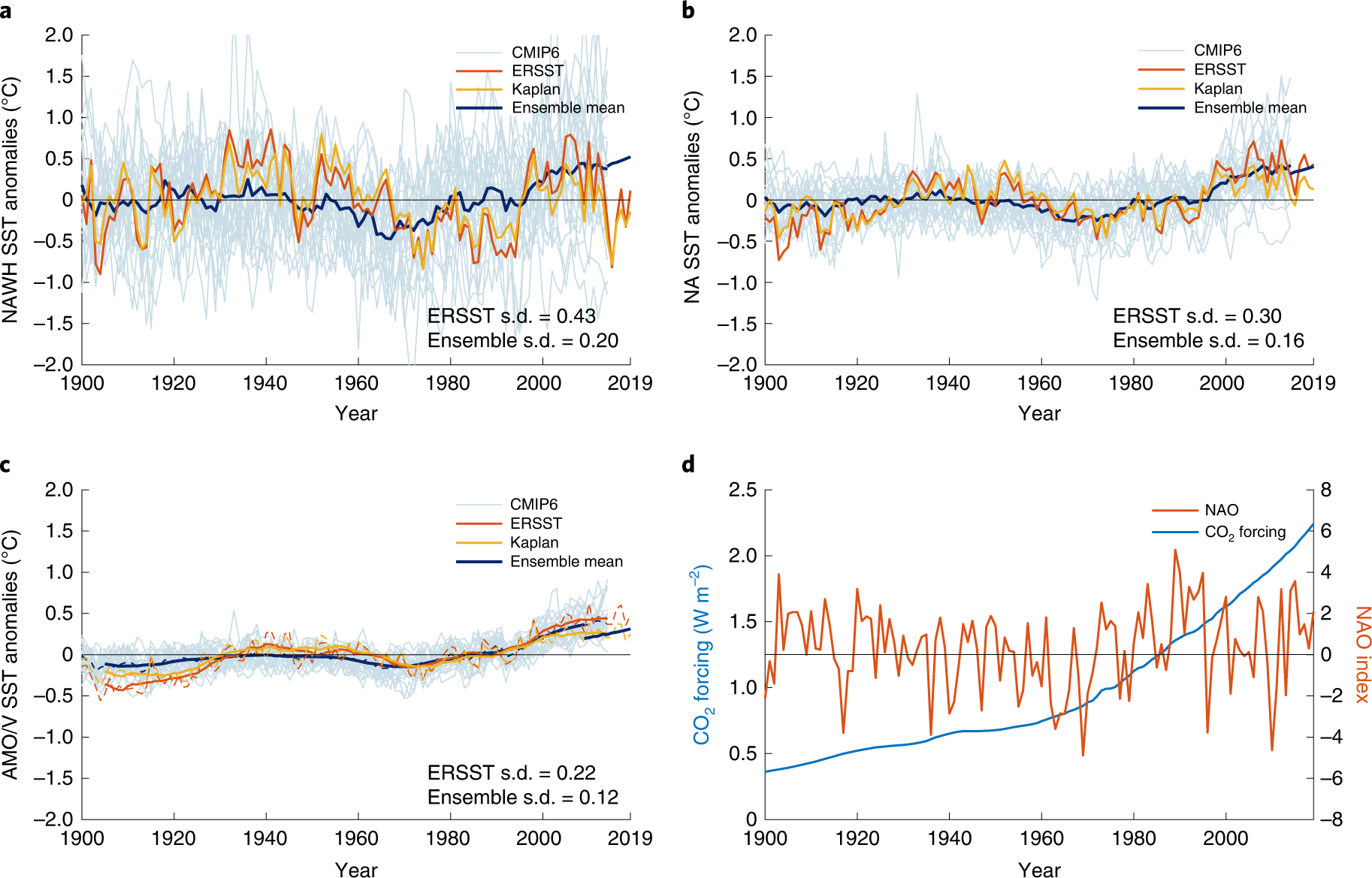
[Comment: The paragraph above is the obligatory statement of fidelity to the Climatist Creed. All the foundational claims are affirmed with references to prove the authors above reproach, and not to be dismissed as denialists.  As further evidence of their embrace of IPCC consensus science, consider the diagrams below.

a, The NAWH SST index (°C), defined as the annual SST anomalies averaged over the region 46° N–62° N and 46° W–20° W. Observations for 1900–2019 from ERSSTv.5 (orange) and Kaplan SST v.2 (yellow), and ensemble-mean SST for 1900–2014 (dark blue line) from the historical simulations with the CMIP6 models and the individual historical simulations (thin grey lines) are shown. b, Same as a but for the NA-SST index (°C), defined as the annual SST anomalies averaged over the region 40° N–60° N and 80° W–0° E. c, Same as a but for the AMO/V (°C) index, defined as the 11-year running mean of the annual SST anomalies averaged over the region 0° N–65° N and 80° W–0° E. The SST indices in a–c are calculated as area-weighted means. d, NAO index (dimensionless) for 1900–2019 (red), defined as the difference in the normalized winter (December–March) sea-level pressure between Lisbon (Portugal) and Stykkisholmur/Reykjavik (Iceland). The blue curve indicates the equivalent CO2 radiative forcing (W m−2) for 1900–2019, which is taken from the Representative Concentration Pathway (RCP) SSP5-8.5 after 2014.

Chart d shows the NAO fluxes compared to a CO2 forcing curve based upon the much criticized RCP 8.5 scenario, which is not “business-as-usual” but rather “business-impossible.” Using it shows the authors bending over backwards to give every chance for confirming the alarming slowdown narrative.  The next paragraph gives the entire game away]

Climate models predict substantial AMOC slowing if atmospheric GHG concentrations continue to rise unabatedly1,11,12,13,14. Substantial AMOC slowing would drive major climatic impacts such as shifting rainfall patterns on land15, accelerating regional sea-level rise16,17 and reducing oceanic CO2 uptake. However, it is still unclear as to whether sustained AMOC slowing is underway18,19,20,21,22. Direct ocean-circulation observation in the North Atlantic (NA) is limited9,23,24,25,26,27. Inferences drawn about the AMOC’s history from proxy data28 or indices derived from other variables, which may provide information about the circulation’s variability (for example, sea surface temperature (SST)21,29,30, salinity31 or Labrador Sea convection32), are subject to large uncertainties.

Discussion

Observed SSTs and a large ensemble of historical simulations with state-of-the-art climate models suggest the prevalence of internal AMOC variability since the beginning of the twentieth century. Observations and individual model runs show comparable SST variability in the NAWH region. However, the models’ ensemble-mean signal is much smaller, indicative of the prevalence of internal variability. Further, most of the SST cooling in the subpolar NA, which has been attributed to anthropogenic AMOC slowing21, occurred during 1930–1970, when the radiative forcing did not exhibit a major upward trend. We conclude that the anthropogenic signal in the AMOC cannot be reliably estimated from observed SST. A linear and direct relationship between radiative forcing and AMOC may not exist. Further, the relevant physical processes could be shared across EOF modes, or a mode could represent more than one process.

A relatively stable AMOC and associated northward heat transport during the past decades is also supported by ocean syntheses combining ocean general circulation models and data76,77, hindcasts with ocean general circulation models forced by observed atmospheric boundary conditions78 and instrumental measurements of key AMOC components9,22,79,80,81.

Neither of these datasets suggest major AMOC slowing since 1980, and neither of the AMOC indices from Rahmstorf et al.20 or Caesar et al.21 show an overall AMOC decline since 1980.

Contextual Background

From the Energy MIx Changes in Atlantic Current May Fall Within Natural Variability.  

In the February, 2022, edition of the journal Nature Geoscience, researchers at the University of Maryland Center for Environmental Science urged more detailed study of the notoriously complex Atlantic Meridional Overturning Circulation (AMOC). Now, oceanographer Mojib Latif and his team from the GEOMAR Helmholtz Centre for Ocean Research in Kiel, Germany are repeating that call in a paper just published in the journal Nature Climate Change.

The latest study describes the AMOC as a “three-dimensional system of current in the Atlantic Ocean with global climatic relevance.”

The February study responded to an August 2021 warning from the Potsdam Institute
that the AMOC has become wildly unstable and dangerously weak
due to global warming caused by human activity.

The authors of the latest study affirm that the Earth’s oceans have taken up more than 90% of the accumulated heat and roughly a third of all CO2 emissions since the dawn of the industrial age, leading to clearly measurable and devastating impacts like marine heat waves, sea level rise, and ocean acidification.

But it isn’t easy to confirm that the Atlantic circulation is actually slowing, partly because the ocean possesses such “large thermal and dynamical inertia.”

It is also extremely difficult to directly observe ocean circulation patterns in the North Atlantic, and proxies like sea surface temperature are “subject to large uncertainties,” the scientists say. Based on the available data, the GEOMAR study attributes localized sea surface cooling in the North Atlantic since 1900 to natural AMOC variability—not, as had been hypothesized, to a global heating-induced breakdown in the AMOC’s capacity to transfer heat.

Footnote:

See also from Science Norway Researchers and the media need to stop crying ‘wolf’ about the Gulf Stream


Update on Global Gene Therapy Mass Experiment

Just published Innate immune suppression by SARS-CoV-2 mRNA vaccinations: The role of G-quadruplexes, exosomes, and MicroRNAs Stephanie Seneffa et al. Excerpts in italics with my bolds.

Highlights

♦  mRNA vaccines promote sustained synthesis of the SARS-CoV-2 spike protein.

♦  The spike protein is neurotoxic, and it impairs DNA repair mechanisms.

♦  Suppression of type I interferon responses results in impaired innate immunity.

♦  The mRNA vaccines potentially cause increased risk to infectious diseases and cancer.

♦  Codon optimization results in G-rich mRNA that has unpredictable complex effects.

Overview

The mRNA SARS-CoV-2 vaccines were brought to market in response to the public health crises of Covid-19. The utilization of mRNA vaccines in the context of infectious disease has no precedent.

The many alterations in the vaccine mRNA hide the mRNA from cellular defenses and promote a longer biological half-life and high production of spike protein. However, the immune response to the vaccine is very different from that to a SARS-CoV-2 infection.

In this paper, we present evidence that vaccination induces a profound impairment in type I interferon signaling, which has diverse adverse consequences to human health. Immune cells that have taken up the vaccine nanoparticles release into circulation large numbers of exosomes containing spike protein along with critical microRNAs that induce a signaling response in recipient cells at distant sites.

We also identify potential profound disturbances in regulatory control of protein synthesis and cancer surveillance.

These disturbances potentially have a causal link to neurodegenerative disease, myocarditis, immune thrombocytopenia, Bell’s palsy, liver disease, impaired adaptive immunity, impaired DNA damage response and tumorigenesis. We show evidence from the VAERS database supporting our hypothesis.

We believe a comprehensive risk/benefit assessment of the mRNA vaccines questions them as positive contributors to public health.

Conclusions

In this paper, we call attention to three very important aspects of the safety profile of these vaccinations. First is the extensively documented subversion of innate immunity, primarily via suppression of IFN-α and its associated signaling cascade. This suppression will have a wide range of consequences, not the least of which include the reactivation of latent viral infections and the reduced ability to effectively combat future infections.

Second is the dysregulation of the system for both preventing and detecting genetically driven malignant transformation within cells and the consequent potential for vaccination to promote those transformations.

Third, mRNA vaccination potentially disrupts intracellular communication carried out by exosomes, and induces cells taking up spike glycoprotein mRNA to produce high levels of spike-glycoprotein-carrying exosomes, with potentially serious inflammatory consequences.

Should any of these potentials be fully realized, the impact on billions of people around the world could be enormous and could contribute to both the short-term and long-term disease burden our health care system faces.

In the end, billions of lives are potentially at risk, given the large number of individuals injected with the SARS-CoV-2 mRNA vaccines and the broad range of adverse outcomes we have described. We call on the public health institutions to demonstrate, with evidence, why the issues discussed in this paper are not relevant to public health, or to acknowledge that they are and to act accordingly. Furthermore, we encourage all individuals to make their own health care decisions with this information as a contributing factor in those decisions.

The Implications

Joseph Shepherd takes it from there in his American Thinker article How the COVID Vaccines Kill

With each passing day, the news connected to the COVID shots grows worse.  That the injections don’t prevent COVID — or even its spread — has been known for months, and post-injection problems encompass almost everything that can go wrong with a body

“Not a single organ, not a single bodily function, is unharmed” after one of these shots, said Arne Burkhardt, a professor of forensics at Reutlingen’s Pathological Institute.

So little has been written about why “side effects” such as myocarditis have popped up that one can’t help but wonder: Does anybody understand how these shots work? 

In the space below, let’s pick three of the harshest complications and explore how COVID shots could be driving the mechanics of each.

1 – Myocarditis

The pale-yellow fluid of the Pfizer or Moderna vial contains billions of microscopic fat globs called lipid nanoparticles. Each is an incredibly tiny envelope, used to conceal the novel drug: messenger RNA. Once injected, the combination of nanoparticles and mRNA becomes a well-camouflaged predator.

According to Pfizer’s own data, less than half the nanoparticles stay in the arm where they were injected. Most slip through tiny cracks in muscle tissue and enter the bloodstream. Venous blood speeds them to the heart, which pumps and disperses them to the entire body.

Depending on the level of exercise, from 5 to 25% of these particles wind up in coronary circulation. Why is this important? Consider the rather large number of nanoparticles that must slip into human heart tissue: 50 to 250 million out of each billion that enter the veins of the arm.

Coronary circulation branches into microscopic capillaries that rush nutrients to heart muscle cells. And since the nanoparticles designed by Pfizer and Moderna masquerade as triglycerides, heart muscle cells are apt to snatch them out of circulation as food.

Now imagine the shock for any hard-charging heart cell that engulfs one of these particles. Expecting a meal, the cell unwraps the envelope, and voilà! Freshly unveiled messenger RNA seizes the cell’s protein-generating apparatus, forcing out a known toxin — the COVID spike protein.

Very soon, with urgent biochemical signals, the afflicted cell telegraphs news of its hijacking to the immune system, which will marshal what it takes to destroy the cell.

An immune-mediated attack on heart muscle cells is, of course, the very essence of myocarditis.

Foreign RNA takes control of a cell’s protein production, transforming these cells into enemies of the body, and the immune system converts them into useless scar tissue. The process is irreversible, as heart muscle cells do not regenerate.

According to CDC, myocarditis from COVID jabs is “rare” and “mild,” but where is the evidence for this proclamation? Pfizer’s data shows every shot — at least in part — entering the bloodstream, so CDC has interesting notions about the word “rare.” Clinical myocarditis is never “mild.” A phenomenon that kills thousands of heart muscle cells is better classified as “serious” or “severe.” And even if the subject doesn’t die right away, how is that person not permanently injured? And how is the process not cumulative with each subsequent jab?

Given that about 40% of CDC income comes from vaccine patents and products, how can we be assured these experts are not self-serving?

2 – Vascular Damage and Heart Attack Risk

Now let’s turn attention from lipid nanoparticles to their end-product, the COVID spike protein. Having been forced into production by messenger RNA, spike protein peels off cell membranes and drops into general circulation. From there, it stabs and deactivates ACE-2 protein, which is displayed on the innermost lining of blood vessels.

Deactivating ACE-2 has enormous consequences for the body: Its loss leads to oxidative stress on blood vessels, putting the patient at risk for organ damage and blood clots over time.

Can oxidative stress persist for months, or even longer? A study of spike-injected hamsters showed that damaged ACE-2 was not replaced by mammalian cells. Either the cells never sensed that ACE-2 was “spiked” or didn’t generate a signal to replace spiked ACE-2 with a fresher version. To put it a more scientific way: Injected spike protein down-regulated ACE-2, probably for as long as the cells stayed alive.

Does any of this apply to humans? Using the PULS lab score to study a large group of at-risk patients, investigators found that future risk for heart attack remained almost triple two and a half months after two mRNA shots.

3 – Neurodegenerative Disease

Is the COVID jab really associated with premature Alzheimer’s and Parkinson’s disease? Evidence continues to mount, and spike protein is once again the culprit. Circulating spike targets the brain in a variety of ways:

♦  by exposing brain cells to unnecessary toxins through crowbar-like effects on the blood-brain barrier.
♦  by inducing susceptible proteins to misfold and become pathogenic.
♦  by attacking ACE-2 protein-rich environments in the brain.
♦  by forcing mitochondria (the energy-producing organelles of cells) into less efficient processes, so that injured brain cells take on the eerie characteristics of cancer and Alzheimer’s cells.

Long-term outlook

Messenger RNA technology has been around for over 20 years, and multiple vaccines have been attempted. Each failed because the experimental animals failed to thrive.

Last February, spike protein was found to inhibit type 1 interferon, the powerful regulator of the immune system. Hindering type 1 interferon reduces the body’s ability to defend against:

(1) malignancies

(2) autoimmune diseases

(3) viral infections

Over the next year, we will continue to observe how impaired interferon affects the great COVID shot experiment. But while we study the pathology, let us further develop the mechanisms associated with mRNA injections, so that new approaches to the injuries they inflict may be devised.


G7 Ministers Pledge Energy Hari-Kari

G7 Climate, Energy and Environment Ministers’ Communiqué, Berlin, May 27th, 2022

Excerpts in italics with my bolds

Recognising that accelerating the international clean energy transition and phasing out continued global investment in the unabated fossil fuel sector is essential to keep a limit of 1.5 °C temperature rise within reach, we commit to end new direct public support for the international unabated fossil fuel energy sector by the end of 2022, except in limited circumstances clearly defined by each country that are consistent with a 1.5 °C warming limit and the goals of the Paris Agreement. (pg. 33)

We note with concern the scale of private finance currently still supporting non-Paris aligned activities especially in the fossil fuel sector. (pg. 22)

We are thus further strengthened in our resolve to accelerate the clean energy transition towards a net zero emissions future by 2050, while also keeping energy security and affordability at the core of our action, including through the rapid expansion of low-carbon and renewable energies and an increase in energy efficiency.  (pg. 29)

In this regard, we acknowledge the IEA net zero scenario which suggests that G7 economies
invest at least US$1.3 trillion in renewable energy including tripling investments in clean
power and electricity networks between 2021 and 2030. (pg. 31)

We confirm our strong financial commitments for the market ramp-up of low-carbon and renewable hydrogen and its derivatives, thereby signalling an irreversible shift towards a world economy based on low carbon and renewable energy sources. (pg. 31)

In view of the Russian attack on Ukraine, financial support for companies and citizens affected by severely rising prices for fossil fuels is now on the political agenda for several countries. Nevertheless, we aim for our relief measures to be temporary and targeted and we reaffirm our commitment to the elimination of inefficient fossil fuel subsidies by 2025. (pg. 32)

We also highlight that we have ended new direct government support for unabated international thermal coal-fired power generation by the end of 2021, including through Official Development Assistance, export finance, investment, and financial and trade promotion support. (pg. 33)

We commit to increase national efforts to decarbonise building heating and cooling systems by using appropriate policy tools, including regulations and incentives, with the ultimate objective of transitioning away from fossil fuels. (pg. 37)

This will also guide our approach in public finance institutions and on the boards of MDBs and bilateral DFIs. We therefore call on other major economies, the MDBs and bilateral DFIs, multilateral funds, public banks and relevant agencies to also adopt these commitments. We commit to review our progress against our commitments. (pg. 33)

(Note: Multilateral Development Banks (MDBs), Development finance institution (DFIs)

See also Michael Kelly on Energy Utopias and Engineering Realities synopsis Kelly’s Climate Clarity

And Dieter Helm Seeking Climate and Energy Security

May 31 Arctic Ocean Frozen Solid

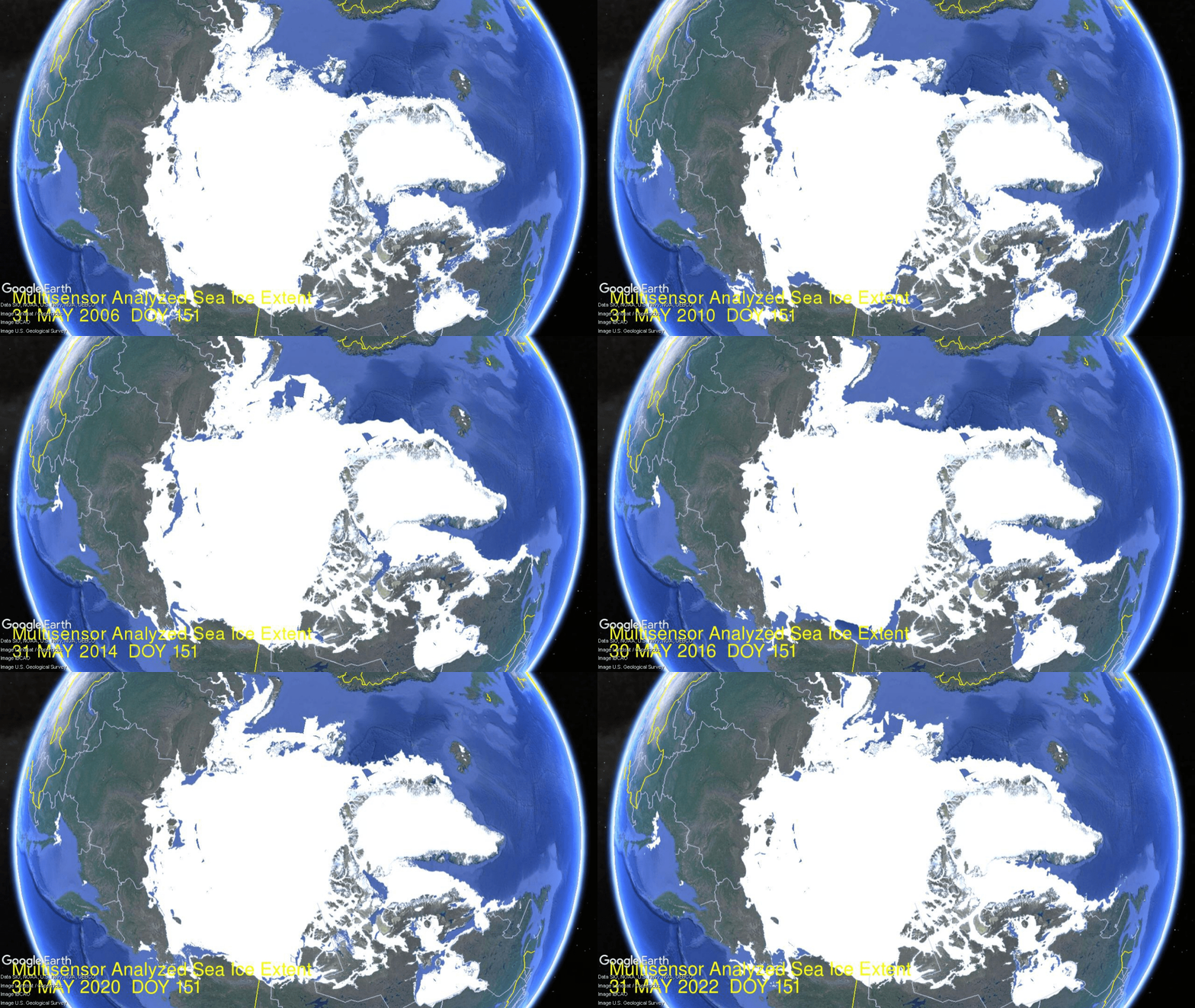
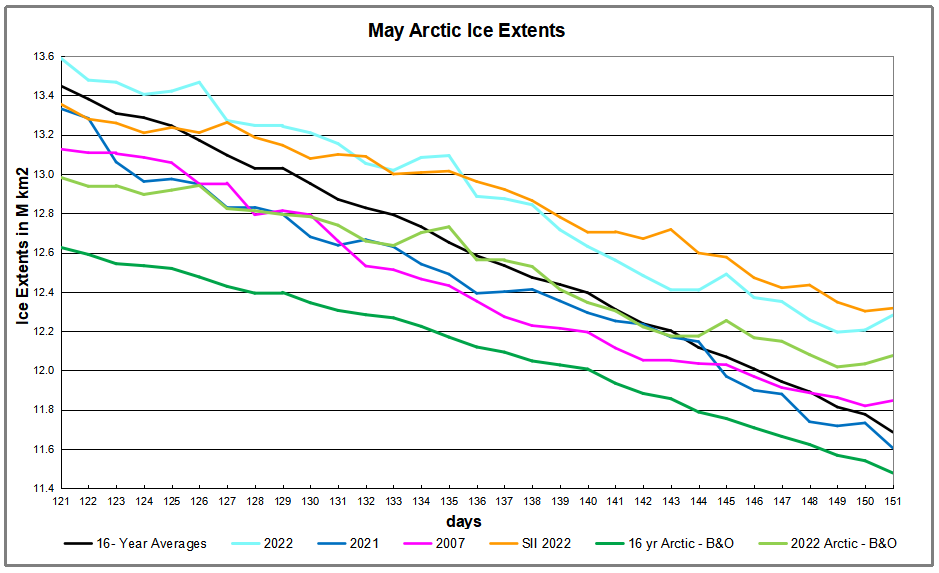
The animation shows Arctic ice extents on day 151 (end of May) from 2006 to yesterday 2022. It is evident that typically there are some regional seas starting to melt by this date, whereas 2022 remains frozen solid.  More detailed analysis is below, but note the 2022 surplus is 600k km2, or 5% above the 16 year average for day 151.  That extra ice extent amounts to 0.6 Wadhams, or 6826 Manhattan Islands, whichever index you prefer.  The graph below shows May 2022 daily ice extents compared to the 16-year average and some other years of note.

The black line shows during May on average Arctic ice extents decline ~1.8M km2 down to 11.7M km2.  The 2022 cyan MASIE line only lost 1.3M km2, starting the month 141k km2 above average and on day 151 showed a surplus of  598k km2.  The Sea Ice Index in orange (SII from NOAA) starter lower than MASIE, then ran over in later weeks, ending May nearly the same. The dark green line is average Arctic ice, excluding Bering and Okhotsk (B&O), which started melting early in 2022. The light green line is 2022 without B&O.  As of day 151, the 2022 B&O extent matches the average B&O, so the ~600k km2 surplus is entirely in the core Arctic ocean.

Why is this important?  All the claims of global climate emergency depend on dangerously higher temperatures, lower sea ice, and rising sea levels.  The lack of additional warming is documented in a post Adios, Global Warming

The lack of acceleration in sea levels along coastlines has been discussed also.  See USCS Warnings of Coastal Flooding

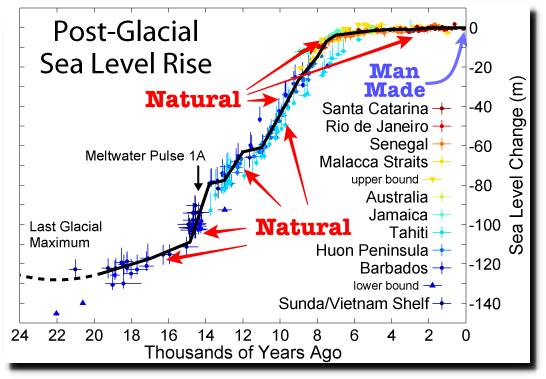
Also, a longer term perspective is informative:

post-glacial_sea_levelThe table below shows the distribution of Sea Ice on day 151 across the Arctic Regions, on average, this year and 2020.

Region 2022151 Day 151 Average 2022-Ave. 2021151 2022-2021
 (0) Northern_Hemisphere 12281289 11682840 598449 11605537 675752
 (1) Beaufort_Sea 1060171 1003588 56582 1034779 25392
 (2) Chukchi_Sea 894077 865036 29040 900868 -6792
 (3) East_Siberian_Sea 1085478 1064424 21054 1051959 33520
 (4) Laptev_Sea 877340 824419 52921 738294 139047
 (5) Kara_Sea 870898 829705 41193 824068 46831
 (6) Barents_Sea 421071 305918 115153 325745 95326
 (7) Greenland_Sea 665639 562229 103411 615174 50465
 (8) Baffin_Bay_Gulf_of_St._Lawrence 976116 897470 78647 812548 163568
 (9) Canadian_Archipelago 854703 810848 43855 811040 43663
 (10) Hudson_Bay 1122388 1088994 33395 1084892 37496
 (11) Central_Arctic 3245183 3216568 28615 3232324 12859
 (12) Bering_Sea 116552 115657 895 89124 27428
 (13) Baltic_Sea 915 199 717 0 915
 (14) Sea_of_Okhotsk 89260 96309 -7049 83572 5688

The overall surplus to average is 598k km2, (5%).  The surplus is found in every region, except for a slight deficit in Okhotsk

bathymetric_map_arctic_ocean

Illustration by Eleanor Lutz shows Earth’s seasonal climate changes. If played in full screen, the four corners present views from top, bottom and sides. It is a visual representation of scientific datasets measuring Arctic ice extents.

How to Make Climatists Happy

There are many places where people are worried about erratic and destructive behavior by those inflamed with fear of global warming/climate change. In the past they have been known to vandalize pipelines delivering natural gas or oil critical for energy needs.  These days climatists are more and more frantic, and for example, given to slashing tires on SUVs, thinking them to be “Axles of Evil.”

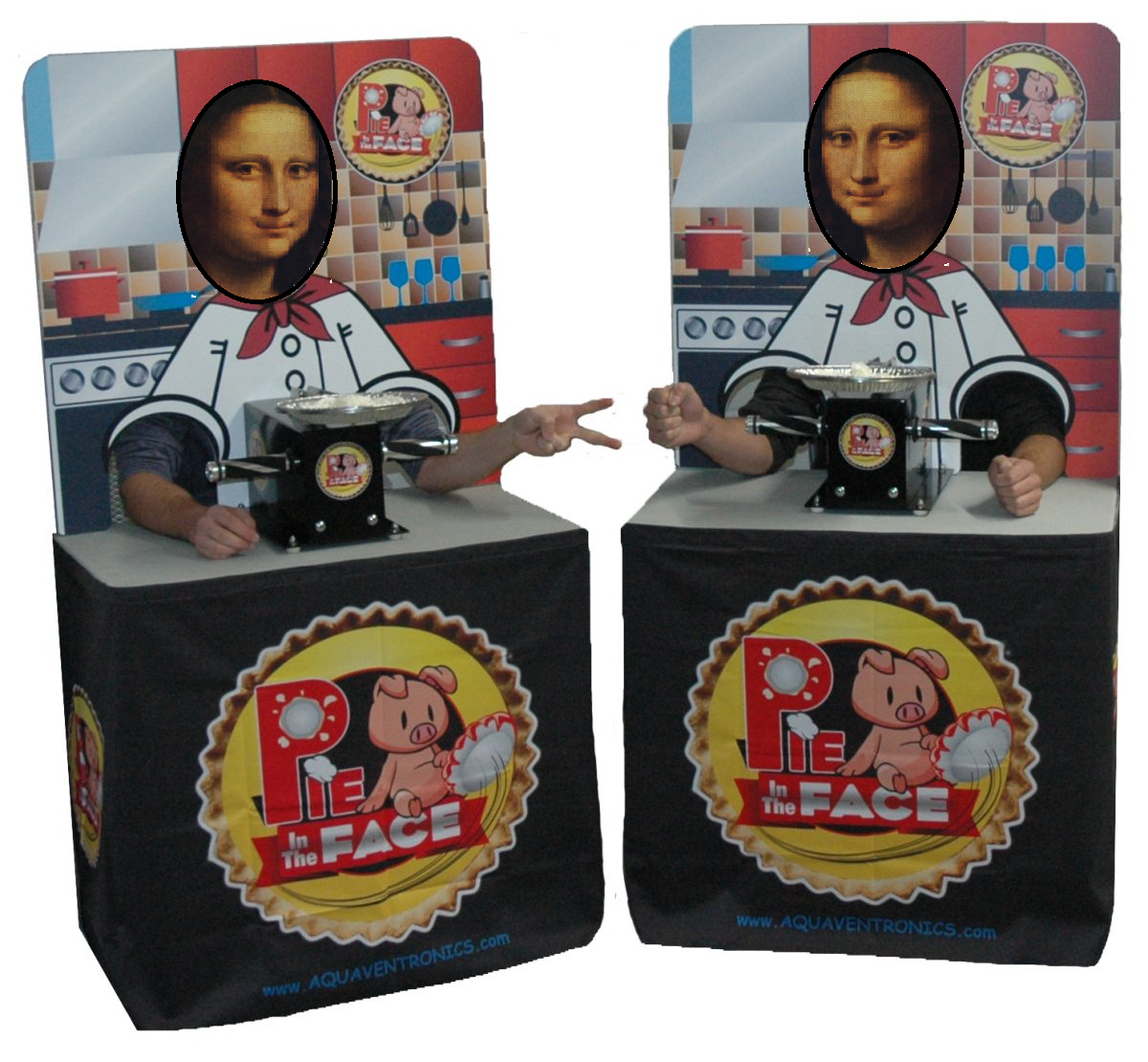
Fortunately, we have news from Paris that there may be a way for these fevered persons to vent their fears, thereby feeling better, and leaving the rest of us alone.  I refer to the reported action by one of these poor souls attacking the image of Mona Lisa in the Louvre with a cream pie in order to save the planet from climate change.  Of course the painting is behind bulletproof glass, so it was not damaged.  But the release of passion was cathartic, followed by the climatist being taken away for admission to the Paris Home for the Bewildered.

The good news is that from now on there could be at local carnivals or at county fairs booths like those above where other such inflamed activists could act out their passion against images of Mona Lisa, and thus, perhaps regain reason and common sense.  Let us all hope for the best for these tortured souls.

A Climate Activist Smeared Cake On The Mona Lisa
“Think about the Earth. There are people who are in the process of destroying the Earth. Think about them!”

A Conservative View of Governance

This post extracts from the above interview a clear conservative view of governing a contemporary nation, in particular Canada. The visionary is Pierre Poilievre ( pronounced pwa-lee-evre), who is not from Quebec as you might expect. Adopted son of Saskastchewan teachers, he grew up in Alberta, served since 2004  as a Member of Parliament from that province, and is contesting for leadership of the Conservative Party of Canada.  Below is a transcript I produced from the captions in italics with my  bolds.

Let’s look at Canada at this moment: What are our problems?

The the central underlying illness is a monstrous growth in the power and cost of the state
at the expense of the agency and freedom of the people.

That is the override and then there are specific examples of how that plays out. Take monetary policy. There’s no way Justin Trudeau could get away with spending all of the money he has in the last two years if he had to use real cash. Because people would never accept the many thousands of dollars of tax increases that it would require. So he has basically turned our central bank into an ATM machine for his spending. They’ve created 400 billion dollars of new money in two years which has given us a 30-year high in inflation and bumped up boosted real estate prices by 50 percent.

How does that compare to previous expenditures by governments? Well if you look at the balance sheet of the bank of Canada during the Harper era (PM 2006-2015), even during the great global recession there was a minor bump in the assets it held. That indicates how how much money it was injecting. Whereas right now that figure has shot off the charts.

The balance sheet of the central bank is up something like 350 percent and all that cash is particularly in ballooned asset prices. That’s the unspoken story.

Here everyone thinks about consumer inflation which is horrible enough. But then there’s asset price inflation and what that’s doing is creating an aristocratic economy where the bigger the asset value you had before the inflation, the richer you’ve become after it. It is almost like the housing is attached to a balloon and it’s being lifted higher and higher up. And anybody who’s not already in the house will never be able to grab it and get inside.

It is all the result of this massive expansion of the money supply. So we’re basically seeing a transfer of wealth from the the have-nots to the have-yachts, as I like to say. And it benefits those in the managerial class, the CEOs whose stocks have been artificially inflated. They’ve been able to give themselves share buybacks with exceptionally low interest rates. So they can borrow money and then buy back shares which increases share value and gives them a bonus. These are the folks who own mansions and live in neighborhoods that are protected by zoning laws against anyone else moving in. They have done exceptionally well over the last two years.

And yet the people who are doing the nation’s work are now having their salaries destroyed by inflation. And then at the local level you have municipalities bringing in our zoning laws that prevent new construction. So they’re making invisible gates, creating gated communities. But the gates are invisible because it’s government bureaucracy that prevents construction.

So we have fewer houses per capita than any country in the G7
even though we have the most land to build on

What I’m proposing is stop printing money and start building houses. I’m going to tell the big city mayors that if they don’t remove their bureaucratic zoning rules and let builders build, then I’m going to cut back on some of their infrastructure funds. Because I think it’s going to need something that drastic to get these gatekeepers out of the way and actually build houses so that our youth have a place to call home.

But you know it’s across the economy. Ironically all of these big government interventions seem to hurt the most disadvantaged. Our immigrants come here as doctors and engineers but they can’t work in those fields because of occupational licensing, more protectionism.  Government is not enabling, they’re the gatekeepers. So I want to incentivize provinces to speed up recognition of foreign credentials so an immigrant doctor can actually work as a doctor.

And let’s remove the gatekeepers from our energy sector so we can build pipelines
and dig for resources and become energy self-sufficient.

And then remove the gatekeepers in speech. As you know the government is now pushing new censorship laws on the internet. I promise very clearly that I’m going to get rid of all of those laws and restore freedom of expression on the internet.  There is a great need to remove the governmental gatekeepers to restore our freedom. Let people take back control of their lives

Now let’s delve into economic policy. The OECD recently predicted that Canada’s economy will be the worst performing advanced economy over 2020 to 2030. How lovely for us. So compared to many other countries that in some sense are peers, that’s a pretty damn gloomy forecast right because at that rate 40 years out we’re going to be the worst performing advanced economy in the world.

So what can we do differently and let’s focus on energy in particular because that’s a killer topic for everyone in the world at the moment

What did the conservatives do wrong, what has Canada done wrong what have the liberals done wrong apart from printing money like mad men and instituting these arbitrary rules?

Well I would respectfully disagree on the conservative economic track record. If you look at the 2008-09 financial crisis, we came through better than any of the other G7 countries, certainly way better than the Americans. We didn’t have a housing crash nor did we have a banking crisis. Not a single bank was bailed out and we had very modest inflation, which never cracked four percent, and was above three percent for only one or two quarters in the entire 10-year period.

When Harper was around, unemployment stayed relatively low and you could buy the average house. At the time Harper left office, in Canada average cost of a house was 434 thousand dollars. It’s almost unimaginable now.

But turning to energy, we need to repeal C69, the bill that makes it effectively impossible to build an energy project in Canada today. Because it introduced a whole series of sociological questions into the process that make no sense. You know Trudeau has said that energy projects cause gender imbalances. And therefore when someone applies to build one they have to write a sociological report on what the pipeline or the mine will do for gender relations.

In addition to being ridiculous pop culture sociology, it introduces massive uncertainty for investors. Because they don’t really know how and why a project will be approved or rejected. And they don’t have seven years to sit around, so they’ll take their money and invest it in other parts of the world.  And that’s why the projects aren’t happening here.

We don’t mine lithium in Canada even though we have lots of lithium. In this electric car battery era, we’re importing lithium from China because they actually get projects built. However they burn coal to refine their lithium. So ironically we’re just inducing pollution in other countries when we buy electric cars that are made with lithium refined in that country. So if we could approve a lithium mine in Canada we could actually mine the stuff, refine it, manufacture it here.

We have the third biggest supply of oil on planet earth,
but we’re importing 130 000 barrels of overseas oil every day.

The solution is so obvious because right next door to the Saint John port where we bring in the oil, we have St John’s Newfoundland, capable of adding another 400 000 barrels of Canadian production. By just approving that production, we could ban foreign overseas oil from Canada all together. And that would mean the dollars wouldn’t be leaving our country for overseas dictatorships, but would be staying here paying Canadian wages instead.

On to natural gas. We have 1 300 trillion cubic feet of natural gas. And you know what you have to do to get natural gas onto a ship? You have to freeze it down to a liquid. So with our cold weather, it takes a hell of a lot less energy to liquefy natural gas here in Canada.

And we have another geographic advantage: The closest point in North America to Asia is from BC; The closest point in North America to Europe is Newfoundland. So we have a shorter shipping distance, less energy needed to liquefy gas, and yet we haven’t succeeded in building a single major liquefaction facility in Canada despite the fact that in 2015 there were 18 proposed projects. Approve those projects and we could be bringing hundreds of billions of dollars of opportunity to our people, and particularly our first nations people.

But it takes getting those regulatory gatekeepers out of the way to let it happen.

How do you take on the woke crowd who like to say: What about the planet? What about the climate crisis? If you turn back to fossil fuels you’re going to demolish the globe. In the next 30 years we should be moving towards net zero. You’re going to doom the poor to catastrophe while you’re pretending to elevate them economically. You’re going to be like cut into ribbons by that crowd, and so let’s talk about climate change and the Paris accords and all that. You we want to promote canadian energy, and you made a case for liquefication, so what should canada’s position regarding climate change?

The development of our energy infrastructure as well as our resources are not the problem, they’re the solution.

For example we export our natural gas we can displace foreign coal burning electricity. The energy hungry Asian markets are desperate for non-coal sources of electricity, but they need things like natural gas to replace coal.

As well as having that gas, we also have the biggest supply of civilian grade uranium in the world right in Saskatchewan. That could be used to export to regenerate emissions-free pollution-free nuclear energy. We have an over-abundance of hydroelectricity in Manitoba and Quebec that we could be exporting to the northern united states to displace their coal-fired electricity. We could be using small modular nuclear reactors to de-carbonize the electrical grid.

As for the oil sands, right here in Canada we have carbon capture and storage techniques in in our home province of Alberta that are second to none.  For example White Cap Resources is a mid-sized company that says it’s actually a now a carbon negative company; in other words they bury more carbon in the ground than they put into the air.

So we have the technology and the resources to do it but right now what we’re doing is punishing our own resource sector to the advantage of heavily polluting foreign dictatorships with no environmental standards and who use the money to do great harm.

We would be better off to displace their energy with ours
and use that as a method of fighting for the environment
while enhancing the well-being of our working class at the same time.

Because we can make progress on the economic front and on the climate front at the same time. I would like to point out that America’s turn to natural gas has knocked their carbon dioxide output substantially down over the last 15 years, which is not a statistic you hear from the typical environmentalist types okay. If the world could turn to Canadian energy, as a consequence the net impact on the carbon economy would be positive.

If it means reduce reducing carbon carbon dioxide output and we could get wealthier in doing so, then why in the world aren’t the liberals already doing this?

It is hard to understand. I think it’s because their environmental policies seem mostly designed to give the state more control of the economy than they are designed to deliver an environmental outcome. By attacking the energy sector it gives them the ability to to create more of a command and control economy, which is what they believe in, and to redistribute wealth between industries and towards political friends in a very parasitical manner. You know we have a total nut as our environment minister right now.  Steven Guilbeault is bonkers and he’s against nuclear power. It’s not just oil and gas, he would get rid of nuclear as well. So I don’t know what would be left. Maybe he thinks all you have to do to get electricity is put a plug in the wall.

The Trudeau policies are definitely designed to basically make the entire media apparatus dependent on the funding and the good will of the state. The government bureaucracy determines what is considered to be a qualified journalistic company. And they pick and choose based on their own political views who then qualifies and therefore gets the subsidy. This is intended to again create more dependency on the government and curry more favor with the state.

I haven’t made an announcement on exactly how I’m going to fix that problem yet but stay tuned. I want to de-politicize that and basically restore the freedom of the press in this country again by getting the state out of it.

What do you think of Mr. Trudeau?

So i think he’s an egomaniac and everything he does is comes back to his egomania, even his political ideology.. When you think about his his expansionist role of the state, it never comes back to serving an individual objective, only to make him more powerful or his legacy more grand.

Let me give you a few examples. So he slashed the amount you can put into a tax-free savings account but then he simultaneously increased the amount you were forced to pay into the state savings plan. He killed multiple pipelines then he invested state money in a pipeline. He attacked parents’ ability to take care of their own children by by removing tax fairness for families of the stay-home parent and then he brings in a government program to replace it.

In all cases what he does is take away the ability of business or individuals or families to do things for themselves and then require they do things through him and through the state.

His ideology is always about creating a pretext in order to justify the state garnering more control over every aspect of your life: how you raise your kids; how your business functions; what you see and say on the internet.

What actually happens in socialist models is that the rhetoric about economic equality never actually comes to pass. It was used as a tool to mobilize the masses, but ultimately the outcome was to concentrate power more in the hands of the political elite. Look government is really legalized force. So if you believe in big government, you believe in expanding force relationships always favoring the powerful. And so in reality those who have more political power then benefit from a bigger government. And those people are all rich and disproportionately powerful in the system.

So when this big beast called government gets bigger and more powerful, those who have the ability to steer that beast are the ones who are going to profit from it.

I think that we’re we’re divided right now in Canada because of a deliberate strategy of divide and conquer governments that want to enhance their control. They have to turn citizens against each other they have to make you afraid of your neighbor, your co-worker, your trucker, so that you’ll turn to the state for protection against your fellow citizens. That’s the oldest trick in the book: divide and conquer.

Control is by its nature divisive because it’s a zero-sum game. If one gets more control another must have less freedom. While the contrary is not the same. If your neighbor gets more freedom you don’t get less freedom. It’s likely you’ll have more as well

So if your friend has more freedom of speech, well you’ll have freedom of speech. If you are the immigrant who has the freedom to work as a doctor, then you’ll have the freedom to have a doctor. If the local small businessman has the freedom to function without red tape, then you’ll probably have the freedom to buy his products more affordably or your teenager might get a job. If a Muslim or Jewish person gets more religious freedom, then the Christian does as well.

That’s why freedom is a unifying principle: it brings people together because it allows each of them to be masters of their own destiny without taking anything from each other. We fight over control whereas we fight for freedom, that is the difference.

I believe we can bind up the nation’s wounds by reinstating the ancient freedoms that we inherited from our ancestors

And so I really see my role as quite an unimportant one: I’m here simply to restore what already belongs to Canadians by virtue of their 800-year inheritance of liberties going back to the Magna Carta.  I’m just among the the common people who are custodians of that freedom while we’re alive. You know Edmund Burke said it’s a contract between the dead and the living and the yet to be born. We’re the living generation having the duty to pass on that inheritance. I want to re-kindle that inheritance and pass it on to my kids and so they can pass it on to their kids. I’ll pass on one day and fade away into the past, but hopefully we’ll have secured the freedom that we inherited for many more generations to come. That’s what I mean when I want to give people back control of their life in the present, and to extend it into the future.


Don’t Assume School Shooters are Mentally Ill

John Dale Dunn, M.D. explains in his American Thinker article Don’t assume school shooters are mentally ill.  Excerpts in italics below with my bolds.

There is a lot of mumbo jumbo psych talk circulating around the dead bodies in Uvalde, a town I knew pretty well because I consulted frequently with their hospital administrator.

I want to remind readers of the problem of personality disorders (PD) and distinguish PD from mental illness.

PD is pattern of anti-social or dysfunctional behavior that is not caused by mental illness but by bad manners and bad social adaptation. There are 3 groups of personality disorders. In the Emergency Medicine part of my life,

I taught residents that PDs are the weird, the wild, and the withdrawn.

The killers and criminals are usually in the wild group, who are the most anti-social and disruptive.

Here is a typical listing available from a search at: https://psychone.net/list-of-personality-disorders.php

Class A (The Weird)

Odd or eccentric disorders

·         Paranoid personality disorder 

Characterized by suspiciousness and a deep mistrust of people, paranoid personalities often think of others as manipulative, cunning or dishonest. This kind of a person may appear guarded, secretive, and excessively critical. More..

·         Schizoid personality disorder 

People with schizoid personalities are emotionally distant and tend to prefer to be alone. They are generally immersed in their own thoughts and have little interest in bonding and intimacy with others. More..

·         Schizotypal personality disorder 

This disorder is characterized by odd and unusual “magical” beliefs. These individuals may have an eccentric way of behaving or dressing. They also tend to display outlandish beliefs such as believing that they can see the future or travel to other dimensions.

People with this condition often have difficulty connecting with others and establishing long term relationships. Overtime, they may develop a fear of social gatherings. More..

Class B (The Wild)

Dramatic, emotional or erratic disorders (wild) 

·         Antisocial/psychopath personality disorder

Individuals with this disorder are known to be manipulative, irresponsible, and have a history of legal difficulties. They show little respect for the rights of others and feel no remorse for their actions. They also leave a trail of unfulfilled promises and broken hearts.

Antisocial personalities are also at high risk for drug abuse (e.g., alcoholism; meth) since many are rush seekers. While they seldom suffer from depression or anxiety, they often use drugs to relieve boredom and irritability. More..  (Dunn note–this PD is male dominant) 

·         Borderline personality disorder

Borderline personalities are impulsive and have extreme views of people as either all good or bad.

These people are unstable in relationships and have a strong fear of abandonment. They may form an intense personal attachment with someone they barely know and end it without no apparent reason. They might also engage in a pull and push behavior that usually ends with their partner leaving permanently.

Self-mutilation, suicidal gestures or attention-seeking destructive behaviors are not uncommon. Borderline personalities are three times more likely to be female. More..

·         Histrionic personality disorder

People with this condition engage in persistent attention-seeking behaviors that include innapropriate sexual behavior and exaggerated emotions. They can be oversensitive about themselves and constantly seek reasurrance or approval from others.

Excessive need to be the center of attention, low tolerance for frustration, blaming others for failures are also characteristics of the histrionic personality. More..

·         Narcissistic personality disorder 

Narcissistic personalities have a blown up perception of themselves and an excessive desire for attention and admiration. Individuals with this disorder have a false sense of entitlement and little respect for other people’s feelings. They are oversensitive to criticism and often blame others for their failures.

Prone to outbursts of anger and irritability, the narcissistic personality tends to be manipulative in interspersonal relationships. But deep beneath the surface lies a vulnerable self-esteem, susceptible to depression and feelings of inferiority. More..

Class C (The Withdrawn)

Anxious or fearful disorders 

·         Avoidant personality disorder 

This disorder is described by chronic social withdrawal, feelings of inferiority, over-sensitivity and social withdrawal.

People with avoidant personality disorder are constantly fearful of rejection and ridicule. They form relationships only with people that they trust. The pain of rejection is so strong that these individuals prefer to isolate rather than risk disappointment. More..

·         Dependent personality disorder 

Individuals with this condition have an abnormal desire to be nurtured that leads to submissive and clinging behavior. Dependent personalities have difficulty making their own decisions and seek others to take over most important areas in their lives.

They will often go to great length to obtain nurturance from others, have separation anxiety when alone and desperately seek another partner when a close relationship ends. More..

·         Obsessive-compulsive personality disorder (OCPD)

Not to be confused with OCD. People with OCPD are perceived as strict and demanding by others. They have a persistent preoccupation with perfectionism, orderliness, and efficiency, at the expense of interpersonal relationships. They also show an excessive devotion to work, productivity and exhibit rigidness and stubbornness.

People with OCPD usually have a negative view of life and often become withdrawn and depressed.

I was a corrections physician for almost 30 years as a contribution to our hometown and local law enforcement/incarceration services. I know a little about criminals. Here are three essays, two short, one long, on the issue of criminality and mental disorders.

https://www.americanthinker.com/blog/2018/02/mental_illness_and_misconduct.html

https://www.americanthinker.com/blog/2018/03/personality_disorders_and_mass_murder.html

https://www.americanthinker.com/articles/2016/02/senator_cornyn_and_the_inmates.html

Consider my warning: PDs are not a mental illness, they are a culturally dysfunctional behavior problem. PD individuals are not psychotic or out of touch with reality — they just have a bad set of behavior and social controls. They got messed up on the way to adulthood and functional good behavior.

My Comment:

Dr. Dunn puts analytic rigor to confirm a suspicion many of us have, that these violent acts by individuals demonstrate the breakdown of socialization in our societies.  Current political initiatives aim to denigrate and defund law enforcement, and to not prosecute criminal behavior.  Educators are proudly replacing family values with ego-centric pleasure gratification.  How can this be anything but a concerted effort to infect free societies with more and more mal-adjusted, disordered personalities?  And social media adds fuel to the fire.

The wokeness destruction of our institutions must be reversed, and families must function to raise children to care about and respect others.  Otherwise, when the social bonds are completely dissolved, the jack boots will come in.

See also Hey Groomers, Leave Those Kids Alone!