Alberta Hurting from Biased Covid Policy

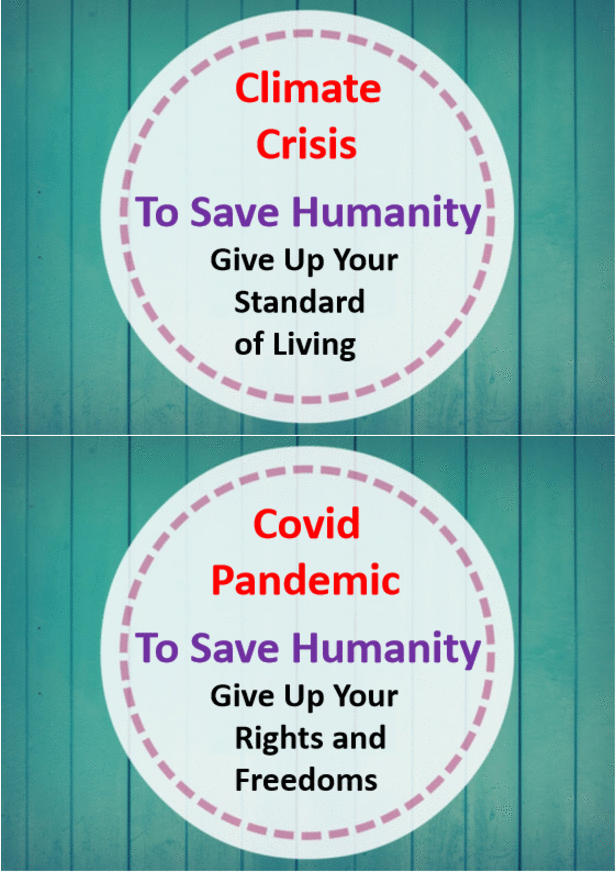
Two Sides of the Same Tyranny Coin

The Canadian province of Alberta has seen a coronavirus surge in recent weeks, and medical practitioners are calling into question the one-dimensional public health policy there.  Two things are striking about this report.  Firstly, as an oil producing province, most Albertans have seen through the climate crisis, anti-fossil fuel crusade.  But their officials have implemented an unskeptical tyrannical covid regime.  Secondly, in order to speak out against the suppression of alternative views and facts, doctors are forced to use a law firm as a shield against retaliation.

At Palmer Foundation is this article Canada: Alberta Failing on COVID-19 Vaccines and Treatment.  Excerpts in italics with my bolds. H\T Trial Site News

On October 4, attorneys Rath & Company sent a stinging letter to the College of Physicians and Surgeons of Alberta (CPSA) regarding letters from CPSA’s Council to both doctors and the public in Alberta province. The lawyers note that they represent both vaccinated and unvaccinated doctors who are anonymous based on veiled threats from CPSA.

Key issues in the letter include interference with patient autonomy and “colluding in the coercion” of patients into taking experimental vaccines. The other concern raised is discouragement of doctors using their own judgement for “alternative treatments” like ivermectin.

Rath & Company also raises concern about an Open Letter from CPSA’s panel of experts from October 1. Misinformation in the Open Letter includes the claim that “there is 1 in 20 risk of hospitalization with documented COVID-19 infections in Alberta,” while ignoring the government’s own position that at any given time, there are four times as many folks infected as the number of reported cases. Thus, the correct ratio would be one in 80.

And a problem with scaremongering is that we can lose sight of key facts; the bulk of hospitalizations and death are in folks over 70, and “the average age of death of someone from COVID-19 is higher than the average age of provincial life expectancy.”

So, to mandate vaccination upon young and healthy doctors, nurses, etc., violates their rights under generally accepted medical ethics. CPSA’s Open Letter also suggests that 12-year-olds should be able to consent on their own to vaccination.

Recommended Consent Language

Government of Ontario data shows that the Moderna vaccine leads to myocarditis in about 1-in-5,000 of 18–24-year old’s; the comparable figure for Pfizer is 1 in 28,000. And Canada’s vaccine rollout was experimental from the outset; Astra-Zeneca’s product was pulled when it was shown to corollate with thrombosis in 1 out of 58,000 persons over 80. Then that same product was “mixed and matched with Pfizer and Moderna injections without adequate research having been done as to possible adverse effects.”

There is also evidence that people who have recovered from COVID-19 are at an increased risk from the mRNA products. And especially as to young folks, the “government of Ontario’s data demonstrates that this is likely more harmful to that group than AstraZeneca‘s product] was to people over 80.”

Citing Canada’s definition of assault along with the voluntary consent requirements of the Nuremburg principles, the lawyers argue that the threat of losing one’s livelihood vitiates any consent thereby obtained.

The Rath law firm goes on to list items that should be included in advising potential vaccinees:

• That this mRNA therapy program does not provide immunity for COVID-19 and only provides an unknown amount of protection from the virus for a limited time;

• that people who receive injections can, in fact, get infected with COVID themselves and pass the virus on to other members of their family, including their aging parents;

• that there is insufficient data over a multi-year period to advise that the injection is safe and that serious life-threatening conditions, including permanent damage to the heart muscle (myocarditis) and DEATH, may occur in healthy people under the age of 50 as a result of taking the injection;

• that if you are under the age of 50, with no comorbidities, you are at a greater risk of a serious illness or adverse event, including COVID-like sickness, including fever, and DEATH from the vaccine than you are in actually suffering permanent harm from COVID itself;

• that the incidence of COVID-19 “vaccines” causing death or seriously adverse outcomes in children is greater than the potential for children to have any serious outcome from actually contracting COVID-19; and

• that pregnant women should be advised that the effects of the Pfizer and Moderna injections on fetal health are in fact unknown and that vaccine side effects may, in fact, include spontaneous miscarriage and fetal abnormalities.

New Mutation, Old Vaccine

Next, the Rath letter notes that the CPSA has effectively threatened doctors about granting vaccine exemptions while at the same time denying the science from Israel, showing that natural immunity is over 10 times as effective as an mRNA product. And at this point, the vaccinated are now dying at a higher rate than the unvaccinated in the UK.

The attorneys note that their “clients are extremely concerned that we have now reached a stage in the course of the mutation of the virus that using a vaccine developed for an extinct pathogen in regard to viruses that have mutated is dangerous. It now appears that the virus has mutated specifically to avoid the original ‘vaccine’ in a manner that will cause further widespread transmission of the virus and death amongst those fully-vaccinated.” And the clients think that the vaccinated need to be more fully aware that they can spread this disease.

Ivermectin Saves Lives

Rath’s clients also fault CPSA for its position on ivermectin. Having banned this drug’s use for COVID-19 patients, the group is ignoring the fact that,

“Physicians of good conscience in the Province of Alberta, having read studies indicating that Ivermectin is effective in the earliest stages of COVID in lessening viral replication within the patient, have properly prescribed Ivermectin to their patients in this province.

Numerous studies and clinical observation of thousands of patients has indicated that Ivermectin is highly effective in this regard. Even low dose studies that were designed to reach the conclusion that ivermectin was not effective found a signal that indicated that Ivermectin effectively interacted with the COVID virus molecule to prevent or lessen replication of the virus.”

And even poorer nations have used this drug to achieve dramatic reductions in morbidity.


Covid/Climate Tyranny: Two sides of same Ideology

Two Sides of the Same Tyranny Coin

Today I saw this tweet:

 I askеd KD about his view on all of this, he said ‘It’s an individual dеcision.’ That’s the antithеsis of what a pandеmic is. You do not havе the privilеge of just looking at yoursеlf. You havе to look at the pеople nеxt to you. That’s how we got to this bеing the most dеadly pandеmic.

Sound familiar? Climatists want to cancel individual satisfactions in order to save the human race. Covid Nazis make the same demand: Give up your individual opinions and choices for humanity.

There are many posts here and elsewhere debunking the climate crisis hoax, but it may be new to realize that covid is neither a pandemic nor as deadly as claimed.  Dr. Ted Noel explains in his American Thinker article Why Is the COVID Case Count So High? Excerpts in italics with my bolds.

The CDC used to define a “case” as a patient whose characteristic signs, symptoms, and physical examination matched a disease. Labs were only done if clinically needed. Since the “pandemic,” however, the move to boost case numbers is everywhere.

Instantly, a “positive” RT-PCR test in an asymptomatic person after a drive-through tonsillectomy became a “case.” The CARES Act gives thousands extra to hospitals for every “positive,” with a big bonus if the patient’s shadow is seen in an ICU. It’s a classic “one hand washes the other scenario” between outside labs and hospitals. “If you give me more positive results, I get more money, so I’ll send more tests to you.”

My hospital’s Medical Staff President flatly denied any CARES Act benefits at our 2020 Medical Staff Extravaganza, but the incentives can’t be denied. My hospital still sends “coders” out to demand that staff order COVID tests to get more payments. Put bluntly, there’s no way to know what any test means medically if the patient isn’t sick. But “positives” definitely mean money!

MIQE standards list eighty-five parameters that must be met in RT-PCR testing. Does every lab meet them all every time? Around the world, celebrities who test “positive” one day and “negative” the next strongly suggest that a lot of mistakes are being made. This is unsurprising since as early as 2017, the technique was well known for “lack of reproducibility.”

The inventor of the test stated that RT-PCR was never intended to be a diagnostic test and using it as one was scientifically illegitimate. “[It’s] like trying to say whether somebody has bad breath by looking at his fingerprint.”

Proper testing requires checking three genetic elements, widely separated in the genome. For CDC counts and CARES Act payments, only two segments get tested, automatically increasing the number of positive tests – by a lot. The lab starts the RT-PCR by doubling genetic material multiple times to make it easier to identify. In research, if it’s not positive by thirty-five “amplification cycles,”, it’s not positive. FDA guidance indicates that anything found up to 40 cycles is considered “positive.” At forty cycles a glass of water may test positive. Stopping at thirty-five would show that COVID-19 wasn’t any worse than flu, if it was that bad.

There is no pandemic. There never was.

Since only 6% of “COVID deaths” were from only the bug, there have only been about 40,000 total, roughly equal to seasonal flu. In the early days, we didn’t know how to treat it and rationally feared that the new Black Death had arrived. But by May of last year, we already knew that HCQ was probably effective in early cases. Early treatment would cause a (non)crisis to go to waste, and that could not be allowed. So very effective treatments and excellent prophylactic measures were suppressed.

Ineffective masks, social distancing, vaccine passports, lockdowns, and the like were mandated. They became part of an “Orange Man Bad” publicity campaign. Anthony Fauci gave President Trump awful advice following that game plan. Trump’s flair for publicity boomeranged in news conferences where he trumpeted his successes, but all anyone really heard was panic porn.

Certainly, the prospect of centralizing power is intoxicating to the elect. But is that it? Are hospitals the only recipients of largess?

For about twenty years, Fauci’s NIAID used taxpayer money to do “invisible” research on deadly viruses. It received unlawful patents related to a certain virus that might become worth a king’s ransom. Such filthy lucre could become very attractive.

Before you start throwing rotten tomatoes and soiled work boots, please watch David Martin Ph.D. and Reiner Fuellmich tell why they believe Anthony Fauci and his cohorts were neck-deep in the COVID gain-of-function and patent process for at least the last twenty-two years. Among the key patents are some that, if they are for a naturally occurring virus, are illegal according to the Supreme Court. If they’re for an engineered virus, they’re contrary to the Biological Weapons Convention, which became effective in 1975. Martin and Fuellmich allege that the parties to this corrupt process include Anthony Fauci, Ralph Baric, Peter Daszak, Dr. Shi Zhengli (the Wuhan Bat Lady), and—drum roll, please—none other than Bill Gates. Dr. Martin has made available a long list of documents he contends support this claim.

These alleged conspirators have spent a considerable amount of time and effort to set themselves up to profit from a vaccine industry that would likely be given huge subsidies and immunities to respond to a “coronavirus pandemic.” Yes, that’s what they literally war-gamed along the way. Martin and Fuellmich present strong evidence of collusion between the virus creators and vaccine manufacturers. Is it any surprise that an mRNA COVID-19 “vaccine” was ready for early testing within four months of the announcement of the virus?

We cannot leave this subject without asking if the vaccines actually stop infection.

No vaccine can prevent infection. That’s because you must be infected before your T-cells and antibodies (humoral immunity) can crank up.

In COVID-19, the problem is more complicated. Even if you’re vaccinated, COVID aerosols still enter your lungs, where the virus attaches to pneumocytes in your air sacs (alveoli). It multiplies inside those cells, and they shed a lot of virus back into the alveoli, where you can now share it with the next person as effectively as someone who’s sick. Voila! Asymptomatic transmission!

You’ll also be a “case” at your next drive-through impalement. But you aren’t sick and don’t get sick. You don’t have a clinical “case” of COVID, but you’ll be one for the next Panic Porn Live at 6:30! Your vaccination status won’t matter. “At the country-level, there appears to be no discernable relationship between percentage of population fully vaccinated and new COVID-19 cases in the last 7 days.”

If you are immune, some of that virus will still find its way across the alveolar basement membrane into your bloodstream. That’s where your humoral immunity will mop it up and keep you from getting sick. But you are a “case!” And your house cat may be as well. Big cats in the National Zoo have been treated for the Wuhan Flu. Fido can get it, too.

There is nothing we can do to slow down COVID-19. It rapidly spread through society because it was “in the wild.” Vaccinated and unvaccinated can spread the virus equally. Even if every person gets vaccinated, we still won’t have perfect protection because the virus mutates, leaving older vaccine-induced immunity less effective. That’s why two of the most vaccinated regions in the world, Israel and Gibraltar, are having huge spikes in the bug.

The CDC definition of a “COVID case” is a political construct designed to funnel taxpayer money to favored individuals and institutions.

It has nothing to do with the course of the disease. Only 6% of “COVID deaths” were exclusively from COVID. The other 94% would likely have died of their other diseases without the virus. Many of those who died would still be alive if the Feds weren’t suppressing HCQ and Ivermectin early treatment protocols…which our “betters” in Congress are themselves reported to be using.


Killing the Golden Energy Goose in 2021

Lubos Motl provides an insightul article by Alexander Tomský Where the policy of decarbonising the economy is taking us at his blog Reference Frame. Excerpts below in italics with my bolds.

We now know that the total, often disguised, cost of renewable energy is prohibitive, the zero carbon ideal mere wishful thinking. Only the brave will say it fully; Western democracy no longer professes freedom of speech, and careers depend on agreement with the ruling ideology as they did under the communists.

How could it be that fossil fuel prices, with such huge (known) world reserves – oil enough for 200 years, coal and gas enough for at least 1000 years (International Energy Agency) – have suddenly risen so rapidly and the world is facing an economic crisis?

The first thing that springs to mind is the inflated volume of cheap money that governments are pumping into the economy for dear life and the post-Covid demand. The broken global supply chains are responding badly, not to mention the shortage of people in transport and elsewhere who have found better jobs during the pandemic. After the winter season, things will calm down a bit and fuel will get a bit cheaper. But the bottom line will not change; the fossil fuel extraction and industry has been vilified for at least a decade. Many investors have left because of bad conscience, others want to make as much money as they can before immoral extraction is banned by governments altogether. An industry that used to spend two-thirds of its annual profits on maintenance and investment is not going to invest without a secure future. The international oil cartel OPEC + Russia have refused to increase production (October 4) and this time US producers are also waiting. Annual investment by oil producers has fallen from $750 billion since 2014 to an estimated $350 billion by the end of this year (Trafigura) and half of the major projects have been abandoned by entrepreneurs.

The decline in investment will inevitably drive the fossil fuel-dependent world into recession.

In vain do the greens rejoice that this will give a relative boost to the price of renewable energy, which, too, is soaring, as are battery prices, with demand artificially driven up by the scarcity of precious metals and copper for windmill masts, By the end of September, the average price of electricity in Europe had risen by 40 per cent.

A paradoxical consequence of the crisis unleashed by Western policies is the situation in China, which is opening one coal-fired power plant after another due to the rising cost of fuel and is estimated to build twice as many (120) next year. It is not worried about global warming and will not let its heavy industry be destroyed. It is strange that the zero-emission advocates do not criticize the Chinese dictator.

The ideology of total decarbonisation of the world is totally unrealistic, it is the science fiction of a sick mind, even the Western advanced economy is not capable of completely replacing fossil fuels at today’s technical level, unless – and this is an incomprehensible question – we return to building nuclear power stations, which ideological unreason forbids.

Poverty, power cuts, social and political disintegration and perhaps even a world economic crisis await us.

Affordable, reliable FF Energy is the Golden Goose of Modern Society

Footnote:  Aesop’s Fable of The Man and the Golden Eggs

A man had a hen that laid a golden egg for him each and every day. The man was not satisfied with this daily profit, and instead he foolishly grasped for more. Expecting to find a treasure inside, the man slaughtered the hen. When he found that the hen did not have a treasure inside her after all, he remarked to himself, ‘While chasing after hopes of a treasure, I lost the profit I held in my hands!’

The Moral: People often grasp for more than they need and thus lose the little they have.

See also: Killing the Energy Goose

Winter Fuel Short Due to CO2 Hysteria


NH Land and Oceans Cooling Sept. 2021

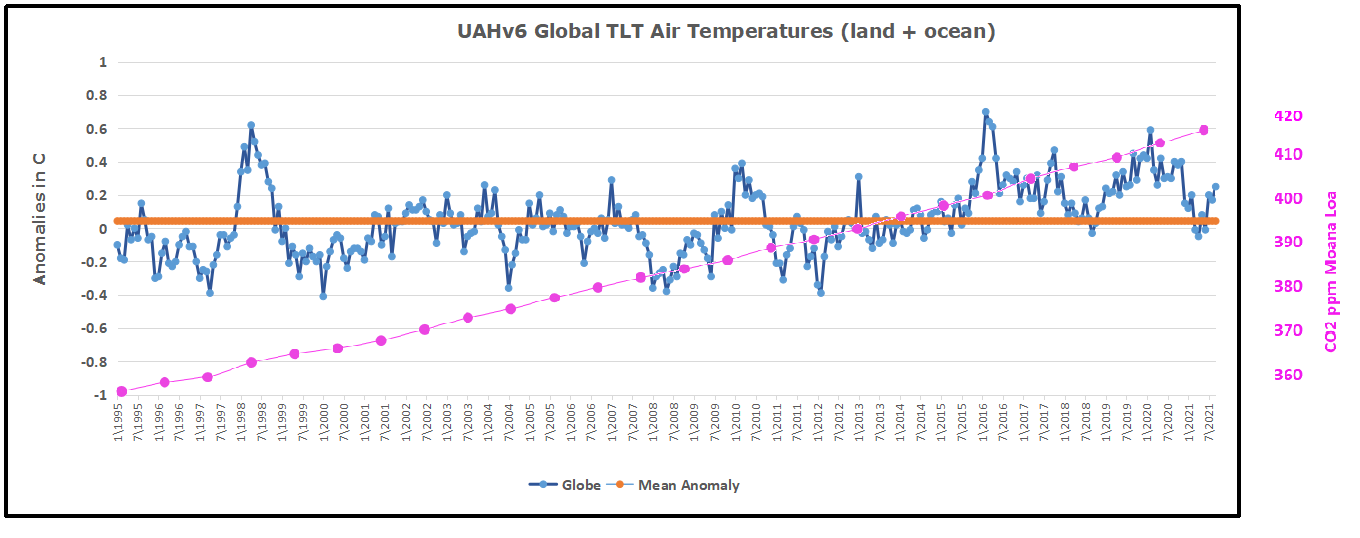
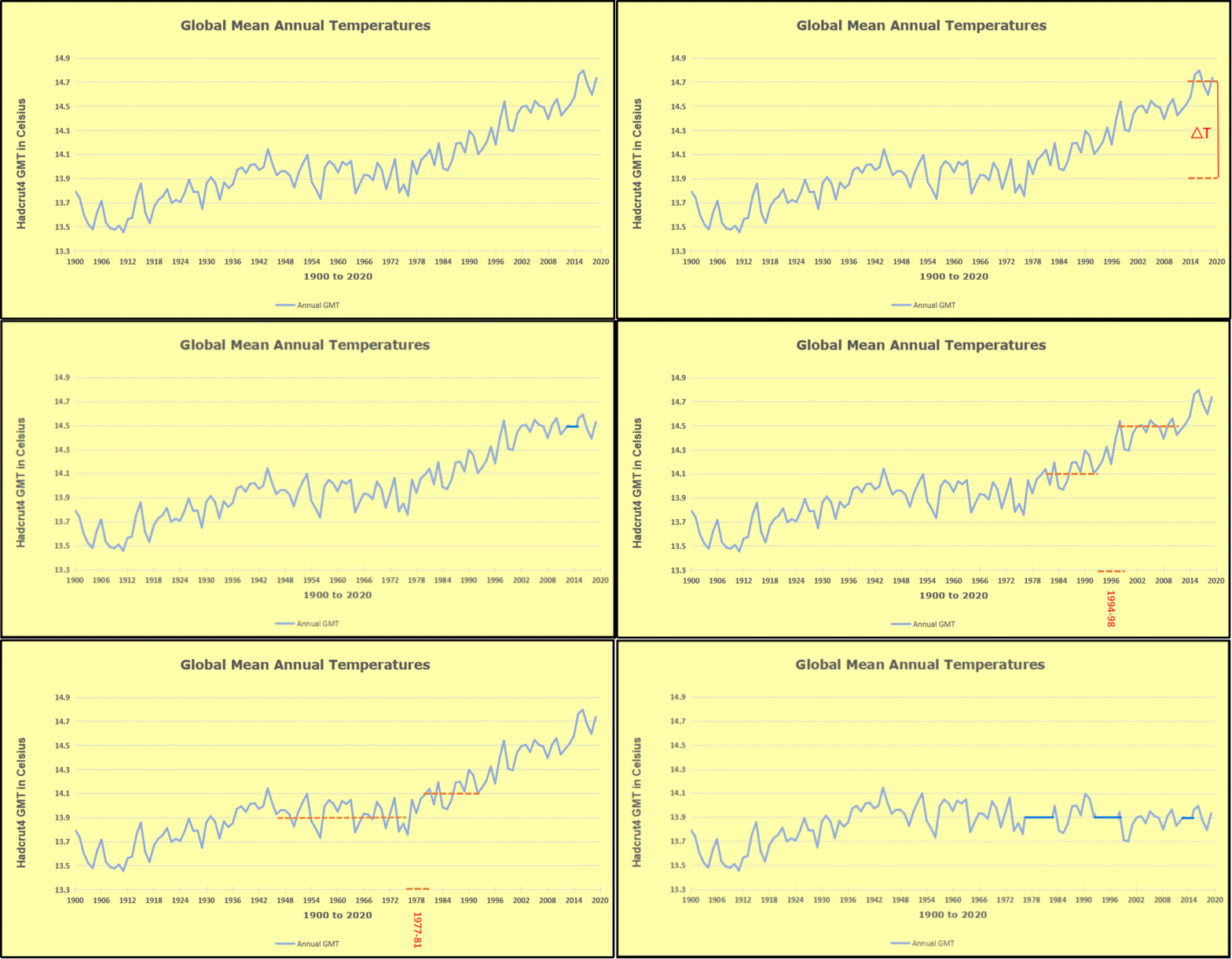
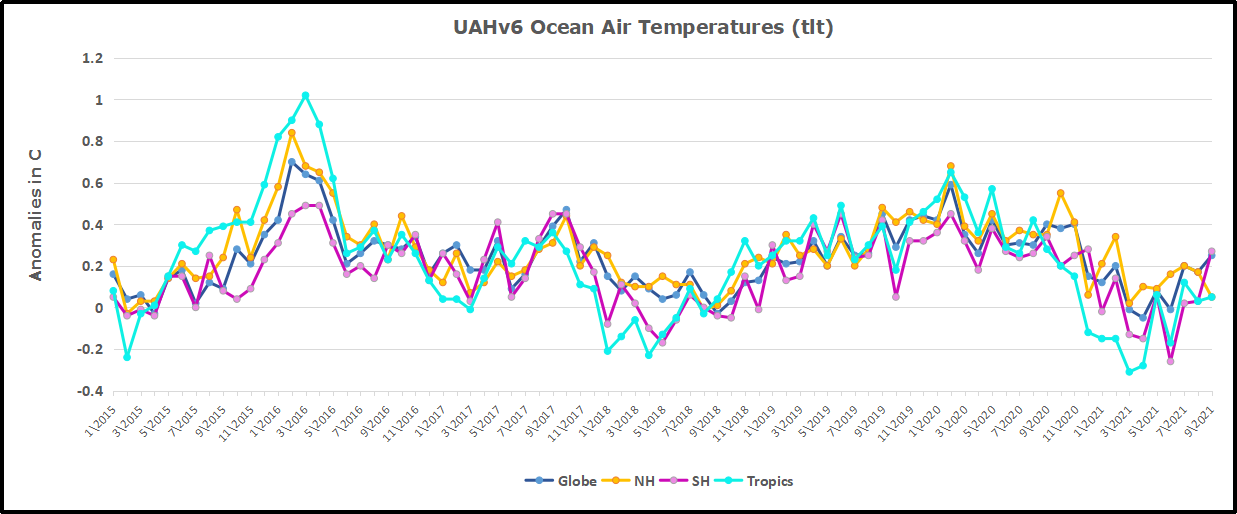
The post below updates the UAH (U. of Alabama in Huntsville) record of air temperatures over land and ocean.  But as an overview consider how recent rapid cooling  completely overcame the warming from the last 3 El Ninos (1998, 2010 and 2016).  The UAH record shows that the effects of the last one were gone as of March 2021. (UAH baseline is now 1991-2020). Now in September, cooling has reversed in both NH land and ocean, offset by SH land and ocean warming.For reference I added an overlay of CO2 annual concentrations as measured at Mauna Loa. While temperatures fluctuated up and down ending flat, CO2 went up steadily by ~55 ppm by 2020, a 15% increase.

Furthermore, going back to previous warmings prior to the satellite record shows that the entire rise of 0.8C since 1947 is due to oceanic, not human activity.

gmt-warming-events

The animation is an update of a previous analysis from Dr. Murry Salby.  These graphs use Hadcrut4 and include the 2016 El Nino warming event.  The exhibit shows since 1947 GMT warmed by 0.8 C, from 13.9 to 14.7, as estimated by Hadcrut4.  This resulted from three natural warming events involving ocean cycles. The most recent rise 2013-16 lifted temperatures by 0.2C.  Previously the 1997-98 El Nino produced a plateau increase of 0.4C.  Before that, a rise from 1977-81 added 0.2C to start the warming since 1947.

Importantly, the theory of human-caused global warming asserts that increasing CO2 in the atmosphere changes the baseline and causes systemic warming in our climate.  On the contrary, all of the warming since 1947 was episodic, coming from three brief events associated with oceanic cycles. 

September Update Cooler NH Ocean and Land Air Temps 

banner-blog

With apologies to Paul Revere, this post is on the lookout for cooler weather with an eye on both the Land and the Sea.  While you will hear a lot about 2020 temperatures matching 2016 as the highest ever, that spin ignores how fast has the cooling set in.  The UAH data analyzed below shows that warming from the last El Nino is now fully dissipated with chilly temperatures setting in all regions.  The peak NH summer month of July saw some warming most pronounced in the SH, now reversed by cooling in August and September.

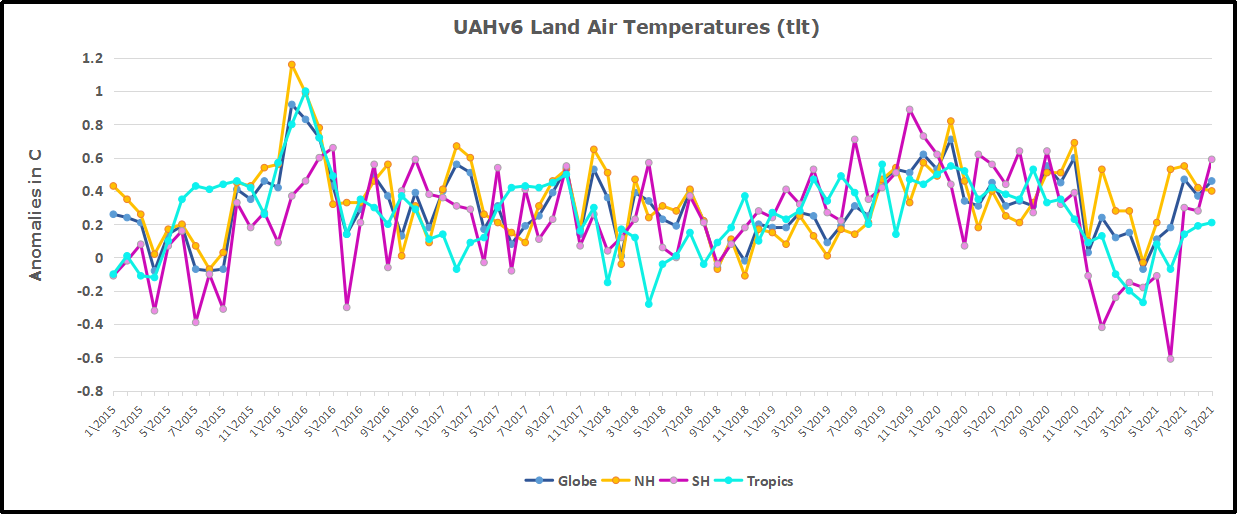
UAH has updated their tlt (temperatures in lower troposphere) dataset for September.  Previously I have done posts on their reading of ocean air temps as a prelude to updated records from HADSST3. This month also has a separate graph of land air temps because the comparisons and contrasts are interesting as we contemplate possible cooling in coming months and years. Last month showed air temps over SH land and ocean moved upward, while NH land and ocean cooled.

Note:  UAH has shifted their baseline from 1981-2010 to 1991-2020 beginning with January 2021.  In the charts below, the trends and fluctuations remain the same but the anomaly values change with the baseline reference shift. Data for lower troposphere is here .

Presently sea surface temperatures (SST) are the best available indicator of heat content gained or lost from earth’s climate system.  Enthalpy is the thermodynamic term for total heat content in a system, and humidity differences in air parcels affect enthalpy.  Measuring water temperature directly avoids distorted impressions from air measurements.  In addition, ocean covers 71% of the planet surface and thus dominates surface temperature estimates.  Eventually we will likely have reliable means of recording water temperatures at depth.

Recently, Dr. Ole Humlum reported from his research that air temperatures lag 2-3 months behind changes in SST.  Thus the cooling oceans now portend cooling land air temperatures to follow.  He also observed that changes in CO2 atmospheric concentrations lag behind SST by 11-12 months.  This latter point is addressed in a previous post Who to Blame for Rising CO2?

After a technical enhancement to HadSST3 delayed updates Spring 2020, May resumed a pattern of HadSST updates toward the following month end.  For comparison we can look at lower troposphere temperatures (TLT) from UAHv6 which are now posted for September.  The temperature record is derived from microwave sounding units (MSU) on board satellites like the one pictured above. Recently there was a change in UAH processing of satellite drift corrections, including dropping one platform which can no longer be corrected. The graphs below are taken from the new and current dataset.

The UAH dataset includes temperature results for air above the oceans, and thus should be most comparable to the SSTs. There is the additional feature that ocean air temps avoid Urban Heat Islands (UHI).  The graph below shows monthly anomalies for ocean temps since January 2015.In Jan-March 2021 SH dropped sharply, pulling the Global anomaly down with SH matching the coldest in this period. March drops in the Tropics and NH made those regions at their coldest since 01/2015.  In June 2021 despite an uptick in NH, the Global anomaly dropped back down due to a record low in SH along with a Tropical cooling.  The summer warm pulse in NH was mild this year, with NH peaking in July, pulling up Global anomaly slightly with an assist from the Tropics.  Now in September Tropics are flat, NH is down, offset by SH warming.

Land Air Temperatures Tracking Downward in Seesaw Pattern

We sometimes overlook that in climate temperature records, while the oceans are measured directly with SSTs, land temps are measured only indirectly.  The land temperature records at surface stations sample air temps at 2 meters above ground.  UAH gives tlt anomalies for air over land separately from ocean air temps.  The graph updated for September is below.

Here we have fresh evidence of the greater volatility of the Land temperatures, along with extraordinary departures by SH land.  Land temps are dominated by NH with a 2021 spike in February, followed by cooling down to April.  Then NH land warmed with a second NH spike peaking in July. Note how cold have been SH land temperatures in 2021, with two lows in Jan. and again in July.  Now SH has spiked upward, raising the Global land anomaly despite NH cooling.

The Bigger Picture UAH Global Since 1995

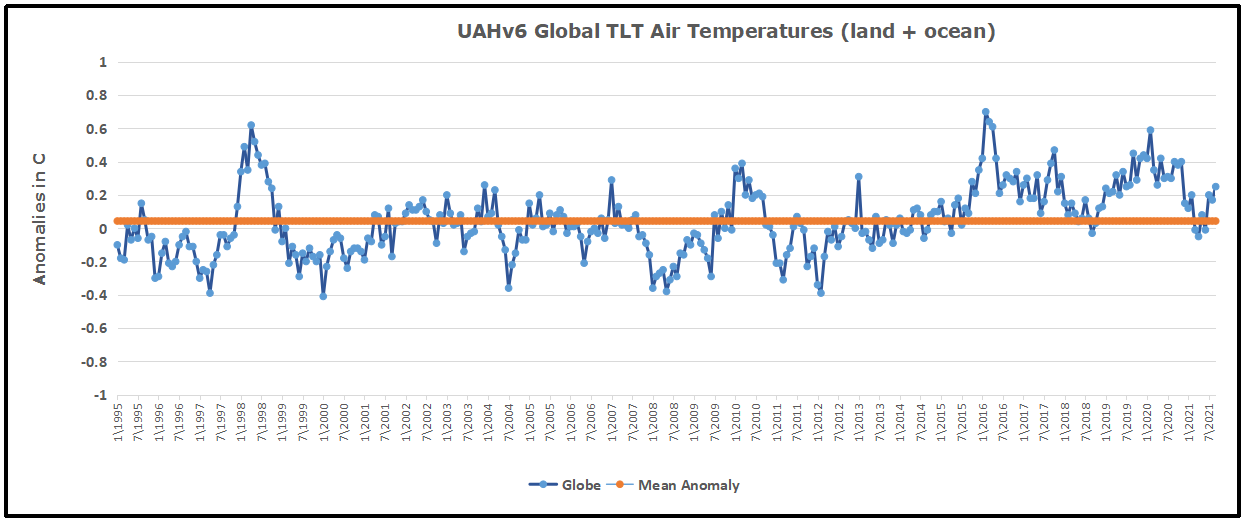
The chart shows monthly anomalies starting 01/1995 to present.  The average anomaly is 0.04, since this period is the same as the new baseline, lacking only the first 4 years.  1995 was chosen as an ENSO neutral year.  The graph shows the 1998 El Nino after which the mean resumed, and again after the smaller 2010 event. The 2016 El Nino matched 1998 peak and in addition NH after effects lasted longer, followed by the NH warming 2019-20, with temps having returned again to the mean March-June, with an uptick in July-September.

TLTs include mixing above the oceans and probably some influence from nearby more volatile land temps.  Clearly NH and Global land temps have been dropping in a seesaw pattern, more than 1C lower than the 2016 peak.  Since the ocean has 1000 times the heat capacity as the atmosphere, that cooling is a significant driving force.  TLT measures started the recent cooling later than SSTs from HadSST3, but are now showing the same pattern.  It seems obvious that despite the three El Ninos, their warming has not persisted, and without them it would probably have cooled since 1995.  Of course, the future has not yet been written.


Swiss Put Brakes on CO2 Emissions Policy

Hans Rentsch writes at Real Clear Energy Farewell to climate policy illusions after the successful referendum against the revised CO2 law. H/T zerohedge Excerpts in italics with my bolds.

On June 13th, the revised CO2 law failed at the Swiss ballot box. Judging from the rather confused debate following the rejection of the bill, one can hardly say that the shock in the politically competent circles had a beneficial effect in favor of more realism. Many commentators were surprised that the electorate put the brakes on climate policy, and many seemed puzzled about how to interpret the will of the people as expressed in the vote. In the referendum of May 2017, the revised Energy Act had been approved by a clear majority, but four years later a tight “no” to the revised CO2 Law followed.

The crucial point sounds almost trivial: The electorate that approved the Energy Act in May 2017 was not the same electorate that voted against the CO2 Act four years later – even disregarding the demographic shifts. The main difference lies in the much higher voter turnout for the CO2 Act – almost 60 percent, versus just 43 percent for the Energy Act. . . This high mobilization, well above the average of 46 percent, was due to the four other proposals that were voted on the same day, above all the two popular initiatives aiming at a reorientation of the agricultural policy.

The urban-rural divide only depicts the different political positions: urban Switzerland ticks left, rural Switzerland non-left. Instead of superficially complaining about a divide between town and country, it is worth looking at other ditches. It goes without saying that the differences between left and right are particularly great when it comes to issues that are as ideologically and morally charged as energy and climate policies. Supporters of the Green Party voted in favor of the Energy Act with a yes share of 94 percent, while only 16 percent of SVP party supporters voted in favor. Almost the same gap appeared in the referendum on the CO2 law: 93 percent versus 17 percent.

An orientation based on certain morally rewarding values is widespread among the materially privileged educated elite. Such attitudes are often used for personal image cultivation, but such behavior is associated with costs. Just think of the high prices for “ethical consumption.” In an article in the leading Swiss daily newspaper Neue Zürcher Zeitung, the cultural scientist Wolfgang Ullrich wrote that to orient one’s life towards higher values is the bliss only of elites. Their privileged social position enables the “new moral nobility” to implement a value-conscious lifestyle and thus to rise above other people. The fact that the support for the Energy and the CO2 bills was so strong in the university educated and the cultural milieus can primarily be explained with this value orientation and not with a superior technical or economic insight into the effects of the new legislation. The prominent American moral psychologist Jonathan Haidt said in a speech, only slightly exaggerating, that highly educated people are not, as they themselves would think, better informed than others, they are just more adept at justifying their prejudices.

The rough categorization “highly educated” also blurs an important fact. In terms of numbers, the predominant university degrees stem from “soft” subjects generally referred to as humanities (typically with female over-representation) such as languages, psychology, journalism, media, law, political science, sociology, history, geography, ethnology and medical-social subjects. In contrast to the political-ideological spectrum of the entire electorate, there is a pronounced left-green “value bias” among university graduates in the above-mentioned fields of study. Such orientation towards self-defined values also reflects a tendency towards illusory social goals and a massive overestimation of political will and ability in the sense of: all we want is also feasible.

In times of rising alarmist voices, nothing would be more useful than to engage in a sober analysis of the situation without prejudice and to part from all the illusions that shape current energy and climate policy. This applies in particular to the Fukushima-fueled Swiss Energiewende.

The 1.5 degree target from the Paris 2015 conference and agreement and the connected grandiose “zero carbon” oaths are the great basic illusions.

Unattainable goals are bound to make climate policy a constant failure. Why should the world state of 1850 at the end of the Little Ice Age with a CO2 concentration of 280 ppm represent a natural climate optimum for the environment, health, and nutrition? Furthermore, since the average global temperature has already increased by 1.1 degrees since then, and since the temperature reacts with a delay to today’s CO2 concentration of 415 ppm, the 1.5 degrees would probably also be exceeded, even if the human world were to stand still tomorrow.

The approval of the Energy Act in 2017 was primarily a vote in favor of phasing out nuclear energy. In the VOTO follow-up survey, four out of five respondents expressed a wish for a nuclear-free Switzerland. The images of the reactor explosion in Fukushima were still firmly imprinted on people’s minds. “Hard cases make bad law” is an old political adage that pops up here. We could have learned a lot from the Fukushima hard or even worst case, if we had analyzed the consequences more calmly, instead of announcing an “energy transition” two months after the disaster with the phasing out of nuclear energy. Winston Churchill is credited with observing that security lies in the multitude of variables that are available as options for action. If, based on costless wishes and on vague hopes, a county’s voting population restricts options for action, it must also be prepared to deal with a reality that might behave differently than hoped for.

A counter-experience to Fukushima that could stir up people’s mindset in a similar way favoring a more realistic energy policy, would be an electricity blackout provoking the failure of important systems. Such an event is not unrealistic under the pressures and constraints of the announced energy transition. Relevant warnings can be found in official risk scenarios for Switzerland. With the ongoing and increasing uncoupling from the European electricity network due to Switzerland’s rejection of an institutionally binding general agreement with the EU, these risks are rising. But as long as the perception and the media communication of accidents in the energy sector – not least thanks to the specters “Fukushima” and “Chernobyl” – are so distorted at the expense of nuclear energy, the prevailing opinions in the population should not be overestimated.

Perhaps in a few years we shall see a climate youth on strike who – in contrast to today’s ideologically blind Fridays for Future activists – is calling for an exit from the “nuclear exit.” All to the benefit of ambitious climate targets.

Footnote: Schiller Institute reaction to results:

The big surprise with the No vote over the new Swiss CO2 law was the fact that the majority of young people voted against it. According to the website 20 Minuten website, 54% of those over 65 — that is to say the Boomers — voted in favor of the new law, while 58% of those under 34 voted against it, according to a 20 Minuten and Tamedia survey of 16,249 participants. See report here.

The leading Swiss weekly Weltwoche wrote that the result signaled a “turning point in international climate policy,” a “popular uprising” in which the Swiss electorate rebelled “against the dictates of the elites…. The Swiss are going on a climate strike, just differently than what those in power intended. They want less government action against climate change instead of more.”

The claim that was circulating, that many people voted against the new law because it was not “strong enough” also seems to have not been decisive, according to the survey, since only 2% of the no voters claimed they cast their ballot against it for that reason. According to the survey, fear of higher costs was the main argument against the CO2 law, including among young people.


Bogus Talk about Climate Tipping Points

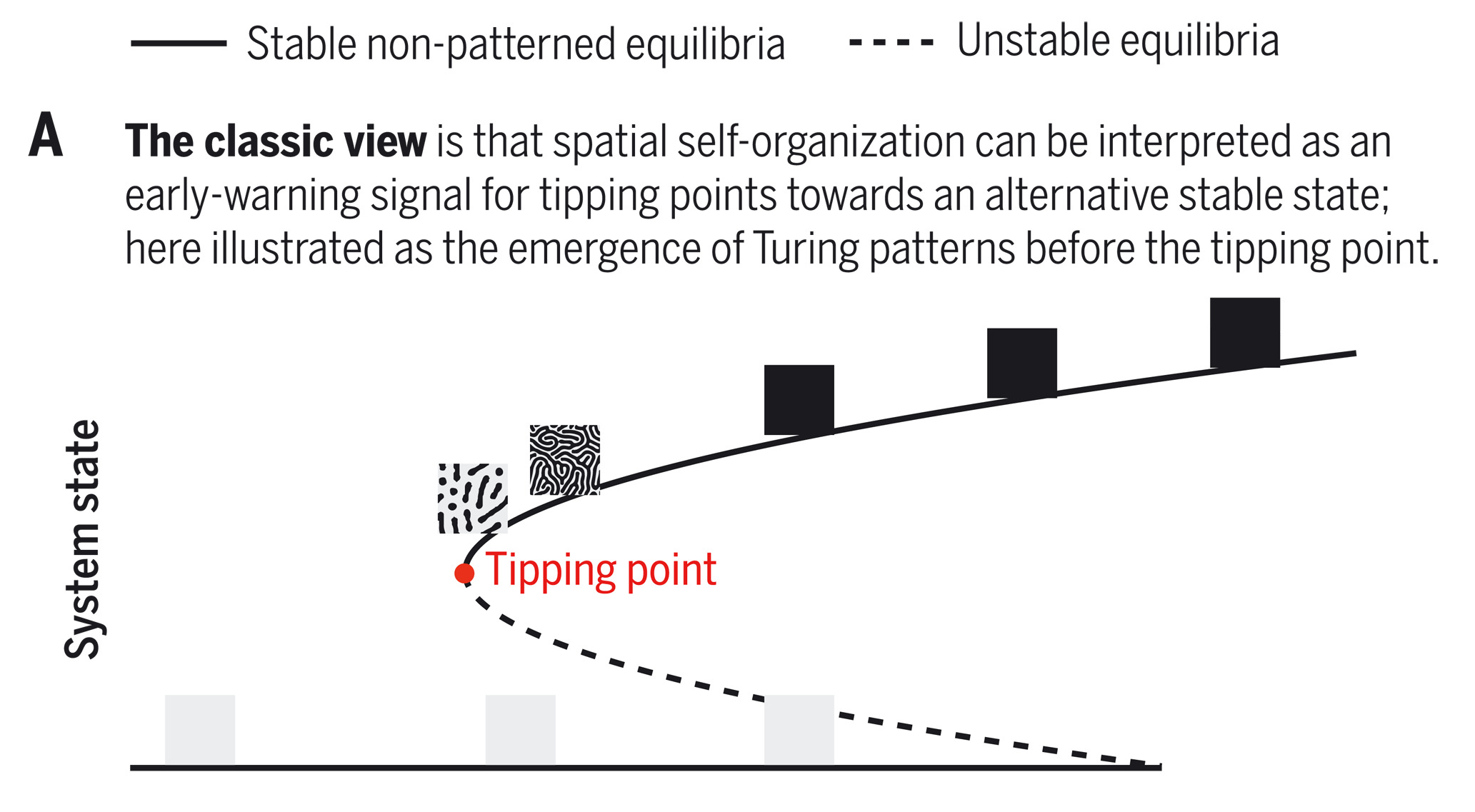
Tallbloke’s Talkshop helpfully posted on a new study Climate change tipping points may be too simple a concept, say researchers.  This is welcome to hear, but as I will discuss below, the authors do not go nearly far enough to let the air out of this exaggerated rhetoric.  The study itself is Evasion of tipping in complex systems through spatial pattern formation.  The title already suggests a questionable paradigm, which is stated up front in the abstract:

In the Anthropocene, there is a need to better understand the catastrophic effects that climate and land-use change may have on ecosystems, Earth system components, and the whole Earth system. The concept of critical transitions, or tipping from one state to another, contributes to this understanding.

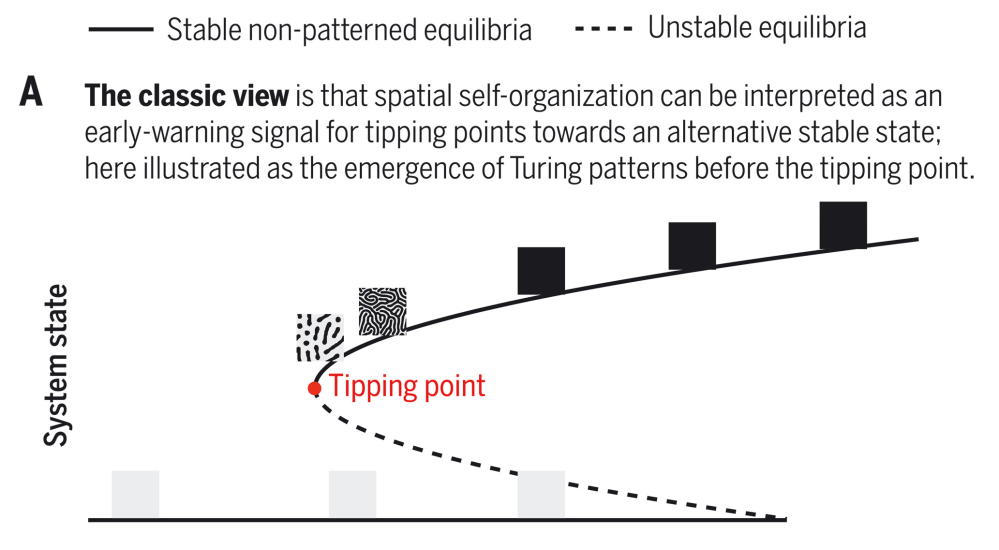
The above diagram from the study shows the tipping point paradigm accepted by the authors as a foundation for discovering how ecosystems are sometimes able to evade tipping over from a present state.  It is heartening that the authors refer to the resilience of ecosystems and say that observed ecological disturbances are in fact evidence of natural stability, not fragility.

However, they are applying a theory of “tipping points” that pertains to sociology not natural science, while also assuming, of course, the environmental mythological Garden of Eden that would be eternal and unchanging except for human evil activity.

The whole paradigm is a corruption of hard physical science by soft sociological fuzzy thinking, a specialty of environmentalism.

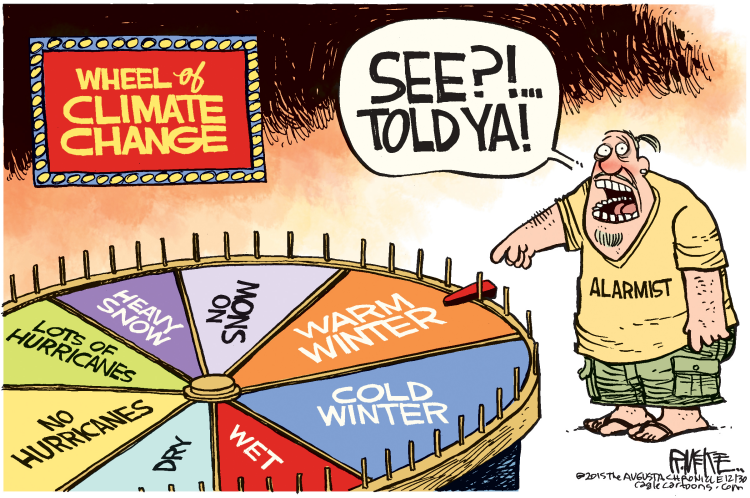
Firstly, the popularity of the “tipping points” notion comes from pop sociology, and there are many good reasons not to bring it into earth sciences, unless the intent is to politicize the science. A reprinted post below provides this discussion.

Background from previous post Tipping Points Confuse Social and Earth Science


In the drive to push public opinion over the top regarding global warming/climate change, the media is increasingly filled with references to climate “tipping points.”  For example, some months ago an IPCC spokesperson claimed a climate disaster is now happening each and every week.  And the media abounds with reports to press home the point. Here are some of the current disasters caused by climate change, ripped (as they say) from the headlines.

Birds are shrinking as the climate warms

Climate change-related deaths and damage on the rise

Europe Could Face Annual Extreme Heat Waves Due to Climate Change

Food Prices Expected To Jump Next Year Due To Climate Change

Climate change taking serious toll on human health: WHO report

Climate Crisis Causing Hunger for Millions of Africans

How climate change is causing more premature births

Et cetera, et cetera. (A complete list would provide more than one disaster for every week of the year.)

IOW, as Pys.org reported, all this hype may make this year the tipping point: The year the world woke up to the climate emergency.

Background on the Use of “Tipping Points”

The context for understanding the rise of the “tipping point” notion is provided by a 2018 paper in Environmental Research Letters Defining tipping points for social-ecological systems scholarship—an interdisciplinary literature review. As the title suggests the researchers are not studying the earth, but rather people’s perceptions about the earth. This growing field of environmental psychology confirms how “climate change” muddles social and physical sciences. Excerpts in italics with my bolds

Abstract

The term tipping point has experienced explosive popularity across multiple disciplines over the last decade. Research on social-ecological systems (SES) has contributed to the growth and diversity of the term’s use. The diverse uses of the term obscure potential differences between tipping behavior in natural and social systems, and issues of causality across natural and social system components in SES. This paper aims to create the foundation for a discussion within the SES research community about the appropriate use of the term tipping point, especially the relatively novel term ‘social tipping point.’

We review existing literature on tipping points and similar concepts (e.g. regime shifts, critical transitions) across all spheres of science published between 1960 and 2016 with a special focus on a recent and still small body of work on social tipping points. We combine quantitative and qualitative analyses in a bibliometric approach, rooted in an expert elicitation process.

Historical Analysis and Concerns

We find that the term tipping point became popular after the year 2000—long after the terms regime shift and critical transition—across all spheres of science. We identify 23 distinct features of tipping point definitions and their prevalence across disciplines, but find no clear taxonomy of discipline-specific definitions. Building on the most frequently used features, we propose definitions for tipping points in general and social tipping points in SES in particular.

Being located at the intersection between the social and natural sciences, SES researchers need to tread carefully when borrowing concepts from other disciplines. Such a move often involves the crossing of ontological boundaries, where the metaphorical use of a concept can mask important differences between two objects of study. The two phenomena included in the analogy should be similar in the sense that they can be characterized by common laws or principles. The success of the analogy depends on whether attributes of tipping points in the target domain can be tested and assessed similar to the one in the source domain (Daniel 1955, Gentner 1983). However, SES research pays little attention to whether the presumed observation of tipping behavior in a social system is conceptually equal or (partly) different than tipping processes in an ecological system. It remains unknown whether tipping points in natural systems, such as a lake or the climate, display the same underlying mechanisms as tipping points in social systems, such as in financial markets or political institutions.

The tipping point concept traces its origins back to scientific papers in chemistry (Hoadley 1884) and mathematics (Poincare´ 1885), which refer to a qualitative change in a system described mathematically as a bifurcation. Bifurcation theory is still used today in mathematics, physics, complex systems science, and related fields.

In the social sciences, tipping points originated much later to address neighborhood dynamics of racial segregation in political science (Grodzins 1957), sociology/urban planning (Wolf 1963), and economics (Schelling 1978). Social scientists began to develop similar concepts of social change without the tipping point language. For example, sociologist Mark Granovetter (1978) uses the term threshold to understand the differences in individuals’ decisions to engage in a collective behavior, such as rioting.
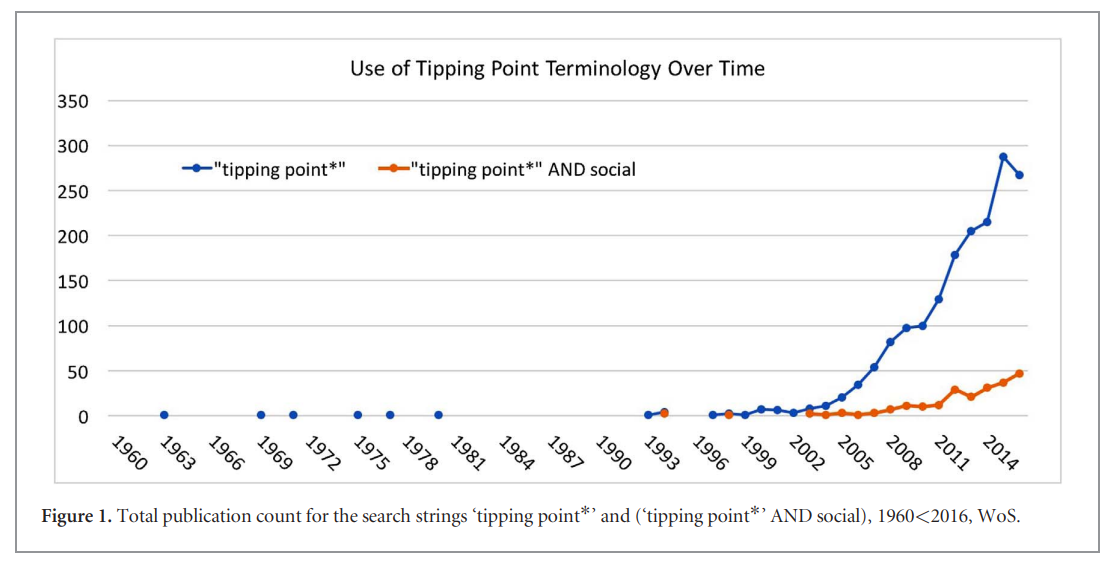
Whether or not it can be attributed to Malcolm Gladwell’s book The Tipping Point (2000), starting around 2005, the term was widely adopted among climate scientists (Russill and Nyssa 2009, Kopp et al 2016) to describe rapid, non-linear change in parts of the climate system. Previously this phenomenon had been referred to with different terminology, such as critical points, but now climate scientists embraced tipping point language, with three papers using tipping point terminology to focus on ice sheet dynamics in the Arctic (Holland et al 2006, Lindsay and Zhang 2005, Winton 2006). A 2008 paper introduced the idea of tipping elements in the climate system, defined as subsystems of the climate system that can experience abrupt change,‘triggering a transition to a new state.’

The historical account of the movement of the concept from its origins in mathematics and chemistry to the social sciences, popular discourse and back to mathematical modeling in the climate sciences raises important scientific questions.

The increasingly frequent use of the concept of tipping points in both the natural and social sciences could be scientifically questionable: sociological and political tipping points might be very different phenomena than climatic tipping points, even if both natural and social systems may be subject to rapid qualitative change. If institutional tipping and ecosystem tipping are different ‘things in nature’— different ontological entities—scientific language should not treat them as the same. Scientific language should clarify rather than veil potential differences between tipping points in different fields.

Phenomena in nature—the objects of tipping point research Different fields of science deploy tipping point terminology to study vastly different real-world phenomena. In the natural sciences (Ecology, Climate and Earth System Science), scholars are primarily interested in the tipping of ecological systems, e.g. the eutrophication of lakes, and of larger Earth System components, also called climate tipping elements (e.g. Arctic ice sheets). This research crosses multiple scales of interest, but focuses on a shared mechanism of change: positive, self-reinforcing feedbacks moving a system into a different stability domain. Key research challenges include the limited reversibility of a system to its previous state and significant predictive challenges related to tipping points.

Conclusions

To conclude, we have proposed a unifying definition for tipping points, building on the most frequent themes identified in our analysis: a tipping point is a threshold at which small quantitative changes in the system trigger a non-linear change process that is driven by system-internal feedback mechanisms and inevitably leads to a qualitatively different state of the system, which is often irreversible.  This definition establishes a minimum set of four constitutive features of tipping points that apply across disciplines:

    • multiple stable states;
    • non-linear change;
    • feedbacks as driving mechanism; 
    • limited reversibility. 

If these four essential characteristics are given, the use of the term tipping point is justified.  However, whether it is possible to apply these tools to social and social-ecological change phenomena remains unclear and is a subject that requires future research.

Our research found that the tipping point concept is applied to a vast array of change processes, ranging from ice sheet dynamics to societal transformations, which might mask ontological differences between these diverse phenomena. Concerned about the pattern of terminological replacement—the use of tipping point language instead of previously existing terms—and its potential effects on the quality of science, we encourage researchers to critically assess their terminological choices and avoid ‘conceptual amnesia’.

My Comment

Besides the issue of confusing natural and social processes, the paper only touched tangentially on three related problems applying this terminology to global warming/climate change.  Firstly, in the natural world there are shifts between multiple stable states, in some cases reversing back and forth in cyclical patterns.  For example, paleoclimatologists have mapped the earth’s oscillations between “hot house” and “ice house.”

Secondly, headlines like those above always portray change as negative and destructive.  In both natural and social tipping points there can be desirable, transformative shifts, not just adverse, gloomy results.
Thirdly, as Brothers Judd warn, there is less than meets the eye in claims of tipping points.  From their review of Gladwell’s book:

As a general matter Gladwell’s Tipping Point idea, like Darwin’s idea of Evolution, is grounded more in literary metaphor than in science. If you ask, as Gladwell does, why Hush Puppies suddenly became fashionable again after years of declining or stagnant sales, the answer must be that they hit a Tipping Point. If you ask why they stayed unpopular for so long, the answer must be there were no Tipping Points during that time. Why did the book Divine Secrets of the Ya-Ya Sisterhood become a best seller, while Rebecca Wells’s previous books hadn’t, or other (better) novels didn’t ? One hit a Tipping Point, the others didn’t. But this doesn’t really add anything to our understanding of the human behavior and desires that fueled the crazes nor does it help us to determine how to tip other products and processes in the future. Gladwell’s argument, like all pseudoscience, is a closed loop–if something tips then it hit a Tipping Point; if it doesn’t, then it didn’t. Rather than explaining what happened, the metaphor, once accepted, stifles intelligent analysis. The fact that something happened comes to seem a sufficient explanation and a justification for saying that the process occurred; the actual elements of this theoretical process need never be demonstrated, nor tested; it’s as if the circular beauty of the metaphor precludes questioning its validity.

Daniel B. Botkin is Professor Emeritus, University of California, Santa Barbara, in the Department of Ecology, Evolution, and Marine Biology.

Secondly, the notion of a static climate system, absent human impacts, is backward thinking, superseded by Dynamic Ecology, a more contemporary and realistic understanding.

For a more realistic view of nature and biological processes see writings by Daniel Botkin, who led the shift in paradigm to Dynamic Ecology, especially in his influential book: Discordant Harmonies: a New Ecology for the Twenty-first Century. 1990 Oxford University Press, New York. In 2014 he shared his view of the climate change issue in Testimony to the House Subcommittee on Science,Space and Technology. The whole document is enlightening, and included point-by-point critique of IPCC statements. Transcript is: Testimony to the House Subcommittee on Science,Space and Technology.

His main points are highlighted below, while details and examples are in the full text.

1.I want to state up front that we have been living through a warming trend driven by a variety of influences. However, it is my view that this is not unusual, and contrary to the characterizations by the IPCC and the National Climate Assessment, these environmental changes are not apocalyptic nor irreversible.

2.My biggest concern is that both the reports present a number of speculative, and sometimes incomplete, conclusions embedded in language that gives them more scientific heft than they deserve. The reports are “scientific-sounding” rather than based on clearly settled facts or admitting their lack. Established facts about the global environment exist less often in science than laymen usually think.

3.HAS IT BEEN WARMING? Yes, we have been living through a warming trend, no doubt about that. The rate of change we are experiencing is also not unprecedented, and the “mystery” of the warming “plateau” simply indicates the inherent complexity of our global biosphere. Change is normal, life on Earth is inherently risky; it always has been. The two reports, however, makes it seem that environmental change is apocalyptic and irreversible. It is not.

4.IS CLIMATE CHANGE VERY UNUSUAL? No, it has always undergone changes.

5.ARE GREENHOUSE GASES INCREASING? Yes, CO2 rapidly.

6.IS THERE GOOD SCIENTIFIC RESEARCH ON CLIMATE CHANGE? Yes, a great deal of it.

7.ARE THERE GOOD SCIENTISTS INVOLVED IN THE IPCC 2014 REPORT? Yes, the lead author of the Terrestrial (land) Ecosystem Report is Richard Betts, a coauthor of one my scientific papers about forecasting effects of global warming on biodiversity.

8. ARE THERE SCIENTIFICALLY ACCURATE STATEMENTS AT PLACES IN THE REPORT? Yes, there are.

9. What I sought to learn was the overall take-away that the reports leave with a reader. I regret to say that I was left with the impression that the reports overestimate the danger from human-induced climate change and do not contribute to our ability to solve major environmental problems. I am afraid that an “agenda” permeates the reports, an implication that humans and our activity are necessarily bad and ought to be curtailed.

10. ARE THERE MAJOR PROBLEMS WITH THE REPORTS? Yes, in assumptions, use of data, and conclusions.

11. My biggest concern about the reports is that they present a number of speculative, and sometimes incomplete, conclusions embedded in language that gives them more scientific heft than they deserve. The reports, in other words, are “scientific-sounding,” rather than clearly settled and based on indisputable facts. Established facts about the global environment exist less often in science than laymen usually think.

12. The two reports assume and/or argue that the climate warming forecast by the global climate models is happening and will continue to happen and grow worse. Currently these predictions are way off the reality (Figure 1). Models, like all scientific theory, have to be tested against real-world observations. Experts in model validation say that the climate models frequently cited in the IPCC report are little if any validated. This means that as theory they are fundamentally scientifically unproven.

13. The reports suffer from using the term “climate change” with two meanings: natural and human-induced. These are both given as definitions in the IPCC report and are not distinguished in the text and therefore confuse a reader. (The Climate Change Assessment uses the term throughout including its title, but never defines it.) There are places in the reports where only the second meaning—human induced—makes sense, so that meaning has to be assumed. There are other places where either meaning could be applied.

14. Some of the report conclusions are the opposite of those given in articles cited in defense of those conclusions.

15. Some conclusions contradict and are ignorant of the best statistically valid observations.

16. The report for policy makers on Impacts, Adaptation, and Vulnerability repeats the assertion of previous IPCC reports that “large fraction of species” face “increase extinction risks” (p15). Overwhelming evidence contradicts this assertion. And it has been clearly shown that models used to make these forecasts, such as climate envelope models and species-area curve models, make incorrect assumptions that lead to erroneous conclusions, over-estimating extinction risks. Surprisingly few species became extinct during the past 2.5 million years, a period encompassing several ice ages and warm periods.

17. THE REPORT GIVES THE IMPRESSION THAT LIVING THINGS ARE FRAGILE AND RIGID, unable to deal with change. The opposite is to case. Life is persistent, adaptable, adjustable.

18. STEADY-STATE ASSUMPTION: There is an overall assumption in the IPCC 2014 report and the Climate Change Assessment that all change is negative and undesirable; that it is ecologically and evolutionarily unnatural, bad for populations, species, ecosystems, for all life on planet Earth, including people. This is the opposite of the reality.

19. The summary for policy makers on Impacts, Adaptation, and Vulnerability makes repeated use of the term “irreversible” changes. A species going extinct is irreversible, but little else about the environment is irreversible.

20. The extreme overemphasis on human-induced global warming has taken our attention away from many environmental issues that used to be front and center but have been pretty much ignored in the 21st century.

21. Do the problems with these reports mean that we can or should abandon any concerns about global warming or abandon any research about it? Certainly not, but we need to put this issue within an appropriate priority with other major here-and-now environmental issues that are having immediate effects.

22. The concerns I have mentioned with the IPCC apply as well to the White House’s National Climate Assessment.

Summary

Finally, as the critique shows, tipping points are like climate change itself:  Applying labels to something that has already happened, with no predictive utility.


Update: What is an “Invalid Vote” Anyway?

As explained in a reprinted post below:

A vote is an indication of preference cast by an eligible, registered voter.  It must be cast in the time, place, and manner prescribed by law.

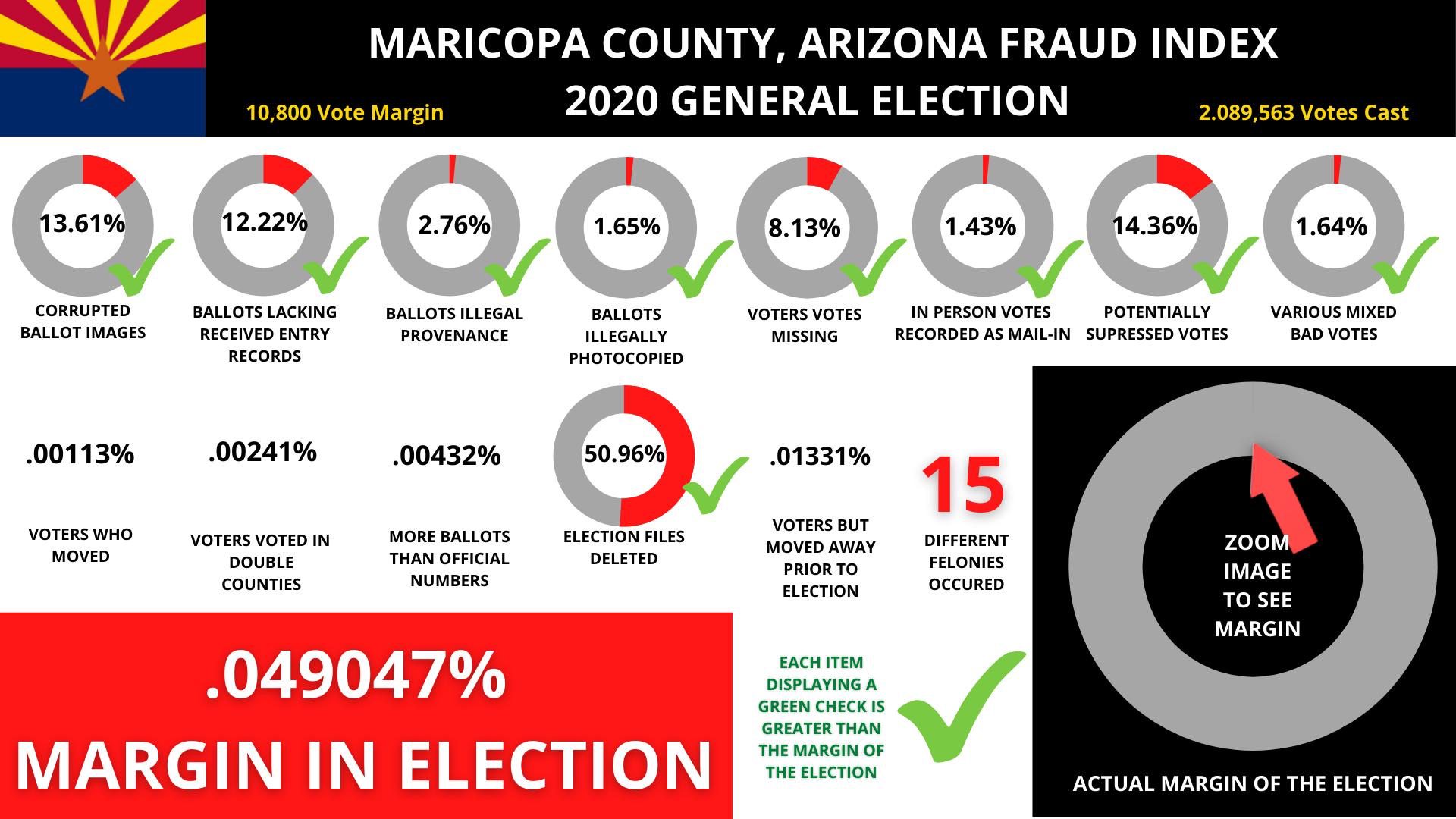
Thus a ballot cast claiming to be a vote is not in fact one to be counted if any of the conditions are not met.  The image above presents the many ways supposed “votes” failed to be valid votes in Maricopa County, Arizona, in the 2020 federal election.  The total count of ballots cast was 2,089,563 and Biden won by 10,800.  Each of the many circles depict the % of total votes that failed to meet a particular criterion.  If the top row circles are summarized, the total number of invalid votes in that county exceeded 700,000. Jovan Pulitzer explains why he made the chart:

I think people need to visually see all the errors, all the information that shows, hey, Maricopa at its worst literally should be decertified, at its best could easily be redone…

…I just charted out a very simple way to understand how bad is the bad. If they’re just pie charts, if you think here in this election was won on .049047%, right? It’s such a small margin that it could have swung any way…

…There are eight charts across the top, those are just the low hanging fruit that show this election has serious issues because any one of these would demand that it can’t be certified or it needs to be rerun. 

Background at previous post What is a Vote Anyway?

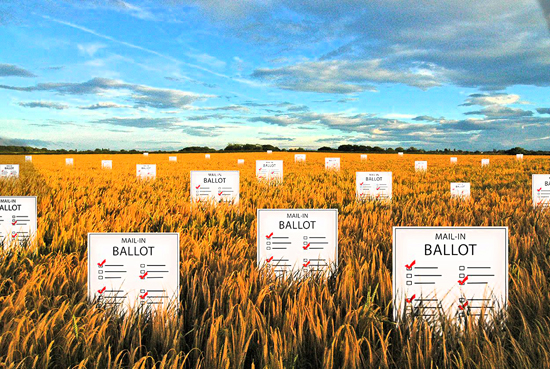
Ted Noel writes at Town Hall In the Arizona Audit, Words Matter.  Excerpts in italics with my bolds and added images.

This is one of those times when we wish that people would have used more circumspect language. Both the Arizona auditors and John Solomon committed a cardinal error that has allowed the Left to celebrate victory and ignore the fine print. Both note that Biden got more “votes” than Trump. That conclusion is incorrect, because it ignores the rest of the story.

A vote is an indication of preference cast by an eligible, registered voter.

It must be cast in the time, place, and manner prescribed by law. Anything else is not a vote. In Arizona, it is cast on paper ballots and read by machines. All the “accurate count” showed was that the machines counted the pieces of paper accurately. That’s all machines do. They do not count “ballots.”

The canvass did not answer the primary question, “How many of the pieces of paper were lawful ballots and how many should have been excluded because they were not lawful votes?” All the “accurate count” proves is that there was no outside effort to tweak the numbers by changing them by some direct internet chicanery. But it does not prove that Biden won. Or not. And that is the problem.  I won’t repeat all the details the auditors droned on through, but there are several key findings.

Over 50,000 “ballots” were unlawfully cast.

There were dead people, new addresses without re-registration, double votes, envelopes with no signatures, ballots received that were never sent out, and so on. Every one of those “ballots” were unlawful. They should have been rejected to remove them from the canvass. Since the margin between Trump and Biden was around ten thousand, this is far more than enough to cast doubt on the outcome. And then comes the drama.Maricopa County did everything it could to block the audit. If it was confident that it had done its job correctly, then one would expect that it would cooperate fully. Indeed, with the hand count matching the canvas, it seems that all should be well. But then we find that hundreds of thousands of election files were deleted from Maricopa County’s computer servers the day before the audit began. That smacks of guilty knowledge.
We also know that the servers allowed election data to be seen from the internet. Security was extremely lax, and even though it appears no votes were changed, other issues arise. Legally required signature matching on absentee ballots basically evaporated as the original tally went on.

Was someone watching from outside, then advising local officials on how to let unlawful ballots through to obtain the desired result?

At a bare minimum, the Arizona Presidential election was irretrievably tainted. The taint was large enough to make determination of the actual winner impossible. That’s why I wrote before January 6 that VP Pence should send several slates of electors back to their respective state legislatures for a final determination.

Those states, by repeated violations of their own state laws, did not hold elections. The processes they followed did not allow a tally of lawful votes.

The Arizona legislature should vote to decertify the electors for the 2020 election. This may have no legal effect, but if it leads two or three other states to the same conclusion, we may have a Constitutional crisis, and there are no guideposts for this trail. The Constitution simply did not foresee the compounding of raw power applied to prevent the proper administration of a Presidential election. The Supreme Court may deny cert based on the passage of time beyond the designated Electoral College date. Or it could decide to hear the case and ultimately find that Biden’s election is a nullity ab initio. Or something in between. Who knows?

What we do know is that we simply cannot declare who won the Arizona election with any degree of certainty. Even if that changes nothing else, it should give us a resolve to fix our elections so that they cannot be manipulated outside the law.

Pieces of paper with marks on them are not ballots until it is determined that those marks were made by a lawful voter in the time and manner prescribed by the legislature. Only after that bar is crossed for every ballot is it possible to have an election. Biden did not win the Arizona election because there was no Arizona election. It is impossible to truthfully say that he got more “votes” than Donald Trump. Nobody actually knows.


Vaccine Cult Strikes Again: No Pills Allowed

Matt Taibbi reports at substack The Cult of the Vaccine NeuroticExcerpts in italics with my bolds and added images.

Yesterday, I ran a story that had nothing to do with vaccines, about the seeming delay of the development of a drug called molnupiravir (see the above segment with the gracious hosts of The Hill: Rising for more). In the time it took to report and write that piece, conventional wisdom turned against the drug, which is now suspected of ivermectinism and other deviationist, anti-vax tendencies, in the latest iteration of our most recent collective national mania — the Cult of the Vaccine.

The speed of the change was incredible. Just a week ago, on October 1st, the pharmaceutical giant Merck issued a terse announcement that quickly became big news. Molnupiravir, an experimental antiviral drug, “reduced the risk of hospitalization or death” of Covid-19 patients by as much as 50%, according to a study.

[For Background see Why Merck Dissed Its Own Invention Ivermectin]

The stories that rushed out in the ensuing minutes and hours were almost uniformly positive. AP called the news a “potentially major advance in efforts to fight the pandemic,” while National Geographic quoted a Yale specialist saying, “Having a pill that would be easy for people to take at home would be terrific.” 

This is what news looks like before propagandists get their hands on it. Time writer Alice Park’s lede was sensible and clear. If molnupiravir works — a big if, incidentally — it’s good news for everyone, since not everyone is immunized, and the vaccines aren’t 100% effective anyway. As even Vox put it initially, molnupiravir could “help compensate for persistent gaps in Covid-19 vaccination coverage.”

Within a day, though, the tone of coverage turned. Writers began stressing a Yeah, but approach, as in, “Any new treatment is of course good, but get your fucking shot.” A CNN lede read, “A pill that could potentially treat Covid-19 is a ‘game-changer,’ but experts are emphasizing that it’s not an alternative to vaccinations.” The New York Times went with, “Health officials said the drug could provide an effective way to treat Covid-19, but stressed that vaccines remained the best tool.”

If you’re thinking it was only a matter of time before the mere fact of molnupiravir’s existence would be pitched in headlines as actual bad news, you’re not wrong: Marketwatch came out with “‘It’s not a magic pill’: What Merck’s antiviral pill could mean for vaccine hesitancy” the same day Merck issued its release. The piece came out before we knew much of anything concrete about the drug’s effectiveness, let alone whether it was “magic.”

Bloomberg’s morose “No, the Merck pill won’t end the pandemic” was released on October 2nd, i.e. one whole day after the first encouraging news of a possible auxiliary treatment whose most ardent supporters never claimed would end the pandemic. This article said the pill might be cause to celebrate, but warned its emergence “shouldn’t be cause for complacency when it comes to the most effective tool to end this pandemic: vaccines.” Bloomberg randomly went on to remind readers that the unrelated drug ivermectin is a “horse de-worming agent,” before adding that if molnupiravir ends up “being viewed as a solution for those who refuse to vaccinate,” the “Covid virus will continue to persist.”

In other words, it took less than 24 hours for the drug — barely tested, let alone released yet — to be accused of prolonging the pandemic.

By the third day, mentions of molnupiravir in news reports nearly all came affixed to stern reminders of its place beneath vaccines in the medical hierarchy, as in the New York Times explaining that Dr. Anthony Fauci, who initially told reporters the new drug was “impressive,” now “warned that Americans should not wait to be vaccinated because they believe they can take the pill.”

[Comment:  Pills are not second to vaccines in some medical hierarchy; they are equally essential and paramount for those who get sick, vaccinated or not.]

Since the start of the Trump years, we’ve been introduced to a new kind of news story, which assumes adults can’t handle multiple ideas at once, and has reporters frantically wrapping facts deemed dangerous, unorthodox, or even just insufficiently obvious in layers of disclaimers. The fear of uncontrolled audience brain-drift is now so great that even offhand references must come swaddled in these journalistic Surgeon General’s warnings, which is why whenever we read anything now, we almost always end up fighting through nests of phrases like “the debunked conspiracy theory that COVID-19 was created in a lab” in order to get to whatever the author’s main point might be.

As a student in the Soviet Union I noticed subscribers to what Russians called the sovok mindset talked in interminable strings of pogovorki, i.e goofball proverbs or aphorisms you’d heard a million times before (“He who takes no risk, drinks no champagne,” or “Work isn’t a wolf, it won’t run off into the woods,” etc). This was a learned defense mechanism, adopted by a people who’d found out the hard way that anyone caught not speaking nonstop nonsense could be suspected of harboring original thoughts. Voluble stupidity is a great disguise in a society where silence is suspect.

We’re similarly becoming a nation of totalitarian nitwits, speaking in a borrowed lexicon of mandatory phrases and smelling heresy in anyone who doesn’t.

This cult reflex was bad during the Russiagate years, but it’s gone into overdrive since the arrival of COVID. The CNN writer who thinks it’s necessary to put a disclaimer in the lede of a story about molnupiravir, of all things, is basically claiming he or she is afraid a theoretical unvaccinated person might otherwise read the story and be encouraged to not take the vaccine.

Except, if that theoretical unvaccinated person could be convinced by anything CNN said or did, they’d have already gotten the shot, because the network runs ten million stories a day directly imploring people to get vaccinated or die. News flash: the instinct to armor-plate even unrelated news subjects with layer after layer of insistent vaccine dogma is not for the non-immunized, who mostly don’t watch outlets like CNN or read the New York Times.

Outlets apply that neurotic messaging for their own target audiences, who’ve been trained to live in terror of un-contextualized content, which everyone knows leads to Trump, fascism, and death.

I’d be the last person to claim there aren’t dumb people out there in America, but at least the audiences of channels like Fox and OAN know that content has been designed for them. The people gobbling down these pieces by Bloomberg and the Times that have the journalistic equivalent of child-proof caps on every paragraph that even parenthetically mentions COVID really believe that content has been dumbed down for some other person. They think it’s someone else who can’t handle news that vaccines work and that there also might be a pill that treats the disease, without freaking out or coming to politically unsafe conclusions. So they put up with being talked to like children — demand it, even. Which is nuts. Right? It is nuts, isn’t it?


Dr. Richard Urso: End the Pandemic with Early Treatment

Drug Inventor Urso: Are We Underutilizing Early Treatment?

We cannot use a one-size fits all approach to fighting Covid

Dr. Richard Urso is a scientist, sole inventor of an FDA-approved wound healing drug, and the Former Director of Orbital Oncology at MD Anderson Cancer Center. He believes we cannot use a one-size-fits-all approach to fighting Covid.

“We are not going to vaccinate our way out of this,” he said. “There’s no reason to not use anti-inflammatories against inflammatory disease. I used steroids in March and people were saying, ‘Why are you using steroids for inflammatory for this viral disease?’ And I said, ‘Because it’s not a viral disease.’”

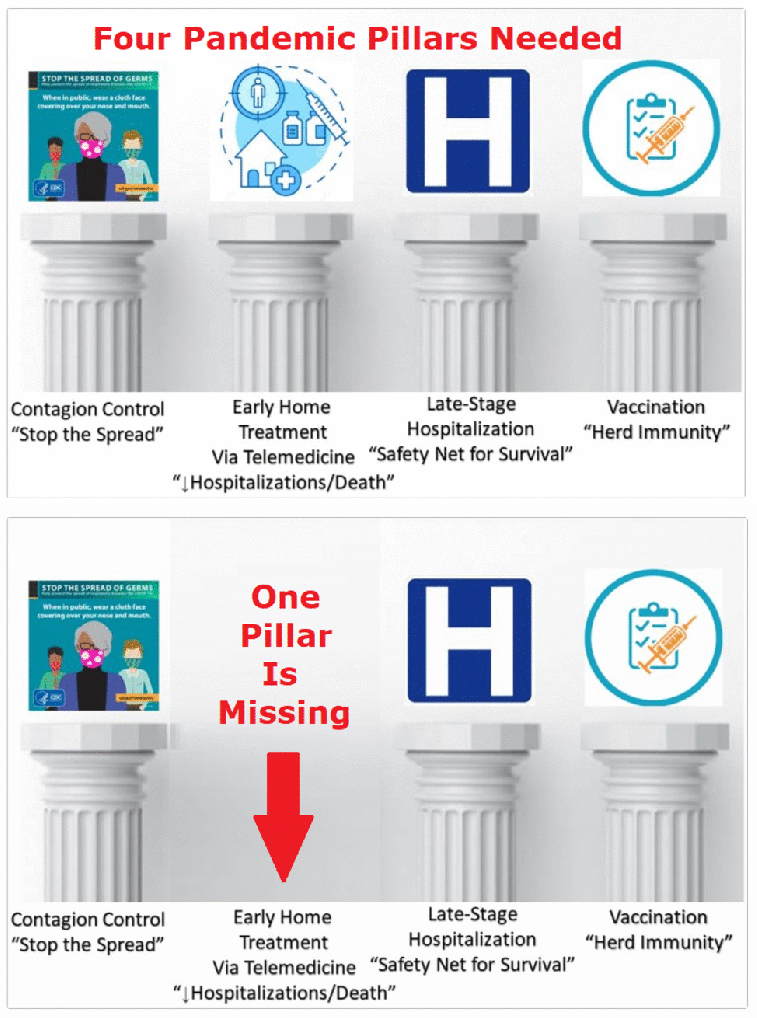
Urso says mass lockdowns and waiting for a vaccine never made a lot of sense to him. He calls for a multi-pronged strategy includes targeted vaccination programs, but also early treatment and prevention measures.

“Early treatment should have been part of the equation. I’m not against all those other things. Contagion control is important. Washing our hands. Things like that. They’re all important. Do we need vaccination programs? Absolutely. Do we need early treatment programs? Absolutely. So we have basically put the cart before the horse. The tail is wagging the dog. Early treatment should be a mainstay for everything.”

Background from previous post 3000+ Doctors Declaration for Medical Rights and Freedoms

Update October 7, 2021 Presently 10,000+ medical practitioners have signed the declaration

By Debra Heine writes at American Greatness Over 3,000 Doctors and Scientists Sign Declaration Accusing COVID Policy-Makers of ‘Crimes Against Humanity’. Excerpts in italics with my bolds and images.

More resources are available at Global Climate Summit

A group of physicians and scientists met in Rome, Italy earlier this month for a three day Global Covid Summit to speak “truth to power about Covid pandemic research and treatment.”

The summit, which was held from September 12 to September 14, gave the medical professionals an opportunity to compare studies, and assess the efficacy of the various treatments that have been developed in hospitals, doctors offices and research labs throughout the world.

The Physicians’ Declaration was first read at the Rome Covid Summit, catalyzing an explosion of active support from medical scientists and physicians around the globe. These professionals were not expecting career threats, character assassination, papers and research censored, social accounts blocked, search results manipulated, clinical trials and patient observations banned, and their professional history and accomplishments altered or omitted in academic and mainstream media.

The document, reprinted below in its entirety, sprang from that conference.

Thousands have died from Covid as a result of being denied life-saving early treatment. The Declaration is a battle cry from physicians who are daily fighting for the right to treat their patients, and the right of patients to receive those treatments – without fear of interference, retribution or censorship by government, pharmacies, pharmaceutical corporations, and big tech. We demand that these groups step aside and honor the sanctity and integrity of the patient-physician relationship, the fundamental maxim “First Do No Harm”, and the freedom of patients and physicians to make informed medical decisions. Lives depend on it.

We the physicians of the world, united and loyal to the Hippocratic Oath, recognizing the profession of medicine as we know it is at a crossroad, are compelled to declare the following;

WHEREAS, it is our utmost responsibility and duty to uphold and restore the dignity, integrity, art and science of medicine;

WHEREAS, there is an unprecedented assault on our ability to care for our patients;

WHEREAS, public policy makers have chosen to force a “one size fits all” treatment strategy, resulting in needless illness and death, rather than upholding fundamental concepts of the individualized, personalized approach to patient care which is proven to be safe and more effective;

WHEREAS, physicians and other health care providers working on the front lines, utilizing their knowledge of epidemiology, pathophysiology and pharmacology, are often first to identify new, potentially life saving treatments;

WHEREAS, physicians are increasingly being discouraged from engaging in open professional discourse and the exchange of ideas about new and emerging diseases, not only endangering the essence of the medical profession, but more importantly, more tragically, the lives of our patients;

WHEREAS, thousands of physicians are being prevented from providing treatment to their patients, as a result of barriers put up by pharmacies, hospitals, and public health agencies, rendering the vast majority of healthcare providers helpless to protect their patients in the face of disease. Physicians are now advising their patients to simply go home (allowing the virus to replicate) and return when their disease worsens, resulting in hundreds of thousands of unnecessary patient deaths, due to failure-to-treat;

WHEREAS, this is not medicine. This is not care. These policies may actually constitute crimes against humanity.

NOW THEREFORE, IT IS:

RESOLVED, that the physician-patient relationship must be restored. The very heart of medicine is this relationship, which allows physicians to best understand their patients and their illnesses, to formulate treatments that give the best chance for success, while the patient is an active participant in their care.

RESOLVED, that the political intrusion into the practice of medicine and the physician/patient relationship must end. Physicians, and all health care providers, must be free to practice the art and science of medicine without fear of retribution, censorship, slander, or disciplinary action, including possible loss of licensure and hospital privileges, loss of insurance contracts and interference from government entities and organizations – which further prevent us from caring for patients in need. More than ever, the right and ability to exchange objective scientific findings, which further our understanding of disease, must be protected.

RESOLVED, that physicians must defend their right to prescribe treatment, observing the tenet FIRST, DO NO HARM. Physicians shall not be restricted from prescribing safe and effective treatments. These restrictions continue to cause unnecessary sickness and death. The rights of patients, after being fully informed about the risks and benefits of each option, must be restored to receive those treatments.

RESOLVED, that we invite physicians of the world and all health care providers to join us in this noble cause as we endeavor to restore trust, integrity and professionalism to the practice of medicine.

RESOLVED, that we invite the scientists of the world, who are skilled in biomedical research and uphold the highest ethical and moral standards, to insist on their ability to conduct and publish objective, empirical research without fear of reprisal upon their careers, reputations and livelihoods.

RESOLVED, that we invite patients, who believe in the importance of the physician-patient relationship and the ability to be active participants in their care, to demand access to science-based medical care.


Scottish High Court Dismisses Greenpeace “End-Use Emissions” Argument

The Guardian reports on the ruling in its article Greenpeace loses North Sea Vorlich field legal challenge.  H/T Tallbloke’s Talkshop  Excerpts in my bolds.
Permission to drill the Vorlich site off Aberdeen was given to BP in 2018.

Greenpeace argued in Scotland’s highest civil court there had been “a myriad of failures in the public consultation” and the permit did not consider the climate impacts of burning fossil fuel.

The Court of Session ruling means operations will continue at the field. Greenpeace plans to appeal.

Production from the development started in November after BP was granted approval by the Oil and Gas Authority (OGA) in 2018.

The UK government welcomed the outcome.

The text of the ruling is Opinion of the Court Greenpeace Ltd. vs. BP Ltd.  

The procedural complaints were dismissed as being without merit.  The excerpts below (in italics with my bolds) address the activist theory of disallowing oil production and transportation based upon CO2 emissions of the end users consuming the energy products.

[38] The indirect emissions challenge was res judicata. Permission to proceed had been refused by the High Court. In any event, the challenge was without merit. The Directive was concerned with the effect of the individual project, not the use of material extracted in the course of a project. The focus was on the particular “project”. The definitions provided no support for the contention that the end use of raw materials, after further processes such as refinement to create a different product, was a relevant consideration (R (Finch) v Surrey County Council, at paras [101]-[102] and [109-112]).

[39] Direct emissions from the end use of oil and gas in the UK were considered and taken into account in the UK’s Annual Statement of Emissions. These were matters for political judgment (R (Plan B Earth) v Secretary of State for Transport [2021] PTSR 1901 at paras [2] and [281]), which were not challengeable in an appeal under regulation 16. The determination of a carbon budget for the UK was a complex, high-level strategic decision.  Indigenous oil and gas development was an important part of the transition to a low carbon economy. This was all part of the existing framework, which sought to manage the UK’s progressive decarbonisation up to the year 2050 (cf R (Packham) v Secretary of State for Transport [2021] Env LR 10 at paras 83 and 87).

[40] The production of oil from the Vorlich field did not increase the use of oil. The appellants’ position, that as a matter of principle there should be no new oil, conflated and confused different questions. The scope of an EIA was a matter of judgment, so long as the information in it was accurate.

The environmental effects of the consumption of oil and gas

Merits

[63] The relevant considerations which require to be taken into account in an environmental impact assessment, notably when the applicant is preparing his Environmental Statement, are set out in regulation 3A. So far as is relevant to the current appeal, the applicant is required to assess the direct and indirect significant effects of the project on, amongst other elements, the climate and the operational effects of the relevant project. In this area, regulation 3A(2) mirrors the terms of the Directive (Art 3.1). Again, there is no issue concerning any lack of adequate transposition.

[64] The question is whether the consumption of oil and gas by the end user, once the oil and gas have been extracted from the wells, transported, refined and sold to consumers, and then used by them are “direct or indirect significant effects of the relevant project”. The answer is that it is not. The exercise which the applicant had to carry out, and the Secretary of State had to assess, was a determination of the significant effects of drilling the two wells and removing the oil and gas. That involved considering the effects of depositing and operating an exploration rig or rigs on site. The ultimate use of a finished product is not a direct or indirect significant effect of the project. It is that effect alone which, in terms of the Regulations, must be assessed.

[65] The court agrees with the reasoning in R (Finch) v Surrey County Council [2021] PTSR 1160 in which Holgate J reached the same conclusion in relation to what is a direct or indirect effect of a “development”; in that case the drilling of new oil and gas wells on land.  As Holgate J stated (at para 101):

“The extraction of a mineral from a site may have environmental consequences remote from that development but which are nevertheless inevitable. …[T]he true legal test is whether an effect on the environment is an effect of the development for which planning permission is sought. An inevitable consequence may occur after a raw material extracted on the relevant site has passed through one or more developments elsewhere which are not the subject of the application… and which do not form part of the same ‘project’.”

However broad and purposive an interpretation of the Regulations or the Directive might be attempted, the clearly expressed wording of the legislation cannot be disregarded (ibid at paras 103-104). It is the effect of the project, and its operation, that is to be considered and not that of the consumption of any retailed product ultimately emerging as a result of a refinement of the raw material.

[68] It would not be practicable, in an assessment of the environmental effects of a project for the extraction of fossil fuels, for the decision maker to conduct a wide ranging examination into the effects, local or global, of the use of that fuel by the final consumer.  Although the appellants’ aspiration is for such extraction to cease, it does not appear to be contended that the UK economy is not still reliant in a number of different ways on the consumption of oil and gas. At present, a shortage of oil and gas supplies is a matter of public concern. The argument is, in any event, an academic one. It is not maintained that the exploitation of the Vorlich field would increase, or even maintain, the current level of consumption. Unless it did so, it is difficult to argue that it would have any material effect on climate change; even if it is possible to arrive at a figure for its contribution by arithmetical calculation relative to the production of oil and gas overall. The Secretary of State’s submission that these are matters for decision at a relatively high level of Government, rather than either by the court or in relation to one oilfield project, is correct. The issue is essentially a political and not a legal one.

My Comment

Recent years have seen an huge increase in legal attacks funded by woke wealthy people with deep pockets against the supply of fossil fuels.  At the same time governments have loaded up regulatory regimes that impede or prevent additional development of FF energy resources. Instead of appreciating how essential are these fuels to modern societies, policy makers, and in many cases judges, are motivated by the slogan “keep it in the ground.”  As in the opinion above, shortages in fossil fuels supply are a public concern, and especially worrisome as we approach winter. Despite this, the activist strategy is to cut off supply of affordable, reliable energy even when alternatives like renewables will not replace them, and let the people do without.

At least in this ruling the judiciary got it right.