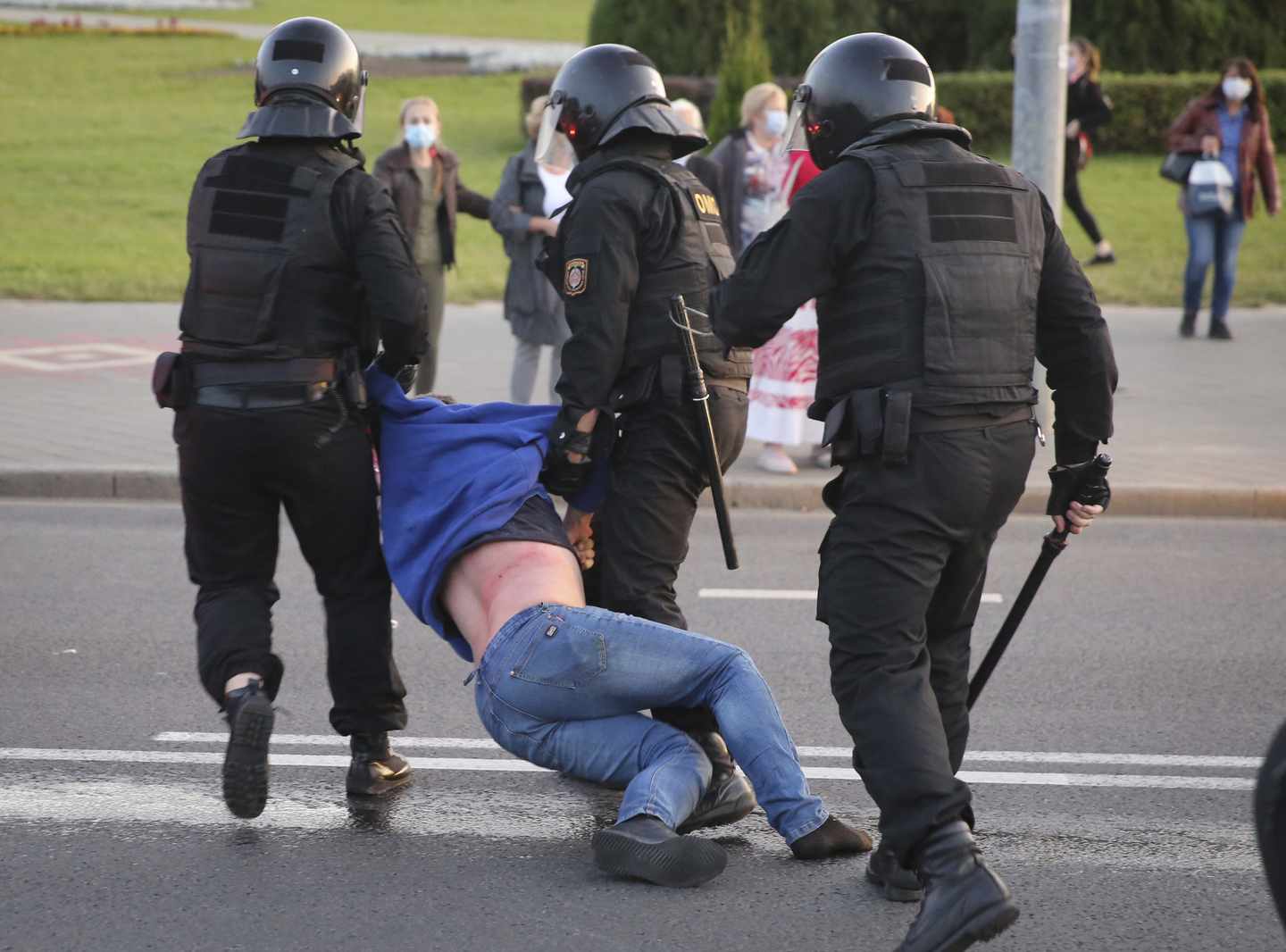
In recent months, some demonstrators in Quebec have denounced what they consider government fear campaigns over COVID-19. The new measures included a mandatory rule on wearing masks during demonstrations. (Graham Hughes/The Canadian Press)
The coronavirus pandemic began as a global health crisis. It spawned an economic crisis. Now COVID-19 is also fueling a crisis for democracy and human rights.
Leaders around the world are using the virus as cover to reduce transparency, increase surveillance, arrest dissidents, repress marginalized populations, embezzle public resources, restrict media, and undermine fair elections.
Quebec premier clarified the province’s new COVID-19 measures in red zones
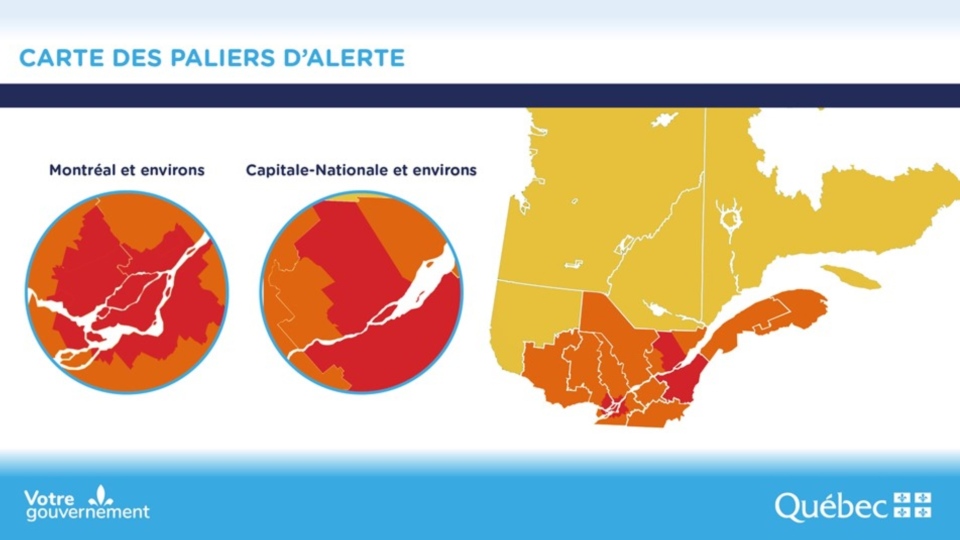
Quebec Premier François Legault says police in the province’s red zones — regions where COVID-19 cases are surging — will be issuing $1,000 fines to those who violate newly strengthened public health rules.
With fees, those fines will top $1,500 and can be issued for gathering in private residences or protesting without a face covering.
Speaking during a late-afternoon news conference on Wednesday just hours before the new rules went into effect, Legault said the negligence of a few has led to the crackdown.
“Lives are at stake. We want to keep our children in schools,” Legault said. “We also want to protect our health network”
Quebec reported 838 new cases of COVID-19 but no new deaths Wednesday. Since the start of the pandemic, there have been 74,288 confirmed cases and 5,834 people have died in the province.
Home gatherings can lead to fines
Beyond the few exceptions, such as for caregivers or romantic relations, house guests are not allowed, Legault said.
Police are authorized to demand proof of residency and if residents refuse entry, officers will be able to obtain warrants faster through a new, virtual system that was established in collaboration with the Crown, the premier said.
“We had to give the police the means to intervene,” said Public Security Minister Geneviève Guilbault.
Protestors to be fined for refusing to wear masks
Quebec made masks mandatory inside public spaces, like bars and shops, on July 18, but there have been several protests since.
Now, anti-maskers will have to cover up if they want to march or police will be issuing fines.
All gatherings prohibited, travel discouraged
Legault said all gatherings will be banned, even outside in public parks — an activity that has grown more popular in places like Montreal during the pandemic.
“Police officers will start by trying to disperse the gatherings, but if people don’t co-operate, fines can be given,” he said.
Legault said people from red zones cannot travel to orange zones to eat in a restaurant or gather in a home. They will face fines if they do.
He said restaurants will not be required to verify residency, but police can issue a ticket if they catch people violating the rules.
People should not travel between regions to pick up groceries or run similar errands, Legault said. People can go to their cottage, for example, as long as they bring their provisions with them.
The new restrictions take effect 12:01 a.m. ET on Thursday and are set to last for 28 days, until Oct. 28, in the red zones. The restrictions are:
A ban on home gatherings, with some exceptions, such as a single caregiver, babysitter, tradesperson or technician, allowed per visit.
All bars and casinos are closed. Restaurants can offer only takeout.
Museums, cinemas and theatres are closed.
Being less than two metres apart will be prohibited. Masks will be mandatory during demonstrations.
Houses of worship and venues for events, such as funerals and weddings, will have a 25-person limit.
Hair salons, hotels and other such businesses will stay open.
Schools will remain open.
What is the Emergency Requiring Virtual Quarantine of Healthy People?
Each Friday the Quebec health research institute (INESSS) provides a statistical update of the Covid19 situation with projections regarding the key concern: Capacity of the system to care for actual Covid cases requiring in-hospital treatment. Here is the latest information.
On the left is the history of Covid hospitalizations in Quebec to end of September. Note that presently there about 20 people per day are admitted to hospital with Covid19. As of Oct. 1, Quebec reported 276 people in hospital (including 46 in ICU) out of covid bed capacity of 1750. If the 20/day new admissions rate since July 1 continued, and assuming an average length of stay of 12 days, the net of covid beds occupied should not increase and more likely would go down. So the projections on the right side have a wide range, but even with an upward bias, the capacity is not reached. And as the lower right shows, ICU capacity is even less likely to be overwhelmed.
In Quebec, the hospitalization rate for COVID-19 patients has dropped sharply since the beginning of the pandemic. During the first wave, about 13 per cent of cases ended up in hospital. From Aug. 10 to Sept. 6, the rate was just 5 per cent. At a technical briefing on Wednesday, researchers and officials from Quebec’s institute of excellence in health and social services (INESSS) projected that the rate for COVID-19 patients in early September would fall again to 3.8 per cent.
The drop can be explained by the relative youth of Quebeckers contracting the virus in its second wave and their relative lack of comorbidities. By contrast, in the spring, the virus tore through long-term care homes in the province, killing 4,914 elderly residents.
As a result of this shift, Quebec will not exceed its hospital capacity of about 2,000 beds in the next four weeks, according to the INESSS projections. But officials warned that a faster spread of the virus caused by careless behaviour could still put pressure on the health care system.
Above is the outlook for October from INESSS. For both ICU and covid hospital beds observations are tracking a forecast showing slight increases. It appears that the precautionary principle is being applied without regard for the costs of locking down: social, economic and personal well-being seem not to be part of the equation.
Quebec Situation Update October 1, 2020
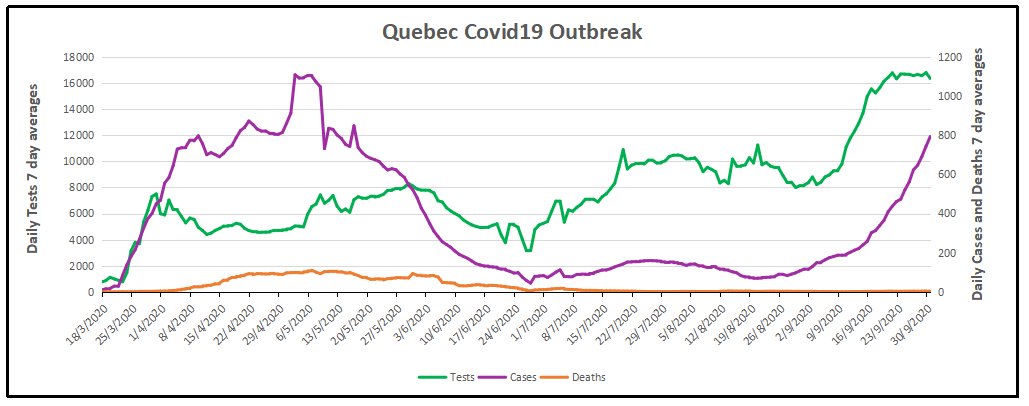
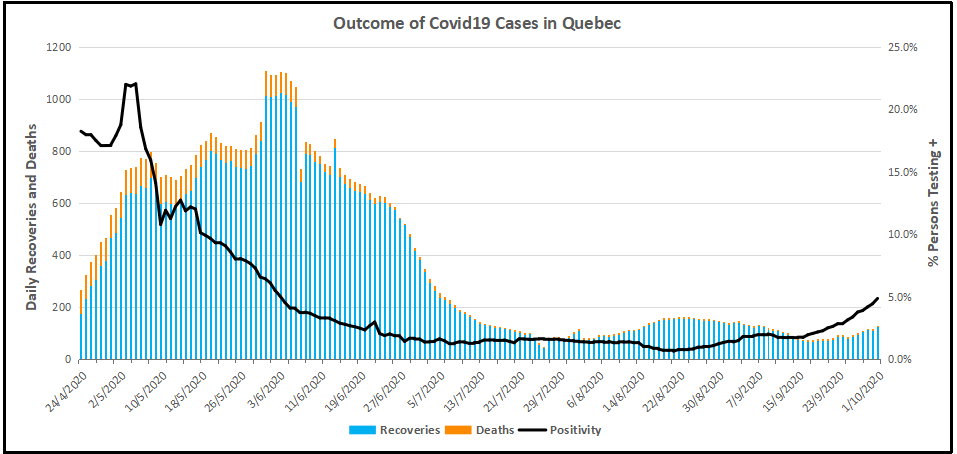
Note that testing has quadrupled since July and the number of new cases followed, especially in the last month. Meanwhile daily deaths are unchanged at less than five a day, compared to Quebec losing 186 lives every day from all causes.. Recoveries are not reported to the public, perhaps due to the large number of people testing positive but without symptoms or only mild illness and no professional treatment. The graph below estimates recoveries assuming that people not dying 28 days after a positive test can be counted as cured or in recovery.
Recoveries are the number of people testing positive (misleadingly termed “cases”) minus deaths 28 days later. Obviously, the death rate was high early on, and now is barely visible. Meanwhile the Positivity rate (% of people testing positive out of all subjects) went down to 1% for several months before rising recently. Since there is a lag of 28 days, we don’t yet see the outcome of the rise in positives along with the increased testing.
Summary
Premier Legault and his medical advisors had done well up to now. The first goal was to prevent deaths, and that has been achieved. 186 Quebecers die every day from all causes, and now about 5 are dying having tested positive for SARS CV2. The other goal was to prevent overwhelming the health care system with Covid cases. This too is under control. On October 1, there were 276 patients hospitalized with covid, including 46 in ICUs. The capacity is 1750 beds and 370 ICU beds. Since July there have been about 20 new admissions daily, offset by recoveries released from hospital.
Unfortunately, now the authorities have spooked themselves and applied a lockdown at the wrong time. Their goal has shifted to stopping new positives, which have increased because testing has quadrupled and positivity rates gone up from 1% to 5%. These are younger people who are not getting sick and certainly not dying from the virus. As many epidemiologists have said, you won’t get rid of this virus, you live with it by getting herd immunity, which leaves too few susceptible people for the virus to spread. If you kill off all the PME businesses and put people out of work, poverty and social decay will kill people, not to mention the interruption of medical treatments which save those with the real deadly diseases: cancers, heart, arteries, lungs, and so on.
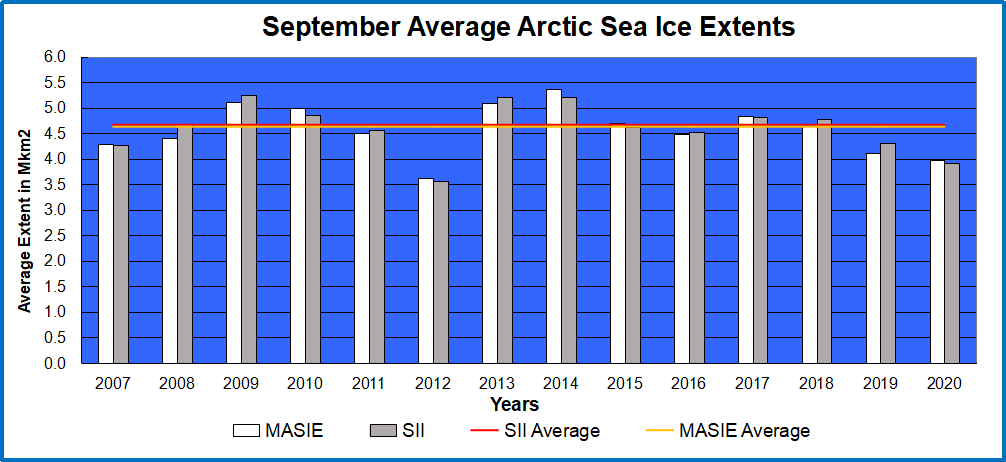
Just like the Arizona road in the image, Arctic ice extent has dipped in September and is on the rise again. The graph below shows how September monthly extent averages compare for the years since 2007.
Overall it resembles the Arizona roadway. Two low years are followed by two high years, then two low years and so on. The last two years are low, comparable to 2007, and may portend higher ice extent ahead. As usual MASIE and SII are showing for 2020 nearly the same monthly averages, 4.0M km2 for MASIE and 3.9M km2 for SII. The graph below shows how the ice dipped and recovered in 2020 compared to the 13-year average and some notable years.
September 2020 daily minimum was lower than all previous years except for 2012. As noted previously this year’s anomaly was the hot Siberian summer melting out the Eurasian shelf seas and the bordering parts of the Central Arctic Sea. In 2012 it was the Great Arctic Cyclone in August of that year. After day 255, ice recovered strongly in 2020 ending the month higher than 2007, close to 2019 and about 150k km2 less than the average daily minimum on day 260, 4.4M km2
The table shows monthly extent averages for the regions with ice in September for several years and the 13-year average for each region.
Sept. Monthly Averages
2007
2012
2019
2020
Average
SD %
(0) Northern_Hemisphere
4286957
3622648
4124035
3969085
4630779
10%
(1) Beaufort_Sea
558424
212051
382779
620409
487498
31%
(2) Chukchi_Sea
49690
52539
111412
77598
172143
53%
(3) East_Siberian_Sea
1251
53411
73023
121408
287777
63%
(4) Laptev_Sea
246278
44336
87121
28
141604
81%
(5) Kara_Sea
49502
717
166
13063
24612
102%
(6) Barents_Sea
6782
0
13238
0
18757
183%
(7) Greenland_Sea
334147
263899
173116
235216
197263
33%
(8) Baffin_Bay_Gulf_of_St._Lawrence
33043
15591
16589
20361
32926
50%
(9) Canadian_Archipelago
252140
198502
265335
339996
299817
30%
(10) Hudson_Bay
10998
9502
0
2783
7947
135%
(11) Central_Arctic
2743433
2771014
3000459
2537271
2959458
6%
The last column shows the Standard Deviation % for each region and for NH as a whole. Over this period the NH fluctuations have been +/- 10%. The most variable is Barents Sea, which can be zero or over 100k km2. Hudson Bay and Kara likewise either melt out or retain significant ice. The Central Arctic varies little from year to year.
Illustration by Eleanor Lutz shows Earth’s seasonal climate changes. If played in full screen, the four corners present views from top, bottom and sides. It is a visual representation of scientific datasets measuring Arctic ice extents.
Randall Denley writes at National Post Ontario’s new COVID models show everyone should stop panicking— especially Doug Ford. His article explains the Ontario example of officials losing their nerve and reacting rather than being reasonable. This panic by political leaders is appearing currently in many jurisdictions, including Quebec where I live. Excerpts in italics with my bolds.
The biggest fear in the next few months ought to be an overreaction that further restricts personal freedoms and economic activity without the facts to justify it
Ontario Premier Doug Ford has cast himself as the province’s COVID-19 frightener-in-chief. That’s not useful, not well-supported by the facts, and it undermines everything his government has been trying to do.
On Monday, Ford said the 700 new cases announced that day were “deeply disturbing,” and that the province was now in a second wave that “will be more complicated, more complex. It will be worse than the first wave we faced earlier this year.” Then he topped that by saying the wave could turn into a “tsunami” if people didn’t follow proper COVID safety procedures.
Ford offered nothing to back up his dire predictions, but the thought was that Wednesday’s release of the province’s latest COVID modelling projection would do that for him. It did not. Instead, the presentation by provincial health experts was a balanced and detailed analysis of a potential problem.
The daily case count is always the number that makes headlines in this pandemic. It means a lot less than one might think.
Daily numbers that are about as high as last spring’s peak suggest that we’re right back where we started, but we’re not. Testing volume now is four times as great as it was back then. More tests equal more cases. More important is the percentage of tests that yield a positive result. In the spring it was 7.5 per cent. Now, it’s 1.5 per cent. If Ontario had the testing capacity in the spring that it has now, the first wave’s numbers would easily have dwarfed those we are seeing this week.
The modelling looks at three possible scenarios for the months ahead, and again, there is nothing panic-inducing there. The key element is the likely effect of rising case numbers on intensive care beds. The experts say that the province can look after up to 350 COVID patients in intensive care before the volume begins to cut into other hospital demands, particularly the effort to reduce the COVID-induced surgical backlog.
The first scenario assesses what might happen if the virus follows its spring pattern, but with a younger population affected. In other words, what’s happening now. That creates no hospital bed issue at all. In fact, Ontario is tracking below even that projection, with just 35 COVID patients in intensive care. During the spring, there were up to 264 people in ICU beds.
The next scenario looks at the experience of Michigan and contemplates what happens if the latest phase of the Ontario pandemic affects a mix of older and younger people. This could happen, but even if it does, the ICU bed limit won’t be exceeded.
The only scenario that shows a problem is one based on the Australian state of Victoria, and it estimates what might happen if the virus affects primarily older and vulnerable people. That one would mean a partial curtailment of surgeries, although there’s no reason to assume the disease will follow that path in Ontario. Even if it does, there is the capacity to expand the number of beds available for COVID patients, as Health Minister Christine Elliott made clear Monday.
Ford’s message has been wildly variable. After his warning of doom on Monday, Ford took a different tack Wednesday, reprising familiar lines about health-care heroes, the merits of his own health team and the fighting spirit of Ontarians. It’s no wonder people don’t know what to think.
Prime among them is the Ontario Hospital Association, which has urged a return to Stage 2 shutdowns in the parts of the province with the most cases. The association is concerned about the pandemic overwhelming hospital capacity, but that seems unlikely based on the province’s analysis.
The biggest fear in the next few months ought to be an overreaction that further restricts personal freedoms and economic activity without the facts to justify it. The government’s actions so far are appropriate to the scale of the problem, but when Ford warns of impending doom, it undermines that message and it creates fear in people who need confidence to work, shop and send their kids to school.
Ford might also want to note that opposition parties and unions have maintained a steady stream of criticism, suggesting that his government has done little or nothing to combat the next phase of the pandemic. It’s not true, but his hyperbole gives the accusations credibility.
Full marks to the provincial government, though, for making public the expert assessment that informs the government’s pandemic plan. Information is a wonderful antidote to fear.
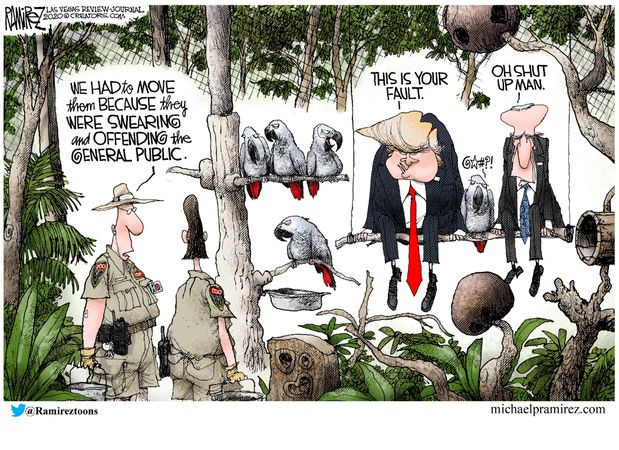
At least for now, the debate strategies seem clear. On one side, let’s troll Trump with fake news and then pretend he is a clown when he objects. On the other side, let’s bait Biden and see if he loses control and goes off the script beamed into his ears.
Biden came in for some rough treatment in the first presidential debate
One of the most interesting and telling exchanges came about an hour into the debate. In some ways each man showed himself in his purest form. Joe Biden delivered what was very obviously a well-rehearsed, set-piece attack on President Trump. You could see the windup, like a boxer pulling his arm way back, fist clenched, preparing to deliver the knockout blow. Biden started by repeating the accusation that Trump disrespectfully criticises the military, calling them losers and suckers. The story has been debunked repeatedly by multiple sources including those hostile to the president like John Bolton. But it’s part of the Biden campaign’s strategy. So he levels the accusations and then begins to eulogise his son, Beau Biden, who served in Iraq, and later died of brain cancer. This makes it all personal to Joe, you see. He’s defending his dead son against a mythical slander from the bad orange man. Biden even points a finger at Trump, “My son is not a loser!”
Trauma mining to score points in a debate is a desperately cynical piece of political theatre. But, I suppose they calculate that if it works you get to be president. (I’ll pass, thanks.) It was pure Biden: scripted, saccharine, playing by the rules of a game that has long since ended. In case you think I’m too cynical, that surely this couldn’t have been orchestrated, Joe Biden’s official Twitter account posted a photo of Joe and Beau with the caption, “Beau was not a loser” just as the debate ended.
And just so, Trump. He looked at his podium and quietly, respectfully, asked, which son Biden was talking about. Of course, he knew, but he played the game forcing Biden to respond, Beau. “Oh, I don’t know him. I know Hunter.”
And then listed the accusations against Hunter: he took a $1.5 billion investment from China into the fledgling investment company he ran with John Kerry’s son while his father was Vice President and en route to China. He received $3.5 million from the mayor of Moscow. He had a sinecure from a Ukranian energy company while his father was Obama’s pointman on Ukraine policy. (NB: Hunter had no experience in business let along the energy business.) It was as sweet a move as I’ve ever seen. The knockout punch was coming with all the force Joe Biden could muster and Trump simply sidestepped it and counterpunched.
It was an impressive display of natural animal cunning. And it could make the difference in the election. Trump was agile, aggressive, and vigorous, taking what he wanted when he wanted it. This offends some people’s sensibilities. He’s transgressive.
He doesn’t play according to the rules. But for others, that’s part of the appeal.
It’s no secret that the ruling class in America despises the country class. If you’re one of those people who don’t live in coastal cities and subscribe to the same worldview as the elite aspirants hoping for a job at a billionaire-backed NGO or an internship that might lead to a job at McKinsey then you’re a deplorable, a CHUD, and definitely racist and whatever bad things are happening to you, your family, and your inland town are your just deserts.
One of Trump’s main functions and biggest appeals is that he exposes the occupational elites that are credentialed but not expert in much of anything.
Everyone knows it. Imposter syndrome is rampant. And Trump preys on their insecurities which is what provokes such outrageous reactions from his enemies. But a lot of Americans who live in interior America and get unglamorous jobs at slowly declining wages, raise their families want nothing more than to be left alone by the credentialed but unaccomplished strivers who hate them.
For those people, Trump is their champion.
They probably don’t aspire to be like Trump, but they like the fact that he exposes the bankruptcy of the undeserving ruling class. And for them, Trump’s debate tonight was a tour de force. It was aggressive, it was funny, he said the quiet part out loud, he broke the rules in public that are normally only broken in private. That won him the election in 2016. It won him the debate last night. And it might just get him re-elected in November.
Note: The debate began with Trump and Biden each making one uninterrupted comment. Biden then talked over Trump’s second comment without intervention by the moderator. And so the game was on.
Another Green Energy dream product is looking like a swindle. Despite California’s declaring an end to fossil fuel vehicles, these trucks are little more than smoke and mirrors. Stef Schrader explains at The Drive Now the Justice Department Is Looking Into the Nikola Fraud Allegations. Excerpts in italics with my bolds.
The DOJ is joining the Securities and Exchange Commission’s probe into claims that Nikola misled investors with overblown claims about its own tech.
The U.S. Department of Justice has now initiated a probe into the allegations that electric and hydrogen truck startup Nikola made misleading claims about its technology to investors, reports the Wall Street Journal. The Justice Department is working with the Securities and Exchange Commission on the probe, who already started examining these allegations.
Federal prosecutors in the Manhattan U.S. attorney’s office are looking into reports that Nikola misrepresented its progress in developing technology that was key to its upcoming models.
Nikola came out swinging with big promises, including a hydrogen fuel cell semi-truck capable of going 750 miles per fill-up and a 600-mile-range electric pickup that would beat even the recently unveiled EV range queen, the 517-mile Lucid Air.
The company’s initial public offering was in June, which went so well that the company rocketed up to a $26.3 billion market valuation, which made its CEO Trevor Milton the 188th richest person in the world.
Nikola has been in a back-and-forth fight this month with self-proclaimed short seller Hindenberg Research, who published a detailed report claiming that Nikola engaged in “intricate fraud” to inflate its company valuation to incredible heights for a truck company that hasn’t actually sold any trucks yet.
Hindenburg alleged that Nikola used rolling models in promoting the company instead of functional prototypes without defining them as such, made exaggerated claims about its battery technology, and that Milton engaged in nepotism to hire his brother to build out the company’s hydrogen network.
In response, Nikola threatened legal action against Hindenburg and hired an attorney, who contacted the SEC about the report on Friday, according to the Wall Street Journal. (I guess they got what they wanted—sort of?) The company admitted to using non-running but rolling trucks in a 2018 Nikola One advertisement and at the 2016 unveiling of the Nikola One, but notes that the company was privately held at the time, and that it had the necessary components to make the trucks run—albeit still in development.
Nikola lost over 20% of its valuation since Hindenburg’s report dropped last Thursday, the WSJ reports. Securities filings from Monday show that Milton increased his investment in the company to over 41,000 shares for $1.2 million, meaning that Milton now owns a quarter of the company. The company has also hired a crisis management firm, Joele Frank, Wilkinson Brimmer Katcher.
That wasn’t the first allegation that the once-success story wasn’t what it seemed. A Bloomberg report in June claimed that Nikola led the public to believe that a show model of the Nikola One semi-truck was driveable when it was not. Milton also responded with legal threats against Bloomberg.
Even though none of these allegations directly involve any behavior on the part of Nikola partner General Motors, it’s still rather damning, as it insinuates that GM wasn’t able to see through Nikola’s allegedly overblown claims. GM agreed to take an 11% stake in Nikola in exchange for GM building the Badger pickup in one of its factories and GM supplying Nikola with batteries and fuel-cell tech in the near future.
Thus far, GM CEO Mary Barra has defended the company’s decision to partner with Nikola, telling the Wall Street Journal, “Our company has worked with a lot of different partners. We’re a very capable team that has done the appropriate diligence.”
According to the WSJ, Nikola announced Monday that it delayed the delivery of its first prototype truck from later this year to early 2021. That truck is destined to go to Anheuser-Busch, which Nikola says ordered 800 trucks in 2018. The company also claimed to receive an order for 2,500 trucks from waste company Republic Services in August.
At least for now, the debate strategies seem clear. On one side, let’s troll Trump with fake news and then pretend he is a clown when he objects. On the other side, let’s bait Biden and see if he loses control and goes off the script beamed into his ears.
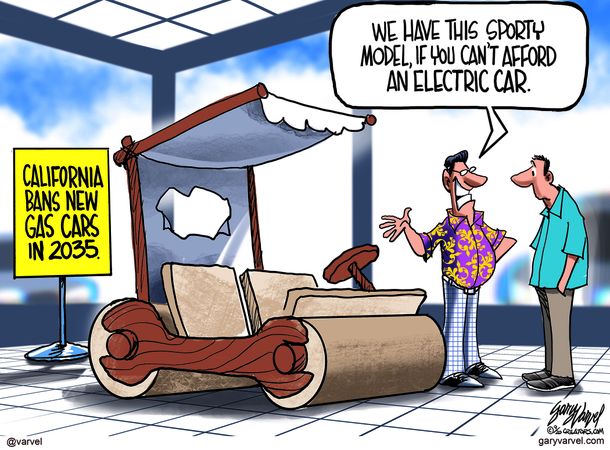
The federal government is raising legal and practical questions about a recent California executive order attempting to end sales of gas-powered cars in the state by 2035. Source Microsoft News:Excerpts in italics with my bolds.
Environmental Protection Agency (EPA) Administrator Andrew Wheeler wrote to California Gov. Gavin Newsom (D) on Monday, saying he believes California would need to request a waiver from his agency for the order to be implemented and implying that the state’s electricity infrastructure is insufficient for a shift toward electric vehicles.
“While the [executive order] seems to be mostly aspirational and on its own would accomplish very little, any attempt by the California Air Resources Board to implement sections of it may require California to request a waiver to U.S. EPA,” Wheeler wrote.
The EPA last year revoked a waiver that allowed California to set its own vehicle tailpipe emissions standards, so it appears unlikely that the agency would grant one on car sales under the current administration.
California, alongside 22 other states, has sued the agency over that decision, arguing that its standards were achievable and that the EPA’s decision is bad for climate change.
The executive order also comes as California has recently faced rolling blackouts, Wheeler noted.
“California’s record of rolling blackouts – unprecedented in size and scope – coupled with recent requests to neighboring states for power begs the question of how you expect to run an electric car fleet that will come with significant increases in electricity demand, when you can’t even keep the lights on today,” the country’s top environmental official wrote.
“The truth is that if the state were driving 100 percent electric vehicles today, the state would be dealing with even worse power shortages than the ones that have already caused a series of otherwise preventable environmental and public health consequences,” he added.
Update September 29, 2020 No, Covid19 is not Heart Disease
Government officials and journalists stoked fears of heart disease following SARS-CV2 infection, even when asymptomatic or with only mild discomfort. Two flawed studies were exploited and are now challenged by experts objecting to the exaggerations favoring restrictive policies.
Some scientists say recent research on heart inflammation, even in asymptomatic Covid-19 patients, is being overblown
The studies raised particular concern for school sports programs, many of which postponed fall sports programs. Visual: Alex Mertz/Unsplash
But over the course of roughly a dozen Undark interviews with physicians and researchers specializing in cardiac radiology, cardiac pathology, and sports cardiology, several expressed concerns over the limitations of the German research, and with a more recent heart imaging study published by a team at The Ohio State University. Some also shared deep misgivings about how the findings of these small studies are being interpreted, reported, and used in the wider world. September’s media coverage has been more circumspect, but these preliminary findings are already being used to guide treatment of virus-positive athletes.
While the experts agreed that Covid-19 can harm the heart, the severity and frequency of the outcomes, as well as how to test for myocarditis, is under fierce debate.
The Big Ten and Pac-12 have since reversed course, with plans to resume their seasons this fall, but the implications of this new research go beyond football. Many experts worry about broader, graver consequences, including the overuse of the pricey heart scans — known as cardiac MRI — and unduly frightening Americans, both of which, they say, could jeopardize public trust in science.
A summary published by The American College of Cardiology made similar points, concluding: “While this study adds to emerging data, it does not imply that CMR should be performed in all Covid-19 positive patients to screen for myocardial inflammation.” A few days later, an open letter appeared online. It had been initiated by Murthy and was cosigned by roughly 50 medical professionals. Addressed to 18 medical societies, the letter asked them to discourage the use of cardiac MRIs on asymptomatic people who test positive for Covid-19.
Michael Ackerman, a genetic cardiologist at the Mayo Clinic who has no professional ties to any of the college sports conferences, took issue with the “spookiness” that was being assigned to myocarditis. “If this is the reason why a conference is shutting down a sport,” he said, “I call nonsense on that.”
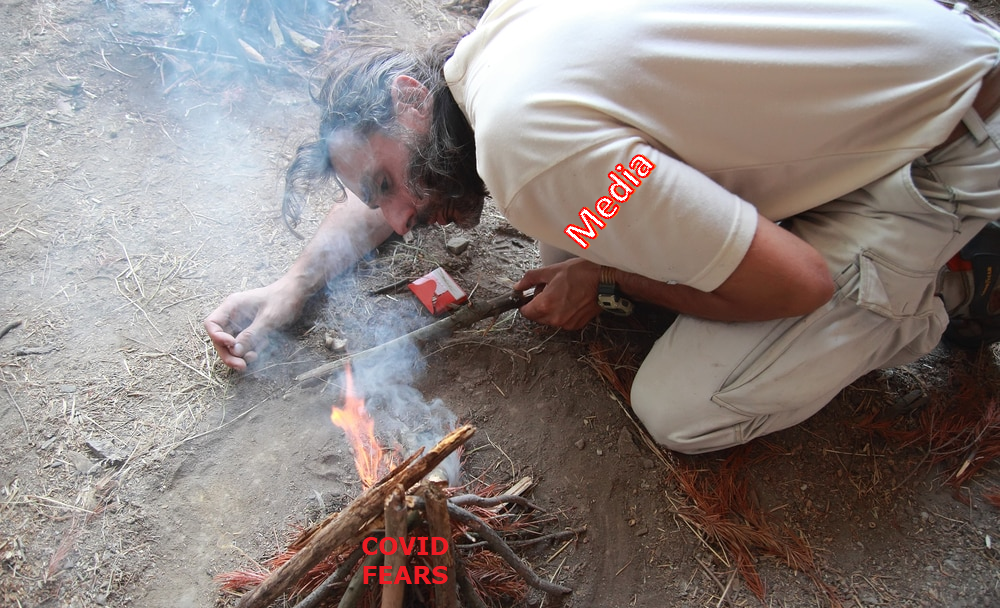
Continuing Pattern of Media Fear-Mongering over Covid
Previous Post: Alex Berenson explains the pattern of media abuse in a twitter thread (here). Text in italics with my bolds
1/ This panic is likely to prove even more embarrassing than previous panics. Here’s why: the media is both confused and conflating several different data points in an effort to stir hysteria. (Stop me if you’ve heard this before.)
What do I mean? 2/ So: you’ve heard positive testsare up in several states. True. The media refers to these as “cases,” as if positive tests have clinical significance by themselves. They do not. The vast majority of people with positive tests do not become ill enough to need hospitalization…
3/ Much less intensive care or ventilator support. For people under 50, this is true in the extreme. But the daily age distribution of positive tests is rarely if ever supported…
4/ Second: you’ve heard overall hospitalizations are up in some states. This is also true. THIS IS A FEATURE, NOT A BUG. Overall hospitalizations are rising because people are returning to hospitalsfor elective (and in some cases very necessary) surgeries that were postponed…
5/ Now, in some of these states COVID-related hospitalizations have also risen (though they make up a tiny fraction of overall hospitalizations). Scary, right?
No. When people go to the hospital for elective surgeries they are now routinely tested for COVID...
6/ Whether or not they are symptomatic. Hospitals have financial and legal as well as medical incentives to do this. IF THEY ARE POSITIVE, hospitals will report them as COVID patients (since, technically, they are), EVEN IF THEY HAVE NO COVID SYMPTOMS.
7/ This fact accounts for the bizarre disconnect between the fact the number of people going to emergency rooms with influenza-like or COVID-like symptoms is NOT rising (and remains in the low single digits) even in states reporting more hospitalizations…
8/ As well as the fact that fewer hospitalized cases are now progressing to ventilators (I can’t swear to this in every state, but it appears to be a trend)…
9/ And the fact that deaths no longer seem to have any relationship to case counts in many states (true even accounting for the fact that deaths lag).
The question you should be asking yourself: why aren’t Europe and Asia seeing post-lockdown spikes if this trend is real?
10/ And don’t say masks. Masks are not routine in Europe. So either COVID is somehow different post-lockdown in Europe (and different in different states, too)… or this is just one last gasp of panic porn.
And if you want confirmation from epidemiologists, here Facts about Covid-19 from Swiss Policy Research.
Fully referenced facts about Covid-19, provided by experts in the field, to help our readers make a realistic risk assessment. (Regular updates below)
“The only means to fight the plague is honesty.” (Albert Camus, 1947)
Overview
1.According to the latest immunological and serological studies, the overall lethality of Covid-19 (IFR) is about 0.1% and thus in the range of a strong seasonal influenza (flu).
2. Even in global “hotspots”, the risk of death for the general population of school and working age is typically in the range of a daily car ride to work. The risk was initially overestimated because many people with only mild or no symptoms were not taken into account.
3. Up to 80% of all test-positive persons remain symptom-free. Even among 70-79 year olds, about 60% remain symptom-free. Over 95% of all persons develop at most moderate symptoms.
4. Up to 60% of all persons may already have a certain cellular background immunity to Covid19 due to contact with previous coronaviruses (i.e. common cold viruses).
5. The median or average age of the deceased in most countries (including Italy) is over 80 years and only about 4% of the deceased had no serious preconditions. The age and risk profile of deaths thus essentially corresponds to normal mortality.
6. In many countries, up to two thirds of all extra deaths occurred in nursing homes, which do not benefit from a general lockdown. Moreover, in many cases it is not clear whether these people really died from Covid19 or from weeks of extreme stress and isolation.
7. Up to 30% of all additional deaths may have been caused not by Covid19, but by the effects of the lockdown, panic and fear. For example, the treatment of heart attacks and strokes decreased by up to 60% because many patients no longer dared to go to hospital.
8. Even in so-called “Covid19 deaths” it is often not clear whether they died from or with coronavirus (i.e. from underlying diseases) or if they were counted as “presumed cases” and not tested at all. However, official figures usually do not reflect this distinction.
9. Many media reports of young and healthy people dying from Covid19 turned out to be false: many of these young people either did not die from Covid19, they had already been seriously ill (e.g. from undiagnosed leukaemia), or they were in fact 109 instead of 9 years old. The claimed increase in Kawasaki disease in children also turned out to be false.
10. The normal overall mortality per day is about 8000 people in the US, about 2600 in Germany and about 1800 in Italy. Influenza mortality per season is up to 80,000 in the US and up to 25,000 in Germany and Italy. In several countries Covid19 deaths remained below strong flu seasons.
11. Regional increases in mortality can occur if there is a collapse in the care of the elderly and sick as a result of infection or panic, or if there are additional risk factors such as severe air pollution. Special regulations for dealing with the deceased sometimes led to additional bottlenecks in funeral or cremation services.
12. In countries such as Italy and Spain, and to some extent the UK and the US, hospital overloads due to strong flu waves are not unusual. In addition, up to 15% of doctors and health workers are now being put into quarantine, even if they develop no symptoms.
13. The often shown exponential curves of “corona cases” are misleading, as the number of tests also increased exponentially. In most countries, the ratio of positive tests to tests overall (i.e. the positive rate) remained constant at 5% to 25% or increased only slightly. In many countries, the peak of the spread was already reached well before the lockdown.
14. Countries without curfews and contact bans, such as Japan, South Korea or Sweden, have not experienced a more negative course of events than other countries. Sweden was even praised by the WHO and now benefits from higher immunity compared to lockdown countries.
15. The fear of a shortage of ventilators was unjustified. According to lung specialists, the invasive ventilation (intubation) of Covid19 patients, which is partly done out of fear of spreading the virus, is in fact often counterproductive and damaging to the lungs.
16. Contrary to original assumptions, various studies have shown that there is no evidence of the virus spreading through aerosols (i.e. tiny particles floating in the air) or through smear infections (e.g. on door handles or smartphones). The main modes of transmission are direct contact and droplets produced when coughing or sneezing.
17. There is also no scientific evidence for the effectiveness of face masks in healthy or asymptomatic individuals. On the contrary, experts warn that such masks interfere with normal breathing and may become “germ carriers”. Leading doctors called them a “media hype” and “ridiculous”.
18. Many clinics in Europe and the US remained strongly underutilized or almost empty during the Covid19 peak and in some cases had to send staff home. Numerous operations and therapies were cancelled, including many cancer screenings and organ transplants.
19. Several media were caught trying to dramatize the situation in hospitals, sometimes even with manipulative images and videos. In general, the unprofessional reporting of many media maximized fear and panic in the population.
20. The virus test kits used internationally are prone to errors and can produce false positive and false negative results. Moreover, the official virus test was not clinically validated due to time pressure and may sometimes react positive to other coronaviruses.
21. Numerous internationally renowned experts in the fields of virology, immunology and epidemiology consider the measures taken to be counterproductive and recommend rapid natural immunisation of the general population and protection of risk groups.
22. At no time was there a medical reason for the closure of schools, as children hardly ever transmit the virus or fall ill with it themselves. There is also no medical reason for small classes, masks or ‘social distancing’ rules in schools.
23. The claim that only severe Covid-19 but not influenza may cause venous thrombosis and pulmonary (lung) embolism is not true, as it has been known for 50 years that severe influenza greatly increases the risk of thrombosis and embolism, too.
24. Several medical experts described vaccines against coronaviruses as unnecessary or even dangerous. Indeed, the vaccine against the so-called swine flu of 2009, for example, led to sometimes severe neurological damage and lawsuits in the millions.
25. The number of people suffering from unemployment, depressions and domestic violence as a result of the measures has reached historic record values. Several experts predict that the measures will claim more lives than the virus itself. According to the UN millions of people around the world may fall into absolute poverty and famine.
26. NSA whistleblower Edward Snowden warned that the “corona crisis” will be used for the massive and permanent expansion of global surveillance. The renowned virologist Pablo Goldschmidt spoke of a “global media terror” and “totalitarian measures”. Leading British virologist professor John Oxford spoke of a “media epidemic”.
27. More than 500 scientists have warned of an “unprecedented surveillance of society” through problematic apps for “contact tracing”. In some countries, such “contact tracing” is already carried out directly by the secret service. In several parts of the world, the population is already being monitored by drones and facing serious police overreach.
28. A 2019 WHO study on public health measures against pandemic influenza found that from a medical perspective, “contact tracing” is “not recommended in any circumstances.
I just happened upon the video above, which explains so clearly the Left and Right orientations of people in society. Transcript below in italics with my bolds.
Jordan Peterson Responds to Question about Social Issues like Climate
Q: So what is your advice to young people, when you talk about you need to be individually responsible, but when they’re things that are so far out of our control, like climate catastrophe, like the precarious job economy, like, what is your answer?
JP: Things are not so far out of control as you think. Do you think that you’re worse off than your grandparents? (I think they’re a different challenge.) Do you think you’re worse off than your grandparents?
Q: The argument, I think, is that individual responsibility does not fix some things. The climate problem needs global collective responsibility. So I think that’s the core of the question. Do you have a theory about that?
JP: Well, fundamentally, I’m a psychologist. And my experience has been that people can do a tremendous amount of good for themselves, and for the people who are immediately around them, by looking to their own inadequacies and their own flaws and the things that they’re not doing in their lives. By starting to build themselves up as more powerful individuals, and if they’re capable of doing that, then they’re capable of expanding their career.
JP: And if they’re capable of expanding their career and their competence, then they’re capable of taking their place in the community as effective leaders. And then they’re capable of making wise decisions instead of unwise decisions when it comes to making collective political decisions. I’m not suggesting in the least, and have never suggested that there’s no domain for social action.
I’m suggesting that people who don’t have their own houses in order should be very careful before they go about reorganizing the world, which happens in many ways.
Q: If a young person believes that the climate the global warming problem on the climate is something that needs to be tackled quickly, and they can’t wait until they grow up and become prime ministers to do it, do you think collective responsibility overrides individual responsibility in a huge issue like that?
JP: No. I don’t think that is generally the case. I think generally people have things that are more within their personal purview that are more difficult to deal with and that they’re avoiding. And generally, the way they avoid them is by adopting pseudo moralistic stances on large scale social issues so that they look good to their friends and their neighbors.
Commentary by Dennis Prager
That’s a major difference between the right and the left, concerning the way each seeks to improve society. Conservatives believe that the way to a better society is almost always through the moral improvement of the individual by each person doing battle with his or her own weaknesses, and flaws. It is true that in violent and evil society such as fascist Communist or Islam is tyrannies, the individual must be preoccupied with battling outside forces. Almost everywhere else, though, certainly in a free and decent country such as America, the greatest Battle of the individual must be with inner forces, that is with his or her moral failings.
The left on the other hand, believes that the way to a better society is almost always through doing battle with society’s moral failings. Thus, in America, the left concentrates its efforts on combating sexism, racism, intolerance, xenophobia, homophobia, Islamophobia, and the many other evils that the left believes permeate American society.
One important consequence of this left right distinction is that those on the left are far more preoccupied with politics than those on the Right. Since the left is so much more interested in fixing society than in fixing the individual, politics inevitably becomes the vehicle for societal improvement. That’s why whenever the term activist is used, we almost always assume that the term refers to someone on the left.
Another consequence of this left right difference is that since conservatives believe society has changed one person at a time, they accept that change happens gradually. This isn’t fast enough for the left, which is always in everywhere focused on social revolution. An excellent example of this was a statement by the then presidential candidate Barack Obama, just days before his first election in 2008. To our rapturous audience, he declared, we are five days away from fundamentally transforming the United States of America.
Conservatives not only have no interest in fundamentally transforming the United States of America, they are strongly opposed to doing so. Conservatives understand that fundamentally transforming any society that isn’t fundamentally bad, not to mention transforming what is one of the most decent societies in history can only make the society worse. Conservatives believe that America can be improved, but should not be transformed, let alone fundamentally transformed.
The founders of the United States recognized that the transformation that every generation must work on is the moral transformation of each citizen. Thus, character development was at the core of both child rearing and of young people’s education from elementary school through college. As John Adams, the second president said, our constitution was made only for a moral and religious people, it is wholly inadequate to the government of any other. And in the words of Benjamin Franklin, only a virtuous people are capable of freedom. Why is that? Because freedom requires self control, the free or the society, the more self control is necessary. If the majority of people don’t control themselves, the state, meaning an ever more powerful government, will have to control them.
From the founding of the United States until the 1960s, schools and parents concentrated on character education. But with the ascent of left wing ideas, character education has all but disappeared from American schools. Instead, children are taught not to focus on their flaws, but on America’s social issues have replaced character education. An example is a new K through 12science curriculum, the next generation of science standards, which will teach young Americans starting in kindergarten about global warming. And when they get to college, American young people will be taught about the need to fight economic inequality, white privilege, and the alleged rape culture on their campuses.
Ironically, if there really is a rape culture that permeates American college campuses, the only reason would have to be that there was so little character education in our schools, or for that matter at home. Fathers and religion, historically the two primary conveyors of self control, are non existent in the lives of millions of American children. We are now producing vast numbers of Americans who are passionate about fixing America while doing next to nothing about fixing their own character.
The problem, however, is that you can’t make society better unless you first make its people better.
Rod Dreher writes at American Conservative about the chasm opening and dividing the previous United States. His article is titled Joe Rogan World Vs. NPR World, but those words don’t reveal the importance or depth of his insights. He starts with a familiar experience of hearing newscasting perverted by an agenda. Excerpts in italics with my bolds.
Yesterday when I drove up to the country to visit my mother, I listened to NPR until I couldn’t take it anymore. There was a story about black Mormons. Normally I would have found that compelling, given my interest in religion. The Mormon religion used to be formally racist, but changed its teaching. What is it like to live as a black Mormon? That’s a story that interests me. Or normally would, but I swear, I turned off the radio. Why?
It had nothing to do with the black Mormons. It had to do with NPR. I thought: they’re only interested in Mormons so they can find some new way to talk about American racism.
It feels like every time I get in the car and turn on the radio, I don’t have to wait long before I hear a story that highlights in some new way what a racist country America is, or how hard illegal immigrants have it in America, or how put-upon sexual minorities are, and so forth. I don’t know if NPR’s liberalism has always been like this, or if it has gotten worse — or if I have simply become thin-skinned about these issues. I have always known NPR was liberal, but that didn’t stop me from being a big fan, and even a contributing member. I feel that my NPR — the NPR that I cherished, even though it was liberal and I am conservative — has gone away, and I don’t know why. I used to love listening to it in the car, and not conservative talk radio, because I don’t want to have a voice on the radio rubbing my nose into some political narrative. NPR used to stand out because it proposed new ways of seeing the world, or at least ways that seemed new to me as a conservative. Now listening to NPR is giving oneself over to hosts who seek to impose a worldview that constantly says, about people who don’t fit the progressive narrative, that you aren’t worthy of our consideration or attention. That you are what’s wrong with America.
I don’t mean to beat up NPR alone. I have the same experience reading The New York Times. Most conservatives I know don’t listen to NPR or read the Times, and could not care less about them. They assume that NPR and the NYT hate them, so they have no agony over failed expectations. But I have been listening to NPR and reading the NYT long enough to know that something has changed with those two institutions — again, institutions that I’ve always known were liberal, but loved anyway. If I had never learned to care about them, I wouldn’t get so wound up about it now.
That, and the fact that those institutions are such important bellwethers of elite opinion. You may not care what’s in the Times or on NPR, but the people who do are those who ultimately control a lot of things in your life. Never, ever forget the lessons in these two passages from Live Not By Lies:
It’s possible to missthe onslaught of totalitarianism, precisely because we have a misunderstanding of how its power works. In 1951, poet and literary critic Czesław Miłosz, exiled to the West from his native Poland as an anti-communist dissident, wrote that Western people misunderstand the nature of communism because they think of it only in terms of “might and coercion.”
“That is wrong,” he wrote. “There is an internal longing for harmony and happiness that lies deeper than ordinary fear or the desire to escape misery or physical destruction.”
In The Captive Mind, Miłosz said that communist ideology filled a void that had opened in the lives of early twentieth-century intellectuals, most of whom had ceased to believe in religion.
This is why NPR sounds like Vatican Radio from the Church of Secular Progressivism, and this is why The New York Times reads like L’Osservatore Romano of the same pseudo-religion. More from Live Not By Lies:
In our populist era, politicians and talk-radio polemicists can rile up a crowd by denouncing elites. Nevertheless, in most societies, intellectual and cultural elites determine its long-term direction. “[T]he key actor in history is not individual genius but rather the network and the new institutions that are created out of those networks,” writes sociologist James Davison Hunter.
Though a revolutionary idea might emerge from the masses, says Hunter, “it does not gain traction until it is embraced and propagated by elites” working through their “well-developed networks and powerful institutions.”
This is why it is critically important to keep an eye on intellectual discourse. Those who do not will leave the gates unguarded. As the Polish dissident and émigré Czesław Miłosz put it, “It was only toward the middle of the twentieth century that the inhabitants of many European countries came, in general unpleasantly, to the realization that their fate could be influenced directly by intricate and abstruse books of philosophy.”
This is how Your Working Boy gets from, “Black Mormons — hey, that’s interesting. I’d like to know more about what they went through” — which would be my stance in normal times — to “Black Mormons? Just one more NPR story about what a racist, oppressive, worthless country this is” to
“NPR continues to tell the elites a narrative that they will use to tear this country down and rebuild it according to their ideological values.”
All of that is prelude to Douglas Murray’s recent piece in Unherd, in which he observes that America really does look like a country that is coming apart, because it lacks a shared story. Excerpts:
But while it’s certainly arguable that Trump has aggravated America’s problems and divisions, he certainly didn’t create them. The divide long pre-dates him and has grown and grown in recent years, to the point where the different parties look increasingly irreconcilable. That is because these divisions go right to the core of what it means to be American.
When Eric Kaufmann recently carried out opinion polls on self-described “liberals” in the US, the results were startling but not surprising. For instance, around 80% of respondents said that they would approve of the writing of a new American constitution “that better reflects our diversity as a people”. A similar number said that they would approve of a new national anthem and flag, for the same reason.
And over the last few months, some of the more activist section of the American “liberal” tribe have taken matters into their own hands, with statues pulled down across the country, not just of Confederate generals or people associated with the divisive elements of American history, but men who once united the American public. Who once represented and defined their shared history as a great nation.
When statues of Thomas Jefferson and George Washington are pulled down, this no longer looks like a critique of certain aspects of American culture: it looks like an attack on the American Founding story. When senior Democrats like Tammy Duckworth — who has served in her country’s military — refuse to condemn attacks on statues of the Founding Fathers it becomes clear that this attitude is not confined to some street-protest fringes.
More:
It is becoming harder to communicate across the gulf, as, increasingly, the two Americas cannot consort or discuss with each other. And if there is one reason above all why that should be the case it is because they no longer have a shared story.
A portion of the American people still revere their history, the Founding Fathers, the constitution, flag, anthem and much more. They see it as symbols of a glorious past, a country which has fought for its own and others’ liberty, and the once-admired idea of American exceptionalism.
Another portion believe that America is exceptional only in being exceptionally bad. Rather than thinking well of their country or their forebears they see the whole American experiment as unusually unfair and uncommonly unequal.
What’s more, I am associated, via my writing here and in The Benedict Option, with a pessimistic view of our liberal democracy’s sustainability. I think that Patrick Deneen is basically correct in his Why Liberalism Failed: it failed because it succeeded so very well in creating a hyper-individualist society.
Liberal democracy cannot work without a metastory to set its boundaries.
We had that story when America was more or less Christian, but we are now moving out of the secularized Christianity of the Enlightenment, and into Nietzsche’s dark prophecy of what would happen once we realized that we have killed God. There will be no clinging to Christian morality, with its claims of human rights, without the Christian god.
What we have, with the woke, is a pseudo-religion that tries to ape Christianity without Christianity’s sense of mercy, and without its tragic awareness that, in Solzhenitsyn’s memorable phrase, the line between good and evil passes not between peoples, classes, and nations, but down the middle of every human heart.
The most basic thing one needs to know about a democratic regime, then, is this: You need to have at least two legitimate political parties for democracy to work. By a legitimate political party, I mean one that is recognized by its rivals as having a right to rule if it wins an election. For example, a liberal party may grant legitimacy to a conservative party (even though they don’t like them much), and in return this conservative party may grant legitimacy to a liberal party (even though they don’t like them much). Indeed, this is the way most modern democratic nations have been governed.
But legitimacy is one of those traditional political concepts that Marxist criticism is now on the verge of destroying.
From the Marxist point of view, our inherited concept of legitimacy is nothing more than an instrument the ruling classes use to perpetuate injustice and oppression. The word legitimacy takes on its true meaning only with reference to the oppressed classes or groups that the Marxist sees as the sole legitimate rulers of the nation. In other words, Marxist political theory confers legitimacy on only one political party—the party of the oppressed, whose aim is the revolutionary reconstitution of society. And this means that the Marxist political framework cannot co-exist with democratic government. Indeed, the entire purpose of democratic government, with its plurality of legitimate parties, is to avoid the violent reconstitution of society that Marxist political theory regards as the only reasonable aim of politics.
Simply put, the Marxist framework and democratic political theory are opposed to one another in principle.
Background from a previous post, American Soviet Mentality
Izabella Tabarovsky draws on her experience of Soviet Russia to expose the cultural revolution currently attacking the roots of American civil society. Her article at the Tablet is The American Soviet Mentality. Excerpts in italics with my bolds.
Collective demonization invades our culture
Russians are fond of quoting Sergei Dovlatov, a dissident Soviet writer who emigrated to the United States in 1979: “We continuously curse Comrade Stalin, and, naturally, with good reason. And yet I want to ask: who wrote four million denunciations?” It wasn’t the fearsome heads of Soviet secret police who did that, he said. It was ordinary people.
Collective demonizations of prominent cultural figures were an integral part of the Soviet culture of denunciation that pervaded every workplace and apartment building. Perhaps the most famous such episode began on Oct. 23, 1958, when the Nobel committee informed Soviet writer Boris Pasternak that he had been selected for the Nobel Prize in literature—and plunged the writer’s life into hell. Ever since Pasternak’s Doctor Zhivago had been first published the previous year (in Italy, since the writer could not publish it at home) the Communist Party and the Soviet literary establishment had their knives out for him. To the establishment, the Nobel Prize added insult to grave injury.
None of those who joined the chorus of condemnation, naturally, had read the novel—it would not be formally published in the USSR until 30 years later. But that did not stop them from mouthing the made-up charges leveled against the writer. It was during that campaign that the Soviet catchphrase “ne chital, no osuzhdayu”—“didn’t read, but disapprove”—was born: Pasternak’s accusers had coined it to protect themselves against suspicions of having come in contact with the seditious material. Days after accepting the Nobel Prize, Pasternak was forced to decline it. Yet demonization continued unabated.
Some of the greatest names in Soviet culture became targets of collective condemnations—composers Dmitry Shostakovich and Sergei Prokofiev; writers Anna Akhmatova and Iosif Brodsky; and many others. Bouts of hounding could go on for months and years, destroying people’s lives, health and, undoubtedly, ability to create. (The brutal onslaught undermined Pasternak’s health. He died from lung cancer a year and a half later.) But the practice wasn’t reserved for the greats alone. Factories, universities, schools, and research institutes were all suitable venues for collectively raking over the coals a hapless, ideologically ungrounded colleague who, say, failed to show up for the “voluntary-obligatory,” as a Soviet cliché went, Saturday cleanups at a local park, or a scientist who wanted to emigrate. The system also demanded expressions of collective condemnations with regards to various political matters: machinations of imperialism and reactionary forces, Israeli aggression against peaceful Arab states, the anti-Soviet international Zionist conspiracy. It was simply part of life.
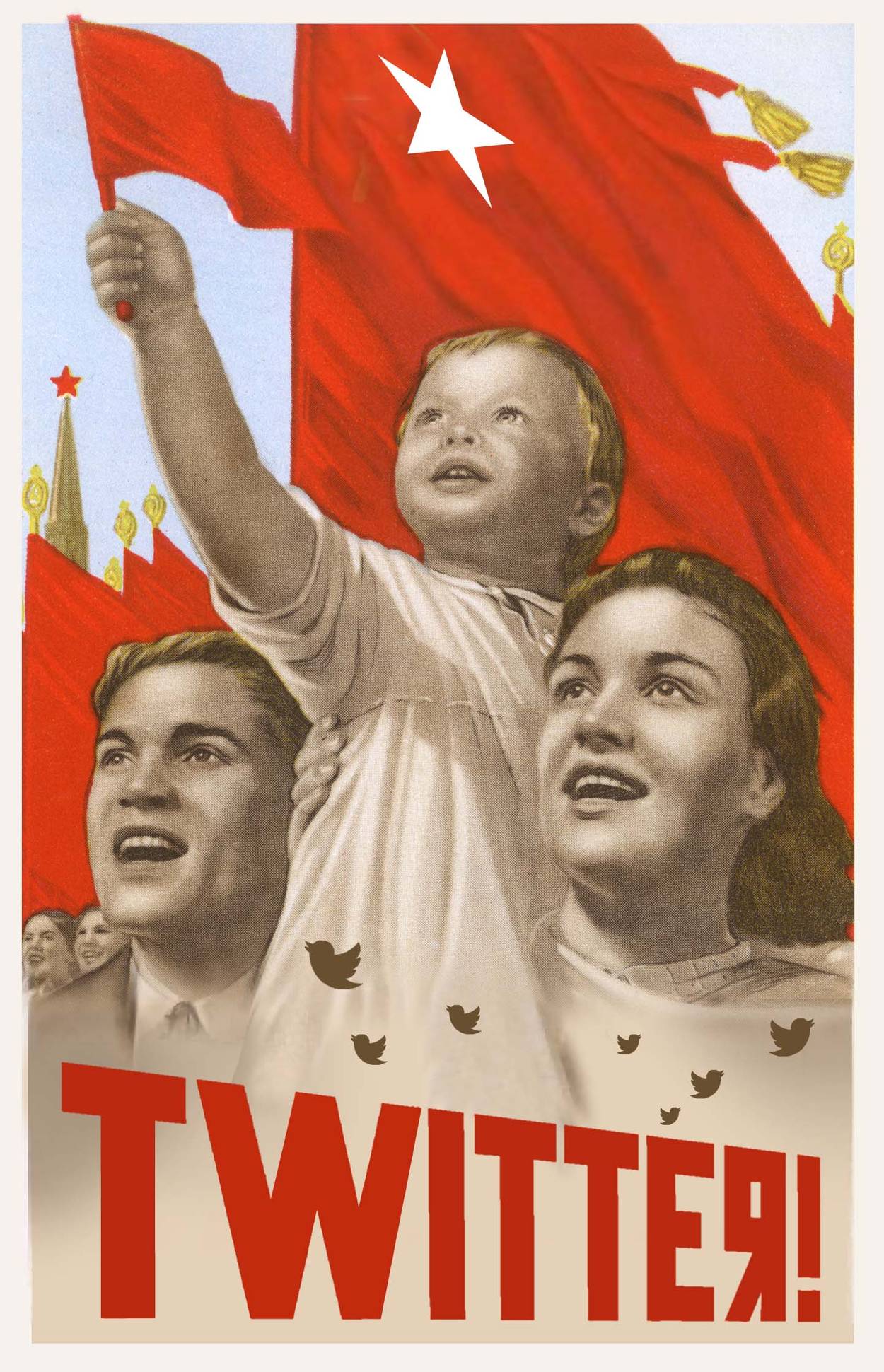
Twitter has been used as a platform for exercises in unanimous condemnation for as long as it has existed.
Countless careers and lives have been ruined as outraged mobs have descended on people whose social media gaffes or old teenage behavior were held up to public scorn and judged to be deplorable and unforgivable. But it wasn’t until the past couple of weeks that the similarity of our current culture with the Soviet practice of collective hounding presented itself to me with such stark clarity. Perhaps it was the specific professions and the cultural institutions involved—and the specific acts of writers banding together to abuse and cancel their colleagues—that brought that sordid history back.
On June 3, The New York Times published an opinion piece that much of its progressive staff found offensive and dangerous. (The author, Republican Sen. Tom Cotton, had called to send in the military to curb the violence and looting that accompanied the nationwide protests against the killing of George Floyd.) The targets of their unanimous condemnation, which was gleefully joined by the Twitter proletariat, which took pleasure in helping the once-august newspaper shred itself to pieces in public, were New York Times’ opinion section editor James Bennet, who had ultimate authority for publishing the piece, though he hadn’t supervised its editing, and op-ed staff editor and writer Bari Weiss (a former Tablet staffer).
Weiss had nothing to do with editing or publishing the piece. On June 4, however, she posted a Twitter thread characterizing the internal turmoil at the Times as a “civil war” between the “(mostly young) wokes” who “call themselves liberals and progressives” and the “(mostly 40+) liberals” who adhere to “the principles of civil libertarianism.” She attributed the behavior of the “wokes” to their “safetyism” worldview, in which “the right of people to feel emotionally and psychologically safe trumps what were previously considered core liberal values, like free speech.” See Update: Stories vs. Facts
It was just one journalist’s opinion, but to Weiss’ colleagues her semi-unflattering description of the split felt like an intolerable attack against the collective. Although Weiss did not name anyone in either the “woke” or the older “liberal” camp, her younger colleagues felt collectively attacked and slandered. They lashed out. Pretty soon, Weiss was trending on Twitter.
As the mob’s fury kicked into high gear, the language of collective outrage grew increasingly strident, even violent.
Goldie Taylor, writer and editor-at-large at The Daily Beast, queried in a since-deleted tweet why Weiss “still got her teeth.” With heads rolling at the Times—James Bennet resigned, and deputy editorial page editor James Dao was reassigned to the newsroom—one member of the staff asked for Weiss to be fired for having bad-mouthed “her younger newsroom colleagues” and insulted “all of our foreign correspondents who have actually reported from civil wars.” (It was unclear how she did that, other than having used the phrase “civil war” as a metaphor.)
Mehdi Hasan, a columnist with the Intercept, opined to his 880,000 Twitter followers that it would be strange if Weiss retained her job now that Bennet had been removed. He suggested that her thread had “mocked” her nonwhite colleagues. (It did not.) In a follow-up tweet Hasan went further, suggesting that to defend Weiss would make one a bad anti-racist—a threat based on a deeply manipulated interpretation of Weiss’ post, yet powerful enough to stop his followers from making the mistake.
All of us who came out of the Soviet system bear scars of the practice of unanimous condemnation, whether we ourselves had been targets or participants in it or not. It is partly why Soviet immigrants are often so averse to any expressions of collectivism: We have seen its ugliest expressions in our own lives and our friends’ and families’ lives. It is impossible to read the chastising remarks of Soviet writers, for whom Pasternak had been a friend and a mentor, without a sense of deep shame. Shame over the perfidy and lack of decency on display. Shame at the misrepresentations and perversions of truth. Shame at the virtue signaling and the closing of rank. Shame over the momentary and, we now know, fleeting triumph of mediocrity over talent.
In a collectivist culture, one hoped-for result of group condemnations is control—both over the target of abuse and the broader society. When sufficiently broad levels of society realize that the price of nonconformity is being publicly humiliated, expelled from the community of “people of goodwill” (another Soviet cliché) and cut off from sources of income, the powers that be need to work less hard to enforce the rules.
For the regular people—those outside prestigious cultural institutions—participation in local versions of collective hounding was not without its benefits, either. It could be an opportunity to eliminate a personal enemy or someone who was more successful and, perhaps, occupied a position you craved. You could join in condemning a neighbor at your cramped communal flat, calculating that once she was gone, you could add some precious extra square meters to your living space.
The mobs that perform the unanimous condemnation rituals of today do not follow orders from above. But that does not diminish their power to exert pressure on those under their influence.
Those of us who came out of the collectivist Soviet culture understand these dynamics instinctively. You invoked the “didn’t read, but disapprove” mantra not only to protect yourself from suspicions about your reading choices but also to communicate an eagerness to be part of the kollektiv—no matter what destructive action was next on the kollektiv’s agenda. You preemptively surrendered your personal agency in order to be in unison with the group. And this is understandable in a way: Merging with the crowd feels much better than standing alone.
Americans have discovered the way in which fear of collective disapproval breeds self-censorship and silence, which impoverish public life and creative work. The double life one ends up leading—one where there is a growing gap between one’s public and private selves—eventually begins to feel oppressive. For a significant portion of Soviet intelligentsia (artists, doctors, scientists), the burden of leading this double life played an important role in their deciding to emigrate.
Those who join in the hounding face their own hazards. The more loyalty you pledge to a group that expects you to participate in rituals of collective demonization, the more it will ask of you and the more you, too, will feel controlled. How much of your own autonomy as a thinking, feeling person are you willing to sacrifice to the collective? What inner compromises are you willing to make for the sake of being part of the group? Which personal relationships are you willing to give up?
From my vantage point, this cultural moment in these United States feels incredibly precarious.
The practice of collective condemnation feels like an assertion of a culture that ultimately tramples on the individual and creates an oppressive society. Whether that society looks like Soviet Russia, or Orwell’s Nineteen Eighty-Four, or Castro’s Cuba, or today’s China, or something uniquely 21st-century American, the failure of institutions and individuals to stand up to mob rule is no longer an option we can afford.














 Science Matters