Arctic Ice December 14

Click on image to enlarge.

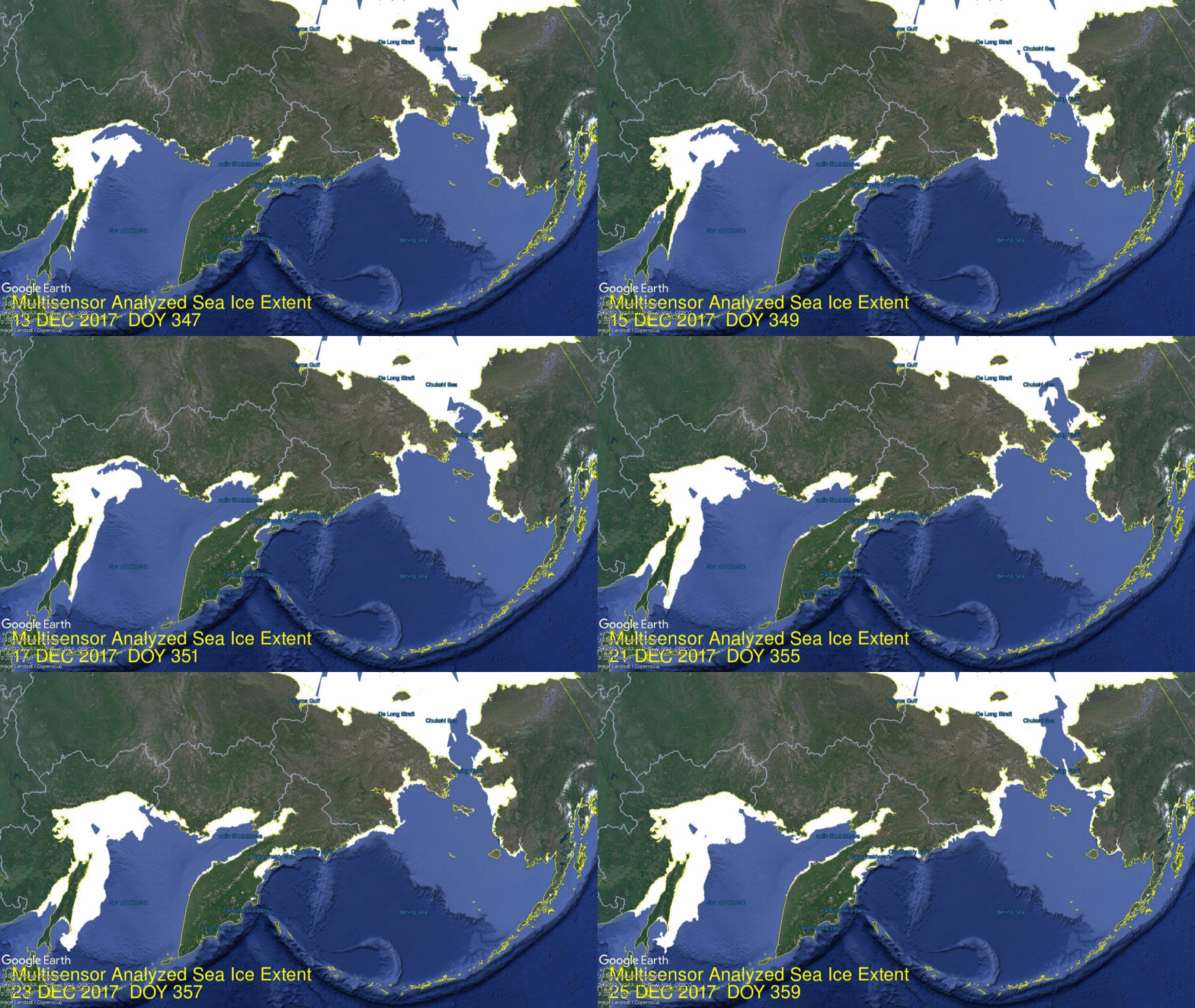
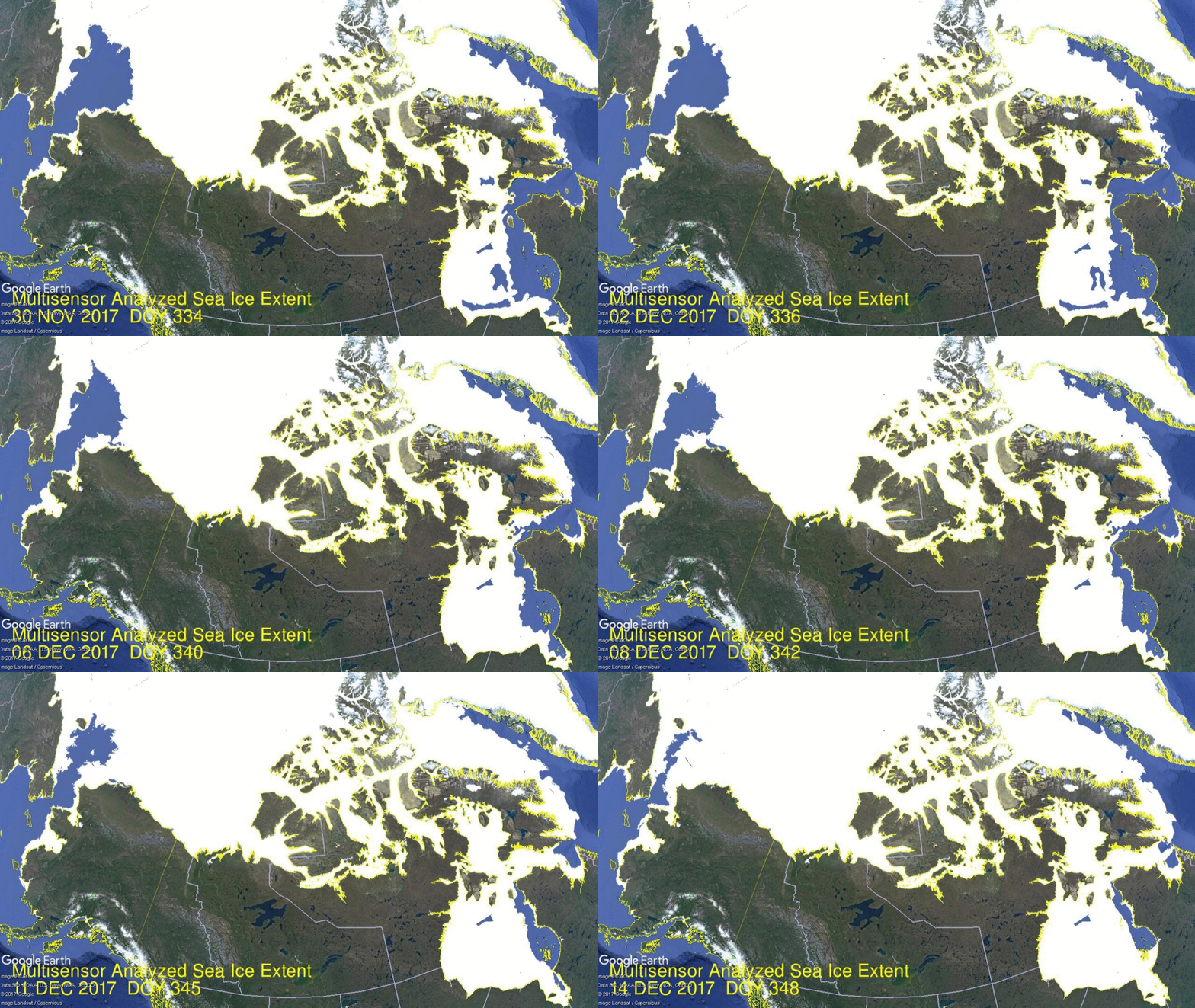
In the first two weeks of December we can see Chukchi at the left filling in with only 8% open water remaining, and Bering starting to freeze. On the right,  Hudson bay is almost fully iced, while Baffin is freezing toward Greenland.  Maximum ice is showing in CAA (Canadian Archipelago), Beaufort, East Siberian, Central Arctic, Laptev and Kara.

Arctic Ice Extents have reached 12M km2, up from 4.6M km2 at Sept. minimum.  This means 50% of the annual maximum has been gained, with 20% of ice cover to be added in the three months before mid March.

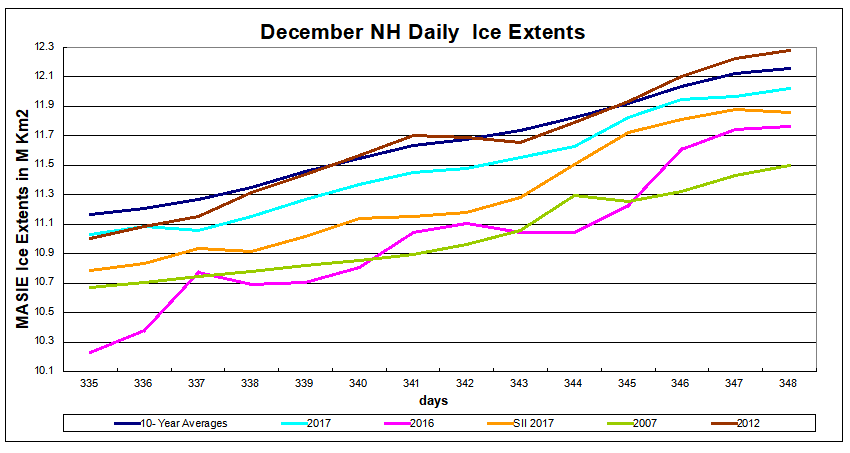
The graph compares extents over the first 14 days of December.

2017 has reached 12M km2, close to the 10 year average, while 2012 has recovered with a surplus.  2016 is about 260k km2 behind and 2007 lags by 520k km2.  At this point MASIE and SII are both tracking the 10-year average, with SII about 200k km2 lower.

The Table below shows where ice is located on day 348 in regions of the Arctic ocean. 10 year average comes from 2007 through 2016 inclusive.

Region 2017348 Day 348
Average
2017-Ave. 2007348 2017-2007
 (0) Northern_Hemisphere 12022146 12157670 -135524 11501915 520231
 (1) Beaufort_Sea 1070445 1069521 924 1062676 7769
 (2) Chukchi_Sea 885792 936900 -51108 725062 160730
 (3) East_Siberian_Sea 1087120 1083777 3343 1053584 33536
 (4) Laptev_Sea 897845 897832 12 897845 0
 (5) Kara_Sea 910407 848042 62365 800920 109487
 (6) Barents_Sea 229984 354383 -124399 236964 -6980
 (7) Greenland_Sea 523005 558656 -35652 488595 34409
 (8) Baffin_Bay_Gulf_of_St._Lawrence 835323 825678 9645 793616 41707
 (9) Canadian_Archipelago 853109 853052 57 852556 553
 (10) Hudson_Bay 1168358 1072919 95439 1217263 -48905
 (11) Central_Arctic 3169716 3212523 -42808 3186190 -16475
 (12) Bering_Sea 128315 248645 -120329 54836 73479
 (13) Baltic_Sea 3933 10542 -6609 2898 1035
 (14) Sea_of_Okhotsk 245912 178060 67853 127576 118336


The deficits to average are primarily in Barents and Bering Seas. Surpluses are large in Hudson Bay, Okhotsk and Kara Seas.  Compared to 2007, most seas are in surplus, with only Hudson Bay slightly late.

Footnote

Some people unhappy with the higher amounts of ice extent shown by MASIE continue to claim that Sea Ice Index is the only dataset that can be used. This is false in fact and in logic. Why should anyone accept that the highest quality picture of ice day to day has no shelf life, that one year’s charts can not be compared with another year? Researchers do this analysis, including Walt Meier in charge of Sea Ice Index. That said, I understand his interest in directing people to use his product rather than one he does not control. As I have said before:

MASIE is rigorous, reliable, serves as calibration for satellite products, and uses modern technologies to continue the long and honorable tradition of naval ice charting.  More on this at my post Support MASIE Arctic Ice Dataset

when-al-gore-was-born-there-were-7000-polar-bears

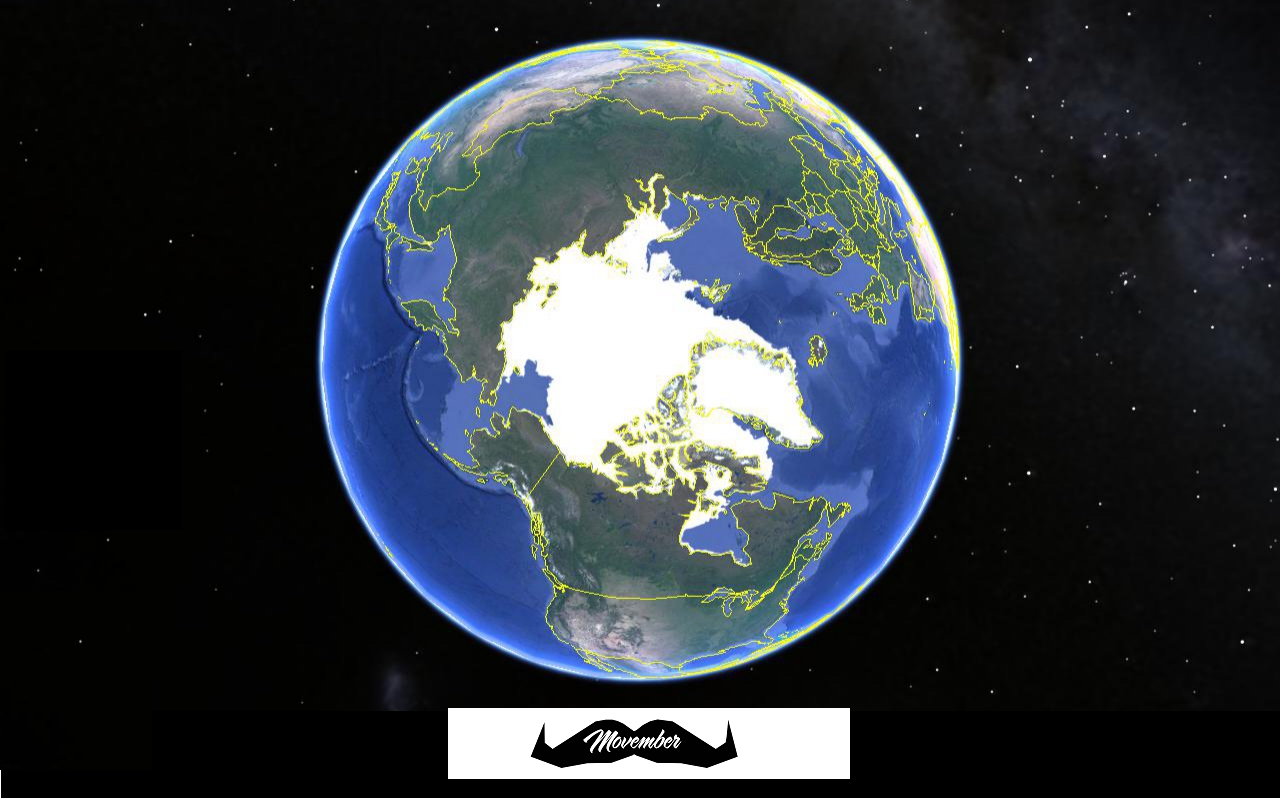
Arctic Ice Grows in Movember

Click on image to enlarge.

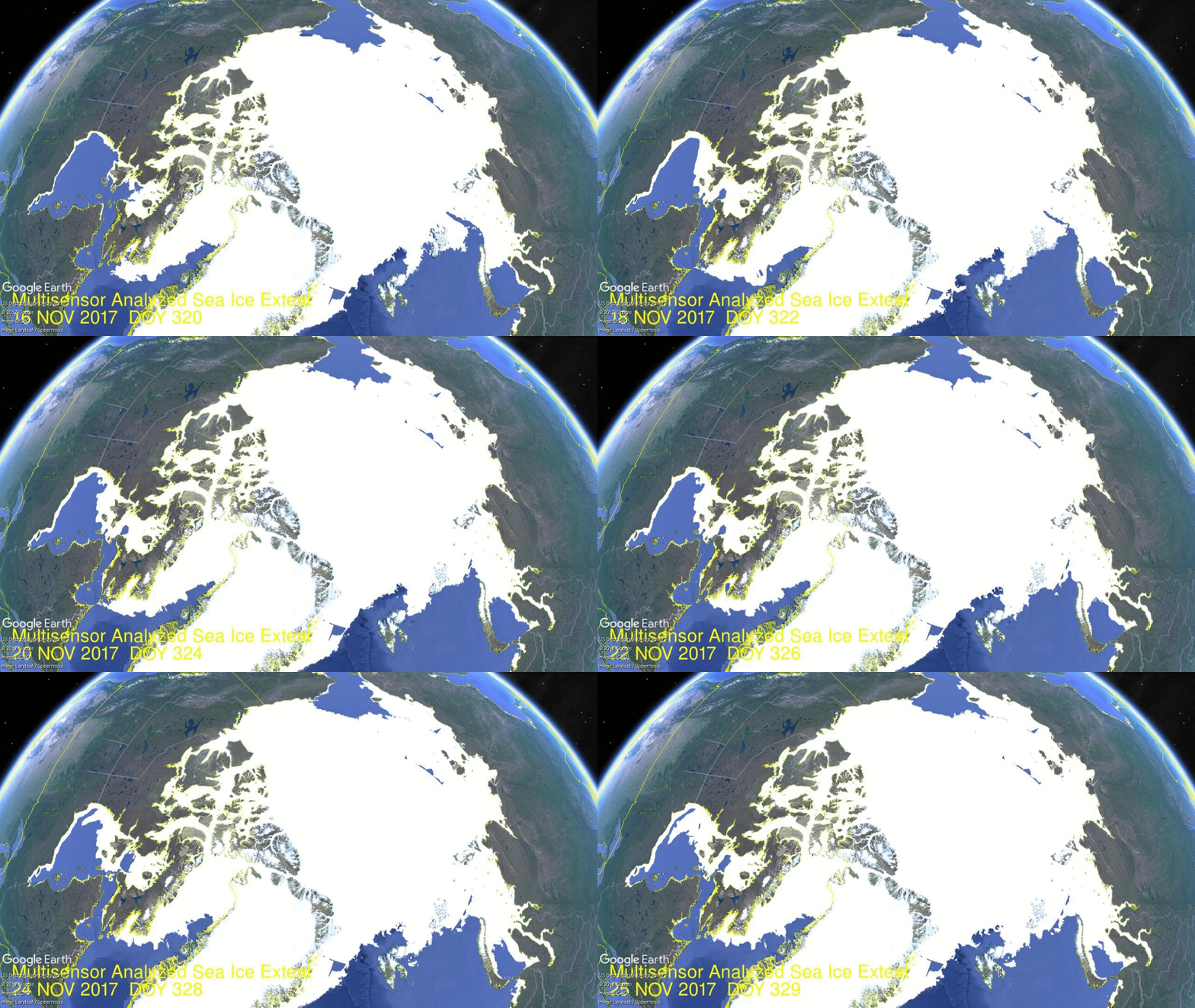
Arctic Ice Extents have more than doubled since the Sept. minimum and are now up to 10.4M km2.  The last 30% of maximum will take until March, principally because several basins are frozen over and cannot add coverage.  To date, Beaufort and CAA (Canadian Archipelago) are full, as are Laptev and East Siberian on the Russian side.  Kara is 88% covered and the Central Arctic will add only 2% from here.

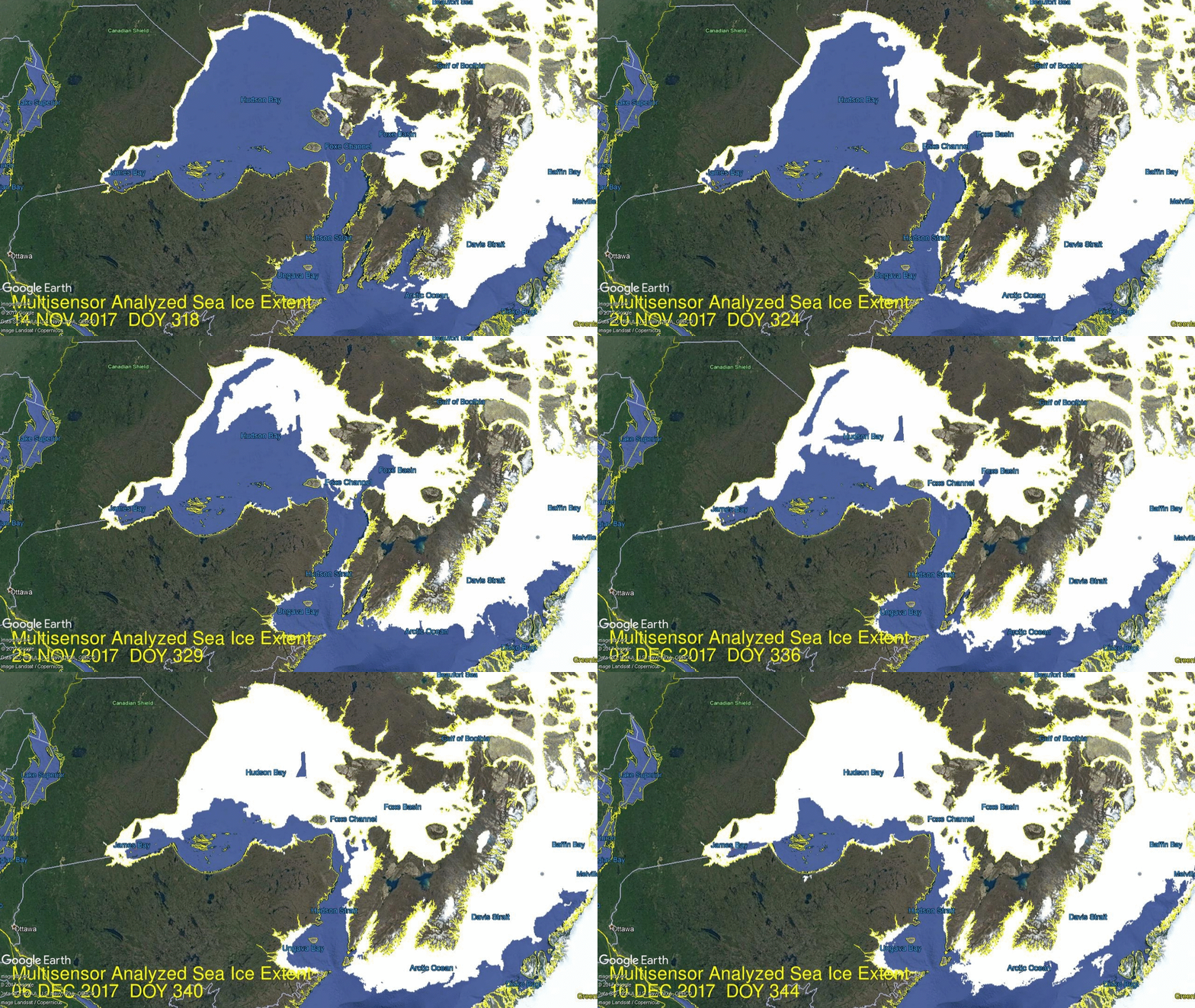
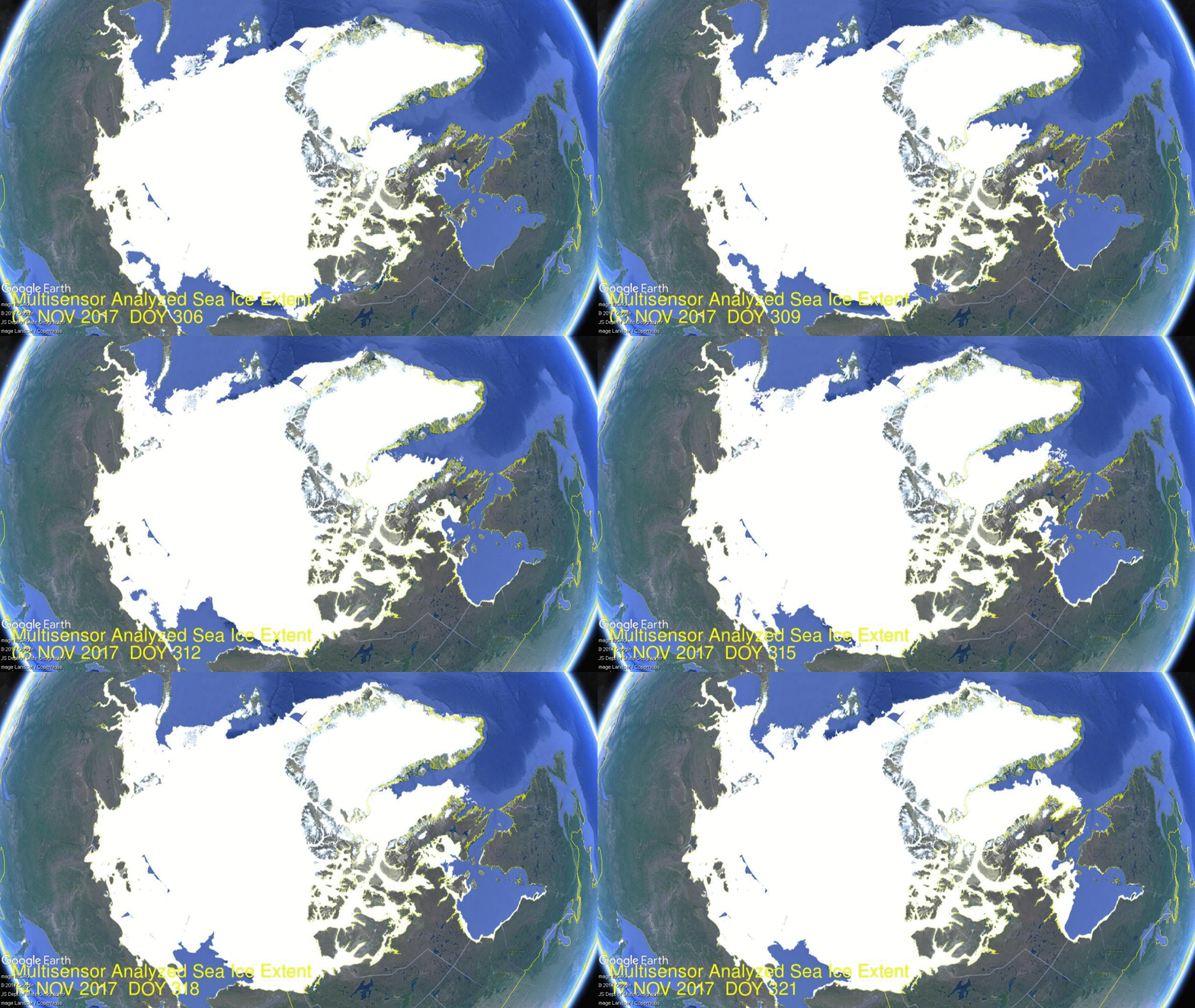
In the last nine days of November we can see Chukchi at the top adding ice up to 50% of maximum with Beaufort  and East Siberian already frozen.  On the left, Baffin and especially Hudson bay are now growing more strongly.  On the right is Kara filling in with Barents freezing more slowly.

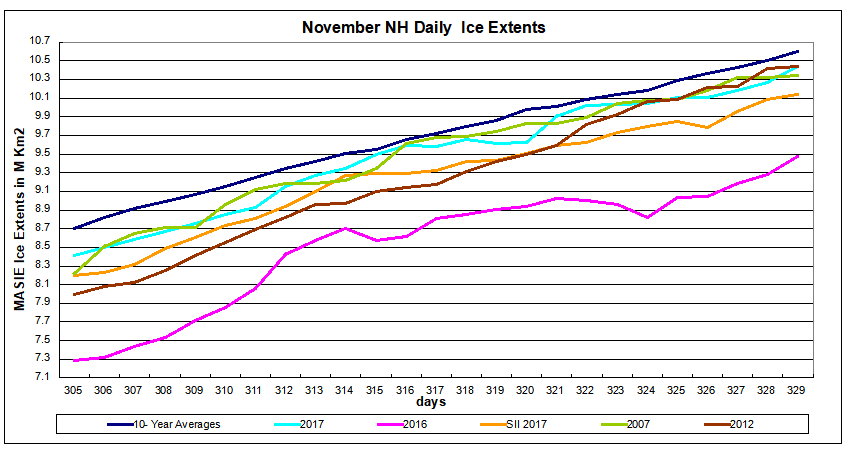
The graph compares extents over the first 25 days of November.

2017 has reached 10.4M km2, 2007 and 2012 nearly the same, and all are close to the 10 year average of 10.6M km2.  2016 is about 1M km2 behind.  At this point MASIE and SII are both tracking the 10-year average, with SII about 200k km2 lower.

The Table below shows where ice is located on day 329 in regions of the Arctic ocean. 10 year average comes from 2007 through 2016 inclusive.

Region 2017329 Day 329
Average
2017-Ave. 2016329 2017-2016
 (0) Northern_Hemisphere 10438529 10596102 -157573 9474596 963933
 (1) Beaufort_Sea 1070410 1068478 1932 1070445 -35
 (2) Chukchi_Sea 516620 793296 -276676 653560 -136940
 (3) East_Siberian_Sea 1065427 1082091 -16665 1087137 -21711
 (4) Laptev_Sea 897845 897451 394 897211 634
 (5) Kara_Sea 826360 732408 93952 328154 498207
 (6) Barents_Sea 191448 209544 -18096 31173 160275
 (7) Greenland_Sea 414638 542031 -127393 419401 -4763
 (8) Baffin_Bay_Gulf_of_St._Lawrence 701761 637760 64001 651237 50524
 (9) Canadian_Archipelago 852553 851808 745 853180 -628
 (10) Hudson_Bay 632312 422809 209504 267718 364594
 (11) Central_Arctic 3182452 3192004 -9552 3082022 100430

The deficits to average are primarily in Chukchi and Greenland Seas. Surpluses are large in Hudson and Baffin Bays, along with Kara Sea.  Compared to last year, Kara, Barents and Hudson Bay all have much greater ice extents.

Footnote

Some people unhappy with the higher amounts of ice extent shown by MASIE continue to claim that Sea Ice Index is the only dataset that can be used. This is false in fact and in logic. Why should anyone accept that the highest quality picture of ice day to day has no shelf life, that one year’s charts can not be compared with another year? Researchers do this analysis, including Walt Meier in charge of Sea Ice Index. That said, I understand his interest in directing people to use his product rather than one he does not control. As I have said before:

MASIE is rigorous, reliable, serves as calibration for satellite products, and uses modern technologies to continue the long and honorable tradition of naval ice charting.  More on this at my post Support MASIE Arctic Ice Dataset

Movember Foundation encourages growing mustaches in support of men’s health and fitness.


Cold and Snowy Winter forecast Northern US

Figure i. The 2017-18 winter forecast shows below normal temperatures for the northern and eastern U.S., with above normal temperatures in the southwestern and southcentral U.S. The winter precipitation forecast shows above normal precipitation across the northern U.S. and below normal precipitation across the southern U.S.

Dr. Judah Cohen of AER, Nov. 20,2017:

In our model we have four predictors, October Eurasian snow cover extent, September sea ice concentration, El Niño/Southern Oscillation and a metric of high latitude blocking in the Eurasian sector. October Eurasian snow cover extent was above normal, Arctic sea ice extent is below normal, and there has been active blocking at high latitudes this fall. All three indicators favor a cold winter in the Eastern U.S. A La Niña is predicted for this winter, which favors a cold winter in the Northwestern U.S and a mild winter in parts of the Southern US. All four predictors together provide the forecast of cold in the Northern and Eastern US with warm in the Southwestern and Southcentral US.

Finally there seems to be the thinking (among many but certainly not all) including from the National Weather Service that La Niña favors a warm winter in the Eastern US. I am skeptical of this reasoning. I note that since 1990 there have been four warm La Niña winters and five cold Niña winters in the Eastern US. If you are familiar with my research you might understand why I am not considering winters before 1990 but I doubt that the statistics change much if previous winters are included. Therefore I remain skeptical that La Niña is a reason to confidently predict a mild winter in the Eastern US especially if La Niña remains weak.

Full Report is at Arctic Oscillation and Polar Vortex Analysis and Forecasts

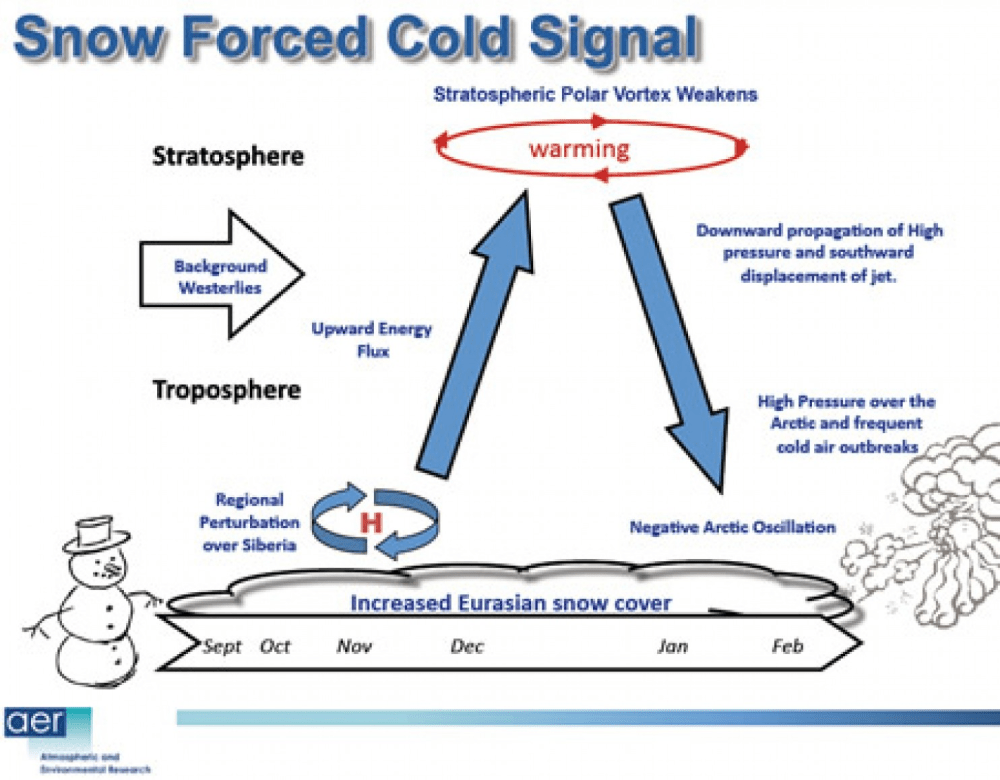
Dr. Cohen’s forecasting paradigm is explained at Snowing and Freezing in the Arctic


Arctic Ice Movember Update

Click on image to enlarge

Arctic Ice Extents have roughly doubled since the Sept. minimum and are now up to 10M km2.  The last 1/3 of maximum will take until March, principally because several basins are frozen over and cannot add coverage.  To date, Beaufort and CAA (Canadian Archipelago) are full, as are Laptev and East Siberian on the Russian side.  Kara is 3/4 covered and the Central Arctic wil add only 3% from here.

During the first half of November we can see at the bottom Beaufort  and East Siberian filling in, leaving only Chukchi with open water.  On the right, Both Baffin and Hudson bays are now growing more strongly.   At the top Kara ice extent has reached 75% of its March maximum.

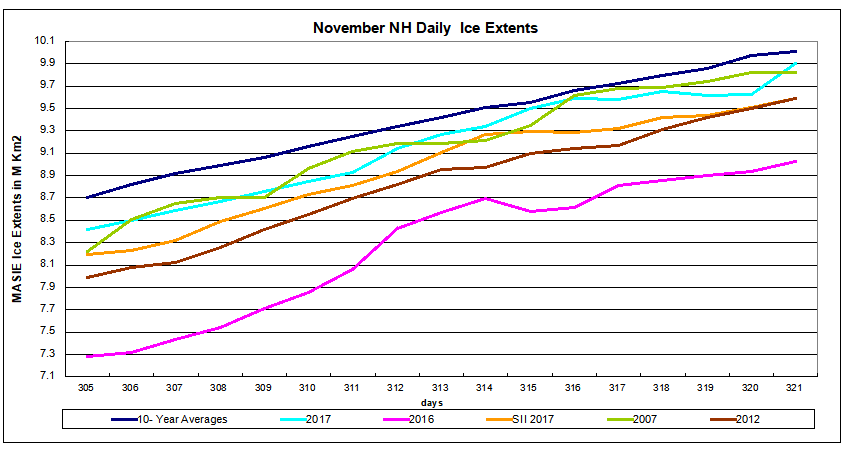
The graph compares extents over the first 17 days of November.
NHday321

2017 has reached 9.9M km2, 2007 nearly the same, and both are close to the 10 year average of 10M km2.  2012 lags 300k km2 lower than 2017, while 2016 is 877k km2 behind.  At this point MASIE and SII are tracking the 10-year average, with SII about 200k km2 lower.

The Table below shows where ice is located on day 321 in regions of the Arctic ocean. 10 year average comes from 2007 through 2016 inclusive.

Region 2017321 Day 321
Average
2017-Ave. 2016304 2017-2016
 (0) Northern_Hemisphere 9904268 10013895 -109626 9026577 877691
 (1) Beaufort_Sea 1052982 1067181 -14199 1056304 -3322
 (2) Chukchi_Sea 449182 702958 -253776 616755 -167573
 (3) East_Siberian_Sea 1076201 1077799 -1598 1087137 -10936
 (4) Laptev_Sea 897845 897517 328 896732 1113
 (5) Kara_Sea 696550 649727 46822 254492 442058
 (6) Barents_Sea 68869 174077 -105208 25907 42962
 (7) Greenland_Sea 394494 499069 -104575 390593 3901
 (8) Baffin_Bay_Gulf_of_St._Lawrence 761453 552922 208531 524708 236745
 (9) Canadian_Archipelago 852865 851728 1137 853180 -315
 (10) Hudson_Bay 460631 273706 186925 185679 274952
 (11) Central_Arctic 3158068 3183076 -25008 3077808 80260

The deficits to average are primarily in Chukchi, also Barents and Greenland Seas. Surpluses are large in Hudson and Baffin Bays, along with Kara Sea.

Footnote

Some people unhappy with the higher amounts of ice extent shown by MASIE continue to claim that Sea Ice Index is the only dataset that can be used. This is false in fact and in logic. Why should anyone accept that the highest quality picture of ice day to day has no shelf life, that one year’s charts can not be compared with another year? Researchers do this analysis, including Walt Meier in charge of Sea Ice Index. That said, I understand his interest in directing people to use his product rather than one he does not control. As I have said before:

MASIE is rigorous, reliable, serves as calibration for satellite products, and uses modern technologies to continue the long and honorable tradition of naval ice charting.  More on this at my post Support MASIE Arctic Ice Dataset

Movember Foundation encourages growing mustaches in support of men’s health and fitness.


Like Your Arctic with Ice?

An imposing panorama of an ice-fjord floating along the bone-chilling water in Svalbard. From Daily Mail

Arctic ice extent went over 9M km2 yesterday, or about 60% of annual maximum.  Several seas are already maxed out:  Laptev, East Siberian, Canadian Archipelago.  The image below shows the refreezing this month.

Click on image to enlarge.

At the bottom watch Beaufort Sea filling in.  On the middle right Baffin Bay steadily adds ice, while Hudson bay starts from its top, but also gets fast ice way down the western coastline into James Bay.  At the top center is Svalbard with Greenland Sea growing on its right, and Kara and Barents filling in on its left.

Dr. Judah Cohen from Atmospheric and Environmental Research (AER) saw this coming.  From his blog November 6 2017:

The forecast for November (Figure 13a) shows cold temperatures in Canada that extend into the Eastern US. The cold temperatures in Canada seem likely but the cold temperatures in the Eastern US will likely depend on the strength of Greenland blocking. The forecast for Eurasia is relatively mild and I think that the forecast is likely to be wrong. In my opinion the predicted blocking across northern Eurasia favors more widespread cold than predicted by the CFS especially across Siberia and East Asia.

My thoughts on the weather pattern over the next several weeks  By Brett Anderson, AccuWeather senior meteorologist  11/08/2017, 4:30:48 PM

Interesting weather pattern setting up across North America as we progress through November and get into early December.

–A series of potent, Pacific storms will likely impact southern BC and the U.S. Pacific Northwest between Nov. 13 and 23. Expect several rounds of heavier rain and gusty winds for Vancouver Island and the mainland coast. Heavy snowfall for the Coastal Range and Rockies should help set the ski season off on a good start.

–A strong Arctic, cold front will press southward through Ontario and Quebec on Thursday. Behind the front, rain showers will quickly change to snow showers and a brief, heavier snow squall. There is the potential for brief whiteout conditions with any squall from southern and eastern Ontario through southern Quebec late Thursday afternoon and into the night. These squalls can quickly drop visibility making travel dangerous for motorists, especially on highways. Roads will generally be wet Thursday afternoon, but untreated roads may briefly get snow covered and icy Thursday evening and night as temperatures rapidly fall below the freezing mark.

In addition to the cold, northwesterly winds will be quite strong Thursday night into early Friday with gusts in the 60- to 80-km/h range from eastern Ontario through Quebec and into western New Brunswick.

Dr. Cohen’s view of the winter Arctic climate system is posted in Snowing and Freezing in the Arctic

Sea Ice Index Updates to v.3.0

In October 2012 Arctic sea ice doubled in extent.

As of October 20, 2017, NOAA@NSIDC Releases Sea Ice Index, Version 3.0

Text below from SII webpage explains the changes in versions.

NOAA@NSIDC is pleased to announce the release of Sea Ice Index Version 3 (V3). V3 changes the way the monthly average area and extent data values are calculated. The way monthly average area and extent images are created remains the same as in V2. All daily data remain the same as in V2.

The V3 method simply averages daily extent values, while the V2 method derived monthly average values from the gridded monthly-average concentration field. The change is in response to questions about what seemed to be an inconsistency between daily and monthly values. When users summed daily values, and then divided by number of days in a month to get a monthly average value, that number was different, and sometimes quite different, from the monthly average numbers we presented. Both the V2 and V3 methodologies are valid and defensible ways of representing passive microwave-derived sea ice concentration data, but the goal of this change is to better match the understanding of the user community as the product evolves through time.

Values will change slightly. V3 monthly average areas are slightly greater than those from V2. Conversely, V3 monthly average extents are slightly less than V2. Trends will change slightly as well. These are small changes, as the following images for March, over the entire time series, illustrate. Extent is on the left and area is on the right. Windnagel et al. (2017) offers additional analysis on why V3 areas are higher than V2 and V3 extents are lower than V2, along with a simple example. With the update to V3, there are no considerable differences in conclusions that can be made about the overall trends in sea ice area or extent.

Details are in this report: Sea Ice Index Version 3 Analysis. NSIDC Special Report 19.

The Sea Ice Index version 3 dataset is available here

Background:

Several posts at this blog compare results from MASIE and SII. Walt Meier, head of Sea Ice Index (SII) and colleagues did a comparison of the two datasets, published in October 2015. SII went from version 1 to v.2 in 2016, and then in January 2017 from v.2.0 to v.2.1, with some changes in past values.

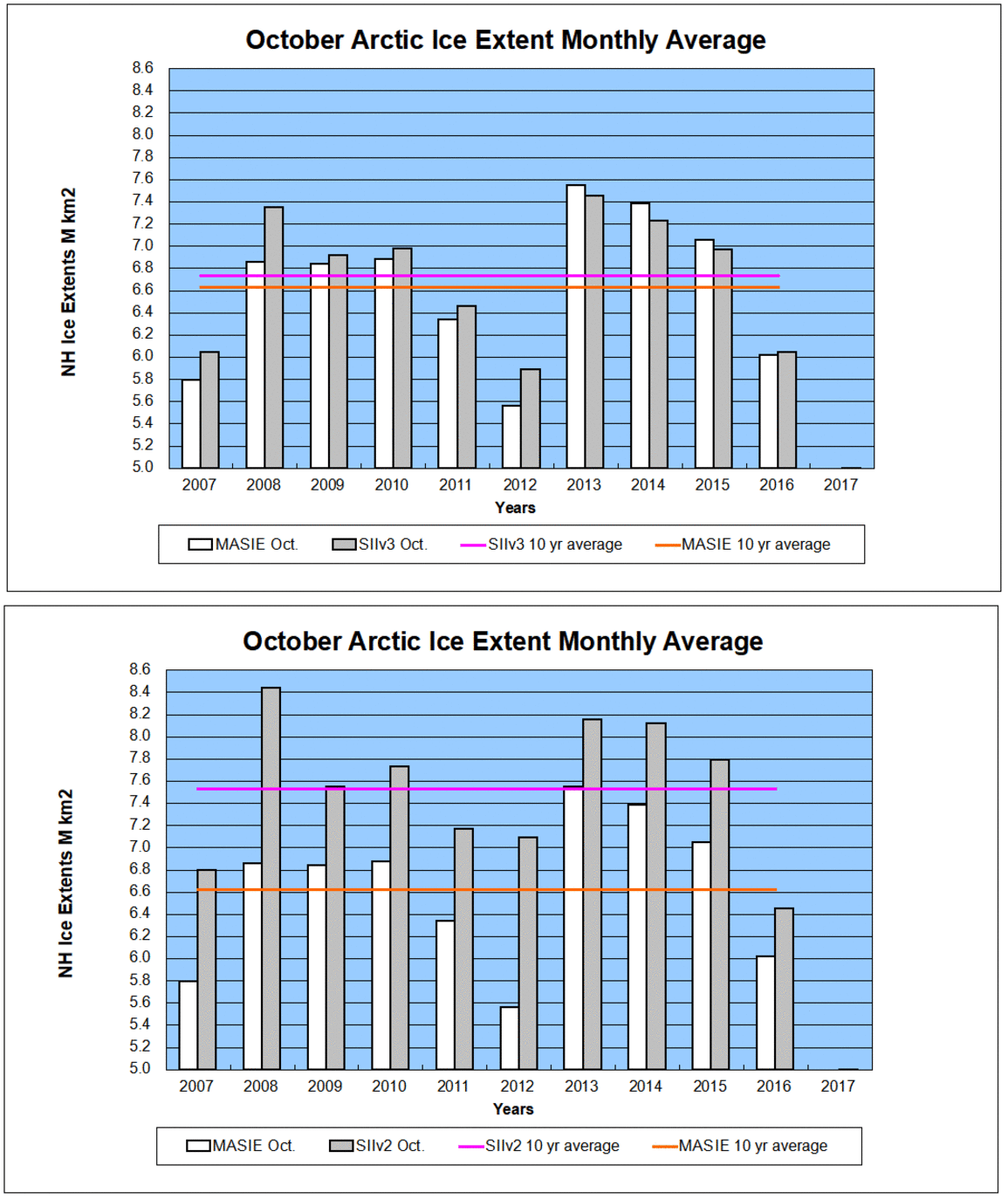
One of the biggest discrepancies in the past with previous SII versions arose in the Month of October, and it is timely that version 3.0 appears now. The dataset is now available with past calculations according to v3, and the past can be compared in advance of 2017 monthly results.

For comparison, the graphs below show October monthly averages for MASIE compared to SII v.2 and SII v.3., 2007 through 2016.

Click on image to enlarge.

It seems clear that SIIv.3 is a big improvement relative to MASIE. And as well, October 2017 results are coming in with the two datasets tracking quite closely.

MASIE: “high-resolution, accurate charts of ice conditions”
Walt Meier, NSIDC, October 2015 article in Annals of Glaciology.

Barents Sea Ice-Free. How Come?

Might maritime activities, such as shipping, oil extraction, fishing etc. be having an effect on Barents Sea ice extents?  Arnd Bernaerts has an informative post up at his blog: They warm-up the Arctic! Shipping, Off-Shore, Science etc.!

Dr. Bernaerts explains:

It is not known which alterations shipping, naval forces, research vessels and off-shore industry cause in the Arctic Ocean sea-body structure, whether ice covered or not, and the subsequent impact on the annual sea ice and the polar-weather, called climate change. Bad that science has no idea about this human Arctic warming aspect. Worse, science has never rose, or ever been willing to raise and investigate the subject. At least you will face a hard time to find anything in this respect.

When considering the possible impact of ocean uses on climate change, any activities at sea north of the Polar Circle is a multifold higher than in any other Ocean region. Between the Arctic Ocean and the Equator the climatic impact of human activities the difference could be several hundred, if not thousand times, due to extreme narrow structure margin concerning water temperature and salinity. The temperature range in the upper 150 meter sea surface level is minus 2° to plus 4°C. Arctic salinity is down to 30ppt in places, while the oceans vary between 34ppt and 36ppt. So far it is statistics, and they are ‘wrong’ if not properly applied.

Navigating and other ocean uses in Arctic sea areas without knowing the impact is irresponsible. Navigating through compact ice is even worse, as the force of ship screws may travel over long distances, with significant changes to sea temperatures and salinity.

Summary

The whole article is informative and raises important questions (and not for the first time).  Time to stop obsessing over CO2, the “magic” gas, and try to understand real human impacts.

A Russian liquid gas tanker (LNG) “Christophe de Margerie” just set two Arctic records few weeks ago (Details). The ship not only traveled through the Arctic in record time, but has done so without the use of an icebreaker escort. She is the first of a total of 15 planned LNG carriers that will be gradually deployed.


Arctic Ice Coasting Sept. 12

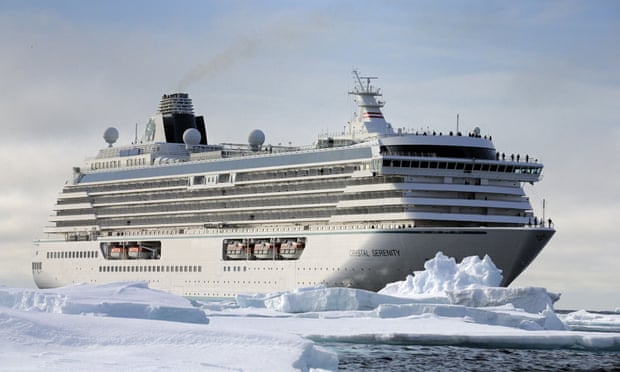
Crystal Serenity touring in the Arctic Northwest Passage 2016 and 2017.

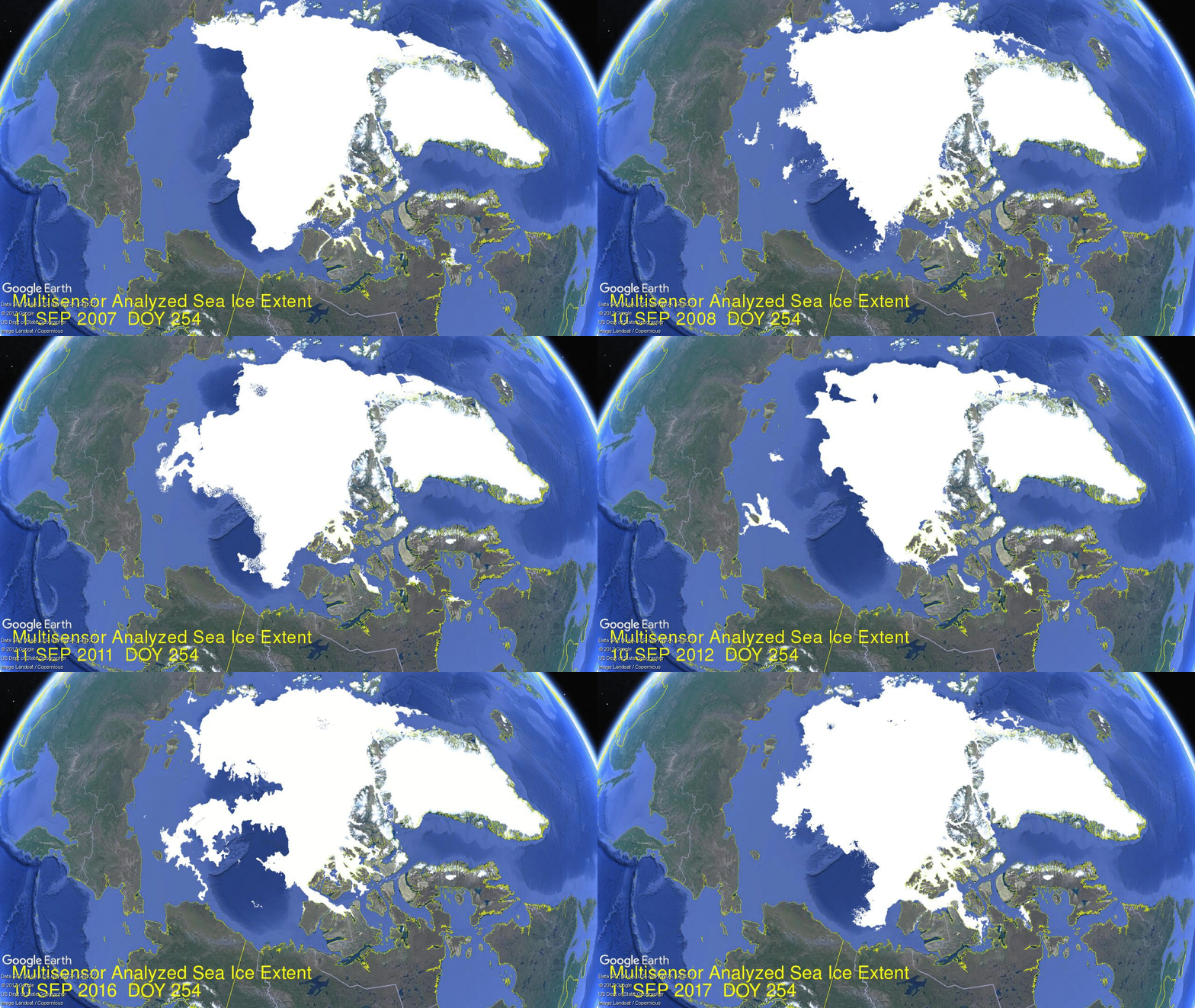
With the most typical day for annual minimum a week away, watching Arctic ice is like watching an ocean liner coasting to a halt before reversing engines.  A recent post reported that ice extents  are stabilizing around 4.7M km2 in recent days, and more importantly, some refreezing in the central seas.  As discussed in Arctic Heart Beat, the marginal shelf seas seldom have ice at annual minimum, typically on or about day 260.  The image below shows the progression of ice extents from 2007 to 2017 on day 254 with six days to go.

Click on image to enlarge.


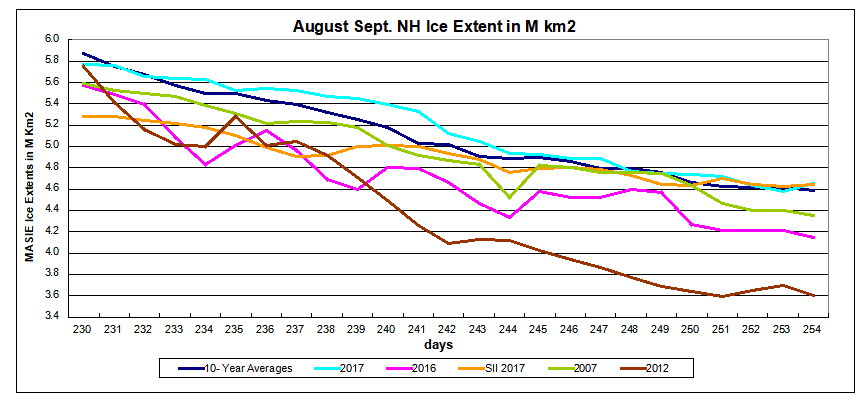
Yesterday was day 254 and the graph below shows 2017 compared with other years and the decadal average during the last 3 weeks.

For the last week MASIE and SII are showing the same extent, now about 70k km2 above the 10 year average.  Only four years in the decade had more ice on this day.  2007 is 300k km2 lower, 2016 500k km2 lower, and at the bottom is 2012 1.1M km2 below 2017.  A recent post on August storms discussed the dramatic impact on 2012 and 2016, which is evident as well in the chart.  The table compares 2017, decadal average and 2007 for the regions containing ice at this time.

Region 2017254 Day 254
Average
2017-Ave. 2007254 2017-2007
 (0) Northern_Hemisphere 4652293 4583359 68934 4349612 302681
 (1) Beaufort_Sea 393863 480306 -86443 599679 -205815
 (2) Chukchi_Sea 131705 173275 -41570 74733 56973
 (3) East_Siberian_Sea 279268 286737 -7468 311 278957
 (4) Laptev_Sea 205794 149612 56182 247496 -41702
 (5) Kara_Sea 18486 29190 -10705 62274 -43788
 (6) Barents_Sea 4313 25209 -20896 7384 -3071
 (7) Greenland_Sea 107969 211322 -103353 324789 -216820
 (8) Baffin_Bay_Gulf_of_St._Lawrence 45146 22235 22911 21406 23740
 (9) Canadian_Archipelago 370958 262283 108675 210083 160875
 (10) Hudson_Bay 1432 11057 -9625 16552 -15120
 (11) Central_Arctic 3092201 2931173 161028 2783651 308551

The deficits continue to be on the Pacific side, especially Beaufort, and also Greenland Sea is down this year.  These are more than offset by large surpluses in the Central Arctic and Canadian Archipelago, and also Laptev.  East Siberian sea also has surplus ice this year compared to 2007.

aer Atmospheric and Environmental Research

September 5, 2017 Dr. Judah Cohen of AER posted his monthly forecast for the Arctic and NH based on the Arctic Oscillation (AO) and North Atlantic Oscillation (NAO).  Excerpts below.

The AO is currently slightly negative (Figure 1), reflective of mostly positive geopotential height anomalies across the Arctic and mixed geopotential height anomalies across the mid-latitudes of the NH (Figure 2). Geopotential height anomalies are mostly negative across Greenland and Iceland (Figure 2), and therefore the NAO is slightly positive.
Figure 1. (a) The predicted daily-mean near-surface AO from the 00Z 5 September 2017 GFS ensemble. Gray lines indicate the AO index from each individual ensemble member, with the ensemble-mean AO index given by the red line with squares.

The AO is predicted to straddle neutral next week as geopotential height anomalies remain mixed across the Arctic. Similarly, with mixed geopotential height anomalies stretching across Greenland and Iceland, the NAO will likely be near neutral as well.  

(Note: AO and NAO are signed differently than one might expect; the reference point is outside the Arctic itself.  Thus negative phases of these indices mean higher pressures in the Arctic and lower outside, while positive phases indicate lower pressures in the Arctic.  Now that the Arctic sun is setting, the main issue for ice extent is storminess which requires low Arctic pressures.)

Impacts

It is the first week of fall, a season of transition from summer to winter. One important sign IMO of this seasonal transition is the return of the polar vortex in the stratosphere. The models predict the possible formation of the polar vortex sometime next week. Starting in October, I will be watching variability in the polar vortex for signs of pattern changes in the weather across the NH.

Another sign of the seasonal transition is the minimum in Arctic sea ice extent, which will be achieved in the coming days and/or weeks. The trajectory of sea ice melt has slowed since early August. In my last blog I suggested the possibility that the sea ice minimum could be similar to the years 2008 and 2010 and that is looking more likely but is difficult to predict. Over the coming months, I will be following Arctic sea ice variability for signs of the severity of the upcoming winter. Our understanding for how anomalies in sea ice extent influence the weather in the mid-latitudes is still immature IMO but I do think that important progress has been made recently.

Another sign of the transition from summer to winter is the return of snowfall to the NH. Snowfall over the sea ice in August probably helped retard the melt of sea ice and snowfall is now even occurring over Siberia and Alaska but is still very regionalized. Again I will be monitoring the advance of snow cover extent across the continents for signs of the strength of the polar vortex and the possible resultant weather.

Finally I find it interesting that while the atmospheric circulation has transitioned from the dominant summer pattern across Eurasia it has not across North America. The dominant summer pattern across Eurasia was ridging across Europe (with the exception of Northern Europe) and East Asia but with troughing in Western Asia. The forecast for the coming weeks is the opposite with troughs across Europe and East Asia but ridging in Western Asia. This is an overall cooler pattern than the dominant summer pattern. However across North America there are no similar signs of transition. The dominant summer pattern was strong ridging across western North America and troughing in eastern North America and at least for now that pattern looks to continue for much of the month of September. I don’t know the reason behind the persistent western ridge/eastern trough pattern across North America but how long this pattern can persist will obviously have important implications for the weather across North America in the coming months.

Summary

Bottom line, looks like September weather will be ordinary in the Arctic with seasonal cooling in the NH.  Dr. Cohen also thinks the annual ice extent minimum will be near average for the decade.  While the monthly average is final only at September end, this week will set the tone and likely result.


Early Arctic Minimum?

It is a few days earlier than usual, but MASIE shows ice extents  stabilizing near 4.7M km2 in recent days, and more importantly, some refreezing in the central seas.  As discussed in Arctic Heart Beat, the marginal shelf seas seldom have ice at annual minimum, typically on or about day 260.  The image below shows the progression of ice extents from 2007 to 2017.

Yesterday was day 251 and the graph below shows 2017 compared with other years and the decadal average during the last 3 weeks.

At this point MASIE and SII are showing the same extent, about 100k km2 above the 10 year average.  2007 is 250k km2 lower, 2016 500k km2 lower, and at the bottom is 2012 1.1M km2 below 2017.  The table compares 2017, decadal average and 2007 for the regions containing ice at this time.

Region 2017251 Day 251
Average
2017-Ave. 2007251 2017-2007
 (0) Northern_Hemisphere 4716948 4619900 97048 4467771 249177
 (1) Beaufort_Sea 409067 492365 -83298 643868 -234801
 (2) Chukchi_Sea 133345 185601 -52257 95240 38105
 (3) East_Siberian_Sea 279966 301146 -21180 311 279655
 (4) Laptev_Sea 196236 152840 43396 252479 -56243
 (5) Kara_Sea 22449 30277 -7828 59593 -37144
 (6) Barents_Sea 23123 20028 3095 5882 17240
 (7) Greenland_Sea 116132 196719 -80586 315125 -198993
 (8) Baffin_Bay_Gulf_of_St._Lawrence 46799 21575 25224 17173 29626
 (9) Canadian_Archipelago 374084 268736 105348 236583 137501
 (10) Hudson_Bay 1191 11933 -10743 22646 -21455
 (11) Central_Arctic 3113399 2937746 175653 2817614 295785

The deficits continue to be on the Pacific side, especially Beaufort, and also Greenland Sea is down this year.  These are more than offset by large surpluses in the Central Arctic and Canadian Archipelago, and also Laptev.  East Siberian sea also has surplus ice this year compared to 2007.

aer Atmospheric and Environmental Research

September 5, 2017 Dr. Judah Cohen of AER posted his monthly forecast for the Arctic and NH based on the Arctic Oscillation (AO) and North Atlantic Oscillation (NAO).  Excerpts below.

The AO is currently slightly negative (Figure 1), reflective of mostly positive geopotential height anomalies across the Arctic and mixed geopotential height anomalies across the mid-latitudes of the NH (Figure 2). Geopotential height anomalies are mostly negative across Greenland and Iceland (Figure 2), and therefore the NAO is slightly positive.
Figure 1. (a) The predicted daily-mean near-surface AO from the 00Z 5 September 2017 GFS ensemble. Gray lines indicate the AO index from each individual ensemble member, with the ensemble-mean AO index given by the red line with squares.

The AO is predicted to straddle neutral next week as geopotential height anomalies remain mixed across the Arctic. Similarly, with mixed geopotential height anomalies stretching across Greenland and Iceland, the NAO will likely be near neutral as well.  

(Note: AO and NAO are signed differently than one might expect; the reference point is outside the Arctic itself.  Thus negative phases of these indices mean higher pressures in the Arctic and lower outside, while positive phases indicate lower pressures in the Arctic.  Now that the Arctic sun is setting, the main issue for ice extent is storminess which requires low Arctic pressures.)

Impacts

It is the first week of fall, a season of transition from summer to winter. One important sign IMO of this seasonal transition is the return of the polar vortex in the stratosphere. The models predict the possible formation of the polar vortex sometime next week. Starting in October, I will be watching variability in the polar vortex for signs of pattern changes in the weather across the NH.

Another sign of the seasonal transition is the minimum in Arctic sea ice extent, which will be achieved in the coming days and/or weeks. The trajectory of sea ice melt has slowed since early August. In my last blog I suggested the possibility that the sea ice minimum could be similar to the years 2008 and 2010 and that is looking more likely but is difficult to predict. Over the coming months, I will be following Arctic sea ice variability for signs of the severity of the upcoming winter. Our understanding for how anomalies in sea ice extent influence the weather in the mid-latitudes is still immature IMO but I do think that important progress has been made recently.

Another sign of the transition from summer to winter is the return of snowfall to the NH. Snowfall over the sea ice in August probably helped retard the melt of sea ice and snowfall is now even occurring over Siberia and Alaska but is still very regionalized. Again I will be monitoring the advance of snow cover extent across the continents for signs of the strength of the polar vortex and the possible resultant weather.

Finally I find it interesting that while the atmospheric circulation has transitioned from the dominant summer pattern across Eurasia it has not across North America. The dominant summer pattern across Eurasia was ridging across Europe (with the exception of Northern Europe) and East Asia but with troughing in Western Asia. The forecast for the coming weeks is the opposite with troughs across Europe and East Asia but ridging in Western Asia. This is an overall cooler pattern than the dominant summer pattern. However across North America there are no similar signs of transition. The dominant summer pattern was strong ridging across western North America and troughing in eastern North America and at least for now that pattern looks to continue for much of the month of September. I don’t know the reason behind the persistent western ridge/eastern trough pattern across North America but how long this pattern can persist will obviously have important implications for the weather across North America in the coming months.

Summary

Bottom line, looks like September weather will be ordinary in the Arctic with seasonal cooling in the NH.  Dr. Cohen also thinks the annual ice extent minimum will be near average for the decade.  While the monthly average is final only at September end, the next week will set the tone and likely result.