Museum Offends Warmists: Tweetstorm Ensues

Correction January 9, 2018:
My terminology in the title is off.  The event is more properly called a “twitstorm.”

Wonderful example of leftist conspiracy ideation explodes when warmists are exposed to historical truth.  At the American Museum of Natural History in New York a plaque in place for 25 years has been attacked as though it were a Confederate statue. The whole story comes from a sympathetic source, the Verge:
The climate change misinformation at a top museum is not a conservative conspiracy.

The article describes a  fine dust-up of political correctness.  (Excerpts below in italics with my bolds.)

Over the weekend, Twitter users — including some climate scientists — were upset by a plaque at the American Museum of Natural History (AMNH) in New York, which seems to be spreading misinformation about climate change. The panel, titled “Recent Climatic Changes and Extinctions,” misstates the role that human emissions of greenhouse gases play in causing global warming. It also says that, although we’re currently living in one of Earth’s warm periods, “there is no reason to believe that another Ice Age won’t come.” But it turns out, the panel was put up 25 years ago, according to the museum, so it contains outdated information that reads very differently today.

From an exhibit on Recent Climatic Changes and Extinctions:

The Offensive Text on the Plaque

Images of the sign were first tweeted by environmental economist Jonah Busch, and were shared over 2,000 times. Busch tweeted that the panel is at the David H. Koch Dinosaur Wing, which was funded by right-wing philanthropist and fossil fuel magnate David H. Koch, and asked the museum to “separate this panel from its donor’s interest.” The tweet sparked outrage among scientists and the general public: “Dear @AMNH I bring my young kids to visit regularly because science & natural history is fascinating, inspiring and fun,” one tweet read. “Please do not misguide their curious minds. If we can’t even trust the AMNH to give us the facts who can we? Very sad.”

But the sign is actually located in the Hall of Advanced Mammals in the Lila Acheson Wallace Wing of Mammals and Their Extinct Relatives, and was installed “many years before David Koch supported the Dinosaur Halls,” says Kendra Snyder, a spokesperson for the AMNH, in an email to The Verge. Busch says he didn’t realize that hall was separate from the dinosaur wing because both are on the same floor. Because some of the permanent exhibitions at the AMNH were funded by Exxon as well as the Koch brothers, which are known funders of climate deniers, “it makes it that much harder to give them the benefit of the doubt,” Busch tells The Verge. But Snyder says that at the AMNH, “scientific and educational content is determined by scientists and educators. That is not the role of donors.”

The sign reflects the scientific data available at the time, Snyder says, adding that today, that same information is “clearly subject to misinterpretation.” “If that label copy were written today it would likely come with a different context and emphasis, including more recent scientific data,” Snyder says. “This happens sometimes in permanent halls and we do review existing content — this is a case where we will do that.”

The journalist adds her spin to the story:
The dinosaur wing at the AMNH still bears his name. But the plaque in question is not in that wing, according to Snyder. The sign explains what causes ice ages, Earth’s cyclical periods when temperatures drop and glaciers spread. The sign says that, “There is no reason to believe that another Ice Age won’t come. In the past, warm cycles lasted about 10,000 years, and it’s been that long since the last cool period.” But that’s probably wrong, based on what we know today. Because we pump heat-trapping greenhouse gases like carbon dioxide into the atmosphere, the world is warming up — and that is messing up Earth’s cycles of cold and warm spells. In fact, our CO2 emissions will delay the onset of the next ice age by at least 100,000 years.

The sign in the dinosaur wing also says that, “Human-made pollutants may also have an effect on the Earth’s climatic cycle.” Today, using the word “may” is misleading: the role our greenhouse gas emissions play in causing climate change is well established. Virtually all scientists agree that human activities, such as the burning of fossil fuels, are to blame for the warming up of our planet. In fact, the entire world — except the United States — is working together to cut emissions in order to curb global warming.

Summary

Such a tragedy that a supposedly safe space like a museum would mention cooling in the future. Our CO2 emissions prohibit anything but a warmer future.  Human CO2 ensures that the next ice age is postponed almost indefinitely, and that should be on a big sign that everyone can see. And wishy-washy words like “may” have no place in the world as warmists know it.

Can anything in the building be trusted?  Everyone be vigilant! (sarc/off)

Alarmists Anonymous

The latest example of arctic hysteria comes from the usual suspects published at the usual venue, Inside Climate News. Polar Ice Is Disappearing, Setting Off Climate Alarms

Excerpts below with my bolds: The short-term consequences of Arctic (and Antarctic) warming may already be felt in other latitudes. The long-term threat to coastlines is becoming even more dire.

“When you’re taking out 30, 40, almost 50 percent of the ice cover, that’s a big change in the environment,” Meier said. “Whether we’re seeing it yet, there’s still some debate, but whether there will be an effect as we continue to lose ice, I think that’s pretty obvious.”

“There’s no evidence that anything is recovering here,” said Mark Serreze, the director of the NSIDC. “What we’ve seen historically is a downward trend in ice extent in all months. Superimposed on that are the ups and downs of natural variability. We’re going to continue to head downward.

“We are looking at an ice-free Arctic Ocean sometime in the 2040s,” said Serreze. “There’s no evidence that we’ve seen anything like this before.”

Ted Scambos, lead scientist with the National Snow and Ice Data Center, said that while the current pace of melting is not alarming, a series of papers “has led to a realization that the West Antarctic Ice Sheet may already be in an irreversible retreat.

Greenland is melting, too—for now, it’s the biggest threat. “Greenland has become Loserville,” said Jason Box, who tracks ice for the Geological Survey of Denmark and Greenland.

“New observations from many different sources confirm that ice-sheet loss is accelerating,” the United States Global Change Research Program said in its comprehensive special report on climate science. “Up to 8.5 feet of global sea level rise is possible by 2100” in a worst-case emissions scenario. That’s almost 2 feet more than scientists expected just a few years ago.

“So we’re guaranteed significant sea level rise no matter what we do, even under the optimistic Paris scenario,” Box said. “We had better prepare.”

These warnings of wolves are starting to sound the same: “It never happened before, is not happening now, but it will surely destroy us in the future if we don’t do something.”

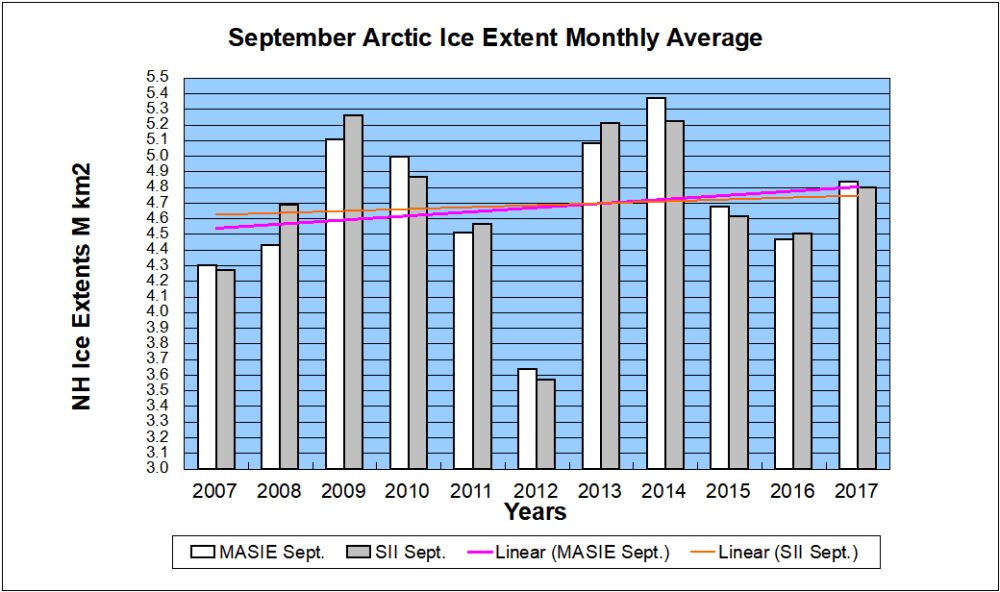
Meanwhile the facts on the ground are not alarming: For example September minimums:
More details at Overachieving September Arctic ice

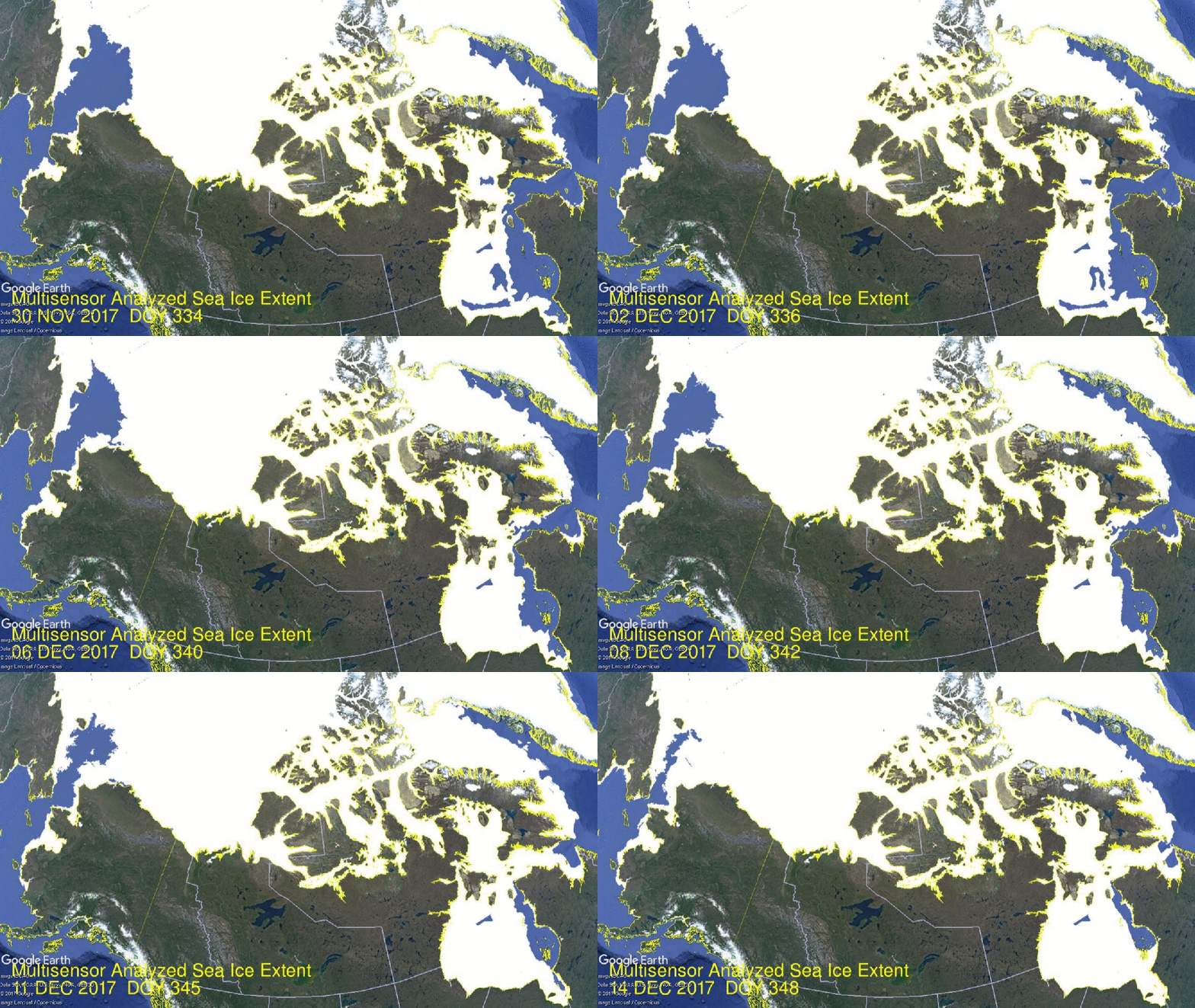
And the refreezing is not at all unusual:
The AAs (Arctic Alarmists) are putting their faith in the BBs (Barents and Bering), the only two basins below average this year. Both are marginal to the Arctic Ocean and both are heavily affected by human marine activities, including shipping, navies, fishing, tourism and sea floor extraction.

These outrageous appeals by alarmists in the face of contrary facts remind me of the story defining the term “chutzpuh.” A young man is convicted of killing his parents, and later appears before the judge for sentencing. Asked to give any last words, he replies: “Go easy on me, your Honor, I’m an orphan.”
alcoholics-anonymous-logo-e1497443623248

Fortunately, there is help for climate alarmists. They can join or start a chapter of Alarmists Anonymous. By following the Twelve Step Program, it is possible to recover and unite in service to the real world and humanity.

Step One: Fully concede (admit) to our innermost selves that we were addicted to climate fear mongering.

Step Two: Come to believe that a Power greater than ourselves causes weather and climate, restoring us to sanity.

Step Three: Make a decision to study and understand how the natural world works.

Step Four: Make a searching and fearless moral inventory of ourselves, our need to frighten others and how we have personally benefited by expressing alarms about the climate.

Step Five: Admit to God, to ourselves, and to another human being the exact nature of our exaggerations and false claims.

Step Six: Become ready to set aside these notions and actions we now recognize as objectionable and groundless.

Step Seven: Seek help to remove every single defect of character that produced fear in us and led us to make others afraid.

Step Eight: Make a list of all persons we have harmed and called “deniers”, and become willing to make amends to them all.

Step Nine: Apologize to people we have frightened or denigrated and explain the errors of our ways.

Step Ten: Continue to take personal inventory and when new illusions creep into our thinking, promptly renounce them.

Step Eleven: Dedicate ourselves to gain knowledge of natural climate factors and to deepen our understanding of nature’s powers and ways of working.

Step Twelve: Having awakened to our delusion of climate alarm, we try to carry this message to other addicts, and to practice these principles in all our affairs.

Summary:

With a New Year close at hand, let us hope that many climate alarmists take the opportunity to turn the page by resolving a return to sanity. It is not too late to get right with reality before the cooling comes in earnest.

This is your brain on climate alarm.  Just say No!

Everybody Knows (The Climate Fix Is In)

Lyrics:

Everybody knows that the dice are loaded
Everybody rolls with their fingers crossed
Everybody knows that the war is over
Everybody knows the good guys lost
Everybody knows the fight was fixed
The poor stay poor, the rich get rich
Thats how it goes
Everybody knows

Everybody knows that the boat is leaking
Everybody knows that the captain lied
Everybody got this broken feeling
Like their father or their dog just died
Everybody talking to their pockets
Everybody wants a box of chocolates
And a long stem rose
Everybody knows

Everybody knows that you love me baby
Everybody knows that you really do
Everybody knows that you’ve been faithful
Ah give or take a night or two
Everybody knows you’ve been discreet
But there were so many people you just had to meet
Without your clothes
And everybody knows

Everybody knows, everybody knows
Thats how it goes
Everybody knows

And everybody knows that its now or never
Everybody knows that its me or you
And everybody knows that you live forever
Ah when you’ve done a line or two
Everybody knows the deal is rotten
Old black joe’s still pickin’ cotton
For your ribbons and bows
And everybody knows

And everybody knows that the plague is coming
Everybody knows that its moving fast
Everybody knows that the naked man and woman
Are just a shining artifact of the past
Everybody knows the scene is dead
But there’s gonna be a meter on your bed
That will disclose
What everybody knows

And everybody knows that you’re in trouble
Everybody knows what you’ve been through
From the bloody cross on top of calvary
To the beach of Malibu
Everybody knows its coming apart
Take one last look at this sacred heart
Before it blows
And everybody knows

Everybody knows, everybody knows
Thats how it goes
Everybody knows

Footnote:

I doubt Leonard Cohen had climate change in mind when he wrote this masterpiece.  But he did have a pertinent poetic insight; namely, that social proof is an unreliable guide to the truth.

Suppressing Climate

The above video is how I first heard of PragerU.  Now the nonprofit organization is suing Google and Youtube for their ideological bias in suppressing Prager’s videos.

PragerU Sues YouTube For Discriminating Against Conservative Videos
is an article by Ben Weingarten at The Federalist.  Excerpts below with my bolds.

Those blackballed from social media platforms for sharing views dissenting from prevailing progressive Silicon Valley orthodoxy have to date had little recourse against the tech speech police. That is why PragerU’s newly filed suit against Google and Google-owned YouTube alleging unlawful censorship and free speech discrimination based on the educational video purveyor’s conservative political viewpoint has the potential to be groundbreaking.

The lawsuit, filed in federal court in California, details upwards of 50 PragerU educational videos that YouTube has, in PragerU’s view, unjustifiably slapped with “restricted mode” or “demonetization” filters, violating its First Amendment right to free speech. These filters limit or otherwise prevent viewers, based on characteristics like age, from consuming content deemed “inappropriate.”

More arguably provocative videos touch on topics such as Islamic terrorism, campus rape, and gender identity. According the suit, “The videos do not contain any profanity, nudity, or otherwise inappropriate ‘mature’ content. The censored videos fully comply with the letter of YouTube’s Terms of Use and Community Guidelines.” Moreover, PragerU illustrates that comparable videos from non-conservative sources like BuzzFeedVideo, CNN, and “Real Time with Bill Maher” have not been subjected to such filters.

Leaving aside the inherent subjectivity for a moment, if PragerU’s content is “appropriate,” and other publishers are able to upload similar content without being penalized, then what better explanation is there for YouTube’s censorship than viewpoint discrimination? PragerU’s dealings with YouTube over its content restrictions only strengthen the validity of this question.

As PragerU summarizes it:

Google/YouTube seek to justify…[its] animus and bias [towards PragerU’s political identity and viewpoint] not by claiming that PragerU has violated YouTube’s restricted content guidelines or criteria, but by arguing that they retain unfettered discretion to censor any video content that they deem “inappropriate,” no matter how subjective, baseless, or arbitrary that decision is…For over one year, PragerU has worked patiently and cooperatively to try to resolve the censorship issues that comprise this Lawsuit. In response, Google/YouTube have provided vague, misleading, confusing, and often contradictory information that not only has prevented resolution of the issues, but constitutes further evidence and indicia that their restricted mode filtering applied to PragerU is based on Defendants’ [Google/YouTube’s] intentional discrimination and animus

That as unimpeachable a source as the video-producing nonprofit PragerU is challenging YouTube should serve as a powerful signal that conservatives and others whose views social media companies deem unworthy will no longer permit their rights to be trampled upon. This is significant regardless of the case’s outcome.

PragerU’s efforts are essential, and may serve as the vanguard of a successful lawfare effort. But while legal action is necessary, it is by no means a sufficient and sure safeguard of our rights. As we have seen time and time again, judges routinely permit our liberties to erode, and sometimes actively assist. Preserving free speech, like all of our cherished freedoms, requires constant vigilance and persistent defense.

More on biased public and social media:

Media Duping Scandal

Ideological Fault Lines

Yellow Climate Journalism


Lomborg Warns: Don’t Be Distracted by Climate Change

A woman stands in the flood water in Sariakandi, Bangladesh, on Aug. 20.PHOTO: TURJOY CHOWDHURY/ZUMA PRESS

Lomborg lucidity is again on display in his recent WSJ article The Climate-Change Distraction
It’s confusing, causally incorrect and diverts resources from real solutions to real problems. By Bjorn Lomborg  Sept. 7, 2017. Full text with my bolds

Climate change has been blamed for a dizzying array of absurd woes, from the dwindling number of customers at Bulgarian brothels to the death of the Loch Ness monster. Most of us can see through these silly headlines, but it’s far harder to parse the more serious claims when they’re repeated in good faith by well-meaning campaigners.

Consider the recent assertion by Unicef’s Bangladesh head of mission that climate change leads to an increase in child marriages. Between 2011 and 2020 globally, more than 140 million girls under the age of 18 will become brides, leading to curtailed education and reduced lifetime earnings, more domestic violence, more deaths from complications due to pregnancy and increased mortality for the young brides’ children. By all accounts, child marriage must be taken seriously.

In Bangladesh, nearly 75% of women between the ages of 20 and 49 reported that they were married before they turned 18, giving the country the second-highest rate of child marriage in the world. As the Unicef head tells it, climate change has been a major cause, as warmer weather has worsened the flooding, pushing people to the cities, leading to more child marriages.

This entire string of logic is wrong. The frequency of extreme floods in Bangladesh has increased, it’s true, but studies show their magnitude and duration have in fact decreased. And Bangladesh is far better at adapting today than it was a generation ago. In 1974, a flood killed 29,000 people and cost 7.5% of the country’s gross domestic product. A slightly larger flood in 2004 killed 761 people and cost 3.3% of GDP.

Nor is Unicef right to claim a connection between flooding and urbanization. A study published in the Journal of Biosocial Science found that living in cities doesn’t increase the likelihood of child marriages in Bangladesh. Rather, it was “significantly higher among rural women.” According to another study, published in the Chinese Journal of Population Resources and Environment, the average age of marriage in cities is 16.15 years, compared to 15.08 years in rural areas.

This isn’t surprising. Across the world, there’s a convergence between low urbanization rates and higher child-marriage rates. In Africa, the three worst countries for child marriage—Chad, Mali and Niger—also have the lowest levels of urbanization.

Given the weak links between warming, flooding, urbanization and the contrary link between urbanization and child marriage, climate policies would be the least effective in addressing the problem. Copenhagen Consensus research shows that we need to focus instead on nutrition and education, political opportunities for girls and women, and improving women’s rights to inherit and start a business.

A program in southern Bangladesh run by Save the Children, for example, has demonstrated the significant effects of even a modest financial incentive: The program regularly gave cooking oil to parents of unmarried girls between the ages of 15 and 17, conditional upon confirmation that the girls remained unmarried. The program found that these girls were up to 30% less likely to marry before the age of 16 and up to 22% more likely to remain in school. Each dollar spent on such conditional transfer programs does about $4 of social good.

It’s these kinds of efforts that make it more likely girls will continue in school and engage in productive jobs, reducing child marriage. Talking about climate is confusing, causally incorrect and diverts important resources away from more effective interventions.

A similar argument can be made for another challenge often linked to global warming: malaria. In this case, the science is unambiguous. Rising temperatures mean that malaria-carrying mosquitoes can become endemic in more places.

But looking mainly to global-warming policies means missing the most important levers of tackling malaria. Malaria is a consequence of poverty: The worst affected are those poorer households in rural areas with less ability to purchase mosquito nets and treatment. Focusing on what we could achieve in the future through global-warming policies takes our attention away from what we could accomplish today.

Over the past 15 years, more than six million lives have been saved from malaria. This didn’t happen because we cut CO 2 and managed to marginally change temperatures.

If climate policies like the Kyoto Protocol had been fully enacted, temperature reductions would have saved just 1,400 lives from malaria each year, at a price tag of about $180 billion a year. By contrast, just $500 million spent in one year on direct antimalaria measures such as mosquito nets, sprays and treatment could save 300,000 lives.

None of this means that we should ignore climate change. But to respond properly we need to stick to the facts and maintain a sense of perspective, avoiding tenuous connections and ineffective solutions that ultimately divert resources away from fixing the real problems.

Mr. Lomborg is the president of the Copenhagen Consensus Center and the author of “The Skeptical Environmentalist” and “Cool It.”

See more at Lomborg Lucidity

Bjorn Lomborg knows what works to alleviate and address actual human suffering rather than modelled future disasters.  With his focus on the here and now, and realistic assessment of relief programs, he should be the UN spokesperson, not Dicaprio.

More from Bjorn Lomborg and the Copenhagen Consensus Center at Watching a UN Train Wreck

Green Losers

There is much to like about a recent Daily Beast article by Joel Kotkin, who is no fan of Trump, but sees clearly why he is winning against the greens. In writing Why the Greens Lost and Trump Won, Kotkin encapsulates in a few paragraphs  all the reasons why so many of us detest the climatists. (Article reblogged below with some images added)

When President Trump pulled out of the Paris climate accords, embraced coal, and stacked his administration from people from fossil-fuel producing states, the environmental movement reacted with near-apocalyptic fear and fury. They would have been better off beginning to understand precisely why the country has become so indifferent to their cause, as evidenced by the victory not only of Trump but of unsympathetic Republicans at every level of government.

Yet there’s been little soul-searching among green activists and donors, or in the generally pliant media since November about how decades of exaggerated concerns—about peak oil, the “population bomb,” and even, a few decades back, global cooling—and demands for economic, social, and political sacrifices from the masses have damaged their movement.

The New Religion and the Next Autocracy

Not long ago, many greens still embraced pragmatic solutions—for example substituting abundant natural gas for coal—that have generated large reductions in greenhouse gas emissions. Rather than celebrate those demonstrable successes, many environmentalists began pushing for a total ban on the development of fossil fuels, including natural gas, irrespective of the costs or the impact on ordinary people.

James Lovelock, who coined the term “Gaia,” notes that the green movement has morphed into “a religion” sometimes marginally tethered to reality. Rather than engage in vigorous debate, they insist that the “science is settled” meaning not only what the challenges are but also the only acceptable solutions to them. There’s about as much openness about goals and methods within the green lobby today as there was questioning the existence of God in Medieval Europe. With the Judeo-Christian and Asian belief systems in decline, particularly among the young, environmentalism offers “science” as the basis of a new theology.

The believers at times seem more concerned in demonstrating their faith than in passing laws, winning elections or demonstrating results. So with Republicans controlling the federal government, greens are cheering Democratic state attorney generals’ long-shot legal cases against oil companies. The New York Times’ Thomas Friedman has talked about dismissing the disorder of democracy as not suited to meeting the environmental challenges we face, and replacing it with rulers like the “reasonably enlightened group of people” who run the Chinese dictatorship.

After Trump pulled the U.S. out of the Paris climate accord, China was praised, bizarrely, as the great green hope. The Middle Kingdom, though, is the world’s biggest and fastest growing emitter, generating coal energy at record levels. It won’t, under Paris, need to cut its emissions till 2030. Largely ignored is the fact that America, due largely to natural gas replacing coal, has been leading the world in GHG reductions.

Among many greens, and their supports, performance seems to mean less than proper genuflecting; the Paris accords, so beloved by the green establishment, will make little impact on the actual climate, as both rational skeptics like Bjorn Lomborg and true believers like NASA’s James Hanson agree. In this context, support for Paris represents the ultimate in “virtue signaling.” Ave Maria, Gaia.

The UN climate train wreck.

The California Model

The cutting edge for green soft authoritarianism, and likely model after the inevitable collapse of the Trump regime, lies in California. On his recent trip with China, Brown fervently kowtowed to President Xi Jinping. Brown’s environmental obsessions also seems to have let loose his own inner authoritarian, as when he recently touted “the coercive power of the state.”

Coercion has its consequences. California has imposed, largely in the name of climate change, severe land use controls that have helped make the state among the most unaffordable in the nation, driving homeownership rates to the lowest levels since the 1940s, and leaving the Golden State with the nation’s highest poverty rate.

The biggest losers from Brown’s policies have been traditional blue collar, energy-intensive industries such as home building, manufacturing, and energy. Brown’s climate policies have boosted energy prices and made gas in oil-rich California about the most expensive in the nation. That doesn’t mean much to the affluent Tesla-driving living in the state’s more temperate coast, but it’s forced many poor and middle-class people in the state’s less temperate interior into “energy poverty,” according to one recent study.

that, too, fits the climatista’s agenda, which revolves around social engineering designed to shift people from predominately suburban environments to dense, urban and transit dependent ones. The state’s crowded freeway are not be expanded due to a mandated “road diet,” while local officials repeatedly seek to reduce lanes and “calm traffic” on what are already agonizing congested streets. In this shift, market forces and consumer preferences are rarely considered, one reason these policies have stimulated much local opposition—and not only from the state’s few remaining conservatives.

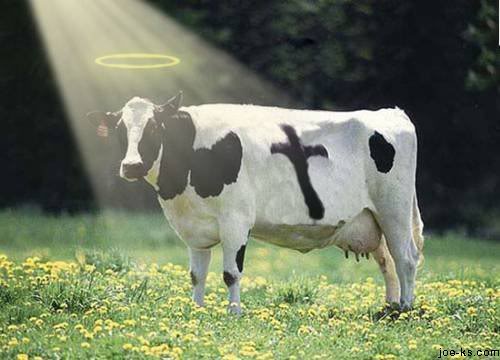
California’s greens ambitions even extend to eating habits. Brown has already assaulted the beef producers for their cattle’s flatulence. Regulators in the Bay Area and local environmental activists are proposing people shift to meatless meals. Green lobbyists have already convinced some Oakland school districts to take meat off the menu. OK with me, if I get the hamburger or taco-truck franchise next to school when the kids get out.
Sadly, many of these often socially harmful policies may do very little to address the problem associated with climate change. California’s draconian policies fail to actually do anything for the actual climate, given the state’s already low carbon footprint and the impact of people and firms moving to places where generally they expand their carbon footprint. Much of this has taken on the character of a passion play that shows how California is leading us to the green millennium.

Goodbye to the Family

An even bigger ambition of the green movement—reflecting concerns from its earliest days—has been to reduce the number of children, particularly in developed countries. Grist’s Lisa Hymas has suggested that it’s better to have babies in Bangladesh than America because they don’t end up creating as many emissions as their more fortunate counterparts. Hymas’ ideal is to have people become GINKs—green inclinations, no kids.

Many green activists argue that birth rates need to be driven down so warming will not “fry” the planet. Genial Bill Nye, science guy, has raised the idea of enforced limits on producing children in high-income countries. This seems odd since the U.S. already is experiencing record-low fertility rates, a phenomenon in almost all advanced economies, with some falling to as little as half the “replacement rate” needed to maintain the current population. In these countries, aging populations and shrinking workforces may mean government defaults over the coming decades.

The demographic shift, hailed and promoted by greens, is also creating a kind of post-familial politics. Like Jerry Brown himself, many European leaders—in France, Germany, Sweden, the United Kingdom, and the Netherlands—are themselves childless. Their attitude, enshrined in a EU document as “no kids, no problem” represents a breathtaking shift in human affairs; it’s one thing to talk a good game about protecting the “next generation” in the collective abstract, another to experience being personally responsible for the future of another, initially helpless, human being.

Do As We Say, Not How We Live

The pressing need to change people’s lives seems intrinsic now to green theology. Without penance and penalties, after all, there is no redemption from original sin. In the process, it seems to matter little if we undermine the great achievements of our bourgeois economy—expanded homeownership, greater personal mobility, the ability to rise to a higher class—if it signals our commitment to achieve a more earth-friendly existence.

The left-wing theorist Jedidiah Purdy has noted that “mainstream environmentalism overemphasizes elite advocacy” at the expense of issues of economic equity, a weakness that both Trump and the GOP have exploited successfully, particularly in the Midwest, the South, and Intermountain West. Some greens object even to the idea of GDP growth at a time when most Americans are seeing their standard of living drop. No surprise then that the green agenda has yet to emerge from the basement of public priorities, which remain focused on such mundanities as better jobs, public safety, and decent housing.

To further alienate voters, many green scolds live far more lavishly than the people they are urging to cut back. Greens have won over a good portion of the corporate elite, many of whom see profit in the transformation as they reap subsidies for “green” energy, expensive and often ineffective transit and exorbitant high-density housing. Most notable are the tech oligarchs, clustered in ultra-green Seattle and the Bay Area, who depend on massive amounts of electricity to run their devices, but have reaped huge subsidies for green energy.

The tech oligarchs have little interest in family friendly suburbs, preferring the model of prolonged adolescence in largely childless places like college campuses and San Francisco. Oligarchs such as Mark Zuckerberg live in spacious and numerous houses, even while pressing policies that would push everyone without such a fortune to downsize. Richard Branson, another prominent green supporter, may not like working people’s SUVs, but he’s more than willing to sponsor climate change events on a remote Caribbean island reachable only by private plane. One does not even need to plumb the hypocrisy of Al Gore’s jet-setting luxurious lifestyle.

In the manner of Medieval indulgences these mega emissions-generators claim to pay for their carbon sins by activism, buying rain forests and other noble gestures. Hollywood, as usual, is particularly absurd, with people like Leonardo di Caprio flying in his private jet across country on a weekly basis. Living in Malibu, Avatar director James Cameron sees skeptics as “boneheads” who will have “to be answerable” for their dissidence, suggesting perhaps a shootout at high noon.

Summary

In the end, the greens and their wealthy bankrollers may find it difficult to prevail as long as their agenda makes people poorer, more subservient, and more miserable; this disconnect is, in part, why the awful Donald Trump is now in the White House. Making progress on climate change, and other environmental concerns, remains a critical priority, but it needs to explore ways humans, through ingenuity and innovation, can meet these challenges without undermining what’s left of our middle class and faded democratic virtue.

Updated: Climates Don’t Start Wars, People Do

Update July 14

A new study has looked into the Syrian civil war, which has been the poster child for those claiming climate causes  human conflict.  h\t to Mike Hulme who posted Climate Change and the Syrian Civil War Revisited The study concluded:

“For proponents of the view that anthropogenic climate change will become a ‘threat multiplier’ for instability in the decades ahead, the Syrian civil war has become a recurring reference point, providing apparently compelling evidence that such conflict effects are already with us. According to this view, human-induced climatic change was a contributory factor in the extreme drought experienced within Syria prior to its civil war; this drought in turn led to large-scale migration; and this migration in turn exacerbated the socio-economic stresses that underpinned Syria’s descent into war. This article provides a systematic interrogation of these claims, and finds little merit to them. Amongst other things it shows that there is no clear and reliable evidence that anthropogenic climate change was a factor in Syria’s pre-civil war drought; that this drought did not cause anywhere near the scale of migration that is often alleged; and that there exists no solid evidence that drought migration pressures in Syria contributed to civil war onset. The Syria case, the article finds, does not support ‘threat multiplier’ views of the impacts of climate change; to the contrary, we conclude, policymakers, commentators and scholars alike should exercise far greater caution when drawing such linkages or when securitising climate change.”  (my bold)

Original Post

Once again the media are promoting a link between climate change and human conflicts. It is obvious to anyone in their right mind that wars correlate with environmental destruction. From rioting in Watts, to the wars in Iraq, or the current chaos in Syria, there’s no doubt that fighting degrades the environment big time.

What is strange here is the notion that changes in temperatures and/or rainfall cause the conflicts in the first place. The researchers that advance this claim are few in number and are hotly disputed by many others in the field, but you would not know that from the one-sided coverage in the mass media.

The Claim

Lately the fuss arises from this study: Climate, conflict, and social stability: what does the evidence say?, Hsiang, S.M. & Burke, M. Climatic Change (2014) 123: 39. doi:10.1007/s10584-013-0868-3

Hsiang and Burke (2014) examine 50 quantitative empirical studies and find a “remarkable convergence in findings” (p. 52) and “strong support for a causal association” (p. 42) between climatological changes and conflict at all scales and across all major regions of the world. A companion paper by Hsiang et al. (2013) that attempts to quantify the average effect from these studies indicates that a 1 standard deviation (σ) increase in temperature or rainfall anomaly is associated with an 11.1 % change in the risk of “intergroup conflict”.1 Assuming that future societies respond similarly to climate variability as past populations, they warn that increased rates of human conflict might represent a “large and critical impact” of climate change.

The Bigger Picture

This assertion is disputed by numerous researchers, some 26 of whom joined in a peer-reviewed comment: One effect to rule them all? A comment on climate and conflict, Buhaug, H., Nordkvelle, J., Bernauer, T. et al. Climatic Change (2014) 127: 391. doi:10.1007/s10584-014-1266-1

In contrast to Hsiang and coauthors, we find no evidence of a convergence of findings on climate variability and civil conflict. Recent studies disagree not only on the magnitude of the impact of climate variability but also on the direction of the effect. The aggregate median effect from these studies suggests that a one-standard deviation increase in temperature or loss of rainfall is associated with a 3.5 % increase in conflict risk, although the 95 % highest density area of the distribution of effects cannot exclude the possibility of large negative or positive effects. With all contemporaneous effects, the aggregate point estimate increases somewhat but remains statistically indistinguishable from zero.

To be clear, this commentary should not be taken to imply that climate has no influence on armed conflict. Rather, we argue – in line with recent scientific reviews (Adger et al. 2014; Bernauer et al. 2012; Gleditsch 2012; Klomp and Bulte 2013; Meierding 2013; Scheffran et al. 2012a,b; Theisen et al. 2013; Zografos et al. 2014) – that research to date has failed to converge on a specific and direct association between climate and violent conflict.

The Root of Climate Change Bias

The two sides have continued to publish and the issue is far from settled. Interested observers describe how serious people can disagree so frequently about such findings in climate science.

Modeling and data choices sway conclusions about climate-conflict links, Andrew M. Linke, and Frank D. W. Witmer, Institute of Behavioral Science, University of Colorado, Boulder, CO 80309-0483 here

Conclusions about the climate–conflict relationship are also contingent on the assumptions behind the respective statistical analyses. Although this simple fact is generally understood, we stress the disciplinary preferences in modeling decisions.

However, we believe that the Burke et al. finding is not a “benchmark” in the sense that it is the scientific truth or an objective reality because disciplinary-related modeling decisions, data availability and choices, and coding rules are critical in deriving robust conclusions about temperature and conflict.

After adding additional covariates (models 4 and 6), the significant temperature effect in the Burke et al. (1) model disappears, with sociopolitical variables predicting conflict more effectively than the climate variables. Furthermore, this specification provides additional insights into the between- and within-effects that vary for factors such as political exclusion and prior conflict.

Summary

Sociopolitical variables predict conflict more effectively than climate variables. It is well established that poorer countries, such as those in Africa, are more likely to experience chronic human conflicts. It is also obvious that failing states fall into armed conflicts, being unable to govern effectively due to corruption and illegitimacy.

It boggles the mind that activists promote policies to deny cheap, reliable energy for such countries, perpetuating or increasing their poverty and misery, while claiming such actions reduce the chances of conflicts in the future.

Halvard Buhaug concludes (here):

Vocal actors within policy and practice contend that environmental variability and shocks, such as drought and prolonged heat waves, drive civil wars in Africa. Recently, a widely publicized scientific article appears to substantiate this claim. This paper investigates the empirical foundation for the claimed relationship in detail. Using a host of different model specifications and alternative measures of drought, heat, and civil war, the paper concludes that climate variability is a poor predictor of armed conflict. Instead, African civil wars can be explained by generic structural and contextual conditions: prevalent ethno-political exclusion, poor national economy, and the collapse of the Cold War system.

Footnote:  The Joys of Playing Climate Whack-A-Mole

Dealing with alarmist claims is like playing whack-a-mole. Every time you beat down one bogeyman, another one pops up in another field, and later the first one returns, needing to be confronted again. I have been playing Climate Whack-A-Mole for a while, and if you are interested, there are some hammers supplied below.

The alarmist methodology is repetitive, only the subject changes. First, create a computer model, purporting to be a physical or statistical representation of the real world. Then play with the parameters until fears are supported by the model outputs. Disregard or discount divergences from empirical observations. This pattern is described in more detail at Chameleon Climate Models

This post is the latest in a series here which apply reality filters to attest climate models.  The first was Temperatures According to Climate Models where both hindcasting and forecasting were seen to be flawed.

Others in the Series are:

Sea Level Rise: Just the Facts

Data vs. Models #1: Arctic Warming

Data vs. Models #2: Droughts and Floods

Data vs. Models #3: Disasters

Data vs. Models #4: Climates Changing

Climate Medicine

Beware getting sucked into any model.

Pledging Climate Fidelity

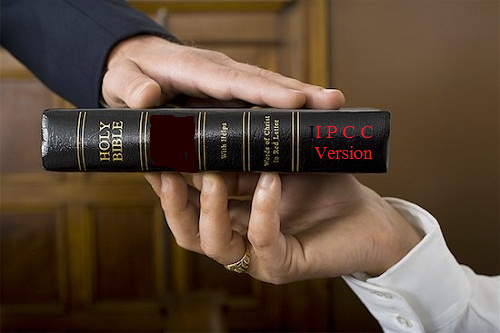
Climate change/global warmers believers are swearing oaths and taking pledges to show fidelity to the UN IPCC and Paris accord.  The ceremony goes by the name We Are Still In.  Adherents sign this document:

Open letter to the international community and parties to the Paris Agreement from U.S. state, local, and business leaders (Full text here)

The creed asserts the following:

Fighting climate change brings significant economic and public health benefits, but
No mention of trillions of someone’s dollars to be spent
Ignores research showing warming saves lives.

Paris accord will avoid the most dangerous and costly effects of climate change, but
If all nations comply, it could mean only 0.2C less warming by 2100.

The U.S. will remain a global leader in reducing emissions, but
Presumes killing the economy as in last recession
Fails to credit fracking revolution
Exported energy emissions are charged to others.

The global effort will hold warming to well below 2℃, but
Up to 2℃ is net beneficial
Achieving NDCs, especially China’s and India’s won’t bend the curve.

The transition to a clean energy economy will accelerate, but
Renewables are not low-carbon, are costly and unreliable.

The following statement was released today by the presidents of 12 major U.S. research universities, commonly referred to as the “Ivy-Plus” group. (Full text here)

Affirmation of leading research universities’ commitment to progress on climate change 

The climate is changing largely due to human activity, but
No one has yet proven how much warming humans cause.

The imperative of a low carbon future is increasingly urgent, but
All metrics show climate variations are within normal ranges.

The consequences of climate change are accelerating, but
Statistical measures of changes to natural conditions are not accelerating.

Research will advance evidence-based understanding of the causes and effects of climate change on the environment, the economy and public health, and develop solutions, but
Presently our knowledge of the climate system does not allow us to predict its behavior.

Summary

The last point is the only difference between the “Wearestillin” crowd and the “Ivy-Plus”.  The latter leaves the door open to actually study how the climate changes naturally, that is, to gain knowledge how internal natural processes cause multi-decadal effects upon temperature and precipitation.  So far the IPCC has willfully stayed ignorant of that need to know.


Inside a True Believer’s Mind

true-believer

At Slate Susan Matthews writes Bret Stephens’ First Column for the New York Times Is Classic Climate Change Denialism  It doesn’t outright reject the facts—which makes it all the more insidious.

Key Paragraphs (my bolding for emphasis)

But in reality, the goal of this column is not to help readers learn how to reason with people who are skeptical about climate change. Instead, the column reinforces the idea that those people might have a point. The New York Times push notification that went out Friday afternoon about the column said as much—“reasonable people can be skeptical about the dangers of climate change,” it read. That is not actually true, and nothing that Stephens writes makes a case for why it might be true. This column is not a lesson for people who want to advance good climate policy. Instead, it is a dog whistle to people who feel confused about climate change. It’s nothing more than textbook denialism.

The institutions Stephens questions in his column are not singular entities but entire ideas—scientists who may not see their biases, statistical models that might be skewed, liberals who may be so swayed by their ideology. His argument is convincing because the institutions he mentions can make mistakes. It’s true, there are some problems with how we use probabilities in science. We tend to be bad at distinguishing between correlation and causation. Sometimes our biases do get in the way. Stephens knows this, and he taps into it in his piece. “Much else that passes as accepted fact is really a matter of probabilities,” he suggests. You have to be an idiot or a zealot to believe climate change is certain, whispers the subtext.

The Credo

Regardless of what Stephens says in this column, and regardless of Clinton’s modeling failures, climate change is a terrible threat to life as we know it on this planet. Anyone who wants to honestly investigate the data will come to the same conclusion that the scientific establishment has—climate change is real, and dangerous. Our failures elsewhere—even in the disturbing wake of the election of Donald J. Trump—do not negate that. The questions are no longer whether and how but how soon and how bad. Climate change is happening, and “claiming total certainty about the science” does not “traduce the spirit of science.” Instead, it is a reasonable interpretation of the science at hand.

Don’t Give an Inch

What he is suggesting here is that the rational way to go forward with a conversation about climate change is to admit that climate change might not be certain. This is similar to the torturous logic he puts forward throughout the rest of the piece—the only way to be reasonable about this topic is to give in to those who are unreasonable about it. While he calmly insists he is the only logical person around, he is spewing complete bullshit.

Stephens article itself is excerpted at  NYT Opens Climate Can of Worms

KISS for Climate Marchers

Keeping it simple, here’s the elevator speech for climate marchers, excerpted from a more lengthy article linked below.

Expect more craziness this weekend. Earth Day is Saturday. This year’s theme: Government must “do more” about climate change because “consequences of inaction are too high to risk.”

They make it sound so simple:

1) Man causes global warming.

2) Warming is obviously harmful.

3) Government can stop it.

Each claim is dubious or wrong.

1) Man’s greenhouse gases contribute to warming, but scientists don’t agree on how much. Of 117 climate models from the 1990s, 114 overpredicted warming.

2) Warming is harmful. Maybe.

But so far it’s been good: Over the last century, climates warmed, but climate-related deaths dropped. Since 1933, they fell by 98 percent. Life expectancy doubled.

Much of that is thanks to prosperity created by free markets. But some is due to warming. Cold kills more people than heat.

Carbon dioxide is also good for crop growth. Even The New York Times admits, “Plants have been growing at a rate far faster than at any other time in the last 54,000 years.”

3) Nothing we do today will stop global warming. The Obama regulations that Trump recently repealed, horrifying the Earth Day crowd, had a goal that amounted to a mere 1 percent reduction in global CO2. And that was just the goal.

Of course, some think any cut is better than nothing. But cuts are costly. They kill jobs, opportunity. All to accomplish… nothing the earth will notice.

If warming does become a problem, we’re better off if our economy is very strong when the science tells us clearly that action will make a difference.

We should be especially wary of expensive government projects given how often alarmists were wrong in the past.

The alarmists claim they’re marching for “science,” but they’re really marching for a left-wing religion.  Instead we should celebrate human progress and our ability to use energy to improve everyone’s quality of life.

Excerpts from Earth Day Dopes By John Stossel April 19, 2017

Background info: Data, Facts and Information