Climatist Suicidal Obession


Fresh evidence this week linking climate alarm and suicidal fascination.  I am referring to all the mass media reports right now that climate change will cause large numbers of suicides.  The claim (yet again from my alma mater Stanford) is ludicrous for many reasons:

1. A suicide is a personal event with many contributing factors, weather and climate being the most peripheral.

2. Serious suicide researchers have identified risk factors that inform caregivers, no mention of climate.  Franklin et al. provide this analysis of experience with suicidal incidents Risk Factors for Suicidal Thoughts and Behaviors: A Meta-Analysis of 50 Years of Research.

suicide-risk-factors1

With such complexity of influencing factors, putting emphasis on a bit of warming is both myopic and lopsided. For example, some places report springtime suicides are more frequent, others see more such deaths in Summer or Autumn. The seasonal relationship is quite mixed in studies with various theories being suggested along with great uncertainty.

3. Suicides occur more frequently in colder climates than in warmer ones. For example, European studies find the highest rates in eastern European nations and lowest rates in Mediterranean countries.

4. Preventing suicides is a serious issue, and has nothing to do with reducing CO2.

But the whole climate alarm movement is stained with a suicidal impulse and disdain for humanity

Micheal Walsh published The Suicidal Narrative of the Modern Environmental Left, November 16, 2017.

Walsh presents two recent experiences showing how environmental concerns are embedded everywhere including plane trips and merchandising, then gets into the implications. His text with my bolds and images.

It’s all just advertising, of course, and thus harmless enough. It also goes to reinforcing the narrative: that selfish man is the cause of species endangerment, that primitive societies are superior to developed ones (but then who would buy the locally sourced cocoa beans and moringa leaves?), and that traditional medicine—which is to say, no medicine at all—is somehow superior to what those pill-pushing quacks foist on you before they climb in their BMWs and head out to the links for a round or two of golf. Were that true, the ancient Greeks and Romans might all have lived into their 80s, instead of dying in their 20s and 30s, as unsustainable folks tended to do back then.

Which brings us, ineluctably, to “climate change” and this piece in the Times: “The More Education Republicans Have, the Less They Tend to Believe in Climate Change.” Yes, you read that right:

“Climate change divides Americans, but in an unlikely way: The more education that Democrats and Republicans have, the more their beliefs in climate change diverge.  About one in four Republicans with only a high school education said they worried about climate change a great deal. But among college-educated Republicans, that figure decreases, sharply, to 8 percent.”

The author’s underlying assumption is that the more you know about “man-made climate change,” the more eager you should be to chow down on Endangered Species Chocolate or shovel some women’s-collective moringa into your smoothie before you leave your ant-farm apartment to hop on the mass-transit system on your way to a day job that somehow involves you, personally, saving the planet—not so much by what you do, but by what you don’t do.

But that’s not a future we on the Right want to embrace. I take this poll as a heartening sign that the more you educate yourself about the transparent fraud of “man-made climate change,” the less you’re likely to believe in their genteel fictions of peaceful, happy villages in Liberia or their apocalyptic notions of the End of the World as We Know It, just about any day now. As we’ve learned time and again, mountebanks and charlatans are always promising that the end of days is just around the corner, if only we will repent; find Jesus; join their cult; give away all our possessions; or at least sign up for a lifetime supply of snake oil, delivered by Amazon drones right to our doorsteps.

We’ve seen this movie before, of course. In April, Mark J. Perry of the American Enterprise Institute detailed 18 different instances when “[t]he prophets of doom were not simply wrong, but spectacularly wrong.”

Never mind that the Earth’s climate is always changing; we wouldn’t be here at all if it hadn’t. Never mind that there’s little humans can do to interfere with planetary processes, most of which are beyond our ken. Never mind that we flatter ourselves if we think so. Never mind that to characterize carbon dioxide—which we exhale so that the Amazon rain forest and those West African moringa plants might inhale—as a dangerous “greenhouse gas” is profoundly anti-human.

It’s what you’d expect from a political philosophy that denies God and sees itself as its own worst enemy: a narrative that must end in suicide, and all in the name of the greater good. All we ask our friends on the Left is not to take us with you.

Climate lemmings on the move.

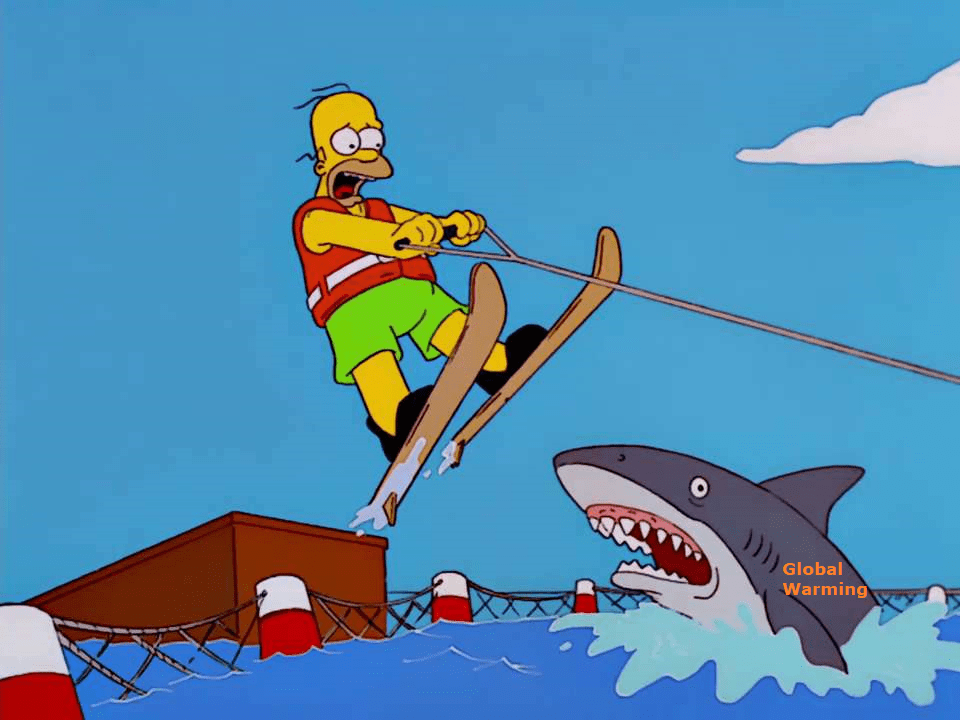
More on the bogus Stanford research linking suicides to climate:  Stanford Jumps Suicide Climate Shark


Preschool Alarmist Brainwashing


Review from Newsbusters New Magic School Bus to Kids: Use Clean Energy or Monsters Will Eat You Excerpts in italics with my bolds.

The Magic School Bus is back in the new Netflix series The Magic School Bus Rides Again! Overall, it’s still a nice, fun 13-episode series like we remember from when we were kids, but with some left turns. There is a pretty predictable take on climate change propaganda for little kids, but that wasn’t the worst. That dubious honor goes to the episode that teaches kids that a monster will eat them if they don’t use alternative clean energy sources.

Of course, conserving energy is a good thing and we should be kind to the earth, but this climate change hysteria is taking over. Usually, somebody will say that 97 percent of climate scientists agree that humans are causing global warming, and I was surprised that figure didn’t come up in this episode. Could it be that they know how easily debunked that number is? Given the way Dorothy Ann presented man-made climate change as fact, I doubt it.

This issue tends to play incredibly well in the mainstream media, as they use climate change as the universal bad-guy, so I’m sure there were plenty of parents who actually thought this episode was a good idea. I find it hard to believe any parents were happy about this next one, though.

Espisode 12: Monster Power. Click on link below to play short excerpt video.

https://www.mrctv.org/embed/518271

Episode 12, “Monster Power,” teaches kids that a monster will eat them if they don’t use alternative clean energy sources. Albert, one of the students, has seen a movie in which the evil monster loves pollution and is “coming for us next for what we’ve done to this planet!” With the class camping in the woods, Miss Frizzle and the other students help him come up with clean energy alternatives (wind, water, etc) so they won’t be eaten. Instead, Miss Frizzle could tell him that monsters aren’t real, but I guess that didn’t occur to her.

While it makes sense to teach kids the science of pollution and about all kinds of energy (I wouldn’t have minded some talk about oil in the dinosaur episode, to be honest), why would they tell kids that a monster will eat them for using the wrong energy source? I may not have the teaching credentials of Miss Frizzle, but I’m pretty sure that’s not scientifically accurate. They must really hate fossil fuels as much as their friends on the left. Keeping in mind that the TV-Y rating for this series means it’s for kids 2-6, I’m sure there are going to be some parents pretty irked at bedtime when kids are scared of the blot monster.

Overall, this is a cute series and fun bit of nostalgia for those of us who enjoyed the original books (or TV series) as kids, but I could have done without the climate change propaganda, and telling kids that traditional energy sources attract monsters is way over the top. Can’t kids just learn without an anti-scientific social agenda?


Update: Climate Change Theater


Today we can see again a post discussing Chantal Bilodeau’s theatrical productions concerning warming in Arctic Canada.  At Pacific Standard is today’s article  Chantal Bilodeau Brings Climate Change to the Theater.   Thus I am reposting my previous efforts to find scientific validation for the concerns expressed in her plays, and indeed by residents on Nunavut.

Nunavut is Melting! Or not.

From Yale Climate Connections we heard last week about Nunavut melting and a theatrical production to spread news and concerns about this dangerous development.

“I come from a place of rugged mountains, imperial glaciers and tender-covered permafrost. But Nunavut, our land, is only as rich as it is cold, and today most of it is melting.”That’s Chantal Bilodeau, reading a passage from “Sila,” a play about the effects of climate change in the Arctic.

The characters in her play include polar bears, an Inuit goddess, scientists, and coast guard officers – all working together to save their land.

No doubt her personal experience and feelings for her Nunavut are sincere and profound. (Originally I thought it was her homeland, but in fact she is a New York playwright and translator, born in Montreal.) And there will be a large audience receptive to her concerns about global warming. (Bilodeau has writen six plays about the Arctic and founded the international network Artists And Climate Change.) But I wonder if scientific measurements support her belief that Nunavut is melting.

After all, we have learned from medical research that individual life experiences (anecdotes) may not be true more generally. That is why drugs are tested on population samples with double-blind studies: neither the patient nor the doctor knows who gets the medicine and who gets the placebo.  And when it comes to climate change, every weather event is proclaimed as man made global warming rearing its ugly head.

So I went looking for weather station records to see what is the warming trend in that region. As curiosity does so often, it led me on a journey of discovery, learning some new things, and relearning old ones with fresh implications.

Where are temperatures measured in Nunavut?

It is by far the Northernmost territory of Canada, just off the coast of Northern Greenland.

According to Environment Canada, weather is reported at 29 places in Nunavut. So I went to look at the record at Iqaluit, the capital of the territory. You get monthly normals for the period 1981 to 2010. Historical data (daily averages) can be accessed only 1 individual month/year at a time, the menu stops at 2004. Even then, some months are filled with “M” for missing. Historical data from which trends can be analyzed is hard to come by.

Disappearing Weather Records

It turns out that Nunavut also suffered from the great purging of weather station records that was noticed by skeptics years ago.

Graph showing the correlation between Global Mean Temperature (Average T) and the number of stations included in the global database. Source: Ross McKitrick, U of Guelph

I was aware of this because of a recent study looking at trends at stations around the Arctic circle. Arctic Warming Unalarming.  That study included graphs that showed the dramatic removal of station records in the North.  Though the depletion was not limited to the far North, many Canadian and Russian records disappeared from the global database.

arctic-europe-paper-2015_fig6annual

Fig. 6 Temperature change for annual Arctic averages relative to the temperature during 1961 to 1990 for stations in Europe having more than 150 years of observations. The red curve is the moving 5-year average while the blue curve shows the number of stations reporting in each year. 118 stations contributed to the study. W. A. van Wijngaarden, Theoretical & Applied Climatology (2015)

Eureka, Nunavut, Canada “Last Station above latitude 65N”

Eureka got considerable attention in 2010 due to its surviving the dying out of weather stations. The phrase in quotes above reflects an observation that GISS uses Eureka data to infill across the whole Arctic Circle. That single station record is hugely magnified in its global impact in that temperature reconstruction product. Somewhat like the influence of a single tree in Yamal upon the infamous hockey stick graph.

The first High Arctic Weather Station in history, Eureka was established in April 1947 at 80-degrees north latitude in the vicinity of two rivers, which provided fresh water to the six-man United States Army Air Force team that parachuted in. They erected Jamesway huts to shelter themselves and their equipment until August, when an icebreaker reached Eureka – as it has every year since – and brought permanent buildings and supplies. For decades after that, small, all-male crews would hunker down for entire winters, going a little stir-crazy from the isolation. WUWT 2010

GHCN Records for Nunavut

It turns out that in addition to Eureka, GCHN has data for Alert and Clyde (River), but the latter two histories end in 2004 and 2010, respectively. The adjusted files have a few differences in details, but little change from the unadjusted files. The chart below shows the temperatures measured at Eureka, Nunavut, Canada 79° 98’ N, 85° 93’ W.  The other two stations tell the same story as Eureka, though temperatures at Clyde are warmer in absolute terms due to its more Southerly location.

Eureka temps4

The chart shows Annual, July and January averages along with the lifetime averages of Eureka station from 1948 through 2015.  There is slight variability, and a few years higher than average, but nothing alarming or even enough for people to sense any change.  Note also that annual averages are well below freezing, because only 3 months are above 0° C.  I suppose that someone could play with anomalies and generate a chart that looked scary, but the numbers in the record do not support fears of global warming and melting in Nunavut.

Conclusion

Once again we see media announcements that confuse subjective beliefs with empirical observations of objective reality.  And unfortunately, those observations are less and less available to counter the herd instincts of fearing the future and blaming someone.

Footnote

The map at the top shows how crucial is Nunavut to the Polar Ocean Challenge.  If the Northabout  successfuly negotiates the Northern Sea Route (the Russian side), they then must pass from Beaufort Sea through the Parry Channel (or alternative passages) to get to Baffin Bay.  Laptev is the first hurdle, and Nunavut is the last one.

NOAA Climate Intrigue

Defenders of the Federal status quo (AKA swamp denizens) are aroused over an apparent move to refocus the mission statement of National Oceanic and Atmospheric Administration (NOAA). UCS raised the alarm which was, as usual, taken up by the New York Times. At a recent Department of Commerce summit, the acting head of the National Oceanic and Atmospheric Administration (NOAA), Rear Admiral Timothy Gallaudet, proposed a new mission statement for the agency. The proposed change in wording is as follows.

The mission of NOAA has been:

  • To understand and predict changes in climate, weather, oceans and coasts;
  • To share that knowledge and information with others; and
  • To conserve and manage coastal and marine ecosystems and resources.

In his presentation, Rear Admiral Gallaudet suggested the mission statement would change to:

  • To observe, understand and predict atmospheric and ocean conditions;
  • To share that knowledge and information with others; and
  • To protect lives and property, empower the economy, and support homeland and national security.

Comment on NOAA Mission Statement

Note the word “observe” is added to give emphasis to NOAA’s responsibility to obtain and maintain data records relating to the ocean and atmosphere. Instead of the words “changes to climate, weather, oceans and coasts,” NOAA is tasked to predict “atmospheric and ocean conditions.” This suggest a move away from climatological considerations to more immediate support for adapting to natural events. It also suggests that coastal land management is outside NOAA’s scope.

Readers will note the proposed wording drops “conserve and manage” from the mission, replaced by the more explicit “To protect lives and property, empower the economy, and support homeland and national security.” The latter phase would be consistent with the larger thrust of the Commerce Department. (See Commerce priorities at end.)

Background:

September 1, 2017, Rear Admiral Gallaudet was nominated by President Trump and was warmly welcomed by scientists.

The University Corporation for Atmospheric Research (UCAR) congratulates Rear Admiral Timothy Gallaudet, a former oceanographer of the Navy, on his nomination to assistant secretary of commerce for oceans and atmosphere. In that position, Gallaudet will serve as the second-in-command at the National Oceanic and Atmospheric Administration (NOAA).

Gallaudet, who also served as commander of the Navy’s Meteorology and Oceanography Command, is a 32-year Navy veteran. He holds master’s and doctoral degrees in oceanography from the Scripps Institution of Oceanography.

“Tim’s mixture of operational expertise and scientific knowledge make him an ideal choice for this position,” said UCAR President Antonio Busalacchi. “His understanding of the vital collaborations between NOAA, private forecasting companies, and the academic community can help foster the movement of research to operational forecasting and advance the nation’s weather prediction capabilities. Furthermore, his knowledge of Earth system science and his ability to align that science with budget and programs will be essential to moving NOAA forward in the next few years.”

NOAA runs the National Weather Services, engages in weather and climate research, and operates weather satellites and a climate data center. The agency also works to better understand and protect the nation’s coasts, oceans, and fisheries.

UCAR is a nonprofit consortium of more than 100 colleges and universities focused on research and training in the atmospheric and related sciences.

September 25, 2017

In his answers to the confirmation committee’s questionnaire, Gallaudet listed the top three challenges he sees facing NOAA. He identified the first challenge as implementing the Weather Research and Forecasting Innovation Act that Congress passed earlier this year.

“If confirmed, I would make it my top priority to meet the intent of this law, especially the aspects concerning improvement to severe weather, tornado and hurricane warnings, and satellite data collection program management. … Finally I will need to work with the NOAA Administrator as well as NESDIS and NWS leadership to focus on the NOAA satellite programs which are growing at an unsustainable rate and that have been delayed numerous times.”

October 2017

Gallaudet was confirmed and on October 11, President Trump nominated Barry Myers, chief executive of the private weather forecasting company AccuWeather, to run NOAA. The appointment breaks from the recent precedent of scientists leading the agency tasked with a large, complex, and technically demanding portfolio. Myers has a bachelor’s degree in business administration and economics, a master’s degree in business from Pennsylvania State University, and a law degree from Boston University School of Law. Myers has been an adviser to five directors of NOAA’s National Weather Service and a representative of the U.N. World Meteorological Organization, according to a biography from AccuWeather. He must be confirmed by the Senate before taking the post.

December 17, 2017

In his Senate Confirmation hearing, Myers sought to assure members of the Senate Commerce, Science, and Transportation Committee that he has a deep appreciation for NOAA’s scientific mission. In response to pointed questions from Democratic senators, Myers vowed to uphold NOAA’s scientific integrity policies and champion free and open data. And, for the first time in public since his nomination, he concurred with the mainstream scientific consensus on climate change and promised to support NOAA’s climate research portfolio. The full inquisition is described by the American Institute of Physics NOAA Nominee Barry Myers Embraces Science at Confirmation Hearing

April 11, 2018

Timothy Gallaudet testifies at Budget hearings.NOAA Budget Cuts Get Chilly Reception in Congress

In his opening statement at the April 11 hearing, Gallaudet explained that the $4.5 billion budget request for NOAA focuses on two priorities. The first is “reducing the impacts of extreme weather and water events, by implementing the Weather Research and Forecasting Innovation Act,” which was enacted last April. The second is increasing sustainable economic contributions of U.S. fisheries and other ocean resources.

Gallaudet also touted NOAA’s successes over the last year in responding effectively to the record-setting hurricane season, saying the agency’s efforts “saved thousands of lives despite Hurricanes Harvey, Irma, [and] Maria, being three of the five most costly hurricanes in history.” He also highlighted the “perfect” recent launches of two flagship weather satellites — Geostationary Operational Environmental Satellite-S (GOES-S) and Joint Polar Satellite System-1 (JPSS-1).

Later in the hearing, Gallaudet described further investments NOAA is making in high-performance computing and modeling to support operational weather prediction. In describing the Global Forecast System FV3 experimental model that is being transitioned to the National Weather Service, Gallaudet said,

This model out-performed the European models for the hurricane track forecasts for the three Category 4 hurricanes that made landfall [last year]. Our goal is to regain world leadership, take number one back for our weather modeling. We’re on track to do it. We expect to do that before 2020.

Gallaudet assured Cartwright that climate is “embedded” within NOAA’s weather and water forecasting priority, explaining that it includes consideration of “scales that are in weeks to seasonal and even sub-seasonal and climate types of scales.”

Although the administration has proposed deep cuts for climate research and grant programs, including termination of the $48 million Competitive Climate Research grant program and the $6 million Arctic Climate Research Program, Gallaudet assured members that climate research would continue, “because there’s much we still don’t know.”

When Cartwright pressed further on his concerns about the White House’s treatment of climate change, Gallaudet reassured him that the White House has “not zeroed out our climate work,” pointing to the Climate Prediction Center’s publication of seasonal and long-range outlooks as well as recent collaboration between NOAA and the U.S. Navy on Arctic sea ice forecasting. In addressing similar concerns brought up by Sen. Maggie Hassan (D-NH) at the April 12 hearing, he added that the White House is “supporting much of our Arctic-related research that is driven primarily by climate change,” and that he has not been directed to eliminate or remove the phrase “climate change” from reports.

May 14, 2018

Senate Should Confirm Barry Myers to Lead NOAA

NOAA – the National Oceanic and Atmospheric Administration – needs its leader! President Trump nominated Barry Lee Myers, the CEO of AccuWeather, to the post in mid-October. The Senate Commerce Committee has twice advanced Myers’ nomination to the full Senate. All that’s needed to fill this important job is a majority vote on the Senate floor, which both Democrats and Republicans expect to happen. Unfortunately, partisan politics keeps getting in the way, delaying the vote.

Senate offices have received more than 60 letters from individuals and organizations supporting his confirmation, including strong backing from the past four leaders of the U. S. National Weather Service who served under both Democratic and Republican administrations. In addition, the seafood industry has overwhelmingly advocated his confirmation with letters of support from seafood processors and others in the fisheries industry ranging from ship captains to sport fishermen.

Also, as a recognized leader in the sciences, Myers has demonstrated respect for quality-tested science when making decisions related to all areas of the agencies’ responsibilities, including the nation’s fisheries, weather, oceanographic and climate challenges.

Myers worked closely with lawmakers to help secure enactment of last year’s Weather Research and Forecasting Innovation Act. The American Meteorological Society conferred its highest award for Excellence in Meteorology on him. He also has demonstrated a deep knowledge about NOAA and is committed to making the agency the best it can be, second to none in the world.

Prompt confirmation of Myers will benefit the public and the U.S. economy in the days, weeks and months ahead by solidifying the NOAA leadership team. With the unprecedented threat of catastrophic storms, the agency’s mission – protecting life and property and expanding American economic competitiveness – is on the line. The Senate should quickly confirm Barry Myers as NOAA administrator.

Conrad C. Lautenbacher Jr. VADM USN (ret.), CEO of GeoOptics, is a former under secretary of commerce for oceans and atmosphere and administrator of NOAA.

Robert Vanasse is executive director of the National Coalition for Fishing

Overview of Strategic Plan of US Department of Commerce 2018 to 2022

Knowing that innovation is a key driver of economic advancement, we are placing an increased emphasis on the commercial opportunities of space exploration and aquaculture while our scientists are conducting foundational research in areas ranging from artificial intelligence to quantum computing. Our patent professionals are also working to improve the protection of intellectual property so that creators can profit from their inventions.

U.S. businesses must export more, and our workers deserve a level playing field. Enforcing our trade laws to ensure that trade is free, fair, and reciprocal is a top priority of the Department. We are also joining with all federal agencies in cutting red tape that drives up costs and puts American workers and businesses at a disadvantage.

To maintain America’s leadership in next-generation technologies, we are making important advances in data, cybersecurity, and encryption technology. Our economists and statisticians are improving Commerce data that American businesses and communities use to plan investments and identify growth opportunities. Every level of the Department will be engaged to ensure that we conduct the most accurate, secure, and technologically-advanced decennial census in history.

Finally, teams across the Department are working to keep Americans safe by predicting extreme weather events earlier and more accurately, preventing sensitive technology from getting in the hands of terrorists, rogue regimes, and strategic competitors, and deploying a nationwide public safety broadband network that allows better coordination among first responders.

Thank you to every employee at the Department and to our industry and government partners for your dedication to our mission.

Post by Wilbur Ross Secretary of Commerce

Pope Francis Has Climate Change Backwards

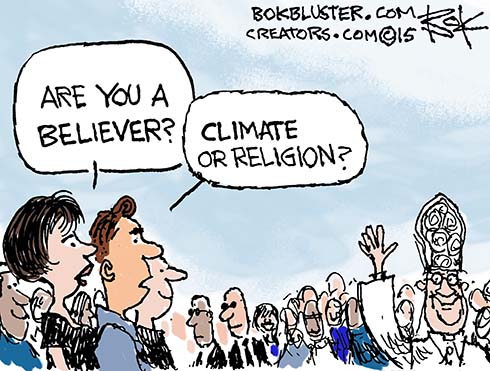
150928believer

Reblogged from Town Hall Pope Francis has it Exactly Backwards on Climate Change by Gregory Whitestone. Text in italics with my bolds.

This week Pope Francis will host a gathering of executives from major oil companies and investment firms at the Vatican to have a dialogue on climate and more specifically on transitioning away from fossil fuels. Already confirmed to attend were leaders of BP, ExxonMobil, Royal Dutch Shell and mega-investment firm Black Rock. That these major companies would attend such a meeting shows just how successful the constant world-wide drum beat of climate alarmism has been. I doubt that these oil executives would agree to bring the rope to their own hanging, but they certainly appear to be ready to negotiate the terms of their own demise.

This pope has a long history of supporting the notion of catastrophic man-made global warming and using his interpretation of biblical teaching to support it. In 2015 he wrote his encyclical Laudato Si, on climate change and man’s responsibilities to the planet as a warning to his flock of the dangers of our “sins of emission” through our use of fossil fuels and in praise of renewable energy and living a more spartan existence. This more than 100-page manifesto reads like it could have been co-authored by Al Gore, Karl Marx and Chicken Little and depicts an Earth that is spiraling quickly into man-made climate hell which can only be saved by radically reducing our carbon footprint and curbing our wasteful habits.

The document contains bitter condemnations on human failures that are supposedly harming the planet including the usual litany of a lack of clean water, soils that are despoiled by pesticides, increasing air pollution, desertification and drought, to name a few. In it he states that we must, “… hear both the cry of the earth and the cry of the poor. These situations have caused sister earth, along with all the abandoned of our world, to cry out, pleading that we take another course. Never have we so hurt and mistreated our common home as we have in the last two hundred years.”

The encyclical professes to speak for the poor but in truth, it will be the poor that will bear the brunt of the very policies the Pope endorses. Pope Francis’ endorsement of climate agreements like the Paris Climate Accord will necessarily limit and reduce the availability of inexpensive, reliable energy that can help lift the billions of the poorest out of staggering poverty. Nearly a billion people do not have the benefit of electricity and another 2 billion have very limited access to the energy standards we expect in the western world. In addition, the living standards of all peoples benefit from inexpensive, dependable energy from fossil fuels.

The Pope recommends that we move away from low-cost, reliable energy provided through fossil fuels and embrace expensive, intermittent “green” energy. In developed countries, the poor pay a higher percentage of their income on energy than others, so in effect, the policies proposed are a regressive form of taxation with higher costs to the poor than the wealthy. It is estimated that pollution from dirty, inefficient cooking and heating fuels, often dung, lead to about 4 million premature deaths a year. Policies such as that proposed by Francis condemn these unfortunates to more generations of poverty, disease and despair.

The Pope has it exactly backwards. A prospering of the human condition requires full use of all of God’s Creation. Reliable, inexpensive energy is part of the solution which can lift billions of God’s creatures out of systemic poverty and disease. Instead of promoting fruitless and harmful policies to control global temperature, Christian leadership should embrace responsible environmental stewardship, make energy and all its benefits more affordable, and thereby free the poor to rise out of poverty.

Media Raises False Alarms of Ocean Cooling

The RAPID moorings being deployed. Credit: National Oceanography Centre.

The usual suspects, such as BBC, the Guardian, New York Times, Washington Post etc., are reporting that the Atlantic gulf stream is slowing down due to climate change, threatening an ice age.  That’s right, warmists are now claiming fossil fuels do cooling when they are not warming.  As usual the headlines are not supported by the details.

The AMOC is back in the news following a recent Ocean Sciences meeting.  This update adds to the theme Oceans Make Climate. Background links are at the end, including one where chief alarmist M. Mann claims fossil fuel use will stop the ocean conveyor belt and bring a new ice age.  Actual scientists are working away methodically on this part of the climate system, and are more level-headed.  H/T GWPF for noticing the recent article in Science Ocean array alters view of Atlantic ‘conveyor belt’  By Katherine Kornei Feb. 17, 2018 . Excerpts with my bolds.

The powerful currents in the Atlantic, formally known as the Atlantic meridional overturning circulation (AMOC), are a major engine in Earth’s climate. The AMOC’s shallower limbs—which include the Gulf Stream—transport warm water from the tropics northward, warming Western Europe. In the north, the waters cool and sink, forming deeper limbs that transport the cold water back south—and sequester anthropogenic carbon in the process. This overturning is why the AMOC is sometimes called the Atlantic conveyor belt.

Fig. 1. Schematic of the major warm (red to yellow) and cold (blue to purple) water pathways in the NASPG (North Atlantic subpolar gyre ) credit: H. Furey, Woods Hole Oceanographic Institution): Denmark Strait (DS), Faroe Bank Channel (FBC), East and West Greenland Currents (EGC and WGC, respectively), NAC, DSO, and ISO.

In February at the American Geophysical Union’s (AGU’s) Ocean Sciences meeting, scientists presented the first data from an array of instruments moored in the subpolar North Atlantic. The observations reveal unexpected eddies and strong variability in the AMOC currents. They also show that the currents east of Greenland contribute the most to the total AMOC flow. Climate models, on the other hand, have emphasized the currents west of Greenland in the Labrador Sea. “We’re showing the shortcomings of climate models,” says Susan Lozier, a physical oceanographer at Duke University in Durham, North Carolina, who leads the $35-million, seven-nation project known as the Overturning in the Subpolar North Atlantic Program (OSNAP).

Fig. 2. Schematic of the OSNAP array. The vertical black lines denote the OSNAP moorings with the red dots denoting instrumentation at depth. The thin gray lines indicate the glider survey. The red arrows show pathways for the warm and salty waters of subtropical origin; the light blue arrows show the pathways for the fresh and cold surface waters of polar origin; and the dark blue arrows show the pathways at depth for waters that originate in the high-latitude North Atlantic and Arctic.

The research and analysis is presented by Dr. Lozier et al. in this publication Overturning in the Subpolar North Atlantic Program: A New International Ocean Observing System Images above and text excerpted below with my bolds.

For decades oceanographers have assumed the AMOC to be highly susceptible to changes in the production of deep waters at high latitudes in the North Atlantic. A new ocean observing system is now in place that will test that assumption. Early results from the OSNAP observational program reveal the complexity of the velocity field across the section and the dramatic increase in convective activity during the 2014/15 winter. Early results from the gliders that survey the eastern portion of the OSNAP line have illustrated the importance of these measurements for estimating meridional heat fluxes and for studying the evolution of Subpolar Mode Waters. Finally, numerical modeling data have been used to demonstrate the efficacy of a proxy AMOC measure based on a broader set of observational data, and an adjoint modeling approach has shown that measurements in the OSNAP region will aid our mechanistic understanding of the low-frequency variability of the AMOC in the subtropical North Atlantic.

Fig. 7. (a) Winter [Dec–Mar (DJFM)] mean NAO index. Time series of temperature from the (b) K1 and (c) K9 moorings.

Finally, we note that while a primary motivation for studying AMOC variability comes from its potential impact on the climate system, as mentioned above, additional motivation for the measure of the heat, mass, and freshwater fluxes in the subpolar North Atlantic arises from their potential impact on marine biogeochemistry and the cryosphere. Thus, we hope that this observing system can serve the interests of the broader climate community.

Fig. 10. Linear sensitivity of the AMOC at (d),(e) 25°N and (b),(c) 50°N in Jan to surface heat flux anomalies per unit area. Positive sensitivity indicates that ocean cooling leads to an increased AMOC—e.g., in the upper panels, a unit increase in heat flux out of the ocean at a given location will change the AMOC at (d) 25°N or (e) 50°N 3 yr later by the amount shown in the color bar. The contour intervals are logarithmic. (a) The time series show linear sensitivity of the AMOC at 25°N (blue) and 50°N (green) to heat fluxes integrated over the subpolar gyre (black box with surface area of ∼6.7 × 10 m2) as a function of forcing lead time. The reader is referred to Pillar et al. (2016) for model details and to Heimbach et al. (2011) and Pillar et al. (2016) for a full description of the methodology and discussion relating to the dynamical interpretation of the sensitivity distributions.

In summary, while modeling studies have suggested a linkage between deep-water mass formation and AMOC variability, observations to date have been spatially or temporally compromised and therefore insufficient either to support or to rule out this connection.

Current observational efforts to assess AMOC variability in the North Atlantic.

The U.K.–U.S. Rapid Climate Change–Meridional Overturning Circulation and Heatflux Array (RAPID–MOCHA) program at 26°N successfully measures the AMOC in the subtropical North Atlantic via a transbasin observing system (Cunningham et al. 2007; Kanzow et al. 2007; McCarthy et al. 2015). While this array has fundamentally altered the community’s view of the AMOC, modeling studies over the past few years have suggested that AMOC fluctuations on interannual time scales are coherent only over limited meridional distances. In particular, a break point in coherence may occur at the subpolar–subtropical gyre boundary in the North Atlantic (Bingham et al. 2007; Baehr et al. 2009). Furthermore, a recent modeling study has suggested that the low-frequency variability of the RAPID–MOCHA appears to be an integrated response to buoyancy forcing over the subpolar gyre (Pillar et al. 2016). Thus, a measure of the overturning in the subpolar basin contemporaneous with a measure of the buoyancy forcing in that basin likely offers the best possibility of understanding the mechanisms that underpin AMOC variability. Finally, though it might be expected that the plethora of measurements from the North Atlantic would be sufficient to constrain a measure of the AMOC within the context of an ocean general circulation model, recent studies (Cunningham and Marsh 2010; Karspeck et al. 2015) reveal that there is currently no consensus on the strength or variability of the AMOC in assimilation/reanalysis products.

Atlantic Meridional Overturning Circulation (AMOC). Red colours indicate warm, shallow currents and blue colours indicate cold, deep return flows. Modified from Church, 2007, A change in circulation? Science, 317(5840), 908–909. doi:10.1126/science.1147796

In addition we have a recent report from the United Kingdom Marine Climate Change Impacts Partnership (MCCIP) lead author G.D. McCarthy Atlantic Meridional Overturning Circulation (AMOC) 2017.

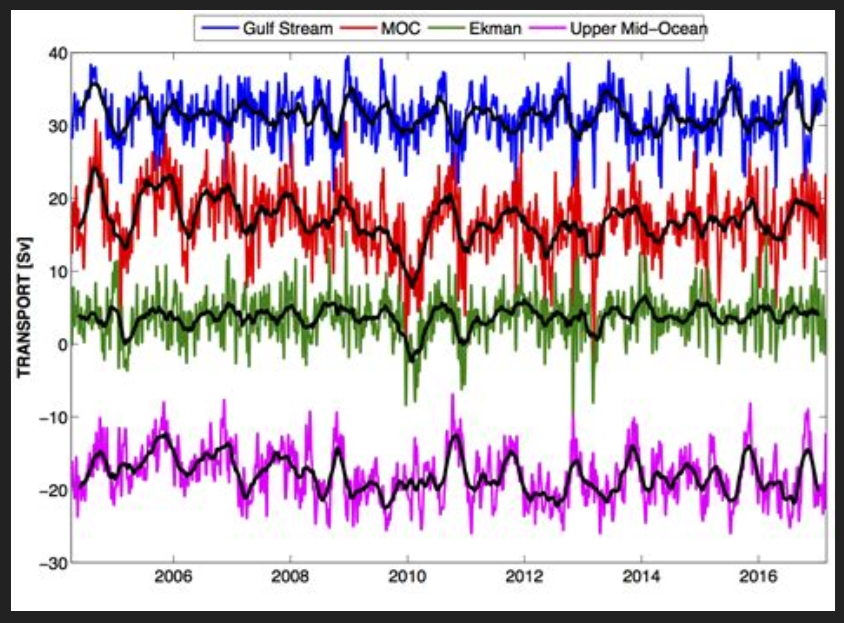
Figure 1: Ten-day (colours) and three month (black) low-pass filtered timeseries of Florida Straits transport (blue), Ekman transport (green), upper mid-ocean transport (magenta), and overturning transport (red) for the period 2nd April 2004 to end- February 2017. Florida Straits transport is based on electromagnetic cable measurements; Ekman transport is based on ERA winds. The upper mid-ocean transport, based on the RAPID mooring data, is the vertical integral of the transport per unit depth down to the deepest northward velocity (~1100 m) on each day. Overturning transport is then the sum of the Florida Straits, Ekman, and upper mid-ocean transports and represents the maximum northward transport of upper-layer waters on each day. Positive transports correspond to northward flow.

The RAPID/MOCHA/WBTS array (hereinafter referred to as the RAPID array) has revolutionized basin scale oceanography by supplying continuous estimates of the meridional overturning transport (McCarthy et al., 2015), and the associated basin-wide transports of heat (Johns et al., 2011) and freshwater (McDonagh et al., 2015) at 10-day temporal resolution. These estimates have been used in a wide variety of studies characterizing temporal variability of the North Atlantic Ocean, for instance establishing a decline in the AMOC between 2004 and 2013.

Summary from RAPID data analysis

MCCIP reported in 2006 that:

  • a 30% decline in the AMOC has been observed since the early 1990s based on a limited number of observations. There is a lack of certainty and consensus concerning the trend;
  • most climate models anticipate some reduction in strength of the AMOC over the 21st century due to increased freshwater influence in high latitudes. The IPCC project a slowdown in the overturning circulation rather than a dramatic collapse.And in 2017 that:
  • a substantial increase in the observations available to estimate the strength of the AMOC indicate, with greater certainty, a decline since the mid 2000s;
  • the AMOC is still expected to decline throughout the 21st century in response to a changing climate. If and when a collapse in the AMOC is possible is still open to debate, but it is not thought likely to happen this century.

And also that:

  • a high level of variability in the AMOC strength has been observed, and short term fluctuations have had unexpected impacts, including severe winters and abrupt sea-level rise;
  • recent changes in the AMOC may be driving the cooling of Atlantic ocean surface waters which could lead to drier summers in the UK.

Conclusions

  • The AMOC is key to maintaining the mild climate of the UK and Europe.
  • The AMOC is predicted to decline in the 21st century in response to a changing climate.
  • Past abrupt changes in the AMOC have had dramatic climate consequences.
  • There is growing evidence that the AMOC has been declining for at least a decade, pushing the Atlantic Multidecadal Variability into a cool phase.
  • Short term fluctuations in the AMOC have proved to have unexpected impacts, including being linked
    with severe winters and abrupt sea-level rise.

Background:

Oceans Make Climate: SST, SSS and Precipitation Linked

Climate Pacemaker: The AMOC

Evidence is Mounting: Oceans Make Climate

Mann-made Global Cooling


Pipeline Tragedy/Comedy: Ideology and Energy Don’t Mix

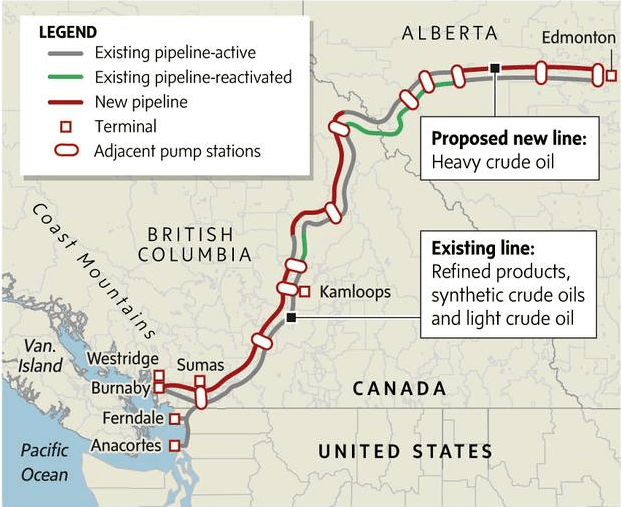
The inter provincial Canadian war over a bitumen pipeline is taking on Shakespearean drama as reported in the Globe and Mail  The symbolism of Kinder Morgan’s Trans Mountain pipeline  The article is by Arno Kopecky, an environmental journalist and author based in Vancouver.  Excerpts below with my bolds and images introducing the principle players.

Spare a thought for Rachel Notley. While you’re at it, spare another for John Horgan and Justin Trudeau. Three star-crossed allies, progressives all, steering ships through a Kinder Morgan tempest no pundit can describe without saying “collision course.” Shakespearean, ain’t it?

There’s tragedy, comedy and irony galore. Ms. Notley’s take on A Midsummer Night’s Dream with her midwinter ban on British Columbia wines – which was lifted on Thursday – lent itself so well to “Reign of Terroir” jokes that it can only end up raising the provincial wine industry’s profile. As for Alberta’s oil industry, this is more like Much Ado About Nothing. Whether the oil sands grow or shrink has much less to do with any one pipeline (even one that leads to almighty tidewater) than the global price of oil. What about all those Kinder Morgan jobs? Comedy. Anyone serious about creating oil-sector jobs for Canadians would be pushing to refine bitumen at home instead of exporting it raw. That’s why Unifor, the biggest union in the oil sands, intervened against the project in the NEB hearings.

But the notion that Kinder Morgan’s Trans Mountain pipeline expansion would add carbon to the atmosphere is comedy, too. If Kinder Morgan isn’t built, trains will keep moving the bitumen they’re already moving, at least until a higher force than pipeline capacity reduces Fort McMurray’s output. Everyone just makes less money that way.

When a country already has more than 840,000 kilometres of pipeline running through it, the fight over roughly 1,000 new kilometres is symbolic for both sides. But symbols matter. Now Trans Mountain has come to symbolize everything from the oil sands to climate change and reconciliation, and everyone’s job is at stake.

Premier Rachel Notley of oil rich, but landlocked and economically struggling Alberta.

None more than Ms. Notley’s, our likeliest candidate for tragedy. Alberta’s most progressive premier in more than 30 years, the woman who imposed a provincial carbon tax and raised royalties on oil sands operators and lifted Alberta’s minimum wage from the lowest to the highest in the country, Rachel Notley will not be replaced by someone nicer. Alberta’s profoundly oil-positive United Conservative Party, freshly merged and braying at her heels, threaten every last NDP policy with a Trumpian corrective. They’ll probably win the next election, too. Ms. Notley’s only hope is in proving to Albertans she can fight as dirty as any conservative would to protect the Symbol.

British Columbia Premier John Horgan, who recently formed a government propped up by a few Green party MPs.

Enter John Horgan, stage left. Poor guy. He’s running a province whose biggest, greenest city overwhelmingly voted against a once-in-a-generation opportunity to massively expand public transit, but has already proved itself willing to get arrested en masse in anti-Kinder Morgan protests. Mr. Horgan’s first major decision as Premier, the tortured approval of the Site C dam, earned him the condemnation of every environmentalist and First Nation leader in the province, if not the country. Now that he’s following through on his campaign promise to “use every tool in our tool box” against Kinder Morgan, fans and critics are trading placards. Never mind that Site C will keep far more carbon in the ground than any thwarted pipeline.

The thing is, pipeline battles on the coast aren’t about pipelines or even climate change. They’re about oil tankers. Want symbols? Wild salmon and orca populations are rapidly approaching extinction in southern B.C. Yes, oil tankers do already ply these waters. No, we don’t love hearing that the only way to pay for sorely lacking coastal protection is to heighten the risk of an oil spill by tripling the number of tankers.  But that’s the deal.

Canadian Prime Minister Justin Trudeau currently touring India.

Enter Justin Trudeau, our doomed and dashing Hamlet, haunted by the ghost of his father, asking not to be or not to be, but can the ends justify the means? The greater the ends, it seems, the crueler the means. For all his capacity to renege on inconvenient promises, Mr. Trudeau clearly does regard the fight against climate change as a Very Great End. He knows we’re losing the glaciers whose meltwater irrigates half of Canada’s agriculture; he’s aware of our metastasizing cycle of flood and forest fire; he’s already dealt with one wave of climate refugees, from Syria (yes – that war was largely triggered by a calamitous drought that beggared a million farmers); he knows this is just the beginning. (Note: The reporter and Trudeau believe things cited in this paragraph contrary to evidence, but ignorance and hubris are essential to any tragedy.)

Against all that, he weighs the spill risk of one new pipeline, twinned to a pre-existing condition, with a corresponding increase in tanker traffic through relatively safe waters in which oil tankers can so far boast a 100-per-cent safety rate. Without Kinder Morgan, Mr. Trudeau mutters, pacing the stage from left to right, you lose Alberta; without Alberta, you lose your national climate-change strategy, your coastal protections, your whole progressive agenda. You lose everything.

Enter, in our closing act, B.C.’s coastal First Nations. Of course, they’ve been here all along – Mr. Trudeau made them some promises, too. But so far, his definition of consultation looks a lot like the old one: a process to determine not if a project should proceed on Indigenous territory, but when. The courts may yet cancel Trans Mountain because of it, as they did Northern Gateway. That’s probably Mr. Trudeau’s best hope for a happy ending. He’s created his own Birnam Wood, an army of First Nations and their allies ready to lead the march to Dunsinane Hill, aka Burnaby Mountain and the terminus of the pipeline, for the biggest act of civil disobedience our generation’s seen.

It isn’t a question of if, but when.

This is another example of damage done by virtue signaling, further explained in Virtue Signaling as a Vicious Circle

Footnote:  Regarding the attempt to blame the Syrian conflict on drought, see Climates Don’t Start Wars, People Do

Virtue Signaling as a Vicious Circle

A recent article reveals how perverse is the trendy pattern of virtue signaling. Ron Ross observes examples of this growing substitute for ethical behavior, adding perspective and raising concerns. His essay at the American Spectator is The Power and Prevalence of Virtue Signaling  Excerpts below with my headings, bolds and images.

Puzzling Events Explained by Virtue signaling

One key to understanding much of the bewildering behavior we see around us is to recognize the power and popularity of “virtue signaling.” Keeping virtue signaling in mind will help you understand a lot of behavior that otherwise makes no sense.

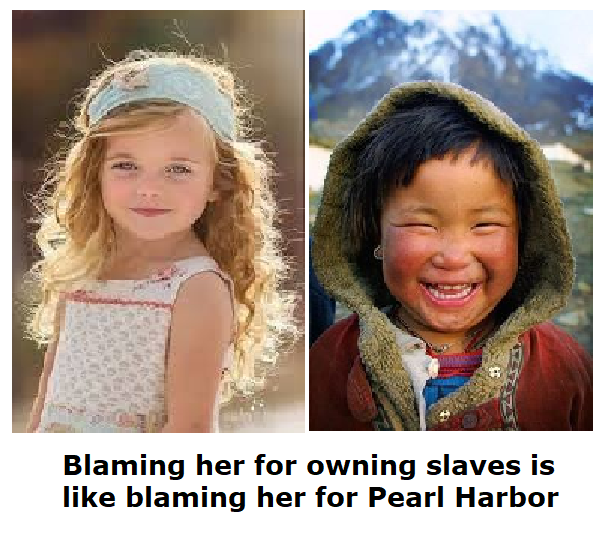
What, for example, is the point of removing Confederate statues or attempting to disown the country’s Founding Fathers because some were slave owners? It makes sense if your objective is to be sanctimonious. You make yourself feel better by looking down your nose at Thomas Jefferson.

Virtue signaling is the modern version of what St. Augustine in the 5th century referred to as “outward signs of inward grace.” A major difference, however, is the kind of grace he referred to actually meant something.

First the Guilt Trip, then Superiority

A precondition to needing to virtue signal is guilt. Virtue signaling is one of the left’s package deals that typically involve two steps. Firstly, make people who have done nothing wrong feel guilty. Then, offer them ways to assuage that guilt. It’s little more than a con game but it has worked amazingly well for liberals.

It always helps to keep in mind that everything is relative. In order to feel superior, you need something to feel superior to. Virtuous relative to what? In order to feel holier than thou you need a thou.

Does virtue signaling accomplish anything outside of the individual? Anything tangible, significant? Any activity as widespread and long-lasting as virtue signaling has to have payoffs. The payoffs for virtue signaling are inner, not outer, directed.

An irony is that the need to virtue signal is an insecurity about your own virtue. An observation a psychologist friend likes to make is, “The bigger the front, the bigger the back.” Or as Ralph Waldo Emerson observed, “The louder he spoke of his honor, the faster we counted our spoons.” Virtue signaling is motivated more by insecurities than virtue.

The “signaling” part of virtue signaling means you want others to become aware of your virtue. Why is that important to you? Where does your need to signal come from? Are you so overwhelmingly virtuous that you can’t resist letting others know about it?

Symbols Instead of Substance

Virtue signaling is, of course, closely related to political correctness. Being sensitive to PC and being quick to take offense demonstrates your virtue for all to see.

Recycling is one of the left’s favorite sacraments. It helps overcome the guilt of consuming.

There is an opportunity cost to virtue signaling. Spending time on useless activities, e.g. recycling, marching, allows avoidance of useful, meaningful activities, e.g. being thoughtful and considerate of those around you, e.g. family, friends, and people you work with. Those behaviors can actually make a difference.

Maybe you’ve wondered why actors and other celebrities feel the need to publicly express their political opinions. What is their motivation? Maybe they feel guilty about how amazingly wealthy they are (they shouldn’t).

Donald Trump is the context for much of the virtue signaling we observe. It’s another two-step process. The first step is to decide that Donald Trump is a reprehensible human being. He is crude, unsophisticated, and his personality makes you cringe. The second step is making it crystal clear that you and he are polar opposites. You have absolutely nothing in common with him. You don’t need to provide details about what makes you virtuous, just the fact that you despise him is sufficient to prove you’re virtuous. He is crude, you are refined. Trump provides a backdrop for your identity. It’s ironic that hate is seen as a path to virtue.

Grandstanding Instead of Civility

Virtue signaling is a substitute for thinking, it is thinking avoidance. It is the latest variation of group think. When you latch on to group opinions you have no need to think for yourself.

Driving a Prius automobile is a popular form of virtue signaling. Driving a hybrid lets others see that you care about the planet and that you’re doing your part to prevent it from being destroyed by CO2. Driving a Prius allows to you drive rudely and carelessly. Cutting someone off or running a stop sign or two are trivial matters compared to saving the planet. Everything’s relative. It’s probably no accident that Priuses have an unusual profile. That helps assure that your virtue signal will noticed.

A favorite demand of leftists on college campuses and endowment fund boards of directors is “divestment.” What is divestment? In the investment portfolios of endowment funds and retirement portfolios are stocks of companies involved in shunned activities such as producing and selling fossil fuels. In such situations activists demand that the colleges or foundations divest, i.e. sell, any stock of such despicable companies.

Divestment is possibly the most useless behavior anyone could ever imagine. How anyone thinks it will have any impact on anything real is a mystery. Because of the way capital markets work, divesting on anything but a massive scale will have no long-term impact on a company’s share price. If they manage to drive a stock’s price down, bargain hunters will drive it back up to its underlying value, relative to other stocks. Other than stoking sanctimony divestment accomplishes absolutely nothing.

Sincerity Posing as Goodness

Showing your disapproval of the names or mascots of sports teams demonstrates your sensitivity for the supposed feelings of various minority groups. How many of those demanding that the Washington Redskins change their name are Indians? My guess is that it’s a very small fraction.

Wearing ribbons is a popular form of virtue signaling. The ostensible purpose is to “raise awareness” for such things as breast cancer (pink ribbons). Is there anyone who isn’t already” aware” of breast cancer? And once your awareness has been raised, what are you supposed to do with it? As is the case with every variation of virtue signaling, the mission statement is nowhere to be found.

Feeling Good about Caring the Most

Virtue signalers are delicate creatures who are easily offended. They wouldn’t be caught dead laughing at stereotypical humor. They are overly serious about almost everything. It only hurts when they laugh.

There is a large element of virtue signaling in environmentalism. Devout environmentalists like to think they’re the only ones who care about the environment. Relative to how much they care about the environment you don’t care much at all.

Marching and demonstrating are two popular virtue signaling activities. The next big opportunity will be June 9. It is the “March for Oceans,” or what they’re labeling “M4O.” According the organizers’ website, “This summer we will see a new blue wave of resistance — and celebration — for the other 71 percent of our environment that is the Ocean. The ocean is rising and so are we!”

Uselessness and remoteness are two of the ingredients for virtue signaling choices. Driving a hybrid automobile will make not an iota’s difference to “climate change” (whatever that is). In any case, the “climate disruption catastrophe,” as it’s sometimes called, is not predicted to occur for another fifty years. It was more than two hundred years ago when some of our founding fathers owned slaves. The past is unchangeable and irretrievable. Problems that you can’t do a damned thing about are virtue signaling favorites.

A recent Dennis Prager column, “Three Reasons the Left Wants Evermore Immigrants,” had as reason number three, “the power of feeling good about oneself. It would be difficult to overstate the significance of feeling good about oneself as a primary factor in why people adopt left-wing policies.… In their eyes, they are moral heroes protecting the stranger, the oppressed, the marginalized, the destitute.”

Until this week William McKinley thought he was home free.

Finally, this just in: The Arcata, California city council voted Wednesday night to remove the statue of President William McKinley from the town square. The statue has been in place for over a hundred years. As per usual, McKinley’s sins have not been clearly elucidated. He was assassinated in 1901. Like Matt Lauer, the statue will vanish into the ether. One of the groups demanding the statue’s removal is the Humboldt State University student group, Movimiento Estudiantil Chicanco de Aztlan, whatever that means. I’m embarrassed to admit I’m a resident of Arcata. Our neighboring town to the north is McKinleyville. The town’s name is probably not long for this world.

These are just a sampling of the ways virtue signaling is dictating behavior far and wide. Being aware of its many manifestations will reduce your confusion and increase your amusement. It’s a shame it’s doing so much damage.

Footnote:

The Darrow quote crystallized what was making me uncomfortable about the behavior of the Parkland survivors on television.  I understand they were scared out of their wits, lost friends and are angry.  But the aggressive and threatening language toward anyone not on their bandwagon smacks of self-righteousness, and worse a justification for bullying.  It makes me wonder how much of that helped send the shooter around the bend.

Upping the Stakes for Ecoterrorists

Protesters admit to pipeline vandalism before vandalizing IUB
Previous posts have covered the trials of  “valve turners”, showing the legal maneuvers required to bring them to justice.  Now we have a report that Iowa lawmakers intend on raising the stakes for those taking this path to “save the planet” from fossil fuel energy.  From the Des Moines Register Iowa Senate bill would ban sabotage of pipelines, other ‘critical infrastructure’ Excerpts below with my bolds.

Criminal acts against pipelines, telecommunications facilities, water treatment plants, and a long list of other critical infrastructure would result in a long prison sentence and a steep fine under legislation advancing in the Iowa Senate.

Senate Study Bill 3062, proposed by the Iowa Department of Homeland Security and Emergency Management, appears to be a response to millions of dollars in damage inflicted by protesters on Iowa sections of the Dakota Access Pipeline, prior to the crude oil pipeline becoming operational last year across four states.

Explanation of the proposed legislation, Senate Study Bill 3062 from the Iowa Bill book: (full text here)

This bill creates the crime of critical infrastructure sabotage.

The bill defines critical infrastructure property as property and public utility property, both as defined in Code 9 section 716.7, that is considered critical infrastructure. The bill defines critical infrastructure to include electrical critical infrastructure, gas, oil, refined petroleum products, or chemical critical infrastructure, telecommunications or broadband critical infrastructure, wastewater critical infrastructure, and water supply critical infrastructure.

The bill additionally defines critical infrastructure sabotage to mean any unauthorized act that is intended to or does in fact cause a substantial interruption or impairment of service rendered to the public relating to critical infrastructure property. The bill provides that a person who commits critical infrastructure sabotage commits a class “B” felony, punishable by confinement for no more than 25 years. The bill also subjects a person who commits critical infrastructure sabotage to a fine of $100,000.

Jeff Boeyink, a lobbyist for Energy Transfer, the developer of the $3.8 billion Dakota Access Pipeline, told a Senate subcommittee Thursday he considers his company’s project to be the “poster child” of why the legislation is necessary.”This is not only dangerous, but it has huge monetary implications,” Boeyink said.

John Benson, a legislative liaison for the Department of Homeland Security and Emergency Management, said Iowa law currently allows criminal charges for terrorism, arson, burglary and criminal mischief. However, these charges do not specifically include “critical infrastructure,” he said, and operators of these facilities want criminal charges that are appropriate for such actions.

The Senate subcommittee voted 3-0 Thursday to advance the measure to the full Senate Judiciary Committee. Sen. Tom Shipley, R-Nodaway, said the bill needs to be amended, but he believes it’s a step in the right direction.

“There is no question about it that we have people who are looking to do others harm,” Shipley said. That’s evidenced by “terrorist activities on pipelines” and other threats to infrastructure that can damage the nation’s economy and put lives in peril, he remarked.

Hundreds of Iowans protested the construction of the Dakota Access Pipeline, and many were arrested in demonstrations along the pipeline route over the past two years. Most of the protests were peaceful, but in July 2017, two activists with a history of arrests for political dissent claimed responsibility for repeatedly damaging the Dakota Access Pipeline while the project was being built in Iowa.

Ruby Montoya, 27, and Jessica Reznicek, 35, who both resided in Des Moines at the time, described their pipeline sabotage as a “direct action” campaign that began in November 2016. They said their first incident of destruction involved burning at least five pieces of heavy equipment on the pipeline route in northwest Iowa’s Buena Vista County.

The two women said they researched how to pierce the steel pipe used for the pipeline and in March 2017 they began using oxyacetylene cutting torches to damage exposed, empty pipeline valves. They said they started deliberately vandalizing the pipeline in southeast Iowa’s Mahaska County, delaying completion for weeks.

Reznicek and Montoya said they subsequently used torches to cause damage up and down the pipeline throughout Iowa and into part of South Dakota, moving from valve to valve until running out of supplies. They said their actions were rarely reported in the media.

The bill says that a person who sabotages critical infrastructure could be charged with a Class B felony, punishable by no more than 25 years in prison, plus a $100,000 fine.

Postscript:

Feel Good Climatism

A recent post by Ace of Spades rang a chord. He was talking about partisan politics but I saw another example in the global warming/climate change issue. I was reminded of an email exchange with a relative after I pointed out that some scientists think we are on the brink of global cooling. She replied: “It is confusing, but we have decided that humans are making it warmer.”

Ace provides some insight into this sort of behavior. His post is in fact a comment triggered by Joe Katzman writing in the Daily Caller(here):

A good friend of mine wrote me recently. He complained about smug leftist neighbors who are “making decisions to ‘feel good’ with virtually no regard for true factual input or testing.”

I get this a lot.

“Feel good” about what?

Not about being right, which is best described as “useful, to a point.” Aristotle noticed over 2,000 years ago that many people aren’t persuadable by logical arguments. So what’s the “feeling good” all about?

So what is going on? Ace summarizes (here).  Excerpts with my bolds.

Short version: The right attempts political persuasion. The left, on the other hand, attempts social persuasion — basically seizing the commanding heights of culture-making institutions and then deciding that espousing some political claims (being pro-gay-marriage) increase social status and that espousing other political claims (being against gay marriage) decrease social status and, indeed, make one a social pariah, fit for ostracism, mass mockery, and internal exile.

The left’s method works much better than the right’s. It always has and it always will. Because most people don’t care about politics all that muchbut nearly everyone (except for the crankiest of contrarians, including some of the current assembled company) cares about their social status.

Having higher social status gets you invites to the Cocktail Party Circuit, which is a real thing, defined broadly (and metaphorically) enough. It makes you datable, it makes you “clubbable,” as the old term went.

It can get you promoted at work, particularly if the sort of job you do is a bit vague as far as definite, tangible outputs and thus advancement depends more on how upper management feels about you.

While the left wing continues winning arguments by not even having arguments at all, instead simply demonizing those who espouse any contrary position, the #SmartSet (citation required) of the establishment right continues believing, apparently earnestly and definitely ridiculously, that if they just out argue their political competitors, they’ll change minds.

They won’t. Or not enough to actually matter. Because most people don’t really care enough about these issues to really engage with them on an intellectual level; they just want to know what to claim to believe so that other people won’t think they’re weird, and deem them unfriendable, undatable, and poor candidates for promotion inside The Corporation.

How This Applies to Global Warming

When it comes to global warming/climate change, of course the alarmist notion is embraced by the left, and skeptics (“deniers”) are banished to associate with others mostly on the right. I recently commented to a friend who won’t discuss this topic with me that I used to be a liberal, but have become a libertarian. (BTW my friend is a successful entrepreneur engineer but does not delve into climate science intentionally. Why pick a family fight over something like that?)

Contemporary socio-political orientations no longer fit traditional liberal/conservative definitions. The left is now committed to “post-modern” philosophy and “progressive” political action, deriving from identity politics and cultural warfare. Traditionalists are now on the far right sideline and “conservatives” are tarred with that same brush. People in the middle are a mix of classical liberals and conservatives who still embrace the western rational, free enterprising democracy frame. Progressives want to overturn that heritage with tactics from social class conflict, supercharged in the age of Internet, social media and 24/7 buzz. The middle alternative on the right is more properly termed “libertarian” since the focus is on individual liberty, free enterprise and limited government. The same concerns motivated those drafting the US Constitution.

Whatever you think of Trump, he is the first libertarian to take the fight to the progressive post-modernists. Anti-Trumpism started in the media beginning with his candidacy, and it has only ramped up since, becoming a kind of derangement. Trump recognized early in his term that the media had become the defacto opposition party, and would be willing and eager to say anything to discredit him. So he responded in kind, resulting in public approval of mass media at an all time low, while his own approval ratings remain stuck in the 40% range. The whole circus is at the same time amusing and dangerous. Like watching a train wreck in slow motion, just try looking away.

Global warming/climate change is a football kicked around in this game. During the campaign I didn’t know what to make of Trump.  If it weren’t for some perceptive and prescient posts by Scott Adams of Dilbert fame,  I would have written off his chances.  As one pundit put it: “His detractors take him literally, and not seriously; while his supporters take him seriously, but not literally.”

As a CAGW skeptic, I do credit Trump for the guts to pull out of Paris and to point out the nakedness of the climate emperor. And at least so far, he seems to use the culture wars to keep his enemies distracted while quietly doing important libertarian things, like deregulating the economy and reforming the judiciary. It seems the left is claiming incompetence to get him out, while actually they really fear him delivering on his promises.

Just for fun, here is a video of his recently released First Annual Fake News Awards: