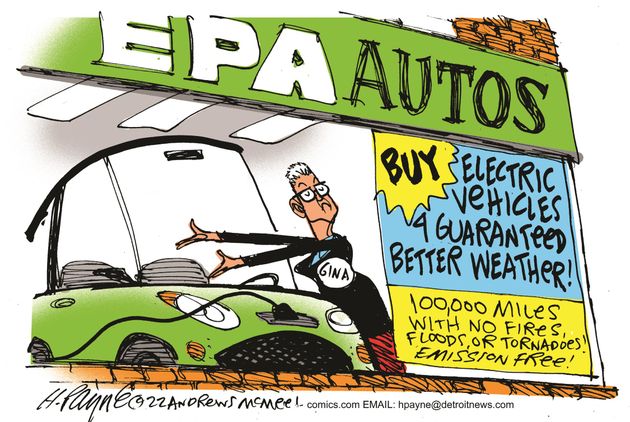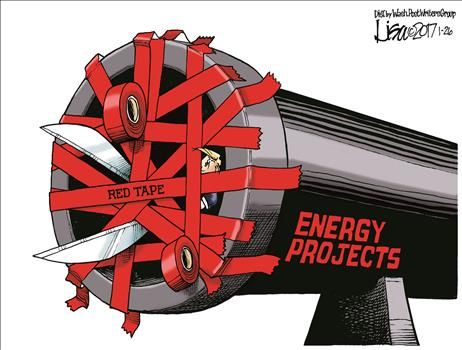
Obviously Climate Policies Are Inflationary


Rupert Darwall explains how central bankers avert their eyes from the obvious in his Real Clear Energy article Inflation, Net Zero, and the Bank of England. Excerpts in italics with my bolds and added images.

A central banker tiptoes toward the inflationary consequences of Net Zero.

“What a banker,” read the unsubtle headline in the Sun. “BoE official on £190k salary says Brits must accept they’re worse off.” The Mail agreed. “BoE chief risks fury as he says Brits must accept they are poorer.” What sparked the tabloids’ outrage was a Columbia Law School podcast with Huw Pill, the Bank of England’s chief economist and a member of the Bank’s interest-rate-setting Monetary Policy Committee. Pill made the uncontroversial point that higher energy prices were making Britons worse off, but that attempts by workers and firms to recoup the real spending power they’d lost risked embedding inflation.

Pill’s analysis should have been directed at his fellow central bankers,
who let inflation slip the leash.

In his Geneva speech, Pill says that central bankers need to assess structural factors likely to prevent inflation falling back to target. “If a rise in energy prices is seen as permanent, it is more likely to trigger greater intrinsic inflation,” he argues. If it does, it would “justify a stronger tightening of monetary policy.” Not mentioned by Pill, however, are the effects of climate policy and net zero on energy costs and prices – and therefore the persistence of inflation on an economy being subjected to a multi-decadal program of decarbonization.

Climate policies drive up energy costs through two channels.

The first are policies forcing energy companies to replace hydrocarbons with inefficient, inferior lower-carbon alternatives, notably wind and solar. Were such technologies superior and capable of delivering greater efficiencies, there would be no need for government intervention promoting their adoption. The second channel is by progressively constricting the sources of energy supply, for example by Environmental, Social and Governance (ESG) investors preventing investment in new oil and gas fields, thereby increasing the market share of OPEC plus Russia.

In Britain’s case, powering past coal meant increased dependence on natural gas to keep the lights on. As Pill notes, all market transactions involve distribution of some “economic surplus” between the parties; “the more effective the seller is in extracting that economic surplus, the higher the resulting economic price will be.” Unfortunately for Britain and the rest of Europe, Vladmir Putin and Gazprom have a much better understanding of how energy markets work than Western politicians who made their continent vulnerable to surplus extraction through the myopic pursuit of net zero.

With the Bank of England, it’s not so much myopia as wilful blindness to any possibility of a link between climate policies and inflation. In a speech this month unironically asking “Climate action: a tipping point?,” Sarah Breeden, the bank’s executive director for financial stability and risk, describes its role as creating a regulatory framework that encourages markets “to allocate capital to support real economy decarbonization,” i.e., to worsen the supply constraints on hydrocarbon energy. At the November 2022 G20 meeting in Bali, Deputy Governor Sir Dave Ramsden spoke of the need to avert climate catastrophe. “Among all the shocks – many unprecedented – facing the global economy today, the challenge of climate change is the most profound and far reaching,” Sir Dave declared, in the very month it was announced that consumer price inflation in Britain had reached 11.1 percent.

From the governor on down, the Bank of England became obsessed with conjuring up specters of climate risk as threats to financial stability, all the while blanking out any possibility that climate change policy might threaten attainment of the bank’s inflation mandate. Less than two years ago, Andrew Bailey, the bank’s governor, was talking of net zero as a way of regenerating capital and raising productivity. “These positive effects should be larger in countries like the UK that are net importers of energy,” Bailey asserted – the opposite of what the bank’s chief economist is now saying.

Alarm bells should be ringing in Threadneedle Street. Giving evidence to a House of Lords inquiry on the Bank of England independence, former chancellor George Osborne cast doubt on making climate goals one of the bank’s objectives. His former Labour opponent, Ed Balls, who helped design the arrangements making the bank independent in 1997, went further, arguing that it didn’t make sense to give the bank a role for which it had no tools, and suggesting that climate had become a distraction from its core mission on price and financial stability.

Climate is worse than a distraction:
misjudgement and misanalysis of climate-change policy is a key factor
in the Bank of England losing control of inflation.

You Won’t Survive “Sustainability” Agenda

Joel Kotkin explains in his Spiked article The inhumanity of the green agenda.  Excerpts in italics with my bolds and added images.

The ‘sustainability’ regime is impoverishing the world.

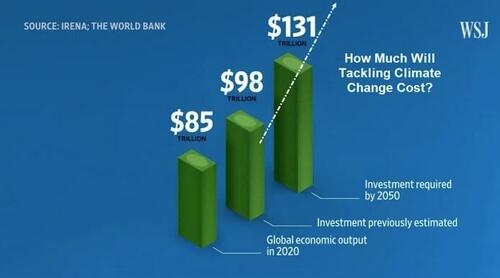
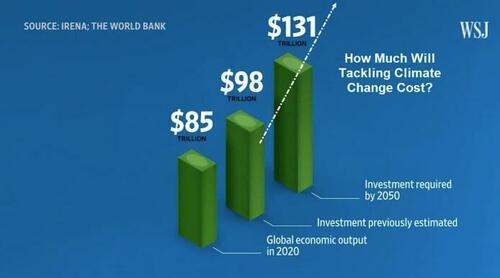
In recent years, the overused word ‘sustainability’ has fostered a narrative in which human needs and aspirations have taken a back seat to the green austerity of Net Zero and ‘degrowth’. The ruling classes of a fading West are determined to save the planet by immiserating their fellow citizens. Their agenda is expected to cost the world $6 trillion per year for the next 30 years.

Meanwhile, they will get to harvest massive green subsidies
and live like Renaissance potentates.

In Enemies of Progress, author Austin Williams suggests that ‘the mantra of sustainability’ starts with the assumption that humanity is ‘the biggest problem of the planet’, rather than the ‘creators of a better future’. Indeed, many climate scientists and green activists see having fewer people on the planet as a key priority. Their programme calls not only for fewer people and fewer families, but also for lower consumption among the masses. They expect us to live in ever smaller dwelling units, to have less mobility, and to endure more costly home heating and air-conditioning. These priorities are reflected in a regulatory bureaucracy that, if it does not claim justification from God, acts as the right hand of Gaia and of sanctified science.

The question we need to ask is: sustainability for whom?

US Treasury secretary Janet Yellen recently suggested that her department sees climate change as ‘the greatest economic opportunity of our time’. To be sure, there is lots of gold in green for the same Wall Street investors, tech oligarchs and inheritors who fund the campaigns of climate activists. They increasingly control the media, too. The Rockefellers, heirs to the Standard Oil fortune, and other ultra-wealthy greens are currently funding climate reporters at organs like the Associated Press and National Public Radio.

Under the new sustainability regime, the ultra-rich profit, but the rest of us not so much. The most egregious example may be the forced take-up of electric vehicles (EVs), which has already helped to make Elon Musk, CEO of Tesla, the world’s second-richest man. Although improvements are being made to low-emissions vehicles, consumers are essentially being frogmarched into adopting a technology that has clear technical problems, remains far more expensive than the internal-combustion engine and depends primarily on an electric grid already on the brink of blackouts. Green activists, it turns out, do not expect EVs to replace the cars of hoi polloi. No, ordinary people will be dragooned to use public transport, or to walk or bike to get around.  [BMW will come to mean “Bike, Metro, and Walking.”]

The shift to electric cars is certainly no win for the West’s working and middle classes. But it is an enormous boon to China, which enjoys a huge lead in the production of batteries and rare-earth elements needed to make EVs, and which also figure prominently in wind turbines and solar panels. China’s BYD, which is backed by Warren Buffett, has emerged as the world’s top EV manufacturer, with big export ambitions. Meanwhile, American EV firms struggle with production and supply-chain issues, in part due to green resistance to domestic mining for rare-earth minerals. Even Tesla expects much of its future growth to come from its Chinese factories.

Building cars from primarily Chinese components will have consequences for autoworkers across the West. Germany was once a car-manufacturing giant, but it is expected to lose an estimated 400,000 car-factory jobs by 2030. According to McKinsey, the US’s manufacturing workforce could be cut by up to 30 per cent. After all, when the key components are made elsewhere, far less labour is needed from US and European workers. It’s no surprise that some European politicians, worried about a popular backlash, have moved to slow down the EV juggernaut.

This dynamic is found across the entire sustainability agenda. The soaring energy costs in the West have helped China expand its market share in manufactured exports to roughly equal that of the US, Germany and Japan combined. American manufacturing has dropped recently to its lowest point since the pandemic. The West’s crusade against carbon emissions makes it likely that jobs, ‘green’ or otherwise, will move to China, which already emits more greenhouse gases than the rest of the high-income world.

Meanwhile, the Chinese leadership is looking to adapt to changes in the climate,
instead of undermining economic growth chasing implausible Net Zero targets.

There are clear class implications here. California’s regulators recently admitted that the state’s strict climate laws aid the affluent, but hurt the poor. These laws also have a disproportionate impact on ethnic-minority citizens, creating what attorney Jennifer Hernandez has labelled the ‘green Jim Crow’. As China’s increasingly sophisticated tech and industrial growth is being joyously funded by US venture capitalists and Wall Street, living standards among the Western middle class are in decline. Europe has endured a decade of stagnation, while Americans’ life expectancy has recently fallen for the first time in peacetime. Deutsche Bank’s Eric Heymann suggests that the only way to achieve Net Zero emissions by 2050 is by squelching all future growth, which could have catastrophic effects on working-class and middle-class living standards.

Rather than the upward mobility most have come to expect, much of the West’s workforce now faces the prospect of either living on the dole or working at low wages. Today, nearly half of all American workers receive low wages and the future looks worse. Almost two-thirds of all new jobs in recent months were in low-paying service industries. This is also true in Britain. Over recent decades, many jobs that might have once supported whole families have disappeared. According to one UK account, self-employment and gig work do not provide sustenance for anything like a comfortable lifestyle. Rates of poverty and food shortages are already on the rise.

As a result, most parents in the US and elsewhere doubt their children
will do better than their generation,
while trust in our institutions is at historic lows.

The fabulists at places like the New York Times have convinced themselves that climate change is the biggest threat to prosperity. But many ordinary folk are far more worried about the immediate effects of climate policy than the prospect of an overheated planet in the medium or long term. This opposition to the Net Zero agenda was first expressed by the gilet jaunes movement in France in 2018, whose weekly protests were initially sparked by green taxes. This has been followed by protests by Dutch and other European farmers in recent years, who are angry at restrictions on fertilisers that will cut their yields. The pushback has sparked the rise of populism in a host of countries, notably Italy, Sweden and France. Even in ultra-with-it Berlin, a referendum on tighter-emissions targets recently failed to win over enough voters.

This is class warfare obscured by green rhetoric.
It pits elites in finance, tech and the nonprofit world against
a more numerous, but less connected, group of ordinary citizens.

Many of these folk make their living from producing food and basic necessities, or from hauling these things around. Factory workers, truck drivers and farmers, all slated for massive green regulatory onslaughts, see sustainability very differently than the urban corporate elites and their woke employees. As the French gilets jaunes protesters put it bluntly: ‘The elites worry about the end of the world. We worry about the end of the month.’

This disconnect also exists in the United States, according to long-time Democratic analyst Ruy Teixeira. Attempts to wipe out fossil fuels may thrill people in San Francisco, but are regarded very differently in Bakersfield, the centre of the California oil industry, and in Texas, where as many as a million generally good-paying jobs could be lost. Overall, according to a Chamber of Commerce report, a full national ban on fracking, widely supported by greens, would cost 14 million jobs – far more than the eight million jobs lost in the Great Recession of 2007-09.

No surprise then that blue-collar workers are not so enthusiastic
about the green agenda.

Just one per cent, according to a new Monmouth poll, consider climate as their main concern. A new Gallup poll shows that just two per cent of working-class respondents say they currently own an electric vehicle and a mere nine per cent say they are ‘seriously considering’ purchasing one.

These Western concerns are nothing compared to how the sustainability agenda could impact the developing world. Developing countries are home to roughly 3.5 billion people with no reliable access to electricity. They are far more vulnerable to high energy and food prices than we are. For places like Sub-Saharan Africa, green admonitions against new agricultural technologies, fossil fuels and nuclear power undermine any hope of creating desperately needed new wealth and jobs. It’s no wonder that these countries increasingly ignore the West and are looking to China instead, which is helping the developing world to build new fossil-fuel plants, as well as hydroelectric and nuclear facilities. All of this is anathema to many Western greens.

To make matters worse, the EU is already considering carbon taxes on imports,
which could cut the developing world off from what remains of global markets.

More critical still could be the impact of the sustainability mantra on food production, particularly for Sub-Saharan Africa, which will be home to most of the world’s population growth over the next three decades, according to United Nations projections. These countries need more food production, either domestically or from rich countries like the US, the Netherlands, Canada, Australia and France. And they are acutely aware of what happened when Sri Lanka adopted the sustainability agenda. This led to the breakdown of Sri Lanka’s agricultural sector and, eventually, to the violent overthrow of its government.

We need to rethink the sustainability agenda. Protecting the environment cannot come at the cost of jobs and growth. We should also assist developing countries in achieving a more prosperous future. This means financing workable technologies – gas, nuclear, hydro – that can provide the reliable energy so critical for economic development. It does no good to suggest a programme that will keep the poor impoverished.

Unless people’s concerns about the green agenda are addressed, they will almost certainly seek to disrupt the best-laid plans of our supposedly enlightened elites. In the end, as Protagoras said, human beings are still the ultimate ‘measure’ of what happens in the world – whether the cognoscenti like it or not.


Net Zero Not Rational

Jonathan Lesser explains in his Real Clear Energy article Why “Net Zero” Is Not a Rational U.S. Energy Policy.  Excerpts in italics with my bolds and added images.

Cost of achieving net-zero carbon emissions would be staggering for neglible climate impact.

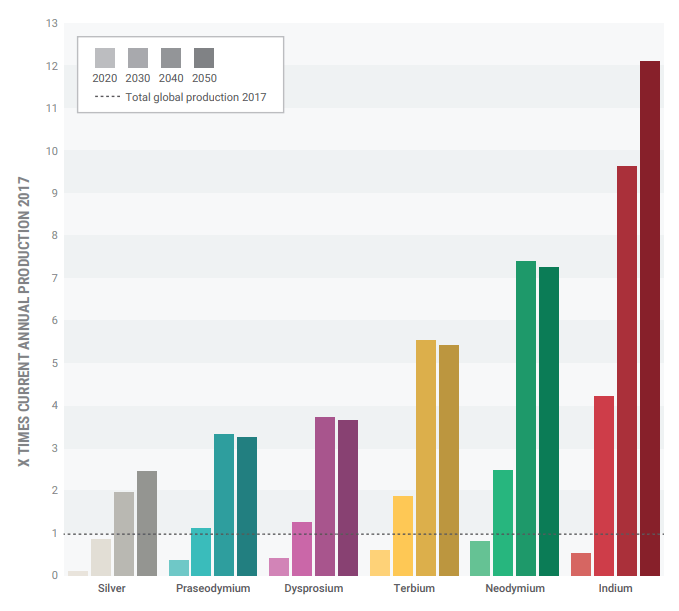
Despite Germany’s last-ditch attempt at realism, the European Union recently approved a 2035 ban on gas-powered cars, moving ahead with its “net zero” emissions agenda. In the U.S., the cost of achieving net-zero carbon emissions would be staggering – $50 trillion if the goal is reached by 2050 – as would the demand for raw materials, which in most cases would exceed current annual worldwide production. 

Global critical metal demand for wind and PV

The impact on world climate, however, would be negligible. Emissions in developing countries will continue to increase as those countries’ focus is economic growth for their citizens, not permanent economic misery to “save” the climate. Although a recent Washington Post article suggests that wealth be viewed in terms of “joy, beauty, friendship, community, [and] closeness to flourishing nature,” impoverished individuals who cook with animal dung – such as 80% of the population in the African nation of Burkina-Fasso – aren’t likely to find much joy and beauty in economic misery. Granted, having to cook with animal dung ensures “closeness to nature,” although probably not the one the article’s author envisions.

Rather than approaching energy policy clearly, the U.S. (and most of the western world) is pursuing so-called “net zero” energy policies aiming to fully electrify western economies, while relying almost entirely on wind and solar power. The additional required electricity – after all, the wind doesn’t always blow, and the sun sets nightly – would supposedly be supplied by energy storage batteries or hydrogen-powered generators.

Two factors drive these policies. 

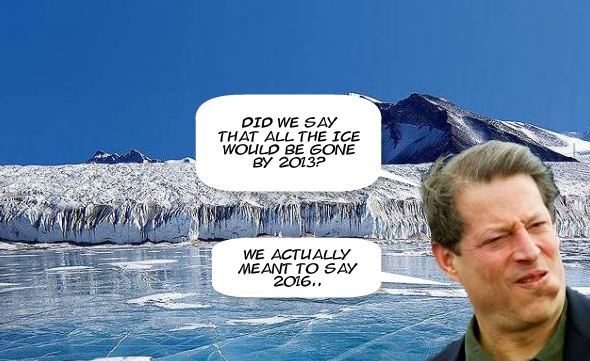
First, there is climate hysteria, which promotes claims that have either proven to be false (the “end of snow” in Great Britain, the disappearance of glaciers in Glacier National Park) or posit extreme scenarios (complete agricultural collapse, massive sea level increases, more frequent hurricanes). The actual evidence is to the contrary, including increased agricultural yields, minimal sea level rise, and no increases in observed hurricane frequency. 

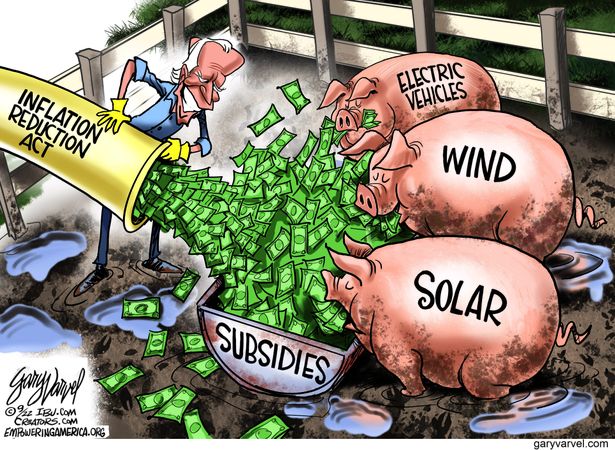
Second, these policies are driven by old-fashioned greed. Green energy subsidies, which were already large, have been hugely expanded under the Biden Administration’s Inflation Reduction Act (IRA). The IRA is a virtual smorgasbord of green energy subsidies for offshore wind, solar power, electric vehicles, and charging infrastructure. The green energy pork, which relies on climate alarmism for its justification, is increasing electricity costs and reducing standards of living, such as in Europe, where deindustrialization is taking place because of unaffordable energy costs. Even progressive California admits its zero-emissions goals primarily will benefit the wealthy at the expense of the poor.

Although the author of the Washington Post article may think differently, modern society requires ample supplies of reliable and affordable energy. A modern society that runs solely on electricity must have a foundation built upon three key pillars.  First, it must provide lots of electricity, far more than is generated today, because U.S. electricity consumption accounts for only about one-fifth of total energy consumption. Second, all of that electricity must be available 24-7. Third, it must be affordable. Those pillars cannot be supported by reliance on intermittent wind and solar power and huge banks of batteries to store electricity when the wind doesn’t blow and the sun doesn’t shine. Nor will those pillars be based on technologies that don’t even exist, such as generators that run on pure hydrogen. 

Even if one believes that addressing climate change is crucial and
that low- or zero-emissions technology will yield worldwide benefits,
the current approach is the most expensive way to achieve it. 

Despite the hyperventilation of some politicians, such as Senator Sheldon Whitehouse’s predictions of doom, climate change need not entail economic suicide. A far better approach is adaptation to and mitigation of potential future damages that may be caused by a changing climate, such as gradual sea level rise and slightly warmer temperatures.

It is doubtful the U.S. will adopt this approach in the near future, because political expediency nearly always beats rational economics. But as economist Herb Stein said long ago, something that cannot go on forever, won’t. The unrealistic energy policies in place today eventually will collapse under their own weight. The resulting costs to U.S. consumers and businesses will be staggering. 

See also Series of Four Posts– World of Hurt from Climate Policies

Part 1, Zero Carbon Means Killing Real Jobs with Promises of Green Jobs

Part 2, Reducing Carbon Emissions Means High Cost Energy Imports and Social Degradation

Part 3, 100% Renewable Energy Means Sourcing Rare Metals Off-Planet

Part 4, Leave it in the Ground Means Perpetual Poverty


Great News! IPCC Final Warning Now!

OK, they’ve exaggerated before, so could be that “final” may not stick.  For anyone following climate science and politics, this is not their first rodeo (or circus, if you prefer.)  But we can hope for peace at last from the doomsters.  Chris Morrison goes into what’s unconvincing about this final warning in his Daily Sceptic article Latest UN Climate Doom Report Falsely Claims Global Temperatures Are “Highest for 125,000 Years”.  Excerpts in italics with my bolds and added images.

Doomsday had to be postponed for five months, but ‘pausing’ IPCC writers have finally delivered another ‘Net Zero or Else’ report highlighting increasingly improbable climate change scenarios. Every IPCC report ramps up the desperation, and this latest ‘Synthesis Report‘ known as SYR is long on opinions, attributions and modelled results, but somewhat shorter on actual scientific facts.

The latest document collates the IPCC’s sixth assessments reports (AR6) into a short format that was originally scheduled to ramp up fears ahead of last year’s COP27 meeting in Sharm el-Sheikh. But in May and June last year, the planet-saving authors seem to have gone on strike. A few details about the incident are referred to in recently published IPCC minutes, which record how attempts were made with the writers to “rebuild the trust required to have them end their pause in writing, and to engage in the SYR production process”. Not before time, since IPCC reports need to be agreed with large numbers of interested parties, including almost 200 member governments. ‘Settled’ science, it need hardly be added, demands a lot of happy and settled funders.

Disappearing Arctic Sea Ice

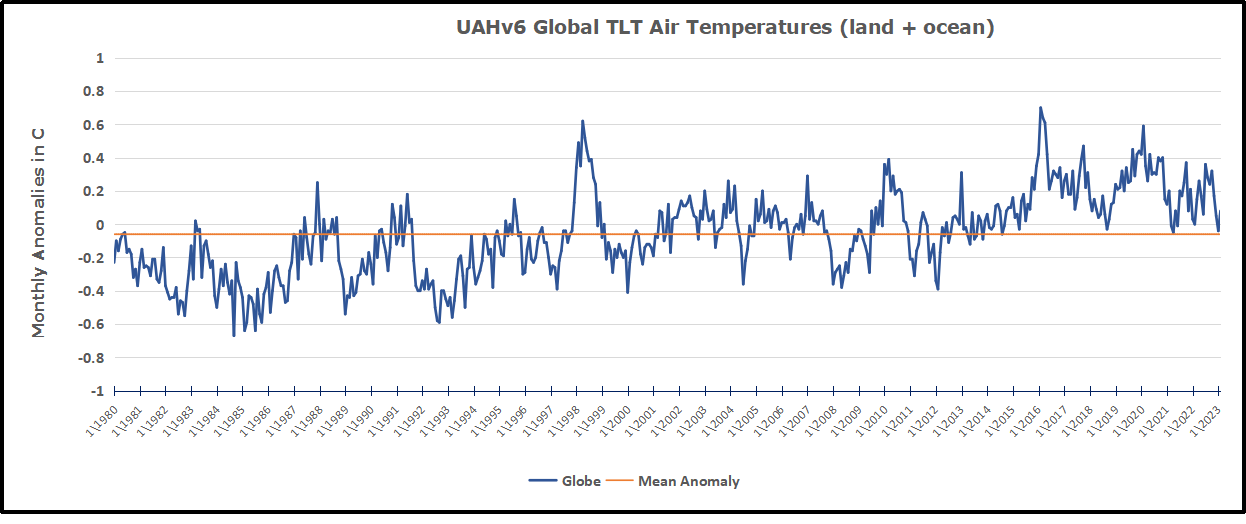
Current global temperatures are said by the IPCC to be the highest for 125,000 years, an astonishing claim given the many scientific surveys that show much higher temperatures in the recent past. It is also claimed that temperatures will rise by 0.4°C in around a decade, an interesting opinion, based presumably on surface records that can be retrospectively adjusted, but an unlikely scenario given global warming ran out of steam over two decades ago. By 2100, the IPCC says global warming could rise to 4.4°C, although things need to be moving on a bit smartish given barely 0.1°C warming in the first two decades of the century.

Satellite Global Warming Up and Down

There have been one or two concerns of late that the IPCC’s scare tactics have sent half the world doolally with climate fear, especially the impressionable young. These criticisms seem to have been taken on board. UN Secretary General Antonio ‘Code Red’ Guterres hailed SYR as a “survival guide to humanity”. All we need to do, continued the Left-wing Portuguese radical, is for all countries to bring forward their Net Zero plans by a decade. Dr. Friederike Otto from Imperial College specialises in so-called ‘attribution’ studies and the pseudoscience of claiming specific weather events are caused by the activities of humans. She helped write the latest report and was also in optimistic mood telling the BBC: “If we aim for 1.5°C and achieve 1.6°C, that is still much better than saying, it’s too late and we are doomed and I’m not even trying. And I think what this report shows very, very clearly is there is so much to win by trying.”

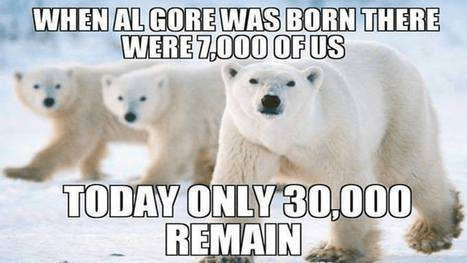
Extinctions Overblown

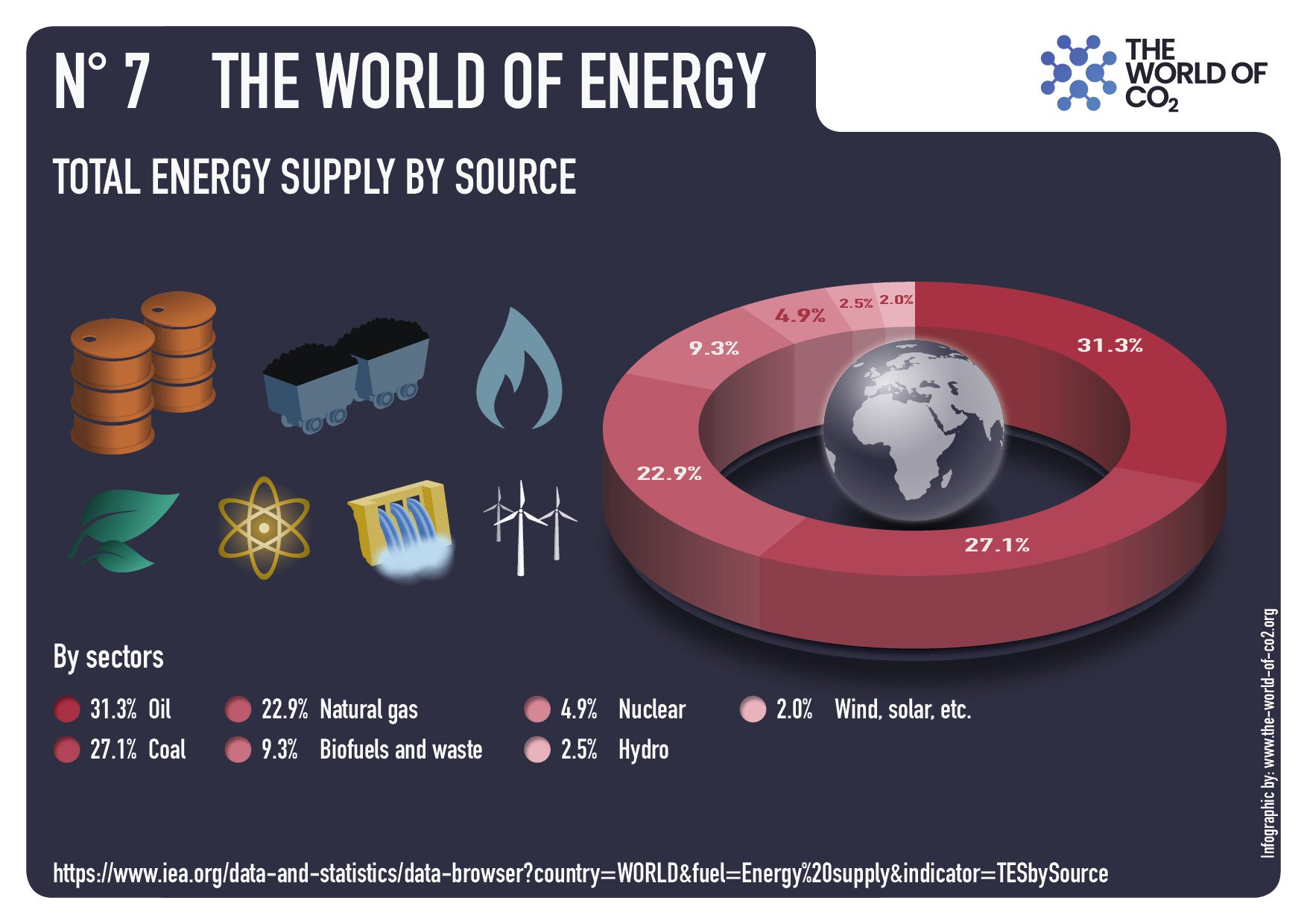
Back on Planet Reality, it might be noted that there are a number of possible disadvantages connected to removing fossil fuels, a reliable, inexpensive energy supply that powers 80% of global needs, within less than 17 years.

Starvation, death, widespread warfare, societal and economic breakdown and rampant disease being just a few that come immediately to mind.

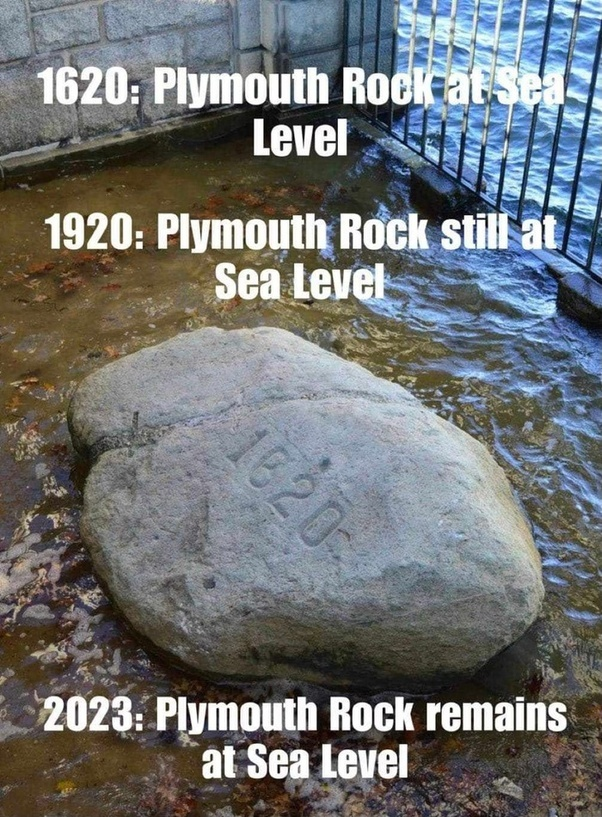
Coastal Flooding, Not

Traditional Landing Site of Mayflower Pilgrims.

It is not difficult to see why the IPCC continues to claim current global temperatures are the highest for 125,000 years, despite overwhelming scientific evidence that shows this is untrue. The rebound rise of about 1°C seen over the last 200 years is very small, and similar changes have obviously occurred countless times in the historical and paleo past, sometimes over even shorter time periods. It is difficult to worry too much about something that seems natural and in fact is beyond the control of humans. Placing the rise in the longer context of 125,000 years and adding all manner of invented weather event attribution and ‘tipping’ point stories adds some firepower to a political narrative ultimately designed to move society towards the collectivist Net Zero agenda.

Net Zero:  Who Gains, Who Loses

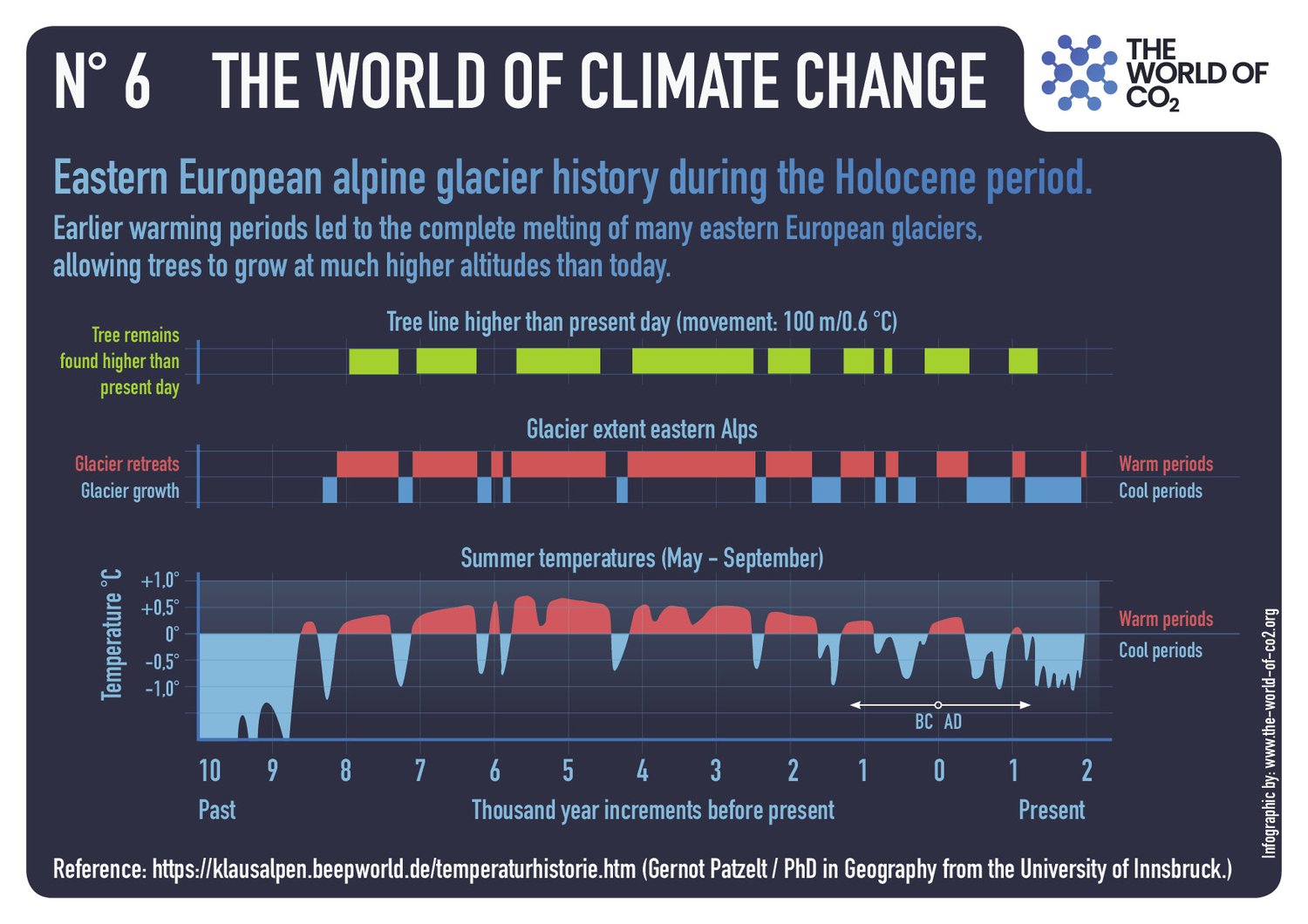
The Daily Sceptic has reported on a number of science papers that track the higher temperatures in the past, in particular the period since the last ice age started to lift about 12,000 years ago. A sample can be read here, here and here.

Earlier this year, a group of European scientists published a paper analysing tree remains that suggested there was a much warmer climate in the Alps during most of the last 10,000 years.

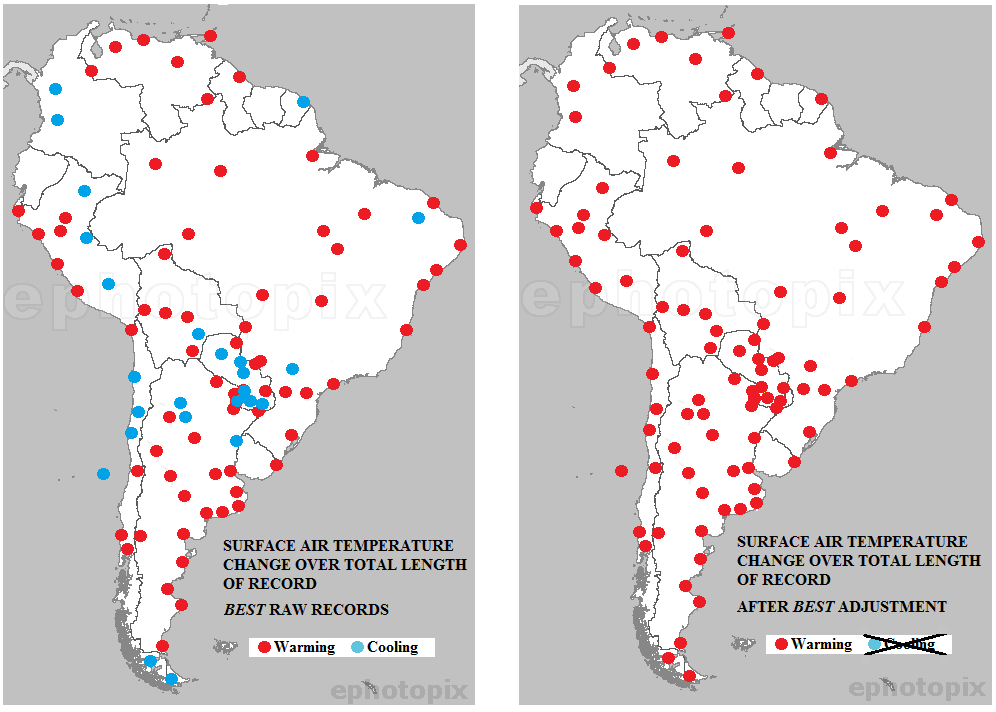
Adjusting Temperature Records.

‘Settled’ science, it might be observed, needs consensus from the world and his wife. The recent IPCC minutes, for instance, noted that the SYR team, “should ensure policy relevance and usefulness for policymakers”. Needless to say this is not to the taste of some independent-minded scientists, especially those retired with no need to hustle for state research or Left-wing foundation funds. In fact they can be quite disobliging about the entire IPCC process. In a recent paper titled ‘Challenging “Net Zero” with Science‘, Emeritus Professors William Happer and Richard Lindzen of Princeton and MIT respectively called Net Zero “scientifically invalid and a threat to the lives of billions of people”. In fact they have previously dismissed the peer review system around climate change as a “joke” – pal review, not peer review, they quipped. The IPCC is “government controlled and only issues government-dictated findings”.

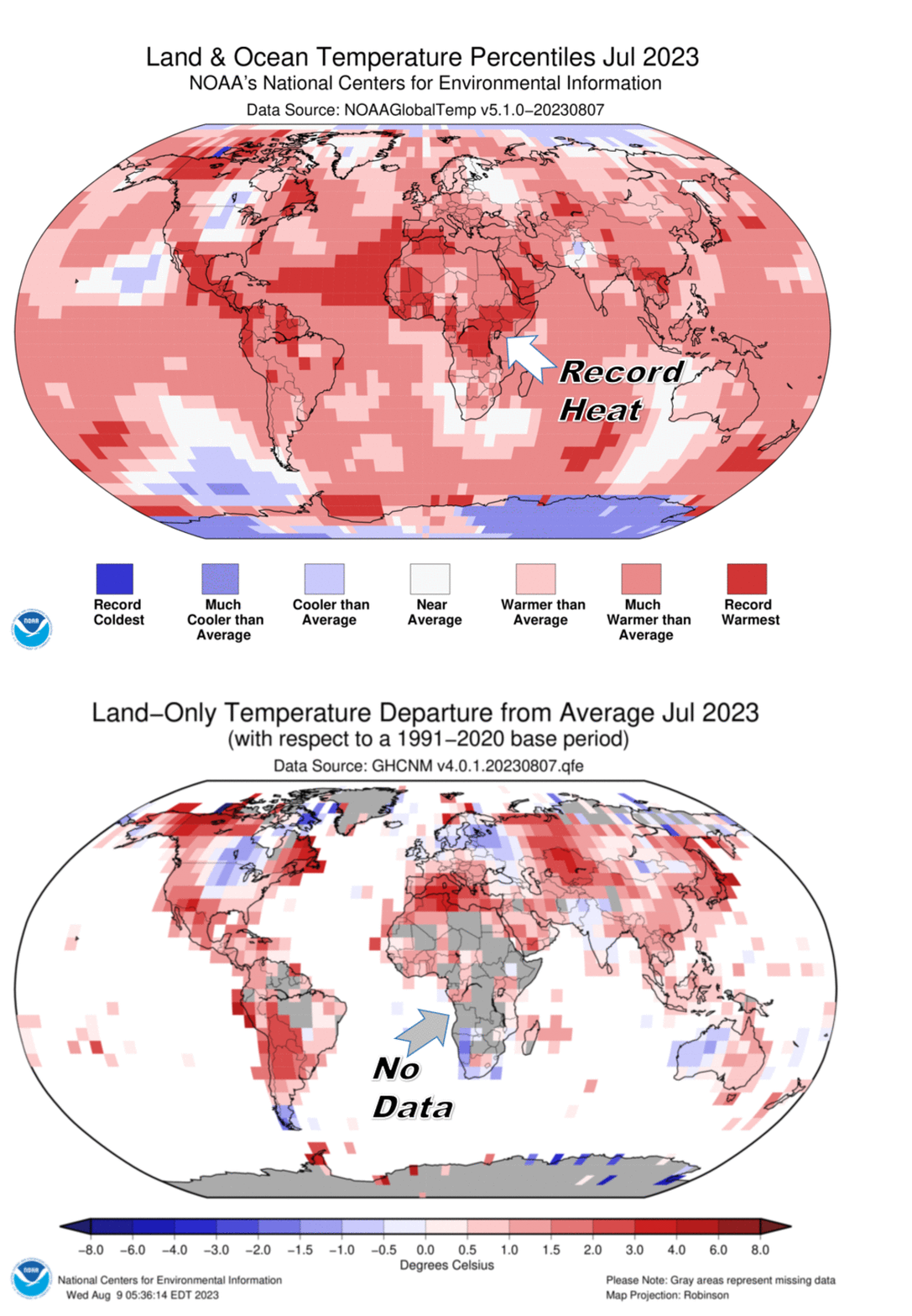
Sketchy Warming Evidence

“Climate science is awash with manipulated data, which provides no reliable scientific evidence,” they added.

Footnote: So What Happens Next

As I said above, we’ve seen this show before.  Caleb Rossiter explains how it goes down:

For years I assigned statistics students to pick any apocalyptic climate claim in the media and trace it back through the UN reports to its genesis in a scientific study. I knew they would discover that these reports are not scientific documents based on the peer review process, but political documents “approved by governments” and intended to scare the public into supporting constraints on the production and use of energy.

A powerful publicity machine magnifies the alarm, bombarding citizens with exaggerations and claims of certainty that are proven wrong as you dig down to their underlying scientific studies:

  • Public figures, news editors, and commentators make claims that are more alarmist than what individual IPCC authors say at the release of the report.
  • Individual IPCC authors make claims at the release of the report that are more alarmist than what the official press release says.
  • The official press release makes claims that are more alarmist than what the report’s summary for policy-makers says.
  • The summary for policy-makers makes claims that are more alarmist than the various chapters of the reports.
  • The chapters of the report make claims that are more alarmist than the studies they reference in the footnotes.

More at

UN Horror Show

How to Break the Climate Spell

Getty Images

Mark Imisides advises climate skeptics to reconsider how to dispute claims from climate believers in his Spectator Australia article Changing climate change: debunking the global colossus.  Excerpts in italics with my bolds and added images.

How is it that despite the scientific case for a climate apocalypse comprehensively collapsing some 20 years ago, we have seen a 16-year-old girl (at the time) being invited to address the United Nations, weeping children marching in our streets, and a federal election outcome in which this issue dominated the political landscape?

Where did we go wrong? And by ‘we’ I’m referring to those of us termed sceptics – people who understand the science, and the house of cards that comprises the notion of Anthropogenic Climate Change.

Put simply, we must learn the art of the polemic. The art of rhetoric. We must recognise that there’s no point in having evidence on our side if we don’t know how to use it.

We begin with this proposition. There is no case for reducing our carbon footprint unless all four of these statements are true:

  1. The world is warming.
  2. We are causing it.
  3. It’s a bad thing.
  4. We can do something about it.

No rational person can have any problem with this, and if they do, we need to find out why.

Here’s where we have to decide which of these points we want to contest. Remember, you only have to falsify one of them for the whole thing to collapse like a house of cards.

Most sceptics, in my view, pick the wrong fight. They do this by attempting to prosecute the case based on one of the first two points. This is a mistake.

Here’s why.

Arguments about whether the world is warming revolve around competing graphs: ‘My graph shows it’s warming. If your graph shows it isn’t, then it’s wrong – no it isn’t – yes it is – no it isn’t…’  This argument also looks at Urban Heat Island Effects, and examines manipulation of data by government agencies.  This is a poor approach to take because:

  • You’re never going to prove your graph is right.
  • You can be very easily and quickly discredited as a conspiracy theorist (Brian Cox did this to Malcolm Roberts on Q&A a few years ago). People just do not believe that government agencies would manipulate data.
  • We should not fear a warming world. Records began at the end of the last ice age, so it’s only natural that the world is warming. And the current temperatures are well within historical averages.

Source: Syun-Ichi Akasofu, Two Natural Components of the Recent Climate Change: (1) The Recovery from the Little Ice Age (A Possible Cause of Global Warming) and (2) The Multi-decadal Oscillation (The Recent Halting of the Warming):

As for arguments about whether we are causing the warming, this is even more problematic. The various contributions to global temperatures are extremely complex, involving a deep understanding of atmospheric physics and thermodynamics. With a PhD in Chemistry, this is much closer to my area of expertise than Joe Public, but I am very quickly out of my depth. I recognise most of the terms and concepts involved, but know just enough to know how little I know.

Sadly, many people on both sides of the debate don’t understand how little they know, nor how complex the subject of atmospheric physics is, and it is nothing short of comical seeing two people debating about a subject of which both of them are blissfully ignorant.

The bottom line is this – they simply don’t change anyone’s minds – ever.

Having seen these arguments used for years, and having used them myself, I cannot point to a single person that has said, ‘Oh yes! I see it now…’ The whole point of arguing, or debating, is to change someone’s mind (including, at times, your own). If that isn’t happening, then it’s futile to continue with the same approach.

I think the reason both these approaches fail that most people do not believe that all these experts, and the government, can be wrong. You say the world isn’t warming? Oh, I’m sure you have the wrong graph. You say that CO2 is not responsible? Oh, I’m sure the government scientists know more than you do.

This then brings us to the third point. Why is a warmer world a bad thing?

This is even more tempting than the first two points, as it’s so easy to prove that a warming world, so far from being a crisis, is actually a good thing. The reason for this is that, unlike with the first two points, they don’t have to look at a complex scientific argument. They just have to look at the weather. Are cyclones and hurricanes increasing? Are droughts increasing? Are flooding events increasing?

Regretfully, it is impossible to get people to even look at this. Even worse, they seem oblivious to the simple concept of cause and effect. We see this in that they simply can’t see that droughts and floods are opposites, and the same cause cannot produce exactly opposite effects. Astonishingly, they somehow think that charts that plot these extreme events are somehow manipulated, even when they come from a primary source such as the BOM, and that there really is a ‘climate crisis’.

Where does that leave us? Well, before we adopt Catweazle’s mantra of ‘nothing works’, there is one more point – point 4 (can we do anything about it?).

Most people will have seen the address of Konstantin Kisin at an Oxford Union debate, where he prosecuted this case to great effect. He pointed out, in simple terms, that as the UK only contributes 2 per cent to the global CO2 budget, anything they did will have negligible effect, and that global CO2 levels will be determined by people in Africa and Asia. He then pointed out that people in these countries ‘didn’t give a sh*t’ about climate change, as all they want to do is feed and clothe their children, and they don’t care how much CO2 that produces.

Finally, he pointed out that Xi Jinping knows that the way to ensure that he isn’t rolled in a revolution, as happened to so many other leaders in former communist regimes, is to ensure prosperity for the Chinese people. And indispensable to that goal is cheap, reliable, power, which is the reason that China is now building lots more coal-fired power plants – in 2021 alone they built 25 GW of capacity – equivalent to 25 x 1000MW plants.

By all accounts, his speech was well-received, with many people turning to his side. The beauty of prosecuting this case, as opposed to the other three, is that people don’t have to look at any evidence. They don’t even have to look at the weather.

The argument is at the same time simple, compelling, and irresistible. The question is this: will we see a major political party with the courage to take it on?

That part remains to be seen. But what is certain is this – the definition of insanity is doing the same thing and expecting different outcomes. If, for twenty years we’ve been telling people either that the world isn’t warming, or if it is we aren’t causing it, or if it is warmer but there’s no climate crisis, and not a single person has been persuaded by our arguments, then we have the brains of a tomato if we think anything is going to change.

Konstantin Kisin’s talk, and in particular the way it was received, fill me with hope that I haven’t had in years. It fills me with hope that if the case is prosecuted wisely, the climate change colossus can be brought to a grinding halt, politicians will unashamedly take on energy security as a political mantra, and the notion of climate change will at last be exposed as the unscientific, anti-human, regressive, apocalyptic cult that it is.


Bypass Contrived Catastrophes

“Nothing so focuses the mind as the sight of the gallows.” wrote Samuel Johnson.  He went on to say,

“Executions are intended to draw spectators. If they don’t draw spectators, they don’t answer their purpose”,  Samuel Johnson (1709-1784)

Terrence Keeley discusses how to resist our current crop of elites who govern by declaring emergencies instead of solving problems. His insights are timely since this week PM Trudeau was given a free pass by a Canada Appeals court judge to repeat his emergency sanctions against protesting truckers should anyone else object to his policies. The article at Real Clear Wire is Navigating Contrived Catastrophes Excerpts in italics with my bolds and added images.

Perhaps this explains why political leaders repeatedly fabricate existential crises in lieu of governing responsibly. Without the sword of Damocles overhead, policymakers just can’t seem to get the adulation they so desperately crave.

Take the fake debt ceiling crisis. The U.S. federal debt cap was first enacted in 1917 when our national debt stood at $5.7 billion. Congress has since raised it more than 90 times with broad bipartisan support. There is ZERO chance they won’t do so again, yet we are told we must quiver and quake until they do. For some reason, a $31.4 trillion limit just isn’t enough to run the greatest country on earth properly.

Or better yet, consider the much-ballyhooed “Net Zero by 2050” time bomb. There was no science behind its selection of the 1.5 degree above pre-industrial temperature target. It was intentionally contrived so politicians and pundits could insist we spend hundreds of trillions of dollars reconfiguring every personal and industrial process to mute it, possibly by a degree or two. Anthropogenic activities are clearly taxing our air, water, and lands. Depending upon tradeoffs like affordability and reliability (and what China, India, and Russia decide to do), less carbon-intensive energy sources may well be preferable, too. Convincing our younger generation they will all die unless the globe urgently reduces its net carbon footprint to zero is another matter altogether. Being more mindful about our consumption patterns while preparing our communities for the probability of more violent weather would be too simple. Better to scare everyone out of their wits so we can get on with doing witless things.

Great societies thrive on consistent policy competence. Failing ones lurch
from crisis to crisis. Contriving catastrophic scenarios all but ensures
hysteria will supplant sober, reasoned analysis.

Some will argue extreme threats are needed to force modest, salutary changes. After all, a handful of U.S. debt ceiling votes brought about useful policy changes, like the Gramm-Rudman-Hollings breakthrough and the Balanced Budget Act of 1997. Similarly, threats of impending climate doom have led many individuals and corporations to examine their energy use, seek cleaner alternatives, and eliminate unnecessary waste.

But have these modest advances been worth the price of the abject delirium
that has accompanied them? And are recurrent, contrived catastrophes
somehow producing better policy outcomes?

Evidently not. Three essential U.S. social programs – Social Security, Medicare, and Medicaid – are barreling along towards insolvency. Just as the retirement age in France must rise to reflect longer life expectancies and taxation tipping points, so too must U.S. retirement programs respect demographic realities. Maintaining peace through strength in an increasingly dangerous world requires that the U.S. spend more on defense, not less. Unless the current debt ceiling crisis leads to an honest rUeckoning about our most urgent tax and spending priorities, heightened hysteria serves no useful end. Worse, all the faux debt ceiling dynamics convince politicians they’ve somehow done their jobs when instead, they’ve abrogated them entirely.

Similarly, we speak about an “energy transition,” but no realistic projection of future fossil fuel consumption shows any meaningful decline in the century to come. Rising populations, improved living standards, reliability needs for the three billion humans who are still energy insecure, and the first order demands of national security reveal oil and gas will remain crucial sources of our energy mix for as far as the eye can see. The most logical response would be to prioritize energy reliability while recalibrating our emissions mitigation spending towards more climate adaptation priorities. Why spend $100 trillion or more on something that has been entirely contrived and is all but certain to fail when you can spend $50 trillion or less on something that would demonstrably save human lives while improving their livelihoods?

History is festooned with countless ruses about the end of time, some more disruptive than others. They include those of French Bishop Martin of Tours in 375 A.D., and Jim Jones in 1967. Many thousands believed the so-called Y2K cliff would crash every computer, triggering global economic ruin and the rise of the Antichrist. Yet, remarkably, here we all still are, higher in number than ever.

In time, trillions of dollars of investment products now priced against
Net Zero 2050 deadlines will need to be abandoned.

Similarly, the U.S. debt ceiling will be lifted multiple times before responsible members of both parties finally put our tax and spending trajectories into sustainable balance. Panic, like blackmail, compromises sensible thinking. Calm acceptance of measurable risks and their reasonable mitigation are the essence of wise decision-making.

The next time a politician tells you Armageddon is nigh, remind them it’s their only job to make sure it isn’t. If you’ve got the patience for it, you can also show them how easy it would be to avoid.


Energy Transition and Impossible Dreams

Daniel Yergin writes at Project Syndicate The Energy Transition Confronts Reality.  Excerpts in italics with my bolds and added images.

Given the scale and complexity of the transition away from hydrocarbons, some worry that economic analysis has been given short shrift in the policy planning process. A clear-eyed assessment of the transition’s prospects requires a deeper understanding of at least four major challenges.

Overview

The “energy transition” from hydrocarbons to renewables and electrification is at the forefront of policy debates nowadays. But the last 18 months have shown this undertaking to be more challenging and complex than one would think just from studying the graphs that appear in many scenarios. Even in the United States and Europe, which have adopted massive initiatives (such as the Inflation Reduction Act and RePowerEU) to move things along, the development, deployment, and scaling up of the new technologies on which the transition ultimately depends will be determined only over time.

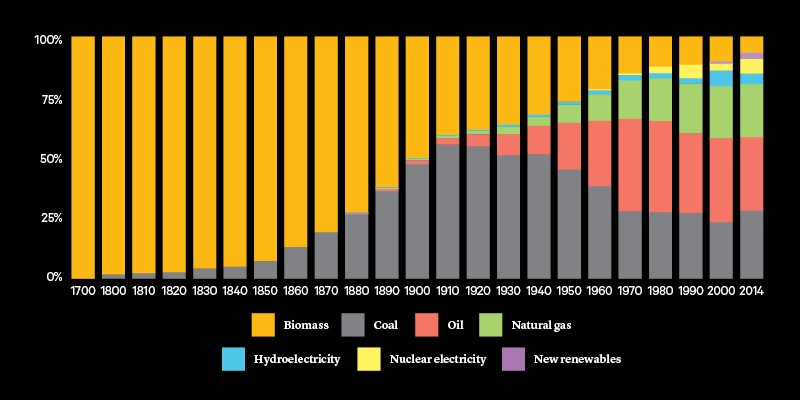
Progress of civilization through changing mixes of energy sources.

Beware:  The Imagined Transition is to be Sudden and not Additive.

The term “energy transition” suggests that we are simply taking one more step in the journey that began centuries ago with the Industrial Revolution. But in examining previous energy transitions for my book The New Map, I was struck by how different this one is. Whereas technology and economic advantage drove earlier transitions, public policy is now the most important factor.

Moreover, previous energy transitions unfolded over the course of a century or more, and they did not wholly displace the incumbent technologies. Oil overtook coal as the world’s top energy source in the 1960s, yet we now use three times more coal than we did back then, with global consumption hitting a record high in 2022.

By contrast, today’s transition is intended to unfold in little more
than a quarter-century and not be additive.

Given the scale of what is envisioned, some worry that macroeconomic analysis has been given insufficient attention in the policy-planning process. In a 2021 paper for the Peterson Institute for International Economics, the French economist Jean Pisani-Ferry notes that moving too rapidly to net-zero emissions could precipitate “an adverse supply shock – very much like the shocks of the 1970s.” He warns that a precipitous transition “is unlikely to be benign and policymakers should get ready for tough choices.”

Hard Reality #1  Energy Security is Top Priority

Developments since energy markets began to tighten in the late summer of 2021 point to four big challenges to watch out for. First, owing largely to the disruptions caused by Russia’s war in Ukraine, energy security has become a top priority again. For the most part, keeping the lights on and factories operating still requires hydrocarbons, so energy security means ensuring adequate and reasonably priced supplies and insulation from geopolitical risk and economic hardship.

Even with climate change remaining a central focus, US President Joe Biden administration’s has urged domestic companies to increase their oil production and released supplies from the Strategic Petroleum Reserve at a far greater scale than any previous administration. In Germany, the Greens in the governing coalition have spearheaded the development of the country’s capacity to import liquefied natural gas, with the first deliveries of LNG from the US arriving this month through infrastructure built in less than 200 days. Energy security is not something that is going to be assumed away in the years ahead.

Hard Reality #2  The Scale Reaches Beyond Our Means

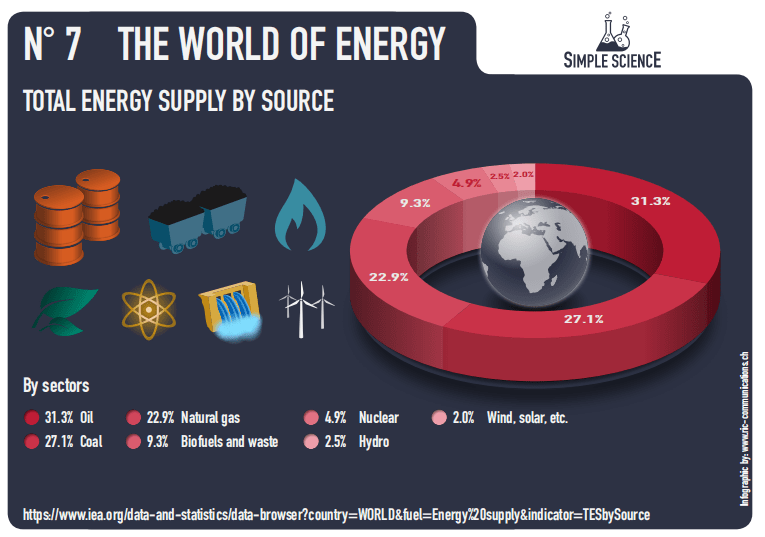
The second challenge concerns scale. Today’s $100 trillion world economy depends on hydrocarbons for over 80% of its energy, and nothing as massive and complex as the global energy system can be transformed easily. In an important new book, How The World Really Works, noted energy scholar Vaclav Smil argues that the four essential “pillars of modern civilization” are cement, steel, plastics, and ammonia (for fertilizer), each of which is heavily dependent on the existing energy system.

Given these starting conditions, will solutions like veganism help? Smil points out that five tablespoons of petroleum are embodied in the system that gets a single tomato from cultivation in Spain (including the required fertilizer) to a dinner table in London. Yes, energy efficiency could be improved. But the main effects will show up in developed countries, rather than in the developing world, where 80% of all people live, and where rising incomes will drive up energy demand.

Land required for wind farms to power London UK.

Hard Reality #3 North and South Interests Conflict

That points to the third challenge: the new North-South divide. In the Global North – primarily Western Europe and North America – climate change is at the top of the policy agenda. But in the Global South, that priority coexists with other critical priorities, such as boosting economic growth, reducing poverty, and improving health by targeting indoor air pollution from burning wood and waste.

Hence, for many in the developing world, “energy transition” means
moving from wood and waste to liquefied petroleum gas.

This divide was vividly illustrated last year when the European Parliament passed a resolution denouncing a proposed oil pipeline running from Uganda through Tanzania to the Indian Ocean. MEPs objected that the project would adversely affect the climate, the environment, and “human rights.” Yet they cast their votes from a body located in France and Belgium, where per capita income (in current dollars) is, respectively, 50 times and 60 times greater than in Uganda, where the pipeline is seen as a foundation for economic development. The resolution provoked a furious reaction. The deputy speaker of Uganda’s parliament denounced the Europeans for exhibiting “the highest level of neocolonialism and imperialism against the sovereignty of Uganda and Tanzania.”

Hard Reality #4 Materials Demands Blow Away Supplies

The fourth challenge concerns the material requirements of the energy transition. I see this as the shift from “Big Oil” to “Big Shovels” – that is, from drilling for oil and gas to mining the minerals for which demand will increase enormously in a world that becomes more electrified.

In a new S&P study, The Future of Copper, we calculate that the supply of “the metal of electrification” will have to double to support the world’s 2050 climate objectives. Recently, a host of authorities – including the US and Japanese governments, the European Union, the World Bank, the International Monetary Fund, and the International Energy Agency – have all published alarming reports about the expected exponential growth in demand for minerals such as lithium and cobalt.

But alarm itself will not open major new mines, a process estimated to take 16-25 years and which faces ever-more complex permitting requirements around the world. In some key resource countries, governments are openly hostile to mining.

So, while the direction of the energy transition is clear, policymakers and the public must recognize the challenges that it entails. A deeper and more realistic understanding of the complex issues that need to be addressed is essential as the effort to achieve the transition’s goals proceeds.

My Comment

The direction of the called for energy transition is clear alright, but is it necessary?  Recently, no less than John Kerry. told the World Economic Forum the world will eventually move to a low-carbon economy, but it may be too late to avoid the worst effects of climate change.  Meanwhile, there are a number of serious scientists who expect global cooling in coming decades.

The unmentioned Hard Reality #5:  Smart People will Adapt to Climate and Weather, as they always have. That is, if they haven’t already trashed their energy system and planetary resources chasing an impossible dream.

Zero Carbon Lemmings in a Rush.


With These Climate Policies, Doing Nothing is the Good

Matthew Lau writes at Financial post When climate policy is all error, doing nothing could be good.  Excerpts in italics with my bolds and added images.

It may not be a bad thing for Canadians that Pierre Poilievre
has been largely quiet on climate and environmental policy

Conservative leader Pierre Poilievre has not proposed much in the way of climate and environmental policy beyond scrapping the carbon tax, but if he is searching for policy ideas, one place he best not look — except for examples of what not to do — is across the pond to the U.K.’s Conservative government. Its environmental agenda is a shambolic mishmash of impoverishing energy policies, climate alarmism, excess spending, and virtue-signalling regulations that afflict consumers and businesses without any compensating environmental benefit.

If all this sounds familiar, it is because Canadians are already suffering
from the same policy agenda under the Liberals.

The British government’s latest regulatory effort is a ban on plastic utensils, plates and cups. It follows a 2020 ban on plastic straws, stir sticks and cotton swabs. The latest ban applies only to restaurants and cafes, as the government is planning a separate policy for grocery store sales of the same products next year. It is a little inconsistent that people can still buy bulk packages of plastic forks at the grocery store while not being allowed to access a single fork at a restaurant, where they might actually want to use it. But having two sets of policies implemented a year apart lets the government maximize bureaucrat-hours and so keep the public sector happy.

The problems with plastic bans are well documented.

First, plastic pollution is overwhelmingly caused by waste management problems, primarily in Asia, not single-use products in developed countries. As reported in Reason, the U.K. accounts for only 0.05 per cent of global marine plastic waste.

Second, the alternatives to single-use plastics are more expensive and of lower quality.

Third, despite decomposing more quickly, the alternatives are also often worse for the environment overall. A 2018 Danish Environmental Protection Agency study found that in order to be better for the environment than a plastic bag a conventional cotton bag would have to be re-used 7,100 times.

The environmental policy madness pursued by the U.K. Conservatives and similarly hopeless governments, like the Liberals in Canada, extends past the war on plastic to the war on gasoline-powered cars. In Canada, the federal government plans to mandate that at least 60 per cent of new vehicles sold must be electric by 2030, and by 2035 the sale of all new gasoline-powered vehicles will be banned. The U.K.’s mandate is even worse, as in 2020 then-prime minister Boris Johnson, for reasons unknown, decided to advance the date for banning gasoline-powered cars from 2035 (the year selected by the EU) to 2030. Hybrids will be banned by 2035.

As the Telegraph reports, government enthusiasm for switching to electric vehicles is not matched by consumer enthusiasm: higher price tags and rising electricity prices have flattened demand. A green energy group that three months ago forecast 360,000 electric vehicles would be manufactured in the U.K. by 2025 has just slashed its estimate to 280,000. Unfortunately, consumer reluctance has not stopped the government from trying to control motorists’ behaviour in order to achieve its climate ambitions. A report earlier this month from the U.K. Parliament’s Environmental Audit Committee on accelerating the transition away from fossil fuels proposed such measures as a public information campaign to lecture motorists on driving more efficiently, cutting speed limits, imposing “car-free Sundays” in large cities and car-sharing.

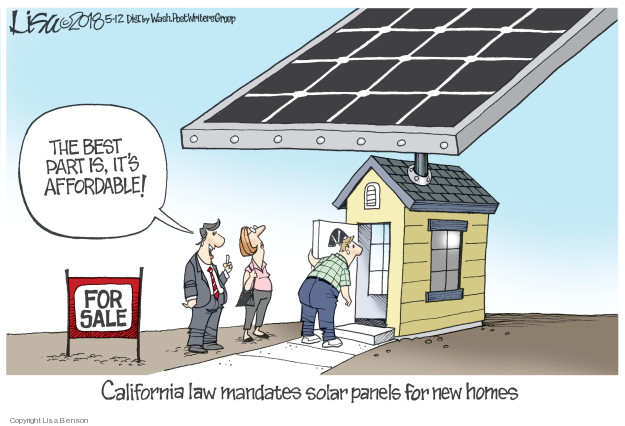
Philip Dunne, the Conservative MP who chairs the committee, declared the U.K. needs “a national war effort” to cut greenhouse gas emissions. Thus, in addition to the hassling of motorists there will be many more billions in spending, “green mortgages,” a call for all housing developers to fit solar panels on new houses as standard and other governmental interventions, all in pursuit of the “guiding star” of net-zero emissions by 2050. The 99-page report is not entirely bereft of reason, but as National Review’s Andrew Stuttaford concludes, it appears to be written by people who learned too little “from the economic and geopolitical disaster that Europe’s climate policy-makers have done so much to enable” and its overall direction is to push Britain faster down the path of more poverty and less freedom.

In view of all this, it may not be a bad thing for Canadians that Pierre Poilievre has been largely quiet on climate and environmental policy. A children’s book of Winnie-the-Pooh-inspired wisdom once offered the suggestion, “Don’t underestimate the value of doing nothing.”

Given the climate-policy disasters of governments of all stripes in Europe, the U.K., and Canada seeking to do something, doing nothing may not be bad advice.

Footnote

Climatists Aim Forks at Our Food Supply

It’s not enough to apply Chinese-style lockdowns in the name of “fighting climate change.”  Now climatists want to stick forks in our food supply, thereby reducing populations to a more “sustainable” number.  The attack on world food supply has four prongs to it, just like the forks in the image above.

1.  Exaggerate the Minor Climate Impact of Methane (CH4)

2.  Oppose Methane from Livestock as a Fossil Fuel, like Coal and Oil.

3. Freak Out over N2O as an Excuse to Ban Fertilizers

4.  Meat Shame People’s Diets Because Vegans Love Animals
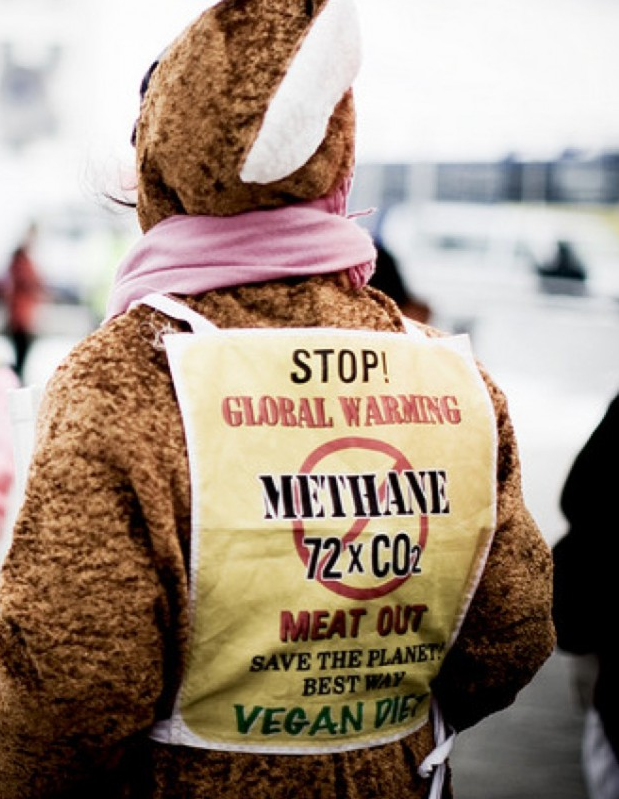
Background:  The Carbon Cycle is Natural

This diagram of the fast carbon cycle shows the movement of carbon between land, atmosphere, and oceans in billions of tons per year. Yellow numbers are natural fluxes, red are human contributions, white indicate stored carbon.

Instead of delusions about CO2 as the planet’s climate “control knob”, Viv Forbes provides us a wise, sane view how the carbon cycle works, and what we know and don’t know about it. And rather than exaggerate the effects of humans recycling fossil fuels, he puts the carbon cycling sources and sinks into a sensible perspective. His recent article is entitled: Carbon Delusions and Limited Models

The IPCC models misread the positive and negative temperature feedbacks from water vapour (the main greenhouse gas) and their accounting for natural processes in the carbon cycle is based on very incomplete knowledge and numerous unproven assumptions.

The dreaded “greenhouse gases” (carbon dioxide and methane) are natural gases. Man did not create them — they occur naturally in comets and planets, and have been far more plentiful in previous atmospheres on Earth. They are abundant in the oceans and the atmosphere, and are buried in deposits of gas, oil, coal, shale, methane clathrates and vast beds of limestone. Land and sea plants absorb CO2 and micro-organisms absorb methane in the deep ocean.

Earth emits natural carbon-bearing gases in huge and largely unknown and unpredictable quantities. Carbon dioxide, carbon monoxide and various hydrocarbons such as ethane, methane and propane bubble out of the ocean floor, seep out of swamps, bubble naturally out of rivers, are released in oil seeps, water wells and bores, and are sometimes delivered via water pipes into drinking water. They are also released whenever carbon-bearing rocks such as coal and shale are eroded naturally, catch fire or are disturbed by earthquakes, construction activities or mining. The vast offshore deposits of frozen methane are released naturally when geothermal heat or volcanic intrusions melt the ice containing the methane.

The Minor Climate Impact of Methane (CH4)

Methane  
Natural gas is 75% Methane (CH4) which burns cleanly to carbon dioxide and water. Methane is eagerly sought after as fuel for electric power plants because of its ease of transport and because it produces the least carbon dioxide for the most power. Also cars can be powered with compressed natural gas (CNG) for short distances.

In many countries CNG has been widely distributed as the main home heating fuel. As a consequence, in the past methane has leaked to the atmosphere in large quantities, now firmly controlled. Grazing animals also produce methane in their complicated stomachs and methane escapes from rice paddies and peat bogs like the Siberian permafrost.

It is thought that methane is a very potent greenhouse gas because it absorbs some infrared wavelengths 7 times more effectively than CO2, molecule for molecule, and by weight even 20 times. As we have seen previously, this also means that within a distance of metres, its effect has saturated, and further transmission of heat occurs by convection and conduction rather than by radiation.

Note that when H20 is present in the lower troposphere, there are few photons left for CH4 to absorb:

Even if the IPCC radiative greenhouse theory were true, methane occurs only in minute quantities in air, 1.8ppm versus CO2 of 390ppm. By weight, CH4 is only 5.24Gt versus CO2 3140Gt (on this assumption). If it truly were twenty times more potent, it would amount to an equivalent of 105Gt CO2 or one thirtieth that of CO2. A doubling in methane would thus have no noticeable effect on world temperature.

However, the factor of 20 is entirely misleading because absorption is proportional to the number of molecules (=volume), so the factor of 7 (7.3) is correct and 20 is wrong. With this in mind, the perceived threat from methane becomes even less.

Further still, methane has been rising from 1.6ppm to 1.8ppm in 30 years (1980-2010), assuming that it has not stopped rising, this amounts to a doubling in 2-3 centuries. In other words, methane can never have any measurable effect on temperature, even if the IPCC radiative cooling theory were right.

Because only a small fraction in the rise of methane in air can be attributed to farm animals, it is ludicrous to worry about this aspect or to try to farm with smaller emissions of methane, or to tax it or to trade credits.

The fact that methane in air has been leveling off in the past two decades, even though we do not know why, implies that it plays absolutely no role as a greenhouse gas.  (From Sea Friends (here):

More information at The Methane Misconceptions by Dr. Wilson Flood (UK) here.

Give Daisy a Break!

Methane Risk from Livestock is Overstated

Frank M. Mitloehner is Professor of Animal Science and Air Quality Extension Specialist, University of California, Davis.  He writes at the Conversation Yes, eating meat affects the environment, but cows are not killing the climate.  Excerpts in italics with my bolds.

A key claim underlying these arguments holds that globally, meat production generates more greenhouse gases than the entire transportation sector. However, this claim is demonstrably wrong, as I will show. And its persistence has led to false assumptions about the linkage between meat and climate change.

My research focuses on ways in which animal agriculture affects air quality and climate change. In my view, there are many reasons for either choosing animal protein or opting for a vegetarian selection. However, foregoing meat and meat products is not the environmental panacea many would have us believe. And if taken to an extreme, it also could have harmful nutritional consequences.

Many people continue to think avoiding meat as infrequently as once a week will make a significant difference to the climate. But according to one recent study, even if Americans eliminated all animal protein from their diets, they would reduce U.S. greenhouse gas emissions by only 2.6 percent. According to our research at the University of California, Davis, if the practice of Meatless Monday were to be adopted by all Americans, we’d see a reduction of only 0.5 percent.

Moreover, technological, genetic and management changes that have taken place in U.S. agriculture over the past 70 years have made livestock production more efficient and less greenhouse gas-intensive. According to the FAO’s statistical database, total direct greenhouse gas emissions from U.S. livestock have declined 11.3 percent since 1961, while production of livestock meat has more than doubled.

Removing animals from U.S. agriculture would lower national greenhouse gas emissions to a small degree, but it would also make it harder to meet nutritional requirements. Many critics of animal agriculture are quick to point out that if farmers raised only plants, they could produce more pounds of food and more calories per person. But humans also need many essential micro- and macronutrients for good health.

The world population is currently projected to reach 9.8 billion people by 2050. Feeding this many people will raise immense challenges. Meat is more nutrient-dense per serving than vegetarian options, and ruminant animals largely thrive on feed that is not suitable for humans. Raising livestock also offers much-needed income for small-scale farmers in developing nations. Worldwide, livestock provides a livelihood for 1 billion people.

Climate change demands urgent attention, and the livestock industry has a large overall environmental footprint that affects air, water and land. These, combined with a rapidly rising world population, give us plenty of compelling reasons to continue to work for greater efficiencies in animal agriculture. I believe the place to start is with science-based facts.

N2O is No Excuse to Ban Fertilizers

Methane and Climate is a paper by W. A. van Wijngaarden (Department of Physics and Astronomy, York University, Canada) and W. Happer (Department of Physics, Princeton University, USA) published at CO2 Coalition November 22, 2019. It is a summary in advance of a more detailed publication to come. Excerpts in italics with my bolds. [Note the paper is a thorough and deep expert analysis of atmospheric radiation physics which I do not fully comprehend.  So the excerpts below are necessarily superficial, but intend to provide the core findings from these scientists.]
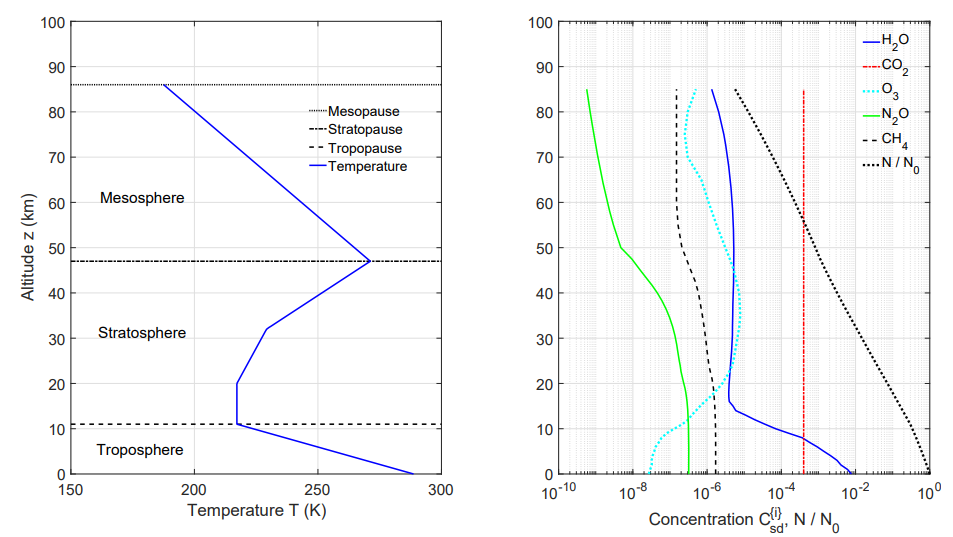
Figure 2: Left. A standard atmospheric temperature profile [9], T = T(z). The surface temperature is T(0)= 288.7 K. Right. Standard concentrations [10], Csd = Nsd /N for greenhouse molecules versus altitude z.  The total number density of atmospheric molecules is N and the number density of molecules of type i is Nsd. At sea level the concentrations are 7750 ppm of H2O, 1.8 ppm of CH4 and 0.32 ppm of N2O. The O3 concentration peaks at 7.8 ppm at an altitude of 35 km, and the CO2 concentration was approximated by 400 ppm at all altitudes. The data is based on experimental observations.

As shown in Fig. 2, the most abundant greenhouse gas at the surface is water vapor (H2O). However, the concentration of water vapor drops by a factor of a thousand or more between the surface and the tropopause. This is because of condensation of water vapor into clouds and eventual removal by precipitation.  Carbon dioxide CO2, the most abundant greenhouse gas after water vapor, is also the most uniformly mixed because of its chemical stability. Methane, the main topic of this discussion is much less abundant than CO2 and it has somewhat higher concentrations in the troposphere than in the stratosphere where it is oxidized by OH radicals and ozone, O3. The oxydation of methane [8] is the main source of the stratospheric water vapor shown in Fig. 2. 
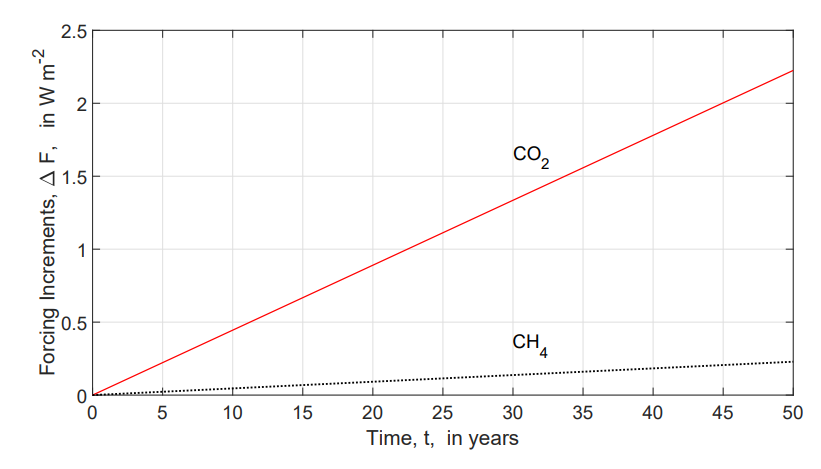
Figure 9: Projected midlatitude forcing increments at the tropopause from continued increases of CO2 and CH4 at the rates of Fig. 7 and Fig. 8 for the next 50 years. The projected forcings are very small, especially for methane, compared to the current tropospheric forcing of 137 W m−2.

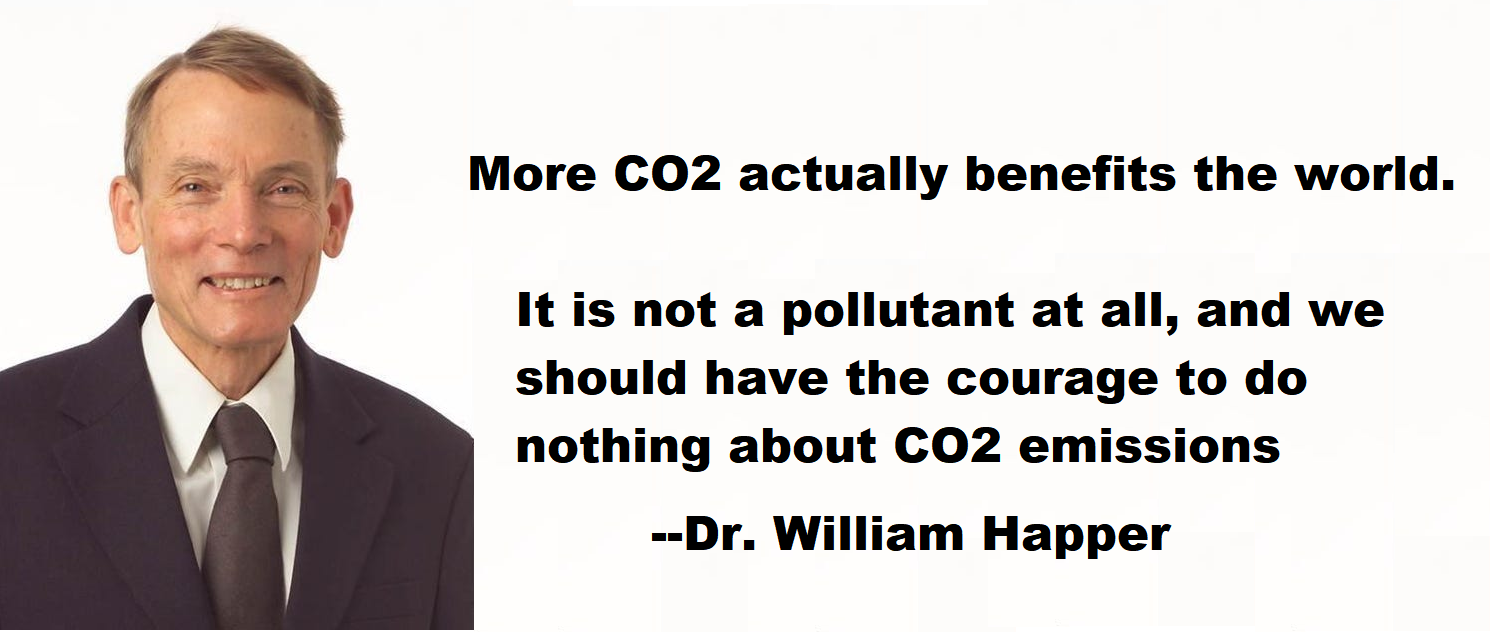
The paper is focused on the greenhouse effects of atmospheric methane, since there have recently been proposals to put harsh restrictions on any human activities that release methane. The basic radiation-transfer physics outlined in this paper gives no support to the idea that greenhouse gases like methane (CH4), carbon dioxide (CO2) or nitrous oxide (N2O) are contributing to a climate crisis. Given the huge benefits of more CO2 to agriculture, to forestry, and to primary photosynthetic productivity in general, more CO2 is almost certainly benefitting the world.  Radiative effects of CH4 and N2O are so small that they are irrelevant to climate.

The chart above informs on the scale of N2O concentrations. At first glance, it appears comparable to CO2, but on closer inspection the amounts are in ppb (parts per billion), not ppm (parts per million) as with CO2. To get comparable amounts requires dividing by 1000, thus the vertical axis goes from 0.315 ppm to 0.340 ppm. Yes, the dramatic rise over the last 22 years is 0.025ppm.
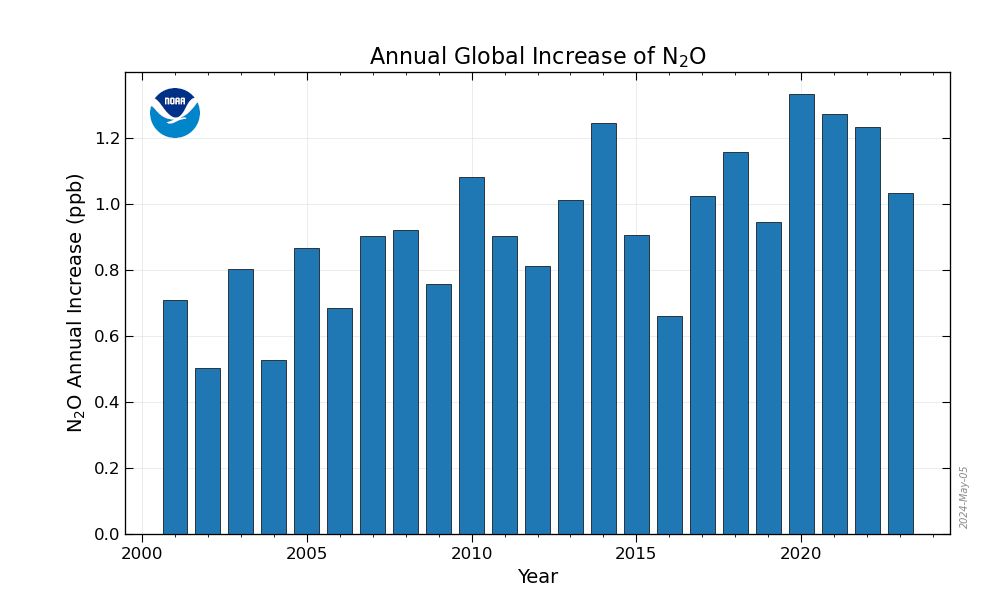
Then we have the annual global increase of N2O from all sources ranging from about 0.5 to 1.3 ppb. Does anyone believe they can measure N2O down to 0.0005 ppm?

 Vegans Pushing Their Anti-Meat Agenda

The origin of these alarms are studies published in Lancet, once highly reputed but recently given over to climate ideology rather than objective science. Most recently is Food in the Anthropocene: the EAT–Lancet Commission on healthy diets from sustainable food systems  The preceding Lancet study stated this main finding:

Following environmental objectives by replacing animal-source foods with plant-based ones was particularly effective in high-income countries for improving nutrient levels, lowering premature mortality (reduction of up to 12% [95% CI 10–13] with complete replacement), and reducing some environmental impacts, in particular greenhouse gas emissions (reductions of up to 84%). However, it also increased freshwater use (increases of up to 16%) and had little effectiveness in countries with low or moderate consumption of animal-source foods. (here).

Georgia Ede MD writes in Psychology Today EAT-Lancet’s Plant-based Planet: 10 Things You Need to Know. Excerpts in italics below with my bolds. Title is link to full text which is recommended reading.  Georgia Ede, MD, is a Harvard-trained psychiatrist and nutrition consultant practicing at Smith College. She writes about food and health on her website DiagnosisDiet.com.

We all want to be healthy, and we need a sustainable way to feed ourselves without destroying our environment. The well-being of our planet and its people are clearly in jeopardy, therefore clear, science-based, responsible guidance about how we should move forward together is most welcome.

Unfortunately, we are going to have to look elsewhere for solutions, because the EAT-Lancet Commission report fails to provide us with the clarity, transparency and responsible representation of the facts we need to place our trust in its authors. Instead, the Commission’s arguments are vague, inconsistent, unscientific, and downplay the serious risks to life and health posed by vegan diets.

To the best of my knowledge, there has never been a human clinical trial designed to test the health effects of simply removing animal foods from the diet, without making any other diet or lifestyle changes such as eliminating refined carbohydrates and other processed foods. Unless and until such research is conducted demonstrating clear benefits to this strategy, the assertion that human beings would be healthier without animal foods remains an untested hypothesis with clear risks to human life and health. Prescribing plant-based diets to the planet without including straightforward warnings of these risks and offering clear guidance as to how to minimize them is scientifically irresponsible and medically unethical, and therefore should not form the basis of public health recommendations.

Summary:

Natural Gas (75% methane) burns the cleanest with the least CO2 for the energy produced.

Leakage of methane is already addressed by efficiency improvements for its economic recovery, and will apparently be subject to even more regulations.

The atmosphere is a methane sink where the compound is oxidized through a series of reactions producing 1 CO2 and 2H20 after a few years.

GWP (Global Warming Potential) is CO2 equivalent heat trapping based on laboratory, not real world effects.

Any IR absorption by methane is limited by H2O absorbing in the same low energy LW bands.

There is no danger this century from natural or man-made methane emissions.

Conclusion

This is a bogus war on fertilizers, farmers and food. Everything is exaggerated for the sake of an extreme agenda to impose controls on free enterprise developed societies. It is true that use of fertilizers results in some release of N2O into the air, but even this has been overstated. And as the video demonstrates, farmers have a vested interest in using fertilizers wisely and are applying techniques that improve efficiency. As well, there is evidence of efficiency gains in the process of producing ammonia and then urea from air and natural gas. The attack on food supply is in effect an effort to reduce the population.
Resources

Much Ado About Methane

More Methane Madness

Washing Methane Away: Atmospheric Chemistry

Mastering Methane Mania

Let Them Eat Steak!

Climate Ideology = Bad Nutritional Advice

Carbon Sense and Nonsense
 

Time for a GOP Rational Climate Policy


Recently in a post called Silence of Conservative Lambs I wrote:

The 1991 blockbuster movie revolved around meek, silent victims preyed upon by malevolent believers in their warped, twisted view of the world. A comparison can be drawn between how today’s conservative thinkers and politicians respond to advocates of the pernicious global warming/climate change ideology. Instead of challenging and pushing back against CO2 hysteria, and speaking out with a rational climate perspective, Republicans in the US, and Conservatives in Canada and elsewhere are meek and silent lambs in the face of this energy slaughter. Worse, when they do speak it is to usually to pander and try to appease offering proposals for things like carbon taxes or other non-remedies for a non-problem, essentially ceding the case to leftists.

So to be more constructive, let’s consider what should be proposed by political leaders regarding climate, energy and the environment.  IMO these should be the pillars:

♦  Climate change is real, but not an emergency.

♦  We must use our time to adapt to future climate extremes.

♦  We must transition to a diversified energy platform.

♦  We must safeguard our air and water from industrial pollutants.


For those not familiar, Climate Intelligence (CLINTEL) is an independent foundation that operates in the fields of climate change and climate policy. CLINTEL was founded in 2019 by emeritus professor of geophysics Guus Berkhout and science journalist Marcel Crok.  Their 1000+ members are signatories of a declaration There is No Climate Emergency

A global network of 900 scientists and professionals has prepared this urgent message. Climate science should be less political, while climate policies should be more scientific. Scientists should openly address uncertainties and exaggerations in their predictions of global warming, while politicians should dispassionately count the real costs as well as the imagined benefits of their policy measures.

One example of a national energy and environment strategy is provided by Clintel for The Netherlands.  The document is Clintel’s Integrated Energy Vision.  Excerpts in italics with my bolds.

Preamble

We all agree in CLINTEL that:
– There is no climate emergency. We have ample time to improve our climate models (for a better understanding of the factors that regulate the climate) and to search for better adaptation technologies.

– The influence of CO2 on global warming is overestimated and its influence on greening is underestimated (even worse, it is often ignored). Nobody knows what the optimum value of atmospheric CO2 concentration is, but from a geological point of view we may conclude that we live in a time with historical low concentrations. Again, there is no climate emergency.

– There is an energy emergency.  Decarbonisation policies – in terms of the current energy transition are most destructive. They do much more harm than good. These energy policies must be terminated immediately.

– The new generation (III and IV) nuclear power plants ought to get all our attention. These plants promise low-priced, reliable, safe and clean energy. In combination with natural gas nuclear energy is a ‘No Regret Solution’. Wind and solar energy are at most niche technologies. Their contribution is and will stay marginal.

With respect to the energy transition, CLINTEL emphasises that there exists not something as a global uniform energy system.  Every country needs a tailor-made energy system depending on its geography, mineral resources, development phase, industrial specialization, population density, etc. For instance, The Netherlands – being a very densely populated country and being severely divided on the CO2 issue – it looks like the new generation of nuclear power plants may function as a breakthrough in the political process:

Part I shows that current Dutch energy policy – having the ambition to reduce CO₂ emissions as much as 49% by 2030 – is based on panic and shall lead to immense additional costs and a drastically deteriorated living environment. Below, we will propose an inspiring long-term energy vision that fits our (and many other) country’s needs, is based on scientific facts, and aimed at a prosperous future for everyone. A positive vision that replaces the gloom and doom predictions of the climate models. A vision with a hopeful perspective for the future.

A Guiding Vision for the Future

It is well known that high-risk, capital-intensive decisions should be based on a policy that is as insensitive as possible about the way the future will unfold. We have called it a No Regret Policy. It represents a long-term policy, implemented by taking small steps, and continuously adapted to what is happening in reality. CLINTEL has drawn up a No Regret Energy Policy, especially aimed at the Dutch energy transition.

The proposed NRE policy is insensitive for the impact that CO₂ might or might not have on climate change (dominant or marginal). In addition it is insensitive for what role the future electricity grid will play and for what the best mobility energy option will be. An extra bonus of the NRE policy is that the Netherlands’ energy supply will become less dependent on Russian natural gas and Middle Eastern oil.

CLINTEL’s proposal consists of three main elements:

1. Introduction of nuclear energy
If we base ourselves on the most up-to-date insights in energy supply, and we look at our four objectives as well as to our ‘no regret demands’, then nuclear energy is the only choice that meets these needs:

• No CO₂ emissions (mandatory requirement in the climate policy in force) as well as excellent controlled waste treatment (pollution requirement)
• High safety level (safety requirement)
• Demand-driven, reliable and affordable (prosperity requirement)
• High energy density (environmental requirement)

About the last entry, please compare a medium-sized 500 MW nuclear power plant with a medium wind turbine park of 4 MW full load. For this reactor, we will need a terrain of approximately 1 km², for the wind farm approx. 300 km². In addition, a nuclear power plant delivers guaranteed for at least 60 years power with low operational costsWind turbines on the other hand deliver unreliable power with high operational costs for a maximum of 25 years.  Solar panels aren’t performing any better. Moreover, the corresponding inverter (from direct current to alternating current) only lasts about 10 years.

2. Transforming green electrons into green molecules

Transport and storage of much larger than the current quantities of electrical energy is
technically difficult and economically unattractive. Every physicist will say: Don’t do it!
The real alternative is that with a large supply of cheap and reliable electrical energy we can afford to transform this energy into any desired molecular clean energy carrier, in the form of synthetic gas and synthetic oil.

There are attractive candidates with an appropriate energy density, such as methanol (CH3OH), ammonia (NH3) and hydrogen (H2), or a combination. These truly green energy carriers can be used safely and affordably be stored and transported using the existing infrastructure (bear in mind that 100% H2 is very aggressive and highly flammable, so there is still a lot of work to be done before this energy carrier can be implemented safely at a large scale).

Oil companies should not be tempted by substantial public subsidies to participate in solar fields and wind farms. Instead, they should concentrate on production, transport and distribution of green molecules (green gas, green oil), so do what they are good at.  Plans to store surplus CO₂ underground may turn out to be a silly activity. Oil companies, be critical before starting such an activity at a large scale.

3. Hybrid applications

With the supply of truly clean electricity and truly clean energy carriers, optimal choices can be made without large and expensive  grid reinforcements and polluting battery packs. Examples:

• Clean high-efficiency boilers (green gas)
• Clean road traffic (green petrol, green diesel)
• Clean aviation (green kerosene)
• Clean industrial production (green gas)
• Clean desalination of seawater (green potable water)

Interestingly, for each application there also is a hybrid solution (fossil-fuel molecules combined with green molecules and/or green molecules combined with green electrons). Here are also great opportunities to meet the ever-growing need for potable water. After all, it is bad for the soil if we keep on pumping up groundwater (e.g. soil desiccation, and soil subsidence). This can be done much better if we link our energy policy to our drinking water policy.

NRE policy excludes burning of biomass (‘the most stupid policy of all times’) and includes sun and wind as niches only. Batteries are only used for low-power applications, as in the information sector. Natural gas and natural oil are primarily still raw materials for the industry. ‘Saying goodbye to ‘natural’ gas, is utterly silly. Any CO₂ tax is even more silly.

Nuclear energy is proposed as the only truly sustainable solution.  To start with, nuclear power will have to take over the energy and heat supply from existing power plants that have almost reached the end of their technical and/or economic lifespan. Next are the energy applications proposed by CLINTEL being part of this vision. The present nuclear technology works with enriched uranium. Breeder reactors on uranium and thorium will in the long run take over the role of these traditional nuclear reactors. Hopefully, nuclear fusion will follow. The Netherlands will, together with other countries, have to participate in research and development efforts, thus acknowledging the importance of a 100% clean, reliable and affordable global energy supply for the foreseeable future. 

Footnote:  US Republicans Get Behind a Six-Point Plan

ClearPath Action

♦  Leverage American Innovation

Innovation and creating jobs is just part of who we are. And thanks to innovation, America has reduced its emissions by more than any other country in the last 20 years. We did this through new American technology, research at the Department of Energy, and strong bipartisan support.

We need to double down and get more American innovations to market.

♦  Modernize Permitting

We need to build cleaner, faster. Clean energy and grid modernization present tremendous economic opportunities, but burdensome and outdated regulations mean that new projects take five years on average to come online.

We have to move faster by enacting common sense reforms to the permitting process.

♦  Bring American Industry Back

American manufacturing is the cleanest in the world with the highest environmental standards. Unfortunately, countries like China and Russia don’t have the same standards.

We can restore American manufacturing leadership in industries like steel and concrete by strengthening our own supply chains and eliminating dependence from countries that don’t meet our environmental standards.

♦  Unleash American Resource Independence

A new industrial revolution is going to require an enormous amount of resources like lithium, copper, cobalt, graphite, and nickel. Currently, we are too dependent on countries like China to supply our needs.

This dependence increases emissions and handicaps American businesses. We have to make it easier to safely supply manufacturers with American-made materials and employ American workers.

♦  Make Our Communities More Resilient

As conservatives, we plan ahead. When it comes to natural disasters, an ounce of prevention is worth a pound of cure. One dollar invested now equals six dollars after the disaster.

We can help take common sense measures and make sound investments that make our communities and farms more resistant to natural disasters like floods, fires and droughts.

♦  Use Natural Solutions

Crop production depends on access to healthy soil, adequate water supplies and predictable weather conditions, all of which are more difficult to manage as the climate changes.
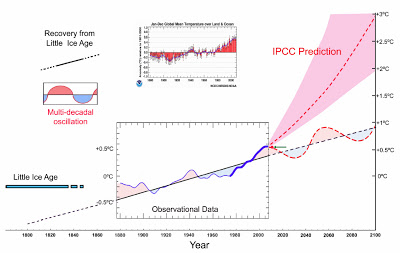
Natural climate solutions – planting trees and farming practices that improve soil health – have a major impact on reducing carbon emissions while making forests and farms more resilient to floods and fires. They are also profitable.
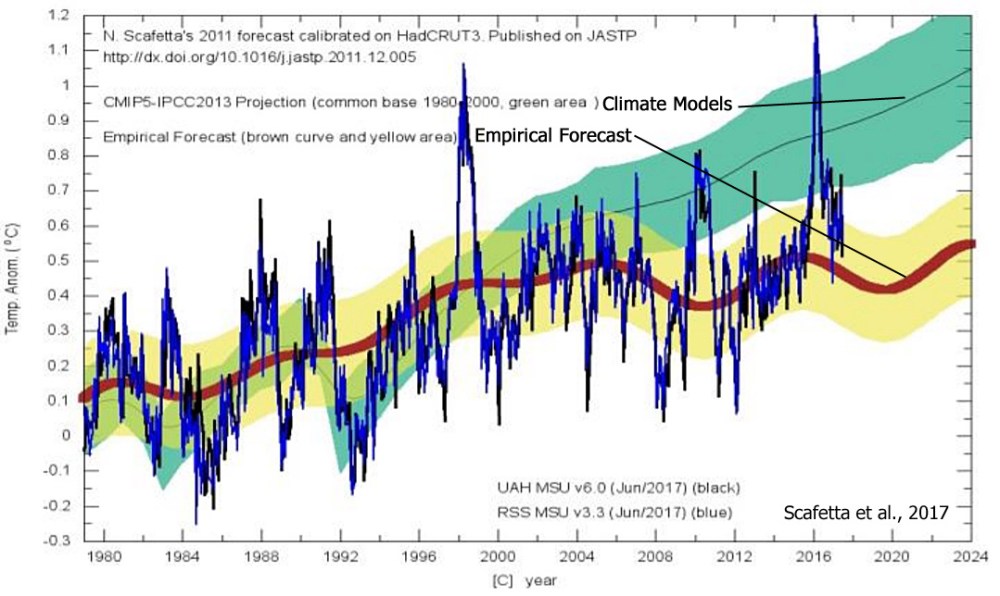
Toward a Congressional Resolution

The current world political climate is shame-and-blame in order to gain approvals for drastic reduction of CO2. Thus pressure is applied to political officials at every level to show their colors on acting to “fight climate change.”  The so-called Zero Carbon notion is widely and naively proclaimed as the way forward.  It seems timely to propose an alternative resolution.

There is no place to hide these days, and politicians who have a rational position on climate science had better legislate on the issue. A common sense legislative motion could read something like this (followed by supporting documentation and references).

Whereas, Extent of global sea ice is within the range of historical variability;

Whereas, Populations of polar bears are generally growing;

Whereas, Sea levels have been slowly rising at the same rate since the Little Ice Age ended 150 years ago;

Whereas, Oceans will not become acidic due to buffering from extensive mineral deposits and marine life is well adapted to pH fluctuations that do occur;

Whereas, Extreme weather events have not increased in recent decades and such events are more associated to periods of cooling rather than warming;

Whereas, Cold spells, not heat waves, are the greater threat to human life and prosperity;

Therefore, This chamber agrees that climate is variable and prudent public officials should plan for future periods both colder and warmer than the present. Two principle objectives will be robust infrastructure and reliable, affordable energy.

Comment:

The underlying issue is the assumption that the future can only be warmer than the present. Once you accept the notion that CO2 makes the earth’s surface warmer (an unproven conjecture), then temperatures can only go higher since CO2 keeps rising. The present plateau in temperatures is inconvenient, but actual cooling would directly contradict the CO2 doctrine. Some excuses can be fabricated for a time, but an extended period of cooling undermines the whole global warming mantra.

It’s not a matter of fearing a new ice age. That will come eventually, according to our planet’s history, but the warning will come from increasing ice extent in the Northern Hemisphere. Presently infrastructures in many places are not ready to meet a return of 1950s weather, let alone something unprecedented.

Public policy must include preparations for cooling since that is the greater hazard. Cold harms the biosphere: plants, animals and humans. And it is expensive and energy intensive to protect life from the ravages of cold. Society can not afford to be in denial about the prospect of the current temperature plateau ending with cooling.