Illustration on climate hysteria by Alexander Hunter/The Washington Times
The Washington Times Editorial Board published ‘Declaring independence from hoaxes’ – ‘Let’s put the climate change fantasy to rest’ – ‘What’s being sold as science isn’t science at all’. Excerpts in italics with my bolds and added images.
Two hundred forty-eight years ago, America declared independence from the idea we needed to be governed by a king. Our Founding Fathers realized a freethinking people are perfectly capable of governing themselves. It was a revolutionary concept in every sense of the word.
Today, tyranny no longer emanates from the decrees of a faraway monarch suffering from a dash of mental illness. It has become a mental tyranny emanating from academics and politicians who employ doomsday tales to replace freethinking with blind acceptance of yarns that advance their agenda.
Mankind’s use of modern conveniences has, they insist, warmed the planet to an uncomfortable degree. Unless we do something to reverse this deadly trend, we will be subjected to extreme storms, rising seas and plagues on an apocalyptic scale. Scary stuff indeed.
We are told this is the conclusion of science, and one cannot
disagree with “the science.” But perhaps we should.
Earlier this year, The Heritage Foundation released a report comparing the predictions of 36 climate models against the actual temperature patterns recorded in the U.S. Corn Belt between the 1970s and the present.
The plot shows the 50-year area-averaged temperature trend during 1973-2022 for the 12-state corn belt as observed with the official NOAA homogenized surface temperature product (blue bar) versus the same metric from 36 CMIP6 climate models (red bars, SSP245 emissions scenario, output here).
Accurate models would be able to match real-life measurements. As the great Nobel Prize-winning physicist Richard Feynman explained in 1964: “If [a theory] disagrees with experiment, it’s wrong. In that simple statement is the key to science.”
All 36 climate predictions disagreed with reality — that is, each forecast temperatures much higher than what Midwesterners actually experienced. The “warming” never lived up to expectations, which means the climate models are something other than science.
Yet President Biden on Tuesday said you’re “really dumb” if you deny the climate crisis the models predict. He demands you return him to the White House so he can heap more climate regulations on the businesses he disfavors.
It’s not likely that another layer of red tape will do anything to alter global weather patterns, because the sun, not mankind, is the primary driver of climate. Whenever humans try to overcome the sun’s influence, the results inevitably fail to live up to expectations.
For instance, a study published in Nature in May found changes in the formulation of fuel used in cargo vessels four years ago “abruptly reduced the emission of sulfur dioxide from international shipping by about 80% and created an inadvertent geoengineering termination shock with global impact.”
That’s a fancy way of saying cleaner skies allowed more sunshine to reach the ocean, warming the seas dramatically. It’s a puzzler for devotees of the climate change narrative to explain how pollution can combat global warming, so they just ignore it as they do all inconvenient truths.
If climate change were rooted in honest belief, liberals would rally around nuclear energy as the cleanest and most efficient means of supplying any nation’s electricity needs. According to the Energy Department, when counting manufacturing emissions, rooftop solar panels create 40 grams of carbon dioxide for every kilowatt-hour of electricity generated. Nuclear power plants generate one-third that much.
Freethinkers ought to question the animosity toward carbon dioxide, the substance that nourishes plants and makes for bountiful harvests. We ought to liberate our minds from the influence of mountebanks who enrich themselves through the telling of climate fairy tales.
What’s being sold as science isn’t science at all.
At Financial Post’s Junk Science Week, Terence Corcoran highlights the hysterical alarmist statements by the UN chief promoting IPCC agenda, the article being The UN emperor has no science. Excerpts in italics with my bolds and added images.H/T John Ray.
Guterres Mangles Metaphors To Pitch Extreme Climate Alarmism
History will record that the United Nations has established itself as the greatest organizational perpetrator of junk science in modern times, if not of all time, with current UN Secretary-General Antonio Guterres destined to be singled out for his personal contribution to the distorted UN climate alarmism.
Since his appointment in 2019, Guterres and the UN have lived up to our standard formal definition of junk science. It occurs when:
scientific facts are distorted,
risk is exaggerated (or underplayed), and
“the science” adapted and warped by politics and ideology to serve another agenda.
That definition encompasses a wide range of activities among scientists, NGOs, politicians, journalists, media outlets, cranks and quacks who manipulate science for political, environmental, economic and social purposes. It also nicely captures the entire United Nations’ climate crusadeand the work of its institutional creation, the Intergovernmental Panel on Climate Change (IPCC).
But no single official can top Guterres as a purveyor of IPCC hype and doom, a living embodiment of Hans Christian Andersen’s fabled emperor who believes he is fully, stylishly dressed but in fact has no clothes.
Our Sinking Planet – Antonio Guterres is a photograph by Photograph by Christopher Gregory for TIME which was uploaded on July 21st, 2020.
Guterres, a former Socialist Party prime minister of Portugal (1995-2002) and president of the Socialist International (1999-2005), was in typically ridiculous form on June 5th when he delivered a speech at the Museum of Natural History in Manhattan, at an event billed as “A Moment of Truth” and a “special address on climate action.” Guterres talked about a planet on a “highway to climate hell,”rehashing a line he used in 2022 in Egypt at the COP27 climate conference: “We are on a highway to climate hell with our foot still on the accelerator.”
Guterres also has no qualms about mixing and mangling metaphors. He simultaneously told the Manhattan audience that humans are “like the meteor that wiped out the dinosaurs, we’re having an outsized impact. In the case of climate, we are not the dinosaurs. We are the meteor. We are not only in danger. We are the danger.”
The longer Guterres rambles on, the more confusing, contradictory and senseless the metaphors become:
“We are playing Russian roulette with our planet. We need an exit ramp off the highway to climate hell. And the truth is … we have control of the wheel.”
Other Guterres’ climate spins include: “Humanity has opened the gates of hell” and “become a weapon of mass extinction.” And: “We must go into emergency mode and put out this five-alarm fire.”
Is Guterres describing reality — or the content of a new AI computer game in which some crazed teenaged human monster drives a flaming meteor through the ozone layer, knocking off dinosaurs before crashing onto a highway and plowing into a Russian Museum of Political Roulette just outside the Gates of Hell?
As UN Secretary-General, Guterres sits atop a hierarchy of agencies such as the IPCC climate science megaplex, which was created in 1988 by two other UN agencies, the World Meteorological Organization (WMO) and the United Nations Environment Program (UNEP). UNEP was cobbled together in 1972 as the brainchild of Maurice Strong, the late Canadian global environmental schemer, who famously mused about a fictional environmental crisis that leads a group of global insiders to decide the only hope for the planet is “that the industrialized civilizations collapse.” The current “de-growth” movement is a version of deindustrialization that reflects Guterres’ off-ramp from the highway to hell. In fact, the word “de-growth” appears 28 times in the IPCC’s sixth and latest Assessment Report .
With these UN agencies as his guide, Guterres’ verbal jumble of science statements is no better than his mixed metaphors. His abuse of climate and environmental facts has often been commented upon, including in a YouTube video titled “Who is Antonio Guterres?,” posted earlier this year by Ottawa journalist John Robson on his Climate Discussion Nexus site. Robson reviews and highlights some of the garbled inaccuracies and misrepresentations Guterres routinely cranks out.
For instance: “Climate-related natural disasters are becoming more frequent, more deadly, more destructive with growing human and financial cost.” Not true . And: “The number of weather, climate and water-related disasters has increased by a factor of five over the past 50 years.” Also not true .
When it comes to policies to deal with his fantastic vision of planetary destruction, Guterres aligns with Maurice Strong’s de-growth agenda. In his Manhattan speech, he repeated the UN call for a “fossil-fuel phase-out” since “economic logic makes the end of the fossil fuel age inevitable.” He urged financial institutions to “stop bankrolling” fossil fuel industries. “Fossil fuels are not only poisoning our planet,” he told bankers, “they’re toxic for your brand.”
The planet would be much better off if national governments stopped bankrolling Guterres and the United Nations and their constant poisoning of our science, economics and politics.
Viv Forbes writes at Spectator Australia Battery baloney, hydrogen hype, and green fairy tales in Australia. Excerpts in italics with my bolds and added images. H/T John Ray at his blog Greenie Watch.
How low Australia has fallen… Our once-great BHP now has a ‘Vice President for Sustainability and Climate Change’, the number of Australian students choosing physics at high school is collapsing, and our government opposes nuclear energy while pretending we can build and operate nuclear submarines.
Our Green politicians want: ‘No Coal, No Gas, No Nuclear!’ while Our ABC, Our CSIRO, and Our Australian Energy Market Operator (AEMO) are telling us that wind and solar energy (plus a bit of standby gas, heaps of batteries, and new power lines) can power our homes, industries and the mass electrification of our vehicle fleet. This sounds like Australia’s very own great leap backwards.
There are two troublesome Green Energy Unions: the Solar Workers down tools every night and cloudy day, and the Turbine Crews stop work if winds are too weak or too strong. And wind droughts can last for days. The reliable Coal and Gas Crews spend sunny days playing cards, but are expected to keep their turbines revving up and down to keep stable power in the lines.
From Duck to Canyon Curve
Magical things are also expected from more rooftop solar. But panel-power has four huge problems:
♦ Zero solar energy is generated to meet peak demand at breakfast and dinner times.
♦ Piddling solar power is produced from many poorly oriented roof panels or from the weak sunshine anywhere south of Sydney.
♦ If too much solar energy pours into the network (say at noon on a quiet sunny Sunday), the grid becomes unstable. Our green engineers have the solution – be ready to charge people for unwanted power they export to the grid, or just use ‘smart meters’ to turn them off.
♦ More rooftop solar means less income and more instability for power utilities so they have to raise electricity charges. This cost falls heaviest on those with no solar panels, or no homes.
Magical things are also expected from batteries.
When I was a kid on a dairy farm in Queensland, I saw our kerosene lamps and beeswax candles replaced by electric lights. We had 16 X 2 volt batteries on the verandah and a big thumping diesel generator in the dairy.
It was a huge relief, years later, when power poles bringing reliable electricity marched up the lane to our house. All those batteries disappeared with the introduction of 24/7 coal power.
Batteries are never a net generator of power – they store energy generated elsewhere, incurring losses on charging and discharging.
There has to be sufficient generating capacity to meet current demand while also recharging those batteries. What provides electricity to power homes, lifts, hospitals, and trains and to recharge all those vehicle batteries after sundown on a still winter night? (Hint: Call the reliable coal/gas/nuclear crews.)
The same remorseless equations apply to all the pumped hydro schemes being dreamed up – everyone is a net consumer of power once losses are covered and the water is pumped back up the hill.
Yet AEMO hopes we will install 16 times our current capacity of batteries and pumped hydro by 2050 – sounds like the backyard steel plans of Chairman Mao or the Soviet Gosplan that constipated initiative in USSR for 70 years. Who needs several Snowy 2 fiascos running simultaneously?
Mother Nature has created the perfect solar battery which holds the energy of sunlight for millions of years. When it releases that energy for enterprising humans, it returns CO2 for plants to the atmosphere from whence it came. It is called ‘Coal’.
‘Hydrogen’ gets a lot of hype, but it is an elusive and dangerous gas that is rarely found naturally. To use solar energy to generate hydrogen and to then use that hydrogen as a power source is just another silly scheme to waste water and solar energy. It always takes more energy to produce hydrogen than it gives back. Let green billionaires, not taxpayers, spend their money on this merry-go-round.
Who is counting the energy and capital consumed, and the emissions generated, to manufacture, transport, and install a continent being covered by ugly solar panels, bird slicers, high voltage power lines, access roads, and hydro schemes? Now they want to invade our shallow seas. Who is going to clean up this mess in a few years’ time?
As Jo Nova says:
‘No one wants industrial plants in their backyard, but when we have to build 10,000 km of high voltage towers, 40 million solar panels, and 2,500 bird-killing turbines – it’s in everyone’s backyard.’
With all of this planned and managed by the same people who gave us Pink Batts, Snowy 2 hydro, and the NBN/NDIS fiascoes, what could possibly go wrong?
Another big problem is emerging – country people don’t want power lines across their paddocks, whining wind turbines on their hills, and glittering solar panels smothering their flats. And seaside dwellers don’t want to hear or see wind turbines off their beaches. Even whales are confused.
The solution is obvious – build all wind and solar facilities in electorates that vote Green, Teal, and Labor. Those good citizens can then listen to the turbines turning in the night breezes and look out their windows to see shiny solar panels on every roof. This will make them feel good that they are preventing man-made global warming. Those electorates who oppose this silly green agenda should get their electricity from local coal, gas or nuclear plants.
What about the Net Zero targets?
At the same time as Australia struggles to generate enough reliable power for today, governments keep welcoming more migrants, more tourists, more foreign students and planning yet more stadiums, games, and circuses. None of this is compatible with their demand for Net Zero emissions.
Unlike Europe, the Americas, and Asia, Australia has no extension cords to neighbours with reliable power from nuclear, hydro, coal, or gas – we are on our own.
Australia has abundant resources of coal and uranium – we mine and export these energy minerals but Mr Bowen, our Minister for Blackouts, says we may not use our own coal and uranium to generate future electricity here. Someone needs to tell him that no country in the world relies solely on wind, solar, and pumped hydro. Germany tried but soon found they needed French nuclear, Scandinavian hydro, imported gas, and at least 20 coal-fired German power plants are being resurrected or extended past their closing dates to ensure Germans have enough energy to get through the winter.
Australia is the only G20 country in which nuclear power is illegal (maybe no one has told green regulators that we have had a nuclear reactor at Lucas Heights in Sydney since 1958). Australia is prepared to lock navy personnel beside nuclear power plants in our new nuclear-powered submarines but our politicians forbid nuclear power stations in our wide open countryside.
More CO2 in the atmosphere brings great benefits to life on Earth. If man adds to it, the oceans dissolve a swag of it, and what stays in the atmosphere is gratefully welcomed by all plant life.
In 2023, Australia added just 0.025 ppm to the 420 ppm in today’s atmosphere. Most of this probably dissolved in the oceans. If we in Australia turned everything off tomorrow, the climate wouldn’t notice, but our plant life would, especially those growing near power stations burning coal or gas and spreading plant food.
Climate has always changed and a warm climate has never been a problem
on Earth. It is cold that kills. Especially during blackouts.
Two articles caught my attention by looking behind the curtain seeing intentions obscured by appeals to Zero Carbon. First Chris Talgo writes at American Thinker Climate Alarmism is the existential threat to humanity. Excerpts in italiics with my bolds and added images.
While in France observing the 80th anniversary of D-Day and honoring the thousands of brave soldiers who gave their lives fighting the existential threat that was Nazi Germany, President Joe Biden could not help himself from descending into crass political talking points by comparing the most destructive and deadly war in human history to climate change.
“The only existential threat to humanity, including nuclear weapons, is if we do nothing on climate change,” Biden declared. Due to the “existential threat of climate change, which is just growing greater, we’re working together to accelerate the global transition to net-zero. It is the existential threat to humanity,” Biden reiterated.
In reality, climate change is nowhere near an existential threat.
In fact, in many ways, the slight warming that has occurred over the past half century or so has made life better for humanity. For instance, NASA satellite data show a significant rise in global plant growth in recent decades — what some call global greening. A slightly warmer planet is also beneficial because it produces greater crop yields.
However, one can make a compelling argument that climate alarmism,
and the policies that climate alarmists support,
actually comprise an existential threat to humanity.
1. End Fossil Fuels On Which Modern Life Depends
First and foremost, climate alarmists are hellbent on ending the use of affordable and reliable energy in the form of fossil fuels. This alone is a horrendous stance that puts millions of lives at risk.
Like it or not, the advent of fossil fuels, namely oil, coal, and natural gas, has been the biggest boon for humanity in all of history. The harnessing of these resources to supply virtually unlimited energy in cost-effective terms has raised billions of people from abject poverty.
Without ample access to fossil fuels, our modern way of life would literally cease to exist. Not only do fossil fuels provide abundant and affordable energy. As the U.S. Department of Energy notes, “Petrochemicals derived from oil and natural gas make the manufacturing of over 6,000 everyday products and high-tech devices possible.”
2. Rely on Renewable Energy, A Poor Substitute
Second, climate alarmists demand that the world immediately transitions to so-called renewable energy and achieve net-zero carbon dioxide emissions. The problem is that renewable energy from solar panels and wind farms is too expensive, unreliable, and not nearly scalable. If the world were to shun fossil fuels in favor of wind and solar, the amount of energy available to use would plummet. This would result in devastation across many fronts.
3. Diminish Human Populations and Livelihoods
Third, climate alarmists constantly call for degrowth, both in terms of the economy and in terms of population. Somehow, the climate alarmists have convinced themselves that the solution to the nonexistent problem of a slightly warming planet is for humanity to cull its population growth. This is extremely short-sighted and fails to consider that many developed countries are currently experiencing a stark population decline. If this is not reversed, and soon, many of these once-thriving nations will experience severe demographic problems.
Likewise, calls foreconomic degrowth, which has been a cause célèbre among climate alarmists for many years now, would wreak havoc and would instantly result in decreased living standards for billions of people. This is especially true for several developing countries, which are banking on economic growth and increased prosperity to lift billions from poverty.
4. No More “Better Things for Better Living”
Fourth and finally, climate alarmists, whether they realize it or not, are akin to modern-day Luddites because they excoriate innovations and technological breakthroughs. In many ways, climate alarmists are the opposite of progressives because they seek to regress humanity back to a time when creature comforts and access to the latest and greatest technologies were limited to a select few rather than accessible to the masses. Even worse, by hindering the development of new technologies that could solve some of the world’s most vexing problems simply because it does not align with their worldview, climate alarmists are essentially preventing the betterment of the human experience.
Fortunately, it seems like the climate alarmists are losing ground. Polls show that more and more people are skeptical of the constant fearmongering and are becoming aware of the failed doomsday predictions. This is great news, but it is just the start. Unless and until there is a general consensus that climate alarmism is the problem and that the misguided policies supported by climate alarmists are outright rejected by an overwhelming majority, climate alarmism will remain a grave threat to the future of humanity.
The title of this 800 page tome is “Accelerating Decarbonization in the United States: Technology, Policy, and Societal Dimensions” from the US National Academies of Science, Engineering and Medicine (NASEM).
I seldom use the term “socialist” but it is the perfect word here once the concept is updated. It originally referred to government ownership of the means of production. But in today’s Regulatory State, ownership is not required for control so it means government control of production, or more broadly government control of both production and use.
In this case it is government control of the production and use of what they call “the energy system.” Since everybody uses energy this includes control of everybody. Under the proposed system the government does not serve people it “manages” them, or at least their use of energy which is a lot of what we do.
They are however rather confused about this. The very first sentences state their basic assumption which is wildly false. They say this:
“The world is coalescing around the need to reduce greenhouse gas (GHG) emissions to limit the effects of anthropogenic climate change, with many nations setting goals of net-zero emissions by midcentury. As the largest cumulative emitter, the United States has the opportunity to lead the global fight against climate change. It has set an interim emissions target of 50–52 percent below 2005 levels by 2030 toward a net-zero goal.” (All quotes are from the Executive Summary.)
The United States has set no such targets. The US is a big country with hundreds of millions of people so it does not set targets. Perhaps they mean the US Government but Congress has set no such targets. In fact these so-called targets are merely the wishful thinking of the Biden Administration and their radical net zero colleagues which apparently include the National Academies. And if a Republican wins the next election it will not even be a Presidential wish.
So there is much less here than meets the eye. This tome is basically a radical socialist manifesto and that is how it should be read.
The funding is surprising. NASEM studies used to be done at the request of Congress or Federal Agencies and funded by them since objectively advising them is supposed to be the job of the Academies. Instead this work was funded by a collection of Foundations, presumably left wingers. So the National Academies are for hire by those with radical causes.
The socialist management thrust is exemplified by this topic
which is listed as a central theme:
“Managing the Future of the Fossil Fuel Sector.”
Only under socialism is this a government function.
That the called for management process is also non-democratic is made clear by this segment of their lead off discussion of risks: “In developing its findings and recommendations, the committee recognized the inherent risks and uncertainties associated with such an unprecedented, long-term, whole-of-society transition. These include … political, judicial, and societal polarization risk—that political and judicial actions or societal pressures will change the policy landscape….”
So elected officials, the Courts, or the people in general might get in the way. Their solution is not to get the support of the people, rather it is more management. They say “Mitigating these risks will require adaptive management and governance to coordinate and evaluate policy implementation and to communicate progress on outcomes.”
Sounds like the Plan is to manage the elections, the Courts and the people.
Sit down, shut up, and we will tell you what we have done as we go along.
For those interested in the details of the net zero wishlist this is a grand source. Otherwise it is just another radical manifesto to line the shelves with.
My concern is that the three National Academies have abandoned their mission and therefore lost their integrity. Tools of left wing foundations are not worthy of the name National Academy.
This post provides a synopsis of Dr. John Clauser’s Clintel presentation last May. Below are the texts from his slides gathered into an easily readable format. The two principal takeways are (in my words):
A. IPCC’s Green House Gas Science is Flawed and Untrustworthy
B. Clouds are the Thermostat for Earth’s Climate, Not GHGs.
Part I Climate Change is a Myth.
The IPCC and its collaborators have been tasked with computer modeling and observationally measuring two very important numbers – the Earth’s so-called power imbalance, and its power-balance feedback-stability strength. They have grossly botched both tasks, in turn, leading them to draw the wrong conclusion.
I assert that the IPCC has not proven global warming! On the contrary, observational data are fully consistent with no global warming. Without global warming, there is no climate-change crisis!
Their computer modeling (GISS) of the climate is unable to simulate the Earth’s surface temperature history, let alone predict its future.
Their computer modeling (GISS) is unable to simulate anywhere near the Earth’s albedo (sunlight reflectivity). The computer simulated sunlight reflected power and associated power imbalance error, are typically about fourteen times bigger than the claimed measured power imbalance, and about twenty five times bigger than the claimed measured power imbalance error range.
The IPCC’s observational data are wildly self-inconsistent and/or are fully consistent with no global warming.
The IPCC’s observational data claim an albedo for cloudy skies that is inconsistent with direct measurements by a factor of two. Alternatively, their data significantly violate conservation of energy.
Scientists performing the power-balance measurements admit that the available methodologies are incapable of measuring a net power imbalance with anywhere near the desired accuracy. This difficulty is due to huge temporal and spatial fluctuations of the imbalance, along with gross under-sampling of the data.
The observational data they report are self-inconsistent and are visibly dishonestly fudged to claim warming. The fudged final reported values, herein highlighted and exposed, are an example of the proverbial proliferation of bad pennies.
NOAA’s claims that there is an observed increase in extreme weather events are bogus. Their own published data disprove their own arguments. A 100 year history of extreme weather event frequency, plotted frontwards in time is virtually indistinguishable from the same historical data plotted backwards in time.
In Part II, I present the cloud-thermostat feedback mechanism. My new mechanism dominantly controls and stabilizes the Earth’s climate and temperature. The IPCC has not previously considered this mechanism. The IPCC ignores cloud-cover variability.
The IPCC’s two sacred tasks – both botched!
The IPCC and its collaborators have been tasked with computer modeling and observationally measuring two very important numbers – the Earth’s so-called power imbalance, and its power-balance feedback-stability strength.
The Earth’s net power imbalance is its sunlight heating power (its power-IN), minus its two components of cooling power – reflected sunlight and reradiated infrared power (its power-OUT).
Based on their claimed power imbalance and global-warming assertion, the IPCC and its collaborators assemble a house of cards argument that forebodes an impending climate change apocalypse/ catastrophe.
Additionally, the IPCC and its contributors calculate the strength of naturally occurring feedback mechanisms that presently stabilize the Earth’s temperature and climate
They claim only marginal effectiveness for these mechanisms, and correspondingly assert that there is a “tipping point”, whereinafter further added greenhouse gasses catastrophically cause what amounts to a thermal-runaway of the Earth’s temperature.
The IPCC scapegoats atmospheric greenhouse gasses as the cause of global warming, and further mandates that trillions of dollars must be spent to stop greenhouse gas release into the environment with a so-called “zero-carbon” policy.
The IPCC also mandates multi-trillion dollar per year geoengineering projects including Solar Radiation Management Systems to stabilize the Earth’s climate and CO2 capture projects to reduce the atmospheric CO2 levels.
I assert that the IPCC and its contributors have not proven global warming, whereupon their house of cards collapses.
My cloud thermostat mechanism’s net feedback “strength” (the IPCC’s 2nd sacred task to estimate) is anywhere from -5.7 to -12.7 W/m2/K (depending on the assumed cloud albedo, 0.36 vs. 0.8), compared to the IPCC’s botched best estimate for their mechanisms of -1.1 W/m2/K. My mechanism’s overwhelmingly dominant strength confirms that it is the dominant feedback mechanism controlling the Earth’s climate.
Correspondingly, I confidently assert that the climate crisis is a colossal trillion-dollar hoax.
The IPCC’s computer modeling uses flawed physics to estimate the Earth’s temperature history
• The above graph is copied from [AR5, (IPCC, 2013) Fig 11.25]. • It shows the IPCC’s CMIP5 computer modeling of the Earth’s temperature “anomaly”. The various computed curves display the earth’s predicted (colored) and historical (gray) “temperature anomaly”. • The solid black curve is the observed temperature anomaly • Note that all 40+ models are incapable of simulating the Earth’s past temperature history. The total disarray and total lack of reliability among the CMIP5 predictions was first highlighted by Steve Koonin (former White House science advisor to Barack Obama) in his recent book- Unsettled? What climate science tells us, what it doesn’t, and why it matters. • Something is obviously very wrong with the physics incorporated within the computer models, and their predictions are totally unreliable. • Albedo is the fraction of sunlight power that is directly reflected by the Earth back out into space (OSR=100 W/m2 portion of power-OUT)
• The above Figure, copied from Stephens et al. (2015), shows the IPCC’s CMIP5 computer modeling (colored curves) of the Earth’s mean annual albedo temporal variation. The solid black curve is the Earth’s albedo measured by satellite radiometry. (The variation is not sinusoidal.) • The added scale shows the associated reflected sunlight power. It assumes a constant solar irradiance – 340 W/m2 • Note that the IPCC’s computer modeling is grossly incapable of simulating the observed Earth’s reflected power, and especially incapable of simulating that power’s dramatic temporal fluctuation. • The actual power’s annual variation is actually much greater than is shown by this Figure by about 18 W/m2, due to the ellipticity of the Earth’s orbit and the associated sinusoidal temporal variation of the so-called solar constant. • Despite more than 10 W/m2 gross errors in the computer simulation’s calculated reflected power, as is shown on the Figure, the IPCC [AR6 (2021)] still claims that it has computer simulated and precisely measured this power, yielding an imbalance that is equal to 0.7 ± 0.2 W/m2 – Huh?
The IPCC’s observational data are consistent with NO global warming
• Power-IN is the sunlight power incident on the Earth. The IPCC and climate scientists call it Short Wavelength (SW) Radiation. It is about 340 Watts per square meter of the Earth’s surface area. (It is not actually constant, but varies ± 9 W/m2.) • Power-OUT has two components: • One component is the sunlight energy that is directly reflected by the Earth back out into space, whereinafter it can no longer heat the planet. That component is claimed by the IPCC to be about 100 W/m2. • The other component is the far-infrared heat radiated into space by a hot planet. It is claimed to be about 240 W/m2. The IPCC calls the far-infrared heat radiation component, Long Wavelength (LW) Radiation. • Measuring the power imbalance consists of measuring power-IN, measuring power-OUT and subtracting. Simple enough? Not really. The problem is that power-IN, and power-OUT are huge numbers, and that the difference between them is miniscule – 0.2% of power-IN. That miniscule difference is the net imbalance that is sought, both experimentally and theoretically.
Unfortunately, it is so small that it is very difficult, if not impossible, to measure to the desired accuracy, 0.1 W/m2, or 0.03% of power-IN. It is much tougher to measure when power-IN and power-OUT are both also hugely varying in a seemingly random irreproducible fashion. Large variations occur both in time and in space over the surface of the Earth. As noted in a previous slide, this grossly under-sampled fluctuation is about 28 W/m2, compared with the IPCC’s claimed imbalance, 0.7 ± 0.2 W/m2. • A variety of methods has been employed to measure these powers. They include satellite radiometry, (the ERBE, and CERES Terra and Aqua satellites), ocean heat content (OHC) measured using the ARGO buoy chain and XBT water sampling by ships, and finally by ground sunlight observations using the Baseline Surface Radiation Network (BSRN). • The various measured values are all in wild disagreement with each other. Importantly, none of the reported data actually show a convincing net warming power imbalance. Importantly, much of the reported data are totally fudged in a manner that dishonestly changes them from showing no warming to showing warming!
AR6 Power-flow Diagrams
Critiques of Power-Flow Diagrams by Trenberth et al. (2010, 2014)
• Satellites measure the Top of Atmosphere energy balance, while Ocean Heat Content data apply to the surface energy balance. One may legitimately mix power-flux data at the two different altitudes, if and only if one fully understands all of the power-flow processes in the atmosphere that occur between the surface and the Top of Atmosphere. If the latter requirement is not true, then one ends up with an “apples to oranges” comparison. • Trenberth et al. (2010, 2014) are highly critical of Loeb, Stephens, L’Ecuyer, and Hansen’s claimed “understanding” of the associated connection between the power flows at these two altitudes. • Trenberth and Fasullo (2010) point to a huge “missing energy” indicated by the difference between the satellite data and the OHC data power-imbalance calculations, and specifically ask “Where exactly does the energy go?” • Hansen et al. (2011) dismiss Trenberth and Fasullo’s alleged missing energy as being simply due to satellite calibration errors. • Trenberth Fasullo and Balmesada (2014) further note that despite various considerations of the surface power balance, significant unresolved discrepancies remain, and they are skeptical of the power imbalance claims. • In effect, Trenberth et al. are the earliest “whistle blowers” to the above-mentioned data fudges.
Part I –The Climate Change Myth– Conclusions
1. The IPCC and its contributors claim the Earth has a net-warming energy imbalance. I show here that those claims are false. 2. The IPCC bases its claims on computer modeling of the Earth’s atmosphere, and on observational data from a variety of observational modalities. Both the computer models and the observational data are grossly flawed, and fudged. 3. The IPCC’s computer modeling and its predictions are totally unreliable. There is something clearly very wrong with the physics incorporated within these computer models. Since the computer models can’t even explain the past, why should anyone trust their prediction for the future? 4. Not one of the observational modalities for measuring the Earth’s power imbalance convincingly shows net global warming. 5. I show where various observers and the IPCC have dishonestly fudged their reported data, and have dishonestly changed it from showing No Warming, to showing Warming. Crucially important data fudges are revealed here and highlighted in red. If you don’t believe me, check my arithmetic. 6. The IPCC and NOAA further claim that the purported power imbalance has already caused an increase in dangerous extreme weather events. NOAA’s own data disprove their own claims. 7. I thus offer Great News. Despite what you may have heard from the IPCC and others, there is no real climate crisis! The planet is NOT in peril! 8. The IPCC’s (and NOAA’s) claims are a hoax. Trillions of dollars are being wasted.
Part II – The cloud thermostat
1. So what is really happening? Why is the earth’s climate actually as stable as it really is? 2. The cloud thermostat mechanism is clearly the overwhelmingly dominant climate controlling feedback mechanism that controls stabilizes the Earth’s climate and temperature. It thereby prevents global warming and climate change. 3. The cloud-thermostat mechanism provides very powerful feedback that stabilizes the Earth’s climate and temperature. It great strength obtains from the observed large fluctuation of the Earth’s power imbalance. 4. The mechanism gains its strength from the Earth’s observed very large cloud-cover variation. The power imbalance is actually observed to be continuously strongly fluctuating by anywhere between 18 to 55 W/m2. 5. Clouds modulate the outgoing Shortwave power and therefore control the Earth’s power imbalance, minimally with a 18 W/m2 available power range (ignoring the added 18 W/m2 solar-constant variation), which is minimally 26 times the IPCC’s 0.7 W/m2 claimed power imbalance, and 45 times the IPCC’s ± 0.2 W/m2 power imbalance error range. 6. The above numbers use the IPCC’s assumed data parameters. With more realistic assumptions, the cloud-thermostat mechanism controls the Earth’s power imbalance with a 73 W/m2 available power range, which is 100 times bigger than the IPCC’s 0.7 W/m2 claimed power imbalance, and 180 times bigger than the IPCC’s ± 0.2 W/m2 power-imbalance total error range. 7. This seemingly random fluctuation of the power imbalance is not random at all, but is actually a crucial part of a thermostat-like feedback mechanism that controls and stabilizes the Earth’s climate and temperature. It is observed by King et al. (2013) and by Stephens et al. (2015) to be quasi-periodic, 8. Just like the thermostat in your home, the power-imbalance is never zero. The furnace or AC is always either ON or OFF. The thermostat simply modulates the heating/cooling duty cycle.
Features of the cloud thermostat mechanism
1. In preparation for the introduction of this model, I first describe important, underappreciated, but conspicuous properties of clouds – their variability and their strong reflectivity of sunlight (SW radiation). 2. I show that the cloud-thermostat mechanism involves the dominant (73%) use of sunlight energy by the planet. 3. I show that when the cloud-thermostat mechanism is viewed as a form of climate-stabilizing negative feedback, it is by far the most powerful of any such mechanism heretofore considered. 4. The IPCC estimates that the net stabilizing feedback strength or the Earth’s climate, including the destabilizing feedback strength of greenhouses is about -1 W/m2/ºC. 5. I show that the cloud thermostat feedback increases the net natural stabilizing feedback strength to about anywhere between -7 W/m2/ºC and -14 W/m2/ºC, depending on the assumptions used.
There are 5 important take-home messages to be gleaned from these satellite photographs.
1. Clouds reflect dramatically more sunlight than the rest of the planet does! 2. Clouds of all types appear bright white! 3. The photos (along with a large number of careful measurements) strongly suggest that the average cloud reflectivity (of sunlight) is about 0.8 – 0.9. (For comparison, white paper has a reflectivity of ≈ 0.99.) [Wild et al.(2019) claim that cloud reflectivity is 0.36.] 4. The rest of the planet appears much darker than the clouds. The average reflectivity of land (green and brown areas) and ocean (dark blue areas) is ≈ 0.16. 5.Cloud coverage area is highly variable over the Earth.
What does sunlight mostly do when it reaches the Earth’s surface?
• It is commonly believed that sunlight that is absorbed by the Earth’s surface simply warms the surface. That may be true over land. But land represents only about 30% of the surface. • Oceans cover 70% of the Earth’s surface. Correspondingly, about 70% of incoming sunlight falls on the oceans. Virtually all of the Earth’s exposed water surface occurs in the oceans. • Following the AR6 power-flow diagram, 160 W/m2is absorbed by the whole Earth, meaning that roughly 70% X 160 = 112 W/m2 is absorbed by oceans. • The AR6 power-flow diagram indicates that 82 W/m2 is used for evaporating water, and not for heating the surface. • Since clouds are mostly produced over the oceans (because that’s where the exposed water is), then 82/112 = 73% of the input energy absorbed by the Earth’s oceans is used, not for warming the Earth, but instead simply for making clouds.
How does the cloud thermostat work?
1. Recall that the IPCC’s AR6 power-flow map asserts that 73% of the input energy absorbed by the Earth’s oceans is used, not for warming the Earth, but instead simply for evaporating seawater and making clouds, rather than for raising the Earth’s surface temperature. Recall that the Earth has a strongly varying cloud cover and albedo. 2. Temperature control of the Earth’s surface by this mechanism works exactly the same way as does a common home thermostat. A thermostat automatically corrects a structure’s temperature in the presence of varying modest heat leaks. For the earth, the presence of significant CO2 in the earth’s atmosphere, manmade or not, provides, in fact, a very small heat leak (at most, about 2 W/m2). Note that, just like the Earth, the power imbalance for a thermostatically controlled system is never zero. It is always fully heating or fully cooling. 3. How does the cloud thermostat work? When the Earth’s cloud-cover fraction is too high, then the earth’s surface temperature is too low. Why? Clouds produce shadows. Cloudy days are cooler than sunny days. A high cloud-cover fraction equals a highly shadowed area. With reduced sunlight reaching the ocean’s surface and lower temperature, the evaporation rate of seawater is reduced. The cloud production rate over ocean (70% of the earth) is low because sunlight is needed to evaporate seawater. The earth’s too-high cloud-cover fraction obediently starts to decrease. Very quickly, cloud-cover fraction decreases, the temperature increases. The Earth’s cloud-cover fraction is no longer too high. Equilibrium cloud cover and temperature are restored. 4. When the Earth’s cloud-cover fraction is too low, the surface temperature is then too high, then the reverse process occurs. With low cloud cover, lots of sunlight reaches the ocean surface. Increased sunlit area then evaporates more seawater. The cloud-production rate obediently increases and the cloud-cover fraction is no longer too low . Equilibrium cloud cover and temperature are again restored. 5. Depending of one’s assumption regarding cloud reflectivity (albedo), the cloud thermostat mechanism has anywhere between 18 and 55 W/m2 power available from cloud-fraction variability to overcome a wimpy 0.7 W/m2 heat leak (allegedly blamed on greenhouse gasses) and to stabilize the Earth’s temperature, no matter what the greenhouse gas atmospheric concentration is! 6. These two fluctuating opposing processes, when in equilibrium, provide an equilibrium cloud-cover fraction, and an equilibrium average temperature. The earth thus has a built in thermostat!
Feedback strength of the cloud thermostat mechanism
1. The resulting cloud-thermostat mechanism’s feedback parameter is now readily evaluated under the two scenarios associated with two choices for cloud albedo. The details of the calculation are shown in Appendix D. 2. Using the AR6 choice for cloud albedo, αClouds = 0.36, we have λClouds ≈ – 5.7 W/m2 K, which is 1.7 times larger than (the misnamed) λ Planck , heretofore the strongest feedback term. 3. Alternatively, using the more reasonable choice for cloud albedo, αClouds = 0.8, we have λClouds ≈ -12.7 W/m2 K, which is 3.8 times larger than (the misnamed) λPlanck. 4. These values are plotted as an extension of the AR6 Figure 7.1, which shows the feedback strength for various mechanisms. The total system strength is shown in the left-hand column. 5. Viewed as a temperature-control feedback mechanism, in either scenario, the cloud thermostat has the strongest negative (stabilizing) feedback of any mechanism heretofore considered. 6. It very powerfully controls and stabilizes the Earth’s climate and temperature.
Part II – Conclusions
1. I have introduced here the cloud-thermostat mechanism. It is clearly the overwhelmingly dominant climate controlling feedback mechanism that controls stabilizes the Earth’s climate and temperature. It thereby prevents global warming and climate change. 2. The IPCC’s 2021 AR6 report (p.978) claims that climate stabilizing natural feedback mechanisms have a net (total) stabilizing strength of -1.16 ± 0.6 W/m2/K. My cloud feedback mechanism has a net stabilizing strength of anywhere between -5.7 to -12.7 W/m2/K, depending of one’s assumptions regarding the albedo of clouds. 3. My cloud thermostat mechanism provides nature’s own Solar Radiation Management System. This mechanism already exists. It is built in to nature’s own cloud factory. It works very well to stabilize the Earth’s temperature on a long term basis. And, it is free!
“Recommendations for policy makers”
1. There is no climate crisis! There is, however, a very real problem with providing a decent standard of living to the world’s now enormous population. There is indeed an energy shortage crisis. The latter is being unnecessarily exacerbated by what, in my opinion, is incorrect climate science, and by government’s associated incorrect muddled response to it. 2. Government and business are currently needlessly spending trillions of dollars on efforts to limit the greenhouse gasses, CO2 and CH4, in the Earth’s atmosphere. 3. CO2 and CH4 are not pollutants. They must be removed from every list of defined pollutants. They have a negligible effect on the climate. Trillions of dollars can be saved by this one simple measure alone! Additionally, the CO2 Coalition points out that atmospheric CO2 is actually beneficial. 4. I recommend that all efforts to limit environmental carbon should be terminated immediately! Trillions of dollars can be saved by eliminating carbon caps, carbon credits, carbon sequestration, carbon footprints, zero-carbon targets, carbon taxes, anti-carbon policies and fossil-fuel limits, in energy policy and elsewhere.
The ‘sustainability’ regime is impoverishing the world.
In recent years, the overused word ‘sustainability’ has fostered a narrative in which human needs and aspirations have taken a back seat to the green austerity of Net Zero and ‘degrowth’. The ruling classes of a fading West are determined to save the planet by immiserating their fellow citizens. Their agenda is expected to cost the world $6 trillion per year for the next 30 years.
Yes, those are Trillions of US$ they are projecting to spend.
Meanwhile, they will get to harvest massive green subsidies
and live like Renaissance potentates.
In Enemies of Progress, author Austin Williams suggests that ‘the mantra of sustainability’ starts with the assumption that humanity is ‘the biggest problem of the planet’, rather than the ‘creators of a better future’. Indeed, many climate scientists and green activists see having fewer people on the planet as a key priority. Their programme calls not only for fewer people and fewer families, but also for lower consumption among the masses. They expect us to live in ever smaller dwelling units, to have less mobility, and to endure more costly home heating and air-conditioning. These priorities are reflected in a regulatory bureaucracy that, if it does not claim justification from God, acts as the right hand of Gaia and of sanctified science.
The question we need to ask is: sustainability for whom?
US Treasury secretary Janet Yellen recently suggested that her department sees climate change as ‘the greatest economic opportunity of our time’. To be sure, there is lots of gold in green for the same Wall Street investors, tech oligarchs and inheritors who fund the campaigns of climate activists. They increasingly control the media, too. The Rockefellers, heirs to the Standard Oil fortune, and other ultra-wealthy greens are currently funding climate reporters at organs like the Associated Press and National Public Radio.
Under the new sustainability regime, the ultra-rich profit, but the rest of us not so much. The most egregious example may be the forced take-up of electric vehicles (EVs), which has already helped to make Elon Musk, CEO of Tesla, the world’s second-richest man. Although improvements are being made to low-emissions vehicles, consumers are essentially being frogmarched into adopting a technology that has clear technical problems, remains far more expensive than the internal-combustion engine and depends primarily on an electric grid already on the brink of blackouts. Green activists, it turns out, do not expect EVs to replace the cars of hoi polloi. No, ordinary people will be dragooned to use public transport, or to walk or bike to get around. [BMW will come to mean “Bike, Metro, and Walking.”]
The shift to electric cars is certainly no win for the West’s working and middle classes. But it is an enormous boon to China, which enjoys a huge lead in the production of batteries and rare-earth elements needed to make EVs, and which also figure prominently in wind turbines and solar panels. China’s BYD, which is backed by Warren Buffett, has emerged as the world’s top EV manufacturer, with big export ambitions. Meanwhile, American EV firms struggle with production and supply-chain issues, in part due to green resistance to domestic mining for rare-earth minerals. Even Tesla expects much of its future growth to come from its Chinese factories.
Building cars from primarily Chinese components will have consequences for autoworkers across the West. Germany was once a car-manufacturing giant, but it is expected to lose an estimated 400,000 car-factory jobs by 2030. According to McKinsey, the US’s manufacturing workforce could be cut by up to 30 per cent. After all, when the key components are made elsewhere, far less labour is needed from US and European workers. It’s no surprise that some European politicians, worried about a popular backlash, have moved to slow down the EV juggernaut.
This dynamic is found across the entire sustainability agenda. The soaring energy costs in the West have helped China expand its market share in manufactured exports to roughly equal that of the US, Germany and Japan combined. American manufacturing has dropped recently to its lowest point since the pandemic. The West’s crusade against carbon emissions makes it likely that jobs, ‘green’ or otherwise, will move to China, which already emits more greenhouse gases than the rest of the high-income world.
Meanwhile, the Chinese leadership is looking to adapt to changes in the climate, instead of undermining economic growth chasing implausible Net Zero targets.
There are clear class implications here. California’s regulators recently admitted that the state’s strict climate laws aid the affluent, but hurt the poor. These laws also have a disproportionate impact on ethnic-minority citizens, creating what attorney Jennifer Hernandez has labelled the ‘green Jim Crow’. As China’s increasingly sophisticated tech and industrial growth is being joyously funded by US venture capitalists and Wall Street, living standards among the Western middle class are in decline. Europe has endured a decade of stagnation, while Americans’ life expectancy has recently fallen for the first time in peacetime. Deutsche Bank’s Eric Heymann suggests that the only way to achieve Net Zero emissions by 2050 is by squelching all future growth, which could have catastrophic effects on working-class and middle-class living standards.
Rather than the upward mobility most have come to expect, much of the West’s workforce now faces the prospect of either living on the dole or working at low wages. Today, nearly half of all American workers receive low wages and the future looks worse. Almost two-thirds of all new jobs in recent months were in low-paying service industries. This is also true in Britain. Over recent decades, many jobs that might have once supported whole families have disappeared. According to one UK account, self-employment and gig work do not provide sustenance for anything like a comfortable lifestyle. Rates of poverty and food shortages are already on the rise.
As a result, most parents in the US and elsewhere doubt their children
will do better than their generation,
while trust in our institutions is at historic lows.
The fabulists at places like the New York Times have convinced themselves that climate change is the biggest threat to prosperity. But many ordinary folk are far more worried about the immediate effects of climate policy than the prospect of an overheated planet in the medium or long term. This opposition to the Net Zero agenda was first expressed by the gilet jaunes movement in France in 2018, whose weekly protests were initially sparked by green taxes. This has been followed by protests by Dutch and other European farmers in recent years, who are angry at restrictions on fertilisers that will cut their yields. The pushback has sparked the rise of populism in a host of countries, notably Italy, Sweden and France. Even in ultra-with-it Berlin, a referendum on tighter-emissions targets recently failed to win over enough voters.
This is class warfare obscured by green rhetoric.
It pits elites in finance, tech and the nonprofit world against
a more numerous, but less connected, group of ordinary citizens.
Many of these folk make their living from producing food and basic necessities, or from hauling these things around. Factory workers, truck drivers and farmers, all slated for massive green regulatory onslaughts, see sustainability very differently than the urban corporate elites and their woke employees. As the French gilets jaunes protesters put it bluntly: ‘The elites worry about the end of the world. We worry about the end of the month.’
This disconnect also exists in the United States, according to long-time Democratic analyst Ruy Teixeira. Attempts to wipe out fossil fuels may thrill people in San Francisco, but are regarded very differently in Bakersfield, the centre of the California oil industry, and in Texas, where as many as a million generally good-paying jobs could be lost. Overall, according to a Chamber of Commerce report, a full national ban on fracking, widely supported by greens, would cost 14 million jobs – far more than the eight million jobs lost in the Great Recession of 2007-09.
No surprise then that blue-collar workers are not so enthusiastic
about the green agenda.
Just one per cent, according to a new Monmouth poll, consider climate as their main concern. A new Gallup poll shows that just two per cent of working-class respondents say they currently own an electric vehicle and a mere nine per cent say they are ‘seriously considering’ purchasing one.
These Western concerns are nothing compared to how the sustainability agenda could impact the developing world. Developing countries are home to roughly 3.5 billion people with no reliable access to electricity. They are far more vulnerable to high energy and food prices than we are. For places like Sub-Saharan Africa, green admonitions against new agricultural technologies, fossil fuels and nuclear power undermine any hope of creating desperately needed new wealth and jobs. It’s no wonder that these countries increasingly ignore the West and are looking to China instead, which is helping the developing world to build new fossil-fuel plants, as well as hydroelectric and nuclear facilities. All of this is anathema to many Western greens.
To make matters worse, the EU is already considering carbon taxes on imports,
which could cut the developing world off from what remains of global markets.
More critical still could be the impact of the sustainability mantra on food production, particularly for Sub-Saharan Africa, which will be home to most of the world’s population growth over the next three decades, according to United Nations projections. These countries need more food production, either domestically or from rich countries like the US, the Netherlands, Canada, Australia and France. And they are acutely aware of what happened when Sri Lanka adopted the sustainability agenda. This led to the breakdown of Sri Lanka’s agricultural sector and, eventually, to the violent overthrow of its government.
We need to rethink the sustainability agenda. Protecting the environment cannot come at the cost of jobs and growth. We should also assist developing countries in achieving a more prosperous future. This means financing workable technologies – gas, nuclear, hydro – that can provide the reliable energy so critical for economic development. It does no good to suggest a programme that will keep the poor impoverished.
Unless people’s concerns about the green agenda are addressed, they will almost certainly seek to disrupt the best-laid plans of our supposedly enlightened elites. In the end, as Protagoras said, human beings are still the ultimate ‘measure’ of what happens in the world – whether the cognoscenti like it or not.
Flipping the script on popular climate change narrative.
“Human emissions of greenhouse gases are causing long term catastrophic climate change.” This is the kind of “settled science” narrative that is countered by “Climate and Energy: The Case for Realism,” edited by E. Calvin Beisner and David R. Legates. Mr. Beisner is founder of the Cornwall Alliance for the Stewardship of Creation, and Mr. Legates, a veteran climatologist, is a senior fellow at the Cornwall Alliance.
There is much scientific evidence to challenge the climate change mantra. So, “why don’t you learn of climate realism from science journals or mainstream media?” The prologue to “Climate and Energy” answers this key question.
This aptly titled, cogent book further expands the real-world horizon of climate and energy knowledge and practice in 16 readable chapters.
These chapters cover the spectrum of climate and energy concerns. In addition to giving the history and politics of climate change, the book clearly explains the science of climate, climate models, the pertinence of the scientific method, and crucial aspects of the energy economy.
“Climate and Energy” clarifies the role of the sun, the oceans and the water cycle, and the clear and opaque connections between climate policy and energy economics, especially the economics that affect the poor in the developing world. After all, economists provide not only the budgetary balance to the climate change issue, but also broaden the understanding of the human toll of climate change.
Climate is largely set by water in all its forms: as liquid in oceans and clouds, as solid in ice sheets and snow, and as invisible vapor in air. In addition, as water changes phases, the process either cools or warms the atmosphere, depending on whether evaporation or condensation is occurring.
“Climate and Energy” addresses the role of water in climate change in lucid detail. For instance, climate scientist Roy Spencer discloses that water vapor is “the strongest of Earth’s greenhouse gases. Together with the clouds we see, water vapor accounts for about 75% of the greenhouse effect.” In addition, “the processes that limit how much water vapor accumulates in the atmosphere — precipitation — are not known in enough detail to predict how the weak direct-warming effect of CO2 will be either amplified or reduced by precipitation limits on water vapor.”
The book makes a strong case that the “uncertainties associated with water vapor, cloud, and precipitation processes regarding their impact on global warming estimates cannot be overemphasized.”
“Climate and Energy” includes further challenges to the oft-cited catastrophic climate change narrative such as discussions of the impact of urbanization on temperature records since the mid-1800s, when consistent, widespread surface-based measurements began, and the comparison of natural temperature oscillations with the established surface observations.
Not to be missed is the appendix prepared by Mr. Legates in which he provides individual synopses of 44 important historical scientific papers on climate change science, beginning with Svante Arrhenius’ 1896 work quantifying carbon dioxide’s impact on air temperatures.
The vast majority of papers explored are by authors who provide reasonable challenges to the popular climate storyline. The papers by thesewell-qualified atmospheric science and statistics authors were published in journals such as Science, Nature, Geophysical Research Letters and the Journal of Climate.
Subject matter includes early work on El Nino (the warming of ocean water off the coast of Peru that has a huge effect on weather across the globe including in the U.S.); air-sea interactions and their enormous impact on climate change; statistical analysis of the infamous “hockey-stick graph” that purportedly showed steady global temperatures for the past couple of thousand years until a dramatic uptick beginning the last half of the 20th century; the impact of the sun on Northern Hemisphere temperature trends; and other critical topics.
“Climate and Energy” is authored by exceptionally well-qualified climate scientists, economists and professionals immersed in climate and energy analysis and policy. The intelligent perspective delivered in this book is sorely needed to clear today’s climate change atmosphere polluted with too much politics and scientism. “Climate and Energy” proposes a return to hard science and solid reasoning when addressing one of the defining issues of our time.
Preface from Book Cover
Scientists and experts call it catastrophic. A U.S. president says it is “more frightening than a nuclear war.” Blamed for the deaths of millions, climate change is said to be an apocalyptic threat that requires government spending in the hundreds of trillions of dollars.
Anyone who dares to deny the “science” of climate change is banished to an intellectual gulag, but climate change policies shouldn’t be determined by a coterie of elites in New York or Davos. Decisions that would drastically change our way of life belong not to the experts but to the millions whose lives and livelihoods are on the line.
Climate and Energy: The Case for Realism is a daringly “heretical” scientific and rational discussion of the issue that affects every person on earth. Fourteen climate scientists, energy engineers, environmental economists, and a theologian offer a rigorous discussion of:
• The real causes of “global warming”
• How sensitive the climate actually is to greenhouse gases
• How the sun, oceans, clouds, and rain play a key role in climate change
• The benefits of human-generated CO2
• Why the abandonment of fossil fuels would leave developing countries perma nently impoverished and doom millions to an early death
• The failure of renewable energies—and the billion-dollar subsidies that fund them
• The ethics of climate and energy policy
• How climate change may actually leave man better off
Despite assertions of a “97 percent” consensus, the science of climate change isn’t settled. And neither are the policy solutions. A stark contrast to the “climate science” that is being force-fed to the public, Climate and Energy is a resource for CEOs and professors, policymakers and laymen, inviting readers to participate in a nuanced discourse—not a diatribe—and draw their own conclusions.
I’m not a scientist. But I have reasons why I don’t fully trust the ‘climate emergency’ narrative. Here they are:
Looking back through history, there have always been doomsday prophets, folk who say the world is coming to an end. Are modern-day activists not just the current version of this?
I look at some of the facts – CO2 is 0.04% of the atmosphere; humans are responsible for just 3% of CO2; Britain is responsible for just 1% of the world’s CO2 output – and I think “really“? Will us de-carbonising really make a difference to the Earth’s climate?
I have listened to some top scientistswho say CO2 does not drive global warming; that CO2 in the atmosphere is a good or vital thing; that many other things, like the Sun and the clouds and the oceans, are more responsible for the Earth’s temperature.
I note that most of the loudest climate activists are socialists and on the Left. Are they not just using this movement to push their dreams of a deindustrialised socialist utopia? And I also note the crossover between green activists and BLM ones, gender ones, pro-Hamas ones, none of whom I like or agree with.
As an amateur psychologist, I know that humans are susceptible to manias. I also know that humans tend to focus on tiny slivers of time and on tiny slivers of geographical place when forming ideas and opinions. We are also extremely malleable and easily fooled, as was demonstrated in 2020 and 2021.
I have looked into the implications of Net Zero. It is incredibly expensive. It will vastly reduce living standards and hinder economic growth. I don’t think that’s a good thing. I know that economic growth has led to higher living standards, which has made people both safer and more environmentally aware.
Net Zero will also lead to significant diminishment of personal freedom, and it even threatens democracy, as people are told they must do certain things and they must not do other things, and they may even be restricted in speaking out on climate matters.
What will be the worst things that will happen if the doomsayers are correct? A rise in temperature? Where? Siberia? Singapore? Stockholm? What is the ideal temperature? For how long? Will this utopia be forever maintained? I’m suspicious of utopias; the communists sought utopias.
If one consequence of climate change is rising sea levels, would it not be better to spend money building more sea defences to protect our land? Like the Dutch did.
It’s a narrative heavily pushed by the Guardian. I dislike the Guardian. I believe it’s been wrong on most issues through my life – socialism, immigration, race, the EU, gender, lockdowns and so on. Probably it’s wrong about climate issues too?
I am suspicious of the amount of money that green activists and subsidised green industries make. And 40 years ago the greenies were saying the Earth was going to get too cold. Much of what they said would happen by now has not happened. Also, I trust ‘experts’ much less now, after they lied about the efficacy of lockdowns, masks and the ‘vaccines’.
I like sunshine. I prefer being warm to being cold. It makes me feel better. It’s more fun. It saves on heating bills. It saves on clothes. It makes people happier. Far few people die of the heat than they do the cold.
"I think the dam is finally cracking."
Award-winning journalist, Alex Newman, explains how the "man-made climate change" narrative is finally crumbling.
"Three new peer-reviewed papers, published in major prestigious scientific journals… completely undermine the alleged… pic.twitter.com/wSH2CrDpgS
— Wide Awake Media (@wideawake_media) May 18, 2024
Brendan O’Neill makes the connection in his Telegraph article Queen Greta has exposed the truth about the green movement. Shape-shifting is so easy because the underlying motive is disdain for modern society. Excerpts in italics with my bolds and added images.
So,Greta Thunberg has a new cause. She’s found a new crusade to throw her weight behind. Forget saving the planet – now she wants to save Palestine.
Yes, the pint-sized prophetess of doom has swapped raging against industrialism for raging against Israel. Mother Nature will just have to wait – her erstwhile valiant defender is busy fixing the Middle East now.
Yesterday, Greta was snapped at the protest in Malmo, Sweden against Israel’s inclusion in the Eurovision Song Contest.
She looked the part. She had a keffiyeh draped over her shoulders and a smug look on her face: the two must-haves of every puffed-up bourgeois activist who gets off on fuming against Israel.
The keffiyeh really has become the uniform of the self-righteous. Go into a hip coffee shop or overpriced Soho burger joint and I guarantee you’ll see a Gen Z’er decked out in the Palestinian scarf.
Whatever happened to the sin of “cultural appropriation”? Not long ago, the right-on raged against white dudes who wear their hair in dreadlocks and white women who don kominos. “Stop stealing other people’s culture!”, they’d yell. Yet now they themselves spend their days in Arab attire.
That image of Greta in Malmo, looking very satisfied with herself, summed up the role the keffiyeh plays in the life of the 21st-century activist. Keffiyeh-wearing is less about drawing attention to the plight of the Palestinians than drawing attention to you. Look at me in my Arab garb, aren’t I good and hyper socially aware – that’s the needy cry of these hipster appropriators.
Yet beneath their radical chic, darker sentiments lurk. Their boilerplate hatred for Israel can have horrible consequences. So while young Greta was signalling her virtue on the streets of Malmo, another young woman was holed up in her hotel room for fear of mob assault. It was Eden Golan, the Israeli-Russian 20-year-old who sang for Israel in the Eurovision finals in Malmo.
Golan’s inclusion in Eurovision sickened the anti-Israel protesters. Israel, they said, must be given the boot over its “genocide in Gaza” – their juvenile and historically illiterate term for Israel’s war against Hamas.
A mob even swarmed around the hotel Ms Golan was staying in. She received death threats. Things were so bad that she was warned not to leave her room. She was given a 24-hour security detail.
Is this really “progressive activism”? It looks more like bullying to me. The bullying of a young woman by a baying mob of Israel-bashers.
How galling that Greta should have been in the thick of such a regressive protest. This is someone who has spoken out about her own experiences of bullying. Who has said that women in the public eye get too much flak. Yet now she preens at a protest that has had the consequence, intentional or otherwise, of filling a young woman with such dread that she has essentially become a prisoner in her own hotel.
We might call this woke privilege. Because Greta subscribes to chattering-class correct-think on every issue – climate change, transgenderism, Israel – she is granted the freedom to go about her business as she sees fit.
Ms Golan, on the other hand, is denied such basic liberty. Her national heritage, her devotion to her homeland, marks her out as morally suspect. And thus she must hide. “Shame!”, protesters shouted, as if she were a modern-day witch deserving of a dunking.
It is tempting to see Greta’s conversion from the climate-change cult to the anti-Israel religion as just bandwagon-jumping. Perhaps her saviour complex, her burning sense of virtue, just needs a new outlet. So, like others of her generation, she ditches climate and trans and all the rest and moves on to “Palestine solidarity”. That’s the issue on which you can really make moral waves these days.
But I think there’s something else going on, too. The truth is that climate activism and anti-Israel agitation are very comfy bedfellows. There are even some creepy commonalities between green agitation and Israel’s greatest ideological foe: radical Islam.
Both, at root, represent a disgust with modernity. Both the privileged
Western weepers over industrial society and the Islamist haters
of Israel share an aversion to the modern world,
to progress, to Enlightenment itself.
Hence we can even have a situation where Muslim activists who yell “Allahu Akbar” can be elected as councillors for the Green Party.
The upper-middle class recycling obsessive in Hampstead might seem a million miles from the bearded radical who publicly sings the praises of Allah – but they share an instinctive revulsion for capitalist society.
One sees it as a crime against Mother Nature,
the other as an affront to Muhammad.
To both sides, Israel is the pinnacle of the modernity they hate.A young, confident, entrepreneurial nation that rendered the desert a land of plenty? Boo. Hiss. Cast its people from our social circles.
So it makes sense that Greta has temporarily ditched Gaia for Gaza. For this crisis, too, furnishes her with an opportunity to advertise her pious rejection of the modern world.
2024 Atlantic Hurricane Season – will be very active
with 20 Named Storms and 6 landfall Hot-Spots.
Tampa-Ocala, Florida, United States, February 1, 2024 /EINPresswire.com/ —
The Atlantic Hurricane Seasons have been extremely active since 2016 – and will continue to be abnormally active for the next several years. This is not due to a global warming cycle – but instead– it is due to the naturally occurring Atlantic Multi-decadal Oscillation (AMO) that enhances a cyclical ClimatePulse Cycle.
During the current AMO warm ocean cycle (warmest portion in 2016), the United States has experienced 40 named storms making landfall, with 20 of them being hurricanes – 9 of which were major hurricane landfalls. This very active hurricane cycle – will likely continue for another 10 years.
What Should We Expect in 2024
An average hurricane season has 12-13 named storms and 6 hurricanes. The combination of the AMO warm ocean water cycle, favorable atmospheric conditions, and the enhanced ClimatePulse Cycle – will provide favorable conditions for a very active and destructive hurricane season in 2024.
Professor David Dilley is predicting 20 named storms, 8 hurricanes with 3 to 4 of them being major hurricanes. The United States and Caribbean will have 6 Hot-Spots with 3 to 4 United States hurricane landfalls expected, and 1 or 2 in the Caribbean. In addition, there is the potential for 1 or 2 major hurricane landfalls.
GWO’s Hot-Spot Predictions 2023
Background Post: David Dilley: Signals of Global Cooling
Tom Nelson interviewed David Dilley last month and the video is above. For those who prefer reading I provide below a transcript from the closed captions, along with the key exhibits from the presentation.
Synopsis: Between the two oceans cooling down and the natural global cooling cycle coming down we’re going to see a big dip in the temperatures worldwide during the next 10, 15 years. The cold cycle’s going to take about 20 years to bottom out. We’re going to be in an extremely cold period during that time, colder than the 1960s and 50s here in the United States. So it’s going to be very cold.
TN: I have David Dilly here, and David could you tell us a little bit about yourself?
DD: I’m a meteorologist, climatologist, for which I have about 52 years of experience, and I’m still trying to figure that out because I’m only 30 years old. But but I’ve been in the business a long time. I was a weather officer in the Air Force in the National Weather Service. Then I left to set up my own company called Global Weather Oscillations; the easiest way to remember it is global weather cycles.com.
So we’re going to take a look today at something that NOAA is really talking about: the Carbon Dioxide and Climate Cycles. They’re just talking about today’s carbon dioxide values as far as the fossil fuel is concerned. You’re not going to see this out there anywhere on the web. It’s 78% of the atmospheric gases is nitrogen of all things, 21% is oxygen, 0.9 is argon that is 99.99 percent the atmospheric gases. That doesn’t leave much that’s just about all of what we call dry air. To be non-dry air includes the greenhouse gases. The greenhouse gases now are variable regarding how much of it is water vapor how much of it is carbon dioxide. Water vapor is anywhere from one to four percent of the atmospheric gases, that’s quite a bit. It can be zero percent of the Arctic and Antarctic because that’s a desert, but it can be all the way up to four percent. So one to four percent we’ll say.
Carbon dioxide of all things it’s a trace gas it’s less than .05%, a lot less than than water vapor. less than .05 now to put it in perspective, let’s just look at the greenhouse gases here and what we see is water vapor we’re gonna do the average of it two percent that’s 20 000 parts per million. Natural carbon dioxide what I’m going to show you later on in the presentation is 380 parts per million.
Now NOAA and the IPCC say it (natural CO2) is down around 285 parts per million,
we’re going to show you that’s false.
And so the natural is point zero four percent of the atmospheric gases, while fossil fuel I’m going to show you it’s only 35 parts per million; that’s point zero zero four percent or four one thousands of a one percent. And do you think that can cause climate change?
Of course not. We go down to Vostok in the Antarctic and there is a very deep frozen lake where they drill down fifteen thousand eight five hundred and eighty eight feet down to the bottom. That’s a long ways down over 500 000 years. So I take core samples and with the core samples they figure out how how much it is carbon dioxide what the temperatures are. These are approximate, but what they they get from a core sample is a an estimate of the temperatures and carbon dioxide during the past 500 000 years.
If we go back say 450 000 years, the red line is temperature. So what happened, we came quickly just in a few thousand years out of a deep Ice Age into a interglacial warm period. You can see the temperatures really slid up and the ice cores estimate the carbon dioxide to be right around 280 parts per million. Then we slide down out of the warm period into a deep Ice Age and you can see that the carbon dioxide is actually staying up high there. If carbon dioxide caused global warming, why did the temperatures drop; it does not make sense.
Eventually the carbon dioxide goes down because it’s being absorbed by the oceans. The oceans keep absorbing it over the course of a hundred thousand years. Then when you come up on your next interglacial warm period 338 000 years ago, the temperature goes up and the carbon dioxide is released from the oceans back into the atmosphere. And you can see the carbon dioxide lags behind the temperature rise and actually when you hit the peak of the temperature back 338 000 years ago, the carbon dioxide does not Peak out until 7000 years later. It takes quite a while but carbon dioxide peaked out at 298 parts per million. But look at that temperature then dropping quickly into an ice age while carbon dioxide is at its peak.
That’s proof right there the carbon dioxide does not cause global warming.
As we come over on the right hand side of the graphic this is about 18 000 years ago. It’s 11 000 years ago we came out of the glacial period, we warmed up quickly, we got up to about to 190 parts per million.
Then we started to take records in Hawaii in the 1950s and the instruments there said: Wow, all of a sudden now we’re up to 412 parts per million. We’ve never been that high before. This is what we’re going to investigate: what is going on with the glacial periods and also the core samples. This is a graphic of the carbon dioxide. The peak of The inter glacial warm periods is every 120 000 years ago we’re going back 800 000 years.
Now do we have other research that will confirm what I’m saying. This is about a year ago and they’ve been adding papers to it and this corrects NOAA’s calculations of the rise in carbon dioxide since 1850. It’s in a radiation safety Journal Health physics journal and this is the name of the paper itself. The authors are professors of radiological Sciences. They’re retired and that’s a big thing because if you’re not retired, if you’re at a university, you can’t do research like this because of federal grants and everything. You have to wait until you’re retired and then you can do real science when they were working they were at the department of physics at University of Massachusetts. It’s Kenneth Skrable, George Chabot, and Clayton French and here is what they found.
This is extremely important. Since 1850 the red here is saying the increase due to fossil fuel, and they’re showing all of that is the increase due to fossil fuel. Now how do we determine that well up on a high mountain in Hawaii we have a infrared spectrometer since 1958 it’s been been taking measurements of atmospheric carbon dioxide. However three Isotopes of Carbon are 12, 13 and 14. and the spectrometer is taking the total of all three. It’s not separating what is natural from what is fossil fuel.
Because the ice core samples say we’ve never been above 300 parts per million
NOAA is assuming that the rise above 300 parts per million is all fossil fuel.
An assumption is all it is. It’s assumed by trying to take averages of how much CO2 is taken back in by the oceans how much of it is a given not from industry. Taking those assumptions some physicists made a formula to determine how much is fossil fuel and how much is natural going back all the way back to 1750. These red lines again are what NOAA says is the increase by fossil fuel.
Well their formula separates the carbon 12, 13 and 14 to determine what is what and this is their findings as I switched everything over to green. Green is the natural increase in carbon dioxide all the way up to 1958. Now remember it’s a paper going back to 2018, but it says the increase has been from 280 parts per million up to 408 and NOAA says it is all from fossil fuel. This research paper says No, it is nearly 80% natural just like what I showed on my formulations, eighty percent natural, onlyabout 20% industrial. That’s not enough to cause climate change.
Now I’m going to show you one last paper that will also verify the findings and this is using a different method fossilized plant leaflets and as you can see in this picture there’s little cells in there they call these stomata cells which are like the lungs in a human being. So they look at the fossilized plant leaflets and unlike the ice core samples where you’re taking an average over one thousand or four thousand years, the fossilized plant leaflets can give you the exact year going back the past thousand years so you can determine each year what is going on.
So the stomata cells are like the lungs in a human being or in animals but he’d found that if the leaflet has a lot of stomata cells it means a lot less carbon dioxide in the air at that time. When CO2 is plentiful, plants don’t need more oxygen lung power to get the carbon dioxide; if it has fewer cells that means there was a lot of carbon dioxide in the air.
And the beautiful thing about plant life taking in carbon dioxide is the byproduct is oxygen which we drastically need. What the plant stomata cells show during the past 1200 years: back in 800 A.D it says we were way up to 375 parts per million natural carbon dioxide and then dipped way down to 325 in one thousand A.D. Then it dipped way down to 230 and it dipped up down, up down, up down up, down. In year 2010 it was up at 375 parts per million.
Let’s look at the plant stomata that could be pretty darn real and also if you take a mean value of the plant stomata over the course of a thousand years you come out 301 parts per million. The main value of ice cores over a thousand year period 297 parts per million really darn close to being the same as now. Let’s take the plant stomata readings of the atmospheric carbon dioxide and overlay it onto our global warming and cooling Cycles during the past 1200 years. We have had six global warming Cycles during the past 1200 years as noted here in the red. This is back around 850 A.D and then you can see it cools down then we warm up again, cool down warm up cool way down and so on for six global warming cycles. People don’t talk about that but we have had six of them.
When we overlay the plant stomata atmospheric carbon dioxide, guess what: We see a perfect fit. The high values in carbon dioxide peak on global warming cycles, so that brings a lot more credibility into the plants stomata cells for recording carbon dioxide.
So putting it all together we since 1850 NOAA and the IPCC say that the rise in atmospheric carbon dioxide is 100% due to fossil fuel and human activity. The three studies I just showed you and the corrections I made on the ice core samples all show it’s 80% natural rise. Far too little fossil fuel effects to cause climate change, it is almost all natural.
Here we are today over here on the right the average is a global cooling cycle comes about every 230 years and the global cooling cycles last for a good 100, 150 years. So here we are right now, average for the return of the global cooling cycle is 230 years and the last global cooling cycle began in 1794. Add 230 to that and you calculate the year 2024.
This is 2023. so we should be sliding into a global cooling cycle, a natural global cooling cycle.
And we have signals that it is beginning. Global warming Cycles begin in the Arctic and the Antarctic when they warm up over the course of 20, 30 years or so. And as the Arctic and Antarctic warm up there’s less cold air available through the mid-latitudes. So over time the mid-latitudes warm up so that’s where global warming spreads.
In the next phase, global cooling also begins at the Arctic and the Antarctic.
What has happened just this past year, the spring and summer in the Arctic was the coldest on record. You had that during a global warming period, so that’s a signal that the Arctic is drastically cooling down. In 2021 the Antarctic had the coldest winter on record. How you have two records like that if you’re not sliding into global cooling? There’s more cold air available and it’s going to cool down the mid-latitudes and that starts our global cooling cycle. And we’re coming into that right now. Winter 2020 was a third coldest January and February on record from Alaska through Central Northern Canada into Greenland. Antarctica as I indicated winter of 2021 coldest on record. Arctic 2022 coldest spring and summer on record since 1958, and the most Arctic Ice extent in 8 to 16 years.
The real main point is carbon dioxide increase is mainly natural, it is not causing a global warming cycle. It’s a natural global warming cycle and we’re sliding back into a natural global cooling cycle.
TN: If you had to make a prediction what would you think of the cooling between now and 2050. Do you think it will cool between now and 2050 are you fairly confident?
DD: Actually we’re going to see a pretty good cool down here into January. The whole atmospheric circulation is beginning to change the La Nina out in the Pacific is now fading it’s going to be gone here by mid to end of January, and we can see changes in the atmospheric circulation going on now. The cold air in Canada is going to start making its way down more into the United States during late January.
For this year we do see the drastic change and what we’re going to see really well through 2050 or so. The IPCC and NOAA say that the oceans are going to rise anywhere from eight to 26 inches during that time period. I say it may rise an inch, maybe not even that much because we’re going into a global cooling cycle now. The poles are cooling down.
Pacific Ocean has phases going back to the year 1580. For past 500 years we’ve seen these warm phase and cold phase Cycles in the Pacific Ocean which last for anywhere from about 25 to 40 years. The Pacific has been in a 40-year warm cycle which ties the record going back uh 500 years. Pacific is sliding into a cold or a cool phase ocean water cycle, and that’s going to help to cool down ,especially up around Alaska. And the Atlantic Ocean will be going into a cool phase of its own right after 2030 or so.
Between the two oceans cooling down and the natural global cooling cycle coming in we’re going to see a big dip in the temperatures worldwide during the next 10 to 15 years.
The global warming cycle took about a 20-year period to peek out warming from about the year 2000 up to about 2021 so it took 20 years to hit the peak; the cold cycle is going to take about 20 years to bottom out also at the coldest and that’s going to be around 2040 or so. Unitil the late 2030s so we’re going to be in an extremely cold period during that time, colder than the 1960s and 50s here in the United States.
TN: Is there any sort of a simple explanation as to what causes that 230 year cycle that you mentioned?
DD: The simple explanation is our glacial periods and interglatial periods become about every 120 000 years are due to the Earth path around the Sun; where the Earth swings out further away from the Sun and also the tilt of the earth also changes.
New data out is showing that we’ve actually been cooling down during the past five to six years. So this is all looking like we are already going gradually into a global cooling Cycle. But we’re going to see a more dramatic change in the cooling cycle.
What NOAA and IPCC are doing, their science is political science while we’re looking here today at real science. There’s a huge difference. Keep your eyes open the next few years and all of a sudden in a few years people are going to be saying: Wait a minute, what are we doing here? We’re down the wrong path we need to wake up.
Comment:
The underlying issue is the assumption that the future can only be warmer than the present. Once you accept the notion that CO2 makes the earth’s surface warmer (an unproven conjecture), then temperatures can only go higher since CO2 keeps rising. The present plateau in temperatures is inconvenient, but actual cooling would directly contradict the CO2 doctrine. Some excuses can be fabricated for a time, but an extended period of cooling undermines the whole global warming mantra.
It’s not a matter of fearing a new ice age. That will come eventually, according to our planet’s history, but the warning will come from increasing ice extent in the Northern Hemisphere. Presently infrastructures in many places are not ready to meet a return of 1950s weather, let alone something unprecedented.
Public policy must include preparations for cooling since that is the greater hazard. Cold harms the biosphere: plants, animals and humans. And it is expensive and energy intensive to protect life from the ravages of cold. Society can not afford to be in denial about the prospect of the current temperature plateau ending with cooling.



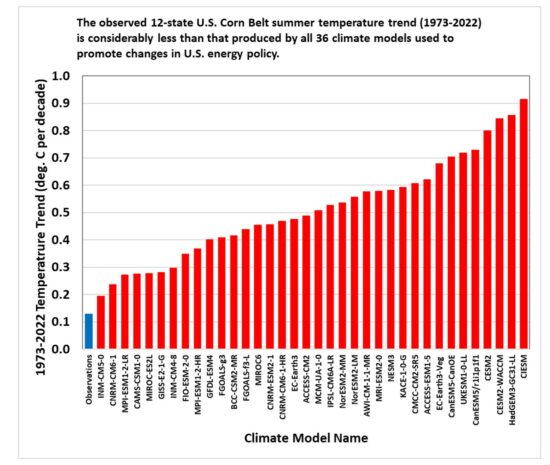

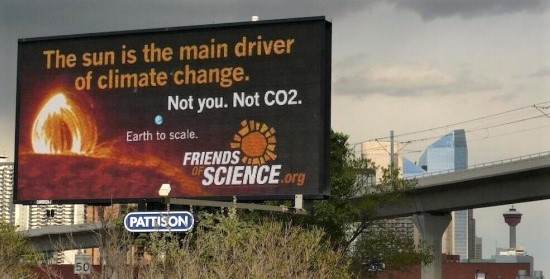


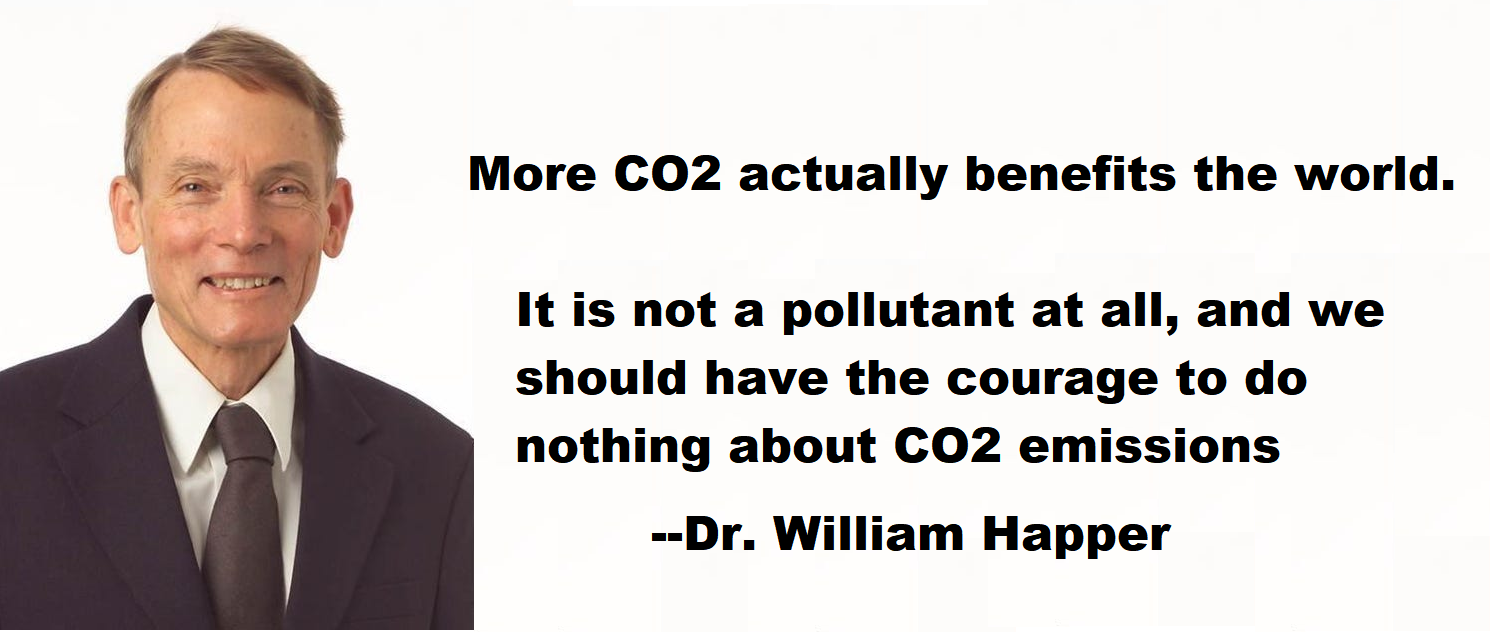




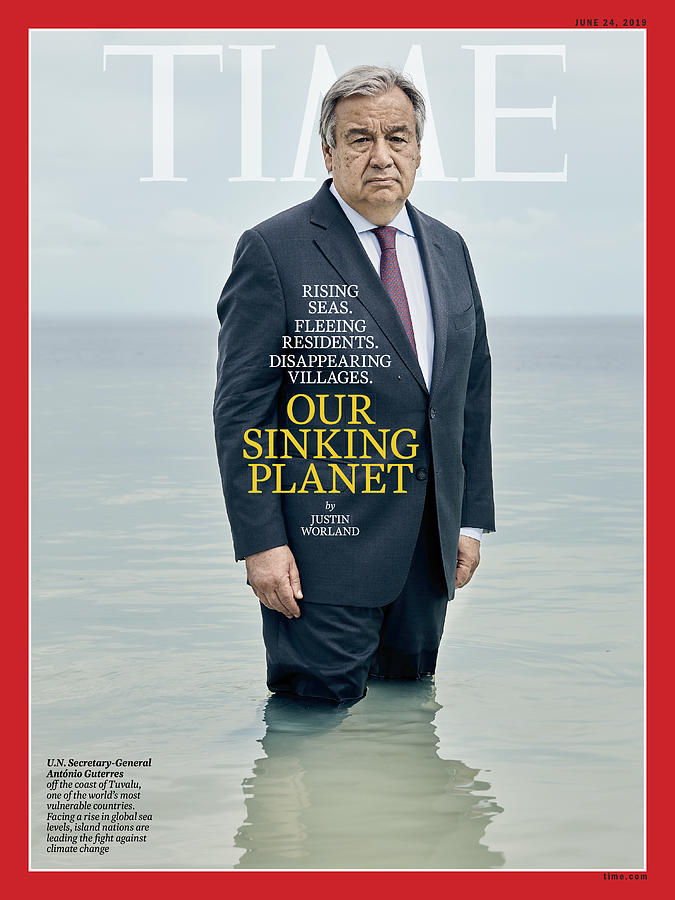





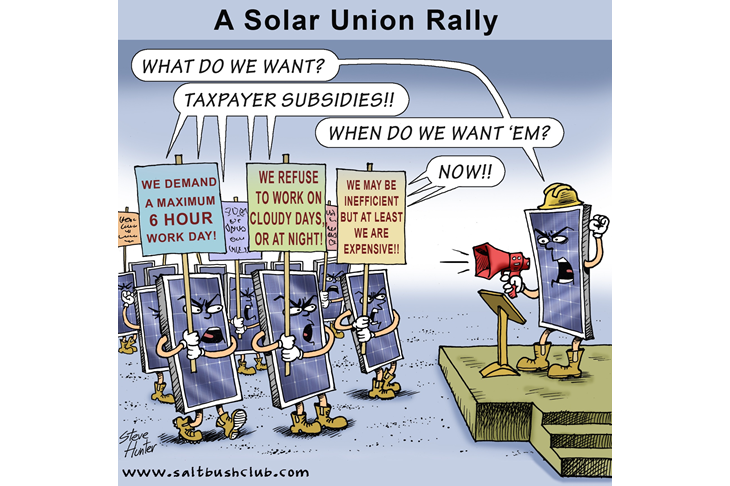


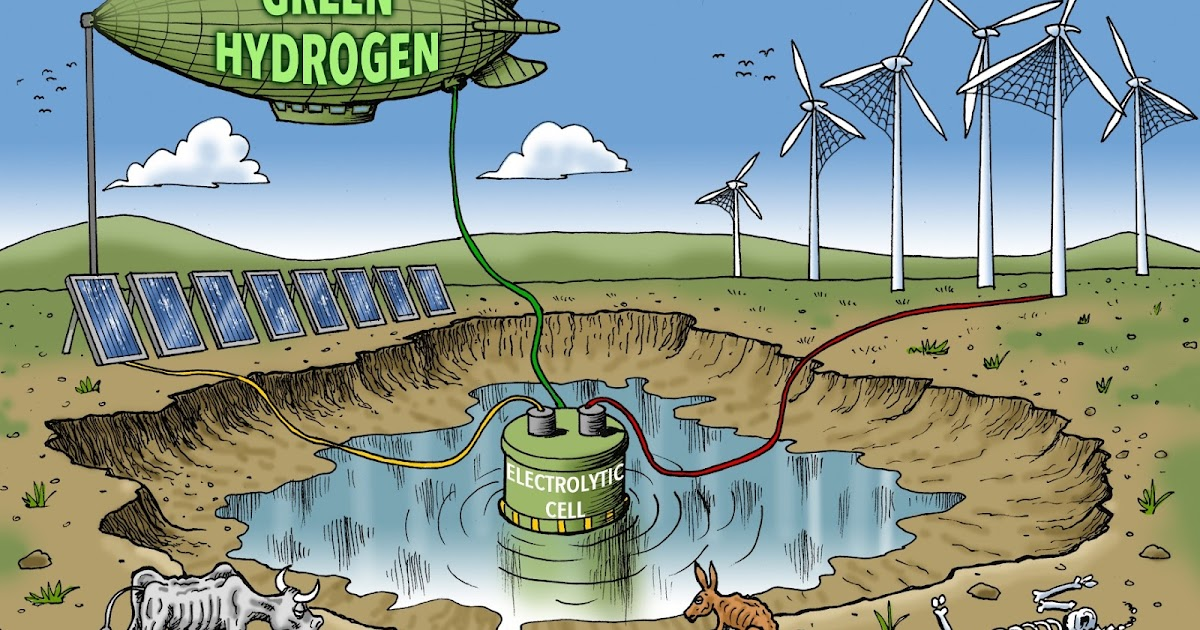


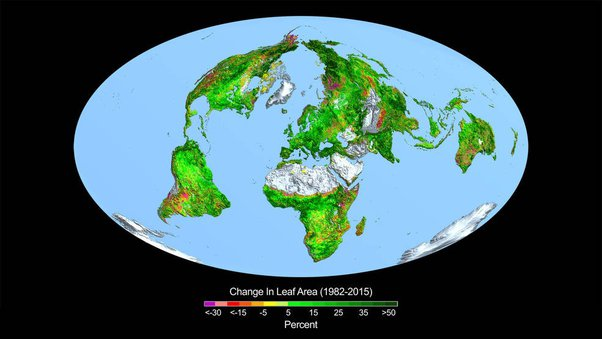






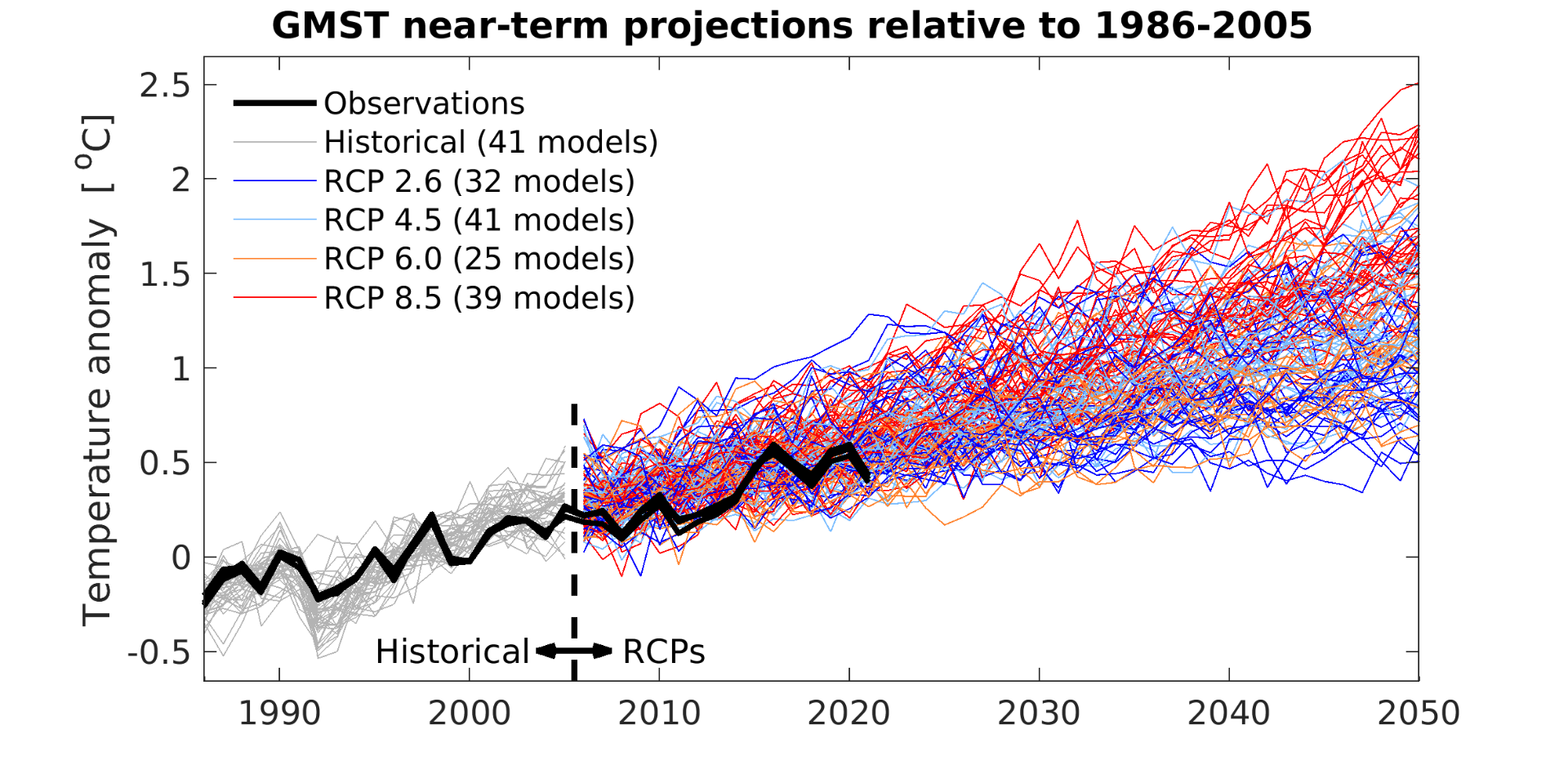


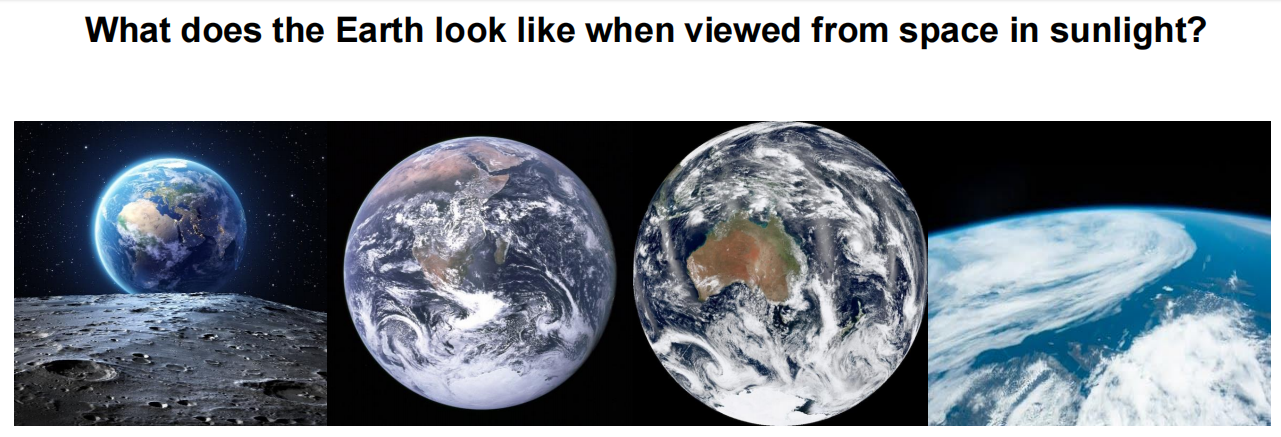

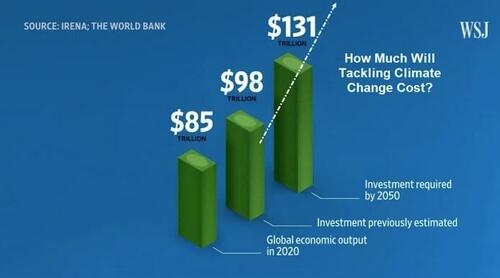
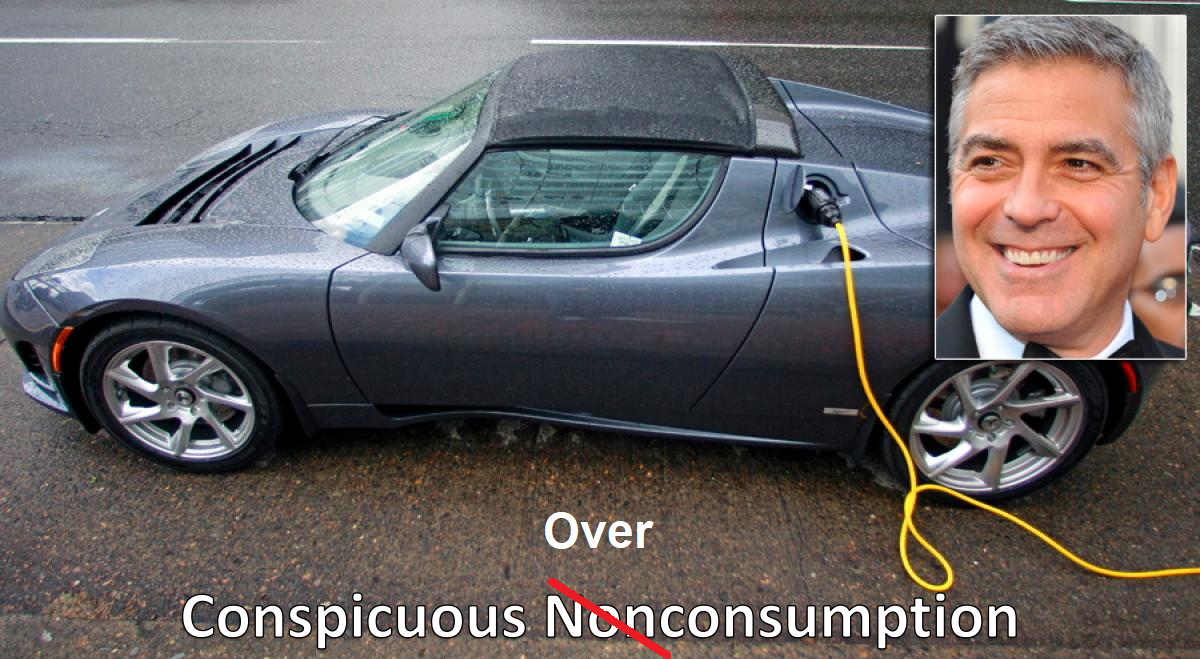
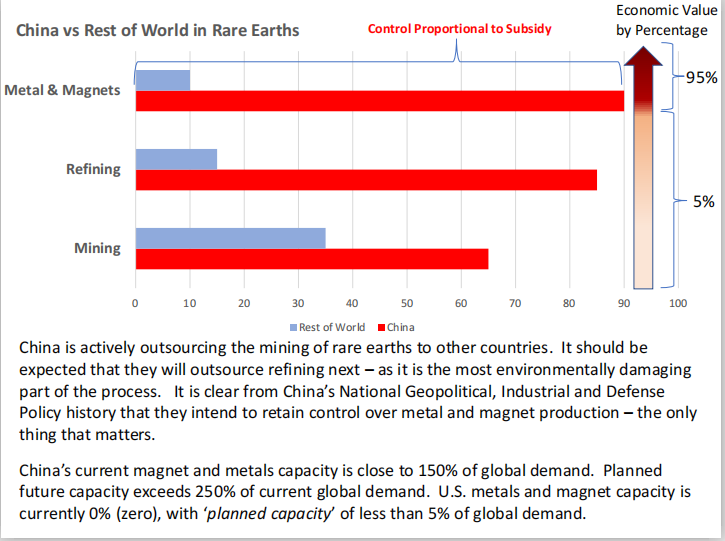


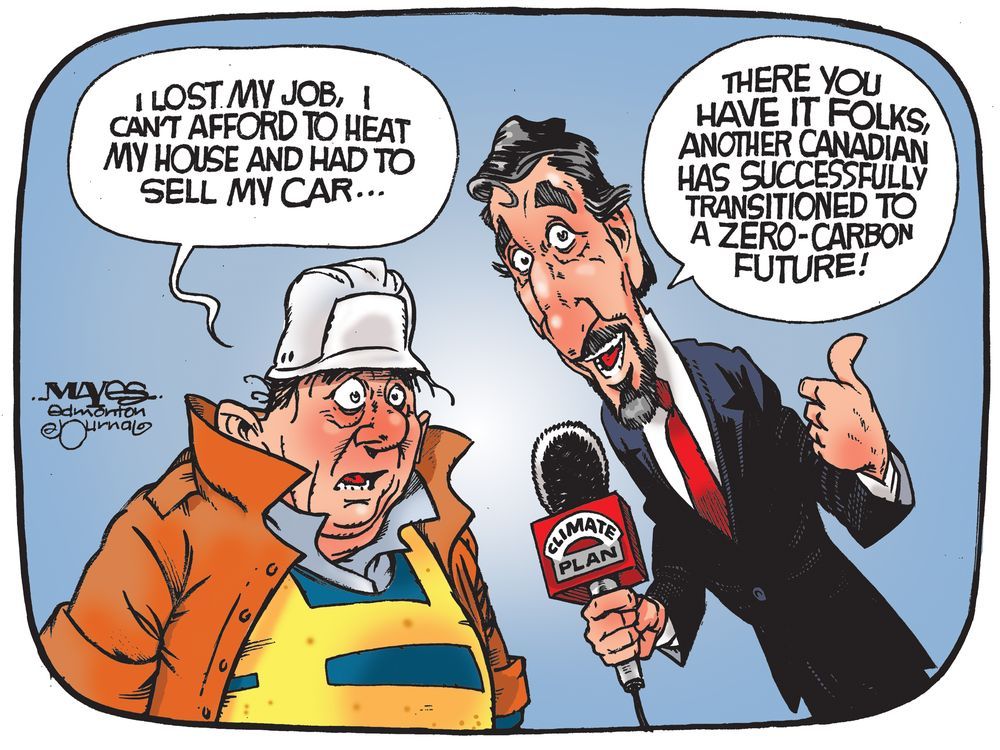


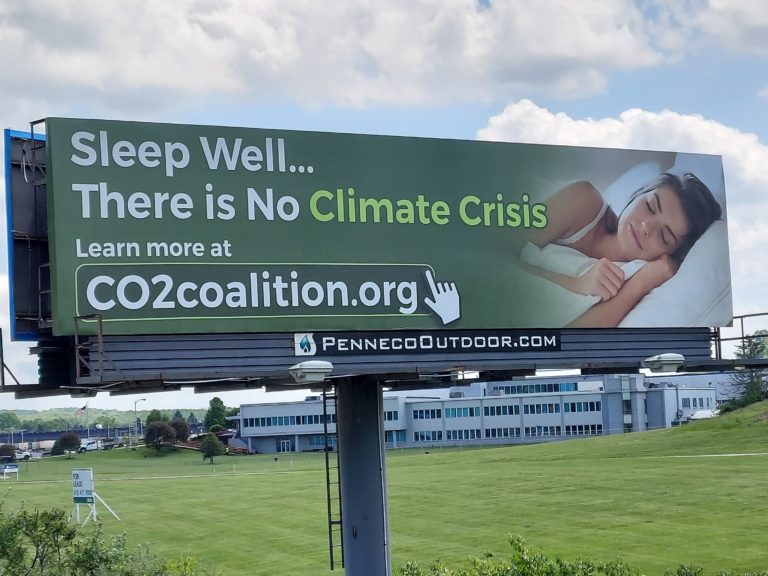


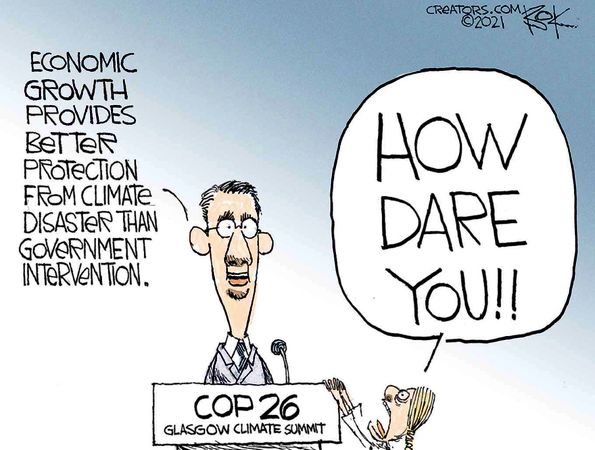
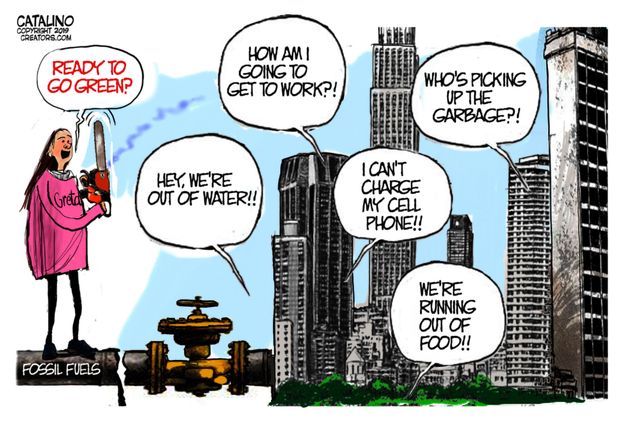
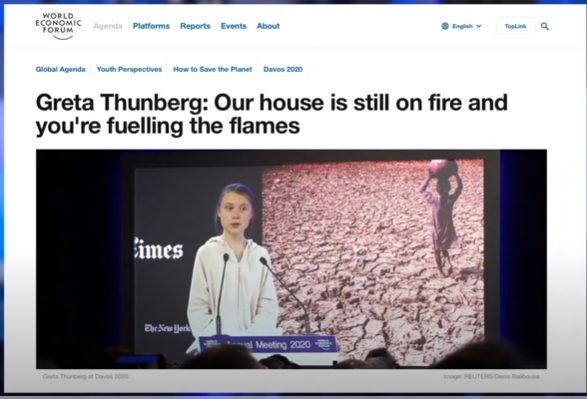
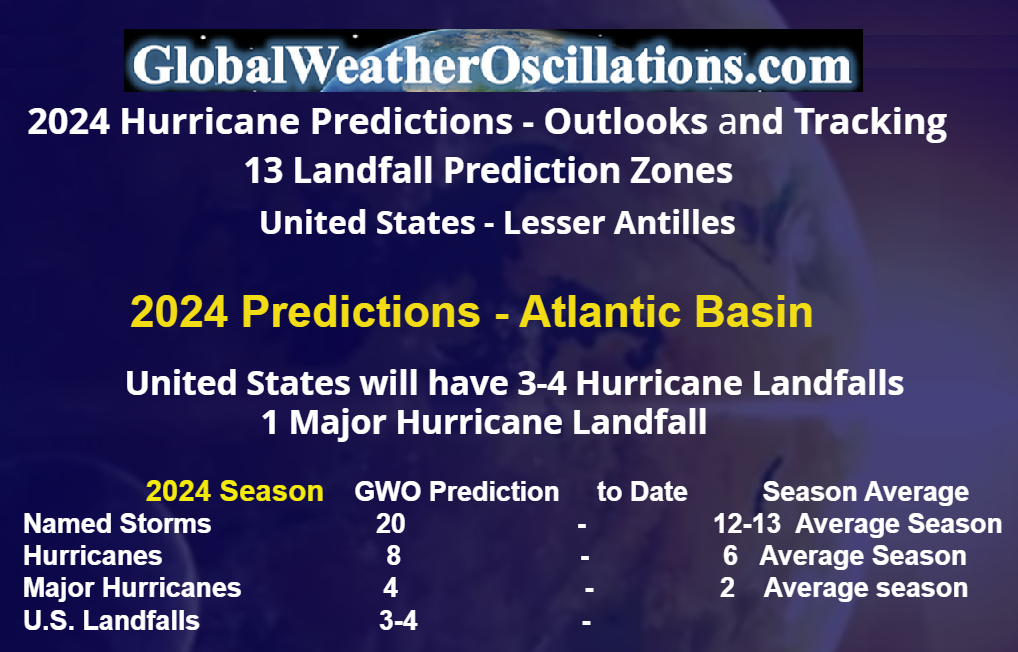
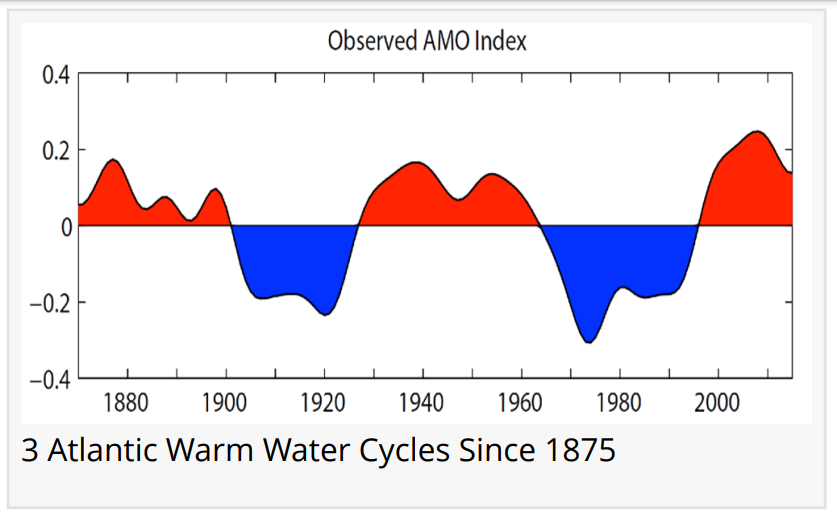
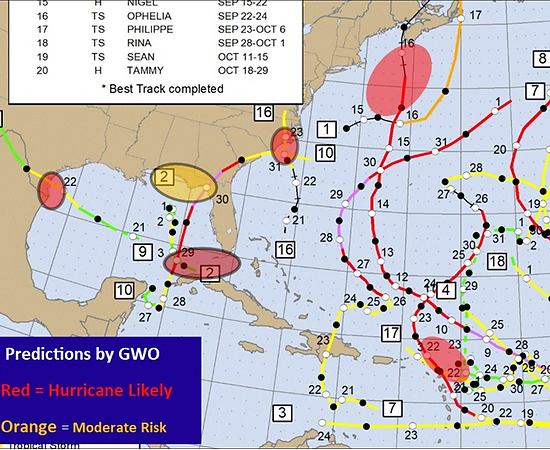
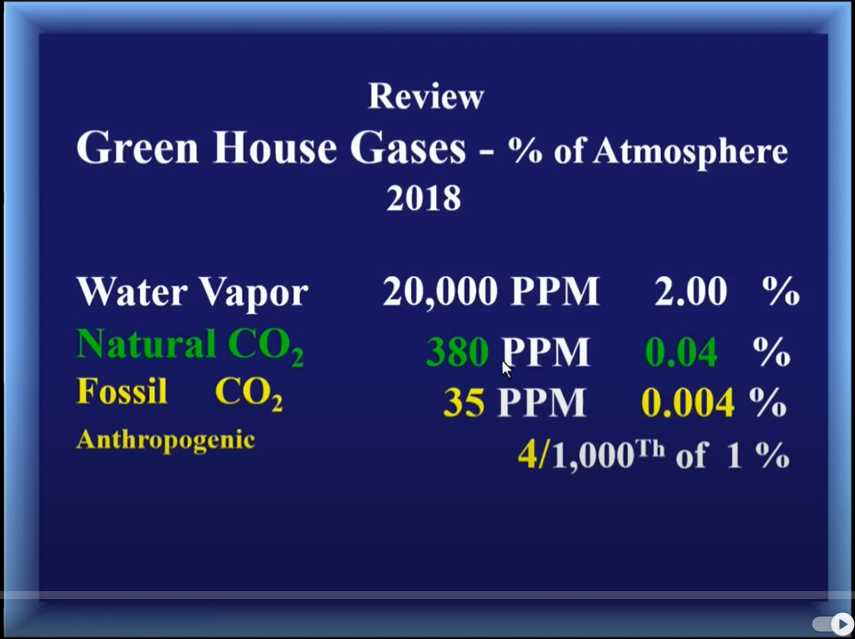

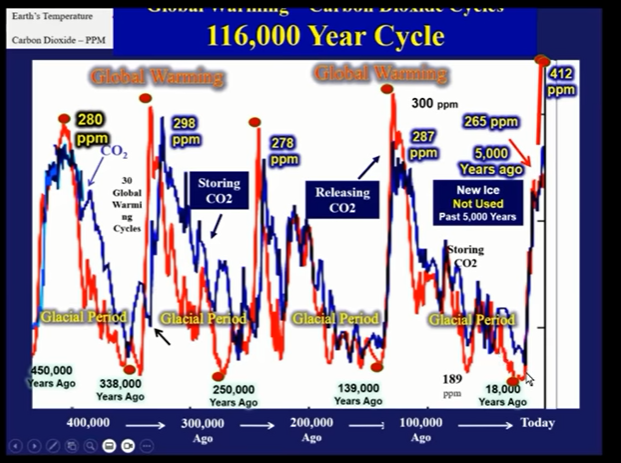
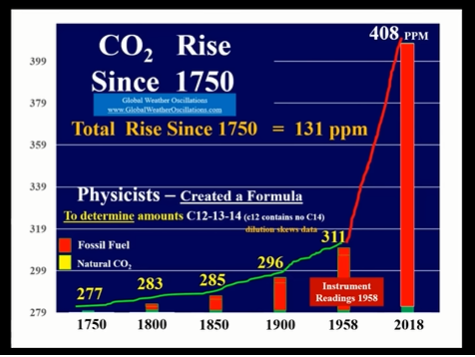
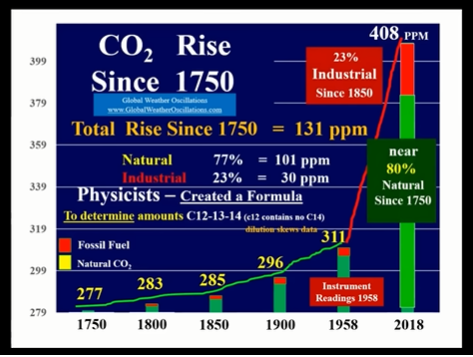
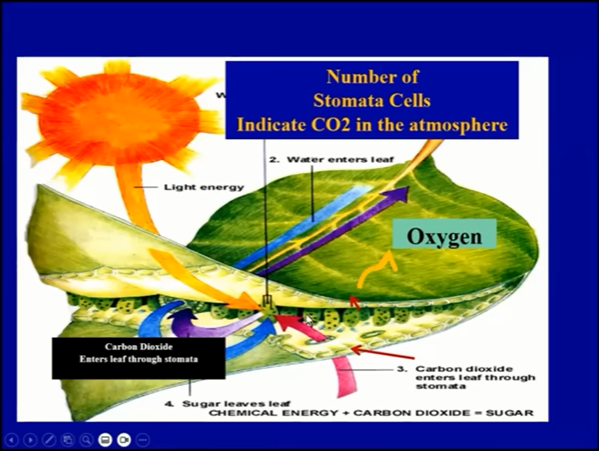

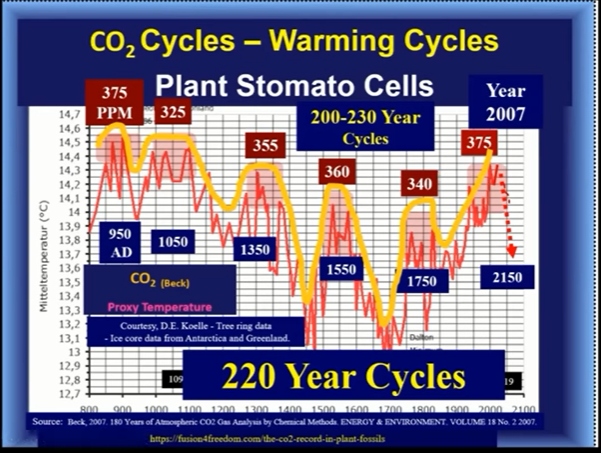
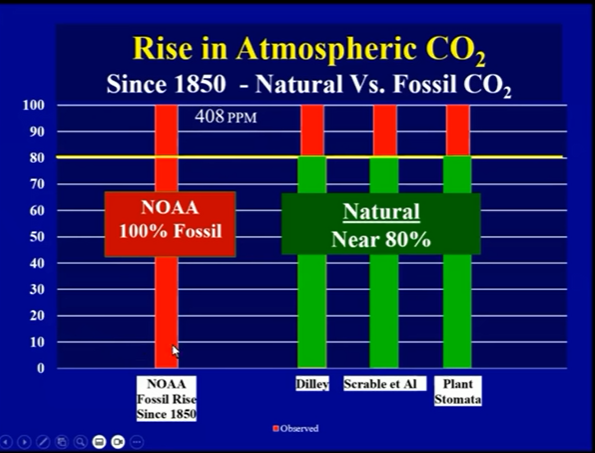
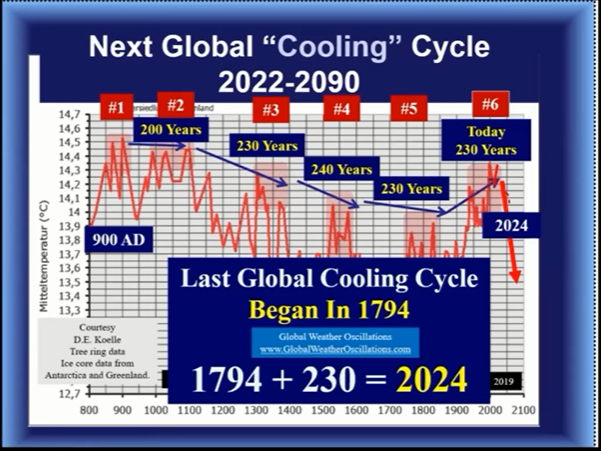
 Science Matters