12 Reasons to Not Believe in a Climate Emergency

Russell David writes his brief list in a Daily Sceptic article Twelve Reasons Why I Don’t Believe There’s a Climate Emergency.  Excerpt in italics with my bolds and added images.

I’m not a scientist. But I have reasons why I don’t fully trust the ‘climate emergency’ narrative. Here they are:

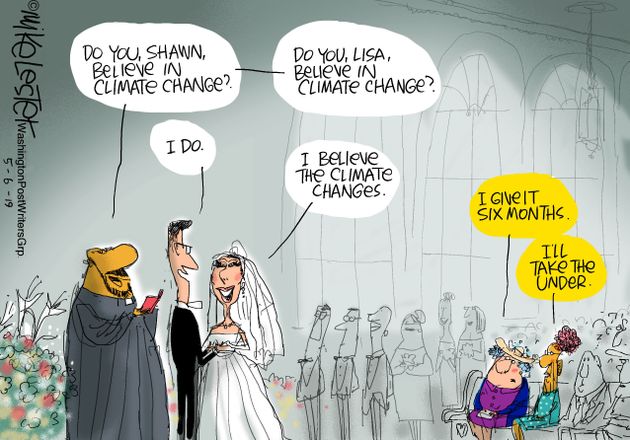
  1. Looking back through history, there have always been doomsday prophets, folk who say the world is coming to an end. Are modern-day activists not just the current version of this?
  2. I look at some of the facts – CO2 is 0.04% of the atmosphere; humans are responsible for just 3% of CO2; Britain is responsible for just 1% of the world’s CO2 output – and I think “really“? Will us de-carbonising really make a difference to the Earth’s climate?
  3. I have listened to some top scientists who say CO2 does not drive global warming; that CO2 in the atmosphere is a good or vital thing; that many other things, like the Sun and the clouds and the oceans, are more responsible for the Earth’s temperature.
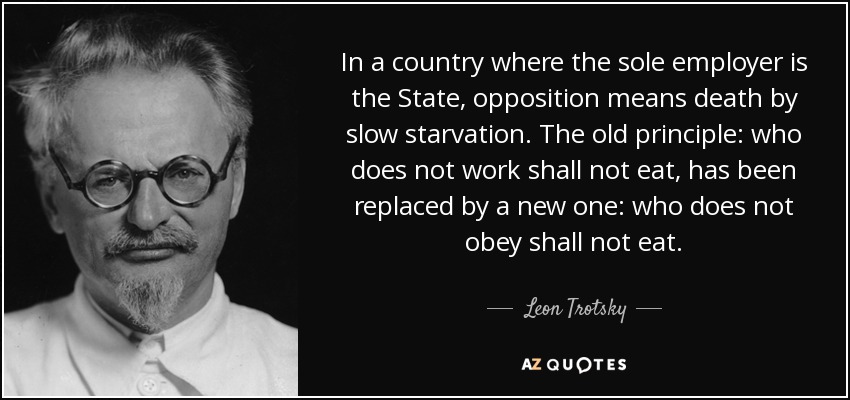
  4. I note that most of the loudest climate activists are socialists and on the Left. Are they not just using this movement to push their dreams of a deindustrialised socialist utopia? And I also note the crossover between green activists and BLM ones, gender ones, pro-Hamas ones, none of whom I like or agree with.
  5. As an amateur psychologist, I know that humans are susceptible to manias. I also know that humans tend to focus on tiny slivers of time and on tiny slivers of geographical place when forming ideas and opinions. We are also extremely malleable and easily fooled, as was demonstrated in 2020 and 2021.
  6. I have looked into the implications of Net Zero. It is incredibly expensive. It will vastly reduce living standards and hinder economic growth. I don’t think that’s a good thing. I know that economic growth has led to higher living standards, which has made people both safer and more environmentally aware.
  7. Net Zero will also lead to significant diminishment of personal freedom, and it even threatens democracy, as people are told they must do certain things and they must not do other things, and they may even be restricted in speaking out on climate matters.
  8. What will be the worst things that will happen if the doomsayers are correct? A rise in temperature? Where? Siberia? Singapore? Stockholm? What is the ideal temperature? For how long? Will this utopia be forever maintained? I’m suspicious of utopias; the communists sought utopias.
  9. If one consequence of climate change is rising sea levels, would it not be better to spend money building more sea defences to protect our land? Like the Dutch did.
  10. It’s a narrative heavily pushed by the Guardian. I dislike the Guardian. I believe it’s been wrong on most issues through my life – socialism, immigration, race, the EU, gender, lockdowns and so on. Probably it’s wrong about climate issues too?
  11. I am suspicious of the amount of money that green activists and subsidised green industries make. And 40 years ago the greenies were saying the Earth was going to get too cold. Much of what they said would happen by now has not happened. Also, I trust ‘experts’ much less now, after they lied about the efficacy of lockdowns, masks and the ‘vaccines’.
  12. I like sunshine. I prefer being warm to being cold. It makes me feel better. It’s more fun. It saves on heating bills. It saves on clothes. It makes people happier. Far few people die of the heat than they do the cold.


What Unites Zero Carbon and Pro-Hamas? Anti-Modernity


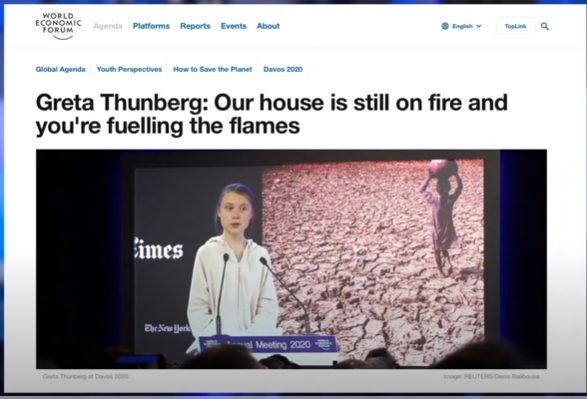
Brendan O’Neill makes the connection in his Telegraph article Queen Greta has exposed the truth about the green movement.  Shape-shifting is so easy because the underlying motive is disdain for modern society.  Excerpts in italics with my bolds and added images.

So, Greta Thunberg has a new cause. She’s found a new crusade to throw her weight behind. Forget saving the planet – now she wants to save Palestine.

Yes, the pint-sized prophetess of doom has swapped raging against industrialism for raging against Israel. Mother Nature will just have to wait – her erstwhile valiant defender is busy fixing the Middle East now.

Yesterday, Greta was snapped at the protest in Malmo, Sweden against Israel’s inclusion in the Eurovision Song Contest.

She looked the part. She had a keffiyeh draped over her shoulders and a smug look on her face: the two must-haves of every puffed-up bourgeois activist who gets off on fuming against Israel.

The keffiyeh really has become the uniform of the self-righteous. Go into a hip coffee shop or overpriced Soho burger joint and I guarantee you’ll see a Gen Z’er decked out in the Palestinian scarf.

Whatever happened to the sin of “cultural appropriation”? Not long ago, the right-on raged against white dudes who wear their hair in dreadlocks and white women who don kominos. “Stop stealing other people’s culture!”, they’d yell. Yet now they themselves spend their days in Arab attire.

That image of Greta in Malmo, looking very satisfied with herself, summed up the role the keffiyeh plays in the life of the 21st-century activist. Keffiyeh-wearing is less about drawing attention to the plight of the Palestinians than drawing attention to you. Look at me in my Arab garb, aren’t I good and hyper socially aware – that’s the needy cry of these hipster appropriators.

Yet beneath their radical chic, darker sentiments lurk. Their boilerplate hatred for Israel can have horrible consequences. So while young Greta was signalling her virtue on the streets of Malmo, another young woman was holed up in her hotel room for fear of mob assault.  It was Eden Golan, the Israeli-Russian 20-year-old who sang for Israel in the Eurovision finals in Malmo.

Golan’s inclusion in Eurovision sickened the anti-Israel protesters. Israel, they said, must be given the boot over its “genocide in Gaza” – their juvenile and historically illiterate term for Israel’s war against Hamas.

A mob even swarmed around the hotel Ms Golan was staying in. She received death threats. Things were so bad that she was warned not to leave her room. She was given a 24-hour security detail.

Is this really “progressive activism”? It looks more like bullying to me. The bullying of a young woman by a baying mob of Israel-bashers.

How galling that Greta should have been in the thick of such a regressive protest. This is someone who has spoken out about her own experiences of bullying. Who has said that women in the public eye get too much flak.  Yet now she preens at a protest that has had the consequence, intentional or otherwise, of filling a young woman with such dread that she has essentially become a prisoner in her own hotel.

We might call this woke privilege. Because Greta subscribes to chattering-class correct-think on every issue – climate change, transgenderism, Israel – she is granted the freedom to go about her business as she sees fit.

Ms Golan, on the other hand, is denied such basic liberty. Her national heritage, her devotion to her homeland, marks her out as morally suspect. And thus she must hide. “Shame!”, protesters shouted, as if she were a modern-day witch deserving of a dunking.

It is tempting to see Greta’s conversion from the climate-change cult to the anti-Israel religion as just bandwagon-jumping.  Perhaps her saviour complex, her burning sense of virtue, just needs a new outlet. So, like others of her generation, she ditches climate and trans and all the rest and moves on to “Palestine solidarity”. That’s the issue on which you can really make moral waves these days.

But I think there’s something else going on, too. The truth is that climate activism and anti-Israel agitation are very comfy bedfellows. There are even some creepy commonalities between green agitation and Israel’s greatest ideological foe: radical Islam.

Both, at root, represent a disgust with modernity. Both the privileged
Western weepers over industrial society and the Islamist haters
of Israel share an aversion to the modern world,
to progress, to Enlightenment itself.

Hence we can even have a situation where Muslim activists who yell “Allahu Akbar” can be elected as councillors for the Green Party.

The upper-middle class recycling obsessive in Hampstead might seem a million miles from the bearded radical who publicly sings the praises of Allah – but they share an instinctive revulsion for capitalist society.

One sees it as a crime against Mother Nature,
the other as an affront to Muhammad.

To both sides, Israel is the pinnacle of the modernity they hate. A young, confident, entrepreneurial nation that rendered the desert a land of plenty? Boo. Hiss. Cast its people from our social circles.

So it makes sense that Greta has temporarily ditched Gaia for Gaza. For this crisis, too, furnishes her with an opportunity to advertise her pious rejection of the modern world.


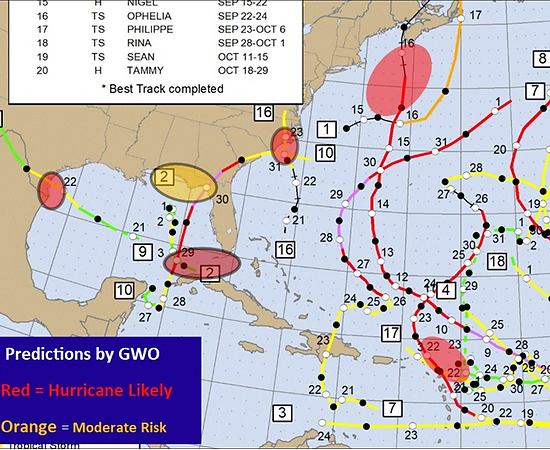
2024 Hurricane GWO Predictions

From the Press Release February 1, 2024

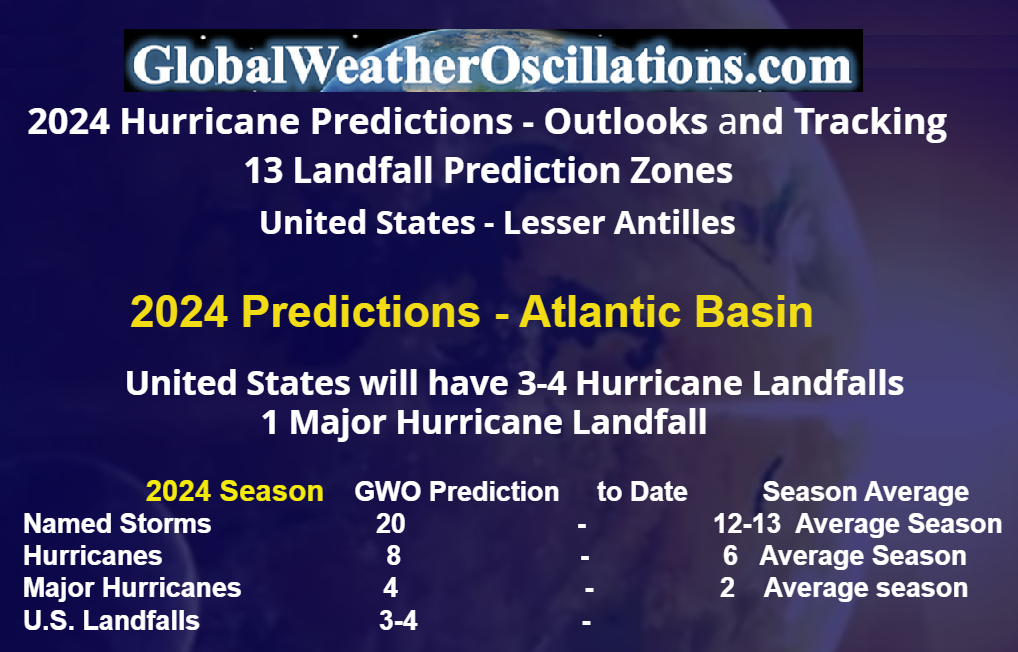
2024 Atlantic Hurricane Season – will be very active
with 20 Named Storms and 6 landfall Hot-Spots.

Tampa-Ocala, Florida, United States, February 1, 2024 /EINPresswire.com/ —

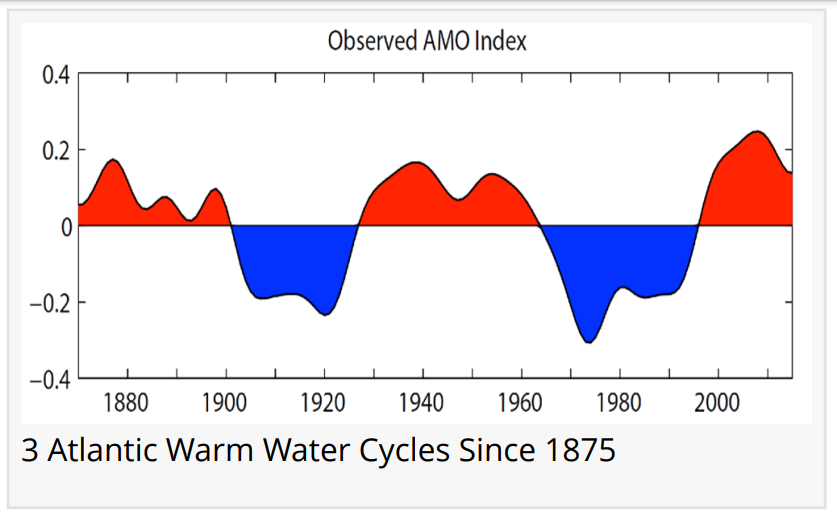
The Atlantic Hurricane Seasons have been extremely active since 2016 – and will continue to be abnormally active for the next several years. This is not due to a global warming cycle – but instead– it is due to the naturally occurring Atlantic Multi-decadal Oscillation (AMO) that enhances a cyclical ClimatePulse Cycle.

During the current AMO warm ocean cycle (warmest portion in 2016), the United States has experienced 40 named storms making landfall, with 20 of them being hurricanes – 9 of which were major hurricane landfalls. This very active hurricane cycle – will likely continue for another 10 years.

What Should We Expect in 2024

An average hurricane season has 12-13 named storms and 6 hurricanes. The combination of the AMO warm ocean water cycle, favorable atmospheric conditions, and the enhanced ClimatePulse Cycle – will provide favorable conditions for a very active and destructive hurricane season in 2024.

Professor David Dilley is predicting 20 named storms, 8 hurricanes with 3 to 4 of them being major hurricanes. The United States and Caribbean will have 6 Hot-Spots with 3 to 4 United States hurricane landfalls expected, and 1 or 2 in the Caribbean. In addition, there is the potential for 1 or 2 major hurricane landfalls.

GWO’s Hot-Spot Predictions 2023

Background Post: David Dilley: Signals of Global Cooling

Tom Nelson interviewed David Dilley last month and the video is above.  For those who prefer reading I provide below a transcript from the closed captions, along with the key exhibits from the presentation.

Synopsis: Between the two oceans cooling down and the natural global cooling cycle coming down we’re going to see a big dip in the temperatures worldwide during the next 10, 15 years. The cold cycle’s going to take about 20 years to bottom out. We’re going to be in an extremely cold period during that time, colder than the 1960s and 50s here in the United States. So it’s going to be very cold.

TN: I have David Dilly here, and David could you tell us a little bit about yourself?

DD: I’m a meteorologist, climatologist, for which I have about 52 years of experience, and I’m still trying to figure that out because I’m only 30 years old. But but I’ve been in the business a long time. I was a weather officer in the Air Force in the National Weather Service. Then I left to set up my own company called Global Weather Oscillations; the easiest way to remember it is global weather cycles.com.

So we’re going to take a look today at something that NOAA is really talking about: the Carbon Dioxide and Climate Cycles. They’re just talking about today’s carbon dioxide values as far as the fossil fuel is concerned. You’re not going to see this out there anywhere on the web. It’s 78% of the atmospheric gases is nitrogen of all things, 21% is oxygen, 0.9 is argon that is 99.99 percent the atmospheric gases. That doesn’t leave much that’s just about all of what we call dry air. To be non-dry air includes the greenhouse gases. The greenhouse gases now are variable regarding how much of it is water vapor how much of it is carbon dioxide. Water vapor is anywhere from one to four percent of the atmospheric gases, that’s quite a bit. It can be zero percent of the Arctic and Antarctic because that’s a desert, but it can be all the way up to four percent. So one to four percent we’ll say.

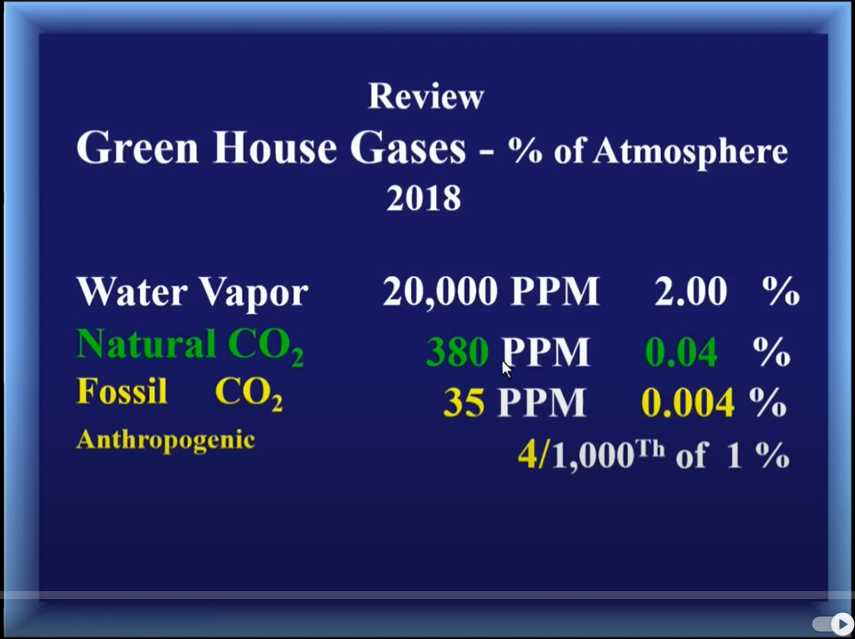
Carbon dioxide of all things it’s a trace gas it’s less than .05%, a lot less than than water vapor. less than .05 now to put it in perspective, let’s just look at the greenhouse gases here and what we see is water vapor we’re gonna do the average of it two percent that’s 20 000 parts per million. Natural carbon dioxide what I’m going to show you later on in the presentation is 380 parts per million.

Now NOAA and the IPCC say it (natural CO2) is down around 285 parts per million,
we’re going to show you that’s false.

And so the natural is point zero four percent of the atmospheric gases, while fossil fuel I’m going to show you it’s only 35 parts per million; that’s point zero zero four percent or four one thousands of a one percent. And do you think that can cause climate change?

Of course not.  We go down to Vostok in the Antarctic and there is a very deep frozen lake where they drill down fifteen thousand eight five hundred and eighty eight feet down to the bottom. That’s a long ways down over 500 000 years. So I take core samples and with the core samples they figure out how how much it is carbon dioxide what the temperatures are. These are approximate, but what they they get from a core sample is a an estimate of the temperatures and carbon dioxide during the past 500 000 years.

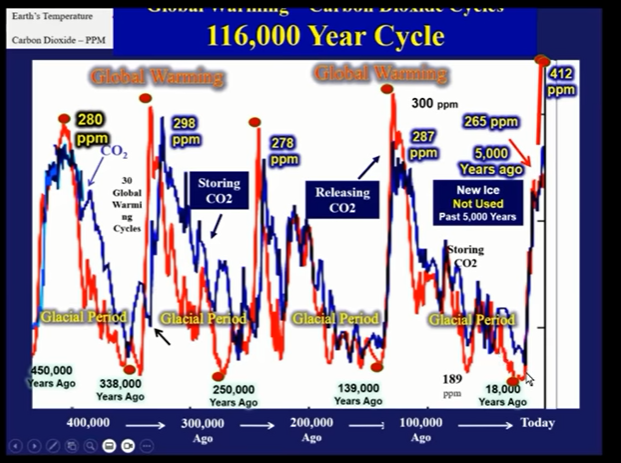
If we go back say 450 000 years, the red line is temperature. So what happened, we came quickly just in a few thousand years out of a deep Ice Age into a interglacial warm period. You can see the temperatures really slid up and the ice cores estimate the carbon dioxide to be right around 280 parts per million. Then we slide down out of the warm period into a deep Ice Age and you can see that the carbon dioxide is actually staying up high there. If carbon dioxide caused global warming, why did the temperatures drop; it does not make sense.

Eventually the carbon dioxide goes down because it’s being absorbed by the oceans. The oceans keep absorbing it over the course of a hundred thousand years. Then when you come up on your next interglacial warm period 338 000 years ago, the temperature goes up and the carbon dioxide is released from the oceans back into the atmosphere. And you can see the carbon dioxide lags behind the temperature rise and actually when you hit the peak of the temperature back 338 000 years ago, the carbon dioxide does not Peak out until 7000 years later. It takes quite a while but carbon dioxide peaked out at 298 parts per million. But look at that temperature then dropping quickly into an ice age while carbon dioxide is at its peak.

That’s proof right there the carbon dioxide does not cause global warming.

As we come over on the right hand side of the graphic this is about 18 000 years ago. It’s 11 000 years ago we came out of the glacial period, we warmed up quickly, we got up to about to 190 parts per million.

Then we started to take records in Hawaii in the 1950s and the instruments there said: Wow, all of a sudden now we’re up to 412 parts per million. We’ve never been that high before.  This is what we’re going to investigate: what is going on with the glacial periods and also the core samples. This is a graphic of the carbon dioxide. The peak of The inter glacial warm periods is every 120 000 years ago we’re going back 800 000 years.

Now do we have other research that will confirm what I’m saying. This is about a year ago and they’ve been adding papers to it and this corrects NOAA’s calculations of the rise in carbon dioxide since 1850. It’s in a radiation safety Journal Health physics journal and this is the name of the paper itself. The authors are professors of radiological Sciences. They’re retired and that’s a big thing because if you’re not retired, if you’re at a university, you can’t do research like this because of federal grants and everything. You have to wait until you’re retired and then you can do real science when they were working they were at the department of physics at University of Massachusetts. It’s Kenneth Skrable, George Chabot, and Clayton French and here is what they found.

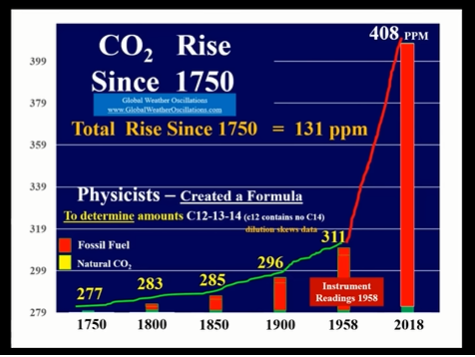
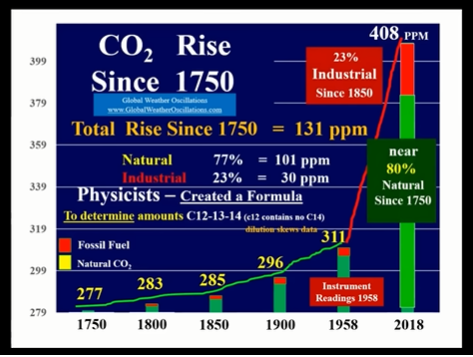
This is extremely important. Since 1850 the red here is saying the increase due to fossil fuel,  and they’re showing all of that is the increase due to fossil fuel. Now how do we determine that well up on a high mountain in Hawaii we have a infrared spectrometer since 1958 it’s been been taking measurements of atmospheric carbon dioxide. However three Isotopes of Carbon are 12, 13 and 14. and the spectrometer is taking the total of all three. It’s not separating what is natural from what is fossil fuel.

Because the ice core samples say we’ve never been above 300 parts per million
NOAA is assuming that the rise above 300 parts per million is all fossil fuel.

An assumption is all it is. It’s assumed by trying to take averages of how much CO2 is taken back in by the oceans how much of it is a given not from industry. Taking those assumptions some physicists made a formula to determine how much is fossil fuel and how much is natural going back all the way back to 1750. These red lines again are what NOAA says is the increase by fossil fuel.

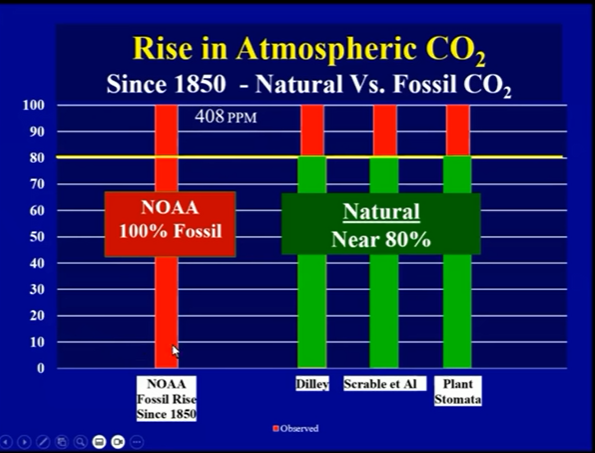
Well their formula separates the carbon 12, 13 and 14 to determine what is what and this is their findings as I switched everything over to green. Green is the natural increase in carbon dioxide all the way up to 1958. Now remember it’s a paper going back to 2018, but it says the increase has been from 280 parts per million up to 408 and NOAA says it is all from fossil fuel. This research paper says No, it is nearly 80% natural just like what I showed on my formulations, eighty percent natural, onlyabout 20% industrial. That’s not enough to cause climate change.

[Note: My synopsis of Skrable et al. is On CO2 Sources and Isotopes.]

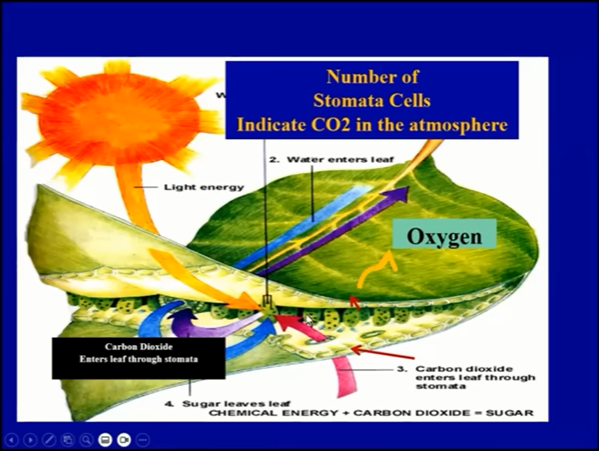
Now I’m going to show you one last paper that will also verify the findings and this is using a different method fossilized plant leaflets and as you can see in this picture there’s little cells in there they call these stomata cells which are like the lungs in a human being. So they look at the fossilized plant leaflets and unlike the ice core samples where you’re taking an average over one thousand or four thousand years, the fossilized plant leaflets can give you the exact year going back the past thousand years so you can determine each year what is going on.

So the stomata cells are like the lungs in a human being or in animals but he’d found that if the leaflet has a lot of stomata cells it means a lot less carbon dioxide in the air at that time. When CO2 is plentiful, plants don’t need more oxygen lung power to get the carbon dioxide; if it has fewer cells that means there was a lot of carbon dioxide in the air.

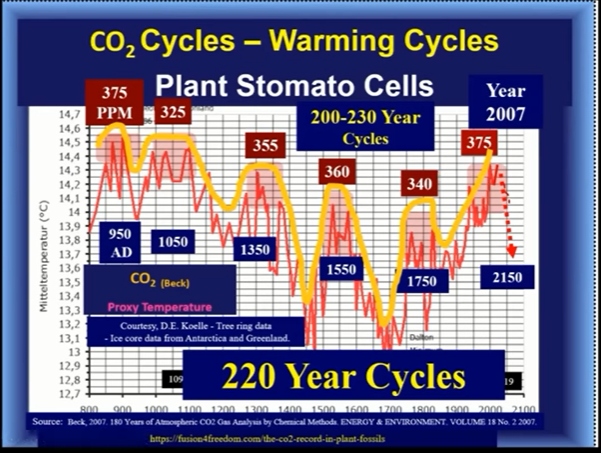
And the beautiful thing about plant life taking in carbon dioxide is the byproduct is oxygen which we drastically need. What the plant stomata cells show during the past 1200 years: back in 800 A.D it says we were way up to 375 parts per million natural carbon dioxide and then dipped way down to 325 in one thousand A.D. Then it dipped way down to 230 and it dipped up down, up down, up down up, down. In year 2010 it was up at 375 parts per million.

Let’s look at the plant stomata that could be pretty darn real and also if you take a mean value of the plant stomata over the course of a thousand years you come out 301 parts per million. The main value of ice cores over a thousand year period 297 parts per million really darn close to being the same as now. Let’s take the plant stomata readings of the atmospheric carbon dioxide and overlay it onto our global warming and cooling Cycles during the past 1200 years. We have had six global warming Cycles during the past 1200 years as noted here in the red. This is back around 850 A.D and then you can see it cools down then we warm up again, cool down warm up cool way down and so on for six global warming cycles. People don’t talk about that but we have had six of them.

When we overlay the plant stomata atmospheric carbon dioxide, guess what: We see a perfect fit. The high values in carbon dioxide peak on global warming cycles, so that brings a lot more credibility into the plants stomata cells for recording carbon dioxide.

So putting it all together we since 1850 NOAA and the IPCC say that the rise in atmospheric carbon dioxide is 100% due to fossil fuel and human activity. The three studies I just showed you and the corrections I made on the ice core samples all show it’s 80% natural rise. Far too little fossil fuel effects to cause climate change, it is almost all natural.

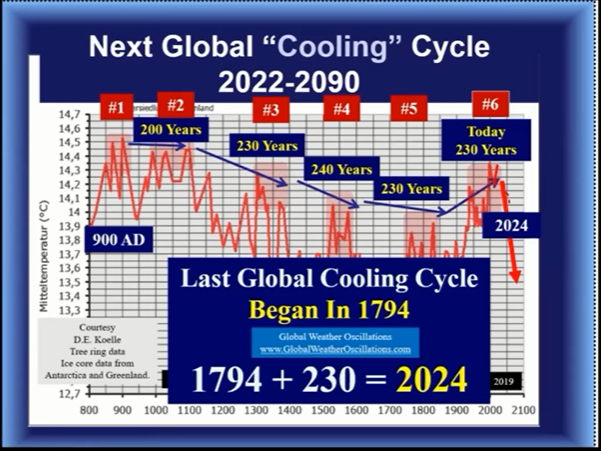
Here we are today over here on the right the average is a global cooling cycle comes about every 230 years and the global cooling cycles last for a good 100, 150 years. So here we are right now, average for the return of the global cooling cycle is 230 years and the last global cooling cycle began in 1794. Add 230 to that and you calculate the year 2024.

This is 2023. so we should be sliding into a global cooling cycle, a natural global cooling cycle.

And we have signals that it is beginning. Global warming Cycles begin in the Arctic and the Antarctic when they warm up over the course of 20, 30 years or so. And as the Arctic and Antarctic warm up there’s less cold air available through the mid-latitudes. So over time the mid-latitudes warm up so that’s where global warming spreads.

In the next phase, global cooling also begins at the Arctic and the Antarctic.

What has happened just this past year, the spring and summer in the Arctic was the coldest on record. You had that during a global warming period, so that’s a signal that the Arctic is drastically cooling down. In 2021 the Antarctic had the coldest winter on record. How you have two records like that if you’re not sliding into global cooling? There’s more cold air available and it’s going to cool down the mid-latitudes and that starts our global cooling cycle. And we’re coming into that right now. Winter 2020 was a third coldest January and February on record from Alaska through Central Northern Canada into Greenland.  Antarctica as I indicated winter of 2021 coldest on record. Arctic 2022 coldest spring and summer on record since 1958, and the most Arctic Ice extent in 8 to 16 years. 

The real main point is carbon dioxide increase is mainly natural, it is not causing a global warming cycle. It’s a natural global warming cycle and we’re sliding back into a natural global cooling cycle.

TN: If you had to make a prediction what would you think of the cooling between now and 2050. Do you think it will cool between now and 2050 are you fairly confident?

DD: Actually we’re going to see a pretty good cool down here into January. The whole atmospheric circulation is beginning to change the La Nina out in the Pacific is now fading it’s going to be gone here by mid to end of January, and we can see changes in the atmospheric circulation going on now.
The cold air in Canada is going to start making its way down more into the United States during late January.

For this year we do see the drastic change and what we’re going to see really well through 2050 or so. The IPCC and NOAA say that the oceans are going to rise anywhere from eight to 26 inches during that time period. I say it may rise an inch, maybe not even that much because we’re going into a global cooling cycle now. The poles are cooling down.

Pacific Ocean has phases going back to the year 1580. For past 500 years we’ve seen these warm phase and cold phase Cycles in the Pacific Ocean which last for anywhere from about 25 to 40 years. The Pacific has been in a 40-year warm cycle which ties the record going back uh 500 years. Pacific is sliding into a cold or a cool phase ocean water cycle, and that’s going to help to cool down ,especially up around Alaska. And the Atlantic Ocean will be going into a cool phase of its own right after 2030 or so.

Between the two oceans cooling down and the natural global cooling cycle coming in
we’re going to see a big dip in the temperatures worldwide during the next 10 to 15 years.

The global warming cycle took about a 20-year period to peek out warming from about the year 2000 up to about 2021 so it took 20 years to hit the peak; the cold cycle is going to take about 20 years to bottom out also at the coldest and that’s going to be around 2040 or so. Unitil the late 2030s so we’re going to be in an extremely cold period during that time, colder than the 1960s and 50s here in the United States.

TN: Is there any sort of a simple explanation as to what causes that 230 year cycle that you mentioned?

DD: The simple explanation is our glacial periods and interglatial periods become about every 120 000 years are due to the Earth path around the Sun; where the Earth swings out further away from the Sun and also the tilt of the earth also changes.

New data out is showing that we’ve actually been cooling down during the past five to six years. So this is all looking like we are already going gradually into a global cooling Cycle. But we’re going to see a more dramatic change in the cooling cycle.

What NOAA and IPCC are doing, their science is political science while we’re looking here today at real science. There’s a huge difference. Keep your eyes open the next few years and all of a sudden in a few years people are going to be saying: Wait a minute, what are we doing here? We’re down the wrong path we need to wake up.

Comment:

The underlying issue is the assumption that the future can only be warmer than the present. Once you accept the notion that CO2 makes the earth’s surface warmer (an unproven conjecture), then temperatures can only go higher since CO2 keeps rising. The present plateau in temperatures is inconvenient, but actual cooling would directly contradict the CO2 doctrine. Some excuses can be fabricated for a time, but an extended period of cooling undermines the whole global warming mantra.

It’s not a matter of fearing a new ice age. That will come eventually, according to our planet’s history, but the warning will come from increasing ice extent in the Northern Hemisphere. Presently infrastructures in many places are not ready to meet a return of 1950s weather, let alone something unprecedented.

Public policy must include preparations for cooling since that is the greater hazard. Cold harms the biosphere: plants, animals and humans. And it is expensive and energy intensive to protect life from the ravages of cold. Society can not afford to be in denial about the prospect of the current temperature plateau ending with cooling.

Background Post: By the Numbers: CO2 Mostly Natural

See Also: What If It’s Global Cooling, Not Warming?
Bogus Math for Climate “Reparations”

Paul Mueller does the analysis in his AIER article Climate “Reparations” Numbers Are Rigged.  Excerpts in italics with my bolds and added images.

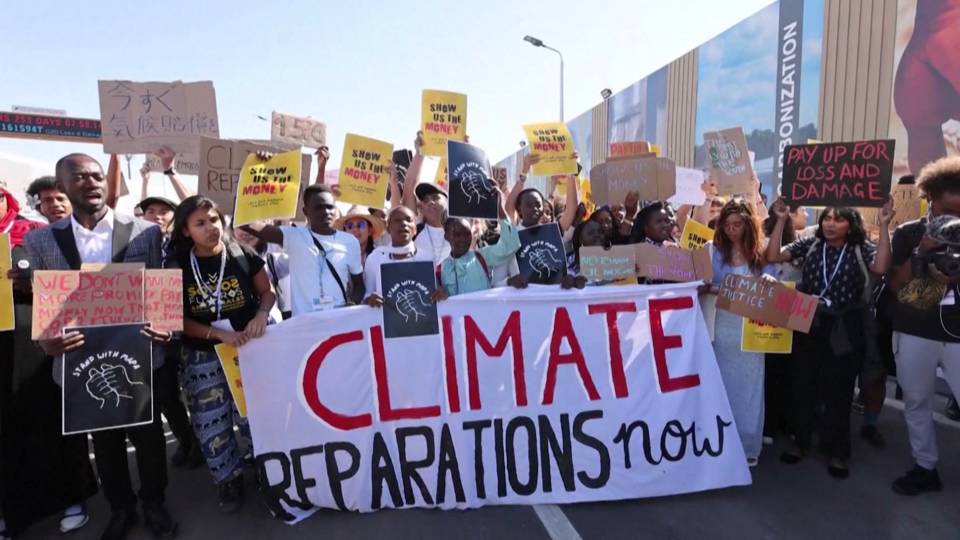
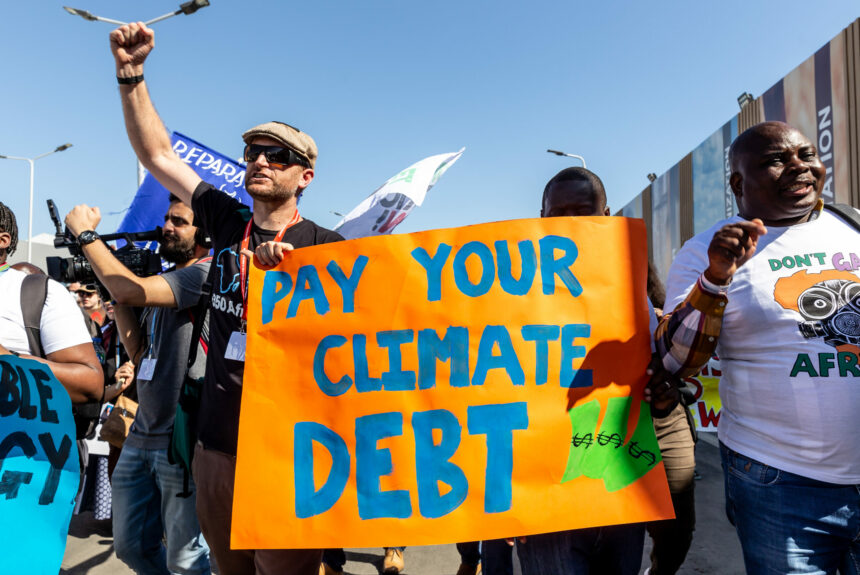
Nobel Prize–winning economist Esther Duflo thinks rich countries should pay poor countries $500 billion in compensation each year for climate-change damages. It is our “moral debt.” She proposes an international 2-percent wealth tax on the ultra-rich and an increase in the global minimum corporate tax rate to fund this $500 billion transfer.

You and I may be shocked by such a suggestion but don’t worry: “It’s really necessary. And it’s reasonable. It’s not that hard.” Only someone in an elite, progressive bubble could say something like that. Let’s check her reasoning.

Duflo claims that climate change creates costs, specifically through “excess” deaths due to excessive heat. Poorer countries from the global south near the equator will see more days of extreme heat, and so will see a disproportionate increase in excess deaths.

Other economists translated those deaths into an externality cost of $37 per ton of CO2. Multiply that by the roughly fourteen billion tons of CO2 emitted by the US and Europe and voila, wealthy countries generate $500 billion in externality costs per year.

She proposes paying for this by increasing the global minimum corporate tax rate from 15 percent to 18 percent and introducing an international 2-percent wealth tax on the ultra-rich, which she defines as the 3000 richest billionaires. We can’t go into the many problems and obstacles to such funding mechanisms here — suffice it to say such ideas will be nearly impossible to implement.

But Duflo’s back-of-the-envelope calculations, besides missing the bigger picture, are so speculative as to require playing make-believe. Let’s play along for a moment to see why. We’ll start by reverse-engineering her $500 billion number into a measure of harm.

Regulatory agencies and insurance companies use the concepts of “statistical value of life” or the “statistical value of a life-year” to do cost-benefit analysis on risk and the monetary value of life. These concepts are slippery, however, and calculated in a variety of ways with a wide range of estimates.

To keep things simple, let’s assume that the value of one life-year is $200,000. The $500 billion number proposed by Duflo suggests that the cost imposed by wealthy countries burning fossil fuels is the loss of roughly 2.5 million life-year” in poor countries per year.  That sounds like a staggering number!

But what about the benefits that have accrued to developing
countries from activities that generate CO2 emissions?

Important advances in medicine, such as antibiotics and vaccines, were developed in modern industrialized countries. So, too, were refrigeration, cars, the internet, smart phones, radar; modern agricultural methods with herbicides, pesticides, and fertilizers; improvements in plumbing, building materials, manufacturing, and much more. “Polluting” activities in industrialized countries improved nutrition and safety around the world. These advances, and many others, significantly increased people’s life expectancies — especially in poor countries.

Surely the value of these improvements should weight the opposite side of the scale from the expected harm of climate change — especially since the crusade against fossil fuels and carbon emissions will assuredly slow economic growth and innovation. Let’s consider the case of India for a moment.

Life expectancy in India has basically doubled from about 35 years in 1950 to about 70 years in 2024. If you consider that India has just over a billion people living in it, modern technology developed by rich CO2-emitting countries has added 35 billion life-years in India alone. 

Translating life-years back into dollars, 35 billion life-years times $200,000 per life-year means that the benefits from greater life expectancy in India over the past 75 years is the equivalent of $7 quadrillion dollars — or in annualized terms, an annual benefit of about $93 trillion dollars. In other words, the benefits to India alone are over a hundred times larger than Duflo’s estimate of costs!

Nor is India cherry-picked. China has a similar story with life expectancy rising from 43.45 years to 77.64 years. Similar improvements in life expectancy occur across the global south.

Of course, one could argue that developed industrial countries are not solely responsible for increases in life expectancy around the world. But one could just as easily say the same about whether developed industrial countries are solely responsible for global CO2 emissions, climate change, or harm to people in the global south due to hotter weather. Connecting these two issues makes perfect philosophical sense, because the production of CO2 has historically been directly associated with increases in economic growth; which in turn is necessary for all the developments increasing longevity around the world.

Even if we massage the assumptions in Duflo’s favor, the results remain favorable to industrialization. Suppose western technology and industrial activities contribute 50 percent to improvements in life expectancy. That’s still a $46 trillion annualized benefit to India. Reduce the value of a statistical life-year to $100,000 — that’s still a $23 trillion/year benefit from industrialization in the west. Exclude India from the analysis and cut the population we focus on down to 500 million people — that’s still over $12 trillion/year in benefits. Reduce the improvement in life-expectancy by six years — that still leaves about $10 trillion/year in benefits.

So, even after making tons of assumptions to reduce their size,
the estimated benefits of industrialization are still about twenty
times larger than Duflo’s estimate of its costs. 

Worrying about hypothetical, indirect costs of CO2 emissions when it comes to human well-being is like scrounging for pennies while ignoring $100 bills lying on the sidewalk. Actually, it is worse than that. It is like lighting $100 bills on fire to help you search a dark alley for some pocket change of human welfare.

Economic development, driven largely by Adam Smith’s dictum “peace, easy taxes, and a tolerable administration of justice which includes strong private property rights and limited government intervention, has improved human living standards in unprecedented ways over the past 300 years. These remarkable improvements in human welfare are not limited to wealthy, developed economies but are enjoyed around the world. 

Duflo talks about the (external) costs of industrialization on certain countries without considering the truly massive (external) benefits of industrialization to those same countries.

If anything, with a proper accounting, developing countries owe rich countries gratitude for the benefits they have received from industrialization and the corresponding CO2 emissions.


R.I.P. Rex Murphy, Climatism Whistleblower

Rex Murphy was never taken in by climatists’ claims.  He was an early lucid and frequent detractor of CO2 hysteria and exposed its promoters as charlatans. In remembrance of his passing yesterday, here is his take on the climategate exposure of the scam.  It was broadcast on CBC 14 years ago, when reasonable people could still dissent from the party line.  Transcript from closed captions in italics with my bolds and added images. H/T blackfarms

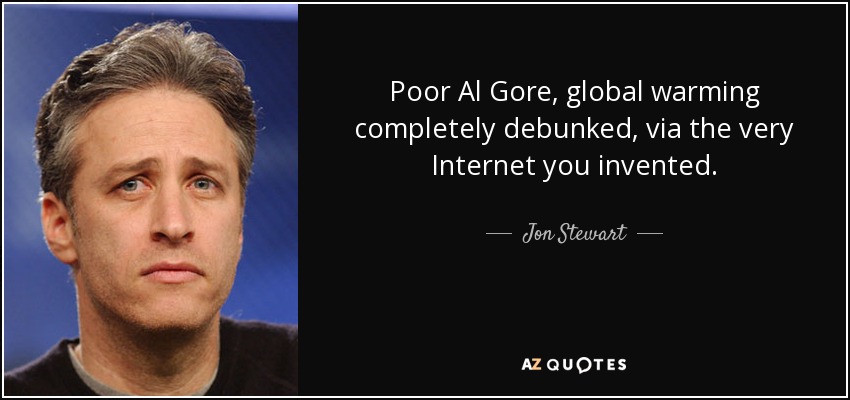
When John Stewart the Bantam rooster of conventional wisdom makes jokes about it, you know climategate has reached critical mass. Said Stewart: Poor Al Gore, Global warming completely debunked via the very internet he invented. Stewart was half joking but climate gate is no joke at all.

The massive emails from the Climate Research Unit of East Anglia University, let loose by a hacker or a whistleblower, pulls back the curtain on a scene of pettiness, turf protection, manipulation, defiance of Freedom of Information, lost or destroyed data and attempts to blacklist critics and skeptics of the global warming cause.

Now the CRU is not the only climate science advisory body but it is one of the most influential and feeds directly into the UN Panel on Climate Change. So let’s hear no more talk of the “Science is Settled.” 

When it turns out:

  • Some of the principal scientists behave as if they own the very question of global warming;
  • They seek to bar opposing research from peer-reviewed journals, to embargo journals they can’t control;
  • They urge each other to delete damaging emails before Freedom of Information takes hold;
  • They talk of hiding the decline; when they actually speak of destroying the primary data.

And when now we do learn that the primary data has been lost or destroyed, they’ve lost the raw data on which all the models, all the computer generated forecasts, the graphs and projections are based. You wouldn’t accept that at a grade school science fair. Now CRU is not the universe of climate research but it is the star. These emails demonstrate one thing beyond all else that climate science and global warming advocacy have become so entwined, so meshed into a mutant creature, that separating alarmism from investigation, ideology from science, agenda from empirical study, is well nigh impossible.

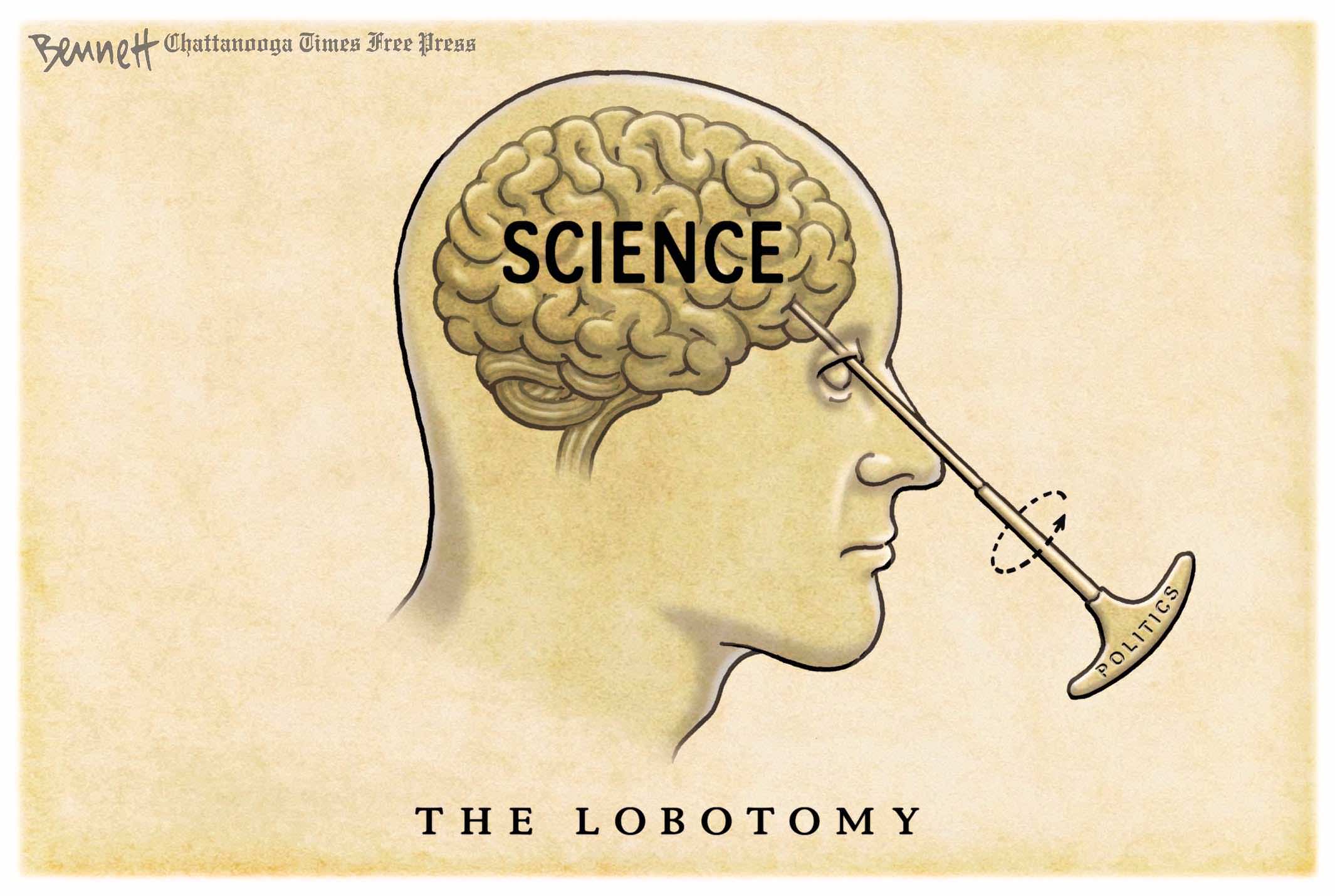
Climategate is evidence that the science has gone to bed with advocacy and both have had a very good time. The neutrality, openness and absolute disinterest that is the Hallmark of all honest scientific Endeavor has been abandoned to an atmosphere and a dynamic not superior to the partisan caterwalls of a sub-average question period. Climate science has been shown to be in part a sub-branch of climate politics. It is a situation intolerable even to serious minds who are on side with global warming, such as Clive Crook who wrote an Atlantic magazine about this Scandal, as follows:

The stink of intellectual corruption is overpowering. Climate science needs its own reset button and climategate should be seen not primarily as a setback but as an opportunity to cleanse scientific method, to take science away from politics, good causes and alarmists, and vest climate science in bodies of guaranteed neutrality, openness, real and vigorous debate. And away from the lobbyists the NGOs, the advocates, the Gores and professional environmentalists of all kinds.

Too many of the current leadership on global warming are more players than observers, gatekeepers not investigators, angry partisans of some global re-engineering rather than the humble servants of The Facts of the case. Read the emails you’ll never think of climate science quite the same way again.

Footnote from Background Post

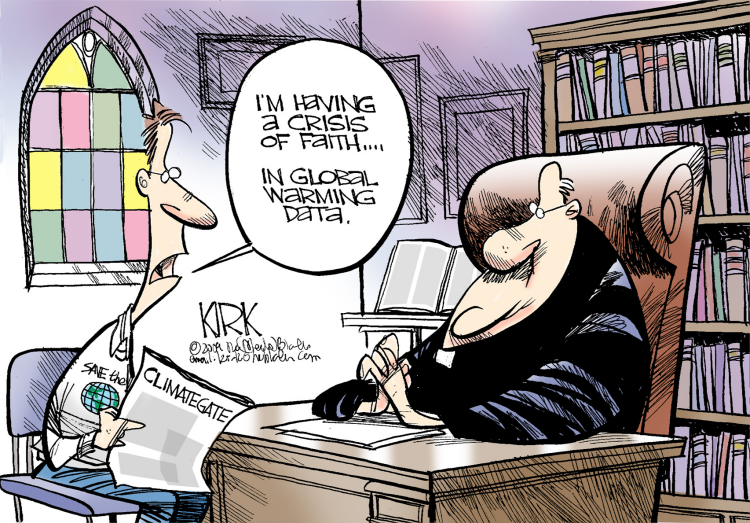
9 . Climategate. Climategate was a notorious event initiated by leaked emails in 2009 (with a second batch released in 2011) allegedly revealing the deceit and deception practiced by a prominent group of British (Climatic Research Unit or CRU) and American climate researchers (including Michael Mann of Penn State) who promote the theory of CAGW and supply much of the climate and temperature data and reports to the IPCC. The latter gives this group tremendous influence regarding the UN’s climate change agenda.

“There are three threads in particular in the leaked documents which have sent a shock wave through informed observers across the world. Perhaps the most obvious, as lucidly put together by Willis Eschenbach (see McIntyre’s blog Climate Audit and Anthony Watt’s blog Watts Up With That ), is the highly disturbing series of emails which show how Dr Jones and his colleagues have for years been discussing the devious tactics whereby they could avoid releasing their data to outsiders under freedom of information laws.

“But the question which inevitably arises from this systematic refusal to release their data is – what is it that these scientists seem so anxious to hide? The second and most shocking revelation of the leaked documents is how they show the scientists trying to manipulate data through their tortuous computer programmes, always to point in only the one desired direction – to lower past temperatures and to ‘adjust’ recent temperatures upwards, in order to convey the impression of an accelerated warming. This is what Mr McIntyre caught Dr Hansen doing with his GISS temperature record last year (after which Hansen was forced to revise his record), and two further shocking examples have now come to light from Australia and New Zealand.

“The third shocking revelation of these documents is the ruthless way in which these academics have been determined to silence any expert questioning of the findings they have arrived at by such dubious methods – not just by refusing to disclose their basic data but by discrediting and freezing out any scientific journal which dares to publish their critics’ work. It seems they are prepared to stop at nothing to stifle scientific debate in this way, not least by ensuring that no dissenting research should find its way into the pages of IPCC reports.”

Q&A Why So Many Climate Skeptics

US Poll: Climatism Concern Dropping

As the Biden administration moves forward with expensive and economically devastating regulations on vehicles, dishwashers, stoves and other major appliances under the guise of fighting “climate change,” Americans are questioning the efficiency, validity and cost of the agenda.

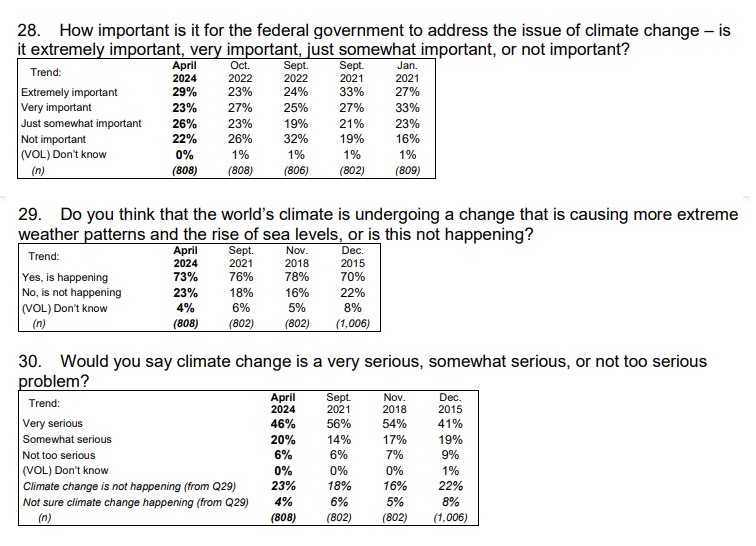
New polling from Monmouth University shows a significant drop in “serious concern” over the issue of “climate change,” particularly among young people.

National Climate Concerns Dip

Younger adults express less urgency than in prior polls

West Long Branch, NJ – Most Americans continue to acknowledge the existence of climate change, according to the latest Monmouth (“Mon-muth”) University Poll, but the number who see this as a very serious problem has fallen below half. Support for government action to reduce activities that impact the climate has dipped below 6 in 10 for the first time since Monmouth began polling this topic nearly a decade ago. The poll finds that the drop in the importance and urgency of climate change has been most pronounced among younger adults.

“Most Americans continue to believe climate change is real. The difference in these latest poll results is a decline in a sense of urgency around this issue,” said Patrick Murray, director of the independent Monmouth University Polling Institute.

METHODOLOGY
The Monmouth University Poll was sponsored and conducted by the Monmouth University Polling Institute from April 18 to 22, 2024 with a probability-based national random sample of 808 adults age 18 and older. Interviews were conducted in English, and included 163 live landline telephone interviews, 349 live cell phone interviews, and 296 online surveys via a cell phone text invitation. Telephone numbers were selected through a mix of random digit dialing and list-based sampling. Landline respondents were selected with a modified Troldahl-Carter youngest adult household screen. Interviewing services were provided by Braun Research, with sample obtained from Dynata (RDD, n=484), Aristotle (list, n=168) and a panel of prior Monmouth poll participants (n=156). Monmouth is responsible for all aspects of the survey design, data weighting and analysis. The full sample is weighted for region, age, education, gender and race based on US Census information (ACS 2021 one-year survey). 

Demographics (weighted)
Party (self-reported): 25% Republican, 44% Independent, 31% Democrat
Sex: 49% male, 50% female, 1% other
Age: 30% 18-34, 32% 35-54, 38% 55+
Race: 61% White, 12% Black, 17% Hispanic, 9% Asian/other
Education: 38% high school or less, 29% some college, 17% 4 year degree, 16% graduate degree

A Monmouth poll released last month found only 15% of voters view climate change as a determinative issue in how they will vote in the 2024 presidential election, ranking far lower than inflation, immigration, and abortion.   Compared to three years ago, climate change concern has declined by 8 percentage points among both Democrats (77% very serious, down from 85% in 2021) and Republicans (13%, from 21%) and by 13 points among independents (43%, from 56%).


My Comment:

The survey seems competent and credible.  It is obvious that global warming/climate change serves as a political wedge issue favored by Democrats and disfavored by Republicans.  Interestingly, with the decline of urgency in all groups, independents have flipped from slight majority favorable to unfavorable.

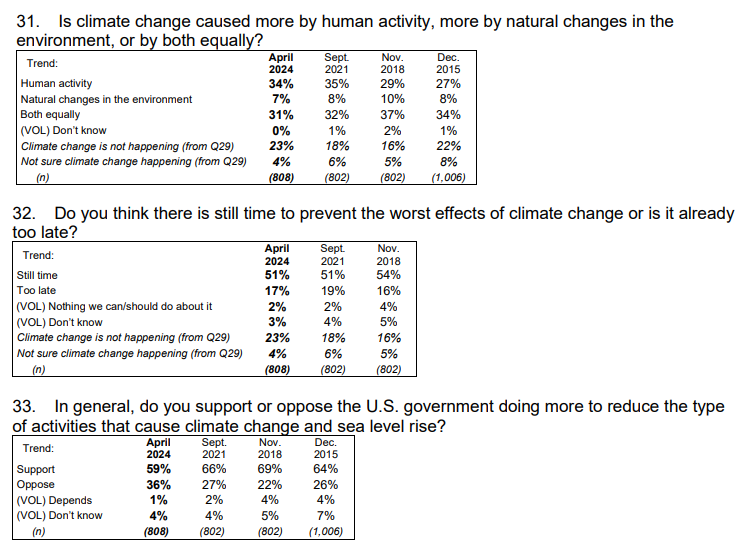
Note that climate change is undefined except as causing extreme weather and rising sea levels. I also think that the sequence of questions shows a bias for climate change to warrant governmental action.  Putting that question first sets a context for expressing belief and concern over the climate, and then sets up the final question of support or opposition. The question of human vs. natural causation includes a “Both Equally” response, which typically masks unwillingness to say “Don’t Know.”  However, even a 50-50 split between human and natural weakens the case for reducing human activity.  Then the next question about preventing climate change presumes humans are causing it and can stop it. Yet the urgency is diluted by 17% “Too Late”,  51% “Still Time” and 23% “Not Happening.”

In spite of the above attempts to bias, the body politic does not give majority support for government climate action.


See Also:
The Art of Rigging Climate Polls

Climatism Substitutes for Solving Problems

Cambridge professor Mike Hulme explains in an interview with Daily Mail Why climate change ISN’T going to end the world and why we need to stop obsessing about net-zero.  Excerpts in italics with my bolds and added images.  H\T John Ray

Young people are terrified that climate change will destroy Earth by the time they grow up, but the world is not actually ending, argues Cambridge professor Mike Hulme.

Humanity is not teetering on a cliff’s edge, he says,
at risk of imminent catastrophe if we don’t reach
net-zero carbon emissions by a certain date.

And he has made it his mission to call out the people who claim we are. In his most recent book, Climate Change Isn’t Everything, Hulme argued that belief in the urgent fight against climate change has shot far past the territory of science and become an ideology.

Hulme, a professor of human geography at the University of Cambridge, dubs this ideology ‘climatism,’ and he argues that it can distort the way society approaches the world’s ills, placing too much focus on slowing Earth from warming.

The problem, he said, is this narrow focus takes attention away from
other important moral, ethical, and political objectives –
like helping people in the developing world rise out of poverty.

DailyMail.com spoke with Hulme about why he thinks climatism is a problem, how it should be balanced out, and what keeps him hopeful about the future of humanity.

As with other ‘isms’ – like cubism or romanticism – ideologies provide a way of thinking about things, explained Hulme.  ‘They’re like spectacles that help us to make sense of the world, according to a predefined framework or structure,’ he said

To be clear, Hulme does not claim that all ideologies are wrong.  ‘We all need ideologies, and we all have them – whether you’re a Marxist or a nationalist, you’re likely to hold an ideology of some form or other,’ he added.

As Hulme sees it, many journalists, advocates, and casual observers of climate change have become devotees of climatism, inaccurately attributing many events that happen in the world as being caused by climate change.

He gives the examples of a fire, flood, or damaging hurricane.  ‘No matter how complex a particular causal chain might be, it’s a very convenient shorthand to say, ‘Oh, well, this was caused by climate change,” Hulme said.

‘It’s a very shallow and simplistic way, I would argue,
to try to describe events that are happening in the world.’

Researchers have shown that warming oceans do lead to more frequent and more severe storms: Twice as many cyclones now become category 4 or 5 as they did in the 1970s, scientists have found, and Atlantic storms are three times as likely to become hurricanes.
Hulme doesn’t argue that the effects of climate change are not happening, though, just that stopping climate change won’t stop disasters from happening altogether.

‘Fundamentally, we’re going to have to deal with hurricanes, and
we’re not going to deal with them just by cutting our carbon emissions.’ 

The solutions, he argues, will include better forecasting, better early warning systems, better emergency plans, and better infrastructure.  ‘There are all sorts of things that we can do to minimize the risks and dangers of hurricanes, that are way more effective in the short term than trying to cut our carbon emissions,’ said Hulme.

The danger of climatism, he pointed out, is that it leads people down a false chain of events: If all of these things happening in the world are caused by climate change, then all we have to do is stop climate change, and all the other things will stop themselves.

‘And that clearly is a very inadequate way of thinking about the complexities of most of the problems we we face in the world today.’  This distorted thinking can make people forget about other important concerns, he argues.

As an example, Hulme points to the UN Sustainable Development Goals (SDGs): 17 areas that the world’s governments have identified as top priorities for humanity.  The SDGs include building peace and justice, eradicating poverty, reducing child mortality, and ensuring clean sanitation and water for billions of people on the planet.

If society were to put climate change priorities into their proper proportions then, Hulme said it would still be on the list.  It just wouldn’t be the only item on the list, and it wouldn’t be at the top.  ‘There’s 17 SDGs, and two of them are related to climate. So that begins to rebalance, or re-proportion, the amount of effort and attention we might wish to pay,’ said Hulme.

Beyond these mixed up priorities, Hulme also takes issue with what he sees as an obsession with deadlines: ‘There’s this idea of the ticking clock counting down to Ground Zero – we’ve only got five years, 10 years, two years – however long different commentators put the deadline.’

Doomsday was predicted but failed to happen at midnight.

Hulme disputed the idea that he is over-egging the pudding on climatism – after all, the whole basis of his argument is that climatists are the ones making a bigger deal out of it than they should be.  ‘I’ve been observing concerns about how climate change is talked about, framed, and reacted to in public for many, many years.’  And this public framing has led to a phenomenon called ‘eco-anxiety,’ which Hulme said he sees among his students at Cambridge University

‘They have absorbed these claims of tipping points, and they take these things literally, and feel that there is no future for them because the climate is going to go out of control,’ he said. ‘They feel that it will be too late, and everything will collapse.’

See Also Climate Delusional Disorder

Climate Delusional Disorder (CDD) 2021 Update

The Herd Shuns Climate Lunatics

Charles MacKay: “Men, it has been well said, think in herds; it will be seen that they go mad in herds, while they only recover their senses slowly, and one by one.”

Conrad Black writes at National Post Washing away the climate lunatics.  Excerpts in italics with my bolds and added images.

I have written here and elsewhere countless times before of the dangers of responding prematurely to alarmist concerns about climate change. Dr. Benny Peiser of the British Global Warming Policy Foundation spoke to the Friends of Science Society in Calgary earlier this month, warning that Europe’s extremist net zero carbon emission policies may get to Canada even though they are now running into extreme problems in Europe. The North American media has not much reported on the widespread and often violent farmer protests in Europe, which has caused every government that has been put to the test to scale back their aggressive climate change policies.

Tractors stand on a street during a protest by Belgian farmers over price pressures, taxes and green regulation, on the day of an EU agriculture ministers’ meeting in Brussels, Belgium March 26, 2024. REUTERS/Yves Herman/File Photo

For a long time, it was a political free lunch: everybody loves the environment, and the climate change issue was very skillfully transformed by the left into an assault on the capitalist system from a new angle in the name of saving the planet. As long as the heavy costs of displacing fossil fuels by so-called renewable energy were carefully disguised and diffused, everybody could wallow in collective self-praise for doing the healthy and environmentally responsible thing.

The burden of subsidized wind and solar farms didn’t appear on peoples’ energy bills, though eventually they were placed on the back of the taxpayer. Now, however, net zero policies are directly eating into the earnings and savings of the public and in most of Europe, the taxpayer rebellion is exploding, and the advantages of democracy are being reaffirmed as elected governments scamper to the rear, explaining that there has been a misunderstanding. When the German government tried to compel the people of that country to change their gas boilers for heat pumps at a cost of thousands of dollars per home, what critics called “boilergeddon,” it produced a so-called green-lash.

Another political disaster has befallen the western European governments that had rolled over like poodles in front of the climate change alarmists: once they had fully committed themselves to the boondoggle of electric vehicles (EV’s), and forced the powerful automobile industries of Germany, France, and Italy into conversion of gas powered vehicles to EV’s, sales of EV’s plummeted after the customary faddish start, just as much cheaper Chinese EV’s flooded into Europe. Germany and Italy forced the European Union into delaying its ill-considered ban on internal combustion engine vehicles past 2035. Those who jubilantly imagined that Europe would commit industrial suicide by destroying its own automobile industry, will have to revise their plans. There are now thousands of cheap Chinese EV’s parked at the main ports of Europe with no buyers in sight. As Dr. Peiser pointed out in Calgary, “If this was really about climate change, wouldn’t you want the cheapest EV’s, the cheapest wind, and solar, all from China?”

China’s Abandoned EV Graveyard: Thousands Of Cars Rot In Huge Fields

It is now clear in Europe, as it long has been in the private sector of the United States, that with whole industries and millions of jobs at stake, implementation of net zero policies in the West would make China the dominant economic and industrial power of the world. Even our most naïve and insipid global warming crusaders are unenthused by that bone-chilling prospect. Although Germany has finally acted to protect its auto industry, it is not yet doing the same for the public. It is still officially planning to ban weekend driving to meet climate targets. If the federal German government proceeds with such an insane plan, it will sink without a ripple at the next election.

There have even been some murmurings of emulation of this course in Canada; on Sept. 14, 2021, Journal Metro of Quebec proposed pre-emptively moving against a climate crisis by lockdown measures, an emulation of the Covid lockdown then ending, but including rations and limitations on personal travel. This proposal comes from the same sort of thinking that seeks to eliminate meat by a war on bovine flatulence.

Placid and docile toward virtue-posturing though Canadians are,
insane measures like these to mitigate climate change would surely
prove to be the funeral pyre of the coercive climate change terrorists.

For notorious historic reasons, Europe is always vulnerable to the madnesses and outrages of the left. The senior human rights court in Europe ruled three weeks ago in a lawsuit brought by 2000 elderly Swiss women against the Swiss government that it had violated the human rights of the plaintiffs by insufficiently mitigating climate change. Switzerland is a very small country but is responsible for between two and three per cent of global carbon dioxide emissions, while Canada, a huge country with a much larger population, emits only 1.5 per cent of global emissions, compared to 27 percent for China. The European Court of Human Rights crossed the jurisdictional Rubicon by overruling the voters of a democratic country.

The rationale for hurling millions of auto workers into unemployment and
shutting down Europe’s greatest industry in order to profit the Chinese
is a case that even the most ardent climate-zealots will find challenging.

At the same time that the climate fanatics are encountering irresistible political headwinds, the intellectual arguments of the climate skeptics are becoming steadily more unanswerable. A brief filed with the court of appeals in The Hague in November by three eminent, American climate-related academics, Richard Lindzen of MIT, William Happer of Princeton, and Steven Koonin of New York University, the Hoover Institute, and former climate adviser to President Obama, challenged the finding of a lower court and held that scientific analysis, as opposed to an aggregation of “government opinion, consensus, peer review, and cherry-picked or falsified data,” shows that “Fossil fuels and CO2 will not cause dangerous climate change, there will be disastrous consequences for people worldwide if fossil fuels in CO2 emissions are reduced to net zero, including mass starvation.” They assert that the poor, future generations, and the entire West will suffer profoundly from any such policy. which “will undermine human rights and cripple the realization of the first three UN sustainable development goals-no poverty, zero hunger, and good health and well-being.”

The three experts warn against equating “the state of climate science with the reports of the Intergovernmental Panel on Climate Change,” which “have no value as science, because the IPCC is government-controlled and represents only government opinions, not science.” It also denounced the lower court verdict that “dangerous climate change and extreme weather are caused by CO2 emissions from fossil fuels… We demonstrate that these conclusions are contradicted by the scientific method, and only supported by the unscientific methods mentioned. Hundreds of research papers confirm the highly beneficial effects of the increased concentration of atmospheric CO2, especially in dry farming areas.”

They go on to represent the CO2 as essential to food, and thus to life on earth, and that the more there is of CO2, the more food there will be, especially in drought-stricken areas. They also make the case that greenhouse gases prevent us from freezing to death, that there are “enormous social benefits to fossil fuels and that net zero will expand human starvation by eliminating nitrogen fertilizer.”

This highly recondite and meticulously documented paper states that “600 million years of carbon dioxide in temperature data contradict the theory of catastrophic global warming being caused by high levels of CO2, and that the atmospheric CO2 is now heavily saturated, which means that more will have little warming effect.” Up until recently, the zealots pretended that such opinions are held only by the uninformed, or the paid lobbyists of the oil industry, but they are not going to be able to get away with this much longer The ranks of the critics are swelling every week with aggrieved members of the voting public distressed by completely unnecessary skyrocketing costs generated by the fear-mongering climate zealots.

With any luck, the tide of logical evidence will wash away the
climate lunatics of this country before the damage becomes irreparable.

Addendum:  Contents of Brief Filed at the Hague

Shell v. Milieudefensie et al. – Expert Opinion

I. THERE WILL BE DISASTROUS CONSEQUENCES FOR THE POOR, PEOPLE
WORLDWIDE, FUTURE GENERATIONS AND THE WEST IF FOSSIL FUELS AND
CO2 EMISSIONS ARE REDUCED TO “NET ZERO”

A. CO2 is Essential to Our Food, and Thus to Life on Earth
B. More CO2, Including CO2 from Fossil Fuels, Produces More Food.
C. More CO2 Increases Food in Drought-Stricken Areas.
D. Greenhouse Gases Prevent Us from Freezing to Death
E. Enormous Social Benefits of Fossil Fuels
F. “Net Zeroing” Fossil Fuels Will Cause Massive Human Starvation by
Eliminating Nitrogen Fertilizer

II. THE IPCC IS GOVERNMENT CONTROLLED AND THUS ONLY ISSUES
GOVERNMENT OPINIONS, NOT SCIENCE, THUS PROVIDES NO SCIENTIFIC
BASIS FOR THE COURT’S OPINION

III. SCIENCE DEMONSTRATES FOSSIL FUELS AND CO2 WILL NOT CAUSE
DANGEROUS CLIMATE CHANGE AND EXTREME WEATHER

A. Reliable Science is Based on Validating Theoretical Predictions With Observations,
Not Consensus, Peer Review, Government Opinion or Cherry-Picked or Falsified
Data
B. The Models Predicting Catastrophic Warming and Extreme Weather Fail the Key
Scientific Test: They Do Not Work, and Would Never Be Used in Science.
C. 600 Million Years of CO2 and Temperature Data Contradict the Theory That High
Levels of CO2 Will Cause Catastrophic Global Warming.
D. Atmospheric CO2 Is Now “Heavily Saturated,” Which in Physics Means More CO2
Will Have Little Warming Effect.
E. The Theory Extreme Weather is Caused by Fossil Fuels and CO2 is Contradicted by
the Scientific Method and Thus is Scientifically Invalid

Canadians Not Warming to Zero Carbon

This report is produced by re.Climate, who are disappointed in Canadians weakening support for Net Zero alarm and expensive emissions initiatives.  More on the findings, but first some facts about the source.

About Re.Climate

Re.Climate is Canada’s go-to centre for training, research and strategy on Climate Change communications and public engagement. We provide strategic services to help practitioners reach new audiences, overcome polarization, communicate urgency, and motivate change.

Re.Climate works closely with experts conducting research in misinformation and climate change communications.

Re.Climate Major Funders with mission slogans

Environment Funders Canada:  A national network of philanthropic foundations and other organizations supporting efforts to transition toward a more sustainable world.

Ivey Foundation: A private charitable foundation dedicated to supporting Canada’s transition to a net-zero future while ensuring the country’s long-term economic competitiveness.

McConnell Foundation:  We are dedicated to tackling the climate crisis and supporting communities coast to coast to coast in transitioning to net-zero carbon.

Donner Canada Foundation:  Supporting Canada’s Transition to a Net-zero Carbon Future While Fostering Economic Prosperity

Clean Economy Fund:  Supporting giant leaps toward net zero.

European Climate Foundation:  Help tackle the climate crisis by fostering the development of a net zero emissions society at the national, European and global level.

The report is a meta-analysis by people dedicated to reduce hydrocarbon energy use in Canada.  So while they claim to be non-partisan, their advocacy is aligned with the Trudeau government.  Public opinion organizations conducted surveys in the last year, and Re.Climate consolidated and interpreted the findings.

Executive Summary

Canadians report high levels of concern about climate change and are connecting the dots between wildfires, extreme weather and global warming. But the affordability crisis has displaced climate action on the list of priorities while concerted opposition has dampened support for key policies.

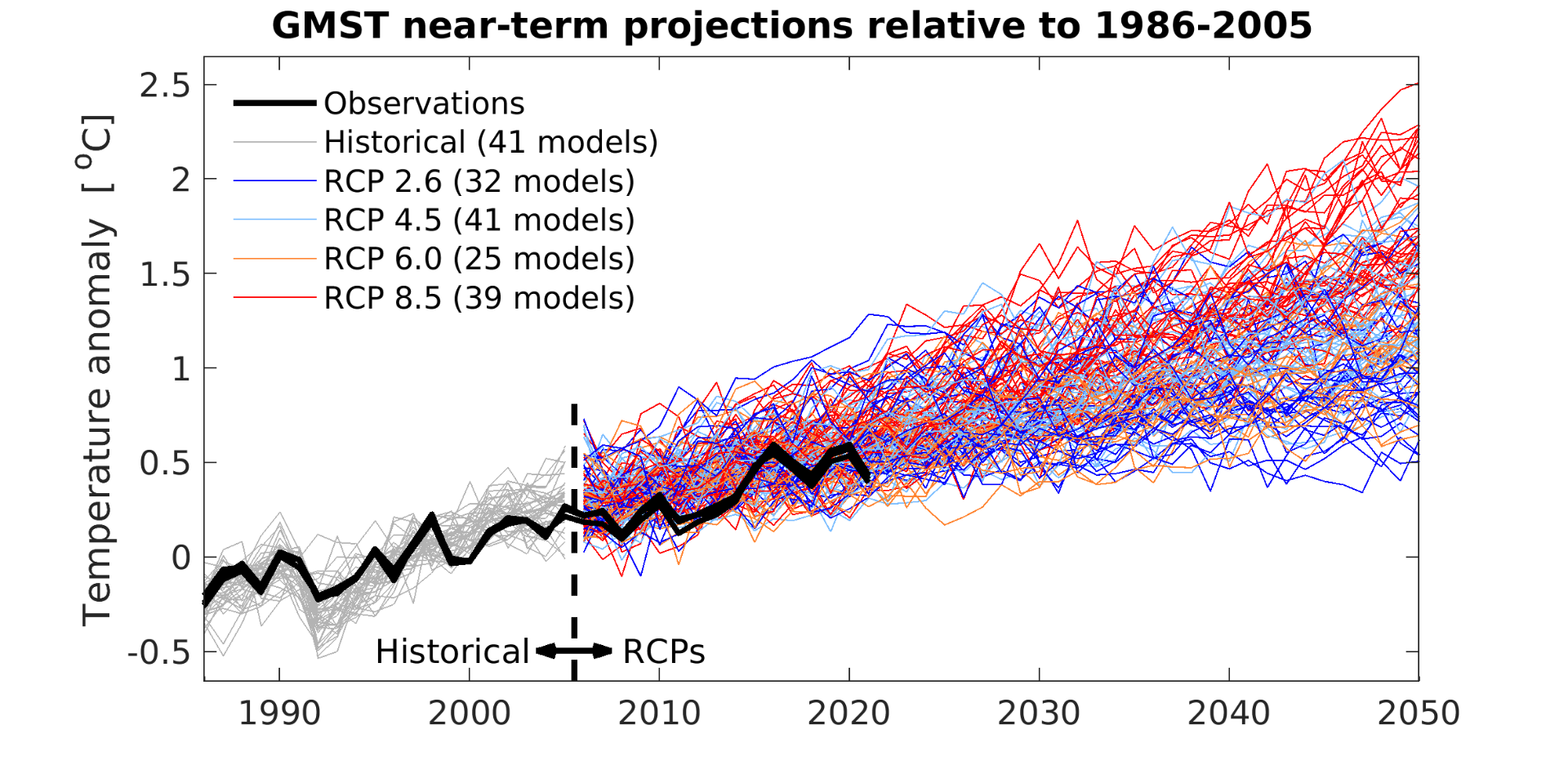
The world is experiencing record temperatures and we are skirting 1.5 C above pre-industrial levels over a full year for the first time. But climate policies and actions are hindered by narratives framing them as costly, unfair and ineffective.

The competing concerns and undermining narratives are impacting public attitudes. Many Canadians say they do not believe we can meet our energy and climate objectives, even when they agree
that climate change is a serious threat that requires concerted effort. There is a worrying gap between general concern about climate change and the erosion of support for specific climate actions.

Theme:  Mind the Gaps

The report contains communications advice to activists concerning declines in support and shifts away from desired initiatives.  Examples of some of the gaps are excerpted below.

My Comment:

All opinion surveys are testing the effectiveness of media messaging upon public awareness.  This one seems to show that Canadians have been frightened by what they are told, but are not convinced that current and proposed actions will be practical and effective solutions to the claimed problem.

Addendum:  And Then There’s Climate Science Facts

Outside the scope of these surveys:

Why So Obsessed with Decarbonizing?

How did the current obsession with decarbonization arise?

Part of a lecture given by Prof. R, Lindzen to MIT Students for Free Inquiry on March 6, 2024 is posted by John Ray at his blog Greenie Watch.  Excerpts in italics with my bold and added images.

Currently, there is great emphasis on the march through the educational institutions: first the schools of education and then higher education in the humanities and the social sciences and now STEM.

What is usually ignored is that the first institutions to be captured were professional societies. My wife attended a meeting of the Modern Language Association in the late 60’s , and it was already fully ‘woke.’ While there is currently a focus on the capture of education, DEI was not the only goal of the march through the institutions. I think it would be a mistake to ignore the traditional focus of revolutionary movements on the means of production.

The vehicle for this was the capture of the environmental movement.

Prior to 1970, the focus of this movement was on things like whales, endangered species, landscape, clean air and water, and population. However, with the first Earth Day in April of 1970 , the focus turned to the energy sector which, after all, is fundamental to all production, and relatedly, involves trillions of dollars. This was accompanied by the creation of new environmental organizations like Environmental Defense and the Natural Resources Defense Council. It was also accompanied by new governmental organizations like the EPA and the Department of Transportation.

Once again, professional societies were easy pickings: the American Meteorological Society, the American Geophysical Union, and even the honorary societies like the National Academy of Science, the American Academy of Arts and Sciences, etc. There was a bit of floundering to begin with. The movement initially attempted to focus on global cooling due to the reflection of sunlight by sulfate aerosols emitted by coal fired generators . After all, there seemed to have been global cooling between the 1930’s and the 1970’s. However, the cooling ended in the 1970’s.

There was an additional effort to tie the sulfates to acid rain which was allegedly killing forests. This also turned out to be a dud. In the 70’s, attention turned to CO2 and its contribution to warming via the greenhouse effect. The attraction of controlling CO2 to political control freaks was obvious. It was the inevitable product of all burning of carbon – based fuels. It was also the product of breathing.

However, there was a problem: CO2 was a minor greenhouse gas compared to the naturally produced water vapor. Doubling CO2 would only lead to warming of less than 1°C. A paper in the early 70’s by Manabe and Wetherald came to the rescue. Using a highly unrealistic one – dimensional model of the atmosphere, they found that assuming (without any basis) that relative humidity remained constant as the atmosphere warmed would provide a positive feedback that would amplify the impact of CO2 by a factor of 2. This violated Le Chatelier’s Principle that held that natural systems tended to oppose change, but to be fair, the principle was not something that had been rigorously proven.

Positive feedbacks now became the stock in trade of all climate models
which now were producing responses to doubling CO2 of 3°C
and even 4°C rather than a paltry 1°C or less.

The enthusiasm of politicians became boundless. Virtue signaling elites promised to achieve net zero emissions within a decade or 2 or 3 with no idea of how to achieve this without destroying their society. Ordinary people, confronted with impossible demands on their own well – being, have not found warming of a few degrees to be very impressive. Few of them contemplate retiring to the arctic rather than Florida.

Excited politicians, confronted by this resistance, have frantically changed their story. Rather than emphasizing miniscule changes in their temperature metric, they now point to weather extremes which occur almost daily some place on earth, as proof not only of climate change but of climate change due to increasing CO2 (and now also to the even more negligible contributors to the greenhouse effect like methane and nitrous oxide) even though such extremes show no significant correlation with the emissions.

From the political point of view, extremes provide convenient visuals
that have more emotional impact than small temperature changes.

The desperation of political figures often goes beyond this to claiming that climate change is an existential threat (associated with alleged ‘tipping points’) even though the official documents produced to support climate concerns never come close to claiming this, and where there is no theoretical or observational basis for tipping points .

I should note that there was one exception to the focus on warming, and that was the ozone depletion issue. However, even this issue served a purpose. When Richard Benedick, the American negotiator of the Montreal Convention which banned Freon passed through MIT on his way back from Montreal, he gloated over his success, but assured us that we hadn’t seen anything yet; we should wait to see what they would do with CO2 . In brief the ozone issue constituted a dry run for global warming.

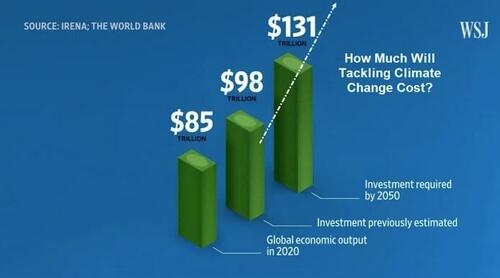
Yes, they are projecting more than 100 Trillion US$.

To be sure, the EPA ’ s activities still include conventional pollution control, but energy dominates. Of course, the attraction of power is not the only thing motivating politicians. The ability to award trillions of dollars to reorient our energy sector means that there are recipients of these trillions of dollars, and these recipients must only share a few percent of these trillions of dollars to support the campaigns of these politicians for many election cycles and guarantee the support of these politicians for the policies associated with the reorientation.

Background History from Richard Lindzen


Climate Science Was Broken

By taking a few minutes to read his text (here), you can learn from Lindzen some important truths:

  • How science was perverted from a successful mode of enquiry into a source of authority;
  • What are the consequences when fear is perceived to be the basis for scientific support rather than from gratitude and the trust associated with it;
  • How incentives are skewed in favor of perpetuating problems rather than solving them;
  • Why simulation and large programs replaced theory and observation as the basis of scientific investigation;
  • How specific institutions and scientific societies were infiltrated and overtaken by political activists;
  • Specific examples where data and analyses have been manipulated to achieve desired conclusions;
  • Specific cases of concealing such truths as may call into question gobal warming alarmism;
  • Examples of the remarkable process of “discreditation” by which attack papers are quickly solicited and published against an undesirable finding;
  • Cases of Global Warming Revisionism, by which skeptical positions of prominent people are altered after they are dead;
  • Dangers to societies and populations from governments, NGOs and corporations exploiting climate change.


There is no charge for content at this site, nor for subscribers to receive email notifications of postings.