Silence of Conservative Lambs

The 1991 blockbuster movie revolved around meek, silent victims preyed upon by malevolent believers in their warped, twisted view of the world.  A comparison can be drawn between how today’s conservative thinkers and politicians respond to advocates of the pernicious global warming/climate change ideology. Instead of challenging and pushing back against CO2 hysteria, and speaking out with a rational climate perspective, Republicans in the US, and Conservatives in Canada and elsewhere are meek and silent lambs in the face of this energy slaughter.  Worse, when they do speak it is to usually to pander and try to appease offering proposals for things like carbon taxes or other non-remedies for a non-problem, essentially ceding the case to leftists.

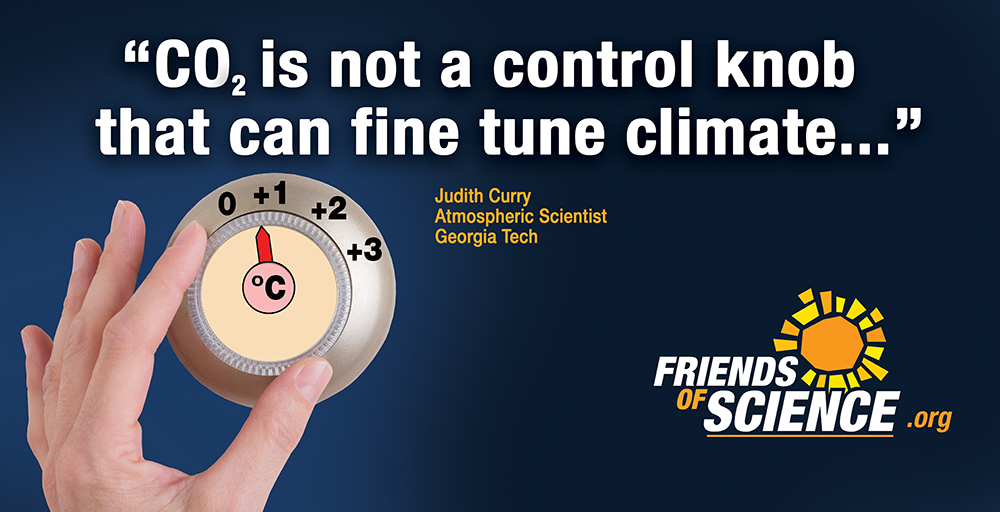
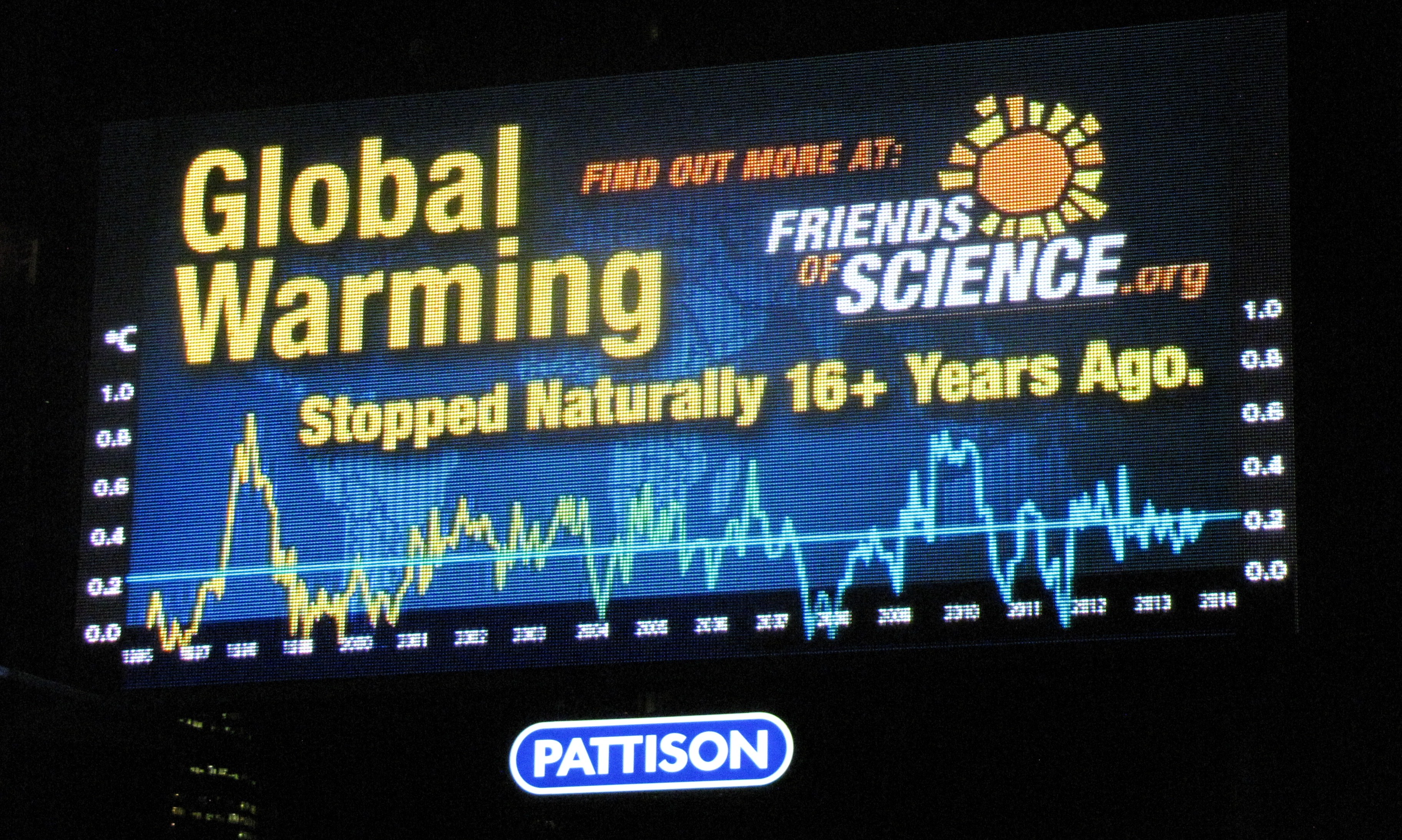
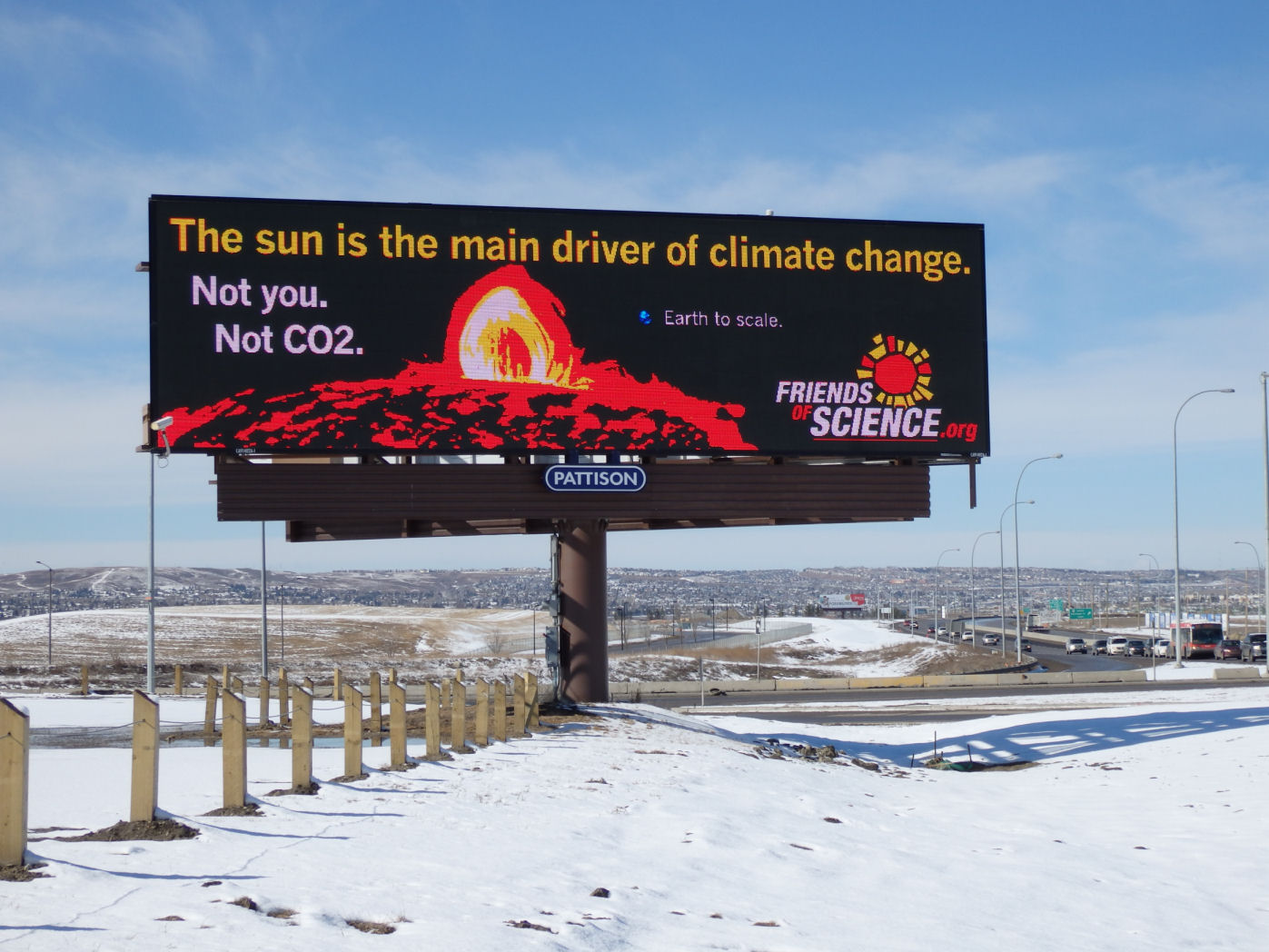
Tom Harris of International Climate Science Coalition – Canada explains in his Financial Post article Tom Harris: The Tories should shape climate opinion, not just respond to it.  Excerpts in italics with my bolds and added images from Friends of Science billboard campaign.

Grassroots conservatives need to ask CPC leadership candidates why, if they really support Canadian energy, they don’t contest climate alarmism

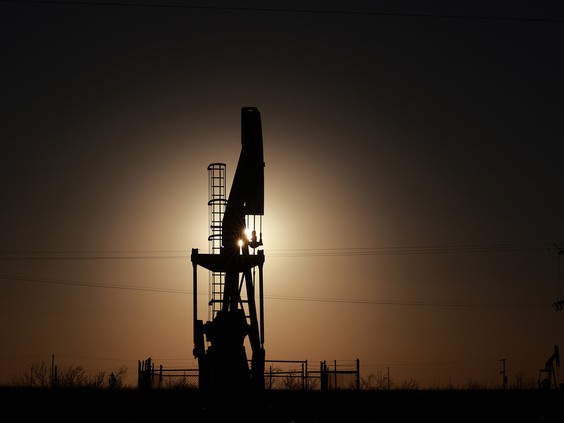
When CPC leadership candidates defend Canadian oil and gas, they either support, acquiesce to, or say nothing about the climate scare. PHOTO BY JOE RAEDLE/GETTY IMAGES

The common wisdom among candidates for leadership of the Conservative Party of Canada (CPC) is that the party must have a credible plan to reduce greenhouse gas emissions if it is to have a fighting chance to form the next government. As former Quebec premier Jean Charest said in the Edmonton debate on May 11, “we will not be elected as a political party if we’re not credible” about putting a price on carbon for large emitters.

The strategists’ thinking is that, given current public support for reducing emissions to “stop climate change,” the CPC has no choice but to follow along or risk electoral defeat. And public opinion polls, like one from Abacus Data last October, do typically find that a majority of Canadians, in that poll 66 per cent, “would like to see governments in Canada put more emphasis on reducing emissions.”

[For the politics of climate polling see Uncensored: Canadians View Global Warming]

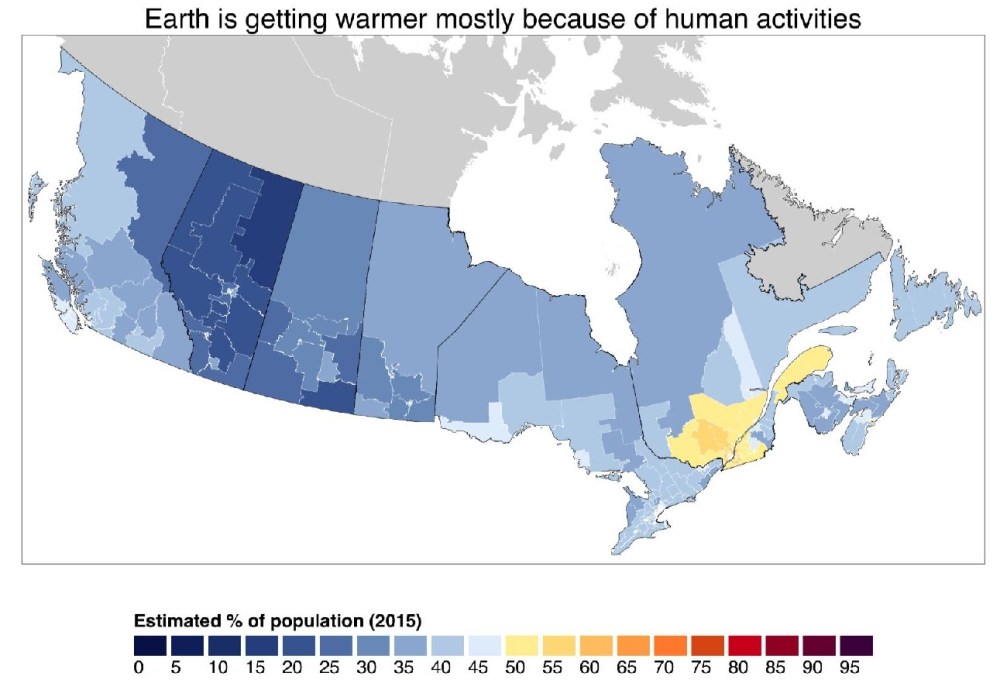
But the strategists are wrong. The candidates are giving up a golden opportunity to win the votes, not just of the many grassroots conservatives who oppose the climate scare,
but of Canadians at large in the next election.

A 2012 paper published in the journal Climatic Change suggests why. Three scholars — Robert J. Brulle of Drexel University, Jason Carmichael of McGill and J. Craig Jenkins of Ohio State — looked at 74 separate surveys over a nine-year period to try to figure out which factors had the greatest influence on public views on climate change. They considered five possibilities: extreme weather events, scientific information, media coverage, advocacy, and what politicians and political parties were saying on the subject. Surprisingly, they found that neither extreme weather events nor the promulgation of scientific information had a significant impact. Media coverage did, but the strongest effect came from the positions of competing politicians and political parties.

When politicians across the political spectrum supported the narrative
of man-made climate change, the public’s demand for action rose.

We see that today in Canada, with all major political parties supporting action on greenhouse gas emissions. On the other hand, when politicians questioned the narrative, as Congressional Republicans frequently did, the public’s demand for action dropped — substantially. The scholars’ analysis supported the 2009 conclusion of Harvard University’s Susan McDonald that: “When elites have consensus, the public follows suit and the issue becomes mainstreamed.

When elites disagree, polarization occurs, citizens rely on other indicators
to make up their minds.”

These findings are consistent with other studies that have demonstrated the leading role politicians and political parties play in shaping public opinion on issues. It’s a little like the tail wagging the dog but public opinion supporting government climate policy seems at least partly due to the lack of coherent opposition to the policy on the part of opinion-makers — especially elected officials.

If that’s true, then instead of citing public opinion polls that support climate policies they may be skeptical of, why don’t politicians and political strategists work to change public opinion? As conservative strategist and former policy aide to Stephen Harper, Joseph Ben-Ami, put it in a 2021 study for ICSC-Canada: “The answer may come down to inexperienced politicians and their advisers not understanding their power to influence public opinion. They look at polls and conclude that they have no hope of getting elected unless they climb onto the current public opinion bandwagon.

They fail to understand that the reason the public believes what it does is largely because they (politicians) aren’t making the opposite case.”

This phenomenon is widespread in Canada, and on many topics, not just climate change. At all levels of government, politicians use language and promote policies they very likely disagree with because they think public opinion leaves them no choice. As Ben-Ami argues, the result is a “feedback loop” where politicians’ “response” to public opinion is in reality the principal driver of the public opinion to which they are supposedly responding. The more obsequious their responses, the more entrenched that public opinion becomes, which then results in even more obsequious responses from even more frightened politicians.

Climate activists don’t pull their punches. They want an end
to all of Canada’s oil and gas development as soon as possible.

And, sadly, they are being helped by many in the press, government and other institutions. But a fast phase-out would be immensely costly. Besides contributing $105 billion to Canada’s GDP in 2020, oil and gas provided $10 billion in average annual revenue to governments between 2017 and 2019. Yet, when CPC leadership candidates defend Canadian oil and gas, they either support, acquiesce to, or say nothing about the climate scare.

Grassroots conservatives need to ask the candidates why, if they really support Canadian energy, they don’t contest climate alarmism, which is by far the greatest threat to that energy.

Tom Harris is executive director of International Climate Science Coalition – Canada.

Footnote: 

The billboards are from a campaign to inform the public by Friends of Science, not to be confused with the predatory Fiends  Friends of the Earth in the UK.

Calgary Climate Change Billboard campaign shows
Five Key Points of Cli-Sci Uncertainty says Friends of Science


Climate Politics Drama Thickens

This Netflix show is just releasing its fourth season where I live, and it promises a look into climate political intrigue.  For those not familiar, the historical protagonist of Borgen is Birgitte Nyborg (Sidse Babett Knudsen), who in Season 1 became the first woman to take up the post of Prime Minister in Denmark. She portrays a determined politician, shrewd and willing to engage in political street fighting in order to gain and to keep power.  She is also an avatar of the progressive globalist contemporary leader, embracing the woke ideology of diversity, nanny state intervention, and of course saving the planet from CO2.

This new season presents a juicy predicament for Birgitte, who is now Foreign Minister under another female PM.  The fourth season opens with the discovery of major oil fields in Greenland. Local politicians announce this without first consulting with their Danish counterparts – a problem of no small importance, since the international interests of the island are the responsibility of the government of Denmark. It’s also a bit of a headache for Birgitte, who was elected under a program that promised commitment to fighting climate change and therefore shouldn’t defend Greenland’s desire to exploit this unexpected new resource.

This is further complicated when, discussing it with other Nordic colleagues, Birgitte discovers that Russia and China would have interests linked to the Greenlandic issue, making a situation that was far from easy from the start even more delicate. Birgitte’s knee-jerk public statement in response to the oil discovery is along the lines:  “We’ve committed ourselves to zero emissions by 2050, and this can’t be allowed to defeat that achievement.”  That zero commitment was made so as to belong in the Globalist ranks, without any critical examination of IPCC dubious suppositions.

Meanwhile,  the Greenlanders are enthralled with the prospect of prosperity and a leap forward in their standard of living. Presumably the writers will have their avatar win by holding to her progressive line, so a St. Paul Damascus awakening is highly unlikely in the coming episodes.

Still, stranger things have happened, such as the satirical blast of lucidity
in the final episode of the BBC TV show, Yes, Prime Minister.

Update Dec. 2019 Yes PM Pokes Fun at Climatism

GWPF published a letter from the late Sir Antony Jay, co-creator of Yes, Minister and Yes, Prime Minster, attacking the BBC for its blatant bias on climate change 8 years ago.  It seems timely to repost the final episode from the final season addressing the topic of global warming/climate change.  As you see, climate politics have not changed very much.

Part 1 of the program is here:

Part 2

Previously I posted this:

A humorous look at why the global warming campaign and the triumphal Paris COP make sense.

Yes Minister explains it all in an episode from 2013.  This is an all-too-realistic portrayal of political climatism today.

When I realized that BBC had blocked the viewing of the video, I sought and found the subtitles for Yes Prime Minister 2013, Episode 6, “A Tsar is Born”.  That final episode for the series began with the dialogue in the first video above.

Below is  the dialogue that formed the episode conclusion, and which was the content of the blocked video.

The Characters are:

Sir Humphrey Appleby
Cabinet Secretary

Jim Hacker
Prime Minister

Claire Sutton
Special Policy Adviser

Bernard Woolley
Principal Private Secretary to the Prime Minister

(Dialogue beginning at 20:16 of “A Tsar is Born”)

Humphrey I have returned with the answer to all your problems.
Global warming.

Jim I thought you were against it?

Humphrey Everybody’s against it, Prime Minister.
I suddenly realised that is the beauty of it.
We can get a unanimous agreement with all of our European partners
to do something about it.

Jim But how can we do something about
something that isn’t happening?

Humphrey It’s much easier to solve an
imaginary problem than a real one.

Jim You believe it’s real?

Humphrey Do you? I don’t know.

Jim Neither do I. Haven’t got the faintest idea!

Humphrey But it doesn’t matter what we think.
If everyone else thinks it’s real, they’ll all want to stop it.
So long as it doesn’t cost too much.
So the question now is, what are we going to do about it?

Jim But if it isn’t happening, what can we do about it?

Humphrey Oh, there’s so much we can do, Prime Minister.
We can impose taxes, we can stiffen European rules about
carbon emissions, rubbish disposal.

We can make massive investments in wind turbines.
We can, in fact, Prime Minister, under your leadership, agree to save the world.

Jim Well, I like that!
But Russia, India, China, Brazil, they’ll never cooperate.

Humphrey They don’t have to. We simply ask them to review their emissions policy.

Jim And will they?

Humphrey Yes. And then they’ll decide not to change it.
So we’ll set up a series of international conferences.
Meanwhile, Prime Minister, you can talk about the future of the planet.

Jim Yes.

Humphrey You can look statesmanlike.
And it’ll be 50 years before anybody can possibly prove you’re wrong.
And you can explain away anything you said before by saying the computer models were flawed.

Jim The voters will love me!

Humphrey You’ll have more government expenditure.

Jim Yes. How will we pay for it? We’re broke.

Humphrey We impose a special global warming tax on fuel now,
but we phase in the actual expenditure gradually. Say, over 50 years?
That will get us out of the hole for now.

Bernard The Germans will be pleased.
They have a big green movement.

Claire And we can even get the progs on board!

Bernard As long as they get more benefits than everyone else.

Jim My broadcast is on Sunday morning.

Humphrey You have a day to get the conference to agree.

Jim That’s not a problem.
The delegates will be desperate for something to announce
when they get home.
There is one problem.
Nothing will have actually been achieved.

Humphrey It will sound as though it has.
So people will think it has.
That’s all that matters!

(Later following the BBC interview, beginning 27:34)

Bernard Oh, magnificent, Prime Minister!

Humphrey I think you got away with it, Jim,
but the cabinet will have been pretty surprised.
We’ll have to square them fast.

Jim Bubbles!

Humphrey We’re not there yet.
After that interview, you’ll need to announce some pretty impressive action.

Jim An initiative.

Humphrey Yes.

Claire A working party?

Humphrey Bit lightweight.

Bernard A taskforce?

Humphrey Not sure.

Jim Do we have enough in the kitty?

Claire It could be one of those initiatives that you announce
but never actually spend the money.

Jim Great. Like the one on child poverty.

Bernard Maybe it should be a government committee?

Jim Well what about a Royal Commission?

Humphrey Yes!
It won’t report for three years, and if we put the right people
on it, they’ll never agree about anything important.

Jim Right! A Royal Commission!
No, wait a minute, that makes it sound as if we think
it’s important but not urgent.

Claire Well, what about a Global Warming Tsar?

Jim Fine! Would that do it?

Humphrey No, I think it might need a bit more than that, Prime Minister.
It’ll mean announcing quite a big unit, and an impressive salary for that Tsar,
to show how much importance you place upon him.

Jim No problem. Who would it be?

Humphrey Ah, well, it can’t be a political figure.
That would be too divisive.
It has to be somebody impartial.

Jim You mean a judge?

Humphrey No, somebody from the real world.
Somebody who knows how to operate the levers of power,
to engage the gears of the Whitehall machine,
to drive the engine of government.

Jim That’s quite a tall order.
Anybody got any ideas?

Humphrey… Could you?

Bernard Oh!

Humphrey Yes, Prime Minister.

The End.

Footnote

CO2 hysteria is addictive. Here’s what it does to your brain:

Just say No!

Seeking Climate and Energy Security

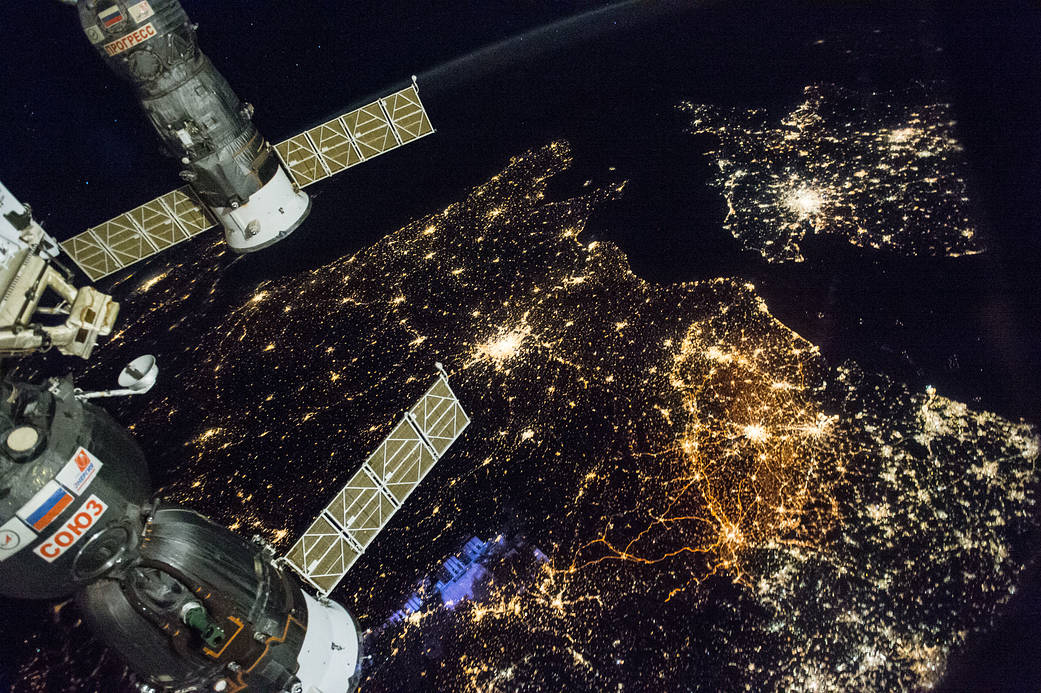
Europe at night from space NASA 2016

News is out that US Senators are meeting in search of (using Sen. Joe Manchin’s words)  “a bipartisan climate and energy security package.” . . .  “It’s urgent to find out if there is a pathway.”

The principals should attend to Dieter Helm’s expert March 2022 analysis of Climate and Energy Security entitled Energy policy  Some excerpts are below in italics with my bolds, suggesting the thrust of his wisdom in this regard.

Introduction

Energy policy is not rocket science. It is about achieving core objectives – security of supply and decarbonisation – and achieving them at the lowest cost. Neither will be met by purely private markets, since the former is a public good and carbon is an externality not properly integrated in competitive markets. Furthermore, energy is a primary good for citizens: not to have energy deprives people and businesses from access to the wider economy and to society. It is a core USO: a Universal Service Obligation. That is why energy cannot be treated like any other commodity, as some of the architects of the “privatisation, liberalisation and competition” paradigm believed. Citizens are more than just consumers.

Security of supply requires a capacity margin: “just in case” rather than “just in time”. Decarbonisation requires more renewables, possibly nuclear, and maybe hydrogen, carbon capture and storage (CCS) and an active demand side. Security of supply sits in this decarbonisation context, and because many of the options on the generation side are intermittent, security of supply takes on a much more demanding dimension – not just the old question of access to fuels and power, but the ability to handle large-scale intermittency.

The Policy Mess We Are In

This pressure to “do something” is most intense in a “crisis”, and what is happening right now is a classic example. Lots of interventions currently being proposed by all the lobbyists are likely to make things worse.

Complexity is a lobbyist’s utopia. Engaged in each consultation, clear about the single aims of its vested interest, able to engage in each and every consultation, able to brief MPs, the media and the ministers, and sow doubt where interests are threatened, it is no wonder that the energy sector is now close to resembling that of agriculture, captured by the core interests. Spending (and it is very large-scale spending) on lobbying keeps going up as the government is more and more engaged in the details of all the main contracts.

These lobby interests have been very successful in getting subsidies and convincing government that the transition to net zero is going to be cheap (just not yet), and that there is no threat to security. Just go for net zero, they argue – on a territorial carbon production basis – sign up for lots and lots of targets and then, once the fish is hooked, play in the threat of failures and hence the case for more and more subsidies. (If it was all so cheap, we could of course abolish the subsidies – but no vested interest is demanding the end to subsidies.)

The facts –not only that decarbonisation is essential, but it is going to cost a lot – remain, and they are increasingly emerging. Each time they do, the lobbyists turn to the Treasury and ask the taxpayer to bail them out.

At its simplest, the government has been pursuing decarbonisation without addressing in parallel the security of supply implications. The failures are multiple. It is not just the gas price and the collapse of suppliers; it is also about the balancing market, and the distribution companies.

Behind all of these is the lack of a coherent market design
fit for the decarbonising purposes.

Exposure to the spot markets, with no storage and no special relationship to North Sea producers, is only one reason why the gas price increases hit the UK particularly hard. A second reason is that the UK has built a lot of intermittent wind capacity without thinking through how to manage the intermittency. In the UK (for good reasons) there is very little coal generation capacity left – except DRAX. For all the hype about batteries and smart demand management, the fact is that gas (and small diesel generators) is almost all that is currently left to do the heavy lifting.

In a renewables energy system, there needs to be a lot more capacity
to meet any given demand.

In theory, if there was no wind, then there would need to be another complete system to be on standby. As demand keeps going down – in part because of de-industrialisation (industry demand is down 20% since 2000) – capacity has been going up towards the 100GW mark, an increased requirement of over 20GW for a significantly lower total demand. It will need to go up a lot more with 40GW of offshore wind as planned. It seems to have escaped the notice of all those projecting that the costs of the transition would be very low, and claiming that renewables are cost-competitive with fossil fuels, that all this capacity has to earn a reasonable rate of return. It is a cost of renewables.

Needing the gas capacity is only one dimension of the problem. The other is how to deliver it, given that the wind has a marginal cost close to zero. Whereas a conventional gas power station could rely on running most of the time when first built, now it is itself intermittent, depending on whether the wind is blowing. This breaks the conventional back of the economics of gas investment. Hence there is no merchant gas investment. Gas shifts from being driven by a normal wholesale market towards a strategic reserve of capacity. The market design has not caught up with this. Gas now needs a capacity payment to make its reasonable return, and hence a capacity contract, which only the government can underpin.

Back to Basics

The very concept of a competitive retail energy supply market cuts across the basic idea that energy is a USO. Some think that goes beyond the pure commodity to an essential service necessary for a citizen to participate in society. Without electricity and gas, citizens can die of hyperthermia (quite a lot do each winter), they cannot access the internet, phones may not work, and the freezer thaws out. Any decent society recognises that energy cannot be simply about price, supply and demand. Yet that is precisely what the architects of the privatisation and liberalisation paradigm thought they were doing. The current crisis is not just about whether people can or will pay: it is also about all those voluntary actions to stop using the heating and the electricity, with all the consequences for the poor that this implies. Paying the electricity bill can be a trade-off with food.

The supply market is now broken, and it is unlikely that many customers will now want to switch – especially amongst the poorer ones. The government has had to step in to bail out Bulb. All electricity customers are now going to pay more than £60 each in their bills to pick up the tab for the costs of sorting out all the company failures. We have come full circle, back to an oligopoly again, and one that will need proper regulation.

The right way to address supply is to start with what customers want, to ensure that the companies serve the customers, not that the customers serve the interests of the suppliers.

How It Could Be Different

Though it is true that we are where we are, it is worth considering how it could be different by looking at what is happening elsewhere. Recall the reasons why the gas price increases have hit so hard are that the UK has lots of intermittent wind, and the electricity price is determined by the (marginal) wholesale price. Intermittency reads across to greater demand for gas, and that translates straight into the electricity price. The gas and electricity price paths match each other remarkably closely in the UK.

To see how it could be different, consider what is happening in France. It is around 70% nuclear and has a lot of hydropower. As the gas prices have shot up, the cost of nuclear and hydropower has not changed at all. Similarly in the UK, the cost of wind, solar and nuclear generation has not gone up. But now the difference. In France, the price increases are being limited to 4%. This reflects the costs. EDF understandably protests that this will lose it money (around €8 billion), because it could have sold its power into the EU markets at the spot price.

But the €8 billion is not a loss, but rather an additional profit that would go to EDF. Since EDF is largely owned by the French state, the €8 billion would be a taxpayer gain, and stands against a customer gain if the benefits of a stable nuclear power supply go to the French citizens and industry. Quite why Germans should benefit from French nuclear at this point of the gas price crisis, when it has closed its own nuclear fleet, is hard to fathom.

The building blocks of a sensible energy policy

Energy policy is all about setting a system framework within which markets operate to deliver what citizens and customers want. It starts with setting the objectives, and then ensures that these are met by a set of institutions, interventions, regulations, licences and auctions and so on.

The objectives

There are two primary objectives: security of supply and decarbonisation. Unless these are clearly and appropriately specified, no amount of ingenuity about the development of policies will be anything other than inefficient.

Security of supply includes price and costs, as does decarbonisation. Setting either independently of prices and costs make them unlikely to be attainable. In both cases higher prices have an impact on demand and hence the required supply-side infrastructure, reserves, capacity margins and the total envelope of investments. For example, gas security is always possible if the price is high enough. Supply equals demand at a clearing price. Security of supply has to be at reasonable costs, as must decarbonisation.

Both objectives are currently set as if they are independent of prices and costs. Hence they are in doubt: market participants need to try to guess the reaction function of government if and when customers and voters rebel or are simply unable to pay. In particular, there is an assumption as noted above that decarbonisation will be very low cost (perhaps 1% GDP per annum), but this is hopelessly unrealistic – it assumes as noted, for example, not only that the costs of renewables and low-carbon technologies will keep falling, but also that government policy will be perfect. There will be no government failure.

This is nonsense. Pretending that the costs are low to get governments signed up is a classic NGO trick, but the unfortunate reality is that the costs do not go away by assumption. In the current circumstances, few can bank on getting the net zero for the electricity sector by 2035. The uncertainty raises risk and hence the cost of capital.

The security of supply objective is also ill-defined, if defined at all. How much risk does the government want the economy and its companies and citizens to take that they will face price shocks? It is easy to be very secure, provided the economy can withstand the costs of a range of policies, including strategic stocks, reinforced networks and large capacity margins. We could, for example, agree to pay whatever it takes to secure LNG cargoes by agreeing to outbid every other country in the world. The costs of all of this would be beyond those that the economy could withstand.

The task of government in general, and BEIS in particular, is to set out serious and sensible objectives, and then delegate their achievement in a credible way.

Stakes in the ground

There are a number of decisions which cannot be taken by the private sector, or at least not without a very high cost of capital. The government is already the central buyer for almost everything in the electricity sector – directly or indirectly. Almost all new generation comes with a government-backed contract: a capacity contract or a CfD or a RAB. All the networks are regulated, and the regulator has a duty to finance functions in one form or another. The government controls the North Sea licences for oil and gas, and The Crown Estate runs the seabed licences.

The first stake in the ground concerns nuclear.

It can never be a purely private investment, for multiple reasons. Waste is an intergenerational liability. The political nature of nuclear means that investors always face the risk that government performs the sorts of U-turns made in Germany. Limited liability of private sector firms leaves the government with the unlimited liabilities. These considerations trump the further worries about the length of the project, cost and construction overruns, and changing regulatory requirements. Every major incident globally at a nuclear facility leads to a review of safety regulators, and safety regulators usually come up with new tighter regulations as a result.

Having a nuclear capability is part and parcel of having a robust nuclear programme, as it is of a military nuclear deterrence. Looking ahead, it is possible to envisage a joint UK– France nuclear programme, adding France’s six to say four to six in the UK, making a programme of at least ten. This would yield a supply chain. But it would need a UK company as part of the deal and a joint political framework. All of this, in the current context, is fantasy. If the UK does nuclear, it will be far less ambitious, less joined-up, and probably much more costly.

The conclusion that follows is that it is very hard to think of any worse way of taking nuclear decisions than the recent past in Britain. It maximises the cost of capital without complete risk transfer, and it minimises the supply chain efficiencies. Opting for more nuclear now as part of a security and decarbonising strategy requires the ambition to be matched by a more coherent and joined-up commitment, sustained over more than a decade.

A second stake in the ground is offshore and onshore wind.

The key point about wind is its difficult economics: it is low-density, disaggregated, intermittent and remote from consumers. Nevertheless, its lobbyists claim that wind is the cheapest form of electricity generation. Sadly this is not true once the full costs are taken into account, and that means that it is government that has to decide how much offshore and onshore wind and has to provide the subsidies to the full costs to make it happen. The regulator has to instruct the network companies to build an interconnected system between the offshore wind farms and then between the wind farms and the mainland grids. Offshore wind – the main play – differs from nuclear in all the above respects. It also differs in having shorter lead times and its components can be manufactured, currently primarily in China.

The stake in the ground decisions about the volume of offshore and onshore wind are conditional on deciding about the system infrastructure to collect and distribute the energy, and how to deal with the intermittency.

This is a system question that depends not only on the quantity in GWs of offshore wind in particular, but also on what else is on the system at the same time. It is rarely observed that the decision about wind needs to be taken in conjunction with the decision about gas – at least until there is a largescale alternative storage technology that can cope with longer periods of low wind, notably in winter (but increasingly in summer, too, as the air conditioning loads grow). Given the 2035 target for decarbonising electricity, the gas decision depends in turn on the CCS decision, since more wind means more gas, which means more CCS if the gas is to meet the net zero requirement by 2035.

This leads to the third stake in the ground – CCS.

Successive governments have stalled on CCS (Carbon Capture and Storage) investments and decisions. As noted, a Treasury paper in 2007 promised £1 billion of support to develop CCS. Fifteen years later, and despite there being even a competition for the £1 billion, CCS remains largely on the drawing board. It requires a regulatory and licences framework, a liability insurance regime, a pipeline system, and a price of carbon sequestrated.

Though all of this is reasonably straightforward, these ancillary stakes in the ground are not yet in place, and the clock is ticking both as the offshore wind develops and the 2035 deadline gets ever closer.

The fourth stake is the new kid on the block – hydrogen and green ammonia.

It is unlikely to be the last “new kid”. The promise of hydrogen is that it can be manufactured by using excess wind and perhaps even solar, thereby being truly “green”. (Nuclear could do this too, though it is unlikely to be surplus unless on a French scale.) In the meantime, hydrogen is “blue”, made from natural gas, which brings us back to CCS. Blue hydrogen is inconsistent with the net zero targets without CCS. The hydrogen decision differs from the nuclear and wind stakes in the ground because it is very much at the R&D and demonstration stage. R&D is a public good and hence there is an obvious role here for government support.

There are several other stakes in the ground, though they tend to be more about the frameworks and less the technology per se. Solar falls into this category, and targets are particularly inappropriate given the major differences between rooftop, household, farmland and other variants. In an ideal world with perfect foresight, governments might want to go further, but there are corollary dangers as the lobbyists get their teeth into government and regulators, and getting the really big decisions right on the above stakes in the ground would be a major achievement. All of the above are decisions which cannot be taken by markets.

Governments should resist the temptation to do everything. Just doing a few things well would be a massive improvement on the current policy mess described above.

Delivering the plan – guidance and the system operator and regional system operators

Government can and indeed has to take the decisions about the major stakes in the ground. What then is required is a plan to deliver the energy system within which these stakes are embedded.

These objectives will not be achieved without a plan. If, for example, the government seriously intends to get to net zero for the electricity sector by 2035, then with 13 years to go, it needs to radically up its game and set out a plan to get from here to there. To give some examples, if part of the plan is to build lots more offshore wind and to increase electricity capacity to tackle transport and some heating, then as noted it will need a lot of gas capacity to back it all up. That in turn will need CCS, since electricity will not be net zero if there is a lot of gas on the system unless the gas is net zero and the only plausible way of doing this is to use very large-scale CCS. Similarly, it makes a lot of difference to the networks and the capacity requirement whether there is more nuclear or not. To get more nuclear in just 13 years on the system requires a lot of actions now. The stakes in the ground are for government: the delivery of the system to meet these is an evolving and detailed matter. Things will change. Nuclear might be late, wind costs may increase, and so on.

Someone has to manage this process, and whilst the government and BEIS can and should issue guidance – notably in respect of the overall objectives and the stakes in the ground – there need to be a system architect. The obvious place to start is with the SOs at the national and also at the regional level too. The Cost of Energy Review sets out how these should be separated from National Grid and the distribution network operators (DNOs) and details some of the consequences for Ofgem and system regulation. Five years later, the government is still prevaricating about how to do this. Every year means that the system plan remains incomplete, which means that it is harder and harder to meet the 2035 target and the costs of doing so goes up. It has an impact on the generation investment decisions, notably because without a network system in place, uncertainty increases and hence the costs of capital goes up.

Creating a market fit for the purposes of the twenty-first century

Critical to rebasing energy policy now is a series of decisions – stakes in the ground – that have been fudged in recent years. Either do nuclear properly or not at all. Recognise the security implications of lots of intermittent wind on the system and plan the system architecture to deal with this. Integrate the offshore and onshore electricity grids. Do not ignore the gas that will be a part of the back-up for at least a decade to come. Do not pretend that stopping new gas production in the North Sea solves the problem of UK consumers consuming a lot of gas by importing it instead.

Get on with separating out the regional SOs and the national SO. Evolve quickly to an EFP market to supersede the fossil-fuel-driven wholesale markets of the twentieth century. Take longer term contracts seriously rather than relying overwhelmingly on spot markets, and extend the price cap periods to a year. Get on with designing and implementing an integrated CCS system offshore.

Do these things, and spend less on perverse subsidies, and the UK can have secure energy at a reasonable cost and decarbonise at the same time. Ignore all these, and not only will the UK lack security, but it will pay higher prices and the 2035 target will fade, and possibly with it the willingness of the public to support the vital objective of decarbonisation.

See also World of Energy Infographics


IPCC World’s Last Chance (Again)

Getty Images

James Macpherson reports on the latest deadline in his Australian Spectator article The IPCC say the world is ending! (Again?) .H/T John Ray.  Excerpts in italics with my bolds.

In the latest ‘now or never!’ since the ‘last now or never!’ the United Nations has warned the world that it is once again ‘now or never!’ to avoid disastrous Climate Change.

Forget Prince Charles’ warning back in July 2009 that we had just 96 months to save the planet.

Ignore former British PM Gordon Brown’s prediction, just three months later, that we had fewer than 50 days to avoid disaster.

And never mind French Foreign Minister Laurent Fabius who, standing beside then American Secretary of State John Kerry, told the world on May 13, 2014, that ‘we have 500 days to avoid climate chaos’.

The irony of that particular Chicken Little routine was that Fabius was scheduled to host the 21st Conference of the Parties on Climate Change on November 30 the following year – 65 days after the world, by his reckoning, would have ended.

I was going to quip that you couldn’t make this stuff up, but it seems like they do.

Anyway, enough joking around. This is it. Seriously. They’re not even kidding this time. Honestly. Like, for real guys. ‘It’s now or never!’

Yes, I know that’s what American defence chiefs were warning back in 2004 when they predicted European cities would sink beneath rising seas, and that Britain would be plunged into ‘a Siberian climate’ by 2020.

But it wasn’t like they got everything wrong.

Their predictions of widespread rioting across the world by 2020 did come to pass. And if you overlook the fact that the rioting was caused by the death of George Floyd and the imposition of compulsory injections – rather than the complete collapse of the ecosystem – you’ll see just how prescient the defence chiefs were.

You can’t expect climate catastrophists to get it right all the time. Or any of the time. It’s not like they’re astrologers.

Doomsday was predicted but failed to happen at midnight.

The important thing to worry about is that things are now a lot more worrying than the last time we were warned to worry, and so there is now good reason to be worried.

We have this week reached a tipping point that is even pointier than every other tipping point so far reached; which is to say we will soon be at a point of no return that is well past the point of no return that we were last warned there was no returning from.

The latest UN climate panic comes in the form of what media outlets called ‘a massive 3,000-page document’ published Monday.

It’s unlikely anyone will read all 3,000 pages, but no one should need to. The sheer size of the document – let me remind you, it’s ‘massive’ – tells you everything you need to know.  Things are bad.

And if the thickness of the report does not convince you that things are dire, environmentalists at the UN can make their next dossier of doom and gloom run twice that length. It’s only trees, after all.

Let me remind you just how massively bad things are.

Back in 1972, the then UN Under General Secretary Maurice Strong warned we had ‘only 10 years to stop the catastrophe’.

In 1982, which was the deadline for stopping the catastrophe, the head of the UN Environment Program Mostafa Tolba told us we had just 18 more years before we would face an environmental catastrophe ‘as irreversible as any nuclear holocaust’.

Just eight years later, he was insisting we needed to fix global warming by 1995 or we would ‘lose the struggle’.

The great climate doomsday of 1995 failed to materialise, as did the climate Armageddon of 2000. But the flurry of final warnings, last chances, and tipping points continued; every prediction more hysterical than the last.

UN Climate Panel chief Rajendra Pachauir, who was no doubt surprised to still be here in 2007, warned that ‘if there is no action before 2012, that’s too late’. He further insisted that ‘what we do in the next two to three years will determine our future’.

Our betters spent the next two or three years jetting around the globe, holding lots of conferences and summits, which must have saved our bacon since not only did we survive the predicted 2012 apocalypse, but we hung on grimly until 2019 at which point the UN informed us we had just 11 years to prevent irreversible damage from climate change.

To emphasise just how serious things were, they invited a Swedish school girl to berate them for robbing her of her dreams, or something. These days she’s performing Rick Astley covers for adoring fans.

Now, just three years into that 11-year do-or-die period,
we are being told that it’s ‘now or never’.

One could be forgiven for thinking that when the world doesn’t end as these activists predict, they simply change the date and call it science.

The UN report, the most comprehensive report since the last most comprehensive report, says emissions must be curbed by 2030 or things will be even worse than the last time we were told they couldn’t possibly be any worse.

The report says that people must change their diets and their lifestyles which, as we already know, means eating bugs and walking.

And if we fail to heed the latest hysterical shrieks from those who warn of rising sea levels while purchasing beachside mansions, we can be sure there will be even shriekier histrionics in the future.

This is it. Our final, cataclysmic warning. Until the next one. And probably the one after that.

When the UN insist that it is ‘now or never’ for climate action, what they really mean is that they want now and never-ending emergencies as a pretext for herding us around the room. First here and then there, but never to an exit.

Hubris is Spelled N-E-T-Z-E-R-O

William Watson explains in his Financial Post article  How does Ottawa spell hubris? N-E-T-Z-E-R-O.  Excerpts in italics with my bolds and added images.

Tough question: If you think central planning is disastrous for economies, and it is, do you want your central planners to be competent and efficient or do you want them to be jokers, engaged in barely concealed fraud?

The projections included in the government’s “2030 emissions reduction plan” released this week show that in the 14 years between 2005 and 2019 total Canadian emissions of carbon dioxide equivalents fell by just nine megatonnes (Mt), from 739 to 730. Yet from 2019 to 2030, the plan would have us believe, they will fall by 287 Mt — more than 30 times the 2005-19 change.

Take buildings. From 2005 to 2019 emissions from buildings actually rose by six Mt, from 84 to 91. But “where we could be in 2030,” according to Ottawa’s chart, is 53 Mt. The chart explains: “A whole-of-government and whole-of-economy effort focusing on regulatory, policy, investment and innovation levers is needed to drive decarbonization of the buildings sector. To this end, the Government will develop a national strategy for net-zero and resilient buildings …”

That load of yet-to-be-delivered national strategy supposedly will eliminate 38 Mt of emissions when all the housing efficiency programs from 2005-19, and there have been lots, enabled an “improvement” of minus seven Mt? You’ve got to know a “whole-of-government” effort to operate the “investment and innovation levers” will not be speedy or efficient.

And even more impressive 2020s miracles apparently are on order.

In the electricity sector, emissions fell 61 Mt from 2005-2019, thanks largely to the elimination of coal. From 2019-2030 they supposedly will fall another 47 Mt, even though coal can’t be eliminated again. In heavy industry, the reduction was 10 Mt; it’s now going to be another 25 Mt. In transportation, emissions actually rose 26 Mt over the last 14 years but by 2030 they supposedly will fall 43 Mt.

This page has no sympathy for central planners. Central planning does not work, whether of the Soviet or the Trudeau-Guilbeault kind. And it wouldn’t be a good idea even if it did. On the other hand, we have immense sympathy for central plan-ees — the people who are subject to central plans. Elsewhere on this page is a plea from Francis Bradley of Electricity Canada, an association of the people who run the country’s electricity grids. All net-zero plans involve a big expansion of electricity use: all those electric vehicles, including electric trucks not yet invented, have to be charged somehow. But, Bradley warns, the clock is ticking. If the government is serious, it needs to make critical decisions now about such things as whether it will allow generation with natural gas, how much financial assistance it will provide for re-fitting and new building of transmission lines and whether it will override burdensome and lengthy approvals processes.

What does this week’s “plan” provide in the way of detail?
Aspiration, aspiration, aspiration.

It is, as Elizabeth May noted, a lovely document, with attractively coloured charts and diagrams. But if you assumed an emissions reduction plan would provide a detailed checklist of policy actions the government would be taking, you assumed wrong.

Each of a series of chapters, one per major sector of the economy, is structured the same way: a few paragraphs outlining “Current sector emissions”; another few on “(Industry X) in context: key drivers”; even more on “What have we done so far?”; a word or two about “What was heard from the 2030 engagement process”; and, then, finally, “What’s next?” Apart from “What’s next?” it’s all filler.

I copied and pasted all the “What’s next?” passages into a single file. They total a little over 8,600 words, about 10 times the length of this column. Google tells me 8,600 words would take an average adult roughly half an hour to read. Yet this is a document that purports to plan major changes in how a 40-million person, $2.5-trillion economy operates.

The “What’s next?” section for electricity is just 482 words, which I doubt will satisfy Bradley’s plea for detail. And much of it is filler — for instance, 182 words describing the “clean electricity standard” consultations processes: “Establishing a net-zero-emitting electricity sector will require substantial effort from provinces and territories, and a CES will provide the regulatory signal to support decision-making at all levels of government to achieve this goal.” No doubt that’s all true. But tell us something that’s not obvious — like what the regulatory signal actually is going to be, not just that there will be one.

Apart from filler, the detailed actions are that the feds will provide $25 million for planning “regional strategic initiatives,” will “lead engagement” on the Atlantic electric loop, and will “support de-risking and accelerating the development of transformational nation-building inter-provincial transmission lines.”  All clear now? I doubt the grid people will think so.

An institution — the federal government — that has struggled for 15 years to replace just a few dozen obsolete fighter jets supposedly is going to oversee the radical transformation of a modern economy in just eight years.

It would be laughable if it weren’t also so frightening.

There is a big opening and an urgent need for a political party that would impose a meaningful carbon tax, use the revenues to reduce other taxes and then retire from the emissions business and let markets figure out what happens next.


Trudeau’s War on Canadian Energy

David Staples reports on the latest Trudeau attack on Canadian energy in his Edmonton Journal article If Trudeau’s new climate plan is excellent, why does Rachel Notley blast it? Excerpts in italics with my bolds.

My own fear is that such policies will hammer Canada’s biggest energy sector
and hobble our most promising one.

The prime minister has now proposed a new direction on energy policy. Of particular concern is his government’s call for a 42 per cent emissions cut for Canada’s oil and gas sector by 2030 and its growing opposition to nuclear power.

But watching Trudeau in Vancouver on Tuesday promoting his new emissions policy, I also can’t help but fear the worst. Of course, feel free to write off my critique as a fear of change or as partisan blather. Even I question myself. I acknowledge I could be wrong. Things could turn out fine for all kinds of reasons I don’t now comprehend. Who can predict the future?

But I’m not the only Albertan with major reservations today. NDP Leader Rachel Notley (Alberta Premier 2015-2019) just gave a persuasive critique of Trudeau’s plan.

“Based on what we are hearing from folks in the oil and gas sector, the 42 per cent (emissions cut) by 2030 is not just ambitious, it’s beyond ambitious,” Notley said. “It’s a fantasy.”

Notley isn’t in the habit of calling out Trudeau every day of the week. In the past, when she was Alberta premier, she worked well with Trudeau, coming together to push for carbon taxes, the phasing out of coal, and the federal government’s purchase of the TMX pipeline project.

But now comes this 42 per cent non-solution.

It’s clear that the Trudeau Liberals failed to listen to the oil and gas sector, Notley said, because this reductions plan simply can’t be done in just seven years. As she put it, “There are practical, physical limits on how quickly facilities can be constructed or upgraded, or projects even approved.” .

Notley also pointed out of the unfairness of Trudeau’s scheme, that while the oil and gas sector produces 26 per cent of emissions and the transportation sector produces 25 per cent, oil and gas have been hit with a 42 per cent cut while it’s just 11 per cent for transportation. “This is manifestly unfair and it will have serious economic consequences for Alberta and for Canada.”

In his own speech, Trudeau appeared to be gunning hard for oil and gas. It was the first thing out of his mouth that needed cutting. He then went on to say things that raised far more questions than they answered, such as: “Other elements of our plan include our plan to create jobs and keep air clean by making life more easier and affordable for the middle class.”

How are those things at all related? If we move away from oil and gas and nuclear — which create all kinds of well-paying jobs in Canada — how will importing solar panels from China and wind turbines from Europe and elsewhere create a windfall of great jobs in Canada?

And how does adding an ever-escalating carbon tax make life more affordable?

Does it not drive inflation? Does it not make us less competitive compared to countries without a carbon tax, like our neighbours in the United States?

Trudeau also talked about “mandatory” sales targets for zero-emission vehicles, 20 per cent fo 2026 and 60 per cent by 2030. But do we have the grid in place to power a nation of electric vehicles? And if we fail to get behind natural gas and nuclear, will we have a reliable supply of low carbon power?  And do we really want to force car dealers to sell us a product that may or may not work well for our needs?

Trudeau took a “not to worry” stance.  “Canadians,” he said with his customary wild-eyed certainty, “are united in knowing this is where the future is going and that we can get there together.”

But we’re not united. I say that with certainty. Trudeau has lost even Notley this time.

Once the high cost, economic hardship and heavy-handed government overreach of his new climate plan sinks in, I suspect he’ll lose many more.

Biden’s War on American Energy

From  zerohedge America’s energy policies, specifically those centered around oil and gas, are “bat shit crazy” and the Biden administration is doing nothing but creating “turmoil” in the oil markets, according to geologist and fossil fuel expert Dr. Marc J. Defant. More on Dr. Defant’s credentials at the end.  Excerpts in italics with my bolds and added images.

How did Biden’s policies impact the lower production of oil and gas?

By 2019, due primarily to fracking, the US became the number one producer of oil and gas in the world. In fact, we became a net exporter of oil and gas.

Prior to Biden entering office, oil production of oil shales reached over 12 million B/D. but fell more than 1 million B/D during 2021. During this time, Russia became the world’s largest exporter of oil which helped fund their war effort in the Ukraine.

Social Cost of Carbon

Under Obama, the government came up with a dollar value called the social cost of carbon. It is supposedly an estimate by the government as to the environmental damage from everything from rising sea level to wildfires and floods from the release of one ton of carbon dioxide via fossil fuel burning. But scientists are still completely uncertain about the direct impact the burning of fossils fuels may have on the environment. I hope this causes you to suspect the number may be related to magic.

But that never stopped the Obama administration from coming up with a solid amount of $57. Trump reduced the number to $7, but Biden revised the number to $51. The number is important because it gave the Biden administration the leverage to restrict oil and gas production based on supposed environmental and economic threats from greenhouse gasses (i.e., reduce permitting on federal lands).

As might be expected, gas-producing states fought back by challenging the social cost of carbon in court, and a judge issued an injunction preventing the administration from using the metric. But rather than submit to the judge’s ruling, the Biden administration simply decided to stop new permits on federal lands blaming the judge for the action – sigh. But Biden has been slow-walking permitting since he became President. He is the only President in 20 years not to have an onshore lease sale in a given year (2021).

Intentional Destruction of American Energy Production

We should not be surprised by Biden’s actions. During his campaign he promised to end drilling on federal lands to fight climate change. As much as 25% of oil and gas production comes from federal lands.

Finally in November of last year, the Department of the Interior, which is required by law to have quarterly lease sales, opened its first Gulf of Mexico oil lease auction which generated $190 million from oil companies. But alas, a green Obama-appointed judge vacated the auction after [environmentalists] Earthjustice out of San Francisco sued.

The ruling effectively ended new drilling in the Gulf, where some of the world’s environmentally friendly oil resides.

There are some state representatives that claim the Biden administration went ahead with the auction knowing full well it would be vacated. As you might imagine, the Department of the Interior will need a great deal of time to review the environmental impact of drilling in the Gulf (wink wink).

Bloomberg reported that an oil executive mused:

“Biden is signaling that his environmental goals trump energy security and consumer prices… that’s not lost on public companies or banks they rely on.”

Ultimately, investment in the oil industry increases when roadblocks to making a return on investment are removed. Biden’s actions have scared off many potential investors further reducing oil production. Press Secretary Jen Psaki’s oft repeated statement that 9.000 leases have been permitted is at the very least disingenuous considering the impediments to drilling the Biden administration has created.

Intentional Constriction of American Energy Supply

Psaki frequently claims that the Keystone XL Pipeline has no impact on oil prices because it will take two years to complete (only one year now if they had not shut it down). But Psaki is undermining (purposely in my opinion) the importance of the supply chain.

For example, the oil that would come through the pipeline has to be shipped by train. Recent train crashes demonstrate the danger of transporting oil via this method. And it obviously costs a lot more to ship via rail. But in a real head scratcher, Biden waved sanctions on the Nord Stream 2 pipeline from Russia to Germany. Why is this acceptable, but the XL is not? Russian oil is notoriously dirty (high sulfur content).

One would think Biden would be doing everything he could to send American oil and gas to Europe rather than making them more dependent on Russian oil.

Ultimately, the Biden administration has intentionally raised significant barriers in permitting supply of oil to the US. Infrastructure is extremely important to the supply of cheap and clean oil to the American economy.

The production of oil and gas in America is highly regulated – it’s the cleanest in the world both in lack of contaminants like sulfur which pollute and the way the industry protects against leaks.

The invasion of Ukraine by Russia created fears about the future of oil supplies which, in turn, pushed oil prices to record highs. And although the US buys less than 10 percent of its oil from Russia, Biden’s decision to stop buying oil from Russia, created more turmoil in the markets.

But perhaps the most irrational decision ever made by a President is Biden’s pursuit of [the] Iranian (and Venezuelan) nuclear deal to get access to Iran’s oil. They are the foremost sponsor of terrorism in the world and yet we are willing to sign a very one-sided treaty with them to gain oil which is extremely dirty (high sulfur).

We will pay them just as Obama did, with the helicopter carrying billions of dollars. And those payments will make it easier to develop delivery systems once they finally develop a nuclear bomb. On top of this, we are helping them build an nuclear power plant that will give them clean energy but not us.

Finally, I ask you to remember, gasoline prices were rising quickly way before the war in Ukraine broke out not only due to Biden’s interference in our oil production but also the inflation caused by his huge spending bills. Now we are going to buy oil from Iran instead of enabling our own industry to supply America’s needs. It is the very definition of “bat-shit crazy.”

Dr. Marc J. Defant is a professor of geology/geochemistry at the University of South Florida. He worked for Schlumberger Well Services and Shell Oil for three years, with two years at Shell working as an exploration geologist.  He has also been Editor of Geology and an Associate Editor of the Journal of Geophysical Research. Dr. Defant was also invited by the Chinese Government to be a keynote speaker at a symposium on the continental crust and has given invited talks at Massachusetts Institute of Technology, Columbia University, Universitè de Bretagne (Brest, France), University of California at Los Angeles, University of Georgia and Tennessee, and Woods Hole Oceanographic Institution, as well as many others.


In Celebration of Our Warm Climate

Legacy and social media keep up a constant drumbeat of warnings about a degree or two of planetary warming without any historical context for considering the significance of the alternative.  A poem of Robert Frost comes to mind as some applicable wisdom:

The diagram at the top shows how grateful we should be for living in today’s climate instead of a glacial icehouse. (H/T Raymond Inauen)  For most of its history Earth has been frozen rather than the mostly green place it is today.  And the reference is to the extent of the North American ice sheet during the Last Glacial Maximum (LGM).

For further context consider that geologists refer to our time as a “Severe Icehouse World”, among the various conditions in earth’s history, as diagramed by paleo climatologist Christopher Scotese. Referring to the Global Mean Temperatures, it appears after many decades, we are slowly rising to “Icehouse World”, which would seem to be a good thing.

Instead of fear mongering over a bit of warming, we should celebrate our good fortune, and do our best for humanity and the biosphere.  Matthew Ridley takes it from there in a previous post.

Background from previous post The Goodness of Global Warming

LAI refers to Leaf Area Index.

As noted in other posts here, warming comes and goes and a cooling period may now be ensuing. See No Global Warming, Chilly January Land and Sea.  Matt Ridley provides a concise and clear argument to celebrate any warming that comes to our world in his Spiked article Why global warming is good for us.  Excerpts in italics with my bolds and added images.

Climate change is creating a greener, safer planet.

Global warming is real. It is also – so far – mostly beneficial. This startling fact is kept from the public by a determined effort on the part of alarmists and their media allies who are determined to use the language of crisis and emergency. The goal of Net Zero emissions in the UK by 2050 is controversial enough as a policy because of the pain it is causing. But what if that pain is all to prevent something that is not doing net harm?

The biggest benefit of emissions is global greening, the increase year after year of green vegetation on the land surface of the planet. Forests grow more thickly, grasslands more richly and scrub more rapidly. This has been measured using satellites and on-the-ground recording of plant-growth rates. It is happening in all habitats, from tundra to rainforest. In the four decades since 1982, as Bjorn Lomborg points out, NASA data show that global greening has added 618,000 square kilometres of extra green leaves each year, equivalent to three Great Britains. You read that right: every year there’s more greenery on the planet to the extent of three Britains. I bet Greta Thunberg did not tell you that.

The cause of this greening? Although tree planting, natural reforestation, slightly longer growing seasons and a bit more rain all contribute, the big cause is something else. All studies agree that by far the largest contributor to global greening – responsible for roughly half the effect – is the extra carbon dioxide in the air. In 40 years, the proportion of the atmosphere that is CO2 has gone from 0.034 per cent to 0.041 per cent. That may seem a small change but, with more ‘food’ in the air, plants don’t need to lose as much water through their pores (‘stomata’) to acquire a given amount of carbon. So dry areas, like the Sahel region of Africa, are seeing some of the biggest improvements in greenery. Since this is one of the poorest places on the planet, it is good news that there is more food for people, goats and wildlife.

But because good news is no news, green pressure groups and environmental correspondents in the media prefer to ignore global greening. Astonishingly, it merited no mentions on the BBC’s recent Green Planet series, despite the name. Or, if it is mentioned, the media point to studies suggesting greening may soon cease. These studies are based on questionable models, not data (because data show the effect continuing at the same pace). On the very few occasions when the BBC has mentioned global greening it is always accompanied by a health warning in case any viewer might glimpse a silver lining to climate change – for example, ‘extra foliage helps slow climate change, but researchers warn this will be offset by rising temperatures’.

Another bit of good news is on deaths. We’re against them, right? A recent study shows that rising temperatures have resulted in half a million fewer deaths in Britain over the past two decades. That is because cold weather kills about ’20 times as many people as hot weather’, according to the study, which analyses ‘over 74million deaths in 384 locations across 13 countries’. This is especially true in a temperate place like Britain, where summer days are rarely hot enough to kill. So global warming and the unrelated phenomenon of urban warming relative to rural areas, caused by the retention of heat by buildings plus energy use, are both preventing premature deaths on a huge scale.

Summer temperatures in the US are changing at half the rate of winter temperatures and daytimes are warming 20 per cent slower than nighttimes. A similar pattern is seen in most countries. Tropical nations are mostly experiencing very slow, almost undetectable daytime warming (outside cities), while Arctic nations are seeing quite rapid change, especially in winter and at night. Alarmists love to talk about polar amplification of average climate change, but they usually omit its inevitable flip side: that tropical temperatures (where most poor people live) are changing more slowly than the average.

My Mind is Made Up, Don’t Confuse Me with the Facts. H/T Bjorn Lomborg, WUWT

But are we not told to expect more volatile weather as a result of climate change? It is certainly assumed that we should. Yet there’s no evidence to suggest weather volatility is increasing and no good theory to suggest it will. The decreasing temperature differential between the tropics and the Arctic may actually diminish the volatility of weather a little.

Indeed, as the Intergovernmental Panel on Climate Change (IPCC) repeatedly confirms, there is no clear pattern of storms growing in either frequency or ferocity, droughts are decreasing slightly and floods are getting worse only where land-use changes (like deforestation or building houses on flood plains) create a problem. Globally, deaths from droughts, floods and storms are down by about 98 per cent over the past 100 years – not because weather is less dangerous but because shelter, transport and communication (which are mostly the products of the fossil-fuel economy) have dramatically improved people’s ability to survive such natural disasters.

The effect of today’s warming (and greening) on farming is, on average, positive: crops can be grown farther north and for longer seasons and rainfall is slightly heavier in dry regions. We are feeding over seven billion people today much more easily than we fed three billion in the 1960s, and from a similar acreage of farmland. Global cereal production is on course to break its record this year, for the sixth time in 10 years.

Nature, too, will do generally better in a warming world. There are more species in warmer climates, so more new birds and insects are arriving to breed in southern England than are disappearing from northern Scotland. Warmer means wetter, too: 9,000 years ago, when the climate was warmer than today, the Sahara was green. Alarmists like to imply that concern about climate change goes hand in hand with concern about nature generally. But this is belied by the evidence. Climate policies often harm wildlife: biofuels compete for land with agriculture, eroding the benefits of improved agricultural productivity and increasing pressure on wild land; wind farms kill birds and bats; and the reckless planting of alien sitka spruce trees turns diverse moorland into dark monoculture.

Meanwhile, real environmental issues are ignored or neglected because of the obsession with climate. With the help of local volunteers I have been fighting to protect the red squirrel in Northumberland for years. The government does literally nothing to help us, while it pours money into grants for studying the most far-fetched and minuscule possible climate-change impacts. Invasive alien species are the main cause of species extinction worldwide (like grey squirrels driving the red to the margins), whereas climate change has yet to be shown to have caused a single species to die out altogether anywhere.

Of course, climate change does and will bring problems as well as benefits. Rapid sea-level rise could be catastrophic. But whereas the sea level shot up between 10,000 and 8,000 years ago, rising by about 60 metres in two millennia, or roughly three metres per century, today the change is nine times slower: three millimetres a year, or a foot per century, and with not much sign of acceleration. Countries like the Netherlands and Vietnam show that it is possible to gain land from the sea even in a world where sea levels are rising. The land area of the planet is actually increasing, not shrinking, thanks to siltation and reclamation.

Environmentalists don’t get donations or invitations to appear on the telly if they say moderate things. To stand up and pronounce that ‘climate change is real and needs to be tackled, but it’s not happening very fast and other environmental issues are more urgent’ would be about as popular as an MP in Oliver Cromwell’s parliament declaring, ‘The evidence for God is looking a bit weak, and I’m not so very sure that fornication really is a sin’. And I speak as someone who has made several speeches on climate in parliament.

No wonder we don’t hear about the good news on climate change.


Federal Climatists Target US Personal Pension Funds

The green tentacles of global warming/climate change activism are closing in on personal retirement funds. Rupert Darwall writes at Tennessee Star The Biden Administration’s ERISA Work-Around. Excerpts in italics with my bolds and added images.

Rising inflation threatens the value of Americans’ retirement savings. Now the Biden administration is finalizing a rule to loosen safeguards under the Employee Retirement Income Security Act of 1974 (“ERISA”) that protect private retirement savings. The new rule, “Prudence and Loyalty in Selecting Plan Investments and Exercising Shareholder Rights,” stems from President Biden’s May 20, 2021, Executive Order on Climate-Related Financial Risk, which directed senior White House advisers to develop a strategy for financing the administration’s net-zero climate goals, including the use of private savings.

Predictably, Wall Street is cheering the prospect of undoing ERISA safeguards. According to one analysis, 97% of comment letters support the proposal. But as I show in my RealClear Foundation report The Biden Administration’s ERISA Work-Around, it’s the remaining three percent that should give the Department of Labor (DOL) cause to rethink its deeply flawed approach.

Under ERISA, retirement savings must be invested for the exclusive purpose of providing retirement benefits.

The May 2021 executive order illustrates the very danger that ERISA’s exclusive-purpose rule is designed to guard against. To achieve the goals set out in the order, DOL is instructed to “suspend, revise or rescind” two Trump-era rules designed to uphold ERISA’s exclusive-purpose rule.

The stratagem adopted by DOL to carry this out is breathtaking in its audacity. The effect of the rule—if finalized as proposed—is to embed ESG investing in retirement plans and nullify the clear, unambiguous intent of ERISA’s exclusive-purpose rule. It’s audacious—and it’s high risk. In December, GOP senators Pat Toomey, Mike Crapo, Richard Burr, and Tim Scott warned the Secretary of Labor, Martin Walsh, against the proposed rule’s use of “inchoate” ESG terminology and reminded him that in 2020, DOL had been convinced by its review of public comments that the term is “not a clear or helpful lexicon for a regulatory standard.”

ESG—environmental, social, and governance—investing embodies two incompatible propositions.

The first is that investing should be about more than financial returns and have regard to wider societal concerns. In a January 2022 interview with Barron’s, Amy Domini, who cofounded KLD Research & Analytics in 1984, objected to rules that require investing based solely on economic value. “We have got to get rid of this concept of economic value,” Domini told Barron’s. “I don’t care if I’ve got an extra 50 bucks in my pocket if it’s dangerous to walk down the sidewalk, or if my grandson has leukemia because the water system is so polluted.”

The second ESG proposition contradicts the first. Far from sacrificing financial returns, ESG investing boosts them. “Our investment conviction,” BlackRock states in its comment letter to DOL, “is that incorporating sustainability-related factors—which are often characterized and grouped into ESG categories—can provide better risk-adjusted returns to investors over the long-term” (emphasis added).

BlackRock’s corporate strategy is to market ESG-style investment products to millennials, who, BlackRock believes, are less interested in financial returns than boomers. In his 2019 letter to CEOs, BlackRock CEO Larry Fink cited a survey of millennials. When asked what the primary purpose of businesses should be, 63% more said “improving society” than said “generating profit.” Three years later, in his 2022 letter to CEOs, Fink was pivoting away from ESG and undercutting BlackRock’s special pleading to DOL. “Make no mistake,” Fink wrote, “the fair pursuit of profit is still what animates markets; and long-term profitability is the measure by which markets will ultimately determine your company’s success.”

According to Jonathan Berry, DOL’s former Acting Assistant Secretary for Policy under the previous administration, career staff at DOL’s Employee Benefits Security Administration (EBSA) initiated secretive private meetings after the November 2020 election to build support and find cause to overturn the 2020 rules. Who were these parties? In its comment letter on the proposed rule, BlackRock lets the cat out of the bag in praising DOL for its “thoughtful analysis of the challenges presented by the 2020 rules” and for incorporating feedback from a “wide range of stakeholders.”

The outcome was a DOL press release on March 10, 2021, announcing the nonenforcement of the two 2020 rules. “These rules have created a perception that fiduciaries are at risk if they include any environmental, social and governance factors in the financial evaluation of plan investments,” said Ali Khawar, EBSA Principal Deputy Assistant Secretary. In fact, references to ESG had been removed from the text of the 2020 Financial Factors rule. Far from ruling out consideration of any ESG factor, its preamble accepted that “ESG considerations may present issues of material business risk or opportunities.” Why hasn’t DOL issued a FAQ and held a public meeting to dispel misperceptions about the 2020 rule?

Because the White House has instructed DOL to nix the rule.

The proposal also seeks to rewrite the December 2020 DOL rule on proxy voting in order to push fiduciaries to outsource their voting to the proxy-advisory duopoly of Institutional Shareholder Services and Glass, Lewis and their bias in support of ESG-type goals in proxy votes. Furthermore, the proposed replacement rule doesn’t tackle the vexed issue of “empty voting,” when, for example, the likes of three big index-tracker providers vote proxies in respect of shares that they don’t have an economic interest in. Shouldn’t DOL be clarifying that ERISA fiduciaries have a duty to investigate the voting policies of firms to which they delegate voting authority?, asks RealClear Foundation senior fellow Bernard Sharfman and Manhattan Institute’s James Copland.

Failure to do so, they suggest, could constitute grounds for a legal challenge under the Administrative Procedure Act.

In their letter to Secretary Walsh, the four GOP senators also invoke the specter of the rule having its fate decided by the courts. “The use of such [ESG] terminology in the proposal is arbitrary and capricious under the Administrative Procedure Act,” the senators warn. As drafted, the proposed rule would invert the primacy of statute law over executive-agency rulemaking.

It would also fundamentally alter the nature of American capitalism, corralling capital for political ends, enabled by multitrillion-dollar investment advisers eyeing the prospect of higher fees.

Will the rule of law prevail?


The Goodness of Global Warming

LAI refers to Leaf Area Index.

As noted in other posts here, warming comes and goes and a cooling period may now be ensuing. See No Global Warming, Chilly January Land and Sea.  Matt Ridley provides a concise and clear argument to celebrate any warming that comes to our world in his Spiked article Why global warming is good for us.  Excerpts in italics with my bolds and added images.

Climate change is creating a greener, safer planet.

Global warming is real. It is also – so far – mostly beneficial. This startling fact is kept from the public by a determined effort on the part of alarmists and their media allies who are determined to use the language of crisis and emergency. The goal of Net Zero emissions in the UK by 2050 is controversial enough as a policy because of the pain it is causing. But what if that pain is all to prevent something that is not doing net harm?

The biggest benefit of emissions is global greening, the increase year after year of green vegetation on the land surface of the planet. Forests grow more thickly, grasslands more richly and scrub more rapidly. This has been measured using satellites and on-the-ground recording of plant-growth rates. It is happening in all habitats, from tundra to rainforest. In the four decades since 1982, as Bjorn Lomborg points out, NASA data show that global greening has added 618,000 square kilometres of extra green leaves each year, equivalent to three Great Britains. You read that right: every year there’s more greenery on the planet to the extent of three Britains. I bet Greta Thunberg did not tell you that.

The cause of this greening? Although tree planting, natural reforestation, slightly longer growing seasons and a bit more rain all contribute, the big cause is something else. All studies agree that by far the largest contributor to global greening – responsible for roughly half the effect – is the extra carbon dioxide in the air. In 40 years, the proportion of the atmosphere that is CO2 has gone from 0.034 per cent to 0.041 per cent. That may seem a small change but, with more ‘food’ in the air, plants don’t need to lose as much water through their pores (‘stomata’) to acquire a given amount of carbon. So dry areas, like the Sahel region of Africa, are seeing some of the biggest improvements in greenery. Since this is one of the poorest places on the planet, it is good news that there is more food for people, goats and wildlife.

But because good news is no news, green pressure groups and environmental correspondents in the media prefer to ignore global greening. Astonishingly, it merited no mentions on the BBC’s recent Green Planet series, despite the name. Or, if it is mentioned, the media point to studies suggesting greening may soon cease. These studies are based on questionable models, not data (because data show the effect continuing at the same pace). On the very few occasions when the BBC has mentioned global greening it is always accompanied by a health warning in case any viewer might glimpse a silver lining to climate change – for example, ‘extra foliage helps slow climate change, but researchers warn this will be offset by rising temperatures’.

Another bit of good news is on deaths. We’re against them, right? A recent study shows that rising temperatures have resulted in half a million fewer deaths in Britain over the past two decades. That is because cold weather kills about ’20 times as many people as hot weather’, according to the study, which analyses ‘over 74million deaths in 384 locations across 13 countries’. This is especially true in a temperate place like Britain, where summer days are rarely hot enough to kill. So global warming and the unrelated phenomenon of urban warming relative to rural areas, caused by the retention of heat by buildings plus energy use, are both preventing premature deaths on a huge scale.

Summer temperatures in the US are changing at half the rate of winter temperatures and daytimes are warming 20 per cent slower than nighttimes. A similar pattern is seen in most countries. Tropical nations are mostly experiencing very slow, almost undetectable daytime warming (outside cities), while Arctic nations are seeing quite rapid change, especially in winter and at night. Alarmists love to talk about polar amplification of average climate change, but they usually omit its inevitable flip side: that tropical temperatures (where most poor people live) are changing more slowly than the average.

My Mind is Made Up, Don’t Confuse Me with the Facts. H/T Bjorn Lomborg, WUWT

But are we not told to expect more volatile weather as a result of climate change? It is certainly assumed that we should. Yet there’s no evidence to suggest weather volatility is increasing and no good theory to suggest it will. The decreasing temperature differential between the tropics and the Arctic may actually diminish the volatility of weather a little.

Indeed, as the Intergovernmental Panel on Climate Change (IPCC) repeatedly confirms, there is no clear pattern of storms growing in either frequency or ferocity, droughts are decreasing slightly and floods are getting worse only where land-use changes (like deforestation or building houses on flood plains) create a problem. Globally, deaths from droughts, floods and storms are down by about 98 per cent over the past 100 years – not because weather is less dangerous but because shelter, transport and communication (which are mostly the products of the fossil-fuel economy) have dramatically improved people’s ability to survive such natural disasters.

The effect of today’s warming (and greening) on farming is, on average, positive: crops can be grown farther north and for longer seasons and rainfall is slightly heavier in dry regions. We are feeding over seven billion people today much more easily than we fed three billion in the 1960s, and from a similar acreage of farmland. Global cereal production is on course to break its record this year, for the sixth time in 10 years.

Nature, too, will do generally better in a warming world. There are more species in warmer climates, so more new birds and insects are arriving to breed in southern England than are disappearing from northern Scotland. Warmer means wetter, too: 9,000 years ago, when the climate was warmer than today, the Sahara was green. Alarmists like to imply that concern about climate change goes hand in hand with concern about nature generally. But this is belied by the evidence. Climate policies often harm wildlife: biofuels compete for land with agriculture, eroding the benefits of improved agricultural productivity and increasing pressure on wild land; wind farms kill birds and bats; and the reckless planting of alien sitka spruce trees turns diverse moorland into dark monoculture.

Meanwhile, real environmental issues are ignored or neglected because of the obsession with climate. With the help of local volunteers I have been fighting to protect the red squirrel in Northumberland for years. The government does literally nothing to help us, while it pours money into grants for studying the most far-fetched and minuscule possible climate-change impacts. Invasive alien species are the main cause of species extinction worldwide (like grey squirrels driving the red to the margins), whereas climate change has yet to be shown to have caused a single species to die out altogether anywhere.

Of course, climate change does and will bring problems as well as benefits. Rapid sea-level rise could be catastrophic. But whereas the sea level shot up between 10,000 and 8,000 years ago, rising by about 60 metres in two millennia, or roughly three metres per century, today the change is nine times slower: three millimetres a year, or a foot per century, and with not much sign of acceleration. Countries like the Netherlands and Vietnam show that it is possible to gain land from the sea even in a world where sea levels are rising. The land area of the planet is actually increasing, not shrinking, thanks to siltation and reclamation.

Environmentalists don’t get donations or invitations to appear on the telly if they say moderate things. To stand up and pronounce that ‘climate change is real and needs to be tackled, but it’s not happening very fast and other environmental issues are more urgent’ would be about as popular as an MP in Oliver Cromwell’s parliament declaring, ‘The evidence for God is looking a bit weak, and I’m not so very sure that fornication really is a sin’. And I speak as someone who has made several speeches on climate in parliament.

No wonder we don’t hear about the good news on climate change.