GWPF published today a letter from the late Sir Antony Jay, co-creator of Yes, Minister and Yes, Prime Minster, attacking the BBC for its blatant bias on climate change 8 years ago. It seems timely to repost the final episode from the last season addressing the topic of global warming/climate change. As you see, climate politics have not changed very much.
Part 1 of the program is here:
Part 2
Previously I posted this:
A humorous look at why the global warming campaign and the triumphal Paris COP make sense.
Yes Minister explains it all in an episode from 2013.
h/t to Peter S.
This is an all-too-realistic portrayal of political climatism today.
Then I realized that BBC had blocked the viewing of the video. So I sought and found the subtitles for Yes Prime Minister 2013, Episode 6, “A Tsar is Born”. That final episode for the series began with the dialogue in yesterday’s post Climate Alarms LOL.
Today I provide the dialogue that formed the episode conclusion, and which was the content of the blocked video.
The Characters are:
Sir Humphrey Appleby
Cabinet Secretary
Jim Hacker
Prime Minister
Claire Sutton
Special Policy Adviser
Bernard Woolley
Principal Private Secretary to the Prime Minister
(Dialogue beginning at 20:16 of “A Tsar is Born”)
Humphrey I have returned with the answer to all your problems. Global warming.
Jim I thought you were against it?
Humphrey Everybody’s against it, Prime Minister. I suddenly realised that is the beauty of it. We can get a unanimous agreement with all of our European partners
to do something about it.
Jim But how can we do something about something that isn’t happening?
Humphrey It’s much easier to solve an imaginary problem than a real one.
Jim You believe it’s real?
Humphrey Do you? I don’t know.
Jim Neither do I. Haven’t got the faintest idea!
Humphrey But it doesn’t matter what we think. If everyone else thinks it’s real, they’ll all want to stop it. So long as it doesn’t cost too much. So the question now is, what are we going to do about it?
Jim But if it isn’t happening, what can we do about it?
Humphrey Oh, there’s so much we can do, Prime Minister. We can impose taxes, we can stiffen European rules about
carbon emissions, rubbish disposal. We can make massive investments in wind turbines. We can, in fact, Prime Minister, under your leadership, agree to save the world.
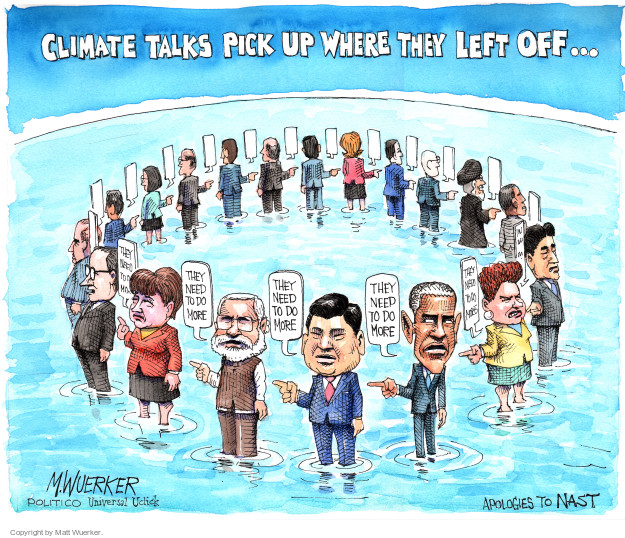
Jim Well, I like that! But Russia, India, China, Brazil, they’ll never cooperate.
Humphrey They don’t have to. We simply ask them to review their emissions policy.
Jim And will they?
Humphrey Yes. And then they’ll decide not to change it. So we’ll set up a series of international conferences. Meanwhile, Prime Minister, you can talk about the future of the planet.
Jim Yes.
Humphrey You can look statesmanlike. And it’ll be 50 years before anybody can possibly prove you’re wrong. And you can explain away anything you said before by saying the computer models were flawed.
Jim The voters will love me!
Humphrey You’ll have more government expenditure.
Jim Yes. How will we pay for it? We’re broke.
Humphrey We impose a special global warming tax on fuel now, but we phase in the actual expenditure gradually. Say, over 50 years? That will get us out of the hole for now.
Bernard The Germans will be pleased. They have a big green movement.
Claire And we can even get the progs on board!
Bernard As long as they get more benefits than everyone else.
Jim My broadcast is on Sunday morning.
Humphrey You have a day to get the conference to agree.
Jim That’s not a problem. The delegates will be desperate for something to announce when they get home. There is one problem. Nothing will have actually been achieved.
Humphrey It will sound as though it has. So people will think it has. That’s all that matters!
(Later following the BBC interview, beginning 27:34)
Bernard Oh, magnificent, Prime Minister!
Humphrey I think you got away with it, Jim, but the cabinet will have been pretty surprised. We’ll have to square them fast.
Jim Bubbles!
Humphrey We’re not there yet. After that interview, you’ll need to announce some pretty impressive action.
Jim An initiative.
Humphrey Yes.
Claire A working party?
Humphrey Bit lightweight.
Bernard A taskforce?
Humphrey Not sure.
Jim Do we have enough in the kitty?
Claire It could be one of those initiatives that you announce but never actually spend the money.
Jim Great. Like the one on child poverty.
Bernard Maybe it should be a government committee?
Jim Well what about a Royal Commission?
Humphrey Yes! It won’t report for three years, and if we put the right people on it, they’ll never agree about anything important.
Jim Right! A Royal Commission! No, wait a minute, that makes it sound as if we think it’s important but not urgent.
Claire Well, what about a Global Warming Tsar?
Jim Fine! Would that do it?
Humphrey No, I think it might need a bit more than that, Prime Minister. It’ll mean announcing quite a big unit, and an impressive salary for that Tsar, to show how much importance you place upon him.
Jim No problem. Who would it be?
Humphrey Ah, well, it can’t be a political figure. That would be too divisive. It has to be somebody impartial.
Jim You mean a judge?
Humphrey No, somebody from the real world. Somebody who knows how to operate the levers of power, to engage the gears of the Whitehall machine, to drive the engine of government.
Jim That’s quite a tall order. Anybody got any ideas?
Humphrey… Could you?
Bernard Oh!
Humphrey Yes, Prime Minister.
The End.
Footnote
CO2 hysteria is addictive. Here’s what it does to your brain:
Enjoy a turkey leg over the holiday, but watch out for warmists pulling your leg.
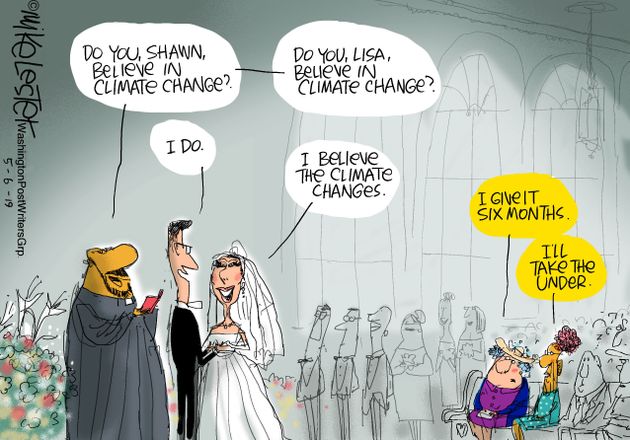
At Boston University website The Brink, two BU communications experts share advice on handling dinnertime squabbles over the validity of climate science: How to Deal With Climate Skeptics At Thanksgiving Dinner Excerpts in italics with my bolds. I also add some comments from the other side of the table.
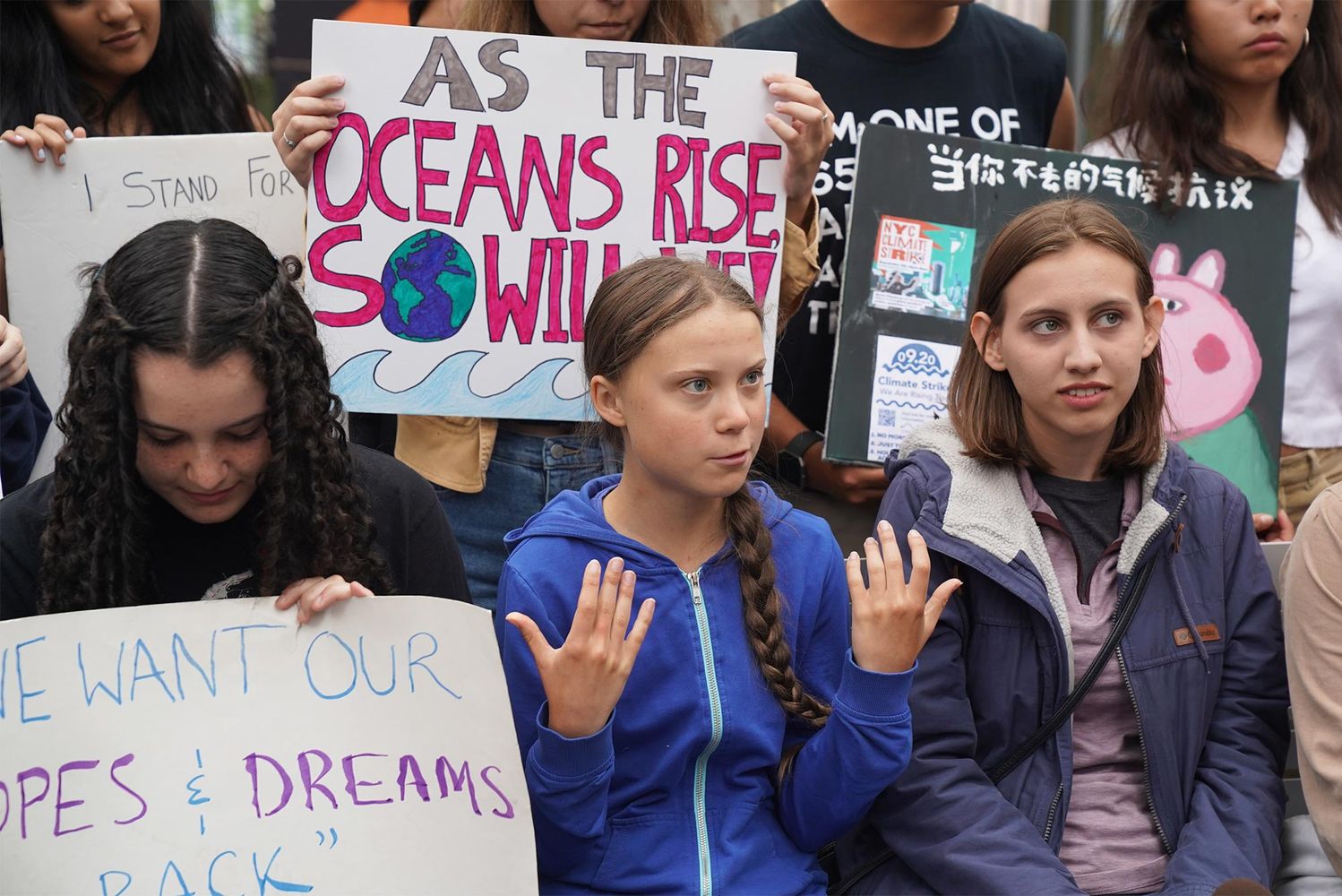
Feel like you’re at a loss for words when a loved one says global warming is a hoax? Arm yourself with advice from BU researchers on how to respond. (Greta Thunberg would be proud.) Photo by Bryan R. Smith/AFP via Getty Images. [Why should we care about likes from an uneducated 16 year old Swedish child?]
Ah, the holidays. The time of year for cozy gatherings with family and friends, homemade pie, and festive traditions. Many people will embark on long car rides and trips across state lines to visit loved ones in the hometowns they feel they’ve outgrown. And in between mouthfuls of stuffing and gravy, political gripes and disagreements are almost a guarantee.
You might, for example, hear a grumbling or two about the so-called “climate hoax,” backed up by a statement that our current rate of global warming is nothing but a “natural process.” Uh-oh.
[No one has separated out man-made warming from natural warming, either from the Little Ice Age recovery or from solar and oceanic cycles. Why can’t you admit that?]
At this point, more than half of Americans are now “alarmed” or “concerned” about global warming, but the issue is becoming more polarized. Many people distrust the scientific evidence that humans are responsible for pushing our world’s climate toward its breaking point, despite scientific consensus. So, what do you do if you are in the alarmed majority and want to talk about climate science with people who are disengaged, doubtful, or dismissive of it? What if some of those people are your aunts and uncles, or your mother or father? Is it possible to change their minds if the topic comes up over Thanksgiving?
[How trustworthy are the polls? What was asked, in what context and what responses were allowed?
Do you realize that by appealing to a consensus, you are admitting that the question is a matter of opinion not one of scientific fact? See The Art of Rigging Climate Polls]
Here’s some good news: you are exactly the right person to talk about climate change with your relatives. You are what communication experts call a “trusted messenger,” which is the idea that people are more likely to believe people they trust and more likely to trust people they are personally connected to. And one of the biggest superpowers you, as an individual, have is the ability to communicate the facts.
[Appeal to social proof: Since it is only a matter of opinion, the majority should rule. “Go along to Get Along.” Never trust someone who says, “Trust me.” Asking for the proof is only offensive to those who have none.]
To best figure out how to communicate climate science to skeptics, we spoke with Sarah Finnie Robinson, senior fellow at BU’s Institute for Sustainable Energy and founder of the 51 Percent Project, which studies the most effective communications messaging for optimal public engagement about climate science. And we spoke with Arunima Krishna, BU College of Communication assistant professor of public relations, who has spent years studying how people talk about controversial social issues like vaccines and climate change. Here’s their advice for how to prepare yourself for any potential dinnertime squabbling on the topic of climate science.
1. Listen first
As the consensus about the climate crisis becomes louder, “there could be a feeling of marginalization,” says Krishna. “In the sense that there is a war against people who don’t want to vaccinate their children, for example.” So, defaulting to lecture mode on sea-level rise is not the best way to break through, since it could feel more like an attack.
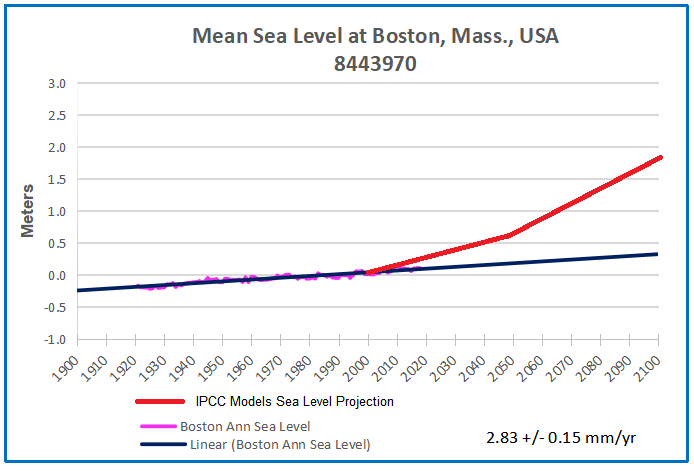
[ This sounds tactical: You can lecture later, but soften them up by listening first. And do you realize that sea level is not rising any faster since humans began burning fossil fuels?]
“Sometimes we forget that the other person also has a point of view. I think we need to listen, not to respond, but to understand,” says Krishna. Have a conversation and get to know where your family member or friend is coming from. Why do they believe what they believe? Where are they getting their information?
[Good advice: Impartial surveys show that skeptics are more knowledgeable than knee-jerk warmists. If you find out they have been reading the NIPCC reports, or even the IPCC working group reports (not just the SPM, or the media releases), better to change the subject, prepare to change your own mind, or walk away.]
“Consider who your loved one, for example, trusts for information,” says Robinson. That will help gauge how and why they feel the way they do.
[How about some self-awareness here: Whose words are you taking as gospel truth regarding the future of this complex, uncertain and unpredictable climate system?]
After you’ve listened to your loved one’s perspective, consider sharing your own worries, fears, and hopes for the future. “Share what resonates the most with you,” says Robinson. You can always share some of the actionable lifestyle and behavior changes you have adopted to lower individual carbon impacts, and share how you’ve gotten involved with collective actions.
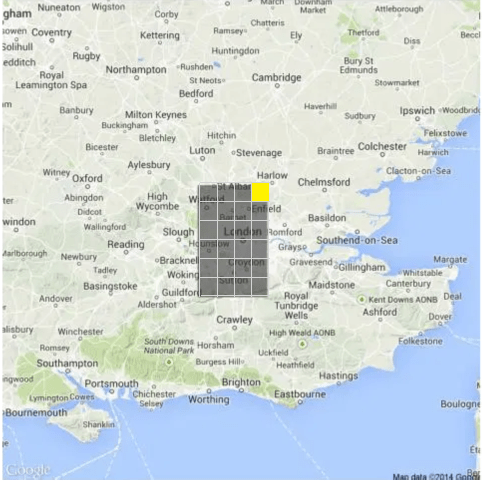
[How about this when someone at the table says, “We really need to do something to fight climate change.” You ask, “What do you propose to do?” When they say, “Leave the fossil fuels in the ground,” you ask, “And replace that energy how?” “Do you know that replacing one gas turbine power plant requires 360 windmills and 60,000 acres of land instead of 20 acres?” See Kelly’s Climate Clarity.]
Approximate area required for all of London’s electricity to come from renewables. Gray area required for wind farms, yellow area for solar farms, to power London UK.
“I would urge you to really listen to what others are saying if they have a differing opinion, to understand where they’re coming from. And then you can formulate your strategies on how best to convey your message,” says Krishna.
2. Bring on the science (but know when to walk away)
“We know97 percent of all scientists say global warming is definitely happening because of burning fossil fuels. And we know what we have to do to stop it,” says Robinson. She draws on the analogy, “If 97% of doctors told you your appendix should come out, you’d have the surgery. Right? Climate change is happening here and now. And the clock is ticking. The consensus we have is a very powerful fact to convince people around the dining table.”
[ Do you know the 97% figure comes from 75 out of 77 funded climate scientists who agreed to two statements: “The world has warmed since 1850, and human activity contributed to it.” See Talking Climate.]
Generally, it can never hurt to brush up on your climate facts and answers to common myths. But, as experts like Robinson and Krishna have also pointed out, not everyone responds to facts the same way. The truth is, some people who do not accept scientific facts won’t change their mind because of another bias or interest related to their view of the climate. (Like, what if someone in your family owns a gas station? Or works for a natural gas company?) Most of us are not blank slates when it comes to the topic of climate change, and the more informed we are, the easier it is to cherry-pick information that confirms already-held beliefs and attitudes.
[An example of cherry-picking is claiming that food production is threatened by climate change. In fact world production of food crops is setting records every year due to the growth rates from higher CO2 and warmer, milder temperatures. Rice, wheat and corn are all showing higher yields. Why would we want to stop that? See Climate Delusional Disorder (Food Fears)]
“You’re going to get blue in the face, and steam is going to come out of your ears, and you’re going to waste all kinds of time that you could have spent with your other, more fun, relatives at Thanksgiving. dinner,” says Robinson. “If you try to argue, it’s just not going to work. You just have to say, well, you’re wrong and move away.”
That doesn’t mean there aren’t skeptics who will listen and be open to a conversation, Robinson cautions. She says the only way to find out if someone has an open mind is to have a dialogue and stick to sharing facts and stories that have resonated most strongly with you.
[Open mindedness cuts both ways.The issue of global warming/climate change has been used to polarize populations for political leverage. Environmentalists like Tisha Schuller have been subjected to years of threats, extremism, and misinformation from a community to which they once belonged. The reason: Expressing doubts about the anti-fossil fuel crusade. See More Civil Climate Discourse
3. Take the issue close to home
Researchers have continuously found that the farther away a climate-related event is perceived to be—like, the notorious lonely polar bear stranded in a melting sea of ice—the less a viewer or listener feels connected to the issue.
“For decades people immediately went ‘Oh, well, that’s too bad that’s happening to the polar bear, but that’s certainly not happening to me, that’s happening far away,’” says Robinson. “Now, public concern is actually increasing because people are beginning to see this more and more with their own eyes.”
[The claims of global warming impacts by “consensus” advocates are dubious at best: See 11 Empty Climate Claims.]
It has also been found that when local news stories cover climate change, people are more likely to understand the direct impacts. So, why not take the same approach when talking with skeptical loved ones? If you’re a Boston local, you can talk about how climate change is already threatening the coast of Cape Cod, causing residents to prepare for stronger storms and rising seas. Or perhaps someone you know has been impacted by the California wildfires that are becoming increasingly more devastating, or the record-breaking flooding in the Midwest, or by storms like Superstorm Sandy and Hurricane Harvey that destroyed US communities.
[As for local flooding projections, check the tidal gauges against climate models. See USCS Warnings of Coastal Floodings]
“Climate change is not something that’s 20 years away, or 40 years away, or 100 years away. It’s something that we’re seeing the impact of right now,” Krishna says. “Bringing the issue home or at least talking about the human effects that we’re seeing could be helpful for getting that point across.”
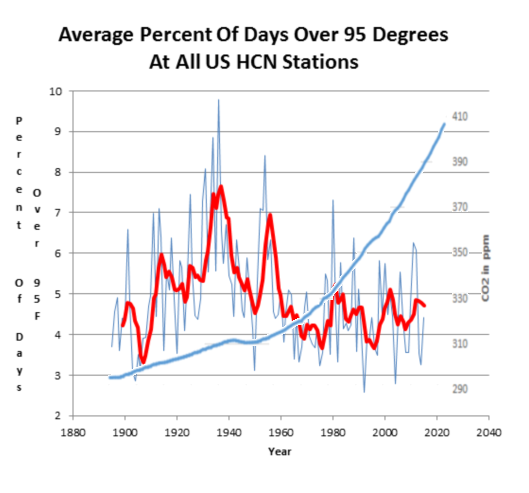
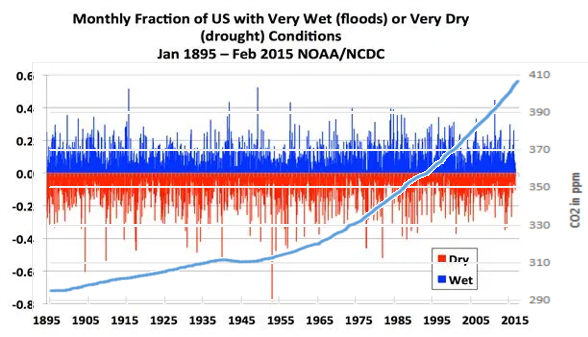
[Weather is not climate; we all used to agree on that before the warming plateau the last two decades. Statistics show no correlation between rising CO2 and weather events. For example:]
4. And if all else fails…
Krishna says it can never hurt to remind people, “What’s the harm in trying to have a better, less polluted world? We’ll have cleaner air, cleaner water, a more sustainable planet. How can that be a bad thing?”
[Let’s all agree that fossil fuels have made our air cleaner and our water more pure. And more atmospheric CO2 is plant food, restoring the forests and increasing our crops.]
But if things start to escalate and the conversation doesn’t feel productive, your best bet is to step back for the sake of your own mental and emotional health, and spend time enjoying your holiday, like Robinson pointed out earlier.
California is blessed—and cursed—with a Mediterranean climate. The Golden State features long stretches of dry, low-humidity weather, with infrequent thunderstorms (except in its desert regions). Most of the state’s precipitation falls during the winter months. Before the first big late-year Pacific storm, California’s forests and coastal chaparral are often tinder-dry.
Richard Henry Dana Jr., in his book “Two Years Before the Mast” published in 1840, described the area around Los Angeles thus:
“The only thing which diminishes its beauty is, that the hills have no large trees upon them, they having been all burnt by a great fire which swept them off about a dozen years before, and they had not yet grown up again. The fire was described to me by an inhabitant, as having been a very terrible and magnificent sight. The air of the whole valley was so heated that the people were obliged to leave the town and take up their quarters for several days upon the beach.”
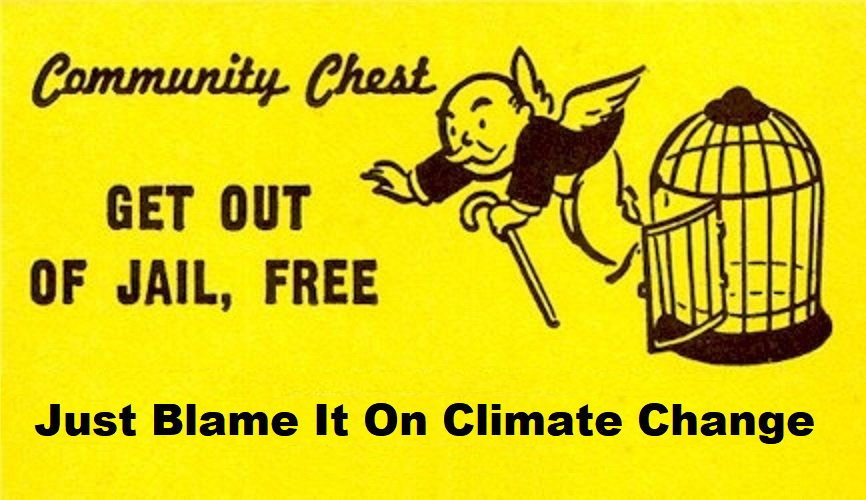
Today, of course, politicians blame climate change for the wildfires and the electrical blackouts aimed at preventing more fires, with Democratic Gov. Gavin Newsom on Friday declaring that “It’s more than just climate change. It’s about the failure of capitalism to address climate change.”
There are two things to unpack here: the climate change claim and the failure of capitalism claim.
California is seeing larger wildfires. But this was predicted 13 years ago by the Western Governors’ Association in their Biomass Task Force Report:
“…over time the fire-prone forests that were not thinned, burn in uncharacteristically destructive wildfires… …In the long term, leaving forests overgrown and prone to unnaturally destructive wildfires means there will be significantly less biomass on the ground, and more greenhouse gases in the atmosphere.”
For a variety of reasons, government-mandated and subsidized wind and solar power won out in California over government-mandated biomass generators powered by wood waste from the timber industry. The timber industry largely left. And as a result, the fuel load in California’s northern forests has soared, and with it, the wildfire danger.
What isn’t harvested and cleaned up in a controlled, predictable manner is burned up in a chaotic manner—the only thing predictable about it is that it will certainly burn, sooner or later.
As for the failure of capitalism, California’s publicly regulated utilities are hardly examples of unfettered free markets. Rather, they do exactly what the regulators appointed by the elected officials tell them to do. Those politicians and regulators have told the utilities to dramatically boost wind and solar power—and they have. In 2012, PG&E asked regulators for a $4.84 billion electric rate hike to pay for powerline maintenance and upgrades. Regulators, worried over electrical prices that were already close to the nation’s highest, rejected the request, and eventually approved less than half that amount.
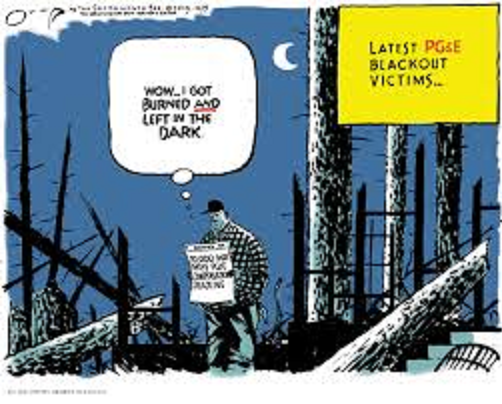
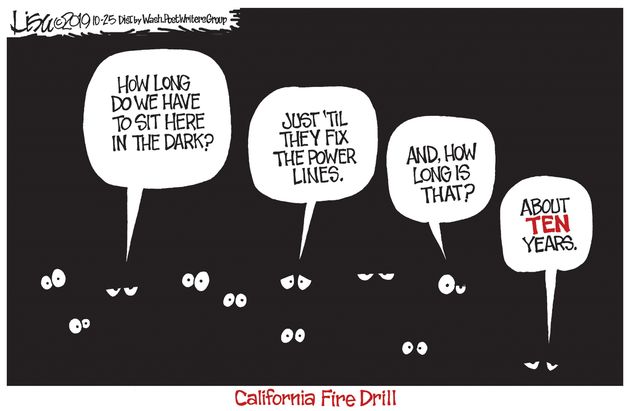
One can’t help but to wonder—if this rate hike were approved in 2012, might it have prevented 2018’s deadly Camp Fire, which started almost a year ago and killed 85 people while destroying nearly 19,000 homes, businesses and other buildings? The fire was blamed on a nearly-100-year-old power line that should have been replaced 25 years ago.
Now, PG&E—in bankruptcy to shield itself from $30 billion in fire liabilities and under heavy criticism—is preventatively cutting the power on high-risk powerlines during periods of heavy winds.
These blackouts—the largest two hitting about 2 million people each time for a couple of days—have cost California businesses and consumers an estimated $5 billion in lost economic activity. As much as the requested rate hike might have cost had it been approved seven years ago.
As PG&E tries to catch up for years of neglect in trimming trees away from some 2,500 miles of high-priority powerlines, they’re running into another problem: They can’t find the experienced work crews. This is because employment in the timber industry is half of what it was 20 years ago due to decades of federal and state environmental policies that have cut the Western region timber harvest in half.
Whether or not climate change is making California’s deadly outbreak of fire worse, the solution is the same—California must significantly ramp up forest management, which, if done in concert with increased logging, will be less costly to the taxpayer. At the same time, it must aggressively increase the use of proscribed burns, both in the north and in Southern California’s coastal chaparral. President Trump said as much last year, to great hoots of derision from California’s politicians and environmentalists.
California has slowly taken steps in this direction, in the last year of Democratic Gov. Jerry Brown’s four terms in office and now Democratic Gov. Gavin Newsom’s first year. But it is likely too little, too late. That has led PG&E CEO Bill Johnson to warn state regulators that blackouts could last another 10 years.
Rather than thinking about the political divide on global warming as the result of dogma versus logic, a better explanation is that people tend to embrace conclusions—scientific or otherwise—that support themes, ideologies, and narratives that are preexisting components of their worldview. It just so happens that the themes, ideologies, and narratives associated with human-caused global warming and its proposed solutions align well with the political predispositions of the Left and create tension with those of the Right.
The definitional distinction between the political Right and the political Left originated during the French Revolution, and relates most fundamentally to the desirability and perceived validity of social hierarchies. Those on the Right see hierarchies as natural, meritocratic, and justified, while those on the Left see hierarchies primarily as a product of chance and exploitation. A secondary distinction, at least contemporarily in the West, is that those on the Right tend to emphasize individualism at the expense of collectivism and those on the Left prefer the reverse.
There are several aspects of the contemporary global warming narrative that align well with an anti-hierarchy, collectivist worldview. This makes the issue gratifying to the sensibilities of the Left and offensive to the sensibilities of the Right.
The most fundamental of these themes is the degree to which humanity itself can be placed at the top of the hierarchy of life on the planet. Those on the Right are more likely to privilege the interests of humanity over the interests of other species or the “interests” of the planet as a whole (to the degree that there is such a thing). On the other hand, those on the Left are more likely to emphasize a kind of pan-species egalitarianism and care for our shared environment, even if that means implementing policies that run counter to humans’ short-term interests.
Within humanity, there are at least two additional ways in which narratives about hierarchies influence thinking on global warming. One of these concerns attitudes towards developed versus developing countries. Firstly, the blame for global warming falls disproportionately on developed countries (in terms of historical greenhouse gas emissions) and proposed solutions therefore often call on developed countries to bear the brunt of the cost of reducing emissions going forward. (Additionally, it is argued that developed countries have the luxury of being able to afford increases in the cost of energy.) Overall, the solutions proposed for global warming imply that wealthy countries owe a debt to the rest of humanity that should be paid due at once.

Those on the Right are more likely to see the wealth of developed countries as rightfully earned by their own industriousness, while those on the Left are more likely to view the disproportionate wealth as fundamentally unjust and likely caused by exploitation. The idea that wealthy countries must therefore be penalized and made to subsidize poor countries is one that aligns well with the Left’s views about rebalancing unfairness. An accentuating factor is the Right’s tendency to favor national autonomy and therefore to oppose global governance and especially international redistribution.
Hierarchy narratives also help to determine political positions on the wealth of corporations and individuals. On the Right, oil and gas companies (as well as electric utilities that utilize fossil fuels) are held to be a product of innovation and a source of wealth creation; the smartest and most deserving people and organizations found the most efficient ways to transform idle fossil fuel resources into the power that runs society and, consequently, have greatly enhanced human wellbeing. For conservatives, it is therefore fundamentally unjust to blame those corporations and individuals that have done so much for human progress. The counter-narrative from the Left is that greedy corporations and individuals exploited natural resources for their own gain at the expense of the planet and the general public. They therefore support policies that blame and punish the fossil fuel industry in the name of cosmic justice and atonement.
Global warming is a tragedy of the commons, in which logical agents act in ways that run counter to the longterm interests of the group. These types of “collective-action problems” usually call for top-down government intervention at the expense of individual action and responsibility. Furthermore, the longterm nature of global warming demands acquiescence to collective action across generations. This natural alignment of the global warming problem with collectivist themes makes the issue much more palatable to the Left than the Right.
There is also the longstanding claim by those on the Right that the global warming issue is a Trojan Horse intended to bring about all manner of unrelated changes desired by the Left. Books like Naomi Klein’s This Changes Everything: Capitalism vs. The Climate and initiatives like the Green New Deal have done nothing to dispel this fear. For example, the Green New Deal Resolution includes the following proposals:
Providing all people of the United States with—(i) high-quality health care; (ii) affordable, safe, and adequate housing; (iii) economic security; and (iv) access to clean water, clean air, healthy and affordable food, and nature.
Guaranteeing a job with a family-sustaining wage, adequate family and medical leave, paid vacations, and retirement security to all people of the United States.
Providing resources, training, and high-quality education, including higher education, to all people of the United States, with a focus on frontline and vulnerable communities, so those communities may be full and equal participants in the Green New Deal mobilization.
These objectives satisfy the Left’s policy goals. But, whatever the merits of those goals, it is not at all clear how they relate to global warming, if at all.
Conclusion
So, it should really not be particularly mysterious that opinions on global warming tend to divide along political lines. It is not because one side cleaves to dispassionate logic while the other remains obstinately wedded to political dogmatism. It is simply that the problem and its proposed solutions align more comfortably with the dogma of one side than the other. That does not mean, however, that the Left is equally out-of-step with the science of global warming as the Right. It really is the case that the Right is more likely to deny the most well-established aspects of the science. If skeptical conservatives are to be convinced, the Left must learn to reframe the issue in a way that is more palatable to their worldview.
Patrick T. Brown is an Assistant Professor in the Department of Meteorology and Climate Science at San Jose State University, California.
Comment: The analysis explains the predispositions of left and right toward the climate issue, but stops short of recognizing that doubters are motivated to seek contrary facts and information that contradict the climate suppositions. Those on the left already have massive social proof of their position, so little or no consideration of the technical facts is needed. On the other hand, surveys show doubters tend to be more informed on the scientific research, having seen studies and findings not readily available in the biased mainstream media.
The image above is from the Hunt for Red October (1990). Sean Connery played Marko Alexandrovich Ramius, a Soviet submarine captain, here in a confrontation with the on board Political Officer Ivan Putin, responsible to ensure the crew conforms to the Communist Party Line and Directives.
A high profile scientific journal is investigating how it came to publish a study suggesting that global warming is down to natural solar cycles. The paper was criticised by scientists for containing “very basic errors” about how Earth moves around the sun.
The study was published online on 24 June by Scientific Reports, an open access journal run by Nature Research, which also lists the prestigious Nature journal among its titles. A spokesperson told New Scientist that it is aware of concerns raised over the paper, which was authored by four academics based at Northumbria University, the University of Bradford and the University of Hull, all in the UK, plus the Nasir al-Din al-Tusi Shamakhi Astrophysical Observatory in Azerbaijan.
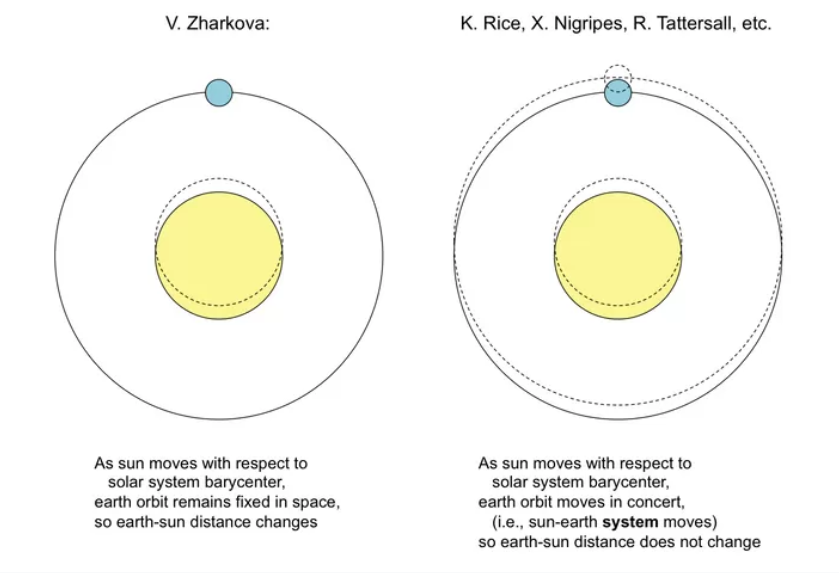
The authors suggest that Earth’s 1°C temperature rise over the past two centuries could largely be explained by the distance between Earth and the sun changing over time as the sun orbits around our solar system’s barycentre, its centre of mass. The phenomenon would see temperatures rise a further 3°C by 2600, they say.
Ken Rice of the University of Edinburgh, UK, criticised the paper for an “elementary” mistake about celestial mechanics. “It’s well known that the sun moves around the barycentre of the solar system due to the influence of the other solar system bodies, mainly Jupiter,” he says. “This does not mean, as the paper is claiming, that this then leads to changes in the distance between the sun and the Earth.”
“The claim that we will see warming in the coming centuries because the sun will move closer to the Earth as it moves around the solar system barycentre is very simply wrong,” adds Rice. He is urging the journal to withdraw the paper, and says it is embarrassing it was published.
Gavin Schmidt of the NASA Goddard Institute for Space Studies says the paper contains egregious errors. “The sun-Earth distance does not vary with the motion of the sun-Earth system around the barycentre of the sun-Jupiter system, nor the sun-galactic centre system or any other purely mathematical reference point,” he says. He says the journal must retract the paper if it wants to retain any credibility.
The Dispute
Michael Brown of Monash University in Australia lamented uncritical media coverage of the paper in Australia.
Following criticism of the paper, lead author Valentina Zharkova, of Northumbria University, described Rice as a “climate alarmist” in an online discussion.
“The close links between oscillations of solar baseline magnetic field, solar irradiance and temperature are established in our paper without any involvement of solar inertial motion,” Zharkova told New Scientist.
Scientific Reports says it has begun an “established process” to investigate the paper it has published. “This process is ongoing and we cannot comment further at this stage,” a spokesperson said.
Ken Rice has form as a Climate Ideology Officer having led a successful take down of Hermann Harde’s paper showing human CO2 emissions are only 4% of atmospheric CO2, which is only 0.04% of the air. Rice declared at the outset: “Any paper concluding that humans are not causing the rise in CO2 is obviously wrong.” He and fellow ideology officers quickly cobbled together an attack paper which was immediately published in the journal. Harde wrote a paper describing the errors and misconstructions in the attack paper, but his response was denied publication, sealing the issue in favor of the party line. This saga of censorship can be read at No Tricks Zone article AGW Gatekeepers Censor The CO2-Climate Debate By Refusing To Publish Author’s Response To Criticism
Now Rice and his gang are at it again, this time targeting lead author Valentina Zharkova. The tactics are familiar, starting with outrage against findings deviating from their beliefs, in this case the notion that the sun could in any way influence the climate. The comment thread shows the intensity and venom applied to digging up any mistake, no matter how trivial or peripheral to the central argument. These are declared “egregious” and justification to ignore and censor the contrary understanding of nature.
Zharkova stands her ground, though always on the defensive and surrounded by a pack of attackers. Rice, as usual, displays his mastery of the English language to demean and undermine while appearing to be reasonable. His Russian opponent is clearly at a disadvantage when it comes to putdowns.
I don’t know enough to judge the substance of the claims, or the pertinence of the details, but can observe that the intensity shows how much is at stake for the attackers. A major irony is that Zharkova forecasts significant warming in the future, which would seem to confirm the warmists’ expectations. However, since she puts the sun as the cause, the finding pulls the rug from under anti-fossil fuel activists, hence the outrage. This also shows the dispute is not about climate or temperature, but about politics.
Footnote:
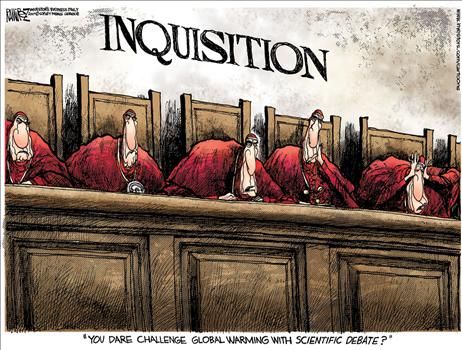
Michael Mann has been the most aggressive Inquisitor against climate heretics. In his book, “The Hockey Stick and the Climate Wars,” he presented an analogy to explain why he and other researchers have become the objects of such fierce public scrutiny and vilification, which he terms “the Serengeti strategy.” Likening climate scientists to zebras, he writes, “The climate change deniers isolate individual scientists just as predators on the Serengeti Plain of Africa hunt their prey: picking off vulnerable individuals from the rest of the herd.” He asserts that he and others have become targets because their findings challenge the entrenched fossil-fuel industries, which have tried to discredit them.
No one has more chutzpah than M. Mann, he and his pack applying the Serengeti strategy repeatedly against scientists finding other factors than CO2 driving climate changes, all the while claiming to be a victim rather than a predator.
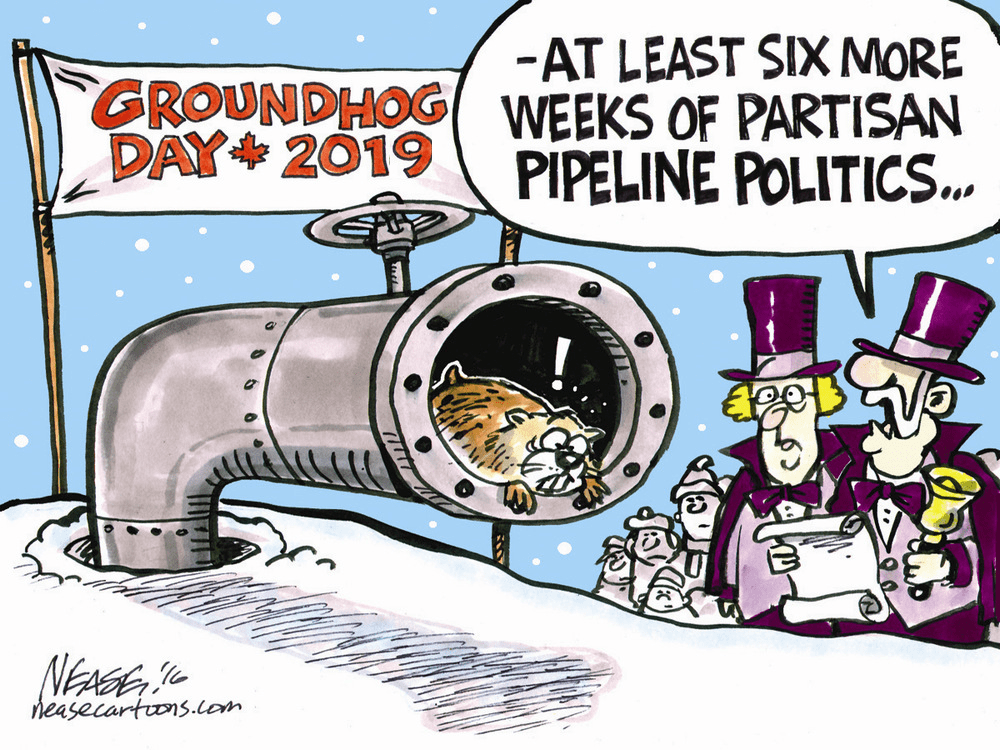
Roger Conrad reports on how the US energy infrastructure is hobbled by climate activists empowered by funds and lawyers. His article at Forbes is Best Bets On Pipeline Politics. Excerpts in italics with my bolds.
It seems like a long, long time ago in a galaxy far, far away. But barely two years back, permits for new US oil and especially natural gas pipelines were basically a formality.
Back then, the only US pipeline facing significant regulatory hurdles was TC Energy Corp’s (TRP) proposed Keystone XL pipeline to bring Alberta oil sands to US markets. And on the day the Obama Administration rejected that project for the final time, officials actually approved two oil pipelines elsewhere.
Everything changed following the November 2016 presidential election. Congress’ failure in 2016 to fill empty seats on the five-member Federal Energy Regulatory Commission led to the lack of quorum in early 2017.
New approvals ground to a halt for nearly six months. That gave “keep it in the ground” advocates precious time to tap into record fundraising, fueled by a groundswell of opposition to Trump Administration policies.
One result has been legal challenges to projects on an unprecedented scale at multiple venues. Work on Enbridge Inc’s (ENB, ENB) Line 3 pipeline expansion, for example, is now completed in Canada as well as North Dakota and Wisconsin.
Project suspended in June 2017.
Courts, however, have overturned Minnesota regulators’ prior approval of the project’s Environmental Impact Statement. That’s forced officials to go through the process again, delaying completion at least until the second half of 2020.
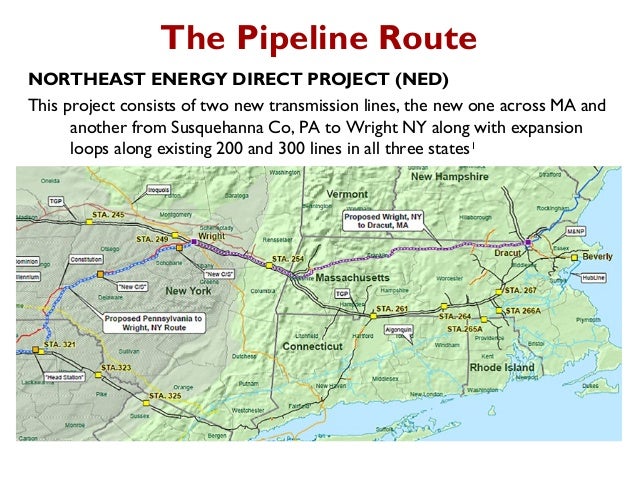
We’ve also seen a decided shift to more restrictive energy politics in several states, notably Colorado. Others like New York have dug in further in refusing to grant water permits from long-delayed projects like the Constitution Pipeline. That’s triggered warnings of prospective natural gas shortages from New York City’s distribution utility Consolidated Edison ED +0% (ED), which is restricting new customer additions.
Time equals money when it comes to multi-year, multi-billion dollar projects. Bloomberg Intelligence estimates a $2.75 million cost increase per mile of planned pipeline for every one-quarter delay in construction. The projected final cost of the Line 3 expansion, for example, is already billions higher than initial estimates.
Consequently, the game being played by pipeline opponents is to delay. That means mounting enough challenges to ramp up costs and ultimately convince developers to walk away. And for the first time, they have the funds to do the job.
Project abandoned in April 2016.
Opponents have been particularly successful quashing projects in New England and the Northeast US. To date, they’ve failed in Texas, where several giant pipelines are under construction. Kinder Morgan KMI +0% Inc (KMI) has one major gas pipeline from the Permian Basin coming on full stream later this year. It has another next year and a third in early stages of development.
Ground zero now in pipeline politics is the struggle of two projects in the Middle Atlantic/Southeast US to cross the Appalachian Trail: The Atlantic Coast Pipeline and the Mountain Valley Pipeline.
These projects’ ultimate success or failure will have a huge impact on the long-term profitability of Appalachia-based gas and oil producers, which are sitting on huge reserves in the Marcellus and Utica shale. Ironically, the longer they’re delayed, the greater demand will be for Texas energy and by extension new pipelines in the state.
That will benefit Texas developers like Kinder Morgan and Plains All-American Pipeline (PAA), which is focused on oil. And it will hit pipeline companies in the East like EQM Midstream Partners LP (EQM), which faces a massive writeoff if the Mountain Valley Pipeline can’t win through.
To be sure, natural gas development especially still has plenty of support in the US. Replacing older coal-fired facilities with gas, for example, reduces operating costs and electricity rates. New plants increase utilities’ rate base, spurring earnings and dividend growth. And the prospective environmental benefits are enormous, cutting future legal liabilities.
Gas emits none of coal’s particulate matter, which is blamed for a host of respiratory woes. It emits no acid rain gases that have caused billions in property damage and creates no toxic ash.
As for carbon dioxide, equivalent sized gas power plants emit less than half what coal does. In fact, gas adoption is the single biggest reason America is still meeting greenhouse gas commitments under the Paris Accords. Finally, surging US energy production has dramatically shifted global energy politics, demonstrated by the relative lack of reaction in oil prices to elevated tensions in the Persian Gulf.
During the Obama years, those facts were more than enough to hold together a consensus for US natural gas development. And the result was a relatively easy path for pipeline approvals.
These days, that’s not enough for pipelines to succeed. The silver lining is the more difficult it becomes to build, the more valuable existing infrastructure and ultimately successful projects will be.
In the days when pipeline approvals were swift, any company raising funds economically could get projects built. These days, would-be developers need to be financially and operationally strong enough to handle legal challenges wherever they occur.
Chuck DeVore at Forbes connects the dots between three recent events suggesting that progressive warmists are increasingly opposed by workers who used to vote with them. Devore describes a divide in the US electorate, but there are comparable stresses in European countries like France, Germany, Italy, Hungary and others. His article is How Tesla, Crony Corporate Welfare, And The Green New Deal Portend A Coming Political Realignment.Excerpts in italics with my bolds.
A series of three seemingly unconnected events over five days in Ohio and California hint at a fundamental political realignment, underscoring the fragility of the American left’s coalition going into the 2020 election.
There is a growing, and likely irreparable, rift between elite progressive environmentalists who are accustomed to dominating the narrative within the Democratic Party and—to a slightly lesser extent, within the major media—and blue-collar workers, especially those in the trades that build the nation.
First, on May 29, ten Democrats in the Ohio State House joined 43 Republicans to pass House Bill 6 and send it to the Senate. HB 6, which eliminates the state’s renewable portfolio standard for electricity, was opposed by environmental groups who feared it would slow the development of wind and solar power in favor of nuclear power and even coal. Free market groups also opposed the measure for its $300 million in subsidies they labeled “corporate welfare.” When Democrats join Republicans to mount a direct challenge to the principles of the Green New Deal, it indicates that Ohio, and other key swing states, may be beyond reach to any presidential candidate touting the wholesale elimination of nuclear and coal-fired power.
Then on June 1, Rusty Hicks, head of the Los Angeles County Federation of Labor, won a seven-way election to chair the California Democratic Party with 57% of the vote in the first round of balloting against more progressive opponents. As reported in Politico, Hicks’ labor colleagues mounted a “Blue Collar Revolution” demonstration at the California Democratic Party convention in San Francisco the day of his convincing win. The goal of the convention protest was to warn party regulars that labor will walk if the Green New Deal moves forward, threatening jobs. In May, the same labor group protested Los Angeles Mayor Eric Garcetti’s version of the Green New Deal, chanting, “Garcetti’s gotta go.”
Finally, on June 3, Bloomberg reported that Tesla (NASDAQ: TSLA) has made $2 billion since 2010 by selling fuel economy credits to General Motors (NYSE: GM) and Fiat Chrysler (NYSE: FCAU). The credits were likely purchased to comply with the federal Corporate Average Fuel Economy (CAFE) standards under the 2007 Energy Independence and Security Act, passed during Speaker Nancy Pelosi’s first time leading the House.
This $2 billion transfer from GM and Fiat Chrysler to Tesla amounted to about $4,000 per electric car delivered—on top of the $7,500 credit buyers of the first 200,000 Teslas could claim on their federal income tax returns. Just the $2 billion in CAFE transfer payments alone had the effect of adding almost $100 to the price of a of a Chevy Silverado or a Dodge Ram to subsidize an electric car purchase by what was, on average, a white, non-Hispanic man with no children at home making $143,177 per year. In 2017, half of U.S. households had income below $61,372.
GM is said to be in the market to buy more credits to hedge their bets should President Trump lose reelection and mileage (and emissions) credits become more valuable due to a renewed government mandate for electric vehicles. Political observers should expect that government support for Tesla and its mercurial founder, Elon Musk, will become fodder for the 2020 campaign.
The cash transfers involved in making the Green New Deal a reality run into the trillions, dwarfing Tesla’s mere billions of subsidies. Noting the looming challenge of reconciling the ambitious reordering of the economy in the name of reducing carbon dioxide emissions, Jessica Levinson, a professor who teaches politics and ethics at Loyola Law School, said, “The Green New Deal may be the darling of the Democratic Party — but it really divides the Democrats on a fault line, which is more of the elites against the working class Democrats who are concerned about losing their jobs.”
And while politicians who support the Green New Deal contend that they will spend billions to retrain workers who lose their jobs because of the newly planned economy, Levinson notes that workers in the skilled trades “don’t necessarily want to be retrained… nor is it even possible.”
This is largely the reason why America’s largest labor union, the AFL-CIO, has registered its opposition to the Green New Deal.
How the leading contenders for the Democratic nomination for president reconcile their near-unanimous support of a vastly expensive and economically disruptive environmental plan with beating President Trump in key swing states that feature a strong jobs base in manufacturing and extractive industries such as natural gas production, will be a difficult political task.
In the old Soviet Union, the Communists allegedly used the term “useful idiot” to describe Westerners whose naïve political views furthered the Soviet agenda, even though these Westerners didn’t realize that they were being exploited in such fashion. It is in this context that I confidently declare that American economists have been useful idiots for the green socialists pushing extreme climate change policies. The radical environmentalists were quite happy to embrace the economic concepts of “Pigovian negative externalities” and a carbon tax in the past, but now that it is impossible for economic science to endorse their desired agenda, the activists have discarded the entire field as hopelessly out of touch. Economists who still support a carbon tax and other climate “mitigation policies” should be aware of the bigger picture.
Using the UN’s Own Document to Defeat the Climate Change Agenda
I have been making this case for years. For example, back in 2014 I used the latest (and still most recent) UN Intergovernmental Panel on Climate Change (IPCC) report to show that the then-popular climate change target of 2 degrees Celsius of warming could not be justified by the research summarized in the report. In other words, I used the UN’s own report to show that the popular climate change “cures” would be worse than the disease.
Yet even though they had spent years berating the critics of government action as “climate deniers” who rejected the “consensus science,” in this case — once they realized that the economic models of climate change wouldn’t support aggressive intervention—the environmental activists all of a sudden began pointing out all the things that the UN-endorsed studies left out. Rather than summarizing the cutting edge knowledge on climate science and mitigation policies, the IPCC document turned into a bunch of misleading nonsense that would give ammunition to deniers.
Nobel Laureate Inconveniently Blows Up the Paris Agreement
Last fall, we had another demonstration of the chasm between the actual research and the media/political treatment: William Nordhaus won the Nobel Prize for his pioneering work on climate change, on the same weekend that the UN released a “special report” advising governments on how to try to limit global warming to as little as 1.5 degrees Celsius.
There was just one little problem: Nordhaus’ Nobel-winning work clearly showed that the UN’s goal was insane. According to his model, it would literally be better for governments around the world to do nothing about climate change, rather than enact policies limiting warming to 1.5°C. Rather than aiming for a 1.5°C target, Nordhaus’ most recent model runs indicated that the “optimal” amount of warming to allow was closer to 3.5°C. (To an outsider this might not seem like a huge discrepancy, but it is absolutely gigantic in the context of the climate change policy debate. Many activists would confidently predict that even 2.5°C of warming would spell disaster for our grandchildren.)
The Guardian’s Slam Dunk
Ah, but I got the best confirmation of my quixotic position just this month, when the Guardian ran an editorial with this subtitle (my highlighting):
Does everybody see that? The people at the Guardian already know what the policy answers are, without needing any help from the economists.
Conclusion
My economist colleagues who continue to urge for a “carbon tax swap deal” in order to get rid of “onerous top-down regulations” and enact a simple “price on carbon” are fooling themselves. Whether it’s in a ballot initiative in Washington State—literally designed by an environmental economist, or in the wonky columns of Vox’s climate expert, in the political calculus of Nobel laureate Paul Krugman, or in the FAQ on the Green New Deal itself, the environmental activists in US politics are making it quite clear that they will not settle for such half-measures.
Market-friendly economists chiming in on the American political scene should stop being useful idiots for the green socialists. Whatever the possible merits of a theoretical carbon tax package—in which a regressive hike in energy prices is matched dollar-for-dollar with corporate income tax cuts, and decades of special-interest favoring regulations are thrown out the window in the zeal for efficiency—this is all a moot point. If market-friendly economists succeed in getting their readers to hold their noses and support a carbon tax, they will all learn quite quickly that the deal has been altered.
The nearly religious appeal to government to fix the “climate problem” is childlike, even in the mouths of progressive politicians. James L. Payne writes at the The Foundation for Economic Education How to Talk to Children about Climate Change. Excerpts in italics with my bolds.
If in coming years we hope to curb the naive governmental interventions that bring so much ruin to the world, we need to address this belief in the efficacy of government.
We smile at seeing those young faces waving placards out in the rain, urging action on the problem of climate change. But our smile is tinged with frustration, with the feeling that the youngsters live in another dimension and that we don’t know how to reach them intellectually.
How They See It
The natural impulse is to want to explain how crushingly complicated is this issue. First, we point out, there is the uncertainty about the connection between human-released CO2 and storms, floods and fires, and all the other bad things that might happen. Then we want to explain that cutting down on CO2 is not easy, that everyone will have to make great sacrifices.
One has to weigh the different possible benefits that might come from stopping (or slowing) global warming against the costs of trying to counter it. This cost-benefit analysis involves a bundle of economic and moral questions. (For a good overview of the complexities of the climate change issue, read former NASA scientist Roy W. Spencer’s 2008 book Climate Confusion.) For example, would saving butterfly X from extinction (assuming we could guarantee it) counterbalance the harm done to the working poor by taking $1,000 a year from each of them in a carbon tax? And so on.
However, I think this impulse to debate the complexities of the issue is misguided. The activists do not base their position on reasoning and calculations. The Climate Kids don’t come to their demonstrations pushing wheelbarrows full of cost-benefit analyses. Most of them don’t even know what cost-benefit analysis is. More importantly, they don’t think they need to know about it.
This is because, in their way of looking at the world, it is not their responsibility to fix society’s problems. That task belongs to a higher power, to government. Their mission is simply to beseech this higher power to act. Once it decides to act, they believe, government has all the expertise needed to make the correct calculations and the ability to craft policies that solve the problem without significantly hurting anybody—well, anybody except the very rich.
We should not be all that surprised by their deep, instinctive trust of government. It is a social predisposition, one that affects all of us to some degree. The belief in government’s wisdom and power is imparted to children very early in life as an article of faith, like the belief in Santa Claus. As children grow up, they begin to notice that government has flaws and that political leaders are not as wise as originally supposed. As a result, their faith in government declines somewhat, so that by age 30, as traditional wisdom has it, most people grow somewhat skeptical about government’s ability to cure the world’s problems.
But not everyone, and especially not today’s climate activists. Faced with a staggeringly complex cost-benefit analysis that has most of us (older) folks scratching our heads, they are brimming with certainty that catastrophe is coming, and government can fix whatever is wrong.
Government Can’t Save the Planet
We were given a telling illustration of this simplistic faith earlier this year when 29-year-old US Representative Alexandria Ocasio-Cortez presented her “Green New Deal” proposal. This House resolution mentions dozens of dangers and problems that she believes to be connected with climate change, from mass migrations, wildfires, and the loss of coral reefs to declining life expectancy, wage stagnation, and the racial wealth divide.
How are these all problems to be solved? Ms. Ocasio-Cortez does not propose any specific law or regulation. She does not advocate, let’s say, a 16 percent carbon tax and assure us that, according to her calculations, this measure will save 61 percent of the coral reefs, and prevent 53 percent of wildfires while reducing the income of the poor by only 8.2 percent.
Like the schoolchildren demonstrating in the street, she leaves the task of figuring out the specific answers to a higher power. Indeed, her resolution begins with this appeal to the higher power: “It is the duty of the Federal Government to create a Green New Deal.” Thus runs the thoughtless faith in government, a faith so deep that even an activist who literally is the government herself looks to “government” to solve problems she can’t begin to analyze.
If in coming years we hope to curb the naive governmental interventions that bring so much ruin to the world, we need to address this belief in the efficacy of government. We need to urge our young idealists to remember that government is not a god with magical powers to fix any problem we notice but an imperfect agency composed of fallible human beings. One way to begin this conversation is to pose this question: “Given what you know about the people who have been in charge of government, is it reasonable to expect, in the future, a high level of rationality and responsibility from government?”
Dr. James L. Payne is a research fellow at the Independent Institute and author. He earned his PhD in political science from the University of California at Berkeley, and he has taught political science at a number of universities including Yale University.
Summary
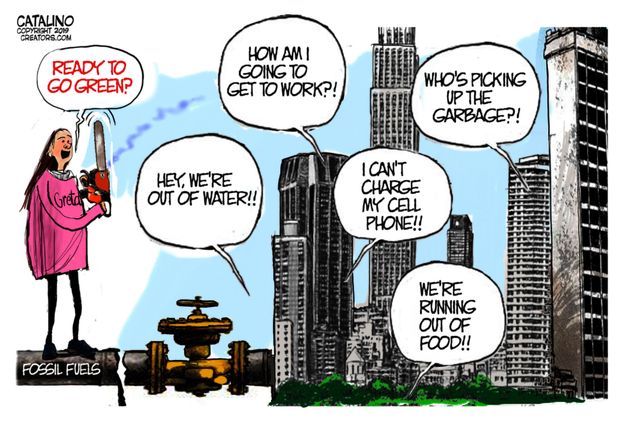
As the stool above shows, the climate change package sits on three premises. The first is the science bit, consisting of an unproven claim that observed warming is caused by humans burning fossil fuels. The second part rests on impact studies from billions of research dollars spent uncovering any and all possible negatives from warming. And the third leg is climate policies showing how governments can “fight climate change.”
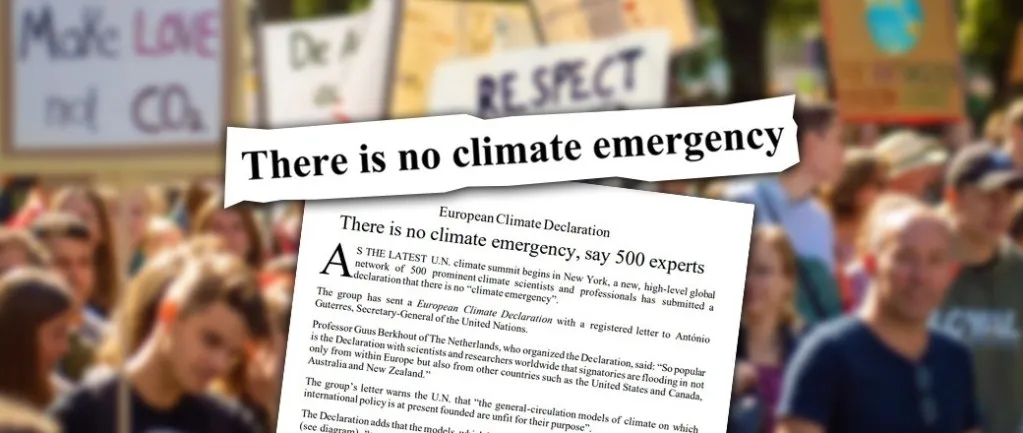
It has warmed since the Little Ice Age with many factors involved, most of which are orders of magnitude more powerful than CO2. Secondly, the last 1.5C of warming was a boon to humans and nature, and the next 1.5C will likely also benefit the world. Finally it is naive to believe in government fixing the climate to prevent further warming. Expensive, intermittent wind and solar power is the proposed solution, which accounts for just 2% of global energy consumed, and has proven disastrous anywhere it has been tried. In the meantime the children are appeased by declaring a “climate emergency.” Wake up and get real.
One post-mortem on the election from the Australian Broadcasting Corporation pointed out the wealth issue thusly:
In [Warringah’s] case and in other inner-city seats, support for climate action looks broadly consistent with a “post-materialist” sensibility. … Here the emphasis on quality of life over immediate economic and physical needs encourages a focus on issues like climate change. But this is a sensibility that speaks to those in higher socio-economic brackets, and principally with higher levels of education.
Put more bluntly, climate-based politics appeal primarily to those insulated from the potential economic consequences of climate policies by their high incomes, and shielded from even seeing those effects by their urbanized lifestyles.
Those not materially blessed enough to live as “post-materialists,” however, still make their decisions based on what it takes to put food on the table, pay the rent, and provide for their families.
This sort of growing rich-poor political divide is not unique to Australia. In Israel, working-class Israelis have solidified behind Prime Minister Benjamin Netanyahu while wealthy areas swing strongly against him.
In the United States, Donald Trump won states like Michigan and Wisconsin while some of Brooklyn’s trendiest neighborhoods elected Alexandria Ocasio-Cortez to the House.
It’s not just that the working class is drifting right. The upper classes, especially in gentrifying inner cities, are gravitating hard to a left that is increasingly focused on perceived moral issues and less interested in bread-and-butter economics.
However, there is one key difference that makes Australia unique. Perhaps more than any other nation, Australia has seen climate change loom over its politics for over a decade.
Former Labor Prime Minister Kevin Rudd made it the signature issue of his premiership from 2007-2010, with at least one costly program literally going up in flames. Rudd’s plan to re-insulate Australian homes for energy efficiency failed to account for the flammability of the new insulation and led to the deaths of four workers.
In 2009, Rudd’s cap-and-trade proposal caused a massive split in the Liberal Party when then-party leader Malcolm Turnbull tried to force the party to support Rudd on the issue—leading the party’s legislators to remove him and replace him with anti-cap-and-trade leader Tony Abbott.
Australia has been through “climate change elections” before, and experimented with environmental policy as much as any nation on Earth. The results illustrate what happens when politics becomes centered on creating a “better world” by making life harder in the real world.
Such ideas may gain traction among those who know they can afford to weather the storm, and the rich can condemn the poor for their “materialism” in rejecting the new order, but working people (rightly) prioritize feeding their children as a higher moral goal.
Given that Australia’s ever-shifting politics has sometimes drawn comparisons to “Game of Thrones,” perhaps it’s worth noting that Australian Labor and Daenerys Targaryen learned the same lesson in their big finales this weekend: No matter how lofty your aims, there’s little morality in burning the world down in the name of building a better one.