Tristan Abbey exposes the feds war on NatGas in his Real Energy article Joe Biden’s Dangerous Natural Gas Game. Excerpts in italics with my bolds and added images.
If the devil is in the details, bureaucracy is hell on earth. Though terrain familiar to the Biden administration, Republicans must prepare to navigate it.
Witness the debacle over liquefied natural gas exports, wherein the White House, by “pausing” most new approvals, has catapulted the energy security of key U.S. allies straight into the buzzsaw of its climate ambitions. (The category of exports that will continue to be authorized is tiny.) The Department of Energy claims that a multifactor impact study due in early 2025 is required to determine whether and how the moratorium will be lifted.
For the 58 year period, the net changes were: Oil 194%, Gas 525%, Coal 178%, WFFC 239%, Primary Energy 287% Source: Energy Institute stats 2022
Under a certain conception of executive power, it should be simple enough for a second-term Trump administration to end this national embarrassment by pressing “resume” on the authorization process. But as analysts at the Center for Strategic and International Studies have suggested, merely setting aside the study could provide a basis, however tenuous, for future litigation. In the modern administrative state, it is easier to open than shut the procedural door to delays.
Previous administrations have already published macroeconomic impact studies on the question of LNG exports from the U.S. The Obama administration paused its authorizations until its first study was released in December 2012, for example—curious timing, considering the election the previous month and the study’s actual completion in July of that year. Virtually every scenario in every study, including additional analysis in 2015 and 2018, has found net benefits to accrue.
It’s possible reopening the Obama playbook was the Biden team’s plan all along. After all, Secretary Granholm didn’t commission a new study in 2021, or in 2022, or in 2023. By waiting so long, the DOE can now claim that the cumulative volume of its authorizations is approaching the upper limit of the range that the 2018 study examined. Under the duplicity theory, approvals resume under a second Biden term as soon as the study is released and the election fades away.
But maybe the administration doesn’t even have a plan. It could be sheer incompetence.Gas exports offend the sensibilities of the Democratic base, but Appalachian swing states reap the economic rewardsand European allies are desperate to detach themselves from Russian energy. Political operators will try in vain to triangulate even if it is impossible. We can imagine them now, hunched over the asphalt between the West Wing and the Eisenhower building, desperately chalking angles with a compass and ruler.
Appliances are just the thin end of the wedge against NatGas.
More ominously, Energy Secretary Granholm may be laying the groundwork for a Kafkaesque application process designed to punish an industry this administration has only ever pretended to tolerate. The fact that DOE’s approving authority is now housed in the Office of Resource Sustainability is suggestive, as is the Fiscal Year 2025 budget request to triple programmatic funding for export authorizations, primarily in the form of “anticipated studies and environmental reviews.”
In any event, undoing what the Biden team has done will take careful work by a putative second-term Trump administration. Putting the matter to rest on a more permanent basis will require legislative action, chiefly amending the Natural Gas Act signed into law by President Franklin Roosevelt in 1938. In the meantime, “death by study” works both ways.
“Oil, gas, and coal are ascending despite determined government efforts to reverse energy progress. With criteria air pollutants on the wane and carbon dioxide (CO2) benefits laboratory-proven, the increasing sustainability of fossil fuels is evident.”
Each year brings record production of the three fossil fuels: oil, natural gas, and coal. Peak demand is not in sight–nor should it be in a world of rising population, the aspiring poor, and new ways to employ inanimate energy to improve living. But what about future supply to meet growing demand?
In most nations of the world, free-market energy
plenty is held back by government intervention.
Government ownership and operation of fossil fuels and related infrastructure impedes supply and demand. But fossil fuel plenty is very hard to hold back, and enough is produced to reasonably meet demand. Such is true in the United States despite two hundred impediments from the Biden Administration.“The U.S. now has 227 years of oil supply, 130 years of natural gas supply, and 485 years of coal supply,” the study below reports.
The fossil fuel era is very young in human history, having eclipsed the renewable energy era just several centuries ago. IER’s recent inventory study confirms the benefits of even a quasi-free market can do. Resourceship forever!
Francis Menton asserts that the biggest disinformation (Lie) in public discourse is claiming that the cheapest source of energy comes from renewables, wind and solar power. He provides a number of brazen media examples in his blog post What Is The Most Pernicious Example Of “Misinformation” Currently Circulating?
Why do I say that the assertion of wind and solar being the cheapest ways to generate electricity is the very most pernicious of misinformation currently out there? Here are my three reasons:(1) the assertion is repeated endlessly and ubiquitously, (2) it is the basis for the misallocation of trillions of dollars of resources and for great impoverishment of billions of people around the world, and (3) it is false to the point of being preposterous, an insult to everyone’s intelligence, yet rarely challenged.
In addition, Paul Homewood explains at his blog how recently this lie was repeatedly entered into testimony in the UK Parliament House of Lords:
In oral questions on Thursday, Lord Frost noted Whitehall claims that renewables are half the cost of gas-fired electricity, and asked for an explanation of why subsidies were still required, and why the strike prices on offer to windfarms this year are twice what Lord Callanan says they need to make a profit. As Hansard shows, Lord Callanan failed to answer the question, simply reiterating his false claims about levelized costs.
The responses from Lord Callanan demonstrate the typical ploy for disarming dissenters’ objections, i.e. getting the discussion entangled in details and cost minutae so that the big lie is lost in the weeds. It occurs to me that previously David Wojick had put the key issue in a simple, useful way, reposted below.
Background Post: Just One Number Keeps the Lights On
David Wojick explains how maintaining electricity supply is simple in his CFACT article It takes big energy to back up wind and solar. Excerpts in italics with my bolds. (H/T John Ray)
Power system design can be extremely complex but there is one simple number that is painfully obvious. At least it is painful to the advocates of wind and solar power, which may be why we never hear about it. It is a big, bad number.
To my knowledge this big number has no name, but it should. Let’s call it the “minimum backup requirement” for wind and solar, or MBR. The minimum backup requirement is how much generating capacity a system must have to reliably produce power when wind and solar don’t.
Duck Curve Now Looks Like a Canyon
For most places the magnitude of MBR is very simple. It is all of the juice needed on the hottest or coldest low wind night. It is night so there is no solar. Sustained wind is less than eight miles per hour, so there is no wind power. It is very hot or cold so the need for power is very high.
In many places MBR will be close to the maximum power the system ever needs, because heat waves and cold spells are often low wind events. In heat waves it may be a bit hotter during the day but not that much. In cold spells it is often coldest at night.
Thus what is called “peak demand” is a good approximation for the maximum backup requirement. In other words, there has to be enough reliable generating capacity to provide all of the maximum power the system will ever need. For any public power system that is a very big number, as big as it gets in fact.
Actually it gets a bit bigger, because there also has to be margin of safety or what is called “reserve capacity”. This is to allow for something not working as it should. Fifteen percent is a typical reserve in American systems. This makes MBR something like 115% of peak demand.
We often read about wind and solar being cheaper than coal, gas and nuclear power, but that does not include the MBR for wind and solar.
What is relatively cheap for wind and solar is the cost to produce a unit of electricity. This is often called LCOE or the “levelized cost of energy”. But adding the reliable backup required to give people the power they need makes wind and solar very expensive.
In short the true cost of wind and solar is LCOE + MBR. This is the big cost you never hear about. But if every state goes to wind and solar then each one will have to have MBR for roughly its entire peak demand. That is an enormous amount of generating capacity.
Of course the cost of MBR depends on the generating technology. Storage is out because the cost is astronomical. Gas fired generation might be best but it is fossil fueled, as is coal. If one insists on zero fossil fuel then nuclear is probably the only option. Operating nuclear plants as intermittent backup is stupid and expensive, but so is no fossil fuel generation.
What is clearly ruled out is 100% renewables, because there would frequently be no electricity at all. That is unless geothermal could be made to work on an enormous scale, which would take many decades to develop.
It is clear that the Biden Administration’s goal of zero fossil fueled electricity by 2035 (without nuclear) is economically impossible because of the minimum backup requirements for wind and solar. You can’t get there from here.
One wonders why we have never heard of this obvious huge cost with wind and solar. The utilities I have looked at avoid it with a trick.
Dominion Energy, which supplies most of Virginia’s juice, is a good example. The Virginia Legislature passed a law saying that Dominion’s power generation had to be zero fossil fueled by 2045. Dominion developed a Plan saying how they would do this. Tucked away in passing on page 119 they say they will expand their capacity for importing power purchased from other utilities. This increase happens to be to an amount equal to their peak demand.
The plan is to buy all the MBR juice from the neighbors! But if everyone is going wind and solar then no one will have juice to sell. In fact they will all be buying, which does not work. Note that the high pressure systems which cause low wind can be huge, covering a dozen or more states. For that matter, no one has that kind of excess generating capacity today.
To summarize, for every utility there will be times when there is zero wind and solar power combined with near peak demand. Meeting this huge need is the minimum backup requirement. The huge cost of meeting this requirement is part of the cost of wind and solar power. MBR makes wind and solar extremely expensive.
The simple question to ask the Biden Administration, the States and their power utilities is this: How will you provide power on hot or cold low wind nights?
We have been treated to multiple reports of negative consequences unforeseen by policymakers pushing the Green Energy agenda. A sample of the range:
Ford ready to restrict UK sales of petrol models to hit electric targets, Financial Times
Why US offshore wind energy is struggling—the good, the bad and the opportunity, Tech Xplore
Another solar farm destroyed by a hail storm—this time in Texas, OK Energy Today
Storm Ravages World’s Largest Floating Solar Plant, Western Journal
DOE Finalizes Efficiency Standards for Clothes Washers and Dryers, Energy.Gov
Strict new EPA rules would force coal-fired power plants to capture emissions or shut down, AP news
Companies Are Balking at the High Costs of Running Electric Trucks, Wall Street Journal
Landmark wind turbine noise ruling from High Court referred to attorney general, Irish Times
Etc., Etc.
These reports point to regulators again attempting to force social and economic behavorial changes against human and physical forces opposing the goals. A detailed explanation of one such failure follows.
Background Post: Why Raising Auto Fuel (CAFE) Standards Failed
There are deeper reasons why US auto fuel efficiency standards are counterproductive and should be rolled back. They were instituted in denial of regulatory experience and science. First, a parallel from physics.
In the sub-atomic domain of quantum mechanics, Werner Heisenberg, a German physicist, determined that our observations have an effect on the behavior of quanta (quantum particles).
The Heisenberg uncertainty principle states that it is impossible to know simultaneously the exact position and momentum of a particle. That is, the more exactly the position is determined, the less known the momentum, and vice versa. This principle is not a statement about the limits of technology, but a fundamental limit on what can be known about a particle at any given moment. This uncertainty arises because the act of measuring affects the object being measured. The only way to measure the position of something is using light, but, on the sub-atomic scale, the interaction of the light with the object inevitably changes the object’s position and its direction of travel.
Now skip to the world of governance and the effects of regulation. A similar finding shows that the act of regulating produces reactive behavior and unintended consequences contrary to the desired outcomes.
Goodhart’s Law holds that “any observed statistical regularity will tend to collapse once pressure is placed upon it for control purposes”. Originally coined by the economist Charles Goodhart as a critique of the use of money supply measures to guide monetary policy, it has been adopted as a useful concept in many other fields. The general principle is that when any measure is used as a target for policy, it becomes unreliable. It is an observable phenomenon in healthcare, in financial regulation and, it seems, in energy efficiency standards.
When governments set efficiency regulations such as the US Corporate Average Fuel Economy standards for vehicles, they are often what is called “attribute-based”, meaning that the rules take other characteristics into consideration when determining compliance. The Cafe standards, for example, vary according to the “footprint” of the vehicle: the area enclosed by its wheels. In Japan, fuel economy standards are weight-based. Like all regulations, fuel economy standards create incentives to game the system, and where attributes are important, that can mean finding ways to exploit the variations in requirements. There have long been suspicions that the footprint-based Cafe standards would encourage manufacturers to make larger cars for the US market, but a paper this week from Koichiro Ito of the University of Chicago and James Sallee of the University of California Berkeley provided the strongest evidence yet that those fears are likely to be justified.
Mr Ito and Mr Sallee looked at Japan’s experience with weight-based fuel economy standards, which changed in 2009, and concluded that “the Japanese car market has experienced a notable increase in weight in response to attribute-based regulation”. In the US, the Cafe standards create a similar pressure, but expressed in terms of size rather than weight. Mr Ito suggested that in Ford’s decision to end almost all car production in North America to focus on SUVs and trucks, “policy plays a substantial role”. It is not just that manufacturers are focusing on larger models; specific models are also getting bigger. Ford’s move, Mr Ito wrote, should be seen as an “alarm bell” warning of the flaws in the Cafe system. He suggests an alternative framework with a uniform standard and tradeable credits, as a more effective and lower-cost option. With the Trump administration now reviewing fuel economy and emissions standards, and facing challenges from California and many other states, the vehicle manufacturers appear to be in a state of confusion. An elegant idea for preserving plans for improving fuel economy while reducing the cost of compliance could be very welcome.
An attribute-based regulation is a regulation that aims to change one characteristic of a product related to the externality (the “targeted characteristic”), but which takes some other characteristic (the “secondary attribute”) into consideration when determining compliance. For example, Corporate Average Fuel Economy (CAFE) standards in the United States recently adopted attribute-basing. Figure 1 shows that the new policy mandates a fuel-economy target that is a downward-sloping function of vehicle “footprint”—the square area trapped by a rectangle drawn to connect the vehicle’s tires. Under this schedule, firms that make larger vehicles are allowed to have lower fuel economy. This has the potential benefit of harmonizing marginal costs of regulatory compliance across firms, but it also creates a distortionary incentive for automakers to manipulate vehicle footprint.
Attribute-basing is used in a variety of important economic policies.Fuel-economy regulations are attribute-based in China, Europe, Japan and the United States, which are the world’s four largest car markets. Energy efficiency standards for appliances, which allow larger products to consume more energy, are attribute-based all over the world. Regulations such as the Clean Air Act, the Family Medical Leave Act, and the Affordable Care Act are attribute-based because they exempt some firms based on size. In all of these examples, attribute-basing is designed to provide a weaker regulation for products or firms that will find compliance more difficult.
The CAFE standards are not only an extremely inefficient way to reduce carbon dioxide emission but will also have a variety of unintended consequences.
For example, the post-2010 standards apply lower mileage requirements to vehicles with larger footprints. Thus, Whitefoot and Skerlos argued that there is an incentive to increase the size of vehicles.
Data from the first few years under the new standard confirm that the average footprint, weight, and horsepower of cars and trucks have indeed all increased since 2008, even as carbon emissions fell, reflecting the distorted incentives.
Manufacturers have found work-arounds to thwart the intent of the regulations. For example, the standards raised the price of large cars, such as station wagons, relative to light trucks. As a result, automakers created a new type of light truck—the sport utility vehicle (SUV)—which was covered by the lower standard and had low gas mileage but met consumers’ needs. Other automakers have simply chosen to miss the thresholds and pay fines on a sliding scale.
Another well-known flaw in CAFE standards is the “rebound effect.” When consumers are forced to buy more fuel-efficient vehicles, the cost per mile falls (since their cars use less gas) and they drive more. This offsets part of the fuel economy gain and adds congestion and road repair costs. Similarly, the rising price of new vehicles causes consumers to delay upgrades, leaving older vehicles on the road longer.
In addition, the higher purchase price of cars under a stricter CAFE standard is likely to force millions of households out of the new-car market altogether. Many households face credit constraints when borrowing money to purchase a car. David Wagner, Paulina Nusinovich, and Esteban Plaza-Jennings used Bureau of Labor Statistics data and typical finance industry debt-service-to-income ratios and estimated that 3.1 million to 14.9 million households would not have enough credit to purchase a new car under the 2025 CAFE standards.[34] This impact would fall disproportionately on poorer households and force the use of older cars with higher maintenance costs and with fuel economy that is generally lower than that of new cars.
CAFE standards may also have redistributed corporate profits to foreign automakers and away from Ford, General Motors (GM), and Chrysler (the Big Three), because foreign-headquartered firms tend to specialize in vehicles that are favored under the new standards.[35]
Conclusion
CAFE standards are costly, inefficient, and ineffective regulations. They severely limit consumers’ ability to make their own choices concerning safety, comfort, affordability, and efficiency. Originally based on the belief that consumers undervalued fuel economy, the standards have morphed into climate control mandates. Under any justification, regulation gives the desires of government regulators precedence over those of the Americans who actually pay for the cars. Since the regulators undervalue the well-being of American consumers, the policy outcomes are predictably harmful.
Robert Bryce explains the basics at his substack blog Build It, And The Wind Won’t Come. Excerpts in italics with my bolds and added images.
Weather-dependent generation sources are…weather dependent:
Last year, despite adding 6.2 GW of new capacity,
U.S. wind production dropped by 2.1%.
Three years ago, in the wake of Winter Storm Uri, the alt-energy lobby and their many allies in the media made sure not to blame wind energy for the Texas blackouts. The American Clean Power Association (2021 revenue: $32.1 million) declared frozen wind turbines “did not cause the Texas power outages” because they were “not the primary cause of the blackouts. Most of the power that went offline was powered by gas or coal.”
Damaged wind turbines at the Punta Lima wind project, Naguabo, Puerto Rico, 2018. Photo: Wikipedia.
NPR parroted that line, claiming, “Blaming wind and solar is a political move.” The Texas Tribune said it was wrong to blame alt-energy after Winter Storm Uri because “wind power was expected to make up only a fraction of what the state had planned for during the winter.” The outlet also quoted one academic who said that natural gas was “failing in the most spectacular fashion right now.” Texas Tribune went on to explain, “Only 7% of ERCOT’s forecasted winter capacity, or 6 gigawatts, was expected to come from various wind power sources across the state.”
In other words, there was no reason to expect the 33 GW of wind capacity that Texas had to deliver because, you know, no one expected wind energy to produce much power. Expectations? Mr. October? Playoff Jamal? Who needs them?
But what happens when you build massive amounts of
wind energy capacity and it doesn’t deliver —
not for a day or a week, but for six months, or even an entire year?
That question is germane because, on Wednesday, the Energy Information Administration published a report showing that U.S. wind energy production declined by 2.1% last year. Even more shocking: that decline occurred even though the wind sector added 6.2 GW of new capacity!
Um, yes. It would. And the EIA made that point in its usual dry language. “Generation from wind turbines decreased for the first time since the mid-1990s in 2023 despite the addition of 6.2 GW of new wind capacity last year,” the agency reported. The EIA also explained that the capacity factor for America’s wind energy fleet, also known as the average utilization rate, “fell to an eight-year low of 33.5%.” That compares to 35.9% capacity factor in 2022 which was the all-time high. The report continued, “Lower wind speeds than normal affected wind generation in 2023, especially during the first half of the year when wind generation dropped by 14% compared with the same period in 2022.”
Read that again. For half of last year, wind generation was down by a whopping 14% due to lower wind speeds. Imagine if that wind drought continued for an entire year. That’s certainly possible. Recall that last summer, the North American Electric Reliability Corporation warned that U.S. generation capacity “is increasingly characterized as one that is sensitive to extreme, widespread, and long duration temperatures as well as wind and solar droughts.”
According to Bloomberg New Energy Finance, corporate investment in wind energy between 2004 and 2022 totaled some $278 billion. In addition, according to data from the Treasury Department, the U.S. government spent more than $30 billion on the production tax credit over that same period. Thus, over the last two decades, the U.S. has spent more than $300 billion building 150 GW of wind capacity that has gobbled up massive amounts of land, garnered enormous (and bitter) opposition from rural Americans, and hasn’t gotten more efficient over time.
Wednesday’s EIA report is a stark reminder that all of that generation capacity is subject to the vagaries of the wind. Imagine if the U.S. had spent that same $300 billion on a weather-resilient form of generation, like, say, nuclear power. That’s relevant because Unit 4 at Plant Vogtle in Georgia came online on Monday. With that same $300 billion, the U.S. could have built 20, 30, or maybe even 40 GW of new nuclear reactors with a 92% capacity factor that wouldn’t rely on the whims of the wind. In addition, those dozens of reactors would have required a tiny fraction of the land now covered by thousands of viewshed-destroying, bat-and-bird-killing wind turbines.
If climate change means we will face more extreme weather in the years ahead — hotter, colder, and/or more severe temperatures for extended periods — it’s Total Bonkers CrazytownTM to make our electric grid dependent on the weather. But by lavishing staggering amounts of money on wind and solar energy, and in many cases, mandating wind and solar, that’s precisely what we are doing.
Mark Mills explains the many ways the deck is stacked against those gambling on Wind and Solar energy to replace hydrocarbon fuels. The transcript is below in italics with my bolds and added images.
Have you ever heard of “unobtanium”?
It’s the magical energy mineral found on the planet Pandora in the movie, Avatar. It’s a fantasy in a science fiction script. But environmentalists think they’ve found it here on earth in the form of wind and solar power.
They think all the energy we need can be supplied by building enough wind and solar farms; and enough batteries.
The simple truth is that we can’t. Nor should we want to—not if our goal is to be good stewards of the planet.
To understand why, consider some simple physics realities that aren’t being talked about.
All sources of energy have limits that can’t be exceeded. The maximum rate at which the sun’s photons can be converted to electrons is about 33%. Our best solar technology is at 26% efficiency. For wind, the maximum capture is 60%. Our best machines are at 45%.
So, we’re pretty close to wind and solar limits. Despite PR claims about big gains coming, there just aren’t any possible. And wind and solar only work when the wind blows and the sun shines. But we need energy all the time. The solution we’re told is to use batteries.
Again, physics and chemistry make this very hard to do.
Consider the world’s biggest battery factory, the one Tesla built in Nevada. It would take 500 years for that factory to make enough batteries to store just one day’s worth of America’s electricity needs. This helps explain why wind and solar currently still supply less than 3% of the world’s energy, after 20 years and billions of dollars in subsidies.
Putting aside the economics, if your motive is to protect the environment, you might want to rethink wind, solar, and batteries because, like all machines, they’re built from nonrenewable materials.
Consider some sobering numbers:
A single electric-car battery weighs about half a ton. Fabricating one requires digging up, moving, and processing more than 250 tons of earth somewhere on the planet.
Building a single 100 Megawatt wind farm, which can power 75,000 homes requires some 30,000 tons of iron ore and 50,000 tons of concrete, as well as 900 tons of non-recyclable plastics for the huge blades. To get the same power from solar, the amount of cement, steel, and glass needed is 150% greater.
Then there are the other minerals needed, including elements known as rare earth metals. With current plans, the world will need an incredible 200 to 2,000 percent increase in mining for elements such as cobalt, lithium, and dysprosium, to name just a few.
Where’s all this stuff going to come from? Massive new mining operations. Almost none of it in America, some imported from places hostile to America, and some in places we all want to protect.
Australia’s Institute for a Sustainable Future cautions that a global “gold” rush for energy materials will take miners into “…remote wilderness areas [that] have maintained high biodiversity because they haven’t yet been disturbed.”
And who is doing the mining? Let’s just say that they’re not all going to be union workers with union protections.
Amnesty International paints a disturbing picture: “The… marketing of state-of-the-art technologies are a stark contrast to the children carrying bags of rocks.”
And then the mining itself requires massive amounts of conventional energy, as do the energy-intensive industrial processes needed to refine the materials and then build the wind, solar, and battery hardware.
Then there’s the waste. Wind turbines, solar panels, and batteries have a relatively short life; about twenty years. Conventional energy machines, like gas turbines, last twice as long.
With current plans, the International Renewable Energy Agency calculates that by 2050, the disposal of worn-out solar panels will constitute over double the tonnage of all of today’s global plastic waste.Worn-out wind turbines and batteries will add millions of tons more waste. It will be a whole new environmental challenge.
Before we launch history’s biggest increase in mining, dig up millions of acres in pristine areas, encourage childhood labor, and create epic waste problems, we might want to reconsider our almost inexhaustible supply of hydrocarbons—the fuels that make our marvelous modern world possible.
And technology is making it easier to acquire and cleaner to use them every day.
It would take a wind farm the size of Albany county NY to replace the now closed Indian Point nuclear power plant.
The following comparisons are typical—and instructive:
It costs about the same to drill one oil well as it does to build one giant wind turbine. And while that turbine generates the energy equivalent of about one barrel of oil per hour, the oil rig produces 10 barrels per hour. It costs less than 50 cents to store a barrel of oil or its equivalent in natural gas. But you need $200 worth of batteries to hold the energy contained in one oil barrel.
Next time someone tells you that wind, solar and batteries are the magical solution for all our energy needs ask them if they have an idea of the cost… to the environment.
“Unobtanium” works fine in the movies. But we don’t live in movies. We live in the real world.
I’m Mark Mills, Senior Fellow at the Manhattan Institute, for Prager University.
There is no charge for content on this site, nor for subscribers to receive email notifications of postings.
In the video Rupert Darwall is interviewed by Lee Hall discussing the plight of UK obsessing over global warming/climate change. For those preferring to read, below is an excerpted transcript lightly edited from closed captions. In italics with my bolds and added images. (RD is Rupert Darwall and LH is Lee Hall)
Keynotes
Britain is in a deep in a growth trap and we’ll remain in this growth trap. You know someone says if you’re in a hole stop digging. What we’re doing with Net Zero, we’re just digging harder and harder.
Today environmentalism is against economic growth and the green policies allow the ultra wealthy to feel virtuous. If you’re a multi-billionaire, like say Mike Bloomberg, you love it. Because what can you do to protect yourself from people complaining about your wealth? Well I’m saving the planet he says.
Europe’s green push is bringing economic benefit but not to Europe. German trade unions were promised during at the beginning of the energy transition there would be lots of green jobs and there were . . . in China. That’s where the green jobs went.
Green Policies and Economics
LH: Let’s talk about green policies and economics and how to really understand it all.
RD: So setting the scene: 2008 was quite a tough year and we had the financial crisis but then we also had the Climate Change Act. And was there a connection between Britain’s economic woes and then the introduction of what was arguably the most extreme green policies in the world.
The British economy was deeply scarred by the financial crisis and its trend growth of productivity has basically flatlined since 2008, and as you point out 2008 is the same year that parliament passed the Climate Change Act. Which as a result saw huge amounts of capital deployed on very low yielding to negative yielding assets in the power generation sector; namely wind and solar.
It’s very difficult to disentangle the long-term effects of the financial crisis and the so-called energy transition. But it is unquestionably the case that mandating very aggressive decarbonization worsens the productive potential of the economy. To give you an idea of how bad is the energy transition for a Net Zero: The International Energy Agency produced a net zero plan, and by 2030 under its Net Zero assumptions, the global energy sector will be employing 25 million more people using 16 and a half trillion more dollars of capital. 16 and a half trillion dollars more Capital using vast land areas of the combined size of Mexico, France, California, New Mexico and Texas to produce 7% less energy.
So the the critical thing to understand about the energy transition is it means you need more more resources to produce less.
That’s exactly what we’re seeing, what effect the push for Renewables has had on our Energy prices, and thus on our economy and our competitiveness. Well it’s made Britain one of the most expensive places in the world for businesses in terms of of the electricity bills. We’re seeing steel making basically being put out of business in this country. We’re seeing oil refining with the Grangemouth oil refinery being closed. The petrochemical industry is going to have a very hard time to survive.
So a lot of industry is basically going to be wiped out. But then you look at the automotive industry where we have effectively mandates for EV adoption requiring rising proportions of car sales must be EV. If car manufacturers don’t meet those targets, they get taxed and that will basically lead to almost obliterating the British automotive industry, apart from some really very upscale names like Bentley. Essentially you’re looking at the death of the British automotive sector.
LH: Could you give us a a Layman’s introduction to what’s happened with wind power in Britain and what this teaches us about environmentalism?
RD: In 2022 Boris Johnson said offshore wind is the the cheapest form of electricity in the country. It was a line fed to him by Carbon Brief, which is heavily funded by the European Climate Foundation, which in turn is funded by multi-billion philanthropic foundations in the US. It is pure propaganda; there is not any basis for saying that.
Remember that at the time of the energy crisis following Russia’s invasion of Ukraine, then about 40% of the increase of the natural gas price was actually artificial carbon taxes and the price of carbon. So take that that out; these are completely artificial. This cost isn’t about supply and demand of fossil fuels, it is simply government imposed taxes to basically tax natural gas production out of the system.
Then offshore wind is inherently expensive. If you think about it, putting very large wind turbines in the middle of a hostile marine environment like the North Sea you need to have a big question mark over it. This defies common sense. What happened was the wind industry telling the government and the government believing that the cost of offshore wind was about 50 pounds per megawatt hour. In fact analysis of the accounting data for the financial entities shows that the break even price of North Sea power above 100 pounds per megawatt hour.
Basically the wind industry had conned the government into saying wind is cheap. And of course then they’ve now turned around and said actually our costs are a lot higher than you thought. But you’ve got the climate change act which gives a legal Duty on the government to reach Net Zero. So if you don’t give us more subsidy you’ll be defying your legal duty to reach Net Zero, and we just might take you to court to to have the courts decide whether you are.
LH: We heard recently Constraint Payments that there may be a watchdog investigation into wind farms for overcharging on constraint payments, the constraint payments being getting paid to not produce electricity. Can you help us understand the logic behind this? So they get paid to not produce something then they’re overcharging on the nothing?
RD: Yes, the problem is kind of obvious when you see that the more wind capacity you have, when the wind’s blowing the more electricity is produced and that creates two problems. It may be in excess of demand so you have a sharp fall in the wholesale price of electricity. Which incidentally means that gas generators start to be loss making, and it’s very bad for the economics of the power stations that are needed to keep the lights on. It can actually go negative so you pay them to constrain.
The other thing is that the wind turbines are in remote windy locations and they have to be connected to the grid and there’s simply not enough grid connection. So the wind operators are saying well you need to you need more grid infrastructure. Well that’s not free, but they won’t pay for it, they’re expecting consumers to to pick up the tab. And indeed ofgem the energy regulator has a sort of policy, what they call socializing the cost of grid connection, so they’re picked up by customers rather than by the investors.
LH: People that push Green Growth, the green policies, are talking about green growth and green jobs a lot of the time. It seems they they don’t really materialize and we end up paying more to produce less in a less efficient way. I mean is the environmentalism actually an anti-growth strategy?
RD: In Germany for example the German trade unions were promised during at the beginning of the so-called energy transition there’ll be lots of green jobs. And there’s workers in China, that’s where the green jobs are, they’re not in Europe. I mean Europe is not competitive, doesn’t have the low energy cost that China has. To make this kit is very, very energy intensive.
Since the limits to growth debates of the early 1970s in fact limits to growth came out in 1972, greens have argued that economic growth will destroy the planet. And therefore growth is bad. Now they’re turning around and saying well we’re going to have green growth. Well don’t believe it, you should really believe that they are against growth and that their policies are designed have to knock growth on the head. That’s what we’re seeing now.
This kind of degrowth, anti-growth push is very bad news, for people’s living standards, for their aspirations, for their wanting to have a better life for their children; having greater opportunities, more enjoyable ways to to spend money, to spend your life. All that’s true but also growth is needed to fund the state and to fund fund public services. Having had very little growth since 2008, essentially green policies mean endless austerity, it means extremely high tax rates. The tax burden in Britain is the highest it’s been since since I think the late 1940s, since the post war period. So yes it’s very bad both for private consumption but also for public consumption, also public investment.
Britain has a very low level of public investment. Also we have a very low level of private investment So all together in Britain we find ourselves deep in a growth trap. And we’ll remain in this growth trap. You know someone says if you’re in a hole stop digging. What we’re doing with Net Zero is we’re just digging harder and harder.
LH: Marxism policy is to take the means of production away from private ownership whereas what we’re looking at now is to almost destroy the means of production. I often make the point, that in some respects environmentalism is a more radical ideology. Marxism is about changing the ownership of the means of production. This is about changing the means of production themselves.
RD: The early marxists like Karl Marx and Friedrich Engels, actually if you look at the Communist Manifesto, there’s this great Paean of praise to capitalism and the Bourgeois for creating these fantastic means of production that that have unlocked hitherto unknown levels of prosperity. Of course as we just discussed the greens are very much against that. But what where the greens score is although it’s a radical ideology in terms of changing the means of production and degrading the means of production, it is very socially conservative. It doesn’t challenge the existing social hierarchy.
So if you’re a member of the a feudal royal family like King Charles, you like green stuff. It doesn’t say Dethrone him or cut off their heads. If you’re a plutocrat, if you’re a multi-billionaire like say Mike Bloomberg in the US, you love it because again is what you do to protect yourself from people complaining about your wealth. You say well I’m I’m saving the planet. I’m using my money, my business and my philanthropy is about saving the planet.
So on the one hand, economically it’s very radical, but socially it’s all about maintaining existing social stratifications and of course denying people lower down the means to rise up, to better themselves.
LH: So in the original Marxism the rich guy or the top was the bad guy, but now those Rich guys can actually be the good guys in the environmentalism.
RD: The way I put it is that green policies and decarbonization are ethics for the super wealthy. You see Bill Gates when he gets asked in interviews, what about your carbon foot footprint, he’s got so much money he pays an enormous amount to have carbon dioxide sucked out of the air, direct air capture. Well of course you can do that if you’re if you’re one of the richest people on the planet. But of course but for ordinary people when they take their holiday to the Mediterranean if you’re going to expect them to pay hundreds of pounds extra, I mean it’s not going to happen. So yes this is about the super wealthy.
Another example of virtuous contradictions would be to look at say wind farms or solar panel farms. That’s supposed to be good for the environment but they’re destroying the landscape and they’re destroying the habitats and they’re chopping up birds, killing insects and threatening whales.
LH: This environmentalism expects us to suspend our beliefs to some degree yeah this is what you pointed out is a fundamental contradiction deep in the heart of modern environmentalism. It’s like saying, to save the village we had to destroy it.
RD: It is absolutely clear that the environmentalists don’t care about this. Fundamentally it’s about the precautionary principle so you’ve got to be extra specially careful. But not when it comes to wind power; they’re perfectly okay with with wind turbines destroying nature, since they see it as saving the planet.
So for the greater good we need to ruin some of the planet to save the the greater Planet.
The error is that as soon as you go from the local to the global, you sacrifice the local. And of course the global is an aggregate of the locals but for them it isn’t. This maniacal obsession with carbon dioxide emissions which has led to this tragedy that so much nature is being destroyed in the name of saving nature which it won’t do.
LH: When Rishi Sunak was Chancellor Exchequer he talked about rewiring the global financial system for Net Zero and then redeploying $130 trillion dollar of assets can you help us understand like how that would be possible and and tell us about the role that ESG is playing.
RD: He made that that speech at the Glasgow climate conference, in my opinion the single worst speech ever given by any Chancellor of Exchequer of either party. It was an absolutely appalling speech because essentially he’s saying private savings should be socialized to meet public policy objectives. ESG is very much a part of the socialization of private savings. ESG is basically politics by other means Instead of government saying we’re going to pass laws and regulations and raise taxes and spend lots of money ourselves doing it. We are going to pass regulations and we’re going to browbeat business to do this for us.
There’s a twofold cost in that. One is to investors whose capital is being basically expropriated, is being used by politicians. And the other is to Consumers who pay higher prices as a result. ESG is a very malign trend in in finance. It’s very interesting to look what’s been happening in the United States where it’s in retreat for for basically two reasons. First of all because the anti-green stocks, if you like, that is the oil and gas sector suddenly in the covid recovery suddenly put on great growth spurt in the stock market. So if you weren’t in oil and gas stocks you lost out.
And secondly there’s been a big reaction in in Republican states against these ESG mandates. However in Britain and Europe ESG continues. The government is effectively telling businesses they have to come up with Net Zero transition plans, so ESG is alive well and doing a lot of damage in Britain and Europe. In the US we saw Texas divest about 8 billion dollars from Black Rock because of their ESG measures.
LH: I mean do you think we we’ll see anything like that here or is that very much an American approach
RD: If you like the strength and vibrancy of capitalism in America there is not a peep of that in the UK or Europe. Britain’s largest asset manager is LGIM, Legal & General Investment Management, and it is completely signed up to the Net Zero ESG agenda. There’s very little sign of a backlash. Local authorities turn to be green they want to they say they want they invest want to invest their pension funds in in some nice ESG ways. You have the university superannuation funds. Universities are all kind of green and woke and so forth. so there there is unfortunately. You’ve seen that the London Stock Market until just recently, the last few weeks or so, has massively under performed the S&P 500 in the states.
LH: We seeing this contradiction again, but if I invest some money in a big investment firm, I’d expect them to use it to make money instead they’re using it for ideological means.
RD: There was this the ESG sales patter that it was doing well by doing good. They said we’ll use your money to do good and by the way you will make more money doing that than you otherwise would. That was always rubbish, it defied modern Financial portfolio Theory. But they got away with it until about 2022when oil stocks did extremely well, had a very strong run on on the stock market.
The other thing to point out, ESG used to exclude any defense stocks because armor manufacturers are evil and so forth. Then Putin invades Ukraine and they suddenly wake up saying, well actually we should have defense contractors in there. So it’s completely muddled, an ill-defined concept that is made up as it goes along.
And there’s also why should it be fund managerstaking these really important decisions about things like defense and National Security. These are preeminently decisions and policies for politicians not for market traders.
LH: You’ve very much got your finger on Green and economic issues. Are there any things coming up that you think we should keep an eye out for that are going surprises in the coming year?
RD: The big thing will be what happens in the American elections in November. On the one hand you have the Biden Administration which has set itself a net zero policy goal. The EPA is making a rule which will really take coal Off the Grid. It will cut massively the amount of natural gas power they’ve got on the grid. Biden has imposed a moratorium on new permits for export of natural gas.
On the other hand you have Trumpwho believes in what he calls American Energy dominance, he’s a hydrocarbon politician. He’s actually the only Western leader of the last couple of decades who is what I call an energy realist, who really understands energy. In his first term as president he pulled out of the Paris climate agreement. I think he would do the same again, and if that happens it will raise a huge question mark. What is the sense of persisting with Net Zero if the second largest emitter in the world pulls out of the the Paris agreement?
LH: I think it will it really kill Net Zero to anyone intelligent looking at it. We already had India and China not really buying in, but for America to join them?
RD: There is the conceit of the structure of the Paris agreement in these nationally determined contributions. So what China and India have been doing is they they’re not pledging any Cuts. They say well the carbon intensity of our economy will decline over time, which it will do anyway. One of the interesting facts of Britain is that when Rishi Sunak and British politicians boast about Britain cutting its carbon emissions. Britain’s CO2 emissions peaked in 1972 and you know as economies mature they tend to become less carbon intensive; that’s been the case in Britain.
What has happened since 2008 as we discussed at the beginning, that has been massively accelerated with quite a lot of damaging effect on manufacturing, on Energy prices um on the grid reliability and so forth.
LH: If Trump did get in and and pulled out of the agreement in that way, do you think the UK will follow along or oppose? What do you think will happen here?
RD:I don’t think a Keir Starmer government would follow particularly given Ed Miliband in the position of Energy Secretary, who was Energy Secretary when the 2008 climate Act was passed. He was at the Copenhagen conference in 2009 and played quite an important part there. There is no way they are going to have second thoughts on it.
What will change or what could change is the conservatives in opposition might actually begin to smell the coffee and say actually this is this is a really bad idea this Net Zero costs us votes, it costs people money, and therefore we need to question it. so I think the I think it will change the dynamic of politics in this country particularly if Trump were to repeat what he did between 2016 and 2020.
LH: Will there be an opposition Conservative party think in like five years time we could be seeing an opposition conservative party that’s against a lot of the green policies and quite different from what it is now?
RD: That’s a possibility. The problem is that when when a party goes into opposition quite often as happened in 1997 essentially the conservative party had a collective nervous breakdown and gave up on conservatism. That’s essentially what happened and it went through that long period and it was completely enamored with with Tony Blair and the promise of David Cameron and George Osborne.
Well are we are going to emulate Tony Blair and we’re going to get the conservative party to love the leftward drift of British politics? Will that happen again? Well Keir Starmer is no Tony Blair is he? But on the other hand the ability of the conservative party to really screw things up should never be underestimated.
There is no charge for content on this site, nor for subscribers to receive email notifications of postings.
Brendan O’Neill writes at Spiked Greta’s class war. Excerpts in italics with my bolds and added images.
The green ideology is the enemy of working people.
It was like a case study in indifference. There was privileged Gen Zer Greta Thunberg and other Euro eco-brats smiling and flicking peace signs as they called on the Dutch government to stop subsidising fossil-fuel companies. Meanwhile, the Dutch people, very few of whom are the offspring of opera singers with the ear of the world media, are suffering one of the largest spikes in energy prices in all of Europe. Their bills are through the roof. They’re reeling from the ‘pain of high energy costs’, as some in the media describe it.
And yet in sweeps giggling Greta and her barmy eco-army
to agitate for less government backing for energy production,
which would likely hike the price even more.
Rarely has the blinkered vanity, the sheer social apathy, of the green movement been so starkly illustrated. It was on Saturday that Greta and chums made their haughty demands of the Dutch government. In a protest at The Hague, hundreds of supporters of the upper-class death cult Extinction Rebellion marched behind a banner saying ‘STOP FOSSIL SUBSIDIES’. Some of the more spirited of these marchers against modernity, including Greta, broke away from the protest and headed to the A12 highway with the intention of blocking it. Because apparently it’s not enough to hit the pockets of the good people of the Netherlands – no, you have to ruin their weekend travel plans, too. Cops intervened and Greta and others were arrested for the crime of impeding a highway.
The press is full of gushing reports of Greta’s arrest. The BBC features an image of its favourite prophetess of doom yelling something as ticked-off cops drag her away. Our heroine only wanted to ‘block… a main road’ in protest against the ‘Dutch government’s tax concessions for companies connected to the fossil-fuel industry’, the Beeb says. What a turnaround from its reporting on the revolting Dutch farmers who also blocked highways, though in their case in opposition to lunatic Net Zero policies rather than in favour of them. Back then, the BBC said farmers had ‘clogged up’ roads and ‘snarled up motorways’ and created an ‘unsafe situation’. So when workers hold up highways, it’s horrifying, yet when time-rich right-on youths do it, it’s heroic? We see you, BBC.
The truth is there was nothing admirable about
Greta’s latest temper tantrum over fossil fuels.
A phrase like ‘fossil-fuel subsidies’ seems designed to get polite society gagging on its muesli, but what exactly are they? Essentially, they’re tax breaks from the Dutch government that make it cheaper for big companies to produce and use energy from oil, gas and coal. The biggest winner is the Dutch shipping industry, which benefits by around €6.7 billion. Call me a raging leftist, but it seems a good idea to me for the government to assist an industry that employs tens of thousands of people and contributes just shy of five per cent to Dutch GDP. Electricity generation is another big winner, benefitting to the tune of €5.3 billion.
Yes, electricity generation. Just think about this. In an energy crisis, Greta and Co are screaming in the streets about government assistance for… energy production! As the Dutch people, like others in Europe, look with fear and bewilderment at their ever-spiralling energy bills, noisy greens want the government to desubsidise companies that make energy. You don’t need a PhD in economics to see what the outcome would be – more cost offsetting to consumers, higher bills, greater angst.
Haven’t the Dutch suffered enough in the energy crisis already? Although it is being forecast that Dutch people’s energy bills will improve a little this year, for a while they were paying the most out of all EU member states. In 2023, they were stumping up €47.5 per 100 kWh, compared with an EU average of €28.9 per 100 kWh. It was the Netherlands’ over-reliance on gas imports, including from Russia, that plunged it into this crisis following the outbreak of war in Ukraine. And it responded by lifting the cap on energy production at coal-fired power plants and reversing its plans to cut back on gas production. To most folk, this will sound eminently sensible.
To eco-cranks, however, it is intolerable and the Dutch government must
at once stop subsidising such planet-mauling activities.
Seriously, why does anyone listen to these fruitcakes?
To me, it is wild that people would protest against energy production during an energy crisis. That they would have a fit of the vapours over energy subsidies, coal use and gas exploration at a time when people are struggling to keep the lights on. It’s not just dumb – it’s cruel. Imagine how out of touch with ordinary people’s concerns you would need to be to swan into a country experiencing a severe energy crisis and essentially say: ‘Stop supporting energy production.’ What was Greta thinking? She’s become a globetrotting enemy of progress, popping up all over the place to demand that we turn off the lights and don a hairshirt in keeping with her dystopian dream of restoring a pre-capitalist idyll that never actually existed.
It’s not just Greta, of course. The entire green ideology
is a menace to working people.
Climate-change alarmism is an unspoken class war in which the well-off and borderline aristocratic while away their days bemoaning the evils of the Industrial Revolution that liberated the rest of us from grinding poverty. Whether these Gretas, Poppies and Edreds are demanding less energy production, fewer cars on the roads, no more cheap flights or just ruining the snooker, the end result is the same: working people’s living standards and leisure pursuits are put in the crosshairs. More than 80 per cent of the world’s energy comes from fossil fuels. The fossil-fuel phaseout that Greta and the rest dream about would plunge the world’s workers and poor into unimaginable penury. These people claim to be waging war on apocalypse but really they threaten to bring one about.
I far prefer the uprising of the Netherlands’ farmers. And other European farmers. They block roads in service of a cause that is the precise moral opposite of the luxuriant apocalypticism of the spoilt activist class. Namely, the protection of jobs and living standards from the religious fever of Net Zero. The insistence that food production not be undermined by the climate-change targets of out-of-touch Euro elites. The improvement of the lot of workers rather than the further immiseration of them in the phoney name of ‘saving the planet’.
There’s a class war being waged on the streets of Europe, with postmodern eco-loons on one side and actually productive people on the other. Choose your player.
There is no charge for content on this site, nor for subscribers to receive email notifications of postings.
Trudeau Turns the Carbon Tax Screws on Canadians April 1
Ross Mckitrick explains the smoke and mirrors in Trudeau’s justifications for his racheting carbon tax in a National Post article Wanted: A leader who is honest about climate policy. Excerpts in italics with my bolds and added images.
Pierre Poilievre is leading anti-carbon tax rallies around the country, ginning up support for an old-fashioned tax revolt. In response, Justin Trudeau went to Calgary and trumpeted — believe it or not! — his love of free markets. After explaining the economic logic of using a carbon tax to reduce greenhouse gases, the prime minister slammed regulatory approaches, which, he said, “all involve the heavy hand of government. I prefer a cleaner solution, a market-based solution and that is, if you’re behaving in a way that causes pollution, you should pay.” He added that the Conservatives would instead rely on the “heavy hand of government through regulation and subsidies to pick winners and losers in the economy as opposed to trusting the market.” Amen to all that!
But someone should tell Trudeau that his own government’s
Emission Reduction Plan mainly consists of heavy-handed
regulations, subsidies, mandates and winner-picking grants.
Within its 240 pages one does find a carbon tax. But also 139 additional policies, including:
♦ Clean Fuels Regulations, ♦ An electric vehicle mandate that will ban gasoline cars by 2035, ♦ Aggressive fuel economy standards that will hike such cars’ cost in the meantime, ♦ Costly new emission targets specifically for oil & gas, agriculture, heavy industry and waste management, ♦ Onerous new energy efficiency requirements both for new buildings and renovations of existing buildings, New electricity grid requirements, and page upon page of ♦ Subsidy funds for “clean technology” firms and other would-be winners in the sunlit uplands of the new green economy.
Does Trudeau oppose any of that? Hardly. But the economic logic of a carbon tax only applies when it is used on its own. He doesn’t get to boast about the elegance of market mechanisms on behalf of a policy package that starts with a price signal then destroys it with a massive regulatory apparatus. Trudeau also tried to warm his Alberta audience to the carbon tax by invoking the menace of mild weather and forest fires. In fairness it was an unusual February in Calgary. The month began with a week of above-zero temperatures, hitting five degrees Celsius at one point, then there was a brief cold snap before Valentine’s Day, then the daytime highs soared to the low teens for nine days and the month ended with soupy above-zero conditions. Weird.
Oops, that was 1981.This year was weirder: February highs were above zero for 25 out of 28 days, eight of which were even above 10 degrees C.
Oops again, that was 1991. Granted, February 2024 also had
its mild patches, but not like the old days.
Of course, back then warm weather was just weather. Now it’s a climate emergency and Canadians demand action. Except they don’t want to pay for it, which is the main problem for politicians when trying to come up with a climate policy that’s both effective and affordable. In fact, you can only have one of those two. Take your pick: effective or affordable, affordable or effective.
In practice, of course we typically end up zero for two,
with policies that are both ineffective and unaffordable.
You can claim your policy will yield deep decarbonization while boosting the economy, which almost all politicians in every western country have spent decades doing. But it’s not true. With current technology, affordable policies yield only small temporary emission reductions. Population and economic growth swamp their effects over time, which is why mainstream economists have long argued that while we can eliminate some lowvalue emissions, for the most part we will just have to live with climate change. Trying to stop it would cost far more than it’s worth.
Meanwhile the policy pantomime continues. Poilievre’s anti-carbon tax rallies are popular, but what happens after we axe the tax? If he plans to replace it with regulatory measures aimed at achieving the same emission cuts, he really should tell his rallygoers that what he has in mind will hit them even harder than the tax they’re so keen to scrap.
Or does he have the courage to do the sensible thing
and follow the mainstream economics advice?
If he wants to be honest with Canadians, he must explain that the affordable options will not get us to the Paris target, let alone to net-zero, and even if they did, what Canada does will have no effect on the global climate because we’re such small players. Maybe new technologies will appear over the next decade that change the economics, but until that day we’re better off fixing our growth problems, getting the cost of living down and continuing to be resilient to all the weather variations Canadians have always faced.
Addendum
Notice that Trudeau asserts that his carbon tax is needed so that “polluters pay.” Millions of Canadian taxpayers’ dollars have been spent on prime time TV ads reminding viewers that we have to do something to stop “carbon pollution”, by which they mean CO2 emissions. No matter that CO2, far from being an unnatural contaminant, is plant food without which (less than 150 ppm) plants and animals die. No mention of thousands of scientists proclaiming that “There is No Climate Emergency,” and that global warming and rising CO2 since the Little Ice Age have led to unprecedented human flourishing.
So essential CO2 is labeled as a pollutant in order to insist that emissions from burning hydrocarbons must be reduced to avert a crisis: heat waves, forest fires, floods, droughts, etc. etc. The premise is “We have to do something to stop emitting CO2.” Politicians of all stripes dare not question it. And a video interview below demonstrates how that premise prevents any reasonable discussion of energy policy.
The Parliamentary Budget Officer released a report looking into how much the carbon tax is actually costing Canadian households. In the CBC interview, Parliamentary Budget Officer Yves Giroux breaks down the report. And, Dale Beugin, executive vice-president of the Canadian Climate Institute discusses the analysis his organization has conducted on the government’s emissions reduction plan. Note the PBO role is non-partisan, while the CCI agenda is open and obviously Gung Ho against CO2.
The discussion with the PBO ends at 11 minutes into the video, the remainder being CCI talking about ways to shape industrial policies to force additional emissions down to meet Paris targets. A few excerpts from the first part show how difficult it is to escape the premise that we have to do something about CO2.
CBC: I’m sure have been watching what’s been happening in the House of Commons the conclusions in your report they’re being cited by the conservatives in particular as proof that Canadians are worse off because of carbon pricing and that means this policy needs to go. Is that a fair representation of your findings?
PBO: Well it’s a representation of our findings once you also include the economic impacts of introducing a carbon tax. So there’s the fiscal impact on households paying the tax versus the amount of the rebate that households are receiving. But once you also include the economic impacts due to the introduction of a carbon tax, for example the reduction in activity or the slower growth in economic activity in some sectors then that’s the full impact.
CBC: The fiscal analysis is the financial analysis that the government points to. They say most families will still get more in rebates than they pay, sort of Straight Cash Out, Straight Cash in. Is that a fair representation?
PBO: The conclusion we arrived at if you take into consideration the carbon tax that households pay on their fossil fuels that they’re buying: gasoline, natural gas, diesel and so on, they pay that directly as well as the embedded energy component of whatever goods and services they buy and they subtract from that the the rebate then about 80% of households are better off.
CBC: It gets complicated and this is where it gets controversial because you took a look at the broader effect that carbon pricing, any kind of tax has on an economy, it can have an economic impact to the negative and this is the line from report that conservatives point to once you factor in the rebate but also the economic impacts the majority of the households will see a negative impact as a result of the carbon tax. The rebuttal to that conclusion is that it doesn’t tell the whole story it doesn’t look at other options and other impacts. What do you say in terms of people understanding the meaning of that analysis?
PBO: The analysis looks at the world where the we have a carbon tax versus the absence of a carbon tax which is how we do economic analysis. So the impact of a carbon tax on the economy will have impacts on some sectors; the transportation sector to take one example, or the oil and gas sector, lower employment than would otherwise be the case or lower profits than would otherwise be the case. So that translates into economic impacts on average for households: lower employment, lower profits, lower dividends for those who own stocks Etc. so these are the economic impacts.
CBC: This is where the analysis has caused some confusion and drawn some criticism because the analysis only compares the impact as you said of a carbon price versus nothing, and nothing isn’t an option right? It doesn’t compare carbon pricing versus other options that other experts would say could be even more expensive. So how should people assess the political arguments we’re seeing without a clear comparative analysis of the options?
PBO: So my mandate is to provide cost estimates of policy proposals by the government or policy measures that the government has introduced. My mandate does not include providing cost estimates of alternative scenarios or multiple options. So you’re right that doing something else to reach International targets or a Canada’s commitment under the Paris Accord would also have costs. For example if we were to introduce massive subsidies for new technologies to wean ourselves off fossil fuels, that would obviously have costs. Introducing regulations also has costs and these costs could could be measured if we knew exactly what these alternatives are but there’s no clear policy proposal from the government as what would be the alternative to a carbon tax. So it’s difficult to cost something that has not been proposed yet.
It’s true that the consensus among economists is generally speaking a carbon tax is probably the least disruptive way to reduce emissions. That being said we see that the government itself is not relying solely on a carbon tax for various reasons. So the government itself is introducing subsidies for clean fuel and many regulations.
CBC: So you can’t assess this compared to another proposal because there is no other proposal to assess. You also don’t factor in the cost of climate change. We’ve seen massive wildfires still burning from last year throughout the winter In British Columbia and in Alberta; you know the extreme weather on the East Coast, flooding and storms, all of that has a massive economic impact as well and a loss of productivity and cost to governments.
The idea is to stop that from getting worse or more frequent, how do we assess that versus the cost
of using carbon pricing to lower emissions.
PBO: That’s a very difficult field to to venture into because the number of unusual weather events that’s occurring. We don’t know which ones are due to climate change and which ones would have occurred anyways, or whether their extent would have been smaller or even worse, probably smaller especially in a short period of time. We’ve tried to estimate the impact of climate change between now and the year 2100 and we find that there is a cost to climate change but for the next few years between now and 2030 it’s very difficult to determine precisely the cost of climate change. It’s an area that we ventured into but it’s not easy and not that many institutions and organizations have established clear parameters under which to estimate the cost of climate change.
It’s very unlikely that there’ll be significant technological breakthroughs between now and 2030 sufficient to even partially offset the cost of a carbon tax for example, or any measures to mitigate or reduce our carbon emissions. But it’s quite possible that Beyond 2030 once technologies become more mature they’ll be able to offset some of the costs that we’ll we’ll have to incur to reduce our greenhouse gas emissions. So that’s why it’s difficult to say whether the costs will be offset by the benefits over the longer term but between now and 2030 it’s clearly not going to happen.
I’m providing unbiased nonpartisan information, information not pronouncements, not verdicts on policies. It’s up to decision makers and Canadians to make up their own minds based on the information we provide them so they can decide whether a carbon tax or other measures are the best way forward to reduce carbon emissions. We’re not passing judgments as to whether a policy is working or not.
My Observations
This interview shows that the carbon cult narrative
subverts rational policymaking in three significant ways.
Firstly, there is no accounting of all the economic and social damage done by the multitude of federal government climate policies and regulations (139 that McKitrick found in the Emission Reduction Plan). Secondly the benefits to offset the carbon tax costs consider only saving some damages from extreme weather. This is problematic in two ways. There is no certainty that imposing these costs on Canadians will have any effect on CO2 levels,orthat climate and weather will be any different for having made the effort.
Add to that the ignoring of actual benefits to humankind and to the biosphere from rising atmospheric CO2 and warming temperatures. Virtually every year global agricultural production sets records because of warming and CO2 enhancing photosynthesis. That puts food on the table for billions of people. What insanity to pursue things like carbon capture to rob the biosphere of CO2, while dreaming of a cooler future planet. Both objectives would threaten the world food supply and can hardly be benefits to justify emissions reductions.
Finally CCI gives the game away when they say, in effect:
“You don’t like the carbon tax, but doing nothing is not an option.”
In fact doing nothing to reduce CO2 emissions is the best option, though politicians are loath to admit it. Few nations are achieving their Paris Treaty targets, and their emissions dwarf Canada’s.
The prosperity that comes from hydrocarbons can serve to build and maintain robust infrastructure and means of production for humanity to adapt to any changes in the climate, such as those in the past likely to happen again beyond our ability to stop them.
There is no charge for content on this site, nor for subscribers to receive email notifications of postings.
Mark Mills explains the many ways the deck is stacked against those gambling on Wind and Solar energy to replace hydrocarbon fuels. The transcript is below in italics with my bolds and added images.
Have you ever heard of “unobtanium”?
It’s the magical energy mineral found on the planet Pandora in the movie, Avatar. It’s a fantasy in a science fiction script. But environmentalists think they’ve found it here on earth in the form of wind and solar power.
They think all the energy we need can be supplied by building enough wind and solar farms; and enough batteries.
The simple truth is that we can’t. Nor should we want to—not if our goal is to be good stewards of the planet.
To understand why, consider some simple physics
realities that aren’t being talked about.
All sources of energy have limits that can’t be exceeded. The maximum rate at which the sun’s photons can be converted to electrons is about 33%. Our best solar technology is at 26% efficiency. For wind, the maximum capture is 60%. Our best machines are at 45%.
So, we’re pretty close to wind and solar limits. Despite PR claims about big gains coming, there just aren’t any possible. And wind and solar only work when the wind blows and the sun shines. But we need energy all the time. The solution we’re told is to use batteries.
Again, physics and chemistry make this very hard to do.
Consider the world’s biggest battery factory, the one Tesla built in Nevada. It would take 500 years for that factory to make enough batteries to store just one day’s worth of America’s electricity needs. This helps explain why wind and solar currently still supply less than 3% of the world’s energy, after 20 years and billions of dollars in subsidies.
Putting aside the economics, if your motive is to protect the environment, you might want to rethink wind, solar, and batteries because, like all machines, they’re built from nonrenewable materials.
Consider some sobering numbers:
A single electric-car battery weighs about half a ton. Fabricating one requires digging up, moving, and processing more than 250 tons of earth somewhere on the planet.
Building a single 100 Megawatt wind farm, which can power 75,000 homes requires some 30,000 tons of iron ore and 50,000 tons of concrete, as well as 900 tons of non-recyclable plastics for the huge blades. To get the same power from solar, the amount of cement, steel, and glass needed is 150% greater.
Then there are the other minerals needed, including elements known as rare earth metals. With current plans, the world will need an incredible 200 to 2,000 percent increase in mining for elements such as cobalt, lithium, and dysprosium, to name just a few.
Where’s all this stuff going to come from? Massive new mining operations. Almost none of it in America, some imported from places hostile to America, and some in places we all want to protect.
Australia’s Institute for a Sustainable Future cautions that a global “gold” rush for energy materials will take miners into “…remote wilderness areas [that] have maintained high biodiversity because they haven’t yet been disturbed.”
And who is doing the mining? Let’s just say that they’re not all going to be union workers with union protections.
Amnesty International paints a disturbing picture: “The… marketing of state-of-the-art technologies are a stark contrast to the children carrying bags of rocks.”
And then the mining itself requires massive amounts of conventional energy, as do the energy-intensive industrial processes needed to refine the materials and then build the wind, solar, and battery hardware.
Then there’s the waste. Wind turbines, solar panels, and batteries have a relatively short life; about twenty years. Conventional energy machines, like gas turbines, last twice as long.
With current plans, the International Renewable Energy Agency calculates that by 2050, the disposal of worn-out solar panels will constitute over double the tonnage of all of today’s global plastic waste.Worn-out wind turbines and batteries will add millions of tons more waste. It will be a whole new environmental challenge.
Before we launch history’s biggest increase in mining, dig up millions of acres in pristine areas, encourage childhood labor, and create epic waste problems, we might want to reconsider our almost inexhaustible supply of hydrocarbons—the fuels that make our marvelous modern world possible.
And technology is making it easier to acquire and cleaner to use them every day.
It would take a wind farm the size of Albany county NY to replace the now closed Indian Point nuclear power plant.
The following comparisons are typical—and instructive:
It costs about the same to drill one oil well as it does to build one giant wind turbine. And while that turbine generates the energy equivalent of about one barrel of oil per hour, the oil rig produces 10 barrels per hour. It costs less than 50 cents to store a barrel of oil or its equivalent in natural gas. But you need $200 worth of batteries to hold the energy contained in one oil barrel.
Next time someone tells you that wind, solar and batteries are
the magical solution for all our energy needs ask them
if they have an idea of the cost… to the environment.
“Unobtanium” works fine in the movies. But we don’t live in movies. We live in the real world.
I’m Mark Mills, Senior Fellow at the Manhattan Institute, for Prager University.
There is no charge for content on this site, nor for subscribers to receive email notifications of postings.
Wallace Manheimer provides the advice in his Daily Caller article Here’s A Better Way For Billionaires To Give Their Money. Excerpts in italics with my bolds and added images. In the second part of this post Dr. Manheimer explains how philantropists and many others have been duped by Net Zero claims.
Many of your fellow billionaires contribute large sums to “cure” a
nonexistent climate crisis, falsely naming it an “existential threat.”
They wrongly claim that wind and solar can support modern civilization. For instance, Michael Bloomberg has proudly committed $500 million to eliminate coal. Jeffery Bezos has committed $10 billion to a variety of climate causes and “clean energy” efforts. These billionsdwarf resources available to small groups fighting, for instance, degradation of their land by gigantic wind companies.
Furthermore, these philanthropists direct many dollars into foolishness like Critical Race Theory and a fabricated division of the world into oppressors and the oppressed. In addition to unnecessary climate panic, college campuses harbor harmful notions of “gender fluidity” and dangerous divisiveness among students that manifest as rampant antisemitism and hostility toward the deplorables du jour.
You know this is wrong but, despite your wealth, may feel powerless to stem the societal degradation. You make your own large contributions to hospitals, museums, medical schools, etc. Of course, that is very commendable. Still, you may be looking for other avenues for your generosity – perhaps actions that could not only help people but also challenge the promotion of negative forces.
Well, we have a few suggestions.
Let’s first consider possibilities within the U.S. As a private citizen or group of citizens, you can certainly place ads into major media to expose the fraudulence of scientifically invalid claims of a climate crisis. You could cite the mountain of scientific evidence that contradicts the popular apocalyptic narrative as well as the tens of thousands of prominent scientists attesting that there is no climate crisis. Sources include the CO2 Coalition, Global Warming Petition Projectand CLINTEL’s World Climate Declaration. Furthermore, you could partially balance the scales by financially supporting local groups fighting installation of hundreds of gigantic wind turbines, each the size of the Washington Monument; or square miles and miles of solar panels, which will permanently scar their land.
If you’re more inclined to support universities, then we suggest financing a faculty position about Washington, Jefferson, Hamilton, Madison, and Lincoln. Their accomplishments and documents are sources of inspiration worldwide. Alternatively, you might consider supporting nuclear science and engineering departments, or initiating an interdepartmental organization, for domestic and international students, in the disciplines of petroleum geology, engineering, and industry.
Internationally, there are many countries that suffer from a lack of energy. The less developed world is not giving up on fossil fuels regardless of pompous calls from the climate industrial complex for them to do so. “I firmly believe that no African country can be asked to halt the exploration of its natural resources, including fossil fuels,” says Kenyan President William Ruto.
Even the head of the United Nations’ most recent climate summit, Sultan Al-Jaber of the United Arab Emirates, said that use of fossil fuels cannot be discontinued “unless you want to take the world back into caves.”
Perhaps nobody exhibited resentment of meddling in Third World energy policy more than did Indian Prime Minister Narendra Modi: “The colonial mindset hasn’t gone. We are seeing from developed nations that the path that made them developed is being closed to developing nations.”
Lesser developed countries will continue to advance in ways they see fit, employing fossil fuels (and hopefully also nuclear power). China and India are building coal-fired power plants at a furious pace, and Africa and other regions will soon as well. There is no stopping it! Rather than utter hypocritical and futile pieties, let’s help them and, while doing so, also help promote sensible, clean energy technologies developed in the U.S.
Coal promises to be the salvation of more than half of sub-Saharan Africans — the number who labor daily with inadequate supplies of electricity. Cooking, heating and lighting are done with a combination of wood, charcoal and dried animal dung. The World Health Organization estimates that about half a million die each year from the resulting indoor air pollution.
Ultra-super critical coal-fired generating facilities, recently developed in the United States, are cleaner and more efficient than traditional plants. American billionaires investing in these sources of clean, affordable, reliable electricity could save the lives of untold numbers of sub-Saharan Africans.
Nigeria, once an important oil producer, never instituted effective pollution controls and, with the advent of hydrofracturing technology in the U.S., is hardly competitive on the world market. In fact, Exxon Mobil is considering pulling out of the country. The right investments could restore both Nigeria’s environment and oil industry.
There are many new things for rational, public-spirited billionaires to support.
Why leave the field to those pursuing the climate fetish
and promoting destructive ideologies and fads?
Dr. Wallace Manheimer is a life fellow of the American Physical Society, the Institute of Electrical and Electronic Engineers and is a member of the CO2.Coalition. He is the author of more than 150 refereed papers.
Background: Manheimer Steamrolls Net Zero Claims
Accomplished and distinguished physicist Wallace Manheimer published a crushing argument against the rationale for Net Zero claims and policies. His paper is While the Climate Always Has and Always Will Change, There Is no Climate Crisis. published in the Journal of Sustainable Development. In italics with my bolds and added images.
Abstract
The emphasis on a false climate crisis is becoming a tragedy for modern civilization, which depends on relible, economic, and environmentally viable energy. The windmills, solar panels and backup batteries have none if these qualities.
This falsehood is pushed by a powerful lobby which Bjorn Lomborg has called a climate industrial complex, comprising some scientists, most media, industrialists, and legislators. It has somehow managed to convince many that CO2 in the atmosphere, a gas necessary for life on earth, one which we exhale with every breath, is an environmental poison.
Multiple scientific theories and measurements show that there is no climate crisis. Radiation forcing calculations by both skeptics and believers show that the carbon dioxide radiation forcicng is about 0.3% of the incident radiation, far less than other effects on climate. Over the period of human civilization, the temperature has oscillated between quite a few warm and cold periods, with many of the warm periods being warmer than today. During geological times, it and the carbon dioxide level have been all over the place with no correlation between them.
A damning indictment of the Net Zero political project has been made by one of the world’s leading nuclear physicists. In a recently published science paper, Dr. Wallace Manheimer said it would be the end of modern civilisation. Writing about wind and solar power he argued it would be especially tragic “when not only will this new infrastructure fail, but will cost trillions, trash large portions of the environment, and be entirely unnecessary”. The stakes, he added, “are enormous”.
Dr. Manheimer holds a physics PhD from MIT and has had a 50-year career in nuclear research, including work at the Plasma Physics Division at the U.S. Naval Research Laboratory. He has published over 150 science papers. In his view, there is “certainly no scientific basis” for expecting a climate crisis from too much carbon dioxide in the atmosphere in the next century or so. He argues that there is no reason why civilisation cannot advance using both fossil fuel power and nuclear power, gradually shifting to more nuclear power.
There is of course a growing body of opinion that points out that the Emperor has no clothes when it comes to all the fashionable green technologies. Electric cars, wind and solar power, hydrogen, battery storage, heat pumps – all have massive disadvantages, and are incapable of replacing existing systems without devastating consequences.
Manheimer points out that before fossil fuel became widely used, energy was provided by people and animals. Because so little energy was produced, “civilisation was a thin veneer atop a vast mountain of human squalor and misery, a veneer maintained by such institutions as slavery, colonialism and tyranny”.
This argument hints at why so many rich, virtue-signalling celebrities argue not just for Net Zero but ‘Real’ Zero, with the banning of all fossil fuel use.
King Charles said in 2009 that the age of consumerism and convenience was over, although the multi-mansion owning monarch presumably doesn’t think such desperate restrictions apply to himself. Manheimer notes that fossil fuel has extended the benefits of civilisation to billions, but its job is not yet complete. “To spread the benefits of modern civilisation to the entire human family would require much more energy, as well as newer sources,” he adds.
In Manheimer’s view, the partnership among self-interested businesses, grandstanding politicians and alarmist campaigners, “truly is an unholy alliance”.The climate industrial complex does not promote discussion on how to overcome this challenge in a way that will be best for everyone. “We should not be surprised or impressed that those who stand to make a profit are among the loudest calling for politicians to act,” he added.
Perhaps one of the best voices to cast doubt on an approaching climate crisis, suggests the author, is Professor Emeritus Richard Lindzen of MIT, one of the world’s leading authorities on geological fluid motions:
“What historians will definitely wonder about in future centuries is how deeply flawed logic, obscured by shrewd and unrelenting propaganda, actually enabled a coalition of powerful special interests to convince nearly everyone in the world that CO2 from human industry was a dangerous planet-destroying toxin. It will be remembered as the greatest mass delusion in the history of the world – that CO2, the life of plants, was considered for a time to be a deadly poison.”
Figure 16. The geological history of CO2 level and temperature proxy for the past 400 million years. CO2 levels now are ~ 400ppm
Much of Dr. Manheimer’s interesting paper debunks many of the fashionable nostrums surrounding politicised ‘settled’ climate science. It is an excellent read. Discussing some of the contrary opinions that debunk obviously false claims, he says it is “particularly disheartening” to see learned societies make definitive claims when so much contrary information is readily available. He points out that over the last 10,000 years, the Earth has almost certainly been warmer. There have been warmer and colder periods, just like today.
To find the off-narrative information, even Google can be used, Manheimer says – though he does note that the company warns it will not provide information on “claims denying that long-term trends show that the global climate is warming”.
Figure 18. Per capita food production in kcal/(per-capita per day) from 1961 to 2009. Notice that there is a steadily increasing production, with no sign of any ‘slowly escalating but long-enduring global threat to food supplies.’


 But maybe the administration doesn’t even have a plan. It could be sheer incompetence. Gas exports offend the sensibilities of the Democratic base, but Appalachian swing states reap the economic rewards and European allies are desperate to detach themselves from Russian energy. Political operators will try in vain to triangulate even if it is impossible. We can imagine them now, hunched over the asphalt between the West Wing and the Eisenhower building, desperately chalking angles with a compass and ruler.



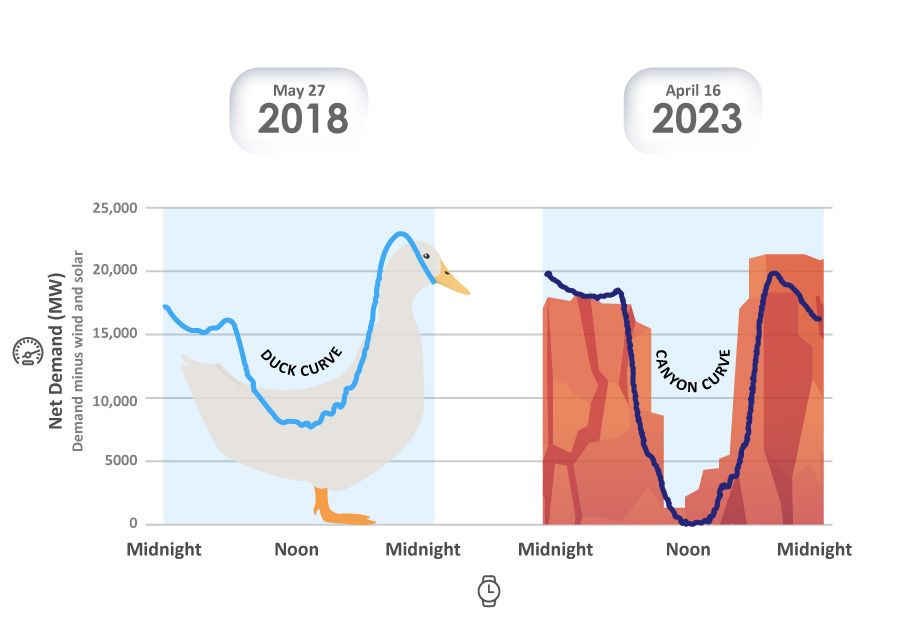
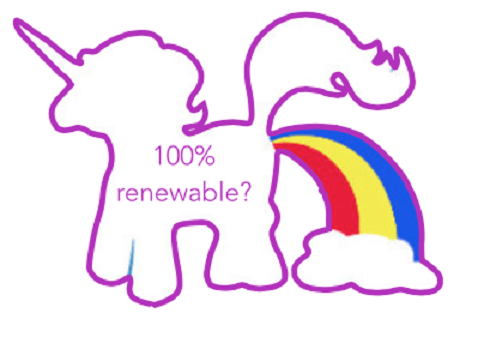

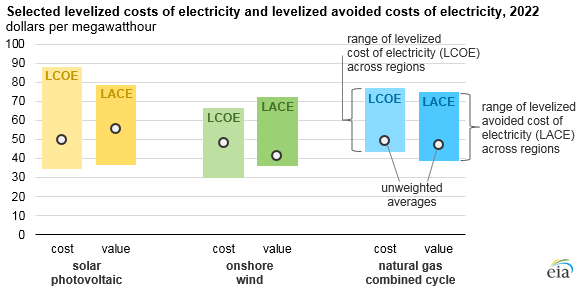

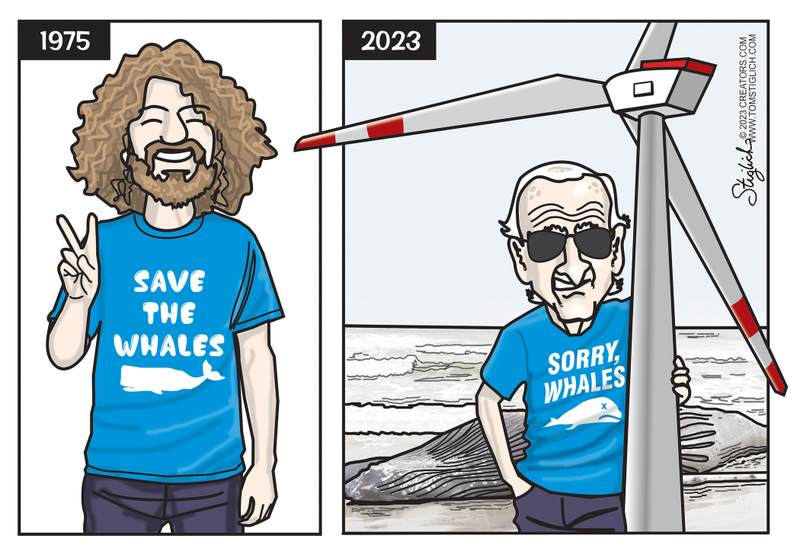


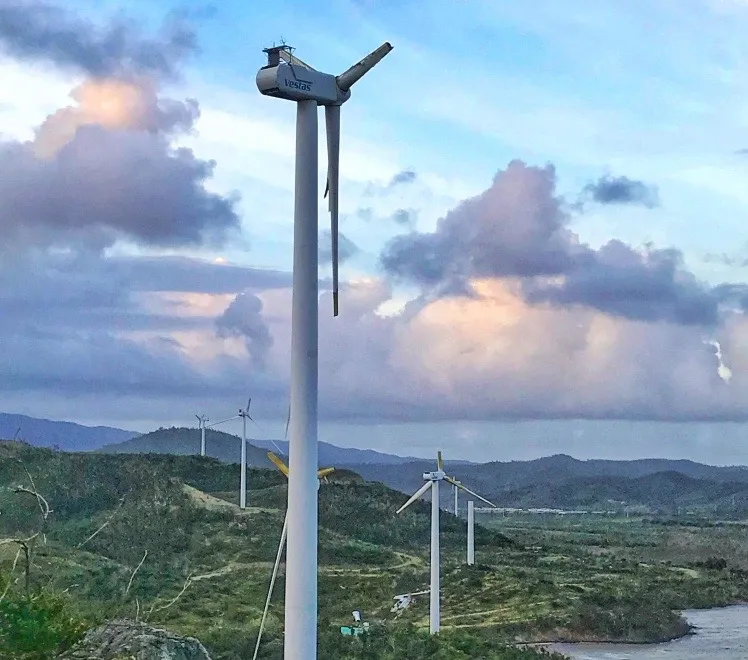




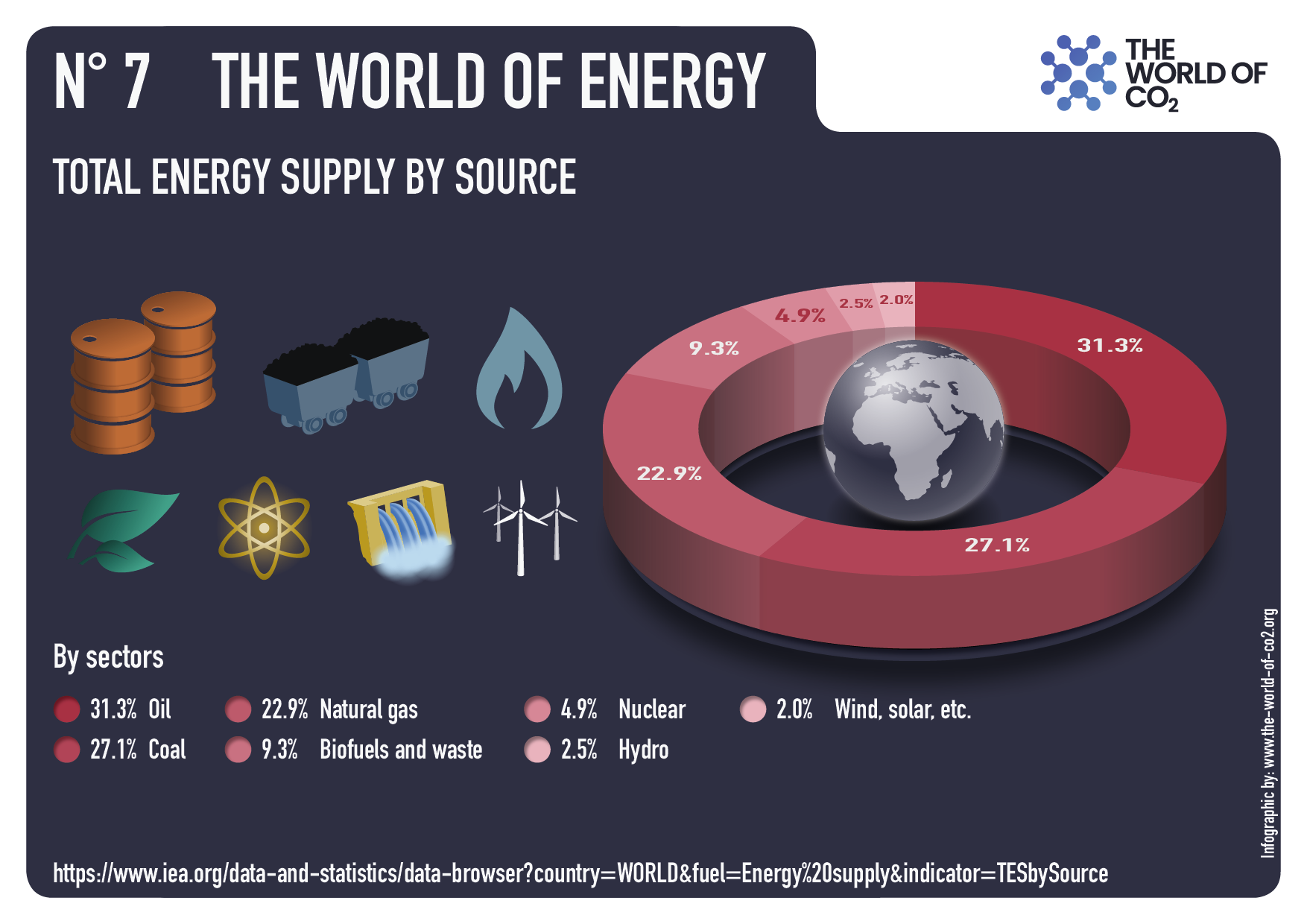
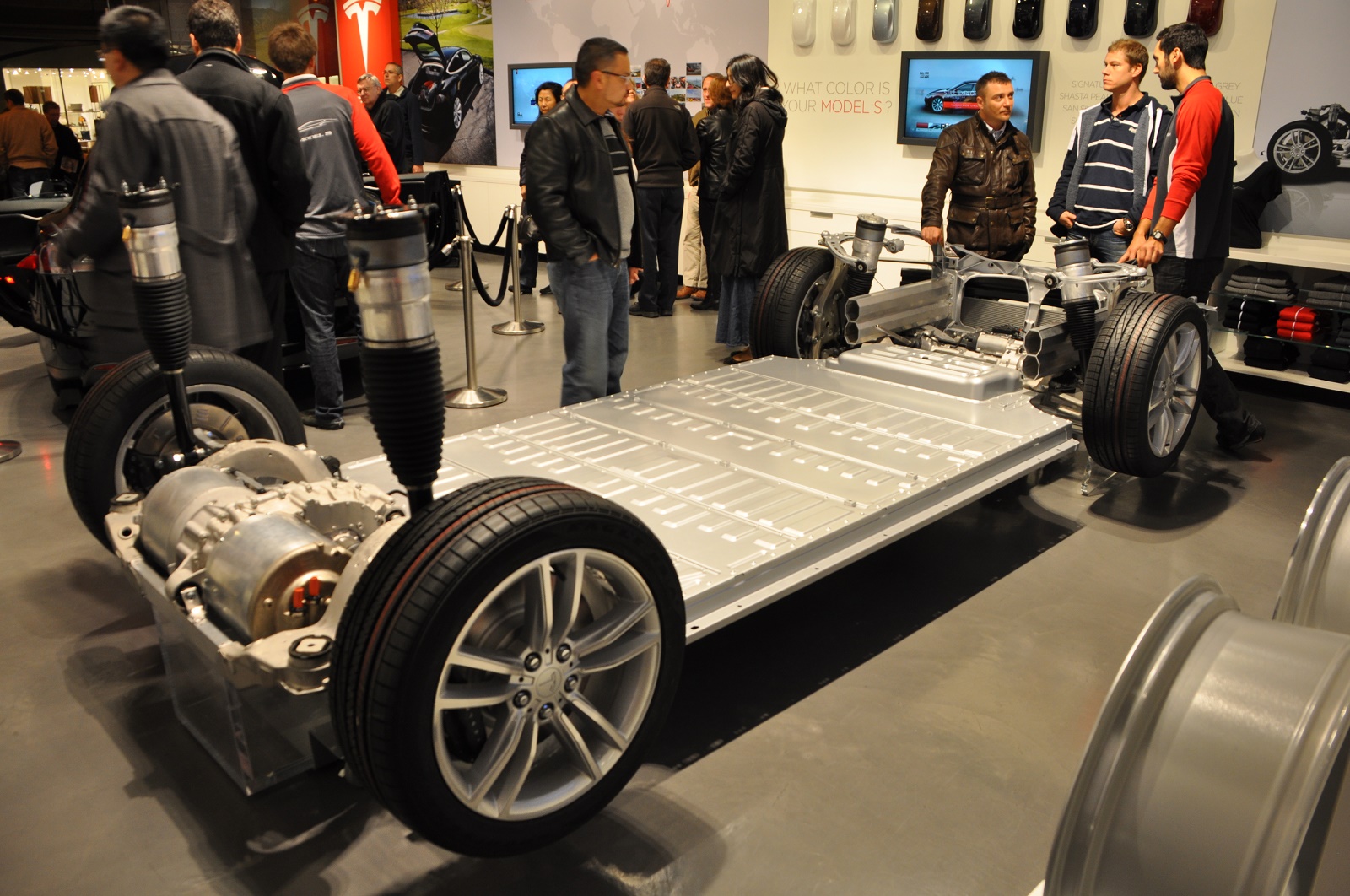



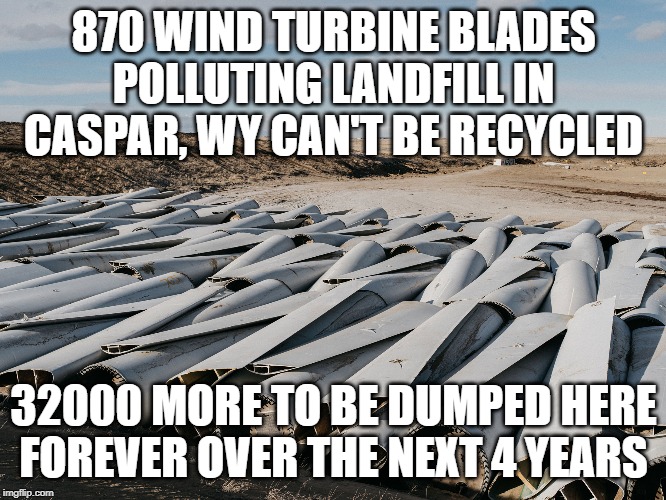
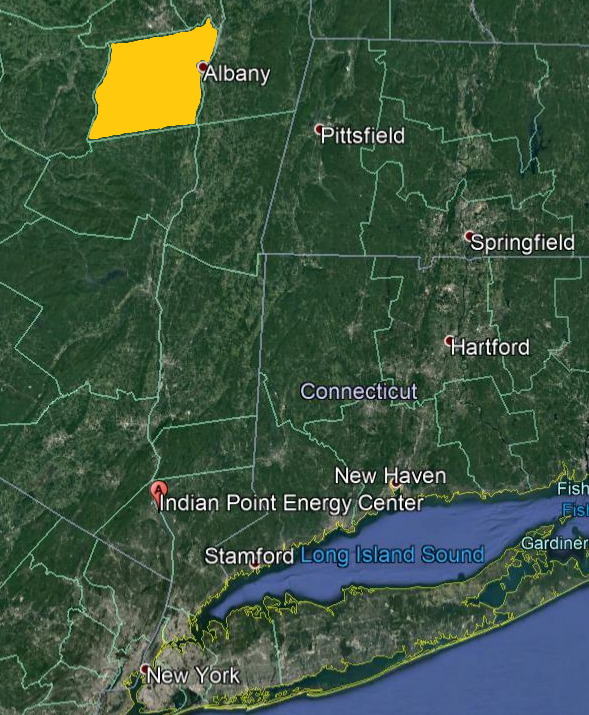


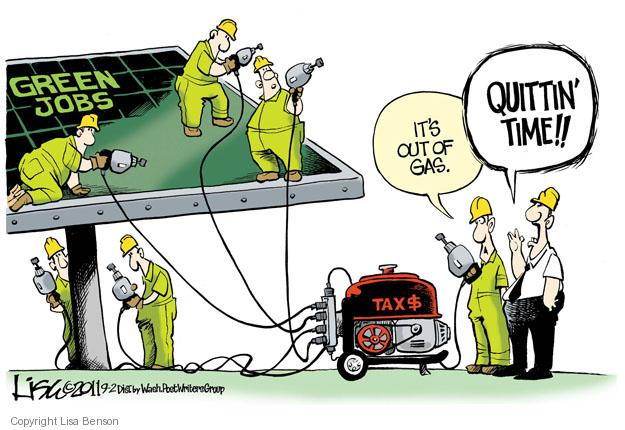



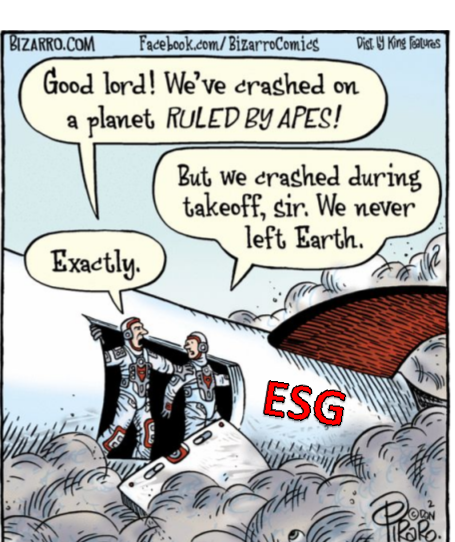


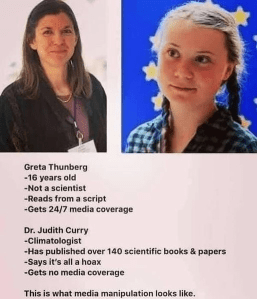


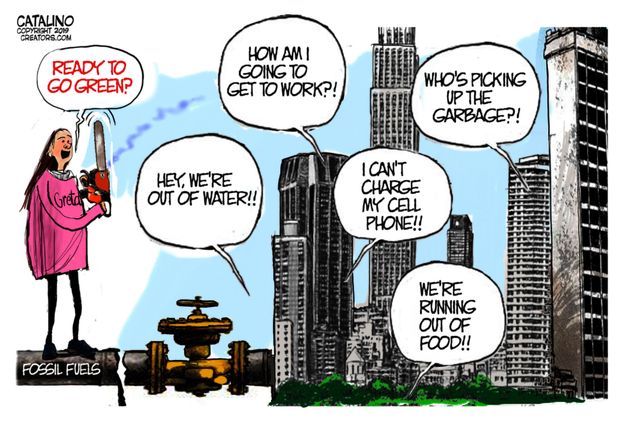 To me, it is wild that people would protest against energy production during an energy crisis. That they would have a fit of the vapours over energy subsidies, coal use and gas exploration at a time when people are struggling to keep the lights on. It’s not just dumb – it’s cruel. Imagine how out of touch with ordinary people’s concerns you would need to be to swan into a country experiencing a severe energy crisis and essentially say: ‘Stop supporting energy production.’ What was Greta thinking? She’s become a globetrotting enemy of progress, popping up all over the place to demand that we turn off the lights and don a hairshirt in keeping with her dystopian dream of restoring a pre-capitalist idyll that never actually existed.


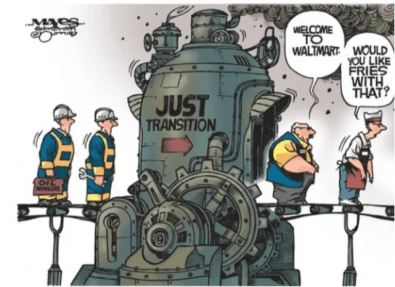


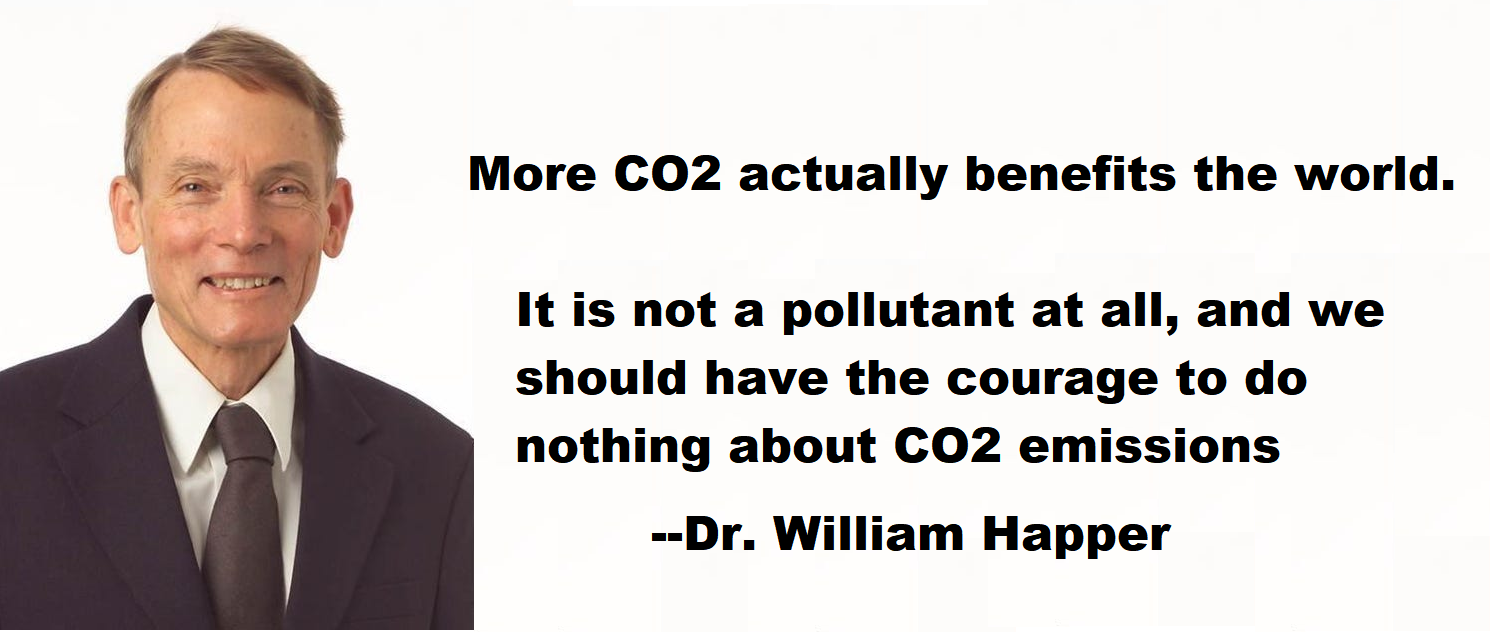


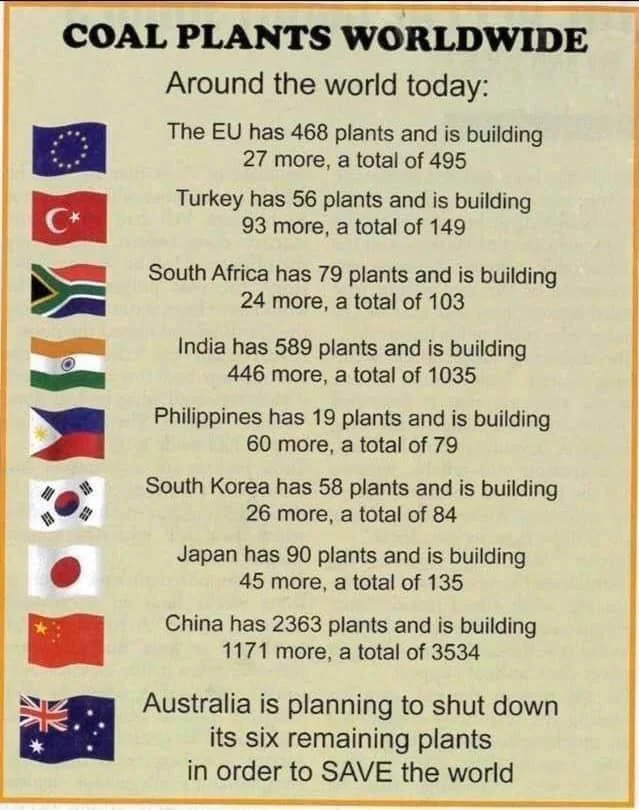


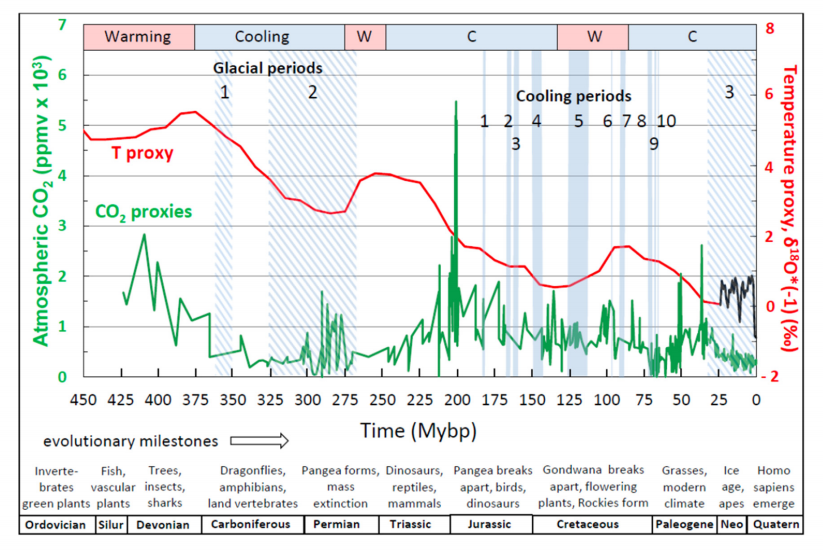

 Science Matters