Green Energy Profiteering Scam

J.B. Shurk writes at Gatestone Institute The Green Energy Profiteering Scam.  H/T Tyler Durden.  Excerpts in italics with my bolds and added images.

“Green” Profits Can Only Rise if Citizens’ Freedoms Fall

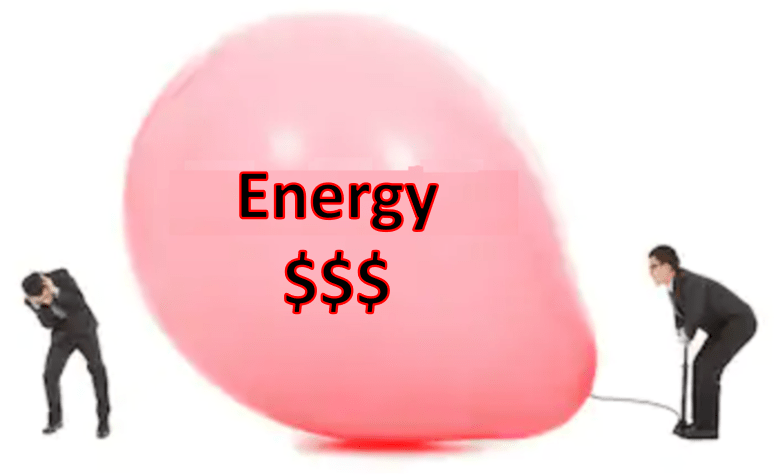
In free markets, commodities bought and sold possess perceived value. When a buyer and seller reach an agreed upon price for any product, there is a “meeting of the minds.” The value of any natural raw material is proportional to its scarcity. The more of it there is, and the more easily it can be obtained, the less value it holds. A vendor who sells ordinary rocks cannot make a living when his product is found freely all over the ground. If he transacts in gold or silver, diamonds or rubies, however, his hard-to-find “rocks” are worth a small fortune.

If only there were a way to turn ordinary rocks into valuable commodities!

There are, in fact, two well-known ways to do so. An unscrupulous vendor could simply paint ordinary rocks gold and pretend that common minerals are rare, and an unsuspecting customer might never be the wiser. Through fraud, the seller can hijack the perceived value of his goods and undermine the agreed “meeting of the minds” between himself and any deceived customer. His “precious” rocks actually hold no value but provide him with ill-gotten gains. Over time, however, this type of fraud does not last. More discerning customers eventually catch on to the ruse, and that information is shared among prospective buyers. And unless he is quick to move on to a new town with new buyers yet to be deceived, old swindled customers are likely to end his livelihood or much worse. Engaging in fraud comes with serious personal risks.

There is another, safer way, however, to turn ordinary rocks into valuable commodities. The vendor could petition the king of the realm for the exclusive right to gather and sell ordinary rocks. If granted such an extraordinary license — whereby ordinary rocks may only be possessed if first stamped with the vendor’s mark — then an abundantly available natural resource becomes scarce overnight. What was once free now costs whatever the vendor and the king’s tax-collecting chancery decide to charge for the use of regulated rocks. Perhaps citizens with special status or recognized allegiance to the king will still get their rocks for next to nothing. Yet the classical mechanics of supply and demand still come into play for everyone else. Even if the price charged for an officially sanctioned rock is kept low, its value on secondary markets is determined entirely by the scarcity of available vendor-stamped rocks.

How much are licensed rocks worth if they are the only ones that may be legally owned? When a king and vendor conspire to make only a small fraction of available rocks “legal,” then their manufactured “unavailability” makes them extremely valuable. Legally imposed scarcity comes with much fewer personal risks. Licensed monopoly on high-demand commodities is a license to print money.

From this lens, it is easy to see why so many investors love
government intervention in energy markets.

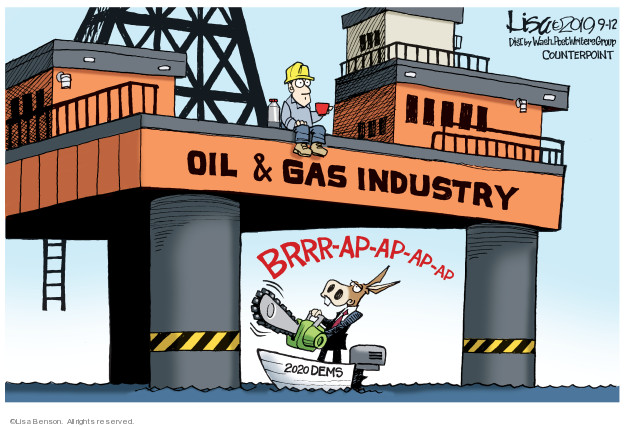
  • When governments limit drilling and mining for hydrocarbons in the ground, they manufacture scarcity.
  • When only certain wealthy individuals and companies can afford artificially expensive hydrocarbon energies as regular business costs, then budding entrepreneurs and small firms can no longer compete. Those at the peak of society’s wealth pyramid have a much easier time staying on top when the same natural sources of hydrocarbon energy once used to amass fortunes are now denied to those who would do the same.
  • A war on “fossil fuels” is a superb tactic for protecting private market share. It is a profitable ideological cause for fattening government revenues. And it is a constant source of income for environmental “nonprofits” and other special interests….
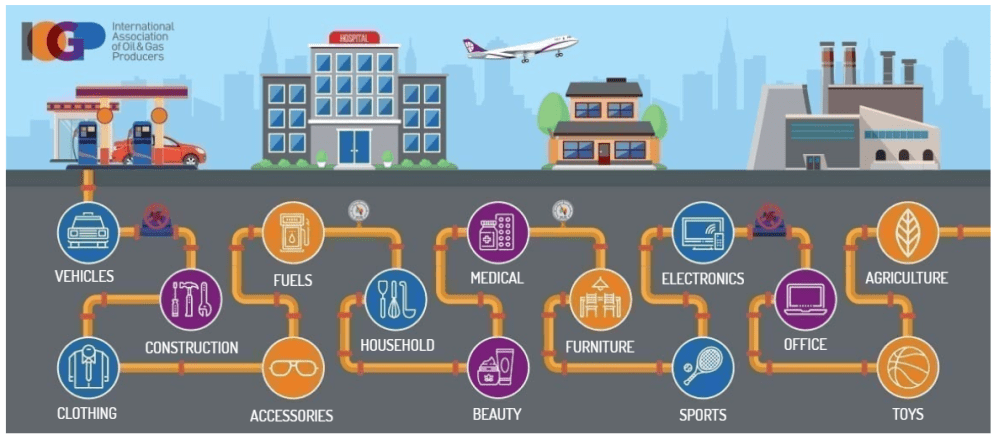
  • Can plastics, heating oil, and most synthetic materials found around a home be magically manufactured without petroleum?

  • Can the global population stave off famine and starvation if farmers are forced to overhaul agricultural and livestock production methods in order to abide by “green” laws limiting the use or release of carbon dioxide, methane, nitrogen, and phosphate — molecules and compounds essential to basic farming and high crop yield fertilizers?
  • Ideology hijacks the market’s natural direction toward an objective and transparent “meeting of the minds.” There is an unspoken but unmistakable fraud. Until governments, including hostile adversaries such as Russia and the United States, conspired to limit the use of hydrocarbon energy and “go green,” the idea that anybody could turn a profit from the wind or sun would have seemed as absurd as a vendor selling rocks freely available all around us.

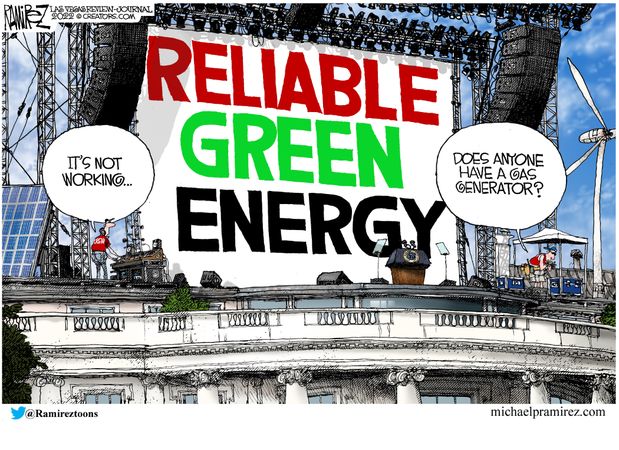
  • Are electric vehicles as powerful as their internal combustion engine counterparts? Can wind and solar energies really provide nations with reliable power grids robust enough to avoid rolling blackouts? Can plastics, heating oil, and most synthetic materials found around a home be magically manufactured without petroleum?
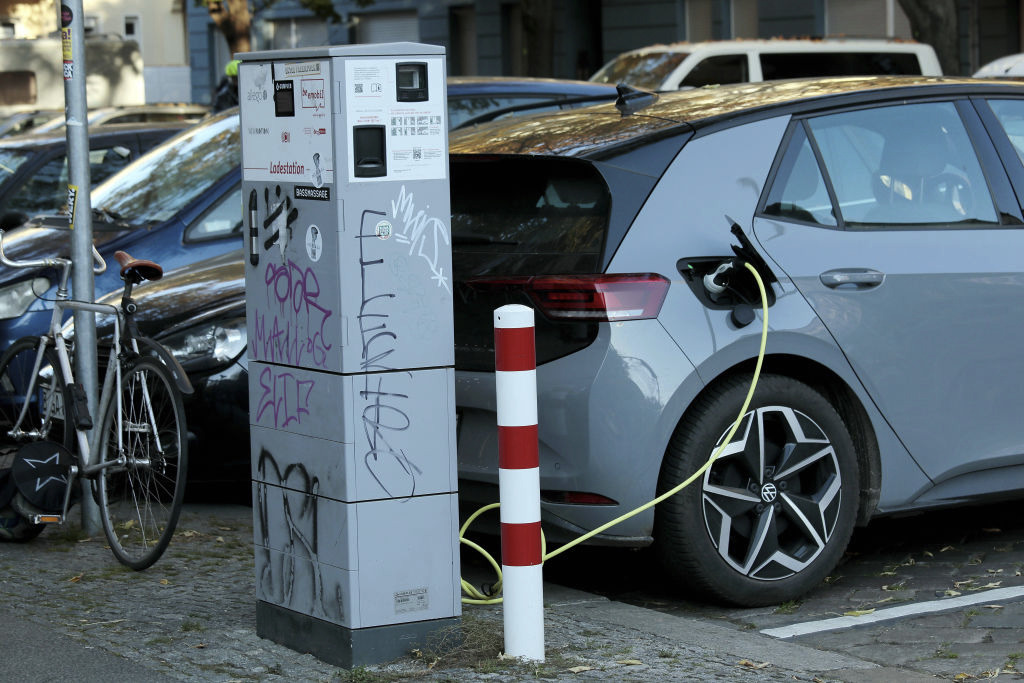
Pictured: An electric car at a charging station in Berlin, Germany. (Photo by Carsten Koall/Getty Images)

Will not these “green” initiatives wind up looking remarkably similar to the example of the unscrupulous vendor above who learned how to swindle his customers by treating common minerals as rare and painting ordinary rocks gold — or perhaps now, a resplendent green?

Is that not what the imposition of Environmental, Social, Governance (ESG) standards upon markets accomplishes? Is ESG not a concerted effort to warp trading markets with acutely political aims that seek to reward companies and capital investments for their pledged commitment to ideological beliefs rather than their likelihood for generating future profits?

When boardrooms and investors distort free markets by treating stocks and other assets as more valuable than they really are, simply because they are painted a shiny “green,” then ESG overvaluation turns misguided yet “politically correct” fantasies into gold.  Government-enforced environmentalism has created its own class of “green” billionaires. Whenever and wherever governments have mandated that citizens purchase certain goods or suffer legal consequences, the producers of those goods have made financial killings.

Anyone once blissfully unaware of that kind of crummy crony capitalism surely learned a thing or two watching global vaccine mandates drive up pharmaceutical industry profits, while government-granted indemnification clauses rendered vaccine makers free from financial liability for any resulting injuries.

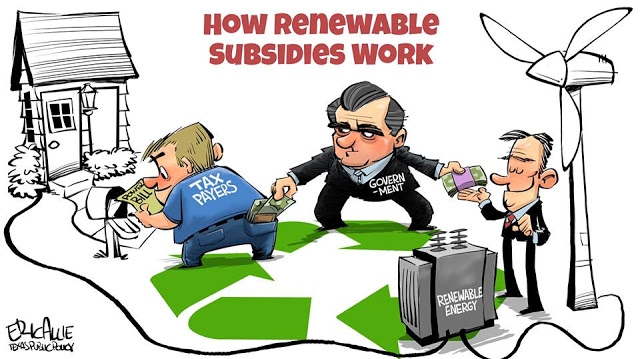
When governments subsidize entire industries, force citizens to purchase those industries’ products, and protect those industries from the legal consequences of their products’ harm, then money flows into the pockets of those with ownership stakes.

Does that sound remarkably similar to another political philosophy that is predicated on the abolition of all private property? What is that old saying somewhat apocryphally credited to Vladimir Lenin? “The capitalists will sell us the rope with which we will hang them.” Or perhaps today it is the “green” capitalists who make money by rendering food and fuel scarce, virtue-signaling “green” advocates who cheer the one-sided transaction, and the increasingly impoverished Western citizens who end up worse off than ever.

This much is certain: irrespective of prevailing politically correct Western “wisdom” and the current environmental “madness of crowds,” should the hydrocarbon bedrock of the global economy be traded for worthless “green” rocks, neither wealthy capitalists nor poor citizens will long survive.

Expensive Energy is not a Bug, but Biden Agenda’s Core Feature

Marlo Thomas explains in his Real Clear Energy article Expensive Energy Is a Core Feature, Not a Bug, of Biden’s Climate Agenda.  Excerpts in italics with my bolds and added images.

The great Austrian economist Ludwig von Mises was being generous by describing interventionism’s nasty side-effects as “unintended.” Some younger interventionists are naïve, and know not what they do, but the older, street-smart captains of progressive politics understand the harms their policies entail. For them, the adverse consequences are features, not bugs.

The only downside is the risk of political retribution at the polls.

That’s the predicament in which the Biden administration now finds itself. It is also the theme of “Energy Inflation Was by Design,” a new report by supply-chain consultant Joseph Toomey.
[Synopsis is in previous post Energy Inflation Playbook]

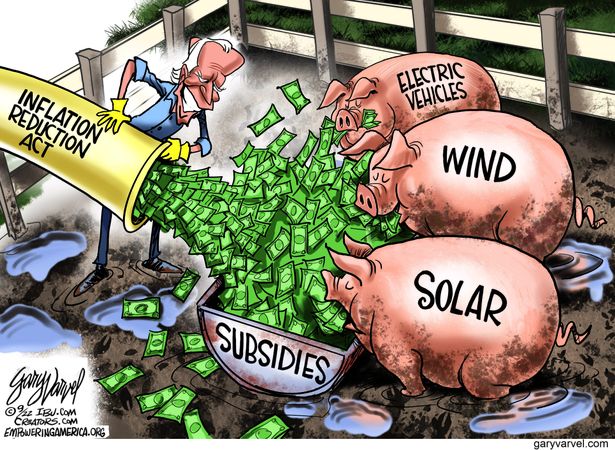
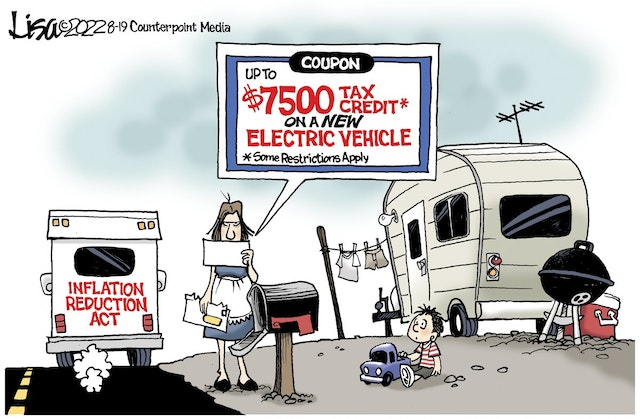
President Biden and congressional Democrats want to replace fossil fuels with a “zero-carbon” energy system. Their biggest win to date is the comically mistitled Inflation Reduction Act (IRA). A Penn-Wharton analysis estimated that the IRA would increase federal climate and energy spending by $369 billion over ten years. A recent article in The Atlantic touts a Credit Suisse estimate that actual climate-related federal support could reach $800 billion. That’s because the incentives for electric vehicles and renewable energy are “uncapped tax credits.” Moreover, since federal spending leverages private-sector investment, total economy-wide green-tech spending could increase by as much as $1.7 trillion.

Nor is that all. The Department of Energy (DOE) estimates that the IRA has increased its loan program authorities by up to $350 billion.

No wonder Democrats celebrated the IRA’s enactment. No bigger program to rig energy markets against fossil fuels was ever enacted.

The IRA aims to enrich thousands of enterprises, tens of thousands of employees, and millions of shareholders—all dependent on Democrats to keep the gravy train flowing. Hardly an “unintended” consequence.

But voters see and feel the downsides of Biden’s war on fossil fuels: the high costs of gasoline, electricity, and other utilities, which in turn increase the costs of food, rent, and consumer goods. Those effects, moreover, coincide with high general inflation, a cratering stock market, and negative GDP growth in two consecutive quarters. Biden tries to blame Vladimir Putin and Big Oil for America’s energy woes. That is nonsense, and the public isn’t buying it.

Toomey marshals overwhelming evidence that “energy inflation” is a core feature of the president’s climate agenda. And how could it be otherwise? A core progressive article of faith is that fossil fuels are too cheap because market prices do not reflect the “social costs” of carbon dioxide (CO2) and other greenhouse gases (GHGs). Accordingly, no matter how expensive or scarce fossil energy may become for other reasons, taxing or capping fossil-fuel consumption to make it even more costly is hailed as a “climate solution.” Of course, handicapping fossil fuels is also touted as a way to make renewables more “competitive.” As President Obama enthused, cap-and-trade will “finally make renewable energy the profitable kind of energy in America.”

The public, however, has repeatedly spurned proposals to tax or cap the carbon content of fuels or emissions. So, U.S. progressives now concentrate on rigging energy markets via targeted regulations, state-level renewable-energy quotas, and subsidies. As noted, the IRA sets a new standard for anti-fossil-fuel subsidies.

President Biden seeks to cut U.S. carbon emissions by 50-52 percent below 2005 levels by 2030 and achieve a zero-emission electricity sector by 2035. That means that about half of all U.S. fossil-fuel consumption must end in eight years. Few investors want to park their capital in rapidly contracting industries. So, thanks to Biden, the market forecasts that supplies of oil, gas, and coal will decline relative to demand—and prices will rise. The expectation of shrinking supplies and higher future prices puts upward pressure on energy prices today.

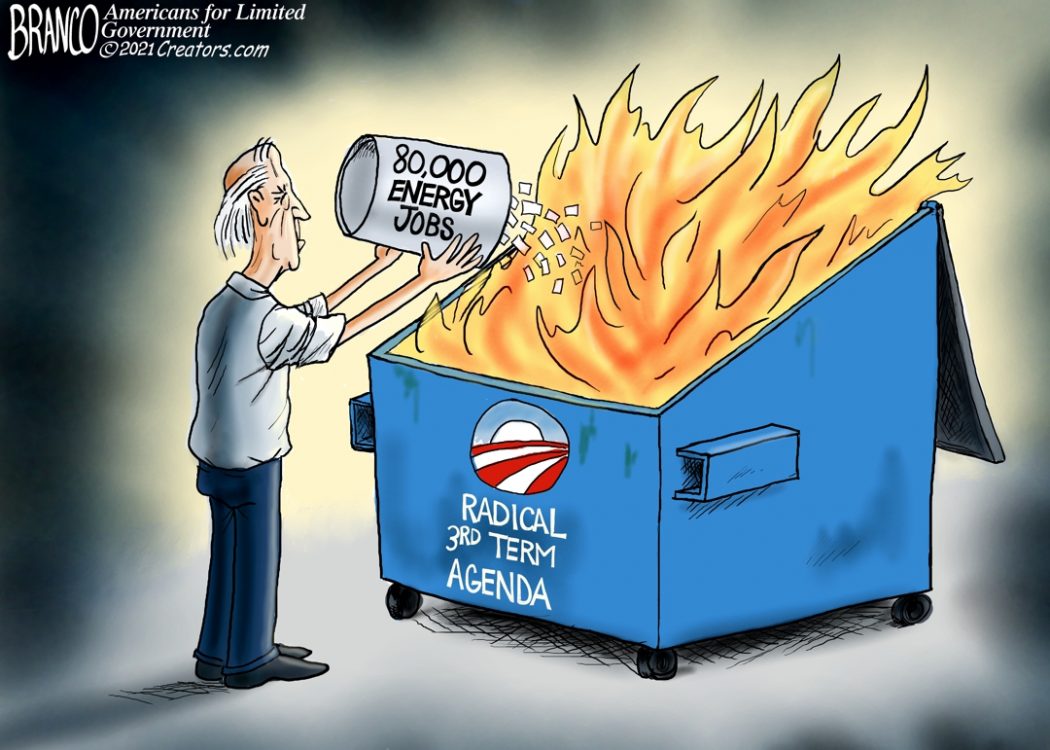
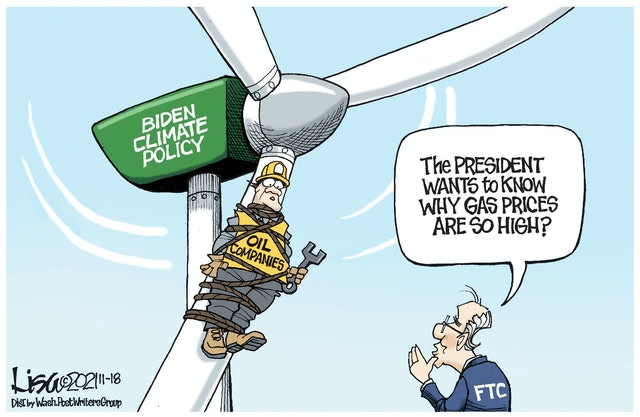
An irony noted by Toomey is that by endangering fossil-fuel energy supply, Biden has not only increased fossil-fuel energy prices but also boosted oil and gas company profits and stock values. The short-term enrichment of oil companies may well be an unintended consequence of a long-term agenda to put them out of business. On the other hand, Biden’s boost to oil industry profits is also the setup for further interventions popular with progressive activists and politicians—windfall profits taxes, export bans, and Federal Trade Commission investigations of “anti-consumer behavior.”

Toomey demolishes the Biden administration’s allegation that oil companies are deliberately reducing refinery utilization to constrict supplies and raise prices. In fact, refineries are running at higher utilization rates than ever (about 94 percent).

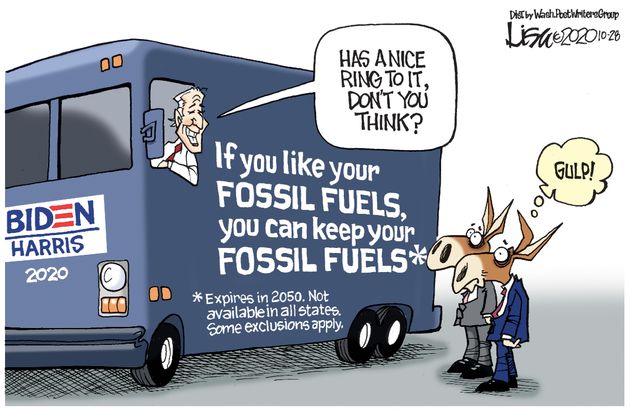
As a presidential candidate, Joe Biden promised to “get rid of fossil fuels,” assuring one activist, “I guarantee you. We’re going to end fossil fuel.”

Toomey reviews several Biden initiatives that back up such threats. The major ones, besides the government-wide, IRA-funded effort to channel “the flow of capital toward climate-aligned investments and away from high-carbon investments,” include:

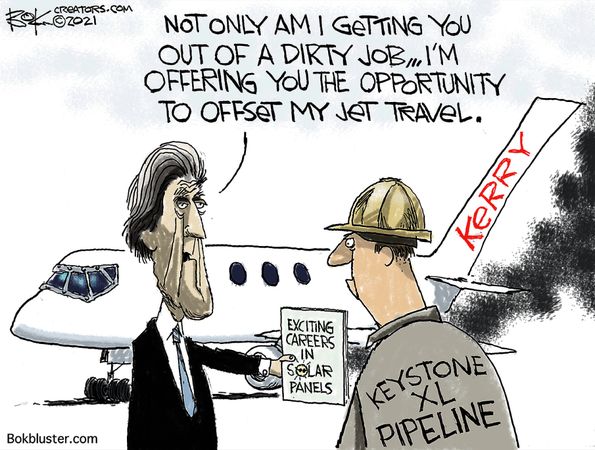
Cancelling the Keystone XL Pipeline on Inauguration Day;

Suspending new oil and gas leases on federal lands;

Reviving social-cost-of-carbon sophistry;

Halting petroleum-development activity in Alaska’s National Arctic Wildlife Refuge;

Rejoining the Paris Climate Accords without asking for the Senate’s advice and consent;

Considering a non-attainment designation for ozone pollution that could curb drilling in the Permian Basin, which accounts for 43 percent of U.S. oil production; and

Imposing stricter methane standards for oil and gas production.

To provide historical context for the fiscal side of Biden’s climate agenda, Toomey discusses the Obama DOE loan program established by the American Recovery and Reinvestment (“Stimulus”) Act. The best-known program beneficiary was solar-panel manufacturer Solyndra, which filed for bankruptcy protection in 2011 despite receiving $535 million in DOE loan guarantees. Some readers may also recall a list of seven such “Stimulosers.”

In short, nearly seven out of ten Obama DOE loan recipients in a $32 billion loan program went bankrupt. The total federal financial support provided by the IRA for “climate-aligned” investments is potentially 36 times larger. The stage is set for scores of Solyndras. Toomey’s labor as a chronicler of the war on fossil fuels is nowhere near done.


Net Zero = Pro China + Pro Russia

Rupert Darwall explains in an Epoch Times article Democratic Party Captured by Environmentalists, Aiding Russia and China.  Excerpts in italics with my bolds and added images.

Environmentalists have captured the Democratic party and, in their push towards Net Zero, are aiding Russia and China, a senior fellow at RealClearFoundation, Rupert Darwall, says.

Furthermore, the push towards Net Zero has monopolized “the money,” as the group includes many Silicon Valley billionaires, intellectuals, and the mainstream media, Darwall told The Epoch Times and NTD’s Paul Greaney in an interview.

In the interview, which aired on NTD’s Fresh Look America on Oct. 12, Darwall said a prime example of environmentalists taking over the Democratic party, and monopolizing the money, is California.

There, billionaire environmentalists have instituted “an aggressive green agenda” that doesn’t negatively impact them but directly opposes the average California voters’ interests, he said.

“Voters, and particularly in the Central Valley, who endure stifling temperatures in summer, had to pay ruthlessly high prices to condition their homes. They don’t have beachfront properties that are cooled from the Pacific.”

Darwall added that because California is “essentially a one-party state,” voters can’t correct the “extreme environmental policies.” Plus, environmentalists use a version of McCarthyism to stifle opposition.

In the 1950s, U.S. Senator Joseph McCarthy accused thousands of innocent people and parties of disloyalty and allowing Communism to influence their lives and policies.

Darwall said environmentalists today use a similar tactic when they label anyone who disagrees with them as a “climate denier.”

“They know ‘denier’ is a very powerful term to be called. You may have seen a New York Times journalist interviewing the president of World Bank, and [the journalist asks] “are you a climate denier?’ It’s designed to chill debate. Not just chill it but prevent people questioning.”

[ Tip:  Q:  Aren’t you a climate denier?  A: I am a climate thinker. ]

Green Imperialism

If this progression towards Net Zero continues, Darwall said he knew who will win.

“China and Russia. I mean, basically, the opponents of the West, geopolitically from stepping back, but they’re the big winners from the West deciding to bring itself to its knees. I mean, no modern economy can function without cheap, abundant energy and fossil fuel derived energy.”

“We’re basically cutting off our legs. The pain will increase. People are blaming Putin for the terrible winter the Europeans are going to experience this this year. But the way I would put it is Net Zero is Vladimir Putin’s best ally.”

Darwall further added that not only is the West hurting itself and helping Putin, but it’s also engaging in a sort of “green imperialism.”

As mentioned above, the president of the World Bank had been attacked, specifically by Al Gore, Darwall said, because the World Bank was one of the “big providers of finance to Africa.”

“There are over a billion Africans, and they are energy starved. Africa is an energy-starved continent. And the effect of Western green policies is to freeze, as it were, African Development at a very low level.”

Darwall continued, “Grid-delivered electricity is the doorway to the modern world. If you compare the 19th century to the 20th century, the big change is electricity.

“For Africa to flourish and develop, it needs reliable, cheap, grid-delivered electricity. And that is what people like Al Gore and John Kerry are denying Africans.”

Darwall specified that people like Kerry and Gore are pursuing an agenda that geologically damages the West, its strategic interest, and the economic and social interests of less developed nations.

Political Reckoning

As a result, Darwall believed a political reckoning is coming to the West. He says that as gas prices and inflation continue to climb, voters will show their displeasure for extreme environmental policies and “vote for the other party.”

That benefits Republicans, as under Donald Trump, the United States was an energy superpower.

“In those four years he was president, America was an energy superpower. And now this energy superpower is going around to the Gulf, begging OPEC plus to increase oil production. It’s absolutely extraordinary.”

As for Europe, Darwall believes significant political changes will likely occur in Britain and other countries, but Germany is fully committed to Net Zero.

When asked what would happen if the West reversed its Net Zero policy and returned to producing oil and gas, Darwall replied, “That’s a catastrophic outcome for Russia. Because Russia is a natural gas oil exporting country and economy, and it really, it needs those foreign currency earnings.

“Its economy depends on it. So, it would be terribly bad. It would be awful for Russia. That’s why I say that Net Zero is Vladimir Putin’s best ally.”

See also West’s Obsession with EV Tech Puts China in World Driver Seat

Energy Inflation Playbook

Rupert Darwall explains the intentional inflation of energy prices world wide in his forward to a Real Energy study by Joseph Toomey Energy Inflation Was by Design.  The title is a link to the pdf.  Darwall’s introduction was published at the Federalist entitled Energy Inflation Isn’t An Accident, It’s A Planned Demolition.  Excerpts in italics with my bolds and added images.

Our current energy crisis was self-inflicted, a foreseeable outcome
of policy choices made by the West, and it’s getting worse
.

The West is experiencing its third energy crisis. The first, in 1973, was caused by the near-quintupling of the price of crude oil by Gulf oil producers in response to America’s support for Israel in the Yom Kippur war. Their action brought an end to what the French call the trente glorieuses — the unprecedented post–World War II economic expansion.

The second occurred at the end of the 1970s, when Iran’s Islamic revolution led to a more than doubling of oil prices. This again inflicted great economic hardship, but the policy response was far better. Inflation was purged at the cost of deep recession. Energy markets were permitted to function. High oil prices induced substitution effects, particularly in the power sector, and stimulated increased supply.

In the space of nine months, the oil price cratered from $30 a barrel in November 1985 to $10 a barrel in July 1986. It’s no wonder that the economic expansion that started under Ronald Reagan had such long legs.

This time is different. The third energy crisis was not sparked by Saudi Arabia and its Gulf allies or by Iranian ayatollahs. It was self-inflicted, a foreseeable outcome of policy choices made by the West: Germany’s disastrous Energiewende that empowered Vladimir Putin to launch an energy war against Europe; Britain’s self-regarding and self-destructive policy of “powering past coal” and its decision to ban fracking; and, as Joseph Toomey shows in a recent powerful essay, President Biden’s war on the American oil and gas industry.

Hostilities were declared during Joe Biden’s campaign for the Democratic presidential nomination. “I guarantee you. We’re going to end fossil fuel,” candidate Biden told a climate activist in September 2019, words that the White House surely hopes get lost down a memory hole. Toomey’s paper has all the receipts, so there’s no danger of that.

As he observes, Biden’s position in 2022 resembles Barack Obama’s in 2012, when rising gas prices threatened to sink his reelection. Obama responded with a ruthlessness that his erstwhile running mate lacks. He simply stopped talking about climate and switched to an all-of-the-above energy policy, shamelessly claiming credit for the fracking revolution that his own Environmental Protection Agency (EPA) tried to strangle at birth.

Passage of the comically mistitled Inflation Reduction Act places this option beyond Biden’s reach, even if he were so inclined. Democrats are hardly going to take a vow of climate omertà when they’ve achieved a political triumph of pushing through Congress what they regard as the most significant climate legislation to date.

Although the price of oil has slipped back from recent highs, the factors behind high gasoline prices remain in place. Foremost among these is the steep decline in U.S. oil refinery capacity triggered when Covid lockdowns crushed demand but continued after the economy reopened. There has never been such a large fall in operable refinery capacity. Moreover, Gulf Coast refineries were operating at 97 percent of their operating capacity in June 2022. As Toomey remarks, “There isn’t any more blood to be squeezed out of this turnip.”

Toomey identifies five factors driving this decline in refinery capacity.

EPA biofuel blending mandates impose crippling costs on smaller refineries. 

When conventional refineries are converted to processing biofuels, up to 90 percent of their capacity is lost. Biofuel mandates cost consumers far more than federal excise taxes. Toomey demonstrates that the Biden administration’s claim that biofuel mandates protect consumers from oil-price volatility is totally false; biofuel prices, he writes, “are essentially indexed to the price of crude oil.”

Biden could order the reversal of the EPA’s retroactive biofuel threshold rules. That he has not done so demonstrates that the administration isn’t serious about making energy affordable again. High prices for fossil fuel energy are an intended part of the plan.

Corporate and Wall Street ESG policies are another factor driving refinery closures.

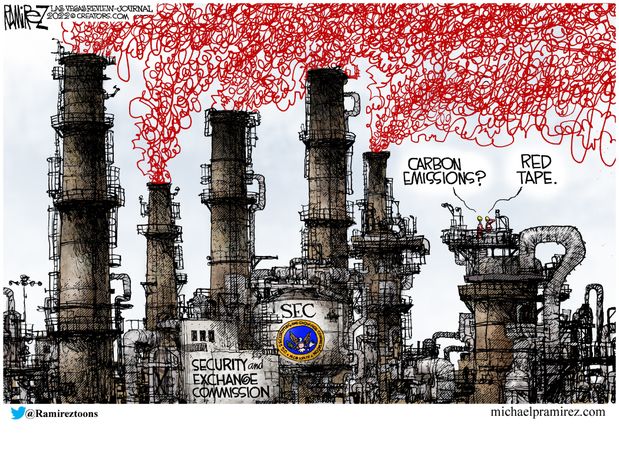
Especially facilities owned by European oil companies have to meet punishing decarbonization targets that will effectively end up sunsetting them as oil companies. If finalized as proposed, the Securities and Exchange Commission’s proposed climate disclosure rules, with the strong support of the Biden administration, will heighten the vulnerability of U.S. oil and gas companies to climate activists and woke investors to force them to progressively divest their carbon-intensive activities, such as refining crude oil, and eventually out of the oil and gas sector altogether.

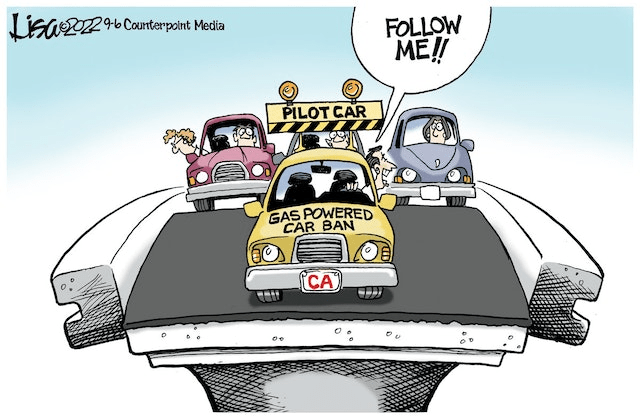
Aggressive federal policies aimed at phasing out gasoline-powered vehicles.

To these should be added aggressive federal policies aimed at phasing out gasoline-powered vehicles in favor of electric vehicles (EVs); an administration staffed from top to bottom by militants who believe that climate is the only thing that matters in politics; and an increasingly hostile political climate (“You know the deal,” Biden said of oil executives when campaigning for the presidency. “When they don’t deliver, put them in jail”).

These policies, argues Toomey, will see China become the world’s leading oil refiner for years to come. Will Biden find himself asking China for supplies of refined gasoline? He might well find himself being saved from such an unfortunate position, made more so by Speaker Nancy Pelosi’s recent trip to Taiwan, by help from the other side of the southern border.

Mexico is constructing a $12 billion refinery, due to start producing gasoline next year. Perhaps President Biden’s next foreign trip should be to Mexico City.


Biden Feds Kneecapped Oil and Gas

Report from Just the News After Trump energy ‘renaissance,’ Biden ‘kneecapped’ oil and gas producers: industry spokesman.  Excerpts in italics with my bolds and added images

The president of the U.S. Oil and Gas Association contrasted “the greatest energy renaissance in our history” under Trump with “regulatory assault and the attempt to defund us and to debank us on Wall Street” by the Biden administration.

The U.S. oil and gas industry quickly went from a “renaissance” under former President Donald Trump to a new dark age under a Biden administration hostile to traditional energy sources, the head of the industry’s trade association said Friday.

“President Trump, to his credit, presided over the greatest energy renaissance in our history,” Tim Stewart, president of the Oil and Gas Association, said on the the “Just the News, No Noise” TV show. “Right before the pandemic, we were producing 13 million barrels [of oil] a day. For all intents and purposes … we were a net exporter of energy.”

Amid buoyant expectations of increasing U.S. production to 15 million barrels per day, the industry was suddenly rocked by consecutive shocks: the pandemic, followed by the Biden administration war on fossil fuels.

“We came out of COVID right into the Biden administration, which then kneecapped us,” Stewart recounted. “Between their regulatory assault and the attempt to defund us and to debank us on Wall Street, we’re still a million or million and a half barrels behind where we were. And we’re 3 million barrels behind where we could be. And that’s really unfortunate. And that’s unfortunate for our European allies in particular.”

Now, even some Democrats are recognizing the administration has taken its crusade against oil and gas too far, too fast, says Stewart.

“I’ve had some interesting conversations with members of Congress just in the last two weeks, of both the Senate and the House and Republicans and Democrats,” he said. “And there are Democrats who are starting to say, ‘Maybe we went a little too far.’ It’s a year too late. But we welcome that.”

Stewart was asked if the Oil and Gas Association would ever get a call seeking advice from the Biden administration.  “I don’t know if we ever will hear from them to be honest with you,” Stewart answered.

“The number of people who are political appointees in the administration who came out of our industry or who really understand it, you can literally count on one hand.”

See also Wake Up and Smell the Fossil Fuel Insanity


Climate Imperialism

Kelli Buzzard writes Climate Imperialism at American Mind to explain how climatist overlords are oppressing the lives of ordinary people who live in places like the nation of Hungary.  Excerpts in italics with my bolds and added images.

E.U. energy mandates impose needless suffering in the name of elite fantasy.

The American intellectual Rob Henderson coined the term “luxury beliefs” to describe the status-conferring ideas and opinions of wealthy elites. Examples of these beliefs include “defund the police,” “dismantle the patriarchy,” and “net zero carbon now.”

Luxury beliefs have the attractive quality that those most likely to promote them rarely face their consequences. For example, the “defund the police” crowd tends not to live in crime-ridden inner-city neighborhoods that count on the police to maintain order. Statistically, those who rage against the patriarchy and traditional marriage eventually marry but divorce at much lower rates than other Americans.

Nowhere is this trend more clear than in the disastrous realm of climate policy.

Climate activists who call for a ban on fossil fuel consumption and a phase-out of the combustion engine almost always live in metro areas where they don’t need a car. If they drive, they can afford $5-a-gallon gasoline or can buy a $66,000 electric vehicle.

Meanwhile, their luxury beliefs become public policy and hurt the rest of us.

In recent months, for example, the U.S. government passed a climate change bill masquerading as a measure to reduce inflation. In Europe, the E.U. has committed to becoming carbon neutral by 2050. The uber-elite internationalist group, the World Economic Forum, linked arms with the Chinese Communist Party in a bid to “radically transform” the world economy and stave off “climate catastrophe,” which amounts to the “real battle of our time.”

The premises of climate alarmism are almost all entirely untrue. Natural disaster-related deaths have declined, not increased, and plastic waste danger is overblown. While the world’s capacity to produce more food has skyrocketed, climate change has contributed minimally to the world’s wars, and the destruction of rainforests has little to do with changes in the climate.

But the fantasies of climate hysteria prompt hasty, radical action, resulting in developing nations being denied the cheap energy sources they need–coal, wood, dung, fossil fuels—to grow wealth, rise out of abject poverty, and enjoy the option of developing green policies in the future.

Hungary and Cold

The case of Hungary, where I work and write, is not as dire as in impoverished places like rural Asia or Sub-saharan Africa. Nonetheless, the carbon-neutral policies from Brussels, London, and Washington have affected every aspect of Hungarian society.

Hungary is a small, landlocked former Soviet-bloc nation located in the heart of Europe. As a member of the European Union, Hungary must adopt European Green Deal policies, which seek to “decarbonize” the continent by 2050. This has resulted in a push to diversify the nation’s energy supply by building solar farms, embarking on new nuclear energy plant projects, and installing solar panels on government and residential buildings. But green energy sources are not only insufficient to meet the nation’s energy demands. They are also unreliable depending on the weather.

So Hungarians, ever-realistic people, rely on fossil fuel sources in the interim.

More than half of Hungary’s energy comes from imported fossil fuels. Like Germany and other Western European nations, Hungary has gotten most of its natural gas and oil supplies from Russia in the past. But Hungary has long sought to diversify its energy sources. Toward that end, during the Trump Administration, the Hungarian government inked a deal to import natural gas from America through a Croatian port. The agreement was promising, as America was an energy-surplus country and a willing trade partner. The deal fell apart, however; the United States canceled the contract on day one of the Biden Administration.

Hungary has also sought to offset its fossil fuel consumption by adding nuclear power to its mix, thus promoting greater energy security by relying less on Russian oil. The nation currently operates four nuclear power plants and is looking for an international partner to build two more. But, ironically, the only company to offer a bid on the project was Russian nuclear power giant Rosatom.

In the wake of the war in Ukraine, Hungary’s Prime Minister Viktor Orbán is routinely called “Putin’s Puppet” or similar derogations. Central to the name-calling is Prime Minister Orbán’s realism. While he supports efforts to reduce carbon emissions and plans to generate up to 90% of his country’s energy from nuclear and solar sources by 2030, Orbán’s more significant concern is how to preserve his nation’s way of life now. The truth is that Hungary needs oil and gas to survive. As a result, the Hungarian Prime Minister roundly rejects calls to cut off those sources, regardless of internationalist green energy policies or Russian aggression in the neighborhood.
At present, the war next door in Ukraine rages on and shows no signs of stopping, NATO sanctions notwithstanding. Russia shopped for new buyers and created new oil trade relationships with countries like China and India. Putin, his coffers burgeoning, recently turned off Europe’s gas supply, promising not to turn it back on until western sanctions are lifted. The action, of course, resulted in skyrocketing fuel costs across the continent, including here in Hungary. Like it or not, Europe, which has allowed itself to be captured by climate extremism, cannot at present survive on green energy sources alone. The continent relies on Russian gas and will for quite some time to come.

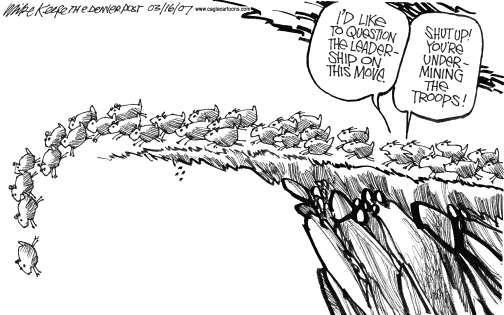
Climate Lemmings

Despite the prime minister’s resolve, Hungarians are facing the facts: heating prices are projected to increase at least 6-fold during the winter; a local university is considering closing its dorms; Budapest bridges and public buildings are shutting lights off two hours early every night; Budapest’s trams, trolleys, and escalators may shut down; sharp increases in freight rates threaten to spike the costs of household goods and food; a Hungarian energy company just went bust; the national opera reduced its performance line-up by half; and the tourist sector in Budapest may collapse altogether.

I recently celebrated my first anniversary of living in Hungary by moving into a smaller, more energy-efficient apartment and purchasing the warmest winter comforter money could buy. Because by all accounts, without drastic reductions in use, my energy costs will increase six-fold in the coming months. No luxury belief will change that.

See Punishing Climate Policies to Fix What’s Not Broken

See also my series World of Hurt from Climate Policies 

Snappy Answers to Energy Questions

Snappy answers to energy questions

This election season candidates are getting lots of energy-related questions. Here are pro-freedom, pro-human answers to some of the most popular ones. Alex Epstein

♦  What’s your policy on energy, environment, and climate?

I believe in energy freedom: the freedom to use all forms of energy, with laws against emissions and practices that are significantly harmful and reasonably preventable.

5 key energy freedom policies are:

1. Liberate responsible development
2. End preferences for unreliable electricity
3. Reform air and water emissions standards to incorporate cost-benefit analysis
4. Reduce long-term CO2 emissions via liberating innovation
5. Decriminalize nuclear¹

♦  Do you believe in climate change?

I believe in climate change, not climate catastrophe.

The world has warmed ~1° C in the last 170 years. Humans have some influence. But because we are so good at mastering climate, climate disaster deaths fell 98% over the last century.²

♦  Are you a “climate denier”?

I’m a climate thinker.

I recognize that climate is ever-changing, that humans have some influence, and that humans with plentiful energy can master virtually any climate. That’s why, as CO2 levels have gone up, climate disaster deaths have plummeted.

♦  What’s your plan to deal with CO2 emissions?

My plan is:
1. Recognize that CO2 emissions reduction can only be achieved humanely and practically a) long-term and b) through developing globally cost-competitive alternatives.
2. Liberate nuclear and other promising alternatives.

♦  Why did gasoline prices get so high this year?

While multiple factors, including the Russian invasion of Ukraine, played a role, the fundamental cause is US and international anti-oil policies that prevent supply from rapidly increasing to meet demand.³

♦  Why don’t oil and gas companies drill more despite record profits?

Oil and gas would like to profit much more from currently high prices but it is difficult to increase drilling short-term under the present regulatory regime and investors are scared about more government punishment.⁴

♦  Why is Europe in a far worse energy crisis than we are?

Europe has taken anti-fossil-fuel policies further. For example, while we have allowed fracking to produce abundant energy Europe has largely banned it.

With the “Inflation Reduction Act” we are getting closer to Europe.⁵

♦  Do you believe in “all of the above?”

No, I believe in “always the best.”

We should always use the best form of energy for the job. E.g., we don’t use animal dung for energy in the US, even though it’s “one of the above.”

The best source of energy in any situation is what business and consumers choose as best on a free market with reasonable anti-pollution laws.

If something can’t compete on these terms then we shouldn’t use it—whether it’s animal dung, solar, or wind.

♦  What’s your position on solar and wind?

Solar and wind should be required to compete on a real market. In the context of electricity that means generators using solar and wind should be held to the same reliability standards as everyone else. Currently they’re not—which is disastrous.⁶

The root cause of our grid’s reliability problems is simple: America is shutting down too many reliable power plants—plants that can be controlled to produce electricity when needed in the exact quantity needed. And it is attempting to replace them with unreliable solar and wind.

♦  What’s your position on nuclear power?

Nuclear power is an extremely promising technology that is uniquely safe and clean, and has the potential to be cost-effective.

Tragically, nuclear has been nearly criminalized by governments. We need radical reform to decriminalize it.⁷

♦  What’s your position on electric vehicles?

Electric vehicles are a valuable product for certain people but not yet cost-effective for the vast majority of us. Let electric vehicles compete on a free market; don’t in any way pressure anyone to use them before 1) they can afford them and 2) the grid can handle them.⁸

♦  What’s your position on the “Inflation Reduction Act”?

It’s a 4-step recipe for ruining US energy:

1. Make us more dependent on unreliable electricity
2. Impose new oil and gas taxes during an energy crisis
3. Give EPA more power to restrict fossil fuels
4. Give more power to anti-fossil-fuel activists⁹

♦  How does the Inflation Reduction Act affect my state?

The Inflation Reduction Act got passed in large part by offering various payoffs to various states. Whatever benefit you get from those payoffs pales in comparison to higher energy costs, an unreliable grid, and a worse economy.¹⁰

♦  Do you believe in taking money from fossil fuel companies?

I believe candidates should proudly take money from fossil fuel companies if they and the company support energy freedom policies.

Fossil fuel companies are essential to the survival of 8 billion people for the foreseeable future.
For More on this from Alex Epstein

Bye Bye Bourgeois Environmentalists

Getty images.

Brendan O’Neill writes at Spectator The trouble with ‘bourgeois’ environmentalism Excerpts in italics with my bolds and added images. H\T John Ray

The left needs to shake off its ‘bourgeois environmentalism’. It needs to distance itself from the ‘bourgeois environmental lobby’ and make the case for fracking and the building of new nuclear power stations.

Who do you think said this? Some contrarian commentator? A right-winger irritated by eco-loons? Nope, it was Gary Smith, the general secretary of the GMB trade union.

In an explosive intervention in left-wing discourse, Smith has accused Labour of a ‘lack of honesty’ and of ‘not facing reality’ on the energy question. We are living through a severe energy crisis and yet still Labour is sniffy about fracking and down on nuclear power, he says. All because it is in thrall to bourgeois greens who just don’t like industry and modernity very much.

Yes, climate change is a problem, he says, but we need energy. ‘We import a huge amount of fracked gas’ from America, he points out, so why don’t we just frack our own? We should get serious about developing nuclear power too, says Smith.

The GMB represents 460,000 working people, including the majority of workers at the UK’s nuclear-power stations. So it is logical – and good – that Smith would defend the nuclear industry. But his broader point is even more important.

‘(The) question’, he says, ‘is where is the electricity going to come from? We cannot do it by renewables and we cannot rely on energy imports.’ In short, we should get cracking – and fracking – on generating our own abundant sources of energy.

His killer comments concern the aloof, elitist tendencies of green activists. The renewables industry – ‘and many of those who espouse it in politics’ – have ‘no interest in jobs for working-class communities’, he says. He continues:

‘(We) should stop pretending that we’re in alliance with them.

The big winners from renewables have been the wealthy and big corporate interests. Invariably the only jobs that are created when wind farms get put up, particularly onshore wind, have been jobs in public relations and jobs for lawyers.’

This is really important stuff. Smith has laid down a gauntlet to the modern left – are you on the side of working-class communities who benefit from well-paid jobs in the energy sector and from the domestic production of energy, or are you on the side of ‘bourgeois’ greens who are offended by any kind of human intervention in nature, whether that’s digging down for gas or unleashing the awesome power contained in uranium?

For far too long, Labour and left-wingers more broadly have been embracing the ideology of environmentalism. This has always struck me as utterly bizarre, because it seems pretty clear that green politics run entirely counter to the interests of working-class communities.

It is not a coincidence that environmentalism is the favoured political pursuit of the upper middle classes, posh influencers, privately educated columnists and even our new King (God save him). Because this anti-industrial worldview, this ideology that looks with such horror upon our mass consumer society, and the masses who partake in it, is the perfect vehicle for the expression of an older aristocratic disdain for modernity.

Environmentalism is a modern manifestation of the 19th-century Romantic reaction against the Industrial Revolution. Only back then it was more honest – it was all puffy-collared rich folk shocked that the serfs who once worked their lands were now headed into teeming new cities to work in factories. Today, the misanthropic scorn for modernity tends to be more deceitfully dressed up. It’s less ‘Who will toil my farmland now?!’ and more ‘What will happen to the air I breathe if millions of gammon are driving to Aldi every day?’.

Smith, who made these comments in an interview with the New Statesman, is dead right: ‘bourgeois’ is exactly the right word for modern environmentalism. It is alarming that the left has bought into all this middle-class green nonsense. I trust Spectator readers will forgive me for quoting Trotsky, but he did say that the task of left-wing revolutionaries was to bring about the increase of ‘the power of man over nature and the abolition of the power of man over man’. The modern left does the precise opposite of this. It seeks to shrink man’s power over nature and to boost man’s power over man, via new forms of authoritarianism and censorship. Please, right-wingers, I implore you: stop calling modern leftists ‘Trots’.

Gary Smith has done something incredibly important. He hasn’t only put pressure on Labour to think seriously about fracking and nuclear. He has also forced the left to ask itself why it has lost touch with working-class concerns and found itself so beholden to posh pursuits like ‘saving the planet’. A left that represents bourgeois interests is of no use to anyone. Except, of course, the bourgeoisie.

Energy Options: From All the Above Down to One

Mark Krebs writes at Master Resource Environmentalists Petition EPA to Ban Natural Gas Use in Buildings.  Excerpts in italics with my bolds.

It never ends…. In the wake of the 725-page “Inflation Reduction Act” (IRA), consumer choice for energy could be intentionally restricted to electricity by the U.S. Environmental Protection Agency (EPA). Or at least that seems to be the plan. According to a petition submitted by environmentalists, EPA should regulate carbon dioxide (CO2) emissions resulting from using natural gas in homes and businesses.

The eco-lobby has been emboldened by their “win” with the passage of the IRA. Never satisfied, their petition is one of the first attempts to expand it.

An article by Patrick Parenteau, Professor of Law, Vermont Law School, originally published on August 24th in the academic law journal The Conversation (original article) claimed the IRA empowers EPA regulation of GHGs (greenhouse gases):

The Inflation Reduction Act amends the Clean Air Act to add seven specific new programs to reduce greenhouse gases and provide funding to the states to develop their own plans. Taken together, these provisions go a long way to address Roberts’ concern that Congress has not spoken plainly enough about EPA’s authority to tackle climate change.

But it falls short of granting EPA the authority to revive the generation shifting approach of the Clean Power Plan.

To get the bill through the sharply divided Congress, the Senate’s Democratic majority used a process called budget reconciliation. That process allows for legislation to pass with only a simple majority of the vote. But legislation passed that way must be closely tied to spending, revenue and the federal debt limit – it cannot set broad national policy.

Mark Krebs provides relevant quotes from the IRA:

Having been pointed to Title VI of the IRA, Secs. 60107 and 60113, I started reading. Sec. 60107 starts on page 668 and Sec. 60113 starts on page 678. Among other things, Sec. 60107 modifies the CAA to promote:

“(1) activities of the Environmental Protection Agency for the purposes of providing financial and technical assistance to reduce methane and other greenhouse gas emissions…..” and

‘‘(E) mitigating health effects of methane and other greenhouse gas emissions, and legacy air pollution from petroleum and natural gas systems…”

Under Sec. 60113, starting at the top of page 681, a carbon fee per metric ton is authorized:

‘‘(c) WASTE EMISSIONS CHARGE.—The Administrator shall impose and collect a charge on methane emissions that exceed an applicable waste emissions threshold under subsection (f) from an owner or operator of an applicable facility that reports more than 25,000 metric tons of carbon dioxide equivalent of greenhouse gases emitted per year pursuant to subpart W of part 98 of title 40…”

I venture to guess the fee may be the “Social Cost of Carbon” (SCC), which now stands at $51 per metric ton under the Biden administration (up from $1 per ton under Trump). However, the fees for methane emissions are explicitly stated on page 682:

2024: $900
2025: $1,200
2026 and thereafter: $1,500

Devils in the Details

At a minimum, these provisions provide an opening for EPA to regulate carbon and methane emissions. How wide of an opening is at least debatable and probably will be litigated (as Professor Parenteau anticipates).

This could result in CO2 and methane emissions regulated at the point of use (“point source”) as additional “criteria pollutants,” regulated because they are deemed harmful to human life.

What the environmentalists seem to be trying to do via their petition to the EPA is to make homes and businesses point sources for future regulation of carbon emissions. So why didn’t the environmentalists petition EPA to also target electric utilities? After all, electric utilities consume significantly more natural gas and emit more resultant CO2 than residential and commercial gas customers combined.

The answer is: That would not be consistent with the partnership that has developed between the electric utility industry and environmentalists to achieve their utopian goal of all-renewables-all-the-time.

An Unholy Alliance

I discussed this connection in my MasterResource article last month titled All-Electric Forcing in the “Inflation Reduction Act” (up to $14,000 per home). In that article, I referenced another article about a 2018 pact between the Edison Electric Institute (EEI) and the Natural Resource Defense Council (NRDC) titled Warring Against Natural Gas: Joint EEI/NRDC Statement to NARUC (crony environmentalism at work).[See my synopsis Perils of Everything Electrified]

On September 2, 2022, Politico, published an article that (unintentionally) revealed the close working relationship between EEI and Biden’s Climate chief (ex-NRDC’s) Gina McCarthy in crafting the Inflation Reduction Act. Mission complete, she is leaving the White House, and John Podesta is replacing her. The article is titled “Climate chief Gina McCarthy leaving White House as John Podesta returns.”

Other sources of the electric utilities’ motivation include:

1.  The lure for electric utility CEOs to double sales through political means (and the bonuses they engender none-the-less) without really having to earn it through competition.
2.  The prospect for electric utilities to control gas markets and put an end to their supply curtailments when residential gas consumers traditionally get top priority during periods of limited supply due to extreme cold. (No more residential consumers, no more curtailments.)
3. It is at least plausible that electric utilities don’t really believe that the best form of backing-up renewables is with batteries because they want to keep their product from getting priced out of the market. Gas-fueled power plants would economically serve peaking requirements, but not if their fuel is curtailed. Also note that at least some types of batteries have a hard time during very cold weather.

EPA also has some perverse motivations. One of these is claiming regulatory efficiency by eliminating all the small point sources (gas consumers) with a relatively few large point sources left (e.g., electric utility power plants).

Overloading Electricity

Regardless of the rationale, transferring the energy requirements presently served by fossil fuels for both transportation and heating (etc.) on an already teetering electric grid is a recipe for failure. We can already see it starting in Europe and now in California:  

Vehicle electrification alone could double electricity generation requirements. Building electrification could more than double electricity peak generation requirements considering extreme cold weather events presently dominated by the direct use of gaseous fuels and fuel oil. Some of my colleagues have estimated it would take as much as 7 times present peak generation to handle “polar vortex” events.

How much battery storage you need depends on the maximum length of outage you’re planning for. “Wind droughts” have lasted 7 days. Typical batteries can produce their rated (fair weather) output for 4 hours. And what happens when it’s too bitterly cold and snowy for wind, solar and batteries to deliver?

Do the math considering the worst-case scenario because people’s lives depend on it. Basically, it becomes apparent that all renewables (with batteries) isn’t going to happen.” But you might die from them trying.

One way or another, you will pay for their folly. In fact, you already are.

Cost Analytics

If reducing carbon emissions is really the primary objective, then why not mandate that consumers replace all electric resistance appliances with natural gas-fueled equivalents? At least in the Midwest, it is relatively straight-forward to show how such fuel switching from electricity to natural gas is a very cost-effective strategy for reducing the atmospheric release of carbon emissions. In fact, the American Public Gas Association did so in 2017  (summaryfull report).

A second phase of this study estimated typical costs per household state-by-state. The full report, and its customizable data spreadsheet, is available on the Energy & Environment Legal Institute’s (E&E Legal) website. According to the report, electrifying the entire nation, with a goal of eliminating the direct consumption of fuel to reduce carbon emissions, would conservatively cost between $18 trillion and $29 trillion in first costs.

At least conceivably, total costs could be double these estimates. Going all-renewable all the time will force costs much higher than these estimates. Also, constructing and implementing an “all-electric” energy monoculture will include other significant costs such as stranded assets and deadweight losses.

Summary & Conclusions

The environmentalists petition to the EPA is just the opening salvo following passage of the Inflation Reduction Act (a.k.a., Green New Deal Lite). The overall mission is forcing increased social control by eliminating free markets. Reducing carbon is a secondary objective and a front. Hyperbole? Take it from socialism.com: The Green(ish) New Deal

This next salvo might be targeting industrial electrification: It’s explained in the (just released ) DOE Industrial Decarbonization Roadmap.  Along with the Biden Administration’s “electrify everything” mentality, expect more electricity shortages. Consequently, expect more taxpayer derived “emergency” funding directed to the electric utility industry.

“Manufacture a crisis and then don’t let it go to waste.” Maybe that is the plan. A better plan would be for electric utility CEOs to start listening to their engineers responsible for keeping the lights on, affordably if possible, and stop pandering to socialistic environmentalism.

In truth, natural gas utilities and electric utilities need each other. Consumers need energy diversity and utility regulators need to return to their roles as impartial referees and honest brokers safeguarding consumers best interests.

——————————————-

Mark Krebs, a mechanical engineer and energy policy analyst, has been involved with energy efficiency design and program evaluation for more than 30 years. He has served as an expert witness in dozens of State energy efficiency proceedings, has been an advisor to DOE and has submitted scores of Federal energy-efficiency filings.

Perils of Everything Electrified

Mark Krebs exposes the unreality of the current drive to electrify everything, including vehicles and home heating. His Master Resource article is All-Electric Forcing in the “Inflation Reduction Act” (up to $14,000 per home).  Excerpts in italics with my bolds and added images.

Basics of Peak Demand: Electric vs. Gas

Traditionally, both electric utilities and gas utilities designed peak capacity for worst-case scenarios plus a safety margin of around 10 percent. Electric utilities were summer-peaking due to cooling demand, while gas utilities were winter peaking due to heating demand.

In terms of maximum Btu demand, winter peaks tend to be much higher than summer peaks. The reason is largely a matter of inside to outside temperature differences between summer peaks and winter peaks. For example, assuming a winter design temperature of -10 deg F. and an interior thermostat setpoint of 75 deg. F, the difference is 85 deg. F. Assuming a summer design temperature of 110 deg. F. and the same interior thermostat setpoint of 75 deg. F, the difference is less than half the winter difference.

Without gas utilities to serve heating demand,
electric utilities will become winter peaking,
requiring massive investments of generating capacity and/or battery storage.

The worst-case scenario would then be a prolonged “polar vortex” with no wind (a.k.a., “wind drought”) coupled with snow covered photovoltaics. During such periods, all the heat from a typical electric heat pump will be in the form of electric resistance that is built into it; that’s just how typical heat pumps work.

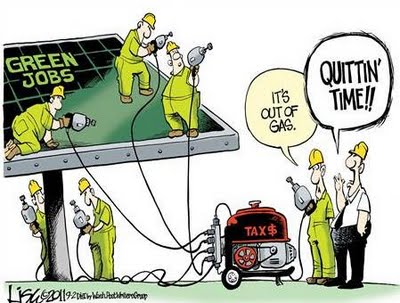
If your local electric utility has “transitioned’ to all renewables, they will need several days’ worth of battery storage. Also, battery capacity drops sharply in extreme cold. That’s just how batteries work. Altogether, this equates to astronomical costs that get passed on to consumers. In short, if you are “all-electric,” you will need to fend for yourself and should at least consider investing in your own emergency generator system, assuming you can afford it.

Shame on Electric Utility Industry Who Know Better

The electric utility industry deserves much of the blame for these travesties. Leading electric utility industry trade associations support HR 5376. This was documented by an S&P Capital IQ on July 28th in an article (behind a paywall) titled “US climate package contains ‘robust’ clean energy tax incentives.”

What the article inadvertently documented is that the electric utility industry doesn’t like how they too may see income tax increases, and they aren’t holding back their disapproval of such provisions. But, on the other hand, the Federal government is essentially transferring the energy delivered by gas utilities over to electric utilities, and they will be collecting more revenue from increasingly captive consumers as their size at least doubles.

The electric utilities are not complaining about that. Maybe that will change in time as electric utilities realize their product is no longer reliable or affordable. But that may not matter since they became “the only game in town.”

Some of us saw this coming. Electric utility interests have been aligned with those of “all renewables all the time” advocates for several years. This alliance was announced in 2018 at a national conference of utility regulators, which I wrote about: Warring Against Natural Gas: Joint EEI/NRDC Statement to NARUC (crony environmentalism at work). Their efforts are largely being augmented by the Federal government subsidies and DOE’s “national labs,” since the Biden (mis)Administration took control or the lack thereof).

Let Consumers Freeze in the Dark

Politicians and pundits from both parties appear reluctant to question obvious restraint of trade issues and reduced consumer choice impacts. Why?

♦  For politicians, it’s because their interests lie elsewhere, like using “other peoples money” to trade with vested interests in return for campaign donations and insider information. It’s also because they don’t want to risk a reduction in generous campaign contributions from electric utility interests. [1]

♦  For pundits, it’s because most of them cater to environmental interests that are “in on it.” They even have their own trade association: The Society of Environmental Journalism. The one thing they do best is to “stick to the script.”

But who wrote the script? Globalists and global warming activists along with electric utility-oriented organizations like the “nonprofit” Rewiring America boast about their role in drafting these provisions. This is further evidenced by the following yahoo finance article: Inflation Reduction Act would lead to $1,800 in savings for average household, analysis finds.

We have recently begun to witness how Green New Deal variants are failing within the EU. We are also witnessing how the inherent intermittency of renewables put lives at risk. Now “reimagine” the combination of “all renewables all the time” and a major cold weather emergency event (a.k.a., “polar vortex”) like what happened in Texas last year. Further “reimagine” being without coal or natural gas for electric generation as well as natural gas and propane for home heating.

People will die at a far great pace than the 247 that died in Texas last year from Winter Storm Uri. This vicious cycle will just get worse the more reliant our society becomes upon on supposedly “clean” (but unreliable) energy sources. And yet, most politicians are reluctant allow for an opportunity for healthy/democratic debate. Instead, most House and Senate hearings have become infomercials for monied interests.

Renewables Forcing: How Much, How Far

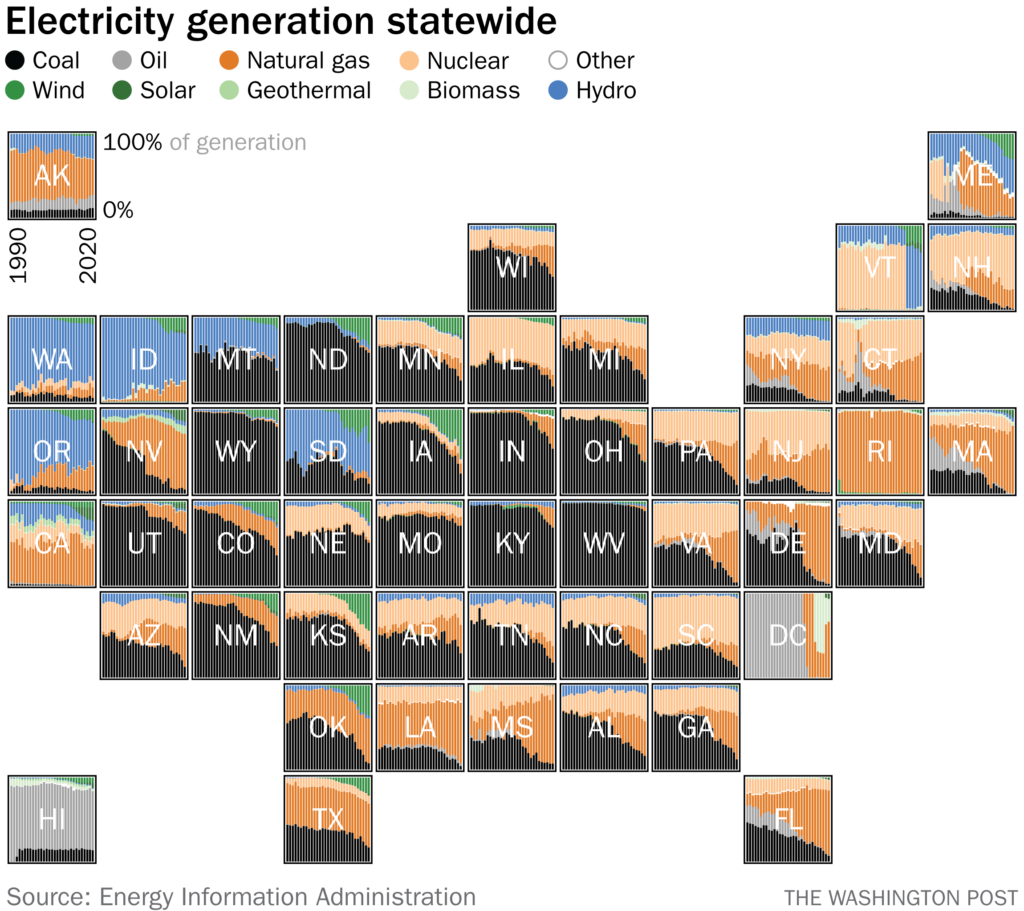
The following EIA based graphic from a recent Washington Post article portrays the magnitude of transforming (perhaps unwittingly) the present energy generation mix to renewables. But be reminded, they are also planning to transfer the energy requirements presently served by the direct use of natural gas over to electricity. This could easily double or triple electric generation requirements. That effect isn’t shown in the following chart.

Another observation to be made from the above chart is that there is still a lot of black (coal) and orange (natural gas) in them. Basically, this means that switching to all-electric may have little if any carbon reduction benefits in such states. It is likely that in at least some states, fuel switching to electricity will increase carbon emissions. So “buyer beware” (in terms of both carbon savings and utility bill savings).

Clearly, the electric utility industry stands to profit from doubling (or more) in size and rate-basing much more expensive renewable technologies, all with the increased cost of “monopoly rents.” The environmentalists also get what they’ve craved: economic control.

Together, they can achieve social control; awarding energy compliance and
punishing energy disobedience; like how the system presently works in China.

Summary & Conclusions

For whatever reason, the gas utility industry has not been very effective in countering these threats. I really don’t have an explanation why, but most gas utilities are owned by electric utilities. This fact is also reflected within gas utility trade associations.

All I know for sure is complacency kills and gas utilities will either capitulate or litigate. I also know that the “Inflation Reduction Act” will cause $billions in stranded gas utility assets.

My advice to gas utilities:

♦  Assuming there is still “fight in the dog,” it’s time to start fighting like your livelihoods (and those of your customers) depend on it, because they do.

♦  Also study up on the takings clause in the constitution and find a way to live with the long-term liability of safeguarding our country’s abandoned gas pipes.

My advice to consumers:

♦  Be prepared to fend for yourself by investing in a natural gas or propane-fueled emergency generator system (if you can afford one). But note that if you have an electric heat pump, you’re going to need a much larger generator than if you didn’t.

I also have some closing advice to regulators: Do your job. Integrated Resource Planning (IRP) should not be Institutionalized Revenue Plundering and Demand-Side Management (DSM) should not be Deceptive/Strategic Marketing. Instead, reconsider Least-Cost Planning that was the standard before it was hijacked by corrupted IRP and DSM.