Data Mining for Election Fraud
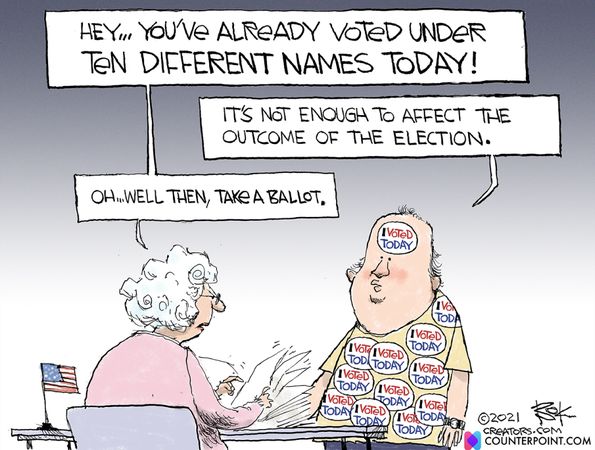
cb010621dapr20210105104502

Jay Valentine explains in his American Thinker article Election Fraud Hotspots – 10% of the Data are 70% of the Fraud  Jay is an expert in uncovering insurance fraud and points out that the same analyses will disclose fraudulent ballot patterns. Excerpts in italics with my bolds and images.

The more our team looked at the 2020 election fraud from publicly available records, the more it appeared to have similar characteristics to property casualty insurance fraud.

Beginning in November, like many citizens, we witnessed election fraud possibilities any sentient person would investigate. Having backgrounds in fraud detection, particularly in the property casualty insurance business, Medicaid fraud, and cyber fraud, gave us a curiosity that never dissipated.

Our interest is 100% in data analysis. That means looking at the actual votes, the addresses, the information about ballots reported to Secretaries of State. While there are all kinds of other fraud, the best way to light it up is with data analysis.

Not just the statistical stuff with the graphs and Greek symbols, but old fashioned rows and columns. Nothing illegal, just the same public data Google uses to profile someone for new running shoes.
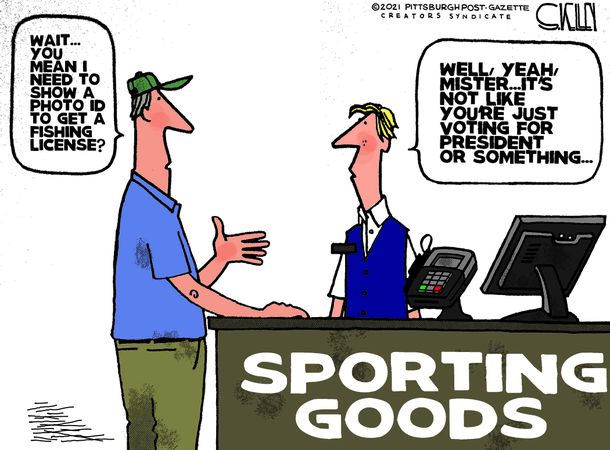
sk040121dapc20210401124505

If Jesse Morgan did drive a tractor trailer truck with 100,000 ballots from New York to Pennsylvania, how can we find out? Chris Wray and our hardy pals at the FBI may not want to open that truck’s back door, but we do – with database analysis.

Every one of those ballots has a person’s name and address. The ballot is cast, illegally for sure, and counted. The local government is involved as well as the U.S. Postal Service officials at that particular location. That makes this sovereign, industrial election fraud.

They can hide the truck. They can claim it never happened. They cannot hide the record of the ballot.

Imagine yourself trying to fake 100,000 ballots. Even with some of your pals, lots of them, sitting around tables with pizza and Cokes and #2 pencils, it’s daunting. Every ballot needs to tie to an address. Each ties to a name. This is fraud infrastructure.

While you and your friends are filling out 100,000 ballots with Biden circles, do you think you took the time to use a different, real address for every one of them? Or, more likely, did you use a small group of addresses over and over? You get the picture.

If you filled out birth dates, did you use a different one every time you thought about it? How about those surnames? They are tied to real people and they better live in Pennsylvania.

We are getting reports some Secretaries of State are modifying mail-in ballot data to hide the tens of thousands of ballots received before they were sent.

This is a very bad idea.

Fraud data is like the world’s messiest crime scene.

Think of your worst nightmare crime scene with blood, bullet casings, broken furniture, spatterings, and that is how complex a fraud database is. If a criminal alters a crime scene, they always make things worse for themselves. They leave traces of who they were. More troublesome, they leave traces of what they are trying to hide.

We are thrilled people are trying to alter data after the fact.
They are leaving tracks like a dinosaur walking through a field of peanut butter for database tracking.

Citizen election fraud investigators are coalescing across multiple states sharing information, fraud profiles and actual data. We are helping with fraud investigative expertise and search technology beyond anything commercially available.

Our thesis is that 70% of all 2020 election fraud will be tied to 10% of the records. Like insurance fraud, election fraud has cultural affinities. It also has geographic patterns and links to a small number of people who deliver the overwhelming amount of fraud.

Cultural affinities?

We broke a major insurance fraud ring showing a group of Somali immigrants, living in the same building, driving the same car, had scammed a major insurance company. Sure they did, they knew each other. This happens all the time; the data show it.

Election fraud is no different. People who hang out together may have similar world views. If they are aggressive enough to join in an election fraud conspiracy, they don’t bring in strangers, they bring in friends and family. This kind of relationship shows up as a hot spot in data visualization.

Data visualization shows hotspots – like red wine stains on a white tablecloth.

Isn’t it interesting that 634 people with the same birthday, including the year, live at these seven addresses? Digging deeper, look, the address is not a physical location, it is a UPS store with mailboxes. That’s a crowded P.O. Box!

Look here, different family members live in different mailboxes with the same surname. The mailboxes are consecutive numbers, too! That’s so convenient for Thanksgiving dinner!

This is what industrial fraud starts to look like and there are plenty of data from December Secretary of State data files to prove this.

In fraud analysis, connections count big time. Industrial fraud is by definition a connected enterprise with a few actors driving lots of transactions. As we build a likely fraud database, think more of Ancestry.com rather than those rows and columns.
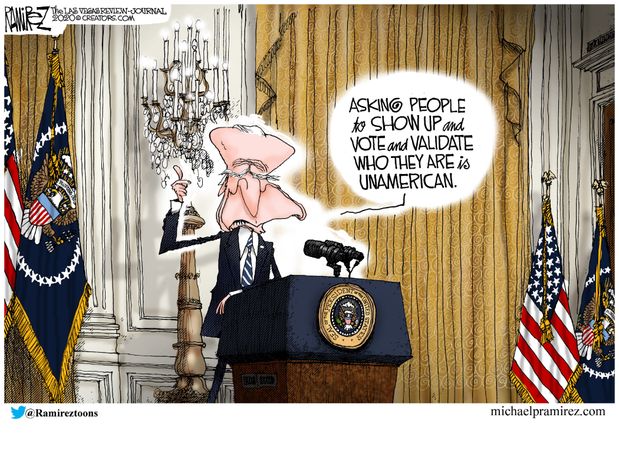
mrz033021dapr20210330044511

Ancestry.com allows you to build a family tree. As you build it, your family connects to other families. Those families add their long lost relatives you did not know existed enriching the tree. Connections count.

That is what an organic election fraud database starts to look like. Here, let’s do one!

Billy X has 239 people living in his one-bedroom Pennsylvania house and they all voted. All public information. Billy should be proud of his diligence.

We connect Billy via 100 social media posts floating on the internet using a web crawler. Look, Billy is a steward for the local trade union. He hates Trump.

Data visualization indicates Billy corresponds with Sally B. and Mortimer W. They live in Virginia. They too, hate Trump; so says social media. Our new friends in Virginia interested in election fraud start adding their data about Sally and Mort. Here are two addresses for Sally and they tie to over 600 registered voters. Mort has over 150 living in his one bedroom flat.

This is how it looks, folks. This is just the surface of what can be found from current, available, public records, social media and internet communication. We can go hundreds of layers deeper and it is delivered in the blink of an eye.

So when you freak out about H.R. 1, which is terrible, remember, they may have Marc Elias in their corner but the Patriots have data, technology, and adversaries who leave dinosaur tracks.

My Comment:  Those of us who watched the 2020 election go off the rails are waiting and hoping for the perps to be caught.  Forensic audits with competent analysts are under way in Arizona  with Maricopa officials trying to block it.  Ballot audits in Montana and New Hampshire turned up irregularities large enough to change the results.  The ‘Scan the Ballots’ Effort Is Moving Forward In Georgia Involving Jovan Pulitizer’s Technique of Forensically Reviewing Ballots from the 2020 Election (here).  The Georgia exercise shows what is a proper election forensic audit.  A 2020 audit will review all the ballots, not just a sample. Every ballot will be reviewed for the paper the ballot is on, the ink used, the shape of the circles being filled in, the sequence of the ballots, the creases in ballots, etc. This type of physical review, just of the ballots, will identify invalid ballots. These ballots can then be reviewed and eliminated if no proper excuses for their oddities are available. This can be done for every ballot in every audit.

A random thought:  What if Pelosi dropped her idea of contesting the Iowa seat won by a Republican by six votes because she was warned what an in depth analysis would show?  And another: What if Biden’s handlers are in such a rush to overturn everything because they know what kind of dirt will be coming out in coming months?
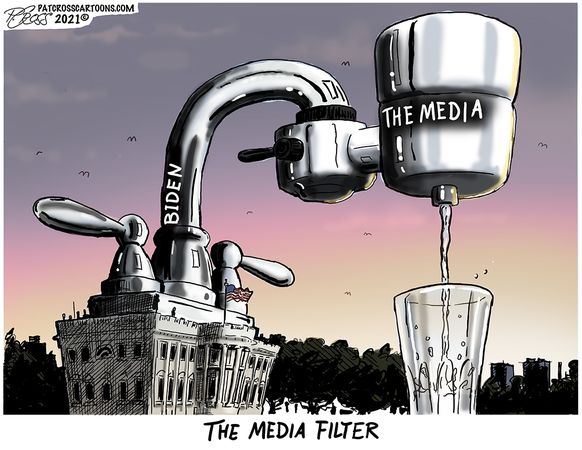
filtering_the_biden_fauset_small20210331015603

How to Know a Liberal from a Leftist by Asking

Denis Prager explores how to query a friend, relative or colleague to see if they are open to discussion, or locked into a fixed ideology.  His article is Questions to Determine Whether a Friend or Relative Is a Liberal or a Leftist.  Excerpts in italics with my bolds and images.

The great tragedy of our time is that liberals vote left.

Virtually every value liberals have held for a century is now held by conservatives and scorned by leftists. Therefore, America, in serious jeopardy of being lost, will be saved when people convince the liberals in their life that the left, not the conservative, is their enemy.

This process begins by establishing whether a friend or relative is a liberal or a leftist. If it turns out that he or she is a liberal, it is worth engaging in respectful dialogue on the issues of the day. If the friend or relative is a leftist, you can probably only talk about innocuous subjects such as the weather (though not about global warming) or sports (though not about players taking a knee during the national anthem). If you talk about the great issues of the day with a left-wing friend or relative, that could be the last time you talk to each other. He or she is likely to unfriend you not only on social media but also in life. Leftists generally do not dialogue; they dismiss.

Here are questions you might want to pose to friends/relatives to determine—as much for them as for you—whether they are liberal or left.

Race
  • Many universities now have all-black dormitories, and some have all-black graduation exercises. Do you support these developments?
  • The University of California has declared this statement racist: “There is only one race—the human race.” Do you agree with the University of California, or do you agree with the statement?
  • Is the goal of being “colorblind”—doing one’s best to ignore a person’s color and concentrating only on the person’s character and personality—a noble goal or a racist one?
  • Do you believe the color of a person’s skin tells you anything of importance about that person?
  • Do you agree that all white Americans are racist?
  • If your answer is yes, would you tell the millions of blacks in Africa and the Caribbean who wish to emigrate to America that they would be making a poor decision? If not, why not?
  • Is it possible for a black person to be a racist?
  • Is it racist to claim that Johann Sebastian Bach, Ludwig van Beethoven, and Wolfgang Amadeus Mozart composed the greatest music ever composed?
  • Is the national anthem racist?
  • If your answer is yes, what would you like to put in its place?
  • The English department at the University of Pennsylvania removed its painting of William Shakespeare because he was a white European male. Do you agree with that decision?

America
  • Do you agree with The New York Times’ “1619 Project” that America was not founded in 1776 but in 1619 with the first arrival of black slaves in North America, and that the Revolutionary War was fought in order to preserve slavery?
  • Should statues of George Washington and Abraham Lincoln be taken down?
  • Has the United States, overall, made the world a better place?
  • Would America be better, worse, or the same as now if all Americans dropped their religion and became secular?
  • Has capitalism been a net-plus for America and the world?
  • Everyone would like to improve America. Some would like to, in their words, “fundamentally transform” it. Would you?
  • Could a good person have voted for Donald Trump in 2020?
  • Do you believe that CNN, The Washington Post, The New York Times, and the rest of the mainstream media are biased toward the left or try to present the news as accurately as possible?
  • Should America have full control over its borders to prevent illegal immigration?
  • There are between 11 and 30 million people in America who entered the country illegally. Should they all be put on a path to citizenship?
  • Should those who enter America illegally be called “undocumented immigrants” or “illegal immigrants”?
  • Do you believe police departments should be defunded, or at least have their budgets severely cut?
  • Should the government provide vouchers to enable parents to choose what school their child attends?
  • Which school do you believe is more likely to be attacked by a gunman: one that has a sign in front that reads, “Gun-Free Zone” or one that reads, “This School Has Armed Personnel”?

Men and Women
  • Should it be legal for a teenage girl to have her breasts surgically removed because she identifies as a male—or should there be a minimum age of 18 or 21?
  • Schoolteachers have been told to stop calling students “boys and girls” because a student might not identify as either male or female. Do you agree with this policy?
  • Should biological males who identify as females be allowed to compete against biological females in sports?
  • Is the statement, “Men give birth” science-based?
  • Do you agree with the practice of inviting a drag queen into public libraries and elementary school classrooms to conduct a “Drag Queen Story Hour”?

    Speech
  • Do you believe that free speech allows for hate speech, or should hate speech be banned?
  • If you believe hate speech should be banned, who do you believe should determine what is hate speech?

You might want to send these questions to the people in your life whose views are to the left of your own.

At best, you (and they) will realize that you have more in common than either of you previously thought. At the very least, their answers will bring you both clarity. And at worst, they will explain why there is a rift between you—and why you might want to restrict communication to weather, sports, recipes, and warm memories.

Supremes Steer Clear of Penn Case of Election Fraud

JUST IN – U.S. Supreme Court refuses to review #Pennsylvania election cases. No standing before an election, moot after. Justices Alito, Gorsuch, and Thomas dissent from the denial. Since it only takes 4 justices to hear a case, these cases were only one vote away from getting a full hearing at the SCOTUS. (Source: Disclose.tv tweet)  Excerpts in italics with my bolds from dissenting opinions. Full text available at Gateway Pundit post Supreme Court Refuses to Review Pennsylvania Election Cases – Alito, Gorsuch and Thomas Dissent.

Justice Thomas:

Changing the rules in the middle of the game is bad enough. Such rule changes by officials who may lack authority to do so is even worse. When those changes alter election results, they can severely damage the electoral system on which our self-governance so heavily depends. If state officials have the authority they have claimed, we need to make it clear. If not, we need to put an end to this practice now before the consequences become catastrophic.

Because the judicial system is not well suited to address these kinds of questions in the short time period available immediately after an election, we ought to use available cases outside that truncated context to address these admittedly important questions. Here, we have the opportunity to do so almost two years before the next federal election cycle. Our refusal to do so by hearing these cases is befuddling. There is a clear split on an issue of such great importance that both sides previously asked us to grant certiorari. And there is no dispute that the claim is sufficiently meritorious to warrant review. By voting to grant emergency relief in October, four Justices made clear that they think petitioners are likely to prevail. Despite pressing for review in October, respondents now ask us not to grant certiorari because they think the cases are moot. That argument fails.

The issue presented is capable of repetition, yet evades review. This exception to mootness, which the Court routinely invokes in election cases, “applies where (1) the challenged action is in its duration too short to be fully litigated prior to cessation or expiration, and (2) there is a reasonable expectation that the same complaining party will be subject to the same action again.”

And there is a reasonable expectation that these petitioners—the State Republican Party and legislators—will again confront non legislative officials altering election rules. In fact, various petitions claim that no fewer than four other decisions of the Pennsylvania Supreme Court implicate the same issue.  Future cases will arise as lower state courts apply those precedents to justify intervening in elections and changing the rules.

One wonders what this Court waits for. We failed to settle this dispute before the election, and thus provide clear rules. Now we again fail to provide clear rules for future elections. The decision to leave election law hidden beneath a shroud of doubt is baffling. By doing nothing, we invite further confusion and erosion of voter confidence. Our fellow citizens deserve better and expect more of us. I respectfully dissent.

Justice Alito, joined by Justice Gorsuch:

Now, the election is over, and there is no reason for refusing to decide the important question that these cases pose. . .A decision in these cases would not have any implications regarding the 2020 election. . . But a decision would provide invaluable guidance for future elections.

Some respondents contend that the completion of the 2020 election rendered these cases moot and that they do not fall within the mootness exception for cases that present questions that are “capable of repetition” but would other-wise evade review.  They argue that the Pennsylvania Supreme Court’s decision “arose from an extraordinary and unprecedented confluence of circumstances”—specifically, the COVID–19 pandemic, an increase in mail-in voting, and Postal Service delays—and that such a perfect storm is not likely to recur. 

That argument fails for three reasons. First, it does not acknowledge the breadth of the Pennsylvania Supreme Court’s decision. That decision claims that a state constitutional provision guaranteeing “free and equal” elections gives the Pennsylvania courts the authority to override even very specific and unambiguous rules adopted by the legislature for the conduct of federal elections. . .That issue is surely capable of repetition in future elections. Indeed, it would be surprising if parties who are unhappy with the legislature’s rules do not invoke this decision and ask the state courts to substitute rules that they find more advantageous.

Second, the suggestion that we are unlikely to see a recurrence of the exact circumstances we saw this fall misunderstands the applicable legal standard. In order for a question to be capable of repetition, it is not necessary to predict that history will repeat itself at a very high level of specificity.

Third, it is highly speculative to forecast that the Pennsylvania Supreme Court will not find that conditions at the time of a future federal election are materially similar to those last fall. The primary election for Pennsylvania congressional candidates is scheduled to occur in 15 months,and the rules for the conduct of elections should be established well in advance of the day of an election. . .As voting by mail becomes more common and more popular, the volume of mailed ballots may continue to increase and thus pose delivery problems similar to those anticipated in 2020.

For these reasons, the cases now before us are not moot. There is a “reasonable expectation” that the parties will face the same question in the future. . ., and that the question will evade future pre-election review, just as it did in these cases.These cases call out for review, and I respectfully dissent from the Court’s decision to deny certiorari. 

Background:  SCOTUS Conference on Election Integrity

Election Integrity is up for conference at SCOTUS on Friday.  The petition to be discussed is the complaint by the Pennsylvania legislature against the state Election Officer Boockvar, a proceeding that began on Sept. 28, 2020.  The petition makes clear the intent is not to overturn any completed election, but to ensure future elections are conducted according to laws in force.  From scotusblog:

Republican Party of Pennsylvania v. Boockvar

Issue:  Whether the Pennsylvania Supreme Court usurped the Pennsylvania General Assembly’s plenary authority to “direct [the] Manner” for appointing electors for president and vice president under Article II of the Constitution, as well as the assembly’s broad power to prescribe “[t]he Times, Places, and Manner” for congressional elections under Article I, when the court issued a ruling requiring the state to count absentee ballots that arrive up to three days after Election Day as long as they are not clearly postmarked after Election Day; and (2) whether that decision is preempted by federal statutes that establish a uniform nationwide federal Election Day.

The petition to be discussed is the December 15, 2020 brief from the petitioners Republican Party:

No. 20-542 REPLY BRIEF IN SUPPORT OF PETITION FOR A WRIT OF CERTIORARI

Respondents’ Oppositions only confirm what some
Respondents told the Court just weeks ago: that the
Court should grant review and resolve the important
and recurring questions presented in this case. Pa.
Dems. Br. 9, No. 20A54 (Oct. 5, 2020) (advocating for
review because the questions presented are “of
overwhelming importance for States and voters across
the country”); Sec’y Br. 2-3, No. 20A54 (Oct. 5, 2020).
Respondents uniformly fail to mention that after the
Republican Party of Pennsylvania (RPP) filed its
Petition but more than a month before Respondents
filed their Oppositions, the Eighth Circuit created a
split on the question whether the Electors Clause
constrains state courts from altering election
deadlines enacted by state legislatures. See Carson v.
Simon, 978 F.3d 1051 (8th Cir. 2020). Instead,
Respondents seek to obfuscate the matter with a
welter of vehicle arguments turning on the fact that
Pennsylvania has certified the results of the 2020
general election. In reality, however, this case is an
ideal vehicle, in part precisely because it will not affect
the outcome of this election.

Indeed, this Court has repeatedly emphasized the
imperative of settling the governing rules in advance
of the next election, in order to promote the public
“[c]onfidence in the integrity of our electoral processes
[that] is essential to the functioning of our
participatory democracy.” Purcell v. Gonzalez, 549
U.S. 1, 4 (2006). This case presents a vital and unique
opportunity to do precisely that. By resolving the
important and recurring questions now, the Court can
provide desperately needed guidance to state
legislatures and courts across the country outside the
context of a hotly disputed election and before the next
election. The alternative is for the Court to leave
legislatures and courts with a lack of advance
guidance and clarity regarding the controlling law
only to be drawn into answering these questions in
future after-the-fact litigation over a contested
election, with the accompanying time pressures and
perceptions of partisan interest.

Note:  As reported in Gateway Pundit, legally required chain of custody for ballots was broken in every battleground state and in other states as well.

Democrats Were ONLY Able to “Win” in 2020 By Breaking Chain of Custody Laws in EVERY SWING STATE

President Trump was ahead in Pennsylvania by nearly 700,000 votes.
In Michigan Trump was ahead by over 300,000 votes.
In Wisconsin Trump was ahead by 120,000 votes.

Trump was also ahead in Georgia and Nevada.

And President Trump already trounced Joe Biden in Ohio, Florida, and Iowa — three states that ALWAYS go to the eventual presidential winner.

Then suddenly Pennsylvania, Michigan, and Wisconsin announced they would not be announcing their winner that night. This was an unprecedented and coordinated move in US history.

Then many crimes occurred to swing the election to Biden, but perhaps the greatest crime was the lack of dual controls and chain of custody records that ensure a fair and free election. At a high level, when ballots are transferred or changes are made in voting machines, these moves and changes should be done with two individuals present (dual control), one from each party, and the movements of ballots should be recorded.

So when states inserted drop boxes into the election, these changes first needed to be updated through the legislature, which they weren’t, and all movements from the time when the ballots were inserted into drop boxes needed to be recorded, which they weren’t.

After Counting Mail-in Ballots, Senate Finds Trump Guilty

Babylon Bee has the special report In Mail-In Impeachment Vote, Senate Convicts Trump 8275 To 3.  Excerpts in italics with my bolds.

WASHINGTON, D.C.—In a historic move, the U.S. Senate decided to switch to voting by mail for Trump’s second impeachment trial. After all the votes were counted by an intern in a back room with no cameras, the Senate ruled to convict President Trump of incitement to violence by a vote of 8275 to 3.

“Our holy democracy has spoken,” said Senator Chuck Schumer. “Do not ask any questions or you are a blasphemer against the sacred sacredness of our vote. Everyone can go home now!”

A couple of troublemaking Senators attempted to overthrow the Constitution by bringing up the point that there are only 100 Senators, making it impossible to arrive at a tally of 8275 to 3, but they were quickly removed from the Senate Chambers and condemned for “attempting to suppress the votes of people of color.”

The Senate then moved on to other business, passing universal healthcare by a margin of 320,000 to 4.

Footnote:  SCOTUS Conference on Election Integrity

Humor aside, Election Integrity is up for conference at SCOTUS on Friday.  The petition to be discussed is the complaint by the Pennsylvania legislature against the state Election Officer Boockvar, a proceeding that began on Sept. 28, 2020.  The petition makes clear the intent is not to overturn any completed election, but to ensure future elections are conducted according to laws in force.  From scotusblog:

Republican Party of Pennsylvania v. Boockvar

Issue:  Whether the Pennsylvania Supreme Court usurped the Pennsylvania General Assembly’s plenary authority to “direct [the] Manner” for appointing electors for president and vice president under Article II of the Constitution, as well as the assembly’s broad power to prescribe “[t]he Times, Places, and Manner” for congressional elections under Article I, when the court issued a ruling requiring the state to count absentee ballots that arrive up to three days after Election Day as long as they are not clearly postmarked after Election Day; and (2) whether that decision is preempted by federal statutes that establish a uniform nationwide federal Election Day.

The petition to be discussed is the December 15, 2020 brief from the petitioners Republican Party:

No. 20-542 REPLY BRIEF IN SUPPORT OF PETITION FOR A WRIT OF CERTIORARI

Respondents’ Oppositions only confirm what some
Respondents told the Court just weeks ago: that the
Court should grant review and resolve the important
and recurring questions presented in this case. Pa.
Dems. Br. 9, No. 20A54 (Oct. 5, 2020) (advocating for
review because the questions presented are “of
overwhelming importance for States and voters across
the country”); Sec’y Br. 2-3, No. 20A54 (Oct. 5, 2020).
Respondents uniformly fail to mention that after the
Republican Party of Pennsylvania (RPP) filed its
Petition but more than a month before Respondents
filed their Oppositions, the Eighth Circuit created a
split on the question whether the Electors Clause
constrains state courts from altering election
deadlines enacted by state legislatures. See Carson v.
Simon, 978 F.3d 1051 (8th Cir. 2020). Instead,
Respondents seek to obfuscate the matter with a
welter of vehicle arguments turning on the fact that
Pennsylvania has certified the results of the 2020
general election. In reality, however, this case is an
ideal vehicle, in part precisely because it will not affect
the outcome of this election.

Indeed, this Court has repeatedly emphasized the
imperative of settling the governing rules in advance
of the next election, in order to promote the public
“[c]onfidence in the integrity of our electoral processes
[that] is essential to the functioning of our
participatory democracy.” Purcell v. Gonzalez, 549
U.S. 1, 4 (2006). This case presents a vital and unique
opportunity to do precisely that. By resolving the
important and recurring questions now, the Court can
provide desperately needed guidance to state
legislatures and courts across the country outside the
context of a hotly disputed election and before the next
election. The alternative is for the Court to leave
legislatures and courts with a lack of advance
guidance and clarity regarding the controlling law
only to be drawn into answering these questions in
future after-the-fact litigation over a contested
election, with the accompanying time pressures and
perceptions of partisan interest.

Note:  As reported in Gateway Pundit, legally required chain of custody for ballots was broken in every battleground state and in other states as well.

Democrats Were ONLY Able to “Win” in 2020 By Breaking Chain of Custody Laws in EVERY SWING STATE

President Trump was ahead in Pennsylvania by nearly 700,000 votes.
In Michigan Trump was ahead by over 300,000 votes.
In Wisconsin Trump was ahead by 120,000 votes.

Trump was also ahead in Georgia and Nevada.

And President Trump already trounced Joe Biden in Ohio, Florida, and Iowa — three states that ALWAYS go to the eventual presidential winner.

Then suddenly Pennsylvania, Michigan, and Wisconsin announced they would not be announcing their winner that night. This was an unprecedented and coordinated move in US history.

Then many crimes occurred to swing the election to Biden, but perhaps the greatest crime was the lack of dual controls and chain of custody records that ensure a fair and free election. At a high level, when ballots are transferred or changes are made in voting machines, these moves and changes should be done with two individuals present (dual control), one from each party, and the movements of ballots should be recorded.

So when states inserted drop boxes into the election, these changes first needed to be updated through the legislature, which they weren’t, and all movements from the time when the ballots were inserted into drop boxes needed to be recorded, which they weren’t.


Biden’s Hostile Takeover Triggers Poison Pills

Poison Pill is a defensive mechanism technique prevalent in the corporate world to thwart a hostile takeover. It is a strategy used by the Target Company to avoid the hostile takeovers completely or at least slow down the acquiring process.(Source: financemanagement.com)

Rupert Darwall explains the traps and pitfalls in the way of the Biden agenda in his Epoch Times article Fettering Biden’s Administrative State.  Excerpts in italics with my bolds.

Trump-era rules will constrain the new president’s activism

The administrative state will get a new lease on life under President Joe Biden, but America’s administrative state is far more constrained than that of many other countries. Britain, for example, wrote its net-zero climate target into law after only a 90-minute debate in the House of Commons, without any examination of what the cost might be. Arguably the European Union is an administrative state, where the unelected European Commission proposes legislation, enforces it, and even levies billion-euro fines on companies without so much as a court hearing.

By contrast, executive-agency rulemaking in the United States is more circumscribed. Agencies must show cause, respect precedent, and demonstrate that their rulemaking is properly grounded in the relevant statute and in a factual record sufficiently compelling to refute any suggestion that their action was “arbitrary or capricious.” They should expect controversial rules to be able to withstand challenges in the courts.

In 2016, the Supreme Court stayed the Environmental Protection Agency’s Clean Power Plan promulgated by the Obama administration to decarbonize the electrical grid. On the last full day of the Trump administration, the U.S. Court of Appeals for the District of Columbia vacated the Obama plan’s successor, the Affordable Clean Energy plan, in a 2-1 opinion. The majority ruled that the EPA’s interpretation of the Clean Air Act had been too narrow; the dissenting judge—a Trump appointee—opined that both plans relied erroneously on the wrong provision of the Act to regulate greenhouse-gas emissions. These rulings illustrate just how difficult the EPA will find crafting a new rule to fulfill Biden’s promise to decarbonize the grid by 2035.[See post: Latest Court Ruling re EPA and CO2]

The new administration is constrained not only by the courts but also by the late-term rulemaking of its predecessor. It could use the 1996 Congressional Review Act to nullify recently finalized federal regulations with a simple majority vote in each house of Congress. But Republicans can inflict a political price. Last October, the Department of Labor finalized a financial factors rule. It requires managers of corporate pension plans to justify incorporation of environmental, social, and corporate governance (ESG) factors solely on the grounds of boosting risk-adjusted investment returns by reference to generally accepted investment theories.

Wall Street hated it when the rule was first proposed, but all it does is operationalize the requirement of the Employee Retirement Income Security Act (ERISA) of 1974 that plan managers perform their duties for the exclusive purpose of providing benefits to plan beneficiaries and defraying reasonable plan expenses. In reality, opponents of the rule oppose the exclusivity hardwired into ERISA that pension savings be invested with “eye single” to the interests of plan beneficiaries. A vote to nullify the rule would be a vote in favor of socializing retirees’ savings and deploy them for wider societal ends. For Republicans, it would be a debate worth having.

Similarly, congressional Republicans can gain politically by taking a stand opposing nullification of the EPA’s Jan. 3, 2021 transparency-in-science rule. This rule broadens and strengthens the agency’s 2018 transparency rule and aims to ensure that regulatory decisions are taken on the basis of robust, verifiable scientific studies. Polling shows that voters are more motivated to support environmental regulations when presented as protecting public health. This creates a market for studies linking pollution to public-health harms, however flimsy they might be. Environmental regulations mandating national standards on ozone and PM2.5 targeting fossil-fuel combustion are often based on epidemiological studies drawing on undisclosed data that can’t be re-analyzed to check for errors and sensitivity to assumptions.

A justification often made for this anti-scientific practice is safeguarding patient anonymity in such studies, lsomething for which the new rule provides. Covering up is never a good look, however, and the spectacle of the self-proclaimed party of science arguing for secret science and against transparency would demonstrate how deeply politicized the science used to justify environmental regulation has become.

The Trump administration left the best till last. With just one week to go, on Jan. 13, the Federal Register published an EPA regulation that quickly became known as the banana peel rule. Section 111(b) of the Clean Air Act states that the EPA Administrator shall include a category of sources that “causes, or contributes significantly” to pollution anticipated to endanger public health or welfare. The new rule defines the level deemed “significant.” At the rule’s chosen level of 3 percent of U.S. stationary-source greenhouse-gas emissions, the only category deemed significant is electrical power generation—a category that accounts for 43 percent of such emissions.

Should the Biden administration ditch the 3 percent threshold and use the Clean Air Act to enmesh more sectors in greenhouse-gas targets, it will be compelled to develop an objective rationale for doing so. This is far from straightforward, hence the “banana peel” epithet. As the Trump rule notes, greenhouse gases “do not have the local, near-term ramifications found with other pollutants;” their impact is based on “cumulative global loading.” Directly or by inference, significance must therefore be linked to global emissions (U.S. power station emissions account for 3.6 percent of global emissions) and how effectively they are regulated at a global level. It would be irrational to regulate domestic emissions if there were little prospect of global emissions falling, too.

As the Obama administration realized after the collapse of the Copenhagen climate conference in 2009, when China—along with India, South Africa, and Brazil—vetoed a global climate treaty, Beijing holds the key to a credible global greenhouse-gas regime. The 2014 U.S.-China climate accord negotiated by Presidents Obama and Xi paved the way for the Paris Agreement on climate the following year. Xi’s statement at the U.N. last September that China would aim for “carbon neutrality” before 2060 is widely seen as a climate gamechanger.

Writing in a January 2021 Foreign Policy essay, Ted Nordhaus and Seaver Wang argue that China’s climate diplomacy is part of a bigger geopolitical play—Beijing’s desire to “counterbalance rising Western concerns about China’s belligerent posture in the South China Sea, its saber-rattling toward Taiwan, its human-rights crackdown in Hong Kong, its genocidal assault on the Uyghur minority in northwestern China, and much more.” It would be naïve not to recognize the geostrategic and political trade-offs in elevating China as climate savior. In a break with the routine formulation of climate change as existential threat trumping all else, Nordhaus and Wang warn that “a world that succeeds in addressing climate change will not necessarily be a more equitable, inclusive, or humane one.”

On his last full day as Secretary of State, Mike Pompeo declared China’s persecution of the Uyghurs a crime against humanity. His successor agrees. During his confirmation hearing, Tony Blinken said that he supported Pompeo’s genocide finding, and that China poses “the most significant challenge” of any nation-state to the United States. China is playing for higher stakes than the climate. This reality confronts the new administration with its greatest dilemma: “saving the planet” requires appeasing Beijing. How the dilemma is resolved could well come to define Joe Biden’s presidency.

WordPress Censorship?

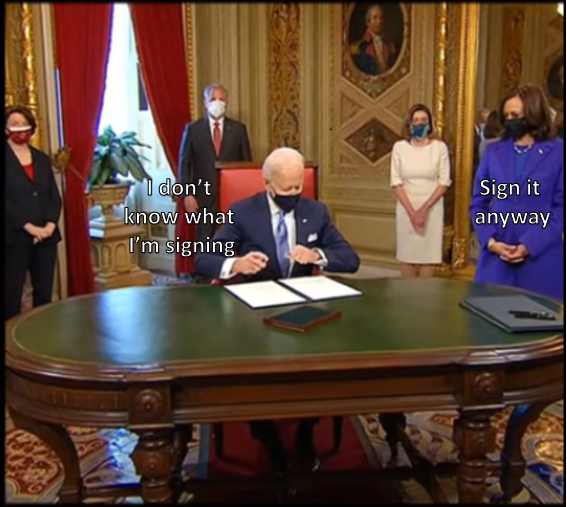
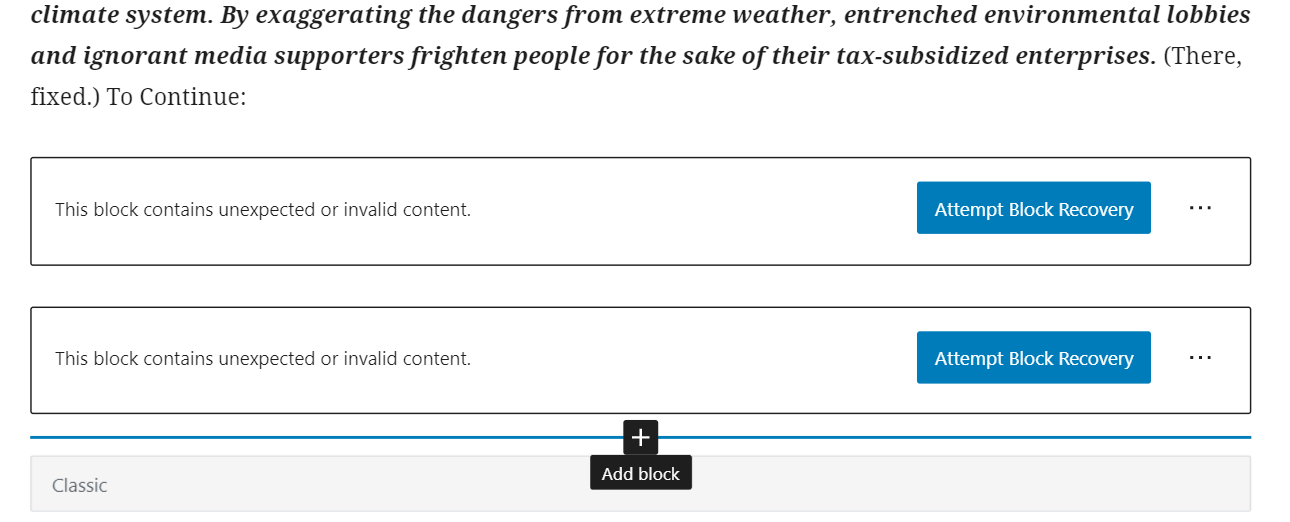
A strange thing happened this morning.  I wanted to improve some wording in a post from last night, and the edit function came up in WordPress block editor.  To my surprise, some of the text and image blocks were no longer visible, covered with a warning label:  “This block contains unexpected or invalid content.” Canceled text started with a reference to the last US election and a video image of Biden signing executive orders.

If I open the post in classical editor, the text is available as I wrote it.  And the post still appears without censorship:  See: Climate Science Victim of Fake News

Footnote:  As suggested in comment below, here is a screenshot:

Hitting the “Attempt Block Recovery” button creates a blank block.

Soviet Jokes About Living Under Oppression

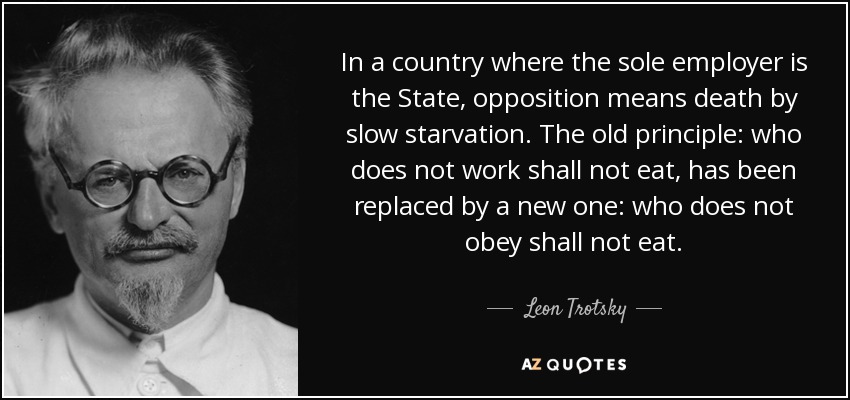
The Soviet people lived under a regime where private life, ideas and opinions were banished from public expression by state media.  Now the USA has state media rivaling the USSR, only difference is ambiguity whether the media runs the state or vice-versa as in Soviet days.  In any case, Russians and others under that regime voiced their resistance by sharing jokes at the expense of the autocrats.  Wikipedia provides some instructive examples for Americans in the days ahead.

A judge walks out of his chambers laughing his head off. A colleague approaches him and asks why he is laughing. “I just heard the funniest joke in the world!”
“Well, go ahead, tell me!” says the other judge.
“I can’t – I just gave someone ten years for it!”

Q: “Who built the White Sea Canal?”
A: “The left bank was built by those who told the jokes, and the right bank by those who listened.”

Q: Will there be KGB in communism?
A: As you know, under communism, the state will be abolished, together with its means of suppression. People will know how to self-arrest themselves.

Q: How do you deal with mice in the Kremlin?
A: Put up a sign saying “collective farm”. Then half the mice will starve, and the rest will run away.

“Lubyanka (KGB headquarters) is the tallest building in Moscow. You can see Siberia from its basement.”

A new arrival to Gulag is asked: “What were you given 10 years for?”
– “For nothing!”
– “Don’t lie to us here, now! Everybody knows ‘for nothing’ is 3 years.”

Q: What’s the difference between a capitalist fairy tale and a Marxist fairy tale?
A: A capitalist fairy tale begins, “Once upon a time, there was….”. A Marxist fairy tale begins, “Some day, there will be….”

A Soviet history professor addressed his university students: “Regarding the final exam, I have good news and bad news.  The good news: All the questions are the same as last year.  The bad news:  Some of the answers are different.”

Q: What is the difference between the Constitutions of the US and USSR? Both of them guarantee freedom of speech.
A: Yes, but the Constitution of the USA also guarantees freedom after the speech.

Q: Is it true that the Soviet Union is the most progressive country in the world?
A: Of course! Life was already better yesterday than it’s going to be tomorrow!

Khrushchev visited a pig farm and was photographed there. In the newspaper office, a discussion is underway about how to caption the picture. “Comrade Khrushchev among pigs,” “Comrade Khrushchev and pigs,” and “Pigs surround comrade Khrushchev” are all rejected as politically offensive. Finally, the editor announces his decision: “Third from left – comrade Khrushchev.”

Q: “What is the main difference between succession under the tsarist regime and under socialism?”
A: “Under the tsarist regime, power was transferred from father to son, and under socialism – from grandfather to grandfather.”

Q: What are the new requirements for joining the Politburo?
A: You must now be able to walk six steps without the assistance of a cane, and say three words without the assistance of paper.

Our Soviet industry system is simple and works very well.  Our bosses pretend to pay and we pretend to work.

An old woman asks her granddaughter: “Granddaughter, please explain Communism to me. How will people live under it? They probably teach you all about it in school.”
“Of course they do, Granny. When we reach Communism, the shops will be full–there’ll be butter, and meat, and sausage. You’ll be able to go and buy anything you want…”
“Ah!” exclaimed the old woman joyfully. “Just like it was under the Tsar!”

A man walks into a shop and asks, “You wouldn’t happen to have any fish, would you?”. The shop assistant replies, “You’ve got it wrong – ours is a butcher’s shop. We don’t have any meat. You’re looking for the fish shop across the road. There they don’t have any fish!”

Q: “What happens if Soviet socialism comes to Saudi Arabia?
A: First five years, nothing; then a shortage of oil.”

Stalin appears to Putin in a dream and says: “I have two bits of advice for you: kill off all your opponents and paint the Kremlin blue.” Putin asks, “Why blue?” Stalin: “I knew you would not object to the first one.”


Wither the GOP?

Daniel Gelernter has some interesting ideas about where things may be headed in this turbulent time in US politics.  His article is Why Is the GOP Glad Trump Lost?  Excerpts in italics with my bolds and images.

Establishment Republicans will learn the hard way how very much they have lost in helping Joe Biden win the way he did.

A little after 2 p.m. Eastern time on Wednesday, protesters crashed into the U.S. Capitol and forced a halt in the certification of the electoral vote. As the Senate reconvened that night, Senate Majority Leader Mitch McConnell (R-Ky.), speaking as though he had just survived 9/11, condemned the “thugs” waving flags who had forced them to run away for a few hours. Man of the People Mitt Romney, who probably will not repeat his mistake of flying commercial, called the Capitol storm “an insurrection, incited by the president of the United States.”

If you wonder where these big politicians were last year when people were having their businesses closed down by government mandates or watching their cars torched by Antifa with Molotov cocktails, the answer is they were most likely in incredibly comfortable homes, enjoying taxpayer-guaranteed salaries and genuinely insane expense accounts, secure in the knowledge that, whatever happens—whether they return to Capitol Hill for the rest of their lives or are forced one day into semi-retirement on K Street—they will never again have to live like “normal people.”

And when they blame President Trump for the Capitol protest, they are doubly foolish and doubly deceived.

First, they implicitly deny that these protestors had any reason to be upset. Even the CHAZ protestors who demolished central Seattle were granted the presumption that they might have had reasons, however misguided.  But the Capitol Hill protestors had already been told, repeatedly, by the news media, social media, and their political leaders, to shut up and go home. And yet they didn’t—so it must be Trump’s fault.

The idea that a large part of America genuinely could be infuriated by the behavior of our elected officials has not dawned on them. When they get yelled at on planes, they think, “Why don’t my constituents believe me? Why don’t they trust me? It’s Trump’s fault!”

But they never ask themselves if they might have given their constituents legitimate reasons not to trust them. Did they ever, for example, vote to send a $10 million check to Pakistan and a $600 check to some Americans? Would that upset anyone?

Today, these politicians are breathing a sigh of relief—their second mistake: “My constituents trusted me before Trump came,” they think. “Now that he’s on the way out the door, they will trust me again!” They believe that Trump not being president means that they can go back to vacuuming up money and power just as before. They think Trump is finished.

In reality, they are finished.

Trump could have announced the formation of a new political party. A majority of Republican voters probably would have followed him. Eventually, after a few election cycles of mutual destruction, the rest of the GOP reluctantly would acquiesce in a new party which would likely have many of the same ills as the old. Instead, Trump has made clear his intention of primarying every Republican who opposed airing election fraud claims in court.

Career GOP politicians will spend the next several years watching “their” party rapidly remade in what they mistakenly believe to be Trump’s image. But it is actually the image of a large part of America that feels totally ignored.

The principals that Trump represents do not start and end with Trump. Limited regulation, limited government, low taxes, fair trade, stricter immigration laws, belief in God and in the earnest goodness of the average American, a weariness of foreign wars and entanglements: You might call it George Washington conservatism. These ideas have been absent from politics for at least 30 years, as voters had a choice between the party of big government and the party that claims to prefer limited government but also embraces big government.

These are the ideas Trump has expressed and on which he governed.. America First: You mind your business and we’ll mind ours.

If a politician rolls his eyes at that suggestion, he’ll never understand why the people don’t want him. He’ll never understand why those angry Americans were at the Capitol the other day. He’ll never understand why he lost his seat and had to become a highly paid consultant instead of a highly paid public servant.

When Trump tells his supporters that the journey is only beginning, the leftist media and conservative elite bite their collective nails—Does this mean Trump will come back? Not necessarily. It means that the movement Trump has started will go on no matter what—it means that America will come back.

We’ve been terribly governed for large parts of the last century, and before. How would you feel if one day the government told you you weren’t allowed to buy or drink alcohol, and that if you owned a distillery you’d just lost your livelihood? Of course that happened in 1920, and most Americans responded by quietly disobeying the law. Most politicians also disobeyed the law, but in much greater comfort and with the tacit approval of their friends in law enforcement. The arrival of organized crime in America was an unintended consequence.

How would you feel if the government declared that employers couldn’t raise wages? That happened in 1942. Employers skirted the law by creating the concept of “health benefits,” which did not count as wages. That had the unintended consequence of spawning a monster health insurance industry that destroyed private medical care in America.

One day in the future Americans might be told that their guns are illegal and must be turned in—and the government would probably discover that Americans somehow own vastly fewer guns than was thought. And that might have the unintended consequence of all those missing guns showing up one day in the hands of a well-regulated and very displeased militia.

Americans will not submit themselves to laws that they, on a large scale, think unjust. Nor will they submit themselves to be governed by leaders whom they, on a large scale, do not believe are elected. In 1960, Nixon decided it would be best to hush up his having been cheated out of the presidency. He was well-intentioned, but he was wrong. Trump knows that stealing an election isn’t a personal affront—it’s an attack on every American who casts a ballot. Precisely the opposite of the media’s demented obsession, Trump is one of the very few people in politics who understand that it isn’t just about him.

By pretending that it is all about him, our big-shot politicians have an excuse to ignore the Americans whom Trump has represented.

But the George Washington conservatives are awake now, and they will find other voices, and more voices. Trump will be with them, but they will find new leaders as well. They don’t want much—put in a single phrase their demands boil down to “Leave us alone!” A Biden Administration, unelected though it may be, can survive if it listens to that very basic demand. But the GOP will learn the hard way how very much they have lost in helping Biden win the way he did.

See also posts by David Gelernter (Daniel’s father?):

The Real Reason They Hate Trump

How Science Is Losing Its Humanity


Trump Takeaways

It was always fashionable to trash talk Trump, but to my surprise it has only grown in political correctness post election this year.  For those who wonder why they are so consumed with the need to disparage him, Conrad Black explains in his article today: Establishment’s Threat of Impeachment a Confession of Failure.  An excerpt below is in italics with my bolds and images.
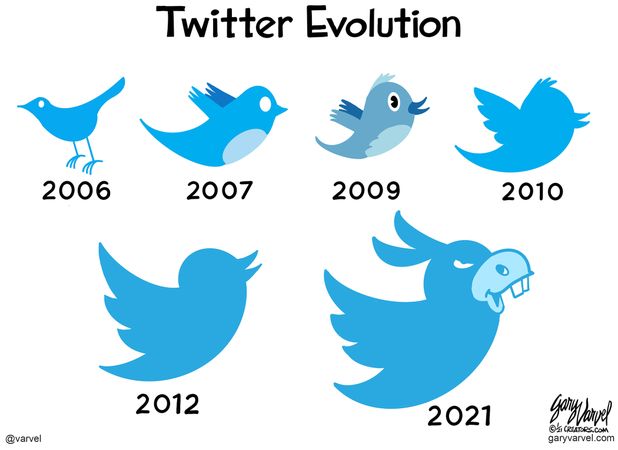
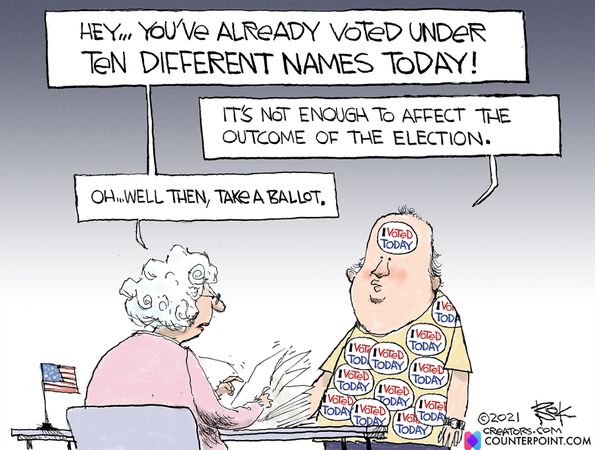
It all begs the question of why Trump’s enemies are still so fanatical in their efforts to separate him from his huge following and destroy him politically, in Stalinist fashion. In part, the Democrats seem now to be addicted to the practice of distracting the public from the political unacceptability of their own program and record by a febrile defamation of the president.

He is not and never in his adult life was a racist or sexist. He has a number of annoying mannerisms. They can be seen by everyone and voters decide for themselves whether they outweigh the president’s better qualities and achievements.

The obsessive desire to destroy Trump even as he leaves the presidency cannot be based on anything but fear of a man who has successfully defied the political establishment, exposed it as substantially a failure, and exploited the fact that the pre-Trump status quo was despised by a majority of Americans.

The logical and creditable response to the collapse in the prestige of the country’s orthodox leaders is to raise their game, put up better candidates in both the parties (not the dismal selection of senatorial candidates available to Georgia’s voters last week), and produce some original policies. Instead, they have just tried to stone to death the person who did produce original policies.

Serving the Country Well

The political establishment has tragically missed the point: if it had been serving the country well Trump would not have been elected four years ago.  If he had not been a capable president most of his policies would not have been effectively endorsed in the congressional and state elections across the country. Those whom he displaced would not have had to resort to such extremes to evict him from the White House.

Polls indicate uniformly that barely 10 percent of Americans respect the legislators in the Congress and no more than 15 percent of Americans believe their media. Even the questionable election revealed that 48 percent of Americans preferred Trump to the candidate of Wall Street, Silicon Valley, Hollywood, academia and the media and social media, despite the Democrats’ huge financial advantage and wall-to-wall media defamation of the incumbent.

The pre-Trump decades brought endless, fruitless war in the Middle East, with an accompanying humanitarian disaster; the greatest economic crisis in the world in 80 years; more than ten million unskilled illegal migrants flooding across the southern border; immense trade deficits; alarming advances by China at America’s expense; and Trump’s predecessors were swindled by North Korea and Iran.

Trump addressed these problems; the dire predictions of his dangerous incompetence came to nothing, his vote total grew by 20 percent between elections, and his party did well in congressional and state elections.

Yet his opponents didn’t respond with better candidates or policies, they exhumed the defeated candidates Joe Biden and Kamala Harris and set them atop a Sanders-Warren far-left program, ignored the worst rioting in the country for over fifty years, apart from defunding police and engineering huge spikes in violent crime, and exploited the COVID crisis to adopt election laws that incite the inference that the election has been stolen.

And they got a free pass when the Supreme Court declined to hear the complaint from Texas supported by eighteen other states that four states had failed to assure a fair presidential election. Trump’s 74 million supporters were left with nothing to do except protest.

Only Alternative

In falsely accusing Trump of inciting insurrection, they have again ignored the public desire for better government and have effectively confirmed Donald Trump as the only alternative to the present familiar source of poor government. Joe Biden’s response to the outrages at the Capitol were that Trump had deliberately incited it, that the motives of the rioters were racist, that the Capitol Police were racists, that Trump was reminiscent of Nazi propaganda minister Josef Goebbels, and then Biden called for national unity.

Trump made a serious mistake in imagining and publicly asking that Vice President Pence reject the determination by the Senate of the Electoral College vote. Pence had no authority to do anything of the kind. But Pence’s election was as much violated as Trump’s and if he attends the inauguration now, Pence will be choosing the Democratic antics over this own party and needlessly compromise his political future.

Impeachment is nonsense, Trump won’t resign and an inept government won’t be able to use defamation and dirty tricks as a substitute for public service for long.

If Trump is the only person who can defend the people against incompetent administration, cowardly legislators and jurists, and a system that has become largely rotten and doesn’t run honest elections or even fair trials, (98 percent conviction rate and a quarter of the world’s prison population), while a totalitarian woke media and dictatorial censors of social media silence dissent, his influence will rise and not be dissipated.


How Washington Was Lost, What to Do Now

John Solomon writes with perspective about what happened along with advice for the future of the republic in his article How the GOP lost control of Washington, and what comes next.  Excerpts in italics with my bolds.

News Analysis: Democrats owned the narrative and rules of the 2020 election. Will Republicans learn from it?

The November election (and Tuesday’s Georgia curtain call) wasn’t won and lost by the tactics, spending, individual players and messaging in the weeks before Nov. 3, according to interviews conducted with more than three dozen frontline players.

Rather, its outcome was cemented long before Labor Day 2020 by a Democratic machinery of former Barack Obama proteges, like David Plouffe, John Podesta, David Axelrod and Stacey Abrams, who worried far less about the tactics of ads, travel (Joe Biden hardly did!) and fundraising and far more about the strategy of how to control the narrative and the rules that would shape the outcome.

They even told the Republicans and the public what they planned to do. Just read Plouffe’s book, “A Citizen’s Guide to Beating Donald Trump.” They even boastfully predicted days before how the vote count would roll out on election night and for several days later. Trump would lead early, and Biden would surpass late, they said.  They were right. Why?

Change the Rules in Your Favor

First and foremost, they usurped the powers of GOP-controlled state legislatures in the five battleground states and rewrote the rules of how votes would be cast and counted, using the pandemic as an excuse.

Mail ballots could be sent to everyone, even if they didn’t ask for one, and wide swaths of Americans could vote by mail. Voter ID requirements could be suspended for those who felt homebound by COVID’s wrath. Mobile ballot boxes could be deployed. Spoiled ballots that legally were supposed to be discarded could be “cured” by election clerks. Legally required voter roll purges could be skipped. And a single billionaire could donate $350 million directly to the election clerks, judges and vote counters in the states, requiring them in some cases to register voters, and create more poll locations in Democratic strongholds.

And Republicans — who controlled the legislatures in Wisconsin, Michigan, Pennsylvania, Georgia and Arizona and the constitutional right to set the rules — hardly put up a fight. Instead, they urged their voters not to take advantage of the loosened rules and to vote the old-fashioned way. They, in the words of the Trump-loving Georgia Democrat Vernon Jones, simply unilaterally disarmed.

Democrats understood that in a pandemic and in an America with millions of new millennial, urban and minority voters, the easier you make casting a ballot the more likely a low-propensity voter is to vote. Send it to them, help them register, make easy drop-off locations or the mailbox the final destination, and voters will vote a lot more willingly.

In other words, the liberal brain trust engaged in cutting-edge warfare, while Republicans tossed their comfortable set of horseshoes from the 1980s, hoping the good old recipe of evangelical GOTV, direct mail, talk radio and Fox News would deliver yet another election win as it had done for decades.

It didn’t.

To be fair, Donald Trump mustered — by a mile — the largest national vote ever assembled by a Republican at 75 million-plus voters and barnstormed the country, risking COVID and criticism without fear. Kevin McCarthy picked an all-star slate of candidates and picked up seats. Mitch McConnell raised a ton of money, and Ronna McDaniel put together one of the most impressive get-out-the-vote efforts ever assembled.

But all that could not overcome the advantage of a rewired electoral system in the five battlegrounds, as the Georgia runoffs showed Tuesday, said Tom Price, a former congressman and Trump Cabinet secretary.

Democrats “leap-frogged Republicans’ process, strategy, technology and tactics, and that is to the credit of folks on the Democratic side,” Price told Just the News. “They have perfected harvesting, I believe it is harvesting, of absentee ballots, and I think the numbers will show in these runoff races, the same as they did in November, that Republicans who lost by close margins won the vote on Election Day, won on early voting in person and lost heavily in absentee ballots.”

Control the Narrative by Means of Media Allies

Secondly, liberals spent two decades building an alliance with the mainstream media, the social giants and the search giants and the permanent government bureaucracy until they could control the narrative, even when it wasn’t true. They had it perfected by the time Donald Trump took office.

Those who objected were canceled and shamed. Intelligence and law enforcement and private investigators were misused to create false realities. True facts and legally protected speech were outright censored long enough to create the narrative needed to win.

Trump colluded with Russia, and bribed Ukraine to investigate his political opponents … though he didn’t. The Hunter Biden corruption story was Russian-fed conspiracy theory …. though it is really true, and he was under criminal investigation the last two years … American towns could be burned to the ground and police defunded because a Kenosha, Wisc., officer shot an unarmed man … who turned out to be wanted by police and armed with a knife.

Owning the information superhighway of the 21st century, like the rules of the election, was far more powerful than choosing where to run ads, campaign in person or spend money.

Liberal Donors Contracted Returns on Their Investments

Finally, the liberal oligarchs club — George Soros, Mark Zuckerberg, Mike Bloomberg et al — spent more than ever to win. But they also transformed the way political donations were spent by imposing corporate governance and specific returns on investment.

Every recipient had to deliver very specific outcomes to keep getting money, governed by lengthy contract-like documents. And the outcomes and deliverables were mapped to the two larger goals of controlling the narrative and the rules of the election.

Advice:  Act Now to Change the Rules and Own the Narrative

That’s what interviews with three dozen experts revealed. So what do those same experts advise Republicans do to change their fortunes?  Exactly what the Democrats did. Don’t point fingers, change the rules, and own the narrative, they said.

Reset Rules for Fair Elections

Phill Kline, the former Kansas attorney general, led the Amistad Project’s efforts to challenge some of the Democrats rule changes. He said the the GOP legislatures in the key battlegrounds must reassert their constitutional right to set the rules of election.

Universal mail ballots can be ended, limited only to those who absolutely need it. Voter IDs can be mandated. Exemptions and legal settlements could, by law, be required to be approved by the legislature. Setting the rules of the election are easy if there is a will, Kline added.

“I think the discipline of the party should be all about de-powering Washington and empowering the states, especially the state legislatures,” Kline told Just the News.

Secondly, conservatives need to build their own information ecosystem that rivals what liberals have: a vibrant press that covers conservatives honestly, and powerful delivery channels that can rival YouTube, Twitter and Facebook.

New services like Rumble, Parler, Real America’s Voice, Citizen Free Press and CloutHub are incubating and attracting millions. They need to be grown and spread to tens of millions along with trusted news sources so conservatives have as big a bullhorn to the next generation of GenZ, millennials and cable-cutters as they have had to Boomers, talk radio and Fox News fans, the experts said.

“We are just playing to a draw,” Price explained. “We are not reaching a lot of folks. And we have to be creative about how we reach them, and I think we’ve got to be able to control a lot of that messaging, and right now we just don’t.”

Finally, conservative donors need to have a new approach, stolen from the ROI model of the Soros and Bloomberg NGOs, so their millions don’t just enrich consultants but have measurable outcomes in setting the rules and narratives that win the next elections. Everything from civic education and empowerment for state legislators to media-platform building needs to be funded, the experts said.

“Funding on the left seems much more strategic than funding on the right, which is predominantly tactical,” explained Steve Hantler, who advises several high-net-worth conservative donors. “Liberal elites have for decades controlled the levers of power in education, media and entertainment and have used that power to indoctrinate generations of Americans against America’s founding values.

“Now is not the time for for hand-wringing and finger-pointing. Now is the time for honest, critical self-evaluation.”