China Also Abuses Covid Statistics

Michael Senger writes at Brownstone Institute China’s Covid Numbers are Manifestly Absurd.  Excerpts in italics with my bolds.

The Wall Street Journal published a piece titled “Shanghai Has Recorded More Than 130,000 Covid Cases—and No Deaths.” Seeing the darkly comic headline, I was excited. Finally, after two years, the WSJ appeared to be calling out the data fraud that was the foundation for this whole sordid experiment in totalitarian virus mitigation, however belatedly.

Alas, my excitement was premature. As it turns out, the authors of the article tie themselves into knots to explain China’s data. They even trot out Ryan Tibshirani, co-leader of Carnegie Mellon’s COVID-19 modeling team, to tell us that China’s death rate “can also be affected by factors like the age distribution and racial makeup of its population, vaccination status, type of vaccine and average distance to a healthcare facility,” the implication being that Prof. Tibshirani sees nothing wrong with China’s data, thank you very much.

Apparently, China’s low vaccination rate among its elderly population means they can have 130,000 cases and zero deaths. Make it make sense. “Science!”

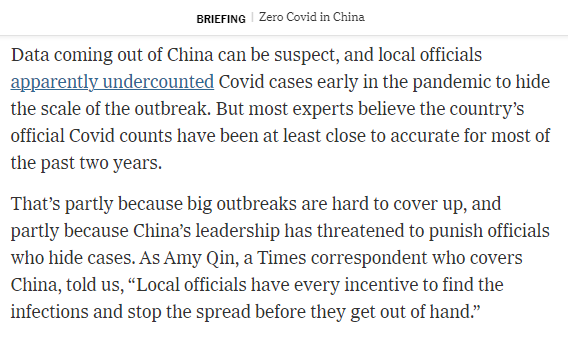
For two years, the elite journalists, scientists, politicians, and health officials who speak for our most prestigious institutions have been conspicuously and vehemently deferential to the integrity of China’s Covid data. Here’s what the New York Times’ David Leonhardt wrote just two months ago:

Well, now, in Shanghai, we have a “big outbreak” which the CCP has not covered up—but the death data coming out is still manifestly fraudulent. Would the New York Times care to revisit their conclusion that “the country’s official Covid counts have been at least close to accurate…because big outbreaks are hard to cover up”?

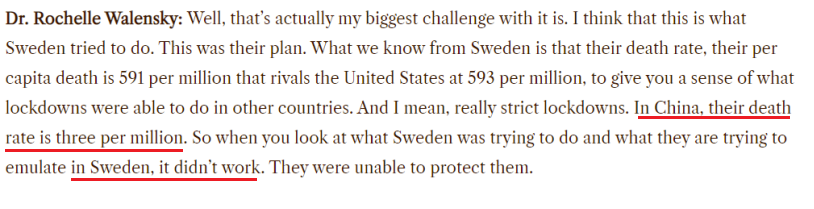
Here’s Rochelle Walensky, shortly before assuming office as Director of the US CDC:

Perhaps it shouldn’t come as a surprise that these elites want, so badly, for China’s Covid data to be real, because for two years they’ve been imploring their citizens to emulate China, scoffing at our childish attachment to human rights and civil liberties.

By demanding western elites conform to a false reality in which they had to pretend China’s data was real, the CCP forced them into a referendum as to whom they were truly loyal—China, or their own people. In the vast majority of cases, they chose China. And two years on, even amid the horrific spectacle of China’s lockdown of Shanghai, they remain too cowardly and morally vacuous to reconsider their choice.

Even among lockdown skeptics, many can’t accept that public health officials could possibly be that incompetent. It all seems too dumb, too banal. But since March 2020, every single pandemic policy—from the strict lockdowns and masks to the tests, death coding, and vaccine passes—has been imported from China based on the idea that these “extreme social-control measures” had effectively allowed China to “control the virus.”

In an Orwellian “war on COVID misinformation,” those who pointed out that China’s data was obviously fake were vilified by their own governments as alt-right racists, neo-Nazis, and anti-vaxxers—even if fully-vaccinated. They were censored, professionally ostracized, and, as I experienced firsthand, had their social media accounts purged. Hundreds of millions were thrown into poverty, millions of small businesses were bankrupted, an entire generation of children was forced to isolate and cover their faces, and billions of life years were lost, all in service to the collective fantasy encapsulated by this graph.


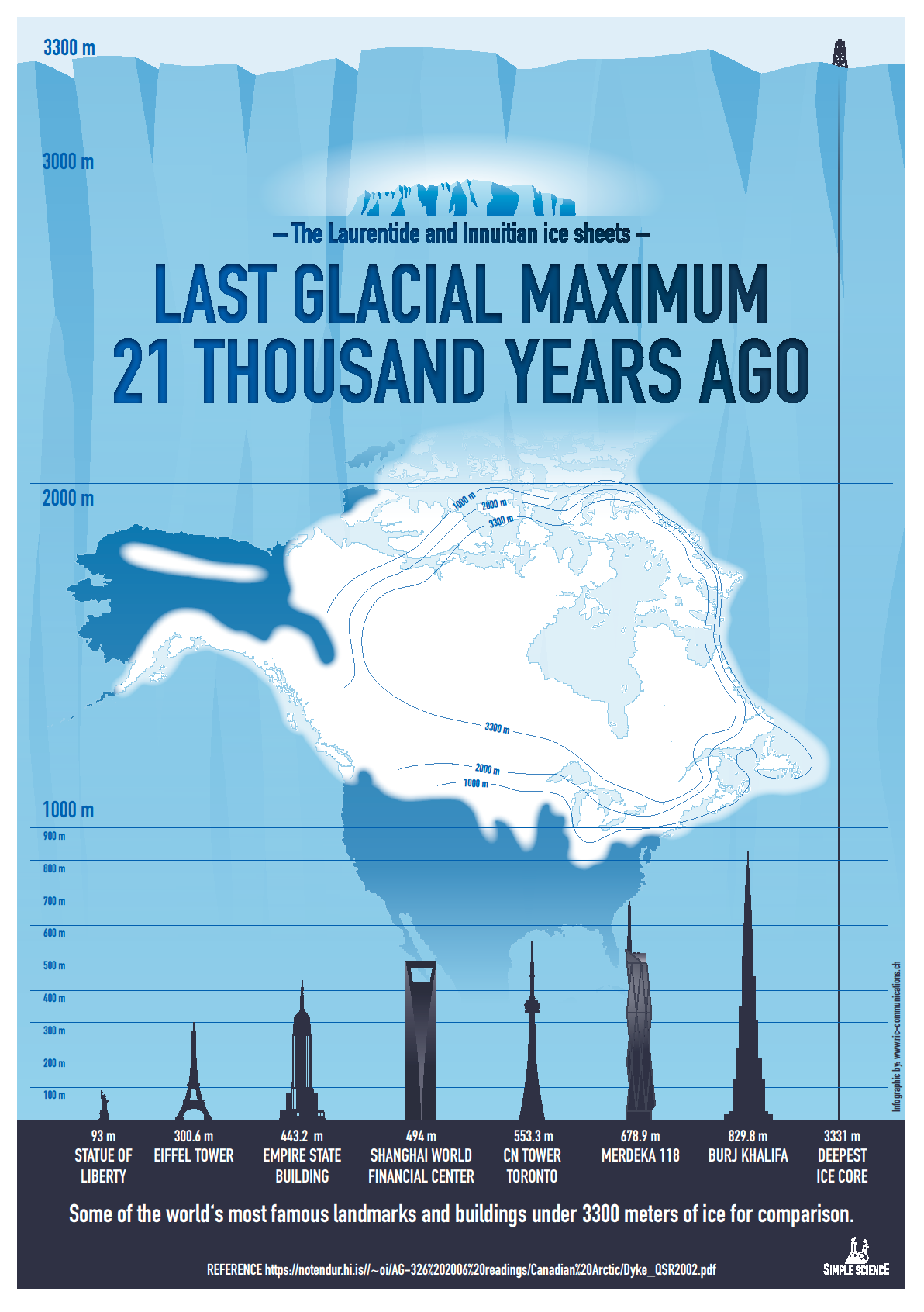
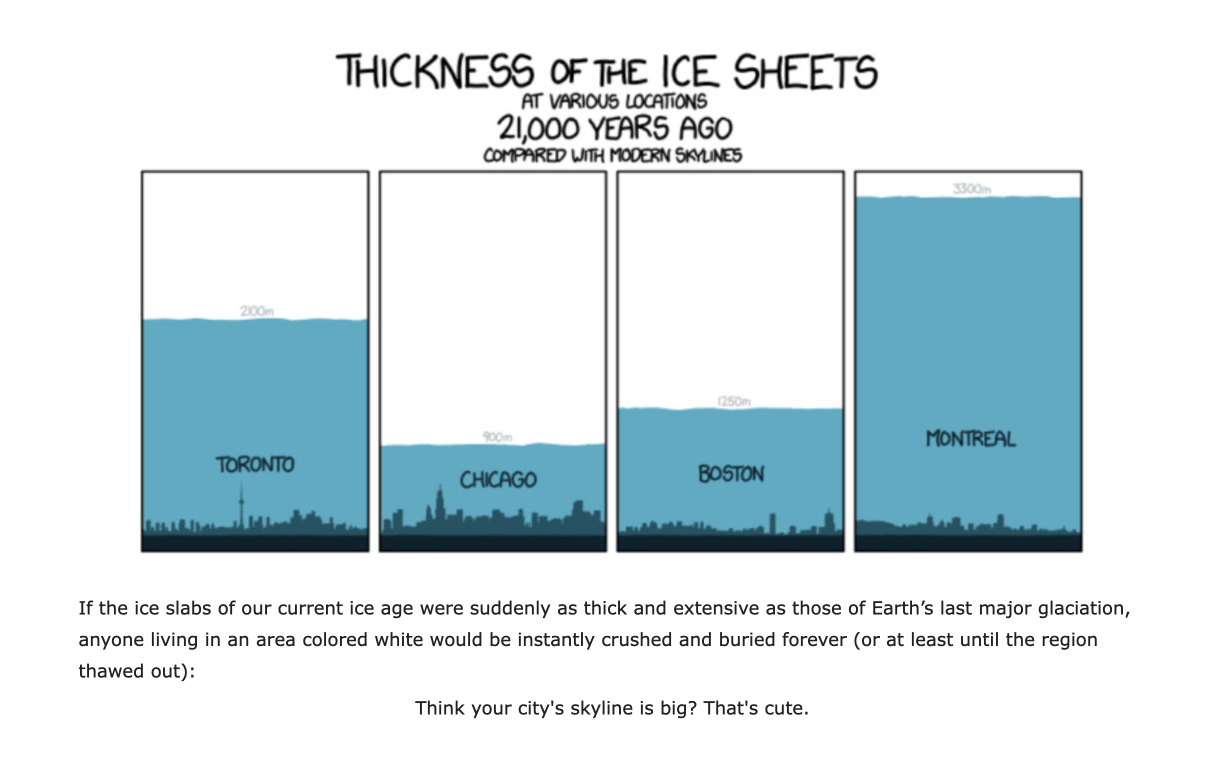
Would You Prefer With or Without Ice?

Raymond at RiC-Communications has produced the above poster on the theme expounded in a previous post In Celebration of Our Warm Climate, reprinted below. The above image is available in high resolution pdf format at his website The last ice age and its impact.

His other science infographic projects are:

The World of CO2

The World of Climate Change

The World of Energy

Legacy and social media keep up a constant drumbeat of warnings about a degree or two of planetary warming without any historical context for considering the significance of the alternative.  A poem of Robert Frost comes to mind as some applicable wisdom:

The diagram at the top shows how grateful we should be for living in today’s climate instead of a glacial icehouse. (H/T Raymond Inauen)  For most of its history Earth has been frozen rather than the mostly green place it is today.  And the reference is to the extent of the North American ice sheet during the Last Glacial Maximum (LGM).

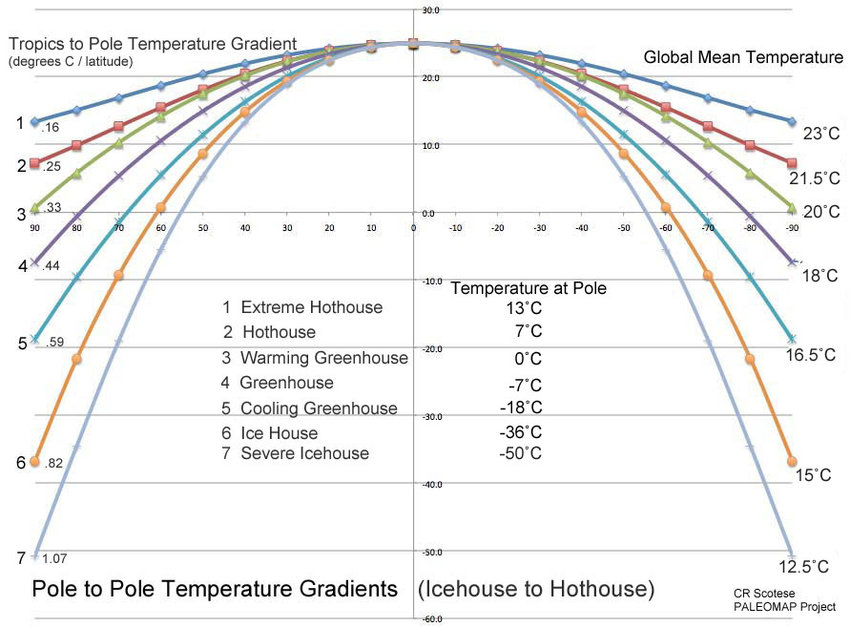
For further context consider that geologists refer to our time as a “Severe Icehouse World”, among the various conditions in earth’s history, as diagramed by paleo climatologist Christopher Scotese. Referring to the Global Mean Temperatures, it appears after many decades, we are slowly rising to “Icehouse World”, which would seem to be a good thing.

Instead of fear mongering over a bit of warming, we should celebrate our good fortune, and do our best for humanity and the biosphere.  Matthew Ridley takes it from there in a previous post.

Background from previous post The Goodness of Global Warming

LAI refers to Leaf Area Index.

As noted in other posts here, warming comes and goes and a cooling period may now be ensuing. See No Global Warming, Chilly January Land and Sea.  Matt Ridley provides a concise and clear argument to celebrate any warming that comes to our world in his Spiked article Why global warming is good for us.  Excerpts in italics with my bolds and added images.

Climate change is creating a greener, safer planet.

Global warming is real. It is also – so far – mostly beneficial. This startling fact is kept from the public by a determined effort on the part of alarmists and their media allies who are determined to use the language of crisis and emergency. The goal of Net Zero emissions in the UK by 2050 is controversial enough as a policy because of the pain it is causing. But what if that pain is all to prevent something that is not doing net harm?

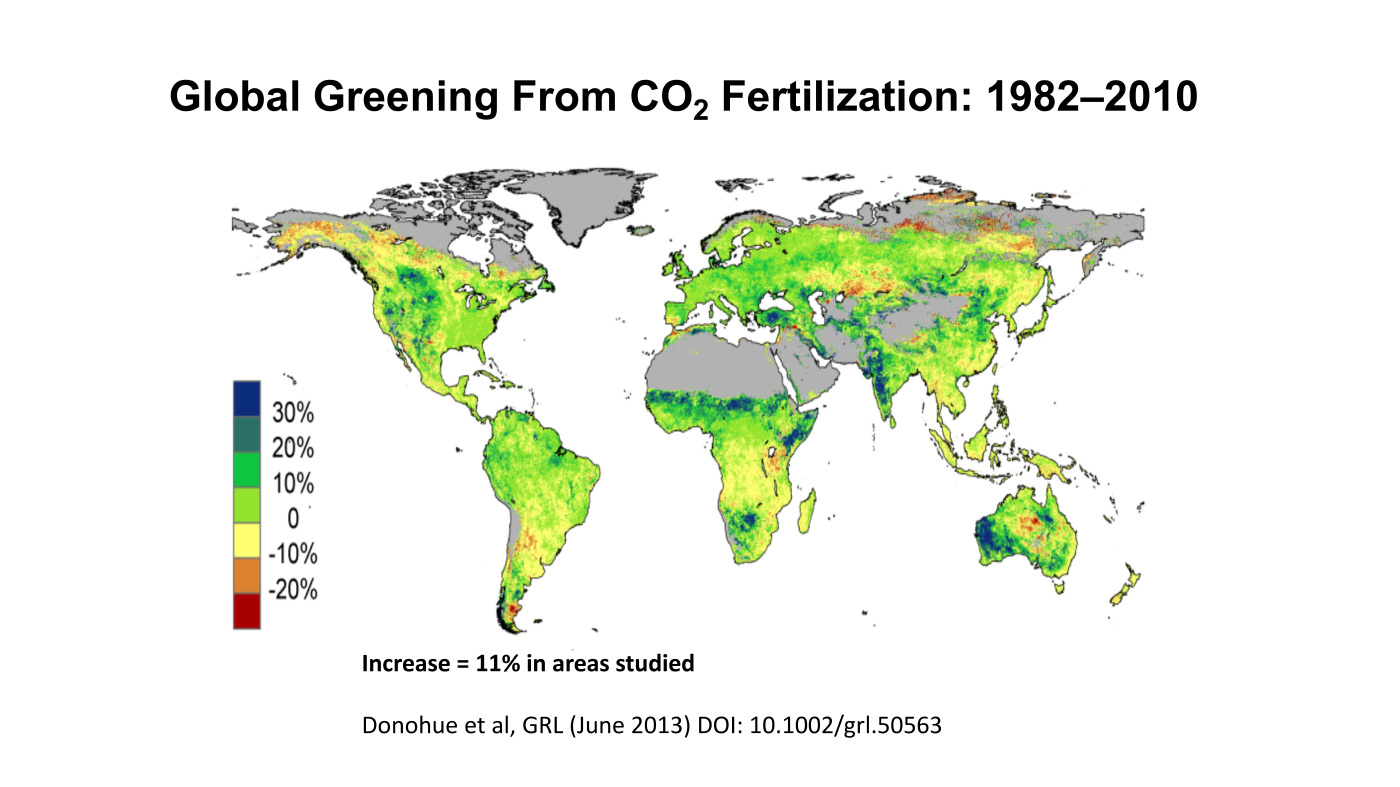
The biggest benefit of emissions is global greening, the increase year after year of green vegetation on the land surface of the planet. Forests grow more thickly, grasslands more richly and scrub more rapidly. This has been measured using satellites and on-the-ground recording of plant-growth rates. It is happening in all habitats, from tundra to rainforest. In the four decades since 1982, as Bjorn Lomborg points out, NASA data show that global greening has added 618,000 square kilometres of extra green leaves each year, equivalent to three Great Britains. You read that right: every year there’s more greenery on the planet to the extent of three Britains. I bet Greta Thunberg did not tell you that.

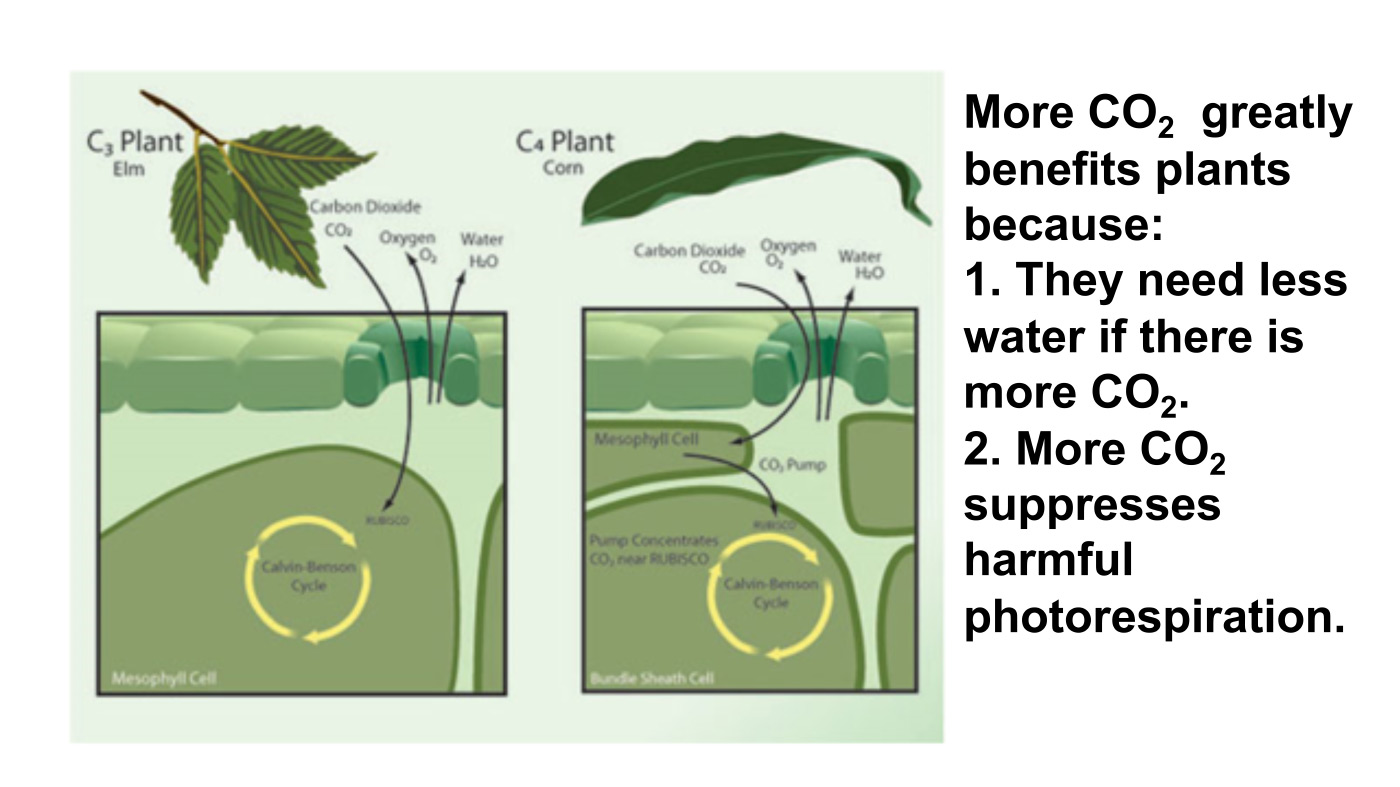
The cause of this greening? Although tree planting, natural reforestation, slightly longer growing seasons and a bit more rain all contribute, the big cause is something else. All studies agree that by far the largest contributor to global greening – responsible for roughly half the effect – is the extra carbon dioxide in the air. In 40 years, the proportion of the atmosphere that is CO2 has gone from 0.034 per cent to 0.041 per cent. That may seem a small change but, with more ‘food’ in the air, plants don’t need to lose as much water through their pores (‘stomata’) to acquire a given amount of carbon. So dry areas, like the Sahel region of Africa, are seeing some of the biggest improvements in greenery. Since this is one of the poorest places on the planet, it is good news that there is more food for people, goats and wildlife.

But because good news is no news, green pressure groups and environmental correspondents in the media prefer to ignore global greening. Astonishingly, it merited no mentions on the BBC’s recent Green Planet series, despite the name. Or, if it is mentioned, the media point to studies suggesting greening may soon cease. These studies are based on questionable models, not data (because data show the effect continuing at the same pace). On the very few occasions when the BBC has mentioned global greening it is always accompanied by a health warning in case any viewer might glimpse a silver lining to climate change – for example, ‘extra foliage helps slow climate change, but researchers warn this will be offset by rising temperatures’.

Another bit of good news is on deaths. We’re against them, right? A recent study shows that rising temperatures have resulted in half a million fewer deaths in Britain over the past two decades. That is because cold weather kills about ’20 times as many people as hot weather’, according to the study, which analyses ‘over 74million deaths in 384 locations across 13 countries’. This is especially true in a temperate place like Britain, where summer days are rarely hot enough to kill. So global warming and the unrelated phenomenon of urban warming relative to rural areas, caused by the retention of heat by buildings plus energy use, are both preventing premature deaths on a huge scale.

Summer temperatures in the US are changing at half the rate of winter temperatures and daytimes are warming 20 per cent slower than nighttimes. A similar pattern is seen in most countries. Tropical nations are mostly experiencing very slow, almost undetectable daytime warming (outside cities), while Arctic nations are seeing quite rapid change, especially in winter and at night. Alarmists love to talk about polar amplification of average climate change, but they usually omit its inevitable flip side: that tropical temperatures (where most poor people live) are changing more slowly than the average.

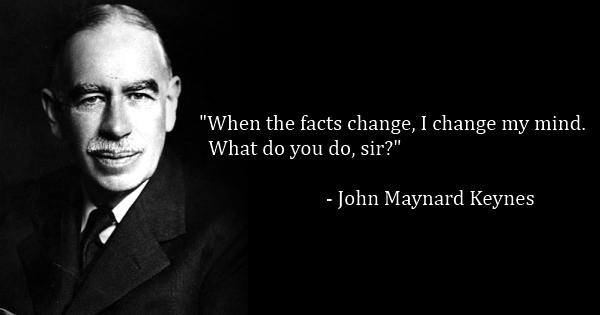
My Mind is Made Up, Don’t Confuse Me with the Facts. H/T Bjorn Lomborg, WUWT

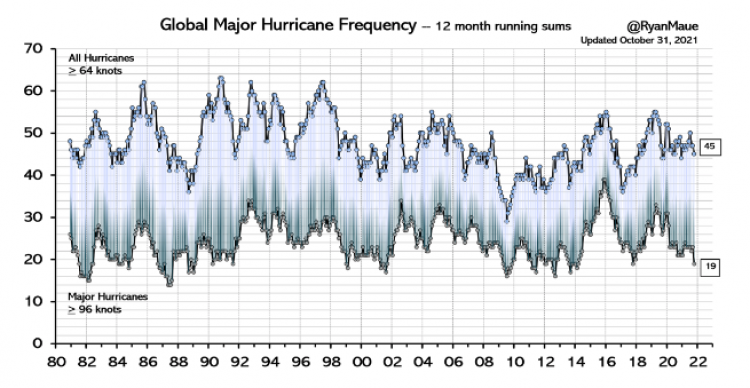
But are we not told to expect more volatile weather as a result of climate change? It is certainly assumed that we should. Yet there’s no evidence to suggest weather volatility is increasing and no good theory to suggest it will. The decreasing temperature differential between the tropics and the Arctic may actually diminish the volatility of weather a little.

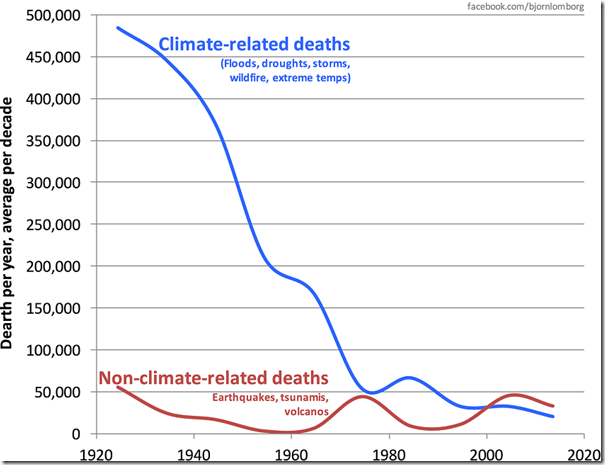
Indeed, as the Intergovernmental Panel on Climate Change (IPCC) repeatedly confirms, there is no clear pattern of storms growing in either frequency or ferocity, droughts are decreasing slightly and floods are getting worse only where land-use changes (like deforestation or building houses on flood plains) create a problem. Globally, deaths from droughts, floods and storms are down by about 98 per cent over the past 100 years – not because weather is less dangerous but because shelter, transport and communication (which are mostly the products of the fossil-fuel economy) have dramatically improved people’s ability to survive such natural disasters.

The effect of today’s warming (and greening) on farming is, on average, positive: crops can be grown farther north and for longer seasons and rainfall is slightly heavier in dry regions. We are feeding over seven billion people today much more easily than we fed three billion in the 1960s, and from a similar acreage of farmland. Global cereal production is on course to break its record this year, for the sixth time in 10 years.

Nature, too, will do generally better in a warming world. There are more species in warmer climates, so more new birds and insects are arriving to breed in southern England than are disappearing from northern Scotland. Warmer means wetter, too: 9,000 years ago, when the climate was warmer than today, the Sahara was green. Alarmists like to imply that concern about climate change goes hand in hand with concern about nature generally. But this is belied by the evidence. Climate policies often harm wildlife: biofuels compete for land with agriculture, eroding the benefits of improved agricultural productivity and increasing pressure on wild land; wind farms kill birds and bats; and the reckless planting of alien sitka spruce trees turns diverse moorland into dark monoculture.

Meanwhile, real environmental issues are ignored or neglected because of the obsession with climate. With the help of local volunteers I have been fighting to protect the red squirrel in Northumberland for years. The government does literally nothing to help us, while it pours money into grants for studying the most far-fetched and minuscule possible climate-change impacts. Invasive alien species are the main cause of species extinction worldwide (like grey squirrels driving the red to the margins), whereas climate change has yet to be shown to have caused a single species to die out altogether anywhere.

Of course, climate change does and will bring problems as well as benefits. Rapid sea-level rise could be catastrophic. But whereas the sea level shot up between 10,000 and 8,000 years ago, rising by about 60 metres in two millennia, or roughly three metres per century, today the change is nine times slower: three millimetres a year, or a foot per century, and with not much sign of acceleration. Countries like the Netherlands and Vietnam show that it is possible to gain land from the sea even in a world where sea levels are rising. The land area of the planet is actually increasing, not shrinking, thanks to siltation and reclamation.

Environmentalists don’t get donations or invitations to appear on the telly if they say moderate things. To stand up and pronounce that ‘climate change is real and needs to be tackled, but it’s not happening very fast and other environmental issues are more urgent’ would be about as popular as an MP in Oliver Cromwell’s parliament declaring, ‘The evidence for God is looking a bit weak, and I’m not so very sure that fornication really is a sin’. And I speak as someone who has made several speeches on climate in parliament.

No wonder we don’t hear about the good news on climate change.


Pipe Dreams: How America Is Energized

Kite and Key Media provides a primer on America’s Energy supply in the above video and transcript below in italics with my bolds.

Pipe Dreams: How America Gets Energy.
The Backbone of America’s Energy Infrastructure

In the winter of 2022, the world watched in horror as Russian forces invaded Ukraine.  The question on everyone’s mind: “How did they think they could get away with this?”

One very good answer to that question: Because over 40% of the natural gas Europe relies on to keep itself warm during the winter … comes from Russia.  And standing up to the people who are keeping you from freezing … is a tall order.

Now, if you’re an American, this scenario might seem unthinkable. After all, the U.S. produces more natural gas than any other nation in the world.   We’d never have to rely on a hostile nation to keep ourselves warm.

Or at least that’s what you’d think…
…unless you were there the day that Russian gas pulled into Boston harbor.

Here’s a simple test to determine whether you live in a prosperous society: Do you ever worry about where you’re going to get the necessities of life?

Do you ever pull up to the gas station and worry that the pumps might be empty? Do you ever go to switch on the lights and worry that nothing will happen?

Most of the time, the answer is ‘no’ … which is why it’s so terrifying when the answer is ‘yes.’

Blackouts in Texas in early 2021. Over 10,000 gas stations running dry after a cyberattack only a few months later.   What do those incidents have in common?

They demonstrate what happens when pipelines aren’t working.

If America’s energy supplies are the lifeblood of our economy, then we can think of pipelines as something like the nation’s circulatory system.

In the U.S., pipelines are used to bring us about 90% of our petroleum and virtually all of our natural gas — which is pretty significant, given that those two power sources alone make up about 70% of the country’s entire energy use.

That’s why America has over 2.6 million miles worth of pipelines. Because without them … the whole country gets very Amish very fast.

But, as you may have noticed … not everyone is thrilled about this. In recent years, legal challenges have led to the cancellation of several major pipelines and delays for many others. From 2009 to 2018, the time it takes to get pipelines approved increased by more than 50%. 

So, what’s happening here? The objections to pipelines rest primarily on two critiques. The first is that they’ll contribute to carbon emissions. The second is that pipeline accidents could lead to oil spills.

And both of those claims … really require context to understand.

When it comes to carbon emissions, it’s important to know that the pipelines themselves aren’t really the issue. They’re just a mode of transportation.

The carbon emissions come from the petroleum and natural gas that flow through the pipelines. But here’s the catch: Getting rid of the pipelines … doesn’t mean getting rid of the emissions.

Cancelling the Keystone XL pipeline, for instance, may have felt like a win for the environment — but it’s not like that oil is gonna stay in the ground as a result. In fact, much of it is likely to be shipped to China — which isn’t exactly a low-emissions trip.

And we can probably expect to see more of that. Current government projections are that, even with a steep increase in the use of renewable fuels, we’ll still be getting about 2/3 of our energy from natural gas and petroleum … 30 years from now.

Refusing to build pipelines won’t change that reality …
but it will make the system we actually have much harder to operate.

Which gets to those concerns about safety. Do accidents occur with pipelines? Yes. It happens. However, accidents occur with all forms of energy transportation. So, the real question is what’s safest among the available options.

And on that front … pipelines do pretty well. Because if you’re not going to move fuel through the ground, you only have three other options: put it on trains, put it on trucks, or put it on boats.

Now, none of those methods is especially dangerous, but pipelines spill a lower percentage of the oil they transport than any method except boats.  And boats have … limited utility on this front. Because they still need fuel in Nebraska … and America’s 26 other land-locked states. 

So, what does a world without pipelines look like?
We already sorta know the answer.

The reason that Boston was getting gas from Russia, for instance, was because the state of Massachusetts refused to allow a pipeline to bring it from Pennsylvania. That’s the same reason, by the way, that, in January of 2022, the citizens of Boston … were paying 400% more for natural gas than those Pennsylvanians only 200 miles away — in the middle of a New England winter.

Here’s the reality: None of us are willing to live in a world where the lights don’t reliably come on or gas doesn’t reliably come out of the pump. We can aspire to a future powered by cleaner energy sources, but until that day comes … we’re going to be relying on fuel sources like petroleum and natural gas.

Which means we either rely on pipelines…

…or rely on places like Moscow…

…or get very comfortable with horses.


Still No Global Warming, Milder March Land and Sea

a62edf0f39de560a219b7262163b0d45

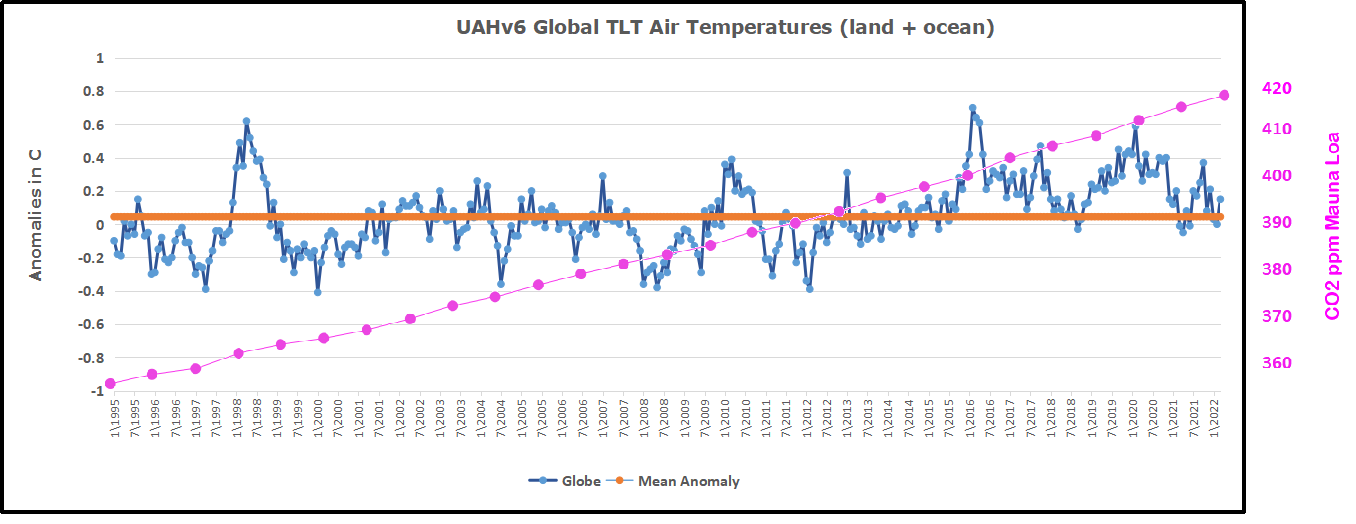
The post below updates the UAH record of air temperatures over land and ocean.  But as an overview consider how recent rapid cooling has now completely overcome the warming from the last 3 El Ninos (1998, 2010 and 2016).  The UAH record shows that the effects of the last one were gone as of April 2021, again in November 2021 and February 2022. (UAH baseline is now 1991-2020).

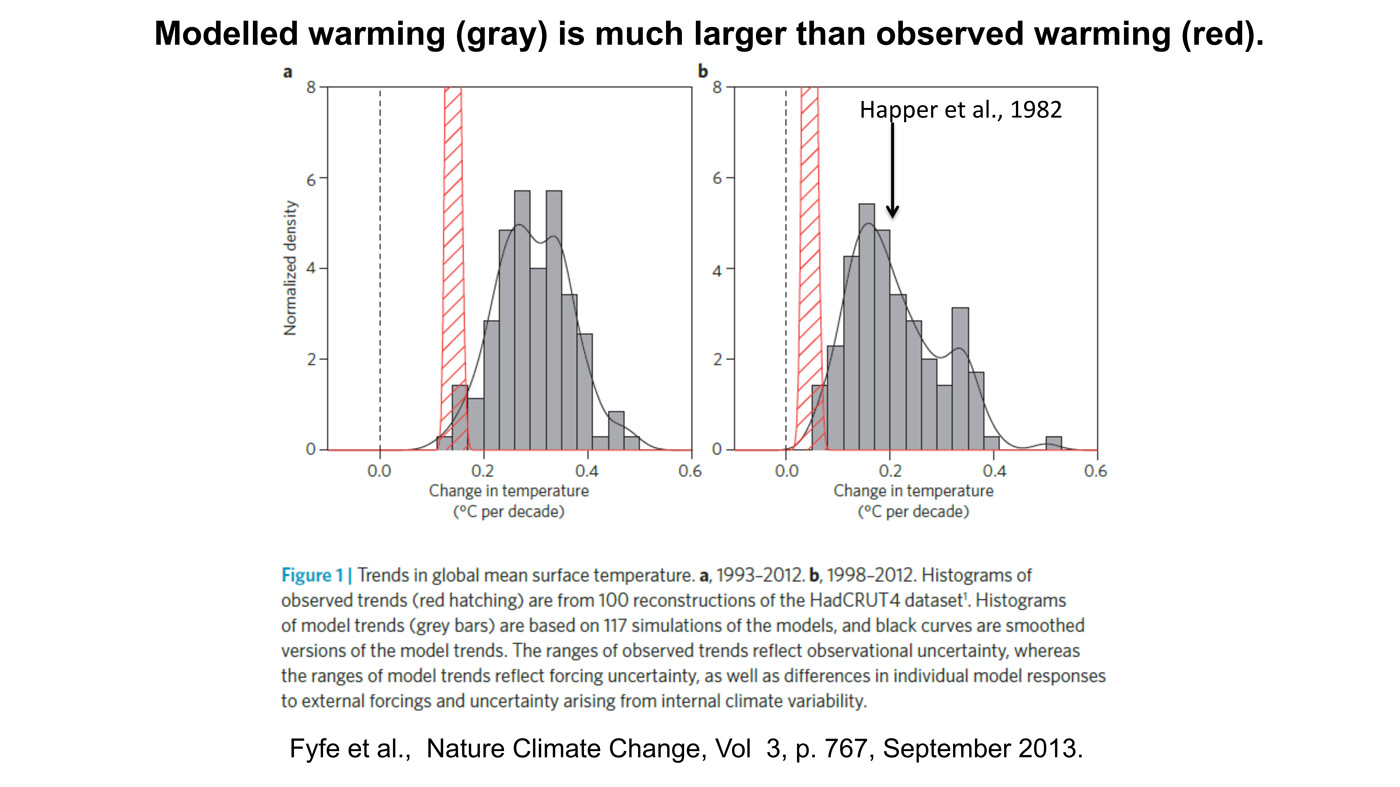
For reference I added an overlay of CO2 annual concentrations as measured at Mauna Loa.  While temperatures fluctuated up and down ending flat, CO2 went up steadily by ~55 ppm, a 15% increase.

Furthermore, going back to previous warmings prior to the satellite record shows that the entire rise of 0.8C since 1947 is due to oceanic, not human activity.

gmt-warming-events

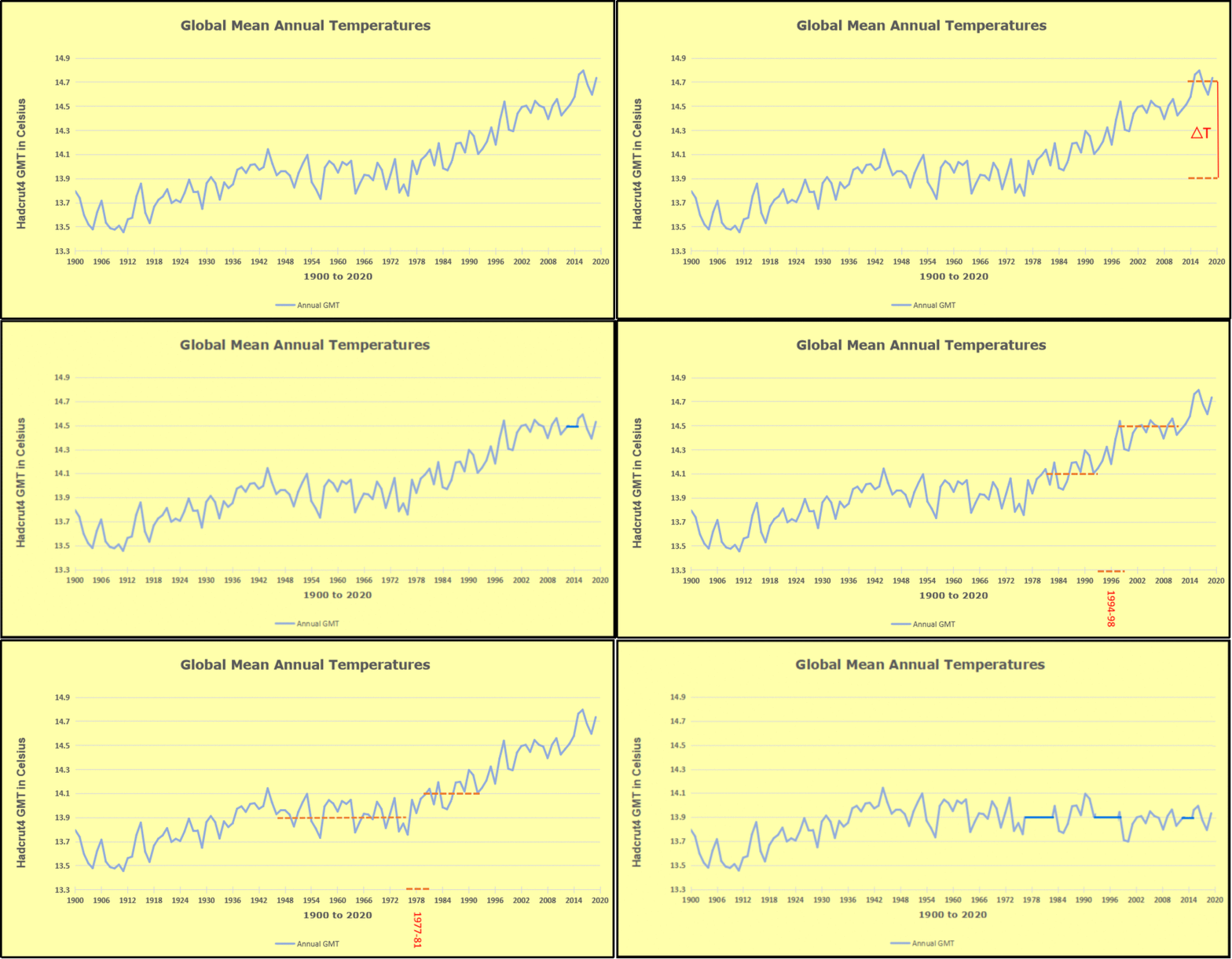
The animation is an update of a previous analysis from Dr. Murry Salby.  These graphs use Hadcrut4 and include the 2016 El Nino warming event.  The exhibit shows since 1947 GMT warmed by 0.8 C, from 13.9 to 14.7, as estimated by Hadcrut4.  This resulted from three natural warming events involving ocean cycles. The most recent rise 2013-16 lifted temperatures by 0.2C.  Previously the 1997-98 El Nino produced a plateau increase of 0.4C.  Before that, a rise from 1977-81 added 0.2C to start the warming since 1947.

Importantly, the theory of human-caused global warming asserts that increasing CO2 in the atmosphere changes the baseline and causes systemic warming in our climate.  On the contrary, all of the warming since 1947 was episodic, coming from three brief events associated with oceanic cycles. 

Update August 3, 2021

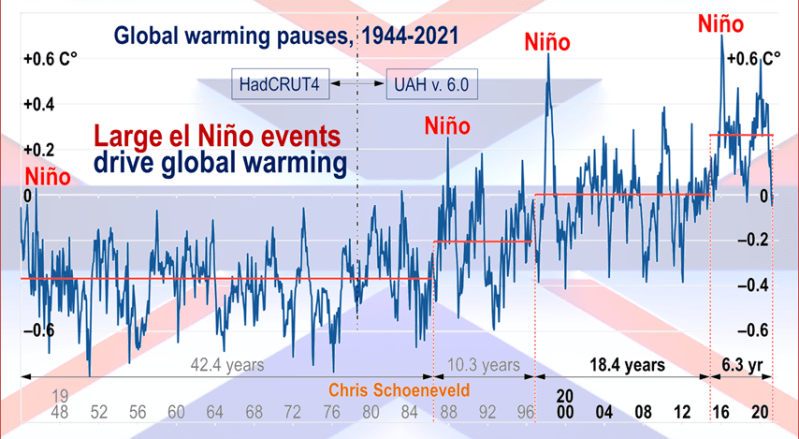
Chris Schoeneveld has produced a similar graph to the animation above, with a temperature series combining HadCRUT4 and UAH6. H/T WUWT

image-8


mc_wh_gas_web20210423124932

See Also Worst Threat: Greenhouse Gas or Quiet Sun?

March Update Milder Ocean and Land Air Temps 

banner-blog

With apologies to Paul Revere, this post is on the lookout for cooler weather with an eye on both the Land and the Sea.  While you will hear a lot about 2020-21 temperatures matching 2016 as the highest ever, that spin ignores how fast the cooling set in.  The UAH data analyzed below shows that warming from the last El Nino was fully dissipated with chilly temperatures in all regions.  Last month both land and ocean showed slightly milder temps

UAH has updated their tlt (temperatures in lower troposphere) dataset for March 2022.  Previously I have done posts on their reading of ocean air temps as a prelude to updated records from HadSST3 (which is now discontinued). So I have separately posted on SSTs using HadSST4 2021 Ends with Cooler Ocean Temps  This month also has a separate graph of land air temps because the comparisons and contrasts are interesting as we contemplate possible cooling in coming months and years. Sometimes air temps over land diverge from ocean air changes, while last month showed that both air over land and ocean rose slightly.

Note:  UAH has shifted their baseline from 1981-2010 to 1991-2020 beginning with January 2021.  In the charts below, the trends and fluctuations remain the same but the anomaly values change with the baseline reference shift.

Presently sea surface temperatures (SST) are the best available indicator of heat content gained or lost from earth’s climate system.  Enthalpy is the thermodynamic term for total heat content in a system, and humidity differences in air parcels affect enthalpy.  Measuring water temperature directly avoids distorted impressions from air measurements.  In addition, ocean covers 71% of the planet surface and thus dominates surface temperature estimates.  Eventually we will likely have reliable means of recording water temperatures at depth.

Recently, Dr. Ole Humlum reported from his research that air temperatures lag 2-3 months behind changes in SST.  Thus the cooling oceans now portend cooling land air temperatures to follow.  He also observed that changes in CO2 atmospheric concentrations lag behind SST by 11-12 months.  This latter point is addressed in a previous post Who to Blame for Rising CO2?

After a change in priorities, updates are now exclusive to HadSST4.  For comparison we can also look at lower troposphere temperatures (TLT) from UAHv6 which are now posted for March.  The temperature record is derived from microwave sounding units (MSU) on board satellites like the one pictured above. Recently there was a change in UAH processing of satellite drift corrections, including dropping one platform which can no longer be corrected. The graphs below are taken from the revised and current dataset.

The UAH dataset includes temperature results for air above the oceans, and thus should be most comparable to the SSTs. There is the additional feature that ocean air temps avoid Urban Heat Islands (UHI).  The graph below shows monthly anomalies for ocean temps since January 2015.

Note 2020 was warmed mainly by a spike in February in all regions, and secondarily by an October spike in NH alone. In 2021, SH and the Tropics both pulled the Global anomaly down to a new low in April. Then SH and Tropics upward spikes, along with NH warming brought Global temps to a peak in October.  That warmth was gone as November 2021 ocean temps plummeted everywhere. A upward bump 01/2022 was reversed in 02/2022 and now temps rise again in 03/2022.  Last month warming in the Tropics and NH was moderated by SH ocean air remaining cool.

Land Air Temperatures Tracking Downward in Seesaw Pattern

We sometimes overlook that in climate temperature records, while the oceans are measured directly with SSTs, land temps are measured only indirectly.  The land temperature records at surface stations sample air temps at 2 meters above ground.  UAH gives tlt anomalies for air over land separately from ocean air temps.  The graph updated for March is below.

Here we have fresh evidence of the greater volatility of the Land temperatures, along with extraordinary departures by SH land.  Land temps are dominated by NH with a 2021 spike in January,  then dropping before rising in the summer to peak in October 2021. As with the ocean air temps, all that was erased in November with a sharp cooling everywhere. Land temps dropped sharply for four months, even more than did the Oceans.  Now in March all land regions warmed pulling up the global anomaly.

The Bigger Picture UAH Global Since 1980

The chart shows monthly anomalies starting 01/1980 to present.  The average monthly anomaly is -0.07, for this period of more than four decades.  The graph shows the 1998 El Nino after which the mean resumed, and again after the smaller 2010 event. The 2016 El Nino matched 1998 peak and in addition NH after effects lasted longer, followed by the NH warming 2019-20.   A small upward bump in 2021 has been reversed with temps having returned again to the mean. Today we are at nearly the same temperature as 1980, with virtually no accumulation of global warming.

TLTs include mixing above the oceans and probably some influence from nearby more volatile land temps.  Clearly NH and Global land temps have been dropping in a seesaw pattern, nearly 1C lower than the 2016 peak.  Since the ocean has 1000 times the heat capacity as the atmosphere, that cooling is a significant driving force.  TLT measures started the recent cooling later than SSTs from HadSST3, but are now showing the same pattern.  It seems obvious that despite the three El Ninos, their warming has not persisted, and without them it would probably have cooled since 1995.  Of course, the future has not yet been written.


Mid April Arctic Ice Above Average

Drift ice in Okhotsk Sea at sunrise.

Previous posts showed 2022 Arctic Ice broke the 15M km2 ceiling in February, staying above that level the first week of March, then followed by typical melting in March. As the chart below shows, mid March the overall ice extent was ~400k km2 below the 16 year average, before returning to the mean day 89 and tracking the average since then.

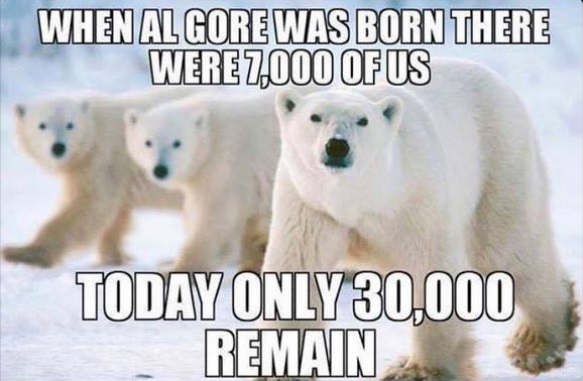
Note the much higher ice extents in 2022 compared to 2021 or 2007.  The green lines show that the above normal ice this year is despite low extents in Sea of Okhotsk.  The averages in dark green (excluding Okhotsk) are below 2022 in light green (excluding Okhotsk) by nearly 200k km2.  IOW everywhere in the Arctic except Okhotsk ice extents are well above average.  Remember also that Okhotsk basin is outside the Arctic circle, has no Polar bears, and is among the first to melt out every spring.

The table below shows ice extents in the seas comprising the Arctic, comparing 2022 day 102 with the same day average over the last 16 years and with 2021.

Region 2022102 Day 102 Average 2022-Ave. 2021102 2022-2021
 (0) Northern_Hemisphere 14276734 14220846 55888 13625046 651688
 (1) Beaufort_Sea 1070776 1069263 1513 1070689 87
 (2) Chukchi_Sea 966006 963080 2926 966006 0
 (3) East_Siberian_Sea 1087137 1085847 1290 1087137 0
 (4) Laptev_Sea 897845 895064 2781 897827 18
 (5) Kara_Sea 935023 922556 12467 900979 34045
 (6) Barents_Sea 708728 615602 93126 349338 359390
 (7) Greenland_Sea 646204 655532 -9329 671290 -25086
 (8) Baffin_Bay_Gulf_of_St._Lawrence 1281551 1286670 -5119 1132374 149177
 (9) Canadian_Archipelago 854685 852712 1973 854597 88
 (10) Hudson_Bay 1260903 1246035 14868 1249891 11012
 (11) Central_Arctic 3238576 3230459 8117 3167541 71035
 (12) Bering_Sea 765331 658850 106481 545689 219642
 (13) Baltic_Sea 51751 47121 4630 21897 29854
 (14) Sea_of_Okhotsk 506073 685897 -179824 704441 -198368

The table shows that 2022 ice extent is slightly above average and exceeding 2021 by 652k km2 at this date. Surpluses are sizeable in Bering and Barents, more than offsetting the major Okhotsk deficit. All other regions are showing as typically frozen basins.

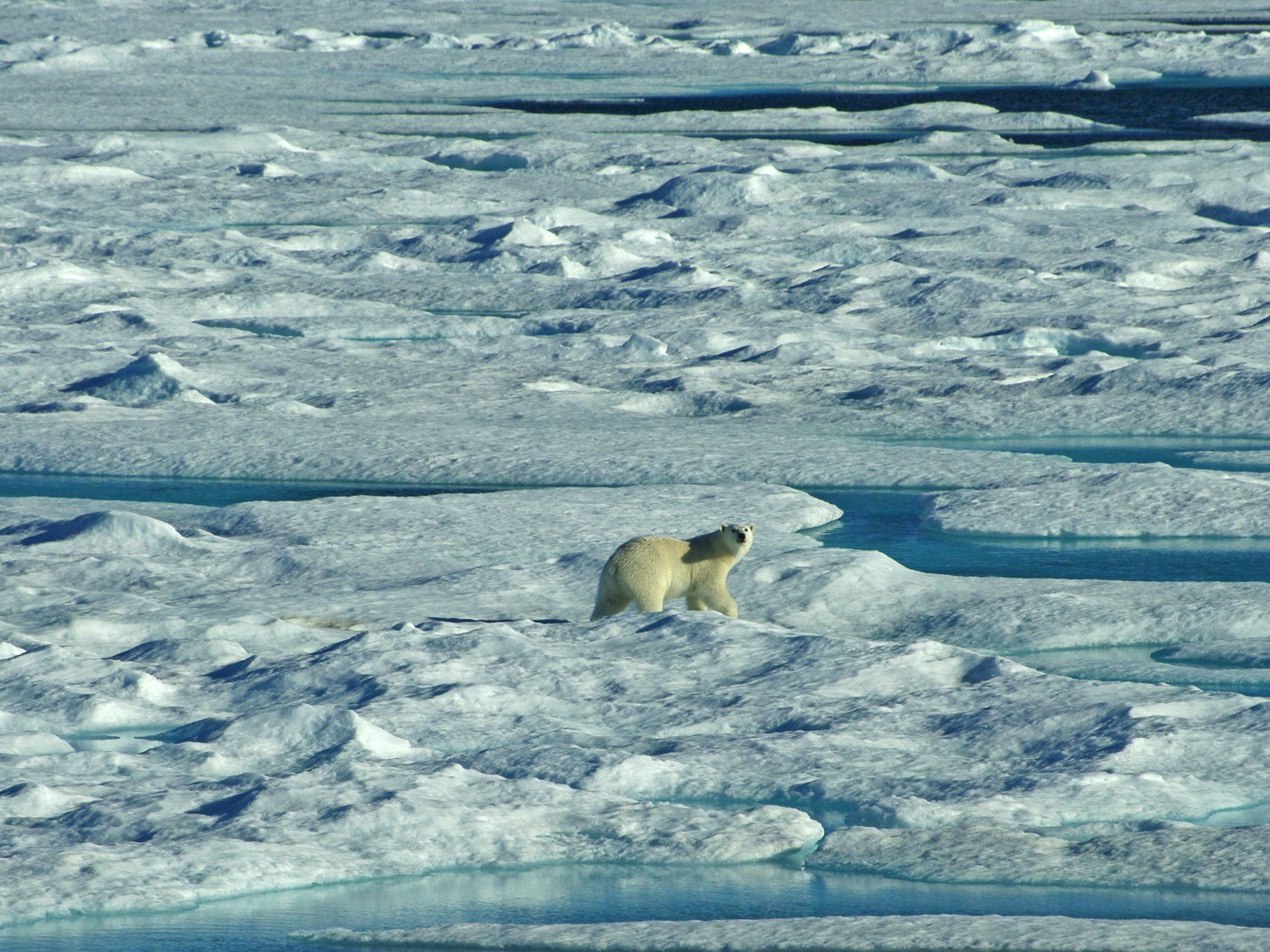
Polar Bear on Ice in Baffin Bay Between Baffin Island and Greenland


Critical Gender Theory Wreaking Havoc

This is an update adding to a previous post reprinted below Ruckus Over Classroom Genderism.  C. Bradley Thompson provides a detailed and disturbing accounting of the gender transition  movement operating inside the US school system. His substack article is Sex and the Schools, or, An Essay You Don’t Want to Read.  A few excerpts are in italics with my bolds.

In this new series of essays, I’d like to show you what is being taught in America’s twenty-first-century government schools and the philosophy behind it. The portrait that I will present here is not a pretty one, but it is the reality. The simple truth of the matter is that America’s government schools are intellectually bankrupt and morally corrupt. To suggest otherwise is either disingenuous or a form of head-in-the-sand-ism.

Officially, America’s schools claim to teach no moral values per se. But that claim is contradicted by the fact that they constantly push moral values such as “diversity,” “equity,” “inclusion,” “tolerance,” moral relativism, and egalitarianism. Such “values” are intended to strip children of any standards or principles they may have previously embraced, so that the teachers can replace the sometimes conservative cultural values of the kids’ parents with the political values of today’s postmodern, cultural Left—namely, egalitarianism, multiculturalism, feminism, environmentalism, transgenderism, “social justice,” socialism, etc.

The curricula in America’s K-12 government schools (and in many of the most elite private schools) is now dominated by two offshoots of Critical Theory known as Critical Gender Theory (CGT) and Critical Race Theory (CRT). Developed in America’s “ed” schools and law schools, CGT and CRT seek to deconstruct and reinvent all traditional gender categories and racial relationships. The primary delivery mechanism for inciting this social revolution is America’s government school system.

The ultimate aim of Critical Gender Theory is to deconstruct the family and replace it with the State as the primary vehicle for educating children.

The specific political goal is to create a new class of the “oppressed.” From this new class of victims will come the new revolutionaries who will keep the revolution alive and move it to the next stage of development. This is the ultimate means by which capitalism is to be dismantled and the State is to become the final arbiter of the principle, “From each according to his ability, to each according to his need.”

The battlefront comes down to two core questions: first, who shall determine the sexual mores taught to America’s young children—parents or government teachers, and, second, what sex- and gender-related values should be taught to children in America’s government schools?

And yet these fundamental questions still don’t quite capture what’s at stake in this conflict. There’s an even deeper, metaphysical question that represents the new battleground between parents and America’s Education Establishment: What is the sex-gender “identity” of each and every child? To put the issue in even simpler terms, the question is: what is a boy and what is a girl?

For tens of thousands of years, the answers to these two questions were self-evidently obvious the moment a child was born. Today, however, the answers are uncertain until the child answers them with the assistance of government schoolteachers and administrators. The question is no longer settled by nature and science and nurtured by parents.

To put a sharper edge on the matter, the question might be: how is it that 9-year-old girls can be encouraged by school officials to take puberty blockers and 15-year-old girls can be encouraged to begin a course of testosterone treatments and 17-year-old girls can be encouraged to ready themselves for double mastectomies without their parents’ knowledge and permission?

The following newspaper headline from 2022 sums up the current state of our world: “Texas Teacher Claims 20 Fourth Graders Out of 32 Students Identify as LGBTQ”![8] The teacher was proud to share this information with reporters during the school’s well publicized “pride” march. (The teachers’ pride in this “fact” no doubt raises her professional social status.) Just so we’re clear, the teacher’s claim means that almost 63 percent of students in her fourth-grade classroom in Texas—I repeat, Texas—identify as LGBTQ. Now think about what this means (statistically, it is virtually impossible)—it basically means that this teacher is either lying, engaging in wish fulfillment, or grooming. I can see no other options.

We have entered a Brave New World. This is penultimate stage of western nihilism.

.Ruckus Over Classroom Genderism.

The best overview I’ve seen comes from a veteran teacher in California. Peter Laffin writes in American Thinker The Truly Remarkable Thing about Florida’s Anti-Grooming Law.  Excerpts in italics with my bolds and added images.

It is difficult to remain objective over the Florida education fracas. So much of the episode fires up the amygdala. The innocence of children. The rights of parents. The sovereignty of individual identity. The never-ending scandal of humans and sex. To feign “neutrality” in this conflict is a sort of moral suicide. If none of this matters, what possibly could?

As someone who taught school in progressive enclaves for 14 years, I can attest that there are many good people who oppose this law for fear that it will diminish the humanity of loved ones and reverse the tide of social progress. Although I do not believe that this law will have that effect, I respect the sincerity of those who do.

Nonetheless, it remains urgent to speak the truth plainly and oppose the ever-intensifying spread of radical social theory being taught to ever-younger students.

Instances of ideological excess in American classrooms are well chronicled and widespread. We have seen enough to know that the time to act has long since passed. The Florida anti-grooming law is a necessary tool to blunt this advance, even though it seems conspicuously tame upon closer inspection. Its most controversial aspect, from which the clever but disingenuous “don’t say gay” moniker was derived, would have been uncontroversial in any other era:

“Classroom instruction by school personnel or third parties on sexual orientation or gender identity may not occur in kindergarten through grade 3 or in a manner that is not age appropriate or developmentally appropriate for students in accordance with state standards.”

The key term for those still attempting to comprehend this law is “instruction.” The target is not the casual reference, but rather the systematic instruction of academic gender theory to prepubescent children. For instance, it has become common for teachers to utilize resources like “The Genderbread Person” in SEL (social-emotional learning) curricula, as well as other ideologically tinged materials that do not reflect settled science, let alone objective reality.

Further, such instruction materials necessarily force teachers to operate beyond their professional depth and predetermined range of responsibility. Teachers are not psychologists. This was pointedly demonstrated by a mother who spoke at a PTA meeting in Spreckles, California after her daughter’s teacher admitted to stalking her online in order to recruit her into an LGBTQA+ club. “Do you have a doctorate in psychiatry that I don’t know about?” she asked. Also, teachers are not paid by taxpayers to be activists involved in recruiting 5- to 8-year-olds into political causes. Too many teachers have departed the realm of education and entered into the realm of indoctrination, and often with a creepy, messianic air. As such, they must be reined in.

The Florida law prohibits teachers from formally instructing students on these matters before the 4th grade. Until then, the situation will remain in the hands of the students’ families and their doctors.

It would be difficult to contrive a more sensible demand in reaction to the current climate. This is perhaps the most stunning aspect of the entire controversy. Beneath the wailing and screeching is an utterly reasonable request.

And as such, it is no surprise that the vast majority of Floridians support the new law, along with the vast majority of the U.S. voting population. Nor is it a surprise that voters who have read the actual text of the law support it in even greater numbers. Even a majority of Democrats back the legislation. And yet, outlets like NPR and CNN, and subsequently their audiences, have reacted to its passage as though it were an edict from the pope. The cultural left’s blind spot here is profound. At this point, the DNC and its media allies should be charging Ron DeSantis consulting fees. No one is working harder to elect him president.

“The fundamental cause of trouble in the modern world,” philosopher Bertrand Russell once said, “is that the stupid are full of certainty, while the intelligent are full of doubt.” For years, the cultural left has taken the Democrat party hostage and forced it to abandon any pretense of intellectual humility, let alone electoral realism. Both parties have undergone bouts of dangerous self-certainty in recent times. The Republican Party was guilty of this during the Iraq war. But it is obvious that today’s Democratic Party has claimed pathological self-certainty as its banner. While even the most egalitarian countries in the West retreat from pushing gender ideology on prepubescent children, American liberals appear bent on doubling down.

Because of the emotional component, it is understandably difficult to zoom out and gain perspective. But the current environment beggars belief. Can the cultural left really be so certain of an academic theory — so certain that sex is “assigned” at birth as opposed to “observed” in the same manner as eye and hair color, weight, and length — that they will continue to demand its presence in early childhood curriculum? Even at the cost of looming political catastrophe?

It’s still possible that it will relent. But it will require a good dose of humility.

Peter Laffin is a teacher and writer in Laguna Niguel, California. His work has appeared in the American Spectator.

For more on SEL, see Why the Classroom Activists Never Give Up

Social-Emotional Learning supposedly arose out of the COVID-19 pandemic and a need to attend to the emotional psyches of fragile youth. It is a shift in the role of a teacher from an educator to a therapist and places a high value on a child’s emotional competency over academic performance. After locking kids in their homes, isolating them from their peers, muzzling them with ineffective face diapers, and pounding them with fear and doom for 2 years, activists have swooped in to provide emotional support in the classroom once they were permitted to return. In typical government fashion, it seems like a solution looking for a problem. They didn’t create SEL to mend the fragile psyches of youth, they damaged the fragile psyches of youth to push SEL.”

“In a recent Twitter thread by podcaster Josh Daws of the Great Awokening Podcast, Daws lays out in 23 tweets how CRT and gender ideology have been deployed sequentially and their effect on the minds of America’s youth. Based on the work of postmodern critic James Lindsey, Daws suggests that the opening salvo of CRT was to tear down approved identity in the youth. It imparts guilt, shame, and social rejection of majority identities like whiteness, maleness, a binary gender paradigm, or even heterosexuality. Once a person has been made to reject their own race, gender, or sexuality, it is followed up with an approved list of identities from which they can choose in order to be socially accepted.”

The Ruckus Over Classroom Genderism

Update April 13, 2022 see Critical Gender Theory Wreaking Havoc

The best overview I’ve seen comes from a veteran teacher in California. Peter Laffin writes in American Thinker The Truly Remarkable Thing about Florida’s Anti-Grooming Law.  Excerpts in italics with my bolds and added images.

It is difficult to remain objective over the Florida education fracas. So much of the episode fires up the amygdala. The innocence of children. The rights of parents. The sovereignty of individual identity. The never-ending scandal of humans and sex. To feign “neutrality” in this conflict is a sort of moral suicide. If none of this matters, what possibly could?

As someone who taught school in progressive enclaves for 14 years, I can attest that there are many good people who oppose this law for fear that it will diminish the humanity of loved ones and reverse the tide of social progress. Although I do not believe that this law will have that effect, I respect the sincerity of those who do.

Nonetheless, it remains urgent to speak the truth plainly and oppose the ever-intensifying spread of radical social theory being taught to ever-younger students.

Instances of ideological excess in American classrooms are well chronicled and widespread. We have seen enough to know that the time to act has long since passed. The Florida anti-grooming law is a necessary tool to blunt this advance, even though it seems conspicuously tame upon closer inspection. Its most controversial aspect, from which the clever but disingenuous “don’t say gay” moniker was derived, would have been uncontroversial in any other era:

“Classroom instruction by school personnel or third parties on sexual orientation or gender identity may not occur in kindergarten through grade 3 or in a manner that is not age appropriate or developmentally appropriate for students in accordance with state standards.”

The key term for those still attempting to comprehend this law is “instruction.” The target is not the casual reference, but rather the systematic instruction of academic gender theory to prepubescent children. For instance, it has become common for teachers to utilize resources like “The Genderbread Person” in SEL (social-emotional learning) curricula, as well as other ideologically tinged materials that do not reflect settled science, let alone objective reality.

Further, such instruction materials necessarily force teachers to operate beyond their professional depth and predetermined range of responsibility. Teachers are not psychologists. This was pointedly demonstrated by a mother who spoke at a PTA meeting in Spreckles, California after her daughter’s teacher admitted to stalking her online in order to recruit her into an LGBTQA+ club. “Do you have a doctorate in psychiatry that I don’t know about?” she asked. Also, teachers are not paid by taxpayers to be activists involved in recruiting 5- to 8-year-olds into political causes. Too many teachers have departed the realm of education and entered into the realm of indoctrination, and often with a creepy, messianic air. As such, they must be reined in.

The Florida law prohibits teachers from formally instructing students on these matters before the 4th grade. Until then, the situation will remain in the hands of the students’ families and their doctors.

It would be difficult to contrive a more sensible demand in reaction to the current climate. This is perhaps the most stunning aspect of the entire controversy. Beneath the wailing and screeching is an utterly reasonable request.

And as such, it is no surprise that the vast majority of Floridians support the new law, along with the vast majority of the U.S. voting population. Nor is it a surprise that voters who have read the actual text of the law support it in even greater numbers. Even a majority of Democrats back the legislation. And yet, outlets like NPR and CNN, and subsequently their audiences, have reacted to its passage as though it were an edict from the pope. The cultural left’s blind spot here is profound. At this point, the DNC and its media allies should be charging Ron DeSantis consulting fees. No one is working harder to elect him president.

“The fundamental cause of trouble in the modern world,” philosopher Bertrand Russell once said, “is that the stupid are full of certainty, while the intelligent are full of doubt.” For years, the cultural left has taken the Democrat party hostage and forced it to abandon any pretense of intellectual humility, let alone electoral realism. Both parties have undergone bouts of dangerous self-certainty in recent times. The Republican Party was guilty of this during the Iraq war. But it is obvious that today’s Democratic Party has claimed pathological self-certainty as its banner. While even the most egalitarian countries in the West retreat from pushing gender ideology on prepubescent children, American liberals appear bent on doubling down.

Because of the emotional component, it is understandably difficult to zoom out and gain perspective. But the current environment beggars belief. Can the cultural left really be so certain of an academic theory — so certain that sex is “assigned” at birth as opposed to “observed” in the same manner as eye and hair color, weight, and length — that they will continue to demand its presence in early childhood curriculum? Even at the cost of looming political catastrophe?

It’s still possible that it will relent. But it will require a good dose of humility.

Peter Laffin is a teacher and writer in Laguna Niguel, California. His work has appeared in the American Spectator.

For more on SEL, see Why the Classroom Activists Never Give Up

Social-Emotional Learning supposedly arose out of the COVID-19 pandemic and a need to attend to the emotional psyches of fragile youth. It is a shift in the role of a teacher from an educator to a therapist and places a high value on a child’s emotional competency over academic performance. After locking kids in their homes, isolating them from their peers, muzzling them with ineffective face diapers, and pounding them with fear and doom for 2 years, activists have swooped in to provide emotional support in the classroom once they were permitted to return. In typical government fashion, it seems like a solution looking for a problem. They didn’t create SEL to mend the fragile psyches of youth, they damaged the fragile psyches of youth to push SEL.”

“In a recent Twitter thread by podcaster Josh Daws of the Great Awokening Podcast, Daws lays out in 23 tweets how CRT and gender ideology have been deployed sequentially and their effect on the minds of America’s youth. Based on the work of postmodern critic James Lindsey, Daws suggests that the opening salvo of CRT was to tear down approved identity in the youth. It imparts guilt, shame, and social rejection of majority identities like whiteness, maleness, a binary gender paradigm, or even heterosexuality. Once a person has been made to reject their own race, gender, or sexuality, it is followed up with an approved list of identities from which they can choose in order to be socially accepted.”


Investors Resisting Corporate Climate Activism

Jerry Bowyer writes at Real Clear Markets Return-Focused Investors Are Starting to Notice the Politicization of Corporations.   Excerpts in italics with my bolds and added images.

We monitor and analyze proposals placed before shareholders for annual meetings held by publicly traded companies for funds, financial advisors and individual stockholders. For far too long, investors who are actually focused on returns have thrown annual proxies into the wastebasket while highly organized activist groups motivated chiefly by political considerations have been using shares as a mechanism to promote their own particular brand of social change. Recently, however, return-focused investors have begun to notice the degree to which a small minority has been politicizing corporate life, and a backlash has clearly formed against that.

One of the main issues has been increasing attempts to use shareholder engagement against fossil fuel usage, which came to a head last year when three anti-oil board members were elected to board seats at Exxon, a major oil company (Activist firm Engine No. 1 claims third Exxon board seat (cnbc.com)). A small activist fund received some assists in this campaign from a number of government employee pension funds and Blackrock. There was understandable backlash from public pension plans of energy-producing states, which received media coverage. Blackrock executives have tried to walk back some of the more heated rhetoric from CEO Larry Fink when dealing with energy-friendly clients.

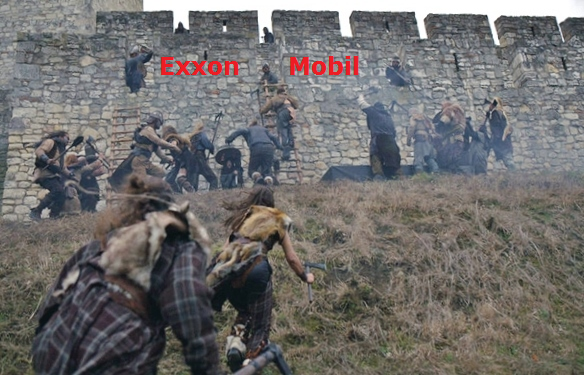
Climatists storming the Exxon Bastion, here seen without their shareholder disguises.

What we are seeing so far in the early phase of this year’s annual shareholder meeting season is a spate of proposals, typically from political activist groups, pushing more aggressive anti-carbon measures. We’re also seeing investors rejecting such proposals. For example, as of this writing, the tentative vote counts for Royal Bank of Canada show shareholders voting down all of the items placed on the ballot by activists, including several having to do with fossil fuels. This is consistent with the pattern we’ve seen so far.

We’ll leave aside self-imposed fossil fuel divestment plans put forward by management under the moniker “Climate Action Plan”, as we’ve dealt with that issue here (How “sustainable investing” emboldens Putin | Analysis News (christianpost.com)). This analysis is focused on activists’ recent attempts to go even further in opposition to fossil fuels. In general, management teams have opposed these types of proposals, but it is arguable that they are somewhat responsible for bringing them about: advocates frequently cite public statements about environmental commitments and statements about the risks of climate change made by the company and argue that they are simply asking the company to live up to its public posturing.

Managers of these companies are beginning to see that public political pronouncements
do not assuage, but rather embolden, activist demands.

Let’s look at some of the proposals which are showing up on proxies this year:

♦  Annual Advisory Vote Policy on the Bank’s Environmental and Climate Change Action Plan and Objectives

Climate action plans in general have not been rigorously shown to be of benefit to shareholders, nor even to reduce GHG emissions (since nothing prevents other banks from financing the fossil fuels companies which would be de-banked by the proposed plan). So adding an extra level of institutional pressure to managers in the form of automatic annual votes is not warranted. If there is adequate support for a vote in any given year, shareholders of even modest scale can place it on the ballot.

♦  Annual Advisory Vote Policy on the Bank’s Environmental and Climate Change Action Plan

The proposal fails to make a rigorous case for shareholder benefit. The proposal is ostensibly modeled on the Paris Accords, but the Paris Accords are a proposal for regulations which governments would impose on industry, not for limitations which industry would impose on itself. When businesses, for example banks, limit customers on some basis other than profitability, that likely subtracts from shareholder value. And the limitation fails to decrease carbon emissions unless there are broad global restrictions on carbon emissions. Such arbitrary (from a revenue point of view) restriction of potential customers for banking services doesn’t shrink emissions, it simply transfers that business opportunity to other companies and countries. 

♦  Set Up a Climate Change and Environment Committee.

The proposal is for the board to set up a standalone committee focusing exclusively on environmental issues. The support statements tend to be thinly argued, doing little more than asserting that climate change is an important issue and navigating it is a matter of some complexity. In some cases boards of directors have argued against such resolutions by pointing out that there are several committees already which deal with environmental issues, including risk committees. To the degree that environmental issues are specifically of shareholder concern and not just general social concern, it is because of the potential risks, therefore environmental concerns seem most properly housed in the risk committee where they typically reside. There, environmental risks can be analyzed in relation to all risks, not elevated above them as a unique concern above all other risks.

♦  Avoid Bank Participation in Pollution-Intensive Asset Privatizations

When we have seen this proposal it has come from a labor union which tends to engage on political issues. This appears to be an anti-privatization measure with an environmental element added perhaps to get broader support. Financing of privatization is a standard banking practice because it is of potential benefit to shareholders. Whether privatization is beneficial or detrimental to society as a whole is a matter of long debate. In addition, in the case we’ve seen, the proponents make no argument to establish that an operation currently operated by government, which produces environmental impact, would become more environmentally harmful if it were transferred to the private sector, and so it provides no environmental reason why banks should not engage in the otherwise profitable business of financing such transfers.

♦  Update the Bank’s Criteria for Sustainable Finance to Preclude Fossil Fuel Activity and Projects Opposing Indigenous Peoples

This resolution was submitted by an activist group, Investors for Paris Compliance, on behalf of two shareholders (this is a common practice in regards to ESG proxy proposals). This proposal strongly overreaches standard climate plans, in that it precludes, rather than just reduces, investment in certain energy sources. In addition, the inclusion of the indigenous peoples element seems tangential to the main issues. Per comments made live at the shareholder’s meeting for Royal Bank of Canada, this is not about situations in which indigenous people actually own the property and therefore can legally block the projects. The rhetoric has instead invoked situations in which indigenous peoples opposed development on land they did not own, and were arrested for protesting on the property of others. It can reasonably be postulated that this is an attempt to bolster the anti-fossil fuels agenda by tapping into the indigenous people’s cause which is currently quite prominent in Canadian politics.

It seems plausible that the politicization of corporate governance in and around climate change may well have gone farther than corporate managers, in this case, Canadian banks, are willing to go in terms of sacrificing profit for the protection of alleged “reputational risk”. Even more interesting is the fact that a largely Canadian investor base also seem unenthusiastic about such proposals.

Jerry Bowyer is the President of Bowyer Research, an economic and financial research and consulting firm.

Method in Woke Madness: From Free Market to Anthill

Joseph Mackinnon explains in his American Greatness article Shafarevich Revisited: Individuality and Dostoevsky’s Ant Hill.  Excerpts in italics with my bolds

Any faultless ant hill is still infinitely less than the most flawed human being, and it is the latter that our society and institutions should empower.

In The Socialist Phenomenon, an incisive book published in 1980 for which Aleksandr Solzhenitsyn penned a foreword, Igor Shafarevich looks at the genesis of socialist doctrine. In many respects, this Russian Orthodox Christian’s analysis complements Catholic conservative arch-liberal Erik von Kuehnelt-Leddihn’s in Leftism (1974), and enjoys the heightened awareness of someone who spent a lifetime steeped in socialism’s consequences.

Towards the end of the book, Shafarevich contemplates the socialist ideal’s relationship to individuality. He writes: “all elements of the socialist ideal—the abolition of private property, family, hierarchies; the hostility toward religion—could be regarded as a manifestation of one basic principle: the suppression of individuality.” This may seem an obvious claim: that a collectivist, materialist ideology motivated by a death instinct would find an enemy in the individual, in individuality. What may not be so obvious are the tactics and lengths to which the socialists would go to grind their enemies down to level—how socialists would ultimately dynamite the mountains to fill the valleys.

Shafarevich identifies some of the ways that socialist society would remedy that pesky individualism.

People would wear the same clothing and even have similar faces; they would live in barracks. There would be compulsory labor followed by meals and leisure activities in the company of the same labor battalion. Passes would be required for going outside. Doctors and officials would supervise sexual relations, which would be subordinated to only two goals: the satisfaction of physiological needs and the production of healthy offspring. Children would be brought up from infancy in state nurseries and schools. Philosophy and art would be completely politicized and subordinated to the education goals of the state. All this is inspired by one principle—the destruction of individuality or, at least, its suppression to the point where it would cease to be a social force.

Shafarevich saw in socialism what Kuehnelt-Leddihn observed generally manifesting in leftist movements: the drive for sameness.

In recent weeks and months, we have seen statists captive to socialist doctrines hinder the movement of what were previously imagined to be free peoples. In the United States, Canada, Australia, New Zealand, and elsewhere, citizens were required to produce passes to go outside. It didn’t matter if you had natural antibodies from a previous infection. It didn’t matter if you were immuno-compromised or had moral qualms with the use of aborted fetal tissue in the manufacture of the so-called vaccines. Your individual rationale was of little importance. What mattered was whether you were obedient or disobedient, as indicated on a pass by a number or a QR code.

The impact on individuality is this: individuality requires that a person be able to [publicly] make and execute choices, whether about his health, about those with whom he consorts, where he can go, what he can purchase, what religion he will practice, and so forth. G. K. Chesterton reminds us that the free man “can damage himself with either eating or drinking; he can ruin himself with gambling. If he does he is certainly a damn fool, and he might possibly be a damned soul; but if he may not, he is not a free man any more than a dog.” Even a dog might exhibit too much personality as far as the socialists are concerned.

Dostoevsky, whom Shafarevich echoes, suggested that socialism, having set for itself “the task of solving the fate of mankind, not according to Christ but outside of God and outside Christ,” pressed its adherents to “create something like a faultless ant hill.” Not men, not dogs, but de-individuated, indistinguishable, and therefore interchangeable ants are what the socialist doctrine prescribes we become.

Consider further the socialist desire to usurp the rights of parents—to have the state or society-at-large raise children. This is a key element of the ongoing effort to abolish the family, and individuality by extension.

The majority of socialist doctrines proclaim the abolition of the family.

In other doctrines, as well as in certain socialist states, this proposition is not proclaimed in such a radical form, but the principle appears as a de-emphasis of the role of the family, the weakening of family ties, the abolition of certain functions of the family . . . [and] the destruction of all ties between parent and child to the point where they may not even know each other.

The goal is the “transformation of the family into a unit of the bureaucratic state subjected to its goals and control.” Two centuries before Shafarevich made this observation, the not-so-moderate Marquis de Sade denounced the family as “an ‘individualistic’ cell that tries to separate itself from the state and society.” This separation can only be prevented with coercive and totalizing pressure. The family’s hierarchical features must be flattened so that parents and children both, if permitted to remain together, are horizontally arranged, sharing the state as the singular authority in their lives.

Kuehnelt-Leddihn explains the rationale behind this subjection and flattening: the family acts as a closed and emotionally marked-off unit, and is therefore “an obstacle to total sameness.” It hinders the socialist design to coddle the worst and stultify the most talented, and counters efforts to impress the same outlook on every child and to rid them of whatever fanciful notions might be assimilated at home. The family must be broken up. Children must be made the property of the state—a view held not just by de Sade but also by Rousseau and many proto-totalitarian leftists since.

Beyond what precisely constitutes the perverse material being taught, the more pressing question is whose role it is to choose what a child is to be taught in the first place? Or better yet: Do children belong to the state after all, as de Sade and Rousseau argued? (It is worth pointing out, as Paul Johnson did in his book, Intellectuals, Rousseau’s advocacy for this position was probably self-justification for abandoning the five children he fathered with Thérèse Levasseur, not one of whom he even bothered to name.) Or do they belong to their parents? While not yet advocating for the creation of phalanstères per Charles Fourier’s designs, it is clear how socialists today will answer these questions if they were ever to answer honestly.

Teaching math, science, and literacy are aids to individuals—to help them navigate the world as they themselves see fit. Propaganda of the kind we see now in schools and colleges, on the other hand, is a means of undoing a person’s cultural inheritance; of relegating parental responsibilities to the state and its agents; of transforming students into tools of the state.

While Florida and Virginia woke up to this socialist phenomenon—which seeks again to deform every child to fit the mold and eliminate otherwise distinguishing familial thinking, all in service of the leveling socialist state—elsewhere in America, individuality continues to be suppressed in the classroom. Here is G.K. Chesterton to once again illuminate the enemy’s target and the consequence: “This triangle of truisms, of father, mother and child, cannot be destroyed; it can only destroy those civilizations which disregard it.” If our civilization seems particularly precarious right now, we’ve arrived at another reason explaining why. The socialist prefers horizontal lines to triangles, and flat plains to mountains and valleys.

The West is not explicitly socialist as was the regime under which Igor Shafarevich toiled. Nonetheless, in its present weakened state, it is especially susceptible to the aforementioned anti-individualist trends. Mobility rights are incredibly important because they relate to one of the principal ways human beings can differentiate themselves: with action, adventure, and friction, each of which requires movement. Parental rights, particularly regarding their children’s education, are incredibly important because cultural inheritance greatly impacts an individual’s development.

These two anti-individualist trends, coupled with the ongoing war on the working- and middle-class’ economic autonomy, the digitization of religious community, the politicization of all art, and Big Tech censorship, are part of the socialist design to build high a “faultless ant hill.” Any effort to reduce us to animal sameness is de facto dehumanization and should not be tolerated. Technocrats, politicians, teachers, and whoever else seeks to combat true diversity—which is important only at the level of the individual—are enemies of humanity. Any faultless ant hill is still infinitely less than the most flawed human being, and it is the latter that our society and institutions should empower at the individual level rather than seek to engineer en masse.

Addendum from Phil Butler’s zerohedge article A World At Odds: The Great Principles Wipe

Mask, or no mask. Vaccine, or no vaccine. My, how this pandemic awakened the suspicions of millions that something other than a serious influenza epidemic is going on. But the conspiracy that was too big to be a genuine conspiracy, it was meant to be unbelievable. The bug itself, likely manufactured in a Biolab by our own government, seems to have been engineered to be just contagious enough, just deadly enough, to erase our principles. This bug, the manipulation of the pandemic, it was released to set the world at odds with itself.

And what about climate change? Do you think that the elites running this shit show would pass up yet another chance to befuddle us? Climate science, or climate hoax? Here too, we’re at odds even over fundamental physics. Are you sensing the dastardly strategies at work? I think we all do. But, I am also sure most people have no conception of the depth of the mind games being played today.

We’re undergoing a morality and mind wipe no psycho-thriller novelist could ever have imagined.

This idea came to me like a bolt, snapping me from a deep sleep last night. Something about all that’s been going on has gnawed at me, as I am sure it has you, and for months now. Now I think I know what it is. We’re being prepared for those artificial wombs that Aldous Huxley conjured up for his post-dystopian Utopia in the novel Brave New World.

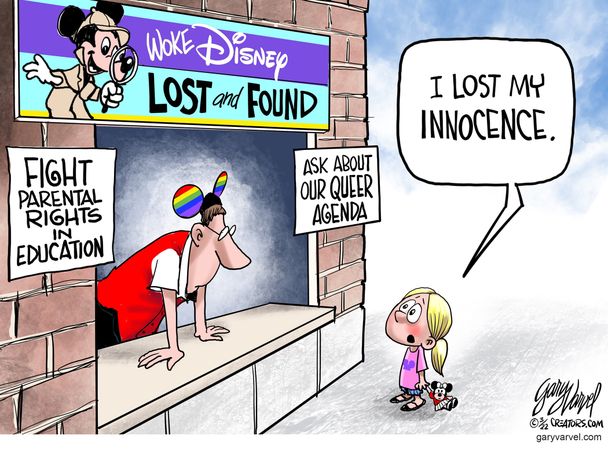
I think we must have been totally blinded, not to have seen and felt it before. Trangenderism, the United States creating gender-free passports, and Walt Disney’s company being boycotted over what American moms are calling “grooming” their kids to be victims of pedophiles. A Supreme Court nominee who was just confirmed, said in her confirmation hearings the other day that she could not define what a woman is. Think about this for a moment. Supreme court justices are the most powerful and influential officials in the U.S. government. They are justices for life, appointed to interpret the law!

What we see happening is an overriding strategy based on what the ancient philosophers called tabula rasa or a clean slate. This is the idea that we are born without built-in mental content, and that experience and learning imprint our desires, fears, love, hate, morality, etc. The reader might logically ask now, “How can these elites wipe our slate clean to imprint their orders into us now, after years or decades of experiences?” It’s a good question, but an easy one to answer.

The ‘clean slate,” is the point I am driving at here. In order for the elites waging total war on the Russians to succeed in their ultimate plan, western societies (first) must be under total control, in harmony, willingly compliant to whatever the technocrats and their benefactors dictate. Think of this as the indoctrination young children get when they first go to a religious school. Everything is being broken down and eradicated so that something else can take its place. The former reality, morality, and faith we relied upon will be obsolete because none of it worked for us. I told you, it’s diabolical what’s going on.


 

IPCC World’s Last Chance (Again)

Getty Images

James Macpherson reports on the latest deadline in his Australian Spectator article The IPCC say the world is ending! (Again?) .H/T John Ray.  Excerpts in italics with my bolds.

In the latest ‘now or never!’ since the ‘last now or never!’ the United Nations has warned the world that it is once again ‘now or never!’ to avoid disastrous Climate Change.

Forget Prince Charles’ warning back in July 2009 that we had just 96 months to save the planet.

Ignore former British PM Gordon Brown’s prediction, just three months later, that we had fewer than 50 days to avoid disaster.

And never mind French Foreign Minister Laurent Fabius who, standing beside then American Secretary of State John Kerry, told the world on May 13, 2014, that ‘we have 500 days to avoid climate chaos’.

The irony of that particular Chicken Little routine was that Fabius was scheduled to host the 21st Conference of the Parties on Climate Change on November 30 the following year – 65 days after the world, by his reckoning, would have ended.

I was going to quip that you couldn’t make this stuff up, but it seems like they do.

Anyway, enough joking around. This is it. Seriously. They’re not even kidding this time. Honestly. Like, for real guys. ‘It’s now or never!’

Yes, I know that’s what American defence chiefs were warning back in 2004 when they predicted European cities would sink beneath rising seas, and that Britain would be plunged into ‘a Siberian climate’ by 2020.

But it wasn’t like they got everything wrong.

Their predictions of widespread rioting across the world by 2020 did come to pass. And if you overlook the fact that the rioting was caused by the death of George Floyd and the imposition of compulsory injections – rather than the complete collapse of the ecosystem – you’ll see just how prescient the defence chiefs were.

You can’t expect climate catastrophists to get it right all the time. Or any of the time. It’s not like they’re astrologers.

Doomsday was predicted but failed to happen at midnight.

The important thing to worry about is that things are now a lot more worrying than the last time we were warned to worry, and so there is now good reason to be worried.

We have this week reached a tipping point that is even pointier than every other tipping point so far reached; which is to say we will soon be at a point of no return that is well past the point of no return that we were last warned there was no returning from.

The latest UN climate panic comes in the form of what media outlets called ‘a massive 3,000-page document’ published Monday.

It’s unlikely anyone will read all 3,000 pages, but no one should need to. The sheer size of the document – let me remind you, it’s ‘massive’ – tells you everything you need to know.  Things are bad.

And if the thickness of the report does not convince you that things are dire, environmentalists at the UN can make their next dossier of doom and gloom run twice that length. It’s only trees, after all.

Let me remind you just how massively bad things are.

Back in 1972, the then UN Under General Secretary Maurice Strong warned we had ‘only 10 years to stop the catastrophe’.

In 1982, which was the deadline for stopping the catastrophe, the head of the UN Environment Program Mostafa Tolba told us we had just 18 more years before we would face an environmental catastrophe ‘as irreversible as any nuclear holocaust’.

Just eight years later, he was insisting we needed to fix global warming by 1995 or we would ‘lose the struggle’.

The great climate doomsday of 1995 failed to materialise, as did the climate Armageddon of 2000. But the flurry of final warnings, last chances, and tipping points continued; every prediction more hysterical than the last.

UN Climate Panel chief Rajendra Pachauir, who was no doubt surprised to still be here in 2007, warned that ‘if there is no action before 2012, that’s too late’. He further insisted that ‘what we do in the next two to three years will determine our future’.

Our betters spent the next two or three years jetting around the globe, holding lots of conferences and summits, which must have saved our bacon since not only did we survive the predicted 2012 apocalypse, but we hung on grimly until 2019 at which point the UN informed us we had just 11 years to prevent irreversible damage from climate change.

To emphasise just how serious things were, they invited a Swedish school girl to berate them for robbing her of her dreams, or something. These days she’s performing Rick Astley covers for adoring fans.

Now, just three years into that 11-year do-or-die period,
we are being told that it’s ‘now or never’.

One could be forgiven for thinking that when the world doesn’t end as these activists predict, they simply change the date and call it science.

The UN report, the most comprehensive report since the last most comprehensive report, says emissions must be curbed by 2030 or things will be even worse than the last time we were told they couldn’t possibly be any worse.

The report says that people must change their diets and their lifestyles which, as we already know, means eating bugs and walking.

And if we fail to heed the latest hysterical shrieks from those who warn of rising sea levels while purchasing beachside mansions, we can be sure there will be even shriekier histrionics in the future.

This is it. Our final, cataclysmic warning. Until the next one. And probably the one after that.

When the UN insist that it is ‘now or never’ for climate action, what they really mean is that they want now and never-ending emergencies as a pretext for herding us around the room. First here and then there, but never to an exit.