‘C’mon Man’ Stop Sabotaging American Energy

Kevin Mooney writes at Real Clear Energy ‘C’mon Man’ Stop Sabotaging American Energy. Excerpts in italics with my bolds and added images.

Ask Joe Biden a question about rising energy costs and he’ll be quick to fix the blame on Russian dictator Vladimir Putin while sidestepping any responsibility for his own policy failures.

But Putin’s authoritarian regime has only accelerated a process that was already in motion prior to the Russian invasion of Ukraine. After mismanaging the U.S. economy for the past year, Biden’s incessant “C’mon Man” routine is not playing well with the public. A broad cross section of polls shows Biden’s job approval ratings remain underwater.

The soaring inflation and rising gas prices that have been evident to American consumers long before the Russian invasion are at least partly responsible for Biden’s negative numbers. As a career politician who has been in Washington D.C. for more than 50 years, Biden has always stood on the wrong side of history exercising poor judgment at every turn. America would be in a stronger position today to resist Putin’s aggression if the Biden administration has not advanced heavy handed regulatory policies that discourage oil and gas development. The same is true of European leaders who have made themselves overly dependent on Russian energy.

That was one of the central messages Tom Pyle, president of the Institute for Energy Research, delivered during his March 8 testimony before the House Committee on Energy and Commerce.

“Unfortunately, but not surprisingly, in the wake of the 2020 election, President Biden made it clear that he intended to be an energetic advocate against the oil, coal, and natural gas that makes modern life possible,” Pyle said in his testimony. “Oil markets, now faced with an existential threat, responded as one might expect. The price of oil went up. In response, Mr. Biden inexplicably asked Russia and OPEC for more oil. National Security Advisor Jake Sullivan issued a statement calling on OPEC Plus (the most important part of the “Plus” is Russia) to produce more oil.”

From here, Team Biden’s self-inflicted wounds only became worse, Pyle explained, as the administration took “numerous actions designed to reduce the enthusiasm of energy companies to find, produce, and transport, domestic oil and natural gas.”

Pyle also expressed concern about the “propaganda” attached to the utility of so called “renewable energy” such as wind and solar. Despite several decades of subsidies and mandates aimed at increasing their use, renewables produced just 12.4% of American energy consumed, Pyle told lawmakers.

“A significant part of our current problem is the endless repetition of the propaganda about the utility of alternative sources of energy, the possibility of net zero greenhouse gas emissions, and the inevitability of an energy transition,” Pyle said. “These foundational myths have led directly to higher energy prices for Americans.”

But the policy missteps are not limited to the Biden administration. The European Union has also failed to sufficiently invest in oil and natural gas while chasing after renewable energy, Pyle observed in his testimony. He cited figures showing that in the past 15 years, natural gas production in Europe has fallen by 30% while natural gas consumption has only declined by 13%.

“This was driven by government policy, not market forces,” Pyle said. “Consequently, Russian natural gas has become more critical to European energy security. At the moment, the EU consumes about 540 billion cubic meters of natural gas a year.Over 40% of that originates in Russia. It is no surprise, therefore, that the European and the American governments have hesitated to impose strong sanctions against Russian-sourced energy and Russian energy companies either before or after the invasion.”

Then there’s China, which dominates the market for the mining, production, and processing of critical minerals that help power electric cars. These include: copper, lithium, nickel, and cobalt.

That’s a problem since Biden’s EPA is hot to trot for implementing new rules crafted with an eye toward coercing Americans into buying electric cars. During his testimony, Pyle discussed the EPA’s new greenhouse gas emission standards for passenger cars and light trucks through model year 2026. “This rule essentially mandates that 17% of new vehicles in model year 2026 be fully electric or plug-in hybrids,” he said.

As electrification grows, so will reliance on China.

“It is challenging to believe that Americans would be in favor of trading energy independence – which we currently enjoy despite the best efforts of some in the Administration – for dependence on a genocidal regime (and identified as such by both the current and previous Administrations) marked by international hooliganism,” Pyle said.

Even if a future administration were to abruptly reverse course from the damage done under Biden’s watch, there’s an opportunity cost associated with current efforts to discourage domestic and oil and gas development.

Energy executives and their investors are understandably hesitant to begin exploratory efforts in an environment where federal officials from Biden on down have expressed hostility toward their products. Never mind Putin.

The problem is not just one of poor judgment at the Biden White House, but also a fundamental misunderstanding of what it takes to reinvigorate American energy. That’s why American Petroleum Institute President and CEO Mike Sommers recently took White House Press Secretary Jen Psaki to school when she said there are 9,000 approved oil leases that the oil companies are not currently tapping into. Psaki was responding to media questions about Biden’s ban on new oil and natural gas leases on public lands.

“Just because you have a lease doesn’t mean there’s actually oil and gas in that lease, and there has to be a lot of development that occurs between the leasing and then ultimately permitting for that acreage to be productive,” Sommers told Bloomberg News.

“I think that they’re purposefully misusing the facts here to advantage their position.”
C’mon Lady.

As IER points out in a blog post, the oil industry has to pay the government fees for renting leases whether or not oil and gas is ultimately found and produced. Moreover, it takes anywhere from 7 to 10 years for oil companies to know if a lease will become productive. It’s not hard to understand why they aren’t rushing in at a time when the clown act that is the Biden White House is pressuring banks to refrain from investing in the oil and gas industry

A paid agent of either China or Russia could not do a better job of sabotaging American energy at a time when it’s needed most.

Big Oil Embraces Its Demise for the Honor of Saving the Planet.

Robert Romano asks and answers the pressing energy question in his Daily Torch article Why aren’t oil companies drilling more? Look no further than the ESG goals in their corporate annual reports. Excerpts in italics with my bolds and added images.  H/T John Ray

The largest oil producers in the U.S. do not appear to have major plans to increase production through 2025, a review of U.S. Energy Information Agency (EIA) data and corporate reports of U.S.-based oil companies reveals, despite oil prices being over $100 per barrel and inflation raging at 7.9 percent the last twelve months.

According to EIA, U.S. oil production will reach 12 million barrels per day in 2022 and 12.6 million barrels per day in 2023, a return to pre-Covid production levels that peaked at 12.9 million barrels per day in Nov. 2019.

But what about over the long term? A look at top U.S. oil producers reveals that these companies have been pivoting away from carbon-based energy for years. In short, they’re going green.

[ExxonMobil and Chevron are two examples where] explicit Environmental, Social and Governance (ESG) goals are being pursued by the largest oil companies in the U.S., particularly goals to support the Paris Climate Accords and to reduce carbon emissions to zero.

In both companies’ cases, the strategies short-term include deploying carbon capture technologies as well as reducing onsite carbon emissions on existing production facilities, and more investment in green energies.

Long term, however, they are sealing the fate of carbon-based energies, by embracing an investment model that calls for their extinction.

Ultimately, that will mean almost no oil production or consumption, a goal that would be contrary to an oil company’s continued existence and profitability.

ESG investing has increased dramatically the past decade via private retirement funds regulated under the Employment Retirement Income Security Act (ERISA) thanks to a regulation by the Obama Labor Department in 2015.

In addition, the $762 billion federal Thrift Savings Plan (TSP) for federal employee retirees will begin investing in ESG funds in 2022, following state government employee retirement funds in California, New York, Colorado, Connecticut, Maine, Maryland and Oregon.

The combination of these incentives and subsidies has led to an unprecedented rise of ESG investment: $38 trillion out more than $100 trillion global assets under management, will grow to $53 trillion by 2025, according to Bloomberg News. That’s about one-third of all assets under management, not necessarily seeking profitability, but to save the world.

BlackRock, a hedge fund with more than $9 trillion of assets under management, have placed green activists onto the board of Exxon to make it a “not-oil” company, thanks to ESG. Other hedge funds like Vanguard also make significant ESG investments.

But it has led to catastrophe. Besides making Europe and the West increasingly dependent on energy from adversaries like Russia, inflation is on fire. Thanks to the energy crisis, even major ESG beneficiaries like Tesla CEO Elon Musk are calling for an increase in oil and gas production in a bid to offset Russia, writing on Twitter on March 8: “Hate to say it, but we need to increase oil & gas output immediately. Extraordinary times demand extraordinary measures.”

Musk is right. It’s time to expand production dramatically. But ESG won’t let us. That’s a big problem.

The net result of these policies incentivizing and subsidizing ESG investments has been to restrict capitalization and financing to carbon-based oil, coal and natural gas energies in favor of green energies such as solar, wind and electric vehicles — and endangering the West.

As it turns out, energy security is national security, and with ESG, we do not have energy security.

See also Wake Up and Smell the Fossil Fuel Insanity

Wake Up and Smell the Fossil Fuel Insanity

Terry Etam writes a BOE Report Column: The world faces both a hydrocarbon shortage and a divest fossil fuels movement. What next, oil patch? Excerpts in italics with my bolds and added images.

Today’s question is one only the hydrocarbon crowd can answer:  What’s your game plan from here forward?

 There are a thousand occupations and situations, each with its own decision tree.  Despite the potential variance, it’s still a valid question, because we globally we are at a crossroads of some major significance. The well-being of much of the world’s population depends on what the hydrocarbon industry does over the next few years. At the same time, the pressure is building for the hydrocarbon industry to shrink and wither (as in the wildly successful divest fossil fuels campaign, or banks cutting back on oil/gas loans to curry favour with Those That Matter).

The question is not an easy one given the dramatic reframing of the hydrocarbon industry over the past few years. We used to be the good guys, the world’s fuel providers, a dynamic and entrepreneurial and fast-moving assembly of doers.

Then the narrative changed, and the industry went from relative obscurity to Public Enemy Number One. By 2019, public animosity towards it reached a peak, with orchestrated mass protests around the globe. 2020 brought a near-death experience as Russia and OPEC decided to decimate prices in a battle for market control, and all the anti-hydrocarbon protesters switched from protesting to cheering, famously claiming that “oil was dead”, that oil prices would never recover because EVs were causing rapid demand destruction, and that the humane thing to do now was to justly transition all hydrocarbon workers to other industries.

Even typing that stuff now sounds like an alien experience, like walking around in a crowd without a mask.

The reason those conversations feel so outdated is because, today, it is clear that oil is about as dead as the internet. Some will of course say that high oil prices will hasten a transition to renewables, and that is true that it will make renewables more cost competitive (though still no match on the reliability front).

But consider that a rapid transition to renewables is impossible from a mining perspective alone.

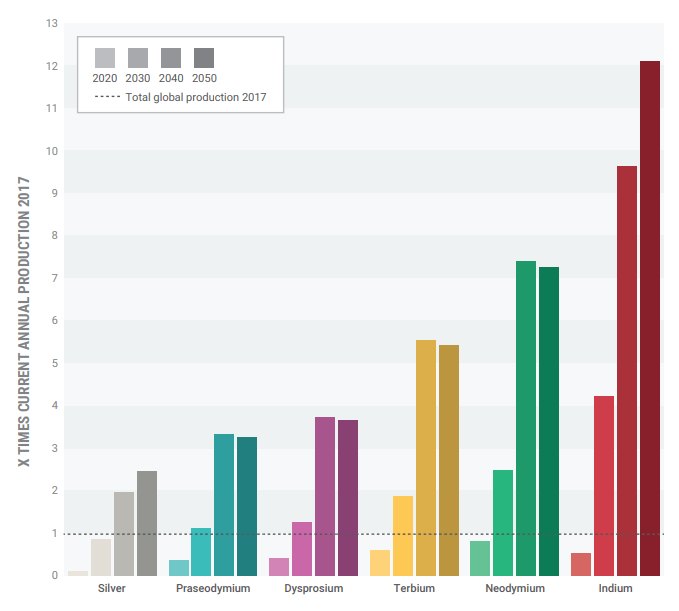
The IEA has said that a global Net Zero 2050 transition would require four times the number of critical mineral mines by 2040 (a virtual impossibility when governments are making mining harder everywhere).  And the Geological Society of Finland calculated that a full transition via renewables/EVs would require more critical metals and minerals than there are known global reserves.

If you are still on the fence as to whether hydrocarbons’ days are numbered, consider that Germany, the world’s most advanced energy-transition country, just days ago mused that drilling for new oil/gas deposits in the arctic sounds like a pretty good idea.

Consider also that this is the new-ish Green-led government saying this. Keep in mind also that any arctic development takes years at a minimum, so these developments have nothing to do with this immediate crisis. If Germany is plotting decade-length oil/gas developments, that tells you all you need to know about the demise of hydrocarbons. There isn’t one.

But that doesn’t answer the question at hand. What will people in the industry do? Will they bolt and get retrained in something else? There are a variety of situations of course, but one is far more ominous than the others. Here’s a bit of a dissection.

Process people will most likely keep processing; any occupations that are in perpetual flow states will likely not stop because of a lack of employees. If you are a gas marketer or pipeline scheduler or refinery manager, there isn’t a visible break point in the continuity of business.

But producers are different. Much different. Next year’s barrel of production won’t necessarily and automatically appear as part of a continuous flow. A lot of very capable brain power needs to be enacted, crews hired and managed, etc. Finding and developing new oil/gas flows is a choice.

If no one chooses to find and produce more petroleum, the flow slows, then stops. If geological talent dries up/retires/moves on, new production doesn’t just happen. Same with drilling crews or completions experts or – dare I say it – truckers.

Anti-hydrocarbon sentiment rums deep in academic institutions, yet it is those very institutions new employees will have to navigate if they are to land in the oil patch. It is no longer “just another option”. There is stigma attached to petroleum programs.

There is venom coming your way from complete strangers. It should then be no surprise that students are acting accordingly; they are going elsewhere. In one US study, from 2016-19, the US petroleum engineering student count fell by 60 percent, and no doubt has fallen further since. Even here in the heart of the Canadian oil patch, the University of Calgary has suspended the petroleum engineering program after the student count fell to an all time low of 10 – and that’s over a two year period.

What if no one chooses to look for oil anymore? Yes, ten thousand western elites will cheer wildly, but billions of trucker-grade people around the world that need that fuel for survival will say WTF, or some such local equivalent.

Those ten thousand western elites will tell all the global plebeians Hey, don’t worry! Solar panels are on the way. And the billions will say Yeah…but can I get a fridge that has power for more than six hours a day? And western elites will say Nope! But don’t worry batteries are on the way. And billions of those plebeians will say Great! When? And western elites will say Battery storage is cheaper than its ever been! And the plebes will say Great! When? And western elites will say Death to fossil fuels! And the plebes will ponder in awe the presumed mysticism and superiority of elite non-sequiturs, little conversational re-directs that the great unwashed masses simply aren’t worthy of comprehending, and then they will starve to death.

And the hydrocarbon producers will be sitting there wondering what to do next. They’ll answer the phone and second cousin Moonbeam from Toronto or San Francisco will be shrieking about how you’re killing the planet.  But you’ll turn on the news and hear that it is a moral imperative to produce more oil since all you oil guys are rolling in money which will be true.  But then the politicians will be saying ‘We’ll take that windfall money btw and then whatever is left better be going into green projects.  But yes you had better increase production right now and we mean right now but only for this year and then everyone should divest fossil fuels.  And we’ll see you in court for all the emissions you’ve unilaterally created over the past century, and maybe the fines will be deductible from the windfall tax and maybe not.  We’ll let you know when we’re good and ready.’.

If this sounds melodramatic it isn’t. In fact, the situation is far more critical than it sounds, in terms of global impact: there is a multi-trillion dollar behemoth of a fuel system that keeps humanity alive. It is 80 per cent hydrocarbon-based. There is at present no substitute. Most parts of that system function conditionally – they require a non-stop flow of hydrocarbons.

The various components of this huge system have “something to do” because, and only because, a relatively small group of people and entities at the origin of that system, the upstream, choose to keep it full. This small group looks at seismic, looks at well logs, drills wells, does production plans, builds small scale infrastructure to bring this energy life-blood on stream. Without those few people the system withers just as does a plant pulled from the ground.

A lack of expertise and/or interest in bringing new hydrocarbons to market will mean that the world’s supply dries up. Good, the ten thousand activists will say. Good, you might say, let’s see who needs who. But these other seven-plus billion won’t be too thrilled at all. No fuel, no fertilizer, no food. All because of choices we’ve made here in the west.

So? Will you continue to power the world or not? A lot of hungry mouths are desperate to hear a yes. Those in power here in the west, the ones that control your economic destiny, have a crazed and volatile look in their eyes as they try to figure it all out, but are publicly unable to support you because they’ve been kicking you in the ribs for a long time and it’s kind of hard at that point to stop and call all the other kickers bullies.

Don’t look at me, I have no idea what happens next. All I can say is that at the point it becomes optional, I will choose not to put my head in the vise any longer. I suspect I am not alone.

Postscript on Petroleum Companies \Outlook and Viability

Outlook 2022: Oil Industry from Proshare

Chart 22: Global oil demand (mb/d) 2019 -2022

Source: OPEC, Proshare Research * OPEC’s Predictions

In the OECD countries, there were larger-than-expected oil demands in H1 2021. However, oil demand struggled to recover to the pre-pandemic level due to lower demand for industrial and transportation fuels for the rest of the year. Oil demand within the OECD for 2021 mirrored the slow phase of economic growth due to supply chain disruptions and the uptick in COVID-19 cases.

Meanwhile, non-OECD’s oil demand in 2021 fluctuated for the better part of the year on demand swings from China and India. China’s crude imports started the year relatively high but fell to an average of 8.9 mb/d in October, the lowest since February, as refiners lacked import quotas and mobility remained limited on the back of the Zero-Covid-19 policy implemented in the country. India’s crude imports also fell to an average of 4.0 mb/d in October, following 2 months of successive gains. Thus, the Covid-19 and supply chain induced soft patches in H2 2021 across Asia impacted considerably on the global oil demand in 2021.

Illustration 30: Determinants of Crude Demand in 2021

Oil Supply

The global oil supply for the year 2021 was driven mainly by the decision of OPEC+, which strived to achieve balance in the oil market.

The share of OPEC in global oil production stood at about 27.7% in 2021, with an average production of about 26.32 mb/d (see chart 24 below).

Chart 24: Global Oil Supply (mb/d) 2019 – 2022

Source: OPEC, Proshare Research * OPEC’s Predictions

Oil Prices

The tightness in the market kept oil prices elevated in 2021. Despite the lingering Covid-19 pandemic, demand had more robust fundamentals while supply was constrained by underinvestment, low spare capacity, and outages. The global oil market began the new year 2021 with a price rally above the 2020 average, and both benchmark contracts reached their 2021 highest in October, with Brent at US$86.70 and WTI at US$85.41 per barrel. Brent price averaged US$71.2 per barrel in 2021, up by 63.3% Y-o-Y above the US$43.6 per barrel average in 2020. Brent increased from about US$51 per barrel in January 2021 to about US$79 per barrel in December 2021, representing a gain of about +55% YTD (see chart 25 below).

Chart 25: Brent Crude Price in 2021 (US$/barrel)

Source: Oilprice, Proshare Research


Federal Climatists Target US Personal Pension Funds

The green tentacles of global warming/climate change activism are closing in on personal retirement funds. Rupert Darwall writes at Tennessee Star The Biden Administration’s ERISA Work-Around. Excerpts in italics with my bolds and added images.

Rising inflation threatens the value of Americans’ retirement savings. Now the Biden administration is finalizing a rule to loosen safeguards under the Employee Retirement Income Security Act of 1974 (“ERISA”) that protect private retirement savings. The new rule, “Prudence and Loyalty in Selecting Plan Investments and Exercising Shareholder Rights,” stems from President Biden’s May 20, 2021, Executive Order on Climate-Related Financial Risk, which directed senior White House advisers to develop a strategy for financing the administration’s net-zero climate goals, including the use of private savings.

Predictably, Wall Street is cheering the prospect of undoing ERISA safeguards. According to one analysis, 97% of comment letters support the proposal. But as I show in my RealClear Foundation report The Biden Administration’s ERISA Work-Around, it’s the remaining three percent that should give the Department of Labor (DOL) cause to rethink its deeply flawed approach.

Under ERISA, retirement savings must be invested for the exclusive purpose of providing retirement benefits.

The May 2021 executive order illustrates the very danger that ERISA’s exclusive-purpose rule is designed to guard against. To achieve the goals set out in the order, DOL is instructed to “suspend, revise or rescind” two Trump-era rules designed to uphold ERISA’s exclusive-purpose rule.

The stratagem adopted by DOL to carry this out is breathtaking in its audacity. The effect of the rule—if finalized as proposed—is to embed ESG investing in retirement plans and nullify the clear, unambiguous intent of ERISA’s exclusive-purpose rule. It’s audacious—and it’s high risk. In December, GOP senators Pat Toomey, Mike Crapo, Richard Burr, and Tim Scott warned the Secretary of Labor, Martin Walsh, against the proposed rule’s use of “inchoate” ESG terminology and reminded him that in 2020, DOL had been convinced by its review of public comments that the term is “not a clear or helpful lexicon for a regulatory standard.”

ESG—environmental, social, and governance—investing embodies two incompatible propositions.

The first is that investing should be about more than financial returns and have regard to wider societal concerns. In a January 2022 interview with Barron’s, Amy Domini, who cofounded KLD Research & Analytics in 1984, objected to rules that require investing based solely on economic value. “We have got to get rid of this concept of economic value,” Domini told Barron’s. “I don’t care if I’ve got an extra 50 bucks in my pocket if it’s dangerous to walk down the sidewalk, or if my grandson has leukemia because the water system is so polluted.”

The second ESG proposition contradicts the first. Far from sacrificing financial returns, ESG investing boosts them. “Our investment conviction,” BlackRock states in its comment letter to DOL, “is that incorporating sustainability-related factors—which are often characterized and grouped into ESG categories—can provide better risk-adjusted returns to investors over the long-term” (emphasis added).

BlackRock’s corporate strategy is to market ESG-style investment products to millennials, who, BlackRock believes, are less interested in financial returns than boomers. In his 2019 letter to CEOs, BlackRock CEO Larry Fink cited a survey of millennials. When asked what the primary purpose of businesses should be, 63% more said “improving society” than said “generating profit.” Three years later, in his 2022 letter to CEOs, Fink was pivoting away from ESG and undercutting BlackRock’s special pleading to DOL. “Make no mistake,” Fink wrote, “the fair pursuit of profit is still what animates markets; and long-term profitability is the measure by which markets will ultimately determine your company’s success.”

According to Jonathan Berry, DOL’s former Acting Assistant Secretary for Policy under the previous administration, career staff at DOL’s Employee Benefits Security Administration (EBSA) initiated secretive private meetings after the November 2020 election to build support and find cause to overturn the 2020 rules. Who were these parties? In its comment letter on the proposed rule, BlackRock lets the cat out of the bag in praising DOL for its “thoughtful analysis of the challenges presented by the 2020 rules” and for incorporating feedback from a “wide range of stakeholders.”

The outcome was a DOL press release on March 10, 2021, announcing the nonenforcement of the two 2020 rules. “These rules have created a perception that fiduciaries are at risk if they include any environmental, social and governance factors in the financial evaluation of plan investments,” said Ali Khawar, EBSA Principal Deputy Assistant Secretary. In fact, references to ESG had been removed from the text of the 2020 Financial Factors rule. Far from ruling out consideration of any ESG factor, its preamble accepted that “ESG considerations may present issues of material business risk or opportunities.” Why hasn’t DOL issued a FAQ and held a public meeting to dispel misperceptions about the 2020 rule?

Because the White House has instructed DOL to nix the rule.

The proposal also seeks to rewrite the December 2020 DOL rule on proxy voting in order to push fiduciaries to outsource their voting to the proxy-advisory duopoly of Institutional Shareholder Services and Glass, Lewis and their bias in support of ESG-type goals in proxy votes. Furthermore, the proposed replacement rule doesn’t tackle the vexed issue of “empty voting,” when, for example, the likes of three big index-tracker providers vote proxies in respect of shares that they don’t have an economic interest in. Shouldn’t DOL be clarifying that ERISA fiduciaries have a duty to investigate the voting policies of firms to which they delegate voting authority?, asks RealClear Foundation senior fellow Bernard Sharfman and Manhattan Institute’s James Copland.

Failure to do so, they suggest, could constitute grounds for a legal challenge under the Administrative Procedure Act.

In their letter to Secretary Walsh, the four GOP senators also invoke the specter of the rule having its fate decided by the courts. “The use of such [ESG] terminology in the proposal is arbitrary and capricious under the Administrative Procedure Act,” the senators warn. As drafted, the proposed rule would invert the primacy of statute law over executive-agency rulemaking.

It would also fundamentally alter the nature of American capitalism, corralling capital for political ends, enabled by multitrillion-dollar investment advisers eyeing the prospect of higher fees.

Will the rule of law prevail?


Blame for Inflation: What You Need to Know

Michael Maharrey writes at Peter Schiff’s blog The Inflation Blame Game explaining how we got here and how the culprits are deflecting responsibility by accusing others. Excerpts in italics with my bolds and added images.  H/T Tyler Durden

Now inflation is Russia’s fault. Or is it greedy businesses pushing up prices? Maybe a combination of the two.

It seems that government officials and central bankers are looking everywhere for a place to pin the blame for inflation except the one place they need to look — in the mirror.

I’m already seeing headlines about how Russia’s invasion of Ukraine is causing inflation. CBS broadcast this storyline on the first day of the invasion. As Peter Schiff put it in a recent podcast, Russia is the latest “excuse variant” for inflation.

It is true that the Russian invasion and economic sanctions have caused some prices to spike. Oil was over $130 a barrel over the weekend. Copper hit record highs. The price of wheat surged. But this is not necessarily inflationary. Inflation causes a general rise in prices across the board. In this situation, some prices will rise while others fall. As consumers spend more on food and energy, they will cut spending on other goods and services. Ostensibly, those prices will drop.

Inflation — an increase in the money supply — causes prices to rise more generally. It’s the result of more dollars chasing the same number of (or fewer) goods and services. As Peter explained, the culprit is the central bank.

“”What makes the prices go up is when the central bank responds to rising energy prices or rising food prices by printing more money, which is what they are going to do. Because as consumers have to tighten their belts because food is so expensive, because home heating oil and gasoline are so expensive, and they cut back spending on everything else, that causes a recession. And that results in the Fed printing more money, and that’s what’s inflationary.”

So, while the Russian invasion is certainly causing prices to rise, government-created inflation is still churning under the surface. In effect, we’re experiencing a double-whammy of rising prices.

Russia is a handy scapegoat for inflation, but “greedy businesses” continue to be the favorite target of central bankers and politicians. As I’ve explained, the narrative continues to grow because the average American doesn’t understand inflation or basic corporate accounting. That includes a lot of the people writing about inflation in mainstream and left-leaning corporate media.

And for politicians, businesses serve as the perfect scapegoat. Americans are already primed to hate big businesses.

During Jerome Powell’s testimony on Capitol Hill last week, virtually all of the Democrats in both the House and Senate repeated the “businesses are causing inflation” narrative. They talked about “record profits” and claimed businesses didn’t need to pass on higher costs. They also talked about a lack of competition.

This behavior is typical of politicians. They cause a problem and then clamor for even more government intervention to “fix” the problem they caused. They want to use inflation as an excuse to increase government regulation and intervention into the economy. Peter pointed out the irony in these congressional hearings.

“You have the chairman of the Federal Reserve that’s printing all the money fielding questions from the congressmen who are spending all the money that the Federal Reserve is printing. So, these are the two partners in crime that are 100 percent responsible for inflation, and they spend the entire hearing talking about how bad inflation is, what a horrible problem it is, and trying to point fingers at who might be to blame, without anybody accepting responsibility that inflation is not here by accident and inflation is not here because some businesses got greedy. Inflation is here for one reason and one reason only. The government isn’t spending money that it collects in taxes. It’s spending money that the Federal Reserve prints.”

If Congress really wants to do something about inflation, it needs to cut government spending. It needs to quit borrowing money and issuing debt that the Fed has to monetize. But obviously, they don’t want to do that. It’s easier to blame Russia or some greedy business than to do what needs to be done.

President Biden also blames everybody but himself for inflation. During the State of the Union speech, the president took credit for helping the economy grow through various government spending programs. But he went on to say a lot of the progress is being undone by inflation — as if inflation has nothing to do with the spending policies.

Biden ignores a critical part of the equation.

When the government spends money on any economic stimulus program, there is a cost. It either has to be paid for by direct taxation or by running a deficit. When the government runs a deficit, either future taxpayers foot the bill, or more often, the Federal Reserve monetizes the debt, prints money and creates inflation. As Peter put it, the government will pay for this government program one way or another.

Either directly, through an honest tax, or indirectly through a dishonest tax called inflation. So, if Biden wants to claim credit for all this government spending, then he has to claim responsibility for all the inflation that was required to finance it. He can’t pretend that he gave taxpayers all this great stuff but then inflation came and stole it away from them. The inflation came from government. Government stole it. What the government gives with one hand, it takes with the other. So, Biden through government spending programs with one hand reached out and gave taxpayers some money, and with the other hand, he picked their back pocket through inflation to pay for it. So, you can’t say, ‘I love all this government spending,’ but then pretend that the inflation that was a consequence of that government spending had absolutely nothing to do with that inflation.”

That’s why Biden needs a scapegoat. That’s why members of Congress need a scapegoat. That’s why Jerome Powell and his minions at the Fed need a scapegoat. All of these officials need a scapegoat because they need to shift blame for the inflation that they created.

Not greedy businesses.

Not coronavirus.

Not Russia.

Them.

Green Energy Puts US Electric Grid in Peril

Matthew Kandrach writes at Real Clear Energy America’s Emerging Energy Crisis. Excerpts in italics with my bolds and added images.

The warning signs are everywhere. We are stumbling toward an energy crisis that is likely to be far more severe and long-lasting than the upheavals of the 1970s. And no, this isn’t about Russia or Ukraine. This is about the perilous state of the U.S. electricity grid.

If action isn’t taken soon to address the unraveling reliability of the grid, the United States will face the specter of rolling blackouts, factory shutdowns, loss of jobs and soaring electricity bills. Our organization CASE recently released a policy brief highlighting just how dire the situation is.

Events In recent years show how serious the situation is. According To the Wall Street Journal, outages have gone from fewer than two dozen major disruptions in 2000 to more than 180 in 2020. The catastrophic blackouts that gripped Texas for a week in February of last year should have been eye-opening. Now, warnings from regulators, grid operators and utilities suggest far worse is coming.

There’s no getting around it. The nation’s electricity transmission system is growing increasingly undependable. Aging infrastructure, severe weather, and the rapid pivot away from baseload power to intermittent solar and wind are all contributing. Supply chain problems and local opposition to building new power lines and siting renewable projects are also turning into increasingly tall hurdles. Expectations of increased demand driven by electric vehicles are only compounding the challenge.

The energy transition is happening but the question we must ask is how do we responsibly manage it? It’s becoming apparent that the transition to renewables is vastly more difficult and complicated than some believed. Those who want to shut down every coal and natural gas plant ignore that fossil fuels supply 60% of America’s electricity. There’s growing alarm the America’s haphazard approach to the energy transition is taking apart the existing grid and the reliable generating capacity that long underpinned it far faster than we’re adding reliable alternatives.

Coal plants, in particular, are being pushed aside when it’s becoming painfully clear the optionality, fuel security and reliability they offer the grid is still very much needed. If we continue as we are – ditching the well-operating power plants that hold the grid together during severe heat and biting winter cold –we’re only going to exacerbate this crisis of our own making.

The affordability of our power supply also hangs in the balance. Last year, a 17% surge in coal-fired electricity helped shield consumers from rising natural gas prices. As we continue to disassemble the coal fleet, with another 100 gigawatts of coal capacity expected to close by 2030, we’re robbing the grid of an important price shock absorber for when natural gas prices rise. With global demand for gas rising, U.S. exports soaring and the Russian invasion of Ukraine throwing volatility into global energy markets, dismantling fuel optionality is short-sighted and reckless.

Europe’s decision to race away from coal and close much of its nuclear power capacity before having reliable alternatives in place, has left it at the mercy of Russian natural gas imports and soaring global gas prices. Energy security – now more so than since the energy crises of the 1970s – requires careful attention.

The singular, haphazard focus of climate-driven energy policy requires an abrupt rethink.

There remains an opportunity for an energy policy reset – both at the state and federal levels – to tackle this reliability and affordability crisis head on. First, we must recognize the need for dispatchable fuel diversity and fuel security. That must also include a commitment to increasing capacity reserve margins in electricity markets instead of letting them continue to shrink. As we grapple with the complexities of the energy transition and the challenges posed by integrating renewable power and building transmission infrastructure, we need a reliability and affordability insurance policy. The insurance we can provide is recognizing the value of the generating capacity we already have and the importance of dispatchable fuel diversity.

Responsibly navigating the road ahead means building on the shoulders of our existing baseload capacity, not taking it apart.


Oil Is Progress. Warming Alarmism Is Regression.

Rob Smith writes at Real Clear Markets Oil Consumption Is About Progress. Global Warming Is About Alarmism.  Excerpts in italics with my bolds and added images.

Why is it that we are ruled by the dumbest on the planet? As I have previously stated, there is NO threat that “systematic climate change” is going to change our lives one iota, much less ruin the planet. It is a sham, and Dear Reader, if you don’t understand “what’s up” after witnessing the government’s Covid 19 fear campaign, you get a free membership into the “Docile Non-Thinking Sheep Society.” Baa.

Virtually everything government officials and their foot soldiers told us about Covid turned out to be a lie.

Notice, I did not use, the more diplomatic term “untrue.” They knew they were spreading misinformation and doing everything in their power to cancel anyone exposing their deception. Masks don’t work, but they do deprive one of needed oxygen and cause children to develop speech issues. Prophylactics that could have saved over 500,000 lives were banned and disparaged as “dangerous.” The “Know It Alls” put Covid patients in nursing homes, tens of thousands of non-sick then died. They said you won’t get the virus if you have the vaccine, and that the vaccine would prevent the virus from spreading. “The vaccines are perfectly safe,” evidence is mounting that the CDC and our government elites knew this to be untrue. Millions were prevented from seeing their doctors, visits that would have detected serious illnesses like cancer and heart problems. Thousands died needlessly. Our so called “experts” response to every issue was 180 degrees from what it should have been. “Awake, dear heart, awake. Thou hast slept well. Awake.” As Americans awake from their hypnotic slumber and the Covid “tempest” passes, we should never forget what our government did to us.

Had officials in the federal government done absolutely nothing to combat Covid, many less people would have died.

Instead they purposefully spread fear, and in doing so, it gave them the power to transfer trillions of dollars of wealth to favored constituencies depriving the private sector and market forces to determine the most efficacious uses of these resources. These people shut down millions of businesses and forbid people from going to work or in some areas leaving their homes just to walk down the street. It was likely the stupidest decision in mankind’s history.

These are the same “authorities” lecturing you on “climate change.” Why would you believe anything they say?

Before the advent of fossil fuels, man existed in a Hobbesian world where life was “solitary, brutish, nasty and short.” Slavery and servitude was the norm. The amount of time that has elapsed since Col. Drake drilled the first oil well in 1859 is only 163 years. This represents less than .000543 % of modern man’s existence on earth. In other words, for 99.999467 % of man’s history, man did not harness petroleum products and life absolutely sucked.

In just .000543% of modern man’s existence, life on earth has improved 1,000 fold. An absolute miracle and an impossibly without the oil and gas industry. Americans should erect giant statues of oil rigs in every town square with inscriptions of adulation venerating the industry’s accomplishments and the benefits it has provided humanity. Yet, the absolute stupidest people in the world want to eliminate this fuel source. Unfortunately, moronic people are pretty good at getting elected to office. Dementia Joe and the witless AOC, both stupid on steroids, are now in control of our energy policy. Joe whose family got rich whoring themselves to foreign oil and gas companies, set out to destroy the American oil and gas business on his first day in office. The chickens are coming home to roost as the global consequences of nitwits interfering in these market forces are now apparent. America was energy independent and a net exporter of oil and gas immediately before Brandon’s inauguration. The less energy America produces, the less supply on the world market and the greater the costs. In 2020, the average price of oil was $39.68/barrel. It peaked over the weekend at $130/barrel. In Slow Joe’s State of the Union address, he mentioned that the way to beat inflation is to “Buy American.” That is a ridiculous understanding of economics, as the exact opposite is true, robust worldwide trade reduces prices. But if Joe wants America to buy American, why destroy the American energy sector? It is all being done at the altar of the false god of “Climate Change.” That is how the high priests and apostles of Climate Change think.

Industrial policy where government directs resources to decide winners and losers is always a disaster. It is a “grim” fairy tale. Look at the accomplishments and incredible efficiencies of the oil and gas industry and the combustible engine. Before Sleepy was inaugurated, I could buy a gallon of gas for less than a bottle of water. This gallon of energy was pulled out of the ground as crude oil thousands of miles away, then shipped to a refinery where it was turned into gas, then shipped to the Texaco station 5 blocks from my house. This one unit of energy could power my 5,000 lb. German car, with a carload of occupants and luggage to the next town 25 miles away for less than $2. There are over 150,000 easily accessible and well-located fueling stations around the country and likely an equal amount of repair shops. If my car needs a new fuel pump, I can purchase it online and have it delivered to me the next day. I used to own several gas stations. If a dropped my prices $.05/gallon, every other gas station within 20 miles would follow my lead. There is no industry more competitive and efficient than the oil and gas industry, nor one that provides so much convenience to the consumer, not to mention benefits enjoyed by the entire world. Yet, the “Apostles of Doom” want to destroy it. This entire energy infrastructure was built solely by market forces. There were no pointy-head Harvard grads in the Commerce Department deciding how to extract oil from the ground or where to place gas stations. No government industrial policy made this happen. Zilch, Nada, Zero. It is an amazing testimony to the wonders of capitalism.

Yet, despite the wonderous efficiency of the oil and gas industry, we have stupid people (many are Harvard grads), who ignore the miraculous phenomenon that is right smack in front of their eyes. Why we want to worship the Golden Calf, not the God that delivered us from bondage! The simple-minded charlatans of Climate Change want to wave their magic wand and eliminate this entire industry. Untethered to reality, they think if they click their ruby slippers three times and utter “Renewable Energy” then this new industry magically appears. These are the same dolts who force taxpayers to pay subsidies to Iowa farmers to grow corn for ethanol, a fuel source that reduces gas mileage and damages engines. Brilliant. Only pompous, soft handed, sneering government elitists and their sycophants would think growing food for cars instead of people is a good idea. The “Dolts” know better than the trillions upon trillions of decisions of people voting with their own money who like the current system. It is stupid beyond words, so to achieve their objectives, they must do the Covid 19 Tango and spread lies, fear and deception and then mandate acceptance of their remedy against your will. If one calls them out on their fear tactics that person becomes an enemy of the state. How stupid was it to shut down practically every business in the country during Covid? Astoundingly stupid. How stupid is it to promote electric vehicles stating they reduce our reliance on fossil fuels when all the energy to charge the batteries comes from fossil fuels?

Let me tell you what our national energy policy should be in two words: Do Nothing.

I assume one day; the oil and gas industry might fade away. It might be 50 years or 1,000 years from now. When it does fade away, it will be because market forces allocate resources to new technologies that have not yet been invented or perfected. Maybe it is electric, fusion or nuclear, but it could just as easily be that some West Virginia hillbilly (no offense to hillbillies) invents the new technology by tinkering around in his basement. Having the government misallocate resources through mandated industrial policies just keeps capital out of the hands of the most talented and productive and retards growth and innovation.

So if you are a member of the Docile Non-Thinking Sheep Society, take a deep breath. Now exhale. You just exhaled carbon. It is a natural substance. Without it all life on earth ceases to exist. The planet is not going to implode. Take a chill pill. Get a life. Trade in your girly-man Prius and buy a Hummer.

.

Energy Puritans Enable Enemies of Democracies

Russian President Vladimir Putin and Swedish climate activist Greta Thunberg (Reuters)

Western media has stirred up a puritanical revulsion against carbon-based energy, resulting in calls for prohibition of fossil fuels.  Leaders in western democracies responded with regulations and constraints punishing companies either producing energy or operating supply infrastructure.  This empowers market dominance by sovereign energy nations, some of whom are autocratic, and one of whom just invaded Ukraine.

Author blasts ‘green delusions’ of Western countries that empowered Putin’s energy advantage in Europe.  Excerpts in italics with my bolds and added images.

‘As the West fell into a hypnotic trance … worshiping a teenager named Greta, Vladimir Putin made his moves,’ Michael Shellenberger wrote

In a Tuesday Substack post headlined, “The West’s Green Delusions Empowered Putin,” Shellenberger argued Putin understood economics better than his western counterparts, citing the latter’s incapability of understanding the realities of energy production, and questioned how countries like Germany allowed themselves to become so dependent on an authoritarian country.

“How has Vladimir Putin … managed to launch an unprovoked full-scale assault on Ukraine?” Shellenberger wrote. “There is a deep psychological, political and almost civilizational answer to that question: He wants Ukraine to be part of Russia more than the West wants it to be free.”

“Missing from that explanation, though, is a story about material reality and basic economics—two things that Putin seems to understand far better than his counterparts in the free world and especially in Europe,” he added.

Shellenberger pointed to the differences in energy production and consumption between other European countries and Russia, noting that Europe consumed more energy than it produced, while Russia produced more than it consumed.

“The reason Europe didn’t have a muscular deterrent threat to prevent Russian aggression—and in fact prevented the U.S. from getting allies to do more—is that it needs Putin’s oil and gas,” he wrote.

Shellenberger argued that the focus on “Green ideology” made European countries “incapable of understanding the hard realities of energy production,” and that their moves away from natural gas and nuclear energy gave Putin command over Europe’s energy supply.

“As the West fell into a hypnotic trance about healing its relationship with nature, averting climate apocalypse and worshiping a teenager named Greta, Vladimir Putin made his moves,” he wrote, referencing teen climate change activist Greta Thunberg and noting that Putin expanded nuclear energy and oil production in Russia while western countries obsessed over “carbon footprints.”

Shellenberger specifically used Germany shutting down its nuclear energy production as an example and cited figures showing 47% of the natural gas consumed by the European Union in 2021 being exported from Russia.

“The result has been the worst global energy crisis since 1973, driving prices for electricity and gasoline higher around the world. It is a crisis, fundamentally, of inadequate supply. But the scarcity is entirely manufactured,” he wrote.

“Europeans—led by figures like Greta Thunberg and European Green Party leaders, and supported by Americans like John Kerry—believed that a healthy relationship with the Earth requires making energy scarce,” he added. “In service to green ideology, they made the perfect the enemy of the good—and of Ukraine.”

The controversial Nord Stream 2 pipeline from Russia to Germany was halted following Russia’s invasion of Ukraine last week, something the Biden administration avoided pressing at the request of Germany despite shutting down construction of the planned Keystone XL pipeline from Canada to the U.S. immediately after taking office.

In order to counter Russia’s continued dominance over energy markets, Shellenberger implored Biden to have Germany halt any future shutdowns of nuclear reactors and to have the ones previously shut down turned back on, called on Canada and the U.S. to expand their energy production for increased export to Europe, and argued the U.S. needed to expand the construction of nuclear plants rather than shutting them down.

“Putin’s relentless focus on energy reality has left him in a stronger position than he should ever have been allowed to find himself. It’s not too late for the rest of the West to save the world from tyrannical regimes that have been empowered by our own energy superstitions,” he wrote.

See also The Greta/Davos Collusion

And also, about the miniscule contribution of wind and solar to energize the world today:

Many observations are possible by studying these exhibits. For example, some activists insist that passenger air travel is dangerously warming the planet, and ordinary people should stay home, with flights restricted to essential trips by global elites. A glance at the transportation statistics on slide #2 shows Aviation is only 4% of fossil fuel consumption (12% of 34% FF used for transportation). And aviation includes cargo transport, so passenger travel is a fraction of that.

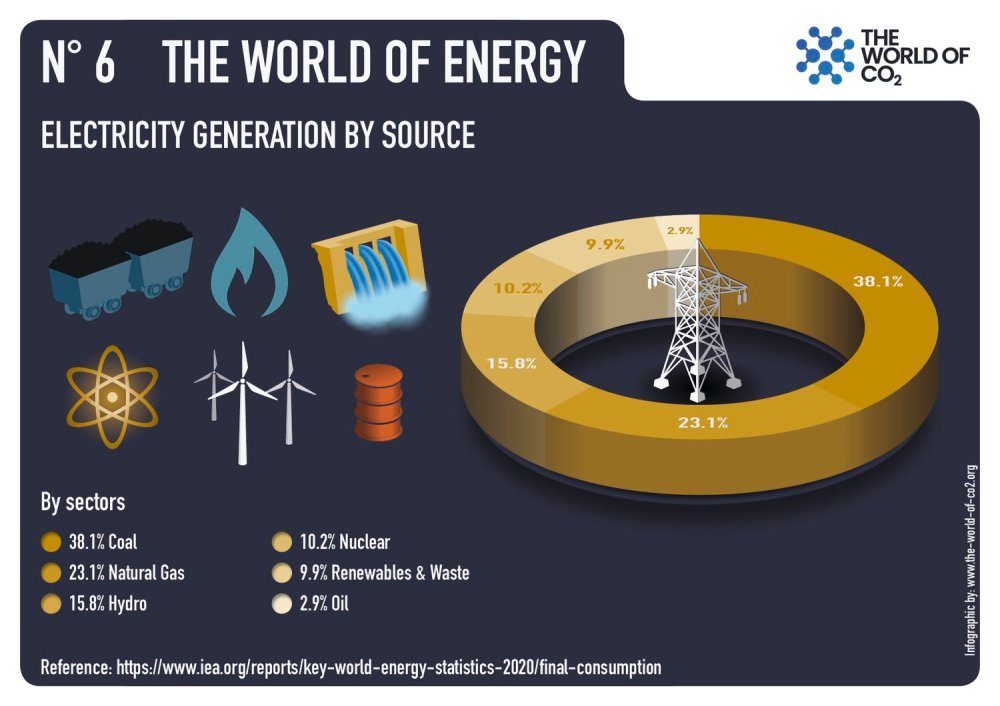
The bulk of FF transport consumption is Road, meaning cars and trucks, which is why some are demanding electric vehicles be the only means of mobility. Yet a look at slide #6 shows that presently only 10% of electricity comes from Wind, Solar and waste fuels. Furthermore, for all of the investment in wind and solar power, slide #7 shows that so called “green energy”` supplies only 2% of the world’s energy needs.

See World of Energy Infographics

Background  Activists Attack Energy Companies, State-owned Producers Benefit


The Illusion of Eco Cars

This video presentation was developed by DW (Deutsche Welle) News, the German international broadcaster.  (Later deleted) The theme is described by adding a bit to the title: The Price of Green Energy Will Destroy Us.  The message is not about the exorbitant expense so much as the destruction of the world’s environment in order to save it.  The imagery in the video is compelling, and for those who prefer reading, I provide below an excerpted transcript in italics with my bolds.  H/T Mark Krebs

The video can be viewed at this link:

Climate change, long denied, is now sending shockwaves throughout the world. Citizens are demanding their governments take concrete action.
Greta: Why should we study for a future that is being taken away from us? [Applause]

In 2015 the UN climate conference in Paris struck an historic deal. Signatories committed to reducing greenhouse gas emissions.
COP 21 President Laurent Fabius: “ I hereby confirm the adoption of the Paris climate agreement.”

The energy transition is in full swing, the future belongs to renewable technologies.
Al Gore: This is one of the most impressive and astounding technological revolutions in all of history.

One commodity has become the primary symbol of this new environmental consciousness.
“People are convinced, they were convinced that all they have to do is drive an electric car, and that’ll solve all the world’s problems with co2.”

“People are just talking about wind and solar as if that’s going to solve the problem, it won’t.”

What if these supposedly clean energies are nothing of the sort, if they ultimately inflict even more damage on the environment than fossil fuels?

“Everything surrounding us in society is made up of minerals. Basically electric cars are made of metals and minerals, and they need to be mined somewhere.”
“ There’s no such thing as clean energy. As long as we’ve got this kind of human behavior, there will also be pollution.”

The energy revolution promises to sharpen the world’s sense of responsibility, but secretly it’s already wreaking its own havoc.

The ecological transition is chiefly economic in nature. An event like the Geneva international motor show makes that abundantly clear. Electric cars are omnipresent. They’re seen as future proof, the new vehicles are touted as green or emissions free.

As the petrol and diesel era nears its end, traditional car makers are reinventing themselves and playing the eco card. The adopters of electric vehicles are people who believe in sustainability. They want to do good for the environment and they want to do their part to contribute to fewer emissions and less pollution, a change in mood that chimes with new environmental requirements. These are COP 21 targets adopted by nearly 200 nations plus the EU.

“We have to meet the co2 emission targets that are set by the European Commission that all of us manufacturers have to make. And they’re becoming more and more stringent. If we don’t meet those targets, there are penalties that will follow and we will have to pay those penalties. And this is what we of course want to avoid.”

This rapid transition comes at a price. By 2023 it’s hoped that 225 billion euros will have been invested in e-cars worldwide. That’s the price of a ticket to tomorrow’s world.
CEO VW France: ‘ It’s a future market that so far makes up just a few percent of the overall market but this market will explode. We’re gearing ourselves up for a completely different ballpark. “The electric car will grow from niche product to mass-produced one, and we’ll be offering it at prices everyone can afford.”

If you believe the car makers, the e-car only comes with a list of advantages. It won’t just push up sales, it’ll also protect the environment, a technological miracle. Before too long there’ll be hundreds of millions of these vehicles on the world’s roads. They no longer run on petrol or diesel.  But other raw materials are essential in the manufacture of their batteries. Rare metals for example. These metals are already present in many components of our combustion vehicles. For example cerium ensures that windshields can filter UV rays. And we owe the colors and touch sensitivity of dashboard screens to europium and indium.

But in an electric car, rare earth metals play a much more significant role.

They’re crucial for the vehicle’s operation. Without neodymium for example, an e-car wouldn’t even be able to start. Neodymium is used to make magnets; they convert electric energy into mechanical energy, thereby powering the car.

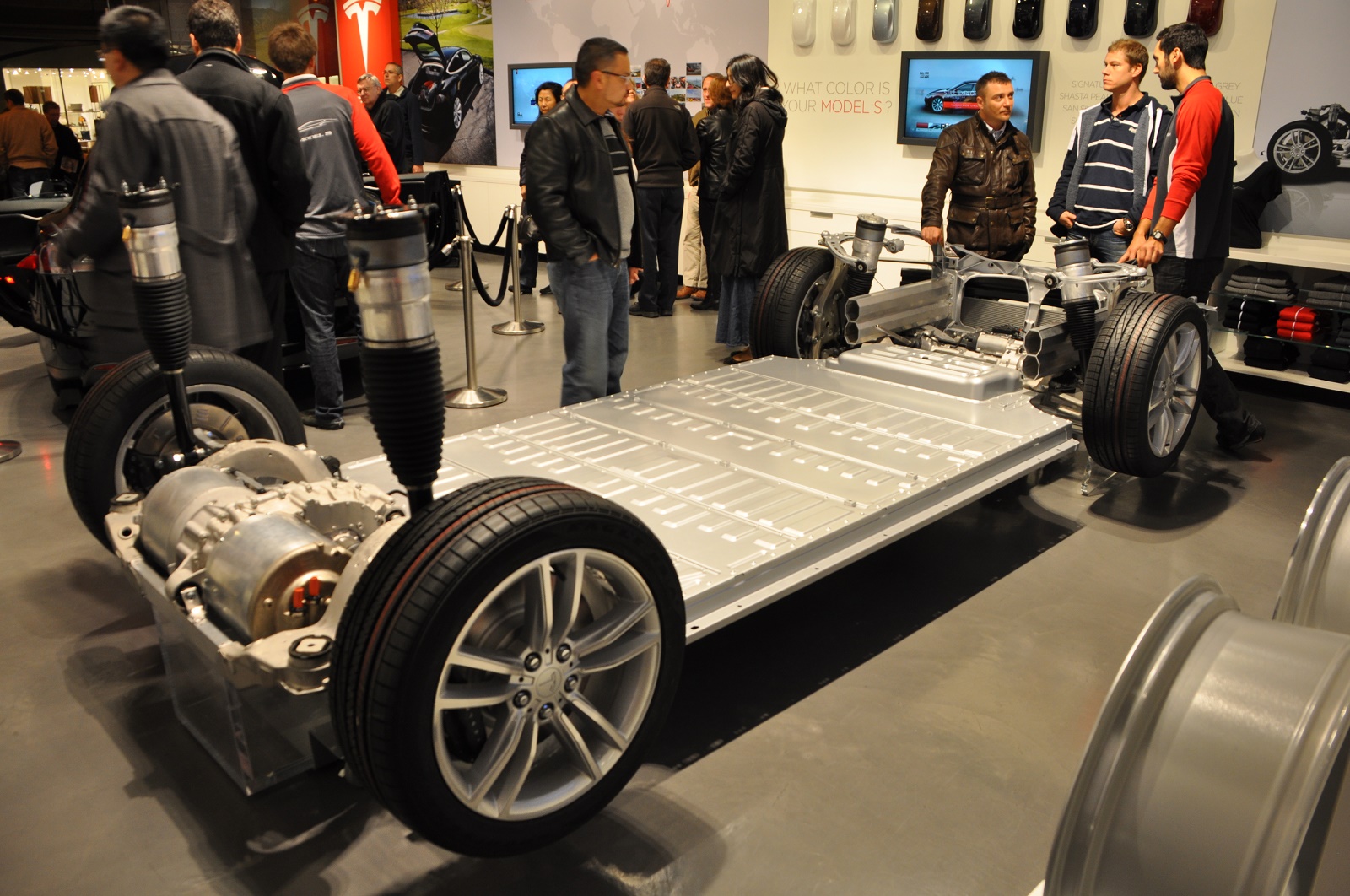
The battery is the heart of an electric car. It constitutes up to 50 percent of the vehicle’s weight and contains cobalt and graphite among other elements. But that’s not all. A battery contains many rare metals, especially lithium, that’s the lightest one. It allows an exchange of electrons which in turn charges or discharges energy.

The auto industry is reliant on these little known raw materials and they’re also present in most other green technologies. It’s not just the e-car that needs rare metals they’re used everywhere for the magnets and wind turbine motors, for example. Rare metals are also crucial for the manufacture of solar cells, for photovoltaic systems. Without them we couldn’t generate any green renewable energies.

Today renewables make up almost 10 percent of worldwide electricity production. As a result of the energy transition wind and solar energy could meet almost half of our electricity needs by 2050. In this greener world, rare metals will be almost indispensable for lighting, heating and transport.

So where do these vital resources come from? Cobalt is chiefly mined in the Democratic Republic of the Congo. Australia Chile and Bolivia all have huge lithium reserves, and Indonesia is a key producer of nickel, zirconium and tin. Today nations on all continents produce many hundred million tons of these raw materials. One country in particular owns vast reserves of strategic resources. China is the dominant producer of these sought after metals. In particular it produces two-thirds of the world’s supply of a mineral that’s especially important to green tech companies: Graphite.

We’re in the far north of the country, in the province of Heilongjiang. Almost unnoticed excavators have carried away an entire mountain right down to the ground water level to secure our green future. Graphite is often produced in ramshackle factories. These men work day and night without adequate clothing or respiratory protection. They’re the miners of the 21st century.
Miner: “We know our job exposes us to a health risk but we wear a mask for protection. Breathing this air over a long period of time can give you silicosis, where the lung becomes as hard as stone.”

The fine black dust floating in the air contains hydrofluoric acid. Inhaling large amounts of this caustic contact poison can potentially cause death.
“Do you know what this graphite’s used for?”
Miner: “For lots of things. For example, these days it’s used in all types of e-cars mainly for electric car batteries.”

The graphite residues are dispersed over many kilometers throughout the surrounding area. Before their very eyes farmers are witnessing a huge toxic carpet of dust building up on the region’s fields. Here the plants no longer sprout any leaves and the soil is losing its fertility.

Farmer: “There’s waste ore lying around everywhere like garbage. Of course we’re upset about it, in fact we’re very upset. They don’t take any responsibility. We can’t do anything. We’re small, if we protest they will take us away in handcuffs. You need to see it with your own eyes to understand.”

Considering how hugely profitable graphite is to Beijing, these people’s lives are of little consequence. And China is home to thousands of storage sites and production facilities for these sought after metals, indium, antimony, gallium, But also tungsten and germanium reserves are plentiful across the nation. China plays a key role on the international market for all these metals. We can assume that in the e-mobility sector alone, demand will rise rapidly over the coming 10 or 20 years for the most sought after rare earths. Demand is growing by up to 25 percent per year

For our society’s energy transition the Chinese are paying with especially severe environmental damage and high loss of human life.

In many mining regions residents have even left their homes. Entire villages were simply given up.
Chen Zhanheng: Here many companies only care about cost reduction. These companies don’t treat their waste emissions, slag and wastewater. They dispose of them in secret. The government does carry out checks, but there are ways to cheat the regulations. If an investigation is ordered, the companies play along and follow the rules. But the moment the inspectors are gone, they stop treating their waste and just dispose of it. Behavior like that is irresponsible.”
Scott Kennedy: “Central government really would like the mining of minerals to be much more environmentally friendly, but local governments are the ones that either own the mines or are invested in the companies that work the mines. They’re responsible for generating employment, tax payments and growing those local economies. And it’s the local government’s trade off to growing their economy for problems associated with the mining.”

Three thousand kilometers from Heilongjiang, in inner Mongolia, the Chinese have built imposing industrial centers. The industrial sites of the city of Baotou are devoted exclusively to the mining of rare earth elements, a special group of rare metals. The worst environmental damage is caused by the plant’s illegal disposal of waste water. This huge artificial lake on the outskirts of the city is fed by black streams of water containing heavy metals and toxins.

Chen Zhanheng: “Wastewater from the production of rare earth metals is even reaching the groundwater, and in some places this water is being used, but of course that’s problematic. It can be very harmful to people because it contains fluorine, for example, that makes our bones brittle raising the risk of fractures. Slag can contain radioactive thorium, which is also reaching the groundwater and spreading slowly from there. Alternatively it’s stirred up as dust by the wind and settles everywhere in the town or village. That’s how radioactive pollution occurs.

Around Baotou thousands of former villagers have begun a new life in soulless sleeper towns. They’re green technologies’ first refugees. One of them is Gao Sia. The farmer had to give up her farm, the health risks were simply too great.
Gao Sia: “Our livelihoods have been ruined. Young people earn a bit of money with casual work. Their families have nothing and they can’t support them. The water we use to wash and clean dishes every day is totally white. It’s so bad the tap’s blocked, nothing comes out. People are getting cancer, a large number very many. The metals they produce aren’t harmful, they’re sold for a great deal of money. But the mining creates wastewater and pollution.

These new instances of environmental pollution on the other side of the world are the price for our wind turbines, our solar panels and our clean cars, improving air quality in Europe.

The paradox is that greenhouse gas emissions continue to exacerbate climate change all around our planet.
Engineer: To make something clean you always have to pollute something else. There’s no such thing as a co2 free and 100 % ecological product, regardless of what we might sometimes read on the label. It’s impossible, there’s always going to be a knock-on effect. If we want to see what pollution looks like, the environmental damage caused by our ever so clean products which we like to believe are made by workers in white coats, then we only need to look at industrial zones in China or elsewhere.”

Our green technologies don’t just contain rare metals, they require metals of all kinds including the most widespread.

A wind turbine consists of an average 20 tons of aluminum and up to 500 tons of steel. An e-car contains up to 80 kilos of copper, four times more than in some combustion vehicles. This reddish-brown metal is especially important for green tech companies.
Jean-Marc Sauser: “The energy transition is consuming huge amounts of copper, not just in the construction of wind turbines, but also in the connector cables that link the turbines to each other and the grid. The electricity has to reach its target destination after all. If you want electric cars, then you need charging points everywhere. For that you have to lay copper cables, and that’s what’s happening at the moment.
Olivier Vidal: “If you take copper for example, it gives us a clear illustration of what’s going on. Since the beginning of time humanity has produced between 800 million and a billion tons of copper. If we continue on this current growth trajectory will produce the same amount in the next 30 years. We’ll have to produce as much copper in three decades as we’ve consumed since the beginning of time. The demand is huge.”

This increased demand for regular metals such as copper means many other nations are affected by the energy transition. To gauge the full extent of the impact we need to travel thousands of kilometers to South America. We’re in northern Chile. Chuquicamata is the world’s largest open pit copper mine, which is publicly owned. Its vast crater has a diameter of four kilometers and is more than one kilometer deep. Increased worldwide demand means more laborers and more machines.
Production Director: “Last year we refined 330 000 tonnes of copper here in Chuquicamata. It’s pure copper ready for the market. Once we start mining underground as well, we expect to refine 470 000 tons of copper in Chuquicamata. It’ll be an historic year for the mine, 470 000 tons.”

Thirteen percent of the world’s copper reserves are found here in Chuquicamata, but the deeper the machines dig the less metal they’ll find in the ground. At the current pace of extraction, there are already signs that demand may outstrip supply.
Olivier Vidal: “Geologists are warning of a copper shortage that could take hold in just a few years. Pessimistic analysts are predicting a spike in production from 2030 to 2040. In other words today, followed by a decline in primary copper production.”

Just like China’s graphite industry, the copper mines of Chuquicamata are polluting the earth and water with heavy metals. Almost 10 percent of all jobs in Chile depend on copper extraction. The environmental damage caused by mining is completely ignored
Mayor of Tocopilla: “We have a water problem, a serious consequence of the mining and industry in this region.”

This is because mining and processing the mineral requires huge volumes of water. It’s thought that Chuquicamata uses 2000 liters per second. This, although in many parts of this arid desert it hasn’t rained for five hundred years.
Damir Galez, Historian: “The mining industry siphons off most of its water from wetlands and groundwater the water consumption is enormous.”
Mayor: “The water is practically running dry because more is being taken than nature can produce. The natural water reserves of our region are being excessively exploited by mining.”

To get a handle on the actual environmental impact, it’s necessary to examine not just mining itself, but the system as a whole.

The contaminated area covers several thousand square kilometers.
Antofagasta is four hours by car to the southwest of the Chuquicamata mine. The town’s population is used to the daily rumble of trains and trucks bringing the copper to this industrial port. From here the metal is exported all over the world. The air is thick with heavy metal particles released by the vehicles without anyone really noticing.

Although the mine is far away, it has brought disproportionate levels of ill health to the 200 000 people who live in Antofagasta. In 2016 this doctor published a study that to this day has been ignored by the copper industry.
Health Authority: “We studied contamination levels on the roofs of schools and kindergartens where we found a high concentration of heavy metals. In other parts of Chile people mainly die of cardiovascular disease. In the North the main cause of death is cancer, in particular lung cancer. A link to the contamination is indisputable. In some districts of Antofagasta 10% of residents have cancer.”

And producing electricity for the Chuquicamata mine inflicts further damage on people and the environment. To assess the full extent of the problem we’re traveling almost 300 kilometers to the north. Sandwiched between desert and sea the little town of Tocopilla appears cut off from the outside world. Isulina Jerez has lived here all her life. Ten years ago one of her sons died of lung cancer; he was just 17 years old.
Isulina Jerez: “As much as I’ve tried to find an explanation, I see no reason why my son who never smoked and always led a healthy life died at the age of just 17. He was very active and sporty, he was the healthiest of all my children. Then the cancer came and carried him off.”

It’s often difficult to breathe in Tocopilla, the cause of the problem is producing power for the insatiable mine of Chuquicamata. Chile has 28 coal-fired power stations. The government put one of them is here in this tiny town on the pacific coast.

40 percent of Chile’s electricity is gleaned from this fossil fuel. The toxins released in the process have already led to high rates of cancer. Entire systems are being sacrificed: the land, nature, and people’s health. In turn these sacrifices benefit other regions who profit from them. There people can afford the luxury of cleaner, healthier, greener and more renewable energy. But other people pay the price for that.

Damir Galez: “There’s copper here but no coal. That’s brought from many thousands of kilometers away coming from Colombia and New Zealand. The procurement process does of course have an impact. For example, at the coal mines in Colombia, the populations there are exposed to a high concentration of heavy metals in the air. And the ships that transport the coal pollute the sea. The coal travels thousands of kilometers before it arrives in Tocopilla. That requires a well-developed network of mines, ports, trains, ships and thermal power plants. At the end you’ve got the copper mine.

Copper mining takes place in the dark and what you don’t see of course doesn’t count for anything.

But the company that runs the coal-fired power station in Tocopilia claims green credentials. The multinational has even declared itself world market leader for co2 free technologies. The company in question is Engie based in France.
Damir Galez: “During my time in France I was able to observe the big contradiction in all of this. There Engie presents itself as a clean company promoting renewables and always prioritizing sustainability. But this sustainability in Europe, particularly in France has a very dark side: Electricity production.

To be able to generate electricity in Chile, the French energy company operates six coal-fired power plants there, a seventh has been under construction since 2015.

SrVP Engie: “We’re helping the Chilean government. Instead of closing the power stations, which would halt factories and trains and plunge the nation into darkness, we aim to support Julia’s (Julia Wittmayer) EU energy transition. It’s about finding the right moment for the construction of new plants in the renewable sector. We’re working a great deal with solar and wind power and we’d like to support the government in this conversion. That’s our mission and our responsibility.

Damir Galez: But you’re still building a new coal plant in northern Chile.

SrVP Engie: “As i just said Engie’s task is to support the government and we’re currently doing just that. It’s impossible to decommission all coal plants as long as they supply 40 percent of the national demand for electricity. That’s the case in Chile: Without this 40% industry would grind to a halt. We’re supporting the conversion to renewables and a reduced electricity consumption.

Nicolas Meilhan: The eco car has become a kind of religion. If we now can see that maybe it isn’t the be-all and end-all, and the same could be said for solar cells and wind turbines to a certain extent, then all the governments talk about the electric car that’ll save the world will come crashing down like a house of cards. In 20 years we’ll wake up because harmful emissions will have continued to rise and the e-car won’t have changed anything. The next energy crisis is already in the making: ElectricGate.

But at the Geneva motor show, car makers have other things on their minds. New brands are jostling for attention in a promising market. Volvo for example has founded a subsidiary dedicated to making electric cars with a carefully thought out marketing campaign pledging that by purchasing its models we’re saving the planet.

Global automotive industries annual revenue is 2 000 billion euros.

That’s equal to the GDP of a nation like France. With that in mind, very few car makers are prepared to look reality in the eye.
VP Lexus: “ It’s probably an interim solution, but is it also the best long-term solution? I’m not sure about that because if we’re just talking about purely electric vehicles, we can’t just be looking at the car itself. We also need to consider the issues of battery and electricity production. And in many nations the latter isn’t particularly ecological. That’s a global problem.”

So does the future of green energies lie in further innovations? That’s what car makers are promising at least.
SrVP Engie: “The energy transition isn’t over, there are still many innovations to come. We’ve invested in startups that want to develop new technologies, organic solar cells for example. They’re very different from regular cells because they don’t need any silicon. Organic solar cells are like a sheet of paper, very flexible; they can be installed anywhere. If we fixed these thin film cells to all large office blocks we could generate an incredible amount of electricity.

Olivier Videl: “Some key technological developments have the potential for enhanced effectiveness. Performance will improve through research in this area. Despite everything we should throw our weight behind these technologies, because they’re ripe for development.”

Chile has pledged to shut down all its coal plants, but not before 2040. So Engie won’t be able to address the contradiction between its green washing and the bleak Chilean reality anytime soon.

Comment

This abridged transcript excludes the ending message which devolved into a Malthusian appeal, echoing the Club of Rome’s Limits to Growth.  The video nailed the essential point:  Obsession with e-cars in particular, and non-carbon energy in general will destroy the planet in the guise of saving it.  The hypocrisy is dripping from those who terrorize the world with fears of global warming and point to zero carbon as the solution.  They get all righteous and indignant at car companies who organized to profitably produce e-cars to meet the demand the warmists created.  They expose their quaint naivete that people can be supplied with goods without any profit incentive. The dangerous obsession has three components.

The Transition to Zero Carbon is Unnecessary

Earth’s weather and climate changes are within the range of historical variation.  In particular, there has been no accumulation of warming in the last four decades.  The rising CO2 in the air has been a boon to the biosphere and to crop production.

Replacing Fossil Fuels with Zero Carbon Energy is Impossible

Presently, despite all of the money invested in them, Wind and Solar power supply 2% of the world’s energy needs.  The renewable energy solution does not scale to the desired outcome of reducing fossil fuel usage to any meaningful extent.

The Attempt to Electrify Everything Will Bring Environmental Desolation

Trying to power modern societies with intermittent wind and solar power will extract planetary resources to depletion.  The landscapes of Northern China and Northern Chile will become typical rather than extreme situations to be managed.  The imaginary climate problem will not be solved, but the environmental catastrophe will be all too real, and of our own making. Cease and desist this madness.

World of Energy Infographics
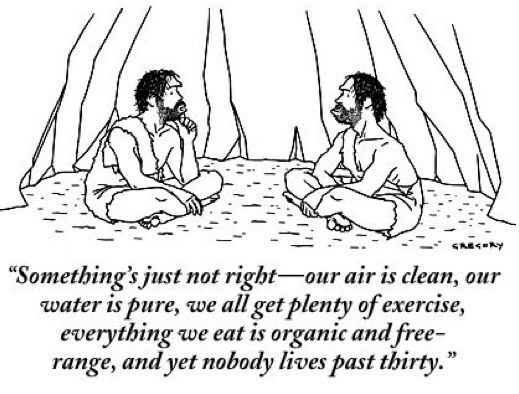
Raymond has produced another in his Simple Science series, this one providing images explaining  how the world uses its energy and where the energy comes from. It’s a pictorial representation of statistics compiled by the International Energy Agency (IEA) in their 2020 World Report, the latest year being 2018.

World of Energy, World of CO2, and World of Climate Change are projects at RiC-Communications, based in Zurich.  The exhibits are available for download at the following linked titles:

World of Energy

World of CO2

World of Climate Change

In addition there is an introductory video to the CO2 series The three titles above link to summary posters suitable for printing.  In addition there a some charts related to water and ice:

World of Ice Ages

The World of Energy Infographics
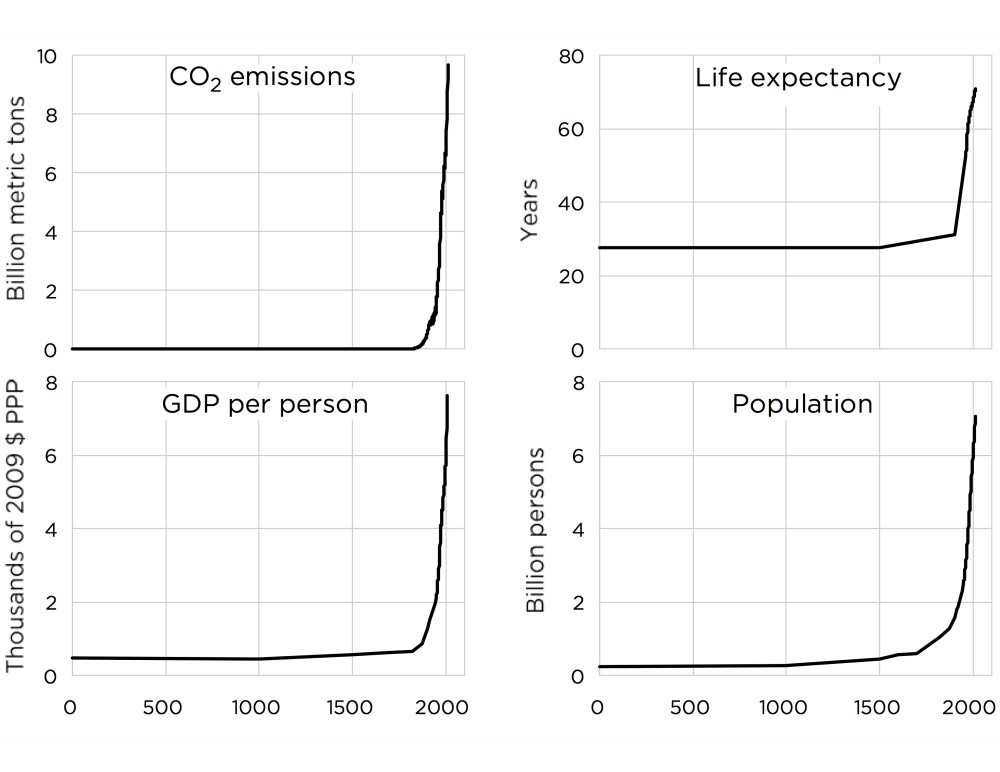
Energy consumption is an important topic and on everyone’s lips. Since fire has been used as an energy source, fossil fuel use has played an important role in the evolution of our species. The rise of carbon in our atmosphere can be traced back to the beginning of industrialization and contributes in part to today’s levels of 420 ppm. Fossil fuels account for 81% of our total energy supply, a dependence that has not diminished to this day. This valuable resource drives the global economy and helps to reduce poverty worldwide. However, fossil fuels are not evenly distributed across the world and have always been the source of conflict or leverage. Renewable energy is becoming more popular, but efforts to replace the high density of fossil fuels will not be easy.

– N° 1 Global Energy consumption in percent by all sectors
– N° 2 Global Fossil fuel consumption in percent by sector
– N° 3 Oil consumption in percent by sector
– N° 4 Natural Gas consumption in percent by sector
– N° 5 Coal consumption in percent by sector
– N° 6 Electricity Generation by Source
– N° 7 Total energy supply by source


Comment

Many observations are possible by studying these exhibits.  For example, some activists insist that passenger air travel is dangerously warming the planet, and ordinary people should stay home, with flights restricted to essential trips by global elites.  A glance at the transportation statistics on slide #2 shows Aviation is only 4% of fossil fuel consumption (12% of 34% FF used for transportation).  And aviation includes cargo transport, so passenger travel is a fraction of that.

The bulk of FF transport consumption is Road, meaning cars and trucks, which is why some are demanding electric vehicles be the only means of mobility.  Yet a look at slide #6 shows that presently only 10% of electricity comes from Wind, Solar and waste fuels.  Furthermore, for all of the investment in wind and solar power, slide #7 shows that so called “green energy”` supplies only 2% of the world’s energy needs.