Escape the Green Box


Steve Goreham has published a new primer that unmasks “sustainable development” fallacies. Outside the Green Box is previewed at Master Resource. Excerpts below:

Green Doctrine of Sustainable Development

Modern society is beset by green ideology, possibly the greatest delusion in recent history. Schools teach children that carbon dioxide is a pollutant, that polar bears are endangered, that population growth is harmful, that pesticides cause cancer, that energy use is destroying the environment, that warm climate is bad for humanity, and that crude oil is all but exhausted. Further, we can save the planet if we change our light bulbs, plant a tree, forego eating meat, and drive a Prius.

Green ideology is embodied in the doctrine of environmental sustainable development. Sustainable development contends that the growth in human population, production, consumption, and energy use over the last 200 years is “unsustainable.” For 30 years, proponents of sustainable development have warned that without radical changes to modern society, our planet’s environment will be destroyed, with the resultant decline of human civilization. To avoid the coming catastrophe, companies are told that they must adopt sustainable business practices

Climate Change Ideology

Over the last 30 years, climate change ideology became the core of sustainable development and the green movement. Most scientific organizations, most leading universities, most of the Fortune 500 companies, faith-based organizations, and the majority of the news media have publicly endorsed this theory.

Climatists call carbon dioxide a “dirty pollutant,” call coal trains “death trains,” and brand those who don’t accept the ideology “climate deniers.” Thousands of energy and climate laws across hundreds of nations aim to reduce CO2 emissions from transportation, industry, agriculture, and even light bulbs.

But from Chapter 5, scientific data shows that natural forces, not human emissions, dominate Earth’s climate. Water vapor, not carbon dioxide or methane, is Earth’s dominant greenhouse gas. Human industry contributes less than two percent to the greenhouse effect. Earth’s temperatures 1,000 years ago were naturally warmer than today and have been gently cooling over the last 8,000 years.

Contrary to warnings, history shows that today’s storms, floods, and droughts are neither more frequent nor more intense than in past centuries. According to satellite data, surface temperatures show no significant warming over the last eighteen years, evidence that the world’s climate models are in error.

Summary

Much of government policy, academic thought, and public opinion stands on fears created and promulgated by environmental sustainable development. The philosophy that humans are too many, too polluting, climate destroying, and profligate wasters of natural resources holds today’s society in a powerful psychological grip. Thousands of energy and environmental laws are justified on these misconceptions.

Energy consumption is not a villain. Nations that consume the most energy per person discharge the lowest level of air and water pollutants per person. Low-cost energy provides economic growth and generates capital for pollution control. Carbon dioxide is not a pollutant. Hundreds of peer-reviewed studies show that increased levels of CO2 result in faster and larger plant growth. The recent rise in atmospheric CO2 is actually greening the Earth.

Steve Goreham is a speaker, author, and researcher of environmental issues and public policy. He holds an MBA from the University of Chicago and a BS/MS in Electrical Engineering from the University of Illinois. More at his website stevegoreham.com.  For example, he provides a synopsis of Climate Facts including these topics:

Temperature in Perspective
The Greenhouse Effect
Icecap Melting and Sea Level Rise?
Stronger Hurricanes and Storms?
Droughts and Floods?
Polar Bear Extinction?
Heat Waves?

The Sky is not our limit.

Climatists Wrong-Footed

Trolling: The art of deliberately, cleverly, and secretly pissing people off, usually via the internet, using dialogue.

Update May 4 at the end

People may not have noticed that subtly, without fanfare, the climate battleground has shifted from the science to the policy. Like everyone else climatists were caught unawares by the election of US policymakers skeptical of the need to “fight climate change.”

But the surprising development is how activist tactics are still geared mainly to push on the claim of “settled science”, when that is not any more the focal point for the opposition. I don’t know who created the strategy for nominees, but in confirmation hearings, to a man and woman they all refrained from denying the science. Sanders and the other true-believing senators pressed hard to get heretical statements, but failed.

Now the activists have turned up the heat with science marches every weekend. Activists keep pushing on the science because their policy agenda is even less believable.

The marchers’ signs show they depend on three suppositions, like a three-legged stool:

  • Humans are making the planet warmer.
  • The warming is dangerous.
  • Government can stop it.

The first point is what alarmists claim is settled science, and where others have doubts about the data, the models and the theories. Expressing those doubts gets you labeled a denier. After years of alarmists refusing to debate that first point, they now want to talk about nothing else.  Apparently they think that only the first point matters; once that is admitted, everything else follows.

To their surprise, policymakers, and now even some journalists are shifting the ground to the other two wobbly legs, where the assertions have even less support.

A perceptive journalist writing for the LA Times sees how the game is changing.  Jonah Goldberg wrote yet another piece of independent thought coming from a previous uncritically warmist newsroom. Bret Stephens just trolled the left with his supposed climate change denialism. Excerpts below.

The most amusing show over the weekend was the collective case of the vapors across the liberal left establishment over Bret Stephens’ first column at the New York Times on the perils of certainty, particularly on the topic of climate change.

When someone says that he is not denying climate change and concedes that it is real, that is “classic climate change denialism”? Huh. What words do we have left for people who call the whole thing a “hoax”? In civil debates, when someone concedes much of your premise, the proper reaction is not to scream “liar!” or “heretic!”

And that brings me to the second, and more amusing, thing about all of this. You’ve been trolled, people.

As a fellow columnist, I doff my cap to you, sir.

It wasn’t hard to trick liberals into going off-sides. In the past, Stephens was a more acid-tongued critic of climate change research. But the column in question was a model of restraint that, when read by non-ideologues and non-combatants, must seem utterly reasonable, even a tad banal. Stefan Rahmstorf, a prominent German climate scientist, wrote a lengthy, sanctimonious letter explaining why he was cancelling his subscription to the New York Times. Nothing in the letter addressed anything Stephens wrote in his column.

The Washington Post’s Eric Wemple found it hard to constrain his dismay. “May it suffice to say, however, that the many, many people who care passionately for the planet found it an exercise in climate-change denialism.”

Wemple’s a clever fellow. I’m sure he understands Stephens’ point about the dangers of certainty, particularly based on sophisticated mathematical models that have been proven wrong in the past.

What I think sailed past Wemple and so “many, many people” was Stephens’ subtler point about the sanctimonious condescension of people who claim to be motivated solely by their passionate care for the planet.

Stephens’ heresy here isn’t in denying climate change; it’s in refusing to concede that one group of people has a total monopoly on defining not just the problem but the acceptable responses to it. Such dissent is not a crime against science; it’s a threat to a guild. And the guild took the bait.

Update May 4

Bret Stephens published a new post today that digs into the policy failures, specifically biofuels with references to other shortcomings, such as emissions trading. Climate of Unintended Consequences

In other words, the three central claims made in the Department of Energy paper quoted at the top of this column were misleading or wrong. Factually wrong. Wrong for the environment. Wrong for taxpayers. Wrong for the allocation of government funding and scientific research. Wrong for our energy mix. Wrong politically: Whatever else we conclude about ethanol, the one thing that won’t soon go away is the biofuel lobby in Washington.

And wrong for the reputation of climate science.

In recent years, some climate activists — Al Gore notably among them — have owned up to their biofuels mistake. More recently, we’ve seen some acknowledgment of other errors, having more to do with policy than science.

Thus, today there’s a keener appreciation that cap-and-trade regimes such as Europe’s ambitious Emissions Trading System have been costly failures, with one study suggesting the E.T.S. had “limited benefits and embarrassing consequences” in terms of emissions — at an estimated cost to consumers of some $280 billion.

There’s also been some acknowledgment that Germany’s Energiewende — the uber-ambitious “energy turn” embarked upon by Angela Merkel in 2010 — has been less than a model for others. The country is producing record levels of energy from wind and solar power, but emissions are almost exactly what they were in 2009. Meanwhile, German households pay nearly the highest electricity bills in Europe, all for what amounts to an illusion of ecological virtue.

Still, what acknowledgment there’s been has generally been belated, grudging and rarely self-reflective. What’s missing is an understanding of the harm that can be done when do-something impulses and eco-cure boosterism become turbocharged by government power and subsidized business.

The lessons are legion but, more often than not, unlearned. We need to make policy choices based less on moral self-regard and more on attention to real-world results.

Inside a True Believer’s Mind

true-believer

At Slate Susan Matthews writes Bret Stephens’ First Column for the New York Times Is Classic Climate Change Denialism  It doesn’t outright reject the facts—which makes it all the more insidious.

Key Paragraphs (my bolding for emphasis)

But in reality, the goal of this column is not to help readers learn how to reason with people who are skeptical about climate change. Instead, the column reinforces the idea that those people might have a point. The New York Times push notification that went out Friday afternoon about the column said as much—“reasonable people can be skeptical about the dangers of climate change,” it read. That is not actually true, and nothing that Stephens writes makes a case for why it might be true. This column is not a lesson for people who want to advance good climate policy. Instead, it is a dog whistle to people who feel confused about climate change. It’s nothing more than textbook denialism.

The institutions Stephens questions in his column are not singular entities but entire ideas—scientists who may not see their biases, statistical models that might be skewed, liberals who may be so swayed by their ideology. His argument is convincing because the institutions he mentions can make mistakes. It’s true, there are some problems with how we use probabilities in science. We tend to be bad at distinguishing between correlation and causation. Sometimes our biases do get in the way. Stephens knows this, and he taps into it in his piece. “Much else that passes as accepted fact is really a matter of probabilities,” he suggests. You have to be an idiot or a zealot to believe climate change is certain, whispers the subtext.

The Credo

Regardless of what Stephens says in this column, and regardless of Clinton’s modeling failures, climate change is a terrible threat to life as we know it on this planet. Anyone who wants to honestly investigate the data will come to the same conclusion that the scientific establishment has—climate change is real, and dangerous. Our failures elsewhere—even in the disturbing wake of the election of Donald J. Trump—do not negate that. The questions are no longer whether and how but how soon and how bad. Climate change is happening, and “claiming total certainty about the science” does not “traduce the spirit of science.” Instead, it is a reasonable interpretation of the science at hand.

Don’t Give an Inch

What he is suggesting here is that the rational way to go forward with a conversation about climate change is to admit that climate change might not be certain. This is similar to the torturous logic he puts forward throughout the rest of the piece—the only way to be reasonable about this topic is to give in to those who are unreasonable about it. While he calmly insists he is the only logical person around, he is spewing complete bullshit.

Stephens article itself is excerpted at  NYT Opens Climate Can of Worms

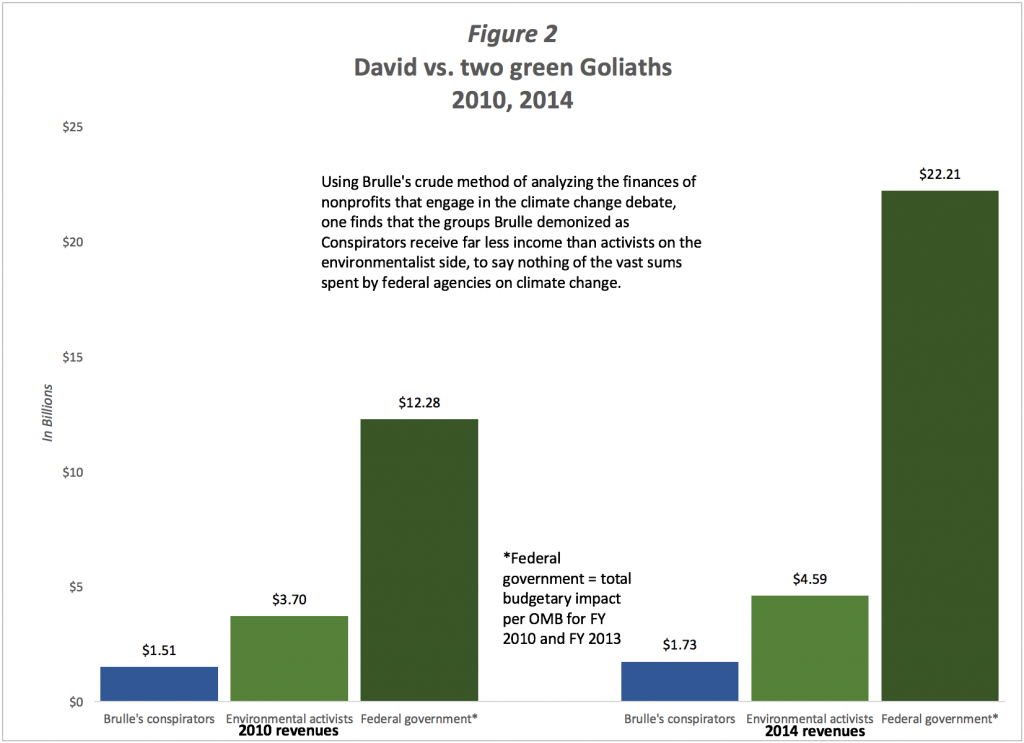
Counting Climate Dollars: Who Controls the Debate?


Thanks to an opinion piece in Washington Post, I discovered the work of a serious skeptical thinktank called Capital Research Center. This short video explains how global warming/climate change activists have repeatedly distorted how public communications on the issue are funded, and how dominant are the alarmist dollars.

The full study and numerous other resources are at Climate Dollars

The WP article is A Climate Hysteric’s Fake Enemies List which can also be accessed at Climate Dollars org. link above.


NYT Opens Climate Can of Worms


Fishermen often discovered how easy it was to open a can of bait worms, and how difficult it was to close them. Once the worms discovered an opportunity to escape, it became nearly impossible to keep them contained. Some experts say the metaphor is a modern extension of Pandora’s Box.

In a previous post NYT Readers Face Diversity I provided a background for New York Times newest columnist Bret Stephens, with emphasis on his climate change commentary.

Now his first column published in NYT appears Climate of Complete Certainty, an invitation to examine the facts about climate change. Excerpts below.

We live in a world in which data convey authority. But authority has a way of descending to certitude, and certitude begets hubris. From Robert McNamara to Lehman Brothers to Stronger Together, cautionary tales abound.

We ought to know this by now, but we don’t. Instead, we respond to the inherent uncertainties of data by adding more data without revisiting our assumptions, creating an impression of certainty that can be lulling, misleading and often dangerous. Ask Clinton.

With me so far? Good. Let’s turn to climate change.

Last October, the Pew Research Center published a survey on the politics of climate change. Among its findings: Just 36 percent of Americans care “a great deal” about the subject. Despite 30 years of efforts by scientists, politicians and activists to raise the alarm, nearly two-thirds of Americans are either indifferent to or only somewhat bothered by the prospect of planetary calamity.

Why? The science is settled. The threat is clear. Isn’t this one instance, at least, where 100 percent of the truth resides on one side of the argument?

Well, not entirely. As Andrew Revkin wrote last year about his storied career as an environmental reporter at The Times, “I saw a widening gap between what scientists had been learning about global warming and what advocates were claiming as they pushed ever harder to pass climate legislation.” The science was generally scrupulous. The boosters who claimed its authority weren’t.

Anyone who has read the 2014 report of the Intergovernmental Panel on Climate Change knows that, while the modest (0.85 degrees Celsius, or about 1.5 degrees Fahrenheit) warming of the Northern Hemisphere since 1880 is indisputable, as is the human influence on that warming, much else that passes as accepted fact is really a matter of probabilities. That’s especially true of the sophisticated but fallible models and simulations by which scientists attempt to peer into the climate future. To say this isn’t to deny science. It’s to acknowledge it honestly.

By now I can almost hear the heads exploding. They shouldn’t, because there’s another lesson here — this one for anyone who wants to advance the cause of good climate policy. As Revkin wisely noted, hyperbole about climate “not only didn’t fit the science at the time but could even be counterproductive if the hope was to engage a distracted public.”

Let me put it another way. Claiming total certainty about the science traduces the spirit of science and creates openings for doubt whenever a climate claim proves wrong. Demanding abrupt and expensive changes in public policy raises fair questions about ideological intentions. Censoriously asserting one’s moral superiority and treating skeptics as imbeciles and deplorables wins few converts.

None of this is to deny climate change or the possible severity of its consequences. But ordinary citizens also have a right to be skeptical of an overweening scientism. They know — as all environmentalists should — that history is littered with the human wreckage of scientific errors married to political power.

Conclusion

I’ve taken the epigraph for this column from the Polish poet Czeslaw Milosz, who knew something about the evils of certitude. Perhaps if there had been less certitude and more second-guessing in Clinton’s campaign, she’d be president. Perhaps if there were less certitude about our climate future, more Americans would be interested in having a reasoned conversation about it.

New York Post (here) covers the nastiness of responses to Stephens’ first column. Stephens compares the blowback to what he got from Trump fans: “After 20 months of being harangued by bullying Trump supporters, I’m reminded that the nasty left is no different. Perhaps worse,” Stephens tweeted Friday afternoon, as the hateful messages kept rolling in.  New York Times used to be a “safe space”, maybe now not so much.

Bret Stephens

Update April 30

A response to Stephens article at Slate  Inside a True Believer’s Mind

Footnote:

Whenever I see those graphs of climate models projections, it reminds me of worms escaping.

Climate Evangelists Are Taking Over Your Local Weather Forecast

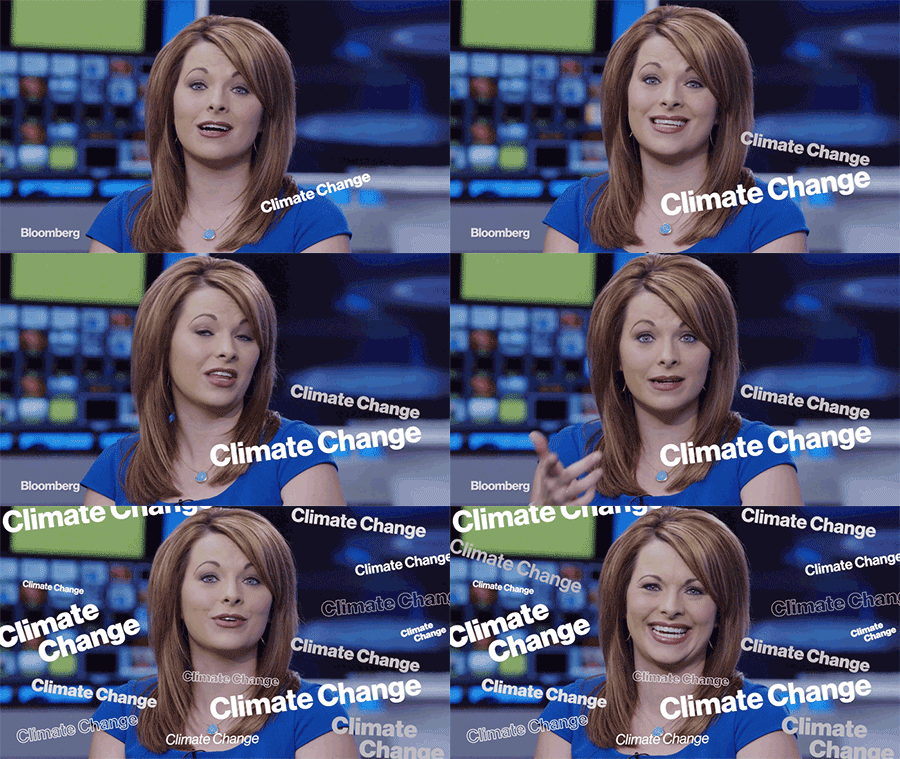
The battle by alarmists for hearts and minds is extending to many fronts, including recruiting family doctors, and in the case of this post, media weather reporters. Surveys have shown the meteorologists are not more convinced of global warming/climate change than is the American public (a slight majority). But efforts have been underway to convert them and use their telecasts and columns to promote climatism.

A balanced and analytical report appears in Bloomberg (an interesting place for such independent thinking).  Climate Evangelists Are Taking Over Your Local Weather Forecast Excerpts below.

Amber Sullins gets a minute or two to tell up to two million people about some extremely complicated science, using the tools of her trade: a pleasant voice, a green screen, and small icons denoting sun, clouds, rain, and wind. She is the chief meteorologist at ABC15 News in Phoenix, so her forecasts mostly call for sunshine. Within this brief window, however, Sullins sometimes manages to go beyond the next five days. Far beyond.

Amber Sullins, weather reporter at ABC15 News in Phoenix.

“We know climate change could affect everything about the way we live in the future, from agriculture and tourism to productivity and local business,” she once noted. “But at what cost?”

It was a 35-second segment in a nightly newscast, a mundane moment preceding reports about three fallen firefighters in Washington state and a dangerous development for air travelers. But that climate-focused scene, and hundreds of others like it playing out at local news stations across the country, marks a major shift in the way Americans hear about climate change. The safe and familiar on-air meteorologist, with little notice by viewers, has become a public diplomat for global warming.

There are about 500 broadcasters like Sullins and Morales, who each receive regular data dumps and ready-to-use graphics from Climate Matters, an organization whose mission is to turn TV meteorologists into local climate educators. The program was founded in 2010 by Climate Central, a research-and-journalism nonprofit, with help from George Mason University, the American Meteorological Society, and others. Newscasters who participate are sent possible topics for climate-related segments every week, with TV-ready data and graphics pegged to large-scale meteorological events, such as unusually high heat or precipitation, local trends, or seasonal themes.

Two-thirds of 18- to 64-year-olds in the U.S. watch a news broadcast, either on TV or a digital device, at least once a week, according to 2015 research by the market research company SmithGeiger LLC. Nearly 40 percent of people within this wide age group watch broadcast news on daily basis, and the reliable presence of an on-air meteorologist is a huge part of the draw.

“Local TV news wouldn’t exist any more if it weren’t for the weathercasts,” says Ed Maibach, director of George Mason University’s Center for Climate Change Communication.

Part of meteorologists’ reluctance to talk about the climate stems from the treacherous tools of their trade. Meteorologists learn very quickly that weather models are messy. Some no doubt sour on finicky climate models because of this experience. If short-term weather models make mistakes, it may seem reasonable to assume that a model projecting into the next century is ridiculous.

“Meteorologists are used to looking at models and being burned,” says Paul Douglas, a former TV weatherman-turned-serial entrepreneur, who recently published a book on climate change and faith.

Sullins, 34, knows there’s tension in telling her viewers about conditions in the 22nd century when she is reluctant to commit to a two-week forecast. “I can’t tell you what the high temperature is going to be on July 4 of this year, today,” Sullins says. “I can’t possibly tell you that. But I can tell you, based on climate, that in July, here in Phoenix, it’s going to be over 100 degrees. That’s easy.”

Her point is that weather and climate are “two entirely different beasts.” It’s like the difference between someone’s mood and disposition, Sullins says. She wants viewers of the nightly news to spend more time thinking about the planet’s disposition.

Summary

The PR campaign continues and intensifies with simplistic soundbites to persuade people to fear the future, in order to advance the anti-fossil fuel agenda. It is a Chinese water torture program well-funded and essential to the climate crisis industry.

But note the logical fallacy in Sullins’ statement above. She says: “I can tell you, based on climate, that in July, here in Phoenix, it’s going to be over 100 degrees.” That’s not climate change, that’s climate stability, something we depend on despite the fear-mongering.

How will viewers respond to this?  Will ratings improve by watching weather people jumping the shark? (It didn’t work for “Happy Days” TV show).  Or will people resent the attempted brainwashing and switch channels?

Footnote:

The hottest temperatures ever reported in Phoenix came in January 2015, when Fox 10 weatherman Cory McCloskey faced a malfunctioning temperature map on live television. “Wow, 750 degrees in Gila Bend right now,” he said, without breaking a sweat. “And 1,270 in Ahwatukee. Now, I’m not authorized to evacuate, but this temperature seems pretty high.” More than 6 million people have watched the blooper on YouTube.


KISS for Climate Marchers

Keeping it simple, here’s the elevator speech for climate marchers, excerpted from a more lengthy article linked below.

Expect more craziness this weekend. Earth Day is Saturday. This year’s theme: Government must “do more” about climate change because “consequences of inaction are too high to risk.”

They make it sound so simple:

1) Man causes global warming.

2) Warming is obviously harmful.

3) Government can stop it.

Each claim is dubious or wrong.

1) Man’s greenhouse gases contribute to warming, but scientists don’t agree on how much. Of 117 climate models from the 1990s, 114 overpredicted warming.

2) Warming is harmful. Maybe.

But so far it’s been good: Over the last century, climates warmed, but climate-related deaths dropped. Since 1933, they fell by 98 percent. Life expectancy doubled.

Much of that is thanks to prosperity created by free markets. But some is due to warming. Cold kills more people than heat.

Carbon dioxide is also good for crop growth. Even The New York Times admits, “Plants have been growing at a rate far faster than at any other time in the last 54,000 years.”

3) Nothing we do today will stop global warming. The Obama regulations that Trump recently repealed, horrifying the Earth Day crowd, had a goal that amounted to a mere 1 percent reduction in global CO2. And that was just the goal.

Of course, some think any cut is better than nothing. But cuts are costly. They kill jobs, opportunity. All to accomplish… nothing the earth will notice.

If warming does become a problem, we’re better off if our economy is very strong when the science tells us clearly that action will make a difference.

We should be especially wary of expensive government projects given how often alarmists were wrong in the past.

The alarmists claim they’re marching for “science,” but they’re really marching for a left-wing religion.  Instead we should celebrate human progress and our ability to use energy to improve everyone’s quality of life.

Excerpts from Earth Day Dopes By John Stossel April 19, 2017

Background info: Data, Facts and Information


NYT Readers Face Diversity


Imaginary Enemies

A lot of fuss is in the media about the New York Times hiring Bret Stephens from the Washington Post. Stephens won the 2013 Pulitzer Prize for commentary, is regarded as a conservative, and has written critically about Trump, as well as liberals. In particular he has poked fun repeatedly at the climatism hysteria. For this latter point, the climate faithful are up in arms about the prospect of Stephens columns appearing on pages of NYT (a kind of bible for liberals and environmentalists).

For sure Bret Stephens is as outspoken as Mark Steyn, but with his own preoccupations and style. To see what might be in store for NYT readers, let’s look at some excerpts of his commentary regarding global warming/climate change. Note: Washington Post has a paywall, so links to these articles go to blogsites where the full text is available.

In 2014 Stephens published Climate Prophets and Profiteers, which gives an idea where he is coming from.

It is now the dogma of the left that any hint of doubt when it comes to predictions of climate doom is evidence of greed, stupidity, moral turpitude or psychological derangement. “Climate denial” is intended to be the equivalent of Holocaust denial. And yet the only people who’ve predicted anything right so far are those who foresaw that the Kyoto Protocol would fail, that renewable energies didn’t really work, and that climate bureaucrats accountable to nobody but their own sense of virtue and taste for profit were a danger to everyone.

Rereading Mr. Kerry’s speech, I have to say he really does come across as a true believer. That it begins by citing Maurice Strong, the ultimate cynic, tells you what you need to know about where this strain of true belief leads.

On Climate Religion

In a November 2011 column The great global warming fizzle, Stephens described ‘the case of global warming’ as a ‘system of doomsaying prophecy and faith in things unseen’ that, like religion, ‘is susceptible to the earthly temptations of money, power, politics, arrogance and deceit.’

Consider the case of global warming, another system of doomsaying prophecy and faith in things unseen.

As with religion, it is presided over by a caste of spectacularly unattractive people pretending to an obscure form of knowledge that promises to make the seas retreat and the winds abate. As with religion, it comes with an elaborate list of virtues, vices and indulgences. As with religion, its claims are often non-falsifiable, hence the convenience of the term “climate change” when thermometers don’t oblige the expected trend lines. As with religion, it is harsh toward skeptics, heretics and other “deniers.” And as with religion, it is susceptible to the earthly temptations of money, power, politics, arrogance and deceit.

This week, the conclave of global warming’s cardinals are meeting in Durban, South Africa, for their 17th conference in as many years. The idea is to come up with a successor to the Kyoto Protocol, which is set to expire next year, and to require rich countries to pony up $100 billion a year to help poor countries cope with the alleged effects of climate change. This is said to be essential because in 2017 global warming becomes “catastrophic and irreversible,” according to a recent report by the International Energy Agency. (my bold)

Yet a funny thing happened on the way to the climate apocalypse. Namely, the financial apocalypse.

All this has been enough to put the Durban political agenda on hold for the time being. But religions don’t die, and often thrive, when put to the political sidelines. A religion, when not physically extinguished, only dies when it loses faith in itself.

On Climategate Emails

That’s where the Climategate emails come in. First released on the eve of the Copenhagen climate summit two years ago and recently updated by a fresh batch, the “hide the decline” emails were an endless source of fun and lurid fascination for those of us who had never been convinced by the global-warming thesis in the first place.

But the real reason they mattered is that they introduced a note of caution into an enterprise whose motivating appeal resided in its increasingly frantic forecasts of catastrophe. Papers were withdrawn; source material re-examined. The Himalayan glaciers, it turned out, weren’t going to melt in 30 years. Nobody can say for sure how high the seas are likely to rise—if much at all. Greenland isn’t turning green. Florida isn’t going anywhere.

The reply global warming alarmists have made to these dislosures is that they did nothing to change the underlying science, and only improved it in particulars. So what to make of the U.N.’s latest supposedly authoritative report on extreme weather events, which is tinged with admissions of doubt and uncertainty? Oddly, the report has left climate activists stuttering with rage at what they call its “watered down” predictions. If nothing else, they understand that any belief system, particularly ones as young as global warming, cannot easily survive more than a few ounces of self-doubt.

Meanwhile, the world marches on. On Sunday, 2,232 days will have elapsed since a category 3 hurricane made landfall in the U.S., the longest period in more than a century that the U.S. has been spared a devastating storm. Great religions are wise enough to avoid marking down the exact date when the world comes to an end. Not so for the foolish religions. Expect Mayan cosmology to take a hit to its reputation when the world doesn’t end on Dec. 21, 2012. Expect likewise when global warming turns out to be neither catastrophic nor irreversible come 2017.

And there is this: Religions are sustained in the long run by the consolations of their teachings and the charisma of their leaders. With global warming, we have a religion whose leaders are prone to spasms of anger and whose followers are beginning to twitch with boredom. Perhaps that’s another way religions die.

Climate Crisis as a Liberal Imaginary Enemy

Stephens fully disclosed his views at the time of Paris COP in Liberalism’s Imaginary Enemies In Paris, it’s easier to battle a climate crisis than confront jihadists on the streets.

Little children have imaginary friends. Modern liberalism has imaginary enemies.

Hunger in America is an imaginary enemy. Liberal advocacy groups routinely claim that one in seven Americans is hungry—in a country where the poorest counties have the highest rates of obesity. The statistic is a preposterous extrapolation from a dubious Agriculture Department measure of “food insecurity.” But the line gives those advocacy groups a reason to exist while feeding the liberal narrative of America as a savage society of haves and have nots.

The campus-rape epidemic—in which one in five female college students is said to be the victim of sexual assault—is an imaginary enemy. Never mind the debunked rape scandals at Duke and the University of Virginia, or the soon-to-be-debunked case at the heart of “The Hunting Ground,” a documentary about an alleged sexual assault at Harvard Law School. The real question is: If modern campuses were really zones of mass predation—Congo on the quad—why would intelligent young women even think of attending a coeducational school? They do because there is no epidemic. But the campus-rape narrative sustains liberal fictions of a never-ending war on women.

Institutionalized racism is an imaginary enemy. Somehow we’re supposed to believe that the same college administrators who have made a religion of diversity are really the second coming of Strom Thurmond. Somehow we’re supposed to believe that twice electing a black president is evidence of our racial incorrigibility. We’re supposed to believe this anyway because the future of liberal racialism—from affirmative action to diversity quotas to slavery reparations—requires periodic sightings of the ghosts of a racist past.

I mention these examples by way of preface to the climate-change summit that began this week in Paris. But first notice a pattern.

Dramatic crises—for which evidence tends to be anecdotal, subjective, invisible, tendentious and sometimes fabricated—are trumpeted on the basis of incompetently designed studies, poorly understood statistics, or semantic legerdemain. Food insecurity is not remotely the same as hunger. An abusive cop does not equal a bigoted police department. An unwanted kiss or touch is not the same as sexual assault, at least if the word assault is to mean anything.

Yet bogus studies and statistics survive because the cottage industries of compassion need them to be believed, and because mindless repetition has a way of making things nearly true, and because dramatic crises require drastic and all-encompassing solutions. Besides, the thinking goes, falsehood and exaggeration can serve a purpose if it induces virtuous behavior. The more afraid we are of the shadow of racism, the more conscious we might become of our own unsuspected biases.

And so to Paris.

I’m not the first to notice the incongruity of this huge gathering of world leaders meeting to combat a notional enemy in the same place where a real enemy just inflicted so much mortal damage.

Then again, it’s also appropriate, since reality-substitution is how modern liberalism conducts political business. What is the central liberal project of the 21st century, if not to persuade people that climate change represents an infinitely greater threat to human civilization than the barbarians—sorry, violent extremists—of Mosul and Molenbeek? Why overreact to a few hundred deaths today when hundreds of thousands will be dead in a century or two if we fail to act now?

Here again the same dishonest pattern is at work. The semantic trick in the phrase “climate change”—allowing every climate anomaly to serve as further proof of the overall theory. The hysteria generated by an imperceptible temperature rise of 1.7 degrees Fahrenheit since 1880—as if the trend is bound to continue forever, or is not a product of natural variation, or cannot be mitigated except by drastic policy interventions. The hyping of flimsy studies—melting Himalayan glaciers; vanishing polar ice—to press the political point. The job security and air of self-importance this provides the tens of thousands of people—EPA bureaucrats, wind-turbine manufacturers, litigious climate scientists, NGO gnomes—whose livelihoods depend on a climate crisis. The belief that even if the crisis isn’t quite what it’s cracked up to be, it does us all good to be more mindful about the environment.

And, of course, the chance to switch the subject. If your enemy is global jihad, then to defeat it you need military wherewithal, martial talents and political will. If your enemy is the structure of an energy-intensive global economy, then you need a compelling justification to change it. Climate dystopia can work wonders, provided the jihadists don’t interrupt too often.

Here’s a climate prediction for the year 2115: Liberals will still be organizing campaigns against yet another mooted social or environmental crisis. Temperatures will be about the same.

Bret Louis Stephens is an American journalist who won a Pulitzer Prize for commentary in 2013. He works for The Wall Street Journal as the foreign-affairs columnist and the deputy editorial page editor and is responsible for the editorial pages of its European and Asian editions.

Summary

Wow! A full-throated, articulate conservative and climate unbeliever writing columns for the New York Times. His views both on liberalism and on climatism will be repulsive to many of the readers, who profess to be “liberal thinkers” but who are closed to all but “our kind of people”. What will they allow Stephens to write about? Will he last longer than lukewarmist Roger Pielke Jr. did at 538 blog (one column)?

Stay tuned.

For Further Reading

In 2008 column Al Gore’s Doomsday Clock, Stephens wrote:

What manner the catastrophe might take isn’t yet clear, but the scenarios are grim: The climate crisis is getting worse faster than anticipated; global warming will cause refugee crises and destabilize entire nations…. And so on.

In 2009 Climategate: Follow the Money Stephens gave the subheading:

Climate change researchers must believe in the reality of global warming just as a priest must believe in the existence of God.

A week later in 2009 came Global warming and the psychology of true belief. This time Stephens wrote: ‘

Last week, I suggested that funding flows had much to do with climate alarmism. But deeper things are at work as well. One of those things, I suspect, is what I would call the totalitarian impulse.

In April 2010 came What’s the Next ‘Global Warming’? Herewith I propose a contest to invent the next panic.

Stephens declared that ‘global warming is dead, nailed into its coffin one devastating disclosure, defection and re-evaluation at a time.’ He predicted that this meant ‘that pretty soon we’re going to need another apocalyptic scare to take its place.’ He offered the wager that ‘within a few years ‘climate change’ will exercise global nerves about as much as overpopulation, toxic tampons, nuclear winters, ozone holes, killer bees, low sperm counts, genetically modified foods and mad cows do today.’

 

Climate Undamaged

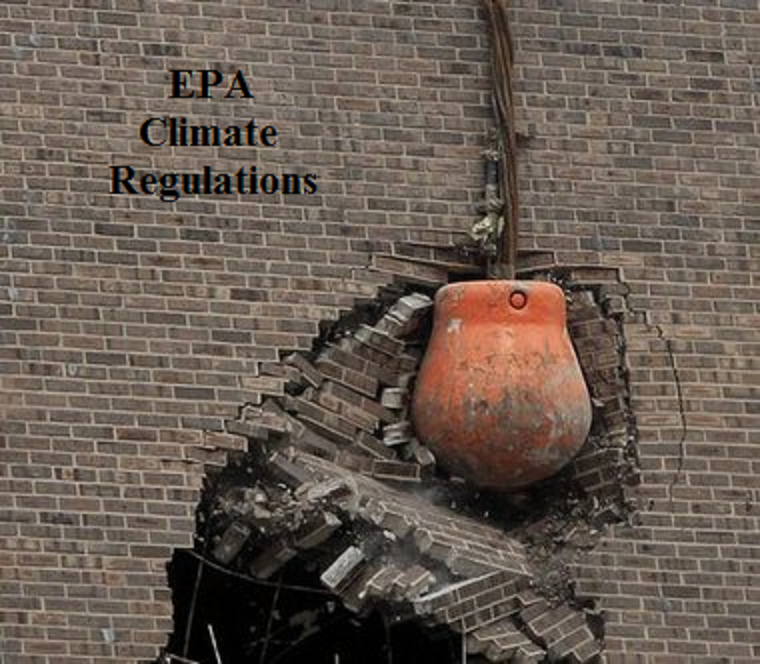
The fake news outrage over POTUS Executive Order this week obscured the fact that the wrecking ball is applied to a wall of regulations, not the climate or the planet, which are doing just fine, thank you very much.

Overlooked entirely is the fact that all government actions enacted or under consideration are projected to have a negligible effect on the climate.  So undoing them will hardly be noticed by the climate.  For example, some excerpts from a recent Wall Street Journal article:

The oddest criticism of Donald Trump’s climate action this week was the claim, mentioned almost triumphantly by every news source, that it would save few coal jobs. The economic and technological forces, especially the flood of low-carbon natural gas from fracking, are just too powerful.

Of course the news reports are right: “The regulatory changes are entirely outweighed by these technological changes, not to mention the price of natural gas or renewables,” Mark Muro of the Brookings Institution was quoted telling the New York Times .

So potent and large are these global forces that repealing the Obama rules, costly as they are, not only won’t affect coal jobs, it won’t affect climate.

Gina McCarthy, Mr. Obama’s EPA administrator, admitted as much when confronted, during a 2015 House hearing, with the fact that, by the agency’s own climate models, the effect would be only 1/100th of a degree Celsius. Instead, she said success should be measured in terms of “positioning the U.S. for leadership in an international discussion.”

Pile up all the government policies enacted or seriously on the table, and their net effect is zilch. A new McKinsey study, that would be hilarious if it weren’t so sad, points out that Germany’s switch to renewables has been a success by almost every metric except CO2 output—which is up instead of down. (my bold)

Rising energy prices to support this energy transition have had one measurable effect—more than 330,000 German households have had their electricity shut off in the past year from nonpayment of bills almost three times as high as those paid by U.S. households.

Germany, needless to add, is many greens’ idea of a country “positioned for leadership in international discussions.” (my bold)

No rational consideration, however, will abate the torrent of priestly imprecations hurled by green activists this week at Mr. Trump. The New York Times insists that Trumpian action “risks the planet”—plainly false since nothing either Mr. Trump or Mr. Obama did will make a difference to the planet. (my bold)

Tempest in a teapot (American English), or storm in a teacup (British English), is an idiom meaning a small event that has been exaggerated out of proportion.

The article is The Climate Yawns
Donald Trump is no more a planet wrecker than Barack Obama (as measured to the third decimal). By Holman W. Jenkins, Jr. At Wall Street Journal.  Full text below (with an image I added at the end.)

The oddest criticism of Donald Trump’s climate action this week was the claim, mentioned almost triumphantly by every news source, that it would save few coal jobs. The economic and technological forces, especially the flood of low-carbon natural gas from fracking, are just too powerful.

Then why, if you’re a Democrat, put yourself in that position in the first place to take blame for killing coal jobs? Why enact a costly regulation to do what the market was doing for free? When everybody else wanted to blame the Florida recount for his 2000 defeat, Al Gore was smart enough privately to blame gun control. When you lose your home state as presidential candidate, something is wrong. The same blundering ineptitude explains how the Obama alliance with the greens threw away first Congress and then a presidency.

Of course the news reports are right: “The regulatory changes are entirely outweighed by these technological changes, not to mention the price of natural gas or renewables,” Mark Muro of the Brookings Institution was quoted telling the New York Times .

So potent and large are these global forces that repealing the Obama rules, costly as they are, not only won’t affect coal jobs, it won’t affect climate.

Gina McCarthy, Mr. Obama’s EPA administrator, admitted as much when confronted, during a 2015 House hearing, with the fact that, by the agency’s own climate models, the effect would be only 1/100th of a degree Celsius. Instead, she said success should be measured in terms of “positioning the U.S. for leadership in an international discussion.”

Even so, many climate activists felt the need to walk back Ms. McCarthy’s concession by insisting Obama policies would have a measurable effect—on the amount of CO 2 released. Yes, the relative decrease would be tiny but measurable, though the climate effect would be zip. This is akin to medical researchers claiming a drug a success because it’s detectable in the bloodstream, not because it improves health.

And don’t get us started on the “social cost of carbon,” a mechanism of policy justification created by the Obama EPA to assign a dollar-value benefit to carbon abatement rules that, in total, will produce zero impact on climate.

Pile up all the government policies enacted or seriously on the table, and their net effect is zilch. A new McKinsey study, that would be hilarious if it weren’t so sad, points out that Germany’s switch to renewables has been a success by almost every metric except CO 2 output—which is up instead of down.

Rising energy prices to support this energy transition have had one measurable effect—more than 330,000 German households have had their electricity shut off in the past year from nonpayment of bills almost three times as high as those paid by U.S. households.

Germany, needless to add, is many greens’ idea of a country “positioned for leadership in international discussions.”

No rational consideration, however, will abate the torrent of priestly imprecations hurled by green activists this week at Mr. Trump. The New York Times insists that Trumpian action “risks the planet”—plainly false since nothing either Mr. Trump or Mr. Obama did will make a difference to the planet.

Literally no amount of money dissipated on climate policy is excessive to such people, because their shamanistic status is directly proportional to the social waste they can conjure. In the realm of religion are we called upon to perform symbolic actions whose purpose (and cost) is aimed at testifying to our membership in the elect.

The most poignant question, however, is what happened to Democrats? They were once a party whose members cared whether policy was efficient and produced benefits for the American people.

Democrats deserve a large share of the credit for the rescue of the failing U.S. economy of the 1970s by throwing out a host of perverse regulatory policies, not that they embrace or even acknowledge this legacy today—which is the problem.

Airline deregulation was born in Ted Kennedy’s administrative practice subcommittee. His aide, Stephen Breyer, now a Supreme Court justice, recalled a working-class Boston constituent asking why the senator was focused on airline issues when this voter could never afford to fly. “That is why,” said Kennedy.

The Democratic Party once had a brain where regulation was concerned, understanding that the ultimate purpose was a net public good, not an in-gathering of power to Washington for the benefit of lobbyists and influence peddlers.

It was not yet today’s Democratic Party of Chuck Schumer, who isn’t stupid and yet is associated with no body of policy thought or analysis. If he even has anybody on his staff deputized to think about the results of policy, it probably is the lowliest intern.

A wrecking ball of a president was the Trump electorate’s answer to this problem. It’s hard even now to say they were wrong. If he delivers nothing in the next four years, it is alarming to suspect that this likely would still be a better result than we would have gotten under Hillary Clinton.

Trump’s EO on Energy Independence

Coal miners watch as Trump signs EO on Energy Independence.

What’s in it?  The text is hard to find.

First and most prominently, the executive order directs the Environmental Protection Agency to review the Clean Power Plan, one of Obama’s key regulatory actions to drive down greenhouse gas emissions in the electric power sector. Because an executive order cannot directly overturn a regulation, the EPA will have to come to a finding about whether the CPP should be revised or repealed.

The Supreme Court ruled in a 7-to-2 decision in June 2014 that the Obama administration’s Environmental Protection Agency is free to regulate carbon dioxide in the atmosphere, as long as the source of emissions in question is a traditional polluter, like a factory or a power plant, rather than a school or a shopping mall. The decision was largely written by conservative Justice Antonin Scalia. However, the Court also chastised the EPA for acting without a clear directive from Congress.

Some claim that the Supreme Court requires EPA to regulate greenhouse gases, but that is not correct. The Court ruled that CO2 can be considered a “pollutant” under the Clear Air Act, but EPA decides what, if anything to do about it. Expect lots of legal activity around this, including EPA seeking congressional legislation before regulating.

While determining the fate of the CPP could end up being a complex multi-year undertaking, the order also includes the following actions that can be carried out quickly:

  • Reversing Obama’s moratorium on new coal mining leases on federal lands;
  • Removing the consideration of greenhouse gases from permit reviews under the National Environmental Policy Act;
  • Formally abandoning Obama’s roadmap on how to achieve U.S. emissions reductions
  • Eliminating a tool for cost-benefit analysis in regulatory review called the “Social Cost of Carbon”

Finally, although Trump’s directive does not directly address American engagement in the Paris Agreement or other international climate agreements, it does have some implications for broader U.S. engagement in international climate policy. Rolling back the CPP would remove an important component of the American climate strategy and make it more difficult to achieve Obama’s U.S. climate targets. Other players, including big emitters like China, the European Union, and India, are aware of Trump’s stance on climate and will not be surprised by this action: most countries have committed to continuing to pursue their own goals in development as well as climate actions.

Thanks to Junk Science for putting up the full text (here)

Update March 29

Lots of freaking out by true believers.  Here is a balanced review of this EO.

Trump’s Executive Order On Energy: This Time, He Listened To The Lawyers

President Donald Trump’s executive order dismantling large chunks of Barrack Obama’s environmental legacy is a cleverly written document that avoids the pitfalls of Trump’s controversial orders on immigration. Unlike those orders, which have been suspended by federal courts, this one bears the clear stamp of experienced government lawyers and leaves the administration with a rich variety of tactical choices on how to eliminarte Obama-era regulations on fossil fuels.

Eliminating the previous administration’s legal memorandum could be a speedier way to get rid of the CPP, although it would still have to go through a notice and comment period as well as the inevitable legal challenges. The government wouldn’t have to delve as deeply into the scientific record, however, which the Obama administration provided in ample detail to justify its plan. Instead, the Trump administration would argue the CPP, which takes a systemwide approach toward reducing CO2 emissions, is based on an incorrect reading of federal law.

The order also calls for the elimination of the Interagency Working Group on Social Cost of Greenhouse Gases, as well as its findings on the cost of global warming, which it pegged at $42 a ton by 2020. Effective immediately, the administration will use Bush-era standards to judge the cost of carbon emissions.

Environmentalists and states can and will sue to try and force the administration to stick to the Obama-era goals for reducing CO2 emissions. But the EPA can only work with the tools Congress gave it, and Chevron deference allows the agency to determine how powerful those tools are. So it can simply say that federal statutes don’t give it the power to reorder the electric grid to cut emissions by 30%; perhaps the limit, by ordering existing plants to the highest levels of efficiency achievable with current technology, is a few percent. The agency can then argue further cuts have to come from Congress.