Jonathan H. Adler reports on the astonishing attempt to revive the climate lawsuit at Reason District Court Judge Revives Kids Climate Case. Excerpts in italics with my bolds and added images.
Years after the Ninth Circuit ordered the case dismissed, it is brought back to life with a surprising trial court order.
This afternoon (June 1, 2023), Judge Aiken on the U.S. District Court for the District of Oregon revived Juliana v. United States, aka the “Kids Climate Case,” bygranting the plaintiffs’ motion to amend their complaint, some two years after the motion was filed.
Judge Aiken clearly sees things differently. As for how the proposed amendments address the standing problems identified by the Ninth Circuit, Judge Aiken wrote:
Plaintiffs assert that their proposed amendments cure the defects the Ninth Circuit identified and that they should be given opportunity to amend. Plaintiffs explain that the amended allegations demonstrate that relief under the Declaratory Judgment Act alone would be substantially likely to provide partial redress of asserted and ongoing concrete injuries, and that partial redress is sufficient, even if further relief is later found unavailable. . . .
Plaintiffs’ Second Amended Complaint thus requests this Court to: (1) declare that the United States’ national energy system violates and continues to violate the Fifth Amendment of the U.S. Constitution and Plaintiffs’ constitutional rights to substantive due process and equal protection of the law; (2) enter a judgment declaring the United States’ national energy system has violated and continues to violate the public trust doctrine; and (3) enter a judgment declaring that § 201 of the Energy Policy Act has violated and continues to violate the Fifth Amendment of the U.S. Constitution and plaintiffs’ constitutional rights to substantive due process and equal protection of the law. . . .
Here, plaintiffs seek declaratory relief that “the United States’ national energy system that creates the harmful conditions described herein has violated and continues to violate the Fifth Amendment of the U.S. Constitution and Plaintiffs’ constitutional rights to substantive due process and equal protection of the law.” (Doc. 514-1 ¶ 1). This relief is squarely within the constitutional and statutory power of Article III courts to grant. Such relief would at least partially, and perhaps wholly, redress plaintiffs’ ongoing injuries caused by federal defendants’ ongoing policies and practices. Last, but not least, the declaration that plaintiffs seek would by itself guide the independent actions of the other branches of our government and cures the standing deficiencies identified by the Ninth Circuit. This Court finds that the complaint can be saved by amendment. See Corinthian Colleges, 655 F.3d at 995.
The Ninth Circuit’s initial decision dismissing the Juliana case was likely the best outcome the plaintiffs could have hoped for, as it avoided substantive Supreme Court intervention (after the justices had indicated their concern about the case). By reviving the case, Judge Aiken is tempting fate—and risking a broader legal judgment that could preclude a broader array of climate-related suits.
Comment:
The Ninth Circuit Court in Juliana observed that there was no explicit right to a stable climate system in the United States Constitution, and held that, even if such a right existed, the issue was not justiciable because the Court could not grant an effective remedy.
What’s at Stake in Held vs. Montana
From Montana Free Press:In a 2011 Montana lawsuit, Our Children’s Trust directly petitioned the Montana Supreme Court to declare that Montana has a duty to protect and preserve the atmosphere. The court rejected the petition, stating that there was no reason the youth plaintiffs couldn’t follow the normal channels of litigation through a lower court, followed by an appeal to the Supreme Court. To that end, Held was filed in Montana’s First Judicial District Court with the intent of establishing a court record that can, if needed, be appealed to the Montana Supreme Court, according to attorneys for the plaintiffs.
Filed in March 2020, the lawsuit, Held v. Montana, was brought by 16 youth plaintiffs from across Montana who allege the state has violated their constitutional right to a clean and healthful environment. The complaint focuses on two statutes — provisions of Montana’s state energy policy, which explicitly promotes the use of fossil fuels, and an amendment to the Montana Environmental Policy Act (MEPA), which prevents the state from considering how the state’s energy economy contributes to climate change.
But on May 23, Lewis and Clark County District Court Judge Kathy Seeleyagreed with the state, writing that the only relief she could have offered would have rolled back the statute, which the Legislature already did.
However, Seeley stayed firm on her decision to allow the case to proceed to trial, which was a landmark victory for climate change advocates when she initially set a bench trial in 2021. In the recent court filing, Seeley wrote there are five facts in dispute to be taken up at trial, including “whether climate impacts and effects in Montana can be attributed to Montana’s fossil fuel activities.”
In the judgment of the Court, the following material facts are in dispute: 1. Whether Plaintiffs’ injuries are mischaracterized or inaccurate. 2. Whether Montana’s GHG emissions can be measured incrementally. 3. Whether climate change impacts to Montana’s environment can be measured incrementally. 4. Whether climate impacts and effects in Montana can be attributed to Montana’s fossil fuel activities. 5. Whether a favorable judgment will influence the State’s conduct and alleviate Plaintiffs’ injuries or prevent further injury.
Comment:
HvM raises the issue whether it is the appropriate role of the Court to endorse and compel what it may view as a desirable policy. The majority in Juliana acknowledged that based on the evidence, it would be good for the government to adopt “a comprehensive scheme to decrease fossil fuel emissions and combat climate change, both as a policy matter in general and a matter of national survival in particular.” The majority, however, explained that responsibility for the myriad decisions that go into formulating such a comprehensive policy is allocated to the legislative and executive branches of government, not the courts. Even though the details of implementation of the policy would be left to the discretion of the government, the Court would inevitably be called upon to “pass judgment on the sufficiency of the government’s response to the order, which necessarily would entail a broad range of policymaking.” Further, “given the complexity and long-lasting nature of global climate change, the court would be required to supervise the government’s compliance with any suggested plan for many decades.”
Comment:
Readers likely know that this is one of the few times that the substance of climate alarm claims is on trial, and that the skeptical case against them can be made persuasively. In 2011 Dr. Ed Berry of Montana made the case against the petition to the state supreme court. But he has been left out of this one, and doubts the strength of the defense that will be presented. The proceedings began on June 12, 2023, and you can follow them along with his commentary.
Canadians often get to vote on important local projects.
When did we all vote on abolishing gas engines?
I am happy to report that democracy is alive and well in the Montreal suburb where I live and by all appearances completely uninfluenced by the Chinese Communist Party.
My evidence is purely anecdotal: the steady stream of voters arriving at the advance poll held Sunday at the almost 60-year-old town arena to cast their ballot in a referendum on whether we should replace that self-same arena — famous as being the coldest in all of Montreal — with a new almost $40-million sports complex that would include a new arena. The federal and provincial governments have pledged $12.5 million and private fundraising has brought in a few million more but the bulk of the money would be provided by the town, partly through new debt issue.
Getting citizen approval (or rejection) of that issue was the purpose of the referendum,
which was called after the requisite number of voters registered their request for it.
My guess is the new arena won’t pass. It has been discussed for several years and the amount that was always mentioned was at most $20 million so when this spring the lowest contractor bid came in at $38 million, that was a shock. There has been lots of back and forth at various meetings and a flurry of flyers in the mail debating pros and cons, including what the effect on property taxes will be. I suspect the strong turnout means people don’t want to pay more to service the higher debt. But we’ll know when the final vote takes place next week. What’s most important is that there seems to be widespread agreement that the vote is the final word — though in this litigious age it’s not inconceivable that whichever side loses may try their luck in the courts.
Whatever the outcome, it has been a great exercise in democracy. And it has left me feeling I’d like to have a direct say in other decisions that will have an important effect on my life. One that comes to mind immediately is Ottawa’s decision to do away with gasoline-powered cars.
By 2035, ministers Steven Guilbeault and Jonathan Wilkinson decreed in 2021,
the “mandatory target,” i.e., the requirement, for all new
“light-duty cars and passenger trucks” is that they be zero-emission.
Thus will end, in this country at least, the widespread use of the internal-combustion engine for personal transportation, a technology that since its first commercially successful use in the 19th century, has brought unprecedented prosperity and freedom of movement to literally billions of people around the world and largely made possible the much-decried suburban lifestyle that is currently under all-out attack from car-less urban sophisticates. It has also over the decades undergone continuous and considerable refinement in terms of efficiency, noise and exhaust, so that modern combustion engines are barely recognizable compared to early versions.
In 2021, Statistics Canada tells us, more than 26.2 million “road motor vehicles” were registered in this country, which works out to not quite one car per adult Canadian (depending where you draw the age line for adult, of course).
Of those 26.2 million registered motor vehicles, 303,073 were hybrid-electric, 152,685 battery-electric and 95,896 plug-in electric — so some 551,000 in total, or a little over two per cent, were low or no emissions. Except that net-zero absolutists really don’t like hybrid vehicles, which run part of the time on fossil fuels, so the true proportion of elite-acceptable net-zero vehicles was under one per cent. And we’re now in 2023, which means 2035 is just 12 years away. What contortions will the car industry, not to mention the economy, have to be put through so that in those 12 short years all new cars are net-zero? The hubris of people willing to impose such contortions is breathtaking.
Whether or not my town gets a new arena will in fact have much less impact on my life than whether in 12 years we Canadians will be forbidden from acquiring a newly produced internal combustion engine car. Yet while my opinion on the arena is being sought and respected nobody ever asked my opinion about whether or not to ban gas cars.
As Lionel Shriver, one of my favourite columnists, put it in London’s Spectator magazine last week: “We’ve entered an era of unaccountable bureaucratic imposition that’s only going to get worse … Banson the sale of new petrol cars by 2030 and gas boilers in new homes by 2025 that no one voted for are just the beginning of a self-righteous totalitarian tinkering with our daily lives that makes a mockery of the notion that democracies are governed by consent.”
She was writing about Britain and in particular London’s “ultra-low emissions zone,” in which non-complying cars pay a charge of £12.50 a day. But she could have been writing about this country or indeed any western democracy, in all of which officials seem firmly in control and voters essentially powerless.
“Self-righteous totalitarian tinkering” is a phrase that
these days echoes familiarly in Canada.
The United Nations has declared war on conspiracy theories, describing the rise of conspiracy thinking as “worrying and dangerous”, and providing the public with a toolkit to “prebunk” and “debunk” anybody who dares to suggest that world governments are anything but completely honest, upstanding and transparent.
The UN also warns that George Soros, the Rothschilds and the State of Israel must not be linked to any “alleged conspiracies.”
UNESCO has teamed up with Twitter, the European Commission and the World Jewish Congress to launch the campaign dubbed #ThinkBeforeSharing: Stop the spread of conspiracy theories.
The UN wants you to know that events are NOT “secretly manipulated behind the scenes by powerful forces with negative intent” and if you encounter anybody who thinks the global elite are conspiring to consolidate power and dictate global events, you must take action.
According to UNESCO, “if you are certain you have encountered a conspiracy theory” on the internet then you must “react” immediately post a relevant link to a “fact-checking website” in the comments.
(Never mind the fact that “fact checkers” are mostly untrained and unqualified hacks performing “fact checks” from the comfort of their bedroom in between posting far-left political content on personal blogs and getting high.)
Remarkably, hidden in the fine print, UNESCO admit that conspiracy theories do exist. Under the heading “What is a real conspiracy?” the United Nations bureaucrats explain that “real conspiracies large and small DO exist.”
According to the UN, it’s only a REAL conspiracy theory if it’s “unearthed by the media.”
Vaclav Smil has published a major study Natural Gas in the New Energy World For Naturgy Foundation. Excerpts in italics with my bolds and added images.
Bottom Line: There is an ongoing effort to decarbonize the global energy supply and demand system. This has been a general but slower than currently advertised trend over the past many centuries. While more renewables and greater efficiency to lower fossil fuel usage continues, coal, oil, and natural gas will continue to supply the bulk of the world’s energy for much longer than most probably realize. Make no mistake: the drop in demand and CO2 emissions in 2020 came from a global pandemic, not from a structural decline in the use of fossil fuels. As the cleanest fossil fuel with the lowest CO2 emissions, natural gas in particular has an essential role to play, especially in Asia where it can displace the overdependence on higher emission coal.
While the quest for accelerated decarbonization of the global energy supply has obviously been linked to rising concerns about global climate change, there is nothing new about the process itself.
Histories of modern primary energy and electricity production present
clear trends toward lower carbon intensity.
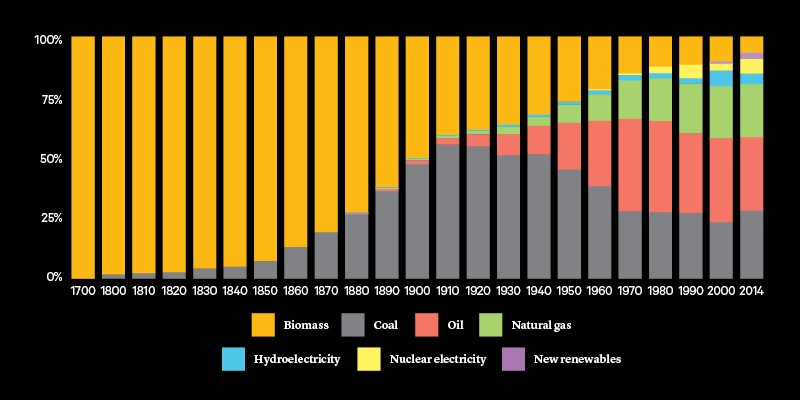
Energy Sources and the Rise of Civilization. Source: Bill Gates
For example, fuelwood was followed by coal, coal by crude oil and crude oil by natural gas, and as fossil-fueled electricity generation was augmented by hydro and nuclear generation and, most recently, by solar and wind-powered conversions.
This is an ongoing but not a very fast process: half a century ago the world derived about 94% of its primary energy from fossil fuels, by 2020 the share was still about 85%, while 60% of the world’s electricity was still generated in coal- and natural gas-fired stations (crude oil and refined fuels accounted for another 4% of the total).
During the time of the Covid-19 pandemic in 2020, a temporary drop in CO2 emissions resulting from economic lockdowns in the spring months of 2020 was seen by an increasing number of commentators and governments as the beginning of complete decarbonization that would be accomplished in just three decades.
Indeed, wishful thinking should not be mistaken for realistic appraisals.
To begin with, the global decline in energy use has been far lower than initially assumed. The reduction will only slow down the build-up of atmospheric CO2, it will not even interrupt it.
When looking ahead, it is imperative to separate what is possible in the high-income economies from what is required in low-income nations.
Relatively rapid expansion of renewable electricity generation and the pursuit of higher energy efficiencies can (combined with stationary or declining populations) translate into a steady and significant rate of decarbonization in high-income economies.
Even so, it will be impossible to displace all fossil fuels that are now required for heating, transportation and industrial uses by non-carbon alternatives for decades to come.
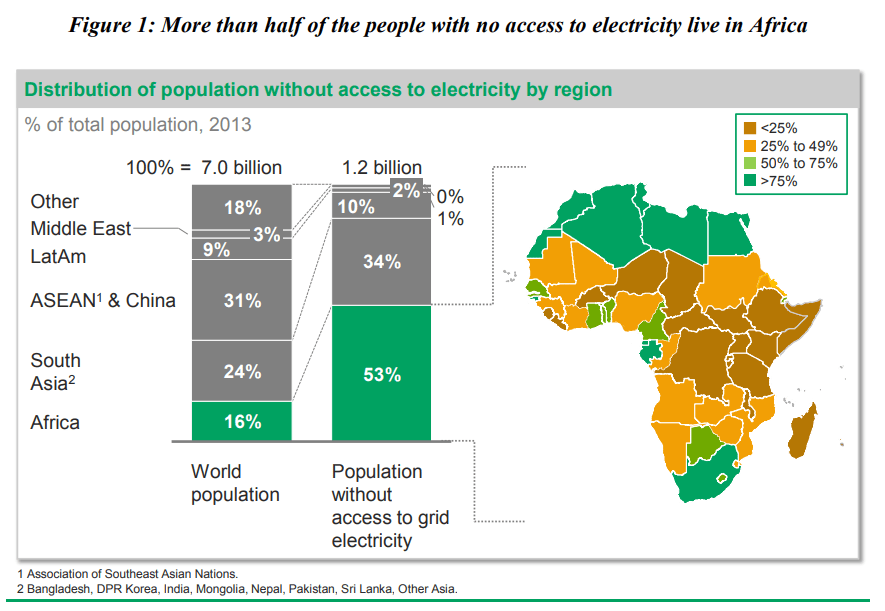
We simply must remain realistic: Asian and African consumption of fossil fuels is still rising and the developmental aspirations of low-income nations ensure that it will continue to increase in the foreseeable future even with accelerated expansion of renewable electricity generation.
Looking ahead requires at least the basic qualitative and quantitative understanding
of what we are dealing with and where we are coming from.
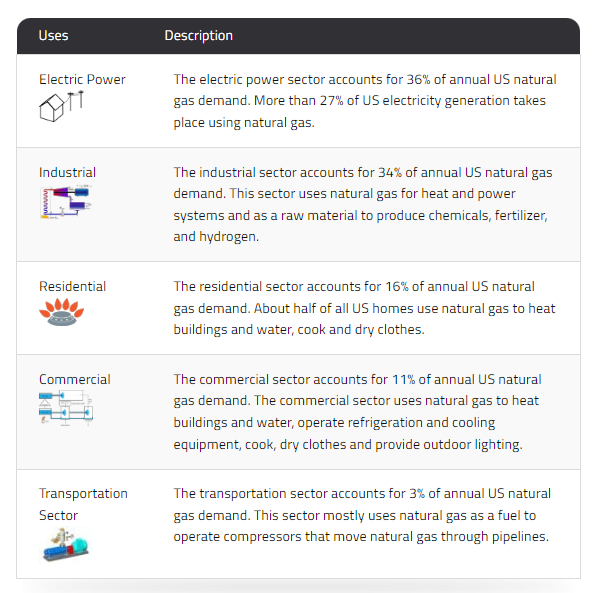
In the future, expanded consumption of natural gas can make as much of substantial difference in today’s low-income countries as it has made in high-income nations: the fuel is perfectly suited to replace coal in electricity generation (one of the fuel’s largest uses), to power new generation capacities that can operate with unequaled dispatchability and conversion efficiency, to be used more efficiently than any other fuel in a multitude of industrial process, and to provide (for a long time to come) an indispensable feedstock for syntheses of many essential chemicals.
The good news is that the global reserves and resource of natural gas is more than
sufficient to encourage a dramatic rise in gas usage around the world.
Findings:
There is an ongoing effort to decarbonize the global energy supply and demand system.
This is NOT a new evolution and has repeated itself many times…but the process takes a lot longer than some are claiming today.
We must be realistic: renewables are growing in importance but will not displace fossil fuels any time soon, measured in decades not years.
Natural gas has a unique and widening role to play, in the still developing world especially, because it is low-cost, lower emission, abundant, highly versatile and efficient, and very reliable.
A summary at The Telegraph of David Frost’s recent lecture, in italics with my bolds.
Some of the worst policies ever pursued in this country have been those which nearly all politicians supported at the time. Keeping Britain on the gold standard. Running down our Armed Forces in the 1930s. Demolishing our historic cities and replacing them with concrete. Joining the EU’s Exchange Rate Mechanism. Only a handful of free thinkers questioned these at the time. But when the disastrous results became clear, suddenly few people wanted to defend them.
Now, of course, consensuses can be correct, too. Most people agree that free trade is a good thing. But no one could say that that policy has been unchallenged. Indeed, although it is repeatedly attacked, both intellectual argument and real life keep proving it right.
That is why challenge and argument are so important. When everyone agrees on a policy, it is never seriously questioned. The arguments for it become ritualised. Zombie numbers get repeated from one document to another, however feeble their real underpinning – remember the three million jobs we were told for 20 years depended on EU membership? And its advocates don’t feel the need to invest any effort in defending it, because it’s easier just to smear its opponents.
So the cross-party agreement on the totemic policy of our time –
net zero 2050 – is troubling.
By all means accept the scientific consensus: it doesn’t seem to me to depict “climate catastrophe”. But net zero 2050 isn’t science. It’s a political goal enshrining a particular view of the trade-offs facing us as a result of climate change. It makes assumptions about how our economies and societies work which must be open to question. If no one ever does question it, we will inevitably end up with bad policy and bad results. That’s why I refuse to remain silent.
All these economic assumptions seem to me to be highly suspect. That’s partly because predicting the future is very difficult, and in this case we can prove that, because so many of the predictions in Labour’s Energy White Paper 20 years ago turned out to be wrong.
You might think, therefore, that the right thing for governments to do would be to invest in basic scientific research, to establish a simple regime for taxing the externality of carbon emissions at whatever level we think justified – and then stand back and let the market sort out how best to meet the policy goal.
You might think that, but you would be wrong. Governments have all decided
that they know best and can pick the technologies, the subsidies,
and the targets to get us to net zero.
That’s why you will be forced to buy ineffective boilers and expensive electric cars. That’s why you’re made to pay for windmills, a technology that was cutting-edge just after the Norman Conquest. That’s why our electricity grid is getting less reliable while at the same time energy bills go ever higher.
Some voters are clearly doubtful. So Western governments now go further, and argue that all these inferior technologies will actually improve economic growth – by a grand total of 2 per cent in 2050, according to reports quoted in Chris Skidmore’s Net Zero Review.
Sorry, but I don’t believe it. This whole area is riddled with economic fallacies:
counting benefits but not the costs; optimism bias;
illusory certainty and misplaced confidence in prediction.
There’s the belief that raising taxes to pay subsidies will not damage the wider economy. There’s the “broken windows fallacy”: just as repairing a broken window does not make you any better off, and you also lose the chance to spend the money on something more productive, so scrapping one system of energy production and replacing it with another does not make us richer – especially when the new system is worse than its predecessor.
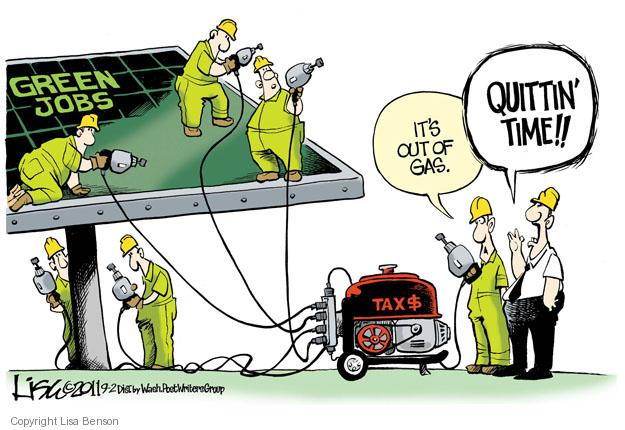
There’s the faith that massive projects like insulating every house in the country can be undertaken simply and speedily with just an effort of will. And finally there’s the view that “green jobs”, many of them required to install all those less efficient technologies, are somehow a benefit rather than a cost. If you believe that, you must think we could make ourselves wealthier by sending everyone back into the fields to work the land.
Stop treating us like idiots. If we are told things will get better, and then they get worse, voters will in the end rebel against the policy. Look at the migration figures if you doubt that. I personally believe we will have to rethink the net zero methods and the timetable. Of course I might be wrong. But let’s have a proper debate and real honesty, not smears and cancellations.
One of Bob Dylan’s greatest songs, Not Dark Yet, is a reflection on his own waning powers and mortality. We need to make the same reflection about our society. Not only whether we literally go dark, because we can’t keep the lights on any more, but whether we in the West can actually summon the strength to resist degrowth, miserabilism and economic decline. “It’s not dark yet, but it’s getting there.” Time to stop, and rethink.
The text of David Frost’s lecture ‘Not Dark Yet’ is available at GWPF
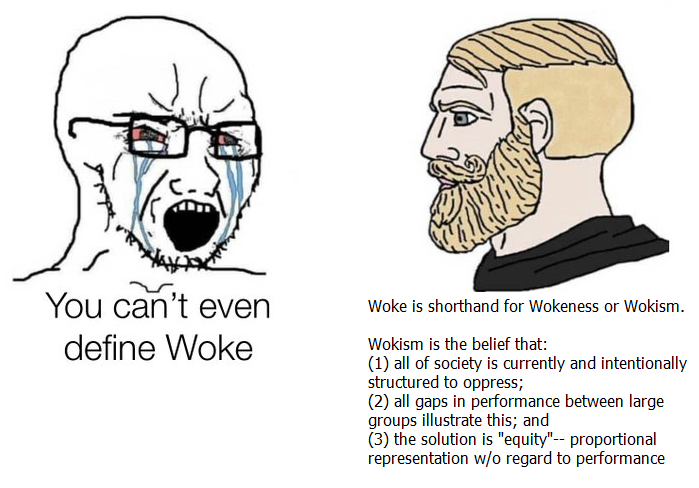
The National Association of Sholars issued a press release Ohio Higher Education Enhancement Act Passes Senate, which explains how Ohio legislators are enacting regulations to remove Wokeness from a position of ultimate authority in higher education institutions. Excerpts in italics with my bolds and added images. Later on are some comments showing that indeed woke operates as the entrenched religion at Ohio State university and others.
The Ohio Senate has passedSenate Bill 83, the Ohio Higher Education Enhancement Act. SB 83, sponsored by Senator Jerry Cirino, will do an extraordinary amount to depoliticize public colleges and universities, strengthen intellectual diversity on campus, and restore citizen oversight of the state’s higher education system.
“SB 83 is the leading edge of higher education reform bills,” said National Association of Scholars (NAS) President Peter Wood. “In 2021, the NAS set out to rehabilitate colleges and universities by promoting model legislation after so many institutions proved unable or unwilling to reform from within. SB 83 takes from our Model Higher Education Code and adapts it to the needs and political circumstances of Ohio.
It was an honor to work with the state’s legislature and our members
to see that this bill passed the Senate.”
SB 83’s sponsors went above and beyond for their state’s citizens to offer a comprehensive improvement to Ohio higher education. Their catalogue of reforms includes requirements that colleges and universities commit themselves to intellectual diversity, and to prohibiting both “diversity statements” and mandatory trainings or courses in discriminatory concepts such as “diversity, equity, and inclusion” (DEI). The bill also adds requirements for reformed mission statements, syllabus transparency requirements, detailed budgetary transparency, nondiscrimination, transparency about speaker fees, and a new American history and government general education requirement. Importantly, the bill reinforces prohibitions on segregation and bars financial entanglements with the People’s Republic of China.
Wood added, “SB 83 absolutely is necessary. Intellectual diversity has dwindled on campuses nationwide and is effectively non-existent on most college campuses. This problem certainly extends to Ohio’s universities.”
NAS Senior Fellow John Sailer has writtenextensively about how so-called “diversity, equity, and inclusion” bureaucrats at Ohio State University have used diversity statements and other administrative means to screen candidates for hire and promotion by political association. SB 83 puts an end to such practices that endanger academic freedom.
“When Ohio’s universities became incapable of reforming themselves to uphold the principles of what makes higher education higher, its citizens and legislature stepped up,” explained Wood. “These reform-minded Ohioans have our sincerest gratitude.”
[Comment: According to research, Ohio State has 94 DEI personnel, 1.5 times the OSU History Faculty. That’s second only to University of Michigan with 163. The average university has 45 DIE personnel. Source: DEI Bloat in the Academy]
SB 83 is well tailored to accomplish its goal. It is comprehensive,
detailed, but with carefully drafted language.
SB 83, for example, does not prohibit “diversity, equity, and inclusion courses or training for students, staff, or faculty”; rather, it specifies that the universities may not require them. SB 83 uses such precise language throughout, to ensure that it champions liberty in Ohio’s universities, and does not accidentally infringe upon the principles or the practice of academic freedom.
The National Association of Scholars heartily endorses SB 83, urges the Ohio House to pass companion legislation to this bill, and for Governor DeWine to sign it.
NAS is a network of scholars and citizens united by a commitment to academic freedom, disinterested scholarship, and excellence in American higher education. Membership in NAS is open to all who share a commitment to these broad principles. NAS publishes a journal and has state and regional affiliates. Visit NAS at www.nas.org.
That’s because just last week, the state senate began debating the Ohio Higher Education Enhancement Act, which would tie the hands of instructors at colleges and universities from teaching effectively on subjects the state legislature has labeled as “controversial,” including climate change. Those institutions would have to guarantee that they’re “encourag[ing] students to reach their own conclusions,” on such matters, which also include subjects like abortion rights. The schools are also obligated to not “seek to inculcate any social, political, or religious point of view” on students. Higher education institutions would also be barred from implementing sustainability initiatives. Diversity or equity programs would also be banned.
Many schools mention climate change in science class, but absent efforts like those in New Jersey the curriculum can fall woefully behind the current science and state of urgency. On a recent visit to several D.C.-area charter schools, for instance, a colleague of mine was surprised by how little climate awareness was part of the curriculum. She asked one class of 11th graders if any of them were worried about how climate change would impact their own lives; only one hand went up, and that student was more focused on what would happen if the polar ice caps melted 100 years from now. A few students in a 9th grade class had heard of Greta Thunberg, but weren’t exactly sure what she stood for. When prompted, a few other 11th graders in another school acknowledged that heat waves had gotten worse in the D.C. area over the past few years, likely because of climate change, but the solution, they said, was more air conditioning. Other classes were more informed, but it appeared to be due to the efforts of individual teachers, not the curriculum.
Ohio’s law proposes to go entirely in the opposite direction, preventing educators from teaching the established facts of climate change as such, and forcing them to add misleading arguments from climate change skeptics. Supporters say the measure is about championing intellectual diversity on an important subject. “What I think is controversial is different views that exist out there about the extent of the climate change and the solutions to try to alter climate change,” said Republican state senator Jerry Cirino, the bill’s primary sponsor, speaking with Energy News Network.
“You can say gravity isn’t true, but if you step off the cliff, you’re going down,” said Katharine Hayhoe, an atmospheric scientist who teaches at Texas Tech University and a well-known writer and commentator about climate change and responding to climate denial. “And if you teach other people that gravity is not true, you are morally responsible for anything that happens to them if they make decisions based on the information you provided.”
The measure has passed the Ohio Senate and is now being considered by the Ohio House, both of which have large Republican majorities. Gov. Mike DeWine is also a Republican.
“Academics want to protect their woke fiefdom so they can continue to churn out like-minded and intolerant opponents of intellectual diversity,” said Sen. Jerry Cirino, a Cleveland-area Republican and lead sponsor of the bill, in a guest column last month in The Columbus Dispatch.
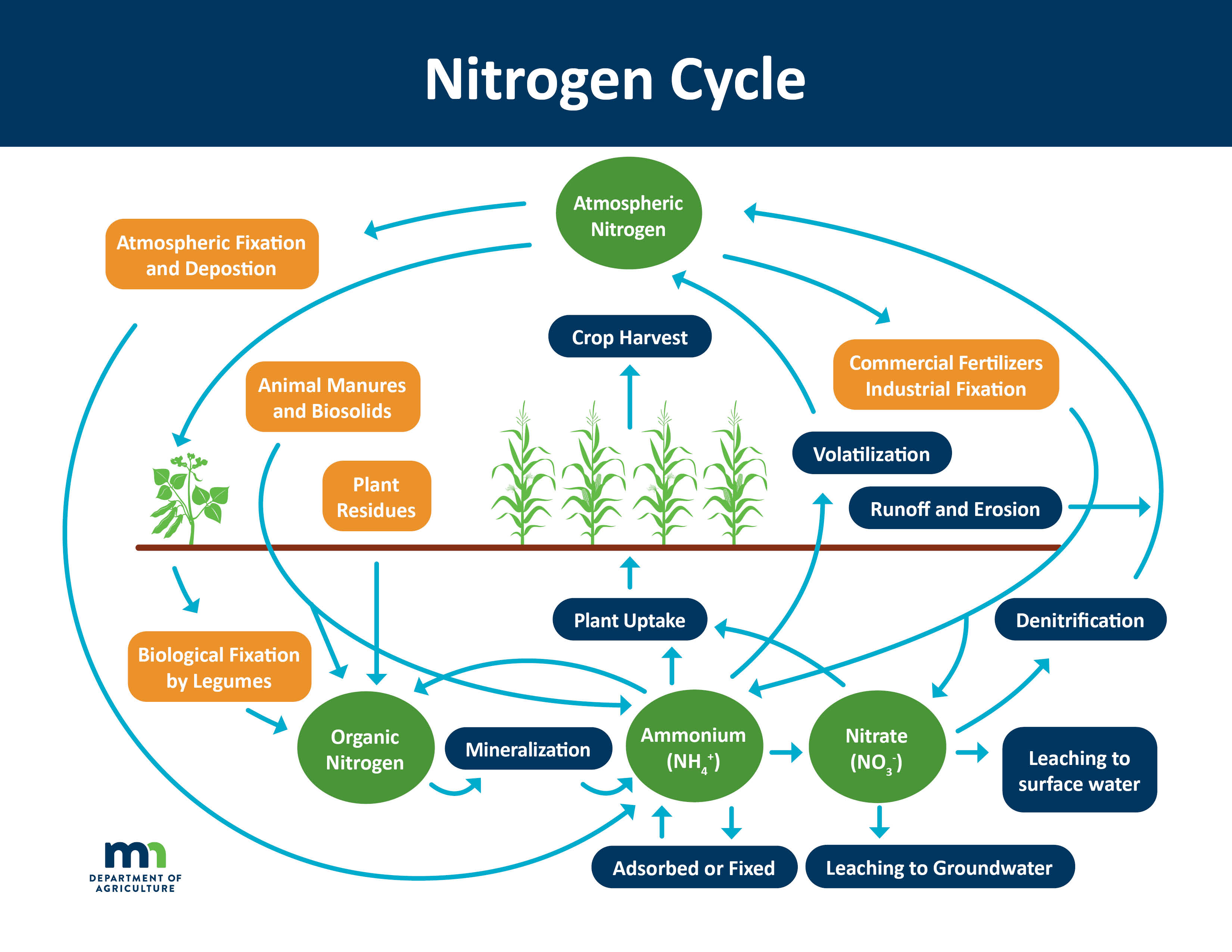
The Dutch Nitrogen Faux Crisis — Jaap Hanekamp Interview
William M Briggs and Jaap Hanekamp discuss the Dutch nitrogen “crisis.”
Farmers in the Netherlands are unhappy with government wanting to shut them down or reduce their operations, because of a supposed plague of nitrogen. The “crisis” is, however, completely model driven. First by the Curse of the Wee P, and second by Lack of Skill.
Jaap and William have been involved in this “crisis” for many years, publishing often on how much over-certainty there is and about bad models. Give a listen and find out why the government is wrong and they are right. For those who prefer reading, below is an excerpted transcript from closed captions in italics with my bolds.
How in Netherlands Nitrogen Policy Became Nature Policy
The Netherlands is famous for its Dutch cheese, not for much longer as the government sells off all of the Farms or or buys up all the farms. We’ve been working on this this topic. Our audience knows me a little bit but they don’t know you. Jaap has formal training in chemistry and he is a chemistry professor. He’s also got a PhD in Theology and teaches on that. And he and I have been working together on this so-called crisis, this fake crisis for a number of years.
So the so-called uh mediator who was once a part of the official panel to investigate the crisis, and due to some sort of bureaucratic trick, became an independent expert, today recommended that the government buy off the biggest farmers. What’s the deal with that?
Of course we have a small country with loads of agriculture so the government and house of Parliament and NGOs from the environmental side think that we should reduce our impact on ecosystems, nature in the Netherlands. That is strange, given our history. You know, it’s long been said that God created the world, and the Dutch created the Netherlands. It’s so obvious here that we engineer nature, like any other organism or creature on Earth that reorganizes nature around itself to suit itself. But we in the Netherlands were rather exuberant in that arena so we created our whole ecosystem around us in terms of of cities, in terms of agriculture. Any kind of Natural Area we might have is created in the Netherlands almost literally either intentionally or unintentionally anyway. And those places are quite nice and beautiful.
There is sort of a very strong protective streak in policy saying we should protect the natural areas we still have, and protect simply means more or less a status quo, keep it as it is which doesn’t make much sense. But the weapon of choice is nitrogen now. There is a strange thing about this because influences are from all sides, especially here groundwater, precipitation, temperature, climate and so on, and of course also nitrogen. And we chose nitrogen, so nature policy is nitrogen policy, and nitrogen policies are nature policy in the Netherlands. Which is a very odd thing to do but anyway this is what we have.
The Dutch government wants to spend 30 billion euros which is a large chunk of our budget on protecting nature via the reduction of nitrogen emissions and depositions. So that’s it.
Believing in Ecological Crisis
But why why do they believe that this crisis exists? I mean they must have had something in the expertocracy as I call it. They have Solutions in search of problems in my my estimation. They have a solution they want to meddle with certain things because of their understanding of what nature is. So they go look for a problem, and they created a lot of nitrogen other other countries are using carbon dioxide, of course the Netherlands as well, l so we’ve part of that of course.
But why this thing and after you answer why, then let’s start talking about the the research that they’re using on this and and the stuff that you and I have discovered.
Why can be answered on multiple levels. You could look from a scientific perspective, which is not really that interesting; we’re going to discuss this later. Because the problem we have nowadays everywhere is that science or scientism or exportocracy should solve everything and anything. Whether or not there’s a problem, there must be some solution to some issue because of science. That’s a huge problem in itself. Why do we think that science could actually do that, or understand it or research it, or fathom it to such an extent I would actually find solutions to to the problems that might exist or might not exist.
The other part is harder to Fathom; it has to do likely with the problem coming from the 1970s: Acid rain and the disappearance of forest. The forest dieback was originally a German issue. Der Spiegel actually brought out a huge paper with the title The Ecological Hiroshima, the idea that acid rain would obliterate within a decade every single forest in the world.
I remember that, it was sort of the the climate change catastrophe 101 basically. That acid rain story sort of disappeared from view, people didn’t talk about it anymore. But during that time of the 1970s and 80s dangers of agriculture came into view because producing ammonia and of course deposited on nature areas.
And the idea was, okay ammonia is of course a base, but it will acidify the soil
and that will destroy the forest and will aid in the forest in dying off.
So that’s where it originated, say 50 years ago. But of course the whole Forest dieback disappeared and now it’s about soil acidification and loss of biodiversities. Those are the the terms that actually have survived the debacle of the acid rain Forest dieback apocalypse.
On the one hand we can very well monitor the dying of forest; you can actually observe that. Yeah it didn’t happen, not even close. So they had to move away from that theme. I still remember pictures of monuments dissolving into nothing as if this has happened overnight; algae blooms on lakes as if these were brand new; all kinds of things like that. So they had the same problems. not just in Germany yeah. And course the the famous dangers came from Eastern Europe, loads of sulfur dioxide from foundries for instance were blasted into to Forest. And sulfur dioxide is not really a healthy chemical if you if the concentration is really high. Of course most plants or humans or any other organism would really love to have sulfur dioxide blown in their face so sulfur dioxide was an issue. And that was tackled since then which is basically a good thing. You obviously shouldn’t pump stuff in the air just randomly.
But of course the story got bigger and bigger and in the end disappeared because yeah the forest just grew happily uh through all our own brouhaha about all these problems. But what remained is the idea that ammonia changes soil chemistry, changes ecosystems, changes our biodiversity and that’s a bad thing. And it just became a matter of theology almost; it became a truism. And then it seems after that truism, they went in search of evidence in the form of models.
Examining the Notion of Chemical Critical Loads
The science of nitrogen and the impact on ecosystems has been around now for the past 50 years, at the same time as the forest issue. And it never has grown out to be an adult critical discourse scientifically speaking. Now it’s just confirming what the other guy says and based on the work from some other type; so there’s no real conflict no real discussion within this discourse at all. It’s just basically doing the same old same old thing and sort of publishing stuff without really critically reflecting on the results that came out of that research.
And we’ve shown that especially when we have to discuss the critical loads issue. The idea was that beyond a certain level of deposition per area, ecosystems suffer from a certain kind of deposition, meaning the the amount of nitrogen that’s falling on the land, in precipitation or dry deposition or whatever you can imagine.
Critical loads have been devised on the idea that above a certain kind of of raining down or depositing a certain chemical, ecosystems suffer a certain amount of risk, that’s the critical loads topic that now you and I have investigated that quite thoroughly. We’ve found it to be at best wanting, that’s being very very euphemistic.
We discovered so many caveats, which are embarrassing on the one hand,
on the other hand sloppy, imprecise, statistically nonsensical,
experimentally badly done.
So to apply this idea of nitrogen critical loads you have to define the critical point when we’re gonna stop things. They went and did these experiments, basically they took small plots just a couple of meters square. And they would grow certain grasses or other other types of plant matter on this and they would measure all kinds of things: the rate of growth, the width of the stems, and the root penetration and so on. And if they tested a difference between something that had a higher nitrogen content than a lower nitrogen content and it gave a wee P value, well that was said to be a nitrogen critical load. But there was no consistency to what they meant by a critical load or what was actually affected or the or the range of stuff that could be affected. And they had these ridiculous numbers extrapolating from a couple of square meters to the area of the entire country
Using these kinds of things, we showed if you just take a proper accordance of the uncertainty in these measurements, the critical loads just evaporate, they have no meaning unless you were to design really good experiments . We proposed large scale experiments taking a couple of hundred square meters and doing this experiment for years and years and years.
But there’s another problem you described quite well in in our paper. Of course nitrogen instigates change in ecosystems but the question is: In what terms do you regard this as damage or bad? Sure things change, but to what extent does is change a good thing or or not?
They assumed that change of any kind was a Bad Thing. Any difference between the sort of control group and a nitrogen group was considered bad. Which is which is ridiculous because you have to have nitrogen, you can’t eliminate nitrogen. It’s absolutely like eliminating carbon dioxide. In epidemiology you can do elimination studies, for instance antioxidants intake. You can do that because you can survive antioxidants intake for a certain while. But you can’t really do an elimination study in nitrogen and plant growth no that’s not going to work.
The other great thing we found is that there’s always a background concentration in the atmosphere and how much deposited on the area you’re looking at and background is important because you want to know at the control level how much nitrogen will rain down anyway. We found that studies were taking yearly averages, sort of polls of plots of the countryside. Which of course doesn’t give us much information about anything.
So you cannot really take the control and look at the experiment. They would calculate these single numbers from a small area and apply them either to an entire region or even Countrywide. And then averaging by year. I mean as the basis of policy it’s quite absurd. Of course there are other observational studies which are much harder to do experimentally. That is observing what happens to to certain ecosystems in in areas where there’s much more nitrogen deposition than somewhere else. But it’s hard to to extrapolate precise information from these studies anyway.
So this whole critical load debate is basically devoid of any critical reflection. We were the first ones that published a paper which was critical on on anything. And of course we got no response from the community, nothing at all. There was a weak response in Dutch in an internet Forum, which was poorly written and and sort of a hand-waving response. There was no real critical reflection on that at all. And we weren’t surprised because the researchers in that Arena are not at all versed in critical discourse as we are in chemistry. In mathematics and in physics you have to be critical, you’re critical of other people as well, because that’s how the the whole discourse develops. But in this matter not so much, in this discourse none whatsoever.
Central Role of Aerius OPS Chemical Transport Model
In fact the whole nitrogen policy is reduced to two things: the critical loads we just discussed and Aerius OPS (Operational Priority Substances), which is a model. Aerius OPS is a transport model that calculates the emission or actually how much of a certain chemical is transported through the atmosphere, and where and and to what extent it deposits at some point from the source where this emission comes from.
Now you can imagine to measure and analyze deposition in the Netherlands you would have maybe a hundred thousand measuring points. Or you can measure different chemicals like ammonia which is not possible. So I always say modeling itself is not a problem, but you have to model in this case because you can’t sample a hundred thousand areas in the Netherlands and decide exactly how much were the deposits. And that still doesn’t cover the problem: Where do all these emissions come from, which is another issue altogether.
So modeling itself is not a problem but OPS areas is a problem and keep in mind both critical load and Aerius OPS are part of the nitrogen laws in the Netherlands so in order to define how much you contribute to nitrogen deposition in Netherlands you have to use areas OPS the model run by the National Institute of Health and Environment. You have to use that model to calculate your own addition to the background levels of of nitrogen deposition. So it has huge policy implications.
Now I was part of a scientific committee that had to analyze the scientific quality of areas OPS and and all the other stuff. Not critical loads by the way, we didn’t discuss very much. But here’s the thing: We never really looked under the hood in OPS, we never looked at the Machinery of OPS. We did say as a committee the calculations done per hectare were too imprecise. That’s as far as we got with our criticism of Aerius.
Then of course validation studies via FOIA requests came on the table and you were courteous enough to look at these validation studies, which by the way we didn’t get as a scientific committee, which still annoys me actually. As a good scientist, you know science needs to be transparent. That’s the a priori of any kind of scientific work. People should have put on these validation studies immediately on the table. That’s what you do; you don’t make others to have to ask for them. That’s part of questioning the science. But here that makes you a denier and so forth; you’re just supposed to accept because this is how the expertocracy works. But we did get these things and we were able to investigate how well this model performed you can explain much more than I can what were the what were the results.
We have a two-tier approach here. The first part was for our esteemed colleagues to provide the underlying data of these validations. We didn’t get that, at least not immediately; there’s a nice story to that. But the first stage of this two-tier approach was your analysis of the quality of the validation studies, and how well the model actually worked according to those studies.
Aerius OPS Model Lacks Necessary Predictive Skill
Let me explain something about this model: it stinks, it doesn’t have good predictive ability at all. I want to explain this concept called skill. I’ve explained it a million times but it never sticks in people’s minds for some reason. So we have this expert model this OPS model, with all kinds of science going it. And it makes predictions of something like SO2 or NOx concentrations of something like this in the atmosphere. Now that’s a very sophisticated model, there’s lots of code and all this kind of stuff in here.
Before you continue you do an experiment. You open a bottle of sulfur dioxide or ammonia or whatever gas can be transported through the atmosphere. You measure distances over time, or over a certain time frame you measure concentrations when you open the bottles and you afterward find certain atmospheric concentrations. And of course they diminish over time because of a convection of wind, blah blah. You have these data from these measurements which has a certain precision. But now the model subsequently needs to predict based on all this physics and chemistry and these concentrations you just measured in the experiments. So the sophisticated model is making a prediction of these numbers.
I’m just going to take the seasonal average, the location experimental average we have. I’m going to make a guess of the mean, just the average, and I’m going to pretend that average is itself a forecast. In other words for every measurement I’m going to predict the mean. Now that’s a really crude model; it’s a very simple but a useful model. In fact we use it all the time to say winter is colder than summer in the northern hemisphere because of these types of averages.
It’s a very rough and crude model, but if this OPS model itself has any weight to it,
it should easily beat this mean model.
It should be more precise than just taking seasonal averages. That’s what skill is. The skill is relative performance over a supposedly weaker model. The OPS model often does not have skill against this simple mean model. It just doesn’t work. The error of the model itself increases as the concentration of the chemical (whatever we’re measuring) increases.
In other words, when these chemicals are in small amounts down and hovering around zero, the model has skill. But if you get large amounts and they become interesting, the model becomes worse and worse and worse .
So that’s one of the problems with it. The second problem is when our researcher ran the model for a farm at a particular downwind site. It’s what you’re supposed to do if you have a farm yourself so our researcher populated this farm with 400 fictional cows and then halved it to 200 cows and halved it again to 100 cows and then again to zero cows. And looked at comparing the amount of nitrogen that was deposited at this particular location according to OPS. OPS predicted the grand difference between all 400 cows and no cows at all was just under six moles per hectare per year. From 400 to 200 cows, it went down to like four or something so we’re talking about a difference of two moles per hectare per year. So now tell us as a chemist what is the difference in terms of numbering six or four or two
But of course that’s just completely fictional because there is no way
I can tell the difference between four and six moles per hectare per year.
I couldn’t measure it.
Though the model says as we increase the number of cows the amount deposited does increase. So based on that if I had to make a policy decision I’d say: Oh this is terrible the only way I could fix this is if I eliminated the cows or I’d cut them in half and then the number does go down. So based on that kind of reasoning therefore I should do something.
But you’re talking about a difference so small, so down into the noise you’d never be able to tell if you really reached it in reality. That’s our main criticism against this this whole policy making. It’s completely virtual, it sort of suggests a world which doesn’t exist, except in the zeros and ones in the computers. The biggest problem I have with the model is that it’s completely an imaginary reality not the world that we live in.
I couldn’t stress this enough Aerius is Central to the whole policy making. You need to use it in order to have a computation whether or not you add or subtract, increase or decrease your ammonia additions to a nature area near by. That is of course very worrying because that’s still in place. This model should be scrapped immediately because it produces bogus results as this very nice pictures shows. At least it should be tested, be investigated and then judged by independent parties.
Food Supply and Livelihoods At Risk from Nitrogen Policies
The irony of this whole situation is that the Dutch institution literally produces misinformation . We show that it’s completely misinforming about the reality of of any kind of nitrogen deposition from a certain Farm which wants to increase or decrease its number of animals.
That’s actually the case, so now where are the Netherlands going to get their food once the Farms are shut down, Of course it’s not suddenly we have less food to eat no that’s not how it works. Fortunately that’s not how agriculture markets work, happy to say.
But there is another problem which I do not understand: We have a war in Ukraine in our backyard. If War would actually be extended to other parts of Europe we have a big problem, also a big agricultural problem. So where do we get our food from? So yes of course you can you can diminish your your livestock that’s not gonna over change overnight the the the food situation. But in this particular case, this could be more worrisome in the long term.
There’s also another problem, the biggest issue now is that we invest huge amounts of money to buy out all these farmers, and we have no idea what we get back for it. More nature? Of course we know this is not going to happen because it’s a virtual world all these policy makers look at. But of course that means less income for the Netherlands and more unemployment. So it’s a lose-lose situation on all sides.
We don’t get what we want in nature, and we get less income and and food
not just for us, but actually for the European Union and beyond.
People should be looking meticulously at the Netherlands, because what’s happening here is a huge top-down policy influence on a huge economic sector based on mere fantasy of apocalyptic risks related to nitrogen deposition. Because other countries like Canada, US and and other European countries are feverishly hoping the Netherlands government can pull this off. Because it’s a trick to disenfranchise huge parts of of the population in the Netherlands for no Return of Investment.
These days we are hosed every day with verbage, both written and spoken, claiming that absurdities are facts, and that common sense is illusion. Examples include labeling the essential trace gas CO2 as a “pollutant”. A man can decide he’s a woman and cannot be refused access to women’s sports, bathrooms or prisons. Pronouns are unhinged from any objective reality. Racial identities are claimed and paraded without any genetic basis. People are appointed to positions of power and responsibility without any required knowledge or competence, but solely upon their skin color and/or sexual preferences. Conversely, persons with demonstrated performance are barred from working because they come from a “privileged” background.
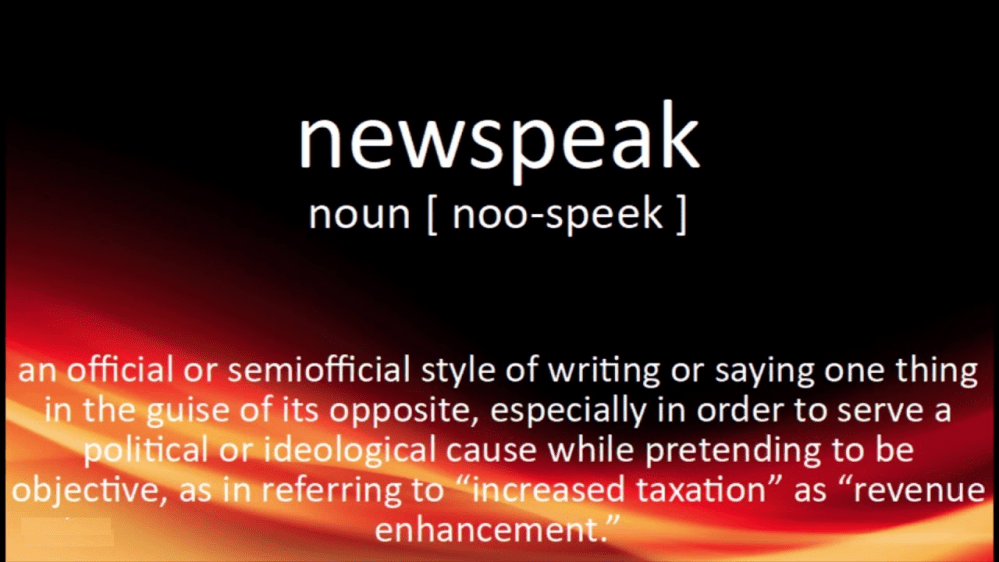
As well, there is rampant verbicide, where words are detached from realities, turned upside down, or rendered nonsensical. This is the result of postmodern newspeak. Encyclopedia Britannica explains:
Many postmodernists hold one or more of the following views:
(1) there is no objective reality; (2) there is no scientific or historical truth (objective truth); (3) science and technology (and even reason and logic) are not vehicles of human progress but suspect instruments of established power; (4) reason and logic are not universally valid; (5) there is no such thing as human nature (human behavior and psychology are socially determined or constructed); (6) language does not refer to a reality outside itself; (7) there is no certain knowledge; and (8) no general theory of the natural or social world can be valid or true (all are illegitimate “metanarratives”).
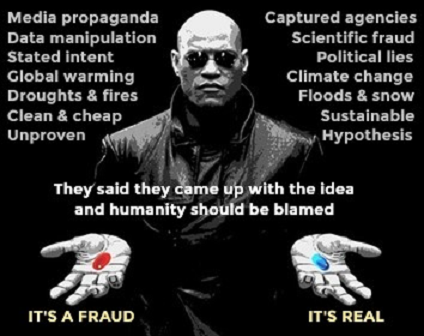
We now live in a world where legacy and social media have taken on the mission to impose on the population a Postmodern framework or matrix. And thus, words no longer mean what once they did.
[Note that (6) is the basis for Large Language Models (LLMs) like ChatBot. They can manipulate words to appear meaningful, but actual understanding of the world is impossible without linking to it]
[For a discussion of the Glossary of Leftist Doublespeak, see Great Reset = Great Resentment.]
Here, I will focus on the depiction by George Orwell of how anti-realist attitudes can manifest themselves in culture and politics—with dire consequences upon the individual. In promoting the denial of objective reality and truth, these philosophies actually suppress a person’s ability to see and think freely about their world. It is therefore suggested here that any similar denial of our common-sense understanding of objective reality in scientific research on perception and illusions should be resisted.
Orwell then continues to lay out the psychological consequences of being subjected to such continuous and intense coercive pressure:
“In the end the Party would announce that two and two made five, and you would have to believe it. It was inevitable that they should make that claim sooner or later: the logic of their position demanded it. Not merely the validity of experience, but the very existence of external reality, was tacitly denied by their philosophy. The heresy of heresies was common sense. And what was terrifying was not that they would kill you for thinking otherwise, but that they might be right. For, after all, how do we know that two and two make four? Or that the force of gravity works? Or that the past is unchangeable? If both the past and the external world exist only in the mind, and if the mind itself is controllable—what then?”
Note especially the sentence ‘Not merely the validity of experience, but the very existence of external reality, was tacitly denied by their philosophy’, as it reminds us of the most relevant point about Orwell’s thesis.
But as Orwell also makes clear, it is not simply that loss of belief in objectivity opens the way to the tyranny of those with the loudest voices (or the most authority, charisma, guns, or money—or the catchiest slogans). The true problem is far deeper and more subtle. Instead of clarity and consistency, the powerful deliberately say contradictory things. This leads to the complete discrediting of everything that everybody says, however powerful or well qualified as ‘experts’ they may be. As soon as you have concluded you have no certain, true, and reliable facts upon which to base decisions, then you cease even any attempt to make them—you give up trying to think for yourself.
Your resulting state of lassitude and passivity clears the way for those in power
to act as they please, without even minimal scrutiny or criticism from anyone else.
In a striking echo of the processes Orwell so described, some recent commentators on perception (e.g. Maniatis, 2015; Rose & Brown, 2015; Gomez-Marin, 2020; see also Hickok, 2015) have suggested that inconsistent, confusing, or contradictory statements about reality also appear in the perception research literature. For example, they point out, various researchers have denied the mind-independent existence of material objects,4and of the sun before human minds existed,5or have claimed that only phenomenal experiences are real,6while nevertheless maintaining that we evolved by natural selection—thus implicitly (and often explicitly) accepting that our ancestors were actual organisms, with actual sense organs,7in an objective world replete with sunshine, rocks, and rival organisms. Similarly inconsistently, some have denied that we perceive external reality correctly, as it ‘really’ is, without explaining how they know that such a reality exists at all, or how they know it is not as we perceive it, given that they also claim perception is the only source of knowledge that we have.8
But might the effects on readers, however unintentional, be the same as they are when politicians make contradictory statements? That is, uncertainty and apathy about what is real or true, or even antipathy towards the issue altogether. . . . Now, if such antipathy becomes widespread, decision-making might then be surrendered to whatever famous, charismatic or immediate source of influence is the most dominant, with passive and uncritical acceptance of whatever that authority has most recently declaimed or pontificated to be the truth. There would be no more independent thinking and critical appraisal of ideas in the field.
Objective Reality is a Many Splendored Thing
While there is no space here to give a full review and justification of this newer non-reductive metaphysics, I will briefly present three relevant ideas, which I hope will be sufficient to give the gist. First is the idea that Nature consists of multiple levels of dynamic interacting systems, nested more or less hierarchically within one another.Systems emerge by spontaneous self-organisation of components interacting with each other. The behaviours of those components are now constrained within the new higher-level system they have formed. Moreover, these lower-level components are themselves systems, similarly emerged from the level below them. This process applies recursively so that ultimately there are many levels of reality, not just that of the most fundamental physical building blocks, if any. It is all these multiple levels that comprise the material of reality and should be described by any comprehensive theory—and that hold the explanatory resources for our accounts of perception.
Second, it is natural to ask what these systems and their components are actually made of, or how they are ‘realized’. Any name is arbitrary here (since under monism there is nothing to contrast it with), 13 but some say ‘energy’ (e.g. Tyler, 2015; Pepperell, 2018) while others prefer ‘information’ or ‘pattern’; I will go with the latter.
Third, real existence is intimately linked with causal power. For example, nation states, not just their individual leaders, make war or peace with each other, which affects the futures of those entire nations as wholes. Companies engage in legally binding contracts with other companies. Government fiscal policy affects market behaviour and macroeconomic performance. The social ethos, Zeitgeist, social norms, and mores guide and direct the course and successfulness of whole societies and their philosophies. Thus, just as objects such as coronaviruses, umbrellas, and professors are real, so too are other higher-level emerged entities such as concepts, memes, reputations, invisible colleges, data sets, theories, and the laws of copyright. These are all the effects of causes and have causal effects on the world.
In sum, within this metaphysical picture, perception is causal information transfer.
Implications
So it is necessary to believe there are objective facts and truths about agreements and agriculture, elections and emotions, morals and murders, preferences and prejudice—otherwise we would have no standards against which to judge whether our words are truly meaningful, our actions genuinely effective or ethical, and our decisions and beliefs actually correct. Similarly, we need to believe there are objective facts and truths about portraits and parallel lines, stairs and spears, tigers and tables, ziggurats and zigzags, which we can use as a basis for our decisions on how and when to act—and against which we can judge whether our percepts are illusory or veridical.
In other words, if you believe that people are born and people die, that millions of people were killed in what is commonly known as the Holocaust, that theft is illegal in your country, that most people have two hands, that diamonds are denser than air, that the capital of France is called Paris, that vaccines protect us against viruses, … then you (at least implicitly) believe in objective reality. [Note: regarding vaccines, we now can exclude as illusions mRNA shots against SARS2, since they did not protect.]
So, as such a realist, you should believe there can be perceptual illusions (as they are commonly defined, i.e. deviations from veridical perception). Although there are multiple levels of reality, and hence many ways reality can be described (Todorović, 2020, pp. 1174–1178), one can stipulate or specify which are the relevant ones for measuring the ground truth that perception should match, and that give the criteria for distinguishing the veridical from the illusory. . . Illusions, like perception itself, must be defined with respect to a specified level of reality.
Jimmy Dore reports in the above video on collusion between UN and Google to control public access to climate information . Below is a transcript from the closed captions. JD is the host with some asides from Kurt Metzger (KM) The UN spokesperson is Melissa Fleming (MF), United Nations Under-Secretary-General for Global Communications. Text in italics with my bolds and added images.
JD: It turns out Google is the richest company in the history of humanity–did you know that Google gets more money than Exxon, more money than Apple. They have more money than Tesla, they have a lot of money. “Google teams up with the UN for verified climate information.” So this is an article from the United Nations, This is from April 22nd of last year.
KM: Well I hope they fight nitrogen deniers.
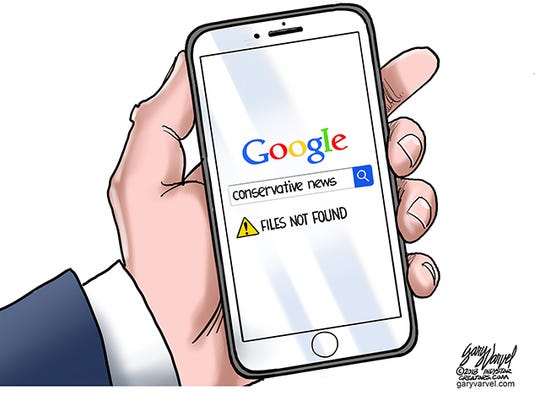
JD: So I don’t know if we covered this, which is why I want to cover it now. Did you know that if you Google climate change, Google has now rigged it. It’s not just, well whatever the most popular websites are that talk about climate change come up; the order of the 10 most popular articles.
That’s not what they’re doing. They’re making sure that the popular articles don’t show up and they’re trying to control the narrative. They only want certain ones, only articles the United Nations approves of. That’s what Google’s doing.
KM Look, millions of people around the world go to Google to get information about climate change and sustainability. Nobody is going: What about sustainability? What about that word you just invented a couple years ago? Sustainability, sustainability.
JD: In addition to organic search results, Google is surfacing short and easy to understand information panels and visuals on the causes and effects of climate change as well as individual actions that people can take to help tackle the climate crisis
KM Should I glue my head to a painting?
JD: So here is the under Secretary General for Global Communications at the UN; ready.
MF: Served with Google for example. If you Google climate change, at the top of your search you will get all kinds of UN resources. We started this partnership when we were shocked to see that when we googled , climate change we were getting incredibly distorted information right at the top.
JD: So when she Googled climate change, she was getting a lot of articles that she didn’t agree with. They would come up because what Google is supposedly doing is just showing you what’s the most popular articles, without an editorial input. She’s saying we didn’t like that people were getting to see those articles that were popular that we disagree with. So we went to Google and we told them artificially manufacture your Google results when people Google climate change. And have these special articles that we like come up, those that push a specific agenda about climate change. And they say it right out in public, she’s saying it on camera.
KM I’m relieved. It was about time they started doing this, so I was happy to hear it
MF: So we’re becoming much more proactive. You know, we own the science and we think that the world should know.
JD: Like the Vatican, we own the science. You mean like Tony fauci did. And then he had to admit that he was lying constantly during covid because he was. We Own the science, we own the science: Nobody owns the science, science doesn’t work like that, there’s no such thing. It’s always: Question science. Science always needs to be questioned and tested, always. That’s why Einstein didn’t trust what Newton said about gravity, he had his own ideas. And now we know about E equals m c squared.
MF: And the platforms themselves also do, but again it’s a huge, huge challenge, that I think all sectors of society need to be very active in. We need total control.
JD: We own the science sounds about right. So if you thought when you Google something you’re getting organic natural results, no you’re getting propaganda selected by people like her, articles they want you to have. They want to control your thoughts, and they are. And that’s what propaganda is. They’re all propaganda and they just brag about doing propaganda right in the open.
KM: I’ve heard we own the Sciences, the second time I heard it that sounds like a catchphrase or something.
JD: Someone says we own the science, we own the science. No what you own is the Google results on the science. So that means you own the conversation and the narrative in the culture. But you don’t own the science. Own the science, what kind of a thing is that to say I don’t know.
Mine work at Westmoreland’s Rosebud Mine near Colstrip. Credit: Alexis Bonogofsky
Montana Free Press reports on how the state legislature liberated project permitting from CO2 hysteria, and the nonsense labeling the essential trace gas as a “pollutant.” The article is Gianforte signs bill banning state agencies from analyzing climate impacts. Excerpts in italics with my bolds and added images.
House Bill 971 comes as Montana courts are poised to consider how “clean and healthful environment” protections intersect with energy regulations.
Montana Gov. Greg Gianforte has signed into law a bill that bars the state from considering climate impacts in its analysis of large projects such as coal mines and power plants.
House Bill 971 was among the most controversial energy- and environment-related proposals before the Legislature this session, drawing more than 1,000 comments, 95% of which expressed opposition to the measure. HB 971 bars state regulators like the Montana Department of Environmental Quality from including analyses of greenhouse gas emissions and climate impacts, both within and outside Montana’s borders, when conducting comprehensive reviews of large projects.
It builds off of a decade-old law barring the state from including
“actual or potential impacts that are regional, national,
or global in nature” in environmental reviews.
Comment: The pertinent wording appears in Part 2 of the Act:
(2) (a) Except as provided in subsection (2)(b), an environmental review conducted pursuant to subsection (1) may not includean evaluation of greenhouse gas emissionsAND corresponding impacts to the climate in the state or beyond the state’s borders.
(2) (b) An environmental review conducted pursuant to subsection (1) may include an evaluation if:conducted JOINTLY by a state agency and a federal agency to the extent the review is required by the federal agency; or the United States congress amends the federal Clean Air Act to include carbon dioxide emissions as a regulated pollutant.
Gianforte signed HB 971 into law May 10 over opposition from climate and environmental groups that had argued that the measure hinders the state’s ability to respond to the crisis of our time: the atmosphere-warming emissions of greenhouse gases that are shrinking the state’s snowpack, reducing summer and fall streamflows, and contributing to catastrophic flooding and longer, more intense wildfire seasons. Opponents had also argued that the majority of Montanans believe in human-caused climate change and want meaningful climate action.
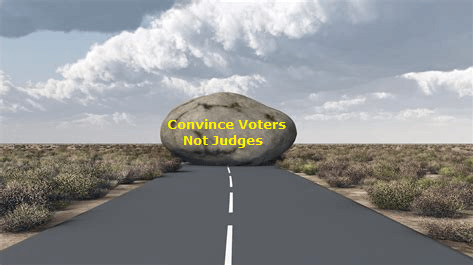
Proponents of the measure, including its sponsor, Rep. Josh Kassmier, R-Fort Benton, argued that by pushing back on a recent ruling revoking a NorthWestern Energy gas plant permit, HB 971 underscores that it’s lawmakers, not judges, who set policy. Other proponents, including the Treasure State Resources Association and the Montana Petroleum Association, asserted that HB 971 protects state agencies from an “unworkable” mandate to measure greenhouse gas emissions and that any such regulation properly belongs under federal regulatory frameworks such as the Clean Air Act.
NorthWestern Energy Plan Building a New $250M Natural Gas Power Plant at Laurel, Montana
Gianforte spokesperson Kaitlin Price echoed this assessment in a statement to Montana Free Press.
“House Bill 971 re-established the longstanding, bipartisan policy that analysis conducted pursuant to the Montana Environmental Policy Act does not include analysis of greenhouse gas emissions,” Price said. “The bill would allow evaluation of GHGs if it is required under federal law or if Congress amends the Clean Air Act to include carbon dioxide as a regulated pollutant.”
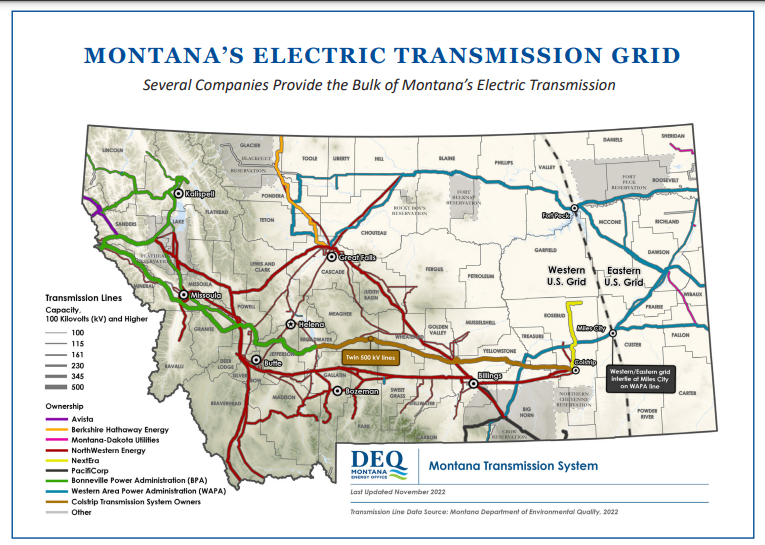
It also comes as theU.S. Environmental Protection Agency considers a rule that would expand regulations dealing with power plants’ emissions of greenhouse gasses. If passed, the rule would require power plants like the coal-fired plant in Colstrip to capture 90% of its carbon emissions by 2038.













 Science Matters