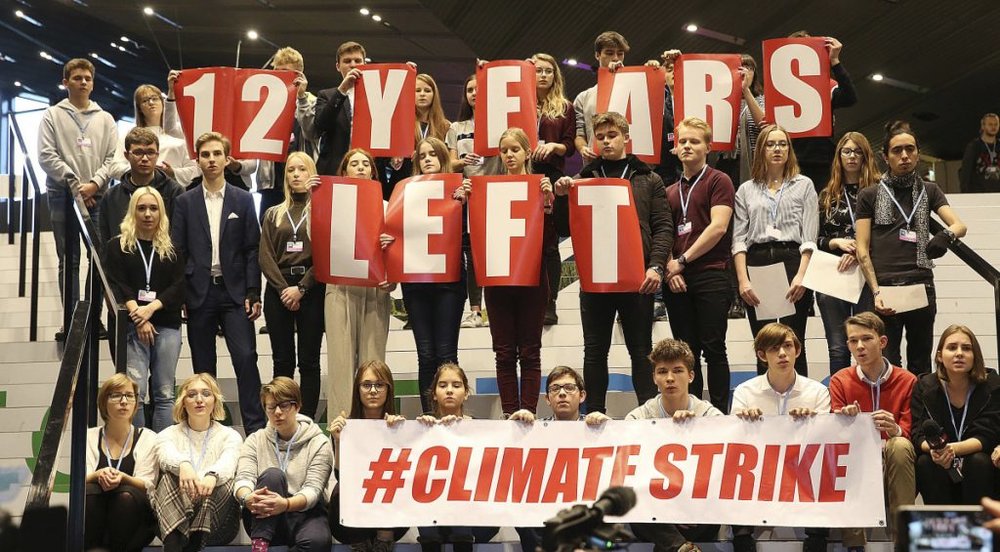
On Climate Grooming the Children

A man who has not been a socialist before 25 has no heart.
If he remains one after 25 he has no head.—King Oscar II of Sweden

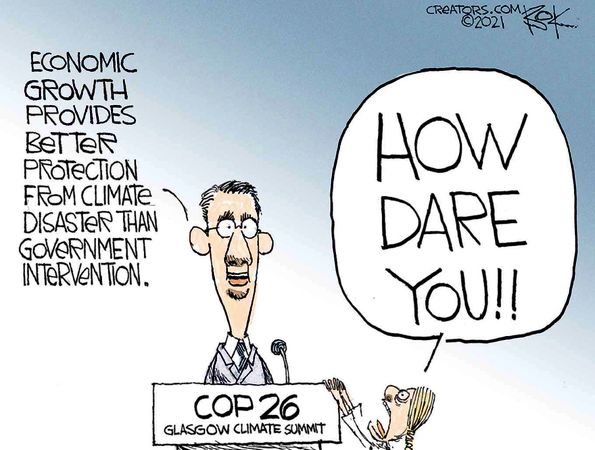
One of the observations about the 2022 midterms was how strongly young unmarried women voted for the socialist agenda of today’s Democratic party.  I recall a video clip of two university students saying their vote was all about women’s abortion rights, and thinking these two male nerds’ politics might be biased by their desire to get lucky some night.  But beyond that issue is the campaign of brainwashing children regarding global warming/climate change.

Benjamin Khoshbin shines some light into this climate political grooming in his Real Clear Energy article The Electoral Case for Commonsense Environmentalism  Somewhere Between “No More Meat” and “It’s a Hoax:”  Excerpts in italics with my bolds.

We’ve all heard the adage, that a young person not thinking socialist has no heart, while an older person still a socialist has no head.  It sounds true, but it’s not — young voters are no longer aging into conservatism. While Gen X and Boomers did trend more conservative as they aged, Millennials in the U.S. are becoming more liberal as they age, and are estimated to be the most liberal 35-year-olds in recorded U.S. history.

Based on their behavior in the 2022 midterms, Gen Z is likely to follow suit.

According to the Edison Research National Election Pool exit poll, 63% of Gen Z voted for Democrats in House races, compared to just 35% who voted for Republicans — a whopping 28-point gap. While many salient issues for young voters are likely driving this, one stands out: climate change.

Millennials and Gen Z are more concerned about climate change than any other generation. A Harris Poll survey of American 13–19 year-olds found that more than 8 in 10 teens believed that if climate change isn’t addressed today, it will be too late for future generations as some parts of the planet will become unlivable. Nearly 80% of teens in the survey also believed that protecting the environment should take priority over economic growth.

My deeper look into the 4H/Harris Survey

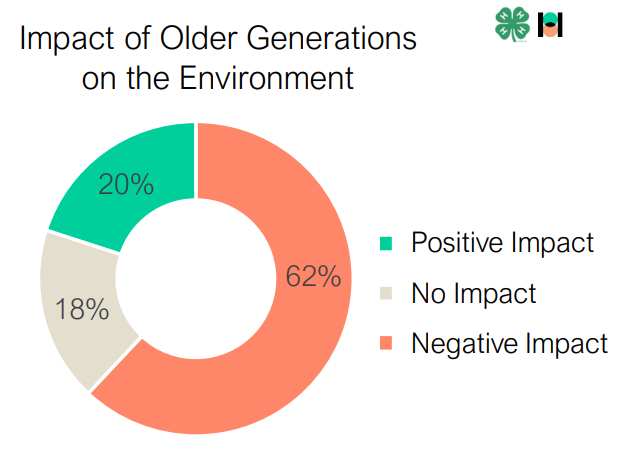
I have posted before on climate push polls designed to get results supporting a political agenda.  What participants say is shaped by how questions are asked and answered. This survey was conducted online within the United States by The Harris Poll on behalf of 4-H from January 5 to January 18, 2022, among 1,500 respondents ages 13-19.   The age cohort is interesting to show how successfully has been the educating of children regarding environmental concerns, and especially climate change.  The survey content is here Environmental Impact Survey  Exploring the impact of the environment on teens.

Indeed the title of the report refers not to impact upon nature, but rather the impact of environmental messaging upon impressionable teenagers.  The survey itself consisted of stating preferred conclusions and offering agree/disagree options.  Typically strongly and somewhat agree responses are lumped together into agree percentages.  Some Examples:

84% of teens agree, “I am concerned that if we don’t do more to protect the environment, humans and other species, wildlife will suffer and possibly go extinct.”

82% of teens agree, “If we don’t do more to protect the environment today, I expect to have to make future life decisions based on the state of the environment, including where I live, what kinds of jobs will be available, or if I will have children.”

56% of teens agree, “International governments are working towards global initiatives and policies to protect our planet.”

84% of teens agree, “Climate change will impact everyone in my generation through global political instability.”

84% of teens agree, “If we don’t address climate change today, it will be too late for future generations, making some parts of the planet unlivable.”

69% of teens agree, “I am worried that my family and I will be affected by climate change in the near future.”

77% of teens agree, “I feel responsible to protect the future of our planet.”

84% of teens agree, “We need more corporate action from companies today to improve our climate for tomorrow.”

83% of teens agree, “We need more legislative action from government today to improve our climate for tomorrow.”

79% of teens agree, “Protecting the environment should take priority over economic growth.

Khoshbin: These findings should trouble Republicans. Young voters believe that climate change is an existential threat, but they mistakenly think that environmental protection and economic growth are mutually exclusive. In reality, since 2005, 32 countries — both developing and developed — have absolutely decoupled carbon emissions from GDP growth, having successfully grown their economies while simultaneously reducing carbon emissions.

My Comment:

That is not the only mistaken perception among these teens.  Mind you, they were only exposed to the alarmist POV, and followed their hearts and feelings.  Note the repeated 84% agreement percentage suggests a central tendency in responses with little if any consideration of nuances between statements.  Basically this survey confirms that a narrative is embedded in these people.

An interesting contradiction appears here:

• Over 9 in 10 teens grew up engaging in a number of outdoor activities, yet today a majority of teens spend 5 hours or less outside per week – or less than 11 days a year

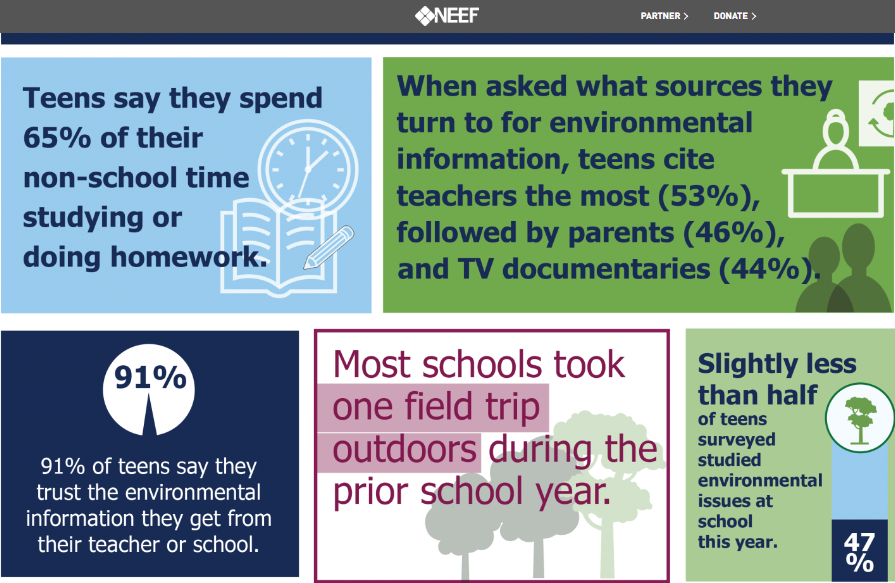
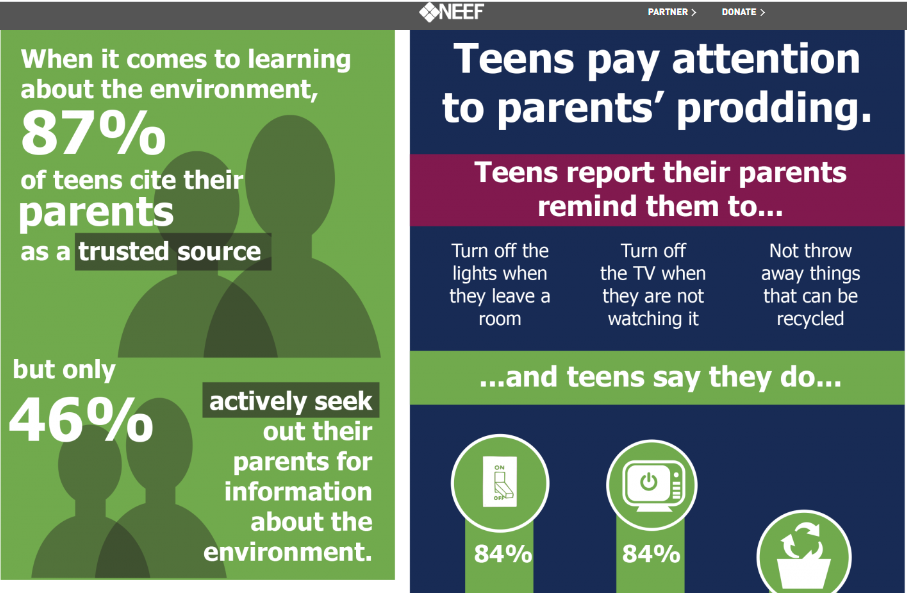
Another survey source indicates where children get information NEEF Teen Benchmark Survey National Environmental Education Foundation (NEEF): Some relevant findings:

See Also

The Art of Rigging Climate Polls

YouGov Climate Push Poll: Still no Believer Majority


How Climate Evangelists Took Over Your Local Weather Forecast


The battle by alarmists for hearts and minds is extending to many fronts, including recruiting family doctors, and in the case of this post, media weather reporters. Surveys have shown the meteorologists are not more convinced of global warming/climate change than is the American public (a slight majority). But efforts have been underway to convert them and use their telecasts and columns to promote climatism.

Luke Mullins writes at Washingtonian This George Mason Professor Trains Weathercasters to Be Climate Advocates.  Excerpts in italics with my bolds.

You’ve probably seen his handiwork on local TV and didn’t even know it.

About 13 years ago, Ed Maibach identified a TV meteorologist in Columbia, South Carolina, who was willing to use his airtime not just to provide tomorrow’s forecast but to show viewers how climate change was impacting their local community. Over the next decade, Maibach would expand this experiment into what you might call a weather underground—a coast-to-coast network of TV weathercasters who believe that educating their audiences about global warming is as crucial as telling them when to bring an umbrella. The initiative, known as Climate Matters, has forced Maibach to confront a series of entrenched problems inside the broadcast-­meteorology community, including alarming levels of climate denial and skepticism, fears about alienating audiences, and the occasional harassment of participating weathercasters.

Yet by the end of 2021, the Climate Matters network of meteorologists had penetrated into nearly every media market in the country, and Maibach had pioneered a promising new approach to a complex crisis.

Truth is, if you’ve recently watched the weather report on the local news in the Washington area, there’s a decent chance you’ve seen Maibach’s handiwork—the Climate Matters network now includes weathercasters at NBC4, WUSA9, WJLA7, and Fox 5. But like local-news consumers across the country, you wouldn’t have known that behind that telegenic meteorologist are a social scientist in his sixties and a team of academic researchers, data crunchers, and ex-weathercasters. “To a lot of our viewers, it’s lost on them how much work Climate [Matters] really is doing,” says Kaitlyn McGrath, a meteorologist at WUSA9. “But it is so far from lost on us.”

Background from previous post:

A balanced and analytical report appears in Bloomberg (an interesting place for such independent thinking).  Climate Evangelists Are Taking Over Your Local Weather Forecast Excerpts below.

Amber Sullins gets a minute or two to tell up to two million people about some extremely complicated science, using the tools of her trade: a pleasant voice, a green screen, and small icons denoting sun, clouds, rain, and wind. She is the chief meteorologist at ABC15 News in Phoenix, so her forecasts mostly call for sunshine. Within this brief window, however, Sullins sometimes manages to go beyond the next five days. Far beyond.

Amber Sullins, weather reporter at ABC15 News in Phoenix.

“We know climate change could affect everything about the way we live in the future, from agriculture and tourism to productivity and local business,” she once noted. “But at what cost?”

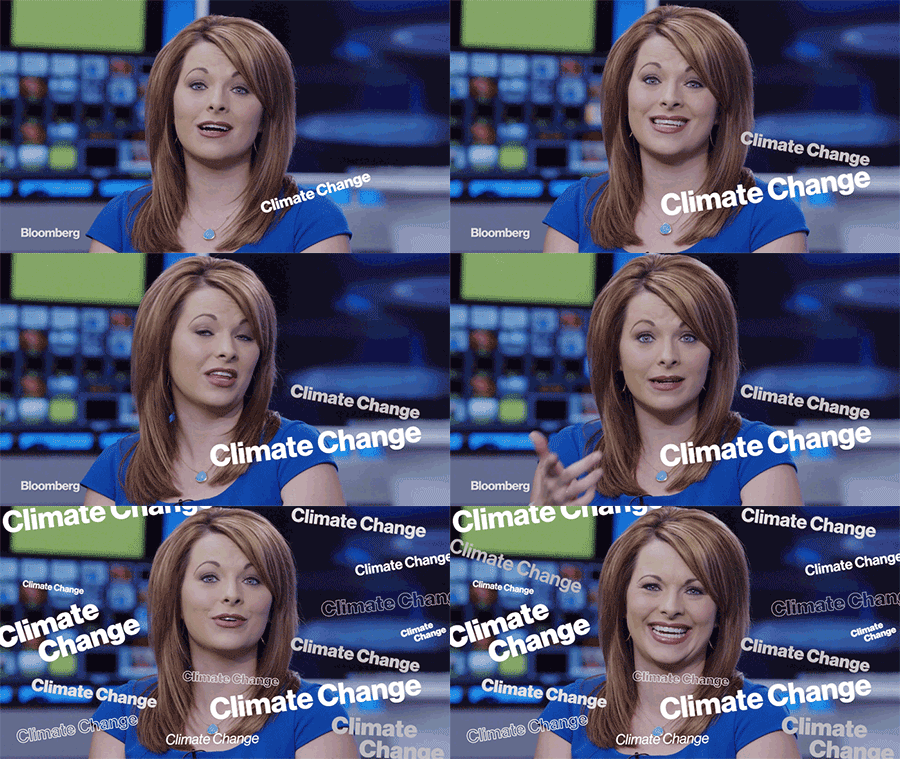
It was a 35-second segment in a nightly newscast, a mundane moment preceding reports about three fallen firefighters in Washington state and a dangerous development for air travelers. But that climate-focused scene, and hundreds of others like it playing out at local news stations across the country, marks a major shift in the way Americans hear about climate change. The safe and familiar on-air meteorologist, with little notice by viewers, has become a public diplomat for global warming.

There are about 500 broadcasters like Sullins and Morales, who each receive regular data dumps and ready-to-use graphics from Climate Matters, an organization whose mission is to turn TV meteorologists into local climate educators. The program was founded in 2010 by Climate Central, a research-and-journalism nonprofit, with help from George Mason University, the American Meteorological Society, and others. Newscasters who participate are sent possible topics for climate-related segments every week, with TV-ready data and graphics pegged to large-scale meteorological events, such as unusually high heat or precipitation, local trends, or seasonal themes.

Two-thirds of 18- to 64-year-olds in the U.S. watch a news broadcast, either on TV or a digital device, at least once a week, according to 2015 research by the market research company SmithGeiger LLC. Nearly 40 percent of people within this wide age group watch broadcast news on daily basis, and the reliable presence of an on-air meteorologist is a huge part of the draw.

“Local TV news wouldn’t exist any more if it weren’t for the weathercasts,” says Ed Maibach, director of George Mason University’s Center for Climate Change Communication.

Part of meteorologists’ reluctance to talk about the climate stems from the treacherous tools of their trade. Meteorologists learn very quickly that weather models are messy. Some no doubt sour on finicky climate models because of this experience. If short-term weather models make mistakes, it may seem reasonable to assume that a model projecting into the next century is ridiculous.

“Meteorologists are used to looking at models and being burned,” says Paul Douglas, a former TV weatherman-turned-serial entrepreneur, who recently published a book on climate change and faith.

Sullins, 34, knows there’s tension in telling her viewers about conditions in the 22nd century when she is reluctant to commit to a two-week forecast. “I can’t tell you what the high temperature is going to be on July 4 of this year, today,” Sullins says. “I can’t possibly tell you that. But I can tell you, based on climate, that in July, here in Phoenix, it’s going to be over 100 degrees. That’s easy.”

Her point is that weather and climate are “two entirely different beasts.” It’s like the difference between someone’s mood and disposition, Sullins says. She wants viewers of the nightly news to spend more time thinking about the planet’s disposition.

Summary

The PR campaign continues and intensifies with simplistic soundbites to persuade people to fear the future, in order to advance the anti-fossil fuel agenda. It is a Chinese water torture program well-funded and essential to the climate crisis industry.

But note the logical fallacy in Sullins’ statement above. She says: “I can tell you, based on climate, that in July, here in Phoenix, it’s going to be over 100 degrees.” That’s not climate change, that’s climate stability, something we depend on despite the fear-mongering.

How will viewers respond to this?  Will ratings improve by watching weather people jumping the shark? (It didn’t work for “Happy Days” TV show).  Or will people resent the attempted brainwashing and switch channels?

Footnote:

The hottest temperatures ever reported in Phoenix came in January 2015, when Fox 10 weatherman Cory McCloskey faced a malfunctioning temperature map on live television. “Wow, 750 degrees in Gila Bend right now,” he said, without breaking a sweat. “And 1,270 in Ahwatukee. Now, I’m not authorized to evacuate, but this temperature seems pretty high.” More than 6 million people have watched the blooper on YouTube.

See Also Urban Flooding: The Philadelphia Story


Climatist Psy-Ops Spreading

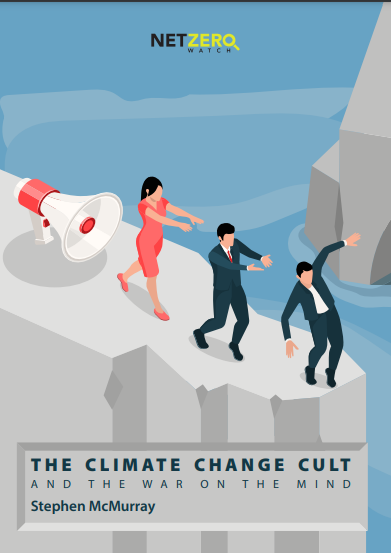
Stephen McMurray published a pamphlet at Zero Watch The Climate Change Cult and the War on the Mind. Excerpts in italics with my bolds and added images.

Introduction

As the eco-zealot group Just Stop Oil continue to break the law and cause mayhem, it is perhaps time to investigate who is pulling the strings of this and other fake grassroots movements. Even a cursory glance will make it clear that the people behind them are not everyday members of the public but a group of highly influential American billionaires.

The Climate Emergency Fund

According to the Just Stop Oil website, their main source of backing is the Climate Emergency Fund. The three founding members of this group, who also fund Extinction Rebellion, are Aileen Getty from the Getty oil family, Rory Kennedy, daughter of Senator Robert Kennedy, and philanthropist Trevor Neilson. All three own houses on Malibu beach, which is odd as disciples of the climate cult claim that sea levels are rising dramatically, and you would therefore assume that seafront real estate would be a bad investment.

Most of the focus has been on Getty but it is Neilson who has the most interesting background. After university he worked as an intern in the White House when Bill Clinton was president. Later he worked for the then newly formed Bill and Melinda Gates Foundation as Director of Communications, and also acted as the Gates’ personal spokesman.

In 2002 Neilson was a co-founder of DATA (Debt, AIDs, Trade, Africa) with Bill Gates, Bono and George Soros.  DATA was allegedly created to help ease poverty in Africa, seek debt relief for African countries and help fight AIDs. They also claimed to want to end hunger in Africa, an idea that is interesting since climate
activists want to reduce carbon dioxide which is essential to all plant life; any reduction would clearly reduce the amount of food crops, causing more hunger rather than alleviating it. Neilson was also a member of the Clinton Global Initiative, the Council of Foreign Relations, and was one of the Young Global Leaders for the World Economic ForumIn other words, he is a friend to all the usual globalist suspects who are pushing the green agenda for their own ends.

If we move on to current advisory board members of the Climate Emergency Fund, we see more of the usual themes and ideologies that have nothing to do with the climate but are warmly embraced by the climate crisis zealots. Stephen Kretzmann founded Oil Change, an organisation pressing for the end of oil production. He is a supporter of the Marxist Black Lives Matter movement. On the Oil Change website he writes an article that promotes BLM and trots out extremist left-wing tropes.

Another on the advisory board of the Climate Emergency Fund is Bich Ngoc Cao. She is also on the board of left-wing news site Mother Jones. The site denigrated Moms for Liberty, a group who have fought against their children being indoctrinated by gender and LGBTQ ideology in schools, calling them ‘Moms against libraries’ and ‘book-banning bathroom-police’, because they want to remove inappropriate sexual material from school libraries and keep single-sex bathroom spaces. Bich Ngoc Cao is also on the Board of Library Commissioners for the city of Los Angeles.

Bill McKibben is another CEF advisory board member who compares climate issues to racism, and uses the death of George Floyd to make his point.

The executive director of the Climate Emergency Fund (CEF) is Margaret Klein Salamon, an American in her mid-thirties. She is a clinical psychologist and therefore has been involved with vulnerable people suffering high levels of stress and anxiety.  In her role in climate activism, she appears to be using her experience to frighten vulnerable people. She is the founder of Climate Awakening, which, according to her page on the CEF site, is ‘a project to unleash the power of climate emotions through scalable small group conversations’.

However, if you go on to the Climate Awakening website, on the first page it says, ‘Share your climate terror, grief, and rage with people who understand. Join a Climate Emotions Conversation – a small group sharing & listening session about the climate emergency.’ Below that there is a screen with images of three young people and the words: ‘What are you FEELING about climate emergency? Make sure to name the emotions (fear, grief, anger, despair, isolation)’.

Salamon also had an article in Psychology Today where, as ‘The Climate Psychologist’, she gave ‘relationship advice for the Climate Emergency’. A reader asked: “How can I tell my partner I am afraid to have children? …Why would I want to bring a child into this world, right now? Imagining the future they would grow up in fills me with terror.”   Part of Salamon’s reply reads as follows:

“Let me be clear; despite widespread denial of the Climate Emergency and how it will affect our society, your worries are in fact based in the reality of what the global scientific community is telling us, and you have every right to feel that way.”

So again, a woman is saying she is terrified, and Salamon, rather than relieving her terror, says she is right to feel that way. Salamon then tries to get her involved in climate action groups instead of talking to her partner.

This is typical of the behaviour of a cult. Feed on the person’s fear, tell them the fear is real and not to listen to what their family say and ultimately try to recruit them into the cult as well. One of the sites she advises people who are terrified of climate change to go to is the Good Grief Network.  They introduce themselves as a group who only want to care for you amid the chaos all around. They will then get you in a group of like-minded people to expose you to groupthink. When you have all bonded, they will strip you of all your preconceived ideas and mould you into their reality. They will then fill the void left by destroying any prior belief system you had, with their own worldview.

In their ten-step programme to ‘Personal Resilience & Empowerment in a Chaotic Climate’, the first step is, yet again, to tell you to be very afraid and ‘accept the severity of the predicament’.  Step 8 is the most disturbing: ‘Grieve the harm I have caused.’  Telling you that you are to blame for some of the ‘harm’ increases your fear by making you feel guilty. If you feel guilt then you will desperately want to make up for your actions and will do whatever you are told to do to achieve that, namely to go on and traumatise other people by telling them the world is about to end.

The Psychologists

If you think Margaret Klein Salamon is an oddity amongst psychologists, think again. Many are now boarding the climate crisis gravy train. Dr Gareth Morgan, a clinical psychologist from Leicester University, is an Extinction Rebellion supporter because “as many professionals have observed, climate activism should be seen as central to our professional identities if we truly take on board the science that indicates climate breakdown presents the biggest threat to human health worldwide.’  Once again extreme left-wing bias appears to cloud his judgement. He opines, ‘while the same colonial and neoliberal ideologies that support racism and inequity also prop up the unfettered capitalism that is threatening all life on Earth.’

The Climate Psychology Alliance wishes to use their expertise in the field of psychology to nudge people into believing in their worldview of impending climate-induced doom. The group is overtly stating that ‘facts’ aren’t really persuading people that the climate crisis is real and that they need use psychology to pressure us all to become true believers. Most telling though, is when they say it can’t be ‘positivist’ psychology, based on empirical evidence, but that a deeper type of psychology is to be used. In other words, ignore the facts of the situation and use mind manipulation techniques and fear to convert the non-believers. They even say that climate anxiety is a good thing.

It is not just individuals these groups want to target, but corporations as well. An organisation called Climate Psychologists offers consultancy courses to companies.  They aren’t just offering support to employees traumatised by the ‘climate crisis’, but are using behavioural change programmes and ‘ethical nudging.‘ They are telling employers how to subtly manipulate the minds of their employees to believe in the climate emergency. This is reminiscent of the government’s SPI-B Behavioural Insights team, which used psychology to terrify people into accepting Covid lockdowns.

Indeed, there is direct evidence that the government is using the tactics they developed during Covid to coerce us all into believing the climate crisis narrative.  On October 12 this year, the House of Lords Environment and Climate Change Committee published a report entitled In our Hands: Behaviour change for climate and environmental goals.  It is a sinister document, in which the government openly states that all aspects of our life need to be managed to lessen the impact of climate change, and that mind control techniques, very similar to the ones used to force the public into acquiescing to Covid lockdowns, need to be used against the population. Sir Patrick Vallance, one of the architects of the disastrous Covid policy, was a witness. He told the committee: ‘The reality is that behaviour change is a part of reaching Net  Zero. It is unarguable.’

So every government department will be required to use psychology as a weapon against the public, to ensure we behave in line with what the climate alarmists demand.  It is clear from this that not only are all government departments to be targeted, but the private business sector as well, even if it is not in their financial interest to do so.

This sounds suspiciously like Klaus Schwab’s infamous statement that Covid offered a window of opportunity to bring about the Great Reset.  To emphasise just how much they want to control the minutiae of daily life, one of the key points the committee make is:

Priority behaviour change policies are needed in the areas of travel, heating, diet and consumption to enable the public to adopt and use green technologies and products and reduce carbon-intensive consumption.

Therefore, you will be told what to eat, where you are allowed to go and how you are allowed to get there. Another key point clearly states that they will tax and legislate you into compliance:

Information is not enough to change behaviour; the Government needs to play a stronger role in shaping the environment in which the public acts, through appropriately sequenced measures including regulation, taxation and development of infrastructure.

But it is not just businesses they are trying to use to make you change your behaviour. They also want to use charities and religious institutions to control the minds of the masses.  When referring to the various levers of change the government could use, they identify ‘regulatory and financial (dis)incentives which alter the availability and affordability of options.’  This suggests that the government would be prepared deliberately to create scarcity and make certain things unaffordable. Does that sound familiar with relation to the current energy crisis?

They appear to have no sense of irony when speaking of clear messaging and open information during the pandemic, and seem to think that propaganda, lies, data manipulation and censorship is actually truth and transparency.  It is evident that the climate alarmists, with the backing of billionaires, psychologists and the government, are waging a war on the minds of the people to bring about the Great Reset dystopia.

They have the power and the money on their side, but clearly, having to resort to mind control techniques, they don’t have the truth. As George Orwell is reputed to have said: ‘In the time of universal deceit, telling the truth is a revolutionary act.’  It’s time we all became revolutionaries, because the truth is that it is not the climate crisis that is the biggest threat to our wellbeing, but the climate crisis alarmists who want to remove the last vestiges of our freedom and plunge us into a never-ending Dark Age.

See Also Climate Hysteria is a Global Psy-Op

Here Comes the Climate-Medical Complex

The Antidote: Climatists, Spare Us Your Guilt Trip!


Seven Ways Climate Reparations Are Absurd

Dan Hannan explains at Washington Examiner Demands for ‘climate reparations’ are laughable Excerpts in italics with my bolds.

The demands for climate reparations from wealthy countries are so absurd, so unscientific, and so offensive to natural justice that it is difficult to know where the criticism should begin.

The argument is that, since countries that industrialized earlier produced a lot of carbon a hundred years ago, they now owe a debt to poorer states. Naturally, this argument appeals to assorted Marxists, anti-colonialists, and shakedown artists, and COP27 has been dominated by insolent demands for well-run states to pony up.

Some, including Austria, Belgium, and Denmark, have capitulated. No doubt others will follow. These days, once something is framed as poor-versus-rich or darker-skinned-versus-lighter-skinned or ex-colony-versus-ex-colonizer, the pressure becomes irresistible. Nevertheless, it is worth running through the absurdities in play.

First, the claims are rooted in indignation rather than science. For example, Pakistan, which leads the G-77 group of poorer states and is leading the campaign, claims that its floods are a product of climate change. But might Pakistan look a little closer to home? Although Europe and North America have seen significant reforestation over the past half-century, Pakistan has gone in the other direction. A third of its landmass was forest when it became independent in 1947. Now, it is one-twentieth, and the rains run straight off the mountains into silted-up reservoirs that then overflow, whence the floods.

But never mind all that — blame the colonialists, eh?

Second, there is the utter refusal to acknowledge what wealthier countries are already doing. I don’t just mean in terms of making direct monetary transfers — though, sticking with Pakistan for a moment, Britain has been borrowing around $400 million a year to give to that country, which pleads poverty while funding a nuclear weapons program. No, I mean in terms of impoverishing themselves through drastic action on carbon emissions. Britain has cut its carbon dioxide production by nearly half since 1990, largely by closing down its coal mines. Pakistan has more than 100 coal mines in operation.

But, again, blame the colonialists, eh?

Third, there is the ingratitude. One of the things I used to resent about the European Parliament was the entitled and hectoring way in which representatives of poorer countries (they were usually very rich people) would call for bigger transfers. “This is unacceptable,” they would say of whatever offer the Brits, the Dutch, or the Germans put on the table. Fine, I’d think, don’t accept it, then. Yet the numbers only ever got bigger. Look, I’m sorry to be blunt about this, but a 2-degree rise in temperature is far less menacing for Britain or Canada than it is for most countries.

The least-threatened countries are doing the heaviest lifting by far.
But don’t expect any gratitude.

Fourth, there is the implication that industrialization, the miracle that released our species from 10,000 years of backbreaking labor, is regrettable. In truth, as well as giving us longer, healthier, and freer lives, the wealth released over the past 200 years of specialization and exchange is cleaning up the environment. The air and water are purer in London than in Lahore because GDP is higher. For the same reason, natural disasters have become far less lethal. The 1950 floods in Pakistan killed many more people than this year’s, because they hit a poorer country.

Fifth, there is the related assumption that rich countries owe their wealth to exploitation, that one nation’s gain must mean another’s loss. This is palpable nonsense. The enrichment of a country, other things being equal, is good news for all of its trading partners. And countries get wealthy not by conquering others (a process that is always expensive) but by pursuing the right policies, such as secure property rights, low taxes, independent courts, light regulations, and free trade.

If you tax successful countries to pay unsuccessful ones, you will end up with
fewer of the former and more of the latter.

Sixth, and most preposterously, there is the ugly collectivism that lurks behind every shakedown attempt, from the return of artworks to slavery reparations. Our criminal justice system, like every Abrahamic religion, is based on the idea that we are individually responsible for our actions. But when it comes to these scams, we are all suddenly defined by ancestry or skin color.

It is precisely because Western nations broke out of that dispensation that they became rich in the first place. And it was by copying their individualist outlook that other countries were able to catch them up. Far from complaining about industrialization, the rest of the world should thank us for having developed capitalism, and they should seek to emulate it.

Postscript: Absurdity Seven

Climate reparations are a legal quagmire.  From Hulme et al. (2011):

At the heart of the loss and damage (L&D) agenda is the idea of attribution—that specific losses and damages in developing countries can be “associated with the impacts of climate change,” where “climate change” means human-caused alterations to climate. It is therefore not just any L&D that qualify for financial assistance under the Convention; it is L&D attributable to or “associated with” a very specific causal pathway.

Developing countries face some serious difficulties—at best, ambiguities—
with this approach to directing climate adaptation finance.

Investment in climate adaptation, they claim, is most needed “… where vulnerability to meteorological hazard is high, not where meteorological hazards are most attributable to human influence”. Extreme weather attribution says nothing about how damages are attributable to meteorological hazard as opposed to exposure to risk; it says nothing about the complex political, social and economic structures which mediate physical hazards.

And separating weather into two categories — ‘human-caused’ weather and ‘tough-luck’ weather – raises practical and ethical concerns about any subsequent investment allocation guidelines which excluded the victims of ‘tough-luck weather’ from benefiting from adaptation funds.

Contrary to the claims of some weather attribution scientists, the loss and damage agenda of the UNFCCC, as it is currently emerging, makes no distinction between ‘human-caused’ and ‘tough-luck’ weather. “Loss and damage impacts fall along a continuum, ranging from ‘events’ associated with variability around current climatic norms (e.g., weather-related natural hazards) to [slow-onset] ‘processes’ associated with future anticipated changes in climatic norms” (Warner et al., 2012:21). Although definitions and protocols have not yet been formally ratified, it seems unlikely that there will be a role for the sort of forensic science being offered by extreme weather attribution science.

See also: Climate Loss and Damage, Legal House of Cards


Climatists, Spare Us Your Guilt Trip!

An example of climate hysteria comes from the usual suspects published at the usual venue, Inside Climate News. Polar Ice Is Disappearing, Setting Off Climate Alarms

Excerpts below with my bolds: The short-term consequences of Arctic (and Antarctic) warming may already be felt in other latitudes. The long-term threat to coastlines is becoming even more dire.

“When you’re taking out 30, 40, almost 50 percent of the ice cover, that’s a big change in the environment,” Meier said. “Whether we’re seeing it yet, there’s still some debate, but whether there will be an effect as we continue to lose ice, I think that’s pretty obvious.”

“There’s no evidence that anything is recovering here,” said Mark Serreze, the director of the NSIDC. “What we’ve seen historically is a downward trend in ice extent in all months. Superimposed on that are the ups and downs of natural variability. We’re going to continue to head downward.

“We are looking at an ice-free Arctic Ocean sometime in the 2040s,” said Serreze. “There’s no evidence that we’ve seen anything like this before.”

Ted Scambos, lead scientist with the National Snow and Ice Data Center, said that while the current pace of melting is not alarming, a series of papers “has led to a realization that the West Antarctic Ice Sheet may already be in an irreversible retreat.

Greenland is melting, too—for now, it’s the biggest threat. “Greenland has become Loserville,” said Jason Box, who tracks ice for the Geological Survey of Denmark and Greenland.

“New observations from many different sources confirm that ice-sheet loss is accelerating,” the United States Global Change Research Program said in its comprehensive special report on climate science. “Up to 8.5 feet of global sea level rise is possible by 2100” in a worst-case emissions scenario. That’s almost 2 feet more than scientists expected just a few years ago.

“So we’re guaranteed significant sea level rise no matter what we do, even under the optimistic Paris scenario,” Box said. “We had better prepare.”

These warnings of wolves are starting to sound the same: “It never happened before, is not happening now, but it will surely destroy us in the future if we don’t do something.”

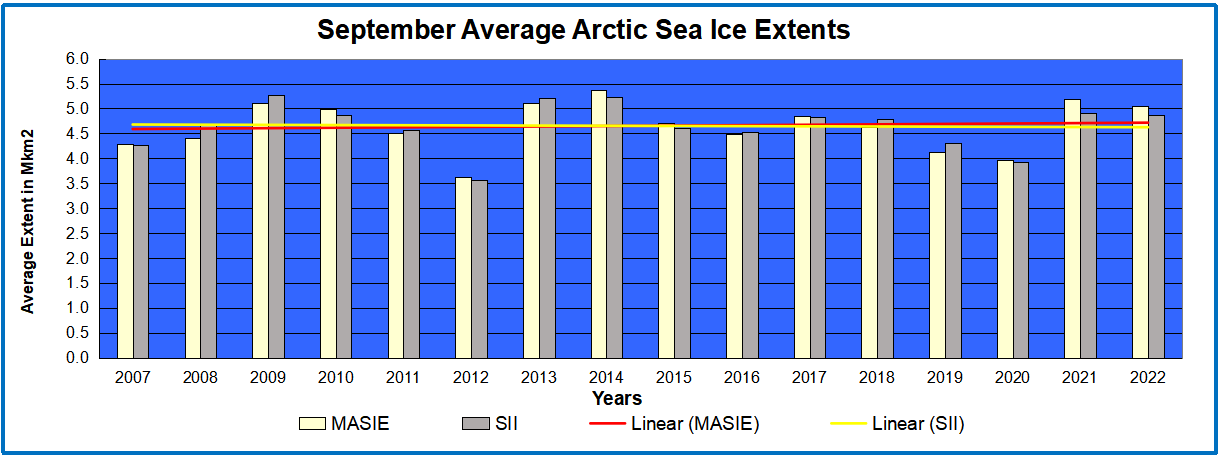
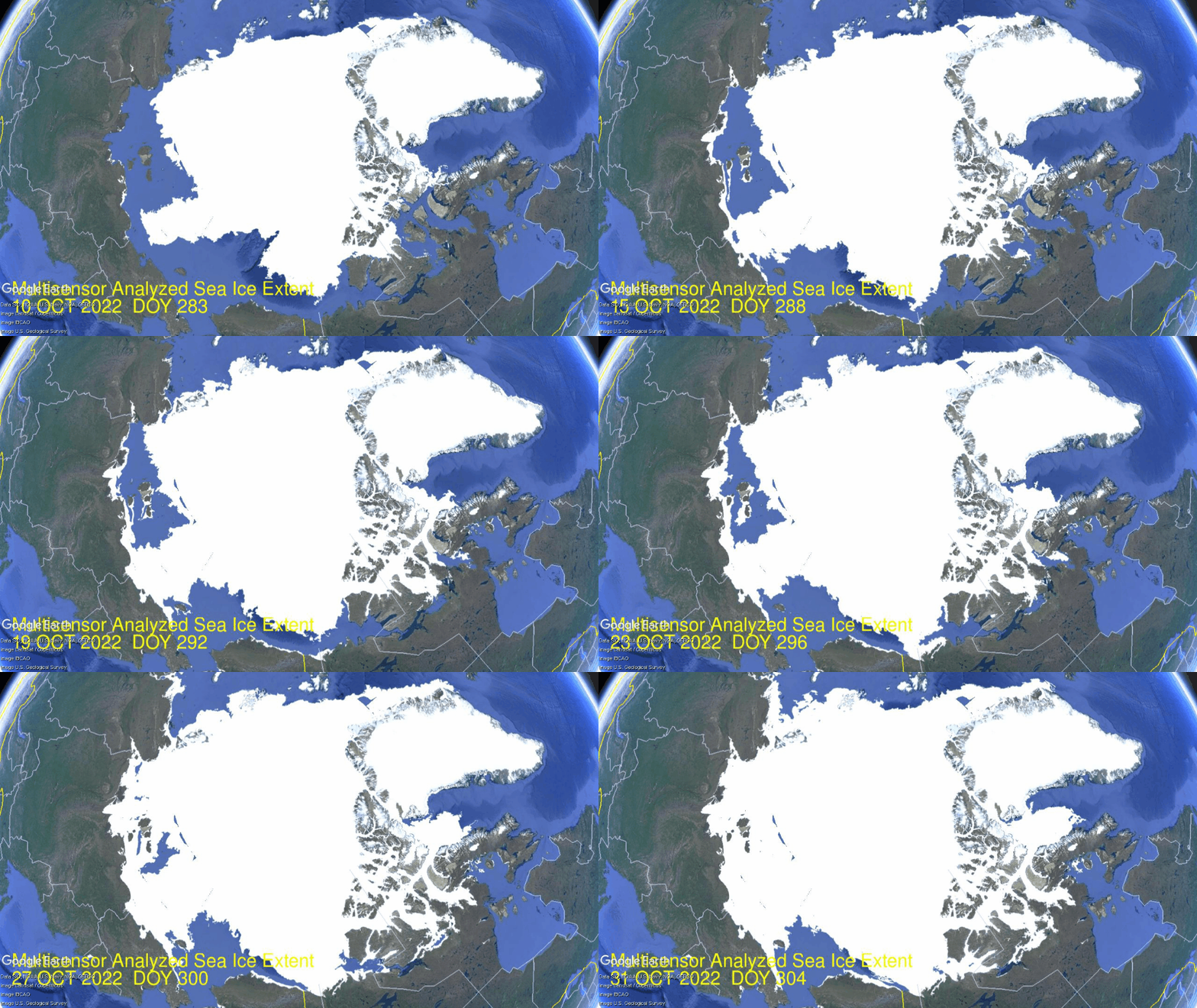
Meanwhile the facts on the ground are not alarming: For example September minimums:

More details at 16 yr. Plateau September Arctic Ice 2022

And the refreezing is faster than unusual:


These outrageous appeals by alarmists in the face of contrary facts remind me of the story defining the term “chutzpuh.” A young man is convicted of killing his parents, and later appears before the judge for sentencing. Asked to give any last words, he replies: “Go easy on me, your Honor, I’m an orphan.”
alcoholics-anonymous-logo-e1497443623248

Fortunately, there is help for climate alarmists. They can join or start a chapter of Alarmists Anonymous. By following the Twelve Step Program, it is possible to recover and unite in service to the real world and humanity.

Step One: Fully concede (admit) to our innermost selves that we were addicted to climate fear mongering.

Step Two: Come to believe that a Power greater than ourselves causes weather and climate, restoring us to sanity.

Step Three: Make a decision to study and understand how the natural world works.

Step Four: Make a searching and fearless moral inventory of ourselves, our need to frighten others and how we have personally benefited by expressing alarms about the climate.

Step Five: Admit to God, to ourselves, and to another human being the exact nature of our exaggerations and false claims.

Step Six: Become ready to set aside these notions and actions we now recognize as objectionable and groundless.

Step Seven: Seek help to remove every single defect of character that produced fear in us and led us to make others afraid.

Step Eight: Make a list of all persons we have harmed and called “deniers”, and become willing to make amends to them all.

Step Nine: Apologize to people we have frightened or denigrated and explain the errors of our ways.

Step Ten: Continue to take personal inventory and when new illusions creep into our thinking, promptly renounce them.

Step Eleven: Dedicate ourselves to gain knowledge of natural climate factors and to deepen our understanding of nature’s powers and ways of working.

Step Twelve: Having awakened to our delusion of climate alarm, we try to carry this message to other addicts, and to practice these principles in all our affairs.

Summary:

With a New Year a month away, let us hope that many climate alarmists take the opportunity to turn the page by resolving a return to sanity. It is not too late to get right with reality before the cooling comes in earnest.

This is your brain on climate alarm.  Just say No!

Climate Change Chumps 2022

Definition “chump”: A foolish or easily deceived person.

Update March 21, 2022

In this overheated time of school kids in the streets and elected “adults” declaring emergencies without any understanding of what is or is not happening, it may help to know how we got here.

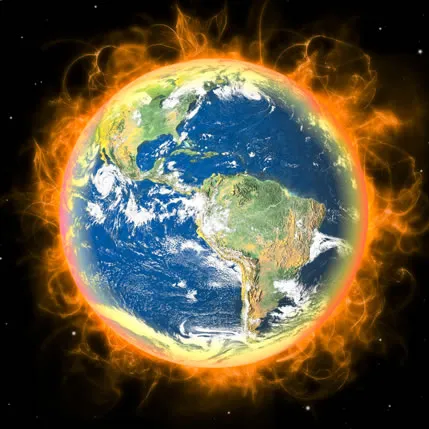
Why are so many people taken in by climate alarms? The question is often on my mind, especially when tens of thousands attend UN conferences like Glasgow, or when hearing the caterwauling in the media over the climate scare of the week. Recently while watching a football game, my escape from the issue was interrupted by a commercial break that included a flaming earth on the screen for a few seconds. It was an ad for Discovery Channel including the image above.

[Old joke:  I don’t know if they are using subliminal advertising, but yesterday I went and bought a tractor.]

And in a flash I realized how several factors are driving warming suckers into a fearful frenzy.

Firstly, The power of images over words and thinking.
A picture is worth a thousand words. (Sometimes attributed to Chinese)


The Asian attribution is doubtful, but Confucius did say something similar:

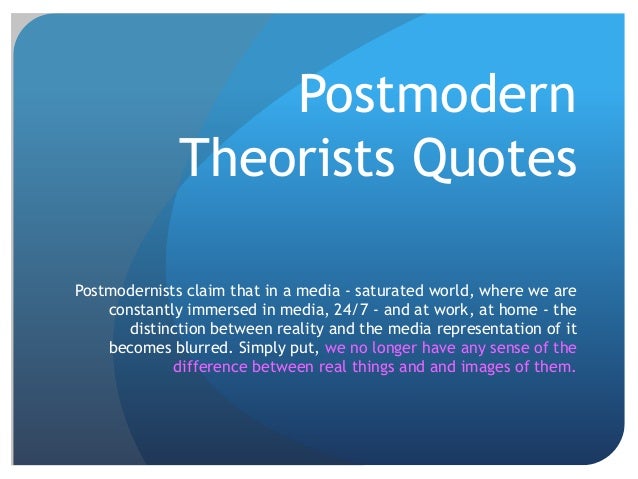
Second, We are immersed in imaging technology, entrancing the public. I have no interest in post modern philosophers, but in this sense they are onto something perverse: We are mistaking images for realities.

Third, Pied Pipers are using the media to put us under their spell.
A key point in the fable is the piper’s ability to put a spell on the children, and thereby rob the village of their future.  And he did this to get leverage over the council when they refused to pay for exterminating the rats. Our children have been brainwashed with environmental activism since preschool, and educators have taken Confucius to heart:  The process goes beyond preaching, to videos, posters and projects.
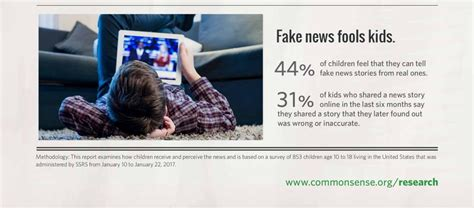
Fourth, Our embrace of mass and social media makes us suckers for fake news, including climate claims.

Note that the majority are not confident to discern fake from real news.  Even worse, today’s “fact checkers” operate out of spin rooms.

Fifth, Social proof is now all that matters.

Climate lemmings rushing over the cliff.

Finally, the drumbeat of climate alarms imprints ever more deeply a false assumption.

It doesn’t matter if any particular climate claim is false or exaggerated, the communications continuously reinforce the underlying myth of the Garden of Eden:  Nature is perfect and eternal so long as humans don’t mess it up.

The reality is more subtle and complex.  Humans are also a force of nature, and with our self-awareness we have the ability and responsibility to add order and purpose to the rest of nature.  Go to Kyoto and watch the landscapers labor for hours to fashion an exquisite Japanese garden, the fruition of collaboration between humans, plants, water and rocks.  Humans can and do improve on nature by taming destructive natural forces to preserve and enhance living structures.

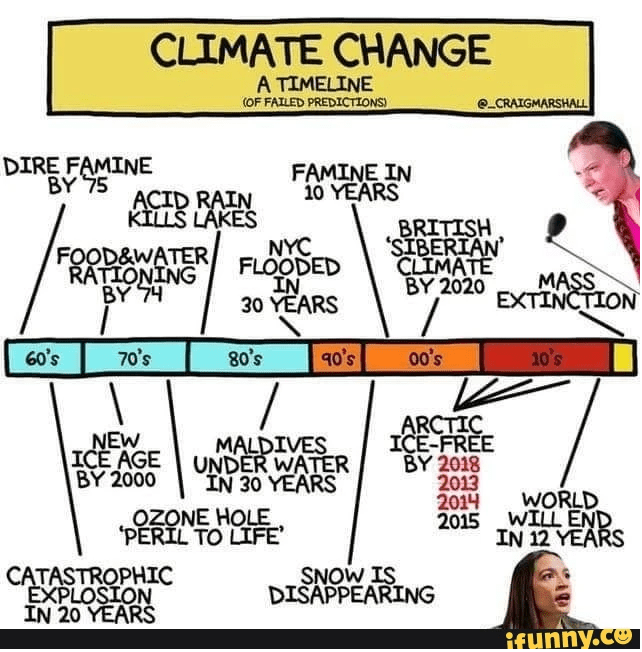
The UN IPCC process is a blind alley, a path to nowhere.  It plays upon fears and guilt feelings.  Worse, it distracts from rational programs of actual environmental stewardship.  I fear it will only get worse in the next 12  10  8 years:

See also Brits Run Con Game at Glasgow COP

Doomsday was predicted but failed to happen at midnight.

Facebook Censors BMJ Under Guise of “Fact-checking”

BMJ (British Medical Journal) publishes more than 70 medical and allied journals.  They report unwarranted censorship by Facebook in an article Facebook urged to act over incompetent “fact check” of BMJ investigation.  Excerpts in italics with my bolds and added images.

Editors ask Mark Zuckerberg to correct errors relating to The BMJ’s Pfizer vaccine trial investigation

Editors at The BMJ are urging Facebook to correct a “fact check” of a recent investigation that they say is “inaccurate, incompetent and irresponsible.”

In an open letter to Mark Zuckerberg, Fiona Godlee, outgoing editor in chief, and Kamran Abbasi, incoming editor in chief, say this matter “should be of concern to anyone who values and relies on sources such as The BMJ for reliable medical information.”

They also urge parent company Meta to reconsider its investment in and approach to fact checking overall following other examples of incompetence.

On 2 November, The BMJ published an investigation into poor clinical trial research practices at Ventavia, a contract research company helping carry out the main Pfizer covid-19 vaccine trial.

It was based on dozens of internal company documents, photos, audio recordings, and emails provided to The BMJ by a former employee of Ventavia, and it raised serious concerns about data integrity and patient safety.

The article went through The BMJ’s usual high level legal and editorial oversight and peer review.

But beginning on November 10, readers began reporting a variety of problems when trying to share the article and were directed to a “fact check” performed by a Facebook contractor named Lead Stories.

Godlee and Abbasi say they find the “fact check” performed by Lead Stories to be “inaccurate, incompetent and irresponsible.”

For example, it fails to provide any assertions of fact that The BMJ article got wrong, it contains a screenshot of the article with a stamp over it stating “Flaws Reviewed,” despite the Lead Stories article not identifying anything false or untrue in The BMJ article, and it published the story on its website under a URL that contains the phrase “hoax-alert.”

Cochrane, the international provider of high quality systematic reviews of the medical evidence, has experienced similar treatment by Instagram (also owned by Meta).

The BMJ complained to Lead Stories, “but they refused to change anything about their article or actions that have led to Facebook flagging our article.”

The BMJ has also complained to Facebook, requesting that Facebook immediately remove the “fact checking” label and any link to the Lead Stories article, “thereby allowing our readers to freely share the article on your platform.”

The editors say they hope Facebook will “act swiftly” to correct the error relating to The BMJ’s article and to review the processes that led to the error. They added a general call for parent company Meta to reconsider its investment in and approach to fact checking overall.

“Rather than investing a proportion of Meta’s substantial profits to help ensure the accuracy of medical information shared through social media, you have apparently delegated responsibility to people incompetent in carrying out this crucial task.”


Why The Left Cancels Any Climate Questioning

(KIRILL KUDRYAVTSEV/AFP via Getty Images)

Daniel Turner writes at The Spectator Big Tech is censoring the climate change debate.  Excerpts in italics with my bolds.

Ludwig Wittgenstein, Tractatus Logico-Philosophicus, 1922

Wittgenstein wrote that as an ontological and epistemological foundation for his larger belief in freedom of speech. He who controls the language also controls reality, something that today’s left understands brilliantly, even devilishly. America historically has not limited freedom of thought and speech, and the resulting clash of ideas has improved our national discourse. The language police makes us weaker intellectually by limiting the world in which we live.

The language around climate change and the green movement is one more area the left wants to control, especially given that trillions of dollars in spending are on the line. Big tech is now doing its part to protect the Green New Deal and radical green ideology from dissenting views.

Google and YouTube’s recent announcement that they now prohibit “climate deniers” to monetize their platforms would have caused Wittgenstein to ask a clarifying question: what is a climate denier?

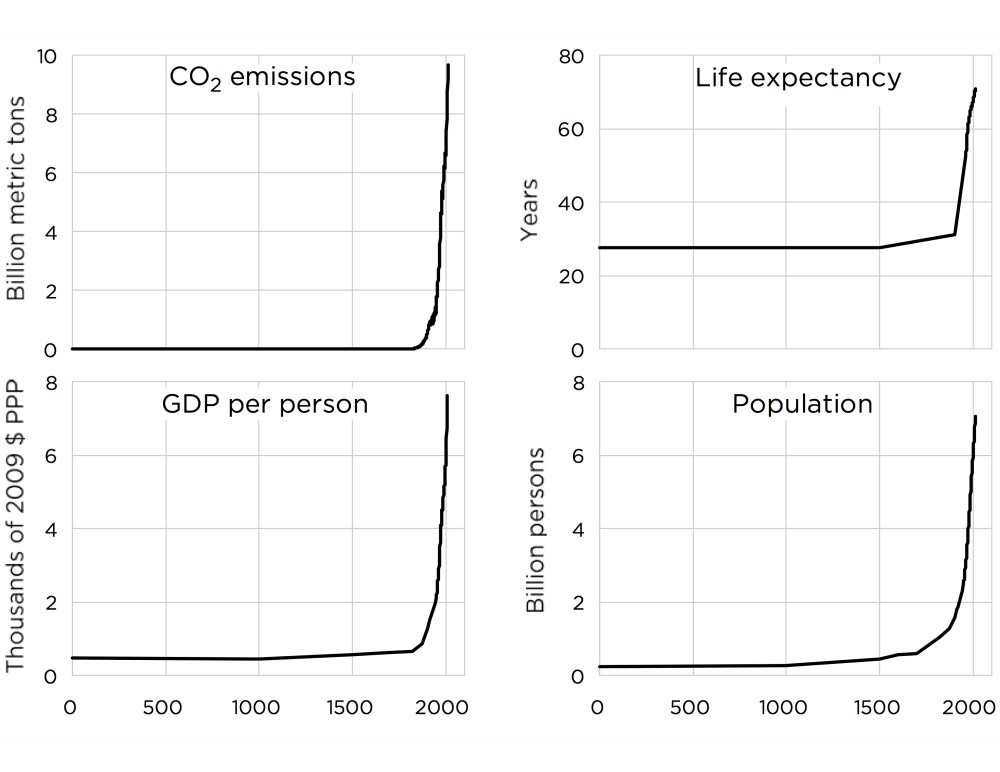
“This includes content referring to climate change as a hoax or a scam,” the announcement answers. And surely there is no hoax about the climate: data shows that since the 1880s the global temperature has risen one degree Fahrenheit. But what else can we measure? In that same period, the world population increased sevenfold and food production increased even more. Remarkably the number of people not living in extreme poverty increased at the same rate. The infant mortality rate decreased from 165 per 100,000 to 7. In 1880, more than 80 percent of the global population was illiterate. Today, that number is around 13 percent.

The question is: why? The answer is simple: fossil fuels. Inexpensive, abundant, reliable fossil fuels have turned 10,000 years of stagnant human existence into flourishing and prosperity. Illnesses that took the lives of kings and peasants alike are nearly eradicated thanks to medicine and refrigeration and electricity.

All of this growth for one degree of temperature increase. That’s quite the bargain.

Without fossil fuels humanity would still be mired in misery and darkness. Do we really want to ban that miracle? Do we want to “keep it in the ground” as the green movements cry? That’s a conversation we need to have.

The reader might argue that I’m wrong. My claims are just conjecture, he might say, and not based on science or data. Yet what if thousands of thinkers and philosophers agree with me? Is that enough to engage in this debate? It is thus curious that Google in its announcement calls denying the “scientific consensus around the existence and causes of climate change” reason enough to get deplatformed. The evidence of the causes of climate change are far weaker than the evidence of fossil fuels causing the past 200 years of human flourishing, but neither is scientific fact. Could there be any intellectual framework less scientific than “consensus”?

This discussion now cannot take place on the platforms of the big tech thought police, and we are all worse for it.

Google also says that “claims denying that long-term trends show the global climate is warming” will not be allowed. Who is making that claim? The data once again show that the earth’s temperature indeed warming, but Wittgenstein might ask for a clarification on “long-term.” One hundred years is not a very long time, not even for America which is one of the world’s youngest nations. If you look at the last 500 million years, the current trend still has us in a very cool period. The earth spent millions of years 30 to 40 degrees warmer than the current average temperature, and that doesn’t come close to covering the earth’s entire 4.5 billion years of age.

The question is: why? Why did the earth heat and cool so dramatically when there were no humans to cause the warming? After all, the tech language police tell of “unequivocal” evidence showing that human emissions of greenhouse gases are causing global warming. Because Google cannot answer that question, they have shown they have no idea what the word “unequivocal” means in philosophical or even philological discourse.

Darn. Now I’m the language police.

Stifling speech does not make us a better nation. It does not make any truths truer or any falsehoods falser. It does eliminate competing or unwanted ideas from the conversation, which is the real goal here.

The current administration is looking to spend nearly $5 trillion to combat “climate change.” Some are going to benefit immensely from that spending. Yet before we open up the nation’s wallet (who am I kidding, before we put the nation’s grandchildren further into debt), there are some larger questions we should be asking. Eliminating those questions from our national conversation doesn’t make the conversation stronger.

Those afraid of language are not looking for a better world. Wittgenstein understood that. Let’s hope America does, too, before the left and the big tech thought police determine the world they want us to live in.

Daniel Turner is the founder and executive director of Power The Future, a national nonprofit organization that advocates for American energy jobs.

Footnote: 

A positive development: Injunction Ruling Against YouTube/Google Censorship! Removal Of Lockdown-Critical Videos “Illegal”.  Excerpt in italics with my bolds.

Yesterday we reported here how YouTube had removed videos posted by prominent German actors who criticized the German government in what appeared to targeted censorship of legitimate views. But the prominent group of actors and artists refused to stand silent and took legal action against YouTube, a platform owned by mighty Google.

“The Cologne Regional Court issued an injunction, ruling that YouTube’s deletion of the videos was illegal,” reported Bild, which has a copy of the court order. “According to the court, the deletion of the videos in which the artists interviewed Leipzig mathematics professor Stephan Luckhaus (68) and neurobiologist Gerald Hüther (70) was ‘unjustified’.”

The court found that YouTube citing the content “violate our guidelines on medical misinformation” is an adequate basis for deletion and that the platform must be more specific.

See also:  Why the Leftist Backlash Against Ivermectin

Liberals have no monopoly on gullibility or lazy journalism, but the biased coverage of ivermectin springs from one of the worst pathologies of liberal discourse in particular: conflation of respect for science with fealty to established scientific institutions. A “pro-science” disposition has long been integral to American liberals’ self-conception (a ubiquitous yard sign reads, in part, “In this house, we believe science is real”); it grew especially strong during the George W. Bush years as a reaction to the administration’s stance on global warming and alliance with the religious Right.

But most Americans are scientists neither by training nor by temperament, and “pro-science” politics usually calcifies into blind trust in a few politically congenial authorities—such as universities and government health agencies, which have enjoyed high levels of liberal confidence throughout the pandemic despite such actions as reversing longstanding advice on face masks based on a dubious judgment call.

Bogus Talk about Climate Tipping Points

Tallbloke’s Talkshop helpfully posted on a new study Climate change tipping points may be too simple a concept, say researchers.  This is welcome to hear, but as I will discuss below, the authors do not go nearly far enough to let the air out of this exaggerated rhetoric.  The study itself is Evasion of tipping in complex systems through spatial pattern formation.  The title already suggests a questionable paradigm, which is stated up front in the abstract:

In the Anthropocene, there is a need to better understand the catastrophic effects that climate and land-use change may have on ecosystems, Earth system components, and the whole Earth system. The concept of critical transitions, or tipping from one state to another, contributes to this understanding.

The above diagram from the study shows the tipping point paradigm accepted by the authors as a foundation for discovering how ecosystems are sometimes able to evade tipping over from a present state.  It is heartening that the authors refer to the resilience of ecosystems and say that observed ecological disturbances are in fact evidence of natural stability, not fragility.

However, they are applying a theory of “tipping points” that pertains to sociology not natural science, while also assuming, of course, the environmental mythological Garden of Eden that would be eternal and unchanging except for human evil activity.

The whole paradigm is a corruption of hard physical science by soft sociological fuzzy thinking, a specialty of environmentalism.

Firstly, the popularity of the “tipping points” notion comes from pop sociology, and there are many good reasons not to bring it into earth sciences, unless the intent is to politicize the science. A reprinted post below provides this discussion.

Background from previous post Tipping Points Confuse Social and Earth Science


In the drive to push public opinion over the top regarding global warming/climate change, the media is increasingly filled with references to climate “tipping points.”  For example, some months ago an IPCC spokesperson claimed a climate disaster is now happening each and every week.  And the media abounds with reports to press home the point. Here are some of the current disasters caused by climate change, ripped (as they say) from the headlines.

Birds are shrinking as the climate warms

Climate change-related deaths and damage on the rise

Europe Could Face Annual Extreme Heat Waves Due to Climate Change

Food Prices Expected To Jump Next Year Due To Climate Change

Climate change taking serious toll on human health: WHO report

Climate Crisis Causing Hunger for Millions of Africans

How climate change is causing more premature births

Et cetera, et cetera. (A complete list would provide more than one disaster for every week of the year.)

IOW, as Pys.org reported, all this hype may make this year the tipping point: The year the world woke up to the climate emergency.

Background on the Use of “Tipping Points”

The context for understanding the rise of the “tipping point” notion is provided by a 2018 paper in Environmental Research Letters Defining tipping points for social-ecological systems scholarship—an interdisciplinary literature review. As the title suggests the researchers are not studying the earth, but rather people’s perceptions about the earth. This growing field of environmental psychology confirms how “climate change” muddles social and physical sciences. Excerpts in italics with my bolds

Abstract

The term tipping point has experienced explosive popularity across multiple disciplines over the last decade. Research on social-ecological systems (SES) has contributed to the growth and diversity of the term’s use. The diverse uses of the term obscure potential differences between tipping behavior in natural and social systems, and issues of causality across natural and social system components in SES. This paper aims to create the foundation for a discussion within the SES research community about the appropriate use of the term tipping point, especially the relatively novel term ‘social tipping point.’

We review existing literature on tipping points and similar concepts (e.g. regime shifts, critical transitions) across all spheres of science published between 1960 and 2016 with a special focus on a recent and still small body of work on social tipping points. We combine quantitative and qualitative analyses in a bibliometric approach, rooted in an expert elicitation process.

Historical Analysis and Concerns

We find that the term tipping point became popular after the year 2000—long after the terms regime shift and critical transition—across all spheres of science. We identify 23 distinct features of tipping point definitions and their prevalence across disciplines, but find no clear taxonomy of discipline-specific definitions. Building on the most frequently used features, we propose definitions for tipping points in general and social tipping points in SES in particular.

Being located at the intersection between the social and natural sciences, SES researchers need to tread carefully when borrowing concepts from other disciplines. Such a move often involves the crossing of ontological boundaries, where the metaphorical use of a concept can mask important differences between two objects of study. The two phenomena included in the analogy should be similar in the sense that they can be characterized by common laws or principles. The success of the analogy depends on whether attributes of tipping points in the target domain can be tested and assessed similar to the one in the source domain (Daniel 1955, Gentner 1983). However, SES research pays little attention to whether the presumed observation of tipping behavior in a social system is conceptually equal or (partly) different than tipping processes in an ecological system. It remains unknown whether tipping points in natural systems, such as a lake or the climate, display the same underlying mechanisms as tipping points in social systems, such as in financial markets or political institutions.

The tipping point concept traces its origins back to scientific papers in chemistry (Hoadley 1884) and mathematics (Poincare´ 1885), which refer to a qualitative change in a system described mathematically as a bifurcation. Bifurcation theory is still used today in mathematics, physics, complex systems science, and related fields.

In the social sciences, tipping points originated much later to address neighborhood dynamics of racial segregation in political science (Grodzins 1957), sociology/urban planning (Wolf 1963), and economics (Schelling 1978). Social scientists began to develop similar concepts of social change without the tipping point language. For example, sociologist Mark Granovetter (1978) uses the term threshold to understand the differences in individuals’ decisions to engage in a collective behavior, such as rioting.

Whether or not it can be attributed to Malcolm Gladwell’s book The Tipping Point (2000), starting around 2005, the term was widely adopted among climate scientists (Russill and Nyssa 2009, Kopp et al 2016) to describe rapid, non-linear change in parts of the climate system. Previously this phenomenon had been referred to with different terminology, such as critical points, but now climate scientists embraced tipping point language, with three papers using tipping point terminology to focus on ice sheet dynamics in the Arctic (Holland et al 2006, Lindsay and Zhang 2005, Winton 2006). A 2008 paper introduced the idea of tipping elements in the climate system, defined as subsystems of the climate system that can experience abrupt change,‘triggering a transition to a new state.’

The historical account of the movement of the concept from its origins in mathematics and chemistry to the social sciences, popular discourse and back to mathematical modeling in the climate sciences raises important scientific questions.

The increasingly frequent use of the concept of tipping points in both the natural and social sciences could be scientifically questionable: sociological and political tipping points might be very different phenomena than climatic tipping points, even if both natural and social systems may be subject to rapid qualitative change. If institutional tipping and ecosystem tipping are different ‘things in nature’— different ontological entities—scientific language should not treat them as the same. Scientific language should clarify rather than veil potential differences between tipping points in different fields.

Phenomena in nature—the objects of tipping point research Different fields of science deploy tipping point terminology to study vastly different real-world phenomena. In the natural sciences (Ecology, Climate and Earth System Science), scholars are primarily interested in the tipping of ecological systems, e.g. the eutrophication of lakes, and of larger Earth System components, also called climate tipping elements (e.g. Arctic ice sheets). This research crosses multiple scales of interest, but focuses on a shared mechanism of change: positive, self-reinforcing feedbacks moving a system into a different stability domain. Key research challenges include the limited reversibility of a system to its previous state and significant predictive challenges related to tipping points.

Conclusions

To conclude, we have proposed a unifying definition for tipping points, building on the most frequent themes identified in our analysis: a tipping point is a threshold at which small quantitative changes in the system trigger a non-linear change process that is driven by system-internal feedback mechanisms and inevitably leads to a qualitatively different state of the system, which is often irreversible.  This definition establishes a minimum set of four constitutive features of tipping points that apply across disciplines:

    • multiple stable states;
    • non-linear change;
    • feedbacks as driving mechanism; 
    • limited reversibility. 

If these four essential characteristics are given, the use of the term tipping point is justified.  However, whether it is possible to apply these tools to social and social-ecological change phenomena remains unclear and is a subject that requires future research.

Our research found that the tipping point concept is applied to a vast array of change processes, ranging from ice sheet dynamics to societal transformations, which might mask ontological differences between these diverse phenomena. Concerned about the pattern of terminological replacement—the use of tipping point language instead of previously existing terms—and its potential effects on the quality of science, we encourage researchers to critically assess their terminological choices and avoid ‘conceptual amnesia’.

My Comment

Besides the issue of confusing natural and social processes, the paper only touched tangentially on three related problems applying this terminology to global warming/climate change.  Firstly, in the natural world there are shifts between multiple stable states, in some cases reversing back and forth in cyclical patterns.  For example, paleoclimatologists have mapped the earth’s oscillations between “hot house” and “ice house.”

Secondly, headlines like those above always portray change as negative and destructive.  In both natural and social tipping points there can be desirable, transformative shifts, not just adverse, gloomy results.
Thirdly, as Brothers Judd warn, there is less than meets the eye in claims of tipping points.  From their review of Gladwell’s book:

As a general matter Gladwell’s Tipping Point idea, like Darwin’s idea of Evolution, is grounded more in literary metaphor than in science. If you ask, as Gladwell does, why Hush Puppies suddenly became fashionable again after years of declining or stagnant sales, the answer must be that they hit a Tipping Point. If you ask why they stayed unpopular for so long, the answer must be there were no Tipping Points during that time. Why did the book Divine Secrets of the Ya-Ya Sisterhood become a best seller, while Rebecca Wells’s previous books hadn’t, or other (better) novels didn’t ? One hit a Tipping Point, the others didn’t. But this doesn’t really add anything to our understanding of the human behavior and desires that fueled the crazes nor does it help us to determine how to tip other products and processes in the future. Gladwell’s argument, like all pseudoscience, is a closed loop–if something tips then it hit a Tipping Point; if it doesn’t, then it didn’t. Rather than explaining what happened, the metaphor, once accepted, stifles intelligent analysis. The fact that something happened comes to seem a sufficient explanation and a justification for saying that the process occurred; the actual elements of this theoretical process need never be demonstrated, nor tested; it’s as if the circular beauty of the metaphor precludes questioning its validity.

Daniel B. Botkin is Professor Emeritus, University of California, Santa Barbara, in the Department of Ecology, Evolution, and Marine Biology.

Secondly, the notion of a static climate system, absent human impacts, is backward thinking, superseded by Dynamic Ecology, a more contemporary and realistic understanding.

For a more realistic view of nature and biological processes see writings by Daniel Botkin, who led the shift in paradigm to Dynamic Ecology, especially in his influential book: Discordant Harmonies: a New Ecology for the Twenty-first Century. 1990 Oxford University Press, New York. In 2014 he shared his view of the climate change issue in Testimony to the House Subcommittee on Science,Space and Technology. The whole document is enlightening, and included point-by-point critique of IPCC statements. Transcript is: Testimony to the House Subcommittee on Science,Space and Technology.

His main points are highlighted below, while details and examples are in the full text.

1.I want to state up front that we have been living through a warming trend driven by a variety of influences. However, it is my view that this is not unusual, and contrary to the characterizations by the IPCC and the National Climate Assessment, these environmental changes are not apocalyptic nor irreversible.

2.My biggest concern is that both the reports present a number of speculative, and sometimes incomplete, conclusions embedded in language that gives them more scientific heft than they deserve. The reports are “scientific-sounding” rather than based on clearly settled facts or admitting their lack. Established facts about the global environment exist less often in science than laymen usually think.

3.HAS IT BEEN WARMING? Yes, we have been living through a warming trend, no doubt about that. The rate of change we are experiencing is also not unprecedented, and the “mystery” of the warming “plateau” simply indicates the inherent complexity of our global biosphere. Change is normal, life on Earth is inherently risky; it always has been. The two reports, however, makes it seem that environmental change is apocalyptic and irreversible. It is not.

4.IS CLIMATE CHANGE VERY UNUSUAL? No, it has always undergone changes.

5.ARE GREENHOUSE GASES INCREASING? Yes, CO2 rapidly.

6.IS THERE GOOD SCIENTIFIC RESEARCH ON CLIMATE CHANGE? Yes, a great deal of it.

7.ARE THERE GOOD SCIENTISTS INVOLVED IN THE IPCC 2014 REPORT? Yes, the lead author of the Terrestrial (land) Ecosystem Report is Richard Betts, a coauthor of one my scientific papers about forecasting effects of global warming on biodiversity.

8. ARE THERE SCIENTIFICALLY ACCURATE STATEMENTS AT PLACES IN THE REPORT? Yes, there are.

9. What I sought to learn was the overall take-away that the reports leave with a reader. I regret to say that I was left with the impression that the reports overestimate the danger from human-induced climate change and do not contribute to our ability to solve major environmental problems. I am afraid that an “agenda” permeates the reports, an implication that humans and our activity are necessarily bad and ought to be curtailed.

10. ARE THERE MAJOR PROBLEMS WITH THE REPORTS? Yes, in assumptions, use of data, and conclusions.

11. My biggest concern about the reports is that they present a number of speculative, and sometimes incomplete, conclusions embedded in language that gives them more scientific heft than they deserve. The reports, in other words, are “scientific-sounding,” rather than clearly settled and based on indisputable facts. Established facts about the global environment exist less often in science than laymen usually think.

12. The two reports assume and/or argue that the climate warming forecast by the global climate models is happening and will continue to happen and grow worse. Currently these predictions are way off the reality (Figure 1). Models, like all scientific theory, have to be tested against real-world observations. Experts in model validation say that the climate models frequently cited in the IPCC report are little if any validated. This means that as theory they are fundamentally scientifically unproven.

13. The reports suffer from using the term “climate change” with two meanings: natural and human-induced. These are both given as definitions in the IPCC report and are not distinguished in the text and therefore confuse a reader. (The Climate Change Assessment uses the term throughout including its title, but never defines it.) There are places in the reports where only the second meaning—human induced—makes sense, so that meaning has to be assumed. There are other places where either meaning could be applied.

14. Some of the report conclusions are the opposite of those given in articles cited in defense of those conclusions.

15. Some conclusions contradict and are ignorant of the best statistically valid observations.

16. The report for policy makers on Impacts, Adaptation, and Vulnerability repeats the assertion of previous IPCC reports that “large fraction of species” face “increase extinction risks” (p15). Overwhelming evidence contradicts this assertion. And it has been clearly shown that models used to make these forecasts, such as climate envelope models and species-area curve models, make incorrect assumptions that lead to erroneous conclusions, over-estimating extinction risks. Surprisingly few species became extinct during the past 2.5 million years, a period encompassing several ice ages and warm periods.

17. THE REPORT GIVES THE IMPRESSION THAT LIVING THINGS ARE FRAGILE AND RIGID, unable to deal with change. The opposite is to case. Life is persistent, adaptable, adjustable.

18. STEADY-STATE ASSUMPTION: There is an overall assumption in the IPCC 2014 report and the Climate Change Assessment that all change is negative and undesirable; that it is ecologically and evolutionarily unnatural, bad for populations, species, ecosystems, for all life on planet Earth, including people. This is the opposite of the reality.

19. The summary for policy makers on Impacts, Adaptation, and Vulnerability makes repeated use of the term “irreversible” changes. A species going extinct is irreversible, but little else about the environment is irreversible.

20. The extreme overemphasis on human-induced global warming has taken our attention away from many environmental issues that used to be front and center but have been pretty much ignored in the 21st century.

21. Do the problems with these reports mean that we can or should abandon any concerns about global warming or abandon any research about it? Certainly not, but we need to put this issue within an appropriate priority with other major here-and-now environmental issues that are having immediate effects.

22. The concerns I have mentioned with the IPCC apply as well to the White House’s National Climate Assessment.

Summary

Finally, as the critique shows, tipping points are like climate change itself:  Applying labels to something that has already happened, with no predictive utility.


No One is Safe from Climate Alarm

Prominent environmentalist Michael Shellenberger deplores the doomster messaging ahead of the Glasgow COP.   In an interview with EpochTV’s “American Thought Leaders,” Shellenberger noted that while climate change is a very “real” thing, the slogan that no one is safe is “misleading” to the general public.  Excerpts in italics below from zerohedge article IPCC’s “No One Is Safe” Slogan Is Deeply Misleading.

The IPCC published a report in August stating that human-caused climate change is accelerating and that radical changes to human behavior are needed to avert disaster.

Following the findings, U.N. Secretary General António Guterres said of the report that the “alarm bells are deafening” and the situation is a “code red for humanity.”

Meanwhile, Inger Andersen, executive director of the United Nations Environment Programme (UNEP), said the findings showed that “nobody is safe. And it is getting worse faster.”

However, Shellenberger, who is the founder and president of the nonprofit Environmental Progress and the author of “Apocalypse Never: Why Environmental Alarmism Hurts Us All,” disagrees with this sentiment.

“Climate change is real. The world is getting warmer, it’s gotten about one degree Celsius warmer since the pre-industrial period. But on so many other environmental metrics, things are going in the right direction,” Shellenberger said.

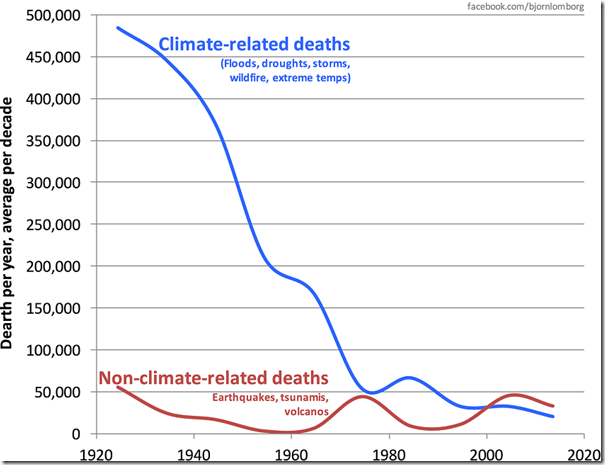
“The hottest the period of worst heat waves, for example, was in the 1930s. It has been a hot decade, but the 1930s remained the highest magnitude of heat waves. The chance of dying from an extreme weather event has declined over 99 percent for the average human being.

“Deaths from natural disasters overall are 90 percent down, we produce 25 percent more food than we need. There’s no estimate of running out of food.”

Sea level rise is something that we’ve done a very good job adapting to and we’ll continue to do a good job adapting to. The Netherlands is a country where many parts of it are seven meters below sea level. The median estimate for sea level rise by the Intergovernmental Panel on Climate Change is about a half a meter,” he continued.

“So what I object to is the painting of humans as sort of fragile or super vulnerable. We’ve never been more brilliant, we’ve never been less vulnerable, at least at a physical level. I think we’re seeing some rising anxiety and depression, particularly [among] young people, probably due to social media. But physically humans are safer than ever.

“But I think the the message that people need to hear that they’re not hearing is that the vast majority of environmental trends are going in the right direction, including on climate change.”

“The communications from the United Nations have been irresponsible. The slogan that they published the day of the IPCC reports publication was ‘no one is safe’ … It’s deeply misleading in that we’re safer than ever,” he said.

“So it’s really in the public relations that the distortions are occurring. However, in this most recent report, there was some bad behavior in the actual scenarios they constructed,” the author continued.

“So about half of the scenarios assume much higher levels of emissions, and therefore higher levels of warming in the future, than really any mainstream expert believes is possible,” he added.

“We just look around us [to see] we have a built infrastructure, go on YouTube and look at what life was like in 1800 or 1900, we were just much more vulnerable to weather events back then.”

The longtime environmental activist said that the public fails to be informed about other aspects that protect them from climate change, such as large increases in food surpluses and incredible flood management systems.

“So we see in all these problems, whether it’s forest fires, or floods, or hurricanes, that what humans do on the ground massively outweighs any increase in wind speed or precipitation or air temperatures,” he explained.

Shellenberger noted that while the natural science reviewed by the IPCC is accurate, “the vast majority of the distortions and the pessimism regarding climate change appears in the summary in the statements by those who helped assemble the report.


Fortunately, there is help for climate alarmists. They can join or start a chapter of Alarmists Anonymous. By following the Twelve Step Program, it is possible to recover and unite in service to the real world and humanity.

Step One: Fully concede (admit) to our innermost selves that we were addicted to climate fear mongering.

Step Two: Come to believe that a Power greater than ourselves causes weather and climate, restoring us to sanity.

Step Three: Make a decision to study and understand how the natural world works.

Step Four: Make a searching and fearless moral inventory of ourselves, our need to frighten others and how we have personally benefited by expressing alarms about the climate.

Step Five: Admit to God, to ourselves, and to another human being the exact nature of our exaggerations and false claims.

Step Six: Become ready to set aside these notions and actions we now recognize as objectionable and groundless.

Step Seven: Seek help to remove every single defect of character that produced fear in us and led us to make others afraid.

Step Eight: Make a list of all persons we have harmed and called “deniers”, and become willing to make amends to them all.

Step Nine: Apologize to people we have frightened or denigrated and explain the errors of our ways.

Step Ten: Continue to take personal inventory and when new illusions creep into our thinking, promptly renounce them.

Step Eleven: Dedicate ourselves to extend our knowledge of natural climate factors and to deepen our understanding of nature’s powers and ways of working.

Step Twelve: Having awakened to our delusion of climate alarm, we try to carry this message to other addicts, and to practice these principles in all our affairs.

Footnote:  For a detailed discussion of unfounded climate fears, see:
                 Climate Problem? Data say no.

Summary:

As the summer heat wanes, let us hope that many climate alarmists take the opportunity to turn the page by resolving a return to sanity. It is not too late to get right with reality before the cooling comes in earnest.

This is your brain on climate alarm.  Just say No!