New Sheriff Still in Town

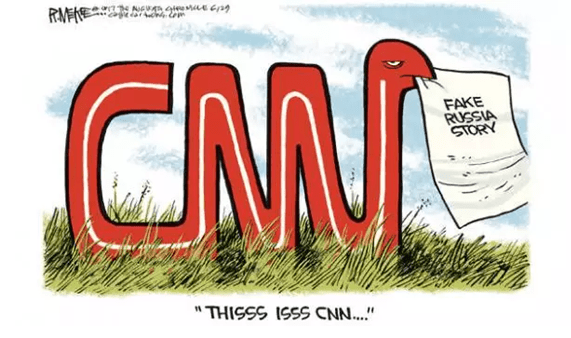
Sheriff Trump has survived and prevailed in this gunfight.  After 3 years, two of them under the relentless Mueller, and after spending more than 30 million dollars investigating, the accusation of treason falls for lack of evidence.

(H/T  Tony Heller for video) But of course, the reporters and newscasters who foisted the fictional rumor upon the public will now double down on their deceit.  They are banking on something Mark Twain said:

Those who are fair-minded will say, “Enough.  Get Real, and get on with the nation’s business.”  Never-Trumpers, unfortunately, will have to find the courage to admit they bought into a lie, or else descend further into unreality by continuing to fool themselves.

no crime

Trump So far: A Balanced Reflection

The Trump presidency has this train wreck quality by which observers are obsessed with the unfolding drama, a presidency so unconventional and so volatile that both detractors and amused supporters do not know what is coming next.  It is easily the most captivating and entertaining US Presidency Evehhh!

Just now we have the best and most balanced reflection so far upon this amazing experience writen by the insightful Victor Hanson in the Spectator Donald Trump the paradox: Trump’s election caused a self-created contradiction  Excerpts in italics with my bolds.

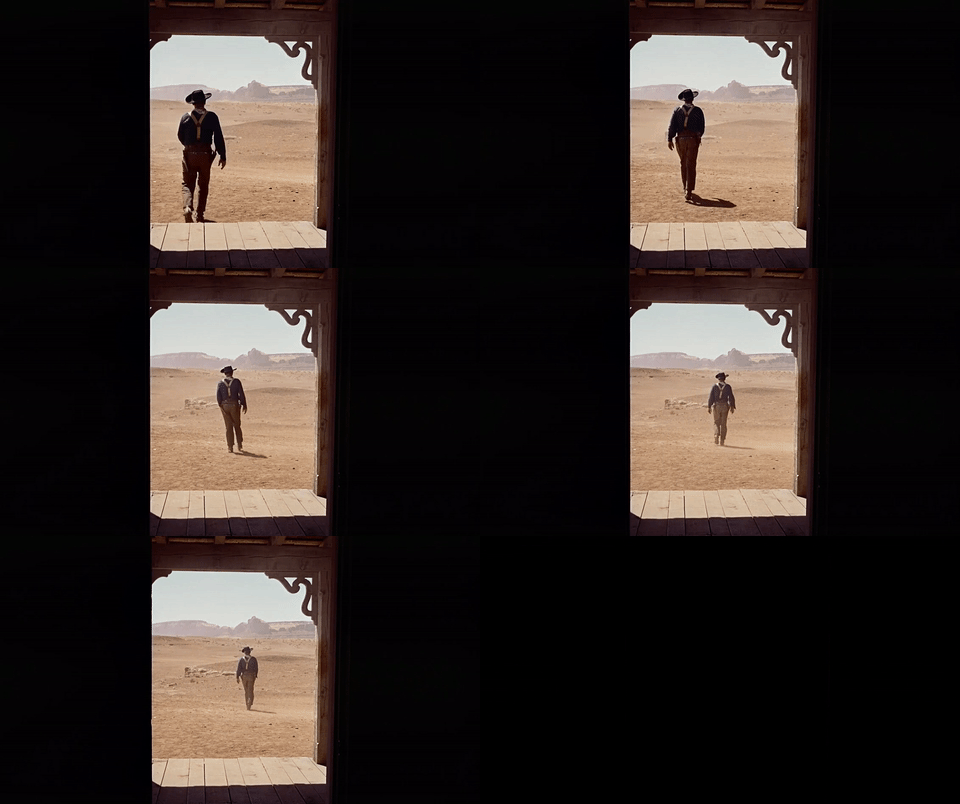
John Ford’s most moving scene in his best film, The Searchers, is the unloved Ethan Edwards’s final exit from a house of shadows, swinging open the door and walking alone into sunlit oblivion, the community he has saved symbolically closing the door on him.

If he is lucky, President Trump may well experience the same self-inflicted fate. By his very excesses, Trump has already lost in conventional terms of being admired or considered presidential, but in his losing he might alone be able to end some things that long ago should have been ended.

No one can still quite calibrate whether Trump’s combativeness and take-no-prisoners management style always hurts him as president, or is a necessary continuum of his persona that ensured his unlikely election and early political effectiveness as president. And no one quite knows either whether Trump’s inexplicable outbursts are sometimes planned by design to unnerve his critics and the media, or are instead spontaneous expressions of indiscipline and crudity. Conventional wisdom squares these circles by concluding that Trump’s ferocity shores up his base, but his base is not large enough to give him a reliable 51 percent popularity rating among voters. Most also have concluded that Trump’s unorthodox style, speech, and comportment likewise are designed to advance his agendas, but are usually overtaken by his fury. But how often the last three years has conventional wisdom been right?

When Trump entered office, he was immediately faced with a self-created contradiction. He had won the key midwestern and purple swing states on promises of ‘draining the swamp.’ That refrain was taken by his base to mean both dismantling the permanent deep state and staffing his administration with unorthodox appointments that would lessen the opportunities for corruption.

Yet Trump needed some tried old hands who knew the deep state and yet were not part of it. But how many such loyal fellow iconoclasts were there?

Added to Trump’s conundrum were two other challenges. One was certainly political. Trump’s agendas that had won him the presidency were deeply antithetical to those of most of the bipartisan Washington hierarchy. In terms of economic policy, Trumpism, at least in theory, did not appeal to many Republicans with prior government service, blue-chip academic billets, and directorships of major companies and corporations. The usual Republicans eager for high office were precisely those most likely to oppose Trump’s promises to leave Afghanistan, avoid most overseas interventions, level tariffs, or build a border wall.

Trump also forged a management style foreign from almost all prior presidents, born from Manhattan real estate brokerage, reality television, and entrepreneurial salesmanship. Drama, even chaos, was considered ‘energy,’ even creativity. Loyalty and compatibility above all were prized, even over competence. Looks and fashion mattered, on the principle that both drove up ratings. How something was said and who said it were as important as what was said.

Hiring and firing for Trump were also organic processes. Trump consulted outsiders in the private sector almost as frequently as he did his own team. Turnover was a necessary means of finding those with ‘talent’ whose personalities jived with Trump’s own mercurial moods.

In prior administrations, ‘stability’ and ‘continuity’ were more prized. Difficult or even unimpressive figures who should have been promptly fired often were not, on the principle that their abrupt departures might signal poor presidential judgment or incur crises of confidence at the center of the global order, or, more mundanely, earn a spate of incriminating, get-even, tell-all memoirs.

Did the apparent bedlam bother Trump? Hardly.

Amid the disruptions, lost was the fact that in terms of process, Trump met the press frequently. He was far more candid and accessible than had been Barack Obama. His inner team was as diverse in terms of race, sex, class, and prior political leanings as most prior administrations. His tweets held back nothing. And yet that accessibility and informality were mostly lost on the press. Or such familiarity with Trump only bred more media contempt.

As far as the nation’s soul was concerned, America’s elites — academic, journalistic, and political — were ironically revealing to the American people the sort of crude put-downs, stereotyping, and biases about Trump supporters that questioned the value of their cultural advantages, higher education, and privilege, given that they had proved so unsteady, profane, and unhinged since the appearance of Trump in 2015. No establishmentarian quite figured out that any success that Trump enjoyed was often seen as a de facto negative referendum on the past performance of the status quo—and by extension themselves.

It was hard to see how US relations with key allies or deterrent stances against enemies were not improved since the years of the Obama administration, at least in the sense that there was no more naïve Russian reset. China was on notice that its trade cheating was no longer tolerable. The asymmetrical Iran deal was over. And the United States was slowly squeezing with sanctions a nuclear North Korea. Was chaos or predictability the more dangerous message in dealing with thuggish regimes?

Yet an ‘adults in the room’ anti-Trump narrative was hyped through deliberate media massaging and disloyal leaking. ‘Anonymous’ senior officials winked and nodded on ‘background’ to reporters that, if had it not been for their own sober stewardship, the entire Trump administration would have imploded. . .

Still, the real moral question is not whether the gunslinger Trump could or should become civilized (again defined in our context as becoming normalized as ‘presidential’). Rather, the key is whether he could be of service at the opportune time and right place for his country, occasionally crude as he is said to be.

After all, despite their decency, in extremis did the frontier farmers have an orthodox solution without Shane? The town elders of Hadleyville in High Noon had no viable plan without Marshal Will Kane in the streets. Even Agamemnon’s ego did not convince him that he would ever have had any chance of killing ‘man-slaughtering Hector’ without use of a petulant and dangerous Achilles.

Trump’s dilemma was always that at some likely point his successes on the economy and in foreign policy might create a sense of calm prosperity — and thereby, in counterintuitive fashion, allow voters the luxury of reexamining the messenger more so than the message. In other words, if crudity got results, then the results might appear no longer to hinge on further crudity. Every tragic hero realizes that he can be driven out of town, not just after the original threat is ended, but the moment it first appears that soon the danger will be neutralized. For civilized society, the perceived coarseness of the tragic hero always remains nearly as repugnant as the threat that brought in its deliverer in the first place.

In sum, the nation may believe that it could not withstand the fire and smoke of a series of Trump-like presidencies. But given the direction of the country over the last 16 years, half the country, the proverbial townspeople of the classic Western, wanted some outsider, even with a dubious past, to ride in and do things that most normal politicians not only would not, but could not do — before exiting stage left or riding wounded off into the sunset, to the relief of most and the regret of a few.


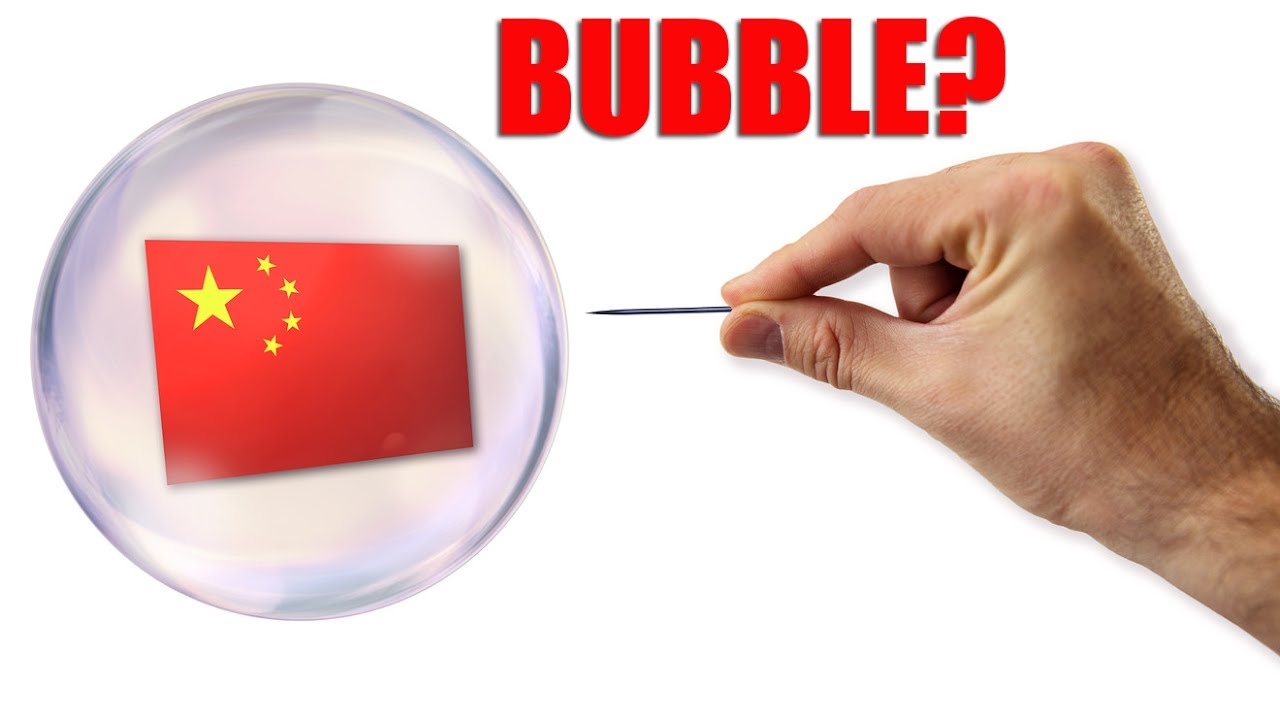
Pssst. Trump is Winning the China Trade Dispute

Car sales in China, the world’s largest car market, plummeted by 19 per cent in December.AFP Getty file photo

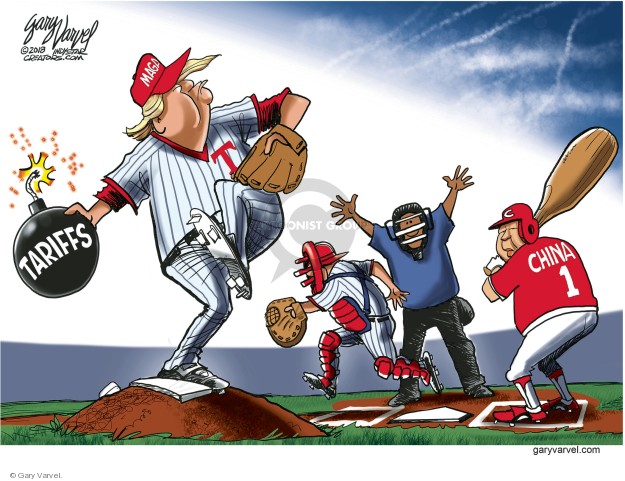
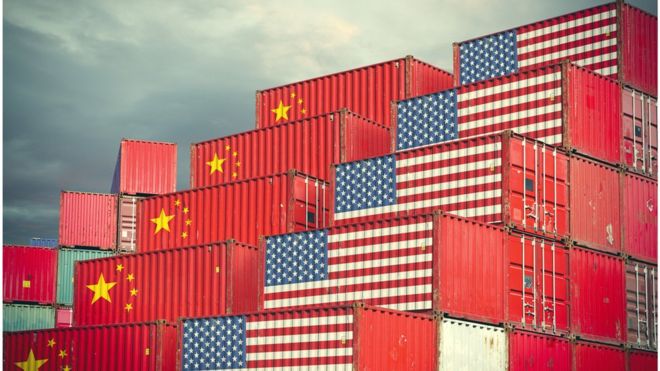
Keep it under your hat, but Trump is getting the best of China in the trade confrontation.  Lawrence Solomon explains in a Financial Times article Remember Trump’s supposedly ‘lose-lose’ trade war? He’s winning. China’s losing. Excerpts in italics with my bolds.

The tariffs clearly hurt China’s economy more than America’s

Not that long ago, China’s economy was seen as a juggernaut that would soon overtake America’s to become the world’s largest. “Made in China 2025,” the Chinese government’s blueprint to take over manufacturing, was seen as an existential threat to U.S. technological leadership. Speculation had the Chinese yuan replacing the United States dollar as the world’s reserve currency.

What a difference a trade war makes. No one marvels at the Chinese economy today.

Car sales in China, the world’s largest car market, plummeted by 19 per cent in December, capping a six-per-cent decline in sales for the 2018 year, the industry’s first fall in 20 years. Goldman Sachs predicts the decline will steepen to seven per cent in 2019. More broadly, China’s private and public manufacturing sectors both contracted in December.  China’s mainland stock markets, which declined 25 per cent in 2018, aren’t doing well either. Neither is growth in consumer spending, which is at a 15-year low. The government is backpedalling on its targets for “Made in China 2025,” and its other high-profile initiatives — the much-ballyhooed Asian Infrastructure Investment Bank and the Belt and Road Initiative — are falling short.

In fact, the entire Chinese economy may not only be falling short, it may never have performed as well as claimed. Many believe that China’s official economic growth rate, a fabulous 6.5 per cent, is more a fable. A World Bank estimate for 2016 put China’s economic growth at 1.1 per cent, with other estimates showing low or even negative growth. Also worrying is the potentially catastrophic hidden debt that fuelled China’s growth — as much as US$6 trillion by China’s local governments alone, according to S&P Global Ratings, which called it “a debt iceberg with titanic credit risks.”

Many authorities point to the trade war to explain in part these poor metrics, typically adding that trade wars are always lose-lose. Yet while China clearly seems a loser, the same can’t be said for the U.S., whose economy is on fire.

In contrast to the 15- and 20-year lows logged by China’s economic indicators, the U.S. is racking up 20-, 30-, 40- and 50-year highs.

Wages are up, especially for those traditionally worse off, while unemployment rates for blacks, Hispanics and women are at lows not seen in decades. The U.S. economy has added 4.8 million jobs since Donald Trump was elected president, with U.S. manufacturers last year adding 284,000 jobs, the most in more than 20 years. Americans are ditching food stamps and disability payments for well-paying jobs. “Put it together, and this is the best time for the American labor market in at least 18 years and maybe closer to 50,” The New York Times noted in November.

So much for the claims of the U.S. Chamber of Commerce, which warned that Trump’s tariff policy on imported products “endangers the jobs of millions of workers”; of the Tax Foundation, which predicted that Trump’s tariffs would decrease Americans’ wages; of Bank of England Governor Mark Carney, who stated the trade war with China would reduce U.S. GDP; and of the Heritage Foundation, which called Trump’s tariffs “ineffective and dangerous”.

While China’s demise and America’s rise can’t all or even mostly be attributed to Trump’s tariffs, the tariffs clearly hurt China’s economy more than America’s. For one thing, the “tax” that tariffs represent has mostly been paid by China. According to a recent policy brief from EconPol Europe, a network of researchers in the European Union, U.S. companies and consumers will pay only 4.5 per cent of the 25-per-cent tariffs on US$250 billion of Chinese goods, with the other 20.5 per cent falling on Chinese producers. The EconPol report found that the Trump administration selected easily replaced products, forcing China’s exporters to cut selling prices to keep buyers. “Through its strategic choice of Chinese products, the U.S. government was not only able to minimize the negative effects on U.S. consumers and firms, but also to create substantial net welfare gains in the U.S.,” the authors determined, adding that the tariffs will accomplish Trump’s goals of lowering the trade deficit with China.

More importantly, the tariffs have spurred investment confidence in the U.S., not only in steel and aluminum, where dozens of plants are either being built or reopened, but in the broader economy, too. A UBS Wealth Management Americas survey found that 71 per cent of American business owners support additional tariffs on imports from China, with only one-third believing tariffs would hurt them. A Bloomberg Businessweek article in October bore out the view that tariffs hitting steel and aluminum imports would be beneficial: “Employment in metal-using industries has risen since the tariffs went into effect last spring, (more than) the increase for overall manufacturing.”

The American public likes tariffs, too: According to a Mellman Group and Public Opinion Strategies poll in October, nearly 60 per cent of likely voters deem it important for Trump and Congress to “place trade restrictions on countries that violate trade agreements.” When the tariffs apply to China, the public doubtless also likes them for non-economic factors — to rein in one of the world’s worst human rights offenders and America’s chief military threat.

Contrary to the conventional wisdom, this trade war is anything but lose-lose. This one is a big win for the U.S.

• Lawrence Solomon is a policy analyst with Toronto-based Probe International.

The Real Reason They Hate Trump

David Gelernter is a professor of computer science at Yale.  I first learned of him when he wrote The Closing of the Scientific Mind, which is a plea for scientists to celebrate and enhance humanity rather than belittle human life. My synopsis was How Science Is Losing Its Humanity

Now Gelernter has written an insightful essay on what to like and not to like about Donald Trump (President of the United States).  Reprinted below in italics with my bolds.

The Real Reason They Hate Trump

Every big U.S. election is interesting, but the coming midterms are fascinating for a reason most commentators forget to mention: The Democrats have no issues. The economy is booming and America’s international position is strong. In foreign affairs, the U.S. has remembered in the nick of time what Machiavelli advised princes five centuries ago: Don’t seek to be loved, seek to be feared.

The contrast with the Obama years must be painful for any honest leftist. For future generations, the Kavanaugh fight will stand as a marker of the Democratic Party’s intellectual bankruptcy, the flashing red light on the dashboard that says “Empty.” The left is beaten.

This has happened before, in the 1980s and ’90s and early 2000s, but then the financial crisis arrived to save liberalism from certain destruction. Today leftists pray that Robert Mueller will put on his Superman outfit and save them again.

For now, though, the left’s only issue is “We hate Trump.” This is an instructive hatred, because what the left hates about Donald Trump is precisely what it hates about America. The implications are important, and painful.

Not that every leftist hates America. But the leftists I know do hate Mr. Trump’s vulgarity, his unwillingness to walk away from a fight, his bluntness, his certainty that America is exceptional, his mistrust of intellectuals, his love of simple ideas that work, and his refusal to believe that men and women are interchangeable. Worst of all, he has no ideology except getting the job done. His goals are to do the task before him, not be pushed around, and otherwise to enjoy life. In short, he is a typical American—except exaggerated, because he has no constraints to cramp his style except the ones he himself invents.

Mr. Trump lacks constraints because he is filthy rich and always has been and, unlike other rich men, he revels in wealth and feels no need to apologize—ever. He never learned to keep his real opinions to himself because he never had to. He never learned to be embarrassed that he is male, with ordinary male proclivities. Sometimes he has treated women disgracefully, for which Americans, left and right, are ashamed of him—as they are of JFK and Bill Clinton.

But my job as a voter is to choose the candidate who will do best for America. I am sorry about the coarseness of the unconstrained average American that Mr. Trump conveys. That coarseness is unpresidential and makes us look bad to other nations. On the other hand, many of his opponents worry too much about what other people think. I would love the esteem of France, Germany and Japan. But I don’t find myself losing sleep over it.

The difference between citizens who hate Mr. Trump and those who can live with him—whether they love or merely tolerate him—comes down to their views of the typical American: the farmer, factory hand, auto mechanic, machinist, teamster, shop owner, clerk, software engineer, infantryman, truck driver, housewife. The leftist intellectuals I know say they dislike such people insofar as they tend to be conservative Republicans.

Hillary Clinton and Barack Obama know their real sins. They know how appalling such people are, with their stupid guns and loathsome churches. They have no money or permanent grievances to make them interesting and no Twitter followers to speak of. They skip Davos every year and watch Fox News. Not even the very best has the dazzling brilliance of a Chuck Schumer, not to mention a Michelle Obama. In truth they are dumb as sheep.

Mr. Trump reminds us who the average American really is. Not the average male American, or the average white American. We know for sure that, come 2020, intellectuals will be dumbfounded at the number of women and blacks who will vote for Mr. Trump. He might be realigning the political map: plain average Americans of every type vs. fancy ones.

Many left-wing intellectuals are counting on technology to do away with the jobs that sustain all those old-fashioned truck-driver-type people, but they are laughably wide of the mark. It is impossible to transport food and clothing, or hug your wife or girl or child, or sit silently with your best friend, over the internet. Perhaps that’s obvious, but to be an intellectual means nothing is obvious. Mr. Trump is no genius, but if you have mastered the obvious and add common sense, you are nine-tenths of the way home. (Scholarship is fine, but the typical modern intellectual cheapens his learning with politics, and is proud to vary his teaching with broken-down left-wing junk.)

This all leads to an important question—one that will be dismissed indignantly today, but not by historians in the long run: Is it possible to hate Donald Trump but not the average American?

True, Mr. Trump is the unconstrained average citizen. Obviously you can hate some of his major characteristics—the infantile lack of self-control in his Twitter babble, his hitting back like a spiteful child bully—without hating the average American, who has no such tendencies. (Mr. Trump is improving in these two categories.) You might dislike the whole package. I wouldn’t choose him as a friend, nor would he choose me. But what I see on the left is often plain, unconditional hatred of which the hater—God forgive him—is proud. It’s discouraging, even disgusting. And it does mean, I believe, that the Trump-hater truly does hate the average American—male or female, black or white. Often he hates America, too.

Granted, Mr. Trump is a parody of the average American, not the thing itself. To turn away is fair. But to hate him from your heart is revealing. Many Americas were ashamed when Ronald Reagan was elected. A movie actor? But the new direction he chose for America was a big success on balance, and Reagan turned into a great president. Evidently this country was intended to be run by amateurs after all—by plain citizens, not only lawyers and bureaucrats.

Those who voted for Mr. Trump, and will vote for his candidates this November, worry about the nation, not its image. The president deserves our respect because Americans deserve itnot such fancy-pants extras as network commentators, socialist high-school teachers and eminent professors, but the basic human stuff that has made America great, and is making us greater all the time.

Mr. Gelernter is computer science professor at Yale and chief scientist at Dittach LLC. His most recent book is “Tides of Mind.”


Why Teenagers Are Not Supreme Court Justices

The current skirmish is between those who want to disqualify Brett Kavanaugh and those who want to confirm him to the Supreme Court bench. At issue is a claim by a woman that the nominee harassed her when both were teenagers. Presumably she will tell her story to the Senators and he will tell his, and unless something unforeseen is disclosed, the claim will end up being unprovable and undisprovable.

At that point we should remember why teenagers are not candidates for adult responsibilities. It is widely accepted that most of us at those ages have brains not fully developed, especially regarding morality. The inability to foresee consequences of risky behaviors is a classic adolescent failing. Every parent struggles with granting freedom to youngsters to take decisions and bear the consequences, all the while hoping they and others survive the mistakes and learn to be responsible adults. Are teenagers accountable for their actions? Absolutely, as we see reckless teenage drivers causing damage, injury and sometimes death, ruining their own and other lives.

In the current context, with an all-out, full-court press by desperate Democrats to prevent another originalist Justice, this accusation at this time has clear political motivations. That doesn’t say nothing happened between the two teenagers; her animus against him seems more than distaste for his legal position, though I could be mistaken about that. Teenagers are infamous for taking chances, pushing the envelope, testing the rules and advice provided by their elders. With the uncertainties about the recalled incident, when and where and who was present, there is no way for us to know what happened.

Martin Luther King said it well, and in fact there is progress unacknowledged by social justice warriors.  Today’s surveillance for racial bias is extremely sensitive, and yet the demand for such incidents far exceeds the supply.  In addition we now have conflicts over male and female sexual encounters, and some presume that women are always the victims and men the trespassers.  Case by case, it comes down to personal integrity and character of the individuals involved.

What we do know is that judges are qualified by the character they have displayed over a lifetime of service in their families, communities and in the courtroom. That character is only partly formed in adolescence, but can be examined and known by adult behaviors. What matters is not a single incident, but the pattern exhibited over decades. On this basis, Brett Kavanaugh is supremely qualified and his confirmation should not be derailed.


The Dog That Didn’t Bark

This post gets into political territory, but continues a theme on the importance of evidence in attesting whether a claim is true or false.  The topic of course is the investigation into election collusion (itself not a crime) between Russia and Trump.  Here is a status report following convictions yesterday.  George Neumayr writes in American Spectator Ignore the Noise, Mueller Still Has Nothing  Excerpts below with my bolds.

For all of the media’s oohing and ahhing over Robert Mueller’s legal victories on Tuesday, his impeachment case remains hopelessly threadbare. In terms of his Department of Justice mandate, he has made no progress whatsoever. He is presiding over a “collusion” probe that has absolutely nothing to do with collusion.

Let him keep indicting and convicting ham sandwiches. Most Americans won’t care. It just underscores the superfluous and abusive character of his probe. He is not compiling an air-tight legal case for impeachment; he is simply using abusive prosecutorial tactics to foment an anti-Trump political firestorm.

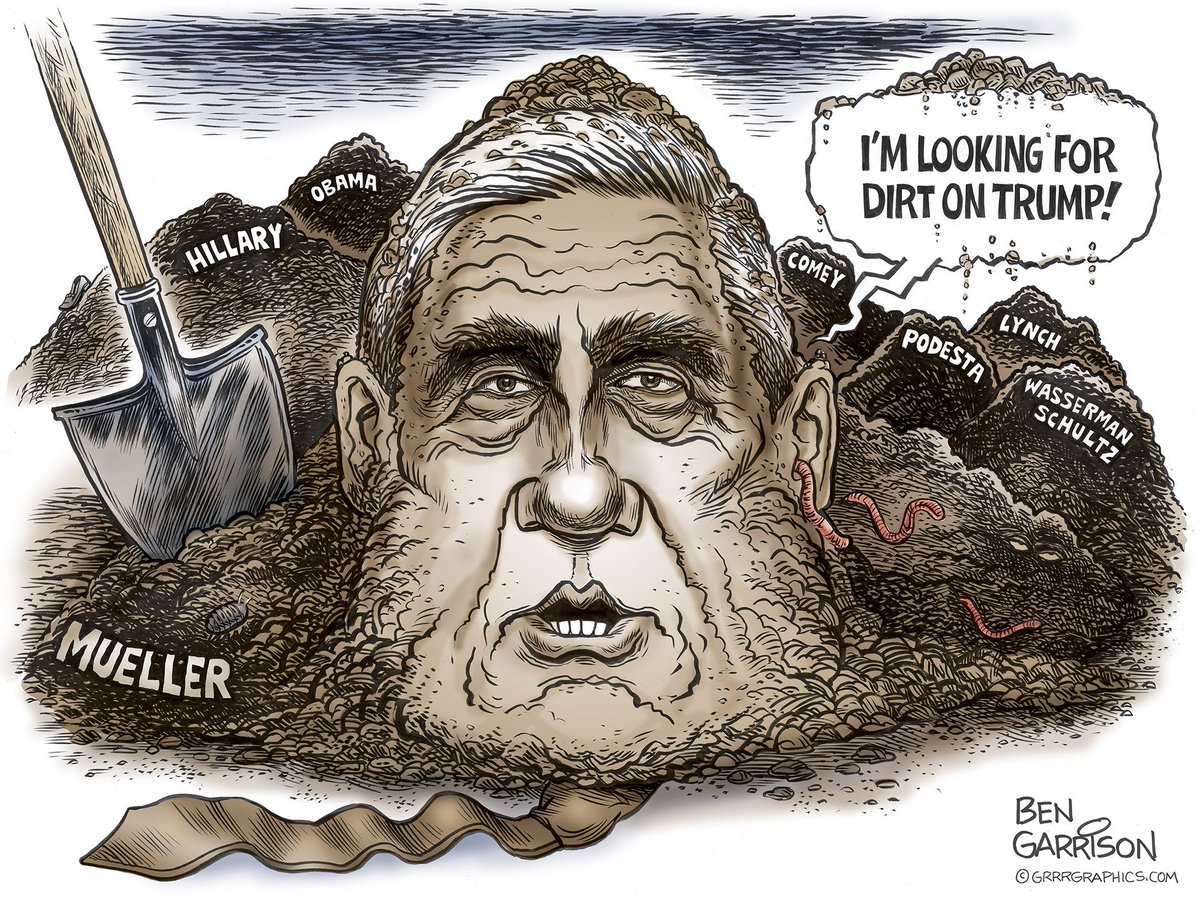
Rod Rosenstein is the Dr. Frankenstein in this political horror show. He birthed a monster in Mueller, who is now rampaging through the streets of Manhattan in search of pre-presidential dirt. Let’s, for the sake of argument, say that all of his claims about Trump-Cohen corruption are true. Is that impeachable material? No, it is not. The American people voted for Trump knowing full well that his pre-presidential record was checkered. Does anybody really think the American people are going to rise up and demand that not only the House but most of the Senate expel Trump from the presidency over an alleged campaign finance violation that doesn’t bear in the slightest upon the collusion question?

Mueller is expert at finding flaky witnesses. Cohen is his latest. His memories of conversations and meetings with Trump are no more reliable than Jim Comey’s. Cohen has given baldly contradictory accounts of his payments to Stormy Daniels. The notion that Trump could lose the presidency owing to the testimony of a sleazy casino lawyer strains all plausibility.

Mueller’s report will culminate in nothing more than an epic political food fight — a mode of combat Trump has perfected. Through his relentless tweeting, Trump has thoroughly educated the American people on the raw politics of Mueller’s probe — that he inherited a hopelessly tainted investigation from Trump haters ensconced in the Obama administration, that Mueller assembled a team of Hillary supporters to continue the probe, and that he has abandoned his DOJ mandate for a partisan fishing expedition of staggering proportions. The unfairness of it all has not been lost on the American people.

The media routinely calls Trump a “bully” even as it forms a mob encircling him, bellowing about this or that utterly trivial offense. None of it adds up to anything even close to impeachable material. From the fulminating, one would think that a foreign occupier had invaded Washington. Trump’s great crime was colluding not with Russians but with neglected American voters, with whom he ended the Clinton dynasty. While Hillary was waiting with bated breath for dirt from Russians conveyed to her British spy, Trump plunged into the American heartland, winning the election the old-fashioned way, by simply outhustling Hillary in places like Wisconsin and Pennsylvania.

I just got back from the latter state. Not a single mechanic, trucker, or waitress I met in Pennsylvania ever showed the slightest bit of interest in Mueller’s probe. Most of them probably don’t even know who Mueller is. That the media is staking its demolition of Trump on this gray, little-known ruling-class darling is a measure of its alienation from the American people. They simply don’t care about Trump’s pre-presidential sins, political screw-ups, and minor law-bending, if that even occurred.

Mueller is desperately trying to stitch together an impeachment case based on these thin threads. He struck out on collusion, then turned to obstruction of justice, only to realize that his star witness, Comey, is himself under investigation. So he resorted to a search for pre-presidential dirt and papered over the nothingness of his probe with indictments and convictions on matters far afield. Only members of the ruling class and media, who devote every waking moment to studying all things Trump at the granular level, could portray this probe as “momentous.” To most Americans, it remains a giant bore — an inside-the-Beltway parlor game of no particular interest to them or relevance to their lives.

Trump on Tuesday night resumed his mockery of the probe, asking at a rally in West Virginia, “Where is the collusion? You know, they’re still looking for collusion! Where is the collusion? Find some collusion. We want to find the collusion.” Mueller called off that search a long time ago, shifting to a Cohen, rather than collusion, probe, to which the America people will ask upon the release of his report: Why are we supposed to care?

Summary

Neumeyr is probably right forecasting that the long-awaited Mueller report will throw the kitchen sink garbage against POTUS hoping something will stick, thereby starting yet another food fight.  It seems too much for Team Mueller to come out exonerating Trump on the original issue.  But they have turned over every rock in vain to find damning evidence against the null hypothesis:  Trump campaign did not collaborate with the Russians.

Footnote:

“Silver Blaze” is the story of the disappearance of the titular race horse. It is believed that a stranger stole the horse, but Sherlock Holmes is able to pin the horse’s disappearance on the horse’s late trainer, John Straker, because a dog at the horse’s stable did not bark on the night of his disappearance. The following exchange takes place in the short story:

Gregory (Scotland Yard detective): “Is there any other point to which you would wish to draw my attention?”

Holmes: “To the curious incident of the dog in the night-time.”

Gregory: “The dog did nothing in the night-time.”

Holmes: “That was the curious incident.”


G7 Hypocrisy

Diplomacy has become the art of talking as though something is agreed and will happen, when in fact nothing has changed and nothing different will ensue. Trump did indeed blow up the G7 meeting because he insists on facing the facts of trade imbalances and the emptiness of virtue signaling. By not making the gesture of signing some insipid joint communique, he exposed the whole charade.

Liz Peek at the Hill explains in article Hypocritical France and Germany scold Trump; how dare they  Excerpts below in italics with my bolds

Emmanuel Macron is having a “crise de colere;” that’s French for hissy fit.

In the run-up to the Group of Seven (G-7) meeting, the French president joined with Germany’s Angela Merkel in warning that he would refuse to sign a joint statement from the G-7 unless the U.S. demonstrates a willingness to shift its position on the Iran nuclear agreement, the Paris Agreement and on tariffs. The nerve!

Let’s start with tariffs. As Commerce Secretary Wilbur Ross has written, the EU is quick to criticize the United States for not pursuing free trade, but at the same time, they charge higher tariffs than the U.S. in 17 of 22 major consumer goods categories.

On dairy products, fruits and vegetables, cereals, sugar, fish, chemicals, electrical machinery and many other goods, the EU charges import fees far above those levied by the U.S. What is the rationale for that imbalance? There is none. Europe is simply protecting its interests.

On autos, the EU imposes a 10-percent fee on imports from the U.S. while we reciprocate with a 2.5-percent charge. Again, why the difference? Why shouldn’t we help out our car manufacturers and workers just as the French and Germans help theirs?

It isn’t as though the U.S. has a built-in advantage. As Ross wrote, “Today Europe exports 1.14 million automobiles to the U.S., nearly four times as many as the U.S. exports to Europe.”

And, of course, the EU doesn’t rely on tariffs alone to jack up their trade surplus with the U.S. They also give their exporters enormous help with financing and impose other kinds of barriers to American goods, like obscure health standards and regulations.

In short, over the years they have tilted the playing field in their favor, and we have let them get away with it. Today, their protectionist measures help earn them a roughly $150 billion annual trade surplus; there is no plausible excuse for that.

As for the Iran deal, France and Germany are incensed that a seriously flawed agreement will be abandoned. They do not care, apparently, that Tehran’s mullahs have not lived up to the spirit of the deal, instead spending the billions received as part of the pact to foment unrest across the region.

Their pique is not because they believe that in return for being freed from sanctions, Tehran was about to emerge as a reliable actor for peace in the Middle East. No, they are miffed that their scramble to do business with Iran will have to wait.

Given the EU’s sluggish growth track, brought on in large part by dysfunctional work rules and regulations of the sort that President Trump has worked to eliminate in the U.S., they are desperate for access to new markets.

Even as President Trump ditched the Iran deal and threatened to re-impose sanctions, EU officials encouraged companies to power forward with commercial ties, so greedy are they for growth.

Already, however, many firms have decided the risk of running afoul of U.S. prohibitions is simply too great and have started to leave the country.

French company Total, the only major oil firm to re-engage in Iran, signed a $5 billion, 20-year agreement last year to develop a large natural gas field. It has announced it is withdrawing from the deal.

The Danish shipping company Moller-Maersk announced it would cease shipping Iranian oil; the company’s CEO said in a statement that its business with the U.S. was more important than operating in Iran. Peugeot and Siemens, similarly, have announced they would withdraw from Iran.

Germany and France are unhappy, too, about President Trump’s withdrawal from the Paris treaty. But their outrage is undeserved. In 2017, the U.S. reported the largest year-to-year drop in carbon emissions of any advanced economy, according to a report from the International Energy Agency.

In the same year, the EU saw emissions rise 1.5 percent. Greenhouse gases also rose in Asia. In fact, the only country making progress toward emissions reductions at this time is the U.S. So, bemoaning the decision by President Trump to withdraw from the cherished Paris Agreement would appear to be little more than diplomatic theater.

While berating the U.S., the French allowed their own carbon dioxide emissions to rise 3.6 percent over their targeted level last year. France has decided to mothball its clean nuclear power industry, which of course makes any progress on emissions reductions all but impossible.

Meanwhile, last fall, French officials pledged to phase out all oil and gas production by 2040; they notably did not promise to stop importing and refining fossil fuels from other countries. It is consumption of course that is key to global carbon output, not where the production takes place.

Meanwhile, the Germans have set lofty targets for using renewables to generate electricity, only to find that the wind doesn’t always blow and the sun doesn’t always shine. Consequently, they have had to burn lignite, one of the dirtiest fuels on the planet, to satisfy their demand for power. Needless to say, like the French, the Germans have missed their emission goals.

It is tiresome to be lectured by the EU, a region that is facing serious, ongoing tensions. The Brussels wizards who readily criticize U.S. policies have not faced up to the block’s structural problems revealed during the financial crisis.

Just last week, anti-EU election results in Italy caused market turbulence; voter impatience with Europe’s bureaucrats is unlikely to disappear.

President Trump has upset conventions in some areas that should have been challenged decades ago. That is uncomfortable for those reliant on U.S. largesse, but should be cheered by Americans.

Summary

It is really remarkable to see a non-politician businessman operate with instincts for finding leverage and using it to strike new arrangements.  And Trump also shows how peer pressure and disapproval, so effective in cowing those who care, rolls off his back like nothing.  They truly don’t know what game he is playing because he is not wired like them, and they have seriously underestimated his capacities and determination.  Those who accuse him of polarizing the situation are mistaken; he is revealing the conflicts of interest that have been papered over and never challenged by previous Presidents.  As they say, “You can’t change until you first acknowledge the problem.”


Mueller Indictment Implications

dywnv4ou8aa-3dl

The ramifications of the recent indictments are explored by California attorney Robert Barnes writing Feb. 17 in the journal Law and Crime Does Mueller Indictment Mean Clinton Campaign Can Be Indicted for Chris Steele? Text below with my bolds.

Special Counsel Robert Mueller indicted foreign citizens for trying to influence the American public about an election because those citizens did not register as a foreign agent nor record their financial expenditures to the Federal Elections Commission. By that theory, when will Mueller indict Christopher Steele, FusionGPS, PerkinsCoie, the DNC and the Clinton Campaign? Mueller’s indictment against 13 Russian trolls claimed their social media political activity was criminal because: they were foreign citizens; they tried to influence an election; and they neither registered under the Foreign Agents Registration Act nor reported their funding to the Federal Elections Commission.

First, if Mueller’s theory is correct, three things make Steele a criminal: first, he is a foreign citizen; second, he tried to influence an election, which he received payments to do (including from the FBI itself); and third, he neither registered as a foreign agent nor listed his receipts and expenditures to the Federal Election Commission. Also, according to the FBI, along the way, Steele lied…a lot, while the dossier he disseminated contained its own lies based on bought-and-paid for smears from foreign sources reliant on rumors and innuendo.

Second, if Mueller’s theory is correct, three things make FusionGPS a criminal co-conspirator: it knew Steele was a foreign citizen; it knew, and paid, Steele to influence an election; and it knew, and facilitated, Steele neither registering as a foreign agent nor reporting his funding from the Democratic National Committee and the Clinton campaign to the Federal Election Commission.

Third, if Mueller’s theory is correct, then three things make PerkinsCoie a potential target: it knew Steele was a foreign citizen; it knew, and paid, Steele to influence an election; and it knew, and facilitated, Steele neither registering as a foreign agent nor reporting his funding from the Democratic National Committee and the Clinton campaign to the Federal Election Commission, by disguising its receipt of payments from the Clinton campaign as a “legal expense.”

Fourth, if Mueller’s theory is correct, then three things make the DNC a potential target: it knew Steele was a foreign citizen; it knew, and paid, Steele to influence an election; and it knew, and facilitated, Steele neither registering as a foreign agent nor reporting his funding from the Democratic National Committee and the Clinton campaign to the Federal Election Commission, by disguising its payments to Steele as laundered legal expenses to a law firm.

Fifth, if Mueller’s theory is correct, three things make the Clinton Campaign a potential target: it knew Steele was a foreign citizen; it knew, and paid, Steele to influence an election; and it knew, and facilitated, Steele neither registering as a foreign agent nor reporting his funding from the Clinton campaign to the Federal Election Commission, by disguising its funding of payments to Steele laundered through a law firm as a “legal expense.”

Don’t expect such an indictment. Mueller chose his targets because he knows they will never appear in court, never contest the charges, and cannot be arrested or extradited as Russian citizens. Mueller’s unprecedented prosecution raises three novel arguments: first, that speaking out about American politics requires a foreign citizen to register under the Foreign Agents Registration Act; second, that speaking out about American politics requires a foreign citizen list their source and expenditure of funding to the Federal Election Commission; and third, that mistakes on visa applications constitute “fraud” on the State Department. All appear to borrow from the now-discredited “honest services” theories Mueller’s team previously used in corporate and bribery cases, cases the Supreme Court overturned for their unconstitutional vagueness. The indictment raises serious issues under the free speech clause of the First Amendment and due process rights under the Fifth Amendment.

Robert Barnes is a California-based trial attorney whose practice focuses on Constitutional, criminal and civil rights law.

Summary

Don’t overlook the implication in the final paragraph, namely that expressing opinions about candidates is protected free speech, even for foreigners. Mueller presents indictments he will never have to prove in court to create the appearance of a crime. His circus needs a crime as justification, and to go after targets for conspiring or lying about that “crime”. It is a clever, but flimsy legal fiction, as Barnes shows it could apply to a lot of political discourse.

And social media is an unlikely place to apply some legal standard, since people, robots and puppets say all kinds of things often hiding behind handles.  In case you have forgotten, Dave Chappelle reminds us what the internet is like in the classic video  What if the internet was a real place?


US Election Rigged, Trump Won Anyway

Details are provided by Ross McKitrick in a background paper: The Nunes Memo and the Horowitz Report: Popcorn  Edition1 Ross McKitrick  January 29, 2018

I find the backstory to be as gripping as any paperback spy thriller. But the plot is
complicated and there are many moving parts. Herein, based on my readings, is my surmise
about what the 4 page Nunes memo contains, and also what a forthcoming report by
Department of Justice Inspector General Michael Horowitz will conclude. I have included
some source citations but left many out since there are too many to list.

Chapter 1: Benghazi and Hillary’s Emails

Chapter 2: The Clinton Email Investigation

Chapter 3: Steele Visits the FBI

Chapter 4: The DoJ Inspector General Investigation

Chapter 5: The Trump Tower Wiretap

Chapter 6: Mueller Appointed Special Counsel

Final Chapter: The Two Reports

The Onion weighs in:  

FBI Warns Republican Memo Could Undermine Faith In Massive, Unaccountable Government Secret Agencies

WASHINGTON—Stressing that such an action would be highly reckless, FBI Director Christopher Wray warned Thursday that releasing the “Nunes Memo” could potentially undermine faith in the massive, unaccountable government secret agencies of the United States. “Making this memo public will almost certainly impede our ability to conduct clandestine activities operating outside any legal or judicial system on an international scale,” said Wray, noting that it was essential that mutual trust exist between the American people and the vast, mysterious cabal given free rein to use any tactics necessary to conduct surveillance on U.S. citizens or subvert religious and political groups. “If we take away the people’s faith in this shadowy monolith exempt from any consequences, all that’s left is an extensive network of rogue, unelected intelligence officers carrying out extrajudicial missions for a variety of subjective, and occasionally personal, reasons.” At press time, Wray confirmed the massive, unaccountable government secret agencies were unaware of any wrongdoing for violating constitutional rights.