UAH Shows May Reversed April Warming Blip

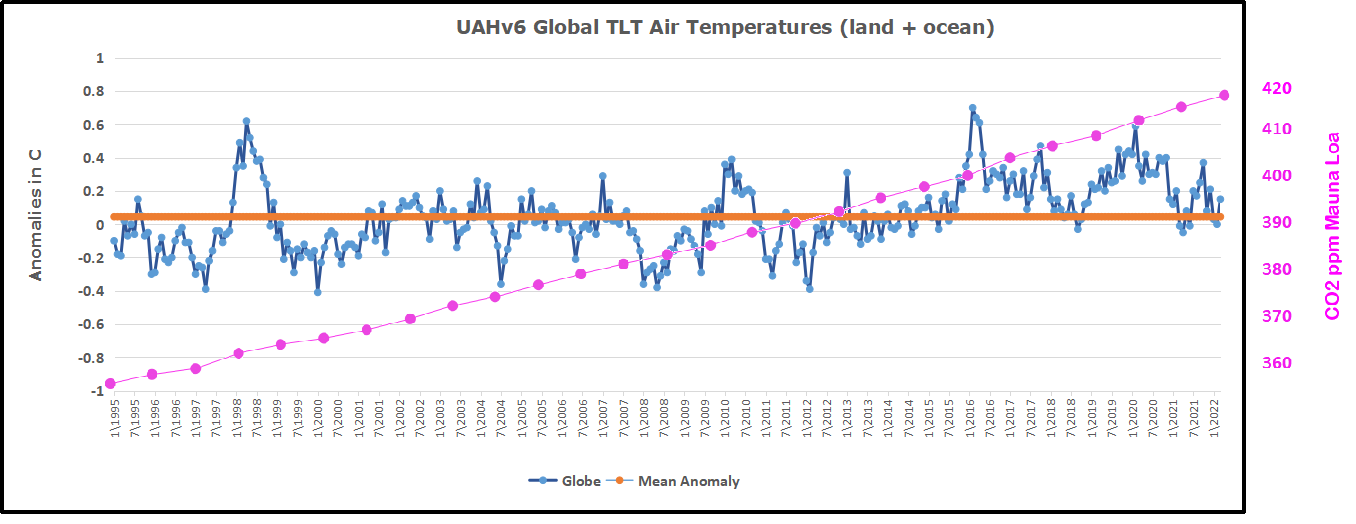
The post below updates the UAH record of air temperatures over land and ocean.  But as an overview consider how recent rapid cooling  completely overcame the warming from the last 3 El Ninos (1998, 2010 and 2016).  The UAH record shows that the effects of the last one were gone as of April 2021, again in November 2021 and February 2022. (UAH baseline is now 1991-2020).

For reference I added an overlay of CO2 annual concentrations as measured at Mauna Loa.  While temperatures fluctuated up and down ending flat, CO2 went up steadily by ~55 ppm, a 15% increase.

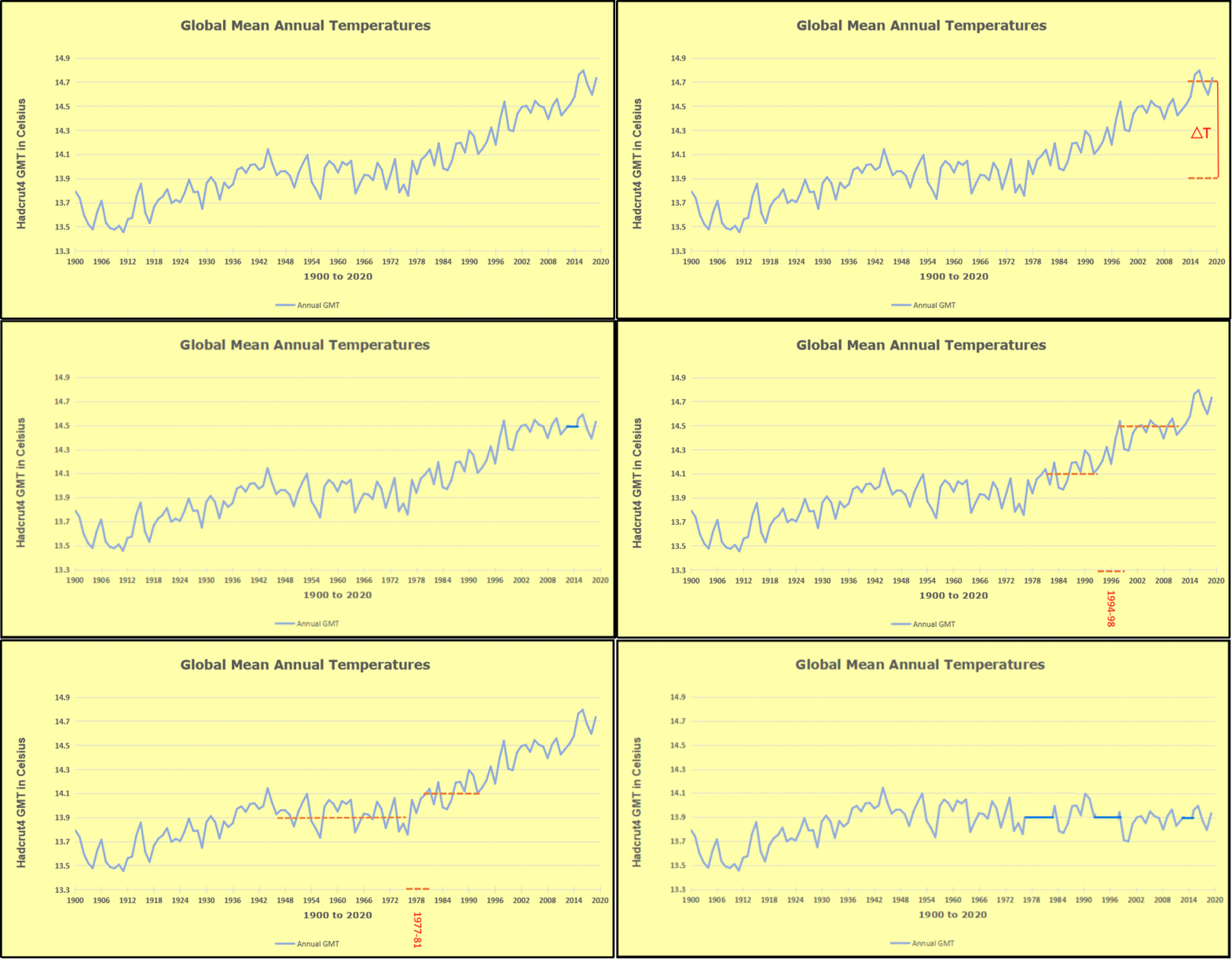
Furthermore, going back to previous warmings prior to the satellite record shows that the entire rise of 0.8C since 1947 is due to oceanic, not human activity.

gmt-warming-events

The animation is an update of a previous analysis from Dr. Murry Salby.  These graphs use Hadcrut4 and include the 2016 El Nino warming event.  The exhibit shows since 1947 GMT warmed by 0.8 C, from 13.9 to 14.7, as estimated by Hadcrut4.  This resulted from three natural warming events involving ocean cycles. The most recent rise 2013-16 lifted temperatures by 0.2C.  Previously the 1997-98 El Nino produced a plateau increase of 0.4C.  Before that, a rise from 1977-81 added 0.2C to start the warming since 1947.

Importantly, the theory of human-caused global warming asserts that increasing CO2 in the atmosphere changes the baseline and causes systemic warming in our climate.  On the contrary, all of the warming since 1947 was episodic, coming from three brief events associated with oceanic cycles. 

Update August 3, 2021

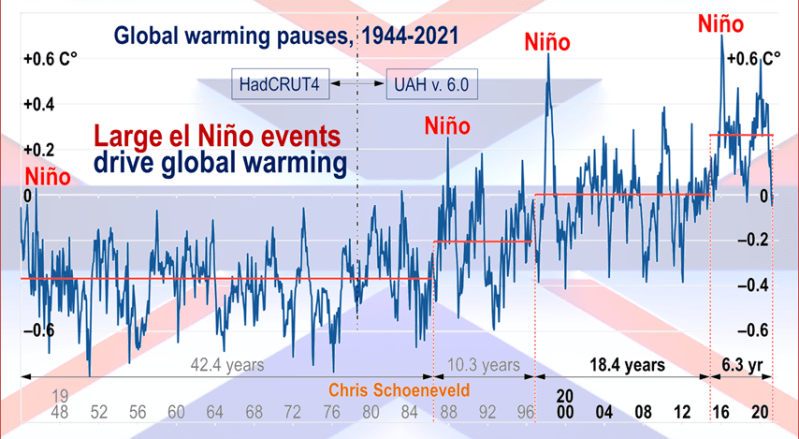
Chris Schoeneveld has produced a similar graph to the animation above, with a temperature series combining HadCRUT4 and UAH6. H/T WUWT

image-8


mc_wh_gas_web20210423124932

See Also Worst Threat: Greenhouse Gas or Quiet Sun?

May Update NH Land and SH Ocean Warming Reversed

banner-blog

With apologies to Paul Revere, this post is on the lookout for cooler weather with an eye on both the Land and the Sea.  While you will hear a lot about 2020-21 temperatures matching 2016 as the highest ever, that spin ignores how fast the cooling set in.  The UAH data analyzed below shows that warming from the last El Nino was fully dissipated with chilly temperatures in all regions.  Last month NH land and SH ocean showed temps matching March, reversing an upward blip in April.

UAH has updated their tlt (temperatures in lower troposphere) dataset for May 2022.  Previously I have done posts on their reading of ocean air temps as a prelude to updated records from HadSST3 (which is now discontinued). So I have separately posted on SSTs using HadSST4 April Cool Ocean Temps.  This month also has a separate graph of land air temps because the comparisons and contrasts are interesting as we contemplate possible cooling in coming months and years. Sometimes air temps over land diverge from ocean air changes.  However, last month showed that while air temps over Tropical ocean warmed slightly,  strong cooling over NH and SH, both land and sea, brought the Global anomaly down, back to March 2022 level. 

Note:  UAH has shifted their baseline from 1981-2010 to 1991-2020 beginning with January 2021.  In the charts below, the trends and fluctuations remain the same but the anomaly values change with the baseline reference shift.

Presently sea surface temperatures (SST) are the best available indicator of heat content gained or lost from earth’s climate system.  Enthalpy is the thermodynamic term for total heat content in a system, and humidity differences in air parcels affect enthalpy.  Measuring water temperature directly avoids distorted impressions from air measurements.  In addition, ocean covers 71% of the planet surface and thus dominates surface temperature estimates.  Eventually we will likely have reliable means of recording water temperatures at depth.

Recently, Dr. Ole Humlum reported from his research that air temperatures lag 2-3 months behind changes in SST.  Thus the cooling oceans now portend cooling land air temperatures to follow.  He also observed that changes in CO2 atmospheric concentrations lag behind SST by 11-12 months.  This latter point is addressed in a previous post Who to Blame for Rising CO2?

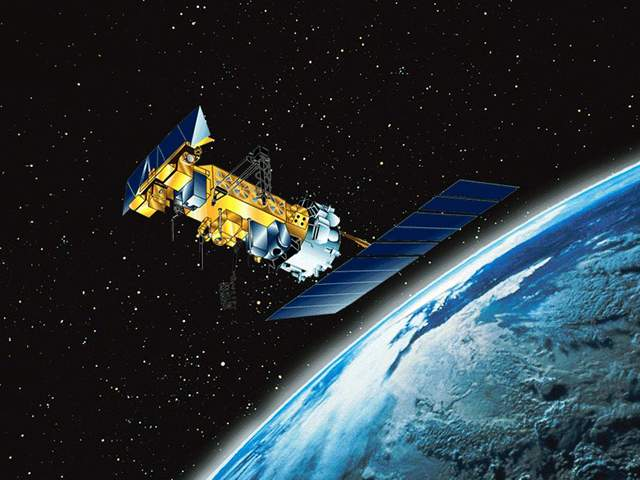
After a change in priorities, updates are now exclusive to HadSST4.  For comparison we can also look at lower troposphere temperatures (TLT) from UAHv6 which are now posted for May.  The temperature record is derived from microwave sounding units (MSU) on board satellites like the one pictured above. Recently there was a change in UAH processing of satellite drift corrections, including dropping one platform which can no longer be corrected. The graphs below are taken from the revised and current dataset.

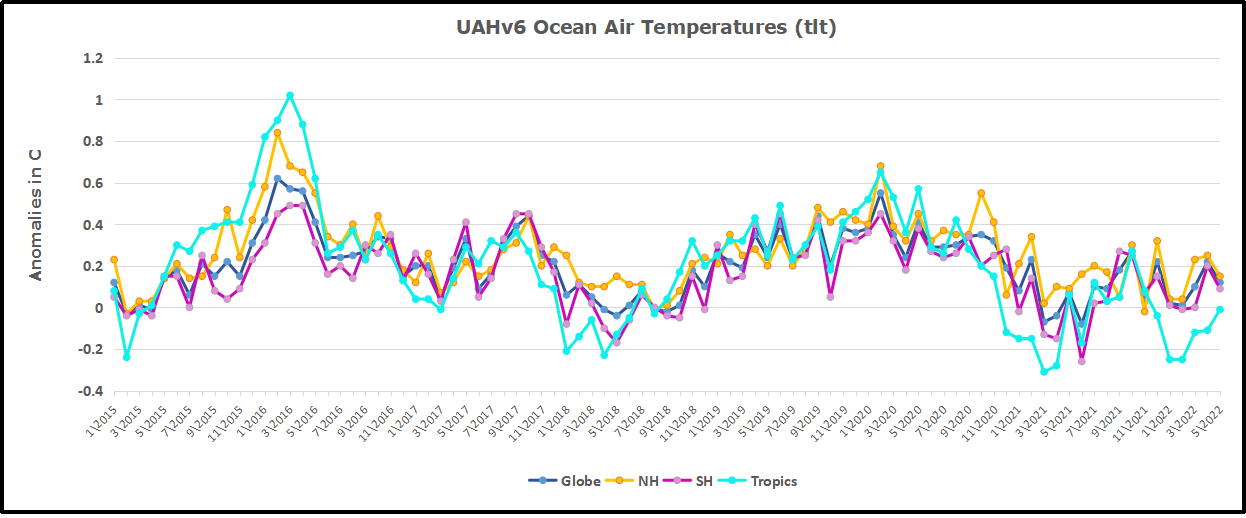
The UAH dataset includes temperature results for air above the oceans, and thus should be most comparable to the SSTs. There is the additional feature that ocean air temps avoid Urban Heat Islands (UHI).  The graph below shows monthly anomalies for ocean temps since January 2015.

Note 2020 was warmed mainly by a spike in February in all regions, and secondarily by an October spike in NH alone. In 2021, SH and the Tropics both pulled the Global anomaly down to a new low in April. Then SH and Tropics upward spikes, along with NH warming brought Global temps to a peak in October.  That warmth was gone as November 2021 ocean temps plummeted everywhere. A upward bump 01/2022 was reversed in 02/2022 before temps rose again in 03/2022.  Last month ocean temps in both NH and SH dropped sharply, pulling down the Global anomaly, despite some Tropical warming.

Land Air Temperatures Tracking Downward in Seesaw Pattern

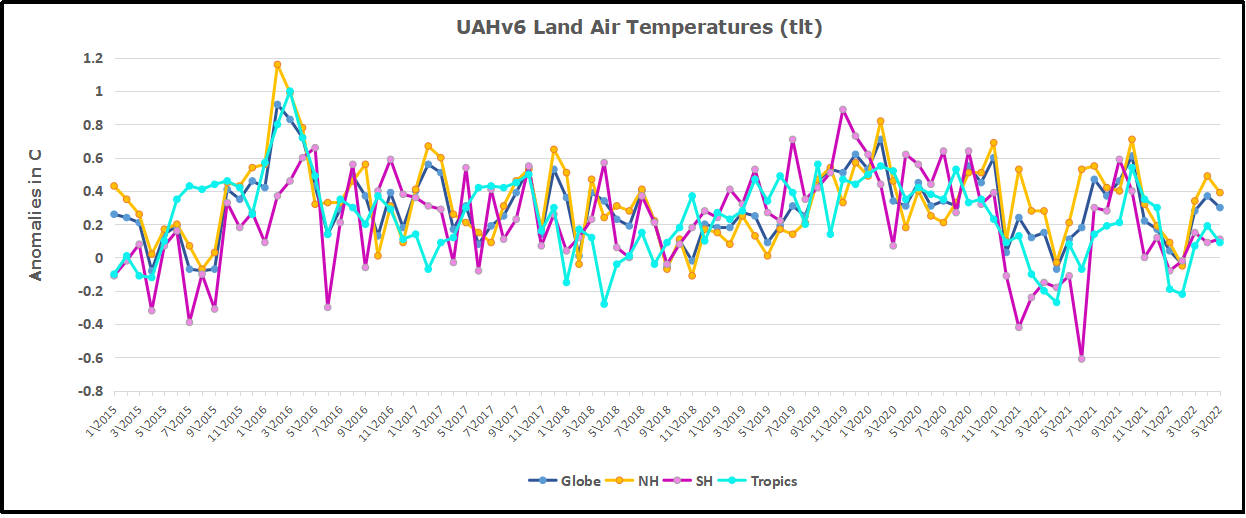
We sometimes overlook that in climate temperature records, while the oceans are measured directly with SSTs, land temps are measured only indirectly.  The land temperature records at surface stations sample air temps at 2 meters above ground.  UAH gives tlt anomalies for air over land separately from ocean air temps.  The graph updated for May is below.

Here we have fresh evidence of the greater volatility of the Land temperatures, along with extraordinary departures by SH land.  Land temps are dominated by NH with a 2021 spike in January,  then dropping before rising in the summer to peak in October 2021. As with the ocean air temps, all that was erased in November with a sharp cooling everywhere. Land temps dropped sharply for four months, even more than did the Oceans. March and April saw some warming, reversed In May when all land regions cooled pulling down the global anomaly.

The Bigger Picture UAH Global Since 1980

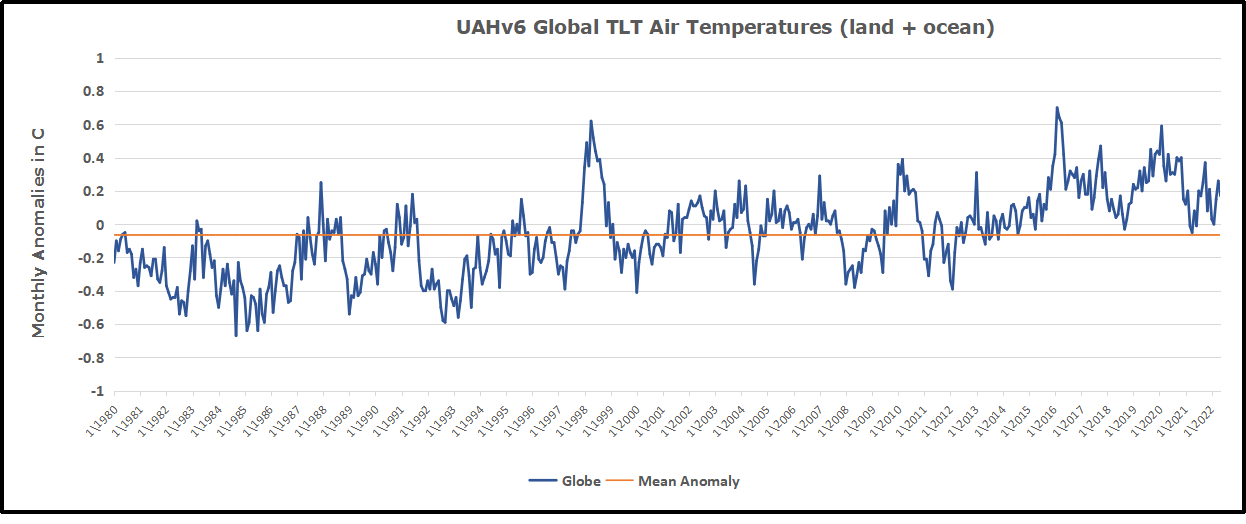
The chart shows monthly Global anomalies starting 01/1980 to present.  The average monthly anomaly is -0.06, for this period of more than four decades.  The graph shows the 1998 El Nino after which the mean resumed, and again after the smaller 2010 event. The 2016 El Nino matched 1998 peak and in addition NH after effects lasted longer, followed by the NH warming 2019-20.   A small upward bump in 2021 has been reversed with temps having returned close to the mean as of 2/2022.  March and April brought warmer Global temps, reversed in May and with little indication for another El Nino this summer.

TLTs include mixing above the oceans and probably some influence from nearby more volatile land temps.  Clearly NH and Global land temps have been dropping in a seesaw pattern, nearly 1C lower than the 2016 peak.  Since the ocean has 1000 times the heat capacity as the atmosphere, that cooling is a significant driving force.  TLT measures started the recent cooling later than SSTs from HadSST3, but are now showing the same pattern.  It seems obvious that despite the three El Ninos, their warming has not persisted, and without them it would probably have cooled since 1995.  Of course, the future has not yet been written.


Silence of Conservative Lambs

The 1991 blockbuster movie revolved around meek, silent victims preyed upon by malevolent believers in their warped, twisted view of the world.  A comparison can be drawn between how today’s conservative thinkers and politicians respond to advocates of the pernicious global warming/climate change ideology. Instead of challenging and pushing back against CO2 hysteria, and speaking out with a rational climate perspective, Republicans in the US, and Conservatives in Canada and elsewhere are meek and silent lambs in the face of this energy slaughter.  Worse, when they do speak it is to usually to pander and try to appease offering proposals for things like carbon taxes or other non-remedies for a non-problem, essentially ceding the case to leftists.

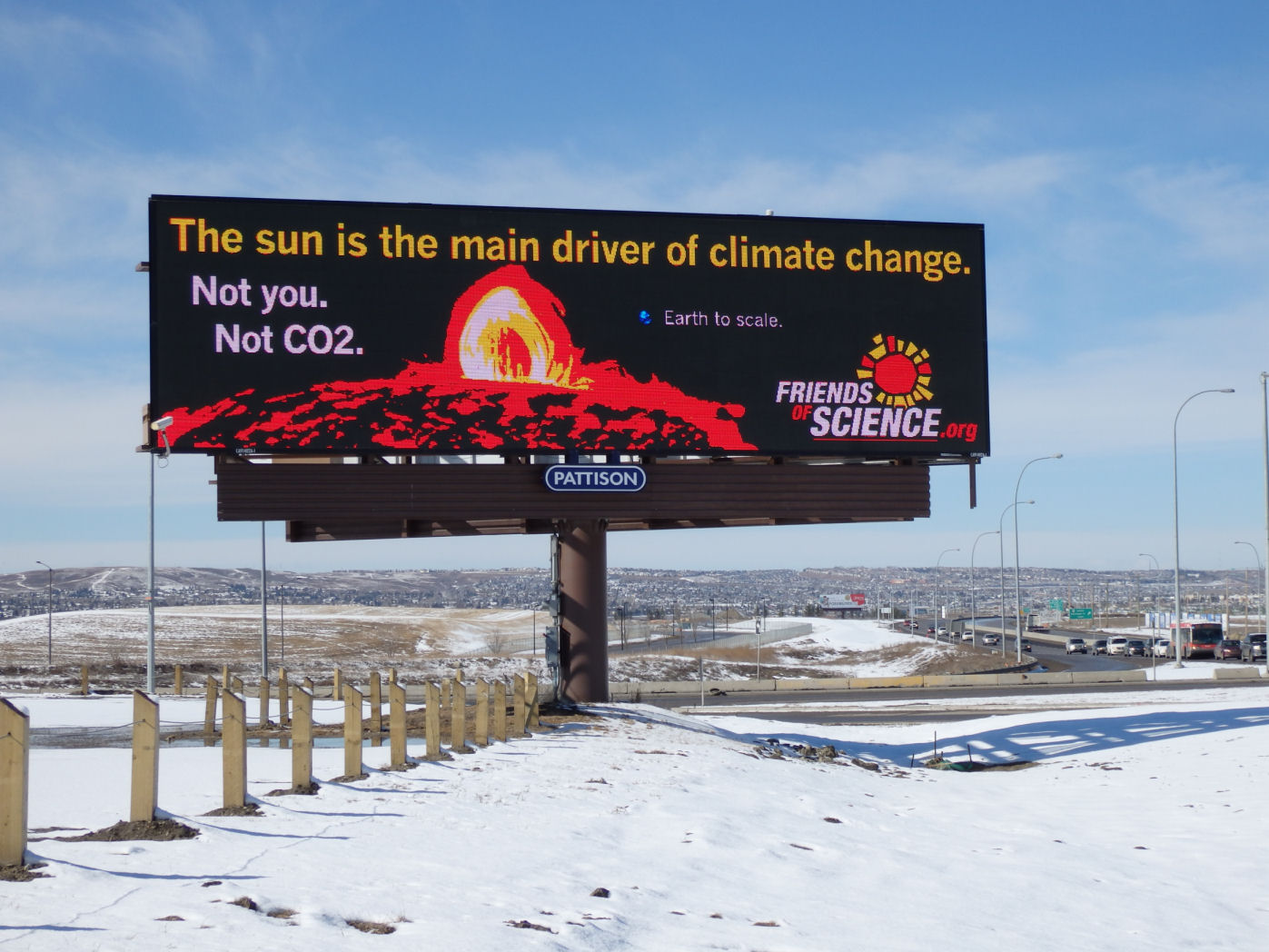
Tom Harris of International Climate Science Coalition – Canada explains in his Financial Post article Tom Harris: The Tories should shape climate opinion, not just respond to it.  Excerpts in italics with my bolds and added images from Friends of Science billboard campaign.

Grassroots conservatives need to ask CPC leadership candidates why, if they really support Canadian energy, they don’t contest climate alarmism

When CPC leadership candidates defend Canadian oil and gas, they either support, acquiesce to, or say nothing about the climate scare. PHOTO BY JOE RAEDLE/GETTY IMAGES

The common wisdom among candidates for leadership of the Conservative Party of Canada (CPC) is that the party must have a credible plan to reduce greenhouse gas emissions if it is to have a fighting chance to form the next government. As former Quebec premier Jean Charest said in the Edmonton debate on May 11, “we will not be elected as a political party if we’re not credible” about putting a price on carbon for large emitters.

The strategists’ thinking is that, given current public support for reducing emissions to “stop climate change,” the CPC has no choice but to follow along or risk electoral defeat. And public opinion polls, like one from Abacus Data last October, do typically find that a majority of Canadians, in that poll 66 per cent, “would like to see governments in Canada put more emphasis on reducing emissions.”

[For the politics of climate polling see Uncensored: Canadians View Global Warming]

But the strategists are wrong. The candidates are giving up a golden opportunity to win the votes, not just of the many grassroots conservatives who oppose the climate scare,
but of Canadians at large in the next election.

A 2012 paper published in the journal Climatic Change suggests why. Three scholars — Robert J. Brulle of Drexel University, Jason Carmichael of McGill and J. Craig Jenkins of Ohio State — looked at 74 separate surveys over a nine-year period to try to figure out which factors had the greatest influence on public views on climate change. They considered five possibilities: extreme weather events, scientific information, media coverage, advocacy, and what politicians and political parties were saying on the subject. Surprisingly, they found that neither extreme weather events nor the promulgation of scientific information had a significant impact. Media coverage did, but the strongest effect came from the positions of competing politicians and political parties.

When politicians across the political spectrum supported the narrative
of man-made climate change, the public’s demand for action rose.

We see that today in Canada, with all major political parties supporting action on greenhouse gas emissions. On the other hand, when politicians questioned the narrative, as Congressional Republicans frequently did, the public’s demand for action dropped — substantially. The scholars’ analysis supported the 2009 conclusion of Harvard University’s Susan McDonald that: “When elites have consensus, the public follows suit and the issue becomes mainstreamed.

When elites disagree, polarization occurs, citizens rely on other indicators
to make up their minds.”

These findings are consistent with other studies that have demonstrated the leading role politicians and political parties play in shaping public opinion on issues. It’s a little like the tail wagging the dog but public opinion supporting government climate policy seems at least partly due to the lack of coherent opposition to the policy on the part of opinion-makers — especially elected officials.

If that’s true, then instead of citing public opinion polls that support climate policies they may be skeptical of, why don’t politicians and political strategists work to change public opinion? As conservative strategist and former policy aide to Stephen Harper, Joseph Ben-Ami, put it in a 2021 study for ICSC-Canada: “The answer may come down to inexperienced politicians and their advisers not understanding their power to influence public opinion. They look at polls and conclude that they have no hope of getting elected unless they climb onto the current public opinion bandwagon.

They fail to understand that the reason the public believes what it does is largely because they (politicians) aren’t making the opposite case.”

This phenomenon is widespread in Canada, and on many topics, not just climate change. At all levels of government, politicians use language and promote policies they very likely disagree with because they think public opinion leaves them no choice. As Ben-Ami argues, the result is a “feedback loop” where politicians’ “response” to public opinion is in reality the principal driver of the public opinion to which they are supposedly responding. The more obsequious their responses, the more entrenched that public opinion becomes, which then results in even more obsequious responses from even more frightened politicians.

Climate activists don’t pull their punches. They want an end
to all of Canada’s oil and gas development as soon as possible.

And, sadly, they are being helped by many in the press, government and other institutions. But a fast phase-out would be immensely costly. Besides contributing $105 billion to Canada’s GDP in 2020, oil and gas provided $10 billion in average annual revenue to governments between 2017 and 2019. Yet, when CPC leadership candidates defend Canadian oil and gas, they either support, acquiesce to, or say nothing about the climate scare.

Grassroots conservatives need to ask the candidates why, if they really support Canadian energy, they don’t contest climate alarmism, which is by far the greatest threat to that energy.

Tom Harris is executive director of International Climate Science Coalition – Canada.

Footnote: 

The billboards are from a campaign to inform the public by Friends of Science, not to be confused with the predatory Fiends  Friends of the Earth in the UK.

Calgary Climate Change Billboard campaign shows
Five Key Points of Cli-Sci Uncertainty says Friends of Science


Truckers or Trudeau? You Decide, Part 1


Chapter One of Trucking For Freedom is titled; “How We Got Here”. The objective of this episode is to adequately introduce the political and social climate leading up to the truckers’ convoy through the lens of C19 mandates, news footage, government officials, and views from Canadian citizens. A philosophic analysis of freedoms, rights, and responsibilities is also portrayed along with reenactments and dramatizations to convey the story. The chapter ends on a cliffhanger…leaving the viewer on a precipice as interest in the Freedom Convoy surges.

Climate Politics Drama Thickens

This Netflix show is just releasing its fourth season where I live, and it promises a look into climate political intrigue.  For those not familiar, the historical protagonist of Borgen is Birgitte Nyborg (Sidse Babett Knudsen), who in Season 1 became the first woman to take up the post of Prime Minister in Denmark. She portrays a determined politician, shrewd and willing to engage in political street fighting in order to gain and to keep power.  She is also an avatar of the progressive globalist contemporary leader, embracing the woke ideology of diversity, nanny state intervention, and of course saving the planet from CO2.

This new season presents a juicy predicament for Birgitte, who is now Foreign Minister under another female PM.  The fourth season opens with the discovery of major oil fields in Greenland. Local politicians announce this without first consulting with their Danish counterparts – a problem of no small importance, since the international interests of the island are the responsibility of the government of Denmark. It’s also a bit of a headache for Birgitte, who was elected under a program that promised commitment to fighting climate change and therefore shouldn’t defend Greenland’s desire to exploit this unexpected new resource.

This is further complicated when, discussing it with other Nordic colleagues, Birgitte discovers that Russia and China would have interests linked to the Greenlandic issue, making a situation that was far from easy from the start even more delicate. Birgitte’s knee-jerk public statement in response to the oil discovery is along the lines:  “We’ve committed ourselves to zero emissions by 2050, and this can’t be allowed to defeat that achievement.”  That zero commitment was made so as to belong in the Globalist ranks, without any critical examination of IPCC dubious suppositions.

Meanwhile,  the Greenlanders are enthralled with the prospect of prosperity and a leap forward in their standard of living. Presumably the writers will have their avatar win by holding to her progressive line, so a St. Paul Damascus awakening is highly unlikely in the coming episodes.

Still, stranger things have happened, such as the satirical blast of lucidity
in the final episode of the BBC TV show, Yes, Prime Minister.

Update Dec. 2019 Yes PM Pokes Fun at Climatism

GWPF published a letter from the late Sir Antony Jay, co-creator of Yes, Minister and Yes, Prime Minster, attacking the BBC for its blatant bias on climate change 8 years ago.  It seems timely to repost the final episode from the final season addressing the topic of global warming/climate change.  As you see, climate politics have not changed very much.

Part 1 of the program is here:

Part 2

Previously I posted this:

A humorous look at why the global warming campaign and the triumphal Paris COP make sense.

Yes Minister explains it all in an episode from 2013.  This is an all-too-realistic portrayal of political climatism today.

When I realized that BBC had blocked the viewing of the video, I sought and found the subtitles for Yes Prime Minister 2013, Episode 6, “A Tsar is Born”.  That final episode for the series began with the dialogue in the first video above.

Below is  the dialogue that formed the episode conclusion, and which was the content of the blocked video.

The Characters are:

Sir Humphrey Appleby
Cabinet Secretary

Jim Hacker
Prime Minister

Claire Sutton
Special Policy Adviser

Bernard Woolley
Principal Private Secretary to the Prime Minister

(Dialogue beginning at 20:16 of “A Tsar is Born”)

Humphrey I have returned with the answer to all your problems.
Global warming.

Jim I thought you were against it?

Humphrey Everybody’s against it, Prime Minister.
I suddenly realised that is the beauty of it.
We can get a unanimous agreement with all of our European partners
to do something about it.

Jim But how can we do something about
something that isn’t happening?

Humphrey It’s much easier to solve an
imaginary problem than a real one.

Jim You believe it’s real?

Humphrey Do you? I don’t know.

Jim Neither do I. Haven’t got the faintest idea!

Humphrey But it doesn’t matter what we think.
If everyone else thinks it’s real, they’ll all want to stop it.
So long as it doesn’t cost too much.
So the question now is, what are we going to do about it?

Jim But if it isn’t happening, what can we do about it?

Humphrey Oh, there’s so much we can do, Prime Minister.
We can impose taxes, we can stiffen European rules about
carbon emissions, rubbish disposal.

We can make massive investments in wind turbines.
We can, in fact, Prime Minister, under your leadership, agree to save the world.

Jim Well, I like that!
But Russia, India, China, Brazil, they’ll never cooperate.

Humphrey They don’t have to. We simply ask them to review their emissions policy.

Jim And will they?

Humphrey Yes. And then they’ll decide not to change it.
So we’ll set up a series of international conferences.
Meanwhile, Prime Minister, you can talk about the future of the planet.

Jim Yes.

Humphrey You can look statesmanlike.
And it’ll be 50 years before anybody can possibly prove you’re wrong.
And you can explain away anything you said before by saying the computer models were flawed.

Jim The voters will love me!

Humphrey You’ll have more government expenditure.

Jim Yes. How will we pay for it? We’re broke.

Humphrey We impose a special global warming tax on fuel now,
but we phase in the actual expenditure gradually. Say, over 50 years?
That will get us out of the hole for now.

Bernard The Germans will be pleased.
They have a big green movement.

Claire And we can even get the progs on board!

Bernard As long as they get more benefits than everyone else.

Jim My broadcast is on Sunday morning.

Humphrey You have a day to get the conference to agree.

Jim That’s not a problem.
The delegates will be desperate for something to announce
when they get home.
There is one problem.
Nothing will have actually been achieved.

Humphrey It will sound as though it has.
So people will think it has.
That’s all that matters!

(Later following the BBC interview, beginning 27:34)

Bernard Oh, magnificent, Prime Minister!

Humphrey I think you got away with it, Jim,
but the cabinet will have been pretty surprised.
We’ll have to square them fast.

Jim Bubbles!

Humphrey We’re not there yet.
After that interview, you’ll need to announce some pretty impressive action.

Jim An initiative.

Humphrey Yes.

Claire A working party?

Humphrey Bit lightweight.

Bernard A taskforce?

Humphrey Not sure.

Jim Do we have enough in the kitty?

Claire It could be one of those initiatives that you announce
but never actually spend the money.

Jim Great. Like the one on child poverty.

Bernard Maybe it should be a government committee?

Jim Well what about a Royal Commission?

Humphrey Yes!
It won’t report for three years, and if we put the right people
on it, they’ll never agree about anything important.

Jim Right! A Royal Commission!
No, wait a minute, that makes it sound as if we think
it’s important but not urgent.

Claire Well, what about a Global Warming Tsar?

Jim Fine! Would that do it?

Humphrey No, I think it might need a bit more than that, Prime Minister.
It’ll mean announcing quite a big unit, and an impressive salary for that Tsar,
to show how much importance you place upon him.

Jim No problem. Who would it be?

Humphrey Ah, well, it can’t be a political figure.
That would be too divisive.
It has to be somebody impartial.

Jim You mean a judge?

Humphrey No, somebody from the real world.
Somebody who knows how to operate the levers of power,
to engage the gears of the Whitehall machine,
to drive the engine of government.

Jim That’s quite a tall order.
Anybody got any ideas?

Humphrey… Could you?

Bernard Oh!

Humphrey Yes, Prime Minister.

The End.

Footnote

CO2 hysteria is addictive. Here’s what it does to your brain:

Just say No!

Hard Facts Puncture Anti-Fossil Fuel Fantasies

Gwyn Morgan explains at Financial Post Hard facts puncture anti-fossil fuel fantasies.  Excerpts in italics with my bolds and added images.

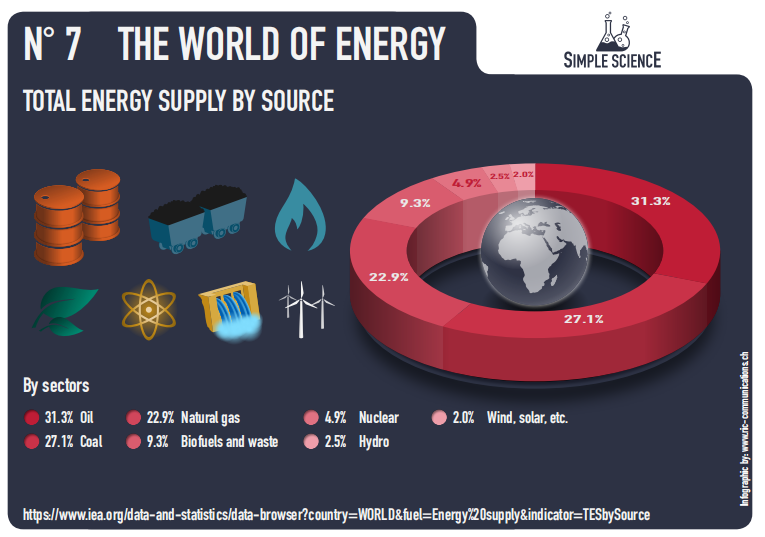
The belief that 84% of global energy supplied by oil and gas can be replaced by so-called ‘green energy’ is a fantasy

The marvelous Christmas movie Polar Express, starring the inimitable Tom Hanks, ends with the words “anything is possible, if you only believe.” Except, as adults understand, many things aren’t possible, not even if some people do believe them. An obvious example is the fantasy that the 84 per cent of global energy supplied by oil and gas can be replaced by so-called “green energy.”

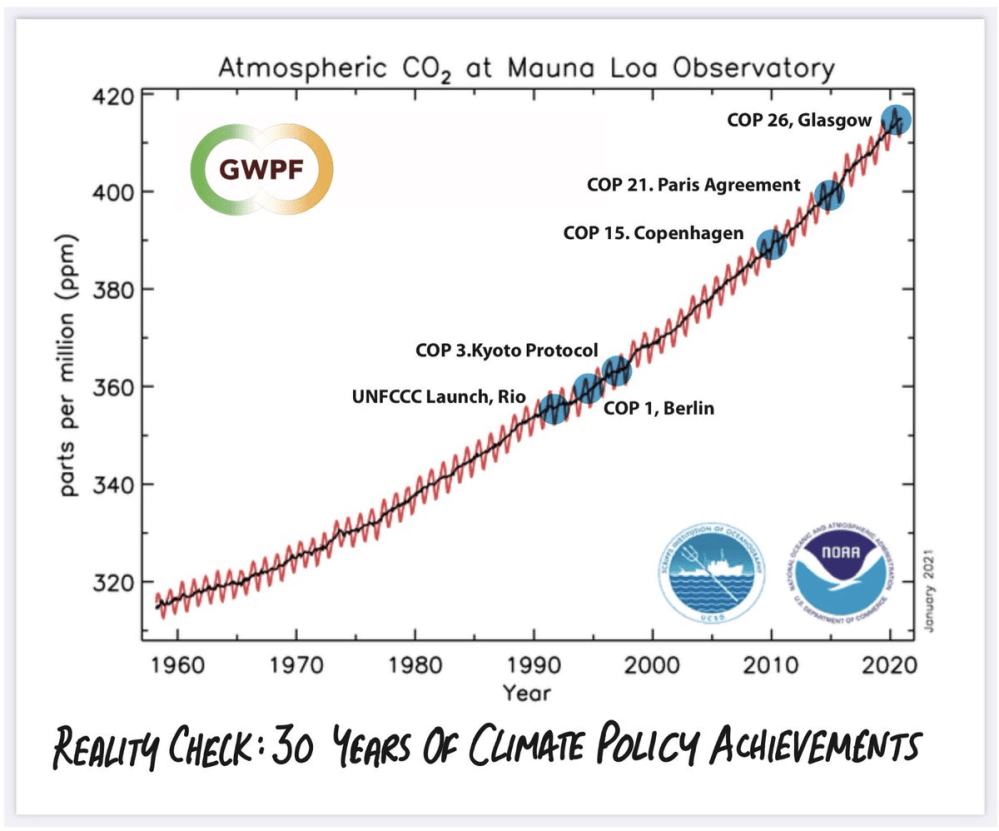
Since the first UN COP (“Conference of the Parties”) meeting in 1995, world oil demand has increased from 64 to 100 million barrels per day. But even as demand increased, the “environmental, social and governance” (ESG) movement encouraged investors to unload their oil industry holdings. Faced with share valuations reflecting their perceived status as a “sunset Industry,” the rational course for oil company leaders was to pay out large dividends rather than reinvest in production growth. As demand grew, supply therefore stagnated. The Ukraine crisis revealed just how narrow the supply margin has become. Regrettably, most of that margin is in the hands of Vladimir Putin, leaving European countries that depend on Russian oil no choice but to continue to provide the funds with which he ravages the Ukrainian people.

This is the tragedy sanctimonious ESG zealots have wrought.

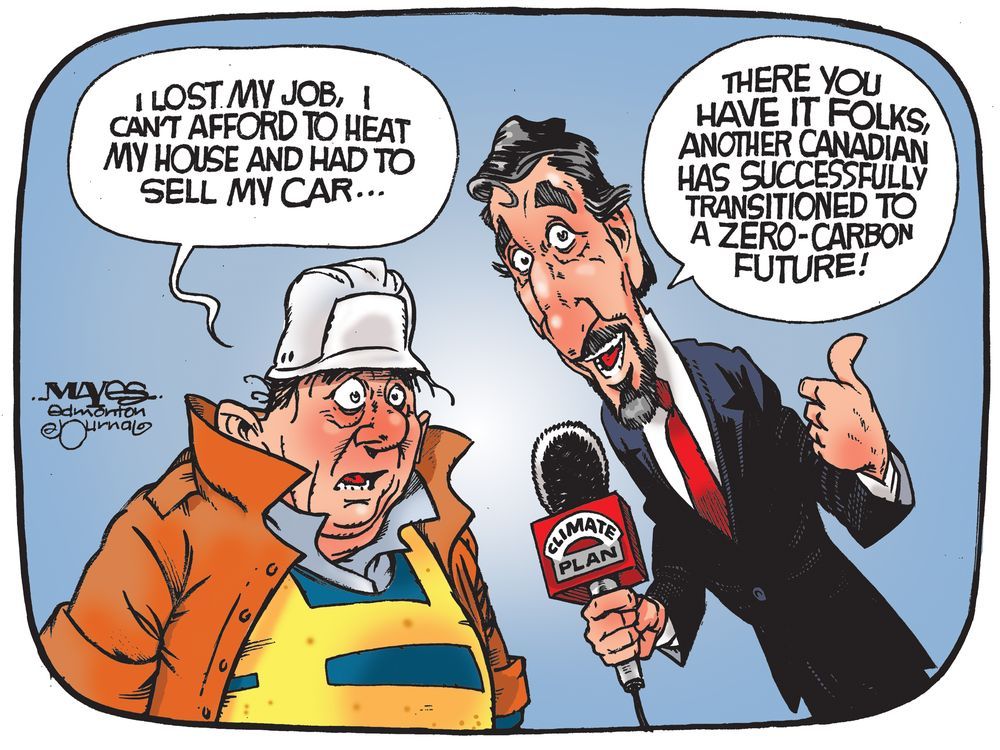
Meanwhile, back in the world capital of “if you only believe” fantasies, the prime minister of a country endowed with one of the world’s largest reserves of oil has presided over a seven-year long anti-oil industry scourge, thwarting multiple proposed export pipelines that could now have been supplying those captive market countries.

Sharing his anti-oil zealotry seems to be a necessary qualification for Mr. Trudeau’s cabinet. Alberta Premier Jason Kenney recently went to Washington to present the Senate Energy Committee with plans to increase Canadian oil exports, thereby freeing-up more U.S. oil to help Europe reduce Russian oil purchases. The idea received a warm reception. Unfortunately, Kenney’s message was promptly contradicted by Federal Resources Minister Jonathan Wilkinson, who told the same committee that shifting to renewables and hydrogen “will provide true energy and national security to Europe.” In other words, don’t count on Canada to help de-fund Putin’s murderous war unless it lasts five or ten more years.

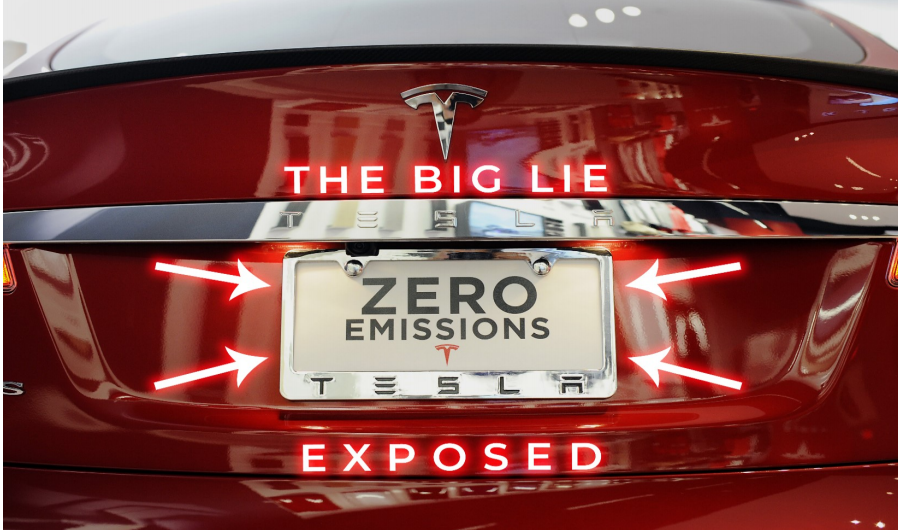
It’s incomprehensible that during a global oil and gas shortage brought on by the wanton destruction of a civilized democracy, our prime minister thinks all will be well if only Canada rids itself of fossil-fueled vehicles. Deep in delusion, he considers this a perfect time to announce a plan to have 60 per cent of new cars and light duty trucks be “zero emission” by 2030.

When you live in a perennial state of fantasy, facts don’t matter. But here are facts that do matter to Canadians forced to face the real-world impact.

Fact 1: High cost. The federal budget promises a $5000/vehicle rebate. There are 24 million gasoline and diesel-powered vehicles in Canada. Subsidizing replacement of just one million would cost $5 billion. The budget also contains $900 million for new charging stations. That’s helpful in urban centres but providing a charging station network necessary to allow e-vehicles to travel interurban highways would cost tens of billions more.

Fact 2: Revenue needs. The Trudeau government’s longer-term plan is to get rid of all fossil-fueled vehicles. Federal and provincial fuel taxes now total a stunning $22 billion each and every year. These revenues fund the cost of building and maintaining urban streets and highways. How long can it be before governments are forced to regain those revenues from electrical vehicle charging levies?

Fact 3: Grid stress. The average Canadian motorist drives 15,000 km per year and the average electric passenger vehicle uses 19 kw/hr per 100 km. That works out to 2,850 kw/hr per year, more than 25 per cent of current Canadian household consumption. Many of the country’s electrical generation and distribution grids are already near capacity. Electric vehicle advocates say the problem will be mitigated by mandating low amperage during off-peak, late-night hours. But most highway drivers travel during the day when the grid is near capacity. And they will need high-amperage DC quick-chargers during these already supply-tight hours.

Fact 4: Land demand. Refueling with gasoline or diesel takes around five minutes. But even rapid chargers need 30 minutes. That means six times more land occupied by charging stations. How much of that land will be taken from agricultural production?

Fact 5: More emissions, not fewer. Canada’s 24 million fossil-fueled cars and pickup trucks emit 14 per cent of the country’s 1.5 per cent share of global emissions. If all 24 million were converted to battery power, global emissions would be reduced by just two-tenths of one per cent. Emissions growth from China’s coal-fired power plants would offset that in just a few days. And that two-tenths of a per cent doesn’t count emissions produced from mining and transporting the materials that go into all those batteries. Nor does it consider that 20 per cent of Canada’s electricity is generated with fossil fuels.

Those factors clearly wipe out any benefit, unless we include the benefit that living a fantasy allows people, our leader included, not to have to think about all those Ukrainians we could have saved by helping Europe say “no” to Russia’s oil — if only our oil industry hadn’t been hamstrung.


Progressive Judicial Bias on Display

Bruce Pardy explains in his National Post article Supreme Court undermined by chief justice condemning freedom convoy.  Excerpts in italics with my bolds.

Confidence in the judiciary depends on whether people perceive courts to

be genuinely neutral, not merely within a narrow band of progressive consensus

The trucker convoy that protested COVID vaccine mandates in Ottawa in February has been both joyously acclaimed and bitterly criticized. According to an April 9 article in Le Devoir, Supreme Court Chief Justice Richard Wagner has added his voice to those who have condemned it. If the account in Le Devoir is accurate, his comments starkly illustrate the degree to which judges feel at liberty to embrace progressive consensus at the expense of judicial neutrality. In mid May, a group of lawyers filed a complaint with the Canadian Judicial Council, arguing that Wagner’s criticisms undermine confidence in the impartiality of the courts, in particular on the issue of the government’s invocation of the Emergencies Act and the right to protest.

The trucks had been in Ottawa for two weeks when, on Feb. 14, the federal government invoked the Emergencies Act. It cited “the threat or use of acts of serious violence” as the rationale, even though the protests had been largely peaceful throughout and the government had received no intelligence about impending violence or the presence of weapons. Within a few days, police had cleared the trucks and supporters away and the bank accounts of several hundred Canadians had been frozen. On February 23, the use of the Emergencies Act was revoked.

At least four legal challenges to the government’s invocation of the act have been launched, one or more of which could easily wind up on appeal to the Supreme Court, with the chief justice sitting in judgment on the case.

In his interview with Le Devoir, Wagner characterized the protest on Wellington Street, where Parliament and the Supreme Court are located, as “the beginning of anarchy where some people have decided to take other citizens hostage.” The article reports Wagner as having declared that “forced blows against the state, justice and democratic institutions like the one delivered by protesters … should be denounced with force by all figures of power in the country.To become a judge means to take on onerous responsibilities. “Justice should not only be done,” Lord Chief Justice Hewart famously said in a 1923 UK King’s Bench judgment, “but should manifestly and undoubtedly be seen to be done.” The Canadian Judicial Council, which oversees the conduct of judges on the country’s highest courts, and which the chief justice of the Supreme Court chairs, states in its Ethical Principles for Judges that “statements evidencing prejudgment … may destroy the appearance of impartiality,“ and so judges “should avoid using words or conduct, in and out of court, that might give rise to a reasonable perception of an absence of impartiality.”In a 2015 decision in which Wagner himself participated, the Supreme Court agreed. “Judges are required — and expected — to approach every case with impartiality and an open mind,” the court wrote, and must be perceived to do so. Traditionally, judicial comment on political matters is regarded as inappropriate. In 2016, U.S. Supreme Court Justice Ruth Bader Ginsburg apologized for making “ill-advised” criticisms of Donald Trump, who at the time was the presumptive Republican presidential nominee.

How then are the chief justice’s comments to be explained? At his first press conference in 2018 as the court’s chief, as reported in the Toronto Star, Wagner agreed that his court was “the most progressive in the world,” with a leadership role to play in promoting (progressive) moral values. Wanjiru Njoya, a legal scholar at the University of Exeter and formerly at Queen’s University in Kingston, has strongly criticized the fact that in the modern legal firmament, the range of what is considered reasonable has been narrowed to progressive ideals alone. In the courts and within the legal academy, as she puts it, the dominant perspective “delineates the boundaries of what progressives consider to be reasonable, measured, and balanced interpretations of the demands of justice.” Perspectives falling outside these boundaries, she says, are perversely defined as unreasonable and therefore regarded as not worthy of respect.

Through a progressive lens, in other words, impartiality means having an open mind to all reasonable perspectives — but only progressive perspectives are reasonable.

Progressivism is the ideology of collectivism, equity, wokeness, safetyism, and the managerial state. COVID has been progressivism’s perfect storm and sweeping pandemic bureaucracy its pinnacle achievement. Yet where the line is to be drawn between individual liberty and collective responsibility is a matter of legitimate dispute. Confidence in the judiciary depends on whether people perceive courts to be genuinely neutral, not merely within a narrow band of progressive consensus but on all matters of controversy within a pluralistic society.

Had the chief justice declared the truck convoy to be courageous, vaccine mandates illegitimate, and invocation of the Emergencies Act an outrageous violation of civil liberties, the federal government would justifiably perceive that he had prejudged the case.

Instead, his words reflect the government position that the protest was beyond the bounds of civilized behaviour and was properly crushed with state force. The question is not whether his views are correct, but whether they are premature and in the wrong forum. Should any of the Emergencies Act challenges make their way to the Supreme Court, the chief justice will sit in judgment on a dispute about which he appears to have already formed an opinion.

Having made his public comments, the chief justice could announce that he will recuse himself from the case to avoid a reasonable perception of bias. However, Wagner is not merely one of many federally appointed judges, but the chief justice of the highest court in the land. His opinion carries influence that cannot be nullified by simple recusal. The harm done to judicial impartiality on the issue of the invocation of the Emergencies Act cannot easily be remedied.

Bruce Pardy is executive director of Rights Probe and professor of law at Queen’s University. He was one of the lawyers on the complaint filed with the Canadian Judicial Council.

The Looming Energy Catastrophe

Ron Stein provides a briefing from California on the energy debacle imposed by clueless political leaders on ordinary Americans.  Excerpts in italics with my bolds H/T CFACT

The Looming Energy Catastrophe

Please enjoy and share this educational energy literacy briefing, a 5-minute video by Costa Mesa Brief at a California Chevron gas station. The video talks about the outrageous gas prices and tells us what is behind the increases, where it is heading and what, if anything, we can do about it. I think you will find his no-nonsense approach and perspective unique, sobering and very informative.

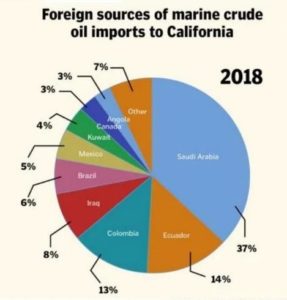
The video explains the impact on fuel prices from California government-imposed reductions in the supply chain of crude oil has increased imported crude oil from foreign countries from 5% in 1992 to more than 60% today of total consumption. Biden’s pledge stating, “we are going to get rid of fossil fuels,” is impacting fuel prices.

At today’s price of crude oil well above $100 per barrel, the imported crude oil costs California more than $150 million dollars a day, yes, everyday, being paid to oil-rich foreign countries, depriving Californians of jobs and business opportunities, and forcing drivers to pay premium prices for fuel.

Californians are consuming more than 50 million gallons of fuel daily for its 35 million vehicles, which is slightly more than one gallon per day per vehicle.

Californians continue to pay more than $1.00 more per gallon of fuel than the rest of the country primarily for the State, Federal and Local taxes, and the Government environmental compliance programs such as the Low Carbon Fuel Standard (LCFS), Cap and Trade, Renewable Fuel Standard (RFS), and the Underground Storage Tax. Those costs ‘dumped” onto the posted price at the pump are not transparent to the public.

The demand for fuels to move the heavy-weight and long-range needs of more than 50,000 jets for the military, commercial, private and the President’s Air Force One, and the more than 50,000 merchant ships that move products throughout the world are also manufactured from the supply of crude oil.

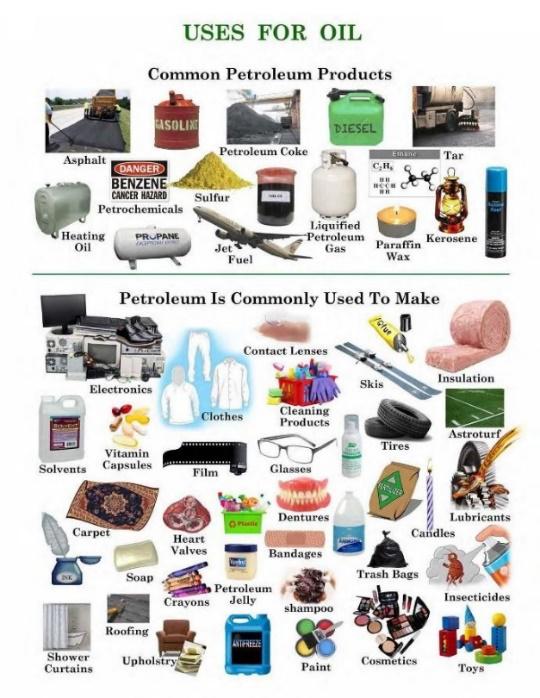
Life Without Oil is NOT AS SIMPLE AS YOU MAY THINK as renewable energy is only intermittent electricity from breezes and sunshine as NEITHER wind turbines nor solar panels can manufacture anything for society. Climate change may impact humanity, but being mandated to live without the more than 6,000 products and the various fuels manufactured from crude oil will necessitate lifestyles being mandated back to the horse and buggy days of the 1800’s.

When the public continues to demand increasing needs for the transportation fuels and the products made from crude oil, limiting its supply by governments and the Environmental, Social and Governance (ESG) movement to manufacture those items is a guarantee for today’s shortages and inflation.

Life without crude oil could be the greatest threat to civilization’s eight billion residents, resulting in billions of fatalities from diseases, malnutrition, and weather-related deaths.

Climate Dissonance: Ocean Warming or Cooling?

Climatists are manifesting cognitive dissonance, or maybe factional conflict.  They simultaneously claim the ocean current warming the North Atlantic is slowing down bringing colder weather, while also claiming the increasing ocean heat content is warming the ocean faster than ever.  The cooling alarm was noted and rebutted in a recent No Tricks Zone article 3 New Studies Show Atlantic Tipping Point Unrealistic…”Muted Response”…”Changes To Be Viewed With Caution”.

My own critique of the alarm was this post: The Cooling Also Not Our Fault

Turning Attention from the Freezing to the Overheating Ocean

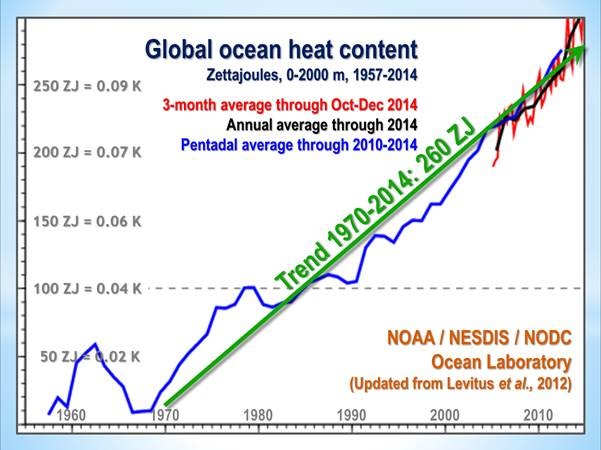
The Ocean Heat scare was included in the recent UN Climate report, alongside four other claims I rebutted in the post UN False Alarms from Key Climate Indicators.The Ocean Heat Content is more complex, requiring this post of its own. The key message was this:

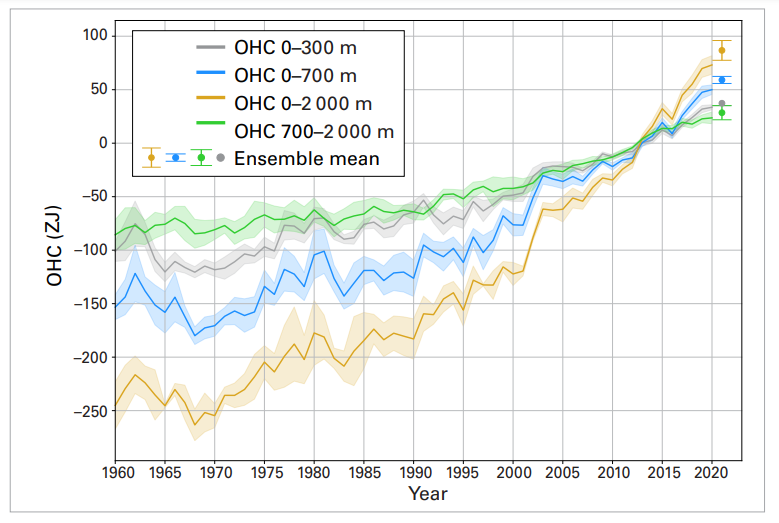
Ocean heat was record high. The upper 2000m depth of the ocean continued to warm in 2021 and it is expected that it will continue to warm in the future – a change which is irreversible on centennial to millennial time scales. All data sets agree that ocean warming rates show a particularly strong increase in the past two decades. The warmth is penetrating to ever deeper levels. Much of the ocean experienced at least one ‘strong’ marine heatwave at some point in 2021.

Figure 4. 1960–2021 ensemble mean time series and ensemble standard deviation (2 standard deviations, shaded) of global OHC anomalies relative to the 2005–2017 average for the 0–300 m (grey), 0–700 m (blue), 0–2 000 m (yellow) and 700–2 000 m (green) depth layers. The ensemble mean is an update of the outcome of a concerted international data and analysis effort.

Context and Background Information

Media alarms are rampant relying mostly on a publication Record-Setting Ocean Warmth Continued in 2019 in Advances in Atmospheric Sciences
Authors: Lijing Cheng, John Abraham, Jiang Zhu, Kevin E. Trenberth, John Fasullo, Tim Boyer, Ricardo Locarnini, Bin Zhang, Fujiang Yu, Liying Wan, Xingrong Chen, Xiangzhou Song, Yulong Liu, Michael E. Mann.

Reasons for doubting the paper and its claims go well beyond the listing of so many names, including several of the usual suspects. No, this publication is tarnished by its implausible provenance. It rests upon and repeats analytical mistakes that have been pointed out, but true believers carry on without batting an eye.

It started with Resplandy et al in 2018 who became an overnight sensation with their paper Quantification of ocean heat uptake from changes in atmospheric O2 and CO2 composition in Nature October 2018, leading to media reports of extreme ocean heating. Nic Lewis published a series of articles at his own site and at Climate Etc. in November 2018, leading to the paper being withdrawn and eventually retracted. Those authors acknowledged the errors and did the honorable thing at the time, resulting the paper’s retraction 25 September 2019.

Then a revised version of the paper was published 27 December 2019 with the same title and stands today.  The 2019 abstract is exactly the same as the 2018 abstract (retracted), except for one sentence.

♦  2018:  We show that the ocean gained 1.33 ± 0.20 × 10^22 joules of heat per year between 1991 and 2016, equivalent to a planetary energy imbalance of 0.83 ± 0.11 watts per square metre of Earth’s surface.

♦  2019:  We show that the ocean gained 1.29 ± 0.79 × 10^22 Joules of heat per year between 1991 and 2016, equivalent to a planetary energy imbalance of 0.80 ± 0.49 W watts per square metre of Earth’s surface.

Figure 1. Argo float operation. There are about 3,500 floats in the ocean, and a total of ~10,000 floats have been used over the period of operation.

In the discussion and graphs, readers should note that 1 Zettajoule (ZJ) = 1 x 10^21 joules, and that these are energy units, not temperatures. Willis Eschenbach did a fine analysis of this OHC issue, since it depends mostly upon ARGO float measurements. From that essay:

The first thing that I wanted to do was to look at the data using more familiar units. I mean, nobody knows what 10^22 joules means in the top two kilometres of the ocean. So I converted the data from joules to degrees C. The conversion is that it takes 4 joules to heat a gram of seawater by 1°C (or 4 megajoules per tonne per degree). The other information needed is that there are 0.65 billion cubic kilometres of ocean above 2,000 metres of depth, and that seawater weighs about 1.033 tonnes per cubic metre.

The first thing is to note that 3500 floats are sampling 0.65 billion cubic km of the ocean, and the record began in 2005. The next thing is to appreciate the impact of increasing energy upon the ocean temperature.

Yes, those are ocean warming increments of a few 1/100ths of a degree kelvin.  Applying the math to Resplandy et al., we should also note the ranges of uncertainty in these estimates (ocean temps to 1/100 of a degree, really?)

Resplandy 2018: Claim 103 to 153 ZJ/decade, or warming between 0.03 to 0.05 C/decade.

Resplandy 2019:  Claim  50 to 208 ZJ/decade, or warming between 0.02 to 0.07 c/decade

And the Climate Show Goes On

Benny Peiser of GWPF objected in writing to IPCC, saying inter alia:

Your report (SROCC, p. 5-14) concludes that
” The rate of heat uptake in the upper ocean (0-700m) is very likely higher in the 1993-2017 (or .2005-2017) period compared with the 1969-1993 period (see Table 5.1).”

We would like to point out that this conclusion is based to a significant degree on a paper
by Cheng et al. (2019) which itself relies on a flawed estimate by Resplandy et al. (2018).
An authors’ correction to this paper and its ocean heat uptake (OHU) estimate was under
review for nearly a year, but in the end Nature requested that the paper be retracted
(Retraction Note, 2019).

That was not the only objection. Nic Lewis examined Cheng et al. 2019 and found it wanting. That discussion is also at Climate Etc. Is ocean warming accelerating faster than thought? The authors replied to Lewis’ critique but did not refute or correct the identified errors.

Now in 2022 the same people have processed another year of data in the same manner and then proclaim the same result. The only differences are the addition of several high profile alarmists and the subtraction of Resplandy et al. from the References.  It looks like the group is emulating MIchael Mann’s blueprint:  The Show Must Go On.  The Noble cause justifies any and all means.

Show no weaknesses, admit no mistakes, correct nothing, sue if you have to.

Footnote: Q: Is the Ocean Warming or Cooling?  A: Nobody Knows.

To enlarge, open image in new tab.


How We Got to Climate Crisis Hysteria

Background from previous post Rise and Fall of CAGW

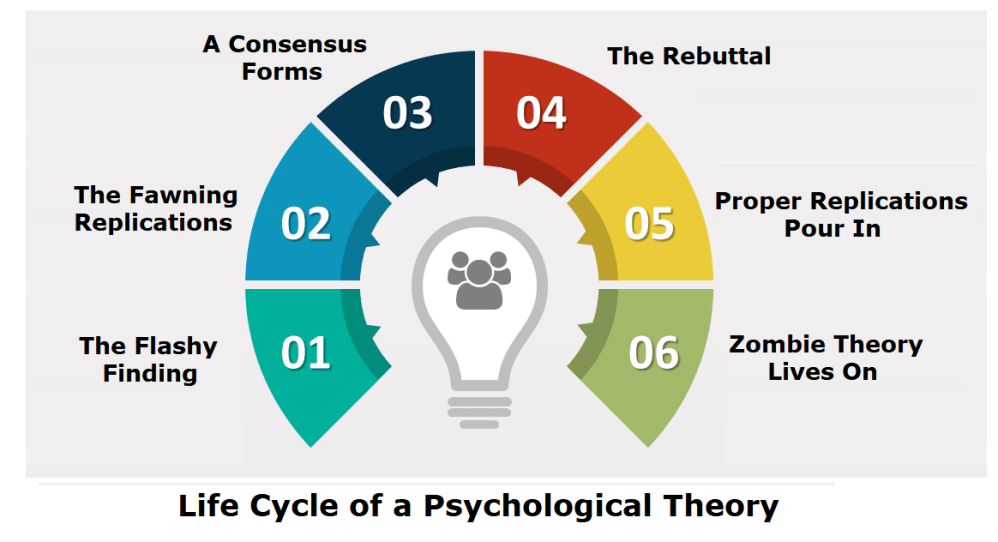
On January 8, 2018 Ross Pomeroy published  at RealClearScience an interesting article The Six Stages of a Failed Psychological Theory

The Pomeroy essay focuses on theories in the field of psychology and describes stages through which they rise, become accepted, challenged and discarded. It has long seemed to me that global warming/climate change theory properly belongs in the field of social studies and thus should demonstrate a similar cycle.

Formerly known as CAGW (catastrophic anthropogenic global warming), the notion of “climate change” is logically a subject of social science rather than physical science. “Climate Change” is a double abstraction: it refers to the derivative (change) in our expectations (patterns) of weather. Thus studies of “Climate Change” are properly a branch of Environmental Sociology.

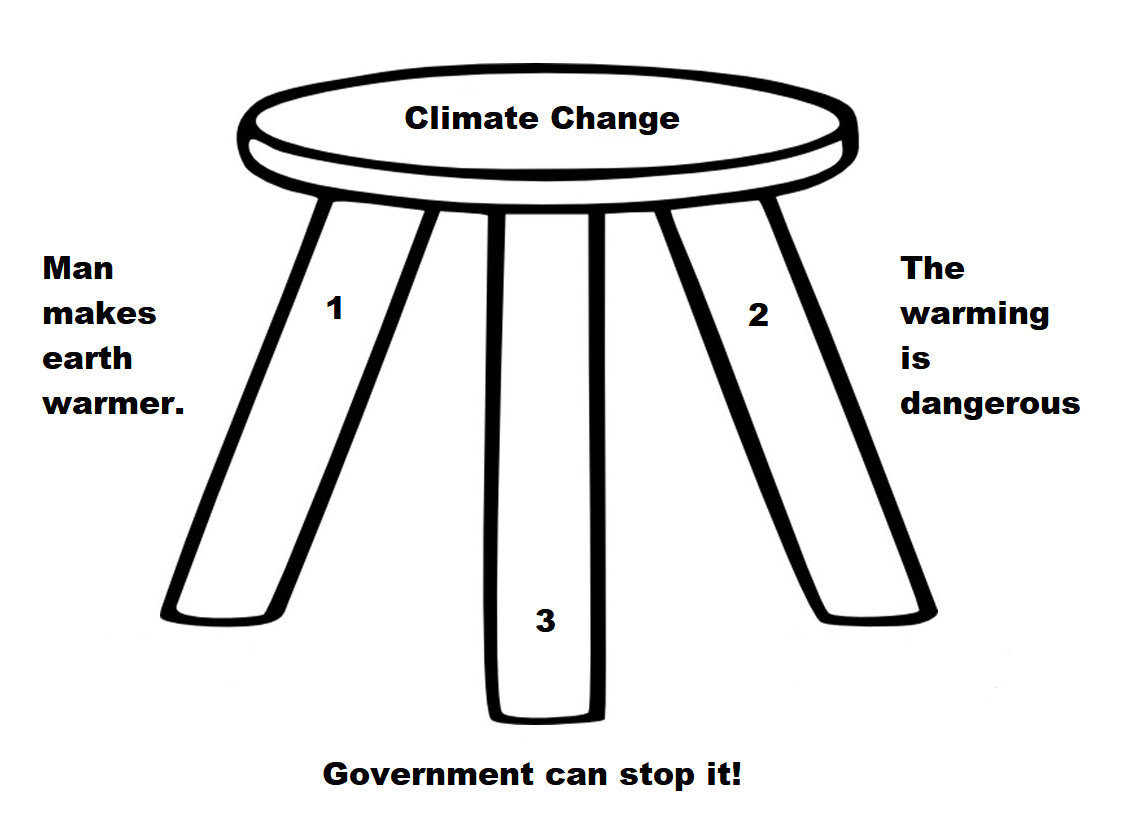
As a social psychology theory, CAGW/climate change bundles together three interdependent assertions.
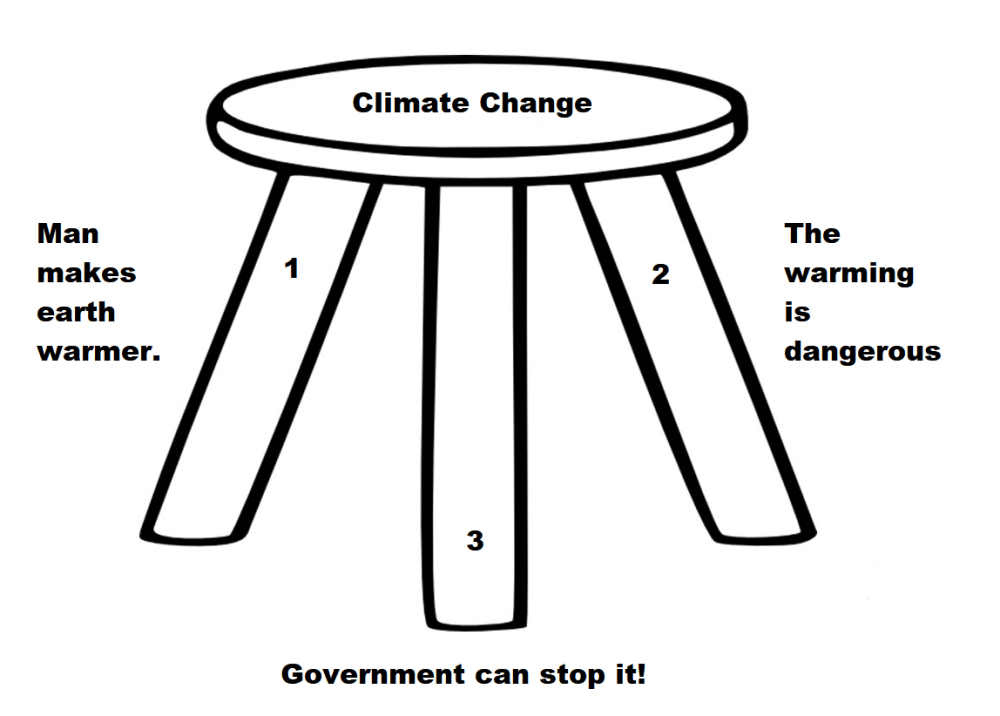
From the beginning the claimed science, impacts and policies were bundled, which makes CAGW theory unusual. Psychological theories do not typically give rise to activism for changes in social and political policies. Thus the six stages above focus on the rise and fall of a scientific conclusion, with little or no reference to impacts and policies. At the end of this post are links to resources regarding these latter two points.

Examples of Failed Psychology Theories: The “Backfire Effect” and others

Ross Pomeroy (my bolds):
With the publication of his exhaustingly researched and skillfully reported article, “LOL Something Matters,” science writer Daniel Engber convincingly demonstrated that the “backfire effect,” the notion that contradictory evidence only strengthens entrenched beliefs, does not hold up under rigorous scientific scrutiny. Bluntly stated, the “backfire effect” probably isn’t real.

The debunking of this longstanding psychological theory follows similar academic takedowns of ego depletion, social priming, power posing, and a plethora of other famous findings. Indeed, much of what we “know” in psychology seems to be false.

There’s a good reason for this: psychology, as a discipline, is a house made of sand, based on analyzing inherently fickle human behavior, held together with poorly-defined concepts, and explored with often scant methodological rigor. Indeed, there’s a strong case to be made that psychology is barely a science.

How Theories Advance and Collapse

Seeing how disarray defines psychology, it makes perfect sense that the field’s leading theories are vulnerable to collapse. Having watched this process play out a number of times, a clear pattern has emerged. Let’s call it the “Six Stages of a Failed Psychological or Sociological Theory.”

Stage 1: The Flashy Finding. An intriguing report is published with subject matter that lends itself to water cooler conversation, say, for example, that sticking a pen in your mouth to force a smile makes things seem funnier. Media outlets provide gushing coverage.

Stage 1 CAGW Theory

For Climate Change, by many accounts the flashy finding was James Hansen’s famous 1988 testimony in the US Senate. Hansen’s claim to detect global warming was covered by all the main television network news services and it won for him a New York Times front page headline: “Global warming has begun, expert tells Senate.”
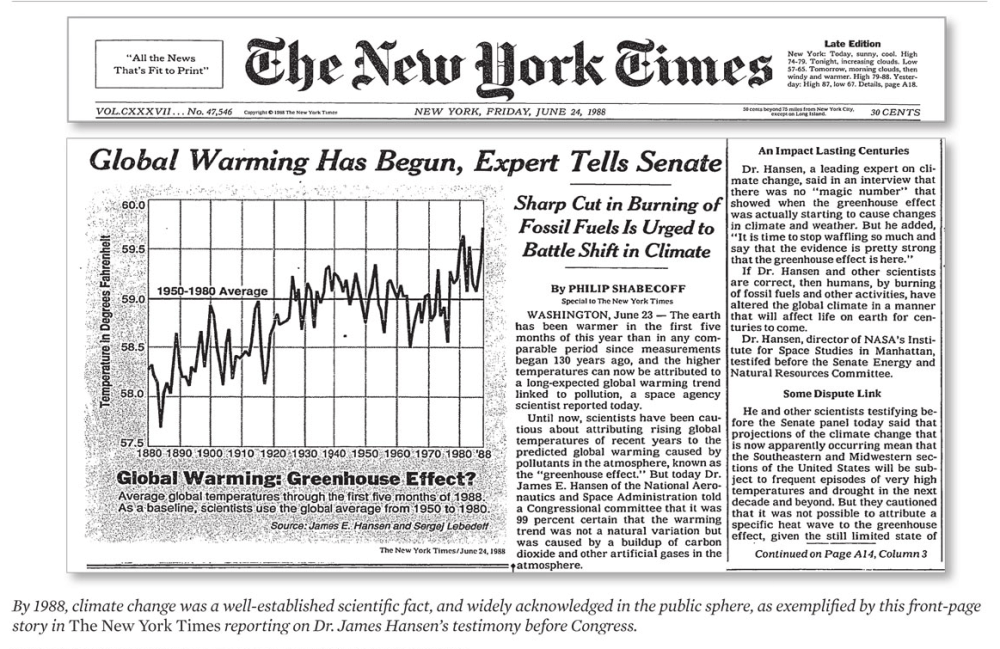
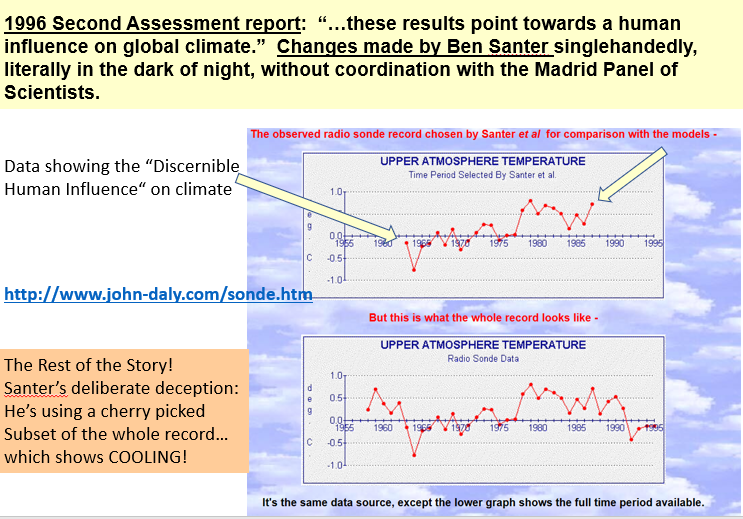
While Hansen’s appearance was a PR coup, he actually jumped the gun.  By 1995 IPCC scientists had not yet agreed that humans are causing global warming.  The story of that problem and the subsequent claim of first detection by John Houghton and Ben Santer is described in detail in Bernie Lewin’s fine historical account. (My synopsis is linked at the end.)

So in this sense, the actual Flashy Finding was published by Santer et al. just before Rio COP in Nature July 1996 entitled: A search for human influences on the thermal structure of the atmosphere
B. D. Santer, K. E. Taylor, T. M. L. Wigley, T. C. Johns, P. D. Jones, D. J. Karoly, J. F. B. Mitchell, A. H. Oort, J. E. Penner, V. Ramaswamy, M. D. Schwarzkopf, R. J. Stouffer & S. Tett  From the abstract:

The observed spatial patterns of temperature change in the free atmosphere from 1963 to 1987 are similar to those predicted by state-of-the-art climate models incorporating various combinations of changes in carbon dioxide, anthropogenic sulphate aerosol and stratospheric ozone concentrations. The degree of pattern similarity between models and observations increases through this period. It is likely that this trend is partially due to human activities, although many uncertainties remain, particularly relating to estimates of natural variability.

An article published the same month in World Climate Report was entitled:“Clearest Evidence” For Human “Fingerprint?” Results clouded if more complete data used  The WCR essay concluded:

We are frankly rather amazed that this paper could have emerged into the refereed literature in its present state; that is not to say that the work is bad, but that there are serious questions—similar to ours—that the reviewers should have asked.

The inescapable conclusions:

1. The vast majority of the “fingerprints” of the greenhouse effect are found way up in the atmosphere, especially in the stratosphere.

2. The “detection” models that were used either don’t predict very much future warming or were run with the wrong greenhouse effect and produce absurd results when the right numbers are put in.

3.And finally, down here in the lower atmosphere, the evidence is much more smudged and is based upon a highly selected set of data that, when viewed in toto, shows something dramatically different than what the paper purports.

The period that Santer et al. studied corresponds precisely with a profound warming trend in this region. But when all of the data (1957 to 1995) are included, there’s no trend whatsoever! We don’t know what to call this, but we believe that at least one of the 13 prestigious authors on this paper must have known this to be the case.
Stage 2: The Fawning Replications. Other psychologists, usually in the early stages of their careers, leap to replicate the finding. Most of their studies corroborate the effect. Those that don’t are not published, perhaps because the researchers don’t want to step on any toes, or because journal editors would prefer not to publish negative findings.

Stage 2 CAGW Theory

Following the human detection claim, the media increasingly filled its time and pages with reports of “multiple lines of evidence” proving CAGW.  Typically these consisted of :

Global temperature rise
Warming oceans
Shrinking ice sheets
Glacial retreat
Decreased snow cover
Sea level rise
Declining Arctic sea ice
Extreme events
Ocean acidification

However, all of these are equivocal, involving signal and noise issues.  And in any case, the fact of any changes does not in itself prove human causation.
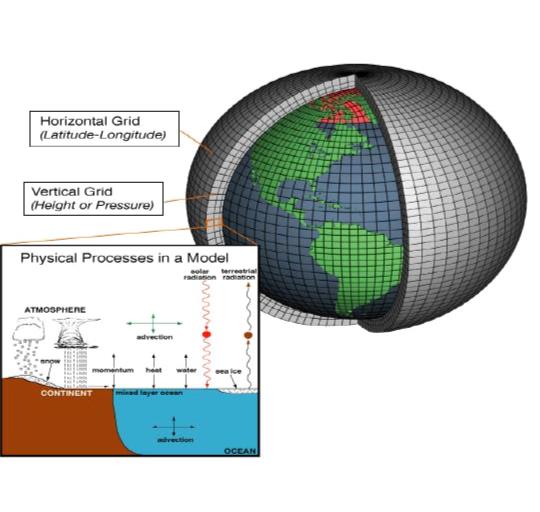
Overview of the structure of a state-of-the-art climate model. From the NOAA website.

As suggested by the Santer et al. flashy finding, the claim of human causation was based upon climate models.  And the effort to substantiate that claim was primarily a campaign to construct and experiment with GCMs.  From History of climate modeling by Paul N. Edwards .

Like ripples moving outward from the three pioneering groups (GFDL, UCLA, and NCAR), modelers, dynamical cores, model physics, numerical methods, and GCM computer code soon began to circulate around the world. By the early 1970s, a large number of institutions had established new general circulation modeling programs. In addition to those discussed above, the most active climate modeling centers today include Britain’s Hadley Centre, Germany’s Max Planck Institute, Japan’s Earth Simulator Centre, and the Goddard Institute for Space Studies in the United States..

How many GCMs and climate modeling groups exist worldwide? The exact number can be expanded or contracted under various criteria. About 33 groups submitted GCM output to the Atmospheric Model Intercomparison Project (AMIP) in the 1990s.A few years later, however, only about 25 groups contributed coupled AOGCM outputs to the Coupled Model Intercomparison Project (CMIP)—reflecting the greater complexity and larger computational requirements of coupled models.  Notably, while the AMIP models included entries from Russia, Canada, Taiwan, China, and Korea, all of the CMIP simulations came from modeling groups based in Europe, Japan, Australia, and the USA, the historical leaders in climate modeling.

The difficulties and uncertainties with climate models have been long understood, and have not been overcome  through the decades, as indicated by the failure to reduce the range estimates of climate sensitivity to CO2.  From Modeling climatic effects of anthropogenic carbon dioxide emissions: unknowns and uncertainties Willie Soon et al.

Specifically, we review common deficiencies in general circulation model (GCM) calculations of atmospheric temperature, surface temperature, precipitation and their spatial and temporal variability. These deficiencies arise from complex problems associated with parameterization of multiply interacting climate components, forcings and feedbacks, involving especially clouds and oceans. We also review examples of expected climatic impacts from anthropogenic CO2 forcing.

Given the host of uncertainties and unknowns in the difficult but important task of climate modeling, the unique attribution of observed current climate change to increased atmospheric CO2 concentration, including the relatively well-observed latest 20 yr, is not possible. We further conclude that the incautious use of GCMs to make future climate projections from incomplete or unknown forcing scenarios is antithetical to the intrinsically heuristic value of models. Such uncritical application of climate models has led to the commonly held but erroneous impression that modeling has proven or substantiated the hypothesis that CO2 added to the air has caused or will cause significant global warming.

Christy 2019 fig7

Figure 7 (Christy 2019): Tropical mid-tropospheric temperatures, models vs. observations.
Models in pink, against various observational datasets in shades of blue. Five-year averages
1979–2017. Trend lines cross zero at 1979 for all series.

Stage 3: A Consensus Forms. The finding is now taken for granted, regularly appearing in pop psychology stories and books penned by writers like Malcolm Gladwell or Jonah Lehrer. Millions of people read about it and “armchair” explain it to their friends and family.

Stage 3 CAGW Theory  

The Claims of 97% Consensus of scientists on the question of CAGW stem from five papers, conveniently referenced on NASA’s website (though none of them were written by NASA scientists).

The first claim of 97% came from a survey sample of 77 climate scientists who said “Yes” to 2 statements: “It has warmed since 1850.”; “Human activity has contributed to the warming.” That survey questionnaire was deliberately not sent to those known to be skeptical: scientists not employed by government or universities; astronomers; solar scientists; physicists; meteorologists.
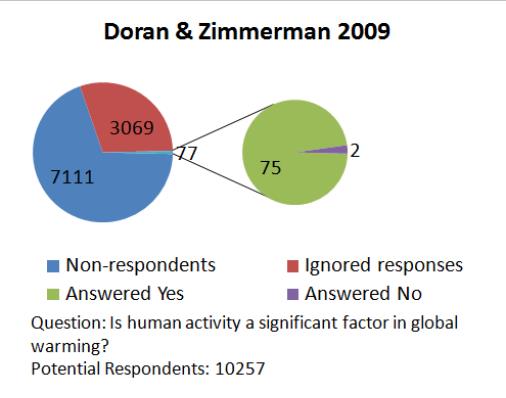
Another paper noted by NASA on their website is by W. R. L. Anderegg, at the time a PhD student in the department of Biology at Stanford University. He went on to become a professor at Princeton and Utah Universities in the field of ecology and biological sciences, studying the effects of global warming on forests.

Two papers were produced by John Cook  who has an undergraduate education in physics from the University of Queensland and a post-graduate honors year studying solar physics, worked as a self-employed cartoonist before founding a website pushing climate alarmism. For this he was given the title of the Climate Communication Fellow for the Global Change Institute at the University of Queensland. He is currently completing a PhD in cognitive psychology, researching how people think about climate change.

Finally, a key paper was from Naomi Oreskes who received her PhD degree in the Graduate Special Program in Geological Research and History of Science at Stanford in 1990. Her fields are History of Science and Economic Geology, and she is a prominent activist for IPCC activities.

All five of these papers have been extensively criticized in the peer-reviewed literature for their poor quality. For example:

Regarding Anderegg et al. and climate change credibility, PNAS, Dec. 28, 2010 by Lawrence Bodenstein

The study by Anderegg et al. (1) employed suspect methodology that treated publication metrics as a surrogate for expertise.

In the climate change (CC) controversy, a priori, one expects that the much larger and more “politically correct” side would excel in certain publication metrics. They continue to cite each other’s work in an upward spiral of self-affirmation.

Here, we do not have homogeneous consensus absent a few crackpot dissenters. There is variation among the majority, and a minority, with core competency, who question some underlying premises. It would seem more profitable to critique the scientific evidence than count up scientists, publications, and the like.

Regarding purely scientific questions, it may be justified to discount nonexperts. However, here, dissenters included established climate researchers. The article undermined their expert standing and then, extrapolated expertise to the more personal credibility. Using these methods to portray certain researchers as not credible and, by implication, to be ignored is highly questionable. Tarring them as individuals by group metrics is unwarranted.

Publication of this article as an objective scientific study does a true disservice to scientific discourse. Prominent scientific journals must focus on scientific merit without sway from extracurricular forces. They must remain cautious about lending their imprimatur to works that seem more about agenda and less about science, more about promoting a certain dogma and less about using all of the evidence to better our understanding of the natural world.

A more complete list of published papers refuting these studies is here: All “97% Consensus” Studies Refuted by Peer-Review

More inclusive surveys with more pointed questions show much more diverse opinions. Most scientists agree it has warmed since 1850, the end of the Little Ice Age. Geologists have evidence that the earth was warmer than now during the Medieval Warm Period, more warm during the Roman Warm Period, warmer still in the Minoan period. So the overall trend is a cooling over the last 11,500 years.

Most agree that human land use, such as making dams, farming, building cities, airports and highways, all affect the climate in those locations. The idea that rising CO2 is causing dangerous warming is controversial, with dissenters a large minority.

Stage 4: The Rebuttal. After a few decades, a new generation of researchers look to make a splash by questioning prevailing wisdom. One team produces a more methodologically-sound study that debunks the initial finding. Media outlets blare the “counterintuitive” discovery.

Stage 4 CAGW Theory  

There have been many rebuttals of CAGW theory and in the blogosphere they are proclaimed and shared among skeptics.  But it is still rare for mass media outlets to acknowledge any finding that contradicts the prevailing “consensus” view of CAGW.  On the multiple lines of evidence, the NIPCC series of reports provide references to a trove of peer-reviewed literature that do not support CAGW.  The most recent report is Climate Change Reconsidered II and the list of scientists, authors and reviewers includes people who have objected to CAGW over the years.

An important proof against the CO2 global warming claim was included in John Christy’s testimony 29 March 2017 at the House Committee on Science, Space and Technology. The text below is from that document which can be accessed here.

Figure 5. Simplification of IPCC AR5 shown above in Fig. 4. The colored lines represent the range of results for the models and observations. The trends here represent trends at different levels of the tropical atmosphere from the surface up to 50,000 ft. The gray lines are the bounds for the range of observations, the blue for the range of IPCC model results without extra GHGs and the red for IPCC model results with extra GHGs.The key point displayed is the lack of overlap between the GHG model results (red) and the observations (gray). The nonGHG model runs (blue) overlap the observations almost completely.

Main Point: IPCC Assessment Reports show that the IPCC climate models performed best versus observations when they did not include extra GHGs and this result can be demonstrated with a statistical model as well.

More discussion on this rebuttal is at Warming from CO2 Unlikely

See also Global Warming Theory and the Tests It Fails 

But the mass media is still in thrall of the catastrophic theory (bad news is good for business).

Stage 5: Proper Replications Pour In. Research groups attempt to replicate the initial research with the skepticism and precise methodology that should’ve been used in the first place. As such, the vast majority fail to find any effect.

Stage 5 CAGW Theory

In the case of climate change, the rewards are all skewed in favor of CAGW.  Not only is that bundle of beliefs politically correct, the monopoly of research funding for consensus projects leaves contrarian scientists high and dry.  And to the degree that the case rests on complex and expensive computer climate models, few centers are in a position to challenge the conventional wisdom, and almost none would be rewarded for doing so.

Despite this, every year there are hundreds of new research papers published challenging CAGW.  Kenneth Richard at No Tricks Zone has done yeoman work compiling and summarizing and linking to such studies. His most recent review is Hundreds More Papers Published In 2021 Support A Skeptical Position On Climate Alarm

The papers are sorted into four categories of views questioning climate alarm.

N(1) Natural mechanisms play well more than a negligible role (as claimed by the IPCC) in the net changes in the climate system, which includes temperature variations, precipitation patterns, weather events, etc., and the influence of increased CO2 concentrations on climatic changes are less pronounced than currently imagined.

N(2) The warming/sea levels/glacier and sea ice retreat/hurricane and drought intensities…experienced during the modern era are neither unprecedented or remarkable, nor do they fall outside the range of natural variability, as clearly shown in the first 150 graphs (from 2017) on this list.

N(3) The computer climate models are not reliable or consistently accurate, and projections of future climate states are little more than speculation as the uncertainty and error ranges are enormous in a non-linear climate system.

N(4) Current emissions-mitigation policies, especially related to the advocacy for renewables, are often ineffective and even harmful to the environment, whereas elevated CO2 and a warmer climate provide unheralded benefits to the biosphere (i.e., a greener planet and enhanced crop yields).

As for climate models, there is a single center (the Russian Institute of Numerical Mathematics), working on GCMs that produce unalarming results.  Out of 33 CMIP5 generation models the INMCM4 appears in the earlier graph above as the only one tracking close to temperature observations.  And reports of the upgrade to INMCM5 appear promising.  For more on this topic:

Climate Models: Good, Bad and Ugly

Stage 6: The Theory Lives On as a Zombie. Despite being debunked, the theory lingers on in published scientific studies, popular books, outdated webpages, and common “wisdom.” Adherents in academia cling on in a state of denial – their egos depend upon it.

Stage 6 CAGW Theory 

Clearly, we are still a long ways from CAGW going to zombie status.  There is still way too much money and fame attached to climate advocacy. But it is fair to say that the position of CAGW has become more precarious.  The presence of a skeptical US President, and the withdrawal of funding and political support for alarmists makes it possible for others to express doubts and explore flaws in the consensus theory.  The collapse of green energy schemes in places like Germany and Australia may also portend the onset of stage six.

Of course, the only sure sign of a theory’s failure is when it becomes the butt of jokes and ridicule in mainstream media.  For that I do appreciate the work of cartoonist Rick McKee of the Augusta Chronicle:
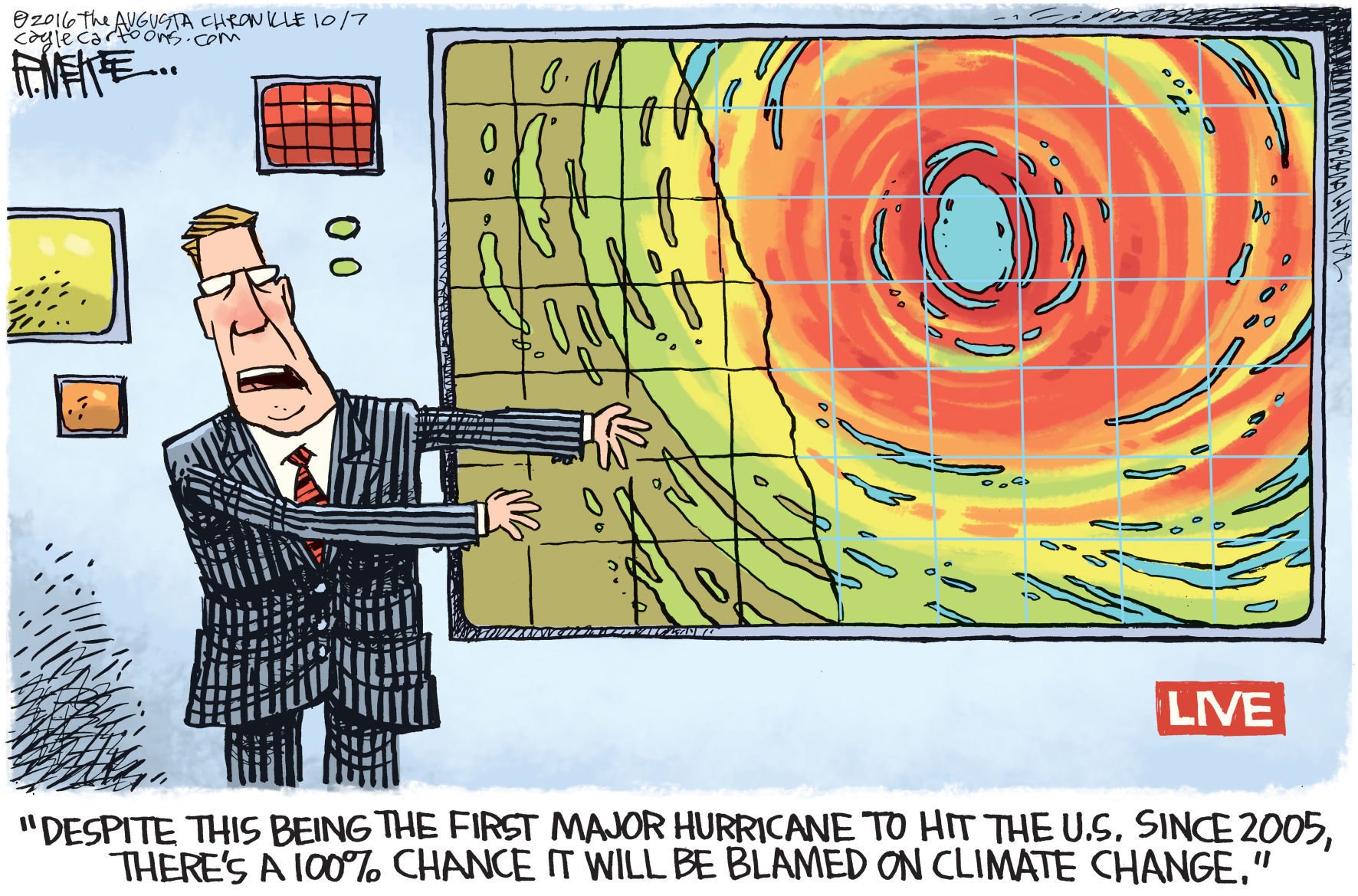
More humor at Cavemen Climate Comics for Sunday

Background Articles

The Flashy Finding: Progressively Scaring the World (Lewin book synopsis)

The Fawning Replications: Climate Models Explained

A Consensus Forms: Talking ClimateNASA and Climate Dogma

The Rebuttal: Fossil Fuels ≠ Global Warming

Proper Replications: Climate Reductionism

Zombie CAGW:  World of Hurt from Climate Policies

Postscript: Charles MacKay on Collective Delusions

Of course the classical masterwork in this field is the book Extraordinary Popular Delusions And The Madness Of Crowds By Charles MacKay 1841.  Title is link to full pdf text.  Excerpts below with my bolds.

In the present state of civilization, society has often shown itself very prone to run a career of folly from the last-mentioned cases. This infatuation has seized upon whole nations in a most extraordinary manner. France, with her Mississippi madness, set the first great example, and was very soon imitated by England with her South Sea Bubble. At an earlier period, Holland made herself still more ridiculous in the eyes of the world, by the frenzy which came over her people for the love of Tulips. Melancholy as all these delusions were in their ultimate results, their history is most amusing. A more ludicrous and yet painful spectacle, than that which Holland presented in the years 1635 and 1636, or France in 1719 and 1720, can hardly be imagined.

Some delusions, though notorious to all the world, have subsisted for ages, flourishing as widely among civilized and polished nations as among the early barbarians with whom they originated, — that of duelling, for instance, and the belief in omens and divination of the future, which seem to defy the progress of knowledge to eradicate entirely from the popular mind. Money, again, has often been a cause of the delusion of multitudes. Sober nations have all at once become desperate gamblers, and risked almost their existence upon the turn of a piece of paper. To trace the history of the most prominent of these delusions is the object of the present pages. Men, it has been well said, think in herds; it will be seen that they go mad in herds, while they only recover their senses slowly, and one by one.

MacKay’s study was exhaustive for its time, comprising three volumes;

VOL I. Considered National Delusions, including:
THE MISSISSIPPI SCHEME
THE SOUTH SEA BUBBLE
THE TULIPOMANIA.
RELICS.
MODERN PROPHECIES.
POPULAR ADMIRATION FOR GREAT THIEVES.
INFLUENCE OF POLITICS AND RELIGION ON THE HAIR AND BEARD.
DUELS AND ORDEALS
THE LOVE OF THE MARVELLOUS AND THE DISBELIEF OF THE TRUE.
POPULAR FOLLIES IN GREAT CITIES
THE O.P. MANIA.
THE THUGS, or PHANSIGARS.

VOL. II described Peculiar Follies, including:
THE CRUSADES
THE WITCH MANIA.
THE SLOW POISONERS.
HAUNTED HOUSES.

VOL. III compiled more general popular madnesses under three categories:
BOOK I: Philosophical Delusions, down through history with particular recent attention to Alchemists
BOOK II: Fortune Telling
BOOK III: The Magnetisers, a fad only subsiding when the book was written.

The Cooling Also Not Our Fault

With the lack of global warming and the steep decline of surface temperatures the last 6 to 8 months, climatists are pivoting to the notion invented by the infamous M. Mann, AKA Mr. Hockey Stick (aiming to erase the Medieval warming period).  The reasoning is convoluted, as you might expect given the intent to blame cold weather on global warming.  The claim is that burning fossil fuels causes the North Atlantic Current to slow down and bring cold temperatures to the Northern Hemisphere.  The video below is an excellent PR piece promoting this science fiction as though it were fact.


The link below allows you to view it in its natural habitat (USA Today)

https://www.usatoday.com/videos/tech/science/2019/03/20/ocean-conveyor-belt-slowdown-could-lead-major-climate-changes/3223463002/

Science Facts to Counter Science Fiction

Natural variability has dominated Atlantic Meridional Overturning Circulation since 1900
Mojib Latif et al. published April 2022 Nature Climate Change.  Excerpts in italics with my bolds.

Abstract

There is debate about slowing of the Atlantic Meridional Overturning Circulation (AMOC), a key component of the global climate system. Some focus is on the sea surface temperature (SST) slightly cooling in parts of the subpolar North Atlantic despite widespread ocean warming. Atlantic SST is influenced by the AMOC, especially on decadal timescales and beyond. The local cooling could thus reflect AMOC slowing and diminishing heat transport, consistent with climate model responses to rising atmospheric greenhouse gas concentrations.

Here we show from Atlantic SST the prevalence of natural AMOC variability since 1900. This is consistent with historical climate model simulations for 1900–2014 predicting on average AMOC slowing of about 1 Sv at 30° N after 1980, which is within the range of internal multidecadal variability derived from the models’ preindustrial control runs. These results highlight the importance of systematic and sustained in-situ monitoring systems that can detect and attribute with high confidence an anthropogenic AMOC signal.

Main

Global surface warming (global warming hereafter) since the beginning of the twentieth century is unequivocal, and humans are the main cause through the emission of vast amounts of greenhouse gases (GHGs), especially carbon dioxide (CO2)1,2,3. The oceans have stored more than 90% of the heat trapped in the climate system caused by the accumulation of GHGs in the atmosphere, thereby contributing to sea-level rise and leading to more frequent and longer lasting marine heat waves4. Moreover, the oceans have taken up about one third of the total anthropogenic CO2 emissions since the start of industrialization, causing ocean acidification5. Both ocean warming and acidification already have adverse consequences for marine ecosystems6. Some of the global warming impacts, however, unfold slowly in the ocean due to its large thermal and dynamical inertia. Examples are sea-level rise and the response of the Atlantic Meridional Overturning Circulation (AMOC), a three-dimensional system of currents in the Atlantic Ocean with global climatic relevance7,8,9,10.

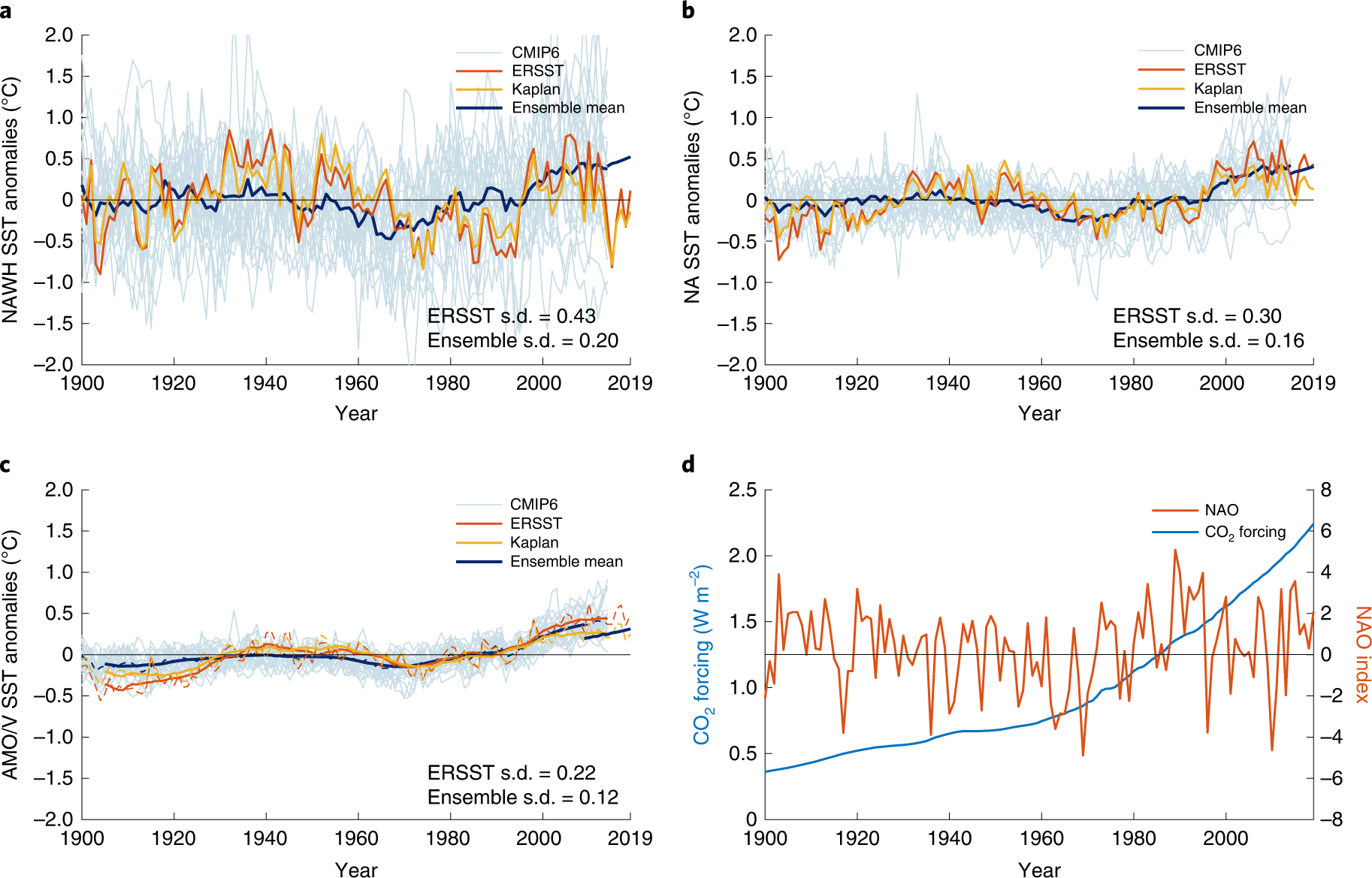
[Comment: The paragraph above is the obligatory statement of fidelity to the Climatist Creed. All the foundational claims are affirmed with references to prove the authors above reproach, and not to be dismissed as denialists.  As further evidence of their embrace of IPCC consensus science, consider the diagrams below.

a, The NAWH SST index (°C), defined as the annual SST anomalies averaged over the region 46° N–62° N and 46° W–20° W. Observations for 1900–2019 from ERSSTv.5 (orange) and Kaplan SST v.2 (yellow), and ensemble-mean SST for 1900–2014 (dark blue line) from the historical simulations with the CMIP6 models and the individual historical simulations (thin grey lines) are shown. b, Same as a but for the NA-SST index (°C), defined as the annual SST anomalies averaged over the region 40° N–60° N and 80° W–0° E. c, Same as a but for the AMO/V (°C) index, defined as the 11-year running mean of the annual SST anomalies averaged over the region 0° N–65° N and 80° W–0° E. The SST indices in a–c are calculated as area-weighted means. d, NAO index (dimensionless) for 1900–2019 (red), defined as the difference in the normalized winter (December–March) sea-level pressure between Lisbon (Portugal) and Stykkisholmur/Reykjavik (Iceland). The blue curve indicates the equivalent CO2 radiative forcing (W m−2) for 1900–2019, which is taken from the Representative Concentration Pathway (RCP) SSP5-8.5 after 2014.

Chart d shows the NAO fluxes compared to a CO2 forcing curve based upon the much criticized RCP 8.5 scenario, which is not “business-as-usual” but rather “business-impossible.” Using it shows the authors bending over backwards to give every chance for confirming the alarming slowdown narrative.  The next paragraph gives the entire game away]

Climate models predict substantial AMOC slowing if atmospheric GHG concentrations continue to rise unabatedly1,11,12,13,14. Substantial AMOC slowing would drive major climatic impacts such as shifting rainfall patterns on land15, accelerating regional sea-level rise16,17 and reducing oceanic CO2 uptake. However, it is still unclear as to whether sustained AMOC slowing is underway18,19,20,21,22. Direct ocean-circulation observation in the North Atlantic (NA) is limited9,23,24,25,26,27. Inferences drawn about the AMOC’s history from proxy data28 or indices derived from other variables, which may provide information about the circulation’s variability (for example, sea surface temperature (SST)21,29,30, salinity31 or Labrador Sea convection32), are subject to large uncertainties.

Discussion

Observed SSTs and a large ensemble of historical simulations with state-of-the-art climate models suggest the prevalence of internal AMOC variability since the beginning of the twentieth century. Observations and individual model runs show comparable SST variability in the NAWH region. However, the models’ ensemble-mean signal is much smaller, indicative of the prevalence of internal variability. Further, most of the SST cooling in the subpolar NA, which has been attributed to anthropogenic AMOC slowing21, occurred during 1930–1970, when the radiative forcing did not exhibit a major upward trend. We conclude that the anthropogenic signal in the AMOC cannot be reliably estimated from observed SST. A linear and direct relationship between radiative forcing and AMOC may not exist. Further, the relevant physical processes could be shared across EOF modes, or a mode could represent more than one process.

A relatively stable AMOC and associated northward heat transport during the past decades is also supported by ocean syntheses combining ocean general circulation models and data76,77, hindcasts with ocean general circulation models forced by observed atmospheric boundary conditions78 and instrumental measurements of key AMOC components9,22,79,80,81.

Neither of these datasets suggest major AMOC slowing since 1980, and neither of the AMOC indices from Rahmstorf et al.20 or Caesar et al.21 show an overall AMOC decline since 1980.

Contextual Background

From the Energy MIx Changes in Atlantic Current May Fall Within Natural Variability.  

In the February, 2022, edition of the journal Nature Geoscience, researchers at the University of Maryland Center for Environmental Science urged more detailed study of the notoriously complex Atlantic Meridional Overturning Circulation (AMOC). Now, oceanographer Mojib Latif and his team from the GEOMAR Helmholtz Centre for Ocean Research in Kiel, Germany are repeating that call in a paper just published in the journal Nature Climate Change.

The latest study describes the AMOC as a “three-dimensional system of current in the Atlantic Ocean with global climatic relevance.”

The February study responded to an August 2021 warning from the Potsdam Institute
that the AMOC has become wildly unstable and dangerously weak
due to global warming caused by human activity.

The authors of the latest study affirm that the Earth’s oceans have taken up more than 90% of the accumulated heat and roughly a third of all CO2 emissions since the dawn of the industrial age, leading to clearly measurable and devastating impacts like marine heat waves, sea level rise, and ocean acidification.

But it isn’t easy to confirm that the Atlantic circulation is actually slowing, partly because the ocean possesses such “large thermal and dynamical inertia.”

It is also extremely difficult to directly observe ocean circulation patterns in the North Atlantic, and proxies like sea surface temperature are “subject to large uncertainties,” the scientists say. Based on the available data, the GEOMAR study attributes localized sea surface cooling in the North Atlantic since 1900 to natural AMOC variability—not, as had been hypothesized, to a global heating-induced breakdown in the AMOC’s capacity to transfer heat.

Footnote:

See also from Science Norway Researchers and the media need to stop crying ‘wolf’ about the Gulf Stream