Climate Faith ≠ Climate Works

Protestors march to raise awareness of climate change and ecological issues on the second day of the Glastonbury Festival at Worthy Farm, Somerset, England, Thursday, June 27, 2019. (Photo by Grant Pollard/Invision/AP) GRANT POLLARD/INVISION/AP

Michael Lynch writes at Forbes Is The Climate Change Debate A Replay Of The Reformation? Excerpts in italics with my bolds.

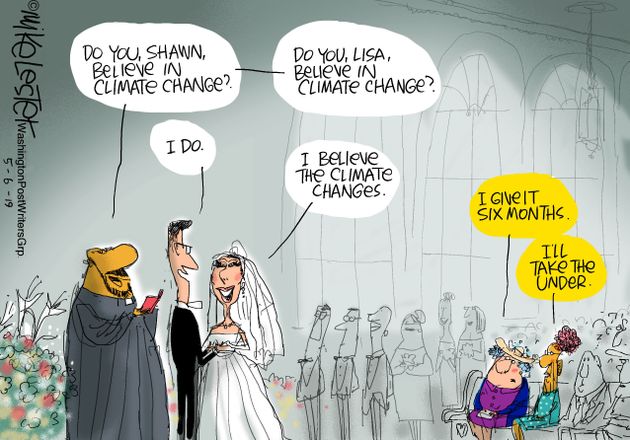
During the Reformation, there was an intense debate over whether Christians could enter paradise by doing good works, or whether faith alone allowed such a benefit. (See Fatal Discord: Erasmus, Luther and the Fight for the Western Mind by Michael Massing) This reminds me of the current attitude many have towards climate change policy, where some appear to think that faith alone is sufficient to solve the problem.

In the early days of the global warming debate, I read an English writer praising his country’s example of recognizing climate change compared to American skepticism, although he did admit the British hadn’t actually taken steps to address the problem. Similarly, the U.S. has reduced greenhouse gas emissions more than most countries in the past few years, but incidentally, mostly due to cheap natural gas, and it remains the climate villain in the eyes of many because the president is a denier.

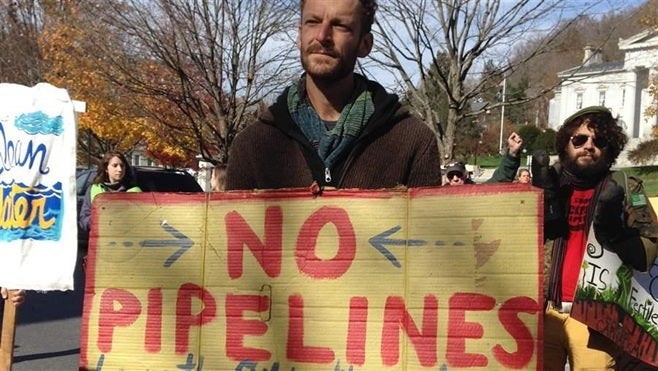
Additionally, a lot of energy, well, effort, goes into demonizing actors or actions that have no practical impact on climate. For example, opposing the construction of oil and gas pipelines does not reduce consumption of oil and gas, and usually increases emissions. Suing the oil or auto industries for blocking climate policies or misleading the public about climate science appeals to many, but with no measurable environmental impact. The same with demanding divestment in fossil fuel company stocks.

Some of the new proposals to address climate change put me mind of the debate between faith and works, especially when they seem more for demonstration purpose than actually reducing emissions. Numerous governments have suggested phasing out all carbon-based electricity generation or all petroleum-fueled vehicles by a point decades into the future, and these tend to be hailed by activists as representing, if not solutions, then great strides forward. New York state, for example, just proposed phasing out carbon-based electricity by 2050; France wants to ban conventional vehicles by 2040, the U.K. by 2050. But as Michael Coren notes, “So far, it’s just words.”

Which reminds me of comedian Billy West who, in the persona of a radio personality, bragged to someone about his fund-raising, adding, “…but mostly it’s just pledges.” Governments have been great at setting goals, but implementation has been seriously lacking. The setting of goals seems more an act of faith than a carrying out of works.

And we have been here before. Many other national and sub-national environmental programs were later abandoned; the 1990s saw California enact mandates for electric vehicle sales—requiring 10% of sales in 2003 be zero emission vehicles—which was adopted by a number of other states, primarily in New England. Ultimately, it was abandoned after wasting billions of dollars. Numerous locales in the U.S. signed on to requirements for oxygenated gasoline, only to back out at the last minute when the cost became apparent.

Technology mandates are a mix of demonizing the producers and demonstrations of faith: telling utilities to buy a certain portion of carbon-free electricity is calling on someone else to act, while hiding the cost of the action. Those who believe in works would do better to buy their own renewable power, either producing it directly or from an independent power producer.

Automobile efficiency standards arguably fall into this category as well, that is, making it seem as if the manufacturers are to blame for consumers’ desire to purchase large, powerful vehicles. There are very fuel-efficient vehicles for sale in the United States, and they are much cheaper than the sauropods dominating American highways, so addressing manufacturer behavior is not the issue. Mandating vehicle efficiency is rather like demanding that a portion of butchers’ sales be veggie burgers; Beyond Meat has shown that success for veggie burgers comes from satisfying consumers, not lecturing them on environmental ethics.

This is where a carbon tax comes in: it is designed to change consumer preferences, reducing carbon emissions in favor of other consumables. It would also motivate producers to meet the demand for products that require less carbon emissions, either in their production or operation. Although the impact would grow over time, it would begin immediately upon implementation, and while it could theoretically be reversed, taxes on consumption tend to be extremely persistent.

Comment:

I like the author’s comparing of the climate faithful marching in processions to the religious faithful marching on Holy Days. He is right to point out the hypocrisy of of those obsessed over CO2 demonstrating their belief, while still enjoying fossil fuel benefits. And he ridicules the symbolic but ineffectual policies proposed, noting they are merely another form of showing faith rather than taking action that works.

But he ends up accepting the warmist unproven premise: We are sinners because we burn fossil fuels. Moreover, he seems to suggest that imposing a carbon indulgence tax overcomes the moral shortcoming. In fact Reformers strongly opposed the Catholic Church practice of taking money for future promises they could not deliver. Now this scam returns with governments taking the opportunity to fill their coffers. Further, as Bill Gates explained, the tax has a faulty premise: There is presently no substitute for fossil fuels powering modern societies.

The good news is, today’s weather and climate are within ordinary bounds.  The bad news:  If they actually turn climate faith into works, it is the end of life as you know it.

Warmists Make Bad Investors

Terence Corcoran explains at the Financial Post: The world needs more of what Exxon is selling (and will for decades). Excerpts in italics with my bolds.

World demand for Exxon’s products, fossil fuels, is expected to increase and remain steady over the coming decade

It’s the kind of story that lights up headlines: one of Britain’s biggest fund managers started selling shares in Exxon Mobil Corp. because the global oil giant wasn’t doing enough to address climate change.

The investment fund manager, Legal & General Investment Management (LGIM), oversees $1.3 trillion, making it the 11th largest money manager in the world. Legal and General (as it is called) is also one of scores of investment management firms, activists and hand-wringing organizations that are part of the burgeoning global sustainable and environmental social finance and governance effort to promote collaborative engagement and foster responsible investment and divestment. The goal is to enhance disclosure target-setting within corporations so that they can become leaders and builders of business models that will help the planet achieve a prosperous and sustainable future and overcome the climate emergency/crisis/disaster now faced by humanity if fossil fuels are not reduced to near-zero in the not-too-distant future.

As part of this movement, LGIM is a member of an organization called Climate Action 100+: Global Investors Driving Business Decisions, a collection of meddling institutional investors around the world, mostly government-run pension plans — although Quebec’s state pension fund, the Caisse de dépôt et placement du Québec, is the only obvious Canadian member of Climate Action 100+.

Exxon was one of five companies LGIM said it had placed on the divestment list as it steps up pressure on companies to address climate change: ExxonMobil Corporation, Hormel Foods, Korean Electric Power Corporation, Kroger and Metlife. “These names,” said LGIM, “are in addition to China Construction Bank, Rosneft Oil, Japan Post Holdings, Subaru, Loblaw and Sysco Corporation, all of whom remain engaged but who have yet to take the substantive actions to warrant re-instatement.”

Meryam OImi, head of Sustainability and Responsible Investment Strategy at LGIM, said the investment firm “will continue to push companies to build business models fit for a prosperous, sustainable future.” LGIM’s name-and-shame strategy was enthusiastically endorsed last week in Forbes magazine for maintaining “a sophisticated approach to climate change.”

One has to wonder, however, about the wisdom of divesting Exxon Mobil, one of the world’s most successful fossil-fuel producers, at a time when world energy forecasters project continuing expansion of fossil fuel demand well into …

Whoa. Hold on a second. Let me go back a few paragraphs. Loblaw? Is that our Canadian Loblaw, national champion virtue-signalling food industry giant, master of green product marketing, installer of solar panels on supermarket roofs, and most recently recipient of government funding to help upgrade the company’s refrigeration units to make them more green?

By gosh, it is our Loblaw. In a release, LGIM said “Loblaw, the Canadian grocery chain,” will continue as an “exclusion candidate.” According to Angeli Behham, a corporate governance manger who leads LGIM’s “pledge engagements with the food sector,” Canada’s leading food company “has made improvements in its governance, appointing a Lead Independent Director to ensure a counter-balancing voice to the Chair/CEO role. But we believe there are still a number of necessary steps for companies of such scale, and look forward to continuing engagement and support for substantive changes in the future.” Only then, it seems, will Loblaw be removed from the “divested” list and “reinstated.”

A colleague here at FP Comment, Peter Foster, sent an email to a public affairs person at Loblaw’s head office in Toronto about LGIM’s listing of Loblaw as a climate laggard. “Did they tell you where you are falling short? Are you taking steps to regain their approval? Does this mean they don’t invest in you at all, or just in one of their funds?” There has been no reply as of deadline.

Meanwhile, back to Exxon Mobil, from which LGIM has commenced divesting. Presumably the objective is to use slow trickle-down divestiture as a form of blackmail: change your ways, Exxon, or we will take away our investment, publicly announce our intent and drive your share price down.

This may be terrific green headline-grabbing investment politics, but in the stock market world the plan seems a little naive. According to the latest forecasts — from the International Energy Agency, BP’s Energy Outlook, and McKinsey — world demand for Exxon’s products, fossil fuels, is expected to increase and remain steady over the coming decades.

Natural gas demand, for example, surged last year, and McKinsey reports that gas demand will continue to increase from about 3,500 billion cubic feet (bcf) today to a peak of about 4,200 bcf in 2035 before declining slightly back to today’s level by 2050. Over the next 30 years, oil will also gain from 100 million barrels a day (MMBD) a year today to 108 MMBD a year in 2033 before falling back down to 100 MMBD by 2050.

That means that Exxon and other fossil-fuel companies are forecast to produce a total of 3,000 MMBD of oil over the next 30 years and 120,000 billion cubic feet of gas.

By most investment standards, this is no time to be divesting fossil-fuel stocks. If LGIM and other dumb fund management clucks agitating for sustainable investment and divestment want no part of it, then let them have their political fun. Sell, baby, sell. As they do their bit to keep the fossil-fuel stocks low, they are creating buying opportunities for smarter investors. In future, it seems, the world will need more Exxon.

Comment:  How is it that so-called professional wealth managers can be so crippled with wish dreams and political correctness?  Do they think that everyone with disposable income lives in their progressive, post-modern bubble?  I hope they lose their shirts.  (Except for Quebec pension fund who need to send me a check every month.)

Climate Zealots Throw Sand into Energy Supply

Roger Conrad reports on how the US energy infrastructure is hobbled by climate activists empowered by funds and lawyers. His article at Forbes is Best Bets On Pipeline Politics. Excerpts in italics with my bolds.

It seems like a long, long time ago in a galaxy far, far away. But barely two years back, permits for new US oil and especially natural gas pipelines were basically a formality.

Back then, the only US pipeline facing significant regulatory hurdles was TC Energy Corp’s (TRP) proposed Keystone XL pipeline to bring Alberta oil sands to US markets. And on the day the Obama Administration rejected that project for the final time, officials actually approved two oil pipelines elsewhere.

Everything changed following the November 2016 presidential election. Congress’ failure in 2016 to fill empty seats on the five-member Federal Energy Regulatory Commission led to the lack of quorum in early 2017.

New approvals ground to a halt for nearly six months. That gave “keep it in the ground” advocates precious time to tap into record fundraising, fueled by a groundswell of opposition to Trump Administration policies.

One result has been legal challenges to projects on an unprecedented scale at multiple venues. Work on Enbridge Inc’s (ENB, ENB) Line 3 pipeline expansion, for example, is now completed in Canada as well as North Dakota and Wisconsin.

Project suspended in June 2017.

Courts, however, have overturned Minnesota regulators’ prior approval of the project’s Environmental Impact Statement. That’s forced officials to go through the process again, delaying completion at least until the second half of 2020.

We’ve also seen a decided shift to more restrictive energy politics in several states, notably Colorado. Others like New York have dug in further in refusing to grant water permits from long-delayed projects like the Constitution Pipeline. That’s triggered warnings of prospective natural gas shortages from New York City’s distribution utility Consolidated Edison ED +0% (ED), which is restricting new customer additions.

Time equals money when it comes to multi-year, multi-billion dollar projects. Bloomberg Intelligence estimates a $2.75 million cost increase per mile of planned pipeline for every one-quarter delay in construction. The projected final cost of the Line 3 expansion, for example, is already billions higher than initial estimates.

Consequently, the game being played by pipeline opponents is to delay. That means mounting enough challenges to ramp up costs and ultimately convince developers to walk away. And for the first time, they have the funds to do the job.

Project abandoned in April 2016.

Opponents have been particularly successful quashing projects in New England and the Northeast US. To date, they’ve failed in Texas, where several giant pipelines are under construction. Kinder Morgan KMI +0% Inc (KMI) has one major gas pipeline from the Permian Basin coming on full stream later this year. It has another next year and a third in early stages of development.

Ground zero now in pipeline politics is the struggle of two projects in the Middle Atlantic/Southeast US to cross the Appalachian Trail: The Atlantic Coast Pipeline and the Mountain Valley Pipeline.

These projects’ ultimate success or failure will have a huge impact on the long-term profitability of Appalachia-based gas and oil producers, which are sitting on huge reserves in the Marcellus and Utica shale. Ironically, the longer they’re delayed, the greater demand will be for Texas energy and by extension new pipelines in the state.

That will benefit Texas developers like Kinder Morgan and Plains All-American Pipeline (PAA), which is focused on oil. And it will hit pipeline companies in the East like EQM Midstream Partners LP (EQM), which faces a massive writeoff if the Mountain Valley Pipeline can’t win through.

To be sure, natural gas development especially still has plenty of support in the US. Replacing older coal-fired facilities with gas, for example, reduces operating costs and electricity rates. New plants increase utilities’ rate base, spurring earnings and dividend growth. And the prospective environmental benefits are enormous, cutting future legal liabilities.

Gas emits none of coal’s particulate matter, which is blamed for a host of respiratory woes. It emits no acid rain gases that have caused billions in property damage and creates no toxic ash.

As for carbon dioxide, equivalent sized gas power plants emit less than half what coal does. In fact, gas adoption is the single biggest reason America is still meeting greenhouse gas commitments under the Paris Accords. Finally, surging US energy production has dramatically shifted global energy politics, demonstrated by the relative lack of reaction in oil prices to elevated tensions in the Persian Gulf.

During the Obama years, those facts were more than enough to hold together a consensus for US natural gas development. And the result was a relatively easy path for pipeline approvals.

These days, that’s not enough for pipelines to succeed. The silver lining is the more difficult it becomes to build, the more valuable existing infrastructure and ultimately successful projects will be.

In the days when pipeline approvals were swift, any company raising funds economically could get projects built. These days, would-be developers need to be financially and operationally strong enough to handle legal challenges wherever they occur.

Footnote:  The Climatist Manifesto

Mission: Deindustrialize Civilization

Goal: Drive industrial corporations into Bankruptcy

Strategy: Cut off the Supply of Cheap, Reliable Energy

Tactics:

  • Raise the price of fossil fuels
  • Force the power grid to use expensive, unreliable renewables
  • Demonize Nuclear energy
  • Spread fear of extraction technologies such as fracking
  • Increase regulatory costs on energy production
  • Scare investors away from carbon energy companies
  • Stop pipelines because they are too safe and efficient
  • Force all companies to account for carbon usage and risk

See Also Why People Rely on Pipelines

Payback Upon Climate Grasshoppers


Superhuman Renewables Targets

Faster than a speeding bullet! More powerful than a locomotive! Able to leap tall buildings in a single bound! It’s Superman.

New York is not the only climate cuckoo’s nest in the United States. Here are four more states promising efforts to install wind and solar power at rates that would exhaust Superman. EIA reports; Four states updated their renewable portfolio standards in the first half of 2019. Excerpts in italics with my bolds.

As of the end of 2018, 29 states and the District of Columbia had renewable portfolio standards (RPS), or polices that require electricity suppliers to source a certain portion of their electricity from designated renewable resources or eligible technologies. Four states—New Mexico, Washington, Nevada, and Maryland—and the District of Columbia have updated their RPS since the start of 2019.

States with legally binding RPS collectively accounted for 63% of electricity retail sales in the United States in 2018. In addition to the 29 states with binding RPS policies, 8 states have nonbinding renewable portfolio goals.

New Mexico increased its overall RPS target in March 2019 to 100% of electricity sales from carbon-free generation by 2045, up from the previous target of 20% renewable generation by 2020. The new policy only applies to investor-owned utilities; cooperative electric utilities have until 2050 to reach the 100% carbon-free generation goal. The target has intermittent goals of 50% renewable generation by 2030 and 80% renewable generation by 2040.

In April 2019, the Nevada legislature increased its RPS to 50% of sales from renewable generation by 2030, including a goal of 100% of electricity sales from clean energy by 2050. Later that month, Washington increased its RPS target to 100% of sales from carbon-neutral generation by 2045, an increase from the previous target of 15% of sales from renewable generation by 2020. In addition, the policy mandates a phaseout of coal-fired electricity generation in Washington by 2025. Nevada and Washington became the fourth and fifth states, respectively, to pass legislation for 100% clean electricity, following Hawaii, California, and New Mexico.

In May 2019, Maryland increased its overall RPS target to 50% of electricity sales from renewable generation by 2030, replacing the earlier target of 22.5% by 2024. In addition, the legislation mandates further study of the effects and the possibility of Maryland reaching 100% generation from renewables by 2040.

Carbon Tax Dubious Economics

How could 3508 economists be wrong? Let us count the ways.

Michael Davis writes at Regulation Magazine The signatories of the recent “Economists’ Statement on Carbon Dividends” must address some important issues. Excerpts in italics with my bolds.

Economists are disagreeable people. And it’s good that they are. Most important economic questions are complex, multi-dimensional puzzles with no obvious, simple answers. But debate and disagreement advance our understanding of the world, and so good economists debate and disagree.

If you heard that thousands of the very best economists actually did agree on something, you’d probably think that it was something glaringly obvious—maybe they issued a joint statement condemning the designated hitter rule or calling for a total ban on Super Bowl halftime shows. But those aren’t the subject of the recent “Economists’ Statement on Carbon Dividends,” signed by 3,508 economists and released by the Climate Leadership Council. The statement supports the creation of a Pigouvian tax on U.S. carbon emissions on the grounds that “global climate change is a serious problem calling for immediate national action,” and that “a carbon tax offers the most cost-effective lever to reduce carbon emissions at the scale and speed that is necessary.”

This agreement is remarkable! The environment and the economy are both complex systems. Intelligent people can agree on a few things involving them—of course, manmade global warming is real—but there is vast uncertainty about how the complex climate system interacts with the complex economic system to shape the human condition in the distant future. More importantly, core questions about climate change engage fundamental moral values about intergenerational equity. How to deal with climate change is the very epitome of a “wicked problem.”

[Note: Intelligent people also note that in the world (as opposed to models) manmade global warming has yet to be detected separately from natural global warming. I understand the author is not questioning the science or the impacts (later on), but is raising serious issues about the policy proposal.]

This is a serious proposal advanced by serious people to deal with a serious problem. But it is also a radical proposal. According to a joint study by Columbia University’s Center on Global Energy Policy and the Urban Institute–Brookings Institution Tax Policy Center, in the first year the tax would amount to about $2,000 for a family of four. No matter what is done with the tax revenues, this proposal would have far-reaching economic consequences.

And so, before we get too far along, we need a proper argument over this proposal’s merits. Here, then, are five important questions about the plan. Let’s hope these questions lead to some disagreeable, but fruitful, discussions.

QUESTION 1: What if these economists are right about the principle but wrong about the tax rate?

The principle behind the carbon tax makes perfect economic sense. The market price of any good reflects at least some of the costs of making that good. The price of a gallon of gas, for example, needs to be high enough to compensate all those who worked to get the gas into your car. But some goods—and gasoline is one of them—impose costs on others that are not reflected in the price. Economists call these costs “negative externalities.” If burning a gallon of gas causes damage to coastal property, drivers are not paying the full price of their consumption and that distorts their consumption choices. That’s unfair and inefficient.

The obvious solution is to levy a Pigouvian tax equal to the harm caused, forcing consumers to shoulder the externality cost of their consumption and, perhaps, change their consumption pattern. But we have very little idea of the magnitude of the actual harm from a ton of CO2 emissions and so we don’t really know how high this carbon tax should be. Estimates of the “Social Cost of Carbon” published by the U.S. Environmental Protection Agency indicate that a ton of CO2-equivalent released in 2020 could cause harm of as little as $5 or as much as $123. (This roughly translates to a range of between 4¢ and $1 of damage from the burning of a gallon of gas.) The $40-per-ton tax suggested by the Statement signatories is a kind of average of several disparate estimates. As such, it is almost certainly the wrong number.

These economists will, no doubt, point out that the current carbon tax of zero is also wrong. But that observation, alone, is not enough to justify the proposed tax because setting the rate in excess of the actual external harm would cause real economic damage.

The economic argument in favor of carbon taxes needs to be coupled with a clear understanding that cheap, abundant energy has been an essential part of recent human progress. Fossil fuels provide food, shelter, health care, education, the arts, and countless other goods. They are not some vile poison, and consuming fossil fuels is not a shameful sin. When something is taxed, less is consumed. If, as seems likely, we consume too much energy from carbon-based resources, a tax can help to moderate that consumption appropriately. But if the tax is too high, we will consume too little. If we consume too little, we will miss out on some of the benefits that come from fossil fuels.

Here’s another problem related to the practical question of the appropriate carbon tax rate: Many fossil fuels are already heavily taxed. For example, the average tax on motor fuels is now about 48¢ per gallon, the equivalent to a tax of $54 per ton of carbon. These taxes exist mostly to raise revenue for transportation infrastructure, not control some other externality. Should the proposed new carbon tax be in addition to those existing taxes?

QUESTION 2: Should the United States impose carbon taxes even if the rest of the world does not?

In 2019 the world will produce a bit more than 35 gigatons of CO2-equivalent emissions. The United States will contribute about 5 gigatons to that total. The U.S. Department of Energy forecasts that, in 2040, world emissions will increase to 43 gigatons while U.S. emissions will drop by a small amount. A 2018 report by the Center on Global Energy Policy at Columbia University forecasts that if we impose a tax of $50 per ton of carbon in 2020 and increase that tax by 2% per year, annual U.S. emissions will fall by 13%–29% by 2030. But by 2030, U.S. emissions will be less than 15% of the world total. Even under the best-case scenario, our carbon tax would reduce global emissions by less than 5% and climate change will continue.

If the rest of the world doesn’t join us, the U.S. carbon tax won’t matter. This leads to a related problem. If the United States levies a carbon tax, it becomes more expensive for U.S. firms to make and transport goods. That means a U.S. carbon tax will reward those countries that don’t do anything to reduce their emissions by giving those places a competitive advantage. Exploiting that advantage will likely be too much of a temptation for others—especially developing countries with desperately poor people—to ignore. It is even possible that by pushing energy-intensive production to places with no controls on carbon emissions, this policy will make global emissions worse.

QUESTION 3: Doesn’t the “border-adjustment tax” that has to be part of the plan present enormous practical and political problems?

This carbon tax should not just apply to U.S. emissions, but to foreign emissions resulting from goods imported into the United States. Assessing a border-adjustment tax on these goods would be difficult from both an economic and political perspective. For example, almost 5% of the world’s carbon emissions result from the production of cement. But different production technologies for cement and different modes of transportation result in vastly different emissions. Even though two different shipments of cement may be practically identical, they won’t have similar carbon footprints. How would U.S. authorities determine which bags of cement face what tax rates?

The political problems are also tough. First of all, to the rest of the world a border-adjustment tax would seem like a tariff. How would we impose this tax without violating treaty obligations and without inviting retaliation? Second, how would we keep the crony capitalists away from the treats? The temptation to game the system for competitive advantage would be enormous.

QUESTION 4: What about adaptation?

All but the most apocalyptic of the potential harms from global warming can be managed through some type of adaptation to the changing climate. Building practices, for example, can be changed to deal with the threat of rising sea levels. There is also the possibility of some sort of geo-engineering solution. Remember that atmospheric CO2 is an otherwise harmless substance and that the burning of fossil fuels is enormously valuable. This means that if it is less costly to adapt to the effects of a ton of CO2 emissions than it is to eliminate the carbon, we should adapt. But to the extent that the carbon tax actually works to reduce CO2 emissions, it creates disincentives to adapt.

The proponents of a tax might say that the estimates of the Social Cost of Carbon already balance adaptation costs. The problem with that argument, though, is that the most effective adaptation solutions probably haven’t been created. New technologies to deal with climate change—altering agriculture practices, geo-engineering solutions, and other initiatives we can’t currently imagine— may well prove extraordinarily effective and efficient. An effective carbon tax reduces the incentive to find those solutions that allow us to enjoy the benefits of fossil fuel use without much cost.

QUESTION 5: Isn’t economic growth much more important than lowering CO2?

Every four years, a distinguished group of analysts delivers to Congress the “National Climate Assessment.” The latest version came out last November and was full of sobering projections. Anyone who chooses to ignore the threat of global warming should read what it has to say. Among the direst warnings was a graphic showing that if the worst-case scenario played out, by 2100 the effects of global warming would reduce U.S. gross domestic product by about 15% from current projections. To put that number in perspective, during the 2008 recession GDP fell by about 1%. That was accompanied by huge increases in unemployment and economic dislocation. Between 1929 and 1933, the worst years of the Great Depression, GDP fell by about 34%. That led to tremendous misery and, arguably, a world war. Remember, too, that the potential decline of 15% of GDP in 2100 isn’t just a short-term event. As bad as the Great Depression was, the economy recovered. The scary scenario is that by failing to address global warming, we will cause future generations to suffer a huge permanent decline in GDP.

But there’s another thing to keep in mind: if the United States could boost annual GDP growth rates between now and 2100 by an additional 0.2 percentage points, by the year 2100 U.S. GDP would be more than 17% larger than is currently projected. Think about it this way: Suppose that you had to pick between two tax policies. The first would reduce U.S. carbon emissions and maybe prevent the potential loss of 15% of GDP by 2100. The second would increase annual growth rates by 0.2 percentage points, increasing GDP by 17% by 2100.

As you’re picking between the choices, keep in mind that even if the carbon policy controls U.S. emissions, it is uncertain whether the rest of the world will go along and climate change will stop. Remember, too, that there is huge uncertainty about the specifics of global warming. The carbon emissions policies target the worst-case scenario. The GDP growth policy, on the other hand, doesn’t depend on the rest of the world and the benefits are guaranteed by the simple mathematics of compound growth.

Don’t try to waive off this choice by saying you want to do it all. We all want many things, but what we can have is bounded by our scarce resources. This particular group of distinguished economists has—quite deservedly—an impressive stock of political capital and prestige. But political capital and prestige are two such scarce resources. Why target carbon taxes rather than growth-enhancing tax reform?

Climate lemmings sticking together.

CONCLUSION

Let’s end where we started, with a call for a conversation. These five questions aren’t intended as some snarky put-down of a silly economic proposal. No good economist—and certainly none of the 3,508 who signed the Statement—should feel disrespectfully challenged by these questions. There are intelligent responses to each of these questions. And at the end of the discussion, we should all have a better idea about whether the answers are good enough to go ahead with the tax.

Fort Lauderdale Repels Climate Pirates

This just in from Erin Mundahl writing at Energy In Depth Fort Lauderdale Deals Another Blow to Climate Litigation Campaign. The article will appear below in italics with my bolds. But first some background.

Background on Climate Piracy

Those paying attention have noticed for some years now a new type of pirate has emerged: Climate Lawyers. Taking their game plan from the Tobacco Pirates, they are now targeting a different set of deep pockets: Big Oil Companies. Since 30+ Billion US dollars were extracted from tobacco companies (including contingency fees to lawyers), a comparable, if not larger payday is sought by these new corporate raiders. Unlike Somali pirates who attacked the tankers themselves, Climate Lawyers are using the courts to sue Big Oil for damages their products cause consumers. In order to succeed in these lawsuits, they recruit jurisdictions like states or cities to claim they have been victimized by having fossil fuel products imposed upon them.

[Full Disclosure: The photo above symbolically depicts Climate Lawyers in the boat confronting an oil tanker, when in fact they won’t get their suits wet. The original image was a Greenpeace zodiac]

Fort Lauderdale Stands Up Against Pressure from Climate Lawyers

It’s a bright day for Fort Lauderdale. Despite a full-court press by climate activists, city officials have decided not to pursue a climate liability lawsuit. This is a blow for climate activists, who are hoping to expand their litigation campaign into Florida.

Over the past six months, lawyers and environmental groups have devoted considerable time and effort to persuading cities in the Sunshine State to join their quixotic climate litigation campaign. Despite their efforts, Fort Lauderdale was not convinced.

EarthRights International hides behind NGO to lobby city officials.

Released emails show that EarthRights International, the Rockefeller-funded organization representing the City and County of Boulder and San Miguel County in their climate change lawsuit, and the Institute for Governance and Sustainable Development (IGSD) coordinated to lobby Fort Lauderdale city officials throughout 2018.

In June, Mayor Dean Trantalis and his chief of staff, Scott Wyman, received emails from a Miami Beach lobbyist, Seth Platt. Platt was hired to represent IGSD, which runs the Center for Climate Integrity, a project that “supports meritorious climate cases aimed at holding fossil fuel companies and other climate polluters liable for the damages they have caused.” The emails show that Platt was eager to introduce Trantalis and Wyman to EarthRights International (ERI) and their agent, Jorge Musuli, who Platt said was working with the City of Miami to file a climate nuisance lawsuit:

“I have invited Jorge Mursuli to the meeting as his group, [ERI], is working with the City of Miami to file a lawsuit. We are trying to collaborate on advocacy in Broward.”

Sher Edling joins EarthRights International in their pursuit

In a surprising twist of fate, ERI added another plaintiffs’ attorney firm involved in climate litigation, Sher Edling, as co-counsel in their pursuit of the city. By July, Seth Platt had arranged for Vic Sher and Matt Edling, who represent more than a dozen cities in climate cases, to join ERI for a meeting with Fort Lauderdale City Attorney Alain Boileau. After the meeting, Boileau followed up with the mayor, telling his boss about the “positive meeting” he had had with Sher, Edling, Marco Simons (general counsel for ERI), and Mursuli, all thanks to Platt.

Records show that Platt conducted all of these meetings on behalf of the Institute for Governance & Sustainable Development – not ERI. When pressed on this by local reporters, Platt did not respond.

IGSD finds itself at the center of the climate litigation campaign…. again

Platt’s lobbying affiliation highlights the well-coordinated network of climate activism aimed at taking down fossil fuels by any means necessary. IGSD is a key player in a carefully organized media campaign that rehashes a stale, repeatedly debunked story for the sake of silencing dissent . Richard Wiles, who serves as the ringleader for their climate litigation campaign, produced the IGSD-funded podcast Drilled and published Climate Liability News, an activist site designed to promote climate litigation.

ERI fails to impress the City Commission

In October ERI General Counsel Marco Simons gave a presentation to Trantalis and the Fort Lauderdale City Commission. The meeting was a full court press that emphasized how climate change could hurt city finances and how wealthy anti-fossil fuel foundations were willing to foot the bill for the lawsuit. Simons explained their strategy during the pitch:

At the litigation stage it would be necessary to join together with co-counsel from private firms. They would be interested in pursuing this on a contingency fee-basis… And it would be a combination of our pro-bono representation and a private firm, contingent fee representation, again with no up-front cost to the city and that’s the model that’s been done in all of these cases so far.”

Thankfully, Fort Lauderdale decided to resist the pressure. Despite the focus Simons put on how the lawsuit could financially benefit the city, it would tie the city up in litigation for months or years, taking attention away from much needed resiliency projects. So far, none of the plaintiffs – or the cities – pursuing climate litigation across the country have seen a dime. Meanwhile, the major green donors financing the pro bono legal work are using the lawsuits to promote their own climate agenda, both in the courtroom and the court of public opinion.

Local voices also reject lawsuits

Over the past several months, op-ed pieces in papers around Florida have emphasized that suing energy companies distracts attention from the harms of climate change and discourages cooperation between industry and government. In a Naples Daily News op-ed this spring, Sal Nuzzo of the Tallahassee-based James Madison Institute, criticized using lawsuits to develop state policy, instead pushing for cooperation between businesses and government for environmental issues:

“For policies to succeed, public officials must work with business…Florida’s unemployment rate is low and our economy is growing at a faster pace than the U.S. economy overall in part because our tax and regulatory burdens are lower than many other states. A hostile approach toward manufacturers would ill serve our state and hinder efforts to address environmental issues.”

Not only does litigation waste taxpayer money, it also distracts from state-level policies that are making meaningful improvements to Florida’s environment. Florida Governor Ron DeSantis (R) “went green” in the words of political columnist Barney Bishop, who wrote in the Sunshine State News to praise the governor for his plan to invest heavily in resiliency efforts and Everglades restoration and water cleanup, an approach he contrasted with that of “public officials working hand in hand with activists”:

“The reality is that real-life actions like the ones being taken by Gov. Ron DeSantis are the best way to help our environment. Lawsuits such as these offer no real benefit and only serve to threaten American companies and American jobs.”

It’s a good thing Fort Lauderdale saw through the scam.

See also US State Attorneys Push Back on Climate Lawsuits

See also Is Global Warming A Public Nuisance?

Is Climate Catastrophe the Lie Whose Time Has Come?

“If you tell a lie big enough and keep repeating it, people will eventually come to believe it. The lie can be maintained only for such time as the State can shield the people from the political, economic and/or military consequences of the lie. It thus becomes vitally important for the State to use all of its powers to repress dissent, for the truth is the mortal enemy of the lie, and thus by extension, the truth is the greatest enemy of the State.” — Joseph Goebbels

The US election cycle is heating up, while the Brexit melodrama is morphing into “Zero Carbon, Please.”  Kids are in the streets on Fridays or suing the government in courts.  Oil Companies are under pressure to commit Hari-Kari by those proposing that wind and solar power be ramped up from 2% of global energy supply to 89% in 12 years.  Can the herd grow any madder than this?

A recent CNN poll of Democrats had 96% saying any presidential nominee has to promise aggressive action to slow climate change, numbers right up there with Mom and apple pie.  And they demand candidates have a whole debate dedicated to climate change so the dozen or so pols can be checked for sincerity.

Progressives certainly think the issue is a winner for them because most Americans agree with them.  But do they really?  How reliable are these polls?  One that is frequently mentioned in support of climate belief by the masses is dissected below so you can draw your own conclusions.

Climate Change Is a State of Mind

A recent survey by Yale and George Mason activists is another reminder that “climate change” is actually a branch of environmental psychology. Consider that “climate” is an human construct, defined as the pattern of weather we remember in our living space over seasons and years. And “climate change” is therefore an added belief that our expectations about future weather are uncertain and unreliable. And so, attitude surveys are a suitable way to explore an issue that is wholly a matter of public opinion, IOW a state of mind rather than a state of nature.

The survey is appropriately entitled: Climate Change in the American Mind. Title is link to the website for the 2018 edition, with earlier results back to 2008.

The resources there are informative, including articles expressing both satisfactions and disappointments with the levels of belief and concern expressed by survey participants. The compliant mass media cherry pick various findings, giving headlines like these.

“We’ve entered a new era” of climate concern, survey finds CBS

Americans Believe in Climate Change, But Not Climate Action NYmag

Yale Poll: Climate Change ‘Personally Important’ to Record Number of Americans EcoWatch

Most Americans Don’t Know Vast Majority Of Scientists Agree On Climate Change CleanTechnica

Most Americans now worry about climate change—and want to fix it National Geographic

Poll Shows Most People Believe ‘Global Warming is Happening’ necn

Survey reveals 70% of Americans favour the environment over economic growth ClimateAction

vy53gyp6-1344571132


What is the American Mindset according to the Survey?

So beyond details of particular responses, what can we learn from this series of polls about the American state of mind regarding global warming/climate change?

The specific questions and response patterns are at Appendix I: Data Tables & Sample Demographics

There are a lot of questions asked and answered, including exploring a complete range of feelings people have on the issue. I will summarize the central questions and the pattern of responses over the last decade.

Click on image to enlarge.

The core set of global warming beliefs are listed on the left.  The marked lines show the % of responses each one achieved over the years.  For example, over 50% agreed to four of them in 2018: GW is happening, GW is man made, Future generations will be greatly harmed and Most scientists agree.  Other patterns are also of interest.  Personal experience of GW effects is reported by almost 50%, while only 30% are very worried.  Indeed, people are less concerned about harm to themselves or even the US, then they are fearful for Developing Countries (DCs) and for Future Generations.

Notice there is a general curve to most of the answer time series.  Beliefs are only slightly higher in 2018 than they were in 2008.  In general, the %s were flat or declining in this decade until starting to rise again around 2014.  This points to the linkage between the opinions held by the public and the emphasis promoted in the mass media.  Compare the curvature in the above graph with this chart of climate change coverage in leading US newpapers.

The chart and research come from International Collective on Environment, Culture & Politics, AKA ICECaP.  Note the peaks in 2007-8 at the time of IPCC AR4 and Al Gore’s Inconvenient Truth flick, and in 2009-10 around the time of the Copenhagen COP.  The Climategate emails were also in the news in 2010, but for some reason newspapers were less interested in that aspect, the topic dropped in coverage.

The spike in 2013 coincides with Obama’s SOTU speech featuring climate change as the “defining issue of our time.”  The rise in climate change coverage in recent years is a more complex matter.

Climate journalists (like most all journalists) have been obsessed with trashing Donald Trump, and climate change is mentioned often as a subset of Trump complaints.  Consider this chart from Media Matters.

See that huge spike in the middle? That’s from June 1, 2017, when President Donald Trump announced that he intended to pull the U.S. out of the Paris climate agreement. No other day in the last three years saw anywhere near that much coverage. When Trump stages an event related to climate change, the media snap to attention. The rest of the time it’s like, “Climate what?”

That aligns with what Media Matters found when we looked at climate coverage on broadcast TV news programs in 2017: Trump dominated the news segments about climate change. Researchers at the University of Colorado Boulder, in the International Collective on Environment, Culture & Politics, reached a similar conclusion when they analyzed TV news coverage from November of this year: “In US television coverage of climate change or global warming in November 2018, ‘Trump’ was explicitly invoked over fourteen times more frequently than the words ‘science’ or ‘scientists’ together and nearly four times more frequently than the word ‘climate’ itself.”

A research group at the University of Colorado-Boulder, the International Collective on Environment, Culture and Politics (ICE CaPs), produced the findings that illustrate how much climate coverage has been driven by President Donald Trump. It examined coverage last year in five major American newspapers: The Washington Post, The Wall Street Journal, The New York Times, USA Today, and the Los Angeles Times. In the 4,117 stories in those papers that mentioned “climate change” or “global warming,” the word “Trump” appeared 19,184 times — an average of nearly 4.7 times per article.

clip_image014-1

My Mind is Made Up, Don’t Confuse Me with the Facts. H/T Bjorn Lomborg, WUWT


dsc8a1yx4aalk04

Summary

To summarize, Survey Says:

What He Said:   “Ninety-seven percent of scientists agree: climate change is real, man-made and dangerous.” (Obama tweet).  The survey could be reduced to one question:  Do you agree with this tweet?

There is not much upward movement in public belief in global warming/climate change.  There is increased attention from the left-leaning media as part of their general dislike of the Trump administration. One more time, who made global warming into a political rather than a scientific issue?


Kerry’s Blarney and Murphy’s Law

Recently former unsuccessful Presidential candidate and US Secretary of State John Kerry spoke at the Our Ocean Wealth Summit in Cork, Ireland. He missed seeing the boomerang on the accusation of his own lying, unless of course he no longer considers himself a world leader.  As we shall see, Kerry would have been better served by using the cork to shut up with his fear-mongering. The article is in Irish Examiner. Excerpts in italics with my bolds.

World leaders are lying to the public about the climate crisis and dismissing scientific evidence.

That was the stark warning from former US Secretary of State John Kerry who said the truth is not just being ignored but altered.

“Today we have public leaders who not only try to avoid the truth, but who try to alter it, through thousands of lies,” he said.

Mr Kerry was speaking after addressing a global oceans summit in Cork where he said the world and its climate do not have the time or space to deal with “presidents and prime ministers” who deny the truth about climate change.

However, he told delegates at the Our Ocean Wealth summit that the tide can be turned if governments face up to the truth and act faster.

Mr Kerry is leading a global effort to deliver more Marine Protected Areas but warned that humans are changing the chemistry of that oceans faster than it has been changed in the last 50m years.

“We can’t protect oceans without solving the problem of climate change and we can’t solve that without protecting the oceans — they go hand in hand,” he said.

“I believe we can do this. My frustration is that we are not doing what we know we can do. And time is not on our side.

“We know the enemy — the enemy is man-made. If it’s man-made it can be ‘man-solved’.

While Kerry was talking Blarney in Ireland, Robert Murphy was laying down the Law in Connecticut.  Zero Hedge reported his remarks in an article What Universities Won’t Teach College Students About The Economics Of Climate Change. Excerpts in italics with my bolds.

[Authored by Robert Murphy via The Institute for Energy Research]

I recently gave a talk to a student group at Connecticut College on the economics of climate change. (The video is broken up into three parts on my YouTube channel: one, two, and three.) In this post I’ll summarize three of my main points:

(1) There is a huge disconnect between what the published economics research actually says about government policies to limit global warming, and how the media is reporting it.

(2) President Trump taking the U.S. out of the Paris Agreement doesn’t really affect anything on the margin, even if we stipulate the alarmist position on climate change. And

(3) If I’m wrong, and human-caused climate change really does pose a dire threat to humanity in the next few decades, then scientists are currently working on several lines of research of practical ways to actually deal with the problem.

The “Consensus Research” Does Not Justify Radical Political Intervention

To demonstrate just how wide the chasm is between the actual economics research and the media treatment of these issues, I described to the students the spectacle I observed back in the fall of 2018, when on the same weekend news came out that William Nordhaus had won the Nobel Prize for his pioneering work on the economics of climate change and that the UN released a “Special Report” advising governments to try to limit global warming to 1.5 degrees Celsius.

The media treatment (sometimes in the same story) presented these events with no sense of conflict or irony, leading regular citizens to assume that Nordhaus’ Nobel-winning work supported the UN’s goals for policymakers.

But that is not true at all. Here’s a graph from a 2017 Nordhaus publication that I included in my presentation:
As the figure shows, Nordhaus’ model—and again, this isn’t cooked up by the Heritage Foundation, but instead was one selected by the Obama Administration’s EPA and was the reason he won the Nobel Prize—projects that if governments “did nothing,” total global warming would reach about 4.1 degrees Celsius. In contrast, if governments implemented the “optimal carbon tax,” as Nordhaus would recommend in a perfect world, then total warming would be about 3.5 degrees Celsius.

Anyone remotely familiar with the climate change policy debate knows that such an amount of warming would terrify the prominent activists and groups advocating for a political solution. They would quite confidently tell the public that warming of this amount would spell absolute catastrophe for future generations.

My point here isn’t to endorse Nordhaus’ model. My point is simply that Americans never heard anything about this when the media simultaneously covered Nordhaus’ award and the UN’s document calling for a 1.5°C limit. And yet, Nordhaus’ own work—not shown in the figure above, but I spell it out here—clearly concludes that such an aggressive target would cause far more damage to humans in the form of reduced economic output, that it would be better for governments to “do nothing” about climate change at all.

With or Without the United States, the Paris Agreement Was Going to “Fail”

To continue with the theme of how they’ve been misinformed, I reminded the students of the media’s apoplexy when Trump announced his intention to remove the United States from the Paris Climate Agreement (or treaty, in lay terms). I showed them a headline in which famed physicist Stephen Hawking said Trump was pushing the planet “over the brink.”

I then asked the students rhetorically, “You would think that the Paris Agreement was going to ‘work’ to contain the threat of climate change, except for Trump pulling out and wrecking it, right?

And yet, the pro-intervention group ClimateActionTracker.org nicely illustrates that even if all countries met their pledges (including the U.S.), it wouldn’t come close to limiting warming to the weaker benchmark of 2°C, let alone the newer, more chic target of 1.5°C. Things were even worse if we evaluated the actual policies of governments (as opposed to what they stated they intended to do, about limiting their emissions).

Technological Solutions

After spending so much time showing that the political “solutions” were failing even on their own terms, I summarized a few avenues of research (see this article for details) where scientists are exploring techniques to either remove carbon dioxide from the atmosphere or reflect some incoming sunlight. Although I personally do not think human-caused climate change is a crisis, and do think that adaptation coming from normal economic growth will be more than sufficient to deal with any problems along the way, nonetheless scientists do have these other techniques in their back pocket, should they become necessary to “buy humanity a few decades of breathing room” while technology advances in the transportation and energy sectors.

Conclusion

Americans, especially students, are being whipped into a panic over the allegedly existential threat of climate change. Yet the actual research, summarized in the UN’s own periodic reports and in the research of a Nobel laureate in the field, shows that at best only a modest “leaning against the wind” could be justified according to standard economic science.

By their own criteria, the alarmist activists are admitting that political measures are nowhere near achieving their goals. Their own rhetoric says that these activists are wasting everyone’s time pushing solutions that will end in catastrophe. Occasionally they slip up, as for example when Alexandria Ocasio-Cortez admits that her “we have 12 years left” was not to be taken literally.

In order to bring light to the climate change debate, at this point one just needs to actually screenshot and explain the evidence from the establishment sources. The rhetorical framing of the issue is so far removed from the underlying research that this alone is heretical.

See Also:  Economists as “Useful Idiots” for Green Socialists

Zero Carbon $$ Poppycock


Tim Worstall writes at Adam Smith The Observer is More Than Usually Confused on the Subject of Climate Change.  Excerpts in italics with my bolds.

The costs of doing something about climate change versus the costs of not is a subject that has been well hashed over in the Stern Review and the work of William Nordhaus. No point in revisiting all of that here. However, The Observer manages to get itself more than usually confused over the subject in the business editorial.

The idea is that we should strive ahead to be a zero carbon society and economy because we’ll create vast profits from having done so.

But the spin-off economic benefits of being in the vanguard of decarbonisation are potentially enormous. The countries that move first to develop green technologies will reap monopoly profits until such time as their rivals catch up.

That’s not quite how it’s working out already. Britain installs a large number of solar panels – too many for a country so far north perhaps – but not one single solar cell is made in Britain. It’s difficult to have world leadership in the manufacturing of a technology when you don’t actually do the manufacture. To be world leader in solar panel installation might be a nice green badge to wear on the Scout’s uniform but being able to nail things to the roof is not what international monopolies are built of. We seem to import our windmills from Denmark and such places. And so on.

But even to think along such lines is to be making a category error. For while it might be true that government policy encourages the development and deployment of such technologies it’s not actually government, nor the country, that does or will own them. They do belong and will belong to the private sector economic actors who develop them.

Perhaps Drax will solve the thorny problem of carbon capture without expending so much energy doing the capturing as to make the process economic. Unlikely but still – that process will belong to Drax, not GB PLC.

That’s not the only error of course. For British companies to be able to extract monopoly profits from foreigners means that they must have actual monopolies. Which means that they’ll have a monopoly over their technologies here in the UK too, extracting monopoly profits from our hides. Which isn’t the point nor the policy at all, is it?

There’re unlikely to be monopoly profits from going green, they wouldn’t belong to the nation that suffered the costs and even if there were we’d be working as hard as we could to break the monopoly for fear of the costs such would extract from us. Meaning that the promise of global monopoly profits from going green isn’t all that alluring a prospect, doesn’t it?

Climate Politics: Elites vs. Workers

Chuck DeVore at Forbes connects the dots between three recent events suggesting that progressive warmists are increasingly opposed by workers who used to vote with them. Devore describes a divide in the US electorate, but there are comparable stresses in European countries like France, Germany, Italy, Hungary and others. His article is How Tesla, Crony Corporate Welfare, And The Green New Deal Portend A Coming Political Realignment. Excerpts in italics with my bolds.

A series of three seemingly unconnected events over five days in Ohio and California hint at a fundamental political realignment, underscoring the fragility of the American left’s coalition going into the 2020 election.

There is a growing, and likely irreparable, rift between elite progressive environmentalists who are accustomed to dominating the narrative within the Democratic Party and—to a slightly lesser extent, within the major media—and blue-collar workers, especially those in the trades that build the nation.

First, on May 29, ten Democrats in the Ohio State House joined 43 Republicans to pass House Bill 6 and send it to the Senate. HB 6, which eliminates the state’s renewable portfolio standard for electricity, was opposed by environmental groups who feared it would slow the development of wind and solar power in favor of nuclear power and even coal. Free market groups also opposed the measure for its $300 million in subsidies they labeled “corporate welfare.” When Democrats join Republicans to mount a direct challenge to the principles of the Green New Deal, it indicates that Ohio, and other key swing states, may be beyond reach to any presidential candidate touting the wholesale elimination of nuclear and coal-fired power.

Then on June 1, Rusty Hicks, head of the Los Angeles County Federation of Labor, won a seven-way election to chair the California Democratic Party with 57% of the vote in the first round of balloting against more progressive opponents. As reported in Politico, Hicks’ labor colleagues mounted a “Blue Collar Revolution” demonstration at the California Democratic Party convention in San Francisco the day of his convincing win. The goal of the convention protest was to warn party regulars that labor will walk if the Green New Deal moves forward, threatening jobs. In May, the same labor group protested Los Angeles Mayor Eric Garcetti’s version of the Green New Deal, chanting, “Garcetti’s gotta go.”

Finally, on June 3, Bloomberg reported that Tesla (NASDAQ: TSLA) has made $2 billion since 2010 by selling fuel economy credits to General Motors (NYSE: GM) and Fiat Chrysler (NYSE: FCAU). The credits were likely purchased to comply with the federal Corporate Average Fuel Economy (CAFE) standards under the 2007 Energy Independence and Security Act, passed during Speaker Nancy Pelosi’s first time leading the House.

This $2 billion transfer from GM and Fiat Chrysler to Tesla amounted to about $4,000 per electric car delivered—on top of the $7,500 credit buyers of the first 200,000 Teslas could claim on their federal income tax returns. Just the $2 billion in CAFE transfer payments alone had the effect of adding almost $100 to the price of a of a Chevy Silverado or a Dodge Ram to subsidize an electric car purchase by what was, on average, a white, non-Hispanic man with no children at home making $143,177 per year. In 2017, half of U.S. households had income below $61,372.

GM is said to be in the market to buy more credits to hedge their bets should President Trump lose reelection and mileage (and emissions) credits become more valuable due to a renewed government mandate for electric vehicles. Political observers should expect that government support for Tesla and its mercurial founder, Elon Musk, will become fodder for the 2020 campaign.

The cash transfers involved in making the Green New Deal a reality run into the trillions, dwarfing Tesla’s mere billions of subsidies. Noting the looming challenge of reconciling the ambitious reordering of the economy in the name of reducing carbon dioxide emissions, Jessica Levinson, a professor who teaches politics and ethics at Loyola Law School, said, “The Green New Deal may be the darling of the Democratic Party — but it really divides the Democrats on a fault line, which is more of the elites against the working class Democrats who are concerned about losing their jobs.”

And while politicians who support the Green New Deal contend that they will spend billions to retrain workers who lose their jobs because of the newly planned economy, Levinson notes that workers in the skilled trades “don’t necessarily want to be retrained… nor is it even possible.”

This is largely the reason why America’s largest labor union, the AFL-CIO, has registered its opposition to the Green New Deal.

How the leading contenders for the Democratic nomination for president reconcile their near-unanimous support of a vastly expensive and economically disruptive environmental plan with beating President Trump in key swing states that feature a strong jobs base in manufacturing and extractive industries such as natural gas production, will be a difficult political task.