“Access to cleaner and affordable energy options is essential for improving the livelihoods of the poor in developing countries. The link between energy and poverty is demonstrated by the fact that the poor in developing countries constitute the bulk of an estimated 2.7 billion people relying on traditional biomass for cooking and the overwhelming majority of the 1.4 billion without access to grid electricity. Most of the people still reliant on traditional biomass live in Africa and South Asia.
The relationship is, in many respects, a vicious cycle in which people who lack access to cleaner and affordable energy are often trapped in a re-enforcing cycle of deprivation, lower incomes and the means to improve their living conditions while at the same time using significant amounts of their very limited income on expensive and unhealthy forms of energy that provide poor and/or unsafe services.” Source: Energy, Poverty, and Development, Chapter 2 UN Global Energy Assessment
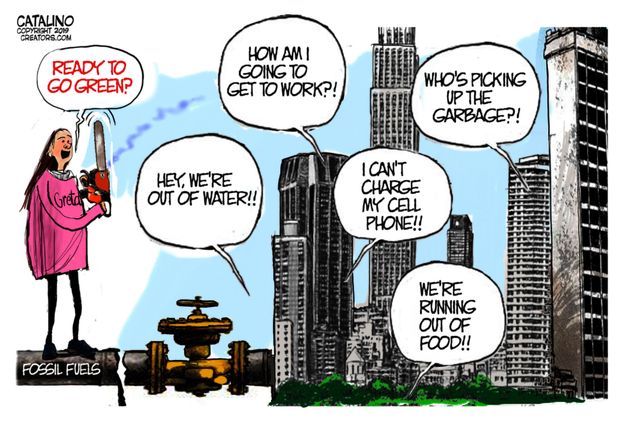
The moral of this is very clear. Where energy is scarce and expensive, people’s labor is cheap and they live in poverty. Where energy is reliable and cheap, people are paid well to work and they have a better life.
It’s that time of year. As New Year’s Eve approaches, we look back on 2019 seeking nuggets of wisdom from twelve more months of the human experience. Unfortunately, the Word of the Year selections from two top dictionaries reveal just how misplaced this year’s priorities were.
The Oxford English Dictionary selected “climate crisis” as the term that “reflects the ethos, mood, or preoccupations of the passing year.” Striking a similarly dismal note, Dictionary.com’s selection was “existential.”
A better word of the year for 2019? Energy poverty.
While wealthy world leaders take luxurious trips to Madrid for the U.N. Climate Conference, flying across oceans in crisp business suits, one billion human beings are living in abject poverty without access to electricity. Still more lack reliable electricity.
Environmental protection can and should be a priority—but those clamoring about the supposedly disastrous future effects of a mildly warming climate could better spend their time and attention on the very real, immediate impact of energy poverty.
A life without energy is a life of drudgery. Without the benefits of electricity such as clean water, modern health care, and home heating, communities are mired in sickness, hard physical labor, and limited opportunity.
Average life expectancies are as much as two decades shorter in countries without widespread electricity. While wealthy nations wring their hands and a generation of children is plagued with climate hysteria-induced anxiety, real men, women, and children are dying every day from such simple illnesses as diarrhea and the flu.
Even household chores pose a threat without energy. Nearly 4 million perish annually from preventable lung and heart disease caused by inhaling soot when cooking over an indoor fire. The natural gas or electric stoves we take for granted would literally save lives in developing countries.
And economic freedom is nearly unheard of in these nations, where most live in poor rural villages and women spend much of their day walking arduous journeys to collect water and firewood (or, worse, cow dung).
The easiest way to alleviate poverty around the world is creating access to affordable, reliable energy. With cheap, abundant electricity to cook, heat and light homes, and provide new economic opportunities, the third world could experience the same prosperity and opportunity as the Western world.
Some will argue that, as upsetting as energy poverty may be, we have to do something about climate change. This is wrong for two reasons.
First, despite ubiquitous headlines proclaiming our impending doom, there’s simply no scientific evidence to suggest that climate change will be anything other than mild and manageable. Thanks to scientific advances (ironically fueled by the very same fossil fuels so often vilified in the media), humans are more resilient than ever to our surroundings.
Second, no government program can ultimately have any meaningful effect on climate change. According to data models used by the United Nations, even the global Paris Climate Accord would reduce the planet’s average temperature by at most 0.17°C—if the United States was still participating and every signatory fulfilled its emission reduction pledges for the rest of the century. With the European Union recently admitting it won’t reach its 2030 carbon dioxide targets, the odds are increasingly slim.
Rather than expend massive sums of tax dollars on inefficient, unreliable renewable energy, the best path forward is to promote human health, prosperity, and continued private-sector innovation to address the many challenges we face.
Here’s hoping 2020 will see Western society cast off the heavy burden of climate alarmism and focus instead on eliminating energy poverty—providing light, warmth, and hope to suffering people.
At Real Clear Energy is a good reflection on the collapsed climate legal crusade by three NYAGs Exxon and Evidence 101 by John S. Baker, Jr. Excerpts in italics with my bolds.
The problem for all these attorney generals is that states have no jurisdiction over climate change. Whatever one thinks about climate change, the climatic phenomena know no borders. If anything should be done about climate change, it is properly committed to the federal government.
Untroubled by these fundamental facts, current New York Attorney General Letitia James nevertheless charged ExxonMobil with fraud in misleading investors regarding the threat posed to the company by the costs allegedly associated with by climate change. New York State’s notoriously broad and vague Martin Act.
In the court of (elite) public opinion, ExxonMobil had already been found guilty. For three years prior to trial, the Attorney General’s office claimed that ExxonMobil was clearly engaged in fraud. The whole point of the “#Exxon Knew” media campaign was to convince the public that the fraud was unquestionable. The fraud claim was that, for decades, Exxon had knowingly and willingly mislead the public and that investors had relied on the allegedly false information.
Then, at trial, reality set in. After weeks of evidence, the States’ attorney suddenly and without explanation conceded during his closing argument –but only when pressed by the judge—that he had to drop the fraud claims. So, after screaming “fraud” for four years, the Attorney General’s office could produce absolutely no evidence of fraud.
That left two charges which were much less serious– but should have been much easier to prove — under the Martin Act. The two remaining charges did not require proof of any intentional act by ExxonMobil. Nevertheless, the State was unable to muster even this minimum level of proof.
Judge Ostrager wrote that regardless of ExxonMobil’s role with respect to climate change, this was a securities case– not a climate-change case. Indeed, the State’s attorney had insisted this was a securities case. The judge wrote that “the Attorney General failed to prove, a preponderance of the evidence, that ExxonMobil made any material misstatements or omissions about its practices and procedures that misled any reasonable investor.”
The judge continued, saying that “the Attorney General produced no testimony either from any investor who claimed to have been misled by any disclosure, even though the Office of the Attorney General had previously represented it would call such individuals as trial witnesses.”
Of course, environmentalist groups are slamming the decision. They seem to think that because they disagree with a corporation’s policies and practices that their corporate opponents are evil and must be branded as criminals.
These critics include lawyers, at least some seem to think that the purity of their purpose justifies a finding of fraud against ExxonMobil despite the lack of evidence.
This verdict represents a devastating defeat for New York Attorney General James, as well as for the “#Exxon Knew” campaign. That media campaign may have energized Democratic officials; but in the courtroom, slogans cannot substitute for facts and the law.
It remains to be seen what effect the New York verdict will have on the Massachusetts case filed against ExxonMobil. The Massachusetts Attorney General is proceeding on a different theory, one focused on consumer protection. For environmental extremists, however, the end-game is the same. So, they are likely to redouble their public-opinion efforts in hopes of encouraging the Massachusetts Attorney General to go forward.
Nevertheless, trial lawyers in the Massachusetts Attorney General’s office are likely taking a hard look at their evidence and the judge assigned to the case. They undoubtedly appreciate support from the environmental movement, but they surely also want to avoid the extreme embarrassment of a second devastating loss to ExxonMobil.
Misguided idealism, environmental or otherwise, can become impatient with the basic principles of the rule of law. When that impatience is teamed with incompetent and/or ruthless litigators, the courts can become a forum for tyranny. Thankfully, “old fashioned” trial judges still look at whether or not the evidence presented supports the charge filed.
Footnote: Today’s social discourse is poisoned by people believing that accusations are proof without any need for evidence. The media is rife with empty climate claims, while Kavenaugh and now Trump have been smeared with rumors, hearsay and innuendo. Substituting feelings for facts is not the path to find the truth.
The Supreme Court of the Netherlands in The Hague on Friday delivered what may be the most unequivocal legal statement so far that governments are responsible for acting to address climate change.
In a closely-watched case that could have wide ramifications for litigation worldwide, the court ruled that the Dutch government must reduce emissions by at least 25% by the end of 2020 compared to 1990 levels, going beyond the EU-wide objective of 20%.
The ruling denied the Dutch government’s appeal of an earlier ruling in favor of the Urgenda Foundation, an environmental group that first filed the case in 2013 on behalf of a group of Dutch citizens who wanted the government to move faster to reduce emissions. The government has argued that a legal obligation to meet a specific target would limit its flexibility in determining how to reduce emissions.
The Supreme Court said on Friday that it based its judgement on the UN Climate Convention and the obligations of the state under the European Convention on Human Rights.
“There is a great deal of consensus in science and the international community about the urgent need to reduce greenhouse gas emissions by at least 25 percent by developed countries by the end of 2020,” the court said in its summary, translated from the Dutch. “[The Netherlands] has not explained why a lower reduction can be considered justified and can still lead in time to the final goal accepted by the State.”
In a brief summary read in English, the judge presiding over the court noted that European Human Rights Convention Articles 2 and 8—the right to life and the right to respect for private and family life—indicate that action on climate change falls under the umbrella of human rights protection.
“These articles entail the positive obligation for the Dutch state to take reasonable and appropriate measures to protect the residents of the Netherlands from the serious risk of a dangerous climate change, that would threaten the lives and wellbeing of many people in the Netherlands,” he said.
That obligation to apply the provisions of the Convention trumped the state’s argument that politicians—not the courts—are responsible for determining emissions reductions, the Court said.
“This could have significant consequences for governments’ freedom to make climate policy and in other areas,” the government said. The statement noted that the state was still committed to lowering emissions by 25% by 2020.
In 2018, emissions in the country were down 14.5% from 1990 levels, according to Statistics Netherlands.
The Urgenda case has gotten the furthest of all international litigation regarding climate change, according to Michael Gerrard, founder and director of the Sabin Center for Climate Change Law at Columbia University. Together with the law firm Arnold & Porter, the Center runs a database to track climate change litigation both internationally and in the U.S.
“There have been 1,442 climate change lawsuits worldwide. This is the strongest decision ever,” said Gerrard. “The Dutch Supreme Court has upheld the first court order anywhere directing a country to slash its greenhouse gas emissions. This decision may inspire even more cases in other countries.”
That was a sentiment that was echoed by Markus Gehring, an expert in sustainable development law at the University of Cambridge.
“The beauty is you only need one successful case,” he said. “There is [now] an expectation that climate litigation will multiply.”
The third-grade boy shamefully completed his apology, in front of first grade. I was luckier than I felt. Just that morning, I had been convinced that the way to win friends was to do what the popular kids did: Stomp on the first-grader’s coffee-can art project. I knew this was wrong but I immediately impressed the popular crowd — the wrong way. My swift punishment only reinforced what I already knew: A crowd was a poor substitute for my own judgment. This lesson has served me well throughout my life, yet I was surprised to find myself transported back to that classroom by a New York Times video — about recycling, of all things. A connection jolted me when I viewed “The Great Recycling Con:”
The captains of industry were making the same mistake I had but with a twist: They are stomping on their own cans.
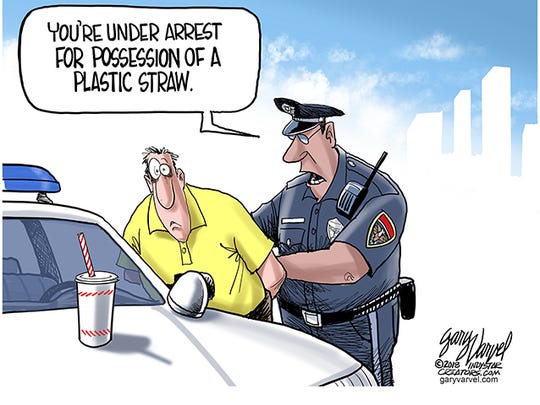
I remember the early days of residential recycling as clearly as that hug. At first, only the neighborhood crank went through the trouble. But, after about a decade of shaming by celebrities and over-hyping of stories — like the long search of a garbage scow for a customer — governments got involved. Seemingly overnight, nearly everyone was being forced to recycle or taxed to support it. Companies had marching orders to label products so we could comply. The details of these orders were minute to the point of confusion. This point can be gleaned from the video, but get a load of this subtitle: “The greatest trick corporations ever played was making us think we could recycle their products.”
I’m disappointed that corporations had voiced so much support for recycling, but they hardly deserve the blame for labeling laws.
Reaction to proposed Vermont law requiring clear plastic trash bags.
But this has been the MO of the left since the industrial revolution. Regarding 1800’s railroads, Ayn Rand noted:
[W]hat could the railroads do, except try to “own whole legislatures,” if these legislatures held the power of life or death over them? What could the railroads do, except resort to bribery, if they wished to exist at all?
Who was to blame and who was “corrupt”–the businessmen who had to pay “protection money” for the right to remain in business–or the politicians who held the power to sell that right?
The railroads played a game they should have opposed — only to end up blamed for a situation they didn’t create. (To the degree they saw this as an acceptable way to win market share, they share the blame.) We see this today with companies bullied into removing harmless ingredients, such as nitrites from food, or parabens from cosmetics, under the perverse twin incentives of fashionable panic and fear of competition.
The worst case involves the fossil fuel industry, which is vital to our lives and prosperity – while under constant and intense pressure from environmentalists. Energy advocate Alex Epstein notes:
The industry never explained the value of energy and why fossil fuels are superior sources of energy. In fact, the industry is constantly out there saying, “We’re not against wind and solar, we’re for all of the above, we’re in the middle of an energy transition,” etc. That’s why I always stress when I talk to people (a) that low cost, reliable energy is indispensable to human flourishing and (b) that the fossil fuel industry is uniquely good at creating it. People need both of those points.
Epstein is right: Companies should stop fearing the cool media kids scaremongering and start reminding the people who count – their customers — of the full value they offer.
When I think about that day in school, I wish I could go back and tell that third-grader that real friends don’t tempt people to ignore their own judgment; and that he already had good friends, because he had a lot to offer. The same goes for countless productive individuals in whole industries that our media routinely paint as evil ahead of our politicians taking yet more control. Our industry captains have gone along with this for far too long. Rather than accepting these scurrilous attacks, they should view them as personal insults. A great way to begin to fight back is to remind people of the enormous good they and their employees create.
Who’s the bully? Who’s the victim?
Previous Post: On Coercive Climatism: Writings of Bruce Pardy
Many people have heard of Jordan Peterson due to his battles against post modernism and progressive social justice warfare. Bruce Pardy is another outspoken Canadian professor, whose latest statement was posted at the National Post, H/T GWPF.
Paris is more a movement than a legal framework. It imagines the world as a global community working in solidarity on a common problem, making sacrifices in the common good, reducing inequality and transcending the negative effects of market forces. In this fable, climate change is a catalyst for revolution. It is the monster created by capitalism that will turn on its creator and bring the market system to the end of its natural life. A new social order will emerge in which market value no longer determines economic decisions. Governments will exercise influence over economic behaviour by imposing “market-based mechanisms” such as carbon taxes and cap-and-trade systems. Enlightened leaders will direct energy use based upon social justice values and community needs. An international culture will unite peoples in a cause that transcends their national interests, giving way to the next stage of human society. Between the lines of the formal text, the Paris agreement reads like a socialist nightmare.
The regime attempts to establish an escalating global norm that requires continual updating, planning and negotiation. To adhere, governments are to supervise, regulate and tax the energy use and behaviour of their citizens (for example, the Trudeau government’s insistence that all provinces impose a carbon tax or the equivalent, to escalate over time.) Yet for all of the domestic action it legitimizes, Paris does not actually require it. Like the US$100-billion pledge, reduction targets are outside the formal Paris agreement. They are voluntary; neither binding nor enforceable. Other countries have condemned Trump’s withdrawal and reaffirmed their commitment to Paris but many of them, including Canada, are not on track to meet even their initial promises. Global emissions are rising again.
If human action is not causing the climate to change, Paris is irrelevant. If it is, then Paris is an obstacle to actual solutions. If there is a crisis, it will be solved when someone develops a low-carbon energy source as useful and cheap as fossil fuels. A transition will then occur without government interventions and international declarations. Until then, Paris will fix nothing. It serves interests that have little to do with atmospheric concentrations of greenhouse gases. Will America’s repudiation result in its eventual demise? One can hope.
Bruce Pardy belongs to the Faculty of Law, Queen’s College, Kingston, Ontario. This post will provide excerpts from several of Pardy’s writings to give readers access to his worldview and its usefulness making sense of current socio-political actions.
In 2009 Pardy wrote Climate Change Charades: False Environmental Pretences of Statist Energy Governance
The Abstract:
Climate change is a poor justification for energy statism, which consists of centralized government administration of energy supplies, sources, prices, generating facilities, production and conservation. Statist energy governance produces climate change charades: government actions taken in the name of climate change that bear little relationship to the nature of the problem. Such actions include incremental, unilateral steps to reduce domestic carbon emissions to arbitrary levels, and attempts to choose winners and losers in future technology, using public money to subsidize ineffective investments. These proffered solutions are counter-productive.Governments abdicate their responsibility to govern energy in a manner that is consistent with domestic legal norms and competitive markets, and make the development of environmental solutions less likely rather than more so.
Human rights were conceived to liberate. They protected people from an oppressive state. Their purpose was to prevent arbitrary arrest and detention, torture, and censorship, by placing restraints on government. The state’s capacity to accommodate these “negative rights” was unlimited, since they required only that people be left alone.
If only arm twisting were prohbited beyond the ring.
But freedom from interference is so 20th century. Modern human rights entitle. We are in the middle of a culture war, and human rights have become a weapon to normalize social justice values and to delegitimize competing beliefs. These rights are applied against other people to limit their liberties.
Freedom of expression is a traditional, negative human right. When the state manages expression, it threatens to control what we think. Forced speech is the most extreme infringement of free speech. It puts words in the mouths of citizens and threatens to punish them if they do not comply. When speech is merely restricted, you can at least keep your thoughts to yourself. Compelled speech makes people say things with which they disagree.
Some senators expressed the view that forcing the use of non-gendered pronouns was reasonable because calling someone by their preferred pronoun is a reasonable thing to do. That position reflects a profound misunderstanding of the role of expression in a free society. The question is not whether required speech is “reasonable” speech. If a statute required people to say “hello,” “please” and “thank you,” that statute would be tyrannical, not because “hello,” “please” and “thank you” aren’t reasonable things to say, but because the state has dictated the content of private conversation.
Traditional negative human rights give people the freedom to portray themselves as they wish without fearing violence or retribution from others. Everyone can exercise such rights without limiting the rights of others. Not so the new human rights. Did you expect to decide your own words and attitudes? If so, human rights are not your friend.
These positions derive from bedrock reasoning by Pardy on the foundations of law and legitimacy. An insight into his thinking is his rebuttal of a critic The Only Legitimate Rule: A Reply to MacLean’s Critique of Ecolawgic Dalhousie Law Journal, Spring 2017
Ecosystem as One model of Society
An ecosystem is not a thing. It does not exist as a concrete entity. “Ecosystem” is a label for the dynamics that result when organisms interact with each other and their environment. Those dynamics occur in infinite variation, but always reflect the same logic: Competition for scarce resources leads to natural selection, where those organisms better adapted to ecosystem conditions survive and reproduce, leading to evolutionary change. All participants are equally subject to their forces; systems do not play favourites.
In ecosystems, the use of the word “autonomy” does not mean legally enforced liberty but the reverse: no externally imposed rules govern behaviour. In ecosystems unmanaged by people, organisms can succeed or fail, live or die, as their genetically determined physiology and behaviour allow. Every life feeds on the death of others, whether animal or plant, and those better adapted to their circumstances survive to reproduce. Organisms can do anything that their genes dictate, and their success or failure is the consequence that fuels evolution.
When an antelope is chased by a lion and plunges into a river to escape, that action allows the antelope to survive and thus to reproduce. The offspring may carry a genetic disposition to run into water when chased by predators. There are no committees of either antelopes or humans deciding how antelopes will behave. Autonomy in ecosystems is not a human creation. It is not based upon human history or culture and is not a human preference.
Market as a Different Model of Society
A market is not a thing either. Nor is it a place. Markets, like ecosystems, do not exist as concrete entities. “Market” is a label for the dynamics that result when people exchange with each other. Bargains may be commercial in nature, where things are bought and sold, but they also occur in other facets of life. For example, in Ecolawgic I suggested that marriage is a kind of exchange that is made when people perceive themselves better off to enter into the bargain than not to.
As I said in Ecolawgic, “Laws and governments can make markets more stable and efficient, such as by enforcing contracts and creating a supply of money, but they create neither the activity of trading nor the market dynamics that the transactions create.” A market is not a place or a legal structure but the dynamics of a collection of transactions. It does not exist before or independently of the transactions within it. The transactions make the market. Transactions are not created by governments but by the parties who enter into them.
People transact whether they are facilitated by governments or not. The evidence is everywhere. If it were not so, human beings would not have bartered long before there were governments to create money and enforce contracts. During Prohibition, no alcohol would have been produced and sold. Citizens of the Soviet Union would not have exchanged goods. Today there would be no drug trade, no black market and no smuggling. Cigarettes would not be used as currency inside jails. People would not date, hold garage sales or trade hockey cards. There would be no Bitcoin or barter. Try prohibiting people from transacting and see that they will transact anyway. They will do so because they perceive themselves as better off. Sometimes the benefit is concrete and sometimes it is ethereal. The perception of benefit is personal and subjective.
Ecosystems are Coercive, Markets are Voluntary
Ecosystems and markets share many features but they differ in one important respect. Violence plays an important role in ecosystems but is not a part of voluntary market exchange. Ecosystems are arenas for mortal combat. Lions eat antelopes if they can catch them. Nothing prevents taking a dead antelope from a lion except the lion’s response. There are no restrictions on survival strategies, and organisms do not respect the interests, habitats or lives of other organisms.
Markets, in contrast, proceed upon the judgment of the transacting parties that they are better off to trade than to fight. The hunter did not shoot the woodworker to get chairs, and the woodworker traded for meat instead of stealing it. They chose to trade because it made them better off than fighting. The reasons are their own. Perhaps they were friends, colleagues or allies. Perhaps they believed that harming other people is wrong. Perhaps they hoped to have an ongoing trading relationship. Perhaps fighting carried risks that were too high and they feared injury or retribution. Perhaps trading was less work than fighting.
For whatever reason, they chose to trade. This choice is not universal. People have traded throughout human history, but they have also fought. I do not maintain that trading is any more “natural” or inbred than fighting, but neither is it is less so. When people choose to fight, they are no longer part of a market. Markets are like ecosystems with the violence removed. They are the kinder, gentler version of ecosystems.
There are only two models for legal governance and only one legitimate rule.
The logic is as follows: 1. In the wild, organisms compete for scarce resources. Those organisms better adapted to conditions survive and reproduce. Their interactions constitute ecosystems. No legal rules govern behaviour and might is right. 2. Human beings trade spontaneously. Parties enter into transactions when they perceive themselves as better off to trade than to fight. Their transactions constitute markets. 3. Moral values and policy goals are preferences whose inherent validity cannot be established. They are turtles all the way down. Therefore laws based upon those preferences lack legitimacy. 4. When governments use might to impose laws and policies that are illegitimate, they unintentionally imitate ecosystems, where might is right. Political constituencies use whatever means necessary to impose their preferences, and their opponents use whatever means necessary to resist. They are “autonomous” in the ecosystem sense: there are no inherently valid restrictions on behaviour. The result is a social order of division and conflict. 5. The alternative is to model human governance on the other system that exists independently of state preference: markets. If the model for human governance is markets, interactions between people are voluntary. People are “autonomous” in the market sense: they may pursue their own interests without coercion. Instead of imposing illegitimate rules and policies, the state uses force only to prohibit people from imposing force on each other. A plethora of sub-rules follow as corollaries of the rule against coercion: property, consent, criminal offences that punish violence and so on. 6. There is no third choice.Coercion is not right or wrong depending upon the goals being pursued since those goals are merely preferences. Their advocates cannot establish that their goals have inherent validity to those who do not agree. Therefore, giving priority to those objectives is to assert that might is right. If might is right, we are back to ecosystems, where any and all actions are legitimate. 7. If might is right, anything goes, and the model is ecosystems. If might is not right, force is prohibited, and the model is markets. Choose one and all else follows.
When I claim that a prohibition on force is the only legitimate rule, I mean the only substantive rule to govern relations between competent adults. No doubt the administration of a legal system, even a minimalist one, would require other kinds of laws to function. Constitutional rules, court administration, the conduct of elections and procedures to bring legal proceedings are a few of the other categories that would be necessary in order to give effect to the general rule.
No Property, No Market
But the existence of property rights must follow from a general rule prohibiting coercion. If it does not, the general rule is not what it purports to be. When people trade, they recognize the property interest held by the other party. It is that interest that they wish to obtain. When the woodworker trades chairs for the hunter’s meat, she trades “her” chairs for “his” meat. The trade would not occur without a mutual understanding of the possession that both hold over their respective stuff.
Sometimes those interests are recognized and protected by the law, which according to Bentham created the property. However, since markets arise even where no property is legally recognized, the notion of property must be prior to the law. Above I gave examples of markets that have arisen where no legal regime has protected property rights: prehistorical trade, alcohol sales during Prohibition, black markets in the Soviet Union, the modern day drug trade, smuggling of illicit goods, and the internal markets of prisons. Since trading occurs even in the absence of an approving legal regime, the notion of property must exist independently as well.
No Consent, No Market
Autonomy in the market sense means to be able to pursue your own interests and control your own choices without coercion. Consent is part and parcel of autonomy. Without the ability to consent, no trades can be made. Without trades, no markets exist. If one cannot consent to be touched, to give up property, to make bargains, to mate, to arm wrestle, to trade chairs for meat, to sell labour for money, and so on, then one is not autonomous.
If force is prohibited, then corollaries are laws that protect people from having force imposed upon them. Laws apply the force of the state to prevent or punish the application of force. A criminal law that prohibits assault is an extension of the general rule. A tax to finance the police department is legitimate if its purpose is to investigate and prosecute violent crimes. Traffic laws prevent people from running each other over. Civil liability compensates for physical injuries caused by the force of others.
Illegitimate Laws, No Market
Illegitimate laws use state coercion to seek other ends such as enforcing moral standards, pursuing social goals or saving people from themselves. A criminal law that prohibits the use of drugs uses state force to prevent an activity in which there is no coercion. A tax to fund the armed forces to protect the peace may be legitimate, but one to take wealth from Peter to give to Paul is not. The legal regimes of modern administrative states consist largely of instrumentalist laws and policies that are inconsistent with the general rule, including tax laws, economic development programs, bankruptcy, patent regimes, mandatory government-run pension plans and MacLean’s version of environmental regulation, in which each decision turns on a political determination of the values to be applied.
It is either ecosystems or markets. Either might is right or it is not. If it is, then human society is subject to the law of the jungle where people are at liberty to fight like animals if they choose to do so. If it is not, then human society is a marketplace where people may enter into transactions voluntarily and the state may justifiably use force only to prevent or punish the application of force.
There is no third choice. Some might insist that coercion is not categorically wrong but that it can be right or wrong depending upon the other goals to be pursued. Those goals are merely preferences. They are turtles all the way down. I do not maintain that other rules will not be passed and enforced using the established machinery of government but only that they have no claim to legitimacy, any more than other rules that might have been chosen instead. If force is used to pursue those preferences, why would others not use force to resist? Such a choice results in a free-for-all. If state force is right only because it cannot be resisted, that means that might is right. The administrative welfare state prevails not because it is justified morally or socially but because it has managed to secure a monopoly on violence. The imposition of government preferences is an invitation to those opposed to an arbitrary policy agenda to take up force against it.
Summary
In a way, Pardy is warning us not to take for granted the free market social democracies to which we were accustomed. Post modern progressive social justice warriors have decided that society is essentially an endless power struggle, that one group’s rights are gained only at the expense of another group. In other words, it’s a dog-eat-dog, might makes right ecosystem. Pardy says there is another way, which has been the basis for the rise of civilization, but can be reversed by governance that destroys the free market of ideas and efforts by imposing values favored by the rich and powerful.
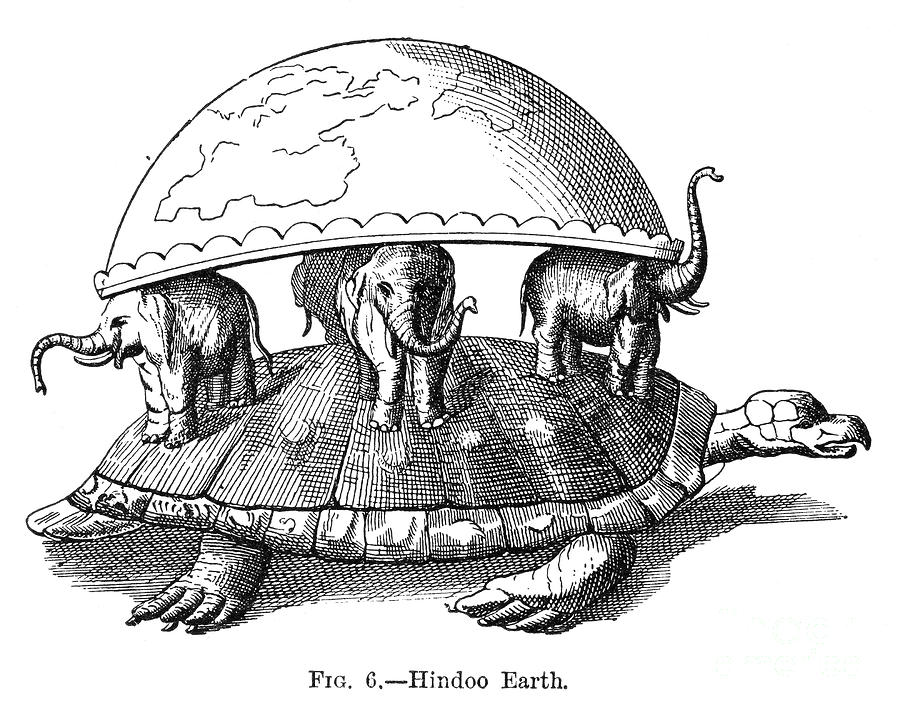
Footnote about Turtles. Pardy explains the metaphor:
In Rapanos v. United States, Justice Antonin Scalia offered a version of the traditional tale of how the Earth is carried on the backs of animals. In this version of the story, an Eastern guru affirms that the earth is supported on the back of a tiger. When asked what supports the tiger, he says it stands upon an elephant; and when asked what supports the elephant he says it is a giant turtle. When asked, finally, what supports the giant turtle, he is briefly taken aback, but quickly replies “Ah, after that it is turtles all the way down.”
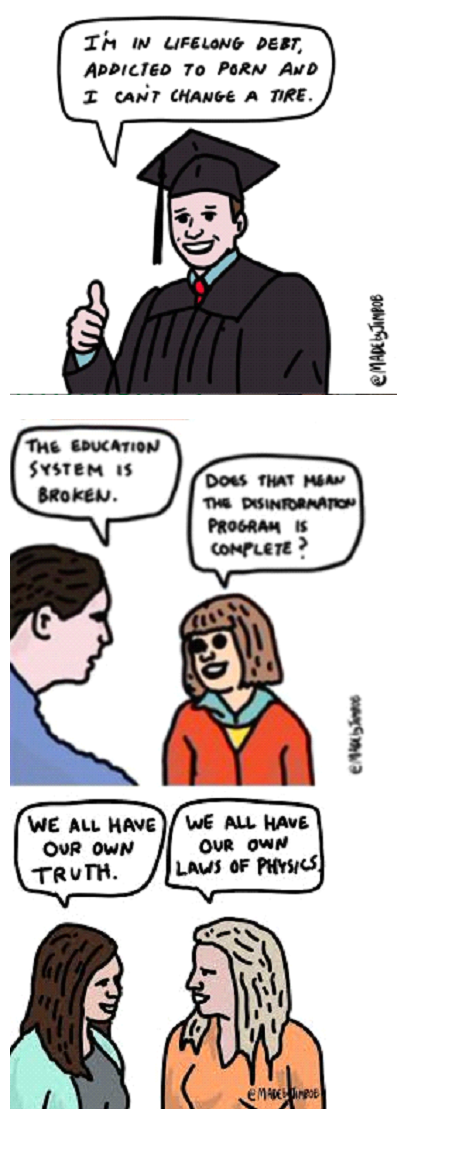
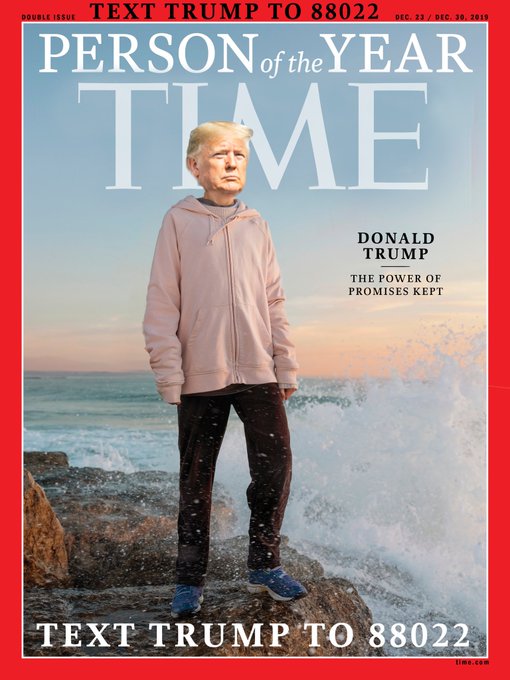
Humor is important as a means of poking holes in narratives that assert beliefs contrary to reality. Jimbob has become a force skewering notions of climate change, as well as other distorted ideas comprising the “woke” PC canon. Those inside the believer bubble will not be affected, but the important audience are those ignorant or agnostic about the so called “progressive, post-modern agenda.” Philosopher Mortimer Adler put it this way:
Any teacher will tell you it is much easier to teach a student who is ignorant than one who is in error, because the student who is in error on a given point thinks that he knows whereas in fact he does not know. . .It is almost necessary to take the student who is in error and first correct the error before you can teach him. . .The path from ignorance to knowledge is shorter than the path from error to knowledge.
And the best part is that the alarmist side is denied any use of humor due to their doomsterism. Below are a selection from the many cartoons madebyjimbob, touching everything from climate change to racism, to cancel culture to genderism to the failure of higher education.
The bottom line is that after tsk-tsking Trump for refusing to say in advance that he’d accept the outcome of the 2016 election, Democrats have steadfastly refused to truly accept the 2016 result, allegedly the work of the Russians, and now are signaling they won’t accept next year’s election, either, should they lose again.
With every day that passes, the Democrats risk a growing perception that they themselves are a threat to the 2020 election.
Synopsis:
The Democrats believe that the 2020 election is too important to be left to the voters. It’s obvious that President Trump withheld defense aid to Ukraine to pressure its president to commit to the investigations that he wanted, an improper use of his power that should rightly be the focus of congressional investigation and hearings.
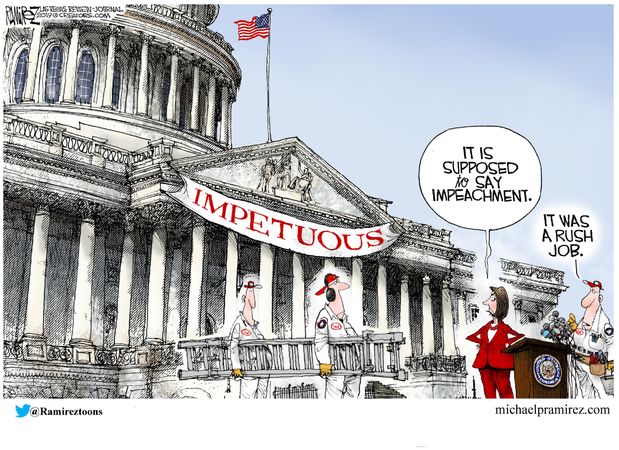
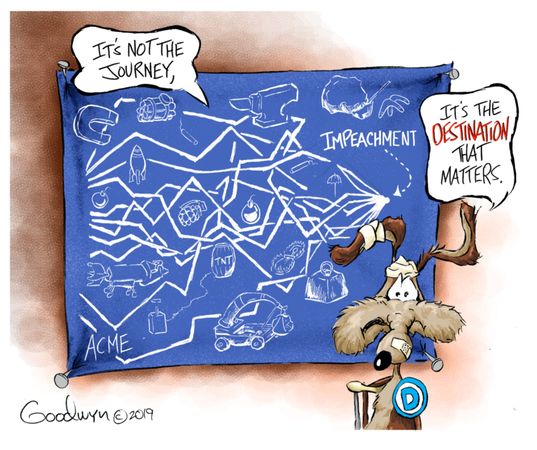
Where the Democrats have gotten tangled up is trying to find a justification that supports the enormous weight of impeaching and removing a president for the first time in our history.
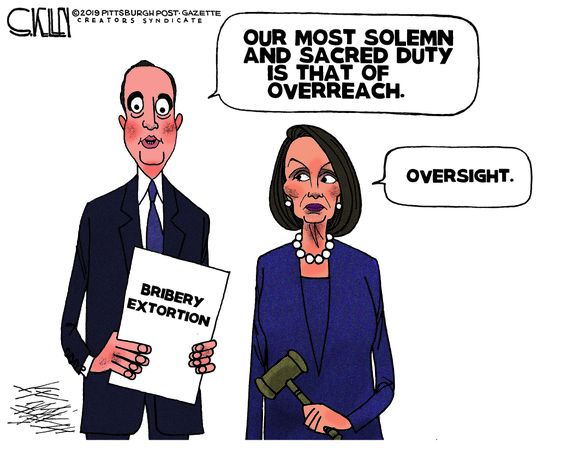
They’ve cycled through different arguments. First, Trump’s offense was said to be a quid pro quo — a phrase cast aside for supposedly being too Latin for the public to understand. Then it was bribery, which has lost ground lately, presumably because of the inherent implausibility of the charge.
Now, the emphasis is on Trump’s invitation to the Ukrainians to “meddle” and “interfere” in our elections.
This is posited to be an ongoing threat. Nancy Pelosisaid in her statement calling on the House to draft articles of impeachment: “Our democracy is what is at stake. The president leaves us no choice but to act, because he is trying to corrupt, once again, the election for his own benefit. The president has engaged in abuse of power undermining our national security and jeopardizing the integrity of our elections.”
House Judiciary Committee Chairman Jerry Nadlersaid on “Meet the Press” last weekend that Trump has to be impeached “for posing the considerable risk that he poses to the next election.” Asked if he thinks the 2020 election will be on the up-and-up, he said, “I don’t know. The president, based on his past performance, will do everything he can to make it not a fair election.”
The gravamen of this case is that the election is too crucial to allow the incumbent president of the United States, who is leading in key battleground states and has some significant chance of winning, to run. In fact, the integrity of the election is so at risk that the US Senate should keep the public from rendering a judgment on Trump’s first term or deciding between him and, say, his nemesis Joe Biden.
Of course, it’s possible to imagine a circumstance where a president would indeed present such a grave risk to our elections that he’d have to be removed. This is a reason that we have the impeachment process in the first place.
But what’s the real harm that Trump’s foolhardy Ukraine adventure presented?
Let’s say that Ukraine had, in response to Trump pressure, actually announced an investigation into Burisma, a shady company that had in the past been under investigation. What would have happened? Would Joe Biden have been forced from the race? Would his numbers have collapsed in Nevada and South Carolina, his best early states? Would his numbers have changed anywhere?
No, it’s not even clear there would have been any additional domestic political scrutiny of Hunter Biden’s lucrative arrangement with Burisma, an issue that is dogging the former vice president on the campaign trail anyway — because his son’s payday was so clearly inappropriate.
The bottom line is that after tsk-tsking Trump for refusing to say in advance that he’d accept the outcome of the 2016 election, Democrats have steadfastly refused to truly accept the 2016 result, allegedly the work of the Russians, and now are signaling they won’t accept next year’s election, either, should they lose again.
Given their druthers, Trump wouldn’t be an option for the voters. They are rushing their impeachment, in part, because they know that as November 2020 approaches, it becomes steadily less tenable to portray the man who wants to run in an election as the threat to democracy and the people who want to stop him as its champions.
With every day that passes, the Democrats risk a growing perception that they themselves are a threat to the 2020 election.
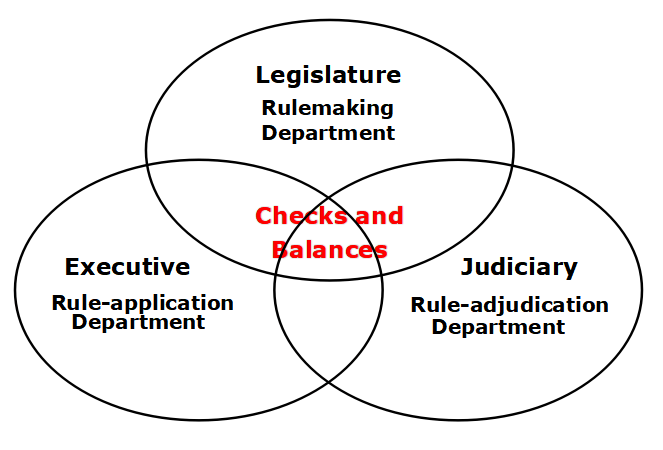
A previous post reprinted below discussed how US Supreme Justices appear ready to challenge regulatory lawmaking beyond Legislative boundaries. This is of course at the heart of climate change overreach, as well as intrusion of Political Correctness into many other areas such as environment, health, education, immigration and so on. Most recently Justice Kavanaugh highlighted the constitutional concern in his opinion included in US Supreme Court Orders November 25, 2019. Excerpts in italics with my bolds.
SUPREME COURT OF THE UNITED STATES RONALD W. PAUL v. UNITED STATES ON PETITION FOR WRIT OF CERTIORARI TO THE UNITED STATES COURT OF APPEALS FOR THE SIXTH CIRCUIT No. 17–8830. Decided November 25, 2019 The petition for a writ of certiorari is denied.
Statement of JUSTICE KAVANAUGH respecting the denial of certiorari. I agree with the denial of certiorari because this case ultimately raises the same statutory interpretation issue that the Court resolved last Term in Gundy v. United States, 588 U. S. ___ (2019). I write separately because JUSTICE GORSUCH’s scholarly analysis of the Constitution’s nondelegation doctrine in his Gundy dissent may warrant further consideration in future cases. JUSTICE GORSUCH’s opinion built on views expressed by then-Justice Rehnquist some 40 years ago in Industrial Union Dept., AFL–CIO v. American Petroleum Institute, 448 U. S. 607, 685–686 (1980) (Rehnquist, J., concurring in judgment). In that case, Justice Rehnquist opined that major national policy decisions must be made by Congress and the President in the legislative process, not delegated by Congress to the Executive Branch.
In the wake of Justice Rehnquist’s opinion, the Court has not adopted a nondelegation principle for major questions. But the Court has applied a closely related statutory interpretation doctrine: In order for an executive or independent agency to exercise regulatory authority over a major policy question of great economic and political importance, Congress must either: (i) expressly and specifically decide the major policy question itself and delegate to the agency the authority to regulate and enforce;or (ii) expressly and specifically delegate to the agency the authority both to decide the major policy question and to regulate and enforce. See, e.g., Utility Air Regulatory Group v. EPA, 573 U. S. 302 (2014); FDA v. Brown & Williamson Tobacco Corp., 529 U. S. 120 (2000); MCI Telecommunications Corp. v. American Telephone & Telegraph Co., 512 U. S. 218 (1994); Breyer, Judicial Review of Questions of Law and Policy, 38 Admin. L. Rev. 363, 370 (1986).
The opinions of Justice Rehnquist and JUSTICE GORSUCH would not allow that second category—congressional delegations to agencies of authority to decide major policy questions—even if Congress expressly and specifically delegates that authority. Under their approach, Congress could delegate to agencies the authority to decide less-major or fillup-the-details decisions. Like Justice Rehnquist’s opinion 40 years ago, JUSTICE GORSUCH’s thoughtful Gundy opinion raised important points that may warrant further consideration in future cases.
Previous Post: Supremes May Rein In Agency Lawmaking
This post consists of a legal discussion regarding undesirable outcomes from some Supreme Court rulings that gave excessive deference to Executive Branch Agency regulators. Relying on the so called “Chevron Deference” can result in regulations going beyond what congress intended by their laws.
The need for a new interpretive arrangement to replace Chevron is demonstrated by a climate change example cited at the end.
Importantly, this new arrangement would significantly limit agencies from using their legal discretion to modify agency statutes to combat new problems never envisioned by the enacting Congress. For example, when the Clean Air Act was passed, no one had in mind it would be addressed to anything like climate change. Yet, the EPA has used Chevron deference to change the meaning of the statute so that it can regulate greenhouse gases without Congress having to decide whether and in what way that makes sense.
Such discretion gives the EPA enormous power to pursue its own agenda without having to secure the approval of the legislative or judicial branches.
Background and Proposals
One of the most important questions within administrative law is whether the Supreme Court will eliminate Chevron deference. But if Chevron deference is eliminated, as I believe it should be, a key question is what should replace it. In my view, there is a ready alternative which makes sense as a matter of law and policy. Courts should not give agencies Chevron deference, but should provide additional weight to agency interpretations that are adopted close to the enactment of a statute or that have been followed for a significant period of time.
Chevron deference is the doctrine that provides deference to an administrative agency when it interprets a statute that it administers. In short, the agency’s interpretation will only be reversed if a court deems the interpretation unreasonable rather than simply wrong. Such deference means that the agency can select among the (often numerous) “reasonable” interpretations of a statute to pursue its agenda. Moreover, the agency is permitted to change from one reasonable interpretation to another over time based on its policy views. In conjunction with the other authorities given to agencies, such as the delegation of legislative power, Chevron deference constitutes a key part of agency power.
There is, however, a significant chance that the Supreme Court may eliminate Chevron deference. Two of the leaders of this movement are Justices Thomas and Gorsuch. But Chief Justice Roberts as well as Justices Alito and Kavanaugh have also indicated that they might be amenable to overturning Chevron. For example, in the Kisor case from this past term, which cut back on but declined to overturn the related doctrine of Auer deference, these three justices all joined opinions that explicitly stated that they thought Chevron deference was different from Auer deference, suggesting that Chevron might still be subject to overruling.
But if Chevron deference is eliminated, what should replace it? The best substitute for Chevron deference would be the system of interpretation employed in the several generations prior to the enactment of the Administrative Procedure Act. Under that system, as explained by Aditya Bamzai in his path-breaking article, judges would interpret the statute based on traditional canons of interpretation, including two—contemporaneous exposition and customary practice—that provide weight to certain agency interpretations.
Under the canon of contemporaneous exposition, an official governmental act would be entitled to weight as an interpretation of a statute (or of the Constitution) if it were taken close to the period of the enactment of the provision. This would apply to government acts by the judiciary and the legislature as well as those by administrative agencies. Thus, agency interpretations of statutes would be entitled to some additional weight if taken at the time of the statute’s enactment.
This canon has several attractive aspects. First, it has a clear connection to originalism. Contemporaneous interpretations are given added weight because they were adopted at the time of the law’s enactment and therefore are thought to be more likely to offer the correct interpretation—that is, one attuned to the original meaning. Second, this canon also promotes the rule of law by both providing notice to the public of the meaning of the statute and limiting the ability of the agency to change its interpretation of the law.
The second canon is that of customary practice or usage. Under this framework, an interpretation of a government actor in its official capacity would be entitled to weight if it were consistently followed over a period of time. Thus, the agency interpretation would receive additional weight if it became a regular practice, even if were not adopted at the time of statutory enactment.
The canon of customary practice has a number of desirable features. While it does not have a connection to originalism, it does, like contemporaneous exposition, promote the rule of law. Once a customary interpretation has taken hold, the public is better able to rely on the existing interpretation and the government is more likely to follow that interpretation.
Second, the customary interpretation may also be an attractive interpretation. That the interpretation has existed over a period of time suggests that it has not created serious problems of implementation that have led courts or the agency to depart from it. While the customary interpretation may not be the most desirable one as a matter of policy, it is unlikely to be very undesirable.
This traditional interpretive approach also responds to one of the principal criticisms of eliminating Chevron deference: that it will give significant power to a judiciary that lacks expertise and can abuse its authority. I don’t agree with this criticism, since I believe that judges are expert at interpreting statutes and are subject to less bias than agencies that exercise not merely executive power, but also judicial and legislative authority.
But even if one believed that the courts were problematic, this arrangement would leave the judiciary with much less power than a regime that provides no weight to agency interpretations. The courts would often be limited by agency interpretations that accorded with the canons—interpretations adopted when the statute was enacted or that were customarily followed. Since those interpretations would be given weight, the courts would often follow them. But while these interpretations would limit the courts, they would not risk the worst dangers of Chevron deference. This interpretive approach would not allow an agency essentially free reign to change its interpretation over time in order to pursue new programs or objectives. Once the interpretation is in place, the agency would not be able to secure judicial deference if it changed the interpretation.
Importantly, this new arrangement would significantly limit agencies from using their legal discretion to modify agency statutes to combat new problems never envisioned by the enacting Congress. For example, when the Clean Air Act was passed, no one had in mind it would be addressed to anything like climate change. Yet, the EPA has used Chevron deference to change the meaning of the statute so that it can regulate greenhouse gases without Congress having to decide whether and in what way that makes sense. Such discretion gives the EPA enormous power to pursue its own agenda without having to secure the approval of the legislative or judicial branches.
In short, if Chevron deference is eliminated, there is a traditional and attractive interpretive approach that can replace it. Hopefully, the Supreme Court will take the step it refused to take in Kisor and eliminate an unwarranted form of deference.
Fossil Fuel leases totaling hundreds of thousands of acres have been suspended as courts rule against the BLM for ignoring climate impact.
The federal Bureau of Land Management’s (BLM) Utah office in September voluntarily suspended 130 oil and gas leases after advocacy groups sued, arguing that BLM hadn’t adequately assessed the greenhouse gas emissions associated with drilling and extraction on those leases as required by law.
Nearly a quarter of the nation’s carbon dioxide emissions come from fossil fuels developed on federal lands, according to a government report. Credit: Bureau of Land Management.
The move was unusual because BLM suspended the leases on its own, without waiting for a court to rule.
Some environmental advocates say it could indicate a larger problem for the bureau.
“It is potentially a BLM-wide issue,” said Jayni Hein, natural resources director at the Institute for Policy Integrity at NYU School of Law, which has been involved in similar litigation in other states. “It could have the effect of suspending even more leases across the West, and not just for oil and gas, for coal as well.”
Officials in Utah had already pulled back several other lease sales earlier this year. In effect, BLM appears to be trying to get ahead of potential court rulings, advocates say.
A series of court rulings have established that BLM must conduct a thorough analysis of the climate impacts of drilling before it allows development in order to comply with the National Environmental Policy Act (NEPA).
In the latest ruling, a federal district court in Washington, D.C., in March ordered the bureau to redo its environmental analysis for a slate of leases in Wyoming to better assess climate impacts. In response, BLM suspended the Wyoming leases, as well as leases in Utah and Colorado that were included in the lawsuit but not directly addressed by the ruling.
The new Utah suspensions cover a different set of leases, including many sold last year. In letters sent in September to energy companies that had bought the leases, BLM said it was suspending them “based on the parallels” between the lawsuit over them and the case that resulted in the March ruling in Washington, D.C.
All told, nearly 1 million acres may now be suspended across the West, said Rebecca Fischer, an attorney with WildEarth Guardians, which filed the lawsuit in the Washington, D.C., circuit, including more than 460,000 acres covered by that lawsuit and some 300,000 acres that Utah’s BLM office has suspended since the March ruling.
Environmental advocates say the Trump administration is unlikely to cancel the leases. In Wyoming, BLM issued a new analysis soon after the Washington, D.C., court’s decision in March, arguing that there were no significant climate impacts. Fischer’s group has challenged that new assessment, saying that it too fails to meet the legal requirements. The court has yet to rule on the latest challenge.
Fischer said the lawsuits are part of a larger strategy by advocacy groups to try to block fossil fuel development that they say is incompatible with the need to rapidly cut greenhouse gas emissions to slow climate change. They say the bureau has the authority to deny leases based on their climate impacts, and those climate impacts would become apparent if it conducted a thorough analysis.
“That is our ultimate goal,” she said. “That we can start to keep these oil and gas leases in the ground and start to transition away from dirty fossil fuels.”
Footnote: Attorney General William Barr addressed the intrusion of judges upon Presidential authority as part of his recent speech on the Constitution’s approach to executive power. (here). Some pertinent excerpts in italics with my bolds.
In recent years, both the Legislative and Judicial branches have been responsible for encroaching on the Presidency’s constitutional authority. . .Let me turn now to what I believe has been the prime source of the erosion of separation-of-power principles generally, and Executive Branch authority specifically. I am speaking of the Judicial Branch.
Apart from their overzealous role in interbranch disputes, the courts have increasingly engaged directly in usurping Presidential decision-making authority for themselves. One way courts have effectively done this is by expanding both the scope and the intensity of judicial review.
In recent years, we have lost sight of the fact that many critical decisions in lifeare not amenable to the model of judicial decision-making. They cannot be reduced to tidy evidentiary standards and specific quantums of proof in an adversarial process. They require what we used to call prudential judgment. They are decisions that frequently have to be made promptly, on incomplete and uncertain information and necessarily involve weighing a wide range of competing risks and making predictions about the future. Such decisions frequently call into play the “precautionary principle.” This is the principle that when a decision maker is accountable for discharging a certain obligation – such as protecting the public’s safety – it is better, when assessing imperfect information, to be wrong and safe, than wrong and sorry.
It was once well recognized that such matters were largely unreviewable and that the courts should not be substituting their judgments for the prudential judgments reached by the accountable Executive officials. This outlook now seems to have gone by the boards. Courts are now willing, under the banner of judicial review, to substitute their judgment for the President’s on matters that only a few decades ago would have been unimaginable – such as matters involving national security or foreign affairs.
What is true of police officers and gerrymanderers is equally true of the President and senior Executive officials. With very few exceptions, neither the Constitution, nor the Administrative Procedure Act or any other relevant statute, calls for judicial review of executive motive. They apply only to executive action. Attempts by courts to act like amateur psychiatrists attempting to discern an Executive official’s “real motive” — often after ordering invasive discovery into the Executive Branch’s privileged decision-making process — have no more foundation in the law than a subpoena to a court to try to determine a judge’s real motive for issuing its decision. And courts’ indulgence of such claims, even if they are ultimately rejected, represents a serious intrusion on the President’s constitutional prerogatives.
The impact of these judicial intrusions on Executive responsibility have been hugely magnified by another judicial innovation – the nationwide injunction. First used in 1963, and sparely since then until recently, these court orders enjoin enforcement of a policy not just against the parties to a case, but against everyone. Since President Trump took office, district courts have issued over 40 nationwide injunctions against the government. By comparison, during President Obama’s first two years, district courts issued a total of two nationwide injunctions against the government. Both were vacated by the Ninth Circuit.
IT is no exaggeration to say that virtually every major policy of the Trump Administration has been subjected to immediate freezing by the lower courts. No other President has been subjected to such sustained efforts to debilitate his policy agenda.
At the New Criterion James Piereson explains in his article Breaking the wrong ground. Using impeachment as an election strategy is only the latest breaking of political norms that kept the US functional in the past
With the impeachment charade in mind, it is useful to review the various political and constitutional “norms” that have been blasted away in recent decades, mostly due to hyper-partisan conduct by Democrats, with encouragement and cover from the mainstream media.
First: It now appears that a president will never again be able to appoint a justice to the Supreme Court or judges to lower level federal courts, unless he or she has a partisan majority in the Senate.
That is a new development, brought into being by no-holds-barred campaigns against Robert Bork, Clarence Thomas, Brett Kavanaugh, and many nominees for judgeships on lower federal courts. Democrats routinely vote in unison against Republican nominees; that is not reciprocally true, or at least has not been true until recently. For example, Justice Scalia (appointed by President Reagan) was confirmed by a vote of 98 to 0 in 1986, while Justices Ginsburg and Breyer, nominated by President Clinton in 1993 and 1994, were confirmed by votes of 97 to 3 and 87 to 9 (respectively). Those kinds of consensual votes for justices and judges are unlikely to happen again anytime soon—and are in fact beyond the realm of possibility in the current environment. Democrats signaled last year prior to the 2018 elections that they would block all judicial confirmations if they won a majority of seats in the Senate. Republicans, as it happened, maintained the majority, and have proceeded to confirm justices and judges, with little or no support from Democratic members. We are bound to reach a point when the number of justices on the Supreme Court actually shrinks, because agreement cannot be reached to appoint new justices when incumbents retire or die.
Second, it further appears that a president cannot even confirm a cabinet unless he or she has a partisan majority in the Senate.
Democrats established this precedent by voting in unison against President Trump’s cabinet nominees, with the exception of Secretary of Defense Mattis, who won a near-unanimous vote. Democrats in the Senate voted almost unanimously against Jeff Sessions (Attorney General), Mike Pompeo (Director of Central Intelligence), Rex Tillerson (Secretary of State), Betsy DeVos (Education), Steven Mnuchin (Treasury), Mike Mulvaney (Office of Management and Budget), and Scott Pruitt (Environmental Protection Agency). William Barr was subsequently confirmed as Attorney General in 2019 by a vote of 54 to 45, with but four Democrats voting in his favor. If Republicans did not have a majority, they would not have been able to confirm any of President Trump’s nominations (with the exception of Gen. Mattis).
What do Democrats think is going to happen when they elect a president, but fail to carry a majority in the Senate? Republicans will undoubtedly behave in that situation just as Democrats have acted in relation to President Trump: they will veto his cabinet nominations, or delay them indefinitely to keep the incumbent president from forming a working government. That, after all, is what Democrats hoped to do to President Trump—and they are still doing it. Turnabout is fair play, and in politics is often necessary to deter adversaries from “upping the ante” by adopting more extreme tactics of attack. Looking ahead, there is little chance, for example, that Republicans will vote in the future to confirm a Democratic nominee for Attorney General, just as Democrats tried to block Sessions and Barr (and John Ashcroft and Alberto Gonzales before them). By contrast, Eric Holder, President Obama’s nominee for Attorney General, and a highly partisan figure, was confirmed by a comfortable bi-partisan vote.
It is unlikely that Republicans will be quite so generous in regard to future nominations for Attorney General, in view of the manner in which Democrats treated Sessions and Barr. That will be the case also in regard to other sensitive policymaking positions—such as the head of the epa or director of the cia.
In this way the United States is moving toward a bastardized form of parliamentary government, in that the President must have a majority in the Senate to conduct the business of government and the other party is no longer the opposition party (putting forth alternative policies) but is rather the “obstructionist” party.
Third, it also appears that there is no longer any realistic way to curb government spending without risking a government shutdown.
Neither party wishes to face this, especially Republicans, who have been routinely blamed for shutdowns by Democrats and the mainstream media. It may be possible to constrain federal spending with a unified government, but that would require sixty votes in the Senate, which neither party is likely to win anytime soon. Thus, as a consequence of party warfare, the spending will continue, the debt and deficits will accumulate, until there is a crisis of some kind involving inflation, interest rates, the depreciation of the dollar, or some such event that will require decisive action in response, albeit in an environment of distrust and dissensus that will make any such response difficult to carry out. In this way hyper-partisan government equals irresponsible government.
Fourth, in international affairs, it is going to be difficult in the future for the United States to mount the kinds of costly interventions carried out in Afghanistan and Iraq.
A fair amount of bi-partisan consensus is required to launch such operations, much less to continue them under difficult circumstances. The United States once built a rough bi-partisan consensus on its international role in the early years of the Cold War. It is probably fortunate that the Soviet Union collapsed when it did, because political agreement in the United States over the Cold War was bound to collapse sooner or later. Today, however, any intervention launched by one party will be immediately opposed by the other; and when things become difficult in a theater of conflict, the opposition party will exploit it for electoral gain. Any future president, aware of such political risks, will understand that it would be foolhardy to embark on any such international venture. Through this process the United States will gradually withdraw from the prominent international role it played during the Cold War and subsequent decades. The wider world will come to understand this—they will understand that President Trump is not an aberration but a harbinger of things to come—and will begin to make independent arrangements to protect their security. That might be a good thing; on the other hand, it will probably make for a more unstable world.
Fifth, and finally, Democrats have now turned impeachment into a partisan electoral strategy which, if successful, will establish a precedent for future investigations to come.
This is the kind of stratagem that is bound to come back to haunt Democrats whenever they elect a president and do not have a majority in the House of Representatives. What is to stop Republicans from impeaching an incumbent Democrat on a partisan vote in the hope that it will strengthen the hand of the Republican candidate in a forthcoming election? This is, in effect, what Democrats are proposing to do today. Democrats assume Republicans would never do such a thing. They are wrong. Impeachment, far from being rare, is about to become a commonplace event as an instrument of campaign strategy and partisan warfare. Every president going forward, when facing a hostile Congress, will face the threat of impeachment, since Democrats are proving today that it is not difficult to concoct a case if there is a determination to find one. In that situation, Americans might as well forget about Washington as a place where important problems are addressed on behalf of the public.
There are, of course, other “norms” Democrats wish to cast aside.
Some have said, for example, that they want to pack the Supreme Court or impeach Justice Kavanaugh or get rid of the Electoral College along with the equal representation of states in the U.S. Senate (guaranteed by the Constitution, a minor impediment in their view). There are others who say we should trim back the First Amendment to provide protection only for Democrats and progressives—all other speech being defined out of order as “hate” speech. Presidential candidates have said they want to abolish the country’s southern border while eliminating agencies charged with enforcing immigrations laws. They have said that unauthorized immigrants should receive free health care courtesy of the American taxpayer.
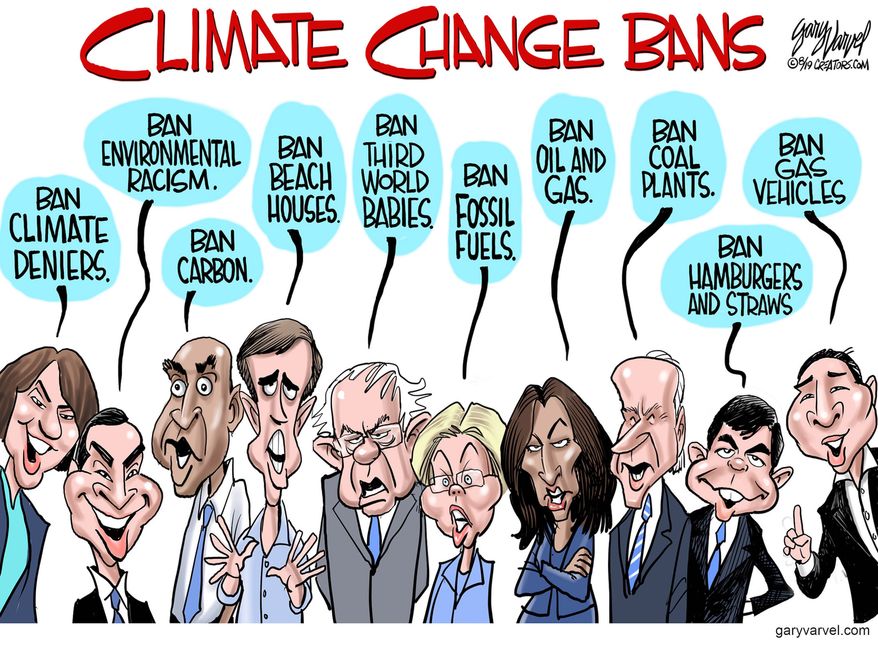
They would ban fossil fuels, mandate electric cars, and reorganize the U.S. economy on a “cave man” theory—to wit, the idea that a complex economy, in which every member carries in his or her pocket a sophisticated electrical appliance and communicates and receives information via other such appliances, can run on the basis of wind and solar power.
They have said, via their conduct, that it is no longer necessary for Americans to accept the results of elections, and that they can be contested long after they are over and an official verdict certified. They accuse President Trump of breaking norms, but this truly is norm-breaking on a breathtaking scale.
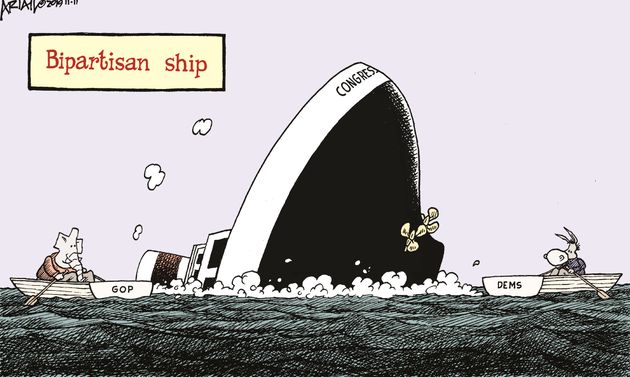
The U.S. political system is heading at breakneck speed toward some kind of crisis in which partisan warfare overwhelms the capacity of the president and congress to address national problems, as they once used to do in an era of greater national consensus. Judicial and cabinet appointments, the budget, international interests, and now impeachment have been turned into occasions for party warfare. It appears that today the two parties represent different countries, rather than different coalitions of Americans, and thus must negotiate with one another as heads of state negotiate with adversary nations. The constitutional system, with its separation of powers and layers of government, requires a fair amount of consensus to operate, because minorities are given levers by which they can block policies from being enacted or implemented. With that consensus now gone, that order is step by step coming undone. It is anyone’s guess where and how it will end.




 Gus Van Horn writes at Real Clear Markets

 Many people have heard of Jordan Peterson due to his battles against post modernism and progressive social justice warfare. Bruce Pardy is another outspoken Canadian professor, whose latest statement was posted at the National Post, H/T GWPF.




 Rich Lowry explains at NY Post
  Synopsis: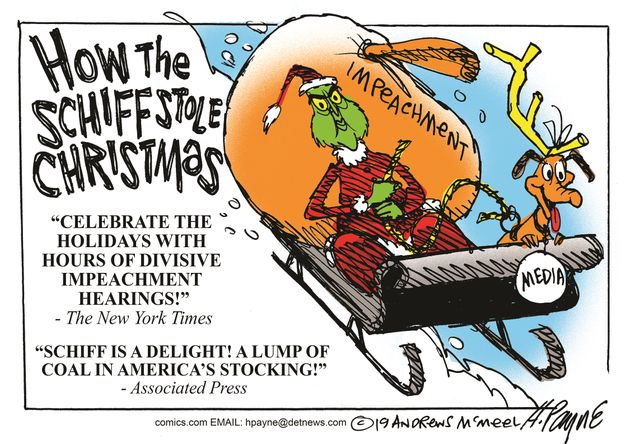














 Science Matters