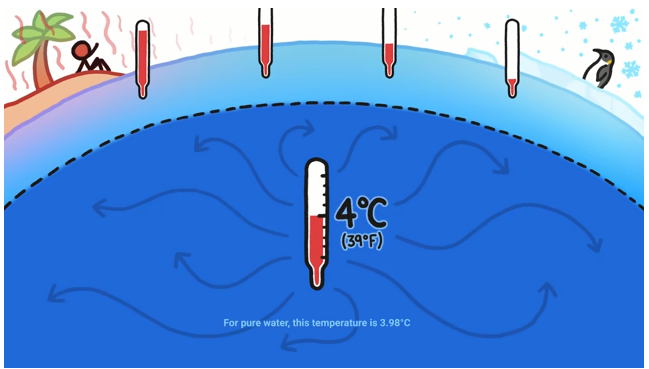
Water (H2O) has magical properties that make our planet suitable for us. The video explains why most of the ocean water is about 4 degrees Celsius. A transcript from another presentation draws the implications. Excerpts in italics with my bolds.
At the surface, ocean water can vary wildly in temperature – the water at the equator is around 30 degrees Celsius and the water at the poles is, well, freezing. But surface waters are only a small fraction of the total water in the ocean. Dive a little deeper, and you’ll find that a whopping 75 percent of the ocean’s water is all at the same temperature…and we’re not talking averages or anything – the vast majority of ocean water is 4 degrees Celsius. And that’s not just a coincidence – it’s because water is weird.
As a liquid cools, its molecules slow down and the liquid generally gets denser and denser. That’s how molten metals, wax, nacho cheese, and basically everything else behaves – except water. Water does become denser as it cools though, but only up to a point. Then it reverses course and actually gets less dense.
This happens because once water molecules slow down enough, intermolecular forces due to the water molecule’s unique shape start pushing the molecules apart until – at zero degrees and below – they form a lattice-like structure. That’s why ice is less dense than water.
But the magic temperature where water is actually densest is 4 degrees Celsius. This weird maximum density is what causes the vast majority of the ocean to be stuck at the same temperature.
By about 1000 meters down, water has cooled to around four degrees. Any water here, or below, that happens to warm up – say, via heat from a hydrothermal vent or underwater volcano – will get a little less dense and float upwards, as less-dense things tend to do – out of this 4-degree zone. Strangely, water cooler than 4 degrees will behave the same way; any water that loses a little bit of heat will also become a little less dense and balloon upwards.
As a result, all the ocean water below 1000 meters or so is about 4 degrees. Well, almost all the water.
The very deepest parts of the ocean can get just a tiny bit colder, because of salt. When salt ions are stuck to water molecules, they weigh them down, making saltier water a little denser than less salty water. So when polar ice forms, salt gets pushed into the surrounding water, making it super-salty. This super-salty water is most dense slightly below 4 degrees, in addition to being a little denser than less salty water, so, it has the tendency to plummet straight to the seafloor.
This heavier, colder water makes the deepest depths of the ocean slightly colder and denser than the water above. Expeditions to the deepest parts of the ocean, like the Challenger Deep of Mariana’s Trench have recorded temperatures of 1 degree. However, the same rules apply down there as they do in the rest of the water column – any water that warms or cools, even a bit, will become less dense and float away into the higher, less dense layers above.
If these weird water density rules didn’t apply – if water behaved like, say, nacho cheese – ocean water would just solidify from the bottom up as it’s cooled, and we wouldn’t have liquid oceans at all.
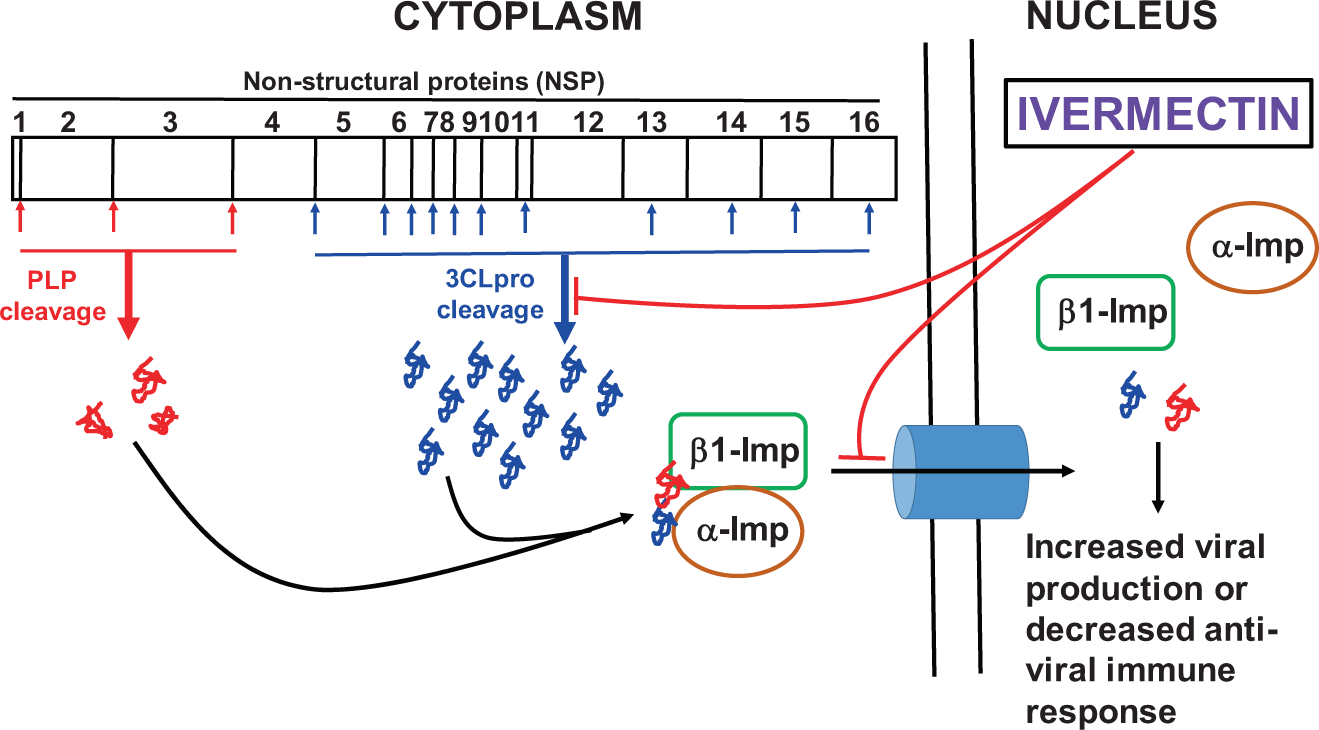
Hypothetical model illustrating the inhibition of SARS-CoV-2 replication by ivermectin mediated through the blocking of α/β1-importin (imp) as well as 3CLpro enzymatic activity. Mody et al (2021)
The Medical Pharmaceutical Industrial complex waged psy-ops warfare against effective and safe generic medicines, including hydroxychloroquine and ivermectin. Now FDA approves pills from Pfizer and Merck for “emergency use”, and in Quebec where I live, they follow along like lemmings rolling out Paxlovid, claiming the pill is a “game changer.” All this ignores that once again trials have been compressed so that longer term side effects are unknown, and Pfizer and Merck have no liability while expecting billions in profits.
As the background post below shows in some detail, these pills are not only pale substitutes for the proven generic therapeutics, they risk stimulating further viral mutations and prolonging the infectious activity in vaccinated and pill-popping developed societies. Fortunately, Africa and much of Asia and South America will be spared this latest public health experiment, as they have natural covid immunity from the virus itself with HCQ and IVM protecting people from severe illnesses.
IVM Beats Pfizer and Merck One-Trick-Pony Pills
John Campbell explains in the video below how the new Pfizer pill copies one trick from Ivermectin, without IVM’s other anti-viral mechanisms, resulting in an inferior and dangerous medicine. I have transcribed the basic message along with excerpts and links to several papers to which he refers. Excerpts are in italics with my bolds.
Pfizer’s new antiviral drug PAXLOVID™ shows very high levels of efficacy in preventing serious disease hospitalization and people dying. And that drug works in a particular way, what we call a pharmacodynamic action.
But there’s another generic drug called Ivermectin that you might have heard of that works in exactly the same way as that. Now no one’s saying that information has been deliberately suppressed for years while millions of people have died but what we are going to show on this video is conclusive proof from the literature that this modality of action is the same.
How Coronavirus Infects Its Host
Before we crack into that we need to look at what’s happening so when a virus, in this case coronavirus2 gets into a cell. What happens is it makes lots of proteins. It starts off making these long proteins, out of hundreds of amino acids sometimes. A few thousand amino acids all strung together.
The problem is they’re too long for the job that’s required. So it’s a bit like a building site and when a big log of wood arrives it needs to be trimmed down into bits that fit in your door frames and your window frames. So these proteins need to be trimmed down and it has to be done in a biochemical way.
In the case of coronavirus two, there’s an enzyme called 3CL protease which breaks down protein into smaller pieces. it’s what we call proteolytic and it will take these long proteins and it will chop them into shorter proteins it’s what we call an endopeptidase. So now instead of having one long protein we’ve got two short ones and these fit together just nicely for the new virus that we’re we’re trying to make.
These new drugs are what we call protease inhibitors because they stop the protease from working. If the protease is like this scissor, the inhibitor is like this tape stopping the cutting up of long proteins.
When there’s another long protein that needs to be processed the 3CL protease comes along ready to chop this up. But now these drugs have bounded up the active site of the protease and they stop the protease from chopping up the big proteins into smaller strings of amino acids. Since they can’t build the virus, it inhibits viral replication.
This is the new Pfizer drug which is designed to block the activity of the sars coronavirus2 3CL, so that 3CL protease now won’t work. It won’t open so i can’t chop my proteins into the correct length to build a nice new virus. And of course a 3CL protease inhibitor will stop it from making sars coronavirus2 and is therefore anti-viral.
Everyone in human biology has heard of chymotryptin. It’s an enzyme released by the pancreas to digest protein. It’s a protein chopping up enzyme so this chymotryptin-like protease inside the virus is working in a very similar way to the chimbotryptin that your pancreas produces to digest your proteins.
PAXLOVID™ (PF-07321332; ritonavir) was found to reduce the risk of hospitalization or death by 89% compared to placebo in non-hospitalized high-risk adults with COVID-19
In the overall study population through Day 28, no deaths were reported in patients who received PAXLOVID™ as compared to 10 deaths in patients who received placebo
Pfizer plans to submit the data as part of its ongoing rolling submission to the U.S. FDA for Emergency Use Authorization (EUA) as soon as possible.
If approved or authorized, PAXLOVID™, which originated in Pfizer’s laboratories, would be the first oral antiviral of its kind, a specifically designed SARS-CoV-2-3CL protease inhibitor. Upon successful completion of the remainder of the EPIC clinical development program and subject to approval or authorization, it could be prescribed more broadly as an at-home treatment to help reduce illness severity, hospitalizations, and deaths, as well as reduce the probability of infection following exposure, among adults. It has demonstrated potent antiviral in vitro activity against circulating variants of concern, as well as other known coronaviruses, suggesting its potential as a therapeutic for multiple types of coronavirus infections.
Evidence for 3CL protease inhibitors from September 2020
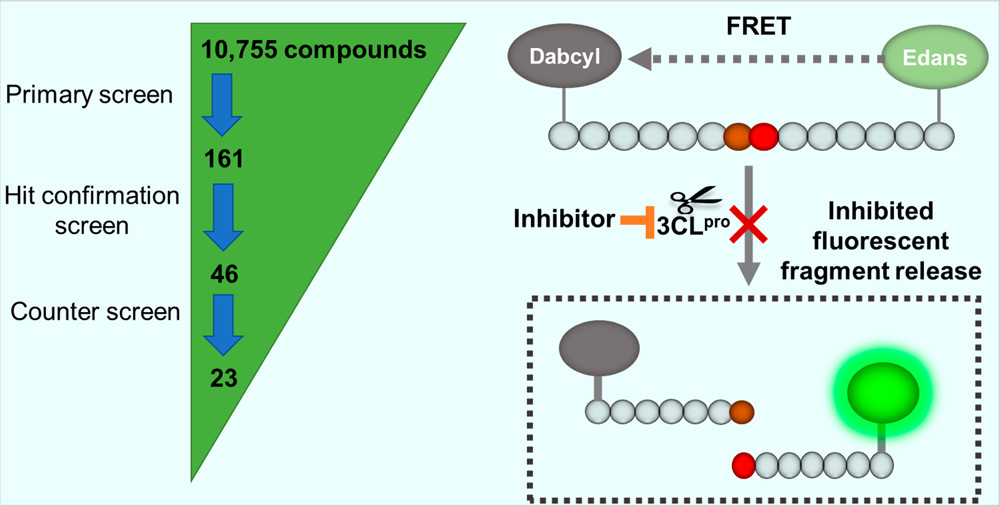
Viral protease is a valid antiviral drug target for RNA viruses including coronaviruses. (13) In response to the COVID-19 pandemic, great efforts have been made to evaluate the possibility of repurposing approved viral protease inhibitor drugs for the clinical treatment of the disease. Unfortunately, the combination of lopinavir and ritonavir, both approved HIV protease inhibitors, failed in a clinical trial without showing benefit compared to the standard of care. (14) To address this unmet need, several virtual screens and a drug repurposing screen were performed to identify SARS-CoV-2 3CLpro inhibitors.
In conclusion, this study employed an enzymatic assay for qHTS that identified 23 SARS-CoV-2 3CLpro inhibitors from a collection of approved drugs, drug candidates, and bioactive compounds. These 3CLpro inhibitors can be combined with drugs of different targets to evaluate their potential in drug cocktails for the treatment of COVID-19. In addition, they can also serve as starting points for medicinal chemistry optimization to improve potency and drug-like properties.
Ivermectin Emerges as Top Antiviral Candidate for CV2
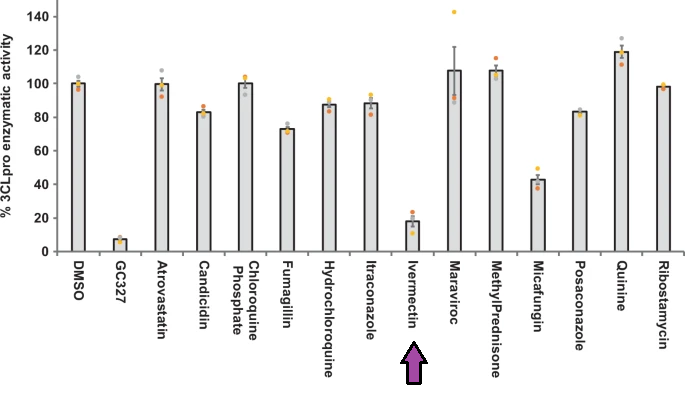
Fig. 4: Ivermectin exhibited complete inhibition of SARS-CoV-2 3CLpro enzymatic activity whereas micafungin partially inhibited the enzyme.
The off-target drugs that are being used to treat non-viral ailments selected by in silico studies were screened for their inhibitory activity against SARS-CoV-2 3CLpro enzyme.
Interestingly, one of the OTD (Off Target Drugs), ivermectin was able to inhibit more than 85% (almost completely) of 3CLpro activity in our in vitro enzymatic assay with an IC50 value of 21 µM. These findings suggest the potential of ivermectin to inhibit the SARS-CoV-2 replication. In support of this, a recent finding suggested that ivermectin (5 µM) inhibited the replication of live SARS-CoV-2 isolated from Australia (VIo1/2020) in Vero/hSLAM cells23. They found that >5000-fold viral counts were reduced in 48 hr in both culture supernatant (release of new virion: 93%) as well as inside the cells (unreleased and unassembled virion: 99.8%) when compared to DMSO treated infected cells.
Earlier studies have demonstrated that the possible anti-viral mechanism of ivermectin was through the blockage of viral-protein transportation to the nucleus by inhibiting the interaction between viral protein and α/β1 importin heterodimer, a known transporter of viral proteins to the nucleus especially for RNA viruses19,20,21,22,23. However, in this study, we have reported that ivermectin inhibits the enzymatic activity of SARS-CoV-2 3CLpro and thus may potentially inhibit the replication of RNA viruses including SARS-CoV-2. These studies suggest that ivermectin could be a potential drug candidate to inhibit the SARS-CoV-2 replication and the proposed anti-viral mechanism of ivermectin presented in Fig. 8 and in vivo efficacy of ivermectin towards COVID-19 is currently been evaluated in clinical trials (ClinicalTrials.gov Identifier: NCT04438850).
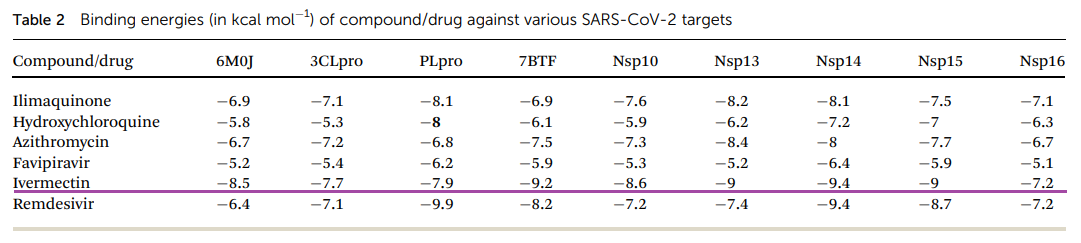
In conclusion, both ivermectin and remdesivir could be considered potential drugs for the treatment of COVID-19. Ivermectin efficiently binds to the viral S protein as well as the human cell surface receptors ACE-2 and TMPRSS2; therefore, it might be involved in inhibiting the entry of the virus into the host cell. It also binds to Mpro and PLpro of SARS-CoV-2; therefore, it might play a role in preventing the post-translational processing of viral polyproteins. The highly efficient binding of ivermectin to the viral N phosphoprotein and nsp14 is suggestive of its role in inhibiting viral replication and assembly. Remdesivir may be involved in inhibiting post-entry mechanisms as it shows high binding affinity to N and M proteins, PLpro, Mpro, RdRp, and nsp14. Although the results of clinical trials for remdesivir are promising (Beigel et al., 2020; Wang Y. et al., 2020), similar clinical trials for ivermectin are recommended. Both these drugs exhibit multidisciplinary inhibitory effects at both viral entry and post-entry stages. Source: Molecular Docking Reveals Ivermectin and Remdesivir as Potential Repurposed Drugs Against SARS-CoV-2
Conclusion from John Campbell
So whereas the Pfizer drug is only working as far as we’ve been told in the proviso press release against one biochemical modality of viral replication, the Ivermectin mechanism is working at many different levels. The fact that the the the Pfizer medicine is only working against one particular biochemical pathway means to me that the virus could learn to avoid that. It could evolve to be drug resistant as indeed the early antiretrovirals did with HIV.
With ivermectin, because it’s working on so many different levels, it is improbable, to put it mildly,that a virus would mutate in a dozen different ways to avoid all those different mechanisms. We’ve talked about six mechanisms today. It’s very unlikely that we get six mutations that could dodge all of those all at the same time.
So I’ve a brief message to world leaders, people that are making the decisions about this. Come on you all, you’re not a horse and you’re not a cow. You’ve got a human intellect. Let’s use it to follow the scientific evidence to save human pain, suffering and death.
Comment
Ivermectin is the most successful and proven protease inhibitor in production. Just as with Paxlovid, ivermectin decreases the protease enzyme but…the benefits of ivermectin in Covid treatment are obvious and not present in paxlovid. Additional actions of ivermectin include anti-coagulant action and anti-inflammatory actions, both observed in Covid infections. Hydroxychloroquine is also a protease inhibitor and also works against COVID.
So why PAXLOVID? Because it’s from big pharma, is less proven than other drugs in terms of safety, and was approved without input from the external committees and the public. If that inspires confidence, then I don’t know what will give you pause.
Philip Dick’s insight has a corollary: Reality is also that which doesn’t happen no matter how much you want it to. Chris Wright explains the contradictions with energy fantasies in his Denver Gazette article Inconvenient truths about energy. Excerpts in italics with my bolds and added images.
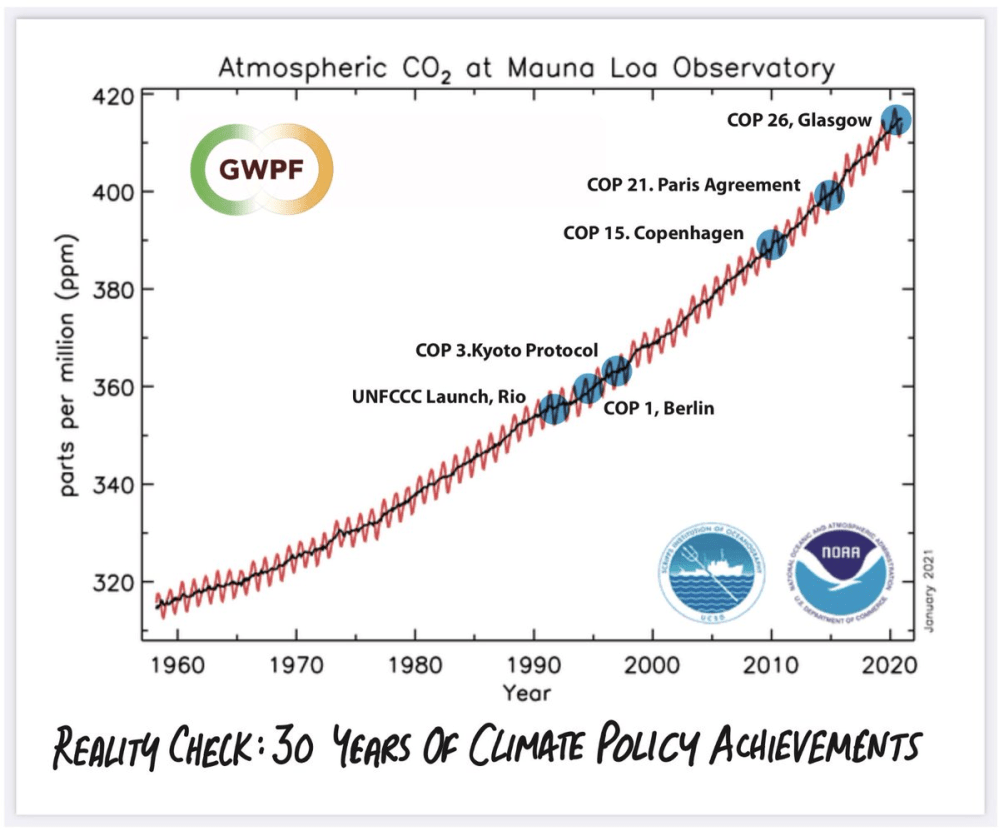
The energy transition is not happening. Or not nearly at the pace that everyone believes or wishes. At current rates the “transition” is set to finish in the mid-2600s. The U.N. Rio Convention and subsequent Kyoto Protocol launched the energy transition drive in 1992. Global energy consumption from hydrocarbons has grown massively since then, with market share only declining by four percentage points over the last 30 years from 87% in 1992 to 83% today. I am not celebrating this fact as I have spent years working on energy transition technologies.
The energy transition isn’t failing for lack of earnest effort. It is failing because energy is hard, and 3 billion people living in energy poverty are desperate for reliable and scalable energy sources. Meanwhile, 1 billion energy-rich people are resistant to diminishing their standard of living with higher cost and an increasingly unreliable energy diet.
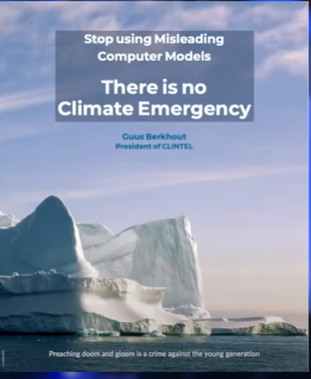
There is no “climate crisis” either. If there is a term more at odds with the exhaustive literature surveys of the Intergovernmental Panel on Climate Change (IPCC) than “climate crisis,” I have not heard it.
Climate change is a real global challenge that is extensively studied. Unfortunately, the facts and rational dialogue about the myriad tradeoffs aren’t reaching policy makers, the media, or activist groups. Or are they are simply ignoring these inconvenient truths?
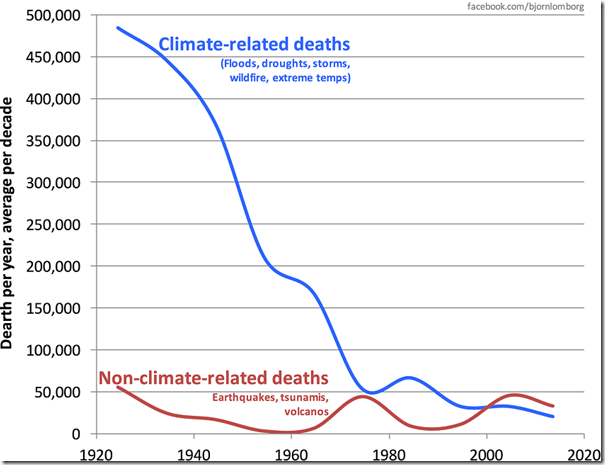
For example, we hear endlessly about the rise in frequency and intensity of extreme weather. This narrative is highly effective at scaring people and driving political action. It is also false. The reality is detailed in countless publications and summarized in the IPCC reports. Deaths from extreme weather have plunged over the last century, reaching new all-time lows last year, an outcome to be celebrated. This is not because extreme weather has declined. In fact, extreme weather shows no meaningful trend at all.
Deaths from extreme weather events have declined because highly energized, wealthier societies are much better prepared to survive nature’s wrath.
My Mind is Made Up, Don’t Confuse Me with the Facts. H/T Bjorn Lomborg, WUWT
Recognizing reality
You are not supposed to say out loud that there is no climate crisis or that the energy transition is proceeding at a glacial pace. These are unfashionable and, to many, offensive facts. But let’s be honest. Energy transition ambitions must recognize reality. Otherwise, poor investment decisions and regulatory frameworks will lead to surging global-energy and food prices. This is exactly what is happening. We are here today in large part because energy transition efforts that previously encompassed solely aggressive support of alternative energy policies, economics be damned, have recently supplemented this strategy with growing efforts to obstruct fossil fuel development.
Fossil fuels make the modern world possible.
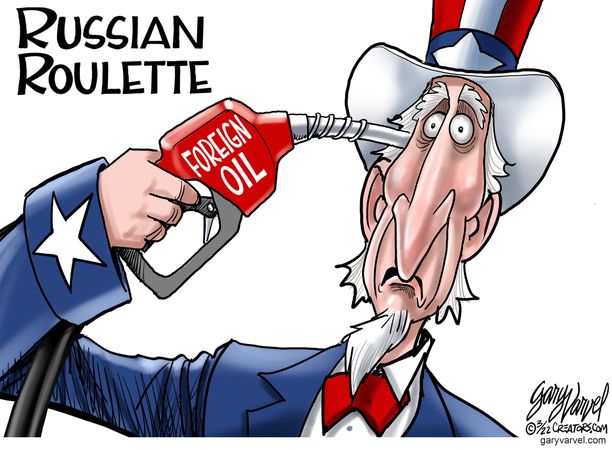
The real crisis today is an energy crisis. It began to reveal itself last fall with a severe shortage in globally traded Liquified Natural Gas (LNG). The LNG crisis has not abated and it gives Russia’s Vladimir Putin tremendous leverage over Europe. Without Russian gas, the lights in Europe go out. Amid war, public outrage, and intense sanctions, Russian gas flows to Europe remain unchanged. Russian oil exports have continued with minimal interruption. The world can talk tough about sanctioning Russian energy exports, but those exports are vitally needed; hence they continue. Energy security equals national security.
The world energy system, critical to human wellbeing, requires meaningful spare capacity to handle inevitable bumps in the road. In the electricity sector, which represents only 20% of global energy but 40% in wealthy countries, this is called reserve capacity. In the oil market, spare production capacity today is shrinking and concentrated in OPEC nations like Saudi Arabia and the United Arab Emirates. Also, there is a massive global storage network in both surface tanks and underground caverns. In natural gas markets, there are both extensive underground storage reservoirs and typically spare export capacity through pipelines and large industrial LNG export and import facilities.
The last several years have seen this spare capacity whittled away due partly to lower commodity prices and poor corporate returns shrinking the appetite to invest.
Excess capacity has also shrunk due to regulatory blockage of critical energy infrastructure like pipelines and export terminals. Roadblocks for well permitting and leasing on federal lands, together with a mass public miseducation campaign on energy and climate alarmism, are also stymieing hydrocarbon development. Investment capital is further constrained by a corporate Environment, Social and Governance (ESG) movement, and divestment campaigns. These factors are shrinking hydrocarbon investment below what it otherwise would be in response to price signals and outlook for supply and demand.
The net result is a constrained supply of oil, natural gas, and coal, which means higher prices and greater risk of market dislocations like the one unfolding today.
High energy and food price inflation is the cruelest form of tax on the poor. After a few specific examples, I’ll return to what we should do now to reverse these damaging and deeply inequitable trends.
In denial about demand
Why does the world today suffer from a severe shortage of LNG? Demand for natural gas has been growing strongly for decades. It provides a much cleaner substitute for coal in electricity production, home heating, and a myriad of industrial and petrochemical uses. Rising displacement of coal by natural gas has been the largest source of GHG emission reductions. Unfortunately, the aforementioned factors have prevented supply from keeping pace with rising demand. Energy shortages drive rapid prices rises and have cascading impacts on everything else. Energy is foundational to everything humans do. Everything.
Perhaps the most critical use of natural gas is nitrogen fertilizer production. Roughly a century ago, two German chemists, both subsequently awarded Nobel Prizes, developed a process to produce nitrogen fertilizer on an industrial scale. Before the Haber-Bosch process innovation, nitrogen content in soil was a major constraint on crop productivity. Existing nitrogen sources from bird guano, manure, and rotating cultivation of pea crops were limited. Today, elimination of natural gas-synthesized nitrogen fertilizer would cut global food production in half.
The now six-months-long LNG crisis translates into a worldwide food crisis as skyrocketing fertilizer prices are cascading into much higher food prices. Wheat prices are already at a record high and will likely head higher as spring plantings suffer from under fertilization.
Global LNG markets are tight because rising demand has outrun the growth in LNG export capacity in the United States, now the largest LNG exporter. We have an abundance of natural gas in the United States. Unfortunately, we have a shortage of pipelines to transport this gas and LNG export terminals, preventing us from relieving the energy crisis in Europe and around the world. These pipeline and export terminal shortages are due in large part to regulatory blockage. The result is that natural gas prices in the United States and Canada are five to ten times lower than in Asia and Europe. This deeply disadvantages consumers and factories (like fertilizer factories) in Europe and Asia that rely on LNG imports to fulfill their needs.
Failed energy policies
Russia’s invasion of Ukraine did not cause today’s energy crisis. Quite the reverse. Today’s energy crisis is likely an important factor in why Russia chose to invade Ukraine now. Europe’s energy situation is both tenuous and highly dependent on Russian imports. Russia is the second-largest oil and natural gas producer after the United States. Russia is the largest exporter of natural gas, supplying over 40% of Europe’s total demand. Additionally, Russia is the largest source of imported oil and coal to Europe. Europe put itself in this unenviable position by pursuing unrealistic, politically-driven policies attempting to rapidly transition its energy sources to combat climate change.
Europe’s energy pivot has been a massive failure on all fronts: higher energy costs, grave energy insecurity, and negligible climate impacts.
Germany is the poster child of this failure. In 2000, Germany set out to decarbonize its energy system, spending hundreds of billions of dollars on this effort over the last 20 years. Germany only marginally reduced its dependence on hydrocarbons from 84% in 2000 to 78% today. The United States matched this 6% decline in hydrocarbon market share from 86% in 2000 to 80% today. Unlike in the US, Germany more than doubled its electricity prices — before the recent massive additional price increases — by creating a second electric grid. This second grid is comprised of massive wind and solar electric generating sources that only deliver 20% of nameplate capacity on average, and often less than 5% for days at a time. The sun doesn’t always shine and the wind doesn’t always blow. Hence, Germany could only shrink legacy coal, gas and nuclear capacity by 15%. It now must pay to maintain both grids. The legacy grid must always be flexing up and down in a wildly inefficient manner to keep the lights on, hospitals functioning, homes heated, and factories powered. Outside of the electricity sector, Germany’s energy system is largely unchanged. It has long had high taxes on gasoline and diesel for transportation, and lower energy taxes on industry. Germany subsidizes industrial energy prices attempting to avoid the near-complete deindustrialization that the UK has suffered due to expensive energy policies across the board.
Over the last 20 years, the United States has seen two shale revolutions, first in natural gas and then in oil.
The net result has been the U.S. producing greater total energy than consumed in 2019 and 2020 for the first time since the 1950s. The U.S. went from the largest importer of natural gas to the second-largest exporter in less than fifteen years, all with private capital and innovation. The shale revolution lowered domestic and global energy prices due to surging growth in U.S. production. Surging US propane exports are reducing the cost and raising the availability of clean cooking and heating fuels for those in dire energy poverty still burning wood, dung, and agricultural waste to cook their daily meals. U.S. GHG emissions also plunged to the lowest level on a per capita basis since 1960. Imagine the world’s energy situation today with the American shale revolution.
We are starting to hamstring and squander the enormous benefits of the shale revolution. The same misinformed anti-hydrocarbon crusade that impoverished Europe and made it heavily dependent on Russia is now sweeping the US. California and New England had already adopted European-style energy policies driving up electricity prices, reducing grid reliability, and driving manufacturing and other energy-intensive, blue-collar jobs out of their states. Colorado is not far behind.
California, a state with a plentitude of blessings, managed to create the highest adjusted poverty rate in the nation with an expensive, unstable power grid increasingly reliant on coal-powered electricity imports from Nevada and Utah.
New England’s proximity to Pennsylvania’s clean low-cost natural gas resources was a stroke of luck. But it refused to expand the natural gas pipelines running from Pennsylvania, leaving it chronically short of natural gas, its largest source of electricity and cleanest option for home heating. Instead, it remains heavily reliant on fuel oil for home heating and occasionally imports LNG from Russia to keep the lights on. Last winter New England burned copious amounts of fuel oil to produce electricity which went out of fashion in the 1970s elsewhere in the US.
Texas has not been immune from energy illiteracy and collateral damage. Texas’ poorly designed electric grid, structured to encourage investment in renewables, led to hundreds dying last year in the Uri cold spell. No one would pay the same price for an Uber that showed up whenever convenient for the driver and dropped you off wherever they desired. But that is what Texas does with electricity: paying the same price for reliable electricity that balances the grid as they do for unreliable, unpredictable electricity. No wonder the reliability of the Texas grid has declined and is headed for more trouble.
Misplaced faith
The common thread in these cases is unrealistic beliefs in how rapidly new energy systems can replace demand for hydrocarbons, currently at all-time highs. Political intervention and miscalculation have led to over-investment in unreliable energy sources and, far worse, under-investment in reliable energy sources and infrastructure. The full costs of this colossal malinvestment have been somewhat hidden from view as spare capacity in the global energy network has mostly kept the train on the tracks. Now that excess capacity has shrunk to a critically low level, more impacts are hitting home.
Like the disease itself, the cure takes years to run its course. But that longer time frame is no excuse not to act now in a thoughtful fashion to begin rectifying historical blunders.
Steel, cement, plastics and fertilizer are the four building blocks of the modern world and all are highly reliant on hydrocarbons.
Most critically this means removing the growing myriad obstacles to hydrocarbon development, justified in the name of fighting climate change. This is nonsense. Overly cumbersome hurdles to hydrocarbon development in the U.S. do nothing to change oil and gas demand. They simply displace U.S. production overseas where production practices are less stringent and less ethical. Resulting in increased GHG emissions and other air pollutants, reduced economic opportunities for Americans, and increased geopolitical leverage of Russia and OPEC — see the invasion of Ukraine.
Climate change is a long-term problem best addressed with technologies cost-effective today like natural gas, energy efficiency, and nuclear. The solution requires combining today’s commercial low-carbon energy sources with research and technology development in carbon sequestration, next-generation geothermal, and economical energy storage to make solar and wind more viable.
Today the price mechanism must destroy energy demand to bring it in line with short-term supply. This reduces the quality of living, especially for low-income families. The price mechanism will also incent new supply to the extent possible in the face of growing regulatory hurdles, infrastructure shortages, and capital starvation. A revaluation of all three of these factors is urgently needed.
♦ Is the overarching goal “energy transition” at all costs? ♦ Or is it humane policies that better human lives and expand opportunities for all?
We need to replace the former mindset with the latter.
Chris Wright is chairman and CEO of Liberty Energy, a Denver-based hydraulic fracturing company. Read “Bettering Human Lives”,a report released last year for more information on the above issues.
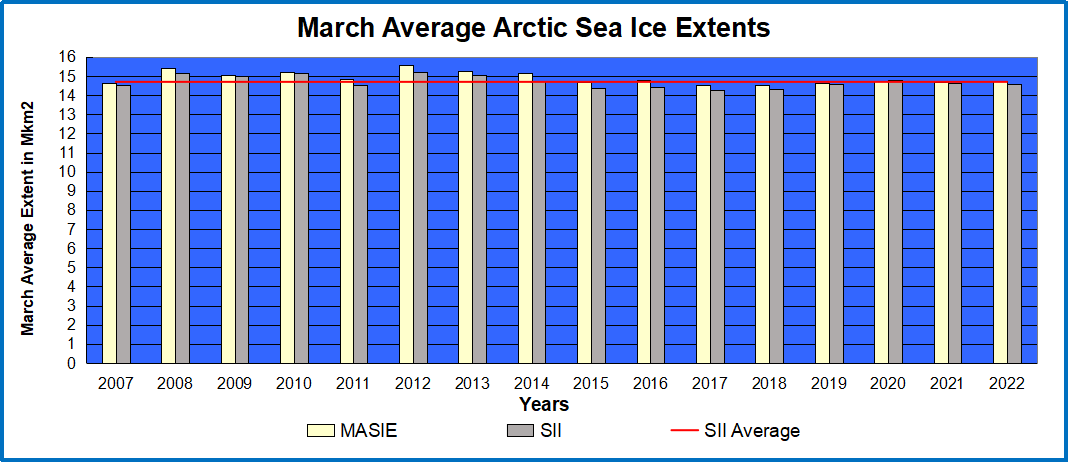
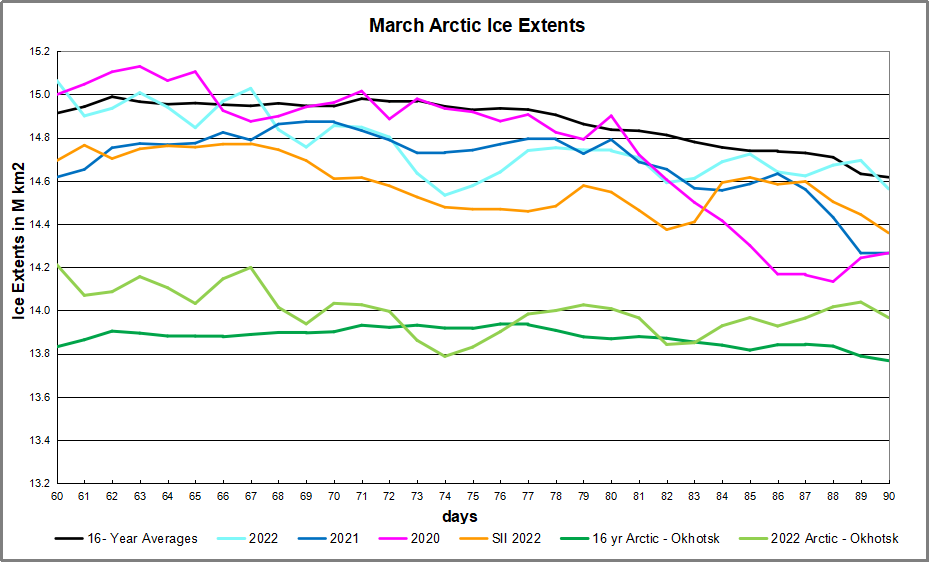
Previous posts showed 2022 Arctic Ice broke the 15M km2 ceiling in February, followed by a typical small melt in March. Climatology refers to the March monthly average ice extent as indicative of the annual maximum Arctic ice extent. The graph above shows that the March monthly average has varied little since 2007, typically around the SII average of 14.7 M km2. Of course there are regional differences as described later on.
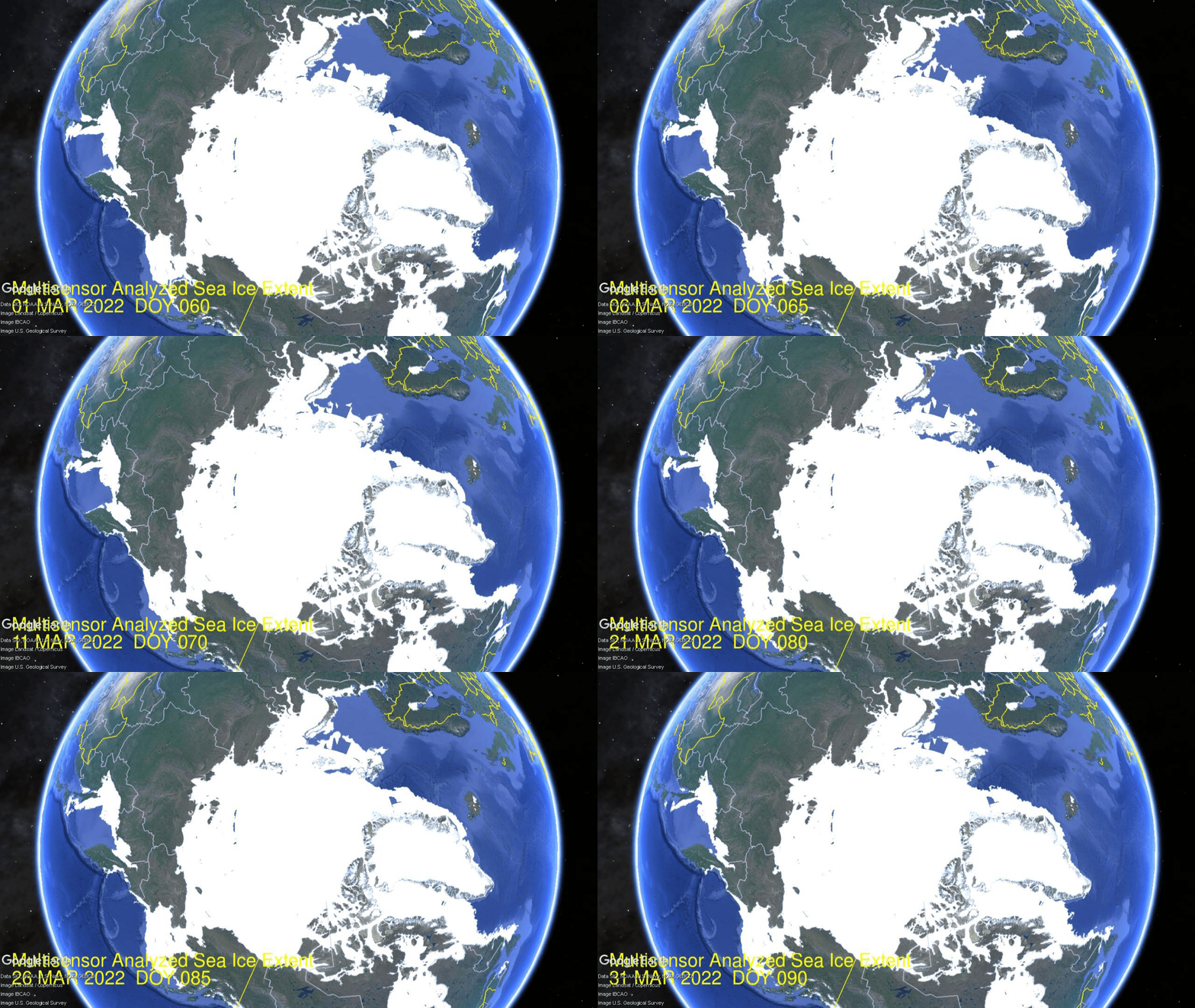
The animation shows ice extent fluctuations during March 2022. Bering Sea (lower left) gained ice over the month, while ice in Okhotsk (higher left) retreated. At the top Kara and Barents seas lost and then gained ice. Baffin Bay lower right lost ice during March. The main changes were Baffin losing ~360k km2 of extent and Okhotsk losing ~260k km2.
The effect on NH total ice extents is presented in the graph below.
The graph above shows ice extent through March comparing 2022 MASIE reports with the 16-year average, other recent years and with SII. Hovering around 15M km2 the first week, 2022 ice extents dropped sharply mid month, then stabilized and at March end matched the average. Both 2020 and 2021 ended nearly 400k km2 below average. The two green lines at the bottom show average and 2022 extents when Okhotsk ice is excluded. On this basis 2022 Arctic was nearly 400k km2 in surplus, then declined mid month before ending nearly 200k km2 in surplus to average, except for the ice shortage in Okhotsk.
Region
2022090
Day 90 Average
2022-Ave.
2021090
2022-2021
(0) Northern_Hemisphere
14563095
14616765
-53670
14266634
296461
(1) Beaufort_Sea
1070776
1070116
660
1070689
87
(2) Chukchi_Sea
966006
963906
2100
966006
0
(3) East_Siberian_Sea
1087137
1086102
1035
1087137
0
(4) Laptev_Sea
897845
896958
887
897827
18
(5) Kara_Sea
935023
918083
16941
935023
0
(6) Barents_Sea
748326
645014
103311
602392
145934
(7) Greenland_Sea
616239
652388
-36148
620574
-4334
(8) Baffin_Bay_Gulf_of_St._Lawrence
1441014
1400528
40486
1243739
197275
(9) Canadian_Archipelago
854685
852982
1703
854597
88
(10) Hudson_Bay
1260903
1254217
6687
1260903
0
(11) Central_Arctic
3245216
3232275
12941
3192844
52373
(12) Bering_Sea
785874
720525
65348
549939
235935
(13) Baltic_Sea
52068
63446
-11377
33543
18525
(14) Sea_of_Okhotsk
596190
849221
-253031
942085
-345895
The table shows that the large deficit in Okhotsk is only partially offset by surpluses in Bering and Barents Seas. All other regions show typical extents at end of March
April 1st Footnote:
It has been a long hard winter, requiring overtime efforts by Norwegian icebreakers like this one:
In addition, cold March temperatures led to unusual sightings of Northern creatures:
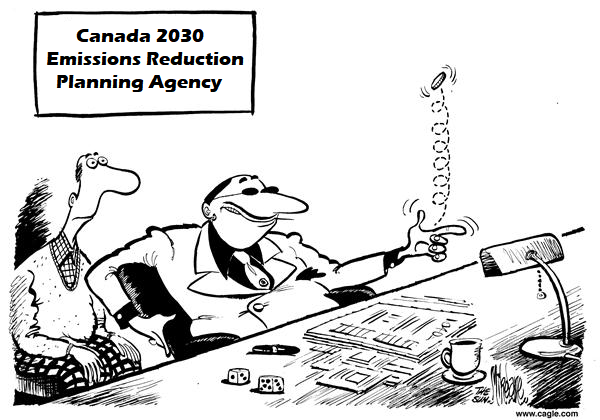
Tough question: If you think central planning is disastrous for economies, and it is, do you want your central planners to be competent and efficient or do you want them to be jokers, engaged in barely concealed fraud?
The projections included in the government’s “2030 emissions reduction plan” released this week show that in the 14 years between 2005 and 2019 total Canadian emissions of carbon dioxide equivalents fell by just nine megatonnes (Mt), from 739 to 730. Yet from 2019 to 2030, the plan would have us believe, they will fall by 287 Mt — more than 30 times the 2005-19 change.
Take buildings. From 2005 to 2019 emissions from buildings actually rose by six Mt, from 84 to 91. But “where we could be in 2030,” according to Ottawa’s chart, is 53 Mt. The chart explains: “A whole-of-government and whole-of-economy effort focusing on regulatory, policy, investment and innovation levers is needed to drive decarbonization of the buildings sector. To this end, the Government will develop a national strategy for net-zero and resilient buildings …”
That load of yet-to-be-delivered national strategy supposedly will eliminate 38 Mt of emissions when all the housing efficiency programs from 2005-19, and there have been lots, enabled an “improvement” of minus seven Mt? You’ve got to know a “whole-of-government” effort to operate the “investment and innovation levers” will not be speedy or efficient.
And even more impressive 2020s miracles apparently are on order.
In the electricity sector, emissions fell 61 Mt from 2005-2019, thanks largely to the elimination of coal. From 2019-2030 they supposedly will fall another 47 Mt, even though coal can’t be eliminated again. In heavy industry, the reduction was 10 Mt; it’s now going to be another 25 Mt. In transportation, emissions actually rose 26 Mt over the last 14 years but by 2030 they supposedly will fall 43 Mt.
This page has no sympathy for central planners. Central planning does not work, whether of the Soviet or the Trudeau-Guilbeault kind. And it wouldn’t be a good idea even if it did. On the other hand, we have immense sympathy for central plan-ees — the people who are subject to central plans. Elsewhere on this page is a plea from Francis Bradley of Electricity Canada, an association of the people who run the country’s electricity grids. All net-zero plans involve a big expansion of electricity use: all those electric vehicles, including electric trucks not yet invented, have to be charged somehow. But, Bradley warns, the clock is ticking. If the government is serious, it needs to make critical decisions now about such things as whether it will allow generation with natural gas, how much financial assistance it will provide for re-fitting and new building of transmission lines and whether it will override burdensome and lengthy approvals processes.
What does this week’s “plan” provide in the way of detail?
Aspiration, aspiration, aspiration.
It is, as Elizabeth May noted, a lovely document, with attractively coloured charts and diagrams. But if you assumed an emissions reduction plan would provide a detailed checklist of policy actions the government would be taking, you assumed wrong.
Each of a series of chapters, one per major sector of the economy, is structured the same way: a few paragraphs outlining “Current sector emissions”; another few on “(Industry X) in context: key drivers”; even more on “What have we done so far?”; a word or two about “What was heard from the 2030 engagement process”; and, then, finally, “What’s next?” Apart from “What’s next?” it’s all filler.
I copied and pasted all the “What’s next?” passages into a single file. They total a little over 8,600 words, about 10 times the length of this column. Google tells me 8,600 words would take an average adult roughly half an hour to read. Yet this is a document that purports to plan major changes in how a 40-million person, $2.5-trillion economy operates.
The “What’s next?” section for electricity is just 482 words, which I doubt will satisfy Bradley’s plea for detail. And much of it is filler — for instance, 182 words describing the “clean electricity standard” consultations processes: “Establishing a net-zero-emitting electricity sector will require substantial effort from provinces and territories, and a CES will provide the regulatory signal to support decision-making at all levels of government to achieve this goal.” No doubt that’s all true. But tell us something that’s not obvious — like what the regulatory signal actually is going to be, not just that there will be one.
Apart from filler, the detailed actions are that the feds will provide $25 million for planning “regional strategic initiatives,” will “lead engagement” on the Atlantic electric loop, and will “support de-risking and accelerating the development of transformational nation-building inter-provincial transmission lines.” All clear now? I doubt the grid people will think so.
An institution — the federal government — that has struggled for 15 years to replace just a few dozen obsolete fighter jets supposedly is going to oversee the radical transformation of a modern economy in just eight years.
It would be laughable if it weren’t also so frightening.
There is a big opening and an urgent need for a political party that would impose a meaningful carbon tax, use the revenues to reduce other taxes and then retire from the emissions business and let markets figure out what happens next.
Pascal Bruckner writes at City Journal Apocalyptic Daze. Excerpts in italics with my bolds.
Secular elites prophesy a doomsday without redemption.
My point is not to minimize the dangers that we face. Rather, it is to understand why apocalyptic fear has gripped so many of our leaders, scientists, and intellectuals, who insist on reasoning and arguing as though they were following the scripts of mediocre Hollywood disaster movies.
Around the turn of the twenty-first century, a paradigm shift in our thinking took place: we decided that the era of revolutions was over and that the era of catastrophes had begun. The former had involved expectation, the hope that the human race would proceed toward some goal. But once the end of history was announced, the Communist enemy vanquished, and, more recently, the War on Terror all but won, the idea of progress lay moribund. What replaced the world’s human future was the future of the world as a material entity. The long list of emblematic victims—Jews, blacks, slaves, proletarians, colonized peoples—was likewise replaced, little by little, with the Planet, the new paragon of all misery.
No longer were we summoned to participate in a particular community; rather, we were invited to identify ourselves with the spatial vessel that carried us, groaning.
How did this change happen? Over the last half-century, leftist intellectuals have identified two great scapegoats for the world’s woes. First, Marxism designated capitalism as responsible for human misery. Second, “Third World” ideology, disappointed by the bourgeois indulgences of the working class, targeted the West, supposedly the inventor of slavery, colonialism, and imperialism. The guilty party that environmentalism now accuses—mankind itself, in its will to dominate the planet—is essentially a composite of the previous two, a capitalism invented by a West that oppresses peoples and destroys the earth. Indeed, environmentalism sees itself as the fulfillment of all earlier critiques. “There are only two solutions,” Bolivian president Evo Morales declared in 2009. “Either capitalism dies, or Mother Earth dies.”
So the planet has become the new proletariat that must be saved from exploitation —if necessary, by reducing the number of human beings,
as oceanographer Jacques Cousteau said in 1991.
One could go on citing such quotations forever, given the spread of the cliché-ridden apocalyptic literature. Environmentalism has become a global ideology that covers all of existence—not merely modes of production but ways of life as well. We rediscover in it the whole range of Marxist rhetoric, now applied to the environment: ubiquitous scientism, horrifying visions of reality, even admonitions to the guilty parties who misunderstand those who wish them well. Authors, journalists, politicians, and scientists compete in the portrayal of abomination and claim for themselves a hyper-lucidity: they alone see clearly while others vegetate in the darkness.
The fear that these intellectuals spread is like a gluttonous enzyme that swallows up an anxiety, feeds on it, and then leaves it behind for new ones. When the Fukushima nuclear plant melted down after the enormous earthquake in Japan in March 2011, it only confirmed a feeling of anxiety that was already there, looking for some content. In six months, some new concern will grip us: a pandemic, bird flu, the food supply, melting ice caps, cell-phone radiation.
The fear also becomes a self-fulfilling prophecy, with the press reporting, as though it were a surprising finding, that young people are haunted by the very concerns about global warming that the press continually instills in them. As in an echo chamber, opinion polls reflect the views promulgated by the media. We are inoculated against anxiety by the repetition of the same themes, which become a narcotic we can’t do without.
Atime-honored strategy of cataclysmic discourse, whether performed by preachers or by propagandists, is the retroactive correction. This technique consists of accumulating a staggering amount of horrifying news and then—at the end—tempering it with a slim ray of hope. First you break down all resistance; then you offer an escape route to your stunned audience. And so the advertising copy for the Al Gore–starring documentary An Inconvenient Truth reads: “Humanity is sitting on a time bomb. If the vast majority of the world’s scientists are right, we have just ten years to avert a major catastrophe that could send our entire planet’s climate system into a tail-spin of epic destruction involving extreme weather, floods, droughts, epidemics and killer heat waves beyond anything we have ever experienced—a catastrophe of our own making.”
Now here are the means that the former vice president, like most environmentalists, proposes to reduce carbon-dioxide emissions: using low-energy lightbulbs; driving less; checking your tire pressure; recycling; rejecting unnecessary packaging; adjusting your thermostat; planting a tree; and turning off electrical appliances. Since we find ourselves at a loss before planetary threats, we will convert our powerlessness into propitiatory gestures, which will give us the illusion of action. First the ideology of catastrophe terrorizes us; then it appeases us by proposing the little rituals of a post-technological animism.
But let’s be clear: a cosmic calamity is not averted
by checking tire pressure or sorting garbage.
Another contradiction inherent in apocalyptic discourse is that, though it tries desperately to awaken us, to convince us of planetary chaos, it eventually deadens us, making our eventual disappearance part of our everyday routine. At first, yes, the kinds of doom that we hear about—the acidification of the oceans, the pollution of our air—charge our calm existence with a strange excitement. The enemy is among us, and he waits for our slightest lapses, all the more insidious because he is invisible. If the function of ancient rites was to purge a community’s violence on a sacrificial victim, the function of our contemporary rites is—at first—to dramatize the status quo and to exalt us through proximity to cataclysm.
But the certainty of the prophecies makes this effect short-lived. The language of fear does not include the word “maybe.” It tells us, rather, that the horror is inevitable. Resistant to all doubt, it is satisfied to mark the stages of degradation. This is another paradox of fear: it is ultimately reassuring. At least we know where we are heading—toward the worst.
One consequence of this certainty is that we begin to suspect that the numberless Cassandras who prophesy all around us do not intend to warn us so much as to condemn us.
In a secular society, a prophet has no function other than indignation. So it happens that he becomes intoxicated with his own words and claims a legitimacy with no basis, calling down the destruction that he pretends to warn against. You’ll get what you’ve got coming!—that is the death wish that our misanthropes address to us. These are not great souls who alert us to troubles but tiny minds who wish us suffering if we have the presumption to refuse to listen to them. Catastrophe is not their fear but their joy. It is a short distance from lucidity to bitterness, from prediction to anathema.
What is surprising is that the mood of catastrophe prevails especially in the West, as if it were particular to privileged peoples. Despite the economic crises of the last few years, people live better in Europe and the United States than anywhere else, which is why migrants the world over want to come to those places. Yet never have we been so inclined to condemn our societies.
Perhaps the new Green puritanism is nothing but the reaction of a West deprived of its supreme competence, the last avatar of an unhappy neocolonialism that preaches to other cultures a wisdom that it has never practiced. For the last 20 years, non-European peoples have become masters of their own futures and have stopped regarding us as infallible models. They are likely to receive our professions of environmentalist faith with polite indifference. Billions of people look to economic growth, with all the pollution that accompanies it, to improve their condition. Who are we to refuse it to them?
Environmental worry is universal; the sickness of the end of the world is purely Western.
To counter this pessimism, we might list the good news of the last 20 years: democracy is making slow progress; more than a billion people have escaped absolute poverty; life expectancy has increased in most countries; war is becoming rarer; many serious illnesses have been eradicated. But it would do little good. Our perception is inversely proportional to reality.
The Christian apocalypse saw itself as a hopeful revelation of the coming of God’s kingdom.Today’s has nothing to offer. There is no promise of redemption; the only hope is that those human beings who repent of their errors may escape the chaos, as in Cormac McCarthy’s fine novel The Road.
How can we be surprised, then, that so many bright minds have become delirious and that so many strange predictions flourish?
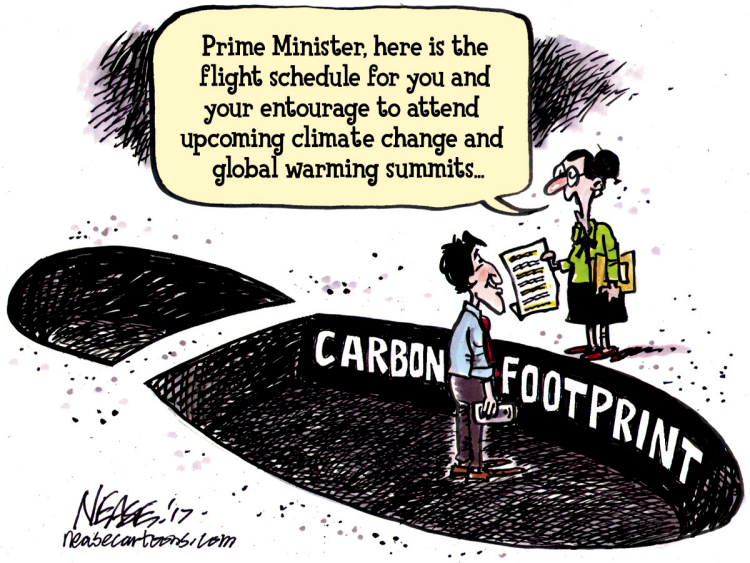
My own fear is that such policies will hammer Canada’s biggest energy sector
and hobble our most promising one.
The prime minister has now proposed a new direction on energy policy. Of particular concern is his government’s call for a 42 per cent emissions cut for Canada’s oil and gas sector by 2030 and its growing opposition to nuclear power.
But watching Trudeau in Vancouver on Tuesday promoting his new emissions policy, I also can’t help but fear the worst. Of course, feel free to write off my critique as a fear of change or as partisan blather. Even I question myself. I acknowledge I could be wrong. Things could turn out fine for all kinds of reasons I don’t now comprehend. Who can predict the future?
But I’m not the only Albertan with major reservations today. NDP Leader Rachel Notley (Alberta Premier 2015-2019) just gave a persuasive critique of Trudeau’s plan.
“Based on what we are hearing from folks in the oil and gas sector, the 42 per cent (emissions cut) by 2030 is not just ambitious, it’s beyond ambitious,” Notley said. “It’s a fantasy.”
Notley isn’t in the habit of calling out Trudeau every day of the week. In the past, when she was Alberta premier, she worked well with Trudeau, coming together to push for carbon taxes, the phasing out of coal, and the federal government’s purchase of the TMX pipeline project.
But now comes this 42 per cent non-solution.
It’s clear that the Trudeau Liberals failed to listen to the oil and gas sector, Notley said, because this reductions plan simply can’t be done in just seven years. As she put it, “There are practical, physical limits on how quickly facilities can be constructed or upgraded, or projects even approved.” .
Notley also pointed out of the unfairness of Trudeau’s scheme, that while the oil and gas sector produces 26 per cent of emissions and the transportation sector produces 25 per cent, oil and gas have been hit with a 42 per cent cut while it’s just 11 per cent for transportation. “This is manifestly unfair and it will have serious economic consequences for Alberta and for Canada.”
In his own speech, Trudeau appeared to be gunning hard for oil and gas. It was the first thing out of his mouth that needed cutting. He then went on to say things that raised far more questions than they answered, such as: “Other elements of our plan include our plan to create jobs and keep air clean by making life more easier and affordable for the middle class.”
How are those things at all related? If we move away from oil and gas and nuclear — which create all kinds of well-paying jobs in Canada — how will importing solar panels from China and wind turbines from Europe and elsewhere create a windfall of great jobs in Canada?
And how does adding an ever-escalating carbon tax make life more affordable?
Does it not drive inflation? Does it not make us less competitive compared to countries without a carbon tax, like our neighbours in the United States?
Trudeau also talked about “mandatory” sales targets for zero-emission vehicles, 20 per cent fo 2026 and 60 per cent by 2030. But do we have the grid in place to power a nation of electric vehicles? And if we fail to get behind natural gas and nuclear, will we have a reliable supply of low carbon power? And do we really want to force car dealers to sell us a product that may or may not work well for our needs?
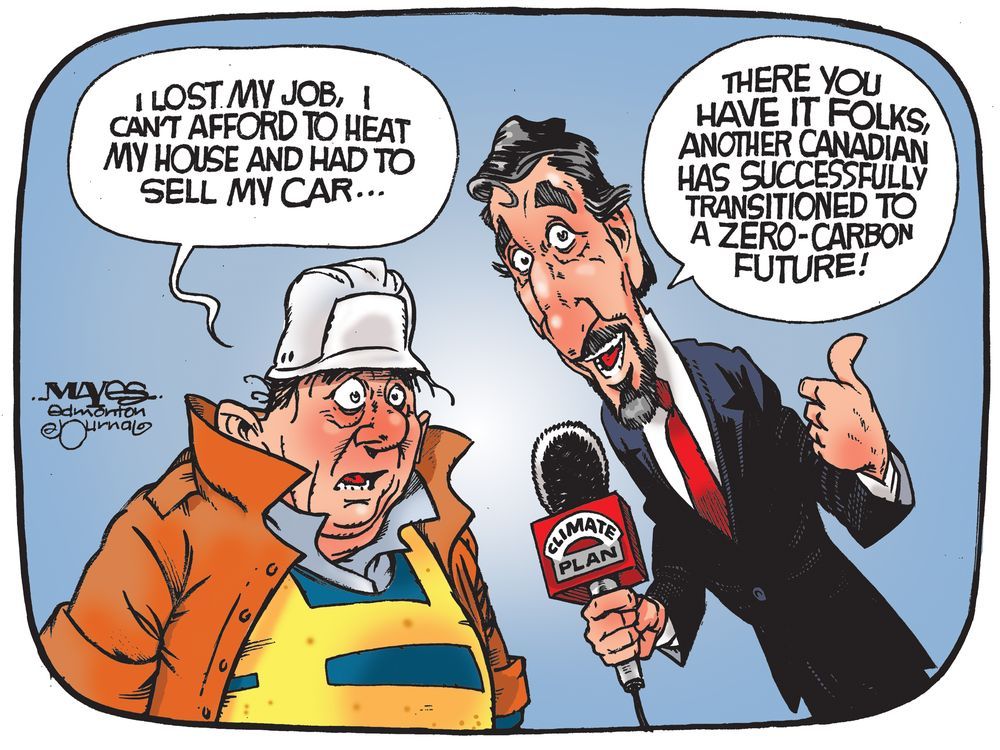
Trudeau took a “not to worry” stance. “Canadians,” he said with his customary wild-eyed certainty, “are united in knowing this is where the future is going and that we can get there together.”
But we’re not united. I say that with certainty. Trudeau has lost even Notley this time.
Once the high cost, economic hardship and heavy-handed government overreach of his new climate plan sinks in, I suspect he’ll lose many more.
Russia’s war on Ukraine continues to expose uncomfortable realities for environmental, social and governance-focused (ESG) investments, prompting calls for the asset management industry to rethink the loosely-defined term as analysts point to “shocking” holdings within some funds.
A new report from CIBC Capital Markets shows many of the 10 largest energy holdings across ESG funds have pared down or exited investments in Canada’s oil sands, while half stayed invested in Russia. At the end of 2021, the bank found ESG funds owned twice as much Russian oil and gas as Canadian oil and gas.
“Perhaps most shockingly, the ratio of dollars held in Gazprom (a Russian state-owned energy firm) was six times that of Suncor,” the CIBC analysts wrote in research published on Monday.
According to the report, the big four Russian energy companies, NK Lukoil, Novatek, Gazprom and NK Rosneft, accounted for about 0.2 per cent of the global ESG holdings. That’s double the size of investments in Canada’s TC Energy (TRP.TO)(TRP), Suncor Energy (SU.TO)(SU) and Canadian Natural Resources (CNQ.TO)(CNQ), the bank said.
“Russia and Saudi Arabia may well emit less CO2 per produced barrel of oil equivalent than some North American firms, but they also invariably have less robust social and governance oversight,” the CIBC analysts wrote.
“This says nothing of the reality many of their energy entities are de-facto state controlled and often aligned (read: weaponized) with foreign policy objectives – many of which will be an affront to mainstream ESG investors.”
Several of the world’s largest companies and institutional investors have moved to cut ties to Russia in recent weeks, amid increasingly violent attacks on Ukraine’s population. ESG funds held at least US$8.3 billion in Russian assets before Russia invaded Ukraine, according to data compiled by Bloomberg.
Those include the country’s financial firms. Bloomberg News recently reported that Vanguard Group and Northern Trust upped their stakes in Russia’s leading bank through their respective index-based ESG funds in January, as Vladimir Putin’s forces amassed on Ukraine’s borders.
Vlad Tasevski, chief operating officer and head of product at Purpose Investments, says these examples show the need to rebalance the trio of ESG priorities. He says the environmental “E” in ESG is being over-emphasized, likely due to the greater challenge of measuring the social and governance variables, compared to hard carbon emissions data.
Tasevski isn’t overly surprised by the lack of enthusiasm for Canadian fossil fuel producers across ESG funds. He says Canadian producers have been “overwhelmingly negatively impacted by the ESG movement,” even as the industry has worked to shrink its carbon footprint, and invested in technology like carbon capture and storage.
CIBC says global flows into ESG funds were down more than 50 per cent through the first two months of this year, after setting records in 2020 and 2021. The bank says flows out of ESG funds have outpaced net outflows from other asset classes.
United Arab Emirates’ Minister of Energy and Infrastructure Suhail Mohamed Al Mazrouei attends a session of the Russian Energy Week International Forum in Moscow, Russia October 14, 2021. REUTERS/Maxim Shemetov
Speaking at the Global Energy Forum by the Atlantic Council in Dubai on Monday, United Arab Emirates (UAE) Energy Minister Suhail al-Mazrouei urged the public and global policymakers to make up their collective mind about whether they want more oil production, as quoted by Reuters.
“I think in COP 26 all the producers felt they were uninvited and unwanted but now we are again superheroes, it’s not going to work like that,” he said in reference to last year’s UN-sponsored COP 26 global climate conference, at which representatives from the oil and gas industry were disinvited to attend. Obviously, a short-sighted decision by the organizers, given recent developments.
Al-Mazrouei emphasized the need for long-term planning related to energy needs, and pointed to the reality that the recent pattern of governments and investors alternatively forcing under-investment in finding new oil resources and then demanding more oil production whenever prices rise is not sustainable. He pointed out that the OPEC+ cartel as a group must invest the capital needed to replace 5 to 8 million barrels of oil per day of production each year just to maintain a steady level of global supply.
“We as a country are trying to do our best. We are investing and raising our capacity to 5 million barrels,” he said. “But that does not mean that we will leave OPEC+ or do something unilateral. We will work with this group to ensure that the market is stable.“
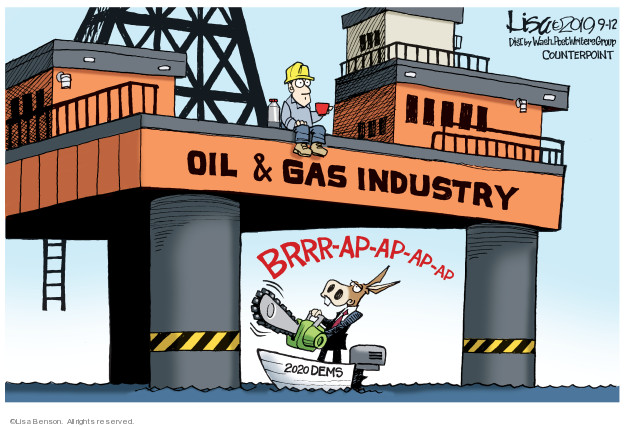
Oil company leaders who have seen their industry derided for years by the climate change lobby and globalist politicians in the U.S. and other Western democracies who have pumped the energy transition narrative can be excused for seeing more than a little irony in the suddenly urgent calls from the same policymakers for them to now rapidly raise their production levels. Indeed, expecting a major supply response from the U.S. industry in the current economic environment seems not just ironic, but unrealistic.
The point is that the days of the U.S. industry being able to increase production by an amazing 2 million barrels per day, as it did across one 12-month period during 2018-19, are no longer with us. The industry simply lacks the investor capital support and supply chain efficiency to run the 1,000+ active drilling rigs required to accomplish that in the current environment.
That doesn’t mean, however, that U.S. domestic production will not rise during 2022. In fact, the Dallas Federal Reserve Office recently reported results of a survey that indicate that the corporate U.S. producers plan to increase their year-over-year production by 6% in the current year, while privately held companies plan a more robust 15% increase. If those plans combine to produce, say, an 8% increase overall, it would mean an increase in U.S. daily production of almost 1 million barrels per day during the 2022 calendar year.
Given the successful efforts by both government and ESG investors to limit the domestic industry in recent years, that would be a pretty extraordinary achievement. So, Minister al-Mazrouei is right in saying that oil producers shouldn’t be treated as superheroes, but their companies are still capable of doing some big things despite the best efforts of their opposition.




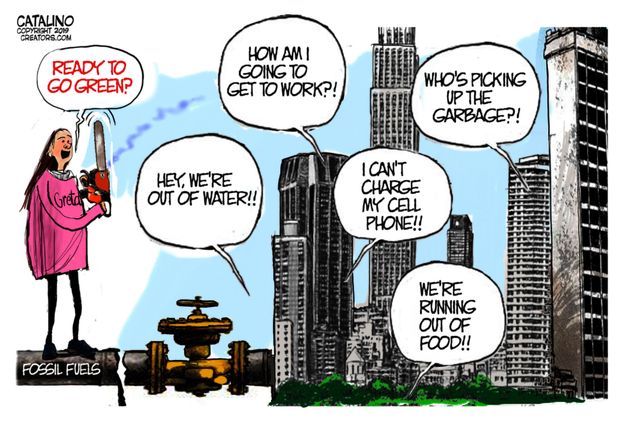


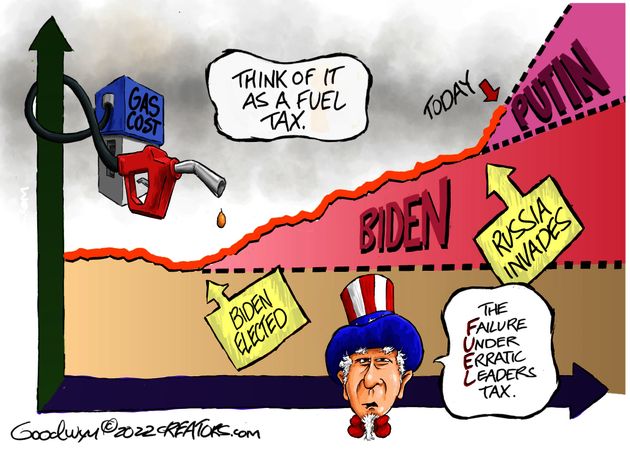
 Germany is the poster child of this failure. In 2000, Germany set out to decarbonize its energy system, spending hundreds of billions of dollars on this effort over the last 20 years. Germany only marginally reduced its dependence on hydrocarbons from 84% in 2000 to 78% today. The United States matched this 6% decline in hydrocarbon market share from 86% in 2000 to 80% today. Unlike in the US, Germany more than doubled its electricity prices — before the recent massive additional price increases — by creating a second electric grid. This second grid is comprised of massive wind and solar electric generating sources that only deliver 20% of nameplate capacity on average, and often less than 5% for days at a time. The sun doesn’t always shine and the wind doesn’t always blow. Hence, Germany could only shrink legacy coal, gas and nuclear capacity by 15%. It now must pay to maintain both grids. The legacy grid must always be flexing up and down in a wildly inefficient manner to keep the lights on, hospitals functioning, homes heated, and factories powered. Outside of the electricity sector, Germany’s energy system is largely unchanged. It has long had high taxes on gasoline and diesel for transportation, and lower energy taxes on industry. Germany subsidizes industrial energy prices attempting to avoid the near-complete deindustrialization that the UK has suffered due to expensive energy policies across the board.
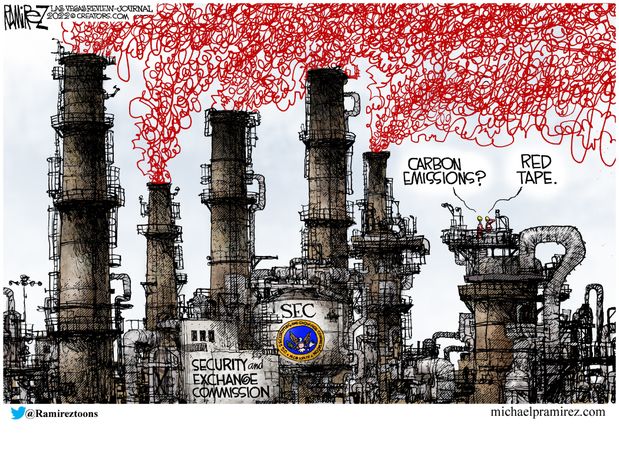 We are starting to hamstring and squander the enormous benefits of the shale revolution. The same misinformed anti-hydrocarbon crusade that impoverished Europe and made it heavily dependent on Russia is now sweeping the US. California and New England had already adopted European-style energy policies driving up electricity prices, reducing grid reliability, and driving manufacturing and other energy-intensive, blue-collar jobs out of their states. Colorado is not far behind.
















/cloudfront-us-east-2.images.arcpublishing.com/reuters/MQFECDEES5KCDAK6DN2NX7USSI.jpg)

 Science Matters