PBS Goes Full Climatist

Last evening I watched a Frontline program on PBS: How the War on EPA was Waged.  Below is the trailer, the full hour program is War on the EPA.

At the PBS website are numerous articles lamenting the change in the EPA under the Trump administration. The Frontline themes were already being aired by Democrat senators in the confirmation hearings.

Supposition: EPA exists as a branch of the Environmental Movement.

As is well documented, the EPA since its formation has many achievements in projects addressing pollution of the air and water in the US. Over decades, the agency staffed up with people dedicated to cleaning up and protecting the environment.

But with most of the successes behind them, environmentalists bought into the global warming notion and anti-fossil fuel activism. EPA personnel were predisposed to join in and help lead the charge.

The Frontline documentary described how the skeptical Trump administration confronted the EPA swamp, densely populated by warmists. Of course, the producers show no awareness that the opinions are relative and not absolute, or that fears concerning CO2 emissions are uncertain and debatable.

The video does show Pruitt exposing the false environmentalist dichotomy: “It is not true that if you are for development, you are against the environment, or that if you are for the environment, you are against development.” Then Frontline extensively quotes journalists and former employees, including Pruitt’s predecessor, all of whom take exactly that antagonistic position.

Supposition: Deniers are paid shills for energy capitalists.

Early on, Gina McCarthy talks about all the pushback from industry when she began work on the Clean Power Plan. To illustrate this, the video includes some totally insipid commercials (parodies really) claimed to be industry-sponsored promotion against the EPA agenda.

The presentation seeks continually to link denial of a climate crisis to funding from businessmen promoting their enterprises. In one telling interview, an industrialist says that Sierra Club is lobbying for their agenda, so we have to do the same. Other than that slip, Frontline ignores how Big Green slush funds and NGOs drove EPA actions in the past, even while showing comments from them, for example NRDC (National Resources Defense Council).

Supposition: EPA now pursues only industrial interests.

Overriding all is the notion that Scott Pruitt has engineered an hostile takeover of the agency, and that only industrial interests matter to him. This provides the explanation why employees and scientific advisors (all committed to “fight climate change”) are not consulted, not appreciated, and uninformed of agency plans. Of course they are unhappy and disgusted, and speak out about the betrayal of their cause.

Tonight’s new FRONTLINE documentary, War on the EPA, tells the inside story of how this and other environmental policy rollbacks happened; how Scott Pruitt went from suing the Environmental Protection Agency 14 times, to now running it; and how the anti-regulatory and anti-climate change science movements in America reached this moment of triumph.

“It was eight years of pure hell under the democrat party and Obama,” Bob Murray, CEO of Murray Energy Corp., tells FRONTLINE in the above excerpt from War on the EPA. “But we won! It’s a wonderful victory.”

So it goes with draining the swamp.


Entitled bureaucrats rise up to defend their nest.

Footnote 1:

In Ottawa, the problem is somewhat different. There we have an infestation of bureaucrabs. The term refers to a creature that appears to be making progress, but on closer inspection is moving sideways.

There is also a rumor that increasingly in Ottawa lawyers are being used for scientific experiments instead of rats.  There appear to be three reasons for this:

  1.  There are more lawyers than rats in Ottawa.
  2. People sometimes get emotionally attached to a rat.
  3. There are some things the rats won’t do.

Footnote 2:

For a scientific analysis of how government works, we have a paper reprinted below:

New chemical Element Discovered

The new element is Governmentium (Gv). It has one neutron, 25 assistant neutrons, 88 deputy neutrons and 198 assistant deputy neutrons, giving it an atomic mass of 312, the heaviest of all. These 312 particles are held together by forces called morons, which are surrounded by vast quantities of lefton-like particles called peons.

Since Governmentium has no electrons or protons, it is inert. However, it can be detected, because it impedes every reaction with which it comes into contact. A tiny amount of Governmentium can cause a reaction normally taking less than a second to take from four days to four years to complete.

Governmentium has a normal half-life of 3-6 years. It does not decay but instead undergoes a reorganization in which a portion of the assistant neutrons and deputy neutrons exchange places. In fact, Governmentium’s mass will actually increase over time, since each reorganization will cause more morons to become neutrons, forming isodopes.

This characteristic of moron promotion leads some scientists to believe that Governmentium is formed whenever morons reach a critical concentration. This hypothetical quantity is referred to as critical morass.

When catalyzed with money, Governmentium becomes Administratium, an element that radiates just as much energy as Governmentium since it has half as many peons but twice as many morons. All of the money is consumed in the exchange, and no other byproducts are produced. It tends to concentrate at certain points such as government agencies, large corporations, and universities. Usually it can be found in the newest, best appointed, and best maintained buildings.

Scientists point out that administratium is known to be toxic at any level of concentration and can easily destroy any productive reaction where it is allowed to accumulate. Attempts are being made to determine how administratium can be controlled to prevent irreversible damage, but results to date are not promising.

Credit: William DeBuvitz, http://www.lhup.edu/~dsimanek/administ.htm

Footnote 3:

Many know the Yes Minister classic British tv series, but readers may not be aware that the last season of the show, Yes Prime Minister ended with an hilarious send up of the global warming scare. BBC blocked the video outside of UK, but the link below works internationally. Transcripts can be read at Climate Alarms LOL and Laughing at Climate Change

Another Climate Push Poll

University of Chicago News headline says Most Americans want government to combat climate change, poll finds

The report is summarized in this graphic:
climate20poll202_1012

It should be obvious that for decades, opinion polls have been deployed as a marketing tool. Information is gathered, but more importantly public awareness and concern is raised according to the interests of the survey sponsors. The industry calls these “push polls” and conduct them annually, or even more frequently, intending to mold public opinion in the direction of climate alarmism, and to claim support for policies favored by sponsors.

Interpreting Poll Results

In order to take meaning from a poll, you have to know the context and specifically what questions were asked, what responses were allowed and in what sequence (i.e. the methodology).

Some contextual facts were suppressed in the above report. To discuss them, let us consider the first question put to participants:

Q31. How important are the following issues to you personally?

The grid shows results from two surveys, the last one 8/17-21/2017, and the previous one 6/8-11/2017. First column includes six issues and the number of participants in the August survey. The June survey only had five issues.  Numbers in the grid are % of responses.

8//2017 8//2017 8//2017 6//2017 6//2017 6//2017
AP-NORC/EPIC 8/17-21/2017 Not at all
/slightly
important
Moderately
important
Very/
extremely
important
Not at all
/slightly
important
Moderately
important
Very/
extremely
important
The economy (n=992) 5 18 77 4 14 81
Immigration (n=1,038) 17 32 50 21 32 47
Health care (n=992) 5 11 84 3 14 82
Climate change (n=1,038) 25 26 48 25 21 53
Terrorism (n=992) 10 22 68 8 14 77
Energy policy (n=1,038) 16 29 54 NA NA NA

Regarding Participation: We have responses from 1038 Americans, which was a completion rate of 27%. Thus these results come from a subset of people who chose to respond, and unsurprisingly they express concerns. Of course, we don’t know about what the others care.

In that context, all the issues rate as important, with climate change coming in last place in August, and next to last in June.

Regarding Survey Frame:

The Survey is entitled Public Opinion on Energy Policy under the Trump Administration, and sure enough, the second question is:
Q32. Overall, do you approve or disapprove of the way Donald Trump is handling his job as president? (with follow ups to get whether strongly or only somewhat).

Since the pollsters know more people disapprove of Trump than approve, putting this question early creates a central tendency to respond in negation to perceived Trump positions. Further, it signals that this is about politics not science.

Regarding the Survey Subject:

Now to the meat (or rather the lack of it). Next Question:
Q33. Do you think climate change is happening, do you think climate change is not happening, or aren’t you sure?

Here people are asked about an undefined buzzword “climate change” and whether it is happening or not, in their opinion. Could any question be more vacuous?
(Synonyms for “Vacuous”: silly, inane, unintelligent, insipid, foolish, stupid, fatuous, idiotic, brainless, witless, vapid, vacant, empty-headed.)

The responses tell us only about badges that people like or dislike. And since “climate change” has been a political football, used by the left as a wedge issue, this will be a positive buzzword for Democrats and a negative one for Republicans. And since the population has more Dems, and since the survey sample is 36% Democrats and 23% Republicans, the desired response is assured.

Survey Says:  Happening 72%, Not Happening 9%, Not sure 19%.

BTW in 2017 Happening is down 5% from 2016, while Not Sure is up 6%, so you can read the tea leaves any way you like.

Then, for those who think climate change is happening (Lord only knows what that actually means for any of the individuals), they then get to tell us about causation:

If climate change is happening in Q33
Q34. Do you think climate change is caused entirely by human activities, caused mostly by human activities, caused about equally by human activities and natural changes in the environment, caused mostly by natural changes in the environment, or caused entirely by natural changes in the environment?

Since this question is only put to the 72%, who said yes in Q33, the responses to Q34 are:
55% out of 774 say Caused entirely/mostly by human activities
32% out ot 774 say Caused equally by human activities and natural changes in the environment
12% out of 774 say Caused mostly/entirely by natural changes in the environment

Pollsters will be tempted to add the 32% to 55%, but that is misleading. The equally caused response is a mixed bag. Some knowledgeable people (like Dr. Curry) know that human and natural factors of global warming (if that is what we are talking about) have not yet been separated, and 50-50 can be an educated guess.

But from experience I can say that the equal causation includes many people who didn’t want to say “Don’t know.” Often these climate push polls ask people: “How much do you feel you know about global warming?” Typically about 25% say they know a lot, 60% say they know a little, and the rest less than a little. As we know from other researchers, more climate knowledge increases skepticism for many, so it is likely the soft number includes many who feel they really don’t know.

The only firm number out of this is that 41% of respondents feel that climate change is happening and that humans are mostly the cause. (426 out of 1038). Not surprisingly that finding does not appear anywhere.

Regarding Polling Bias

The poll was funded by EPIC ( Energy Policy Institute at the University of Chicago). In presenting their climate research, EPIC says this:

Climate change is considered by many to be the most urgent, global challenge. The impacts of climate change are already emerging in more damaging and frequent storms, extreme temperature changes, agricultural changes, and depleting water supplies. Efforts to address climate change, however, have proceeded slowly.

I think we can guess how EPIC personnel would answer the questionnaire.

There are many additional questions in the poll results (here)

For example, consider several questions raised regarding fracking. Included were these:

Q44B. One recent study found babies in the womb experience negative health effects from close exposure to a hydraulic fracturing site. The effects were strongest within a half mile of the site, with babies 25% more likely to have a low birth weight. Birth weights were not different for pregnant mothers living more than 2 miles from the site. Would you say you favor, oppose, or neither favor nor oppose the use of hydraulic fracturing in the United States?

Q44D. One recent study found that hydraulic fracturing triggered earthquakes in Oklahoma. The study found that the injection of wastewater, part of the hydraulic fracturing process, triggered the earthquakes. Would you say you favor, oppose, or neither favor nor oppose the use of hydraulic fracturing in the United States?

And this one tests how you feel about being an outsider.

Q40. As you may know, nearly 200 countries recently signed an international agreement in Paris to reduce greenhouse gas emissions. Do you support, oppose, or neither support nor oppose the United States withdrawing from this international agreement?

Summary

Climate change is now totally a socio-political movement in support of a $1.5 trillion industry, and the only thing that matters is winning hearts and minds (well minds maybe not). A similar survey was done in Canada, specifically to claim public support for what Trudeau wanted to do all along: Impose a carbon tax. This was done despite what that survey showed behind the smoke and mirrors.

Note that Canadians may be more picky than Americans, and so they got a question with more substance:
1. “From what you’ve read and heard, is there solid evidence that the average temperature on earth has been getting warmer over the past four decades?”
2. [If yes, solid evidence] “Is the earth getting warmer mostly because of human activity such as burning fossil fuels or mostly because of natural patterns in the earth’s environment?”
For more see Uncensored: Canadians View Global Warming

This blog has as a slogan: Reading between the lines and underneath the hype. It doesn’t look like the job is getting any lighter.  When you see or hear anything climate-related in the media, start by assuming the report is myopic, lop-sided, or both, until proven otherwise.  How to go about proving otherwise is demonstrated with several examples in the post Impaired Climate Vision.

Media Duping Scandal


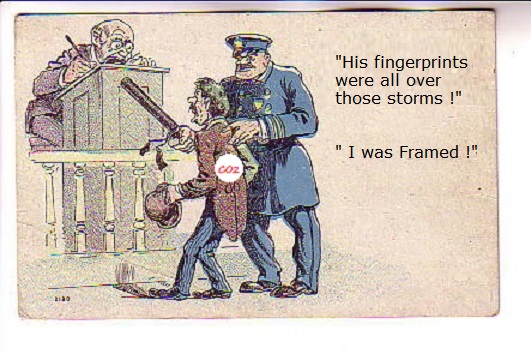
Being “framed” is slang when someone is blamed for something they did not do, i.e. being set up by means of false evidence and witnesses.  For example, this is current news:

Majority of Americans now say climate change makes hurricanes more intense, poll finds
A majority of Americans say that global climate change contributed to the severity of recent hurricanes in Florida and Texas, according to a new Washington Post-ABC News poll. That marks a significant shift of opinion from a dozen years ago, when a majority of the public dismissed the role of global warming and said such severe weather events just happen from time to time.

In a 2005 Post-ABC poll, taken a month after Hurricane Katrina ravaged the Gulf Coast and devastated New Orleans, 39 percent of Americans said they believed climate change helped to fuel the intensity of hurricanes. Today, 55 percent believe that.

Gee, do you think that all the mass media reports connecting the storms with climate change had anything to do with that polling result?  Here is just today’s sample from Google News of mainstream press articles pushing the linkage.

Hurricanes spur Schneider action on climate change Chicago Tribune

Hurricanes: A perfect storm of chance and climate change? BBC News

Like hurricanes, climate change is dangerous, but smart storm fixes won’t help climate USA TODAY

Next-generation models revealing climate change effect on hurricanes Phys.Org

After hurricanes, climate change resurfaces in Washington Houston Chronicle

Scientific models saved lives from Harvey and Irma. They can from climate change too The Guardian

National Guard chief cites ‘bigger, larger, more violent’ hurricanes as possible evidence of climate change Washington Post

Paradise lost? Caribbean leaders want action on climate change and help rebuilding Miami Herald

Yes, climate change made Harvey and Irma worse CNN

In addition, there are dozens of articles from climate advocacy sites like Greenpeace, Huffpost, Insideclimatenews, etc.

An exception to the onslaught appeared to be this one from The Stranger Why Connecting Climate Change with Powerful Hurricanes Is Doing More Damage Than Good

But it turns out to be another extreme hit piece by Sarah Myhre, who is no stranger to alarmism. (Background at Again Falsely Linking Smoking and Climate Science)

This time she attacks the media reporting on hurricanes and climate change, because they seem to allow for doubt (tsk, tsk). (Below her text with my bolds)

We need to poke a hole in this toxic narrative and news cycle around climate attribution. When I say attribution, what I am referring to are the ongoing arguments of attributing specific weather events to climate change: Was Hurricane Harvey caused by climate change? Was the low snow year of 2015, up and down the Cascadian mountains, caused by climate change? These questions—individually—are interesting and important to answer. But the science of Earth system change is not altered by the relative statistical significance of our attribution certainty. Far from it.

What’s more, this framing of attribution uncertainty is continually used to support climate action obstruction and denialist voices in our culture. When you hear pandering equivocation about climate and weather events, alarm bells should start ringing in your head. This news cycle is absolutely toxic and we together need to get our broad cultural conversation off this hamster wheel.

One closing point: When we use uncertainty around attributing individual weather events to climate change to call for “more data” or “better climate science” (think of Cliff Mass) we are driving a wedge between public health and public safety. We mislead the public because the message we send is: We don’t know what’s happening. This simply isn’t true; we do know what is happening. However, in some cases, we lack high-quality time series data to statistically detect the signal of climate from the noise of weather.

Summary

The last line in Myhre’s article says it all: We know what’s going on, we just don’t have the facts yet.

Despite all of the levelheaded statements by hurricane experts cautioning against jumping to these conclusions, and despite the IPCC SREX reports saying the linkage is not proven, the media and activists went on a rant proclaiming climate change makes hurricanes worse. They trumpeted these claims, and now take pride in a survey showing they succeeded in duping the public. That is a duping scandal and the mass media is at fault.  Shame on them.

Background from Previous Post:

Climate Thought Control explains the deliberate media strategy to mold public opinion in support of climate change activism.

Jennifer Good is a communications professor explaining how the media is expected to mold public opinion in favor of climate activism. Her article in the Toronto Star Putting hurricanes and climate change into the same frame is revealing, especially the subtitle A study shows network Hurricane coverage this month did not link an increase in extreme weather to global warming. 

The prof is disappointed that climate change was not even more frequently mentioned in stories about the recent hurricanes. She considers it an opportunity missed.  (Update: Since her article was published, the media took up the cause big time.) Some excerpts below with my bolds.

I have analyzed two weeks of broadcast news stories that appeared on America’s seven largest TV networks as well as Canada’s CTV network. In just over 1,500 stories about hurricanes, “Trump” was discussed in 907 of those stories (or about 60 per cent), while “business” was discussed in 572 of those stories (or about 38 per cent).

“Climate change” was discussed in just 79 of the hurricane stories — or about five per cent.

What’s Wrong with Professional, Objective Reporting?

The fundamental answer is that climate change and extreme weather (i.e., hurricanes) need to be framed together more often. As scientists have pointed out, while climate change is not causing the weather, it is definitely exacerbating the weather. But increasingly adding climate change to the extreme weather frame is only the tip of the (yes, melting) iceberg. Alternatives to “business as usual” need to be part of the media’s, and our, extreme weather frames.

Of those 1,500 broadcast news stories involving hurricanes, only four also mentioned “fossil fuels,” and not a single news broadcast discussed “alternative energy.”

Similarly, while “economy” is discussed in 187 of the hurricane news stories, only 18 stories discussed hurricanes, the economy and climate change together; and not one story explored the links between an economic model based on endless growth, and the implications of this endless growth for the planet and climate change.

The Purpose of Media is to Manipulate Public Opinion

In his seminal 2010 paper “Why It Matters How We Frame the Environment,” published in the journal Environmental Communication, the American linguist and philosopher George Lakoff offered that the world is made up of frames. “Framing” is how our neural system defines a concept by grouping together what goes with — or gets framed with — that concept. Our brains are wired this way.

For example, when you read “climate change,” your brain immediately frames the concept of climate change with certain words and concepts. Everyone cognitively frames “climate change” somewhat differently, but there might also be large overlaps. Terms like “fossil fuels” and “human activity” might be in many people’s climate change frames, although frames can differ widely. (Think, for example, of climate change skeptics.)

Not surprisingly, the news media plays a significant role in how our brains frame concepts. The more the media frames a story by associating it with certain words and concepts, the more likely we are to use those same words and concepts in our own framing.

And conversely, if the news media never framed a story using certain concepts, there is “hypocognition,” or as Lakoff proposed, a “lack of ideas we need.”

In times of crisis, there are many immediate and urgent stories that need to be told about lives and loss, bravery and struggle. But crisis also provides an opportunity for change — an opportunity to shift our frames and include the ideas we desperately need.

So far, that opportunity seems to have been missed. Meanwhile, the oceans get warmer.

The Other Side of the Story

While the prof is totally convinced she knows what the public needs to know about weather and climate, actual weather scientists disagree with her.  In fact, the efforts to link storms and fossil fuels were present way too often and hindered the public from understanding these events.

For instance, Hurricane scientist Dr. Ryan Maue ripped climate ‘hype’ on Irma & Harvey in his WSJ article Climate Change Hype Doesn’t Help.

As soon as Hurricanes Harvey and Irma made landfall in the U.S., scientists, politicians and journalists began to discuss the role of climate change in natural disasters. Although a clear scientific consensus has emerged over the past decade that climate change influences hurricanes in the long run, its effect upon any individual storm is unclear. Anyone trying to score political points after a natural disaster should take a deep breath and review the science first.

As a meteorologist with access to the best weather-forecast model data available, I watched each hurricane’s landfall with particular interest. Harvey and Irma broke the record 12-year major hurricane landfall drought on the U.S. coastline. Since Wilma in October 2005, 31 major hurricanes had swirled in the North Atlantic but all failed to reach the U.S. with a Category 3 or higher intensity.

Even as we worked to divine exactly where the hurricanes would land, a media narrative began to form linking the devastating storms to climate change. Some found it ironic that states represented by “climate deniers” were being pummeled by hurricanes. Alarmists reveled in the irony that Houston, home to petrochemical plants, was flooded by Harvey, while others gleefully reported that President Trump’s Mar-a-Lago might be inundated by Irma.

By focusing on whether climate change caused a hurricane, journalists fail to appreciate the complexity of extreme weather events. While most details are still hazy with the best climate modeling tools, the bigger issue than global warming is that more people are choosing to live in coastal areas, where hurricanes certainly will be most destructive.

Summary

Actual scientists are calling for less, not more manipulative journalism.

And as for the oceans getting warmer, Prof. Good, that is due to the oceans storing and releasing solar energy, nothing to do with burning fossil fuels.  The oceans heat the atmosphere, and not the other way around.  See Empirical Evidence: Oceans Make Climate

Footnote:  If Framing doesn’t work, what’s next?

Climate Thought Control

Being “framed” is slang when someone is blamed for something they did not do, i.e. being set up by means of false evidence and witnesses.

Jennifer Good is a communications professor explaining how the media is expected to mold public opinion in favor of climate activism. Her article in the Toronto Star Putting hurricanes and climate change into the same frame is revealing, especially the subtitle A study shows network Hurricane coverage this month did not link an increase in extreme weather to global warming.

The prof is disappointed that climate change was not more frequently mentioned in stories about the recent hurricanes. She considers it an opportunity missed.  Some excerpts below with my bolds.

I have analyzed two weeks of broadcast news stories that appeared on America’s seven largest TV networks as well as Canada’s CTV network. In just over 1,500 stories about hurricanes, “Trump” was discussed in 907 of those stories (or about 60 per cent), while “business” was discussed in 572 of those stories (or about 38 per cent).

“Climate change” was discussed in just 79 of the hurricane stories — or about five per cent.

What’s Wrong with Professional, Objective Reporting?

The fundamental answer is that climate change and extreme weather (i.e., hurricanes) need to be framed together more often. As scientists have pointed out, while climate change is not causing the weather, it is definitely exacerbating the weather. But increasingly adding climate change to the extreme weather frame is only the tip of the (yes, melting) iceberg. Alternatives to “business as usual” need to be part of the media’s, and our, extreme weather frames.

Of those 1,500 broadcast news stories involving hurricanes, only four also mentioned “fossil fuels,” and not a single news broadcast discussed “alternative energy.”

Similarly, while “economy” is discussed in 187 of the hurricane news stories, only 18 stories discussed hurricanes, the economy and climate change together; and not one story explored the links between an economic model based on endless growth, and the implications of this endless growth for the planet and climate change.

The Purpose of Media is to Manipulate Public Opinion

In his seminal 2010 paper “Why It Matters How We Frame the Environment,” published in the journal Environmental Communication, the American linguist and philosopher George Lakoff offered that the world is made up of frames. “Framing” is how our neural system defines a concept by grouping together what goes with — or gets framed with — that concept. Our brains are wired this way.

For example, when you read “climate change,” your brain immediately frames the concept of climate change with certain words and concepts. Everyone cognitively frames “climate change” somewhat differently, but there might also be large overlaps. Terms like “fossil fuels” and “human activity” might be in many people’s climate change frames, although frames can differ widely. (Think, for example, of climate change skeptics.)

Not surprisingly, the news media plays a significant role in how our brains frame concepts. The more the media frames a story by associating it with certain words and concepts, the more likely we are to use those same words and concepts in our own framing.

And conversely, if the news media never framed a story using certain concepts, there is “hypocognition,” or as Lakoff proposed, a “lack of ideas we need.”

In times of crisis, there are many immediate and urgent stories that need to be told about lives and loss, bravery and struggle. But crisis also provides an opportunity for change — an opportunity to shift our frames and include the ideas we desperately need.

So far, that opportunity seems to have been missed. Meanwhile, the oceans get warmer.

The Other Side of the Story

While the prof is totally convinced she knows what the public needs to know about weather and climate, actual weather scientists disagree with her.  In fact, the efforts to link storms and fossil fuels were present way too often and hindered the public from understanding these events.

For instance, Hurricane scientist Dr. Ryan Maue ripped climate ‘hype’ on Irma & Harvey in his WSJ article Climate Change Hype Doesn’t Help.

As soon as Hurricanes Harvey and Irma made landfall in the U.S., scientists, politicians and journalists began to discuss the role of climate change in natural disasters. Although a clear scientific consensus has emerged over the past decade that climate change influences hurricanes in the long run, its effect upon any individual storm is unclear. Anyone trying to score political points after a natural disaster should take a deep breath and review the science first.

As a meteorologist with access to the best weather-forecast model data available, I watched each hurricane’s landfall with particular interest. Harvey and Irma broke the record 12-year major hurricane landfall drought on the U.S. coastline. Since Wilma in October 2005, 31 major hurricanes had swirled in the North Atlantic but all failed to reach the U.S. with a Category 3 or higher intensity.

Even as we worked to divine exactly where the hurricanes would land, a media narrative began to form linking the devastating storms to climate change. Some found it ironic that states represented by “climate deniers” were being pummeled by hurricanes. Alarmists reveled in the irony that Houston, home to petrochemical plants, was flooded by Harvey, while others gleefully reported that President Trump’s Mar-a-Lago might be inundated by Irma.

By focusing on whether climate change caused a hurricane, journalists fail to appreciate the complexity of extreme weather events. While most details are still hazy with the best climate modeling tools, the bigger issue than global warming is that more people are choosing to live in coastal areas, where hurricanes certainly will be most destructive.

Summary

Actual scientists are calling for less, not more manipulative journalism.

And as for the oceans getting warmer, Prof. Good, that is due to the oceans storing and releasing solar energy, nothing to do with burning fossil fuels.  The oceans heat the atmosphere, and not the other way around.  See Empirical Evidence: Oceans Make Climate

Footnote:  If Framing doesn’t work, what’s next?

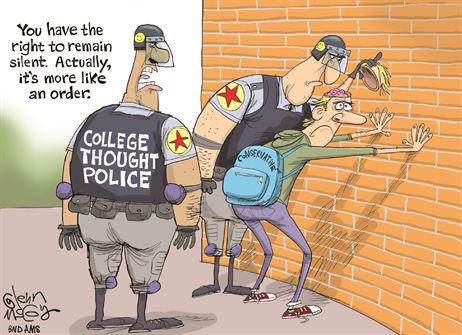
an-order

TV Monetizes Hurricane Irma

Weather reporters do a stand-up as the force of the winds caused by Hurricane Irma hit Miami. (Marcus Yam / Los Angeles Times)

Chicago Tribune on Sept. 11 published Swept away by TV coverage of Hurricane Irma by Dahleen Glanton, Contact Reporter.

It is a fine reflection piece by a media insider on how commercial media covers extreme weather events. She recounts her journey of discovery becoming critical and eventually repelled by the coverage from her own media colleagues. Excerpts below with my bolds.

I didn’t leave the house on Sunday. The hurricane story unfolding on my television set was too gripping to walk away for even a few minutes.

Television anchors kept warning us that much of Florida could be washed away by gigantic surges of ocean water in the aftermath of Hurricane Irma. The pictures coming out of Cuba and the Caribbean already had proved how devastating this storm could be. I was terrified for everyone in its path.

But that wasn’t the only reason I, and so many others, sat glued to the TV all day. Cable news television gave us a virtual front row seat to the developing storm, providing a riveting performance that was full of adventure, suspense and drama.

The show presented on the TV news was designed to be entertaining. It was meant to keep us captivated for hours, mesmerized by the “heroic” sacrifices of journalists who risked their lives to show us what it is like to stand outside in the midst of a deadly storm.

They described the predicted surge as “a killer water event” and the reporters vowed to run to safety before it occurred. But if we just kept watching — even through commercial breaks — they promised, we would see it for ourselves.

For many of us, this was an uneasy proposition. No one was excited about the possibility of people losing their homes and businesses, perhaps even lives, but the prospect of seeing a hurricane dance up close was too tempting to turn down.

Reporters went up to people who had ventured outside, including one man walking his three-legged dog, and warned them to go back inside before it was too late. The camera panned in on a bird as the reporter surmised that perhaps it had flown with the hurricane from as far away as Cuba. Birds follow hurricanes, he told us. These birds know when it’s safe to come out.

The reporters in their plastic rain slickers with the network’s logo on the back kept explaining that they were doing all this for us. Regardless of what the critics said about their reckless behavior, “We’re here so you don’t have to be,” they insisted.

The surge never happened Sunday, and we should be grateful for that. What we saw on TV was typical of a hurricane — howling winds, swaying trees and metal stop signs shaking in the distance. The anti-climatic ending left us confused.

How could a 10- to 15-foot surge hyped all day long for Florida’s west coast suddenly turn into one of about 3 feet? How could TV meteorologists presented on air as experts and reporters billed as experienced storm chasers get it so wrong?

I still don’t know the answers. But it didn’t take long to figure out that the cable news coverage from Florida on Sunday wasn’t about us at all. It was all about their ratings.

This was a new experience for me. For more than a decade, I covered hurricanes in the South for the Tribune. Hunkered down in Mississippi during Hurricane Katrina, I never had the chance to see how a big storm was covered on national TV.

What I saw on Sunday was both shocking and intriguing.

As a journalist who has covered many hurricanes and tornadoes, I know what it takes to tell a story. Standing in front of a water-splashed camera holding a limb from a fallen tree is not necessary to show the strength of a storm.

I understand that television relies on the power of optics. It is true that a TV camera can paint a picture much more vividly than I could by writing about it on a computer.

While I’m sure some people who have relatives and friends in Florida were grateful for the in-depth coverage, too much of what we saw on Sunday was manufactured drama. Networks took advantage of a heartbreaking situation and made a mockery of it.

Surfing through the channels, the visuals were all the same. Reporters, wobbling in the bristling wind, their words barely audible as they attempted to convince us that it was OK for them to do what they were warning others not to do.

In one scene, a reporter tried to convince us that the concrete wall he was standing in front of would protect him from the surge. He demonstrated how he could bend down and take refuge from the wind if he needed to.

In the same breath, he warned of flying debris — roof shingles and street signage that could transform into projectiles so fierce that they could knock you out.

On another channel, a well-known meteorologist swayed and stumbled on a sidewalk while the eye of the hurricane went through Naples, Fla. The wind nearly took his breath away and viewers could barely understand what he was saying.

When we did manage to hear a thing or two, it was nothing of importance.

“This is a mid-level Category 3. Imagine if it was a Category 4 or 5?” he boasted. “This is a story you can tell your children and grandchildren.”

The anchor watching from the studio in New York seemed somewhat embarrassed. He offered this explanation for the perilous acts.

“So we can see what this does to our natural bodies and our world,” he said.

There were no surprises, though. We saw exactly what we expected to see when someone is standing outside in a hurricane.

The irony is that the people who would perhaps benefit from such a display didn’t get to see it at all. Millions of people across Florida were without electricity during the height of the storm.

It’s probably safe to bet they weren’t using up their limited cell phone access watching a news anchor in New York explaining what was going on in their back yards.

This show wasn’t meant for them at all. It was for people like you and me who were sitting in our nice dry homes with a bag of popcorn in one hand and the TV remote control in the other.

All of us should be honest about that.

dglanton@chicagotribune.com

Conclusion:

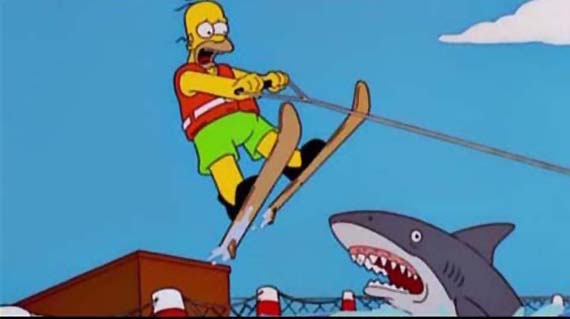
This could be a tipping point.  We may be witnessing the dawning of skeptical awareness at the Chicago Tribune, bastion of political correctness regarding all things climate related. One of their own catches them “Jumping the Shark.”

“Jumping the shark” is attempting to draw attention to or create publicity for something that is perceived as not warranting the attention, especially something that is believed to be past its peak in quality or relevance. The phrase originated with the TV series “Happy Days” when an episode had Fonzie doing a water ski jump over a shark. The stunt was intended to perk up the ratings, but it marked the show’s low point ahead of its demise.


Climate Hype Running Amok

The climate hype machine has switched into overdrive with the release of a draft US climate assessment report.  Read about it with caution, as explained in recent post Impaired Climate Vision.

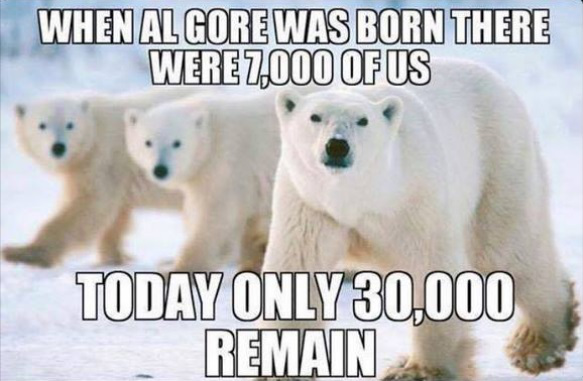
Meanwhile a good synopsis of wrong-headed thinking about climate is provided by John Stossel in a review of Al Gore’s science fictions (here).  (Excerpts below with my bolds)

John Stossel: Al Gore and me — Don’t believe the hype

I was surprised to discover that Al Gore’s new movie begins with words from me!

While icebergs melt dramatically, Gore plays a clip of me saying, “‘An Inconvenient Truth’ won him an Oscar, yet much of the movie is nonsense. ‘Sea levels may rise 20 feet’ — absurd.” He used this comment from one of my TV shows.

The “20 feet” claim is absurd — one of many hyped claims in his movie.

His second film, “An Inconvenient Sequel,” shows lower Manhattan underwater while Gore intones: “This is global warming!”

My goodness! Stossel doubts Al Gore’s claim, but pictures don’t lie: The 9/11 Memorial is underwater! Gore is right! Stossel is an ignorant fool!

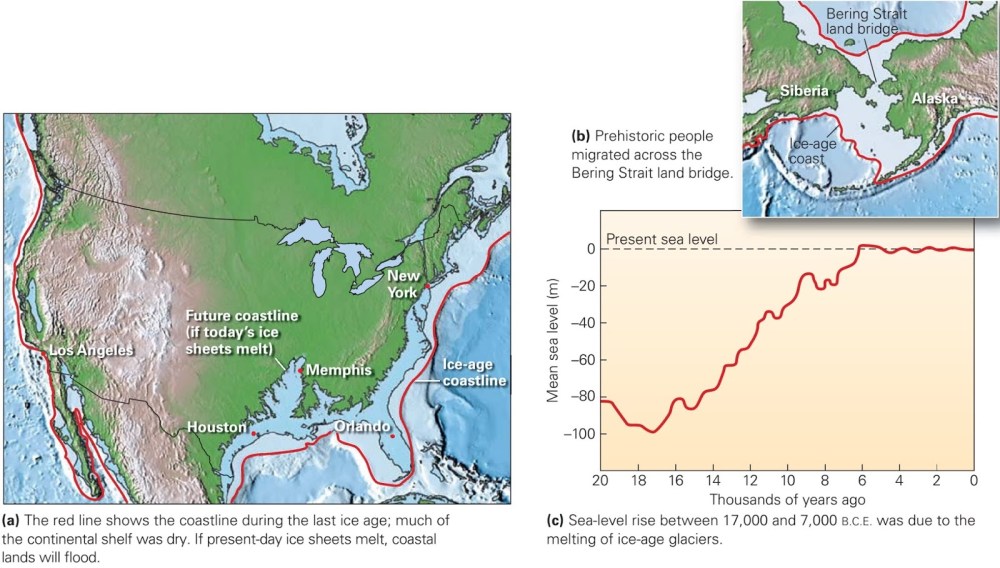
But wait. The pictures were from Superstorm Sandy. Water is pushed ashore during storms, especially “super” storms. But average sea levels haven’t risen much.

Over the past decade, they have risen about 1 inch. But this is not because we burn fossil fuels. Sea levels were rising long before we burned anything. They’ve been rising about an inch per decade for a thousand years.

In his new movie, Gore visits Miami Beach. No storm, but streets are flooded! Proof of catastrophe!

But in a new e-book responding to Gore’s film, climate scientist Roy Spencer points out that flooding in “Miami Beach occurs during high tides called ‘king tides,’ due to the alignment of the Earth, sun and moon. For decades they have been getting worse in low-lying areas of Miami Beach where buildings were being built on reclaimed swampland.”

It’s typical Al Gore scaremongering: Pick a place that floods every year and portray it as evidence of calamity.

Spencer, a former NASA scientist who co-developed the first ways of monitoring global temperatures with satellites, is no climate change “denier.” Neither am I. Climate changes.

Man probably plays a part. But today’s warming is almost certainly not a “crisis.” It’s less of a threat than real crises like malaria, terrorism, America’s coming bankruptcy, etc. Even if increasing carbon dioxide warming the atmosphere were a serious threat, nothing Al Gore and his followers now advocate would make a difference.

“What I am opposed to is misleading people with false climate science claims and alarming them into diverting vast sums of the public’s wealth into expensive energy schemes,” writes Spencer.

Gore does exactly that. He portrays just about every dramatic weather event as proof that humans have changed weather. Watching his films, you’d think that big storms and odd weather never occurred before and that glaciers never melted.

In his first movie, Gore predicted that tornadoes and hurricanes would get worse. They haven’t. Tornado activity is down.

What about those dramatic pictures of collapsing ice shelves?

“As long as snow continues to fall on Antarctica,” writes Spencer, “glaciers and ice shelves will continue to slowly flow downhill to the sea and dramatically break off into the ocean. That is what happens naturally, just as rivers flow naturally to the ocean. It has nothing to do with human activities.”

Gore said summer sea ice in the Arctic would disappear as early as 2014. Nothing like that is close to happening.

Gore’s movie hypes solar power and electric cars but doesn’t mention that taxpayers are forced to subsidize them. Despite the subsidies, electric cars still make up less than 1 percent of the market.

If electric cars do become more popular, Spencer asks, “Where will all of the extra electricity come from? The Brits are already rebelling against existing wind farms.”

I bet most Gore fans have no idea that most American electricity comes from natural gas (33 percent), coal (30 percent) and nuclear reactors (20 percent).

Gore probably doesn’t know that.

I’d like to ask him, but he won’t talk to me. He won’t debate anyone.

Critics liked “An Inconvenient Sequel.” An NPR reviewer called it “a hugely effective lecture.” But viewers were less enthusiastic. On Rotten Tomatoes, my favorite movie guide, they give “Sequel” a “tipped over popcorn bucket” score of 48 percent. Sample reviews: “Dull as can be.” “Faulty info, conflated and exaggerated.”

Clearly, Nobel Prize judges and media critics are bigger fans of big government and scaremongering than the rest of us.

Summary:  Al Gore is Jumping the Shark

“Jumping the shark” is attempting to draw attention to or create publicity for something that is perceived as not warranting the attention, especially something that is believed to be past its peak in quality or relevance. The phrase originated with the TV series “Happy Days” when an episode had Fonzie doing a water ski jump over a shark. The stunt was intended to perk up the ratings, but it marked the show’s low point ahead of its demise.

Big Al’s Sequel: Flawed at its Core


maxresdefaultFortunately, box offices show few other than die-hard Gore fans are subjecting themselves to the Inconvenient Sequel. When people go to see cli-sci-fi (Climate Science Fiction) movies like Water World or Day After Tomorrow, they know in advance it will be someone’s imaginary portrayal of an undesirable future. The difference with Al Gore, and also with the writers of the draft US Climate Assessment is their claim that their imaginings are “the Truth.”

Despite the low box office numbers, the media will inundate us with flawed messages from the film, so this post is required for protection around the office water cooler or the kitchen table. Text below in italics are excerpts from Alex Epstein’s article in the Financial Post Al Gore can’t deny that his climate crusade involves great suffering  Alex Epstein: Gore has to make the case that climate dangers warrant so much human misery

Good Reasons to reject Al Gore’s alarms.

The running theme throughout An Inconvenient Sequel is that Gore’s first film was even more right than he expected. The movie begins with defenders of fossil fuels mocking or ignoring the dramatic predictions of An Inconvenient Truth. Leaving aside a heroic (and highly disputed) portrayal of Gore rescuing the Paris climate accord, the rest of the movie focuses on vindicating Gore’s two chief predictions: 1) That we could replace fossil fuels with cheap solar- and wind-powered “renewables”; and 2) that continued use of fossil fuels would lead to catastrophic temperature rises, catastrophic sea-level rises, catastrophic flooding, catastrophic drought, catastrophic storms, and catastrophic disease proliferation.

Let’s deal first with Gore’s second supposition.

Alarmists Substitute Models for Observations and Data

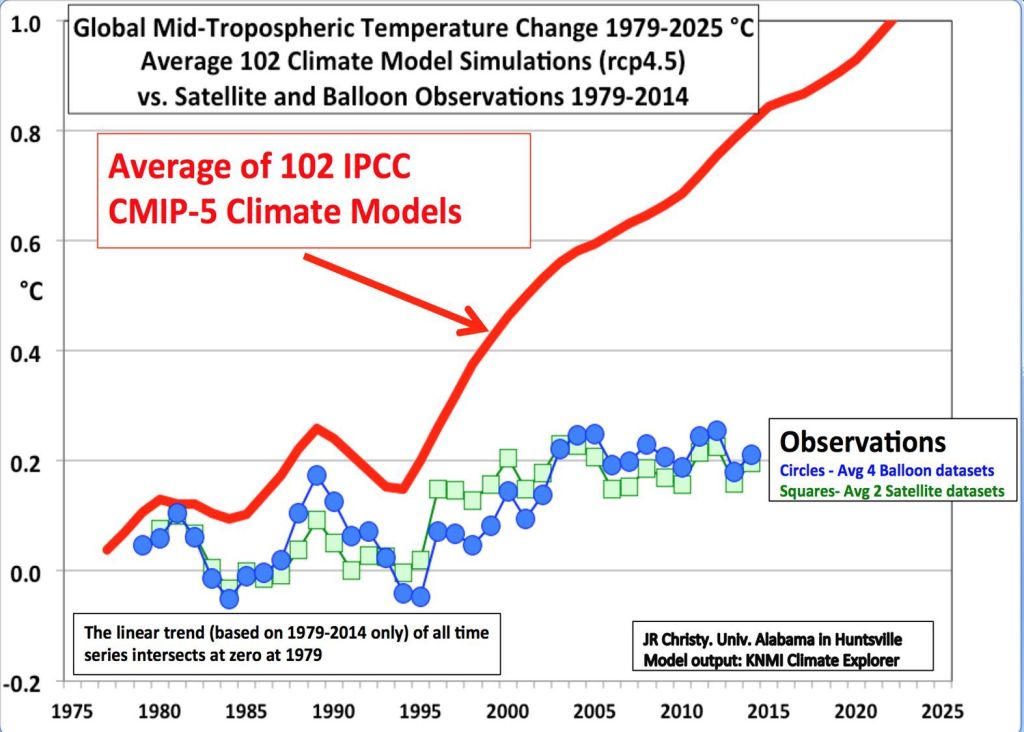
Since the last IPCC report (AR5), activists no longer respect what consensus scientists say. Observations and data are set aside, and only alarming projections from models count. As we know, computer simulations of the climate system are flawed, and running hotter than even adjusted global datasets. And we also know, since model outputs can only project modeler’s assumptions into the future, the models cannot prove the validity of those assumptions.

Berkeley physicist Richard Muller gives a mainstream scientist view of Gore’s claims.

“The problem is not with the survey, which asked a very general question. The problem is that many writers (and scientists!) look at that number and mis-characterize it. The 97% number is typically interpreted to mean that 97% accept the conclusions presented in An Inconvenient Truth by former Vice President Al Gore. That’s certainly not true; even many scientists who are deeply concerned by the small global warming (such as me) reject over 70% of the claims made by Mr. Gore in that movie (as did a judge in the UK; see footnote below).”

“I like to ask scientists who “believe” in global warming what they think of the data. Do they believe hurricanes are increasing? Almost never do I get the answer “Yes, I looked at that, and they are.” Of course they don’t say that, because if they did I would show them the actual data! Do they say, “I’ve looked at the temperature record, and I agree that the variability is going up”? No. Sometimes they will say, “There was a paper by Jim Hansen that showed the variability was increasing.” To which I reply, “I’ve written to Jim Hansen about that paper, and he agrees with me that it shows no such thing. He even expressed surprise that his paper has been so misinterpreted.”

“A really good question would be: “Have you studied climate change enough that you would put your scientific credentials on the line that most of what is said in An Inconvenient Truth is based on accurate scientific results? My guess is that a large majority of the climate scientists would answer no to that question, and the true percentage of scientists who support the statement I made in the opening paragraph of this comment, that true percentage would be under 30%. That is an unscientific guestimate, based on my experience in asking many scientists about the claims of Al Gore.”  Full text at Meet Richard Muller, Lukewarmist

Our Actual Climate is Mild and Not Dangerous

Nothing out of the ordinary is happening to our weather and climate, despite lots of claims otherwise. Gore’s sequel is long on anecdotes and fears, but lacks any references to the statistics contradicting him. Recent decades have been remarkably benign and agriculture is booming. IPCC scientists wrote that no evidence yet exists to connect extreme weather with human activities.  Alex Epstein:

Gore and others should be free to make the case that the danger of greenhouse gases is so serious as to warrant that scale of human misery. But they should have to quantify and justify the magnitude of climate danger. And that brings us to the truth about climate.

The overall trend in climate danger is that it is at an all-time low. The Emergency Events Database (EM-DAT) shows 6,114 climate-related deaths in 2016. In other recent years the numbers have maxed out in the tens of thousands. Compare this to the 1930s when, adjusted for population, climate-related deaths hit the 10-million mark several times.

The most significant cause of our radically reduced climate danger is industrial development, which takes a naturally dangerous climate and makes it unnaturally safe. And industrial development is driven by cheap, plentiful, reliable energy — which, today, overwhelmingly means fossil fuels. Climate will always be dangerous so priority number one is to have the energy and development to tame it. Modern irrigation, residential heating and air conditioning have made once uninhabitable places perfectly comfortable.

Controlling Human CO2 Emissions Will Not Change the Weather

The really inconvenient truth is that governments are not able to ensure favorable weather for humans. Nothing yet attempted, from corrupt carbon markets, to biofuels, to renewable electrical power, to carbon taxes has done anything beyond enriching cronies and filling government coffers.

Alex Epstein details Gore’s misdirecting us to renewables as our salvation.

Some of his anecdotes are meant to prove that cheap solar and wind are, as 2006 Gore prophesied, quickly dominating the world’s energy supply and, as 2006 Gore also warned us, that our rapidly warming climate is killing more and more people each year. But he has not given us the whole picture.

Take the rising dominance of solar and wind, which is used to paint supporters of fossil fuels as troglodytes, fools, and shills for Big Oil. The combined share of world energy consumption from renewables is all of two per cent. And it’s an expensive, unreliable, and therefore difficult-to-scale two per cent.

Because solar and wind are “unreliables,” they need to be backed up by reliable sources of power, usually fossil fuels, or sometimes non-carbon sources including nuclear and large-scale hydro power (all of which Gore and other environmentalists refuse to support). This is why every grid that incorporates significant solar and wind has more expensive electricity. Germans, on the hook for Chancellor Angela Merkel’s self-righteous anti-carbon commitments, are already paying three times the rates for electricity that Americans do.

Stories about “100-per-cent renewable” locations like Georgetown, Tex. are not just anecdotal evidence, they are lies. The Texas grid from which Georgetown draws its electricity is comprised of 43.7 per cent natural gas, 28.8 per cent coal, 12 per cent nuclear, and only 15.6 per cent renewable. Using a virtue-signalling gimmick pioneered by Apple, Facebook, and Google, Georgetown pays its state utility to label its grid electricity “renewable” — even though it draws its power from that fossil-fuel heavy Texas grid — while tarring others on the grid as “non-renewable.”

If we look at the overall trends instead of engaging in anecdotal manipulation we see that fossil fuel energy is the fastest-growing energy source in the world — still. Fossil fuels have never been more vital to human flourishing. There are 1,600 coal plants planned for the near future, which could increase international coal capacity 43 per cent. Advances in technology are making fossil fuels cleaner, safer, and more efficient than ever. To reduce their growth let alone to radically restrict their use — which is what Gore advocates — means forcing energy poverty on billions of people.

Conclusion

Gore’s Inconvenient Sequel gives a biased, self-serving, and convenient picture of fossil fuels and climate — convenient for Gore’s legacy, that is, but inconvenient for the billions his energy poverty policies will harm. As citizens, we must start demanding responsible thought leaders who will give us the whole picture that life-and-death energy and climate decisions require.

Note the contrast between Al Gore’s propaganda and Richard Lindzen’s short video:

Footnote:

Errors in “An Inconvenient Truth” Highlighted by UK High Court Judge Michael Burton:

1.) The sea level will rise up to 20 feet because of the melting of either West Antarctica or Greenland in the near future. (This “Armageddon scenario” would only take place over thousands of years, the judge wrote.)

2.) Some low-lying Pacific islands have been so inundated with water that their citizens have all had to evacuate to New Zealand. (“There is no evidence of any such evacuation having yet happened.”)

3.) Global warming will shut down the “ocean conveyor,” by which the Gulf Stream moves across the North Atlantic to Western Europe. (According to the Intergovernmental Panel on Climate Change, “it is very unlikely that the Ocean Conveyor will shut down in the future…”)

4.) There is a direct coincidence between the rise in carbon dioxide in the atmosphere and the rise in temperature over the last 650,000 years. (“Although there is general scientific agreement that there is a connection, the two graphs do not establish what Mr. Gore asserts.”)

5.) The disappearance of the snows on Mount Kilimanjaro is expressly attributable to global warming. (“However, it is common ground that, the scientific consensus is that it cannot be established that the recession of snows on Mount. Kilimanjaro is mainly attributable to human-induced climate change.”)

6.) The drying up of Lake Chad is a prime example of a catastrophic result of global warming. (“It is generally accepted that the evidence remains insufficient to establish such an attribution” and may be more likely the effect of population increase, overgrazing and regional climate variability.)

7.) Hurricane Katrina and the consequent devastation in New Orleans is because of global warming. (“It is common ground that there is insufficient evidence to show that.”)

8.) Polar bears are drowning because they have to swim long distances to find ice. (“The only scientific study that either side before me can find is one, which indicates that four polar bears have recently been found drowned because of a storm.”)

9.) Coral reefs all over the world are bleaching because of global warming and other factors. (“Separating the impacts of stresses due to climate change from other stresses, such as overfishing and pollution, was difficult.”)


Decoding Climate News


Definition of “Fake News”: When reporters state their own opinions instead of bearing witness to observed events.

Journalism professor David Blackall provides a professional context for investigative reporting I’ve been doing on this blog, along with other bloggers interested in science and climate change/global warming. His peer reviewed paper is Environmental Reporting in a Post Truth World. The excerpts below show his advice is good not only for journalists but for readers.  h/t GWPF, Pierre Gosselin

Overview: The Grand Transnational Narrative

The dominance of a ‘grand transnational narrative’ in environmental discourse (Mittal, 2012) over other human impacts, like deforestation, is problematic and is partly due to the complexities and overspecialization of climate modelling. A strategy for learning, therefore, is to instead focus on the news media: it is easily researched and it tends to act ‘as one driving force’, providing citizens with ‘piecemeal information’, making it impossible to arrive at an informed position about science, society and politics (Marisa Dispensa et al., 2003). After locating problematic news narratives, Google Scholar can then be employed to locate recent scientific papers that examine, verify or refute news media discourse.

The science publication Nature Climate Change this year, published a study demonstrating Earth this century warmed substantially less than computer-generated climate models predict.

Unfortunately for public knowledge, such findings don’t appear in the news. Sea levels too have not been obeying the ‘grand transnational narrative’ of catastrophic global warming. Sea levels around Australia 2011–2012 were measured with the most significant drops in sea levels since measurements began. . .The 2015–2016 El-Niño, a natural phenomenon, drove sea levels around Indonesia to low levels such that coral reefs were bleaching. The echo chamber of news repeatedly fails to report such phenomena and yet many studies continue to contradict mainstream news discourse.

facebook2bnew2blike2bbuttons2bfinal-970-80I will be arguing that a number of narratives need correction, and while I accept that the views I am about to express are not universally held, I believe that the scientific evidence does support them.
The Global Warming/Climate Change Narrative

The primary narrative in need of correction is that global warming alone (Lewis, 2016), which induces climate change (climate disruption), is due to the increase in global surface temperatures caused by atmospheric greenhouse gases. Instead, there are many factors arising from human land use (Pielke et al., 2016), which it could be argued are responsible for climate change, and some of these practices can be mitigated through direct public action.

Global warming is calculated by measuring average surface temperatures over time. While it is easy to argue that temperatures are increasing, it cannot be argued, as some models contend, that the increases are uniform throughout the global surface and atmosphere. Climate science is further problematized by its own scientists, in that computer modelling, as one component of this multi-faceted science, is privileged over other disciplines, like geology.

Scientific uncertainty arises from ‘simulations’ of climate because computer models are failing to match the actual climate. This means that computer models are unreliable in making predictions.

Published in the eminent journal Nature (Ma, et. al., 2017), ‘Theory of chaotic orbital variations confirmed by Cretaceous geological evidence’, provides excellent stimulus material for student news writing. The paper discusses the severe wobbles in planetary orbits, and these affect climate. The wobbles are reflected in geological records and show that the theoretical climate models are not rigorously confirmed by these radioisotopically calibrated and anchored geological data sets. Yet popular discourse presents Earth as harmonious: temperatures, sea levels and orbital patterns all naturally balanced until global warming affects them, a mythical construct. Instead, the reality is natural variability, the interactions of which are yet to be measured or discovered (Berger, 2013).

In such a (media) climate, it is difficult for the assertion to be made that there might be other sources, than a nontoxic greenhouse gas called carbon dioxide (CO2), that could be responsible for ‘climate disruption’. A healthy scientific process would allow such a proposition. Contrary to warming theory, CO2 levels have increased, but global average temperatures remain steady. The global average temperature increased from 1983 to 1998; then, it flat-lined for nearly 20 years. James Hansen’s Hockey Stick graph, with soaring and catastrophic temperatures, simply did not materialize.

As Keenan et al. (2016) found through using global carbon budget estimates, ground, atmospheric and satellite observations, and multiple global vegetation models that there is also now a pause in the growth rate of atmospheric CO2. They attribute this to increases in terrestrial sinks over the last decade, where forests consume the rising atmospheric CO2 and rapidly grow—the net effect being a slowing in the rate of warming from global respiration.

Contrary to public understanding, higher temperatures in cities are due to a phenomenon known as the ‘urban heat effect’ (Taha, 1997; Yuan & Bauer, 2007). Engines, air conditioners, heaters and heat absorbing surfaces like bitumen radiate heat energy in urban areas, but this is not due to the greenhouse effect. Problematic too are data sets like ocean heat temperatures, sea-ice thickness and glaciers: all of which are varied, some have not been measured or there are insignificant measurement time spans for the data to be reliable.

Contrary to news media reports, some glaciers throughout the world (Norway [Chinn et al., 2005] and New Zealand [Purdie et al., 2008]) are growing, while others shrink (Paul et al., 2007).

Conclusion

This is clearly a contentious topic. There are many agendas at play, with careers at stake. My view represents one side of the debate: it is one I strongly believe in, and is, I contend, supported by the science around deforestation, on the ground, rather than focusing almost entirely on atmosphere. However, as a journalism educator, I also recognize that my view, along with others, must be open to challenge, both within the scientific community and in the court of public opinion.

As a journalism educator, it is my responsibility to provide my students with the research skills they need to question—and test—the arguments put forward by the key players in any debate. Given the complexity of the climate warming debate, and the contested nature of the science that underpins both sides, this will provide challenges well into the future. It is a challenge our students should relish, particularly in an era when they are constantly being bombarded with ‘fake news’ and so-called ‘alternative facts’.

To do so, they need to understand the science. If they don’t, they need to at least understand the key players in the debate and what is motivating them. They need to be prepared to question these people and to look beyond their arguments to the agendas that may be driving them. If they don’t, we must be reconciled to a future in which ‘fake news’ becomes the norm.

Examples of my investigative reports are in Data Vs. Models posts listed at Climate Whack-a-Mole

See also Yellow Climate Journalism

Climate Risky Business

A new theme emerging out of the IPCC Fifth Report was the emphasis on selling the risk of man-made climate change. The idea is that scientists should not advocate policy, but do have a responsibility to convince the public of the risks resulting from burning fossil fuels.

An article illustrates how this approach shapes recent public communications in support of actions on global warming/climate change.  Treading the Fine Line Between Climate Talk and Alarmism (Op-Ed)  By Sarah E. Myhre, Ph.D. | June 23, 2017.  Excerpts:

What is our role in public leadership as scientists? I would suggest a few action items: Work to reduce risk and cost for the public; steward the public’s interest in evidence; and be steady and committed to the scientific process of dissent, revision and discovery. This means communicating risk when necessary. We would never fault an oncologist for informing patients about the cancer risks that come with smoking. Why would we expect Earth scientists to be any different, when we’re just as certain?

As a public scholar with expertise in paleoclimate science, I communicate alarming, difficult information about the consequences to Earth and ocean systems that have come with past events of abrupt climate warming. As the saying goes, the past is the key to the future. 

We are living through a crisis of trust between the American public and climate scientists, and we must extend ourselves, as scientists and public servants, to rebuild transparency and trust with the public. I will start: I want the global community to mitigate the extreme risk of the warmest future climate scenarios. And, I want my kid to eat salmon and ski with his grandkids in the future. I am invested in that cooler, safer, more sustainable future — for your kids and for mine. Just don’t call me an alarmist.

This provides a teachable moment concerning the rhetorical maneuver to present climate as a risky business. The technique typically starts with a particular instance of actual risk and then makes a gross generalization so that the risk is exaggerated beyond reason.  From the article above:

Climate scientists are just as certain as oncologists are.

Herein lies the moral of this tale. The particular risk is the convincing epidemiological evidence linking lung cancer to smokers. The leap was claiming second-hand smoke puts non-smokers at risk of cancer. The statistical case was never conclusive, but the public was scared into enacting all kinds of smoke-free spaces.

Very few passive smoking/lung cancer studies are published these days compared to the glut of the 1980s and 1990s, but the handful that have appeared in recent years continue to support the null hypothesis. For all the campaigners’ talk of “overwhelming evidence”, the link between secondhand smoke and lung cancer has always been very shaky. It tends to be the smaller, case-control studies which find the associations while the larger, cohort studies do not (and, as the JNCI report notes, case-control studies “can suffer from recall bias: People who develop a disease that might be related to passive smoking are more likely to recall being exposed to passive smoking.”)

Gerard Silvestri, MD, of the Medical University of South Carolina, a member of NCI’s PDQ Screening and Prevention Editorial Board said (here):

“We’ve gotten smoking out of bars and restaurants on the basis of the fact that you and I and other nonsmokers don’t want to die,” said Silvestri. “The reality is, we probably won’t.”

To be clear, I don’t want smokers fouling my space in restaurants, and the policies are beneficial to me esthetically. But there was never any certainty about my risk of cancer, just the spoiling of clean air around me.  What was a matter of opinion and personal preference was settled politically by asserting scientific certainty of my health risk.

To draw the point finely, secondhand smoke shows how science is used by one group (anti-smoking activists) against another group (smokers) by mobilizing support for regulations on the basis of a generalized risk, raising concerns among the silent majority who otherwise were not particularly interested in the issue.

Climate as a Risky Business

Environmentalists have often employed risk exaggeration, beginning with Rachel Carson’s Silent Spring full of innuendo about DDT without any actual epidemiological proof. Currently Junk Science provides a list of EPA exaggerations about environmental pollution, for example The scientific fraud that claims air pollution is killing people

In the climate field, any flat Polynesian island is of course at risk of flooding, and thus by extension they produce images of Manhattan under water. Global risk is trumpeted, ignoring all the local particularities of land subsidence, tidal gauge records, terrain drainage features, infrastructure, precipitation patterns, etc.

Any storm, drought, flood, or unusual weather likewise presents a particular risk in the locale where it occurs. The gross exaggeration is to claim that we are increasing the risk of all these events, and by stopping burning fossil fuels we can prevent them from happening.

Sarah Myhre’s research focuses on ocean dead zones (oxygen-depleted waters), which is a real and long-studied risk. Then comes her leap into the fearful future:

The surface and deep ocean will continue to absorb heat and CO2 from the atmosphere. The heating of the ocean will increase the stratification of water (i.e. ocean mixing will be reduced, as will the strength of thermohaline circulation). Ocean heating will also drive the thermal expansion of the interior of the ocean – this is one of the primary contributors to sea level rise.

The absorption of CO2 from the atmosphere will drive changes in the chemistry of surface and deep waters – there are significant biological consequences to acidifying the global surface ocean. Basically, we are looking at the fundamental reorganization of biological communities and ecological provinces in the ocean. These physical drivers (warming, stratification, acidification) all area associated with significant biological consequences.

This is a continuation of a scare called Climate Change Is Suffocating The Oceans.  Once again climate alarmists/activists have seized upon an actual environmental issue, but misdirect the public toward their CO2 obsession, and away from practical efforts to address a real concern. Some excerpts from scientific studies serve to put things in perspective.  See Ocean Oxygen Misdirection

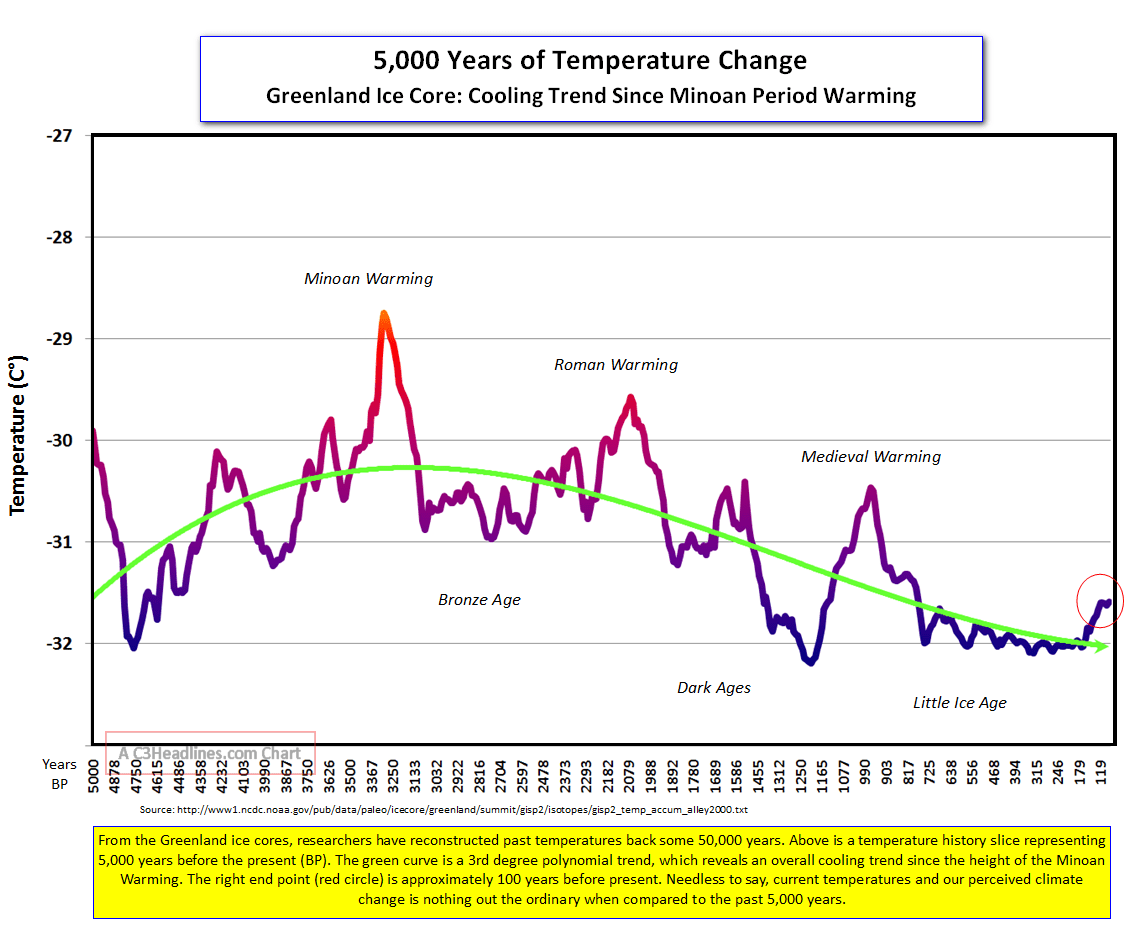
As a paleoclimate expert the author knows the climate and sea levels have changed many times in the past, and often shifted quickly in geological terms.

And yet the evidence shows clearly that CO2 follows as an effect of changing temperatures, not the cause.

Summary

Warmists are of the opinion that because of burning fossil fuels, our modern climate no longer compares to paleoclimates, a claim in fact that humans are overriding natural forces. But the message from the ice cores is clear: Through the ages, CO2 responds to temperatures and not the other way around.

The other message is also clear: Climates change between warm and cool, and warm has always been good for humans and the biosphere. We should concern ourselves with Adaptation, preparing for the cold times with robust infrastructure and reliable, affordable energy.

See also CO2 and Climate Change for the Ages

See also Claim: Fossil Fuels Cause Global Warming
Updated 2017  Fossil Fuels ≠ Global Warming

Footnote:

Actuaries are accountants specialized in risk statistics like morbidity and mortality, usually working in the insurance industry.

Question:  What is the difference between an Actuary and an Auditor?
Answer:  The Auditor is the one with a sense of humor.
(Old joke from days working at KPMG)

NYT Opens Climate Can of Worms


Fishermen often discovered how easy it was to open a can of bait worms, and how difficult it was to close them. Once the worms discovered an opportunity to escape, it became nearly impossible to keep them contained. Some experts say the metaphor is a modern extension of Pandora’s Box.

In a previous post NYT Readers Face Diversity I provided a background for New York Times newest columnist Bret Stephens, with emphasis on his climate change commentary.

Now his first column published in NYT appears Climate of Complete Certainty, an invitation to examine the facts about climate change. Excerpts below.

We live in a world in which data convey authority. But authority has a way of descending to certitude, and certitude begets hubris. From Robert McNamara to Lehman Brothers to Stronger Together, cautionary tales abound.

We ought to know this by now, but we don’t. Instead, we respond to the inherent uncertainties of data by adding more data without revisiting our assumptions, creating an impression of certainty that can be lulling, misleading and often dangerous. Ask Clinton.

With me so far? Good. Let’s turn to climate change.

Last October, the Pew Research Center published a survey on the politics of climate change. Among its findings: Just 36 percent of Americans care “a great deal” about the subject. Despite 30 years of efforts by scientists, politicians and activists to raise the alarm, nearly two-thirds of Americans are either indifferent to or only somewhat bothered by the prospect of planetary calamity.

Why? The science is settled. The threat is clear. Isn’t this one instance, at least, where 100 percent of the truth resides on one side of the argument?

Well, not entirely. As Andrew Revkin wrote last year about his storied career as an environmental reporter at The Times, “I saw a widening gap between what scientists had been learning about global warming and what advocates were claiming as they pushed ever harder to pass climate legislation.” The science was generally scrupulous. The boosters who claimed its authority weren’t.

Anyone who has read the 2014 report of the Intergovernmental Panel on Climate Change knows that, while the modest (0.85 degrees Celsius, or about 1.5 degrees Fahrenheit) warming of the Northern Hemisphere since 1880 is indisputable, as is the human influence on that warming, much else that passes as accepted fact is really a matter of probabilities. That’s especially true of the sophisticated but fallible models and simulations by which scientists attempt to peer into the climate future. To say this isn’t to deny science. It’s to acknowledge it honestly.

By now I can almost hear the heads exploding. They shouldn’t, because there’s another lesson here — this one for anyone who wants to advance the cause of good climate policy. As Revkin wisely noted, hyperbole about climate “not only didn’t fit the science at the time but could even be counterproductive if the hope was to engage a distracted public.”

Let me put it another way. Claiming total certainty about the science traduces the spirit of science and creates openings for doubt whenever a climate claim proves wrong. Demanding abrupt and expensive changes in public policy raises fair questions about ideological intentions. Censoriously asserting one’s moral superiority and treating skeptics as imbeciles and deplorables wins few converts.

None of this is to deny climate change or the possible severity of its consequences. But ordinary citizens also have a right to be skeptical of an overweening scientism. They know — as all environmentalists should — that history is littered with the human wreckage of scientific errors married to political power.

Conclusion

I’ve taken the epigraph for this column from the Polish poet Czeslaw Milosz, who knew something about the evils of certitude. Perhaps if there had been less certitude and more second-guessing in Clinton’s campaign, she’d be president. Perhaps if there were less certitude about our climate future, more Americans would be interested in having a reasoned conversation about it.

New York Post (here) covers the nastiness of responses to Stephens’ first column. Stephens compares the blowback to what he got from Trump fans: “After 20 months of being harangued by bullying Trump supporters, I’m reminded that the nasty left is no different. Perhaps worse,” Stephens tweeted Friday afternoon, as the hateful messages kept rolling in.  New York Times used to be a “safe space”, maybe now not so much.

Bret Stephens

Update April 30

A response to Stephens article at Slate  Inside a True Believer’s Mind

Footnote:

Whenever I see those graphs of climate models projections, it reminds me of worms escaping.