NY and PA: Midterm Election Energy Lesson

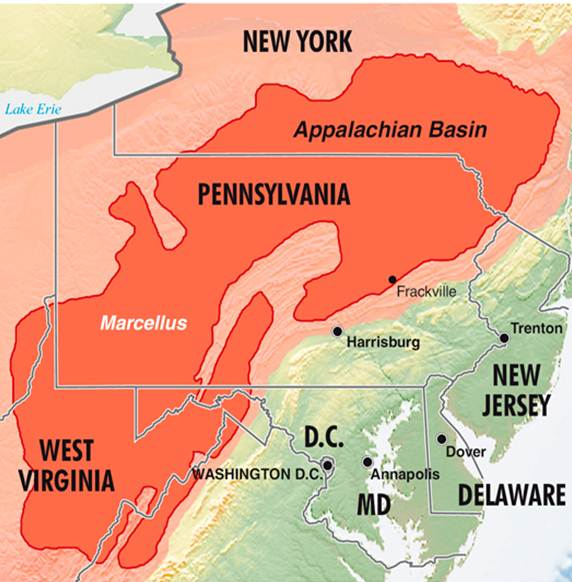
The Marcellus formation lies under more than 60 percent of the state of Pennsylvania alone. Some geologists and petroleum engineers believe that the massive shale formation may hold as much as 500 to 700 trillion cubic feet of natural gas. This amount of natural gas in the Marcellus Shale could supply the entire east coast for the next 50 years according to some geologists.

Larry Behrens writes at Real Clear Energy Fetterman and Cuomo: A Midterm Election Energy Lesson.  Excerpts in italics with my bolds and added images.

With energy dominating the national discussion, look no further than Pennsylvania and New York as examples of failure and fortune. The Empire State might be looking to make a U-turn after a years-long trip into failed energy policy, while the Keystone State must decide if they will adopt the “America Last” energy policy currently favored in Washington, D.C.

The two states share a border of 225 miles, but when it comes to energy,
they might as well be on different planets.

It’s clear energy is on the ballot this midterm season. That’s bad news for fracking foes like Pennsylvania Senate Candidate John Fetterman. While he may be struggling to articulate his position du jour on fracking, it’s clear he’s borrowing from the Joe Biden play book: play a moderate in the campaign, return to radical roots once elected.

In 2014, then-Governor Andrew Cuomo imposed an outright ban on fracking in his state. The decision cost a loss of 400 jobs per year in some of the state’s counties and resulted in a “statically significant increase in unemployment.” By declaring a war on pipelines, some utilities in New York stopped “new residential, and commercial and industrial customer gas service connections.” New Yorkers are paying the 10th highest electric rates in the nation, and nearly 30 percent higher than their neighbors in Pennsylvania.

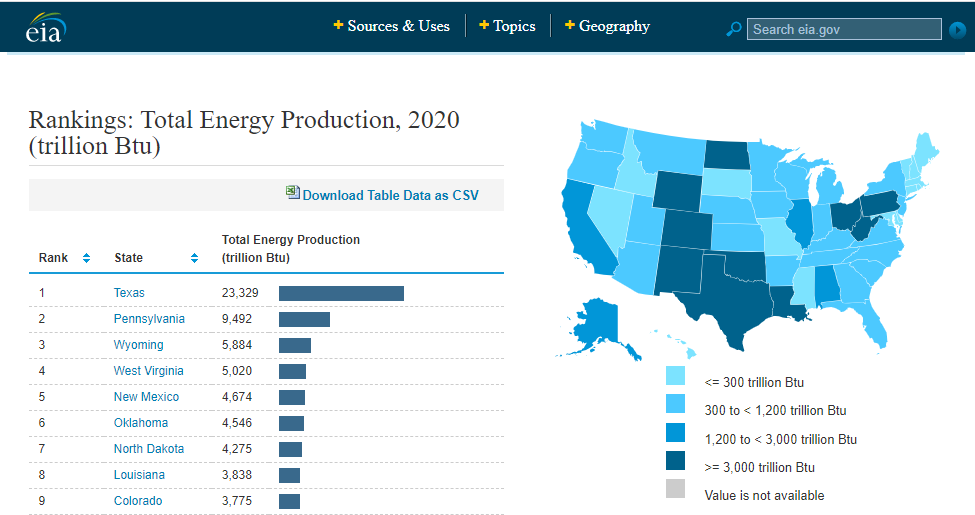
With no fracking ban in their state, Pennsylvanians are much better off. Today, the Commonwealth is second only to Texas when it comes to production of shale gas and in 2021 the state received over $235 million in impact fees from drillers. One university study found communities in Pennsylvania suffering from long-term economic stagnation are the beneficiaries of American energy development in their area.

Two different states, two very different outcomes. Enter the 2022 midterm election.

Rank FF Consumption  Trillion BTU
1 Texas 11767
2 California 4845
3 Louisiana 3698
4 Florida 3110
5 Pennsylvania 3110
6 Ohio 2774
7 Illinois 2590
8 New York 2370

Source of Primary Energy Consumption Data:  EIA   Notice that California and New York are top consumers of FF energy, principally oil and natural gas, but neither is a top producer, despite accessible resources.  Florida, Ohio and Illinois also share that predicament.

New York’s race for Governor is turning into a nail-biter, as residents of the state consider hiring the first Republican for the job in 16 years. Appointed Governor Kathy Hochul would continue Cuomo’s failed anti-fracking policy while Republican Lee Zeldin supports energy development in New York. The result? A Republican is surging in a massively blue state where people say their top issue is the economy. New Yorkers are suffering under the consequences of failed-fracking policy. Meanwhile in Pennsylvania, they have a radical in moderate’s clothing that thinks the New York failure is just fine.

The stakes are as high as they are clear: John Fetterman wants to end fracking and if elected, he’ll do all he can to do it. Sure, we all witnessed his bumbling response where he pinky-swears he now likes fracking, but he can’t bumble over the truth. He once referred to the industry as a “stain” on the state he is seeking to represent. Don’t forget that Joe Biden also did the fracking flip-flop as a candidate, only to take office and impose an “America Last” energy policy that’s delivered record gas prices, massive inflation and a weaker country on the world stage. Apparently, John Fetterman and Joe Biden view the disaster in New York as a winning game plan.

It failed for Andrew Cuomo, it’s failing for Joe Biden and if he’s elected, it will fail for John Fetterman, too. You might say that just like Communism, banning fracking has failed everywhere it’s been tried.

Vote accordingly.

See also New England Energy Inflation Self-Imposed

Project abandoned in 2017 after New York blocked planning and permit processes.

Woke Gatekeepers The Problem

Michael Lind explains in his Tablet article The New Gatekeepers.  Excerpts in italics with my bolds and added images.

How the major institutions of American society all came to sing in the woke chorus,
and what can be done about it

The Great Awokening is a misleading term. Woke activists are not honest missionaries; they are infiltrators, acting with the specific goal of seizing control of institutions and imposing their views on others. Unlike the Protestant evangelists of the Great Awakenings, today’s activists do not use simple language to spread their message to sinners in need of repentance. On the contrary, they camouflage radical beliefs in bureaucratic acronyms like DEI and CRT, and anodyne-sounding terms like “gender-affirming health care”—in practice, often a euphemism for castrating boys and men and sterilizing and performing irreversible mastectomies on girls and women. Where Protestant evangelists sought voluntary and whole-hearted conversion, the new activists seek submission, imposed on penalty of ostracism.

If these activists are not evangelists, what are they? They are “entryists.” The term “entryism” has been associated with the Trotskyist denomination of Marxism since the 1930s, when the exiled Leon Trotsky urged his followers in Britain to infiltrate the Labour Party and influence it from within, rather than form their own small, ineffectual party. But the tactic is not limited to the political left. In the United States there have been cases in which Protestant fundamentalists ran for local school boards as moderates and then, once they had majorities on the board, used their power for goals like teaching “creation science” along with evolutionary biology.

The center left of the political spectrum has historically been vulnerable
to entryism by small, radical sects of zealots.

Today’s illiberal radicals, like yesterday’s communists, have profited from a “no enemies to the left” policy among liberals. Mild-mannered liberals and progressives believe in civil rights, so therefore something called “anti-racism” must be worth supporting, even if there are a few problems here and there: Ibram X. Kendi’s sectarian lunacy thus hitches a free ride on the legacy of Martin Luther King Jr. Similarly, adding “T” and “Q” to LGB legitimated public acceptance of radical gender ideology, as though insisting that controversial and often dangerous “gender transitions” are a natural and unobjectionable continuation of the campaign to allow same-sex couples to marry.

Wokists, then, are not the new Protestants, any more than they are the new Trotskyites. They are entryists in their methods, but not in their ideology. Such identity politics is not the kind of coalition of college students and minorities that Herbert Marcuse and other Marxists hoped for in the 1960s, after they were disappointed by the lack of revolutionary fervor among the American and European working classes. Black nationalism, the model for all racial and ethnic nationalisms on the Western left, has its roots in 19th-century German racial and cultural nationalism, not cosmopolitan Marxism. Radical feminism, which spawned gender ideology, has its own tradition as independent of socialism, even if some radical feminists have also been socialists. Indeed, real communist regimes like the Soviet Union, China, North Korea, and Cuba have usually been repressively traditional in matters of sex and gender.

This, however, raises a question. The various streams of identity politics that feed into today’s radical ideology are not new. Indeed, they have existed on the margins of politics and intellectual life for generations. As recently as the 1980s and 1990s, “political correctness” was ridiculed into irrelevance everywhere except on university campuses and a handful of sectarian left institutions. What exactly is it that changed in the structure of American institutions so that the new entryists were able to successfully infiltrate and capture so many major organizations and professions in the 2010s, after such tactics had repeatedly been tried and failed before?

Three Gateways Taken Over by Woke Activists

Control of three gateways in particular has been critical to the success of woke entryism. The three gateways are college education, professional accreditation, and commercial services, particularly new online media platforms like Twitter, sales platforms like Amazon, and financial platforms like PayPal. All three wield variants of the same power: the power to exclude people from the economy. Good Trotsky-style entryists that they are, woke activists, knowing that they would be defeated in free elections and in open public debates, have sought to infiltrate institutions to control key chokepoints or gateways, which empower them to be gatekeepers.

Today, unlike a generation ago, young Americans typically must pass through three gateways, in order to be economically successful. They must obtain college diplomas; they must join professional accrediting organizations; and they must be able to do business via platforms in the marketplace.

The American Medical Association was founded in 1847, and the American Bar Association in 1878. Colleges and universities assumed their present form only in the late 19th and 20th centuries, and as recently as 1960 only about 10% of American men and around 6% of American women had bachelor’s degrees or higher.
Of the three kinds of gateway—the professional, the academic, and the platform—the third is the newest, a product of the early 21st century. As one writer recently put it, “the Woke is a vanguard movement that seized control of a new technology and used it as a force multiplier to discipline and terrorize the larger institutional landscape.”

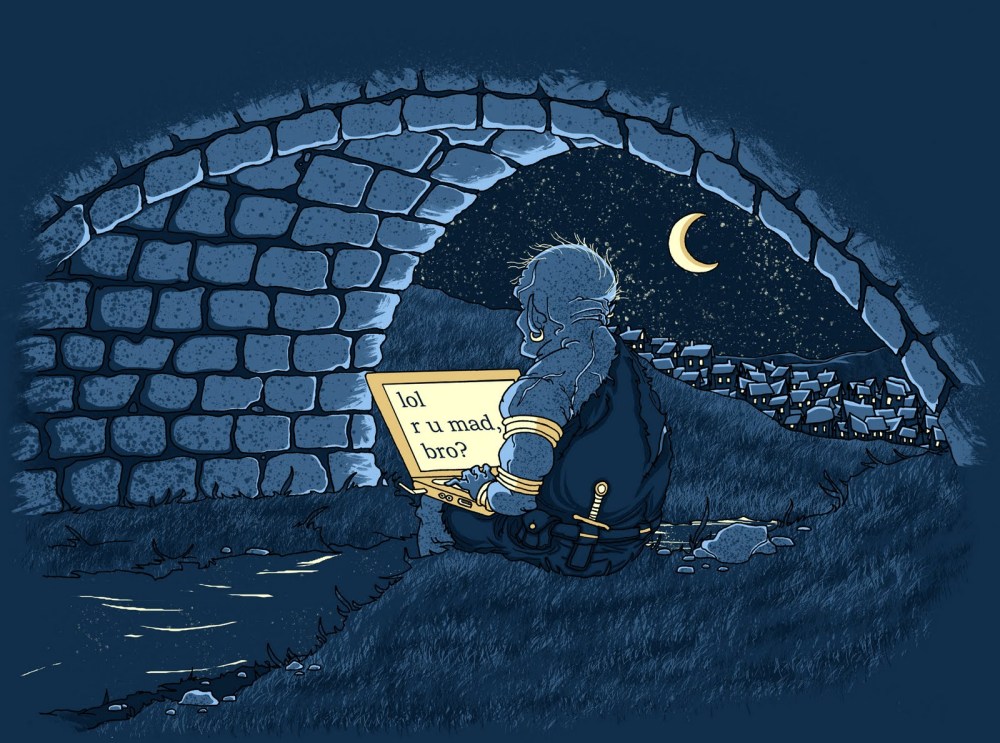
Waiting for people at each gateway, like trolls under a bridge in a fairy tale, are woke leftists, who demand that they recite the in-group passwords before they are allowed to pass through the gates. What makes these gateways particularly vulnerable to capture by disciplined, zealous entryists in the United States is the fact that they are mostly private and unregulated. America’s most prestigious universities are private, and they set the standards for other universities in the country, both private and public. Whether private or public, all American universities are accredited by private, nonprofit accrediting agencies and not by America’s federal or state governments.

But most traditional corporations either face rivals in competitive markets, or, if they are natural monopolies, are subject to regulation and government oversight. In contrast, platforms like Facebook, Amazon, and PayPal, along with search engines like Google, are near-monopolies in whole sectors of the economy, and yet have won the right not to be regulated by federal, state, or local governments. As a result, they can “deplatform” people, including the president of the United States, at will—and those who have been deplatformed, canceled, or otherwise disappeared from the marketplace or the public realm have little recourse, except to a rubber-stamp board appointed by the platform’s executives, on the basis of “rules of service” that the corporate managers and their puppets make up and can change at any time. This combination of exemption from regulation with legal impunity would have been unthinkable in the age of AT&T and the three broadcast networks, before the rise of the tech sector at the end of the 20th century.

No wonder that woke entryists prefer worming their way into immense, centralized quasi-monopolies and oligopolies in the private sector instead of trying to capture the government by persuading voters and winning in thousands of elections at all levels.

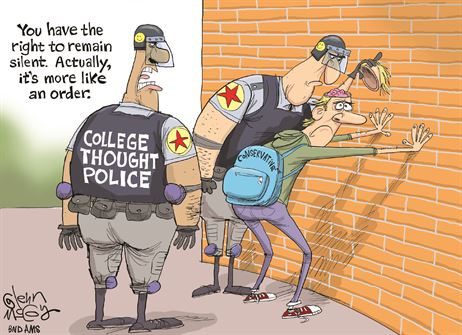
The increasing polarization of the American class system along educational lines, along with a massive oversupply of college graduates for too few jobs that actually require college degrees, breeds conformity and submission in undergraduates. In the 1990s, you could mock your politically correct professor or classmates and go on to a successful career in law, medicine, business, or even the academy. In the 2020s, if you mock your politically correct professor or classmates, you can be put through Kafkaesque trials and Maoist reeducation on campus, and the mark on your permanent record can prevent you from getting into a good professional school.

Students who dissent from enforced woke orthodoxies on campus run the very real danger of summary punishment by university administrators for a very wide variety of potential crimes, which will be adjudicated by those very same authorities. These crimes can range from holding incorrect opinions about racial essentialism (you’re supposed to be for it) or the existence of multiple genders (there is no exact number, gender being a subjective and elastic concept).
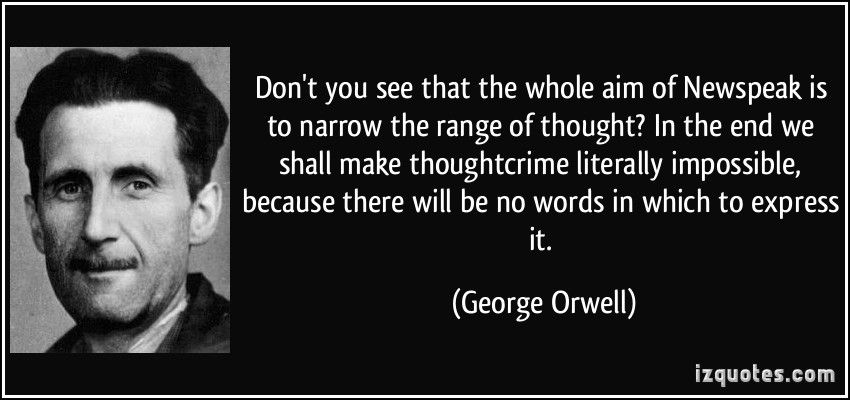
The next gate is the professional gateway—and here again, we find that our entryists have seized the sentry positions and imposed new passwords. The AMA recently issued a glossary of Woke Newspeak, instructing medical doctors to say “equity” instead of “equality” and “systemically divested” instead of “poor.”
Last year, the AMA Board of Trustees passed a resolution demanding that sex cease to be noted in all future birth certificates, on the theory that a boy might have been born by accident in a girl’s body or vice versa, and that the individual might not realize he or she was in the wrong body until decades later. Yes, this is the American Medical Association, not the American Association of Astrologers.

Meanwhile, the American Bar Association has proposed making the accreditation of U.S. law schools depend on their success in promoting goals like rigid race and gender quotas among faculty and students. Noting that such accreditation requirements might cause law schools to run afoul of federal and state laws like the Civil Rights Act of 1964, which established nondiscrimination as the legal standard, the ABA says its own private, made-up accreditation requirements trump actual laws: “The requirement of a constitutional provision or statute that purports to prohibit consideration of race, color, ethnicity, religion, national origin, gender, gender identity or expression, sexual orientation, age, disability, or military status in admissions or employment decisions is not a justification for a school’s noncompliance with Standard 206.”

Let’s assume that a submissive, deferential American professional of the 21st century, having mouthed the platitudes necessary to obtain a B.A. and graduate from a professional school, now seeks to practice a career in sales, authorship, or politics. If you wish to buy or sell a gun in a perfectly legal transaction, Visa will allow it but PayPal and Square will not.

If you publish a book critical of the new gender ideology, Amazon may disappear it, the way it disappeared Ryan T. Anderson’s When Harry Became Sally. Inexplicably, Amazon sells Abigail Shrier’s Irreversible Damage: The Transgender Craze Seducing Our Daughters—but then, despotic power is more frightening when it is arbitrary.

And if you run for office, you may find yourself banned or suspended by social media platforms. As of Aug. 15, 2022, Ballotpedia listed seven elected officials who had been banned or suspended by Twitter, Facebook, or YouTube—all Republicans. In addition to Donald Trump, the list includes Rep. Jim Banks of Indiana, suspended by Twitter for 14 days in 2021 for “targeted misgendering or deadnaming transgender individuals,” and Sen. Rand Paul of Kentucky, a medical doctor, suspended by YouTube for seven days for allegedly spreading misinformation about COVID-19.

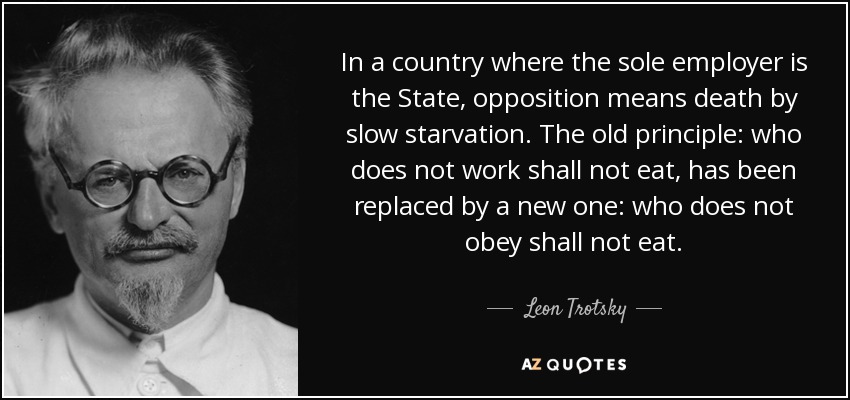
Piece by piece, woke activists are assembling a private version of China’s social credit system, which can cut off individuals who run afoul of ideological orthodoxy from acquiring educational credentials, practicing a trade, or engaging in political speech. While Trotskyist entryists spent decades trying to infiltrate and influence social democratic parties and trade unions, woke entryists in only a decade and a half have captured many of the leading communications, sales, and financial platforms in modern society, along with professional associations and universities. Leon Trotsky would be impressed.
Alas, only one solution to the threat of woke hegemony can possibly work: a massive and permanent expansion of the regulatory powers of American government.

Because of the longstanding ideological habits and precommitments of those who broadly agree with the above diagnosis of the problem, this is typically the last solution that occurs to them. Paradoxical though it may seem, however, political intervention is necessary to depoliticize the institutions that have already been diverted from their limited missions and competencies. Reluctant but determined intervention by the elected branches of government can compel neutrality on the part of professional and commercial institutions that have been captured and weaponized by the new entryists.

The obvious objection to expanding the power of the states and the federal government to eliminate control by the new entryists over key social and economic chokepoints is the libertarian belief that government itself is the enemy. One response might be that the belief that private enterprise would be more inherently fair than a state grounded in the democratic process and the rule of law is what got us into this mess in the first place.

It is also the case that, contrary to popular belief, the federal government does not have vast plenary powers. The federal government chiefly influences state and local policy by means of “fiscal federalism.” The Obama administration abused fiscal federalism when radical activists ensconced in his Department of Education made federal funding for K-12 schools contingent on public schools adopting controversial gender ideology.

The best way to prevent the federal government from using this kind of economic blackmail against state and local government institutions, of course, is to keep woke parties and politicians and appointees out of power in Washington, D.C. If that fails, states should refuse federal funding that comes with strings attached, rather than submit to blackmail by tiny cadres of activists who have infiltrated and captured specific federal agencies like the Department of Education.

Increasingly, state governments led by anti-woke elected officials have begun using state power to check the ideological excesses of corporations and banks. Far from being an assault on liberty, this is a healthy and overdue reassertion of democracy. Elected officials answer to citizens. Corporations and nonprofits answer only to their boards of directors and shareholders or donors. And as entities that can exist and do business only because of government charters, corporations and nonprofits must follow rules promulgated by representatives of the people.

Will anti-woke governments commit abuses in responding to the abuses of woke companies and nonprofits? No doubt they will sometimes. But if they do, their misdeeds will be easily identified and have clear remedies, unlike the hidden decisions of vast private bureaucracies. Abusive legislators and governors can be voted out of office, unlike the obscure individuals who belong to Facebook’s self-regulating bureaucracy.

In other eras, and in other countries, public tyranny has indeed been a major threat to individual freedoms. In the United States, in the third decade of the 21st century, the private tyranny of universities, professional associations, and tech platforms is a greater threat than the tyranny of an oppressive state. When it comes to reducing the power of the new entryists in the private sector, the restoration of our liberties requires an expansion of democratically accountable government.


Leftists Tighten Tax and Regulation Screws

William Watson explains at Financial Post: We will need Trussonomics.  Excerpts in italics with my bolds and added images.

If subsidies change behaviour, as their proponents clearly believe they do,
so must taxes and the rising cost of regulation

The Nobel-winning novelist Doris Lessing once wrote that “In politics it is easier to be mad unnoticed than anywhere else.” Of course, she was writing about Communist Party politics in what was then Southern Rhodesia during World War II, not leadership campaigns in the 21st-century British Tory party. But the goings-on of the various factions that make up the Tory party have been at least tinged with madness, if not steeped in it. And it is not going unnoticed. The whole world is watching, as the chant goes, especially the bond market.

The pity is that fine and ever more necessary ideas have been caught in all the loopiness and, guilty by association, are being dumped in the ash bin at the very time they are needed most. What for the next 20 years will be branded “Trussonomics” is in its essence simply tried and true common sense: ever rising tax rates and ever more intrusive regulation, which is what western countries have these days, are not and never have been the road to high and rising living standards.

Now, strangely, these libertarian ideas are being categorized as “populist,” the supposedly idiot beliefs of the great and ignorant unwashed. There may be places in the world where libertarianism is populist — Wyoming, maybe, rural New Hampshire, anywhere that lived under Soviet Communism — but in this country and in the United Kingdom such ideas are best loved by the not very numerous readers of such bricks as Friedrich Hayek’s The Constitution of Liberty, which according to Amazon weighs 1.68 pounds. Their most effective European exponent, Margaret Thatcher, who supposedly carried that book in her purse, making it a truly lethal weapon if swung with sufficient force, sold this set of ideas on the basis that “There is no alternative,” hardly the most appealing brand labelling.

Many Canadians are in some ways instinctive libertarians.

Why are we paying for the prime minister’s groceries, many will wonder — not his state dinners and receptions but his ordinary family groceries? Why are the Governor General’s airplane meals so expensive? Could she not settle for the dried-out trail mix the rest of us are served while flying? Why does Ottawa think (see Matthew Lau’s article elsewhere on this page) “people who menstruate” — the people formerly known as women — should have free female hygiene products, plus installed receptacles for them, provided in every bathroom in federal jurisdiction — men’s, women’s and other?

In each case, the populist answer, though simple, is right: He should pay for his own family groceries. She should eat the airplane meals the rest of us eat. And Ottawa should stay out of the bathrooms of the nation (as an earlier Trudeau might have said). To be sure, more subtle and sophisticated reasoning can and often does lead especially very highly-educated people to conclude that such answers are hopelessly, horribly wrong. In these more refined circles “populist” is a way of saying “simple-minded” and “unseemly.”

It is true that Trussonomics, as proposed by its namesake, was flawed in very avoidable ways. If you win a leadership contest, it’s a sign of weakness, not strength, to exclude rivals from your cabinet (or, attention Mr. Poilievre, shadow cabinet). If the spending hikes and tax cuts you want could cause reasonable people to worry about the resulting government debt, you should not close down a watchdog whose job it is to track such things. And you must tell your cabinet where you are heading and also prepare the public — a lesson learned in this country in 1981 when finance minister Allan MacEachen sprang fiscal surprises in a budget that, several weeks later, had to be walked back, not long before MacEachen himself was walked over to External Affairs, as it then was. Ever since, budget secrecy be damned, federal budgets have been telegraphed well in advance.

In Ottawa, as the budget approaches, small dogs must be kept indoors
lest they be frightened by popping of trial balloons going off like fireworks.

But though the Trussonomics package was badly wrapped, its contents remain sound. People do respond to incentives. If you tax income too much, you reduce the incentive to earn and report it honestly. If you regulate people too much, you induce them to spend their money and time getting round regulations, including by doing the regulated activity in jurisdictions (not yours) where it is regulated less. Pile on taxes and rules, and lawyers and lobbyists grow rich while invention, investment and innovation languish or relocate.

It’s sometimes argued that people aren’t as responsive to economic incentives as economists claim, so taxing them and raising their regulatory costs won’t discourage the animal spirits that impel them to constructive action. But those offering this argument are invariably inveterate subsidizers, who would encourage all manner of activity they deem socially worthy by subsidizing it, taxing it less or lightening its regulatory load.

But you can’t have it both ways. Subsidies that don’t change people’s behaviour are just ways of getting money to friends. But if subsidies change behaviour, as their proponents clearly believe they do, so must taxes and the rising cost of regulation.

Ms. Truss may walk off into history. Trussonomics our over-taxed and over-regulated societies desperately need.

Footnote from Issues and Insights: Biden Has Unleashed The Regulatory Leviathan: Report

The Competitive Enterprise Institute (CEI) just this morning released its hugely valuable report called “10,000 Commandments,” which is a compendium of the regulatory state. In it, CEI Vice President for Policy Clyde Wayne Crews lays out the terrible truth about Biden’s regulatory zeal.

The first thing you have to understand about federal regulation is how massive it already is, with compliance costs that total more than $1.9 trillion a year.

That’s bigger than Canada’s entire GDP. It’s bigger, in fact, than all but seven nations in the world. It works out to almost $15,000 per household.

And it is growing at a ferocious pace. From 1995 to last year, regulators issued a total of 114,821 new rules.

The cost of complying with this mountain of mandates is on top of the $6.3 trillion the feds spent this year, which means the true cost of government equals roughly a third of the nation’s economy.


World Sick Men: US, UK, Canada

Conrad Black observes in National Post:  Canada, the U.S. and U.K. have become the new ‘sick man’ of the world.  Excerpts in italics with my bolds and added images.

The three principal predominantly English-speaking Atlantic countries (the United States, United Kingdom and Canada) are now “the sick man” of the world. For almost all of the 19th century and up to the First World War, the Ottoman Empire was reviled as ”the sick man of Europe,” and its leader was habitually referred to as ”the Abominable Porte.” These disparagements proved premature when put to the test in the First World War. The Ottoman Empire outlasted the Russian Empire in the war and the Turks threw the British, French and Commonwealth forces into the sea with 220,000 casualties in the debacle at Gallipoli in 1915-16, the greatest and near-terminal defeat in the career of Winston Churchill. It is also very premature, of course, to underestimate the three leading English-speaking countries, but as our longest-serving prime minister, W. L. Mackenzie King, said of his own career at its low point in 1930, we are all “passing through the valley of humiliation.”

In Britain, Prime Minister Liz Truss and then-chancellor of the exchequer Kwasi Kwarteng presented a bold and imaginative budget. Facing double-digit inflation and negligible economic growth, they instituted a cap on energy price increases to the public by having the state pick up the tab for natural gas and electricity price increases above a designated level, reverse a planned six-point increase in the corporate tax and reduce the maximum income tax by five points. Unfortunately and inexplicably, they produced no accompanying proposals for substantial government cost reductions. Normally, ambitious proposals for tax reductions are accompanied by elaborate estimates of the resulting loss of revenue being substantially regained by increased revenue from heightened consumer demand and the greater transactional velocity of money. Of course, all such estimates are essentially throwing a dart at a board, but they are necessary to shut up opinionated and dogmatic economists, especially high-tax leftists and authoritarian regulators.

Economics is essentially psychology and Grade 3 arithmetic.  Truss and Kwarteng
got the psychology right, but in failing to produce any arithmetic at all,
they left themselves wide open to a deluge of skeptical ridicule.

The official Opposition, the Labour party, now a Corbynite gaggle of unregenerate Marxists hiding behind their relatively innocuous leader, Keir Starmer, the socialistic hypocrites at the International Monetary Fund and the sprawling apparatus of the European Union, which is still wheezing with rage over Brexit, all pounced on the budget like famished wolves. As always happens when the conventional wisdom is stoked up and unopposed, even the most ludicrously implausible sources of any worthwhile opinion on the subject, U.S. President Joe Biden in this case, joined the torrent of brickbats.

 Truss did not handle it very convincingly, and her chancellor was confidently informing the international financial media in Washington last week that he was firm in his position and his views and was “not going anywhere,” when his boss folded like a $3 suitcase and gave him the order of the boot. Even Starmer, who is no Benjamin Disraeli or Winston Churchill as a parliamentary wit, got off some pretty good shots, adapting the famous statement of Margaret Thatcher to a beleaguered party conference in the early days of her radical government: “U-turn if you want to. The lady’s not for turning.” It appeared to justify the French media’s sarcastic reflection on the difference between the Iron Lady and the “Iron Weathervane.” She has only been prime minister for six weeks, and though it would seem almost unimaginably absurd for even the querulous and treacherous backbenchers of the British Tory party to disembark another leader so quickly after they filled the space between former prime minister Boris Johnson’s shoulder blades with knives, that is exactly what happened. Following a string of cabinet departures and internal party dissent, Truss announced her resignation on Thursday. Meanwhile, the separatist Scottish National Party is now leading the Conservatives in the polls and the formerly terrorist-tinged Sinn Féin, the parent of the Irish Republican Army, is settling into the government of Northern Ireland. As the new monarch enters upon his reign, the political condition of his principal realm could scarcely be worse. It will probably get better because further deterioration is hard to imagine, but much will depend on whether the Tories can mount a historic comeback.
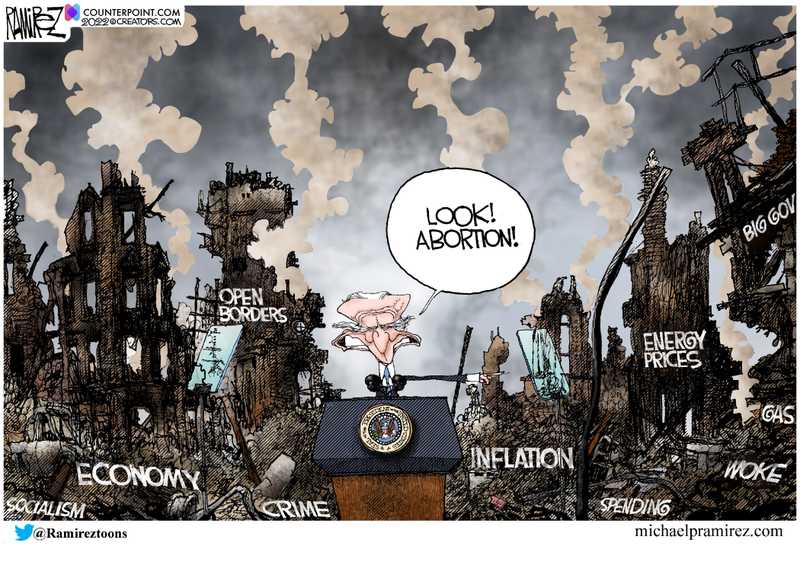

Most Canadians are somewhat aware of the debacle in Washington. Since his election, President Biden has maintained a war without mercy on the U.S. oil and gas industry, while simultaneously disparaging the House of Saud as moral pariahs. A recent report from the Committee to Unleash Prosperity found that, given rising prices, if the Trump administration’s energy policies had been maintained, the United States would be producing two- to three-million more barrels a day of oil than it currently is, which would have pushed down global oil prices. Russian President Vladimir Putin essentially applied the increased revenues from his higher-priced oil exports to finance his war of aggression in Ukraine, which the United States is now admirably spending tens of billions of dollars to assist the Ukrainians in resisting. Because Biden is intimidated by the green terror that he mindlessly espouses like an eco-robot on autopilot, he was reduced to calling upon the Saudi crown prince, metaphorical cap in hand, and asking for production increases. Instead, the Saudis, with well-earned disdain for the government of the world’s most powerful nation, reduced production further, leaving Biden’s bumbling entourage talking about suspending armament sales to the Saudis. This would only make matters worse by giving scores of billions of dollars of defence contracts to our enemies. Even great powers, when their foreign policy is based on idiocy, can be, in U.S. President Richard Nixon’s famous expression, “a pitiful, helpless giant.” Five thousand illegal migrants a day are pouring across the southern border and Russia, even as it blasts Ukraine, is representing the U.S. in an insane effort to revive the disastrous nuclear agreement with Iran that Barack Obama negotiated and Donald Trump cancelled. None of it makes any sense.

Canada — which, as historian W. L. Morton said, is ”strong only in moderation and governable only by compromise” — has never in its 155 years as an autonomous country come close to the shambles of government that has been unfolding in Washington, or the sequence of fiascos that have afflicted the current era of Conservative government in Britain. Our comparative decorum should not lead any Canadian to complacency, though. We have spent seven years wallowing helplessly in a mindless fixation on climate, Indigenous and gender issues. Canada is a treasure trove of resources that we are afraid to utilize and we are somnambulating in the world like a toked-up Peter Pan.

Based on history, all three countries will pull themselves together quite soon and resume their rightful places among the most respected nations in the world.


Climate Dreams, Meet Brick Wall

Fred Laza writes at Financial Post Climate fantasies hit brick wall of U.S. politics.  Excerpts in italics with my bolds and added images.

The reality of the energy transition could be ugly for politicians

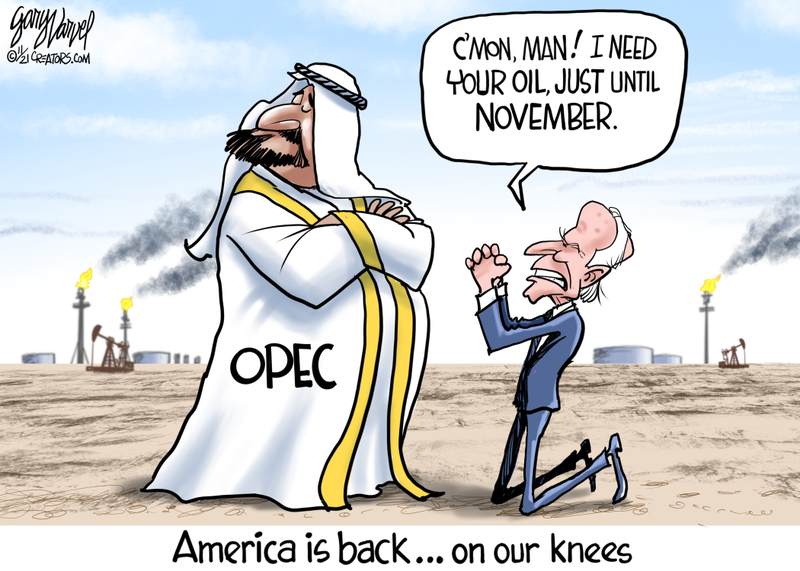
The Biden administration’s attempt to lower gasoline prices before the November mid-terms has been both amusing and disappointing. First the president attributed the run-up in oil and gas prices to Putin’s invasion of Ukraine. Then his government drained about a million barrels a day from the strategic oil reserve. After six months of that and with gasoline prices creeping up again, Mr. Biden went to Saudi Arabia to ask Crown Prince Mohammed bin Salman for his help in keeping oil prices from rising at least through to the mid-term elections.

The prince said no, which was totally predictable. It appears none of the foreign policy experts advising the president understands basic human relations, let alone Arab culture. You can’t call someone a murderer and then expect him to turn the other cheek and meekly accede to your request for a big personal favour.

The substantial long-term damage to the important relationship between Arab countries and the U.S. has been driven entirely by short-term political expediency. This greenest administration in history at first seemed very committed to dealing with climate change and accelerating the timeline to achieve net-zero carbon emissions for the U.S. as a whole. A key driver for this goal is higher oil and gas prices. Economics 101 teaches that sharply higher prices for carbon fuels will reduce demand for them and promote the shift to alternative sources of energy, primarily renewables.

Well, Putin’s war on Ukraine and Biden’s war on fossil fuels have been very effective in delivering skyrocketing oil and gas prices. But now it seems another key driver of climate policy has been discovered: that a Democratic administration remain in office, a necessity that has run into the reality that people do not seem willing to pay the price, at least not right now, for the transition from carbon to non-carbon sources of energy.

Ardent supporters of the energy transition keep suggesting it will lead to the creation of millions of new jobs. (“There is no trade-off between the economy and the environment.”) There are at least two problems with this argument. First, it ignores the euphemistically named “adjustment process.” As the economy moves away from fossil fuels, many millions of people will lose their jobs and not “transition” easily and smoothly to the new jobs that might eventually be created. As with all dramatic policy changes, there will be winners and losers, and the losers likely won’t be fully compensated by the winners — or happy about that. That reality could be ugly for politicians.

As for the claim that the transition will eventually produce millions of net new jobs,
there is good reason for doubt.

Consumer-oriented industries, with the possible exceptions of food and shelter, will have to make drastic changes in their business models. The carbon footprints resulting from the continual introduction of marginally better products are substantial, which means the regular introduction of new products or of varieties of existing products will have to end. Think of the effects in automobiles, iPhones, clothing, furniture, cosmetics, detergents and so on. Further, until most electricity worldwide is derived from renewables or nuclear, the growth of the Internet will have to be curtailed. The millions of servers that are its backbone require large amounts of electricity for cooling and power. Will users willingly limit their reliance on social media and streaming services? Imagine the implications for business and commerce if they are required to.

If our production of carbon is to be reduced as much as the most insistent environmentalists want, market economies will have to move to much lower levels of production and employment. The yellow brick road to Green Oz does not run smooth. It might never actually reach Green Oz, and even if it does, there is no assurance that either the trip or the destination will be pleasant for everyone.

Until very recently, this political reality seems to have been forgotten. Politicians need to be careful in what they ask for and much more honest with the people whose votes they seek.

Fred Lazar is an associate professor of economics in the Schulich School of Business at York University.

Footnote Q & A:

Q:  What is the difference between Golf and Government?

A:  In Government you can always improve your lie.

–Anonymous Source


Biden’s Destroying US Economy, By Intention or Not

Stephen Moore writes at Washington Examiner Biden’s destroying the economy. Is it intentional?  Excerpts in italics with my bolds and added images.

Everywhere I go, people are mystified about President Joe Biden’s economic agenda. So few of the policies comport with basic common sense that I’m asked the same question over and over: Is Biden intentionally trying to take a wrecking ball to the economy?

Is this all part of some diabolical plan, the “great reset,” to end our system of free market capitalism and replace it with some form of big-government socialism?

Biden keeps saying that he wants to be an historic president who will “transition” the country into a new worker’s paradise where no one uses fossil fuels or electricity or cars and equality is paramount, ahead of growth and prosperity. Is he taking us there with no regard for the collateral damage to America?

My belief is that, no, I don’t think this is an intentional, nefarious Dr. Evil-type plot.

But if this were a scheme to burn down the village in order to rebuild it,
Biden and his administration are doing a great job of it.

Here are seven Biden administration steps to undermine an economy and a society from within. They will all sound familiar with the president’s policies since he took office 21 months ago.

1. Dismantle the nation’s energy supply. We get 70% of our energy from fossil fuels. Biden has declared war on American oil and gas, making us more dependent on our enemies for our basic energy needs.

2. Don’t enforce the border. Biden is letting hundreds of thousands of potential criminals, terrorists, welfare recipients, and enemies of the United States into our country through a porous southern border with Mexico. Immigration is good, but it must be orderly and regulated.

3. Devalue the nation’s currency through inflation. Inflation is up nearly 15% since Biden came into office. Inflation is a means to erode the value of a currency.

4. Destroy the nation’s finances by running up the debt by multiple trillions of dollars of debt. No president in modern times has so recklessly pushed our nation into debt as rapidly as Biden through his $4 trillion in spending paid for with red ink.

5. Divide rather than unite the nation. Rich versus poor, black versus white, gay versus straight, rural versus urban. Biden promised unity. Instead, he pits groups against each other. This is the identity politics of the Left that is the opposite of “e pluribus unum.”

6. Dumb down and indoctrinate our children with anti-American propaganda in the schools and media. And allowing teacher unions and left-wing activists to take over the curriculum with anti-American propaganda. It is the opposite of nurturing patriotism and love of country.

7. Decriminalize a lot. Let criminals onto the streets. End bail. Empty the prisons. Let minor crimes go unpunished. Biden’s policies favor criminals over victims. It’s a scene out of a Batman movie.

Are these policies intentional or simply completely misguided? I don’t know. But does it matter? Either way, our country is in grave peril.

Expensive Energy is not a Bug, but Biden Agenda’s Core Feature

Marlo Thomas explains in his Real Clear Energy article Expensive Energy Is a Core Feature, Not a Bug, of Biden’s Climate Agenda.  Excerpts in italics with my bolds and added images.

The great Austrian economist Ludwig von Mises was being generous by describing interventionism’s nasty side-effects as “unintended.” Some younger interventionists are naïve, and know not what they do, but the older, street-smart captains of progressive politics understand the harms their policies entail. For them, the adverse consequences are features, not bugs.

The only downside is the risk of political retribution at the polls.

That’s the predicament in which the Biden administration now finds itself. It is also the theme of “Energy Inflation Was by Design,” a new report by supply-chain consultant Joseph Toomey.
[Synopsis is in previous post Energy Inflation Playbook]

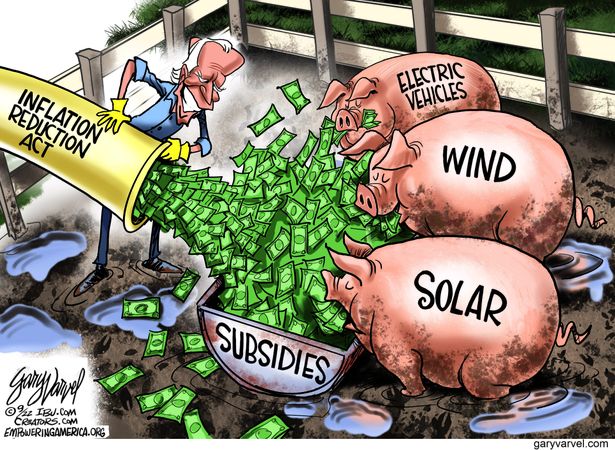
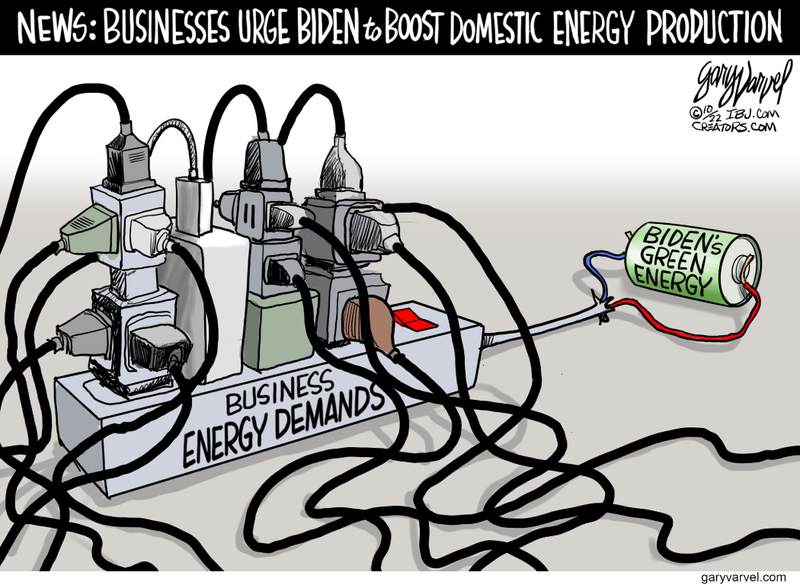
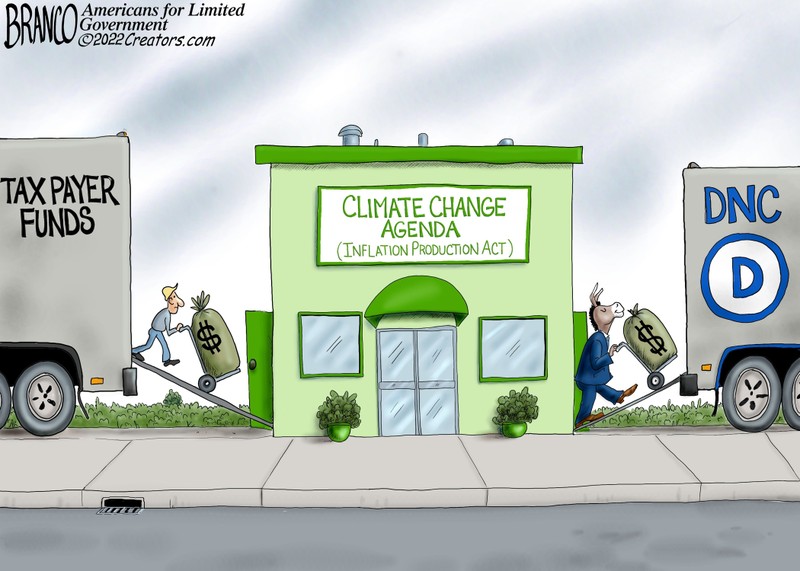
President Biden and congressional Democrats want to replace fossil fuels with a “zero-carbon” energy system. Their biggest win to date is the comically mistitled Inflation Reduction Act (IRA). A Penn-Wharton analysis estimated that the IRA would increase federal climate and energy spending by $369 billion over ten years. A recent article in The Atlantic touts a Credit Suisse estimate that actual climate-related federal support could reach $800 billion. That’s because the incentives for electric vehicles and renewable energy are “uncapped tax credits.” Moreover, since federal spending leverages private-sector investment, total economy-wide green-tech spending could increase by as much as $1.7 trillion.

Nor is that all. The Department of Energy (DOE) estimates that the IRA has increased its loan program authorities by up to $350 billion.

No wonder Democrats celebrated the IRA’s enactment. No bigger program to rig energy markets against fossil fuels was ever enacted.

The IRA aims to enrich thousands of enterprises, tens of thousands of employees, and millions of shareholders—all dependent on Democrats to keep the gravy train flowing. Hardly an “unintended” consequence.

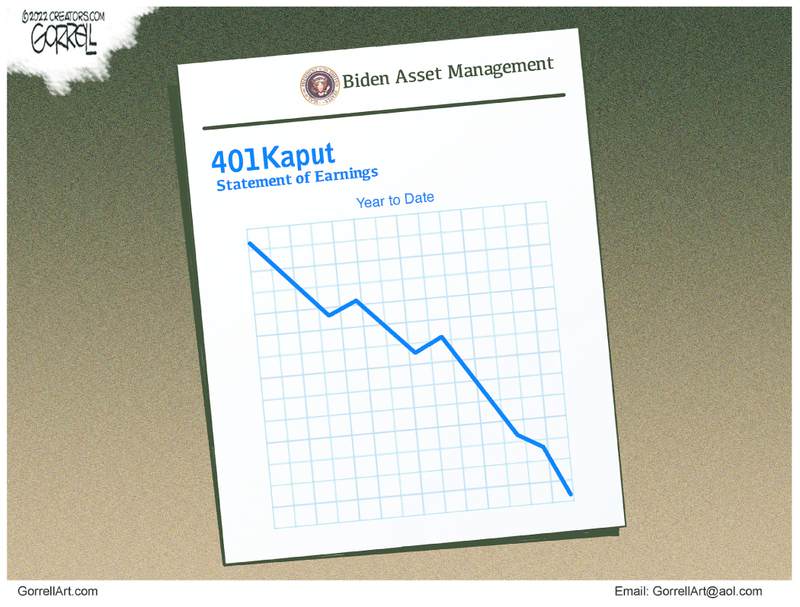
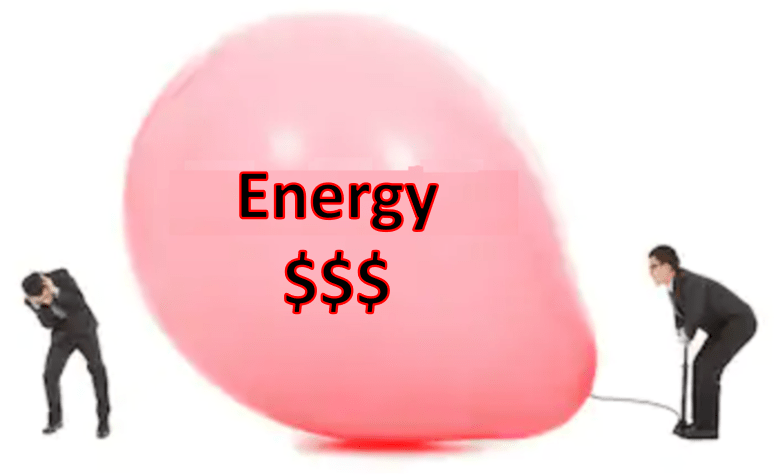
But voters see and feel the downsides of Biden’s war on fossil fuels: the high costs of gasoline, electricity, and other utilities, which in turn increase the costs of food, rent, and consumer goods. Those effects, moreover, coincide with high general inflation, a cratering stock market, and negative GDP growth in two consecutive quarters. Biden tries to blame Vladimir Putin and Big Oil for America’s energy woes. That is nonsense, and the public isn’t buying it.

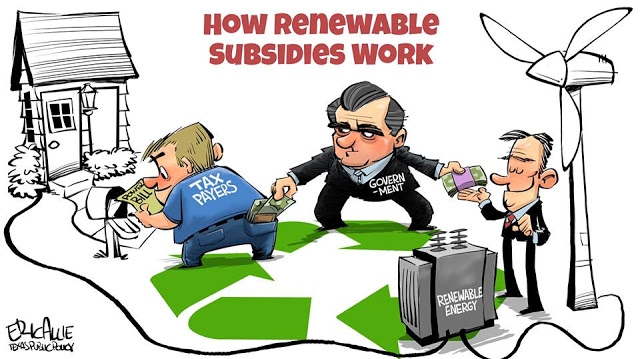
Toomey marshals overwhelming evidence that “energy inflation” is a core feature of the president’s climate agenda. And how could it be otherwise? A core progressive article of faith is that fossil fuels are too cheap because market prices do not reflect the “social costs” of carbon dioxide (CO2) and other greenhouse gases (GHGs). Accordingly, no matter how expensive or scarce fossil energy may become for other reasons, taxing or capping fossil-fuel consumption to make it even more costly is hailed as a “climate solution.” Of course, handicapping fossil fuels is also touted as a way to make renewables more “competitive.” As President Obama enthused, cap-and-trade will “finally make renewable energy the profitable kind of energy in America.”

The public, however, has repeatedly spurned proposals to tax or cap the carbon content of fuels or emissions. So, U.S. progressives now concentrate on rigging energy markets via targeted regulations, state-level renewable-energy quotas, and subsidies. As noted, the IRA sets a new standard for anti-fossil-fuel subsidies.

President Biden seeks to cut U.S. carbon emissions by 50-52 percent below 2005 levels by 2030 and achieve a zero-emission electricity sector by 2035. That means that about half of all U.S. fossil-fuel consumption must end in eight years. Few investors want to park their capital in rapidly contracting industries. So, thanks to Biden, the market forecasts that supplies of oil, gas, and coal will decline relative to demand—and prices will rise. The expectation of shrinking supplies and higher future prices puts upward pressure on energy prices today.

An irony noted by Toomey is that by endangering fossil-fuel energy supply, Biden has not only increased fossil-fuel energy prices but also boosted oil and gas company profits and stock values. The short-term enrichment of oil companies may well be an unintended consequence of a long-term agenda to put them out of business. On the other hand, Biden’s boost to oil industry profits is also the setup for further interventions popular with progressive activists and politicians—windfall profits taxes, export bans, and Federal Trade Commission investigations of “anti-consumer behavior.”

Toomey demolishes the Biden administration’s allegation that oil companies are deliberately reducing refinery utilization to constrict supplies and raise prices. In fact, refineries are running at higher utilization rates than ever (about 94 percent).

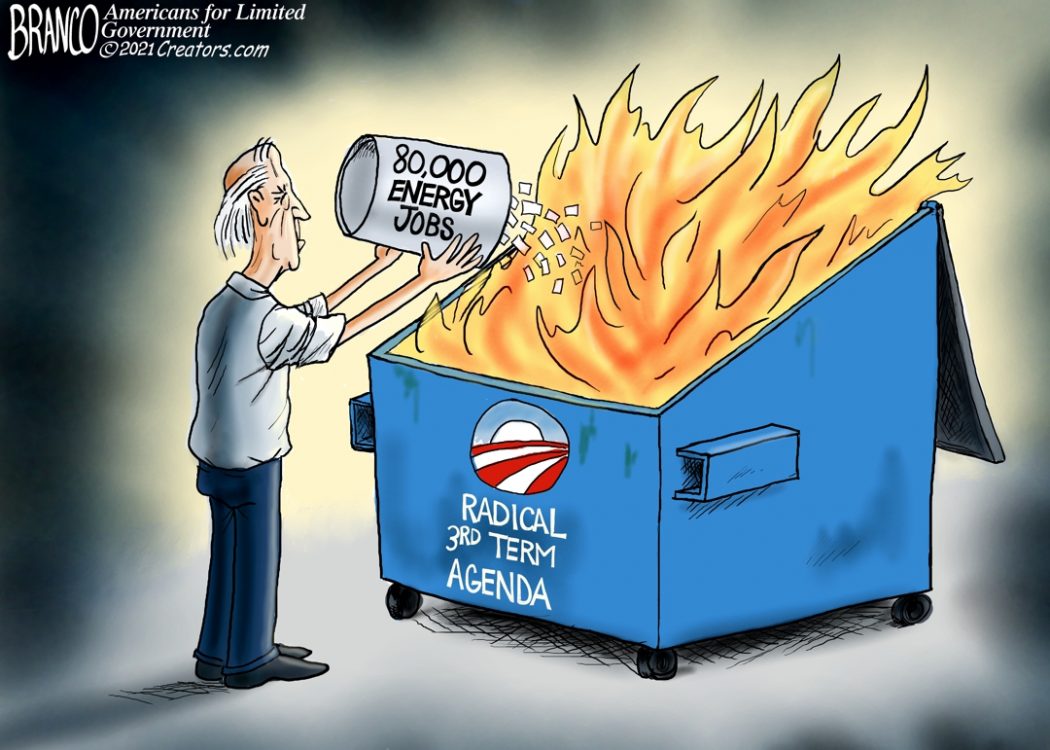
As a presidential candidate, Joe Biden promised to “get rid of fossil fuels,” assuring one activist, “I guarantee you. We’re going to end fossil fuel.”

Toomey reviews several Biden initiatives that back up such threats. The major ones, besides the government-wide, IRA-funded effort to channel “the flow of capital toward climate-aligned investments and away from high-carbon investments,” include:

Cancelling the Keystone XL Pipeline on Inauguration Day;

Suspending new oil and gas leases on federal lands;

Reviving social-cost-of-carbon sophistry;

Halting petroleum-development activity in Alaska’s National Arctic Wildlife Refuge;

Rejoining the Paris Climate Accords without asking for the Senate’s advice and consent;

Considering a non-attainment designation for ozone pollution that could curb drilling in the Permian Basin, which accounts for 43 percent of U.S. oil production; and

Imposing stricter methane standards for oil and gas production.

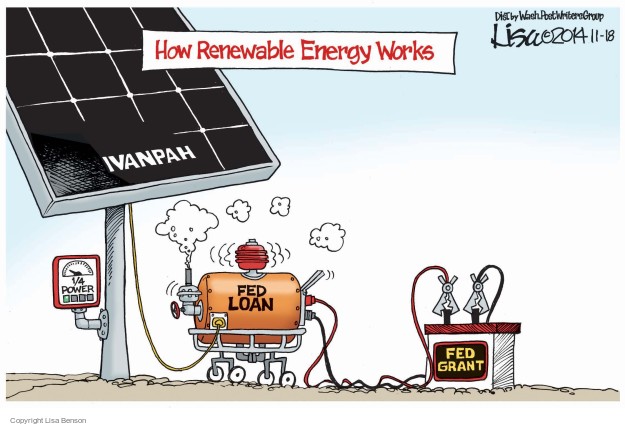
To provide historical context for the fiscal side of Biden’s climate agenda, Toomey discusses the Obama DOE loan program established by the American Recovery and Reinvestment (“Stimulus”) Act. The best-known program beneficiary was solar-panel manufacturer Solyndra, which filed for bankruptcy protection in 2011 despite receiving $535 million in DOE loan guarantees. Some readers may also recall a list of seven such “Stimulosers.”

In short, nearly seven out of ten Obama DOE loan recipients in a $32 billion loan program went bankrupt. The total federal financial support provided by the IRA for “climate-aligned” investments is potentially 36 times larger. The stage is set for scores of Solyndras. Toomey’s labor as a chronicler of the war on fossil fuels is nowhere near done.


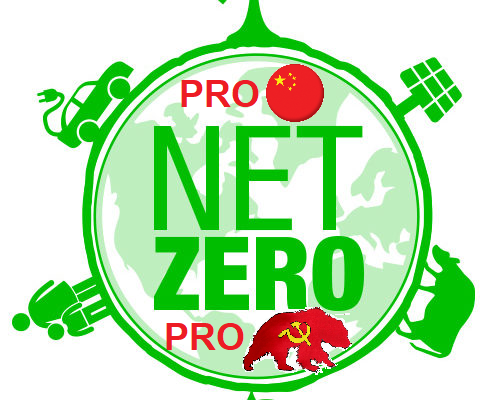
Net Zero = Pro China + Pro Russia

Rupert Darwall explains in an Epoch Times article Democratic Party Captured by Environmentalists, Aiding Russia and China.  Excerpts in italics with my bolds and added images.

Environmentalists have captured the Democratic party and, in their push towards Net Zero, are aiding Russia and China, a senior fellow at RealClearFoundation, Rupert Darwall, says.

Furthermore, the push towards Net Zero has monopolized “the money,” as the group includes many Silicon Valley billionaires, intellectuals, and the mainstream media, Darwall told The Epoch Times and NTD’s Paul Greaney in an interview.

In the interview, which aired on NTD’s Fresh Look America on Oct. 12, Darwall said a prime example of environmentalists taking over the Democratic party, and monopolizing the money, is California.

There, billionaire environmentalists have instituted “an aggressive green agenda” that doesn’t negatively impact them but directly opposes the average California voters’ interests, he said.

“Voters, and particularly in the Central Valley, who endure stifling temperatures in summer, had to pay ruthlessly high prices to condition their homes. They don’t have beachfront properties that are cooled from the Pacific.”

Darwall added that because California is “essentially a one-party state,” voters can’t correct the “extreme environmental policies.” Plus, environmentalists use a version of McCarthyism to stifle opposition.

In the 1950s, U.S. Senator Joseph McCarthy accused thousands of innocent people and parties of disloyalty and allowing Communism to influence their lives and policies.

Darwall said environmentalists today use a similar tactic when they label anyone who disagrees with them as a “climate denier.”

“They know ‘denier’ is a very powerful term to be called. You may have seen a New York Times journalist interviewing the president of World Bank, and [the journalist asks] “are you a climate denier?’ It’s designed to chill debate. Not just chill it but prevent people questioning.”

[ Tip:  Q:  Aren’t you a climate denier?  A: I am a climate thinker. ]

Green Imperialism

If this progression towards Net Zero continues, Darwall said he knew who will win.

“China and Russia. I mean, basically, the opponents of the West, geopolitically from stepping back, but they’re the big winners from the West deciding to bring itself to its knees. I mean, no modern economy can function without cheap, abundant energy and fossil fuel derived energy.”

“We’re basically cutting off our legs. The pain will increase. People are blaming Putin for the terrible winter the Europeans are going to experience this this year. But the way I would put it is Net Zero is Vladimir Putin’s best ally.”

Darwall further added that not only is the West hurting itself and helping Putin, but it’s also engaging in a sort of “green imperialism.”

As mentioned above, the president of the World Bank had been attacked, specifically by Al Gore, Darwall said, because the World Bank was one of the “big providers of finance to Africa.”

“There are over a billion Africans, and they are energy starved. Africa is an energy-starved continent. And the effect of Western green policies is to freeze, as it were, African Development at a very low level.”

Darwall continued, “Grid-delivered electricity is the doorway to the modern world. If you compare the 19th century to the 20th century, the big change is electricity.

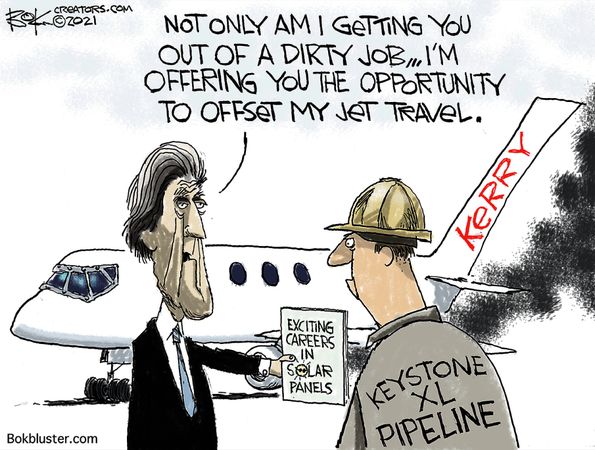
“For Africa to flourish and develop, it needs reliable, cheap, grid-delivered electricity. And that is what people like Al Gore and John Kerry are denying Africans.”

Darwall specified that people like Kerry and Gore are pursuing an agenda that geologically damages the West, its strategic interest, and the economic and social interests of less developed nations.

Political Reckoning

As a result, Darwall believed a political reckoning is coming to the West. He says that as gas prices and inflation continue to climb, voters will show their displeasure for extreme environmental policies and “vote for the other party.”

That benefits Republicans, as under Donald Trump, the United States was an energy superpower.

“In those four years he was president, America was an energy superpower. And now this energy superpower is going around to the Gulf, begging OPEC plus to increase oil production. It’s absolutely extraordinary.”

As for Europe, Darwall believes significant political changes will likely occur in Britain and other countries, but Germany is fully committed to Net Zero.

When asked what would happen if the West reversed its Net Zero policy and returned to producing oil and gas, Darwall replied, “That’s a catastrophic outcome for Russia. Because Russia is a natural gas oil exporting country and economy, and it really, it needs those foreign currency earnings.

“Its economy depends on it. So, it would be terribly bad. It would be awful for Russia. That’s why I say that Net Zero is Vladimir Putin’s best ally.”

See also West’s Obsession with EV Tech Puts China in World Driver Seat

Climatism the Real Threat to Democracy

Philip Cross writes at Financial Post Canada The real threat to democracy.  Excerpts in italics with my bolds

Having failed at the ballot box, millennial climate activists will
pursue any means to impose their will on society

There are a number of important outcomes from Monday’s election in Quebec. Two of the most important are the eclipse of Quebec’s traditional political parties by new ones, including the Conservative Party of Quebec, and the growing gap between voters in Montreal and the rest of Quebec.  But the feature I want to emphasize is the failure of the radical Québec Solidaire (QS) party to significantly expand its base. 

Québec Solidaire based its campaign on the environment. It emphasized the existential threat of climate change that teenage activist Greta Thunberg trumpeted at a much-publicized 2019 rally in Montreal where she made the empty boast, “We are changing the world.” QS co-leader Gabriel Nadeau-Dubois called this election “the last chance” to stop climate change, as if Quebec’s actions could have any significant impact on global emissions.

The failure of Québec Solidaire to mobilize more support shows that even Quebec’s supposedly progressive electorate does not support the wholesale reshaping of our society and economy to combat climate change. The Green Party similarly failed to make the case for environmental supremacy at the federal level, seeing its share of the vote halved in the 2021 election from its already low level of six per cent.

Unfortunately, the failure of parties focused on the environment and climate change to win at the ballot box does not deter activists from looking for other means to impose their views on society. The mainstream media portrays the authoritarianism of populist movements such as Donald Trump’s as the greatest threat to democracy today. But this ignores how environmental groups resort to government regulations and lawsuits to circumvent the popular will and achieve their own goals.

Having failed to make their case in the political arena, environmentalists increasingly are asking the courts to impose restrictions that voters have not supported. In a current case (Mathur v Ontario) six teenagers are asking the Ontario Superior Court to agree that climate change is violating their rights and order the government to implement measures to limit greenhouse gas emissions — even though Ontario only accounts for 0.3 per cent of global emissions. The Supreme Court of Canada recently refused even to hear a similar class action lawsuit from another group of young people.
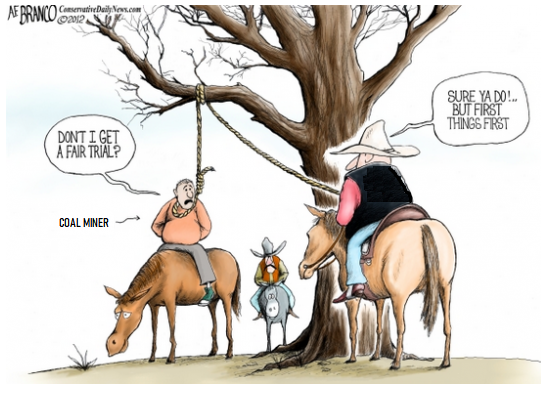

It is unfathomable that courts would agree to usurp government authority and dictate energy consumption, which is the basis of our civilisation and our economy. Yet not one peep has been heard from the media about the anti-democratic nature of this initiative. Instead, Environment and Climate Change Minister Steven Guilbeault lauded the youths involved in the Supreme Court lawsuit for their “passion” instead of criticizing their attempt to circumvent the democratic process and subjugate Parliament’s will to the courts.

In her book Paradoxes of Prosperity, University of Cambridge economics professor Diane Coyle notes a fundamental difference between the protest movements of the 1960s and those of today’s millennials. Dissidents in the 1960s were fundamentally anti-authoritarian and libertarian, looking for ways to increase personal freedom and individual choice. Millennial movements, by contrast, especially among environmentalists, have a prescriptive agenda they want to impose on others. Columbia University historian Kim Phillips-Fein observed in her book, Invisible Hands, that environmentalists have long been “hostile to the very institutional framework of a free society.” Young people are especially likely to attach diminished importance to democracy: in a 2017 poll only a third of American youths agreed it is important to live in a democracy while 18 per cent said they would welcome a military dictatorship.

Political parties with radical and draconian environmental goals have clearly failed to win significant support from the electorate. What is different and worrisome for the future of democracy is the growing willingness of millennial social movements to impose their narrow agenda on the public by any other means available. The real threat to democracy today is, not the populist right-wing movements that preoccupy mainstream media, but the attempt of frustrated environmentalists to circumvent elections.


Fed Govt./Big Tech Censorship Lawsuit: 47 New Biden People Added

Zachary Stieber writes at Epoch Times 47 New Biden Administration Defendants Named in Government–Big Tech Censorship Lawsuit.  Excerpts in italic with my bolds.

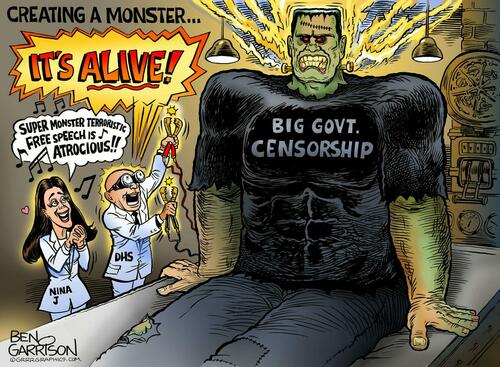
Nearly 50 new government defendants have been added to the lawsuit that alleges the government induced censorship of state officials and others on social media.

The second amended complaint in the case, Missouri v. Biden, includes six new agencies, bringing the total to 13, and 41 new individual defendants, bringing the total to 54.

Altogether, 67 officials or agencies are accused of violating plaintiffs’ First Amendment rights by participating in a “censorship enterprise” through pressuring Big Tech firms like Facebook, Google, and Twitter to take action against users offering alleged misinformation.

Evidence backing the claims has been produced in discovery, including exchanges between White House officials and Meta, Facebook’s parent company and messages showing meetings between administration officials and the firms.

The new defendants include the FBI; former White House senior COVID-19 adviser Andrew Slavitt; Dana Remus, counsel to President Joe Biden; Elvis Chan, an FBI special agent based in San Francisco; Janell Muhammed, deputy digital director at the Department of Health and Human Services; Allison Snell, an official at the Cybersecurity and Infrastructure Security Agency; the Food and Drug Administration (FDA); the State Department; and Mark Robbins, interim executive director of the U.S. Election Assistance Commission.

One or more of the Big Tech firms that were subpoenaed in the case identified the officials as possibly communicating with them on content moderation relating to “COVID-19 misinformation,” the New York Post’s story about Hunter Biden’s laptop, the administration’s since-disbanded Disinformation Governance Board, and/or “election security, integrity, outcomes, and/or public confidence in election outcomes (not to include issues of foreign interference or related issues).”

Slavitt was named because emails show he was in communication with Facebook regarding the combating of alleged misinformation. The messages show that Facebook was committed to censoring and de-emphasizing posts that were “departing from the government’s messaging on vaccines,” plaintiffs said. Slavitt also called for Twitter to ban Alex Berenson, an independent journalist, previously released messages show.

Muhammed, meanwhile, was in touch with Facebook to ask the company to take down pages and accounts that were allegedly misrepresenting themselves as representing the government. “Absolutely,” one of the Facebook employees responded.

Other discovery suggests the FDA “has participated in federally-induced censorship of private speech on social media about questions of vaccine safety and efficacy, among other subjects,” plaintiffs said.

The agencies that were added to the case did not respond to requests for comment.

U.S. District Judge Terry Doughty, a Trump appointee overseeing the case, recently ordered defendants named in earlier complaints to comply with demands, including Dr. Anthony Fauci, a top medical adviser to Biden. The new documents do not include any more information from Fauci or the White House press secretary’s office.

Footnote: 

From Your news: Biden Admin Showered Millions On Government’s ‘Misinformation’ Czars After 2020 Election

The four groups in question – Stanford Internet Observatory (SIO), the University of Washington’s Center for an Informed Public, the Atlantic Council’s Digital Forensic Research Lab, and social media analytics firm Graphika – comprise the “Election Integrity Partnership,” which exists as a ‘concierge-like’ service for federal agencies such as Homeland’s Cybersecurity Infrastructure Security Agency (CISA) and State’s Global Engagement Center to flag online content for censorship or monitoring by Big Tech using a “ticket” system.

Unsurprisingly, the head of Stanford’s Internet Observatory is a Clinton donor who previously served as Facebook’s Head of Security – while the University of Washington’s Center for an Informed Public is largely funded by the Knight Foundation, whose board exclusively contributes to Democrat or Neocon entities. 

Meanwhile, the Biden administration empowered three liberal groups to file tickets seeking censorship; the Democratic National Committee, Common Cause and the NAACP.