Carbon Taxes Pound Canada Economy


Canadian Inflation Jumps As Carbon Taxes Come Into Force

Globe and Mail:
Canadian inflation spiked to its highest rate in more than two years in January, as new carbon taxes in Alberta and Ontario fuelled a surge in gasoline prices.

Statistics Canada reported that the consumer price index was up 2.1 per cent year over year in January, the fastest pace since October, 2014, and up sharply from 1.5 per cent in December. It said gasoline prices were up 20.6 per cent from a year earlier, the biggest increase since September, 2011. The increase reflected the introduction of a carbon tax in Alberta and a cap-and-trade carbon pricing system in Ontario, both of which came into effect on Jan. 1, as well as higher crude-oil prices, which lifted fuel costs nationwide.

From StatsCan April Report:

Transportation costs rose 4.2% over the 12-month period ending in April, after increasing 4.6% in March. This deceleration was led by the purchase of passenger vehicles index, which rose less on a year-over-year basis in April than in March. Gasoline prices posted a 15.9% year-over-year increase in April, slightly larger than the 15.2% rise registered in March.

Losses persist in oil and gas

The oil and gas extraction industry reported an operating loss of $2.2 billion in the fourth quarter, down from the $3.3 billion loss in the third quarter. This was the eighth consecutive quarterly loss for the oil and gas extraction industry.

And that is just for starters.

Get ready for Trudeau’s carbon tax on everything

Toronto Sun, May 19, 2017:
The Trudeau Liberals are moving forward with their national carbon tax scheme, or, what Saskatchewan Premier Brad Wall calls “one of the largest tax increases in Canadian history.”

In typical governing fashion, the Liberals are trying to downplay the devastating economic consequences of the tax. They’re trying to disguise the very fact that this is a tax hike.

It’s not a carbon tax, it’s a “behaviour-changing measure,” said one government official.

His plan will force the provinces to tax each tonne of carbon emitted, as well as to hike taxes on gasoline by at least 11 cents per litre. Keep in mind that taxes on gasoline already make up 36% of the existing price at the pump.

That isn’t enough for our tax-hungry government, so they want to impose a 25% tax hike on fuel.

The whole scheme is designed to subsidize so-called clean energy.

But compared to the world’s largest sources of carbon emissions, places that coincidentally have the lowest environmental standards – China, Russia, India – Canada’s entire economy would be considered “clean energy.”

Next to the world’s biggest emitters, we’re an environmental marvel.

Despite being an advanced and developed country, and having some of the world’s largest proven oil reserves, Canada only makes up 1.6% of global emissions.

Any reductions in Canadian emissions caused by the Trudeau tax grab will immediately be erased by China’s booming coal industry and its refusal to impose the kind of job-killing carbon tax schemes being sold by the Trudeau Liberals.

There will be no positive impact on the environment, but the effect on our pocketbook will be concrete and measurable.

Figures vary by household and province, but by 2022, it’s estimated the average Canadian family will face a carbon tax bill of about $2,500 per year.

There’s a reason a carbon tax is called ‘a tax on everything.’

Extra Icy Arctic in May

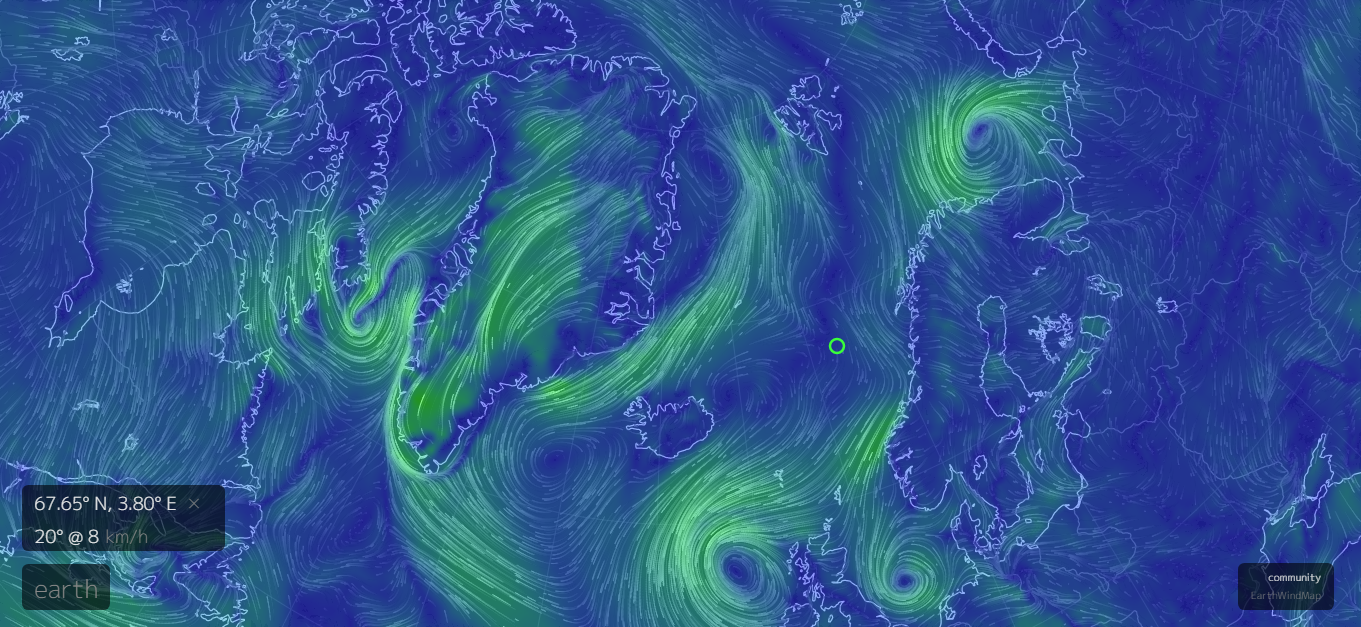
Image from earth:nullschool showing arctic wind patterns. This is the link to the animated display:
https://earth.nullschool.net/#current/wind/surface/level/orthographic=-17.87,70.69,1132/loc=3.799,67.645

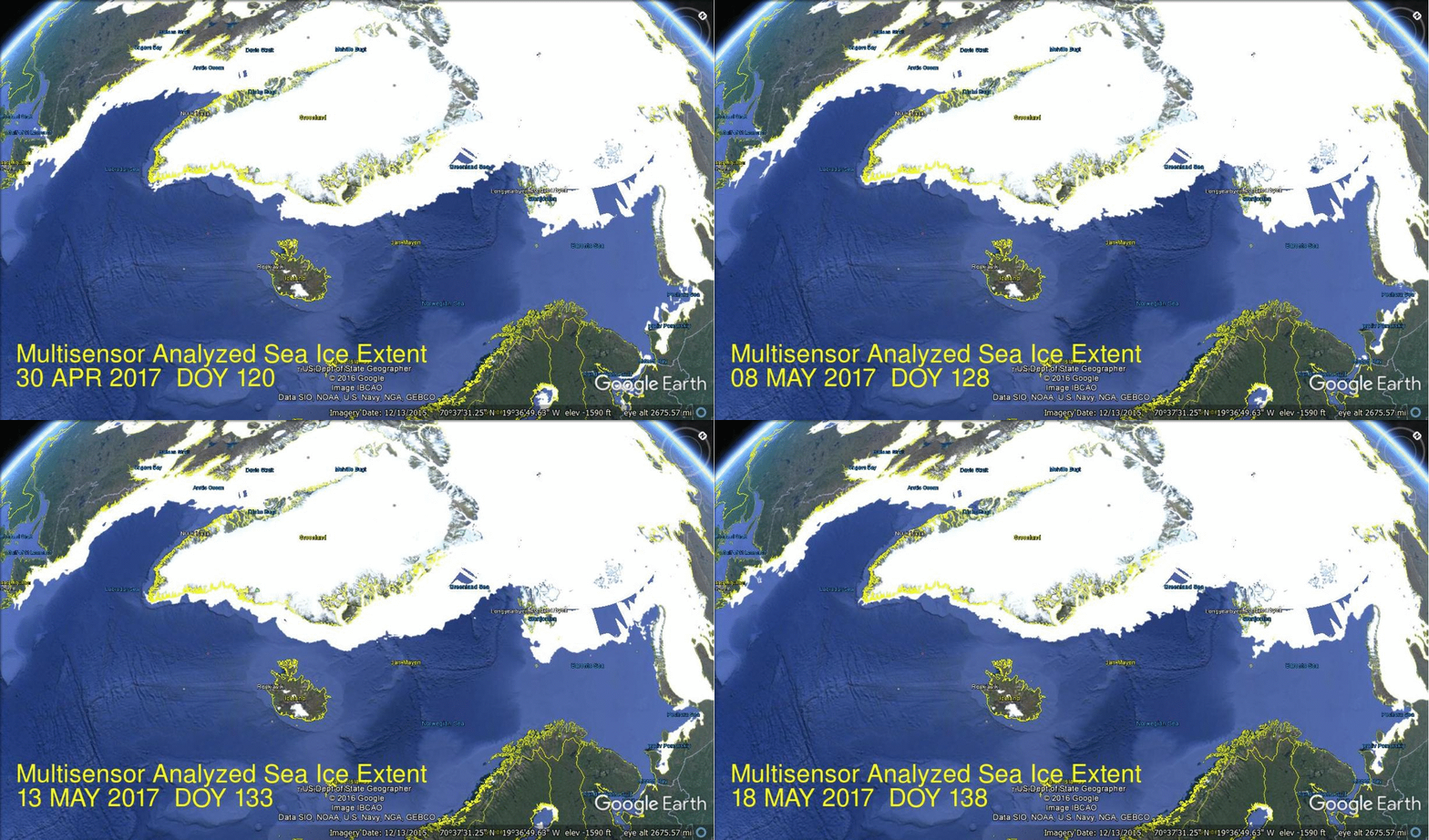
In May Arctic ice continues to be more extensive than recently.  As previously reported, central and Atlantic sea ice is above decadal averages.  The image below shows surprising growth since day 120 (April 30), with a pause the last few days.

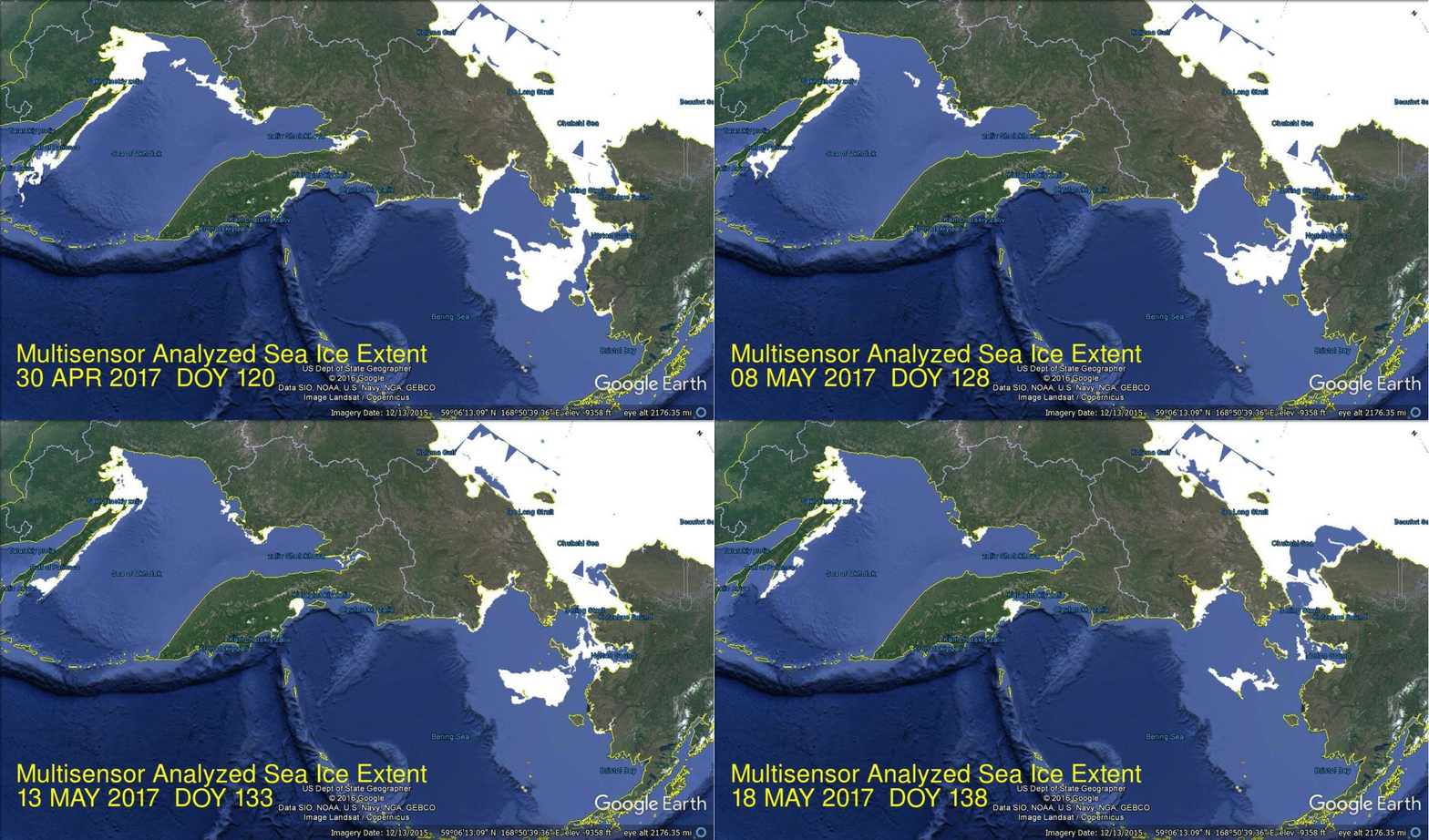
Things are different on the Pacific side where Bering in particular has melted ahead of schedule, and now extending in Chukchi sea, inside the actual Arctic basin.

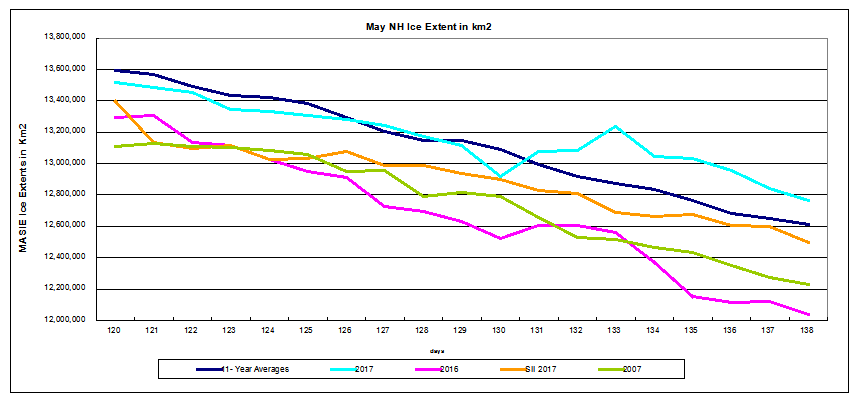
The graph below shows how in recent days 2017 NH ice extents have grown above average, even including the exceptionally low amounts of ice in the Pacific, Bering in particular.

Note that as of day 138, yesterday, 2017 NH ice was 150k km2 above average, 300k above SII estimates, 550k above 2007 and nearly 800k km2 more than last year.

The graph below shows Arctic ice excluding the Pacific seas of Bering and Okhotsk.  This provides an even more dramatic view of this years ice extents.  Mid April Arctic ice was average, and look what has happened since May began on day 121.  There was a drop and a rise, with a current surplus of 450k km2.

The table for day 138 shows the regional extents for 2017 compared to averages and 2007.

Region 2017138 Day 138
Average
2017-Ave. 2007138 2017-2007
 (0) Northern_Hemisphere 12765934 12609649 156285 12228251 537683
 (1) Beaufort_Sea 1037364 1035052 2313 1063324 -25960
 (2) Chukchi_Sea 855121 935117 -79997 940430 -85309
 (3) East_Siberian_Sea 1068289 1082898 -14609 1069398 -1109
 (4) Laptev_Sea 897845 871037 26807 789644 108201
 (5) Kara_Sea 931636 883725 47911 892687 38949
 (6) Barents_Sea 526079 378812 147267 335179 190899
 (7) Greenland_Sea 629810 612779 17031 578928 50883
 (8) Baffin_Bay_Gulf_of_St._Lawrence 1286982 1059735 227247 1002295 284687
 (9) Canadian_Archipelago 851190 834484 16706 840548 10642
 (10) Hudson_Bay 1203259 1157573 45687 1132632 70627
 (11) Central_Arctic 3247685 3225767 21917 3231808 15877
 (12) Bering_Sea 86844 339072 -252228 227132 -140288
 (13) Baltic_Sea 7716 4442 3274 4398 3318
 (14) Sea_of_Okhotsk 134303 186523 -52219 117127 17177

The 300k km2 deficit in Bering and Okhotsk is evident.  Also Chukchi is starting to show the effects from early Bering melting.  Other seas are above average, with large surpluses in Baffin and Barents sea.

Some insight into the unusual Arctic ice growth comes from AER Arctic Report and Forecast May 8, 2017

Currently positive pressure/geopotential height anomalies are mostly focused on the North Atlantic side of the Arctic with mostly negative pressure/geopotential height anomalies across the mid-latitudes of the Northern Hemisphere (NH). This is resulting in a near record low Arctic Oscillation (AO) and North Atlantic Oscillation (NAO) for May.

It might be the second week of May but an unusually strong block/high pressure exists in the northern North Atlantic including Iceland and Greenland and is more commonly associated with winter. The unusually strong block is contributing to not only below normal temperatures to both sides of the North Atlantic, including Europe and the Eastern US but late season snowfall to Southeastern Canada, the Northeastern US and Russia. The negative geopotential height anomalies that have developed both downstream across western Eurasia including Europe and upstream across the Eastern US are predicted to persist for much of the month of May helping to ensure a relatively cool month of May for both Europe and the Eastern US.

Summary

Do not be mislead by reports of declining sea ice in the Arctic; it is a distraction based on early melting in the Pacific, especially Bering sea.

Meanwhile, on the Atlantic side of the Arctic, we have sightings and reports of ice surges along the coast of Newfoundland, such amounts not seen since the 1980s. Below is a NASA satellite photo of Newfoundland Sea Ice, May 5, 2017 Source: Newsfoundsander


The Curious Case of Dr. Miskolczi

Update May 18 below

The Curious Case of Benjamin Button relates the story of a fictional character who is estranged from the rest of humanity because of a unique personal quality. He alone was born an old man, grew younger as he aged, before dying as an infant. Living in contradiction to all others, he existed as an alien whose relations were always temporary and strained.

Recently I had an interchange with a climatist obsessed with radiation and CO2 as the drivers of climate change. For me it occasioned a look back in time to rediscover how I came to some conclusions about how the atmosphere warms the planet. That process brought up an influencial scientist whose name comes up rarely these days in discussions of global warming/climate change. So I thought a tribute post to be timely.

Dr. Ferenc Mark Miskolczi (feh-rent mish-kol-tsi) was not born estranged, but alienation was forced upon him at the peak of his career as a brilliant astrophysicist. Part of his NASA job was to analyze radiosonde data, and his curiosity led him to find a surprising empirical observation. He published it and continues to hold to it, but his findings happen to cause indigestion among the climate establishment, and also to many skeptics. His writings are dense and filled with math, another reason for some to set him aside.

“I was warned that for every equation in the book, the readership would be halved,
hence it includes only a single equation: E = mc2.”
–Stephen Hawking, A Brief History of Time

The Back Story

In 2004 Dr Ferenc Miskolczi published a paper ’The greenhouse effect and the spectral decomposition of the clear-sky terrestrial radiation’, in the Quarterly Journal of the Hungarian Meteorological Service (Vol. 108, No. 4, October–December 2004, pp. 209–251.).

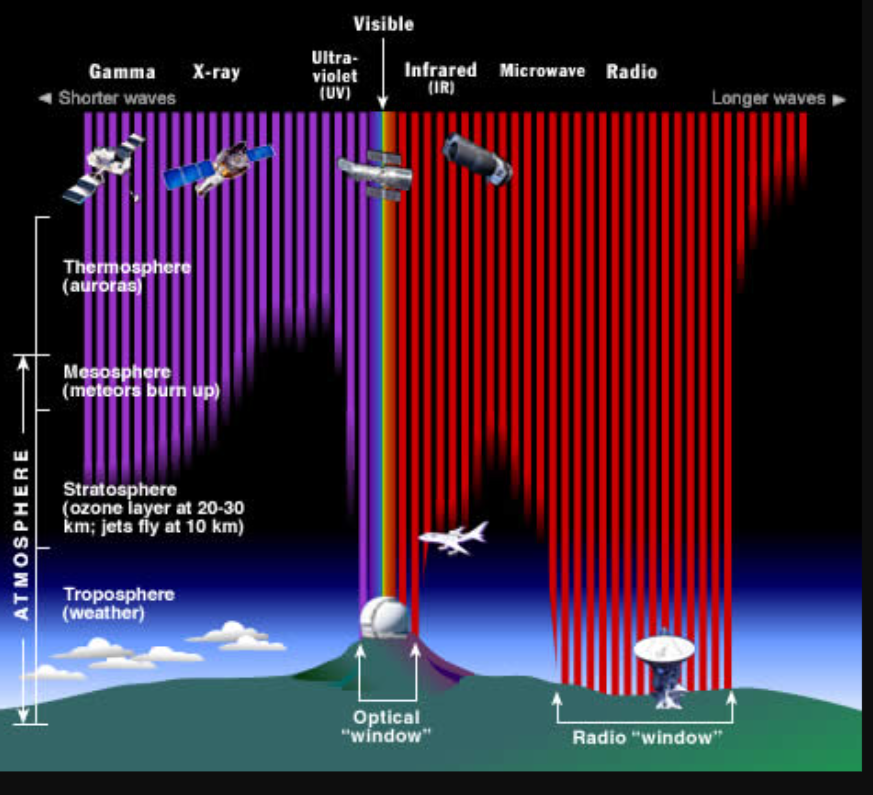
Various wavelengths of solar EM radiation penetrate Earth’s atmosphere to various depths. Fortunately for us, all of the high energy X-rays and most UV is filtered out long before it reaches the ground. Much of the infrared radiation is also absorbed by our atmosphere far above our heads. Most radio waves do make it to the ground, along with a narrow “window” of IR, UV, and visible light frequencies. Credit: Image courtesy STCI/JHU/NASA.

The co-author of the article was his boss at NASA Langley Research Center (Martin Mlynczak). Mlynczak put his name to the paper but did no work on it. He thought that it was an important paper, but only in a technical way.

When Miskolczi later informed the group at NASA there that he had more important results, they finally understood the whole story, and tried to withhold Miskolczi’s further material from publication. His boss for example, sat at Ferenc’s computer, logged in with Ferenc`s password, and canceled a recently submitted paper from a high-reputation journal as if Ferenc had withdrawn it himself. That was the reason that Ferenc finally resigned from his ($US 90,000 /year) job.

At the bottom of this post will be links to Miskolczi’s papers, including the latest one in 2014. Perhaps the most accessible introduction to his understanding comes from his interview with Kirk Myers published at Climate Truth.

Climate Truth: Has there been global warming?
Dr. Miskolczi: No one is denying that global warming has taken place, but it has nothing to do with the greenhouse effect or the burning of fossil fuels.

Climate Truth: According to the conventional anthropogenic global warming (AGW) theory, as human-induced CO2 emissions increase, more surface radiation is absorbed by the atmosphere, with part of it re-radiated to the earth’s surface, resulting in global warming. Is that an accurate description of the prevailing theory?
Dr. Miskolczi: Yes, this is the classic concept of the greenhouse effect.

ClimateTruth: Are man-made CO2 emissions the cause of global warming?
Dr. Miskolczi: Apparently not. According to my research, increases in CO2 levels have not increased the global-average absorbing power of the atmosphere.

ClimateTruth: Where does the traditional greenhouse theory make its fundamental mistake?
Dr. Miskolczi: The conventional greenhouse theory does not consider the newly discovered physical relationships involving infrared radiative fluxes. These relationships pose strong energetic constraints on an equilibrium system.

ClimateTruth: Why has this error escaped notice until now?
Dr. Miskolczi: Nobody thought that a 100-year-old theory could be wrong. The original greenhouse formula, developed by an astrophysicist, applies only to the stars, not to finite, semi-transparent planetary atmospheres. New equations had to be formulated.

ClimateTruth: According your theory, the greenhouse effect is self-regulating and stabilizes itself in response to rising CO2 levels. You identified (perhaps discovered) a “greenhouse constant” that keeps the greenhouse effect in equilibrium. Is that a fair assessment of your theory?
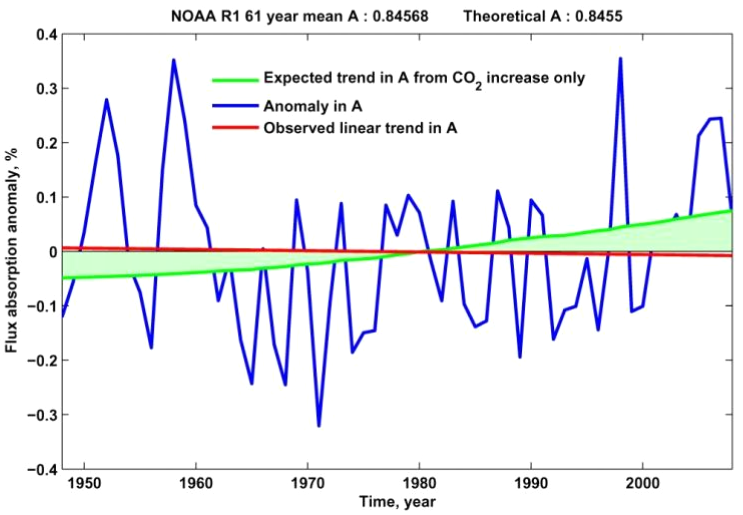
Dr. Miskolczi: Yes. Our atmosphere, with its infinite degree of freedom, is able to maintain its global average infrared absorption at an optimal level. In technical terms, this “greenhouse constant” is the total infrared optical thickness of the atmosphere, and its theoretical value is 1.87. Despite the 30 per cent increase of CO2 in the last 61 years, this value has not changed. The atmosphere is not increasing its absorption power as was predicted by the IPCC.

ClimateTruth: You used empirical data, rather than models, to arrive at your conclusion. How was that done?
Dr. Miskolczi: The computations are relatively simple. I collected a large number of radiosonde observations from around the globe and computed the global average infrared absorption. I performed these computations using observations from two large, publicly available datasets known as the TIGR2 and NOAA. The computations involved the processing of 300 radiosonde observations, using a state-of-the-art, line-by-line radiative transfer code. In both datasets, the global average infrared optical thickness turned out to be 1.87, agreeing with theoretical expectations.

Fig. 15 the actual and expected atmospheric absorption trends are compared for the full time period. No change in the IR absorption is detected.

ClimateTruth: Have your mathematical equations been challenged or disproved?
Dr. Miskolczi: No.

ClimateTruth: If your theory stands up to scientific scrutiny, it would collapse the CO2 global warming doctrine and render meaningless its predictions of climate catastrophe. Given its significance, why has your theory been met with silence and, in some instances, dismissal and derision?
Dr. Miskolczi: I can only guess. First of all, nobody likes to admit mistakes. Second, somebody has to explain to the taxpayers why millions of dollars were spent on AGW research. Third, some people are making a lot of money from the carbon trade and energy taxes.

ClimateTruth: A huge industry has arisen out of the study and prevention of man-made global warming. Has the world been fooled?
Dr. Miskolczi: Thanks to censored science and the complicity of the mainstream media, yes, totally.

The Implications

Others have referred to Miskolczi’s work as finding a saturated greenhouse effect (not his terminology). Most people agree that gases have a logarithmic relation to IR absorption. Thus the effect of adding CO2, or H2O to the atmosphere has diminishing impact, like putting on another coat of paint.


Miskolczi’s analysis shows that at present CO2 concentrations, the radiative warming effect is saturated, because the atmospheric heat engine is always striving to maximize the dissipation of surface heat into space. In the present circumstance, any additional input of heat produces a reaction of additional evaporation or convection to restore the energy balance. Radiative equilibrium is not disturbed, as shown by the stability of the optical depth in the upper troposphere.

globalrelativehumidity300_700mb

This graph shows that the relative humidity has been dropping, especially at higher elevations allowing more heat to escape to space. The curve labelled 300 mb is at about 9 km altitude, which is in the middle of the predicted (but missing) tropical troposphere hot-spot. This is the critical elevation as this is where radiation can start to escape without being recaptured. The average annual relative humidity at this altitude has declined by 21.5% from 1948 to 2007.

If Miskolczi is right, then presently the land-sea surface heats the atmosphere only by evaporation, conduction, and subsequent convection, not by radiation. The layer of air in contact with the surface is in radiative equilibrium, so that warming and cooling of the surface is matched by the immediate air. The land-sea surface does not cool by radiation to the atmosphere, nor is it warmed by “back-radiation.”

Above the surface-air boundary, heat exchanges between layers of air do include radiative activity, and at the TOA it is all radiation into space. The climate system makes regulatory adjustment to compensate for changes in CO2 with changes in humidity and clouds, in order to most efficiently convert short wave incoming solar energy, into long wave outgoing energy. With warming and cooling periods, the proportions of H20 and CO2 at the TOA have fluctuated, but the combined optical depth has been stable over the last 60 years.

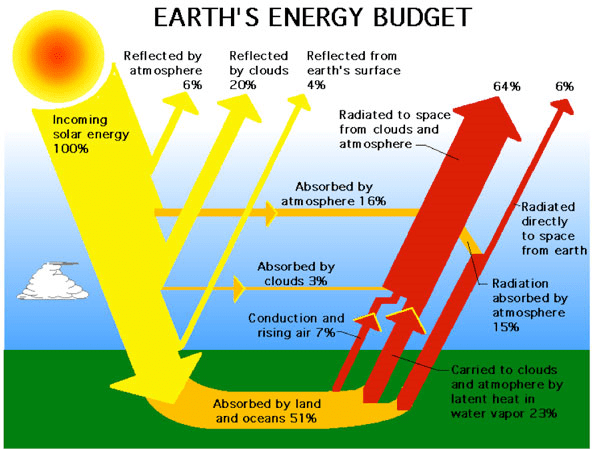
earth_energy_budget_ERBE
Credit: Image courtesy NASA’s ERBE (Earth Radiation Budget Experiment) program.

No wonder so much effort is going into a better understanding of cloud effects on climate.  Note in the above estimated energy budget diagram that convection and latent heat combined are twice the estimated surface radiation absorbed in the air.   Note also that the air absorbs more energy directly from the sun than it absorbs from the surface.

Bear in mind that water vapor does more than 90% of all IR activity by gases.  And note that clouds are composed of water droplets (liquid state), and IR activity by clouds (likely underestimated here) is on top of water’s thermal effect as a gas.

Summary: Dr. Ferenc Miskolczi’s  Strange Journey

Miskolczi’s story reads like a book. Looking at a series of differential equations for the greenhouse effect, he noticed the solution — originally done in 1922 by Arthur Milne, but still used by climate researchers today — ignored boundary conditions by assuming an “infinitely thick” atmosphere. Similar assumptions are common when solving differential equations; they simplify the calculations and often result in a result that still very closely matches reality. But not always.

So Miskolczi re-derived the solution, this time using the proper boundary conditions for an atmosphere that is not infinite. His result included a new term, which acts as a negative feedback to counter the positive forcing. At low levels, the new term means a small difference … but as greenhouse gases rise, the negative feedback predominates, forcing values back down.

NASA refused to release the results. Miskolczi believes their motivation is simple. “Money”, he tells DailyTech. Research that contradicts the view of an impending crisis jeopardizes funding, not only for his own atmosphere-monitoring project, but all climate-change research.

Miskolczi resigned in protest, stating in his October 28, 2005 resignation letter, “Unfortunately my working relationship with my NASA supervisors eroded to a level that I am not able to tolerate. My idea of the freedom of science cannot coexist with the recent NASA practice of handling new climate change related scientific results.”

“More than three years ago, I presented to NASA a new view of greenhouse theory and pointed out serious errors in the classical approach to assessing climate sensitivity to greenhouse gas perturbations. Since then my results were not released for publication. Since my new results have far reaching consequences in the general atmospheric radiative transfer, I wish to have no part in withholding the above scientific information from the wider community of scientists and policymakers.”
More at Cornwall Alliance Peer-Reviewed Research Suggests Very Little Warming from CO2

His theory was eventually published in a peer-reviewed scientific journal in his home country of Hungary.
The greenhouse effect and the spectral decomposition of the clear-sky terrestrial radiation

Miskolczi’s latest paper is The Greenhouse Effect and the Infrared Radiative Structure of the Earth’s Atmosphere 2014

Previously in 2010 he published in Energy & Environment The Stable Stationary Value of the Earth’s Global Average Atmospheric Planck-Weighted Greenhouse-Gas Optical Thickness

Dr. Ferenc Mark Miskolczi

Update May 18

Robin Pittwood has done an analysis confirming that recent global warming has been matched by increasing outgoing longwave radiation, such that the equilibrium point has remained stable.  His money graph is this one:

This finding is consistent with Miskolczi’s finding that the atmospheric heat engine adjusts to changes so that energy balance is maintained.  There is more at KiwiThinker: An Empirical Look at Recent Trends in the Greenhouse Effect

Barents Sea Grows Ice in May


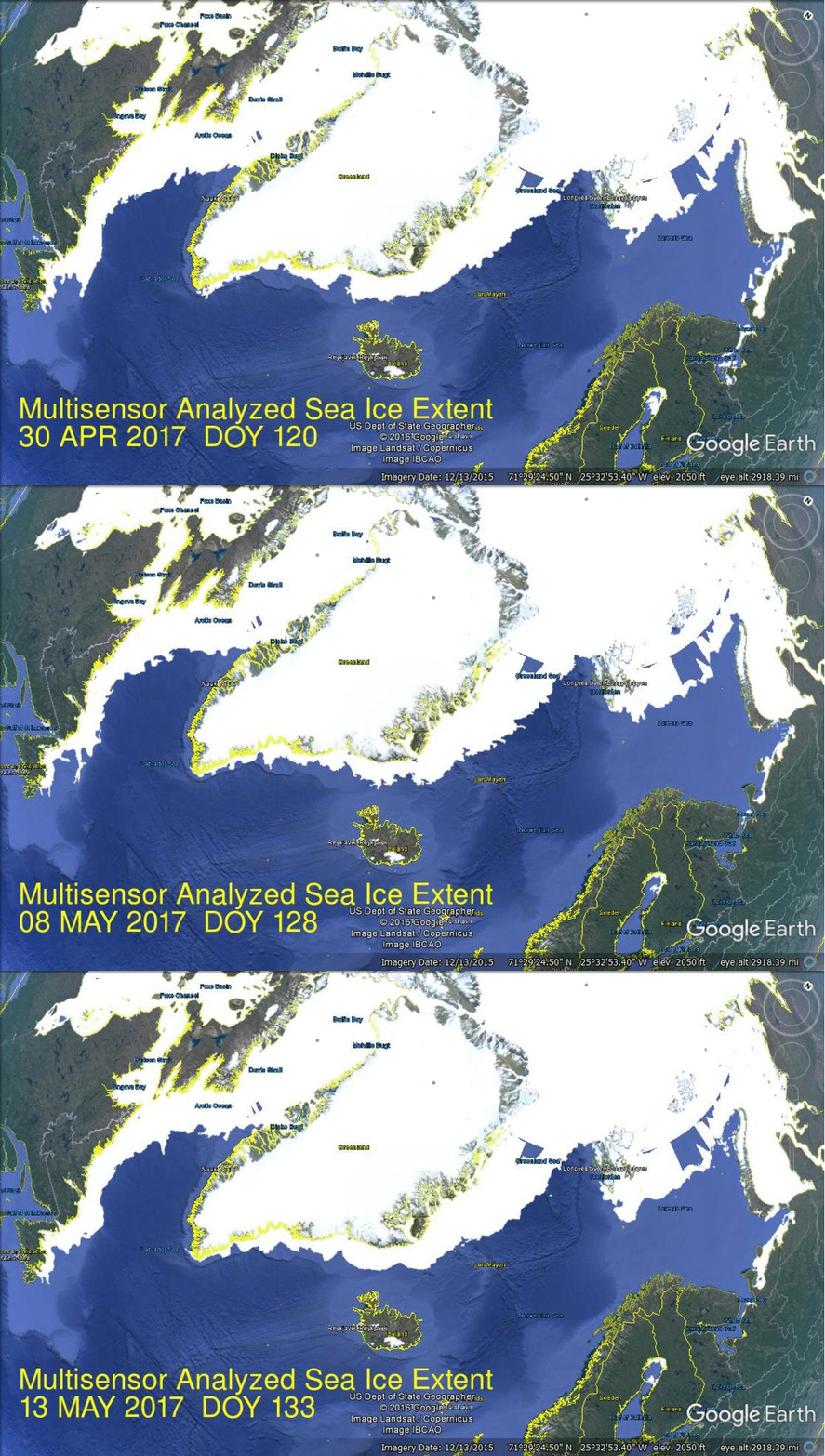
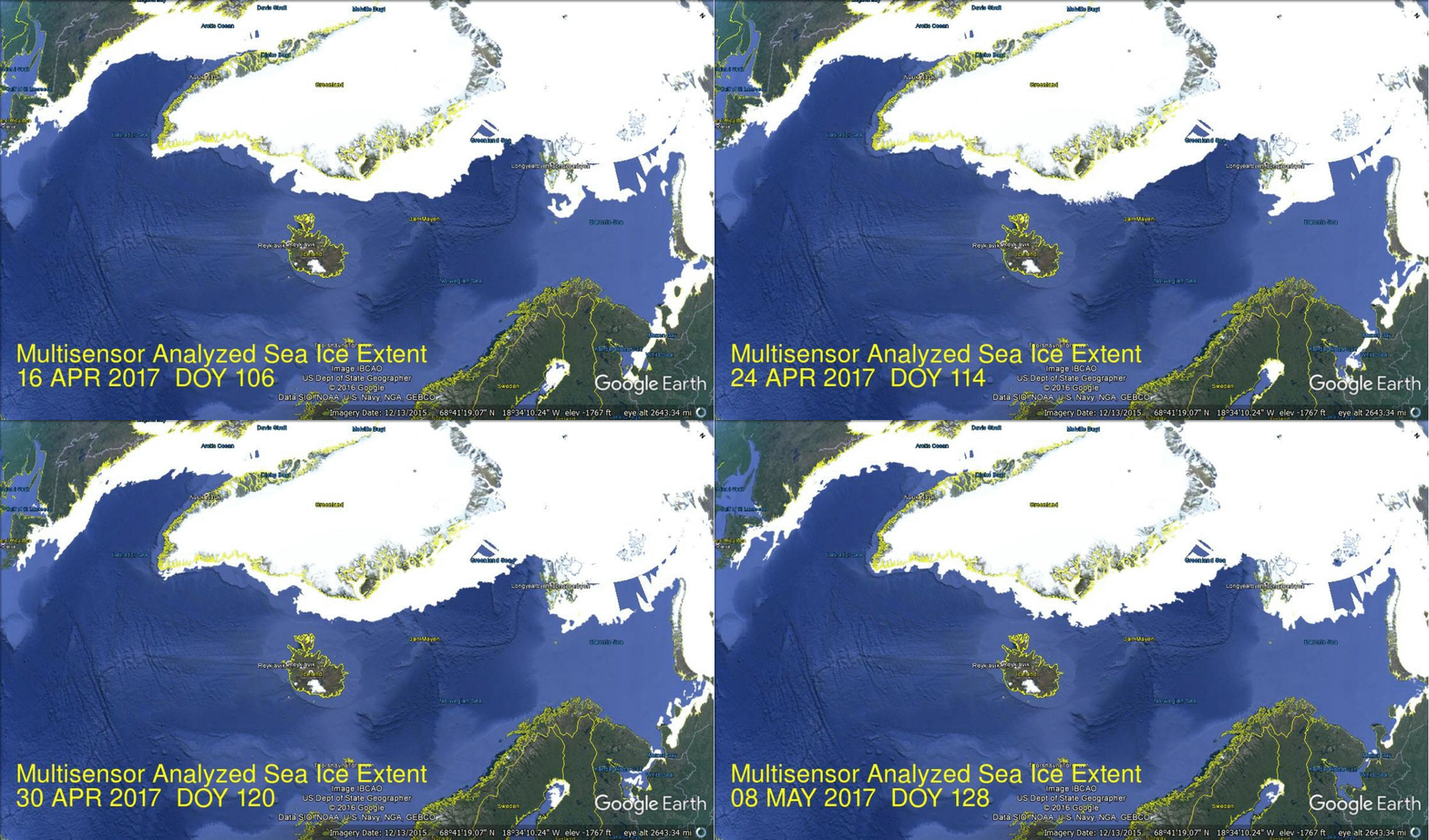
Something surprising is happening with Arctic ice.  It is May and ice should be melting, but instead it is growing and in the unlikely place of Barents Sea.  The images above show the ice positions since April, and you can see on the left how ice refused to leave Newfoundland, and on the right how Barents is not backing down but increasing.

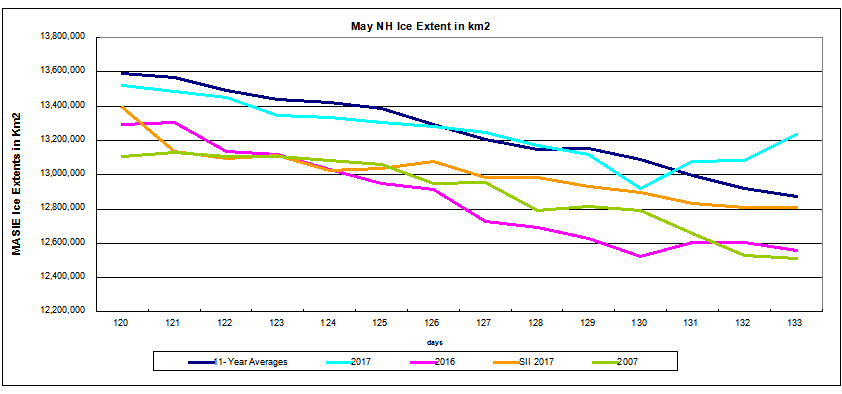
The graph below shows how in recent days 2017 NH ice extents have grown way above average, even including the exceptionally low amounts of ice in the Pacific, Bering in particular.

Much of the growth is due to Barents adding 85k m2 in the last 5 days to reach 572k km2, an extent last seen two weeks ago.

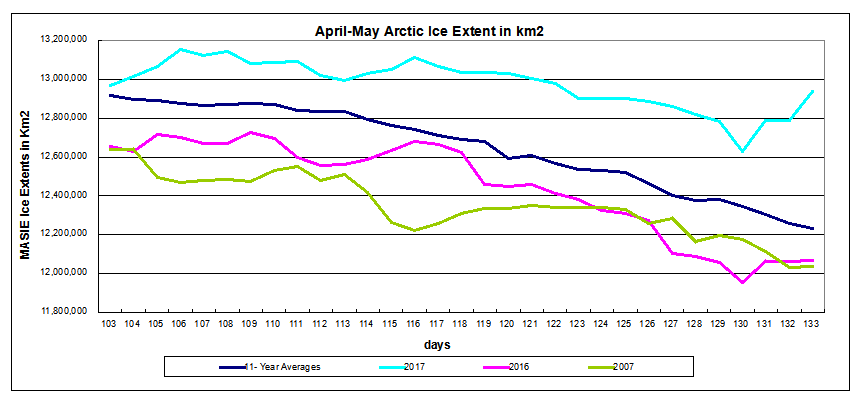
The graph below shows Arctic ice excluding the Pacific seas of Bering and Okhotsk.  This provides an even more dramatic view of this years ice extents.  Mid April Arctic ice was average, and look what has happened since May began on day 121.


Some insight into the unusual Arctic ice growth comes from AER Arctic Report and Forecast May 8, 2017

Currently positive pressure/geopotential height anomalies are mostly focused on the North Atlantic side of the Arctic with mostly negative pressure/geopotential height anomalies across the mid-latitudes of the Northern Hemisphere (NH). This is resulting in a near record low Arctic Oscillation (AO) and North Atlantic Oscillation (NAO) for May.

It might be the second week of May but an unusually strong block/high pressure exists in the northern North Atlantic including Iceland and Greenland and is more commonly associated with winter. The unusually strong block is contributing to not only below normal temperatures to both sides of the North Atlantic, including Europe and the Eastern US but late season snowfall to Southeastern Canada, the Northeastern US and Russia. The negative geopotential height anomalies that have developed both downstream across western Eurasia including Europe and upstream across the Eastern US are predicted to persist for much of the month of May helping to ensure a relatively cool month of May for both Europe and the Eastern US.

Summary

Do not be mislead by reports of declining sea ice in the Arctic; it is a distraction based on early melting in the Pacific, especially Bering sea.

Meanwhile, on the Atlantic side of the Arctic, we have sightings and reports of ice surges along the coast of Newfoundland, such amounts not seen since the 1980s. Below is a NASA satellite photo of Newfoundland Sea Ice, May 5, 2017 Source: Newsfoundsander


EPA Swamp Life: Climategaters

An update on the power struggle inside the EPA is provided by Ronald Bailey’s May. 9, 2017 article EPA Bureaucracy Strikes Back: The Case of the Board of Scientific Counselors  How will the struggle between the permanent bureaucracy and the EPA’s new leadership play out?  Excerpts below.

The efforts of the permanent bureaucracy at the Environmental Protection Agency to hand the the new political leadership a fait accompli regarding the membership of that agency’s Board of Scientific Counselors (BOSC) brought to mind the antics of Yes, Minister. The civil servants at the EPA had apparently assured the members of the BOSC whose three-year terms were ending that they could stay on for another term just as the Obama administration was winding down in January. Since the terms for more than half of the BOSC’s members ran out in late April, the agency bureaucrats essentially went to the new EPA leadership with the old list of Obama administration appointees at the last minute and said, “Sign this.”

The new team appointed by Trump declined to do so. Scorned bureaucrats then leaked the decision to the media shaping the narrative as a Trumpian anti-science “firing” of brave truth-tellers. The Washington Post and the New York Times duly reported just that story. But is it so? “We’re not going to rubber-stamp the last administration’s appointees. Instead, they should participate in the same open competitive process as the rest of the applicant pool,” EPA spokesperson J.P. Freire told the Post. “This approach is what was always intended for the board, and we’re making a clean break with the last administration’s approach.”

Rifling through the Federal Advisory Committee Act database, I find that the terms of 12 members of the BOSC officially expired on April 27, 2017. Another ended in March. Composed of outside researchers, the 18-member BOSC is supposed to provide objective and independent counsel to the agency’s Office of Research and Development (ORD). The committee aids the ORD on research and development with the aim of identifying, understanding, and solving current and future environmental problems; by reviewing ORD’s technical support to EPA’s program and regional offices; by providing leadership in assisting ORD in identifying emerging environmental issues; and by helping to advance the science and technology of risk assessment and risk management.

BOSC members are must be nationally recognized experts in science or engineering. The board should be balanced in disciplines, diversity, and geographic distribution area and include representatives from academia, government, industry, environmental consulting firms, and environmental associations.

As the Membership Balance Plan notes the list of nominees is reviewed by “different levels of EPA managers” before formal letters of invitation are sent out. The Plan notes that “members are usually appointed for a three-year term. Generally, members may be reappointed for a total of 6 years.”

In this case, the EPA bureaucrats in charge of finding and vetting nominees for the BOSC were evidently satisfied with the members who had been appointed during the Obama administration. Spot checking the BOSC’s history, it does appear that in recent years, committee members have generally served two 3-year terms.

EPA spokesperson J.P. Freire released this statement: “Advisory panels like BOSC play a critical role reviewing the agency’s work. EPA received hundreds of nominations to serve on the board, and we want to ensure fair consideration of all the nominees – including those nominated who may have previously served on the panel – and carry out a competitive nomination process.” The EPA plans solicit nominees through the Federal Register and to select new board members quickly. (I reached out to the agency to clear up which and how many BOSC members are not being re-appointed. I have not heard back yet.)

So which members are not being re-appointed? The news reports say that the appointments of up to 9 members are not being renewed. According to the database these 13 members terms are over.

Viney Aneja – North Carolina State University professor of air quality

Shahid Chaudhry – California Energy Commission mechanical engineer

Susan Cozzens – Georgia Tech Sociologist of science

Courtney Flint – Utah State University Natural Resource Sociologist

Earthea Nance – Texas Southern University Civil & Environmental Engineering

Paula Olsiewski – Sloan Foundation Biochemist

Kenneth Reckhow – Center for Environmental Implications of Nanotechnology at Duke University

Robert Richardson – Michiagan State University Ecological Economist

Sandra Smith – Principal Toxicologist AECOM Consultancy

Gina Solomon – California EPA (Former senior scientist at the Natural Resources Defense Council)

Ponisseril Somasundaran- Columbia University Professor of Mineral Engineering

John Thakaran – Howard University Biochemical engineering

Tammy Taylor – Chief Operating Officer of the National Security Directorate at the Pacific Northwest National Laboratory

The terms of three other members will expire this summer.

Lisa Dilling – University of Colorado biologist

Diane Pataki – University of Utah ecologist

Joseph Rodricks – Principal Arlington of Environ International Corporation toxicologist

Predictably, activists are outraged. “This is completely part of a multifaceted effort to get science out of the way of a deregulation agenda,” said Ken Kimmell, the president of the Union of Concerned Scientists to the Times. Clearly to Kimmel’s mind, science could never support deregulation or declining to regulate.

Cleaning BOSC is only scratching the surface

In addition to these few entitled scientists, there are a raft of others filling the SAB (Scientific Advisory Board) which of course has numerous committees, including the notorious CASAC (Clean Air Scientific Advisory Committee).  A look at the EPA website shows another 47 scientists working on the taxpayers’ dime. Apparently there are briefings where both BOSC and SAB members participate. The article above does not talk about conflicts of interest, but the EPA has been frequently criticized about the activities of SAB and CASAC.

Senator James A. Inhofe, Chair of the Senate Environment and Energy Committee wrote this in a formal letter to the Obama EPA Director last year:

The new CASAC panel further illustrates EPA’s disregard for policies requiring EPA shift membership on CASAC. Specifically, EPA’s Peer Review Handbook advises membership rotation on standing committees, such as CASAC, “to obtain fresh perspectives and reinforce the reality and perception of independence from the Ageney.”I3 However, the chartered CASAC includes four of seven members that have already served on CASAC.14 Among the three who have not served on the chartered CASAC, two have served on CASAC subcommittees15 while the other one has served on EPA’s Advisory Council on Clean Air Compliance Analysis (Council)16 which is also designed to advise the Administrator on the impacts of the Clean Air Act on the public health, economy, and environment of the U.S.I7 Given the number of well-qualified nominees and thousands of scientific experts across the country, it is deeply concerning EPA continues to select the same people. This practice runs counter to EPA policy and unnecessarily blocks other experts from serving as advisors.

The majority of CASAC members have also received considerable financial support from EPA, which calls into question their independence and therefore the integrity of the overall panel. While EPA has taken the position that receipt of grants do not constitute a financial conflict of interest, the NAS and EPA’s own Peer-Review Handbook state that grants can constitute a conflict or lack of impartiality.I8 For the newly appointed panel this conflict is on full display–six of the seven members have received a total of $119,217,008 in EPA research grants.

Much to my dismay, three of the seven members have received in excess of $25 million each. This is not limited to the chartered CASAC as 22 of the 26 newly appointed members to the CASAC subcommittee on particulate matter have received more than $330 million in EPA grants. These vast sums of money certainly constitute a conflict of interest and at a minimum give the appearance of a lack of impartiality.

Another investigative journalist added:

Among the members of the EPA’s Science Advisory Board (SAB), CASAC and subcommittees, 60 percent of them have received research grants from the EPA costing taxpayers more than $140 million. Many are involved in research, funded by those grants, while they are serving on their committees in a role advising the EPA on clean air policy.

CASAC’s chairman, Chris Frey, is also a representative on the SAB. While serving on SAB, the EPA extended his $893,439 grant to study the heath effects of air pollution and approved about $2.9 million in grants to North Carolina State University, where he teaches as a professor of environmental engineering.

All eight members on the EPA’s Clean Air Scientific Advisory Committee (CASAC) have extended, been recipients of or are overseeing more than $19 million in agency grants earmarked to the institutions they work for or directly to themselves, procurement records show. Outside science advisers collect EPA grants while guiding agency 


Entitled scientific bureaucrats rise up to defend their nest.

Footnote 1:

In Ottawa, the problem is somewhat different. There we have an infestation of bureaucrabs. The term refers to a creature that appears to be making progress, but on closer inspection is moving sideways.

There is also a rumor that increasingly in Ottawa lawyers are being used for scientific experiments instead of rats.  There appear to be three reasons for this:

  1.  There are more lawyers than rats in Ottawa.
  2. People sometimes get emotionally attached to a rat.
  3. There are some things the rats won’t do.

Footnote 2:

For a scientific analysis of how government works, we have a paper reprinted below:

New chemical Element Discovered

The new element is Governmentium (Gv). It has one neutron, 25 assistant neutrons, 88 deputy neutrons and 198 assistant deputy neutrons, giving it an atomic mass of 312, the heaviest of all. These 312 particles are held together by forces called morons, which are surrounded by vast quantities of lefton-like particles called peons.

Since Governmentium has no electrons or protons, it is inert. However, it can be detected, because it impedes every reaction with which it comes into contact. A tiny amount of Governmentium can cause a reaction normally taking less than a second to take from four days to four years to complete.

Governmentium has a normal half-life of 3-6 years. It does not decay but instead undergoes a reorganization in which a portion of the assistant neutrons and deputy neutrons exchange places. In fact, Governmentium’s mass will actually increase over time, since each reorganization will cause more morons to become neutrons, forming isodopes.

This characteristic of moron promotion leads some scientists to believe that Governmentium is formed whenever morons reach a critical concentration. This hypothetical quantity is referred to as critical morass.

When catalyzed with money, Governmentium becomes Administratium, an element that radiates just as much energy as Governmentium since it has half as many peons but twice as many morons. All of the money is consumed in the exchange, and no other byproducts are produced. It tends to concentrate at certain points such as government agencies, large corporations, and universities. Usually it can be found in the newest, best appointed, and best maintained buildings.

Scientists point out that administratium is known to be toxic at any level of concentration and can easily destroy any productive reaction where it is allowed to accumulate. Attempts are being made to determine how administratium can be controlled to prevent irreversible damage, but results to date are not promising.

Credit: William DeBuvitz, http://www.lhup.edu/~dsimanek/administ.htm

Footnote 3:

The article above mentioned Yes Minister classic British tv series, but readers may not be aware that the last season of the show, Yes Prime Minister ended with an hilarious send up of the global warming scare. BBC blocks the video outside of UK, but the best parts of the transcript are at Climate Alarms LOL

Resilient Arctic Ice in May

The MASIE image shows Arctic Ocean ice is resilient and the numbers below will show how well 2017 compares to the decadal average. The only place where ice is below normal is outside the Arctic Ocean, namely Bering and Okhotsk Seas in the Pacific. Claims of disappearing ice pertain not to the Arctic itself, but to marginal Pacific seas that will melt out anyway by September.

I noticed the pattern this April when it became obvious that including Bering and Okhotsk in the Arctic totals gives a misleading picture. For sure they are part of Northern Hemisphere (NH) total sea ice, but currently the Pacific is going its own way, not indicative of the sea ice in the Central and Atlantic Arctic.

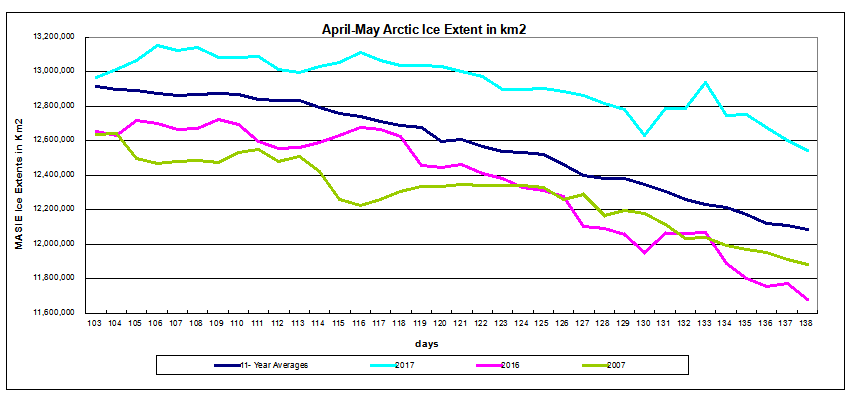
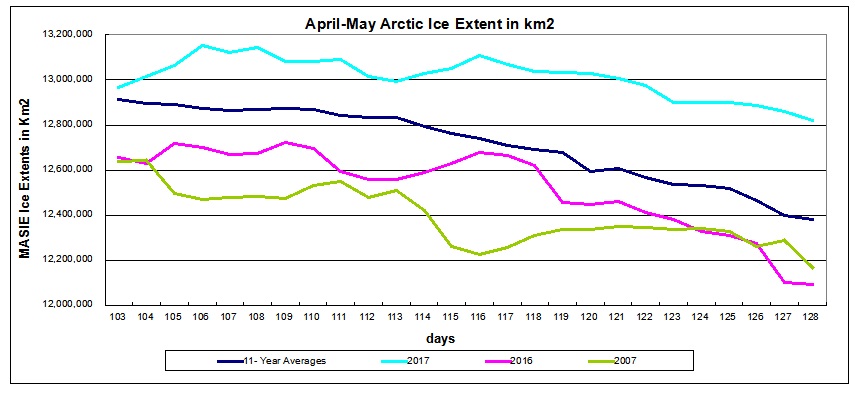
The graph below shows ice extents in the Arctic seas, excluding Bering and Okhotsk in the Pacific. Over the last 25 days 2017 Arctic ice has gone from average to a surplus of 400k km2 and is maintaining that advantage in May.  As of May 8, ice in 2007 was 600k km2 behind and 2016 was lower by 700k km2.

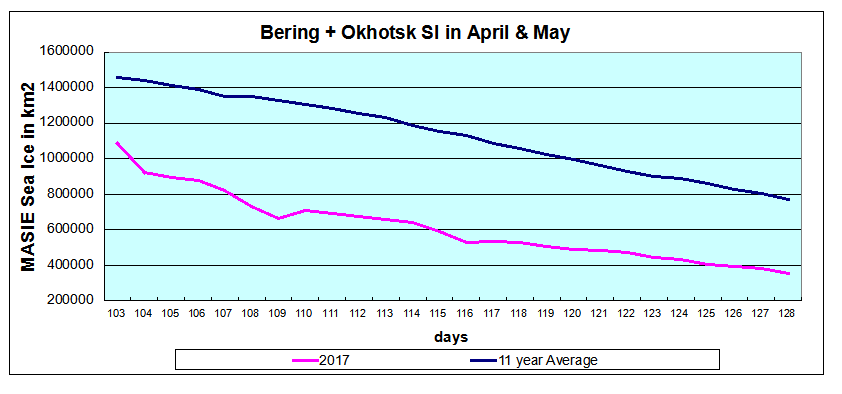
While the Arctic ocean ice is persisting, Bering and Okhotsk extents have retreated ahead of schedule, as the graph below shows.  The gap has persisted at 50% of decadal average over the last 3 weeks, going from 600k km2 on day 109 to 500k km2 on day 120, and presently Bering and Okhotsk combined are down by 400k km2.  Of course, eventually both seas will be ice free by September.

“Freedom’s just another word for nothing left to lose.”
Kris Kristofferson song (Me and Bobby McGee)

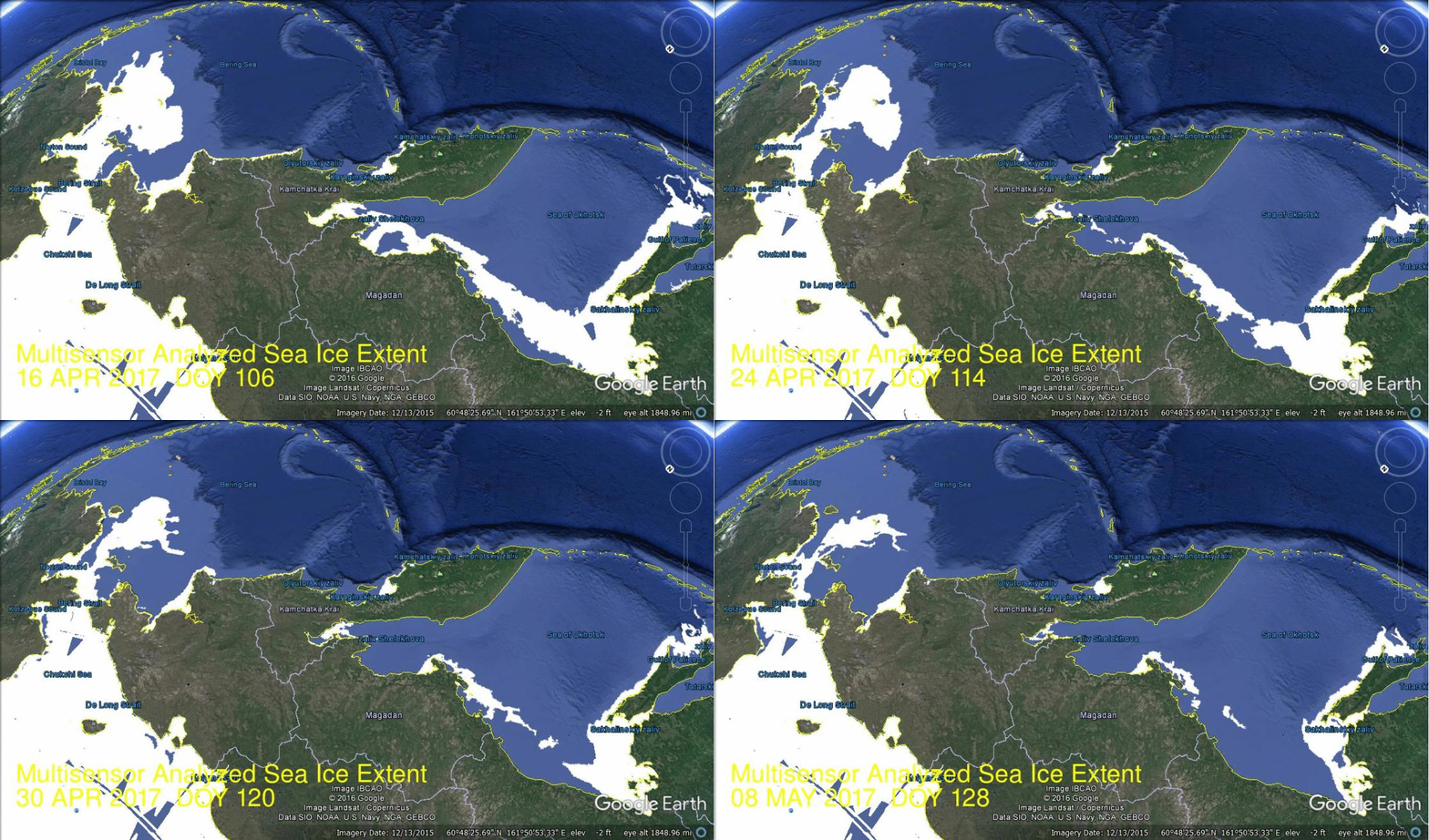
The distinctive Pacific pattern is evident in the images of changing ice extents.  First, see how ice in Bering and Okhotsk seas has retreated the last 3 weeks..

Meanwhile, on the Atlantic side ice has grown steadily.  Note Newfoundland on the upper left has been blocked by ice only now retreating, while Svalbard on the middle right.continues to be encased.

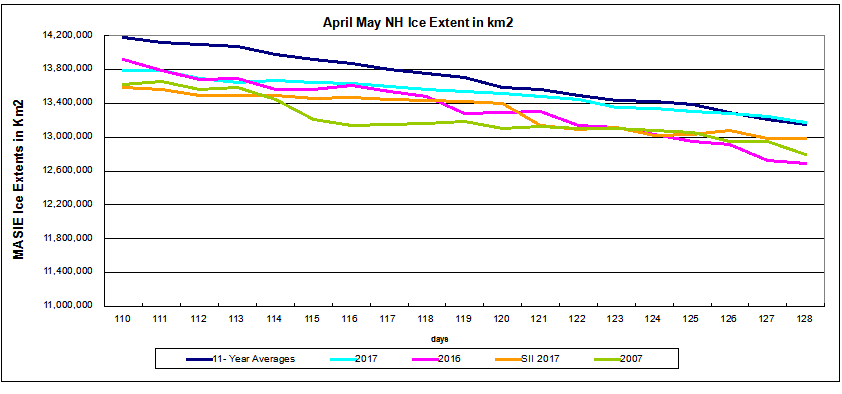
The Chart below shows the traditional view of NH ice extents, which includes the Pacific seas together with the Arctic seas.  2017 started this period 400k km2 below average, then caught up and is now tracking slightly above the decadal average.This is despite a deficit of 400k km2 in Bering and Okhotsk, which obscures the ice surpluses elsewhere.  By comparison 2007 and 2016 are lagging behind by 400k km2..

The table below provides a more detailed description of NH ice by showing extents measured in the various seas on May 8, day 128 of the year.

Region 2017128 Day 128
Average
2017-Ave. 2007128 2017-2007
 (0) Northern_Hemisphere 13171174 13149118 22056 12792742 378432
 (1) Beaufort_Sea 1061622 1056204 5418 1042771 18852
 (2) Chukchi_Sea 957567 957220 348 939928 17640
 (3) East_Siberian_Sea 1087137 1085117 2020 1081533 5605
 (4) Laptev_Sea 897845 890721 7124 874837 23008
 (5) Kara_Sea 920985 902466 18519 880185 40800
 (6) Barents_Sea 487526 449413 38113 418974 68552
 (7) Greenland_Sea 705745 613061 92684 605824 99921
 (8) Baffin_Bay_Gulf_of_St._Lawrence 1340708 1139240 201467 1035447 305260
 (9) Canadian_Archipelago 850635 842522 8113 834959 15676
 (10) Hudson_Bay 1248694 1205894 42800 1199786 48908
 (11) Central_Arctic 3247448 3220316 27132 3238105 9344
 (12) Bering_Sea 191284 484937 -293653 392119 -200836
 (13) Baltic_Sea 11485 13590 -2105 10416 1070
 (14) Sea_of_Okhotsk 160681 285356 -124675 233588 -72907

Clearly 2017 is above average everywhere, including Barents and Kara seas, with quite large surpluses in Greenland Sea and Baffin Bay.  The deficits in the Pacific are also obvious, with Bering sea down the most.

Summary

The details are important to form a proper perception of any natural process, including dynamics of sea ice waxing and waning. On closer inspection, the appearance of declining Arctic sea ice is actually another after effect of the recent El Nino and Blob phenomena, and quite restricted to the Pacific marginal seas.

Meanwhile, on the Atlantic side of the Arctic, we have sightings and reports of ice surges along the coast of Newfoundland, such amounts not seen since the 1980s. Below is a NASA satellite photo of Newfoundland Sea Ice, May 5, 2017 Source: Newsfoundsander


Climate Reductionism


Reductionists are those who take one theory or phenomenon to be reducible to some other theory or phenomenon. For example, a reductionist regarding mathematics might take any given mathematical theory to be reducible to logic or set theory. Or, a reductionist about biological entities like cells might take such entities to be reducible to collections of physico-chemical entities like atoms and molecules.
Definition from The Internet Encyclopedia of Philosophy

Some of you may have seen this recent article: Divided Colorado: A Sister And Brother Disagree On Climate Change

The reporter describes a familiar story to many of us.  A single skeptic (the brother) is holding out against his sister and rest of the family who accept global warming/climate change. And of course, after putting some of their interchanges into the text, the reporter then sides against the brother by taking the word of a climate expert. From the article:

“CO2 absorbs infrared heat in certain wavelengths and those measurements were made first time — published — when Abraham Lincoln was president of the United States,” says Scott Denning, a professor of atmospheric science at Colorado State University. “Since that time, those measurements have been repeated by better and better instruments around the world.”

CO2, or carbon dioxide, has increased over time, scientists say, because of human activity. It’s a greenhouse gas that’s contributing to global warming.

“We know precisely how the molecule wiggles and waggles, and what the quantum interactions between the electrons are that cause everyone one of these little absorption lines,” he says. “And there’s just no wiggle room around it — CO2 absorbs heat, heat warms things up, so adding CO2 to the atmosphere will warm the climate.”

Denning says that most of the CO2 we see added to the atmosphere comes from humans — mostly through burning coal, oil and gas, which, as he puts it, is “indirectly caused by us.”

When looking at the scientific community, Denning says it’s united, as far as he knows.
earth-science-climatic-change-Climate-System-3-114-g001

A Case Study of Climate Reductionism

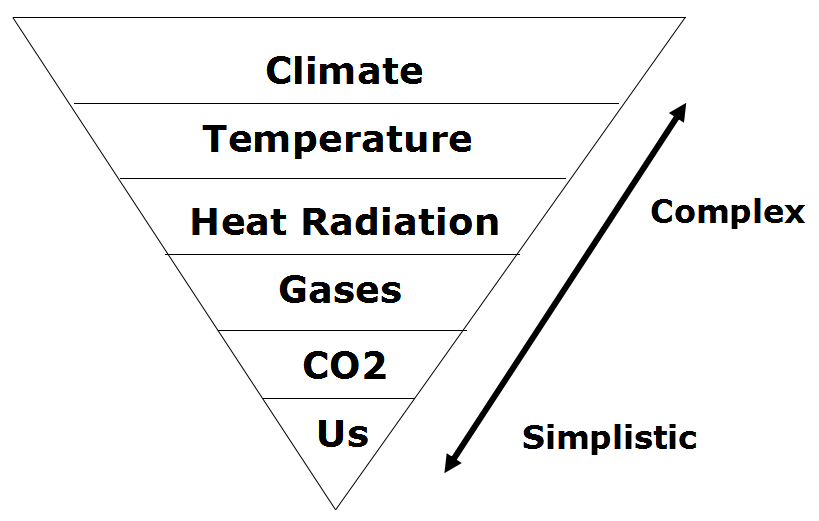
Denning’s comments, supported by several presentations at his website demonstrate how some scientists (all those known to Denning) engage in a classic form of reductionism.

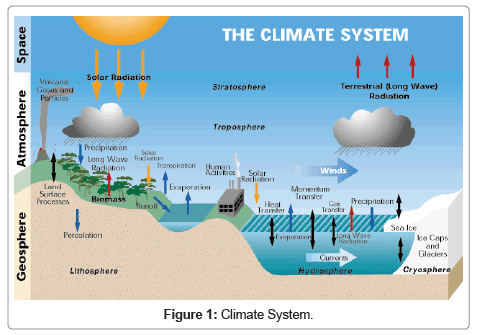
The full complexity of earth’s climate includes many processes, some poorly understood, but known to have effects orders of magnitude greater than the potential of CO2 warming. The case for global warming alarm rests on simplifying away everything but the predetermined notion that humans are warming the planet. It goes like this:
Our Complex Climate

Earth’s climate is probably the most complicated natural phenomenon ever studied. Not only are there many processes, but they also interact and influence each other over various timescales, causing lagged effects and multiple cycling. This diagram illustrates some of the climate elements and interactions between them.
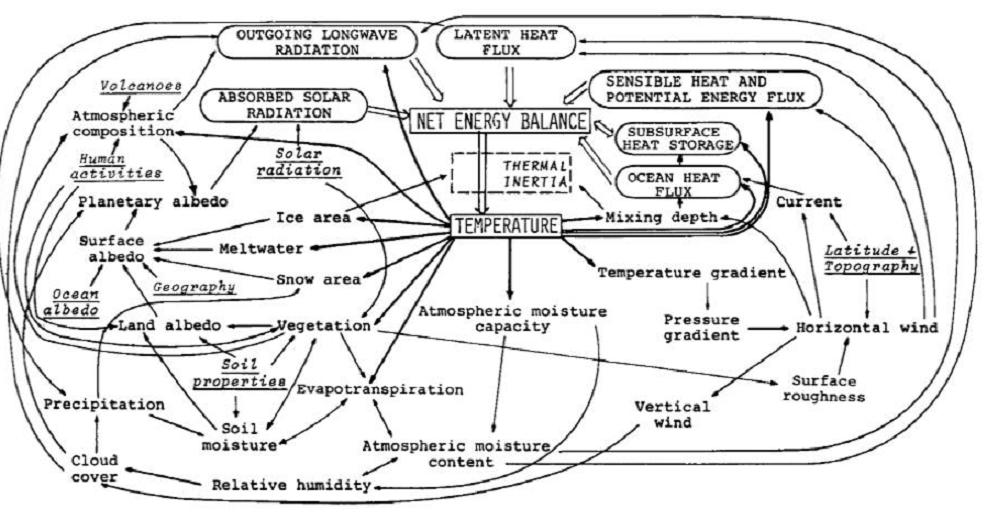
Flows and Feedbacks for Climate Models

The Many Climate Dimensions

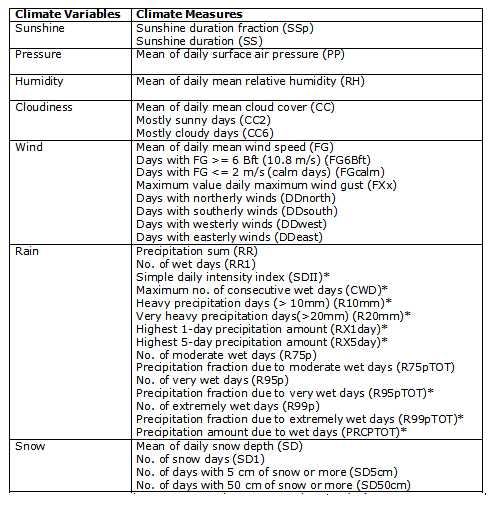
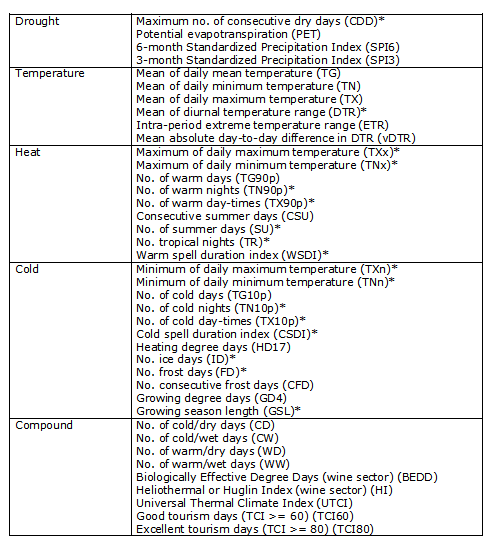
Further, measuring changes in the climate goes far beyond temperature as a metric. Global climate indices, like the European dataset include 12 climate dimensions with 74 tracking measures. The set of climate dimensions include:

  • Sunshine
  • Pressure
  • Humidity
  • Cloudiness
  • Wind
  • Rain
  • Snow
  • Drought
  • Temperature
  • Heat
  • Cold

And in addition there are compound measures combining temperature and precipitation. While temperature is important, climate is much more than that.  With this reduction, all other dimensions are swept aside, and climate change is simplified down to global warming as seen in temperature measurements.

Climate Thermodynamics: Weather is the Climate System at work.

Another distortion is the notion that weather is bad or good, depending on humans finding it favorable. In fact, all that we call weather are the ocean and atmosphere acting to resolve differences in temperatures, humidities and pressures. It is the natural result of a rotating, irregular planetary surface mostly covered with water and illuminated mostly at its equator.

The sun warms the surface, but the heat escapes very quickly by convection so the build-up of heat near the surface is limited. In an incompressible atmosphere, it would *all* escape, and you’d get no surface warming. But because air is compressible, and because gases warm up when they’re compressed and cool down when allowed to expand, air circulating vertically by convection will warm and cool at a certain rate due to the changing atmospheric pressure.

Climate science has been obsessed with only a part of the system, namely the atmosphere and radiation, in order to focus attention on the non-condensing IR active gases. The climate is framed as a 3D atmosphere above a 2D surface. That narrow scope leaves out the powerful non-radiative heat transfer mechanisms that dominate the lower troposphere, and the vast reservoir of thermal energy deep in the oceans.

As Dr. Robert E Stevenson writes, it could have been different:

“As an oceanographer, I’d been around the world, once or twice, and I was rather convinced that I knew the factors that influenced the Earth’s climate. The oceans, by virtue of their enormous density and heat-storage capacity, are the dominant influence on our climate. It is the heat budget and the energy that flows into and out of the oceans that basically determines the mean temperature of the global atmosphere. These interactions, plus evaporation, are quite capable of canceling the slight effect of man-produced CO2.”

The troposphere is dominated by powerful heat transfer mechanisms: conduction, convection and evaporation, as well as physical kinetic movements.  All this is ignored in order to focus on radiative heat transfer, a bit player except at the top of the atmosphere.

There’s More than the Atmosphere

Once the world of climate is greatly reduced down to radiation of infrared frequencies, yet another set of blinders is applied. The most important source of radiation is of course the sun. Solar radiation in the short wave (SW) range is what we see and what heats up the earth’s surface, particularly the oceans. In addition solar radiation includes infrared, some absorbed in the atmosphere and some at the surface. The ocean is also a major source of heat into the atmosphere since its thermal capacity is 1000 times what the air can hold. The heat transfer from ocean to air is both by way of evaporation (latent heat) and also by direct contact at the sea surface (conduction).

Yet conventional climate science dismisses the sun as a climate factor saying that its climate input is unvarying. That ignores significant fluctuations in parts of the light range, for example ultraviolet, and also solar effects such as magnetic fields and cosmic rays. Also disregarded is solar energy varying due to cloud fluctuations. The ocean is also dismissed as a source of climate change despite obvious ocean warming and cooling cycles ranging from weeks to centuries. The problem is such oscillations are not well understood or predictable, so can not be easily modeled.

With the sun and the earth’s surface and ocean dismissed, the only consideration left is the atmosphere.

The Gorilla Greenhouse Gas

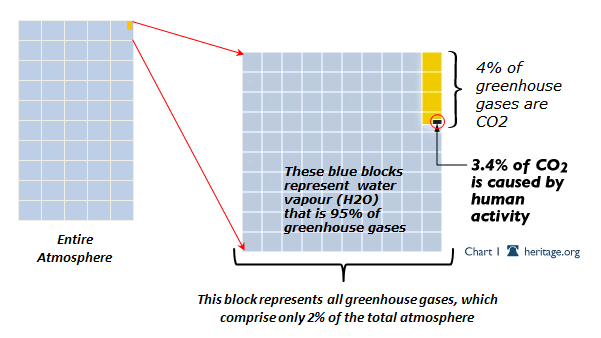
Thus climate has been reduced down to heat radiation passing through the atmosphere comprised of gases. One of the biggest reductions then comes from focusing on CO2 rather than H20. Of all the gases that are IR-active, water is the most prevalent and covers more of the spectrum.

The diagram below gives you the sense of proportion.
The Role of CO2

We come now to the role of CO2 in “trapping heat” and making the world warmer. The theory is that CO2 acts like a blanket by absorbing and re-radiating heat that would otherwise escape into space. By delaying the cooling while solar energy comes in constantly, CO2 is presumed to cause a buildup of heat resulting in warmer temperatures.

How the Atmosphere Processes Heat

There are 3 ways that heat (Infrared or IR radiation) passes from the surface to space.

1) A small amount of the radiation leaves directly, because all gases in our air are transparent to IR of 10-14 microns (sometimes called the “atmospheric window.” This pathway moves at the speed of light, so no delay of cooling occurs.

2) Some radiation is absorbed and re-emitted by IR active gases up to the tropopause. Calculations of the free mean path for CO2 show that energy passes from surface to tropopause in less than 5 milliseconds. This is almost speed of light, so delay is negligible. H2O is so variable across the globe that its total effects are not measurable. In arid places, like deserts, we see that CO2 by itself does not prevent the loss of the day’s heat after sundown.

3) The bulk gases of the atmosphere, O2 and N2, are warmed by conduction and convection from the surface. They also gain energy by collisions with IR active gases, some of that IR coming from the surface, and some absorbed directly from the sun. Latent heat from water is also added to the bulk gases. O2 and N2 are slow to shed this heat, and indeed must pass it back to IR active gases at the top of the troposphere for radiation into space.

In a parcel of air each molecule of CO2 is surrounded by 2500 other molecules, mostly O2 and N2. In the lower atmosphere, the air is dense and CO2 molecules energized by IR lose it to surrounding gases, slightly warming the entire parcel. Higher in the atmosphere, the air is thinner, and CO2 molecules can emit IR into space. Surrounding gases resupply CO2 with the energy it lost, which leads to further heat loss into space.

This third pathway has a significant delay of cooling, and is the reason for our mild surface temperature, averaging about 15C. Yes, earth’s atmosphere produces a buildup of heat at the surface. The bulk gases, O2 and N2, trap heat near the surface, while IR active gases, mainly H20 and CO2, provide the radiative cooling at the top of the atmosphere. Near the top of the atmosphere you will find the -18C temperature.

Sources of CO2
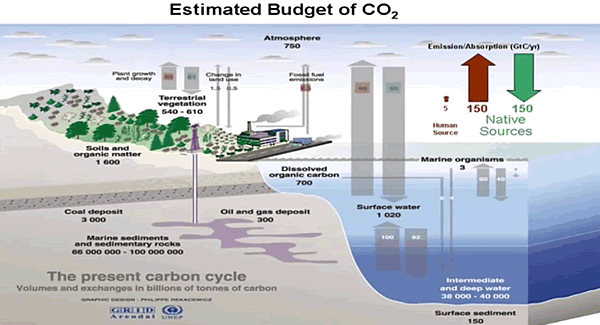
Note the size of the human emissions next to the red arrow.

A final reduction comes down to how much of the CO2 in the atmosphere is there because of us. Alarmists/activists say any increase in CO2 is 100% man-made, and would be more were it not for natural CO2 sinks, namely the ocean and biosphere. The claim overlooks the fact that those sinks are also sources of CO2 and the flux from the land and sea is an order of magnitude higher than estimates of human emissions. In fact, our few Gigatons of carbon are lost within the error range of estimating natural emissions. Insects produce far more CO2 than humans do by all our activity, including domestic animals.

Why Climate Reductionism is Dangerous

Reducing the climate in this fashion reaches its logical conclusion in the Activist notion of the “450 Scenario.”  Since Cancun, IPCC is asserting that global warming is capped at 2C by keeping CO2 concentration below 450 ppm. From Summary for Policymakers (SPM) AR5

Emissions scenarios leading to CO2-equivalent concentrations in 2100 of about 450 ppm or lower are likely to maintain warming below 2°C over the 21st century relative to pre-industrial levels. These scenarios are characterized by 40 to 70% global anthropogenic GHG emissions reductions by 2050 compared to 2010, and emissions levels near zero or below in 2100.

Thus is born the “450 Scenario” by which governments can be focused upon reducing human emissions without any reference to temperature measurements, which are troublesome and inconvenient. Almost everything in the climate world has been erased, and “Fighting Climate Change” is now code to mean accounting for fossil fuel emissions.

Conclusion

All propagandists begin with a kernel of truth, in this case the fact everything acting in the world has an effect on everything else. Edward Lorenz brought this insight to bear on the climate system in a ground breaking paper he presented in 1972 entitled: “Predictability: Does the Flap of a Butterfly’s Wings in Brazil Set Off a Tornado in Texas?”  Everything does matter and has an effect. Obviously humans impact on the climate in places where we build cities and dams, clear forests and operate farms. And obviously we add some CO2 when we burn fossil fuels.

But it is wrong to ignore the major dominant climate realities in order to exaggerate a small peripheral factor for the sake of an agenda. It is wrong to claim that IR active gases somehow “trap” heat in the air when they immediately emit any energy absorbed, if not already lost colliding with another molecule. No, it is the bulk gases, N2 and O2, making up the mass of the atmosphere, together with the ocean delaying the cooling and giving us the mild and remarkably stable temperatures that we enjoy. And CO2 does its job by radiating the heat into space.

Since we do little to cause it, we can’t fix it by changing what we do. The climate will not stop changing because we put a price on carbon. And the sun will rise despite the cock going on strike to protest global warming.
Footnote: For a deeper understanding of the atmospheric physics relating to CO2 and climate, I have done a guide and synopsis of Murry Salby’s latest textbook on the subject:  Fearless Physics from Dr. Salby

Escape the Green Box


Steve Goreham has published a new primer that unmasks “sustainable development” fallacies. Outside the Green Box is previewed at Master Resource. Excerpts below:

Green Doctrine of Sustainable Development

Modern society is beset by green ideology, possibly the greatest delusion in recent history. Schools teach children that carbon dioxide is a pollutant, that polar bears are endangered, that population growth is harmful, that pesticides cause cancer, that energy use is destroying the environment, that warm climate is bad for humanity, and that crude oil is all but exhausted. Further, we can save the planet if we change our light bulbs, plant a tree, forego eating meat, and drive a Prius.

Green ideology is embodied in the doctrine of environmental sustainable development. Sustainable development contends that the growth in human population, production, consumption, and energy use over the last 200 years is “unsustainable.” For 30 years, proponents of sustainable development have warned that without radical changes to modern society, our planet’s environment will be destroyed, with the resultant decline of human civilization. To avoid the coming catastrophe, companies are told that they must adopt sustainable business practices

Climate Change Ideology

Over the last 30 years, climate change ideology became the core of sustainable development and the green movement. Most scientific organizations, most leading universities, most of the Fortune 500 companies, faith-based organizations, and the majority of the news media have publicly endorsed this theory.

Climatists call carbon dioxide a “dirty pollutant,” call coal trains “death trains,” and brand those who don’t accept the ideology “climate deniers.” Thousands of energy and climate laws across hundreds of nations aim to reduce CO2 emissions from transportation, industry, agriculture, and even light bulbs.

But from Chapter 5, scientific data shows that natural forces, not human emissions, dominate Earth’s climate. Water vapor, not carbon dioxide or methane, is Earth’s dominant greenhouse gas. Human industry contributes less than two percent to the greenhouse effect. Earth’s temperatures 1,000 years ago were naturally warmer than today and have been gently cooling over the last 8,000 years.

Contrary to warnings, history shows that today’s storms, floods, and droughts are neither more frequent nor more intense than in past centuries. According to satellite data, surface temperatures show no significant warming over the last eighteen years, evidence that the world’s climate models are in error.

Summary

Much of government policy, academic thought, and public opinion stands on fears created and promulgated by environmental sustainable development. The philosophy that humans are too many, too polluting, climate destroying, and profligate wasters of natural resources holds today’s society in a powerful psychological grip. Thousands of energy and environmental laws are justified on these misconceptions.

Energy consumption is not a villain. Nations that consume the most energy per person discharge the lowest level of air and water pollutants per person. Low-cost energy provides economic growth and generates capital for pollution control. Carbon dioxide is not a pollutant. Hundreds of peer-reviewed studies show that increased levels of CO2 result in faster and larger plant growth. The recent rise in atmospheric CO2 is actually greening the Earth.

Steve Goreham is a speaker, author, and researcher of environmental issues and public policy. He holds an MBA from the University of Chicago and a BS/MS in Electrical Engineering from the University of Illinois. More at his website stevegoreham.com.  For example, he provides a synopsis of Climate Facts including these topics:

Temperature in Perspective
The Greenhouse Effect
Icecap Melting and Sea Level Rise?
Stronger Hurricanes and Storms?
Droughts and Floods?
Polar Bear Extinction?
Heat Waves?

The Sky is not our limit.

Climate Confusion and Clarity

Christelle Lagace-Babim, left, and Elise Lagace walk along Rue Jacques-Cartier Friday, after checking out their home in Gatineau, Que., as significant rainfall continues to cause flooding. (Justin Tang/Canadian Press)

A lot of verbage about global warming/climate change is worse than useless because the parties are using terms whose meaning is vague or equivocal, and thus no meaningful interaction occurs. Alarmists/activists claim climate change is real, man-made, and dangerous (Obama tweet). Skeptics/doubters respond that climate is always changing, has been both warmer and cooler in the past, long before humans did anything.

In addition, climate confusion causes statements like this one recently in the CBC: Gatineau flooding ‘tip of the iceberg,’ climate scientist warns

Swollen rivers and streams have threatened hundreds of homes in the Outaouais thanks to recent heavy rainfall — three times the normal amount since April 1.

University of Ottawa climate scientist Paul Beckwith says that’s due to a changing climate, and says we’re seeing its effects “on a day-to-day basis” in weather patterns.

Beckwith points to an increase in extreme weather events across North America as proof. “We’ve changed the chemistry of the atmosphere and the oceans with our greenhouse gases, so we’re seeing the consequences of this now,” he added. “It’s only the tip of the iceberg, so to speak.”

Such reports mislead people to think of the climate acting like some kind of agent causing the weather to change in ways unfavorable to us. That confuses the relation between climate and weather, as we shall see below.

What is “Weather”?

Fortunately in science things get defined not theoretically but by observations and measurements. In science, weather is defined as the behavior we measure on a daily basis. In fact today’s automated weather equipment monitors the weather constantly. Let us consider an operational definition of weather to be the variables for which data is reported into global databases.


Each National Weather Service has its own additional particulars they track, but the common global definition of weather can be seen in the defined elements from the ECA&D weather data dictionary (European Climate Assessment & Dataset)

Weather Measurement Elements

What is weather: Eight variables are measured globally–Sunshine, Sea Level Pressure, Humidity, Cloud cover, Wind, Precipitation, Snow Depth, Temperature. With multiple measures of some variables, weather datasets consist of 13 common elements.

Sunshine (SS) in units of 0.1 hour. Total daily SS plus measures of hours for intervals during the day.

Sea Level Pressure (PP) in units of 0.1hPa Daily average PP plus measures for specific times and parts of the day.

Humidity (HU) in units of 1% of relative humidity. Daily average HU plus measures for specific times and parts of the day.

Cloud Cover (CC) in oktas (0 being clear sky, 8 being completely overcast). Daily average CC plus measures for specific times and parts of the day.

Wind Direction (DD) in degrees azimuth for the wind source (that is, a southerly wind comes from 180 degrees.) Daily average DD plus measures for different times of day, and the direction of maximum gust.

Wind Speed (FG) in units of 0.1 m/s. Daily average FG plus measures for speeds at different times and parts of the day.

Wind Gust (FX) in units of 0.1m/s.  Daily average FX (24 hourly gusts) plus measures for maximums of different durations. (2 to 15 minutes).

Precipitation Amount (RR) in units of 0.1 mm. Daily total RR plus measures of amounts for intervals during the day.

Maximum Hourly Precipitation (MXR) in units of 0.1 mm. MXR for the day plus measures of amounts for intervals during the day.

Snow Depth (SD) in units of 1 cm. Mean daily SD plus measures of depths for intervals during the day.

Mean Temperature (TG) in units of 0.1C. Daily TG plus measures of various ways of calculating TG.

Minimum Temperature (TN) in units of 0.1C. Daily TN plus measures for different times and parts of the day.

Maximum Temperature (TX) in units of 0.1C. Daily TX plus measures for different times and parts of the day.

What is “Climate”?

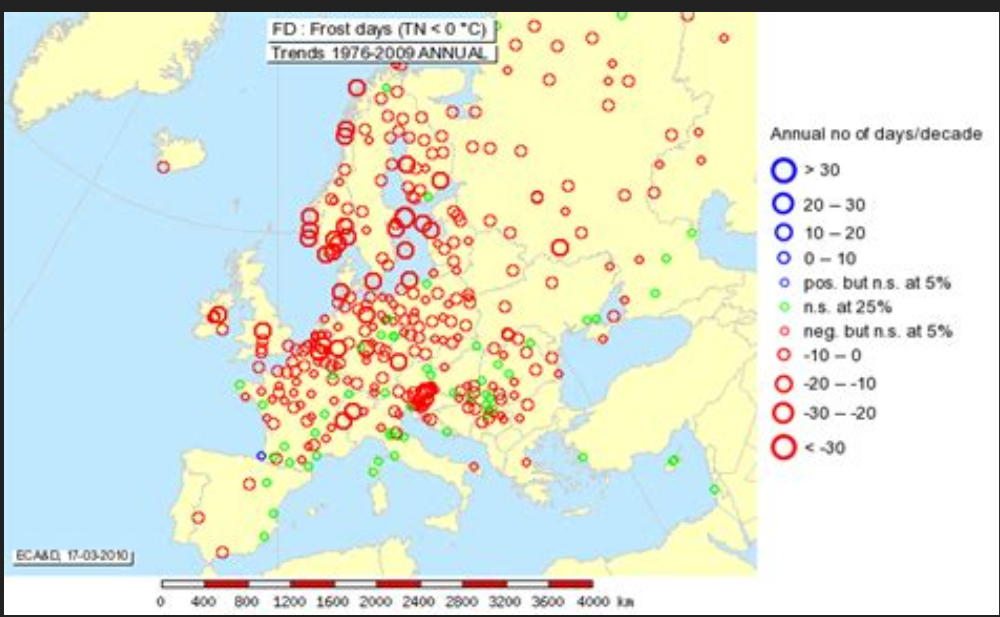
Change in Frequency of Frost Days in Europe in the Period 1976-2006

To sort out the confusion between “weather” and “climate”, we can also look at how climate is measured and thereby defined. From the same ECA&D source is a climate indices database which is termed Indices of Extremes.

There is one datafile for each index. Each datafile gives information for all available stations in the ECA&D database. The indices are aggregated over the year, the winter-half (ONDJFM), the summer-half (AMJJAS), winter (DJF), spring (MAM), summer (JJA), autumn (SON) and each of the calendar months.

There are 74 indices grouped into twelve categories corresponding with different aspects of climate change. Some categories come directly from weather elements, while others are derivations.

The 74 indices are statistics built upon weather data, adding patterns of interest to humans. For example, temperature is greatly emphasized by adding various concerns with heat and cold on top of temperature records. Also, a compound category focuses on temperature and precipitation combinations and their favorability to humans.

What is Climate: Categories and Indices

Note that climate is operationally defined as statistical patterns of weather data. Some indices are simply averages of daily weather over long term periods. By convention, a 30-year average is used to define a climate baseline for a location.

Other climate indices are based on value judgments according to human interests. For example, heat and cold include many examples like growing days, good tourism days, heating degree days. In fact, a feature of climate is the imposition of human expectations upon nature, other examples being the sunshine indices Mostly Sunny and Mostly Cloudy days.

Andrew John Herbertson, a British geographer and Professor at Oxford, wrote in a textbook from 1901:

By climate we mean the average weather as ascertained by many years’ observations. Climate also takes into account the extreme weather experienced during that period. Climate is what on an average we may expect, weather is what we actually get.

Mark Twain, who is often credited with that last sentence, actually said:

Climate lasts all the time and weather only a few days.

The point is, weather consists of events occurring in real time, while climate is a statistical artifact. Weather is like a baseball player swinging in the batter’s box, climate is his batting average, RBIs, bases on balls, etc.

What is “Climate Change”?

The usefulness of climate indices is suggested by the last category called compound, where temperature and precipitation patterns are combined. In fact those two factors are sufficient to define distinctive local climate zones..

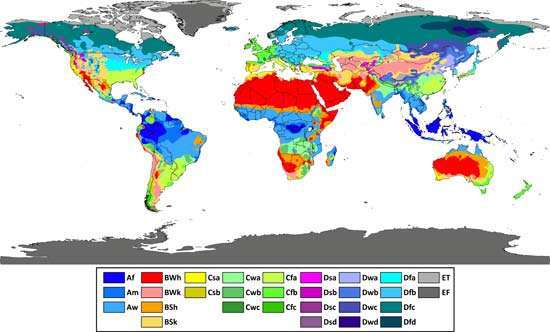
Based on empirical observations, Köppen (1900) established a climate classification system which uses monthly temperature and precipitation to define boundaries of different climate types around the world. Since its inception, this system has been further developed (e.g. Köppen and Geiger, 1930; Stern et al., 2000) and widely used by geographers and climatologists around the world.

188767-004-6bde1150

Köppen climate zones as they appear in the 21st Century.

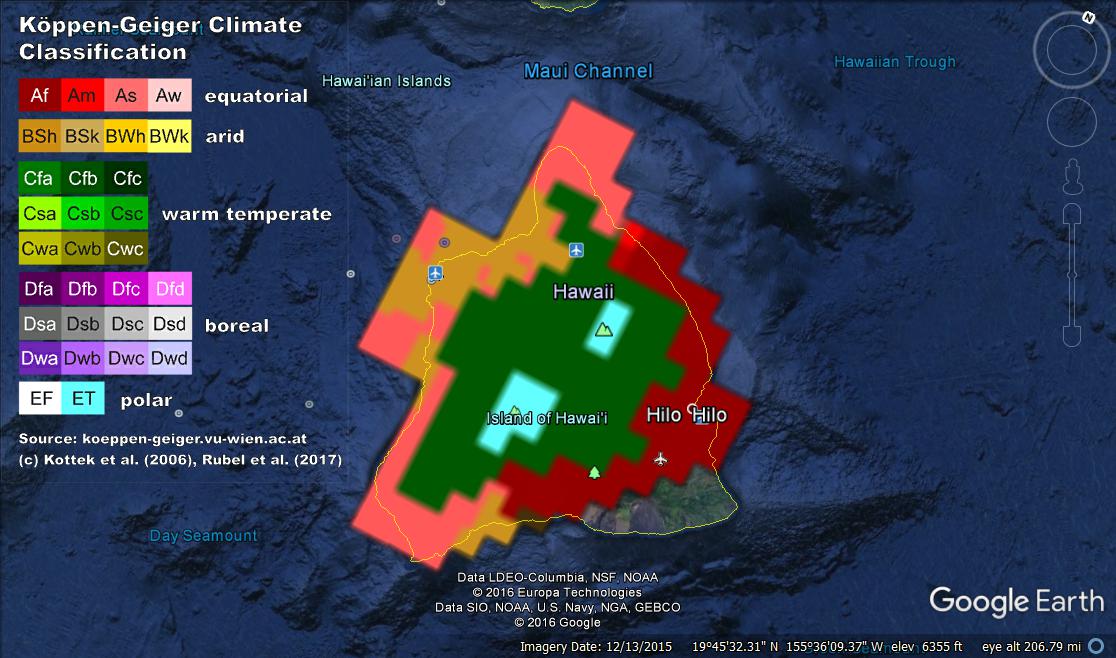
As an example, consider how the island of Hawaii looks with its climate zones indicated:

Note: This image comes from an interactive tool and uses a different color scheme than the global map above.  The table below shows the thresholds by which zones are defined.

Zones Zones Description Thresholds
A Tropical climates Tmin ≥ +18 °C
Af Tropical rain forest Pmin ≥ 60 mm
Am Tropical monsoon Pann ≥ 25(100 – Pmin) mm
As Tropical savannah with dry summer Pmin < 60 mm in summer
Aw Tropical savannah with dry winter Pmin < 60 mm in winter
B Dry climates Pann < 10 Pth
BW Desert (arid) Pann ≤ 5 Pth
BS Steppe (semi-arid) Pann > 5 Pth
C Mild temperate -3 °C < Tmin < +18 °C
Cs Mild temperate with dry summer Psmin < Pwmin, Pwmax > 3 Psmin, Psmin < 40 mm
Cw Mild temperate with dry winter Psmax > 10 Pwmin, Pwmin < Psmin
Cf Mild temperate, fully humid Not Cs or Cw
D Snow Tmin ≤ -3 °C
Ds Snow with dry summer Psmin < Pwmin, Pwmax > 3 Psmin, Psmin < 40 mm
Dw Snow with dry winter Psmax > 10 Pwmin, Pwmin < Psmin
Df Snow, fully humid Not Ds or Dw
E Polar Tmax < +10 °C
ET Tundra Tmax ≥ 0 °C
EF Frost Tmax < 0 °C

Köppen and Climate Change

The focus is on differentiating vegetation regimes, which result primarily from variations in temperature and precipitation over the seasons of the year. Now we have an interesting study that considers shifts in Köppen climate zones over time in order to identify changes in climate as practical and local/regional realities.  The paper is: Using the Köppen classification to quantify climate variation and change: An example for 1901–2010 By Deliang Chen and Hans Weiteng Chen Department of Earth Sciences, University of Gothenburg, Sweden

Hans Chen has built an excellent interactive website (here): The purpose of this website is to share information about the Köppen climate classification, and provide data and high-resolution figures from the paper Chen and Chen, 2013:  For more details on Chen and Chen see the post: Data vs. Models 4: Climates Changing

Summary:  Climate Change Defined

Chen and Chen provide a data-based definition of “climate change”. Climate zones are defined by past temperature and precipitation ranges observed by humans. The weather datasets and climate indices inform us whether or not the patterns in a place are moving outside the norm for that location. Climate change appears as a shift in zonal boundaries so that one place starts to resemble a neighboring zone with a different classification.  The table above shows the defined zones and thresholds.

The Chen and Chen analysis shows that almost half of climates around the world will get a year of weather outside of their normal ranges. Getting a decade of abnormal weather is much rarer. True climate change would be a shift enduring over a 30 year period which has been observed in less than 10% of all climate zones.

Summary: The Myth of “Global” Climate Change

Climate is a term to describe a local or regional pattern of weather. There is a widely accepted system of classifying climates, based largely on distinctive seasonal variations in temperature and precipitation. Depending on how precisely you apply the criteria, there can be from 6 to 13 distinct zones just in South Africa, or 8 to 11 zones only in Hawaii.

Each climate over time experiences shifts toward warming or cooling, and wetter or drier periods. One example: Fully a third of US stations showed cooling since 1950 while the others warmed. It is nonsense to average all of that and call it “Global Warming” because the net is slightly positive. Only in the fevered imaginations of CO2 activists do all of these diverse places move together in a single march toward global warming.

For more on measurements and science see Data, Facts and Information

Footnote:

weather10seylanbax_2079151i

This post was focused on the distinction between weather and climate, so extreme weather events were not discussed, since by definition such events are weather. Still the quote at the beginning shows that activists are working hard to attribute attention-grabbing events as proof of global warming/climate change.

Mike Hulme wrote a series of articles describing the unsuccessful effort to link extreme weather to climate change and said this:
In recent decades the meaning of climate change in popular western discourse has changed from being a descriptive index of a change in climate (as in ‘evidence that a climatic change has occurred’) to becoming an independent causative agent (as in ‘climate change caused this event to happen’). Rather than being a descriptive outcome of a chain of causal events affecting how weather is generated, climate change has been granted power to change worlds: political and social worlds as much as physical and ecological ones.

More at X-Weathermen are Back